WO2022154127A1 - 化合物またはその塩、およびそれらにより得られる抗体 - Google Patents
化合物またはその塩、およびそれらにより得られる抗体 Download PDFInfo
- Publication number
- WO2022154127A1 WO2022154127A1 PCT/JP2022/001617 JP2022001617W WO2022154127A1 WO 2022154127 A1 WO2022154127 A1 WO 2022154127A1 JP 2022001617 W JP2022001617 W JP 2022001617W WO 2022154127 A1 WO2022154127 A1 WO 2022154127A1
- Authority
- WO
- WIPO (PCT)
- Prior art keywords
- antibody
- group
- salt
- ceremony
- integer
- Prior art date
- Legal status (The legal status is an assumption and is not a legal conclusion. Google has not performed a legal analysis and makes no representation as to the accuracy of the status listed.)
- Ceased
Links
Images







Classifications
-
- C—CHEMISTRY; METALLURGY
- C07—ORGANIC CHEMISTRY
- C07K—PEPTIDES
- C07K16/00—Immunoglobulins [IG], e.g. monoclonal or polyclonal antibodies
-
- A—HUMAN NECESSITIES
- A61—MEDICAL OR VETERINARY SCIENCE; HYGIENE
- A61K—PREPARATIONS FOR MEDICAL, DENTAL OR TOILETRY PURPOSES
- A61K47/00—Medicinal preparations characterised by the non-active ingredients used, e.g. carriers or inert additives; Targeting or modifying agents chemically bound to the active ingredient
- A61K47/50—Medicinal preparations characterised by the non-active ingredients used, e.g. carriers or inert additives; Targeting or modifying agents chemically bound to the active ingredient the non-active ingredient being chemically bound to the active ingredient, e.g. polymer-drug conjugates
- A61K47/51—Medicinal preparations characterised by the non-active ingredients used, e.g. carriers or inert additives; Targeting or modifying agents chemically bound to the active ingredient the non-active ingredient being chemically bound to the active ingredient, e.g. polymer-drug conjugates the non-active ingredient being a modifying agent
- A61K47/68—Medicinal preparations characterised by the non-active ingredients used, e.g. carriers or inert additives; Targeting or modifying agents chemically bound to the active ingredient the non-active ingredient being chemically bound to the active ingredient, e.g. polymer-drug conjugates the non-active ingredient being a modifying agent the modifying agent being an antibody, an immunoglobulin or a fragment thereof, e.g. an Fc-fragment
- A61K47/6835—Medicinal preparations characterised by the non-active ingredients used, e.g. carriers or inert additives; Targeting or modifying agents chemically bound to the active ingredient the non-active ingredient being chemically bound to the active ingredient, e.g. polymer-drug conjugates the non-active ingredient being a modifying agent the modifying agent being an antibody, an immunoglobulin or a fragment thereof, e.g. an Fc-fragment the modifying agent being an antibody or an immunoglobulin bearing at least one antigen-binding site
- A61K47/6851—Medicinal preparations characterised by the non-active ingredients used, e.g. carriers or inert additives; Targeting or modifying agents chemically bound to the active ingredient the non-active ingredient being chemically bound to the active ingredient, e.g. polymer-drug conjugates the non-active ingredient being a modifying agent the modifying agent being an antibody, an immunoglobulin or a fragment thereof, e.g. an Fc-fragment the modifying agent being an antibody or an immunoglobulin bearing at least one antigen-binding site the antibody targeting a determinant of a tumour cell
- A61K47/6855—Medicinal preparations characterised by the non-active ingredients used, e.g. carriers or inert additives; Targeting or modifying agents chemically bound to the active ingredient the non-active ingredient being chemically bound to the active ingredient, e.g. polymer-drug conjugates the non-active ingredient being a modifying agent the modifying agent being an antibody, an immunoglobulin or a fragment thereof, e.g. an Fc-fragment the modifying agent being an antibody or an immunoglobulin bearing at least one antigen-binding site the antibody targeting a determinant of a tumour cell the tumour determinant being from breast cancer cell
-
- A—HUMAN NECESSITIES
- A61—MEDICAL OR VETERINARY SCIENCE; HYGIENE
- A61K—PREPARATIONS FOR MEDICAL, DENTAL OR TOILETRY PURPOSES
- A61K47/00—Medicinal preparations characterised by the non-active ingredients used, e.g. carriers or inert additives; Targeting or modifying agents chemically bound to the active ingredient
- A61K47/50—Medicinal preparations characterised by the non-active ingredients used, e.g. carriers or inert additives; Targeting or modifying agents chemically bound to the active ingredient the non-active ingredient being chemically bound to the active ingredient, e.g. polymer-drug conjugates
- A61K47/51—Medicinal preparations characterised by the non-active ingredients used, e.g. carriers or inert additives; Targeting or modifying agents chemically bound to the active ingredient the non-active ingredient being chemically bound to the active ingredient, e.g. polymer-drug conjugates the non-active ingredient being a modifying agent
- A61K47/62—Medicinal preparations characterised by the non-active ingredients used, e.g. carriers or inert additives; Targeting or modifying agents chemically bound to the active ingredient the non-active ingredient being chemically bound to the active ingredient, e.g. polymer-drug conjugates the non-active ingredient being a modifying agent the modifying agent being a protein, peptide or polyamino acid
- A61K47/65—Peptidic linkers, binders or spacers, e.g. peptidic enzyme-labile linkers
-
- A—HUMAN NECESSITIES
- A61—MEDICAL OR VETERINARY SCIENCE; HYGIENE
- A61K—PREPARATIONS FOR MEDICAL, DENTAL OR TOILETRY PURPOSES
- A61K47/00—Medicinal preparations characterised by the non-active ingredients used, e.g. carriers or inert additives; Targeting or modifying agents chemically bound to the active ingredient
- A61K47/50—Medicinal preparations characterised by the non-active ingredients used, e.g. carriers or inert additives; Targeting or modifying agents chemically bound to the active ingredient the non-active ingredient being chemically bound to the active ingredient, e.g. polymer-drug conjugates
- A61K47/51—Medicinal preparations characterised by the non-active ingredients used, e.g. carriers or inert additives; Targeting or modifying agents chemically bound to the active ingredient the non-active ingredient being chemically bound to the active ingredient, e.g. polymer-drug conjugates the non-active ingredient being a modifying agent
- A61K47/68—Medicinal preparations characterised by the non-active ingredients used, e.g. carriers or inert additives; Targeting or modifying agents chemically bound to the active ingredient the non-active ingredient being chemically bound to the active ingredient, e.g. polymer-drug conjugates the non-active ingredient being a modifying agent the modifying agent being an antibody, an immunoglobulin or a fragment thereof, e.g. an Fc-fragment
- A61K47/6801—Drug-antibody or immunoglobulin conjugates defined by the pharmacologically or therapeutically active agent
- A61K47/6803—Drugs conjugated to an antibody or immunoglobulin, e.g. cisplatin-antibody conjugates
-
- A—HUMAN NECESSITIES
- A61—MEDICAL OR VETERINARY SCIENCE; HYGIENE
- A61K—PREPARATIONS FOR MEDICAL, DENTAL OR TOILETRY PURPOSES
- A61K47/00—Medicinal preparations characterised by the non-active ingredients used, e.g. carriers or inert additives; Targeting or modifying agents chemically bound to the active ingredient
- A61K47/50—Medicinal preparations characterised by the non-active ingredients used, e.g. carriers or inert additives; Targeting or modifying agents chemically bound to the active ingredient the non-active ingredient being chemically bound to the active ingredient, e.g. polymer-drug conjugates
- A61K47/51—Medicinal preparations characterised by the non-active ingredients used, e.g. carriers or inert additives; Targeting or modifying agents chemically bound to the active ingredient the non-active ingredient being chemically bound to the active ingredient, e.g. polymer-drug conjugates the non-active ingredient being a modifying agent
- A61K47/68—Medicinal preparations characterised by the non-active ingredients used, e.g. carriers or inert additives; Targeting or modifying agents chemically bound to the active ingredient the non-active ingredient being chemically bound to the active ingredient, e.g. polymer-drug conjugates the non-active ingredient being a modifying agent the modifying agent being an antibody, an immunoglobulin or a fragment thereof, e.g. an Fc-fragment
- A61K47/6801—Drug-antibody or immunoglobulin conjugates defined by the pharmacologically or therapeutically active agent
- A61K47/6803—Drugs conjugated to an antibody or immunoglobulin, e.g. cisplatin-antibody conjugates
- A61K47/68031—Drugs conjugated to an antibody or immunoglobulin, e.g. cisplatin-antibody conjugates the drug being an auristatin
-
- A—HUMAN NECESSITIES
- A61—MEDICAL OR VETERINARY SCIENCE; HYGIENE
- A61K—PREPARATIONS FOR MEDICAL, DENTAL OR TOILETRY PURPOSES
- A61K47/00—Medicinal preparations characterised by the non-active ingredients used, e.g. carriers or inert additives; Targeting or modifying agents chemically bound to the active ingredient
- A61K47/50—Medicinal preparations characterised by the non-active ingredients used, e.g. carriers or inert additives; Targeting or modifying agents chemically bound to the active ingredient the non-active ingredient being chemically bound to the active ingredient, e.g. polymer-drug conjugates
- A61K47/51—Medicinal preparations characterised by the non-active ingredients used, e.g. carriers or inert additives; Targeting or modifying agents chemically bound to the active ingredient the non-active ingredient being chemically bound to the active ingredient, e.g. polymer-drug conjugates the non-active ingredient being a modifying agent
- A61K47/68—Medicinal preparations characterised by the non-active ingredients used, e.g. carriers or inert additives; Targeting or modifying agents chemically bound to the active ingredient the non-active ingredient being chemically bound to the active ingredient, e.g. polymer-drug conjugates the non-active ingredient being a modifying agent the modifying agent being an antibody, an immunoglobulin or a fragment thereof, e.g. an Fc-fragment
- A61K47/6801—Drug-antibody or immunoglobulin conjugates defined by the pharmacologically or therapeutically active agent
- A61K47/6803—Drugs conjugated to an antibody or immunoglobulin, e.g. cisplatin-antibody conjugates
- A61K47/6811—Drugs conjugated to an antibody or immunoglobulin, e.g. cisplatin-antibody conjugates the drug being a protein or peptide, e.g. transferrin or bleomycin
-
- A—HUMAN NECESSITIES
- A61—MEDICAL OR VETERINARY SCIENCE; HYGIENE
- A61K—PREPARATIONS FOR MEDICAL, DENTAL OR TOILETRY PURPOSES
- A61K47/00—Medicinal preparations characterised by the non-active ingredients used, e.g. carriers or inert additives; Targeting or modifying agents chemically bound to the active ingredient
- A61K47/50—Medicinal preparations characterised by the non-active ingredients used, e.g. carriers or inert additives; Targeting or modifying agents chemically bound to the active ingredient the non-active ingredient being chemically bound to the active ingredient, e.g. polymer-drug conjugates
- A61K47/51—Medicinal preparations characterised by the non-active ingredients used, e.g. carriers or inert additives; Targeting or modifying agents chemically bound to the active ingredient the non-active ingredient being chemically bound to the active ingredient, e.g. polymer-drug conjugates the non-active ingredient being a modifying agent
- A61K47/68—Medicinal preparations characterised by the non-active ingredients used, e.g. carriers or inert additives; Targeting or modifying agents chemically bound to the active ingredient the non-active ingredient being chemically bound to the active ingredient, e.g. polymer-drug conjugates the non-active ingredient being a modifying agent the modifying agent being an antibody, an immunoglobulin or a fragment thereof, e.g. an Fc-fragment
- A61K47/6801—Drug-antibody or immunoglobulin conjugates defined by the pharmacologically or therapeutically active agent
- A61K47/6803—Drugs conjugated to an antibody or immunoglobulin, e.g. cisplatin-antibody conjugates
- A61K47/6811—Drugs conjugated to an antibody or immunoglobulin, e.g. cisplatin-antibody conjugates the drug being a protein or peptide, e.g. transferrin or bleomycin
- A61K47/6815—Enzymes
-
- A—HUMAN NECESSITIES
- A61—MEDICAL OR VETERINARY SCIENCE; HYGIENE
- A61K—PREPARATIONS FOR MEDICAL, DENTAL OR TOILETRY PURPOSES
- A61K47/00—Medicinal preparations characterised by the non-active ingredients used, e.g. carriers or inert additives; Targeting or modifying agents chemically bound to the active ingredient
- A61K47/50—Medicinal preparations characterised by the non-active ingredients used, e.g. carriers or inert additives; Targeting or modifying agents chemically bound to the active ingredient the non-active ingredient being chemically bound to the active ingredient, e.g. polymer-drug conjugates
- A61K47/51—Medicinal preparations characterised by the non-active ingredients used, e.g. carriers or inert additives; Targeting or modifying agents chemically bound to the active ingredient the non-active ingredient being chemically bound to the active ingredient, e.g. polymer-drug conjugates the non-active ingredient being a modifying agent
- A61K47/68—Medicinal preparations characterised by the non-active ingredients used, e.g. carriers or inert additives; Targeting or modifying agents chemically bound to the active ingredient the non-active ingredient being chemically bound to the active ingredient, e.g. polymer-drug conjugates the non-active ingredient being a modifying agent the modifying agent being an antibody, an immunoglobulin or a fragment thereof, e.g. an Fc-fragment
- A61K47/6835—Medicinal preparations characterised by the non-active ingredients used, e.g. carriers or inert additives; Targeting or modifying agents chemically bound to the active ingredient the non-active ingredient being chemically bound to the active ingredient, e.g. polymer-drug conjugates the non-active ingredient being a modifying agent the modifying agent being an antibody, an immunoglobulin or a fragment thereof, e.g. an Fc-fragment the modifying agent being an antibody or an immunoglobulin bearing at least one antigen-binding site
- A61K47/6849—Medicinal preparations characterised by the non-active ingredients used, e.g. carriers or inert additives; Targeting or modifying agents chemically bound to the active ingredient the non-active ingredient being chemically bound to the active ingredient, e.g. polymer-drug conjugates the non-active ingredient being a modifying agent the modifying agent being an antibody, an immunoglobulin or a fragment thereof, e.g. an Fc-fragment the modifying agent being an antibody or an immunoglobulin bearing at least one antigen-binding site the antibody targeting a receptor, a cell surface antigen or a cell surface determinant
-
- A—HUMAN NECESSITIES
- A61—MEDICAL OR VETERINARY SCIENCE; HYGIENE
- A61K—PREPARATIONS FOR MEDICAL, DENTAL OR TOILETRY PURPOSES
- A61K47/00—Medicinal preparations characterised by the non-active ingredients used, e.g. carriers or inert additives; Targeting or modifying agents chemically bound to the active ingredient
- A61K47/50—Medicinal preparations characterised by the non-active ingredients used, e.g. carriers or inert additives; Targeting or modifying agents chemically bound to the active ingredient the non-active ingredient being chemically bound to the active ingredient, e.g. polymer-drug conjugates
- A61K47/51—Medicinal preparations characterised by the non-active ingredients used, e.g. carriers or inert additives; Targeting or modifying agents chemically bound to the active ingredient the non-active ingredient being chemically bound to the active ingredient, e.g. polymer-drug conjugates the non-active ingredient being a modifying agent
- A61K47/68—Medicinal preparations characterised by the non-active ingredients used, e.g. carriers or inert additives; Targeting or modifying agents chemically bound to the active ingredient the non-active ingredient being chemically bound to the active ingredient, e.g. polymer-drug conjugates the non-active ingredient being a modifying agent the modifying agent being an antibody, an immunoglobulin or a fragment thereof, e.g. an Fc-fragment
- A61K47/6889—Conjugates wherein the antibody being the modifying agent and wherein the linker, binder or spacer confers particular properties to the conjugates, e.g. peptidic enzyme-labile linkers or acid-labile linkers, providing for an acid-labile immuno conjugate wherein the drug may be released from its antibody conjugated part in an acidic, e.g. tumoural or environment
-
- A—HUMAN NECESSITIES
- A61—MEDICAL OR VETERINARY SCIENCE; HYGIENE
- A61K—PREPARATIONS FOR MEDICAL, DENTAL OR TOILETRY PURPOSES
- A61K49/00—Preparations for testing in vivo
- A61K49/001—Preparation for luminescence or biological staining
- A61K49/0013—Luminescence
- A61K49/0017—Fluorescence in vivo
- A61K49/0019—Fluorescence in vivo characterised by the fluorescent group, e.g. oligomeric, polymeric or dendritic molecules
- A61K49/0021—Fluorescence in vivo characterised by the fluorescent group, e.g. oligomeric, polymeric or dendritic molecules the fluorescent group being a small organic molecule
- A61K49/0041—Xanthene dyes, used in vivo, e.g. administered to a mice, e.g. rhodamines, rose Bengal
-
- A—HUMAN NECESSITIES
- A61—MEDICAL OR VETERINARY SCIENCE; HYGIENE
- A61K—PREPARATIONS FOR MEDICAL, DENTAL OR TOILETRY PURPOSES
- A61K49/00—Preparations for testing in vivo
- A61K49/001—Preparation for luminescence or biological staining
- A61K49/0013—Luminescence
- A61K49/0017—Fluorescence in vivo
- A61K49/005—Fluorescence in vivo characterised by the carrier molecule carrying the fluorescent agent
- A61K49/0058—Antibodies
-
- C—CHEMISTRY; METALLURGY
- C07—ORGANIC CHEMISTRY
- C07C—ACYCLIC OR CARBOCYCLIC COMPOUNDS
- C07C247/00—Compounds containing azido groups
- C07C247/16—Compounds containing azido groups with azido groups bound to carbon atoms of six-membered aromatic rings of a carbon skeleton
-
- C—CHEMISTRY; METALLURGY
- C07—ORGANIC CHEMISTRY
- C07D—HETEROCYCLIC COMPOUNDS
- C07D213/00—Heterocyclic compounds containing six-membered rings, not condensed with other rings, with one nitrogen atom as the only ring hetero atom and three or more double bonds between ring members or between ring members and non-ring members
- C07D213/02—Heterocyclic compounds containing six-membered rings, not condensed with other rings, with one nitrogen atom as the only ring hetero atom and three or more double bonds between ring members or between ring members and non-ring members having three double bonds between ring members or between ring members and non-ring members
- C07D213/04—Heterocyclic compounds containing six-membered rings, not condensed with other rings, with one nitrogen atom as the only ring hetero atom and three or more double bonds between ring members or between ring members and non-ring members having three double bonds between ring members or between ring members and non-ring members having no bond between the ring nitrogen atom and a non-ring member or having only hydrogen or carbon atoms directly attached to the ring nitrogen atom
- C07D213/60—Heterocyclic compounds containing six-membered rings, not condensed with other rings, with one nitrogen atom as the only ring hetero atom and three or more double bonds between ring members or between ring members and non-ring members having three double bonds between ring members or between ring members and non-ring members having no bond between the ring nitrogen atom and a non-ring member or having only hydrogen or carbon atoms directly attached to the ring nitrogen atom with hetero atoms or with carbon atoms having three bonds to hetero atoms with at the most one bond to halogen, e.g. ester or nitrile radicals, directly attached to ring carbon atoms
- C07D213/62—Oxygen or sulfur atoms
- C07D213/70—Sulfur atoms
- C07D213/71—Sulfur atoms to which a second hetero atom is attached
-
- C—CHEMISTRY; METALLURGY
- C07—ORGANIC CHEMISTRY
- C07D—HETEROCYCLIC COMPOUNDS
- C07D225/00—Heterocyclic compounds containing rings of more than seven members having one nitrogen atom as the only ring hetero atom
- C07D225/04—Heterocyclic compounds containing rings of more than seven members having one nitrogen atom as the only ring hetero atom condensed with carbocyclic rings or ring systems
- C07D225/08—Heterocyclic compounds containing rings of more than seven members having one nitrogen atom as the only ring hetero atom condensed with carbocyclic rings or ring systems condensed with two six-membered rings
-
- C—CHEMISTRY; METALLURGY
- C07—ORGANIC CHEMISTRY
- C07D—HETEROCYCLIC COMPOUNDS
- C07D271/00—Heterocyclic compounds containing five-membered rings having two nitrogen atoms and one oxygen atom as the only ring hetero atoms
- C07D271/02—Heterocyclic compounds containing five-membered rings having two nitrogen atoms and one oxygen atom as the only ring hetero atoms not condensed with other rings
- C07D271/10—1,3,4-Oxadiazoles; Hydrogenated 1,3,4-oxadiazoles
- C07D271/113—1,3,4-Oxadiazoles; Hydrogenated 1,3,4-oxadiazoles with oxygen, sulfur or nitrogen atoms, directly attached to ring carbon atoms, the nitrogen atoms not forming part of a nitro radical
-
- C—CHEMISTRY; METALLURGY
- C07—ORGANIC CHEMISTRY
- C07D—HETEROCYCLIC COMPOUNDS
- C07D401/00—Heterocyclic compounds containing two or more hetero rings, having nitrogen atoms as the only ring hetero atoms, at least one ring being a six-membered ring with only one nitrogen atom
- C07D401/02—Heterocyclic compounds containing two or more hetero rings, having nitrogen atoms as the only ring hetero atoms, at least one ring being a six-membered ring with only one nitrogen atom containing two hetero rings
- C07D401/12—Heterocyclic compounds containing two or more hetero rings, having nitrogen atoms as the only ring hetero atoms, at least one ring being a six-membered ring with only one nitrogen atom containing two hetero rings linked by a chain containing hetero atoms as chain links
-
- C—CHEMISTRY; METALLURGY
- C07—ORGANIC CHEMISTRY
- C07D—HETEROCYCLIC COMPOUNDS
- C07D403/00—Heterocyclic compounds containing two or more hetero rings, having nitrogen atoms as the only ring hetero atoms, not provided for by group C07D401/00
- C07D403/02—Heterocyclic compounds containing two or more hetero rings, having nitrogen atoms as the only ring hetero atoms, not provided for by group C07D401/00 containing two hetero rings
- C07D403/12—Heterocyclic compounds containing two or more hetero rings, having nitrogen atoms as the only ring hetero atoms, not provided for by group C07D401/00 containing two hetero rings linked by a chain containing hetero atoms as chain links
-
- C—CHEMISTRY; METALLURGY
- C07—ORGANIC CHEMISTRY
- C07K—PEPTIDES
- C07K1/00—General methods for the preparation of peptides, i.e. processes for the organic chemical preparation of peptides or proteins of any length
- C07K1/107—General methods for the preparation of peptides, i.e. processes for the organic chemical preparation of peptides or proteins of any length by chemical modification of precursor peptides
- C07K1/1072—General methods for the preparation of peptides, i.e. processes for the organic chemical preparation of peptides or proteins of any length by chemical modification of precursor peptides by covalent attachment of residues or functional groups
-
- C—CHEMISTRY; METALLURGY
- C07—ORGANIC CHEMISTRY
- C07K—PEPTIDES
- C07K16/00—Immunoglobulins [IG], e.g. monoclonal or polyclonal antibodies
- C07K16/18—Immunoglobulins [IG], e.g. monoclonal or polyclonal antibodies against material from animals or humans
- C07K16/32—Immunoglobulins [IG], e.g. monoclonal or polyclonal antibodies against material from animals or humans against translation products of oncogenes
-
- C—CHEMISTRY; METALLURGY
- C07—ORGANIC CHEMISTRY
- C07K—PEPTIDES
- C07K1/00—General methods for the preparation of peptides, i.e. processes for the organic chemical preparation of peptides or proteins of any length
- C07K1/107—General methods for the preparation of peptides, i.e. processes for the organic chemical preparation of peptides or proteins of any length by chemical modification of precursor peptides
- C07K1/1072—General methods for the preparation of peptides, i.e. processes for the organic chemical preparation of peptides or proteins of any length by chemical modification of precursor peptides by covalent attachment of residues or functional groups
- C07K1/1077—General methods for the preparation of peptides, i.e. processes for the organic chemical preparation of peptides or proteins of any length by chemical modification of precursor peptides by covalent attachment of residues or functional groups by covalent attachment of residues other than amino acids or peptide residues, e.g. sugars, polyols, fatty acids
-
- C—CHEMISTRY; METALLURGY
- C07—ORGANIC CHEMISTRY
- C07K—PEPTIDES
- C07K2317/00—Immunoglobulins specific features
- C07K2317/40—Immunoglobulins specific features characterized by post-translational modification
- C07K2317/41—Glycosylation, sialylation, or fucosylation
-
- C—CHEMISTRY; METALLURGY
- C07—ORGANIC CHEMISTRY
- C07K—PEPTIDES
- C07K2317/00—Immunoglobulins specific features
- C07K2317/50—Immunoglobulins specific features characterized by immunoglobulin fragments
- C07K2317/51—Complete heavy chain or Fd fragment, i.e. VH + CH1
-
- C—CHEMISTRY; METALLURGY
- C07—ORGANIC CHEMISTRY
- C07K—PEPTIDES
- C07K2317/00—Immunoglobulins specific features
- C07K2317/50—Immunoglobulins specific features characterized by immunoglobulin fragments
- C07K2317/52—Constant or Fc region; Isotype
-
- C—CHEMISTRY; METALLURGY
- C07—ORGANIC CHEMISTRY
- C07K—PEPTIDES
- C07K2317/00—Immunoglobulins specific features
- C07K2317/50—Immunoglobulins specific features characterized by immunoglobulin fragments
- C07K2317/52—Constant or Fc region; Isotype
- C07K2317/526—CH3 domain
-
- C—CHEMISTRY; METALLURGY
- C07—ORGANIC CHEMISTRY
- C07K—PEPTIDES
- C07K2319/00—Fusion polypeptide
Definitions
- the present invention relates to a compound or a salt thereof, an antibody obtained by the compound, and the like.
- ADC antibody-drug conjugates
- ADC is a drug in which a drug (eg, an anticancer drug) is conjugated to an antibody, and has a direct cell-killing activity against cancer cells and the like.
- a typical ADC is T-DM1 (trade name: Kadcyla (registered trademark)) jointly developed by Immunogene and Roche.
- ADC is prepared by binding a functional group in the side chain of a specific amino acid residue present in an antibody to a drug.
- An example of such a functional group used to make an ADC is a thiol group in the side chain of a cysteine residue present in an antibody.
- a technique for modifying a thiol group in an antibody a technique using a 3-arylpropionitrile compound (Patent Document 1) and a technique using an aryl / heteroarylsulfone / sulfoxide compound (Patent Document 2) are known. ..
- thiol groups in an antibody include thiol groups in the side chain of cysteine residues in the antibody (eg, naturally occurring cysteine residues in the antibody, and cysteine genetically engineered into the antibody. It modifies the thiol group in the side chain of the residue.
- An object of the present invention is to provide a desired antibody or antibody composition by modifying a thiol group chemically introduced into an antibody.
- a specific compound can modify a thiol group chemically introduced into an antibody with high efficiency. Since such a specific compound is excellent in reaction efficiency, it is considered to be useful not only for the modification of the thiol group chemically introduced into the antibody but also for the modification of the thiol group in the cysteine residue in the antibody. Be done. Further, according to such a specific compound, it is possible to prepare a desired antibody in which the thiol group in the antibody is modified with high efficiency.
- an antibody modified with the specific compound is excellent in desired properties such as low antibody aggregation.
- the present inventors have further found that according to the present invention, it is possible to obtain a special antibody composition containing a desired antibody having the above-mentioned characteristics, and have completed the present invention.
- the present invention is as follows.
- An antibody intermediate or a salt thereof having a bioorthogonal functional group which may be protected represented by the formula (A) (A), and a thiol group represented by the formula (B) (B).
- Contains the introduced antibody or salt thereof The sulfur atom (S) adjacent to the antibody (Ab) in formula (A) and the thiol group (SH) adjacent to the antibody (Ab) in formula (B) are located in the constant region of the antibody heavy chain. It is either directly attached or attached via a linker to an atom in the side chain of the same amino acid residue existing at the same position.
- the molecular weight of the partial structure represented by LR is 700 or less, and the molecular weight is 700 or less.
- Percentage of the amount of the antibody intermediate or salt thereof to the total amount of the antibody intermediate or salt thereof and the thiol group-introduced antibody or salt thereof [100 (%) ⁇ (amount of antibody intermediate or salt thereof) / ( The total amount of the antibody intermediate or its salt and the thiol group-introduced antibody or its salt)] is 80% or more.
- An antibody composition in which the agglutination rate of the antibody intermediate or a salt thereof and the thiol group-introduced antibody or a salt thereof is 5% or less.
- [3] The antibody composition of [1] or [2], wherein the amino acid residue is an amino acid residue other than a cysteine residue.
- the sulfur atom (S) adjacent to the antibody (Ab) in the formula (A) and the thiol group (SH) adjacent to the antibody (Ab) in the formula (B) have an antibody (Ab) weight.
- [1] to [3] which are position-selectively bound to a nitrogen atom in the side chain of a lysine residue existing at the same position in the constant region of the chain via a peptide-free linker. Any of the antibody compositions of.
- [5] The antibody composition according to any one of [1] to [4], wherein the antibody is an IgG antibody.
- the lysine residue is present at one or more positions selected from the group consisting of positions 246/248, 288/290, and 317 of the human IgG heavy chain in EU numbering, [4] or [5].
- Antibody composition [7] The antibody composition according to any one of [1] to [6], wherein the antibody intermediate is selected from the group consisting of antibody intermediates represented by the formulas (1') to (10').
- the antibody composition of [8], wherein the alkyne residue is a ring group having a triple bond between carbon atoms, which may be substituted.
- a reagent for derivatizing a thiol group-introduced antibody or a salt thereof which comprises a compound represented by the formula (I), (II), (III), or (IV) or a salt thereof.
- the reagent derivatizes a thiol group-introduced antibody or a salt thereof by reacting with a thiol group introduced via a side chain of an amino acid residue other than a cysteine residue in the thiol group-introduced antibody or a salt thereof.
- the reagent of [10] which is a reagent for this purpose.
- a thiol group in a thiol group-introduced antibody is position-selectively bound to a nitrogen atom in the side chain of a lysine residue in the constant region of the antibody heavy chain via a peptide-free linker. Yes, the reagent of [10] or [11].
- the lysine residue is present at one or more positions selected from the group consisting of positions 246/248, 288/290, and 317 of the human IgG heavy chain in EU numbering, [12] or [13]. Reagents.
- R 2 is a hydrogen atom or an alkyl
- R 3 is alkylene or allylene
- An antibody intermediate or a salt thereof having a bioorthogonal functional group which may be protected which is represented by the formula (I'), (II'), (III'), or (IV').
- the sulfur atom (S) adjacent to the antibody (Ab) in the formula (I'), (II'), (III'), or (IV') is the constant region of the heavy chain of the antibody (Ab).
- the sulfur atom (S) adjacent to the antibody (Ab) in the formula (I'), (II'), (III'), or (IV') is the constant region of the antibody (Ab) heavy chain.
- the lysine residue is present at one or more positions selected from the group consisting of positions 246/248, 288/290, and 317 of the human IgG heavy chain in EU numbering, [21] or [22].
- Antibody intermediates or salts thereof [24] The antibody intermediate according to any one of [19] to [23] or a salt thereof, wherein the antibody intermediate is selected from the group consisting of antibody intermediates represented by the formulas (1') to (12'). .. [25] A compound represented by the formulas (I), (II), (III), or (IV) or a salt thereof is reacted with a thiol group-introduced antibody or a salt thereof, and the formulas (I'), (II).
- a method for producing an antibody intermediate having a bioorthogonal functional group or a salt thereof comprises producing an antibody intermediate having a bioorthogonal functional group which may be protected or a salt thereof, which is represented by'), (III'), or (IV').
- a method for producing an antibody intermediate having a bioorthogonal functional group or a salt thereof [26] A conjugate of an antibody and a functional substance represented by the formula (I ′′), (II ′′), (III ′′), or (IV ′′) or a salt thereof. [27] The conjugate of [26] or a salt thereof, wherein the conjugate is selected from the group consisting of conjugates represented by the formulas (1 ′′) to (12 ′′).
- An antibody intermediate or a salt thereof having a bioorthogonal functional group which may be protected which is represented by the formula (I'), (II'), (III'), or (IV').
- a compound represented by the formulas (I), (II), (III), or (IV) or a salt thereof is reacted with a thiol group-introduced antibody or a salt thereof, and the formulas (I'), (II).
- the antibody composition of the present invention can efficiently produce a conjugate of an antibody and a functional substance or a salt thereof in a state where the aggregation rate is low.
- the reagent of the present invention can derivatize a thiol group-introduced antibody or a salt thereof.
- the compound of the present invention or a salt thereof can be used for derivatization of a thiol group-introduced antibody or a salt thereof.
- the antibody intermediates of the present invention or salts thereof can be used for the production of conjugates of antibodies and functional substances or salts thereof.
- the conjugate of the present invention or a salt thereof can be used as a drug or a reagent (eg, a diagnostic agent, a research reagent).
- FIG. 1 shows a thiol group-introduced antibody and a compound represented by “leaving group-LR” or a salt thereof (L is a divalent group, and R is a bioorthogonal functional group which may be protected. It is a figure which shows the outline of the antibody composition obtained by the reaction of (the group).
- the antibody composition obtained by such a reaction is represented by an antibody intermediate or a salt thereof having a bioorthogonal functional group which may be protected, which is represented by the formula (A), and a formula (B).
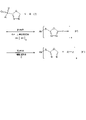
- FIG. 2 is a diagram showing an outline of modification of a thiol group-introduced antibody with the compound of the present invention represented by the formula (I) or a salt thereof.
- FIG. 3 is a diagram showing an outline of modification of a thiol group-introduced antibody with the compound of the present invention represented by the formula (II) or a salt thereof.
- FIG. 4 is a diagram showing an outline of modification of a thiol group-introduced antibody with the compound of the present invention represented by the formula (III) or a salt thereof.
- FIG. 5 is a diagram showing an outline of modification of a thiol group-introduced antibody with the compound of the present invention represented by the formula (IV) or a salt thereof.
- FIG. 6 is a diagram showing (1) the amino acid sequence of the heavy chain of trastuzumab (SEQ ID NO: 1) and (2) the amino acid sequence of the light chain of trastuzumab (SEQ ID NO: 2).
- FIG. 7 shows FNWYVDGVEVHNAKTKPR (SEQ ID NO: 3), a peptide consisting of 18 amino acid residues containing a site of modification of trussumab to a lysine residue by trypsin digestion (thiol-introduced product (+145.09Da) subjected to carbamidometry with iodoacetamide).
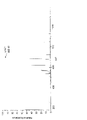
- FIG. 8 shows the modification of the lysine residue at position 288/290 of the human IgG heavy chain in EU numbering, which is a product ion of m / z 682.13 (theoretical value: 682.01) corresponding to trivalent y16. It is a figure which shows the CID spectrum.
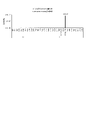
- FIG. 9 shows the results of searching for a peptide fragment containing a lysine residue-modified thiol-introduced product (+145.09Da) modified to a lysine residue by using a BioPharma Finder for a trypsin digest of trastuzumab.
- the horizontal axis represents the identified lysine residues, and the vertical axis represents Intensity.
- FNWYVDGVEVHNAKTTKPR SEQ ID NO: 3
- a peptide consisting of 18 amino acid residues containing a site of modification of trussumab to a lysine residue by trypsin digestion (a thiol-introduced product (+145.09 Da) subjected to carbamidometry with iodoacetamide).
- MS spectrum measured value: m / z 577.03571, theoretical value: 577.03557, tetravalent
- FIG. 11 shows the modification of the lysine residue at position 288/290 of the human IgG heavy chain in EU numbering, which is a product ion of m / z 682.41 (theoretical value: 682.01) corresponding to trivalent y16. It is a figure which shows the CID spectrum.
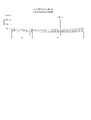
- FIG. 12 shows the results of searching for a peptide fragment containing a lysine residue-modified thiol-introduced product (+145.09Da) modified to a lysine residue (Carbamidemethylized with iodoacetamide) in a trypsin digested product of trastuzumab using BioPharma Finder.
- FIG. 13 shows FNWYVDGVEVHNAKTKPR (SEQ ID NO: 3), a peptide consisting of 18 amino acid residues containing a site of modification of trussumab to a lysine residue by trypsin digestion (thiol-introduced product (+145.09 Da) subjected to carbamidometry with iodoacetamide). It is a figure which shows the MS spectrum (measured value: m / z 769.04506, theoretical value: 769.04422, trivalent) of the peptide fragment of.
- FIG. 3 shows FNWYVDGVEVHNAKTKPR
- FIG. 14 shows the modification of the lysine residue at position 288/290 of the human IgG heavy chain in EU numbering, showing the modification of the product ion of m / z 1022.21 (theoretical value: 1022.51) corresponding to divalent y16. It is a figure which shows the CID spectrum.
- FIG. 15 shows the results of searching for a peptide fragment containing a modification to a lysine residue (a thiol-introduced product (+145.09Da) subjected to Carbamidemethylization with iodoacetamide) in a trypsin digested product of trastuzumab using BioPharma Finder.
- the horizontal axis represents the identified lysine residues, and the vertical axis represents Intensity.
- the term “antibody” is as follows.
- the term “immunoglobulin unit” corresponds to a divalent monomeric unit which is a basic component of such an antibody, and is a unit containing two heavy chains and two light chains. .. Therefore, for immunoglobulin units, definitions, examples, and preferred examples of their origin, type (polyclonal or monoclonal, isotype, and full-length antibody or antibody fragment), antigen, lysine residue position, and regioselectivity are given below. Similar to that of the antibody described.
- the origin of the antibody is not particularly limited, and may be derived from an animal such as a mammal, a bird (eg, a chicken), for example.
- the immunoglobulin unit is derived from a mammal.
- mammals include, for example, primates (eg, humans, monkeys, chimpanzees), rodents (eg, mice, rats, guinea pigs, hamsters, rabbits), pet animals (eg, dogs, cats), domestic animals. (Eg, cows, pigs, goats), servants (eg, horses, sheep), preferably primates or rodents, more preferably humans.
- the type of antibody may be a polyclonal antibody or a monoclonal antibody.
- the antibody may also be a divalent antibody (eg, IgG, IgD, IgE) or a tetravalent or higher valent antibody (eg, IgA antibody, IgM antibody).
- the antibody is a monoclonal antibody.
- the monoclonal antibody is modified to have, for example, a chimeric antibody, a humanized antibody, a human antibody, or an antibody to which a predetermined sugar chain is added (eg, a sugar chain binding consensus sequence such as an N-type sugar chain binding consensus sequence).
- Antibodies bispecific antibodies, Fc region proteins, Fc fusion proteins.
- Isotypes of monoclonal antibodies include, for example, IgG (eg, IgG1, IgG2, IgG3, IgG4), IgM, IgA, IgD, IgE, and IgY.
- a full-length antibody or a variable region and an antibody fragment eg, an antibody fragment containing CH1 domain and CH2 domain, and an antibody fragment not containing a constant region
- the antibody is preferably a human IgG monoclonal antibody, more preferably a human IgG full-length monoclonal antibody.
- any antigen can be used as the antigen of the antibody.
- antigens include proteins [oligopeptides, polypeptides. It may be a protein modified with a biomolecule such as sugar (eg, glycoprotein)], sugar chains, nucleic acids, small molecule compounds.
- the antibody may be an antibody that uses a protein as an antigen.
- proteins include cell membrane receptors, cell membrane proteins other than cell membrane receptors (eg, extracellular substrate proteins), ligands, and soluble receptors.
- the protein that is the antigen of the antibody may be a disease target protein.
- diseases target proteins include the following.
- Amyloid AL Hereditary / rare diseases Amyloid AL, SEMA4D (CD100), insulin receptor, ANGPTL3, IL4, IL13, FGF23, corticostimulatory hormone, transthyretin, huntingtin
- monoclonal antibodies include specific chimeric antibodies (eg, rituximab, baciliximab, infliximab, cetuximab, siltuximab, dinutuximab, altertoximab), specific humanized antibodies (eg, dacrizumab, paribizmab, trastuzumab, allenzumab, allenzumab).
- specific chimeric antibodies eg, rituximab, baciliximab, infliximab, cetuximab, siltuximab, dinutuximab, altertoximab
- specific humanized antibodies eg, dacrizumab, paribizmab, trastuzumab, allenzumab, allenzumab.
- Efarizumab Efarizumab, Bebashizumab, Natarizumab (IgG4), Toshirizumab, Ekurizumab (IgG2), Mogamurizumab, Pertsuzumab, Obinutsuzumab, Bedorizumab, Penproridumab (IgG4), Mepolizumab, Erotsumub Human antibodies (eg, adalimumab (IgG1), panitumumab, golimumab, ustequinumab, canaquinumab, ofatumumab, denosumab (IgG2), ipilimumab, berimumab, rapiximab, lambsilmab, nibolumab, dupilumab (IgG4) Necitumumab, Brodalumab (IgG2), Oralatumab) can be mentioned (if the IgG subtype is
- the lysine residue at position 246 corresponds to the 16th amino acid residue in the CH2 region of human IgG
- the lysine residue at position 248 corresponds to the 18th amino acid in the CH2 region of human IgG.
- the lysine residue at position 288 corresponds to the residue at position 58 of the human IgG CH2 region
- the lysine residue at position 290 corresponds to the amino acid residue at position 60 of the human IgG CH2 region.
- the lysine residue at position 317 corresponds to the 87th amino acid residue in the human IgG CH2 region.
- the notation at position 246/248 indicates that the lysine residue at position 246 or 248 is the subject.
- the notation at position 288/290 indicates that the lysine residue at position 288 or 290 is the subject.
- Halogen atom examples include a fluorine atom, a chlorine atom, a bromine atom and an iodine atom.
- Examples of the monovalent hydrocarbon group include a monovalent chain hydrocarbon group, a monovalent alicyclic hydrocarbon group, and a monovalent aromatic hydrocarbon group.
- the monovalent chain hydrocarbon group means a hydrocarbon group composed of only a chain structure and does not contain a cyclic structure in the main chain. However, the chain structure may be linear or branched. Examples of the monovalent chain hydrocarbon group include alkyl, alkenyl and alkynyl. Alkyl, alkenyl, and alkynyl may be linear or branched.
- alkyl an alkyl having 1 to 12 carbon atoms is preferable, an alkyl having 1 to 6 carbon atoms is more preferable, and an alkyl having 1 to 4 carbon atoms is further preferable.
- the number of carbon atoms of the substituent does not include the number of carbon atoms of the substituent.
- alkyl having 1 to 12 carbon atoms include methyl, ethyl, n-propyl, i-propyl, n-butyl, s-butyl, isobutyl, t-butyl, pentyl, hexyl, heptyl, octyl, nonyl, and decyl. , Dodecyl.
- an alkenyl having 2 to 12 carbon atoms is preferable, an alkenyl having 2 to 6 carbon atoms is more preferable, and an alkenyl having 2 to 4 carbon atoms is further preferable.
- the alkenyl has a substituent, the number of carbon atoms of the substituent does not include the number of carbon atoms of the substituent.
- the alkenyl having 2 to 12 carbon atoms include vinyl, propenyl, and n-butenyl.
- alkynyl having 2 to 12 carbon atoms is preferable, alkynyl having 2 to 6 carbon atoms is more preferable, and alkynyl having 2 to 4 carbon atoms is even more preferable.
- alkynyl having a substituent the number of carbon atoms of the substituent does not include the number of carbon atoms of the substituent.
- alkynyl having 2 to 12 carbon atoms include ethynyl, propynyl, and n-butynyl.
- alkyl is preferable.
- the monovalent alicyclic hydrocarbon group means a hydrocarbon group containing only an alicyclic hydrocarbon as a ring structure and not containing an aromatic ring, and the alicyclic hydrocarbon is either monocyclic or polycyclic. It may be. However, it does not have to be composed only of alicyclic hydrocarbons, and a chain structure may be contained in a part thereof.
- Examples of the monovalent alicyclic hydrocarbon group include cycloalkyl, cycloalkenyl, and cycloalkynyl, which may be monocyclic or polycyclic.
- cycloalkyl As the cycloalkyl, a cycloalkyl having 3 to 12 carbon atoms is preferable, a cycloalkyl having 3 to 6 carbon atoms is more preferable, and a cycloalkyl having 5 to 6 carbon atoms is further preferable.
- the number of carbon atoms of the substituent does not include the number of carbon atoms of the substituent.
- Examples of cycloalkyl having 3 to 12 carbon atoms include cyclopropyl, cyclobutyl, cyclopentyl, and cyclohexyl.
- cycloalkenyl a cycloalkenyl having 3 to 12 carbon atoms is preferable, a cycloalkenyl having 3 to 6 carbon atoms is more preferable, and a cycloalkenyl having 5 to 6 carbon atoms is further preferable.
- the number of carbon atoms of the substituent does not include the number of carbon atoms of the substituent.
- the cycloalkenyl having 3 to 12 carbon atoms include cyclopropenium, cyclobutenyl, cyclopentenyl, and cyclohexenyl.
- cycloalkynyl having 3 to 12 carbon atoms is preferable, cycloalkynyl having 3 to 6 carbon atoms is more preferable, and cycloalkynyl having 5 to 6 carbon atoms is even more preferable.
- the number of carbon atoms of the substituent does not include the number of carbon atoms of the substituent.
- Examples of cycloalkynyl having 3 to 12 carbon atoms include cyclopropynyl, cyclobutynyl, cyclopentinyl, and cyclohexynyl.
- cycloalkyl is preferable.
- the monovalent aromatic hydrocarbon group means a hydrocarbon group containing an aromatic ring structure. However, it does not have to be composed of only an aromatic ring, and a chain structure or an alicyclic hydrocarbon may be contained in a part thereof, and the aromatic ring may be either a monocyclic ring or a polycyclic ring. good.
- the monovalent aromatic hydrocarbon group an aryl having 6 to 12 carbon atoms is preferable, an aryl having 6 to 10 carbon atoms is more preferable, and an aryl having 6 carbon atoms is further preferable.
- the monovalent aromatic hydrocarbon group has a substituent, the number of carbon atoms of the substituent does not include the number of carbon atoms of the substituent. Examples of the aryl having 6 to 12 carbon atoms include phenyl and naphthyl.
- Phenyl is preferable as the monovalent aromatic hydrocarbon group.
- alkyl, cycloalkyl, and aryl are preferable as the monovalent hydrocarbon group.
- the monovalent heterocyclic group refers to a group obtained by removing one hydrogen atom from the heterocycle of a heterocyclic compound.
- the monovalent heterocyclic group is a monovalent aromatic heterocyclic group or a monovalent non-aromatic heterocyclic group.
- the hetero atom constituting the heterocyclic group preferably contains at least one selected from the group consisting of an oxygen atom, a sulfur atom, a nitrogen atom, a phosphorus atom, a boron atom and a silicon atom, and preferably contains an oxygen atom, a sulfur atom and a nitrogen atom. It is more preferable to include one or more selected from the group consisting of atoms.
- an aromatic heterocyclic group having 1 to 15 carbon atoms is preferable, an aromatic heterocyclic group having 1 to 9 carbon atoms is more preferable, and an aromatic heterocyclic group having 1 to 6 carbon atoms is more preferable.
- Group heterocyclic groups are more preferred.
- the monovalent aromatic heterocyclic group has a substituent, the number of carbon atoms of the substituent does not include the number of carbon atoms of the substituent.
- Examples of the monovalent aromatic heterocyclic group include pyrrolyl, furanyl, thiophenyl, pyridinyl, pyrariainyl, pyrimidinyl, pyrazinyl, triazinyl, pyrazolyl, imidazolyl, thiazolyl, isothiazolyl, oxazolyl, isooxazolyl, triazolyl, tetrazolyl, indolyl, prynyl and anthraquinolyl. , Carbazonyl, fluorenyl, quinolinyl, isoquinolinyl, quinazolinyl, and phthalazinyl.
- a non-aromatic heterocyclic group having 2 to 15 carbon atoms is preferable, a non-aromatic heterocyclic group having 2 to 9 carbon atoms is more preferable, and a non-aromatic heterocyclic group having 2 to 9 carbon atoms is more preferable.
- the non-aromatic heterocyclic group of 6 is more preferred.
- the monovalent non-aromatic heterocyclic group has a substituent, the number of carbon atoms of the substituent does not include the number of carbon atoms of the substituent.
- Examples of the monovalent non-aromatic heterocyclic group include oxylanyl, aziridinyl, azetidinyl, oxetanyl, thietanyl, pyrrolidinyl, dihydrofuranyl, tetrahydrofuranyl, dioxolanyl, tetrahydrothiophenyl, pyrolinyl, imidazolidinyl, oxazolidinyl, piperidinyl and dihydropyranyl.
- Tetrahydropyranyl Tetrahydropyranyl, tetrahydrothiopyranyl, morpholinyl, thiomorpholinyl, piperazinyl, dihydrooxadinyl, tetrahydrooxadinyl, dihydropyrimidinyl, and tetrahydropyrimidinyl.
- a 5-membered or 6-membered heterocyclic group is preferable.
- R 2 represents a hydrogen atom or a substituent described later.
- R 3 represents a divalent linear hydrocarbon group, a divalent cyclic hydrocarbon group, or a divalent heterocyclic group.
- m is an integer of 1 to 10, preferably an integer of 1 to 8, more preferably an integer of 1 to 6, even more preferably an integer of 1 to 5, and particularly preferably 1 to 3. Is an integer of.
- the divalent linear hydrocarbon group is a linear alkylene, a linear alkenylene, or a linear alkynylene.
- the linear alkylene is a linear alkylene having 1 to 6 carbon atoms, and a linear alkylene having 1 to 4 carbon atoms is preferable.
- Examples of the linear alkylene include methylene, ethylene, n-propylene, n-butylene, n-pentylene and n-hexylene.
- the linear alkenylene is a linear alkenylene having 2 to 6 carbon atoms, and a linear alkenylene having 2 to 4 carbon atoms is preferable.
- linear alkenylene examples include ethyleneylene, n-propinylene, n-butenylene, n-pentenylene, and n-hexenylene.
- the linear alkynylene is a linear alkynylene having 2 to 6 carbon atoms, and a linear alkynylene having 2 to 4 carbon atoms is preferable.
- Examples of the linear alkynylene include ethynylene, n-propinylene, n-butynylene, n-pentinylene, and n-hexinylene.
- divalent linear hydrocarbon group a linear alkylene is preferable.
- the divalent cyclic hydrocarbon group is an arylene or a divalent non-aromatic cyclic hydrocarbon group.
- arylene an arylene having 6 to 14 carbon atoms is preferable, an arylene having 6 to 10 carbon atoms is more preferable, and an arylene having 6 carbon atoms is particularly preferable.
- the arylene include phenylene, naphthylene, and anthraceneylene.
- divalent non-aromatic cyclic hydrocarbon group a monocyclic or polycyclic divalent non-aromatic cyclic hydrocarbon group having 3 to 12 carbon atoms is preferable, and a simple monocyclic hydrocarbon group having 4 to 10 carbon atoms is preferable.
- a divalent non-aromatic cyclic hydrocarbon group having a cyclic or polycyclic type is more preferable, and a divalent non-aromatic cyclic hydrocarbon group having a monocyclic number of 5 to 8 carbon atoms is particularly preferable.
- Examples of the divalent non-aromatic cyclic hydrocarbon group include cyclopropylene, cyclobutylene, cyclopentylene, cyclohexylene, cycloheptylene and cyclooctylene.
- arylene is preferable.
- the divalent heterocyclic group is a divalent aromatic heterocyclic group or a divalent non-aromatic heterocyclic group.
- the hetero atom constituting the heterocycle preferably contains at least one selected from the group consisting of an oxygen atom, a sulfur atom, a nitrogen atom, a phosphorus atom, a boron atom and a silicon atom, and preferably contains an oxygen atom, a sulfur atom and a nitrogen atom. It is more preferable to include one or more selected from the group consisting of.
- a divalent aromatic heterocyclic group having 3 to 15 carbon atoms is preferable, a divalent aromatic heterocyclic group having 3 to 9 carbon atoms is more preferable, and a carbon atom.
- a divalent aromatic heterocyclic group having the number 3 to 6 is particularly preferable.
- the divalent aromatic heterocyclic group include pyrrol diyl, frangyl, thiophene diyl, pyridine diyl, pyridazine diyl, pyrimidine diyl, pyrazine diyl, triazine diyl, pyrazole diyl, imidazole diyl, thiazole diyl, isothiazole diyl, and oxazole diyl.
- Isoxazole diyl triazole diyl, tetrazole diyl, indole diyl, purine diyl, anthraquinone diyl, carbazole diyl, full orange yl, quinoline diyl, isoquinolin diyl, quinazoline diyl, and phthalazine diyl.
- a non-aromatic heterocyclic group having 3 to 15 carbon atoms is preferable, a non-aromatic heterocyclic group having 3 to 9 carbon atoms is more preferable, and a non-aromatic heterocyclic group having 3 to 9 carbon atoms is more preferable.
- the non-aromatic heterocyclic group of 6 is particularly preferred.
- divalent non-aromatic heterocyclic group examples include pyrroldionediyl, pyrrolinedionediyl, oxylandiyl, aziridinediyl, azetidinediyl, oxetandiyl, thietandiyl, pyrrolidinediyl, dihydrofurandiyl, tetrahydrofurandiyl, dioxorandiyl and tetrahydrothiophene.
- Diyl Pyrroline Diyl, Imidazolidine Diyl, Oxazolidine Diyl, Piperidine Diyl, Dihydropyran Diyl, Tetrahydropyran Diyl, Tetrahydropyran Diyl, Morpholine Diyl, Thiomorpholin Diyl, Piperazine Diyl, Dihydrooxazine Diyl, Tetrahydropyran Diyl, Dihydropyrandiyl, And tetrahydropyrandiyl.
- a divalent aromatic heterocyclic group is preferable.
- R 2 is a hydrogen atom or an alkyl
- R 3 is alkylene or allylene m may be an integer of 1 to 5 (ie, 1, 2, 3, 4, or 5).
- the alkylene, arylene, and alkyl are the same as those described above.
- the main chain structure in the divalent group is 1 or more (for example, 1 to 10, preferably 1 to 8, more preferably 1 to 6, still more preferably 1 to 5, particularly preferably 1 to 3). It may be substituted with a substituent described later.
- Arylkill means arylalkyl. Definitions, examples and preferred examples of aryl and alkyl in arylalkyl are as described above.
- aralkyl aralkyl having 3 to 15 carbon atoms is preferable. Examples of such aralkyl include benzoyl, phenethyl, naphthylmethyl, and naphthylethyl.
- Bioorthogonal functional group Bioorthogonal functional groups do not react with biological constituents (eg, amino acids, proteins, nucleic acids, lipids, sugars, phosphoric acids) or react slowly with biological constituents but are non-biological constituents. A group that selectively reacts with a group. Bioorthogonal functional groups are well known in the art (eg, Sharpless CB et al., Angew. Chem. Int. Ed. 40, 2004 (2015); Bertozi CR et al., Science 291,357 (2001); Bertozi CR et al., Nature Chemical Biology 1, 13 (2005)).
- a bioorthogonal functional group for a protein is used as the bioorthogonal functional group.
- the thiol group-introduced antibody to be derivatized by the reagent of the present invention is a protein.
- a bioorthogonal functional group for a protein is a group that does not react with the side chains of the 20 natural amino acid residues that make up the protein, or reacts slowly with the side chains but reacts with the desired functional group. ..
- the 20 natural amino acids that make up proteins are alanine (A), aspartic acid (N), cysteine (C), glutamine (Q), glycine (G), isoleucine (I), leucine (L), and methionine (M).
- glycine which has no side chain (ie, a hydrogen atom), and a side chain, which is a hydrocarbon group (ie, a sulfur atom, a nitrogen atom, and an oxygen atom).
- Alanine, isoleucine, leucine, phenylalanine, and valine are inactive to normal reactions.
- bioorthogonal functional groups for proteins include aspartic acid, glutamine, methionine, proline, serine, threonine, tryptophan, tyrosine, in addition to the side chains of these amino acids that have side chains that are inactive to normal reactions. , Aspartic acid, glutamine, arginine, histidine, and lysine, which do not react with the side chains or react slowly, but react with the functional group of interest.
- bioorthogonal functional group examples include an azide residue, an aldehyde residue, a thiol residue, and an alkene residue (in other words, a vinylene (ethenylene) moiety which is the smallest unit having a double bond between carbon atoms. It suffices to have an alkyne residue (in other words, it may have an ethynylene moiety which is the smallest unit having a triple bond between carbon atoms; the same applies hereinafter), a halogen residue, and tetradine.
- alkyne residue in other words, it may have an ethynylene moiety which is the smallest unit having a triple bond between carbon atoms; the same applies hereinafter
- a halogen residue and tetradine.
- Residues nitron residues, hydroxylamine residues, nitrile residues, hydrazine residues, ketone residues, boronic acid residues, cyanobenzothiazole residues, allyl residues, phosphine residues, maleimide residues, disulfide residues , Thioester residues, ⁇ -halocarbonyl residues (eg, carbonyl residues with a fluorine atom, chlorine atom, bromine atom or iodine atom at the ⁇ position; the same applies hereinafter), isonitrile residue, sidonone residue, selenium residue Can be mentioned.
- ⁇ -halocarbonyl residues eg, carbonyl residues with a fluorine atom, chlorine atom, bromine atom or iodine atom at the ⁇ position; the same applies hereinafter
- the bioorthogonal functional group may correspond to any one of the chemical structures selected from the group consisting of the following. ⁇ here, R 1a , single or multiple R 1b , and single or multiple R 1c are the same or different, the above-mentioned substituents, or electron-withdrawing groups. ⁇ Is a bond. ]
- Examples of the electron-withdrawing group include a halogen atom, an alkyl substituted with a halogen atom (eg, trifluoromethyl), a boronic acid residue, a mesyl, a tosyl, a trifurate, a nitro, a cyano, a phenyl group, and a keto group (eg, a keto group).
- a halogen atom eg, trifluoromethyl
- a boronic acid residue eg, a mesyl, a tosyl, a trifurate, a nitro, a cyano, a phenyl group
- a keto group eg, a keto group
- the bioorthogonal functional group may be an alkyne residue or an azide.
- the alkyne residue may be more preferably a ring group having a triple bond between carbon atoms, which may be substituted with a substituent as described above.
- the bioorthogonal functional group may be protected.
- the bioorthogonal functional group which may be protected refers to an unprotected bioorthogonal functional group or a protected bioorthogonal functional group.
- the unprotected bioorthogonal functional group corresponds to the above-mentioned bioorthogonal functional group.
- a protected bioorthogonal functional group is a group that produces a bioorthogonal functional group by cleavage of the protecting group. Cleavage of the protecting group can be carried out by a specific treatment under conditions (mild conditions) that cannot cause denaturation / degradation of the protein (eg, cleavage of the amide bond).
- Such specific treatments include, for example, (a) treatment with one or more substances selected from the group consisting of acidic substances, basic substances, reducing agents, oxidizing agents, and enzymes, and (b) from the group consisting of light. Treatment with selected physicochemical stimuli or (c) leaving with a cleavable linker containing a self-degrading cleavable moiety can be mentioned.
- Such protecting groups and their cutting conditions are common technical knowledge in the art (eg, G. Leriche, L. Chiholm, A. Wagner, Bioorganic & Medicinal Chemistry. 20,571 (2012); Feng P. et al.
- Protected bioorthogonal functional groups include, for example, disulfide residues, ester residues, acetal residues, ketal residues, imine residues, and vicinaldiol residues.
- the protected bioorthogonal functional groups may correspond to any one of the chemical structures selected from the group consisting of: [Here, the wavy line orthogonal to the bond indicates the cutting site and The single or plural R 2a may be the same or different and may be selected from the group consisting of hydrogen atoms or the substituents described above. ⁇ Is a bond. ]
- the bioorthogonal functional group that may be protected is an unprotected bioorthogonal functional group.
- the functional substance is not particularly limited as long as it is a substance that imparts an arbitrary function to the antibody, and examples thereof include a drug, a labeling substance, and a stabilizer, but a drug or a labeling substance is preferable.
- the functional substance may also be a single functional substance or a substance in which two or more functional substances are linked.
- the drug may be a drug for any disease.
- diseases include, for example, cancers (eg, lung cancer, gastric cancer, colon cancer, pancreatic cancer, kidney cancer, liver cancer, thyroid cancer, prostate cancer, bladder cancer, ovarian cancer, uterine cancer, bone cancer, skin cancer, etc.
- Brain tumor, melanoma autoimmune and inflammatory diseases (eg, allergic disease, rheumatoid arthritis, systemic erythematosus), neurological diseases (eg, cerebral infarction, Alzheimer's disease, Parkinson's disease, muscular atrophic lateral sclerosis), Infectious diseases (eg, bacterial infections, viral infections), hereditary and rare diseases (eg, hereditary globular erythropathy, non-dystrophic myotension), eye diseases (eg, age-related luteal degeneration, diabetic retinopathy, etc.) Retinal pigment degeneration), diseases in the field of bone and orthopedics (eg, osteoarthritis), blood diseases (eg, leukemia, purpura), and other diseases (eg, diabetes, hyperlipidemia, etc.) , Liver disease, kidney disease, lung disease, cardiovascular disease, digestive system disease).
- the drug may be a prophylactic or therapeutic drug for a disease or a palliative drug for side effects.
- the drug may be an anti-cancer agent.
- Anti-cancer agents include, for example, chemotherapeutic agents, toxins, radioisotopes or substances containing them.
- Chemotherapeutic agents include, for example, DNA damaging agents, metabolic antagonists, enzyme inhibitors, DNA intercalating agents, DNA cleavage agents, topoisomerase inhibitors, DNA binding inhibitors, tubulin binding inhibitors, cytotoxic nucleosides, etc. Platinum compounds can be mentioned.
- Examples of toxins include bacterial toxins (eg, diphtheria toxins) and plant toxins (eg, ricin).
- Radioisotopes include, for example, a radioisotope of a hydrogen atom (eg, 3H ), a radioisotope of a carbon atom (eg, 14C ), a radioisotope of a phosphorus atom (eg, 32P ), and a sulfur atom.
- Radioisotopes eg, 35 S ), yttrium radioisotopes (eg 90 Y), technetium radioisotopes (eg 99 MTc), indium radioisotopes (eg 111 In), iodine atom radioactivity Isotopes (eg 123 I, 125 I, 129 I, 131 I), samarium radioisotopes (eg 153 Sm), renium radioisotopes (eg 186 Re), asstatin radioisotopes (eg 156 Re) 211 At), radioisotopes of bismuth (eg, 212 Bi).
- yttrium radioisotopes eg 90 Y
- technetium radioisotopes eg 99 MTc
- indium radioisotopes eg 111 In
- iodine atom radioactivity Isotopes eg 123 I, 125 I, 129
- auristatin MMAE, MMAF
- maitansine DM1, DM4
- PBD pyrrolobenzodiazepine
- IGN camptothecin analog
- calicheamicin duocalmycin
- eribulin anthracycline
- dmDNA31 tubricin.
- the labeling substance is a substance that enables detection of a target (eg, tissue, cell, substance).
- Labeling substances include, for example, enzymes (eg, peroxidase, alkaline phosphatase, luciferase, ⁇ -galactosidase), affinity substances (eg, streptavidin, biotin, digoxygenin, aptamer), fluorescent substances (eg, fluorescein, fluorescein isothiocyanate, rhodamine).
- Green fluorescent protein Green fluorescent protein, red fluorescent protein
- luminescent substances eg, luciferin, equolin, acridinium ester, tris (2,2'-bipyridyl) ruthenium, luminol
- radioactive isotopes eg, those mentioned above
- examples include substances containing it.
- Stabilizer is a substance that enables the stabilization of antibodies.
- Stabilizers include, for example, diols, glycerin, nonionic surfactants, anionic surfactants, natural surfactants, saccharides, and polyols.
- Functional substances may also be peptides, proteins, nucleic acids, small molecule organic compounds, sugar chains, lipids, high molecular polymers, metals (eg gold), killer.
- the peptide include a cell membrane penetrating peptide, a blood-brain barrier penetrating peptide, and a peptide drug.
- proteins include enzymes, cytokines, fragment antibodies, lectins, interferons, serum albumin, and antibodies.
- nucleic acids include DNA, RNA, and artificial nucleic acids. Nucleic acids also include, for example, RNA interference-inducing nucleic acids (eg, siRNA), aptamers, antisense.
- small molecule organic compounds include proteolysis-inducing chimeric molecules, dyes, and photodegradable compounds.
- the functional material does not have a bioorthogonal functional group that is likely to react with the bioorthogonal functional group carried by the antibody intermediate, the functional material is derivatized to have such a bioorthogonal functional group. May be done.
- the bioorthogonal functional group possessed by the functional substance or the derivatized functional substance is derived from the bioorthogonal functional group as described above while considering the bioorthogonal functional group possessed by the antibody intermediate. Be selected.
- the bioorthogonal functional group carried by the antibody intermediate is an alkyne residue (preferably a ring group having a triple bond between carbon atoms, which may be substituted with a substituent as described above).
- the functional material, or the bioorthogonal functional group carried by the derivatized functional material may be an azide.
- the bioorthogonal functional group carried by the antibody intermediate is an azide
- the bioorthogonal functional group carried by the functional substance or the derivatized functional substance is an alkyne residue (preferably, preferably). It may be a ring group having a triple bond between carbon atoms, which may be substituted with a substituent as described above).
- Derivatization is common technical knowledge in the art (eg, International Publication No. 2004/010957, US Patent Application Publication No. 2006/0074008, US Patent Application Publication No. 2005/02386649). For example, derivatization may be carried out using any cross-linking agent.
- the derivatization may be carried out using a specific linker having the desired functional group.
- a linker may be one in which the functional substance and the antibody can be separated by cleavage of the linker in an appropriate environment (eg, intracellular or extracellular).
- linkers include, for example, peptidyl linkers that are degraded by specific proteases [eg, intracellular proteases (eg, proteases present in lysosomes, or endosomes), extracellular proteases (eg, secretory proteases)].
- specific proteases eg, intracellular proteases (eg, proteases present in lysosomes, or endosomes), extracellular proteases (eg, secretory proteases)].
- the linker may be self-immolative (eg, WO 02/083180, WO 04/043493, WO 05/1192919).
- the derivatized functional substance is also simply referred to as "functional substance”.
- salt includes, for example, a salt with an inorganic acid, a salt with an organic acid, a salt with an inorganic base, a salt with an organic base, and a salt with an amino acid.
- the salt with the inorganic acid include salts with hydrogen chloride, hydrogen bromide, phosphoric acid, sulfuric acid, and nitric acid.
- salts with organic acids include formic acid, acetic acid, trifluoroacetic acid, lactic acid, tartaric acid, fumaric acid, oxalic acid, maleic acid, citric acid, succinic acid, malic acid, benzenesulfonic acid, and p-toluenesulfonic acid.
- Salts with inorganic bases include, for example, alkali metals (eg, sodium, potassium), alkaline earth metals (eg, calcium, magnesium), and other metals such as zinc, aluminum, and salts with ammonium. ..
- Examples of the salt with an organic base include salts with trimethylamine, triethylamine, propylenediamine, ethylenediamine, pyridine, ethanolamine, monoalkylethanolamine, dialkylethanolamine, diethanolamine, and triethanolamine.
- salts with amino acids include salts with basic amino acids (eg, arginine, histidine, lysine, ornithine) and acidic amino acids (eg, aspartic acid, glutamic acid).
- the salt is preferably a salt with an inorganic acid (eg, hydrogen chloride) or a salt with an organic acid (eg, trifluoroacetic acid).
- the sulfur atom (S) adjacent to the antibody (Ab) in formula (A) and the thiol group (SH) adjacent to the antibody (Ab) in formula (B) are located in the constant region of the antibody heavy chain. It is either directly attached or attached via a linker to an atom in the side chain of the same amino acid residue existing at the same position.
- the molecular weight of the partial structure represented by LR is 700 or less, and the molecular weight is 700 or less.
- Percentage of the amount of the antibody intermediate or salt thereof to the total amount of the antibody intermediate or salt thereof and the thiol group-introduced antibody or salt thereof [100 (%) ⁇ (amount of antibody intermediate or salt thereof) / ( The total amount of the antibody intermediate or its salt and the thiol group-introduced antibody or its salt)] is 80% or more.
- an antibody composition in which the agglutination rate of the antibody intermediate or a salt thereof and the thiol group-introduced antibody or a salt thereof is 5% or less.
- the antibody composition of the present invention can be obtained by reacting a thiol group-introduced antibody with a compound represented by "leaving group-LR" (Fig. 1). Therefore, the common symbols Ab and n in the formulas (A) and (B) are the same between the formulas (A) and (B). Although such an antibody composition can be obtained according to the present invention, there is no motivation to obtain such an antibody composition depending on the prior art.
- Ab in formulas (A) and (B) is an antibody comprising two heavy chains and two light chains and containing an immunoglobulin unit having a disulfide bond between the heavy chains and between the heavy chain and the light chain.
- Such antibodies include, for example, IgD, an IgG antibody comprising two heavy chains and two light chains, and an immunoglobulin unit having a disulfide bond between the heavy chains and between the heavy chain and the light chain.
- Antibodies and IgE Antibodies IgA antibodies containing 4 heavy chains and 4 light chains, and immunoglobulin units having disulfide bonds between the heavy chains and between the heavy and light chains, 8 heavy chains And IgM antibodies comprising immunoglobulin units containing 8 light chains and having a disulfide bond between the heavy chains and between the heavy chains and the light chain include IgG antibodies (eg, IgG1, IgG2, IgG3, etc.). IgG4) is preferred.
- the antibody is preferably a human IgG monoclonal antibody, more preferably a human IgG full-length monoclonal antibody.
- the divalent group represented by L in the formula (A) is the same as that described above.
- the protected bioorthogonal functional group represented by R in the formula (A) is the same as that described above.
- N in the formulas (A) and (B) is an integer from 1 to 8.
- n is preferably an integer of 1 to 6, and more preferably an integer of 1 to 4 (ie, 1, 2, 3 or 4).
- the sulfur atom (S) adjacent to the antibody (Ab) in the formula (A) and the thiol group (SH) adjacent to the antibody (Ab) in the formula (B) are in the constant region of the antibody heavy chain. It is directly attached to an atom in the side chain of the same amino acid residue existing at the same position, or is attached via a linker. Since the antibody composition of the present invention can be obtained by modifying a thiol group-introduced antibody with a compound represented by "leaving group-LR" (FIG. 1), the above-mentioned sulfur atom (S) and This is because the binding mode of the thiol group (SH) to the antibody is the same.
- the sulfur atom (S) is also directly bonded to the atom in the side chain
- the thiol group (SH) is also directly bonded to the same atom in the same side chain. It becomes a thing. Further, when the sulfur atom (S) is bonded to an atom in the side chain via a linker, the thiol group (SH) also attaches the same linker to the same atom in the same side chain. It will be connected through.
- the amino acid residue in the antibody used for binding the sulfur atom (S) and the thiol group (SH) may be an amino acid residue other than the cysteine residue.
- Amino acid residues other than cysteine residues include amino acid residues (eg, lysine residue, aspartic acid residue, glutamate residue) having side chains that are easily modified (eg, amino group, carboxy group, amide group, hydroxy group).
- Groups, asparagine residues, glutamine residues, threonine residues, serine residues, tyrosine residues) are available, but preferably lysine residues with side chains containing nitrogen atoms (amino groups), oxygen atoms (hydroxy).
- the amino acid residue in the antibody used for binding the sulfur atom (S) and the thiol group (SH) may be a cysteine residue. Since the compound used in the present invention has excellent reaction efficiency, it is considered to be useful not only for modifying the thiol group chemically introduced into the antibody but also for modifying the thiol group in the cysteine residue in the antibody. This is to be done.
- the amino acid residue in the antibody utilized for the binding of the sulfur atom (S) and the thiol group (SH) is a predetermined region in the constant region of the antibody heavy chain (for example, CH1, CH2 or CH3, preferably CH2 or CH3). You can use what exists in the position.
- the amino acid residue in the antibody utilized for binding the sulfur atom (S) and thiol group (SH) is a lysine residue having a side chain containing a nitrogen atom (amino group).
- the lysine residue include lysine residues present at one or more positions selected from the group consisting of positions 246/248, 288/290, and 317 in the human IgG heavy chain.
- a method for producing an antibody containing a specific atom or group at a predetermined position by regioselectively modifying a specific amino acid residue at a predetermined position is described in, for example, International Publication No./2018/199337, International Publication No. It is described in 2019/240288, International Publication No. 2019/240287, and International Publication No. 2020/090979.
- a specific amino acid residue at a predetermined position can be regioselectively modified without utilizing a linker containing a peptide.
- the peptide moiety has potential immunogenicity and is susceptible to hydrolysis in the blood. Therefore, avoiding the use of linkers containing peptide moieties is desirable in clinical applications.
- the thiol group-introduced antibody against an atom in the side chain of a specific amino acid residue (preferably a nitrogen atom in the side chain of a lysine residue) present at a predetermined position in the constant region of the heavy chain. Therefore, an antibody containing a thiol group that is position-selectively bound via a peptide-free linker can be used.
- the sulfur atom (S) adjacent to the antibody (Ab) in the formula (A) and the formula (B) By modifying such a thiol group-introduced antibody with a compound represented by "leaving group-LR", the sulfur atom (S) adjacent to the antibody (Ab) in the formula (A) and the formula (B) ), The thiol group (SH) adjacent to the antibody (Ab) binds directly to an atom in the side chain of the same amino acid residue existing at the same position in the constant region of the antibody heavy chain in a position-selective manner. It is possible to obtain the antibody composition of the present invention which is or is position-selectively bound via a linker.
- regioselective or “regioselectivity” refers to binding to a specific amino acid residue in an antibody even though the specific amino acid residue is not unevenly distributed in a specific region in the antibody. It means that a predetermined structural unit that can be formed is unevenly distributed in a specific region in an antibody. Therefore, expressions related to regioselectivity, such as “regioselectively possessed”, “regioselectively bound”, and “regioselectively bound”, are target regions containing one or more specific amino acid residues.
- the retention or binding rate of a given structural unit in the target region is significantly higher than the retention or binding rate of the structural unit in a non-target region containing a plurality of amino acid residues that are the same species as the specific amino acid residue in the target region. It means that it is high at a high level.
- an antibody obtained by the above method capable of regioselectively modifying a specific amino acid residue at a predetermined position with a thiol group is used as a thiol group-introduced antibody. Can be achieved by.
- Such regioselectivity is 50% or more, preferably 60% or more, more preferably 70% or more, even more preferably 80% or more, particularly preferably 90% or more, 95% or more, 96% or more, It may be 97% or more, 98% or more, 99% or more, 99.5% or more, or 100%. Confirmation of regioselectivity can be performed, for example, by peptide mapping [see, eg, WO 2019/240287 (WO2019 / 240287A1)].
- the peptide-free linker the above-mentioned divalent group can be used.
- the amino acid residue in the antibody used for binding the sulfur atom (S) and the thiol group (SH) is a lysine residue
- it is used as a peptide-free linker in the side chain of the lysine residue.
- One group selected from the group consisting of -NR 4 -C ( S)-, -O-, -S-,-(OR 5 ) m1- , and-(SR 5 ) m1- .
- a main containing two or more of these (for example, 2 to 10, preferably 2 to 8, more preferably 2 to 6, even more preferably 2 to 5, particularly preferably 2 or 3).
- Groups having a chain structure can be used.
- R 4 represents a hydrogen atom or a substituent described later.
- R 5 represents a divalent linear hydrocarbon group, a divalent cyclic hydrocarbon group, or a divalent heterocyclic group.
- m1 is an integer of 1 to 10, preferably an integer of 1 to 8, more preferably an integer of 1 to 6, even more preferably an integer of 1 to 5, and particularly preferably 1 to 3. Is an integer of.
- R 2 is a hydrogen atom or an alkyl
- R 3 is alkylene or allylene m may be an integer of 1 to 5 (ie, 1, 2, 3, 4, or 5).
- the alkylene, arylene, and alkyl are the same as those described above.
- the main chain structure of the carbonyl-containing linker is 1 or more (for example, 1 to 10, preferably 1 to 8, more preferably 1 to 6, still more preferably 1 to 5, particularly preferably 1 to 3). ) May be substituted with the above-mentioned substituent.
- the molecular weight of the partial structure represented by LR in the formula (A) is 700 or less.
- the antibody intermediate having a bioorthogonal functional group which may be protected or a salt thereof, and the thiol group-introduced antibody or a salt thereof are the whole antibody. Since the ratio of the molecular weight of the partial structure to the molecular weight is very small, it is difficult to separate based on the difference in molecular weight.
- the molecular weight of the partial structure represented by LR is preferably 600 or less, more preferably 500 or less, even more preferably 400 or less, and particularly preferably 300 or less, 250 or less, 200 or less, or 150. It is as follows.
- the percentage of the amount of the antibody intermediate or its salt to the total amount of the antibody intermediate or its salt and the thiol group-introduced antibody or its salt [100 (%) ⁇ (amount of antibody intermediate or its salt) / ( The total amount of the antibody intermediate or its salt and the thiol group-introduced antibody or its salt)] is 80% or more. Since the compound or salt thereof used in the present invention has excellent reaction efficiency with the thiol group-introduced antibody or salt thereof, good reactivity expressed as such a percentage can be achieved.
- Such percentages are preferably 82% or higher, more preferably 84% or higher, even more preferably 86% or higher, particularly preferably 88% or higher, 90% or higher, 92% or higher, 94% or higher, or 96% or higher. Is. Such percentages can be determined based on reverse phase HPLC under reducing conditions or measured values by mass spectrometry (see Examples).
- the agglutination rate of the antibody intermediate or a salt thereof and the thiol group-introduced antibody or a salt thereof is 5% or less.
- Modification of a thiol group-introduced antibody with the compound used in the present invention can be performed under conditions that cannot cause protein denaturation / degradation (eg, cleavage of amide bond) (mild conditions), and causes antibody aggregation. Because it is difficult.
- the aggregation rate is preferably 4.8% or less, more preferably 4.6% or less, even more preferably 4.4% or less, particularly preferably 4.2% or less, 4.0% or less, 3.8% or less. Below, it is 3.6% or less, or 3.4% or less.
- the agglutination rate of the antibody can be measured by size exclusion chromatography (SEC) -HPLC (see Examples and ACS Omega 2020, 5, 7193-7200).
- the antibody composition of the present invention comprises (A) an antibody intermediate having a bioorthogonal functional group which may be protected or a salt thereof, and (B) a thiol group-introduced antibody or a salt thereof, as well as a thiol group-introduced antibody.
- the antibody used as a raw material for producing the above may be further contained.
- the characteristics of the antibody used as a raw material for producing the thiol group-introduced antibody can be inherited by the "antibody intermediate having a bioorthogonal functional group which may be protected” and the "thiol group-introduced antibody”. ..
- the antibody used as a raw material for producing a thiol group-introduced antibody is defined in the same manner as “antibody” in “antibody intermediate having a bioorthogonal functional group which may be protected” and “thiol group-introduced antibody”. be able to.
- the antibody composition of the present invention can be obtained by reacting a thiol group-introduced antibody with a compound represented by "leaving group-LR" (Fig. 1). From such a reaction, the thiol group in the thiol group-introduced antibody and the leaving group-binding atom in L in the compound represented by "leaving group-LR" are bonded, and the leaving group is eliminated. Leaving from the group-binding atom, an antibody composition containing an antibody intermediate or a salt thereof (reaction product) and a thiol group-introduced antibody or a salt thereof (unreacted product) is obtained.
- the molar ratio of the compound represented by "leaving group-LR” or a salt thereof to the thiol group-introduced antibody or a salt thereof (the compound represented by "leaving group-LR” or a salt thereof).
- the thiol group-introduced antibody or a salt thereof) is not particularly limited because it varies depending on factors such as the compound represented by "leaving group-LR” or a salt thereof, and the type of the thiol group-introduced antibody. For example, it is 1 to 100, preferably 2 to 80, and more preferably 3 to 50.
- Such a reaction can be appropriately carried out under conditions (mild conditions) that cannot cause protein denaturation / decomposition (eg, cleavage of amide bond).
- a reaction can be carried out at room temperature (eg, about 15-30 ° C.) in a suitable reaction system, eg buffer.
- the pH of the buffer is, for example, 5 to 9, preferably 5.5 to 8.5, and more preferably 6.0 to 8.0.
- the buffer may contain a suitable catalyst.
- the reaction time is, for example, 1 minute to 20 hours, preferably 10 minutes to 15 hours, more preferably 20 minutes to 10 hours, and even more preferably 30 minutes to 8 hours.
- Confirmation of the formation of the antibody intermediate or its salt can be performed, for example, by reverse phase HPLC under reducing conditions or mass spectrometry, although it depends on the specific raw material and the molecular weight of the product.
- the antibody composition of the present invention can contain an antibody intermediate having a bioorthogonal functional group which may be protected or a salt thereof at a high content in a state where the aggregation rate is low.
- An antibody intermediate or a salt thereof having a bioorthogonal functional group which may be protected can be used for the production of a conjugate of an antibody and a functional substance or a salt thereof. Therefore, the antibody composition of the present invention can efficiently produce a conjugate of an antibody and a functional substance or a salt thereof in a state where the aggregation rate is low.
- the present invention provides a reagent for derivatization of a thiol group-introduced antibody or a salt thereof.
- the reagent of the present invention comprises a compound represented by the following formula (I) or a salt thereof.
- X is a halogen atom
- Q is arylene or alkylene
- Y is a bond or a divalent group
- R is a bioorthogonal functional group that may be protected.
- halogen atom represented by X in the formula (I) is the same as that described above.
- Examples of the arylene represented by Q in the formula (I) include phenylene, naphthylene, and anthracenirene, and phenylene and naphthylene are preferable, and phenylene is preferable.
- Examples of the alkylene represented by Q in the formula (I) include a straight chain or a branched chain alkylene, and a straight chain alkylene is preferable.
- As the linear alkylene a linear alkylene having 1 to 6 carbon atoms is preferable, and a linear alkylene having 1 to 4 carbon atoms is more preferable.
- the divalent group represented by Y in the formula (I) is the same as that described above.
- the divalent group represented by Y in formula (I) may be a group having a backbone structure comprising ⁇ (OR 5 ) m1- .
- R5 and m1 are the same as those described above.
- the protected bioorthogonal functional group represented by R in the formula (I) is the same as that described above.
- the reagent of the present invention comprises a compound represented by the following formula (II) or a salt thereof.
- R 1 is alkyl Y is a divalent base, R is a bioorthogonal functional group that may be protected.
- the alkyl represented by R1 in the formula (II) is the same as that described above.
- the divalent group represented by Y in the formula (II) is the same as that described above.
- the protected bioorthogonal functional group represented by R in the formula (II) is the same as that described above.
- the reagent of the present invention comprises a compound represented by the following formula (III) or a salt thereof.
- Y is a divalent base
- R is a bioorthogonal functional group that may be protected.
- the divalent group represented by Y in the formula (III) is the same as that described above.
- the protected bioorthogonal functional group represented by R in the formula (III) is the same as that described above.
- the reagent of the present invention comprises a compound represented by the following formula (IV) or a salt thereof.
- Y is a divalent base
- R is a bioorthogonal functional group that may be protected.
- the divalent group represented by Y in the formula (IV) is the same as that described above.
- the protected bioorthogonal functional group represented by R in the formula (IV) is the same as that described above.
- the compounds represented by the formulas (I) to (IV) may be compounds represented by the following formulas (1) to (12).
- k is an integer of 0 or 1 and m is an integer of 1 to 5 (preferably an integer of 1 to 3).
- m' is an integer of 1 to 5 (preferably an integer of 1 to 3).
- R 2 and R 3 are independently hydrogen atoms or methyl, respectively.
- R 6 is a biotrophic functional group that may be protected.
- X, R 1 , Q and R are the same as those described above. )
- thiol group-introduced antibody or salt thereof derivatized by the reagent of the present invention is as described above for the thiol group-introduced antibody or antibody.
- a thiol group in a thiol group-introduced antibody is an atom (preferably a lysine residue) in the side chain of an amino acid residue in the constant region of the antibody heavy chain (eg, an amino acid residue having a side chain that is easily modified as described above). It may be position-selectively attached to the nitrogen atom in the side chain of the group via a linker that does not contain a peptide.
- the thiol group-introduced antibody may be an IgG antibody.
- such a lysine residue is one or more selected from the group consisting of positions 246/248, 288/290, and 317 of the human IgG heavy chain in EU numbering. It may exist at the position of.
- the reagent of the present invention derivatizes a thiol group-introduced antibody or a salt thereof by reacting with a thiol group (preferably a thiol group introduced via a side chain of a lysine residue) in the thiol group-introduced antibody or a salt thereof. can do.
- a thiol group preferably a thiol group introduced via a side chain of a lysine residue
- the reagent of the present invention may be provided in the form of a composition further containing other components.
- other components include solutions, stabilizers (eg, antioxidants, preservatives).
- an aqueous solution is preferable.
- the aqueous solution include water (eg, distilled water, sterile distilled water, purified water, physiological saline), buffer solution (eg, phosphoric acid aqueous solution, Tris-hydrochloride buffer solution, carbonic acid-bicarbonate buffer solution, boric acid aqueous solution). , Glycine-sodium hydroxide buffer, citrate buffer), but a buffer is preferred.
- the pH of the solution is, for example, 5.0 to 9.0, preferably 5.5 to 8.5.
- the reagents of the present invention can be provided in liquid or powder form (eg, lyophilized powder).
- the compound of the present invention is a compound represented by the following formula (I) or a salt thereof.
- X is a halogen atom
- Q is arylene or alkylene
- Y is a divalent base
- R is a bioorthogonal functional group that may be protected.
- the compound of the present invention is a compound represented by the following formula (II) or a salt thereof.
- R 1 is alkyl Y is a divalent base, R is a bioorthogonal functional group that may be protected.
- the alkyl represented by R 1 , the divalent group represented by Y, and the potentially protected bioorthogonal functional group represented by R in formula (II) are the same as those described above. ..
- the compound of the present invention is a compound represented by the following formula (III) or a salt thereof.
- Y is a divalent base
- R is a bioorthogonal functional group that may be protected.
- the compound of the present invention is a compound represented by the following formula (IV) or a salt thereof.
- Y is a divalent base
- R is a bioorthogonal functional group that may be protected.
- the divalent group represented by Y and the potentially protected bioorthogonal functional group represented by R in the formula (IV) are the same as those described above.
- the compounds represented by the formulas (I) to (IV) may be compounds represented by the above formulas (2) to (12).
- the compounds represented by the formulas (I) to (IV) can be obtained by a synthetic reaction as described in Examples.
- a reaction can be carried out in a suitable organic solvent system at a suitable temperature (eg, about 4 to 90 ° C.).
- the reaction time is, for example, 1 minute to 20 hours, preferably 10 minutes to 15 hours.
- Confirmation of the formation of a series of compounds or salts thereof as described above can be performed by, for example, NMR or mass spectrometry, although it depends on the specific raw material and the molecular weight of the product.
- a compound or a salt thereof can be appropriately purified by any method such as chromatography, solvent extraction, recrystallization and the like.
- the compound of the present invention or a salt thereof can be used for derivatization of a thiol group-introduced antibody or a salt thereof.
- Antibody intermediates or salts thereof The present invention provides antibody intermediates or salts thereof having bioorthogonal functional groups which may be protected.
- the antibody intermediate of the present invention is an antibody intermediate having a bioorthogonal functional group which may be protected, which is represented by the following formula (I').
- Ab is an antibody
- S is a sulfur atom
- Q is arylene or alkylene
- Y is a bond or a divalent group
- R is a bioorthogonal functional group that may be protected
- n is an integer from 1 to 8.
- the sulfur atom (S) adjacent to the antibody is an atom (preferably, preferably) in the side chain of an amino acid residue in the constant region of the antibody heavy chain (eg, an amino acid residue having an easily modifiable side chain described above). It may be position-selectively bound to the nitrogen atom in the side chain of the lysine residue via a peptide-free linker.
- Antibodies also include antibodies containing immunoglobulin units containing two heavy chains and two light chains (preferably containing two heavy chains and two light chains, and inter-heavy and heavy chains.
- the antibody may be an antibody containing an immunoglobulin unit having a disulfide bond with the light chain).
- the antibody may be an IgG antibody.
- a human IgG antibody is used as the antibody, such a lysine residue is located at one or more positions selected from the group consisting of positions 246/248, 288/290, and 317 of the human IgG heavy chain in EU numbering. It may exist.
- Regioselectivity and its degree are similar to those described above. The confirmation of the regioselectivity can be confirmed by the method described above.
- N in the formula (I') is an integer of 1 to 8, preferably an integer of 1 to 6, and more preferably an integer of 1 to 4 (that is, 1, 2, 3, or 4).
- Examples of the arylene represented by Q in the formula (I') include phenylene, naphthylene, and anthracenirene, and phenylene and naphthylene are preferable, and phenylene is preferable.
- Examples of the alkylene represented by Q in the formula (I') include straight chain or branched chain alkylene, and straight chain alkylene is preferable.
- As the linear alkylene a linear alkylene having 1 to 6 carbon atoms is preferable, and a linear alkylene having 1 to 4 carbon atoms is more preferable.
- the divalent group represented by Y and the potentially protected bioorthogonal functional group represented by R in the formula (I') are the same as those described above.
- the divalent group represented by Y in formula (I') may be a group having a backbone structure comprising ⁇ (OR 5 ) m1- .
- R5 and m1 are the same as those described above.
- the antibody intermediate of the present invention is an antibody intermediate having a bioorthogonal functional group which may be protected, which is represented by the following formula (II').
- Ab is an antibody
- S is a sulfur atom
- Y is a bond or a divalent group
- R is a bioorthogonal functional group that may be protected and n is an integer from 1 to 8.
- the antibody represented by Ab the relationship between the antibody and the sulfur atom (S) adjacent thereto, an integer represented by n, a divalent group represented by Y, and represented by R.
- the bioorthogonal functional groups that may be protected are the same as those described above.
- the antibody intermediate of the present invention is an antibody intermediate having a bioorthogonal functional group which may be protected, which is represented by the following formula (III').
- III' a bioorthogonal functional group which may be protected
- the antibody represented by Ab the relationship between the antibody and the sulfur atom (S) adjacent thereto, an integer represented by n, a divalent group represented by Y, and represented by R.
- the bioorthogonal functional groups that may be protected are the same as those described above.
- the antibody intermediate of the present invention is an antibody intermediate having a bioorthogonal functional group which may be protected, which is represented by the following formula (IV').
- IV' a bioorthogonal functional group which may be protected
- the antibody represented by Ab the relationship between the antibody and the sulfur atom (S) adjacent thereto, an integer represented by n, a divalent group represented by Y, and represented by R.
- the bioorthogonal functional groups that may be protected are the same as those described above.
- the antibody intermediates represented by the formulas (I') to (IV') may be antibody intermediates represented by the following formulas (1') to (12').
- k is an integer of 0 or 1 and m is an integer of 1 to 5 (preferably an integer of 1 to 3).
- m' is an integer of 1 to 5 (preferably an integer of 1 to 3).
- R 2 and R 3 are independently hydrogen atoms or methyl, respectively.
- R 6 is a biotrophic functional group that may be protected.
- Ab, S, Q, R and n adjacent to Ab are the same as those described above. )
- the aggregation rate of the antibody intermediate of the present invention or a salt thereof may be 5% or less.
- Modification of a thiol group-introduced antibody with the compound used in the present invention can be performed under conditions that cannot cause protein denaturation / degradation (eg, cleavage of amide bond) (mild conditions), and causes antibody aggregation. Because it is difficult.
- the aggregation rate is preferably 4.8% or less, more preferably 4.6% or less, even more preferably 4.4% or less, particularly preferably 4.2% or less, 4.0% or less, 3.8% or less. Below, it is 3.6% or less, or 3.4% or less.
- the agglutination rate of the antibody can be measured by size exclusion chromatography (SEC) -HPLC (see Examples and ACS Omega 2020, 5, 7193-7200).
- the antibody intermediate of the present invention or a salt thereof can also have high blood stability.
- the antibody intermediate of the present invention can be obtained by reacting a thiol group-introduced antibody with a compound represented by the formulas (I) to (IV) or a salt thereof (FIG. 1).
- the molar ratio of the compound represented by the formulas (I) to (IV) or the salt thereof (the compound represented by the formulas (I) to (IV) or the salt / thiol thereof with respect to the thiol group-introduced antibody or the salt thereof).
- the group-introduced antibody or salt thereof) is not particularly limited as it varies depending on factors such as the compounds represented by the formulas (I) to (IV) or salts thereof, and the type of thiol group-introduced antibody, and is not particularly limited. It is ⁇ 100, preferably 2-80, and more preferably 3-50.
- Such a reaction can be appropriately carried out under conditions (mild conditions) that cannot cause protein denaturation / decomposition (eg, cleavage of amide bond).
- a reaction can be carried out at room temperature (eg, about 15-30 ° C.) in a suitable reaction system, eg buffer.
- the pH of the buffer is, for example, 5 to 9, preferably 5.5 to 8.5, and more preferably 6.0 to 8.0.
- the buffer may contain a suitable catalyst.
- the reaction time is, for example, 1 minute to 20 hours, preferably 10 minutes to 15 hours, more preferably 20 minutes to 10 hours, and even more preferably 30 minutes to 8 hours.
- Confirmation of the formation of the antibody intermediate or its salt can be performed, for example, by reverse phase HPLC under reducing conditions or mass spectrometry, although it depends on the specific raw material and the molecular weight of the product.
- the antibody intermediate of the present invention can be used for producing a conjugate of an antibody and a functional substance or a salt thereof.
- the conjugate of the present invention is a conjugate of an antibody and a functional substance represented by the following formula (I ′′).
- Ab is an antibody
- S is a sulfur atom
- Q is arylene or alkylene
- Y is a bond or a divalent group
- R' is a group produced by the reaction between two bioorthogonal functional groups capable of reacting with each other.
- Z is a functional substance
- n is an integer from 1 to 8.
- the sulfur atom (S) adjacent to the antibody is the same as that described above for the thiol group-introduced antibody or antibody.
- the sulfur atom (S) adjacent to the antibody is an atom (preferably, preferably) in the side chain of an amino acid residue in the constant region of the antibody heavy chain (eg, an amino acid residue having an easily modifiable side chain described above). It may be position-selectively bound to the nitrogen atom in the side chain of the lysine residue via a peptide-free linker.
- Antibodies also include antibodies containing immunoglobulin units containing two heavy chains and two light chains (preferably containing two heavy chains and two light chains, and inter-heavy and heavy chains. It may be an antibody containing an immunoglobulin unit having a disulfide bond with the light chain). Further, the antibody may be an IgG antibody. When a human IgG antibody is used as the antibody, such a lysine residue is located at one or more positions selected from the group consisting of positions 246/248, 288/290, and 317 of the human IgG heavy chain in EU numbering. It may exist. Regioselectivity and its degree are similar to those described above. The confirmation of the regioselectivity can be confirmed by the method described above.
- N in the formula (I'') is an integer of 1 to 8, preferably an integer of 1 to 6, and more preferably an integer of 1 to 4 (that is, 1, 2, 3, or 4). ..
- the groups generated by the reaction between two bioorthogonal functional groups that can react with each other and are represented by R'in the formula (I'') are the bioorthogonal functional group carried by the antibody intermediate and the functional substance. Is a group produced by reaction with bioorthogonal functional groups retained by (where these bioorthogonal functional groups are selected to be reactive combinations with each other). Since combinations of two bioorthogonal functional groups capable of reacting with each other are well known, those skilled in the art will appropriately select such a combination to form a portion produced by the reaction of two bioorthogonal functional groups capable of reacting with each other. A divalent group containing the above can be appropriately set.
- Examples of the combination of bioorthogonal functional groups capable of reacting with each other include a combination of a thiol residue and a maleimide residue, a combination of a furan residue and a maleimide residue, and a combination of a thiol residue and a halocarbonyl residue (by substitution reaction).
- Halogen is substituted with thiol
- Alkin residue preferably a ring group having a triple bond between carbon atoms, which may be substituted with a substituent as described above
- azide residue tetradine.
- the above-mentioned part is a group formed by the reaction of a thiol residue and a maleimide residue, a group formed by a reaction of a furan residue and a maleimide residue, a group formed by a reaction of a thiol residue and a halocarbonyl residue, and an alkin.
- It may be a group formed by the reaction of a residue and an azide residue, a group formed by a reaction of a tetrazine residue and an alken residue, or a disulfide group formed by a combination of a thiol residue and another thiol residue.
- a combination of bioorthogonal functional groups capable of reacting with each other for example, an alkyne residue (preferably a ring group having a triple bond between carbon atoms, which may be substituted by a substituent as described above) and an azide.
- the combination of bioorthogonal functional groups capable of reacting with each other is an alkyne residue (preferably a ring group having a triple bond between carbon atoms, which may be substituted with a substituent as described above) and an azide. It may be a combination of.
- R' is a divalent triazole ring group.
- R' is a divalent ring in which the ring group and the triazole ring are condensed.
- the ring group having a triple bond between carbon atoms may be substituted with the substituent as described above, the divalent ring group in which the ring group and the triazole ring are condensed is also substituted as described above. It may be substituted by a group.
- the group produced by the reaction between two bioorthogonal functional groups capable of reacting with each other may be a divalent group represented by any one of the following structural formulas. good.
- white circles and black circles indicate bonds. When the bond of the white circle is bonded to the atom existing on the Ab bond side, the bond of the black circle may be bonded to Z, and when the bond of the white circle is bonded to Z, the bond of the black circle is bonded. The hand may be bonded to an atom existing on the Ab bond side.
- Examples of the arylene represented by Q in the formula (I ′′) include phenylene, naphthylene, and anthracenirene, and phenylene and naphthylene are preferable, and phenylene is preferable.
- Examples of the alkylene represented by Q in the formula (I ′′) include straight chain or branched chain alkylene, and straight chain alkylene is preferable.
- As the linear alkylene a linear alkylene having 1 to 6 carbon atoms is preferable, and a linear alkylene having 1 to 4 carbon atoms is more preferable.
- the divalent group represented by Y and the functional substance represented by Z in the formula (I ′′) are the same as those described above.
- the divalent group represented by Y in formula (I'') may be a group having a backbone structure comprising ⁇ (OR 5 ) m1- .
- R5 and m1 are the same as those described above.
- the conjugate of the present invention is a conjugate of an antibody and a functional substance represented by the following formula (II ′′).
- Ab is an antibody
- S is a sulfur atom
- Y is a bond or a divalent group
- R' is a group produced by the reaction between two bioorthogonal functional groups capable of reacting with each other.
- Z is a functional substance, n is an integer from 1 to 8.
- the groups produced by the reaction between two bioorthogonal functional groups capable of reacting with each other and the functional substance represented by Z are the same as those described above.
- the conjugate of the present invention is a conjugate of an antibody and a functional substance represented by the following formula (III ′′).
- Ab is an antibody
- S is a sulfur atom
- Y is a bond or a divalent group
- R' is a group produced by the reaction between two bioorthogonal functional groups capable of reacting with each other.
- Z is a functional substance, n is an integer from 1 to 8.
- the groups produced by the reaction between two bioorthogonal functional groups capable of reacting with each other and the functional substance represented by Z are the same as those described above.
- the conjugate of the present invention is a conjugate of an antibody and a functional substance represented by the following formula (IV ′′).
- Ab is an antibody
- S is a sulfur atom
- Y is a bond or a divalent group
- R' is a group produced by the reaction between two bioorthogonal functional groups capable of reacting with each other.
- Z is a functional substance, n is an integer from 1 to 8.
- the groups produced by the reaction between two bioorthogonal functional groups capable of reacting with each other and the functional substance represented by Z are the same as those described above.
- the conjugates represented by the formulas (I ′′) to (IV'') may be the conjugates represented by the following formulas (1 ′′) to (12 ′′). .. (During the ceremony k is an integer of 0 or 1 and m is an integer of 1 to 5 (preferably an integer of 1 to 3). m'is an integer of 1 to 5 (preferably an integer of 1 to 3). R 2 and R 3 are independently hydrogen atoms or methyl, respectively. R 6'is a group produced by the reaction between two bioorthogonal functional groups capable of reacting with each other. Z'is a functional substance, Ab, S, Q, R', Z and n adjacent to Ab are the same as those described above. )
- the aggregation rate of the conjugate of the present invention or a salt thereof may be 10% or less.
- the antibody intermediate or its salt used in the present invention has an aggregation rate of 5% or less, and the conjugate or its salt of the present invention denatures or decomposes such an antibody intermediate or its salt into a protein (eg,). This is because it can be obtained by subjecting the reaction to a reaction under conditions (mild conditions) that cannot cause cleavage of the amide bond, and it is unlikely to cause antibody aggregation.
- the aggregation rate is preferably 9% or less, more preferably 8.5% or less, even more preferably 8.0% or less, particularly preferably 7.5% or less, 7.0% or less, 6.5% or less, 6.0% or less, 5.5% or less, 5% or less, 4.8% or less, 4.6% or less, 4.4% or less, 4.2% or less, 4.0% or less, 3.8% Hereinafter, it may be 3.6% or less, or 3.4% or less.
- the agglutination rate of the antibody can be measured by size exclusion chromatography (SEC) -HPLC (see Examples and ACS Omega 2020, 5, 7193-7200).
- the conjugate of the present invention or a salt thereof can also have high blood stability.
- the conjugate of the present invention or a salt thereof can be obtained by reacting the antibody intermediate of the present invention or a salt thereof with a functional substance.
- a reaction can be carried out under conditions that cannot cause denaturation / degradation of a protein (immunoglobulin / antibody) (eg, cleavage of an amide bond) (mild conditions as described above).
- the molar ratio of the functional substance to the antibody intermediate or its salt is a factor such as the type of the antibody intermediate or its salt, the functional substance, and the reaction time. It is not particularly limited as it varies depending on the above, but is, for example, 2 or more, preferably 3 or more, and more preferably 5 or more.
- a sufficient amount (eg, excess amount) of the functional substance with respect to the antibody intermediate or a salt thereof can be used.
- Confirmation of the formation of the conjugate or its salt can be performed, for example, by reverse phase HPLC under reducing conditions or mass spectrometry, although it depends on the specific raw material and the molecular weight of the product.
- the conjugate or salt thereof can be appropriately purified by any method such as chromatography (eg, affinity chromatography).
- the conjugate of the present invention or a salt thereof can be used, for example, as a drug or a reagent (eg, a diagnostic agent, a research reagent).
- a reagent eg, a diagnostic agent, a research reagent.
- the conjugate of the present invention or a salt thereof may be provided in the form of a pharmaceutical composition.
- a pharmaceutical composition may contain a pharmaceutically acceptable carrier in addition to the conjugate of the present invention or a salt thereof.
- Pharmaceutically acceptable carriers include, for example, excipients such as sucrose, starch, mannit, sorbit, lactose, glucose, cellulose, talc, calcium phosphate, calcium carbonate, cellulose, methyl cellulose, hydroxypropyl cellulose, polypropylpyrrolidone.
- Gelatin gum arabic, polyethylene glycol, sucrose, starch and other binders, starch, carboxymethyl cellulose, hydroxypropyl starch, sodium hydrogen carbonate, calcium phosphate, calcium citrate and other disintegrants, magnesium stearate, aerodyl, talc, lauryl Lubricants such as sodium sulfate, citric acid, menthol, glycyrrhizin / ammonium salt, glycine, fragrances such as orange powder, preservatives such as sodium benzoate, sodium hydrogen sulfite, methylparaben, propylparaben, citric acid, sodium citrate, acetic acid Stabilizers such as, methyl cellulose, polyvinylpyrrolidone, suspending agents such as aluminum stearate, dispersants such as surfactants, diluents such as water, physiological saline, orange juice, cocoa butter, polyethylene glycol, white kerosene, etc.
- examples include,
- Suitable formulations for oral administration are solutions in which an effective amount of ligand is dissolved in a diluted solution such as water, physiological saline, or orange juice, capsules containing an effective amount of ligand as solids or granules, sachets, or sachets.
- a diluted solution such as water, physiological saline, or orange juice
- capsules containing an effective amount of ligand as solids or granules, sachets, or sachets include tablets, suspensions in which an effective amount of the active ingredient is suspended in an appropriate dispersion medium, and emulsions in which a solution in which an effective amount of the active ingredient is dissolved is dispersed in an appropriate dispersion medium and emulsified.
- the pharmaceutical composition is suitable for parenteral administration (eg, intravenous injection, subcutaneous injection, intramuscular injection, local injection, intraperitoneal administration).
- Pharmaceutical compositions suitable for such parenteral administration include aqueous and non-aqueous isotonic sterile injectable solutions, which include antioxidants, buffers, antibacterial agents, isotonic agents. Etc. may be included. Examples thereof include aqueous and non-aqueous sterile suspensions, which may include suspending agents, solubilizers, thickeners, stabilizers, preservatives and the like.
- the dose of the pharmaceutical composition varies depending on the type / activity of the active ingredient, the severity of the disease, the animal species to be administered, the drug acceptability of the administration target, the body weight, the age, etc., but can be appropriately set.
- the antibody derivative (thiol group-introduced trastuzumab) described in Example 81-7 of International Publication No. 2019/240287 (WO2019 / 240287A1) was used as the thiol group-introduced antibody.
- This antibody derivative has the following structure in which a thiol group is position-selectively introduced into trastuzumab (humanized IgG1 antibody) via an amino group on the side chain of the lysine residue at the 246th or 248th position of the antibody heavy chain. Has (the position of the lysine residue follows EU numbering).
- NH-CH 2 -CH 2 -CH 2 -CH 2 -extending from the antibody heavy chain corresponds to the side chain of the lysine residue and corresponds to the amino group in the side chain of the lysine residue.
- HS-CH 2 -CH 2 -C ( O), which is a thiol-containing group, is added.
- Tris (2-carboxyethyl) phosphine hydrochloride solution (0.5 mM) was added to the product, the mixture was stirred at room temperature for 10 minutes, and the mass was measured by ESI-TOFMS according to the previous report (WO2019 / 240287A1). Heavy chain peaks were observed at 50683 and 50845 for the raw material thiol group-introduced antibody, and light chain peaks were observed at 23439. A peak and a light chain peak were observed at 23439.
- Tris (2-carboxyethyl) phosphine hydrochloride solution (0.5 mM) was added to the product, the mixture was stirred at room temperature for 10 minutes, and the mass was measured by ESI-TOFMS according to the previous report (WO2019 / 240287A1).
- the thiol group-introduced antibody of the raw material had a heavy chain peak at 50683 and 50845 and a light chain peak at 23439, and the product was a heavy chain at 50896 and 51558 with an azido group introduced into the heavy chain and 50683 and 50845, which are the same as the raw material. A peak and a light chain peak were observed at 23439.
- Tris (2-carboxyethyl) phosphine hydrochloride solution (0.5 mM) was added to the product, the mixture was stirred at room temperature for 10 minutes, and the mass was measured by ESI-TOFMS according to the previous report (WO2019 / 240287A1).
- the thiol group-introduced antibody of the raw material had a heavy chain peak at 50683 and 50845, and a light chain peak was observed at 23439. It was observed.
- Tris (2-carboxyethyl) phosphine hydrochloride solution (0.5 mM) was added to the product, the mixture was stirred at room temperature for 10 minutes, and the mass was measured by ESI-TOFMS according to the previous report (WO2019 / 240287A1).
- the thiol group-introduced antibody of the raw material had a heavy chain peak at 50683 and 50845, and a light chain peak at 23439. It was observed.
- Tris (2-carboxyethyl) phosphine hydrochloride solution (0.5 mM) was added to the product, the mixture was stirred at room temperature for 10 minutes, and the mass was measured by ESI-TOFMS according to the previous report (WO2019 / 240287A1).
- the thiol group-introduced antibody of the raw material had a heavy chain peak at 50683 and 50845, and a light chain peak at 23439. It was observed.
- a THF solution (8.4 mL) of 4- (tert-butoxycarbonylamino) bentoic acid (200 mg, 0.84 mmol) was cooled to 0 ° C., and N-methylmorpholin (0.14 mL, 1.3 mmol) and isobutyl chloroformate (0.14 mL, 1.3 mmol) were cooled. 0.13 mL, 1.0 mmol) was added. After stirring at 0 ° C. for 30 minutes, hydrazine monohydrate (0.078 mL, 2.5 m mmol) and DIPEA (0.30 mL, 1.7 mmol) were added.
- Trifluoroacetic acid (2. 9 mL) was added, and the mixture was stirred at room temperature for 1 hour. The reaction mixture was concentrated under reduced pressure to give 4- (5-methylsulfanyl-1,3,4-oxadiazole-2-yl) aniline trifluoroacetic acid salt (93 mg, 0.29 mmol, 100% yield).
- Tris (2-carboxyethyl) phosphine hydrochloride solution (0.5 mM) was added to the product, the mixture was stirred at room temperature for 10 minutes, and the mass was measured by ESI-TOFMS according to the previous report (WO2019 / 240287A1).
- the thiol group-introduced antibody of the raw material had a heavy chain peak at 50683 and 50845, and a light chain peak at 23439. It was observed.
- N- [2- [2- [2- [2-[(4-azidobenzoyl) amino] ethoxy] ethoxy] ethoxy] ethyl] -4- (5-methylsulfanyl-1,3,4-oxadiazole-2-yl) benzamide was obtained (104 mg, 0.19 mmol, yield 67%).
- Tris (2-carboxyethyl) phosphine hydrochloride solution (0.5 mM) was added to the product, the mixture was stirred at room temperature for 10 minutes, and the mass was measured by ESI-TOFMS according to the previous report (WO2019 / 240287A1). Heavy chain peaks were observed at 50683 and 50845 for the raw material thiol group-introduced antibody, and light chain peaks were observed at 23439. It was observed.
- N-Succinimidyl 3- (2-Pyridyldithio) dichloromethane (55.2 mg, 0.177 mmol) was dissolved in CH 2 Cl 2 (2.0 mL) and 11-Azido-3,6,9-trioxanedecan-1-amine. (35 ⁇ L, 0.177 mmol) was added, and the mixture was stirred at room temperature for 18 hours. After confirming the reaction by LC / MS, it is dissolved in 0.05% trifluoroacetic acid aqueous solution, subjected to reverse phase high performance liquid chromatography using octadodecyl group chemically bonded silica gel as a filler, and trifluoroacetic acid is 0.05.
- Azid Linker (7) reagent can be reacted with the thiol group-introduced antibody by the same method as that described in Example 2 (2).
- Example 12 Measurement of agglutination rate of bioorthogonal functional group-introduced antibody by SEC HPLC
- the bioorthogonal functional group-introduced antibody of the antibody synthesized in Comparative Examples 1 and 2 and Examples 1 to 6 and 8 to 11 has already been reported. According to (ACS Omega 2020, 5, 7193-7200), each agglutination rate was measured under the following conditions.
- Measurement system 1260 HPLC system (manufactured by Agilent) Column: Agilent Bio SEC 300 ⁇ 2.7 ⁇ m, 4.6 mm x 150 mm Flow velocity: 0.25 mL / min Eluent: 100 mM sodium dihydrogen phosphate / sodium hydrogen phosphate, 250 mM sodium chloride aqueous solution (pH 6.8), 10% v / v isopropanol detector: UV (280 nm)
- the agglutination rate of the bioorthogonal functional group-introduced antibody obtained by using the compound of Example was less than 3.5%, and the bioorthogonal functional group-introduced antibody obtained by using the compound of Comparative Example was used. It was lower than the agglutination rate of (Table 1).
- Example 13 Measurement of unreacted heavy chain ratio by reverse phase HPLC under reducing conditions (1) Preparation of measurement sample DL-dithiotrailol aqueous solution (1M DL-dithiotrayrol aqueous solution 8M guanidine hydrochloride) as a product It was added to an aqueous solution) and heated at 80 ° C. for 10 minutes.
- Measurement system 1260 HPLC system (manufactured by Agilent) Column: Agilent Bio RP-mAb Biphenyl 3.5 ⁇ m, 2.1 mm x 100 mm Gradient: Linear gradient eluent A / B Gradient flow velocity: 0.4 mL / min Eluent A: water, 0.1% v / v trifluoroacetic acid Eluent B: acetonitrile, 0.1% v / v Trifluoroacetic acid detection Vessel: UV (280 nm)
- the ratio of heavy chains in the reaction was calculated by (peak area of unreacted heavy chains) / (peak area of all heavy chains of antibody).
- the disulfide bond of the compound having a disulfide bond as in Examples 6 and 11 is cleaved by DTT and converted into a thiol group-introduced antibody as a raw material. It is not possible to determine the percentage of unreacted heavy chains depending on the type. Therefore, the unreacted heavy chain ratio (%) for the compounds of Examples 6 and 11 was determined in the next example.
- Example 14 Measurement of the ratio of unreacted thiol group-introduced antibody by ESI-TOFMS (1) Glycan cleavage of bioorthogonal functional group-introduced antibody The bioorthogonal functional group-introduced antibody synthesized in Examples 6 and 11 is PNGase. Using F (New England BioLabs, Catalog No. P0704), sugar chain cleavage and post-treatment were performed according to the manufacturer's protocol and the method previously reported (WO2009240288A1). HIC-HPLC analysis was performed.
- Example 15 Synthesis of ADC and ADC mic by click reaction with bioorthogonal functional group-introduced antibody (1) Synthesis of ADC by click reaction In Examples 1 to 6 according to the previously reported reports (WO2019 / 240287A1 and WO2019 / 240288A1). To the obtained azide-introduced trastuzumab, 7 equivalents of a DMF solution (5 mM) of DBCO-VC-PAB-MMAE (manufactured by ABZENA) was added, and after stirring at room temperature for 20 hours, NAP-5 Columns (GE Healthcare) was added. The product was purified using (manufactured by) to obtain an ADC.
- a DMF solution 5 mM
- DBCO-VC-PAB-MMAE manufactured by ABZENA
- Carboxylhodamine110-PEG3-azide (manufactured by Broadfarm) was added to the DBCO-introduced trastuzumab obtained in Examples 8 to 11 to obtain ADC mimic.
- Example (3) Analysis of ADC and ADC mimic
- the ESI-TOFMS analysis of the ADC synthesized in Example 13 (1) and the ADC mimic synthesized in Example 13 (2) was performed according to the previously reported report (WO2019 / 240287A1), and DAR was performed. Was confirmed to be 2.
- Example 16 Evaluation of ADC mimic by stability test using rat plasma The blood stability of various ADC mimics synthesized in Example 15 (2) was evaluated. Specifically, the blood stability of the ADC mimic was evaluated by analyzing the amount of fluorescent molecules shed from the ADC mimic when the ADC mimic was incubated in rat blood as described below.
- Example 16 (1) Analysis of the amount of shed fluorescent molecules using HPLC analysis The amount of shed fluorescent molecules was measured by using liquid chromatography / fluorescence detection method.
- Ratio of increase amount increase amount of fluorescence intensity of Example ADC mimic / increase amount of fluorescence intensity of control ADC mimic
- Example 17 Synthesis of antibody-protein complex by click reaction with bioorthogonal functional group-introduced antibody (1) Linker introduction into protein For lysoteam (pH 7.4 PBS buffer solution), N-Hydroxysuccinimidyl-4- 6 equivalents of azidobenzoate's DMF solution was added, and the mixture was stirred at room temperature for 3 hours and then purified using NAP-5 Colors (manufactured by GE Healthcare) to obtain an azido-introduced lysoteam. When the mass was measured by ESI-TOFMS according to the method previously reported (Anal. Chem., 2019, 91, 20, 12724-12732), the peak of 14450 in which the azide group was introduced into lysozyme was confirmed.
- an azide group was introduced into bovine serum albumin by the same method.
- mass was measured by ESI-TOFMS, the peak of 66579 in which the azide group was introduced into bovine serum albumin was confirmed.
- bovine serum albumin synthesized in Example 17 (1) was added to the alkyne-introduced trastuzumab obtained in Example 8 by the same method to obtain a trastuzumab-lysozyme complex.
- mass was measured by ESI-TOFMS according to the method previously reported (Anal. Chem., 2019, 91, 20, 12724-12732)
- a peak of 283466 in which two bovine serum albumin was introduced into trastuzumab was confirmed.
- Example 17 (1) The azide-introduced lysozyme synthesized in Example 17 (1) was added to the alkyne-introduced trastuzumab obtained in Example 9 by the same method to obtain a trastuzumab-lysozyme complex.
- mass was measured by ESI-TOFMS according to the method previously reported (Anal. Chem., 2019, 91, 20, 12724-12732)
- the peak of 178669 in which two lysozymes were introduced into trastuzumab was confirmed.
- the azide-introduced lysozyme synthesized in Example 17 (1) was added to the alkyne-introduced trastuzumab obtained in Example 10 by the same method to obtain a trastuzumab-lysozyme complex.
- the mass was measured by ESI-TOFMS according to the method previously reported (Anal. Chem., 2019, 91, 20, 12724-12732), the peak of 179154 in which two lysozymes were introduced into trastuzumab was confirmed.
- Example 17 (1) The azide-introduced lysozyme synthesized in Example 17 (1) was added to the alkyne-introduced trastuzumab obtained in Example 11 by the same method to obtain a trastuzumab-lysozyme complex.
- mass was measured by ESI-TOFMS according to the method previously reported (Anal. Chem., 2019, 91, 20, 12724-12732)
- the peak of 178647 in which two lysozymes were introduced into trastuzumab was confirmed.
- Example 18 Introduction of bioorthogonal functional groups at positions Lys288 / 290 (18-1) Compounds with affinity substances, cleavable moieties and reactive groups for soluble proteins (peptide thioester linker conjugate-thiophenol activation) Synthesis of (body) and modification of anti-HER2 antibody trusszumab using the compound and its analysis (18-1-1) Synthesis of IgG1 Fc-binding peptide Ac-FNMQCQRRFYEALHDPNLNEEQRNARIRSIKDDC-NH 2 (sequence) The peptide of No. 4 was synthesized by the Fmoc solid phase synthesis method. The peptide synthesizer used Liberty Blue manufactured by CEM.
- a 2M aqueous trifluoroacetic acid solution was added to the reaction solution to stop the reaction, this was dissolved in a 0.05% aqueous trifluoroacetic acid solution, and subjected to reverse phase high-speed liquid chromatography using octadodecyl group chemically bound silica gel as a filler. , Elution with a mixed solution of water containing 0.05% trifluoroacetic acid and acetonitrile, and each fraction was confirmed by LC-MS. The fraction containing the product was collected and concentrated under reduced pressure to remove acetonitrile, and then freeze-dried to obtain the desired product (20.0 mg, 4.70 ⁇ mol).
- Ig represents an immunoglobulin unit (IgG) containing two heavy chains and two light chains, and the lysine residue present at position 288/290 in the two heavy chains according to Eunumbering.
- Y represents the affinity peptide represented by the amino acid sequence of SEQ ID NO: 4.
- Ig represents an immunoglobulin unit (IgG) containing two heavy chains and two light chains, and a lysine residue present at position 288/290 in the two heavy chains according to Eunumbering.
- the heavy chain VH domain and the number on the light chain are the numbers in the sequence (that is, the N-terminal amino acid is the first; the same applies hereinafter), and the heavy chains CH1, CH2, and CH3 are used. On the domain, it is described using EU numbering.
- (1) and (2) shown in FIG. 6 were used as the data of the amino acid sequence to be searched for the modification site.
- the peak of the raw material trastuzumab was observed at 148223.
- the peaks of 152691 in which one binding peptide was introduced and 157163 in which two binding peptides were introduced, and 161634 in which three binding peptides were introduced were confirmed.
- Ig represents an immunoglobulin unit (IgG) containing two heavy chains and two light chains, and the lysine residue present at position 288/290 in the two heavy chains according to Eunumbering.
- Y represents the affinity peptide represented by the amino acid sequence of SEQ ID NO: 4.
- the peak of the raw material trastuzumab was observed at 148223.
- the peaks of 152676 with one binding peptide introduced, 157126 with two binding peptides introduced, and 161572 with three introduced binding peptides were confirmed.
- Ig represents an immunoglobulin unit (IgG) containing two heavy chains and two light chains, and the lysine residue present at position 288/290 in the two heavy chains according to Eunumbering.
- Y represents the affinity peptide represented by the amino acid sequence of SEQ ID NO: 4.
- Ig represents an immunoglobulin unit (IgG) containing two heavy chains and two light chains, and the lysine residue present at position 288/290 in the two heavy chains according to Eunumbering.
- Y represents the affinity peptide represented by the amino acid sequence of SEQ ID NO: 4.
- the peak of the raw material trastuzumab was observed at 148223.
- the peaks of 152707 in which one binding peptide was introduced and 157188 in which two binding peptides were introduced and 161676 in which three binding peptides were introduced were confirmed.
- Ig represents an immunoglobulin unit (IgG) containing two heavy chains and two light chains, and the lysine residue present at position 288/290 in the two heavy chains according to Eunumbering.
- Y represents the affinity peptide represented by the amino acid sequence of SEQ ID NO: 5.
- Ig represents an immunoglobulin unit (IgG) containing two heavy chains and two light chains, and the lysine residue present at position 288/290 in the two heavy chains according to Eunumbering.
- Y represents the affinity peptide represented by the amino acid sequence of SEQ ID NO: 6.
- Ig represents an immunoglobulin unit (IgG) containing two heavy chains and two light chains, and the lysine residue present at position 288/290 in the two heavy chains according to Eunumbering.
- Y represents the affinity peptide represented by the amino acid sequence of SEQ ID NO: 7.
- the peak of the raw material trastuzumab was observed at 148223.
- the peaks of 152457 with one binding peptide introduced and 156692 with two binding peptides introduced and 160929 with three introduced binding peptides were confirmed.
- Ig represents an immunoglobulin unit (IgG) containing two heavy chains and two light chains, and the lysine residue present at position 288/290 in the two heavy chains according to Eunumbering.
- Y represents the affinity peptide represented by the amino acid sequence of SEQ ID NO: 8.
- the peak of the raw material trastuzumab was observed at 148223.
- the peaks of 152236 with one binding peptide introduced and 156430 with two binding peptides introduced and 160541 with three binding peptides introduced were confirmed.
- Ig represents an immunoglobulin unit (IgG) containing two heavy chains and two light chains, and the lysine residue present at position 288/290 in the two heavy chains according to Eunumbering.
- Y represents the affinity peptide represented by the amino acid sequence of SEQ ID NO: 9.
- the Ly288 / Lys290-position thiol-introduced antibody synthesized in Example (18-1-8) was modified using the azidlinker (2) of Example 2 in the same manner.
- Tris (2-carboxyethyl) phosphine hydrochloride solution (0.5 mM) was added to the product, the mixture was stirred at room temperature for 10 minutes, and the mass was measured by ESI-TOFMS according to the previous report (WO2019 / 240287A1).
- the thiol group-introduced antibody of the raw material had a heavy chain peak at 50683 and 50845, and a light chain peak at 23439. It was observed.
- the Ly288 / Lys290-position thiol-introduced antibody synthesized in Example (18-1-8) was modified using the azidlinker (6) synthesized in Example 6 in the same manner.
- the reaction solution was replaced with 20 mM ammonium acetate buffer and the mass was measured by ESI-TOFMS according to the method previously reported (Anal. Chem., 2019, 91, 20, 12724-12732), two azide groups were introduced into the antibody. The peak of 149023 was confirmed.
- Example 18-1-8 The Ly288 / Lys290-position thiol-introduced antibody synthesized in Example (18-1-8) was modified using the alkyne linker (8) of Example 8 in the same manner. Tris (2-carboxyethyl) phosphine hydrochloride solution (0.5 mM) was added to the product, the mixture was stirred at room temperature for 10 minutes, and the mass was measured by ESI-TOFMS according to the previous report (WO2019 / 240287A1).
- the thiol group-introduced antibody of the raw material had a heavy chain peak at 50683 and 50845 and a light chain peak at 23439, and the product had a light chain peak at 51137 and 51304 with an alkyne group introduced into the heavy chain and 23439, which is the same as the raw material. It was observed.
- Example 18-1-8 Using the alkyne linker (11) synthesized in Example 11 in the same manner, the Ly288 / Lys290-position thiol-introduced antibody synthesized in Example (18-1-8) was modified. When the reaction solution was replaced with 20 mM ammonium acetate buffer and the mass was measured by ESI-TOFMS according to the method previously reported (Anal. Chem., 2019, 91, 20, 12724-12732), two alkyne groups were introduced into the antibody. The peak of 149185 was confirmed.
- tert-butyl N- [5- (tert-butylcarbonylamino) -1- (5-butyl-1,3,4-oxadiazole-2-yl) pentyl] carbamet (94.1 mg, 0.234 mmol) THF solution (3 mL) ) was cooled to 0 ° C., and methyl iodide (0.044 mL, 0.702 mmol) and triethylamine (0.097 mL, 0.702 mmol) were added. The temperature was returned to room temperature, the mixture was stirred, and the disappearance of the raw material was confirmed by TLC. The reaction mixture was concentrated under reduced pressure, and the obtained crude product was purified by column chromatography.
- tert-butyl N- [5- (tert-butylcarbonylamino) -1- (5-methylsulfanyl-1,3,4-oxodiazol-2-yl) pentyl] carbamate (80.9 mg, 0.194 mmol) in dichloromethane (5 mL) ) was added with trifluoroacetic acid (5 mL), and the mixture was stirred at room temperature for 2 hours, and then the reaction solution was concentrated under reduced pressure.
- the fraction containing the product was recovered, concentrated under reduced pressure to remove acetonitrile, and then the aqueous solution was lyophilized to obtain the desired product (92 mg). Since impurities still remained, repurification was performed by column chromatography.
- Trifluoroacetic acid (2 mL) was added to a dichloromethane solution (2 mL) of S- [3- [3-acetylsulfanylpoxy] -2- (tert-butylcarbonylamino) propoxy] ethanethioate (360.1 mg, 0.850 mmol) at room temperature. Stirred for 1 hour. The reaction mixture was concentrated under reduced pressure, 0.1N hydrochloric acid (10 mL) was added to the obtained residue, and the aqueous solution obtained by concentrating under reduced pressure was freeze-dried to S- [3- [3- (3-acetylsulfanylpropoxy). )-2-Amino-propoxy] tropyl] ethanethioate hydrochloride was obtained (384.4 mg).
- MC-VC-PAB-PNP (CAS No: 159857-81-5) (15.5 mg, 0.021 mmol) was dissolved in dichloromethane (1 mL) and N, N-diisopropylethylamine (0.025 mL, 0. A dimethylformamide solution (0.5 mL) of 142 mmol) and a known Sarcosine-pyrene (WO2018 / 218004A1) (7.6 mg, 0.025 mmol) was added and stirred for 17 hours.
Landscapes
- Health & Medical Sciences (AREA)
- Chemical & Material Sciences (AREA)
- Organic Chemistry (AREA)
- Engineering & Computer Science (AREA)
- Life Sciences & Earth Sciences (AREA)
- Bioinformatics & Cheminformatics (AREA)
- General Health & Medical Sciences (AREA)
- Medicinal Chemistry (AREA)
- Immunology (AREA)
- Veterinary Medicine (AREA)
- Animal Behavior & Ethology (AREA)
- Epidemiology (AREA)
- Public Health (AREA)
- Pharmacology & Pharmacy (AREA)
- Molecular Biology (AREA)
- Proteomics, Peptides & Aminoacids (AREA)
- Cell Biology (AREA)
- Genetics & Genomics (AREA)
- Biophysics (AREA)
- Biochemistry (AREA)
- Oncology (AREA)
- Biomedical Technology (AREA)
- Analytical Chemistry (AREA)
- General Chemical & Material Sciences (AREA)
- Chemical Kinetics & Catalysis (AREA)
- Peptides Or Proteins (AREA)
- Medicines Containing Antibodies Or Antigens For Use As Internal Diagnostic Agents (AREA)
- Medicinal Preparation (AREA)
Priority Applications (8)
| Application Number | Priority Date | Filing Date | Title |
|---|---|---|---|
| KR1020237023611A KR20230133289A (ko) | 2021-01-18 | 2022-01-18 | 화합물 또는 이의 염, 및 이들에 의해 얻어지는 항체 |
| JP2022575671A JP7670072B2 (ja) | 2021-01-18 | 2022-01-18 | 化合物またはその塩、およびそれらにより得られる抗体 |
| EP22739532.4A EP4279502A4 (en) | 2021-01-18 | 2022-01-18 | COMPOUND OR ITS SALT, AND ANTIBODIES THUS OBTAINED |
| AU2022207278A AU2022207278A1 (en) | 2021-01-18 | 2022-01-18 | Compound or salt thereof, and antibody obtained therefrom |
| CN202280010198.4A CN116761819A (zh) | 2021-01-18 | 2022-01-18 | 化合物或其盐、以及由它们得到的抗体 |
| CA3208290A CA3208290A1 (en) | 2021-01-18 | 2022-01-18 | Compound or salt thereof, and antibody obtained by using the same |
| US18/354,256 US20240000964A1 (en) | 2021-01-18 | 2023-07-18 | Compound or salt thereof, and antibody obtained by using the same |
| JP2025068381A JP2025111561A (ja) | 2021-01-18 | 2025-04-17 | 化合物またはその塩、およびそれらにより得られる抗体 |
Applications Claiming Priority (2)
| Application Number | Priority Date | Filing Date | Title |
|---|---|---|---|
| JP2021005763 | 2021-01-18 | ||
| JP2021-005763 | 2021-01-18 |
Related Child Applications (1)
| Application Number | Title | Priority Date | Filing Date |
|---|---|---|---|
| US18/354,256 Continuation US20240000964A1 (en) | 2021-01-18 | 2023-07-18 | Compound or salt thereof, and antibody obtained by using the same |
Publications (1)
| Publication Number | Publication Date |
|---|---|
| WO2022154127A1 true WO2022154127A1 (ja) | 2022-07-21 |
Family
ID=82448210
Family Applications (1)
| Application Number | Title | Priority Date | Filing Date |
|---|---|---|---|
| PCT/JP2022/001617 Ceased WO2022154127A1 (ja) | 2021-01-18 | 2022-01-18 | 化合物またはその塩、およびそれらにより得られる抗体 |
Country Status (8)
| Country | Link |
|---|---|
| US (1) | US20240000964A1 (https=) |
| EP (1) | EP4279502A4 (https=) |
| JP (2) | JP7670072B2 (https=) |
| KR (1) | KR20230133289A (https=) |
| CN (1) | CN116761819A (https=) |
| AU (1) | AU2022207278A1 (https=) |
| CA (1) | CA3208290A1 (https=) |
| WO (1) | WO2022154127A1 (https=) |
Cited By (1)
| Publication number | Priority date | Publication date | Assignee | Title |
|---|---|---|---|---|
| WO2023234416A1 (ja) | 2022-06-02 | 2023-12-07 | 味の素株式会社 | 親和性物質、化合物、抗体およびそれらの塩 |
Families Citing this family (1)
| Publication number | Priority date | Publication date | Assignee | Title |
|---|---|---|---|---|
| JPWO2020090979A1 (ja) * | 2018-10-31 | 2021-09-24 | 味の素株式会社 | 抗体に対する親和性物質、切断性部分および反応性基を有する化合物またはその塩 |
Citations (23)
| Publication number | Priority date | Publication date | Assignee | Title |
|---|---|---|---|---|
| US5122368A (en) | 1988-02-11 | 1992-06-16 | Bristol-Myers Squibb Company | Anthracycline conjugates having a novel linker and methods for their production |
| US5622929A (en) | 1992-01-23 | 1997-04-22 | Bristol-Myers Squibb Company | Thioether conjugates |
| US5824805A (en) | 1995-12-22 | 1998-10-20 | King; Dalton | Branched hydrazone linkers |
| JPH11514223A (ja) * | 1995-09-22 | 1999-12-07 | イムノメディクス,インコーポレイテッド | 複数のジスルフィド結合を有する組換えタンパク質およびそのチオール置換複合体 |
| US6214345B1 (en) | 1993-05-14 | 2001-04-10 | Bristol-Myers Squibb Co. | Lysosomal enzyme-cleavable antitumor drug conjugates |
| WO2002083180A1 (en) | 2001-03-23 | 2002-10-24 | Syntarga B.V. | Elongated and multiple spacers in activatible prodrugs |
| WO2004010957A2 (en) | 2002-07-31 | 2004-02-05 | Seattle Genetics, Inc. | Drug conjugates and their use for treating cancer, an autoimmune disease or an infectious disease |
| WO2004043493A1 (en) | 2002-11-14 | 2004-05-27 | Syntarga B.V. | Prodrugs built as multiple self-elimination-release spacers |
| US20050238649A1 (en) | 2003-11-06 | 2005-10-27 | Seattle Genetics, Inc. | Monomethylvaline compounds capable of conjugation to ligands |
| WO2005119291A1 (de) | 2004-05-28 | 2005-12-15 | Atlas Elektronik Gmbh | Prüfverfahren für ein verfahren zur passiven gewinnung von zielparametern |
| WO2008079897A2 (en) * | 2006-12-22 | 2008-07-03 | The Regents Of The University Of California | Macromolecular conjugates of cystic fibrosis transmembrane conductance regulator protein inhibitors and uses thereof |
| JP2008539270A (ja) * | 2005-04-28 | 2008-11-13 | ベンタナ・メデイカル・システムズ・インコーポレーテツド | 抗体コンジュゲート |
| JP2011508194A (ja) * | 2007-12-20 | 2011-03-10 | ゼネラル・エレクトリック・カンパニイ | 生体分子の選択的放射性標識 |
| WO2014144878A2 (en) | 2013-03-15 | 2014-09-18 | The Scripps Research Institute | Novel thiol & amino modifying reagents for protein chemistry and methods of use thereof |
| WO2015001117A1 (en) | 2013-07-04 | 2015-01-08 | Universite De Strasbourg | 3-aryl propiolonitrile compounds for thiol labeling |
| JP2017503777A (ja) * | 2013-12-17 | 2017-02-02 | ノバルティス アーゲー | 細胞障害性ペプチドおよびその抱合体 |
| WO2018199337A1 (ja) | 2017-04-28 | 2018-11-01 | 味の素株式会社 | 可溶性タンパク質に対する親和性物質、切断性部分および反応性基を有する化合物またはその塩 |
| WO2018218004A1 (en) | 2017-05-24 | 2018-11-29 | The Board Of Regents Of The University Of Texas System | Linkers for antibody drug conjugates |
| WO2019240288A1 (ja) | 2018-06-14 | 2019-12-19 | 味の素株式会社 | 抗体に対する親和性物質、および生体直交性官能基を有する化合物またはその塩 |
| WO2019240287A1 (ja) | 2018-06-14 | 2019-12-19 | 味の素株式会社 | 抗体に対する親和性物質、切断性部分および反応性基を有する化合物またはその塩 |
| WO2020090979A1 (ja) | 2018-10-31 | 2020-05-07 | 味の素株式会社 | 抗体に対する親和性物質、切断性部分および反応性基を有する化合物またはその塩 |
| JP2020121981A (ja) * | 2014-02-21 | 2020-08-13 | エコール・ポリテクニーク・フェデラル・ドゥ・ローザンヌ(ウペエフエル)Ecole Polytechnique Federale de Lausanne (EPFL) | 糖標的化治療剤 |
| CN112098640A (zh) * | 2020-09-16 | 2020-12-18 | 浙江正熙生物医药有限公司 | 荧光蛋白和/或偶联蛋白单克隆抗体标记方法及其试剂盒 |
Family Cites Families (3)
| Publication number | Priority date | Publication date | Assignee | Title |
|---|---|---|---|---|
| ITMI20031855A1 (it) * | 2003-09-29 | 2005-03-30 | Isagro Ricerca Srl | Derivati di 1,3-dioni aventi attivita' erbicida. |
| CA2841313C (en) | 2011-07-19 | 2023-10-24 | Cellmosaic, Llc | Sugar alcohol-based crosslinking reagents, macromolecules, therapeutic bioconjugates, and synthetic methods thereof |
| CN111253333A (zh) * | 2018-11-30 | 2020-06-09 | 青岛清原化合物有限公司 | N-(1,3,4-噁二唑-2-基)芳基甲酰胺类或其盐、制备方法、除草组合物和应用 |
-
2022
- 2022-01-18 JP JP2022575671A patent/JP7670072B2/ja active Active
- 2022-01-18 CN CN202280010198.4A patent/CN116761819A/zh active Pending
- 2022-01-18 AU AU2022207278A patent/AU2022207278A1/en active Pending
- 2022-01-18 EP EP22739532.4A patent/EP4279502A4/en active Pending
- 2022-01-18 KR KR1020237023611A patent/KR20230133289A/ko active Pending
- 2022-01-18 WO PCT/JP2022/001617 patent/WO2022154127A1/ja not_active Ceased
- 2022-01-18 CA CA3208290A patent/CA3208290A1/en active Pending
-
2023
- 2023-07-18 US US18/354,256 patent/US20240000964A1/en active Pending
-
2025
- 2025-04-17 JP JP2025068381A patent/JP2025111561A/ja active Pending
Patent Citations (24)
| Publication number | Priority date | Publication date | Assignee | Title |
|---|---|---|---|---|
| US5122368A (en) | 1988-02-11 | 1992-06-16 | Bristol-Myers Squibb Company | Anthracycline conjugates having a novel linker and methods for their production |
| US5622929A (en) | 1992-01-23 | 1997-04-22 | Bristol-Myers Squibb Company | Thioether conjugates |
| US6214345B1 (en) | 1993-05-14 | 2001-04-10 | Bristol-Myers Squibb Co. | Lysosomal enzyme-cleavable antitumor drug conjugates |
| JPH11514223A (ja) * | 1995-09-22 | 1999-12-07 | イムノメディクス,インコーポレイテッド | 複数のジスルフィド結合を有する組換えタンパク質およびそのチオール置換複合体 |
| US5824805A (en) | 1995-12-22 | 1998-10-20 | King; Dalton | Branched hydrazone linkers |
| WO2002083180A1 (en) | 2001-03-23 | 2002-10-24 | Syntarga B.V. | Elongated and multiple spacers in activatible prodrugs |
| WO2004010957A2 (en) | 2002-07-31 | 2004-02-05 | Seattle Genetics, Inc. | Drug conjugates and their use for treating cancer, an autoimmune disease or an infectious disease |
| US20060074008A1 (en) | 2002-07-31 | 2006-04-06 | Senter Peter D | Drug conjugates and their use for treating cancer, an autoimmune disease or an infectious disease |
| WO2004043493A1 (en) | 2002-11-14 | 2004-05-27 | Syntarga B.V. | Prodrugs built as multiple self-elimination-release spacers |
| US20050238649A1 (en) | 2003-11-06 | 2005-10-27 | Seattle Genetics, Inc. | Monomethylvaline compounds capable of conjugation to ligands |
| WO2005119291A1 (de) | 2004-05-28 | 2005-12-15 | Atlas Elektronik Gmbh | Prüfverfahren für ein verfahren zur passiven gewinnung von zielparametern |
| JP2008539270A (ja) * | 2005-04-28 | 2008-11-13 | ベンタナ・メデイカル・システムズ・インコーポレーテツド | 抗体コンジュゲート |
| WO2008079897A2 (en) * | 2006-12-22 | 2008-07-03 | The Regents Of The University Of California | Macromolecular conjugates of cystic fibrosis transmembrane conductance regulator protein inhibitors and uses thereof |
| JP2011508194A (ja) * | 2007-12-20 | 2011-03-10 | ゼネラル・エレクトリック・カンパニイ | 生体分子の選択的放射性標識 |
| WO2014144878A2 (en) | 2013-03-15 | 2014-09-18 | The Scripps Research Institute | Novel thiol & amino modifying reagents for protein chemistry and methods of use thereof |
| WO2015001117A1 (en) | 2013-07-04 | 2015-01-08 | Universite De Strasbourg | 3-aryl propiolonitrile compounds for thiol labeling |
| JP2017503777A (ja) * | 2013-12-17 | 2017-02-02 | ノバルティス アーゲー | 細胞障害性ペプチドおよびその抱合体 |
| JP2020121981A (ja) * | 2014-02-21 | 2020-08-13 | エコール・ポリテクニーク・フェデラル・ドゥ・ローザンヌ(ウペエフエル)Ecole Polytechnique Federale de Lausanne (EPFL) | 糖標的化治療剤 |
| WO2018199337A1 (ja) | 2017-04-28 | 2018-11-01 | 味の素株式会社 | 可溶性タンパク質に対する親和性物質、切断性部分および反応性基を有する化合物またはその塩 |
| WO2018218004A1 (en) | 2017-05-24 | 2018-11-29 | The Board Of Regents Of The University Of Texas System | Linkers for antibody drug conjugates |
| WO2019240288A1 (ja) | 2018-06-14 | 2019-12-19 | 味の素株式会社 | 抗体に対する親和性物質、および生体直交性官能基を有する化合物またはその塩 |
| WO2019240287A1 (ja) | 2018-06-14 | 2019-12-19 | 味の素株式会社 | 抗体に対する親和性物質、切断性部分および反応性基を有する化合物またはその塩 |
| WO2020090979A1 (ja) | 2018-10-31 | 2020-05-07 | 味の素株式会社 | 抗体に対する親和性物質、切断性部分および反応性基を有する化合物またはその塩 |
| CN112098640A (zh) * | 2020-09-16 | 2020-12-18 | 浙江正熙生物医药有限公司 | 荧光蛋白和/或偶联蛋白单克隆抗体标记方法及其试剂盒 |
Non-Patent Citations (22)
| Title |
|---|
| ACS OMEGA, vol. 5, no. 5, 2020, pages 7193 - 7200 |
| ANAL. CHEM., vol. 91, no. 20, 2019, pages 12724 - 12732 |
| B. G. DEVICES ET AL., NAT. COMMUN., vol. 5, 2014, pages 4740 |
| BERTOZZI C. R. ET AL., NATURE CHEMICAL BIOLOGY, vol. 1, 2005, pages 13 |
| BERTOZZI C. R. ET AL., SCIENCE, vol. 291, 2001, pages 2357 |
| BESSODES M. ET AL., JOURNAL OF CONTROLLED RELEASE, vol. 95, 2004, pages 291 |
| BYEONG SUNG LEE, YUMI LEE, JISOO PARK, BO SEOK JEONG, MIGYEONG JO, SANG TAEK JUNG, TAE HYEON YOO: "Construction of an immunotoxin via site-specific conjugation of anti-Her2 IgG and engineered Pseudomonas exotoxin A", JOURNAL OF BIOLOGICAL ENGINEERING, vol. 13, no. 56, 1 December 2019 (2019-12-01), XP055692700, DOI: 10.1186/s13036-019-0188-x * |
| CAS, no. 159857-81-5 |
| DESIMONE, J.M., JOURNAL OF AMERICAN CHEMICAL SOCIETY, vol. 132, 2010, pages 17928 |
| DUBOWCHIK ET AL., PHARMA. THERAPEUTICS, vol. 83, 1999, pages 67 - 123 |
| EXAMPLES AND ACS OMEGA, vol. 5, 2020, pages 7193 - 7200 |
| FENG P. ET AL., JOUNAL OF AMERICAN CHEMICAL SOCIETY, vol. 132, 2010, pages 1500 |
| G. LERICHEL. CHISHOLMA. WAGNER, BIOORGANIC & MEDICINAL CHEMISTRY, vol. 20, 2012, pages 571 |
| G.I.J.L. BERNARDES ET AL., CHEM. REV., vol. 115, 2015, pages 2174 |
| J.L. BERNARDES ET AL., CHEM. ASIAN. J., vol. 4, 2009, pages 630 |
| J.L. BERNARDES ET AL., CHEM. ASIAN. J., vol. 4, pages 630 |
| JEONG SINYOUNG, PARK JI YONG, CHA MYEONG GEUN, CHANG HYEJIN, KIM YONG-IL, KIM HYUNG-MO, JUN BONG-HYUN, LEE DONG SOO, LEE YOON-SIK,: "Highly robust and optimized conjugation of antibodies to nanoparticles using quantitatively validated protocols", NANOSCALE, ROYAL SOCIETY OF CHEMISTRY, UNITED KINGDOM, vol. 9, no. 7, 1 January 2017 (2017-01-01), United Kingdom , pages 2548 - 2555, XP055951838, ISSN: 2040-3364, DOI: 10.1039/C6NR04683E * |
| OLEKSANDR KONIEV, SERGII KOLODYCH, ZOLJARGAL BAATARKHUU, JOHANN STOJKO, JITKA EBEROVA, JEAN-YVES BONNEFOY, SARAH CIANFéRANI, : "MAPN: First-in-Class Reagent for Kinetically Resolved Thiol-to-Thiol Conjugation", BIOCONJUGATE CHEMISTRY, AMERICAN CHEMICAL SOCIETY, US, vol. 26, no. 9, 16 September 2015 (2015-09-16), US , pages 1863 - 1867, XP055492977, ISSN: 1043-1802, DOI: 10.1021/acs.bioconjchem.5b00440 * |
| See also references of EP4279502A4 |
| SHARPLESS K. B. ET AL., ANGEW. CHEM. INT. ED., vol. 40, 2004 |
| THOMPSON, D.H., JOURNAL OF CONTROLLED RELEASE, vol. 91, 2003, pages 187 |
| WAGNER ET AL., BIOCONJUGATE. CHEM., vol. 25, 2014, pages 825 |
Cited By (1)
| Publication number | Priority date | Publication date | Assignee | Title |
|---|---|---|---|---|
| WO2023234416A1 (ja) | 2022-06-02 | 2023-12-07 | 味の素株式会社 | 親和性物質、化合物、抗体およびそれらの塩 |
Also Published As
| Publication number | Publication date |
|---|---|
| JP7670072B2 (ja) | 2025-04-30 |
| JP2025111561A (ja) | 2025-07-30 |
| AU2022207278A1 (en) | 2023-08-03 |
| CN116761819A (zh) | 2023-09-15 |
| EP4279502A1 (en) | 2023-11-22 |
| AU2022207278A9 (en) | 2025-01-30 |
| US20240000964A1 (en) | 2024-01-04 |
| KR20230133289A (ko) | 2023-09-19 |
| JPWO2022154127A1 (https=) | 2022-07-21 |
| CA3208290A1 (en) | 2022-07-21 |
| EP4279502A4 (en) | 2026-02-11 |
Similar Documents
| Publication | Publication Date | Title |
|---|---|---|
| JP7413999B2 (ja) | 抗体に対する親和性物質、切断性部分および反応性基を有する化合物またはその塩 | |
| JPWO2019240288A1 (ja) | 抗体に対する親和性物質、および生体直交性官能基を有する化合物またはその塩 | |
| JP2025111561A (ja) | 化合物またはその塩、およびそれらにより得られる抗体 | |
| JP7605290B2 (ja) | 化合物またはその塩、およびそれらにより得られる抗体 | |
| JP7658450B2 (ja) | 抗体および機能性物質の位置選択的なコンジュゲートまたはその塩、ならびにその製造に用いられる抗体誘導体および化合物またはそれらの塩 | |
| JP2025124732A (ja) | 化合物またはその塩、およびそれらにより得られる抗体 | |
| KR20250172615A (ko) | 항체 및 기능성 물질의 컨쥬게이트, 항체 유도체 및 화합물, 또는 그것들의 염 | |
| WO2022255425A1 (ja) | 抗体および機能性物質のコンジュゲートまたはその塩、ならびにその製造に用いられる化合物またはその塩 | |
| US20240285788A1 (en) | Conjugate of antibody and functional substance or salt thereof, and antibody derivative and compound used in production of the same or salts thereof | |
| AU2024243973C1 (en) | Conjugate of antibody and functional substance or salt of said conjugate, and antibody intermediate having thiol group or salt of said antibody intermediate | |
| CN118119639A (zh) | 抗体和功能性物质的缀合物或其盐、以及其制造中使用的抗体衍生物和化合物或它们的盐 | |
| CN117412774A (zh) | 抗体和功能性物质的缀合物或其盐、以及其制造中使用的化合物或其盐 | |
| AU2026202991A1 (en) | Compound or salt thereof, and antibody produced using same | |
| JP2025526869A (ja) | アントラサイクリン及びそのコンジュゲート |
Legal Events
| Date | Code | Title | Description |
|---|---|---|---|
| 121 | Ep: the epo has been informed by wipo that ep was designated in this application |
Ref document number: 22739532 Country of ref document: EP Kind code of ref document: A1 |
|
| ENP | Entry into the national phase |
Ref document number: 2022575671 Country of ref document: JP Kind code of ref document: A |
|
| ENP | Entry into the national phase |
Ref document number: 3208290 Country of ref document: CA |
|
| WWE | Wipo information: entry into national phase |
Ref document number: 202280010198.4 Country of ref document: CN |
|
| WWE | Wipo information: entry into national phase |
Ref document number: 202347048387 Country of ref document: IN |
|
| ENP | Entry into the national phase |
Ref document number: 2022207278 Country of ref document: AU Date of ref document: 20220118 Kind code of ref document: A |
|
| NENP | Non-entry into the national phase |
Ref country code: DE |
|
| ENP | Entry into the national phase |
Ref document number: 2022739532 Country of ref document: EP Effective date: 20230818 |