WO2022154045A1 - 可溶型clec2を用いた癌患者における血栓症リスクの予測方法 - Google Patents
可溶型clec2を用いた癌患者における血栓症リスクの予測方法 Download PDFInfo
- Publication number
- WO2022154045A1 WO2022154045A1 PCT/JP2022/000891 JP2022000891W WO2022154045A1 WO 2022154045 A1 WO2022154045 A1 WO 2022154045A1 JP 2022000891 W JP2022000891 W JP 2022000891W WO 2022154045 A1 WO2022154045 A1 WO 2022154045A1
- Authority
- WO
- WIPO (PCT)
- Prior art keywords
- cancer
- concentration
- risk
- thrombosis
- soluble
- Prior art date
- Legal status (The legal status is an assumption and is not a legal conclusion. Google has not performed a legal analysis and makes no representation as to the accuracy of the status listed.)
- Ceased
Links
Images




Classifications
-
- G—PHYSICS
- G01—MEASURING; TESTING
- G01N—INVESTIGATING OR ANALYSING MATERIALS BY DETERMINING THEIR CHEMICAL OR PHYSICAL PROPERTIES
- G01N33/00—Investigating or analysing materials by specific methods not covered by groups G01N1/00 - G01N31/00
- G01N33/48—Biological material, e.g. blood, urine; Haemocytometers
- G01N33/50—Chemical analysis of biological material, e.g. blood, urine; Testing involving biospecific ligand binding methods; Immunological testing
- G01N33/53—Immunoassay; Biospecific binding assay; Materials therefor
- G01N33/575—Immunoassay; Biospecific binding assay; Materials therefor for cancer
- G01N33/5758—Immunoassay; Biospecific binding assay; Materials therefor for cancer involving compounds serving as markers for tumours, cancers or neoplasias, e.g. cellular determinants, receptors, heat shock/stress proteins, A-protein, oligosaccharides or metabolites
-
- C—CHEMISTRY; METALLURGY
- C12—BIOCHEMISTRY; BEER; SPIRITS; WINE; VINEGAR; MICROBIOLOGY; ENZYMOLOGY; MUTATION OR GENETIC ENGINEERING
- C12Q—MEASURING OR TESTING PROCESSES INVOLVING ENZYMES, NUCLEIC ACIDS OR MICROORGANISMS; COMPOSITIONS OR TEST PAPERS THEREFOR; PROCESSES OF PREPARING SUCH COMPOSITIONS; CONDITION-RESPONSIVE CONTROL IN MICROBIOLOGICAL OR ENZYMOLOGICAL PROCESSES
- C12Q1/00—Measuring or testing processes involving enzymes, nucleic acids or microorganisms; Compositions therefor; Processes of preparing such compositions
- C12Q1/56—Measuring or testing processes involving enzymes, nucleic acids or microorganisms; Compositions therefor; Processes of preparing such compositions involving blood clotting factors, e.g. involving thrombin, thromboplastin, fibrinogen
-
- G—PHYSICS
- G01—MEASURING; TESTING
- G01N—INVESTIGATING OR ANALYSING MATERIALS BY DETERMINING THEIR CHEMICAL OR PHYSICAL PROPERTIES
- G01N33/00—Investigating or analysing materials by specific methods not covered by groups G01N1/00 - G01N31/00
- G01N33/48—Biological material, e.g. blood, urine; Haemocytometers
- G01N33/50—Chemical analysis of biological material, e.g. blood, urine; Testing involving biospecific ligand binding methods; Immunological testing
- G01N33/53—Immunoassay; Biospecific binding assay; Materials therefor
- G01N33/575—Immunoassay; Biospecific binding assay; Materials therefor for cancer
-
- G—PHYSICS
- G01—MEASURING; TESTING
- G01N—INVESTIGATING OR ANALYSING MATERIALS BY DETERMINING THEIR CHEMICAL OR PHYSICAL PROPERTIES
- G01N33/00—Investigating or analysing materials by specific methods not covered by groups G01N1/00 - G01N31/00
- G01N33/48—Biological material, e.g. blood, urine; Haemocytometers
- G01N33/50—Chemical analysis of biological material, e.g. blood, urine; Testing involving biospecific ligand binding methods; Immunological testing
- G01N33/68—Chemical analysis of biological material, e.g. blood, urine; Testing involving biospecific ligand binding methods; Immunological testing involving proteins, peptides or amino acids
- G01N33/6893—Chemical analysis of biological material, e.g. blood, urine; Testing involving biospecific ligand binding methods; Immunological testing involving proteins, peptides or amino acids related to diseases not provided for elsewhere
-
- G—PHYSICS
- G01—MEASURING; TESTING
- G01N—INVESTIGATING OR ANALYSING MATERIALS BY DETERMINING THEIR CHEMICAL OR PHYSICAL PROPERTIES
- G01N33/00—Investigating or analysing materials by specific methods not covered by groups G01N1/00 - G01N31/00
- G01N33/48—Biological material, e.g. blood, urine; Haemocytometers
- G01N33/50—Chemical analysis of biological material, e.g. blood, urine; Testing involving biospecific ligand binding methods; Immunological testing
- G01N33/86—Chemical analysis of biological material, e.g. blood, urine; Testing involving biospecific ligand binding methods; Immunological testing involving blood coagulating time or factors, or their receptors
-
- G—PHYSICS
- G01—MEASURING; TESTING
- G01N—INVESTIGATING OR ANALYSING MATERIALS BY DETERMINING THEIR CHEMICAL OR PHYSICAL PROPERTIES
- G01N2333/00—Assays involving biological materials from specific organisms or of a specific nature
- G01N2333/435—Assays involving biological materials from specific organisms or of a specific nature from animals; from humans
- G01N2333/705—Assays involving receptors, cell surface antigens or cell surface determinants
- G01N2333/7056—Selectin superfamily, e.g. LAM-1, GlyCAM, ELAM-1, PADGEM
-
- G—PHYSICS
- G01—MEASURING; TESTING
- G01N—INVESTIGATING OR ANALYSING MATERIALS BY DETERMINING THEIR CHEMICAL OR PHYSICAL PROPERTIES
- G01N2800/00—Detection or diagnosis of diseases
- G01N2800/22—Haematology
- G01N2800/226—Thrombotic disorders, i.e. thrombo-embolism irrespective of location/organ involved, e.g. renal vein thrombosis, venous thrombosis
Definitions
- the present invention relates to a method for predicting cancer-related thrombosis using soluble CLEC2.
- Thrombus formed in blood vessels is considered to be a serious life-threatening factor among a wide range of human diseases, and it is known that the risk of thrombus formation increases in various diseases.
- the risk of thrombosis is high in acute diseases such as chronic obstructive pulmonary disease (COPD), infectious diseases, and septicemia, advanced cancer, pregnancy, nephrosis syndrome, inflammatory bowel disease, and myeloablative disease.
- COPD chronic obstructive pulmonary disease
- pancreatic cancer and brain tumors have a high risk of thrombosis.
- brain tumors were 48/1000 / year and pancreatic cancer was 58.9 / 1000 / year, compared with 13.6 / 1000 / year for cancer as a whole (non-).
- Patent Document 2 It is considered that the cause is that the coagulation system is activated by the cancer cells expressing tissue factor (TF) and constantly releasing TF-positive Microparticles (MPs) into the blood.
- TF tissue factor
- MPs TF-positive Microparticles
- VTE venous thromboembolism
- CAT cancer-associated thrombosis
- VTE Venous thromboembolism
- PE pulmonary arterial thrombosis
- VTE Venous thromboembolism
- DVT deep vein thrombosis
- PE pulmonary artery thrombosis
- DVT cancer-related CAT
- CAT varies depending on the type of cancer, and it has been reported that it is high in intra-abdominal and chest cancers, brain cancers, and cancers of unknown cause. In addition, the incidence of CAT is also high in cancer types with a high mortality rate, and it is considered that there is a correlation between the malignancy of cancer and the incidence of CAT.
- the period when the incidence of CAT is high is the first 3 months after being diagnosed with cancer, and special attention should be paid to the start time of cancer treatment. It has also been reported that CAT recurrence and bleeding are likely to occur in cancer patients after the onset of CAT during anticoagulant therapy, and careful management during treatment is required. Therefore, in the so-called perioperative period, risk management involving many medical personnel is required.
- Non-Patent Document 1 Venous and arterial thrombosis is often associated with cancer patients (Non-Patent Document 1), and clinically, the advanced stage, tumor volume, length of hospital stay, etc. increase the risk of thrombosis. It has been known.
- Trousseau syndrome is known as an example of hypercoagulation associated with cancer. Trousseau syndrome refers to "hypercoagulation associated with malignant tumors and associated migratory thrombophlebitis", but malignant tumors are often discovered for the first time after the onset of cerebral infarction. Therefore, in Japan, it is being understood as “systemic (particularly brain) embolism caused by DIC-related thrombosis associated with malignant tumors and nonbacterial thrombotic endocarditis (NBTE)".
- NBTE nonbacterial thrombotic endocarditis
- CAT shall include Trousseau syndrome.
- CAT malignant tumors that cause CAT are overwhelmingly adenocarcinomas such as lung cancer, pancreatic cancer, gastric cancer, and ovarian cancer (mutin-producing tumors).
- Head MRI often presents with multiple embolism, and about half have nonbacterial thromboendocarditis (NBTE), but the detection rate by transthoracic echocardiography is low, and transesophageal echocardiography It is said to be useful for diagnosis.
- NBTE nonbacterial thromboendocarditis
- Non-Patent Document 3 There is a description about the management of CAT in domestic and foreign guidelines, and anticoagulant therapy is to be performed as the initial treatment. There is no option. In the treatment of CAT, it is necessary to consider that thrombus is likely to be formed and bleeding is likely to occur at the same time, and it is necessary to consider that the influence of thrombophilia is present not only in veins but also in arterial thrombi.
- Podopranin is drawing attention as a thrombophilia predisposition for cancer patients.
- Podopranin is a membrane protein highly expressed on the surface of many cancer cells such as squamous cell carcinoma (lung, esophagus, cervix, etc.), mesothelioma, brain tumor, etc., and is involved in cancer infiltration.
- Kunida et al. Found that podoplanin promotes cancer metastasis through platelet aggregation (Non-Patent Document 4). It was also reported that podoplanin is highly expressed in brain tumors and osteosarcomas and has a high platelet aggregation ability.
- a novel anti-podopranin antibody induces a high antitumor effect through cytotoxic activity and suppresses metastasis, demonstrating that podoplanin is useful as a therapeutic target for cancer metastasis.
- C-type lectin-like receptor 2 (CLEC2), which is a receptor for podoplanin, was identified on platelets as a receptor for platelet-activated snake venom rhodocytin.
- CLEC2 C-type lectin-like receptor 2
- podoplanin The binding between CLEC2 and podoplanin has various pathophysiological roles, and its action of promoting hematogenous metastasis of tumors has been confirmed. Since CLEC2 is expressed almost specifically in platelets and megakaryocytes in humans, it is considered that thrombus is stabilized by homophyllically binding to platelet activation dependence in bloodstream (Non-Patent Document 5). ).
- the prognosis of a wide range of thrombosis is extremely poor, and an early and accurate diagnostic method is indispensable for implementing appropriate treatment that greatly improves the mortality rate. Therefore, even in cancer patients, in order to evaluate the risk of thrombosis, it is necessary to adequately manage the perioperative blood hypercoagulation state, and to work on prevention and early treatment.
- Patent Document 1 A method for diagnosing venous thromboembolism and stratifying risk, not only coagulation and hemostasis-related markers but also a method in which a plurality of markers such as blood pressure regulation, inflammation, myocardial disorder, and lung disorder are combined (Patent Document 1).
- Patent Document 2 A method combining measurement of D-dimer and measurement of coagulation factor activity using fibrin formation as an index (Patent Document 2) has been known, but none of them can be easily carried out, and thrombosis formation is accurate. Since it is difficult to say that the risk of the disease can be evaluated, there was no marker that could be used for risk evaluation and monitoring that could meet the needs in clinical practice.
- an object of the present invention is to develop a biomarker that better reflects thrombus formation in vivo and to provide a method that enables perioperative risk assessment of CAT in cancer patients.
- sCLEC2 concentration of soluble CLEC2
- CAT concentration of soluble CLEC2
- the present invention provides: [1] A method for assessing the risk of cancer-related thrombosis in the perioperative period of a cancer patient, which comprises a step of measuring the concentration of soluble CLEC2 present in blood collected from a cancer patient. [2] A method for assessing the risk of cancer-related thrombosis during the perioperative period of cancer patients. (1) A step of providing a sample derived from a patient who may have cancer-related thrombosis or a patient who has been diagnosed with cancer-related thrombosis. (2) A step of determining the soluble CLEC2 concentration in the sample, (3) A step of correlating the soluble CLEC2 concentration with the presence or absence of cancer-related thrombosis or the likelihood of outcome in the patient.
- the method of [1] including.
- [3] A method for assessing the risk of cancer-related thrombosis during the perioperative period of a cancer patient, which includes the soluble CLEC2 concentration and the presence or absence of cancer-related thrombosis in the patient, or the possibility of outcome.
- the method of [1] or [2], wherein the step of correlating is assessing whether the patient is at risk for cancer-related thrombosis based on changes in the soluble CLEC2 concentration.
- [4] A method for risk assessment of cancer-related thrombosis in the perioperative period of a cancer patient, which comprises using at least one coagulation and hemostasis-related marker in addition to the soluble CLEC2 concentration [1]. ] To [3].
- [5] A method for assessing the risk of cancer-related thrombosis in the perioperative period of a cancer patient, in which a value obtained by dividing the soluble CLEC-2 concentration by the platelet count is used instead of the soluble CLEC2 concentration.
- the method according to any one of [1] to [4].
- [6] A method for assessing the risk of cancer-related thrombosis in the perioperative period of a cancer patient, in which a sample derived from the cancer patient is provided over time from preoperative to 30 days after the operation, and the risk A method for predicting the effect of an antiplatelet agent by continuously monitoring the evaluation.
- the cancer is selected from the group consisting of pancreatic cancer, squamous cell carcinoma (lung, esophagus, cervix, etc.), mesothelioma, brain tumor, advanced cancer, and myeloproliferative disease, [1] to [ 6] Any method. [8] The method according to any one of [1] to [7], wherein the cancer-related thrombosis is Trousseau syndrome.
- the method of the present invention By measuring the sCLEC2 concentration present in the blood of a cancer patient, which is the method of the present invention, it is possible to perform an early, simple and accurate risk assessment of CAT. In addition, in the perioperative CAT onset prediction monitoring including the period after treatment such as surgery and chemotherapy in cancer patients, the prediction accuracy is improved compared to the conventional blood marker test and platelet aggregation test. Be expected.
- a method for risk assessment of CAT which comprises measuring (or determining) the soluble CLEC2 concentration (or the value obtained by dividing the soluble CLEC-2 concentration by the platelet count) in a sample.
- a method for assisting in CAT risk assessment which comprises measuring (or determining) the soluble CLEC2 concentration (or the soluble CLEC-2 concentration divided by the platelet count) in a sample.
- An in vitro risk assessment method for CAT which comprises measuring (or determining) the soluble CLEC2 concentration (or the value obtained by dividing the soluble CLEC-2 concentration by the platelet count) in a sample.
- Use of an antibody capable of detecting soluble CLEC2 concentration in the manufacture of a CAT risk assessment kit Included is a method of measuring (or determining) soluble CLEC2 concentration (or soluble CLEC-2 concentration divided by platelet count) in a sample to provide the information needed for CAT risk assessment. ..
- cancer refers to a group of diseases in which cells are infiltrated and spread from the site of origin, that is, the site of origin to other parts of the body, due to uncontrolled proliferation of cells, and cancer that develops from epithelial cells. It is not limited to cancers limited to. It is assumed to be suitable for cancers in which it is known that podopranin or its receptor CLEC2, which will be described later, is involved. In general, cancer is often classified according to the organ, tissue, shape, etc.
- basal cell carcinoma which is a cancer that develops from cells constituting the capsule, and myeloid proliferative disease.
- organ for example, brain tumor, tongue cancer, laryngeal cancer, thyroid cancer, esophageal cancer, gastric cancer, colon cancer, hepatocellular carcinoma, biliary cyst cancer, bile duct cancer, pancreatic cancer, lung cancer, middle splenoma, breast cancer , Ovarian cancer, cervical cancer, uterine body cancer (uterine cancer), renal cell cancer, renal pelvis cancer, prostate cancer, bladder cancer, skin cancer, bone and soft tissue tumor, leukemia, malignant lymphoma, childhood cancer, etc. , Not limited to this. It also includes those advanced cancers.
- organ for example, brain tumor, tongue cancer, laryngeal cancer, thyroid cancer, esophageal cancer, gastric cancer, colon cancer, hepatocellular carcinoma, biliary cyst cancer, bile duct cancer, pancreatic cancer, lung cancer, middle splenoma, breast cancer , Ovarian cancer, cervical cancer, uterine body cancer (uterine cancer), renal cell cancer, renal pelvis cancer, prostate
- cancer-related thrombosis is understood as a general term for cancer-related thrombosis.
- Thrombosis that can occur in cancer patients includes venous thromboembolism associated with the cancer itself, vascular disorders associated with chemotherapy, and the coagulation system, such as blood flow stagnation due to cancer, dehydration, lying down, and increased coagulation system due to cancer cells.
- Venous thromboembolism associated with cancer treatment history of venous thromboembolism, obesity, such as hyperactivity, vascular injury associated with catheters, stagnation, portal stagnation associated with hypertonic hypertension, and vascular disorders of the portal vein.
- Trousseau syndrome which is positioned as one aspect of this CAT, is not limited to the pathological condition in which a stroke symptom is exhibited due to hypercoagulation in the CAT, and thrombosis associated with DIC associated with a malignant tumor. And systemic embolism due to nonbacterial thrombotic endocarditis (NBTE).
- NBTE nonbacterial thrombotic endocarditis
- the "perioperative period” means a series of periods including before and after the surgery from the outpatient department where the surgery is decided to hospitalization, anesthesia / surgery, postoperative recovery, discharge / rehabilitation.
- CLEC2 is a platelet activation receptor belonging to the C-type lectin family, which is usually present in the platelet membrane, but is released into the blood with the activation of platelets. ..
- soluble CLEC2 sCLEC2
- sCLEC2 refers to a molecule derived from CLEC2 or CLEC2 that is released from such platelets and detected in blood (in buffer, if incubated in buffer). Means.
- SCLEC2 includes a protein having a molecular weight of about 40 kDa, a protein having a molecular weight of about 32 kDa, and a protein having a molecular weight of about 25 kDa in SDS polyacrylamide gel electrophoresis (SDS-PAGE) under reducing conditions. It is presumed that the protein having a molecular weight of about 40 kDa and the protein having a molecular weight of about 32 kDa are present on the surface of the platelet membrane and are released in a state of being contained in the microparticles produced by the activation of platelets. It is considered that sugar chains are added to these.
- a protein having a molecular weight of about 25 kDa is cleaved by a protease with activation of platelets and released from platelets.
- the amount of sCLEC2 as described above is measured.
- sCLEC2 may collectively detect a protein having a molecular weight of about 40 kDa, a protein having a molecular weight of about 32 kDa, and a protein having a molecular weight of about 25 kDa, or may detect only a protein having a molecular weight of about 25 kDa.
- the sCLEC2 concentration used in the present invention only the sCLEC2 concentration may be used, or the value obtained by dividing the sCLEC2 concentration by the platelet count may be used.
- the sCLEC2 concentration is interpreted to include both the case where the sCLEC2 concentration is used and the case where the sCLEC2 concentration is divided by the platelet count.
- the sample used for the measurement is preferably derived from humans, but a sample derived from an animal other than humans may be used in order to grasp the pathological condition of the experimental animal.
- the experimental animal is not particularly limited, and examples thereof include guinea pigs, rats, mice, and chinchillas.
- thrombotic hemostatic diseases As used herein, “hemostatic” means that platelets and coagulation factors are conjugated to effectively and appropriately stop bleeding or bleeding.
- thrombogenic hemostatic disease includes, but is not limited to, conditions and diseases including, but not limited to, excessive bleeding and abnormal blood coagulation. In particular, it can be suitably used in risk prediction of venous thromboembolism (VTE) and cancer-related thrombosis (CAT), which is a VTE associated with cancer.
- VTE venous thromboembolism
- CAT cancer-related thrombosis
- the sCLEC2 concentration value is higher than that of a healthy person or a non-thrombogenic hemostatic disease group, it can be said that there is a high possibility or risk of suffering from CAT thrombotic hemostatic disease.
- the sCLEC2 concentration can be compared preoperatively and postoperatively and used as a risk prediction for thrombosis.
- sCLEC2 concentration is measured in patients with pancreatic cancer and brain tumor, and if the ratio becomes high, it can be judged that platelet activation in vivo has occurred, and antiplatelet drugs such as aspirin are used as primary drugs. It is considered possible to use it as a preventive measure. Furthermore, sCLEC2 concentration measurement will be performed in patients taking antiplatelet drugs such as aspirin and clovidogrel, and if the value is high, the dose of antiplatelet drug should be increased, or change to a different type of antiplatelet drug or additional administration should be considered. It is also possible.
- the method for detecting the presence of sCLEC2 is not particularly limited, but an immunological method using an antibody that recognizes sCLEC2 (hereinafter, this may be referred to as "anti-sCLEC2 antibody”) is preferable.
- immunological methods for detecting proteins include immunoassay using labeled antibodies such as enzyme immunoassay (ELISA method), chemoluminescence immunoassay, fluorescent antibody method, radioimmunoassay, and immunochromatography. Any commonly known method such as a measuring method, a Western blotting method, a latex agglutination method, or an immunoturbidimetric method can be used, but among these, from the viewpoint of simplicity of operation and measurement accuracy.
- An immunoassay method using a labeled antibody is preferably used. For intraoperative diagnosis, it is desired that a rapid result can be obtained, and therefore chemiluminescent immunoassay, immunochromatography, or the like is particularly preferably used.
- a sample is collected from a target subject (particularly a patient) using a blood collection tube for plasma blood collection.
- a blood collection tube for plasma blood collection Considering the measurement of platelet count, EDTA-containing blood collection tube is preferable, but heparin and citric acid-containing blood collection tubes can also be used, and those skilled in the art can appropriately select and use an appropriate blood collection tube from these. can do.
- Samples for measuring plasma sCLEC2 concentration and measuring platelet count may be obtained from one blood collection tube, but if blood is collected at the same time, different blood collection tubes may be used.
- the plasma sCLEC2 concentration is measured using, for example, plasma centrifuged at 2000 g for about 20 minutes, but the centrifugation conditions are not limited to this, and a measurement system using whole blood may be used.
- measurement of plasma sCLEC2 concentration will be described as an example, but the present invention is not limited thereto.
- whole blood containing an anticoagulant such as EDTA is used.
- the sCLEC2 concentration in the cancer patient-derived sample and the sCLEC2 concentration in the healthy person-derived sample may be appropriately set and used from the comparison of sCLEC2 concentration, or the sCLEC2 concentration can be compared from the time-dependent records of sCLEC2 concentration, such as comparison between preoperative and postoperative and comparison between the first day and several days after the operation in the same patient.
- a CAT risk assessment may be performed when significant fluctuations in CAT are detected.
- the platelet count is usually measured using an automatic blood cell counter (blood cell counter), but a blood cell counter and a microscope. It is also possible to count using.
- the sCLEC2 concentration in plasma is represented by, for example, pg / mL
- the blood platelet count is represented by, for example, 1000 cells / mm3
- the sCLEC2 concentration / platelet count is calculated.
- Any unit such as ng / mL or ng / L may be used for the concentration of sCLEC2 used here, and any unit such as 10000 platelets / mm 3 can be used for the platelet count, but a unified unit is used for comparison. Should be used.
- the sCLEC2 concentration / platelet count can take different values, but they are essentially the same concept.
- the ratio is calculated using the measured value obtained from the clinical laboratory device that measures the sCLEC2 concentration and the measured value that comes out from the blood calculator that measures the platelet count.
- This calculation is suitable for daily medical care to be calculated automatically on a hospital inspection system, a hospital system, or a system such as an electronic medical record connected to both measuring instruments, but the data of the two measuring instruments is used.
- a connecting system may be constructed, or a machine capable of simultaneously measuring the sCLEC2 concentration and the platelet count can be constructed. Alternatively, both data may be used for manual calculation.
- the sCLEC2 concentration in plasma or the sCLEC2 concentration / platelet count and the correlation between the degree of platelet activation and various diseases are, for example, a determination threshold or original data for calculating a determination threshold. It may be used as statistical processing data or the like.
- SCLEC2 is released into the blood with the activation of platelets.
- Existing platelet activation markers such as PF4 and ⁇ TG, have been problematic in that granules are stimulated by physical pressure from blood sampling to cause non-specific release, whereas sCLEC2 induces platelet activation. It is a signal transduction-dependent release mechanism that can be a marker that more accurately reflects the activation of platelets in vivo.
- CLEC2 is a specific marker with few false positives because its expression is almost limited in the platelet / megakaryocyte system in humans. Therefore, by measuring sCLEC2, it is possible to diagnose the activated state of platelets at an early stage, and it can be used as a method for predicting the risk of thrombosis.
- Plasma sCLEC2 concentration tends to be high in individuals with high platelets, and plasma sCLEC2 concentration tends to be low in individuals with low platelets.
- the value obtained by dividing the plasma sCLEC2 concentration by the blood platelet count may be used, taking advantage of the fact that the sCLEC2 concentration has a positive correlation with the blood platelet count.
- the plasma sCLEC2 concentration is represented by pg / mL (A)
- the blood platelet count is represented by 1000 cells / mm 3 (B)
- the number obtained by dividing A by B is used as an index of platelet activation. can do.
- plasma sCLEC2 concentration is measured and used for risk prediction by observing the change in the concentration. It is possible. For example, by appropriately setting the sampling period according to the background information for each patient, it is possible to obtain a more detailed profile, observe the condition, and evaluate the risk. It is used not only to predict the risk of CAT for patients who are observed to increase significantly from preoperatively, but also to monitor the post-drug status of patients diagnosed with CAT. can do.
- CAT has a high recurrence rate, and it is thought that there are many cases in which long-term anticoagulant therapy is required.
- anticoagulant therapy for CAT may increase the risk of bleeding, and anticancer drugs may cause hematological toxicity that reduces leukocytes (especially neutrophils), red blood cells, and platelets.
- leukocytes especially neutrophils
- red blood cells especially platelets.
- anticoagulant therapy policy it is difficult to determine the duration of anticoagulant therapy for CAT because it must be determined in consideration of bleeding risk and prognosis, no clear criteria have been given for anticoagulant therapy policy. Therefore, by using the present invention to evaluate the risk of CAT in a patient, it may be an aid for appropriately determining a treatment policy.
- the frequency of concentration measurement used for monitoring may be appropriately set according to the background information including the treatment history of the individual patient and the treatment policy. In that case, risk assessment is possible by collecting samples at regular intervals from preoperative to 30 days after surgery, but it is assumed that the situation will differ depending on the patient's background. Therefore, for example, the monitoring period and timing are appropriately set, for example, by observing the occurrence of CAT regularly during the 7th to 10th days after surgery, which requires special attention. Can be carried out.
- the present invention for the purpose of assisting the risk assessment based on the sCLEC2 concentration, it may be used in combination with a biomarker currently reported to be useful as a risk assessment of CAT.
- CAT risk assessment can be performed more accurately, which is preferable.
- D-dimer or the like may be used for postoperative monitoring as in the present invention.
- the sCLEC2 concentration fluctuates in the case diagnosed as CAT, the D-dimer does not fluctuate at all and the risk of CAT cannot be evaluated. It was found by the examination of the present inventors that there is a case.
- thrombus This may depend on the mechanism by which the thrombus is formed. That is, by monitoring the fibrin-based thrombus formation with D-dimer and the platelet-based thrombus formation with sCLEC2 over time, there is a possibility that the risk assessment of CAT can be performed more accurately. That is, platelet-dominated thrombi can be predicted.
- the present invention may be used in combination with other findings such as image evaluation.
- diagnosis is performed by performing image diagnosis on a patient suspected of having CAT, and it is expected that the accuracy will be improved by using it in combination with this information, which is preferable. ..
- treatment of thrombosis includes aspirin in the case of thrombosis in an artery where coagulation progresses due to activation and aggregation of platelets such as myocardial infarction, atherosclerotic cerebral infarction, and obstructive arteriosclerosis.
- platelets such as myocardial infarction, atherosclerotic cerebral infarction, and obstructive arteriosclerosis.
- thrombosis such as deep vein thrombosis, atrial fibrillation, cardiogenic cerebral embolism, and pulmonary embolism, in which the coagulation system is activated in the veins and atria and coagulation progresses, warfarin, DOAC, etc.
- a treatment method that administers an anticoagulant is selected.
- CAT which is a cancer-related thrombosis
- an anticoagulant is currently used as a standard treatment method.
- the need for postoperative care and treatment means can be evaluated and estimated in a reliable manner. For example, it is possible to quickly determine the therapeutic effect and predict the risk with reliable accuracy, and it is possible to select a drug having a lower risk of bleeding, so that a great benefit can be obtained from the method of the present invention. ..
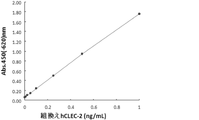
- Example 1 Measurement of sCLEC2 in human plasma >> The sCLEC2 concentration in plasma was measured according to Example 6 of Japanese Patent No. 4961595.
- a sandwich ELISA system was constructed using mouse anti-human sCLEC2 antibody. That is, the 1-11D5 antibody (F (ab) ' 2 ) purified with 0.05 mol / L carbonate buffer (pH 9.5) was diluted to 10 ⁇ g / mL, and 100 ⁇ L / well was added to the immunoplate (Maxisorp; NUNC). did.
- the prepared biotin-labeled 3-11E6 antibody (F (ab) ' 2 -biotin) was added to 1.0 ⁇ g / mL in 10% SuperBlock, 0.1% sodium octanate, 0.14 mol / L sodium chloride / PB. And 100 ⁇ L / well was added to each well. After reacting at 37 ° C. for 1 hour, the cells were washed 3 times in the same manner.
- AMDEX streptavidin-conjugated horseradish peroxidase (GE Healthcare) was then diluted with 10% SuperBlock, 0.1% sodium octanate, 0.14 mol / L sodium chloride / PB and into each well. 100 ⁇ L / well was added. After reacting at 37 ° C. for 1 hour, the mixture was washed 5 times in the same manner, and 100 ⁇ L / well of each well was added with a 3,3', 5,5'-tetramethylbenzidine (TMB) solution. After reacting at room temperature for about 20 minutes, the reaction was stopped with a 1 mol / L sulfuric acid solution.
- TMB 3,3', 5,5'-tetramethylbenzidine
- FIG. 1 shows a standard curve prepared by using the hsCLEC2 protein as a standard product.
- Example 2 Measurement of sCLEC2 in plasma sample of pancreatic cancer patient >> 14 cases of pancreatic cancer patient plasma and 10 cases of healthy subjects purchased from BiolVT (Westbury, NY) were diluted with buffer and measured by the method of Example 1. The results of the obtained pancreatic cancer patients are shown in Table 1. In addition, the average value ⁇ SE of sCLEC2 concentration in healthy subjects and pancreatic cancer patients was calculated and shown in FIG. The sCLEC2 concentration was significantly (p ⁇ 0.05) higher than that of healthy subjects. From this, it was clarified that platelets are activated by the influence of cancer in patients with pancreatic cancer. Next, when pancreatic cancer patients were classified according to the presence or absence of blood abnormalities, as shown in FIG.
- sCLEC2 was higher in patients with blood abnormalities than in patients without blood abnormalities.
- 1382.2 pg / mL which is about 8 times higher than the average value of healthy subjects, was found in patients diagnosed with an abnormal coagulation profile, and it was revealed that the value was high in patients at high risk of thrombosis.
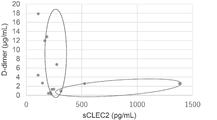
- VTE monitoring generally uses D-dimer in addition to image evaluation. Therefore, D-dimer of 14 cases of pancreatic cancer patient plasma purchased from BiolVT was measured with LPIA Genesis D-dimer reagent (LSI Rulece) and compared with the sCLEC2 concentration measured in Example 2 (FIG. 4). As a result, two groups were observed: a group of patients in which D-dimer was elevated relative to sCLEC2 and a group of patients in which sCLEC2 was elevated relative to D-dimer. Thrombosis is roughly classified into venous thrombosis and arterial thrombosis.
- Venous thrombosis is considered to be a fibrin-based thrombosis
- arterial thrombosis is considered to be mainly composed of platelets.
- D-dimer a fibrin degradation product
- fibrin-based venous thrombosis is commonly used as a biomarker for fibrin-based venous thrombosis, but there is no commonly used biomarker for arterial thrombosis such as platelet-based Truseau syndrome.
- the fact that a group in which D-dimer did not rise and sCLEC2 increased was observed in this example means that sCLEC2 captures the pathophysiology of platelet-based arterial thrombosis, which is unknown by the conventional D-dimer test. It has been shown that sCLEC2 is useful for the examination of Trousseau syndrome.
- Example 3 Measurement of sCLEC2 in plasma sample of brain tumor patient
- Plasma was collected from a sample obtained by general blood sampling 7 to 10 days after surgery for a brain tumor centered on malignant glioma admitted to neurosurgery and a healthy person with consent, and sCLEC2 was collected by the method of Example 1. The concentration was measured. The results of the obtained samples are shown in Tables 2 and 3.
- the sCLEC2 concentration 7 to 10 days after the operation tended to be higher in DVT / PE cases than in cases without DVT / PE (p 0.239).
- Table 4 shows the results of the mean value, standard deviation, and median value in the cases with DVT / PE and the cases without DVT / PE.
- DVT was screened based on the D-dimer value and clinical symptoms, and was identified 10 days after surgery on average. This indicates that platelets may be activated in patients who developed DVT / PE during the perioperative period of brain tumors.
- DVT monitoring generally uses a D-dimer in addition to image evaluation. Therefore, the D-dimer concentration, sCLEC2 concentration, and C2PAC value of patients (glioblastoma, 71 years old, female) who were able to collect blood over time were evaluated (FIG. 6). This case was identified as DVT 7 days after surgery and anticoagulant therapy was started. It was considered that the sCLEC2 and C2PAC levels were maximum on the 7th day when they were identified as DVT, and then gradually decreased due to the effect of anticoagulant therapy. On the other hand, D-dimer showed a relatively high value 14 days after the start of anticoagulant therapy in addition to the identification of DVT, but no significant change was observed. The sCLEC2 and C2PAC levels responded more sensitively to treatment, and in this case, the sCLEC2 and C2PAC levels were estimated to be the most useful for monitoring the therapeutic effect for monitoring anticoagulant therapy.
- the method for predicting thrombosis risk is applied by measuring blood sCLEC2 of the present invention, the risk of thrombosis in a patient can be predicted before thrombosis occurs, and appropriate treatment can be started promptly. It becomes. Therefore, the thrombosis risk prediction method of the present invention can be applied to a wide range of fields such as medicine and biology, and is particularly useful in the field of clinical examination.
Landscapes
- Health & Medical Sciences (AREA)
- Life Sciences & Earth Sciences (AREA)
- Engineering & Computer Science (AREA)
- Immunology (AREA)
- Chemical & Material Sciences (AREA)
- Hematology (AREA)
- Molecular Biology (AREA)
- Biomedical Technology (AREA)
- Urology & Nephrology (AREA)
- Physics & Mathematics (AREA)
- Biotechnology (AREA)
- Analytical Chemistry (AREA)
- Biochemistry (AREA)
- General Health & Medical Sciences (AREA)
- Microbiology (AREA)
- Cell Biology (AREA)
- Food Science & Technology (AREA)
- Medicinal Chemistry (AREA)
- General Physics & Mathematics (AREA)
- Pathology (AREA)
- Proteomics, Peptides & Aminoacids (AREA)
- Organic Chemistry (AREA)
- Zoology (AREA)
- Wood Science & Technology (AREA)
- Biophysics (AREA)
- Neurosurgery (AREA)
- Bioinformatics & Cheminformatics (AREA)
- General Engineering & Computer Science (AREA)
- Genetics & Genomics (AREA)
- Investigating Or Analysing Biological Materials (AREA)
Priority Applications (5)
| Application Number | Priority Date | Filing Date | Title |
|---|---|---|---|
| US18/261,155 US20240288435A1 (en) | 2021-01-13 | 2022-01-13 | Method for predicting risk for thrombosis in cancer patient using soluble clec2 |
| EP22739450.9A EP4279606A4 (en) | 2021-01-13 | 2022-01-13 | Method for predicting risk for thrombosis in cancer patient using soluble clec2 |
| KR1020237025829A KR20230131222A (ko) | 2021-01-13 | 2022-01-13 | 가용형 clec2를 이용한 암 환자에 있어서의 혈전증리스크의 예측 방법 |
| JP2022575626A JP7808059B2 (ja) | 2021-01-13 | 2022-01-13 | 可溶型clec2を用いた癌患者における血栓症リスクの予測方法 |
| CN202280009906.2A CN116761895A (zh) | 2021-01-13 | 2022-01-13 | 使用了可溶型clec2的癌症患者的血栓症风险的预测方法 |
Applications Claiming Priority (2)
| Application Number | Priority Date | Filing Date | Title |
|---|---|---|---|
| JP2021-003671 | 2021-01-13 | ||
| JP2021003671 | 2021-01-13 |
Publications (1)
| Publication Number | Publication Date |
|---|---|
| WO2022154045A1 true WO2022154045A1 (ja) | 2022-07-21 |
Family
ID=82448474
Family Applications (1)
| Application Number | Title | Priority Date | Filing Date |
|---|---|---|---|
| PCT/JP2022/000891 Ceased WO2022154045A1 (ja) | 2021-01-13 | 2022-01-13 | 可溶型clec2を用いた癌患者における血栓症リスクの予測方法 |
Country Status (6)
| Country | Link |
|---|---|
| US (1) | US20240288435A1 (https=) |
| EP (1) | EP4279606A4 (https=) |
| JP (1) | JP7808059B2 (https=) |
| KR (1) | KR20230131222A (https=) |
| CN (1) | CN116761895A (https=) |
| WO (1) | WO2022154045A1 (https=) |
Citations (6)
| Publication number | Priority date | Publication date | Assignee | Title |
|---|---|---|---|---|
| JP2008539694A (ja) * | 2005-04-25 | 2008-11-20 | 国立大学法人山梨大学 | Clec−2シグナル伝達により止血疾患を治療するための組成物および方法 |
| JP2008544224A (ja) | 2005-06-09 | 2008-12-04 | バイオサイト インコーポレイテッド | 静脈血栓塞栓症の診断のための方法および組成物 |
| WO2012128082A1 (ja) * | 2011-03-22 | 2012-09-27 | 公益財団法人がん研究会 | マウス抗Aggrusモノクローナル抗体 |
| JP2014070942A (ja) * | 2012-09-28 | 2014-04-21 | Mitsubishi Chemical Medience Corp | 可溶型clec−2に基づく血小板活性化測定方法 |
| JP2019507345A (ja) | 2016-02-18 | 2019-03-14 | ダイアグノスティカ スターゴ | 静脈血栓塞栓症に対して特異的なdダイマーをアッセイするための方法、ならびに肺塞栓症および深部静脈血栓症を診断するためのその使用 |
| WO2021172493A1 (ja) * | 2020-02-28 | 2021-09-02 | 株式会社Lsiメディエンス | 可溶型clec-2と血小板数に基づく血小板活性化測定方法 |
Family Cites Families (1)
| Publication number | Priority date | Publication date | Assignee | Title |
|---|---|---|---|---|
| CA2993624A1 (en) * | 2015-08-07 | 2017-02-16 | Thomas Helledays Stiftelse For Medicinsk Forskning | Method for diagnosisng cancer or cancer-associated thrombosis by measuring levels of h3cit in plasma |
-
2022
- 2022-01-13 EP EP22739450.9A patent/EP4279606A4/en active Pending
- 2022-01-13 CN CN202280009906.2A patent/CN116761895A/zh active Pending
- 2022-01-13 JP JP2022575626A patent/JP7808059B2/ja active Active
- 2022-01-13 US US18/261,155 patent/US20240288435A1/en active Pending
- 2022-01-13 KR KR1020237025829A patent/KR20230131222A/ko active Pending
- 2022-01-13 WO PCT/JP2022/000891 patent/WO2022154045A1/ja not_active Ceased
Patent Citations (7)
| Publication number | Priority date | Publication date | Assignee | Title |
|---|---|---|---|---|
| JP2008539694A (ja) * | 2005-04-25 | 2008-11-20 | 国立大学法人山梨大学 | Clec−2シグナル伝達により止血疾患を治療するための組成物および方法 |
| JP4961595B2 (ja) | 2005-04-25 | 2012-06-27 | 国立大学法人山梨大学 | Clec−2シグナル伝達により止血疾患を治療するための組成物および方法 |
| JP2008544224A (ja) | 2005-06-09 | 2008-12-04 | バイオサイト インコーポレイテッド | 静脈血栓塞栓症の診断のための方法および組成物 |
| WO2012128082A1 (ja) * | 2011-03-22 | 2012-09-27 | 公益財団法人がん研究会 | マウス抗Aggrusモノクローナル抗体 |
| JP2014070942A (ja) * | 2012-09-28 | 2014-04-21 | Mitsubishi Chemical Medience Corp | 可溶型clec−2に基づく血小板活性化測定方法 |
| JP2019507345A (ja) | 2016-02-18 | 2019-03-14 | ダイアグノスティカ スターゴ | 静脈血栓塞栓症に対して特異的なdダイマーをアッセイするための方法、ならびに肺塞栓症および深部静脈血栓症を診断するためのその使用 |
| WO2021172493A1 (ja) * | 2020-02-28 | 2021-09-02 | 株式会社Lsiメディエンス | 可溶型clec-2と血小板数に基づく血小板活性化測定方法 |
Non-Patent Citations (12)
| Title |
|---|
| FREESIA HORSTED ET AL., PLOS MED, vol. 9, no. 7, July 2012 (2012-07-01), pages e1001275 |
| KATSUE SUZUKI-INOUE: "Roles of the CLEC-2-podoplanin interaction in tumor progression", PLATELETS, vol. 29, no. 8, 1 January 2018 (2018-01-01), GB , pages 786 - 792, XP009538258, ISSN: 0953-7104, DOI: 10.1080/09537104.2018.1478401 * |
| KUNITA A ET AL., AM J PATHOL., vol. 170, 2007, pages 1337 - 1347 |
| LYMAN GH ET AL., J CLIN ONCOL, vol. 31, no. 17, 2013, pages 2189 - 2204 |
| MAKOTO SANO, RYOTA TAKAHASHI, HIDEAKI IJICHI, HIROSHI MIYABAYASHI, KAZUYOSHI ISHIGAKI, SUGURU MIZUNO, YOSUKE NAKAI, KEISUKE TATEIS: "PCA1: Elevated plasma sVCAM-1 and ANP are risk predictors for pancreatic cancer-related thrombosis/thromboembolism", PANCREAS, vol. 35, no. 3, 17 July 2020 (2020-07-17), JP , pages A266, XP009538271, ISSN: 0913-0071, DOI: 10.2958/suizo.35.A1 * |
| MIR SEYED NAZARI PEGAH, RIEDL JULIA, PABINGER INGRID, AY CIHAN: "The role of podoplanin in cancer-associated thrombosis", THROMBOSIS RESEARCH, ELSEVIER, AMSTERDAM, NL, vol. 164, 1 April 2018 (2018-04-01), AMSTERDAM, NL , pages S34 - S39, XP055951090, ISSN: 0049-3848, DOI: 10.1016/j.thromres.2018.01.020 * |
| OSADA MAKOTO: "Examination for clinical applications and practical use of blood sCLEC-2 measurement method", GRANT-IN-AID FOR SCIENTIFIC RESEARCH, FINAL RESEARCH REPORT., 1 January 2016 (2016-01-01), XP055951088, Retrieved from the Internet <URL:https://kaken.nii.ac.jp/ja/file/KAKENHI-PROJECT-25460677/25460677seika.pdf> * |
| See also references of EP4279606A4 |
| SHIRAI, T.; INOUE, O; HIRAYAMA, K.; ENDO, H.; SATO-UTIDA, H.; FUJII, H.; SUZUKI-INOUE, K.; OZAKI, Y.: "CLEC-2 facilitates hematogeneous tumor metastasis and in vitro tumor growth, but not in vivo tumor growth", JOURNAL OF THROMBOSIS AND HAEMOSTASIS, BLACKWELL PUBLISHING, OXFORD, vol. 13, no. Suppl. 2, 31 May 2015 (2015-05-31), GB , pages 226, XP009538357, ISSN: 1538-7933 * |
| SHIRAI, TOSHIAKI: "Platelet CLEC-2 promotes hematogenous metastasis and thromboinflammation in tumor-bearing mice", JAPANESE JOURNAL OF THROMBOSIS AND HEMOSTASIS, NIHON KESSEN SHIKETSU GAKKAI , TOKYO, vol. 31, no. 4, 1 January 2020 (2020-01-01), JP , pages 452 - 459, XP009538356, ISSN: 0915-7441, DOI: 10.2491/jjsth.31.452 * |
| SUZUKI-INOUE KATSUE: "Platelets and cancer-associated thrombosis: focusing on the platelet activation receptor CLEC-2 and podoplanin", BLOOD, vol. 134, no. 22, 28 November 2019 (2019-11-28), pages 1912 - 1918, XP055951087, DOI: 10.1182/blood.2019001388 * |
| TROUSSEAU A: "Phlegmasia alba dolens", CLINIQUE MEDICALE DE 1'HOTEL DIEU DE PARIS, vol. 3, pages 654 - 712 |
Also Published As
| Publication number | Publication date |
|---|---|
| CN116761895A (zh) | 2023-09-15 |
| US20240288435A1 (en) | 2024-08-29 |
| EP4279606A1 (en) | 2023-11-22 |
| EP4279606A4 (en) | 2024-12-18 |
| KR20230131222A (ko) | 2023-09-12 |
| JP7808059B2 (ja) | 2026-01-28 |
| JPWO2022154045A1 (https=) | 2022-07-21 |
Similar Documents
| Publication | Publication Date | Title |
|---|---|---|
| Tian et al. | The diagnostic value of serum C-reactive protein, procalcitonin, interleukin-6 and lactate dehydrogenase in patients with severe acute pancreatitis | |
| Blann et al. | Vascular endothelial growth factor and its receptor, Flt-1, in the plasma of patients with coronary or peripheral atherosclerosis, or Type II diabetes | |
| CN115190973B (zh) | 基于可溶性clec-2与血小板数的血小板活化测定方法 | |
| Akdur et al. | Diagnostic utility of hematological indices in predicting adverse outcomes and severity of acute pancreatitis based on BISAP and modified Glasgow score | |
| CN101460852A (zh) | Mrp8/14水平用于鉴别个体处于急性冠状动脉综合症风险中的应用 | |
| EP2496946B1 (en) | NT-pro ANP AND sFlt-1 FOR THE DIFFERENTIATION BETWEEN CIRCULATORY AND ISCHEMIC EVENTS | |
| Jotheeswaran et al. | Role of inflammatory and nutritional markers in predicting complications after pancreaticoduodenectomy | |
| JP7808059B2 (ja) | 可溶型clec2を用いた癌患者における血栓症リスクの予測方法 | |
| EP4350350A1 (en) | Method for assessing risk of hemorrhagic stroke using soluble clec2 | |
| Ding et al. | Increased serum concentrations of signal peptide-Cub-Egf domain-containing protein-1 in patients with aneurysmal subarachnoid hemorrhage | |
| JP6004322B2 (ja) | 心血管イベントの発症リスクの検査方法 | |
| EP4350349A1 (en) | Method for evaluating risk of acute cerebral vascular disease using soluble clec2 | |
| Abdulaziz et al. | Fecal Calgranulin C a Novel Noninvasive Marker in Predicting Activity and Severity of Ulcerative Colitis Compared with Colonoscopy. | |
| Hunt et al. | Venous thromboembolism and thrombophilia testing | |
| HK40085757A (en) | Method for measuring platelet activation based on soluble clec-2 and platelet count | |
| Mahmoud et al. | Reliability of plasma von Willebrand factor antigen in prediction of esophageal varices in patients with liver cirrhosis | |
| JP7419341B2 (ja) | 心房細動の評価における循環DKK3(Dickkopf関連タンパク質3) | |
| Wang et al. | Predictive value of combined CRP/ALB ratio and DD/FIB ratio for MODS in patients with severe polytrauma. | |
| HK40106384A (en) | Method for assessing risk of hemorrhagic stroke using soluble clec2 | |
| HK40127498A (en) | Method for evaluating risk of acute cerebral vascular disease using soluble clec2 | |
| Martin et al. | Alexander Gombert1, Drosos Kotelis1, Marcia V. Rückbeil2, Mohammad Barbati1 | |
| HK40105374A (en) | Method for evaluating risk of acute cerebral vascular disease using soluble clec2 | |
| Mariusz Wójcik et al. | Evaluation of platelet indexes as potential biomarkers of suspected pulmonary embolism | |
| CN115792220A (zh) | 血管生成素受体Tie-2用作烟雾病诊断生物标志物的应用 | |
| AL-DEJALY et al. | D-dimer, a thrombogenic marker for diagnosis of IHD in menopausal women |
Legal Events
| Date | Code | Title | Description |
|---|---|---|---|
| 121 | Ep: the epo has been informed by wipo that ep was designated in this application |
Ref document number: 22739450 Country of ref document: EP Kind code of ref document: A1 |
|
| ENP | Entry into the national phase |
Ref document number: 2022575626 Country of ref document: JP Kind code of ref document: A |
|
| WWE | Wipo information: entry into national phase |
Ref document number: 18261155 Country of ref document: US Ref document number: 202280009906.2 Country of ref document: CN |
|
| ENP | Entry into the national phase |
Ref document number: 20237025829 Country of ref document: KR Kind code of ref document: A |
|
| NENP | Non-entry into the national phase |
Ref country code: DE |
|
| ENP | Entry into the national phase |
Ref document number: 2022739450 Country of ref document: EP Effective date: 20230814 |