WO2022138342A1 - 複屈折低減剤および熱可塑性樹脂組成物 - Google Patents
複屈折低減剤および熱可塑性樹脂組成物 Download PDFInfo
- Publication number
- WO2022138342A1 WO2022138342A1 PCT/JP2021/046126 JP2021046126W WO2022138342A1 WO 2022138342 A1 WO2022138342 A1 WO 2022138342A1 JP 2021046126 W JP2021046126 W JP 2021046126W WO 2022138342 A1 WO2022138342 A1 WO 2022138342A1
- Authority
- WO
- WIPO (PCT)
- Prior art keywords
- birefringence
- thermoplastic resin
- resin composition
- aromatic
- group
- Prior art date
- Legal status (The legal status is an assumption and is not a legal conclusion. Google has not performed a legal analysis and makes no representation as to the accuracy of the status listed.)
- Ceased
Links
Classifications
-
- C—CHEMISTRY; METALLURGY
- C08—ORGANIC MACROMOLECULAR COMPOUNDS; THEIR PREPARATION OR CHEMICAL WORKING-UP; COMPOSITIONS BASED THEREON
- C08K—Use of inorganic or non-macromolecular organic substances as compounding ingredients
- C08K5/00—Use of organic ingredients
- C08K5/54—Silicon-containing compounds
- C08K5/541—Silicon-containing compounds containing oxygen
- C08K5/5415—Silicon-containing compounds containing oxygen containing at least one Si—O bond
- C08K5/5419—Silicon-containing compounds containing oxygen containing at least one Si—O bond containing at least one Si—C bond
-
- C—CHEMISTRY; METALLURGY
- C08—ORGANIC MACROMOLECULAR COMPOUNDS; THEIR PREPARATION OR CHEMICAL WORKING-UP; COMPOSITIONS BASED THEREON
- C08L—COMPOSITIONS OF MACROMOLECULAR COMPOUNDS
- C08L101/00—Compositions of unspecified macromolecular compounds
-
- G—PHYSICS
- G02—OPTICS
- G02B—OPTICAL ELEMENTS, SYSTEMS OR APPARATUS
- G02B1/00—Optical elements characterised by the material of which they are made; Optical coatings for optical elements
- G02B1/04—Optical elements characterised by the material of which they are made; Optical coatings for optical elements made of organic materials, e.g. plastics
-
- G—PHYSICS
- G02—OPTICS
- G02B—OPTICAL ELEMENTS, SYSTEMS OR APPARATUS
- G02B3/00—Simple or compound lenses
Definitions
- the present invention relates to a birefringence reducing agent and a thermoplastic resin composition, and more particularly to a birefringence reducing agent for reducing birefringence of a resin and a thermoplastic resin composition containing the birefringence reducing agent.
- Optical lenses made of transparent resin for optics have the advantage that they can be mass-produced by injection molding and that aspherical lenses can be easily manufactured, and are used as lenses for cameras, telescopes, and projectors.
- the optical transparent resin include thermoplastic resins such as polycarbonate resins made from 2,2-bis (4-hydroxyphenyl) propane (that is, bisphenol A), polymethylmethacrylates, and amorphous polyolefins. Ru.
- Birefringence is one of the important optical characteristics that must be taken into consideration when using a transparent resin for optics as an optical member. That is, it is not preferable that the transparent resin for optics has a large birefringence. In particular, in high-end cameras, liquid crystal display devices, projectors, etc., if a lens with large birefringence is present in the optical path, it adversely affects the image quality and signal reading performance. Is strongly required.
- a polycarbonate resin made from bisphenol A has the advantages of high refractive index and high heat resistance, but has the disadvantage of large birefringence.
- the present invention has been made in view of the above circumstances, and an object thereof (problem) is a birefringence reducing agent capable of reducing birefringence only by blending it in an optical transparent resin, and a thermoplastic resin composition containing the same. Is to provide.
- the present invention relates to the following birefringence reducing agents, thermoplastic resin compositions and molded articles.
- An additive for reducing birefringence of a resin which is a birefringence reducing agent composed of an organosiloxane compound having an aromatic group.
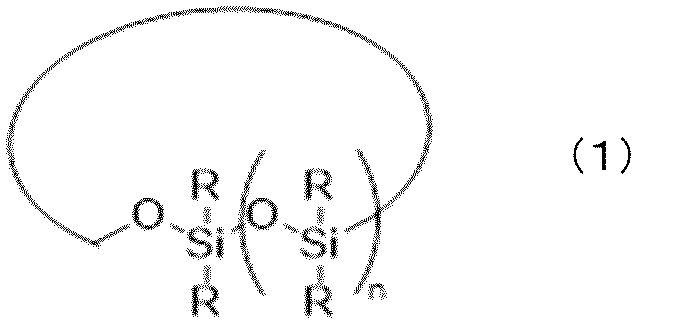
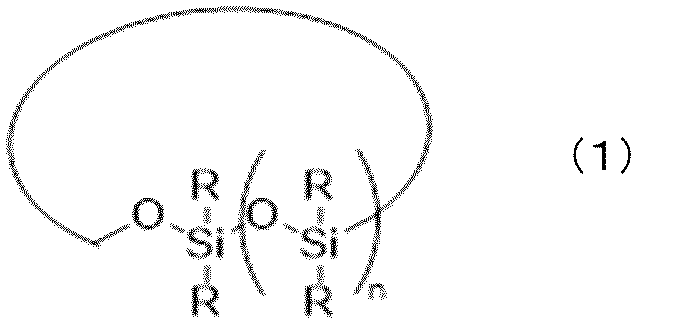
- the organosiloxane compound having an aromatic group is a cyclic organosiloxane compound represented by the following general formula (1).
- R represents an aryl group having 6 to 14 carbon atoms which may have a substituent, and n is an integer of 1 to 5.
- 3. 3 The birefringence reducing agent according to 2 above, wherein R in the formula (1) contains a phenyl group or a naphthyl group.
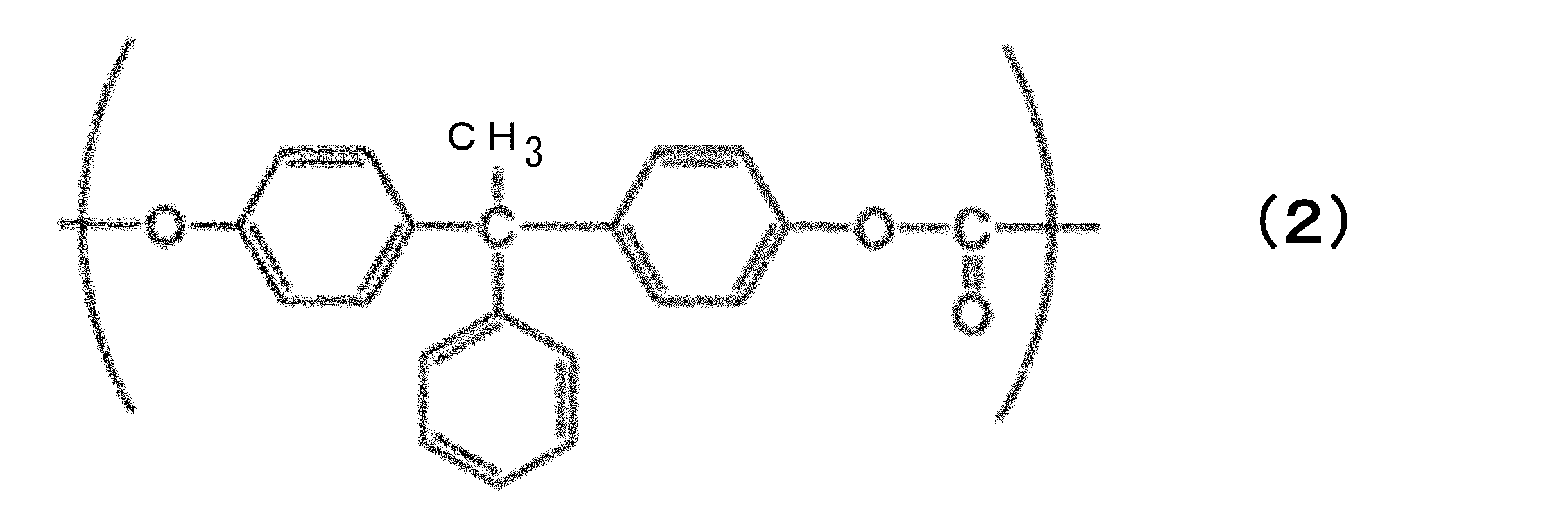
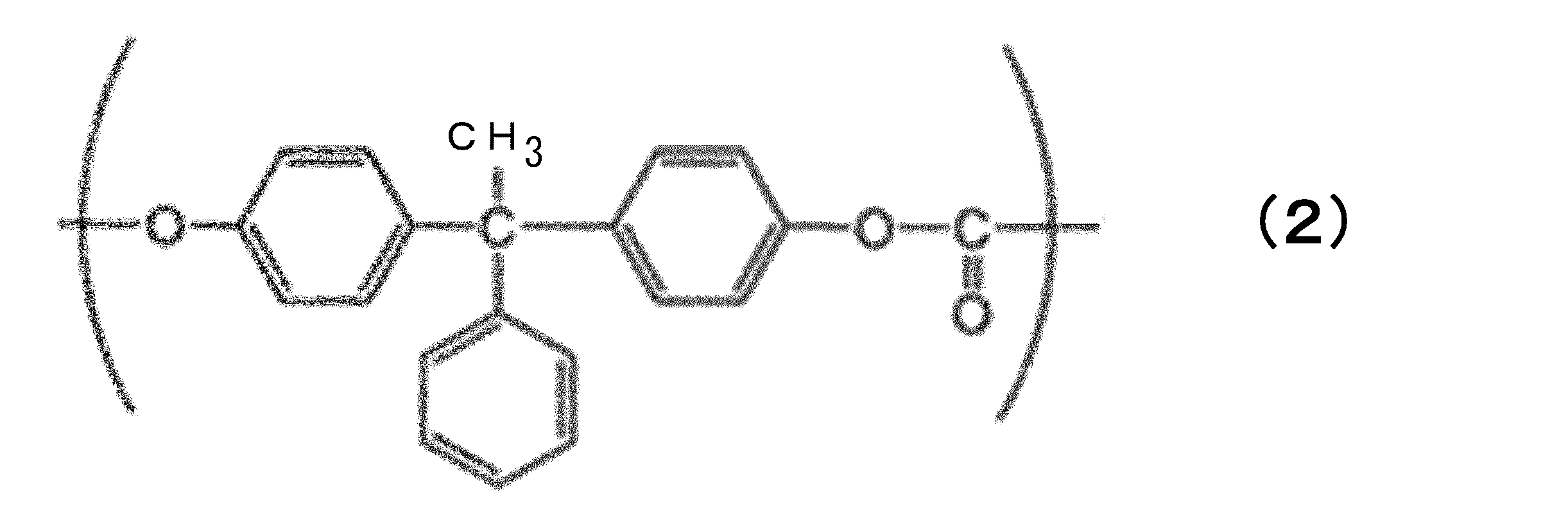
- thermoplastic resin composition obtained by blending a thermoplastic resin with the birefringence reducing agent according to any one of 2 to 3 above. 5. The thermoplastic resin composition according to 4 above, wherein the thermoplastic resin has an aromatic ring in the main chain and has positive intrinsic birefringence. 6. The thermoplastic resin composition according to 4 or 5 above, wherein the thermoplastic resin is an aromatic polycarbonate resin having a glass transition temperature of 160 ° C. or higher, or an aromatic polyester resin. 7. The thermoplastic resin composition according to 6 above, wherein the aromatic polycarbonate resin is a resin containing 70 mol% or more of the structural units represented by the following formula (2) in all the structural units excluding the terminal group. 8.
- the molded product according to 10 or 11 above, which is an optical lens which is an optical lens.
- the birefringence reducing agent of the present invention can reduce birefringence only by blending it in a resin, and the thermoplastic resin composition in which this is blended in a thermoplastic resin has reduced birefringence, and the thermoplastic resin itself. It does not reduce the transparency (permeability) of the plastic, has excellent heat-resistant aging properties, does not have the problem of mold contamination during molding, and has excellent fluidity (moldability). Therefore, the obtained molded body can be used as an optical molded body, particularly as an optical lens for a single-lens reflex camera, a digital still camera, a video camera, a mobile phone with a camera, a film with a lens, a telescope, binoculars, a microscope, or a projector. Suitable.
- the polarization anisotropy of the organosiloxane compound having an aromatic ring used in the present invention can eliminate the polarization anisotropy of the resin and eliminate birefringence.
- the cyclic organosiloxane compound represented by the general formula (1) has a structure in which the aromatic ring of the aryl group, which is R, stands perpendicular to the cyclic plane of the cyclic organosiloxane, while in particular. It is considered that the aromatic rings of the thermoplastic resin, which are oriented in a plane in the molecular chain direction, eliminate the polarization anisotropies of both, so that birefringence is effectively eliminated.
- thermoplastic resin composition of the present invention when the range is expressed by sandwiching the front and back with numerical values or physical property values by using "-", it means the range including the values before and after.
- the birefringence reducing agent of the present invention comprises an organosiloxane compound having an aromatic group.
- the organosiloxane compound having an aromatic group may have, for example, an aromatic group such as a phenyl group or a naphthyl group, and may be either a cyclic or linear organosiloxane compound, but a cyclic organosiloxane is preferable. Examples include compounds.
- the linear organosiloxane compound having an aromatic group is a linear organosiloxane in which a siloxane substituted with an aryl group is bonded, and is a siloxane unit substituted with a phenyl group, or a methyl group, an ethyl group, or a propyl group.
- An organosiloxane composed of an alkyl group such as a butyl group and a siloxane unit substituted with a phenyl group is preferable, and a siloxane unit substituted with an alkyl group, for example, a dimethylsiloxane unit, a diethylsiloxane unit, an ethylmethylsiloxane unit and the like is included. You may.
- the cyclic organosiloxane compound preferable as the organosiloxane compound having an aromatic group
- the cyclic organosiloxane compound represented by the following general formula (1) is particularly preferable.
- R represents an aryl group having 6 to 14 carbon atoms which may have a substituent
- n is an integer of 1 to 5.
- R is an aryl group having 6 to 14 carbon atoms and may have a substituent.
- substituent an alkyl group having 1 to 4 carbon atoms, for example, a methyl group, an ethyl group, a propyl group, an n-butyl group, a tert-butyl group or the like, or a phenyl group or an alkyl group (for example, the above-mentioned alkyl group).
- Examples thereof include a phenyl group having.
- the aryl group having 6 to 14 carbon atoms include a phenyl group and a naphthyl group, and among them, a phenyl group is preferable.
- Specific examples of R include a phenyl group, a toluyl group, a dimethylphenyl group, a naphthyl group, and a biphenyl group.
- the cyclic organosiloxane compound represented by the general formula (1) may have only one type of aryl group, or may have two or more different types of aryl groups.
- n is an integer of 1 to 5, preferably an integer of 2 to 4, more preferably 2 or 3, and particularly preferably n of 3.
- cyclic organosiloxane compound represented by the general formula (1) examples include octaphenylcyclotetrasiloxane, octanaphthylcyclotetrasiloxane, octatoluylcyclotetrasiloxane, octabiphenylcyclotetrasiloxane, hexaphenylcyclotrisiloxane, and deca. Examples thereof include phenylcyclopentasiloxane, and octaphenylcyclotetrasiloxane is particularly preferable.
- the cyclic organosiloxane compound may be used alone or in combination of two or more different compounds.
- thermoplastic resin composition By blending the above-mentioned birefringence reducing agent with the resin, a resin composition having reduced birefringence as compared with that before blending can be obtained.
- a thermoplastic resin is preferable, and a thermoplastic resin having an aromatic ring in the main chain tends to have a particularly large birefringence, and is therefore preferable.
- the thermoplastic resin having a positive intrinsic birefringence is preferable because the birefringence reducing agent of the present invention has a negative intrinsic birefringence and the effect of reducing birefringence is large.
- a thermoplastic resin having an aromatic ring in the backbone and having positive intrinsic birefringence is particularly preferred.
- thermoplastic resin are polycarbonate resin and polyester resin.
- Polycarbonate resin The type of polycarbonate resin is not limited, and a birefringence reducing agent can be blended in any of them, but an aromatic polycarbonate resin having an aromatic ring in the main chain is preferable because it has a large effect of reducing birefringence. ..
- the aromatic polycarbonate resin is an aromatic polycarbonate polymer obtained by reacting an aromatic hydroxy compound with a phosgene or carbonic acid diester.
- the aromatic polycarbonate polymer may have a branch.
- the method for producing the aromatic polycarbonate resin is not particularly limited, and a conventional method such as a phosgene method (interfacial polymerization method) or a melting method (transesterification method) can be used.
- aromatic dihydroxy compounds include 2,2-bis (4-hydroxyphenyl) propane, 1,1-bis (4-hydroxyphenyl) -1-phenylethane, and bis (4-hydroxyphenyl).
- Methan 2,2-bis (4-hydroxy-3-methylphenyl) propane, 2,2-bis (4-hydroxy-3-t-butylphenyl) propane, 2,2-bis (4-hydroxy-3) , 5-Dimethylphenyl) propane, 2,2-bis (4-hydroxy-3,5-dibromophenyl) propane, 4,4-bis (4-hydroxyphenyl) heptane, 1,1-bis (4-hydroxyphenyl) ) Cyclohexane, 4,4'-dihydroxybiphenyl, 3,3', 5,5'-tetramethyl-4,4'-dihydroxybiphenyl, bis (4-hydroxyphenyl) sulfone, bis (4-hydroxyphenyl) sulfide, Examples thereof include bis (4-hydroxyphenyl) ether and bis (4-hydroxyphenyl
- the aromatic dihydroxy compound may be used alone or in combination of two or more.
- 2,2-bis (4-hydroxyphenyl) propane that is, bisphenol A
- 2,2-bis (4-hydroxy-3-methylphenyl) which are polycarbonate resins having a large double refraction
- Propane ie, bisphenol C
- 1,1-bis (4-hydroxyphenyl) -1-phenylethane ie, bisphenol AP
- the above-mentioned which has a smaller double refraction. Since the effect of reducing double refraction is exhibited in any of these, it can be preferably applied.
- 1,1-Bis (4-hydroxyphenyl) -1-phenylethane that is, a polycarbonate resin having a structural unit of the following formula (2) derived from bisphenol AP is preferable from the viewpoint of exhibiting high heat resistance.
- carbonic acid diester is used as a monomer instead of phosgene.
- a carbonic acid diester of the above aromatic dihydroxy compound is used, and examples thereof include substituted diaryl carbonates typified by diphenyl carbonate and ditril carbonate. These carbonic acid diesters can be used alone or in admixture of two or more.
- the viscosity average molecular weight Mv of the polycarbonate resin is preferably in the range of 10,000 to 50,000, more preferably 45,000 or less, still more preferably 40,000 or less, and particularly preferably 38,000 or less.
- an optical molded body it is preferably 10,000 to 30,000, and when the viscosity average molecular weight is in such a range, the fluidity (molding processability), hue, and mechanical strength are excellent, and the optical molded body is excellent. It becomes suitable for.
- Two or more kinds of aromatic polycarbonate resins having different viscosity average molecular weights may be mixed and used, and in this case, a polycarbonate resin having a viscosity average molecular weight outside the above-mentioned suitable range may be mixed.
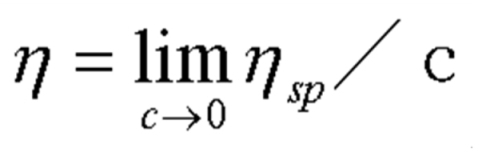
- the ultimate viscosity [ ⁇ ] is a value calculated by the following formula by measuring the specific viscosity [ ⁇ sp ] at each solution concentration [C] (g / dl).
- the polycarbonate resin is preferably an aromatic polycarbonate resin having a glass transition temperature of 160 ° C. or higher. When the glass transition temperature is 160 ° C. or higher, higher heat resistance can be achieved.
- the glass transition temperature is more preferably 165 ° C. or higher, and particularly preferably 170 ° C. or higher.
- the glass transition temperature of the polycarbonate resin is a value measured under the following conditions using a differential scanning calorimeter (DSC) in accordance with JIS K7122. Measurement start temperature: 25 ° C Temperature rise rate: 10 ° C / min Reach temperature: 300 ° C Temperature down rate: 10 ° C / min
- Polycarbonate resin is manufactured not only from virgin resin but also from used polycarbonate resin (so-called material recycled polycarbonate resin) or chemically decomposed polycarbonate resin and returned to raw material. It may be a polycarbonate resin (so-called chemically recycled polycarbonate resin), preferably contains both a virgin resin and a recycled resin, and may be made of a recycled polycarbonate resin.
- the ratio of the recycled polycarbonate resin in the polycarbonate resin is preferably 40% or more, 50% or more, 60% or more, 80% or more, and the recycled polycarbonate resin is preferably 100%.
- polyester resin The type of polyester resin is not limited, and the birefringence reducing agent of the present invention can be blended in any of them, but the aromatic polyester resin having an aromatic ring in the main chain has positive birefringence. It is preferable in that it has a large effect of reducing birefringence.
- the aromatic polyester resin having an aromatic ring in the main chain include a polycondensate formed from an aromatic dicarboxylic acid and a diol.
- an aromatic dicarboxylic acid is preferable, and for example, terephthalic acid, isophthalic acid, 2,6-naphthalenedicarboxylic acid, 2,7-naphthalenedicarboxylic acid, 2,5-naphthalenedicarboxylic acid, 4,4'-diphenyl.
- terephthalic acid isophthalic acid
- 2,6-naphthalenedicarboxylic acid 2,7-naphthalenedicarboxylic acid
- 2,5-naphthalenedicarboxylic acid 4,4'-diphenyl.
- dicarboxylic acid 4,4'-diphenyl ether dicarboxylic acid
- 4,4'-benzophenone dicarboxylic acid 4,4'-diphenoxyetanedicarboxylic acid
- 4,4'-diphenylsulfone dicarboxylic acid and the like.
- diols examples include ethylene glycol, 1,3-propanediol, diethylene glycol, 1,4-butanediol, 1,3-butanediol, 1,5-pentanediol, neopentyl glycol, and 1,6-hexanediol. , 1,4-Cyclohexanediol, 1,6-cyclohexanedimethanol, tricyclohexanedimethanol, polyethylene oxide glycol, aliphatic diols such as polypropylene oxide glycol, or, for example, 1,2-diphenylethane-1,2-diol.
- bisphenols such as bisphenol A, bisphenol F, bisphenol S, bisphenol AP, tetramethyl bisphenol A and 4,4'-dihydroxydiphenyl-2,2-butane can also be mentioned. These can be used alone or in combination of two or more at the same time.
- an amorphous polyester resin is preferable from the viewpoint of transparency as an optical molded body.
- the amorphous property of the amorphous polyester resin means that a clear melting point is not observed when the temperature is raised at 10 ° C./min by a differential heat measuring device.
- the intrinsic viscosity IV of the polyester resin is preferably 0.3 to 1.5 dl / g, more preferably 0.4 to 1.2 dl / g.
- the intrinsic viscosity IV of the polyester resin is a value measured at 30 ° C. in a 1: 1 (mass ratio) mixed solvent of tetrachloroethane and phenol.
- the content of the compound refraction reducing agent of the present invention in the thermoplastic resin is preferably more than 2 parts by mass and 15 parts by mass or less, more preferably 2.3 parts by mass or more and 13 parts by mass with respect to 100 parts by mass of the thermoplastic resin. It is less than the mass part. With such a content, the effect of reducing birefringence is sufficiently exhibited, the fluidity (moldability) of the resin composition is sufficient, the heat-resistant aging property is excellent, and mold contamination is not a problem.
- the resin composition includes additives such as stabilizers, mold release agents, flame retardants, flame retardant aids (anti-dripping agents), ultraviolet absorbers, fluorescent whitening agents, antistatic agents, plasticizers, compatibilizers and the like. Can contain the additives of. These additives or other resins may be used alone or in combination of two or more.
- the resin composition preferably contains a stabilizer, and the stabilizer is preferably a phosphorus-based stabilizer or a phenol-based stabilizer.
- Any known phosphorus stabilizer can be used.
- oxo acids of phosphorus such as phosphoric acid, phosphonic acid, phosphite, phosphinic acid and polyphosphate
- acidic pyrophosphate metal salts such as acidic sodium pyrophosphate, potassium pyrophosphate, acidic calcium pyrophosphate
- Phosphates of Group 1 or Group 2B metals such as potassium, sodium phosphate, cesium phosphate, zinc phosphate; organic phosphate compounds, organic phosphite compounds, organic phosphonite compounds, etc., but also organic phosphite compounds and Organic phosphate compounds are particularly preferred.
- organic phosphite compound examples include triphenylphosphite, tris (monononylphenyl) phosphite, tris (monononyl / dinonyl-phenyl) phosphite, tris (2,4-di-tert-butylphenyl) phosphite, and monooctyl.
- organic phosphite compound examples include, for example, "ADEKA STAB 1178", “ADEKA STAB 2112”, “ADEKA STAB HP-10” manufactured by ADEKA, and “JP-351” manufactured by Johoku Chemical Industry Co., Ltd. Examples thereof include “JP-360”, “JP-3CP”, and “Irgafos 168" manufactured by BASF.
- an organic phosphate metal salt can also be suitably used as the organic phosphate compound.
- an organic phosphate metal salt include a mixture of a zinc salt of distearyl acid phosphate and a zinc salt of monostearyl acid phosphate, mono, and di-stearyl acid phosphate.
- Specific examples of such an organic phosphate metal salt include "JP-518Zn” manufactured by Johoku Chemical Industry Co., Ltd. and "AX-71" manufactured by ADEKA Corporation.
- the phosphorus-based stabilizer may contain one type or two or more types in any combination and ratio.
- the content of the phosphorus-based stabilizer is usually 0.001 part by mass or more, preferably 0.01 part by mass or more, more preferably 0.03 part by mass or more, and more preferably 0.03 part by mass or more, based on 100 parts by mass of the thermoplastic resin. It is usually 1 part by mass or less, preferably 0.7 part by mass or less, and more preferably 0.5 part by mass or less. If the content of the phosphorus-based stabilizer is less than the lower limit of the above range, the heat stabilizing effect may be insufficient, and if the content of the phosphorus-based stabilizer exceeds the upper limit of the above range, the effect may be insufficient. May reach a plateau and become uneconomical.
- phenol-based stabilizer examples include hindered phenol-based antioxidants. Specific examples thereof include pentaerythritol tetrakis [3- (3,5-di-tert-butyl-4-hydroxyphenyl) propionate] and octadecyl-3- (3,5-di-tert-butyl-4-hydroxyphenyl).
- phenolic antioxidants include, for example, "Irganox 1010” and “Irganox 1076” manufactured by BASF, "ADEKA STAB AO-50” and “ADEKA STAB AO-60” manufactured by ADEKA. Can be mentioned.
- 1 type may be contained in the phenol-based stabilizer, and 2 or more types may be contained in arbitrary combinations and ratios.
- the content of the phenolic stabilizer is usually 0.001 part by mass or more, preferably 0.01 part by mass or more, and usually 1 part by mass or less, preferably 0.% by mass with respect to 100 parts by mass of the thermoplastic resin. It is 5 parts by mass or less. If the content of the phenolic stabilizer is less than the lower limit of the above range, the effect as the phenolic stabilizer may be insufficient, and the content of the phenolic stabilizer exceeds the upper limit of the above range. In that case, the effect may reach a plateau and become uneconomical.
- the resin composition preferably contains a mold release agent.
- a known release agent usually used for a resin can be used, but a polyolefin-based compound and a fatty acid ester-based compound are preferable.
- polyolefin compound examples include compounds selected from paraffin wax and polyethylene wax, and among them, compounds having a weight average molecular weight of 700 to 10000 and further preferably 900 to 8000 are preferable.
- fatty acid ester compound examples include saturated or unsaturated monovalent or divalent aliphatic carboxylic acid esters, glycerin fatty acid esters, sorbitan fatty acid esters and other fatty acid esters, and partially saponified products thereof.
- mono or difatty acid esters composed of fatty acids having 11 to 28 carbon atoms, preferably 17 to 21 carbon atoms and alcohols are preferable.
- the fatty acid examples include palmitic acid, stearic acid, caproic acid, capric acid, lauric acid, araquinic acid, behenic acid, lignoseric acid, cellotic acid, melissic acid, tetrariacontanic acid, montanic acid, adipic acid, azelaic acid and the like. Be done. Further, the fatty acid may be an alicyclic type.
- the alcohol include saturated or unsaturated monohydric or polyhydric alcohols. These alcohols may have a substituent such as a fluorine atom or an aryl group.
- monohydric or polyhydric saturated alcohols having 30 or less carbon atoms are preferable, and aliphatic saturated monohydric alcohols or polyhydric alcohols having 30 or less carbon atoms are more preferable.
- the aliphatic term also contains an alicyclic compound.
- specific examples of such alcohols include octanol, decanol, dodecanol, stearyl alcohol, behenyl alcohol, ethylene glycol, diethylene glycol, glycerin, pentaerythritol, 2,2-dihydroxyperfluoropropanol, neopentylene glycol, ditrimethylolpropane, dipentaerythritol and the like.
- the above ester compound may contain an aliphatic carboxylic acid and / or an alcohol as an impurity, or may be a mixture of a plurality of compounds.
- fatty acid ester compound examples include glycerin monostearate, glycerin monobehenate, glycerin dibehenate, glycerin-12-hydroxymonostearate, sorbitan monostearate, pentaerythritol monostearate, and pentaeristoldi.
- examples thereof include stearate, stearyl stearate, and ethylene glycol montanic acid ester.
- the content of the release agent is preferably 0.1 to 3 parts by mass, more preferably 0.2 to 2.5 parts by mass, and further preferably 0.2 to 2.5 parts by mass with respect to 100 parts by mass of the thermoplastic resin. It is 0.25 to 2 parts by mass. If it is less than 0.1 part by mass, the surface property is likely to be deteriorated due to poor mold release during melt molding, while if it is more than 3 parts by mass, the kneading workability of the resin composition is likely to be deteriorated, and the molded product is formed. The surface tends to be cloudy.
- the resin composition of the present invention may also contain a flame retardant.
- a flame retardant include an organic metal salt flame retardant, a phosphorus flame retardant, a boron flame retardant, a nitrogen flame retardant, a halogen flame retardant, an antimony compound and the like.
- the content of the flame retardant is small, and an organic metal salt flame retardant which is a transparent flame retardant is used. Even when it is contained, the content thereof is preferably less than 0.01 parts by mass, more preferably less than 0.005 parts by mass with respect to 100 parts by mass of the thermoplastic resin.
- thermoplastic resin composition There are no restrictions on the method for producing the resin composition, and a known method for producing the thermoplastic resin composition can be widely adopted. After mixing in advance using various mixers of the above, a method of melt-kneading with a mixer such as a Banbury mixer, a roll, a brabender, a single-screw kneading extruder, a twin-screw kneading extruder, or a kneader can be mentioned.
- a mixer such as a Banbury mixer, a roll, a brabender, a single-screw kneading extruder, a twin-screw kneading extruder, or a kneader.
- various molded bodies can be produced by molding pellets obtained by pelletizing the above-mentioned resin composition by various molding methods. Further, the resin melt-kneaded by an extruder can be directly molded into a molded product without passing through pellets.
- the resin composition of the present invention has extremely reduced birefringence without impairing the transparency of the resin itself, has excellent heat-resistant aging properties, and has no problems of fluidity during molding or mold contamination. Therefore, its use is as an optical molded body, specifically, various lenses, for example, cameras (single-lens reflex cameras, digital still cameras, video cameras, films with lenses, etc.), telescopes, microscopes, projectors, optical measuring devices, etc.
- various lenses for example, cameras (single-lens reflex cameras, digital still cameras, video cameras, films with lenses, etc.), telescopes, microscopes, projectors, optical measuring devices, etc.
- Lenses mobile phone cameras, smartphone cameras, tablet cameras, in-vehicle cameras, action cameras, notebook PC cameras, drive recorders, surveillance cameras, lenses for drone-mounted small cameras, various optical disks, home TVs, personal computers Panel members and films used in displays, in-vehicle monitors, smartphones, head-mounted displays, bar code readers, scanners and the like are preferably mentioned.
- the above-mentioned bisphenol C-type aromatic polycarbonate (A5) was produced in Production Example 1 below.
- ⁇ Manufacturing Example 1 Production of bisphenol C-type polycarbonate resin (A5)> 26.14 mol (6.75 kg) of 2,2-bis (3-methyl-4-hydroxyphenyl) propane (hereinafter referred to as "BPC") and 26.79 mol (5.74 kg) of diphenyl carbonate were added.
- BPC 2,2-bis (3-methyl-4-hydroxyphenyl) propane
- diphenyl carbonate diphenyl carbonate
- the reaction solution in the reactor is stirred, and cesium carbonate (Cs 2 CO 3 ) as an ester exchange reaction catalyst is added to the reaction solution in a molten state so as to be 1.5 ⁇ 10-6 mol with respect to 1 mol of BPC.
- the reaction solution was stirred and cultivated at 220 ° C. for 30 minutes under a nitrogen gas atmosphere.
- the pressure in the reactor was reduced to 100 Torr over 40 minutes, and the reaction was further carried out for 100 minutes to distill off phenol.
- the temperature in the reactor was raised to 284 ° C. over 60 minutes and the pressure was reduced to 3 Torr to distill off phenol corresponding to almost the entire theoretical distillate amount.
- the pressure in the reactor was kept below 1 Torr under the same temperature, and the reaction was continued for another 60 minutes to complete the polycondensation reaction.
- the stirring rotation speed of the stirrer was 38 rotations / minute
- the reaction liquid temperature immediately before the end of the reaction was 289 ° C.
- the stirring power was 0.75 kW.
- the reaction solution in the molten state is fed into the twin-screw extruder, and a 4-fold molar amount of butyl p-toluenesulfonate with respect to cesium carbonate is supplied from the first supply port of the twin-screw extruder.
- reaction solution was extruded into a strand shape through a die of a twin-screw extruder and cut with a cutter to obtain pellets of bisphenol C type polycarbonate resin (A5).
- the pellet obtained above was dried at 120 ° C. for 5 hours, and then injection molded using an injection molding machine (“SE50DUZ” manufactured by Sumitomo Heavy Industries, Ltd.) to prepare a test piece having a thickness of 3 mm.
- the conditions for injection molding are a cylinder temperature of 280 ° C. and a mold temperature of 80 ° C. when the bisphenol A type aromatic polycarbonate resin (A1, A2) and the bisphenol C type aromatic polycarbonate resin (A5) are contained, and the bisphenol AP type.
- the aromatic polycarbonate resin (A3, A4) was contained, the cylinder temperature was set to 300 ° C and the mold temperature was set to 100 ° C.
- the obtained pellets or test pieces were evaluated as follows.
- Glass transition temperature (Tg) The glass transition temperature (Tg) of the resin composition pellets obtained above was measured by a differential thermal scanning calorimeter (DSC, "DSC7000X” manufactured by Hitachi High-Tech Science Co., Ltd.) under the following conditions based on JIS K7211. The measurement conditions are as follows. Sample amount: 5 mg, atmosphere: nitrogen gas atmosphere, muffling conditions: 10 degrees / minute
- Birefringence was evaluated by a wide-range two-dimensional birefringence evaluation system (“WPA-200” manufactured by Photonic Lattice, measurement wavelength: 523 nm). The values before and after annealing of the 3 mm thick test piece obtained above were measured. Annealing was performed at a temperature 20 ° C. lower than the Tg of each composition for 3 hours. The birefringence was evaluated with the value before annealing of the 3 mm thick test piece obtained in Comparative Example 1 as 100% (reference value).
- WPA-200 wide-range two-dimensional birefringence evaluation system
- Total light transmittance (%) For the 3 mm thick test piece obtained above, the total light transmittance (unit:%) was measured based on JIS K7375 using a spectroscopic haze meter (“SH7000” manufactured by Nippon Denshoku Kogyo Co., Ltd.).
- Comparative Example 3 and Example 7 used bisphenol C-type aromatic polycarbonate (A5) having a low Tg, aging at 125 ° C. for 1000 hours was not possible, so ⁇ YI could not be measured.
- the birefringence reducing agent of the present invention has a large effect of reducing birefringence, and the resin composition containing the birefringence reducing agent has extremely reduced birefringence without impairing the transparency of the resin itself, and is excellent in heat aging property. Further, since there is no problem of fluidity and mold contamination during molding, it can be suitably used as various high-performance optical molded bodies.
Landscapes
- Chemical & Material Sciences (AREA)
- Physics & Mathematics (AREA)
- Health & Medical Sciences (AREA)
- Chemical Kinetics & Catalysis (AREA)
- Medicinal Chemistry (AREA)
- Polymers & Plastics (AREA)
- Organic Chemistry (AREA)
- General Physics & Mathematics (AREA)
- Optics & Photonics (AREA)
- Compositions Of Macromolecular Compounds (AREA)
Abstract
Description
しかし、このような特殊な樹脂は、汎用の樹脂ではないので、その特性(機械特性)や成形条件が特殊になる他、価格面からもその使用には制限がある。
本発明は、以下の複屈折低減剤、熱可塑性樹脂組成物及び成形体に関する。
2.芳香族基を有するオルガノシロキサン化合物が下記一般式(1)で表される環状オルガノシロキサン化合物である上記1に記載の複屈折低減剤。
3.式(1)中、Rがフェニル基またはナフチル基を含む上記2に記載の複屈折低減剤。
5.熱可塑性樹脂が、主鎖中に芳香環を有し、正の固有複屈折を有する熱可塑性樹脂である上記4に記載の熱可塑性樹脂組成物。
6.熱可塑性樹脂が、ガラス転移温度160℃以上である芳香族ポリカーボネート樹脂、または芳香族ポリエステル樹脂である上記4または5に記載の熱可塑性樹脂組成物。
7.前記芳香族ポリカーボネート樹脂が、下記式(2)で表される構成単位を、末端基を除く全構成単位中、70モル%以上含む樹脂である上記6に記載の熱可塑性樹脂組成物。

9.複屈折が低減された上記4~8のいずれかに記載の熱可塑性樹脂組成物。
10.上記4~9のいずれかに記載の熱可塑性樹脂組成物からなる成形体。
11.光学用成形体である上記10に記載の成形体。
12.光学レンズである上記10または11に記載の成形体。
本発明で使用する芳香環を有するオルガノシロキサン化合物はそれが有する分極異方性が、樹脂の分極異方性を解消して複屈折を解消することができる。特に前記一般式(1)で表される環状オルガノシロキサン化合物は、Rであるアリール基の芳香環が環状オルガノシロキサンの環状平面に対して垂直に立っている構造を有しており、一方、特に熱可塑性樹脂が有する、分子鎖方向に平面状に配向した芳香環が、双方の分極異方性を解消しあうことにより、複屈折が有効に解消されるものと考えられる。
なお、本明細書において、「~」を用いてその前後を数値又は物性値で挟んで範囲を表現する場合、その前後の値を含む範囲を意味する。
本発明の複屈折低減剤は、芳香族基を有するオルガノシロキサン化合物からなる。
芳香族基を有するオルガノシロキサン化合物は、例えばフェニル基、ナフチル基等の芳香族基を有していればよく、環状または直鎖状のオルガノシロキサン化合物のいずれでもよいが、好ましくは、環状オルガノシロキサン化合物が挙げられる。

ここで置換基としては、炭素数1~4のアルキル基、例えばメチル基、エチル基、プロピル基、n-ブチル基、tert-ブチル基等、あるいはフェニル基、アルキル基(例えば上記したアルキル基)を有するフェニル基等が挙げられる。
炭素数6~14のアリール基としては、フェニル基、ナフチル基等が挙げられ、中でも、フェニル基が好ましい。
Rの具体例としては、フェニル基、トルイル基、ジメチルフェニル基、ナフチル基、ビフェニル基が好ましく挙げられる。
nは、1~5の整数であるが、好ましくは2~4の整数、より好ましくは2または3、特にnが3のものが好ましい。
環状オルガノシロキサン化合物は一種のみを単独で使用しても、異なる2種以上を組み合わせて使用してもよい。
上記した複屈折低減剤は樹脂に配合することにより、配合前に比して複屈折が低減された樹脂組成物となる。
樹脂としては、熱可塑性樹脂が好ましく、主鎖中に芳香環を有する熱可塑性樹脂が、特に複屈折が大きい傾向にあるため、好ましい。そして、熱可塑性樹脂としては正の固有複屈折を有するものが、本発明の複屈折低減剤が負の固有複屈折を有するので、複屈折の低減効果が大きいので好ましい。主鎖中に芳香環を有し、正の固有複屈折を有する熱可塑性樹脂が特に好ましい。
ポリカーボネート樹脂としては、その種類に制限はなく何れにも複屈折低減剤を配合することができるが、主鎖中に芳香環を有する芳香族ポリカーボネート樹脂が、複屈折の低減効果が大きい点で好ましい。
上記芳香族ジヒドロキシ化合物の中では、複屈折が大きいポリカーボネート樹脂となる2,2-ビス(4-ヒドロキシフェニル)プロパン(即ち、ビスフェノールA)、2,2-ビス(4-ヒドロキシ-3-メチルフェニル)プロパン(即ち、ビスフェノールC)等が好ましいが、複屈折がこれに比較して小さくなる1,1-ビス(4-ヒドロキシフェニル)-1-フェニルエタン(即ち、ビスフェノールAP)等、あるいは上記した何れに対しても複屈折低減効果が発現するので、好ましく適用できる。
なお、粘度平均分子量の異なる2種類以上の芳香族ポリカーボネート樹脂を混合して用いてもよく、この場合には、粘度平均分子量が上記の好適な範囲外であるポリカーボネート樹脂を混合してもよい。
なお、ポリカーボネート樹脂のガラス転移温度は、JIS K7122に準拠して、示差走査熱量計(DSC)を使用し、以下の条件で測定する値である。
測定開始温度:25℃
昇温速度:10℃/分
到達温度:300℃
降温速度:10℃/分
ポリエステル樹脂としては、その種類に制限はなく何れにも本発明の複屈折低減剤を配合することができるが、主鎖中に芳香環を有する芳香族ポリエステル樹脂が、正の複屈折を有することが多く、複屈折の低減効果が大きい点で好ましい。
主鎖中に芳香環を有する芳香族ポリエステル樹脂としては、芳香族ジカルボン酸とジオールから形成される重縮合体が挙げられる。
これらは単独または2つ以上を同時に使用することができる。
なお、ポリエステル樹脂の固有粘度IVは、テトラクロロエタンとフェノールとの1:1(質量比)の混合溶媒中、30℃で測定する値である。
樹脂組成物は、添加剤、例えば、安定剤、離型剤、難燃剤、難燃助剤(滴下防止剤)、紫外線吸収剤、蛍光増白剤、帯電防止剤、可塑剤、相溶化剤などの添加剤を含有することができる。これらの添加剤あるいは他の樹脂は1種または2種以上を配合してもよい。
樹脂組成物は、安定剤を含有することが好ましく、安定剤としてはリン系安定剤やフェノール系安定剤が好ましい。
このような、有機ホスファイト化合物としては、具体的には、例えば、ADEKA社製「アデカスタブ1178」、「アデカスタブ2112」、「アデカスタブHP-10」、城北化学工業社製「JP-351」、「JP-360」、「JP-3CP」、BASF社製「イルガフォス168」等が挙げられる。
このような有機ホスフェート金属塩としては、具体的には、例えば、城北化学工業社製「JP-518Zn」、ADEKA社製「AX-71」等が挙げられる。
このようなフェノール系酸化防止剤としては、具体的には、例えば、BASF社製「イルガノックス1010」、「イルガノックス1076」、ADEKA社製「アデカスタブAO-50」、「アデカスタブAO-60」等が挙げられる。
なお、フェノール系安定剤は、1種が含有されていてもよく、2種以上が任意の組み合わせ及び比率で含有されていても良い。
樹脂組成物は、離型剤を含有することが好ましい。離型剤としては樹脂に通常使用される既知の離型剤が利用可能であるが、ポリオレフィン系化合物、脂肪酸エステル系化合物が好ましい。
アルコールとしては、飽和又は不飽和の1価又は多価アルコールを挙げることができる。これらのアルコールは、フッ素原子、アリール基などの置換基を有していてもよい。これらの中では、炭素数30以下の1価又は多価の飽和アルコールが好ましく、炭素数30以下の脂肪族飽和1価アルコール又は多価アルコールが更に好ましい。ここで脂肪族とは、脂環式化合物も含有する。
かかるアルコールの具体例としては、オクタノール、デカノール、ドデカノール、ステアリルアルコール、ベヘニルアルコール、エチレングリコール、ジエチレングリコール、グリセリン、ペンタエリスリトール、2,2-ジヒドロキシペルフルオロプロパノール、ネオペンチレングリコール、ジトリメチロールプロパン、ジペンタエリスリトール等が挙げられる。
なお、上記のエステル化合物は、不純物として脂肪族カルボン酸及び/又はアルコールを含有していてもよく、複数の化合物の混合物であってもよい。
本発明の樹脂組成物は、難燃剤を含有することもできる。
難燃剤としては、例えば、有機金属塩系難燃剤、リン系難燃剤、ホウ素系難燃剤、窒素系難燃剤、ハロゲン系難燃剤、アンチモン化合物等が挙げられる。
樹脂組成物の製造方法に制限はなく、公知の熱可塑性樹脂組成物の製造方法を広く採用でき、樹脂とオルガノシロキサン化合物、必要に応じて配合されるその他の成分を、例えばタンブラーやヘンシェルミキサーなどの各種混合機を用い予め混合した後、バンバリーミキサー、ロール、ブラベンダー、単軸混練押出機、二軸混練押出機、ニーダーなどの混合機で溶融混練する方法が挙げられる。

<製造例1:ビスフェノールC型ポリカーボネート樹脂(A5)の製造>
2,2-ビス(3-メチル-4-ヒドロキシフェニル)プロパン(以下、「BPC」と記す。)26.14モル(6.75kg)と、ジフェニルカーボネート26.79モル(5.74kg)を、撹拌機及び留出凝縮装置付きのSUS製反応器(内容積10リットル)内に入れ、反応器内を窒素ガスで置換後、窒素ガス雰囲気下で220℃まで30分間かけて昇温した。
次いで、反応器内の反応液を撹拌し、溶融状態下の反応液にエステル交換反応触媒として炭酸セシウム(Cs2CO3)を、BPC1モルに対し1.5×10⁻⁶モルとなるように加え、窒素ガス雰囲気下、220℃で30分、反応液を撹拌醸成した。次に、同温度下で反応器内の圧力を40分かけて100Torrに減圧し、さらに、100分間反応させ、フェノールを溜出させた。次に、反応器内を60分かけて温度を284℃まで上げるとともに3Torrまで減圧し、留出理論量のほぼ全量に相当するフェノールを留出させた。次に、同温度下で反応器内の圧力を1Torr未満に保ち、さらに60分間反応を続け重縮合反応を終了させた。
このとき、撹拌機の攪拌回転数は38回転/分であり、反応終了直前の反応液温度は289℃、攪拌動力は0.75kWであった。次に、溶融状態のままの反応液を2軸押出機に送入し、炭酸セシウムに対して4倍モル量のp-トルエンスルホン酸ブチルを2軸押出機の第1供給口から供給し、反応液と混練し、その後、反応液を2軸押出機のダイを通してストランド状に押し出し、カッターで切断してビスフェノールC型ポリカーボネート樹脂(A5)のペレットを得た。
[樹脂組成物ペレットの製造]
表1に記載のポリカーボネート樹脂及び各種添加剤を、表2以下に示す割合(質量部)で配合し、タンブラーで20分混合後、スクリュー径50mmのベント付き単軸押出機(田辺プラスチック社製「VS50-34V」)により、シリンダー温度250℃~280℃、スクリュー回転数80rpmで混練し、押出されたストランドを切断してペレットを作製した。
射出成形の条件は、ビスフェノールA型芳香族ポリカーボネート樹脂(A1、A2)、ビスフェノールC型芳香族ポリカーボネート樹脂(A5)を含む場合は、シリンダー温度280℃、金型温度80℃であり、ビスフェノールAP型芳香族ポリカーボート樹脂(A3、A4)を含む場合はシリンダー温度300℃、金型温度100℃とした。
得られたペレット又は試験片について、以下の評価を行った。
上記で得られた樹脂組成物ペレットについて、示差熱走査熱量計(DSC、日立ハイテクサイエンス社製「DSC7000X」)により、JIS K7211に基づき、以下の条件で、ガラス転移温度(Tg)を測定した。測定条件は以下の通りである。
サンプル量:5mg、雰囲気:窒素ガス雰囲気下、消音条件:10度/分
ワイドレンジ2次元複屈折評価システム(Photonic Lattice社製「WPA-200」、測定波長:523nm)により、複屈折を評価した。上記で得られた3mm厚の試験片のアニール前後の値を測定した。アニールは各組成物のTgより20℃低い温度で3時間行った。
複屈折の評価は、比較例1で得られた3mm厚の試験片のアニール前の値を100%(基準値)として、評価した。
上記で得られた3mm厚の試験片について、分光ヘイズメーター(日本電色工業社製「SH7000」)を用い、JIS K7375に基づき、全光線透過率(単位:%)を測定した。
上記で得られた樹脂組成物ペレットを、射出成形機(住友重機械工業社製「SE7MII」)を用い、シリンダー温度:270℃、金型形状:しずく型、金型温度:80℃の条件で、500ショット成形した後の金型への付着状況を、以下の基準で、目視により評価した。
A:ほとんど付着物は観測されない
B;付着物が観測される
C:多くの付着物が観測される
[流動性 Q値(単位:cm3/s)]
上記で得られた樹脂組成物ペレットを、120℃で4時間乾燥した後、フローテスタ(島津製作所社製「CFT-500D」)を用い、JIS K7210に従い、以下の条件で、Q値(単位:cm3/s)を測定した。
サンプル量:1~2g、温度:280℃、 荷重:160kgf
日本電色工業社製SH7000を用い、上述の方法で得られた3mm厚の試験片のYI(初期YI)を測定した。
さらに、前記試験片を高度加速寿命試験装置(エスペック株式会社製「EHS-221MD」)にて、125℃の環境下で1000時間処理し、同様にYI(1000時間処理後YI)の測定を行った。
耐熱エージング性を、以下の式のΔYIにて評価した。
[1000時間処理後YI]-[成形後のYI]


Claims (12)
- 樹脂の複屈折を低減するための添加剤であって、芳香族基を有するオルガノシロキサン化合物からなる複屈折低減剤。
- 芳香族基を有するオルガノシロキサン化合物が下記一般式(1)で表される環状オルガノシロキサン化合物である請求項1に記載の複屈折低減剤。
- 式(1)中、Rがフェニル基またはナフチル基を含む請求項2に記載の複屈折低減剤。
- 熱可塑性樹脂に、請求項2~3のいずれかに記載の複屈折低減剤を配合してなる熱可塑性樹脂組成物。
- 熱可塑性樹脂が、主鎖中に芳香環を有し、正の固有複屈折を有する熱可塑性樹脂である請求項4に記載の熱可塑性樹脂組成物。
- 熱可塑性樹脂が、ガラス転移温度160℃以上である芳香族ポリカーボネート樹脂、または芳香族ポリエステル樹脂である請求項4または5に記載の熱可塑性樹脂組成物。
- 前記芳香族ポリカーボネート樹脂が、下記式(2)で表される構成単位を、末端基を除く全構成単位中、70モル%以上含む樹脂である請求項6に記載の熱可塑性樹脂組成物。
- 複屈折低減剤の含有量が、熱可塑性樹脂100質量部に対し、2質量部超15質量部以下である請求項4~7のいずれかに記載の熱可塑性樹脂組成物。
- 複屈折が低減された請求項4~8のいずれかに記載の熱可塑性樹脂組成物。
- 請求項4~9のいずれかに記載の熱可塑性樹脂組成物からなる成形体。
- 光学用成形体である請求項10に記載の成形体。
- 光学レンズである請求項10または11に記載の成形体。
Priority Applications (2)
| Application Number | Priority Date | Filing Date | Title |
|---|---|---|---|
| CN202180086027.5A CN116601228A (zh) | 2020-12-24 | 2021-12-14 | 双折射降低剂及热塑性树脂组合物 |
| JP2022572203A JPWO2022138342A1 (ja) | 2020-12-24 | 2021-12-14 |
Applications Claiming Priority (2)
| Application Number | Priority Date | Filing Date | Title |
|---|---|---|---|
| JP2020-215054 | 2020-12-24 | ||
| JP2020215054 | 2020-12-24 |
Publications (1)
| Publication Number | Publication Date |
|---|---|
| WO2022138342A1 true WO2022138342A1 (ja) | 2022-06-30 |
Family
ID=82159124
Family Applications (1)
| Application Number | Title | Priority Date | Filing Date |
|---|---|---|---|
| PCT/JP2021/046126 Ceased WO2022138342A1 (ja) | 2020-12-24 | 2021-12-14 | 複屈折低減剤および熱可塑性樹脂組成物 |
Country Status (4)
| Country | Link |
|---|---|
| JP (1) | JPWO2022138342A1 (ja) |
| CN (1) | CN116601228A (ja) |
| TW (1) | TWI910296B (ja) |
| WO (1) | WO2022138342A1 (ja) |
Cited By (1)
| Publication number | Priority date | Publication date | Assignee | Title |
|---|---|---|---|---|
| WO2025053199A1 (ja) * | 2023-09-08 | 2025-03-13 | 三菱エンジニアリングプラスチックス株式会社 | 樹脂組成物、ペレット、および、成形品 |
Citations (3)
| Publication number | Priority date | Publication date | Assignee | Title |
|---|---|---|---|---|
| JPH0618701A (ja) * | 1992-07-02 | 1994-01-28 | Teijin Chem Ltd | レンズ |
| JP2012041445A (ja) * | 2010-08-19 | 2012-03-01 | Teijin Chem Ltd | 光学レンズ用ポリカーボネート共重合体およびそれを用いた光学レンズ |
| JP2019517682A (ja) * | 2016-05-27 | 2019-06-24 | サビック グローバル テクノロジーズ ベスローテン フェンノートシャップ | コポリカーボネートレンズ、その製造方法及び応用 |
Family Cites Families (4)
| Publication number | Priority date | Publication date | Assignee | Title |
|---|---|---|---|---|
| US4536590A (en) * | 1974-09-16 | 1985-08-20 | General Electric Company | Phenyl-containing organopolysiloxanes |
| JP2000017176A (ja) * | 1998-07-06 | 2000-01-18 | Konica Corp | 光学用シリコーン組成物及びレンズ |
| KR20010096272A (ko) * | 2000-04-18 | 2001-11-07 | 다우 코닝 도레이 실리콘 캄파니 리미티드 | 굴절률이 높은 광학 실리콘 오일 및 이의 제조방법 |
| CN105669978A (zh) * | 2016-01-19 | 2016-06-15 | 广州旭川合成材料有限公司 | 一种苯基环体的合成方法及其应用 |
-
2021
- 2021-12-14 JP JP2022572203A patent/JPWO2022138342A1/ja active Pending
- 2021-12-14 WO PCT/JP2021/046126 patent/WO2022138342A1/ja not_active Ceased
- 2021-12-14 CN CN202180086027.5A patent/CN116601228A/zh active Pending
- 2021-12-22 TW TW110148128A patent/TWI910296B/zh active
Patent Citations (3)
| Publication number | Priority date | Publication date | Assignee | Title |
|---|---|---|---|---|
| JPH0618701A (ja) * | 1992-07-02 | 1994-01-28 | Teijin Chem Ltd | レンズ |
| JP2012041445A (ja) * | 2010-08-19 | 2012-03-01 | Teijin Chem Ltd | 光学レンズ用ポリカーボネート共重合体およびそれを用いた光学レンズ |
| JP2019517682A (ja) * | 2016-05-27 | 2019-06-24 | サビック グローバル テクノロジーズ ベスローテン フェンノートシャップ | コポリカーボネートレンズ、その製造方法及び応用 |
Cited By (1)
| Publication number | Priority date | Publication date | Assignee | Title |
|---|---|---|---|---|
| WO2025053199A1 (ja) * | 2023-09-08 | 2025-03-13 | 三菱エンジニアリングプラスチックス株式会社 | 樹脂組成物、ペレット、および、成形品 |
Also Published As
| Publication number | Publication date |
|---|---|
| JPWO2022138342A1 (ja) | 2022-06-30 |
| TWI910296B (zh) | 2026-01-01 |
| TW202233747A (zh) | 2022-09-01 |
| CN116601228A (zh) | 2023-08-15 |
Similar Documents
| Publication | Publication Date | Title |
|---|---|---|
| KR101479113B1 (ko) | 도광판용 방향족 폴리카보네이트 수지 조성물 및 도광판 | |
| CN109593196B (zh) | 利用缩聚制造的树脂和树脂组合物 | |
| TWI774646B (zh) | 熱塑性樹脂組成物及其成形體 | |
| WO2011083635A1 (ja) | 芳香族ポリカーボネート樹脂組成物及びそれを用いた光学成形品 | |
| WO2009102071A1 (ja) | ポリカーボネート樹脂積層シート | |
| JP2002060609A (ja) | 芳香族ポリカーボネート樹脂組成物および成形品 | |
| JP2018090677A (ja) | 芳香族ポリカーボネート樹脂シート又はフィルム | |
| KR102200887B1 (ko) | 충격강도가 개선된 친환경 폴리에스테르 카보네이트 수지 조성물 및 그 제조방법 | |
| CN103314055B (zh) | 芳香族聚碳酸酯树脂组合物及其成型品 | |
| KR102227160B1 (ko) | 광학 재료용 수지 조성물, 광학 필름 및 액정 표시 장치 | |
| JP5141053B2 (ja) | 樹脂組成物および樹脂成形体 | |
| JP7559754B2 (ja) | 組成物、平板状成形体、および、平板状成形体の製造方法 | |
| JP5040224B2 (ja) | 樹脂組成物および樹脂成形体 | |
| JP6002490B2 (ja) | ポリカーボネート樹脂組成物 | |
| WO2022138342A1 (ja) | 複屈折低減剤および熱可塑性樹脂組成物 | |
| JP2004131652A (ja) | 芳香族ポリカーボネート樹脂組成物及びその組成物を用いた成形品 | |
| JP2015160941A (ja) | 熱可塑性樹脂組成物 | |
| JP6064146B2 (ja) | 難燃性芳香族ポリカーボネート樹脂組成物及びその成形品 | |
| JP7670597B2 (ja) | ポリカーボネート樹脂組成物及び成形体 | |
| JP2015160942A (ja) | 熱可塑性樹脂組成物 | |
| WO2019026671A1 (ja) | ポリカーボネート系樹脂組成物の製造方法 | |
| JP2019500478A (ja) | ポリカーボネート樹脂組成物 | |
| TWI917790B (zh) | 聚碳酸酯樹脂組成物、其製備方法以及包括其之模製物 | |
| JP5141054B2 (ja) | 樹脂組成物および樹脂成形体 | |
| CN115551942B (zh) | 树脂组合物以及含有该树脂组合物的光学透镜和光学膜 |
Legal Events
| Date | Code | Title | Description |
|---|---|---|---|
| 121 | Ep: the epo has been informed by wipo that ep was designated in this application |
Ref document number: 21910491 Country of ref document: EP Kind code of ref document: A1 |
|
| ENP | Entry into the national phase |
Ref document number: 2022572203 Country of ref document: JP Kind code of ref document: A |
|
| WWE | Wipo information: entry into national phase |
Ref document number: 202180086027.5 Country of ref document: CN |
|
| NENP | Non-entry into the national phase |
Ref country code: DE |
|
| 122 | Ep: pct application non-entry in european phase |
Ref document number: 21910491 Country of ref document: EP Kind code of ref document: A1 |