WO2022124120A1 - ブルーライト酸化抑制剤およびそのスクリーニング方法 - Google Patents
ブルーライト酸化抑制剤およびそのスクリーニング方法 Download PDFInfo
- Publication number
- WO2022124120A1 WO2022124120A1 PCT/JP2021/043696 JP2021043696W WO2022124120A1 WO 2022124120 A1 WO2022124120 A1 WO 2022124120A1 JP 2021043696 W JP2021043696 W JP 2021043696W WO 2022124120 A1 WO2022124120 A1 WO 2022124120A1
- Authority
- WO
- WIPO (PCT)
- Prior art keywords
- blue light
- oxidation
- acid
- lipids
- upe
- Prior art date
- Legal status (The legal status is an assumption and is not a legal conclusion. Google has not performed a legal analysis and makes no representation as to the accuracy of the status listed.)
- Ceased
Links
Images

Classifications
-
- A—HUMAN NECESSITIES
- A61—MEDICAL OR VETERINARY SCIENCE; HYGIENE
- A61K—PREPARATIONS FOR MEDICAL, DENTAL OR TOILETRY PURPOSES
- A61K31/00—Medicinal preparations containing organic active ingredients
- A61K31/33—Heterocyclic compounds
- A61K31/335—Heterocyclic compounds having oxygen as the only ring hetero atom, e.g. fungichromin
- A61K31/365—Lactones
- A61K31/375—Ascorbic acid, i.e. vitamin C; Salts thereof
-
- A—HUMAN NECESSITIES
- A23—FOODS OR FOODSTUFFS; TREATMENT THEREOF, NOT COVERED BY OTHER CLASSES
- A23L—FOODS, FOODSTUFFS OR NON-ALCOHOLIC BEVERAGES, NOT OTHERWISE PROVIDED FOR; PREPARATION OR TREATMENT THEREOF
- A23L33/00—Modifying nutritive qualities of foods; Dietetic products; Preparation or treatment thereof
- A23L33/10—Modifying nutritive qualities of foods; Dietetic products; Preparation or treatment thereof using additives
- A23L33/15—Vitamins
-
- A—HUMAN NECESSITIES
- A23—FOODS OR FOODSTUFFS; TREATMENT THEREOF, NOT COVERED BY OTHER CLASSES
- A23L—FOODS, FOODSTUFFS OR NON-ALCOHOLIC BEVERAGES, NOT OTHERWISE PROVIDED FOR; PREPARATION OR TREATMENT THEREOF
- A23L33/00—Modifying nutritive qualities of foods; Dietetic products; Preparation or treatment thereof
- A23L33/10—Modifying nutritive qualities of foods; Dietetic products; Preparation or treatment thereof using additives
- A23L33/17—Amino acids, peptides or proteins
- A23L33/175—Amino acids
-
- A—HUMAN NECESSITIES
- A61—MEDICAL OR VETERINARY SCIENCE; HYGIENE
- A61K—PREPARATIONS FOR MEDICAL, DENTAL OR TOILETRY PURPOSES
- A61K31/00—Medicinal preparations containing organic active ingredients
- A61K31/185—Acids; Anhydrides, halides or salts thereof, e.g. sulfur acids, imidic, hydrazonic or hydroximic acids
-
- A—HUMAN NECESSITIES
- A61—MEDICAL OR VETERINARY SCIENCE; HYGIENE
- A61K—PREPARATIONS FOR MEDICAL, DENTAL OR TOILETRY PURPOSES
- A61K8/00—Cosmetics or similar toiletry preparations
- A61K8/18—Cosmetics or similar toiletry preparations characterised by the composition
- A61K8/30—Cosmetics or similar toiletry preparations characterised by the composition containing organic compounds
- A61K8/46—Cosmetics or similar toiletry preparations characterised by the composition containing organic compounds containing sulfur
-
- A—HUMAN NECESSITIES
- A61—MEDICAL OR VETERINARY SCIENCE; HYGIENE
- A61K—PREPARATIONS FOR MEDICAL, DENTAL OR TOILETRY PURPOSES
- A61K8/00—Cosmetics or similar toiletry preparations
- A61K8/18—Cosmetics or similar toiletry preparations characterised by the composition
- A61K8/30—Cosmetics or similar toiletry preparations characterised by the composition containing organic compounds
- A61K8/67—Vitamins
-
- A—HUMAN NECESSITIES
- A61—MEDICAL OR VETERINARY SCIENCE; HYGIENE
- A61P—SPECIFIC THERAPEUTIC ACTIVITY OF CHEMICAL COMPOUNDS OR MEDICINAL PREPARATIONS
- A61P27/00—Drugs for disorders of the senses
- A61P27/02—Ophthalmic agents
-
- A—HUMAN NECESSITIES
- A61—MEDICAL OR VETERINARY SCIENCE; HYGIENE
- A61Q—SPECIFIC USE OF COSMETICS OR SIMILAR TOILETRY PREPARATIONS
- A61Q17/00—Barrier preparations; Preparations brought into direct contact with the skin for affording protection against external influences, e.g. sunlight, X-rays or other harmful rays, corrosive materials, bacteria or insect stings
-
- A—HUMAN NECESSITIES
- A61—MEDICAL OR VETERINARY SCIENCE; HYGIENE
- A61Q—SPECIFIC USE OF COSMETICS OR SIMILAR TOILETRY PREPARATIONS
- A61Q19/00—Preparations for care of the skin
-
- G—PHYSICS
- G01—MEASURING; TESTING
- G01N—INVESTIGATING OR ANALYSING MATERIALS BY DETERMINING THEIR CHEMICAL OR PHYSICAL PROPERTIES
- G01N33/00—Investigating or analysing materials by specific methods not covered by groups G01N1/00 - G01N31/00
- G01N33/15—Medicinal preparations ; Physical properties thereof, e.g. dissolubility
-
- G—PHYSICS
- G01—MEASURING; TESTING
- G01N—INVESTIGATING OR ANALYSING MATERIALS BY DETERMINING THEIR CHEMICAL OR PHYSICAL PROPERTIES
- G01N33/00—Investigating or analysing materials by specific methods not covered by groups G01N1/00 - G01N31/00
- G01N33/48—Biological material, e.g. blood, urine; Haemocytometers
- G01N33/50—Chemical analysis of biological material, e.g. blood, urine; Testing involving biospecific ligand binding methods; Immunological testing
Definitions
- the present invention relates to a drug that efficiently suppresses oxidation induced by exposure to blue light and a screening method thereof.
- Patent Document 1 discloses a composition containing vitamin B6 or a derivative thereof for protecting human skin from blue light, and a method including applying the composition to the skin.
- Patent Document 2 discloses a cell growth inhibitor by blue light containing a bilberry extract as an active ingredient. Further exploration is needed for measures to effectively curb the adverse effects of blue light.
- An object of the present invention is to provide a drug that suppresses oxidation induced by exposure to blue light and a screening method thereof.
- the present inventors have discovered a drug that efficiently suppresses oxidation induced by exposure to blue light by measuring UPE and a screening method thereof. Based on this discovery, we have made extensive studies on a wide variety of materials, and specific components such as hypotaurine, thiotaurine, L (+)-ascorbic acids, and calcium pantetain-S-sulfonate suppress oxidation by blue light. It has been found that it exhibits an action, and the present invention has been made.
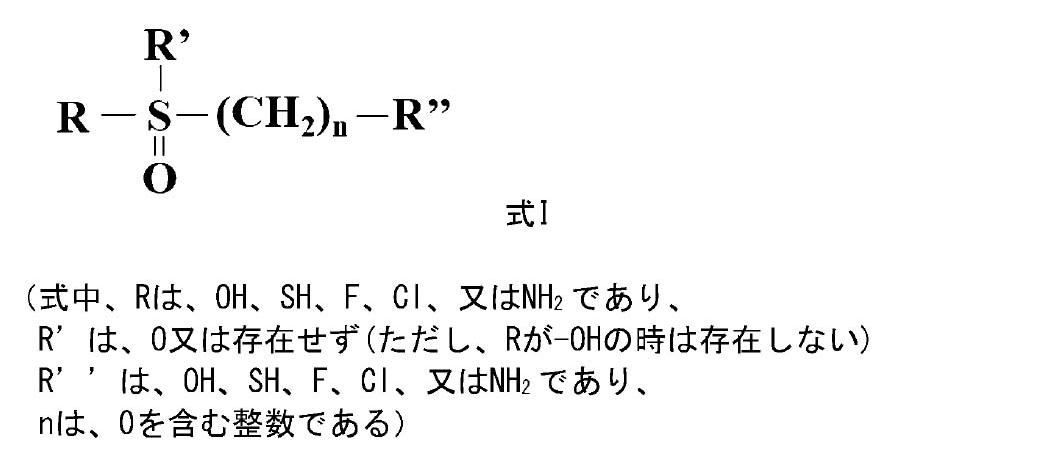
- the present application includes the following inventions: (1) A blue light oxidation inhibitor containing a substance that efficiently suppresses lipid oxidation induced by exposure to blue light. A blue light oxidation inhibitor, characterized in that the inhibition of oxidation can be detected when UPE is used as an index. (2) The inhibitor according to (1), wherein the lipid is one or more lipids selected from linoleic acid, oleic acid, linolenic acid, squalene, palmitrenic acid, and phospholipids. (3) The component that suppresses oxidation is a compound containing a structure of formula I, L (+)-ascorbic acids, or a compound containing pantetheine-S-sulfonic acid, according to (1) or (2).
- Inhibitor (4) The inhibitor according to (3), wherein the compound containing the structure of the formula I is hypotaurine or thiotaurine. (5) The inhibitor according to (3), wherein the L (+)-ascorbic acid is L (+)-ascorbic acid, L (+)-sodium ascorbic acid, or L (+)-calcium ascorbic acid. .. (6) An inhibitor of optical oxidation of lipids, which comprises a compound containing pantetheine-S-sulfonic acid. (7) The inhibitor according to (6), wherein the optical oxidation is oxidation by UVA or blue light.
- the compound containing pantethein-S-sulfonic acid is pantethein-calcium S-sulfonate or sodium pantetain-S-sulfonic acid, according to any one of (3), (6), and (7).
- the inhibitor described The inhibitor described.
- a blue light oxidation inhibitor that efficiently suppresses the oxidation of lipids induced by exposure to blue light which comprises a compound containing the structure of formula I.
- a method for inspecting blue light oxidation inhibitors is used.
- Step of contacting lipid with candidate substance The process of exposing lipids in contact with and non-contact with candidate substances to blue light; The process of measuring the amount of UPE of lipids exposed to blue light; When the amount of UPE measured from the lipid contacted with the candidate substance is lower than that of the lipid not contacted with the candidate substance, the step of determining the candidate substance as a blue light oxidation inhibitor; Including the method.
- the lipid is one or more lipids selected from linoleic acid, oleic acid, linolenic acid, squalene, palmitrenic acid, or phospholipids.
- an agent effective for suppressing oxidation induced by blue light and a screening method thereof are provided.
- INDUSTRIAL APPLICABILITY According to the present invention, it becomes possible to take measures specialized for oxidation induced by blue light.
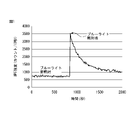
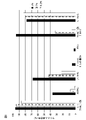
- FIG. 1 shows an example of UPE photon counting data when a linoleic acid mixture is irradiated with blue light.
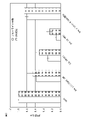
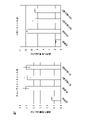
- FIG. 2 shows the rate of change in UPE induced when the linoleic acid mixture to which each sample was added was irradiated with blue light.
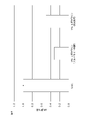
- FIG. 3 shows the rate of change in UPE induced when the linoleic acid mixture to which each sample was added was irradiated with blue light and UVA.
- FIG. 4 shows the rate of change in UPE induced when the oleic acid mixture containing 5% hypotaurine was irradiated with blue light and UVA.
- FIG. 1 shows an example of UPE photon counting data when a linoleic acid mixture is irradiated with blue light.
- FIG. 2 shows the rate of change in UPE induced when the linoleic acid mixture to which each sample was added was irradiated with blue light.
- FIG. 3 shows the rate of change in UPE
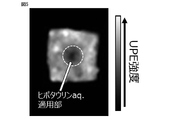
- FIG. 5 shows an example of UPE imaging data when 5% hypotaurine is applied to a part of human skin and irradiated with blue light. 5% hypotaurine was applied to the circled part in the dotted line.
- FIG. 6 shows the results of the antioxidant evaluation by the antioxidant measurement kit performed on the samples of each concentration (5%, 1%, 0.2%), and shows the DPPH radical scavenging rate (%).
- FIG. 7 shows the results of peroxide value measurement [meq / kg] when linoleic acid containing plant extracts A and B was irradiated with blue light and UVA.
- Blue light oxidation inhibitor One aspect of the invention is efficient for oxidation induced by exposure to blue light (sometimes referred to as “blue light-induced oxidation”, “blue light-induced oxidation”, or “blue light oxidation”).
- the present invention relates to a blue light oxidation inhibitor, which is a blue light oxidation inhibitor containing a substance that suppresses the oxidation, and is characterized in that the inhibition of the oxidation can be detected when UPE is used as an index.
- Oxidation refers to the oxidation of various substances including lipids such as linoleic acid, oleic acid, linolenic acid, squalane, palmitrenic acid, and phospholipids.
- Lipids are one of the biological constituents of animals such as humans.
- One of the biological constituents includes skin constituents and eye constituents, which are constituents of the skin.
- lipids such as linolenic acid, oleic acid, linolenic acid, squalene, palmitrenic acid, and phospholipids, collagen, elastin, etc.
- proteins, DNA, melanin precursor (DHICA) and the like are proteins, DNA, melanin precursor (DHICA) and the like.
- Oxidation of substances can be measured by methods such as active oxygen scavenging test such as DPPH radical scavenging ability test and evaluation by peroxide value.
- the oxidation state can also be measured by detecting biological weak luminescence (UPE).
- UPE biological weak luminescence
- UPE ultraweak photon emission
- biophoton is a faint luminescence emitted from a living body or a biological component, and is considered to be caused by an oxidation reaction.
- UPE biological weak luminescence
- antioxidants such as various vitamins, coenzyme Q, and polyphenols are known as components for suppressing oxidation.
- these antioxidants are effective for, let alone the idea that the inhibitory effect on oxidation by light differs depending on the wavelength at which the oxidation is induced. It is surprising to do.
- the present inventors have found that by using UPE as an index of oxidation, some antioxidants have different oxidation-suppressing effects by UV light and blue light.
- the present inventors have a higher oxidation-suppressing effect by blue light than an oxidation-suppressing effect by light of other wavelengths such as UV light, and efficiently perform oxidation induced by exposure to blue light. I found a substance that suppresses light. Such an oxidation-suppressing effect focusing on blue light was difficult to measure by other means such as evaluation by radical scavenging ability as shown in the following examples.
- the UPE used as an index of oxidation in the present invention is extremely weak spontaneous luminescence generated from components such as living organisms, lipids, proteins, amino acids, DNA, and / or melanin precursors, and is a very weak spontaneous emission, which is described in Patent Document 3 and Non-Patent Documents 3.
- measurement can be performed by an optical detection device equipped with a detection unit such as a high-sensitivity and low-noise cooling CCD camera or a photomultiplier tube (PMT) capable of detecting extremely weak UPE. can.
- a weak emission intensity detection device CLA-IDFsk, manufactured by Tohoku Denshi Sangyo Co., Ltd.
- CLA-IDFsk manufactured by Tohoku Denshi Sangyo Co., Ltd.
- the wavelength of the synchrotron radiation to be detected differs depending on the detection device (cooled CCD camera, photomultiplier tube, etc.), but for the measurement of UPE induced by blue light or UV light, for example, a wavelength of 300 to 1300 nm is detected. Possible devices are preferred. With an optical detection device using a photomultiplier tube, UPE induced by blue light or UV light can be obtained as photon counting data as shown in FIG. 1, for example.
- the amount of UPE is, for example, from the time of blue light or UV light irradiation in FIG. 1 to a specific period, for example, 1000 seconds, 1500 seconds, 2000 seconds after irradiation, or until the time when UPE returns to the non-irradiation level after irradiation.
- UPE can be used for lipids such as linoleic acid, oleic acid, linolenic acid, squalene, palmitrenic acid, or phospholipids, proteins such as collagen and elastin, amino acids, and DNA.
- lipids such as linoleic acid, oleic acid, linolenic acid, squalene, palmitrenic acid, or phospholipids, proteins such as collagen and elastin, amino acids, and DNA.
- skin components such as melanin precursors, biological components such as eye components, food and drink components contained in food and drink, skin models, tissue sections of skin and eyes and their surroundings, cells, food and drink. It can also be measured by in vitro or ex vivo methods by measuring the luminescence from a sample such as a product.
- the ocular constituents in the present invention include not only the eyeball itself, but also the extraocular muscles around the eyeball, muscles such as ciliary muscles, orbital fat, aqueous humor, tears, and fats such as meibomian glands inside the eyeball or. It is a concept that includes the constituents of the tissues that exist around it.
- Blue light refers to light in the visible light range of 400 nm to 500 nm. Blue light has a longer wavelength than UV light such as UVA (320 to 400 nm) and UVB (280 to 320 nm), so it reaches deep into the skin. In addition, blue light is known to have various adverse effects on the skin such as inhibition of skin cell growth (Patent Documents 1 and 2, Non-Patent Documents 1 and 2). Therefore, it is important to protect the skin from blue light. In addition, as the frequency of using monitor devices has increased in recent years, there is concern about oxidation of eyes and foods by blue light.
- a substance that efficiently suppresses oxidation induced by exposure to blue light means that a component such as a lipid is exposed to blue light.
- blue light oxidation inhibitor means that a component such as a lipid is exposed to blue light.
- the amount of UPE measured from the component in contact with the candidate substance is lower than that in the non-contact component means, for example, that the substance is in contact with the candidate substance as compared with the state in which it is not in contact with the candidate substance (control).
- the amount of UPE measured from the components is reduced with a statistically significant difference (for example, Wilcoxon's rank sum test, t-test, etc.) with a significance level of 5%, or for example, 5 % Or more, 10% or more, 20% or more, 30% or more, 40% or more, 50% or more, 60% or more, 70% or more, 80% or more, 90% or more, or 100% decrease. obtain.
- the antioxidant effect is, for example, when a component such as a lipid is exposed to an oxidation-inducing factor such as blue light or UV light, the substance is brought into contact with the amount of UPE measured from the component that is not in contact with the substance. It refers to the rate of decrease in the amount of UPE measured from the components (%), and is expressed by the following formula 1.
- the oxidation-suppressing effect of blue light is higher than the oxidation-suppressing effect of UV light
- the UPE-based oxidation-suppressing effect (%) measured from the components when exposed to blue light is exposed to UV light.
- Examples of compounds having formula I include hypotaurine (CAS Registry Number: 300-84-5), thiotaurine (CAS Registry Number: 2937-54-4), and the like.
- Hypotaurine and taurine are substances present in cysteine metabolism, in which cysteine is converted to hypotaurine and then to taurine. Therefore, it was predicted that the function of hypotaurine would be similar to that of taurine and cysteine. Nevertheless, the present inventors did not see much of the bluelight oxidation-suppressing effect of the present invention with taurine and cysteine, while a high bluelight oxidation-suppressing effect was observed with hypotaurine and thioutaurine, and their bluelight oxidation-suppressing effects were observed. Found that it was higher than the antioxidant effect of UVA.
- Examples of other "blue light oxidation inhibitor” include compounds containing L (+)-ascorbic acid and pantetheine-S-sulfonic acid.
- L (+)-ascorbic acid of the present invention examples include L (+)-ascorbic acid (CAS registry number: 50-81-7) and L (+)-sodium ascorbic acid (CAS registry number: 134-03). -2), L (+)-calcium ascorbic acid (CAS registry number: 5473-27-1) and the like.
- the L (+)-ascorbic acids of the present invention are selected from the group consisting of L (+)-ascorbic acid, L (+)-sodium ascorbic acid, and L (+)-calcium ascorbic acid 1 Or refers to multiple compounds.
- L (+)-ascorbic acid and ascorbic acid glucoside are known as antioxidants and whitening agents. Therefore, it was predicted that both L (+)-ascorbic acid and ascorbic acid glucoside would have similar blue light oxidation inhibitory effects. Nevertheless, the present inventors have found that ascorbic acid glucoside does not show much of the bluelight oxidation-suppressing effect of the present invention, while L (+)-ascorbic acid shows a high bluelight oxidation-suppressing effect. ..
- Examples of the compound containing pantetheine-S-sulfonic acid include salts of pantetheine-calcium sulfonate, pantetheine-sodium sulfonate and the like.
- Pantetheine-S-calcium sulfonate (CAS Registry Number: 34644-00-3) is known as a whitening agent, etc., but is not known to have an optical oxidation inhibitory effect.
- the present inventors have discovered that pantetheine-S-calcium sulfonate has an optical oxidation-suppressing effect including a high blue light oxidation-suppressing effect.
- optical oxidation inhibitor which comprises an optical oxidation inhibitor such as a compound containing pantetheine-S-sulfonic acid.
- Optical oxidation refers to the oxidation of various substances such as lipids by light having various wavelengths such as UV light and / or blue light.
- the optical oxidation may be, for example, oxidation by light containing UVA and / or blue light, or may be oxidation by light consisting of UVA and / or blue light.
- the optical oxidation inhibitor is, for example, when a component such as a lipid is exposed to light such as blue light or UV light, the amount of UPE measured from the component in contact with the substance is higher than that of the non-contact component. Refers to low substances.
- the present inventors can prepare compounds containing pantetain-S-sulfonic acid such as pantetain-calcium sulfonate by optical oxidation such as oxidation by blue light or UV light, including lipids. It was discovered that the oxidation of substances such as skin constituents was suppressed.
- the blue light oxidation inhibitor and the optical oxidation inhibitor of the present invention may be collectively referred to as "the agent of the present invention”.
- composition The agent of the present invention may also be a composition in combination with one or more other components such as excipients, carriers and / or diluents.
- the composition and form of the composition are arbitrary, and may be appropriately selected depending on the conditions such as the active ingredient and the intended use.
- the composition can be produced by a conventional method with a formulation appropriately combined with an excipient, a carrier and / or a diluent and the like and other components according to the dosage form.
- the agent of the present invention prevents or improves the oxidation of skin constituents such as lipids, proteins, amino acids, DNA, melanin precursors, eye constituents, food and drink constituents, etc. by light such as blue light or UV, and blue light.
- Cosmetics, non-medicinal products, pharmaceuticals for the purpose of prevention / improvement of eye diseases such as, skin color, skin elasticity, skin function, resistance, improvement of ocular function, oxidation prevention of foods and drinks, long-term storage, etc.
- compositions such as functional foods and other foods and drinks.
- the skin can be blended into any cosmetics applied to the skin such as sunscreen, lotion, serum, beauty cream, aftercare lotion, etc., and can be directly applied to the skin. It may be added to an external preparation. Alternatively, it can be added to pharmaceutical products such as eye drops, external skin preparations and oral preparations, and quasi-drugs.
- the agent of the present invention can appropriately contain any compounding ingredients used in compositions such as cosmetics, pharmaceuticals, quasi-drugs, foods and drinks, as long as the effects are not impaired.
- optional compounding ingredients examples include oils, surfactants, powders, coloring materials, water, alcohols, thickeners, chelating agents, silicones, moisturizers, fragrances, various medicinal ingredients, preservatives, and pH adjusters. , Neutralizers, excipients, colorants, binders, disintegrants, dispersants, stabilizers, gelling agents and the like. For example, it may contain other medicinal components such as lipids and skin constituents caused by light of other wavelengths, antioxidants, preservatives, ultraviolet scattering agents, ultraviolet absorbers and the like.
- the agent of the present invention in the agent or composition of the present invention is not limited as long as the effect of the present invention is not impaired. It can be appropriately determined according to the form, usage method, and the like. For example, from the group consisting of compounds having the structure of formula I such as hypotaurine and thioutaurine, and compounds containing pantetheine-S-sulfonic acid such as pantetheine-calcium sulfonate and pantetheine-sodium sulfonate in the total amount of cosmetics.
- the active ingredient of the agent of the invention may be, for example, 0.0001 to 0.001% by weight, 0.001 to 0.005% by weight, 0.005 to 0.01% by weight, 0.01 to 0.02% by weight, 0.02 to 0.05% by weight, It can be blended in any ratio such as 0.05 to 0.1% by weight, 0.1 to 1.0% by weight, 1.0 to 10% by weight, 10 to 50% by weight, 50 to 100% by weight.
- the possible forms of the agent or composition of the present invention are not limited to the above-mentioned dosage forms and forms.
- One aspect of the present invention relates to a method for screening a blue light oxidation inhibitor using the antioxidant effect induced by exposure to blue light as measured by UPE as an index.
- One aspect of the present invention is Step of contacting lipids such as skin constituents, eye constituents, food and drink constituents with candidate substances; The process of exposing lipids that have come into contact with candidate substances and lipids that have not come into contact with the candidate substance to blue light; The process of measuring the UPE of lipids exposed to blue light; If the UPE measured from the lipids in contact with the candidate substance is lower than that of the lipids in contact with the candidate substance, the step of determining the candidate substance as a blue light-specific oxidation inhibitor;
- the present invention relates to a method for inspecting a blue light oxidation inhibitor, including.
- the screening method or inspection method of the present invention makes it possible to select whether or not the candidate drug has a blue light oxidation inhibitory effect, and it is possible to develop new products, skin care, prevent eye diseases, and propose food and drink preservation. Become.
- the present invention also provides a method for suppressing skin damage due to optical oxidation such as blue light or UV by administering the agent or composition of the present invention.
- skin damage is due to the oxidation of skin constituents such as lipids due to blue light oxidation or optical oxidation.
- the method of the present invention is a method for the purpose of cosmetology and may not be treated by a doctor or a medical professional.
- the present invention also provides a method for suppressing eye damage due to optical oxidation such as blue light or UV by administering the agent or composition of the present invention.
- eye damage is due to oxidation of eye constituents such as lipids by blue light oxidation or optical oxidation.
- the subject to which the agent or composition of the present invention is administered is a subject in which damage to the skin or eyes due to optical oxidation such as blue light or UV is objectively or subjectively recognized, but the skin or eyes due to such oxidation. It may be the target that wants to prevent the damage of. For example, it may be a subject judged to have a large amount of UPE induced by light such as UV light or blue light, a high degree of oxidation of the skin or eyes, or sunlight, or a PC, tablet, or smartphone. It may be an object that is inevitably exposed to blue light by using such equipment, and skin damage caused by UV light or blue light, such as stains, dullness, wrinkles, deflation, sagging skin elasticity, and skin aging. Or may be an object that is concerned about eye damage, such as cataracts, or wishes to prevent it.
- the present invention also provides a method for suppressing damage to food and drink due to optical oxidation such as blue light or UV by using the agent or composition of the present invention.
- food and drink damage is due to oxidation of food and drink components such as lipids by blue light oxidation or optical oxidation.
- the method of the present invention may include the addition of the agent or composition of the present invention to produce a food or drink.
- the foods and drinks of the present invention include foods and drinks that are concerned about deterioration due to optical oxidation of food and drink constituents such as lipids due to blue light or UV, for example, frozen foods, retort pouch foods, seasonings, bottled foods and drinks. It may be any food and drink such as PET bottled beverages.
- the candidate substances listed in Table 1 were added to ultrapure water to prepare a 5 wt% aqueous solution, which was used as a sample.
- linoleic acid and oleic acid were used as biological constituents, and the above substances were mixed with the following composition to prepare a sample.
- the control used ultrapure water instead of the 5% aqueous solution of the candidate substance.
- Example 1 Determination of degree of oxidation by UPE counting method (in vitro) Add 2 mL of the sample prepared by the above method to a plastic container, and use an LED light source (CL-1501, manufactured by Asahi Spectroscopy Co., Ltd.) to 6 mW / cm 2 blue light (430 nm LED :, CL-H1-430-9-1, (Manufactured by Asahi Spectroscopy Co., Ltd.) was irradiated for 10 minutes. The experiment was conducted under shading, and the influence of light of other wavelengths was excluded. Ultrapure water was added to the control instead of the raw material aqueous solution.
- an LED light source CL-1501, manufactured by Asahi Spectroscopy Co., Ltd.
- 6 mW / cm 2 blue light 430 nm LED :, CL-H1-430-9-1, (Manufactured by Asahi Spectroscopy Co., Ltd.) was irradiated for 10 minutes.
- the irradiated sample was transferred to a quartz glass container and set in a dark box of a photon counting device (manufactured by Tohoku Denshi Sangyo Co., Ltd.). One minute after the end of irradiation, UPE photon count measurement was started. UPE was detected by a photomultiplier tube (PMT, R2257P, manufactured by Hamamatsu Photonics) built in the photon counting device, and measured under shading.
- PMT photomultiplier tube
- the oxidative stress suppressing effect was evaluated by obtaining the integrated value of the UPE intensity for 300 seconds from the start of the UPE measurement and obtaining the UPE change rate from the following equation 2.
- UVA lamp 300nm LED: 6mW / cm 2
- blue light 430nm LED: 6mW / cm 2
- TOREX FL20SBL manufactured by Toshiba Medical Supply
- Figure 2 shows the rate of change in blue light-induced UPE of the candidate substance.
- Figure 3 shows both the blue light-induced UPE change rate and the UV light-induced UPE change rate. From these figures, it can be seen that the oxidation inhibitory effect differs depending on the type of candidate substance. In particular, it was found that there is a difference between the blue light-induced UPE change rate and the UV light-induced UPE change rate. Based on these results, L (+)-ascorbic acid, thiotaurine, hypotaurine, and calcium pantetheine-S-sulfonate had an excellent blue light oxidation inhibitory effect.
- Example 2 Measurement of oxidative stress by UPE imaging method 20 ⁇ L of 5% hypotaurine aqueous solution was applied to the center of the human skin tissue (KAC, back) on the stratum corneum side, and allowed to stand for 40 minutes under shading. After irradiating with blue light (430nm LED 6mW / cm 2 ) for 10 minutes, the hypotaurine aqueous solution was wiped off, and immediately UPE imaging was performed in the dark with a high-sensitivity cooling CCD camera (850S CCD42-40, Spectral Instruments Inc.) (photographed). Time 10 minutes).
- KAC human skin tissue
- Comparative Example 1 Evaluation of Radical Elimination Rate A method of measuring the oxidation inhibitory effect by evaluating the radical scavenging rate is known. Therefore, the present inventors investigated the oxidation-suppressing effect of each candidate component for each concentration by the following procedure using the DPPH Antioxidant Assay Kit (DOJINDO LABORATORIES).
- Example 1 5% by weight, 1% by weight, and 0.2% by weight aqueous solutions of the candidate substances used in Example 1 were used.
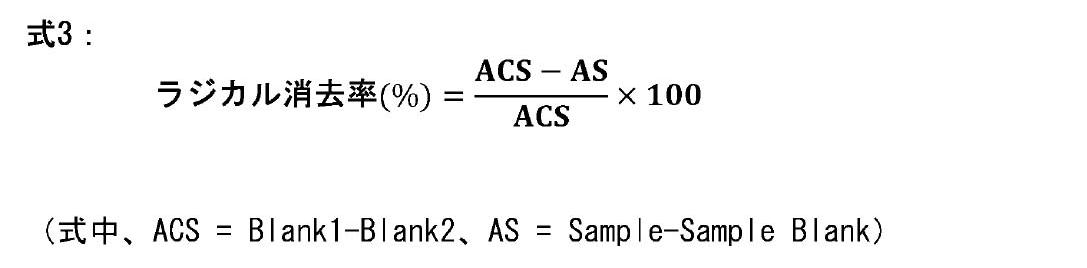
- the Blank1, Blank2, Sample, and Sample Blank solutions shown in Table 2 were prepared according to the manufacturer's protocol outlined below, and the radical scavenging rate was calculated.
- Comparative Example 2 Evaluation by Peroxide Value The plant extract was evaluated by the peroxide value according to the following procedure. First, a sample having the composition shown in the table below was prepared.
Landscapes
- Health & Medical Sciences (AREA)
- Life Sciences & Earth Sciences (AREA)
- Chemical & Material Sciences (AREA)
- Engineering & Computer Science (AREA)
- General Health & Medical Sciences (AREA)
- Animal Behavior & Ethology (AREA)
- Public Health (AREA)
- Veterinary Medicine (AREA)
- Food Science & Technology (AREA)
- Medicinal Chemistry (AREA)
- Pharmacology & Pharmacy (AREA)
- Epidemiology (AREA)
- Polymers & Plastics (AREA)
- Nutrition Science (AREA)
- Mycology (AREA)
- Molecular Biology (AREA)
- Immunology (AREA)
- Analytical Chemistry (AREA)
- General Physics & Mathematics (AREA)
- Pathology (AREA)
- Physics & Mathematics (AREA)
- Bioinformatics & Cheminformatics (AREA)
- Biochemistry (AREA)
- Biophysics (AREA)
- Proteomics, Peptides & Aminoacids (AREA)
- Birds (AREA)
- Hematology (AREA)
- Biomedical Technology (AREA)
- Dermatology (AREA)
- Urology & Nephrology (AREA)
- Cell Biology (AREA)
- General Chemical & Material Sciences (AREA)
- Nuclear Medicine, Radiotherapy & Molecular Imaging (AREA)
- Organic Chemistry (AREA)
- Chemical Kinetics & Catalysis (AREA)
- Ophthalmology & Optometry (AREA)
- Biotechnology (AREA)
- Microbiology (AREA)
- Acyclic And Carbocyclic Compounds In Medicinal Compositions (AREA)
Abstract
Description
(1)ブルーライトへの曝露により誘発される脂質の酸化を効率的に抑制する物質を含むブルーライト酸化抑制剤であって、
UPEを指標とした場合に前記酸化の抑制が検出可能であることを特徴とする、ブルーライト酸化抑制剤。
(2)前記脂質は、リノール酸、オレイン酸、リノレン酸、スクアレン、パルミトレン酸、又はリン脂質から選択される1種又は複数種の脂質である、(1)に記載の抑制剤。
(3)前記酸化を抑制する成分は、式Iの構造を含む化合物、L(+)-アスコルビン酸類、又はパンテテイン-S-スルホン酸を含む化合物である、(1)又は(2)に記載の抑制剤。
(4)前記式Iの構造を含む化合物は、ヒポタウリン又はチオタウリンである、(3)に記載の抑制剤。
(5)前記L(+)-アスコルビン酸類は、L(+)-アスコルビン酸、L(+)-アスコルビン酸ナトリウム、又はL(+)-アスコルビン酸カルシウムである、(3)に記載の抑制剤。
(6)脂質の光学的酸化抑制剤であって、パンテテイン-S-スルホン酸を含む化合物を含む、抑制剤。
(7)前記光学的酸化は、UVA又はブルーライトによる酸化である、(6)に記載の抑制剤。
(8)パンテテイン-S-スルホン酸を含む化合物は、パンテテイン-S-スルホン酸カルシウム又はパンテテイン-S-スルホン酸ナトリウムである、(3)、(6)、及び(7)のいずれか1項に記載の抑制剤。
(9)ヒポタウリン、チオタウリン、L(+)-アスコルビン酸、又はパンテテイン-S-スルホン酸カルシウムから選択される1種又は複数種を含む、ブルーライト酸化抑制剤。
(10)前記脂質は皮膚構成成分、眼構成成分、飲食品構成成分である、(1)~(9)のいずれか1項に記載の薬剤。
(11)式Iの構造を含む化合物を含む、ブルーライトへの曝露により誘発される脂質の酸化を効率的に抑制するブルーライト酸化抑制剤。
(12)ブルーライト酸化抑制剤のスクリーニング方法であって、UPEにより測定されるブルーライトへの曝露により誘発される脂質の酸化抑制効果を指標とする方法。
(13)ブルーライト酸化抑制剤の検査方法であって、
脂質を候補物質に接触させる工程;
候補物質に接触させた脂質と非接触の脂質をブルーライトへ曝露する工程;
ブルーライトに曝露させた脂質のUPE量を測定する工程;
候補物質と接触させた脂質から測定されるUPE量が、候補物質と非接触の脂質に比べて低い場合、該候補物質をブルーライト酸化抑制剤として決定する工程;
を含む、方法。
(14)前記脂質は、リノール酸、オレイン酸、リノレン酸、スクアレン、パルミトレン酸、又はリン脂質から選択される1種又は複数種の脂質である、(11)に記載の方法。
本発明の一態様は、ブルーライトへの曝露により誘発される酸化(「ブルーライトにより誘発される酸化」、「ブルーライトによる酸化」、又は「ブルーライト酸化」と称する場合がある)を効率的に抑制する物質を含むブルーライト酸化抑制剤であって、UPEを指標とした場合に前記酸化の抑制が検出可能であることを特徴とする、ブルーライト酸化抑制剤に関する。

本発明の一態様は、光学的酸化抑制剤であって、パンテテイン-S-スルホン酸を含む化合物等の光学的酸化抑制物質を含む、抑制剤に関する。
本発明の剤は、1種又は2種以上の他の成分、例えば賦形剤、担体及び/又は希釈剤等と組み合わせた組成物とすることもできる。組成物の組成や形態は任意であり、有効成分や用途等の条件に応じて適切に選択すればよい。当該組成物は、その剤形に応じ、賦形剤、担体及び/又は希釈剤等及び他の成分と適宜組み合わせた処方で、常法を用いて製造することができる。
本発明の一態様は、UPEにより測定されるブルーライトへの曝露により誘発される酸化抑制効果を指標とするブルーライト酸化抑制剤のスクリーニング方法に関する。
皮膚構成成分、眼構成成分、飲食品構成成分などの脂質を候補物質に接触させる工程;
候補物質に接触させた脂質と非接触の脂質をブルーライトへ曝露する工程;
ブルーライトに曝露させた脂質のUPEを測定する工程;
候補物質と接触させた脂質から測定されるUPEが、候補物質と非接触の脂質に比べて低い場合、該候補物質をブルーライト特異的酸化抑制剤として決定する工程;
を含む、ブルーライト酸化抑制剤の検査方法に関する。
また、本発明は、ブルーライト又はUV等の光学的な酸化による皮膚ダメージを本発明の剤又は組成物を投与することにより抑制する方法も提供する。一態様では、皮膚ダメージは、ブルーライト酸化又は光学的酸化による脂質といった皮膚構成成分の酸化によるものである。本発明の方法は、美容を目的とする方法であり、医師や医療従事者による治療ではないことがある。
候補物質として下記の物質を使用した。

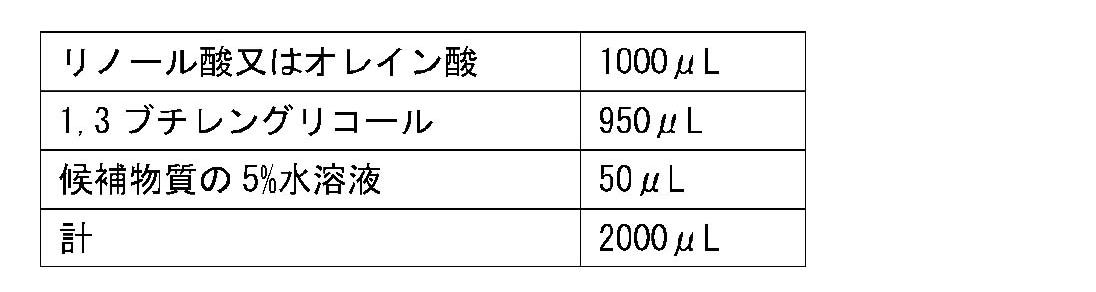
上記方法で調製した試料2mLをプラスチック容器に加え、LED光源(CL-1501、朝日分光社製)を用いて6mW/cm2のブルーライト(430nm LED:、CL-H1-430-9-1、朝日分光社製)を10分間照射した。なお、実験は遮光下で行い、他の波長の光による影響を排除した。コントロールには原料水溶液の代わりに超純水を添加した。

5%ヒポタウリン水溶液20μLをヒト皮膚組織(KAC社、背中部)の角層側中央に適用し、遮光下で40分間静置した。
ブルーライト(430nm LED 6mW/cm2)を10分間照射し、その後ヒポタウリン水溶液を拭き取り、ただちに高感度冷却CCDカメラ(850S CCD42-40, Spectral Instruments Inc.)によって遮光下でUPEイメージングを行った(撮影時間 10分間)。
ラジカル消去率を評価することによって酸化抑制効果を測定する方法が知られている。よって、本発明者らは上記候補物質についてDPPH Antioxidant Assay Kit(DOJINDO LABORATORIES)を用いて以下の手順により、各候補成分の濃度ごとの酸化抑制効果を調べた。

2. Blank1、Blank2に水を20 μlずつ投入した。
3. 各wellにAssay Buffer 80 μlを加えた。
4. Blank2およびSample blankにエタノール100 μlを加え、ピペッティングでよく混ぜた。
5. SampleおよびBlank1にDPPH working solution 100 μlを加え、ピペッティングでよく混ぜた。
6. プレートを25℃、暗所で30分間インキュベートした。
7. プレートリーダーで517 nmの吸光度を測定(Spectramax 250、Molecular Devices社製)した。
8. Sampleのラジカル消去率(%)を以下の式3により算出した。
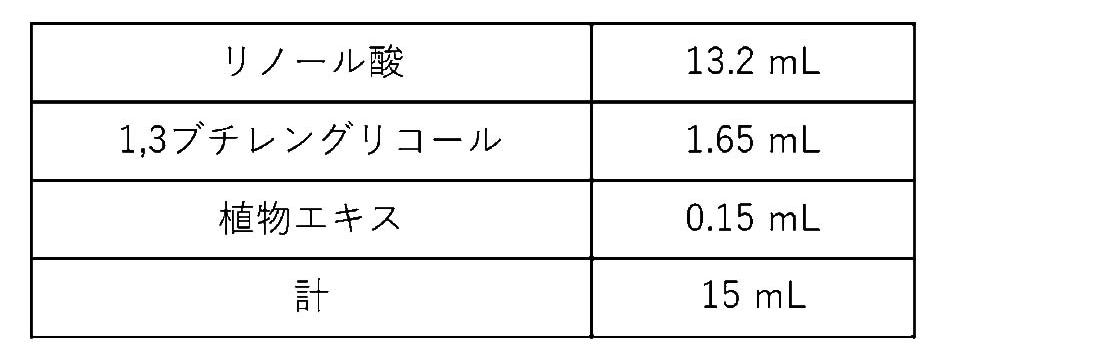
植物抽出液については、以下の手順で過酸化物価による評価を行った。
まず、以下表に示す組成のサンプルを調製した。

Claims (14)
- ブルーライトへの曝露により誘発される脂質の酸化を効率的に抑制する物質を含むブルーライト酸化抑制剤であって、
UPEを指標とした場合に前記酸化の抑制が検出可能であることを特徴とする、ブルーライト酸化抑制剤。 - 前記脂質は、リノール酸、オレイン酸、リノレン酸、スクアレン、パルミトレン酸、又はリン脂質から選択される1種又は複数種の脂質である、請求項1に記載の抑制剤。
- 前記酸化を抑制する成分は、式Iの構造を含む化合物、L(+)-アスコルビン酸類、又はパンテテイン-S-スルホン酸を含む化合物である、請求項1又は2に記載の抑制剤。
- 前記式Iの構造を含む化合物は、ヒポタウリン又はチオタウリンである、請求項3に記載の抑制剤。
- 前記L(+)-アスコルビン酸類は、L(+)-アスコルビン酸、L(+)-アスコルビン酸ナトリウム、又はL(+)-アスコルビン酸カルシウムである、請求項3に記載の抑制剤。
- 脂質の光学的酸化抑制剤であって、パンテテイン-S-スルホン酸を含む化合物を含む、抑制剤。
- 前記光学的酸化は、UVA又はブルーライトによる酸化である、請求項6に記載の抑制剤。
- パンテテイン-S-スルホン酸を含む化合物は、パンテテイン-S-スルホン酸カルシウム又はパンテテイン-S-スルホン酸ナトリウムである、請求項3、6、及び7のいずれか1項に記載の抑制剤。
- ヒポタウリン、チオタウリン、L(+)-アスコルビン酸、又はパンテテイン-S-スルホン酸カルシウムから選択される1種又は複数種を含む、ブルーライト酸化抑制剤。
- 前記脂質は皮膚構成成分、眼構成成分、飲食品構成成分である、請求項1~9のいずれか1項に記載の薬剤。
- 式Iの構造を含む化合物を含む、ブルーライトへの曝露により誘発される脂質の酸化を効率的に抑制するブルーライト酸化抑制剤。
- ブルーライト酸化抑制剤のスクリーニング方法であって、UPEにより測定されるブルーライトへの曝露により誘発される脂質の酸化抑制効果を指標とする方法。
- ブルーライト酸化抑制剤の検査方法であって、
脂質を候補物質に接触させる工程;
候補物質に接触させた脂質と非接触の脂質をブルーライトへ曝露する工程;
ブルーライトに曝露させた脂質のUPE量を測定する工程;
候補物質と接触させた脂質から測定されるUPE量が、候補物質と非接触の脂質に比べて低い場合、該候補物質をブルーライト酸化抑制剤として決定する工程;
を含む、方法。 - 前記脂質は、リノール酸、オレイン酸、リノレン酸、スクアレン、パルミトレン酸、又はリン脂質から選択される1種又は複数種の脂質である、請求項11に記載の方法。
Priority Applications (3)
| Application Number | Priority Date | Filing Date | Title |
|---|---|---|---|
| US18/036,618 US20230414564A1 (en) | 2020-12-11 | 2021-11-29 | Blue light oxidation inhibitor and screening method for same |
| JP2022568192A JPWO2022124120A1 (ja) | 2020-12-11 | 2021-11-29 | |
| CN202180076121.2A CN116437818A (zh) | 2020-12-11 | 2021-11-29 | 蓝光氧化抑制剂及其筛选方法 |
Applications Claiming Priority (2)
| Application Number | Priority Date | Filing Date | Title |
|---|---|---|---|
| JP2020-206296 | 2020-12-11 | ||
| JP2020206296 | 2020-12-11 |
Publications (1)
| Publication Number | Publication Date |
|---|---|
| WO2022124120A1 true WO2022124120A1 (ja) | 2022-06-16 |
Family
ID=81973935
Family Applications (1)
| Application Number | Title | Priority Date | Filing Date |
|---|---|---|---|
| PCT/JP2021/043696 Ceased WO2022124120A1 (ja) | 2020-12-11 | 2021-11-29 | ブルーライト酸化抑制剤およびそのスクリーニング方法 |
Country Status (4)
| Country | Link |
|---|---|
| US (1) | US20230414564A1 (ja) |
| JP (1) | JPWO2022124120A1 (ja) |
| CN (1) | CN116437818A (ja) |
| WO (1) | WO2022124120A1 (ja) |
Citations (4)
| Publication number | Priority date | Publication date | Assignee | Title |
|---|---|---|---|---|
| JPH0680964A (ja) * | 1991-12-27 | 1994-03-22 | Sogo Yatsukou Kk | 活性酸素消去剤 |
| JP2010138153A (ja) * | 2008-12-15 | 2010-06-24 | Pola Chem Ind Inc | 紫外線予防用の皮膚外用剤 |
| WO2019110887A1 (fr) * | 2017-12-08 | 2019-06-13 | Societe D'exploitation De Produits Pour Les Industries Chimiques Seppic | Nouveau procédé anti-stress de la peau induit par l'exposition à la lumière bleue |
| JP2020512307A (ja) * | 2017-03-31 | 2020-04-23 | ディーエスエム アイピー アセッツ ビー.ブイ.Dsm Ip Assets B.V. | 青色光による暴露に際しての損傷からヒト皮膚を保護するための方法 |
Family Cites Families (1)
| Publication number | Priority date | Publication date | Assignee | Title |
|---|---|---|---|---|
| KR101380241B1 (ko) * | 2007-07-27 | 2014-04-01 | 가부시키가이샤 시세이도 | 수중유형 유화 자외선 차단 화장료 |
-
2021
- 2021-11-29 JP JP2022568192A patent/JPWO2022124120A1/ja active Pending
- 2021-11-29 CN CN202180076121.2A patent/CN116437818A/zh active Pending
- 2021-11-29 WO PCT/JP2021/043696 patent/WO2022124120A1/ja not_active Ceased
- 2021-11-29 US US18/036,618 patent/US20230414564A1/en not_active Abandoned
Patent Citations (4)
| Publication number | Priority date | Publication date | Assignee | Title |
|---|---|---|---|---|
| JPH0680964A (ja) * | 1991-12-27 | 1994-03-22 | Sogo Yatsukou Kk | 活性酸素消去剤 |
| JP2010138153A (ja) * | 2008-12-15 | 2010-06-24 | Pola Chem Ind Inc | 紫外線予防用の皮膚外用剤 |
| JP2020512307A (ja) * | 2017-03-31 | 2020-04-23 | ディーエスエム アイピー アセッツ ビー.ブイ.Dsm Ip Assets B.V. | 青色光による暴露に際しての損傷からヒト皮膚を保護するための方法 |
| WO2019110887A1 (fr) * | 2017-12-08 | 2019-06-13 | Societe D'exploitation De Produits Pour Les Industries Chimiques Seppic | Nouveau procédé anti-stress de la peau induit par l'exposition à la lumière bleue |
Non-Patent Citations (2)
| Title |
|---|
| IWASA, TORAI; NAGAYAMA, YUICHI; KOBAYASHI, MASAKI: "21p-234A-13 Spectral analysis of delayed luminescence and biophoton emission of human skin - Application for evaluation of oxidative stress -", PROCEEDINGS OF THE 79TH JAPAN SOCIETY OF APPLIED PHYSICS (JSAP) AUTUMN MEETING; NAGOYA, JAPAN; SEPTEMBER 18-21, 2018, vol. 79, 1 January 2018 (2018-01-01) - 21 September 2018 (2018-09-21), pages 03-574, XP009537559 * |
| TSUCHIDA, KATSUHIKO: "Visualization of UV-induced oxidative stress using biophoton imaging", FRAGRANCE JOURNAL, vol. 48, no. 7, 15 July 2020 (2020-07-15), JP , pages 17 - 22, XP009537545, ISSN: 0288-9803 * |
Also Published As
| Publication number | Publication date |
|---|---|
| US20230414564A1 (en) | 2023-12-28 |
| CN116437818A (zh) | 2023-07-14 |
| JPWO2022124120A1 (ja) | 2022-06-16 |
Similar Documents
| Publication | Publication Date | Title |
|---|---|---|
| Bagchi et al. | Safety and whole-body antioxidant potential of a novel anthocyanin-rich formulation of edible berries | |
| JPH11193226A (ja) | コラーゲン架橋抑制剤 | |
| ES2863307T3 (es) | Composición tópica que comprende extractos vegetales | |
| RU2723339C2 (ru) | Гидрофильный гель для местной доставки 5-аминолевулиновой кислоты | |
| Ou-Yang | The application of ultra-weak photon emission in dermatology | |
| CA3235710A1 (en) | Topical compositions and methods for photodynamic therapy | |
| CN101849890A (zh) | 中长波紫外线皮肤损伤同步修复及防晒复合纳米乳及制备方法 | |
| TWI436788B (zh) | 光線療法組合物及方法 | |
| Sanghvi | Skin cancer: prevention and early detection | |
| CN101664370B (zh) | 谷精草提取物及其在化妆品中的应用 | |
| JP2021172607A (ja) | 紫外線波長変換物質、炭化水素油及び/又は直鎖シリコーン油、並びに粉末を含有する肌用組成物 | |
| CN113677367A (zh) | 含有紫外线波长转换物质和有机系油相增稠剂的乳化组合物 | |
| JPH08119849A (ja) | 皮膚外用剤 | |
| JP7125341B2 (ja) | 紫外線感受性の判定方法 | |
| US20230414564A1 (en) | Blue light oxidation inhibitor and screening method for same | |
| JPH0578230A (ja) | 美白化粧料 | |
| KR20230035590A (ko) | 금속 산화물 선스크린 제제 | |
| KR20020093627A (ko) | 피부 흑화를 예방하거나 멜라닌 단량체의 멜라닌화를억제하는 방법 및 생물학적 디하이드록시인돌 화합물의중합 억제제 | |
| WO2007125832A1 (ja) | ヘリピロンaを用いた一重項酸素消去剤、皮膚老化改善剤、しわ改善剤、たるみ改善剤、皮膚水分量改善剤、美白剤、メラニン抑制剤、一酸化窒素消去剤、酸化防止剤 | |
| KR102161217B1 (ko) | 피부색 개선용 조성물 | |
| JP2022135750A (ja) | Uva酸化抑制剤 | |
| ES2890299T3 (es) | Uso de extracto de la fruta Hylocereus undatus como colorante fluorescente de la piel | |
| CA3139892C (fr) | Systeme photoprotecteur constitue de 4 filtres solaires | |
| JP7509541B2 (ja) | 紫外線波長変換物質及び有機系油相増粘剤を含有する乳化組成物 | |
| JP3952813B2 (ja) | 生体内酸化ストレス調節物質のスクリーニング方法 |
Legal Events
| Date | Code | Title | Description |
|---|---|---|---|
| 121 | Ep: the epo has been informed by wipo that ep was designated in this application |
Ref document number: 21903224 Country of ref document: EP Kind code of ref document: A1 |
|
| ENP | Entry into the national phase |
Ref document number: 2022568192 Country of ref document: JP Kind code of ref document: A |
|
| WWE | Wipo information: entry into national phase |
Ref document number: 18036618 Country of ref document: US |
|
| NENP | Non-entry into the national phase |
Ref country code: DE |
|
| 122 | Ep: pct application non-entry in european phase |
Ref document number: 21903224 Country of ref document: EP Kind code of ref document: A1 |