WO2022118966A1 - 細胞内への核酸分子取り込み促進剤、医薬組成物、及び新規化合物 - Google Patents
細胞内への核酸分子取り込み促進剤、医薬組成物、及び新規化合物 Download PDFInfo
- Publication number
- WO2022118966A1 WO2022118966A1 PCT/JP2021/044526 JP2021044526W WO2022118966A1 WO 2022118966 A1 WO2022118966 A1 WO 2022118966A1 JP 2021044526 W JP2021044526 W JP 2021044526W WO 2022118966 A1 WO2022118966 A1 WO 2022118966A1
- Authority
- WO
- WIPO (PCT)
- Prior art keywords
- group
- channel
- groups
- alkoxycarbonyl
- substituted
- Prior art date
- Legal status (The legal status is an assumption and is not a legal conclusion. Google has not performed a legal analysis and makes no representation as to the accuracy of the status listed.)
- Ceased
Links
Images





Classifications
-
- A—HUMAN NECESSITIES
- A61—MEDICAL OR VETERINARY SCIENCE; HYGIENE
- A61K—PREPARATIONS FOR MEDICAL, DENTAL OR TOILETRY PURPOSES
- A61K31/00—Medicinal preparations containing organic active ingredients
- A61K31/658—Medicinal preparations containing organic active ingredients o-phenolic cannabinoids, e.g. cannabidiol, cannabigerolic acid, cannabichromene or tetrahydrocannabinol
-
- A—HUMAN NECESSITIES
- A61—MEDICAL OR VETERINARY SCIENCE; HYGIENE
- A61K—PREPARATIONS FOR MEDICAL, DENTAL OR TOILETRY PURPOSES
- A61K31/00—Medicinal preparations containing organic active ingredients
- A61K31/33—Heterocyclic compounds
- A61K31/395—Heterocyclic compounds having nitrogen as a ring hetero atom, e.g. guanethidine or rifamycins
- A61K31/435—Heterocyclic compounds having nitrogen as a ring hetero atom, e.g. guanethidine or rifamycins having six-membered rings with one nitrogen as the only ring hetero atom
- A61K31/44—Non condensed pyridines; Hydrogenated derivatives thereof
- A61K31/445—Non condensed piperidines, e.g. piperocaine
- A61K31/4523—Non condensed piperidines, e.g. piperocaine containing further heterocyclic ring systems
- A61K31/454—Non condensed piperidines, e.g. piperocaine containing further heterocyclic ring systems containing a five-membered ring with nitrogen as a ring hetero atom, e.g. pimozide, domperidone
-
- A—HUMAN NECESSITIES
- A61—MEDICAL OR VETERINARY SCIENCE; HYGIENE
- A61K—PREPARATIONS FOR MEDICAL, DENTAL OR TOILETRY PURPOSES
- A61K31/00—Medicinal preparations containing organic active ingredients
- A61K31/33—Heterocyclic compounds
- A61K31/395—Heterocyclic compounds having nitrogen as a ring hetero atom, e.g. guanethidine or rifamycins
- A61K31/495—Heterocyclic compounds having nitrogen as a ring hetero atom, e.g. guanethidine or rifamycins having six-membered rings with two or more nitrogen atoms as the only ring heteroatoms, e.g. piperazine or tetrazines
-
- A—HUMAN NECESSITIES
- A61—MEDICAL OR VETERINARY SCIENCE; HYGIENE
- A61K—PREPARATIONS FOR MEDICAL, DENTAL OR TOILETRY PURPOSES
- A61K31/00—Medicinal preparations containing organic active ingredients
- A61K31/33—Heterocyclic compounds
- A61K31/395—Heterocyclic compounds having nitrogen as a ring hetero atom, e.g. guanethidine or rifamycins
- A61K31/495—Heterocyclic compounds having nitrogen as a ring hetero atom, e.g. guanethidine or rifamycins having six-membered rings with two or more nitrogen atoms as the only ring heteroatoms, e.g. piperazine or tetrazines
- A61K31/496—Non-condensed piperazines containing further heterocyclic rings, e.g. rifampin, thiothixene or sparfloxacin
-
- A—HUMAN NECESSITIES
- A61—MEDICAL OR VETERINARY SCIENCE; HYGIENE
- A61K—PREPARATIONS FOR MEDICAL, DENTAL OR TOILETRY PURPOSES
- A61K31/00—Medicinal preparations containing organic active ingredients
- A61K31/70—Carbohydrates; Sugars; Derivatives thereof
- A61K31/7088—Compounds having three or more nucleosides or nucleotides
-
- A—HUMAN NECESSITIES
- A61—MEDICAL OR VETERINARY SCIENCE; HYGIENE
- A61K—PREPARATIONS FOR MEDICAL, DENTAL OR TOILETRY PURPOSES
- A61K31/00—Medicinal preparations containing organic active ingredients
- A61K31/70—Carbohydrates; Sugars; Derivatives thereof
- A61K31/7088—Compounds having three or more nucleosides or nucleotides
- A61K31/7105—Natural ribonucleic acids, i.e. containing only riboses attached to adenine, guanine, cytosine or uracil and having 3'-5' phosphodiester links
-
- A—HUMAN NECESSITIES
- A61—MEDICAL OR VETERINARY SCIENCE; HYGIENE
- A61K—PREPARATIONS FOR MEDICAL, DENTAL OR TOILETRY PURPOSES
- A61K31/00—Medicinal preparations containing organic active ingredients
- A61K31/70—Carbohydrates; Sugars; Derivatives thereof
- A61K31/7088—Compounds having three or more nucleosides or nucleotides
- A61K31/713—Double-stranded nucleic acids or oligonucleotides
-
- A—HUMAN NECESSITIES
- A61—MEDICAL OR VETERINARY SCIENCE; HYGIENE
- A61K—PREPARATIONS FOR MEDICAL, DENTAL OR TOILETRY PURPOSES
- A61K45/00—Medicinal preparations containing active ingredients not provided for in groups A61K31/00 - A61K41/00
-
- A—HUMAN NECESSITIES
- A61—MEDICAL OR VETERINARY SCIENCE; HYGIENE
- A61K—PREPARATIONS FOR MEDICAL, DENTAL OR TOILETRY PURPOSES
- A61K48/00—Medicinal preparations containing genetic material which is inserted into cells of the living body to treat genetic diseases; Gene therapy
-
- A—HUMAN NECESSITIES
- A61—MEDICAL OR VETERINARY SCIENCE; HYGIENE
- A61P—SPECIFIC THERAPEUTIC ACTIVITY OF CHEMICAL COMPOUNDS OR MEDICINAL PREPARATIONS
- A61P11/00—Drugs for disorders of the respiratory system
-
- A—HUMAN NECESSITIES
- A61—MEDICAL OR VETERINARY SCIENCE; HYGIENE
- A61P—SPECIFIC THERAPEUTIC ACTIVITY OF CHEMICAL COMPOUNDS OR MEDICINAL PREPARATIONS
- A61P13/00—Drugs for disorders of the urinary system
- A61P13/12—Drugs for disorders of the urinary system of the kidneys
-
- A—HUMAN NECESSITIES
- A61—MEDICAL OR VETERINARY SCIENCE; HYGIENE
- A61P—SPECIFIC THERAPEUTIC ACTIVITY OF CHEMICAL COMPOUNDS OR MEDICINAL PREPARATIONS
- A61P21/00—Drugs for disorders of the muscular or neuromuscular system
- A61P21/02—Muscle relaxants, e.g. for tetanus or cramps
-
- A—HUMAN NECESSITIES
- A61—MEDICAL OR VETERINARY SCIENCE; HYGIENE
- A61P—SPECIFIC THERAPEUTIC ACTIVITY OF CHEMICAL COMPOUNDS OR MEDICINAL PREPARATIONS
- A61P25/00—Drugs for disorders of the nervous system
- A61P25/02—Drugs for disorders of the nervous system for peripheral neuropathies
-
- A—HUMAN NECESSITIES
- A61—MEDICAL OR VETERINARY SCIENCE; HYGIENE
- A61P—SPECIFIC THERAPEUTIC ACTIVITY OF CHEMICAL COMPOUNDS OR MEDICINAL PREPARATIONS
- A61P25/00—Drugs for disorders of the nervous system
- A61P25/14—Drugs for disorders of the nervous system for treating abnormal movements, e.g. chorea, dyskinesia
-
- A—HUMAN NECESSITIES
- A61—MEDICAL OR VETERINARY SCIENCE; HYGIENE
- A61P—SPECIFIC THERAPEUTIC ACTIVITY OF CHEMICAL COMPOUNDS OR MEDICINAL PREPARATIONS
- A61P25/00—Drugs for disorders of the nervous system
- A61P25/14—Drugs for disorders of the nervous system for treating abnormal movements, e.g. chorea, dyskinesia
- A61P25/16—Anti-Parkinson drugs
-
- A—HUMAN NECESSITIES
- A61—MEDICAL OR VETERINARY SCIENCE; HYGIENE
- A61P—SPECIFIC THERAPEUTIC ACTIVITY OF CHEMICAL COMPOUNDS OR MEDICINAL PREPARATIONS
- A61P35/00—Antineoplastic agents
-
- A—HUMAN NECESSITIES
- A61—MEDICAL OR VETERINARY SCIENCE; HYGIENE
- A61P—SPECIFIC THERAPEUTIC ACTIVITY OF CHEMICAL COMPOUNDS OR MEDICINAL PREPARATIONS
- A61P43/00—Drugs for specific purposes, not provided for in groups A61P1/00-A61P41/00
-
- C—CHEMISTRY; METALLURGY
- C12—BIOCHEMISTRY; BEER; SPIRITS; WINE; VINEGAR; MICROBIOLOGY; ENZYMOLOGY; MUTATION OR GENETIC ENGINEERING
- C12N—MICROORGANISMS OR ENZYMES; COMPOSITIONS THEREOF; PROPAGATING, PRESERVING, OR MAINTAINING MICROORGANISMS; MUTATION OR GENETIC ENGINEERING; CULTURE MEDIA
- C12N15/00—Mutation or genetic engineering; DNA or RNA concerning genetic engineering, vectors, e.g. plasmids, or their isolation, preparation or purification; Use of hosts therefor
- C12N15/09—Recombinant DNA-technology
- C12N15/11—DNA or RNA fragments; Modified forms thereof; Non-coding nucleic acids having a biological activity
- C12N15/113—Non-coding nucleic acids modulating the expression of genes, e.g. antisense oligonucleotides; Antisense DNA or RNA; Triplex- forming oligonucleotides; Catalytic nucleic acids, e.g. ribozymes; Nucleic acids used in co-suppression or gene silencing
-
- C—CHEMISTRY; METALLURGY
- C12—BIOCHEMISTRY; BEER; SPIRITS; WINE; VINEGAR; MICROBIOLOGY; ENZYMOLOGY; MUTATION OR GENETIC ENGINEERING
- C12N—MICROORGANISMS OR ENZYMES; COMPOSITIONS THEREOF; PROPAGATING, PRESERVING, OR MAINTAINING MICROORGANISMS; MUTATION OR GENETIC ENGINEERING; CULTURE MEDIA
- C12N15/00—Mutation or genetic engineering; DNA or RNA concerning genetic engineering, vectors, e.g. plasmids, or their isolation, preparation or purification; Use of hosts therefor
- C12N15/09—Recombinant DNA-technology
- C12N15/87—Introduction of foreign genetic material using processes not otherwise provided for, e.g. co-transformation
-
- C—CHEMISTRY; METALLURGY
- C12—BIOCHEMISTRY; BEER; SPIRITS; WINE; VINEGAR; MICROBIOLOGY; ENZYMOLOGY; MUTATION OR GENETIC ENGINEERING
- C12N—MICROORGANISMS OR ENZYMES; COMPOSITIONS THEREOF; PROPAGATING, PRESERVING, OR MAINTAINING MICROORGANISMS; MUTATION OR GENETIC ENGINEERING; CULTURE MEDIA
- C12N5/00—Undifferentiated human, animal or plant cells, e.g. cell lines; Tissues; Cultivation or maintenance thereof; Culture media therefor
- C12N5/10—Cells modified by introduction of foreign genetic material
Definitions
- the present invention relates to an agent for promoting the uptake of extracellular nucleic acid molecules into cells, a pharmaceutical composition, a novel compound, an agent for enhancing autophagy of cells, and an agent for enhancing the activity of nucleic acid molecules. Etc.
- Nucleic acid drugs are being researched and developed as new drugs following small molecule drugs and antibody drugs.
- Antibodies are well known as drugs used in molecular targeted therapies, but most of them target epitopes on the cell surface.
- nucleic acid drugs are theoretically considered to be able to target intracellular nucleic acids such as cytoplasm and nucleus.
- the Transient Receptor Potential channel (also referred to as a TRP channel in the present specification) basically functions as a cation channel in the cell membrane. Twenty-eight subtypes of TRP channels are known, many of which take up extracellular calcium ions into the cell when activated. By taking calcium ions into the cell, extracellular environmental changes are transmitted into the cell.
- PPZ1 and PPZ2 having the structures shown below are known as compounds that activate TRPC channels (Non-Patent Document 1).
- PPZ1 and PPZ2 activate TRPC3 channel, TRPC6 channel, and TRPC7 channel (also abbreviated as TRPC3, TRPC6, and TRPC7, respectively in the present specification) among TRP channels.
- Cannabidiol is also known to activate TRPV1 channels, TRPV2 channels and TRPA1 channels (Non-Patent Document 2).
- GSK1702934A (1,3-Dihydro-1- [1-[(5,6,7,8-tetrahydro-4H-cyclohepta [b] thien-2-yl) carbonyl] -4-piperidinyl] -2H-benzimidazole -2-one) is also known to activate TRPC3 and TRPC6 channels (Non-Patent Document 3).
- One issue is to provide an agent for promoting the uptake of nucleic acid molecules into cells.
- One issue is the provision of new compounds.
- One issue is to provide a pharmaceutical composition or the like containing a substance that promotes the uptake of nucleic acid molecules into cells.
- One of the challenges is to provide a drug for enhancing cell autophagy.
- One issue is to provide an agent for enhancing the activity of a nucleic acid molecule.
- the present inventors activate at least one channel (preferably TRPC6 channel) selected from the group consisting of TRPC3 channel, TRPC6 channel, and TRPC7 channel.
- TRPC6 channel preferably TRPC6 channel
- a substance for example, a compound represented by the formula (1) described later
- TRPC6 channel activating effect and the like.
- Item 1 Nucleic acid intracellularly containing a substance that activates at least one channel selected from the group consisting of TRPC3 channel, TRPC6 channel, and TRPC7 channel, a pharmaceutically acceptable salt thereof, or a prodrug thereof.
- the substance that activates at least one channel selected from the group consisting of TRPC3 channel, TRPC6 channel, and TRPC7 channel is the compound represented by the formula (1), cannabidiol, and 1,3-dihydro-1.
- the agent according to Item 1 which is at least one compound.
- A indicates a carbon atom or a nitrogen atom.
- B represents a carbon atom or a nitrogen atom.
- R 1 represents a halogen atom, an alkyl group, an alkoxy group, an acyloxy group, an alkoxycarbonyl group, or an alkyl group substituted with a halogen atom, and when there are a plurality of them, they may be the same or different.
- n represents an integer from 0 to 5 and represents R 2 is an amide group which may be substituted with one or two groups selected from the group consisting of a halogen atom; a trihalogenomethyl group; an alkyl group; an acyloxy group; an alkoxycarbonyl group; an alkyl group and an alkoxycarbonyl group.
- R 2 is an amide group which may be substituted with one or two groups selected from the group consisting of a halogen atom; a trihalogenomethyl group; an alkyl group; an acyloxy group; an alkoxycarbonyl group; an alkyl group and an alkoxycarbonyl group.
- One selected from the group consisting of an alkyl group and an alkoxycarbonyl group or a piperidinylcarbonyl group which may be substituted with two or more groups; or one selected from the group consisting of an alkyl group and an alkoxycarbonyl group.
- n represents an integer from 0 to 5 and represents p indicates 0 or 1 and represents q indicates 0 or 1.
- Item 3 The substance that activates at least one channel selected from the group consisting of TRPC3 channel, TRPC6 channel, and TRPC7 channel is a compound represented by the above formula (1), and A is a carbon atom or a nitrogen atom. Show, B represents a carbon atom or a nitrogen atom.
- R1 represents a fluorine atom, a chlorine atom, a bromine atom, a C1-C4 alkyl group, a C1-C4 alkoxy group, a C2-C5 acyloxy group, a C2-C5 alkoxycarbonyl group, or a trihalogenomethyl group, and when there are a plurality of them, May be the same or different, m represents an integer from 0 to 4 and represents R2 is a fluorine atom; a chlorine atom; a bromine atom; a trifluoromethyl group; a trichloromethyl group; a tribromomethyl group; a C1-C4 alkyl group; a C2-C5 acyloxy group; a C2-C5 alkoxycarbonyl group; a C1-C3 alkyl.
- An amide group which may be substituted with one or two groups selected from the group consisting of a group and a C2-C4 alkoxycarbonyl group; selected from the group consisting of a C1-C3 alkyl group and a C2-C4 alkoxycarbonyl group.
- Piperidinylcarbonyl group optionally substituted with one or more groups; or substituted with one or more groups selected from the group consisting of C1-C3 alkyl groups and C2-C4 alkoxycarbonyl groups.
- n represents an integer from 0 to 4 and represents p indicates 0 or 1 and represents q indicates 0 or 1, Item 2.
- Item 4. The substance that activates at least one channel selected from the group consisting of TRPC3 channel, TRPC6 channel, and TRPC7 channel is a compound represented by the above formula (1), and A represents a nitrogen atom.
- B represents a carbon atom or a nitrogen atom.
- R 1 represents a fluorine atom, a chlorine atom, a C1 to C4 alkyl group, a C1 to C4 alkoxy group, a C2-C4 alkoxycarbonyl group, a trifluoromethyl group, a trichloromethyl group, or a tribromomethyl group, and when there are a plurality of them.
- m indicates an integer from 0 to 3 and represents R2 is a fluorine atom; a chlorine atom; a trifluoromethyl group; a trichloromethyl group; a C1-C4 alkyl group; a C2-C4 acyloxy group; a C2-C4 alkoxycarbonyl group; a C1-C3 alkyl group and a C2-C4 alkoxycarbonyl group.
- An amide group which may be substituted with one or two groups selected from the group consisting of; one or more groups selected from the group consisting of C1-C3 alkyl groups and C2-C4 alkoxycarbonyl groups.
- the substance that activates at least one channel selected from the group consisting of TRPC3 channel, TRPC6 channel, and TRPC7 channel is a compound represented by the above formula (1), and A represents a nitrogen atom. B represents a carbon atom or a nitrogen atom.
- R1 represents a chlorine atom, a C1-C3 alkyl group, a C1-C3 alkoxy group, a C2-C4 alkoxycarbonyl group, a trifluoromethyl group, or a trichloromethyl group, and when there are a plurality of them, they may be the same or different.
- m indicates an integer of 0 to 2 and represents R2 is selected from the group consisting of a fluorine atom; a chlorine atom; a trifluoromethyl group; a trichloromethyl group; a C1-C4 alkyl group; a C2-C4 alkoxycarbonyl group; a C1-C3 alkyl group and a C2-C4 alkoxycarbonyl group. May be substituted with one or two groups; or one or more groups selected from the group consisting of C1-C3 alkyl groups and C2-C4 alkoxycarbonyl groups. It shows a good piperidinylcarbonyl group and may be the same or different if there are more than one.
- n represents an integer from 0 to 3 and represents p indicates 1, q indicates 1.
- Item 6. Item 1 or 2, wherein the substance that activates at least one channel selected from the group consisting of TRPC3 channel, TRPC6 channel, and TRPC7 channel is one or more of the compounds shown below. The listed agent.
- Item 7. Item 6. The agent according to any one of Items 1 to 6, wherein at least one channel selected from the group consisting of TRPC3 channel, TRPC6 channel, and TRPC7 channel is TRPC6 channel.
- Item 6. The agent according to any one of Items 1 to 8, wherein the cell is a target cell of a nucleic acid molecule.
- Item 10. Item 6. The agent according to any one of Items 1 to 9, wherein the cells are small cell lung cancer cells, non-small cell lung cancer cells, prostate cancer cells, breast cancer cells, muscle cells or nerve cells.
- Item 11. Item 8. The agent according to any one of Items 1 to 10, which is used for the prevention or treatment of a disease for which administration of a nucleic acid molecule is expected.
- the agent described in the section. Item 13. A substance that activates at least one channel selected from the group consisting of TRPC3 channel, TRPC6 channel, and TRPC7 channel, a pharmaceutically acceptable salt thereof, or a prodrug thereof, and a pharmaceutically acceptable carrier. And (a) a nucleic acid molecule, a pharmaceutically acceptable salt thereof, or a prodrug thereof, or (b) a nucleic acid molecule, a pharmaceutically acceptable salt thereof, or a prodrug thereof.
- the substance that activates at least one channel selected from the group consisting of TRPC3 channel, TRPC6 channel, and TRPC7 channel is a compound represented by the following formula (1), cannabidiol, and 1,3-dihydro-. Select from the group consisting of 1- [1-[(5,6,7,8-tetrahydro-4H-cyclohepta [b] thien-2-yl) carbonyl] -4-piperidinyl] -2H-benzimidazol-2-one.
- Item 3 The pharmaceutical composition according to Item 13, which is at least one compound thereof. [During the ceremony, A indicates a carbon atom or a nitrogen atom.
- R 1 represents a halogen atom, an alkyl group, an alkoxy group, an acyloxy group, an alkoxycarbonyl group, or an alkyl group substituted with a halogen atom, and when there are a plurality of them, they may be the same or different.
- m represents an integer from 0 to 5 and represents R 2 is an amide group which may be substituted with one or two groups selected from the group consisting of a halogen atom; a trihalogenomethyl group; an alkyl group; an acyloxy group; an alkoxycarbonyl group; an alkyl group and an alkoxycarbonyl group.
- n represents an integer from 0 to 5 and represents p indicates 0 or 1 and represents q indicates 0 or 1.
- Nucleic acid molecule consists of a group consisting of small interfering RNA (siRNA), micro RNA, antogomir, small hairpin RNA (shRNA), guide RNA (gRNA), antisense nucleic acid, ribozyme, decoy nucleic acid, splice switching nucleic acid, mRNA, and plasmid.
- siRNA small interfering RNA
- micro RNA micro RNA
- antogomir small hairpin RNA
- shRNA small hairpin RNA
- gRNA guide RNA
- antisense nucleic acid ribozyme
- decoy nucleic acid splice switching nucleic acid
- mRNA splice switching nucleic acid
- plasmid plasmid.
- R 1 represents a halogen atom, an alkyl group, an alkoxy group, an acyloxy group, an alkoxycarbonyl group, or an alkyl group substituted with a halogen atom, and when there are a plurality of them, they may be the same or different.
- m represents an integer from 0 to 5 and represents R 2 is an amide group which may be substituted with one or two groups selected from the group consisting of a halogen atom; a trihalogenomethyl group; an alkyl group; an acyloxy group; an alkoxycarbonyl group; an alkyl group and an alkoxycarbonyl group.
- R 3 represents a halogen atom, an alkyl group, an alkoxy group, an acyloxy group, an alkoxycarbonyl group, or an alkyl group substituted with a halogen atom, and when there are a plurality of them, they may be the same or different.
- R 2 is an amide group which may be substituted with one or two groups selected from the group consisting of a halogen atom; a trihalogenomethyl group; an alkyl group; an acyloxy group; an alkoxycarbonyl group; an alkyl group and an alkoxycarbonyl group.
- A indicates a carbon atom or a nitrogen atom.
- B represents a carbon atom or a nitrogen atom.
- R 1 represents a halogen atom, an alkyl group, an alkoxy group, an acyloxy group, an alkoxycarbonyl group, or an alkyl group substituted with a halogen atom, and when there are a plurality of them, they may be the same or different.
- m indicates an integer from 0 to 5 and represents R 2 is an amide group which may be substituted with one or two groups selected from the group consisting of a halogen atom; a trihalogenomethyl group; an alkyl group; an acyloxy group; an alkoxycarbonyl group; an alkyl group and an alkoxycarbonyl group.
- n represents an integer from 0 to 5 and represents p indicates 0 or 1 and represents q indicates 0 or 1.
- a substance that activates at least one channel selected from the group consisting of TRPC3 channel, TRPC6 channel, and TRPC7 channel acts to promote the uptake of extracellular nucleic acid molecule into the cell and enhance the activity of the nucleic acid molecule. Therefore, it can be used as an intracellular nucleic acid molecule uptake promoter, a cell autophagy enhancer, a nucleic acid molecule activity enhancer, and the like.
- the compound represented by the formula (1), (1-1), or (1-2) is at least one channel (preferably TRPC6 channel) selected from the group consisting of TRPC3 channel, TRPC6 channel, and TRPC7 channel.
- FIG. 1 is a graph showing relative amounts of TRPC6 channel, TRPC3 channel, TRPC7 channel and SRRM4 gene expression in various cells (Test Example 2).
- FIG. 2 shows the transition of the fluorescence intensity (intracellular Ca 2+ concentration) measured from STC-1 cells in the presence (right figure) and in the absence (left figure) of the compound (60 ⁇ M) of Example 2 (test).
- Example 3 shows the amount of Ca 2+ influx into the cell.
- FIG. 3 shows the fluorescence intensity (nucleic acid uptake into cells) measured from STC-1 cells in the presence (right figure) and in the absence (left figure) of the compound (60 ⁇ M) of Example 2 (test).
- Example 3 shows the amount of nucleic acid taken up into cells.
- FIG. 4 is a photograph of the fluorescence wavelength derived from the fluorescent dye-conjugated antisense nucleic acid (Test Example 3). The left figure is a photograph immediately after the compound addition of Example 2, and the right figure is a photograph 10 minutes after the compound addition of Example 2.
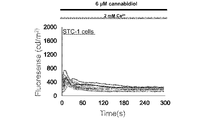
- FIG. 5 shows the transition of the fluorescence intensity (intracellular Ca 2+ concentration) measured in the presence of cannabidiol (6 ⁇ M) (Test Example 3).
- FIG. 6 shows the transition of the fluorescence intensity (amount of nucleic acid incorporated into cells) measured in the presence of cannabidiol (6 ⁇ M) (Test Example 3).
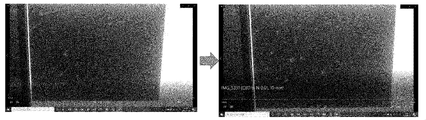
- FIG. 7 is a photograph of the fluorescence wavelength derived from the fluorescent dye-conjugated antisense nucleic acid in the presence of cannabidiol (6 ⁇ M) (Test Example 3).
- the left figure is a photograph immediately after the addition of cannabidiol, and the right figure is a photograph 10 minutes after the addition of cannabidiol.
- FIG. 8 is a graph showing the relative amount of SRRM4 mRNA after 6 hours (left figure) and 24 hours (right figure) of compound addition of Example 2 measured in Test Example 4.
- FIG. 7 is a photograph of the fluorescence wavelength derived from the fluorescent dye-conjugated antisense nucleic acid in the presence of cannabidiol (6 ⁇ M) (Test Example 3).
- the left figure is a photograph immediately after the addition of cannabidiol
- the right figure is a photograph 10 minutes after the addition of cannabidiol.
- FIG. 8 is a graph showing the relative amount of SRRM4
- FIG. 9 is a graph showing the relative amount of MALAT-1 expression by the compound of Example 2 in A549 cells (Test Example 5).
- FIG. 10 is a graph showing the effect of antisense nucleic acid on enhancing MALAT-1 cleavage activity 24 hours (upper figure) and 48 hours (lower figure) after the addition of the compound of Example 2 in A549 cells (Test Example). 6).
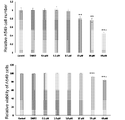
- FIG. 11 is a graph showing the effect of the compound of Example 2 on the proliferation of A549 cells (Test Example 7). The upper figure shows the relative number of cells, and the lower figure shows the ratio of the number of living cells.
- halogen atom examples include a fluorine atom, a chlorine atom, a bromine atom and an iodine atom. Fluorine atoms, chlorine atoms, and bromine atoms are preferable, and fluorine atoms and chlorine atoms are more preferable.
- alkyl group examples include C1 to C8 alkyl groups including linear, branched or cyclic structures, preferably C1 to C6 alkyl groups, and more preferably C1 to C4 alkyl.
- a group particularly preferably a C1-C3 alkyl group.
- the linear or branched alkyl group includes a methyl group, an ethyl group, a 1-propyl group, a 2-propyl group, a 1-butyl group, a 2-butyl group, an isobutyl group, and a tert-butyl.
- Examples include a group, an n-pentyl group, a neopentyl group, an n-hexyl group, an isohexyl group, a 3-methylpentyl group, and the like, and examples of the alkyl group containing a cyclic structure include a cyclopropyl group, a cyclopropylmethyl group, a cyclobutyl group, and a cyclo. Examples thereof include a butylmethyl group, a cyclopentyl group, a cyclopentylmethyl group, a cyclohexyl group, a cyclohexylmethyl group, and a cyclohexylethyl group.
- Preferred examples include a methyl group, an ethyl group, a 2-propyl group, a t-butyl group, a cyclopropyl group and the like.
- alkyl group substituted with a halogen atom examples include the alkyl group comprising a linear, branched or cyclic structure substituted with a halogen atom.
- the number of substituents contained in the alkyl group is 1 to the maximum number that can be substituted, and preferably 3 to the maximum number that can be substituted.
- the halogen atoms may be the same or different, but they are preferably the same.
- C1-C4 alkyl groups substituted with the maximum number of replaceable halogen atoms can be mentioned, preferably C1-C3 alkyl groups substituted with the maximum number of replaceable halogen atoms, more preferably substitutable.
- alkyl groups substituted with halogen atoms include perfluoro-n-butyl group, perfluoro-t-butyl group, perfluoro-n-propyl group, perfluoro-i-propyl group, pentylfluoroethyl group, Trifluoromethyl group, perchloro-n-butyl group, perchloro-t-butyl group, perchloro-n-propyl group, perchloro-i-propyl group, pentachloroethyl group, trichloromethyl group, perbromo-n-butyl group, perbromo -T-butyl group, perbromo-n-propyl group, perbromo-i-propyl group, pentabromoethyl group, tribromomethyl group, periodo
- Preferred examples of the alkyl group substituted with the halogen atom are a pentylfluoroethyl group, a trifluoromethyl group, a pentachloroethyl group, a trichloromethyl group, a pentabromoethyl group, a tribromomethyl group, a pentaiodoethyl group and a triiode.
- Examples thereof include a methyl group, a trifluoromethyl group, a trichloromethyl group and a tribromomethyl group are more preferable, and a trifluoromethyl group and a trichloromethyl group are even more preferable.
- alkoxy group examples include C1 to C8 alkoxy groups including linear, branched or cyclic structures, preferably C1 to C6 alkoxy groups, and more preferably C1 to C4 alkoxy. Groups, particularly preferably C1-C3 alkoxy groups.
- the linear or branched alkoxy group includes a methoxy group, an ethoxy group, a 1-propoxy group, a 2-propoxy group, a 1-butoxy group, a 2-butoxy group, an isobutoxy group, and a tert-butoxy.
- Examples thereof include a group, an n-pentyloxy group, a neopentyloxy group, an n-hexyloxy group, an isohexyloxy group, a 3-methylpentyloxy group and the like.
- Examples of the alkoxy group containing a cyclic structure include a cyclopropoxy group, a cyclopropylmethoxy group, a cyclobutyloxy group, a cyclobutylmethoxy group, a cyclopentyloxy group, a cyclopentylmethoxy group, a cyclohexyloxy group, a cyclohexylmethoxy group and a cyclohexylethoxy group.
- Preferred examples include a methoxy group, an ethoxy group, a 2-propoxy group, a tert-butoxy group, a cyclopropoxy group and the like.
- examples of the "acyloxy group” include C2-C9 acyloxy groups containing a linear, branched or cyclic structure, preferably C2-C7 acyloxy groups, and more preferably C2-C5 acyloxy groups.
- the linear or branched acyloxy group includes a methoxycarbonyl group, an ethoxycarbonyl group, a 1-propoxycarbonyl group, a 2-propoxycarbonyl group, a 1-butoxycarbonyl group, a 2-butoxycarbonyl group, and the like.
- Examples thereof include an isobutoxycarbonyl group, a tert-butoxycarbonyl group, an n-pentyloxycarbonyl group, a neopentyloxycarbonyl group, an n-hexyloxycarbonyl group, an isohexyloxycarbonyl group and a 3-methylpentyloxycarbonyl group.
- Examples of the acyloxy group containing a cyclic structure include a cyclopropoxycarbonyl group, a cyclopropylmethoxycarbonyl group, a cyclobutyloxycarbonyl group, a cyclobutylmethoxycarbonyl group, a cyclopentyloxycarbonyl group, a cyclopentylmethoxycarbonyl group, a cyclohexyloxycarbonyl group and a cyclohexylmethoxy.
- Examples thereof include a carbonyl group and a cyclohexylethoxycarbonyl group.
- Preferred examples thereof include a methoxycarbonyl group, an ethoxycarbonyl group, a 2-propoxycarbonyl group, a tert-butoxycarbonyl group, a cyclopropoxycarbonyl group and the like.
- the "alkoxycarbonyl group” includes a carbonyl group bonded to the alkoxy group, and examples thereof include a carbonyl group bonded to a C1 to C8 alkoxy group including a linear, branched or cyclic structure. It is preferably a C2-C7 alkoxycarbonyl group, more preferably a C2-C5 alkoxycarbonyl group, and particularly preferably a C2-C4 alkoxycarbonyl group.
- the linear or branched alkoxy group constituting the alkoxycarbonyl group includes a methoxy group, an ethoxy group, a 1-propoxy group, a 2-propoxy group, a 1-butoxy group, a 2-butoxy group, an isobutoxy group, and a tert-. Examples thereof include a butoxy group, an n-pentyloxy group, a neopentyloxy group, an n-hexyloxy group, an isohexyloxy group, a 3-methylpentyloxy group and the like.
- Examples of the alkoxy group containing a cyclic structure constituting the alkoxycarbonyl group include a cyclopropoxy group, a cyclopropylmethoxy group, a cyclobutyloxy group, a cyclobutylmethoxy group, a cyclopentyroxy group, a cyclopentylmethoxy group, a cyclohexyloxy group, and a cyclohexylmethoxy group. , Cyclohexylethoxy group and the like.
- Preferred examples of the alkoxy group constituting the alkoxycarbonyl group include a methoxy group, an ethoxy group, a 2-propoxy group, a tert-butoxy group, a cyclopropoxy group and the like.
- the "amide group which may be substituted with one or two groups selected from the group consisting of an alkyl group and an alkoxycarbonyl group” is an amide group, a mono or a di-alkylamide group, a mono or a di-. It includes an alkoxycarbonylamide group, an alkyl group and an amide group di-substituted with an alkoxycarbonyl group, preferably an amide group, a dialkylamide group, and more preferably a dialkylamide group.
- the substituents may be the same or different.
- Examples of the monoalkylamide group include an amide group mono-substituted with the alkyl group, preferably an amide group mono-substituted with a C1 to C4 alkyl group, and more preferably an amide mono-substituted with a C1 to C3 alkyl group.
- Groups are mentioned, and particularly preferably, a methylamide group and an ethylamide group are mentioned.
- the dialkylamide group include an amide group di-substituted with the alkyl group, preferably an amide group di-substituted with a C1 to C4 alkyl group, and more preferably an amide group di-substituted with a C1 to C3 alkyl group.
- a dimethylamide group particularly preferred are a dimethylamide group, a diethylamide group and an ethylmethylamide group.
- the monoalkoxycarbonylamide group include an amide group mono-substituted with the alkoxycarbonyl group, preferably an amide group mono-substituted with a C2-C5 alkoxycarbonyl group, and more preferably a mono-alkoxycarbonyl group with a C2-C4 alkoxycarbonyl group.
- Substituted amide groups particularly preferably methoxycarbonylamides and ethoxycarbonylamide groups can be mentioned.
- dialkoxycarbonylamide group examples include an amide group di-substituted with the alkoxycarbonyl group, preferably an amide group di-substituted with a C2-C5 alkoxycarbonyl group, and more preferably a C2-C4 alkoxycarbonyl group.
- Substituted amide groups particularly preferably di (methoxycarbonyl) amides, di (ethoxycarbonyl) amide groups can be mentioned.
- Examples of the amide group substituted with the alkyl group and the alkoxycarbonyl group include the amide group di-substituted with the alkyl group and the alkoxycarbonyl group, preferably the C1-C4 alkyl group and the C2-C5 alkoxycarbonyl group.
- Substituted amide groups more preferably di-substituted amide groups with C1-C3 alkyl groups and C2-C4 alkoxycarbonyl groups, particularly preferably methylmethoxycarbonylamide groups, methylethoxycarbonylamide groups, ethylmethoxycarbonylamide groups, Ethylethoxycarbonylamide groups can be mentioned.
- the number of substituents of the piperidinylcarbonyl group in "a piperidinylcarbonyl group that may be substituted with one or more groups selected from the group consisting of an alkyl group and an alkoxycarbonyl group” is It is 0 to 5, preferably 0 to 4, more preferably 0 to 3, even more preferably 0 to 2, and particularly preferably 0 or 1.
- the substituents they may be the same or different.
- the piperidinylcarbonyl group has a substituent, at least one substituent is on the carbon atom at the 3-position of the piperidine ring (specifically, the 3-position when the nitrogen atom constituting the piperidine ring is at the 1-position).
- substituents include the above-mentioned alkyl group and the above-mentioned alkoxycarbonyl group, preferably a C1 to C4 alkyl group, a C2-C5 alkoxycarbonyl group, and more preferably a C1-C3 alkyl group and a C2-C4 alkoxycarbonyl group. Particularly preferably, a methyl group, an ethyl group, a methoxycarbonyl group and an ethoxycarbonyl group can be mentioned.
- the number of substituents of the pyrrolidinylcarbonyl group in "a pyrrolidinylcarbonyl group that may be substituted with one or more groups selected from the group consisting of an alkyl group and an alkoxycarbonyl group” is It is 0 to 4, preferably 0 to 3, more preferably 0 to 2, and particularly preferably 0 or 1.
- the substituents they may be the same or different.
- the pyrrolidinylcarbonyl group has a substituent, at least one substituent is on the carbon atom at the 3-position of the pyrrolidine ring (specifically, the 3-position when the nitrogen atom constituting the pyrrolidine ring is at the 1-position).
- substituents include the above-mentioned alkyl group and the above-mentioned alkoxycarbonyl group, preferably a C1 to C4 alkyl group, a C2-C5 alkoxycarbonyl group, and more preferably a C1-C3 alkyl group and a C2-C4 alkoxycarbonyl group. Particularly preferably, a methyl group, an ethyl group, a methoxycarbonyl group and an ethoxycarbonyl group can be mentioned.
- the agent of the present invention is an agent for promoting the uptake of nucleic acid molecules into cells (also referred to as “nucleic acid molecule uptake promoter” in the present specification), and an agent for enhancing cell autophagy (the present invention).
- nucleic acid molecule uptake promoter also referred to as “nucleic acid molecule uptake promoter” in the present specification
- autophagy enhancer an agent for enhancing nucleic acid molecular activity
- nucleic acid molecule activity enhancer also referred to as “nucleic acid molecule activity enhancer” in the present specification.
- Nucleic acid molecule uptake promoter The agent for promoting the uptake of nucleic acid molecules into cells of the present invention activates at least one channel selected from the group consisting of (a) TRPC3 channel, TRPC6 channel, and TRPC7 channel.
- -[(5,6,7,8-tetrahydro-4H-cyclohepta [b] thien-2-yl) carbonyl] -4-piperidinyl] -2H-benzimidazol-2-one at least one selected from the group.
- promoting means that the amount of nucleic acid molecule taken up into the cell increases when the accelerator is applied as compared with the case where the accelerator is not applied.
- the degree of increase can be, for example, 1.2 times or more, 1.3 times or more, 1.4 times or more, 1.5 times or more (preferably 2 times or more, more preferably 2.5 times or more).
- the accelerator of the present invention typically increases the uptake of nucleic acid molecules administered to a living body and the uptake of nucleic acid molecules added to cells outside the body (eg, cells in a container). ..
- the nucleic acid molecule activity enhancer of the present invention is (a) a substance that activates at least one channel selected from the group consisting of TRPC3 channel, TRPC6 channel, and TRPC7 channel, and is pharmaceutically acceptable thereof.
- a substance that activates at least one channel selected from the group consisting of TRPC3 channel, TRPC6 channel, and TRPC7 channel and is pharmaceutically acceptable thereof.
- cannavidiol By containing the following salts, or prodrugs thereof, or the compound represented by formula (1) (b), cannavidiol, and 1,3-dihydro-1- [1-[(5,6,,).
- the activity of the nucleic acid molecule is enhanced in vivo or in vitro.
- enhancing the activity of a nucleic acid molecule means enhancing the function expected to be exerted by the nucleic acid molecule.
- the target RNA Enhancement of cleavage activity of (mRNA, non-coding RNA), enhancement of expression of target protein in case of plasmid, mRNA, antagomir, etc., enhancement of modification of splicing of target mRNA in case of splice switching oligonucleotide, etc., decoy nucleic acid, etc.
- enhancing means that the activity of the nucleic acid molecule is enhanced when the nucleic acid molecule activity enhancer is applied as compared with the case where the nucleic acid molecule activity enhancer is not applied.
- the degree of enhancement can be, for example, 1.2 times or more, 1.3 times or more, 1.4 times or more, 1.5 times or more (preferably 2 times or more, more preferably 2.5 times or more).
- the nucleic acid molecule activity enhancer of the present invention typically enhances the activity of a nucleic acid molecule administered to a living body and enhances the activity of a nucleic acid molecule added to an in vitro cell (for example, a cell in a container). Let me.
- the autophagy enhancer of the present invention is a pharmaceutically acceptable substance that activates at least one channel selected from the group consisting of (a) TRPC3 channel, TRPC6 channel, and TRPC7 channel.
- a) TRPC3 channel, TRPC6 channel, and TRPC7 channel By containing salts, or prodrugs thereof, or the compound represented by formula (1) (b), cannavidiol, and 1,3-dihydro-1-[1-[(5,6,7,, At least one compound selected from the group consisting of 8-tetrahydro-4H-cyclohepta [b] thien-2-yl) carbonyl] -4-piperidinyl] -2H-benzimidazol-2-one, pharmaceutically acceptable thereof.
- the autophagy of cells is enhanced in vivo or in vitro. Therefore, the autophagy enhancer is useful for the prevention or treatment of diseases caused by the accumulation of abnormal proteins such as Alzheimer's disease, Parkinson's disease, Huntington's disease, and Brion's disease without relying on nucleic acid molecules.
- autophagy refers to a phenomenon in which intracellular proteins are degraded.
- autophagy activity is achieved by quantifying an increase or decrease in the amount of conversion from LC3-i to LC3-ii, which correlates with autophagy activity. Can be evaluated for induction and inhibition of.
- LC3-i is decomposed by Atg4 (cysteine protease) and becomes LC3-ii when LC3-i binds to phosphatidylethanolamine
- the amount of LC3-ii shows a positive correlation with autophagosome formation. It is used to evaluate the induction and suppression of autophagy.
- “enhancement” means that the autophagy of the cell enhances the autophagy when the autophagy enhancer is applied as compared with the case where the autophagy enhancer is not applied.
- the degree of enhancement can be, for example, 1.2 times or more, 1.3 times or more, 1.4 times or more, 1.5 times or more (preferably 2 times or more, more preferably 2.5 times or more).
- the autophagy enhancer of the present invention typically enhances the activity of a nucleic acid molecule administered to a living body and enhances the activity of a nucleic acid molecule added to an in vitro cell (for example, a cell in a container). .. It has been reported that enhancement of autophagy enhances the knockdown (KD) effect of antisense nucleic acid (J. Ochaba et al., A novel and translational role for autophagy in antisense oligonucleotide trafficking and activity, Nucleic Acids). Research, 47, 11284-11303 (2019)).
- nucleic acid molecule uptake promoter the nucleic acid molecule activity enhancer, and the autophagy enhancer may be collectively referred to as "the agent of the present invention” or simply "the agent”.
- the agent of the present invention When the agent of the present invention is applied to cells in the presence of calcium ions, the amount of nucleic acid molecule uptake in cells increases. Therefore, the agent of the present invention is preferably used in the presence of calcium ions. Since calcium ions are present inside and outside cells in the in vivo environment, it is not always necessary to add calcium ions, but when the agent of the present invention is applied to cells outside the living body, it must be in the presence of calcium ions. Is preferable.
- the agent of the present invention can be added to cells in a culture medium containing calcium ions.
- the agent of the present invention since it has an action of promoting the uptake of nucleic acid molecule into cells, an action of enhancing autophagy, an action of enhancing the activity of nucleic acid molecule, etc., it may contain a nucleic acid molecule or a nucleic acid molecule (for example, It is preferably used in combination with a nucleic acid drug).
- the agent of the present invention may be administered or added before, after, or at the same time as the administration or addition of the nucleic acid molecule.
- cells expected to take up nucleic acid molecules are suitable.
- cells targeted for nucleic acid molecules preferably cells targeted for nucleic acid molecules (typically nucleic acid drugs) administered to a living body, and uptake of nucleic acid molecules into cells in vitro are tested and evaluated. It is a cell to be equalized.
- the cell has at least one channel (preferably TRPC6 channel) selected from the group consisting of TRPC3 channel, TRPC6 channel, and TRPC7 channel. Having such a channel is advantageous for increasing the uptake of nucleic acid molecules, enhancing autophagy, or enhancing the activity of nucleic acid molecules. Therefore, the agents of the present invention allow cells having at least one channel selected from the group consisting of TRPC3 channel, TRPC6 channel, and TRPC7 channel to take up nucleic acid molecules, enhance autophagy, or nucleic acid molecules. It is useful for enhancing the activity of.
- TRPC6 channel selected from the group consisting of TRPC3 channel, TRPC6 channel, and TRPC7 channel.
- the agent of the present invention allows cells having at least one channel selected from the group consisting of TRPC3 channel, TRPC6 channel, and TRPC7 channel to take up a nucleic acid drug (nucleic acid molecule) and enhance the activity of the nucleic acid molecule. It is useful for drug delivery systems (eg, drug delivery systems for delivering nucleic acid molecules to cells having at least one channel selected from the group consisting of TRPC3 channels, TRPC6 channels, and TRPC7 channels).
- the cells include small cell lung cancer cells, non-small cell lung cancer cells, prostate cancer cells, breast cancer cells, muscle cells, nerve cells and the like, preferably small cell lung cancer cells, non-small cell lung cancer cells, muscle cells and the like. It is a nerve cell. Further, the cells are preferably human cells.
- nucleic acid molecules examples include small interfering RNA (siRNA), microRNA, antogomir, small hairpin RNA (shRNA), guide RNA (gRNA), antisense nucleic acid, ribozyme, decoy nucleic acid, splice switching nucleic acid, mRNA, plasmid and the like. These are preferably antisense nucleic acids, splice switching nucleic acids and the like. Nucleic acid molecules can be used alone or in combination of two or more. Specific examples of nucleic acid molecules include Viltepso, Vyondys53, Spinraza, Exondys51 and the like. Nucleic acid molecules can be made based on known sequence information.
- the substance that activates at least one channel selected from the group consisting of TRPC3 channel, TRPC6 channel, and TRPC7 channel is preferably at least one channel selected from the group consisting of TRPC3 channel and TRPC6 channel, more preferably. May include substances that can activate TRPC6 channels and promote the intracellular influx of extracellular calcium ions.
- the substance that activates at least one channel selected from the group consisting of TRPC3 channel, TRPC6 channel, and TRPC7 channel is a compound represented by the following formula (1) (in the present specification, "Compound (1)). ”), Cannabidiol, 1,3-dihydro-1- [1-[(5,6,7,8-tetrahydro-4H-cycloheptane [b] thien-2-yl) carbonyl] -4-piperidinyl ] -2H-benzimidazol-2-one (also referred to as GSK1702934A) and the like can be mentioned.
- A indicates a carbon atom or a nitrogen atom.
- B represents a carbon atom or a nitrogen atom.
- R 1 represents a halogen atom, an alkyl group, an alkoxy group, an acyloxy group, an alkoxycarbonyl group, or an alkyl group substituted with a halogen atom, and when there are a plurality of them, they may be the same or different.
- m indicates an integer from 0 to 5 and represents R 2 is an amide group which may be substituted with one or two groups selected from the group consisting of a halogen atom; a trihalogenomethyl group; an alkyl group; an acyloxy group; an alkoxycarbonyl group; an alkyl group and an alkoxycarbonyl group.
- n represents an integer from 0 to 5 and represents p indicates 0 or 1 and represents q indicates 0 or 1.
- the formula (1) may be the formula (1-1) or the formula (1-2).
- the compound (1) is a compound represented by the following formula (1-1) (also referred to as “compound (1-1)” in the present specification) or a compound represented by the following formula (1-2) (present). In the specification, it may also be referred to as “compound (1-2)”. ”).
- Compound (1-1) and compound (1-2) are novel compounds.
- [In equation (1-1), R 1 , R 2 , m, and n are the same as in equation (1). ]
- A indicates a carbon atom or a nitrogen atom.
- B represents a carbon atom or a nitrogen atom.
- R 3 represents a halogen atom, an alkyl group, an alkoxy group, an acyloxy group, an alkoxycarbonyl group, or an alkyl group substituted with a halogen atom, and when there are a plurality of them, they may be the same or different.
- R2 and n are the same as in the equation (1). ]
- A indicates a carbon atom or a nitrogen atom
- B indicates a carbon atom or a nitrogen atom.
- a and B do not show carbon atoms at the same time.
- a and B are both carbon atoms
- A is a carbon atom and B is a nitrogen atom
- A is a nitrogen atom and B is a carbon atom
- a and B are both nitrogen atoms. That is, the ring containing A and B is a benzene ring, a pyridine ring, or a pyridazine ring in the formula (1), and a pyridine ring or a pyridazine ring in the formula (1-2).
- both A and B are carbon atoms
- A is a carbon atom and B is a nitrogen atom
- A is a nitrogen atom and B is a carbon atom.
- both B are carbon atoms or A is a nitrogen atom and B is a carbon atom.
- A is a carbon atom and B is a nitrogen atom
- A is a nitrogen atom and B is a carbon atom
- A is a nitrogen atom and B is a carbon atom. It is more preferably an atom.
- the carbon atom may have a substituent R1 .
- R1 When there are a plurality of R1 , they may be the same or different.
- R1 a fluorine atom, a chlorine atom, a bromine atom, a C1-C4 alkyl group, a C1-C4 alkoxy group, a C2-C5 acyloxy group, a C2-C5 alkoxycarbonyl group, or a trihalogenomethyl group is preferable, and a fluorine atom, Chlorine atoms, C1-C4 alkyl groups, C1-C4 alkoxy groups, C2-C4 alkoxycarbonyl groups, trifluoromethyl groups, trichloromethyl groups, or tribromomethyl groups are more preferred, chlorine atoms, C1-C3 alkyl groups, C1.
- R 1 is located at the ortho position with respect to the carbon atom directly bonded to the nitrogen atom constituting (NH) p among the carbon atoms constituting the benzene ring. It is preferably bonded to at least one of the two carbon atoms.
- R 1 bonded to the carbon atom located at the ortho position include an alkoxy group or an alkoxycarbonyl group, preferably a C2-C5 alkoxycarbonyl group, more preferably a C2-C4 alkoxycarbonyl group, and a methoxycarbonyl group or an ethoxy.
- a carbonyl group is more preferred, and an ethoxycarbonyl group is particularly preferred.
- the ring to which R 1 is bonded is a benzene ring, and among the carbon atoms constituting the benzene ring, R 1 is located at the meta position with respect to the carbon atom directly bonded to the nitrogen atom constituting (NH) p .
- it is preferably a halogen atom, more preferably a chlorine atom or a fluorine atom, and particularly preferably a fluorine atom.
- R 1 is a carbon atom directly bonded to a nitrogen atom constituting (NH) p among the carbon atoms constituting the pyridine ring or the pyridazine ring. It is preferable to bond to a carbon atom located between A and A.
- R 1 may be, for example, a halogen atom, an alkyl group, an alkoxy group, or an alkoxycarbonyl group, and may be a fluorine atom, a chlorine atom, or a C1-C4 alkyl.
- Groups, C1-C4 alkoxy groups, or C2-C5 alkoxycarbonyl groups are preferred, C1-C4 alkoxy groups are more preferred, and methoxy or ethoxy groups are particularly preferred.
- R3 may be a halogen atom , an alkyl group, an alkoxy group, or an alkoxycarbonyl group, preferably a fluorine atom, a chlorine atom, a C1 to C4 alkyl group, a C1 to C4 alkoxy group, or a C2 to C5 alkoxycarbonyl group.
- C1 to C4 alkoxy groups are more preferable, and methoxy groups or ethoxy groups are particularly preferable.
- an integer of 0 to 4 is more preferable, 0, 1, or 2 is more preferable, 0 or 1 is further preferable, and 1 is particularly preferable.
- Partial structure represented by the following in equation (1) And the partial structure represented by the following in the equation (1-1). [In both substructures, * indicates the side bonded to the nitrogen atom constituting the substructure (NH) p, and the other symbols have the same meanings as described above. ]
- R represents an alkyl group, preferably a C1 to C4 alkyl group, more preferably a C1 to C2 alkyl group, Hal is a halogen atom, preferably a chlorine atom or fluorine. Atoms are shown.
- the partial structure the following structure is more preferable.
- R2 includes fluorine atom; chlorine atom; bromine atom; trifluoromethyl group; trichloromethyl group; tribromomethyl group; C1-C4 alkyl group; C2-C5 acyloxy group; C2-C5 alkoxycarbonyl group; C1-C3.
- An amide group that may be substituted with one or two groups selected from the group consisting of an alkyl group and a C2-C4 alkoxycarbonyl group; selected from the group consisting of a C1-C3 alkyl group and a C2-C4 alkoxycarbonyl group.
- a piperidinyl carbonyl group that may be substituted with one or more groups; or one or more groups selected from the group consisting of C1-C3 alkyl groups and C2-C4 alkoxycarbonyl groups.
- Substitutable pyrrolidinylcarbonyl groups are preferred, preferably fluorine atoms; chlorine atoms; trifluoromethyl groups; trichloromethyl groups; C1-C4 alkyl groups; C2-C4 acyloxy groups; C2-C4 alkoxycarbonyl groups; C1-C3.
- An amide group that may be substituted with one or two groups selected from the group consisting of an alkyl group and a C2-C4 alkoxycarbonyl group; selected from the group consisting of a C1-C3 alkyl group and a C2-C4 alkoxycarbonyl group.
- a piperidinyl carbonyl group that may be substituted with one or more groups; or one or more groups selected from the group consisting of C1-C3 alkyl groups and C2-C4 alkoxycarbonyl groups.
- Substitutable pyrrolidinylcarbonyl groups are more preferred: fluorine atoms; chlorine atoms; trifluoromethyl groups; trichloromethyl groups; C1-C4 alkyl groups; C2-C4 alkoxycarbonyl groups; C1-C3 alkyl groups and C2-.
- An amide group that may be substituted with one or two groups selected from the group consisting of C4 alkoxycarbonyl groups; or one selected from the group consisting of C1-C3 alkyl groups and C2-C4 alkoxycarbonyl groups.
- a piperidinylcarbonyl group which may be substituted with two or more groups is more preferable, and a chlorine atom; a trifluoromethyl group; a trichloromethyl group; a methyl group; an ethyl group; a methoxycarbonyl group; an ethoxycarbonyl group; an amide group; C1.
- the piperidinyl carbonyl group obtained is more preferable.
- R 2 is one of two carbon atoms located in the ortho position with respect to the carbon atom directly bonded to the nitrogen atom constituting the piperazine ring among the carbon atoms constituting the benzene ring to which R 2 is bonded. Alternatively, it is preferably bonded to two atoms, and more preferably bonded to one ortho-position carbon atom. R 2 may be bonded to a carbon atom located at the para position. R2 is (a) bonded to only one of the two ortho-position carbon atoms, and (b) one of the two ortho-position carbon atoms and the para-position carbon atom.
- the atom is bonded to (c) one of the two carbon atoms at the ortho position and one of the two carbon atoms at the meta position.
- R2 is either (a) bonded to only one of the two ortho-position carbon atoms, or (b) one of the ortho-position two carbon atoms and the para-position carbon. It is more preferable that it is bonded to an atom.
- the R 2 bonded to the carbon atom located at the ortho position is preferably a halogen atom, a trihalogenomethyl group, or a C1-C3 alkyl group, preferably a fluorine atom, a chlorine atom, a bromine atom, a trifluoromethyl group, a methyl group, or a methyl group.
- An ethyl group is more preferable, and a chlorine atom, a trifluoromethyl group, or a methyl group is particularly preferable.
- R 2 bonded to the carbon atom located at the para position is substituted with one or two groups selected from the group consisting of, for example, a halogen atom, an alkyl group; an acyloxy group; an alkoxycarbonyl group; an alkyl group and an alkoxycarbonyl group.
- a halogen atom an alkyl group
- an acyloxy group an alkoxycarbonyl group
- an alkyl group and an alkoxycarbonyl group May be an amide group; a piperidinyl carbonyl group optionally substituted with one or more groups selected from the group consisting of an alkyl group and an alkoxycarbonyl group; or a group consisting of an alkyl group and an alkoxycarbonyl group.
- It may be a pyrrolidinylcarbonyl group which may be substituted with one or more groups selected from, chlorine atom; bromine atom; fluorine atom; C1-C3 alkyl group; C2-C4 acyloxy group; C2. ⁇ C4 alkoxycarbonyl group; an amide group which may be substituted with one or two groups selected from the group consisting of C1 to C3 alkyl groups and C2 to C4 alkoxycarbonyl groups; C1 to C3 alkyl groups and C2 to C4.
- a piperidinylcarbonyl group that may be substituted with one or more groups selected from the group consisting of alkoxycarbonyl groups; or selected from the group consisting of C1-C3 alkyl groups and C2-C4 alkoxycarbonyl groups.
- a pyrrolidinylcarbonyl group which may be substituted with one or more groups is preferred and is selected from a chlorine atom; a methyl group; an ethyl group; a methoxycarbonyl group; an ethoxycarbonyl group; an amide group; a C1-C3 alkyl group.
- a carbonyl group is more preferred.
- n an integer of 0 to 4, an integer of 0 to 3, is more preferable, 0, 1, or 2 is more preferable, 1 or 2 is more preferable, and 2 is particularly preferable.
- Examples of the compound (1), the compound (1-1), or the compound (1-2) include the compounds shown in the following (a) to (m).
- compound (1), the compound (1-1), or the compound (1-2) may be referred to as the above (a) to (e), (g), (h), (j), or (k). It may be the compound shown. Furthermore, compound (1), compound (1-1), or compound (1-2) is the compound represented by the above (a) to (d), (g), (h), or (k). May be.
- Examples of compound (1) or compound (1-1) include 2- (4- (2-chloro-4-piperidin-1-carbonyl) phenyl) piperazine-1-yl) -N- (2-ethoxyphenyl). ) Acetamide is particularly preferred.
- the compound (1), the compound (1-1), and the compound (1-2) can be produced by a known production method for the known compounds included therein.
- the new compound can be produced, for example, by appropriately changing or combining the production method 1 or 2, a method similar thereto, a known method, or the like described in detail below.
- the compound used as the raw material compound may be used as a salt, respectively.
- the method shown below is merely an example, and can be appropriately produced by another method based on the knowledge of a person who is proficient in organic synthesis.
- the compound represented by the formula (1A) can be produced by the synthetic team represented by the following reaction step formula-1. That is, the compound represented by the formula (1A) can be produced from the compound represented by the formula (2), the compound represented by the formula (3) and the compound represented by the formula (6).
- X is a halogen atom
- D is a protecting group
- A, B, R 1 , m, R 2 , and n are the same as above.
- Examples of X include a chlorine atom, a fluorine atom, a bromine atom, and an iodine atom, and a bromine atom is preferable.
- Examples of D include a protecting group such as a halogen atom, a tert-butyl group, a phenyl group, a methyl group and an ethyl group, and a tert-butoxy group is preferable.
- a protecting group such as a halogen atom, a tert-butyl group, a phenyl group, a methyl group and an ethyl group, and a tert-butoxy group is preferable.
- R 2 is preferably an alkoxycarbonyl group and a halogen atom. It is more preferable that an alkoxycarbonyl group is bonded to the carbon atom at the para position. It is more preferable that the alkoxycarbonyl group is bonded to the carbon atom at the para position and the halogen atom is bonded to the carbon atom at the ortho position.
- Step 1 that is, the step of reacting the compound represented by the formula (2) with the compound represented by the formula (3) (which may be a hydrochloride) to synthesize the compound represented by the formula (4) is
- the compound represented by the formula (3) for example, if it is 2- (4- (2-chlorophenyl) piperazine-1-yl) acetic acid (CAS No. 119357-76-5), a commercially available product can be used, and the hydrochloric acid thereof can be used. Salt (CAS No.
- 856843-13-5) can be produced by the method described in Journal of the American Chemical Society 1955, 77, 1, 40-42, and other compounds can also be commercially available and can be produced by a known production method. It can be manufactured, or it can be manufactured by appropriately changing a known manufacturing method.
- inert solvent in this reaction examples include ether solvents such as diethyl ether, tetrahydrofuran (THF), dioxane and dimethoxymethane, aromatic hydrocarbon solvents such as toluene, benzene and xylene, dichloromethane, chloroform, dichloroethane and tetrachloride.
- ether solvents such as diethyl ether, tetrahydrofuran (THF), dioxane and dimethoxymethane
- aromatic hydrocarbon solvents such as toluene, benzene and xylene
- dichloromethane chloroform
- dichloroethane and tetrachloride examples include a halogenated hydrocarbon solvent such as carbon, a ketone solvent such as acetone, an aproton solvent such as dimethyl sulfoxide, N, N-dimethylformamide (DMF) and acetonitrile, and pyr
- Examples of the base include metal hydrides such as sodium hydride and potassium hydride, metal hydroxides such as potassium hydroxide and sodium hydroxide, and metals such as potassium carbonate, potassium hydrogen carbonate, sodium carbonate, sodium hydrogen carbonate and cesium carbonate.
- metal hydrides such as sodium hydride and potassium hydride
- metal hydroxides such as potassium hydroxide and sodium hydroxide
- metals such as potassium carbonate, potassium hydrogen carbonate, sodium carbonate, sodium hydrogen carbonate and cesium carbonate.
- alkylamines such as carbonates, triethylamine and ethyldiisopropylamine
- metal alkoxides such as sodium methoxydo and potassium t-butoxide.
- the amount of the compound represented by the formula (2) to be used is usually 0.5 mol or more, 0.8 mol or more, preferably 0.9 to 2 with respect to 1 mol of the compound represented by the formula (3). It is mol, more preferably 0.9 to 1.5 mol.
- the amount of the base used is usually 1 mol or more, preferably 1 to 5 times mol, and more preferably 1 to 2 times mol with respect to 1 mol of the compound represented by the formula (3).
- the reaction temperature is usually ⁇ 20 ° C. to 10 ° C. higher than the boiling point of the solvent, preferably 0 ° C. to 40 ° C.
- the reaction time is usually 10 minutes to 48 hours, preferably 10 minutes to 24 hours, and more preferably 30 minutes to 18 hours.
- Step 2 that is, the step of converting the compound represented by the formula (4) into the compound represented by the formula (5) is possible, for example, by treating the compound represented by the formula (4) with an acidic organic solvent. be.
- Examples of the acidic organic solvent in this reaction include hydrochloric acid-containing 1,4-dioxane and the like. Two or more kinds of these solvents may be mixed and used in an appropriate ratio. The amount of the acidic organic solvent used may be such that the compound represented by the formula (4) can be oxidized.
- Step 3 that is, the step of reacting the compound represented by the formula (5) with the compound represented by the formula (6) to synthesize the compound represented by the formula (1A) is, for example, in a base and condensation in an inert solvent. It can be done in the presence of the agent.
- the details of the inert solvent and the base are the same as described above.
- condensing agent examples include 1- [dimethylamino (dimethylimino) methyl] -1H-1,2,3-triazolo [4,5-b] pyridine 3-oxide hexafluorophosphart (in the present specification). Also referred to as "HATU”) and the like.
- the amount of the compound represented by the formula (6) to be used is usually 0.5 mol or more, 0.8 mol or more, preferably 0.9 to 2 with respect to 1 mol of the compound represented by the formula (5). It is mol, more preferably 0.9 to 1.5 mol.
- the amount of the condensing agent to be used is usually 0.5 mol or more, 0.8 mol or more, preferably 0.9 to 2 mol, more preferably 0, with respect to 1 mol of the compound represented by the formula (5). It is 9 to 1.5 mol.
- the reaction temperature is usually ⁇ 20 ° C. to 10 ° C. higher than the boiling point of the solvent, preferably 0 ° C. to 40 ° C.
- the reaction time is usually 10 minutes to 48 hours, preferably 10 minutes to 24 hours, and more preferably 30 minutes to 18 hours.
- the corresponding carboxylic acid is obtained by treating this compound, for example, in an inert solvent in the presence of a base. It may be converted into a body. Then, an appropriate substituent is introduced into this carboxylic acid body. For example, in an inert solvent, in the presence of a condensing agent, and if necessary, in the presence of a base, the reaction with a compound corresponding to the substituent (for example, piperidin, amine, etc.) is carried out to form the corresponding amide group or pi as R2 .
- a compound represented by the formula (1A) having a peridinylcarbonyl group can also be obtained.
- the details of the inert solvent, base and condensing agent are the same as described above.
- the amount of the compound corresponding to the substituent such as piperidin or amine is usually 0.5 mol or more with respect to 1 mol of the compound represented by the formula (1A) in which R2 is an alkoxycarbonyl group. It is 0.8 mol or more, preferably 0.9 to 10 mol, and more preferably 0.9 to 8 mol.
- the reaction temperature is usually ⁇ 20 ° C. to 10 ° C. higher than the boiling point of the solvent, preferably 0 ° C. to 40 ° C.
- the reaction time is usually 10 minutes to 48 hours, preferably 10 minutes to 24 hours, and more preferably 30 minutes to 18 hours.
- the compound represented by the formula (1A) can be produced by the synthetic scheme represented by the following reaction step formula-2. That is, the compound represented by the formula (1A) can be produced from the compound represented by the formula (6), the compound represented by the formula (7) and the compound represented by the formula (3).
- Step 1 that is, the step of reacting the compound represented by the formula (6) with the compound represented by the formula (7) to synthesize the compound represented by the formula (8) is, for example, the presence of a base in an inert solvent. Can be done below. The details of the inert solvent and the base are the same as described above.
- the amount of the compound represented by the formula (7) to be used is usually 0.5 mol or more, 0.8 mol or more, preferably 0.9 to 2 with respect to 1 mol of the compound represented by the formula (6). It is mol, more preferably 0.9 to 1.5 mol.
- the reaction temperature is usually ⁇ 20 ° C. to 10 ° C. higher than the boiling point of the solvent, preferably ⁇ 10 ° C. to 40 ° C.
- the reaction time is usually 10 minutes to 48 hours, preferably 10 minutes to 24 hours, and more preferably 30 minutes to 18 hours.
- Step 2 that is, the step of reacting the compound represented by the formula (8) with the compound represented by the formula (3) to synthesize the compound represented by the formula (1A) is, for example, the presence of a base in an inert solvent. Can be done below. The details of the inert solvent and the base are the same as described above.
- the amount of the compound represented by the formula (3) to be used is usually 0.5 mol or more, 0.8 mol or more, preferably 0.9 to 2 with respect to 1 mol of the compound represented by the formula (8). It is mol, more preferably 0.9 to 1.5 mol.
- the reaction temperature is usually ⁇ 20 ° C. to 10 ° C. higher than the boiling point of the solvent, preferably ⁇ 10 ° C. to 40 ° C.
- the reaction time is usually 10 minutes to 48 hours, preferably 10 minutes to 24 hours, and more preferably 30 minutes to 18 hours.
- Cannabidiol is represented by the following chemical structural formula 2-[(1R, 6R) -3-methyl-6-(1-methylethenyl) -2-cyclohexen-1-yl] -5-pentyl-1,3- It is Benzenediol, which was found by the present inventors to have a non-selective TRP channel activating effect and also a TRPC6 channel activating effect. Cannabidiol can be produced by known methods or obtained from nature.
- GSK1702934A (1,3-Dihydro-1- [1-[(5,6,7,8-tetrahydro-4H-cyclohepta [b] thien-2-yl) carbonyl] -4-piperidinyl] -2H-benzimidazol-2 -one) is a known compound having the following structure and has a TRPC3 channel activating effect.
- the method for producing GSK1702934A is known, and for example, it can be produced by the method described in Non-Patent Document 3.
- the GSK1702934A can also be a commercially available product.
- the compound represented by the formula (1) according to the present invention (the compound represented by the formula (1) includes the compound represented by the formula (1-1) and the compound represented by the formula (1-2). ) And its intermediate compounds can be produced by the above-mentioned production method, and the starting material compound, the compound represented by the formula (1) according to the present invention, and the intermediate compound thereof are described herein.
- Known or known techniques eg, B.R.
- the starting material compound and the intermediate compound shown in each of the above reaction formulas are subjected to the reaction, if necessary, the functional groups are protected with an appropriate protecting group by a known method, and after the reaction is completed, the functional groups are protected.
- the protecting group can be deprotected by a known method.
- Each of the target compounds obtained according to the above reaction formula can be isolated and purified. For example, after cooling the reaction mixture, isolation procedures such as filtration, concentration, and extraction are performed to separate the crude reaction product, and then the crude reaction product is subjected to general column chromatography, recrystallization, etc. By subjecting to a purification procedure, it can be isolated and purified from the reaction mixture.
- a solvent is used in the substance that activates at least one channel selected from the group consisting of TRPC3 channel, TRPC6 channel, and TRPC7 channel, and the starting material compound, intermediate compound, etc. shown in each of the above reaction formulas. Contains compounds in the form of added solvates (eg, hydrates, ethanol solvates, etc.).
- alkali metal salts such as sodium salt and potassium salt
- alkaline earth metal salts such as calcium salt and magnesium salt
- inorganic metal salts such as zinc salt
- triethylamine, triethanolamine and trihydroxy the compound represented by the formula (1), cannavidiol, and 1,3-dihydro-1-[ 1-[(5,6,7,8-tetrahydro-4H-cyclohepta [b] thien-2-yl) carbonyl] -4-piperidinyl] -2H-A pharmaceutical
- Organic base salts such as methylaminomethane and amino acids
- inorganic acid salts such as hydrochlorides, hydrobromates, sulfates, phosphates and nitrates; acetates, carbonates, propionates, succinates and lactates.
- These salts can be produced according to a conventional method.
- Various isomers can be isolated by a known separation method.
- a racemic compound can be derived into a sterically pure isomer by a general optical resolution method (for example, optical resolution by crystallization, direct optical resolution by chromatography, etc.).
- the optically active compound can also be produced by using an appropriate optically active raw material.
- the starting material compound, the intermediate compound, and the target compound represented in each of the above reaction process formulas can be used in an appropriate salt form.
- one or more atoms can be replaced with one or more isotope atoms.
- isotope atoms include deuterium (2H), tritium (3H), 13C, 14N, 18O and the like.
- [Pharmaceutical composition] in the present invention, (a) a substance that activates at least one channel selected from the group consisting of TRPC3 channel, TRPC6 channel, and TRPC7 channel, a pharmaceutically acceptable salt thereof, or a prodrug thereof. And a pharmaceutical composition containing a pharmaceutically acceptable carrier, or a compound represented by (b) formula (1), cannavidiol, and 1,3-dihydro-1- [1-[(5,6,,). At least one compound selected from the group consisting of 7,8-tetrahydro-4H-cyclohepta [b] thien-2-yl) carbonyl] -4-piperidinyl] -2H-benzimidazol-2-one, its pharmaceuticals.
- compositions containing an acceptable salt, or a prodrug thereof, and a pharmaceutically acceptable carrier include an acceptable salt, or a prodrug thereof, and a pharmaceutically acceptable carrier.
- the pharmaceutical composition of the present invention comprises a substance that activates at least one channel selected from the group consisting of TRPC3 channel, TRPC6 channel, and TRPC7 channel, a compound represented by the formula (1), cannabidiol, and 1 , 3-Dihydro-1- [1-[(5,6,7,8-tetrahydro-4H-cyclohepta [b] thien-2-yl) carbonyl] -4-piperidinyl] -2H-benzimidazol-2-one ,
- the pharmaceutically acceptable salt thereof, or their prodrugs are formulated in the form of conventional pharmaceutical compositions.
- the pharmaceutical composition of the present invention comprises (a) a substance that activates at least one channel selected from the group consisting of TRPC3 channel, TRPC6 channel, and TRPC7 channel, a pharmaceutically acceptable salt thereof, or a pharmaceutically acceptable salt thereof.
- Prodrugs or compounds represented by formula (1) (b), benzimidazole, and 1,3-dihydro-1- [1-[(5,6,7,8-tetrahydro-4H-cyclohepta [b) ] Thien-2-yl) carbonyl] -4-piperidinyl] -2H-Benzimidazole-2-one prepared using at least one compound selected from the group and a pharmaceutically acceptable carrier.
- the carrier include commonly used fillers, bulking agents, binders, wetting agents, disintegrants, surfactants, lubricants and other diluents or excipients.
- a prodrug refers to a compound that is converted into the compound of the present invention by a reaction in vivo (for example, an enzymatic reaction or a reaction with gastric acid).
- a reaction in vivo for example, an enzymatic reaction or a reaction with gastric acid.
- the carboxyl is converted into an ester.
- the ester include methyl ester, ethyl ester, 1-propyl ester, 2-propyl ester, pivaloyloxymethyl ester, acetyloxymethyl ester, cyclohexylacetyloxymethyl ester, 1-methylcyclohexylcarbonyloxymethyl ester and ethyloxy.
- Examples thereof include carbonyloxy-1-ethyl ester and cyclohexyloxycarbonyloxy-1-ethyl ester.
- the pharmaceutical composition of the present invention can be selected from various forms according to the purpose of treatment, and typical examples thereof include tablets, pills, powders, liquids, suspensions, emulsions, granules and capsules. Examples include suppositories, injections (liquids, suspensions, etc.), ointments, inhalants and the like.
- carrier used for molding tablets known carriers can be widely used, for example, excipients such as lactose, sucrose, sodium chloride, glucose, urea, starch, calcium carbonate, kaolin, crystalline cellulose, water, ethanol, etc. Binders such as propanol, simple syrup, glucose solution, starch solution, gelatin solution, methyl cellulose, potassium phosphate, polyvinylpyrrolidone, carboxymethyl cellulose, cellac, sodium alginate, dried starch, agar powder, laminaran powder, calcium carbonate, sodium hydrogen carbonate.
- excipients such as lactose, sucrose, sodium chloride, glucose, urea, starch, calcium carbonate, kaolin, crystalline cellulose, water, ethanol, etc.
- Binders such as propanol, simple syrup, glucose solution, starch solution, gelatin solution, methyl cellulose, potassium phosphate, polyvinylpyrrolidone, carboxymethyl cellulose, cellac, sodium alginate
- Polyoxyethylene sorbitan fatty acid esters sodium lauryl sulfate, stearic acid monoglyceride, starch, disintegrants such as lactose, absorption promoters such as quaternary ammonium base, sodium lauryl sulfate, stearic acid, cocoa butter, hydrogenated oil, etc.
- Disintegration inhibitors moisturizers such as glycerin and starch, adsorbents such as starch, lactose, kaolin, bentonite and colloidal silicic acid, purified talc, stearic acid, sodium borate, lubricants such as polyethylene glycol and the like. Be done.
- the tablet can be a tablet with a normal lock skin, for example, a sugar coating, a gelatin-encapsulated tablet, an enteric-coated tablet, a film-coated tablet or a double tablet, or a multi-layer tablet, if necessary.
- a normal lock skin for example, a sugar coating, a gelatin-encapsulated tablet, an enteric-coated tablet, a film-coated tablet or a double tablet, or a multi-layer tablet, if necessary.
- Known carriers can be widely used for molding pills, for example, excipients such as glucose, lactose, starch, cocoa butter, hardened vegetable oil, kaolin, talc, gum arabic powder, tragant powder, gelatin. , Binders such as ethanol, disintegrants such as laminarane and agar, and the like.
- the carrier used for molding the suppository known ones can be widely used, and examples thereof include polyethylene glycol, cacao butter, higher alcohols, esters of higher alcohols, gelatin, semi-synthetic glyceride and the like.
- the liquid, emulsion and suspension are preferably sterilized and isotonic with blood.
- emulsions and suspending agents known ones can be widely used, for example, water, ethanol, propylene glycol, polyoxylated isostearyl alcohol, ethoxylated iso. Examples thereof include stearyl alcohol and polyoxyethylene sorbitan fatty acid esters.
- a sufficient amount of salt, glycerin, glucose, etc. can be contained in the pharmaceutical preparation to prepare an isotonic solution, and usual solubilizing agents, buffers, and pain-relieving agents can be contained.
- Agents and the like can be contained, and if necessary, colorants, preservatives, flavors, flavoring agents, sweeteners and the like and other pharmaceutical products can be contained.
- the ointment has a form such as a paste, a cream, or a gel, and when preparing these forms, for example, white petrolatum, paraffin, glycerin, a cellulose derivative, polyethylene glycol, silicone, bentonite, etc. are used as a diluent. can.
- white petrolatum, paraffin, glycerin, a cellulose derivative, polyethylene glycol, silicone, bentonite, etc. are used as a diluent. can.
- the inhalant is a preparation intended to be applied to the bronchi or lungs by inhaling the active ingredient as an aerosol, and includes a powder inhalant, an inhalation solution, an inhalation aerosol and the like.
- a powder inhalant is a preparation that is inhaled as an aerosol of solid powder particles, and is usually produced by making the active ingredient into fine particles and mixing them with an additive such as lactose to make them homogeneous. can.
- the inhalation solution refers to a liquid inhalation agent applied by a nebulizer or the like, and can usually be produced by adding a solvent, an appropriate tonicity agent, a pH adjuster, or the like to the active ingredient and mixing them.
- the inhalation aerosol agent is a fixed-quantity spray-type inhalant that sprays a certain amount of the active ingredient together with the propellant filled in the container.
- Inhalation aerosols are usually prepared by adding a solvent, an appropriate dispersant, a stabilizer, etc. to the active ingredient to make a solution or suspension, filling a pressure-resistant container with a liquid propellant, and installing a metering valve. It can be manufactured by.
- the pharmaceutical composition of the present invention may contain a coloring agent, a preservative, a flavoring agent, a flavoring agent, a sweetening agent, and other pharmaceutical products, if necessary.
- the amount of the prodrug is not particularly limited and may be appropriately selected from a wide range, but is usually 0.5 to 90% by mass, preferably 1 to 85% by mass, preferably 1 to 80% by mass in the pharmaceutical composition. %.
- the administration method of the pharmaceutical composition of the present invention is not particularly limited, and the pharmaceutical composition is administered by a method according to various pharmaceutical forms, the age, sex, disease state, and other conditions of the patient.
- the pharmaceutical composition is administered by a method according to various pharmaceutical forms, the age, sex, disease state, and other conditions of the patient.
- tablets, pills, liquids, suspensions, emulsions, granules and capsules they are orally administered.
- it may be administered intravenously alone or mixed with a normal replacement fluid such as glucose or amino acid, or if necessary, intramuscularly, intradermally, subcutaneously, intraperitoneally, etc.
- a normal replacement fluid such as glucose or amino acid
- intramuscularly intradermally
- subcutaneously intraperitoneally, etc.
- nasally In the case of suppositories, it is administered intrarectally.
- inhalants it is administered nasally.
- the dose of the pharmaceutical composition of the present invention may be selected in consideration of usage, age, sex, degree of disease, and other conditions of the patient, and is selected from the group consisting of TRPC3 channel, TRPC6 channel, and TRPC7 channel.
- a substance that activates at least one channel, a pharmaceutically acceptable salt thereof, or a prodrug thereof, or a nucleic acid molecule, a pharmaceutically acceptable salt thereof, or a prodrug thereof is usually used.
- the amount is 0.01 to 100 mg, preferably 0.1 to 50 mg per 1 kg of body weight per day, divided into 1 to several times per day, or 2 days, 3 days, 4 days, 5 days. , 6 days, 1 week, 2 weeks or 4 weeks at intervals. Since the dose varies depending on various conditions, a dose smaller than the above range may be sufficient, or a dose exceeding the above range may be required.
- the pharmaceutical composition of the present invention can be used as a concomitant drug in combination with other drugs.
- the pharmaceutical composition of the present invention is preferably formulated in combination with a drug containing a nucleic acid molecule, a pharmaceutically acceptable salt thereof, or a prodrug thereof.
- the pharmaceutical composition of the present invention may be used in combination with an anticancer agent.
- anticancer agents include antitumor antibiotics such as doxorubicin, idarvidin and mitomycin C, microtube inhibitors such as docetaxel and bincristine, platinum preparations such as carboplatin, cisplatin and oxaliplatin, and histone deacetylases such as bolinostat.
- HDAC HDAC
- kinase inhibitors such as snitinib, imatinib, gefetinib, errotinib, afatinib, dasatinib, tramethinib
- topoisomerase inhibitors such as irinotecan and etopocid
- carcinurin inhibitors such as cyclosporin and tachlorimus
- cyclophosphamide cyclophosphamide
- Alkylating agents such as iosphamide and dacarbazine
- metabolic antagonists such as pentostatin, fludalabine, cladribine, methotrexate, 5-fluorouracil, 6-mercaptopurine and enocitabine
- molecular targeting agents such as rituximab, setuccimab and trusszumab
- proteasome inhibitors such as voltezomib.
- hormonal therapeutic agents such as tamoxifen, bicardamide, anti-PD-1 antibodies such as nibolumab, penbrolizumab, pidirisumab, atezolizumab, avelumab, or anti-PD-L1 antibodies such as durvalumab, BMS-936559, anti-CTLA such as ipilimumab or tremellimumab. 4 Inhibitors can be mentioned.
- agent or pharmaceutical composition of the present invention can promote the uptake of nucleic acid molecules into cells, it is desirable to use them in combination with nucleic acid molecules. Further, the agent or pharmaceutical composition of the present invention is preferably used for diseases that are expected to be prevented or treated by administration of nucleic acid molecules.
- Diseases to be prevented or treated include diseases for which administration of nucleic acid molecules is expected, such as lung cancer, prostate cancer, breast cancer, pulmonary fibrosis, renal fibrosis, muscular dystrophy, amyotrophic lateral sclerosis, and Huntington's disease. Examples include muscular atrophy and Parkinson's disease. Preferred diseases are lung cancer and prostate cancer.
- the agent or pharmaceutical composition of the present invention is (a) a substance that activates at least one channel selected from the group consisting of TRPC3 channel, TRPC6 channel, and TRPC7 channel, and a pharmaceutically acceptable salt thereof.
- a pharmaceutically acceptable salt thereof Or to contain prodrugs thereof, or the compound represented by formula (1) (b), cannavidiol, and 1,3-dihydro-1- [1-[(5,6,7,8-).
- the cells include small cell lung cancer cells, non-small cell lung cancer cells, prostate cancer cells, breast cancer cells, muscle cells, nerve cells and the like, preferably small cell lung cancer cells, non-small cell lung cancer cells, muscle cells, etc. Prostate cancer cells and nerve cells. Further, the cells are preferably human cells.
- the present invention is a substance that activates at least one channel selected from the group consisting of (a) TRPC3 channel, TRPC6 channel, and TRPC7 channel, and a pharmaceutically acceptable salt thereof, for a subject receiving nucleic acid molecule administration. , Or an effective amount of their prodrug, or (b) the compound represented by formula (1), cannavidiol, and 1,3-dihydro-1- [1-[(5,6,7).
- the present invention is pharmaceutically acceptable as a substance that activates at least one channel selected from the group consisting of (a) TRPC3 channel, TRPC6 channel, and TRPC7 channel for a subject to be administered with a nucleic acid molecule.
- a salt or a prodrug thereof or (b) the compound represented by formula (1), benzimidazole, and 1,3-dihydro-1- [1-[(5,6). , 7,8-Tetrahydro-4H-cyclohepta [b] thien-2-yl) carbonyl] -4-piperidinyl] -2H-benzimidazol-2-one, its pharmaceutically acceptable salts, or their prodrugs It may include methods of enhancing cell autophagy, including administration of an effective amount of.
- the present invention is a pharmaceutically acceptable substance for a subject receiving nucleic acid molecule administration, which activates at least one channel selected from the group consisting of (a) TRPC3 channel, TRPC6 channel, and TRPC7 channel.
- a) TRPC3 channel, TRPC6 channel, and TRPC7 channel activates at least one channel selected from the group consisting of (a) TRPC3 channel, TRPC6 channel, and TRPC7 channel.
- 6,7,8-Tetrahydro-4H-cyclohepta [b] thien-2-yl) carbonyl] -4-piperidinyl] -2H-benzimidazol-2-one, its pharmaceutically acceptable salts, or their pros It may include methods of enhancing the activity of a nucleic acid molecule, including administering an effective amount of the drug.
- the present invention activates at least one channel selected from the group consisting of (a) TRPC3 channel, TRPC6 channel, and TRPC7 channel for a subject to be prevented or treated for a disease for which administration of a nucleic acid molecule is expected. Administering an effective amount of the substance, a pharmaceutically acceptable salt thereof, or a prodrug thereof, or (b) the compound represented by formula (1), benzimidazole, and 1,3-dihydro-1-.
- the present invention relates to (1) an agent for promoting the uptake of nucleic acid molecules into cells, (2) an autophagy enhancer, (3) an agent for enhancing nucleic acid molecule activity, or (4) prevention of diseases in which administration of nucleic acid molecules is expected.
- prodrugs or compounds represented by formula (1) (b), cannavidiol, and 1,3-dihydro-1-[1-[(5,6,7,8-tetrahydro-4H-cyclohepta] b] Thien-2-yl) carbonyl] -4-piperidinyl] -2H-benzimidazol-2-one, its pharmaceutically acceptable salts, or the use of prodrugs thereof may be included.
- Bromoacetic acid bromide (0.87 mL, 9.99 mmol) is added dropwise at 0 ° C. to a solution of 2-ethoxyaniline (1.37 g, 9.99 mmol) and triethylamine (1.462 mL, 10.49 mmol) in dichloromethane (20 mL). Then, the reaction mixture was stirred at 0 ° C. for 1 hour to obtain a reaction solution containing 2-bromo-N- (2-ethoxyphenyl) acetamide. The obtained reaction solution was used as it was for the reactions of Examples 8 and 9.
- Bromoacetic acid bromide (0.26 mL, 3 mmol) was added dropwise at 0 ° C. to a solution of 2-aminobenzoic acid methyl ester (453 mg, 3 mmol) and triethylamine (1.254 mL, 9 mmol) in dichloromethane (15 mL) to give the reaction mixture. The mixture was stirred at 0 ° C. for 1 hour.
- TRPC6-expressing HEK293 cells Influx of Ca 2+ into HEK293 cells transiently expressing TRPC channels (1) Introduction and expression of TRPC channels into HEK293 cells The TRPC6 gene was introduced into HEK293 cells (human fetal kidney-derived cells) by the lipofection method. TRPC6 channels were expressed on the cell membrane. That is, HEK293 cells in which TRPC6 channels were expressed on the cell membrane by introducing TRPC6 plasmid DNA (pCI-neo (promega)) into HEK293 cells using a lipofection agent and then culturing at 37 ° C for 24 to 48 hours. (TRPC6-expressing HEK293 cells) were prepared. Specifically, the method described in Non-Patent Document 1 (S.
- TRPC3 HEK293 cells (TRPC3-expressing HEK293 cells) in which the TRPC3 channel was expressed on the cell membrane and HEK293 cells (TRPC7-expressing HEK293 cells) in which the TRPC7 channel was expressed on the cell membrane were generated in the same manner.
- TRPC3, TRPC6 or TRPC7-expressed HEK293 cultured cells were peeled off with trypsin, re-spread on a cover glass, and then cultured again at 37 ° C. for 3 hours.
- the cover glass was transferred to 500 ⁇ l of a medium containing the calcium indicator Fura-2 AM (final concentration 1 ⁇ M), cultured at 37 ° C. for 30 minutes, and incorporated into cells.
- Ca 2+ -containing solution and Ca 2+ free solution were prepared as extracellular solutions.
- Ca 2+ -containing solution (2 mM CaCl 2 , 132 mM NaCl, 4 mM KCl, 1 mM MgCl 2 , 5 mM glucose, 5 mM HEPES (pH 7.4))
- Ca 2+ free solution (132 mM NaCl, 4 mM KCl, 1 mM MgCl 2 , 5 mM glucose, 5 mM HEPES (pH 7.4))
- Test Example 1-1 Ca into HEK293 cells expressing TRPC6 channel 2+ Effect of the compounds of the Examples on the influx of
- the change in calcium ion concentration was measured according to the measuring method described in Test Example 1.
- the compounds of Examples 1 to 3, the compounds of Examples 5 to 11 and PPZ2 were used as the test compounds, and the addition amount thereof was 30 ⁇ M.
- 0.1% DMSO was used instead of the test compound as a control.
- the amount of Ca 2+ increase in TRPC6 channel-expressing HEK293 cells was obtained.
- the test compound having a larger Ca 2+ increase than the control using DMSO was used as the substance that activates the TRPC6 channel.
- the amount of increase in Ca 2+ of PPZ2 was set to 100%, and the amount of increase in Ca 2+ of other test compounds was calculated as a relative value. The results are shown in Table 1.
- Fura-2 AM has high cell membrane permeability due to the presence of AM group (acetoxymethyl group), is easily taken up into cells, and the AM group is hydrolyzed inside the cell to become Fura-2. , Ca 2+ and chelate formation become possible, and the loss of the AM group makes it difficult for the cell to leak out of the cell.
- AM group acetoxymethyl group
- PPZ2 is known to activate the TRPC6 channel and allow Ca 2+ to flow into the cells, and in this study as well, the addition of 30 ⁇ M PPZ2 increased the Ca 2+ concentration of 80 nM-120 nM.
- the compounds of Examples 1 to 3 and Examples 5 to 11 also increased the intracellular Ca 2+ concentration more than DMSO, confirming that these compounds activate the TRPC6 channel. Since the compound of Example 4 has a similar chemical structure to the compound of Example 2, the compound of Example 3, and the like, it is presumed that the TRPC6 channel is activated in the same manner as these compounds.
- Test Example 1-2 Effect of the compound of Example 2 on the influx of Ca 2+ into HEK293 cells expressing TRPC3 channel, TRPC6 channel or TRPC7 channel TRPC3-expressing HEK293 cells (TRPC3 / HEK293), TRPC6 prepared by the method described in Test Example 1.
- TRPC3 / HEK293 TRPC3-expressing HEK293 cells
- TRPC6 prepared by the method described in Test Example 1.
- Each cell was used in the same manner as in Test Example 1-1 except that the expressed HEK293 cells (TRPC6 / HEK293) and TRPC7 expressed HEK293 cells (TRPC7 / HEK293) were used and the compound of Example 2 (30 ⁇ M) was used as the test compound.
- the amount of Ca 2+ increase inward was calculated. The results are shown in Table 2.
- the compound of Test Example 2 has not only the TRPC6 channel activating effect but also the TRPC3 channel activating effect and the TRPC7 channel activating effect.
- Test Example 1-3 Action of Cannabidiol on the influx of Ca 2+ into HEK293 cells expressing TRPC6 channel
- Cannabidiol (6 ⁇ M; 2-[(1R, 6R) -3-methyl-6-(1-methylethenyl) -2-cyclohexen- 1-yl] -5-pentyl-1,3-Benzenediol) was used.
- the same measurement method as described in Test Example 1 was used except for the following protocol.
- the Ca 2+ increase by Cannabidiol was measured and found to be 83 nM.
- Cannabidiol was known to activate TRPV1 and TRPA1 channels, but this study newly confirmed that it activates TRPC6 channels.
- TRPC6-expressing cells were placed in a measurement chamber containing a Ca 2+ -containing solution. After 30 seconds: The Ca 2+ -containing solution was replaced with a Ca 2+ free solution. After 3 minutes: The test compound Cannabidiol (6 ⁇ M) was added to the Ca 2+ free solution. 7 minutes later: The Ca 2+ free solution was replaced with a Ca 2+ -containing solution containing the test compound Cannabidiol (6 ⁇ M). 15 minutes later: Measurement is completed.
- Test Example 2 TRPC6 channel, TRPC3 channel, TRPC7 channel and SRRM4 gene expressing cells in various cells including STC1 and A549 cells (NCI-N417 (human small cell lung cancer), STC1 (human small cell lung cancer), H1650 (human non-small cell lung cancer) ), A549 (human non-small cell lung cancer), DU145 (human prostate cancer), VCaP (human prostate cancer)) after extracting total RNA using RNeasy mini kit (Qiagen), 20 ⁇ L of reaction solution (SuperScript VILO) Transcription reaction to cDNA using total RNA (1 ⁇ g) in master mix (ThermoFisher): 4 ⁇ L, H 2 O: 16 ⁇ L (priming at 25 ° C for 10 minutes, reverse transcription at 42 ° C for 60 minutes, no Activation was performed at 85 ° C.
- NCI-N417 human small cell lung cancer
- STC1 human small cell lung cancer
- H1650 human non-small cell lung cancer
- hTRPC3 forward 5'-cagggtgaaaccacccagt-3'(SEQ ID NO: 1); hTRPC3 reverse: 5 '-cctaggtccttccagccaga-3' (SEQ ID NO: 2); hTRPC6 forward: 5'-tgaaagctttggacctctgc-3' (SEQ ID NO: 3); hTRPC6 reverse: 5'-tcataaaggccacaaacacca-3' (SEQ ID NO: 4); hTRPC7 forward: 5'- tacgtgctgcacttgtggaa-3'(SEQ ID NO: 5); hTRPC7 reverse: 5'-atgaagcgt
- the expression of the TRPC3 channel gene was confirmed in DU145, H165, STC1 and VCaP cells, the expression of the TRPC6 channel gene was confirmed in A549, DU145, H165, STC1 and VCaP cells, and the expression of the TRPC7 channel gene was confirmed in VCaP cells.
- the expression of the SRRM4 gene targeted by the antisense nucleic acid L21 (AmNA-7174, L21) used in Test Example 4 was confirmed in N417, STC1 and VCaP cells.
- Test Example 3 Uptake of Ca 2+ into STC-1 cells and uptake test of fluorescent dye-conjugated antisense nucleic acid by the compound of Example 2 STC-1 cells (1.0 ⁇ 10 5 cell / well, RPMI medium- High glucose) was sown. The next day, the medium was removed, 500 ⁇ L of a 2 mM Ca 2+ solution containing Fluo-4 (final concentration 1 ⁇ M) was added, and the cells were cultured for 30 minutes and incorporated into cells. After washing with 500 ⁇ L of PBS, 500 ⁇ L of 2 mM (or 0 mM) Ca 2+ solution was added.
- a 10 ⁇ M fluorescent dye-conjugated antisense nucleic acid (L26-alexa647, final concentration 10 nM) was added, and the mixture was lightly stirred.
- 30 mM Example 2 compound (final concentration 60 ⁇ M) or 3 mM Cannabidiol (1 ⁇ L, final concentration 6 ⁇ M) was added as test compound (Cannabidiol activates TRPC6 channel (see Test Example 1-3)). ..
- DMSO was added as a control instead of the test compound.
- the fluorescence of Fluo-4 (BZ-9000, Keyence, lens x 20) with a BZ-X filter GFP OP-87763 (absorption wavelength: 525-575 nm) was used.
- FIGS. 2 and 3 By monitoring the maximum fluorescence wavelength: 518 nm), the intracellular Ca 2+ concentration transition is observed, and a fluorescence microscope equipped with a BZ-X filter Cy5 OP-87766 (absorption wavelength: 700-775 nm) (BZ-9000, The intracellular uptake of the fluorescent dye-conjugated antisense nucleic acid was observed by monitoring the fluorescence of Alexa647 (maximum fluorescence wavelength: 668 nm) using Keyence (lens using ⁇ 20). The monitored intracellular Ca 2+ concentration and the intracellular uptake of the fluorescent dye-conjugated antisense nucleic acid are shown in FIGS. 2 and 3, respectively. Further, FIG.
- FIG. 4 shows fluorescence micrographs of Alexa647-derived fluorescence immediately after the compound addition of Example 2 (left figure) and 10 minutes later (right figure).
- each chart line represents the transition of the target substance (Ca 2+ concentration in FIG. 2 and nucleic acid uptake amount in FIG. 3) in one cell.
- the graph contains about 20 charts, which represent the amount of substance of interest in about 20 cells. The same is true for other similar graphs.
- the left figure of FIG. 4 is a fluorescence micrograph immediately after the compound addition of Example 2, and the right figure is a fluorescence micrograph 10 minutes after the compound addition of Example 2.
- FIGS. 5 and 6 The intracellular Ca 2+ concentration of Cannabidiol and the intracellular uptake of the fluorescent dye-conjugated antisense nucleic acid are shown in FIGS. 5 and 6, respectively. Further, FIG. 7 shows fluorescence micrographs of Alexa647-derived fluorescence immediately after the addition of cannabidiol (left figure) and 10 minutes later (right figure).
- Test Example 4 Enhancement of SRRM4 gene knockdown by antisense nucleic acid of the compound of Example 2 in STC-1 cells
- STC-1 cells (2.0 ⁇ 10 5 cells / well, RPMI medium-high glucose) were seeded on a 6-well plate. The next day, the medium was changed from RPMI-high glucose to DMEM-high glucose, and the cells were cultured for another 24 hours.
- Add 1 ⁇ L each of 100 ⁇ M negative control antisense nucleic acid (AmNA-NEG # 26, L26) or antisense nucleic acid targeting the SRRM4 gene (AmNA-7174, L21) stir lightly, and allow to stand for about 10 minutes (final). Concentration 100 nM).
- L26 is a gapmer-type oligonucleic acid that does not have the knock-down activity of the SRRM4 gene and has a non-selective control sequence
- L21 is a gapmer-type antisense oligo that has the knock-down activity of the SRRM4 gene. It is a nucleic acid. 2 ⁇ L of 30 mM test compound was added, and the cells were cultured for 6 hours or 24 hours (final concentration 30 ⁇ M). Extraction of Total RNA and measurement of the knockdown effect of SRRM4 gene were performed according to the qRT-PCR method described in M. Shimojo et al., Scientific Reports (2019) 9:7618.
- hSRRM4 forward 5'-tgacaaagacttgacaccacc-3'(SEQ ID NO: 7); hSRRM4 reverse: 5'-acctgcgtcgcttgtgttt-3' (SEQ ID NO: 8); ⁇ actin forward: 5'- ggccgtcttccctccatcg-3'(SEQ ID NO: 9); ⁇ actin reverse: 5'-ccagttggtgacgatgccgtgc-3' (SEQ ID NO: 10).
- the results are shown in FIG.
- the left figure of FIG. 8 shows the total RNA amount 6 hours after the administration of the test compound, and the right figure shows the total RNA amount 24 hours after the administration of the test compound.
- the compound of Example 2 induced cleavage of the SRRM4 gene by antisense nucleic acid.
- Test Example 5 Increased expression of MALAT-1 by the compound of Example 2 in A549 cells
- A549 cells (5.0 ⁇ 10 3 cells / well, DMEM medium) were seeded on 96-well plates and cultured for 1 day. The medium was removed and washed with 120 ⁇ L of PBS solution, and 50 ⁇ L of DMEM medium was added thereto. Further, 50 ⁇ L of DMEM medium containing DMSO (final concentration 0.1%) or the compound of Example 2 (final concentration 3,10,30 ⁇ M) was added, and the cells were cultured for 24 hours.
- RNA is extracted using SuperPrep® Cell Lysis & RT Kit for qPCR (TOYOBO) according to the instructions for use and transcribed into cDNA (priming at 25 ° C for 10 minutes for reverse transcription). It was performed at 25 ° C for 40 minutes and for inactivation at 85 ° C for 5 minutes). The obtained cDNA was retained at 4 ° C. Gene amplification was performed using StepOnePlus TM Real-Time PCR Systems (Thermo Fisher Scientific).
- hGAPDH forward 5'-gagtcaacggatttggtcgt-3'(SEQ ID NO: 11); hGAPDH reverse: 5'-gacaagcttcccgttctcag-3' (SEQ ID NO: 12), hMALAT1 forward: 5' -aagcaaggtctccccacaag -3'(SEQ ID NO: 13); hMALAT1reverse: 5'-gcccacaaggatccaagcta-3' (SEQ ID NO: 14).
- MALAT-1 Metal Absorption Associated Lung Adenocarcinoma Transcript 1
- lncRNA long non-coding RNA
- autophagy activation for example, LncRNA expression profile during autophagy and Malat1 function in macrophages, Z. Ma. et al., P ONE 14: e0221104 (2019)
- the compound of Example 2 increased the expression of MALAT-1 in A549 cells, it is considered to activate autophagy.
- Test Example 6 Enhancement of MALAT-1 knockdown by antisense nucleic acid of the compound of Example 2 in A549 cells
- A549 cells (5.0 ⁇ 10 3 cells / well, DMEM medium) were seeded on 96-well plates and cultured for 1 day. The medium was removed and washed with 120 ⁇ L of PBS solution, and 50 ⁇ L of DMEM medium was added thereto. Add 50 ⁇ L of DMEM medium containing antisense nucleic acid targeting MALAT-1 (final concentration 80 nM) and DMSO (final concentration 0.1%) or test compound (final concentration 3,10,30 ⁇ M) for 24 hours or It was cultured for 48 hours.
- ASO antisense nucleic acid targeting MALAT-1
- (L) represents LNA.
- ASO for MALAT-1 (SEQ ID NO: 15) Name: MALAT-1-5714-LNA (15) Array (5' ⁇ 3'): T (L) ⁇ A (L) ⁇ G (L) ⁇ t ⁇ t ⁇ g ⁇ g ⁇ c ⁇ a ⁇ t ⁇ c ⁇ a ⁇ A (L) ⁇ G (L) ) ⁇ g
- ASO for negative control SEQ ID NO: 16) Name: NEG # L11 Array (5' ⁇ 3'): G (L) ⁇ A (L) ⁇ G (L) ⁇ c ⁇ a ⁇ ⁇ ⁇ ⁇ ⁇ ⁇ ⁇ ⁇ ⁇ ⁇ ⁇ ⁇ c ⁇ G (L) ⁇ T (L) ) ⁇ g Ex
- the compound of Example 2 enhanced the cleavage activity of long non-coding RNA (MALAT-1) by antisense nucleic acid in a time-dependent manner.
- MALAT-1 long non-coding RNA
- activation of TRPC3 channel, TRPC6 channel, or TRPC7 channel promotes intracellular uptake of extracellular nucleic acid molecules via endosomes, followed by endosome nucleic acid molecules generated by autophagy activation. It was considered that the escape of endosomes was promoted and the nucleic acid molecule activity exerted in the cytoplasm was enhanced.
- Test Example 7 Effect of the compound of Example 2 on the proliferation of A549 cells
- A549 cells (3.0 ⁇ 10 3 cells / well, DMEM medium) were inoculated on 96-well plates and cultured for 1 day.
- 50 ⁇ L of DMEM medium containing DMSO (final concentration 0.1%) or test compound (final concentration 0.1,1,3,10,30 ⁇ M) was placed in each well and cultured for 2 days.
- Hoechst 33342 and Propidium Iodide (PI) (dojindo) were diluted with phosphate buffered saline (PBS), dropped onto the medium, and cultured for 30 minutes.
- PBS phosphate buffered saline
- the compound of Example 2 having an action of activating TRPC3 channel, TRPC6 channel, and TRPC7 channel does not have an action of promoting the growth of cancer cells, and suppresses it at a concentration of 10 ⁇ M or more. Therefore, it can be used as a concomitant drug for nucleic acid drugs in cancer treatment.
- the present invention can be used in fields where intracellular uptake of nucleic acid molecules is expected, such as pharmaceuticals and nucleic acid molecule uptake tests.
Landscapes
- Health & Medical Sciences (AREA)
- Life Sciences & Earth Sciences (AREA)
- Chemical & Material Sciences (AREA)
- General Health & Medical Sciences (AREA)
- Engineering & Computer Science (AREA)
- Animal Behavior & Ethology (AREA)
- Public Health (AREA)
- Veterinary Medicine (AREA)
- Pharmacology & Pharmacy (AREA)
- Medicinal Chemistry (AREA)
- Bioinformatics & Cheminformatics (AREA)
- Organic Chemistry (AREA)
- Genetics & Genomics (AREA)
- Biomedical Technology (AREA)
- Epidemiology (AREA)
- General Chemical & Material Sciences (AREA)
- Chemical Kinetics & Catalysis (AREA)
- Nuclear Medicine, Radiotherapy & Molecular Imaging (AREA)
- Molecular Biology (AREA)
- Biotechnology (AREA)
- Wood Science & Technology (AREA)
- Zoology (AREA)
- Neurology (AREA)
- Biochemistry (AREA)
- General Engineering & Computer Science (AREA)
- Neurosurgery (AREA)
- Microbiology (AREA)
- Plant Pathology (AREA)
- Biophysics (AREA)
- Physics & Mathematics (AREA)
- Psychology (AREA)
- Physical Education & Sports Medicine (AREA)
- Pulmonology (AREA)
- Cell Biology (AREA)
- Urology & Nephrology (AREA)
- Orthopedic Medicine & Surgery (AREA)
- Pain & Pain Management (AREA)
- Pharmaceuticals Containing Other Organic And Inorganic Compounds (AREA)
Priority Applications (1)
| Application Number | Priority Date | Filing Date | Title |
|---|---|---|---|
| JP2022567009A JPWO2022118966A1 (https=) | 2020-12-04 | 2021-12-03 |
Applications Claiming Priority (2)
| Application Number | Priority Date | Filing Date | Title |
|---|---|---|---|
| JP2020-201756 | 2020-12-04 | ||
| JP2020201756 | 2020-12-04 |
Publications (1)
| Publication Number | Publication Date |
|---|---|
| WO2022118966A1 true WO2022118966A1 (ja) | 2022-06-09 |
Family
ID=81853347
Family Applications (1)
| Application Number | Title | Priority Date | Filing Date |
|---|---|---|---|
| PCT/JP2021/044526 Ceased WO2022118966A1 (ja) | 2020-12-04 | 2021-12-03 | 細胞内への核酸分子取り込み促進剤、医薬組成物、及び新規化合物 |
Country Status (2)
| Country | Link |
|---|---|
| JP (1) | JPWO2022118966A1 (https=) |
| WO (1) | WO2022118966A1 (https=) |
Cited By (1)
| Publication number | Priority date | Publication date | Assignee | Title |
|---|---|---|---|---|
| WO2024043242A1 (ja) * | 2022-08-23 | 2024-02-29 | 国立大学法人九州大学 | Trpc3/6/7チャネル活性化による強心作用を介した心不全治療 |
Citations (4)
| Publication number | Priority date | Publication date | Assignee | Title |
|---|---|---|---|---|
| JPH09511764A (ja) * | 1995-01-11 | 1997-11-25 | 三進製藥株式會社 | 新規ピペラジン誘導体、その製造方法及びそれを含有する組成物 |
| JP2008253188A (ja) * | 2007-04-04 | 2008-10-23 | Tokyo Univ Of Science | エンドサイトーシス依存性dna取り込み抑制剤、エンドサイトーシス依存性dna取り込み促進剤、ウイルス感染阻害剤、ウイルス感染予防剤、及びウイルス感染促進剤、並びに、遺伝子マーカー、モノクローナル抗体、ハイブリドーマ、及びそれらの使用方法。 |
| JP2013116858A (ja) * | 2011-12-01 | 2013-06-13 | Dainippon Sumitomo Pharma Co Ltd | Bdnf様低分子化合物を含有する治療薬 |
| WO2014192865A1 (ja) * | 2013-05-30 | 2014-12-04 | 大日本住友製薬株式会社 | フェニルピペラジン誘導体 |
-
2021
- 2021-12-03 JP JP2022567009A patent/JPWO2022118966A1/ja active Pending
- 2021-12-03 WO PCT/JP2021/044526 patent/WO2022118966A1/ja not_active Ceased
Patent Citations (4)
| Publication number | Priority date | Publication date | Assignee | Title |
|---|---|---|---|---|
| JPH09511764A (ja) * | 1995-01-11 | 1997-11-25 | 三進製藥株式會社 | 新規ピペラジン誘導体、その製造方法及びそれを含有する組成物 |
| JP2008253188A (ja) * | 2007-04-04 | 2008-10-23 | Tokyo Univ Of Science | エンドサイトーシス依存性dna取り込み抑制剤、エンドサイトーシス依存性dna取り込み促進剤、ウイルス感染阻害剤、ウイルス感染予防剤、及びウイルス感染促進剤、並びに、遺伝子マーカー、モノクローナル抗体、ハイブリドーマ、及びそれらの使用方法。 |
| JP2013116858A (ja) * | 2011-12-01 | 2013-06-13 | Dainippon Sumitomo Pharma Co Ltd | Bdnf様低分子化合物を含有する治療薬 |
| WO2014192865A1 (ja) * | 2013-05-30 | 2014-12-04 | 大日本住友製薬株式会社 | フェニルピペラジン誘導体 |
Non-Patent Citations (7)
| Title |
|---|
| A. SHRIVASTAVA, P. M. KUZONTKOSKI, J. E. GROOPMAN, A. PRASAD: "Cannabidiol Induces Programmed Cell Death in Breast Cancer Cells by Coordinating the Cross-talk between Apoptosis and Autophagy", MOLECULAR CANCER THERAPEUTICS, vol. 10, no. 7, 1 July 2011 (2011-07-01), US , pages 1161 - 1172, XP055418898, ISSN: 1535-7163, DOI: 10.1158/1535-7163.MCT-10-1100 * |
| GAO NA; WANG HUI; YIN HONGQIANG; YANG ZHUO: "Angiotensin II induces calcium-mediated autophagy in podocytes through enhancing reactive oxygen species levels", CHEMICO-BIOLOGICAL INTERACTIONS, vol. 277, 1 January 1900 (1900-01-01), IR , pages 110 - 118, XP085240853, ISSN: 0009-2797, DOI: 10.1016/j.cbi.2017.09.010 * |
| GEMA GUEDES DE LA CRUZ, BARBORA SVOBODOVA, MICHAELA LICHTENEGGER, OLEKSANDRA TIAPKO, KLAUS GROSCHNER, TOMA GLASNOV: "Intensified Microwave-Assisted N-Acylation Procedure – Synthesis and Activity Evaluation of TRPC3 Channel Agonists with a 1,3-Dihydro-2H-benzo[d]imidazol-2-one Core", SYNLETT, vol. 28, no. 06, DE , pages 695 - 700, XP055722074, ISSN: 0936-5214, DOI: 10.1055/s-0036-1589472 * |
| HAO FENGJIN; FENG YUEQIN: "Cannabidiol (CBD) enhanced the hippocampal immune response and autophagy of APP/PS1 Alzheimer's mice uncovered by RNA-seq", LIFE SCIENCE, vol. 264, 21 October 2020 (2020-10-21), GB , XP086413463, ISSN: 0024-3205, DOI: 10.1016/j.lfs.2020.118624 * |
| LIU ZHAOWEI; DU ZHANQIANG; LI KAI; HAN YANGGUANG; REN GUOGANG; YANG ZHUO: "TRPC6-Mediated CaEntry Essential for the Regulation of Nano-ZnO Induced Autophagy in SH-SY5Y Cells", NEUROCHEMICAL RESEARCH, vol. 45, no. 7, 9 April 2020 (2020-04-09), New York, pages 1602 - 1613, XP037171962, ISSN: 0364-3190, DOI: 10.1007/s11064-020-03025-y * |
| SEISHIRO SAWAMURA, MASAHIKO HATANO, YOSHINORI TAKADA, KYOSUKE HINO, TETSUYA KAWAMURA, JUN TANIKAWA, HIROSHI NAKAGAWA, HIDEHARU HAS: "Screening of Transient Receptor Potential Canonical Channel Activators Identifies Novel Neurotrophic Piperazine Compounds", MOLECULAR PHARMACOLOGY, vol. 89, no. 3, 10 March 2016 (2016-03-10), US , pages 348 - 363, XP055697485, ISSN: 0026-895X, DOI: 10.1124/mol.115.102863 * |
| YAMASHITA TAKAYUKI: "Ca2+-dependent regulation of synaptic vesicle endocytosis", NEUROSCIENCE RESEARCH, vol. 73, no. 1, 1 May 2012 (2012-05-01), IR , pages 1 - 7, XP055935975, ISSN: 0168-0102, DOI: 10.1016/j.neures.2012.02.012 * |
Cited By (1)
| Publication number | Priority date | Publication date | Assignee | Title |
|---|---|---|---|---|
| WO2024043242A1 (ja) * | 2022-08-23 | 2024-02-29 | 国立大学法人九州大学 | Trpc3/6/7チャネル活性化による強心作用を介した心不全治療 |
Also Published As
| Publication number | Publication date |
|---|---|
| JPWO2022118966A1 (https=) | 2022-06-09 |
Similar Documents
| Publication | Publication Date | Title |
|---|---|---|
| JP6779793B2 (ja) | リンパ腫を治療するためのezh2阻害剤 | |
| JP6890097B2 (ja) | リンパ腫を処置するためのezh2阻害剤 | |
| TWI623533B (zh) | 作為檢測點激酶1 (chk1)抑制劑之3,5-二取代吡唑及其製備及應用 | |
| US20220160721A1 (en) | Methods of treating cancer | |
| JP2021120420A (ja) | ガンの治療方法 | |
| US11939337B2 (en) | 1,5-disubstituted 1,2,3-triazoles are inhibitors of Rac/CDC42 GTPases | |
| CA2889756C (en) | Thiohydantoin compounds as androgen receptor modulators | |
| TR201806882T4 (tr) | Selektif östrojen reseptörü yıkıcıları olarak benzotiofen türevleri ve bunların bileşimleri. | |
| JP2016533364A (ja) | 癌を処置する方法 | |
| JP2018529742A (ja) | Ezh2阻害剤を用いた髄芽腫の処置方法 | |
| KR20120113760A (ko) | 정제된 피롤로퀴놀리닐-피롤리딘-2,5-디온 조성물 및 이의 제조 방법 및 사용 방법 | |
| WO2021150885A1 (en) | Cannabinoid derivatives | |
| WO2022118966A1 (ja) | 細胞内への核酸分子取り込み促進剤、医薬組成物、及び新規化合物 | |
| JP2017504638A (ja) | 重水素化キナゾリノン化合物及び該化合物を含む薬物組成物 | |
| CN108794517A (zh) | 一种精氨酸酶抑制剂及其制备方法与用途 | |
| WO2023233994A1 (ja) | 医薬組成物及びオートファジー活性化剤 | |
| JP2021525809A (ja) | プロドラッグおよびその医学的使用 | |
| US20240279232A1 (en) | Use of substituted 5-(4-methyl-6-phenyl-4h-benzo[f]imidazo[1,5-a][1,4] diazepin-3-yl)-1,2,4-oxadiazoles in the treatment of inflammatory conditions | |
| WO2025132831A1 (en) | N-heteroaryl derivatives and uses thereof for treating cancer | |
| EP3720437A1 (en) | Prodrugs activated by reduction in the cytosol | |
| HK1257988B (en) | 3,5-disubstituted pyrazoles useful as checkpoint kinase 1 (chk1) inhibitors, and their preparations and applications |
Legal Events
| Date | Code | Title | Description |
|---|---|---|---|
| 121 | Ep: the epo has been informed by wipo that ep was designated in this application |
Ref document number: 21900715 Country of ref document: EP Kind code of ref document: A1 |
|
| ENP | Entry into the national phase |
Ref document number: 2022567009 Country of ref document: JP Kind code of ref document: A |
|
| NENP | Non-entry into the national phase |
Ref country code: DE |
|
| 122 | Ep: pct application non-entry in european phase |
Ref document number: 21900715 Country of ref document: EP Kind code of ref document: A1 |