WO2022102736A1 - 積層フィルム、及びフレキシブルデバイス - Google Patents
積層フィルム、及びフレキシブルデバイス Download PDFInfo
- Publication number
- WO2022102736A1 WO2022102736A1 PCT/JP2021/041665 JP2021041665W WO2022102736A1 WO 2022102736 A1 WO2022102736 A1 WO 2022102736A1 JP 2021041665 W JP2021041665 W JP 2021041665W WO 2022102736 A1 WO2022102736 A1 WO 2022102736A1
- Authority
- WO
- WIPO (PCT)
- Prior art keywords
- group
- resin layer
- laminated film
- compound
- condition
- Prior art date
- Legal status (The legal status is an assumption and is not a legal conclusion. Google has not performed a legal analysis and makes no representation as to the accuracy of the status listed.)
- Ceased
Links
Images



Classifications
-
- C—CHEMISTRY; METALLURGY
- C08—ORGANIC MACROMOLECULAR COMPOUNDS; THEIR PREPARATION OR CHEMICAL WORKING-UP; COMPOSITIONS BASED THEREON
- C08J—WORKING-UP; GENERAL PROCESSES OF COMPOUNDING; AFTER-TREATMENT NOT COVERED BY SUBCLASSES C08B, C08C, C08F, C08G or C08H
- C08J7/00—Chemical treatment or coating of shaped articles made of macromolecular substances
- C08J7/04—Coating
- C08J7/0427—Coating with only one layer of a composition containing a polymer binder
-
- C—CHEMISTRY; METALLURGY
- C08—ORGANIC MACROMOLECULAR COMPOUNDS; THEIR PREPARATION OR CHEMICAL WORKING-UP; COMPOSITIONS BASED THEREON
- C08J—WORKING-UP; GENERAL PROCESSES OF COMPOUNDING; AFTER-TREATMENT NOT COVERED BY SUBCLASSES C08B, C08C, C08F, C08G or C08H
- C08J7/00—Chemical treatment or coating of shaped articles made of macromolecular substances
- C08J7/04—Coating
- C08J7/042—Coating with two or more layers, where at least one layer of a composition contains a polymer binder
-
- B—PERFORMING OPERATIONS; TRANSPORTING
- B32—LAYERED PRODUCTS
- B32B—LAYERED PRODUCTS, i.e. PRODUCTS BUILT-UP OF STRATA OF FLAT OR NON-FLAT, e.g. CELLULAR OR HONEYCOMB, FORM
- B32B27/00—Layered products comprising a layer of synthetic resin
-
- B—PERFORMING OPERATIONS; TRANSPORTING
- B32—LAYERED PRODUCTS
- B32B—LAYERED PRODUCTS, i.e. PRODUCTS BUILT-UP OF STRATA OF FLAT OR NON-FLAT, e.g. CELLULAR OR HONEYCOMB, FORM
- B32B27/00—Layered products comprising a layer of synthetic resin
- B32B27/28—Layered products comprising a layer of synthetic resin comprising synthetic resins not wholly covered by any one of the sub-groups B32B27/30 - B32B27/42
- B32B27/283—Layered products comprising a layer of synthetic resin comprising synthetic resins not wholly covered by any one of the sub-groups B32B27/30 - B32B27/42 comprising polysiloxanes
-
- C—CHEMISTRY; METALLURGY
- C08—ORGANIC MACROMOLECULAR COMPOUNDS; THEIR PREPARATION OR CHEMICAL WORKING-UP; COMPOSITIONS BASED THEREON
- C08G—MACROMOLECULAR COMPOUNDS OBTAINED OTHERWISE THAN BY REACTIONS ONLY INVOLVING UNSATURATED CARBON-TO-CARBON BONDS
- C08G77/00—Macromolecular compounds obtained by reactions forming a linkage containing silicon with or without sulfur, nitrogen, oxygen or carbon in the main chain of the macromolecule
- C08G77/04—Polysiloxanes
- C08G77/045—Polysiloxanes containing less than 25 silicon atoms
-
- C—CHEMISTRY; METALLURGY
- C08—ORGANIC MACROMOLECULAR COMPOUNDS; THEIR PREPARATION OR CHEMICAL WORKING-UP; COMPOSITIONS BASED THEREON
- C08J—WORKING-UP; GENERAL PROCESSES OF COMPOUNDING; AFTER-TREATMENT NOT COVERED BY SUBCLASSES C08B, C08C, C08F, C08G or C08H
- C08J7/00—Chemical treatment or coating of shaped articles made of macromolecular substances
- C08J7/04—Coating
- C08J7/046—Forming abrasion-resistant coatings; Forming surface-hardening coatings
-
- C—CHEMISTRY; METALLURGY
- C09—DYES; PAINTS; POLISHES; NATURAL RESINS; ADHESIVES; COMPOSITIONS NOT OTHERWISE PROVIDED FOR; APPLICATIONS OF MATERIALS NOT OTHERWISE PROVIDED FOR
- C09D—COATING COMPOSITIONS, e.g. PAINTS, VARNISHES OR LACQUERS; FILLING PASTES; CHEMICAL PAINT OR INK REMOVERS; INKS; CORRECTING FLUIDS; WOODSTAINS; PASTES OR SOLIDS FOR COLOURING OR PRINTING; USE OF MATERIALS THEREFOR
- C09D183/00—Coating compositions based on macromolecular compounds obtained by reactions forming in the main chain of the macromolecule a linkage containing silicon, with or without sulfur, nitrogen, oxygen, or carbon only; Coating compositions based on derivatives of such polymers
- C09D183/04—Polysiloxanes
- C09D183/06—Polysiloxanes containing silicon bound to oxygen-containing groups
-
- C—CHEMISTRY; METALLURGY
- C09—DYES; PAINTS; POLISHES; NATURAL RESINS; ADHESIVES; COMPOSITIONS NOT OTHERWISE PROVIDED FOR; APPLICATIONS OF MATERIALS NOT OTHERWISE PROVIDED FOR
- C09D—COATING COMPOSITIONS, e.g. PAINTS, VARNISHES OR LACQUERS; FILLING PASTES; CHEMICAL PAINT OR INK REMOVERS; INKS; CORRECTING FLUIDS; WOODSTAINS; PASTES OR SOLIDS FOR COLOURING OR PRINTING; USE OF MATERIALS THEREFOR
- C09D183/00—Coating compositions based on macromolecular compounds obtained by reactions forming in the main chain of the macromolecule a linkage containing silicon, with or without sulfur, nitrogen, oxygen, or carbon only; Coating compositions based on derivatives of such polymers
- C09D183/10—Block or graft copolymers containing polysiloxane sequences
-
- G—PHYSICS
- G09—EDUCATION; CRYPTOGRAPHY; DISPLAY; ADVERTISING; SEALS
- G09F—DISPLAYING; ADVERTISING; SIGNS; LABELS OR NAME-PLATES; SEALS
- G09F9/00—Indicating arrangements for variable information in which the information is built-up on a support by selection or combination of individual elements
- G09F9/30—Indicating arrangements for variable information in which the information is built-up on a support by selection or combination of individual elements in which the desired character or characters are formed by combining individual elements
- G09F9/301—Indicating arrangements for variable information in which the information is built-up on a support by selection or combination of individual elements in which the desired character or characters are formed by combining individual elements flexible foldable or roll-able electronic displays, e.g. thin LCD, OLED
-
- H—ELECTRICITY
- H10—SEMICONDUCTOR DEVICES; ELECTRIC SOLID-STATE DEVICES NOT OTHERWISE PROVIDED FOR
- H10K—ORGANIC ELECTRIC SOLID-STATE DEVICES
- H10K50/00—Organic light-emitting devices
- H10K50/10—OLEDs or polymer light-emitting diodes [PLED]
-
- H—ELECTRICITY
- H10—SEMICONDUCTOR DEVICES; ELECTRIC SOLID-STATE DEVICES NOT OTHERWISE PROVIDED FOR
- H10K—ORGANIC ELECTRIC SOLID-STATE DEVICES
- H10K77/00—Constructional details of devices covered by this subclass and not covered by groups H10K10/80, H10K30/80, H10K50/80 or H10K59/80
- H10K77/10—Substrates, e.g. flexible substrates
- H10K77/111—Flexible substrates
-
- B—PERFORMING OPERATIONS; TRANSPORTING
- B32—LAYERED PRODUCTS
- B32B—LAYERED PRODUCTS, i.e. PRODUCTS BUILT-UP OF STRATA OF FLAT OR NON-FLAT, e.g. CELLULAR OR HONEYCOMB, FORM
- B32B2383/00—Polysiloxanes
-
- C—CHEMISTRY; METALLURGY
- C08—ORGANIC MACROMOLECULAR COMPOUNDS; THEIR PREPARATION OR CHEMICAL WORKING-UP; COMPOSITIONS BASED THEREON
- C08G—MACROMOLECULAR COMPOUNDS OBTAINED OTHERWISE THAN BY REACTIONS ONLY INVOLVING UNSATURATED CARBON-TO-CARBON BONDS
- C08G77/00—Macromolecular compounds obtained by reactions forming a linkage containing silicon with or without sulfur, nitrogen, oxygen or carbon in the main chain of the macromolecule
- C08G77/04—Polysiloxanes
- C08G77/14—Polysiloxanes containing silicon bound to oxygen-containing groups
-
- C—CHEMISTRY; METALLURGY
- C08—ORGANIC MACROMOLECULAR COMPOUNDS; THEIR PREPARATION OR CHEMICAL WORKING-UP; COMPOSITIONS BASED THEREON
- C08G—MACROMOLECULAR COMPOUNDS OBTAINED OTHERWISE THAN BY REACTIONS ONLY INVOLVING UNSATURATED CARBON-TO-CARBON BONDS
- C08G77/00—Macromolecular compounds obtained by reactions forming a linkage containing silicon with or without sulfur, nitrogen, oxygen or carbon in the main chain of the macromolecule
- C08G77/80—Siloxanes having aromatic substituents, e.g. phenyl side groups
-
- C—CHEMISTRY; METALLURGY
- C08—ORGANIC MACROMOLECULAR COMPOUNDS; THEIR PREPARATION OR CHEMICAL WORKING-UP; COMPOSITIONS BASED THEREON
- C08J—WORKING-UP; GENERAL PROCESSES OF COMPOUNDING; AFTER-TREATMENT NOT COVERED BY SUBCLASSES C08B, C08C, C08F, C08G or C08H
- C08J2367/00—Characterised by the use of polyesters obtained by reactions forming a carboxylic ester link in the main chain; Derivatives of such polymers
- C08J2367/02—Polyesters derived from dicarboxylic acids and dihydroxy compounds
-
- C—CHEMISTRY; METALLURGY
- C08—ORGANIC MACROMOLECULAR COMPOUNDS; THEIR PREPARATION OR CHEMICAL WORKING-UP; COMPOSITIONS BASED THEREON
- C08J—WORKING-UP; GENERAL PROCESSES OF COMPOUNDING; AFTER-TREATMENT NOT COVERED BY SUBCLASSES C08B, C08C, C08F, C08G or C08H
- C08J2383/00—Characterised by the use of macromolecular compounds obtained by reactions forming in the main chain of the macromolecule a linkage containing silicon with or without sulfur, nitrogen, oxygen, or carbon only; Derivatives of such polymers
- C08J2383/10—Block- or graft-copolymers containing polysiloxane sequences
-
- C—CHEMISTRY; METALLURGY
- C08—ORGANIC MACROMOLECULAR COMPOUNDS; THEIR PREPARATION OR CHEMICAL WORKING-UP; COMPOSITIONS BASED THEREON
- C08J—WORKING-UP; GENERAL PROCESSES OF COMPOUNDING; AFTER-TREATMENT NOT COVERED BY SUBCLASSES C08B, C08C, C08F, C08G or C08H
- C08J2483/00—Characterised by the use of macromolecular compounds obtained by reactions forming in the main chain of the macromolecule a linkage containing silicon with or without sulfur, nitrogen, oxygen, or carbon only; Derivatives of such polymers
- C08J2483/04—Polysiloxanes
-
- H—ELECTRICITY
- H10—SEMICONDUCTOR DEVICES; ELECTRIC SOLID-STATE DEVICES NOT OTHERWISE PROVIDED FOR
- H10K—ORGANIC ELECTRIC SOLID-STATE DEVICES
- H10K59/00—Integrated devices, or assemblies of multiple devices, comprising at least one organic light-emitting element covered by group H10K50/00
- H10K59/80—Constructional details
- H10K59/87—Passivation; Containers; Encapsulations
- H10K59/873—Encapsulations
Definitions
- the present disclosure relates to a laminated film having high surface hardness, excellent flexibility, and excellent scratch resistance, an image display device provided with the laminated film, and a flexible device.
- the flexible device needs to be bent at 180 ° with a small bending radius (for example, a bending radius of about 2.5 mm) in order to improve portability, and extremely high flexibility (flexibility) is required. Further, since the flexible device is carried in a folded state, opened at the time of use, and then folded again after use, it is required to have high bending durability, that is, durability that does not cause cracks even when repeatedly folded.
- a small bending radius for example, a bending radius of about 2.5 mm
- a highly flexible image display device such as an organic EL is used as the flexible device, but a hard coat layer is formed on the support film in order to impart scratch resistance so that the image display surface is not scratched during handling. It is generally practiced to improve the scratch resistance of the image display surface of an image display device by protecting it with a laminated film (hard coat film).
- a hard coat film is susceptible to contamination by fingerprints, hand stains, dust, etc. due to touch operations, etc., and is imparted with antifouling properties for the purpose of preventing contamination and facilitating the removal of adhering contaminants.
- Patent Document 1 for example, Patent Document 1,
- Antifouling property is generally imparted by impregnating the hardcoat layer of the hardcoat film with an antifouling agent to form an antifouling layer on the surface, but when it is touch-operated or put in a bag, pocket, etc. As the cloth and the surface were repeatedly rubbed, the antifouling property may deteriorate.
- the present disclosure describes the support and A laminated film having a resin layer laminated on at least one surface of the support.
- a laminated film in which the resin layer (one of the resin layers when the resin layers are laminated on both sides of the support) satisfies the following (Condition 1), (Condition 2), and (Condition 3). do.
- the pencil hardness of the pencil hardness test (750 g load) specified in JIS K5600-5-4 (1999) on the surface of the resin layer of the laminated film is F or more.
- the present disclosure further provides the laminated film in which the resin layer (one of the resin layers when the resin layers are laminated on both sides of the support) satisfies the following (condition 4).
- condition 4 the number of operations until a crack is generated in the resin layer is 10,000 times or more.
- Bending durability test From the stretched state of the laminated film, bend it 180 ° so that the bending radius becomes 4.0 mm in the direction in which the surface of the resin layer becomes convex, and stretch it again once, at a speed of 30 to 60 times / minute. Perform the above operation.
- the present disclosure further provides the laminated film in which the resin layer (one of the resin layers when the resin layers are laminated on both sides of the support) satisfies the following (condition 5).
- condition 5 No visual scratches occur in the steel wool resistance test in which the surface of the resin layer is rubbed back and forth 1000 times while applying a load of 1 kg / cm 2 with # 0000 steel wool.
- the present disclosure also provides the laminated film having a haze of 1.0% or less of the resin layer (one of the resin layers when the resin layers are laminated on both sides of the support).
- the present disclosure also provides the laminated film having a haze of 7% or less.
- the present disclosure also relates to the laminated film in which the resin layer is a cured product of a curable composition containing one or more curable compounds, and at least one of the curable compounds is polyorganosyl sesquioxane. offer.
- the present disclosure also provides the laminated film, wherein the curable composition comprises a compound having one or more cationically polymerizable groups and one or more radically polymerizable groups in the molecule.
- the present disclosure also provides the laminated film in which the curable composition further comprises a cure catalyst.
- the present disclosure also provides the laminated film in which the curing catalyst contains a cationic polymerization initiator.
- the present disclosure also provides the laminated film in which the curing catalyst contains a radical polymerization initiator.
- the present disclosure also provides the laminated film in which the curable composition further comprises a fluorine-containing radically polymerizable compound.
- the present disclosure also provides the laminated film, wherein the curable composition further comprises an aliphatic compound having two or more cationically polymerizable groups in the molecule.
- the present disclosure also provides the laminated film in which the support is a transparent support.
- the present disclosure also provides an image display device including the laminated film.
- the present disclosure also provides the image display device, which is a flexible display.
- the present disclosure also provides the image display device, which is an organic electroluminescence display device.
- the present disclosure also provides a flexible device including the image display device.
- the laminated film of the present disclosure has high surface hardness and excellent flexibility, and the antifouling performance does not easily deteriorate. Therefore, the laminated film can be suitably used as a surface protective material for flexible devices such as a foldable image display device and a rollable image display device.
- FIG. 3 is an enlarged view of FIG. 3 (4).
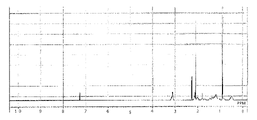
- 6 is a 1 H-NMR chart of the epoxy group-containing low molecular weight polyorganosyl sesquioxane obtained in Production Example 1.
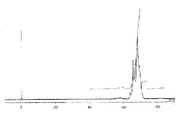
- 6 is a 29 Si-NMR chart of the epoxy group-containing low molecular weight polyorganosyl sesquioxane obtained in Production Example 1.
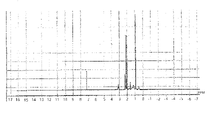
- 6 is a 1 H-NMR chart of the epoxy group-containing high molecular weight polyorganosyl sesquioxane obtained in Production Example 2.
- 9 is a 29 Si-NMR chart of the epoxy group-containing high molecular weight polyorganosyl sesquioxane obtained in Production Example 2.
- the laminated film of the present disclosure is a laminated film having a support and a resin layer laminated on at least one surface of the support, and the resin layer (when resin layers are laminated on both sides of the support).
- One of the resin layers) satisfies the following (Condition 1), (Condition 2), and (Condition 3).
- (Condition 1) The pencil hardness of the pencil hardness test (750 g load) specified in JIS K5600-5-4 (1999) on the surface of the resin layer of the laminated film is F or more.
- the laminated film has extremely excellent surface hardness and flexibility, and its antifouling performance does not easily deteriorate. Therefore, it can be used as a surface protective material (for example, a protective film) for a liquid crystal display or a flexible display, a barrier film, a TFT substrate, or the like. , Can be suitably used.
- the resin layer when the resin layer is laminated on both sides of the support, one of the resin layers satisfies (Condition 1), (Condition 2), and (Condition 3).
- the other resin layer may or may not satisfy (Condition 1), (Condition 2) and / or (Condition 3).
- FIG. 1 is a schematic view (cross-sectional view) showing one embodiment of the laminated film in the present disclosure
- the laminated film 1 is an embodiment in which a resin layer 11 is laminated on one side of a support 10.
- the resin layer 11 satisfies the above-mentioned (condition 1), (condition 2), and (condition 3).
- FIG. 2 is a schematic view (cross-sectional view) showing another embodiment of the laminated film in the present disclosure.
- the laminated film 2 is an embodiment in which a resin layer 21 and a resin layer 22 are laminated on both sides of a support 20. be.
- either one of the resin layer 21 and the resin layer 22 may satisfy the above-mentioned (condition 1), (condition 2), and (condition 3). That is, the laminated film 2 includes the following embodiments (1) to (3). (1) Both the resin layer 21 and the resin layer 22 satisfy (Condition 1), (Condition 2), and (Condition 3).
- the resin layer 21 satisfies (Condition 1), (Condition 2), and (Condition 3), and the resin layer 22 is at least among (Condition 1), (Condition 2), and (Condition 3). Do not satisfy one.
- the resin layer 22 satisfies (Condition 1), (Condition 2), and (Condition 3), and the resin layer 21 is at least among (Condition 1), (Condition 2), and (Condition 3). Do not satisfy one.
- the above condition 1 is a condition indicating that the surface of the resin layer of the laminated film has excellent surface hardness.
- the pencil hardness of the pencil hardness test (750 g load) specified in JIS K5600-5-4 (1999) on the surface of the resin layer is F or more, preferably 1H or more, more preferably 2H or more, and more preferably 3H or more. , More preferably 4H or more, more preferably 5H or more, more preferably 6H or more, more preferably 7H or more, still more preferably 8H or more, and particularly preferably 9H. If the pencil hardness of the surface of the resin layer is less than F, the surface hardness of the laminated film becomes insufficient, and it may be difficult to use it as a surface protective material for a flexible device.
- the above condition 2 is a condition indicating that the laminated film has excellent flexibility. Specifically, the condition 2 is excellent flexibility when the resin layer is folded so that the surface becomes convex (outside) (hereinafter,). , May be referred to as "flexibility (2)").
- the bending radius is 5 mm or less, preferably 4.5 mm or less, more preferably 4.0 mm or less, more preferably 3.5 mm or less, more preferably 3.0 mm or less, still more preferably 2. It is 5.5 mm or less, particularly preferably 2.0 mm or less. If the bending radius exceeds 5 mm, the flexibility of the laminated film becomes insufficient, and it may be difficult to use it as a surface protective material for a flexible device (particularly, a display device that bends outward).
- the above condition 3 is a condition indicating that the surface of the resin layer of the laminated film has excellent antifouling property and the antifouling performance is unlikely to deteriorate.
- the "water contact angle of the surface of the resin layer” means the water contact angle of the surface of the resin layer before the steel wool resistance test is carried out.
- the water contact angle of the surface of the resin layer is 95 ° or more, preferably 95 ° or more, as described above.
- 96 ° or more more preferably 97 ° or more, more preferably 98 ° or more, more preferably 99 ° or more, more preferably 100 ° or more, more preferably 101 ° or more, more preferably 102 ° or more, more preferably 103 ° or more.
- the water contact angle of the surface of the resin layer is less than 95 °, the antifouling property of the laminated film becomes insufficient, and it may be difficult to use it as a surface protective material for a flexible device.
- the water contact angle of one of the resin layers may be 95 ° or more, and the water of the other resin layer may be used.
- the contact angle is not limited and may be 95 ° or more or less than 95 °.
- the water contact angle of the test site after the steel wool resistance test in which the surface of the resin layer is rubbed back and forth 1000 times while applying a load of 1 kg / cm 2 with # 0000 steel wool (hereinafter, (Sometimes referred to as "water contact angle after steel wool resistance test”) is 90 ° or more, preferably 91 ° or more, more preferably 92 ° or more, more preferably 93 ° or more, and more, as described above.
- the water contact angle after the steel wool resistance test is less than 90 °, the durability of the antifouling performance of the laminated film becomes insufficient, and when used as a surface protective material for flexible devices, the antifouling performance is repeated by repeated touch operations. May decrease.
- the resin layer (when the resin layers are laminated on both sides of the support, one of the resin layers) satisfies the following (condition 4).
- Condition 4 the number of operations until a crack is generated in the resin layer is 10,000 times or more. Bending durability test: From the stretched state of the laminated film, bend it 180 ° so that the bending radius becomes 4.0 mm in the direction in which the surface of the resin layer becomes convex, and stretch it again once, at a speed of 30 to 60 times / minute. Perform the above operation.
- the bending durability test and the bending durability under the condition 4 may be referred to as “bending durability test (2)" and "bending durability (2)", respectively.
- the above condition 4 is a condition showing that the laminated film has excellent bending durability, that is, a property that defects such as cracks are unlikely to occur in the resin layer even if it is repeatedly folded. Specifically, the surface of the resin layer. It is a condition showing that it has excellent durability (bending durability (2)) when it is repeatedly folded so as to be convex (outside).
- FIG. 3 shows a bending radius (R) of 4 in the direction (not shown) in which the surface of the resin layer becomes convex (outside) from the stretched state of the laminated film in the bending durability test (2) shown in the above condition 4.
- R a bending radius
- FIG. 4 is an enlarged view of FIG. 3 (4), where R indicates a bending radius.
- the bending durability test (2) can be performed using a cylindrical mandrel having a radius of 4.0 mm.
- the bending durability (2) of the laminated film is 10,000 times or more, more preferably 20,000 times or more, more preferably 30,000 times or more, more preferably 40,000 times or more, and more preferably 50,000 times or more. More preferably 60,000 times or more, more preferably 70,000 times or more, more preferably 80,000 times or more, more preferably 90,000 times or more, more preferably 100,000 times or more, still more preferably 150,000 times or more, particularly preferably. Is more than 200,000 times. If the bending durability (2) is less than 10,000 times, the bending durability (2) of the laminated film becomes insufficient, and it becomes difficult to use it as a surface protective material for a flexible device (particularly, a display device that bends outward). There is.
- the resin layer (when the resin layers are laminated on both sides of the support, one of the resin layers) satisfies the following (condition 5).
- Condition 5 No scratches are visually observed in the steel wool resistance test in which the surface of the resin layer is rubbed back and forth 1000 times while applying a load of 1 kg / cm 2 with # 0000 steel wool (hereinafter, for example, "resistant”. Scratchability may be referred to as "1000 times or more")
- the above condition 5 is a condition showing that the laminated film has excellent scratch resistance.
- the scratch resistance of the laminated film is 1000 times or more, preferably 2000 times or more, more preferably 3000 times or more, more preferably 4000 times or more, more preferably 5000 times or more, more preferably 6000 times or more, and more preferably. Is 7,000 times or more, more preferably 8,000 times or more, more preferably 9000 times or more, still more preferably 10,000 times or more. If the scratch resistance is less than 1000 times, the scratch resistance of the laminated film becomes insufficient, and it may be difficult to use it as a surface protective material for a flexible device.
- the resin layer (when the resin layers are laminated on both sides of the support, one of the resin layers) satisfies the following (condition 6).
- condition 6 the number of operations until a crack is generated in the resin layer is 50,000 times or more.
- Bending durability test From the stretched state of the laminated film, bend it 180 ° so that the bending radius is 2.5 mm in the direction in which the surface of the resin layer becomes concave, and stretch it again once, at a speed of 30 to 60 times / minute. Perform the above operation.
- the bending durability test and the bending durability under the condition 6 may be referred to as “bending durability test (1)” and "bending durability (1)", respectively.
- the above condition 6 is a condition showing that among the bending durability of the laminated film, the resin layer has durability (bending durability (1)) when it is repeatedly folded so as to be concave (inside).
- bending durability (1) the above-mentioned bending is performed except that the surface of the resin layer is oriented to be concave (inside) and the bending radius (R) is 2.5 mm. It can be measured under the same conditions as the durability test (2).
- the bending durability (1) of the laminated film is 50,000 times or more, preferably 60,000 times or more, more preferably 70,000 times or more, more preferably 80,000 times or more, more preferably 90,000 times or more, and more. It is preferably 100,000 times or more, more preferably 150,000 times or more, and particularly preferably 200,000 times or more. If the bending durability (1) is less than 50,000 times, the bending durability (1) of the laminated film becomes insufficient, and it becomes difficult to use it as a surface protective material for a flexible device (particularly, a display device that bends inward). There is.
- the resin layer (when the resin layers are laminated on both sides of the support, one of the resin layers) satisfies the following (condition 7).
- Condition 7 In the cylindrical mandrel test specified in JIS K5600-5-1 (1999) in which the surface of the resin layer of the laminated film is bent so as to be concave, the bending radius is 5 mm and the surface of the resin layer is not cracked. ..
- the above condition 7 is a condition indicating that the laminated film has excellent flexibility, and specifically, when the resin layer is folded so as to be concave (inside), the resin layer has excellent flexibility (hereinafter referred to as “flexibility”). , May be referred to as “flexibility (1)").
- the bending radius is 5 mm or less, preferably 4.5 mm or less, more preferably 4.0 mm or less, more preferably 3.5 mm or less, more preferably 3.0 mm or less, still more preferably 2. It is 5.5 mm or less, particularly preferably 2.0 mm or less. If the bending radius exceeds 5 mm, the flexibility of the laminated film becomes insufficient, and it may be difficult to use it as a surface protective material for a flexible device (particularly, a display device that bends outward).
- the laminated film has a support and a resin layer formed on the surface of the support.
- the resin layer may be formed only partially or on the entire surface of the surface of the support.
- the laminated film may have one layer or two or more layers other than the support and the resin layer.
- Other layers include, for example, an anchor layer, an adhesive layer, a low reflection layer, an antifouling layer, a water repellent layer, an oil repellent layer, an antifog layer, a protective film layer, a printing layer, a conductive layer, an electromagnetic wave shielding layer, and an ultraviolet ray absorbing layer. Examples include a layer, an infrared absorbing layer, and a blue light cut layer.
- the haze of the laminated film is, for example, 7% or less, preferably 6% or less, more preferably 5% or less, more preferably 4% or less, still more preferably 3% or less, and more. It is preferably 2% or less, more preferably 1.5% or less, still more preferably 1.3% or less.
- the lower limit of haze is, for example, 0.1%. By setting the haze to 7% or less, for example, it tends to be suitable for use in applications requiring extremely high transparency (for example, a surface protective sheet for a display such as a touch panel). In this specification, haze can be measured according to JIS K7136.
- the total light transmittance of the laminated film is, for example, 85% or more, preferably 90% or more.
- the total light transmittance can be measured according to JIS K7361-1.
- the thickness of the laminated film (total thickness of the support / resin layer) can be appropriately selected from the range of, for example, 1 to 10000 ⁇ m, preferably 10 to 1000 ⁇ m, more preferably 15 to 800 ⁇ m, and further preferably. Is 20 to 700 ⁇ m, particularly preferably 30 to 500 ⁇ m.
- the laminated film having the above-mentioned performance can be obtained by selecting the material of the support described later, controlling the thickness of the support, and controlling the component and thickness of the resin layer and the method of laminating on the support. ..
- the support in the laminated film includes a plastic base material, a metal base material, a ceramic base material, a semiconductor base material, a glass base material, a paper base material, a wood base material (wooden base material), and a base material whose surface is a painted surface.
- a known or commonly used support such as the above can be used, and the present invention is not particularly limited. Of these, a plastic base material is preferable.
- the support may have a single-layer structure or a multi-layer (laminated) structure, and the structure (structure) thereof is not particularly limited.
- the plastic material constituting the plastic base material is not particularly limited, but is limited to polyesters such as polyethylene terephthalate (PET) and polyethylene naphthalate (PEN); polyimide; polycarbonate; polyamide; polyacetal; polyphenylene oxide; polyphenylene sulfide; polyether sulfone; Polyether ether ketone; homopolymers of norbornene-based monomers (additional polymers, ring-opening polymers, etc.), copolymers of norbornene-based monomers and olefin-based monomers such as copolymers of norbornene and ethylene (additional polymers and open polymers) Cyclic olefin copolymers such as ring polymers), cyclic polyolefins such as derivatives thereof; vinyl polymers (eg, acrylic resins such as polymethylmethacrylate (PMMA), polystyrenes, polyvinyl chlorides, acrylonitrile-styrene-
- a support transparent support
- a polyester film particularly PET, PEN
- a polyimide film a cyclic polyolefin film
- a polycarbonate film a TAC film
- a PMMA film a polyester film (particularly PET, PEN) or a polyimide film.
- the support (particularly, a plastic base material) may be used as an antioxidant, an ultraviolet absorber, a light-resistant stabilizer, a heat stabilizer, a crystal nucleating agent, a flame retardant, a flame retardant aid, a filler, or a plasticizer, if necessary.
- Impact resistance improver, reinforcing agent, dispersant, antistatic agent, foaming agent, antibacterial agent and other other additives may be contained. It should be noted that one type of additive may be used alone, or two or more types may be used in combination.
- Part or all of the surface of the support is roughened, easily adhered, antistatic, sandblasted (sandmat), corona discharge, plasma, and chemical etching.
- Known or conventional surface treatments such as water mat treatment, flame treatment, acid treatment, alkali treatment, oxidation treatment, ultraviolet irradiation treatment, and silane coupling agent treatment may be performed.
- the plastic base material may be an unstretched film or a stretched film (uniaxially stretched film, biaxially stretched film, etc.).
- As the support a commercially available product can also be used.
- the thickness of the support is, for example, about 1 to 1000 ⁇ m, preferably 5 to 500 ⁇ m, more preferably 10 to 400 ⁇ m, more preferably 15 to 400 ⁇ m, still more preferably 20 to 300 ⁇ m, and particularly preferably 25 to 200 ⁇ m.
- the haze of the support of the present disclosure is, for example, 7% or less, preferably 6% or less, more preferably 5% or less, more preferably 4% or less, still more preferably 3% or less. , Especially preferably 2% or less, and most preferably 1% or less.
- the lower limit of haze is, for example, 0.1%.
- the total light transmittance of the support of the present disclosure is, for example, 85% or more, preferably 90% or more.
- the total light transmittance is, for example, 85% or more, preferably 90% or more.
- it tends to be suitable for use in applications requiring extremely high transparency (for example, a surface protective sheet for a display such as a touch panel).
- the resin layer of the present disclosure is formed of a cured product of a curable composition described later. That is, the resin layer is a layer made of a cured product formed of the curable composition, which satisfies the above (condition 1), (condition 2), and (condition 3), and further satisfies the above (condition). It is preferable that the layer satisfies at least one condition selected from 4), (Condition 5), (Condition 6), and (Condition 7).
- the resin layer can be produced, for example, by the method for producing a laminated film described later.
- the thickness of the resin layer is, for example, 1 to 100 ⁇ m, preferably 2 to 80 ⁇ m, more preferably 3 to 60 ⁇ m, still more preferably 5 to 50 ⁇ m, and most preferably 10 to 40 ⁇ m from the viewpoint of surface hardness and scratch resistance. .. If the thickness of the resin layer is thinner than 1 ⁇ m, it may not be possible to maintain high surface hardness. Further, when the thickness of the resin layer is thicker than 100 ⁇ m, problems such as deterioration of flexibility and large curl are likely to occur.
- the haze of the resin layer is, for example, 1.0 or less, preferably 0.5% or less, and more preferably 0.1% or less.
- the lower limit of the haze of the resin layer is, for example, 0.1%.
- the haze of the resin layer can be determined by the difference obtained by subtracting the haze of the support from the haze of the above-mentioned laminated film (support / resin layer).
- the total light transmittance of the resin layer is, for example, 85% or more, preferably 90% or more. By setting the total light transmittance to 85% or more, it tends to be suitable for use in, for example, applications requiring extremely high transparency (for example, a surface protective sheet for a display such as a touch panel).
- the above-mentioned curable composition is applied to a release substrate so that the thickness after curing is the same as the resin layer of the laminated film and cured, and the cured film is peeled off. After that, it can be obtained by measuring in accordance with JIS K7361-1.
- the resin layer is also excellent in surface smoothness, and the arithmetic mean roughness Ra is, for example, 0.1 to 20 nm, preferably 0.1 to 10 nm in a method based on JIS B0601. More preferably, it is 0.1 to 5 nm.
- the resin layer may be laminated on only one surface of the support, or may be laminated on both sides. When the resin layers are laminated on both sides of the support, they may be the same resin layer or different resin layers. When the resin layers are laminated on both sides of the support, one of the resin layers satisfies the above (Condition 1), (Condition 2), and (Condition 3), and preferably the above (Condition 4). , (Condition 5), (Condition 6), and / or (Condition 7) may be satisfied, and the other resin layer may be satisfied even if any one or more of (Conditions 1 to 7) is satisfied. You don't have to.
- the curable composition for forming the resin layer in the laminated film contains one or more curable compounds.
- curable compound examples include (meth) acrylate compounds, cationic curable silicone resins, epoxy resins, melamine resins, vinyl ether resins, and oxetane resins.
- the curable composition includes the above-mentioned performances ((Condition 1), (Condition 2), and (Condition 3), preferably (Condition 4), (Condition 5), (Condition 6), and the above-mentioned performance in the laminated film. / Or From the viewpoint of forming a resin layer satisfying (Condition 7)), a composition containing a cationically curable compound is preferable as the curable compound, and a composition containing a cationically curable silicone resin is particularly preferable, and particularly cationic polymerization.
- curable composition containing a polyorganosyl sesquioxane having a sex functional group hereinafter, may be referred to as "polyorganosyl sesquioxane of the present disclosure” (hereinafter, “curable composition of the present disclosure”). It may be referred to).
- the curable compositions of the present disclosure further include a curing catalyst (particularly a cationic polymerization initiator, a radical polymerizable initiator), one or more thermopolymerizable functional groups and one or more photopolymerizable functional groups in the molecule. It may contain other components such as a compound having, an aliphatic compound having two or more thermally polymerizable functional groups in the molecule, a fluorine-containing photopolymerizable resin, a surface modifier or a surface modifier.
- the curable compositions of the present disclosure also have a curing catalyst (particularly a cationic polymerization initiator, a radical polymerizable initiator) and one or more cationically polymerizable groups and one or more radically polymerizable groups in the molecule. It may contain other components such as compounds, aliphatic compounds having two or more cationically polymerizable groups in the molecule, fluorine-containing radically polymerizable compounds, surface modifiers or surface modifiers.
- the polyorganosyl sesquioxane of the present disclosure has at least a structural unit (sometimes referred to as "T3 body") represented by the following formula (I).
- the polyorganosyl sesquioxane of the present disclosure preferably further has a structural unit represented by the following formula (II) (sometimes referred to as "T2 body”).
- Ra is a group containing a cationically polymerizable functional group, a substituted or unsubstituted aryl group, a substituted or unsubstituted aralkyl group, a substituted or unsubstituted cycloalkyl group, a substituted or unsubstituted group.
- R b is a group containing a cationically polymerizable functional group, a substituted or unsubstituted aryl group, a substituted or unsubstituted aralkyl group, a substituted or unsubstituted cycloalkyl group, a substituted or unsubstituted group.
- R c represents a hydrogen atom or an alkyl group having 1 to 4 carbon atoms.
- both the T3 body and the T2 body are structural units (T units) formed by the hydrolysis and condensation reaction of the corresponding hydrolyzable trifunctional silane compound.
- R a in the above formula (I) (same as R a in the formula (I')) and R b in the formula (II) (same as R b in the formula (II')) are cationically polymerized, respectively.
- R a and R b include those similar to R 1 in the formula (1) and R 2 in the formula (2), which will be described later.
- R a in the formula (I) and R b in the formula (II ) were each bonded to a silicon atom in the hydrolyzable trifunctional silane compound used as a raw material for the polyorganosylsesquioxane of the present disclosure. It is derived from a group (a group other than an alkoxy group and a halogen atom; for example, R 1 , R 2 , hydrogen atom, etc. in the formulas (a) to (c) described later).
- R c in the above formula (II) indicates a hydrogen atom or an alkyl group having 1 to 4 carbon atoms.
- the alkyl group having 1 to 4 carbon atoms include a linear or branched alkyl group having 1 to 4 carbon atoms such as a methyl group, an ethyl group, a propyl group, an isopropyl group, a butyl group and an isobutyl group. ..
- the alkyl group in R c in formula (II) is generally an alkoxy group in the hydrolyzable silane compound used as a raw material for the polyorganosylsesquioxane of the present disclosure (for example, X 1 to X 3 described later). It is derived from an alkyl group that forms an alkoxy group (such as an alkoxy group).
- the polyorganosyl sesquioxane of the present disclosure has a structural unit (T3 body) represented by the above formula (I) and a structural unit (T2 body) represented by the above formula (II), the ratio thereof.
- [T3 body / T2 body] (molar ratio) is not particularly limited, but can be appropriately selected from a range of, for example, 5 or more (for example, 5 or more, 500 or less).
- the lower limit of the ratio [T3 / T2] of one aspect of the polyorganosylsesquioxane of the present disclosure is preferably 5, more preferably 6, and even more preferably 7, and the upper limit is preferably 7. It is less than 20, more preferably 18, more preferably 16, and even more preferably 14.
- the surface hardness of the resin layer tends to be improved.
- the above ratio [T3 / T2] is less than 20 (preferably 18 or less), the compatibility with other components in the curable composition is improved, and the viscosity is also suppressed, so that handling is easy. It becomes easier to apply.
- the lower limit of the above ratio [T3 / T2] of another aspect of the polyorganosylsesquioxane of the present disclosure is preferably 20, more preferably 21, more preferably 23, still more preferably 25, and the upper limit.
- the value is preferably 500, more preferably 100, more preferably 50, and even more preferably 40.
- the above ratio [T3 body / T2 body] in the polyorganosyl sesquioxane of the present disclosure can be determined, for example, by 29 Si-NMR spectrum measurement. 29 In the Si-NMR spectrum, the silicon atom in the structural unit (T3 body) represented by the above formula (I) and the silicon atom in the structural unit (T2 body) represented by the above formula (II) are at different positions. Since a signal (peak) is shown in (chemical shift), the above ratio [T3 / T2] can be obtained by calculating the integration ratio of each of these peaks.
- the polyorganosylsesquioxane of the present disclosure is a structural unit represented by the above formulas (I) and (II), and R a and R b in the formula are 2- (3). ', 4'-Epoxycyclohexyl)
- R a and R b in the formula are 2- (3).
- ', 4'-Epoxycyclohexyl When having a structural unit that is an ethyl group, the signal of the silicon atom in the structure (T3 body) represented by the above formula (I) appears at -64 to -70 ppm, and the above formula appears.
- the signal of the silicon atom in the structure (T2 body) represented by (II) appears at -54 to -60 ppm.
- the above ratio [T3 body / T2 body] can be obtained by calculating the integral ratio of the signal (T3 body) of ⁇ 64 to ⁇ 70 ppm and the signal (T2 body) of ⁇ 54 to -60 ppm. can.
- R a and R b are groups containing a cationically polymerizable functional group other than the 2- (3', 4'-epoxycyclohexyl) ethyl group
- [T3 body / T2 body] can be obtained in the same manner. can.
- the 29 Si-NMR spectrum of the polyorganosyl sesquioxane of the present disclosure can be measured, for example, by the following devices and conditions.
- Measuring device Product name "JNM-ECA500NMR” (manufactured by JEOL Ltd.)
- Solvent Deuterated chloroform Number of integrations: 1800 Measurement temperature: 25 ° C
- the polyorganosylsesquioxane of the present disclosure has a T3 body. It means that a certain amount of T2 body is present.
- the polyorganosyl sesquioxane of the present disclosure has a structural unit represented by the following formula (1) as a T3 body.
- R 1 represents a group containing a cationically polymerizable functional group.
- the polyorganosyl sesquioxane of the present disclosure may have only one type of structural unit represented by the above formula (1), or may have two or more types of structural units represented by the above formula (1). It may have.
- the polyorganosyl sesquioxane of the present disclosure may have a structural unit represented by the following formula (2) in addition to the structural unit represented by the above formula (1) as a T3 body. ..
- R 2 is a substituted or unsubstituted aryl group, a substituted or unsubstituted aralkyl group, a substituted or unsubstituted cycloalkyl group, a substituted or unsubstituted alkyl group, or a substituted or unsubstituted alkyl group. Indicates the alkenyl group of. ]
- the polyorganosyl sesquioxane of the present disclosure has, as a T3 body, a structural unit represented by the above formula (1) and a structural unit represented by the above formula (2), for example, in the following formula (3). It may have a structural unit represented.
- the polyorganosylsesquioxane of the present disclosure is a structural unit represented by the above formula (II) as a T2 body, and R b in the formula (II) contains a cationically polymerizable functional group. It is preferable to contain a structural unit which is a group to be used.
- the polyorganosyl sesquioxane of the present disclosure has a structural unit represented by the following formula (4) as a T2 body.
- polyorganosyl sesquioxane of the present disclosure has a structural unit represented by the following formulas (5) and (6) in addition to the structural unit represented by the above formula (4) as a T2 body. May be.
- R 1 in the above formula (4) and R 2 in the above formula (5) are the same as R 1 in the above formula (1) and R 2 in the above formula (2), respectively.
- the R c in the above equations (4) to (6) is the same as the R c in the equation (II).
- the polyorganosylsesquioxane of the present disclosure may contain T units other than the T3 and T2 bodies, and may consist of M units, D units, and Q units in addition to the T units. It may have at least one siloxane constituent unit selected from the group.
- R 1 in the formula (1) represents a group (monovalent group) containing a cationically polymerizable functional group.
- the "cationically polymerizable functional group" in the group containing the cationically polymerizable functional group is not particularly limited as long as it has a cationically polymerizable property, and is, for example, an epoxy group, an oxetane group, a vinyl ether group, a vinylphenyl group, or the like. Can be mentioned.
- an epoxy group is particularly preferable from the viewpoint of the surface hardness (for example, F or more) of the resin layer.
- the group containing the cationically polymerizable functional group is preferably a group containing an epoxy group (or a group having an oxylan ring), and is not particularly limited, but is a curable or cured product (resin layer) of the curable composition.
- the group represented by the following formula is preferable, more preferably a group represented by the following formula (1a), a group represented by the following formula (1c), and further preferably a group represented by the following formula (1a).
- R 1a represents a linear or branched alkylene group.
- the linear or branched alkylene group include a methylene group, a methylmethylene group, a dimethylmethylene group, an ethylene group, a propylene group, a trimethylene group, a tetramethylene group, a pentamethylene group, a hexamethylene group, a decamethylene group and the like.
- Examples thereof include a linear or branched alkylene group having 1 to 10 carbon atoms.
- R 1a a linear alkylene group having 1 to 4 carbon atoms and a branched alkylene group having 3 or 4 carbon atoms are preferable from the viewpoint of the surface hardness and curability of the cured product (resin layer). , More preferably an ethylene group, a trimethylene group, a propylene group, and further preferably an ethylene group or a trimethylene group.
- R 1b represents a linear or branched alkylene group, and a group similar to R 1a is exemplified.
- R 1b a linear alkylene group having 1 to 4 carbon atoms and a branched alkylene group having 3 or 4 carbon atoms are preferable from the viewpoint of the surface hardness and curability of the cured product (resin layer).
- R 1c represents a linear or branched alkylene group, and a group similar to R 1a is exemplified.
- R 1c a linear alkylene group having 1 to 4 carbon atoms and a branched alkylene group having 3 or 4 carbon atoms are preferable from the viewpoint of the surface hardness and curability of the cured product (resin layer).
- R 1d represents a linear or branched alkylene group, and a group similar to R 1a is exemplified.
- R 1d a linear alkylene group having 1 to 4 carbon atoms and a branched alkylene group having 3 or 4 carbon atoms are preferable from the viewpoint of the surface hardness and curability of the cured product (resin layer).
- the group R 1 in the formula (1) is a group represented by the above formula (1a) in which R 1a is an ethylene group [among others, 2- (3', 4'-epoxycyclohexyl)). Ethyl group] is preferable.
- Examples of the group containing the oxetane group include known and conventional groups having an oxetane ring, and the group is not particularly limited, but for example, the oxetane group itself and an alkyl group (preferably 1 to 10 carbon atoms, more preferably carbon number of carbon atoms). Examples thereof include a group formed by substituting a hydrogen atom (usually one or more, preferably one hydrogen atom) of (1 to 5 alkyl groups) with an oxetane group.
- 3-oxetanyl group oxetane-3-ylmethyl group, 3-ethyloxetane-3-ylmethyl group, 2- (oxetane-3-).
- ethyl group, 2- (3-ethyloxetane-3-yl) ethyl group, 3- (oxetane-3-ylmethoxy) propyl group, 3- (3-ethyloxetane-3-ylmethoxy) propyl group and the like are preferable.
- Examples of the group containing a vinyl ether group include known and commonly used groups having a vinyl ether group, and are not particularly limited.
- the vinyl ether group itself and an alkyl group (preferably 1 to 10 carbon atoms, more preferably carbon number of carbon atoms).
- Examples thereof include a group formed by substituting a hydrogen atom (usually one or more, preferably one hydrogen atom) of (1 to 5 alkyl groups) with a vinyl ether group.
- a vinyloxymethyl group, a 2- (vinyloxy) ethyl group, a 3- (vinyloxy) propyl group and the like are preferable.
- Examples of the group containing a vinyl phenyl group include known and commonly used groups having a vinyl phenyl group, and are not particularly limited, but for example, the vinyl phenyl group itself and an alkyl group (preferably 1 to 10 carbon atoms, more preferably). Is a group formed by substituting a hydrogen atom (usually one or more, preferably one hydrogen atom) of an alkyl group having 1 to 5 carbon atoms with a vinylphenyl group. From the viewpoint of curability of the curable composition and heat resistance of the cured product (resin layer), 4-vinylphenyl group, 3-vinylphenyl group, 2-vinylphenyl group and the like are preferable.
- R 2 in the above formula (2) is a substituted or unsubstituted aryl group, a substituted or unsubstituted aralkyl group, a substituted or unsubstituted cycloalkyl group, a substituted or unsubstituted alkyl group, or a substituted or unsubstituted alkyl group.
- the aryl group include a phenyl group, a tolyl group, a naphthyl group and the like.
- the aralkyl group include a benzyl group and a phenethyl group.
- Examples of the cycloalkyl group include a cyclobutyl group, a cyclopentyl group, a cyclohexyl group and the like.
- Examples of the alkyl group include a linear or branched alkyl such as a methyl group, an ethyl group, a propyl group, an n-butyl group, an isopropyl group, an isobutyl group, an s-butyl group, a t-butyl group and an isopentyl group. The group is mentioned.
- Examples of the alkenyl group include a linear or branched alkenyl group such as a vinyl group, an allyl group, and an isopropenyl group.
- Examples of the above-mentioned substituted aryl group, substituted aralkyl group, substituted cycloalkyl group, substituted alkyl group and substituted alkenyl group include hydrogen atoms or main ribs in each of the above-mentioned aryl group, aralkyl group, cycloalkyl group, alkyl group and alkenyl group. From the group consisting of an ether group, an ester group, a carbonyl group, a siloxane group, a halogen atom (fluorine atom, etc.), an acrylic group, a methacryl group, a mercapto group, an amino group, and a hydroxy group (hydroxyl group). Examples include groups substituted with at least one selected species.
- R 2 is preferably a substituted or unsubstituted aryl group, a substituted or unsubstituted alkyl group, a substituted or unsubstituted alkenyl group, more preferably a substituted or unsubstituted aryl group, and further preferably a phenyl group.
- Each silsesquioxane constituent unit constituting the polyorganosilsesquioxane of the present disclosure is formed by the hydrolysis and condensation reaction of the corresponding hydrolyzable trifunctional silane compound.
- each silsesquioxane constituent unit constituting the polyorganosilsesquioxane of the present disclosure shall be appropriately adjusted according to the composition of the raw material (hydrolyzable trifunctional silane) for forming these constituent units. Is possible.
- the polyorganosilsesquioxane of the present disclosure may have any of cage-type, incomplete cage-type, ladder-type, and random-type silsesquioxane structures, and two or more of these silsesquioxane structures may be used. You may have it in combination.
- the polyorganosylsesquioxane of the present disclosure has a structural unit represented by the above formula (1) and a structural unit represented by the above formula (4), the total amount of the siloxane structural unit [total siloxane structural unit; M unit]. , D unit, T unit, and Q unit total amount] (100 mol%), the ratio (total amount) of the structural unit represented by the above formula (1) and the structural unit represented by the above formula (4) is Although not particularly limited, it is preferably 55 to 100 mol%, more preferably 65 to 100 mol%, and further preferably 80 to 99 mol%.
- the ratio of each siloxane constituent unit in the polyorganosyl sesquioxane of the present disclosure can be calculated by, for example, the composition of the raw material, the NMR spectrum measurement, or the like.
- the ratio (total amount) of the constituent units to be formed and the constituent units represented by the above formula (5) is not particularly limited, but is preferably 0 to 70 mol%, more preferably 0 to 60 mol%, and further preferably 0 to 0 to 70 mol%. It is 40 mol%, particularly preferably 1 to 15 mol%.
- the ratio of the structural unit represented by the formula (1) and the structural unit represented by the formula (4) can be relatively increased, and thus the curable composition.
- the curability of the cured product (resin layer) tends to be improved, and the surface hardness and adhesiveness of the cured product (resin layer) tend to be higher.
- the above ratio is 1 mol% or more, the gas barrier property of the cured product (resin layer) tends to be improved.
- the ratio (total amount) of the structural unit represented by the above formula (2), the structural unit represented by the above formula (4), and the structural unit represented by the above formula (5) is particularly limited. However, it is preferably 60 to 100 mol%, more preferably 70 to 100 mol%, still more preferably 80 to 100 mol%. By setting the above ratio to 60 mol% or more, the surface hardness and adhesiveness of the cured product (resin layer) tend to be higher.
- the formula (a) described later with respect to the total amount of siloxane constituent units in the polyorganosylsesquioxane of the present disclosure [total siloxane constituent units; total amount of M units, D units, T units, and Q units] (100 mol%).
- the total ratio of the constituent unit derived from the compound represented by) and the constituent unit derived from the compound represented by the formula (b) described later is preferably 60 to 100 mol%, more preferably 70 to 100 mol%, and further. It is preferably 80 to 100 mol%.
- the ratio of the constituent units derived from the compound represented by the formula (a) is preferably 55 to 100 mol%, more preferably 65 to 100 mol%, still more preferably 80 to 80 to the total amount of the siloxane constituent units. It is 99 mol%. Further, the ratio of the constituent units derived from the compound represented by the formula (b) is preferably 0 to 70 mol%, more preferably 0 to 60 mol%, still more preferably 0 to 0 to the total amount of the siloxane constituent units. It is 40 mol%, particularly preferably 1 to 15 mol%.
- the number average molecular weight (Mn) in terms of standard polystyrene by gel permeation chromatography of the polyorganosyl sesquioxane of the present disclosure is not particularly limited, but can be appropriately selected from the range of 1000 to 50,000, for example.
- the lower limit of the number average molecular weight of one embodiment of the polyorganosylsesquioxane of the present disclosure is preferably 1000, more preferably 1100, and the upper limit is preferably 3000, more preferably 2800, still more preferably 2600. Is.
- the number average molecular weight By setting the number average molecular weight to 1000 or more, the heat resistance, scratch resistance, and adhesiveness of the cured product (resin layer) tend to be further improved.
- By setting the number average molecular weight to 3000 or less the compatibility with other components in the curable composition is improved, and the heat resistance of the cured product (resin layer) tends to be further improved.
- the lower limit of the number average molecular weight of another embodiment of the polyorganosylsesquioxane of the present disclosure is preferably 2500, more preferably 2800, still more preferably 3000, and the upper limit is preferably 50,000, more preferably 10000. , More preferably 8000.
- the number average molecular weight is set to 2500 or more, in addition to improving the heat resistance, scratch resistance, and adhesiveness of the cured product (resin layer), the surface of the uncured or semi-cured resin layer becomes tack-free. It is easy to become, the blocking resistance is improved, and it becomes easy to wind up on a roll.
- the number average molecular weight to 50,000 or less, the compatibility with other components in the curable composition is improved, and the heat resistance of the cured product (resin layer) tends to be further improved.
- the molecular weight dispersion (Mw / Mn) of the polyorganosilsesquioxane of the present disclosure in terms of standard polystyrene by gel permeation chromatography is not particularly limited, but may be appropriately selected from the range of 1.0 to 4.0. can.
- the lower limit of the molecular weight dispersion is preferably 1.0, more preferably 1.1, and even more preferably 1.2. By setting the molecular weight dispersion to 1.1 or more, it tends to be liquid and the handleability tends to be improved.
- the upper limit of the molecular weight dispersion is preferably 4.0, more preferably 3.0, still more preferably 2.5 (for example, preferably 3.0, more preferably 2.0, still more preferably 1. 9). By setting the molecular weight dispersion to 4.0 or less (for example, 3.0 or less), the surface hardness and adhesiveness of the cured product (resin layer) tend to be higher.
- the number average molecular weight and the degree of molecular weight dispersion of the polyorganosyl sesquioxane disclosed in the present disclosure can be measured by the following devices and conditions.
- Measuring device Product name "LC-20AD” (manufactured by Shimadzu Corporation) Columns: Shodex KF-801 x 2, KF-802 x 1, and KF-803 (manufactured by Showa Denko KK) x 1 Measurement temperature: 40 ° C.
- Eluent THF, sample concentration 0.1-0.2 wt% Flow rate: 1 mL / min
- Detector UV-VIS detector (trade name "SPD-20A", manufactured by Shimadzu Corporation)
- Molecular weight Standard polystyrene conversion
- the 5% weight loss temperature (T d5 ) of the polyorganosyl sesquioxane of the present disclosure in an air atmosphere is not particularly limited, but is preferably 330 ° C. or higher (for example, 330 to 450 ° C.), and more preferably 340 ° C. or higher. , More preferably 350 ° C. or higher.
- T d5 The 5% weight loss temperature of the polyorganosyl sesquioxane of the present disclosure in an air atmosphere is not particularly limited, but is preferably 330 ° C. or higher (for example, 330 to 450 ° C.), and more preferably 340 ° C. or higher. , More preferably 350 ° C. or higher.
- the 5% weight loss temperature is 330 ° C. or higher, the heat resistance of the cured product (resin layer) tends to be further improved.
- the 5% weight loss temperature can be controlled to 330 ° C. or higher.
- the 5% weight loss temperature is the temperature at which 5% of the weight before heating is reduced when heated at a constant temperature rise rate, and is an index of heat resistance.
- the 5% weight loss temperature can be measured by TGA (thermogravimetric analysis) under an air atmosphere and a heating rate of 5 ° C./min.
- the polyorganosylsesquioxane of the present disclosure can be produced by a known or conventional method for producing a polysiloxane, and is not particularly limited, but for example, one or more hydrolyzable silane compounds are hydrolyzed and used. It can be produced by a method of condensing.
- a hydrolyzable trifunctional silane compound for forming a structural unit represented by the formula (1) is indispensable.
- a compound represented by the following formula (a), which is a hydrolyzable trifunctional silane compound for forming a structural unit represented by the formula (1) is, if necessary, a compound represented by the formula (2).
- the polyorganosylsesquioxane of the present disclosure can be produced by a method of hydrolysis and condensation.
- the compound represented by the above formula (a) is a compound forming a structural unit represented by the formula (1) in the polyorganosyl sesquioxane of the present disclosure.
- R 1 in the formula (a) represents a group containing a cationically polymerizable functional group as in the case of R 1 in the above formula (1). That is, as R 1 in the formula (a), the group represented by the above formula (1a), the group represented by the above formula (1b), the group represented by the above formula (1c), and the above formula (1d).
- Is preferable a group represented by the above formula (1a) is preferable, a group represented by the above formula (1c) is more preferable, and a group represented by the above formula (1a) is particularly preferable.
- X 1 in the above formula (a) represents an alkoxy group or a halogen atom.
- the alkoxy group in X 1 include an alkoxy group having 1 to 4 carbon atoms such as a methoxy group, an ethoxy group, a propoxy group, an isopropyloxy group, a butoxy group and an isobutyloxy group.
- the halogen atom in X 1 include a fluorine atom, a chlorine atom, a bromine atom, an iodine atom and the like. Among them, as X 1 , an alkoxy group is preferable, and a methoxy group and an ethoxy group are more preferable.
- the three X 1s may be the same or different.
- the compound represented by the above formula (b) is a compound forming a structural unit represented by the formula (2) in the polyorganosyl sesquioxane of the present disclosure.
- R 2 in the formula (b) is a substituted or unsubstituted aryl group, a substituted or unsubstituted aralkyl group, a substituted or unsubstituted cycloalkyl group, a substituted or unsubstituted, as in the case of R 2 in the above formula (2).
- An alkyl group of, or a substituted or unsubstituted alkenyl group is shown.
- R 2 in the formula (b) a substituted or unsubstituted aryl group, a substituted or unsubstituted alkyl group, a substituted or unsubstituted alkenyl group is preferable, and a substituted or unsubstituted aryl group is more preferable. More preferably, it is a phenyl group.
- X 2 in the above formula (b) represents an alkoxy group or a halogen atom.
- Specific examples of X 2 include those exemplified as X 1 .
- X 2 an alkoxy group is preferable, and a methoxy group and an ethoxy group are more preferable.
- the three X 2s may be the same or different.
- the compound represented by the above formula (c) is a compound forming a structural unit represented by the formula (3) in the polyorganosyl sesquioxane of the present disclosure.
- X 3 in the above formula (c) represents an alkoxy group or a halogen atom.
- Specific examples of X 3 include those exemplified as X 1 .
- X3 an alkoxy group is preferable, and a methoxy group and an ethoxy group are more preferable.
- the three X3s may be the same or different.
- hydrolyzable silane compound a hydrolyzable silane compound other than the compounds represented by the formulas (a) to (c) may be used in combination.
- a hydrolyzable trifunctional silane compound other than the compounds represented by the above formulas (a) to (c) a hydrolyzable monofunctional silane compound forming an M unit, and a hydrolyzable bifunctional silane forming a D unit.
- examples thereof include compounds, hydrolyzable tetrafunctional silane compounds forming Q units, and the like.
- the amount and composition of the hydrolyzable silane compound used can be appropriately adjusted according to the desired structure of the polyorganosylsesquioxane of the present disclosure.
- the amount of the compound represented by the above formula (a) is not particularly limited, but is preferably 55 to 100 mol%, more preferably, with respect to the total amount (100 mol%) of the hydrolyzable silane compound used. Is 65 to 100 mol%, more preferably 80 to 99 mol%.
- the amount of the compound represented by the above formula (b) is not particularly limited, but is preferably 0 to 70 mol%, more preferably 0 to 70 mol%, based on the total amount (100 mol%) of the hydrolyzable silane compound used. Is 0 to 60 mol%, more preferably 0 to 40 mol%, and particularly preferably 1 to 15 mol%.
- the ratio (ratio of the total amount) of the compound represented by the formula (a) and the compound represented by the formula (b) to the total amount (100 mol%) of the hydrolyzable silane compound used is not particularly limited. It is preferably 60 to 100 mol%, more preferably 70 to 100 mol%, still more preferably 80 to 100 mol%.
- hydrolysis and condensation reactions of these hydrolyzable silane compounds can be carried out simultaneously or sequentially.
- the order in which the reactions are carried out is not particularly limited.
- the hydrolysis and condensation reaction of the hydrolyzable silane compound may be carried out in one step or may be carried out in two or more steps.
- the polyorganosylsesquioxane of the present disclosure those having the above ratio [T3 / T2] of less than 20 and / or a number average molecular weight of less than 2500 (hereinafter, "low molecular weight polyorganosylsesquioxane").
- low molecular weight polyorganosylsesquioxane In order to efficiently produce (may be referred to as), it is preferable to carry out the hydrolysis and condensation reaction in one step.
- the hydrolysis and condensation reaction should be carried out in two or more steps (preferably two steps). It is preferable to carry out the hydrolysis and condensation reaction once or more using oxane as a raw material.
- the hydrolysis and condensation reaction of the hydrolyzable silane compound is carried out in one step to obtain a low molecular weight polyorganosylsesquioxane, and the low molecular weight polyorganosylsesquioxane is further subjected to the hydrolysis and condensation reaction.
- the embodiment of obtaining a high molecular weight polyorganosylsesquioxane will be described below, but the method for producing the polyorganosylsesquioxane of the present disclosure is not limited thereto.
- the above ratio [T3 / T2] is 5 or more and less than 20, and the number average molecular weight is 1000 or more and less than 2500 in the first stage of hydrolysis and condensation reaction.
- a certain low molecular weight polyorganosylsesquioxane is obtained, and in the second stage, the low molecular weight polyorganosylsesquioxane is further subjected to hydrolysis and condensation reactions to obtain the above ratio [T3 / T2]. It is preferable to obtain a high molecular weight polyorganosylsesquioxane having a number of 20 or more and 500 or less and a number average molecular weight of 2500 or more and 50,000 or less.
- the first-stage hydrolysis and condensation reaction can be carried out in the presence or absence of a solvent. Above all, it is preferable to carry out in the presence of a solvent.
- the solvent include aromatic hydrocarbons such as benzene, toluene, xylene and ethylbenzene; ethers such as diethyl ether, dimethoxyethane, tetrahydrofuran and dioxane; ketones such as acetone, methyl ethyl ketone and methyl isobutyl ketone; methyl acetate and ethyl acetate.
- Esters such as isopropyl acetate and butyl acetate; amides such as N, N-dimethylformamide and N, N-dimethylacetamide; nitriles such as acetonitrile, propionitrile and benzonitrile; alcohols such as methanol, ethanol, isopropyl alcohol and butanol. And so on.
- ketones and ethers are preferable as the solvent. It should be noted that one type of solvent may be used alone, or two or more types may be used in combination.
- the amount of the solvent used in the first-stage hydrolysis and condensation reaction is not particularly limited, and the desired reaction time is in the range of 0 to 2000 parts by weight with respect to 100 parts by weight of the total amount of the hydrolyzable silane compound. Etc., it can be adjusted as appropriate.
- the first stage hydrolysis and condensation reaction is preferably carried out in the presence of a catalyst and water.
- the catalyst may be an acid catalyst or an alkaline catalyst, but an alkaline catalyst is preferable in order to suppress the decomposition of a cationically polymerizable functional group such as an epoxy group.
- the acid catalyst include mineral acids such as hydrochloric acid, sulfuric acid, nitric acid, phosphoric acid and boric acid; phosphoric acid esters; carboxylic acids such as acetic acid, formic acid and trifluoroacetic acid; methanesulfonic acid, trifluoromethanesulfonic acid and p.
- alkaline catalyst examples include hydroxides of alkali metals such as lithium hydroxide, sodium hydroxide, potassium hydroxide and cesium hydroxide; alkaline earth metals such as magnesium hydroxide, calcium hydroxide and barium hydroxide.
- Alkali metal carbonates such as lithium carbonate, sodium carbonate, potassium carbonate, cesium carbonate
- Alkali earth metal carbonates such as magnesium carbonate
- Alkali metal hydrogen carbonates such as cesium hydrogen carbonate
- alkali metal organic acid salts such as lithium acetate, sodium acetate, potassium acetate, cesium acetate (eg acetate)
- alkaline earth metal organic acids such as magnesium acetate Salts (eg, acetates)
- Alkali metal alkoxides such as lithium methoxyd, sodium methoxyd, sodium ethoxydo, sodium isopropoxide, potassium ethoxydo, potassium t-butoxide
- Alkali metal phenoxides such as sodium phenoxide
- Triethylamine N-Methylpiperidin, 1,8-diazabicyclo [5.4.0] undec-7-ene, 1,5-
- the amount of the catalyst used in the first-stage hydrolysis and condensation reaction is not particularly limited, and is appropriately within the range of 0.002 to 0.200 mol with respect to 1 mol of the total amount of the hydrolyzable silane compound. Can be adjusted.
- the amount of water used in the first-stage hydrolysis and condensation reaction is not particularly limited, and is appropriately adjusted within the range of 0.5 to 20 mol with respect to 1 mol of the total amount of the hydrolyzable silane compound. be able to.
- the method for adding water in the first-stage hydrolysis and condensation reaction is not particularly limited, and the total amount of water used (total amount used) may be added all at once or sequentially. good. When added sequentially, it may be added continuously or intermittently.
- reaction conditions for the first-stage hydrolysis and condensation reaction are selected such that the above ratio [T3 / T2] in the low molecular weight polyorganosylsesquioxane is 5 or more and less than 20. This is very important.
- the reaction temperature of the first-stage hydrolysis and condensation reaction is not particularly limited, but is preferably 40 to 100 ° C, more preferably 45 to 80 ° C. By controlling the reaction temperature within the above range, the ratio [T3 / T2] tends to be more efficiently controlled to 5 or more and less than 20.
- the reaction time of the hydrolysis and condensation reaction in the first stage is not particularly limited, but is preferably 0.1 to 10 hours, more preferably 1.5 to 8 hours.
- the first-stage hydrolysis and condensation reaction can be carried out under normal pressure, under pressure or under reduced pressure.
- the atmosphere for performing the hydrolysis and condensation reaction in the first stage is not particularly limited, and may be, for example, under an inert gas atmosphere such as a nitrogen atmosphere or an argon atmosphere, or in the presence of oxygen such as under air. It may be present, but it is preferably in an inert gas atmosphere.
- Low molecular weight polyorganosyl sesquioxane can be obtained by the hydrolysis and condensation reaction of the first stage. After the completion of the first-stage hydrolysis and condensation reaction, it is preferable to neutralize the catalyst in order to suppress the decomposition of the cationically polymerizable functional group such as the ring opening of the epoxy group.
- separation means for low molecular weight polyorganosylsesquioxane for example, washing with water, washing with acid, washing with alkali, filtration, concentration, distillation, extraction, crystallization, recrystallization, column chromatography, etc., and separation by combining these. It may be separated and purified by means or the like.
- the low molecular weight polyorganosyl sesquioxane obtained by the first-stage hydrolysis and condensation reaction is subjected to the second-stage hydrolysis and condensation reaction to produce a high-molecular-weight polyorganosyl sesquioxane. be able to.
- the second-stage hydrolysis and condensation reaction can be carried out in the presence or absence of a solvent.
- the solvent mentioned in the hydrolysis and condensation reaction of the first stage can be used.
- the solvent for the hydrolysis and condensation reaction in the second stage As the solvent for the hydrolysis and condensation reaction in the second stage, the low molecular weight polyorganosylsesquioxane containing the reaction solvent for the hydrolysis and condensation reaction in the first stage, the extraction solvent and the like is distilled off as it is or partially. May be used. It should be noted that one type of solvent may be used alone, or two or more types may be used in combination.
- the amount used is not particularly limited and is in the range of 0 to 2000 parts by weight with respect to 100 parts by weight of the low molecular weight polyorganosylsesquioxane. Therefore, it can be appropriately adjusted according to the desired reaction time and the like.
- the second stage hydrolysis and condensation reaction is preferably carried out in the presence of a catalyst and water.
- the catalyst the catalyst mentioned in the first-stage hydrolysis and condensation reaction can be used, and in order to suppress the decomposition of cationically polymerizable functional groups such as epoxy groups, an alkaline catalyst is preferable. More preferably, it is a hydroxide of an alkali metal such as sodium hydroxide, potassium hydroxide and cesium hydroxide; a carbonate of an alkali metal such as lithium carbonate, sodium carbonate, potassium carbonate and cesium carbonate. It should be noted that one type of catalyst may be used alone, or two or more types may be used in combination. Further, the catalyst can also be used in a state of being dissolved or dispersed in water, a solvent or the like.
- the amount of the catalyst used in the second-stage hydrolysis and condensation reaction is not particularly limited, and is preferably 0.01 to 10000 ppm, more preferably 0, with respect to the low molecular weight polyorganosylsesquioxane (1000000 ppm). It can be appropriately adjusted within the range of 1 to 1000 ppm.
- the amount of water used in the hydrolysis and condensation reaction of the second stage is not particularly limited, and is preferably 10 to 100,000 ppm, more preferably 100 to 20,000 ppm, based on the low molecular weight polyorganosylsesquioxane (1000000 ppm). It can be adjusted as appropriate within the range of. When the amount of water used is larger than 100,000 ppm, it tends to be difficult to control the ratio of high molecular weight polyorganosyl sesquioxane [T3 / T2] and the number average molecular weight within a predetermined range.
- the method for adding water in the second-stage hydrolysis and condensation reaction is not particularly limited, and the total amount of water used (total amount used) may be added all at once or sequentially. good. When added sequentially, it may be added continuously or intermittently.
- the ratio [T3 / T2] in the high molecular weight polyorganosylsesquioxane is 20 or more and 500 or less, and the number average molecular weight is 2500 to 50,000. It is important to select such reaction conditions.
- the reaction temperature of the hydrolysis and condensation reaction in the second stage varies depending on the catalyst used and is not particularly limited, but is preferably 5 to 200 ° C, more preferably 30 to 100 ° C. By controlling the reaction temperature within the above range, the ratio [T3 body / T2 body] and the number average molecular weight tend to be controlled more efficiently within the desired range.
- the reaction time of the hydrolysis and condensation reaction in the second stage is not particularly limited, but is preferably 0.5 to 1000 hours, more preferably 1 to 500 hours. Further, a desired ratio is obtained by performing timely sampling while performing hydrolysis and condensation reaction within the above reaction temperature range, and performing the reaction while monitoring the above ratio [T3 body / T2 body] and the number average molecular weight. [T3 / T2], high molecular weight polyorganosylsesquioxane having a number average molecular weight can also be obtained.
- the second-stage hydrolysis and condensation reaction can be carried out under normal pressure, under pressure or under reduced pressure.
- the atmosphere for performing the hydrolysis and condensation reaction in the second stage is not particularly limited, and may be, for example, under any of an inert gas atmosphere such as a nitrogen atmosphere and an argon atmosphere, and an oxygen presence such as under air. It may be present, but it is preferably in an inert gas atmosphere.
- the high molecular weight polyorganosyl sesquioxane can be obtained by the hydrolysis and condensation reaction of the second stage. After the completion of the hydrolysis and condensation reaction in the second stage, it is preferable to neutralize the catalyst in order to suppress the decomposition of the cationically polymerizable functional group such as the ring opening of the epoxy group. Further, the high molecular weight polyorganosylsesquioxane is separated by, for example, water washing, acid washing, alkali washing, filtration, concentration, distillation, extraction, crystallization, recrystallization, column chromatography and other separation means, or a combination thereof. It may be separated and purified by means or the like.
- the curable composition containing the polyorganosyl sesquioxane of the present disclosure as an essential component, it is possible to form a cured product having high surface hardness and excellent bending durability, as described above (Conditions 1 to 1 to 1). A resin layer satisfying 5) can be formed.
- the polyorganosyl sesquioxane of the present disclosure may be used alone or in combination of two or more.
- the content (blending amount) of the polyorganosyl sesquioxane of the present disclosure in the curable composition of the present disclosure is not particularly limited, but is 50 with respect to the total amount (100% by weight) of the curable composition excluding the solvent. It is preferably by weight or more and less than 100% by weight, more preferably 60 to 99% by weight, still more preferably 70 to 95% by weight.
- the content of the polyorganosyl sesquioxane of the present disclosure By setting the content of the polyorganosyl sesquioxane of the present disclosure to 50% by weight or more, the surface hardness and adhesiveness of the cured product (resin layer) tend to be further improved.
- the content of the polyorganosylsesquioxane of the present disclosure is set to less than 100% by weight (for example, 95% by weight or less), a curing catalyst, one or more thermopolymerizable functional groups and one or more in the molecule described later. (Or a compound having one or more cationically polymerizable groups and one or more radically polymerizable groups in the molecule), an epoxy compound, a fluorine-containing photopolymerizable resin (or fluorine).
- curable composition Containing radically polymerizable compound and an aliphatic compound having two or more thermally polymerizable functional groups in the molecule (or an aliphatic compound having two or more cationically polymerizable groups in the molecule) and the like are contained.
- the curing reaction of the curable composition can be promoted more efficiently, and the surface hardness, flexibility, and bending durability are improved, and the antifouling performance tends to be less likely to be deteriorated.
- the ratio of the polyorganosylsesquioxane of the present disclosure to the total amount (100% by weight) of the cationically curable compound contained in the curable composition of the present disclosure is not particularly limited, but is preferably 60 to 99% by weight, more preferably. Is 65 to 98% by weight, more preferably 70 to 95% by weight.
- the content of the polyorganosylsesquioxane of the present disclosure is 99% by weight or less, and a compound having one or more thermopolymerizable functional groups and one or more photopolymerizable functional groups in the molecule described later (or a compound).
- a compound having one or more thermopolymerizable functional groups and one or more photopolymerizable functional groups in the molecule described later or a compound.
- epoxy compounds aliphatic compounds with two or more thermally polymerizable functional groups in the molecule (or molecules)
- the surface hardness, flexibility, and bending durability tend to be improved, and the antifouling performance tends to be less likely to deteriorate. ..
- Compound A is a compound having one or more thermopolymerizable functional groups and one or more photopolymerizable functional groups in the molecule.
- the curable composition of the present disclosure contains a compound having one or more thermopolymerizable functional groups and one or more photopolymerizable functional groups in the molecule (hereinafter, may be referred to as "Compound A”). Is preferable.
- Compound A a compound having one or more thermopolymerizable functional groups and one or more photopolymerizable functional groups in the molecule.
- the curable composition of the present disclosure contains compound A together with the polyorganosylsesquioxane of the present disclosure, the crosslink density when made into a cured product can be effectively increased, and the cured product (resin layer) can be obtained. High surface hardness and excellent flexibility / bending durability are easily imparted, and antifouling performance is less likely to deteriorate.
- thermopolymerizable functional group is not particularly limited as long as it is a functional group that imparts polymerizability to compound A by heat, and examples thereof include a hydroxyl group, an epoxy group, an oxetanyl group, and a vinyl ether group. From the viewpoint of surface hardness, flexibility, bending durability, and suppression of deterioration of antifouling performance of the resin layer, hydroxyl groups and epoxy groups are preferable.
- these thermopolymerizable functional groups may be the same or different from each other.
- the "photopolymerizable functional group” is not particularly limited as long as it is a functional group that imparts polymerizability to compound A by light (for example, ultraviolet rays), and examples thereof include (meth) acryloyl group and vinyl group. From the viewpoint of the surface hardness and bending durability of the resin layer of the present disclosure, a (meth) acryloyl group is preferable.
- these photopolymerizable functional groups may be the same or different from each other.
- thermopolymerizable functional groups contained in one molecule of compound A may be 1 or more, and is not particularly limited, but is preferably 1 to 5, more preferably 1 to 3, and even more preferably 1. Or two.
- the number of photopolymerizable functional groups contained in one molecule of compound A may be 1 or more, and is not particularly limited, but is preferably 1 to 5, more preferably 1 to 3, and even more preferably 1. One or two.
- the functional group equivalent of the thermopolymerizable functional group of compound A is not particularly limited, but is, for example, 50 to 500.
- the lower limit of the functional group equivalent is preferably 80.
- the upper limit of the functional group equivalent is preferably 480, more preferably 450, still more preferably 300, particularly preferably 250, most preferably 200, and particularly preferably 150. If the functional group equivalent is less than 50, the bending durability of the cured product (resin layer) may be insufficient. On the other hand, if the functional group equivalent exceeds 500, the surface hardness of the cured product (resin layer) may decrease.
- the functional group equivalent of the photopolymerizable functional group of compound A is not particularly limited, but is, for example, 50 to 500.
- the lower limit of the functional group equivalent is preferably 80.
- the upper limit of the functional group equivalent is preferably 480, more preferably 450, still more preferably 300, particularly preferably 250, most preferably 200, and particularly preferably 150. If the functional group equivalent is less than 50, the bending durability of the cured product (resin layer) may be insufficient. On the other hand, if the functional group equivalent exceeds 500, the surface hardness of the cured product (resin layer) may decrease.
- the thermally polymerizable functional group and the photopolymerizable functional group of compound A may be a cationically polymerizable group and a radically polymerizable group, respectively. That is, the compound A may be a compound having one or more cationically polymerizable groups and one or more radically polymerizable groups in the molecule.
- the curable composition of the present disclosure preferably contains the compound A and the fluorine-containing polymerizable compound described later together with the polyorganosyl sesquioxane of the present disclosure as the curable compound.
- the curable composition of the present disclosure contains a fluorine-containing radically polymerizable compound described later together with the compound A, the fluorine-containing radically polymerizable compound binds to the polyorganosylsesquioxane of the present disclosure via the compound A.
- the antifouling performance of the cured product (resin layer) is less likely to deteriorate.
- the "cationic polymerizable group” is not particularly limited, and examples thereof include a hydroxyl group, an epoxy group, an oxetanyl group, a vinyl ether group, and the like, and the surface hardness, flexibility, bending durability, and antifouling performance of the resin layer of the present disclosure. Hydroxyl groups and epoxy groups are preferable from the viewpoint of suppressing the decrease in the amount of the group.
- these cationically polymerizable groups may be the same or different from each other.
- the "radical polymerizable group” is not particularly limited, and examples thereof include a (meth) acryloyl group and a vinyl group. From the viewpoint of the surface hardness and bending durability of the resin layer of the present disclosure, the (meth) acryloyl group is used. Is preferable. When the compound A has two or more radically polymerizable groups, these radically polymerizable groups may be the same or different from each other.
- the number of cationically polymerizable groups contained in one molecule of compound A may be 1 or more, and is not particularly limited, but is preferably 1 to 5, more preferably 1 to 3, still more preferably 1 or, for example. There are two.
- the number of radically polymerizable compounds in one molecule of compound A may be 1 or more, and is not particularly limited, but is preferably 1 to 5, more preferably 1 to 3, and even more preferably 1. Or two.
- the functional group equivalent of the cationically polymerizable group of Compound A is preferably 50 to 500, more preferably 80 to 400, still more preferably 80 to 300, particularly preferably 90 to 250, most preferably 90 to 200, and particularly preferably 90. ⁇ 150. If the functional group equivalent is less than 50, the bending durability of the cured product (resin layer) may be insufficient. On the other hand, if the functional group equivalent exceeds 500, the surface hardness of the cured product (resin layer) may decrease.
- the functional group equivalent of the radically polymerizable group of compound A is preferably 50 to 500, more preferably 80 to 400, still more preferably 80 to 300, particularly preferably 90 to 250, most preferably 90 to 200, and particularly preferably 90. ⁇ 150. If the functional group equivalent is less than 50, the bending durability of the cured product (resin layer) may be insufficient. On the other hand, if the functional group equivalent exceeds 500, the surface hardness of the cured product (resin layer) may decrease.
- the compound A include, for example, both 3,4-epoxide cyclohexylmethyl (meth) acrylate, glycidyl (meth) acrylate, and tripropylene glycol diglycidyl ether di (meth) acrylate (tripropylene glycol diglycidyl ether).
- the compound A is preferably a compound having an epoxy group and / or a hydroxyl group and a (meth) acryloyl group in one molecule.
- 3,4-Epoxycyclohexylmethyl (meth) acrylate, glycidyl (meth) acrylate, tripropylene glycol diglycidyl ether half (meth) acrylate, bisphenol A epoxy half (meth) acrylate, bisphenol F epoxy half (meth) acrylate, bisphenol S Epoxide half (meth) acrylate and the like are preferable.
- one compound A may be used alone, or two or more compounds may be used in combination.
- Compound A can be produced by a known method, and is, for example, a part of the thermopolymerizable functional group of a compound having two or more thermopolymerizable functional groups (for example, an epoxy group or a hydroxyl group) in one molecule. Is obtained by a method of reacting with a carboxylic acid having a photopolymerizable functional group (for example, acrylic acid, methacrylic acid, etc.) or a derivative thereof.
- Examples of the compound A include the product names "Light Ester G”, “Epoxy Ester 200PA”, “Epoxy Ester 200PA-E5" (all manufactured by Kyoeisha Chemical Industry Co., Ltd.), and the product name “NK OLIGO EA1010N” ( Commercial products such as those manufactured by Shin Nakamura Chemical Industry Co., Ltd. can also be used.
- the content (blending amount) of the compound A in the curable composition of the present disclosure is not particularly limited, but is 1 to 100 parts by weight as a solid content with respect to 100 parts by weight of the polyorganosylsesquioxane of the present disclosure. Is preferable, more preferably 1.5 to 75 parts by weight, still more preferably 2 to 50 parts by weight, particularly preferably 2 to 20 parts by weight, most preferably 2 to 15 parts by weight, and particularly preferably 2 to 10 parts by weight. be.
- the content of the compound A is 1 part by weight or more, the flexibility and bending durability of the cured product (resin layer) tend to be further improved, and the antifouling performance tends to be less likely to deteriorate.
- the content of the compound A is 100 parts by weight or less, the surface hardness of the cured product (resin layer) tends to be maintained.
- Compound B is, for example, an aliphatic compound having two or more thermopolymerizable functional groups in the molecule.
- the compound B has two or more thermopolymerizable functional groups in the molecule.
- the curable composition of the present disclosure preferably contains, as the curable compound, an aliphatic compound having two or more thermopolymerizable functional groups in the molecule.
- the curable composition of the present disclosure contains compound B together with the polyorganosylsesquioxane of the present disclosure, compound A and a fluorine-containing photopolymerizable resin, the crosslink density when made into a cured product is effectively increased. This makes it easier to impart high surface hardness and excellent flexibility / bending durability to the cured product (resin layer), and makes it difficult for the antifouling performance to deteriorate.
- the effect of compound B becomes remarkable when compound A and the fluorine-containing photopolymerizable resin are blended in the curable composition of the present disclosure.
- thermopolymerizable functional group is not particularly limited as long as it is a functional group that imparts polymerizability to compound B by heat, and examples thereof include an epoxy group, an oxetanyl group, a vinyl ether group, and the like, and the resin layer of the present disclosure.
- An epoxy group is preferable from the viewpoint of surface hardness, flexibility, bending durability, and suppression of deterioration of antifouling performance, and a glycidyl group is more preferable from the viewpoint of reactivity.
- the two or more heat-polymerizable functional groups of compound B may be the same or different.
- the number of thermopolymerizable functional groups contained in one molecule of compound B may be 2 or more, and is not particularly limited, but is preferably 2 to 5, more preferably 2 to 3, and even more preferably 2. be.
- the functional group equivalent of the thermopolymerizable functional group of compound B is not particularly limited, but is preferably 50 to 500, more preferably 80 to 480, still more preferably 120 to 450, particularly preferably 120 to 300, and most preferably 120. It is ⁇ 250, particularly preferably 120 ⁇ 200. If the functional group equivalent is less than 50, the flexibility and bending durability of the cured product (resin layer) may be insufficient. On the other hand, if the functional group equivalent exceeds 500, the surface hardness of the cured product (resin layer) may decrease.
- Compound B is a compound having an aliphatic hydrocarbon skeleton except for the thermopolymerizable functional group, and does not have a cyclic structure.
- Examples of the compound B include glycidyl ethers of divalent or higher alcohols having no cyclic structure; glycidyl esters of divalent or higher carboxylic acids having no cyclic structure.
- the thermally polymerizable functional group of compound B may be a cationically polymerizable group. That is, compound B may be an aliphatic compound having two or more cationically polymerizable groups in the molecule.
- compound B When compound A has one or more cationically polymerizable groups and one or more radically polymerizable groups in the molecule, compound B has two or more cationically polymerizable groups in the molecule.
- the curable composition of the present disclosure contains the polyorganosylsesquioxane of the present disclosure together with an aliphatic compound having two or more cationically polymerizable groups in the molecule, whereby the crosslink density when made into a cured product can be determined. It can be effectively enhanced, and high surface hardness and excellent flexibility / bending durability are imparted to the cured product (resin layer).
- the "cationic polymerizable group” is not particularly limited, and examples thereof include an epoxy group, an oxetanyl group, a vinyl ether group, and the like, and the surface hardness, flexibility, bending durability, and antifouling performance of the resin layer of the present disclosure are deteriorated. From the viewpoint of inhibition, an epoxy group is preferable, and from the viewpoint of reactivity, a glycidyl group is more preferable.
- the two or more cationically polymerizable groups of compound B may be the same or different.
- the number of cationically polymerizable groups contained in one molecule of compound B may be 2 or more, and is not particularly limited, but is preferably 2 to 5, more preferably 2 to 3, and even more preferably 2. ..
- the functional group equivalent of the cationically polymerizable group of compound B is not particularly limited, but is preferably 50 to 500, more preferably 80 to 480, still more preferably 120 to 450, particularly preferably 120 to 300, and most preferably 120 to 120. 250, especially preferably 120-200. If the functional group equivalent is less than 50, the flexibility and bending durability of the cured product (resin layer) may be insufficient. On the other hand, if the functional group equivalent exceeds 500, the surface hardness of the cured product (resin layer) may decrease.
- Compound B is, for example, a compound in which the above-mentioned cationically polymerizable group is bonded to an aliphatic hydrocarbon skeleton.
- Examples of the compound B include glycidyl ethers of dihydric or higher aliphatic alcohols; glycidyl esters of divalent or higher valent aliphatic carboxylic acids.
- dihydric or higher alcohol or divalent or higher aliphatic alcohol having no cyclic structure
- dihydric or higher alcohol or divalent or higher aliphatic alcohol having no cyclic structure
- the dihydric or higher alcohol (or the divalent or higher fatty alcohol) having no cyclic structure may be a polyether polyol, a polyester polyol, a polycarbonate polyol, a polyolefin polyol or the like.
- divalent or higher carboxylic acid or the divalent or higher aliphatic carboxylic acid having no cyclic structure
- examples of the divalent or higher carboxylic acid (or the divalent or higher aliphatic carboxylic acid) having no cyclic structure include adipic acid, sebacic acid, maleic acid, and itaconic acid.
- a compound having a thermopolymerizable functional group (or a cationically polymerizable group) at both ends of the aliphatic hydrocarbon skeleton is preferable, and in particular, a dihydric alcohol (or a dihydric fat) having no cyclic structure is preferable.
- Diglycidyl ethers (group alcohols) are preferred.
- the compound B is preferably a compound represented by the following formula (B).
- M represents a linear or branched alkylene group having 2 to 10 carbon atoms.
- the linear or branched alkylene group having 2 to 10 carbon atoms include an ethylene group, a propylene group, a trimethylene group, a tetramethylene group, a pentamethylene group, a hexamethylene group and a decamethylene group having 2 to 10 carbon atoms. Examples thereof include a linear or branched alkylene group.
- a linear or branched chain having 3 to 8 carbon atoms is used from the viewpoint of improving the surface hardness, flexibility, and bending durability of the cured product (resin layer) and preventing the deterioration of antifouling performance.
- a linear alkylene group having a shape is preferable, a linear alkylene group having 5 to 7 carbon atoms is more preferable, and a linear alkylene group having 6 carbon atoms (hexamethylene group) is further preferable.
- the number of carbon atoms of the alkylene group exceeds the above range, the flexibility tends to be improved, but the surface hardness tends to decrease.
- the number of carbon atoms of the alkylene group is lower than the above range, the surface hardness tends to be improved, but the flexibility tends to be lowered.
- E 1 and E 2 exhibit the same or different thermopolymerizable functional group (or cationically polymerizable group), and have reactivity, surface hardness of the cured product (resin layer), and flexibility.
- the group represented by the following formula (E) is preferable from the viewpoint of improving the bending durability and preventing the deterioration of the antifouling performance.
- RA represents a linear or branched alkylene group having 1 to 6 carbon atoms.
- the linear or branched alkylene group having 1 to 6 carbon atoms include a methylene group, a methylmethylene group, a dimethylmethylene group, an ethylene group, a propylene group, a trimethylene group, a tetramethylene group, a pentamethylene group and a hexamethylene group.
- Groups, decamethylene groups and the like can be mentioned.
- RA is a linear chain having 1 to 4 carbon atoms from the viewpoint of improving reactivity, surface hardness of cured product (resin layer), flexibility, bending durability, and preventing deterioration of antifouling performance.
- the alkylene group in the form is preferable, a methylene group and an ethylene group are more preferable, and a methylene group is further preferable.
- RB is a hydrogen atom or a linear or branched alkyl group having 1 to 6 carbon atoms, preferably a hydrogen atom or a methyl group, and more preferably a hydrogen atom.
- the compound B examples include ethylene glycol diglycidyl ether, propylene glycol diglycidyl ether, 1,3-propanediol diglycidyl ether, 2-methyl-1,3-propanediol diglycidyl ether, and 2-.
- alkylene glycol diglycidyl ether alcandiol diglycidyl ether
- alcandiol diglycidyl ether 1,6-hexanediol diglycidyl ether is preferable.
- one compound B may be used alone, or two or more compounds may be used in combination.
- Compound B can be produced by a known method. Further, as the compound B, for example, a commercially available product such as the trade name “Epolite 1600” (manufactured by Kyoeisha Chemical Co., Ltd.) can be used.
- the content (blending amount) of compound B in the curable composition of the present disclosure is not particularly limited, but is preferably 1 to 50 parts by weight, more preferably 1 part by weight, based on 100 parts by weight of the polyorganosylsesquioxane of the present disclosure. Is 1.5 to 40 parts by weight, more preferably 2 to 30 parts by weight, particularly preferably 3 to 20 parts by weight, and most preferably 5 to 15 parts by weight.
- the content of the compound B is 50 parts by weight or less, the surface hardness of the obtained cured product (resin layer) tends to be maintained.
- the ratio of the content of compound A to compound B (compound A / compound B; weight ratio) in the curable composition of the present disclosure is, for example, 1 / 0.5 to 1/10, preferably 1/1 to 1/7. , Particularly preferably 1/2 to 1/6, and most preferably 1/3 to 1/5.
- the curable composition of the present disclosure preferably contains a fluorine-containing polymerizable compound.
- the fluorine-containing polymerizable compound is, for example, a fluorine-containing photopolymerizable resin.
- the fluorine-containing photopolymerizable resin is a resin (oligomer) having a fluorine-containing group containing a fluoroaliphatic hydrocarbon skeleton and the like in the molecule and a photopolymerizable functional group.
- the curable composition of the present disclosure contains a fluorine-containing photopolymerizable resin together with the polyorganosylsesquioxane and the compound A of the present disclosure, thereby effectively increasing the crosslink density of the resin layer surface when made into a cured product.
- Examples of the photopolymerizable functional group possessed by the fluorine-containing photopolymerizable resin include the same as the "photopolymerizable functional group" possessed by the above-mentioned compound A, and the scratch resistance and stain resistance of the resin layer of the present disclosure can be mentioned. From the viewpoint of the above, a (meth) acryloyl group is preferable. When the fluorine-containing photopolymerizable resin has two or more photopolymerizable functional groups, these photopolymerizable functional groups may be the same or different.
- the number of photopolymerizable functional groups contained in one molecule of the fluorine-containing photopolymerizable resin is not particularly limited, but is preferably 1 to 5, and more preferably 1 to 3. , Especially preferably 2 to 3 pieces.
- the fluorine-containing polymerizable compound may also be a fluorine-containing radically polymerizable compound.
- the fluorine-containing radically polymerizable compound is a compound having a fluorine-containing group and a radically polymerizable group.
- the curable composition of the present disclosure contains a fluorine-containing radically polymerizable compound together with the polyorganosylsesquioxane of the present disclosure and compound A
- the fluorine-containing radically polymerizable compound is subjected to the poly of the present disclosure via compound A. Since it binds to organosilsesquioxane, the antifouling performance of the cured product (resin layer) is less likely to deteriorate.
- Examples of the radically polymerizable group contained in the fluorine-containing radically polymerizable compound include the same radically polymerizable groups as those of the above-mentioned compound A, from the viewpoint of scratch resistance and antifouling property of the resin layer of the present disclosure. Therefore, a (meth) acryloyl group is preferable.
- the number of radically polymerizable groups contained in one molecule of the fluorine-containing radically polymerizable compound is one or more, preferably two or more (for example, 2 to 5, preferably 2 to 3).
- these radically polymerizable groups may be the same or different from each other.
- the fluorine-containing radically polymerizable compound has two or more radically polymerizable groups
- the (meth) acryloyl groups of the plurality of fluorine-containing radically polymerizable compounds are bonded to each other at the time of curing, so that the crosslink density after curing is improved. ..
- By improving the crosslink density after curing in this way the effect of improving the scratch resistance of the resin layer can be obtained.
- fluorine-containing group is not particularly limited as long as it has a fluorine atom, and examples thereof include those having a fluoroaliphatic hydrocarbon skeleton.
- fluoroaliphatic hydrocarbon skeleton include fluoroC 1-10 alkanes such as fluoromethane, fluoroethane, fluoropropane, fluoroisopropane, fluorobutane, fluoroisobutane, fluorot-butane, fluoropentane, and fluorohexane. Can be mentioned.
- fluoroaliphatic hydrocarbon skeletons at least a part of hydrogen atoms may be replaced with fluorine atoms, but all hydrogens can improve the scratch resistance, slipperiness and antifouling property of the resin layer.
- a perfluoroaliphatic hydrocarbon skeleton in which the atom is replaced with a fluorine atom is preferable.
- the fluoroaliphatic hydrocarbon skeleton may have a structure having a polyfluoroalkylene ether as a repeating unit.
- the polyfluoroalkylene ether is at least one selected from the group consisting of polyfluoroC 1-4 alkylene ethers such as polyfluoromethylene ether, polyfluoroethylene ether, polyfluoropropylene ether and polyfluoroisopropylene ether. There may be.
- the number of repetitions (degree of polymerization) of the repeating unit is, for example, 10 to 3000, preferably 30 to 1000, and more preferably 50 to 500.
- the fluorine-containing polymerizable compound may have a silicone-containing group in addition to the "fluorine-containing group" and the above-mentioned "photopolymerizable functional group” or "radical polymerizable group". Since the fluorine-containing polymerizable compound has a silicone-containing group, the affinity with the polyorganosylsesquioxane of the present disclosure is improved, and the surface hardness, scratch resistance, and stain resistance of the cured product (resin layer) are improved. It tends to improve further.
- the silicone-containing group is a group having a polyorganosiloxane skeleton, and may be a polyorganosiloxane formed in M units, D units, T units, or Q units, but usually, a polyorganosiloxane formed in D units is used. It is preferably used.
- As the organic group of the polyorganosiloxane a C 1-4 alkyl group and an aryl group are usually used, and a methyl group and a phenyl group (particularly a methyl group) are generally used.
- the number of repetitions (degree of polymerization) of the siloxane unit is, for example, 2 to 3000, preferably 3 to 2000, and more preferably 5 to 1000.
- fluorine-containing polymerizable compound for example, trade names "Megafuck RS-56", “Megafuck RS-75”, “Megafuck RS-72-K”, “Megafuck RS-”.
- fluorine-containing polymerizable compounds may be used alone or in combination of two or more.
- the content (blending amount) of the fluorine-containing polymerizable compound in the curable composition of the present disclosure is not particularly limited, but the solid content is, for example, 0 with respect to 100 parts by weight of the polyorganosylsesquioxane of the present disclosure. It is 0.01 to 15 parts by weight, preferably 0.05 to 10 parts by weight, more preferably 0.01 to 5 parts by weight, and further preferably 0.2 to 3 parts by weight.
- the content of the fluorine-containing polymerizable compound and the compound A in the curable composition of the present disclosure is set to 1 mol of the "photopolymerizable functional group” or the “radical polymerizable group” of the fluorine-containing polymerizable compound.
- the "photopolymerizable functional group” or “radical polymerizable group” contained in the compound A is, for example, 1 to 20 mol.
- the content of the fluorine-containing polymerizable compound is, for example, 0.05 to 0.5 parts by weight, preferably 0.05 to 0.2 parts by weight, and particularly preferably 0. 1 to 0.2 parts by weight.
- the curable composition of the present disclosure contains the above-mentioned fluorine-containing polymerizable compound and compound A in the above range, the obtained cured product (resin layer) can exhibit excellent antifouling performance, and the above-mentioned excellent antifouling performance can be exhibited. Performance can be maintained for a long period of time.
- the content of the fluorine-containing polymerizable compound is, for example, 0.01 to 0.5 with respect to 1 part by weight of the compound B. By weight, preferably 0.03 to 0.2 parts by weight, particularly preferably 0.04 to 0.1 parts by weight.
- the curable composition of the present disclosure contains the fluorine-containing polymerizable compound and compound B in the above range, the obtained cured product (resin layer) can exhibit excellent antifouling performance, and the excellent antifouling performance can be exhibited. Performance can be maintained for a long period of time.
- the curable composition of the present disclosure preferably further comprises a curing catalyst.
- a curing catalyst it is particularly preferable to include a cationic polymerization initiator and / or a radical polymerization initiator as the curing catalyst in that the curing time until it becomes more tack-free can be shortened.
- the above-mentioned cationic polymerization initiator is a compound capable of initiating or accelerating the cationic polymerization reaction of a cationically curable compound such as the polyorganosylsesquioxane of the present disclosure.
- the cationic polymerization initiator is not particularly limited, and examples thereof include a photocationic polymerization initiator (photoacid generator) and a thermal cationic polymerization initiator (thermal acid generator).
- a known or conventional photocationic polymerization initiator can be used, for example, a sulfonium salt (salt of sulfonium ion and anion), iodonium salt (salt of iodonium ion and anion).
- a sulfonium salt salt of sulfonium ion and anion
- iodonium salt salt of iodonium ion and anion
- Selenium salt salt of selenium ion and anion
- ammonium salt salt of ammonium ion and anion
- phosphonium salt salt of transition metal complex ion and anion
- sulfonium salt examples include [4- (4-biphenylylthio) phenyl] -4-biphenylylphenylsulfonium tris (pentafluoroethyl) trifluorophosphate, triphenylsulfonium salt, and tri-p-tolylsulfonium salt.
- Tri-o-tolylsulfonium salt tris (4-methoxyphenyl) sulfonium salt, 1-naphthyldiphenylsulfonium salt, 2-naphthyldiphenylsulfonium salt, tris (4-fluorophenyl) sulfonium salt, tri-1-naphthylsulfonium salt, Triaryl such as tri-2-naphthyl sulfonium salt, tris (4-hydroxyphenyl) sulfonium salt, diphenyl [4- (phenylthio) phenyl] sulfonium salt, 4- (p-tolylthio) phenyldi- (p-phenyl) sulfonium salt, etc.
- Diarylsulfonium salt such as diphenylphenacil sulfonium salt, diphenyl4-nitrophenacil sulfonium salt, diphenylbenzylsulfonium salt, diphenylmethylsulfonium salt; phenylmethylbenzylsulfonium salt, 4-hydroxyphenylmethylbenzylsulfonium salt, 4- Monoaryl sulfonium salts such as methoxyphenyl methyl benzyl sulfonium salt; trialkyl sulfonium salts such as dimethyl phenacil sulfonium salt, phenacil tetrahydrothiophenium salt, dimethyl benzyl sulfonium salt and the like can be mentioned.
- diphenyl [4- (phenylthio) phenyl] sulfonium salt for example, diphenyl [4- (phenylthio) phenyl] sulfonium hexafluoroantimonate, diphenyl [4- (phenylthio) phenyl] sulfonium hexafluorophosphate and the like can be used. ..
- UV9380C manufactured
- selenium salt examples include triaryl selenium salts, tri-p-tolyl selenium salts, tri-o-tolyl selenium salts, tris (4-methoxyphenyl) selenium salts, 1-naphthyldiphenyl selenium salts and the like. Salts; diallyl selenium salts such as diphenylphenacyl selenium salt, diphenylbenzyl selenium salt, diphenylmethyl selenium salt; monoaryl selenium salts such as phenylmethyl benzyl selenium salt; trialkyl selenium salts such as dimethyl phenacyl selenium salt and the like. ..
- ammonium salt examples include tetra (tetramethylammonium salt, ethyltrimethylammonium salt, diethyldimethylammonium salt, triethylmethylammonium salt, tetraethylammonium salt, trimethyl-n-propylammonium salt, trimethyl-n-butylammonium salt and the like).
- Alkylammonium salt; Pyrrolidium salt such as N, N-dimethylpyrrolidium salt, N-ethyl-N-methylpyrrolidium salt; N, N'-dimethylimidazolinium salt, N, N'-diethylimidazolinium salt, etc.
- Imidazolinium salt such as N, N'-dimethyltetrahydropyrimidium salt, N, N'-diethyltetrahydropyrimidium salt; N, N-dimethylmorpholinium salt, N, N -Morholinium salt such as diethylmorpholinium salt; piperidinium salt such as N, N-dimethylpiperidinium salt, N, N-diethylpiperidinium salt; pyridinium salt such as N-methylpyridinium salt and N-ethylpyridinium salt.
- Imidazolium salts such as N, N'-dimethylimidazolium salt; quinolium salts such as N-methylquinolium salt; isoquinolium salts such as N-methylisoquinolium salt; thiazonium salts such as benzylbenzothiazonium salt; Examples thereof include acridium salts such as benzyl acridium salts.
- the phosphonium salt examples include tetraarylphosphonium salts such as tetraphenylphosphonium salt, tetra-p-tolylphosphonium salt and tetrakis (2-methoxyphenyl) phosphonium salt; triarylphosphonium salt such as triphenylbenzylphosphonium salt; triethyl.
- tetraalkylphosphonium salts such as benzylphosphonium salt, tributylbenzylphosphonium salt, tetraethylphosphonium salt, tetrabutylphosphonium salt and triethylphenacylphosphonium salt.
- Examples of the salt of the transition metal complex ion include salts of chromium complex cations such as ( ⁇ 5-cyclopentadienyl) ( ⁇ 6-toluene) Cr + and ( ⁇ 5-cyclopentadienyl) ( ⁇ 6-xylene) Cr + .
- Examples thereof include salts of iron complex cations such as ( ⁇ 5-cyclopentadienyl) ( ⁇ 6-toluene) Fe + and ( ⁇ 5-cyclopentadienyl) ( ⁇ 6-xylene) Fe + .
- Examples of the anions constituting the above-mentioned salt include SbF 6- , PF 6- , BF 4- , (CF 3 CF 2 ) 3 PF 3- , (CF 3 CF 2 CF 2 ) 3 PF 3- , (C).
- thermal cationic polymerization initiator examples include aryl sulfonium salts, aryl iodonium salts, allen-ion complexes, quaternary ammonium salts, aluminum chelates, boron trifluoride amine complexes and the like.
- aryl sulfonium salt examples include hexafluoroantimonate salt and the like.
- trade names "SP-66” and “SP-77” all manufactured by ADEKA Corporation
- trade names "Sun Aid SI-60L” and “Sun Aid SI-80L” can be used.
- the aluminum chelate include ethyl acetoacetate aluminum diisopropyrate, aluminum tris (ethyl acetoacetate) and the like.
- the boron trifluoride amine complex examples include a boron trifluoride monoethylamine complex, a boron trifluoride imidazole complex, and a boron trifluoride piperidine complex.
- one type of cationic polymerization initiator may be used alone, or two or more types may be used in combination.
- a photocationic polymerization initiator is preferable, and a sulfonium salt is more preferable, from the viewpoint that the surface hardness, flexibility, and bending durability are improved and the antifouling performance is less likely to deteriorate.
- the radical polymerization initiator is a compound capable of initiating or accelerating the radical polymerization reaction of the compound A or the fluorine-containing polymerizable compound.
- the radical polymerization initiator is not particularly limited, and examples thereof include a photoradical polymerization initiator, a thermal radical polymerization initiator, and the like.
- photoradical polymerization initiator a known or conventional photoradical polymerization initiator can be used, and examples thereof include ⁇ -hydroxyketone, ⁇ -aminoketone, benzylketal, bisacylphosphine oxide, and metallocene. .. These can be used alone or in combination of two or more.
- Examples of the ⁇ -hydroxyketone include 2-hydroxy-2-methyl-1-phenyl-propane-1-one (for example, product name: DaroCure (registered trademark) 1173, manufactured by IGM RESINS), 2-hirodoxy-.
- 2-hydroxy-2-methyl-1-phenyl-propane-1-one for example, product name: DaroCure (registered trademark) 1173, manufactured by IGM RESINS
- 2-hirodoxy- 2- ⁇ 4- [4- (2-Hydroxy-2-methyl-propionyl) -benzyl] phenyl ⁇ -2-methyl_propane-1-one (for example, product name: Omnirad® 127, IGM RESINS) ), 1- [4- (2-Hydroxyethoxy) -phenyl] -2-hydroxy-2-methyl-1-propane-1-one (for example, product name: Omnirad® 2959, manufactured by IGM RESINS).
- Examples of the ⁇ -aminoketone include 2-methyl-1- (4-methylthiophenyl) -2-morpholinopropane-1-one (for example, product name: Omnirad (registered trademark) 907, manufactured by IGM RESINS).
- Examples thereof include 2-benzyl-2-dimethylamino-1- (4-morpholinophenyl) -butane-1-one (for example, product name: Omnirad (registered trademark) 369, manufactured by IGM RESINS).
- benzyl ketal examples include 2,2-dimethoxy-2-phenylacetophenone (for example, product name: Omnirad (registered trademark) 651, manufactured by IGM RESINS), oligo ⁇ 2-hydroxy-2-methyl-1-[ 4- (1-Methylvinyl) phenyl] propanone ⁇ (for example, EzaCure (registered trademark) ONE, manufactured by Nippon Kayaku Co., Ltd.) and the like can be mentioned.
- 2,2-dimethoxy-2-phenylacetophenone for example, product name: Omnirad (registered trademark) 651, manufactured by IGM RESINS
- oligo ⁇ 2-hydroxy-2-methyl-1-[ 4- (1-Methylvinyl) phenyl] propanone ⁇ for example, EzaCure (registered trademark) ONE, manufactured by Nippon Kayaku Co., Ltd.
- bisacylphosphine oxide examples include bis (2,4,6-trimethylbenzoyl) phenylphosphine oxide (for example, product name: Omnirad (registered trademark) 819, manufactured by IGM RESINS) and the like.
- thermal radical polymerization initiator examples include an azo-based polymerization initiator, a peroxide-based polymerization initiator, a redox-based polymerization initiator, and the like. These can be used alone or in combination of two or more.
- azo-based polymerization initiator examples include 2,2'-azobisisobutyronitrile (AIBN), 2,2'-azobis-2-methylbutyronitrile (AMBN), and 2,2'-azobis (2).
- AIBN 2,2'-azobisisobutyronitrile
- AMBN 2,2'-azobis-2-methylbutyronitrile
- 2,2'-azobis (2) 2,2'-azobis (2).
- AIBN 2,2'-azobisisobutyronitrile
- AMBN 2,2'-azobis-2-methylbutyroni
- peroxide-based polymerization initiator examples include benzoyl peroxide, t-butyl hydroperoxide, di-t-butyl peroxide, t-butyl peroxybenzoate, dicumyl peroxide, and 1,1-bis (t).
- -Butylperoxy) -3,3,5-trimethylcyclohexane, 1,1-bis (t-butylperoxy) cyclododecane and the like can be mentioned.
- one type of radical polymerization initiator may be used alone, or two or more types may be used in combination.
- Photoradical polymerization initiators are preferable, ⁇ -hydroxyketones are more preferable, and 2-hirodoxy-1- ⁇ is particularly preferable, from the viewpoints that surface hardness, flexibility, and bending durability are improved and antifouling performance is less likely to deteriorate.
- 4- [4- (2-Hydroxy-2-methyl-propionyl) -benzyl] phenyl ⁇ -2-methyl_propane-1-one is preferred.
- one type of curing catalyst may be used alone, or two or more types may be used in combination.
- a cationic polymerization initiator and / or a photoradical polymerization initiator is preferable, and a cationic polymerization initiator is preferable, from the viewpoints that the surface hardness, flexibility, and bending durability are improved and the antifouling performance is less likely to deteriorate.
- a mode in which the agent and the photoradical polymerization initiator are used in combination is more preferable.
- the content (blending amount) of the cationic polymerization initiator is not particularly limited, but is preferably 0.01 to 3.0 parts by weight, more preferably 0.01 to 3.0 parts by weight, based on 100 parts by weight of the polyorganosylsesquioxane of the present disclosure. It is 0.05 to 3.0 parts by weight, more preferably 0.1 to 1.0 part by weight (for example, 0.3 to 1.0 part by weight).
- the storage stability of the curable composition tends to be further improved, and the coloring of the cured product (resin layer) tends to be suppressed.
- the content (blending amount) of the radical polymerization initiator is not particularly limited, but is preferably 0.01 to 1.0 part by weight, more preferably 0.01 part by weight, based on 100 parts by weight of the polyorganosylsesquioxane of the present disclosure. It is 0.05 to 0.5 parts by weight, more preferably 0.1 to 0.3 parts by weight.
- the content (blending amount) of the radical polymerization initiator is preferably 0.1 to 5.0 parts by weight, more preferably 0.5 to 3.0 parts by weight, based on 10 parts by weight of the compound A. More preferably, it is 1.0 to 2.0 parts by weight.
- the curing reaction can be efficiently and sufficiently proceeded, and the surface hardness, flexibility, and bending durability of the cured product (resin layer) can be improved. As it improves, the antifouling performance tends to be less likely to deteriorate.
- the content of the radical polymerization initiator to 1.0 part by weight or less, the storage stability of the curable composition tends to be further improved, and the coloring of the cured product (resin layer) tends to be suppressed.
- the total content is not particularly limited, but is 0.01 with respect to 100 parts by weight of the polyorganosylsesquioxane of the present disclosure.
- ⁇ 4.0 parts by weight is preferable, and more preferably 0.05 to. It is 3.0 parts by weight, more preferably 0.1 to 2.0 parts by weight (for example, 0.3 to 1.5 parts by weight).
- the antifouling performance tends to be less likely to deteriorate.
- the storage stability of the curable composition tends to be further improved, and the coloring of the cured product (resin layer) tends to be suppressed.
- the amount of the radical polymerization initiator used is not particularly limited, but is preferably 10 to 90 parts by weight, more preferably 10 parts by weight, based on 100 parts by weight of the cationic polymerization initiator. Is 20 to 70 parts by weight, more preferably 30 to 50 parts by weight.
- the antifouling performance tends to be less likely to deteriorate.
- the amount used is 90 parts by weight or less, the storage stability of the curable composition tends to be further improved, and the coloring of the cured product (resin layer) tends to be suppressed.
- the curable composition of the present disclosure may contain an antioxidant.
- an antioxidant When the curable composition of the present disclosure contains an antioxidant, the storage stability of the cured product (resin layer) tends to be further improved.
- antioxidant a known or commonly used antioxidant can be used, and the present invention is not particularly limited.
- a phenol-based antioxidant phenolic compound
- a hindered amine-based antioxidant hindered amine-based compound
- phosphorus examples thereof include based antioxidants (phosphorus compounds) and sulfur-based antioxidants (sulfur-based compounds).
- phenolic antioxidant examples include 2,6-di-t-butyl-p-cresol, butylated hydroxyanisole, 2,6-di-t-butyl-p-ethylphenol, and stearyl- ⁇ - ( Monophenols such as 3,5-di-t-butyl-4-hydroxyphenyl) propionate; 2,2'-methylenebis (4-methyl-6-t-butylphenol), 2,2'-methylenebis (4-ethyl) -6-t-butylphenol), 4,4'-thiobis (3-methyl-6-t-butylphenol), 4,4'-butylidenebis (3-methyl-6-t-butylphenol), 3,9-bis [ 1,1-dimethyl-2- ⁇ - (3-t-butyl-4-hydroxy-5-methylphenyl) propionyloxy ⁇ ethyl] 2,4,8,10-tetraoxaspiro [5.5] undecane, etc.
- Bisphenols 1,1,3-tris (2-methyl-4-hydroxy-5-t-butylphenyl) butane, 1,3,5-trimethyl-2,4,6-tris (3,5-di) -T-butyl-4-hydroxybenzyl) benzene, tetrakis [methylene-3- (3', 5'-di-t-butyl-4'-hydroxyphenyl) propionate] methane, bis [3,3'-bis- (4'-Hydroxy-3'-t-butylphenyl) Butyric acid] glycol ester, 1,3,5-tris (3', 5'-di-t-butyl-4'-hydroxybenzyl) -s- Examples thereof include high molecular weight phenols such as triazine-2,4,6- (1H, 3H, 5H) trione and tocophenol.
- hindered amine-based antioxidant examples include bis (1,2,2,6,6-pentamethyl-4-piperidyl) [[3,5-bis (1,1-dimethylethyl) -4-hydroxyphenyl].
- Methyl] Butyl malonate, bis (1,2,2,6,6-pentamethyl-4-piperidyl) sebacate, methyl-1,2,2,6,6-pentamethyl-4-piperidyl sebacate, 4-benzoyloxy -2,2,6,6-tetramethylpiperidine and the like can be mentioned.
- Examples of the phosphorus-based antioxidant include triphenylphosphite, diphenylisodecylphosphite, phenyldiisodecylphosphite, tris (nonylphenyl) phosphite, diisodecylpentaerythritol phosphite, and tris (2,4-di-t).
- Phosphites 9,10-dihydro-9-oxa-10-phosphaphenanthrene-10-oxide, 10- (3,5-di-t-butyl-4-hydroxybenzyl) -9,10-dihydro-9 Examples thereof include oxaphosphaphenanthrene oxides such as -oxa-10-phosphaphenanthrene-10-oxide.
- sulfur-based antioxidant examples include dodecanethiol, dilauryl-3,3'-thiodipropionate, dimyristyl-3,3'-thiodipropionate, and distearyl-3,3'-thiodipropionate. And so on.
- one type of antioxidant may be used alone, or two or more types may be used in combination.
- the antioxidant as commercial products of phenolic antioxidants, for example, trade names "Irganox 1010", “Irganox 1076”, “Irganox 1098”, “Irganox 1330", “Irganox 245". , “Irganox 259”, “Irganox 3114", “Irganox 3790" (above, made by BASF); Examples include “ADEKA STAB AO-40” and “ADEKA STAB AO-80” (all manufactured by ADEKA Corporation).
- a phenol-based antioxidant a phosphorus-based antioxidant, and a sulfur-based antioxidant are preferable, and a phenol-based antioxidant is particularly preferable.
- the content (blending amount) thereof is not particularly limited, but is 0.05 to 5 with respect to 100 parts by weight of the polyorganosyl sesquioxane of the present disclosure. It is preferably by weight, more preferably 0.1 to 3 parts by weight. If the content of the antioxidant is less than 0.05 parts by weight, the stability of the cured product (resin layer) may be insufficient. On the other hand, if the content of the antioxidant exceeds 5 parts by weight, the cured product (coating film) may be easily colored.
- the curable composition of the present disclosure may have other curable compounds as the curable compound in addition to the polyorganosylsesquioxane, the compound A, and the compound B of the present disclosure, and for example, the present disclosure. It may have an epoxy compound other than polyorganosylsesquioxane, compound A, and compound B (hereinafter, may be referred to as "another epoxy compound").
- the curable composition of the present disclosure can form a cured product (resin layer) having high surface hardness and excellent flexibility, flexibility and processability.
- the other epoxy compound a known and commonly used compound having one or more epoxy groups (oxylan rings) in the molecule can be used, and the alicyclic epoxy compound (aliphatic epoxy resin) is not particularly limited. Examples thereof include aromatic epoxy compounds (aromatic epoxy resins). Of these, alicyclic epoxy compounds are preferable.
- Examples of the alicyclic epoxy compound include known and commonly used compounds having one or more alicyclics and one or more epoxy groups in the molecule, and are not particularly limited.
- alicyclic epoxy compound A compound having an epoxy group (referred to as "aliphatic epoxy group") composed of two adjacent carbon atoms and oxygen atoms constituting the ring; (2) The epoxy group is directly bonded to the alicyclic by a single bond.
- Compounds; (3) Compounds having an alicyclic and a glycidyl ether group in the molecule (glycidyl ether type epoxy compound) and the like can be mentioned.
- the compound (1) having an alicyclic epoxy group in the molecule it can be arbitrarily selected and used from known and commonly used compounds. Among them, the cyclohexene oxide group is preferable as the alicyclic epoxy group, and the compound represented by the following formula (i) is particularly preferable.
- Y represents a single bond or a linking group (a divalent group having one or more atoms).
- the linking group include a divalent hydrocarbon group, an alkenylene group in which a part or all of a carbon-carbon double bond is epoxidized, a carbonyl group, an ether bond, an ester bond, a carbonate group, an amide group, and the like. Can be mentioned as a group in which a plurality of groups are linked.
- One or more hydrogen atoms of the cyclohexane ring in the formula (i) may be substituted with a substituent such as an alkyl group having 1 to 6 carbon atoms.
- Examples of the divalent hydrocarbon group include a linear or branched alkylene group having 1 to 18 carbon atoms, a divalent alicyclic hydrocarbon group and the like.
- Examples of the linear or branched alkylene group having 1 to 18 carbon atoms include a methylene group, a methylmethylene group, a dimethylmethylene group, an ethylene group, a propylene group, a trimethylene group and the like.
- Examples of the divalent alicyclic hydrocarbon group include 1,2-cyclopentylene group, 1,3-cyclopentylene group, cyclopentylidene group, 1,2-cyclohexylene group and 1,3-.
- Examples thereof include a divalent cycloalkylene group (including a cycloalkylidene group) such as a cyclohexylene group, a 1,4-cyclohexylene group and a cyclohexylidene group.
- a divalent cycloalkylene group such as a cyclohexylene group, a 1,4-cyclohexylene group and a cyclohexylidene group.
- alkenylene group in the alkenylene group in which a part or all of the carbon-carbon double bond is epoxidized include a vinylene group, a propenylene group, and a 1-butenylene group.
- an alkenylene group in which the entire carbon-carbon double bond is epoxidized is preferable, and more preferably, the entire carbon-carbon double bond is epoxidized and has 2 to 4 carbon atoms. It is an alkenylene group.
- Typical examples of the alicyclic epoxy compound represented by the above formula (i) are (3,4,3', 4'-diepoxy) bicyclohexyl, and the following formulas (i-1) to (i-10). ) Can be mentioned.
- l and m in the following formulas (i-5) and (i-7) represent integers of 1 to 30, respectively.
- R'in the following formula (i-5) is an alkylene group having 1 to 8 carbon atoms, and among them, a linear or branched group having 1 to 3 carbon atoms such as a methylene group, an ethylene group, a propylene group and an isopropylene group.
- a chain alkylene group is preferred.
- N1 to n6 in the following formulas (i-9) and (i-10) represent integers of 1 to 30, respectively.
- Examples of the alicyclic epoxy compound represented by the above formula (i) include 2,2-bis (3,4-epoxycyclohexyl) propane and 1,2-bis (3,4-epoxycyclohexyl).
- Ethane, 2,3-bis (3,4-epoxycyclohexyl) oxylane, bis (3,4-epoxycyclohexylmethyl) ether and the like can be mentioned.
- Examples of the compound in which the epoxy group is directly bonded to the alicyclic (2) by a single bond include a compound represented by the following formula (ii).
- R " is a group (p-valent organic group) obtained by removing p hydroxyl groups (-OH) from the structural formula of the p-valent alcohol, and p and n each represent a natural number.
- the valent alcohol [R "OH) p ] include polyhydric alcohols such as 2,2-bis (hydroxymethyl) -1-butanol (alcohols having 1 to 15 carbon atoms) and the like.
- p is preferably 1 to 6
- n is preferably 1 to 30.
- n in each group in () (inside the outer parentheses) may be the same or different.
- Examples of the compound having an alicyclic and an alicyclic ether group in the above-mentioned (3) molecule include an alicyclic alcohol (particularly, an alicyclic polyhydric alcohol) glycidyl ether. More specifically, for example, 2,2-bis [4- (2,3-epoxypropoxy) cyclohexyl] propane, 2,2-bis [3,5-dimethyl-4- (2,3-epoxypropoxy)).
- Cyclohexyl A compound obtained by hydrogenating a bisphenol A type epoxy compound such as propane (hydrided bisphenol A type epoxy compound); bis [o, o- (2,3-epoxypropoxy) cyclohexyl] methane, bis [o , P- (2,3-epoxypropoxy) cyclohexyl] methane, bis [p, p- (2,3-epoxypropoxy) cyclohexyl] methane, bis [3,5-dimethyl-4- (2,5-dimethylpropoxy) 3-Epoxypropoxy) Cyclohexyl] Compounds obtained by hydrogenating bisphenol F-type epoxy compounds such as methane (hydrogenated bisphenol F-type epoxy compounds); hydrided biphenol-type epoxy compounds; hydrided phenol novolak-type epoxy compounds; hydride cresol Novolak type epoxy compound; bisphenol A hydride cresol novolak type epoxy compound; hydride naphthalene type epoxy compound; hydride
- aromatic epoxy compound examples include bisphenols [for example, bisphenol A, bisphenol F, bisphenol S, fluorene bisphenol, etc.] and an epibis-type glycidyl ether type epoxy resin obtained by a condensation reaction with epihalohydrin; these epis.
- High molecular weight epibistype glycidyl ether type epoxy resin obtained by further addition reaction of bistype glycidyl ether type epoxy resin with the above bisphenols; phenols [for example, phenol, cresol, xylenol, resorcin, catechol, bisphenol A, bisphenol F, bisphenol S, etc.] and aldehydes [for example, formaldehyde, acetaldehyde, benzaldehyde, hydroxybenzaldehyde, salicylaldehyde, etc.] and polyhydric alcohols obtained by subjecting them to a condensation reaction with epihalohydrin.
- phenols for example, phenol, cresol, xylenol, resorcin, catechol, bisphenol A, bisphenol F, bisphenol S, etc.
- aldehydes for example, formaldehyde, acetaldehyde, benzaldehyde, hydroxybenzaldehyde,
- Alkyl type glycidyl ether type epoxy resin Two phenol skeletons are bonded to the 9-position of the fluorene ring, and glycidyl is attached to the oxygen atom obtained by removing the hydrogen atom from the hydroxy group of these phenol skeletons, either directly or via an alkyleneoxy group. Examples thereof include an epoxy compound to which a group is bonded.
- epoxy compounds one type can be used alone, or two or more types can be used in combination.
- an alicyclic epoxy compound is preferable from the viewpoint of surface hardness, flexibility, bending durability, etc. of the cured product (resin layer), and (2) an epoxy group is directly bonded to the alicyclic by a single bond.
- the compound represented by the above formula (ii) is more preferable, and a compound represented by the above formula (ii) [for example, trade name “EHPE3150” (manufactured by Daicel Co., Ltd.) and the like] is particularly preferable.
- the content (blending amount) of the other epoxy compound is, for example, 0.5 to 100 parts by weight, preferably 1 to 80 parts by weight, based on 100 parts by weight of the total amount of the polyorganosyl sesquioxane of the present disclosure. Yes, more preferably 5 to 50 parts by weight.
- the content of other epoxy compounds is 0.5 parts by weight or more, the surface hardness of the cured product (resin layer) becomes higher, and the flexibility, flexibility, processability, and bending durability tend to be better. be.
- the content of the other epoxy compound is 100 parts by weight or less, the scratch resistance of the cured product tends to be further improved.
- the curable composition of the present disclosure may contain silica particles having a group containing a (meth) acryloyl group on the surface.
- the silica particles have innumerable hydroxyl groups (Si—OH groups) on the surface of the silica particles, and the hydroxyl groups react with the polyorganosylsesquioxane of the present disclosure at the time of curing to cause polyorganosylsesquioki.
- the crosslink density after curing of sun is improved.
- the (meth) acryloyl groups in the plurality of silica particles are bonded to each other during curing, so that the crosslink density after curing is improved.
- the scratch resistance of the resin layer is improved.
- a layer (functional layer) having functions such as antifouling property and low reflectivity is provided on the resin layer, the adhesion between the resin layer and the functional layer is weak, and the functional layer may be peeled off. It may not have so-called recoating properties.
- recoatability can be imparted, and processability (processability) when the functional layer is provided on the surface of the resin layer can also be improved.
- the silica particles can impart stability in the curable composition by having a (meth) acryloyl group on the surface.
- the above-mentioned stability means that the silica particles react with polyorganosyl sesquioxane in the stage of preparing the curable composition before curing, and the viscosity of the curable composition is significantly increased (gelled). , Say that it does not solidify.
- silica particles (SiO 2 particles) having no functional group such as a group containing (meth) acryloyl group on the surface are used, the silica particles may aggregate with each other and the curable composition may gel. ..
- the silica particles may have a functional group (for example, a silicone-modifying group) other than the (meth) acryloyl group.
- the (meth) acryloyl group is a general term for an acryloyl group (acrylic group) and a metaacryloyl group (methacrylic group).
- silica particles a dispersion liquid (dispersion) in a state of being dispersed in a known or commonly used general dispersion medium such as water or an organic solvent may be used. Further, those obtained by reacting silica particles with a silane coupling agent having a group containing a (meth) acryloyl group may be used as the silica particles.
- silica particles for example, trade names "BYK-LPX 22699", “NANOBYK-3650", “NANOBYK-3651", and “NANOBYK-3652" (all manufactured by Big Chemie Japan Co., Ltd.) can be used. ..
- the particle size of the silica particles is, for example, 1 to 100 nm, preferably 3 to 50 nm, and more preferably 5 to 30 nm.
- the ratio thereof is, for example, 0.01 with respect to 100 parts by weight of the polyorganosylsesquioxane of the present disclosure. It is ⁇ 20 parts by weight, preferably 0.05 to 15 parts by weight, more preferably 0.01 to 10 parts by weight, still more preferably 0.2 to 5 parts by weight.
- the ratio of the silica particles By setting the ratio of the silica particles to 0.01 parts by weight or more, the appearance of the surface of the resin layer can be improved and sufficient recoatability can be imparted. Further, by setting the ratio of the silica particles to 20 parts by weight or less, the surface hardness of the resin layer can be increased.
- the curable composition of the present disclosure may contain "silicon acrylate".
- Silicon acrylate (silicone acrylate) is a kind of additive having at least a silicon atom and a (meth) acryloyl group.
- the silicon acrylate may have a functional group (for example, a hydroxyl group) other than the (meth) acryloyl group.
- the silicon acrylate may be silicon diacrylate, silicon triacrylate, silicon tetra acrylate, silicon penta acrylate, silicon hexa acrylate, silicon hepta acrylate, or silicon octa acrylate.
- the crosslink density on the surface of the resin layer can be effectively increased when the resin layer is used, and the surface smoothness of the resin layer can be increased. It has the property of improving the appearance such as, and improving the surface hardness, scratch resistance and stain resistance.
- the (meth) acryloyl group is a general term for an acryloyl group (acrylic group) and a metaacryloyl group (methacrylic group).
- a dispersion liquid (dispersion) in a state of being dispersed in a known or commonly used general dispersion medium such as an organic solvent (for example, acetone, toluene, methanol, ethanol) may be used.
- a known or commonly used general dispersion medium such as an organic solvent (for example, acetone, toluene, methanol, ethanol)
- organic solvent for example, acetone, toluene, methanol, ethanol
- trade names "KRM8479”, "EBECRYL 350”, and "EBECRYL 1360” manufactured by Daicel Ornex Co., Ltd.
- the ratio thereof is, for example, 0.01 to 15 parts by weight, preferably 0.05 to 10 parts by weight, based on 100 parts by weight of the polyorganosylsesquioxane. Parts, more preferably 0.01 to 5 parts by weight, still more preferably 0.2 to 3 parts by weight.
- both silicon acrylate and silica particles having a group containing a (meth) acryloyl group on the surface in terms of further improving the appearance of the resin layer, increasing the surface hardness, and improving the scratch resistance. ..
- the total ratio of the silicon acrylate and the silica particles is, for example, 0.01 to 20 parts by weight, preferably 0, with respect to 100 parts by weight of the polyorganosylsesquioxane. It is 05 to 15 parts by weight, more preferably 0.01 to 10 parts by weight, and even more preferably 0.2 to 5 parts by weight.
- the curable composition of the present disclosure may have a leveling agent.
- the leveling agent include a silicone-based leveling agent, a fluorine-based leveling agent, and a silicone-based leveling agent having a hydroxyl group.
- the leveling agent does not contain the above-mentioned fluorine-containing polymerizable compound.
- silicone-based leveling agent a commercially available silicone-based leveling agent can be used, for example, trade names "BYK-300”, “BYK-301 / 302", “BYK-306", “BYK-307”, “BYK”.
- fluorine-based leveling agent a commercially available fluorine-based leveling agent can be used.
- 242 “ Surflon S-243 ”,“ Surflon S-420 ”,“ Surflon S-611 ”,“ Surflon S-651 ”,“ Surflon S-386 ”(above, manufactured by AGC Seimi Chemical Co., Ltd.); Name “BYK-340” (manufactured by Big Chemie Japan Co., Ltd.); Product names "AC 110a”, “AC 100a” (above, manufactured by Algin Chemie); Product names "Megafuck F-114", “Megafuck F-” 410 ",” Mega Fuck F-444 “,” Mega Fuck EXP TP-2066 “,” Mega Fuck F-430 “,” Mega Fuck F-472SF “,” Mega Fuck F-477 “,” Mega Fuck F-552 “ , “Mega Fuck F-553”, “Mega Fuck F-554”, “Mega Fuck F-555”, "M
- silicone-based leveling agent having a hydroxyl group examples include polyether-modified polyorganosiloxane and polyorganosiloxane skeleton in which a polyether group is introduced into the main chain or side chain of a polyorganosiloxane skeleton (polydimethylsiloxane or the like).
- examples thereof include polyester-modified polyorganosiloxane in which a polyester group is introduced into a chain or a side chain, silicone-modified (meth) acrylic resin in which polyorganosiloxane is introduced into a (meth) acrylic resin, and the like.
- the hydroxyl group may have a polyorganosiloxane skeleton, or may have a polyether group or a polyester group.
- a commercially available product of such a leveling agent for example, trade names "BYK-370”, “BYK-SILCLEAN3700”, “BYK-SILCLEAN3720” and the like can be used.
- the ratio thereof is, for example, 0.01 to 20 parts by weight, preferably 0, with respect to 100 parts by weight of the polyorganosylsesquioxane of the present disclosure. It is 05 to 15 parts by weight, more preferably 0.01 to 10 parts by weight, still more preferably 0.2 to 5 parts by weight. If the proportion of the leveling agent is too small, the surface smoothness of the resin layer may decrease, and if it is too large, the surface hardness of the resin layer may decrease.
- the curable composition of the present disclosure further comprises, as any other optional component, precipitated silica, wet silica, fumed silica, fired silica, titanium oxide, alumina, glass, quartz, aluminosilicate, iron oxide, zinc oxide, calcium carbonate. , Carbon black, silicon carbide, silicon nitride, boron nitride and other inorganic fillers, and these fillers treated with organic silicon compounds such as organohalosilane, organoalkoxysilane and organosilazane; silicone resin, epoxy resin.
- Fluorine resin and other organic resin fine powders Fillers such as silver, copper and other conductive metal powders, curing aids, solvents (organic solvents, etc.), stabilizers (ultraviolet absorbers, light-resistant stabilizers, heat stabilization) Agents, heavy metal defoamers, etc.), flame retardants (phosphorus flame retardants, halogen flame retardants, inorganic flame retardants, etc.), flame retardants, reinforcing materials (other fillers, etc.), nucleating agents, couplings Agents (silane coupling agents, etc.), lubricants, waxes, plasticizers, mold release agents, impact resistance improvers, hue improvers, clearing agents, leology adjusters (fluidity improvers, etc.), processability improvers, coloring Agents (dye, pigment, etc.), antistatic agents, dispersants, defoamers, anti-armpit agents, surface modifiers (slip agents, etc.), matting agents, defoaming agents,
- the curable composition of the present disclosure is not particularly limited, but can be prepared by stirring and mixing each of the above components at room temperature or, if necessary, while heating.
- the curable composition can be used as a one-component composition in which each component is mixed in advance as it is, or for example, two or more components stored separately before use. It can also be used as a multi-liquid system (for example, a two-component system) composition which is used by mixing in a predetermined ratio.
- the curable composition of the present disclosure is not particularly limited, but is preferably a liquid at room temperature (about 25 ° C.). More specifically, the curable composition has a viscosity of a solution diluted to 20% of a solvent [particularly, a curable composition (solution) in which the proportion of methyl isobutyl ketone is 20% by weight] at 25 ° C. of 300. It is preferably about 20000 mPa ⁇ s, more preferably 500 to 10000 mPa ⁇ s, and even more preferably 1000 to 8000 mPa ⁇ s. By setting the viscosity to 300 mPa ⁇ s or more, the heat resistance of the resin layer tends to be further improved.
- the viscosity of the curable composition was measured using a viscometer (trade name "MCR301", manufactured by Anton Pearl Co., Ltd.) at a swing angle of 5%, a frequency of 0.1 to 100 (1 / s), and a temperature of 25 ° C. Measured under conditions.
- the resin layer in the present disclosure can be obtained by advancing the polymerization reaction of the cationically curable compound (polyorganosylsesquioxane or the like of the present disclosure) contained in the curable composition and curing the resin layer.
- the cationically curable compound polyorganosylsesquioxane or the like of the present disclosure
- the surface of the resin layer may be subjected to surface treatment such as corona discharge treatment, plasma discharge treatment, ozone exposure treatment, excimer treatment, etc., in which the surface is modified by corona discharge irradiation.
- surface treatment such as corona discharge treatment, plasma discharge treatment, ozone exposure treatment, excimer treatment, etc.
- the corona discharge treatment is more preferable because the recoatability can be easily improved.
- the corona discharge process is a process that processes the surface of the resin layer by generating a non-uniform electric field around a sharp electrode (needle electrode) and generating a continuous discharge.
- the plasma discharge treatment is a treatment for processing the surface of the resin layer by generating positive and negative charged particles activated by discharging in the atmosphere.
- the ozone exposure treatment is, for example, a treatment for processing the surface of the resin layer by generating ozone by irradiation with ultraviolet rays using a low-pressure mercury lamp or the like in the presence of oxygen.
- the excimer treatment is a treatment for processing the surface of the resin layer by irradiation with ultraviolet rays or laser using an excimer lamp in a vacuum state.
- the functional layer examples include layers having functions such as scratch resistance, abrasion resistance, stain resistance (stain resistance), fingerprint resistance, and antireflection (low reflection resistance). Can be mentioned.
- the functional layer is a general publicly known or conventional functional layer having the above-mentioned functions used in a resin layer in a display device such as a mobile phone or a smartphone.
- Examples of the material constituting the functional layer include an acrylic material, a fluorine-based material, and a silicone-based material.
- Examples of the method of providing the functional layer on the resin layer include a method of coating in the same manner as the laminated film described later, and a method of vapor deposition or sputtering.
- the laminated film can be produced according to a known or conventional method for producing a hard-coated film, and the production method is not particularly limited, but the curable composition is applied to at least one surface of a support. It can be produced by forming a resin layer by curing the curable composition.
- the curing method in the resin layer can be appropriately selected from well-known methods, and examples thereof include a method of irradiating with active energy rays and / or heating.
- active energy ray for example, any of infrared rays, visible rays, ultraviolet rays, X-rays, electron beams, ⁇ rays, ⁇ rays, ⁇ rays and the like can be used. Of these, ultraviolet rays are preferable because they are easy to handle.
- the conditions for curing the resin layer by irradiation with active energy rays can be appropriately adjusted according to the type and energy of the active energy rays to be irradiated, the shape and size of the resin layer, and the like, and are not particularly limited, but are irradiated with ultraviolet rays. In this case, for example, it is preferably about 1 to 1000 mJ / cm 2 .
- active energy rays for example, a high-pressure mercury lamp, an ultra-high pressure mercury lamp, a xenon lamp, a carbon arc, a metal halide lamp, sunlight, an LED lamp, a laser, or the like can be used.
- further heat treatment annealing, aging
- the conditions for curing the resin layer by heating are not particularly limited, but are preferably, for example, 30 to 200 ° C, more preferably 50 to 190 ° C.
- the curing time can be set as appropriate.
- the laminated film is composed of a resin layer having excellent flexibility and workability, it can be manufactured by a roll-to-roll method.
- a roll-to-roll method By manufacturing the laminated film by a roll-to-roll method, it is possible to remarkably increase its productivity.
- a method for producing the laminated film by a roll-to-roll method a known or conventional roll-to-roll method can be adopted, and the process is not particularly limited, but is a step (step) of feeding out a support wound in a roll shape.
- A) and the curable composition are applied to at least one surface of the drawn support, and then the solvent is removed by drying if necessary, and then the curable composition is cured to form a resin layer.
- a method of continuously carrying out these steps including a step of performing (step B) and a step of winding the obtained laminate onto a roll again (step C) as essential steps.
- the method may include steps other than steps A to C.
- the image display device of the present disclosure includes the laminated film on its surface.
- the image display device of the present disclosure is, for example, a display including the laminated film, and the display includes a liquid crystal display and a flexible display.
- the image display device of the present disclosure is, for example, an organic EL display device including the laminated film, and the organic EL display device is, for example, an organic EL display.
- the laminated film since the laminated film has a high surface hardness, it is possible to prevent the surface of the display from being scratched. In addition, excellent antifouling performance can be exhibited for a long period of time. Further, since the laminated film has excellent bending durability, cracks do not occur in the laminated film even when the display is repeatedly folded, and good visibility can be maintained.
- the flexible device of the present disclosure includes the image display device, and the laminated film is provided on the surface of the device.
- the flexible device is preferably a flexible device including a flexible display.
- the flexible device includes, for example, a mobile information terminal such as a smartphone, a tablet, a touch panel, and a wearable terminal.
- a mobile information terminal such as a smartphone, a tablet, a touch panel, and a wearable terminal.
- the flexible device is excellent in reliability and visibility because it includes a laminated film in which cracks do not occur even after repeated bending and stretching.
- the laminated film can prevent the surface from being scratched, and can exhibit excellent antifouling performance for a long period of time.
- the molecular weight of the product was measured under the following conditions. Alliance HPLC System 2695 (manufactured by Waters) Refractive Index Detector 2414 (manufactured by Waters) Column: Tskgel GMH HR -M (manufactured by Tosoh Corporation) x 2 Guard columns: Tskgel guard colon H HR L (manufactured by Tosoh Corporation) Column oven: COLUMN HEATER U-620 (manufactured by Sugai) Solvent: THF Measurement temperature: 40 ° C
- the ratio of T2 body to T3 body [T3 body / T2 body] in the product was measured by 29 Si-NMR spectrum measurement by JEOL ECA500 (500 MHz).
- Production Example 1 Production of low molecular weight polyorganosylsesquioxane containing an epoxy group
- a 1000 ml flask reaction vessel equipped with a thermometer, agitator, a reflux condenser, and a nitrogen introduction tube
- acetone 275.4 g were charged and heated to 50 ° C. ..
- the aqueous layer is withdrawn, washed with water until the lower layer liquid becomes neutral, and after the upper layer liquid is separated, the solvent is distilled off from the upper layer liquid under the conditions of 1 mmHg and 50 ° C. to remove the methylisobutyl ketone 23. 75.18 g of a colorless transparent liquid product (epoxy group-containing low molecular weight polyorganosylsesquioxane) containing% by weight was obtained. Analysis of the product revealed a number average molecular weight of 2235 and a molecular weight dispersion of 1.54. The ratio of T2 body to T3 body [T3 body / T2 body] calculated from the 29 Si-NMR spectrum of the above product was 11.9.
- the 1 H-NMR chart of the obtained epoxy group-containing low molecular weight polyorganosyl sesquioxane is shown in FIG. 5, and the 29 Si-NMR chart is shown in FIG. 6, respectively.
- Production Example 2 Production of high molecular weight polyorganosylsesquioxane containing an epoxy group Production example in a 1000 ml flask (reaction vessel) equipped with a thermometer, stirrer, reflux cooler, and nitrogen introduction tube under a nitrogen stream.
- the mixture (75 g) containing the epoxy group-containing low molecular weight polyorganosylsesquioxane obtained in 1 was charged, and 100 ppm (5) of potassium hydroxide was added to the net content of the epoxy group-containing low molecular weight polyorganosylsesquioxane. .6 mg), 2000 ppm (112 mg) of water was added, and the molecular weight was measured by sampling at 80 ° C. for 18 hours.
- the number average molecular weight Mn increased to 6000, and then cooled to room temperature and methyled.
- 300 mL of isobutyl ketone is added, 300 mL of water is added, and the alkaline component is removed and concentrated by repeating washing with water, a colorless transparent liquid product (epoxy group-containing high molecular weight poly) containing 25% by weight of methyl isobutyl ketone is produced. 74.5 g of organosilsesquioxane 1) was obtained. Analysis of the product revealed a number average molecular weight of 6176 and a molecular weight dispersion of 2.31.
- the ratio of T2 body to T3 body [T3 body / T2 body] calculated from the 29 Si-NMR spectrum of the above product was 50.2.
- the 1 H-NMR chart of the obtained epoxy group-containing high molecular weight polyorganosyl sesquioxane 1 is shown in FIG. 7, and the 29 Si-NMR chart is shown in FIG. 8, respectively.
- Example 1 Production of Hard Coat Film A mixed solution with the compounding ratio shown in Table 1 was prepared and used as a hard coat liquid (curable composition).
- PET film (trade name "Lumilar (registered trademark) # 50-U40", thickness using wire bar # 14 so that the thickness of the hard coat layer after curing the hard coat liquid obtained above is 10 ⁇ m.
- After applying to the surface of 50 ⁇ m (manufactured by Toray Industries, Inc.), leave it in an oven at 150 ° C. for 2 minutes, and then use a high-pressure mercury lamp (manufactured by Eye Graphics Co., Ltd.) to obtain ultraviolet rays at an illuminance of 600 mJ / cm 2 . Was irradiated.
- the coating film of the hard coat liquid was cured by heat treatment at 150 ° C. for 60 minutes to prepare a hard coat film having a hard coat layer.
- Example 2 Production of Hard Court Film A hard coat film was produced in the same manner as in Example 1 except that the thickness of the hard coat layer was changed to 20 ⁇ m.
- Example 3 Production of Hard Court Film A hard coat film was produced in the same manner as in Example 1 except that the hard coat liquid having the compounding ratio shown in Table 2 was used.
- Example 4 Production of Hard Court Film A hard coat film was produced in the same manner as in Example 3 except that the thickness of the hard coat layer was changed to 20 ⁇ m.
- Example 5 Production of Hard Coat Film A hard coat film was produced in the same manner as in Example 1 except that the hard coat liquid having the compounding ratio shown in Table 3 was used.
- Example 6 Production of Hard Court Film A hard coat film was produced in the same manner as in Example 5 except that the thickness of the hard coat layer was changed to 20 ⁇ m.
- Comparative Example 1 Production of Hard Court Film A hard coat film was produced in the same manner as in Example 1 except that the hard coat liquid having the compounding ratio shown in Table 4 was used.
- Comparative Example 2 Production of Hard Court Film A hard coat film was produced in the same manner as in Comparative Example 1 except that the thickness of the hard coat layer was changed to 20 ⁇ m.
- ⁇ Haze and total light transmittance> The haze and total light transmittance of the hard-coated film obtained above were measured using a haze meter (NDH-5000W, manufactured by Nippon Denshoku Kogyo Co., Ltd.).
- ⁇ Flexibility (1) (Cylindrical mandrel method)> The flexibility of the hard coat film obtained above is cracked on the surface of the hard coat layer according to JIS K5600-5-1 using a cylindrical mandrel so that the hard coat surface is concave (inside). Flexibility (1) was evaluated by the bending radius (mm).
- ⁇ Flexibility (2) (cylindrical mandrel method)> The flexibility of the hard coat film obtained above is cracked on the surface of the hard coat layer according to JIS K5600-5-1 using a cylindrical mandrel so that the hard coat surface is convex (outside). Flexibility (2) was evaluated by the bending radius (mm).
- ⁇ Bending durability (2)> The bending durability of the hard-coated film obtained above was measured using a planar unloaded U-shaped expansion / contraction tester (Z-044 manufactured by Yuasa System Equipment Co., Ltd.). The measurement was performed 10,000 times with a bending radius of 4.0 mm and a speed of 30 to 60 times / minute with the surface of the hardcoat layer convex (outside), and the presence or absence of cracks in the hardcoat layer was confirmed (see FIGS. 3 and 4). ).
- Production Example 1 Epoxy group-containing low molecular weight polyorganosyl sesquioxane obtained in Production Example 1 (polyorganosyl sesquioxane of the present disclosure).
- 200PA-E5 Trade name "epoxide ester 200PA-E5", main component: tripropylene glycol diglycidyl ether half (meth) acrylate (corresponding to compound A, epoxy group equivalent: 100, acrylic group equivalent: 100), Kyoeisha Chemical Co., Ltd.
- ADEKA STAB AO-20 Product name "ADEKA STAB AO-20", 1,3,5-Tris (3', 5'-di-t-butyl-4'-hydroxybenzyl) -s-triazine-2,4,6 -(1H, 3H, 5H) Trion (phenolic antioxidant), manufactured by ADEKA Corporation
- KY1203 Product name "SUBELYN KY-1203", perfluoropolyether modified acrylate, FT601ADH2 manufactured by Shin-Etsu Chemical Co., Ltd .: Product name "Futergent 601ADH2" manufactured by Neos Co., Ltd.
- MIBK Methyl Isobutyl Ketone
- MEK Methyl Ethyl Ketone
- condition 1) The pencil hardness of the pencil hardness test (750 g load) specified in JIS K5600-5-4 (1999) on the surface of the resin layer of the laminated film is F or more.
- the resin layer (one of the resin layers when the resin layers are laminated on both sides of the support) satisfies the following (condition 5).
- Laminated film (Condition 5) No visual scratches occur in the steel wool resistance test in which the surface of the resin layer is rubbed back and forth 1000 times while applying a load of 1 kg / cm 2 with # 0000 steel wool.
- the resin layer is a cured product of a curable composition containing one or more curable compounds, and at least one of the curable compounds is polyorganosyl sesquioxane [1] to [4].
- the curable composition contains a compound having one or more cationically polymerizable groups and one or more radically polymerizable groups in the molecule.
- the curable composition further contains a fluorine-containing radically polymerizable compound.
- Curable composition A polyorganosylsesquioxane containing T3 and T2 as constituent units as a curable compound, and having a T3 / T2 (molar ratio) of 5 or more.
- the T3 body contains polyorganosyl sesquioxane having a structural unit represented by the following formula (1).
- R 1 represents a group containing a cationically polymerizable functional group.
- Curable composition A polyorganosylsesquioxane containing T3 and T2 as constituent units as a curable compound, and having a T3 / T2 (molar ratio) of 5 or more.
- the T3 body contains a polyorganosyl sesquioxane having a structural unit represented by the following formula (1) and a structural unit represented by the following formula (2).
- the curable composition further contains a compound A having one or more cationically polymerizable groups and one or more radically polymerizable groups in the molecule, and the content of the compound A is the polyorganosilsesqui.
- the curable composition further comprises a compound A having one or more cationically polymerizable groups and one or more radically polymerizable groups in the molecule and a fluorine-containing radically polymerizable compound F.
- the curable composition further contains an aliphatic compound B having two or more cationically polymerizable groups in the molecule, and the content of the compound B is 100 parts by weight of the polyorganosylsesquioxane.
- the laminated film according to any one of [9] to [12] which is 1 to 50 parts by weight.
- a flexible display comprising the laminated film according to any one of [1] to [17].
- a liquid crystal display comprising the laminated film according to any one of [1] to [17].
- An organic electroluminescence display comprising the laminated film according to any one of [1] to [17].
- a flexible device comprising the laminated film according to any one of [1] to [17].
- a flexible device comprising the flexible display according to [20].
- the laminated film of the present disclosure has high surface hardness, excellent flexibility and bending durability, and the antifouling performance does not easily deteriorate. Therefore, it is suitable as a surface protective material for flexible displays such as organic EL display devices.
Landscapes
- Chemical & Material Sciences (AREA)
- Chemical Kinetics & Catalysis (AREA)
- Organic Chemistry (AREA)
- Health & Medical Sciences (AREA)
- Medicinal Chemistry (AREA)
- Polymers & Plastics (AREA)
- Engineering & Computer Science (AREA)
- Physics & Mathematics (AREA)
- Materials Engineering (AREA)
- Wood Science & Technology (AREA)
- Life Sciences & Earth Sciences (AREA)
- General Physics & Mathematics (AREA)
- Theoretical Computer Science (AREA)
- Optics & Photonics (AREA)
- Laminated Bodies (AREA)
- Non-Metallic Protective Coatings For Printed Circuits (AREA)
Abstract
Description
また、本開示の他の目的は、上記積層フィルムを備えた画像表示装置を提供することである。
また、本開示の他の目的は、上記積層フィルムを備えた画像表示装置を含むデバイスを提供することである。
該支持体の少なくとも一方の面に積層された樹脂層を有する積層フィルムであって、
該樹脂層(前記支持体の両面に樹脂層が積層されている場合はいずれか一方の樹脂層)が下記(条件1)、(条件2)、及び(条件3)を充足する積層フィルムを提供する。
(条件1)
前記積層フィルムの樹脂層表面のJIS K5600-5-4(1999)に規定する鉛筆硬度試験(750g荷重)の鉛筆硬度が、F以上である。
(条件2)
前記積層フィルムの樹脂層の面が凸となるよう屈曲させる円筒形マンドレル試験(JIS K5600-5-1(1999)に規定する方法による)において、屈曲半径が5mmで樹脂層の面にクラックが発生しない。
(条件3)
前記積層フィルムの樹脂層の面の、#0000番のスチールウールで1kg/cm2の荷重をかけながら、前記樹脂層の表面を1000回往復摩擦させる耐スチールウール試験に付す前の水接触角が95°以上であり、前記試験に付した後の、試験実施部位の水接触角が90°以上である。
(条件4)下記屈曲耐久性試験において、樹脂層にクラックが生じるまでの動作回数が1万回以上である。
屈曲耐久性試験:
積層フィルムを伸ばした状態から、樹脂層の面が凸となる方向に屈曲半径が4.0mmとなるように180°折り曲げ、再び伸ばす動作を1回とし、30~60回/分の速さで前記動作を行う。
(条件5)#0000番のスチールウールで1kg/cm2の荷重をかけながら、前記樹脂層の表面を1000回往復摩擦させる耐スチールウール試験において目視で傷が生じない。
本開示の積層フィルムは、支持体と、該支持体の少なくとも一方の面に積層された樹脂層を有する積層フィルムであり、該樹脂層(前記支持体の両面に樹脂層が積層されている場合はいずれか一方の樹脂層)が下記(条件1)、(条件2)、及び(条件3)を充足する。
(条件1)
前記積層フィルムの樹脂層表面のJIS K5600-5-4(1999)に規定する鉛筆硬度試験(750g荷重)の鉛筆硬度が、F以上である。
(条件2)
前記積層フィルムの樹脂層の面が凸となるよう屈曲させる円筒形マンドレル試験(JIS K5600-5-1(1999)に規定する方法による)において、屈曲半径が5mmで樹脂層の面にクラックが発生しない。
(条件3)
前記積層フィルムの樹脂層の面の、#0000番のスチールウールで1kg/cm2の荷重をかけながら、前記樹脂層の表面を1000回往復摩擦させる耐スチールウール試験に付す前の水接触角が95°以上であり、前記試験に付した後の、試験実施部位の水接触角が90°以上である。
すなわち、積層フィルム2は、以下の実施形態(1)~(3)を包含する。
(1)樹脂層21及び樹脂層22の両方が、(条件1)、(条件2)、及び(条件3)を充足する。
(2)樹脂層21が、(条件1)、(条件2)、及び(条件3)を充足し、樹脂層22が、(条件1)、(条件2)及び(条件3)の内の少なくとも1つを充足しない。
(3)樹脂層22が、(条件1)、(条件2)、及び(条件3)を充足し、樹脂層21が、(条件1)、(条件2)及び(条件3)の内の少なくとも1つを充足しない。
(条件4)下記屈曲耐久性試験において、樹脂層にクラックが生じるまでの動作回数が1万回以上である。
屈曲耐久性試験:
積層フィルムを伸ばした状態から、樹脂層の面が凸となる方向に屈曲半径が4.0mmとなるように180°折り曲げ、再び伸ばす動作を1回とし、30~60回/分の速さで前記動作を行う。
本明細書において、条件4における屈曲耐久性試験、屈曲耐久性を、それぞれ「屈曲耐久性試験(2)」、「屈曲耐久性(2)」と称する場合がある。
(条件5)#0000番のスチールウールで1kg/cm2の荷重をかけながら、前記樹脂層の表面を1000回往復摩擦させる耐スチールウール試験において目視で傷が生じない(以下、例えば、「耐擦傷性が1000回以上」と称する場合がある)
(条件6)下記屈曲耐久性試験において、樹脂層にクラックが生じるまでの動作回数が5万回以上である。
屈曲耐久性試験:
積層フィルムを伸ばした状態から、樹脂層の面が凹となる方向に屈曲半径が2.5mmとなるように180°折り曲げ、再び伸ばす動作を1回とし、30~60回/分の速さで前記動作を行う。
本明細書において、条件6における屈曲耐久性試験、屈曲耐久性を、それぞれ「屈曲耐久性試験(1)」、「屈曲耐久性(1)」と称する場合がある。
(条件7)積層フィルムの樹脂層の面が凹となるよう屈曲させるJIS K5600-5-1(1999)に規定する円筒形マンドレル試験において、屈曲半径が5mmで樹脂層の面にクラックが発生しない。
前記積層フィルムにおける支持体としては、プラスチック基材、金属基材、セラミックス基材、半導体基材、ガラス基材、紙基材、木基材(木製基材)、表面が塗装表面である基材等の公知乃至慣用の支持体を用いることができ、特に限定されない。中でも、プラスチック基材が好ましい。前記支持体は、単層の構成を有していてもよいし、多層(積層)の構成を有していてもよく、その構成(構造)は特に限定されない。
本開示の上記樹脂層は、後述する硬化性組成物の硬化物で形成されている。すなわち、樹脂層は、当該硬化性組成物により形成された硬化物からなる層であり、上記の(条件1)、(条件2)、及び(条件3)を充足し、更に、上記の(条件4)、(条件5)、(条件6)、及び(条件7)から選択される少なくとも1つの条件を充足する層であることが好ましい。上記樹脂層は、例えば、後述する積層フィルムの製造方法により作製することができる。
前記積層フィルムにおける樹脂層を形成するための硬化性組成物は、1種以上の硬化性化合物を含む。
本開示のポリオルガノシルセスキオキサンは、下記式(I)で表される構成単位(「T3体」と称する場合がある)を少なくとも有する。本開示のポリオルガノシルセスキオキサンは、更に、下記式(II)で表される構成単位(「T2体」と称する場合がある)を有することが好ましい。




測定装置:商品名「JNM-ECA500NMR」(日本電子(株)製)
溶媒:重クロロホルム
積算回数:1800回
測定温度:25℃










測定装置:商品名「LC-20AD」((株)島津製作所製)
カラム:Shodex KF-801×2本、KF-802×1本、及びKF-803(昭和電工(株)製)×1本
測定温度:40℃
溶離液:THF、試料濃度0.1~0.2重量%
流量:1mL/分
検出器:UV-VIS検出器(商品名「SPD-20A」、(株)島津製作所製)
分子量:標準ポリスチレン換算



第2段目の加水分解及び縮合反応は、溶媒の存在下で行うこともできるし、非存在下で行うこともできる。第2段目の加水分解及び縮合反応を溶媒の存在下で行う場合、第1段目の加水分解及び縮合反応で挙げられた溶媒を用いることができる。第2段目の加水分解及び縮合反応の溶媒としては、第1段目の加水分解及び縮合反応の反応溶媒、抽出溶媒等を含む低分子量ポリオルガノシルセスキオキサンをそのまま、又は一部留去したものを用いてもよい。なお、溶媒は1種を単独で使用することもできるし、2種以上を組み合わせて使用することもできる。
また、上記反応温度の範囲内にて加水分解及び縮合反応を行いながら適時サンプリングを行って、上記割合[T3体/T2体]、数平均分子量をモニターしながら反応を行うことによって、所望の割合[T3体/T2体]、数平均分子量を有する高分子量ポリオルガノシルセスキオキサンを得ることもできる。
化合物Aは、分子内に1個以上の熱重合性官能基と1個以上の光重合性官能基を有する化合物である。
[熱重合性官能基の官能基当量]=[化合物Aの分子量]/[化合物Aが有する熱重合性官能基の数]
[基光重合性官能基の官能基当量]=[化合物Aの分子量]/[化合物Aが有する光重合性官能基の数]
[カチオン重合性基の官能基当量]=[化合物Aの分子量]/[化合物Aが有するカチオン重合性基の数]
[ラジカル重合性基の官能基当量]=[化合物Aの分子量]/[化合物Aが有するラジカル重合性基の数]
化合物Bは、例えば、分子内に2個以上の熱重合性官能基を有する脂肪族化合物である。化合物Aとして、分子内に1個以上の熱重合性官能基と1個以上の光重合性官能基を有する化合物を使用する場合、化合物Bとしては、分子内に2個以上の熱重合性官能基を有する脂肪族化合物を使用する。
[熱重合性官能基の官能基当量]=[化合物Bの分子量]/[化合物Bが有する熱重合性官能基の数]
[カチオン重合性基の官能基当量]=[化合物Bの分子量]/[化合物Bが有するカチオン重合性基の数]


本開示の硬化性組成物は、フッ素含有重合性化合物を含むことが好ましい。
本開示の硬化性組成物は、さらに、硬化触媒を含むことが好ましい。中でも、よりタックフリーとなるまでの硬化時間が短縮できる点で、硬化触媒としてカチオン重合開始剤及び/又はラジカル重合開始剤を含むことが特に好ましい。
硬化触媒としては、表面硬度・屈曲性・屈曲耐久性が向上すると共に、防汚性能が低下しにくくなるという観点から、カチオン重合開始剤、及び/又は光ラジカル重合開始剤が好ましく、カチオン重合開始剤及び光ラジカル重合開始剤を併用する態様がより好ましい。
本開示の硬化性組成物は、酸化防止剤を含んでいてもよい。本開示の硬化性組成物が酸化防止剤を含むことにより、硬化物(樹脂層)の保存性がより向上する傾向がある。
本開示の硬化性組成物は、硬化性化合物として、本開示のポリオルガノシルセスキオキサン、化合物A、化合物B以外にも他の硬化性化合物を有していても良く、例えば、本開示のポリオルガノシルセスキオキサン、化合物A、及び化合物B以外のエポキシ化合物(以下、「他のエポキシ化合物」と称する場合がある)を有していてもよい。

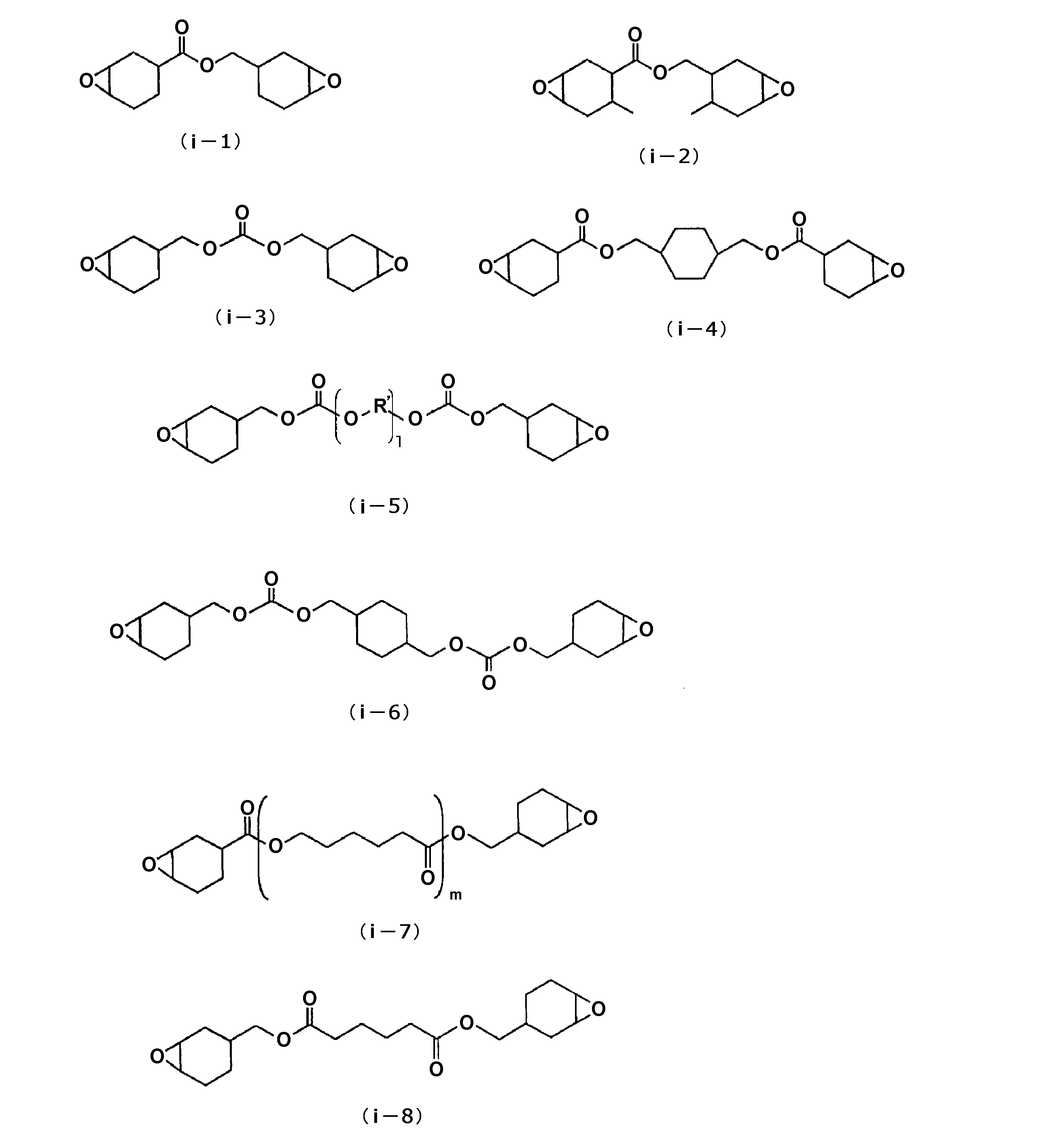
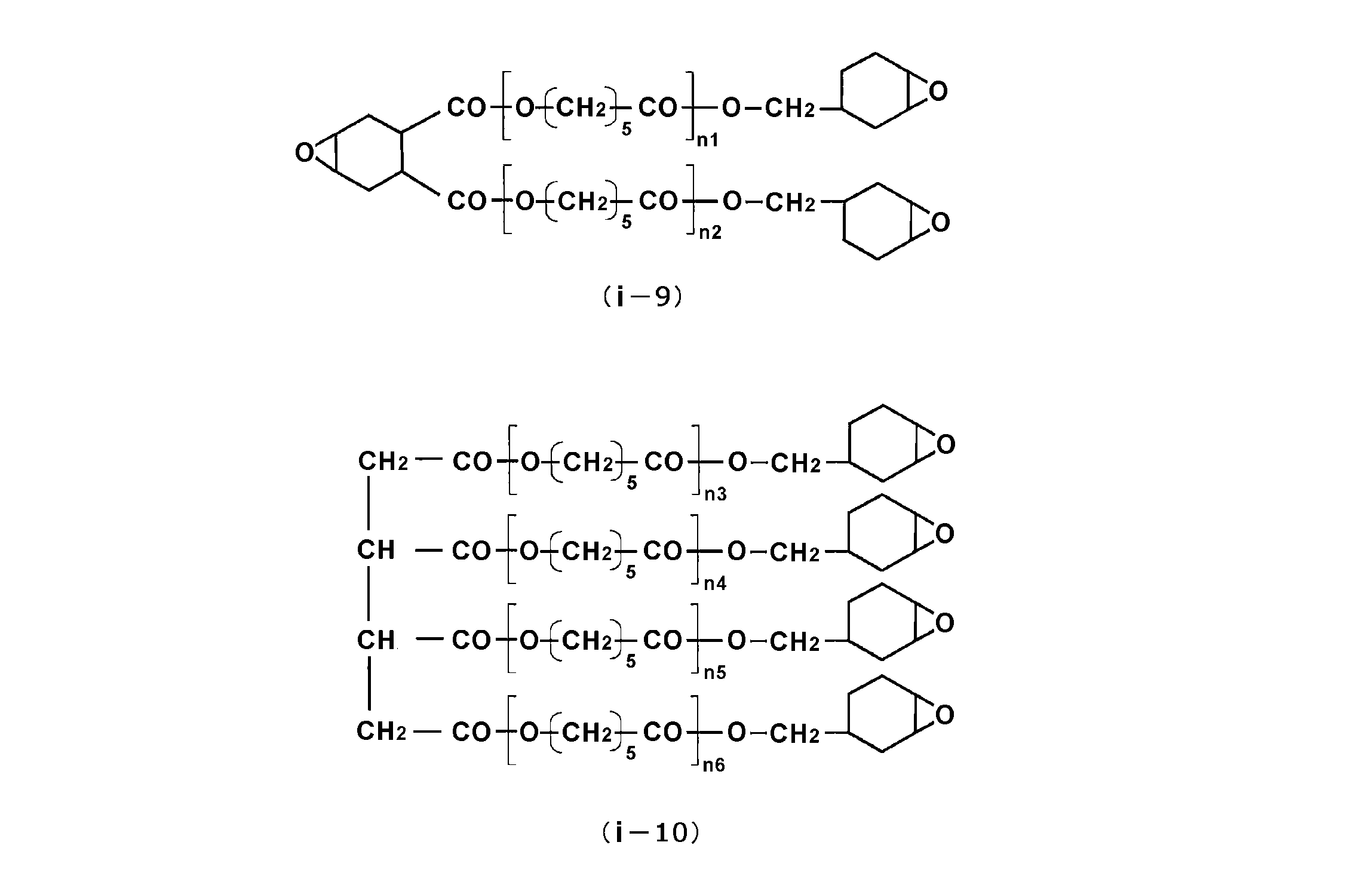

本開示の硬化性組成物は、表面に(メタ)アクリロイル基を含む基を有するシリカ粒子を含んでいてもよい。前記シリカ粒子は、シリカ粒子の表面に無数の水酸基(Si-OH基)が存在し、硬化時に当該水酸基と前記本開示のポリオルガノシルセスキオキサンとが反応することで、ポリオルガノシルセスキオキサンの硬化後の架橋密度が向上する。また、硬化時に複数の前記シリカ粒子における(メタ)アクリロイル基同士が結合することで、硬化後の架橋密度が向上する。このように硬化後の架橋密度が向上することで、樹脂層における耐擦傷性が向上する。また、樹脂層の上に防汚性や低反射性などの機能を有する層(機能層)を設けると、樹脂層と機能層の密着性が弱く、機能層の剥がれが発生する場合があり、いわゆるリコート性がないということがある。しかし、前記シリカ粒子を用いると、リコート性を付与することができ、また、樹脂層表面に対する上記の機能層を設ける際の加工性(加工適性)も良くすることができる。
本開示の硬化性組成物は、「シリコンアクリレート」を含んでいてもよい。シリコンアクリレート(シリコーンアクリレート)は、ケイ素原子と(メタ)アクリロイル基とを少なくとも有する添加剤の一種である。前記シリコンアクリレートは、(メタ)アクリロイル基以外の官能基(例えば、ヒドロキシル基)を有していてもよい。前記シリコンアクリレートは、シリコンジアクリレート、シリコントリアクリレート、シリコンテトラアクリレート、シリコンペンタアクリレート、シリコンヘキサアクリレート、シリコンヘプタアクリレート、シリコンオクタアクリレートであってもよい。前記シリコンアクリレートは、前記ポリオルガノシルセスキオキサンとともに硬化性組成物に用いることで、樹脂層としたときの樹脂層表面の架橋密度を効果的に高めることができ、樹脂層の表面の平滑性などの外観を向上させ、表面硬度、耐擦傷性及び防汚性を向上させる性質を有する。なお、(メタ)アクリロイル基は、アクリロイル基(アクリル基)及びメタアクリロイル基(メタクリル基)の総称である。
本開示の硬化性組成物は、レベリング剤を有していてもよい。上記レベリング剤としては、例えば、シリコーン系レベリング剤、フッ素系レベリング剤、ヒドロキシル基を有するシリコーン系レベリング剤等が挙げられる。但し、レベリング剤は、上述のフッ素含有重合性化合物は含まないものとする。
本開示の硬化性組成物は、特に限定されないが、上記の各成分を室温で又は必要に応じて加熱しながら攪拌・混合することにより調製することができる。なお、硬化性組成物は、各成分があらかじめ混合されたものをそのまま使用する1液系の組成物として使用することもできるし、例えば、別々に保管しておいた2以上の成分を使用前に所定の割合で混合して使用する多液系(例えば、2液系)の組成物として使用することもできる。
前記積層フィルムは、公知乃至慣用のハードコートフィルムの製造方法に準じて製造することができ、その製造方法は特に限定されないが、支持体の少なくとも一方の面に前記硬化性組成物を塗布し、硬化性組成物を硬化させることにより樹脂層を形成させることにより製造できる。
本開示の画像表示装置は、その表面に前記積層フィルムを備える。
本開示のフレキシブルデバイスは、前記画像表示装置を含み、前記装置の表面に前記積層フィルムを備える。前記フレキシブルデバイスは、好ましくは、フレキシブルディスプレイを含むフレキシブルデバイスである。
Alliance HPLCシステム 2695(Waters製)
Refractive Index Detector 2414(Waters製)
カラム:Tskgel GMHHR-M(東ソー(株)製)×2個
ガードカラム:Tskgel guard column HHRL(東ソー(株)製)
カラムオーブン:COLUMN HEATER U-620(Sugai製)
溶媒:THF
測定温度:40℃
温度計、攪拌装置、還流冷却器、及び窒素導入管を取り付けた1000ミリリットルのフラスコ(反応容器)に、窒素気流下で2-(3,4-エポキシシクロヘキシル)エチルトリメトキシシラン277.2ミリモル(68.30g)、フェニルトリメトキシシラン3.0ミリモル(0.56g)、及びアセトン275.4gを仕込み、50℃に昇温した。このようにして得られた混合物に、5%炭酸カリウム水溶液7.74g(炭酸カリウムとして2.8ミリモル)を5分で添加した後、水2800.0ミリモル(50.40g)を20分かけて添加した。なお、添加の間、著しい温度上昇は起こらなかった。その後、50℃のまま、重縮合反応を窒素気流下で5時間行った。
その後、反応溶液を冷却すると同時に、メチルイソブチルケトン137.70gと5%食塩水100.60gとを投入した。この溶液を1Lの分液ロートに移し、再度メチルイソブチルケトン137.70gを投入し、水洗を行った。分液後、水層を抜き取り、下層液が中性になるまで水洗を行い、上層液を分取した後、1mmHg、50℃の条件で上層液から溶媒を留去し、メチルイソブチルケトンを23重量%含有する無色透明で液状の生成物(エポキシ基含有低分子量ポリオルガノシルセスキオキサン)を75.18g得た。
生成物を分析したところ、数平均分子量は2235であり、分子量分散度は1.54であった。上記生成物の29Si-NMRスペクトルから算出されるT2体とT3体の割合[T3体/T2体]は11.9であった。
得られたエポキシ基含有低分子量ポリオルガノシルセスキオキサンの1H-NMRチャートを図5、29Si-NMRチャートを図6にそれぞれ示す。
温度計、攪拌装置、還流冷却器、及び窒素導入管を取り付けた1000ミリリットルのフラスコ(反応容器)に、窒素気流下に製造例1で得られたエポキシ基含有低分子量ポリオルガノシルセスキオキサンを含む混合物(75g)を仕込み、エポキシ基含有低分子量ポリオルガノシルセスキオキサンの正味含有量に対して水酸化カリウムを100ppm(5.6mg)、水を2000ppm(112mg)添加し、80℃で18時間加熱した時点でサンプリングして分子量を測定したところ、数平均分子量Mnが6000まで上昇しており、その後室温まで冷却し、メチルイソブチルケトンを300mL添加し、水を300mL添加し、水洗を繰り返すことでアルカリ成分を除去して濃縮すると、メチルイソブチルケトンを25重量%含有する無色透明で液状の生成物(エポキシ基含有高分子量ポリオルガノシルセスキオキサン1)を74.5g得た。
生成物を分析したところ、数平均分子量は6176であり、分子量分散度は2.31であった。上記生成物の29Si-NMRスペクトルから算出されるT2体とT3体の割合[T3体/T2体]は50.2であった。
得られたエポキシ基含有高分子量ポリオルガノシルセスキオキサン1の1H-NMRチャートを図7、29Si-NMRチャートを図8にそれぞれ示す。
表1に示す配合比の混合溶液を作製し、これをハードコート液(硬化性組成物)として使用した。上記で得られたハードコート液を硬化後のハードコート層の厚さが10μmとなるようにワイヤーバー#14を用いて、PETフィルム(商品名「ルミラー(登録商標)#50-U40」、厚み50μm、東レ株式会社製)の表面へ塗布した後、150℃のオーブンで2分間放置し、次いで、高圧水銀ランプ(アイグラフィックス(株)社製)を用いて600mJ/cm2の照度で紫外線を照射した。その後、150℃で60分間熱処理することによってハードコート液の塗工膜を硬化させ、ハードコート層を有するハードコートフィルムを作製した。

ハードコート層の厚さを20μmに変更したこと以外は実施例1と同様にして、ハードコートフィルムを作製した。
表2に示す配合比のハードコート液を使用したこと以外は実施例1と同様にして、ハードコートフィルムを作製した。
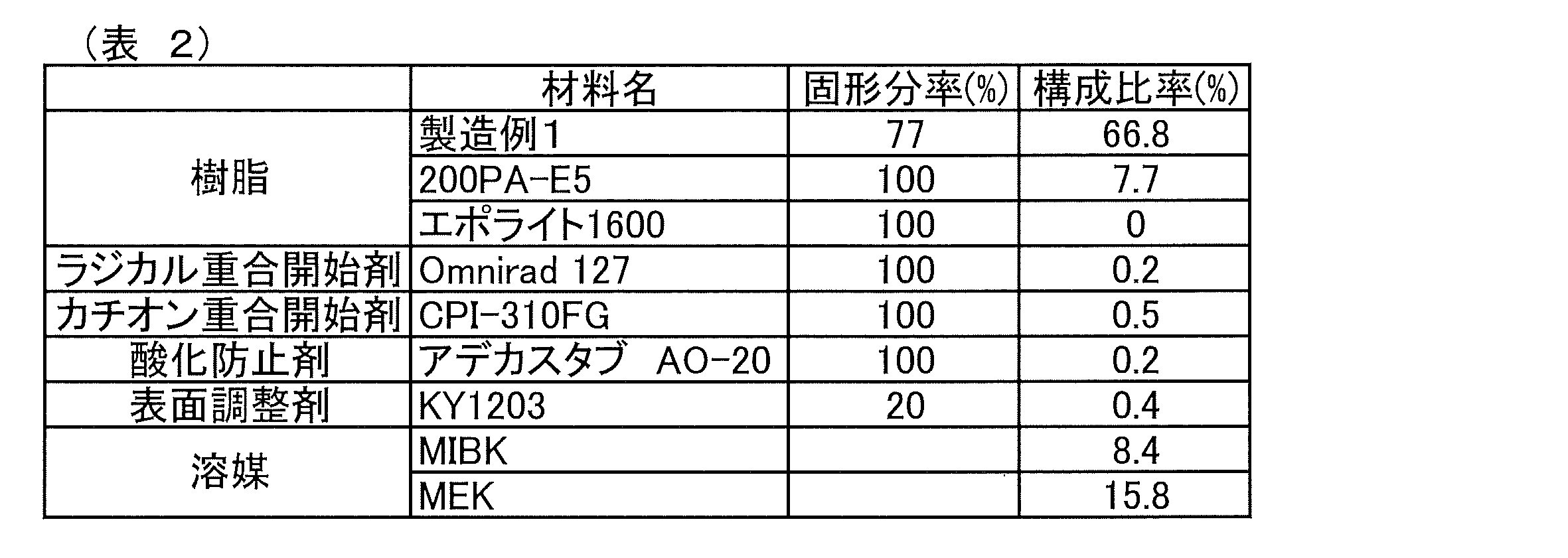
ハードコート層の厚さを20μmに変更したこと以外は実施例3と同様にして、ハードコートフィルムを作製した。
表3に示す配合比のハードコート液を使用したこと以外は実施例1と同様にして、ハードコートフィルムを作製した。

ハードコート層の厚さを20μmに変更したこと以外は実施例5と同様にして、ハードコートフィルムを作製した。
表4に示す配合比のハードコート液を使用したこと以外は実施例1と同様にして、ハードコートフィルムを作製した。

ハードコート層の厚さを20μmに変更したこと以外は比較例1と同様にして、ハードコートフィルムを作製した。
上記で得たハードコートフィルムのヘイズ及び全光線透過率を、ヘイズメータ(日本電色工業(株)製、NDH-5000W)を使用して測定した。
上記で得たハードコートフィルムにおけるハードコート層表面の鉛筆硬度を、JIS K5600-5-4(750g荷重)に準じて評価した。
上記で得たハードコートフィルムにおけるハードコート層表面に対し、#0000スチールウールを荷重1000g/cm2にて1000回及び10000回往復させ、ハードコート層表面に付いた傷の有無を確認した。
上記で得られたハードコートフィルムの表面(ハードコート層の表面)の水接触角(°)を液滴法で測定した。
上記で得たハードコートフィルムにおけるハードコート層表面に対し、#0000スチールウールを荷重1000g/cm2にて1000回往復させ、試験実施部位の水接触角(°)を液滴法で測定した。
上記で得たハードコートフィルムの屈曲性を、ハードコート表面が凹(内側)になるように円筒形マンドレルを使用してJIS K5600-5-1に準じて、ハードコート層の表面にクラックが発生しない屈曲半径(mm)で屈曲性(1)を評価した。
上記で得たハードコートフィルムの屈曲性を、ハードコート表面が凸(外側)になるように円筒形マンドレルを使用してJIS K5600-5-1に準じて、ハードコート層の表面にクラックが発生しない屈曲半径(mm)で屈曲性(2)を評価した。
上記で得たハードコートフィルムの屈曲耐久性を、面状体無負荷U字伸縮試験機(ユアサシステム機器(株)製、Z-044)を使用して測定した。測定はハードコート層の面を凹(内側)として、屈曲半径2.5mm、30~60回/分の速さで50000回行い、ハードコート層のクラックの有無を確認した(図3、4参照)。
上記で得たハードコートフィルムの屈曲耐久性を、面状体無負荷U字伸縮試験機(ユアサシステム機器(株)製、Z-044)を使用して測定した。測定はハードコート層の面を凸(外側)として、屈曲半径4.0mm、30~60回/分の速さで10000回行い、ハードコート層のクラックの有無を確認した(図3、4参照)。

[樹脂]
製造例1:製造例1で得られたエポキシ基含有低分子量ポリオルガノシルセスキオキサン(本開示のポリオルガノシルセスキオキサン)
200PA-E5:商品名「エポキシエステル200PA-E5」、主成分:トリプロピレングリコールジグリシジルエーテルハーフ(メタ)アクリレート(化合物Aに該当する、エポキシ基当量:100、アクリル基当量:100)、共栄社化学(株)製
エポライト1600:商品名「エポライト1600」、1,6-ヘキサンジオールジグリシジルエーテル(化合物Bに該当する、エポキシ基当量:151)、共栄社化学(株)製
[ラジカル重合開始剤]
Omnirad127:商品名「Omnirad127」、2-ヒロドキシ-1-{4-[4-(2-ヒドロキシ-2-メチル-プロピオニル)-ベンジル]フェニル}-2-メチル-プロパン-1-オン、光ラジカル重合開始
[カチオン重合開始剤]
CPI-310FG:商品名「CPI-310FG」、光カチオン重合開始剤、サンアプロ(株)製
CPI-210S:商品名「CPI-210S」、光カチオン重合開始剤、サンアプロ(株)製
[酸化防止剤]
アデカスタブ AO-20:商品名「アデカスタブ AO-20」、1,3,5-トリス(3’,5’-ジ-t-ブチル-4’-ヒドロキシベンジル)-s-トリアジン-2,4,6-(1H,3H,5H)トリオン(フェノール系酸化防止剤)、(株)ADEKA製
[フッ素含有重合性化合物]
KY1203:商品名「SUBELYN KY-1203」、パーフルオロポリエーテル変性アクリレート、信越化学(株)製
FT601ADH2:商品名「フタージェント601ADH2」、ネオス(株)製
[溶媒]
MIBK:メチルイソブチルケトン
MEK:メチルエチルケトン
各実施形態における各構成及びそれらの組み合わせ等は、一例であって、本開示の主旨から逸脱しない範囲内で、適宜、構成の付加、省略、置換、及びその他の変更が可能である。本開示は、実施形態によって限定されることはなく、特許請求の範囲によってのみ限定される。
[1] 支持体と、該支持体の少なくとも一方の面に積層された樹脂層を有する積層フィルムであって、該樹脂層(前記支持体の両面に樹脂層が積層されている場合はいずれか一方の樹脂層)が下記(条件1)、(条件2)、及び(条件3)を充足する積層フィルム。
(条件1)
前記積層フィルムの樹脂層表面のJIS K5600-5-4(1999)に規定する鉛筆硬度試験(750g荷重)の鉛筆硬度が、F以上である。
(条件2)
前記積層フィルムの樹脂層の面が凸となるよう屈曲させる円筒形マンドレル試験(JIS K5600-5-1(1999)に規定する方法による)において、屈曲半径が5mmで樹脂層の面にクラックが発生しない。
(条件3)
前記積層フィルムの樹脂層の面の、#0000番のスチールウールで1kg/cm2の荷重をかけながら、前記樹脂層の表面を1000回往復摩擦させる耐スチールウール試験に付す前の水接触角が95°以上であり、前記試験に付した後の、試験実施部位の水接触角が90°以上である。
[2] さらに、前記樹脂層(前記支持体の両面に樹脂層が積層されている場合はいずれか一方の樹脂層)が下記(条件4)を充足する[1]に記載の積層フィルム。
(条件4)下記屈曲耐久性試験において、樹脂層にクラックが生じるまでの動作回数が1万回以上である。
屈曲耐久性試験:
積層フィルムを伸ばした状態から、樹脂層の面が凸となる方向に屈曲半径が4.0mmとなるように180°折り曲げ、再び伸ばす動作を1回とし、30~60回/分の速さで前記動作を行う。
[3] さらに、前記樹脂層(前記支持体の両面に樹脂層が積層されている場合はいずれか一方の樹脂層)が下記(条件5)を充足する[1]又は[2]に記載の積層フィルム。
(条件5)#0000番のスチールウールで1kg/cm2の荷重をかけながら、樹脂層表面を1000回往復摩擦させる耐スチールウール試験において目視で傷が生じない。
[4] 前記樹脂層(前記支持体の両面に樹脂層が積層されている場合はいずれか一方の樹脂層)のヘイズが1.0%以下である[1]~[3]の何れか1つに記載の積層フィルム。
[5] 前記樹脂層が、1種以上の硬化性化合物を含む硬化性組成物の硬化物であり、硬化性化合物の少なくとも1種がポリオルガノシルセスキオキサンである[1]~[4]の何れか1つに記載の積層フィルム。
[6] 前記硬化性組成物が、分子内に1個以上のカチオン重合性基と1個以上のラジカル重合性基を有する化合物を含む[5]に記載の積層フィルム。
[7] 前記硬化性組成物が、さらに、フッ素含有ラジカル重合性化合物を含む[5]又は[6]に記載の積層フィルム。
[8] 前記硬化性組成物が、さらに、分子内に2個以上のカチオン重合性基を有する脂肪族化合物を含む[5]~[7]の何れか1つに記載の積層フィルム。
[9] 前記樹脂層が、下記硬化性組成物の硬化物である、[1]~[4]の何れか1つに記載の積層フィルム。
硬化性組成物:硬化性化合物として、構成単位にT3体とT2体を含むポリオルガノシルセスキオキサンであって、T3体/T2体(モル比)が5以上であり、
T3体として、下記式(1)で表される構成単位を有するポリオルガノシルセスキオキサンを含む。
[R1SiO3/2] (1)
[式(1)中、R1は、カチオン重合性官能基を含有する基を示す。]
[10] 前記樹脂層が、下記硬化性組成物の硬化物である、[1]~[4]の何れか1つに記載の積層フィルム。
硬化性組成物:硬化性化合物として、構成単位にT3体とT2体を含むポリオルガノシルセスキオキサンであって、T3体/T2体(モル比)が5以上であり、
T3体として、下記式(1)で表される構成単位と下記式(2)で表される構成単位を有するポリオルガノシルセスキオキサンを含む。
[R1SiO3/2] (1)
[式(1)中、R1は、カチオン重合性官能基を含有する基を示す。]
[R2SiO3/2] (2)
[式(2)中、R2は、置換若しくは無置換のアリール基を示す。]
[11] 前記硬化性組成物が、更に、分子内に1個以上のカチオン重合性基と1個以上のラジカル重合性基を有する化合物Aを含み、化合物Aの含有量は前記ポリオルガノシルセスキオキサン100重量部に対して1~100重量部である、[9]又は[10]に記載の積層フィルム。
[12] 前記硬化性組成物が、更に、分子内に1個以上のカチオン重合性基と1個以上のラジカル重合性基を有する化合物Aとフッ素含有ラジカル重合性化合物Fを、前記化合物A 1重量部に対して、前記化合物Fを0.05~0.5重量部の割合で含有する、[9]~[11]の何れか1つに記載の積層フィルム。
[13] 前記硬化性組成物が、更に、分子内に2個以上のカチオン重合性基を有する脂肪族化合物Bを含み、前記化合物Bの含有量は前記ポリオルガノシルセスキオキサン100重量部に対して1~50重量部である、[9]~[12]の何れか1つに記載の積層フィルム。
[14] 化合物Aと化合物Bの含有量の比(化合物A/化合物B;重量比)が1/0.5~1/10である、[13]に記載の積層フィルム。
[15] 前記硬化触媒がカチオン重合開始剤を含む[14]に記載の積層フィルム。
[16] 前記硬化触媒がラジカル重合開始剤を含む[14]又は[15]に記載の積層フィルム。
[17] 前記支持体が、透明支持体である[1]~[16]の何れか1つに記載の積層フィルム。
[18] [1]~[17]の何れか1つに記載の積層フィルムを備える画像表示装置。
[19] [1]~[17]の何れか1つに記載の積層フィルムを備える有機エレクトロルミネセンス表示装置。
[20] [1]~[17]の何れか1つに記載の積層フィルムを備えるフレキシブルディスプレイ。
[21] [1]~[17]の何れか1つに記載の積層フィルムを備える液晶ディスプレイ。
[22] [1]~[17]の何れか1つに記載の積層フィルムを備える有機エレクトロルミネセンスディスプレイ。
[23] [18]又は[19]に記載の画像表示装置を含むフレキシブルデバイス。
[24] [20]~[22]の何れか1つに記載のディスプレイを含むフレキシブルデバイス。
[25] [1]~[17]の何れか1つに記載の積層フィルムを備えるフレキシブルデバイス。
[26] [20]に記載のフレキシブルディスプレイを備えるフレキシブルデバイス。
10、20 支持体
11、21、22 樹脂層
Claims (17)
- 支持体と、
該支持体の少なくとも一方の面に積層された樹脂層を有する積層フィルムであって、
該樹脂層(前記支持体の両面に樹脂層が積層されている場合はいずれか一方の樹脂層)が下記(条件1)、(条件2)、及び(条件3)を充足する積層フィルム。
(条件1)
前記積層フィルムの樹脂層表面のJIS K5600-5-4(1999)に規定する鉛筆硬度試験(750g荷重)の鉛筆硬度が、F以上である。
(条件2)
前記積層フィルムの樹脂層の面が凸となるよう屈曲させる円筒形マンドレル試験(JIS K5600-5-1(1999)に規定する方法による)において、屈曲半径が5mmで樹脂層の面にクラックが発生しない。
(条件3)
前記積層フィルムの樹脂層の面の、#0000番のスチールウールで1kg/cm2の荷重をかけながら、前記樹脂層の表面を1000回往復摩擦させる耐スチールウール試験に付す前の水接触角が95°以上であり、前記試験に付した後の、試験実施部位の水接触角が90°以上である。 - さらに、前記樹脂層(前記支持体の両面に樹脂層が積層されている場合はいずれか一方の樹脂層)が下記(条件4)を充足する請求項1に記載の積層フィルム。
(条件4)下記屈曲耐久性試験において、樹脂層にクラックが生じるまでの動作回数が1万回以上である。
屈曲耐久性試験:
積層フィルムを伸ばした状態から、樹脂層の面が凸となる方向に屈曲半径が4.0mmとなるように180°折り曲げ、再び伸ばす動作を1回とし、30~60回/分の速さで前記動作を行う。 - さらに、前記樹脂層(前記支持体の両面に樹脂層が積層されている場合はいずれか一方の樹脂層)が下記(条件5)を充足する請求項1又は2に記載の積層フィルム。
(条件5)#0000番のスチールウールで1kg/cm2の荷重をかけながら、前記樹脂層の表面を1000回往復摩擦させる耐スチールウール試験において目視で傷が生じない。 - 前記樹脂層(前記支持体の両面に樹脂層が積層されている場合はいずれか一方の樹脂層)のヘイズが1.0%以下である請求項1~3のいずれか1項に記載の積層フィルム。
- ヘイズが7%以下である請求項1~4のいずれか1項に記載の積層フィルム。
- 前記樹脂層が、1種以上の硬化性化合物を含む硬化性組成物の硬化物であり、硬化性化合物の少なくとも1種がポリオルガノシルセスキオキサンである請求項1~5のいずれか1項に記載の積層フィルム。
- 前記硬化性組成物が、分子内に1個以上のカチオン重合性基と1個以上のラジカル重合性基を有する化合物を含む請求項6に記載の積層フィルム。
- 前記硬化性組成物が、さらに、硬化触媒を含む請求項6又は7に記載の積層フィルム。
- 前記硬化触媒がカチオン重合開始剤を含む請求項8に記載の積層フィルム。
- 前記硬化触媒がラジカル重合開始剤を含む請求項8又は9に記載の積層フィルム。
- 前記硬化性組成物が、さらに、フッ素含有ラジカル重合性化合物を含む請求項6~10のいずれか1項に記載の積層フィルム。
- 前記硬化性組成物が、さらに、分子内に2個以上のカチオン重合性基を有する脂肪族化合物を含む請求項6~11のいずれか1項に記載の積層フィルム。
- 前記支持体が、透明支持体である請求項1~12のいずれか1項に記載の積層フィルム。
- 請求項1~13のいずれか1項に記載の積層フィルムを備える画像表示装置。
- フレキシブルディスプレイである、請求項14に記載の画像表示装置。
- 有機エレクトロルミネセンス表示装置である、請求項14に記載の画像表示装置。
- 請求項14~16の何れか1項に記載の画像表示装置を含むフレキシブルデバイス。
Priority Applications (3)
| Application Number | Priority Date | Filing Date | Title |
|---|---|---|---|
| KR1020237019534A KR20230098885A (ko) | 2020-11-16 | 2021-11-12 | 적층 필름 및 플렉시블 디바이스 |
| US18/035,018 US20230399479A1 (en) | 2020-11-16 | 2021-11-12 | Laminated film and flexible device |
| CN202180075580.9A CN116438066A (zh) | 2020-11-16 | 2021-11-12 | 层叠膜和柔性设备 |
Applications Claiming Priority (2)
| Application Number | Priority Date | Filing Date | Title |
|---|---|---|---|
| JP2020190141A JP7074825B1 (ja) | 2020-11-16 | 2020-11-16 | 積層フィルム、及びフォルダブルデバイス |
| JP2020-190141 | 2020-11-16 |
Publications (1)
| Publication Number | Publication Date |
|---|---|
| WO2022102736A1 true WO2022102736A1 (ja) | 2022-05-19 |
Family
ID=81602352
Family Applications (1)
| Application Number | Title | Priority Date | Filing Date |
|---|---|---|---|
| PCT/JP2021/041665 Ceased WO2022102736A1 (ja) | 2020-11-16 | 2021-11-12 | 積層フィルム、及びフレキシブルデバイス |
Country Status (6)
| Country | Link |
|---|---|
| US (1) | US20230399479A1 (ja) |
| JP (1) | JP7074825B1 (ja) |
| KR (1) | KR20230098885A (ja) |
| CN (1) | CN116438066A (ja) |
| TW (1) | TWI796000B (ja) |
| WO (1) | WO2022102736A1 (ja) |
Cited By (4)
| Publication number | Priority date | Publication date | Assignee | Title |
|---|---|---|---|---|
| WO2024029496A1 (ja) * | 2022-08-03 | 2024-02-08 | 株式会社カネカ | 硬化性樹脂組成物、ハードコートフィルムおよびその製造方法、ならびにディスプレイ |
| WO2025070509A1 (ja) | 2023-09-27 | 2025-04-03 | 三菱瓦斯化学株式会社 | 多層体、および、ヘッドアップディスプレイ用防塵カバー |
| WO2025070510A1 (ja) | 2023-09-27 | 2025-04-03 | 三菱瓦斯化学株式会社 | 多層体、および、ヘッドアップディスプレイ用防塵カバー |
| WO2025070511A1 (ja) | 2023-09-27 | 2025-04-03 | 三菱瓦斯化学株式会社 | 多層体、および、ヘッドアップディスプレイ用防塵カバー |
Families Citing this family (3)
| Publication number | Priority date | Publication date | Assignee | Title |
|---|---|---|---|---|
| CN113853302B (zh) * | 2019-05-17 | 2024-01-02 | 富士胶片株式会社 | 硬涂膜、具备硬涂膜的物品及图像显示装置 |
| JP2025115866A (ja) | 2024-01-26 | 2025-08-07 | 株式会社ダイセル | 透明積層体、画像表示装置、フレキシブルデバイス |
| JP7798929B2 (ja) * | 2024-01-26 | 2026-01-14 | 株式会社ダイセル | ハードコートレスフィルム、積層体、多層積層体、および表示装置 |
Citations (7)
| Publication number | Priority date | Publication date | Assignee | Title |
|---|---|---|---|---|
| JP2015112599A (ja) * | 2013-12-11 | 2015-06-22 | コリア アドバンスト インスティチュート オブ サイエンス アンド テクノロジー | エポキシシロキサン樹脂組成物を用いたハードコーティング膜及びその製造方法 |
| WO2018159285A1 (ja) * | 2017-03-02 | 2018-09-07 | 東洋紡株式会社 | 折りたたみ型ディスプレイの表面保護フィルム用ポリエステルフィルムとその用途 |
| JP2018189800A (ja) * | 2017-05-02 | 2018-11-29 | 株式会社ダイセル | 曲面ディスプレイ用ハードコートフィルム、ハードコートフィルム付き透明基板及びディスプレイ装置 |
| WO2019220642A1 (ja) * | 2018-05-18 | 2019-11-21 | 株式会社ダイセル | 積層フィルム、及びフォルダブルデバイス |
| WO2020008937A1 (ja) * | 2018-07-05 | 2020-01-09 | 日産化学株式会社 | フレキシブルコーティング用硬化性組成物 |
| WO2020040209A1 (ja) * | 2018-08-24 | 2020-02-27 | 株式会社カネカ | ハードコート組成物、ハードコート付きポリイミドフィルムおよびその製造方法、ならびに画像表示装置 |
| WO2021172200A1 (ja) * | 2020-02-25 | 2021-09-02 | 株式会社カネカ | シルセスキオキサン化合物およびその製造方法、ハードコート組成物ならびにハードコートフィルムおよびその製造方法 |
Family Cites Families (3)
| Publication number | Priority date | Publication date | Assignee | Title |
|---|---|---|---|---|
| JP6375946B2 (ja) * | 2013-01-09 | 2018-08-22 | 東レ株式会社 | 積層フィルム |
| US11433651B2 (en) * | 2015-03-18 | 2022-09-06 | Riken Technos Corporation | Hard coat laminated film |
| JP7016603B2 (ja) | 2015-07-17 | 2022-02-07 | 大日本印刷株式会社 | タッチパネル用ハードコートフィルム、及び、折り畳み式画像表示装置 |
-
2020
- 2020-11-16 JP JP2020190141A patent/JP7074825B1/ja active Active
-
2021
- 2021-11-12 CN CN202180075580.9A patent/CN116438066A/zh active Pending
- 2021-11-12 WO PCT/JP2021/041665 patent/WO2022102736A1/ja not_active Ceased
- 2021-11-12 US US18/035,018 patent/US20230399479A1/en active Pending
- 2021-11-12 KR KR1020237019534A patent/KR20230098885A/ko not_active Ceased
- 2021-11-16 TW TW110142577A patent/TWI796000B/zh active
Patent Citations (7)
| Publication number | Priority date | Publication date | Assignee | Title |
|---|---|---|---|---|
| JP2015112599A (ja) * | 2013-12-11 | 2015-06-22 | コリア アドバンスト インスティチュート オブ サイエンス アンド テクノロジー | エポキシシロキサン樹脂組成物を用いたハードコーティング膜及びその製造方法 |
| WO2018159285A1 (ja) * | 2017-03-02 | 2018-09-07 | 東洋紡株式会社 | 折りたたみ型ディスプレイの表面保護フィルム用ポリエステルフィルムとその用途 |
| JP2018189800A (ja) * | 2017-05-02 | 2018-11-29 | 株式会社ダイセル | 曲面ディスプレイ用ハードコートフィルム、ハードコートフィルム付き透明基板及びディスプレイ装置 |
| WO2019220642A1 (ja) * | 2018-05-18 | 2019-11-21 | 株式会社ダイセル | 積層フィルム、及びフォルダブルデバイス |
| WO2020008937A1 (ja) * | 2018-07-05 | 2020-01-09 | 日産化学株式会社 | フレキシブルコーティング用硬化性組成物 |
| WO2020040209A1 (ja) * | 2018-08-24 | 2020-02-27 | 株式会社カネカ | ハードコート組成物、ハードコート付きポリイミドフィルムおよびその製造方法、ならびに画像表示装置 |
| WO2021172200A1 (ja) * | 2020-02-25 | 2021-09-02 | 株式会社カネカ | シルセスキオキサン化合物およびその製造方法、ハードコート組成物ならびにハードコートフィルムおよびその製造方法 |
Cited By (4)
| Publication number | Priority date | Publication date | Assignee | Title |
|---|---|---|---|---|
| WO2024029496A1 (ja) * | 2022-08-03 | 2024-02-08 | 株式会社カネカ | 硬化性樹脂組成物、ハードコートフィルムおよびその製造方法、ならびにディスプレイ |
| WO2025070509A1 (ja) | 2023-09-27 | 2025-04-03 | 三菱瓦斯化学株式会社 | 多層体、および、ヘッドアップディスプレイ用防塵カバー |
| WO2025070510A1 (ja) | 2023-09-27 | 2025-04-03 | 三菱瓦斯化学株式会社 | 多層体、および、ヘッドアップディスプレイ用防塵カバー |
| WO2025070511A1 (ja) | 2023-09-27 | 2025-04-03 | 三菱瓦斯化学株式会社 | 多層体、および、ヘッドアップディスプレイ用防塵カバー |
Also Published As
| Publication number | Publication date |
|---|---|
| TWI796000B (zh) | 2023-03-11 |
| JP7074825B1 (ja) | 2022-05-24 |
| CN116438066A (zh) | 2023-07-14 |
| KR20230098885A (ko) | 2023-07-04 |
| JP2022081716A (ja) | 2022-06-01 |
| TW202224943A (zh) | 2022-07-01 |
| US20230399479A1 (en) | 2023-12-14 |
Similar Documents
| Publication | Publication Date | Title |
|---|---|---|
| JP7074825B1 (ja) | 積層フィルム、及びフォルダブルデバイス | |
| JP6795498B2 (ja) | 硬化性組成物、及び成形体 | |
| JP6842977B2 (ja) | 積層体 | |
| JP6619955B2 (ja) | 傷回復フィルム | |
| JP6931526B2 (ja) | ハードコートフィルム | |
| US20200142102A1 (en) | Hard coat film suppressed in curling and method for producing same | |
| CN110494466B (zh) | 固化性组合物、固化物及硬涂膜 | |
| JP6619954B2 (ja) | 成形体 | |
| JP7312543B2 (ja) | ガラス代替基材用耐候性ハードコート組成物、硬化物、及び積層体 | |
| JP2018177952A (ja) | 硬化性組成物、硬化物及びハードコートフィルム | |
| JP7049447B2 (ja) | 積層フィルム、及びフォルダブルデバイス | |
| US20250243110A1 (en) | Curable composition, undercoat layer, laminate, and display device | |
| KR20250117309A (ko) | 하드코트리스 필름, 적층체, 다층 적층체 및 표시 장치 |
Legal Events
| Date | Code | Title | Description |
|---|---|---|---|
| 121 | Ep: the epo has been informed by wipo that ep was designated in this application |
Ref document number: 21891981 Country of ref document: EP Kind code of ref document: A1 |
|
| ENP | Entry into the national phase |
Ref document number: 20237019534 Country of ref document: KR Kind code of ref document: A |
|
| NENP | Non-entry into the national phase |
Ref country code: DE |
|
| 122 | Ep: pct application non-entry in european phase |
Ref document number: 21891981 Country of ref document: EP Kind code of ref document: A1 |
|
| WWR | Wipo information: refused in national office |
Ref document number: 1020237019534 Country of ref document: KR |
|
| WWC | Wipo information: continuation of processing after refusal or withdrawal |
Ref document number: 1020237019534 Country of ref document: KR |