WO2022065024A1 - バッテリーのリースシステム - Google Patents
バッテリーのリースシステム Download PDFInfo
- Publication number
- WO2022065024A1 WO2022065024A1 PCT/JP2021/032824 JP2021032824W WO2022065024A1 WO 2022065024 A1 WO2022065024 A1 WO 2022065024A1 JP 2021032824 W JP2021032824 W JP 2021032824W WO 2022065024 A1 WO2022065024 A1 WO 2022065024A1
- Authority
- WO
- WIPO (PCT)
- Prior art keywords
- battery
- lease
- deterioration
- information
- unit
- Prior art date
- Legal status (The legal status is an assumption and is not a legal conclusion. Google has not performed a legal analysis and makes no representation as to the accuracy of the status listed.)
- Ceased
Links
Images


Classifications
-
- G—PHYSICS
- G06—COMPUTING OR CALCULATING; COUNTING
- G06Q—INFORMATION AND COMMUNICATION TECHNOLOGY [ICT] SPECIALLY ADAPTED FOR ADMINISTRATIVE, COMMERCIAL, FINANCIAL, MANAGERIAL OR SUPERVISORY PURPOSES; SYSTEMS OR METHODS SPECIALLY ADAPTED FOR ADMINISTRATIVE, COMMERCIAL, FINANCIAL, MANAGERIAL OR SUPERVISORY PURPOSES, NOT OTHERWISE PROVIDED FOR
- G06Q30/00—Commerce
- G06Q30/06—Buying, selling or leasing transactions
- G06Q30/0645—Rental transactions; Leasing transactions
-
- B—PERFORMING OPERATIONS; TRANSPORTING
- B60—VEHICLES IN GENERAL
- B60K—ARRANGEMENT OR MOUNTING OF PROPULSION UNITS OR OF TRANSMISSIONS IN VEHICLES; ARRANGEMENT OR MOUNTING OF PLURAL DIVERSE PRIME-MOVERS IN VEHICLES; AUXILIARY DRIVES FOR VEHICLES; INSTRUMENTATION OR DASHBOARDS FOR VEHICLES; ARRANGEMENTS IN CONNECTION WITH COOLING, AIR INTAKE, GAS EXHAUST OR FUEL SUPPLY OF PROPULSION UNITS IN VEHICLES
- B60K1/00—Arrangement or mounting of electrical propulsion units
- B60K1/04—Arrangement or mounting of electrical propulsion units of the electric storage means for propulsion
-
- B—PERFORMING OPERATIONS; TRANSPORTING
- B60—VEHICLES IN GENERAL
- B60L—PROPULSION OF ELECTRICALLY-PROPELLED VEHICLES; SUPPLYING ELECTRIC POWER FOR AUXILIARY EQUIPMENT OF ELECTRICALLY-PROPELLED VEHICLES; ELECTRODYNAMIC BRAKE SYSTEMS FOR VEHICLES IN GENERAL; MAGNETIC SUSPENSION OR LEVITATION FOR VEHICLES; MONITORING OPERATING VARIABLES OF ELECTRICALLY-PROPELLED VEHICLES; ELECTRIC SAFETY DEVICES FOR ELECTRICALLY-PROPELLED VEHICLES
- B60L53/00—Methods of charging batteries, specially adapted for electric vehicles; Charging stations or on-board charging equipment therefor; Exchange of energy storage elements in electric vehicles
- B60L53/80—Exchanging energy storage elements, e.g. removable batteries
-
- B—PERFORMING OPERATIONS; TRANSPORTING
- B60—VEHICLES IN GENERAL
- B60L—PROPULSION OF ELECTRICALLY-PROPELLED VEHICLES; SUPPLYING ELECTRIC POWER FOR AUXILIARY EQUIPMENT OF ELECTRICALLY-PROPELLED VEHICLES; ELECTRODYNAMIC BRAKE SYSTEMS FOR VEHICLES IN GENERAL; MAGNETIC SUSPENSION OR LEVITATION FOR VEHICLES; MONITORING OPERATING VARIABLES OF ELECTRICALLY-PROPELLED VEHICLES; ELECTRIC SAFETY DEVICES FOR ELECTRICALLY-PROPELLED VEHICLES
- B60L58/00—Methods or circuit arrangements for monitoring or controlling batteries or fuel cells, specially adapted for electric vehicles
- B60L58/10—Methods or circuit arrangements for monitoring or controlling batteries or fuel cells, specially adapted for electric vehicles for monitoring or controlling batteries
- B60L58/16—Methods or circuit arrangements for monitoring or controlling batteries or fuel cells, specially adapted for electric vehicles for monitoring or controlling batteries responding to battery ageing, e.g. to the number of charging cycles or the state of health [SoH]
-
- G—PHYSICS
- G06—COMPUTING OR CALCULATING; COUNTING
- G06Q—INFORMATION AND COMMUNICATION TECHNOLOGY [ICT] SPECIALLY ADAPTED FOR ADMINISTRATIVE, COMMERCIAL, FINANCIAL, MANAGERIAL OR SUPERVISORY PURPOSES; SYSTEMS OR METHODS SPECIALLY ADAPTED FOR ADMINISTRATIVE, COMMERCIAL, FINANCIAL, MANAGERIAL OR SUPERVISORY PURPOSES, NOT OTHERWISE PROVIDED FOR
- G06Q30/00—Commerce
- G06Q30/02—Marketing; Price estimation or determination; Fundraising
- G06Q30/0283—Price estimation or determination
-
- G—PHYSICS
- G06—COMPUTING OR CALCULATING; COUNTING
- G06Q—INFORMATION AND COMMUNICATION TECHNOLOGY [ICT] SPECIALLY ADAPTED FOR ADMINISTRATIVE, COMMERCIAL, FINANCIAL, MANAGERIAL OR SUPERVISORY PURPOSES; SYSTEMS OR METHODS SPECIALLY ADAPTED FOR ADMINISTRATIVE, COMMERCIAL, FINANCIAL, MANAGERIAL OR SUPERVISORY PURPOSES, NOT OTHERWISE PROVIDED FOR
- G06Q30/00—Commerce
- G06Q30/06—Buying, selling or leasing transactions
-
- G—PHYSICS
- G06—COMPUTING OR CALCULATING; COUNTING
- G06Q—INFORMATION AND COMMUNICATION TECHNOLOGY [ICT] SPECIALLY ADAPTED FOR ADMINISTRATIVE, COMMERCIAL, FINANCIAL, MANAGERIAL OR SUPERVISORY PURPOSES; SYSTEMS OR METHODS SPECIALLY ADAPTED FOR ADMINISTRATIVE, COMMERCIAL, FINANCIAL, MANAGERIAL OR SUPERVISORY PURPOSES, NOT OTHERWISE PROVIDED FOR
- G06Q50/00—Information and communication technology [ICT] specially adapted for implementation of business processes of specific business sectors, e.g. utilities or tourism
- G06Q50/06—Energy or water supply
-
- G—PHYSICS
- G06—COMPUTING OR CALCULATING; COUNTING
- G06Q—INFORMATION AND COMMUNICATION TECHNOLOGY [ICT] SPECIALLY ADAPTED FOR ADMINISTRATIVE, COMMERCIAL, FINANCIAL, MANAGERIAL OR SUPERVISORY PURPOSES; SYSTEMS OR METHODS SPECIALLY ADAPTED FOR ADMINISTRATIVE, COMMERCIAL, FINANCIAL, MANAGERIAL OR SUPERVISORY PURPOSES, NOT OTHERWISE PROVIDED FOR
- G06Q50/00—Information and communication technology [ICT] specially adapted for implementation of business processes of specific business sectors, e.g. utilities or tourism
- G06Q50/10—Services
-
- G—PHYSICS
- G16—INFORMATION AND COMMUNICATION TECHNOLOGY [ICT] SPECIALLY ADAPTED FOR SPECIFIC APPLICATION FIELDS
- G16Y—INFORMATION AND COMMUNICATION TECHNOLOGY SPECIALLY ADAPTED FOR THE INTERNET OF THINGS [IoT]
- G16Y10/00—Economic sectors
- G16Y10/40—Transportation
-
- H—ELECTRICITY
- H01—ELECTRIC ELEMENTS
- H01M—PROCESSES OR MEANS, e.g. BATTERIES, FOR THE DIRECT CONVERSION OF CHEMICAL ENERGY INTO ELECTRICAL ENERGY
- H01M10/00—Secondary cells; Manufacture thereof
- H01M10/42—Methods or arrangements for servicing or maintenance of secondary cells or secondary half-cells
-
- H—ELECTRICITY
- H01—ELECTRIC ELEMENTS
- H01M—PROCESSES OR MEANS, e.g. BATTERIES, FOR THE DIRECT CONVERSION OF CHEMICAL ENERGY INTO ELECTRICAL ENERGY
- H01M10/00—Secondary cells; Manufacture thereof
- H01M10/42—Methods or arrangements for servicing or maintenance of secondary cells or secondary half-cells
- H01M10/48—Accumulators combined with arrangements for measuring, testing or indicating the condition of cells, e.g. the level or density of the electrolyte
-
- Y—GENERAL TAGGING OF NEW TECHNOLOGICAL DEVELOPMENTS; GENERAL TAGGING OF CROSS-SECTIONAL TECHNOLOGIES SPANNING OVER SEVERAL SECTIONS OF THE IPC; TECHNICAL SUBJECTS COVERED BY FORMER USPC CROSS-REFERENCE ART COLLECTIONS [XRACs] AND DIGESTS
- Y02—TECHNOLOGIES OR APPLICATIONS FOR MITIGATION OR ADAPTATION AGAINST CLIMATE CHANGE
- Y02E—REDUCTION OF GREENHOUSE GAS [GHG] EMISSIONS, RELATED TO ENERGY GENERATION, TRANSMISSION OR DISTRIBUTION
- Y02E60/00—Enabling technologies; Technologies with a potential or indirect contribution to GHG emissions mitigation
- Y02E60/10—Energy storage using batteries
-
- Y—GENERAL TAGGING OF NEW TECHNOLOGICAL DEVELOPMENTS; GENERAL TAGGING OF CROSS-SECTIONAL TECHNOLOGIES SPANNING OVER SEVERAL SECTIONS OF THE IPC; TECHNICAL SUBJECTS COVERED BY FORMER USPC CROSS-REFERENCE ART COLLECTIONS [XRACs] AND DIGESTS
- Y02—TECHNOLOGIES OR APPLICATIONS FOR MITIGATION OR ADAPTATION AGAINST CLIMATE CHANGE
- Y02T—CLIMATE CHANGE MITIGATION TECHNOLOGIES RELATED TO TRANSPORTATION
- Y02T10/00—Road transport of goods or passengers
- Y02T10/60—Other road transportation technologies with climate change mitigation effect
- Y02T10/70—Energy storage systems for electromobility, e.g. batteries
-
- Y—GENERAL TAGGING OF NEW TECHNOLOGICAL DEVELOPMENTS; GENERAL TAGGING OF CROSS-SECTIONAL TECHNOLOGIES SPANNING OVER SEVERAL SECTIONS OF THE IPC; TECHNICAL SUBJECTS COVERED BY FORMER USPC CROSS-REFERENCE ART COLLECTIONS [XRACs] AND DIGESTS
- Y02—TECHNOLOGIES OR APPLICATIONS FOR MITIGATION OR ADAPTATION AGAINST CLIMATE CHANGE
- Y02T—CLIMATE CHANGE MITIGATION TECHNOLOGIES RELATED TO TRANSPORTATION
- Y02T10/00—Road transport of goods or passengers
- Y02T10/60—Other road transportation technologies with climate change mitigation effect
- Y02T10/7072—Electromobility specific charging systems or methods for batteries, ultracapacitors, supercapacitors or double-layer capacitors
Definitions
- the present invention relates to a battery leasing system.
- the user can purchase an electric vehicle and rent out a drive battery for use.
- electric vehicles and hybrid vehicles are expected to be widely used as environment-friendly moving objects compared to gasoline-powered vehicles, but driving batteries are expensive, and electric vehicles and hybrid vehicles are compared to gasoline-powered vehicles. Because of the high price, it is a barrier to the purchase of electric and hybrid vehicles for those considering purchasing a vehicle.
- Patent Document 1 it is only possible to reduce the burden at the time of purchasing an electric vehicle, and it is considered that the cost during use by renting a battery is a reasonable amount. It is not considered to be shown to the person who does it, so the effect that a person considering purchasing a car can remove the barrier when purchasing an electric vehicle is insufficient.
- the present invention is a battery leasing that can rationalize the burden on the user when using the battery and effectively promote the purchase of electric vehicles, electric motorcycles, slow mobility, storage batteries, etc. (hereinafter referred to as electric vehicles, etc.).
- the purpose is to provide a system.
- the battery leasing system of the present invention is It includes an input reception unit, a deterioration estimation unit, a first lease charge determination unit, a storage unit, a battery information acquisition unit, a deterioration state determination unit, and a first lease charge redetermination unit.
- the input receiving unit receives input of estimation basic information necessary for estimating the deterioration state of the battery at the expiration of the planned lease period, including the planned lease period of the battery to be leased.
- the deterioration estimation unit estimates the estimated deterioration state of the battery at the expiration of the scheduled lease period based on the estimation basic information.
- the first lease charge determination unit determines the first lease charge of the battery based on the estimated deterioration state.
- the input receiving unit receives input of information indicating that the first lease of the battery has started and stores it in the storage unit.
- the battery information acquisition unit acquires battery information necessary for determining the deteriorated state of the battery returned after the first lease of the battery is completed.
- the deterioration state determination unit determines the deterioration state of the returned battery based on the battery information.
- the first lease fee redetermination unit is characterized in that the first lease fee is redetermined based on the estimated deterioration state and the deterioration state of the returned battery.
- the deterioration estimation unit estimates the estimated deterioration state at the expiration of the planned lease period of the battery, and the first lease charge determination unit determines the first lease charge of the battery based on the estimated deterioration state. Will be done.
- the user who receives the battery lease can know the reasonable lease fee according to the amount estimated that the battery deteriorates during the lease period.
- the deterioration state determination unit determines the deterioration state of the battery returned after the first lease is completed, and the first lease fee redetermination unit determines the estimated deterioration state and the deterioration state of the returned battery. 1 Lease fee is re-determined.
- the first lease fee is redetermined according to the actual deterioration state, so the user can pay the lease fee according to the amount of deterioration of the battery during the lease period. You just have to pay. In that respect as well, the battery leasing fee is reasonable.
- the leasing system includes a reuse use determination unit and a second leasing fee determination unit.
- the reuse use determination unit determines the reuse use, which is the next use of the battery, based on the deteriorated state of the returned battery. It is preferable that the second lease fee determination unit determines the second lease fee in the second lease of the battery based on the reuse use.
- the price range of the battery lease fee differs depending on the reuse use. Therefore, when determining the lease fee for the reuse use, not only the deteriorated state of the battery but also the lease fee according to the reuse use is determined. You need to decide. This is because if a lease fee that is out of the price range of the lease fee for reuse is determined, the battery will remain without being reused as a result.
- the deterioration state determination unit determines the deterioration state of the battery returned after the first lease is terminated, and the reuse use determination unit determines the reuse use of the battery based on the deterioration state.
- the lease fee determination unit determines the second lease fee for the second lease of the battery based on the reuse use. After that, a lease for reuse (second lease) is carried out.
- the battery leasing company will be able to procure batteries not only from the profits from leasing as batteries for electric vehicles (first lease) but also from the profits from leasing for reuse (second lease). Can be recovered.
- the first lease fee can be set cheaper than when leasing only as a battery for an electric vehicle or the like.
- the second lease fee is determined based on the purpose of reuse, the possibility that the second lease fee outside the price range of the lease fee for reuse is determined and remains without being reused is reduced. can. As a result, the possibility of earning profits through leasing for reuse (second leasing) increases.
- the input receiving unit accepts input of information indicating the current value of the battery to be leased.
- the first lease fee determination unit predicts the predicted value of the battery at the end of the planned lease period based on the estimated deterioration state, and is based on the predicted decrease value obtained by subtracting the predicted value from the current value of the battery. It is preferable to determine the first lease fee for the battery.
- the first lease charge determination unit predicts the predicted value at the end of the planned lease period of the battery based on the estimated deterioration state, and obtains the predicted decrease value obtained by subtracting the predicted value from the current value of the battery. Based on this, the first lease fee for the battery is determined.
- the first lease fee is determined based on the objective value of the value of the battery, which is expected to decrease during the lease period, so that the first lease is for both the battery user and the battery leasing company. You can get a high sense of conviction for the charge.
- the battery information acquisition unit acquires the battery information of the battery under the first lease, and the battery information acquisition unit obtains the battery information.
- the deterioration state determination unit determines the deterioration state of the battery during the first lease based on the battery information. It is preferable that the first lease fee redetermination unit redetermines the first lease fee based on the deterioration state of the battery during the first lease.
- the battery information of the battery under the first lease is acquired by the battery information acquisition unit periodically or irregularly, and the battery information is acquired by the deterioration state determination unit.
- the deterioration state of the battery during the first lease is determined based on the above, and the first lease fee is redetermined by the first lease fee redetermination unit based on the deterioration state of the battery.
- the first lease fee is redetermined according to the actual deterioration state of the battery during the first lease, so that both the user and the leasing company are more convinced of the first lease fee.
- the battery leasing system of the present invention It is equipped with a usage history recording unit, a usage history acquisition unit, and a deterioration cause estimation unit.
- the input receiving unit receives input of planned usage information including information indicating a planned discharge amount in the planned lease period of the device equipped with the battery to be leased.
- the input receiving unit stores the estimated deterioration state and the planned usage information in the storage unit.
- the usage history recording unit records the usage history information of the battery during the first lease.
- the usage history acquisition unit acquires the usage history information recorded by the usage history recording unit.
- the deterioration cause estimation unit determines whether or not the deterioration state of the battery determined by the deterioration state determination unit is abnormal compared to the estimated deterioration state, and determines that the deterioration state is abnormal.
- the cause of the abnormal deterioration state is estimated based on the planned usage information and the usage history information.
- the first lease fee redetermination unit is when the cause estimated by the deterioration cause estimation unit is caused by the user of the battery using the battery in a method different from the planned usage information.
- the input receiving unit receives the input of the planned usage information consisting of the information indicating the planned discharge amount, and stores it in the storage unit together with the estimated deterioration state at the start of the first lease.
- the usage history recording unit records the usage history information of the battery during the first lease.
- the deterioration cause estimation unit determines that the deterioration state of the battery is abnormal compared to the estimated deterioration state, the cause of the abnormal deterioration state is estimated.
- the first lease fee re-determination unit will use the usage history.
- the first lease fee is redetermined based on the information and the deterioration state of the battery.
- the burden on the user when using the battery can be rationalized in consideration of the cause of the abnormal deterioration state, and the purchase of an electric vehicle or the like can be effectively promoted.
- the battery leasing system of the present invention Equipped with a replacement recommendation section
- the replacement recommended unit does not cause the cause estimated by the deterioration cause estimation unit to be caused by the user of the battery using the battery in a method different from the planned usage information, the battery of the battery. It is preferable to generate information that recommends replacement.
- the replacement recommended part is used to replace the battery.
- Information is generated to recommend.
- the battery can be replaced in a timely manner, which can give the battery user a sense of security. can.
- the battery leasing system of the present invention has a usage history recording unit, a usage history acquisition unit, and a deterioration tendency acquisition unit.
- the usage history recording unit records the usage history information of the battery during the first lease while the first lease of the battery is being performed.
- the usage history acquisition unit acquires the usage history information related to the battery returned after the first lease of the battery is completed.
- the deterioration tendency acquisition unit acquires the deterioration tendency of the battery based on the usage history information.
- the reuse use determination unit determines the reuse use of the battery based on the deterioration state and the deterioration tendency of the returned battery, or the second lease fee determination unit determines the reuse use of the battery and the deterioration tendency. It is preferable to determine the second lease fee based on the deterioration tendency.
- the usage history recording unit records the usage history information of the battery during the first lease, and the deterioration tendency acquisition unit terminates the first lease and returns the battery based on the usage history information. Deterioration tendency is acquired.
- the reuse use determination unit determines the reuse use of the battery based on the deterioration state and deterioration tendency of the returned battery, or the second lease fee determination unit determines the reuse use and deterioration tendency of the battery. The fee is decided.
- the reuse use or the second lease fee is determined in consideration of the deterioration tendency based on the usage history information when the battery is actually used. Therefore, the reuse use or the usage fee at the time of reuse is determined according to the actual situation. Can be determined. As a result, the possibility of earning profits through leasing for reuse (second leasing) increases.
- the deterioration tendency acquisition unit has a deterioration tendency determination model in which the usage history information of the battery is input and the deterioration tendency of the battery is output.
- the deterioration tendency acquisition unit learns the usage history information of the battery and the deterioration state of the battery after the use indicated by the usage history information as teacher data, and periodically or irregularly obtains the deterioration tendency determination model. Update to It is preferable that the deterioration tendency acquisition unit acquires the deterioration tendency of the battery by using the usage history information and the deterioration tendency determination model.
- the deterioration tendency acquisition unit has a deterioration tendency determination model in which the battery usage history information is input and the battery deterioration tendency is output, and the deterioration tendency acquisition unit provides the battery usage history information and use.
- the deterioration state of the battery after use indicated by the history information is learned as teacher data, and the deterioration tendency determination model is updated periodically or irregularly.
- the deterioration tendency acquisition unit acquires the deterioration tendency of the battery using the usage history information and the deterioration tendency determination model.
- the deterioration tendency of the battery is acquired using the appropriately updated battery deterioration tendency determination model, so that the deterioration tendency determination accuracy is improved.
- the possibility of earning profits through leasing for reuse (second leasing) increases.
- the battery leasing system of the present invention Equipped with a lease management device with an output control unit While the battery information acquisition unit is performing the first lease or the second lease of the battery, the battery of the battery during the first lease or the second lease periodically or irregularly. Obtain the battery information and The deterioration state determination unit determines the deterioration state of the battery during the first lease or the second lease based on the battery information. It is preferable that the output control unit outputs information indicating the deterioration state of the battery during the first lease or the second lease to the lease management device based on the deterioration state of the battery.
- the battery user can use the leased battery with a sense of security.
- the deterioration state determination unit determines the deterioration state of the leased battery periodically or irregularly based on the battery information. Then, the output control unit outputs information indicating the deterioration state of the battery to the lease management device.
- the deteriorated state of the battery being leased is automatically output to the leasing company, and the leasing company can efficiently manage the deteriorated state from the first lease period to the second lease period.
- the user can use the leased battery with a sense of security.
- the reuse use determination unit may generate information recommending recycling of the battery when there is no reuse use corresponding to the deteriorated state of the returned battery determined by the deterioration state determination unit. preferable.
- the reuse use determination unit generates information recommending the recycling of the battery when there is no reuse use corresponding to the deteriorated state of the battery.
- the battery leasing company can recover the battery procurement cost from the profit from recycling the battery. Therefore, the possibility that the first lease fee can be set low is further increased.
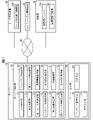
- the block diagram which shows the whole picture of the battery leasing system of this invention The figure which shows the content of the data used for processing by the battery leasing system of this invention. The figure which shows the content of the data used for processing by the battery leasing system of this invention. A table showing the processing contents of the battery leasing system of the present invention. A table showing the processing contents of the battery leasing system of the present invention. The flowchart which shows the processing content of the battery leasing system of this invention. The flowchart which shows the processing content of the battery leasing system of this invention. The flowchart which shows the processing content of the battery leasing system of this invention. The flowchart which shows the processing content of the battery leasing system of this invention. The flowchart which shows the processing content of the battery leasing system of this invention. The flowchart which shows the processing content of the battery leasing system of this invention.
- the battery leasing system of the present embodiment is, for example, a leasing system for a driving battery 710 of an electric vehicle or a hybrid vehicle (or a reuse battery that was a driving battery 710 for an electric vehicle or a hybrid vehicle), and is a server 10 of the leasing system. And, if necessary, the lease management device 30 and the car dealer management device 50 are included.
- the server 10, the lease management device 30, and the car dealer management device 50 may be one or more.
- the server 10 and the lease management device 30 and the server 10 and the car dealer management device 50 are connected to each other so as to be able to communicate with each other via the communication network 90.
- the server 10 is, for example, a computer including a server control unit 110 and a server storage unit 150.
- the server control unit 110 is composed of an arithmetic processing unit such as a CPU (Central Processing Unit), a memory, an I / O (Input / Output) device, and the like. By reading and executing a predetermined program, the server control unit 110 reads, for example, an input reception unit 111, a deterioration estimation unit 113, a first lease charge determination unit 115, a battery information acquisition unit 117, and a deterioration state determination unit 119. It functions as a first lease charge redetermination unit 121, or further as a reuse use determination unit 123, a second lease charge determination unit 125, a usage history acquisition unit 127, and a deterioration cause estimation unit 129.
- a first lease charge redetermination unit 121 or further as a reuse use determination unit 123, a second lease charge determination unit 125, a usage history acquisition unit 127, and a deterioration cause estimation unit 129.
- the input receiving unit 111 accepts input of estimation basic information necessary for estimating the deterioration state of the battery at the expiration of the planned lease period, including the planned lease period of the battery to be leased. Further, the input receiving unit 111 receives the input of information indicating that the first lease of the battery has started and stores it in the server storage unit 150.
- the deterioration estimation unit 113 estimates the estimated deterioration state at the expiration of the planned lease period of the battery based on the estimation basic information.
- the first lease fee determination unit 115 determines the first lease fee of the battery based on the estimated deterioration state.
- the battery information acquisition unit 117 acquires battery information necessary for determining the deteriorated state of the returned battery after the first lease of the battery is completed.
- the deterioration state determination unit 119 determines the deterioration state of the returned battery based on the battery information.
- the first lease fee redetermination unit 121 redetermines the first lease fee based on the estimated deterioration state and the deterioration state of the returned battery.
- the reuse use determination unit 123 determines the reuse use, which is the next use of the battery, based on the deteriorated state of the returned battery.
- the second lease fee determination unit 125 determines the second lease fee in the second lease of the battery based on the reuse use.
- the usage history acquisition unit 127 acquires, for example, the usage history information recorded by the usage history recording unit 730 of the automobile 70.
- the deterioration cause estimation unit 129 determines whether or not the deterioration state of the battery determined by the deterioration state determination unit 119 is abnormal compared to the estimated deterioration state, and when it is determined that the deterioration state is abnormal, the deterioration state estimation unit 129 determines. Based on the planned usage information and the usage history information, the cause of the abnormal deterioration state is estimated.
- the replacement recommendation unit 131 recommends replacement of the battery when the cause estimated by the deterioration cause estimation unit 129 is not caused by the battery user using the battery in a method different from the planned usage information. To generate.
- the deterioration tendency acquisition unit 133 acquires the deterioration tendency of the battery based on the usage history information.
- the server storage unit 150 is composed of a storage device such as a ROM (Read Only Memory), a RAM (Random Access Memory), and an HDD (Hard Disk Drive).
- the server storage unit 150 stores, for example, a battery management DB (database) 151, a model DB 153, a usage DB 155, information necessary for processing by the leasing system, and processing results, and functions as a storage unit in the present embodiment. ..
- the battery management DB 151 is a database that stores information for managing the battery. For example, as shown in FIG. 2A, a battery ID that identifies a battery to be leased, a planned lease period, an estimated deterioration state, a battery value, and the like. Scheduled usage information, battery model number (manufacturer name, product name, etc.), first lease fee, lease destination ID that identifies the lease destination, first lease flag indicating that the first lease has started, first lease Total received amount of the first lease fee paid during the period, first lease end flag, current deterioration state, deterioration state at the time of return, deterioration tendency, reuse use, second lease fee, usage history information Information necessary for processing by the leasing system, such as, is stored.
- the model DB 153 stores a deterioration tendency determination model that inputs battery usage history information and outputs battery deterioration tendency, for example, for each battery model number.
- the deterioration tendency acquisition unit 133 learns the battery usage history information and the deterioration state of the battery after use indicated by the usage history information as teacher data, and periodically or irregularly. Will be updated.
- the application DB 155 has an application ID for specifying the application, an application name, a deteriorated state of a battery that can be used for the application, and an estimated reuse profit estimated to be obtained by reusing the application.
- an application ID for specifying the application an application name
- a deteriorated state of a battery that can be used for the application an estimated reuse profit estimated to be obtained by reusing the application.
- information necessary for processing the leasing system is stored.
- the lease management device 30 is, for example, a personal computer, a tablet terminal, a smartphone, or the like used by a person in charge of a leasing business operator, which includes a lease management device control unit 310 and an output unit 330.
- the lease management device control unit 310 is composed of an arithmetic processing unit such as a CPU, a memory, an I / O device, and the like.
- the lease management device control unit 310 functions as, for example, an output control unit 311 by reading and executing a predetermined program.
- the output control unit 311 generates information indicating the deterioration state of the battery during the first lease or the second lease based on the deterioration state of the battery, and outputs the information to, for example, the output unit 330 of the lease management device 30.
- the output unit 330 is, for example, a display or a printer.
- the car dealer management device 50 is, for example, a computer used by the person in charge of the car dealer, and is used when connected to the automobile 70 to acquire usage history information of the drive battery 710.
- the automobile 70 is an automobile that includes a driving battery 710 and a usage history recording unit 730, and is, for example, an electric vehicle, a hybrid vehicle, or the like, which is all or part of the driving force of electricity.
- the automobile 70 is continuously or intermittently connected to the server 10 via the communication network 90 so as to be able to communicate with each other.
- the automobile 70 is intermittently and communically connected to the server 10 via the car dealer management device 50.
- the drive battery 710 is, for example, a lithium-ion battery, but is any battery (so-called secondary battery) that can be repeatedly used as a power source by repeatedly charging and discharging, such as a nickel-cadmium battery, a lead battery, and a fuel battery. good.
- the usage history recording unit 730 is composed of a storage device such as a ROM, RAM, or HDD.
- the usage history recording unit 730 records the usage history information of the battery during the first lease while the first lease of the battery is being performed, for example, in response to the processing of the control mechanism of the automobile 70.
- the usage history recording unit 730 uses, for example, the mileage, the amount of discharged power, the number of times of normal charging or quick charging, the charging time, the amount of charged power, the voltage value at that time, the remaining capacity of the battery, and the drive as the usage history recording information. It is possible to compare with the planned usage information such as the temperature of the battery 710, temperature, weather, whether or not the air conditioner is private, the temperature setting of the air conditioner, the tilt of the vehicle body, the speed, the position information, the characteristic information of the user, and the like. Record information in chronological order.
- a first input receiving step (FIG. 3A / S110), a deterioration state estimation step (FIG. 3A / S130), and a first step.
- the lease fee determination step (FIG. 3A / S150) is executed.
- the first lease is started through the first lease start process (FIG. 3A / S170), and the first usage history recording process (FIG. 3A / S190) is executed during the first lease.
- the first battery information acquisition process (FIG. 3A / S210), the first deterioration state determination process (FIG. 3A / S230), and the first usage history acquisition process for redetermining the first lease fee (FIG. 3A / S210).
- an abnormality cause estimation step (FIG. 3A / S270), and a first lease fee redetermination step (FIG. 3A / S290) are executed.
- a replacement recommended step (FIG. 3A / S310) may be performed in addition to or in place of the first lease fee redetermination step.
- the return battery information acquisition process (Fig. 3B / S410) is returned.
- Time deterioration state determination process (Fig. 3B / S430), return use history acquisition process (Fig. 3B / S450), deterioration tendency acquisition process (Fig. 3B / S470), reuse use determination process (Fig. 3B / S490), second lease
- the charge determination step (FIG. 3B / S510) is executed.
- the deterioration tendency determination model update step (FIG. 3A / FIG. 3B / S330) for updating the model for determining the deterioration tendency of the battery
- the deterioration tendency acquisition step (FIG. 3B) is performed from the first usage history acquisition step (FIG. 3A / S250). It may be performed at any timing up to / S470).
- the second lease is started through the second lease start step (FIG. 3B / S530), and during the second lease, the second battery information acquisition step (FIG. 3B / S550) and the second deterioration state determination step (FIG. 3B / S530). 3 / S570), the recommended recycling step (FIG. 3B / S590) is executed, and the series of steps is completed.
- the deterioration state output process (FIG. 3A / FIG. 3B / S350) for outputting the deterioration state of the battery is between the first usage history acquisition process (FIG. 3A / S250) and the recycling recommended process (FIG. 3B / S590). It may be performed at any timing.
- the first input acceptance process is started, for example, by a person in charge of a car dealer inputting information necessary for estimating the deterioration state of the battery at the expiration of the scheduled lease period (FIG. 4A / S100).
- the input receiving unit 111 receives input of estimation basic information necessary for estimating the deterioration state of the drive battery 710 at the expiration of the planned lease period, including the planned lease period of the drive battery 710 to be leased. (FIG. 4A / S110).
- the estimated basic information includes information indicating the characteristics of the drive battery 710 such as battery type (manufacturer, model number, etc.), performance (battery capacity, current / voltage characteristics, etc.), and during the lease period.
- Scheduled usage information including planned mileage, vehicle type of 70 automobiles, user characteristics (age, gender, occupation, accident history, family structure, home / work address, etc.), current value of drive battery 710 Information, which indicates that, is included.
- the information on the planned mileage during the lease period corresponds to "information indicating the planned discharge amount during the planned lease period" in the present embodiment.
- the deterioration estimation unit 113 estimates the estimated deterioration state at the expiration of the scheduled lease period of the drive battery 710 based on the estimation basic information (FIG. 4A / S130).
- the deterioration estimation unit 113 estimates the estimated deterioration state by using, for example, a function that outputs the estimated deterioration state, a classifier, or the like, using the estimation basic information as an input.
- the first lease charge determination unit 115 determines the first lease charge of the drive battery 710 based on the estimated deterioration state (FIG. 4A / S150).
- the first lease charge determination unit 115 predicts the predicted value of the drive battery 710 at the end of the planned lease period based on, for example, the estimated deterioration state, and subtracts the predicted value from the current value of the drive battery 710. The value obtained by multiplying the value by a predetermined lease fee rate is determined as the first lease fee of the drive battery 710.
- the first lease fee determination unit 115 estimates the reuse use after the expiration of the planned lease period by referring to the use DB, for example, estimates the reuse use if there is a reuse use, and estimates by a predetermined algorithm. The estimated value of each estimated reuse profit is added up, and the value obtained by multiplying the amount of the profit by a predetermined expected value is taken as the predicted value at the expiration of the planned lease period of the drive battery 710.
- the input reception unit 111 receives the input of information indicating that the first lease of the drive battery 710 has started and stores it in the server storage unit 150 (FIG. 4A / S170).
- the first usage history recording step (FIG. 3A / S190) described with reference to FIG. 3A is executed while the first lease of the drive battery 710 is being performed.
- the usage history recording unit 730 records the usage history information of the drive battery 710 during the first lease.
- FIG. 4A / S200, FIGS. 5 / S210 to S310, FIG. 4A / S400 a series of steps for redetermining the first lease fee are executed, and these steps will be described later. ..
- the battery information acquisition unit 117 acquires the battery information necessary for determining the deteriorated state of the returned drive battery 710 (FIG. 4B / S410).
- the car dealer management device 50 has a terminal connected to the information output mechanism of the drive battery 710 or the automobile 70, and the terminal is connected to the information output mechanism of the drive battery 710 or the automobile 70. Then, the information such as the power value, the voltage value, and the temperature obtained by the car dealer management device 50 charging / discharging the drive battery 710 is used as the battery information necessary for determining the deterioration state, and the battery information is acquired.
- the unit 117 is acquired via the car dealer management device 50.
- the deterioration state determination unit 119 determines the deterioration state of the returned drive battery 710 based on the battery information (FIG. 4B / S430).
- the deterioration state determination unit 119 sets the SOH (State Of Health) of the drive battery 710 as the deterioration state of the drive battery 710 from the information such as the power value, the voltage value, and the temperature acquired in the return battery information acquisition process. judge.
- the deterioration state determination unit 119 may determine the remaining life of the drive battery 710 from these pieces of information.
- the usage history acquisition unit 127 acquires usage history information related to the drive battery 710 returned after the first lease is completed (FIG. 4B / S450).
- the car dealer management device 50 has a terminal connected to the information output mechanism of the drive battery 710 or the automobile 70, and the terminal is connected to the information output mechanism of the drive battery 710 or the automobile 70. Then, the usage history acquisition unit 127 acquires the usage history information from the usage history recording unit 730 of the drive battery 710. Alternatively, the usage history acquisition unit 127 may acquire usage history information from the usage history recording unit 730 via wireless communication, a recording medium, or other media.
- the first lease fee is re-determined and settled as necessary (Fig. 4B / S460), but the details of the process will be described later.
- the deterioration tendency acquisition unit 133 acquires the deterioration tendency of the drive battery 710 based on the usage history information (FIG. 4B / S470).
- the deterioration tendency acquisition unit 133 has a deterioration tendency determination model in which the usage history information of the drive battery 710 is input and the deterioration tendency of the drive battery 710 is output.
- the deterioration tendency of the drive battery 710 is acquired by using the deterioration tendency determination model.
- the deterioration tendency acquisition unit 133 learns the usage history information of the drive battery 710 and the deterioration state of the drive battery 710 after use indicated by the usage history information as teacher data, and periodically performs a deterioration tendency determination model. It is configured to be updated periodically or irregularly (FIG. 3A, FIG. 3B / S330).
- the reuse use determination unit 123 determines the reuse use of the drive battery 710 when there is a reuse use according to the deteriorated state of the returned drive battery 710 (FIG. 4B / S480: Yes) (FIG. 4B / S480: Yes). 4B / S490).
- the reuse use determination unit 123 determines the reuse use according to the deteriorated state of the returned drive battery 710 with reference to the use DB 155.
- the second lease fee determination unit 125 determines the second lease fee in the second lease of the drive battery 710 returned based on the reuse use (FIG. 4B / S510).
- the second lease charge determination unit 125 stores the correspondence table between the reuse use and the second lease charge in the server storage unit 150 or the like in advance, and refers to the corresponding table to return the drive battery 710. Determine the second lease fee according to the reuse use of.
- the input reception unit 111 receives the input of information indicating that the lease of the battery for reuse is started and stores it in the server storage unit 150 (FIG. 4B / S530).
- the battery information acquisition unit 117 acquires information necessary for determining the deteriorated state of the battery being leased for reuse from the battery (FIG. 4C / S550).
- the battery information acquisition unit 117 communicates with a device equipped with a battery being leased for reuse, and uses information such as the power value, voltage value, and temperature of the battery to determine the deterioration state. Obtain as necessary battery information.
- the deterioration state determination unit 119 determines the deterioration state of the battery under the second lease based on the battery information necessary for determining the deterioration state (FIG. 4C / S570).
- the determination method is the same as, for example, the deterioration state determination step at the time of return (FIG. 3B, FIG. 4B / S430).
- the deterioration state determination unit 119 generates information to that effect and transmits it to the lease management device. Then (FIG. 4C / S587), the server storage unit 150 stores the data, and the input reception unit 111 waits for the input of information indicating that the battery has been returned (FIG. 4B / S401).
- the output control unit 311 of the lease management device 30 receives the information and outputs it to a display or the like.
- the leasing system of the present embodiment repeatedly executes the series of steps up to this point periodically or irregularly until the expiration date of the second lease of the battery is reached (FIG. 4C / S585).
- the recycling recommended step is executed when it is determined that there is no reuse use according to the deteriorated state of the returned battery (FIG. 4B / S480: No).
- the reuse use determination unit 123 provides information recommending recycling of the returned drive battery 710 determined by the deterioration state determination unit 119 or when there is no reuse use corresponding to the deteriorated state of the battery after reuse. Generate and transmit to the lease management device 30 (FIG. 4C / S590).
- the battery information acquisition unit 117 first acquires the battery information of the drive battery 710 under the first lease (FIG. 5 / S210), and the deterioration state determination unit 119 first acquires the battery information based on the battery information.
- the deterioration state of the drive battery 710 inside is determined (FIG. 5 / S230).
- the usage history acquisition unit 127 acquires the usage history information of the drive battery 710 (FIG. 5 / S250).
- the deterioration cause estimation unit 129 estimates the cause of the abnormal deterioration state (FIG. 5 / S260: Yes). 5 / S270).
- the deterioration cause estimation unit 129 determines whether or not the deterioration state of the drive battery 710 is abnormal compared to the estimated deterioration state, for example, the deterioration state when the drive battery 710 is used in the planned usage method.
- the change is simulated, the deteriorated state in the simulation is compared with the deteriorated state of the drive battery 710, and it is determined whether or not the difference is equal to or greater than a predetermined value.
- the first lease fee redetermination unit 121 redetermines the first lease fee based on the deterioration state of the drive battery 710 during the first lease and stores it in the server storage unit 150.
- the first lease charge redetermination unit 121 re-predicts the predicted value of the drive battery 710 at the end of the planned lease period based on the deteriorated state of the drive battery 710, and predicts from the current value of the drive battery 710.
- the value obtained by multiplying the predicted decrease value obtained by subtracting the value by a predetermined lease rate is redetermined as the first lease charge of the drive battery 710.
- the first lease fee re-determination unit 121 estimates the reuse use after the expiration of the planned lease period based on the deterioration state of the drive battery 710 during the first lease, for example, with reference to the use DB 155, and uses the predetermined algorithm.
- the amount of profit obtained by reusing for the reused use is estimated, and the value obtained by multiplying the amount of profit by a predetermined expected value is used as the predicted value at the expiration of the planned lease period of the drive battery 710. Re-predict.
- the replacement recommendation unit 131 generates information recommending battery replacement (FIG. 5 / S310) and transmits it to, for example, the car dealer management device 50.
- the leasing system of the present embodiment repeatedly executes these series of steps until, for example, the expiration time of the planned leasing period comes (FIG. 4A / S400: Yes).
- the deterioration cause estimation unit 129 determines whether or not the cause of the abnormal deterioration state is caused by the user of the drive battery 710 using the drive battery 710 in a method different from the planned usage information. For example, the content of the planned usage method is pointed by a predetermined algorithm, the usage history information of the drive battery 710 is pointed by the same method, the two are compared, and whether or not the difference is equal to or more than the predetermined value. judge.
- the first lease fee redetermination unit 121 redetermines the first lease fee based on the estimated deterioration state and the deterioration state of the returned battery.
- the first lease fee re-determining unit 121 recognizes the reuse use of the drive battery 710 based on the deteriorated state of the returned drive battery 710 with reference to the use DB 155, and leases the drive battery 710 for the reuse use.
- the amount of profit from the above is predicted, and the amount obtained by subtracting the predicted value from the value before the first lease of the drive battery 710 is redetermined as the first lease fee of the drive battery 710.
- the total amount received which is the total amount of the first lease payments paid during the first lease period
- the total amount billed which is the total amount of the re-determined first lease payments. If the invoiced amount is larger than the total received amount, the difference is charged to the user, and if the total invoiced amount is smaller than the total received amount, the difference is returned to the user, and the first lease fee is charged.
- the re-decision unit 121 setstles the first lease fee.
- the reuse use determination unit 123 may be configured to determine the reuse use of the drive battery 710 based on the deteriorated state and deterioration tendency of the returned drive battery 710, or the second lease fee determination unit 125. May determine the second lease fee based on the reuse use and deterioration tendency of the drive battery 710.
- various known methods may be used as a method for the reuse use determination unit 123 and the second lease fee determination unit 125 to determine the reuse use and the second lease fee, respectively.
- the battery information acquisition unit 117 acquires the battery information of the drive battery 710 under the first lease periodically or irregularly while the first lease of the drive battery 710 is being performed, and deteriorates.
- the state determination unit 119 determines the deterioration state of the drive battery 710 during the first lease based on the battery information
- the output control unit of the lease management device 30 determines the deterioration state of the drive battery 710 based on the deterioration state of the drive battery 710. 1 It may be configured to output information indicating the deterioration state of the drive battery 710 during leasing to the lease management device.
- a part or all of the configuration provided in the server 10 in the above may be provided in, for example, the lease management device 30, the car dealer management device 50, or the lease management device 30 and the car dealer management device 50.
- a part or all of the configured configuration may be provided in the server 10.
- the device on which the battery is mounted is not limited to an electric vehicle or a hybrid vehicle, but is an electric motorcycle, other moving objects such as slow mobility (electric wheelchair, mobility for vulnerable people), or a storage battery for home or business use. It may be a system (so-called ESS).
- the planned usage information includes, for example, the scheduled operating time, the scheduled operating time, the type of device, etc. during the lease period, and especially in the case of a storage battery system, the size of the house or business, the family structure, and the like. , Number of employees, etc. are included.
- the leased battery is installed in a battery-replaceable electric vehicle, storage battery system, etc. Therefore, when leasing a battery to a user in a mechanism called a battery station that rents a replaceable battery to the user, the battery leasing fee is determined according to the remaining amount of the battery leased last time. It can also be applied to systems.
Landscapes
- Business, Economics & Management (AREA)
- Engineering & Computer Science (AREA)
- Accounting & Taxation (AREA)
- Development Economics (AREA)
- Finance (AREA)
- Strategic Management (AREA)
- Economics (AREA)
- General Business, Economics & Management (AREA)
- Marketing (AREA)
- Physics & Mathematics (AREA)
- General Physics & Mathematics (AREA)
- Theoretical Computer Science (AREA)
- Mechanical Engineering (AREA)
- Chemical & Material Sciences (AREA)
- Transportation (AREA)
- Health & Medical Sciences (AREA)
- Tourism & Hospitality (AREA)
- Chemical Kinetics & Catalysis (AREA)
- Electrochemistry (AREA)
- General Chemical & Material Sciences (AREA)
- Manufacturing & Machinery (AREA)
- Power Engineering (AREA)
- Game Theory and Decision Science (AREA)
- Entrepreneurship & Innovation (AREA)
- Human Resources & Organizations (AREA)
- General Health & Medical Sciences (AREA)
- Primary Health Care (AREA)
- Life Sciences & Earth Sciences (AREA)
- Sustainable Development (AREA)
- Combustion & Propulsion (AREA)
- Computing Systems (AREA)
- Sustainable Energy (AREA)
- Operations Research (AREA)
- Public Health (AREA)
- Water Supply & Treatment (AREA)
- Management, Administration, Business Operations System, And Electronic Commerce (AREA)
- Secondary Cells (AREA)
Priority Applications (5)
| Application Number | Priority Date | Filing Date | Title |
|---|---|---|---|
| CA3188967A CA3188967A1 (en) | 2020-09-23 | 2021-09-07 | Battery lease system |
| US18/027,242 US20230360116A1 (en) | 2020-09-23 | 2021-09-07 | Battery lease system |
| JP2022551848A JP7294736B2 (ja) | 2020-09-23 | 2021-09-07 | バッテリーのリースシステム |
| KR1020237004677A KR102849927B1 (ko) | 2020-09-23 | 2021-09-07 | 배터리의 리스 시스템 |
| CN202180053664.2A CN116018286A (zh) | 2020-09-23 | 2021-09-07 | 电池租赁系统 |
Applications Claiming Priority (2)
| Application Number | Priority Date | Filing Date | Title |
|---|---|---|---|
| JP2020158723 | 2020-09-23 | ||
| JP2020-158723 | 2020-09-23 |
Publications (1)
| Publication Number | Publication Date |
|---|---|
| WO2022065024A1 true WO2022065024A1 (ja) | 2022-03-31 |
Family
ID=80845291
Family Applications (1)
| Application Number | Title | Priority Date | Filing Date |
|---|---|---|---|
| PCT/JP2021/032824 Ceased WO2022065024A1 (ja) | 2020-09-23 | 2021-09-07 | バッテリーのリースシステム |
Country Status (7)
| Country | Link |
|---|---|
| US (1) | US20230360116A1 (https=) |
| JP (1) | JP7294736B2 (https=) |
| KR (1) | KR102849927B1 (https=) |
| CN (1) | CN116018286A (https=) |
| CA (1) | CA3188967A1 (https=) |
| TW (1) | TWI794972B (https=) |
| WO (1) | WO2022065024A1 (https=) |
Cited By (4)
| Publication number | Priority date | Publication date | Assignee | Title |
|---|---|---|---|---|
| CN116308697A (zh) * | 2023-03-22 | 2023-06-23 | 江陵县铭焱盛世机电设备有限公司 | 一种电池管理方法、系统及计算机存储介质 |
| JP2024057815A (ja) * | 2022-10-13 | 2024-04-25 | トヨタ自動車株式会社 | 蓄電装置のリース方法、コンピュータ装置、およびリースシステム |
| JP2024073829A (ja) * | 2022-11-18 | 2024-05-30 | トヨタ自動車株式会社 | リース方法及びリースシステム、並びにコンピュータ装置 |
| JP2024093594A (ja) * | 2022-12-27 | 2024-07-09 | トヨタ自動車株式会社 | 車両管理方法およびサーバ |
Families Citing this family (5)
| Publication number | Priority date | Publication date | Assignee | Title |
|---|---|---|---|---|
| US20220414780A1 (en) * | 2021-06-23 | 2022-12-29 | 3Dom Inc. | Secondary battery management device |
| EP4418192A1 (en) * | 2021-10-12 | 2024-08-21 | Idemitsu Kosan Co.,Ltd. | Information processing device, program, and information processing method |
| TWI857694B (zh) * | 2022-07-14 | 2024-10-01 | 英屬開曼群島商睿能創意公司 | 電動車、換電站及其擴充功能設定方法 |
| KR102739631B1 (ko) * | 2024-02-22 | 2024-12-06 | 브이엠아이씨주식회사 | 항공기의 예비엔진에 대한 공유 서비스를 제공하기 위한 운영 서버 및 그 동작 방법 |
| JP2026013518A (ja) * | 2024-07-17 | 2026-01-29 | 株式会社Gsユアサ | 異常原因判断方法、異常原因判断プログラム及び情報処理装置 |
Citations (5)
| Publication number | Priority date | Publication date | Assignee | Title |
|---|---|---|---|---|
| JP2006197765A (ja) * | 2005-01-17 | 2006-07-27 | Toyota Motor Corp | 移動体の価格設定システムおよび価格設定方法 |
| JP2011091026A (ja) * | 2009-08-31 | 2011-05-06 | Toshiba Corp | 二次電池の価値評価支援装置および電池価値指標の製造方法 |
| JP2013084199A (ja) * | 2011-10-12 | 2013-05-09 | Nissan Motor Co Ltd | 賃貸料金設定装置および賃貸料金設定方法 |
| WO2019131825A1 (ja) * | 2017-12-27 | 2019-07-04 | Future Science Research株式会社 | 二次電池管理装置、二次電池および二次電池管理プログラム |
| JP2020038522A (ja) * | 2018-09-05 | 2020-03-12 | 東洋システム株式会社 | バッテリー再利用支援システム |
Family Cites Families (19)
| Publication number | Priority date | Publication date | Assignee | Title |
|---|---|---|---|---|
| JP2001286006A (ja) | 2000-03-29 | 2001-10-12 | Mitsuru Sano | 電気自動車用二次電池の貸し出し方法 |
| US7072871B1 (en) * | 2001-08-22 | 2006-07-04 | Cadex Electronics Inc. | Fuzzy logic method and apparatus for battery state of health determination |
| US7607043B2 (en) * | 2006-01-04 | 2009-10-20 | International Business Machines Corporation | Analysis of mutually exclusive conflicts among redundant devices |
| JP5343168B2 (ja) * | 2010-06-24 | 2013-11-13 | パナソニック株式会社 | 電池の劣化度を取得するための方法及びそのシステム |
| JP6066330B2 (ja) * | 2011-03-29 | 2017-01-25 | 日本電気株式会社 | 再利用二次電池供給予測システムおよび再利用二次電池供給予測用法 |
| US9625532B2 (en) * | 2011-10-10 | 2017-04-18 | Battelle Energy Alliance, Llc | Method, system, and computer-readable medium for determining performance characteristics of an object undergoing one or more arbitrary aging conditions |
| US10176539B2 (en) * | 2013-02-27 | 2019-01-08 | Softbank Corp. | Power supply system |
| US10261136B2 (en) * | 2014-07-01 | 2019-04-16 | Nissan Motor Co., Ltd. | Battery degradation degree estimation device and battery degradation degree estimation method |
| JP6671016B2 (ja) * | 2015-03-09 | 2020-03-25 | パナソニックIpマネジメント株式会社 | 貸与システムおよび貸与管理方法 |
| WO2016143375A1 (ja) * | 2015-03-12 | 2016-09-15 | オムロン株式会社 | 情報処理装置、情報処理方法、プログラムおよび記録媒体 |
| US10116151B2 (en) * | 2015-09-22 | 2018-10-30 | Bseng, Llc | Battery charger rental kiosk system |
| US10175096B2 (en) * | 2016-04-01 | 2019-01-08 | Ethicon Llc | System and method to enable re-use of surgical instrument |
| JP6936121B2 (ja) * | 2017-11-21 | 2021-09-15 | トヨタ自動車株式会社 | 賃貸料金設定装置、賃貸料金設定方法および賃貸料金設定システム |
| TWI846683B (zh) * | 2017-12-27 | 2024-07-01 | 日商F S R股份有限公司 | 二次電池管理裝置及用於二次電池管理之程式製品 |
| JP2019164636A (ja) * | 2018-03-20 | 2019-09-26 | 本田技研工業株式会社 | 情報処理装置、情報処理方法、プログラム、可搬式発電機、及びレンタルシステム |
| JP2019164692A (ja) * | 2018-03-20 | 2019-09-26 | 本田技研工業株式会社 | 情報処理装置、情報処理方法、プログラム、可搬式蓄電機、及びレンタルシステム |
| US20210192645A1 (en) * | 2018-07-31 | 2021-06-24 | Honda Motor Co., Ltd. | Server device, shared battery utilization service system, method, computer program and recording medium |
| US20200410793A1 (en) * | 2019-06-27 | 2020-12-31 | Boomerang iT Corp. | Portable power bank, vending system and associated methods |
| US20220057451A1 (en) * | 2020-08-21 | 2022-02-24 | Carnegie Mellon University | System and method for estimation of battery state and health |
-
2021
- 2021-09-07 CN CN202180053664.2A patent/CN116018286A/zh active Pending
- 2021-09-07 US US18/027,242 patent/US20230360116A1/en active Pending
- 2021-09-07 JP JP2022551848A patent/JP7294736B2/ja active Active
- 2021-09-07 KR KR1020237004677A patent/KR102849927B1/ko active Active
- 2021-09-07 CA CA3188967A patent/CA3188967A1/en active Pending
- 2021-09-07 WO PCT/JP2021/032824 patent/WO2022065024A1/ja not_active Ceased
- 2021-09-14 TW TW110134230A patent/TWI794972B/zh active
Patent Citations (5)
| Publication number | Priority date | Publication date | Assignee | Title |
|---|---|---|---|---|
| JP2006197765A (ja) * | 2005-01-17 | 2006-07-27 | Toyota Motor Corp | 移動体の価格設定システムおよび価格設定方法 |
| JP2011091026A (ja) * | 2009-08-31 | 2011-05-06 | Toshiba Corp | 二次電池の価値評価支援装置および電池価値指標の製造方法 |
| JP2013084199A (ja) * | 2011-10-12 | 2013-05-09 | Nissan Motor Co Ltd | 賃貸料金設定装置および賃貸料金設定方法 |
| WO2019131825A1 (ja) * | 2017-12-27 | 2019-07-04 | Future Science Research株式会社 | 二次電池管理装置、二次電池および二次電池管理プログラム |
| JP2020038522A (ja) * | 2018-09-05 | 2020-03-12 | 東洋システム株式会社 | バッテリー再利用支援システム |
Cited By (7)
| Publication number | Priority date | Publication date | Assignee | Title |
|---|---|---|---|---|
| JP2024057815A (ja) * | 2022-10-13 | 2024-04-25 | トヨタ自動車株式会社 | 蓄電装置のリース方法、コンピュータ装置、およびリースシステム |
| JP7746958B2 (ja) | 2022-10-13 | 2025-10-01 | トヨタ自動車株式会社 | 蓄電装置のリース方法、コンピュータ装置、およびリースシステム |
| JP2024073829A (ja) * | 2022-11-18 | 2024-05-30 | トヨタ自動車株式会社 | リース方法及びリースシステム、並びにコンピュータ装置 |
| JP7835148B2 (ja) | 2022-11-18 | 2026-03-25 | トヨタ自動車株式会社 | リース方法及びリースシステム、並びにコンピュータ装置 |
| JP2024093594A (ja) * | 2022-12-27 | 2024-07-09 | トヨタ自動車株式会社 | 車両管理方法およびサーバ |
| CN116308697A (zh) * | 2023-03-22 | 2023-06-23 | 江陵县铭焱盛世机电设备有限公司 | 一种电池管理方法、系统及计算机存储介质 |
| CN116308697B (zh) * | 2023-03-22 | 2023-11-21 | 青岛能蜂电气有限公司 | 一种电池管理方法、系统及计算机存储介质 |
Also Published As
| Publication number | Publication date |
|---|---|
| CA3188967A1 (en) | 2022-03-31 |
| JPWO2022065024A1 (https=) | 2022-03-31 |
| US20230360116A1 (en) | 2023-11-09 |
| JP7294736B2 (ja) | 2023-06-20 |
| KR20230036143A (ko) | 2023-03-14 |
| TWI794972B (zh) | 2023-03-01 |
| TW202217704A (zh) | 2022-05-01 |
| CN116018286A (zh) | 2023-04-25 |
| KR102849927B1 (ko) | 2025-08-25 |
Similar Documents
| Publication | Publication Date | Title |
|---|---|---|
| WO2022065024A1 (ja) | バッテリーのリースシステム | |
| JP7524397B2 (ja) | 駐車場システム、駐車場システムの運用方法、及び駐車場システムの運用プログラム | |
| JP7667347B2 (ja) | バッテリー統合管理プラットフォームサービスシステム及び方法 | |
| JP7536850B2 (ja) | 再製品化支援サーバ、電池回収支援サーバ、電池データベース管理サーバ、ベンダコンピュータ、及びユーザコンピュータ | |
| CN108629663B (zh) | 一种电动汽车电池共享系统 | |
| KR20200103696A (ko) | 2차 전지 관리 장치, 2차 전지 및 2차 전지 관리 프로그램 | |
| JP6800124B2 (ja) | 電力課金システム及び電力課金方法 | |
| CN111942222A (zh) | 电池信息管理系统和电池信息管理方法 | |
| KR102342722B1 (ko) | 블록체인 기반의 배터리 관리시스템 | |
| JPWO2022065024A5 (https=) | ||
| CN113762538A (zh) | 管理装置以及车辆销售系统 | |
| CN111208443B (zh) | 电池的劣化认证装置以及电池的劣化认证系统 | |
| CN114399059A (zh) | 信息处理方法和信息处理装置 | |
| JP2022146859A (ja) | 車両保険システム、車両ディーラ端末、及び車両販売方法 | |
| CN118119961A (zh) | 信息处理装置、程序以及信息处理方法 | |
| US20240127327A1 (en) | Method of leasing power storage, computer apparatus, and lease system | |
| CN114399127A (zh) | 信息处理方法、信息处理装置和信息处理系统 | |
| JP7831244B2 (ja) | 電動車の管理方法及び管理システム | |
| CN115308605A (zh) | 一种soh估计方法、设备及计算机可读介质 | |
| CN115115461A (zh) | 车辆保险系统、车辆经销商终端以及车辆销售方法 | |
| JP2024124956A (ja) | 車両管理装置、車両管理方法、およびプログラム | |
| JP2021033644A (ja) | 車両管理システム |
Legal Events
| Date | Code | Title | Description |
|---|---|---|---|
| 121 | Ep: the epo has been informed by wipo that ep was designated in this application |
Ref document number: 21872155 Country of ref document: EP Kind code of ref document: A1 |
|
| DPE1 | Request for preliminary examination filed after expiration of 19th month from priority date (pct application filed from 20040101) | ||
| ENP | Entry into the national phase |
Ref document number: 2022551848 Country of ref document: JP Kind code of ref document: A |
|
| ENP | Entry into the national phase |
Ref document number: 3188967 Country of ref document: CA Ref document number: 20237004677 Country of ref document: KR Kind code of ref document: A |
|
| NENP | Non-entry into the national phase |
Ref country code: DE |
|
| 122 | Ep: pct application non-entry in european phase |
Ref document number: 21872155 Country of ref document: EP Kind code of ref document: A1 |