WO2022045126A1 - ウイルス感染の判定方法 - Google Patents
ウイルス感染の判定方法 Download PDFInfo
- Publication number
- WO2022045126A1 WO2022045126A1 PCT/JP2021/030976 JP2021030976W WO2022045126A1 WO 2022045126 A1 WO2022045126 A1 WO 2022045126A1 JP 2021030976 W JP2021030976 W JP 2021030976W WO 2022045126 A1 WO2022045126 A1 WO 2022045126A1
- Authority
- WO
- WIPO (PCT)
- Prior art keywords
- amino acid
- acid sequence
- seq
- protein
- light chain
- Prior art date
- Legal status (The legal status is an assumption and is not a legal conclusion. Google has not performed a legal analysis and makes no representation as to the accuracy of the status listed.)
- Ceased
Links
Images




Classifications
-
- C—CHEMISTRY; METALLURGY
- C07—ORGANIC CHEMISTRY
- C07K—PEPTIDES
- C07K16/00—Immunoglobulins [IG], e.g. monoclonal or polyclonal antibodies
- C07K16/40—Immunoglobulins [IG], e.g. monoclonal or polyclonal antibodies against enzymes
-
- G—PHYSICS
- G01—MEASURING; TESTING
- G01N—INVESTIGATING OR ANALYSING MATERIALS BY DETERMINING THEIR CHEMICAL OR PHYSICAL PROPERTIES
- G01N33/00—Investigating or analysing materials by specific methods not covered by groups G01N1/00 - G01N31/00
- G01N33/48—Biological material, e.g. blood, urine; Haemocytometers
- G01N33/50—Chemical analysis of biological material, e.g. blood, urine; Testing involving biospecific ligand binding methods; Immunological testing
- G01N33/53—Immunoassay; Biospecific binding assay; Materials therefor
- G01N33/569—Immunoassay; Biospecific binding assay; Materials therefor for microorganisms, e.g. protozoa, bacteria, viruses
- G01N33/56983—Viruses
-
- C—CHEMISTRY; METALLURGY
- C07—ORGANIC CHEMISTRY
- C07K—PEPTIDES
- C07K16/00—Immunoglobulins [IG], e.g. monoclonal or polyclonal antibodies
- C07K16/18—Immunoglobulins [IG], e.g. monoclonal or polyclonal antibodies against material from animals or humans
-
- C—CHEMISTRY; METALLURGY
- C12—BIOCHEMISTRY; BEER; SPIRITS; WINE; VINEGAR; MICROBIOLOGY; ENZYMOLOGY; MUTATION OR GENETIC ENGINEERING
- C12N—MICROORGANISMS OR ENZYMES; COMPOSITIONS THEREOF; PROPAGATING, PRESERVING, OR MAINTAINING MICROORGANISMS; MUTATION OR GENETIC ENGINEERING; CULTURE MEDIA
- C12N9/00—Enzymes; Proenzymes; Compositions thereof; Processes for preparing, activating, inhibiting, separating or purifying enzymes
- C12N9/14—Hydrolases (3)
-
- C—CHEMISTRY; METALLURGY
- C07—ORGANIC CHEMISTRY
- C07K—PEPTIDES
- C07K2317/00—Immunoglobulins specific features
- C07K2317/30—Immunoglobulins specific features characterized by aspects of specificity or valency
- C07K2317/34—Identification of a linear epitope shorter than 20 amino acid residues or of a conformational epitope defined by amino acid residues
-
- C—CHEMISTRY; METALLURGY
- C07—ORGANIC CHEMISTRY
- C07K—PEPTIDES
- C07K2317/00—Immunoglobulins specific features
- C07K2317/50—Immunoglobulins specific features characterized by immunoglobulin fragments
- C07K2317/56—Immunoglobulins specific features characterized by immunoglobulin fragments variable (Fv) region, i.e. VH and/or VL
-
- C—CHEMISTRY; METALLURGY
- C07—ORGANIC CHEMISTRY
- C07K—PEPTIDES
- C07K2317/00—Immunoglobulins specific features
- C07K2317/50—Immunoglobulins specific features characterized by immunoglobulin fragments
- C07K2317/56—Immunoglobulins specific features characterized by immunoglobulin fragments variable (Fv) region, i.e. VH and/or VL
- C07K2317/565—Complementarity determining region [CDR]
-
- C—CHEMISTRY; METALLURGY
- C12—BIOCHEMISTRY; BEER; SPIRITS; WINE; VINEGAR; MICROBIOLOGY; ENZYMOLOGY; MUTATION OR GENETIC ENGINEERING
- C12Y—ENZYMES
- C12Y306/00—Hydrolases acting on acid anhydrides (3.6)
- C12Y306/04—Hydrolases acting on acid anhydrides (3.6) acting on acid anhydrides; involved in cellular and subcellular movement (3.6.4)
- C12Y306/04013—RNA helicase (3.6.4.13)
-
- G—PHYSICS
- G01—MEASURING; TESTING
- G01N—INVESTIGATING OR ANALYSING MATERIALS BY DETERMINING THEIR CHEMICAL OR PHYSICAL PROPERTIES
- G01N2333/00—Assays involving biological materials from specific organisms or of a specific nature
- G01N2333/005—Assays involving biological materials from specific organisms or of a specific nature from viruses
- G01N2333/08—RNA viruses
-
- G—PHYSICS
- G01—MEASURING; TESTING
- G01N—INVESTIGATING OR ANALYSING MATERIALS BY DETERMINING THEIR CHEMICAL OR PHYSICAL PROPERTIES
- G01N2333/00—Assays involving biological materials from specific organisms or of a specific nature
- G01N2333/90—Enzymes; Proenzymes
- G01N2333/914—Hydrolases (3)
-
- G—PHYSICS
- G01—MEASURING; TESTING
- G01N—INVESTIGATING OR ANALYSING MATERIALS BY DETERMINING THEIR CHEMICAL OR PHYSICAL PROPERTIES
- G01N2470/00—Immunochemical assays or immunoassays characterised by the reaction format or reaction type
- G01N2470/04—Sandwich assay format
Definitions
- Viral RNA is known to be sensed by the RIG-I-like receptor (RLRs) family.
- the RLRs family includes three members, namely RIG-I (DDX58), LGP2 (DHX58) and MDA5 (IFIH1). These three RLRs are expressed in the cytoplasm of the cell.
- MDA5 detects infections with picornaviruses such as polio and cardiovirus virus (EMCV) and recognizes long double-stranded RNA (dsRNA). Like other RLRs, MDA5 activates NF- ⁇ B and interferon regulatory factor (IRF) via its N-terminal region containing its caspase recruitment domain (CARD).
- EMCV polio and cardiovirus virus
- dsRNA long double-stranded RNA
- IRF interferon regulatory factor
- MDA5 can also recognize single-strand RNA (ssRNA) viruses such as mouse hepatitis virus (MHV), calicivirus and flavivirus family, and can also recognize RNA derived from DNA virus.
- ssRNA single-strand RNA
- MDA5 can also recognize single-strand RNA (ssRNA) viruses such as mouse hepatitis virus (MHV), calicivirus and flavivirus family, and can also recognize RNA derived from DNA virus.
- ssRNA virus Hitrinovirus (HRV), influenza virus, respiratory polynuclear virus (RSV) and coronavirus, etc.
- DNA virus adenovirus
- bacteria Haemophilus influenzae, Mycoplasma pneumoniae.
- Non-Patent Document 3 discloses that MDA5 is essential for infection protection against coronavirus, which is a positive single-strand RNA virus. That is, MDA5 plays an important role in infection defense against dsRNA virus, ssRNA virus, DNA virus and bacteria. However, the mechanism of infection defense involving MDA5 has not been elucidated.
- One of the purposes of this disclosure is to provide a method for determining whether a subject is infected with a virus.
- a protein containing at least a portion of the amino acid sequence of the helicase region of the MDA5 protein and having a molecular weight of about 60 kDa is detected in the serum of healthy humans, and a double strand that mimics a virus.
- this protein is rapidly released from the cytoplasm. Therefore, this protein can be used as a marker for viral infection.
- the present disclosure is a method for determining whether a subject is infected with a virus. (1) To test whether or not a protein containing at least a part of the amino acid sequence of the helicase region of the MDA5 protein and having a molecular weight of about 60 kDa is detected in the sample collected from the subject; (2) When the protein is detected, it is determined that the subject is infected with a virus. Provide methods including.
- the present disclosure is: (I) A heavy chain CDR1 containing the amino acid sequence of SEQ ID NO: 4, a heavy chain variable region containing a heavy chain CDR2 containing the amino acid sequence of SEQ ID NO: 5 and a heavy chain CDR3 containing the amino acid sequence of SEQ ID NO: 6, and Light chain CDR1 comprising the amino acid sequence of SEQ ID NO: 7, light chain CDR2 comprising the amino acid sequence of SEQ ID NO: 8 and light chain variable region comprising light chain CDR3 comprising the amino acid sequence of SEQ ID NO: 9.
- Light chain CDR1 comprising the amino acid sequence of SEQ ID NO: 15, light chain CDR2 comprising the amino acid sequence of SEQ ID NO: 16 and light chain variable region comprising light chain CDR3 comprising the amino acid sequence of SEQ ID NO: 17.
- a monoclonal antibody containing the above, or a monoclonal antibody that competes with the monoclonal antibody for binding to MDA5.
- the present disclosure determines whether a subject is infected with a virus, comprising an antibody that comprises at least a portion of the amino acid sequence of the helicase region of the MDA5 protein and binds to a protein having a molecular weight of approximately 60 kDa.
- a kit for comprising a protein comprising at least a portion of the amino acid sequence of the helicase region of the MDA5 protein and having a molecular weight of approximately 60 kDa.
- the present disclosure provides the use of the above proteins as a marker for determining viral infection.
- the present disclosure provides a method for determining whether a subject is infected with a virus, as well as proteins and antibodies that can be used in the method.
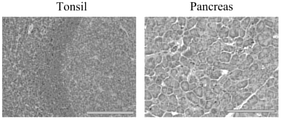
- the amino acid sequences of the heavy chain variable region and the light chain variable region of the mouse anti-human MDA5 monoclonal antibody (H27) are shown. Each CDR is shown in a square. The amino acid sequences of the heavy chain variable region and the light chain variable region of the mouse anti-human MDA5 monoclonal antibody (H46) are shown. Each CDR is shown in a square. The mRNA levels of MDA5 in normal human tissues (lung, spleen, pancreas, muscle and placenta) measured by real-time quantitative PCR (RT-qPCR) are shown. Immunohistochemical analysis of normal tonsils and pancreas with mouse anti-human MDA5 monoclonal antibody (H27) is shown (bar: 200 ⁇ m).
- polyinosic acid-polycitidilic acid sodium salts poly I: C
- Soluble MDA5 levels in the supernatant were analyzed.
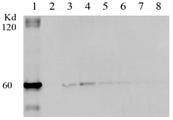
- Western blot analysis of MDA5 protein is shown.
- Lane 5 supernatant, no irritation (1 hour).
- Lane 6 supernatant, poly I: C stimulation (1 hour).
- Lane 8 supernatant, poly I: C stimulation (2 hours).
- the MDA5 protein is a member of the RIG-I-like receptor (RLRs) family and is a protein with a molecular weight of about 120 kDa expressed in the cytoplasm.
- the MDA5 protein senses intracellular double-stranded RNA (dsRNA) virus or single-stranded RNA (ssRNA) virus, or RNA derived from DNA virus, and activates NF- ⁇ B and interferon regulator (IRF). By doing so, it is known to be involved in virus infection protection.
- dsRNA double-stranded RNA
- ssRNA single-stranded RNA
- IRF interferon regulator
- the MDA5 protein may be of any species, typically mammalian (eg, humans, mice, rats, hamsters, rabbits, cats, dogs, cows, sheep, monkeys, etc.). It is mentioned, preferably human. Amino acid sequences of MDA5 proteins from various species are readily available using known databases. A representative amino acid sequence of the human MDA5 protein is registered as GenBank Accession No. AF095844.1 (SEQ ID NO: 1). In the present disclosure, the MDA5 protein comprises the product of its naturally occurring allele.
- the MDA5 protein has 1 in its original amino acid sequence (eg, the amino acid sequence of SEQ ID NO: 1) as long as its functions (ie, RNA recognition ability and NF- ⁇ B / IRF activation ability) are maintained. It may contain a sequence in which one or several amino acids have been deleted, substituted or added. In addition, “several” means preferably 2 to 7, more preferably 2 to 5, and most preferably 2 to 3 amino acids. Amino acid substitutions are preferably conservative substitutions between similar amino acid residues.
- the MDA5 protein has the original amino acid sequence (for example, the amino acid sequence of SEQ ID NO: 1) and when calculated using BLAST or the like (for example, the parameters of the initial conditions of BLAST). (When used), at least about 70% or more, preferably about 80% or more, more preferably about 90% or more, particularly preferably about 95% or more, most preferably about 97%, about 98% or about 99% or more. It may contain an amino acid sequence having the same identity as.
- Sequence identity is determined by comparing two optimally aligned sequences over the entire region of the sequence to be compared.
- the sequence to be compared may have additions or deletions (eg, gaps, etc.) in the optimal alignment of the two sequences.
- Sequence identity can be calculated using programs such as FASTA, BLAST, and CLUSTAL W provided in public databases (eg, DDBJ (http://www.ddbj.nig.ac.jp)). Alternatively, it can be obtained using commercially available sequence analysis software (for example, Vector NTI (registered trademark) software, GENETYX (registered trademark) ver. 12).
- a protein containing a part of the amino acid sequence of the MDA5 protein and having a molecular weight of about 60 kDa is secreted into the blood.
- the molecular weight is measured by SDS-PAGE under reducing conditions.
- the protein comprises at least a portion of the helicase region of the MDA5 protein.
- the helicase region of the MDA5 protein corresponds to positions 306 to 873 of SEQ ID NO: 1.
- the protein is referred to as "secretory MDA5 protein".
- the subject is infected with a virus by a method including the following steps. (1) To test whether secretory MDA5 protein is detected in a sample collected from a subject; and (2) When the secretory MDA5 protein is detected, it is determined that the subject is infected with the virus.
- the method can also be used as a method for assisting in determining whether or not the patient is infected with a virus.
- the subject can be any species, typically mammals (eg, humans, mice, rats, hamsters, rabbits, cats, dogs, cows, pigs, sheep, monkeys, etc.) and birds (chicken, quail, geese, etc.). , Duck, goose, etc.), preferably human.
- mammals eg, humans, mice, rats, hamsters, rabbits, cats, dogs, cows, pigs, sheep, monkeys, etc.
- birds chicken, quail, geese, etc.
- Duck, goose, etc. preferably human.
- the sample can be blood, plasma or serum taken from the subject.
- Blood samples can be taken in the usual way, for example from veins or arteries.
- Plasma or serum samples can be prepared by the appropriate treatment of blood by methods well known to those of skill in the art. This treatment is not particularly limited and may be any clinically acceptable treatment. For example, addition of an anticoagulant, centrifugation, etc. are performed.
- the sample may be other body fluids taken from the subject, such as saliva, runny nose, sputum, pleural effusion or ascites.
- the collected sample may be stored at a low temperature during or after its preparation prior to use, for example, it may be stored frozen. In addition, the collected sample can be appropriately concentrated or diluted as necessary before use.
- the secretory MDA5 protein can be detected by an immunological method using an antibody that binds to the secretory MDA5 protein.
- Immunological methods include enzyme-linked immunosorbent assay (ELISA method, eg, direct method, indirect method, sandwich method or competitive method), immunochromatography method, Western blotting, flow cytometry analysis, and radioimmunoassay immunoassay method (RIA). Method) and the like can be exemplified, and the sandwich ELISA method is preferable.
- antibody means an immunoglobulin skeletal-based affinity ligand, including monoclonal and polyclonal antibodies of any origin, murine, rat, rabbit, goat, human and other antibodies, as well as multiple species.
- a chimeric antibody comprising a sequence derived from, eg, a partially humanized antibody, eg, a partially humanized mouse antibody.
- the variable regions of an antibody are usually composed of three complementarity determining regions (also referred to as CDRs) sandwiched between four framework regions.
- amino acid positions assigned to the CDRs of the variable region of the antibody and the framework are defined according to Kabat (see Sequences of Proteins of Immunological Interest (National Institute of Health, Bethesda, Md., (1987) and (1991)). ).
- the antibody can be produced by an existing general production method using a secretory MDA5 protein or a partial peptide having the antigenicity of the protein as an immunogen.
- polyclonal antibodies can be produced by immunizing an animal with an antigen, and monoclonal antibodies can be produced using hybridoma technology.
- an antibody may be produced using the full-length MDA5 protein as an immunogen, and an antibody that binds to the secretory MDA5 protein may be selected.
- a commercially available antibody may be used.
- the secretory MDA5 protein can be obtained by a known method such as a method of preparing an expression vector containing a polynucleotide encoding the secretory MDA5 protein and expressing it in cells by a genetic engineering method. Specifically, an expression vector is constructed so that the polynucleotide encoding the secretory MDA5 protein is expressed under an expression control region such as an enhancer or a promoter, and the host cell is transformed with this expression vector to be secreted. Express the MDA5 protein. Accordingly, the present disclosure also provides a polynucleotide encoding a secretory MDA5 protein, an expression vector containing the polynucleotide, and a transformed cell containing the polynucleotide or expression vector.
- the secretory MDA5 protein may be secreted into the culture supernatant, and the secretory MDA5 protein may be recovered from the culture supernatant using, for example, an existing anti-MDA5 antibody.
- the antibody may be a fragment or derivative thereof as long as it can selectively interact with the secretory MDA5 protein.
- Antibody fragments and derivatives include, for example, from the heavy chain first constant domain (CH1), light chain constant domain (CL), heavy chain variable domain (VH) and light chain variable domain (VL) of the complete immunoglobulin protein.
- Fab fragment Fv fragment consisting of two variable antibody domains VH and VL; single chain Fv fragment (scFv) consisting of two VH and VL domains linked by a mobile peptide linker, and variable heavy chain domain. Includes a minibody based on.
- the antibody may be labeled.
- the sign may be appropriately selected by those skilled in the art.
- labels include fluorescent dyes (eg, fluorescein, rhodamine, phycoerythrin, fluoresamine), chromophore dyes (eg, rhodopsin), chemiluminescent compounds (eg, luminal, imidazole) and bioluminescent proteins (eg, luminal, imidazole).
- Luciferin Luciferin, luciferase), hapten (eg, biotin), enzymes (eg, peroxidase, alkaline phosphatase, beta-lactamase), radioactive isotopes (eg, 3H , 14C , 32P , 35S or 125I ), particles (eg, 3H, 14C, 32P, 35S or 125I).
- radioactive isotopes eg, 3H , 14C , 32P , 35S or 125I
- particles eg, 3H, 14C, 32P, 35S or 125I
- metal particles such as gold
- fluorescent semiconductor nanocrystals Quantum dots
- Various labels can be attached to the desired antibody using various chemical reactions well known to those of skill in the art, such as amine and thiol reactions.
- Reactive groups other than amines and thiols such as aldehydes, carboxylic acids and glutamine, can also be used.
- the antibody may be unlabeled.
- further labeled secondary antibodies that recognize antibodies to the secretory MDA5 protein may be used.
- the antibody may be bound to a suitable support.
- the support is not particularly limited as long as it can fix the antibody, and may have any shape and material.
- a membrane such as a nylon film
- a support such as beads, glass, plastic, and a metal can be exemplified.
- a heavy chain variable region comprising a sequence having 80% or more, preferably 85% or more, more preferably 90% or more, even more preferably 95% or more sequence identity with the amino acid sequence of SEQ ID NO: 2.
- a light chain variable region comprising a sequence having 80% or more, preferably 85% or more, more preferably 90% or more, even more preferably 95% or more sequence identity with the amino acid sequence of SEQ ID NO: 3.
- Monochromic antibodies can be used. Antibodies with no alteration of the CDRs of the heavy and / or light chain variable regions are preferred.
- a heavy chain variable region comprising a sequence having 80% or more, preferably 85% or more, more preferably 90% or more, even more preferably 95% or more sequence identity with the amino acid sequence of SEQ ID NO: 10.
- a light chain variable region comprising a sequence having 80% or more, preferably 85% or more, more preferably 90% or more, even more preferably 95% or more sequence identity with the amino acid sequence of SEQ ID NO: 11.
- Monochromic antibodies can be used. Antibodies with no alteration of the CDRs of the heavy and / or light chain variable regions are preferred.
- a monoclonal antibody comprising a heavy chain variable region comprising the amino acid sequence of SEQ ID NO: 2 and / or a light chain variable region comprising the amino acid sequence of SEQ ID NO: 3 can be used.
- a monoclonal antibody comprising a heavy chain variable region comprising the amino acid sequence of SEQ ID NO: 10 and / or a light chain variable region comprising the amino acid sequence of SEQ ID NO: 11 can be used.
- a monoclonal antibody comprising a heavy chain variable region consisting of the amino acid sequence of SEQ ID NO: 2 and / or a light chain variable region consisting of the amino acid sequence of SEQ ID NO: 3 can be used.
- monoclonal antibodies comprising a heavy chain variable region consisting of the amino acid sequence of SEQ ID NO: 10 and / or a light chain variable region consisting of the amino acid sequence of SEQ ID NO: 11 can be used.
- Heavy chain variable region comprising the amino acid sequences of CDR1, CDR2, and CDR3 in the amino acid sequence of SEQ ID NO: 2; and / or A light chain variable region comprising the amino acid sequences of CDR1, CDR2, and CDR3 in the amino acid sequence of SEQ ID NO: 3; Monoclonal antibodies containing can be used.
- Heavy chain variable region comprising the amino acid sequences of CDR1, CDR2, and CDR3 in the amino acid sequence of SEQ ID NO: 10; and / or A light chain variable region comprising the amino acid sequences of CDR1, CDR2, and CDR3 in the amino acid sequence of SEQ ID NO: 11.
- Monoclonal antibodies containing can be used.
- a heavy chain variable region comprising CDR1 comprising the amino acid sequence of SEQ ID NO: 4, CDR2 comprising the amino acid sequence of SEQ ID NO: 5, and CDR3 comprising the amino acid sequence of SEQ ID NO: 6 and / or SEQ ID NO: 7.
- a monoclonal antibody comprising a light chain variable region comprising CDR1 comprising an amino acid sequence, CDR2 comprising the amino acid sequence of SEQ ID NO: 8, and CDR3 comprising the amino acid sequence of SEQ ID NO: 9 can be used.
- a heavy chain variable region comprising CDR1 comprising the amino acid sequence of SEQ ID NO: 12, CDR2 comprising the amino acid sequence of SEQ ID NO: 13, and CDR3 comprising the amino acid sequence of SEQ ID NO: 14, and / or SEQ ID NO: 15.
- a monoclonal antibody comprising a light chain variable region comprising CDR1 comprising an amino acid sequence, CDR2 comprising the amino acid sequence of SEQ ID NO: 16, and CDR3 comprising the amino acid sequence of SEQ ID NO: 17 can be used.
- a heavy chain variable region comprising CDR1 consisting of the amino acid sequence of SEQ ID NO: 4, CDR2 consisting of the amino acid sequence of SEQ ID NO: 5, and CDR3 consisting of the amino acid sequence of SEQ ID NO: 6 and / or SEQ ID NO: 7.
- a monoclonal antibody containing a light chain variable region containing CDR1 consisting of an amino acid sequence, CDR2 consisting of the amino acid sequence of SEQ ID NO: 8, and CDR3 consisting of the amino acid sequence of SEQ ID NO: 9 can be used.
- a heavy chain variable region comprising CDR1 consisting of the amino acid sequence of SEQ ID NO: 12, CDR2 consisting of the amino acid sequence of SEQ ID NO: 13, and CDR3 consisting of the amino acid sequence of SEQ ID NO: 14 and / or SEQ ID NO: 15.
- a monoclonal antibody containing a light chain variable region containing CDR1 consisting of an amino acid sequence, CDR2 consisting of the amino acid sequence of SEQ ID NO: 16, and CDR3 consisting of the amino acid sequence of SEQ ID NO: 17 can be used.
- any of the above monoclonal antibodies can be used with a monoclonal antibody that competes for binding to MDA5.
- the antibody can be identified by a competitive assay well known to those of skill in the art, such as a cross-blocking assay, preferably a competitive ELISA assay.
- the antibody is an antibody that inhibits binding to MDA5 of any of the above monoclonal antibodies, eg, at least 20%, 30%, 40% or 50% in a competitive assay.
- a monoclonal antibody that competes with any of the above monoclonal antibodies for binding to MDA5 may be produced by an existing general production method using a peptide containing an epitope of any of the above monoclonal antibodies as an immunogen. good.
- a monoclonal antibody comprising a chain variable region and a light chain variable region consisting of the amino acid sequence of SEQ ID NO: 11 recognizes a secretory MDA5 protein containing a portion of the MDA5 protein of SEQ ID NO: 1. Therefore, the secretory MDA5 protein contains a region corresponding to an epitope of these monoclonal antibodies.
- the monoclonal antibody containing the heavy chain variable region consisting of the amino acid sequence of SEQ ID NO: 10 and the light chain variable region consisting of the amino acid sequence of SEQ ID NO: 11 is the amino acid sequence QILENSLLNL at positions 415 to 424 of SEQ ID NO: 1 (SEQ ID NO: 18). ) Is recognized as an epitope. Therefore, the secretory MDA5 protein contains a region corresponding to positions 415 to 424 of SEQ ID NO: 1.
- the secretory MDA5 protein is the helicase of the MDA5 protein. It contains at least a part of the region (the region corresponding to the 306th to 873rd positions of SEQ ID NO: 1).
- the "region corresponding to positions 415 to 424 of SEQ ID NO: 1" is an alignment of the amino acid sequence of a certain MDA5 protein and the amino acid sequence of SEQ ID NO: 1 in the optimum state (the state in which the amino acid matching is maximized). Occasionally, it means a region in the MDA5 protein that coincides with the region at positions 415 to 424 of SEQ ID NO: 1. The same applies to the "region corresponding to positions 306 to 873 of SEQ ID NO: 1".
- step (2) when the secretory MDA5 protein is detected in step (1), it is determined that the subject is infected with the virus.
- Viruses include picornavirus, coronavirus (SARS-related coronavirus (SARS-CoV, SARS-CoV-2, etc.), MERS coronavirus, mouse hepatitis virus, etc.), encephalomyelitis virus, rhinovirus, Japanese encephalitis virus, Positive single-stranded RNA virus such as hepatitis C virus, western Nile virus, dengue virus, negative single-stranded RNA virus such as influenza virus, Sendai virus, bullous stomatitis virus, double-stranded RNA virus such as leovirus, and DNA viruses such as pox virus and adenovirus are included.
- coronavirus SARS-related coronavirus (SARS-CoV, SARS-CoV-2, etc.
- MERS coronavirus mouse hepatitis virus, etc.
- a kit for determining whether a subject is infected with a virus, which comprises an antibody that binds to a secretory MDA5 protein.
- Antibodies can be provided in a suitable container, either dissolved in water or a suitable buffer, eg, phosphate buffered saline (PBS), or lyophilized.
- suitable containers include bottles, vials, syringes, test tubes, plates, membranes and the like.
- the container may be made of various materials such as glass and plastic.
- the kit may further include other components and reagents required for the detection of secretory MDA5 protein.
- the kit may further include a labeled secondary antibody, a chromogenic substrate, a blocking solution, a wash buffer, an ELISA plate, a blotting membrane, and the like.
- the kit may further include other materials desirable from a commercial and user standpoint, such as package inserts containing instructions for use.
- it is a method for determining whether a subject is infected with a virus. (1) Taking a sample from a patient, (2) To test whether secretory MDA5 protein is detected in the sample, and (3) When the secretory MDA5 protein is detected, it is determined that the subject is infected with the virus. Methods are provided that include.
- an antibody that binds to a secretory MDA5 protein is provided to determine if a subject is infected with a virus. In some embodiments, the use of an antibody that binds to a secretory MDA5 protein is provided to make a kit for determining whether a subject is infected with a virus.
- a method for determining whether or not a target is infected with a virus (1) To test whether or not a protein containing a part of the amino acid sequence of the MDA5 protein and having a molecular weight of about 60 kDa is detected in the sample collected from the subject; (2) When the protein is detected, it is determined that the subject is infected with a virus. How to include. [2] A method for determining whether or not a target is infected with a virus.
- the protein is detected using a monoclonal antibody containing (i) or (ii).
- a heavy chain CDR1 containing the amino acid sequence of SEQ ID NO: 4 a heavy chain variable region containing a heavy chain CDR2 containing the amino acid sequence of SEQ ID NO: 5 and a heavy chain CDR3 containing the amino acid sequence of SEQ ID NO: 6, and a heavy chain variable region.
- Light chain CDR1 comprising the amino acid sequence of SEQ ID NO: 7
- light chain CDR2 comprising the amino acid sequence of SEQ ID NO: 8
- light chain variable region comprising light chain CDR3 comprising the amino acid sequence of SEQ ID NO: 9.
- Light chain CDR1 comprising the amino acid sequence of SEQ ID NO: 15, light chain CDR2 comprising the amino acid sequence of SEQ ID NO: 16 and light chain variable region comprising light chain CDR3 comprising the amino acid sequence of SEQ ID NO: 17.
- Monoclonal antibody comprising, or a monoclonal antibody competing for binding to MDA5 with the monoclonal antibody.
- the monoclonal antibody according to Item 9 which is a monoclonal antibody comprising (i) or (ii).
- the monoclonal antibody according to Section 10 which comprises a chain variable region.
- a kit for determining whether or not a subject is infected with a virus which comprises an amino acid sequence of a part of the MDA5 protein and contains an antibody that binds to a protein having a molecular weight of about 60 kDa.
- a kit for determining whether or not a subject is infected with a virus which comprises an amino acid sequence containing at least a part of the amino acid sequence of the helicase region of the MDA5 protein and contains an antibody that binds to a protein having a molecular weight of about 60 kDa.
- cDNA Real-time quantitative PCR Complementary DNA isolated from normal human tissue (lung, spleen, pancreas, muscle and placenta) was purchased from BioChain (Newark, CA).
- Anti-human MDA5 monoclonal antibody was obtained by fusion of mouse myeloma cell line X-63 / Ag8 / 653 with spleen cells isolated from BALB / c mice immunized with recombinant human MDA5 protein.
- Anti-human MDA5 mAbs (clone H27 [mouse IgG1], H46 [mouse IgG2b], H77 [mouse IgG2b] and H85 [mouse IgGG1]) were established. As previously reported, purified mouse anti-human MDA5 mAbs were also generated in our laboratory (Y.
- FIGS. 1 and 2 The amino acid sequences of the heavy chain variable region and the light chain variable region of clones H27 and H46 are shown in FIGS. 1 and 2, respectively.
- Immunohistochemical staining was performed as previously reported (Y. Kitasato, et al., Supra; T. Nouno, et al., J Thorac Dis 11 (2019) 4005-4017). Briefly, lung tissue was fixed with 10% buffered formalin and embedded in paraffin wax. Serial sections (4 ⁇ m thick) were excised from paraffin-embedded tissue and placed on poly-l-lysine coated slides. The deparaffinized sections were autoclaved in 10 mM citrate buffer (pH 6.0) for 3 minutes.
- Sections were incubated in 0.3% H2O2 for 10 minutes to inhibit endogenous peroxidase activity and stained with proprietary mouse anti-human MDA5 mAb (H27 [mouse IgG1], 1 ⁇ g / mL).
- Mouse IgG1 BioLegend, Tokyo, Japan was used as a control antibody. These antibodies were applied to sections at 4 ° C. for 18 hours or at room temperature for 1-2 hours.
- Lung tissue and lung cancer were obtained from two squamous cell lung cancer patients (67-year-old man and 71-year-old man) who underwent excisional surgery at Kurume University Hospital. Serum and / or urine was obtained from 32 healthy donors (23 males and 9 females, ages 28-54 years).
- Formalin-fixed paraffin-embedded (FFPE) tissues of the tonsils (4 year old female) and pancreas (51 year old female) were purchased from Bio-options, Inc. (Brea, CA). Approved by the Kurume University Hospital Institutional Review Board in accordance with the Declaration of Helsinki (2013) (Approval date: July 31, 2019; Approval number: 19090). Informed consent was obtained from all patients for participating in this study.
- FFPE paraffin-embedded
- PBMCs Peripheral blood mononuclear cells
- LymphoprepTM STEMCELL TECNOLOGIES, Vancouver, Canada
- the cells were then washed twice with cold PBS and suspended in cold PBS at 2x10 6 cells / mL.
- Cells were stimulated at 37 ° C. with 250 ⁇ g / mL polyinosic acid-sodium polycitidirate (poly I: C) (catalog no. P1530, Merck, Tokyo, Japan). The supernatant was collected at various time points.
- a human MDA5 sandwich immunoassay system was established by using electrochemical luminescence in the MESOSCALE DISCOVERY® assay system (Meso Scale Japan, Tokyo, Japan). Briefly, mouse anti-human MDA5 monoclonal antibody (clone H46) as primary mAb was dissolved in phosphate buffered saline (PBS) at 2 ⁇ g / mL and dispensed into plates with 25 ⁇ L / well aliquots overnight. It was allowed to stand at 4 ° C.
- PBS phosphate buffered saline
- MSDSULFO-TAG TM labeled streptavidin was added to each well and the plate was allowed to stand at room temperature for 30 minutes. Each well was washed 3 times.
- MESO QuickPlex SQ 120 was used according to the manufacturer's protocol to measure the amount of human MDA5 protein.
- Soluble MDA5 protein in serum It was expected that there would be a soluble form of human MDA5 protein in human serum.
- ELISA enzyme-linked immunosorbent assay
- soluble MDA5 was undetectable in the sera of 18 donors.
- the soluble MDA5 protein was undetectable in the urine of 6 healthy donors. This suggests that normal kidneys do not excrete about 60 kDa soluble MDA5 through nephrons.
- PBMCs were isolated from the peripheral blood of four healthy donors. RPMI 1640 containing 10% FCS stimulated PMBC, so PBMC was suspended in cold PBS at 2x10 6 cells / mL. PBMCs were stimulated at 37 ° C. with 250 ⁇ g / mL polyinosic acid-sodium polycitidylate salt (poly I: C). MDA5 detects a synthetic dsRNA analog, poly I: C (H.
- the supernatant was collected at various time points.
- the sensitive sandwich immunoassay system revealed elevated levels of MDA5 protein in the PMBC supernatant within 15 minutes after polyI: C stimulation.
- the level of MDA5 protein in the PMBC supernatant decreased after 30 minutes and was almost undetectable after 2 hours.
- Representative data is shown in FIG. Western blotting showed similar results; MDA5 protein increased in the PMBC supernatant within 15 minutes after poly I: C stimulation and was almost undetectable after 2 hours.
- the molecular weight of soluble MDA5 was about 60 kDa.
- PBMCs expressed the MDA5 protein with a molecular weight of about 60 and about 120 kDa (FIG.
- the method of the present disclosure it can be determined whether or not the subject is infected with a virus, and the obtained result can be used for diagnosis.
Landscapes
- Health & Medical Sciences (AREA)
- Life Sciences & Earth Sciences (AREA)
- Chemical & Material Sciences (AREA)
- Engineering & Computer Science (AREA)
- Immunology (AREA)
- Organic Chemistry (AREA)
- Molecular Biology (AREA)
- General Health & Medical Sciences (AREA)
- Biochemistry (AREA)
- Biomedical Technology (AREA)
- Medicinal Chemistry (AREA)
- Genetics & Genomics (AREA)
- Urology & Nephrology (AREA)
- Hematology (AREA)
- Virology (AREA)
- Microbiology (AREA)
- Biotechnology (AREA)
- Zoology (AREA)
- Bioinformatics & Cheminformatics (AREA)
- Wood Science & Technology (AREA)
- Food Science & Technology (AREA)
- Pathology (AREA)
- General Physics & Mathematics (AREA)
- Analytical Chemistry (AREA)
- Physics & Mathematics (AREA)
- Cell Biology (AREA)
- Tropical Medicine & Parasitology (AREA)
- General Engineering & Computer Science (AREA)
- Biophysics (AREA)
- Proteomics, Peptides & Aminoacids (AREA)
- Peptides Or Proteins (AREA)
Priority Applications (3)
| Application Number | Priority Date | Filing Date | Title |
|---|---|---|---|
| JP2022544621A JP7748105B2 (ja) | 2020-08-25 | 2021-08-24 | ウイルス感染の判定方法 |
| EP21861551.6A EP4206221A4 (en) | 2020-08-25 | 2021-08-24 | METHOD FOR DETERMINING VIRAL INFECTION |
| US18/023,065 US20230314433A1 (en) | 2020-08-25 | 2021-08-24 | Method of determining viral infection |
Applications Claiming Priority (2)
| Application Number | Priority Date | Filing Date | Title |
|---|---|---|---|
| JP2020-141874 | 2020-08-25 | ||
| JP2020141874 | 2020-08-25 |
Publications (1)
| Publication Number | Publication Date |
|---|---|
| WO2022045126A1 true WO2022045126A1 (ja) | 2022-03-03 |
Family
ID=80353713
Family Applications (1)
| Application Number | Title | Priority Date | Filing Date |
|---|---|---|---|
| PCT/JP2021/030976 Ceased WO2022045126A1 (ja) | 2020-08-25 | 2021-08-24 | ウイルス感染の判定方法 |
Country Status (4)
| Country | Link |
|---|---|
| US (1) | US20230314433A1 (https=) |
| EP (1) | EP4206221A4 (https=) |
| JP (1) | JP7748105B2 (https=) |
| WO (1) | WO2022045126A1 (https=) |
Cited By (2)
| Publication number | Priority date | Publication date | Assignee | Title |
|---|---|---|---|---|
| US12162940B2 (en) | 2021-05-05 | 2024-12-10 | Immatics Biotechnologies Gmbh | BMA031 antigen binding polypeptides |
| CN121537524A (zh) * | 2026-01-20 | 2026-02-17 | 江西省人民医院 | 一种mda5人源化单克隆抗体及其制备方法和应用 |
Citations (2)
| Publication number | Priority date | Publication date | Assignee | Title |
|---|---|---|---|---|
| WO2010024089A1 (ja) * | 2008-09-01 | 2010-03-04 | 学校法人慶應義塾 | 皮膚筋炎の診断方法および診断キット |
| JP2019520042A (ja) * | 2016-06-07 | 2019-07-18 | ザ ボード オブ トラスティーズ オブ ザ レランド スタンフォード ジュニア ユニバーシティー | 細菌感染及びウイルス感染を診断するための方法 |
Family Cites Families (3)
| Publication number | Priority date | Publication date | Assignee | Title |
|---|---|---|---|---|
| US7229822B1 (en) * | 2000-02-29 | 2007-06-12 | Univ Columbia | Melanoma differentation associated gene-5 and vectors and cells containing same |
| CN103336133A (zh) * | 2013-07-09 | 2013-10-02 | 上海交通大学医学院附属瑞金医院 | 一种用于检测抗mda5抗体的试剂盒及其检测方法 |
| CN104450626B (zh) * | 2014-11-26 | 2017-02-22 | 东北农业大学 | 抗chMDA5蛋白单克隆抗体及其制备方法和应用 |
-
2021
- 2021-08-24 US US18/023,065 patent/US20230314433A1/en active Pending
- 2021-08-24 JP JP2022544621A patent/JP7748105B2/ja active Active
- 2021-08-24 EP EP21861551.6A patent/EP4206221A4/en active Pending
- 2021-08-24 WO PCT/JP2021/030976 patent/WO2022045126A1/ja not_active Ceased
Patent Citations (2)
| Publication number | Priority date | Publication date | Assignee | Title |
|---|---|---|---|---|
| WO2010024089A1 (ja) * | 2008-09-01 | 2010-03-04 | 学校法人慶應義塾 | 皮膚筋炎の診断方法および診断キット |
| JP2019520042A (ja) * | 2016-06-07 | 2019-07-18 | ザ ボード オブ トラスティーズ オブ ザ レランド スタンフォード ジュニア ユニバーシティー | 細菌感染及びウイルス感染を診断するための方法 |
Non-Patent Citations (15)
| Title |
|---|
| "GenBank", Database accession no. AF095844.1 |
| D.C. KANG ET AL., PROC NATL ACAD SCI U S A, vol. 99, 2002, pages 637 - 642 |
| H. KATO ET AL., NATURE, vol. 441, 2006, pages 101 - 105 |
| IAN T. LAMBORN ET AL., THE JOURNAL OF EXPERIMENTAL MEDICINE, vol. 214, 2017, pages 1949 - 1972 |
| KABAT: "Sequences of Proteins of Immunological Interest", 1987, INSTITUTE OF HEALTH |
| M. TOMINAGA ET AL., RESPIR INVESTIG, vol. 55, 2017, pages 293 - 299 |
| S.I. TAKENAKA ET AL., BIOCHEM BIOPHYS REP, vol. 4, 2015, pages 386 - 391 |
| See also references of EP4206221A4 |
| T. HOSHINO ET AL., AM J RESPIR CRIT CARE MED, vol. 176, 2007, pages 49 - 62 |
| TAKAOKA AKINORI , MEI HASHIZUME: "Molecular Mechanism of Interferon Response in Viral Infection", JOURNAL OF CLINICAL AND EXPERIMENTAL MEDICINE, vol. 265, no. 13, 30 June 2018 (2018-06-30), JP , pages 1159 - 1169, XP009543608, ISSN: 0039-2359 * |
| TAKENAKA ET AL., BIOCHEM BIOPHYS RES COMMUN, vol. 445, 2014, pages 597 - 601 |
| Y KITASATO ET AL., AM J RESPIR CELL MOL BIOL, vol. 31, 2004, pages 619 - 625 |
| Y. KITASATO ET AL., J THORAC DIS, vol. 11, 2019, pages 4005 - 4017 |
| YUEH-MING LOO ET AL., JOURNAL OF VIROLOGY, vol. 82, 2008, pages 335 - 345 |
| ZACHARY B. ZALINGER ET AL., JOURNAL OF VIROLOGY, vol. 89, 2015, pages 12330 - 12340 |
Cited By (2)
| Publication number | Priority date | Publication date | Assignee | Title |
|---|---|---|---|---|
| US12162940B2 (en) | 2021-05-05 | 2024-12-10 | Immatics Biotechnologies Gmbh | BMA031 antigen binding polypeptides |
| CN121537524A (zh) * | 2026-01-20 | 2026-02-17 | 江西省人民医院 | 一种mda5人源化单克隆抗体及其制备方法和应用 |
Also Published As
| Publication number | Publication date |
|---|---|
| EP4206221A1 (en) | 2023-07-05 |
| US20230314433A1 (en) | 2023-10-05 |
| JP7748105B2 (ja) | 2025-10-02 |
| JPWO2022045126A1 (https=) | 2022-03-03 |
| EP4206221A4 (en) | 2024-10-16 |
Similar Documents
| Publication | Publication Date | Title |
|---|---|---|
| CN112250763B (zh) | 靶向SARS-CoV-2冠状病毒的抗体及其诊断和检测用途 | |
| CN105579471B (zh) | 结合人程序性死亡配体1(pd-l1)的抗体 | |
| JP2020182467A (ja) | Bmp6を標的とする抗体のための組成物および方法 | |
| JP2018029605A (ja) | 抗葉酸受容体アルファ抗体およびその使用 | |
| JP7231411B2 (ja) | 骨形成タンパク質6(bmp6)の阻害剤を使用して疾患を処置する方法 | |
| CN115836090A (zh) | 抗cldn18.2抗体及其诊断用途 | |
| JP2016529909A (ja) | Nav1.7抗体及び前記抗体を使用する方法 | |
| JP7748105B2 (ja) | ウイルス感染の判定方法 | |
| CN121358774A (zh) | 与nkg2a结合的抗体或抗原结合片段及其用途 | |
| CN102232087A (zh) | 修饰的人igf-1/e肽的抗体 | |
| WO2014169494A1 (zh) | 特异性识别egfr突变蛋白的单克隆抗体、制备方法及其应用 | |
| TW202204406A (zh) | 抗個體遺傳型抗體及使用其之方法 | |
| US20260092929A1 (en) | Antibody against coatomer protein complex subunit beta 2 | |
| WO2024146419A1 (zh) | 一种Claudin-18.2特异性抗体及其应用 | |
| CN121219584A (zh) | 针对nr1的自身抗体的检测 | |
| CN119684456A (zh) | 检测可溶性生长刺激表达基因2蛋白的抗体对、试剂和方法 | |
| CN116425877A (zh) | Pd-l1蛋白抗体、试剂盒和用途 | |
| US11174310B2 (en) | Disulfide-type HMGB1-specific antibody, method for measuring disulfide-type HMGB1 and kit for said measurement, and measurement method capable of quantitating all of HMGB1 molecules including reduced HMGB1, disulfide-type HMGB1 and thrombin-cleavable HMGB1 and kit for said measurement | |
| CN119285762B (zh) | 抗cTnI抗体、检测cTnI的试剂和试剂盒 | |
| CN119019551B (zh) | 抗cTnI抗体、检测cTnI的试剂和试剂盒 | |
| CN119306842B (zh) | 抗甲基苯丙胺抗体、检测甲基苯丙胺的试剂和试剂盒 | |
| CN119285763B (zh) | 抗铁蛋白抗体、检测铁蛋白的试剂和试剂盒 | |
| CN119569878B (zh) | 一种抗sST2抗体及其应用 | |
| CN119462922B (zh) | 一种抗人绒毛膜促性腺激素的抗体及其应用 | |
| US20240376227A1 (en) | ANTI-CK2a ANTIBODY OR A FRAGMENT THEREOF |
Legal Events
| Date | Code | Title | Description |
|---|---|---|---|
| 121 | Ep: the epo has been informed by wipo that ep was designated in this application |
Ref document number: 21861551 Country of ref document: EP Kind code of ref document: A1 |
|
| ENP | Entry into the national phase |
Ref document number: 2022544621 Country of ref document: JP Kind code of ref document: A |
|
| NENP | Non-entry into the national phase |
Ref country code: DE |
|
| ENP | Entry into the national phase |
Ref document number: 2021861551 Country of ref document: EP Effective date: 20230327 |