WO2022014654A1 - アフリカ豚熱(African Swine Fever:ASF)の治療及び/又は予防剤 - Google Patents
アフリカ豚熱(African Swine Fever:ASF)の治療及び/又は予防剤 Download PDFInfo
- Publication number
- WO2022014654A1 WO2022014654A1 PCT/JP2021/026527 JP2021026527W WO2022014654A1 WO 2022014654 A1 WO2022014654 A1 WO 2022014654A1 JP 2021026527 W JP2021026527 W JP 2021026527W WO 2022014654 A1 WO2022014654 A1 WO 2022014654A1
- Authority
- WO
- WIPO (PCT)
- Prior art keywords
- asf
- ala
- african swine
- swine fever
- therapeutic
- Prior art date
- Legal status (The legal status is an assumption and is not a legal conclusion. Google has not performed a legal analysis and makes no representation as to the accuracy of the status listed.)
- Ceased
Links
Images


Classifications
-
- A—HUMAN NECESSITIES
- A01—AGRICULTURE; FORESTRY; ANIMAL HUSBANDRY; HUNTING; TRAPPING; FISHING
- A01N—PRESERVATION OF BODIES OF HUMANS OR ANIMALS OR PLANTS OR PARTS THEREOF; BIOCIDES, e.g. AS DISINFECTANTS, AS PESTICIDES OR AS HERBICIDES; PEST REPELLANTS OR ATTRACTANTS; PLANT GROWTH REGULATORS
- A01N37/00—Biocides, pest repellants or attractants, or plant growth regulators containing organic compounds containing a carbon atom having three bonds to hetero atoms with at the most two bonds to halogen, e.g. carboxylic acids
- A01N37/44—Biocides, pest repellants or attractants, or plant growth regulators containing organic compounds containing a carbon atom having three bonds to hetero atoms with at the most two bonds to halogen, e.g. carboxylic acids containing at least one carboxylic group or a thio analogue, or a derivative thereof, and a nitrogen atom attached to the same carbon skeleton by a single or double bond, this nitrogen atom not being a member of a derivative or of a thio analogue of a carboxylic group, e.g. amino-carboxylic acids
-
- A—HUMAN NECESSITIES
- A01—AGRICULTURE; FORESTRY; ANIMAL HUSBANDRY; HUNTING; TRAPPING; FISHING
- A01P—BIOCIDAL, PEST REPELLANT, PEST ATTRACTANT OR PLANT GROWTH REGULATORY ACTIVITY OF CHEMICAL COMPOUNDS OR PREPARATIONS
- A01P1/00—Disinfectants; Antimicrobial compounds or mixtures thereof
-
- A—HUMAN NECESSITIES
- A61—MEDICAL OR VETERINARY SCIENCE; HYGIENE
- A61K—PREPARATIONS FOR MEDICAL, DENTAL OR TOILETRY PURPOSES
- A61K31/00—Medicinal preparations containing organic active ingredients
- A61K31/185—Acids; Anhydrides, halides or salts thereof, e.g. sulfur acids, imidic, hydrazonic or hydroximic acids
- A61K31/19—Carboxylic acids, e.g. valproic acid
- A61K31/195—Carboxylic acids, e.g. valproic acid having an amino group
- A61K31/197—Carboxylic acids, e.g. valproic acid having an amino group the amino and the carboxyl groups being attached to the same acyclic carbon chain, e.g. gamma-aminobutyric acid [GABA], beta-alanine, epsilon-aminocaproic acid or pantothenic acid
-
- A—HUMAN NECESSITIES
- A61—MEDICAL OR VETERINARY SCIENCE; HYGIENE
- A61P—SPECIFIC THERAPEUTIC ACTIVITY OF CHEMICAL COMPOUNDS OR MEDICINAL PREPARATIONS
- A61P15/00—Drugs for genital or sexual disorders; Contraceptives
-
- A—HUMAN NECESSITIES
- A61—MEDICAL OR VETERINARY SCIENCE; HYGIENE
- A61P—SPECIFIC THERAPEUTIC ACTIVITY OF CHEMICAL COMPOUNDS OR MEDICINAL PREPARATIONS
- A61P33/00—Antiparasitic agents
-
- C—CHEMISTRY; METALLURGY
- C07—ORGANIC CHEMISTRY
- C07C—ACYCLIC OR CARBOCYCLIC COMPOUNDS
- C07C229/00—Compounds containing amino and carboxyl groups bound to the same carbon skeleton
- C07C229/02—Compounds containing amino and carboxyl groups bound to the same carbon skeleton having amino and carboxyl groups bound to acyclic carbon atoms of the same carbon skeleton
- C07C229/04—Compounds containing amino and carboxyl groups bound to the same carbon skeleton having amino and carboxyl groups bound to acyclic carbon atoms of the same carbon skeleton the carbon skeleton being acyclic and saturated
- C07C229/06—Compounds containing amino and carboxyl groups bound to the same carbon skeleton having amino and carboxyl groups bound to acyclic carbon atoms of the same carbon skeleton the carbon skeleton being acyclic and saturated having only one amino and one carboxyl group bound to the carbon skeleton
- C07C229/08—Compounds containing amino and carboxyl groups bound to the same carbon skeleton having amino and carboxyl groups bound to acyclic carbon atoms of the same carbon skeleton the carbon skeleton being acyclic and saturated having only one amino and one carboxyl group bound to the carbon skeleton the nitrogen atom of the amino group being further bound to hydrogen atoms
Definitions
- the present invention relates to a therapeutic and / or prophylactic agent for African swine fever (ASF), and more particularly to African swine fever (ASF) containing 5-aminolevulinic acid (5-ALA) or a derivative thereof or a salt thereof. ) And / or prophylactic agents and treatment and / or prevention of African swine fever (ASF) using them.
- ASF African swine fever
- African swine fever is a febrile infectious disease of pigs and wild boars caused by the African swine fever virus (ASFV), characterized by strong infectivity and high lethality.
- ASFV spreads rapidly within the herd of pigs through direct or indirect contact with pigs and wild boars affected by the disease, causing serious damage to the pig farming industry.
- the countermeasures may be delayed only by the epidemic prevention measures limited to the place of occurrence. In resident and endemic areas, transmission between wild boars and the formation of an infection ring through the genus Argasidae complicates epidemic prevention.
- African swine fever virus is the only virus classified in the genus Asfarviridae Asfarviridae, which has a double-stranded DNA in the genome and a linear genomic DNA in the inner membrane. It has a structure that is surrounded by three layers of a hedron capsid and a cell membrane-derived envelope. Genome size varies between 170-190 kbp and virus strains, but approximately 125 kbp in the center is relatively well conserved. While the serotype (antigenicity) of a virus is considered to be single, genotyping based on the difference in base sequence is possible, and 22 genotypes are currently known (Non-Patent Document 1). ).
- Clinical symptoms vary depending on the pathogenicity of each virus strain, host factors (animal species, age, health status, etc.) and infection route, and are extremely acute, acute, subacute, chronic and subclinical. Shows type and various pathological conditions. Lactating and pregnant pigs show more severe symptoms and have a higher case fatality rate. The extremely acute type may present with fever of 41 ° C or higher, loss of energy, and loss of appetite. Congestion of the skin and erythema may be strongly observed, but most of them die suddenly within 4 days after infection without showing clinically significant changes. Case fatality rate reaches 100%. In the acute form, clinical symptoms are most common, with fever at 40-42 ° C, loss of energy, and loss of appetite. Symptoms of fever are seen 3 to 6 days after infection.
- Miscarriage is also seen in mother pigs. Infected pigs die within a week after fever, with a case fatality rate of approximately 100%. The subacute type shows the same symptoms as the acute type, but progresses more slowly and dies 7 to 20 days after infection. Case fatality rate is less than 70%, and surviving pigs recover in 3-4 weeks. It may be caught in the wake of a miscarriage. Chronic type refers to those who do not show significant symptoms. There are reports of respiratory symptoms, diarrhea, swelling of joints, dermatitis with ulcers, etc., but these symptoms are thought to be due to secondary bacterial infection.
- Non-Patent Document 1 National Research and Development Corporation National Institute of Animal Health, Animal Health Research Division Home Page, URL: http: // www. naro. affrc. go. jp / laboratory / niah / asf /, Access date: May 20, 2020
- 5-ALA is a common precursor of heme compounds produced in intracellular mitochondria. It has been reported that 5-ALA is absorbed into the body and then metabolized intracellularly to protoporphyrin, heme, and biliverdin, and each of these 5-ALA metabolites exhibits various physiological actions. It has been known that administration of 5-ALA has an anti-inflammatory effect against specific inflammatory diseases, but 5-ALA and its derivatives are infected with African swine fever (ASF) and / or. It was not known that it could suppress symptoms and treat or prevent African swine fever (ASF). INDUSTRIAL APPLICABILITY The present invention provides a medicine containing 5-ALA and its derivatives and its use for treating or preventing African swine fever (ASF).
- the present inventors have excellent treatment or prevention of African swine fever (ASF) by using a combination of 5-ALA and a metal-containing compound such as sodium ferrous citrate (SFC). We also found that it was effective.
- ASF African swine fever
- SFC sodium ferrous citrate
- the present invention provides the following.
- a therapeutic and / or prophylactic agent for African swine fever (ASF) which comprises the compound indicated by or a salt thereof.
- a therapeutic and / or prophylactic agent for African swine fever (ASF) according to item 1, wherein R1 and R2 are hydrogen atoms.
- AAF African swine fever
- AMF African swine fever
- the metal-containing compound is a compound containing iron, magnesium, zinc, nickel, vanadium, copper, chromium, molybdenum or cobalt.
- Agent is a compound containing iron, magnesium or zinc.
- a therapeutic and / or prophylactic agent for African swine fever according to item 3, wherein the metal-containing compound is an iron-containing compound.
- R 1 represents a hydrogen atom or an acyl group
- R 2 represents a hydrogen atom, a linear or branched alkyl group, a cycloalkyl group, an aryl group or an aralkyl group.
- a method for treating and / or preventing African swine fever (ASF) which comprises administering the compound represented by the above or a salt thereof together with a pharmaceutically acceptable excipient.
- the treatment and / or preventive agent for African swine fever (ASF) of the present invention is excellent in treating and / or treating African swine fever (ASF) by strongly suppressing virus infection or proliferation, impaired biological function due to virus, and the like. / Or has a preventive effect.
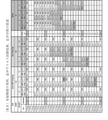
- FIG. 1 is a diagram showing a table recording the test results of Example 1.
- FIG. 2 is a diagram showing a table recording a part of the test results of Example 2.
- High-dose combination administration group A1 (5-ALA: 30 mg / kg / day, SFC: 34.5 mg / kg / day)
- high-dose single administration group A2 (5-ALA: 30 mg / kg / day)
- medium-dose combination administration The results of group B2 (10 mg / kg / day, SFC: 11.5 mg / kg / day) and medium-dose single-dose group B2 (5-ALA: 10 mg / kg / day) are shown.
- FIG. 3 is a diagram showing a table recording a part of the test results of Example 2.
- the compound used as an active ingredient of the therapeutic and / or preventive agent for African swine fever (ASF) of the present invention is a compound represented by the formula (I) or a salt thereof (hereinafter, these are collectively referred to as "ALAs". There is also).
- 5-ALA also called ⁇ -aminolevulinic acid, is a case where both R 1 and R 2 of the formula (I) are hydrogen atoms, and is one of the amino acids.
- R 1 of the formula (I) is a hydrogen atom or an acyl group
- R 2 of the formula (I) is a hydrogen atom, a linear or branched alkyl group, a cycloalkyl group, an aryl group or an aralkyl.
- Compounds other than the underlying 5-ALA can be mentioned.
- acyl group in the formula (I) examples include linear or branched alkanoyl groups having 1 to 8 carbon atoms such as formyl, acetyl, propionyl, butyryl, isobutyryl, valeryl, isovaleryl, pivaloyl, hexanoyl, octanoyl and benzylcarbonyl groups. , Benzoyl, 1-naphthoyl, 2-naphthoyl group and other aloyl groups having 7 to 14 carbon atoms can be mentioned.
- the alkyl group in the formula (I) may be a linear or branched group such as methyl, ethyl, propyl, isopropyl, butyl, isobutyl, sec-butyl, tert-butyl, pentyl, isopentyl, neopentyl, hexyl, heptyl and octyl groups.
- Alkyl groups having 1 to 8 carbon atoms can be mentioned.
- cycloalkyl group in the formula (I) a saturated or partially unsaturated bond such as cyclopropyl, cyclobutyl, cyclopentyl, cyclohexyl, cycloheptyl, cyclooctyl, cyclododecyl, 1-cyclohexenyl group may be present.
- Cycloalkyl groups having 3 to 8 carbon atoms can be mentioned.
- aryl group in the formula (I) examples include aryl groups having 6 to 14 carbon atoms such as phenyl, naphthyl, anthryl, and phenanthryl groups.
- the aryl moiety can be exemplified in the same manner as the above aryl group
- the alkyl moiety can be exemplified in the same manner as the above alkyl group, specifically, benzyl, phenethyl, phenylpropyl, phenylbutyl, benzhydryl.
- Trityl, naphthylmethyl, naphthylethyl group and other aralkyl groups having 7 to 15 carbon atoms can be mentioned.
- a compound in which R 1 is a formyl, acetyl, propionyl, butyryl group or the like, or a compound in which R 2 is a methyl, ethyl, propyl, butyl, pentyl group or the like is preferable. It is preferable to mention compounds in which the combination of 1 and R 2 is a combination of formyl and methyl, acetyl and methyl, propionyl and methyl, butyryl and methyl, formyl and ethyl, acetyl and ethyl, propionyl and ethyl, butyryl and ethyl. can.
- the 5-ALAs may act as an active ingredient in the state of 5-ALA of the formula (I) or a derivative thereof in vivo, and various salts, esters, etc. for increasing solubility may be used depending on the form to be administered. Alternatively, it may be administered as a prodrug (precursor) that is decomposed by an enzyme in the living body.
- the salt of 5-ALA and its derivative include a pharmacologically acceptable acid addition salt, metal salt, ammonium salt, organic amine addition salt and the like.
- Examples of the acid addition salt include hydrochloride, hydrobromide, hydroiodide, phosphate, nitrate, sulfate and other inorganic acid salts, formate, acetate, propionate and toluenesulfonic acid. Salt, succinate, oxalate, lactate, tartrate, glycolate, methanesulfonate, butyrate, valerate, citrate, fumarate, maleate, malate, etc.
- An organic acid addition salt can be exemplified.
- Examples of the metal salt include alkali metal salts such as lithium salt, sodium salt and potassium salt, alkaline earth metal salts such as magnesium salt and calcium salt, and metal salts such as aluminum and zinc.
- ammonium salt examples include an alkylammonium salt such as an ammonium salt and a tetramethylammonium salt.
- organic amine salt examples include triethylamine salt, piperidine salt, morpholine salt, toluidine salt and the like. These salts can also be used as a solution at the time of use.
- 5-ALA and various esters such as 5-ALA methyl ester, 5-ALA ethyl ester, 5-ALA propyl ester, 5-ALA butyl ester and 5-ALA pentyl ester.
- these hydrochlorides, phosphates, sulfates, and ALA hydrochlorides, 5-ALA phosphates can be particularly preferably exemplified.
- the above ALAs can be produced by any known method of chemical synthesis, production by microorganisms, and production by enzymes.
- the above ALAs may form a hydrate or a solvate, and either of them may be used alone or in combination of two or more.
- the therapeutic and / or preventive agent for African pig fever (ASF) of the present invention preferably contains a metal-containing compound as long as it does not cause excess disease, and the metal portion of the metal-containing compound includes iron and magnesium.
- the metal portion of the metal-containing compound includes iron and magnesium.
- Zinc, nickel, vanadium, cobalt, copper, chromium, molybdenum can be mentioned, but iron, magnesium and zinc are preferable, and iron can be preferably exemplified.
- the iron compound may be an organic salt or an inorganic salt
- examples of the inorganic salt include ferric chloride, iron sesquioxide, iron sulfate, and ferrous pyrophosphate
- examples of the organic salt are carboxylates.
- citrates such as ferrous citrate, sodium iron citrate, sodium ferrous citrate (Sodium Ferrous Citrate, SFC), ammonium iron citrate, which are hydroxycarboxylates, and ferric pyrophosphate.
- magnesium compound examples include magnesium citrate, magnesium benzoate, magnesium acetate, magnesium oxide, magnesium chloride, magnesium hydroxide, magnesium carbonate, magnesium sulfate, magnesium silicate, magnesium nitrate, diethylenetriamine pentamagnesium diammonate, and ethylenediamine tetraacetate.
- magnesium disodium and magnesium protoporphyrin examples include magnesium disodium and magnesium protoporphyrin.
- Examples of the zinc compound include zinc chloride, zinc oxide, zinc nitrate, zinc carbonate, zinc sulfate, diethylenetriamine diammonium pentaacetate, disodium ethylenediamine tetraacetate, zinc protoporphyllin, and zinc-containing yeast.
- One type or two or more types of the metal-containing compound can be used, respectively, and the dose of the metal-containing compound may be 0 to 100 times the molar ratio of the dose of 5-ALA, which is 0. It is preferably 0.01 to 10 times, more preferably 0.1 to 8 times.
- the therapeutic and / or prophylactic agent for African swine fever (ASF) of the present invention can be used in combination with other antiviral agents and other disease therapeutic agents as long as it does not cause excess disease.
- the dose of these other agents and the ratio to the dose of 5-ALA can be appropriately adjusted by those skilled in the art.
- the dosing intervals are 5 minutes, 10 minutes, 15 minutes, 20 minutes, 30 minutes, 45 minutes, 1 hour. It can be set to, 2 hours, 3 hours, 4 hours, 5 hours, 6 hours, 7 hours, 8 hours, 9 hours, 10 hours, 11 hours, 12 hours, etc., but is not limited thereto.
- the route of administration of the therapeutic and / or prophylactic agent for African pig fever (ASF) of the present invention is not particularly limited, but is oral administration, inhalation administration, nasal administration, injection, intravenous administration by infusion, transdermal administration, suppository, etc.
- parenteral administration such as administration by forced enteral feeding using a nasal gastrointestinal tract, a nasal intestinal tract, a gastric fistula tube, or an intestinal fistula tube can be used.
- the dosage form of the therapeutic and / or preventive agent of the present invention can be appropriately determined according to the above-mentioned administration route, but is an injection, a drip, a tablet, a capsule, or a fine granule. , Powders, liquids, liquids dissolved in syrups, paps, capsules and the like.
- Agents, coatings, lubricants, lubricants, lubricants, flavoring agents, sweeteners, solubilizers, solvents, gelling agents, nutrients, etc. can be added, and those skilled in the art can add each specific ingredient. It can be selected according to the purpose.
- the amount, frequency, and duration of administration of the treatment and / or preventive agent for African swine fever (ASF) and the virus protein expression inhibitor of the present invention include the types of animals for which treatment or prevention of African swine fever (ASF) is to be performed. Although it depends on age, body weight, symptoms, etc., for example, when administered to pigs, the dose of ALA is 0.1-1000 mg / kg body weight / day, preferably 0.1-1000 mg / kg body weight / day in terms of 5-ALA weight.
- the dose is 0.1-30 mg / kg body weight / day, preferably 0.3 to 10 mg / kg body weight / day, more preferably 1 to 3 mg / kg body weight / day. It can also be administered.
- the frequency of administration may be exemplified by administration once to a plurality of times a day or continuous administration by infusion or the like.
- the duration of administration as a therapeutic or prophylactic agent can be determined by a method known by a veterinarian or other expert in the art.
- the treatment and / or prophylaxis of African swine fever (ASF) of the present invention may be applied to the treatment and prevention of various symptoms and disorders caused by the infection of ASFV and / or the onset of African swine fever (ASF). It can suppress, delay, etc. the development of these symptoms in animals exposed to ASFV.
- Such symptoms can include, but are not limited to, fever, loss of energy, loss of appetite, congestion, erythema and miscarriage, and death.
- the therapeutic and / or prophylactic agent for African swine fever (ASF) of the present invention can be administered to Suidae animals such as pigs and wild boars and related animals thereof.
- 5-ALA and SFC-containing feed 100 mg / kg body weight / day 5-ALA dose and 115 mg / kg body weight / day SFC dose (5-ALA to SFC molar ratio 1: 0.5) 5-ALA phosphate aqueous solution and SFC aqueous solution were mixed with the pig feeding feed and fed so as to be.
- No-treatment feed As a negative control, a pig feed for pigs not mixed with 5-ALA phosphate or 5-ALA phosphate and SFC was fed.
- Test method Ten test pigs were assigned to different pig sheds (pig houses A and B), five each. Every morning at 10 o'clock, 3 out of 5 test pigs (A1, A2, A3) in Pighouse A were orally administered 5-ALA-containing feed at a dose of 100 mg / kg body weight / day for 7 days (2). B1, B2) were orally administered untreated feed for 7 days. At 10 o'clock every morning, 3 out of 5 test pigs (C1, C2, C3) in Pighouse B were fed 5-ALA and SFC-containing feed at 100 mg / kg / day 5-ALA and 115 mg / kg / day.
- the dose of SFC was orally administered for 7 days, and the untreated feed was orally administered to 2 animals (C4 and C5) for 7 days.
- Table 1 Assignment of treatment groups On the 7th day after the start of feed administration, 10 2 HAD 50 / mL ASFV was orally inoculated to all test pigs. After inoculation with ASFV, administration of 5-ALA, 5ALA + SFC or untreated feed was continued, body temperature (rectal temperature) was measured daily for each test pig, and blood virus concentration was 0, 4, 6, after ASFV inoculation. The test was performed at 8, 10, 12, 14, 18, and 21 days later, and if the test pig died, the date of death was recorded.
- test pig B1 continued to be positive for blood virus 14 days after the fever of 40 ° C. or higher from 8 days after the ASFV inoculation. Died.
- the test pig B2 also showed intermittent fever after 10 days, and showed blood virus positive with continuous fever after 14 days.
- Test pig C1 showed no fever until 21 days after inoculation and was also negative for blood virus.
- the test pig C2 showed a fever of 40 ° C. or higher over 10 to 11 days, but no fever thereafter, and the blood virus was negative until 21 days later.
- the test pig C3 showed no fever until 21 days after inoculation, and only the blood virus was positive 21 days later.
- the untreated test pigs (D1 and D2) in the same piggery B all died before 21 days later.
- the test pig D1 continued to have a fever of 40 ° C. or higher after 11 days, continued to be positive for blood virus after 12 days, and died 19 days later.
- the test pig D2 showed continuous fever and positive blood virus after 12 days, and died 18 days later.
- Example 1 Similar tests as in Example 1 were performed with higher viral load and lower 5-ALA dose. (Materials and methods) 1. 1. Animals: Pigs 6-7 weeks old (weighing about 20 kg) were used. 2. 2. Virus strain: ASFV strain (genotype 2 P252) clinically isolated in Vietnam used in Example 1 was subjected to a virus solution in 10 3 HAD 50 / mL EMEM, which was 10 times the concentration of Example 1. Prepared and used.
- Table 6 The results are shown in Table 6 below and Tables 7 and 8 of FIGS.
- the "elapsed days” in Tables 7 and 8 indicate the number of days after inoculation with the ASFV virus.
- Table 6 Fever, positive blood virus, and presence or absence of death
- Table 6 in the untreated group, all the test pigs died by 21 days after the virus inoculation, and the survival rate at 28 days after the virus inoculation was 0%, whereas the high dose combination was used.
- Administration group A1 (5-ALA: 30 mg / kg / day, SFC: 34.5 mg / kg / day), medium-dose combination administration group B2 (10 mg / kg / day, SFC: 11.5 mg / kg / day), low In the combined dose group C2 (3 mg / kg / day, SFC: 3.45 mg / kg / day), the survival rates were 67%, 100%, and 67% at the same time, respectively, and the high-dose single-dose group A2 (5-ALA). : 30 mg / kg / day), medium-dose single-administration group B2 (5-ALA: 10 mg / kg / day), low-dose single-administration group C2 (5-ALA: 3 mg / kg / day), 100 at the same time.
- test pigs identification number 3 in the high-dose combination administration group A1 showed fever and a positive blood virus test 6 days after the virus infection treatment, and died 13 days after the infection treatment. It has been confirmed that the nose of pigs was injured during the virus infection treatment, and it is suspected that the virus that invaded from the injured part may have caused an explosive spread of infection.
- test pigs in the low-dose combination administration group C1 died 25 days after the virus infection treatment, but the test pig was found in the blood virus test 14 days after the virus infection treatment. Although they were moved to a cage dedicated to infected pigs because they showed positive results, negative results were confirmed in subsequent blood virus tests (15 and 17 days after virus infection treatment), and 14 days after virus infection treatment. It is suspected that the results of the blood virus test may have been false positives. In the cage dedicated to infected pigs, cohabitation infection from other positive pigs carrying a high concentration of virus is easy, so the subject pig was infected in the cage dedicated to infected pigs and died 25 days after the virus infection treatment. It is probable that it was done. This study showed that 5-ALA provides protection against ASFV virus infection at low doses, while the combination of 5-ALA and SFC provides even better protection at low doses.
- 5-ALA or 5-ALA and SFC combined administration suppresses ASFV infection and / or ASF onset after infection.
- administration of 5-ALA can suppress African swine fever (ASF) infection and / or symptoms and treat or prevent African swine fever (ASF).
- ASF African swine fever
Landscapes
- Health & Medical Sciences (AREA)
- Life Sciences & Earth Sciences (AREA)
- Chemical & Material Sciences (AREA)
- Organic Chemistry (AREA)
- General Health & Medical Sciences (AREA)
- Veterinary Medicine (AREA)
- Chemical Kinetics & Catalysis (AREA)
- Pharmacology & Pharmacy (AREA)
- Public Health (AREA)
- Animal Behavior & Ethology (AREA)
- Engineering & Computer Science (AREA)
- Medicinal Chemistry (AREA)
- General Chemical & Material Sciences (AREA)
- Environmental Sciences (AREA)
- Plant Pathology (AREA)
- Zoology (AREA)
- Nuclear Medicine, Radiotherapy & Molecular Imaging (AREA)
- Wood Science & Technology (AREA)
- Pest Control & Pesticides (AREA)
- Bioinformatics & Cheminformatics (AREA)
- Reproductive Health (AREA)
- Endocrinology (AREA)
- Epidemiology (AREA)
- Agronomy & Crop Science (AREA)
- Dentistry (AREA)
- Tropical Medicine & Parasitology (AREA)
- Medicines That Contain Protein Lipid Enzymes And Other Medicines (AREA)
- Acyclic And Carbocyclic Compounds In Medicinal Compositions (AREA)
Priority Applications (2)
| Application Number | Priority Date | Filing Date | Title |
|---|---|---|---|
| CN202180048004.5A CN115916178A (zh) | 2020-07-15 | 2021-07-14 | 非洲猪瘟(African Swine Fever:ASF)的治疗剂和/或预防剂 |
| JP2022536431A JPWO2022014654A1 (enExample) | 2020-07-15 | 2021-07-14 |
Applications Claiming Priority (2)
| Application Number | Priority Date | Filing Date | Title |
|---|---|---|---|
| JP2020121013 | 2020-07-15 | ||
| JP2020-121013 | 2020-07-15 |
Publications (1)
| Publication Number | Publication Date |
|---|---|
| WO2022014654A1 true WO2022014654A1 (ja) | 2022-01-20 |
Family
ID=79555633
Family Applications (1)
| Application Number | Title | Priority Date | Filing Date |
|---|---|---|---|
| PCT/JP2021/026527 Ceased WO2022014654A1 (ja) | 2020-07-15 | 2021-07-14 | アフリカ豚熱(African Swine Fever:ASF)の治療及び/又は予防剤 |
Country Status (3)
| Country | Link |
|---|---|
| JP (1) | JPWO2022014654A1 (enExample) |
| CN (1) | CN115916178A (enExample) |
| WO (1) | WO2022014654A1 (enExample) |
Cited By (1)
| Publication number | Priority date | Publication date | Assignee | Title |
|---|---|---|---|---|
| CN116549429A (zh) * | 2023-07-06 | 2023-08-08 | 北京挑战生物技术有限公司 | 5-氨基乙酰丙酸在制备防治猪蓝耳病的产品中的应用 |
Families Citing this family (1)
| Publication number | Priority date | Publication date | Assignee | Title |
|---|---|---|---|---|
| CN118947816B (zh) * | 2024-10-16 | 2024-12-17 | 北京挑战生物技术有限公司 | 5-氨基乙酰丙酸在制备防治猪流行性腹泻的产品中的应用 |
Citations (5)
| Publication number | Priority date | Publication date | Assignee | Title |
|---|---|---|---|---|
| JP2000510123A (ja) * | 1996-05-08 | 2000-08-08 | ニューヨーク・ブラッド・センター・インコーポレイテッド | ウイルス感染の治療方法 |
| JP2001316255A (ja) * | 2000-05-08 | 2001-11-13 | Hyeungrak Kim | 魚類病原性微生物と寄生虫の感染予防および治療のためのδ−アミノレブリン酸の新規の用途{Noveluseofdelta−aminolevulinicacidforpreventionandtreatmentofinfectionbypathogenicmicroorganismsandparasite} |
| WO2014013664A1 (ja) * | 2012-07-19 | 2014-01-23 | Sbiファーマ株式会社 | インフルエンザウイルス感染症の予防・治療剤 |
| JP2014094963A (ja) * | 2007-01-11 | 2014-05-22 | Photocure Asa | アミノレブリン酸およびその誘導体の使用 |
| JP2019085382A (ja) * | 2017-11-10 | 2019-06-06 | ネオファーマジャパン株式会社 | 植物ウイルス病の予防又は治療剤 |
-
2021
- 2021-07-14 JP JP2022536431A patent/JPWO2022014654A1/ja active Pending
- 2021-07-14 CN CN202180048004.5A patent/CN115916178A/zh active Pending
- 2021-07-14 WO PCT/JP2021/026527 patent/WO2022014654A1/ja not_active Ceased
Patent Citations (5)
| Publication number | Priority date | Publication date | Assignee | Title |
|---|---|---|---|---|
| JP2000510123A (ja) * | 1996-05-08 | 2000-08-08 | ニューヨーク・ブラッド・センター・インコーポレイテッド | ウイルス感染の治療方法 |
| JP2001316255A (ja) * | 2000-05-08 | 2001-11-13 | Hyeungrak Kim | 魚類病原性微生物と寄生虫の感染予防および治療のためのδ−アミノレブリン酸の新規の用途{Noveluseofdelta−aminolevulinicacidforpreventionandtreatmentofinfectionbypathogenicmicroorganismsandparasite} |
| JP2014094963A (ja) * | 2007-01-11 | 2014-05-22 | Photocure Asa | アミノレブリン酸およびその誘導体の使用 |
| WO2014013664A1 (ja) * | 2012-07-19 | 2014-01-23 | Sbiファーマ株式会社 | インフルエンザウイルス感染症の予防・治療剤 |
| JP2019085382A (ja) * | 2017-11-10 | 2019-06-06 | ネオファーマジャパン株式会社 | 植物ウイルス病の予防又は治療剤 |
Non-Patent Citations (3)
| Title |
|---|
| ARABYAN ERIK; KOTSYNYAN ARMEN; HAKOBYAN ASTGHIK; ZAKARYAN HOVAKIM: "Antiviral agents against African swine fever virus", VIRUS RESEARCH, AMSTERDAM, NL, vol. 270, 17 July 2019 (2019-07-17), NL , XP085763828, ISSN: 0168-1702, DOI: 10.1016/j.virusres.2019.197669 * |
| MASUJIN, KENTARO ET AL.: "The outbreak situation of African swine fever in Russia and east Europe countries", PROCEEDINGS OF THE JAPANESE PIG VETERINARY SOCIETY, vol. 72, pages 1 - 7 * |
| YAMADA, MANABU ET AL.: "Experimental infection with African swine fever virus Armenia 07 strain in pigs", PROCEEDINGS OF THE JAPANESE PIG VETERINARY SOCIETY., 2018, pages 8 - 15 * |
Cited By (1)
| Publication number | Priority date | Publication date | Assignee | Title |
|---|---|---|---|---|
| CN116549429A (zh) * | 2023-07-06 | 2023-08-08 | 北京挑战生物技术有限公司 | 5-氨基乙酰丙酸在制备防治猪蓝耳病的产品中的应用 |
Also Published As
| Publication number | Publication date |
|---|---|
| CN115916178A (zh) | 2023-04-04 |
| JPWO2022014654A1 (enExample) | 2022-01-20 |
Similar Documents
| Publication | Publication Date | Title |
|---|---|---|
| CN104487067B (zh) | 流行性感冒病毒感染症的预防·治疗剂 | |
| EP3281629A1 (en) | Prophylactic/therapeutic agent for virus infections which comprises ala compound | |
| US20230226017A1 (en) | Methods of treating a coronavirus infection | |
| JP2023512622A (ja) | ニタゾキサニド及びその活性型であるチゾキサニドのSARS-CoV-2感染症の治療への適用 | |
| CN115916178A (zh) | 非洲猪瘟(African Swine Fever:ASF)的治疗剂和/或预防剂 | |
| TWI543960B (zh) | Erythropoietin production accelerator | |
| CN103747784B (zh) | 败血症的预防剂和/或治疗剂 | |
| JP7058026B2 (ja) | 新型コロナウイルス感染症(covid-19)の治療及び/又は予防剤 | |
| JP7497790B2 (ja) | 豚コレラの治療及び/又は予防剤 | |
| CN116911513B (zh) | 硝唑尼特及其体内代谢物替唑尼特在制备抗心衰药物中的应用 | |
| EP3884938A1 (en) | 1,2,4-trioxane compounds and compositions comprising the same for use in the treatment of covid-19 | |
| US20130225517A1 (en) | Therapeutic Compounds | |
| CN120097932A (zh) | 一种杂环化合物及其制备方法和应用、杂环衍生物和药物组合物及其应用 | |
| CN105311008B (zh) | 硬脂酰氨基酸或其药用盐的用途 | |
| CN101548976A (zh) | 复方妥曲珠利溶液及其制备方法 | |
| CN115089591A (zh) | 布立尼布在制备抑制肠道病毒71型嗜神经性病毒药物中的应用 | |
| HK1205688B (en) | Prophylactic/therapeutic agent for influenza virus infection | |
| JP2021123576A (ja) | 鶏コクシジウム症の予防又は治療剤 | |
| JPS6136728B2 (enExample) |
Legal Events
| Date | Code | Title | Description |
|---|---|---|---|
| 121 | Ep: the epo has been informed by wipo that ep was designated in this application |
Ref document number: 21843224 Country of ref document: EP Kind code of ref document: A1 |
|
| ENP | Entry into the national phase |
Ref document number: 2022536431 Country of ref document: JP Kind code of ref document: A |
|
| NENP | Non-entry into the national phase |
Ref country code: DE |
|
| 122 | Ep: pct application non-entry in european phase |
Ref document number: 21843224 Country of ref document: EP Kind code of ref document: A1 |