WO2022014502A1 - 細胞傷害性t細胞(ctl)活性化用組成物 - Google Patents
細胞傷害性t細胞(ctl)活性化用組成物 Download PDFInfo
- Publication number
- WO2022014502A1 WO2022014502A1 PCT/JP2021/025995 JP2021025995W WO2022014502A1 WO 2022014502 A1 WO2022014502 A1 WO 2022014502A1 JP 2021025995 W JP2021025995 W JP 2021025995W WO 2022014502 A1 WO2022014502 A1 WO 2022014502A1
- Authority
- WO
- WIPO (PCT)
- Prior art keywords
- spirulina
- ctl
- cells
- composition
- extract
- Prior art date
- Legal status (The legal status is an assumption and is not a legal conclusion. Google has not performed a legal analysis and makes no representation as to the accuracy of the status listed.)
- Ceased
Links
- JSMRMEYFZHIPJV-UHFFFAOYSA-N C1C2CCC1C2 Chemical compound C1C2CCC1C2 JSMRMEYFZHIPJV-UHFFFAOYSA-N 0.000 description 1
Images



Classifications
-
- A—HUMAN NECESSITIES
- A61—MEDICAL OR VETERINARY SCIENCE; HYGIENE
- A61K—PREPARATIONS FOR MEDICAL, DENTAL OR TOILETRY PURPOSES
- A61K35/00—Medicinal preparations containing materials or reaction products thereof with undetermined constitution
- A61K35/66—Microorganisms or materials therefrom
- A61K35/74—Bacteria
- A61K35/748—Cyanobacteria, i.e. blue-green bacteria or blue-green algae, e.g. spirulina
-
- A—HUMAN NECESSITIES
- A23—FOODS OR FOODSTUFFS; TREATMENT THEREOF, NOT COVERED BY OTHER CLASSES
- A23L—FOODS, FOODSTUFFS OR NON-ALCOHOLIC BEVERAGES, NOT OTHERWISE PROVIDED FOR; PREPARATION OR TREATMENT THEREOF
- A23L2/00—Non-alcoholic beverages; Dry compositions or concentrates therefor; Preparation or treatment thereof
- A23L2/52—Adding ingredients
-
- A—HUMAN NECESSITIES
- A23—FOODS OR FOODSTUFFS; TREATMENT THEREOF, NOT COVERED BY OTHER CLASSES
- A23L—FOODS, FOODSTUFFS OR NON-ALCOHOLIC BEVERAGES, NOT OTHERWISE PROVIDED FOR; PREPARATION OR TREATMENT THEREOF
- A23L33/00—Modifying nutritive qualities of foods; Dietetic products; Preparation or treatment thereof
- A23L33/10—Modifying nutritive qualities of foods; Dietetic products; Preparation or treatment thereof using additives
- A23L33/135—Bacteria or derivatives thereof, e.g. probiotics
-
- A—HUMAN NECESSITIES
- A61—MEDICAL OR VETERINARY SCIENCE; HYGIENE
- A61K—PREPARATIONS FOR MEDICAL, DENTAL OR TOILETRY PURPOSES
- A61K39/00—Medicinal preparations containing antigens or antibodies
- A61K39/395—Antibodies; Immunoglobulins; Immune serum, e.g. antilymphocytic serum
-
- A—HUMAN NECESSITIES
- A61—MEDICAL OR VETERINARY SCIENCE; HYGIENE
- A61K—PREPARATIONS FOR MEDICAL, DENTAL OR TOILETRY PURPOSES
- A61K39/00—Medicinal preparations containing antigens or antibodies
- A61K39/395—Antibodies; Immunoglobulins; Immune serum, e.g. antilymphocytic serum
- A61K39/39533—Antibodies; Immunoglobulins; Immune serum, e.g. antilymphocytic serum against materials from animals
- A61K39/3955—Antibodies; Immunoglobulins; Immune serum, e.g. antilymphocytic serum against materials from animals against proteinaceous materials, e.g. enzymes, hormones, lymphokines
-
- A—HUMAN NECESSITIES
- A61—MEDICAL OR VETERINARY SCIENCE; HYGIENE
- A61P—SPECIFIC THERAPEUTIC ACTIVITY OF CHEMICAL COMPOUNDS OR MEDICINAL PREPARATIONS
- A61P17/00—Drugs for dermatological disorders
-
- A—HUMAN NECESSITIES
- A61—MEDICAL OR VETERINARY SCIENCE; HYGIENE
- A61P—SPECIFIC THERAPEUTIC ACTIVITY OF CHEMICAL COMPOUNDS OR MEDICINAL PREPARATIONS
- A61P35/00—Antineoplastic agents
-
- A—HUMAN NECESSITIES
- A61—MEDICAL OR VETERINARY SCIENCE; HYGIENE
- A61P—SPECIFIC THERAPEUTIC ACTIVITY OF CHEMICAL COMPOUNDS OR MEDICINAL PREPARATIONS
- A61P37/00—Drugs for immunological or allergic disorders
-
- A—HUMAN NECESSITIES
- A61—MEDICAL OR VETERINARY SCIENCE; HYGIENE
- A61P—SPECIFIC THERAPEUTIC ACTIVITY OF CHEMICAL COMPOUNDS OR MEDICINAL PREPARATIONS
- A61P43/00—Drugs for specific purposes, not provided for in groups A61P1/00-A61P41/00
-
- C—CHEMISTRY; METALLURGY
- C07—ORGANIC CHEMISTRY
- C07K—PEPTIDES
- C07K16/00—Immunoglobulins [IG], e.g. monoclonal or polyclonal antibodies
- C07K16/18—Immunoglobulins [IG], e.g. monoclonal or polyclonal antibodies against material from animals or humans
- C07K16/28—Immunoglobulins [IG], e.g. monoclonal or polyclonal antibodies against material from animals or humans against receptors, cell surface antigens or cell surface determinants
- C07K16/2803—Immunoglobulins [IG], e.g. monoclonal or polyclonal antibodies against material from animals or humans against receptors, cell surface antigens or cell surface determinants against the immunoglobulin superfamily
- C07K16/2815—Immunoglobulins [IG], e.g. monoclonal or polyclonal antibodies against material from animals or humans against receptors, cell surface antigens or cell surface determinants against the immunoglobulin superfamily against CD8
-
- C—CHEMISTRY; METALLURGY
- C07—ORGANIC CHEMISTRY
- C07K—PEPTIDES
- C07K16/00—Immunoglobulins [IG], e.g. monoclonal or polyclonal antibodies
- C07K16/18—Immunoglobulins [IG], e.g. monoclonal or polyclonal antibodies against material from animals or humans
- C07K16/28—Immunoglobulins [IG], e.g. monoclonal or polyclonal antibodies against material from animals or humans against receptors, cell surface antigens or cell surface determinants
- C07K16/2803—Immunoglobulins [IG], e.g. monoclonal or polyclonal antibodies against material from animals or humans against receptors, cell surface antigens or cell surface determinants against the immunoglobulin superfamily
- C07K16/2827—Immunoglobulins [IG], e.g. monoclonal or polyclonal antibodies against material from animals or humans against receptors, cell surface antigens or cell surface determinants against the immunoglobulin superfamily against B7 molecules, e.g. CD80, CD86
-
- A—HUMAN NECESSITIES
- A61—MEDICAL OR VETERINARY SCIENCE; HYGIENE
- A61K—PREPARATIONS FOR MEDICAL, DENTAL OR TOILETRY PURPOSES
- A61K39/00—Medicinal preparations containing antigens or antibodies
- A61K2039/505—Medicinal preparations containing antigens or antibodies comprising antibodies
-
- C—CHEMISTRY; METALLURGY
- C07—ORGANIC CHEMISTRY
- C07K—PEPTIDES
- C07K2317/00—Immunoglobulins specific features
- C07K2317/70—Immunoglobulins specific features characterized by effect upon binding to a cell or to an antigen
- C07K2317/73—Inducing cell death, e.g. apoptosis, necrosis or inhibition of cell proliferation
-
- C—CHEMISTRY; METALLURGY
- C07—ORGANIC CHEMISTRY
- C07K—PEPTIDES
- C07K2317/00—Immunoglobulins specific features
- C07K2317/70—Immunoglobulins specific features characterized by effect upon binding to a cell or to an antigen
- C07K2317/76—Antagonist effect on antigen, e.g. neutralization or inhibition of binding
Definitions
- the present invention comprises a CTL activation composition for the proliferation of cytotoxic T cells (CTL) containing spirulina extract, and a CTL activation pharmaceutical composition and CTL containing the CTL activation composition.
- CTL cytotoxic T cells
- Spirulina is a cyanobacterial species that contains abundant proteins, sugars, various vitamins, minerals, and plant pigments. It has been reported that oral administration of spirulina (spirulina extract) induces activation of natural killer (NK) cells (for example, Non-Patent Document 1).
- NK natural killer
- various immunotherapies have been extensively studied. For example, research on cancer treatment using immunotherapy is being actively conducted. In general, living organisms originally have an immune monitoring mechanism for removing cancer cells, and the onset of cancer is suppressed. Such so-called “cancer immunity” is carried by various immunocompetent cells. In addition to NK cells, cytotoxic T cells (CTLs) are other immunocompetent cells that attack cancer cells. Cytotoxic T cells (CTL) are responsible for cancer immunity by recognizing and attacking cancer cells through various molecules specifically expressed in cancer cells.
- spirulina extract which is a spirulina extract, activates cytotoxic T cells (CTL) that specifically attack tumors, and depends on cytotoxic T cells (CTL) for tumors. None is known about retreating.
- An object of the present invention is to provide a composition for activating cytotoxic T cells (CTL) containing spirulina extract.
- CTL cytotoxic T cells
- CTL cytotoxic T cells
- the composition for CTL activation according to the above [1] which is for oral use.
- the CTL according to the above [3] used for the treatment of any cancer such as malignant melanoma, non-small cell lung cancer, Hodgkin lymphoma, head and neck cancer, gastric cancer, renal cancer, and bladder cancer.
- Pharmaceutical composition for activation is provided for the following aspects.
- [5] A combination of the pharmaceutical composition for CTL activation according to the above [3] or [4] and an immune checkpoint inhibitor.
- [6] Malignant melanoma, non-small cell lung cancer, hodgkin lymphoma, head and neck using the pharmaceutical composition for CTL activation according to the above [3] or [4] in combination with an immune checkpoint inhibitor. Treatment method for any of the following cancers: small cell carcinoma, gastric cancer, lung cancer, and bladder cancer.
- cytotoxic T cells containing spirulina extract.
- FIG. 1 is a schematic diagram illustrating an experiment schedule performed in Example 1.
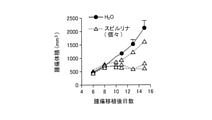
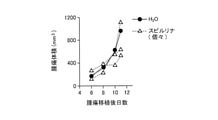
- Figure 2 is a graph showing the increase results of MO5 tumor cells when the between H 2 O and spirulina extract was performed in Example 1 was orally administered.
- Figure 3 is a graph showing the increase results in the EG7 tumor cells when the between H 2 O and spirulina extract was carried out in Example 2 was orally administered.
- FIG. 4 is a diagram showing tumor suppression results in mice in which tumor regression was particularly remarkable among the results of mice orally administered with the spirulina extract of FIG.
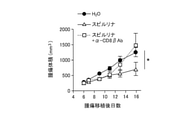
- FIG. 5 is a graph showing the increase results in the EG7 tumor cells when H 2 O was carried out in Example 3, spirulina extract, or a Spirulina extract + anti CD8 ⁇ antibody was administered orally.
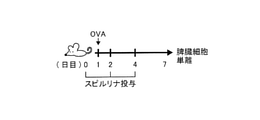
- FIG. 6 is a schematic diagram illustrating an experiment schedule performed in Example 4.
- FIG. 7 is a schematic diagram illustrating the procedure of co-culture performed in Example 4.
- FIG. 8 is a diagram showing the results of the ratio of dividing cells among the CFSE-labeled OT-1 cells performed in Example 4.
- Figure 9 is a graph showing the increase results of MO5 tumor cells when the between H 2 O and spirulina extract was performed in Example 5 was orally administered.
- FIG. 6 is a schematic diagram illustrating an experiment schedule performed in Example 4.
- FIG. 7 is a schematic diagram illustrating the procedure of co-culture performed in Example 4.
- FIG. 8 is a diagram showing the results of the ratio of dividing cells among the CFSE-labeled OT-1 cells performed in Example 4.
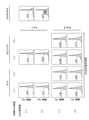
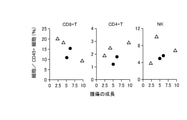
- FIG. 10 is a diagram showing the results of flow cytometric analysis of CD8 + T cells, CD4 + T cells, and NK cells performed in Example 5.
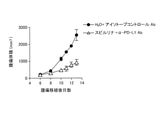
- Figure 11 is a diagram showing the increase results of MO5 tumor cells when H 2 O + isotope control Ab was performed in Example 6, or a Spirulina extract + anti PD-L1Ab was orally administered.
- composition for activating cytotoxic T cells (CTL) of the present invention will be described in detail, but the description of the constituent requirements described below is an example of one embodiment of the present invention. It is not specific to the content.
- the present invention is the activity of cytotoxic T cells (CTL) used for the proliferation of cytotoxic T cells (CTLs) (also referred to as killer T cells) specific for antigens of animals including humans.
- CTL cytotoxic T cells
- the present invention relates to a composition for CTL activation that promotes the formation.
- the CTL activation composition of the present invention contains spirulina extract. As shown in the examples below, the CTL activation composition of the present invention activates CTLs for NK cell-insensitive and CTL-sensitive tumors without the addition of a specific antigen, and causes tumor growth. It can be suppressed.
- the spirulina extract is an extract obtained by extracting spirulina with a solvent such as water or ethanol, or an extract obtained by concentrating or drying the extract.
- the extract used for producing the spirulina extract is not particularly limited as long as the effects of the present invention can be obtained, but hot water can be used, for example.
- an extract obtained by extracting spirulina with hot water or an extract obtained by concentrating or drying the extract can be preferably used.
- Spirulina is a fine spirulina belonging to the genus Spirulina of the family Nostocales, Nostocales, and contains abundant proteins, sugars, various vitamins, minerals, and plant pigments.
- spirulina used in the present invention examples include Spirulina platensis, Spirulina maxima, Spirulina geitreli, Spirulina siamese i, spirulina, spirulina, spirulina, spirulina, spirulina, spirulina, spirulina, and spirulina.
- Spirulina is also referred to as Arthrospira.
- the method for obtaining the spirulina extract is not particularly limited, and a generally known method can be used.
- the method for producing an extract described in Non-Patent Document 1 and JP-A-8-9940. Can be mentioned. More specifically, the following manufacturing method can be mentioned.
- Spirulina extract is obtained by extracting spirulina algae with hot water at a temperature exceeding 100 ° C., adjusting the pH of the extract under specific acidic conditions, and then removing the insoluble fraction. By doing so, it can be manufactured.
- the spirulina extract is used in a liquid state, the spirulina extract obtained as described above can be used as it is.
- the spirulina extract can also be concentrated or dried and used as a powder.
- the spirulina extract in the present invention may be an extract produced by concentrating or drying the spirulina extract.
- spirulina a commercially available one may be used, or a self-cultivated one may be used.
- raw spirulina may be used, or this raw spirulina may be dried.
- a culturing method for culturing spirulina the usual method used for culturing cyanobacteria may be followed.
- spirulina can be cultivated and grown outdoors under basic conditions.
- the spirulina obtained by culturing (hereinafter, also referred to as spirulina algae) can be used as it is, or the cultivated spirulina can be collected with a filter cloth or filter paper, washed with water, suspended in water, and suspended as a suspension. good.
- the wet algae may be obtained by concentrating the culture solution or suspension, or the wet algae may be dried by freeze-drying or spray drying (spray drying), or the dried algae may be used. It may be powdered.
- the spirulina algae used for hot water extraction may be any of wet algae, freeze-dried algae, spray-dried algae, crushed algae and the like. For example, in order to obtain a crushed algae, a crushing treatment of the algae by a usual method, for example, industrially, a high-pressure extrusion method such as a French press can be mentioned.
- the Spirulina algae processed as described above are suspended in a pressure container in advance in an extraction solvent, for example, in distilled water.
- the suspension concentration is not particularly limited, but is preferably 1 to 20% by mass with respect to the solvent in consideration of extraction efficiency, recovery cost, and the like.
- the extraction solvent may be tap water, but distilled water is preferable in consideration of applying the extract as a food material.
- the extraction temperature is a temperature exceeding 100 ° C., preferably 105 ° C. to 140 ° C., more preferably 110 to 130 ° C.
- the pressure at the time of extraction is preferably 1.0 to 2.5 atm.
- the stirring operation may or may not be performed during extraction, but it is preferable to perform the stirring operation in terms of thermal efficiency. The longer the extraction time, the larger the extraction amount, but in consideration of efficiency, the extraction time is usually 0.5 to 4 hours.
- an operation such as centrifugation or filtration of the suspension may be performed, and a supernatant is obtained by this operation.
- it is more preferable to further remove the dissolved protein.
- it is preferable to add an acid to the suspension to set the pH of the extract to an acidic condition below the isoelectric point of the protein.
- the protein can be aggregated, and the aggregated protein can be separated by centrifugation, filtration, or the like to obtain a spirulina extract.
- the pH of the algae residue suspension after the extraction operation is adjusted to be below the isoelectric point of the protein as described above without first removing the algae residue and the like, and then the algae residue and the aggregated protein are similarly centrifuged. It may be separated by separation, filtration or the like. By removing the aggregated protein, a spirulina extract containing a high-yielding polysaccharide can be obtained.
- pH 4.5 or less is preferable, pH 3.75 to 4.25 is more preferable because protein aggregation and precipitation formation are maximized, and pH 4.0 is even more preferable.
- Sulfuric acid or hydrochloric acid may be used as the acid to be added when adjusting the pH, but organic acids such as citric acid and malic acid may be used rather than inorganic acids in consideration of practical work processes and use as food materials. preferable.
- CTL activation composition of the present invention can be effectively used in pharmaceutical compositions and foods and drinks for the purpose of CTL activation.
- the CTL activation composition of the present invention can be applied to a CTL activation pharmaceutical composition used for growing CTL.
- the CTL activation composition of the present invention proliferates CTL, it can be applied as a CTL activation food or drink to various foods and drinks labeled to that effect, if necessary.
- it can be used for health foods, foods with functional claims, special purpose foods, nutritional supplements, supplements, foods for specified health use, and the like. Since some of these foods are foods for which functional labeling is permitted, they can be distinguished from general foods.
- composition and foods and drinks for CTL activation according to the present invention a CTL activation pharmaceutical composition containing the CTL activation composition, and CTL activation food and drink
- composition and foods and drinks for CTL activation according to the present invention are collectively referred to as "composition and foods and drinks for CTL activation according to the present invention"
- the form is not particularly limited and can be appropriately selected according to the purpose, for example, solid. It can be in shape, liquid, gel, etc. Further, for example, it may be a tablet (including a chewable tablet or the like), a capsule, a drink, a jelly, a granule or the like.
- the CTL activation pharmaceutical composition containing the CTL activation composition of the present invention is a pharmaceutically acceptable usual carrier, binder, stabilizer, excipient, diluent, pH buffer, disintegration.
- Various compounding ingredients for preparation such as an agent, a solubilizing agent, a solubilizing agent, and an tonicity agent can be added.
- the pharmaceutical composition for CTL activation of the present invention can be used orally or parenterally, but it is more preferable that it is for oral use.
- it can be in a commonly used dosage form, for example, tablets, powders, granules, capsules, syrups, suspensions and the like.
- commonly used dosage forms such as solutions, emulsions, suspensions, etc. are injected (subcutaneous injection, intravenous injection, intramuscular injection, etc.), or sprays are used intranasally. And so on.
- the spirulina extract is used as an excipient, a binder, a disintegrant, a lubricant, and a preservative.
- Antioxidants, isotonic agents, buffers, coating agents, flavoring agents, solubilizing agents, bases, dispersants, stabilizers, colorants, etc. Can be done.
- Excipients include starch and its derivatives (dextrin, carboxymethyl starch, etc.), cellulose and its derivatives (methyl cellulose, hydroxypropylmethyl cellulose, etc.), sugars (lactose, sucrose, glucose, trehalose, etc.), citric acid or the same salts. , Apple acid or the same salts, ethylenediamine tetraacetic acid or the same salts.
- Binders include starch and its derivatives (pregelatinized starch, dextrin, etc.), cellulose and its derivatives (ethyl cellulose, sodium carboxymethyl cellulose, hydroxypropylmethyl cellulose, etc.), gum arabic, tragant, gelatin, saccharides (glucose, sucrose, etc.), Examples include ethanol.
- Disintegrants include starch and its derivatives (carboxymethyl starch, hydroxypropyl starch, etc.), cellulose and its derivatives (sodium carboxymethyl cellulose, crystalline cellulose, hydroxypropylmethyl cellulose, etc.), carbonates (calcium carbonate, calcium hydrogen carbonate, etc.), Examples include tragant, gelatin, agar and the like.
- the lubricant include stearic acid, calcium stearate, magnesium stearate, talc, titanium oxide, calcium hydrogen phosphate, dry aluminum hydroxide gel, sucrose fatty acid ester, and edible oils and fats.
- Preservatives include paraoxybenzoic acid esters, sulfites (sodium sulfite, sodium pyrosulfate, etc.), phosphates (sodium phosphate, calcium polyphosphate, sodium polyphosphate, sodium metaphosphate, etc.), dehydroacetate, sodium dehydroacetate. , Glycerin sorbate, saccharides and the like.
- Antioxidants include sulfites (sodium sulfite, sodium hydrogen sulfite, etc.), erythorbic acid, L-ascorbic acid, cysteine, thioglycerol, butylhydroxyanisol, dibutylhydroxytoluene, propyl gallate, palmitate ascorbic acid, dl- Examples include ⁇ -tocopherol.
- the tonicity agent include sodium chloride, sodium nitrate, potassium nitrate, dextrin, glycerin, glucose and the like.
- buffer examples include sodium carbonate, hydrochloric acid, boric acid, phosphate (sodium hydrogen phosphate, etc.) and the like.
- coating agent examples include cellulose derivatives (hydroxypropyl cellulose, cellulose acetate, hydroxypropylmethyl cellulose phthalate, etc.), cellac, polyvinylpyrrolidone, polyvinylpyridines (poly-2-vinylpyridine, poly-2-vinyl-5-ethylpyridine, etc.). Etc.), polyvinylacetyl diethylaminoacetate, polyvinyl alcohol phthalate, methacrylate-methacrylic acid copolymer and the like.
- flavoring agent examples include sugars (glucose, sucrose, lactose, etc.), saccharin sodium, sugar alcohols, and the like.
- solubilizing agent examples include ethylenediamine, nicotinic acid amide, sodium saccharin, citric acid, citrates, sodium benzoate, polyvinylpyrrolidone, polysorbates, sorbitan fatty acid esters, glycerin, polyprene glycol, benzyl alcohol and the like.
- Examples of the base include fats (pork fat, etc.), vegetable oils (olive oil, sesame oil, etc.), animal oils, lanolinic acid, petrolatum, paraffin, resins, bentonite, glycerin, glycol oil, and the like.
- Examples of the dispersant include gum arabic, tragant, cellulose derivatives (methyl cellulose and the like), sodium alginate, polysorbates, sorbitan fatty acid esters and the like.
- Examples of the stabilizer include sulfites (sodium bisulfite and the like), nitrogen, carbon dioxide and the like.
- the content of spirulina extract in the composition for activating CTL and food and drink according to the present invention varies depending on the conditions such as the type, component, and form of the drug or food, and may be appropriately selected.
- the content of the spirulina extract in the pharmaceutical products and beverages is preferably 0.1% by mass or more, more preferably 1% by mass or more, in terms of the dry weight of the spirulina extract.
- the content of the spirulina extract in the liquid medicine or beverage is preferably 20% by mass or less, more preferably 10% by mass or less, in terms of the dry weight of the spirulina extract in the total mass thereof.
- the content of the spirulina extract in pharmaceuticals and foods is preferably 0.1% by mass or more, more preferably 1% by mass or more, in terms of the dry weight of the spirulina extract in the total mass thereof.
- the content of the spirulina extract in pharmaceuticals and foods is preferably 30% by mass or less, more preferably 20% by mass or less, in terms of the dry weight of the spirulina extract in the total mass thereof.
- the content of spirulina extract in the tablets is in terms of the dry weight of the spirulina extract in the total mass thereof.
- the content of the spirulina extract in the tablet is preferably 95% by mass or less, more preferably 80% by mass or less, in terms of the dry weight of the spirulina extract in the total mass thereof.
- the intake amount of spirulina extract is not particularly limited and is appropriately selected depending on the type, ingredients, etc. of pharmaceuticals and foods and drinks. 0.5 g or more is preferable, 1 g or more is more preferable, 6 g or less is preferable, and 4 g or less is more preferable.
- the CTL activation composition of the present invention works effectively against many diseases requiring CTL activity.
- it can be used as a therapeutic agent for tumors.
- the tumor is an NK cell-insensitive tumor and a CTL-sensitive tumor
- the growth of the tumor can be suppressed, and the tumor can be effectively used as a prophylactic or therapeutic agent for cancer. Therefore, the composition for CTL activation of the present invention is an effective anticancer therapeutic agent for the tumors described below, which can regress the tumor depending on the CTL.
- Examples of the types of cancer to be treated include malignant melanoma, non-small cell lung cancer, Hodgkin lymphoma, head and neck cancer, gastric cancer, renal cancer, bladder cancer and the like.
- the CTL activation composition of the present invention may be further combined with an immune checkpoint inhibitor to prepare a combination. ..
- the immune checkpoint inhibitor is not particularly limited as long as the effects of the present invention are exhibited, and examples thereof include PD-1 pathway inhibitors.
- the PD-1 pathway inhibitor refers to a drug that inhibits the PD-1 / PD-1 ligand pathway.
- the PD-1 pathway inhibitor is not particularly limited as long as it is a drug that inhibits the PD-1 / PD-1 ligand pathway, and examples thereof include anti-PD-1 antibody, anti-PD-L1 antibody, and anti-PD-L2 antibody. Can be mentioned.
- anti-PD-1 antibodies include nivolumab (Opdivo®), REGN-2810, pembrolizumab (Keytruda®), PDR-001, BGB-A317, AMP-514 (MEDI0680), BCD- 100, IBI-308, JS-001, PF-06801591, TSR-042 and the like can be mentioned.
- anti-PD-L1 antibody examples include Atezolizumab (RG7446, MPDL3280A), Avelumab (PF-06834635, MSB0010718C), Durvalumab (MEDI4736), BMS-936559, CA-170, LY-3300054, FAZ053 and the like.
- Spirulina extract can be used in combination with anti-PD-L1 antibody, as shown in the examples below, and even in experiments in combination with anti-PD-L1 antibody, it is effective against NK cell-insensitive and CTL-sensitive tumors. , Suppressed tumor growth. Therefore, a PD-1 pathway inhibitor such as an anti-PD-L1 antibody can be used in combination with Spirulina extract for the purpose of suppressing tumor growth for CTL-sensitive tumors.
- the CTL activation composition of the present invention can be used as a component of products such as beverages, foods, and food and drink additives.
- drinks include water, soft drinks, fruit juice drinks, milk drinks, alcoholic drinks, non-alcoholic drinks, sports drinks, nutritional drinks and the like.
- foods include breads, noodles, rice, tofu, dairy products, soy sauce, miso, and confectionery.
- Each such food or drink can be prepared by a conventional method.
- the spirulina extract according to the present invention may be used as an arbitrary food material, or other active ingredient, or a food-acceptable additive (eg, solvent, softener, oil, emulsifier, preservative).
- Agents acidulants, sweeteners, bitterness agents, flavoring agents, pH regulators, surfactants, stabilizers, colorants, UV absorbers, antioxidants, moisturizers, thickeners, fixing agents, dispersants, fluids It can be prepared according to a conventional method by appropriately combining it with a sex improver, a foaming agent, a wetting agent, a fragrance, a seasoning, a flavor adjusting agent, etc.).
- the food or drink for CTL activation of the present invention may be labeled as "enhancing CTL", "preventing carcinogenesis by CLT activation” or the like as a food or drink for the purpose of proliferation of CTL.
- Spirulina platensis was grown in an outdoor culture pond under basic conditions (pH 11). Next, 50 g of the spray-dried algal powder of the grown Spirulina platensis was suspended in 500 mL of distilled water in an autoclave, and the pressure was adjusted to extract for 1 hour at an extraction temperature of 120 ° C. The pH of the extract was adjusted to 4.0 with citric acid. This was centrifuged to remove algae residue and protein (insoluble fraction) to obtain Spirulina extract, which is a spirulina hot water extract.
- mice were administered 200 ⁇ L of spirulina extract (corresponding to 96 mg of spirulina powder) at a time.
- OVA egg white albumin
- D-PBS Dulbecco's modified PBS
- ⁇ Rat IgG2b isotype control antibody (Ab) (LTF-2)> Purchased from Bio X Cell. LTF-2 is useful as an isotype control against rat IgG2b antibody.
- ⁇ 7AAD> 7-Aminoactinomycin D (7AAD, cell survival solution) for staining dead cells was purchased from BD Biosciences.
- the inbred wild-type C57BL / 6 mouse was purchased from Japan Marie Co., Ltd. Mice were maintained under specific pathogen-free conditions and 7-11 week old mice were used.
- the OT-1 mouse is a mouse that forcibly expresses a T cell receptor that specifically recognizes an OVA antigen.
- OVA-expressing B16 melanoma cells are 10% heat-inactivated fetal bovine serum (FBS, purchased from GE Healthcare Life Sciences), 100 IU penicillin / 100 ⁇ g / mL streptomycin (Thermo Fisher Scientific ⁇ ), and 100 The cells were cultured in RPMI 1640 (Thermo Fisher Scientific) supplemented with / mL of G418 (manufactured by Roche).
- FBS heat-inactivated fetal bovine serum
- Thermo Fisher Scientific ⁇ 100 IU penicillin / 100 ⁇ g / mL streptomycin
- OVA-expressing EL4 lymphoma cells > OVA-expressing EL4 lymphoma cells (EG7) (ATCC® CRL-2113TM) were purchased from ATCC.
- OVA-expressing EL4 lymphoma cells are 10% heat-inactivated FBS, 10 mM HEPES (Thermo Fisher Scientific), 1 mM sodium pyruvate (Thermo Fisher Scientific), 55 ⁇ M 2-mercaptoethanol (Thermic). Cultivated in RPMI 1640 supplemented with 100 IU of penicillin / 100 ⁇ g / mL streptomycin and 500 ⁇ g / mL of G418.
- FIG. 2 The results are shown in FIG. 2, by oral administration of H 2 O or spirulina extract, shows a MO5 tumor increase results in.
- the data shown in figure towards H 2 O administration represents the average value per administration group (Group), the direction of Spirulina extract administration, shows the results of individual mice.
- MO5 tumors are sensitive to both NK cells and CTLs.
- FIG. 2 it was confirmed that in the mice to which the spirulina extract was administered, the presence of mice in which tumor regression was promoted was confirmed regardless of the presence or absence of subcutaneous injection of OVA.
- FIGS. 3 to 4 The results are shown in FIGS. 3 to 4.
- FIG. 4 shows the results of tumor suppression in mice orally administered with spirulina extract, especially in mice in which tumor regression was remarkable.
- EG7 tumors are NK cell-insensitive and CTL-sensitive tumors. As shown in FIGS. 3 to 4, it was confirmed that in the mice having the EG7 tumor to which the spirulina extract was administered, the presence of mice in which tumor regression was promoted was confirmed.
- Example 3 In a mouse experiment conducted under the same conditions as in Example 2, an experiment was conducted in which an anti-CD8 ⁇ antibody was further injected intraperitoneally into a mouse to which spirulina extract was orally administered. To deplete CD8 ⁇ cells, 15 ⁇ L of hybridoma ascites containing an anti-CD8 ⁇ monoclonal antibody (clone: H35.17-2) was injected intraperitoneally (ip) into mice 1 day prior to administration of Spirulina extract. Ascites generally contains 10-15 mg / mL IgG.
- mice treated with spirulina extract tumor growth was suppressed in response to the administration of spirulina extract, but due to the depletion of CD8 ⁇ cells, the growth of tumors was restored in the group of mice treated with spirulina extract and anti-CD8 ⁇ antibody.
- the result is shown. From this, it was confirmed that CTL is involved in the suppression of tumor growth in this experimental system. That is, it was confirmed that in mice having an EG7 tumor to which Spirulina extract was administered, it induces a delay in tumor growth accompanied by CD8 + CTL proliferation.
- Example 4 Against C57BL / 6 mice, three times of H 2 O or spirulina extract 200 ⁇ L per animal during 7 days (0,2, and 4 days) was administered orally.
- 100 ⁇ g of OVA protein was injected subcutaneously into the shaved back of mice on day 1. The experiment schedule is shown in FIG. Then, by treatment with collagenase D (Roche Diagnostics Corporation), and the spleen cells were isolated of H 2 O or spirulina extract from the spleens of mice orally administered.
- CD11c + DC cells were isolated from splenocytes with CD11c-microbeads (Miltenyi Biotec) while blocking with anti-CD16 / CD32 antibody (Ab).
- OT-1 T cells were isolated from the spleen of OT-1 mice by CD8 microbeads (manufactured by Miltenyi Biotec). Isolated OT-1 CD8 + T cells were labeled with 1 ⁇ M carboxyfluorescein diacetate succinimidyl ester (CFSE, Thermo Fisher Scientific) for 10 minutes at 37 ° C.
- 1 ⁇ 10 5 cells of CD11c + DC cells were seeded 3 times in each well of a U-bottom 96-well plate and incubated at 37 ° C.
- CFSE-labeled OT-1 CD8 + T cells containing 5 ⁇ 10 4 cells were added to each well and the cells were co-cultured at 37 ° C. for 62 hours. The procedure of co-culture is shown in FIG. Cells were stained with anti-CD8 ⁇ antibody, anti-CD3 antibody and anti-TCR V ⁇ 5.1, 5.2 antibody. Dead cells were excluded by 7AAD staining. OT-1 proliferation was assessed by attenuation of CFSE by FACS Aria II (BD Biosciences) and Flowjo software (Tree Star).
- FIG. 8 shows the percentage of dividing cells among CFSE-labeled OT-1 cells.
- the data shown in FIG. 8 show the results of co-culture of OVA-restimulated T cells with CD11c + DC with and without OVA.
- Exp. 1 and Exp. 2 shows typical results in two independent experimental systems.
- FIG. 8 also shows the results of a sample co-cultured with CD11c + DC stimulated with Pam2CSK4 as a comparative experiment of positive controls. It can be confirmed from the results of FIG. 8 that the spleen DC of the mouse to which the spirulina extract was administered induced OVA-specific CTL regardless of the extrinsic OVA administration.
- Example 5 The same manner as in Example 1, with respect to C57BL / 6 mice, in an experimental system was injected subcutaneously MO5 tumor cells per mouse (1 ⁇ 10 6 cells / 200 ⁇ L D-PBS) back shaved mice, H 2 Oral administration of O or spirulina extract was performed on the 6th and 8th days after tumor transplantation. Mice were sacrificed 11 days after tumor transplantation.
- the tumor tissue is chopped into 0.05 mg / mL colagenase I (Sigma-Aldrich), 0.05 mg / mL colagenase IV (Sigma-Aldrich), 0.025 mg / Tumors in a Hanks equilibrium salt solution (Sigma-Aldrich) at 25 ° C. using mL hyaluronidase (Sigma-Aldrich) and 0.01 mg / mL DNase I (Roche Diagnostics Co., Ltd.). The tissue was treated for 15 minutes. After enzymatic treatment, erythrocytes were lysed in ACK buffer. Tumor-infiltrating CD8 + T cells, CD4 + T cells, and NK cells were stained with antibody and analyzed with FACS AriaII (BD Biosciences) and Flowjo software (Tree Star).
- FIGS. 9 to 10 show the increase results of tumor cells in the case of oral administration and between H 2 O and spirulina extract.
- FIG. 10 shows the results of flow cytometric analysis of CD8 + T cells, CD4 + T cells, and NK cells as described above.
- FIG. 10 shows the relationship between the ratio of each immune cell and the ratio of tumor growth of CD8 + T cells, CD4 + T cells, and NK cells in CD45 + cells in the tumor. As shown in FIGS.
- tumor CD8 + T cells increased in MO5-carrying mice orally administered with spirulina extract with suppression of tumor growth, and the proportion of tumor CD8 + T cells clearly increased with tumor regression. did.
- the number of CD4 + T cells and NK cells in the tumor did not correlate with the growth of the tumor. It was confirmed that CD8 + T cells were induced in the tumor in the mice to which the spirulina extract was administered and which had an antitumor effect.
- Example 6 The same manner as in Example 1, with respect to C57BL / 6 mice, in an experimental system was injected subcutaneously MO5 tumor cells per mouse (1 ⁇ 10 6 cells / 200 ⁇ L D-PBS) back shaved mice, H 2 Oral administration of O or spirulina extract was performed on the 6th and 8th days after tumor transplantation. 200 ⁇ g of rat IgG2b isotype control antibody (Ab) (LTF-2) or anti-PD-L1 antibody was intraperitoneally injected into mice 6 days, 8 days and 10 days after tumor transplantation, respectively.
- Ab rat IgG2b isotype control antibody
- anti-PD-L1 antibody was intraperitoneally injected into mice 6 days, 8 days and 10 days after tumor transplantation, respectively.
- FIG. 11 The results are shown in FIG. The results of tumor growth H 2 O + isotope control Ab, or spirulina extract + anti PD-L1Ab in mice orally administered.
- Figure 11 compared with the case where the anti-PD-L1 if the antibody and spirulina extract coadministered, free of anti-PD-L1 antibodies were administered and between H 2 O and isotype control Ab (LTF-2) .
- Several steps showed good results in suppressing swelling growth. Therefore, it can be confirmed that immune checkpoint inhibitors (particularly PD-1 pathway inhibitors such as anti-PD-L1 antibody) can be used in combination with spirulina extract for the purpose of suppressing tumor growth in CTL-sensitive tumors. rice field.
- the cytotoxic T cells are spontaneously activated by the spirulina extract and the tumor is regressed in a CTL-dependent manner. That is, the CTL activation composition containing the spirulina extract of the present invention can proliferate CTL and suppress tumor growth. Therefore, the pharmaceutical composition and food and drink containing the CTL activation composition of the present invention should be effectively used in the CTL activation pharmaceutical composition and CTL activation food and drink for the purpose of CTL activation. Can be done.
Landscapes
- Health & Medical Sciences (AREA)
- Life Sciences & Earth Sciences (AREA)
- Chemical & Material Sciences (AREA)
- Medicinal Chemistry (AREA)
- General Health & Medical Sciences (AREA)
- Immunology (AREA)
- Veterinary Medicine (AREA)
- Animal Behavior & Ethology (AREA)
- Pharmacology & Pharmacy (AREA)
- Public Health (AREA)
- Engineering & Computer Science (AREA)
- Organic Chemistry (AREA)
- Bioinformatics & Cheminformatics (AREA)
- Chemical Kinetics & Catalysis (AREA)
- General Chemical & Material Sciences (AREA)
- Nuclear Medicine, Radiotherapy & Molecular Imaging (AREA)
- Mycology (AREA)
- Microbiology (AREA)
- Epidemiology (AREA)
- Molecular Biology (AREA)
- Dermatology (AREA)
- Biotechnology (AREA)
- Food Science & Technology (AREA)
- Nutrition Science (AREA)
- Polymers & Plastics (AREA)
- Biochemistry (AREA)
- Biophysics (AREA)
- Genetics & Genomics (AREA)
- Proteomics, Peptides & Aminoacids (AREA)
- Endocrinology (AREA)
- Medicines Containing Plant Substances (AREA)
- Coloring Foods And Improving Nutritive Qualities (AREA)
Abstract
スピルリナエキスを含有する細胞傷害性T細胞(CTL)の活性化用組成物を提供する。 スピルリナエキスを含有する、細胞傷害性T細胞(CTL)の増殖のためのCTL活性化用組成物である。また、該CTL活性化用組成物を含有するCTL活性化用医薬組成物又はCTL活性化用飲食品である。
Description
本発明は、スピルリナエキスを含有する、細胞傷害性T細胞(CTL)の増殖のためのCTL活性化用組成物、並びに該CTL活性化用組成物を含有するCTL活性化用医薬組成物及びCTL活性化用飲食品に関する。
スピルリナ(Spirulina)は、豊富なタンパク質、糖類、各種ビタミン、ミネラル、植物性色素を含むシアノバクテリア種である。
スピルリナ(スピルリナ抽出物)を経口投与すると、ナチュラル・キラー(NK)細胞の活性化が誘導されることが報告されている(例えば、非特許文献1)。
ところで、近年、様々な免疫療法が、広範囲にわたって研究されている。例えば、免疫療法を用いたがん治療の研究も盛んにおこなわれている。
一般に生体には、本来がん細胞を除去するための免疫監視のメカニズムが備わっており、がんの発症が抑制されている。こうした、いわゆる「がん免疫」は、様々な免疫担当細胞によって、担われている。がん細胞を攻撃する免疫担当細胞として、NK細胞以外にも、細胞傷害性T細胞(CTL)がある。細胞傷害性T細胞(CTL)は、がん細胞に特異的に発現する多様な分子を通じてがん細胞を認識し、これを攻撃することにより、がん免疫を担っている。
スピルリナ(スピルリナ抽出物)を経口投与すると、ナチュラル・キラー(NK)細胞の活性化が誘導されることが報告されている(例えば、非特許文献1)。
ところで、近年、様々な免疫療法が、広範囲にわたって研究されている。例えば、免疫療法を用いたがん治療の研究も盛んにおこなわれている。
一般に生体には、本来がん細胞を除去するための免疫監視のメカニズムが備わっており、がんの発症が抑制されている。こうした、いわゆる「がん免疫」は、様々な免疫担当細胞によって、担われている。がん細胞を攻撃する免疫担当細胞として、NK細胞以外にも、細胞傷害性T細胞(CTL)がある。細胞傷害性T細胞(CTL)は、がん細胞に特異的に発現する多様な分子を通じてがん細胞を認識し、これを攻撃することにより、がん免疫を担っている。
Hirahashi T,et al."Activation of the human innate immune system by spirulina: Augmentation of interferon gamma production and NK cytotoxicity by oral administration of spirulina."International Immunopharmacology 2(2002)423-434.
しかし、これまでに、スピルリナ抽出物であるスピルリナエキスが、腫瘍を特異的に攻撃する細胞傷害性T細胞(CTL)を活性化することや、細胞傷害性T細胞(CTL)に依存して腫瘍を退縮させることについては、知られていない。
本発明は、スピルリナエキスを含有する細胞傷害性T細胞(CTL)の活性化用組成物を提供することを目的とする。
本発明者らは、CTL感受性腫瘍とスピルリナエキスを与えたマウスについて研究を重ねた結果、スピルリナエキスによって、腫瘍を特異的に攻撃するCTLが自発的に活性化され、CTLに依存して腫瘍が退縮されることを見出し、本発明を完成するに至った。
すなわち、本発明は、以下の態様を包含するものである。
[1]スピルリナエキスを含有する、細胞傷害性T細胞(CTL)の増殖のためのCTL活性化用組成物。
[2]経口用である、前記[1]に記載のCTL活性化用組成物。
[3]前記[1]又は[2]に記載のCTL活性化用組成物を含有するCTL活性化用医薬組成物。
[4]悪性黒色腫(メラノーマ)、非小細胞肺がん、ホジキンリンパ腫、頭頸部がん、胃がん、腎がん、膀胱がんのいずれかの癌に対する治療に使用する前記[3]に記載のCTL活性化用医薬組成物。
[5]前記[3]又は[4]に記載のCTL活性化用医薬組成物と、免疫チェックポイント阻害薬との組み合わせ物。
[6]前記[3]又は[4]に記載のCTL活性化用医薬組成物と、免疫チェックポイント阻害薬とを組み合わせて用いる、悪性黒色腫(メラノーマ)、非小細胞肺がん、ホジキンリンパ腫、頭頸部がん、胃がん、腎がん、膀胱がんのいずれかの癌に対する治療方法。
[7]前記[2]に記載のCTL活性化用組成物を含有するCTL活性化用飲食品。
[1]スピルリナエキスを含有する、細胞傷害性T細胞(CTL)の増殖のためのCTL活性化用組成物。
[2]経口用である、前記[1]に記載のCTL活性化用組成物。
[3]前記[1]又は[2]に記載のCTL活性化用組成物を含有するCTL活性化用医薬組成物。
[4]悪性黒色腫(メラノーマ)、非小細胞肺がん、ホジキンリンパ腫、頭頸部がん、胃がん、腎がん、膀胱がんのいずれかの癌に対する治療に使用する前記[3]に記載のCTL活性化用医薬組成物。
[5]前記[3]又は[4]に記載のCTL活性化用医薬組成物と、免疫チェックポイント阻害薬との組み合わせ物。
[6]前記[3]又は[4]に記載のCTL活性化用医薬組成物と、免疫チェックポイント阻害薬とを組み合わせて用いる、悪性黒色腫(メラノーマ)、非小細胞肺がん、ホジキンリンパ腫、頭頸部がん、胃がん、腎がん、膀胱がんのいずれかの癌に対する治療方法。
[7]前記[2]に記載のCTL活性化用組成物を含有するCTL活性化用飲食品。
本発明によれば、スピルリナエキスを含有する細胞傷害性T細胞(CTL)の活性化用組成物を提供することができる。
以下、本発明の細胞傷害性T細胞(CTL)の活性化用組成物について詳細に説明するが、以下に記載する構成要件の説明は、本発明の一実施態様としての一例であり、これらの内容に特定されるものではない。
(細胞傷害性T細胞(CTL)活性化用組成物)
本発明は、ヒトを含む動物の抗原に対する特異的な細胞傷害性T細胞(CTL:cytotoxic T lymphocyte)(キラーT細胞ともいう)の増殖のために用いる、細胞傷害性T細胞(CTL)の活性化を促進するCTL活性化用組成物に関する。
本発明のCTL活性化用組成物は、スピルリナエキスを含有する。
本発明のCTL活性化用組成物は、下記実施例で示すように、NK細胞非感受性であってCTL感受性の腫瘍に対して、特異的な抗原の追加なしにCTLを活性化し、腫瘍増殖を抑制することができる。
本発明は、ヒトを含む動物の抗原に対する特異的な細胞傷害性T細胞(CTL:cytotoxic T lymphocyte)(キラーT細胞ともいう)の増殖のために用いる、細胞傷害性T細胞(CTL)の活性化を促進するCTL活性化用組成物に関する。
本発明のCTL活性化用組成物は、スピルリナエキスを含有する。
本発明のCTL活性化用組成物は、下記実施例で示すように、NK細胞非感受性であってCTL感受性の腫瘍に対して、特異的な抗原の追加なしにCTLを活性化し、腫瘍増殖を抑制することができる。
<スピルリナエキス>
スピルリナエキスは、スピルリナを水やエタノール等の溶媒で抽出した抽出液、又はその抽出液を濃縮させたり乾燥させて得られる抽出物である。スピルリナエキスを製造する際に用いる抽出液としては、本発明の効果が得られる範囲で特に限定されるものではないが、例えば、熱水を用いることができる。本発明では、スピルリナを熱水抽出することにより得られる抽出液、或いはその抽出液を濃縮させたり乾燥させて得られる抽出物が好ましく用いられ得る。
スピルリナは、藍藻類ネンジュモ目ユレモ科スピルリナ属に属する微細なラセン藻であり、豊富なタンパク質、糖類、各種ビタミン、ミネラル、植物性色素を含む。
本発明で用いるスピルリナとしては、例えば、スピルリナ・プラテンシス(Spirulina platensis)、スピルリナ・マキシマ(Spirulina maxima)、スピルリナ・ゲイトレリ(Spirulina geitleri)、スピルリナ・サイアミーゼ(Spirulina siamese)、スピルリナ・メイヤー(Spirulina major)、スピルリナ・サブサルサ(Spirulina subsalasa)、スピルリナ・プリンセプス(Spirulina princeps)、スピルリナ・ラキシシマ(Spirulina laxissima)、スピルリナ・クルタ(Spirulina curta)、スピルリナ・スピルリノイデス(Spirulina spirulinoides)等が挙げられ、特に人工的に培養出来るため入手容易で好ましいものはスピルリナ・プラテンシス(Spirulina platensis)、スピルリナ・ゲイトレリ(Spirulina geitleri)、スピルリナ・サイアミーゼ(Spirulina siamese)等が挙げられる。尚、スピルリナ(Spirulina)はアルスロスピラ(Arthrospira)とも称される。
スピルリナエキスを得る方法としては、特に制限は無く、一般に知られている方法を用いることができるが、例えば、上記非特許文献1や特開平8-9940号公報等に記載の抽出液の製造方法を挙げることができる。より具体的には、下記の記載の製造方法を挙げることができる。
スピルリナエキスは、スピルリナを水やエタノール等の溶媒で抽出した抽出液、又はその抽出液を濃縮させたり乾燥させて得られる抽出物である。スピルリナエキスを製造する際に用いる抽出液としては、本発明の効果が得られる範囲で特に限定されるものではないが、例えば、熱水を用いることができる。本発明では、スピルリナを熱水抽出することにより得られる抽出液、或いはその抽出液を濃縮させたり乾燥させて得られる抽出物が好ましく用いられ得る。
スピルリナは、藍藻類ネンジュモ目ユレモ科スピルリナ属に属する微細なラセン藻であり、豊富なタンパク質、糖類、各種ビタミン、ミネラル、植物性色素を含む。
本発明で用いるスピルリナとしては、例えば、スピルリナ・プラテンシス(Spirulina platensis)、スピルリナ・マキシマ(Spirulina maxima)、スピルリナ・ゲイトレリ(Spirulina geitleri)、スピルリナ・サイアミーゼ(Spirulina siamese)、スピルリナ・メイヤー(Spirulina major)、スピルリナ・サブサルサ(Spirulina subsalasa)、スピルリナ・プリンセプス(Spirulina princeps)、スピルリナ・ラキシシマ(Spirulina laxissima)、スピルリナ・クルタ(Spirulina curta)、スピルリナ・スピルリノイデス(Spirulina spirulinoides)等が挙げられ、特に人工的に培養出来るため入手容易で好ましいものはスピルリナ・プラテンシス(Spirulina platensis)、スピルリナ・ゲイトレリ(Spirulina geitleri)、スピルリナ・サイアミーゼ(Spirulina siamese)等が挙げられる。尚、スピルリナ(Spirulina)はアルスロスピラ(Arthrospira)とも称される。
スピルリナエキスを得る方法としては、特に制限は無く、一般に知られている方法を用いることができるが、例えば、上記非特許文献1や特開平8-9940号公報等に記載の抽出液の製造方法を挙げることができる。より具体的には、下記の記載の製造方法を挙げることができる。
<<スピルリナエキスの製造方法>>
スピルリナエキスは、スピルリナ藻体を100℃を超える温度で熱水抽出し、当該抽出液のpHを特定の酸性条件下に調整し、その後、不溶性画分を除去することにより、スピルリナ抽出液を得ることで、製造することができる。
スピルリナエキスを液体状態で使用する場合には、上記のようにして得られたスピルリナ抽出液をそのまま使用することができる。しかし、該スピルリナ抽出液を濃縮させたり乾燥させ粉末として使用することもできる。本発明におけるスピルリナエキスとしては、スピルリナ抽出液を濃縮或いは乾燥させて製造された抽出物であってもよい。
スピルリナエキスは、スピルリナ藻体を100℃を超える温度で熱水抽出し、当該抽出液のpHを特定の酸性条件下に調整し、その後、不溶性画分を除去することにより、スピルリナ抽出液を得ることで、製造することができる。
スピルリナエキスを液体状態で使用する場合には、上記のようにして得られたスピルリナ抽出液をそのまま使用することができる。しかし、該スピルリナ抽出液を濃縮させたり乾燥させ粉末として使用することもできる。本発明におけるスピルリナエキスとしては、スピルリナ抽出液を濃縮或いは乾燥させて製造された抽出物であってもよい。
スピルリナは、市販のものを用いてもよいし、自分で培養したものを用いてもよい。また、生の状態のスピルリナを使用してもよいし、この生の状態のスピルリナを乾燥させたものでもよい。
スピルリナを培養する際の培養方法としては、藍藻の培養に用いられている通常の方法に従って行えばよい。例えば、屋外において塩基性条件下でスピルリナを培養し、増殖させることができる。
培養して得られたスピルリナ(以下、スピルリナ藻体ともいう)はそのまま用いることもできるし、培養したスピルリナをろ布やろ紙で回収し、水で洗浄後、水に懸濁し懸濁液としてもよい。更に、培養液や懸濁液を濃縮した湿藻体としてもよいし、その湿藻体を凍結乾燥やスプレー乾燥(噴霧乾燥)等により乾燥した乾燥藻体としてもよいし、その乾燥藻体を粉末化してもよい。
熱水抽出に用いるスピルリナ藻体は、湿藻体、凍結乾燥藻体、スプレー乾燥藻体、破砕藻体等いずれでもよい。例えば、破砕藻体を得るには、藻体を通常の方法、例えば工業的にはフレンチ・プレスの様な高圧押し出し法等による破砕処理が挙げられる。
スピルリナを培養する際の培養方法としては、藍藻の培養に用いられている通常の方法に従って行えばよい。例えば、屋外において塩基性条件下でスピルリナを培養し、増殖させることができる。
培養して得られたスピルリナ(以下、スピルリナ藻体ともいう)はそのまま用いることもできるし、培養したスピルリナをろ布やろ紙で回収し、水で洗浄後、水に懸濁し懸濁液としてもよい。更に、培養液や懸濁液を濃縮した湿藻体としてもよいし、その湿藻体を凍結乾燥やスプレー乾燥(噴霧乾燥)等により乾燥した乾燥藻体としてもよいし、その乾燥藻体を粉末化してもよい。
熱水抽出に用いるスピルリナ藻体は、湿藻体、凍結乾燥藻体、スプレー乾燥藻体、破砕藻体等いずれでもよい。例えば、破砕藻体を得るには、藻体を通常の方法、例えば工業的にはフレンチ・プレスの様な高圧押し出し法等による破砕処理が挙げられる。
次に熱水抽出操作について説明する。例えば上記のように加工したスピルリナ藻体を、あらかじめ加圧容器内にて抽出溶媒中、例えば蒸留水中に懸濁させておく。懸濁濃度は特に制限するものではないが、抽出効率や回収時のコスト等を考慮すれば溶媒に対して1~20質量%が望ましい。抽出溶媒は水道水でもよいが、抽出液を食品素材として適用する点を考慮すると蒸留水が好ましい。抽出温度は100℃を超える温度であり、105℃~140℃が好ましく、110~130℃がより好ましい。抽出の際の圧力としては1.0~2.5気圧が好ましい。また抽出時撹拌操作はしてもしなくてもよいが、熱効率上撹拌操作は行う方が望ましい。抽出時間は長いほど抽出量は増大するが、効率を考えると通常抽出時間は0.5~4時間であればよい。
次に、このようにして抽出操作後の藻体残渣懸濁液(pH=6.8~7.0程度)から藻体残渣や熱変性による凝集タンパク質を除去する。例えば当該懸濁液の遠心分離や濾過等の操作を行えばよく、この操作により上清を得る。しかしこの上清には、未だ多量のタンパク質が溶存しているため、より好ましくは、溶存タンパク質をさらに除去するとよい。この溶存タンパク質をさらに除去するには、当該懸濁液に酸を加えて抽出液のpHをタンパク質の等電点以下の酸性条件とするのがよい。これにより、タンパク質を凝集させ、凝集したタンパク質を遠心分離や濾過等により分離してスピルリナエキスを得ることができる。或いは初めに藻体残渣等を除去することなく、抽出操作後の藻体残渣懸濁液のpHを上記の如くタンパク質の等電点以下に調整した後、藻体残渣や凝集タンパク質を同様に遠心分離や濾過等により分離してもよい。凝集されたタンパク質を除去することにより、高収量の多糖類を含むスピルリナエキスが得られる。
タンパク質の等電点以下の酸性条件としては、pH4.5以下が好ましく、pH3.75~4.25がタンパク質の凝集、沈殿生成が最大となるためより好ましく、pH4.0がさらに好ましい。
pH調整の際に加える酸としては、硫酸や塩酸でもよいが、現実的な作業工程や食品素材として用いることを考慮すれば無機酸より、クエン酸やリンゴ酸等の有機酸を使用することが好ましい。
pH調整の際に加える酸としては、硫酸や塩酸でもよいが、現実的な作業工程や食品素材として用いることを考慮すれば無機酸より、クエン酸やリンゴ酸等の有機酸を使用することが好ましい。
<細胞傷害性T細胞(CTL)の活性化促進>
スピルリナエキスは、下記実施例で示すように、NK細胞非感受性であってCTL感受性の腫瘍に対して、外因性腫瘍関連抗原(TAA)を注入せずにCTLを増殖した。また、スピルリナエキスは、下記実施例で示すように、NK細胞非感受性であってCTL感受性の腫瘍に対して、腫瘍増殖を抑制した。腫瘍が本質的に十分なTAAを放出する場合、スピルリナエキスは、CTLの活性化に影響を与え、腫瘍退縮を誘導することができる。
本発明のCTL活性化用組成物は、CTLの活性化を目的とした医薬組成物や飲食品に有効に使用することができる。
スピルリナエキスは、下記実施例で示すように、NK細胞非感受性であってCTL感受性の腫瘍に対して、外因性腫瘍関連抗原(TAA)を注入せずにCTLを増殖した。また、スピルリナエキスは、下記実施例で示すように、NK細胞非感受性であってCTL感受性の腫瘍に対して、腫瘍増殖を抑制した。腫瘍が本質的に十分なTAAを放出する場合、スピルリナエキスは、CTLの活性化に影響を与え、腫瘍退縮を誘導することができる。
本発明のCTL活性化用組成物は、CTLの活性化を目的とした医薬組成物や飲食品に有効に使用することができる。
<CTL活性化用組成物の仕様>
本発明のCTL活性化用組成物は、CTLを増殖させるために使用するCTL活性化用医薬組成物に適用することができる。
また、本発明のCTL活性化用組成物は、CTLを増殖させるため、CTL活性化用飲食品として、必要に応じてその旨を表示した各種飲食品に適用することができる。
例えば、健康食品、機能性表示食品、特別用途食品、栄養補助食品、サプリメント又は特定保健用食品等に使用することができる。これらの食品の一部は機能表示が許可された食品であるため、一般の食品と区別することができる。
本発明のCTL活性化用組成物は、CTLを増殖させるために使用するCTL活性化用医薬組成物に適用することができる。
また、本発明のCTL活性化用組成物は、CTLを増殖させるため、CTL活性化用飲食品として、必要に応じてその旨を表示した各種飲食品に適用することができる。
例えば、健康食品、機能性表示食品、特別用途食品、栄養補助食品、サプリメント又は特定保健用食品等に使用することができる。これらの食品の一部は機能表示が許可された食品であるため、一般の食品と区別することができる。
本発明のCTL活性化用組成物、及び該CTL活性化用組成物を含有するCTL活性化用医薬組成物やCTL活性化用飲食品(以下、これらCTL活性化用組成物、医薬組成物、及び飲食品をまとめて、「本発明に係るCTL活性化用の組成物及び飲食品」ともいう)の形態としては、特に制限はなく、目的に応じて適宜選択することができ、例えば、固形状、液状、ゲル状等であり得る。また例えば、錠剤(チュアブル錠等を含む)、カプセル、ドリンク、ゼリー、顆粒等であり得る。
本発明のCTL活性化用組成物を含有するCTL活性化用医薬組成物は、薬学的に許容される通常の担体、結合剤、安定化剤、賦形剤、希釈剤、pH緩衝剤、崩壊剤、可溶化剤、溶解補助剤、等張化剤などの各種調剤用配合成分等を添加することができる。また本発明のCTL活性化用医薬組成物は、経口用又は非経口用とすることができるが、経口用であることがより好ましい。経口用としては、通常用いられる投与形態、例えば、錠剤、粉末、顆粒、カプセル剤、シロップ剤、懸濁液等の剤型とすることができる。非経口用としては、通常用いられる投与形態、例えば、溶液、乳剤、懸濁液等の剤型を注射(皮下注射、静脈内注射、筋肉内注射等)、又はスプレー剤の型で鼻孔内投与などが挙げられる。
本発明に係るCTL活性化用の組成物及び飲食品の形態が、例えば、錠剤(タブレットともいう)である場合、スピルリナエキスを、賦形剤、結合剤、崩壊剤、滑沢剤、保存剤、酸化防止剤、等張化剤、緩衝剤、コーティング剤、矯味剤、溶解補助剤、基剤、分散剤、安定化剤、着色剤等の添加剤と適宜組み合わせて、常法に従って調製することができる。
賦形剤としては、でんぷん及びその誘導体(デキストリン、カルボキシメチルスターチ等)、セルロース及びその誘導体(メチルセルロース、ヒドロキシプロピルメチルセルロース等)、糖類(乳糖、白糖、ブドウ糖、トレハロース等)等、クエン酸または同塩類、リンゴ酸または同塩類、エチレンジアミン四酢酸または同塩類が挙げられる。
結合剤としては、でんぷん及びその誘導体(アルファー化デンプン、デキストリン等)、セルロース及びその誘導体(エチルセルロース、カルボキシメチルセルロースナトリウム、ヒドロキシプロピルメチルセルロース等)、アラビアゴム、トラガント、ゼラチン、糖類(ブドウ糖、白糖等)、エタノール等が挙げられる。
賦形剤としては、でんぷん及びその誘導体(デキストリン、カルボキシメチルスターチ等)、セルロース及びその誘導体(メチルセルロース、ヒドロキシプロピルメチルセルロース等)、糖類(乳糖、白糖、ブドウ糖、トレハロース等)等、クエン酸または同塩類、リンゴ酸または同塩類、エチレンジアミン四酢酸または同塩類が挙げられる。
結合剤としては、でんぷん及びその誘導体(アルファー化デンプン、デキストリン等)、セルロース及びその誘導体(エチルセルロース、カルボキシメチルセルロースナトリウム、ヒドロキシプロピルメチルセルロース等)、アラビアゴム、トラガント、ゼラチン、糖類(ブドウ糖、白糖等)、エタノール等が挙げられる。
崩壊剤としては、でんぷん及びその誘導体(カルボキシメチルスターチ、ヒドロキシプロピルスターチ等)、セルロース及びその誘導体(カルボキシメチルセルロースナトリウム、結晶セルロース、ヒドロキシプロピルメチルセルロース等)、炭酸塩(炭酸カルシウム、炭酸水素カルシウム等)、トラガント、ゼラチン、寒天等が挙げられる。
滑沢剤としては、ステアリン酸、ステアリン酸カルシウム、ステアリン酸マグネシウム、タルク、酸化チタン、リン酸水素カルシウム、乾燥水酸化アルミニウムゲル、ショ糖脂肪酸エステル、食用油脂等が挙げられる。
保存剤としては、パラオキシ安息香酸エステル類、亜硫酸塩類(亜硫酸ナトリウム、ピロ亜硫酸ナトリウム等)、リン酸塩類(リン酸ナトリウム、ポリリン酸カルシウム、ポリリン酸ナトリウム、メタリン酸ナトリウム等)、デヒドロ酢酸、デヒドロ酢酸ナトリウム、ソルビン酸グリセリン、糖類等が挙げられる。
酸化防止剤としては、亜硫酸塩類(亜硫酸ナトリウム、亜硫酸水素ナトリウム等)、エリソルビン酸、L-アスコルビン酸、システイン、チオグリセロール、ブチルヒドロキシアニゾール、ジブチルヒドロキシトルエン、没食子酸プロピル、アスコルビン酸パルミテート、dl-α-トコフェロール等が挙げられる。
等張化剤としては、塩化ナトリウム、硝酸ナトリウム、硝酸カリウム、デキストリン、グリセリン、ブドウ糖等が挙げられる。
滑沢剤としては、ステアリン酸、ステアリン酸カルシウム、ステアリン酸マグネシウム、タルク、酸化チタン、リン酸水素カルシウム、乾燥水酸化アルミニウムゲル、ショ糖脂肪酸エステル、食用油脂等が挙げられる。
保存剤としては、パラオキシ安息香酸エステル類、亜硫酸塩類(亜硫酸ナトリウム、ピロ亜硫酸ナトリウム等)、リン酸塩類(リン酸ナトリウム、ポリリン酸カルシウム、ポリリン酸ナトリウム、メタリン酸ナトリウム等)、デヒドロ酢酸、デヒドロ酢酸ナトリウム、ソルビン酸グリセリン、糖類等が挙げられる。
酸化防止剤としては、亜硫酸塩類(亜硫酸ナトリウム、亜硫酸水素ナトリウム等)、エリソルビン酸、L-アスコルビン酸、システイン、チオグリセロール、ブチルヒドロキシアニゾール、ジブチルヒドロキシトルエン、没食子酸プロピル、アスコルビン酸パルミテート、dl-α-トコフェロール等が挙げられる。
等張化剤としては、塩化ナトリウム、硝酸ナトリウム、硝酸カリウム、デキストリン、グリセリン、ブドウ糖等が挙げられる。
緩衝剤としては、炭酸ナトリウム、塩酸、ホウ酸、リン酸塩(リン酸水素ナトリウム等)等が挙げられる。
コーティング剤としては、セルロース誘導体(ヒドロキシプロピルセルロース、酢酸フタル酸セルロース、ヒドロキシプロピルメチルセルロースフタレート等)、セラック、ポリビニルピロリドン、ポリビニルピリジン類(ポリ-2-ビニルピリジン、ポリ-2-ビニル-5-エチルピリジン等)、ポリビニルアセチルジエチルアミノアセテート、ポリビニルアルコールフタレート、メタアクリレート・メタアクリル酸共重合体等が挙げられる。
矯味剤としては、糖類(ブドウ糖、白糖、乳糖等)、サッカリンナトリウム、糖アルコール類等が挙げられる。
溶解補助剤としては、エチレンジアミン、ニコチン酸アミド、サッカリンナトリウム、クエン酸、クエン酸塩類、安息香酸ナトリウム、ポリビニルピロリドン、ポリソルベート類、ソルビタン脂肪酸エステル類、グリセリン、ポリプレングリコール、ベンジルアルコール等が挙げられる。
基剤としては、脂肪類(豚脂等)、植物油(オリーブ油、ゴマ油等)、動物油、ラノリン酸、ワセリン、パラフィン、樹脂、ベントナイト、グリセリン、グリコール油、等が挙げられる。
分散剤として、アラビアゴム、トラガント、セルロース誘導体(メチルセルロース等)、アルギン酸ナトリウム、ポリソルベート類、ソルビタン脂肪酸エステル類等が挙げられる。
安定化剤としては、亜硫酸塩類(亜硫酸水素ナトリウム等)、窒素、二酸化炭素等が挙げられる。
コーティング剤としては、セルロース誘導体(ヒドロキシプロピルセルロース、酢酸フタル酸セルロース、ヒドロキシプロピルメチルセルロースフタレート等)、セラック、ポリビニルピロリドン、ポリビニルピリジン類(ポリ-2-ビニルピリジン、ポリ-2-ビニル-5-エチルピリジン等)、ポリビニルアセチルジエチルアミノアセテート、ポリビニルアルコールフタレート、メタアクリレート・メタアクリル酸共重合体等が挙げられる。
矯味剤としては、糖類(ブドウ糖、白糖、乳糖等)、サッカリンナトリウム、糖アルコール類等が挙げられる。
溶解補助剤としては、エチレンジアミン、ニコチン酸アミド、サッカリンナトリウム、クエン酸、クエン酸塩類、安息香酸ナトリウム、ポリビニルピロリドン、ポリソルベート類、ソルビタン脂肪酸エステル類、グリセリン、ポリプレングリコール、ベンジルアルコール等が挙げられる。
基剤としては、脂肪類(豚脂等)、植物油(オリーブ油、ゴマ油等)、動物油、ラノリン酸、ワセリン、パラフィン、樹脂、ベントナイト、グリセリン、グリコール油、等が挙げられる。
分散剤として、アラビアゴム、トラガント、セルロース誘導体(メチルセルロース等)、アルギン酸ナトリウム、ポリソルベート類、ソルビタン脂肪酸エステル類等が挙げられる。
安定化剤としては、亜硫酸塩類(亜硫酸水素ナトリウム等)、窒素、二酸化炭素等が挙げられる。
本発明に係るCTL活性化用の組成物及び飲食品におけるスピルリナエキスの含有量は、医薬品や食品の種類、成分、及び形態等の条件により異なり、適宜選択されるとよいが、例えば、液体状の医薬品や飲料におけるスピルリナエキスの含有量は、その全質量中、該スピルリナエキスの乾燥重量換算で、0.1質量%以上であると好ましく、1質量%以上であるとより好ましい。また、液体状の医薬品や飲料におけるスピルリナエキスの含有量は、その全質量中、該スピルリナエキスの乾燥重量換算で、20質量%以下であると好ましく、10質量%以下であるとより好ましい。
また例えば、医薬品や食品におけるスピルリナエキスの含有量は、その全質量中、該スピルリナエキスの乾燥重量換算で、0.1質量%以上であると好ましく、1質量%以上であるとより好ましい。また、医薬品や食品におけるスピルリナエキスの含有量は、その全質量中、該スピルリナエキスの乾燥重量換算で、30質量%以下であると好ましく、20質量%以下であるとより好ましい。
また特に、本発明に係るCTL活性化用の組成物及び飲食品の形態が錠剤である場合は、例えば、錠剤におけるスピルリナエキスの含有量は、その全質量中、該スピルリナエキスの乾燥重量換算で、20質量%以上であると好ましく、50質量%以上であるとより好ましい。また、錠剤におけるスピルリナエキスの含有量は、その全質量中、該スピルリナエキスの乾燥重量換算で、95質量%以下であると好ましく、80質量%以下であるとより好ましい。
また例えば、医薬品や食品におけるスピルリナエキスの含有量は、その全質量中、該スピルリナエキスの乾燥重量換算で、0.1質量%以上であると好ましく、1質量%以上であるとより好ましい。また、医薬品や食品におけるスピルリナエキスの含有量は、その全質量中、該スピルリナエキスの乾燥重量換算で、30質量%以下であると好ましく、20質量%以下であるとより好ましい。
また特に、本発明に係るCTL活性化用の組成物及び飲食品の形態が錠剤である場合は、例えば、錠剤におけるスピルリナエキスの含有量は、その全質量中、該スピルリナエキスの乾燥重量換算で、20質量%以上であると好ましく、50質量%以上であるとより好ましい。また、錠剤におけるスピルリナエキスの含有量は、その全質量中、該スピルリナエキスの乾燥重量換算で、95質量%以下であると好ましく、80質量%以下であるとより好ましい。
本発明において、スピルリナエキスの摂取量は、特に限定されず、医薬品や飲食品の種類、成分等により適宜選択されるが、例えば、成人1人に対して1日当たり、スピルリナエキスの乾燥重量換算で0.5g以上が好ましく、1g以上がより好ましく、また、6g以下が好ましく、4g以下がより好ましい。
<CTL活性化用医薬組成物>
本発明のCTL活性化用組成物は、CTL活性を必要とする多くの疾病に対して有効に作用する。例えば、腫瘍の治療薬として用いることができる。特に、その腫瘍が、NK細胞非感受性であってCTL感受性の腫瘍である場合には、腫瘍の増殖を抑制することができ、がんの予防又は治療薬として、有効に使用することができる。
したがって、本発明のCTL活性化用組成物は、下記に記載の腫瘍の中で、CTLに依存して腫瘍を退縮することができる腫瘍に対して、有効な抗癌治療薬となる。
治療の対象となる癌の種類としては、例えば、悪性黒色腫(メラノーマ)、非小細胞肺がん、ホジキンリンパ腫、頭頸部がん、胃がん、腎がん、膀胱がん等が挙げられる。
本発明のCTL活性化用組成物は、CTL活性を必要とする多くの疾病に対して有効に作用する。例えば、腫瘍の治療薬として用いることができる。特に、その腫瘍が、NK細胞非感受性であってCTL感受性の腫瘍である場合には、腫瘍の増殖を抑制することができ、がんの予防又は治療薬として、有効に使用することができる。
したがって、本発明のCTL活性化用組成物は、下記に記載の腫瘍の中で、CTLに依存して腫瘍を退縮することができる腫瘍に対して、有効な抗癌治療薬となる。
治療の対象となる癌の種類としては、例えば、悪性黒色腫(メラノーマ)、非小細胞肺がん、ホジキンリンパ腫、頭頸部がん、胃がん、腎がん、膀胱がん等が挙げられる。
<免疫チェックポイント阻害薬との組み合わせ物>
本発明のCTL活性化用組成物、又は該CTL活性化用組成物を含有するCTL活性化用医薬用組成物は、さらに、免疫チェックポイント阻害薬と組み合わせて、組み合わせ物を作製してもよい。
免疫チェックポイント阻害薬としては、本発明の効果を奏する限り特に制限はないが、例えば、PD-1経路阻害薬を挙げることができる。
PD-1経路阻害薬とは、PD-1/PD-1リガンド経路を阻害する薬剤をいう。PD-1経路阻害薬としてはPD-1/PD-1リガンド経路を阻害する薬剤であれば特に限定されないが、例えば、抗PD-1抗体、抗PD-L1抗体、抗PD-L2抗体等が挙げられる。
PD-1経路阻害薬を使用することで、PD-1がPD-L1(PD-1リガンド)やPD-L2(PD-2リガンド)に結合する過程が阻害され、免疫細胞の働きが抑えられている状態が改善される。自己免疫を賦活化することで抗がん作用が発揮され、腫瘍増殖が抑えられる。
抗PD-1抗体の一例として、例えば、ニボルマブ(オプジーボ(登録商標))、REGN-2810、ペンブロリズマブ(キイトルーダ(登録商標))、PDR-001、BGB-A317、AMP-514(MEDI0680)、BCD-100、IBI-308、JS-001、PF-06801591、TSR-042等が挙げられる。
抗PD-L1抗体の一例として、例えば、Atezolizumab(RG7446、MPDL3280A)、Avelumab(PF-06834635、MSB0010718C)、Durvalumab(MEDI4736)、BMS-936559、CA-170、LY-3300054、FAZ053等が挙げられる。
スピルリナエキスは、下記実施例で示すように、抗PD-L1抗体と併用することができ、抗PD-L1抗体と併用した実験においても、NK細胞非感受性であってCTL感受性の腫瘍に対して、腫瘍増殖を抑制した。よって、抗PD-L1抗体等のPD-1経路阻害薬を、CTL感受性の腫瘍に対する腫瘍増殖の抑制を目的として、スピルリナエキスと併用することができる。
本発明のCTL活性化用組成物、又は該CTL活性化用組成物を含有するCTL活性化用医薬用組成物は、さらに、免疫チェックポイント阻害薬と組み合わせて、組み合わせ物を作製してもよい。
免疫チェックポイント阻害薬としては、本発明の効果を奏する限り特に制限はないが、例えば、PD-1経路阻害薬を挙げることができる。
PD-1経路阻害薬とは、PD-1/PD-1リガンド経路を阻害する薬剤をいう。PD-1経路阻害薬としてはPD-1/PD-1リガンド経路を阻害する薬剤であれば特に限定されないが、例えば、抗PD-1抗体、抗PD-L1抗体、抗PD-L2抗体等が挙げられる。
PD-1経路阻害薬を使用することで、PD-1がPD-L1(PD-1リガンド)やPD-L2(PD-2リガンド)に結合する過程が阻害され、免疫細胞の働きが抑えられている状態が改善される。自己免疫を賦活化することで抗がん作用が発揮され、腫瘍増殖が抑えられる。
抗PD-1抗体の一例として、例えば、ニボルマブ(オプジーボ(登録商標))、REGN-2810、ペンブロリズマブ(キイトルーダ(登録商標))、PDR-001、BGB-A317、AMP-514(MEDI0680)、BCD-100、IBI-308、JS-001、PF-06801591、TSR-042等が挙げられる。
抗PD-L1抗体の一例として、例えば、Atezolizumab(RG7446、MPDL3280A)、Avelumab(PF-06834635、MSB0010718C)、Durvalumab(MEDI4736)、BMS-936559、CA-170、LY-3300054、FAZ053等が挙げられる。
スピルリナエキスは、下記実施例で示すように、抗PD-L1抗体と併用することができ、抗PD-L1抗体と併用した実験においても、NK細胞非感受性であってCTL感受性の腫瘍に対して、腫瘍増殖を抑制した。よって、抗PD-L1抗体等のPD-1経路阻害薬を、CTL感受性の腫瘍に対する腫瘍増殖の抑制を目的として、スピルリナエキスと併用することができる。
<CTL活性化用飲食品>
本発明のCTL活性化用組成物は、飲料、食品、飲食品添加物等の製品の成分として使用することができる。
例えば、飲料としては、水、清涼飲料水、果汁飲料、乳飲料、アルコール飲料、ノンアルコール飲料、スポーツドリンク、栄養ドリンク等が挙げられる。
食品としては、パン類、麺類、米類、豆腐、乳製品、醤油、味噌、菓子類等が挙げられる。
このような各飲食品は、常法によって調製することができる。
種々の形態の飲食品を調製するには、本発明に係るスピルリナエキスを任意の食品材料、もしくは他の有効成分、又は食品に許容される添加物(例えば溶剤、軟化剤、油、乳化剤、防腐剤、酸味料、甘味料、苦味料、香味剤、pH調整剤、界面活性剤、安定剤、着色剤、紫外線吸収剤、酸化防止剤、保湿剤、増粘剤、固着剤、分散剤、流動性改善剤、発泡剤、湿潤剤、香科、調味料、風味調整剤、等)等と適宜組み合わせて、常法に従って調製することができる。
本発明のCTL活性化用飲食品には、CTLの増殖を目的とした飲食品として、「CTLを増強する」、「CLT活性化による発がん予防」等の表示が付されていてもよい。
本発明のCTL活性化用組成物は、飲料、食品、飲食品添加物等の製品の成分として使用することができる。
例えば、飲料としては、水、清涼飲料水、果汁飲料、乳飲料、アルコール飲料、ノンアルコール飲料、スポーツドリンク、栄養ドリンク等が挙げられる。
食品としては、パン類、麺類、米類、豆腐、乳製品、醤油、味噌、菓子類等が挙げられる。
このような各飲食品は、常法によって調製することができる。
種々の形態の飲食品を調製するには、本発明に係るスピルリナエキスを任意の食品材料、もしくは他の有効成分、又は食品に許容される添加物(例えば溶剤、軟化剤、油、乳化剤、防腐剤、酸味料、甘味料、苦味料、香味剤、pH調整剤、界面活性剤、安定剤、着色剤、紫外線吸収剤、酸化防止剤、保湿剤、増粘剤、固着剤、分散剤、流動性改善剤、発泡剤、湿潤剤、香科、調味料、風味調整剤、等)等と適宜組み合わせて、常法に従って調製することができる。
本発明のCTL活性化用飲食品には、CTLの増殖を目的とした飲食品として、「CTLを増強する」、「CLT活性化による発がん予防」等の表示が付されていてもよい。
以下に実施例を挙げて本発明を更に詳述するが、本発明の範囲はこれらの実施例に限定されるものではない。
(材料)
<スピルリナエキス>
屋外の培養池において、塩基性条件下(pH11)でスピルリナ・プラテンシス(Spirulina platensis)を増殖した。次に、増殖したスピルリナ・プラテンシスの噴霧乾燥した藻体粉末50gを、オートクレーブで500mLの蒸留水に懸濁し、圧力を調節することにより、120℃の抽出温度で1時間抽出した。
抽出液をクエン酸にてpHを4.0に調整した。これを、遠心分離にて藻体残渣及びタンパク質(不溶性画分)を除去してスピルリナ熱水抽出液であるスピルリナエキスを得た。
<スピルリナエキス>
屋外の培養池において、塩基性条件下(pH11)でスピルリナ・プラテンシス(Spirulina platensis)を増殖した。次に、増殖したスピルリナ・プラテンシスの噴霧乾燥した藻体粉末50gを、オートクレーブで500mLの蒸留水に懸濁し、圧力を調節することにより、120℃の抽出温度で1時間抽出した。
抽出液をクエン酸にてpHを4.0に調整した。これを、遠心分離にて藻体残渣及びタンパク質(不溶性画分)を除去してスピルリナ熱水抽出液であるスピルリナエキスを得た。
マウスには、1回に付き200μLのスピルリナエキス(96mgのスピルリナ粉末に相当)を投与した。
<低エンドトキシン卵白アルブミン(OVA)>
富士フィルム和光純薬株式会社製のOVAを使用した。
富士フィルム和光純薬株式会社製のOVAを使用した。
<ダルベッコの修飾PBS(D-PBS)>
基質溶液またはマウスへの注射に使用されるダルベッコの修飾PBS(D-PBS)は、エンドトキシンを含まないグレード(メルクミリポア社製)を使用した。
基質溶液またはマウスへの注射に使用されるダルベッコの修飾PBS(D-PBS)は、エンドトキシンを含まないグレード(メルクミリポア社製)を使用した。
<抗PD-L1抗体(Ab)(クローン:10F.9G2)>
Bio X Cell社から購入した。
Bio X Cell社から購入した。
<ラットIgG2bアイソタイプコントロール抗体(Ab)(LTF-2)>
Bio X Cell社から購入した。LTF-2は、ラットIgG2b抗体に対するアイソタイプコントロールとして有用である。
Bio X Cell社から購入した。LTF-2は、ラットIgG2b抗体に対するアイソタイプコントロールとして有用である。
<Pam2CSK4>
2,3-ビス(パルミトイルオキシ)プロピル-Cys-Ser-Lys-Lys-Lys-Lys(Pam2CSK4)は、株式会社バイオロジカによって、合成された。
2,3-ビス(パルミトイルオキシ)プロピル-Cys-Ser-Lys-Lys-Lys-Lys(Pam2CSK4)は、株式会社バイオロジカによって、合成された。
<7AAD>
死細胞染色用の7-アミノアクチノマイシンD(7AAD、細胞生存溶液)はBD Biosciences社から購入した。
死細胞染色用の7-アミノアクチノマイシンD(7AAD、細胞生存溶液)はBD Biosciences社から購入した。
<マウス>
近交系の野生型C57BL/6マウスは、日本クレア株式会社から購入した。マウスは特定の病原体のない条件下で維持され、7~11週齢のマウスを使用した。
OT-1マウスは、OVA抗原を特異的に認識するT細胞レセプターを強制発現したマウスである。
近交系の野生型C57BL/6マウスは、日本クレア株式会社から購入した。マウスは特定の病原体のない条件下で維持され、7~11週齢のマウスを使用した。
OT-1マウスは、OVA抗原を特異的に認識するT細胞レセプターを強制発現したマウスである。
<OVA発現B16メラノーマ細胞(MO5)>
OVA発現B16メラノーマ細胞(MO5)は、10%の熱不活化ウシ胎児血清(FBS、GE Healthcare Life Sciences社から購入)、100IUのペニシリン/100μg/mLのストレプトマイシン(Thermo Fisher Scientific社製)、及び100μg/mLのG418(Roche社製)を添加したRPMI 1640(Thermo Fisher Scientific社製)で培養した。
OVA発現B16メラノーマ細胞(MO5)は、10%の熱不活化ウシ胎児血清(FBS、GE Healthcare Life Sciences社から購入)、100IUのペニシリン/100μg/mLのストレプトマイシン(Thermo Fisher Scientific社製)、及び100μg/mLのG418(Roche社製)を添加したRPMI 1640(Thermo Fisher Scientific社製)で培養した。
<OVA発現EL4リンパ腫細胞(EG7)>
OVA発現EL4リンパ腫細胞(EG7)(ATCC(登録商標)CRL-2113TM)は、ATCC社から購入した。
OVA発現EL4リンパ腫細胞(EG7)は、10%の熱不活化FBS、10mM HEPES(Thermo Fisher Scientific社製)、1mMピルビン酸ナトリウム(Thermo Fisher Scientific社製)、55μMの2-メルカプトエタノール(Thermo Fisher Scientific社製)、100IUのペニシリン/100μg/mLのストレプトマイシン、及び500μg/mLのG418を添加したRPMI 1640で培養した。
OVA発現EL4リンパ腫細胞(EG7)(ATCC(登録商標)CRL-2113TM)は、ATCC社から購入した。
OVA発現EL4リンパ腫細胞(EG7)は、10%の熱不活化FBS、10mM HEPES(Thermo Fisher Scientific社製)、1mMピルビン酸ナトリウム(Thermo Fisher Scientific社製)、55μMの2-メルカプトエタノール(Thermo Fisher Scientific社製)、100IUのペニシリン/100μg/mLのストレプトマイシン、及び500μg/mLのG418を添加したRPMI 1640で培養した。
(実施例1)
C57BL/6マウスに対して、1匹当たりMO5腫瘍細胞(1×106細胞/200μL D-PBS)をマウスの剃毛した背中に皮下注射した。
腫瘍サイズは、キャリパーを使用して測定し、下記式で表す。
腫瘍体積(mm3)=0.52×(長径)×(短径)2
腫瘍体積が約200mm3に達したときに、ゾンデによりスピルリナエキスまたはH2Oの200μLの経口投与を開始した。
マウスへのH2O又はスピルリナエキスの経口投与は、腫瘍接種(移植)の翌日から、2、3日ごとに行われた。
最初のOVA刺激を受けたグループでは、100μgのOVAタンパク質が、腫瘍接種後1日目と8日目に、腫瘍の周囲に皮下注射された。
実験スケジュールを図1に示す。
C57BL/6マウスに対して、1匹当たりMO5腫瘍細胞(1×106細胞/200μL D-PBS)をマウスの剃毛した背中に皮下注射した。
腫瘍サイズは、キャリパーを使用して測定し、下記式で表す。
腫瘍体積(mm3)=0.52×(長径)×(短径)2
腫瘍体積が約200mm3に達したときに、ゾンデによりスピルリナエキスまたはH2Oの200μLの経口投与を開始した。
マウスへのH2O又はスピルリナエキスの経口投与は、腫瘍接種(移植)の翌日から、2、3日ごとに行われた。
最初のOVA刺激を受けたグループでは、100μgのOVAタンパク質が、腫瘍接種後1日目と8日目に、腫瘍の周囲に皮下注射された。
実験スケジュールを図1に示す。
結果を図2に示す。
図2は、H2O又はスピルリナエキスの経口投与による、MO5腫瘍の増加結果を示す図である。図に示すデータは、H2O投与の方は、投与群(グループ)あたりの平均値を示し、スピルリナエキス投与の方は、個々のマウスの結果を示す。
MO5腫瘍は、NK細胞、CTLどちらにも感受性の腫瘍である。
図2で示すように、OVAの皮下注射の有無にかかわらず、スピルリナエキスが投与されたマウスにおいて、腫瘍退縮が促進されるマウスの存在が確認できた。
図2は、H2O又はスピルリナエキスの経口投与による、MO5腫瘍の増加結果を示す図である。図に示すデータは、H2O投与の方は、投与群(グループ)あたりの平均値を示し、スピルリナエキス投与の方は、個々のマウスの結果を示す。
MO5腫瘍は、NK細胞、CTLどちらにも感受性の腫瘍である。
図2で示すように、OVAの皮下注射の有無にかかわらず、スピルリナエキスが投与されたマウスにおいて、腫瘍退縮が促進されるマウスの存在が確認できた。
(実施例2)
C57BL/6マウスに対して、1匹当たりEG7リンパ腫細胞(2×106細胞/200μL D-PBS)をマウスの剃毛した背中に皮下注射した。
腫瘍サイズは、キャリパーを使用して測定し、下記式で表す。
腫瘍体積(mm3)=0.52×(長径)×(短径)2
腫瘍体積が約200mm3に達したときに、ゾンデによりスピルリナエキスまたはH2Oの200μLの経口投与を開始した。
マウスへのH2O又はスピルリナエキスの経口投与は、腫瘍接種の翌日から、2、3日ごとに行われた。
C57BL/6マウスに対して、1匹当たりEG7リンパ腫細胞(2×106細胞/200μL D-PBS)をマウスの剃毛した背中に皮下注射した。
腫瘍サイズは、キャリパーを使用して測定し、下記式で表す。
腫瘍体積(mm3)=0.52×(長径)×(短径)2
腫瘍体積が約200mm3に達したときに、ゾンデによりスピルリナエキスまたはH2Oの200μLの経口投与を開始した。
マウスへのH2O又はスピルリナエキスの経口投与は、腫瘍接種の翌日から、2、3日ごとに行われた。
結果を図3~図4に示す。
図3は、H2O又はスピルリナエキスを経口投与したマウスの腫瘍の成長を示し、データは、グループ(n=5)あたりの平均値である。図4は、スピルリナエキスを経口投与したマウスのうち、特に腫瘍退縮が顕著に表れたマウスのおける腫瘍抑制結果を示す。
EG7腫瘍は、NK細胞に非感受性で、CTLに感受性の腫瘍である。
図3~4で示すように、スピルリナエキスが投与されたEG7腫瘍を有するマウスにおいて、腫瘍退縮が促進されるマウスの存在が確認できた。
図3は、H2O又はスピルリナエキスを経口投与したマウスの腫瘍の成長を示し、データは、グループ(n=5)あたりの平均値である。図4は、スピルリナエキスを経口投与したマウスのうち、特に腫瘍退縮が顕著に表れたマウスのおける腫瘍抑制結果を示す。
EG7腫瘍は、NK細胞に非感受性で、CTLに感受性の腫瘍である。
図3~4で示すように、スピルリナエキスが投与されたEG7腫瘍を有するマウスにおいて、腫瘍退縮が促進されるマウスの存在が確認できた。
(実施例3)
実施例2と同様な条件で行ったマウス実験において、スピルリナエキスを経口投与するマウスに対して、さらに抗CD8β抗体を腹腔内注射する実験を行った。
CD8β細胞を枯渇させるために、抗CD8βモノクローナル抗体(クローン:H35.17-2)を含むハイブリドーマ腹水15μLを、スピルリナエキス投与の1日前にマウスに腹腔内(i.p.)注射した。腹水は一般に10~15mg/mLのIgGを含む。
実施例2と同様な条件で行ったマウス実験において、スピルリナエキスを経口投与するマウスに対して、さらに抗CD8β抗体を腹腔内注射する実験を行った。
CD8β細胞を枯渇させるために、抗CD8βモノクローナル抗体(クローン:H35.17-2)を含むハイブリドーマ腹水15μLを、スピルリナエキス投与の1日前にマウスに腹腔内(i.p.)注射した。腹水は一般に10~15mg/mLのIgGを含む。
結果を図5に示す。
スピルリナエキス投与群のマウスでは、スピルリナエキスの投与に応答して腫瘍の成長が抑制されているが、CD8β細胞の枯渇により、スピルリナエキスと抗CD8β抗体とを投与したマウス群では腫瘍の成長が回復した結果が示されている。これにより、この実験系において、CTLが腫瘍成長の抑制に関与していることが確認できた。
つまり、スピルリナエキスが投与されたEG7腫瘍を有するマウスにおいて、CD8+CTL増殖を伴う腫瘍成長の遅延を誘発することが確認できた。
スピルリナエキス投与群のマウスでは、スピルリナエキスの投与に応答して腫瘍の成長が抑制されているが、CD8β細胞の枯渇により、スピルリナエキスと抗CD8β抗体とを投与したマウス群では腫瘍の成長が回復した結果が示されている。これにより、この実験系において、CTLが腫瘍成長の抑制に関与していることが確認できた。
つまり、スピルリナエキスが投与されたEG7腫瘍を有するマウスにおいて、CD8+CTL増殖を伴う腫瘍成長の遅延を誘発することが確認できた。
(実施例4)
C57BL/6マウスに対して、1匹当たり200μLのH2Oまたはスピルリナエキスを7日間の間に3回(0、2、及び4日目)経口投与した。
最初のOVA刺激を受けたグループでは、100μgのOVAタンパク質が、1日目にマウスの剃毛した背中に、皮下注射された。
実験スケジュールを図6に示す。
次に、コラゲナーゼD(ロシュ・ダイアグノスティックス株式会社製)で処理することにより、H2Oまたはスピルリナエキスを経口投与したマウスの脾臓から脾細胞を単離した。
CD11c+DC細胞は、抗CD16/CD32抗体(Ab)でブロッキングしながらCD11c-マイクロビーズ(ミルテニーバイオテク社製)により脾細胞から単離された。
OT-1 T細胞は、CD8マイクロビーズ(ミルテニーバイオテク社製)によりOT-1マウスの脾臓から単離された。
単離したOT-1 CD8+T細胞を、1μMのカルボキシフルオレセインジアセテートスクシンイミジルエステル(CFSE、サーモフィッシャーサイエンティフィック社製)で10分間37℃、標識した。
CD11c+DC細胞の1×10⁵個の細胞をU底の96ウェルプレートのウェルに3回ずつ播種し、2.5μg/mLのOVAの有無にかかわらず37℃でインキュベートした。
4時間後、5×10⁴個の細胞を含む等量のCFSE標識OT-1 CD8+T細胞を各ウェルに加え、細胞を37℃で62時間共培養した。
共培養の手順を図7に示す。
細胞を抗CD8α抗体、抗CD3抗体及び抗TCR Vβ5.1、5.2抗体で染色した。死細胞は7AAD染色により除外した。
OT-1増殖は、FACS AriaII(BD Biosciences社製)及びFlowjoソフトウェア(Tree Star社製)によるCFSEの減衰によって評価した。
本実験系により、スピルリナエキスを投与したマウスから入手した樹状細胞(DC)と、他のマウスから入手したT細胞とを共培養することで、スピルリナエキスを投与したマウスから入手した樹状細胞によりT細胞が活性化されるかが確認できる。
C57BL/6マウスに対して、1匹当たり200μLのH2Oまたはスピルリナエキスを7日間の間に3回(0、2、及び4日目)経口投与した。
最初のOVA刺激を受けたグループでは、100μgのOVAタンパク質が、1日目にマウスの剃毛した背中に、皮下注射された。
実験スケジュールを図6に示す。
次に、コラゲナーゼD(ロシュ・ダイアグノスティックス株式会社製)で処理することにより、H2Oまたはスピルリナエキスを経口投与したマウスの脾臓から脾細胞を単離した。
CD11c+DC細胞は、抗CD16/CD32抗体(Ab)でブロッキングしながらCD11c-マイクロビーズ(ミルテニーバイオテク社製)により脾細胞から単離された。
OT-1 T細胞は、CD8マイクロビーズ(ミルテニーバイオテク社製)によりOT-1マウスの脾臓から単離された。
単離したOT-1 CD8+T細胞を、1μMのカルボキシフルオレセインジアセテートスクシンイミジルエステル(CFSE、サーモフィッシャーサイエンティフィック社製)で10分間37℃、標識した。
CD11c+DC細胞の1×10⁵個の細胞をU底の96ウェルプレートのウェルに3回ずつ播種し、2.5μg/mLのOVAの有無にかかわらず37℃でインキュベートした。
4時間後、5×10⁴個の細胞を含む等量のCFSE標識OT-1 CD8+T細胞を各ウェルに加え、細胞を37℃で62時間共培養した。
共培養の手順を図7に示す。
細胞を抗CD8α抗体、抗CD3抗体及び抗TCR Vβ5.1、5.2抗体で染色した。死細胞は7AAD染色により除外した。
OT-1増殖は、FACS AriaII(BD Biosciences社製)及びFlowjoソフトウェア(Tree Star社製)によるCFSEの減衰によって評価した。
本実験系により、スピルリナエキスを投与したマウスから入手した樹状細胞(DC)と、他のマウスから入手したT細胞とを共培養することで、スピルリナエキスを投与したマウスから入手した樹状細胞によりT細胞が活性化されるかが確認できる。
結果を図8に示す。
図8のグラフは、CFSE標識OT-1細胞の中で分裂している細胞の割合を示す。
図8が示すデータは、OVAの有無にかかわらずOVA再刺激されたT細胞のCD11c+DCとの共培養の結果を示している。
図8中、Exp.1とExp.2は、2つの独立した実験系における代表的な結果を示す。
図8には、Pam2CSK4で刺激したCD11c+DCと共培養したサンプルの結果も、陽性対照の比較実験として示す。
スピルリナエキスが投与されたマウスの脾臓DCによって、OVA特異的CTLが外因性OVA投与に関係なく誘導されたことが図8の結果から確認できる。
実験結果は、脾臓CD11c+DCとOT-1 CD8+T細胞の混合物を用いたin vitroアッセイで確認された。
Exp.2で示されているように、スピルリナ処理マウスのDCは、OVAでの再刺激後にCD8+T細胞の増殖を誘発した。これは、最初のOVA刺激に関係なく発生した。
図8のグラフは、CFSE標識OT-1細胞の中で分裂している細胞の割合を示す。
図8が示すデータは、OVAの有無にかかわらずOVA再刺激されたT細胞のCD11c+DCとの共培養の結果を示している。
図8中、Exp.1とExp.2は、2つの独立した実験系における代表的な結果を示す。
図8には、Pam2CSK4で刺激したCD11c+DCと共培養したサンプルの結果も、陽性対照の比較実験として示す。
スピルリナエキスが投与されたマウスの脾臓DCによって、OVA特異的CTLが外因性OVA投与に関係なく誘導されたことが図8の結果から確認できる。
実験結果は、脾臓CD11c+DCとOT-1 CD8+T細胞の混合物を用いたin vitroアッセイで確認された。
Exp.2で示されているように、スピルリナ処理マウスのDCは、OVAでの再刺激後にCD8+T細胞の増殖を誘発した。これは、最初のOVA刺激に関係なく発生した。
(実施例5)
実施例1と同様な、C57BL/6マウスに対して、1匹当たりMO5腫瘍細胞(1×106細胞/200μL D-PBS)をマウスの剃毛した背中に皮下注射した実験系において、H2O又はスピルリナエキスの経口投与を、腫瘍移植後6日目及び8日目に行った。
マウスは腫瘍移植後11日目に屠殺された。
腫瘍内免疫細胞の分析のために、腫瘍組織を細かく刻み、0.05mg/mLのコラゲナーゼI(シグマ アルドリッチ社製)、0.05mg/mLのコラゲナーゼIV(シグマ アルドリッチ社製)、0.025mg/mLのヒアルロニダーゼ(シグマ アルドリッチ社製)、及び0.01mg/mLのDNase I(ロシュ・ダイアグノスティックス株式会社製)を用い、25℃のハンクス平衡塩類溶液(シグマ アルドリッチ社製)中で、腫瘍組織を15分間処理した。
酵素処理後、赤血球をACKバッファーで溶解した。
腫瘍浸潤CD8+T細胞、CD4+T細胞、及びNK細胞を抗体で染色し、FACS AriaII(BD Biosciences社製)及びFlowjoソフトウェア(Tree Star社製)で分析した。
実施例1と同様な、C57BL/6マウスに対して、1匹当たりMO5腫瘍細胞(1×106細胞/200μL D-PBS)をマウスの剃毛した背中に皮下注射した実験系において、H2O又はスピルリナエキスの経口投与を、腫瘍移植後6日目及び8日目に行った。
マウスは腫瘍移植後11日目に屠殺された。
腫瘍内免疫細胞の分析のために、腫瘍組織を細かく刻み、0.05mg/mLのコラゲナーゼI(シグマ アルドリッチ社製)、0.05mg/mLのコラゲナーゼIV(シグマ アルドリッチ社製)、0.025mg/mLのヒアルロニダーゼ(シグマ アルドリッチ社製)、及び0.01mg/mLのDNase I(ロシュ・ダイアグノスティックス株式会社製)を用い、25℃のハンクス平衡塩類溶液(シグマ アルドリッチ社製)中で、腫瘍組織を15分間処理した。
酵素処理後、赤血球をACKバッファーで溶解した。
腫瘍浸潤CD8+T細胞、CD4+T細胞、及びNK細胞を抗体で染色し、FACS AriaII(BD Biosciences社製)及びFlowjoソフトウェア(Tree Star社製)で分析した。
結果を図9~図10に示す。
図9は、H2Oとスピルリナエキスとを経口投与した場合における腫瘍細胞の増加結果を示す。
図9中、H2O投与群のデータは平均値(n=2)、スピルリナエキス投与群のデータは個々のスポット(n=3)で示した。
図10は、上記のようにしてCD8+T細胞、CD4+T細胞、及びNK細胞をフローサイトメトリーで分析した結果を示す。図10は、腫瘍内のCD45+細胞中のCD8+T細胞、CD4+T細胞、及びNK細胞の各免疫細胞割合と腫瘍増殖の比率の関係を示す。
図9~図10で示すように、腫瘍のCD8+T細胞は、腫瘍増殖の抑制を伴うスピルリナエキスを経口投与したMO5保有マウスで増加し、腫瘍のCD8+T細胞の比率は腫瘍退縮に伴って明らかに増加した。一方、腫瘍内CD4+T細胞やNK細胞の数は、腫瘍の成長と相関していなかった。
スピルリナエキスを投与した抗腫瘍効果のみられるマウスでは、腫瘍内にCD8+T細胞が誘導されていることが確認できた。
図9は、H2Oとスピルリナエキスとを経口投与した場合における腫瘍細胞の増加結果を示す。
図9中、H2O投与群のデータは平均値(n=2)、スピルリナエキス投与群のデータは個々のスポット(n=3)で示した。
図10は、上記のようにしてCD8+T細胞、CD4+T細胞、及びNK細胞をフローサイトメトリーで分析した結果を示す。図10は、腫瘍内のCD45+細胞中のCD8+T細胞、CD4+T細胞、及びNK細胞の各免疫細胞割合と腫瘍増殖の比率の関係を示す。
図9~図10で示すように、腫瘍のCD8+T細胞は、腫瘍増殖の抑制を伴うスピルリナエキスを経口投与したMO5保有マウスで増加し、腫瘍のCD8+T細胞の比率は腫瘍退縮に伴って明らかに増加した。一方、腫瘍内CD4+T細胞やNK細胞の数は、腫瘍の成長と相関していなかった。
スピルリナエキスを投与した抗腫瘍効果のみられるマウスでは、腫瘍内にCD8+T細胞が誘導されていることが確認できた。
(実施例6)
実施例1と同様な、C57BL/6マウスに対して、1匹当たりMO5腫瘍細胞(1×106細胞/200μL D-PBS)をマウスの剃毛した背中に皮下注射した実験系において、H2O又はスピルリナエキスの経口投与を、腫瘍移植後6日目及び8日目に行った。
200μgのラットIgG2bアイソタイプコントロール抗体(Ab)(LTF-2)又は抗PD-L1抗体を、腫瘍移植後6日、8日、10日にマウスにそれぞれ腹腔内注射した。
実施例1と同様な、C57BL/6マウスに対して、1匹当たりMO5腫瘍細胞(1×106細胞/200μL D-PBS)をマウスの剃毛した背中に皮下注射した実験系において、H2O又はスピルリナエキスの経口投与を、腫瘍移植後6日目及び8日目に行った。
200μgのラットIgG2bアイソタイプコントロール抗体(Ab)(LTF-2)又は抗PD-L1抗体を、腫瘍移植後6日、8日、10日にマウスにそれぞれ腹腔内注射した。
結果を図11に示す。
H2O+アイソトープコントロールAb、又はスピルリナエキス+抗PD-L1Abを経口投与したマウスにおける腫瘍の成長の結果を示す。
図11で示すように、抗PD-L1抗体とスピルリナエキスとを併用投与した場合、抗PD-L1抗体を含まず、H2OとアイソタイプコントロールAb(LTF-2)とを投与した場合に比べ、数段、腫脹成長を抑制する良い結果を示した。
よって、免疫チェックポイント阻害薬(特に、抗PD-L1抗体等のPD-1経路阻害薬)を、CTL感受性の腫瘍に対する腫瘍増殖の抑制を目的として、スピルリナエキスと併用することができることが確認できた。
H2O+アイソトープコントロールAb、又はスピルリナエキス+抗PD-L1Abを経口投与したマウスにおける腫瘍の成長の結果を示す。
図11で示すように、抗PD-L1抗体とスピルリナエキスとを併用投与した場合、抗PD-L1抗体を含まず、H2OとアイソタイプコントロールAb(LTF-2)とを投与した場合に比べ、数段、腫脹成長を抑制する良い結果を示した。
よって、免疫チェックポイント阻害薬(特に、抗PD-L1抗体等のPD-1経路阻害薬)を、CTL感受性の腫瘍に対する腫瘍増殖の抑制を目的として、スピルリナエキスと併用することができることが確認できた。
上記各実施例で示すように、スピルリナエキスによって細胞傷害性T細胞(CTL)が自発的に活性化され、CTLに依存的に腫瘍を退縮させることが確認できた。
つまり、本発明のスピルリナエキスを含有するCTL活性化用組成物は、CTLを増殖でき、また、腫瘍増殖も抑制できる。
したがって、本発明のCTL活性化用組成物を含有する医薬組成物及び飲食品は、CTLの活性化を目的としたCTL活性化用医薬組成物やCTL活性化用飲食品に有効に使用することができる。
つまり、本発明のスピルリナエキスを含有するCTL活性化用組成物は、CTLを増殖でき、また、腫瘍増殖も抑制できる。
したがって、本発明のCTL活性化用組成物を含有する医薬組成物及び飲食品は、CTLの活性化を目的としたCTL活性化用医薬組成物やCTL活性化用飲食品に有効に使用することができる。
Claims (7)
- スピルリナエキスを含有する、細胞傷害性T細胞(CTL)の増殖のためのCTL活性化用組成物。
- 経口用である、請求項1に記載のCTL活性化用組成物。
- 請求項1又は2に記載のCTL活性化用組成物を含有するCTL活性化用医薬組成物。
- 悪性黒色腫(メラノーマ)、非小細胞肺がん、ホジキンリンパ腫、頭頸部がん、胃がん、腎がん、膀胱がんのいずれかの癌に対する治療に使用する請求項3に記載のCTL活性化用医薬組成物。
- 請求項3又は4に記載のCTL活性化用医薬組成物と、免疫チェックポイント阻害薬との組み合わせ物。
- 請求項3又は4に記載のCTL活性化用医薬組成物と、免疫チェックポイント阻害薬とを組み合わせて用いる、悪性黒色腫(メラノーマ)、非小細胞肺がん、ホジキンリンパ腫、頭頸部がん、胃がん、腎がん、膀胱がんのいずれかの癌に対する治療方法。
- 請求項2に記載のCTL活性化用組成物を含有するCTL活性化用飲食品。
Priority Applications (3)
| Application Number | Priority Date | Filing Date | Title |
|---|---|---|---|
| US18/008,698 US20230210925A1 (en) | 2020-07-14 | 2021-07-09 | Composition for cytotoxic t lymphocyte (ctl) activation |
| CN202180042654.9A CN115697363A (zh) | 2020-07-14 | 2021-07-09 | 细胞杀伤性t细胞(ctl)活化用组合物 |
| JP2022536331A JPWO2022014502A1 (ja) | 2020-07-14 | 2021-07-09 |
Applications Claiming Priority (2)
| Application Number | Priority Date | Filing Date | Title |
|---|---|---|---|
| JP2020120315 | 2020-07-14 | ||
| JP2020-120315 | 2020-07-14 |
Publications (1)
| Publication Number | Publication Date |
|---|---|
| WO2022014502A1 true WO2022014502A1 (ja) | 2022-01-20 |
Family
ID=79555433
Family Applications (1)
| Application Number | Title | Priority Date | Filing Date |
|---|---|---|---|
| PCT/JP2021/025995 Ceased WO2022014502A1 (ja) | 2020-07-14 | 2021-07-09 | 細胞傷害性t細胞(ctl)活性化用組成物 |
Country Status (4)
| Country | Link |
|---|---|
| US (1) | US20230210925A1 (ja) |
| JP (1) | JPWO2022014502A1 (ja) |
| CN (1) | CN115697363A (ja) |
| WO (1) | WO2022014502A1 (ja) |
Citations (1)
| Publication number | Priority date | Publication date | Assignee | Title |
|---|---|---|---|---|
| JP2002255835A (ja) * | 2001-02-28 | 2002-09-11 | Tsukasa Seya | 癌免疫療法のための組み合わせ療法 |
Family Cites Families (6)
| Publication number | Priority date | Publication date | Assignee | Title |
|---|---|---|---|---|
| JPH0751057A (ja) * | 1993-08-11 | 1995-02-28 | Kawasaki Steel Corp | 乳酸菌およびビフィズス菌の増殖促進物質含有物 |
| JPH09176022A (ja) * | 1995-12-26 | 1997-07-08 | Dainippon Ink & Chem Inc | 腫瘍転移抑制剤 |
| JP3281919B2 (ja) * | 1997-03-27 | 2002-05-13 | 独立行政法人産業技術総合研究所 | 肥満細胞脱顆粒阻害剤 |
| CN1592626A (zh) * | 2000-09-13 | 2005-03-09 | 宝生物工程株式会社 | 内环境稳定维持剂 |
| CN103565849B (zh) * | 2013-04-11 | 2016-03-30 | 海南林恒制药有限公司 | 一种含螺旋藻的胶囊及其制备方法 |
| BR112021001992A2 (pt) * | 2018-08-02 | 2021-05-04 | The Board Of Regents Of The University Of Texas System | efeito adjuvante do agonista tlr1/2 diprovocim sinergiza com anticorpos inibidores de checkpoint para eliminar doença |
-
2021
- 2021-07-09 CN CN202180042654.9A patent/CN115697363A/zh active Pending
- 2021-07-09 WO PCT/JP2021/025995 patent/WO2022014502A1/ja not_active Ceased
- 2021-07-09 JP JP2022536331A patent/JPWO2022014502A1/ja active Pending
- 2021-07-09 US US18/008,698 patent/US20230210925A1/en active Pending
Patent Citations (1)
| Publication number | Priority date | Publication date | Assignee | Title |
|---|---|---|---|---|
| JP2002255835A (ja) * | 2001-02-28 | 2002-09-11 | Tsukasa Seya | 癌免疫療法のための組み合わせ療法 |
Non-Patent Citations (4)
| Title |
|---|
| KEFAYAT AMIRHOSEIN, GHAHREMANI FATEMEH, SAFAVI ASHKAN, HAJIAGHABABA ALIREZA, MOSHTAGHIAN JAMAL: "Spirulina extract enriched for Braun‐type lipoprotein (Immulina®) for inhibition of 4T1 breast tumors' growth and metastasis", PHYSIOTHERAPY RESEARCH, JOHN WILEY & SONS LTD. CHICHESTER., GB, vol. 34, no. 2, 1 February 2020 (2020-02-01), GB , pages 368 - 378, XP055899747, ISSN: 0951-418X, DOI: 10.1002/ptr.6527 * |
| KITANO SHIGEHISA: "Front line of cancer immunotherapy development", NIHON NAIKA GAKKAI ZASSHI - JOURNAL OF THE JAPANESE SOCIETY OFINTERNAL MEDICINE, NIHON NAIKA GAKKAI, TOKYO, JP, vol. 106, no. 12, 1 January 2017 (2017-01-01), JP , pages 2645 - 2658, XP055899772, ISSN: 0021-5384 * |
| MISAKO MATSUMOTO, TSUKASA SEYA: "Development of adjuvant immunotherapy for cancer", FARUMASHIA, vol. 53, no. 1, 30 November 2016 (2016-11-30), JP , pages 20 - 24, XP009534143, ISSN: 0014-8601, DOI: 10.14894/faruawpsj.53.1_20 * |
| SHENG Y., YIN H.P., LI H.T.: "Antitumor and immunomodulation effect of polysaccharide from spirulina platensis and its sulfated derivative", ANHUI YIYAO = ANHUI MEDICAL AND PHARMACEUTICAL JOURNAL, ANHUI SHENG YAOXUEHUI, CHINA, vol. 21, no. 10, 1 January 2006 (2006-01-01), China , pages 107 - 111, XP055899765, ISSN: 1009-6469, DOI: 10.19526/j.cnki.1005-8915.2006.02.007 * |
Also Published As
| Publication number | Publication date |
|---|---|
| CN115697363A (zh) | 2023-02-03 |
| JPWO2022014502A1 (ja) | 2022-01-20 |
| US20230210925A1 (en) | 2023-07-06 |
Similar Documents
| Publication | Publication Date | Title |
|---|---|---|
| Nakajima et al. | Effect of hot water extract from Agaricus blazei Murill on antibody-producing cells in mice | |
| JP5539981B2 (ja) | 穀類植物由来材料発酵物及び免疫調節剤 | |
| KR101039843B1 (ko) | 자기활성화 림프구 배양용 배지 조성물 및 이를 이용한 자기활성화 림프구 배양방법 | |
| EP3444332A1 (en) | Medium addition kit for culturing nk cells and nk cell culturing method using kit | |
| KR101761506B1 (ko) | 락토바실러스 펜토서스를 유효성분으로 포함하는 Th1-매개 면역 질환, Th17-매개 면역 질환, 또는 Th2-매개 면역 질환의 예방, 개선, 또는 치료용 조성물 | |
| KR20230092708A (ko) | 암 또는 염증성 질환 예방 또는 치료용 약학적 조성물 | |
| JP2024050573A (ja) | 腫瘍浸潤リンパ球(tils)を活性化する方法 | |
| JP5206134B2 (ja) | 免疫調節剤およびそれを含む抗アレルギー剤 | |
| WO2022014502A1 (ja) | 細胞傷害性t細胞(ctl)活性化用組成物 | |
| KR20220056137A (ko) | 프레보텔라 스터코리아 균주의 암의 예방 또는 치료를 위한 응용 | |
| JPWO2019009438A1 (ja) | 免疫チェックポイント抑制剤 | |
| KR20210158357A (ko) | 신규 락토바실러스 루테리 균주 및 이의 용도 | |
| KR101587687B1 (ko) | Sr11302 화합물을 유효성분으로 포함하는 면역질환의 예방 또는 치료용 조성물 | |
| KR20250027972A (ko) | 신규한 락토바실러스 퍼멘텀 균주를 유효성분으로 포함하는 인지기능 장애의 예방 또는 치료용 조성물 | |
| JP2004043441A (ja) | 血管新生阻害剤およびその利用 | |
| CN1171630C (zh) | 从香菇菌丝体的提取物来源的lak活性增强剂和含有此提取物的lak活性增强配方 | |
| JP5756270B2 (ja) | がんペプチドワクチン療法効果向上剤 | |
| KR102854760B1 (ko) | 락토바실러스 사케아이 또는 이로부터 유래된 세포밖 소포체를 유효성분으로 포함하는 자가면역질환의 치료용 조성물 | |
| KR102860177B1 (ko) | 신규한 프레보텔라 멀대 이뮤노액티스 균주 및 이의 용도 | |
| KR102913951B1 (ko) | 다중에피토프 펩타이드를 포함하는 신경교종 예방 또는 치료용 약제학적 조성물 | |
| US20240325468A1 (en) | Composition for treatment of autoimmune diseases comprising lactobacillus sakei or extracellular vesicles derived therefrom as active ingredient | |
| JP2014172818A (ja) | 腸管免疫調節剤 | |
| Lin et al. | Dysfunction of natural killer cells in patients with transitional cell carcinoma | |
| EP4431105A1 (en) | T-cell differentiation regulating agent and composition | |
| WO2024063545A1 (ko) | 락토바실러스 플란타룸 균주를 포함하는 장내 대사산물 조성의 개선을 위한 조성물 |
Legal Events
| Date | Code | Title | Description |
|---|---|---|---|
| 121 | Ep: the epo has been informed by wipo that ep was designated in this application |
Ref document number: 21843144 Country of ref document: EP Kind code of ref document: A1 |
|
| ENP | Entry into the national phase |
Ref document number: 2022536331 Country of ref document: JP Kind code of ref document: A |
|
| NENP | Non-entry into the national phase |
Ref country code: DE |
|
| 122 | Ep: pct application non-entry in european phase |
Ref document number: 21843144 Country of ref document: EP Kind code of ref document: A1 |