WO2021261418A1 - 工具診断装置、および工具診断方法 - Google Patents
工具診断装置、および工具診断方法 Download PDFInfo
- Publication number
- WO2021261418A1 WO2021261418A1 PCT/JP2021/023312 JP2021023312W WO2021261418A1 WO 2021261418 A1 WO2021261418 A1 WO 2021261418A1 JP 2021023312 W JP2021023312 W JP 2021023312W WO 2021261418 A1 WO2021261418 A1 WO 2021261418A1
- Authority
- WO
- WIPO (PCT)
- Prior art keywords
- data
- time
- series data
- tool
- unit
- Prior art date
- Legal status (The legal status is an assumption and is not a legal conclusion. Google has not performed a legal analysis and makes no representation as to the accuracy of the status listed.)
- Ceased
Links
Images





Classifications
-
- G—PHYSICS
- G05—CONTROLLING; REGULATING
- G05B—CONTROL OR REGULATING SYSTEMS IN GENERAL; FUNCTIONAL ELEMENTS OF SUCH SYSTEMS; MONITORING OR TESTING ARRANGEMENTS FOR SUCH SYSTEMS OR ELEMENTS
- G05B19/00—Program-control systems
- G05B19/02—Program-control systems electric
- G05B19/18—Numerical control [NC], i.e. automatically operating machines, in particular machine tools, e.g. in a manufacturing environment, so as to execute positioning, movement or co-ordinated operations by means of program data in numerical form
- G05B19/406—Numerical control [NC], i.e. automatically operating machines, in particular machine tools, e.g. in a manufacturing environment, so as to execute positioning, movement or co-ordinated operations by means of program data in numerical form characterised by monitoring or safety
- G05B19/4065—Monitoring tool breakage, life or condition
-
- B—PERFORMING OPERATIONS; TRANSPORTING
- B23—MACHINE TOOLS; METAL-WORKING NOT OTHERWISE PROVIDED FOR
- B23B—TURNING; BORING
- B23B49/00—Measuring or gauging equipment on boring machines for positioning or guiding the drill; Devices for indicating failure of drills during boring; Centering devices for holes to be bored
- B23B49/001—Devices for detecting or indicating failure of drills
-
- B—PERFORMING OPERATIONS; TRANSPORTING
- B23—MACHINE TOOLS; METAL-WORKING NOT OTHERWISE PROVIDED FOR
- B23Q—DETAILS, COMPONENTS, OR ACCESSORIES FOR MACHINE TOOLS, e.g. ARRANGEMENTS FOR COPYING OR CONTROLLING; MACHINE TOOLS IN GENERAL CHARACTERISED BY THE CONSTRUCTION OF PARTICULAR DETAILS OR COMPONENTS; COMBINATIONS OR ASSOCIATIONS OF METAL-WORKING MACHINES, NOT DIRECTED TO A PARTICULAR RESULT
- B23Q17/00—Arrangements for observing, indicating or measuring on machine tools
- B23Q17/09—Arrangements for observing, indicating or measuring on machine tools for indicating or measuring cutting pressure or for determining cutting-tool condition, e.g. cutting ability, load on tool
- B23Q17/0952—Arrangements for observing, indicating or measuring on machine tools for indicating or measuring cutting pressure or for determining cutting-tool condition, e.g. cutting ability, load on tool during machining
- B23Q17/0961—Arrangements for observing, indicating or measuring on machine tools for indicating or measuring cutting pressure or for determining cutting-tool condition, e.g. cutting ability, load on tool during machining by measuring power, current or torque of a motor
-
- B—PERFORMING OPERATIONS; TRANSPORTING
- B23—MACHINE TOOLS; METAL-WORKING NOT OTHERWISE PROVIDED FOR
- B23Q—DETAILS, COMPONENTS, OR ACCESSORIES FOR MACHINE TOOLS, e.g. ARRANGEMENTS FOR COPYING OR CONTROLLING; MACHINE TOOLS IN GENERAL CHARACTERISED BY THE CONSTRUCTION OF PARTICULAR DETAILS OR COMPONENTS; COMBINATIONS OR ASSOCIATIONS OF METAL-WORKING MACHINES, NOT DIRECTED TO A PARTICULAR RESULT
- B23Q17/00—Arrangements for observing, indicating or measuring on machine tools
- B23Q17/09—Arrangements for observing, indicating or measuring on machine tools for indicating or measuring cutting pressure or for determining cutting-tool condition, e.g. cutting ability, load on tool
- B23Q17/0995—Tool life management
-
- G—PHYSICS
- G05—CONTROLLING; REGULATING
- G05B—CONTROL OR REGULATING SYSTEMS IN GENERAL; FUNCTIONAL ELEMENTS OF SUCH SYSTEMS; MONITORING OR TESTING ARRANGEMENTS FOR SUCH SYSTEMS OR ELEMENTS
- G05B2219/00—Program-control systems
- G05B2219/30—Nc systems
- G05B2219/37—Measurements
- G05B2219/37252—Life of tool, service life, decay, wear estimation
-
- G—PHYSICS
- G05—CONTROLLING; REGULATING
- G05B—CONTROL OR REGULATING SYSTEMS IN GENERAL; FUNCTIONAL ELEMENTS OF SUCH SYSTEMS; MONITORING OR TESTING ARRANGEMENTS FOR SUCH SYSTEMS OR ELEMENTS
- G05B2219/00—Program-control systems
- G05B2219/30—Nc systems
- G05B2219/37—Measurements
- G05B2219/37514—Detect normality, novelty in time series for online monitoring
-
- G—PHYSICS
- G05—CONTROLLING; REGULATING
- G05B—CONTROL OR REGULATING SYSTEMS IN GENERAL; FUNCTIONAL ELEMENTS OF SUCH SYSTEMS; MONITORING OR TESTING ARRANGEMENTS FOR SUCH SYSTEMS OR ELEMENTS
- G05B2219/00—Program-control systems
- G05B2219/30—Nc systems
- G05B2219/50—Machine tool, machine tool null till machine tool work handling
- G05B2219/50185—Monitoring, detect failures, control of efficiency of machine, tool life
-
- G—PHYSICS
- G05—CONTROLLING; REGULATING
- G05B—CONTROL OR REGULATING SYSTEMS IN GENERAL; FUNCTIONAL ELEMENTS OF SUCH SYSTEMS; MONITORING OR TESTING ARRANGEMENTS FOR SUCH SYSTEMS OR ELEMENTS
- G05B2219/00—Program-control systems
- G05B2219/30—Nc systems
- G05B2219/50—Machine tool, machine tool null till machine tool work handling
- G05B2219/50203—Tool, monitor condition tool
-
- Y—GENERAL TAGGING OF NEW TECHNOLOGICAL DEVELOPMENTS; GENERAL TAGGING OF CROSS-SECTIONAL TECHNOLOGIES SPANNING OVER SEVERAL SECTIONS OF THE IPC; TECHNICAL SUBJECTS COVERED BY FORMER USPC CROSS-REFERENCE ART COLLECTIONS [XRACs] AND DIGESTS
- Y02—TECHNOLOGIES OR APPLICATIONS FOR MITIGATION OR ADAPTATION AGAINST CLIMATE CHANGE
- Y02P—CLIMATE CHANGE MITIGATION TECHNOLOGIES IN THE PRODUCTION OR PROCESSING OF GOODS
- Y02P90/00—Enabling technologies with a potential contribution to greenhouse gas [GHG] emissions mitigation
- Y02P90/02—Total factory control, e.g. smart factories, flexible manufacturing systems [FMS] or integrated manufacturing systems [IMS]
Definitions
- the present invention relates to a tool diagnostic device and a tool diagnostic method.
- the usage limit of a machining tool is set for each specification of the machining tool. For example, as the limit of use of the drilling tool, the limit machining time, the limit machining distance, or the limit machining number recommended by the tool maker is used. Drilling tools that have reached the limit of use are replaced with new drilling tools.
- the processing conditions or the usage conditions in which the drilling tool is used such as the material of the work, are not taken into consideration. Therefore, a drilling tool that has not yet deteriorated may be replaced with a new drilling tool, or even a severely deteriorated drilling tool may not be replaced.
- Patent Document 1 deterioration of the drilling tool is also diagnosed by obtaining the rate of change of the disturbance load torque.
- An object of the present invention is to provide a tool diagnostic device for accurately diagnosing deterioration of a drilling tool, and a tool diagnostic method.
- the drilling tool It is equipped with a deterioration diagnosis unit for diagnosing deterioration.
- the tool diagnosis method is to acquire time-series data related to the deterioration state of the drilling tool when drilling a hole, and to machine the diagnostic section from the middle position of the hole to the machining end position in the time-series data. It includes extracting the diagnostic section time-series data acquired at the time of use and diagnosing the deterioration of the drilling tool by using the extracted diagnostic section time-series data.
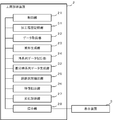
- FIG. 1 is a diagram illustrating an example of a hardware configuration of a machine tool.
- the machine tool 1 includes a tool diagnostic device 2, a display device 3, an input device 4, a servo amplifier 5, a servo motor 6, a spindle amplifier 7, a spindle motor 8, and a peripheral device 9.
- the tool diagnostic device 2 is a device for diagnosing deterioration such as wear of a tool, particularly a drilling tool.
- the drilling tool is, for example, a drill.
- the drill is, for example, a solid drill, a replaceable cutting edge drill, or a gun drill.
- the tool diagnostic device 2 may be incorporated in the numerical control device of the machine tool 1. Further, the tool diagnostic device 2 may be incorporated in a PC (Personal Computer) connected to the numerical control device of the machine tool 1, a server, or the like. In the present embodiment, the tool diagnostic device 2 is incorporated in the numerical control device of the machine tool 1, and the tool diagnostic device 2 will be described as executing each function of the numerical control device.
- PC Personal Computer
- the tool diagnostic device 2 includes a CPU (Central Processing Unit) 10, a bus 11, a ROM (Read Only Memory) 12, a RAM (Random Access Memory) 13, and a non-volatile memory 14.
- CPU Central Processing Unit
- bus 11 a bus 11
- ROM Read Only Memory
- RAM Random Access Memory
- the CPU 10 is a processor that controls the entire tool diagnostic device 2 according to a system program.
- the CPU 10 reads out the system program, the tool diagnosis program, and the like stored in the ROM 12 via the bus 11. Further, the CPU 10 executes the diagnosis process of the tool according to the tool diagnosis program. Further, the CPU 10 controls the servomotor 6 and the spindle motor 8 according to the machining program to execute drilling.
- the bus 11 is a communication path that connects each hardware in the tool diagnostic device 2 to each other. Each piece of hardware in the tool diagnostic device 2 exchanges data via the bus 11.
- the ROM 12 is a storage device that stores a system program for controlling the entire tool diagnostic device 2, a tool diagnostic program for diagnosing deterioration of a drilling tool, an analysis program for analyzing various data, and the like.
- the RAM 13 is a storage device that temporarily stores various data.
- the RAM 13 temporarily stores data related to the tool path calculated by analyzing the machining program, data for display, data input from the outside, and the like.
- the RAM 13 functions as a work area for the CPU 10 to process various data.
- the non-volatile memory 14 is a storage device that retains data even when the machine tool 1 is turned off and the tool diagnostic device 2 is not supplied with power.
- the non-volatile memory 14 is composed of, for example, an SSD (Solid State Drive).
- the non-volatile memory 14 stores, for example, tool correction data input from the input device 4, a machining program input via a network (not shown), and the like.
- the tool diagnostic device 2 further includes a first interface 15, a second interface 16, an axis control circuit 17, a spindle control circuit 18, a PLC (Programmable Logic Controller) 19, and an I / O unit 20. I have.
- the first interface 15 is an interface for connecting the bus 11 and the display device 3.
- the first interface 15 sends, for example, various data processed by the CPU 10 to the display device 3.
- the display device 3 is a device that receives various data via the first interface 15 and displays various data.
- the display device 3 displays, for example, a machining program stored in the non-volatile memory 14, data related to a tool correction amount, and the like.
- the display device 3 is a display such as an LCD (Liquid Crystal Display).
- the second interface 16 is an interface for connecting the bus 11 and the input device 4.
- the second interface 16 sends, for example, the data input from the input device 4 to the CPU 10 via the bus 11.
- the input device 4 is a device for inputting various data.
- the input device 4 receives, for example, input of data regarding the correction amount of the tool, and sends the input data to the non-volatile memory 14 via the second interface 16.
- the input device 4 is, for example, a keyboard.
- the input device 4 and the display device 3 may be configured as one device such as a touch panel.
- the axis control circuit 17 is a control circuit that controls the servomotor 6.
- the axis control circuit 17 receives a control command from the CPU 10 and outputs a command for driving the servomotor 6 to the servo amplifier 5.
- the axis control circuit 17 sends, for example, a torque command for controlling the torque of the servomotor 6 to the servo amplifier 5. Further, the axis control circuit 17 may send a rotation speed command for controlling the rotation speed of the servomotor 6 to the servo amplifier 5.
- the servo amplifier 5 receives a command from the axis control circuit 17 and supplies electric power to the servomotor 6.
- the servo motor 6 is a motor that receives power from the servo amplifier 5 and drives it.
- the servomotor 6 is connected to, for example, a tool post, a spindle head, and a ball screw that drives a table.
- the components of the machine tool 1 such as the tool post, spindle head, and table move, for example, in the X-axis direction, the Y-axis direction, or the Z-axis direction.
- the machine tool 1 may have a detector (not shown) for detecting the position and moving speed of a component such as a tool post.
- the axis control circuit 17 may perform feedback control using the detection data output from the detector.
- the spindle control circuit 18 is a control circuit for controlling the spindle motor 8.
- the spindle control circuit 18 receives a control command from the CPU 10 and outputs a command for driving the spindle motor 8 to the spindle amplifier.
- the spindle control circuit 18 sends, for example, a torque command for controlling the torque of the spindle motor 8 to the spindle amplifier 7. Further, the spindle control circuit 18 may send a rotation speed command for controlling the rotation speed of the spindle motor 8 to the spindle amplifier 7.
- the spindle amplifier 7 receives a command from the spindle control circuit 18 and supplies electric power to the spindle motor 8.
- the spindle motor 8 is a motor that is driven by receiving electric power from the spindle amplifier 7.
- the spindle motor 8 is connected to a spindle (not shown) to rotate the spindle.
- the spindle motor 8 may be connected to, for example, a position coder (not shown) that detects the rotation angle of the spindle.
- the position coder outputs a feedback pulse according to the rotation angle of the spindle.
- the spindle control circuit 18 may perform feedback control using the feedback pulse output from the position coder.
- the feedback pulse input to the spindle control circuit 18 may be input to the CPU 10.
- the PLC 19 is a control device that executes a ladder program to control the peripheral device 9.
- the PLC 19 controls the peripheral device 9 via the I / O unit 20.
- the I / O unit 20 is an interface for connecting the PLC 19 and the peripheral device 9.
- the I / O unit 20 sends a command received from the PLC 19 to the peripheral device 9.
- the peripheral device 9 is a device that is installed in the machine tool 1 and performs an auxiliary operation when the machine tool 1 processes the work.
- the peripheral device 9 may be a device installed around the machine tool 1.
- the peripheral device 9 is a robot such as a tool changer and a manipulator, for example.
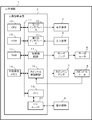
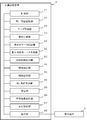
- FIG. 2 is a block diagram showing an example of the function of the tool diagnostic apparatus 2 of the first embodiment.
- the tool diagnosis device 2 is, for example, a control unit 21, a data acquisition unit 22, a waveform generation unit 23, a time series data storage unit 24, a diagnosis section extraction unit 25, a feature extraction unit 26, and a deterioration diagnosis unit 27. And a presentation unit 28.
- the control unit 21, the data acquisition unit 22, the waveform generation unit 23, the diagnosis section extraction unit 25, the feature extraction unit 26, the deterioration diagnosis unit 27, and the presentation unit 28 are, for example, a system program in which the CPU 10 is stored in the ROM 12, a tool diagnosis. It is realized by performing arithmetic processing using the RAM 13 as a work area using a program and various data. Further, the time-series data storage unit 24 is realized by storing the calculation result of the calculation process of the CPU 10 in the RAM 13 or the non-volatile memory 14.
- the control unit 21 controls the entire tool diagnostic device 2.
- the control unit 21 controls the servomotor 6 and the spindle motor 8 according to, for example, a machining program to machine a hole in the work.
- the data acquisition unit 22 acquires time-series data regarding the deterioration state of the drilling tool when the drilling tool is used to machine the hole.
- the deteriorated state is, for example, wear or breakage of the tool.
- the time-series data is, for example, a set of data acquired for each control cycle when the hole is machined.
- the hole machined by the drilling tool is, for example, a blind hole.
- the data acquisition unit 22 acquires servo data as time-series data, for example, from the spindle control circuit 18.
- the servo data is, for example, command data indicating a command value of a torque command output from the spindle control circuit 18 to the spindle amplifier 7, or feedback data indicating the torque of the spindle fed back from the spindle motor 8 to the spindle control circuit 18. Is.
- the servo data is command data indicating the command value of the rotation speed command output from the spindle control circuit 18 to the spindle amplifier 7, or feedback data indicating the rotation speed of the spindle fed back from the spindle motor 8 to the spindle control circuit 18. May be.
- the waveform generation unit 23 generates waveform data based on the time-series data acquired by the data acquisition unit 22. For example, the waveform generation unit 23 plots the command value of the torque command acquired for each control cycle on a graph whose vertical axis is the command value of the torque command and the horizontal axis is the time, and generates waveform data. That is, the waveform data is data processed so that changes in time-series data can be perceived.
- the waveform generation unit 23 generates waveform data based on the time series data acquired while the first hole is being machined with a new drilling tool. Further, the waveform generation unit 23 generates waveform data based on the time-series data acquired while the hole is being machined with a non-new drilling tool.
- a new drilling tool is an unused drilling tool that has not yet been used for machining.
- a non-new drilling tool is a drilling tool that has already been used to machine some holes.
- the waveform generation unit may generate waveform data at any timing.
- waveform data may be continuously generated during the machining of each hole.
- the waveform generation unit 23 may generate waveform data every time a predetermined number of holes are machined, or every time a predetermined number of holes are machined.
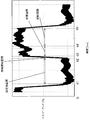
- 3 and 4 show an example of waveform data generated by the waveform generation unit 23.
- FIG. 3 is a diagram showing waveform data generated based on time series data acquired when the first hole is machined with a new drilling tool.
- the vertical axis is the command value of the torque command
- the horizontal axis is the time.
- waveform data generated based on the time series data acquired in the non-contact section where the drilling tool and the work are in non-contact state are shown.
- the data value of the waveform data changes at a low value.
- the middle position of the hole is a position between the entrance of the hole and the bottom of the hole after processing, and is a position on the entrance side of the middle of the hole.
- the intermediate position of the hole is, for example, a position at a depth of about 1/3 of the total length of the hole. That is, the initial section has a length equal to or less than the diagnosis section described later, and the diagnosis section has a length equal to or longer than the initial section.
- the processing end position the position of the hole bottom after the processing is completed is referred to as the processing end position.
- the initial section is a section where the data value of the waveform data is not stable due to the influence of various noises. That is, it is difficult to reflect the deterioration state of the drilling tool in the time series data acquired in the initial section.
- the area of the outer peripheral surface of the drilling tool guided by the inner peripheral surface of the hole is small, so it is considered that vibration occurs in the drilling tool.
- the diagnosis section is a section in which time-series data reflecting the deterioration state of the drilling tool is acquired when the drilling tool deteriorates.
- the data value of the waveform data in the diagnostic section shown in FIG. 3 has changed at an almost constant value on average. In other words, when the waveform data shown in FIG. 3 is smoothed, the data value of the waveform data changes at a substantially constant value in the diagnostic section.
- T5 is the time when the drilling tool reaches the machining end position and the drilling finish is completed. At t5, the drawing of the drilling tool from the hole is started. When the drilling tool is completely pulled out of the hole, the drilling tool is positioned in another hole to machine another hole.
- FIG. 4 is a diagram showing waveform data generated based on time series data acquired when machining is performed by a non-new drilling tool.
- the vertical axis is the command value of the torque command
- the horizontal axis is the time. This waveform data is used for diagnosing deterioration of the drilling tool.
- T2'to t3' show the waveform data generated based on the time series data acquired in the contact start section. Similar to the waveform data of a new drilling tool, the data value of the waveform data rises sharply in the contact start section.
- T3'to t4' show the waveform data generated based on the time series data acquired in the initial section.
- the data value of the waveform data moves up and down on average.
- the data value rises once, then falls, and then rises in the initial section.
- the area of the outer peripheral surface of the drilling tool guided by the inner peripheral surface of the hole is small, so that it is considered that vibration occurs in the drilling tool.
- T4'to t5' show the waveform data generated based on the time series data acquired in the diagnosis section.
- the data value of the waveform data rises further on average and remains at a high value.
- the data value increases in the diagnostic section and changes to a high value. The cause is that the cutting edge of the drilling tool has deteriorated due to wear and the like, and the cutting resistance has increased.
- T5' is the time when the drilling tool reaches the machining end position and the drilling is completed. At t5', the drawing of the drilling tool is started. When the drilling tool is completely pulled out of the hole, the drilling tool is positioned in another hole to machine another hole.
- the time-series data storage unit 24 stores the time-series data acquired by the data acquisition unit 22.
- the time-series data stored in the time-series data storage unit 24 is, for example, waveform data generated by the waveform generation unit 23.
- the time-series data storage unit 24 stores the time-series data acquired when machining is performed with a new drilling tool. Further, the time-series data storage unit 24 stores the time-series data acquired when machining is performed with a drilling tool that is not new.
- the diagnosis section extraction unit 25 extracts the diagnosis section time-series data acquired when the diagnosis section is being processed from the time-series data stored in the time-series data storage unit 24.
- the diagnostic section time-series data is, for example, diagnostic section waveform data generated based on the time-series data acquired while the diagnostic section is being processed.
- the amount of diagnostic section time-series data to be extracted is set in advance by the operator or the like according to the type of drilling tool or the combination of the type of drilling tool and the material of the work. For example, when the diameter of the drilling tool is large with respect to the total length of the drilling tool, the vibration generated at the initial stage of the drilling process is settled relatively early. In this case, the length of the diagnosis section time series data is set to be relatively long.
- the length of the diagnosis section time series data is set to be relatively short. The reason for setting the length of the diagnosis section time series data in this way is to efficiently eliminate the influence of noise appearing in the time series data of the initial section.
- the diagnosis section extraction unit 25 extracts the diagnosis section time-series data by specifying the time-series data acquired when the drilling tool is machining the diagnosis section, for example, based on the machining program and the servo data. ..
- the feature extraction unit 26 extracts feature data indicating the characteristics of the diagnosis section time series data extracted by the diagnosis section extraction unit 25.
- the feature data is, for example, at least one of the mean, variance, skewness, and kurtosis of the data values indicated by the diagnostic interval time series data. Further, the feature data may be the maximum value of the data value indicated by the diagnosis section time series data.
- the deterioration diagnosis unit 27 diagnoses the deterioration of the drilling tool based on the feature data extracted by the feature extraction unit 26.
- the deterioration diagnosis unit 27 determines, for example, whether or not the data value indicated by the feature data is equal to or more than a predetermined threshold value or is equal to or less than the threshold value, and whether or not the drilling tool is deteriorated. Diagnose whether or not.
- the deterioration diagnosis unit 27 determines which threshold value the feature data value exceeds, and diagnoses the degree of deterioration of the drilling tool.
- the deterioration diagnosis unit 27 determines that the drilling tool has not been deteriorated yet.
- the deterioration diagnosis unit 27 determines that the degree of deterioration of the drilling tool is low.
- the deterioration diagnosis unit 27 determines that the deterioration of the drilling tool has progressed a little.
- the deterioration diagnosis unit 27 determines that the deterioration of the drilling tool has progressed considerably and the use limit has been reached.
- the deterioration diagnosis unit 27 may estimate the life of the drilling tool according to the degree of deterioration of the drilling tool.
- the life of a drilling tool is the time it takes for the drilling tool to reach its usage limit.
- the presentation unit 28 presents the diagnosis result of the drilling tool by the deterioration diagnosis unit 27. For example, the presentation unit 28 outputs data indicating the diagnosis result of the deterioration state of the drilling tool to the display device 3. Further, the presentation unit 28 may output feature data indicating the features of the time series data to the display device 3 together with the diagnosis result of the drilling tool.
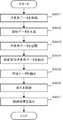
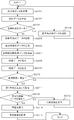
- FIG. 5 is a flowchart showing an example of the flow of processing executed by the tool diagnostic apparatus 2.
- the tool diagnostic apparatus 2 may execute the process described below each time each hole is machined. Further, the tool diagnostic apparatus 2 may execute this process every time a predetermined number of holes are machined.
- the data acquisition unit 22 acquires time-series data regarding the deterioration state of the drilling tool (step SA01).
- the waveform generation unit 23 generates waveform data based on the time-series data acquired by the data acquisition unit 22 (step SA02).
- the time-series data storage unit 24 stores the time-series data acquired by the data acquisition unit 22 (step SA03).
- the time-series data stored in the time-series data storage unit 24 is, for example, waveform data generated by the waveform generation unit 23.
- the diagnosis section extraction unit 25 extracts the diagnosis section time-series data from the time-series data stored in the time-series data storage unit 24 (step SA04).
- the feature extraction unit 26 extracts feature data indicating the characteristics of the diagnosis section time series data extracted by the diagnosis section extraction unit 25 (step SA05).
- the deterioration diagnosis unit 27 diagnoses the deterioration of the drilling tool based on the feature data extracted by the feature extraction unit 26 (step SA06).
- the presentation unit 28 presents the diagnosis result of the deterioration of the drilling tool diagnosed by the deterioration diagnosis unit 27 (step SA07), and ends the process.
- the tool diagnostic device 2 of the present embodiment diagnoses deterioration of the drilling tool by using the diagnosis section time series data. Therefore, it is possible to eliminate the influence of noise appearing in the time series data of the initial section. As a result, the tool diagnostic device 2 can accurately diagnose the deterioration of the drilling tool.
- the diagnostic section is set to a length equal to or longer than the initial section from the entrance of the hole to the intermediate position. Therefore, the deterioration of the drilling tool can be diagnosed based on the time-series data in which the deterioration state of the drilling tool is surely reflected.
- the tool diagnostic apparatus 2 of the present embodiment at least one of the data indicating the torque of the spindle of the machine tool and the data indicating the rotation speed of the spindle is acquired. Therefore, it is possible to easily acquire time-series data regarding the deterioration state of the drilling tool.
- the tool diagnostic apparatus 2 of the present embodiment at least one of the time-series data of the command data for drilling the hole and the feedback data fed back when machining the hole is acquired. Therefore, it is possible to easily acquire time-series data regarding the deterioration state of the drilling tool.
- the feature data showing the features of the diagnosis section time series data is extracted, and the deterioration of the drilling tool is diagnosed based on the feature data. Therefore, it is possible to eliminate the influence of noise and diagnose the deterioration of the drilling tool.
- the deterioration of the drilling tool is diagnosed based on at least one of the characteristics of the average, variance, skewness, and kurtosis of the data values indicated by the time-series data in the diagnosis section. Therefore, appropriate feature data can be used according to various drilling tools.
- the tool diagnostic apparatus of the second embodiment diagnoses deterioration of the drilling tool by using the difference time series data showing the difference between the reference time series data that is the reference in the tool diagnosis and the diagnosis time series data that is the diagnosis target. do.
- the reference time series data and the diagnosis time series data will be described in detail later.
- FIG. 6 is a block diagram showing an example of the function of the tool diagnostic apparatus 2 of the second embodiment.
- the waveform generation unit 23 generates waveform data based on the time-series data acquired by the data acquisition unit 22.
- the waveform generation unit 23 generates reference waveform data based on the time-series data acquired while drilling with a new drilling tool.
- the reference waveform data is waveform data that serves as a reference when diagnosing deterioration of the tool.
- the waveform data shown in FIG. 3 is waveform data generated based on time-series data acquired while drilling with a new drilling tool. That is, the waveform data shown in FIG. 3 is reference waveform data.
- the waveform generation unit 23 generates diagnostic waveform data based on time-series data acquired while drilling is being performed by a non-new drilling tool.
- the diagnostic waveform data is waveform data to be diagnosed when diagnosing whether or not the drilling tool is deteriorated.
- the waveform data shown in FIG. 4 is waveform data generated based on time-series data acquired during drilling with a non-new drilling tool. .. That is, the waveform data shown in FIG. 4 is diagnostic waveform data.
- the time-series data storage unit 24 stores reference time-series data acquired while drilling with a new drilling tool.
- the reference time-series data stored in the time-series data storage unit 24 is, for example, the reference waveform data generated by the waveform generation unit 23.
- the time-series data storage unit 24 stores diagnostic time-series data acquired while drilling is being performed by a non-new drilling tool.
- the diagnostic time-series data stored in the time-series data storage unit 24 is, for example, diagnostic waveform data generated by the waveform generation unit 23.
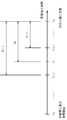
- the difference time-series data generation unit 32 includes time-series data of each section of the non-contact section, contact start section, initial section, and diagnosis section in the diagnosis time-series data, and the non-contact section, contact start section, and initial in the reference time-series data. Difference time series data is generated by calculating the difference from the time series data of each section of the section and the diagnosis section.
- T1 "to t2" are differential waveform data showing the difference between the reference waveform data and the diagnostic waveform data in the non-contact section.
- the difference waveform data in the non-contact section changes around zero on average. That is, there is almost no difference between the reference waveform data and the diagnostic waveform data in this section.
- T2 "to t3" are differential waveform data showing the difference between the reference waveform data and the diagnostic waveform data in the contact start section.
- the difference waveform data is temporarily increased. It is considered that this is because there is a momentary difference between the rise timing of the data value in the reference waveform data and the rise timing of the data value in the diagnostic waveform data.
- T4 "to t5" are differential waveform data showing the difference between the reference waveform data and the diagnostic waveform data in the diagnostic section.
- the difference waveform data in the diagnosis section changes at a high value on average.
- the difference waveform data shown in FIG. 8 is smoothed, the value indicated by the difference waveform data changes at a high value in the diagnosis section. This is because the cutting edge of the drilling tool has deteriorated due to wear and the like, and the cutting resistance has increased.
- the feature extraction unit 26 extracts feature data indicating the characteristics of the diagnosis section time series data extracted by the diagnosis section extraction unit 25.
- the feature data is, for example, at least one of the mean, variance, skewness, and kurtosis of the data values indicated by the diagnostic interval time series data.
- the deterioration diagnosis unit 27 diagnoses the deterioration of the drilling tool based on the feature data extracted by the feature extraction unit 26.
- the deterioration diagnosis unit 27 determines, for example, whether or not the value indicated by the feature data is equal to or more than a predetermined threshold value or whether or not the value is equal to or less than the threshold value, and whether or not the drilling tool is deteriorated. Diagnose.
- the presentation unit 28 presents the diagnosis result of the drilling tool by the deterioration diagnosis unit 27.
- the presentation unit 28 outputs data indicating the diagnosis result of the deterioration state of the drilling tool to the display device 3.
- the waveform generation unit 23 generates waveform data based on the time-series data acquired by the data acquisition unit 22 (step SB02).
- step SB03 it is determined whether the acquired time-series data is reference time-series data or diagnostic time-series data.
- the time-series data storage unit 24 stores the reference time-series data (step SB04).
- the process returns to the process of step SB01 again.
- the time-series data storage unit 24 stores the diagnostic time-series data (step SB05).
- the difference time series data generation unit 32 generates the difference time series data based on the reference time series data and the diagnosis time series data stored in the time series data storage unit 24 (step SB06).
- diagnosis section extraction unit 25 uses the diagnosis section time-series data indicating the time-series data acquired while the diagnosis section is being processed among the difference time-series data generated by the difference time-series data generation unit 32. Extract (step SB07).
- the feature extraction unit 26 extracts feature data indicating the features of the diagnosis section time series data (step SB08).
- the deterioration diagnosis unit 27 diagnoses the deterioration of the drilling tool based on the feature data extracted by the feature extraction unit 26 (step SB09).
- the presentation unit 28 presents the diagnosis result of the drilling tool diagnosed by the deterioration diagnosis unit 27 (step SB10).
- the tool diagnostic device 2 of the third embodiment has a control unit 21, a machining history storage unit 31, a data acquisition unit 22, a waveform generation unit 23, and a time-series data storage unit 24 included in the tool diagnostic device 2 of the second embodiment.
- the tool diagnostic device 2 further includes a feature storage unit 33, a remaining life calculation unit 34, a learning unit 35, and a learning result storage unit 36.
- FIG. 11 is a diagram illustrating the relationship between the timing Ti from which the feature data was extracted and the remaining life Si.
- the remaining life calculation unit 34 extracted each feature data by subtracting the cumulative machining time of the drilling tool at the timing Ti from which each feature data was extracted from the cumulative machining time when the drilling tool reached the usage limit.
- the remaining life Si at the timing Ti is calculated.
- the deterioration diagnosis unit 27 diagnoses the remaining life Si of the tool using the learning model stored in the learning result storage unit 36.
- the deterioration diagnosis unit 27 inputs the feature data showing the features of the diagnosis section time series data into the learning model, and obtains the output regarding the remaining life Si of the drilling tool.
- the deterioration diagnosis unit 27 can diagnose the remaining life Si when the diagnosis time-series data, which is the original data of the difference time-series data, is acquired.
- the presentation unit 28 presents the diagnosis result of the drilling tool executed by the deterioration diagnosis unit 27.
- the presentation unit 28 outputs the diagnosis result to the display device 3, for example.
- step SC03 it is determined whether the acquired time-series data is reference time-series data or diagnostic time-series data.
- the time-series data storage unit 24 stores the diagnostic time-series data (step SC05).
- diagnosis section extraction unit 25 uses the diagnosis section time-series data indicating the time-series data acquired while the diagnosis section is being processed among the difference time-series data generated by the difference time-series data generation unit 32. Extract (step SC07).
- the feature storage unit 33 stores the feature data extracted by the feature extraction unit 26 (step SC09).
- step SC10 it is determined whether or not the drilling tool has reached the usage limit. For example, when the drilling tool is broken, or when the surface roughness of the machined hole exceeds a predetermined threshold value, it is determined to be the usage limit.
- the limit of use may be determined by a skilled worker.
- step SC10 If it is determined that the drilling tool has not reached the usage limit yet (No in step SC10), the process returns to step SC01 again.
- the remaining life calculation unit 34 When it is determined that the drilling tool has reached the usage limit (Yes in step SC10), the remaining life calculation unit 34 has the remaining life Si at the timing Ti from which each feature data stored in the feature storage unit 33 is extracted. Is calculated, and the feature data and the data indicating the remaining life Si are associated with each other and stored in the feature storage unit 33 (step SC11).
- the teacher data stored in the feature storage unit 33 is a data set of the feature data and the data indicating the remaining life Si associated with the feature data. This is determined by whether or not the amount of data in the data set stored in the feature storage unit 33 has reached a predetermined amount of data.
- step SC12 If it is determined that sufficient teacher data has not been accumulated yet (No in step SC12), the drilling tool is replaced with a new drilling tool (step SC13), and the process returns to step SC01.
- step SC12 When it is determined that sufficient teacher data has been accumulated (Yes in step SC12), the learning unit 35 executes learning and creates a learning model (step SC14).
- the learning result storage unit 36 stores the learning model created by the learning unit 35 (step SC15).
- the tool diagnostic device 2 creates a learning model by executing the above processing.
- FIG. 13 is a flowchart showing an example of a process executed by the tool diagnostic device 2 when diagnosing the life of the drilling tool.
- the tool diagnostic apparatus 2 may execute the process described below each time each hole is machined. Further, the tool diagnostic apparatus 2 may execute this process every time a predetermined number of holes are machined.
- the data acquisition unit 22 acquires time-series data regarding the deterioration state of the drilling tool (step SD01).
- the waveform generation unit 23 generates the waveform data indicated by the time-series data acquired by the data acquisition unit 22 (step SD02).
- step SD03 it is determined whether the acquired time-series data is reference time-series data or diagnostic time-series data.
- the time-series data storage unit 24 stores the diagnostic time-series data (step SD05).
- the difference time series data generation unit 32 generates the difference time series data based on the reference time series data and the diagnosis time series data stored in the time series data storage unit 24 (step SD06).
- the feature extraction unit 26 extracts the feature data indicating the characteristics of the diagnosis section time series data extracted by the diagnosis section extraction unit 25 (step SD08).
- the deterioration diagnosis unit 27 inputs feature data into the learning model stored in the learning result storage unit 36, and diagnoses the remaining life Si of the tool (step SD09).
- the presentation unit 28 presents the remaining life Si of the drilling tool diagnosed by the deterioration diagnosis unit 27 (step SD10).
- the tool diagnostic device 2 can diagnose the remaining life Si of the tool by executing the above processing.
- the tool diagnostic apparatus 2 of the present embodiment uses a learning model created by the learning unit 35 to execute machine learning to diagnose the remaining life Si of the tool, thereby making the remaining life Si of the drilling tool highly accurate. Can be diagnosed with.
- the data acquisition unit 22 may acquire time-series data regarding the deterioration state of the drilling tool from a plurality of machine tools 1 connected via a network (not shown). In this case, a large amount of teacher data can be stored in the feature storage unit 33 in a short time. Further, the deterioration diagnosis unit 27 can diagnose the deterioration of the drilling tool used in each of the plurality of machine tools.
- the tool diagnostic device 2 may perform deterioration diagnosis of the drilling tool by using a learning model created by another tool diagnostic device 2 connected via a network. In this case, the tool diagnostic device 2 does not need to execute machine learning to create a learning model.
- the servo data is not limited to this, and may be, for example, feedback data of the current value of the current supplied to the servomotor 6 or the current value acquired from the servomotor 6.
- time series data acquired by the data acquisition unit 22 is not limited to the servo data.
- time-series data related to vibration generated in a drilling tool when drilling using an acceleration sensor or the like may be acquired.
- time-series data regarding elastic waves emitted from the drilling tool may be acquired using an AE (Acoustic Emission) sensor.
- AE Acoustic Emission
- the deterioration of the drilling tool may be diagnosed by performing frequency analysis of the time series data acquired in the diagnosis section.
- the time series data does not need to be plotted on the graph. That is, the tool diagnostic apparatus 2 extracts the feature data indicating the characteristics of the time-series data by executing the arithmetic processing of the diagnosis section time-series data acquired in the diagnosis section among the time-series data, and is based on the feature data. You may diagnose the deterioration of the drilling tool.
- the control unit 21 sends a command to the tool changer to replace the drilling tool that has reached the usage limit with a spare drilling tool. May be good.
- the learning unit 35 may generate a learning model by learning the correlation between the feature data showing the characteristics of the diagnosis section of the diagnosis time series data and the remaining life when the diagnosis time series data is acquired.
- Machine tool 1 Machine tool 2 Tool diagnostic device 3 Display device 4 Input device 5 Servo amplifier 6 Servo motor 7 Spindle amplifier 8 Spindle motor 9 Peripheral equipment 10 CPU 11 bus 12 ROM 13 RAM 14 Non-volatile memory 15 First interface 16 Second interface 17 Axis control circuit 18 Spindle control circuit 19 PLC 20 I / O unit 21 Control unit 22 Data acquisition unit 23 Waveform generation unit 24 Time series data storage unit 25 Diagnosis section extraction unit 26 Feature extraction unit 27 Deterioration diagnosis unit 28 Presentation unit 31 Processing history storage unit 32 Difference time series data generation unit 33 Feature storage unit 34 Remaining life calculation unit 35 Learning unit 36 Learning result storage unit Ti Timing Si Remaining life
Landscapes
- Engineering & Computer Science (AREA)
- Mechanical Engineering (AREA)
- Human Computer Interaction (AREA)
- Manufacturing & Machinery (AREA)
- Physics & Mathematics (AREA)
- General Physics & Mathematics (AREA)
- Automation & Control Theory (AREA)
- Testing Of Devices, Machine Parts, Or Other Structures Thereof (AREA)
- Numerical Control (AREA)
Priority Applications (4)
| Application Number | Priority Date | Filing Date | Title |
|---|---|---|---|
| CN202180045003.5A CN115768577A (zh) | 2020-06-24 | 2021-06-21 | 工具诊断装置以及工具诊断方法 |
| US18/002,851 US20230305520A1 (en) | 2020-06-24 | 2021-06-21 | Tool diagnostic device and tool diagnostic method |
| JP2022531958A JPWO2021261418A1 (https=) | 2020-06-24 | 2021-06-21 | |
| DE112021003337.9T DE112021003337T5 (de) | 2020-06-24 | 2021-06-21 | Werkzeugdiagnosegerät und werkzeugdiagnoseverfahren |
Applications Claiming Priority (2)
| Application Number | Priority Date | Filing Date | Title |
|---|---|---|---|
| JP2020-109100 | 2020-06-24 | ||
| JP2020109100 | 2020-06-24 |
Publications (1)
| Publication Number | Publication Date |
|---|---|
| WO2021261418A1 true WO2021261418A1 (ja) | 2021-12-30 |
Family
ID=79281387
Family Applications (1)
| Application Number | Title | Priority Date | Filing Date |
|---|---|---|---|
| PCT/JP2021/023312 Ceased WO2021261418A1 (ja) | 2020-06-24 | 2021-06-21 | 工具診断装置、および工具診断方法 |
Country Status (5)
| Country | Link |
|---|---|
| US (1) | US20230305520A1 (https=) |
| JP (1) | JPWO2021261418A1 (https=) |
| CN (1) | CN115768577A (https=) |
| DE (1) | DE112021003337T5 (https=) |
| WO (1) | WO2021261418A1 (https=) |
Cited By (1)
| Publication number | Priority date | Publication date | Assignee | Title |
|---|---|---|---|---|
| JP7302757B1 (ja) * | 2022-06-16 | 2023-07-04 | 住友電気工業株式会社 | 異常検知システム、異常検知装置、異常検知方法、及びコンピュータプログラム |
Families Citing this family (1)
| Publication number | Priority date | Publication date | Assignee | Title |
|---|---|---|---|---|
| CN119589493B (zh) * | 2024-11-14 | 2025-12-02 | 中航西安飞机工业集团股份有限公司 | 一种钛合金航空结构件粗加工刀具磨损自适应监测方法 |
Citations (4)
| Publication number | Priority date | Publication date | Assignee | Title |
|---|---|---|---|---|
| JP4919999B2 (ja) * | 2008-03-24 | 2012-04-18 | 三菱電機株式会社 | 工具寿命検出方法および工具寿命検出装置 |
| JP5089618B2 (ja) * | 2009-01-13 | 2012-12-05 | 三菱電機株式会社 | 工具寿命検出方法及び工具寿命検出装置 |
| JP2018103284A (ja) * | 2016-12-22 | 2018-07-05 | ファナック株式会社 | 工具寿命推定装置 |
| JP2020067776A (ja) * | 2018-10-23 | 2020-04-30 | オークマ株式会社 | 工作機械の異常診断システム、異常診断方法、異常診断プログラム |
Family Cites Families (25)
| Publication number | Priority date | Publication date | Assignee | Title |
|---|---|---|---|---|
| US4228514A (en) * | 1979-04-16 | 1980-10-14 | Bell Telephone Laboratories, Incorporated | Method and system for determining the wear of a drill bit in real time |
| US4471444A (en) * | 1982-04-02 | 1984-09-11 | The United States Of America As Represented By The Secretary Of Commerce | Rotating tool wear monitoring apparatus |
| US5197018A (en) * | 1991-03-26 | 1993-03-23 | Texas Instruments Incorporated | Apparatus and method for drill wear prediction |
| US5251144A (en) * | 1991-04-18 | 1993-10-05 | Texas Instruments Incorporated | System and method utilizing a real time expert system for tool life prediction and tool wear diagnosis |
| JP3095881B2 (ja) * | 1992-05-27 | 2000-10-10 | オークマ株式会社 | 工具寿命予知装置 |
| JPH0751998A (ja) | 1993-08-09 | 1995-02-28 | Fanuc Ltd | 工具の寿命推定方法 |
| US5940787A (en) * | 1993-12-10 | 1999-08-17 | U.S. Tech Corporation | Apparatuses and methods of monitoring the condition of tools and workpieces |
| JP3883485B2 (ja) * | 2002-10-08 | 2007-02-21 | ファナック株式会社 | 工具折損あるいは予知検出装置 |
| GB0229459D0 (en) * | 2002-12-19 | 2003-01-22 | Renishaw Plc | Tool analysis device and method |
| JP2008097128A (ja) * | 2006-10-06 | 2008-04-24 | Cimx Kk | 管理装置、解析装置、及びプログラム |
| GB0709420D0 (en) * | 2007-05-17 | 2007-06-27 | Rolls Royce Plc | Machining process monitor |
| US20090129882A1 (en) * | 2007-11-15 | 2009-05-21 | D4D Technologies, Llc | Methods, Systems, and Devices for Monitoring Tools in a Dental Milling Machine |
| JP5402183B2 (ja) * | 2009-04-10 | 2014-01-29 | オムロン株式会社 | 監視装置、監視装置の制御方法、および制御プログラム |
| JP2011118840A (ja) * | 2009-12-07 | 2011-06-16 | Fanuc Ltd | モータ負荷トルク測定機能を有する数値制御装置 |
| US9772256B2 (en) * | 2012-01-19 | 2017-09-26 | Fuji Machine Mfg. Co., Ltd. | Tool abnormality determination system |
| JP6340236B2 (ja) * | 2014-04-15 | 2018-06-06 | 三菱重工工作機械株式会社 | 工作機械の診断方法及びシステム |
| US20160349737A1 (en) * | 2015-05-29 | 2016-12-01 | Chun-Tai Yen | Manufacturing efficiency optimization platform and tool condition monitoring and prediction method |
| JP6156566B2 (ja) * | 2015-12-25 | 2017-07-05 | 株式会社リコー | 診断装置、診断方法、プログラムおよび診断システム |
| JP6675297B2 (ja) * | 2016-12-09 | 2020-04-01 | Dmg森精機株式会社 | 情報処理方法、情報処理システム、および情報処理装置 |
| JP6571704B2 (ja) * | 2017-02-13 | 2019-09-04 | ファナック株式会社 | 診断用データ取得システム、診断用システム、及び診断用データ取得プログラム |
| WO2019031683A1 (ko) * | 2017-08-11 | 2019-02-14 | (주)아이티공간 | 구동부의 정밀 예지 보전방법 |
| JP6987030B2 (ja) * | 2018-07-18 | 2021-12-22 | 株式会社日立製作所 | システム及び工作機械の異常又は加工作業に関する分析方法 |
| JP6933630B2 (ja) * | 2018-12-06 | 2021-09-08 | ファナック株式会社 | 処理時間監視装置 |
| CN110561193B (zh) * | 2019-09-18 | 2020-09-29 | 杭州友机技术有限公司 | 一种基于特征融合的刀具磨损评估及监控的方法与系统 |
| EP3893066A1 (de) * | 2020-04-09 | 2021-10-13 | Siemens Aktiengesellschaft | Verfahren und vorrichtung zum betrieb einer maschine mit einem werkzeug |
-
2021
- 2021-06-21 DE DE112021003337.9T patent/DE112021003337T5/de not_active Withdrawn
- 2021-06-21 JP JP2022531958A patent/JPWO2021261418A1/ja active Pending
- 2021-06-21 US US18/002,851 patent/US20230305520A1/en not_active Abandoned
- 2021-06-21 CN CN202180045003.5A patent/CN115768577A/zh not_active Withdrawn
- 2021-06-21 WO PCT/JP2021/023312 patent/WO2021261418A1/ja not_active Ceased
Patent Citations (4)
| Publication number | Priority date | Publication date | Assignee | Title |
|---|---|---|---|---|
| JP4919999B2 (ja) * | 2008-03-24 | 2012-04-18 | 三菱電機株式会社 | 工具寿命検出方法および工具寿命検出装置 |
| JP5089618B2 (ja) * | 2009-01-13 | 2012-12-05 | 三菱電機株式会社 | 工具寿命検出方法及び工具寿命検出装置 |
| JP2018103284A (ja) * | 2016-12-22 | 2018-07-05 | ファナック株式会社 | 工具寿命推定装置 |
| JP2020067776A (ja) * | 2018-10-23 | 2020-04-30 | オークマ株式会社 | 工作機械の異常診断システム、異常診断方法、異常診断プログラム |
Cited By (2)
| Publication number | Priority date | Publication date | Assignee | Title |
|---|---|---|---|---|
| JP7302757B1 (ja) * | 2022-06-16 | 2023-07-04 | 住友電気工業株式会社 | 異常検知システム、異常検知装置、異常検知方法、及びコンピュータプログラム |
| WO2023243043A1 (ja) * | 2022-06-16 | 2023-12-21 | 住友電気工業株式会社 | 異常検知システム、異常検知装置、異常検知方法、及びコンピュータプログラム |
Also Published As
| Publication number | Publication date |
|---|---|
| DE112021003337T5 (de) | 2023-04-06 |
| CN115768577A (zh) | 2023-03-07 |
| US20230305520A1 (en) | 2023-09-28 |
| JPWO2021261418A1 (https=) | 2021-12-30 |
Similar Documents
| Publication | Publication Date | Title |
|---|---|---|
| EP1342534A2 (en) | Tool abnormality detecting device | |
| JP3883485B2 (ja) | 工具折損あるいは予知検出装置 | |
| JP6698604B2 (ja) | 数値制御システム、及び工具状態検知方法 | |
| JP6698603B2 (ja) | 数値制御システム、及び運転状態異常検知方法 | |
| JP6557198B2 (ja) | 数値制御装置 | |
| CN105171525B (zh) | 机床的诊断方法及系统 | |
| EP3372342A1 (en) | Finish-machining amount prediction apparatus and machine learning device | |
| CN1781659B (zh) | 控制装置 | |
| JP6140115B2 (ja) | 加工シミュレーション装置 | |
| US20180341244A1 (en) | Controller and machine learning device | |
| JP2018153872A (ja) | 洗浄工程最適化装置及び機械学習装置 | |
| CN106056263A (zh) | 机床的管理系统 | |
| CN110174871B (zh) | 控制装置、机器学习装置以及系统 | |
| WO2021261418A1 (ja) | 工具診断装置、および工具診断方法 | |
| CN103785903A (zh) | 具备螺纹切削循环功能的数值控制装置 | |
| JP6629672B2 (ja) | 加工装置 | |
| JP6034835B2 (ja) | サイクルタイムを短縮するための情報を提示する数値制御装置 | |
| RU2108900C1 (ru) | Контроллер для станков с чпу | |
| JPH10228304A (ja) | 加工装置 | |
| JP7794961B2 (ja) | 数値制御装置およびコンピュータ読み取り可能な記憶媒体 | |
| CN107229253B (zh) | 容易实施干扰检测后的对策的数值控制装置 | |
| JP2003271213A (ja) | 移動軸監視装置、移動軸監視方法、移動軸監視プログラムおよびその移動軸監視プログラムを記録したコンピュータ読取り可能な記録媒体 | |
| JP7549035B2 (ja) | 工具損傷検出装置、およびコンピュータ読み取り可能な記憶媒体 | |
| JP7578699B2 (ja) | 数値制御装置、工作機械、および工作機械の制御方法 | |
| JP2003326437A (ja) | 加工装置 |
Legal Events
| Date | Code | Title | Description |
|---|---|---|---|
| 121 | Ep: the epo has been informed by wipo that ep was designated in this application |
Ref document number: 21829017 Country of ref document: EP Kind code of ref document: A1 |
|
| ENP | Entry into the national phase |
Ref document number: 2022531958 Country of ref document: JP Kind code of ref document: A |
|
| 122 | Ep: pct application non-entry in european phase |
Ref document number: 21829017 Country of ref document: EP Kind code of ref document: A1 |