WO2021245866A1 - 最適化問題の最適解演算装置及び最適化問題の最適解演算方法 - Google Patents
最適化問題の最適解演算装置及び最適化問題の最適解演算方法 Download PDFInfo
- Publication number
- WO2021245866A1 WO2021245866A1 PCT/JP2020/022063 JP2020022063W WO2021245866A1 WO 2021245866 A1 WO2021245866 A1 WO 2021245866A1 JP 2020022063 W JP2020022063 W JP 2020022063W WO 2021245866 A1 WO2021245866 A1 WO 2021245866A1
- Authority
- WO
- WIPO (PCT)
- Prior art keywords
- solution
- calculation
- evaluation
- optimization problem
- iterative
- Prior art date
- Legal status (The legal status is an assumption and is not a legal conclusion. Google has not performed a legal analysis and makes no representation as to the accuracy of the status listed.)
- Ceased
Links
Images





Classifications
-
- G—PHYSICS
- G06—COMPUTING OR CALCULATING; COUNTING
- G06N—COMPUTING ARRANGEMENTS BASED ON SPECIFIC COMPUTATIONAL MODELS
- G06N5/00—Computing arrangements using knowledge-based models
- G06N5/01—Dynamic search techniques; Heuristics; Dynamic trees; Branch-and-bound
-
- G—PHYSICS
- G06—COMPUTING OR CALCULATING; COUNTING
- G06F—ELECTRIC DIGITAL DATA PROCESSING
- G06F17/00—Digital computing or data processing equipment or methods, specially adapted for specific functions
- G06F17/10—Complex mathematical operations
- G06F17/11—Complex mathematical operations for solving equations, e.g. nonlinear equations, general mathematical optimization problems
- G06F17/12—Simultaneous equations, e.g. systems of linear equations
Definitions
- the present application relates to an optimum solution calculation device for an optimization problem and an optimum solution calculation method for an optimization problem.
- Patent Document 1 discloses an apparatus and method for solving an optimization problem, that is, an optimal solution arithmetic unit for an optimization problem and a structural optimal design method and a structural optimal design apparatus for an example of an optimal solution arithmetic method for an optimization problem. ing.
- the structure optimization design method of Patent Document 1 is a method of solving a double structure optimization problem, and is a method of solving a state variable vector optimization problem at each iterative step of the design variable vector optimization problem.
- the structural optimization design apparatus of Patent Document 1 is a first solving means for solving an optimization problem of a first evaluation general function for a state variable vector and a design variable vector, and a second solution for the state variable vector and the design variable vector. It is a device that has a second solving means for solving an optimization problem of an evaluation general function and solves a structural optimization design problem formulated as a double optimization problem.
- the second evaluation functional of the second solution means is composed of the norm of the residual vector, and the convergence judgment of the optimization problem operation of the second evaluation functional is performed. The determination is made by confirming that the square of the norm of the residual vector is smaller than the preset convergence determination threshold.
- the convergence test is performed based on the magnitude of the residual norm and the preset convergence test threshold value.
- the convergence test threshold value is not satisfied due to the influence of the calculation error included in the residual vector due to the rounding error in the calculation, and the converged solution may not be obtained even if the iterative calculation is repeated.
- the technique disclosed in the present specification aims to obtain a converged solution in a situation where the calculation error included in the residual vector affects the calculation of the solution.
- the optimal solution calculation device of an example of the optimization problem disclosed in the present specification is an optimal solution calculation device for an optimization problem that calculates a solution to an input optimization problem via processing by an update unit.
- the optimal solution calculation device of the optimization problem acquires the inequality constraint set, the evaluation function, and the initial solution, which are the set of inequality constraints related to the optimization problem, as inputs, and executes the execution to satisfy all the inequality constraints of the inequality constraint set based on the initial solution.
- An initial condition generator that generates a possible initial solution and an equality constraint set that is a set of equality constraints for which an equality holds from the inequality constraint set for the feasible initial solution, and in the case of the first time
- the evaluation function is calculated by performing the solution calculation of the simultaneous linear equations generated from the equation constraint set and the evaluation function.
- the optimization calculation unit that calculates the evaluation solution, which is the solution to be minimized or maximized, and the evaluation solution output by the optimization calculation unit are determined, and the constraints that the evaluation solution should satisfy are updated from the equation constraint set. It includes an updated set of equation constraints and an update unit that generates updated input solutions based on the previous input solution and the evaluation solution.
- the optimization calculation unit uses an initial norm calculation unit that calculates the initial residual norm from the initial residual vector, which is the difference between the vector on the left side of the simultaneous linear equations for the input solution and the vector on the right side of the simultaneous linear equations, and the iterative method.
- the vector on the left side of the simultaneous linear equation and the right side of the simultaneous linear equation for the iterative solution calculated by the iterative solution calculation unit that executes and calculates the iterative solution that is the solution for each iteration of the simultaneous linear equation.
- Which of the norm calculation unit that calculates the residual norm from the residual vector which is the difference from the vector of, the preset first threshold, and the relaxation parameter and the second threshold set based on the initial residual norm.
- a convergence judgment unit that determines that the iterative solution has converged when the residual norm is below the convergence determination threshold, which is the larger one, and outputs the iterative solution determined to have converged as an evaluation solution.
- the updater determines that the update of the equation constraint set is unnecessary, determines the evaluation solution as the optimal solution when the convergence test threshold is the first threshold, and sets the optimal solution as the output solution that is the solution to the optimization problem. Output.
- the convergence determination unit has a preset first threshold value and a second threshold value set based on the relaxation parameter and the initial residual norm.
- the convergence judgment threshold which is the larger one
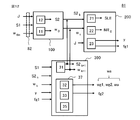
- FIG. It is a figure which shows the functional block in the optimal solution arithmetic unit of the optimization problem which concerns on Embodiment 1.
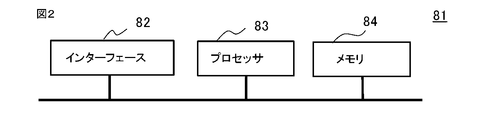
- FIG. It is a figure which shows the hardware configuration example of the optimal solution arithmetic unit of the optimization problem which concerns on Embodiment 1.
- FIG. It is a figure which shows the functional block of the evaluation solution calculation part of FIG. It is a figure which shows the operation flow of the optimal solution arithmetic unit of the optimization problem of FIG. It is a figure which shows the operation flow of the initial condition generation part of FIG. It is a figure which shows the operation flow of the optimization calculation part of FIG. It is a figure which shows the operation flow of the evaluation solution calculation part of FIG. It is a figure which shows the first example of the operation flow in the update part of FIG.
- FIG. 1 is a diagram showing a functional block in the optimum solution calculation device of the optimization problem according to the first embodiment
- FIG. 2 shows a hardware configuration example of the optimum solution calculation device of the optimization problem according to the first embodiment. It is a figure.
- FIG. 3 is a diagram showing a functional block of the evaluation solution calculation unit of FIG.
- FIG. 4 is a diagram showing an operation flow of the optimum solution calculation device of the optimization problem of FIG. 1
- FIG. 5 is a diagram showing an operation flow of the initial condition generation unit of FIG. 1
- FIG. 6 is a diagram showing the operation flow of the optimization of FIG. It is a figure which shows the operation flow of the arithmetic unit.
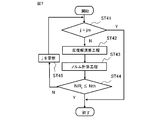
- FIG. 7 is a diagram showing an operation flow of the evaluation solution calculation unit of FIG.
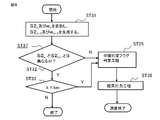
- FIG. 8 is a diagram showing a first example of the operation flow of the update unit of FIG. 9 is a diagram showing a second example of the operation flow in the update unit of FIG. 1
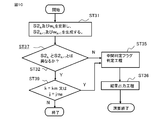
- FIG. 10 is a diagram showing a third example of the operation flow in the update unit of FIG. 1.
- the optimum solution calculation device 81 for the optimization problem according to the first embodiment is realized by a control unit built in the device that needs to solve the optimization problem. For example, when solving an optimization problem related to a vehicle such as when solving an optimization problem for making a vehicle follow a target route or when solving a problem for optimizing fuel efficiency, the vehicle is mounted on a control unit mounted on the vehicle.
- the optimization calculation device 81 of the example of the optimization problem disclosed in the present specification does not limit the target of the optimization problem, and when various optimization problems are given, the optimization problem is not limited. It is a device that calculates the solution of.
- FIG. 2 shows an example of the hardware configuration of the optimum solution arithmetic unit 81 for the optimization problem.
- the optimum solution calculation device 81 for an optimization problem includes an interface 82 for acquiring various optimization problems and outputting the calculation results of the acquired optimization problems, a processor 83 for calculating the optimum solution for the optimization problem, and a processor 83. It is equipped with a program for solving an optimization problem, a memory 84 for storing arithmetic data, and the like.
- the functional block of the optimum solution arithmetic unit 81 of the optimization problem is realized by the processor 83 executing the program stored in the memory 84. Further, a plurality of processors 83 and a plurality of memories 84 may cooperate to execute each function.
- the functional block and the operation flow of the optimum solution calculation device 81 of the optimization problem according to the first embodiment will be described with reference to FIGS. 1 and 4.
- the optimal solution arithmetic unit for the optimization problem will be simply referred to as the optimal solution arithmetic unit.
- the optimum solution calculation device 81 includes an initial condition generation unit 100, an optimization calculation unit 200, and an update unit 300.
- the initial condition generation unit 100 inputs input data including an initial condition for calculating a solution of an optimization problem by an iterative operation of the optimization calculation unit 200 for a given optimization problem, that is, an input optimization problem. Generate.
- the optimization calculation unit 200 is a converged solution or a non-divergent solution based on the input data including the initial condition generated by the initial condition generation unit 100 or the input data including the update condition updated by the update unit 300.
- the evaluation solution y is a solution that does not diverge at least, and includes a solution that is approaching convergence but has reached the upper limit of the number of repeated solution operations.
- the update unit 300 updates the input data used for the calculation again by the optimization calculation unit 200 when there is a condition to be satisfied by the evaluation solution y calculated by the optimization calculation unit 200, and when the evaluation solution y satisfies the determination condition.
- the output solution wa including the optimum solution wg1 or the quasi-optimum solution wg2 is output.
- the optimum solution wg1 is a solution that satisfies the first tolerance of the preset solution
- the quasi-optimal solution wg2 is a solution that satisfies the second tolerance of the preset solution that is looser than the first tolerance.
- the input data input to the optimization calculation unit 200 is a solution w k and an equation constraint set S2 k .
- the input data generated by the initial condition generation unit 100 is an executable initial solution w 0 and an initial equation constraint set S2.
- the input data including the initial conditions generated by the initial condition generation unit 100 will be referred to as initial input data
- the input data including the update conditions updated by the update unit 300 will be referred to as update input data.
- the executable initial solution w 0 and the initial equation constraint set S2 are input to the optimization calculation unit 200 as initial input data.
- the solution w k and the equation constraint set S2 k are input to the optimization operation unit 200 as update input data.
- the optimum solution calculation device 81 executes the initial condition generation step of step ST1, the optimization calculation step of step ST2, and the update step of step ST3.
- the optimal solution calculation device 81 generates initial input data, that is, an executable initial solution w 0 , and an initial equation constraint set S2 for the given optimization problem by the initial condition generation unit 100 (the initial condition generation unit 100). Initial condition generation process).
- the optimum solution calculation device 81 is based on the initial input data generated by the initial condition generation step or the update input data updated by the update step of step ST3, that is, the solution w k , and the equation constraint set S2 k in step ST2. , At least the evaluation solution y that does not diverge is calculated (optimization calculation step).
- step ST3 the optimum solution calculation device 81 updates the input data used for the calculation of the optimization process again when there is a condition to be satisfied by the evaluation solution y calculated in the optimization calculation process, and the evaluation solution y is calculated.
- the output solution wa including the optimum solution wg1 or the quasi-optimal solution wg2 is output (update step).
- the initial condition generation unit 100 passes through the interface 82 to the evaluation function J of the optimization problem represented by the equation (1), the set of inequality constraints represented by the equation (2), that is, the inequality constraint set S1, and the initial solution.
- the inequality constraint set S1, the evaluation function J, and the initial solution w 0in are input conditions for the optimization problem.
- w is the solution vector and w T is the transposed solution vector.
- H is the first conditional matrix and h T is the adjustment row vector.
- CT is a constraint matrix and b is a constraint vector.
- the equation (2) is shown as an upper limit constraint, a lower limit constraint may be included. In the case of the lower limit constraint, it can be treated as an upper limit constraint as in the equation (2) by multiplying both sides of the constraint equation by -1 and inverting the sign.
- the initial condition generation unit 100 includes an initial solution generation unit 11 that generates a feasible initial solution w 0, and an equality constraint set generation unit 12 that generates an equality constraint set S2 from an inequality constraint set S1.
- the initial condition generation unit 100 executes the initial solution generation step of step ST11 and the equation constraint set generation step of step ST12.
- the initial solution generation step of step ST11 is executed by the initial solution generation unit 11, and the equality constraint set generation step of step ST12 is executed by the equality constraint set generation unit 12.
- the initial solution generation unit 11 generates an executable initial solution w 0 (initial solution generation step).
- the initial solution generation unit 11 sets the input initial solution w 0in as the executable initial solution w 0 . If the solution does not satisfy the inequality constraint set S1 and is an infeasible solution, the initial solution generation unit 11 generates an executable initial solution w 0 that satisfies the inequality constraint set S1.
- step ST12 equality constraints set generation unit 12, to the feasible initial solution w 0, extracting only constraint equality in inequality constraint set S1 is satisfied, is a set of equality constraints
- the equality constraint set S2 is generated as in the equation (3) (equal constraint set generation step).
- the right-hand side b of the equation (3), in the executable initial solution w 0, is a constraint vector equality is satisfied.
- AT 0 is a constraint matrix when the executable initial solution w 0 satisfies the constraint vector b.
- the functional blocks and the operation flow of the optimization calculation unit 200 will be described with reference to FIGS. 1, 3, 6, and 7.
- the optimization calculation unit 200 acquires the evaluation function J of the optimization problem, the equation constraint set S2k, and the solution w k as inputs.
- the subscript k of the solution w k and the equation constraint set S2 k corresponds to the number of iterations of the optimization operation unit 200, that is, the number of operation iterations, and k is 0 in the first operation.
- the solution w k and the equality constraint set S2 k are the executable initial solution w 0 and the equality constraint set S2, respectively.
- the optimization calculation unit 200 calculates an equation generation unit 21 that generates a simultaneous linear equation SLE including a Karush-Koon-tucker condition (KKT condition), and an initial residual norm NR 0 which is a norm of an initial residual vector r in. It includes an initial norm calculation unit 22, and an evaluation solution calculation unit 23 that calculates at least an evaluation solution y that does not diverge and generates an intermediate determination flag fg1.
- the intermediate determination flag fg1 is the first convergent solution in which the solution satisfies the first tolerance of the preset solution, or the second of the preset solutions in which the solution does not satisfy the first tolerance of the preset solution. It is a flag indicating whether it is a second convergent solution that satisfies the margin of error.
- the optimization calculation unit 200 executes the equation generation step of step ST21, the initial norm calculation step of step ST22, and the evaluation solution calculation step of step ST23.
- the equation generation step of step ST21 is executed by the equation generation unit 21
- the initial norm calculation step of step ST22 is executed by the initial norm calculation unit 22
- the evaluation solution calculation step of step ST23 is executed by the evaluation solution calculation unit 23.
- the evaluation solution calculation unit 23 includes an operation count determination unit 24 for determining whether the number of repeated solution operations j has reached the upper limit of the number of repeated solution operations jm, an iterative solution calculation unit 25 for calculating the iterative solution y j, and a residual vector r. It is provided with a norm calculation unit 26 for calculating the residual norm NR j which is the norm of j , and a convergence determination unit 27 for performing a convergence determination of the iterative solution y j and generating an evaluation solution y and an intermediate determination flag fg1.
- the evaluation solution calculation unit 23 executes steps ST41 to ST45 as the evaluation solution calculation step of step ST23.
- the iterative solution calculation count determination step in step ST41 and the iterative solution calculation count update step in step ST45 are executed by the calculation count determination unit 24.
- the iterative solution calculation step of step ST42 is executed by the iterative solution calculation unit 25
- the norm calculation step of step ST43 is executed by the norm calculation unit 26
- the convergence determination step of step ST44 is executed by the convergence determination unit 27.
- a simultaneous system for solving the minimization problem of the evaluation function J constraining only the equation constraint in step ST21 a simultaneous system for solving the minimization problem of the evaluation function J constraining only the equation constraint in step ST21.
- Generate a linear equation SLE (equation generation step).
- the minimization problem of the evaluation function J, which is constrained only by the equation constraint, is expressed by the equation (4).
- a simultaneous linear equation SLE including the Karush-Kuhn-Tucker condition (KKT condition) is generated as in the equation (5).
- Y in the equation (5) is an evaluation solution of the minimization problem in which the number of arithmetic iterations expressed in the equation (4) is k, and ⁇ is a Lagrange multiplier corresponding to each constraint.
- h is an adjustment column vector, and has a transposed relationship with the adjustment row vector h T.
- a k is the constraint matrix operation repetition number of k
- a T k is the transposed matrix of the constraint matrix A k.
- b k is a constraint vector in which the number of operation iterations is k.
- the converged evaluation solution y can be said to be a convergent solution including the optimum solution of the minimization problem when the number of operation iterations is k.
- the converged evaluation solution y becomes the optimum solution of the minimization problem represented by the equation (4) when the calculation determination unit 37 of the update unit 300 determines that the solution is the optimum solution.
- the subscript k corresponds to the number of arithmetic iterations of the optimization arithmetic unit 200 as described above.
- the evaluation solution y generated by the evaluation solution calculation unit 23 is the solution w k + 1 updated by the update unit 300.
- This solution w k + 1 is the solution w k input to the optimization calculation unit 200 at the updated number of calculation iterations k.
- Equation (6) which simplifies the notation of the simultaneous linear equations SLE shown in the equation (5) will be used.
- the matrix on the left side that is, the constraint matrix in the equation (5) is expressed as A ⁇
- the column vector including y on the left side is expressed as x
- the column vector including b k on the right side that is, the constraint vector is expressed as b ⁇ .
- an initial residual norm NR 0 is the norm of the initial residual vector r in the simultaneous linear equations SLE for the acquired solution w k that is, the input solution as an optimization calculation unit 200 is input Calculate as in equation (7).
- the initial residual vector r in is represented by an equation sandwiched between the symbols “
- the initial residual vector r in is the difference between the vector on the left side of the simultaneous linear equation SLE and the vector on the right side of the simultaneous linear equation SLE for the solution w k.
- a k ⁇ is a constraint matrix A ⁇ at which the number of operation iterations is k
- b k ⁇ is a constraint vector b ⁇ at which the number of operation iterations is k.
- step ST23 the evaluation solution calculation unit 23 executes the iterative solution calculation process a plurality of times, and performs the solution calculation of the simultaneous linear equations SLE using the iterative method to minimize the evaluation function J, that is, converge.
- the evaluation solution y which is a solution or a solution that does not diverge, is calculated (evaluation solution calculation step).
- the evaluation solution calculation process of step ST23 will be described in detail.
- the calculation count determination unit 24 determines whether the iteration count calculation count j of the optimization calculation unit 200 has reached the preset iterative solution calculation count upper limit value jm (repetition solution calculation count determination step). ..
- step ST41 if the number of repeated solution operations j has reached the upper limit of the number of repeated solution operations jm, the process ends, and if the number of repeated solution operations j has not reached the upper limit of the number of repeated solution operations jm, step ST42. Proceed to.
- step ST42 the iterative solution calculation unit 25 executes the iterative solution calculation process and performs the solution calculation of the simultaneous linear equations SLE using the iterative method to obtain a solution that minimizes the evaluation function J, that is, an iterative solution y j . Calculate (repetitive solution calculation process). The number of iterative solution operations j will be described later.
- a method using a Krylov subspace method such as a conjugate gradient method (CG (conjugate gradient) method) or a generalized minimum residual method (GMRES (generalized minimal residual) method) is used.
- CG conjugate gradient
- GMRES generalized minimum residual
- preprocessing may be performed on the simultaneous linear equations SLE in order to improve numerical convergence and stability.
- Kiyoji Fujino and Tatsuyoshi Zhang “Mathematics of Iterative Method", Asakura Shoten, 1996, or Masatake Mori, "Numerical Numbers”. Details are described in “Analysis 2nd Edition", Krylov Mathematics Course 12, 2002.
- the norm calculation unit 26 formulates the residual norm NR j , which is the norm of the residual vector r j in the simultaneous linear equation SLE, for the iterative solution y j calculated in the iterative solution calculation step of step ST42.
- the residual vector r j is represented by an equation sandwiched between the symbols “
- the residual vector r j is the difference between the vector on the left side of the simultaneous linear equation SLE and the vector on the right side of the simultaneous linear equation SLE for the iterative solution y j.
- the subscript j indicates the number of iterations of the operation for solving the simultaneous linear equation SLE performed in the iterative solution calculation step of step ST42, that is, the number of iterations. This is different from the calculation iteration count k indicating the number of iterations of the optimization calculation unit 200. It means that the iterative solution operation of the iterative solution calculation process of step ST42 is performed j times at the kth iteration of the optimization calculation unit 200.
- the convergence test unit 27 determines whether the iterative solution y j has converged (convergence test step). Specifically, the convergence determination unit 27 in the simultaneous linear equation SLE for the iterative solution y j obtained by the norm calculation unit 26 with respect to the solution obtained by the jth iterative solution operation in step ST42, that is, the iterative solution y j. It is determined whether the residual norm NR j, which is the norm of the residual vector r j , is equal to or less than the convergence determination threshold Nth.
- step ST44 when the residual norm NR j is equal to or less than the convergence test threshold Nth, the convergence test unit 27 determines that the solution of the simultaneous linear equations SLE has been obtained, and sets the converged iterative solution y j as the converged evaluation solution y. Output and exit.
- step ST44 if the residual norm NR j is not equal to or less than the convergence test threshold value Nth, that is, if it is larger than the convergence test threshold value Nth, the process returns to step ST41 via step ST45.
- the calculation number determination unit 24 updates the number of repeated solution operations j by one in step ST45 (repeated solution operation number update step), and executes the iterative solution calculation number determination step in step ST41.
- Optimizing operation unit 200 outputs the evaluated solution y for iterative solution y j converges the convergence iterations solutions y j when converged.
- Optimizing operation unit 200 evaluation iterative solution number of operations j is when iterative solving y j to reach the iterative solving calculation count upper limit value jm does not converge, not diverge did not converge iterative solution y j Output as solution y.
- the data is updated by the update unit 300 in step ST2.
- the residual norm NR j becomes small, and a converged iterative solution y j can be obtained. If the number of calculation iterations k, the upper limit of the number of iterations j, the upper limit of the number of iterations km, and the upper limit of the number of iterations jm cannot be made sufficiently large, a converged solution cannot be obtained. Sometimes. In this case, no solution is processed in the result output step of step ST36 described later.
- the convergence judgment threshold Nth used in the convergence judgment step of step ST44 is the first threshold value Nt1 preset from the tolerance of the solution, the relaxation parameter m, and the initial residual norm NR 0 calculated by the initial norm calculation step of step ST22. Compare with the second threshold value Nt2 set based on, and set to the larger one. That is, the convergence determination threshold value Nth is either the first threshold value Nt1 set in advance or the second threshold value Nt2 set based on the relaxation parameter m and the initial residual norm NR 0, whichever is larger.
- the second threshold value Nt2 is set as in the following equation (9).
- the convergence determination threshold value Nth By setting the convergence determination threshold value Nth to the larger of the first threshold value Nt1 and the second threshold value Nt2, when the initial residual norm NR 0 is small, the first threshold value Nt1 is used in the convergence determination step of step ST44 to converge. Since the determined solution is obtained, a solution with an accuracy within the preset first tolerance is obtained in the evaluation solution calculation step of step ST23.
- the solution for which the convergence test is performed using the first threshold value Nt1 is a sufficiently optimized solution, and can be an output solution wa showing the optimum solution through the processing of the update unit 300.
- the initial residual norm NR 0 when the initial residual norm NR 0 is large, a solution obtained by performing a convergence test using the second threshold value Nt2 in the convergence test step of step ST44.
- the solution for which the convergence test is performed using the second threshold value Nt2 is a semi-optimized solution that exceeds the preset first margin of error but satisfies the second tolerance of the preset solution. It can be an output solution wa showing a quasi-optimal solution through the processing of the update unit 300.
- the number of significant digits is insufficient, and the residual vector r j or the iterative solution y j diverges in the iterative solution calculation step of step ST42 due to the influence of numerical errors such as digit loss, and diverges in the evaluation solution calculation step of step ST23. It is possible to prevent the problem that the evaluation solution y that has not been obtained cannot be obtained.
- the second limit Nt2 is set using the initial residual norm NR 0 and the relaxation parameter m considering the number of significant digits of the variable used in the calculation, before the influence of the numerical error of the residual norm NR j becomes large. , Convergence determination can be made.
- the relaxation parameter m is set to 10 2 to 10 4 as the first range E1 when the calculation is performed using the single-precision type variable for each variable of the optimizing calculation unit 200. Further, the relaxation parameter m is set to 10 8 to 10 12 as the second range E2 when the calculation is performed using the double precision type variable. Variables such as the iterative solution y j calculated in the iterative solution calculation step of step ST42 and the residual vector r j calculated in the norm calculation step of step ST43 by setting an appropriate value for the relaxation parameter m. , A sufficient number of significant digits can be secured.
- the optimum solution calculation device 81 repeats the evaluation solution calculation step of step ST23 as usual, and makes a convergence test using the first threshold Nt1 in the convergence test of step ST44.
- the optimization calculation unit 200 can obtain a solution with an accuracy within a preset tolerance.
- the iterative solution y j calculated in the iterative solution calculation step of step ST42 and the norm calculation step of step ST43 If there is a possibility that the residual vector r j calculated in is not appropriate, the iterative solution y j and the residual vector are obtained by performing the convergence test using the second threshold Nt2 in the convergence test step of step ST44. It is possible to prevent the possibility that r j becomes inappropriate.
- the convergence test step of step ST44 there may be a case where the convergence test is performed by the second threshold value Nt2 instead of the first threshold value Nt1 set in advance from the tolerance of the solution. In that case, the accuracy of the evaluation solution y output from the optimization calculation unit 200 is lowered.
- the evaluation solution y is output as an iterative upper limit operation solution in which the number of iterative solution operations j exceeds the iterative solution operation number upper limit value jm.
- the evaluation solution y is updated to the solution w k + 1 by the update unit 300, the updated equation constraint set S2 k + 1 and the solution w k + 1 are input to the optimization calculation unit 200, and the arithmetic processing of the optimization calculation unit 200, that is, The optimization calculation step of step ST2 is executed again.
- the iterative solution y j in the iterative solution operation in step ST42 and the residual vector r j calculated in the norm calculation step in step ST43 become inappropriate, and the solution of the simultaneous linear equations SLE cannot be obtained, which is an intended effect. Cannot be obtained.
- the value of the relaxation parameter m is within the first range E1 or the second range E2, a converged evaluation solution y can be obtained by setting a sufficient upper limit value jm for the number of repeated solution operations.
- the evaluation solution calculation unit 23 When the evaluation solution calculation unit 23 makes a convergence test using the first threshold value Nt1 as the convergence test threshold value Nth in the convergence test in step ST44, the evaluation solution y satisfies the first tolerance of the preset solution. The intermediate determination flag fg1 indicating that is is output. Further, when the evaluation solution calculation unit 23 makes a convergence test using the second threshold value Nt2 as the convergence test threshold value Nth in the convergence test in step ST44, the evaluation solution y determines the second margin of error of the preset solution. The intermediate determination flag fg1 indicating that the solution is satisfied is output. The solution that satisfies the first margin of error is the first convergent solution, and the solution that satisfies the second margin of error is the second convergent solution.
- a first convergent solution can be indicated if the intermediate determination flag fg1 is 3, and a second convergent solution can be indicated if the intermediate determination flag fg1 is 2.
- Updating unit 300 updates the equality constraint set S2 k and solutions w k, equation updated constraint set S2 k + 1 and the solution w k + 1 data updating unit 31 that generates, determines the solution w k + 1, the determination condition It is provided with an arithmetic determination unit 37 that generates an output solution wa to be satisfied and a determination flag fg2.
- the calculation determination unit 37 is a set update determination unit 32 that determines whether the equation constraint set S2 k has been updated, an update count determination unit 33 that determines whether the operation iteration count k has reached the operation iteration count upper limit value km, and a determination.
- the update unit 300 executes the data update step of step ST31 and the calculation determination step of step ST37.
- the calculation determination step of step ST37 includes a set update determination step of step ST32, an update number determination step of step ST33, an intermediate determination flag determination step of step ST35, and a result output process of step ST36.
- the data update step of step ST31 is executed by the data update unit 31, and the calculation determination step of step ST37 is executed by the calculation determination unit 37.
- the set update determination step of step ST32 is executed by the set update determination unit 32, and the update count determination step of step ST33 is executed by the update count determination unit 33.
- the intermediate determination flag determination step in step ST35 and the result output step in step ST36 are executed by the result output unit 35.
- Updating unit 300 the inequality constraint set S1, equality constraint set S2 k, optimized input to the arithmetic unit 200 the solution w k, generated by optimizing operation unit 200 evaluated solutions y, enter the intermediate determination flag fg1 Get as.
- the equation constraint set S2 k and the solution w k input to the optimization calculation unit 200 are updated, and the updated equation constraint set S2 k + 1 and the solution w k + 1 are output.
- the optimization calculation unit 200 uses the equation constraint set S2 k + 1 and the solution w k + 1 as the equation constraint set S2 k and the solution w k that are input when the k + 1st operation is performed.
- the equation constraint set S2 k + 1 and the solution w k + 1 are determined as follows.
- step ST31 when there is a constraint to be added to the equation constraint set S2 k (update method 1)
- the data update unit 31 sets the solution w k + 1 output by the update unit 300 as the equation (10). Determined by. However, ⁇ is set to the largest value under the condition that 0 ⁇ ⁇ 1 and w k + 1 satisfies the inequality constraint set S1. Further, in step ST31, the data update unit 31 newly adds a constraint satisfying the equality constraint with respect to w k + 1 to the equality constraint set S2 k , and generates an updated equality constraint set S2 k + 1.
- step ST31 when there is a constraint to be removed in the equation constraint set S2 k (update method 2)
- the data update unit 31 defines the solution w k + 1 output by the update unit 300 by the equation (11). Further, in step ST31, the data update unit 31 corresponds to the evaluation solution y obtained by the optimization calculation unit 200 having the largest absolute value among the evaluation solutions y that satisfy the Lagrange multiplier ⁇ ⁇ 0. the constraints that are removed from the equality constraint set S2 k, to produce equality constraints set S2 k + 1 that has been updated.
- the data update unit 31 updates the equality constraint set S2 k and the solution w k by the update method 1 or the update method 2, and the updated equality constraint set S2 k + 1 and the solution w k + 1. To generate.
- the optimum The evaluation solution y obtained by the conversion unit 200 is an optimum solution that satisfies the inequality constraint set S1 and minimizes the evaluation function J input to the optimum solution calculation device 81.
- the optimum solution calculation device 81 ends the calculation, and the evaluation solution y is output as the output solution wa of the optimum solution.
- the calculation of the optimum solution calculation device 81 ends. That is, when the output solution wa is output, it is the end of the calculation shown in FIG. 8 and the end shown in FIG. If the output solution wa is output, it is a complete end, and if the condition is not satisfied in step ST33 and the equation constraint set S2 k + 1 and the solution w k + 1 , which are data in the update, are output and ended, the update is completed. be.
- the optimum solution calculation device 81 returns to step ST2 and executes the optimization calculation step.
- the calculation determination process of step ST37 will be described in detail.
- the set update determination unit 32 determines whether the equality constraint set S2 k has been updated, specifically, whether the equality constraint set S2 k and the equality constraint set S2 k + 1 are different. do. If the equality constraint set S2 k and the equality constraint set S2 k + 1 are different, the process proceeds to step ST33, and if the equality constraint set S2 k and the equality constraint set S2 k + 1 are not different, that is, if they are equal, the process proceeds to step ST35. ..
- the update count determination unit 33 determines whether the calculation repeat count k has reached the preset calculation repeat count upper limit value km. If the calculation repetition number k has reached the calculation repetition upper limit value km, the process proceeds to step ST35, and if the calculation repetition number k has not reached the calculation repetition upper limit value km, the update unit 300 is generated by the data update unit 31. The equality constraint set S2 k + 1 and the solution w k + 1 are output to the optimization calculation unit 200, and the update process of step ST3 is completed. As described above, the end in this case is the end of update. When the calculation repetition number k has reached the calculation repetition upper limit value km, the optimum solution arithmetic unit 81 ends the calculation as the repetition upper limit is reached. If calculating the number of iterations k has reached the operation iterations limit km can be said that the number of times the updated equality constraint set S2 k reaches the upper limit value. In this case, it is completely finished.
- the result output unit 35 determines the information of the intermediate determination flag fg1 when proceeding from the set update determination step of step ST32.
- the result output unit 35 When the intermediate determination flag fg1 indicates the first convergent solution, the result output unit 35 generates the determination flag fg2 indicating the optimum solution. Further, when the intermediate determination flag fg1 indicates the second convergent solution, the result output unit 35 generates the determination flag fg2 indicating the quasi-optimal solution.
- the evaluation solution y that satisfies the first tolerance of the preset solution is a sufficiently optimized solution, that is, an optimum solution.
- the evaluation solution y that satisfies the second margin of error of the preset solution is a semi-optimized solution, that is, a semi-optimized solution. More specifically, the evaluation solution y when the convergence test threshold Nth of the convergence test of step ST44 is the first threshold value Nt1 is the optimum solution, and the convergence test threshold Nth of the convergence test of step ST44 is the second threshold value Nt2.
- the evaluation solution y in the case of is a quasi-optimal solution. For example, when the determination flag fg2 is a 2-bit signal, an optimum solution can be indicated if the determination flag fg2 is 3, and a quasi-optimal solution can be indicated if the determination flag fg2 is 2.
- the result output unit 35 does not determine the information of the intermediate determination flag fg1 in the result output process of step ST36. , Outputs the determination flag fg2 indicating no solution.
- the normal output solution wa is not output.
- the determination flag fg2 indicating no solution is 1.
- the normal output solution wa is not output, but 0 may be output as empty (null) data, for example.
- step ST36 when the process proceeds from the set update determination step of step ST32, the result output unit 35 outputs the output solution wa and the determination flag fg2.
- the intermediate determination flag fg1 indicates the first convergent solution
- the evaluation solution y is output as the output solution wa of the optimum solution, that is, the optimum solution wg1, and the determination flag fg2 indicating the optimum solution is output.
- the intermediate determination flag fg1 indicates the second convergent solution
- the evaluation solution y is output as the output solution wa of the quasi-optimal solution, that is, the quasi-optimal solution wg2, and the determination flag fg2 indicating the quasi-optimal solution is output.
- the optimum solution wg1 and the quasi-optimal solution wg2 output as the output solution wa are converged solutions.
- the evaluation solution y is determined to be the optimum solution when it is determined in the set update determination step of step ST32 that the update of the equation constraint set is unnecessary and the convergence determination threshold Nth is the first threshold value Nt1. It can also be said that the solution is output as the output solution wa, which is the solution to the optimization problem.
- the evaluation solution y is determined to be the quasi-optimal solution when it is determined in the set update determination step of step ST32 that the update of the equation constraint set is unnecessary and the convergence test threshold Nth is the second threshold Nt2. It can also be said that the solution is output as an output solution wa which is a solution to the optimization problem when the evaluation solution y is not determined as the optimum solution wg1.
- the optimal solution calculation device 81 for the optimization problem of the first embodiment uses the evaluation solution y calculated by the optimization calculation unit 200, and the equality constraint set S2 k and the solution w k in the update unit 300. Is repeated to obtain the optimum solution or the quasi-optimum solution that minimizes the evaluation function J. Therefore, even if the initial residual norm NR 0 and the residual norm NR j calculated based on the feasible initial solution w 0 generated by the initial condition generation unit 100 are large, the upper limit of the number of repeated solution operations is sufficiently large.
- the optimization calculation unit 200 updates the evaluation solution y in which the convergence judgment is performed using the second threshold value Nt2 in the convergence judgment step of step ST44, that is, the evaluation solution y converged using the second threshold value Nt2. It can be output to the unit 300. Further, the optimum solution calculation device 81 for the optimization problem of the first embodiment updates the equation constraint set S2 k and the solution w k based on the evaluation solution y output from the optimization calculation unit 200, and optimizes again. The calculation unit 200 executes the optimization calculation step of step ST2.
- the optimal solution calculation device 81 for the optimization problem of the first embodiment performs the optimization calculation even when the initial residual norm NR 0 and the residual norm NR j calculated based on the feasible initial solution w 0 are large.
- a new simultaneous linear equation SLE is generated by the part 200, and the solution operation of the simultaneous linear equation SLE is performed again.
- the optimizing operation unit 200 is calculated based on the solutions w k to be inputted to the initial residual norm NR 0, residual norm NR j is small
- the optimization calculation unit 200 transfers the evaluation solution y that has made a convergence determination using the first threshold value Nt1, that is, the evaluation solution y that has converged using the first threshold value Nt1 to the update unit 300. Can be output. Therefore, the optimal solution calculation device 81 for the optimization problem of the first embodiment repeats the optimization calculation step of step ST2 and the update step of step ST3, so that the solution converged using the first threshold value Nt1, that is, preset. It becomes easy to obtain the optimum solution with the accuracy within the allowable range.
- the optimum solution calculation device 81 of the first embodiment performs a convergence determination with the second threshold value Nt2 before the influence of the calculation error on the initial residual vector r in and the residual vector r j becomes large, and at that time.
- the optimization calculation step of step ST2 is executed again by the optimization calculation unit 200 using the evaluation solution y.
- the optimal solution calculation device 81 of the first embodiment sets the initial residual norm NR 0 calculated in the initial norm calculation step of step ST22 when the optimization calculation step of step ST2 is executed again. It can be made smaller.
- the solution w k which is the input initial solution at the time of recalculation, is close to the optimum solution, and the influence of the calculation error on the initial residual vector r in and the residual vector rj is small, so that the first threshold value It becomes easy to obtain a converged solution using Nt1, that is, an optimum solution with an accuracy within a preset allowable range.
- the second threshold value Nt2 is set small even when the second threshold value Nt2 is used, so that the optimum solution of the optimization problem of the first embodiment is solved.
- the arithmetic unit 81 can obtain a solution by the convergence determination based on the first threshold value Nt1.
- the updating unit 300 in the set update determination process of step ST32 if no additional or removal of equality constraints in equality constraints set S2 k satisfies all the inequality constraint set S1, and, As the output solution wa of the optimum solution that minimizes the evaluation function J, the evaluation solution y obtained by the optimization calculation unit 200 is output.
- the output solution wa is the optimum solution wg1 when the convergence test threshold Nth is the first threshold value Nt1 in the convergence test step of step ST44, and the second threshold value Nt2 when the convergence test threshold value Nth is the second threshold value Nt2 in the convergence test step of step ST44. It includes a quasi-optimal solution wg2.
- the residual norm NR j of the simultaneous linear equations SLE is larger than the first threshold Nt1 set from the tolerance of the preset solution, but the update unit 300 sets the determination flag fg2 indicating the quasi-optimal solution. Since it is output, it can be known that the output solution wa obtained by the optimum solution calculation device 81 does not satisfy the tolerance accuracy of the preset solution, that is, the accuracy within the first tolerance of the solution.
- the device that needs to solve the optimization problem provided with the optimum solution calculation device 81 of the optimization problem according to the first embodiment is a quasi-optimal solution for the output solution wa output by the optimum solution calculation device 81 of the optimization problem.
- the determination flag fg2 indicating that is obtained, it is possible to confirm whether or not to adopt the output solution wa.
- the optimum solution calculation device 81 for the optimization problem of the first embodiment can determine the convergence of the evaluation solution y before the calculation error of the residual vector r j affects the calculation error. That is, the optimum solution calculation device 81 for the optimization problem of the first embodiment can obtain a converged solution as the output solution wa in a situation where the calculation error included in the residual vector r j affects the calculation of the optimum solution. ..
- the optimal solution calculation device 81 for the optimization problem of the first embodiment has been described so far for the optimization problem including the inequality constraint.
- the optimization problem constraints are cases equality constraints but also, the optimal solution calculating unit 81 according to the first optimization problem of implementation, before the calculation error of the residual vector r j is affected, evaluated solutions It is possible to determine the convergence of y. That is, even when the constraint of the optimization problem is only the equation constraint, the optimal solution calculation device 81 of the optimization problem of the first embodiment uses the calculation error included in the residual vector to calculate the optimal solution. A converged solution can be obtained in the affected situation.
- the input data input to the optimization calculation unit 200 is the equation constraint set S2 input via the executable initial solution w 0 and the interface 82.
- the equation constraint set generation unit 12 of the initial condition generation unit 100, the data update unit 31, the set update determination unit 32, and the update count determination unit 33 of the update unit 300 are not required. If the result output unit 35 is incorporated in the optimization calculation unit 200, the update unit 300 becomes unnecessary.
- the update count determination step in step ST33 is not limited to the case where only the calculation iteration count k is used.
- the number of iterations j for solving the simultaneous linear equations SLE executed in the evaluation solution calculation step of step ST23 may be considered.
- the update may be completed or the operations may be completed.
- FIG. 9 shows a second example of the operation flow in the update unit 300 in this way. Further, the upper limit of the number of iterations may be set and monitored for each of the number of iterations k and the number of iterations j.
- FIG. 10 shows a third example of the operation flow in the update unit 300 in this way.
- the optimum solution calculation device 81 for the optimization problem of the first embodiment increases the number of repetitions of the optimization calculation process in step ST2. It is possible to prevent the calculation from being completed in a predetermined cycle due to the long calculation time.
- the second example of the operation flow in the update unit 300 shown in FIG. 9 is that the update number determination process of step ST33 in the first example of the operation flow shown in FIG. 8 is changed to the update number determination process of step ST38. different. A part different from the first example of the operation flow shown in FIG. 8 will be mainly described.
- the update unit 300 executes the data update step of step ST31 and the calculation determination step of step ST37.
- the calculation determination in step ST37 includes a set update determination step in step ST32, an update number determination step in step ST38, an intermediate determination flag determination step in step ST35, and a result output process in step ST36.
- the update count determination step in step ST38 is executed by the update count determination unit 33. In the set update determination step of step ST32, if the equality constraint set S2 k and the equality constraint set S2 k + 1 are different, the process proceeds to step ST38.
- the update count determination unit 33 has reached the preset total calculation count upper limit value ktm for the total number of operations kt, which is the sum of the calculation iteration count k and the iterative solution calculation count j. To judge. If the total number of operations kt has reached the total number of operations upper limit value ktm, the process proceeds to step ST35, and if the total number of operations kt has not reached the total number of operations upper limit value ktm, the update unit 300 is generated by the data update unit 31. The obtained equality constraint set S2 k + 1 and the solution w k + 1 are output to the optimization calculation unit 200, and the update process of step ST3 is completed. In this case, the update is completed.
- the optimum solution arithmetic unit 81 ends the operation as the iteration upper limit is reached.
- the total number of operations kt has reached the upper limit of the total number of operations ktm, it can be said that the number of updates of the equation constraint set S2 k has reached the upper limit. In this case, it is a complete end.
- the third example of the operation flow in the update unit 300 shown in FIG. 10 is that the update number determination process of step ST33 in the first example of the operation flow shown in FIG. 8 is changed to the update number determination process of step ST39. different. A part different from the first example of the operation flow shown in FIG. 8 will be mainly described.
- the update unit 300 executes the data update step of step ST31 and the calculation determination step of step ST37.
- the calculation determination in step ST37 includes a set update determination step in step ST32, an update count determination step in step ST39, an intermediate determination flag determination step in step ST35, and a result output process in step ST36.
- the update count determination step in step ST39 is executed by the update count determination unit 33. If the equality constraint set S2 k and the equality constraint set S2 k + 1 are different in the set update determination step of step ST32, the process proceeds to step ST39.
- the update count determination unit 33 has reached the preset calculation iteration count upper limit value km, or the iteration number calculation j is the preset iteration count count. It is determined whether the upper limit value jma has been reached. If the number of arithmetic iterations k has reached the upper limit of the number of arithmetic iterations km, or if the number of iterations j has reached the upper limit of the number of iterations jma, the process proceeds to step ST35, and the number of arithmetic iterations k is the upper limit of the number of arithmetic iterations.
- the update unit 300 has the equality constraint set S2 k + 1 and the solution w k + 1 generated by the data update unit 31. Is output to the optimization calculation unit 200 to end the update process of step ST3. In this case, the update is completed.
- the optimum solution arithmetic unit 81 terminates the operation as reaching the upper limit of iterations. do.
- the optimal solution calculation device 81 for the optimization problem is an optimal solution calculation device for the optimization problem that calculates the solution to the input optimization problem via the processing by the update unit 300. be.
- the optimal solution calculation device 81 of the optimization problem acquires the inequality constraint set S1, the evaluation function J, and the initial solution w 0in , which are a set of inequality constraints related to the optimization problem, as inputs, and the inequality constraint set based on the initial solution w 0in.
- An equality constraint set that generates an feasible initial solution w 0 that satisfies all the inequality constraints of S1 and has equality constraints from the inequality constraint set S1 for the feasible initial solution w 0.
- the initial condition generation unit 100 that generates S2 and the input solution (solution w k ) that is the feasible initial solution w 0 in the first case and the solution w k + 1 updated by the update unit 300 in the subsequent cases. Then, the equation constraint set S2 k (equal constraint set S2 or the equation constraint set S2 k + 1 ) and the simultaneous linear equation SLE generated from the evaluation function J are solved, and the evaluation function J is minimized or maximized.
- the optimization calculation unit 200 that calculates the evaluation solution y, which is the solution, and the evaluation solution y output by the optimization calculation unit 200 are determined, and the constraint that the evaluation solution y should satisfy is updated from the equation constraint set S2 k.
- the optimization calculation unit 200 has an initial residual norm NR 0 from the initial residual vector r in, which is the difference between the vector on the left side of the simultaneous linear equation SLE and the vector on the right side of the simultaneous linear equation SLE for the input solution (solution w k).
- the initial norm calculation unit 22 that calculates the above
- the iterative solution calculation unit 25 that executes the iterative method and calculates the iterative solution y j that is the solution for each number of iterations (the number of iterations j) of the simultaneous linear equations SLE, and the iterations.
- the norm for calculating the residual norm NR j from the residual vector r j which is the difference between the vector on the left side of the simultaneous linear equations SLE and the vector on the right side of the simultaneous linear equations for the iterative solution y j calculated by the solution calculation unit 25.
- Convergence determination threshold Nth which is the larger of the calculation unit 26, the preset first threshold Nt1 and the second threshold Nt2 set based on the relaxation parameter m and the initial residual norm NR 0.
- the following includes a convergence determination unit 27 that determines that the iterative solution y j has converged when the residual norm NR j is reached, and outputs the iterative solution y j determined to have converged as the evaluation solution y. ..
- the update unit 300 determines that the update of the equation constraint set S2 k is unnecessary and the convergence test threshold Nth is the first threshold value Nt1, the evaluation solution y is determined as the optimum solution wg1 and the optimum solution wg1 is optimized.
- the optimum solution calculation device 81 for the optimization problem of the first embodiment is set by the convergence determination unit 27 based on the preset first threshold value Nt1, the relaxation parameter m, and the initial residual norm NR 0.
- Nt1 the first threshold value
- Nt2 the convergence judgment threshold
- Nth the convergence judgment threshold
- the solution y j is output as the evaluation solution y, and the update unit 300 determines that the update of the equation constraint set S2 k is unnecessary, and determines the evaluation solution as the optimum solution when the convergence judgment threshold Nth is the first threshold Nt1. Therefore, a converged solution can be obtained in a situation where the calculation error included in the residual vector r j affects the calculation of the solution.
- the optimum solution calculation method for the optimization problem according to the first embodiment is an optimum solution calculation method for the optimization problem in which the solution to the input optimization problem is calculated via the processing by the update process.
- the optimal solution calculation method for the optimization problem is to acquire the inequality constraint set S1, the evaluation function J, and the initial solution w 0in , which are a set of inequality constraints related to the optimization problem, as inputs, and the inequality constraint set S1 based on the initial solution w 0in.
- inequality constraints set S2 from inequality constraints set S1 is the set of equality constraints which equals is satisfied
- For the input solution (solution w k ) which is the feasible initial solution w 0 in the case of the first time and the solution w k + 1 updated by the update unit 300 in the case of the next time or later.
- a solution that minimizes or maximizes the evaluation function J by performing the solution calculation of the simultaneous linear equation SLE generated from the equality constraint set S2 k (equal constraint set S2 or the equality constraint set S2 k + 1) and the evaluation function J.
- the optimization calculation process for calculating a certain evaluation solution y and the evaluation solution y output by the optimization calculation process are determined, and the constraints to be satisfied by the evaluation solution y are updated and updated from the equation constraint set S2 k. It includes an update step of generating an equation constraint set S2 k + 1 and an updated input solution (solution w k + 1 ) based on the previous input solution (solution w k) and the evaluation solution y.
- the optimization calculation process obtains the initial residual norm NR 0 from the initial residual vector r in, which is the difference between the vector on the left side of the simultaneous linear equation SLE and the vector on the right side of the simultaneous linear equation SLE for the input solution (solution w k).
- the norm calculation process for calculating the residual norm NR j from the residual vector r j which is the difference between the vector on the left side of the simultaneous linear equations SLE and the vector on the right side of the simultaneous linear equations for the iterative solution y j calculated in.
- the residual norm is equal to or less than the convergence determination threshold Nth, which is the larger of the preset first threshold Nt1 and the relaxation parameter m and the second threshold Nt2 set based on the initial residual norm NR 0. It determines that iterative solution y j has converged when NR j becomes, and includes a convergence determination step of outputting the determined iterative solution y j to have converged as evaluation solution y, a.
- the evaluation solution y is determined to be the optimum solution wg1, and the optimum solution wg1 is the optimization problem.
- the optimum solution calculation method for the optimization problem of the first embodiment is set by this configuration based on the first threshold Nt1 preset in the convergence determination step, the relaxation parameter m, and the initial residual norm NR 0.
- Nth which is either of the two thresholds Nt2 and is larger
- FIG. 11 is a diagram showing a first example of a functional block in the optimal solution arithmetic unit of the optimization problem according to the second embodiment
- FIG. 12 is a diagram showing a functional block in the optimal solution arithmetic unit of the optimization problem according to the second embodiment. It is a figure which shows the 2nd example of.
- the result output unit 35 determines the information of the intermediate determination flag fg1. I explained an example of not doing it.
- the optimum solution calculation device 81 of the second embodiment shows a solution in which the result output unit 35 determines the information of the intermediate determination flag fg1 and reaches the repetition upper limit even when the process proceeds from the update count determination step of step ST33.
- This is an example of outputting the output solution wa.
- the first example of the optimal solution arithmetic unit 81 of the optimization problem of the second embodiment shown in FIG. 11 as the output solution wa, in addition to the optimal solution wg1 and the quasi-optimal solution wg2, the first iteration upper limit solution woo1 and the second iteration The upper limit solution woo2 is output.
- the iterative upper limit solution woo is output as the output solution wa in addition to the optimal solution wg1 and the quasi-optimal solution wg2.
- the optimum solution calculation device 81 of the second embodiment is different from the optimum solution calculation device 81 of the first embodiment in the operation of the result output unit 35 of the update unit 300. A part different from the optimum solution arithmetic unit 81 of the first embodiment will be mainly described.
- the optimization calculation unit 200 when proceeding from the set update determination process in step ST32 to the intermediate determination flag determination process in step ST35, the optimization calculation unit 200 temporarily calculates. However, since the input data has not been updated, no solution that can be improved from the current solution can be obtained. In this case, it can be said to be a completely convergent solution.
- the intermediate determination flag fg1 may include a first convergent solution or a second convergent solution.
- this first convergent solution satisfies the first threshold value Nt1
- it is a solution that satisfies the first tolerance of the preset solution, and is a sufficiently optimized solution.
- the second convergent solution is a solution that satisfies the second margin of error of a preset solution that is looser than the first margin of error, and is a quasi-optimized solution.
- the result output unit 35 determines the information of the intermediate determination flag fg1.
- the result output unit 35 When the result output unit 35 has proceeded from the set update determination step of step ST32 and the intermediate determination flag fg1 indicates the first convergent solution, the result output unit 35 generates the determination flag fg2 indicating the optimum solution.
- the result output unit 35 When the result output unit 35 has proceeded from the set update determination step of step ST32 and the intermediate determination flag fg1 indicates the second convergent solution, the result output unit 35 generates the determination flag fg2 indicating the quasi-optimal solution.
- the result output unit 35 determines as follows and generates the determination flag fg2.
- the result output unit 35 When the result output unit 35 has proceeded from the update count determination step of step ST33 and the intermediate determination flag fg1 indicates the first convergent solution, the result output unit 35 generates the determination flag fg2 indicating the first iteration upper limit solution.
- the result output unit 35 When the result output unit 35 has proceeded from the update count determination step of step ST33 and the intermediate determination flag fg1 indicates the second convergent solution, the result output unit 35 generates the determination flag fg2 indicating the second iteration upper limit solution.
- the determination flag fg2 is a 3-bit signal
- an optimum solution can be indicated if the determination flag fg2 is 7, and a quasi-optimal solution can be indicated if the determination flag fg2 is 6.
- the determination flag fg2 is 3, the first iteration upper limit solution can be indicated, and if the determination flag fg2 is 2, the second iteration upper limit solution can be indicated.
- the result output unit 35 outputs the output solution wa and the determination flag fg2.
- the evaluation solution y is set as the output solution wa of the optimum solution, that is, the optimum solution wg1.
- Output and output the determination flag fg2 indicating the optimum solution.
- the evaluation solution y is the output solution wa of the quasi-optimal solution, that is, the quasi-optimal solution.
- the result output unit 35 When the result output unit 35 has proceeded from the update count determination step of step ST33, the result output unit 35 outputs the output solution wa and the determination flag fg2 as follows.
- the evaluation solution y is set to the output solution wa of the first iteration upper limit solution, that is, the first. It is output as the one-repetition upper limit solution woo1, and the determination flag fg2 indicating the first iteration upper limit solution is output.
- the evaluation solution y is set to the output solution wa of the second iterative upper limit solution, that is, the second.
- the optimum solution wg1, the quasi-optimal solution wg2, the first iterative upper limit solution woo1, and the second iterative upper limit solution woo2, which are output as the output solution wa, are all converged solutions.
- the convergence test threshold Nth is the first threshold Nt1 when the number of updates with the equation constraint set S2 k reaches the upper limit value via the update count determination step of step ST33.
- the evaluation solution y is determined to be the first iterative upper limit solution, and when the evaluation solution y is not determined to be the optimal solution wg1 or the quasi-optimal solution wg2, the solution is output as the output solution wa which is the solution to the optimization problem. can.
- the convergence test threshold Nth is the second threshold Nt2 when the number of updates with the equation constraint set S2 k reaches the upper limit value via the update count determination step of step ST33.
- the evaluation solution y is determined to be the second iterative upper limit solution, and when the evaluation solution y is not determined to be the optimum solution wg1 or the quasi-optimal solution wg2, the solution is output as the output solution wa which is the solution to the optimization problem. can.
- the result output unit 35 does not obtain the first convergent solution or the second convergent solution.
- the determination is made, and in the result output step of step ST36, the determination flag fg2 indicating that there is no solution is output. In this case, the output solution wa is not output. For example, the determination flag fg2 indicating no solution is 1.
- the first optimum solution arithmetic unit 81 of the second embodiment outputs any one of the optimum solution wg1, the quasi-optimum solution wg2, the first iteration upper limit solution woo1, and the second iteration upper limit solution woo2 as the output solution wa.
- the output solution wa is set to the optimum solution wg1, the quasi-optimal solution wg2, the first iteration upper limit solution woo1, and the second iteration upper limit. It becomes possible to grasp it as the solution woo2.
- the device for acquiring the output solution wa from the first optimum solution calculation device 81 of the second embodiment or in the subsequent processing it is possible to confirm whether or not the output solution wa is adopted, and the output solution wa to be adopted can be confirmed. It is possible to change the processing accordingly.
- the optimum solution arithmetic unit 81 of the second embodiment an example of outputting any one of the optimum solution wg1, the quasi-optimal solution wg2, the first iteration upper limit solution woo1, and the second iteration upper limit solution woo2 as the output solution wa.
- the iterative upper limit solution woo is output instead of the first iterative upper limit solution woo1 and the second iterative upper limit solution woo2. May be good.
- a part different from the first example of the optimum solution arithmetic unit 81 of the second embodiment will be mainly described.
- step ST35 when the result output unit 35 has proceeded from the update number determination process of step ST33, the result output unit 35 determines as follows and generates the determination flag fg2. The result output unit 35 has proceeded from the update count determination step of step ST33, and when the intermediate determination flag fg1 indicates the first convergent solution or the second convergent solution, the result output unit 35 generates the determination flag fg2 indicating the iterative upper limit solution. do.
- the determination flag fg2 is a 3-bit signal
- the determination flag fg2 is 7, an optimum solution is indicated, if the determination flag fg2 is 6, a quasi-optimal solution is indicated, and if the determination flag fg2 is 4, the repetition upper limit is shown.
- a solution can be shown.
- the output solution wa and the determination flag fg2 are output as follows.
- the evaluation solution y is the output solution of the iterative upper limit solution. It is output as wa, that is, the iterative upper limit solution woo, and the determination flag fg2 indicating the iterative upper limit solution is output.
- the optimum solution wg1, the quasi-optimal solution wg2, and the iterative upper limit solution woo output as the output solution wa are all converged solutions.
- the convergence test threshold Nth is the first threshold value Nt1 or the second threshold value when the number of updates with the equation constraint set S2 k reaches the upper limit value via the update count determination step of step ST33.
- the second optimum solution arithmetic unit 81 of the second embodiment outputs any one of the optimum solution wg1, the quasi-optimum solution wg2, and the iterative upper limit solution woo as the output solution wa
- the second optimum solution of the second embodiment In the device for acquiring the output solution wa from the arithmetic unit 81 or in the subsequent processing, the output solution wa can be grasped as the optimum solution wg1, the quasi-optimal solution wg2, and the iterative upper limit solution woo. Therefore, in the device for acquiring the output solution wa from the second optimum solution calculation device 81 of the second embodiment or in the subsequent processing, it is possible to confirm whether or not the output solution wa is adopted, and the output solution wa to be adopted can be confirmed. It is possible to change the processing accordingly.
- the optimum solution arithmetic unit 81 of the second embodiment has been described with reference to the first example of the operation flow in the update unit 300 of FIG.
- the update unit 300 may operate in the operation flow shown in FIG. 9 or FIG.
- the update count determination step in step ST33 is replaced with the update count determination step in step ST38.
- the update number determination process of step ST33 is replaced with the update number determination process of step ST39.
- the first optimum solution arithmetic unit 81 of the second embodiment outputs any one of the optimum solution wg1, the quasi-optimum solution wg2, the first iteration upper limit solution woo1, and the second iteration upper limit solution woo2 as the output solution wa. Therefore, in the device for acquiring the output solution wa from the first optimal solution arithmetic unit 81 of the second embodiment or in the subsequent processing, the output solution wa is set to the optimum solution wg1, the quasi-optimal solution wg2, and the first iterative upper limit solution woo1. It becomes possible to grasp it as the second iterative upper limit solution woo2.
- the second optimal solution arithmetic unit 81 of the second embodiment outputs any one of the optimal solution wg1, the quasi-optimal solution wg2, and the iterative upper limit solution woo as the output solution wa
- the second optimal solution calculation device 81 of the second embodiment In the device for acquiring the output solution wa from the optimal solution calculation device 81 or in the subsequent processing, the output solution wa can be grasped as the optimum solution wg1, the quasi-optimal solution wg2, and the iterative upper limit solution woo.
Landscapes
- Engineering & Computer Science (AREA)
- Physics & Mathematics (AREA)
- General Physics & Mathematics (AREA)
- Mathematical Physics (AREA)
- Computational Mathematics (AREA)
- Mathematical Analysis (AREA)
- Mathematical Optimization (AREA)
- Pure & Applied Mathematics (AREA)
- Theoretical Computer Science (AREA)
- Data Mining & Analysis (AREA)
- Software Systems (AREA)
- General Engineering & Computer Science (AREA)
- Algebra (AREA)
- Databases & Information Systems (AREA)
- Operations Research (AREA)
- Artificial Intelligence (AREA)
- Computational Linguistics (AREA)
- Evolutionary Computation (AREA)
- Computing Systems (AREA)
- Management, Administration, Business Operations System, And Electronic Commerce (AREA)
Priority Applications (5)
| Application Number | Priority Date | Filing Date | Title |
|---|---|---|---|
| JP2022529241A JP7391213B2 (ja) | 2020-06-04 | 2020-06-04 | 最適化問題の最適解演算装置及び最適化問題の最適解演算方法 |
| DE112020007291.6T DE112020007291T5 (de) | 2020-06-04 | 2020-06-04 | Optimal-lösung-berechnungsvorrichtung für ein optimierungsproblem und optimal-lösung-berechnungsverfahren für ein optimierungsproblem |
| CN202080101526.2A CN115701294B (zh) | 2020-06-04 | 2020-06-04 | 最优化问题的最优解运算装置和最优化问题的最优解运算方法 |
| PCT/JP2020/022063 WO2021245866A1 (ja) | 2020-06-04 | 2020-06-04 | 最適化問題の最適解演算装置及び最適化問題の最適解演算方法 |
| US17/919,432 US20230169142A1 (en) | 2020-06-04 | 2020-06-04 | Optimal solution calculation device for optimization problem and optimal solution calculation method for optimization problem |
Applications Claiming Priority (1)
| Application Number | Priority Date | Filing Date | Title |
|---|---|---|---|
| PCT/JP2020/022063 WO2021245866A1 (ja) | 2020-06-04 | 2020-06-04 | 最適化問題の最適解演算装置及び最適化問題の最適解演算方法 |
Publications (1)
| Publication Number | Publication Date |
|---|---|
| WO2021245866A1 true WO2021245866A1 (ja) | 2021-12-09 |
Family
ID=78830174
Family Applications (1)
| Application Number | Title | Priority Date | Filing Date |
|---|---|---|---|
| PCT/JP2020/022063 Ceased WO2021245866A1 (ja) | 2020-06-04 | 2020-06-04 | 最適化問題の最適解演算装置及び最適化問題の最適解演算方法 |
Country Status (5)
| Country | Link |
|---|---|
| US (1) | US20230169142A1 (https=) |
| JP (1) | JP7391213B2 (https=) |
| CN (1) | CN115701294B (https=) |
| DE (1) | DE112020007291T5 (https=) |
| WO (1) | WO2021245866A1 (https=) |
Cited By (1)
| Publication number | Priority date | Publication date | Assignee | Title |
|---|---|---|---|---|
| JP2023050065A (ja) * | 2021-09-29 | 2023-04-10 | 三菱電機株式会社 | 演算装置および演算方法 |
Families Citing this family (3)
| Publication number | Priority date | Publication date | Assignee | Title |
|---|---|---|---|---|
| JP7398401B2 (ja) * | 2021-03-25 | 2023-12-14 | 株式会社日立製作所 | 最適化方法、情報処理装置及びそれを用いたシステム |
| US20250346230A1 (en) * | 2024-05-10 | 2025-11-13 | Ford Global Technologies, Llc | Enhanced adaptive cruise control |
| CN120090209B (zh) * | 2025-02-20 | 2026-01-06 | 中山大学 | 基于拟内点嵌入及混合精度的电力系统直流最优潮流评估方法 |
Citations (2)
| Publication number | Priority date | Publication date | Assignee | Title |
|---|---|---|---|---|
| JP2010155546A (ja) * | 2008-12-26 | 2010-07-15 | Toyota Motor Corp | 車両制御装置および車両制御方法 |
| JP2017223229A (ja) * | 2016-06-17 | 2017-12-21 | トヨタ モーター エンジニアリング アンド マニュファクチャリング ノース アメリカ,インコーポレイティド | ディーゼルエンジンの空気経路フローのモデル予測制御のためのハイブリッド型パーシャル及びフルステップ二次ソルバ及び使用方法 |
Family Cites Families (18)
| Publication number | Priority date | Publication date | Assignee | Title |
|---|---|---|---|---|
| JP4101047B2 (ja) * | 2002-12-16 | 2008-06-11 | キヤノン株式会社 | 最適設計方法 |
| JP4095484B2 (ja) | 2003-04-04 | 2008-06-04 | キヤノン株式会社 | 構造最適設計方法及びプログラム、記憶媒体 |
| JP4327013B2 (ja) * | 2004-04-28 | 2009-09-09 | 株式会社東芝 | プラントワイド最適プロセス制御装置 |
| US20060095484A1 (en) * | 2004-10-28 | 2006-05-04 | Netaps Inc. | Method and system for solving an optimization problem |
| JP2007287055A (ja) * | 2006-04-19 | 2007-11-01 | Sharp Corp | 解析装置、解析プログラムおよび解析プログラムを記録した記録媒体 |
| US7650263B2 (en) * | 2006-09-26 | 2010-01-19 | Strider Labs, Inc. | Method for fast computation of optimal contact forces |
| JP2008269329A (ja) * | 2007-04-20 | 2008-11-06 | Murata Mfg Co Ltd | 連立一次方程式の解を反復的に決定する方法 |
| JP5802041B2 (ja) * | 2011-04-12 | 2015-10-28 | インターナショナル・ビジネス・マシーンズ・コーポレーションInternational Business Machines Corporation | 情報処理装置、計算方法、プログラムおよび記録媒体 |
| JP5969919B2 (ja) * | 2012-12-28 | 2016-08-17 | アズビル株式会社 | 最適化装置および方法ならびに制御装置および方法 |
| CN103117545B (zh) * | 2013-02-28 | 2014-08-13 | 国家电网公司 | 一种智能变电站负荷自动分配方法 |
| CN104200087B (zh) * | 2014-06-05 | 2018-10-02 | 清华大学 | 用于机器学习的参数寻优及特征调优的方法及系统 |
| JP6603197B2 (ja) * | 2016-11-29 | 2019-11-06 | 株式会社デンソー | 連続値最適化問題の非線形最適化プログラム、経路探索プログラム、及び経路探索装置 |
| CN107423853B (zh) * | 2017-07-25 | 2020-07-03 | 中国农业科学院农业信息研究所 | 一种单产-气象变化系数的确定方法及系统 |
| CN110120026B (zh) * | 2019-05-23 | 2022-04-05 | 东北大学秦皇岛分校 | 基于Schatten Capped p范数的数据恢复方法 |
| CN110210094B (zh) * | 2019-05-23 | 2021-02-12 | 浙江大学 | 一种基于惩罚凹凸过程的fbmc信号papr降低方法 |
| JP7455773B2 (ja) * | 2021-03-17 | 2024-03-26 | 株式会社東芝 | 求解装置およびプログラム |
| US20230096384A1 (en) * | 2021-09-29 | 2023-03-30 | Mitsubishi Electric Corporation | Computing device and computing method |
| JP7772097B2 (ja) * | 2022-01-17 | 2025-11-18 | 株式会社デンソー | 最適解演算装置 |
-
2020
- 2020-06-04 JP JP2022529241A patent/JP7391213B2/ja active Active
- 2020-06-04 CN CN202080101526.2A patent/CN115701294B/zh active Active
- 2020-06-04 DE DE112020007291.6T patent/DE112020007291T5/de active Pending
- 2020-06-04 US US17/919,432 patent/US20230169142A1/en active Pending
- 2020-06-04 WO PCT/JP2020/022063 patent/WO2021245866A1/ja not_active Ceased
Patent Citations (2)
| Publication number | Priority date | Publication date | Assignee | Title |
|---|---|---|---|---|
| JP2010155546A (ja) * | 2008-12-26 | 2010-07-15 | Toyota Motor Corp | 車両制御装置および車両制御方法 |
| JP2017223229A (ja) * | 2016-06-17 | 2017-12-21 | トヨタ モーター エンジニアリング アンド マニュファクチャリング ノース アメリカ,インコーポレイティド | ディーゼルエンジンの空気経路フローのモデル予測制御のためのハイブリッド型パーシャル及びフルステップ二次ソルバ及び使用方法 |
Cited By (2)
| Publication number | Priority date | Publication date | Assignee | Title |
|---|---|---|---|---|
| JP2023050065A (ja) * | 2021-09-29 | 2023-04-10 | 三菱電機株式会社 | 演算装置および演算方法 |
| JP7308995B2 (ja) | 2021-09-29 | 2023-07-14 | 三菱電機株式会社 | 演算装置および演算方法 |
Also Published As
| Publication number | Publication date |
|---|---|
| US20230169142A1 (en) | 2023-06-01 |
| CN115701294B (zh) | 2025-08-08 |
| JP7391213B2 (ja) | 2023-12-04 |
| CN115701294A (zh) | 2023-02-07 |
| JPWO2021245866A1 (https=) | 2021-12-09 |
| DE112020007291T5 (de) | 2023-04-20 |
Similar Documents
| Publication | Publication Date | Title |
|---|---|---|
| WO2021245866A1 (ja) | 最適化問題の最適解演算装置及び最適化問題の最適解演算方法 | |
| JPWO2021245866A5 (https=) | ||
| Chan et al. | Deep learning-based approximate nonlinear model predictive control with offset-free tracking for embedded applications | |
| CN115238086B (zh) | 一种基于多任务学习的电网故障处理知识图谱补全方法 | |
| Zinage et al. | Transformermpc: Accelerating model predictive control via transformers | |
| CN112394640A (zh) | 参数整定方法、装置、存储介质及参数整定单元 | |
| Wind et al. | Implicit regularization in AI meets generalized hardness of approximation in optimization--Sharp results for diagonal linear networks | |
| CN119004839A (zh) | 一种掩模协同优化方法、计算机设备、可读存储介质及程序产品 | |
| CN121031236B (zh) | 融合卷积与自注意力机制的结构特征提取与模型修正系统 | |
| Walker | An interactive method as an aid in solving bicriterion mathematical programming problems | |
| Fillion et al. | Quasi-static ensemble variational data assimilation: a theoretical and numerical study with the iterative ensemble Kalman smoother | |
| Shi et al. | Parallel MPC for linear systems with state and input constraints | |
| Anand et al. | Exploring the role of parameters in variational quantum algorithms | |
| CN119578155B (zh) | 基于误差反向传播的导管架k型管节点强度预测方法 | |
| JP5816387B1 (ja) | 非線形最適解探索システム | |
| Wu et al. | Recurrent design of probing waveform for sparse Bayesian learning based doa estimation | |
| CN114329981B (zh) | 一种基于admm预条件的dgmres双迭代高维电磁仿真方法及系统 | |
| CN113919114B (zh) | 一种用于车身结构参数化设计的近似模型建立方法 | |
| Adhikari | Asymptotic distribution method for structural reliability analysis in high dimensions | |
| Bleker et al. | Graph Neural Network Message Passing-Based Structural Form-Finding Using Combinatorial Equilibrium Modelling | |
| Lam et al. | Convergence analysis of real-time recurrent learning (rtrl) for a class of recurrent neural networks | |
| US12488267B2 (en) | Shift rule for gradient determination in parameterised quantum evolutions | |
| CN120583579B (zh) | 基于大语言模型的粒子加速器系统环路参数在线智能调控方法及装置 | |
| Dmytriyeva et al. | Multi-Adaptive Step Control in Surrogate Simulations of Difference Block Compositions of a Specified Order | |
| Tudela et al. | Optimal Querying for Communication-efficient ADMM using Gaussian Process Regression |
Legal Events
| Date | Code | Title | Description |
|---|---|---|---|
| 121 | Ep: the epo has been informed by wipo that ep was designated in this application |
Ref document number: 20938785 Country of ref document: EP Kind code of ref document: A1 |
|
| ENP | Entry into the national phase |
Ref document number: 2022529241 Country of ref document: JP Kind code of ref document: A |
|
| 122 | Ep: pct application non-entry in european phase |
Ref document number: 20938785 Country of ref document: EP Kind code of ref document: A1 |
|
| WWG | Wipo information: grant in national office |
Ref document number: 202080101526.2 Country of ref document: CN |