WO2021241040A1 - SARS-CoV-2遺伝子発現抑制核酸分子及びその用途 - Google Patents
SARS-CoV-2遺伝子発現抑制核酸分子及びその用途 Download PDFInfo
- Publication number
- WO2021241040A1 WO2021241040A1 PCT/JP2021/015214 JP2021015214W WO2021241040A1 WO 2021241040 A1 WO2021241040 A1 WO 2021241040A1 JP 2021015214 W JP2021015214 W JP 2021015214W WO 2021241040 A1 WO2021241040 A1 WO 2021241040A1
- Authority
- WO
- WIPO (PCT)
- Prior art keywords
- seq
- sequence
- nucleic acid
- nucleotide sequence
- acid molecule
- Prior art date
- Legal status (The legal status is an assumption and is not a legal conclusion. Google has not performed a legal analysis and makes no representation as to the accuracy of the status listed.)
- Ceased
Links
Images
Classifications
-
- A—HUMAN NECESSITIES
- A61—MEDICAL OR VETERINARY SCIENCE; HYGIENE
- A61K—PREPARATIONS FOR MEDICAL, DENTAL OR TOILETRY PURPOSES
- A61K31/00—Medicinal preparations containing organic active ingredients
- A61K31/70—Carbohydrates; Sugars; Derivatives thereof
- A61K31/7088—Compounds having three or more nucleosides or nucleotides
-
- A—HUMAN NECESSITIES
- A61—MEDICAL OR VETERINARY SCIENCE; HYGIENE
- A61K—PREPARATIONS FOR MEDICAL, DENTAL OR TOILETRY PURPOSES
- A61K31/00—Medicinal preparations containing organic active ingredients
- A61K31/70—Carbohydrates; Sugars; Derivatives thereof
- A61K31/7088—Compounds having three or more nucleosides or nucleotides
- A61K31/713—Double-stranded nucleic acids or oligonucleotides
-
- A—HUMAN NECESSITIES
- A61—MEDICAL OR VETERINARY SCIENCE; HYGIENE
- A61K—PREPARATIONS FOR MEDICAL, DENTAL OR TOILETRY PURPOSES
- A61K35/00—Medicinal preparations containing materials or reaction products thereof with undetermined constitution
- A61K35/66—Microorganisms or materials therefrom
- A61K35/76—Viruses; Subviral particles; Bacteriophages
-
- A—HUMAN NECESSITIES
- A61—MEDICAL OR VETERINARY SCIENCE; HYGIENE
- A61K—PREPARATIONS FOR MEDICAL, DENTAL OR TOILETRY PURPOSES
- A61K47/00—Medicinal preparations characterised by the non-active ingredients used, e.g. carriers or inert additives; Targeting or modifying agents chemically bound to the active ingredient
- A61K47/50—Medicinal preparations characterised by the non-active ingredients used, e.g. carriers or inert additives; Targeting or modifying agents chemically bound to the active ingredient the non-active ingredient being chemically bound to the active ingredient, e.g. polymer-drug conjugates
- A61K47/51—Medicinal preparations characterised by the non-active ingredients used, e.g. carriers or inert additives; Targeting or modifying agents chemically bound to the active ingredient the non-active ingredient being chemically bound to the active ingredient, e.g. polymer-drug conjugates the non-active ingredient being a modifying agent
- A61K47/54—Medicinal preparations characterised by the non-active ingredients used, e.g. carriers or inert additives; Targeting or modifying agents chemically bound to the active ingredient the non-active ingredient being chemically bound to the active ingredient, e.g. polymer-drug conjugates the non-active ingredient being a modifying agent the modifying agent being an organic compound
-
- A—HUMAN NECESSITIES
- A61—MEDICAL OR VETERINARY SCIENCE; HYGIENE
- A61K—PREPARATIONS FOR MEDICAL, DENTAL OR TOILETRY PURPOSES
- A61K48/00—Medicinal preparations containing genetic material which is inserted into cells of the living body to treat genetic diseases; Gene therapy
-
- A—HUMAN NECESSITIES
- A61—MEDICAL OR VETERINARY SCIENCE; HYGIENE
- A61P—SPECIFIC THERAPEUTIC ACTIVITY OF CHEMICAL COMPOUNDS OR MEDICINAL PREPARATIONS
- A61P31/00—Antiinfectives, i.e. antibiotics, antiseptics, chemotherapeutics
- A61P31/12—Antivirals
-
- A—HUMAN NECESSITIES
- A61—MEDICAL OR VETERINARY SCIENCE; HYGIENE
- A61P—SPECIFIC THERAPEUTIC ACTIVITY OF CHEMICAL COMPOUNDS OR MEDICINAL PREPARATIONS
- A61P31/00—Antiinfectives, i.e. antibiotics, antiseptics, chemotherapeutics
- A61P31/12—Antivirals
- A61P31/14—Antivirals for RNA viruses
-
- C—CHEMISTRY; METALLURGY
- C07—ORGANIC CHEMISTRY
- C07K—PEPTIDES
- C07K14/00—Peptides having more than 20 amino acids; Gastrins; Somatostatins; Melanotropins; Derivatives thereof
- C07K14/005—Peptides having more than 20 amino acids; Gastrins; Somatostatins; Melanotropins; Derivatives thereof from viruses
- C07K14/08—RNA viruses
- C07K14/165—Coronaviridae, e.g. avian infectious bronchitis virus
-
- C—CHEMISTRY; METALLURGY
- C12—BIOCHEMISTRY; BEER; SPIRITS; WINE; VINEGAR; MICROBIOLOGY; ENZYMOLOGY; MUTATION OR GENETIC ENGINEERING
- C12N—MICROORGANISMS OR ENZYMES; COMPOSITIONS THEREOF; PROPAGATING, PRESERVING, OR MAINTAINING MICROORGANISMS; MUTATION OR GENETIC ENGINEERING; CULTURE MEDIA
- C12N15/00—Mutation or genetic engineering; DNA or RNA concerning genetic engineering, vectors, e.g. plasmids, or their isolation, preparation or purification; Use of hosts therefor
- C12N15/09—Recombinant DNA-technology
- C12N15/11—DNA or RNA fragments; Modified forms thereof; Non-coding nucleic acids having a biological activity
- C12N15/113—Non-coding nucleic acids modulating the expression of genes, e.g. antisense oligonucleotides; Antisense DNA or RNA; Triplex- forming oligonucleotides; Catalytic nucleic acids, e.g. ribozymes; Nucleic acids used in co-suppression or gene silencing
-
- C—CHEMISTRY; METALLURGY
- C12—BIOCHEMISTRY; BEER; SPIRITS; WINE; VINEGAR; MICROBIOLOGY; ENZYMOLOGY; MUTATION OR GENETIC ENGINEERING
- C12N—MICROORGANISMS OR ENZYMES; COMPOSITIONS THEREOF; PROPAGATING, PRESERVING, OR MAINTAINING MICROORGANISMS; MUTATION OR GENETIC ENGINEERING; CULTURE MEDIA
- C12N15/00—Mutation or genetic engineering; DNA or RNA concerning genetic engineering, vectors, e.g. plasmids, or their isolation, preparation or purification; Use of hosts therefor
- C12N15/09—Recombinant DNA-technology
- C12N15/63—Introduction of foreign genetic material using vectors; Vectors; Use of hosts therefor; Regulation of expression
-
- C—CHEMISTRY; METALLURGY
- C12—BIOCHEMISTRY; BEER; SPIRITS; WINE; VINEGAR; MICROBIOLOGY; ENZYMOLOGY; MUTATION OR GENETIC ENGINEERING
- C12N—MICROORGANISMS OR ENZYMES; COMPOSITIONS THEREOF; PROPAGATING, PRESERVING, OR MAINTAINING MICROORGANISMS; MUTATION OR GENETIC ENGINEERING; CULTURE MEDIA
- C12N15/00—Mutation or genetic engineering; DNA or RNA concerning genetic engineering, vectors, e.g. plasmids, or their isolation, preparation or purification; Use of hosts therefor
- C12N15/09—Recombinant DNA-technology
- C12N15/63—Introduction of foreign genetic material using vectors; Vectors; Use of hosts therefor; Regulation of expression
- C12N15/79—Vectors or expression systems specially adapted for eukaryotic hosts
- C12N15/85—Vectors or expression systems specially adapted for eukaryotic hosts for animal cells
Definitions
- the present invention relates to a nucleic acid molecule that effectively suppresses the expression of the SARS-CoV-2 gene, and a SARS-CoV-2 infection (COVID-19) for suppressing the growth of SARS-CoV-2, which comprises the nucleic acid molecule.
- Vaccine development for SARS-CoV-2 is progressing rapidly all over the world, but it is thought that it will take a considerable period of time to approve it.
- remdesivir which was under development as a therapeutic agent for Ebola hemorrhagic fever, was found in a phase III study in moderate to severely ill patients to accelerate the recovery period.
- an emergency use authorization was granted, and a special approval was granted in Japan.
- the mortality rate showed an improving trend, it was not significantly different from placebo, and it is far from a silver bullet.
- Favipiravir (trade name: Avigan), a domestically produced new influenza drug, has also been reported to be effective in patients with mild to moderate illness, but observational studies conducted in Japan have shown that it is clearly effective. It has not been approved and has not yet been approved. In addition, teratogenicity has been confirmed in animal experiments, and it cannot be used for pregnant women. In addition to that, some therapeutic drug candidates have been found by screening existing drugs, and treatment results have been reported in Japan and overseas (see, for example, Non-Patent Document 1), but how effective is it actually? It is unknown if there is one.
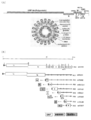
- SARS-CoV-2 is a virus belonging to coronavirus (CoV), which has a single-strand plus RNA genome of about 30 kb (Fig. 1A).
- the SARS-CoV-2 genomic RNA also functions as mRNA (mRNA1), and two large ORFs (ORF1a and 1b) at the 5'end 20 kb are specifically translated from mRNA1 (where ORF1b is ORF1a). 16 pieces including helicase, RNA polymerase, etc. by proteolytic enzyme encoded by ORF1a itself Cleaves into the non-structural protein of.
- mRNA1 gene RNA
- SARS-CoV-2 mRNA contains about 10 smaller subgenomic mRNAs.
- Each subgenomic mRNA extends from the 3'end of the genomic RNA to the 5'side with a different length, and each mRNA has a leader sequence consisting of about 70b at the 5'end of the genomic RNA.
- Fig. 1B reprinted with some modifications from Non-Patent Document 2
- Fig. 1B is the reference strain of CoV, murine hepatitis.
- the translation from each subgenomic mRNA in the virus (MHV-JHM strain) is shown, which is slightly different from the case of SARS-CoV-2).
- SARS-CoV-2 infected with host cells releases genomic RNA and produces proteins required for replication by translation from ORF1a and ORF1ab.
- a negative-strand RNA complementary to the genomic RNA is synthesized as a template, and a subgenomic mRNA is generated using the negative-strand RNA as a template.
- Proteins such as structural proteins (S, E, M, N, etc.) are translated from the 5'end ORF of each subgenomic mRNA produced.
- Genomic RNA replicated from minus-strand RNA and N protein synthesized from subgenomic mRNA form a complex (RNP), which is translated from another subgenomic mRNA and vesicular to the Gorgi apparatus (ERGIC). It associates with S, M and E proteins present on the membrane of RNA and germinates into ERGIC to produce viral particles.
- RNP structural proteins
- nucleic acid drugs that target SARS-CoV-2 mRNA or minus-strand RNA are one of the promising candidates, but any region of SARS-CoV-2 mRNA or minus-strand RNA that extends to about 30 kb. It remains entirely unclear whether targeting can efficiently suppress translations from mRNA and replication of genomic RNA.
- an object of the present invention is to provide a nucleic acid molecule that efficiently suppresses the gene expression of SARS-CoV-2, and to provide a therapeutic and / or preventive agent for COVID-19 using the nucleic acid molecule. Is.
- the present inventors have found that the nucleic acid molecule targeting a specific site of SARS-CoV-2 mRNA or minus-strand RNA is the SARS-CoV-2 gene. We have found that the expression can be remarkably suppressed, and have completed the present invention.
- a nucleotide sequence complementary to a contiguous 15 or more nucleotide sequences in the target negative-strand RNA sequence of SARS-CoV-2 gene is contained as an expression-suppressing sequence of the SARS-CoV-2 gene. Acid molecule.
- the expression-suppressing sequence is (A) (i) Nucleotide sequence represented by SEQ ID NO: 2n (n is an integer selected from 1 to 46) (wherein each U may be T in the sequence), or (ii) SEQ ID NO.
- SEQ ID NO: 2n Nucleotide sequence represented by SEQ ID NO: 2n (n is an integer selected from 1 to 46) (wherein each U may be T in the sequence)
- SEQ ID NO. The nucleotide sequence of SARS-CoV-2 genomic RNA represented by SEQ ID NO: 1 or the corresponding minus, which contains the nucleotide sequence represented by 2n (wherein each U may be T in the sequence).
- Consecutive 15 or more nucleotide sequences in a sequence of 25 nucleotides or less that is completely complementary to a part of the nucleotide sequence of chain RNA (B) In the nucleotide sequence of (a), one or two nucleotides are deleted, substituted, inserted or added, or 90% or more of the identity with the nucleotide sequence of (c) (a). It is a nucleotide sequence having The nucleic acid molecule according to [1], preferably the nucleotide sequence of (a).
- nucleic acid molecule according to any one of [1] to [3], further comprising a nucleotide sequence complementary to the expression-suppressing sequence.
- the complementary nucleotide sequence is (D) The nucleotide of (a) above in the nucleotide sequence represented by SEQ ID NO: 2n + 1 (n is the same as (a) above) or SEQ ID NO: 2p-1 (p is an integer selected from 107 to 115).
- Nucleotide sequences that are completely complementary to the sequence (however, the pairing of G and U is considered complementary)
- nucleotide sequence represented by SEQ ID NO: 2n (n is an integer selected from 1 to 46) and a nucleotide sequence represented by SEQ ID NO: 2n + 1, or SEQ ID NO: 2p-1 (p is A nucleotide sequence represented by (an integer selected from 107 to 115) and SEQ ID NO: 2p: GACAUUACACCAUGUUCUUUU (SEQ ID NO: 214); CAAACCAACCAACUUUCGAUC (SEQ ID NO: 216); CUUUCGAUCUCUUGUAGAUCU (SEQ ID NO: 218); GUUUAAAAGACCAAUAAAUCC (SEQ ID NO: 220); CUUUAUUUCACCUUAUAAUUC (SEQ ID NO: 222); CAUCAGUAGAUUGUACAAUGU (SEQ ID NO: 224); GGUAUUCUUGCUAGUUACACU (SEQ ID NO: 226); CUAGUAAUAGGUUUCCUAU
- nucleic acid molecule according to any one of [4] to [6], which is siRNA for the SARS-CoV-2 gene.
- siRNA for the SARS-CoV-2 gene.
- nucleic acid molecule according to [7] wherein the siRNA has a 3'-overhang on one or both strands.
- nucleotide sequence X containing the expression-suppressing sequence Xa and the nucleotide sequence Y containing the sequence Ya complementary to the sequence Xa are arranged in the order of XLY in the 3'to 5'direction via the linker L.
- linker L is a proline derivative linker represented by the following formula.
- the sequence X has an additional sequence Xb at the 5'end of the sequence Xa
- the sequence Y has an additional sequence Yb at the 3'end of the sequence Ya
- the sequences Xb and Yb are complementary.
- the nucleic acid molecule according to [10] or [11] which is the target.
- the nucleic acid molecule according to [13] which has any of the following structures.
- GGCAUUCAGUACGGUCGUAGGCC-P-GGCCUACGACCGUACUGAAUGCCUU (SEQ ID NO: 231) GACAUUACACCAUGUUCUUUUCC-P-GGAAAAGAACAUGGUGUAAUGUCUU (SEQ ID NO: 232) GCAUACUAAUUGUUACGAUGGCC-P-GGCCGUCGUAACAAUUAGUAUGCUU (SEQ ID NO: 233) GCUUCGAUUGUGUGCGUAUGGCC-P-GGCCGUACGCACACAAUCGAAGCUU (SEQ ID NO: 234) CGGUGGAAUUGCUAUCGUAGGCC-P-GGCCUGCGAUAGCAAUUCCACCGUU (SEQ ID NO: 235) CGGCGUAAAACGUCUAUGGCC-P-GGCCAUAGACGUGUUUUACGCCGUU (SEQ ID NO: 236) CCAUUCAGUACAUCGAUAUGGCC-P-GGCCAUCGAUGUACUGAAUGGUU (SEQ ID
- GGCmAUUmCAGUmACGGUmCGUmAGGCC-P-GGCCUACGACCGUmACUGAAUGCmCUmU (SEQ ID NO: 634) (P indicates a proline derivative linker represented by the above formula, and m indicates that the hydroxy group at the 2'position is replaced with a methoxy group.) [16] A nucleic acid molecule having the following structure.
- the nucleic acid molecule of the present invention can effectively suppress the expression of the SARS-CoV-2 gene.
- nucleic acid molecule that suppresses the expression of SARS-CoV-2 gene The present invention suppresses gene expression of the virus, including a sequence complementary to the nucleotide sequence in the mRNA or minus chain RNA of SARS-CoV-2.
- a nucleic acid molecule (hereinafter, may be referred to as “nucleic acid molecule of the present invention”) is provided.
- SARS-CoV-2 mRNA refers to genomic RNA containing all ORFs and specific ORFs of various lengths, each with a 5'end. It is used to include all subgenomic mRNAs to be translated.
- minus-strand RNA is also used in the sense that it includes all of the genomic RNA and the minus strands complementary to each subgenomic mRNA.
- mRNA and minus-strand RNA may be collectively referred to as "SARS-CoV-2 RNA”.
- the nucleic acid molecule of the present invention contains a sequence complementary to a specific site of SARS-CoV-2 mRNA or minus-strand RNA as a sequence that suppresses SARS-CoV-2 gene expression.
- the nucleotide sequence of the genomic RNA of SARS-CoV-2 the nucleotide sequence of SARS-CoV-2 TKYE6182 represented by SEQ ID NO: 1 (registered as GenBank Accession No. LC529905 in the NCBI database.
- nucleotide sequence of the SARS-CoV-2 strain represented by SEQ ID NO: 1.
- SEQ ID NO: 1 the nucleotide sequence of the SARS-CoV-2 strain represented by SEQ ID NO: 1.
- Corresponding nucleotides and nucleotide sequences in any variant are also included in the description.
- sequence that suppresses the gene expression of SARS-CoV-2 is a sequence complementary to the nucleotide sequence of a specific site of the mRNA or minus chain RNA of SARS-CoV-2.
- the "complementary sequence” is not only a sequence that is completely complementary to the target sequence (that is, hybridizes without mismatch), but also SARS-CoV-2 under physiological conditions of mammalian cells. It may be a sequence containing a mismatch of 1 to several nucleotides, preferably 1 or 2 nucleotides, as long as it can hybridize with RNA.
- complementarity in individual bases is not limited to forming Watson-Crick base pairs with target bases, but forms Hoogsteen base pairs and wobble base pairs. Including doing.
- the "complementary nucleotide sequence” is a nucleotide sequence that hybridizes with the target sequence under stringent conditions.
- the “stringent condition” is, for example, the condition described in Current Protocols in Molecular Biology, John Wiley & Sons, 6.3.1-6.3.6, 1999, for example, 6 ⁇ SSC (sodium chloride / sodium citrate). ) / Hybridization at 45 ° C, then 0.2 ⁇ SSC / 0.1% SDS / one or more washings at 50-65 ° C, etc. Hybridization conditions can be appropriately selected.
- nucleotide number of the nucleotide sequence of SARS-CoV-2 genomic RNA represented by SEQ ID NO: 1 is: (1) 545-563, (2).
- the expression-suppressing sequence may be complementary to all of these target sequences or to some of the target sequences, but is specific to SARS-CoV-2 RNA. Considering the sex, it is preferable that it is complementary to the sequence of 15 or more consecutive nucleotides in each target sequence.
- the expression-suppressing sequence further contains a sequence complementary to the nucleotide sequence of SARS-CoV-2 RNA adjacent to the target sequence, in addition to the sequence of 15 consecutive nucleotides or more in each of the above target sequences. Can be done.
- the upper limit of the length of the nucleotide sequence targeted by the expression-suppressing sequence is not particularly limited, but considering the ease of synthesis and the like, for example, 100 nucleotides or less, preferably 50 nucleotides or less, more preferably 30 nucleotides or less, and further. It is a continuous partial nucleotide sequence of SARS-CoV-2 RNA, preferably 25 nucleotides or less. Therefore, the length of the nucleotide sequence targeted by the expression-suppressing sequence is preferably a continuous 15 to 30 nucleotides, more preferably a continuous 15 to 25 nucleotide partial nucleotides in the nucleotide sequence of SARS-CoV-2 RNA. It can be an array.
- the nucleic acid molecule of the present invention may be RNA, DNA, or DNA / RNA chimera as long as it can suppress the gene expression of SARS-CoV-2. Further, the nucleic acid molecule of the present invention may be a double-stranded nucleic acid or a single-stranded nucleic acid as long as it can suppress the gene expression of SARS-CoV-2. In the case of a double-stranded nucleic acid, it may be any of double-stranded DNA, double-stranded RNA, DNA: RNA hybrid, and a hybrid of DNA / RNA chimera and DNA, RNA or DNA / RNA chimera.
- one strand contains the expression-suppressing sequence of the SARS-CoV-2 gene, that is, one of (1) to (46) of the above SARS-CoV-2 RNA.
- a target SARS-CoV-2 RNA a sequence complementary to a sequence of 15 or more consecutive nucleotides in a target sequence containing (preferably a partial sequence of 25 consecutive nucleotides or less of SARS-CoV-2 RNA) (hereinafter referred to as a target SARS-CoV-2 RNA).
- a chain containing a sequence that binds and suppresses gene expression is also referred to as a "guide chain"), and the other chain contains at least a sequence complementary to the expression-suppressing sequence (hereinafter, a sequence complementary to the expression-suppressing sequence).
- the chain containing it is also called a "passenger chain”).
- the “complementary sequence” is synonymous with the complementarity of the expression-suppressing sequence to the nucleotide sequence of SARS-CoV-2 RNA.
- RNA complementary to the expression-suppressing sequence contained in the passenger chain also produces an RNA complementary to the RNA targeted by the expression-suppressing sequence. As a target, it can suppress direct or indirect gene expression via the complementary RNA. Therefore, in the case of a double-stranded nucleic acid, it may be advantageous in that the passenger strand may also function as an expression-suppressing sequence of the SARS-CoV-2 gene.
- the SARS-CoV-2 gene is expressed in the molecule when it has only the above-mentioned guide strand and when the guide strand and the passenger strand are linked via an arbitrary linker.
- a sequence that suppresses the disease and a sequence that complements the sequence may hybridize to form a double strand.
- Examples of the constituent unit of the nucleic acid molecule of the present invention include ribonucleotide residues and deoxyribonucleotide residues. These nucleotide residues may be modified or unmodified, for example. By including, for example, a modified nucleotide residue, the nucleic acid molecule of the present invention can improve nuclease resistance and stability. Further, the nucleic acid molecule of the present invention may further contain non-nucleotide residues in addition to the nucleotide residues, for example.
- the constituent unit of the region (guide chain or passenger chain) other than the linker is preferably a nucleotide residue.
- Each region is composed of, for example, the following residues (1) to (3). (1) Unmodified nucleotide residues (2) Modified nucleotide residues (3) Unmodified nucleotide residues and modified nucleotide residues
- the nucleic acid molecule of the present invention may be labeled with, for example, a labeling substance.
- the labeling substance is not particularly limited, and examples thereof include fluorescent substances, dyes, and isotopes.
- the labeling substance include fluorescent groups such as pyrene, TAMRA, fluorescein, Cy3 dye, and Cy5 dye, and examples of the dye include Alexa dye such as Alexa488.
- Isotopes include, for example, stable isotopes and radioactive isotopes. Stable isotopes, for example, have a low risk of exposure and do not require a dedicated facility, so that they are easy to handle and can reduce costs.
- the stable isotope does not change the physical properties of the labeled compound, for example, and has excellent properties as a tracer.
- Stable isotopes include, for example, 2 H, 13 C, 15 N, 17 O, 18 O, 33 S, 34 S and 36 S.
- Nucleotide residues include sugars, bases and phosphoric acid as components. Ribonucleotide residues have ribose residues as sugars and bases adenine (A), guanine (G), cytosine (C) and uracil (U) (which can also be replaced with thymine (T)). However, the deoxyribonucleotide residue has a deoxyribose residue as a sugar and can be replaced with adenine (dA), guanine (dG), cytosine (dC) and thymine (dT) (uracil (dU)) as a base. ).
- the modified nucleotide residue may be modified by any of the components of the nucleotide residue.
- the "modification" can be, for example, substitution, addition and / or elimination of the component, substitution, addition and / or elimination of an atom and / or functional group in the component.
- the modified nucleotide residue may be, for example, a naturally occurring modified nucleotide residue or an artificially modified nucleotide residue.
- Naturally derived modified nucleotide residues for example, Limbach et al., 1994, Summary: the modified nucleosides of RNA, Nucleic Acids Res. 22: 2183 to 2196 can be referred to.
- ribophosphate skeleton examples include modification of the ribose-phosphate skeleton (hereinafter referred to as ribophosphate skeleton).
- a ribose residue can be modified.
- the ribose residue can modify, for example, the 2'-position carbon, and specifically, for example, a hydroxyl group bonded to the 2'-position carbon can be a hydrogen atom, a halogen atom such as fluorine, or a -O-alkyl group (eg,).
- -O-Me group -O-acyl group
- -O-COMe group eg, -O-COMe group
- an atom selected from the group consisting of an amino group preferably selected from the group consisting of a hydrogen atom, a methoxy group and a fluorine atom.
- the ribose residue can be replaced with deoxyribose.
- the ribose residue can be replaced with, for example, a stereoisomer, or may be replaced with, for example, an arabinose residue.
- the ribophosphate skeleton may be replaced with, for example, a non-ribophosphate skeleton having a non-ribose residue and / or non-phosphate.
- examples of the non-ribophosphate skeleton include uncharged bodies of the ribophosphate skeleton.
- Alternatives to nucleotides substituted with a non-ribophosphate skeleton include, for example, morpholino, cyclobutyl, pyrrolidine and the like.
- Other examples of the alternative include artificial nucleic acid monomer residues. Specific examples include PNA (peptide nucleic acid), LNA (Locked Nucleic Acid), ENA (2'-O, 4'-C-Ethylenebridged Nucleic Acid) and the like, and PNA is preferable.
- the phosphate group in the ribophosphate skeleton is modified.
- the phosphate group closest to the sugar residue is called the ⁇ -phosphate group.
- the ⁇ -phosphate group is negatively charged, and the charge is uniformly distributed over the two oxygen atoms unbonded to the sugar residue.
- the two oxygen atoms that are unbonded to the sugar residue in the phosphodiester bond between the nucleotide residues are also hereinafter referred to as “non-linking oxygen”. ..
- linking oxygen the two oxygen atoms bonded to the sugar residue are hereinafter referred to as "linking oxygen”.
- the ⁇ -phosphate group is preferably modified to be uncharged or to have an asymmetric charge distribution in unbound oxygen.
- the phosphate group may be substituted with unbound oxygen, for example.
- the unbound oxygen is, for example, S (sulfur), Se (selenium), B (boron), C (carbon), H (hydrogen), N (nitrogen) and OR (R is an alkyl group or an aryl group). It can be replaced with the atom, preferably with S.
- R is an alkyl group or an aryl group.
- Such modified phosphate groups include, for example, phosphorothioate, phosphorodithioate, phosphoroselenate, boranophosphate, boranophosphate ester, phosphonate hydrogen, phosphoramidate, alkyl or arylphosphonate, and phosphotriester.
- phosphorodithioates in which both of the above two unbound oxygens are substituted with S are preferable.
- the phosphate group may be substituted with bound oxygen, for example.
- the bound oxygen can be replaced, for example, with any of the atoms S (sulfur), C (carbon) and N (nitrogen), and such modified phosphate groups include, for example, cross-linked phosphoramidates substituted with N. , Cross-linked phosphorothioate substituted with S, cross-linked methylene phosphonate substituted with C, and the like.
- substitution of bound oxygen is preferably carried out, for example, at at least one of the 5'-terminal nucleotide residue and the 3'-terminal nucleotide residue of the nucleic acid molecule of the present invention, and in the case of the 5'side, the substitution with C is preferable, and the substitution with C is preferable. On the side, substitution with N is preferred.
- the phosphoric acid group may be replaced with, for example, a phosphorus-free linker.
- linker include siloxane, carbonate, carboxymethyl, carbamate, amide, thioether, ethylene oxide linker, sulfonate, sulfonamide, thioform acetal, form acetal, oxime, methylene imino, methylene methyl imino, methylene hydrazo, and methylene dimethyl.
- Examples thereof include hydrazo and methyleneoxymethylimino, and preferred examples include a methylenecarbonylamino group and a methylenemethylimino group.
- the nucleic acid molecule of the present invention may be modified with at least one of the 3'-terminal and 5'-terminal nucleotide residues, for example.
- the modification is as described above, and it is preferable to perform the modification on the phosphoric acid group at the terminal.
- the phosphate group may be entirely modified or may modify one or more atoms in the phosphate group. In the former case, for example, it may be a substitution of the entire phosphate group or a deletion.
- Modification of the terminal nucleotide residue includes, for example, addition of another molecule.
- other molecules include functional molecules such as labeling substances and protecting groups.
- the protecting group include S (sulfur), Si (silicon), B (boron), and an ester-containing group.
- Functional molecules such as the labeling substance can be used, for example, for detecting the nucleic acid molecule of the present invention.
- Other molecules may be added to the phosphate group of the nucleotide residue, or may be added to the phosphate group or sugar residue via a spacer.
- the terminal atom of the spacer can be added or substituted, for example, to the bound oxygen of the phosphate group or the sugar residue O, N, S or C.
- As the binding site of the sugar residue for example, C at the 3'position or C at the 5'position, or an atom bonded to these is preferable.
- the spacer can also be added or substituted, for example, to the terminal atom of the nucleotide substitute such as PNA.
- the spacer is not particularly limited, for example,-(CH 2 ) n -,-(CH 2 ) n N-,-(CH 2 ) n O-,-(CH 2 ) n S-, O (CH 2 CH 2).
- the molecules added to the ends include dyes, intercalating agents (eg, acridin), cross-linking agents (eg, solarene, mitomycin C), porphyrin (TPPC4, texaphyrin, sapphirine), polycyclic aromatics.
- intercalating agents eg, acridin
- cross-linking agents eg, solarene, mitomycin C
- porphyrin TPPC4, texaphyrin, sapphirine
- Group hydrocarbons eg phenazine, dihydrophenazine
- artificial endonucleases eg EDTA
- lipophilic carriers eg cholesterol, cholic acid, adamantan acetic acid, 1-pyrenebutyric acid, dihydrotestosterone, 1,3-bis-O (Hexadecyl) glycerol, geranyloxyhexyl group, hexadecylglycerol, borneol, menthol, 1,3-propanediol, heptadecyl group, palmitic acid, myristic acid, O3- (oleoyl) lithocholic acid, O3- (oleoyl) col Acid, dimethoxytrityl, or phenoxazine) and peptide complexes (eg, Antennapedia peptide, Tat peptide), alkylating agents, phosphates, amino, mercapto, PEG
- the nucleic acid molecule of the present invention may be modified at the 5'end with, for example, a phosphate group or a phosphate group analog.
- Phosphoric acid groups are, for example, 5'monophosphoric acid ((HO) 2 (O) PO-5') and 5'diphosphoric acid ((HO) 2 (O) POP (HO) (O) -O-5.
- the base is not particularly limited in the nucleotide residue.
- the base may be a natural base or a non-natural base.
- a general base, a modified analog thereof, or the like can be used.
- Examples of the base include purine bases such as adenine and guanine, and pyrimidine bases such as cytosine, uracil and thymine.
- Examples of the base include inosine, thymine, xanthine, hypoxanthine, nubularine, isoguanisine, tubercidine and the like.
- the base is, for example, an alkyl derivative such as 2-aminoadenine, 6-methylated purine; an alkyl derivative such as 2-propylated purin; 5-halouracil and 5-halocitosine; 5-propynyluracil and 5-propynylcitosine; Azouracil, 6-azocitosin and 6-azotimine; 5-uracil (psoid uracil), 4-thiouracil, 5-halouracil, 5- (2-aminopropyl) uracil, 5-aminoallyl uracil; 8-halolation, amination, thiol Uracil, thioalkylated, hydroxylated and other 8-substituted purines; 5-trifluoromethylated and other 5-substituted pyrimidines; 7-methylguanin; 5-substituted pyrimidin; 6-azapyrimidine; N-2, N- 6, and O-6 substituted purines (including 2-a
- the modified nucleotide residue may contain, for example, a residue lacking a base, that is, a non-base ribophosphate skeleton.
- the modified nucleotide residues are, for example, US Provisional Application No. 60 / 465,665 (Filing Date: April 25, 2003) and International Application No. PCT / US04 / 07070 (Filing Date: March 8, 2004). ) Can be used, and the present invention can incorporate these documents.
- the method for synthesizing the nucleic acid molecule of the present invention is not particularly limited, and a conventionally known method can be adopted.
- Examples of the synthesis method include a synthesis method by a genetic engineering method, a chemical synthesis method, and the like.
- Examples of the genetic engineering method include an in vitro transcriptional synthesis method, a method using a vector, and a method using a PCR cassette.
- the vector is not particularly limited, and examples thereof include non-viral vectors such as plasmids and viral vectors.
- the chemical synthesis method is not particularly limited, and examples thereof include a phosphoramidite method and an H-phosphonate method.
- As the chemical synthesis method for example, a commercially available automatic nucleic acid synthesizer can be used.
- amidite is generally used as the chemical synthesis method.
- the amidite is not particularly limited, and examples of commercially available amidite include RNA Phosphoramidites (2'-O-TBDMSi, trade name, Sansenri Pharmaceutical), ACE amidite and TOM amidite, CEE amidite, CEM amidite, TEM amidite and the like. Can be given.
- nucleic acid molecule of the present invention examples include siRNA against SARS-CoV-2 RNA, antisense nucleic acid against SARS-CoV-2 RNA, and the like. Further, as the nucleic acid molecule of the present invention, a single-stranded nucleic acid molecule in which a guide strand and a passenger strand complementary thereto can form a double strand linked via a linker can be mentioned.
- siRNA against SARS-CoV-2 RNA is a target sequence containing any of the above (1) to (46) of SARS-CoV-2 RNA (preferably 25 or less consecutive nucleotides of SARS-CoV-2 RNA).
- a double-stranded oligo RNA consisting of a guide strand containing a sequence complementary to all or part of (partial sequence of) and a passenger strand containing a sequence complementary thereto, which is incorporated into the RISC complex and is incorporated into the guide strand.
- a sequence complementary to the SARS-CoV-2 RNA in SARS-CoV-2 RNA forms a double strand with the target sequence in the SARS-CoV-2 RNA, thereby cleaving the SARS-CoV-2 RNA and suppressing gene expression.
- "complementary sequence" has the same meaning as described above.
- the length of siRNA relative to SARS-CoV-2 RNA is a sequence complementary to all or part of the target sequence containing any of the above (1) to (46) of SARS-CoV-2 RNA in the guide strand.
- the nucleotide sequence targeted by siRNA is, in principle, 15 to 50 nucleotides, preferably 19 to 30 nucleotides, more preferably 19 to 27 nucleotides, and particularly preferably 19 to 21 nucleotides. obtain.
- the guide chain and the passenger chain may have an additional nucleotide at the 5'or 3'end.
- the length of the additional nucleotide is usually about 2 to 4 nucleotides, and the total length of siRNA is 19 nucleotides or more.
- the additional nucleotide may be DNA or RNA, but DNA may be used to improve the stability of the nucleic acid.
- the sequences of such additional nucleotides include, for example, ug-3', uu-3', tg-3', tt-3', ggg-3', guuu-3', gttt-3', ttttt-3. Examples include, but are not limited to, sequences such as', uuuuu-3'.
- the siRNA for SARS-CoV-2RNA is a sequence that is complementary to all or part of the target sequence including any of the above (1) to (46) as a sequence that suppresses the expression of the SARS-CoV-2 gene.
- the expression-suppressing sequence is one of the following nucleotide sequences (SEQ ID NO: 2n (n is an integer from 1 to 46; where U is T).
- SEQ ID NO: 2n + 1 (n is an integer from 1 to 46; however, U may be T in the sequence) included), and the like.
- Expression-suppressing sequence complementary to the nucleotide sequence in the ORF of SARS-CoV-2 genomic RNA and its complementary strand sequence
- Expression-suppressing sequence complementary to the nucleotide sequence in the leader sequence of SARS-CoV-2 genomic RNA and its complementary strand sequence
- Expression-suppressing sequence complementary to the nucleotide sequence in the minus-strand RNA of SARS-CoV-2 and its complementary strand sequence
- siRNA for SARS-CoV-2 RNA any of the following No. 1 to No. 100 antisense sequences and sense sequences (however, U may be T in each sequence) is included. Nucleic acid molecules consisting of a guide strand and a passenger strand can be mentioned.
- the siRNA for SARS-CoVRNA may have a 3'-overhang on one or both strands.
- the length of the overhang is not particularly limited, the lower limit is, for example, 1 base length, the upper limit is, for example, 4 base length, 3 base length, and the range is, for example, 1. It is up to 4 bases long, 1 to 3 bases long, and 1 to 2 bases long.
- the arrangement of the overhang is not particularly limited and may be any of A, U, G, C and T.
- the overhang arrangement can be exemplified by, for example, TT, UU, CU, GC, UA, AA, CC, UG, CG, AU, etc. from the 3'side.
- TT time to RNA-degrading enzymes
- an expression-suppressing sequence with a 3'-overhang one of the following nucleotide sequences (SEQ ID NO: 2m (m is an integer of 47-92; where U is T).
- a guide strand containing (may be) and a passenger strand having a complementary 3'-overhang preferably SEQ ID NO: 2m + 1 (m is an integer of 47-92; where U is T).
- a nucleic acid molecule or the like consisting of) including) can be mentioned.
- Expression-suppressing sequence complementary to the nucleotide sequence in the ORF of SARS-CoV-2 genomic RNA and its complementary strand sequence
- Expression-suppressing sequence complementary to the nucleotide sequence in the leader sequence of SARS-CoV-2 genomic RNA and its complementary strand sequence
- Expression-suppressing sequence complementary to the nucleotide sequence in the minus-strand RNA of SARS-CoV-2 and its complementary strand sequence
- siRNA for SARS-CoV-2 RNA having a 3'-overhang in the expression-suppressing sequence the antisense sequence and sense sequence of any of the following No. 101 to No. 177 (however, U in each sequence). Can be T), respectively) can be mentioned as a nucleic acid molecule consisting of a guide strand and a passenger strand.
- the method for synthesizing siRNA for SARS-CoV-2 RNA is not particularly limited, and a conventionally known method for producing nucleic acid can be adopted.
- a synthesis method for example, a nucleic acid containing the complementary sequence and a nucleic acid having a sequence complementary thereto are synthesized by a DNA / RNA automatic synthesizer, respectively, and in an appropriate annealing buffer at about 90 to about 95 ° C. Examples thereof include a method of preparing by denaturing for about 1 minute and then annealing at about 30 to about 70 ° C. for about 1 to about 8 hours. It can also be prepared by synthesizing shRNA as a precursor of siRNA and cleaving it with a dicer.
- Nucleotide residues constituting siRNA may also be modified in the same manner as described above in order to improve stability, specific activity and the like. However, in the case of siRNA, the introduction of the minimum modified nucleotide residue that allows the RISC complex to function is necessary because RNAi activity may be lost if all ribonucleotide residues in the native RNA are replaced with the modified form. is necessary.
- the antisense nucleic acid against SARS-CoV-2 RNA is a target sequence containing any of the above (1) to (46) of SARS-CoV-2 RNA (preferably). Contains all or part of (a subsequence of 25 consecutive nucleotides or less) of SARS-CoV-2 RNA, preferably a sequence complementary to a contiguous 15 or more nucleotide sequences in the nucleotide sequence, and SARS-CoV. -2 A nucleic acid that suppresses gene expression by forming and binding to a target sequence in RNA by forming a specific double strand.
- “complementary sequence” has the same meaning as described above.
- the length of the antisense nucleic acid against SARS-CoV-2 RNA is not particularly limited, but may be, for example, 10 to 100 nucleotides, preferably 15 to 40 nucleotides, and more preferably 15 to 30 nucleotides.
- the antisense nucleic acid for SARS-CoV-2 RNA is used as an expression-suppressing sequence in the above-mentioned SEQ ID NO: 2n (n is an integer of 1 to 46; however, even if U is T in the sequence. Includes a nucleotide sequence represented by any of (good).
- the antisense nucleic acid for SARS-CoV-2 RNA may be of the gapmer type.
- the Gapmer-type antisense nucleic acid is a nucleic acid having DNA and nucleic acids having modifications or crosslinks introduced on both sides thereof. With the DNA strand as the backbone, RNA complementary to the backbone forms a heteroduplex nucleic acid, and the RNA is degraded by RNAase H. O-methylation at the 2'position of the sugar enhances the stability of the antisense nucleic acid and increases its binding affinity to the target. Also, by substituting the phosphate bond for a phosphorothioate bond, the nuclease resistance of the antisense nucleic acid is enhanced.
- the method for synthesizing the antisense nucleic acid for SARS-CoV-2 RNA is not particularly limited, and a conventionally known method for producing nucleic acid can be adopted.
- Examples of the synthesis method include a method of preparing nucleic acids containing the complementary sequences by synthesizing them with an automatic DNA / RNA synthesizer.
- the antisense nucleic acid containing the above-mentioned various modifications can also be chemically synthesized by a conventionally known method.
- single-stranded nucleic acid molecule for SARS-CoV-2 RNA refers to the above-mentioned (1) to (46) of SARS-CoV-2 RNA.
- the passenger chain sequence Y containing the typical sequence Ya is in the order of X-L-Y from 5'to 3'or 3'to 5'via the linker L, and the sequence Xa and the sequence Ya are arranged.
- "complementary sequence” has the same meaning as described above.
- the sequence Xa is not particularly limited as long as it contains a sequence complementary to all or part of the target sequence containing any of the above (1) to (46) of SARS-CoV-2 RNA, but the nucleotide Xa targets.
- the sequence can be, in principle, 15-50 nucleotides, preferably 19-30 nucleotides, more preferably 19-27 nucleotides, and particularly preferably 19-21 nucleotides.
- the single-stranded nucleic acid molecule for SARS-CoV-2 RNA is a target sequence containing any of the above (1) to (46) of SARS-CoV-2 RNA (preferably SARS-CoV-2) as an expression-suppressing sequence.
- a sequence complementary to all or part of a contiguous 25 nucleotides or less partial sequence of RNA) is included in the guide chain sequence X as sequence Xa, but in one preferred embodiment, sequence Xa is described above as SEQ ID NO: 2n.
- Guide chain sequence X containing the nucleotide sequence represented by any of (n is an integer from 1 to 46; where U may be T in the sequence) and sequence Ya (complementary to sequence Xa).
- passenger chain sequence Y comprising any of SEQ ID NOs: 2n + 1 (n is an integer from 1 to 46; where U may be T in the sequence).
- examples include nucleic acid molecules.
- the sequence Xa includes a nucleotide sequence represented by SEQ ID NO: 2n (n is synonymous with the above) (wherein each U may be T in the sequence), and A guide chain sequence X containing a contiguous 15 or more nucleotides in a sequence of 25 nucleotides or less that is completely complementary to a part of the nucleotide sequence of SARS-CoV-2 RNA represented by SEQ ID NO: 1 and a sequence Xa.
- SEQ ID NO: 2p is such that the sequence contains the nucleotide sequence represented by SEQ ID NO: 2n and is 25 nucleotides or less that is completely complementary to a part of the nucleotide sequence of SARS-CoV-2 RNA represented by SEQ ID NO: 1.
- AAAAGAACAUGGUGUAAUGUC (SEQ ID NO: 213); GAUCGAAAGUUGGUUGGUUUG (SEQ ID NO: 215); AGAUCUACAAGAGAUCGAAAG (SEQ ID NO: 217); GGAUUUAUUGGUCUUUUAAAC (SEQ ID NO: 219); GAAUUAUAAGGUGAAAUAAAG (SEQ ID NO: 221); ACAUUGUACAAUCUACUGAUG (SEQ ID NO: 223); AGUGUAACUAGCAAGAAUACC (SEQ ID NO: 225); GAAUAGGAAACCUAUUACUAG (SEQ ID NO: 227); or GCAAUUUGCGGCCAAUGUUUG (SEQ ID NO: 229)
- the nucleotide sequence represented by is mentioned.
- SEQ ID NO: 2p (p is synonymous with the above): GACAUUACACCAUGUUCUUUU (SEQ ID NO: 214); CAAACCAACCAACUUUCGAUC (SEQ ID NO: 216); CUUUCGAUCUCUUGUAGAUCU (SEQ ID NO: 218); GUUUAAAAGACCAAUAAAUCC (SEQ ID NO: 220); CUUUAUUUCACCUUAUAAUUC (SEQ ID NO: 222); CAUCAGUAGAUUGUACAAUGU (SEQ ID NO: 224); GGUAUUCUUGCUAGUUACACU (SEQ ID NO: 226); CUAGUAAUAGGUUUCCUAUUC (SEQ ID NO: 228); or CAAACAUUGGCCGCAAAUUGC (SEQ ID NO: 230)
- the nucleotide sequence represented by can be mentioned.
- the single-stranded nucleic acid molecule for SARS-CoV-2 RNA is as sequence Xa, as the nucleotide sequence represented by SEQ ID NO: 2n (n is an integer chosen from 1-46) and as sequence Ya. Containing the nucleotide sequence represented by SEQ ID NO: 2n + 1, or as SEQ ID NO: Xa, as the nucleotide sequence represented by SEQ ID NO: 2p-1 (p is an integer selected from 107 to 115) and as SEQ ID NO: Ya. Includes the nucleotide sequence represented by SEQ ID NO: 2p.
- the guide chain sequence X may consist of, for example, only the sequence Xa, or may further have an additional sequence Xb. In the latter case, the additional sequence Xb does not need to be complementary to the nucleotide sequence of SARS-CoV-2 RNA.
- the additional sequence Xb may be added to either the 5'end or the 3'end of Xa, and may be added to both ends (Xb and Xb'). Preferably, it is added to the end of Xa on the side connected to the linker L.
- the length of the sequence Xb (Xb') is, for example, 1 to 35 nucleotides, preferably 1 to 25 nucleotides, more preferably 1 to 11 nucleotides, and particularly preferably 1, 2, 3 , 4, 5 or 6 nucleotides.
- the passenger chain sequence Y is not particularly limited as long as it contains the sequence Ya complementary to the sequence Xa, and may consist of, for example, only the sequence Ya or may further have an additional sequence Yb.
- the addendum Yb does not need to be complementary to the addendum Xb, but is preferably complementary, in particular, the addendums Xb and Yb are ligated with the linker L of Xa and Ya, respectively.
- the additional sequence Yb may be added to either the 5'end or the 3'end of Ya, and may be added to both ends (Yb and Yb').
- the length of the sequence Yb (Yb') is, for example, 1 to 35 nucleotides, preferably 1 to 25 nucleotides, more preferably 1 to 11 nucleotides, and particularly preferably 1, 2, 3 , 4, 5 or 6 nucleotides.
- the guide chain sequence X and the passenger chain sequence Y may further have an overhang at the end on the side not connected to the linker L.
- the overhang is preferably added to the 3'end of the guide chain sequence X and the passenger chain sequence whose 5'end is linked to the linker L.
- the length of the overhang is not particularly limited, the lower limit is, for example, 1 base length, the upper limit is, for example, 4 base length, 3 base length, and the range is, for example, 1 to 4 base length, 1 It is ⁇ 3 bases long and 1-2 bases long.
- the arrangement of the overhang is not particularly limited and may be any of A, U, G, C and T.
- the overhang arrangement can be exemplified by, for example, TT, UU, CU, GC, UA, AA, CC, UG, CG, AU, etc. from the 5'side.
- TT time to RNA-degrading enzymes
- the single-stranded nucleic acid molecule for SARS-CoV-2 RNA has the nucleotide sequence X and the nucleotide sequence Y in the X-L-Y direction from 3'to 5'via the linker L.
- the sequences Xa and Ya are linked in sequence and in an orientation that can form a double chain within the molecule.
- the linker L may be composed of, for example, a nucleotide residue, a non-nucleotide residue, or a nucleotide residue and a non-nucleotide residue.
- Nucleotide residues include ribonucleotide residues and deoxyribonucleotide residues.
- the linker L When the linker L is composed of nucleotide residues, the sense region and the antisense region base each other in one molecule to form a stem structure, and at the same time, the nucleotide sequence of the linker L forms a loop structure. , The whole molecule forms a hairpin-type stem-loop structure, and the single-stranded nucleic acid molecule for SARS-CoV-2 RNA can be said to be shRNA (small hairpin RNA or short hairpin RNA).
- the length of the linker L is not particularly limited, but for example, it is preferable that the sequence Xa and the sequence Ya are long enough to form a double chain in the molecule.
- the lower limit of the number of bases of the linker L is, for example, 1 base, 2 bases, and 3 bases, and the upper limit thereof is, for example, 100 bases, 80 bases, and 50 bases.
- Specific examples of the number of bases in each linker region include 1 to 50 bases, 1 to 30 bases, 1 to 20 bases, 1 to 10 bases, 1 to 7 bases, 1 to 4 bases, and the like.
- the linker L preferably has a structure that does not cause self-annealing.
- the linker L composed of non-nucleotide residues or the linker L composed of nucleotide residues and non-nucleotide residues is represented by, for example, the following formula (I).
- L 1 is an alkylene chain consisting of m carbon atoms, where the hydrogen atom on the alkylene carbon atom is OH, OR a , NH 2 , NHR a , NR a R b , SH, or SR a .
- L 1 is a polyether chain in which one or more carbon atoms of the alkylene chain are substituted with oxygen atoms, where Y 1 is NH, O. Or in the case of S, the atom of L 1 bonded to Y 1 is carbon, the atom of L 1 bonded to OR 1 is carbon, and the oxygen atoms are not adjacent to each other;
- L 2 is an alkylene chain consisting of n carbon atoms, where the hydrogen atom on the alkylene carbon atom is replaced with OH, OR c , NH 2 , NHR c , NR c R d , SH or SR c.
- L 2 is a polyether chain in which one or more carbon atoms of the alkylene chain are substituted with oxygen atoms, where Y 2 is NH, O or In the case of S, the atom of L 2 bonded to Y 2 is carbon, the atom of L 2 bonded to OR 2 is carbon, and the oxygen atoms are not adjacent to each other; R a , R b , R c and R d are independent substituents or protecting groups; l is 1 or 2; m is an integer in the range 0-30; n is an integer in the range 0-30; In ring A, one carbon atom other than C-2 on ring A may be replaced with nitrogen, oxygen, or sulfur.
- Ring A may contain a carbon-carbon double bond or a carbon-nitrogen double bond.
- Nucleotide sequence X and nucleotide sequence Y bind to non-nucleotide structures via -OR 1- or -OR 2- , respectively, where R 1 and R 2 may or may not be present.
- R 1 and R 2 are independent nucleotide residues or structures (I), respectively.
- Y 1 and Y 2 are independently single bonds, CH 2 , NH, O or S, respectively.
- l 1 or 2.
- ring A is a 5-membered ring, for example a pyrrolidine skeleton.
- the pyrrolidine skeleton include a proline skeleton, a prolinol skeleton, and the like, and these divalent structures can be exemplified.
- ring A is a 6-membered ring, for example a piperidine skeleton.
- one carbon atom other than C-2 on ring A may be substituted with nitrogen, oxygen or sulfur.
- the ring A may contain a carbon-carbon double bond or a carbon-nitrogen double bond in the ring A.
- Ring A may be, for example, either L-type or D-type.
- R 3 is a hydrogen atom or substituent attached to C-3, C-4, C-5 or C-6 on ring A.
- the substituent R 3 may be one, a plurality, or absent, and when there are a plurality of substituents, the substituent R 3 may be the same or different.
- R 4 and R 5 are, for example, independent substituents or protecting groups, and may be the same or different.
- Substituents include, for example, halogen, alkyl, alkenyl, alkynyl, haloalkyl, aryl, heteroaryl, arylalkyl, cycloalkyl, cycloalkenyl, cycloalkylalkyl, cyclylalkyl, hydroxyalkyl, alkoxyalkyl, aminoalkyl, heterocyclylalkenyl, Examples thereof include heterocyclylalkyl, heteroarylalkyl, silyl, and silyloxyalkyl. The same applies hereinafter.
- Substituent R 3 may be these listed substituents.
- the protecting group is, for example, a functional group that inactivates a highly reactive functional group, and examples thereof include known protecting groups.
- protecting groups for protecting groups, for example, the description in the literature (J.F.W. McOmie, "Protecting Groups in Organic Chemistry” PrenumPress, London and New York, 1973) can be incorporated.
- the protecting group is not particularly limited, and is, for example, tert-butyldimethylsilyl group (TBDMS), bis (2-acetoxyethyloxy) methyl group (ACE), triisopropylsilyloxymethyl group (TOM), 1- (2- (2-.
- Cyanoethoxy) Ethyl group (CEE), 2-cyanoethoxymethyl group (CEM) and trilsulfonylethoxymethyl group (TEM), dimethoxytrityl group (DMTr) and the like can be mentioned.
- R 3 is OR 4
- the protecting group is not particularly limited, and examples thereof include a TBDMS group, an ACE group, a TOM group, a CEE group, a CEM group, and a TEM group.
- a silyl-containing group can also be mentioned. The same applies hereinafter.
- L 1 is an alkylene chain consisting of m carbon atoms.
- the hydrogen atom on the alkylene carbon atom may or may not be substituted with , for example, OH, OR a , NH 2 , NHR a , NR a R b , SH, or SR a.
- L 1 may be a polyether chain in which one or more carbon atoms of the alkylene chain are substituted with oxygen atoms.
- the polyether chain is, for example, polyethylene glycol.
- L 2 is an alkylene chain consisting of n carbon atoms.
- the hydrogen atom on the alkylene carbon atom may or may not be substituted with , for example, OH, OR c , NH 2 , NHR c , NR c R d , SH or SR c.
- L 2 may be a polyether chain in which one or more carbon atoms of the alkylene chain are substituted with oxygen atoms.
- Y 2 is NH, O or S
- the atom of L 2 bonded to Y 2 is carbon
- the atom of L 2 bonded to OR 2 is carbon
- the oxygen atoms are not adjacent to each other. That is, for example, when Y 2 is O, the oxygen atom of L 2 and the oxygen atom of L 2 are not adjacent to each other, and the oxygen atom of OR 2 and the oxygen atom of L 2 are not adjacent to each other.
- M of L 1 and n of L 2 are not particularly limited, and the lower limit is, for example, 0, and the upper limit is not particularly limited, respectively.
- n and m can be appropriately set, for example, depending on the desired length of the non-nucleotide structure.
- n and m are preferably 0 to 30, more preferably 0 to 20, and even more preferably 0 to 15, respectively, from the viewpoints of manufacturing cost, yield, and the like.
- n + m is, for example, 0 to 30, preferably 0 to 20, and more preferably 0 to 15.
- R a , R b , R c and R d are, for example, independent substituents or protecting groups, respectively. Substituents and protecting groups are, for example, the same as described above.
- the hydrogen atom may be independently replaced with a halogen such as Cl, Br, F and I, for example.
- Nucleotide sequence X and nucleotide sequence Y bind to non-nucleotide structures , for example, via -OR 1- or -OR 2-, respectively.
- R 1 and R 2 may or may not be present.
- R 1 and R 2 are independent nucleotide residues or structures of formula (I), respectively.
- the structure of linker L is, for example, a non-nucleotide residue consisting of the structure of formula (I) excluding nucleotide residues R 1 and / or R 2 and a nucleotide residue. Formed from a group.
- the non-nucleotide structure is, for example, a structure in which two or more non-nucleotide residues having the structure of the formula (I) are concatenated.
- the structure of formula (I) may include, for example, one, two, three or four.
- the structure of the formula (I) may be directly linked or may be bound via a nucleotide residue, for example.
- the non-nucleotide structure is formed, for example, only from non-nucleotide residues of the structure of formula (I).
- the combination of the bindings of the nucleotide sequences X and Y and -OR 1- and -OR 2- is not particularly limited, and examples thereof include any of the following conditions.
- Condition 1) Nucleotide sequence X binds to the structure of formula (I) via -OR 2- and nucleotide sequence Y via -OR 1-.
- Condition (2) Nucleotide sequence X binds to the structure of formula (I) via ⁇ OR 1 ⁇ and nucleotide sequence Y via ⁇ OR 2 ⁇ .
- the structure of the formula (I) can be exemplified by the following formulas (I-1) to (I-9), and in the following formulas, n and m are the same as the formula (I).
- q is an integer from 0 to 10.
- n, m and q are not particularly limited and are as described above.
- Examples of the single-stranded nucleic acid molecule for SARS-CoV-2 RNA include the following nucleic acid molecules.
- L is a linker represented by the above structure, and it is desirable that spacer 1 and spacer 2 are complementary.
- UU may be tt) 5'-(SEQ ID NO: 2p-1)-(Spacer 1) -L- (Spacer 2)-(SEQ ID NO: 2p) -UU-3'or 5'-(SEQ ID NO: 2p)-(Spacer 1)-L- (Spacer 2)-(SEQ ID NO: 2p-1) -UU- 3'(p is an integer from 107 to 115.
- UU may be tt) 5'-(SEQ ID NO: 2p-1)-(Spacer 1) -L- (Spacer 2)-(SEQ ID NO: 2p) -UU-3'(p is an integer from 107 to 115.
- UU may be tt) 5'-(SEQ ID NO: 2p-1)-(Spacer 1) -L- (Spacer 2)-(SEQ ID NO: 2p-1) -UU- 3'(p is an integer from 107 to 115.
- UU may be tt)
- examples of the single-stranded nucleic acid molecule for SARS-CoV-2 RNA include those having the following structure.
- GGCAUUCAGUACGGUCGUAGGCC-P-GGCCUACGACCGUACUGAAUGCCUU (SEQ ID NO: 231)
- GACAUUACACCAUGUUCUUUUCC-P-GGAAAAGAACAUGGUGUAAUGUCUU (SEQ ID NO: 232)
- GCAUACUAAUUGUUACGAUGGCC-P-GGCCGUCGUAACAAUUAGUAUGCUU SEQ ID NO: 233)
- GCUUCGAUUGUGUGCGUAUGGCC-P-GGCCGUACGCACACAAUCGAAGCUU (SEQ ID NO: 234)
- CGGUGGAAUUGCUAUCGUAGGCC-P-GGCCUGCGAUAGCAAUUCCACCGUU (SEQ ID NO: 235)
- a single-stranded nucleic acid molecule for SARS-CoV-2 RNA not only the hairpin-type nucleic acid molecule represented by XLY but also linkers are added to both ends of the guide strand containing the expression-suppressing sequence, and the guide strand is added via each linker.
- a single-stranded nucleic acid molecule having a dumbbell-shaped structure in which a partially complementary nucleotide sequence and a complementary nucleotide sequence are bound to the rest of the guide strand for example, Patent No. 4968811, Patent No. 4965745). Etc. are also included.
- the method for synthesizing a single-stranded nucleic acid molecule for SARS-CoV-2 RNA is not particularly limited, and a conventionally known method for producing a nucleic acid can be adopted.
- the synthesis method include a synthesis method by a genetic engineering method, a chemical synthesis method, and the like.
- Examples of the genetic engineering method include an in vitro transcriptional synthesis method, a method using a vector, and a method using a PCR cassette.
- the vector is not particularly limited, and examples thereof include non-viral vectors such as plasmids and viral vectors.
- the chemical synthesis method is not particularly limited, and examples thereof include a phosphoramidite method and an H-phosphonate method.
- a commercially available automatic nucleic acid synthesizer can be used.
- amidite is generally used.
- the amidite is not particularly limited, and examples of commercially available amidite include RNA Phosphoramidites (2'-O-TBDMSi, trade name, Sansenri Pharmaceutical), ACE amidite and TOM amidite, CEE amidite, CEM amidite, and TEM amidite. can give.
- a vector encoding the nucleic acid molecule in an expressible state as a precursor of the nucleic acid molecule can also be provided in the form.
- the expression vector is characterized by containing DNA encoding a single-stranded nucleic acid molecule for SARS-CoV-2 RNA under the control of a functional promoter in the target cell, and the other composition is not limited in any way.
- the vector into which the DNA is inserted is not particularly limited, and general vectors can be used, and examples thereof include viral vectors and non-viral vectors.
- non-viral vector examples include a plasmid vector.
- a target cell a mammalian cell infected with SARS-CoV-2
- a gene transfer method known per se the expression of the SARS-CoV-2 gene in the cell is expressed. It can be suppressed.
- the nucleic acid molecule of the present invention can suppress the expression of the SARS-CoV-2 gene. Therefore, the nucleic acid molecule of the present invention can suppress the proliferation of SARS-CoV-2 and is effective for the treatment and prevention of the onset of the viral infection (COVID-19).
- the pharmaceutical product of the present invention may use an effective amount of the nucleic acid molecule of the present invention alone, or may be formulated as a pharmaceutical composition together with any carrier, for example, a pharmaceutically acceptable carrier.
- Pharmaceutically acceptable carriers include, for example, excipients such as sucrose and starch, binders such as cellulose and methylcellulose, disintegrants such as starch and carboxymethylcellulose, lubricants such as magnesium stearate and aerodyl, citric acid, and the like. Fragrances such as menthol, preservatives such as sodium benzoate and sodium hydrogen sulfite, stabilizers such as citric acid and sodium citrate, suspending agents such as methylcellulose and polyvinylpyrrolid, dispersants such as surfactants, water, Examples thereof include, but are not limited to, diluents such as physiological saline and base wax.
- the reagent of the present invention may further contain a reagent for introducing a nucleic acid.
- the nucleic acid introduction reagents include atelocollagen; liposomes; nanoparticles; lipofectin, lipofectamine, DOGS (transferase), DOPE, DOTAP, DDAB, DHDEAB, HDEAB, polybrene, or poly (ethyleneimine) (PEI). And the like, cationic lipids and the like can be used.
- the pharmaceutical of the present invention may be a pharmaceutical composition in which the nucleic acid molecule of the present invention is encapsulated in liposomes.
- Liposomes are microclosed vesicles with an internal phase surrounded by one or more lipid bilayers, usually capable of retaining water-soluble substances in the internal phase and fat-soluble substances in the lipid bilayer.
- the nucleic acid molecule of the present invention may be retained in the liposome internal phase or in the lipid bilayer.
- the liposome used in the present invention may be a monolayer membrane or a multilayer membrane, and the particle size can be appropriately selected in the range of, for example, 10 to 1000 nm, preferably 50 to 300 nm. Considering the deliverability to the target tissue, the particle size can be, for example, 200 nm or less, preferably 100 nm or less.
- Examples of the method for encapsulating a water-soluble compound such as nucleic acid in liposomes include a lipid film method (vortex method), a reverse phase evaporation method, a surfactant removal method, a freeze-thaw method, and a remote loading method. Without limitation, any known method can be appropriately selected.
- the pharmaceuticals of the present invention are orally or parenterally administered to mammals (eg, humans, cats, ferrets, minks, rats, mice, guinea pigs, rabbits, sheep, horses, pigs, cows, monkeys). Although it is possible, it is desirable to administer it parenterally.
- mammals eg, humans, cats, ferrets, minks, rats, mice, guinea pigs, rabbits, sheep, horses, pigs, cows, monkeys.
- Suitable formulations for parenteral administration include aqueous and non-aqueous isotonic sterile injections, which are antioxidants. , Buffer solution, antibacterial agent, tonicity agent and the like may be contained. Examples thereof include aqueous and non-aqueous sterile suspensions, which may include suspending agents, solubilizers, thickeners, stabilizers, preservatives and the like.
- the pharmaceutical product can be encapsulated in a container at a unit dose or a plurality of doses like an ampoule or a vial.
- the active ingredient and a pharmaceutically acceptable carrier can be freeze-dried and stored in a state where it can be dissolved or suspended in a suitable sterile vehicle immediately before use.
- a spray agent or the like can be mentioned as another preparation suitable for parenteral administration.
- the content of the nucleic acid molecule of the present invention in the pharmaceutical composition is, for example, about 0.1 to 100% by weight of the entire pharmaceutical composition.
- the dose of the drug of the present invention varies depending on the purpose of administration, the method of administration, the type and severity of the target disease, and the situation of the subject to be administered (gender, age, body weight, etc.), but for example, when systemically administered to an adult, Usually, a single dose of the nucleic acid molecule of the present invention is 2 nmol / kg or more and 50 nmol / kg or less, and for local administration, 1 pmol / kg or more and 10 nmol / kg or less is desirable. It is desirable to administer such a dose 1 to 10 times, more preferably 5 to 10 times.
- the pharmaceuticals of the present invention can be used, for example, in combination with other COVID-19 therapeutic agents (eg, remdesivir) or other pharmaceuticals reported to have therapeutic effects on the disease (eg, Avigan, Actemra, etc.). ..
- COVID-19 therapeutic agents eg, remdesivir
- other pharmaceuticals reported to have therapeutic effects on the disease eg, Avigan, Actemra, etc.
- These concomitant agents can be formulated together with the pharmaceutical product of the present invention and administered as a single preparation, or they can be formulated separately from the pharmaceutical product of the present invention and the same as or different from the pharmaceutical product of the present invention. , Can be administered simultaneously or at different times.
- the dose of these concomitant drugs may be the amount normally used when the drug is administered alone, or may be reduced from the amount normally used.
- Example 1 Evaluation of siRNA using a reporter assay system A reporter plasmid was prepared as follows, and the effect of suppressing the expression of siRNA was confirmed.
- reporter plasmid used for the following reporter assay was prepared. The production was outsourced to GENEWIZ. Based on the sequence report of SARS-CoV-2 genomic RNA (GenBank Accession No. LC529905), the following 23 types of artificial DNA (hereinafter referred to as synthetic fragments) were chemically synthesized. Which region of LC529905 each synthetic fragment corresponds to is shown in Tables 8-1 and 8-2 and Table 9 (“corresponding fragment No.”, “position 5 ′” and “position 3”, respectively. '”).
- a restriction enzyme Xho I recognition sequence (CTCGAG) was added to the 5'end of each synthetic fragment, and a restriction enzyme Not I recognition sequence (GCGGCCGC) was added to the 3'end.
- the psiCHECK-2 vector (Promega, GenBank accession number AY535007), which is an expression vector for sea urchin luciferase (hRluc) and firefly luciferase (hluc +), was digested with restriction enzymes Xho I and Not I, and the above synthetic fragment was used.
- 23 kinds of reporter plasmids were prepared. In cultured cells, fusion mRNA (target mRNA) and hluc + (correction mRNA) of the hRluc gene and the synthetic fragment are expressed from the above reporter plasmid.
- siRNA double-stranded RNA
- Tables 5-1 and 5-2 targeting the nucleotide sequence in the ORF of the genomic (plus-strand) RNA of SARS-CoV-2
- Table 6 SARS-
- Table 7 targeting the nucleotide sequence in the negative strand RNA of SARS-CoV-2). It was synthesized based on the loamidite method. In addition, as a control, two types of siRNA shown in Table 9 were synthesized.
- SiRNA solutions were prepared using distilled water for injection (Otsuka Pharmaceutical Co., Ltd.) so as to have a concentration of 10 ⁇ mol / L.
- the reporter plasmid solution was prepared to 100 ng / ⁇ L using TE buffer (10 mM Tris-HCl, 1 mM EDTA, pH 8.0).
- HCT116 cells As cells, HCT116 cells (DS Pharma Biomedical) were used. As the medium, DMEM (GIBCO) medium containing 10% FBS was used. Culturing was carried out under the conditions of 37 ° C. and 5% CO 2.
- the cells were cultured in medium, and the culture medium was dispensed into a 24-well plate in 400 ⁇ l increments at 5 ⁇ 10 4 cells / well.
- 100 ng of reporter plasmid was transfected with the transfection reagent Lipofectamine 2000 (Invitrogen) according to the attached protocol of the transfection reagent.
- the composition per well was set as follows, and transfection was performed.
- (B) is Opti-MEM (Invitrogen)
- (C) is a 100 ng / ⁇ L reporter plasmid solution, and 98.5 ⁇ L of both was added in total.
- a well of 98.5 ⁇ L was set only for (B) not including (C).
- composition per well ⁇ L
- Culture solution 400 A) Lipofectamine2000 1.5 (B) + (C) 98.5 500 in total
- the medium was exchanged with 400 ⁇ L of fresh medium, and siRNA was transfected using the transfection reagent Lipofectamine2000 (Invitrogen) according to the attached protocol of the transfection reagent.
- the composition per well was set as follows, and transfection was performed.
- (B) is Opti-MEM (Invitrogen)
- (C) is a 10 ⁇ mol / L siRNA solution, and 98.5 ⁇ L of both was added in total. The final concentration of siRNA was 10 nmol / L.
- As a control (reference) in each reporter plasmid transfection 98.5 ⁇ L wells were set only for (B) without (C).
- composition per well ⁇ L
- Culture solution 400 A) Lipofectamine2000 1.5 (B) + (C) 98.5 500 in total
- each well was washed with PBS (GIBCO), and the luminescence of hRluc and hluc + was measured according to the attached protocol using the Dual-Luciferase Reporter Assay System (Promega). After subtracting the control (background) from each measured value, the hRluc / hluc + ratio of each well was calculated. Furthermore, the hRluc / hluc + ratio of the control (reference) was set to 1, and the relative expression level of hRluc in each well was calculated.
- Example 2 Evaluation of single-stranded nucleic acid molecules using a reporter assay system
- a single-stranded nucleic acid molecule shown in Tables 12 and 13 is synthesized into nucleic acids based on the phosphoramidite method. It was synthesized from the 3'side to the 5'side by a machine (trade name: ABI 3900 DNA Synthesizer, Applied Biosystems).
- EMM amidite WO / 2013/027843
- L-proline amidite WO / 2012/017919 was used for the linker region. Deprotection of amidite followed the method described in WO / 2013/027843.
- the synthesized single-stranded nucleic acid molecule was purified by HPLC.
- the following L-proline amidite (hereinafter referred to as P) was used for the linker region of the single-stranded nucleic acid molecule of the present invention.
- Example 3 In vivo evaluation of single-stranded nucleic acid molecule using ACE2 humanized mouse Transgenic introduced with human angiotensin converting enzyme 2 gene (K18-hACE2) under the control of functional keratin 18 promoter in airway epithelial cells Using (Tg) mice, the in vivo SARS-CoV-2 inhibitory effect of the single-stranded nucleic acid molecules (PH-0398, PH-0405) prepared in Example 2 was evaluated.
- K18-hACE2 human angiotensin converting enzyme 2 gene
- mice Six-week-old male K18-hACE2 Tg mice (strain: B6.Cg-Tg (K18-ACE2) 2Prlmn / J) were purchased from The Jackson Laboratory. Mice were placed in standard cages for disposal placed in vents in biosafety level 2 (BSL2) areas until viral infection, at 21 ⁇ 3 ° C, humidity 30-70%, 12 hours light and 12 hours dark. Under the above conditions, the animals were bred for 22 days with free water and free feeding and acclimatized. According to the weight measured on the day before virus infection (D-1), they were divided into 5 groups so that the weight distribution was uniform (10 animals in each group; 1st group: mouse number SO01-SO10, 2nd group: mouse number).
- Group 1 Vehicle-administered group: 50 mM citrate-buffered saline (CBS) 75 ⁇ l
- Group 2 low dose PH-0398 administration group: 0.33 mg / ml PH-0398 solution (in 50 mM CBS) 75 ⁇ l (25 ⁇ g / mouse)
- Group 3 high dose PH-0398 dose group: 1.67 mg / ml PH-0398 solution (in 50 mM CBS) 75 ⁇ l (125 ⁇ g / mouse)
- Group 4 low dose PH-0405 administration group: 0.33 mg / ml PH-0405 solution (in 50 mM CBS) 75 ⁇ l (25 ⁇ g / mouse)
- Group 5 high dose PH-0405 administration group: 1.67 mg / ml PH-0405 solution (in 50 mM CBS) 75 ⁇ l (125 ⁇ g / mouse)
- C Virus-infected SARS-CoV-2 (UVE / SARS-CoV-2 / 2020 / FR / 702 strain; European Virus Archive --GLOBAL) with a virus concentration (theoretical value) of 5 ⁇ 10 4 PFU / 50 ⁇ l. It was diluted with phosphate buffered physiological saline (PBS) so that it became, and within 4 hours after the drug administration, 50 ⁇ l of the virus diluted solution was injected into both nostrils of the mouse under isoflurane anesthesia. After the virus infection, the mice were kept in a standard cage with a Hepa filter of the disposal placed in a ventilation shelf in the area of BSL3 under the same conditions as before the virus infection.
- PBS phosphate buffered physiological saline
- RNA-later® buffer ThermoFischer SCIENTIFIC
- G Plaque Assay Metal beads and 1 ml of Dulbecco's Modified Eagle's Medium (DMEM) containing 1% penicillin / streptomycin were added to a tube containing a frozen sample for plaque assay in the lung, and TissueLyser LT® (Qiagen). After grinding the sample using, the sample was centrifuged for 5 minutes to remove the residue. The supernatant was serially diluted 10-fold with DMEM to obtain 10 -1 to 10 -6 dilutions.
- DMEM Dulbecco's Modified Eagle's Medium
- RNA samples were loaded onto a QIA amp Mini spin column, contaminants were removed with wash buffer, and then eluted with 60 ⁇ l of AVE RNase-free buffer.
- RNA concentration was measured from the absorbance at 260 nm using Nanophotometer NP60 (Implen) and adjusted to 150 ng / ⁇ l with DNase RNase-free water.
- RT-qPCR SARS-CoV-2 in the sample was detected and quantified by RT-qPCR using LightMix® Modular Wuhan CoV RdRP-gene dedicated kit (TIB MOLBIOL) and Multiplex RNA virus Master (ROCHE).
- RT-qPCR was performed using the LC480 LightCycler system (ROCHE) using 5 ⁇ l (750 ng) of RNA sample as a template under the following conditions.
- Reverse transcription reaction 95 ° C, after denaturation in 5 minutes, 55 ° C, 5 minutes PCR: denaturation 95 ° C, 5 seconds ⁇ annealing 60 ° C, 15 seconds ⁇ extension 72 ° C, 15 seconds for 45 cycles
- LightCycler 480 Software release 15.1.62 Using (ROCHE), the number of copies was calculated from the Ct value and the calibration curve.
- the virus titers of the high-dose PH-0398-administered group (Group 3) and the high-dose PH-0405-administered group (Group 5) tended to decrease by about 1 log compared to the 1st group. was recognized.
- Vero E6 cells were used in the in vitro antiviral test. VeroE6 cells were cultured in 75 cm 2 culture flasks. After becoming about 80% confluent, a passage (twice a week) was carried out. First, cells were washed twice with 15 mL PBS (-). 4 mL of trypsin-EDTA solution was added and the cells were evenly immersed. The trypsin-EDTA solution was then removed and incubated at 37 ° C. for approximately 5 minutes to remove the cells from the culture flask. Next, DMEM containing 10% FBS was added, and the reaction of the trypsin-EDTA solution was stopped.
- the cell suspension was diluted with DMEM containing 10% FBS to 1-2 ⁇ 10 5 cells / mL, seeded in a 75 cm 2 culture flask, and cultured.
- Virus banking Vero E6 cells suspended in DMEM containing 10% FBS were seeded in 75 cm 2 culture flasks to be approximately 80% confluent. The following operations were performed within BSL3. After the cells had adhered, the medium was changed to 10 mL of DMEM containing 2.5% FBS, and 10 ⁇ L of SARS-CoV-2 was added thereto. After that, cell observation was continued to confirm that CPE occurred, and the culture supernatant was collected 3 to 5 days after virus inoculation. The collected culture broth was dispensed and stored at -80 ° C.
- PshRNA was inoculated with SARS-CoV-2 24 hours after transfection. The following operations were performed in BSL3. SARS-CoV-2 was diluted 1,000-fold with DMEM containing 2.5% FBS to prepare a viral solution. The cells were washed once with 1 mL PBS (-). After suction removal of PBS (-), 1 mL of the prepared virus solution was added to infect the cells (0.001 moi). Culture supernatants were collected in microtubes (2.0 ml sterile screw cap microtubes) 24 hours (24 hpi) and 48 hours (48 hpi) after SARS-CoV-2 infection. The collected culture supernatant was stored at -80 ° C.
- reaction was started using a real-time quantitative PCR system.
- the reaction conditions are as shown in Table 19.
- the present invention provides a nucleic acid molecule that is less toxic to cells, is stable, and can effectively suppress the expression of SARS-CoV-2 gene, and a drug containing the nucleic acid molecule. Since the drug can suppress the growth of SARS-CoV-2, it is extremely useful as a therapeutic and / or prophylactic agent for the viral infection (COVID-19).
Landscapes
- Health & Medical Sciences (AREA)
- Life Sciences & Earth Sciences (AREA)
- Chemical & Material Sciences (AREA)
- Genetics & Genomics (AREA)
- Engineering & Computer Science (AREA)
- General Health & Medical Sciences (AREA)
- Organic Chemistry (AREA)
- Molecular Biology (AREA)
- Medicinal Chemistry (AREA)
- Animal Behavior & Ethology (AREA)
- Public Health (AREA)
- Veterinary Medicine (AREA)
- Biomedical Technology (AREA)
- Pharmacology & Pharmacy (AREA)
- Biotechnology (AREA)
- Bioinformatics & Cheminformatics (AREA)
- Virology (AREA)
- Wood Science & Technology (AREA)
- Zoology (AREA)
- General Engineering & Computer Science (AREA)
- Biochemistry (AREA)
- Epidemiology (AREA)
- Biophysics (AREA)
- Microbiology (AREA)
- Plant Pathology (AREA)
- Communicable Diseases (AREA)
- Physics & Mathematics (AREA)
- General Chemical & Material Sciences (AREA)
- Nuclear Medicine, Radiotherapy & Molecular Imaging (AREA)
- Chemical Kinetics & Catalysis (AREA)
- Oncology (AREA)
- Mycology (AREA)
- Gastroenterology & Hepatology (AREA)
- Proteomics, Peptides & Aminoacids (AREA)
- Pharmaceuticals Containing Other Organic And Inorganic Compounds (AREA)
Priority Applications (1)
| Application Number | Priority Date | Filing Date | Title |
|---|---|---|---|
| JP2022527562A JPWO2021241040A1 (https=) | 2020-05-27 | 2021-04-12 |
Applications Claiming Priority (8)
| Application Number | Priority Date | Filing Date | Title |
|---|---|---|---|
| JP2020-092744 | 2020-05-27 | ||
| JP2020092744 | 2020-05-27 | ||
| JP2020-137154 | 2020-08-14 | ||
| JP2020137154 | 2020-08-14 | ||
| JP2020-176997 | 2020-10-21 | ||
| JP2020176997 | 2020-10-21 | ||
| JP2021033761 | 2021-03-03 | ||
| JP2021-033761 | 2021-03-03 |
Publications (1)
| Publication Number | Publication Date |
|---|---|
| WO2021241040A1 true WO2021241040A1 (ja) | 2021-12-02 |
Family
ID=78744331
Family Applications (1)
| Application Number | Title | Priority Date | Filing Date |
|---|---|---|---|
| PCT/JP2021/015214 Ceased WO2021241040A1 (ja) | 2020-05-27 | 2021-04-12 | SARS-CoV-2遺伝子発現抑制核酸分子及びその用途 |
Country Status (2)
| Country | Link |
|---|---|
| JP (1) | JPWO2021241040A1 (https=) |
| WO (1) | WO2021241040A1 (https=) |
Cited By (1)
| Publication number | Priority date | Publication date | Assignee | Title |
|---|---|---|---|---|
| WO2022230974A1 (ja) * | 2021-04-28 | 2022-11-03 | 日本新薬株式会社 | 抗ウイルス核酸 |
Citations (4)
| Publication number | Priority date | Publication date | Assignee | Title |
|---|---|---|---|---|
| WO2016167366A1 (ja) * | 2015-04-17 | 2016-10-20 | 国立大学法人 東京大学 | 眼疾患治療剤 |
| JP2018191580A (ja) * | 2017-05-17 | 2018-12-06 | 国立大学法人 東京大学 | U11 snRNAの機能を抑制する核酸分子およびその用途 |
| CN111139241A (zh) * | 2020-04-03 | 2020-05-12 | 苏州吉玛基因股份有限公司 | 抑制新型冠状病毒的小干扰核酸及组合物和应用 |
| CN111139242A (zh) * | 2020-04-03 | 2020-05-12 | 苏州吉玛基因股份有限公司 | 一种小干扰核酸及组合物和应用 |
-
2021
- 2021-04-12 JP JP2022527562A patent/JPWO2021241040A1/ja active Pending
- 2021-04-12 WO PCT/JP2021/015214 patent/WO2021241040A1/ja not_active Ceased
Patent Citations (4)
| Publication number | Priority date | Publication date | Assignee | Title |
|---|---|---|---|---|
| WO2016167366A1 (ja) * | 2015-04-17 | 2016-10-20 | 国立大学法人 東京大学 | 眼疾患治療剤 |
| JP2018191580A (ja) * | 2017-05-17 | 2018-12-06 | 国立大学法人 東京大学 | U11 snRNAの機能を抑制する核酸分子およびその用途 |
| CN111139241A (zh) * | 2020-04-03 | 2020-05-12 | 苏州吉玛基因股份有限公司 | 抑制新型冠状病毒的小干扰核酸及组合物和应用 |
| CN111139242A (zh) * | 2020-04-03 | 2020-05-12 | 苏州吉玛基因股份有限公司 | 一种小干扰核酸及组合物和应用 |
Non-Patent Citations (1)
| Title |
|---|
| ITANI, R. ET AL.: "Optimizing use of theranostic nanoparticles as a life-saving strategy for treating COVID-19 patient s", THERANOSTICS, vol. 10, no. 13, 1 May 2020 (2020-05-01), pages 5932 - 5942, XP055759771, DOI: 10.7150/thno.46691 * |
Cited By (1)
| Publication number | Priority date | Publication date | Assignee | Title |
|---|---|---|---|---|
| WO2022230974A1 (ja) * | 2021-04-28 | 2022-11-03 | 日本新薬株式会社 | 抗ウイルス核酸 |
Also Published As
| Publication number | Publication date |
|---|---|
| JPWO2021241040A1 (https=) | 2021-12-02 |
Similar Documents
| Publication | Publication Date | Title |
|---|---|---|
| US12077758B2 (en) | Oligonucleotides for SARS-CoV-2 modulation | |
| US10676742B2 (en) | Methods and compositions for the specific inhibition of transthyretin (TTR) by double-stranded RNA | |
| DK2431466T3 (en) | Single-stranded nucleic acid molecule for the control of gene expression | |
| JP2020172488A (ja) | Pd−l1発現低減用のオリゴヌクレオチド | |
| WO2015093495A1 (ja) | TGF-β1遺伝子発現制御のための一本鎖核酸分子 | |
| JP2021072862A (ja) | B型肝炎感染の治療用のPAPD5及びPAPD7 mRNAを低減させるための核酸分子 | |
| JP6882741B2 (ja) | プロレニン遺伝子またはプロレニン受容体遺伝子の発現を抑制する一本鎖核酸分子およびその用途 | |
| EP3826720B1 (en) | Nucleic acids for inhibiting expression of tmprss6 and iron chelators | |
| CN108064289A (zh) | 具有递送功能和基因表达调控能力的单链核酸分子 | |
| WO2018199338A1 (ja) | B型肝炎治療用核酸分子 | |
| WO2021241040A1 (ja) | SARS-CoV-2遺伝子発現抑制核酸分子及びその用途 | |
| JP7427227B2 (ja) | 腫瘍細胞の生存を低下させるkrasアンチセンスオリゴヌクレオチド及びその用途 | |
| JP2018191580A (ja) | U11 snRNAの機能を抑制する核酸分子およびその用途 | |
| WO2021132648A1 (ja) | Recqlの発現を阻害するアンチセンスオリゴヌクレオチド及びその用途 | |
| JP2017046596A (ja) | TGF−β1遺伝子発現制御のための一本鎖核酸分子 | |
| EP3235906B1 (en) | Single-stranded nucleic acid molecule for inhibiting tgf- beta 1 expression | |
| WO2015046451A1 (ja) | 眼科疾患を除くペリオスチン発現に起因する疾患用医薬、およびその用途 | |
| WO2021107097A1 (ja) | B型肝炎治療用核酸分子 | |
| WO2021132660A1 (ja) | TGF-β1遺伝子の発現を抑制する一本鎖核酸分子 | |
| JP7427228B2 (ja) | 腫瘍細胞の生存を低下させるdffaアンチセンスオリゴヌクレオチド及びその用途 | |
| JP2020198784A (ja) | 免疫機能を調節する核酸分子およびその用途 | |
| JP2023161422A (ja) | 二本鎖領域を有する抗ウイルス核酸 | |
| JP7033300B2 (ja) | XPA pre-mRNAのプロセシングにおけるエクソン3のスキッピングを誘導するアンチセンスオリゴヌクレオチド | |
| EP3483272A1 (en) | Products and compositions | |
| HK40075388A (en) | Methods and compositions for the specific inhibition of alpha-1 antitrypsin by double-stranded rna |
Legal Events
| Date | Code | Title | Description |
|---|---|---|---|
| 121 | Ep: the epo has been informed by wipo that ep was designated in this application |
Ref document number: 21811983 Country of ref document: EP Kind code of ref document: A1 |
|
| ENP | Entry into the national phase |
Ref document number: 2022527562 Country of ref document: JP Kind code of ref document: A |
|
| NENP | Non-entry into the national phase |
Ref country code: DE |
|
| 122 | Ep: pct application non-entry in european phase |
Ref document number: 21811983 Country of ref document: EP Kind code of ref document: A1 |