WO2021240772A1 - 処理装置、処理方法及びプログラム - Google Patents
処理装置、処理方法及びプログラム Download PDFInfo
- Publication number
- WO2021240772A1 WO2021240772A1 PCT/JP2020/021316 JP2020021316W WO2021240772A1 WO 2021240772 A1 WO2021240772 A1 WO 2021240772A1 JP 2020021316 W JP2020021316 W JP 2020021316W WO 2021240772 A1 WO2021240772 A1 WO 2021240772A1
- Authority
- WO
- WIPO (PCT)
- Prior art keywords
- product
- display time
- detected
- products
- image
- Prior art date
- Legal status (The legal status is an assumption and is not a legal conclusion. Google has not performed a legal analysis and makes no representation as to the accuracy of the status listed.)
- Ceased
Links
Images


Classifications
-
- G—PHYSICS
- G06—COMPUTING OR CALCULATING; COUNTING
- G06T—IMAGE DATA PROCESSING OR GENERATION, IN GENERAL
- G06T7/00—Image analysis
- G06T7/20—Analysis of motion
-
- G—PHYSICS
- G06—COMPUTING OR CALCULATING; COUNTING
- G06T—IMAGE DATA PROCESSING OR GENERATION, IN GENERAL
- G06T7/00—Image analysis
- G06T7/97—Determining parameters from multiple pictures
-
- G—PHYSICS
- G06—COMPUTING OR CALCULATING; COUNTING
- G06Q—INFORMATION AND COMMUNICATION TECHNOLOGY [ICT] SPECIALLY ADAPTED FOR ADMINISTRATIVE, COMMERCIAL, FINANCIAL, MANAGERIAL OR SUPERVISORY PURPOSES; SYSTEMS OR METHODS SPECIALLY ADAPTED FOR ADMINISTRATIVE, COMMERCIAL, FINANCIAL, MANAGERIAL OR SUPERVISORY PURPOSES, NOT OTHERWISE PROVIDED FOR
- G06Q10/00—Administration; Management
- G06Q10/08—Logistics, e.g. warehousing, loading or distribution; Inventory or stock management
- G06Q10/087—Inventory or stock management, e.g. order filling, procurement or balancing against orders
-
- G—PHYSICS
- G06—COMPUTING OR CALCULATING; COUNTING
- G06Q—INFORMATION AND COMMUNICATION TECHNOLOGY [ICT] SPECIALLY ADAPTED FOR ADMINISTRATIVE, COMMERCIAL, FINANCIAL, MANAGERIAL OR SUPERVISORY PURPOSES; SYSTEMS OR METHODS SPECIALLY ADAPTED FOR ADMINISTRATIVE, COMMERCIAL, FINANCIAL, MANAGERIAL OR SUPERVISORY PURPOSES, NOT OTHERWISE PROVIDED FOR
- G06Q30/00—Commerce
- G06Q30/06—Buying, selling or leasing transactions
-
- G—PHYSICS
- G06—COMPUTING OR CALCULATING; COUNTING
- G06V—IMAGE OR VIDEO RECOGNITION OR UNDERSTANDING
- G06V20/00—Scenes; Scene-specific elements
- G06V20/50—Context or environment of the image
- G06V20/52—Surveillance or monitoring of activities, e.g. for recognising suspicious objects
-
- G—PHYSICS
- G06—COMPUTING OR CALCULATING; COUNTING
- G06V—IMAGE OR VIDEO RECOGNITION OR UNDERSTANDING
- G06V20/00—Scenes; Scene-specific elements
- G06V20/60—Type of objects
- G06V20/68—Food, e.g. fruit or vegetables
-
- G—PHYSICS
- G06—COMPUTING OR CALCULATING; COUNTING
- G06T—IMAGE DATA PROCESSING OR GENERATION, IN GENERAL
- G06T2207/00—Indexing scheme for image analysis or image enhancement
- G06T2207/30—Subject of image; Context of image processing
- G06T2207/30108—Industrial image inspection
- G06T2207/30128—Food products
-
- Y—GENERAL TAGGING OF NEW TECHNOLOGICAL DEVELOPMENTS; GENERAL TAGGING OF CROSS-SECTIONAL TECHNOLOGIES SPANNING OVER SEVERAL SECTIONS OF THE IPC; TECHNICAL SUBJECTS COVERED BY FORMER USPC CROSS-REFERENCE ART COLLECTIONS [XRACs] AND DIGESTS
- Y02—TECHNOLOGIES OR APPLICATIONS FOR MITIGATION OR ADAPTATION AGAINST CLIMATE CHANGE
- Y02P—CLIMATE CHANGE MITIGATION TECHNOLOGIES IN THE PRODUCTION OR PROCESSING OF GOODS
- Y02P90/00—Enabling technologies with a potential contribution to greenhouse gas [GHG] emissions mitigation
- Y02P90/30—Computing systems specially adapted for manufacturing
Definitions
- the present invention relates to a processing device, a processing method and a program.
- Patent Document 1 recognizes the foodstuffs in each of the time-series images of the inside of the refrigerator, determines whether or not the foodstuffs have moved based on the recognition result, and leaves the foodstuffs whose non-moving period exceeds the threshold value.
- An object of the present invention is to provide a technique for grasping the status of the sales deadline of each of the displayed products.
- An acquisition method for acquiring multiple time-series images including a display area, A product detection means for detecting a product from each of the plurality of time-series images, An identity determination means for determining the identity of products detected from the images different from each other, A display time management means for managing the display time of each of the detected products based on the detection result and the determination result of the identity. An output means for outputting information on the display time of each of the detected products, and A processing device having the above is provided.
- the computer Acquire multiple time-series images including the display area, Products are detected from each of the multiple time-series images, Judging the identity of the products detected from the images that are different from each other, Based on the detection result and the determination result of the identity, the display time of each of the detected products is managed.
- a processing method for outputting information regarding the display time of each of the detected products is provided.
- An acquisition method for acquiring multiple time-series images including a display area, A product detection means that detects a product from each of the plurality of time-series images. Identity determination means for determining the identity of products detected from the images different from each other, A display time management means for managing the display time of each of the detected products based on the detection result and the determination result of the sameness. An output means for outputting information regarding the display time of each of the detected products.
- a program is provided that functions as.
- FIG. 1 It is a figure which shows an example of the hardware composition of the processing apparatus of this embodiment. It is an example of the functional block diagram of the processing apparatus of this embodiment. It is a figure which shows an example of the information processed by the processing apparatus of this embodiment. It is a flowchart which shows an example of the processing flow of the processing apparatus of this embodiment. It is a figure which shows an example of the image output by the processing apparatus of this embodiment. It is a figure which shows an example of the information processed by the processing apparatus of this embodiment. It is a figure which shows an example of the image output by the processing apparatus of this embodiment.
- the sales deadline of at least a part of the products is determined based on the display time (display time) of the products. Specifically, the sales deadline is when the display time exceeds the upper limit.
- At least some of the products whose sales deadlines are managed based on the display time may be products that cannot be labeled, such as croquettes and yakitori, or products that can be labeled. Further, the product is not limited to, for example, food, and may be other products such as home appliances and stationery.
- Products that have passed the sales deadline or are close to the sales deadline will be collected from the display shelves or sold at a discount.
- the processing apparatus of the present embodiment detects a product from each of a plurality of time-series images including a display area of the product, it determines the identity of the products detected from different images, and determines the detection result and the identity determination result. Based on this, the display time of each product displayed in the display area is managed. Then, the processing device outputs information regarding the display time of each of the displayed products.
- the clerk can grasp the status of the sales deadline of each of the displayed products, that is, "whether the sales deadline has passed” or "whether the sales deadline is approaching”. can.
- Each functional unit of the processing device is stored in the CPU (Central Processing Unit) of an arbitrary computer, memory, a program loaded in the memory, and a storage unit such as a hard disk for storing the program (from the stage of shipping the device in advance).
- CPU Central Processing Unit
- a storage unit such as a hard disk for storing the program (from the stage of shipping the device in advance).
- programs it can also store programs downloaded from storage media such as CDs (Compact Discs) and servers on the Internet), and is realized by any combination of hardware and software centered on the network connection interface. .. And, it is understood by those skilled in the art that there are various variations in the method of realizing the device and the device.
- FIG. 1 is a block diagram illustrating a hardware configuration of a processing device.
- the processing device includes a processor 1A, a memory 2A, an input / output interface 3A, a peripheral circuit 4A, and a bus 5A.
- the peripheral circuit 4A includes various modules.
- the processing device does not have to have the peripheral circuit 4A.
- the processing device may be composed of a plurality of physically and / or logically separated devices, or may be composed of one physically and / or logically integrated device. When the processing device is composed of a plurality of physically and / or logically separated devices, each of the plurality of devices can be provided with the above hardware configuration.
- the bus 5A is a data transmission path for the processor 1A, the memory 2A, the peripheral circuit 4A, and the input / output interface 3A to transmit and receive data to each other.
- the processor 1A is, for example, an arithmetic processing unit such as a CPU or a GPU (Graphics Processing Unit).
- the memory 2A is, for example, a memory such as a RAM (RandomAccessMemory) or a ROM (ReadOnlyMemory).
- the input / output interface 3A includes an interface for acquiring information from an input device, an external device, an external server, an external sensor, a camera, etc., an interface for outputting information to an output device, an external device, an external server, etc. ..
- the input device is, for example, a keyboard, a mouse, a microphone, a physical button, a touch panel, or the like.
- the output device is, for example, a display, a speaker, a printer, a mailer, or the like.
- the processor 1A can issue a command to each module and perform a calculation based on the calculation result thereof.
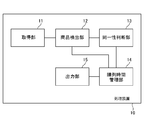
- FIG. 2 shows an example of a functional block diagram of the processing device 10.
- the processing device 10 includes an acquisition unit 11, a product detection unit 12, an identity determination unit 13, a display time management unit 14, and an output unit 15.
- the acquisition unit 11 acquires a plurality of time-series images including the display area.
- the display area is an area where products are displayed, and is realized by, for example, a product display shelf.
- a camera is installed at a position and orientation for photographing the products displayed in the display area (preferably all the products displayed in the display area).
- the camera may shoot moving images at all times (for example, during business hours), or may continuously shoot still images at time intervals larger than the frame intervals of moving images.
- the acquisition unit 11 acquires an image generated by such a camera.
- the product detection unit 12 detects a product from each of a plurality of time-series images. Then, as a detection result, the product detection unit 12 provides position information (hereinafter, “product position information”) indicating a position in the image and product identification information (product code, product name, etc.) for each detected product. Output.
- product position information position information
- product identification information product code, product name, etc.
- Product detection can be achieved using any well-known product recognition technology.
- the product detection unit 12 detects an object region (a region in which an object exists) in an image by using a well-known object detection technique.
- the product detection unit 12 may detect a region including the object and its surroundings (for example, a rectangular region) as an object region.
- the product detection unit 12 may detect a region having a shape along the contour of the object in which only the object exists as an object region.
- the latter can be realized by using, for example, a technique called semantic segmentation or instance segmentation, which detects a pixel area in which a detection target exists.
- the product detection unit 12 recognizes the product included in the image of the object region by using a well-known product recognition technique (feature point matching, deep learning, etc.).
- the product position information is indicated by, for example, the coordinates of the two-dimensional coordinate system set on the image.
- the product position information may be indicated by a single point in the image, or may be indicated by an area that occupies a part of the image.
- the product position information may be information indicating a representative point (center, center of gravity, etc.) of the object region, or information indicating the object region (partial region in the image).
- the identity determination unit 13 determines the identity of the products detected from the images different from each other. That is, the identity determination unit 13 determines whether or not the product detected from the first image and the product detected from the second image are the same. The same here means that they are the same individual. That is, even if the product identification information is the same, if they are different individuals, they do not correspond to the same here.
- an example of the process for determining the identity will be described.
- the identity determination unit 13 can determine the identity of the product based on the position in the image of the product detected from each of the different images.
- the positions in the images of the products detected from each of the plurality of images are the same or the difference is within the threshold value, the products detected from each of the plurality of images can be determined to be the same product.
- two images whose difference in image generation timing (shooting timing) is equal to or less than the reference time are the processing targets for identity determination (the first image and the second image).
- the reference time is a design matter, but it is a small value to some extent.
- the identity determination unit 13 may set "the distance between the points is equal to or less than the threshold value" as a condition for determining the same product. Further, when the product position information is occupied by a part of the area in the image, the identity determination unit 13 stipulates that "the areas overlapping each other occupy the reference ratio or more of the area indicated by each product position information". It may be a condition to judge that it is a product of.
- the conditions for determining the same product exemplified here are merely examples, and are not limited to this.
- the identity determination unit 13 may determine that "the above conditions are satisfied and the product identification information matches" as a condition for determining the same product.
- the identity determination unit 13 can determine the identity of the product based on the feature amount (shape, size, color, etc.) of the appearance of the product detected from each of the different images. Even if the products are of the same type (the product identification information is the same), individual differences may appear in the appearance of the products. The identity determination unit 13 can determine the identity of the product based on such individual differences in appearance.
- the display time management unit 14 manages the display time of each product detected by the product detection unit 12 based on the detection result by the product detection unit 12 and the identification determination result by the identity determination unit 13.
- the display time management unit 14 newly displays in the display area the products detected from the images that are not determined to be the same as any of the products detected in the previous images in chronological order. You can start managing the display time as a product that has been sold. Further, the display time management unit 14 can end the management of the display time of the products detected from the images and which are not determined to be the same as any of the products detected from the subsequent images.
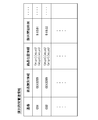
- the display time management unit 14 manages the display time management information as shown in FIG.
- the illustrated display time management information links the serial number, the product identification information, the product position information, and the display start time to each other.
- the serial number is information for identifying the products managed by the display time information from each other.
- the product identification information is the product identification information of the product managed by the display time information.
- the product position information is the latest product position information of each product managed by the display time information.
- the display start time is the time when the display of each product managed by the display time information is started. In addition, instead of the display start time, the display start date and time, the display start date, and the like may be used.
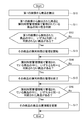
- the identity determination unit 13 contains the product position information of each of the detected products and the display time as shown in FIG. Based on the product position information of each product managed by the management information, the identity of each product detected from the first image and the product managed by the display time management information is determined (S11).
- the display time management unit 14 determines that the product is not the same as any of the products managed by the display time management information.
- the management of the product display time is started (S13). Specifically, the display time management unit 14 registers the product identification information and the product position information of the product in association with the new serial number, and at the same time, generates the first image (shooting timing) or its vicinity. Register the timing as the display start time.
- the display time management unit 14 is managed by the display time management information among the products detected from the first image. It is determined that there is a product that is not determined to be the same as any of the existing products (Yes in S12), and the management of the display time of all the products detected from the first image is started (S13).
- the display time management unit 14 sets the display time management unit 14 to S13. Do not execute the processing of.
- the display time management unit 14 determines that the product is not the same as the product detected from the first image.
- the management of the product display time is finished (S15). For example, the display time management unit 14 may delete the information of the product from the display time management information.
- the display time management unit 14 may register information indicating that the display time management has been completed in association with the product.
- the above-mentioned "information indicating that the management of the display time has been completed" may be time information or date and time information indicating the generation timing (shooting timing) of the first image or the timing in the vicinity thereof. By registering such information, it is possible to record the display start time and the display end time of each of the plurality of products. Then, the information can be used for marketing and the like.
- the display time management unit 14 is in S15. Do not execute the processing of.
- the display time management unit 14 includes products that are determined to be the same as any of the products detected from the first image among the products managed by the display time management information (Yes in S16).
- the product position information of the product managed by the display time management information is updated to the product position information of the product detected from the first image (S17).
- the display time management unit 14 Does not execute the process of S17.
- the output unit 15 outputs information regarding the display time of each product detected by the product detection unit 12. For example, the output unit 15 outputs a processed image on the image acquired by the acquisition unit 11 in association with each product detected from the image and displaying information on each display time.
- the output unit 15 may realize output of the above information via an output device such as a display, a projection device, a printer, or a mailer connected to the processing device 10, or may transmit the above information to another external device. May be good.
- an output device such as a display, a projection device, a printer, or a mailer connected to the processing device 10. May be good.
- an example of information regarding the display time will be described.
- the output "information about the display time” may be "information indicating a guideline for the display time".
- the display time is divided into a plurality of groups such as “less than M1", “M1 or more and less than M2", “M2 or more”, and the like.
- the number of groups is any number of 2 or more.
- the "information indicating a guideline for the display time” is information indicating which group the current display time of each product belongs to.
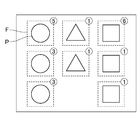
- FIG. 5 shows an example of a processed image displaying the information.
- the frame F is displayed in association with each product P detected by the product detection unit 12.
- the display position of the frame F is determined based on, for example, the product position information of each product P.
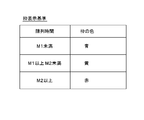
- the display mode (line color, line shade, line type, etc.) of the frame F of each product P changes depending on which group the display time of each product P belongs to.
- the display mode of the frame F according to the display time as shown in FIG. 6 is determined in advance, and the frame F of each product P is displayed in the display mode corresponding to the display mode.
- the frame display standard as shown in FIG. 6 may differ for each product P. That is, the values of M1 and M2 of the frame display reference may be different for each product P. Further, although the example shown in FIG. 6 is divided into three groups, the number of groups may also differ for each product P.
- the output unit 15 may highlight the product P whose display time exceeds the upper limit value.
- the frame F of the corresponding product P may be blinked or displayed in a predetermined color (red).
- the upper limit value may be different for each product P.
- the output "information about the display time” may be "information indicating a guideline for the remaining time until the sales deadline".
- the remaining time until the sales deadline (hereinafter, may be simply referred to as “remaining time”) is calculated by subtracting the display time from the above-mentioned upper limit value.
- the remaining time is divided into a plurality of groups such as "less than L1", “L1 or more and less than L2", “L2 or more", and the like.
- the number of groups is any number of 2 or more.
- the "information indicating a guideline for the remaining time” is information indicating which group the remaining time of each product belongs to.
- FIG. 5 shows an example of a processed image displaying the information.
- the frame F is displayed in association with each product P detected by the product detection unit 12.
- the display position of the frame F is determined based on, for example, the product position information of each product P.
- the display mode (line color, line shade, line type, etc.) of the frame F of each product P changes depending on which group the remaining time of each product P belongs to.
- the display mode of the frame F according to the remaining time is determined in advance, and the frame F of each product P is displayed in the display mode corresponding to the display mode.
- the frame display standard may differ for each product P. Further, the number of the above groups may also differ for each product P. Further, the output unit 15 may highlight the product P whose remaining time is less than the lower limit value. There are various highlighting methods, but for example, the frame F of the corresponding product P may be blinked or displayed in a predetermined color (red).
- the output "information about the display time” may be the "display time” or the "remaining time until the sales deadline” itself.
- FIG. 7 shows an example of a processed image displaying the information.
- the number displayed in association with the frame F indicates the "display time” or the “remaining time until the sales deadline”.
- "Display time” and “remaining time until the sales deadline” are indicated in arbitrary units such as "month”, “day”, “hour”, “minute”, and “second”. For example, a product associated with "1” indicates that the display time or remaining time is "1 month”, "1 day”, “1 hour”, “1 minute”, or "1 second".
- the display time management unit 14 manages the display time of each product in the plurality of display areas for each display area. Then, the output unit 15 outputs the display area identification information in which the product whose display time exceeds the reporting reference value exists as the information regarding the display time.
- the display area identification information is information that identifies a plurality of display areas from each other. The reporting standard value may differ for each product.
- the processing apparatus 10 of the present embodiment it is possible to manage the display time of the products displayed in the display area based on a plurality of time-series images including the display area. Then, the processing device 10 can output information regarding the display time of each of the displayed products. Based on the information output by the processing device 10, the clerk should grasp the status of the sales deadline of each of the displayed products, that is, "whether or not the sales deadline has passed", "whether or not the sales deadline is approaching", and the like. Can be done.
- the processing device 10 outputs a processed image displaying information indicating the display time associated with each product detected from the image on the image including the display area. be able to. According to such a processed image, the clerk can intuitively grasp the sales status of each of the displayed products.
- acquisition means “the own device goes to fetch the data stored in another device or storage medium” based on the user input or the instruction of the program (actively). Acquisition) ”, for example, requesting or inquiring about other devices to receive, accessing and reading other devices or storage media, etc., and based on user input or program instructions,“ Entering data output from another device into your own device (passive acquisition) ”, for example, receiving data to be delivered (or transmitted, push notification, etc.), and received data or information. Select and acquire from among, and generate new data by editing the data (text conversion, data sorting, partial data extraction, file format change, etc.), and the new data Includes at least one of "acquiring data”.
- An acquisition method for acquiring multiple time-series images including a display area, A product detection means for detecting a product from each of the plurality of time-series images, An identity determination means for determining the identity of products detected from the images different from each other, A display time management means for managing the display time of each of the detected products based on the detection result and the determination result of the identity. An output means for outputting information on the display time of each of the detected products, and Processing equipment with. 2. 2. The processing device according to 1. 3. 3. 2. The processing device according to 2, wherein the output means is associated with each product detected from the image and outputs the processed image displaying information according to the length of the display time. 4. 2.
- the processing device wherein the output means outputs the processed image that highlights the product whose display time exceeds the upper limit value. 5.
- the processing device according to any one of 1 to 5, wherein the identity determination means determines the identity of a product based on the position in the image of the product detected from each of the images different from each other. 7.
- the display time management means newly displays the products detected from the image that are not the same as the products detected from the previous images in the display area.
- the processing apparatus according to any one of 1 to 6, wherein the management of the display time is started. 8.
- the display time management means ends the management of the display time of the products detected from the image and which is not determined to be the same as any of the subsequent products detected from the image 1 to 7.
- the processing apparatus according to any one of. 9.
- the computer Acquire multiple time-series images including the display area, Products are detected from each of the multiple time-series images, Judging the identity of the products detected from the images that are different from each other, Based on the detection result and the determination result of the identity, the display time of each of the detected products is managed. A processing method for outputting information regarding the display time of each of the detected products.
- Computer An acquisition method for acquiring multiple time-series images including a display area, A product detection means that detects a product from each of the plurality of time-series images.
- Identity determination means for determining the identity of products detected from the images different from each other,
- a display time management means for managing the display time of each of the detected products based on the detection result and the determination result of the sameness.
- An output means for outputting information regarding the display time of each of the detected products.
Landscapes
- Engineering & Computer Science (AREA)
- Physics & Mathematics (AREA)
- General Physics & Mathematics (AREA)
- Theoretical Computer Science (AREA)
- Business, Economics & Management (AREA)
- Multimedia (AREA)
- Economics (AREA)
- Finance (AREA)
- Accounting & Taxation (AREA)
- Computer Vision & Pattern Recognition (AREA)
- General Business, Economics & Management (AREA)
- Marketing (AREA)
- Strategic Management (AREA)
- Development Economics (AREA)
- Entrepreneurship & Innovation (AREA)
- Human Resources & Organizations (AREA)
- Operations Research (AREA)
- Quality & Reliability (AREA)
- Tourism & Hospitality (AREA)
- Management, Administration, Business Operations System, And Electronic Commerce (AREA)
Priority Applications (4)
| Application Number | Priority Date | Filing Date | Title |
|---|---|---|---|
| JP2022527434A JP7416237B2 (ja) | 2020-05-29 | 2020-05-29 | 処理装置、処理方法及びプログラム |
| PCT/JP2020/021316 WO2021240772A1 (ja) | 2020-05-29 | 2020-05-29 | 処理装置、処理方法及びプログラム |
| US17/927,957 US20230206507A1 (en) | 2020-05-29 | 2020-05-29 | Processing apparatus, processing method, and non-transitory storage medium |
| JP2023220563A JP7619427B2 (ja) | 2020-05-29 | 2023-12-27 | 処理装置、処理方法及びプログラム |
Applications Claiming Priority (1)
| Application Number | Priority Date | Filing Date | Title |
|---|---|---|---|
| PCT/JP2020/021316 WO2021240772A1 (ja) | 2020-05-29 | 2020-05-29 | 処理装置、処理方法及びプログラム |
Publications (1)
| Publication Number | Publication Date |
|---|---|
| WO2021240772A1 true WO2021240772A1 (ja) | 2021-12-02 |
Family
ID=78723190
Family Applications (1)
| Application Number | Title | Priority Date | Filing Date |
|---|---|---|---|
| PCT/JP2020/021316 Ceased WO2021240772A1 (ja) | 2020-05-29 | 2020-05-29 | 処理装置、処理方法及びプログラム |
Country Status (3)
| Country | Link |
|---|---|
| US (1) | US20230206507A1 (https=) |
| JP (2) | JP7416237B2 (https=) |
| WO (1) | WO2021240772A1 (https=) |
Cited By (1)
| Publication number | Priority date | Publication date | Assignee | Title |
|---|---|---|---|---|
| WO2023106034A1 (ja) * | 2021-12-08 | 2023-06-15 | 株式会社J-オイルミルズ | 食品販売促進制御装置、食品販売促進システム、および食品販売促進方法 |
Citations (4)
| Publication number | Priority date | Publication date | Assignee | Title |
|---|---|---|---|---|
| JP2010121784A (ja) * | 2008-11-17 | 2010-06-03 | Toshiba Corp | 冷蔵庫の在庫管理装置 |
| JP2016058105A (ja) * | 2016-01-20 | 2016-04-21 | パナソニックIpマネジメント株式会社 | 商品モニタリング装置、商品モニタリングシステムおよび商品モニタリング方法 |
| JP2016196981A (ja) * | 2015-04-03 | 2016-11-24 | 三菱電機株式会社 | 庫内管理システムおよび庫内管理方法 |
| WO2018179361A1 (ja) * | 2017-03-31 | 2018-10-04 | 日本電気株式会社 | 画像処理装置、画像処理方法、および記録媒体 |
Family Cites Families (15)
| Publication number | Priority date | Publication date | Assignee | Title |
|---|---|---|---|---|
| KR101517083B1 (ko) * | 2009-05-11 | 2015-05-15 | 엘지전자 주식회사 | 냉장고를 제어하는 휴대 단말기 및 그 동작 방법 |
| KR102024595B1 (ko) * | 2013-04-25 | 2019-09-24 | 엘지전자 주식회사 | 냉장고 및 그 제어방법 |
| JP2016057022A (ja) | 2014-09-11 | 2016-04-21 | 株式会社東芝 | 食材管理システム |
| KR101830660B1 (ko) * | 2016-01-29 | 2018-02-21 | 엘지전자 주식회사 | 냉장고와 통신하는 센서 및 상기 센서를 포함하는 냉장고 제어 시스템 |
| US10281200B2 (en) * | 2016-03-14 | 2019-05-07 | Amazon Technologies, Inc. | Image-based spoilage sensing refrigerator |
| US10922541B2 (en) * | 2016-04-06 | 2021-02-16 | Nec Corporation | Object type identifying apparatus, object type identifying method, and recording medium |
| JP6755713B2 (ja) * | 2016-05-25 | 2020-09-16 | キヤノン株式会社 | 追尾装置、追尾方法及びプログラム |
| US10157308B2 (en) * | 2016-11-30 | 2018-12-18 | Whirlpool Corporation | Interaction recognition and analysis system |
| US10324439B2 (en) * | 2017-01-07 | 2019-06-18 | International Business Machines Corporation | Food freshness management |
| JP6996093B2 (ja) | 2017-03-13 | 2022-01-17 | 日本電気株式会社 | 管理装置、管理方法及びプログラム |
| WO2019107157A1 (ja) | 2017-11-29 | 2019-06-06 | 株式会社Nttドコモ | 棚割情報生成装置及び棚割情報生成プログラム |
| JP2019114000A (ja) | 2017-12-22 | 2019-07-11 | キヤノンマーケティングジャパン株式会社 | 情報処理装置、情報処理装置の制御方法及びプログラム |
| US10643059B2 (en) * | 2018-01-10 | 2020-05-05 | Trax Technology Solutions Pte Ltd. | Inspecting store shelf capacity |
| KR102551358B1 (ko) * | 2018-09-21 | 2023-07-04 | 삼성전자주식회사 | 냉장고 내 객체의 상태와 관련된 정보를 제공하는 방법 및 시스템 |
| US11386621B2 (en) * | 2018-12-31 | 2022-07-12 | Whirlpool Corporation | Augmented reality feedback of inventory for an appliance |
-
2020
- 2020-05-29 WO PCT/JP2020/021316 patent/WO2021240772A1/ja not_active Ceased
- 2020-05-29 JP JP2022527434A patent/JP7416237B2/ja active Active
- 2020-05-29 US US17/927,957 patent/US20230206507A1/en active Pending
-
2023
- 2023-12-27 JP JP2023220563A patent/JP7619427B2/ja active Active
Patent Citations (4)
| Publication number | Priority date | Publication date | Assignee | Title |
|---|---|---|---|---|
| JP2010121784A (ja) * | 2008-11-17 | 2010-06-03 | Toshiba Corp | 冷蔵庫の在庫管理装置 |
| JP2016196981A (ja) * | 2015-04-03 | 2016-11-24 | 三菱電機株式会社 | 庫内管理システムおよび庫内管理方法 |
| JP2016058105A (ja) * | 2016-01-20 | 2016-04-21 | パナソニックIpマネジメント株式会社 | 商品モニタリング装置、商品モニタリングシステムおよび商品モニタリング方法 |
| WO2018179361A1 (ja) * | 2017-03-31 | 2018-10-04 | 日本電気株式会社 | 画像処理装置、画像処理方法、および記録媒体 |
Cited By (1)
| Publication number | Priority date | Publication date | Assignee | Title |
|---|---|---|---|---|
| WO2023106034A1 (ja) * | 2021-12-08 | 2023-06-15 | 株式会社J-オイルミルズ | 食品販売促進制御装置、食品販売促進システム、および食品販売促進方法 |
Also Published As
| Publication number | Publication date |
|---|---|
| JPWO2021240772A1 (https=) | 2021-12-02 |
| JP7619427B2 (ja) | 2025-01-22 |
| JP7416237B2 (ja) | 2024-01-17 |
| JP2024023957A (ja) | 2024-02-21 |
| US20230206507A1 (en) | 2023-06-29 |
Similar Documents
| Publication | Publication Date | Title |
|---|---|---|
| TW393629B (en) | Hand gesture recognition system and method | |
| US11328250B2 (en) | Inventory management server, inventory management system, inventory management program, and inventory management method | |
| CN103366474A (zh) | 信息处理装置及信息处理方法 | |
| JP2018041261A (ja) | 情報処理装置及びプログラム | |
| WO2019123714A1 (ja) | 情報処理装置、商品推薦方法、およびプログラム | |
| JP6648508B2 (ja) | 購買行動分析プログラム、購買行動分析方法、及び購買行動分析装置 | |
| JP6624063B2 (ja) | 自動販売機認識装置、商品棚認識装置、自動販売機認識方法、プログラムおよび画像処理装置 | |
| JP6565639B2 (ja) | 情報表示プログラム、情報表示方法、及び情報表示装置 | |
| JP7707810B2 (ja) | 情報処理プログラム、情報処理方法、および情報処理装置 | |
| JP7619427B2 (ja) | 処理装置、処理方法及びプログラム | |
| JP2017102564A (ja) | 表示制御プログラム、表示制御方法、及び表示制御装置 | |
| JP7235119B2 (ja) | 処理装置、会計装置、処理方法及びプログラム | |
| JP2016062372A (ja) | 情報処理装置及び情報処理プログラム | |
| CN103366241B (zh) | 信息处理装置及信息处理方法 | |
| JP2022061583A (ja) | 在庫管理装置、在庫管理方法及びプログラム | |
| JP7342943B2 (ja) | 販売管理システム、店舗装置、販売管理方法、およびプログラム | |
| JP7576782B2 (ja) | 業務支援システム、業務支援装置、業務支援方法、及び、コンピュータプログラム | |
| JP7215474B2 (ja) | 登録システム、登録方法及びプログラム | |
| JP7248010B2 (ja) | 登録システム、登録方法及びプログラム | |
| WO2020195614A1 (ja) | 情報処理装置、表示システム、情報処理方法およびプログラムが記録された記録媒体 | |
| JP6877806B6 (ja) | 情報処理装置、プログラム及び情報処理方法 | |
| US20230196444A1 (en) | Order management device and order management method | |
| JP7838675B2 (ja) | 商品管理装置、商品管理方法、およびプログラム | |
| JP6365667B2 (ja) | 情報処理装置、情報処理方法、及びプログラム | |
| TWI723458B (zh) | 資訊投放方法及資訊投放系統 |
Legal Events
| Date | Code | Title | Description |
|---|---|---|---|
| 121 | Ep: the epo has been informed by wipo that ep was designated in this application |
Ref document number: 20937882 Country of ref document: EP Kind code of ref document: A1 |
|
| ENP | Entry into the national phase |
Ref document number: 2022527434 Country of ref document: JP Kind code of ref document: A |
|
| NENP | Non-entry into the national phase |
Ref country code: DE |
|
| 122 | Ep: pct application non-entry in european phase |
Ref document number: 20937882 Country of ref document: EP Kind code of ref document: A1 |