WO2021193731A1 - 改変チャネルロドプシン - Google Patents
改変チャネルロドプシン Download PDFInfo
- Publication number
- WO2021193731A1 WO2021193731A1 PCT/JP2021/012282 JP2021012282W WO2021193731A1 WO 2021193731 A1 WO2021193731 A1 WO 2021193731A1 JP 2021012282 W JP2021012282 W JP 2021012282W WO 2021193731 A1 WO2021193731 A1 WO 2021193731A1
- Authority
- WO
- WIPO (PCT)
- Prior art keywords
- amino acid
- acid sequence
- seq
- channelrhodopsin
- sequence shown
- Prior art date
- Legal status (The legal status is an assumption and is not a legal conclusion. Google has not performed a legal analysis and makes no representation as to the accuracy of the status listed.)
- Ceased
Links
Images



Classifications
-
- A—HUMAN NECESSITIES
- A61—MEDICAL OR VETERINARY SCIENCE; HYGIENE
- A61P—SPECIFIC THERAPEUTIC ACTIVITY OF CHEMICAL COMPOUNDS OR MEDICINAL PREPARATIONS
- A61P27/00—Drugs for disorders of the senses
- A61P27/02—Ophthalmic agents
-
- A—HUMAN NECESSITIES
- A61—MEDICAL OR VETERINARY SCIENCE; HYGIENE
- A61K—PREPARATIONS FOR MEDICAL, DENTAL OR TOILETRY PURPOSES
- A61K48/00—Medicinal preparations containing genetic material which is inserted into cells of the living body to treat genetic diseases; Gene therapy
- A61K48/005—Medicinal preparations containing genetic material which is inserted into cells of the living body to treat genetic diseases; Gene therapy characterised by an aspect of the 'active' part of the composition delivered, i.e. the nucleic acid delivered
-
- C—CHEMISTRY; METALLURGY
- C07—ORGANIC CHEMISTRY
- C07K—PEPTIDES
- C07K14/00—Peptides having more than 20 amino acids; Gastrins; Somatostatins; Melanotropins; Derivatives thereof
- C07K14/405—Peptides having more than 20 amino acids; Gastrins; Somatostatins; Melanotropins; Derivatives thereof from algae
-
- C—CHEMISTRY; METALLURGY
- C07—ORGANIC CHEMISTRY
- C07K—PEPTIDES
- C07K14/00—Peptides having more than 20 amino acids; Gastrins; Somatostatins; Melanotropins; Derivatives thereof
- C07K14/415—Peptides having more than 20 amino acids; Gastrins; Somatostatins; Melanotropins; Derivatives thereof from plants
-
- C—CHEMISTRY; METALLURGY
- C12—BIOCHEMISTRY; BEER; SPIRITS; WINE; VINEGAR; MICROBIOLOGY; ENZYMOLOGY; MUTATION OR GENETIC ENGINEERING
- C12N—MICROORGANISMS OR ENZYMES; COMPOSITIONS THEREOF; PROPAGATING, PRESERVING, OR MAINTAINING MICROORGANISMS; MUTATION OR GENETIC ENGINEERING; CULTURE MEDIA
- C12N15/00—Mutation or genetic engineering; DNA or RNA concerning genetic engineering, vectors, e.g. plasmids, or their isolation, preparation or purification; Use of hosts therefor
- C12N15/09—Recombinant DNA-technology
- C12N15/63—Introduction of foreign genetic material using vectors; Vectors; Use of hosts therefor; Regulation of expression
-
- C—CHEMISTRY; METALLURGY
- C12—BIOCHEMISTRY; BEER; SPIRITS; WINE; VINEGAR; MICROBIOLOGY; ENZYMOLOGY; MUTATION OR GENETIC ENGINEERING
- C12N—MICROORGANISMS OR ENZYMES; COMPOSITIONS THEREOF; PROPAGATING, PRESERVING, OR MAINTAINING MICROORGANISMS; MUTATION OR GENETIC ENGINEERING; CULTURE MEDIA
- C12N15/00—Mutation or genetic engineering; DNA or RNA concerning genetic engineering, vectors, e.g. plasmids, or their isolation, preparation or purification; Use of hosts therefor
- C12N15/09—Recombinant DNA-technology
- C12N15/63—Introduction of foreign genetic material using vectors; Vectors; Use of hosts therefor; Regulation of expression
- C12N15/79—Vectors or expression systems specially adapted for eukaryotic hosts
- C12N15/85—Vectors or expression systems specially adapted for eukaryotic hosts for animal cells
- C12N15/86—Viral vectors
-
- A—HUMAN NECESSITIES
- A61—MEDICAL OR VETERINARY SCIENCE; HYGIENE
- A61K—PREPARATIONS FOR MEDICAL, DENTAL OR TOILETRY PURPOSES
- A61K38/00—Medicinal preparations containing peptides
-
- C—CHEMISTRY; METALLURGY
- C07—ORGANIC CHEMISTRY
- C07K—PEPTIDES
- C07K2319/00—Fusion polypeptide
-
- C—CHEMISTRY; METALLURGY
- C07—ORGANIC CHEMISTRY
- C07K—PEPTIDES
- C07K2319/00—Fusion polypeptide
- C07K2319/01—Fusion polypeptide containing a localisation/targetting motif
- C07K2319/03—Fusion polypeptide containing a localisation/targetting motif containing a transmembrane segment
-
- C—CHEMISTRY; METALLURGY
- C12—BIOCHEMISTRY; BEER; SPIRITS; WINE; VINEGAR; MICROBIOLOGY; ENZYMOLOGY; MUTATION OR GENETIC ENGINEERING
- C12N—MICROORGANISMS OR ENZYMES; COMPOSITIONS THEREOF; PROPAGATING, PRESERVING, OR MAINTAINING MICROORGANISMS; MUTATION OR GENETIC ENGINEERING; CULTURE MEDIA
- C12N2510/00—Genetically modified cells
-
- C—CHEMISTRY; METALLURGY
- C12—BIOCHEMISTRY; BEER; SPIRITS; WINE; VINEGAR; MICROBIOLOGY; ENZYMOLOGY; MUTATION OR GENETIC ENGINEERING
- C12N—MICROORGANISMS OR ENZYMES; COMPOSITIONS THEREOF; PROPAGATING, PRESERVING, OR MAINTAINING MICROORGANISMS; MUTATION OR GENETIC ENGINEERING; CULTURE MEDIA
- C12N2750/00—MICROORGANISMS OR ENZYMES; COMPOSITIONS THEREOF; PROPAGATING, PRESERVING, OR MAINTAINING MICROORGANISMS; MUTATION OR GENETIC ENGINEERING; CULTURE MEDIA ssDNA viruses
- C12N2750/00011—Details
- C12N2750/14011—Parvoviridae
- C12N2750/14111—Dependovirus, e.g. adenoassociated viruses
- C12N2750/14141—Use of virus, viral particle or viral elements as a vector
- C12N2750/14143—Use of virus, viral particle or viral elements as a vector viral genome or elements thereof as genetic vector
Definitions
- the present invention relates to modified channelrhodopsin. More specifically, it relates to modified channelrhodopsin having high ion permeability (photoreactivity).
- an object of the present invention is to provide a modified channelrhodopsin having high ion permeability.
- the present inventors have determined that the third extracellular domain counted from the N-terminal side of the three extracellular domains of channelrhodopsin derived from Volvox is Chlamydomonas reinhardtchii. It was found that channelrhodopsin with high ion permeability can be obtained by substituting the corresponding extracellular domain of the derived channelrhodopsin-2.
- the modified channelrhodopsin of the present invention made based on the above findings has a third extracellular domain counting from the N-terminal side of the three extracellular domains of Volvox-derived channelrhodopsin. It is a polypeptide obtained by substituting the corresponding extracellular domain of channelrhodopsin-2 derived from Chlamydomonas reinhardtchii. Further, in the modified channelrhodopsin according to claim 2, in the modified channelrhodopsin according to claim 1, the channelrhodopsin derived from Volvox contains at least the 67th to 322nd amino acids of the amino acid sequence shown in SEQ ID NO: 1.
- the 142nd to 169th amino acids of the amino acid sequence shown in SEQ ID NO: 1 are derived from Chlamydomonas reinhardtchii shown in SEQ ID NO: 2. It is substituted with amino acids 143 to 170 in the amino acid sequence of channelrhodopsin-1.
- the modified channelrhodopsin according to claim 4 is any of the following (a) to (c) in the modified channelrhodopsin according to claim 3.
- A Polypeptide consisting of the amino acid sequence shown in SEQ ID NO: 4
- b In the amino acid sequence shown in SEQ ID NO: 4, consisting of an amino acid sequence containing deletion, substitution, addition or insertion of one or more amino acids, and Polypeptide having a channel rhodopsin function
- c A polypeptide consisting of an amino acid sequence having at least 90% sequence identity with the amino acid sequence shown in SEQ ID NO: 4 and having a channel rhodopsin function The modified channel rhodopsin according to claim 5.
- Is a polypeptide consisting of the amino acid sequence shown in SEQ ID NO: 8 in the modified channel rhodopsin according to claim 4.
- the modified channelrhodopsin according to claim 6 is the sixth modified channelrhodopsin according to any one of claims 1 to 3, counting from the N-terminal side of the seven extracellular domains of the volbox-derived channelrhodopsin.
- the transmembrane domain is replaced by the corresponding transmembrane domain of channelrhodopsin from chloromonas ogama.
- the amino acids after the 323rd amino acid sequence shown in SEQ ID NO: 1 are the channels derived from chloromonas ogama shown in SEQ ID NO: 5.
- modified channelrhodopsin according to claim 8 is any of the following (a) to (c) in the modified channelrhodopsin according to claim 6 or 7.
- A Polypeptide consisting of the amino acid sequence shown in SEQ ID NO: 6
- b In the amino acid sequence shown in SEQ ID NO: 6, consisting of an amino acid sequence containing deletion, substitution, addition or insertion of one or more amino acids, and Polypeptide having a channel rhodopsin function
- c A polypeptide consisting of an amino acid sequence having at least 90% sequence identity with the amino acid sequence shown in SEQ ID NO: 6 and having a channel rhodopsin function The modified channel rhodopsin according to claim 9.
- the modified channelrhodopsin according to claim 10 is a polypeptide consisting of the amino acid sequence shown in any of SEQ ID NOs: 9 to 12 in the modified channelrhodopsin according to claim 9.
- the modified channelrhodopsin according to claim 11 is any of the following (a) to (c) in the modified channelrhodopsin according to claim 6 or 7.
- A Polypeptide consisting of the amino acid sequence shown in SEQ ID NO: 7
- b In the amino acid sequence shown in SEQ ID NO: 7, consisting of an amino acid sequence containing deletion, substitution, addition or insertion of one or more amino acids, and Polypeptide having a channel rhodopsin function
- c A polypeptide consisting of an amino acid sequence having at least 90% sequence identity with the amino acid sequence shown in SEQ ID NO: 7 and having a channel rhodopsin function
- the polynucleotide of the present invention is claimed. As described in Item 12, the polypeptide according to any one of claims 1 to 11 is encoded.
- the expression vector of the present invention contains the polynucleotide according to claim 12, which is functionally linked to the promoter as described in claim 13. Further, as described in claim 14, the cell of the present invention expresses the polypeptide according to any one of claims 1 to 11. Further, in the cell according to claim 15, the cell is a nerve cell in the cell according to claim 14. The polypeptide according to any one of claims 1 to 11, according to claim 12, in the production of a medicament for treating a subject suffering from a disorder of the outer layer of the retina, as described in claim 16. The use of any of the polynucleotides, the expression vector of claim 13.
- the disorder of the outer layer of the retina is any of retinitis pigmentosa, age-related macular degeneration, and retinal detachment in the use according to claim 16.
- the pharmaceutical composition for treating a disorder of the outer layer of the retina of the present invention is either the polypeptide according to any one of claims 1 to 11 or the expression vector according to claim 13, as described in claim 18. Is included as an active ingredient.
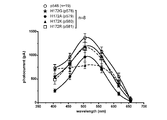
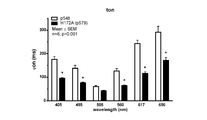
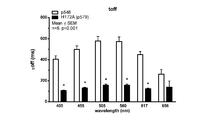
- 6 is a graph showing that p525, p548, and p550 have higher ion permeability than mVChR1 in Test Example 1. It is a graph which shows the ion permeability of p578, p579, p580, p581 in Test Example 4. 6 is a graph showing that p579 has a shorter ⁇ on than p548 in Test Example 5. Similarly, it is a graph which shows that p579 has a shorter ⁇ off than p548.
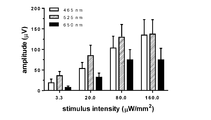
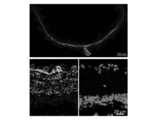
- FIG. 6 is a graph showing that the visual evoked potential can be recorded by introducing the p548 gene into the retina in Test Example 6. It is a photograph showing that the expression of p548 can be confirmed in the entire neural retina by observing the retinal extension specimen under a fluorescence microscope. It is a photograph showing that the expression of p548 can be confirmed mainly in the retinal ganglion cell layer when the retinal section specimen is observed under a fluorescence microscope.
- the third extracellular domain counted from the N-terminal side of the three extracellular domains of Volvox-derived channelrhodopsin is the corresponding cell of channelrhodopsin-2 derived from Chlamydomonas reinhardtchii. It is a polypeptide that is substituted with the outer domain.
- channelrhodopsin derived from Volvox include a polypeptide containing at least the 67th to 322nd amino acids of the amino acid sequence shown in SEQ ID NO: 1.
- the polypeptide consisting of the amino acid sequence shown in SEQ ID NO: 1 is the modified channelrhodopsin reported by the present inventors in Patent Document 1 (polypeptide consisting of the amino acid sequence shown in SEQ ID NO: 10 in Patent Document 1).
- This modified channelrhodopsin changes the N-terminal region of channelrhodopsin derived from Volvox to the N-terminal region of channelrhodopsin-1 derived from Chlamydomonas reinhardtchii (a region involved in cell membrane localization expression and does not contain a transmembrane domain).
- the amino acids 1 to 66 of the amino acid sequence shown in SEQ ID NO: 1 are the amino acids 1 to 66 of the amino acid sequence of channelrhodopsin-1 derived from Chlamydomonas reinhardtchii shown in SEQ ID NO: 2.
- modified channelrhodopsin which is a polypeptide consisting of the amino acid sequence shown in SEQ ID NO: 1
- mVChR1 modified channelrhodopsin
- the amino acid sequence of mVChR1 shown in SEQ ID NO: 1 is as follows.
- the third extracellular domain (EX3) counted from the N-terminal side of the three extracellular domains possessed by mVChR1 is Gly271 to Ser279.
- the above EX3 is the corresponding extracellular domain of channelrhodopsin-2 derived from Chlamydomonas reinhardtchii, that is, channelrhodopsin derived from Chlamydomonas reinhardtchii. It is a polypeptide obtained by substituting the third extracellular domain counted from the N-terminal side of the three extracellular domains possessed by 2.
- the amino acid sequence of channelrhodopsin-2 derived from Chlamydomonas reinhardtchii is as shown in SEQ ID NO: 3, and the third extracellular domain counting from the N-terminal side thereof is Gly233 to Ser241.
- the transmembrane domain before and after that that is, the amino acid on the C-terminal side of TM6 adjacent to the N-terminal of EX3 and / or the amino acid on the N-terminal side of TM7 adjacent to the C-terminal of EX3 are combined.
- the number of amino acids that may be substituted is preferably 3 at the maximum. Substitution of more than 3 amino acids can affect the function of the transmembrane domain.
- the third extracellular domain counted from the N-terminal side of the three extracellular domains of Volvox-derived channelrhodopsin is the corresponding cell of channelrhodopsin-2 derived from Chlamydomonas reinhardtchii.
- it may be a polypeptide in which other domains or regions are further modified.
- the amino acids 142 to 169 of the amino acid sequence shown in SEQ ID NO: 1 are the amino acids 143 to 170 of the amino acid sequence of channelrhodopsin-1 derived from Chlamydomonas reinhardtchii shown in SEQ ID NO: 2. It may be a polypeptide substituted with an amino acid.
- modified channelrhodopsin include a polypeptide consisting of the amino acid sequence shown in SEQ ID NO: 4.
- EX3 of mVChR1 is replaced with the corresponding extracellular domain of channelrhodopsin-2 derived from Chlamydomonas reinhardtchii, and the 142-169th amino acid of mVChR1 is assigned to SEQ ID NO: 2. It is replaced with the amino acids 143 to 170 of channelrhodopsin-1 derived from Chlamydomonas reinhardtchii (Note that Pro at position 280 of TM7 is replaced with Val due to the replacement of EX3).
- the sixth transmembrane domain (TM6) counting from the N-terminal side corresponds to channelrhodopsin derived from Chloromonas ogama. It may be a polypeptide substituted with a transmembrane domain.
- the amino acid sequence of channelrhodopsin derived from chloromonas ogama is as shown in SEQ ID NO: 5, and the sixth transmembrane domain counting from the N-terminal side thereof is Arg187 to Val212.
- the amino acids after the 323rd amino acid sequence shown in SEQ ID NO: 1 are the amino acid sequences of channelrhodopsin derived from chloromonas ogama shown in SEQ ID NO: 5. It may be a polypeptide obtained by substituting an amino acid at the 265th position or later.
- modified channelrhodopsin include a polypeptide consisting of the amino acid sequence shown in SEQ ID NO: 6.
- EX3 of mVChR1 is replaced with the corresponding extracellular domain of channelrhodopsin-2 derived from Chlamydomonas reinhardtchii, and the amino acids 142 to 169 of mVChR1 are assigned to SEQ ID NO: 2.
- the indicated amino acids 143 to 170 of channelrhodopsin derived from Chlamydomonas reinhardtchii were substituted, and TM6 of mVChR1 was further substituted with the corresponding transmembrane domain of channelrhodopsin derived from chloromonas ogama, and 323 of mVChR1.
- the 344th amino acid is replaced with the 265th to 286th amino acids of channelrhodopsin derived from Chlamydomonas ogama shown in SEQ ID NO: 5 (Note that the 280th Pro of TM7 is replaced with Val due to the replacement of EX3. Has been).
- Another specific example is a polypeptide consisting of the amino acid sequence shown in SEQ ID NO: 7.
- EX3 of mVChR1 is replaced with the corresponding extracellular domain of channelrhodopsin-2 derived from Kramidmonas reinhardtchii, and the 142-169th amino acid of mVChR1 is assigned to SEQ ID NO: 2.
- the indicated amino acids 143 to 170 of channelrhodopsin derived from Cramidomonas reinhardtchii were substituted, and TM6 of mVChR1 was further substituted with the corresponding transmembrane domain of channelrhodopsin derived from chloromonas ogama, and 323 of mVChR1.
- amino acid at position 344 is replaced with the amino acid at position 265 to 286 of channelrhodopsin derived from chloromonas ogama shown in SEQ ID NO: 5 is a polypeptide consisting of the amino acid sequence shown in SEQ ID NO: 6 above (p548).
- the 28th to 60th amino acids of mVChR1 are deleted (note that the 280th Pro of TM7 is replaced with Val due to the replacement of EX3).
- the modified channelrhodopsin of the present invention is a poly having a deletion, substitution, addition or insertion of one or more amino acids in the amino acid sequences shown in SEQ ID NOs: 4, 6 and 7, respectively, and having a channelrhodopsin function.
- the “plurality” is an integer of 50 or less, preferably an integer of 30 or less, more preferably an integer of 10 or less, for example, 2 to 9, 2 to 7, and 2 to 5. ..
- sequence identity with the amino acid sequences shown in SEQ ID NOs: 4, 6 and 7 is preferably at least 91%, more preferably at least 92%, more preferably at least 93%, and more preferably at least. It is 94%, more preferably at least 95%, more preferably at least 96%, more preferably at least 97%, more preferably at least 98%, and most preferably at least 99%.
- The% of identity means a value calculated by using software (for example, FASTA, DANASYS, BLAST, etc.) that calculates the identity between a plurality of (two) amino acid sequences with default settings.
- the amino acid sequence shown in SEQ ID NO: 8 in which the 210th Trp of the polypeptide consisting of the amino acid sequence shown in SEQ ID NO: 4 is replaced with Tyr and the 211th Thr is replaced with Val.
- a polypeptide consisting of (p528) can be mentioned.
- the 172nd position of the polypeptide consisting of the amino acid sequences shown in SEQ ID NOs: 4, 6 and 8 and the 139th position of the polypeptide consisting of the amino acid sequence shown in SEQ ID NO: 7 are other amino acids, for example, Gly and Ala.
- the 172nd His of the polypeptide consisting of the amino acid sequence shown in SEQ ID NO: 6 is composed of the amino acid sequence shown in SEQ ID NO: 9 substituted with Gly.
- a polypeptide p578
- a polypeptide consisting of the amino acid sequence shown in SEQ ID NO: 10 substituted with Ala substituted with Lys (p580)
- Arg a polypeptide consisting of the amino acid sequence shown in SEQ ID NO: 11 substituted with Lys (p580)
- Examples thereof include a polypeptide (p581) consisting of the amino acid sequence shown in SEQ ID NO: 12.
- At least one of the biological activities evaluated by the degree of light sensitivity, the wavelength of light sensitivity, the degree of ion permeability, ⁇ on, ⁇ off, etc. is from the amino acid sequences shown in SEQ ID NOs: 4, 6, 7, and 8, respectively. It is preferably at least equivalent to the biological activity of the polypeptide.
- the modified channelrhodopsin of the present invention can be produced by a genetic engineering method. Specifically, first, a polynucleotide encoding the modified channelrhodopsin of the present invention (hereinafter, referred to as “modified channelrhodopsin gene of the present invention”) is prepared.
- the modified channelrhodopsin gene of the present invention can be prepared by a method known to those skilled in the art. Specifically, for example, a polynucleotide encoding the modified channelrhodopsin reported by the present inventors in Patent Document 1, a polynucleotide encoding channelrhodopsin-2 derived from Chlamydomonas reinhardtchii, and further, if necessary.
- Chlamydomonas Reinhardtchii-derived channelrhodopsin-1 encoding polynucleotide and Chlamydomonas ogama-derived channelrhodopsin-encoding polynucleotide can be prepared by chemical synthesis based on the respective sequence information. Further, based on the sequence information of each polynucleotide, the desired region of each polynucleotide is amplified by using a PCR primer that amplifies the desired region of each polynucleotide, and for example, a Gibson Assembly system (New England Biolabs) or the like is used. It can also be prepared by linking with.
- a Gibson Assembly system New England Biolabs
- the modified channel rhodopsin gene of the present invention functionally linked to the promoter can be replicated and maintained in the host cell, and the encoded polypeptide can be stably expressed, thereby stabilizing this gene.
- the modified channel rhodopsin of the present invention can be produced in the host by incorporating the expression vector that can be retained and transforming the host with the obtained recombinant expression vector.
- For recombination technology see Proc. Natl. Acad. Sci. USA. , 1984 81: 5662, Molecular Cloning: A Laboratory Manual (1989) Second edition, Cold Spring Harbor Laboratory Press, and the like can be referred to.
- Expression vectors include plasmids derived from Escherichia coli (eg, pET28, pGEX4T, pUC118, pUC119, pUC18, pUC19, and other plasmid DNA), plasmids derived from Bacillus subtilis (eg, pUB110, pTP5, and pTP5). Other plasmid DNA), yeast-derived plasmids (eg YEp13, YEp24, YCp50, and other plasmid DNA), ⁇ phage ( ⁇ gt11 and ⁇ ZAP), mammalian plasmids (pCMV and pSV40), viral vectors (eg adenovirus vector).
- Escherichia coli eg, pET28, pGEX4T, pUC118, pUC119, pUC18, pUC19, and other plasmid DNA
- plasmids derived from Bacillus subtilis
- Adeno-associated virus vector retrovirus vector, lentivirus vector, animal virus vector such as vaccinia virus vector, insect virus vector such as baculovirus vector), plant vector (for example, binary vector pBI system), cosmid vector, etc.
- “functionally linked” means a functional binding between a promoter sequence and a polynucleotide sequence of interest such that the promoter sequence can initiate transcription of the polynucleotide sequence of interest.
- the promoter is not particularly limited, and a suitable promoter may be selected depending on the host, and known constitutive promoters and inducible promoters can be used, but it is preferable to use a constitutive promoter.
- CMV promoter CMV promoter, SV40 promoter, CAG promoter, synapsin promoter, rhodopsin promoter, CaMV promoter, glycolytic enzyme promoter, lac promoter, trp promoter, tac promoter, GAPDH promoter, GAL1 promoter, PH05 promoter, and PGK.
- Examples include a promoter, a th1 promoter, a GRK promoter, and an RPEJ promoter.
- a transcriptional regulatory region of a polypeptide gene specifically expressed in that cell upstream of these promoters (for example, specific in photoreceptor cells).
- Insertion of the modified channelrhodopsin gene of the present invention into an expression vector comprises, for example, creating or linking a restriction enzyme site flanked to the modified channelrhodopsin gene of the present invention to a restriction enzyme site or multicloning site of an appropriate vector DNA. It is done by inserting.
- the expression vector includes a promoter and the modified channel rhodopsin gene of the present invention, as well as enhancers and other cis elements, splicing signals, poly A addition signals, and selection markers (drug resistance genes such as ampicillin resistance marker and tetracycline resistance marker) as required. Markers, auxotrophic complementary gene markers such as LEU1, TRP1, URA3, dominant selection markers such as APH, DHFR, TK, etc.), ribosome binding sites (RBS), etc. may be included.
- Host transformation is performed using the protoplast method, spheroplast method, competent cell method, virus method, calcium phosphate method, lipofection method, microinjection method, gene bomberment method, Agrobacterium method, electroporation, etc. be able to.
- the transformant thus obtained is cultured under appropriate conditions using a medium containing a carbon source, a nitrogen source, a metal salt, a vitamin and the like that can be assimilated.
- the transformant is usually cultured at 25 to 37 ° C. for 3 to 6 hours under aerobic conditions such as shaking culture or aeration stirring culture.
- the pH is maintained near neutral during the culture period.
- the pH is adjusted using an inorganic or organic acid, an alkaline solution, or the like.
- antibiotics such as ampicillin and tetracycline may be added to the medium, if desired, depending on the selectable marker inserted into the recombinant expression vector.
- the host used for transformation is not particularly limited as long as it can express the modified channel rhodopsin of the present invention, and is not particularly limited as long as it can express the modified channel rhodopsin of the present invention.
- Cells Chinese hamster ovary (CHO) cells, 3T3 cells, BHK cells, HEK293 cells, etc.), insect cells and the like.
- the modified channelrhodopsin of the present invention can be sorted or purified by a general method from a culture obtained by culturing a transformant (culture supernatant, cultured cells, cultured cells, homogenates of cells or cells, etc.). It can be obtained in a form that retains its activity by performing, ultrafiltration concentration, freeze-drying, spray-drying, crystallization, and the like.
- the modified channelrhodopsin of the present invention may be provided in the form of cells expressing the modified channelrhodopsin of the present invention without isolation or purification.
- the host cell used for transformation is a host cell suitable for subsequent use, such as a nerve cell (photoreceptor, bipolar cell, ganglion cell, etc.), preferably a human nerve cell.
- a nerve cell photoreceptor, bipolar cell, ganglion cell, etc.
- the modified channelrhodopsin of the present invention may be provided in the form of an expression vector of the modified channelrhodopsin of the present invention.
- an expression vector having excellent cell introduction efficiency, intracellular replication maintenance, stability, expression efficiency and the like.
- examples of such a vector include adeno-associated virus vector, retrovirus vector, viral vector such as lentiviral vector, (self-sustaining replicable) plasmid, transposon and the like.
- the plasmid for preparing an expression vector for the modified channelrhodopsin of the present invention is, for example, Tomita H et al. , Invest Opphalmol Vis Sci. 2007 Aug; 48 (8): 3821-6 and Sugano E et al. , Invest Opphalmol Vis Sci. It can be prepared according to the method described in 2005 Sep; 46 (9): 3341-8.
- the modified channel rhodopsin gene of the present invention is, for example, from a polynucleotide consisting of the nucleotide sequence shown in SEQ ID NO: 13 (encoding a polypeptide consisting of the nucleotide sequence shown in SEQ ID NO: 4) and the nucleotide sequence shown in SEQ ID NO: 14. (Decoding the polypeptide consisting of the amino acid sequence shown in SEQ ID NO: 6), the polynucleotide consisting of the nucleotide sequence shown in SEQ ID NO: 15 (coding the polypeptide consisting of the amino acid sequence shown in SEQ ID NO: 7), and SEQ ID NO: 16.
- a polynucleotide consisting of the nucleotide sequence shown (encoding the polypeptide consisting of the amino acid sequence shown in SEQ ID NO: 8), a polynucleotide consisting of the nucleotide sequence shown in SEQ ID NO: 17 (encoding the polypeptide consisting of the nucleotide sequence shown in SEQ ID NO: 9), The polynucleotide consisting of the nucleotide sequence shown in SEQ ID NO: 18 (encoding the polypeptide consisting of the nucleotide sequence shown in SEQ ID NO: 10), the polynucleotide consisting of the nucleotide sequence shown in SEQ ID NO: 19 (polypeptide consisting of the amino acid sequence shown in SEQ ID NO: 11) (Code), a polynucleotide consisting of the nucleotide sequence shown in SEQ ID NO: 20 (coding a polypeptide consisting of the amino acid sequence shown in SEQ ID NO: 12).
- the modified channelrhodopsin gene of the present invention is not limited to these polynucleotides, but is a polynucleotide that hybridizes to the complementary strand of these polynucleotides under stringent conditions, and is a poly that has a channelrhodopsin function. Contains the polynucleotide encoding the peptide. Further, at least 90%, preferably at least 91%, more preferably at least 92%, more preferably at least 93%, more preferably at least 94%, and more preferably at least 95% with the nucleotide sequence shown in each of SEQ ID NOs: 13 to 20.
- hybridization under stringent conditions means, for example, 30 to 50 ° C., 3 to 4 ⁇ SSC (150 mM sodium chloride, 15 mM sodium citrate, pH 7.2), 0.1 to 0.5. Includes 1 to 24 hours of hybridization in% SDS, preferably 1 to 24 hours of hybridization in 3.4 x SSC, 0.3% SDS, and subsequent washing.
- Examples of the cleaning conditions include conditions such as continuous cleaning at room temperature with a solution containing 2 ⁇ SSC and 0.1% SDS, a 1 ⁇ SSC solution, and a 0.2 ⁇ SSC solution.
- the combination of the above conditions is an example, and those skilled in the art will determine the stringency of hybridization as described above and other factors (for example, the concentration, length and GC content of the hybridization probe, and the hybridization. By appropriately combining (reaction time, etc.), the same stringency as described above can be realized.
- the modified channelrhodopsin of the present invention is a polypeptide in which the N-terminal region of channelrhodopsin derived from Volvox is replaced with the N-terminal region of channelrhodopsin derived from Chlamydomonas reinhardtchii according to Patent Document 1,
- the modified channelrhodopsin (for example, mVChR1) described in Patent Document 1 retains the property of high expression efficiency on the cell membrane and further has the property of high ion permeability. Therefore, the modified channelrhodopsin of the present invention and the expression vector containing the polynucleotide encoding the same are useful for the treatment of a subject suffering from a disorder of the outer layer of the retina.
- disorder of the outer layer of the retina means that the photoreceptor cells existing in the outer layer of the retina are degenerated or disappeared, resulting in visual dysfunction or visual dysfunction, but cells other than the photoreceptor cells remain normal. Or any disease in which some of its functions are retained. Examples of such diseases include retinitis pigmentosa, age-related macular degeneration, and retinal detachment.
- Subject means a subject who is blind or at risk of blindness due to a disorder of the outer layer of the retina. The subject is not limited to humans, and may be other mammals. Other mammals include, for example, mice, rats, monkeys, rabbits, dogs, cats, cows, horses and the like.
- Treatment of a subject suffering from a disorder of the outer layer of the retina means that a subject who is blind or has a risk of blindness due to the disorder of the outer layer of the retina is compared with that before administration of the medicament of the present invention. It means that the visual function is restored.
- the pharmaceutical composition of the present invention contains the modified channelrhodopsin of the present invention and an expression vector containing a polynucleotide encoding the same as an active ingredient, and is formulated as a pharmaceutical for treating a subject suffering from a disorder of the outer layer of the retina. ..
- the effective amount is an amount that can give a therapeutic effect for a given symptom and usage, and is appropriately determined by those skilled in the art by conducting tests using animals and clinical tests, but the age of the subject to be administered, Weight, gender, disease status and severity, administration method, etc. are taken into consideration.
- viral load for example, 10 12 ⁇ 10 13 capsids / ml ( e.g., about 10 13 capsids / ml) it is.
- the active ingredient may be formulated with one or more pharmaceutically acceptable carriers.
- Pharmaceutically acceptable carriers include various buffers, such as buffers such as saline, phosphates and acetates.
- the pharmaceutical may include other therapeutic ingredients.
- Other therapeutic components include agents known as therapeutic agents for retinitis pigmentosa, age-related macular degeneration, retinal detachment, and the like.
- the drug can be formulated into, for example, an injection for topical administration, an eye drop, an eye wash, or the like.
- the injectable formulation can be provided as a unit dosage form, for example in an ampoule or a multi-dose container, with the addition of a preservative.
- the pharmaceutical may also be a lyophilizer for reconstitution with a suitable vehicle, such as sterile pyrogen-free water, before use.
- a suitable vehicle such as sterile pyrogen-free water
- the administration of the drug is preferably carried out by direct injection into the affected area of the subject, that is, the retina, or by direct contact with the vitreous body.
- Example 1 Modified channelrhodopsin of the present invention consisting of the amino acid sequence shown in SEQ ID NO: 4 (acquisition of cells expressing p525) The region of the polynucleotide encoding the 1st to 141st amino acids of the amino acid sequence shown in SEQ ID NO: 1 of mVChR1 described in Patent Document 1 and the amino acid sequence shown in SEQ ID NO: 2 of channel rhodopsin-1 derived from Kramidmonas Reinhardtchii.
- the region of the polynucleotide encoding the 233 to 242nd amino acid of the amino acid sequence shown in SEQ ID NO: 3 and the region of the polynucleotide encoding the 280 to 342th amino acid of the amino acid sequence shown in SEQ ID NO: 1 are concatenated.
- Polynucleotides having restriction enzyme sequences added to the 5'end and 3'end were chemically synthesized and inserted into the multicloning site of a plasmid for preparing an adeno-associated virus vector.
- the configuration of the plasmid for preparing the p525-expressing adeno-associated virus vector prepared in this manner is shown in FIG.
- a fluorescent protein gene (venus) is arranged in the 3'region of the multicloning site, and the target gene is expressed as a fusion protein in which venus is added to the C-terminal region. Therefore, this plasmid was transfected into cells by the calcium phosphate method, and cells expressing p525 were identified using venus as an index.
- plasmid amount was 15 ⁇ g
- 2X HBS 280 mM NaCl, 1.5 mM Na 2 HPO 4 , 50 mM HEPES, pH 7.1
- DMEM medium containing 10% FBS.
- the plasmid was transfected by dropping into HEK (Human Embryonic Kidney) 293 cells and cultured at 5% CO 2 , 37 ° C. After 6 hours, the medium was replaced with a fresh medium, and after culturing for 2 days, the expression of p525 in the cells was confirmed by observing the cells under a fluorescence microscope.
- Example 2 Modified channelrhodopsin of the present invention consisting of the amino acid sequence shown in SEQ ID NO: 6 (acquisition of cells expressing p548) The region of the polynucleotide encoding the 1st to 141st amino acids of the amino acid sequence shown in SEQ ID NO: 1 of mVChR1 described in Patent Document 1, and the amino acid sequence shown in SEQ ID NO: 2 of channel rhodopsin-1 derived from Kramidmonas Reinhardtchii.
- the nucleotide region, the polynucleotide region encoding the 280th to 322nd amino acid of the amino acid sequence shown in SEQ ID NO: 1, and the polynucleotide region encoding the 265th to 286th amino acid of the amino acid sequence shown in SEQ ID NO: 5 are The same as in Example 1 except that the polynucleotides that are ligated and have restriction enzyme sequences added to the 5'end and 3'end are chemically synthesized and inserted into the multicloning site of the adeno-associated virus vector preparation plasmid. Cells expressing p548 were generated.
- Example 3 Modified channelrhodopsin of the present invention consisting of the amino acid sequence shown in SEQ ID NO: 7 (acquisition of cells expressing p550) The region of the polynucleotide encoding the 1st to 27th amino acids of the amino acid sequence shown in SEQ ID NO: 1 of mVChR1 described in Patent Document 1, and the polynucleotide encoding the 61st to 141st amino acids of the amino acid sequence shown in SEQ ID NO: 1.
- Region the region of the polynucleotide encoding the 143 to 170th amino acid of the amino acid sequence shown in SEQ ID NO: 2 of channel rhodopsin-1 derived from Kramidmonas reinhardtchii, and the region of the polynucleotide encoding the amino acid of the amino acid sequence shown in SEQ ID NO: 1 170 to 244.
- the region of the polynucleotide encoding the second amino acid the region of the polynucleotide encoding the 187th to 212th amino acids of the amino acid sequence shown in SEQ ID NO: 5 of the channel rhodopsin derived from Chloromonas ogama, and the region derived from Kramidmonas Reinhardtchii.
- the region of the polynucleotide encoding the 265th to 286th amino acids of the amino acid sequence shown in SEQ ID NO: 5 is ligated, and a polynucleotide having a restriction enzyme sequence added to its 5'end and 3'end is chemically synthesized and accompanied by adeno.
- Cells expressing p550 were prepared in the same manner as in Example 1 except that they were inserted into the multicloning site of the viral vector preparation plasmid.
- Test Example 1 Measurement of light-induced current by patch clamp method of cells expressing each of p525, p548, and p550 (Part 1)
- the expression of venus was confirmed under a microscope, and then the measurement was performed using a patch clamp system (EPC-10, HEKA).
- the extracellular fluid consisted of 138 mM NaCl, 3 mM KCl, 10 mM HEPES, 4 mM NaOH, 1 mM CaCl 2 , and 2 mM MgCl 2 , and was adjusted to pH 7.4 with 1N HCl.
- the solution in the electrode consisted of 130 mM CsCl, 1.1 mM EGTA, 2 mM MgCl 2 , 0.1 mM CaCl 2 , 10 mM NaCl, 10 mM HEPES, and 2 mM Na 2 ATP, and was adjusted to pH 7.2 with 1 N CsOH.
- the light irradiation (light source: LED) was set to 1 second, the light intensity was set to 1 ⁇ W / mm 2 , the stimulation interval was set to 60 seconds, and the fixed potential was set to -60 mV.
- the wavelengths were 405, 455, 505, 560, 617, and 656 nm, respectively. The results are shown in FIG. FIG.
- FIG. 2 also shows the measurement results for the cells expressing mVChR1 obtained in the same manner as the cells expressing each of p525, p548, and p550. As is clear from FIG. 2, it was found that p525, p548, and p550 all have higher ion permeability than mVChR1.
- Test Example 2 Measurement of light-induced current by patch clamp method of cells expressing p525 (Part 2) When the light-induced current of p525 was measured in the same manner as in Test Example 1 except that the light irradiation was performed in 10 milliseconds, the ion permeability was higher than that of mVChR1.
- Test Example 3 Measurement of light-induced current by patch clamp method of cells expressing p528 When the light-induced current of p528 was measured in the same manner as in Test Example 1, the ion permeability was higher than that of mVChR1.
- Example 4 Modified channelrhodopsin of the present invention consisting of the amino acid sequence shown in SEQ ID NO: 9 (acquisition of cells expressing p578 (H172G))
- a KOD mutationis kit (Code No. SMK-101, TOYOBO) was used, site-specific mutagenesis was performed according to the manual, and the 172nd His was obtained.
- Gly a plasmid for preparing a p578-expressing adeno-associated virus vector was prepared.
- a mutant primer (172G Forward Primer of SEQ ID NO: 21: GGACTGAGCACCTGACCGGCCTGAA) 10 pmol / ⁇ L and a Reverse Primer (GATCAGGATCACAGGACAGGTCAG of SEQ ID NO: 22) 10 pmol / ⁇ L were used, and a p548 expression plasmid was used.
- PCR was performed using the above as a template.
- the PCR reaction cycle consisted of 5 cycles of 94 ° C. for 2 minutes ⁇ 98 ° C. for 10 seconds ⁇ 68 ° C. for 7 minutes.
- the plasmid for preparing the p548-expressing adeno-associated virus vector used as a template is digested, and then T4 Polymerotide Kinase and Ligase are allowed to act simultaneously to self-ligate the linear plasmid.
- a plasmid for preparing a p578-expressing adeno-associated virus vector was obtained.
- Cells expressing p578 were prepared in the same manner as in Example 1 except that the plasmid for preparing a p578-expressing adeno-associated virus vector thus obtained was used.
- Example 5 Modified channelrhodopsin of the present invention consisting of the amino acid sequence shown in SEQ ID NO: 10 (acquisition of cells expressing p579 (H172A))
- a plasmid for preparing a p579-expressing adeno-associated virus vector was prepared in the same manner as in Example 4 except that 172A Forward Primer (GCCCTGAGCAACCTGACCGGCCTGAA) of SEQ ID NO: 23 was used as a mutation primer, and cells expressing p579 were prepared.
- Example 6 Modified channelrhodopsin of the present invention consisting of the amino acid sequence shown in SEQ ID NO: 11 (acquisition of cells expressing p580 (H172K))
- a plasmid for preparing a p580-expressing adeno-associated virus vector was prepared in the same manner as in Example 4 except that 172K Forward Primer (AAACTGAGCAACCTGACCGGCCTGAA) of SEQ ID NO: 24 was used as a mutation primer, and cells expressing p580 were prepared.
- Example 7 Modified channelrhodopsin of the present invention consisting of the amino acid sequence shown in SEQ ID NO: 12 (acquisition of cells expressing p581 (H172R))
- a plasmid for preparing a p581-expressing adeno-associated virus vector was prepared in the same manner as in Example 4 except that 172R Forward Primer (CGCCTGAGCAACCTGACCGGCCTGAA) of SEQ ID NO: 25 was used as a mutation primer, and cells expressing p581 were prepared.
- Test Example 4 Measurement of light-induced current by patch clamp method of cells expressing each of p578, p579, p580, and p581 The light-induced current of each was measured in the same manner as in Test Example 1. The results are shown in FIG. FIG. 3 also shows the measurement results for cells expressing p548. As is clear from FIG. 3, the ion permeability of p578, p579, p580, and p581 was lower than that of p548, but higher than that of mVChR1 (see FIG. 2 for the ion permeability of mVChR1).
- Test Example 5 Measurement of ⁇ on and ⁇ off by patch clamp method of cells expressing p579 ⁇ on and ⁇ off were measured under the same conditions as the measurement of the light induced current in Test Example 4. The results are shown in FIG. 4 for ⁇ on and in FIG. 5 for ⁇ off. Each figure also shows the measurement results for cells expressing p548. As is clear from FIGS. 4 and 5, p579 in which the 172nd His of p548 was replaced with Ala was found to control cells with higher time resolution because both ⁇ on and ⁇ off were shorter than p548.
- Test Example 6 Introduction of the p548 gene into the retina using an adeno-associated virus vector and its effect (experimental method) Preparation AAV helper-free system of adeno-associated virus vector (Stratagene, La Jalla, CA) using, according to the manual, P548 expressing adeno-associated virus vector production for plasmid prepared in Example 2, pAAV-RC, three pHelper From the plasmid, an adeno-associated virus vector for introducing the p548 gene into the retina was prepared.
- AAV helper-free system of adeno-associated virus vector (Stratagene, La Jalla, CA) using, according to the manual, P548 expressing adeno-associated virus vector production for plasmid prepared in Example 2, pAAV-RC, three pHelper From the plasmid, an adeno-associated virus vector for introducing the p548 gene into the retina was prepared.
- RCS rats Seven-month-old Royal College of Surgeons (RCS: rdy / rdy) rats were used.
- RCS rats the retina is normally formed once after birth, but degeneration of photoreceptor cells begins at 3 weeks after birth, and the photoreceptor cells almost disappear at 3 months after birth, leading to blindness. Therefore, no visual evoked potentials are recorded in 7-month-old RCS rats.
- Electrodes for measuring the visual evoked potential were placed on the dura mater at 6.8 mm from the bregma to the lambda and 3 mm from the center of the midline with the scalp incised to expose the skull. ..
- the reference electrode was placed on the dura at 12 mm from the bregma to the lambda with the median line.
- the installed electrodes were fixed with dental cement.
- the visual evoked potential was measured under mixed anesthesia with ketamine (66 mg / kg) and xylazine (3.3 mg / kg) with 1% atropine and 2.5% phenylephrine hydrochloride mydriatic.
- the visual stimulus was recorded by adding and averaging 200 times of stimulation using various LEDs (stimulation light wavelength: 465, 525, 650 nm) as a light source at an irradiation time of 10 ms and a stimulus frequency of 1 Hz.
- stimulation light wavelength 465, 525, 650 nm
- a stimulus frequency 10 Hz.
- Preparation and observation of retinal extension specimens and retinal section specimens Eight months after the virus solution was injected into the vitreous of RCS rats, retinal extension specimens were prepared for the purpose of confirming the expression of p548.
- the eyeball was removed and immediately fixed with a 4% paraformaldehyde solution, the anterior eye was removed, and the nerve retina was detached from the choroid.
- the neural retina exfoliated from the choroid was stretched on a slide glass and observed under a fluorescence microscope to confirm the expression of p548 using venus as an index.
- the prepared retinal extension specimen was embedded in an embedding agent for preparing a frozen tissue section (OCT compound manufactured by Sakura Finetech Japan Co., Ltd.) to prepare a frozen section (retinal section specimen), and a fluorescence microscope was used.
- OCT compound manufactured by Sakura Finetech Japan Co., Ltd. to prepare a frozen section (retinal section specimen)
- a fluorescence microscope was used.
- the measurement result of the visual evoked potential is shown in FIG.
- FIG. 6 by introducing the p548 gene into the retina, the visual evoked potential could be recorded at any of the stimulation light wavelengths of 465, 525, and 650 nm. The amplitude of the visual evoked potential was larger as the light intensity was stronger.
- a photograph of the retinal extension specimen observed under a fluorescence microscope is shown in FIG.
- FIG. 7 the expression of p548 could be confirmed in the entire neural retina.
- a photograph of a retinal section specimen observed under a fluorescence microscope is shown in FIG.
- FIG. 8 the expression of p548 could be confirmed mainly in the retinal ganglion cell layer (the lower right photograph is the stained nucleus).
- the present invention has industrial applicability in that it can provide modified channelrhodopsin having high ion permeability (photoreactivity).
Landscapes
- Health & Medical Sciences (AREA)
- Life Sciences & Earth Sciences (AREA)
- Chemical & Material Sciences (AREA)
- Organic Chemistry (AREA)
- Genetics & Genomics (AREA)
- Engineering & Computer Science (AREA)
- General Health & Medical Sciences (AREA)
- Biotechnology (AREA)
- Bioinformatics & Cheminformatics (AREA)
- Medicinal Chemistry (AREA)
- Molecular Biology (AREA)
- Biophysics (AREA)
- Biochemistry (AREA)
- General Engineering & Computer Science (AREA)
- Zoology (AREA)
- Biomedical Technology (AREA)
- Wood Science & Technology (AREA)
- Proteomics, Peptides & Aminoacids (AREA)
- Gastroenterology & Hepatology (AREA)
- Pharmacology & Pharmacy (AREA)
- Animal Behavior & Ethology (AREA)
- Public Health (AREA)
- Veterinary Medicine (AREA)
- Nuclear Medicine, Radiotherapy & Molecular Imaging (AREA)
- Physics & Mathematics (AREA)
- General Chemical & Material Sciences (AREA)
- Plant Pathology (AREA)
- Microbiology (AREA)
- Chemical Kinetics & Catalysis (AREA)
- Ophthalmology & Optometry (AREA)
- Botany (AREA)
- Virology (AREA)
- Epidemiology (AREA)
- Peptides Or Proteins (AREA)
- Micro-Organisms Or Cultivation Processes Thereof (AREA)
- Medicines That Contain Protein Lipid Enzymes And Other Medicines (AREA)
- Pharmaceuticals Containing Other Organic And Inorganic Compounds (AREA)
Priority Applications (5)
| Application Number | Priority Date | Filing Date | Title |
|---|---|---|---|
| EP21775203.9A EP4130271A4 (en) | 2020-03-24 | 2021-03-24 | MODIFIED RHODOPSIN CHANNEL |
| JP2022510604A JP7792699B2 (ja) | 2020-03-24 | 2021-03-24 | 改変チャネルロドプシン |
| CN202180023736.9A CN115335525B (zh) | 2020-03-24 | 2021-03-24 | 经修饰的通道视紫红质 |
| US17/913,749 US12428453B2 (en) | 2020-03-24 | 2021-03-24 | Modified channelrhodopsin |
| JP2025134009A JP7846932B2 (ja) | 2020-03-24 | 2025-08-12 | 改変チャネルロドプシン |
Applications Claiming Priority (2)
| Application Number | Priority Date | Filing Date | Title |
|---|---|---|---|
| JP2020-053473 | 2020-03-24 | ||
| JP2020053473 | 2020-03-24 |
Publications (1)
| Publication Number | Publication Date |
|---|---|
| WO2021193731A1 true WO2021193731A1 (ja) | 2021-09-30 |
Family
ID=77890429
Family Applications (1)
| Application Number | Title | Priority Date | Filing Date |
|---|---|---|---|
| PCT/JP2021/012282 Ceased WO2021193731A1 (ja) | 2020-03-24 | 2021-03-24 | 改変チャネルロドプシン |
Country Status (5)
| Country | Link |
|---|---|
| US (1) | US12428453B2 (https=) |
| EP (1) | EP4130271A4 (https=) |
| JP (2) | JP7792699B2 (https=) |
| CN (1) | CN115335525B (https=) |
| WO (1) | WO2021193731A1 (https=) |
Citations (2)
| Publication number | Priority date | Publication date | Assignee | Title |
|---|---|---|---|---|
| WO2011019081A1 (ja) * | 2009-08-10 | 2011-02-17 | 国立大学法人東北大学 | 発現効率が改善された光受容チャネルロドプシン |
| JP2014500716A (ja) * | 2010-11-05 | 2014-01-16 | ザ ボード オブ トラスティーズ オブ ザ レランド スタンフォード ジュニア ユニバーシティー | 光活性化キメラオプシンおよびその使用方法 |
Family Cites Families (4)
| Publication number | Priority date | Publication date | Assignee | Title |
|---|---|---|---|---|
| JP5285521B2 (ja) * | 2009-07-08 | 2013-09-11 | 日本板硝子株式会社 | 車両用ガラスアンテナおよび窓ガラス |
| US8759492B2 (en) | 2011-08-17 | 2014-06-24 | The Regents Of The University Of California | Engineered red-shifted channelrhodopsin variants |
| CN109476720A (zh) * | 2016-06-03 | 2019-03-15 | 马克斯-普朗克科学促进协会 | 通道视紫红质的突变型光诱导离子通道 |
| WO2020059675A1 (ja) | 2018-09-20 | 2020-03-26 | 国立大学法人岩手大学 | 改変チャネルロドプシン |
-
2021
- 2021-03-24 JP JP2022510604A patent/JP7792699B2/ja active Active
- 2021-03-24 US US17/913,749 patent/US12428453B2/en active Active
- 2021-03-24 CN CN202180023736.9A patent/CN115335525B/zh active Active
- 2021-03-24 WO PCT/JP2021/012282 patent/WO2021193731A1/ja not_active Ceased
- 2021-03-24 EP EP21775203.9A patent/EP4130271A4/en active Pending
-
2025
- 2025-08-12 JP JP2025134009A patent/JP7846932B2/ja active Active
Patent Citations (3)
| Publication number | Priority date | Publication date | Assignee | Title |
|---|---|---|---|---|
| WO2011019081A1 (ja) * | 2009-08-10 | 2011-02-17 | 国立大学法人東北大学 | 発現効率が改善された光受容チャネルロドプシン |
| JP5322067B2 (ja) | 2009-08-10 | 2013-10-23 | 国立大学法人東北大学 | 発現効率が改善された光受容チャネルロドプシン |
| JP2014500716A (ja) * | 2010-11-05 | 2014-01-16 | ザ ボード オブ トラスティーズ オブ ザ レランド スタンフォード ジュニア ユニバーシティー | 光活性化キメラオプシンおよびその使用方法 |
Non-Patent Citations (7)
| Title |
|---|
| "Molecular Cloning: A Laboratory Manual", 1989, COLD SPRING HARBOR LABORATORY PRESS |
| MARJORIE NICOUD ET AL., THE JOURNAL OF GENE MEDICINE, vol. 9, December 2007 (2007-12-01), pages 1013 - 1107 |
| PROC. NATL. ACAD. SCI. USA., vol. 81, 1984, pages 5662 |
| See also references of EP4130271A4 |
| SUGANO E ET AL., INVEST OPHTHALMOL VIS SCI, vol. 46, no. 9, September 2005 (2005-09-01), pages 3341 - 8 |
| TOMITA H ET AL., INVEST OPHTHALMOL VIS SCI, vol. 48, no. 8, August 2007 (2007-08-01), pages 3821 - 6 |
| YIZHAR OFER, FENNO LIEF E., PRIGGE MATTHIAS, SCHNEIDER FRANZISKA, DAVIDSON THOMAS J., O’SHEA DANIEL J., SOHAL VIKAAS S., GOSHEN IN: "Neocortical excitation/inhibition balance in information processing and social dysfunction", NATURE, vol. 477, 2011, pages 171 - 178, XP055056705 * |
Also Published As
| Publication number | Publication date |
|---|---|
| EP4130271A1 (en) | 2023-02-08 |
| JP2025159109A (ja) | 2025-10-17 |
| US20230331790A1 (en) | 2023-10-19 |
| EP4130271A4 (en) | 2024-03-06 |
| JP7792699B2 (ja) | 2025-12-26 |
| JP7846932B2 (ja) | 2026-04-16 |
| JPWO2021193731A1 (https=) | 2021-09-30 |
| US12428453B2 (en) | 2025-09-30 |
| CN115335525B (zh) | 2025-11-21 |
| CN115335525A (zh) | 2022-11-11 |
Similar Documents
| Publication | Publication Date | Title |
|---|---|---|
| JP5322067B2 (ja) | 発現効率が改善された光受容チャネルロドプシン | |
| KR102008538B1 (ko) | 감광성 키메라 gpcr 단백질 | |
| JP7071361B2 (ja) | インターニューロン中の遺伝子の特異的発現のためのプロモーターsynp107 | |
| JP6969798B2 (ja) | SynP160、桿体光受容器における遺伝子の特異的発現のためのプロモーター | |
| EP2968476B1 (en) | A plasmin for use in enhancing delivery of therapeutic compounds to the eyes or for improving vision | |
| JP2009536219A (ja) | ロドプシン拡散のインビボ送達による視覚応答の回復 | |
| JP2022505516A (ja) | 網膜神経節細胞中の遺伝子の特異的発現のためのプロモーターSynP17(ProB1) | |
| JP2022512784A (ja) | 網膜神経節細胞中の遺伝子の特異的発現のためのプロモーターSynP78(ProA27) | |
| JP2021503934A (ja) | 網膜色素上皮中の遺伝子の特異的発現のためのプロモーターSynPIII | |
| JP2022517688A (ja) | 網膜神経節細胞中の遺伝子の特異的発現のためのプロモーターSynP35(ProC8) | |
| JP2018509909A (ja) | 陰イオンチャネルロドプシンの組成物及び使用方法 | |
| US11771741B2 (en) | Nucleic acid construct that encodes chimeric rhodopsin | |
| JP7487913B2 (ja) | 改変チャネルロドプシン | |
| WO2021193731A1 (ja) | 改変チャネルロドプシン | |
| US20190367564A1 (en) | Compositions and methods for use of anion channel rhodopsins | |
| JPWO2020054868A1 (ja) | 光応答性タンパク質及びその利用 | |
| JP7745890B2 (ja) | 改変光受容クロライドチャネル | |
| HK40083633A (en) | Modified channelrhodopsin | |
| US20240101637A1 (en) | Compositons and methods for use of kalium channel rhodopsins | |
| HK1220625B (en) | A plasmin for use in enhancing delivery of therapeutic compounds to the eyes or for improving vision |
Legal Events
| Date | Code | Title | Description |
|---|---|---|---|
| 121 | Ep: the epo has been informed by wipo that ep was designated in this application |
Ref document number: 21775203 Country of ref document: EP Kind code of ref document: A1 |
|
| ENP | Entry into the national phase |
Ref document number: 2022510604 Country of ref document: JP Kind code of ref document: A |
|
| NENP | Non-entry into the national phase |
Ref country code: DE |
|
| ENP | Entry into the national phase |
Ref document number: 2021775203 Country of ref document: EP Effective date: 20221024 |
|
| WWG | Wipo information: grant in national office |
Ref document number: 17913749 Country of ref document: US |