WO2021192135A1 - 情報処理方法 - Google Patents
情報処理方法 Download PDFInfo
- Publication number
- WO2021192135A1 WO2021192135A1 PCT/JP2020/013587 JP2020013587W WO2021192135A1 WO 2021192135 A1 WO2021192135 A1 WO 2021192135A1 JP 2020013587 W JP2020013587 W JP 2020013587W WO 2021192135 A1 WO2021192135 A1 WO 2021192135A1
- Authority
- WO
- WIPO (PCT)
- Prior art keywords
- information
- visit
- user
- movement
- time
- Prior art date
- Legal status (The legal status is an assumption and is not a legal conclusion. Google has not performed a legal analysis and makes no representation as to the accuracy of the status listed.)
- Ceased
Links
Images





Classifications
-
- G—PHYSICS
- G06—COMPUTING OR CALCULATING; COUNTING
- G06Q—INFORMATION AND COMMUNICATION TECHNOLOGY [ICT] SPECIALLY ADAPTED FOR ADMINISTRATIVE, COMMERCIAL, FINANCIAL, MANAGERIAL OR SUPERVISORY PURPOSES; SYSTEMS OR METHODS SPECIALLY ADAPTED FOR ADMINISTRATIVE, COMMERCIAL, FINANCIAL, MANAGERIAL OR SUPERVISORY PURPOSES, NOT OTHERWISE PROVIDED FOR
- G06Q10/00—Administration; Management
- G06Q10/02—Reservations, e.g. for tickets, services or events
- G06Q10/025—Coordination of plural reservations, e.g. plural trip segments, transportation combined with accommodation
-
- G—PHYSICS
- G06—COMPUTING OR CALCULATING; COUNTING
- G06Q—INFORMATION AND COMMUNICATION TECHNOLOGY [ICT] SPECIALLY ADAPTED FOR ADMINISTRATIVE, COMMERCIAL, FINANCIAL, MANAGERIAL OR SUPERVISORY PURPOSES; SYSTEMS OR METHODS SPECIALLY ADAPTED FOR ADMINISTRATIVE, COMMERCIAL, FINANCIAL, MANAGERIAL OR SUPERVISORY PURPOSES, NOT OTHERWISE PROVIDED FOR
- G06Q10/00—Administration; Management
- G06Q10/02—Reservations, e.g. for tickets, services or events
- G06Q10/028—Reservations, e.g. for tickets, services or events for seating or spaces in a venue
- G06Q10/0283—Reservations, e.g. for tickets, services or events for seating or spaces in a venue for travel seating
-
- G—PHYSICS
- G08—SIGNALLING
- G08G—TRAFFIC CONTROL SYSTEMS
- G08G1/00—Traffic control systems for road vehicles
- G08G1/123—Traffic control systems for road vehicles indicating the position of vehicles, e.g. scheduled vehicles; Managing passenger vehicles circulating according to a fixed timetable, e.g. buses, trains, trams
- G08G1/127—Traffic control systems for road vehicles indicating the position of vehicles, e.g. scheduled vehicles; Managing passenger vehicles circulating according to a fixed timetable, e.g. buses, trains, trams to a central station ; Indicators in a central station
- G08G1/13—Traffic control systems for road vehicles indicating the position of vehicles, e.g. scheduled vehicles; Managing passenger vehicles circulating according to a fixed timetable, e.g. buses, trains, trams to a central station ; Indicators in a central station the indicator being in the form of a map
Definitions
- the present invention relates to an information processing method, an information processing system, and a program that process information regarding the usage status of a means of transportation and a visited place by a user.
- the area side such as tourist spots provides information on websites and pamphlets in order to encourage the actions of users in such areas.
- users often search for local information on the portable information processing terminals and decide actions in such areas. For example, the user searches for a place such as a tourist spot or a restaurant where he / she can move and stay in consideration of his / her current location and free time, and decides an action.
- Patent Document 1 discloses a navigation device that provides a list of detour facilities to a user. Specifically, in Patent Document 1, a route is generated based on a user's schedule, and a list of detour facilities that can be detoured when there is time to spare is displayed. Then, when the user selects a detour facility from the list of detour facilities, the navigation device generates a route with the selected detour facility as a waypoint.
- an object of the present invention is to solve the above-mentioned problem that it is difficult for a transportation operator to make further profits and further regional revitalization cannot be achieved.
- the purpose is to provide processing methods, information processing systems, and programs.
- the information processing method which is one embodiment of the present invention, is The movement information indicating the usage status of the transportation means by the user in the predetermined area and the visit information indicating the usage status of the visited place by the user are acquired. The movement information of the same user and the visit information are associated and stored. It takes the configuration.
- the information processing system which is one form of the present invention, is An acquisition unit that acquires movement information indicating the usage status of the transportation means by the user in a predetermined area and visit information indicating the usage status of the visited place by the user.
- An association unit that associates and stores the movement information and the visit information of the same user, and With, It takes the configuration.
- the program which is one form of the present invention is For information processing equipment
- An acquisition unit that acquires movement information indicating the usage status of the transportation means by the user in a predetermined area and visit information indicating the usage status of the visited place by the user.
- An association unit that associates and stores the movement information and the visit information of the same user, and To realize, It takes the configuration.
- the present invention is configured as described above, so that the business operator of the means of transportation can further make a profit and further revitalize the area.
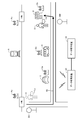
- FIG. 1 It is a block diagram which shows the whole structure of the information processing system in Embodiment 1 of this invention. It is a block diagram which shows the structure of the data aggregation apparatus disclosed in FIG. It is a figure which shows an example of the information stored in the data aggregation apparatus disclosed in FIG. It is a figure which shows an example of the information stored in the data aggregation apparatus disclosed in FIG. It is a figure which shows an example of the information stored in the data aggregation apparatus disclosed in FIG. It is a figure which shows an example of the information stored in the data aggregation apparatus disclosed in FIG. It is a figure which shows an example of the behavior of the user disclosed in FIG. It is a figure which shows an example of the behavior of the user disclosed in FIG. It is a figure which shows an example of the information aggregated by the data aggregation apparatus disclosed in FIG.
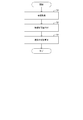
- FIG. 1 It is a flowchart which shows the operation of the data aggregation apparatus disclosed in FIG. It is a block diagram which shows the modification of the whole structure of the information processing system in Embodiment 1 of this invention. It is a block diagram which shows the modification of the whole structure of the information processing system in Embodiment 1 of this invention. It is a block diagram which shows the hardware structure of the information processing system in Embodiment 2 of this invention. It is a block diagram which shows the structure of the information processing system in Embodiment 2 of this invention. It is a flowchart which shows the operation of the information processing system in Embodiment 2 of this invention.
- FIGS. 1 to 11 are diagrams for explaining the configuration of the information processing system.
- 1 to 5 are diagrams for explaining the configuration of the information processing system
- FIGS. 6 to 9 are diagrams for explaining the processing operation of the information processing system.
- 10 to 11 are diagrams for explaining other configurations of the information processing system.
- the information processing system in the present invention is for collecting and aggregating information representing the behavior of the user U who is visiting a predetermined area such as a tourist area.
- the information processing system in the present embodiment is for collecting and aggregating the movement information indicating the usage status of the transportation means by the user U and the visit information indicating the usage status of the visited place by the user U. ..
- the information processing system includes a data collecting device 20 for collecting user U information and a data collecting device 10 for collecting the collected user U information, and the data collecting device 20 is provided. And the data aggregation device 10 are connected via a network.
- the data collection device 20 is connected to information acquisition devices Aa, Ab, Ba, Ca, Da installed at a station of train A, bus B, taxi C, store D, etc. via a network. ing.
- information acquisition devices Aa, Ab, Ba, Ca, Da installed at a station of train A, bus B, taxi C, store D, etc.
- a network e.g.
- the means of transportation used by the user U in this embodiment are, for example, train A, bus B, and taxi C.
- the means of transportation may be any vehicle, for example, a rental bicycle or a rickshaw.
- the visiting place used by the user U in the present embodiment is, for example, a store D that sells products.
- the place of visit may be any place, for example, a facility such as a store providing a service, a theme park, or a historic building.
- the user U is not necessarily a person who visits a predetermined area for sightseeing, but may be any person such as the area and surrounding residents.
- the information acquisition devices Aa and Ab installed at the station of the train A detect the boarding and disembarking of the train A by the user U at the station where the train A is installed, and acquire the identification information that identifies the user U.
- the information acquisition devices Aa and Ab are transmitted from a non-contact IC (Integrated Circuit) card Uc that the user U touches when getting on and off the card reader via a card reader mounted on an automatic ticket gate at a station.
- the user ID (Identification) which is the identification information of the user U is acquired.
- the information acquisition devices Aa and Ab use the acquired user ID as movement information indicating the usage status of the movement means by the user U, such as information for identifying the movement means (movement means name) and boarding time (movement time information).
- Boarding position (moving place information), getting off time (moving time information), getting off position (moving place information) are associated and accumulated, and transmitted to the data collection device 20 via a network such as wireless communication at an arbitrary timing. do.
- the information acquisition device Aa of the A station first sends the user ID of the boarded user U to the train A as the means of transportation and the station A as the boarding time.
- the time when the train passed the ticket gate and the position information of station A as the boarding position are associated and accumulated as movement information, and the information acquisition device Ab of station B uses the user ID of the user U who got off the train A as the means of transportation and gets off.
- the time when the ticket is passed through the ticket gate of B station is associated with the time, and the position information of B station is associated with the getting-off position, and the movement information is accumulated.
- the information acquisition devices Aa and Ab collectively accumulate the movement information at the time of boarding and the movement information at the time of disembarkation of the same user U having the same ID as one movement information, and transmit it to the data collection device 20. You may.
- the information acquisition device Ba installed on the bus B detects boarding and disembarking by the user U on the installed bus B, and acquires identification information that identifies the user U.
- the information acquisition device Ba uses the identification information of the user U from the non-contact IC card Uc that the user U touches when getting on and off the card reader via the card reader mounted at the entrance / exit of the bus B. Acquire the user ID that is.
- the information acquisition device Ba adds information for identifying the moving means (moving means name), boarding time (moving time information), and boarding as moving information indicating the usage status of the moving means by the user U in the acquired user ID.
- the position (moving place information), the getting-off time (moving time information), and the getting-off position (moving place information) are associated and accumulated, and transmitted to the data collecting device 20 at an arbitrary timing via a network such as wireless communication. ..
- a network such as wireless communication.
- the information acquisition device Ba uses the user ID of the user U, the bus B as the means of transportation, and the boarding time.
- the information acquisition device Ca installed in the taxi C detects boarding and disembarking by the user U in the installed taxi C, and acquires identification information that identifies the user U.
- the information acquisition device Ca uses the identification information of the user U from the non-contact IC card Uc that the user U touches when getting on and off the card reader via the card reader mounted in the taxi C. Acquire a certain user ID.
- the information acquisition device Ca adds information for identifying the moving means (moving means name), boarding time (moving time information), and boarding as moving information indicating the usage status of the moving means by the user U in the acquired user ID.
- the position (moving place information), the getting-off time (moving time information), and the getting-off position (moving place information) are associated and accumulated, and transmitted to the data collecting device 20 at an arbitrary timing via a network such as wireless communication. ..
- a network such as wireless communication.
- the information acquisition device Ca sends the user ID of the user U to the taxi C as the means of transportation and the taxi C at the A station as the boarding time.
- the time when the taxi boarded the taxi, the position information of the A station as the boarding position, the time when the taxi C was disembarked at the B station as the disembarkation time, and the position information of the B station as the disembarkation position are stored as movement information in association with each other.
- the information acquisition device Da installed in the store D acquires identification information for identifying the user U and amount information indicating the payment amount when the user U makes a payment for purchasing a product or the like at the installed store D. do.
- the information acquisition device Da is the identification information of the user U from the contactless IC card Uc that the user U touches when paying to the card reader via the card reader installed in the store D. Acquire and accumulate the user ID and the payment amount.
- the information acquisition device Ca adds information for identifying the store D, payment time (visit time information), payment amount, as visit information indicating the usage status of the visited place by the user U to the acquired user ID. Is associated and stored, and transmitted to the data collecting device 20 via a network such as wireless communication at an arbitrary timing.
- the information acquisition device Da uses the user ID of the user U as the information of the store D as a store.
- the time when the payment was made as the time, and the payment amount are associated and accumulated as visit information.
- the information that identifies the store D may include the location information of the store D.
- the information acquisition devices Aa, Ab, Ba, Ca, and Da have acquired the movement information and the visit information of the user U by using the non-contact type IC card Uc possessed by the user U, but they are not necessarily non-contact. It is not limited to using the type IC card Uc.
- the user U is identified by using a portable information processing terminal such as a smartphone Ut possessed by the user U or by performing face authentication, and the movement information and visit information of the user U are obtained. Movement information and visit information may be acquired by any method such as acquisition.
- the data collection device 20 has a function of collecting movement information and visit information of the user U from the above-mentioned information acquisition devices Aa, Ab, Ba, Ca, and Da.
- the data collection device 20 is composed of one or a plurality of information processing devices installed on the network, and is automatically operated from the information acquisition devices Aa, Ab, Ba, Ca, Da by an operator. Receives and stores the transmitted movement information and visit information of the user U. Then, the data collection device 20 transmits the movement information and the visit information of the user U to the data aggregation device 10 in response to a request from the data aggregation device 10 or at regular time intervals.
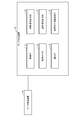
- the data aggregation device 10 is composed of one or a plurality of information processing devices including an arithmetic unit and a storage device. Then, as shown in FIG. 2, the data aggregation device 10 includes an acquisition unit 11, an association unit 12, and a calculation unit 13 constructed by the arithmetic unit executing a program. Further, the data aggregation device 10 includes a mobile information storage unit 14, a visit information storage unit 15, and an association information storage unit 16 formed in the storage device.
- the acquisition unit 11 receives the movement information and the visit information of the user U transmitted from the data collection device 20 described above, stores the movement information in the movement information storage unit 14, and stores the visit information as the visit information. It is stored in the storage unit 15.
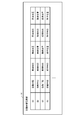
- the movement information of the user U stored in the movement information storage unit 14 is information (train name, train name,) that identifies the transportation means associated with the ID that is the identification information of the user U. It consists of bus name, taxi company, etc.), boarding time, boarding position (station name, bus stop, address, etc.), getting-off time, getting-off position (station name, bus stop, address, etc.).
- the visit information of the user U stored in the visit information storage unit 15 includes information (store name and position) that identifies the store associated with the ID that is the identification information of the user U. It consists of the time of payment (visit time information) and the payment amount.
- the association unit 12 associates the movement information stored in the movement information storage unit 14 with the visit information stored in the visit information storage unit 15 by the same user U, and the association information storage unit. Store in 16. At this time, the association unit 12 determines that the boarding position or disembarking position of the moving means and the position of the store D are substantially the same place corresponding to each other, and the boarding time or disembarking time of the moving means. And the payment time at the store D are associated with the movement information and the visit information of the same user U, which is determined to be substantially the same time.
- the association unit 12 extracts the movement information and the visit information of the same user U, reads out the boarding position or the disembarking position of the moving means in the movement information, and the information specifying the store in the visit information, and this When the store address is confirmed from the information that identifies the store by referring to the store information stored in advance. Then, when the address of the store and the boarding position or the disembarking position of the moving means are located within a preset distance range, it is determined that the boarding position or the disembarking position of the store and the moving means are substantially the same.
- the association unit 12 compares the boarding time or disembarking time of the moving means in the moving information with the payment time in the visit information, and sets the payment time and the boarding time or getting off time of the moving means in advance. If the time is within the same time range, it is determined that the time is almost the same.
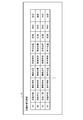
- the association unit 12 associates the movement information and the visit information, which are the information between the transportation means and the store, which are used by the same user at the same place and at the same time. For example, as shown in FIG. 5, the association unit 12 sets the user U ID to information for identifying the means of transportation (train name, bus name, taxi company, etc.), boarding time, boarding position (station name, bus stop, address, etc.). ), Disembarkation time, disembarkation position (station name, bus stop, address, etc.), store-specific information (store name and location), payment time (visit time information), and payment amount.
- the means of transportation train name, bus name, taxi company, etc.
- boarding time boarding position
- boarding position station name, bus stop, address, etc.
- Disembarkation time disembarkation position
- store-specific information store name and location
- payment time visit time information
- the associating unit 12 is not necessarily limited to associating the movement information and the visit information at the time determined to be the same, and is not necessarily limited to associating the movement information and the visit information of the place determined to be the same. Not done.
- the association unit 12 may associate the movement information and the visit information of the same user regardless of the position and time between the transportation means and the store.
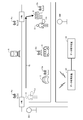
- a user U can grasp that he / she used the train A from A station to B station and used the store D after getting off.
- the payment amount at that time can also be grasped.
- the relationship between the boarding time and the getting-off time of the train A and the payment time at the store D can be grasped.
- a user U can grasp that he / she used the bus B from the bus stop BA to the bus stop BB and used the store D after getting off, and the payment amount at that time. Can also be grasped.
- the calculation unit 13 (calculation means) totals the payment amount of the user U for each movement means by using the movement information and the visit information associated as described above. For example, as shown in FIG. 8, the calculation unit 13 extracts information on the store and the payment amount for each means of transportation, such as train A and bus B, and calculates the total amount of payment for each means of transportation. At this time, the calculation unit 13 performs various tabulations such as calculating the total payment amount for each preset period or time zone with reference to the payment time, boarding time, and getting-off time. May be good.
- the calculation unit 13 multiplies the total payment amount for each transportation means by a predetermined ratio (for example, 10% or 5%), and calculates the amount as the amount to be returned to the operator of the transportation means from the store side.
- the calculation unit 13 may calculate the amount of money to be returned to the business operator of the transportation means by any method from the movement information and the visit information associated as described above.
- the calculation unit 13 may transmit information representing the aggregation result such as the payment amount and the amount to be returned for each transportation means described above to the business operator of each transportation means or the information processing device of each store. ..
- the calculation unit 13 is not limited to the aggregation result, but also includes the calculation formula at the time of aggregation and the association information between the movement information and the visit information, which is the basis of the aggregation, as well as the information of the operator of each transportation means and each store. It may be transmitted to the processing device.
- the total payment amount is calculated separately for each means of transportation, such as train A and bus B, but train A and bus B are the same business operator, related business operators, unions, and other organizations.
- One group may be one means of transportation if provided by.
- the total payment amount to the business operator may be calculated.
- each information acquisition device Aa, Ab, Ba, Ca, Da installed at the station of train A, the means of transportation such as bus B and taxi C, and the visiting place such as store D, Detect the behavior of user U. That is, each information acquisition device Aa, Ab, Ba, Ca, Da acquires the user ID which is the identification information of the user U from the contactless IC card Uc of the user U.
- each of the information acquisition devices Aa, Ab, Ba, and Ca of the moving means has the acquired user ID as the moving information indicating the usage status of the moving means by the user U, such as information for specifying the moving means (moving means name).
- the boarding time (moving time information), boarding position (moving place information), getting-off time (moving time information), and getting-off position (moving place information) are associated and accumulated.
- the visit location information acquisition device Da uses the acquired user ID as visit information indicating the usage status of the visit location by the user U, such as information for identifying the store D, payment time (visit time information), and payment.
- Amount (amount information) is associated and accumulated.
- each of the information acquisition devices Aa, Ab, Ba, Ca, and Da transmits the accumulated movement information to the data collection device 20 via a network such as wireless communication at an arbitrary timing.
- the data collecting device 20 receives and stores the movement information and the visit information of the user U transmitted from each of the information acquisition devices Aa, Ab, Ba, Ca, and Da. Then, the data collection device 20 transmits the movement information and the visit information of the user U to the data aggregation device 10 in response to a request from the data aggregation device 10 or at regular time intervals.
- the data aggregation device 10 receives and stores the movement information and the visit information of the user U transmitted from the data collection device 20 (step S1). Then, the data aggregation device 10 associates the acquired movement information and the visit information with the same user U (step S2). At this time, the data aggregation device 10 determines that the boarding position or disembarking position of the moving means and the position of the store D are substantially the same place corresponding to each other, and the boarding time or disembarking time of the moving means. The movement information and the visit information of the same user U, whose time and the payment time at the store D are determined to be substantially the same time, are associated with each other. In this way, the data aggregation device 10 associates the movement information and the visit information, which are the information between the transportation means and the store, which are used by the same user at the same place and at the same time.
- the data aggregation device 10 aggregates the payment amount of the user U for each transportation means by using the associated movement information and the visit information. Then, the data aggregation device 10 uses a preset calculation method such as multiplying the total payment amount for each transportation means by a predetermined ratio (for example, 10% or 5%) to inform the operator of the transportation means on the store side. It is calculated as the amount to be returned from (step S3).
- a preset calculation method such as multiplying the total payment amount for each transportation means by a predetermined ratio (for example, 10% or 5%) to inform the operator of the transportation means on the store side. It is calculated as the amount to be returned from (step S3).
- the movement information of the user U and the visit information are associated with each other, it is necessary to recognize information such as which transportation means is used by the user U and which store is used. Can be done. Then, by using such information, various analyzes can be performed on the relationship between the means of transportation and the place of visit. For example, quantification of the degree of contribution to the payment amount such as points and mileage for the transportation means used by the user U, and the operator of the transportation means for the section and time using the transportation means among the payment amounts by the user U. Various analyzes can be performed, such as quantifying the degree of contribution of.
- the amount paid by the user U at the visited place such as a store is totaled for each means of transportation, and a part of the amount is calculated as the amount to be returned from the store side to the operator of the means of transportation. .. Therefore, depending on the behavior of the user U in the area, for example, the payment amount at the visited place such as a store, the operator of the transportation means can further make a profit, and the area can be further activated. ..
- the movement information and the visit information of the user U are acquired by using the contactless IC card Uc possessed by the user U, but the movement information and the visit information of the user U are acquired by another method. May be good.
- face recognition devices Ac, Ad, Bc, Cc, and Dc equipped with cameras are installed at each station of train A, transportation means such as bus B and taxi C, and visiting places such as store D. Install.
- the user U performs face authentication in advance, associates the feature amount extracted by the face authentication with the identification information (ID) that identifies the user U, and sets the face authentication devices Ac, Ad, Bc, Cc, Dc and the like. , These are stored in the server device that can communicate.
- Each face recognition device Ac, Ad, Bc, Cc, Dc performs face authentication of the user U using the means of transportation or the visited place, and identifies the identification information (ID) of the user U registered in advance. Then, the above-mentioned information acquisition devices Aa, Ab, Ba, Ca, and Da installed in the means of transportation and the visited place have the above-mentioned IDs specified by the face recognition devices Ac, Ad, Bc, Cc, and Dc. As shown above, the movement information and the visit information are associated and accumulated.
- a portable type such as a smartphone Ut possessed by the user U
- An information processing terminal may be used.
- the non-contact type IC chip built in the smartphone Ut is used in the same manner as the above-mentioned non-contact type IC card Uc, and each information acquisition device Aa, Ab, Ba, Ca, Da is the identification information of the user U. You may store the movement information and the visit information in association with each other.
- the smartphone Ut associates the movement information and the visit information with the identification information of the user U.
- the information accumulated in the smartphone Ut and accumulated in the smartphone Ut may be transmitted to the information acquisition devices Aa, Ab, Ba, Ca, Da and the data collection device 20.
- FIGS. 12 to 14 are block diagrams showing the configuration of the information processing system according to the second embodiment
- FIG. 14 is a flowchart showing the operation of the information processing system.
- the outline of the configuration of the information processing system and the information processing method described in the above-described embodiment is shown.
- the information processing system 100 is composed of a general information processing device, and is equipped with the following hardware configuration as an example.
- -CPU Central Processing Unit
- -ROM Read Only Memory
- RAM Random Access Memory
- 103 storage device
- -Program group 104 loaded into RAM 103
- a storage device 105 that stores the program group 104.
- a drive device 106 that reads and writes the storage medium 110 external to the information processing device.
- -Communication interface 107 that connects to the communication network 111 outside the information processing device -I / O interface 108 for inputting / outputting data -Bus 109 connecting each component
- the information processing system 100 can construct and equip the acquisition means 121 and the association means 122 shown in FIG. 13 by the CPU 101 acquiring the program group 104 and executing the program group 104.
- the program group 104 is stored in, for example, a storage device 105 or a ROM 102 in advance, and the CPU 101 loads the program group 104 into the RAM 103 and executes the program group 104 as needed. Further, the program group 104 may be supplied to the CPU 101 via the communication network 111, or may be stored in the storage medium 110 in advance, and the drive device 106 may read the program and supply the program to the CPU 101.
- the acquisition means 121 and the association means 122 described above may be constructed by a dedicated electronic circuit for realizing such means.
- FIG. 12 shows an example of the hardware configuration of the information processing device which is the information processing system 100, and the hardware configuration of the information processing device is not limited to the above case.
- the information processing device may be configured from a part of the above-described configuration, such as not having the drive device 106.
- the information processing system 100 executes the information processing method shown in the flowchart of FIG. 14 by the function of the acquisition means 121 and the association means 122 constructed by the program as described above.
- the information processing system 100 The movement information indicating the usage status of the transportation means by the user in the predetermined area and the visit information indicating the usage status of the visited place by the user are acquired (step S101). The movement information of the same user and the visit information are associated and stored (step S102). Is executed.
- the present invention is configured as described above and associates the user's movement information with the visit information, it is easy to determine which transportation means and which visit place the user used. Can be recognized. As a result, a part of the amount paid by the user at the visited place can be easily returned to the means of transportation used by the user, so that the operator of the means of transportation can make further profits and further areas. Can be activated.
- Non-temporary computer-readable media include various types of tangible storage mediums.
- Examples of non-temporary computer-readable media include magnetic recording media (eg, flexible disks, magnetic tapes, hard disk drives), magneto-optical recording media (eg, magneto-optical disks), CD-ROMs (Read Only Memory), CD-Rs, It includes a CD-R / W and a semiconductor memory (for example, a mask ROM, a PROM (Programmable ROM), an EPROM (Erasable PROM), a flash ROM, and a RAM (Random Access Memory)).
- a semiconductor memory for example, a mask ROM, a PROM (Programmable ROM), an EPROM (Erasable PROM), a flash ROM, and a RAM (Random Access Memory)
- the program may also be supplied to the computer by various types of temporary computer readable medium.
- temporary computer-readable media include electrical, optical, and electromagnetic waves.
- the temporary computer-readable medium can supply the program to the computer via a wired communication path such as an electric wire and an optical fiber, or a wireless communication path.
- Information processing method (Appendix 4) The information processing method described in Appendix 3 The movement information including the boarding / alighting position of the moving means by the user as the moving place information is acquired. The movement information and the visit information of the visit place located at the place corresponding to the boarding / alighting position, which is the movement place information included in the movement information, are stored in association with each other. Information processing method. (Appendix 5) The information processing method according to any one of Appendix 1 to 4. The travel information including the travel time information representing the use time of the travel means by the user is acquired, and the visit information including the visit time information representing the use time of the visit place by the user is acquired. Based on the travel time information and the visit time information, the travel information and the visit information are associated and stored.
- Information processing method (Appendix 6) The information processing method described in Appendix 5 When the time of use of the moving means by the user, which is the travel time information, and the time of use of the visited place by the user, which is the visit time information, are within a preset time range, the movement information. And the visit information are associated and stored. Information processing method. (Appendix 7) The information processing method according to any one of Supplementary notes 1 to 6. Acquire the visit information including the amount information representing the payment amount at the visit place by the user, and obtain the visit information. Associating the movement information with the visit information including the amount information. Information processing method.
- Appendix 8 The information processing method described in Appendix 7 Based on the amount information, the amount to be returned to the moving means corresponding to the moving information associated with the visit information including the amount information is calculated.
- Information processing method (Appendix 9) An acquisition unit that acquires movement information indicating the usage status of the transportation means by the user in a predetermined area and visit information indicating the usage status of the visited place by the user. An association unit that associates and stores the movement information and the visit information of the same user, and Information processing system equipped with. (Appendix 10) The information processing system described in Appendix 9 The acquisition unit acquires the movement information including the movement location information indicating the usage location of the transportation means by the user.
- the association unit stores the movement information and the visit information in association with each other based on the movement location information included in the movement information.
- Information processing system. (Appendix 11) The information processing system according to Appendix 10. The association unit stores the movement information in association with the visit information of the visit location located at a location corresponding to the movement location information included in the movement information.
- Information processing system. (Appendix 12) The information processing system according to Appendix 11, The acquisition unit acquires the movement information including the boarding / alighting position of the moving means by the user as the moving place information. The association unit stores the movement information in association with the movement information included in the movement information, that is, the visit information of the visit place located at the place corresponding to the boarding / alighting position.
- the information processing system according to any one of Supplementary note 9 to 12.
- the acquisition unit acquires the movement information including the movement time information representing the usage time of the moving means by the user, and also acquires the visit information including the visit time information representing the usage time of the visiting place by the user. death,
- the association unit stores the travel information and the visit information in association with each other based on the travel time information and the visit time information.
- Information processing system. (Appendix 14) The information processing system according to Appendix 13, In the associating unit, when the time of use of the moving means by the user, which is the travel time information, and the time of use of the visited place by the user, which is the visit time information, are within a preset time range. The travel information and the visit information are associated with each other and stored.
- Information processing system (Appendix 15) The information processing system according to any one of Supplementary note 9 to 14.
- the acquisition unit acquires the visit information including the amount information representing the payment amount at the visit place by the user.
- the association unit associates the movement information with the visit information including the amount information.
- Information processing system. (Appendix 16) The information processing system according to Appendix 15. Based on the amount information, a calculation unit for calculating the amount to be returned to the moving means corresponding to the moving information associated with the visit information including the amount information is provided.
- Information processing system. (Appendix 17) For information processing equipment An acquisition unit that acquires movement information indicating the usage status of the transportation means by the user in a predetermined area and visit information indicating the usage status of the visited place by the user.
- An association unit that associates and stores the movement information and the visit information of the same user, and A storage medium that can be read by a computer that stores a program to realize the above.
- Appendix 18 A storage medium that can be read by a computer that stores the program described in Appendix 17.
- the acquisition unit acquires the visit information including the amount information representing the payment amount at the visit place by the user.
- the association unit associates the movement information with the visit information including the amount information.
- a calculation unit that calculates an amount to be returned to the moving means corresponding to the moving information associated with the visit information including the amount information based on the amount information.
- a storage medium that can be read by a computer that stores a program to realize the above.
Landscapes
- Business, Economics & Management (AREA)
- Tourism & Hospitality (AREA)
- Engineering & Computer Science (AREA)
- General Physics & Mathematics (AREA)
- Physics & Mathematics (AREA)
- Strategic Management (AREA)
- General Business, Economics & Management (AREA)
- Marketing (AREA)
- Operations Research (AREA)
- Quality & Reliability (AREA)
- Entrepreneurship & Innovation (AREA)
- Economics (AREA)
- Human Resources & Organizations (AREA)
- Development Economics (AREA)
- Theoretical Computer Science (AREA)
- Radar, Positioning & Navigation (AREA)
- Remote Sensing (AREA)
- Management, Administration, Business Operations System, And Electronic Commerce (AREA)
- Navigation (AREA)
- Traffic Control Systems (AREA)
Priority Applications (3)
| Application Number | Priority Date | Filing Date | Title |
|---|---|---|---|
| JP2022510254A JP7480837B2 (ja) | 2020-03-26 | 2020-03-26 | 情報処理方法 |
| US17/910,052 US20230129010A1 (en) | 2020-03-26 | 2020-03-26 | Information processing method |
| PCT/JP2020/013587 WO2021192135A1 (ja) | 2020-03-26 | 2020-03-26 | 情報処理方法 |
Applications Claiming Priority (1)
| Application Number | Priority Date | Filing Date | Title |
|---|---|---|---|
| PCT/JP2020/013587 WO2021192135A1 (ja) | 2020-03-26 | 2020-03-26 | 情報処理方法 |
Publications (1)
| Publication Number | Publication Date |
|---|---|
| WO2021192135A1 true WO2021192135A1 (ja) | 2021-09-30 |
Family
ID=77891615
Family Applications (1)
| Application Number | Title | Priority Date | Filing Date |
|---|---|---|---|
| PCT/JP2020/013587 Ceased WO2021192135A1 (ja) | 2020-03-26 | 2020-03-26 | 情報処理方法 |
Country Status (3)
| Country | Link |
|---|---|
| US (1) | US20230129010A1 (cg-RX-API-DMAC7.html) |
| JP (1) | JP7480837B2 (cg-RX-API-DMAC7.html) |
| WO (1) | WO2021192135A1 (cg-RX-API-DMAC7.html) |
Cited By (1)
| Publication number | Priority date | Publication date | Assignee | Title |
|---|---|---|---|---|
| WO2026110243A1 (ja) * | 2024-11-19 | 2026-05-28 | 株式会社Nttドコモ | 情報連携装置および情報連携方法 |
Citations (4)
| Publication number | Priority date | Publication date | Assignee | Title |
|---|---|---|---|---|
| JP2007122334A (ja) * | 2005-10-27 | 2007-05-17 | Keio Gijuku | ポイント還元システム |
| JP2008197940A (ja) * | 2007-02-14 | 2008-08-28 | Hitachi Ltd | 交通機関の割引支援方法 |
| JP2016138806A (ja) * | 2015-01-27 | 2016-08-04 | 株式会社リコー | 管理システム |
| JP2019185574A (ja) * | 2018-04-16 | 2019-10-24 | 株式会社ぐるなび | 特典付与システム、特典付与装置、特典付与方法、及び特典付与プログラム |
Family Cites Families (4)
| Publication number | Priority date | Publication date | Assignee | Title |
|---|---|---|---|---|
| TWI509549B (zh) * | 2014-09-03 | 2015-11-21 | Shih Pi Ta Technology Ltd | 身分識別系統和其方法 |
| JP6941917B2 (ja) * | 2016-01-08 | 2021-09-29 | 株式会社ナビタイムジャパン | 情報処理システム、情報処理装置、情報処理方法、および、情報処理プログラム |
| JP6367847B2 (ja) * | 2016-01-29 | 2018-08-01 | Line株式会社 | 情報処理装置、プログラム、端末、及び表示制御方法 |
| US20190279180A1 (en) * | 2018-03-09 | 2019-09-12 | Ford Global Technologies, Llc | Multimodal Transportation Services Platform |
-
2020
- 2020-03-26 WO PCT/JP2020/013587 patent/WO2021192135A1/ja not_active Ceased
- 2020-03-26 JP JP2022510254A patent/JP7480837B2/ja active Active
- 2020-03-26 US US17/910,052 patent/US20230129010A1/en not_active Abandoned
Patent Citations (4)
| Publication number | Priority date | Publication date | Assignee | Title |
|---|---|---|---|---|
| JP2007122334A (ja) * | 2005-10-27 | 2007-05-17 | Keio Gijuku | ポイント還元システム |
| JP2008197940A (ja) * | 2007-02-14 | 2008-08-28 | Hitachi Ltd | 交通機関の割引支援方法 |
| JP2016138806A (ja) * | 2015-01-27 | 2016-08-04 | 株式会社リコー | 管理システム |
| JP2019185574A (ja) * | 2018-04-16 | 2019-10-24 | 株式会社ぐるなび | 特典付与システム、特典付与装置、特典付与方法、及び特典付与プログラム |
Cited By (1)
| Publication number | Priority date | Publication date | Assignee | Title |
|---|---|---|---|---|
| WO2026110243A1 (ja) * | 2024-11-19 | 2026-05-28 | 株式会社Nttドコモ | 情報連携装置および情報連携方法 |
Also Published As
| Publication number | Publication date |
|---|---|
| US20230129010A1 (en) | 2023-04-27 |
| JP7480837B2 (ja) | 2024-05-10 |
| JPWO2021192135A1 (cg-RX-API-DMAC7.html) | 2021-09-30 |
Similar Documents
| Publication | Publication Date | Title |
|---|---|---|
| JP6875311B2 (ja) | 輸送機関混雑予測システム及び混雑予測方法 | |
| EP3079120A1 (en) | System for guiding flow of people and method for guiding flow of people | |
| CN107111792B (zh) | 用于在交通网络中售检票及验票的方法和系统 | |
| JP7102987B2 (ja) | 情報処理装置、情報処理方法およびプログラム | |
| WO2009098813A1 (ja) | 路線バス料金精算システム | |
| JP2020129248A (ja) | 情報処理装置、情報処理方法、プログラム | |
| JP2013149017A (ja) | 特典付与システム及び特典付与サーバ | |
| JPWO2015049801A1 (ja) | 乗客誘導システム、および乗客誘導方法 | |
| JP2025018289A (ja) | 情報配信装置、情報配信方法及び情報配信プログラム | |
| JP7480837B2 (ja) | 情報処理方法 | |
| JP2011145834A (ja) | 旅行情報提供装置 | |
| CN112298597A (zh) | 自行式车辆 | |
| JP2021189692A (ja) | カーシェアリング管理サーバおよびコンピュータプログラム | |
| JP5520529B2 (ja) | 駐車料金精算機およびコンピュータプログラム | |
| JP2023041813A (ja) | 管理方法 | |
| JP2019185574A (ja) | 特典付与システム、特典付与装置、特典付与方法、及び特典付与プログラム | |
| JP2012242996A (ja) | 乗継時間計算システム及び乗継時間計算方法 | |
| JP2023018710A (ja) | SDGs貢献ポイントシステム | |
| JP7214522B2 (ja) | 振替輸送管理サーバ | |
| JP2009045951A (ja) | 情報提供システム、サーバ装置および情報提供方法 | |
| JP5929231B2 (ja) | 算出装置、プログラム及び算出方法 | |
| KR20170127805A (ko) | 면세점에 출입하는 여행객과 관련된 정보를 처리하는 정보 처리 장치 및 방법 | |
| JP7105463B2 (ja) | 情報処理システム、情報処理プログラム、情報処理装置および情報処理方法 | |
| JP2022080904A (ja) | 特典付与システム及び特典付与方法 | |
| JP2023055414A (ja) | クーポン発行装置、クーポン発行システム、クーポン発行方法およびクーポン発行プログラム |
Legal Events
| Date | Code | Title | Description |
|---|---|---|---|
| 121 | Ep: the epo has been informed by wipo that ep was designated in this application |
Ref document number: 20927403 Country of ref document: EP Kind code of ref document: A1 |
|
| ENP | Entry into the national phase |
Ref document number: 2022510254 Country of ref document: JP Kind code of ref document: A |
|
| NENP | Non-entry into the national phase |
Ref country code: DE |
|
| 122 | Ep: pct application non-entry in european phase |
Ref document number: 20927403 Country of ref document: EP Kind code of ref document: A1 |