WO2021153780A1 - 抗酸化剤又は皮膚ストレス抑制剤 - Google Patents
抗酸化剤又は皮膚ストレス抑制剤 Download PDFInfo
- Publication number
- WO2021153780A1 WO2021153780A1 PCT/JP2021/003381 JP2021003381W WO2021153780A1 WO 2021153780 A1 WO2021153780 A1 WO 2021153780A1 JP 2021003381 W JP2021003381 W JP 2021003381W WO 2021153780 A1 WO2021153780 A1 WO 2021153780A1
- Authority
- WO
- WIPO (PCT)
- Prior art keywords
- skin
- vitamin
- antioxidant
- wavelength
- ultraviolet rays
- Prior art date
- Legal status (The legal status is an assumption and is not a legal conclusion. Google has not performed a legal analysis and makes no representation as to the accuracy of the status listed.)
- Ceased
Links
Images
Classifications
-
- A—HUMAN NECESSITIES
- A61—MEDICAL OR VETERINARY SCIENCE; HYGIENE
- A61Q—SPECIFIC USE OF COSMETICS OR SIMILAR TOILETRY PREPARATIONS
- A61Q19/00—Preparations for care of the skin
-
- A—HUMAN NECESSITIES
- A61—MEDICAL OR VETERINARY SCIENCE; HYGIENE
- A61N—ELECTROTHERAPY; MAGNETOTHERAPY; RADIATION THERAPY; ULTRASOUND THERAPY
- A61N5/00—Radiation therapy
- A61N5/06—Radiation therapy using light
- A61N5/0613—Apparatus adapted for a specific treatment
- A61N5/062—Photodynamic therapy, i.e. excitation of an agent
-
- A—HUMAN NECESSITIES
- A61—MEDICAL OR VETERINARY SCIENCE; HYGIENE
- A61K—PREPARATIONS FOR MEDICAL, DENTAL OR TOILETRY PURPOSES
- A61K31/00—Medicinal preparations containing organic active ingredients
- A61K31/33—Heterocyclic compounds
- A61K31/395—Heterocyclic compounds having nitrogen as a ring hetero atom, e.g. guanethidine or rifamycins
- A61K31/495—Heterocyclic compounds having nitrogen as a ring hetero atom, e.g. guanethidine or rifamycins having six-membered rings with two or more nitrogen atoms as the only ring heteroatoms, e.g. piperazine or tetrazines
- A61K31/505—Pyrimidines; Hydrogenated pyrimidines, e.g. trimethoprim
- A61K31/519—Pyrimidines; Hydrogenated pyrimidines, e.g. trimethoprim ortho- or peri-condensed with heterocyclic rings
- A61K31/525—Isoalloxazines, e.g. riboflavins, vitamin B2
-
- A—HUMAN NECESSITIES
- A61—MEDICAL OR VETERINARY SCIENCE; HYGIENE
- A61K—PREPARATIONS FOR MEDICAL, DENTAL OR TOILETRY PURPOSES
- A61K33/00—Medicinal preparations containing inorganic active ingredients
- A61K33/24—Heavy metals; Compounds thereof
-
- A—HUMAN NECESSITIES
- A61—MEDICAL OR VETERINARY SCIENCE; HYGIENE
- A61K—PREPARATIONS FOR MEDICAL, DENTAL OR TOILETRY PURPOSES
- A61K33/00—Medicinal preparations containing inorganic active ingredients
- A61K33/24—Heavy metals; Compounds thereof
- A61K33/30—Zinc; Compounds thereof
-
- A—HUMAN NECESSITIES
- A61—MEDICAL OR VETERINARY SCIENCE; HYGIENE
- A61K—PREPARATIONS FOR MEDICAL, DENTAL OR TOILETRY PURPOSES
- A61K36/00—Medicinal preparations of undetermined constitution containing material from algae, lichens, fungi or plants, or derivatives thereof, e.g. traditional herbal medicines
- A61K36/02—Algae
-
- A—HUMAN NECESSITIES
- A61—MEDICAL OR VETERINARY SCIENCE; HYGIENE
- A61K—PREPARATIONS FOR MEDICAL, DENTAL OR TOILETRY PURPOSES
- A61K45/00—Medicinal preparations containing active ingredients not provided for in groups A61K31/00 - A61K41/00
-
- A—HUMAN NECESSITIES
- A61—MEDICAL OR VETERINARY SCIENCE; HYGIENE
- A61K—PREPARATIONS FOR MEDICAL, DENTAL OR TOILETRY PURPOSES
- A61K8/00—Cosmetics or similar toiletry preparations
- A61K8/18—Cosmetics or similar toiletry preparations characterised by the composition
- A61K8/19—Cosmetics or similar toiletry preparations characterised by the composition containing inorganic ingredients
- A61K8/27—Zinc; Compounds thereof
-
- A—HUMAN NECESSITIES
- A61—MEDICAL OR VETERINARY SCIENCE; HYGIENE
- A61K—PREPARATIONS FOR MEDICAL, DENTAL OR TOILETRY PURPOSES
- A61K8/00—Cosmetics or similar toiletry preparations
- A61K8/18—Cosmetics or similar toiletry preparations characterised by the composition
- A61K8/19—Cosmetics or similar toiletry preparations characterised by the composition containing inorganic ingredients
- A61K8/29—Titanium; Compounds thereof
-
- A—HUMAN NECESSITIES
- A61—MEDICAL OR VETERINARY SCIENCE; HYGIENE
- A61K—PREPARATIONS FOR MEDICAL, DENTAL OR TOILETRY PURPOSES
- A61K8/00—Cosmetics or similar toiletry preparations
- A61K8/18—Cosmetics or similar toiletry preparations characterised by the composition
- A61K8/30—Cosmetics or similar toiletry preparations characterised by the composition containing organic compounds
- A61K8/49—Cosmetics or similar toiletry preparations characterised by the composition containing organic compounds containing heterocyclic compounds
- A61K8/494—Cosmetics or similar toiletry preparations characterised by the composition containing organic compounds containing heterocyclic compounds with more than one nitrogen as the only hetero atom
-
- A—HUMAN NECESSITIES
- A61—MEDICAL OR VETERINARY SCIENCE; HYGIENE
- A61K—PREPARATIONS FOR MEDICAL, DENTAL OR TOILETRY PURPOSES
- A61K8/00—Cosmetics or similar toiletry preparations
- A61K8/18—Cosmetics or similar toiletry preparations characterised by the composition
- A61K8/30—Cosmetics or similar toiletry preparations characterised by the composition containing organic compounds
- A61K8/64—Proteins; Peptides; Derivatives or degradation products thereof
- A61K8/645—Proteins of vegetable origin; Derivatives or degradation products thereof
-
- A—HUMAN NECESSITIES
- A61—MEDICAL OR VETERINARY SCIENCE; HYGIENE
- A61K—PREPARATIONS FOR MEDICAL, DENTAL OR TOILETRY PURPOSES
- A61K8/00—Cosmetics or similar toiletry preparations
- A61K8/18—Cosmetics or similar toiletry preparations characterised by the composition
- A61K8/30—Cosmetics or similar toiletry preparations characterised by the composition containing organic compounds
- A61K8/67—Vitamins
- A61K8/673—Vitamin B group
-
- A—HUMAN NECESSITIES
- A61—MEDICAL OR VETERINARY SCIENCE; HYGIENE
- A61P—SPECIFIC THERAPEUTIC ACTIVITY OF CHEMICAL COMPOUNDS OR MEDICINAL PREPARATIONS
- A61P17/00—Drugs for dermatological disorders
-
- A—HUMAN NECESSITIES
- A61—MEDICAL OR VETERINARY SCIENCE; HYGIENE
- A61P—SPECIFIC THERAPEUTIC ACTIVITY OF CHEMICAL COMPOUNDS OR MEDICINAL PREPARATIONS
- A61P17/00—Drugs for dermatological disorders
- A61P17/18—Antioxidants, e.g. antiradicals
-
- A—HUMAN NECESSITIES
- A61—MEDICAL OR VETERINARY SCIENCE; HYGIENE
- A61Q—SPECIFIC USE OF COSMETICS OR SIMILAR TOILETRY PREPARATIONS
- A61Q17/00—Barrier preparations; Preparations brought into direct contact with the skin for affording protection against external influences, e.g. sunlight, X-rays or other harmful rays, corrosive materials, bacteria or insect stings
- A61Q17/04—Topical preparations for affording protection against sunlight or other radiation; Topical sun tanning preparations
-
- A—HUMAN NECESSITIES
- A61—MEDICAL OR VETERINARY SCIENCE; HYGIENE
- A61K—PREPARATIONS FOR MEDICAL, DENTAL OR TOILETRY PURPOSES
- A61K2800/00—Properties of cosmetic compositions or active ingredients thereof or formulation aids used therein and process related aspects
- A61K2800/40—Chemical, physico-chemical or functional or structural properties of particular ingredients
- A61K2800/52—Stabilizers
- A61K2800/522—Antioxidants; Radical scavengers
-
- A—HUMAN NECESSITIES
- A61—MEDICAL OR VETERINARY SCIENCE; HYGIENE
- A61N—ELECTROTHERAPY; MAGNETOTHERAPY; RADIATION THERAPY; ULTRASOUND THERAPY
- A61N5/00—Radiation therapy
- A61N5/06—Radiation therapy using light
- A61N2005/0658—Radiation therapy using light characterised by the wavelength of light used
- A61N2005/0661—Radiation therapy using light characterised by the wavelength of light used ultraviolet
Definitions
- the present invention provides for oxidation and / or skin stress in antioxidants or skin stress inhibitors containing wavelength converters, compositions and products containing such antioxidants or skin stress inhibitors, and in the skin using them. Regarding methods for suppressing.
- the harmful effects of ultraviolet rays on the skin include, for example, skin cancer, photoaging, age spots, wrinkles, and inflammation, which are not preferable from the viewpoint of health and beauty.
- UV-cut film Therefore, many measures have been taken to protect the skin from UV rays. For example, the use of sunscreen, indoor activities that are not exposed to sunlight, UV-cut hats and clothing, and the use of UV-cut film.
- An object of the present invention is to provide a novel antioxidant or skin stress inhibitor utilizing the modulation of the wavelength of ultraviolet rays.
- the present inventors have conducted diligent research so that ultraviolet rays can be effectively used for the skin. As a result, it was found that the expression of oxidative stress-related proteins changes when skin cells are irradiated with ultraviolet rays via a wavelength-converting substance that converts the wavelength of ultraviolet rays, and an antioxidant containing the wavelength-converting substance or skin stress I came up with an inhibitor.
- the present application provides the following inventions.
- the wavelength converting substance is an antioxidant or a skin stress inhibitor that converts the wavelength of ultraviolet rays contained in incident light and emits emitted light having a wavelength longer than the wavelength of the ultraviolet rays.
- the antioxidant or skin stress inhibitor according to (1), wherein the ultraviolet rays have a peak wavelength in the range of 200 nm to 400 nm.
- the antioxidant or skin stress inhibitor according to (1) or (2), wherein the emitted light has a peak wavelength in the range of 450 nm to 700 nm.
- the wavelength converting substance is selected from allophycocyanin, C-phycocyanin, R-phycocyanin, phycoerythrinin, B-phycoerythrin, b-phycoerythrin, C-phycoerythrin, and R-phycoerythrin.
- One or more phycocyanin proteins selected from zinc oxide phosphors, magnesium titanate phosphors, and calcium phosphate phosphors; vitamin A, ⁇ -carotenoids, vitamin K, vitamins Selected from B1, Vitamin B2, Vitamin B6, Vitamin B12, Folic Acid, Niacin, Lycopine, Cutinashi, Benibana, Ukon, Cochinil, Perilla, Red Cabbage, Flavonoids, Carotenoids, Kinoids, Porphyrins, Anthocyanins, and Polyphenols 1 Species or multiple components; and / or Red 401, Red 227, Red 504, Red 218, Orange 205 P, Yellow 4, Yellow 5, Green 201, Phycocyanin Conch, Blue 1, Selected from 2,4-diaminophenoxyethanol hydrochloride, Arizulin purple SS, purple 401, black 401, herringdon pink, yellow 401, phycocyanin yellow G, blue 404, red 104, and metaamin
- the antioxidant or skin stress inhibitor according to any one of (1) to (3), which contains one or more pigments.
- the wavelength converting substance is selected from allophycocyanin, C-phycocyanin, R-phycocyanin, phycoerythrinin, B-phycoerythrin, b-phycoerythrin, C-phycoerythrin, and R-phycoerythrin.
- the antioxidant or skin stress suppressant according to (4) which comprises one or more kinds of vitamin B selected from vitamin B6 and vitamin B12.
- composition containing the antioxidant or skin stress inhibitor according to any one of (1) to (5) A composition containing the antioxidant or skin stress inhibitor according to any one of (1) to (5).
- the product is for suppressing oxidation and / or skin stress in the skin by exposing the skin to light after passing light containing ultraviolet rays through the product, according to (9).
- product. (11) Passing light containing ultraviolet rays through the product according to (9) or (10); and exposing the skin of the subject to the passing light; A cosmetological method for suppressing oxidation and / or skin stress on the subject's skin.
- the present invention can suppress oxidation and / or skin stress in skin cells by effectively utilizing ultraviolet rays. This is based on the finding that it has a positive effect on the skin.
- the present invention also provides new uses for the above-mentioned compounds that have been conventionally mainly used as pigments, pigments, ultraviolet scattering agents, ultraviolet absorbers, nutritional components, antioxidants, and the like. Further, the present invention may lead to improvement of quality of life such that even a person who has avoided ultraviolet rays as much as possible for beauty and health reasons can feel like going out positively.
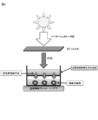
- FIG. 1 is a schematic diagram of Experiment 1.
- the antioxidant or skin stress inhibitor of the present invention contains a wavelength converting substance as an active ingredient.
- the wavelength conversion substance refers to a substance that converts the wavelength of ultraviolet rays contained in incident light and emits emitted light having a wavelength longer than the wavelength of the ultraviolet rays.
- Ultraviolet rays may include UVA, UVB, UVC and the like.
- ultraviolet light is light having a peak wavelength in the range of 200 nm to 400 nm.
- the incident light such as sunlight may contain ultraviolet rays.
- the incident light may be ultraviolet rays, or artificially generated ultraviolet rays may be used.
- Ultraviolet rays can have various effects on the skin. As an example, ultraviolet rays are known to cause sunburn such as sunburn and tanning, production of reactive oxygen species, and DNA damage to cells.
- the emitted light emitted by the wavelength converting substance has a longer wavelength than ultraviolet rays, and preferably has a peak wavelength of 500 nm to 700 nm.
- the emitted light is, for example, but not limited to, 450 nm, 460 nm, 470 nm, 480 nm, 490 nm, 500 nm, 510 nm, 520 nm, 530 nm, 540 nm, 550 nm, 560 nm, 570 nm, 580 nm, 590 nm, 600 nm, 610 nm, 620 nm, 630 nm, 640 nm, It may have one or more peaks in 650nm, 660nm, 670nm, 680nm, 690nm, 700nm, or any range of these values, or in red light, orange light, green light, blue light, etc. There may be.
- the wavelength converter exhibits a main
- wavelength converters include: allophicocyanin, C-phycocyanin, R-phycocyanin, phycoerythrinin, B-phycoerythrin, b-phycoerythrin, C-phycoerythrin, R-phy Phycoerythrin and other phycocyanins; vitamin A, ⁇ -carotene, vitamin K, vitamin B1, vitamin B2, vitamin B6, vitamin B12, folic acid, niacin, lycopene, cutinashi, benibana, turmeric, cochineal, perilla, red cabbage, flavonoids, carotenoids , Kinoids, porphyrins, anthocyanins, polyphenols, etc.
- Red 401, Red 227, Red 504, Red 218, Orange 205 P Yellow 4, Yellow 5, Green 201 No., Pyranin Conc, Blue No. 1, Hydrochloride 2,4-diaminophenoxyethanol, Arizulin Purple SS, Purple No. 401, Black No. 401, Herringdon Pink, Yellow No. 401, Benchin Yellow G, Blue No. 404, Red No. 104, Dyes such as metaaminophenol; phosphors doped with inorganic compounds to have fluorescence, for example, blue phosphors containing the amorphous silica particles described in Patent No. 6424656, cerium, phosphorus and / or magnesium.
- a red phosphor containing a compound in which europium is activated in a mixed crystal of alkaline earth metal sulfide and gallium compound described in Patent No. 6361416 zinc oxide phosphor described in International Publication No. 2018/004006, special feature.
- Examples thereof include the zinc oxide phosphor described in Kai 2018-131422; the inorganic phosphor described in JP-A-5-117127; and the like.
- the inorganic phosphor can represent zinc oxide as ZnO: Zn, Zn 1 + z , ZnO 1-x , as described in WO 2018/004006, eg, zinc sulfide, zinc sulfate.
- the wavelength conversion substance may be obtained from natural products such as animals, plants, and algae by a method such as extraction, or may be obtained by an artificial method such as chemical synthesis.
- the phycobiliprotein is algae such as blue-green algae such as Spirulina platensis and red algae such as Porphyridium purpureum. It may be prepared by extraction.
- the zinc oxide phosphor may be produced, for example, by the methods described in International Publication No. 2018/004006, JP-A-2018-131422, and JP-A-5-117127.
- the magnesium titanate phosphor may be produced by the method described in JP-A-2017-88719.
- the calcium phosphate phosphor may be produced by the method described in WO 2018/117117.
- wavelength conversion substances may be composed of the components exemplified above, may be contained, or may be used alone or in combination of a plurality of types, as long as the wavelength conversion effect of the present invention is not impaired. good.
- other wavelength converting substances such as vitamin B (vitamin B1, vitamin B2, vitamin B6, vitamin B12, etc.) may be mixed with the phycobiliprotein or the inorganic phosphor to aim for a synergistic effect.
- these components are examples, and any substance exhibiting the wavelength conversion effect of the present invention can be used.
- the content of the wavelength converting substance in the antioxidant or skin stress inhibitor, composition or product of the present invention is not particularly limited as long as the wavelength conversion effect of the present invention is not impaired, and the type of the wavelength converting substance and the antioxidant are not particularly limited.
- it can be appropriately determined depending on the use of the skin stress inhibitor or the composition. For example, it is arbitrary within the range of 0.01 to 99.99% by weight, 0.1% to 999% by weight, and the like.
- Skin stress refers to the oxidative stress that cells in the skin, especially the epidermis and dermis, receive.
- skin cells are damaged by reactive oxygen species (ROS), causing inflammation and reduced skin barrier function. Therefore, a state of high skin stress means a state in which skin cells are accumulating damage due to reactive oxygen species.
- Reactive oxygen species are generated by abnormal reactions in the electron transport chain of cells and irradiation with ultraviolet rays.
- the antioxidant or skin stress inhibitor of the present invention is irradiated with ultraviolet rays, emitted light is generated, and the emitted light changes the expression of oxidative stress-related proteins in skin cells to have an antioxidant effect and / or suppress skin stress. The action is exerted.
- oxidative stress-related proteins examples include AhR, AhRR, CYP1B1, and HMOX1.
- the antioxidant and / or skin stress-suppressing action may be an ultraviolet-induced oxidative stress and / or skin stress-suppressing action, or an ultraviolet-induced oxidative stress and / or skin stress-suppressing effect. It may be an inhibitory effect.
- the antioxidant or skin stress inhibitor of the present invention can be used for any subject, but is applied to a subject exposed to ultraviolet rays such as outdoors and a subject subject to oxidative stress and / or skin stress. May be good.
- Aryl hydrocarbon receptor is a transcription factor belonging to the bHLH-PAS (Basic Helix-Loop-Helix-Per-Arnt-Sim) family. It is also known that AhR is activated by UV, while aromatic hydrocarbons such as dioxins act as ligands and are activated and translocated into the nucleus to function as transcription factors. When activated, it increases the expression of enzymes involved in foreign body metabolism, such as the drug-metabolizing enzyme CYP1 and glutathione S-transferase-Y subunit, and activates pathways involved in ROS accumulation. ROS accumulation causes oxidative stress, produces inflammatory cytokines, and causes oxidative DNA damage.
- bHLH-PAS Basic Helix-Loop-Helix-Per-Arnt-Sim
- the aromatic hydrocarbon receptor repressor functions as a repressor that suppresses the action of AhR. Increased expression of AHRR suppresses AhR activity, thereby suppressing drug metabolism pathways and ROS accumulation pathways.
- Cytochrome P4501B1 (CYP1B1) is an enzyme belonging to the cytochrome P450 superfamily and is involved in drug metabolism such as polycyclic aromatic hydrocarbons. UV irradiation increases expression in keratinocytes. It is also activated by AHR and induces an oxidative stress pathway.
- Heme oxygenase 1 is an enzyme involved in the initial step of heme metabolism. HMOX1 breaks down heme into biliverdin. Heme is a prosthetic group essential for life activities, but heme released from proteins is a harmful molecule that produces active oxygen. Therefore, activation of HMOX1 contributes to reduction of oxidative stress and anti-inflammatory. HOMX1 is induced by oxidative stress such as UV irradiation.
- the administration form of the antioxidant or skin stress inhibitor and composition of the present invention is arbitrary, but in order to suppress oxidation and / or skin stress in the skin by exposing the skin to light containing ultraviolet rays, pharmaceuticals and quasi-drugs. External skin preparations such as quasi-drugs and cosmetics may be preferable.
- the antioxidant, skin stress inhibitor or composition of the present invention is used as an external preparation for skin, the dosage form, application method, number of administrations and the like can be arbitrarily determined. For example, go out regularly or irregularly, for example, once to several times a day in the form of lotion, spray, oil, cream, milky lotion, gel, sunscreen, suntan, etc. , Outdoor activities, marine sports, skiing, etc. It may be applied to the skin each time before it is expected to be exposed to the sun.
- the antioxidant or skin stress inhibitor and composition of the present invention may be used, for example, as an excipient, a preservative, a thickener, a binder, a disintegrant, a dispersant, a stabilizer, or a gel, if necessary.
- Agents, antioxidants, surfactants, preservatives, oils, powders, water, alcohols, thickeners, chelating agents, silicones, antioxidants, moisturizers, fragrances, various medicinal ingredients, preservatives, pH Additives such as regulators and neutralizers can be arbitrarily selected and used in combination. Further, in order to enhance the effect of the present invention, other antioxidants, skin stress inhibitors and the like may be used in combination.
- the present invention also comprises the antioxidant or skin stress inhibitor of the present invention for suppressing oxidation and / or skin stress in the skin, for example, for sun visors, hats, clothing, gloves, screen films, windows.
- the present invention also provides a method for producing an antioxidant or a skin stress inhibitor, a composition or a product of the present invention. It also provides a method for suppressing oxidation and / or skin stress in the subject's skin, where the method applies the antioxidant or skin stress inhibitor or composition of the present invention to the subject's skin. And, the skin after application of the antioxidant or skin stress inhibitor or composition is exposed to light containing ultraviolet rays; or the product of the present invention is allowed to pass light containing ultraviolet rays, and the passing light.
- the antioxidant or skin stress suppressant, composition and product may convert the wavelength of ultraviolet light contained in the incident light to emit light having a wavelength longer than the wavelength of the ultraviolet light.
- Is emitted, and ultraviolet rays having a peak wavelength of 200 nm to 400 nm are passed through as light having a peak wavelength of 450 nm to 700 nm, for example, 500 nm to 700 nm.
- Methods for controlling oxidation and / or skin stress on the subject's skin may be for cosmetic purposes and not the therapeutic methods used by physicians and healthcare professionals.
- the present invention also provides a cosmetological counseling method that supports a cosmetological act of the subject, including presenting the cosmetological method, the antioxidant or the skin stress inhibitor, the composition or the product of the present invention to the subject.
- Wavelength conversion substances were prepared as follows. (1) C-phycocyanin C-phycocyanin (Lina Blue) is obtained from Spirulina platensis extract, the absorption spectrum has a peak wavelength at 350 nm, and the emission spectrum has a peak wavelength at 640 nm and 700 nm. Had. (2) Riboflavin (vitamin B2) Riboflavin, also called vitamin B2, had an absorption spectrum with a peak wavelength at 445 nm and an emission spectrum with a peak wavelength at 530 nm. (3) Zinc oxide phosphor Lumate G manufactured by Sakai Chemical Industry Co., Ltd. was used.
- Lumate G is a zinc oxide phosphor obtained by doping ZnO with a sulfur-containing compound and then firing it as described in International Publication No. 2018/004006.
- the absorption spectrum has a peak wavelength at 365 nm, and the emission spectrum peaks at 510 nm. Had a wavelength.
- Magnesium titanate phosphor Lumate R manufactured by Sakai Chemical Industry Co., Ltd. was used.
- Lumate R is a magnesium titanate phosphor doped with MgTiO 3 with manganese.
- the absorption spectrum has a peak wavelength at 365 nm, and the emission spectrum has a peak wavelength in the band of 660 to 680 nm.
- the wavelength conversion substances (1) to (2) were dissolved in water to prepare solutions having concentrations of 1% and 5%.
- the wavelength conversion substances (3) to (4) were dispersed in alcohol to prepare 5% and 10% dispersions.
- Experiment 1-2 Preparation of cell sample A cell sample was prepared as follows. 1. Human skin keratinized cells manufactured by Normal Human Epidermal Keratinocytes PromoCell were used. The cell suspension (1 mL) stored in liquid nitrogen was thawed in a hot water bath (37 ° C.) to the extent that small ice pellets remained, and then diluted with 9 mL of warm KGM medium. 2. The dilutions were gently mixed, then transferred to a T75 flask and incubated overnight at 37 ° C. 3. The next day, the medium was replaced with 10 mL of fresh medium. 4. The medium was changed regularly (in 2-3 days) and cell growth continued.
- the cells were observed using a microscope to confirm that the cells were growing in the correct morphology. 5. Cells were passaged after reaching approximately 80% confluence. 6. Cell passage was performed by washing the cells once with 10 mL of warm PBS and then aspirating. 7. 5 mL of warm trypsin was added to the T75 flask, the bottom of the flask was covered with trypsin solution, and the flask was aspirated at room temperature for 1 minute. 8. For keratinocytes, the flask was allowed to stand in an oven at 37 ° C for (maximum) 5 minutes. The cells were observed using a microscope, and it was confirmed that the cells were small and oval. 9.
- the side of the T75 flask was tapped to release the cells.
- the cells were observed using a microscope, and it was confirmed that the cells were moving freely. 10.
- For keratinized cells they were resuspended in 5 mL of warm trypsin neutralized solution and transferred to sterile 50 mL falcon tubes. The flask was further rinsed with 5 mL of warm FGM and added to the Falcon tube to ensure transfer of all cells. 11.
- the cells were centrifuged at 10,000 rpm for 5 minutes (4 ° C) and the supernatant was removed, being careful not to disturb the cell pellet. 12.
- Keratinocytes were resuspended in KGM at a concentration of 4 ⁇ 10 4 cells / well (500 ⁇ L) and seeded on collagen-coated glass bottom 4-well chamber slides. 13. Medium was changed every 2-3 days and cells were grown to reach 60-70% confluence (depending on the type of experiment). 14. Twenty-four hours before irradiation, the medium was changed to a supplement-free medium.
- Experiment 1-3 UV irradiation 1. At least 30 minutes before irradiation, the solar simulator was turned on to warm up the lamp. The solar simulator was set to use the UG11 filter. The UG11 filter is a filter that allows only UVB to pass and cuts light of other wavelengths. The UV light that passed through the UG11 filter had a peak wavelength between 300 nm and 385 nm. 2. The temperature control plate was turned on and set to 33 ° C. 3. The cells prepared in Experiment 1-2 were washed once with warm PBS. 4.
- Martinez solution (145 mM NaCl warmed of 0.5mL to each well, 5.5mM KCl, 1.2mM MgCl 2 .6H 2 O, 1.2mM NaH 2 PO 4 .2H 2 O, 7.5mM HEPES, 1mM CaCl 2, 10mM D -Glucose) was added. 5. As shown in Fig. 1, the cell wells are placed on a plate, and the solutions containing the wavelength converting substances (1) to (4) prepared in Experiment 1-1 are placed on each of the 24-well plates.
- Experiment 2 Microarray Experiment 2-1: RNA extraction The cell sample incubated for 24 hours after irradiation with ultraviolet rays in Experiment 1-3 was washed with 500 ⁇ l of warm PBS, and the PBS was completely aspirated. RNA was extracted using the Qiagen RNeasy Mini Kit prep (Qiagen, 74106) according to the product description.
- Experiment 2-2 Microarray Human gene expression microarray SurePrint G3 Human GE Microarray 8x60K Ver. 3.0 (Agilent technology) was used to analyze the RNA extracted in Experiment 2-1. Hybridization samples were prepared by labeling, amplifying, purifying, and quantifying cRNA of the extracted RNA according to the protocol provided by Agilent Technologies. The microarray was observed with AGIL INT C MICROARRAY SCANNER, and the genes whose expression was significantly decreased or increased depending on the presence or absence of the wavelength converting substance were identified and shown below.
- UV irradiation of the wavelength-converting substance changes the gene expression of oxidation and / or skin stress-related proteins.
- the effect of suppressing oxidation and / or skin stress is exhibited.
Landscapes
- Health & Medical Sciences (AREA)
- Life Sciences & Earth Sciences (AREA)
- Veterinary Medicine (AREA)
- Animal Behavior & Ethology (AREA)
- General Health & Medical Sciences (AREA)
- Public Health (AREA)
- Epidemiology (AREA)
- Chemical & Material Sciences (AREA)
- Birds (AREA)
- Medicinal Chemistry (AREA)
- Pharmacology & Pharmacy (AREA)
- Engineering & Computer Science (AREA)
- Dermatology (AREA)
- Inorganic Chemistry (AREA)
- Nuclear Medicine, Radiotherapy & Molecular Imaging (AREA)
- Biomedical Technology (AREA)
- Chemical Kinetics & Catalysis (AREA)
- Bioinformatics & Cheminformatics (AREA)
- Organic Chemistry (AREA)
- Biotechnology (AREA)
- Natural Medicines & Medicinal Plants (AREA)
- General Chemical & Material Sciences (AREA)
- Biophysics (AREA)
- Radiology & Medical Imaging (AREA)
- Pathology (AREA)
- Botany (AREA)
- Mycology (AREA)
- Microbiology (AREA)
- Biochemistry (AREA)
- Medical Informatics (AREA)
- Alternative & Traditional Medicine (AREA)
- Cosmetics (AREA)
Priority Applications (3)
| Application Number | Priority Date | Filing Date | Title |
|---|---|---|---|
| JP2021574722A JP7817833B2 (ja) | 2020-01-31 | 2021-01-29 | 抗酸化剤又は皮膚ストレス抑制剤 |
| CN202180010516.2A CN115023216A (zh) | 2020-01-31 | 2021-01-29 | 抗氧化剂或皮肤应激抑制剂 |
| US17/796,584 US20230050588A1 (en) | 2020-01-31 | 2021-01-29 | Antioxidant or skin stress inhibitor |
Applications Claiming Priority (2)
| Application Number | Priority Date | Filing Date | Title |
|---|---|---|---|
| JP2020-015642 | 2020-01-31 | ||
| JP2020015642 | 2020-01-31 |
Publications (1)
| Publication Number | Publication Date |
|---|---|
| WO2021153780A1 true WO2021153780A1 (ja) | 2021-08-05 |
Family
ID=77078904
Family Applications (1)
| Application Number | Title | Priority Date | Filing Date |
|---|---|---|---|
| PCT/JP2021/003381 Ceased WO2021153780A1 (ja) | 2020-01-31 | 2021-01-29 | 抗酸化剤又は皮膚ストレス抑制剤 |
Country Status (4)
| Country | Link |
|---|---|
| US (1) | US20230050588A1 (cg-RX-API-DMAC7.html) |
| JP (1) | JP7817833B2 (cg-RX-API-DMAC7.html) |
| CN (1) | CN115023216A (cg-RX-API-DMAC7.html) |
| WO (1) | WO2021153780A1 (cg-RX-API-DMAC7.html) |
Citations (6)
| Publication number | Priority date | Publication date | Assignee | Title |
|---|---|---|---|---|
| JP2000219607A (ja) * | 1999-01-28 | 2000-08-08 | Shiseido Co Ltd | 外用組成物 |
| CN105055251A (zh) * | 2015-08-29 | 2015-11-18 | 云南蓝钻生物科技股份有限公司 | 一种抗衰老化妆品及其制备方法 |
| JP2016500052A (ja) * | 2012-09-20 | 2016-01-07 | エコシステム | フィコシアニンを抽出および安定化する方法とその利用 |
| JP2017155062A (ja) * | 2017-06-15 | 2017-09-07 | 株式会社東洋新薬 | 美容組成物 |
| WO2018004006A1 (ja) * | 2016-06-30 | 2018-01-04 | 堺化学工業株式会社 | 酸化亜鉛蛍光体及びその製造方法 |
| JP2019167330A (ja) * | 2017-11-29 | 2019-10-03 | 堺化学工業株式会社 | 化粧料 |
Family Cites Families (12)
| Publication number | Priority date | Publication date | Assignee | Title |
|---|---|---|---|---|
| JPH05117127A (ja) * | 1991-10-02 | 1993-05-14 | Shiseido Co Ltd | 蛍光化粧料 |
| JP2006282593A (ja) * | 2005-03-31 | 2006-10-19 | Naris Cosmetics Co Ltd | 皮膚外用剤 |
| FR2885520B1 (fr) * | 2005-05-10 | 2007-10-05 | Oreal | Composition cosmetique |
| FR2918876B1 (fr) * | 2007-07-16 | 2012-10-05 | Oreal | Utilisation de lumiere verte pour activer la l-amino acide oxydase |
| JP2009209093A (ja) * | 2008-03-04 | 2009-09-17 | Shiseido Co Ltd | 皮膚バリアー機能回復促進剤及び皮膚外用剤 |
| US9545371B2 (en) * | 2015-03-20 | 2017-01-17 | Elc Management Llc | Method of making an optically-activated system |
| TW201613750A (en) * | 2015-08-13 | 2016-04-16 | Zheng-Hong Shi | Pulsed color light dressing film product |
| JP6689608B2 (ja) * | 2016-01-08 | 2020-04-28 | 花王株式会社 | 水中油型皮膚化粧料 |
| JP7343976B2 (ja) * | 2016-02-18 | 2023-09-13 | ロート製薬株式会社 | 皮膚外用組成物 |
| KR20190005369A (ko) * | 2017-07-06 | 2019-01-16 | 한국 한의학 연구원 | 씨-피코시아닌을 유효성분으로 함유하는 피부 주름의 예방 또는 개선용 조성물 |
| WO2020202764A1 (ja) * | 2019-04-05 | 2020-10-08 | 株式会社 資生堂 | 細胞賦活剤 |
| JP2020183356A (ja) * | 2019-05-08 | 2020-11-12 | Dic株式会社 | フィコシアニンを有効成分として含有することを特徴とする化粧料 |
-
2021
- 2021-01-29 WO PCT/JP2021/003381 patent/WO2021153780A1/ja not_active Ceased
- 2021-01-29 JP JP2021574722A patent/JP7817833B2/ja active Active
- 2021-01-29 US US17/796,584 patent/US20230050588A1/en not_active Abandoned
- 2021-01-29 CN CN202180010516.2A patent/CN115023216A/zh active Pending
Patent Citations (6)
| Publication number | Priority date | Publication date | Assignee | Title |
|---|---|---|---|---|
| JP2000219607A (ja) * | 1999-01-28 | 2000-08-08 | Shiseido Co Ltd | 外用組成物 |
| JP2016500052A (ja) * | 2012-09-20 | 2016-01-07 | エコシステム | フィコシアニンを抽出および安定化する方法とその利用 |
| CN105055251A (zh) * | 2015-08-29 | 2015-11-18 | 云南蓝钻生物科技股份有限公司 | 一种抗衰老化妆品及其制备方法 |
| WO2018004006A1 (ja) * | 2016-06-30 | 2018-01-04 | 堺化学工業株式会社 | 酸化亜鉛蛍光体及びその製造方法 |
| JP2017155062A (ja) * | 2017-06-15 | 2017-09-07 | 株式会社東洋新薬 | 美容組成物 |
| JP2019167330A (ja) * | 2017-11-29 | 2019-10-03 | 堺化学工業株式会社 | 化粧料 |
Non-Patent Citations (2)
| Title |
|---|
| ""Shining new cosmetic raw material, Inorganic fluorescent powder Lumate series")", FRAGRANCE JOURNAL, vol. 43, no. 7, 2015, pages 62 - 63 * |
| "Lumate, an inorganic fluorescent material that glows in 'beautiful skin color", FRAGRANCE JOURNAL, vol. 46, no. 8, 2018, pages 66 - 67 * |
Also Published As
| Publication number | Publication date |
|---|---|
| US20230050588A1 (en) | 2023-02-16 |
| JPWO2021153780A1 (cg-RX-API-DMAC7.html) | 2021-08-05 |
| CN115023216A (zh) | 2022-09-06 |
| JP7817833B2 (ja) | 2026-02-19 |
Similar Documents
| Publication | Publication Date | Title |
|---|---|---|
| JP7569308B2 (ja) | 細胞賦活剤 | |
| WO2020204193A9 (ja) | 紫外線波長変換物質を含有する組成物 | |
| EP3950000A1 (en) | Emulsion composition comprising ultraviolet wavelength conversion substance and organic oily phase thickener | |
| JP7817833B2 (ja) | 抗酸化剤又は皮膚ストレス抑制剤 | |
| US12472131B2 (en) | Inflammation-suppressing agent | |
| WO2021153773A1 (ja) | 光老化抑制剤 | |
| CN115003269A (zh) | 胶原产生能力的维持或促进剂 | |
| JP2024031642A (ja) | 可視光によりリボフラビンの生理作用を増強するための美容方法 | |
| WO2021153776A1 (ja) | 血管新生抑制剤 | |
| JP7773378B2 (ja) | 皮膚バリア機能亢進剤 | |
| WO2021153771A1 (ja) | ヒアルロン酸産生促進剤 | |
| WO2021153781A1 (ja) | コラーゲン糖化抑制剤 | |
| JP2021107369A (ja) | 紫外線波長変換物質を含有する組成物 | |
| JP2024031635A (ja) | 可視光によりフラボノイドの生理作用を増強するための美容方法 | |
| WO2024232264A1 (ja) | 光応答性抗酸化剤の抗酸化作用を増強するための美容方法 | |
| JP2024164571A (ja) | 皮脂産生抑制剤 | |
| JP2021107367A (ja) | 紫外線波長変換物質を含有する水中油型乳化組成物 | |
| KR20150104806A (ko) | S-메틸메티오닌 또는 이의 염을 포함하는 자외선에 의한 피부 손상의 예방 또는 개선을 위한 화장료 조성물 |
Legal Events
| Date | Code | Title | Description |
|---|---|---|---|
| 121 | Ep: the epo has been informed by wipo that ep was designated in this application |
Ref document number: 21747419 Country of ref document: EP Kind code of ref document: A1 |
|
| ENP | Entry into the national phase |
Ref document number: 2021574722 Country of ref document: JP Kind code of ref document: A |
|
| NENP | Non-entry into the national phase |
Ref country code: DE |
|
| 122 | Ep: pct application non-entry in european phase |
Ref document number: 21747419 Country of ref document: EP Kind code of ref document: A1 |