WO2021112235A1 - C3腎症を予防又は治療するための医薬、医薬組成物及び補体C3b分解促進剤 - Google Patents
C3腎症を予防又は治療するための医薬、医薬組成物及び補体C3b分解促進剤 Download PDFInfo
- Publication number
- WO2021112235A1 WO2021112235A1 PCT/JP2020/045294 JP2020045294W WO2021112235A1 WO 2021112235 A1 WO2021112235 A1 WO 2021112235A1 JP 2020045294 W JP2020045294 W JP 2020045294W WO 2021112235 A1 WO2021112235 A1 WO 2021112235A1
- Authority
- WO
- WIPO (PCT)
- Prior art keywords
- peptide
- amino acid
- acid sequence
- seq
- group
- Prior art date
- Legal status (The legal status is an assumption and is not a legal conclusion. Google has not performed a legal analysis and makes no representation as to the accuracy of the status listed.)
- Ceased
Links
Images




Classifications
-
- A—HUMAN NECESSITIES
- A61—MEDICAL OR VETERINARY SCIENCE; HYGIENE
- A61K—PREPARATIONS FOR MEDICAL, DENTAL OR TOILETRY PURPOSES
- A61K38/00—Medicinal preparations containing peptides
- A61K38/16—Peptides having more than 20 amino acids; Gastrins; Somatostatins; Melanotropins; Derivatives thereof
- A61K38/17—Peptides having more than 20 amino acids; Gastrins; Somatostatins; Melanotropins; Derivatives thereof from animals; from humans
- A61K38/22—Hormones
-
- A—HUMAN NECESSITIES
- A61—MEDICAL OR VETERINARY SCIENCE; HYGIENE
- A61K—PREPARATIONS FOR MEDICAL, DENTAL OR TOILETRY PURPOSES
- A61K39/00—Medicinal preparations containing antigens or antibodies
- A61K39/395—Antibodies; Immunoglobulins; Immune serum, e.g. antilymphocytic serum
-
- A—HUMAN NECESSITIES
- A61—MEDICAL OR VETERINARY SCIENCE; HYGIENE
- A61K—PREPARATIONS FOR MEDICAL, DENTAL OR TOILETRY PURPOSES
- A61K47/00—Medicinal preparations characterised by the non-active ingredients used, e.g. carriers or inert additives; Targeting or modifying agents chemically bound to the active ingredient
- A61K47/50—Medicinal preparations characterised by the non-active ingredients used, e.g. carriers or inert additives; Targeting or modifying agents chemically bound to the active ingredient the non-active ingredient being chemically bound to the active ingredient, e.g. polymer-drug conjugates
- A61K47/51—Medicinal preparations characterised by the non-active ingredients used, e.g. carriers or inert additives; Targeting or modifying agents chemically bound to the active ingredient the non-active ingredient being chemically bound to the active ingredient, e.g. polymer-drug conjugates the non-active ingredient being a modifying agent
- A61K47/56—Medicinal preparations characterised by the non-active ingredients used, e.g. carriers or inert additives; Targeting or modifying agents chemically bound to the active ingredient the non-active ingredient being chemically bound to the active ingredient, e.g. polymer-drug conjugates the non-active ingredient being a modifying agent the modifying agent being an organic macromolecular compound, e.g. an oligomeric, polymeric or dendrimeric molecule
- A61K47/59—Medicinal preparations characterised by the non-active ingredients used, e.g. carriers or inert additives; Targeting or modifying agents chemically bound to the active ingredient the non-active ingredient being chemically bound to the active ingredient, e.g. polymer-drug conjugates the non-active ingredient being a modifying agent the modifying agent being an organic macromolecular compound, e.g. an oligomeric, polymeric or dendrimeric molecule obtained otherwise than by reactions only involving carbon-to-carbon unsaturated bonds, e.g. polyureas or polyurethanes
- A61K47/60—Medicinal preparations characterised by the non-active ingredients used, e.g. carriers or inert additives; Targeting or modifying agents chemically bound to the active ingredient the non-active ingredient being chemically bound to the active ingredient, e.g. polymer-drug conjugates the non-active ingredient being a modifying agent the modifying agent being an organic macromolecular compound, e.g. an oligomeric, polymeric or dendrimeric molecule obtained otherwise than by reactions only involving carbon-to-carbon unsaturated bonds, e.g. polyureas or polyurethanes the organic macromolecular compound being a polyoxyalkylene oligomer, polymer or dendrimer, e.g. PEG, PPG, PEO or polyglycerol
-
- A—HUMAN NECESSITIES
- A61—MEDICAL OR VETERINARY SCIENCE; HYGIENE
- A61K—PREPARATIONS FOR MEDICAL, DENTAL OR TOILETRY PURPOSES
- A61K47/00—Medicinal preparations characterised by the non-active ingredients used, e.g. carriers or inert additives; Targeting or modifying agents chemically bound to the active ingredient
- A61K47/50—Medicinal preparations characterised by the non-active ingredients used, e.g. carriers or inert additives; Targeting or modifying agents chemically bound to the active ingredient the non-active ingredient being chemically bound to the active ingredient, e.g. polymer-drug conjugates
- A61K47/51—Medicinal preparations characterised by the non-active ingredients used, e.g. carriers or inert additives; Targeting or modifying agents chemically bound to the active ingredient the non-active ingredient being chemically bound to the active ingredient, e.g. polymer-drug conjugates the non-active ingredient being a modifying agent
- A61K47/62—Medicinal preparations characterised by the non-active ingredients used, e.g. carriers or inert additives; Targeting or modifying agents chemically bound to the active ingredient the non-active ingredient being chemically bound to the active ingredient, e.g. polymer-drug conjugates the non-active ingredient being a modifying agent the modifying agent being a protein, peptide or polyamino acid
- A61K47/65—Peptidic linkers, binders or spacers, e.g. peptidic enzyme-labile linkers
-
- A—HUMAN NECESSITIES
- A61—MEDICAL OR VETERINARY SCIENCE; HYGIENE
- A61K—PREPARATIONS FOR MEDICAL, DENTAL OR TOILETRY PURPOSES
- A61K47/00—Medicinal preparations characterised by the non-active ingredients used, e.g. carriers or inert additives; Targeting or modifying agents chemically bound to the active ingredient
- A61K47/50—Medicinal preparations characterised by the non-active ingredients used, e.g. carriers or inert additives; Targeting or modifying agents chemically bound to the active ingredient the non-active ingredient being chemically bound to the active ingredient, e.g. polymer-drug conjugates
- A61K47/51—Medicinal preparations characterised by the non-active ingredients used, e.g. carriers or inert additives; Targeting or modifying agents chemically bound to the active ingredient the non-active ingredient being chemically bound to the active ingredient, e.g. polymer-drug conjugates the non-active ingredient being a modifying agent
- A61K47/68—Medicinal preparations characterised by the non-active ingredients used, e.g. carriers or inert additives; Targeting or modifying agents chemically bound to the active ingredient the non-active ingredient being chemically bound to the active ingredient, e.g. polymer-drug conjugates the non-active ingredient being a modifying agent the modifying agent being an antibody, an immunoglobulin or a fragment thereof, e.g. an Fc-fragment
-
- A—HUMAN NECESSITIES
- A61—MEDICAL OR VETERINARY SCIENCE; HYGIENE
- A61P—SPECIFIC THERAPEUTIC ACTIVITY OF CHEMICAL COMPOUNDS OR MEDICINAL PREPARATIONS
- A61P13/00—Drugs for disorders of the urinary system
- A61P13/12—Drugs for disorders of the urinary system of the kidneys
-
- A—HUMAN NECESSITIES
- A61—MEDICAL OR VETERINARY SCIENCE; HYGIENE
- A61P—SPECIFIC THERAPEUTIC ACTIVITY OF CHEMICAL COMPOUNDS OR MEDICINAL PREPARATIONS
- A61P43/00—Drugs for specific purposes, not provided for in groups A61P1/00-A61P41/00
-
- C—CHEMISTRY; METALLURGY
- C07—ORGANIC CHEMISTRY
- C07K—PEPTIDES
- C07K14/00—Peptides having more than 20 amino acids; Gastrins; Somatostatins; Melanotropins; Derivatives thereof
- C07K14/435—Peptides having more than 20 amino acids; Gastrins; Somatostatins; Melanotropins; Derivatives thereof from animals; from humans
- C07K14/52—Cytokines; Lymphokines; Interferons
-
- C—CHEMISTRY; METALLURGY
- C07—ORGANIC CHEMISTRY
- C07K—PEPTIDES
- C07K16/00—Immunoglobulins [IG], e.g. monoclonal or polyclonal antibodies
- C07K16/18—Immunoglobulins [IG], e.g. monoclonal or polyclonal antibodies against material from animals or humans
- C07K16/24—Immunoglobulins [IG], e.g. monoclonal or polyclonal antibodies against material from animals or humans against cytokines, lymphokines or interferons
Definitions
- the present invention relates to a medicine, a pharmaceutical composition and a complement C3b decomposition promoter for preventing or treating C3 nephropathy.
- one aspect of the present invention is for preventing or treating C3 nephropathy, which contains adrenomedulin or an adrenomedulin derivative, or a pharmaceutically acceptable salt thereof, or a pharmaceutically acceptable solvate thereof as an active ingredient.
- Pharmaceuticals, pharmaceutical compositions and complement C3b degradation promoters are examples of adrenomedulin or an adrenomedulin derivative, or a pharmaceutically acceptable salt thereof, or a pharmaceutically acceptable solvate thereof as an active ingredient.
- C3 nephropathy is a disease caused by dysregulation of the second complement pathway centered on the C3b protein produced from C3, which is a type of complement.
- C3 nephropathy is a rare, intractable disease with no cure, characterized by the deposition of only the complement component C3 without immunoglobulin in the glomerulus.
- palliative treatment such as steroid pulse therapy and oral steroid therapy is applied to C3 nephropathy.
- Adrenomedullin (hereinafter, also referred to as "AM”) is a bioactive peptide isolated and identified from brown cell tissue in 1993 (Non-Patent Document 1). Initially, AM was found to exert a strong vasodilatory antihypertensive effect. For example, Patent Document 1 describes a peptide having a blood pressure lowering effect, which comprises an amino acid sequence of human AM.
- AM exerts various pharmacological actions such as cardiovascular protective action, anti-inflammatory action, angiogenic action and tissue repair promoting action.
- administration studies of AM to patients with various diseases have been conducted.
- the usefulness of AM as a therapeutic agent for inflammatory bowel disease, pulmonary hypertension, peripheral vascular disease or acute myocardial infarction is expected.
- Patent Document 2 describes an adrenomedullin or a derivative thereof having an activity of suppressing non-bacterial inflammation, or a salt thereof having an activity of suppressing non-bacterial inflammation as an active ingredient.
- Patent Document 3 describes the method for preventing or treating inflammatory bowel disease in patients who require prevention or treatment of inflammatory bowel disease in which the use of steroid preparations, immunosuppressive agents or biologics is difficult or inadequately effective. It includes administering to the patient an effective amount of adrenomedulin, a derivative thereof having an anti-inflammatory activity, or a salt of the adrenomedulin or the derivative having an anti-inflammatory activity. The prevention or treatment method is described.
- AM is a peptide, it has a short half-life in vivo due to a metabolic reaction in vivo (for example, in blood). Therefore, when administering AM to subjects, it is necessary to select a continuous administration method such as continuous intravenous infusion.
- AM has a strong vasodilatory action in addition to pharmacological actions such as cardiovascular protective action, anti-inflammatory action, angiogenesis action and tissue repair promoting action. Therefore, when AM is administered to a subject, it can cause unwanted side effects such as excessive hypotension due to its strong vasodilatory effects.
- adrenomedulin derivatives have been developed that can substantially suppress unwanted side effects while maintaining the pharmacological action of adrenomedulin (Patent Documents 4 to 6).
- Adrenomedullin a novel hypotensive peptide isolated from human pheochromocytoma. , Pp. 553-560 Pio R, Martinez A, Unsworth EJ, Kowalak JA, Bengoechea JA, Zipfel PF, Elsasser TH, Cuttitta F, Factor factor H is a serum-binding protein for adrenomedullin, and the results , April 13, 2001, Volume 276 (15), pp. 12292-300
- the present inventors have studied various means for solving the above-mentioned problems. We found that AM and its specific derivatives, which have various pharmacological actions such as anti-inflammatory action, significantly promote the degradation of C3b, which can cause the onset of complement system-related diseases such as C3 nephropathy. Found to get. The present inventors have completed the present invention based on the above findings.
- the present invention includes the following aspects and embodiments.
- a drug for preventing or treating C3 nephropathy which contains adrenomedulin or an adrenomedulin derivative, a pharmaceutically acceptable salt thereof, or a solvate thereof as an active ingredient.
- the medicament according to the embodiment (1) which further contains one or more pharmaceutically acceptable carriers.
- the adrenomedullin or adrenomedullin derivative is as follows: (I) A peptide consisting of the amino acid sequence of adrenomedulin, (Ii) A peptide consisting of the amino acid sequence of adrenomedulin and in which two cysteine residues in the amino acid sequence form a disulfide bond.
- the medicament according to the above-described embodiment (1) or (2) which is a peptide selected from the group consisting of peptides to which a group is added.
- the adrenomedullin or adrenomedullin derivative is as follows: (I) A peptide consisting of the amino acid sequence of adrenomedulin, (Ii) A peptide consisting of the amino acid sequence of adrenomedulin and in which two cysteine residues in the amino acid sequence form a disulfide bond.
- the C-terminal is amidated, and in the peptide (vi) (i) or (ii), a glycine residue is added to the C-terminal.
- the medicament according to the above embodiment (3) which is a peptide selected from the group consisting of peptides.
- the adrenomedullin or adrenomedullin derivative is as follows: (A) A peptide consisting of the amino acid sequence of SEQ ID NO: 1 or a peptide consisting of the amino acid sequence of SEQ ID NO: 1 in which the cysteine residue at position 16 and the cysteine residue at position 21 form a disulfide bond; (B) A peptide consisting of the amino acid sequence of SEQ ID NO: 4, or a peptide consisting of the amino acid sequence of SEQ ID NO: 4 and in which the cysteine residue at position 16 and the cysteine residue at position 21 form a disulfide bond; (C) A peptide consisting of the amino acid sequence of SEQ ID NO: 6 or a peptide consisting of the amino acid sequence of SEQ ID NO: 6 in which the cysteine residue at position 16 and the cysteine residue at position 21 form a disulfide bond; (D) A peptide consisting of the amino acid sequence of SEQ ID NO: 8 or
- the medicament according to any one of the above-described embodiments (1) to (3), which is a peptide selected from the group consisting of.
- the adrenomedullin or adrenomedullin derivative is as follows: (A) A peptide consisting of the amino acid sequence of SEQ ID NO: 1 or a peptide consisting of the amino acid sequence of SEQ ID NO: 1 in which the cysteine residue at position 16 and the cysteine residue at position 21 form a disulfide bond; (B) A peptide consisting of the amino acid sequence of SEQ ID NO: 4, or a peptide consisting of the amino acid sequence of SEQ ID NO: 4 and in which the cysteine residue at position 16 and the cysteine residue at position 21 form a disulfide bond; (C) A peptide consisting of the amino acid sequence of SEQ ID NO: 6 or a peptide consisting of the amino acid sequence of SEQ ID NO: 6 in which the cysteine residue at position 16
- A is a modifying group that is a polyethylene glycol group and L is a divalent linking group n is an integer of 0 or 1
- B is a peptide moiety derived from adrenomedulin or adrenomedulin modifier.
- the peptide moiety B is bound to the modifying group A or the linking group L via its N-terminal amino group.
- A is a modifying group containing one or more polyethylene glycol groups.
- B is a peptide moiety derived from adrenomedulin or adrenomedulin modifier. However, the peptide portion B is linked to the remaining portion by covalently bonding the nitrogen atom of the ⁇ -amino group at the N-terminal with the carbon atom of the methylene group.
- a compound represented by, or a pharmaceutically acceptable salt thereof, or a pharmaceutically acceptable solvate thereof, or Formula (CI) A compound represented by, or a pharmaceutically acceptable salt thereof, or a pharmaceutically acceptable solvate thereof, or Formula (CI) :.
- ALB (CI) [During the ceremony, A is the Fc region of immunoglobulin, B is a peptide moiety derived from adrenomedulin or adrenomedulin modifier. L is a linking group consisting of a peptide having an arbitrary amino acid sequence.
- the pharmaceutical according to the above-described embodiment (1) or (2) which is a compound represented by (1), a pharmaceutically acceptable salt thereof, or a solvate thereof which is pharmaceutically acceptable.
- Prevention of C3 nephropathy which contains adrenomedulin or an adrenomedulin derivative, or a pharmaceutically acceptable salt thereof, or a pharmaceutically acceptable solvate thereof, and one or more pharmaceutically acceptable carriers. Or a pharmaceutical composition for treatment.
- Methods for preventing or treating C3 nephropathy including.
- the present invention makes it possible to provide a means for preventing or treating a disease related to the complement system.
- Lane 0 is a molecular weight standard
- lane 1 is a control reaction solution to which factor I, factor H and AM are not added
- lane 2 is a control reaction solution to which AM is not added
- lane 3 is 0.1 ⁇ M.
- the reaction solution to which AM was added, the reaction solution to which 1 ⁇ M AM was added to lane 4, the reaction solution to which 10 ⁇ M AM was added to lane 5, and the reaction solution to which factor H was not added to lane 6 were 10 ⁇ M.
- the control reaction solutions to which AM was added are shown respectively.
- Test II it is a graph which shows the relationship between the concentration of complement factor I and factor H in the reaction solution at the start of a reaction, and the residual amount of ⁇ chain of C3b in the reaction solution after treatment.
- the horizontal axis is the concentration (nM) of complement factor I and factor H
- the vertical axis is the residual amount (area) of the ⁇ chain of C3b calculated from the area value of the band of SDS-PAGE.
- White circles indicate the results of the control reaction solution to which AM was not added, and black circles indicate the results of the reaction solution containing AM.
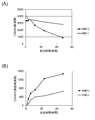
- Test III it is a graph which shows the relationship between the reaction time and the residual amount (A) of the ⁇ chain of C3b in the reaction solution after treatment, or the amount (B) of the decomposition product of C3b.
- A) The horizontal axis is the reaction time (time), and the vertical axis is the residual amount (area) of the ⁇ chain of C3b calculated from the area value of the band of SDS-PAGE.
- B) The horizontal axis is the reaction time (time), and the vertical axis is the amount (area) of the decomposition product of C3b calculated from the area value of the band of SDS-PAGE.
- White circles indicate the results of the control reaction solution to which AM was not added, and black circles indicate the results of the reaction solution containing AM.
- the horizontal axis is the reaction time (time), and the vertical axis is the amount (area) of the decomposition product of C3b calculated from the area value of the band of SDS-PAGE.
- White circles are the results of the control reaction solution to which AM is not added, black circles are the results of the reaction solution containing 60K PEG-AM, and black squares are the results of the reaction solution containing h. AM (1-52). The results are shown respectively.
- AM (16-21) added reaction solution lane 4 h.
- AM (16-21) -RCM added reaction solution lane 5 AM or AM derivative not added control reaction solution
- Test VI it is a graph which shows the relationship between the added AM or the AM derivative, and the amount of the decomposition product of C3b produced in the reaction solution after treatment.
- the horizontal axis is the added AM or AM derivative, and the vertical axis is the amount (area) of the decomposition product of C3b calculated from the area value of the band of SDS-PAGE.
- complement means a blood protein that assists an antibody and mediates an immune response.
- C1 to C9 are known for complement.
- other proteins such as factor H and I and regulatory factors are also involved in the expression and regulation of complement function.
- the immune system composed of these groups of complement proteins, complement factors and regulators is collectively referred to as the complement system.
- C3 a type of complement, is broken down in the blood to produce C3a and C3b.
- the classical, lectin and second pathways of complement activation are known. Of these, the antibody-independent complement second pathway is activated by C3b.
- C3 nephropathy is known as a disease caused by dysregulation of the second complement pathway.
- C3 nephropathy also known as primary membranous proliferative glomerulonephritis, is a refractory rare disease with no cure, characterized by the deposition of only the complement component C3 without immunoglobulin in the glomerulus. It is a disease.
- AM Adrenomedullin
- Non-Patent Document 2 So far, the relationship between AM and the complement system has been reported (Non-Patent Document 2). However, no prophylactic or therapeutic effect of AM administration has been known for diseases associated with the complement system.
- one aspect of the present invention relates to a medicament for preventing or treating a disease related to the complement system, for example, C3 nephropathy, which contains an adrenomedulin or an adrenomedulin derivative as an active ingredient.
- the prophylactic or therapeutic effect of AM or an adrenomedulin derivative used as an active ingredient on complement system related diseases such as C3 nephropathy is not limited, but is based on, for example, the active ingredient. It can be evaluated by measuring the decomposition promoting action of C3b.
- the action of promoting the decomposition of C3b of AM or adrenomedulin derivative used as an active ingredient is not limited, but can be measured by, for example, the following procedure.
- a predetermined concentration of the active ingredient is added to a predetermined concentration of C3b, complement factor I and complement factor H, and the volume is adjusted with PBS.
- the reaction is carried out at room temperature (for example, 37 ° C.) for a predetermined time (for example, 1 to 48 hours).
- Dithiothreitol (DTT) is added to reduce the reaction solution, and the reaction solution is analyzed by SDS-PAGE.
- prevention substantially prevents the development (onset or manifestation) of a disease associated with the complement system, eg, a subject who may develop C3 nephropathy in the future. Means to do.
- treatment suppresses (for example, suppresses progression), relieves, or repairs a disease that develops (onset or develops) in a subject who actually has a disease related to the complement system, for example, C3 nephropathy. And / or means to heal.
- AM is not only a human-derived peptide isolated and identified from human brown cell tissue (SEQ ID NO: 1, Non-Patent Document 1), but also, for example, pig (SEQ ID NO: 4), dog (SEQ ID NO: 4). It may be a peptide (ortholog) from another non-human mammal (eg, a warm-blooded animal) such as No. 6), bovine (SEQ ID NO: 8), rat (SEQ ID NO: 10) or mouse (SEQ ID NO: 12). In vivo, these peptides have two cysteine residues in their amino acid sequence forming a disulfide bond and the C-terminus being amidated.
- the peptide having a disulfide bond and a C-terminal amide group may be referred to as "natural adrenomedullin” or simply “adrenomedullin”.
- any of the above peptides can be applied as an active ingredient.
- C-terminal amidation means an aspect of post-translational modification of a peptide in vivo, and specifically, the main chain carboxyl group of the C-terminal amino acid residue of the peptide is an amide group. It means a reaction that is transformed into a form.
- formation of a disulfide bond of a cysteine residue or “disulfide formation of a cysteine residue” means one aspect of post-translational modification of a peptide in vivo, and specifically, of the peptide. It means a reaction in which two cysteine residues in an amino acid sequence form a disulfide bond (-SS-).
- bioactive peptides produced in vivo are initially biosynthesized as higher molecular weight precursor proteins, such as C-terminal amidation and / or cysteine residue disulfide during intracellular translocation. After translation, it undergoes a modification reaction to become a mature physiologically active peptide.
- C-terminal amyloidization usually proceeds by the action of C-terminal amyloid enzyme on precursor protein.
- a physiologically active peptide having a C-terminal amide group in the precursor protein, a Gly residue is bound to the C-terminal carboxyl group to be amidated, and the Gly residue is C-terminal by the C-terminal amidase. Converted to an amide group.
- the C-terminal propeptide of precursor protein contains a repeating sequence of a combination of basic amino acid residues such as Lys-Arg or Arg-Arg (Mizuno, Biochemistry Vol. 61, No. 12, No. 12). Pages 1435 to 1461 (1989)).
- Disulfide formation of cysteine residues can proceed under oxidative conditions. In vivo, disulfide formation of cysteine residues usually proceeds by the action of protein disulfide isomerase on precursor protein.
- AM used as an active ingredient includes not only natural adrenomedulin itself but also adrenomedulin modified product.
- modified adrenomedullin means a peptide chemically modified with the native adrenomedullin described above.
- adrenomedullin activity means, for example, various physiological actions exemplified below, and in particular, C3b which can be a cause of onset in diseases related to the complement system such as C3 nephropathy. It means a decomposition promoting action.
- the medicament of this embodiment has substantially the same biological activity as the natural adrenomedullin. It is possible to promote the decomposition of C3b through (particularly the action of promoting the decomposition of C3b).
- the medicament of this embodiment can prevent or treat a disease related to the complement system, such as C3 nephropathy, through the decomposition promoting action of C3b.
- Cardiovascular system vasodilatory effect, blood pressure lowering effect, blood pressure increase suppressing effect, cardiac output increase / heart failure improving effect, pulmonary hypertension improving effect, angiogenesis effect, lymphangiogenesis effect, vascular endothelial function improving effect , Anti-arteriosclerotic effect, myocardial protective effect (eg, myocardial protective effect in ischemia-reperfusion injury or inflammation), remodeling inhibitory effect after myocardial infarction, cardiac hypertrophy inhibitory effect, and angiotensin converting enzyme inhibitory effect.
- Kidney / water electrolyte system diuretic effect, sodium diuretic effect, antidiuretic hormone inhibitory effect, aldosterone lowering effect, renal protective effect (for example, cardioplegic effect in hypertension or ischemia-reperfusion disorder), drinking behavior inhibitory effect, And salt demand inhibitory action.
- Brain / nervous system Neuroprotective / cerebral injury inhibitory action, anti-inflammatory action, apoptosis inhibitory action (for example, ischemia-reperfusion disorder or apoptosis inhibitory action in inflammation), autoregulatory ability maintenance action, oxidative stress suppressive action, Dementia improving action and sympathetic nerve suppressing action.
- Urinary genitalia erection improving action, blood flow improving action, and implantation promoting action.
- Digestive system anti-ulcer action, tissue repair action, mucosal neoplastic action, blood flow improving action, anti-inflammatory action, and liver function improving action.
- Orthopedic system Osteoblast stimulating action and arthritis improving action.
- Endocrine metabolism system adipocyte differentiation action, lipolysis control action, insulin sensitivity improving action, insulin secretion control action, antidiuretic hormone secretion inhibitory action, and aldosterone secretion inhibitory action.
- Immune system C3b decomposition promoting action.
- the adrenomedulin or adrenomedulin modified product is as follows: (I) A peptide consisting of the amino acid sequence of adrenomedulin, (Ii) A peptide consisting of the amino acid sequence of adrenomedulin and in which two cysteine residues in the amino acid sequence form a disulfide bond. (Iii) In the peptide of (ii), the peptide in which the disulfide bond is substituted with an ethylene group and has adrenomedulin activity.
- (Iv) A peptide in which 1 to 30 amino acids have been deleted, substituted or added in any of the peptides (i) to (iii) and has adrenomedulin activity.
- V) In any of the peptides (i) to (iv), the peptide having the C-terminal amidated, and in any of the peptides (vi) (i) to (iv), the glycine residue at the C-terminal remains. It is preferably a peptide selected from the group consisting of peptides to which a group has been added.
- the adrenomedulin or adrenomedulin modified product is as follows: (I) A peptide consisting of the amino acid sequence of adrenomedulin, (Ii) A peptide consisting of the amino acid sequence of adrenomedulin and in which two cysteine residues in the amino acid sequence form a disulfide bond. (V) In the peptide of (i) or (ii), the peptide whose C-terminal is amidated, and in the peptide of (vi) (i) or (ii), a glycine residue is added to the C-terminal. It is more preferably a peptide selected from the group consisting of peptides, and even more preferably a peptide selected from the group consisting of (ii), (v) and (vi).
- the peptide consists of the amino acid sequence of adrenomedulin included in (v), the C-terminal is amidated, and the two cysteine residues in the amino acid sequence are disulfides.
- the peptide forming the bond corresponds to the mature native adrenomedulin.
- the peptide consisting of the amino acid sequence of adrenomedullin in (i) corresponds to the pre-translational (ie immature) form of native adrenomedulin before post-translational modification of C-terminal amidation and disulfide of cysteine residues.
- the peptides other than the peptides described above correspond to modified forms of adrenomedulin.
- the peptide (ii) is formed by air-oxidizing the thiol groups of the two cysteine residues of the peptide (i) or by oxidizing it with an appropriate oxidizing agent to convert it into a disulfide bond. Can be made to.
- the three-dimensional structure of the peptide can be made to resemble the three-dimensional structure of natural adrenomedulin.
- the adrenomedullin activity (particularly the action of promoting the decomposition of C3b) of the peptide of (ii) can be made substantially equivalent to that of the natural adrenomedullin.
- the peptide of (iii) can be formed by converting the disulfide bond of the peptide of (ii) into an ethylene group. Substitution of a disulfide bond into an ethylene group can be carried out by a method well known in the art (O. Keller et al., Helv. Chim. Acta, 1974, Vol. 57, p. 1253). By using the peptide of (iii) above, the three-dimensional structure of the peptide can be stabilized. As a result, the peptide of (iii) can continuously express adrenomedulin activity (particularly, C3b degradation promoting action) in vivo.
- the number of amino acid residues deleted, substituted or added is usually in the range of 1 to 30, preferably in the range of 1 to 15, and is preferably in the range of 1 to 10.
- the range is more preferable, the range of 1 to 8 is more preferable, the range of 1 to 5 is particularly preferable, and the range of 1 to 3 is most preferable.
- Suitable peptides (iv) are 1 to 20 positions, 1 to 15 positions, 1 to 12 positions, 1 to 10 positions, and 1 to 8 positions from the N-terminal side in any of the peptides (i) to (iii).
- amino acid residues at positions 1, 1 to 5 or 1 to 3 or amino acid residues at positions 26 to 52 from the N-terminal side are deleted and have adrenomedulin activity (particularly C3b degradation promoting action).
- the more preferred peptide of (iv) is the amino acid residue at the 1st to 15th, 1st to 10th or 1st to 5th positions from the N-terminal side in any of the peptides (i) to (iii).
- it is a peptide in which the amino acid residues at positions 26 to 52 are deleted from the N-terminal side and has adrenomedulin activity (particularly, C3b degradation promoting action).
- one or more amino acid residues may be further deleted, substituted or added.
- the adrenomedullin activity of the peptide (particularly the action of promoting the decomposition of C3b) can be made substantially equivalent to that of the natural adrenomedullin.
- the peptide can continuously express adrenomedulin activity (particularly, C3b decomposition promoting action) in vivo.
- the peptide of (vi) can be converted to the peptide of (v) by converting the C-terminal glycine residue into a C-terminal amide group by the action of the C-terminal amidating enzyme. Therefore, by administering the peptide (vi) to a subject, a C-terminal amidated peptide can be formed in the living body of the subject after a lapse of a certain period of time. As a result, the peptide (vi) can continuously express adrenomedulin activity (particularly, C3b degradation promoting action) in vivo.
- the adrenomedulin or adrenomedulin modified product is as follows: (A) A peptide consisting of the amino acid sequence of SEQ ID NO: 1 or a peptide consisting of the amino acid sequence of SEQ ID NO: 1 in which the cysteine residue at position 16 and the cysteine residue at position 21 form a disulfide bond; (B) A peptide consisting of the amino acid sequence of SEQ ID NO: 4, or a peptide consisting of the amino acid sequence of SEQ ID NO: 4 and in which the cysteine residue at position 16 and the cysteine residue at position 21 form a disulfide bond; (C) A peptide consisting of the amino acid sequence of SEQ ID NO: 6 or a peptide consisting of the amino acid sequence of SEQ ID NO: 6 in which the cysteine residue at position 16 and the cysteine residue at position 21 form a disulfide bond; (D) A peptide consisting of the amino acid sequence of SEQ ID NO: 8 or
- the adrenomedulin or adrenomedulin modified product is as follows: (A) A peptide consisting of the amino acid sequence of SEQ ID NO: 1 or a peptide consisting of the amino acid sequence of SEQ ID NO: 1 in which the cysteine residue at position 16 and the cysteine residue at position 21 form a disulfide bond; (B) A peptide consisting of the amino acid sequence of SEQ ID NO: 4, or a peptide consisting of the amino acid sequence of SEQ ID NO: 4 and in which the cysteine residue at position 16 and the cysteine residue at position 21 form a disulfide bond; (C) A peptide consisting of the amino acid sequence of SEQ ID NO: 6 or a peptide consisting of the amino acid sequence of SEQ ID NO: 6 in which the cysteine residue at position 16 and the cysteine residue at position 21 form a disulfide bond; (D) A peptide consisting of the amino acid sequence of SEQ ID NO: 1 or
- the number of amino acid residues deleted, substituted or added is usually in the range of 1 to 30, for example, in the range of 1 to 15, and in the range of 1 to 12. It is preferably in the range of 1 to 10, more preferably in the range of 1 to 8, particularly preferably in the range of 1 to 5, and in the range of 1 to 3. Is most preferable.
- Suitable peptides (h) are 1 to 15 positions, 1 to 12 positions, 1 to 10 positions, 1 to 8 positions, and 1 to 5 positions from the N-terminal side in any of the peptides (a) to (g).
- the peptide of (h) is the amino acid residue at the 1st to 15th, 1st to 10th or 1st to 5th positions from the N-terminal side, or from the N-terminal side in any of the peptides (a) to (d).
- amino acid residue at positions 26 to 52 is deleted, and the peptide has adrenomedulin activity (particularly C3b degradation promoting action), or in the peptide (e) or (f), positions 1 to 13 from the N-terminal side. , 1-8 position or 1-5 position amino acid residue is deleted, and it is a peptide having adrenomedulin activity (particularly C3b degradation promoting action).
- one or more amino acids eg, 1-5, 1-3, or 1 or 2 may be further deleted, substituted or added.
- the adrenomedullin activity of the peptide (particularly the action of promoting the decomposition of C3b) can be made substantially equivalent to that of the natural adrenomedullin. Further, by using the peptide of (h), the peptide can continuously express adrenomedulin activity (particularly, C3b decomposition promoting action) in vivo.
- the drug of this embodiment can promote the decomposition of C3b.
- the medicament of this embodiment can prevent or treat a disease related to the complement system, such as C3 nephropathy, through the decomposition promoting action of C3b.
- AM itself but also an adrenomedulin derivative can be used as an active ingredient.
- adrenomedullin derivative or "adrenomedullin derivative” means a compound having a peptide chain corresponding to AM in its partial structure.
- the AM derivative having adrenomedulin activity is not limited, but for example, International Publication No. 2015/141819 (Patent Document 4) and International Publication No. 2017/047788 (Patent Document 5).
- Patent Document 6 the compounds disclosed in the specification of International Publication No. 2018/181638
- a person skilled in the art should purchase an AM derivative having adrenomedulin activity (particularly C3b decomposition promoting action) based on the above-mentioned literature, apply an appropriate conversion reaction to the purchased compound, or prepare by himself / herself. Allows the compound to be prepared.
- the AM derivatives disclosed in the above literature can exhibit the pharmacological effects of adrenomedullin without substantially causing undesired side effects. Therefore, in each aspect of the present invention, by using the AM derivative disclosed in the above-mentioned document as an active ingredient, it is possible to promote the decomposition of C3b while substantially avoiding the occurrence of unwanted side effects.
- the medicament of this embodiment can prevent or treat a disease related to the complement system, such as C3 nephropathy, through the decomposition promoting action of C3b.
- the adrenomedullin derivative is of formula (AI) :.
- AL n -B A compound represented by, or a salt thereof, or a solvate thereof.
- the compound represented by the formula (AI) is an adrenomedulin derivative represented by the formula (I) disclosed in International Publication No. 2015/141819 (Patent Document 4).
- B is the peptide moiety derived from adrenomedulin or adrenomedulin modifier.
- the adrenomedulin or adrenomedulin modifier is preferably a peptide selected from the group consisting of (i) to (vi) described above, and is preferably (i), (ii), (v) and (vi) described above. ) Is more preferably selected from the group consisting of (ii), (v) and (vi) described above, and the peptide selected from the group consisting of (ii), (v) and (vi) described above is more preferable. It is even more preferable that the peptide is selected from the group consisting of (a) to (j), and the peptide selected from the group consisting of (a) to (f), (i) and (j) described above. Is particularly preferable.
- A is a modifying group.
- A is preferably a modifying group selected from the group consisting of a palmitoyl group, a polyethylene glycol (PEG) group, a myristoylation group, a sugar group and a peptide group, and is a modifying group selected from the group consisting of a palmitoyl group and a PEG group. It is more preferable that it is a PEG group, and it is further preferable that it is a PEG group.
- the sugar group is preferably a monovalent group (for example, a glycosyl group) derived from a monosaccharide, a disaccharide, an oligosaccharide or a polysaccharide.
- the peptide group is a monovalent group (for example, a monovalent group that forms a bond via an N-terminal amino group, a C-terminal carboxyl group, or a side chain group) derived from polyglycine, polyglutamic acid, polylysine, polyasparagin, or the like. Group) is preferable.
- the PEG group preferably has an average molecular weight in the range of 200 to 60,000, more preferably an average molecular weight in the range of 5,000 to 60,000.
- the compound represented by the formula (AI) of the present embodiment continuously exhibits adrenomedulin activity (particularly C3b degradation promoting action) for a long period of time in vivo. can do.
- the adrenomedulin activity (particularly the action of promoting the decomposition of C3b) of the compound represented by the formula (AI) of the present embodiment can be reduced. It can be substantially equivalent to the natural adrenomedullin.
- the compound represented by the formula (A-I) of the present embodiment can continuously express adrenomedulin activity (particularly, C3b decomposition promoting action) in vivo.
- L is a divalent linking group.
- the divalent linking group L is preferably a substituted or unsubstituted divalent hydrocarbon group, a substituted or unsubstituted divalent aliphatic hydrocarbon group, or a substituted or unsubstituted divalent alicyclic group. More preferably, it is a group or a substituted or unsubstituted divalent aromatic group, a substituted or unsubstituted C 1 to C 10 alkylene group, a C 2 to C 10 alkenylene group or a C 2 to C 10 alkynylene group. Is even more preferable.
- the group preferably contains one or more complex atoms, more preferably a divalent group containing one or more complex atoms such as oxo (carbonyl), thiocarbonyl, carbamate or carboxylicimideyl. preferable.
- the divalent group containing one or more complex atoms is preferably arranged at one end or both ends of the divalent linking group L, and is arranged at the end forming a bond with the peptide portion B. Is more preferable.
- the compound represented by the formula (AI) can be cleaved at the portion of the divalent linking group L by a metabolic reaction in vivo such as hydrolysis to release adrenomedulin or an adrenomedulin modified product.
- a particularly suitable divalent linking group L is 1-oxo-1,6-hexanediyl.
- the compound represented by the formula (AI) of the present embodiment continuously expresses adrenomedulin activity (particularly C3b degradation promoting action) in vivo. can do.
- n is an integer of 0 or 1.
- the compound represented by the formula (AI) of this embodiment is the formula (A-Ia) :.
- AB (A-Ia) It is a compound represented by.
- a and B have the same meaning as those defined in the formula (A-I).
- peptide moiety B is bound to modifying group A or linking group L via a group in the region near its N-terminus.
- the peptide moiety B is preferably attached to the modifying group A or the linking group L via its N-terminal amino group.
- the "group of the region near the N-terminal" of the peptide portion B is a group of amino acid residues contained in the region from the N-terminal amino acid residue of the peptide portion B to the 13th amino acid residue (for example, the ⁇ -amino group of the N-terminal amino acid residue, or the amino group, carboxyl group, hydroxyl group, imidazole group or guadinyl group of the side chain of each amino acid residue), and the modifying group bonded to the amino acid residue.
- the ⁇ -amino group of the N-terminal amino acid residue or the amino group, carboxyl group, hydroxyl group, imidazole group or guadinyl group of the side chain of each amino acid residue
- the "N-terminal amino group of peptide moiety B” means the ⁇ -amino group of the N-terminal amino acid residue of peptide moiety B.
- a particularly suitable compound represented by the formula (AI) is A is a modifying group that is a palmitoyl group, n is 0, B is the peptide moiety derived from adrenomedulin or adrenomedulin modifier. However, the peptide moiety B is bound to the modifying group A via its N-terminal amino group, or A is a modifying group that is a PEG group, L is a divalent linking group in which a substituted or unsubstituted divalent hydrocarbon group (the above group contains one or more complex atoms). n is 1, B is the peptide moiety derived from adrenomedulin or adrenomedulin modifier.
- the peptide moiety B is bound to the modifying group A or the linking group L via its N-terminal amino group, and B is the following: (A) A peptide consisting of the amino acid sequence of SEQ ID NO: 1 or a peptide consisting of the amino acid sequence of SEQ ID NO: 1 in which the cysteine residue at position 16 and the cysteine residue at position 21 form a disulfide bond; (B) A peptide consisting of the amino acid sequence of SEQ ID NO: 4, or a peptide consisting of the amino acid sequence of SEQ ID NO: 4 and in which the cysteine residue at position 16 and the cysteine residue at position 21 form a disulfide bond; (C) A peptide consisting of the amino acid sequence of SEQ ID NO: 6 or a peptide consisting of the amino acid sequence of SEQ ID NO: 6 in which the cysteine residue at position 16 and the cysteine residue at position 21 form a disulfide bond; (D) A peptide consisting of
- Peptides with added groups It is a peptide selected from the group consisting of following: (H') In any of the peptides (a) to (d), the amino acid residues at positions 1 to 15, 1 to 10 or 1 to 5 from the N-terminal side, or positions 26 to 52 from the N-terminal side. Amino acid residue is deleted and has adrenomedulin activity (particularly C3b degradation promoting action), or in the peptide (e) or (f), positions 1 to 13 and 1 to 8 from the N-terminal side.
- the compound represented by the formula (AI) of the present embodiment having the above-mentioned characteristics is an adrenomedulin derivative in which the nitrogen atom of the ⁇ -amino group at the N-terminal of adrenomedulin is linked to the remaining portion by forming an amide bond (hereinafter referred to as “adrenomedullin derivative”). Also referred to as "amide-linked adrenomedulin derivative").
- the compound represented by the formula (AI) of the present embodiment having the above-mentioned characteristics continuously expresses adrenomedullin activity (particularly C3b decomposition promoting action) substantially equivalent to that of natural adrenomedullin in vivo. Can be done.
- the drug of the present embodiment containing the compound represented by the formula (AI) as an active ingredient can continuously promote the decomposition of C3b in vivo.
- the drug of the present embodiment containing the compound represented by the formula (AI) as an active ingredient prevents or prevents diseases related to the complement system, such as C3 nephropathy, through a sustained C3b degradation promoting action. Can be treated.
- the compound represented by the formula (AI) of the present embodiment may be purchased or the like, or an appropriate conversion reaction may be applied to the compound purchased or the like based on International Publication No. 2015/141819 (Patent Document 4), or the above. It can be prepared by preparing it by oneself based on the literature.
- the adrenomedullin derivative is of formula (BI) :.
- A-CH 2 -B (BI) A compound represented by, or a salt thereof, or a solvate thereof.
- the compound represented by the formula (BI) is an adrenomedulin derivative represented by the formula (I) disclosed in International Publication No. 2017/047788 (Patent Document 5).
- B is a peptide moiety derived from adrenomedulin or an adrenomedulin modifier.
- the adrenomedulin or adrenomedulin modifier is preferably a peptide selected from the group consisting of (i) to (vi) described above, and is preferably (i), (ii), (v) and (vi) described above. ) Is more preferably selected from the group consisting of (ii), (v) and (vi) described above, and the peptide selected from the group consisting of (ii), (v) and (vi) described above is more preferable. It is even more preferable that the peptide is selected from the group consisting of (a) to (j), and the peptide selected from the group consisting of (a) to (f), (i) and (j) described above. Is particularly preferable.
- A is a modifying group containing one or more PEG groups.
- the mode in which the modifying group A contains one or more PEG groups is not particularly limited.
- one or more PEG groups may be arranged at the end of the modifying group A, or may be arranged inside the modifying group A.
- the modifying group A may be various groups known in the art as a linear or branched chain group containing a PEG group.
- Known groups that can be used as the modifying group A are, but are not limited to, for example, International Publication No. 1995/11924, International Publication No. 2006/084089, International Publication No. 98/41562, International Publication No. 2005. / 079838, International Publication No.
- equation (BI) A is the following equation (II): It is preferably a modifying group represented by.
- a is an integer greater than or equal to 1 m is an integer greater than or equal to 1
- L 1 is a m + 1-valent linear or branched linking group, provided that when L 1 is plural, L 1 the plurality of may be the same or different from each other, L 2 and L 2 'are each independently a bond or a divalent linking group, provided that, L 2' when there are a plurality, L 2 of the plurality of 'may be the same or different from each other, M 1 is a PEG group, provided that when M 1 is a multiple, M 1 the plurality of may be the same or different from each other, M 2 is a bond or PEG groups, provided that when M 2 is a plurality, M 2 of the plurality of which may be the same or different from each other, R 1 is a hydrogen or monovalent group, * Is the connection position with the remaining part.
- m is the number of branches of the linking group L 1.
- L 1 is a divalent linking group, which is non-branched with respect to the terminal direction, that is, a linear group.
- L 1 is a linking group having a valence of 3 or more, and a group having 2 or more branches in the terminal direction.
- m is usually an integer of 1 or more, an integer of 5 or less, preferably in the range of 1 to 5, more preferably in the range of 1 to 4, and in the range of 1 to 3. Is more preferable.
- the modifying group A containing the PEG group can have a linear or branched chain structure.
- a is the number of repetitions in units of the PEG groups M 1 and M 2 and the linking groups L 1 and L 2'. For example, if a is 1, the unit has no repeating structure. When a is 2 or more and m is 1, the unit has a linear repeating structure. When a is 2 or more and m is 2 or more, the unit has a dendritic branched chain-like repeating structure. a is usually an integer of 1 or more, an integer of 5 or less, preferably in the range of 1 to 5, and more preferably in the range of 1 to 2. If PEG groups M 1 and M 2, and the number of repetitions a unit linking groups L 1 and L 2 'is of the range, the modifying group A containing PEG groups have a linear or branched structure it can.
- the PEG group is usually of formula (III) :. # -(CH 2 CH 2 O) n - ** (III) It is a group represented by.
- ** is the binding position with L 1
- # is the binding position with O or L 2' .
- the weight average molecular weight of the PEG group represented by the formula (III) is usually 1 kDa or more, preferably 5 kDa or more, more preferably 10 kDa or more, and further preferably 20 kDa or more as the total in the modifying group A.
- the PEG group represented by the formula (III) usually has a weight average molecular weight in the range of 1 to 2000 kDa, for example, 1 to 1000 kDa as a total in the modifying group A, and has a weight average molecular weight in the range of 1 to 100 kDa.
- the adrenomedullin activity of the compound represented by the formula (BI) of the present embodiment (particularly the action of promoting the decomposition of C3b). Can be substantially equivalent to natural adrenomedullin.
- the compound represented by the formula (BI) of the present embodiment can continuously exhibit adrenomedulin activity (particularly C3b degradation promoting action) in vivo while substantially suppressing unwanted side effects. it can.
- n is the number of repetitions of ethylene oxide units defined based on the weight average molecular weight.
- n is usually an integer of about 20 or more, preferably about 110 or more, more preferably about 230 or more, still more preferably about 460 or more, and usually about 45,000 or less. It is preferably an integer of about 22000 or less, more preferably about 2200 or less, still more preferably about 1820 or less, and particularly preferably about 1360 or less.
- n is usually in the range of about 20 to 45000, for example, in the range of about 20 to 22000, preferably in the range of about 20 to 2200, and preferably in the range of about 110 to 1820. It is more preferably in the range of about 230 to 1360, and particularly preferably in the range of about 460 to 1360.
- the number of repetitions n is in the above range, the total weight average molecular weight of the PEG groups contained in the modifying group represented by the formula (II) is in the above range.
- the adrenomedullin activity (particularly the action of promoting the decomposition of C3b) of the compound represented by the formula (BI) of the present embodiment is substantially equivalent to that of the natural adrenomedullin. can do.
- the compound represented by the formula (BI) of the present embodiment can continuously exhibit adrenomedulin activity (particularly C3b degradation promoting action) in vivo while substantially suppressing unwanted side effects. it can.
- R 1 is hydrogen, substituted or unsubstituted C 1 to C 20 alkyl, substituted or unsubstituted C 2 to C 20 alkenyl, substituted or unsubstituted C 2 to C 20 alkynyl, substituted or unsubstituted C 3 to C 20 cycloalkyl, substituted or unsubstituted C 4 to C 20 cycloalkenyl, substituted or unsubstituted C 4 to C 20 cycloalkynyl, substituted or unsubstituted 3- to 6-membered heterocycloalkyl, substituted or unsubstituted C 7 to C 20 cycloalkylalkyl, substituted or unsubstituted 3 to 6-membered heterocycloalkyl-C 1 to C 20 alkyl, substituted or unsubstituted C 4 to C 20 aryl, substituted or unsubstituted C 5 to Preferably C 20 arylalkyl, substituted or unsubstit
- Hydrogen substituted or unsubstituted C 1-2 to C 20 alkyl, substituted or unsubstituted C 2 to C 20 alkynyl, or substituted or unsubstituted C 2 to C 20 alkynyl, more preferably hydrogen, methyl, It is more preferably ethyl, propyl, butyl, pentyl or hexyl, and particularly preferably methyl.
- the substituents are independently halogen (fluorine, chlorine, bromine or iodine), cyano, nitro, substituted or unsubstituted C 1 to C 5 alkyl, substituted or unsubstituted.
- It is preferably a monovalent group selected from the group consisting of C 3 to C 6 cycloalkynyls, substituted or unsubstituted amino, and substituted or unsubstituted C 1 to C 5 alkoxy, and halogens (fluorine, chlorine, Bromine or iodine), cyano, nitro, unsubstituted C 1 to C 5 alkyl, unsubstituted C 2 to C 5 alkenyl, unsubstituted C 2 to C 5 alkynyl, unsubstituted C 3 to C 6 cycloalkyl, Must be a monovalent group selected from the group consisting of unsub
- the adrenomedullin activity (particularly the action of promoting the decomposition of C3b) of the compound represented by the formula (BI) of the present embodiment may be substantially equivalent to that of the natural adrenomedullin. it can.
- the compound represented by the formula (BI) of the present embodiment can continuously exhibit adrenomedulin activity (particularly C3b degradation promoting action) in vivo while substantially suppressing unwanted side effects. it can.
- L 1 is an m + 1 valent linear or branched chain linking group.
- L 1 is preferably a substituted or unsubstituted m + 1 valent linear or branched chain hydrocarbon group.
- the groups are one or more complex atoms, alicyclic groups, aromatic groups, amide groups (-CO-NH-), ester groups (-CO-O-), or urethane groups (-O-CO-).
- NH-) may be included.
- the substituents are independently halogen (fluorine, chlorine, bromine or iodine), cyano, nitro, and substituted or unsubstituted linear or branched hydrocarbons. It is preferably a monovalent group selected from the group consisting of groups.
- L 2 and L 2 ' are, independently of one another, is a bond or a divalent linking group. 'If a divalent linking group, L 2 and L 2' L 2 and L 2 independently of one another, a substituted or unsubstituted divalent hydrocarbon group, an amide group (-CO-NH-), It is preferably an ester group (-CO-O-) or a urethane group (-O-CO-NH-), preferably substituted or unsubstituted C 1 to C 20 alkylene, substituted or unsubstituted C 2 to C 20.
- the group may include one or more complex atoms, an amide group (-CO-NH-), an ester group (-CO-O-), or a urethane group (-O-CO-NH-).
- the substituents are independently halogen (fluorine, chlorine, bromine or iodine), cyano, nitro, and substituted or unsubstituted linear or branched hydrocarbons.
- It is preferably a monovalent group selected from the group consisting of groups, preferably halogen (fluorine, chlorine, bromine or iodine), cyano, nitro, unsubstituted C 1 to C 5 alkyl, and unsubstituted C 2 to C 5 Alkenyl, unsubstituted C 2 to C 5 alkynyl, unsubstituted C 3 to C 6 cycloalkyl, unsubstituted C 3 to C 6 cycloalkenyl, unsubstituted C 3 to C 6 cycloalkynyl, unsubstituted amino, And more preferably, it is a monovalent group selected from the group consisting of unsubstituted C 1 to C 5 alkoxy.
- groups preferably halogen (fluorine, chlorine, bromine or iodine), cyano, nitro, unsubstituted C 1 to C 5 alkyl, and unsubstituted C 2 to C 5 Alken
- the adrenomedullin activity (particularly the action of promoting the decomposition of C3b) of the compound represented by the formula (BI) of the present embodiment is substantially abbreviated as that of the natural adrenomedullin. Can be equivalent.
- the compound represented by the formula (BI) of the present embodiment can continuously exhibit adrenomedulin activity (particularly C3b degradation promoting action) in vivo while substantially suppressing unwanted side effects. it can.
- a suitable modifying group A is the following formula (V), (VI), (VII) or (VIII): It is a modifying group represented by.
- a is an integer greater than or equal to 1 M 3 , M 3' , M 3'' , M 3''' and M 3'''' are independent of each other and are bonded or PEG groups, except that M 3 , M 3' , M 3' When there are multiple', M 3''' and M 3''' , the plurality of M 3 , M 3' , M 3'' , M 3''' and M 3'''' are the same or the same as each other. They may be different and at least one of M 3 , M 3' , M 3'' , M 3''' and M 3'''' is a PEG group.
- R 1 , R 1' , R 1'' and R 1''' are independent of each other and are hydrogen or monovalent groups.
- R 2 is a binding or divalent group R 3, R 3 'and R 3''independently of one another, a bond or a divalent group, provided that, R 3, if R 3' and R 3 '' is plural, the plurality of R 3 , R 3'and R 3'' may be the same or different from each other * Is the connection position with the remaining part.
- a is the number of repetitions of the unit including the PEG groups M 3 , M 3' , M 3'' , M 3''' and M 3'''. For example, if a is 1, the unit has no repeating structure. In formula (V), when a is 2 or more, the unit has a linear repeating structure. In formulas (VI), (VII) and (VIII), when a is 2 or more, the unit has a dendritic branched chain-like repeating structure. a is usually an integer of 1 or more, an integer of 5 or less, preferably in the range of 1 to 5, and more preferably in the range of 1 to 2.
- the modifying group A containing the PEG group is linear. Alternatively, it can have a branched chain structure.
- the PEG group is usually a group represented by the formula (III).
- the PEG group represented by the formula (III) has the same meaning as described above.
- the adrenomedullin activity (particularly the action of promoting the decomposition of C3b) of the compound represented by the formula (BI) of the present embodiment can be substantially equivalent to that of the natural adrenomedullin.
- the compound represented by the formula (BI) of the present embodiment can continuously exhibit adrenomedulin activity (particularly C3b degradation promoting action) in vivo while substantially suppressing unwanted side effects. it can.
- R 1 has the same meaning as described above. Further, R 1' , R 1'' and R 1'' have the same meanings as R 1 described above.
- the adrenomedullin activity (particularly the action of promoting the decomposition of C3b) of the compound represented by the formula (BI) of the present embodiment can be substantially equivalent to that of the natural adrenomedullin.
- the compound represented by the formula (BI) of the present embodiment can continuously exhibit adrenomedulin activity (particularly C3b degradation promoting action) in vivo while substantially suppressing unwanted side effects. it can.
- R 2 is a bonded, substituted or unsubstituted divalent hydrocarbon group, amide group (-CO-NH-), ester group (-CO-O-), or urethane group (-O-CO-NH-).
- the divalent hydrocarbon group contains one or more complex atoms, an amide group (-CO-NH-), an ester group (-CO-O-), or a urethane group (-O-CO-NH-). But it may be.
- the substituents are independently halogen (fluorine, chlorine, bromine or iodine), cyano, nitro, substituted or unsubstituted C 1 to C 5 alkyl, substituted or unsubstituted.
- It is preferably a monovalent group selected from the group consisting of C 3 to C 6 cycloalkynyls, substituted or unsubstituted amino, and substituted or unsubstituted C 1 to C 5 alkoxy, and halogens (fluorine, chlorine, Bromine or iodine), cyano, nitro, unsubstituted C 1 to C 5 alkyl, unsubstituted C 2 to C 5 alkenyl, unsubstituted C 2 to C 5 alkynyl, unsubstituted C 3 to C 6 cycloalkyl, Must be a monovalent group selected from the group consisting of unsub
- R 2 is preferably a bonded, substituted or unsubstituted C 1 to C 10 alkylene group, more preferably a bonded, methylene, ethylene, propylene or butylene, and even more preferably a bonded or ethylene.
- R 3 , R 3'and R 3 ′′ are independently bonded, substituted or unsubstituted divalent hydrocarbon groups, amide groups (-CO-NH-) and ester groups (-CO-O-). ), Or a urethane group (-O-CO-NH-), preferably bonded, substituted or unsubstituted C 1 to C 20 alkylene, substituted or unsubstituted C 2 to C 20 alkenylene, substituted or unsubstituted.
- C 2 to C 20 alkynylene substituted or unsubstituted C 3 to C 20 cycloalkylene, substituted or unsubstituted C 4 to C 20 cycloalkenylene, substituted or unsubstituted C 4 to C 20 cycloalkynylene, substituted or unsubstituted Unsubstituted 3- to 6-membered heterocycloalkyl, substituted or unsubstituted C 7 to C 20 cycloalkylalkylene, substituted or unsubstituted 3- to 6-membered heterocycloalkyl-C 1 to C 20 alkylene, substituted or non-substituted Substituted C 4 to C 20 arylenes, substituted or unsubstituted C 5 to C 20 arylalkylenes, substituted or unsubstituted 5 to 15-membered heteroarylenes, or substituted or unsubstituted 5- to 15-membered heteroaryl-C.
- the divalent hydrocarbon group contains one or more complex atoms, an amide group (-CO-NH-), an ester group (-CO-O-), or a urethane group (-O-CO-NH-). But it may be.
- the substituents are independently halogen (fluorine, chlorine, bromine or iodine), cyano, nitro, substituted or unsubstituted C 1 to C 5 alkyl, substituted or unsubstituted.
- It is preferably a monovalent group selected from the group consisting of C 3 to C 6 cycloalkynyls, substituted or unsubstituted amino, and substituted or unsubstituted C 1 to C 5 alkoxy, and halogens (fluorine, chlorine, Bromine or iodine), cyano, nitro, unsubstituted C 1 to C 5 alkyl, unsubstituted C 2 to C 5 alkenyl, unsubstituted C 2 to C 5 alkynyl, unsubstituted C 3 to C 6 cycloalkyl, Must be a monovalent group selected from the group consisting of unsub
- R 3 , R 3'and R 3 ′′ are preferably bonded, substituted or unsubstituted C 1 to C 10 alkylene groups and substituted or unsubstituted C 1 to C 10 alkylenes containing an amide group independently of each other. a group or an amide group (-CO-NH-), and more preferably each independently a bond, methylene, ethylene, -CO-NH- (CH 2) 4 -, - CH 2 -O-CO-NH- (CH 2 ) 3 -or-CO-NH-.
- the adrenomedullin activity (particularly the action of promoting the decomposition of C3b) of the compound represented by the formula (BI) of the present embodiment is determined by the natural adrenomedullin. Can be substantially equivalent to.
- the compound represented by the formula (BI) of the present embodiment can continuously exhibit adrenomedulin activity (particularly C3b degradation promoting action) in vivo while substantially suppressing unwanted side effects. it can.
- Particularly suitable modifying groups A in the formula (BI) are the following formulas (V-1-1), (VI-1-1), (VII-1-1), (VII-1-2), ( VII-2-1) or (VIII-1-1): [During the ceremony, n has the same meaning as the above definition and has the same meaning. n'has the same meaning as the definition for n, * Is the connection position with the remaining part. ] It is a modifying group represented by.
- the PEG group preferably has a total weight average molecular weight of 5 kDa, 10 kDa, 20 kDa, 30 kDa, 40 kDa, 60 kDa or 80 kDa.
- the PEG group preferably has a total weight average molecular weight of 40 kDa.
- the PEG group preferably has a total weight average molecular weight of 5 kDa, 10 kDa, 20 kDa, 30 kDa, 40 kDa, 60 kDa or 80 kDa.
- the PEG group preferably has a total weight average molecular weight of 50 kDa.
- (CH 2 CH 2 O) n ethylene oxide units may have a weight average molecular weight of 40 kDa in total, of ethylene oxide units (CH 2 CH 2 O) n ' is a total of the 10 kDa It has a weight average molecular weight.
- the PEG group preferably has a total weight average molecular weight of 40 kDa.
- (CH 2 CH 2 O) n ethylene oxide units may have a weight average molecular weight of 30 kDa in total, of ethylene oxide units (CH 2 CH 2 O) n ' is a total of the 10 kDa It has a weight average molecular weight.
- the PEG group preferably has a total weight average molecular weight of 60 kDa.
- (CH 2 CH 2 O) n ethylene oxide units the total have a weight average molecular weight of 50 kDa
- the ethylene oxide units (CH 2 CH 2 O) n ' is a total of the 10 kDa It has a weight average molecular weight.
- the PEG group preferably has a total weight average molecular weight of 80 kDa.
- (CH 2 CH 2 O) n ethylene oxide units may have a weight average molecular weight of 70 kDa in total, of ethylene oxide units (CH 2 CH 2 O) n ' is a total of the 10 kDa It has a weight average molecular weight.
- the PEG group preferably has a total weight average molecular weight of 40 kDa.
- the compound represented by the formula (BI) of the present embodiment substantially exhibits undesired side effects while maintaining the pharmacological action of the natural adrenomedullin. It is possible to continuously suppress adrenomedulin activity (particularly, C3b degradation promoting action) in vivo.
- the peptide portion B is linked to the remaining portion by covalently bonding the nitrogen atom of the ⁇ -amino group at the N-terminal with the carbon atom of the methylene group.
- the modifying group A containing one or more PEG groups and the peptide portion B are linked in the above-mentioned linking mode, it may be described as "alkylamine linked adrenomedullin derivative".
- the alkylamine linked adrenomedullin derivative is linked to the rest by forming an amide bond with the nitrogen atom of the N-terminal ⁇ -amino group of adrenomedullin, as described in International Publication No.
- Patent Document 4 It has higher adrenomedulin activity (particularly C3b degradation promoting action) as compared with the adrenomedullin derivative (amide-linked adrenomedulin derivative).
- the alkylamine-linked adrenomedulin derivative represented by the formula (BI) of the present embodiment has undesired side effects (for example, excessive decrease in blood pressure and increased reflex sympathetic nerve activity) as compared with the amide-linked adrenomedulin derivative. Tachycardia and / or increase in renin activity associated with) is further suppressed.
- the compound represented by the formula (BI) of the present embodiment has persistent adrenomedullin activity (particularly, degradation of C3b) in vivo while further suppressing unwanted side effects as compared with known adrenomedulin derivatives. (Promoting action) can be expressed.
- a particularly suitable compound represented by the formula (BI) of the present embodiment is A is the formula (V-1-1), (VI-1-1), (VII-1-1), (VII-1-2), (VII-2-1), or (VIII-1-). It is a modifying group containing a PEG group represented by 1).
- B A peptide consisting of the amino acid sequence of SEQ ID NO: 4, or a peptide consisting of the amino acid sequence of SEQ ID NO: 4 and in which the cysteine residue at position 16 and the cysteine residue at position 21 form a disulfide bond
- C A peptide consisting of the amino acid sequence of SEQ ID NO: 6 or a peptide consisting of the amino acid sequence of SEQ ID NO: 6 in which the cysteine residue at position 16 and the cysteine residue at position 21 form a disulfide bond
- D A peptide consisting of the amino acid sequence of SEQ ID NO: 8 or a peptide consisting of the amino acid sequence of SEQ ID NO: 8 and in
- Peptides with added groups It is a peptide selected from the group consisting of following: (H') In any of the peptides (a) to (d), the amino acid residues at positions 1 to 15, 1 to 10 or 1 to 5 from the N-terminal side, or positions 26 to 52 from the N-terminal side. Amino acid residue is deleted and has adrenomedulin activity (particularly C3b degradation promoting action), or in the peptide (e) or (f), positions 1 to 13 and 1 to 8 from the N-terminal side.
- the compound represented by the formula (BI) of the present embodiment having the above-mentioned characteristics maintains the pharmacological action of the natural adrenomedullin and substantially suppresses undesired side effects, so that the adrenomedullin activity is sustained in vivo. (Especially the action of promoting the decomposition of C3b) can be expressed. Therefore, the medicament of the present embodiment containing the compound represented by the formula (BI) as an active ingredient substantially suppresses unwanted side effects and continuously promotes the decomposition of C3b in vivo. Can be done. In addition, the drug of the present embodiment containing the compound represented by the formula (BI) as an active ingredient can be complemented through a sustained C3b degradation promoting action while substantially suppressing unwanted side effects. Related diseases such as C3 nephropathy can be prevented or treated.
- the compound represented by the formula (BI) of the present embodiment may be purchased or the like, or an appropriate conversion reaction may be applied to the compound purchased or the like based on International Publication No. 2017/047788 (Patent Document 5), or the above. It can be prepared by preparing it by oneself based on the literature.
- the adrenomedullin derivative is of formula (X) :.
- A'-CO-B (X) A compound represented by, or a salt thereof, or a solvate thereof.
- the compound represented by the formula (X) may be referred to as "urethane-linked adrenomedulin derivative".
- B is a peptide moiety derived from adrenomedulin or adrenomedulin modifier.
- the peptide portion B has the same meaning as the above definition for the compound represented by the formula (B-I).
- A' is a modifying group containing one or more PEG groups. However, A'is linked to the remaining portion by covalently bonding the oxygen atom of the modifying group containing the PEG group with the carbon atom of the carbonyl group. Since the modifying group A'has such a structure, the compound represented by the formula (X) of the present embodiment has a structure in which the modifying group A'and the peptide portion B are linked via a urethane bond. be able to.
- equation (X) A'is the following equation (XI), (XI') or (XII): R 1 -OM 1- * (XI) It is preferably a modifying group represented by.
- a particularly suitable modifying group A' is the following formula (XI-1-1), (XII-1-1) or (XII-2-1) :. CH 3 O-(CH 2 CH 2 O) n- * (XI-1-1) [During the ceremony, n has the same meaning as the above definition and has the same meaning. n'has the same meaning as the definition for n, * Is the connection position with the remaining part. ] It is a modifying group represented by.
- the PEG group preferably has a total weight average molecular weight of 5 kDa, 10 kDa, 20 kDa, 30 kDa, 40 kDa, 60 kDa or 80 kDa.
- the PEG group preferably has a total weight average molecular weight of 5 kDa, 10 kDa, 20 kDa, 30 kDa, 40 kDa, 60 kDa or 80 kDa.
- the PEG group preferably has a total weight average molecular weight of 40 kDa.
- (CH 2 CH 2 O) n ethylene oxide units may have a weight average molecular weight of 30 kDa in total, of ethylene oxide units (CH 2 CH 2 O) n ' is a total of the 10 kDa It has a weight average molecular weight.
- the PEG group preferably has a total weight average molecular weight of 60 kDa.
- (CH 2 CH 2 O) n ethylene oxide units the total have a weight average molecular weight of 50 kDa
- the ethylene oxide units (CH 2 CH 2 O) n ' is a total of the 10 kDa It has a weight average molecular weight.
- the PEG group preferably has a total weight average molecular weight of 80 kDa.
- (CH 2 CH 2 O) n ethylene oxide units may have a weight average molecular weight of 70 kDa in total, of ethylene oxide units (CH 2 CH 2 O) n ' is a total of the 10 kDa It has a weight average molecular weight.
- the compound represented by the formula (X) of the present embodiment can be used in vivo while maintaining the pharmacological action of the natural adrenomedullin.
- Adrenomedullin activity (particularly C3b degradation promoting action) can be continuously expressed.
- the peptide portion B is linked to the remaining portion by covalently bonding the nitrogen atom of the ⁇ -amino group at the N-terminal with the carbon atom of the carbonyl group.
- the urethane-linked adrenomedulin derivative has higher adrenomedulin activity (particularly, C3b decomposition promoting action) as compared with the amide-linked adrenomedulin derivative described in International Publication No. 2015/141819 (Patent Document 4).
- the compound represented by the formula (X) of the present embodiment can continuously express higher adrenomedulin activity (particularly the action of promoting the decomposition of C3b) in vivo as compared with the known adrenomedulin derivative. it can.
- a particularly suitable compound represented by the formula (X) is A'is a modifying group containing a PEG group represented by the formula (XI-1-1), (XII-1-1) or (XII-2-1).
- B is below: (A) A peptide consisting of the amino acid sequence of SEQ ID NO: 1 or a peptide consisting of the amino acid sequence of SEQ ID NO: 1 in which the cysteine residue at position 16 and the cysteine residue at position 21 form a disulfide bond; (B) A peptide consisting of the amino acid sequence of SEQ ID NO: 4, or a peptide consisting of the amino acid sequence of SEQ ID NO: 4 and in which the cysteine residue at position 16 and the cysteine residue at position 21 form a disulfide bond; (C) A peptide consisting of the amino acid sequence of SEQ ID NO: 6 or a peptide consisting of the amino acid sequence of SEQ ID NO: 6 in which the cysteine residue at position 16 and the cysteine residue
- Peptides with added groups It is a peptide selected from the group consisting of following: (H') In any of the peptides (a) to (d), the amino acid residues at positions 1 to 15, 1 to 10 or 1 to 5 from the N-terminal side, or positions 26 to 52 from the N-terminal side. Amino acid residue is deleted and has adrenomedulin activity (particularly C3b degradation promoting action), or in the peptide (e) or (f), positions 1 to 13 and 1 to 8 from the N-terminal side.
- the compound represented by the formula (X) of the present embodiment having the above-mentioned characteristics continuously expresses higher adrenomedulin activity (particularly, C3b decomposition promoting action) in vivo as compared with a known adrenomedulin derivative.
- the medicament of the present embodiment containing the compound represented by the formula (X) as an active ingredient substantially suppresses unwanted side effects and continuously promotes the decomposition of C3b in vivo.
- the drug of the present embodiment containing the compound represented by the formula (X) as an active ingredient can be complemented through a sustained C3b degradation promoting action while substantially suppressing unwanted side effects.
- Related diseases such as C3 nephropathy can be prevented or treated.
- the compound represented by the formula (X) of the present embodiment may be purchased or the like, or an appropriate conversion reaction may be applied to the compound purchased or the like based on International Publication No. 2017/047788 (Patent Document 5), or the above. It can be prepared by preparing it by oneself based on the literature.
- the adrenomedullin derivative is of formula (CI) :.
- ALB A compound represented by, or a salt thereof, or a solvate thereof.
- the compound represented by the formula (CI) is an adrenomedulin derivative represented by the formula (I) disclosed in International Publication No. 2018/181638 (Patent Document 6).
- B is the peptide moiety derived from adrenomedulin or adrenomedulin modifier.
- the adrenomedulin or adrenomedulin modifier is preferably a peptide selected from the group consisting of (i) to (vi) described above, and is preferably (i), (ii), (v) and (vi) described above. ) Is more preferably selected from the group consisting of (ii), (v) and (vi) described above, and the peptide selected from the group consisting of (ii), (v) and (vi) described above is more preferable. It is even more preferable that the peptide is selected from the group consisting of (a) to (j), and the peptide selected from the group consisting of (a) to (f), (i) and (j) described above. Is particularly preferable.
- A is the Fc region of immunoglobulin.
- A is preferably the Fc region of immunoglobulin G1 (IgG1) or the Fc region of immunoglobulin G4 (IgG4).
- a fusion protein in which the Fc region of an immunoglobulin is linked to a specific protein or peptide has a longer half-life in the subject's body when administered to the subject than the parent compound protein or peptide. It is known that this is possible (for example, Japanese Patent Publication No. 2014-528917 and Japanese Patent No. 4808709). Therefore, the compound represented by the formula (C-I) of the present embodiment having the Fc region A of the immunoglobulin can continuously express the adrenomedulin activity (particularly the action of promoting the decomposition of C3b) in vivo.
- the mammal from which the Fc region of the immunoglobulin used as A is derived can be appropriately selected based on the subject to which the medicine of this embodiment is applied, which will be described below.
- A is the Fc region of immunoglobulins from human or non-human mammals (eg, warm-blooded animals such as pigs, dogs, cows, rats, mice, guinea pigs, rabbits, chickens, sheep, cats, monkeys, hamadryas baboons or chimpanzees). It is more preferable that it is an Fc region of an immunoglobulin derived from the same human or non-human mammal as the subject to which the medicine of this embodiment is applied.
- the compound represented by the formula (CI) of the present embodiment can be used in vivo while maintaining the pharmacological action of the natural adrenomedullin.
- Adrenomedullin activity (particularly C3b degradation promoting action) can be continuously expressed.
- L is a linking group consisting of peptides having an arbitrary amino acid sequence.
- L is, but is not limited to, (GGGS) n (SEQ ID NO: 26), where n is the number of iterations (n is an integer in the range 2-10, preferably an integer in the range 4-6).
- (GGGGS) n (SEQ ID NO: 27) (n is an integer in the range 2-6, preferably 3), (GGGS) n + GGGK (SEQ ID NOs: 26 and 28) (n is in the range 1-9) It has an integer, preferably an integer in the range 3-5), or an amino acid sequence of (GGGGS) n + GGGGK (SEQ ID NOs: 27 and 29) (where n is an integer in the range 1-5, preferably 2).
- a linking group consisting of a peptide can be used. In the amino acid sequence, the number of G and the number of repetitions n in the repeating unit can be appropriately changed.
- L is below: GGGGSGGGGSGGGGGGS (SEQ ID NO: 22); or GGGGSGGGGSGGGGK (SEQ ID NO: 24); It is particularly preferable that the linking group consists of a peptide having the amino acid sequence of.
- the linking group consisting of the peptide having the amino acid sequence of SEQ ID NO: 22 may be referred to as "linker S”
- the linking group consisting of the peptide having the amino acid sequence of SEQ ID NO: 24 may be referred to as "linker K", respectively. is there.
- a compound represented by the formula (CI) of the present embodiment by linking the Fc region A of immunoglobulin with the peptide portion B derived from adrenomedulin or an adrenomedullin modifier at the linking group L having the amino acid sequence.
- the Fc region A is linked to the rest by forming a peptide bond with the N-terminal ⁇ -amino group of the linking group L by the carboxyl group at the C-terminal, and the peptide portion B is It is preferable that the N-terminal ⁇ -amino group is linked to the remaining portion by forming a peptide bond with the C-terminal carboxyl group of the linking group L. That is, the compound represented by the formula (C-I) of the present embodiment has a protein or polypeptide structure as a whole. By having such a structure, the compound represented by the formula (C-I) of the present embodiment can have high biocompatibility. Therefore, the compound represented by the formula (C-I) of the present embodiment can continuously express adrenomedulin activity (particularly, C3b degradation promoting action) in vivo while suppressing unwanted side effects.
- the compound represented by the suitable formula (CI) is A is the Fc region of immunoglobulin G1 (IgG1) or the Fc region of immunoglobulin G4 (IgG4).
- B is below: (A) A peptide consisting of the amino acid sequence of SEQ ID NO: 1 or a peptide consisting of the amino acid sequence of SEQ ID NO: 1 in which the cysteine residue at position 16 and the cysteine residue at position 21 form a disulfide bond; (B) A peptide consisting of the amino acid sequence of SEQ ID NO: 4, or a peptide consisting of the amino acid sequence of SEQ ID NO: 4 and in which the cysteine residue at position 16 and the cysteine residue at position 21 form a disulfide bond; (C) A peptide consisting of the amino acid sequence of SEQ ID NO: 6 or a peptide consisting of the amino acid sequence of SEQ ID NO: 6 in which the cysteine residue at position 16 and the cysteine residue at position 21
- a peptide moiety derived from an adrenomedullin or an adrenomedullin modifier, which is a peptide selected from the group consisting of L is below: GGGGSGGGGSGGGGGGS (SEQ ID NO: 22); or GGGGSGGGGSGGGGK (SEQ ID NO: 24);
- a linking group consisting of a peptide having the amino acid sequence of The Fc region A is linked to the rest by forming a peptide bond with the N-terminal ⁇ -amino group of the linking group L, and the peptide portion B is the N-terminal ⁇ -amino.
- the group is linked to the rest by forming a peptide bond with the C-terminal carboxyl group of the linking group L.
- particularly suitable compounds represented by the formula (CI) are as follows: (Ea-1) A peptide consisting of the amino acid sequence of SEQ ID NO: 15 or a peptide consisting of the amino acid sequence of SEQ ID NO: 15 and in which the cysteine residue at position 259 and the cysteine residue at position 264 form a disulfide bond; (Ea-2) A peptide consisting of the amino acid sequence of SEQ ID NO: 17, or a peptide consisting of the amino acid sequence of SEQ ID NO: 17 and in which the cysteine residue at position 259 and the cysteine residue at position 264 form a disulfide bond; (Ea-3) A peptide consisting of the amino acid sequence of SEQ ID NO: 19 or a peptide consisting of the amino acid sequence of SEQ ID NO: 19 and in which the cysteine residue at position 256 and the cysteine residue at position 261 form a disulfide bond; (Ea-4) A peptide consisting of the amino acid
- the compound represented by the formula (CI) of the present embodiment having the above-mentioned characteristics maintains the pharmacological action of the natural adrenomedullin and substantially suppresses undesired side effects, so that the adrenomedullin activity is sustained in vivo. (Especially the action of promoting the decomposition of C3b) can be expressed. Therefore, the medicament of the present embodiment containing the compound represented by the formula (CI) as an active ingredient substantially suppresses unwanted side effects and continuously promotes the decomposition of C3b in vivo. Can be done. In addition, the drug of the present embodiment containing the compound represented by the formula (CI) as an active ingredient can be complemented through a sustained C3b degradation promoting action while substantially suppressing unwanted side effects. Related diseases such as C3 nephropathy can be prevented or treated.
- the compound represented by the formula (CI) of the present embodiment may be purchased or the like, or an appropriate conversion reaction may be applied to the compound purchased or the like based on International Publication No. 2018/181638 (Patent Document 6), or the above. It can be prepared by preparing it by oneself based on the literature.
- the AM or adrenomedullin derivative used as the active ingredient includes not only the compound itself but also a salt thereof.
- the AM or adrenomedulin derivative is in the form of a salt, it is preferably a pharmaceutically acceptable salt.
- the counter ion of the salt of AM or adrenomedulin derivative is, but is not limited to, a cation such as a sodium ion, a potassium ion, a calcium ion, a magnesium ion, or a substituted or unsubstituted ammonium ion, or a chloride ion.
- the adrenomedullin activity of the compound can be substantially equivalent to that of the natural adrenomedullin.
- the AM or adrenomedullin derivative used as the active ingredient includes not only the compound itself but also a solvate of the compound or a salt thereof.
- AM or an adrenomedulin derivative, or a salt thereof is in the form of a solvate, it is preferably a pharmaceutically acceptable solvate.
- the solvent that can form a solvate with the compound or a salt thereof is not limited, and is, for example, water, or methanol, ethanol, 2-propanol (isopropyl alcohol), dimethyl sulfoxide (DMSO), acetic acid, ethanol.
- Organic solvents such as amine, acetonitrile or ethyl acetate are preferred.
- AM or an adrenomedullin derivative, or a salt thereof is in the form of a solvate with the above solvent, the adrenomedullin activity of the compound (particularly the action of promoting the decomposition of C3b) is substantially equivalent to that of the natural adrenomedullin. can do.
- the AM or adrenomedulin derivative used as the active ingredient also includes individual enantiomers and diastereomers of the compound, as well as mixtures of stereoisomers of the compound, such as racemates. ..
- the drug of this embodiment can promote the decomposition of C3b.
- the medicament of this embodiment can prevent or treat a disease related to the complement system, such as C3 nephropathy, through the decomposition promoting action of C3b.
- AM or an adrenomedulin derivative used as an active ingredient may be used alone or in combination with one or more pharmaceutically acceptable ingredients.
- the medicament of this embodiment can be formulated in various dosage forms commonly used in the art, depending on the desired administration method. Therefore, the medicament of this embodiment can also be provided in the form of a pharmaceutical composition containing an adrenomedullin or an adrenomedullin derivative and one or more pharmaceutically acceptable carriers.
- the pharmaceutical composition is, in addition to the above-mentioned components, one or more pharmaceutically acceptable media (for example, a solvent such as sterile water or a solution such as physiological saline), an excipient.
- Excipients such as painkillers, antioxidants, sweeteners and flavoring agents may be included.
- the dosage form of the medicament of this embodiment is not particularly limited and may be a preparation for use in parenteral administration, and may be transmucosa (for example, nasal, sublingual or oral cavity mucosa, etc.), transdermal, transdermal. It may be a preparation for use in administration of an anal (enema), transvaginal or the like, or a preparation for use in oral administration.
- the dosage form of the medicament of this embodiment may be a unit-dose form or a plurality of dosage forms. Examples of the preparation for use in parenteral administration include injections such as sterile solutions or suspensions with water or other pharmaceutically acceptable liquids.
- Additives that can be mixed with the injectable are, but are not limited to, isotonic containing, for example, physiological saline, glucose or other adjuvants (eg, D-sorbitol, D-mannitol or sodium chloride).
- Liquid-like vehicles, solubilizers such as alcohols (eg ethanol or benzyl alcohol), esters (eg benzyl benzoate), polyalcohols (eg propylene glycol or polyethylene glycol), polysorbate 80 or polyoxyethylene hydrogenated castor oil.
- Nonionic surfactants such as oily liquids such as sesame oil or soybean oil, buffers such as phosphate buffers or sodium acetate buffers, soothing agents such as benzalkonium chloride or prokine hydrochloride, humans.
- Stabilizers such as serum albumin or polyethylene glycol, preservatives, antioxidants and the like can be mentioned.
- the prepared injection is usually filled in a suitable container (eg, vial or ampoule) and stored in a suitable environment until use.
- Additives contained in the preparation for use in transmucosal administration include, for example, vehicles, emulsifiers, suspensions, antibacterial agents (eg, chlorobutanol), isotonic agents (eg, sodium chloride), pH adjusters and Penetrants can be mentioned.
- Additives contained in the preparation for use in transdermal administration include, for example, a vehicle, an antipruritic agent, an antifoaming agent, a palliative agent, a surfactant, an emulsifier, a thickener, a suspending agent, a buffer, and a viscosity. Examples include lifters, moisturizers, antioxidants, chemical stabilizers, colorants and decolorizers.
- additive contained in the preparation for use in transanal administration examples include a medium, an emulsifier and a solid fat base.
- Additives contained in the preparation for use in vaginal administration include, for example, media, buffers, oily liquids, suspensions, wetting agents, surfactants, antioxidants, antibacterial agents and isotonic agents. be able to.
- Examples of the preparation for use in oral administration include tablets, pills, powders, capsules, soft capsules, microcapsules, elixirs, liquids, syrups, slurrys and suspensions. ..
- the tablets may be formulated as a dosage form of sugar-coated or soluble-coated sugar-coated tablets, gelatin-encapsulated tablets, enteric-coated tablets, orally disintegrating tablets (OD tablets) or film-coated tablets, if desired. It may be formulated as a dosage form of a heavy tablet or a multi-layer tablet.
- Additives that can be mixed with tablets, capsules, etc. are not limited, but are, for example, water, ethanol, propanol, simple syrup, glucose solution, carboxymethyl cellulose, cellac, methyl cellulose, potassium phosphate, polyvinylpyrrolidone.
- Gelatin, corn starch, tragant gum and binders such as gum arabic; excipients such as crystalline cellulose, lactose, sucrose, sodium chloride, glucose, urea, starch, calcium carbonate, kaolin or stearic acid; dried starch, alginic acid Disintegrants such as sodium, agar powder, laminaran powder, sodium hydrogen carbonate, calcium carbonate, polyoxyethylene sorbitan fatty acid ester, sodium lauryl sulfate, stearic acid monoglyceride, starch, lactose or polyvinylpyrrolidone; sucrose, stearic acid butter or hydrogenated Disintegration inhibitors such as oil; swelling agents such as corn starch, gelatin or alginic acid; lubricants such as magnesium stearate; absorption enhancers such as quaternary ammonium salts or sodium lauryl sulfate; such as glycerin or starch Moisturizers; Excipients such as
- the pharmaceutical product of this embodiment can also be formulated as a depot preparation.
- the drug of this embodiment in the dosage form of the depot preparation can be administered, for example, subcutaneously or intramuscularly, or by intramuscular injection.
- the adrenomedullin activity (particularly the action of promoting the decomposition of C3b) of AM or the adrenomedullin derivative used as the active ingredient can be continuously expressed for a long period of time.
- the drug of this embodiment can also be used in combination with one or more other drugs useful as a drug.
- the pharmaceutical product of this embodiment may be provided in the form of a single pharmaceutical product containing the AM or adrenomedullin derivative and one or more other agents, and the AM or adrenomedullin derivative and one or more other agents.
- the respective formulations can be administered simultaneously or separately (eg, continuously).
- AM or adrenomedullin derivatives include not only the compound itself, but also pharmaceutically acceptable salts of the compound and pharmaceutically acceptable solvates thereof.
- the pharmaceutically acceptable salt of AM or adrenomedulin derivative and the pharmaceutically acceptable solvate thereof are not limited, but for example, the salt or solvate exemplified above is preferable.
- the AM or adrenomedulin derivative is in the form of the salt or solvate, the compound can be applied in the desired pharmaceutical application.
- the AM or adrenomedullin derivative used as the active ingredient of the pharmaceutical of this embodiment is derived from the natural bioactive peptide adrenomedullin. Therefore, AM or adrenomedulin derivatives are safe and have low toxicity. Therefore, the medicament of this embodiment can be applied to various subjects in need of prevention or treatment of diseases related to the complement system, such as C3 nephropathy.
- the subject is a subject or patient of a human or non-human mammal (eg, a warm-blooded animal such as a pig, dog, cow, rat, mouse, guinea pig, rabbit, chicken, sheep, cat, monkey, hamadryas baboon or chimpanzee). It is preferably present, and more preferably a human patient.
- the exact dosage and administration will determine the exact condition (eg, severity) of the subject's age, gender, symptoms to be prevented or treated, disease and / or disorder. ), And many factors such as the route of administration, the attending physician should finally determine the therapeutically effective dosage and administration. Therefore, in the medicament of this embodiment, the active ingredient AM or adrenomedulin derivative is administered to a subject at a therapeutically effective dosage and administration (for example, dose, frequency of administration and route of administration).
- the dose of AM or adrenomedulin derivative used as an active ingredient is usually in the range of 0.01 to 1000 ⁇ g / kg / day in terms of AM, for example. , 0.5-200 ⁇ g / kg / day.
- the drug of this embodiment may be administered by any administration route.
- the medicament of this embodiment is preferably administered by a parenteral route such as intravenous administration, enema administration, subcutaneous administration, intramuscular administration or intraperitoneal administration, more preferably intravenous administration, and continuous intravenous injection. It is more preferably administered by.
- the medicament of this embodiment may be administered by nasal administration.
- the degradation of C3b in a subject can be promoted by using the medicament of this embodiment containing AM or an adrenomedulin derivative as an active ingredient at the above dosage and administration (for example, dose, frequency of administration and route of administration).
- a disease related to the complement system for example, C3 nephropathy
- the AM or adrenomedulin derivative used as the active ingredient of the pharmaceutical of this embodiment can significantly promote the decomposition of C3b. Therefore, another aspect of the present invention relates to a C3b decomposition accelerator containing an adrenomedulin or an adrenomedulin derivative, or a pharmaceutically acceptable salt thereof, or a pharmaceutically acceptable solvate thereof as an active ingredient.
- the C3b decomposition accelerator of one aspect of the present invention has the same characteristics as the medicament of the present aspect described above.
- the C3b decomposition accelerator of this embodiment can be used in the same dosage and administration as the pharmaceutical of this embodiment described above.
- the AM or adrenomedulin derivative used as the active ingredient in the medicament of this embodiment is a disease related to the complement system, such as a subject who may develop C3 nephropathy in the future, or a disease related to the complement system, such as C3. It can be used for the prevention or treatment of the disease in a subject who actually has nephropathy. Therefore, another aspect of the invention is an effective amount of AM or adrenomedulin derivative, or a pharmaceutically acceptable salt thereof, for a subject in need of prevention or treatment of a disease associated with the complement system, such as C3 nephropathy.
- a method of preventing or treating a disease associated with the complement system comprising administering a pharmaceutically acceptable adrenomedullin thereof.
- the AM or adrenomedulin derivative administered in the method of this embodiment, or a pharmaceutically acceptable salt thereof, or a pharmaceutically acceptable solvate thereof has the same characteristics as the active ingredient of the medicament of this embodiment described above.
- the method of this embodiment can be carried out at the same dosage and administration as the pharmaceutical of this embodiment described above.
- Diseases associated with the complement system such as C3 nephropathy, can be prevented or treated by administering an effective amount of AM or adrenomedulin derivative to a subject in need.
- Use of pharmaceutically acceptable solvates are useful for use in the manufacture of a medicament for the prevention or treatment of diseases associated with the complement system.
- Yet another aspect of the invention is AM or adrenomedulin derivatives, or pharmaceutically acceptable salts thereof, or pharmaceutically acceptable thereof, for the prevention or treatment of diseases associated with the complement system, such as C3 nephropathy.
- diseases associated with the complement system such as C3 nephropathy.
- the use of solvates The compounds and the like of this embodiment have the same characteristics as the active ingredients of the pharmaceutical of this embodiment described above.
- the compounds of this embodiment can be used in the same dosage and administration as the pharmaceuticals of this embodiment described above.
- Diseases associated with the complement system such as the use of AM or adrenomedulin derivatives, or pharmaceutically acceptable salts thereof, or their pharmaceutically acceptable solvates in the prevention or treatment of C3 nephropathy. It can be prevented or treated.
- ⁇ Test I Effect of promoting decomposition of C3b by AM (1) AM concentration dependence> For C3b with a final concentration of 0.56 ⁇ M, complement factor I with a final concentration of 3.2 nM, and complement factor H with a final concentration of 3.2 nM, a predetermined amount of AM was added so that the final concentration was 0.1 ⁇ M, 1 ⁇ M, or 10 ⁇ M. It was added and prepared to 50 ⁇ L with PBS. In this test, as AM, mature natural human adrenomedulin (consisting of the amino acid sequence of SEQ ID NO: 1, the C-terminal is amidated, and the cysteine residue at position 16 and the cysteine residue at position 21 are disulfide bonds.
- Figure 1 shows the results of separating the treated reaction solution by SDS-PAGE.
- lane 0 is a molecular weight standard substance
- lane 1 is a control reaction solution to which complement factor I, factor H and AM are not added
- lane 2 is a control reaction solution to which AM is not added
- lane 3 is a control solution.
- lane 4 with reaction solution with 1 ⁇ M AM added
- lane 5 with reaction solution with 10 ⁇ M AM added
- lane 6 without complement factor H added The control reaction solutions to which 10 ⁇ M AM has been added are shown respectively.
- AM promoted the degradation of the ⁇ chain of C3b in a concentration-dependent manner.
- ⁇ Test II C3b degradation promoting effect by AM (2) Complement factor concentration dependence> For complement factor I and factor H with a final concentration of 0.56 ⁇ M C3b, final concentrations 0.8 nM, 1.6 nM, 3.2 nM, or 6.4 nM, add AM with a final concentration of 10 ⁇ M to 50 ⁇ L with PBS. Prepared. In this test, as AM, mature natural human adrenomedulin (consisting of the amino acid sequence of SEQ ID NO: 1, the C-terminal is amidated, and the cysteine residue at position 16 and the cysteine residue at position 21 are disulfide bonds. Peptide forming the above) was used. The reaction was carried out at 37 ° C. for 48 hours.
- Figure 2 shows the relationship between the concentrations of complement factor I and factor H in the reaction solution at the start of the reaction and the residual amount of ⁇ chain of C3b in the reaction solution after treatment.
- the horizontal axis is the concentration (nM) of complement factor I and factor H
- the vertical axis is the residual amount (area) of the ⁇ chain of C3b calculated from the area value of the band of SDS-PAGE. is there.
- white circles indicate the results of the control reaction solution to which AM is not added
- black circles indicate the results of the reaction solution containing AM.
- the ⁇ chain of C3b was degraded depending on the concentration of complement factors I and H. At this time, the addition of AM remarkably promoted the decomposition of the ⁇ chain of C3b.
- ⁇ Test III Effect of promoting decomposition of C3b by AM (3) Time course of reaction> To C3b having a final concentration of 0.56 ⁇ M, complement factor I having a final concentration of 3.2 nM, and complement factor H having a final concentration of 3.2 nM, AM having a final concentration of 10 ⁇ M was added to prepare 50 ⁇ L with PBS.
- AM mature natural human adrenomedulin (consisting of the amino acid sequence of SEQ ID NO: 1, the C-terminal is amidated, and the cysteine residue at position 16 and the cysteine residue at position 21 are disulfide bonds. Peptide forming the above) was used. The reaction was carried out at 37 ° C.
- FIG. 3 shows the relationship between the reaction time and the residual amount of ⁇ chain of C3b (A) or the amount of decomposition product of C3b produced (B) in the reaction solution after the treatment.
- the horizontal axis is the reaction time (time)
- the vertical axis is the residual amount (area) of the ⁇ chain of C3b calculated from the area value of the band of SDS-PAGE.
- the horizontal axis is the reaction time (time), and the vertical axis is the amount (area) of the decomposition product of C3b calculated from the area value of the band of SDS-PAGE.
- white circles indicate the results of the control reaction solution to which AM is not added, and black circles indicate the results of the reaction solution containing AM.
- ⁇ Test IV C3b decomposition promoting effect by AM derivative (1) Time course of reaction> To complement factor I with a final concentration of 0.56 ⁇ M, complement factor I with a final concentration of 3.2 nM, and complement factor H with a final concentration of 3.2 nM, the following AM or AM derivative with a final concentration of 10 ⁇ M was added, and 50 ⁇ L in PBS. Prepared in. The reaction was carried out at 37 ° C. for 1, 3, 6, 12, 24 or 48 hours. After the reaction, the reaction solution was treated in the same procedure as in Test I, and the remaining ⁇ chain of C3b and the decomposition products of C3b were quantified. Figure 4 shows the relationship between the reaction time and the amount of C3b degradation products produced in the reaction solution after treatment.
- the horizontal axis is the reaction time (time), and the vertical axis is the amount (area) of the decomposition product of C3b calculated from the area value of the band of SDS-PAGE.
- white circles are the results of the control reaction solution to which AM is not added
- black circles are the results of the reaction solution containing 60 K PEG-AM
- black squares are the results of h. AM (1-52). The results of the reaction solutions are shown below.
- AM (1-52) Mature natural human adrenomedullin. A peptide consisting of the amino acid sequence of SEQ ID NO: 1, the C-terminal is amidated, and the cysteine residue at position 16 and the cysteine residue at position 21 form a disulfide bond.
- 60 K PEG-AM An amide-linked adrenomedulin derivative having a PEG group having a weight average molecular weight of 60 kDa. A PEG group with a weight average molecular weight of 60 kDa and h.
- AM (1-52) via an amide structure formed by an N-terminal ⁇ -amino group and a linking group that is 1-oxo-1,6-hexanediyl.
- Linked AM derivatives 60 K PEG-AM was prepared based on International Publication No. 2015/14 189 (Patent Document 4).
- ⁇ Test V Effect of promoting decomposition of C3b by AM derivative (2) Comparison of effect of AM derivative> To complement factor I with a final concentration of 0.56 ⁇ M, complement factor I with a final concentration of 3.2 nM, and complement factor H with a final concentration of 3.2 nM, the following AM or AM derivative with a final concentration of 10 ⁇ M was added, and 50 ⁇ L in PBS. Prepared in. The reaction was carried out at 37 ° C. for 24 hours. After the reaction, the reaction solution was treated in the same procedure as in Test I, and the remaining ⁇ chain of C3b and the decomposition products of C3b were quantified.
- Figure 5 shows the relationship between the added AM or AM derivative and the amount of C3b degradation products produced in the reaction solution after treatment.
- the horizontal axis is the added AM or AM derivative
- the vertical axis is the amount (area) of the decomposition product of C3b calculated from the area value of the band of SDS-PAGE.
- AM or AM derivative [AM or AM derivative]
- h. AM (1-52) Same as the peptide used in Test IV.
- h. AM (1-52)-Gly A C-terminal glycine addition modifier of human adrenomedullin.
- h. AM (1-25) C-terminal deletion type human adrenomedullin modifier.
- the amino acid residue at position 26 to 52 is deleted from the N-terminal side, and the cysteine residue at position 16 and the cysteine residue at position 21 form a disulfide bond.
- Peptide (peptide consisting of the amino acid sequence of SEQ ID NO: 51 as a whole).
- AM 22-52): N-terminal deletion type human adrenomedullin modifier.
- the amino acid residue at positions 1 to 21 from the N-terminal side is deleted and the C-terminal is amidated (from the amino acid sequence of SEQ ID NO: 52 as a whole).
- IgG1 S-AM A linker S-linked adrenomedulin derivative having an Fc region of human IgG1.
- IgG1 S-AM was prepared based on International Publication No. 2018/181638 (Patent Document 6).
- IgG1 S-AM (6-52) was prepared based on International Publication No. 2018/181638 (Patent Document 6).
- 60 K PEG-AM Same as the peptide used in Test IV.
- 5 K PEG-AM An amide-linked adrenomedulin derivative having a PEG group having a weight average molecular weight of 5 kDa.
- AM (1-52) are connected via an amide structure formed by an N-terminal ⁇ -amino group and a linking group that is 1-oxo-1,6-hexanediyl.
- Linked AM derivatives. 5 K PEG-AM was prepared based on International Publication No. 2015/14 189 (Patent Document 4).
- the cyclic structure and the C-terminal amidation structure which are formed by two cysteine residues forming a disulfide bond, have been considered to be the active sites.
- the involvement of the amide structure at the C-terminal is low in the effect of promoting the decomposition of C3b by AM or an AM derivative, and the peripheral region of the cyclic structure due to the formation of a disulfide bond by two cysteine residues. Became important.
- ⁇ Test VI Effect of promoting decomposition of C3b by AM derivative (3) Comparison of effect of AM derivative lacking disulfide bond>
- AM (1-52) Same as the peptide used in Tests IV and V. h. AM (1-52)-RCM: Disulfide bond-deficient human adrenomedullin modifier.
- RCM alkylated
- AM (1-52) -RCM was quantified by reverse phase HPLC after Sep Pak purification.
- AM (16-21) N-terminal and C-terminal deleted human adrenomedullin modifiers.
- the amino acid residues 1 to 15 from the N-terminal side and the amino acid residues 22 to 52 from the N-terminal side are deleted, and the cysteine residue at position 16 is deleted.
- a peptide in which and the cysteine residue at position 21 form a disulfide bond (a peptide consisting of the amino acid sequence of SEQ ID NO: 53 as a whole).
- AM (16-21)-RCM N-terminal and C-terminal deletion type and disulfide bond deletion type human adrenomedullin modifiers.
- AM (16-21) -RCM was prepared by converting h. AM (16-21) to RCM using a known RCM reaction (see above). The prepared h. AM (16-21) -RCM was quantified by reverse phase HPLC after Sep Pak purification.
- Figure 6 shows the results of separating the treated reaction solution by SDS-PAGE.
- lane 0 is a molecular weight standard substance
- lane 1 is a reaction solution to which h. AM (1-52) is added
- lane 2 is a reaction solution to which h. AM (1-52) -RCM is added
- 3 is a reaction solution to which h. AM (16-21) is added
- lane 4 is a reaction solution to which h. AM (16-21) -RCM is added
- lane 5 is a control to which AM or an AM derivative is not added.
- the reaction solutions of are shown below.
- Fig. 7 shows the relationship between the added AM or AM derivative and the amount of C3b decomposition products produced in the reaction solution after treatment.
- the horizontal axis is the added AM or AM derivative
- the vertical axis is the amount (area) of the decomposition product of C3b calculated from the area value of the band of SDS-PAGE.
- both AM and AM derivatives promoted the degradation of the ⁇ chain of C3b.
- the addition of h.AM (1-52) -RCM confirmed the same effect of promoting the decomposition of C3b as the addition of h.AM (1-52).
- the addition of h.AM (16-21) -RCM confirmed the same effect of promoting decomposition of C3b as the addition of h.AM (16-21).
- the effect of promoting the decomposition of C3b by the addition of h. AM (16-21) -RCM and h. AM (16-21) was compared with the effect of promoting the decomposition of C3b by the addition of h. AM (1-52). It was low.
- the present invention is not limited to the above-described embodiment, and includes various modifications.
- the above-described embodiment has been described in detail in order to explain the present invention in an easy-to-understand manner, and is not necessarily limited to those having all the described configurations.
Landscapes
- Health & Medical Sciences (AREA)
- Chemical & Material Sciences (AREA)
- Life Sciences & Earth Sciences (AREA)
- Medicinal Chemistry (AREA)
- General Health & Medical Sciences (AREA)
- Bioinformatics & Cheminformatics (AREA)
- Public Health (AREA)
- Engineering & Computer Science (AREA)
- Pharmacology & Pharmacy (AREA)
- Animal Behavior & Ethology (AREA)
- Veterinary Medicine (AREA)
- Organic Chemistry (AREA)
- Epidemiology (AREA)
- Immunology (AREA)
- Proteomics, Peptides & Aminoacids (AREA)
- General Chemical & Material Sciences (AREA)
- Biochemistry (AREA)
- Chemical Kinetics & Catalysis (AREA)
- Zoology (AREA)
- Nuclear Medicine, Radiotherapy & Molecular Imaging (AREA)
- Gastroenterology & Hepatology (AREA)
- Molecular Biology (AREA)
- Genetics & Genomics (AREA)
- Biophysics (AREA)
- Endocrinology (AREA)
- Toxicology (AREA)
- Microbiology (AREA)
- Mycology (AREA)
- Urology & Nephrology (AREA)
- Medicines That Contain Protein Lipid Enzymes And Other Medicines (AREA)
Priority Applications (1)
| Application Number | Priority Date | Filing Date | Title |
|---|---|---|---|
| JP2021562750A JPWO2021112235A1 (https=) | 2019-12-05 | 2020-12-04 |
Applications Claiming Priority (2)
| Application Number | Priority Date | Filing Date | Title |
|---|---|---|---|
| JP2019-220002 | 2019-12-05 | ||
| JP2019220002 | 2019-12-05 |
Publications (1)
| Publication Number | Publication Date |
|---|---|
| WO2021112235A1 true WO2021112235A1 (ja) | 2021-06-10 |
Family
ID=76221743
Family Applications (1)
| Application Number | Title | Priority Date | Filing Date |
|---|---|---|---|
| PCT/JP2020/045294 Ceased WO2021112235A1 (ja) | 2019-12-05 | 2020-12-04 | C3腎症を予防又は治療するための医薬、医薬組成物及び補体C3b分解促進剤 |
Country Status (2)
| Country | Link |
|---|---|
| JP (1) | JPWO2021112235A1 (https=) |
| WO (1) | WO2021112235A1 (https=) |
Citations (2)
| Publication number | Priority date | Publication date | Assignee | Title |
|---|---|---|---|---|
| WO2015141819A1 (ja) * | 2014-03-20 | 2015-09-24 | 国立大学法人宮崎大学 | 長時間作用型アドレノメデュリン誘導体 |
| WO2018157027A1 (en) * | 2017-02-27 | 2018-08-30 | Regeneron Pharmaceuticals, Inc. | Humanized model of kidney and liver disorders |
-
2020
- 2020-12-04 WO PCT/JP2020/045294 patent/WO2021112235A1/ja not_active Ceased
- 2020-12-04 JP JP2021562750A patent/JPWO2021112235A1/ja active Pending
Patent Citations (2)
| Publication number | Priority date | Publication date | Assignee | Title |
|---|---|---|---|---|
| WO2015141819A1 (ja) * | 2014-03-20 | 2015-09-24 | 国立大学法人宮崎大学 | 長時間作用型アドレノメデュリン誘導体 |
| WO2018157027A1 (en) * | 2017-02-27 | 2018-08-30 | Regeneron Pharmaceuticals, Inc. | Humanized model of kidney and liver disorders |
Non-Patent Citations (1)
| Title |
|---|
| PIO, RUBEN ET AL.: "Complement Factor H Is a Serum-binding Protein for Adrenomedullin, and the Resulting Complex Modulates the Bioactivities of Both Partners", JOURNAL OF BIOLOGICAL CHEMISTRY, vol. 276, no. 15, 13 April 2001 (2001-04-13), pages 12292 - 12300, XP009119203, DOI: 10.1074/jbc.M007822200 * |
Also Published As
| Publication number | Publication date |
|---|---|
| JPWO2021112235A1 (https=) | 2021-06-10 |
Similar Documents
| Publication | Publication Date | Title |
|---|---|---|
| JP2022025114A (ja) | 非アルコール性脂肪肝疾患の予防または治療のための医薬組成物 | |
| US20230120030A1 (en) | Long-Acting Adrenomedullin Derivatives | |
| JP6991569B2 (ja) | 長時間作用型アドレノメデュリン誘導体 | |
| CA3073011C (en) | Acylated oxyntomodulin peptide analog | |
| US20130137637A1 (en) | Peptides for promoting angiogenesis and an use thereof | |
| JP7001285B2 (ja) | 長時間作用型アドレノメデュリン誘導体 | |
| AU2187599A (en) | Histone containing composition to treat rheumatoid arthritis | |
| JP4830093B2 (ja) | 非細菌性の炎症性疾患の予防又は治療剤 | |
| WO2022030580A1 (ja) | 長時間作用型新規アドレノメデュリン誘導体、その製造方法及びその医薬用途 | |
| Niida et al. | Antiobesity and emetic effects of a short-length peptide YY analog and its PEGylated and alkylated derivatives | |
| JP7698251B2 (ja) | 急性期脳梗塞患者における脳梗塞の症状を治療するための医薬 | |
| WO2021112235A1 (ja) | C3腎症を予防又は治療するための医薬、医薬組成物及び補体C3b分解促進剤 | |
| WO2022054825A1 (ja) | ウイルス性感染症を有する対象における症状又は障害を予防又は治療するための医薬 | |
| JP2025040825A (ja) | 間質性肺炎を予防又は治療するための医薬及び医薬組成物 | |
| WO2021117754A1 (ja) | Dna損傷の抑制又は修復剤 | |
| RU2825663C2 (ru) | Длительно действующее производное адреномедуллина | |
| JP5742029B2 (ja) | コレステロ−ル搬出ペプチド | |
| WO2020218228A1 (ja) | カテーテルアブレーション手術後の不整脈を予防又は治療するための医薬 |
Legal Events
| Date | Code | Title | Description |
|---|---|---|---|
| 121 | Ep: the epo has been informed by wipo that ep was designated in this application |
Ref document number: 20895987 Country of ref document: EP Kind code of ref document: A1 |
|
| ENP | Entry into the national phase |
Ref document number: 2021562750 Country of ref document: JP Kind code of ref document: A |
|
| NENP | Non-entry into the national phase |
Ref country code: DE |
|
| 122 | Ep: pct application non-entry in european phase |
Ref document number: 20895987 Country of ref document: EP Kind code of ref document: A1 |