WO2021111686A1 - 排尿量測定装置、排尿量管理システム、排尿量測定方法、およびプログラム - Google Patents
排尿量測定装置、排尿量管理システム、排尿量測定方法、およびプログラム Download PDFInfo
- Publication number
- WO2021111686A1 WO2021111686A1 PCT/JP2020/033000 JP2020033000W WO2021111686A1 WO 2021111686 A1 WO2021111686 A1 WO 2021111686A1 JP 2020033000 W JP2020033000 W JP 2020033000W WO 2021111686 A1 WO2021111686 A1 WO 2021111686A1
- Authority
- WO
- WIPO (PCT)
- Prior art keywords
- urination
- measurement
- measuring device
- user terminal
- information
- Prior art date
- Legal status (The legal status is an assumption and is not a legal conclusion. Google has not performed a legal analysis and makes no representation as to the accuracy of the status listed.)
- Ceased
Links
Images

Classifications
-
- A—HUMAN NECESSITIES
- A61—MEDICAL OR VETERINARY SCIENCE; HYGIENE
- A61B—DIAGNOSIS; SURGERY; IDENTIFICATION
- A61B5/00—Measuring for diagnostic purposes; Identification of persons
- A61B5/20—Measuring for diagnostic purposes; Identification of persons for measuring urological functions restricted to the evaluation of the urinary system
-
- G—PHYSICS
- G01—MEASURING; TESTING
- G01G—WEIGHING
- G01G19/00—Weighing apparatus or methods adapted for special purposes not provided for in the preceding groups
- G01G19/44—Weighing apparatus or methods adapted for special purposes not provided for in the preceding groups for weighing persons
-
- G—PHYSICS
- G16—INFORMATION AND COMMUNICATION TECHNOLOGY [ICT] SPECIALLY ADAPTED FOR SPECIFIC APPLICATION FIELDS
- G16H—HEALTHCARE INFORMATICS, i.e. INFORMATION AND COMMUNICATION TECHNOLOGY [ICT] SPECIALLY ADAPTED FOR THE HANDLING OR PROCESSING OF MEDICAL OR HEALTHCARE DATA
- G16H40/00—ICT specially adapted for the management or administration of healthcare resources or facilities; ICT specially adapted for the management or operation of medical equipment or devices
Definitions
- This disclosure relates to a micturition measuring device, a micturition management system, a micturition measuring method, and a program.
- Patent Document 1 Japanese Patent Application Laid-Open No. 2018-175349 (Patent Document 1) accurately measures the amount of urination before and after urination and examines the amount of weight loss to measure the amount of urination without performing urination.
- the quantity management system is disclosed.
- Patent Document 2 discloses a weight measuring device that automatically starts weight measurement when an object to be measured is placed on a mounting portion.
- JP-A-2018-175349 Japanese Unexamined Patent Publication No. 2010-38688 International Publication No. 2009/031190
- Patent Document 2 in order to reduce power consumption, two circuits, one for load detection and the other for weight measurement, are prepared for the circuit connected to the load cell, and the power consumption is low. After the load detection of power is always started and the load is detected, the weight measurement is performed by switching to the weight measurement.
- the urination volume measuring device needs to measure the weight of the patient with high accuracy in order to measure the urination volume accurately.
- high-precision weight measurement for example, it is necessary to perform high-precision measurement used in an electronic balance as described in International Publication No. 2009/031190 (Patent Document 3), which is an advanced calculation. It is necessary to use a CPU with high performance and relatively high power consumption.
- the strain gauge attached to the load cell is the resistor itself, and consumes a corresponding amount of electric power in the energized state. Therefore, even with the technique disclosed in Japanese Patent Application Laid-Open No. 2010-38688 (Patent Document 2), it is difficult to reduce the power consumption of the urination volume measuring device as in the conventional weight scale, and the battery There was a problem that it was consumed quickly.
- the present invention solves the above-mentioned problems, and an object of the present invention is to provide a urination volume measuring device that realizes low power consumption.
- the urination volume measuring device is configured to be capable of transitioning between a sleep state and a measurement state having higher power consumption than the sleep state, and the weight in the measurement state before and after urination of the user. It is provided with a measuring unit having a calculation unit for measuring the frequency, and a control unit configured to be wirelessly connectable to the user terminal and controlling the measuring unit.
- the control unit receives the activation request from the user terminal, the calculation unit shifts the measurement unit from the sleep state to the measurement state, and when the calculation unit completes the weight measurement, the calculation unit returns the measurement unit to the sleep state. It is composed.
- the portion having high power consumption is activated in response to a wireless activation request from the user, and when the measurement is completed, the portion having high power consumption is automatically put into a sleep state. Even a urination measuring device that is used more frequently can be expected to extend the battery life to some extent.
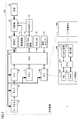
- FIG. 1 is a schematic view showing a urination volume management system 1 according to an embodiment of the present invention.
- the urination volume management system 1 includes a measuring device 100 for measuring body weight and a user terminal 200.
- the number of user terminals can be a plurality, if necessary.
- the measuring device 100 is formed in a box shape similar to, for example, a known weight scale.
- the measuring device 100 is configured to measure the weight of the user when the user to be inspected using the urination amount management system 1 gets on the upper surface of the user.
- the measuring device 100 includes, for example, a short-range wireless communication circuit 80 such as BLE (Bluetooth (registered trademark) Low Energy), and the user wirelessly obtains information on the weight value measured from the short-range wireless communication circuit 80. It is configured to transmit to the terminal 200.
- BLE Bluetooth (registered trademark) Low Energy
- the measuring device 100 is usually located near the toilet at home or in the hospital.
- the user terminal 200 is composed of, for example, a smartphone or a tablet terminal, and is configured separately from the measuring device 100. As will be described later, the user terminal 200 is configured to receive information on the body weight value transmitted from the measuring device 100. That is, the user terminal 200 can communicate with the measuring device 100. Further, as will be described later, the user terminal 200 is configured to calculate the urination amount based on the body weight value and to accept input of additional information regarding the urination amount. The user terminal 200 is configured to transmit the calculated urination volume, additional information, and the like to a cloud server of a hospital (not shown) via the Internet, for example. The cloud server is configured to store information transmitted from the user terminal 200.
- the user In the management of the urination amount using the urination amount management system 1, the user first gets on the upper surface of the measuring device 100 before urinating.
- the measuring device 100 measures the weight of the user before urination and transmits the measured weight value to the user terminal 200.
- the user gets on the upper surface of the measuring device 100 again and inputs additional information about urination on the user terminal 200.
- the measuring device 100 measures the weight of the user after urination and transmits the measured weight value to the user terminal 200.
- the user terminal 200 calculates the amount of urination from the body weight value before and after urination. Further, the user terminal 200 transmits additional information together with the calculated amount of urination to a cloud server (not shown) via the Internet, for example.
- the cloud server stores the received urination volume and additional information.
- the urine volume and additional information stored in the cloud server are read from, for example, a test terminal used by a doctor or the like via the Internet, and are useful for observing the transition of symptoms and creating a treatment plan or the like.
- an examiner such as a doctor can confirm not only the urination volume of the patient but also additional information on urination that is useful for the examination on an examination terminal (not shown), so that the symptomatology is appropriate. It is possible to grasp the transition of. Further, as will be described later, in the urination amount management system 1, the urination amount is calculated in the user terminal 200 according to the additional information input.
- the measuring device 100 includes a load cell 10, an amplifier 20, an A / D converter 30, a battery 40, a charge / discharge circuit 50, a constant voltage circuit 60, and a CPU (Central Processing Unit) or a calculation unit 70.
- a load cell 10 an amplifier 20, an A / D converter 30, a battery 40, a charge / discharge circuit 50, a constant voltage circuit 60, and a CPU (Central Processing Unit) or a calculation unit 70.
- CPU Central Processing Unit
- the load cell 10 is a type of weight sensor in which distortion generated according to the weight of a patient or the like appears as a change in resistance value.
- the "measuring unit" in one aspect of the present invention may include a load cell 10 and a pedestal (not shown) for a user to ride on.
- the amplifier 20 amplifies the change in the resistance value output as the change in voltage or current.
- the A / D converter 30 converts the amplified voltage or current into a digital value and outputs the amplified voltage or current to the CPU 70.
- the measuring device 100 further includes a memory 71, a monitoring circuit 72, a USB port 73, a USB-serial conversion circuit 74, an RGB-LED (Light Emitting Diode) 75, a power switch 76, and a short-range wireless communication circuit. Includes 80 and.
- the monitoring circuit 72 monitors the charge / discharge circuit 50, controls the charge / discharge of the built-in battery 40, and monitors the remaining amount.
- the constant voltage circuit 60 converts the fluctuating voltage of the battery 40 into a constant voltage required for each, and supplies the voltage to the CPU 70, the memory 71, the load cell 10, the amplifier 20, the A / D converter 30, the short-range wireless communication circuit 80, and the like. ..
- the battery 40 is configured to be rechargeable via the USB port 73 and the charge / discharge circuit 50.
- the measuring device 100 includes a CPU 70, a memory (ROM (Read Only Memory) and RAM (Random Access Memory)) 71, and an input / output buffer such as a USB port 73 for inputting / outputting various signals. ..
- the CPU 70 corresponds to a "control unit” that expands and executes a program stored in the ROM in a RAM or the like.
- the program stored in the ROM is a program in which the processing procedure of the CPU 70 is described.
- Various tables (maps) used for various operations are also stored in the ROM.
- the CPU 70 executes various processes in the measuring device 100 according to these programs and tables.
- the processing is not limited to software, but can also be executed by dedicated hardware (electronic circuit).
- the power switch 76 is a switch for turning on / off the measuring device 100. However, even if the measuring device 100 is turned on by the power switch 76, in principle, the measuring device 100 is in a sleep state when the body weight is not measured in order to realize low power consumption.
- the user terminal 200 includes a CPU 270, a memory 271, an input / output device 274, a display unit 275, and a short-range wireless communication circuit 280.
- the number of user terminals 200 may be a plurality of (for example, 1 to N; N is a natural number). In the case of a plurality of units, specific information for identifying each terminal is stored in advance in the memory 271.
- the CPU 70 In the sleep state, in the measuring device 100, some functions of the CPU 70 that controls the short-range wireless communication circuit 80 and the short-range wireless communication circuit 80 are activated with low power.
- the short-range wireless communication circuit 80 is periodically activated, and when communication is established with any of the user terminals 200, the CPU 70 is fully activated.
- the short-range wireless communication circuit 80 for example, it is preferable to use a circuit compliant with a low power standard called Bluetooth (registered trademark) Low Energy.
- the CPU 70 displays the operating state of the measuring device 100 to the outside by the RGB LED 75, which is an RGB indicator.
- the CPU 70 After establishing communication with the user terminal 200, the CPU 70 changes from a low power start state to a state capable of high-performance calculation, and energizes another unit such as a load cell 10 in the constant voltage circuit 60. At the time of weight measurement, the CPU 70 also starts the signal calculation of the load cell 10, so that the power consumption increases.
- the CPU 70 has a high processing capacity capable of performing high-speed calculation up to a floating point number in order to realize weight measurement. Therefore, if the load cell and the processing circuit in the subsequent stage are always in the standby state in order to detect the load, the power consumption is large.
- the low power consumption short-range wireless communication circuit 80 and the CPU 70 for controlling the short-range wireless communication circuit 80 are periodically turned on and off. Then, the user transmits a connection request from the user terminal 200 by wireless communication, and after the measuring device 100 side receives the connection request, the entire device including the load cell 10 is activated.
- the power consumption in the standby state can be limited to the short-range wireless communication circuit 80 and the CPU 70 in the low power state, and the power consumption of the measuring device 100 can be suppressed.
- dedicated application software is installed on the user terminal 200.
- the measuring device 100 does not respond unless a connection request is transmitted from this dedicated application software. Therefore, it does not respond to wireless communication requests from general smartphones, and does not uselessly activate for unrelated people other than users. Further, as will be described later, since the measurement data is transmitted together with the information for identifying the terminal, it is possible to prevent the measurement data from being erroneously received by a third party.
- FIG. 2 is a flowchart for explaining the processing executed by the measuring device and the user terminal.
- the measuring device 100 is initially turned on by the power switch 76 and is in the sleep state.
- the CPU 70 of the measuring device 100 activates the short-range wireless communication circuit 80 in step S1, determines whether communication is established in step S2, and if communication is not established, sleeps again for a certain period of time in step S3. .. In the standby state, steps S1 to S3 are periodically executed in the measuring device 100.
- the terminal when the user activates the terminal, the terminal can instruct the start of measurement.
- the CPU 270 displays a menu or button on the display unit 275, and determines whether or not the user has selected the measurement start menu or button by the input / output device 274 such as a touch panel.
- step S12 the CPU 270 activates the short-range wireless communication circuit 280, and determines whether or not communication is established in step S13. If the measuring device 100 is not nearby, or if the main power of the measuring device 100 is turned off, communication is not established (NO in S13), and in step S14, the CPU 270 has elapsed the timeout setting time. Judge whether or not. Before the time-out set time elapses (NO in S14), the process is returned to step S13 again. On the other hand, when the time-out set time has elapsed (YES in S14), the CPU 270 turns the user terminal 200 into the OFF state.
- step S15 the CPU 270 requires the user to choose between pre-micturition and post-micturition measurements and creates a flag. To do. For example, two buttons “measurement (before urination)” and “measurement (after urination)” are displayed on the display unit 275 of the user terminal 200, and when the user selects one of them, the flag is set to 0 ( Set to 1 (before urination) or 1 (after urination). Then, in step S16, the CPU 270 wirelessly transmits the flag and the measurement start instruction to the measuring device 100 via the short-range wireless communication circuit 280.
- step S4 the measuring device 100 receives the flag and the measurement instruction via the short-range wireless communication circuit 80. Then, in step S5, the CPU 270 shifts the circuit necessary for measurement such as the load cell 10 from the sleep state to the measurement state. After that, in step S6, the CPU 70 of the measuring device 100 observes the change in the resistance value of the load cell 10 for a certain period of time by the digital value obtained from the A / D converter 30.
- step S6 the CPU 70 monitors the change in the measured value while performing the measured weight averaging process and the like.
- the measured value when the user is mounted on the measuring device is calculated first, and then it is detected that the user has descended from the measuring device 100 by the sudden decrease in the measured weight.
- the zero point is corrected and the user's weight can be measured more accurately.
- the CPU 70 wirelessly transmits the flag received in step S4 and the measurement data indicating the weight to the user terminal 200 in step S7.
- the user terminal 200 is in a waiting state for receiving measurement data after transmitting the measurement instruction in step S16.
- the user terminal 200 wirelessly receives the flag and the measurement data in step S17, the communication between the user terminal 200 and the measuring device 100 is disconnected in steps S8 and S18.
- the measuring device 100 the measurement data and data such as flags are cleared in step S9 thereafter. Therefore, there is no concern that the urination volume data, which is personal information, will be mistakenly viewed by a third party. After that, the measuring device 100 shifts to the sleep state in step S10, and returns to the state of waiting for the establishment of communication from step S1 again.
- the CPU 270 determines in step S19 whether the measurement data is the data before urination or the data after urination based on the received flag. For example, when the flag is 0, the CPU 270 determines that the measurement data is the data before urination, and when the flag is 1, it determines that the measurement data is the data after urination.
- the CPU 270 stores the flag and the measurement data in the memory 271 and turns off the power of the user terminal. In this case, the user goes to the toilet, urinates, and then activates the user terminal again to execute the process from step S11.
- the CPU 270 executes the calculation of the urination amount in step S21.
- the amount of urination is obtained by subtracting the weight indicated by the last received measurement data after urination from the weight indicated by the measurement data before urination already stored in the memory 271. If desired, weight may be converted to volume using standard urine densities.
- step S22 the CPU 270 confirms whether or not the user has input of additional information, and if there is additional information, receives the input from the user from the input / output device 274.
- additional information buttons for presence / absence of stool at the time of urination, evaluation of the amount of urination, presence / absence of urinary intention before urination, and presence / absence of urinary incontinence before urination are displayed so as to be selectable.
- the button for presence / absence of defecation during urination is a button for inputting whether or not defecation has occurred at the time of urination. Displayed as selectable.
- the urination volume evaluation button is a button for inputting how much the user himself evaluates the urination volume, and for example, a plurality of buttons such as high, normal, and low are displayed so as to be selectable.
- the button for the presence or absence of urination before urination is a button for inputting whether or not the user feels urination before urination, and for example, there are a plurality of buttons such as urination before urination and no urination before urination. Displayed as selectable.
- the button for the presence or absence of urinary incontinence before urination is a button for inputting whether or not the user has urinary incontinence before urination, for example, urinary incontinence before urination, no urinary incontinence before urination, etc. Multiple buttons are displayed as selectable.
- the user urinates
- the user if the user has a desire to urinate before urinating, there is no urinary incontinence before urination, the user does not urinate when urinating, and the user feels that the amount of urination is normal, the user urinates.
- step S23 the CPU 270 stores the urination amount calculated in step S21 and the additional information input in step S22 in the memory 271 together with the date and time. At this time, similar data may be sent to the hospital server and stored in the server.
- a high-performance CPU with high power consumption is used without additionally mounting new parts such as a circuit dedicated to load detection and a motion sensor. Can also reduce power consumption.
- the urination volume measuring device is configured to be capable of transitioning between a sleep state and a measurement state having higher power consumption than the sleep state, and the user's urination before urination and urination in the measurement state. It includes a measuring unit having a calculation unit for measuring the weight later, and a control unit configured to be wirelessly connectable to the user terminal and controlling the measuring unit. When the control unit receives the activation request from the user terminal, the calculation unit shifts the measurement unit from the sleep state to the measurement state, and when the calculation unit completes the weight measurement, the calculation unit returns the measurement unit to the sleep state. It is composed.
- the sleep state is a mode in which the arithmetic unit is activated with lower power consumption than the measurement state.
- the part with high power consumption is activated in response to the wireless activation request from the user, and when the measurement is completed, the part with high power consumption is automatically put into sleep state, so it is used more frequently than the scale. Even with a high urination volume measuring device, it can be expected to extend the battery life to some extent.
- the urination volume measuring device further includes a storage unit that stores the first information indicating whether the user is before or after urination.
- the control unit receives the first information from the user terminal and stores it in the storage unit, and when the measurement unit completes the measurement of the body weight, the control unit transmits the second information indicating the measured weight to the user terminal together with the first information. It is composed.
- the first information is added to the second information and returned to the user terminal in this way, by examining the first information when the user terminal receives it, whether the transmitted measurement data is before urination or after urination. It is possible to determine whether it is a thing.
- the first information and the second information are not left in the urination volume measuring device, so that there is no need to worry about erroneous transmission of data.
- the urination volume measuring device further includes a storage unit that stores a fourth information that identifies a user terminal registered in advance.
- the control unit receives specific information that identifies the terminal from the wireless terminal, and if the received specific information matches the fourth information stored in the storage unit, While accepting the activation request from the wireless terminal, if the specific information and the fourth information do not match, the activation request from the wireless terminal is not accepted.
- the present embodiment relates to a urination volume management system including any of the above urination volume measuring devices and a user terminal.
- the present embodiment relates to a method for measuring urination volume using a urination volume measuring device including a measuring unit for measuring body weight.
- the method of measuring the amount of urine is to sleep the step of transmitting an activation request from the user terminal to the urine amount measuring device by wireless communication and the measuring unit that measures the weight of the user before and after urination in response to the activation request.
- the step of transitioning from the state to the measurement state in which the power consumption is higher than that of the sleep state, the step of causing the measuring unit to measure the user's weight, and the measurement data indicating the measured user's weight are transmitted from the urine volume measuring device to the user terminal by wireless communication.
- a step of transmitting the measurement data to the device and a step of shifting the measurement unit from the measurement state to the sleep state after the transmission of the measurement data is completed.
- the part with high power consumption is activated in response to the wireless activation request from the user terminal, and when the measurement is completed, the part with high power consumption is automatically put into sleep state, so it is used more frequently than the scale. It can be expected that the life of the battery will be extended to some extent even with a urination volume measuring device having a high power consumption.
- the user terminal transmits the activation request and flag information indicating whether it is before or after urination to the urination volume measuring device.
- the urination volume measuring device transmits the flag information that has been examined together with the measurement data to the user terminal.
- the first information is added to the second information and returned to the user terminal in this way, by examining the first information when the user terminal receives it, whether the transmitted measurement data is before urination or after urination. It is possible to determine whether it is a thing.
- the present embodiment relates to a program that causes a computer to execute the above-mentioned method for measuring the amount of urination.
- This program is stored in the memory and the memory, and is read from the memory on the measuring device side and the memory on the user terminal side as needed to control the CPU.
- 1 urine output management system 10 load cells, 20 amplifiers, 30 A / D converters, 40 batteries, 50 charge / discharge circuits, 60 constant voltage circuits, 70,270 CPUs, 71,271 memories, 72 monitoring circuits, 73 USB ports, 74 USB / serial conversion circuit, 76 power switch, 80,280 short-range wireless communication circuit, 100 measuring device, 200 user terminal, 274 input / output device, 275 display unit.
Landscapes
- Health & Medical Sciences (AREA)
- Life Sciences & Earth Sciences (AREA)
- Engineering & Computer Science (AREA)
- Biomedical Technology (AREA)
- Public Health (AREA)
- General Health & Medical Sciences (AREA)
- Physics & Mathematics (AREA)
- Medical Informatics (AREA)
- Surgery (AREA)
- Business, Economics & Management (AREA)
- Pathology (AREA)
- Molecular Biology (AREA)
- Biophysics (AREA)
- Animal Behavior & Ethology (AREA)
- Urology & Nephrology (AREA)
- Physiology (AREA)
- Veterinary Medicine (AREA)
- Heart & Thoracic Surgery (AREA)
- General Business, Economics & Management (AREA)
- Epidemiology (AREA)
- Primary Health Care (AREA)
- General Physics & Mathematics (AREA)
- Measurement Of The Respiration, Hearing Ability, Form, And Blood Characteristics Of Living Organisms (AREA)
- Medical Treatment And Welfare Office Work (AREA)
- Investigating Or Analysing Biological Materials (AREA)
Priority Applications (2)
| Application Number | Priority Date | Filing Date | Title |
|---|---|---|---|
| CN202080083080.5A CN114760922A (zh) | 2019-12-02 | 2020-09-01 | 排尿量测量装置、排尿量管理系统、排尿量测量方法以及程序 |
| JP2021562456A JP7484932B2 (ja) | 2019-12-02 | 2020-09-01 | 排尿量測定装置、排尿量管理システム、排尿量測定方法、およびプログラム |
Applications Claiming Priority (2)
| Application Number | Priority Date | Filing Date | Title |
|---|---|---|---|
| JP2019-218019 | 2019-12-02 | ||
| JP2019218019 | 2019-12-02 |
Publications (1)
| Publication Number | Publication Date |
|---|---|
| WO2021111686A1 true WO2021111686A1 (ja) | 2021-06-10 |
Family
ID=76221015
Family Applications (1)
| Application Number | Title | Priority Date | Filing Date |
|---|---|---|---|
| PCT/JP2020/033000 Ceased WO2021111686A1 (ja) | 2019-12-02 | 2020-09-01 | 排尿量測定装置、排尿量管理システム、排尿量測定方法、およびプログラム |
Country Status (3)
| Country | Link |
|---|---|
| JP (1) | JP7484932B2 (https=) |
| CN (1) | CN114760922A (https=) |
| WO (1) | WO2021111686A1 (https=) |
Cited By (1)
| Publication number | Priority date | Publication date | Assignee | Title |
|---|---|---|---|---|
| JPWO2023276317A1 (https=) * | 2021-06-30 | 2023-01-05 |
Citations (5)
| Publication number | Priority date | Publication date | Assignee | Title |
|---|---|---|---|---|
| JP2005172647A (ja) * | 2003-12-12 | 2005-06-30 | Toto Ltd | トイレにおける生体情報測定システム |
| JP2009063306A (ja) * | 2007-09-04 | 2009-03-26 | Tanita Corp | 測定装置 |
| WO2015107681A1 (ja) * | 2014-01-17 | 2015-07-23 | 任天堂株式会社 | 情報処理システム、情報処理サーバ、情報処理プログラム、および情報提供方法 |
| JP2017042354A (ja) * | 2015-08-26 | 2017-03-02 | シャープ株式会社 | 尿情報処理装置 |
| JP2018175349A (ja) * | 2017-04-12 | 2018-11-15 | 株式会社島津製作所 | 排尿量管理システム |
Family Cites Families (5)
| Publication number | Priority date | Publication date | Assignee | Title |
|---|---|---|---|---|
| JP3399157B2 (ja) * | 1995-06-01 | 2003-04-21 | オムロン株式会社 | 計測装置 |
| JP5056204B2 (ja) * | 2007-06-28 | 2012-10-24 | 富士電機株式会社 | 無線通信ネットワークシステム、無線端末、無線通信方法、無線通信プログラム |
| KR100948689B1 (ko) * | 2007-12-24 | 2010-03-24 | 한국전자통신연구원 | 이동통신시스템의 전용무선접속상태에서의 접속 제어 방법 |
| JP2015211801A (ja) | 2014-05-07 | 2015-11-26 | セイコーエプソン株式会社 | 生体情報検出装置、生体情報提示システム及び電子機器 |
| WO2018092389A1 (ja) * | 2016-11-18 | 2018-05-24 | シャープ株式会社 | 尿情報処理装置、尿情報処理システム、および制御プログラム |
-
2020
- 2020-09-01 JP JP2021562456A patent/JP7484932B2/ja active Active
- 2020-09-01 CN CN202080083080.5A patent/CN114760922A/zh active Pending
- 2020-09-01 WO PCT/JP2020/033000 patent/WO2021111686A1/ja not_active Ceased
Patent Citations (5)
| Publication number | Priority date | Publication date | Assignee | Title |
|---|---|---|---|---|
| JP2005172647A (ja) * | 2003-12-12 | 2005-06-30 | Toto Ltd | トイレにおける生体情報測定システム |
| JP2009063306A (ja) * | 2007-09-04 | 2009-03-26 | Tanita Corp | 測定装置 |
| WO2015107681A1 (ja) * | 2014-01-17 | 2015-07-23 | 任天堂株式会社 | 情報処理システム、情報処理サーバ、情報処理プログラム、および情報提供方法 |
| JP2017042354A (ja) * | 2015-08-26 | 2017-03-02 | シャープ株式会社 | 尿情報処理装置 |
| JP2018175349A (ja) * | 2017-04-12 | 2018-11-15 | 株式会社島津製作所 | 排尿量管理システム |
Cited By (3)
| Publication number | Priority date | Publication date | Assignee | Title |
|---|---|---|---|---|
| JPWO2023276317A1 (https=) * | 2021-06-30 | 2023-01-05 | ||
| WO2023276317A1 (ja) * | 2021-06-30 | 2023-01-05 | 株式会社島津製作所 | 排尿量管理システム |
| JP7747046B2 (ja) | 2021-06-30 | 2025-10-01 | 株式会社島津製作所 | 排尿量管理システム |
Also Published As
| Publication number | Publication date |
|---|---|
| CN114760922A (zh) | 2022-07-15 |
| JP7484932B2 (ja) | 2024-05-16 |
| JPWO2021111686A1 (https=) | 2021-06-10 |
Similar Documents
| Publication | Publication Date | Title |
|---|---|---|
| US6191557B1 (en) | Dual-mode fuel gauge for display in battery-powered equipment | |
| US9395791B2 (en) | Health care device and power management method therefor | |
| EP1953508A1 (en) | Apparatus and method for determining growth status of a human subject | |
| US20140059360A1 (en) | Power supplies management in an analyte device having primary and secondary batteries | |
| JP2008206592A (ja) | 測定システムおよびプログラム | |
| US20150133742A1 (en) | Medical instrument with remaining visits indicator | |
| JP2021184856A (ja) | 排尿量管理システム | |
| WO2020054486A1 (ja) | 計測装置及び計測システム | |
| JP6650534B2 (ja) | 複数の生体情報を測定する携帯用複合センサー装置および測定方法 | |
| JP7484932B2 (ja) | 排尿量測定装置、排尿量管理システム、排尿量測定方法、およびプログラム | |
| CN215778034U (zh) | 一种健康监测仪 | |
| JP5947449B2 (ja) | 体内水分計及び端末 | |
| CN102175295A (zh) | 电子健康体重秤 | |
| CN202485771U (zh) | 电子秤和体重管理系统 | |
| CN211633032U (zh) | 一种具有健康数据监测功能的智能马桶盖装置 | |
| US20060094124A1 (en) | Urine sugar meter | |
| JP7747046B2 (ja) | 排尿量管理システム | |
| KR100552449B1 (ko) | 컴퓨터 연결형 디지털 체중계 | |
| JP5465964B2 (ja) | 体重計 | |
| CN211434407U (zh) | 腹透助手 | |
| CN220404013U (zh) | 一种膀胱充盈检测装置 | |
| US12514413B2 (en) | Lavatory equipment | |
| JP2011069739A (ja) | 体重計 | |
| CN204882443U (zh) | 血液检测仪 | |
| JP7681931B1 (ja) | 吸引装置および既存吸引装置用補助装置 |
Legal Events
| Date | Code | Title | Description |
|---|---|---|---|
| 121 | Ep: the epo has been informed by wipo that ep was designated in this application |
Ref document number: 20895962 Country of ref document: EP Kind code of ref document: A1 |
|
| ENP | Entry into the national phase |
Ref document number: 2021562456 Country of ref document: JP Kind code of ref document: A |
|
| NENP | Non-entry into the national phase |
Ref country code: DE |
|
| 122 | Ep: pct application non-entry in european phase |
Ref document number: 20895962 Country of ref document: EP Kind code of ref document: A1 |