WO2021085398A1 - Cd45ra+およびccr7+の細胞表面マーカーを有するt細胞の製造方法 - Google Patents
Cd45ra+およびccr7+の細胞表面マーカーを有するt細胞の製造方法 Download PDFInfo
- Publication number
- WO2021085398A1 WO2021085398A1 PCT/JP2020/040163 JP2020040163W WO2021085398A1 WO 2021085398 A1 WO2021085398 A1 WO 2021085398A1 JP 2020040163 W JP2020040163 W JP 2020040163W WO 2021085398 A1 WO2021085398 A1 WO 2021085398A1
- Authority
- WO
- WIPO (PCT)
- Prior art keywords
- cells
- cell
- cd45ra
- activated
- ccr7
- Prior art date
- Legal status (The legal status is an assumption and is not a legal conclusion. Google has not performed a legal analysis and makes no representation as to the accuracy of the status listed.)
- Ceased
Links
Images






Classifications
-
- A—HUMAN NECESSITIES
- A61—MEDICAL OR VETERINARY SCIENCE; HYGIENE
- A61P—SPECIFIC THERAPEUTIC ACTIVITY OF CHEMICAL COMPOUNDS OR MEDICINAL PREPARATIONS
- A61P31/00—Antiinfectives, i.e. antibiotics, antiseptics, chemotherapeutics
-
- C—CHEMISTRY; METALLURGY
- C12—BIOCHEMISTRY; BEER; SPIRITS; WINE; VINEGAR; MICROBIOLOGY; ENZYMOLOGY; MUTATION OR GENETIC ENGINEERING
- C12N—MICROORGANISMS OR ENZYMES; COMPOSITIONS THEREOF; PROPAGATING, PRESERVING, OR MAINTAINING MICROORGANISMS; MUTATION OR GENETIC ENGINEERING; CULTURE MEDIA
- C12N5/00—Undifferentiated human, animal or plant cells, e.g. cell lines; Tissues; Cultivation or maintenance thereof; Culture media therefor
- C12N5/06—Animal cells or tissues; Human cells or tissues
- C12N5/0602—Vertebrate cells
- C12N5/0634—Cells from the blood or the immune system
- C12N5/0636—T lymphocytes
-
- A—HUMAN NECESSITIES
- A61—MEDICAL OR VETERINARY SCIENCE; HYGIENE
- A61K—PREPARATIONS FOR MEDICAL, DENTAL OR TOILETRY PURPOSES
- A61K40/00—Cellular immunotherapy
- A61K40/10—Cellular immunotherapy characterised by the cell type used
- A61K40/11—T-cells, e.g. tumour infiltrating lymphocytes [TIL] or regulatory T [Treg] cells; Lymphokine-activated killer [LAK] cells
-
- A—HUMAN NECESSITIES
- A61—MEDICAL OR VETERINARY SCIENCE; HYGIENE
- A61K—PREPARATIONS FOR MEDICAL, DENTAL OR TOILETRY PURPOSES
- A61K40/00—Cellular immunotherapy
- A61K40/30—Cellular immunotherapy characterised by the recombinant expression of specific molecules in the cells of the immune system
- A61K40/31—Chimeric antigen receptors [CAR]
-
- A—HUMAN NECESSITIES
- A61—MEDICAL OR VETERINARY SCIENCE; HYGIENE
- A61K—PREPARATIONS FOR MEDICAL, DENTAL OR TOILETRY PURPOSES
- A61K40/00—Cellular immunotherapy
- A61K40/40—Cellular immunotherapy characterised by antigens that are targeted or presented by cells of the immune system
- A61K40/41—Vertebrate antigens
- A61K40/42—Cancer antigens
- A61K40/4202—Receptors, cell surface antigens or cell surface determinants
- A61K40/421—Immunoglobulin superfamily
- A61K40/4211—CD19 or B4
-
- A—HUMAN NECESSITIES
- A61—MEDICAL OR VETERINARY SCIENCE; HYGIENE
- A61P—SPECIFIC THERAPEUTIC ACTIVITY OF CHEMICAL COMPOUNDS OR MEDICINAL PREPARATIONS
- A61P35/00—Antineoplastic agents
-
- A—HUMAN NECESSITIES
- A61—MEDICAL OR VETERINARY SCIENCE; HYGIENE
- A61P—SPECIFIC THERAPEUTIC ACTIVITY OF CHEMICAL COMPOUNDS OR MEDICINAL PREPARATIONS
- A61P35/00—Antineoplastic agents
- A61P35/02—Antineoplastic agents specific for leukemia
-
- A—HUMAN NECESSITIES
- A61—MEDICAL OR VETERINARY SCIENCE; HYGIENE
- A61P—SPECIFIC THERAPEUTIC ACTIVITY OF CHEMICAL COMPOUNDS OR MEDICINAL PREPARATIONS
- A61P37/00—Drugs for immunological or allergic disorders
- A61P37/02—Immunomodulators
-
- A—HUMAN NECESSITIES
- A61—MEDICAL OR VETERINARY SCIENCE; HYGIENE
- A61P—SPECIFIC THERAPEUTIC ACTIVITY OF CHEMICAL COMPOUNDS OR MEDICINAL PREPARATIONS
- A61P37/00—Drugs for immunological or allergic disorders
- A61P37/02—Immunomodulators
- A61P37/06—Immunosuppressants, e.g. drugs for graft rejection
-
- A—HUMAN NECESSITIES
- A61—MEDICAL OR VETERINARY SCIENCE; HYGIENE
- A61P—SPECIFIC THERAPEUTIC ACTIVITY OF CHEMICAL COMPOUNDS OR MEDICINAL PREPARATIONS
- A61P37/00—Drugs for immunological or allergic disorders
- A61P37/08—Antiallergic agents
-
- C—CHEMISTRY; METALLURGY
- C07—ORGANIC CHEMISTRY
- C07K—PEPTIDES
- C07K14/00—Peptides having more than 20 amino acids; Gastrins; Somatostatins; Melanotropins; Derivatives thereof
- C07K14/435—Peptides having more than 20 amino acids; Gastrins; Somatostatins; Melanotropins; Derivatives thereof from animals; from humans
- C07K14/705—Receptors; Cell surface antigens; Cell surface determinants
- C07K14/70589—CD45
-
- C—CHEMISTRY; METALLURGY
- C07—ORGANIC CHEMISTRY
- C07K—PEPTIDES
- C07K14/00—Peptides having more than 20 amino acids; Gastrins; Somatostatins; Melanotropins; Derivatives thereof
- C07K14/435—Peptides having more than 20 amino acids; Gastrins; Somatostatins; Melanotropins; Derivatives thereof from animals; from humans
- C07K14/705—Receptors; Cell surface antigens; Cell surface determinants
- C07K14/715—Receptors; Cell surface antigens; Cell surface determinants for cytokines; for lymphokines; for interferons
- C07K14/7158—Receptors; Cell surface antigens; Cell surface determinants for cytokines; for lymphokines; for interferons for chemokines
-
- C—CHEMISTRY; METALLURGY
- C07—ORGANIC CHEMISTRY
- C07K—PEPTIDES
- C07K16/00—Immunoglobulins [IG], e.g. monoclonal or polyclonal antibodies
- C07K16/18—Immunoglobulins [IG], e.g. monoclonal or polyclonal antibodies against material from animals or humans
- C07K16/28—Immunoglobulins [IG], e.g. monoclonal or polyclonal antibodies against material from animals or humans against receptors, cell surface antigens or cell surface determinants
- C07K16/2803—Immunoglobulins [IG], e.g. monoclonal or polyclonal antibodies against material from animals or humans against receptors, cell surface antigens or cell surface determinants against the immunoglobulin superfamily
-
- A—HUMAN NECESSITIES
- A61—MEDICAL OR VETERINARY SCIENCE; HYGIENE
- A61K—PREPARATIONS FOR MEDICAL, DENTAL OR TOILETRY PURPOSES
- A61K2239/00—Indexing codes associated with cellular immunotherapy of group A61K40/00
- A61K2239/31—Indexing codes associated with cellular immunotherapy of group A61K40/00 characterized by the route of administration
-
- A—HUMAN NECESSITIES
- A61—MEDICAL OR VETERINARY SCIENCE; HYGIENE
- A61K—PREPARATIONS FOR MEDICAL, DENTAL OR TOILETRY PURPOSES
- A61K2239/00—Indexing codes associated with cellular immunotherapy of group A61K40/00
- A61K2239/38—Indexing codes associated with cellular immunotherapy of group A61K40/00 characterised by the dose, timing or administration schedule
-
- A—HUMAN NECESSITIES
- A61—MEDICAL OR VETERINARY SCIENCE; HYGIENE
- A61K—PREPARATIONS FOR MEDICAL, DENTAL OR TOILETRY PURPOSES
- A61K2239/00—Indexing codes associated with cellular immunotherapy of group A61K40/00
- A61K2239/46—Indexing codes associated with cellular immunotherapy of group A61K40/00 characterised by the cancer treated
- A61K2239/48—Blood cells, e.g. leukemia or lymphoma
-
- C—CHEMISTRY; METALLURGY
- C07—ORGANIC CHEMISTRY
- C07K—PEPTIDES
- C07K2317/00—Immunoglobulins specific features
- C07K2317/60—Immunoglobulins specific features characterized by non-natural combinations of immunoglobulin fragments
- C07K2317/62—Immunoglobulins specific features characterized by non-natural combinations of immunoglobulin fragments comprising only variable region components
- C07K2317/622—Single chain antibody (scFv)
-
- C—CHEMISTRY; METALLURGY
- C07—ORGANIC CHEMISTRY
- C07K—PEPTIDES
- C07K2319/00—Fusion polypeptide
- C07K2319/01—Fusion polypeptide containing a localisation/targetting motif
- C07K2319/03—Fusion polypeptide containing a localisation/targetting motif containing a transmembrane segment
-
- C—CHEMISTRY; METALLURGY
- C12—BIOCHEMISTRY; BEER; SPIRITS; WINE; VINEGAR; MICROBIOLOGY; ENZYMOLOGY; MUTATION OR GENETIC ENGINEERING
- C12N—MICROORGANISMS OR ENZYMES; COMPOSITIONS THEREOF; PROPAGATING, PRESERVING, OR MAINTAINING MICROORGANISMS; MUTATION OR GENETIC ENGINEERING; CULTURE MEDIA
- C12N2501/00—Active agents used in cell culture processes, e.g. differentation
- C12N2501/10—Growth factors
- C12N2501/105—Insulin-like growth factors [IGF]
-
- C—CHEMISTRY; METALLURGY
- C12—BIOCHEMISTRY; BEER; SPIRITS; WINE; VINEGAR; MICROBIOLOGY; ENZYMOLOGY; MUTATION OR GENETIC ENGINEERING
- C12N—MICROORGANISMS OR ENZYMES; COMPOSITIONS THEREOF; PROPAGATING, PRESERVING, OR MAINTAINING MICROORGANISMS; MUTATION OR GENETIC ENGINEERING; CULTURE MEDIA
- C12N2501/00—Active agents used in cell culture processes, e.g. differentation
- C12N2501/10—Growth factors
- C12N2501/125—Stem cell factor [SCF], c-kit ligand [KL]
-
- C—CHEMISTRY; METALLURGY
- C12—BIOCHEMISTRY; BEER; SPIRITS; WINE; VINEGAR; MICROBIOLOGY; ENZYMOLOGY; MUTATION OR GENETIC ENGINEERING
- C12N—MICROORGANISMS OR ENZYMES; COMPOSITIONS THEREOF; PROPAGATING, PRESERVING, OR MAINTAINING MICROORGANISMS; MUTATION OR GENETIC ENGINEERING; CULTURE MEDIA
- C12N2501/00—Active agents used in cell culture processes, e.g. differentation
- C12N2501/20—Cytokines; Chemokines
- C12N2501/21—Chemokines, e.g. MIP-1, MIP-2, RANTES, MCP, PF-4
-
- C—CHEMISTRY; METALLURGY
- C12—BIOCHEMISTRY; BEER; SPIRITS; WINE; VINEGAR; MICROBIOLOGY; ENZYMOLOGY; MUTATION OR GENETIC ENGINEERING
- C12N—MICROORGANISMS OR ENZYMES; COMPOSITIONS THEREOF; PROPAGATING, PRESERVING, OR MAINTAINING MICROORGANISMS; MUTATION OR GENETIC ENGINEERING; CULTURE MEDIA
- C12N2501/00—Active agents used in cell culture processes, e.g. differentation
- C12N2501/20—Cytokines; Chemokines
- C12N2501/23—Interleukins [IL]
- C12N2501/2307—Interleukin-7 (IL-7)
-
- C—CHEMISTRY; METALLURGY
- C12—BIOCHEMISTRY; BEER; SPIRITS; WINE; VINEGAR; MICROBIOLOGY; ENZYMOLOGY; MUTATION OR GENETIC ENGINEERING
- C12N—MICROORGANISMS OR ENZYMES; COMPOSITIONS THEREOF; PROPAGATING, PRESERVING, OR MAINTAINING MICROORGANISMS; MUTATION OR GENETIC ENGINEERING; CULTURE MEDIA
- C12N2501/00—Active agents used in cell culture processes, e.g. differentation
- C12N2501/20—Cytokines; Chemokines
- C12N2501/26—Flt-3 ligand (CD135L, flk-2 ligand)
-
- C—CHEMISTRY; METALLURGY
- C12—BIOCHEMISTRY; BEER; SPIRITS; WINE; VINEGAR; MICROBIOLOGY; ENZYMOLOGY; MUTATION OR GENETIC ENGINEERING
- C12N—MICROORGANISMS OR ENZYMES; COMPOSITIONS THEREOF; PROPAGATING, PRESERVING, OR MAINTAINING MICROORGANISMS; MUTATION OR GENETIC ENGINEERING; CULTURE MEDIA
- C12N2501/00—Active agents used in cell culture processes, e.g. differentation
- C12N2501/40—Regulators of development
- C12N2501/42—Notch; Delta; Jagged; Serrate
-
- C—CHEMISTRY; METALLURGY
- C12—BIOCHEMISTRY; BEER; SPIRITS; WINE; VINEGAR; MICROBIOLOGY; ENZYMOLOGY; MUTATION OR GENETIC ENGINEERING
- C12N—MICROORGANISMS OR ENZYMES; COMPOSITIONS THEREOF; PROPAGATING, PRESERVING, OR MAINTAINING MICROORGANISMS; MUTATION OR GENETIC ENGINEERING; CULTURE MEDIA
- C12N2501/00—Active agents used in cell culture processes, e.g. differentation
- C12N2501/50—Cell markers; Cell surface determinants
- C12N2501/51—B7 molecules, e.g. CD80, CD86, CD28 (ligand), CD152 (ligand)
-
- C—CHEMISTRY; METALLURGY
- C12—BIOCHEMISTRY; BEER; SPIRITS; WINE; VINEGAR; MICROBIOLOGY; ENZYMOLOGY; MUTATION OR GENETIC ENGINEERING
- C12N—MICROORGANISMS OR ENZYMES; COMPOSITIONS THEREOF; PROPAGATING, PRESERVING, OR MAINTAINING MICROORGANISMS; MUTATION OR GENETIC ENGINEERING; CULTURE MEDIA
- C12N2501/00—Active agents used in cell culture processes, e.g. differentation
- C12N2501/50—Cell markers; Cell surface determinants
- C12N2501/515—CD3, T-cell receptor complex
-
- C—CHEMISTRY; METALLURGY
- C12—BIOCHEMISTRY; BEER; SPIRITS; WINE; VINEGAR; MICROBIOLOGY; ENZYMOLOGY; MUTATION OR GENETIC ENGINEERING
- C12N—MICROORGANISMS OR ENZYMES; COMPOSITIONS THEREOF; PROPAGATING, PRESERVING, OR MAINTAINING MICROORGANISMS; MUTATION OR GENETIC ENGINEERING; CULTURE MEDIA
- C12N2501/00—Active agents used in cell culture processes, e.g. differentation
- C12N2501/70—Enzymes
- C12N2501/72—Transferases [EC 2.]
-
- C—CHEMISTRY; METALLURGY
- C12—BIOCHEMISTRY; BEER; SPIRITS; WINE; VINEGAR; MICROBIOLOGY; ENZYMOLOGY; MUTATION OR GENETIC ENGINEERING
- C12N—MICROORGANISMS OR ENZYMES; COMPOSITIONS THEREOF; PROPAGATING, PRESERVING, OR MAINTAINING MICROORGANISMS; MUTATION OR GENETIC ENGINEERING; CULTURE MEDIA
- C12N2502/00—Coculture with; Conditioned medium produced by
- C12N2502/13—Coculture with; Conditioned medium produced by connective tissue cells; generic mesenchyme cells, e.g. so-called "embryonic fibroblasts"
- C12N2502/1352—Mesenchymal stem cells
-
- C—CHEMISTRY; METALLURGY
- C12—BIOCHEMISTRY; BEER; SPIRITS; WINE; VINEGAR; MICROBIOLOGY; ENZYMOLOGY; MUTATION OR GENETIC ENGINEERING
- C12N—MICROORGANISMS OR ENZYMES; COMPOSITIONS THEREOF; PROPAGATING, PRESERVING, OR MAINTAINING MICROORGANISMS; MUTATION OR GENETIC ENGINEERING; CULTURE MEDIA
- C12N2502/00—Coculture with; Conditioned medium produced by
- C12N2502/13—Coculture with; Conditioned medium produced by connective tissue cells; generic mesenchyme cells, e.g. so-called "embryonic fibroblasts"
- C12N2502/1394—Bone marrow stromal cells; whole marrow
-
- C—CHEMISTRY; METALLURGY
- C12—BIOCHEMISTRY; BEER; SPIRITS; WINE; VINEGAR; MICROBIOLOGY; ENZYMOLOGY; MUTATION OR GENETIC ENGINEERING
- C12N—MICROORGANISMS OR ENZYMES; COMPOSITIONS THEREOF; PROPAGATING, PRESERVING, OR MAINTAINING MICROORGANISMS; MUTATION OR GENETIC ENGINEERING; CULTURE MEDIA
- C12N2510/00—Genetically modified cells
Definitions
- the present invention relates to a method for producing T cells having cell surface markers of CD45RA + and CCR7 +. More specifically, according to the present invention, T cells having cell surface markers of CD45RA + and CCR7 + can be produced by culturing T cells using the cell culture supernatant of stromal cells or CXCL12. ..
- TIL tumor infiltrating lymphocyte
- TAA tumor-associated antigen
- TCR T cell receptor
- CAR chimeric antigen receptor
- Non-Patent Documents 1 and 5 there is a problem that the transferred T cells often lose their functions and the therapeutic effect is limited. This is because T cells are exhausted and cause dysfunction in the tumor microenvironment where TIL was present or in the process of expansion culture (Non-Patent Documents 6 and 7). Therefore, if the function and retention of the exhausted T cells can be restored, it is expected that the therapeutic effect of the adopted T cell therapy can be improved.
- iT SCM induced stem cell memory T
- Notch-mediated conversion of activated T cells into stem cells memory-like T cells for adaptive immunotherapy Nat Communi 8, 15338. Fraietta, JA, Lacey, SF, Orlando, EJ, Pruteanu-Malinici, I., Gohil, M., Lundh, S., Boesteanu, AC, Wang, Y., O'Connor, RS, Hwang, WT, et al (2018a). Determinants of response and resistance to CD19 chimeric antigen receptor (CAR) T cell therapy of chronic lymphocytic leukemia. Nat Med 24, 563-571.
- CAR chimeric antigen receptor
- T-memory stem cells correlate with in vivo expansion of CAR.CD19-T cells and are reserved by IL-7 and IL-15. Blood123, 3750-3759.
- An object of the present invention is to eliminate the exhaustion of T cells, which is a problem in T cell transfer therapy, and to improve the activity of T cells. More specifically, it is an object of the present invention to produce T cells having cell surface markers of CD45RA + and CCR7 +.
- the present inventors conducted cell surface markers of CD45RA + and CCR7 + by culturing activated T cells using the cell culture supernatant of stromal cells or CXCL12. We have found that T cells having the above can be obtained, and have completed the present invention.
- the present invention includes, but is not limited to, the following inventions [1] to [13].
- the above method which comprises a method for producing T cells in which the cell surface markers are CD45RA + and CCR7 + , and which comprises a step of culturing T cells using a cell culture supernatant of stromal cells.
- the method according to [1] further comprising a step of activating T cells to obtain activated T cells.
- the stromal cell is at least one selected from the group consisting of OP9 cells, TSt-4 cells, and cells expressing Notch ligand in these cells.
- Another aspect of the present invention includes the following inventions [1A] to [14A].
- [1A] A method for producing T cells having cell surface markers of CD45RA + and CCR7 + , which can be used as a raw material in the presence of (a) cell culture supernatant of stromal cells or (b) CXCL12. The above method comprising culturing T cells.
- [2A] The method according to [1A], further comprising a step of activating T cells as a raw material before the culture step.
- the stromal cell is at least one selected from the group consisting of OP9 cells, TSt-4 cells, and cells expressing Notch ligand in these cells, according to [1A] or [2A]. Method.
- [4A] The method according to any one of [1A] to [3A], wherein the stromal cell is an OP9-DLL1 cell.
- [5A] The method according to any one of [1A] to [4A], further comprising activating Notch signaling before or during the culturing step.
- [6A] The method according to [5A], wherein activation of Notch signaling is performed using any one or more Notch ligands selected from the group consisting of DLL4, DLL1, JAG1, JAG2, and their recombinants.
- [7A] The method according to [5A] or [6A], wherein activation of Notch signaling is performed using recombinant DLL1.
- [8A] The method according to any one of [5A] to [7A], wherein activation of Notch signaling is performed using forced expression of FOXM1 or NICD.
- [9A] The method according to any one of [1A] to [8A], wherein the T cells having the cell surface markers of CD45RA + and CCR7 + have the cell surface markers of CD45RO ⁇ and CD62L +.
- [10A] The method according to any one of [1A] to [9A], wherein the T cell as a raw material is a CAR-T cell.
- [11A] The method according to any one of [1A] to [10A], wherein IGF-I is added in the step of culturing in the presence of CXCL12.
- activated T cells have cell surface markers of CD45RA + and CCR7 + by culturing in the presence of cell culture supernatant (conditioned medium: CM) of stromal cells or CXCL12. T cells can be obtained easily and efficiently.
- conditioned medium conditioned medium: CM
- the step of removing the feeder cells is not required. Therefore, for example, CAR-T therapy and adopted T cell therapy can be used. It is advantageous in the application of.
- FIG. 1 shows the experimental design scheme to overexpress NICD in T cells (TCR stimuli: TCR stimulation, Prime: primed, Expansion: the expansion, T SCM -like induction: Induction of T SCM-like cells) .
- FIG. 2 shows a schematic diagram of the construct of the NICD overexpressing retroviral vector used to generate NICD forced expression T cells.
- FIG. 3 shows the expression of CD45RA and CCR7 in empty vector-introduced human CD8 ⁇ + T cells (Empty) or NICD forced expression human CD8 ⁇ + T cells (NICD) before and after induction into memory stem cell-like T cells (left figure).
- FIG. 4 shows a schematic diagram of the construct of the FOXM1 overexpressing retroviral vector used to generate FOXM1 forced expression T cells.
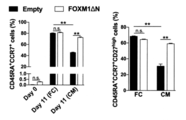
- FIG. 5 shows the expression of CD45RA, CCR7 and CD27 before and after induction into memory stem cell-like T cells in empty vector-introduced T cells (Empty) or FOXM1 gene forced expression T cells (FOXM1 ⁇ N), and into memory stem cell-like T cells. The cell number (%) of CD45RA + CCR7 + and CD45RA + CCR7 + CD27 high cells before and after the induction of CD27 is shown.
- FIG. 4 shows a schematic diagram of the construct of the FOXM1 overexpressing retroviral vector used to generate FOXM1 forced expression T cells.
- FIG. 5 shows the expression of CD45RA, CCR7 and CD27 before and after induction into memory stem cell-like T cells in empty vector-introduced T cells (Empty) or FOXM1 gene forced expression T cells (FOXM1 ⁇ N), and
- FIG. 6 shows the expression of CD45RA, CCR7 and CD27 before and after induction into memory stem cell-like T cells in empty vector-introduced T cells (Empty) or FOXM1 gene forced expression T cells (FOXM1 ⁇ N), and into memory stem cell-like T cells.
- the cell number (%) of CD45RA + CCR7 + and CD45RA + CCR7 + CD27 high cells before and after the induction of CD27 is shown.
- FIG. 7 shows FOXM1 expression in an empty vector or FOXM1 forced expression T cells on day 0 (left) or day 11 (right). FOXM1 gene expression was normalized using 18S rRNA expression levels.
- FIG. 8 shows human CD8 ⁇ + T cells (on FC) co-cultured with OP9-hDLL1 cells and OP9-hDLL1 cells co-cultured with OP9-hDLL1 cells when the FOXM1 inhibitor Thiostrepton or DMSO was added.
- FOXM1 forced expression T cells
- Empty on FC empty vector-introduced T cells
- FIG. 9 shows human CD8 ⁇ + T cells (on FC) co-cultured with OP9-hDLL1 cells and OP9-hDLL1 cells co-cultured with OP9-hDLL1 cells when the FOXM1 inhibitor Thiostrepton or DMSO was added.
- Expression of CD45RA and CCR7 in FOXM1 forced expression T cells (FOXM1 ⁇ N in CM) cultured in the culture supernatant of empty vector-introduced T cells (Empty on FC) and OP9-hDLL1 cells is shown (n 3 in each group).
- FIG. 10 is a graph showing the expression status of CD45RA and CCR7 (left: negative control, right: positive control).
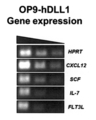
- FIG. 11 shows the results of electrophoresis relating to gene expression of HPRT, CXCL12, SCF, IL-7, and FLT3L (Example 6).
- FIG. 12 shows the results of quantifying the concentration of CXCL12 (Example 6).
- FIG. 13 is a graph showing the percentage of cells that are both positive for CD45RA and CCR7 (Example 7).
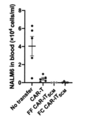
- FIG. 14 is a graph showing the number of NALM6 cancer cells in blood collected from mice (Example 8).
- One aspect of the present invention is a method for producing T cells having cell surface markers of CD45RA + and CCR7 + , which comprises a step of culturing T cells in the presence of a cell culture supernatant of stromal cells.
- Another aspect of the present invention is a method for producing T cells having cell surface markers of CD45RA + and CCR7 + , which comprises the step of culturing T cells in the presence of CXCL12. According to the method of this embodiment, T cells having cell surface markers of CD45RA + and CCR7 + can be obtained without co-culturing with feeder cells.
- the method of the present invention is not particularly limited as long as it includes a step of culturing T cells in the presence of a cell culture supernatant of stromal cells or CXCL12, and the other steps can be performed by combining known steps.
- the present invention is described, for example: (1) Step of activating T cells (activation step); (2) Step of gene transfer into T cells (gene transfer step); (3) Notch signaling activation step (Notch signaling step); and / or (4) Cell recovery, separation and / or purification of memory stem cell-like T cells with cell surface markers of CD45RA + and CCR7 +; May include.
- the order of these steps can be appropriately selected by those skilled in the art, and the step (3) can be performed at the same time as the steps (1) or (2).
- a T cell means a cell having a TCR on the cell surface, but in the present specification, the "T cell” is a cell population including other cell types in addition to the T cell itself. It may be, for example, a cell population containing 60% or more, 70% or more, 80% or more, 90% or more, or 95% or more T cells. Further, the T cells include T cells at any stage of differentiation, and may have an antigen or a marker on the cell surface.
- memory stem cell-like T cell means a T cell having a cell surface marker of CD45RA + and CCR7 +.
- Memory stem cell-like T cells In a preferred embodiment, CD45RO addition to CD45RA + and CCR7 + - having and CD62L + cell surface markers.
- Memory stem cell-like T cells can include, for example, known cells known as T SCM cells and iT SCM cells.
- CD4 + CCR7 - CD45RA - or CD8 + CCR7 - CD45RA - means T cells having a cell surface marker.
- Activated T cells In a preferred embodiment, CD8 + CCR7 - CD45RA - has a cell surface marker.
- the raw material T cells in the step of culturing T cells in the presence of the cell culture supernatant of stromal cells or CXCL12 may be activated T cells, in which case the raw material T cells and Activated T cells are synonymous.
- the activated T cells can be obtained and prepared by a method known to those skilled in the art, for example, as a raw material, a commercially available T cell population, a human (for example, a healthy donor, a donor suffering from a specific disease). , Patients themselves), or desired T cells separated and concentrated from these T cell populations can be used.
- a human for example, a healthy donor, a donor suffering from a specific disease.
- Patients themselves or desired T cells separated and concentrated from these T cell populations can be used.
- cells commercially available as human peripheral blood mononuclear cells manufactured by Precision Bioservices
- Activated T cells that can be used in the present invention can induce differentiation of reprogrammed undifferentiated cells such as ES cells and induced pluripotent stem cells (iPS cells) in addition to the T cells obtained by the above method.
- Naive T cells and other immature T cells may be produced by inducing differentiation, and modified to express a specific T cell receptor (TCR) or chimeric antigen receptor (CAR) by a gene transfer step. It may be an activated T cell that has been activated, or may be an activated T cell that expresses a Notch-related gene by subjecting it to a Notch signal activation treatment.
- Stromal cells also called stromal cells, are cells that provide an environment in which stem cells and immature cells maintain survival and differentiate, and when used as feeder cells, they stimulate contact between cells and provide nutrition. It is believed to provide and produce factors.
- stromal cell means a stromal cell or a modified cell thereof, for example, OP9 cells derived from bone marrow, TSt-4 cells, and cells expressing Notch ligand in these cells (for example,). , OP9-DLL1 cell, TSt-4-DLL1 cell), preferably OP9 cell or a cell expressing its Notch ligand, and more preferably OP9-hDLL1 cell.
- the Notch ligand to be expressed in stromal cells may include, for example, DLL1, DLL4, JAG1, JAG2, or a combination thereof, and may be wholly, partially, or modified, preferably DLL1, and hDLL1 (Human). DLL1) is more preferable.
- pluripotent stem cells can be differentiated into cells of various tissues by using OP9 cells expressing Notch ligand.
- mouse-derived OP9-DLL1 cells are often used to develop immune cells and induce T cell differentiation from iPS cells in vitro, and immature T cells are cultured using the cell culture supernatant of OP9-DLL1 cells. It has also been reported that it can differentiate into mature T cells. However, it has not been known that mature T cells can be induced into memory stem cell-like T cells using cell culture supernatants of stromal cells or CXCL12.
- the "cell culture supernatant of stromal cells” in the present specification can be prepared by culturing stromal cells in a medium and obtaining the cell culture supernatant.
- stromal cells are placed in a medium containing ⁇ MEM (Gibco), fetal bovine serum (20%, FBS), penicillin-streptomycin solution (1%, Thermo Fisher), etc. under the conditions of 37 ° C. and 5% by volume CO 2.
- the culture supernatant can be collected and filtered through a 0.45 micron filter.
- the medium in culture can be replaced as appropriate, eg, when the cells reach 100% confluence.
- the concentration of stromal cells contained in the culture medium is not particularly limited, but is preferably 1 to 2 ⁇ 10 5 cells / 10 ml / 10 cm dish.
- CXCL12 is a type of CXC motif chemokine, and CXCL12 and its receptor CXCR4 are involved in the development of B cells and myeloid cells and the homing of hematopoietic stem cells to the bone marrow.
- the "step of culturing T cells in the presence of a cell culture supernatant of stromal cells” is not particularly limited as long as it is a culturing step using a cell culture supernatant of stromal cells, and a culture known to those skilled in the art. It can be done using the method.
- the "step of culturing T cells in the presence of CXCL12” is not particularly limited as long as it is a culturing step using CXCL12, and can be performed using a culturing method known to those skilled in the art. (Hereinafter, the step of culturing T cells in the presence of the cell culture supernatant of stromal cells and the step of culturing T cells in the presence of CXCL12 may be simply referred to as a culture step).
- the medium and additives used in the culturing step are not particularly limited, but the medium and additives generally known to be suitable for cell adhesion and cell induction are coated and added to a commercially available culture container before use. Can be done.
- ⁇ MEM Gibco
- various cytokines such as human IL-7 (PeproTech) can be used as the additive.
- the culture method / conditions in this step are not particularly limited as long as memory stem cell-like T cells can be produced from T cells (particularly activated T cells), and culture methods / conditions known to those skilled in the art are adopted. be able to.
- activated T cells are seeded in a medium supplemented with the above-mentioned additives, cell culture supernatant of stromal cells or CXCL12 is added, and the temperature is about 37 ° C. for 9 to 11 days, more preferably 10 to 11 Incubate for days.
- the culture supernatant may be exchanged every 2 to 5 days, preferably every 2 to 4 days.
- OP9-hDLL1 cell culture supernatant (1 to 10 ml) or CXCL12 is added to T cells, and the cells are cultured at a temperature of 37 ° C. for 11 days, and the culture supernatant is exchanged every 2 to 4 days.
- the culture step does not require feeder cells.
- the term "does not require feeder cells” means that the cells are cultured under conditions that do not substantially contain the feeder cells, and in particular, the cells are performed under conditions other than co-culture with the feeder cells. To do.
- the present invention may include a Notch signal activation step (also referred to as a Notch signaling step).
- Activation of Notch signaling triggers or mediates signaling associated with Notch ligand.
- Activation of the Notch signal is not particularly limited, but it is preferably performed using at least one selected from the group consisting of recombinant DLL1, FOXM1 forced expression, NICD forced expression, and a combination thereof.
- Notch receptors are cell surface receptors that transmit short-range signals by interacting with transmembrane ligands such as Delta (called Delta-like in humans) and Serrate (called Jagged in humans) on adjacent cells. is there. That is, members of the Delta-like (DLL1, DLL3, DLL4) and Jagged (JAG1, JAG2) families present in the signal-sending cell act as ligands for the Notch receptor.
- the "Notch ligand" in the activation of Notch signaling may be fully, partially or modified, including DLL4, DLL1, JAG1, JAG2, or a combination thereof, similar to the Notch ligand described above for stromal cells. , DLL1 is preferable, and hDLL1 is more preferable.
- Notch receptor is not particularly limited, but NOTCH1, NOTCH2, or a combination thereof is preferable.
- Notch signaling can be performed on a solid material (base material) on which Notch ligand peptide is immobilized.
- a solid material base material
- Notch ligand peptide soluble peptides of various Notch ligands are used as Notch ligand peptides, such as polystyrene plates and beads. It can be performed by binding / immobilizing to a solid material.
- "recombinant DLL1" for example, human Fc-DLL1 (manufactured by Adipogen) is used and fixed on a polystyrene plate.
- the culture step and Notch signal activation can be performed at the same time. Performing this at the same time as the culturing step is advantageous in that it is not necessary to prepare T cells in which a gene involved in Notch signal activation is forcibly expressed.
- Notch signal activation can also be performed using T cells in which a gene involved in Notch signal is forcibly expressed. That is, activation of Notch signaling involves forcibly expressing genes involved in Notch signaling in activated T cells.
- the type of gene is not particularly limited, and examples thereof include FOXM1 and NICD, which may have a complete, partial, or modified sequence, for example, N-terminal defective FOXM1 (FOXM1 ⁇ N). You may have. Forced expression of a gene can be carried out according to a method known to those skilled in the art.
- NICD means the Notch intracellular domain, and it is known that it is cleaved and released by binding to the Notch ligand, and then NICD moves to the nucleus and activates the Notch target gene.
- FOX M1 forkhead box protein M1
- G2 / M checkpoints and other cell cycle-related genes not only in the cell cycle, but also in stemness and mitochondria. It is also known to regulate function and redox networks in various tumors.
- Notch signaling our studies shown in Experiments 3 and 4 below show that FOXM1 is a major downstream gene in Notch signaling and that it induces a TSCM- like phenotype. was found for the first time to have the potential to control positively.
- the present invention can also culture T cells in the presence of CXCL12 and IGF-I.
- IGF-I is a single-stranded polypeptide having a molecular structure similar to that of insulin. IGF-I is produced in the liver in a growth hormone-dependent manner and is involved in the proliferation and bone formation of various cells. It has been reported that it also plays an important role in the differentiation of T progenitor cells (O Kecha et al. Endocrinology. 2000 Mar; 141 (3): 1209-17).
- SCF cytokines and growth factors involved in the development and differentiation of lymphocytes including T progenitor cells (PJ Morrissey et al. Cell Immunol. 1994 Aug; 157). (1): 118-31., TA Moore and A Zlotnik J Immunol. 1997 May 1; 158 (9): 4187-92).
- HPRT hyperxanthine phosphoribosyltransferase
- the "step of activating T cells” is typically a step performed prior to the culturing step and may include any step performed to obtain activated T cells.
- this step for example, B cells transformed with anti-CD3 / CD28 antibody beads EB virus, cells into which CAR gene or TCR gene has been introduced, and other activated T cells are obtained by induction of differentiation, and genes to be introduced into T cells.
- Introductory steps, and combinations thereof, are included, and these steps can be performed in an order suitable for obtaining the desired activated T cells.
- the "gene transfer step of gene transfer into T cells” means a step of obtaining a genetically modified T cell.
- Gene transfer can be performed on T cells at any stage of development, the type of gene and the method of gene transfer are not particularly limited, and one or more depending on the properties and functions that the target memory stem cell-like T cell should have.
- Genes can be introduced.
- the activated T cells obtained by the gene transfer step are CAR-T cells. Since the introduced genetic information is maintained even after the culturing step of this embodiment, by using activated T cells having the desired genetic information, memory stem cell-like T cells that can be used for the desired cell therapy can be obtained. Obtainable.
- the T cells may be autologous cells or allogeneic cells.
- Gene transfer includes, for example, (i) deletion or reduction of expression of B2M, TAP1, TAP2, tapasin, NLRC5, LAG3, TIM3, RFXANK, CITTA, RFX5, or RFXAP; (ii) PD-1, SOCS1 / 3 , HLA-E, HLA-G, HACD16, 41BBL, CD3, CD4, CD8, CD47, CD137, CD80, PDL1, A2AR, activated STAT3, CAR, TCR, or surface to bispecific or multispecific engager
- the induction of CAR expression is particularly preferred.
- CAR chimeric antigen receptor
- the intracellular domain is a co-stimulation domain such as CD28 or 4-1BB in which the CD3 ⁇ chain is bound, and the co-stimulation domain enhances cell proliferation of CAR-T cells and anti-apoptosis of naturally occurring endogenous T cells. It plays a role in protecting the function.
- the CD3 ⁇ chain leads to signal activation and CAR-T amplification.
- the extracellular domain, single-chain variable fragment scFv binds to tumor antigens along with targeting elements.
- any construct known in the art can be used as the CAR construct.
- the antigen-binding domain in CAR for example, CD19 or CD20 can be used, and CD19 is preferably used.
- the genetic manipulation for obtaining CAR-T cells can be performed by a method known to those skilled in the art, and it is also easy to appropriately modify the manipulation for application to the method of the present invention.
- the CAR construct is integrated into an expression vector.
- Various expression vectors are known in the art and any such vector may be utilized.
- the vector is a retrovirus or lentiviral vector. Transfection by electroporation or lipofection can also be used.
- the memory stem cell-like T cells obtained by the method of this embodiment can be subsequently subjected to cell recovery, separation, and purification by a known method.
- Identification of memory stem cell-like T cells can be performed by confirming the expression of cell surface markers of CD45RA + and CCR7 +.
- the expression of the marker is not particularly limited, but known cell tissue biological methods such as immunostaining using an antibody, reverse transcriptase-mediated polymerase chain reaction (RT-PCR), and hybridization analysis, as well as molecular organisms. It can be confirmed by a scientific method.
- Any known method for purifying memory stem cell-like T cells can be used as long as it is a known cell separation and purification method, and specific examples thereof include antigens such as flow cytometry, magnetic beads, and panning method.
- -A method similar to the antibody reaction and a cell fractionation method by density gradient centrifugation using a carrier such as sucrose or Percoll can be mentioned.
- the practitioner can refer to standard books in the field for the preparation, passage, preservation method and general method of cell biology experiment of various cells used in the present invention. Examples of these include the "cell culture protocol” (edited by Yukio Nakamura; Yodosha), which is incorporated herein by reference. Reagents and kits for cell culture, developmental and cell biology experiments referred to herein are available from commercial vendors such as Invitrogen and Sigma.
- the invention relates to CAR-T cells having CD45RA + and CCR7 + cell surface markers, which are preferably memory stem cell-like CAR-T cells.
- the "CAR-T cell” of this embodiment is not particularly limited to an autologous CAR-T cell or an allogeneic CAR-T cell as long as it has the above phenotype, and its acquisition and production are also known to those skilled in the art. Although it is possible, it can be produced by the method for obtaining CAR-T cells described above with respect to the method for producing memory stem cell-like T cells.
- CAR-T cells of this embodiment can be used for disease-specific adoptive T cell therapy, and examples of cell surface markers that can act as ligands for antigen component domains in CAR include cancer, viral, and so on. Includes those associated with bacterial and parasitic infections, autoimmune diseases, and allergies.
- CAR-T cells can be transplanted or administered to treat one or more diseases selected from the group consisting of various cancers, infectious diseases, autoimmune diseases, and allergies, eg, cancer.
- diseases selected from the group consisting of various cancers, infectious diseases, autoimmune diseases, and allergies, eg, cancer.
- diseases selected from the group consisting of various cancers, infectious diseases, autoimmune diseases, and allergies, eg, cancer.
- examples include hematopoietic cell malignant tumors and solid cancers, and hematopoietic cell malignant tumors include acute lymphoblastic leukemia (ALL), acute myeloid leukemia (AML), chronic myeloid leukemia (CML), and chronic favoritism.
- ALL acute lymphoblastic leukemia
- AML acute myeloid leukemia
- CML chronic myeloid leukemia
- Solid cancers include biliary tract cancer, bladder cancer, bone and soft tissue Cancer, brain tumor, breast cancer, cervical cancer, colon cancer, colonic rectal adenocarcinoma, colonic rectal cancer, tendonoma, embryonic cancer, endometrial cancer, esophageal cancer, gastric cancer, gastric adenocarcinoma, Polymorphic glioblastoma, gynecological tumor, squamous cell carcinoma of the head and neck, liver cancer, lung cancer, malignant melanoma, osteosarcoma, ovarian cancer, pancreatic cancer, pancreatic ductal adenocarcinoma, primary astrosite tumor, primary Includes thyroid cancer, prostate cancer, kidney cancer, renal cell carcinoma, rhabdomyomyoma, skin cancer, soft tissue sarcom
- CAR-T cells can be formulated, for example, in sterile saline that has been expanded, washed and concentrated in phosphate buffered saline and supplemented with human albumin (eg, 5% Albumex 20, trademark). it can.
- CAR-T cells can be administered at an appropriate cell dose as determined by one of ordinary skill in the art. In one embodiment, CAR-T cells are administered with 1.2 ⁇ 10 6 to 6 ⁇ 10 8 or more live cells. The maximum number of T cells to be reinjected or transplanted can be determined during clinical trials conducted by one of ordinary skill in the art.
- the present invention relates to a cell therapy agent containing memory stem cell-like T cells obtained by the above production method, or CAR-T cells having cell surface markers of CD45RA + and CCR7 +.
- a cell therapy agent containing memory stem cell-like T cells obtained by the above production method, or CAR-T cells having cell surface markers of CD45RA + and CCR7 +.
- it can be administered as a pharmaceutical composition containing memory stem cell-like T cells or CAR-T cells as a substantial active ingredient, and more specifically, it is administered for treating human immune diseases and cancers. Can be done.
- Anti-mouse Notch1 antibody (HMN1-12), anti-mouse Notch2 antibody (HMN2-35), anti-mouse Notch3 antibody (HMN3-133), anti-human CD8a antibody (HIT8a), anti-human CD45RA antibody (HI100), anti-human CD45RO antibody (UCHL1), anti-human CCR7 antibody (G043H7), anti-human CD62L antibody (DREG-56), anti-human CD27 antibody (M-T271) are available from eBioscience (San Diego, CA, USA) or BioLegend (San Diego, USA).
- Flow cytometry analysis and cell sorting Cells were collected to quantify the expression of cell surface markers and re-sprayed in phosphate buffered saline (PBS) containing 0.5% bovine serum albumin (BSA) and 2 mM ethylenediaminetetraacetic acid (EDTA). It became cloudy and surface stained in the presence of Fc blocking antibody (2.4G2).
- Antibodies were purchased from BioLegend, eBioscience, R & D Systems, Beckman Coulter, BD Biosciences and Cell Signaling Technology. Each antibody was diluted 1: 100 and intracellular staining was performed for each antibody.
- Flow cytometry was performed with a FACS Canto II cytometer (BD Biosciences, San Jose, CA, USA) and the data was analyzed using FlowJo software (Tree Star, Ashland, OR, USA).
- Mouse and human T cells were sorted using FACS Aria II, FACS Aria III cell sorters (BD Biosciences) and SH800 cell sorters (Sony, Tokyo, Japan).
- Example 1 Preparation of memory stem cell-like T cells in the presence of OP9-hDLL1 cell culture supernatant 1-1.
- Preparation of OP9-hDLL1 cell culture supernatant A cell culture supernatant (OP9-hDLL1 CM) of OP9-hDLL1 cells (obtained from RIKEN) was prepared. 1.5 x 10 5 OP9-hDLL1 cells were seeded in a 10 cm petri dish (Falcon 353003) for cell culture, and fetal bovine serum (20%, FBS, Sigma), penicillin-streptomycin solution (1%, Thermo) The cells were grown in ⁇ MEM medium (Gibco, 10 mL) supplemented with Fisher).
- Cell proliferation was performed under conditions of 37 ° C. and 5% by volume CO 2. When the cells reached 100% confluence, the medium was collected and filtered through a sterile membrane (pore size: 0.45 ⁇ m) to obtain culture supernatant and stored at 4 ° C.
- activated T cells activated CD8 ⁇ + T cells
- Human peripheral blood mononuclear cells PBMC
- EBV Epstein-Barr virus
- VCA-IgG Epstein-Barr virus
- EBNA Epstein-Barr virus
- Human CD8 ⁇ + T cells were prepared by removing cells other than CD8 ⁇ + T cells from PBMC using a human CD8 ⁇ + T cell isolation kit (# 130-096-495, manufactured by Miltenyi Biotec).
- the obtained human CD8 ⁇ + T cells are T cells using microbeads (CD3 / CD28 Dynabeads, manufactured by Verista) in which anti-CD3 antibody and anti-CD28 antibody are conjugated. It was activated for 6 days under the condition of 1: 1 bead ratio.
- Prime step After 6 days in the expansion culture step (Expansion Step)] Prime step performs TCR stimulation to CD8a + T cells activated, CD8a + CD45RA - fluorescence activated cell sorting (FACS) was screened with activated CD8a + T cells were obtained.
- FACS fluorescence activated cell sorting
- CM memory stem cell-like T cells
- activated T cells were co-cultured with OP9-hDLL1 cells (2 ⁇ 10 3 cells, feeder cells) and human IL-7 (PeproTech, 10 ng / mL) for 11 days, and inducible memory stem cell-like T cells. (IT SCM ) was obtained (FC).
- Example 2 Preparation of memory stem cell-like T cells in the presence of cell culture supernatants of OP9 and TSt-4 cells 2-1.
- Preparation of OP9, TSt-4 cell culture supernatants (OP9 CM, TSt-4 CM) Cell culture supernatants of OP9 cells (obtained from RIKEN) and TSt-4 cells (obtained from RIKEN) (OP9 CM, TSt-4 CM) was prepared.
- 1.5 ⁇ 10 5 OP9 cells or 1.5 ⁇ 10 5 TSt-4 cells were seeded in a 10 cm petri dish (Falcon 353003) for cell culture, and FBS (20%, Sigma), penicillin-streptomycin solution.
- the cells were grown in ⁇ MEM medium (Gibco, 10 mL) supplemented with (1%, Thermo Fisher). Cell proliferation was performed under conditions of 37 ° C. and 5% by volume CO 2. When the cells reached 100% confluence, the medium was collected and filtered through a sterile membrane (pore size: 0.45 ⁇ m) to obtain culture supernatant (OP9 CM or TSt-4 CM) and stored at 4 ° C.
- T cell / bead ratio 1 using microbeads (CD3 / 28 Dynabeads, manufactured by Verista) in which anti-CD3 antibody and anti-CD28 antibody were conjugated. It was activated for 6 days under the condition of 1.
- Prime step After 6 days of [Expansion Step] Prime step performs TCR stimulation to CD8a + T cells activated, CD8a + CD45RA - in FACS-sorting to obtain activated CD8a + T cells.
- Example 3 Preparation of memory stem cell-like T cells by activation of OP9-hDLL1 cell culture supernatant / Notch signal (NICD forced expression) 3-1.
- Preparation of activated T cells with forced expression of NICD activated NICD forced expression CD8 ⁇ + T cells
- NICD activated NICD forced expression CD8 ⁇ + T cells
- NICD Notch intracellular domain
- the NICD overexpressing retroviral vector shown in FIG. 2 was prepared according to the experimental design scheme of (pMEI-5 DNA, manufactured by Takara Bio Co., Ltd.).
- Activated NICD forced expression T cells were prepared using the prepared retroviral vector.
- human CD8 ⁇ + T cells were activated by the same method as the Prime step described in Example 1. Then, 24 hours after activation, forced expression of the retrovirus using NICD was performed. Six days after T cell activation, NICD forced expression T cells were sorted as Venus + cells and reactivated with CD3 / 28 microbeads.
- OP9-hDLL1 cell culture culture in the presence of supernatant The obtained activated NICD forced expression CD8 ⁇ + T cells were cultured in OP9-hDLL1 CM in the same manner as in Example 1 and NICD forced expression memory stem cells-like. T cells were obtained.
- activated CD8 ⁇ + T cells prepared by introducing an empty vector were cultured under the same conditions to prepare memory stem cell-like T cells.
- NICD forced expression memory stem cell-like T cells NICD
- Empty memory stem cell-like T cells
- iT SCM cells obtained by co-culturing activated T cells into which NICD or an empty vector was introduced with OP9-hDLL1 cells.
- Example 4 Preparation of memory stem cell-like T cells by OP9-hDLL1 cell culture supernatant / Notch signal activation (FOXM1 forced expression) 4-1.
- Preparation of activated T cells activated FOXM1 ⁇ N forced expression CD8 ⁇ + T cells
- FOXM1 was forcibly expressed
- the FOXM1 ⁇ N SEQ ID NO: 2 overexpressing retrovirus vector shown in FIG. 4 was used.
- activated FOXM1 ⁇ N forced expression CD8 ⁇ + T cells in which N-terminal deficient FOXM1 was forcibly expressed in T cells were prepared.
- FOXM1 ⁇ N forced expression memory stem cell-like T cells
- Empty memory stem cell-like T cells
- FOXM1 the expression level of FOXM1 is remarkable as compared with the case where only the culture supernatant of stromal cells (OP9-hDLL1 cells) expressing Notch ligand was used. It was also confirmed that it would increase.
- T cells expressing CD45RA + and CCR7 + can be obtained. I was able to confirm that it was done.
- Example 5 Method for producing memory stem cell-like T cells by OP9-hDLL1 cell culture supernatant / Notch signal activation (recombinant DLL1) 5-1.
- Preparation of activated anti-CD19 CAR-T cells Using an anti-CD19 CAR overexpressing retroviral vector consisting of anti-CD19 scFv (derived from FMC63), human CD8 ⁇ hinge domain and transmembrane domain, and human 4-1BB-CD3z intracellular signal motif. Then, anti-CD19 CAR forced expression CD8 ⁇ + T cells were prepared by the same method as the method for preparing activated NICD forced expression CD8 ⁇ + T cells in Example 3.
- human CD8 ⁇ + T cells were activated by the same method as the prestimulation step (Prime step) described in Example 1. Then, 24 hours after activation, anti-CD19 CAR forced expression using a retrovirus was performed. Six days after T cell activation, anti-CD19 CAR forced expression T cells were sorted as Venus + cells and X-ray irradiated human CD19 forced expression leukemia cells (K562-hCD19) were used to re-anti-CD19 CAR-T cells. Activated.
- a cell suspension containing anti-CD19 CAR-T cells and K562-hCD19 cells (anti-CD19 CAR-T cells: 2.5 ⁇ 10 5 cells / mL, K562-hCD19 cells: 0.625 ⁇ 10 5 cells / mL, .. U-bottom 96-well plates were seeded (200 [mu] L per well) 4 days after culturing, the same activation operations, and cultured further for 4 days anti CD19 CAR forced expression CD8a + T cells CD8 ⁇ + Venus + CD45RA - To obtain activated anti-CD19 CAR forced expression CD8 ⁇ + T cells.
- hDLL1-Fc protein The extracellular region of human DLL1 cloned from human cDNA was amplified by PCR and subcloned into pcDNA3-hIgG1-Fc vector to prepare pcDNA3-hDLL1-hIgG1-Fc vector. 0.1% gelatin coated dishes were seeded Expi293F cell (Thermo Fisher Scientific) (10 7 cells / 26 mL / 15cm dish (Falcon, 353025)). After 24 hours, pcDNA3-hDLL1-hIgG1-Fc vector was transfected into Expi293F cells using PEI MAX (Polysciences, 24765-1).
- the serum-free medium includes bovine serum albumin (BSA, Nacalai Tesque, 01863-48, 0.5%), penicillin-streptomycin (Nacalai Tesque, 26253-84, 1%), HEPES (Nacalai Tesque, 17557-94, 1 mM).
- BSA bovine serum albumin
- penicillin-streptomycin Nacalai Tesque, 26253-84, 1%
- HEPES Nacalai Tesque, 17557-94, 1 mM
- hDLL1-Fc (4 mL) was added to protein A / fibronectin coated wells and incubated for 2 hours at 37 ° C. in the presence of 5% by volume CO 2. Wells were washed twice with PBS prior to cell seeding.
- Example 6 Analysis of active factors produced by stromal cells 6-1.
- Total RNA was purified from 105 cells OP9-hDLL1 cellular gene expression analysis OP9-hDLL1 cells by real-time PCR using ReliaPrep TM RNA Cell Miniprep System (Promega , Z6012). From the obtained total RNA of OP9-hDLL1, real-time PCR was performed using a PCT kit (High Capacity cDNA Reverse Transcription Kit, Applied Biosystems, 4368813) to obtain a single-stranded cDNA.
- PCT kit High Capacity cDNA Reverse Transcription Kit, Applied Biosystems, 4368813
- the obtained OP9-hDLL1 cDNA was serially diluted (1: 1, 1:16, 1: 256), and this was used as a template for real-time PCR by the intercalator method using SsoFast EvaGreen Supermix (BioRad, 172-5203). (CFX Connect (BioRad)) was performed, and each target gene (HPRT, CXCL12, SCF, IL-7, FLT3L) was amplified.
- dyes Loading dye, TOYOBO, RE-DYE
- electrophoresis was performed. The results are shown in FIG.
- CXCL12 was particularly highly expressed among the candidate active factors examined. From FIG. 12, it was confirmed that CXCL12 was actually present in the OP9-hDLL1 cell culture supernatant. It was also confirmed that CXCL12 was also present in the culture supernatants of OP9 cells and TSt4 cells.
- Example 7 Method for producing memory stem cell-like anti-CD19 CAR-T cell by CXCL12 / IGF-I / Notch signal activation 7-1.
- Culture of activated T cells 1 ⁇ 10 5 activated anti-CD19 CAR forced expression CD8 ⁇ + T cells prepared on a recombinant DLL1 plate (hDLL1-Fc / FN) or an untreated plate prepared in the same manner as in Example 5. Seeded at a density of / well.
- ⁇ containing human IL-7 (Peprotech, 200-07, 10 ng / mL), fetal bovine serum (FBS, 20%, Sigma-Aldrich, 172012), and penicillin-streptomycin (1%, Nacalai Tesque, 26253-84) -Add human CXCL12 (Peprotech, 300-28A, 100 ng / mL) and human IGF-I (Peprotech, 100-11, 50 ng / mL) to MEM medium (Gibco, 11900-24, 1 mL) in the combination shown in FIG. Then, the cells were cultured for 11 days to obtain memory stem cell-like anti-CD19 CAR-T cells.
- human CXCL12 Peprotech, 300-28A, 100 ng / mL
- human IGF-I Peprotech, 100-11, 50 ng / mL
- MEM medium Gibco, 11900-24, 1 mL
- memory stem cell-like T cells can also be induced by using CXCL12-added medium instead of the culture supernatant of stromal cells. It was also confirmed that the induction of the memory stem cell-like T cells was enhanced by the addition of IGF-I and the treatment with recombinant DLL1.
- Example 8 Antitumor effect of memory stem cell-like anti-CD19 CAR-T cells prepared by CXCL12 / IGF-I / Notch signal activation 8-1. Evaluation of antitumor effect by anti-CD19 CAR-T cells using human leukemia model mice Suspend NALM6 cells in PBS to 5 ⁇ 10 6 cells / mL, and apply 200 ⁇ L of cell suspension to NSG mice (NOD-SCID). IL-2R ⁇ null mice) were injected into the tail vein.
- FF CAR-iT SCM memory stem cell-like anti-CD19 CAR-T cells
- CAR-T memory stem cell-like anti-CD19 CAR-T cells
- FVD - mCD45 - hCD19 + number was measured in NALM6 cancer cells.
- a memory stem cell-like anti-CD19 CAR-T cell (FC CAR-iT SCM ) -administered group prepared by co-culturing with a CAR-T cell non-administration group and a feeder cell was also set and evaluated. The results are shown in FIG.
- the present invention can eliminate T cell exhaustion, which is a problem in T cell transfer therapy, and improve T cell activity, it is expected to be applied to adopted T cell therapy and CAR-T cell therapy. Will be done.
Landscapes
- Health & Medical Sciences (AREA)
- Life Sciences & Earth Sciences (AREA)
- Chemical & Material Sciences (AREA)
- General Health & Medical Sciences (AREA)
- Organic Chemistry (AREA)
- Public Health (AREA)
- Veterinary Medicine (AREA)
- Animal Behavior & Ethology (AREA)
- Immunology (AREA)
- Engineering & Computer Science (AREA)
- Medicinal Chemistry (AREA)
- Bioinformatics & Cheminformatics (AREA)
- Pharmacology & Pharmacy (AREA)
- Nuclear Medicine, Radiotherapy & Molecular Imaging (AREA)
- General Chemical & Material Sciences (AREA)
- Chemical Kinetics & Catalysis (AREA)
- Biomedical Technology (AREA)
- Genetics & Genomics (AREA)
- Epidemiology (AREA)
- Zoology (AREA)
- Wood Science & Technology (AREA)
- Biotechnology (AREA)
- Biochemistry (AREA)
- Cell Biology (AREA)
- Hematology (AREA)
- General Engineering & Computer Science (AREA)
- Microbiology (AREA)
- Oncology (AREA)
- Biophysics (AREA)
- Molecular Biology (AREA)
- Proteomics, Peptides & Aminoacids (AREA)
- Pulmonology (AREA)
- Communicable Diseases (AREA)
- Toxicology (AREA)
- Gastroenterology & Hepatology (AREA)
- Transplantation (AREA)
- Micro-Organisms Or Cultivation Processes Thereof (AREA)
- Medicines Containing Material From Animals Or Micro-Organisms (AREA)
Priority Applications (4)
| Application Number | Priority Date | Filing Date | Title |
|---|---|---|---|
| US17/772,476 US20220372440A1 (en) | 2019-10-28 | 2020-10-27 | Method for producing t cells having cell surface markers of cd45ra+ and ccr7+ |
| JP2021553613A JPWO2021085398A1 (https=) | 2019-10-28 | 2020-10-27 | |
| CN202080074872.6A CN114599784A (zh) | 2019-10-28 | 2020-10-27 | 具有cd45ra+和ccr7+的细胞表面标志物的t细胞的制备方法 |
| EP20881400.4A EP4079375A1 (en) | 2019-10-28 | 2020-10-27 | Method for producing t cells having cell surface markers for cd45ra+ and ccr7+ |
Applications Claiming Priority (2)
| Application Number | Priority Date | Filing Date | Title |
|---|---|---|---|
| JP2019195206 | 2019-10-28 | ||
| JP2019-195206 | 2019-10-28 |
Publications (1)
| Publication Number | Publication Date |
|---|---|
| WO2021085398A1 true WO2021085398A1 (ja) | 2021-05-06 |
Family
ID=75715984
Family Applications (1)
| Application Number | Title | Priority Date | Filing Date |
|---|---|---|---|
| PCT/JP2020/040163 Ceased WO2021085398A1 (ja) | 2019-10-28 | 2020-10-27 | Cd45ra+およびccr7+の細胞表面マーカーを有するt細胞の製造方法 |
Country Status (6)
| Country | Link |
|---|---|
| US (1) | US20220372440A1 (https=) |
| EP (1) | EP4079375A1 (https=) |
| JP (1) | JPWO2021085398A1 (https=) |
| CN (1) | CN114599784A (https=) |
| TW (1) | TW202130807A (https=) |
| WO (1) | WO2021085398A1 (https=) |
Cited By (2)
| Publication number | Priority date | Publication date | Assignee | Title |
|---|---|---|---|---|
| EP4106774A4 (en) * | 2020-02-20 | 2025-01-01 | Kite Pharma, Inc. | CHIMERIC ANTIGEN RECEPTOR T-CELL THERAPY |
| WO2025018336A1 (ja) * | 2023-07-20 | 2025-01-23 | 学校法人近畿大学 | 無血清培地 |
Citations (1)
| Publication number | Priority date | Publication date | Assignee | Title |
|---|---|---|---|---|
| JP2019530449A (ja) * | 2016-09-23 | 2019-10-24 | メモリアル スローン ケタリング キャンサー センター | 幹細胞様メモリーt細胞の生成および養子免疫療法における使用 |
Family Cites Families (1)
| Publication number | Priority date | Publication date | Assignee | Title |
|---|---|---|---|---|
| EP3572502B1 (en) * | 2017-01-20 | 2023-01-11 | Kyoto University | Method for producing cd8alpha +beta + cytotoxic t cells |
-
2020
- 2020-10-27 JP JP2021553613A patent/JPWO2021085398A1/ja active Pending
- 2020-10-27 WO PCT/JP2020/040163 patent/WO2021085398A1/ja not_active Ceased
- 2020-10-27 TW TW109137206A patent/TW202130807A/zh unknown
- 2020-10-27 CN CN202080074872.6A patent/CN114599784A/zh active Pending
- 2020-10-27 US US17/772,476 patent/US20220372440A1/en not_active Abandoned
- 2020-10-27 EP EP20881400.4A patent/EP4079375A1/en not_active Withdrawn
Patent Citations (1)
| Publication number | Priority date | Publication date | Assignee | Title |
|---|---|---|---|---|
| JP2019530449A (ja) * | 2016-09-23 | 2019-10-24 | メモリアル スローン ケタリング キャンサー センター | 幹細胞様メモリーt細胞の生成および養子免疫療法における使用 |
Non-Patent Citations (28)
| Title |
|---|
| "Animal Cell Culture: A Practical Approach", 2000, OXFORD UNIVERSITY PRESS |
| "Antibodies: A Laboratory Manual", 1987, COLD SPRING HARBOR LABORATORY PRESS |
| "PCR Protocols: Methods in Molecular Biology", 2003, JOHN WILEY & SONS |
| FESNAK, A.D.JUNE, C.H.LEVINE, B.L.: "Engineered T cells: the promise and challenges of cancer immunotherapy", NAT REV CANCER, vol. 16, 2016, pages 566 - 581, XP055356975, DOI: 10.1038/nrc.2016.97 |
| FRAIETTA, J.A.LACEY, S.F.ORLANDO, E.J.PRUTEANU-MALINICI, I.GOHIL, M.LUNDH, S.BOESTEANU, A.C.WANG, Y.O'CONNOR, R.S.HWANG, W.T. ET A: "Determinants of response and resistance to CD 19 chimeric antigen receptor (CAR) T cell therapy of chronic lymphocytic leukemia", NAT MED, vol. 24, 2018, pages 563 - 571, XP055542305, DOI: 10.1038/s41591-018-0010-1 |
| GATTINONI, L. ET AL.: "T memory stem cells in health and disease", NAT. MED., vol. 23, no. 1, 2017, pages 18 - 27, XP055744455, DOI: 10.1038/nm.4241 * |
| GATTINONI, L.: "Memory T cells officially join the stem cell club", IMMUNITY, vol. 41, 2014, pages 7 - 9 |
| GATTINONI, L.KLEBANOFF, C.A.PALMER, D.C.WRZESINSKI, C.KERSTANN, K.YU, Z.FINKELSTEIN, S.E.THEORET, M.R.ROSENBERG, S.A.RESTIFO, N.P.: "Acquisition of full effector function in vitro paradoxically impairs the in vivo antitumor efficacy of adoptively transferred CD8+ T cells", J CLIN INVEST, vol. 115, 2005, pages 1616 - 1626, XP003011560, DOI: 10.1172/JCI24480 |
| GATTINONI, L.LUGLI, E.JI, Y.POS, Z.PAULOS, C.M.QUIGLEY, M.F.ALMEIDA, J.R.GOSTICK, E.YU, Z.CARPENITO, C. ET AL.: "A human memory T cell subset with stem cell-like properties.", NAT MED, vol. 17, 2011, pages 1290 - 1297, XP055551014, DOI: 10.1038/nm.2446 |
| GATTINONI, L.SPEISER, D.E.LICHTERFELD, M.BONINI, C.: "T memory stem cells in health and disease", NAT MED, vol. 23, 2017, pages 18 - 27, XP055744455, DOI: 10.1038/nm.4241 |
| JIANG, Y.LI, Y.ZHU, B.: "T-cell exhaustion in the tumor microenvironment", CELL DEATH DIS, vol. 6, 2015, pages e1792, XP055275768, DOI: 10.1038/cddis.2015.162 |
| JUNE, C.H.: "Adoptive T cell therapy for cancer in the clinic", J CLIN INVEST, vol. 117, 2007, pages 1466 - 1476, XP055287551, DOI: 10.1172/JCI32446 |
| KLEBANOFF, C.A.ACQUAVELLA, N.YU, Z.RESTIFO, N.P.: "Therapeutic cancer vaccines: are we there yet?", IMMUNOL REV, vol. 239, 2011, pages 27 - 44, XP071455603, DOI: 10.1111/j.1600-065X.2010.00979.x |
| KONDO, T. ET AL.: "Generation and application of human induced-stem cell memory T cells for adoptive immunotherapy", CANCER SCI., vol. 109, 2018, pages 2130 - 2140, XP055686853, DOI: 10.1111/cas.13648 * |
| KONDO, T.IMURA, Y.CHIKUMA, S.HIBINO, S.OMATA-MISE, S.ANDO, M.AKANUMA, T.IIZUKA, M.SAKAI, R.MORITA, R.: "Generation and application of human induced-stem cell memory T cells for adoptive immunotherapy", CANCER SCI, vol. 109, 2018, pages 2130 - 2140, XP055686853, DOI: 10.1111/cas.13648 |
| KONDO, T.MORITA, R.OKUZONO, Y.NAKATSUKASA, H.SEKIYA, T.CHIKUMA, S.SHICHITA, T.KANAMORI, M.KUBO, M.KOGA, K. ET AL.: "Notch-mediated conversion of activated T cells into stem cell memory-like T cells for adoptive immunotherapy", NAT COMMUN, vol. 8, 2017, pages 15338 |
| LANZAVECCHIA, A.SALLUSTO, F.: "Understanding the generation and function of memory T cell subsets", CURR OPIN IMMUNOL, vol. 17, 2005, pages 326 - 332, XP025299791, DOI: 10.1016/j.coi.2005.04.010 |
| MAHMOOD Y. BILALALDO VACAFLORESJON C.D. HOUTMAN: "Optimization of Methods for the Genetic Modification of Human T Cells", IMMUNOL CELL BIOL., vol. 93, no. 10, November 2015 (2015-11-01), pages 896 - 908 |
| MICHELLE L. JANAS ET AL., J EXP MED., vol. 207, no. 1, 18 January 2010 (2010-01-18), pages 247 - 261 |
| O KECHA ET AL., ENDOCRINOLOGY, vol. 141, no. 3, March 2000 (2000-03-01), pages 1209 - 17 |
| P J MORRISSEY ET AL., CELL IMMUNOL, vol. 157, August 1994 (1994-08-01), pages 118 - 31 |
| ROSENBERG, S.A.DUDLEY, M.E.: "Adoptive cell therapy for the treatment of patients with metastatic melanoma", CURR OPIN IMMUNOL, vol. 21, 2009, pages 233 - 240, XP026058401, DOI: 10.1016/j.coi.2009.03.002 |
| SAMBROOKRUSSELL: "Molecular Cloning: A Laboratory Manual", 2001, COLD SPRING HARBOR LABORATORY PRESS |
| T A MOOREA ZLOTNIK, J IMMUNOL., vol. 158, no. 9, 1 May 1997 (1997-05-01), pages 4187 - 92 |
| TAISUKE KONDO, RIMPEI MORITA, YUUMI OKUZONO, HIROKO NAKATSUKASA, TAKASHI SEKIYA, SHUNSUKE CHIKUMA, TAKASHI SHICHITA, MITSUHIRO KAN: "Notch-mediated conversion of activated T cells into stem cell memory-like T cells for adoptive immunotherapy", NATURE COMMUNICATIONS, vol. 8, 15338, 2017, pages 1 - 14, XP055821918 * |
| WU, R.FORGET, M.A.CHACON, J.BERNATCHEZ, C.HAYMAKER, C.CHEN, J.Q.HWU, P.RADVANYI, L.G.: "Adoptive T-cell therapy using autologous tumor-infiltrating lymphocytes for metastatic melanoma: current status and future outlook", CANCER J, vol. 18, 2012, pages 160 - 175, XP055568011, DOI: 10.1097/PPO.0b013e31824d4465 |
| XU, Y.ZHANG, M.RAMOS, C.A.DURETT, A.LIU, E.DAKHOVA, O.LIU, H.CREIGHTON, C.J.GEE, A.P.HESLOP, H.E. ET AL.: "Closely related T-memory stem cells correlate with in vivo expansion of CAR.CD19-T cells and are preserved by IL-7 and IL-15", BLOOD, vol. 123, 2014, pages 3750 - 3759, XP055662271, DOI: 10.1182/blood-2014-01-552174 |
| YOSHIMURA, AKIHIKO: "S4-5 Development of effective cancer cell therapy by inducing stem cell -like memory T cells (iTscm)", PROGRAMS AND ABSTRACTS OF THE 23RD ANNUAL MEETING OF JAPANESE ASSOCIATION OF CANCER IMMUNOLOGY, AUGUST 21-23, 2019, vol. 23, 16 July 2019 (2019-07-16) - 23 August 2019 (2019-08-23), JP, pages 67, XP009535006 * |
Cited By (2)
| Publication number | Priority date | Publication date | Assignee | Title |
|---|---|---|---|---|
| EP4106774A4 (en) * | 2020-02-20 | 2025-01-01 | Kite Pharma, Inc. | CHIMERIC ANTIGEN RECEPTOR T-CELL THERAPY |
| WO2025018336A1 (ja) * | 2023-07-20 | 2025-01-23 | 学校法人近畿大学 | 無血清培地 |
Also Published As
| Publication number | Publication date |
|---|---|
| JPWO2021085398A1 (https=) | 2021-05-06 |
| CN114599784A (zh) | 2022-06-07 |
| US20220372440A1 (en) | 2022-11-24 |
| TW202130807A (zh) | 2021-08-16 |
| EP4079375A1 (en) | 2022-10-26 |
Similar Documents
| Publication | Publication Date | Title |
|---|---|---|
| JP7777884B2 (ja) | CD8α+β+細胞傷害性T細胞の製造方法 | |
| Shimasaki et al. | Expanded and armed natural killer cells for cancer treatment | |
| JP6995624B2 (ja) | 修正ガンマデルタt細胞およびその使用 | |
| JP5097856B2 (ja) | サイトカイン誘導キラー細胞の製造方法 | |
| JP6073417B2 (ja) | 自然殺害細胞増殖方法、及び自然殺害細胞増殖用の組成物 | |
| JP2020513844A (ja) | T細胞前駆体を産生させるための方法 | |
| Shimasaki et al. | Natural killer cell reprogramming with chimeric immune receptors | |
| JP2022542321A (ja) | 免疫療法のためのnk細胞組成物および調製物ならびにそれらの製造のための方法 | |
| KR20170045205A (ko) | 감마 델타 t 세포 및 이의 용도 | |
| WO2021085398A1 (ja) | Cd45ra+およびccr7+の細胞表面マーカーを有するt細胞の製造方法 | |
| JP2024045306A (ja) | 胚性間葉系始原細胞の製造方法及び使用方法 | |
| WO2023011114A1 (zh) | 一种ric细胞及其制备方法和应用 | |
| HK40078134A (en) | Method for producing t cells having cell surface markers for cd45ra+ and ccr7+ | |
| JP2024517968A (ja) | 幹細胞からの操作されたt細胞の産生 | |
| US20200297768A1 (en) | Cd28 t cell cultures, compositions, and methods of using thereof | |
| JP7524210B2 (ja) | Cd28 t細胞培養物、組成、およびその使用方法 | |
| KR20250143327A (ko) | Cd4+ 및 cd8+ 단일 양성 t 세포 및 이를 생성하기 위한 조성물 및 방법 | |
| KR20260047608A (ko) | 면역 세포의 제조 방법 | |
| Janelle et al. | Advances in cellular immunotherapy: understanding and preventing T-cell dysfunction | |
| HK40014033A (en) | Methods of making and using embryonic mesenchymal progenitor cells | |
| HK1170533B (en) | Process for production of cytokine-induced killer cells |
Legal Events
| Date | Code | Title | Description |
|---|---|---|---|
| 121 | Ep: the epo has been informed by wipo that ep was designated in this application |
Ref document number: 20881400 Country of ref document: EP Kind code of ref document: A1 |
|
| ENP | Entry into the national phase |
Ref document number: 2021553613 Country of ref document: JP Kind code of ref document: A |
|
| NENP | Non-entry into the national phase |
Ref country code: DE |
|
| ENP | Entry into the national phase |
Ref document number: 2020881400 Country of ref document: EP Effective date: 20220530 |