WO2021065927A1 - データ補正装置 - Google Patents
データ補正装置 Download PDFInfo
- Publication number
- WO2021065927A1 WO2021065927A1 PCT/JP2020/036967 JP2020036967W WO2021065927A1 WO 2021065927 A1 WO2021065927 A1 WO 2021065927A1 JP 2020036967 W JP2020036967 W JP 2020036967W WO 2021065927 A1 WO2021065927 A1 WO 2021065927A1
- Authority
- WO
- WIPO (PCT)
- Prior art keywords
- positioning
- data
- filter
- information
- unit
- Prior art date
- Legal status (The legal status is an assumption and is not a legal conclusion. Google has not performed a legal analysis and makes no representation as to the accuracy of the status listed.)
- Ceased
Links
Images




Classifications
-
- G—PHYSICS
- G01—MEASURING; TESTING
- G01S—RADIO DIRECTION-FINDING; RADIO NAVIGATION; DETERMINING DISTANCE OR VELOCITY BY USE OF RADIO WAVES; LOCATING OR PRESENCE-DETECTING BY USE OF THE REFLECTION OR RERADIATION OF RADIO WAVES; ANALOGOUS ARRANGEMENTS USING OTHER WAVES
- G01S19/00—Satellite radio beacon positioning systems; Determining position, velocity or attitude using signals transmitted by such systems
- G01S19/38—Determining a navigation solution using signals transmitted by a satellite radio beacon positioning system
- G01S19/39—Determining a navigation solution using signals transmitted by a satellite radio beacon positioning system the satellite radio beacon positioning system transmitting time-stamped messages, e.g. GPS [Global Positioning System], GLONASS [Global Orbiting Navigation Satellite System] or GALILEO
- G01S19/40—Correcting position, velocity or attitude
-
- H—ELECTRICITY
- H04—ELECTRIC COMMUNICATION TECHNIQUE
- H04W—WIRELESS COMMUNICATION NETWORKS
- H04W64/00—Locating users or terminals or network equipment for network management purposes, e.g. mobility management
-
- H—ELECTRICITY
- H04—ELECTRIC COMMUNICATION TECHNIQUE
- H04W—WIRELESS COMMUNICATION NETWORKS
- H04W4/00—Services specially adapted for wireless communication networks; Facilities therefor
- H04W4/02—Services making use of location information
-
- G—PHYSICS
- G01—MEASURING; TESTING
- G01S—RADIO DIRECTION-FINDING; RADIO NAVIGATION; DETERMINING DISTANCE OR VELOCITY BY USE OF RADIO WAVES; LOCATING OR PRESENCE-DETECTING BY USE OF THE REFLECTION OR RERADIATION OF RADIO WAVES; ANALOGOUS ARRANGEMENTS USING OTHER WAVES
- G01S5/00—Position-fixing by co-ordinating two or more direction or position line determinations; Position-fixing by co-ordinating two or more distance determinations
- G01S5/02—Position-fixing by co-ordinating two or more direction or position line determinations; Position-fixing by co-ordinating two or more distance determinations using radio waves
- G01S5/0205—Details
- G01S5/021—Calibration, monitoring or correction
Definitions
- One aspect of the present disclosure relates to a data correction device that corrects data.
- Patent Document 1 generates correction data by applying a filter according to the ambient temperature, the head temperature, the remaining amount of the ink ribbon, or the paper size to the data based on the image data. ..
- GPS Global Positioning System
- the data correction device includes a storage unit that stores position information including position data acquired by positioning and positioning information related to the positioning, and positioning included in the position information stored by the storage unit.
- a storage unit that stores position information including position data acquired by positioning and positioning information related to the positioning, and positioning included in the position information stored by the storage unit.
- the data is corrected by applying the filter generated based on the positioning information related to the positioning to the data based on the position data acquired by the positioning. That is, the data based on the position data acquired by positioning can be appropriately corrected.
- the data based on the position data acquired by positioning can be appropriately corrected.
- FIG. 1 is a diagram showing an example of a system configuration of a data correction system 5 including the data correction device 1 according to the embodiment.
- the data correction system 5 includes a data correction device 1, (one or more) mobile terminals 2, (one or more) base stations 3, and a network 4.
- a data correction device 1 one or more mobile terminals 2, (one or more) base stations 3, and a network 4.
- the data correction device 1 generates a filter based on the positioning information related to the positioning, and applies the generated filter to the data based on the position data acquired by the positioning to correct the data, such as a server device. It is a computer device. The details of the data correction device 1 will be described later.
- the mobile terminal 2 is a computer device such as a mobile communication terminal that performs mobile communication.
- the mobile terminal 2 wirelessly communicates with the base station 3 in the service area, and communicates with the Internet or another mobile terminal 2 via the network 4.
- the mobile terminal 2 is carried by the user of the mobile terminal 2.
- a smartphone is assumed as the mobile terminal 2, but the present invention is not limited to this.
- the mobile terminal 2 is provided with a device such as a sensor and a function provided by a general smartphone.
- FIG. 2 is a diagram showing an example of the functional configuration of the mobile terminal 2 according to the embodiment.
- the mobile terminal 2 includes a positioning unit 20, a position information storage unit 21, and a position information transmission unit 22.
- the positioning unit 20 acquires the current position data of the mobile terminal 2 and the positioning information related to the positioning by positioning, and stores the position information including the acquired position data and the positioning information in the position information storage unit 21. More specifically, the mobile terminal 2 is provided with GPS and performs positioning using GPS (GPS positioning). The mobile terminal 2 acquires position data including the current latitude and longitude of the mobile terminal 2 and positioning information including at least one of the positioning interval or the positioning error at the time of the GPS positioning by GPS positioning. The positioning information may include arbitrary information regarding positioning. The positioning unit 20 may acquire position data and positioning information at positioning intervals specified as specifications of a predetermined application (application) installed in advance on the mobile terminal 2, or may acquire position data and positioning information on a regular basis (for example, 1 minute per minute).
- application application
- the position data and the positioning information may be acquired in (times), or the position data and the positioning information may be acquired at the timing based on the instruction of the user or the like.
- GPS positioning can acquire highly accurate position data (more accurate than a predetermined reference or other positioning).
- the mobile terminal 2 may acquire position information based on the base station information of the base station 3, WiFi (registered trademark), a beacon, or the like without using GPS positioning. Further, it is not necessary to include the positioning information in the position information in the mobile terminal 2 (positioning information is appropriately added by the processing on the data correction device 1 side).
- the positioning unit 20 may further include data other than the position data and the positioning data in the position information.
- the positioning unit 20 may further include terminal identification information for identifying the mobile terminal 2 which is its own device in the position information.
- the positioning unit 20 may further include user identification information for identifying the user of the mobile terminal 2 in the position information.
- the positioning unit 20 further includes the moving speed (calculated by the acceleration sensor included in the mobile terminal 2) of the mobile terminal 2 (positioning target) when positioning the position data included in the position information in the position information. Is also good.
- the position information storage unit 21 stores the position information. More specifically, the position information storage unit 21 stores the position information including the position data acquired by the positioning unit 20 and the positioning information.
- the position information transmission unit 22 transmits the position information to another device. More specifically, the position information transmitting unit 22 transmits the position information stored by the position information storage unit 21 or the position information generated by the positioning unit 20 to the data correction device 1 via the base station 3 and the network 4. Send to.
- the location information transmission unit 22 may transmit the location information at the time interval specified in the specifications of the application, may transmit the location information periodically (for example, once every 10 minutes), or the user or the like. The position information may be transmitted at the timing based on the instruction of.
- the base station 3 is a device such as a wireless station that performs wireless communication with the mobile terminal 2.
- the base station 3 manages base station information capable of identifying a rough or low-precision (less accurate than a predetermined reference or other positioning) position of the mobile terminal 2.
- the position that can be specified by the base station information may be, for example, the position of the base station 3 or the central position of the cell formed by the base station 3.
- Network 4 is a network such as a mobile communication network.
- a data correction device 1 and (one or more) base stations 3 are communicated and connected to the network 4 by wire or the like.
- the data correction device 1 and each mobile terminal 2 are communicated and connected via the base station 3 and the network 4, and can transmit and receive information to and from each other.
- FIG. 3 is a diagram showing an example of the functional configuration of the data correction device 1 according to the embodiment.
- the data correction device 1 includes an information acquisition unit 10, an information storage unit 11 (storage unit), an information calculation unit 12, a filter generation unit 13 (generation unit), a data correction unit 14 (correction unit), and an output. It is configured to include a unit 15 (output unit).
- Each functional block of the data correction device 1 is assumed to function in the data correction device 1, but is not limited to this.
- a part of the functional block of the data correction device 1 is a computer device different from the data correction device 1, and information is appropriately transmitted to and received from the data correction device 1 in the computer device connected to the data correction device 1 via a network. It may function while doing so.
- some functional blocks of the data correction device 1 may be omitted, a plurality of functional blocks may be integrated into one functional block, or one functional block may be decomposed into a plurality of functional blocks. good.
- the information acquisition unit 10 acquires arbitrary information. More specifically, the information acquisition unit 10 acquires arbitrary information from other devices connected via a network, or acquires arbitrary information stored in the information storage unit 11. The information acquisition unit 10 outputs the acquired information to each function of the data correction device 1.
- the information acquisition unit 10 acquires (receives) the position information transmitted by the position information transmission unit 22 of the mobile terminal 2.
- the processing based on the position information in the data correction device 1 after the position information is acquired by the information acquisition unit 10 is included in each terminal identified by the terminal identification information included in the position information or in the position information. It shall be performed for each user identified by the user identification information (the point that the subsequent processing is performed for each terminal or each user will be omitted as appropriate).
- the information storage unit 11 stores arbitrary information. More specifically, the information storage unit 11 stores the information acquired by the information acquisition unit 10 and appropriately stores the information calculated by each function of the data correction device 1. For example, the information storage unit 11 stores the position information acquired by the information acquisition unit 10. The information stored by the information storage unit 11 is appropriately referred to by each function of the data correction device 1.
- the information calculation unit 12 calculates arbitrary information. More specifically, the information calculation unit 12 calculates arbitrary information acquired by the information acquisition unit 10 or calculates arbitrary information stored by the information storage unit 11.
- the information calculation unit 12 may store the calculated information by the information storage unit 11.
- the information calculation unit 12 may calculate information periodically, may calculate information at a timing based on an instruction from a user or the like, or may calculate information at a timing based on an instruction from another function of the data correction device 1. You may calculate the information with.
- the information calculation unit 12 may calculate the position information stored by the information storage unit 11, generate data (correction target data) based on the position information, and store the position information by the information storage unit 11.
- the correction target data is, for example, a matrix based on the position data included in the position information.
- the information calculation unit 12 calculates the positioning interval based on the information (for example, the positioning date and time) included in the position information, and calculates the positioning interval.
- the positioning interval may be included in the position information.
- the information calculation unit 12 may arbitrarily use the network side (for example, the router to which the base station 3 and the mobile terminal 2 are connected or the network 4).
- the positioning information that can be acquired by the server device or the like may be acquired, and the acquired positioning information may be included in the position information.
- the filter generation unit 13 generates a filter (correction filter) based on the positioning information included in the position information stored by the information storage unit 11.
- the filter generation unit 13 may generate a filter based on the positioning interval included in the positioning information, may generate a filter based on the positioning error included in the positioning information, or may generate a filter based on the positioning error included in the positioning information.
- the filter may be generated based on both the interval and the positioning error, or the filter may be generated based on other information contained in the positioning information.
- the filter generation unit 13 may generate a filter based on the positioning information of one user, or generate a filter based on the positioning information of each of a plurality of users determined based on a predetermined standard. You may.
- the filter generation unit 13 may generate the filter based on the positioning interval included in the positioning information of each of the plurality of users, or the filter generation unit 13 may generate the filter based on the positioning information of each of the plurality of users.
- the filter may be generated based on the positioning error included in the positioning information of the plurality of users, or the filter may be generated based on both the positioning interval and the positioning error included in the positioning information of each of the plurality of users. At least one of the positioning interval or the positioning interval included in the positioning information of each user (not the same among all the plurality of users, but may differ among some or all users.
- the filter may be generated based on the positioning error of the user B, the positioning interval and the positioning error of the user C, and the like).
- the filter generation unit 13 may store the generated filter by the information storage unit 11 or output it to the data correction unit 14.
- the filter generated by the filter generation unit 13 is, for example, a matrix.
- FIG. 4 is a diagram showing an example of a filter.
- the filter shown in FIG. 4 is a 5-by-5 matrix.
- the filter generation unit 13 may generate a uniformly distributed filter (positioning interval correction filter, log acquisition interval correction filter) based on the positioning interval.
- the positioning interval may be a positioning interval (for example, 300 s) specified as a specification of the application of the mobile terminal 2, a predetermined time interval (for example, an interval of 1 minute), or a user of the mobile terminal 2. It may be a time interval based on an instruction such as, or it may be an average value of the positioning intervals included in the positioning information included in each of a plurality of arbitrary position information stored by the information storage unit 11. The time interval may be based on the average value.
- FIG. 5 is a diagram showing an example of a uniformly distributed filter of an n-by-n matrix in which all elements are “1 / (n * n)”.
- the filter generation unit 13 may generate a filter (positioning interval correction filter, log acquisition interval correction filter) based on the positioning interval and the moving speed of the positioning target (mobile terminal 2).
- the moving speed may be the moving speed included in the position information, or may be a preset average moving speed of the user (pedestrian) (for example, 0.8 m / s).
- the moving speed is v [m / s]
- the positioning interval is t [s]
- the length of one side of a predetermined square region (described later, “narrow area mesh”) is a [m].
- the filter generation unit 13 may generate a filter with a normal distribution based on the positioning error (positioning error correction filter). For example, the filter generation unit 13 generates a two-dimensional normal distribution filter having a positioning error ⁇ and a standard deviation ⁇ .
- the filter generation unit 13 may generate a filter (positioning error correction filter) based on the positioning error for each positioning means (eg GPS) of the mobile terminal 2. For example, the filter generation unit 13 generates a two-dimensional normal distribution filter having an average GPS positioning error of 5 [m] and a standard deviation of 1 [m].
- a filter positioning error correction filter
- the filter generation unit 13 includes a filter generated based on the positioning interval (for example, a filter generated by any of the above methods based on the positioning interval) and a filter generated based on the positioning error (for example, based on the positioning error).
- a filter (correction filter) based on the filter (filter generated by any of the above methods) may be generated. More specifically, the filter generation unit 13 may generate a filter obtained by weighting a filter generated based on the positioning interval and a filter generated based on the positioning error, and then combining them.
- m (the range in which the value can be taken is 0 ⁇ m ⁇ 1.
- m 0.5) indicates a weighting coefficient
- C ij indicates an element of the matrix C after synthesis
- a ij indicates a positioning interval correction.
- the elements of the filter matrix A are shown
- Bij shows the elements of the positioning error correction filter matrix B.
- the data correction unit 14 applies the filter generated by the filter generation unit 13 based on the positioning information included in the position information to the data (correction target data) based on the position data included in the position information. Correct the data.
- the data correction unit 14 is generated by the filter generated by the filter generation unit 13 input by the filter generation unit 13 or by the filter generation unit 13 stored by the information storage unit 11. Get the filter.
- the data correction unit 14 is correction target data based on the position data (position data associated with the positioning information) included in the position information including the positioning information based on the acquired filter being generated.
- the correction target data stored by the information storage unit 11 is acquired.
- the correction target data may be generated in advance by the information calculation unit 12 based on the position information and stored in advance by the information storage unit 11, or may be stored in advance by the information acquisition unit 10 (the relevant data).
- the data to be corrected may be acquired and stored in advance by the information storage unit 11.
- the data correction unit 14 corrects the correction target data by applying the acquired filter to the acquired correction target data, and generates correction data which is the corrected data.
- the data correction unit 14 may store the generated correction data in the information storage unit 11, output the generated correction data to the output unit 15, or output the generated correction data to another device or the like via the network 4. You may.
- the output unit 15 outputs arbitrary information. More specifically, the output unit 15 may output arbitrary information stored in the information storage unit 11, or may output arbitrary information generated by each function in the data correction device 1. .. Further, the output unit 15 may output (transmit) arbitrary information to another device connected via the network, or to the user of the data correction device 1 or the like via the output device 1006 described later. It may be output (displayed). For example, the output unit 15 outputs the correction data generated by the data correction unit 14 to the user of the data correction device 1.
- FIG. 6 is a flowchart showing an example of the positioning process executed by the mobile terminal 2.
- the positioning unit 20 performs positioning, acquires position information including position data and positioning information, and stores the acquired position information in the position information storage unit 21 (step S1).
- the position information transmission unit 22 transmits the position information acquired in S1 or the position information stored in S1 to the data correction device 1 via the base station 3 and the network 4 (step S2).
- S1 may be repeatedly executed two or more times. Further, after the execution of S2, the process may return to S1 and the series of processes of S1 and S2 may be repeatedly executed. Further, the position information acquired in S1 may be transmitted directly in S2 (without being stored by the position information storage unit 21) without storing the position information in S1.
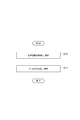
- FIG. 7 is a flowchart showing an example of the filter generation process executed by the data correction device 1.
- the information acquisition unit 10 acquires the position information transmitted from the mobile terminal 2, and stores the acquired position information by the information storage unit 11 (step S10).
- the filter generation unit 13 generates a filter based on the positioning information included in the position information stored in S10, and the generated filter is stored by the information storage unit 11 (step S11). Note that the filter may be generated directly in S11 (without being stored by the information storage unit 11) based on the position information acquired in S10 without storing the position information in S10.
- FIG. 8 is a flowchart showing an example of the filter application process executed by the data correction device 1.
- the information calculation unit 12 generates correction target data, which is data based on the position data included in the position information stored by the information storage unit 11, and stores the correction target data by the information storage unit 11 (step S20).
- the data correction unit 14 applies the filter stored by the information storage unit 11 (the filter stored in S11 of FIG. 7) to the correction target data stored in S20, thereby correcting the correction target data. Is corrected, and correction data, which is the corrected data, is generated (step S21). Note that the correction target data generated in S20 may be directly filtered (without being stored by the information storage unit 11) in S21 without storing the correction target data in S20.
- the data correction system 5 is used to estimate the population distribution.
- FIG. 9 is a diagram for explaining the method of estimating the population distribution in a specific example.
- FIG. 9 shows a flow of estimating the high-resolution population distribution data D3 by the estimation process based on the low-resolution population distribution data D1 and the high-precision positioning data D2.
- the low-resolution population distribution data D1 indicates the population estimated to exist in a wide-area mesh (the mesh indicated by the square in D1 in FIG. 9), which is a predetermined geographical area.
- the low-resolution population distribution data D1 shown in FIG. 9 shows that it is estimated that there are 5,000 people in the wide area mesh.
- the low-resolution population distribution data D1 is calculated based on, for example, the operation data of the base station 3 (the number of users is tens of millions) such as the above-mentioned base station information.
- the wide area mesh is a low-resolution quadrangular region such as 125 m, 250 m, or 500 m on a side due to restrictions based on the cell range of the base station 3. If the length of one side of the wide area mesh is set shorter, that is, the resolution is set higher, the accuracy of the calculated data is reduced.
- the high-precision positioning data D2 indicates the ratio of the population (population ratio) estimated to exist in each of the (high-resolution) narrow-area mesh obtained by dividing the wide-area mesh (shown by the low-resolution population distribution data D1).
- the high-precision positioning data D2 shown in FIG. 9 shows that the wide area mesh is divided into four narrow area meshes, and the population ratio of each narrow area mesh is 50%, 20%, 20%, and 10% in the Z direction, respectively. Shown.
- the high-precision positioning data D2 is calculated by calculating the population of each narrow area mesh based on the position data acquired by positioning the mobile terminal 2 (with millions of users) on which the application is installed, for example.
- the population ratio of each narrow area mesh is calculated based on the population of each narrow area mesh.
- the high-precision positioning data D2 becomes high-precision data. Based on. However, the number of mobile terminals 2 on which the application is installed (millions of people) is compared with the total number of mobile terminals 2 (for example, managed by a mobile communication network operator) (tens of millions of people). Since the number of samples is small, that is, the number of samples is limited, the population ratio is used as described above.
- the high-resolution population distribution data D3 indicates the population estimated to exist in each of the narrow-area meshes (indicated by the high-precision positioning data D2).
- the high-resolution population distribution data D3 shown in FIG. 9 shows that it is estimated that there are 2,500, 1,000, 1,000, and 500 people in each narrow area mesh in the Z direction, respectively. ..
- low-resolution population distribution data D1 and high-precision positioning data D2 are calculated for each attribute (demographic) of a person, and based on the low-resolution population distribution data D1 and high-precision positioning data D2 for each attribute, High-resolution population distribution data D3 for each attribute may be calculated.
- attributes include gender, age, hobbies, tastes, etc., and combinations thereof (female in their 30s, males in their 50s, etc.).
- the low-resolution population distribution data D1 and the high-precision positioning data D2 are calculated for each time zone, and the time zone is based on the low-resolution population distribution data D1 and the high-precision positioning data D2 for each time zone.
- High-resolution population distribution data D3 for each may be calculated. Examples of time zones include 7 o'clock, 8 o'clock, 9 o'clock and the like. You may use a combination of attributes and time zones.
- the position data acquired by positioning which is used in the calculation of the high-precision positioning data D2 by the above estimation method, is calculated based on the position data acquired by positioning because the number of samples is limited. There is a bias in the population of each narrow mesh. Therefore, the calculated population of each narrow area mesh is corrected by using the data correction device 1 (data correction system 5). In addition, instead of the calculated population of each narrow area mesh, the calculated population ratio of each narrow area mesh may be corrected by using the data correction device 1 (data correction system 5).
- the position data is obtained by positioning on the mobile terminal 2 carried by the user.
- the data correction unit 14 applies a filter to the population distribution data (population of each narrow area mesh in the above-mentioned specific example) based on the position data of the mobile terminal 2 carried by each of the plurality of users.
- the output unit 15 has a population of a predetermined area (narrow area mesh) and a population ratio of each of the predetermined areas (narrow area mesh) (each of the predetermined areas) based on the population distribution data corrected by the data correction unit 14. (Calculated based on the population of) or output a heat map based on the population ratio of each predetermined area (narrow area mesh).
- FIG. 10 is a diagram showing an example of correction by applying a filter to the data distribution.
- the data distribution M1 is represented by a matrix, and each element of the matrix shows the population of each narrow mesh calculated based on the position data acquired by positioning.
- the data distribution M2 is corrected by applying a filter to the data distribution M1.
- the data distribution M2 is a smoothed version of the data distribution M1.
- FIG. 11 is a flowchart showing an example of population distribution data correction processing executed by the data correction device 1 in a specific example.
- the data correction unit 14 acquires low-resolution population distribution data (for example, low-resolution population distribution data D1) of the wide-area mesh stored in advance by the information storage unit 11 (step S30).
- the information calculation unit 12 determines the population distribution data of the narrow area mesh (for example, the population of each narrow area mesh) based on the position data previously stored by the information storage unit 11 acquired by the positioning of the mobile terminal 2. Is generated (step S31).
- the data correction unit 14 converts the filter generated by the filter generation unit 13 (based on the position information acquired by the positioning of the mobile terminal 2) into the population distribution data of the narrow area mesh generated in S31.
- step S32 the information calculation unit 12 or the data correction unit 14 compares the low-resolution population distribution data of the wide-area mesh acquired in S30 with the population distribution data of the narrow-area mesh corrected in S32 (for example, high).
- the final population distribution data (for example, high-resolution population distribution data D3) is generated by apportioning with the accuracy positioning data D2) (step S33).
- S30 is not limited to the above-mentioned order, and may be executed at any timing as long as it is before S33.
- the information storage unit 11 that stores the position information including the position data acquired by the positioning and the positioning information related to the positioning, and the positioning information included in the position information stored by the information storage unit 11.
- the filter generation unit 13 that generates a filter based on the above and the filter generated by the filter generation unit 13 based on the positioning information included in the position information to the data based on the position data included in the position information.
- a data correction unit 14 for correcting the data is provided.
- the data is corrected by applying the filter generated based on the positioning information related to the positioning to the data based on the position data acquired by the positioning. That is, the data based on the position data acquired by positioning can be appropriately corrected.
- the positioning information may be at least one of the positioning interval and the positioning error.
- the positioning information is the positioning interval, it is possible to make a correction to reflect the movement of the positioning target (for example, the mobile terminal 2) before and after the positioning in consideration of the positioning interval.
- the positioning interval is long, it is possible to take a large area to cover, disperse the data itself in the part that can be positioned only sporadically, and generate it in a pseudo manner to cover the part that could not be positioned originally. it can.
- the positioning information is a positioning error
- a correction can be made to reflect the characteristics of the positioning error (depending on the positioning means). That is, the filter can be designed according to the distribution of errors.
- the filter generation unit 13 may generate a uniformly distributed filter based on the positioning interval. With this configuration, it is possible to perform correction that reflects the positioning interval in a uniform distribution.
- the filter generation unit 13 may generate a filter based on the positioning interval and the moving speed of the positioning target. With this configuration, the moving speed of the positioning target can be reflected in the correction.
- the filter generation unit 13 may generate a filter having a normal distribution based on the positioning error. With this configuration, it is possible to perform correction that reflects the positioning error in the normal distribution.
- the filter generation unit 13 may generate a filter based on the positioning error for each positioning means. With this configuration, the positioning error for each positioning means can be reflected in the correction.
- the filter generation unit 13 may generate a filter based on a filter generated based on the positioning interval and a filter generated based on the positioning error. With this configuration, it is possible to generate a filter that incorporates the advantages of both filters.
- the filter generation unit 13 may generate a filter obtained by weighting a filter generated based on the positioning interval and a filter generated based on the positioning error, and then combining them. .. With this configuration, it is possible to generate a filter that incorporates the advantages of both filters after weighting them.
- the position data is obtained by positioning on the mobile terminal 2 carried by the user
- the data correction unit 14 is a population distribution based on the position data of the mobile terminal 2 carried by each of the plurality of users. You may apply a filter to the data of. With this configuration, it is possible to obtain appropriately corrected population distribution data based on the positioning of each mobile terminal 2 carried by each user.
- the data correction device 1 is a heat map based on the population of a predetermined area, the population ratio of each of the predetermined areas, or the population ratio of each of the predetermined areas based on the data of the population distribution corrected by the data correction unit 14.
- An output unit 15 for outputting the above may be further provided. With this configuration, the corrected population distribution data can be output in an easy-to-understand manner to the user of the data correction device 1.
- the data correction device 1 can estimate the high-resolution population distribution in the designated area.
- the problems of the prior art are that it is difficult to estimate densely populated areas (overlapping passersby) and wide areas (remote passersby), and that there is an error in estimating the amount of traffic when the number of positioning data samples is insufficient. There is a point that it becomes large.
- the data correction device 1 applies a filter considering the positioning interval and the positioning error, for example, by applying a filter in which a uniform distribution considering the positioning interval and a normal distribution considering the positioning error are superimposed. Highly accurate population distribution within the designated area can be estimated at low processing cost.
- the data correction device 1 can calculate the number of people in a densely populated area.
- the data correction device 1 can improve the estimation accuracy of the population distribution by applying a filter in consideration of the positioning interval.
- data with a limited number of samples will have a bias in the population ratio after expansion estimation.
- the distribution of data can be corrected by applying a filter that considers the positioning interval and the positioning error.
- the data correction device 1 can suppress the occurrence of bias in the data at a low processing cost.
- the estimation of population distribution using the data correction system 5 can be applied to various fields. For example, it can be applied to estimate the number of viewers of outdoor advertisements such as DOOH (Distal Out Of Home). As a result, the ad space can be sold based on the number of ad viewers (impressions), attributes, and the like.
- DOOH Cosmetic Out Of Home
- each functional block may be realized by using one device that is physically or logically connected, or directly or indirectly (for example, by two or more devices that are physically or logically separated). , Wired, wireless, etc.) and may be realized using these plurality of devices.
- the functional block may be realized by combining the software with the one device or the plurality of devices.
- Functions include judgment, decision, judgment, calculation, calculation, processing, derivation, investigation, search, confirmation, reception, transmission, output, access, solution, selection, selection, establishment, comparison, assumption, expectation, and assumption. Broadcasting, notifying, communicating, forwarding, configuring, reconfiguring, allocating, mapping, assigning, etc., but limited to these I can't.
- a functional block (constituent unit) that functions transmission is called a transmitting unit (transmitting unit) or a transmitter (transmitter).
- transmitting unit transmitting unit
- transmitter transmitter
- the data correction device 1 in the embodiment of the present disclosure may function as a computer that processes the data correction method of the present disclosure.
- FIG. 12 is a diagram showing an example of the hardware configuration of the data correction device 1 according to the embodiment of the present disclosure.
- the above-mentioned data correction device 1 may be physically configured as a computer device including a processor 1001, a memory 1002, a storage 1003, a communication device 1004, an input device 1005, an output device 1006, a bus 1007, and the like.
- the word “device” can be read as a circuit, device, unit, etc.
- the hardware configuration of the data correction device 1 may be configured to include one or more of the devices shown in the figure, or may be configured not to include some of the devices.
- the processor 1001 For each function in the data correction device 1, the processor 1001 performs an operation by loading predetermined software (program) on hardware such as the processor 1001 and the memory 1002, and controls the communication by the communication device 1004 or the memory. It is realized by controlling at least one of reading and writing of data in the 1002 and the storage 1003.
- predetermined software program
- Processor 1001 operates, for example, an operating system to control the entire computer.
- the processor 1001 may be configured by a central processing unit (CPU: Central Processing Unit) including an interface with a peripheral device, a control device, an arithmetic unit, a register, and the like.
- CPU Central Processing Unit
- the above-mentioned information acquisition unit 10, information calculation unit 12, filter generation unit 13, data correction unit 14, output unit 15, and the like may be realized by the processor 1001.
- the processor 1001 reads a program (program code), a software module, data, etc. from at least one of the storage 1003 and the communication device 1004 into the memory 1002, and executes various processes according to these.
- a program program that causes a computer to execute at least a part of the operations described in the above-described embodiment is used.
- the information acquisition unit 10, the information calculation unit 12, the filter generation unit 13, the data correction unit 14, and the output unit 15 may be stored in the memory 1002 and realized by a control program operating in the processor 1001 and have other functions.
- the block may be realized in the same manner.
- the above-mentioned various processes have been described as being executed by one processor 1001, they may be executed simultaneously or sequentially by two or more processors 1001.
- Processor 1001 may be implemented by one or more chips.
- the program may be transmitted from the network via a telecommunication line.
- the memory 1002 is a computer-readable recording medium, and is composed of at least one such as a ROM (Read Only Memory), an EPROM (Erasable Programmable ROM), an EPROM (Electrically Erasable Programmable ROM), and a RAM (Random Access Memory). May be done.
- the memory 1002 may be referred to as a register, a cache, a main memory (main storage device), or the like.
- the memory 1002 can store a program (program code), a software module, or the like that can be executed to implement the wireless communication method according to the embodiment of the present disclosure.
- the storage 1003 is a computer-readable recording medium, and is, for example, an optical disk such as a CD-ROM (Compact Disc ROM), a hard disk drive, a flexible disk, an optical magnetic disk (for example, a compact disk, a digital versatile disk, or a Blu-ray). It may consist of at least one (registered trademark) disk), smart card, flash memory (eg, card, stick, key drive), floppy (registered trademark) disk, magnetic strip, and the like.
- the storage 1003 may be referred to as an auxiliary storage device.
- the storage medium described above may be, for example, a database, server or other suitable medium containing at least one of the memory 1002 and the storage 1003.
- the communication device 1004 is hardware (transmission / reception device) for communicating between computers via at least one of a wired network and a wireless network, and is also referred to as, for example, a network device, a network controller, a network card, a communication module, or the like.
- the communication device 1004 includes, for example, a high frequency switch, a duplexer, a filter, a frequency synthesizer, and the like in order to realize at least one of frequency division duplex (FDD: Frequency Division Duplex) and time division duplex (TDD: Time Division Duplex). It may be composed of.
- FDD Frequency Division Duplex
- TDD Time Division Duplex
- the input device 1005 is an input device (for example, a keyboard, a mouse, a microphone, a switch, a button, a sensor, etc.) that receives an input from the outside.
- the output device 1006 is an output device (for example, a display, a speaker, an LED lamp, etc.) that outputs to the outside.
- the input device 1005 and the output device 1006 may have an integrated configuration (for example, a touch panel).
- each device such as the processor 1001 and the memory 1002 is connected by the bus 1007 for communicating information.
- the bus 1007 may be configured by using a single bus, or may be configured by using a different bus for each device.
- the data correction device 1 includes hardware such as a microprocessor, a digital signal processor (DSP: Digital Signal Processor), ASIC (Application Specific Integrated Circuit), PLD (Programmable Logic Device), and FPGA (Field Programmable Gate Array). It may be configured by, and a part or all of each functional block may be realized by the hardware. For example, processor 1001 may be implemented using at least one of these hardware.
- DSP Digital Signal Processor
- ASIC Application Specific Integrated Circuit
- PLD Program Specific Integrated Circuit
- FPGA Field Programmable Gate Array
- information notification includes physical layer signaling (for example, DCI (Downlink Control Information), UCI (Uplink Control Information)), higher layer signaling (for example, RRC (Radio Resource Control) signaling, MAC (Medium Access Control) signaling, etc. It may be carried out by notification information (MIB (Master Information Block), SIB (System Information Block)), other signals, or a combination thereof.
- RRC signaling may be called an RRC message, and may be, for example, an RRC connection setup (RRC Connection Setup) message, an RRC connection reconfiguration (RRC Connection Reconfiguration) message, or the like.
- Each aspect / embodiment described in the present disclosure includes LTE (Long Term Evolution), LTE-A (LTE-Advanced), SUPER 3G, IMT-Advanced, 4G (4th generation mobile communication system), and 5G (5th generation mobile communication).
- system FRA (Future Radio Access), NR (new Radio), W-CDMA (registered trademark), GSM (registered trademark), CDMA2000, UMB (Ultra Mobile Broadband), IEEE 802.11 (Wi-Fi (registered trademark)) )), LTE 802.16 (WiMAX®), IEEE 802.20, UWB (Ultra-WideBand), Bluetooth®, and other systems that utilize suitable systems and have been extended based on these. It may be applied to at least one of the next generation systems. Further, a plurality of systems may be applied in combination (for example, a combination of at least one of LTE and LTE-A and 5G).
- the specific operation performed by the base station in the present disclosure may be performed by its upper node.
- various operations performed for communication with a terminal are performed by the base station and other network nodes other than the base station (for example, MME or). It is clear that it can be done by at least one of (but not limited to, S-GW, etc.).
- S-GW network node
- the case where there is one network node other than the base station is illustrated above, it may be a combination of a plurality of other network nodes (for example, MME and S-GW).
- Information etc. can be output from the upper layer (or lower layer) to the lower layer (or upper layer). Input / output may be performed via a plurality of network nodes.
- the input / output information and the like may be stored in a specific location (for example, memory) or may be managed using a management table. Input / output information and the like can be overwritten, updated, or added. The output information and the like may be deleted. The input information or the like may be transmitted to another device.
- the determination may be made by a value represented by 1 bit (0 or 1), by a true / false value (Boolean: true or false), or by comparing numerical values (for example, a predetermined value). It may be done by comparison with the value).
- the notification of predetermined information (for example, the notification of "being X") is not limited to the explicit one, but is performed implicitly (for example, the notification of the predetermined information is not performed). May be good.
- Software whether referred to as software, firmware, middleware, microcode, hardware description language, or by any other name, is an instruction, instruction set, code, code segment, program code, program, subprogram, software module.
- Applications, software applications, software packages, routines, subroutines, objects, executable files, execution threads, procedures, features, etc. should be broadly interpreted.
- software, instructions, information, etc. may be transmitted and received via a transmission medium.
- a transmission medium For example, a website that uses at least one of wired technology (coaxial cable, fiber optic cable, twist pair, digital subscriber line (DSL: Digital Subscriber Line), etc.) and wireless technology (infrared, microwave, etc.) When transmitted from a server, or other remote source, at least one of these wired and wireless technologies is included within the definition of transmission medium.
- the information, signals, etc. described in this disclosure may be represented using any of a variety of different techniques.
- data, instructions, commands, information, signals, bits, symbols, chips, etc. that may be referred to throughout the above description are voltages, currents, electromagnetic waves, magnetic fields or magnetic particles, light fields or photons, or any of these. It may be represented by a combination of.
- system and “network” used in this disclosure are used interchangeably.
- the information, parameters, etc. described in the present disclosure may be expressed using absolute values, relative values from predetermined values, or using other corresponding information. It may be represented.
- the radio resource may be one indicated by an index.
- base station Base Station
- wireless base station fixed station
- NodeB NodeB
- eNodeB eNodeB
- gNodeB gNodeB
- Base stations are sometimes referred to by terms such as macrocells, small cells, femtocells, and picocells.
- the base station can accommodate one or more (for example, three) cells.
- a base station accommodates multiple cells, the entire coverage area of the base station can be divided into multiple smaller areas, each smaller area being a base station subsystem (eg, a small indoor base station (RRH:)).
- Communication services can also be provided by Remote Radio Head).
- the term "cell” or “sector” is a part or all of the coverage area of at least one of the base station and the base station subsystem that provides the communication service in this coverage. Point to.
- MS Mobile Station
- UE User Equipment
- Mobile stations can be subscriber stations, mobile units, subscriber units, wireless units, remote units, mobile devices, wireless devices, wireless communication devices, remote devices, mobile subscriber stations, access terminals, mobile terminals, wireless, depending on the trader. It may also be referred to as a terminal, remote terminal, handset, user agent, mobile client, client, or some other suitable term.
- At least one of the base station and the mobile station may be called a transmitting device, a receiving device, a communication device, or the like. At least one of the base station and the mobile station may be a device mounted on the mobile body, the mobile body itself, or the like.
- the moving body may be a vehicle (for example, a car, an airplane, etc.), an unmanned moving body (for example, a drone, an autonomous vehicle, etc.), or a robot (manned or unmanned type). ) May be.
- at least one of the base station and the mobile station includes a device that does not necessarily move during communication operation.
- at least one of the base station and the mobile station may be an IoT (Internet of Things) device such as a sensor.
- IoT Internet of Things
- the base station in the present disclosure may be read by the user terminal.
- the communication between the base station and the user terminal is replaced with the communication between a plurality of user terminals (for example, it may be called D2D (Device-to-Device), V2X (Vehicle-to-Everything), etc.).
- D2D Device-to-Device
- V2X Vehicle-to-Everything
- Each aspect / embodiment of the present disclosure may be applied to the configuration.
- the mobile terminal 2 may have the functions of the base station 3 described above.
- words such as "up” and “down” may be read as words corresponding to inter-terminal communication (for example, "side”).
- an uplink channel, a downlink channel, and the like may be read as a side channel.
- the user terminal in the present disclosure may be read as a base station.
- the base station 3 may have the functions of the mobile terminal 2 described above.
- determining and “determining” used in this disclosure may include a wide variety of actions.
- “Judgment” and “decision” are, for example, judgment (judging), calculation (calculating), calculation (computing), processing (processing), derivation (deriving), investigation (investigating), search (looking up, search, inquiry). (For example, searching in a table, database or another data structure), ascertaining may be regarded as “judgment” or “decision”.
- judgment and “decision” are receiving (for example, receiving information), transmitting (for example, transmitting information), input (input), output (output), and access.
- Accessing (for example, accessing data in memory) may be regarded as "judgment” or “decision”.
- judgment and “decision” mean that “resolving”, “selecting”, “choosing”, “establishing”, “comparing”, etc. are regarded as “judgment” and “decision”. Can include. That is, “judgment” and “decision” may include considering some action as “judgment” and “decision”. Further, “judgment (decision)” may be read as “assuming”, “expecting”, “considering” and the like.
- connection means any direct or indirect connection or connection between two or more elements, and each other. It can include the presence of one or more intermediate elements between two “connected” or “combined” elements.
- the connection or connection between the elements may be physical, logical, or a combination thereof.
- connection may be read as "access”.
- the two elements use at least one of one or more wires, cables and printed electrical connections, and, as some non-limiting and non-comprehensive examples, the radio frequency domain. Can be considered to be “connected” or “coupled” to each other using electromagnetic energies having wavelengths in the microwave and light (both visible and invisible) regions.
- each of the above devices may be replaced with a "part”, a “circuit”, a “device”, or the like.
- the term "A and B are different” may mean “A and B are different from each other”.
- the term may mean that "A and B are different from C”.
- Terms such as “separate” and “combined” may be interpreted in the same way as “different”.
Landscapes
- Engineering & Computer Science (AREA)
- Computer Networks & Wireless Communication (AREA)
- Radar, Positioning & Navigation (AREA)
- Remote Sensing (AREA)
- Signal Processing (AREA)
- Physics & Mathematics (AREA)
- General Physics & Mathematics (AREA)
- Position Fixing By Use Of Radio Waves (AREA)
- Information Retrieval, Db Structures And Fs Structures Therefor (AREA)
- Mobile Radio Communication Systems (AREA)
Priority Applications (2)
| Application Number | Priority Date | Filing Date | Title |
|---|---|---|---|
| JP2021551321A JPWO2021065927A1 (https=) | 2019-10-02 | 2020-09-29 | |
| US17/639,368 US12464485B2 (en) | 2019-10-02 | 2020-09-29 | Data correction device |
Applications Claiming Priority (2)
| Application Number | Priority Date | Filing Date | Title |
|---|---|---|---|
| JP2019-182185 | 2019-10-02 | ||
| JP2019182185 | 2019-10-02 |
Publications (1)
| Publication Number | Publication Date |
|---|---|
| WO2021065927A1 true WO2021065927A1 (ja) | 2021-04-08 |
Family
ID=75338072
Family Applications (1)
| Application Number | Title | Priority Date | Filing Date |
|---|---|---|---|
| PCT/JP2020/036967 Ceased WO2021065927A1 (ja) | 2019-10-02 | 2020-09-29 | データ補正装置 |
Country Status (3)
| Country | Link |
|---|---|
| US (1) | US12464485B2 (https=) |
| JP (2) | JPWO2021065927A1 (https=) |
| WO (1) | WO2021065927A1 (https=) |
Citations (8)
| Publication number | Priority date | Publication date | Assignee | Title |
|---|---|---|---|---|
| JPH0634741A (ja) * | 1992-07-17 | 1994-02-10 | Aisin Seiki Co Ltd | Gps受信方法 |
| JP2001074494A (ja) * | 1999-07-05 | 2001-03-23 | Seiko Instruments Inc | 携帯型gps受信機 |
| JP2006518466A (ja) * | 2003-02-14 | 2006-08-10 | クゥアルコム・インコーポレイテッド | 位置決定におけるナビゲーションデータを処理するための方法と装置 |
| JP2012029227A (ja) * | 2010-07-27 | 2012-02-09 | Ntt Docomo Inc | 位置登録集計装置及び位置登録集計方法 |
| JP2013042360A (ja) * | 2011-08-16 | 2013-02-28 | Sony Corp | 情報処理装置、情報処理方法、及びプログラム |
| JP2013068451A (ja) * | 2011-09-21 | 2013-04-18 | Seiko Epson Corp | 位置算出方法及び位置算出装置 |
| WO2013128852A1 (ja) * | 2012-02-29 | 2013-09-06 | 日本電気株式会社 | 動線情報生成システム、動線情報生成方法および動線情報生成プログラム |
| JP2016122373A (ja) * | 2014-12-25 | 2016-07-07 | シャープ株式会社 | 情報処理装置、情報処理システム、端末装置、情報処理方法、及びプログラム |
Family Cites Families (7)
| Publication number | Priority date | Publication date | Assignee | Title |
|---|---|---|---|---|
| JP2003030373A (ja) * | 2001-07-10 | 2003-01-31 | Fujitsu Ltd | 人口分布解析装置 |
| JP5361252B2 (ja) | 2008-06-04 | 2013-12-04 | キヤノン株式会社 | 印刷装置及びその制御方法、プログラム、記録媒体 |
| JP5171719B2 (ja) * | 2009-04-06 | 2013-03-27 | 株式会社エヌ・ティ・ティ・ドコモ | 位置情報集計装置及び位置情報集計方法 |
| CN104054077A (zh) * | 2012-01-13 | 2014-09-17 | 谷歌公司 | 地方热几何结构 |
| JP6023288B1 (ja) * | 2015-08-10 | 2016-11-09 | 株式会社リクルートホールディングス | 混雑状況推定システムおよび混雑状況推定方法 |
| JP7001067B2 (ja) * | 2017-01-23 | 2022-01-19 | ソニーグループ株式会社 | 情報処理装置、情報処理方法及びコンピュータプログラム |
| CN111080501B (zh) * | 2019-12-06 | 2024-02-09 | 中国科学院大学 | 基于手机信令数据的真实人群密度时空分布估算方法 |
-
2020
- 2020-09-29 WO PCT/JP2020/036967 patent/WO2021065927A1/ja not_active Ceased
- 2020-09-29 US US17/639,368 patent/US12464485B2/en active Active
- 2020-09-29 JP JP2021551321A patent/JPWO2021065927A1/ja not_active Ceased
-
2023
- 2023-06-14 JP JP2023097573A patent/JP7609926B2/ja active Active
Patent Citations (8)
| Publication number | Priority date | Publication date | Assignee | Title |
|---|---|---|---|---|
| JPH0634741A (ja) * | 1992-07-17 | 1994-02-10 | Aisin Seiki Co Ltd | Gps受信方法 |
| JP2001074494A (ja) * | 1999-07-05 | 2001-03-23 | Seiko Instruments Inc | 携帯型gps受信機 |
| JP2006518466A (ja) * | 2003-02-14 | 2006-08-10 | クゥアルコム・インコーポレイテッド | 位置決定におけるナビゲーションデータを処理するための方法と装置 |
| JP2012029227A (ja) * | 2010-07-27 | 2012-02-09 | Ntt Docomo Inc | 位置登録集計装置及び位置登録集計方法 |
| JP2013042360A (ja) * | 2011-08-16 | 2013-02-28 | Sony Corp | 情報処理装置、情報処理方法、及びプログラム |
| JP2013068451A (ja) * | 2011-09-21 | 2013-04-18 | Seiko Epson Corp | 位置算出方法及び位置算出装置 |
| WO2013128852A1 (ja) * | 2012-02-29 | 2013-09-06 | 日本電気株式会社 | 動線情報生成システム、動線情報生成方法および動線情報生成プログラム |
| JP2016122373A (ja) * | 2014-12-25 | 2016-07-07 | シャープ株式会社 | 情報処理装置、情報処理システム、端末装置、情報処理方法、及びプログラム |
Non-Patent Citations (1)
| Title |
|---|
| NAGAKUBO, SAKIE, AMATSUTSUMI, TAKUROU, OGAWA, KAYO, MAEHARA, FUMIAKI: "A Study on Performance Improvement of GPS Localization Employing Wireless LAN", IEICE TECHNICAL REPORT, vol. 114, no. 368, 11 December 2014 (2014-12-11), pages 43 - 48, ISSN: 0913-5685 * |
Also Published As
| Publication number | Publication date |
|---|---|
| US20220322275A1 (en) | 2022-10-06 |
| US12464485B2 (en) | 2025-11-04 |
| JP2023107928A (ja) | 2023-08-03 |
| JP7609926B2 (ja) | 2025-01-07 |
| JPWO2021065927A1 (https=) | 2021-04-08 |
Similar Documents
| Publication | Publication Date | Title |
|---|---|---|
| JP6938726B2 (ja) | 端末、基地局、移動通信システム、及びシステム情報取得方法 | |
| US10952067B2 (en) | Terminal and base station | |
| US10959186B2 (en) | User equipment | |
| US10952237B2 (en) | Method and apparatus for downlink control information transmission | |
| JPWO2020065896A1 (ja) | ユーザ装置 | |
| US20190021082A1 (en) | Apparatuses and methods for network management side and user equipment side, and central management apparatus | |
| EP3661219A1 (en) | Communication quality adjusting system | |
| JP7553198B2 (ja) | 端末、通信方法及び無線通信システム | |
| US12010656B2 (en) | User equipment and communication method | |
| JP7469296B2 (ja) | 端末、基地局、システム、及び通信方法 | |
| WO2019138522A1 (ja) | ユーザ装置及びプリアンブル送信方法 | |
| JP7609926B2 (ja) | データ補正装置及びデータ補正方法 | |
| US20210112547A1 (en) | Base station and configuration information transmission method | |
| JP7102424B2 (ja) | 基地局、測定動作制御方法及び無線通信システム | |
| WO2020211014A1 (zh) | 终端以及由终端执行的方法 | |
| WO2019146574A1 (ja) | ユーザ装置及びプリアンブル送信方法 | |
| WO2020230213A1 (ja) | ユーザ装置 | |
| JP2020088980A (ja) | 制御装置 | |
| JP7228709B2 (ja) | 環境推定装置 | |
| WO2019082936A1 (ja) | ユーザ属性推定システム | |
| WO2022034676A1 (ja) | 端末、位置登録方法、及び通信ネットワーク | |
| JP7681716B2 (ja) | サイドリンク無線リソースの効率的なシグナリング | |
| US20250240756A1 (en) | Terminal and positioning method | |
| JP2019079108A (ja) | 在宅率推定装置 | |
| US20250310042A1 (en) | Terminal and positioning method |
Legal Events
| Date | Code | Title | Description |
|---|---|---|---|
| 121 | Ep: the epo has been informed by wipo that ep was designated in this application |
Ref document number: 20870624 Country of ref document: EP Kind code of ref document: A1 |
|
| ENP | Entry into the national phase |
Ref document number: 2021551321 Country of ref document: JP Kind code of ref document: A |
|
| NENP | Non-entry into the national phase |
Ref country code: DE |
|
| 122 | Ep: pct application non-entry in european phase |
Ref document number: 20870624 Country of ref document: EP Kind code of ref document: A1 |
|
| WWG | Wipo information: grant in national office |
Ref document number: 17639368 Country of ref document: US |