WO2021065317A1 - 転写フィルム、積層体の製造方法、積層体、タッチパネルセンサー、タッチパネル - Google Patents
転写フィルム、積層体の製造方法、積層体、タッチパネルセンサー、タッチパネル Download PDFInfo
- Publication number
- WO2021065317A1 WO2021065317A1 PCT/JP2020/033347 JP2020033347W WO2021065317A1 WO 2021065317 A1 WO2021065317 A1 WO 2021065317A1 JP 2020033347 W JP2020033347 W JP 2020033347W WO 2021065317 A1 WO2021065317 A1 WO 2021065317A1
- Authority
- WO
- WIPO (PCT)
- Prior art keywords
- transfer film
- photosensitive resin
- resin layer
- film
- laminate
- Prior art date
- Legal status (The legal status is an assumption and is not a legal conclusion. Google has not performed a legal analysis and makes no representation as to the accuracy of the status listed.)
- Ceased
Links
Images


Classifications
-
- B—PERFORMING OPERATIONS; TRANSPORTING
- B32—LAYERED PRODUCTS
- B32B—LAYERED PRODUCTS, i.e. PRODUCTS BUILT-UP OF STRATA OF FLAT OR NON-FLAT, e.g. CELLULAR OR HONEYCOMB, FORM
- B32B27/00—Layered products comprising a layer of synthetic resin
-
- B—PERFORMING OPERATIONS; TRANSPORTING
- B32—LAYERED PRODUCTS
- B32B—LAYERED PRODUCTS, i.e. PRODUCTS BUILT-UP OF STRATA OF FLAT OR NON-FLAT, e.g. CELLULAR OR HONEYCOMB, FORM
- B32B27/00—Layered products comprising a layer of synthetic resin
- B32B27/30—Layered products comprising a layer of synthetic resin comprising vinyl (co)polymers; comprising acrylic (co)polymers
-
- B—PERFORMING OPERATIONS; TRANSPORTING
- B32—LAYERED PRODUCTS
- B32B—LAYERED PRODUCTS, i.e. PRODUCTS BUILT-UP OF STRATA OF FLAT OR NON-FLAT, e.g. CELLULAR OR HONEYCOMB, FORM
- B32B3/00—Layered products comprising a layer with external or internal discontinuities or unevennesses, or a layer of non-planar shape; Layered products comprising a layer having particular features of form
- B32B3/10—Layered products comprising a layer with external or internal discontinuities or unevennesses, or a layer of non-planar shape; Layered products comprising a layer having particular features of form characterised by a discontinuous layer, i.e. formed of separate pieces of material
- B32B3/14—Layered products comprising a layer with external or internal discontinuities or unevennesses, or a layer of non-planar shape; Layered products comprising a layer having particular features of form characterised by a discontinuous layer, i.e. formed of separate pieces of material characterised by a face layer formed of separate pieces of material which are juxtaposed side-by-side
-
- B—PERFORMING OPERATIONS; TRANSPORTING
- B32—LAYERED PRODUCTS
- B32B—LAYERED PRODUCTS, i.e. PRODUCTS BUILT-UP OF STRATA OF FLAT OR NON-FLAT, e.g. CELLULAR OR HONEYCOMB, FORM
- B32B3/00—Layered products comprising a layer with external or internal discontinuities or unevennesses, or a layer of non-planar shape; Layered products comprising a layer having particular features of form
- B32B3/10—Layered products comprising a layer with external or internal discontinuities or unevennesses, or a layer of non-planar shape; Layered products comprising a layer having particular features of form characterised by a discontinuous layer, i.e. formed of separate pieces of material
- B32B3/18—Layered products comprising a layer with external or internal discontinuities or unevennesses, or a layer of non-planar shape; Layered products comprising a layer having particular features of form characterised by a discontinuous layer, i.e. formed of separate pieces of material characterised by an internal layer formed of separate pieces of material which are juxtaposed side-by-side
-
- B—PERFORMING OPERATIONS; TRANSPORTING
- B32—LAYERED PRODUCTS
- B32B—LAYERED PRODUCTS, i.e. PRODUCTS BUILT-UP OF STRATA OF FLAT OR NON-FLAT, e.g. CELLULAR OR HONEYCOMB, FORM
- B32B7/00—Layered products characterised by the relation between layers; Layered products characterised by the relative orientation of features between layers, or by the relative values of a measurable parameter between layers, i.e. products comprising layers having different physical, chemical or physicochemical properties; Layered products characterised by the interconnection of layers
- B32B7/04—Interconnection of layers
- B32B7/06—Interconnection of layers permitting easy separation
-
- G—PHYSICS
- G03—PHOTOGRAPHY; CINEMATOGRAPHY; ANALOGOUS TECHNIQUES USING WAVES OTHER THAN OPTICAL WAVES; ELECTROGRAPHY; HOLOGRAPHY
- G03F—PHOTOMECHANICAL PRODUCTION OF TEXTURED OR PATTERNED SURFACES, e.g. FOR PRINTING, FOR PROCESSING OF SEMICONDUCTOR DEVICES; MATERIALS THEREFOR; ORIGINALS THEREFOR; APPARATUS SPECIALLY ADAPTED THEREFOR
- G03F7/00—Photomechanical, e.g. photolithographic, production of textured or patterned surfaces, e.g. printing surfaces; Materials therefor, e.g. comprising photoresists; Apparatus specially adapted therefor
- G03F7/004—Photosensitive materials
-
- G—PHYSICS
- G03—PHOTOGRAPHY; CINEMATOGRAPHY; ANALOGOUS TECHNIQUES USING WAVES OTHER THAN OPTICAL WAVES; ELECTROGRAPHY; HOLOGRAPHY
- G03F—PHOTOMECHANICAL PRODUCTION OF TEXTURED OR PATTERNED SURFACES, e.g. FOR PRINTING, FOR PROCESSING OF SEMICONDUCTOR DEVICES; MATERIALS THEREFOR; ORIGINALS THEREFOR; APPARATUS SPECIALLY ADAPTED THEREFOR
- G03F7/00—Photomechanical, e.g. photolithographic, production of textured or patterned surfaces, e.g. printing surfaces; Materials therefor, e.g. comprising photoresists; Apparatus specially adapted therefor
- G03F7/004—Photosensitive materials
- G03F7/027—Non-macromolecular photopolymerisable compounds having carbon-to-carbon double bonds, e.g. ethylenic compounds
-
- G—PHYSICS
- G03—PHOTOGRAPHY; CINEMATOGRAPHY; ANALOGOUS TECHNIQUES USING WAVES OTHER THAN OPTICAL WAVES; ELECTROGRAPHY; HOLOGRAPHY
- G03F—PHOTOMECHANICAL PRODUCTION OF TEXTURED OR PATTERNED SURFACES, e.g. FOR PRINTING, FOR PROCESSING OF SEMICONDUCTOR DEVICES; MATERIALS THEREFOR; ORIGINALS THEREFOR; APPARATUS SPECIALLY ADAPTED THEREFOR
- G03F7/00—Photomechanical, e.g. photolithographic, production of textured or patterned surfaces, e.g. printing surfaces; Materials therefor, e.g. comprising photoresists; Apparatus specially adapted therefor
- G03F7/004—Photosensitive materials
- G03F7/027—Non-macromolecular photopolymerisable compounds having carbon-to-carbon double bonds, e.g. ethylenic compounds
- G03F7/032—Non-macromolecular photopolymerisable compounds having carbon-to-carbon double bonds, e.g. ethylenic compounds with binders
- G03F7/033—Non-macromolecular photopolymerisable compounds having carbon-to-carbon double bonds, e.g. ethylenic compounds with binders the binders being polymers obtained by reactions only involving carbon-to-carbon unsaturated bonds, e.g. vinyl polymers
-
- G—PHYSICS
- G03—PHOTOGRAPHY; CINEMATOGRAPHY; ANALOGOUS TECHNIQUES USING WAVES OTHER THAN OPTICAL WAVES; ELECTROGRAPHY; HOLOGRAPHY
- G03F—PHOTOMECHANICAL PRODUCTION OF TEXTURED OR PATTERNED SURFACES, e.g. FOR PRINTING, FOR PROCESSING OF SEMICONDUCTOR DEVICES; MATERIALS THEREFOR; ORIGINALS THEREFOR; APPARATUS SPECIALLY ADAPTED THEREFOR
- G03F7/00—Photomechanical, e.g. photolithographic, production of textured or patterned surfaces, e.g. printing surfaces; Materials therefor, e.g. comprising photoresists; Apparatus specially adapted therefor
- G03F7/004—Photosensitive materials
- G03F7/09—Photosensitive materials characterised by structural details, e.g. supports, auxiliary layers
- G03F7/11—Photosensitive materials characterised by structural details, e.g. supports, auxiliary layers having cover layers or intermediate layers, e.g. subbing layers
-
- G—PHYSICS
- G06—COMPUTING OR CALCULATING; COUNTING
- G06F—ELECTRIC DIGITAL DATA PROCESSING
- G06F3/00—Input arrangements for transferring data to be processed into a form capable of being handled by the computer; Output arrangements for transferring data from processing unit to output unit, e.g. interface arrangements
- G06F3/01—Input arrangements or combined input and output arrangements for interaction between user and computer
- G06F3/03—Arrangements for converting the position or the displacement of a member into a coded form
- G06F3/041—Digitisers, e.g. for touch screens or touch pads, characterised by the transducing means
-
- G—PHYSICS
- G06—COMPUTING OR CALCULATING; COUNTING
- G06F—ELECTRIC DIGITAL DATA PROCESSING
- G06F3/00—Input arrangements for transferring data to be processed into a form capable of being handled by the computer; Output arrangements for transferring data from processing unit to output unit, e.g. interface arrangements
- G06F3/01—Input arrangements or combined input and output arrangements for interaction between user and computer
- G06F3/03—Arrangements for converting the position or the displacement of a member into a coded form
- G06F3/041—Digitisers, e.g. for touch screens or touch pads, characterised by the transducing means
- G06F3/044—Digitisers, e.g. for touch screens or touch pads, characterised by the transducing means by capacitive means
Definitions
- the present invention relates to a transfer film, a method for manufacturing a laminate, a laminate, a touch panel sensor, and a touch panel.
- liquid crystal display elements or touch panels such as personal computers and televisions, small electronic devices such as car navigation systems, mobile phones and electronic dictionaries, and display devices such as OA (office automation) devices and FA (Factory Automation) devices include liquid crystal display elements or touch panels. Is used. These liquid crystal display elements or touch panels have transparent electrodes. As a touch panel, various methods have already been put into practical use, and in recent years, the use of a capacitive touch panel has been advancing. Conventionally, as the transparent electrode, an electrode formed of materials such as ITO (Indium Tin Oxide), indium oxide, and tin oxide has been used, but as an alternative electrode, a conductive layer containing conductive fibers is used. It has been proposed to use a conductive pattern formed from a photosensitive conductive film having a conductive film in a photolithography step.
- ITO Indium Tin Oxide
- Patent Document 1 describes a photosensitive conductive film (transfer film) including a temporary support, a conductive layer provided on the temporary support and containing conductive fibers, and a photosensitive resin layer provided on the conductive layer. ) Is described.
- an object of the present invention is to provide a transfer film in which bubbles are less likely to be generated on the bonded surface when the film is bonded to the substrate.
- Another object of the present invention is to provide a method for manufacturing a laminated body, a laminated body, a touch panel sensor, and a touch panel.
- a transfer film having a temporary support, a conductive layer, and a photosensitive resin layer A transfer film having a maximum width of waviness of the transfer film of 300 ⁇ m or less.
- the photosensitive resin layer contains the binder polymer, the compound having an ethylenically unsaturated group, and the photopolymerization initiator.
- R represented by the formula (1) described later is 0.15 or more
- the transfer film according to [2], wherein T represented by the formula (2) described later is 500 to 10000.
- the binder polymer is composed of at least one selected from the group consisting of a structural unit derived from methacrylic acid and a structural unit derived from methacrylic acid alkyl ester, a structural unit derived from acrylic acid, and an acrylic acid alkyl ester.
- the total content of the structural unit derived from methacrylic acid and the structural unit derived from methacrylic acid alkyl ester, which contains at least one selected from the group consisting of the constituent units derived from acrylic acid, is the structural unit derived from acrylic acid.
- the step of pattern-exposing the photosensitive resin layer of the transfer film and A method for producing a laminate which comprises a step of removing a part of the conductive layer of the transfer film together with an unexposed portion of the photosensitive resin layer to form a patterned conductive layer.
- a laminate produced by the production method according to [17]. A laminate having the above-mentioned substrate, a patterned conductive layer, and a patterned cured resin layer.
- the present invention it is possible to provide a transfer film in which bubbles are less likely to be generated on the bonded surface when the film is bonded to the substrate. Further, according to the present invention, it is possible to provide a method for manufacturing a laminated body, a laminated body, a touch panel sensor, and a touch panel.
- (meth) acrylic acid is a concept including both acrylic acid and methacrylic acid
- (meth) acrylate is a concept including both acrylate and methacrylate
- ( "Meta) acryloyl group” is a concept that includes both acryloyl group and methacrylic acid group.
- organic group is intended to be a group containing one or more carbon atoms.
- the amount of each component in the composition is the total amount of the plurality of substances present in the composition when a plurality of substances corresponding to each component are present in the composition, unless otherwise specified. Means.
- the composition ratio of the polymer is based on mass unless otherwise specified.
- the weight average molecular weight (Mw) and the number average molecular weight (Mn) in the present specification are TSKgel GMHxL, TSKgel G4000HxL, TSKgel G2000HxL and / or TSKgel Super HZM-N (all of which are manufactured by Toso Co., Ltd.). It is a molecular weight converted by using a gel permeation chromatography (GPC) analyzer using a column of (trade name) manufactured by (manufactured by), detecting with a solvent THF (tetrahydrofuran) and a differential refractometer, and using polystyrene as a standard substance. ..
- GPC gel permeation chromatography
- the term "process” is included in this term not only as an independent process but also as long as the intended purpose of the process is achieved even if it cannot be clearly distinguished from other processes. ..
- the term "exposure” as used herein includes not only exposure using light but also drawing using particle beams such as electron beams and ion beams.
- the light used for exposure is generally the emission line spectrum of a mercury lamp, far ultraviolet rays typified by an excimer laser, extreme ultraviolet light (EUV (Extreme ultraviolet lithography) light), and active light (active energy) such as X-rays. Line).
- the thickness of each layer included in the transfer film is determined based on the observation image obtained by observing the cross section including the direction perpendicular to the main surface of the layer using a scanning electron microscope (SEM). It is a value obtained by measuring the thickness of the layer at 10 points or more and calculating the average value thereof.
- the thickness of the photosensitive resin layer may be measured by using a known means such as a micro gauge and a thickness gauge, in addition to the scanning electron microscope.
- the transfer film of the present invention is a transfer film having a temporary support, a conductive layer, and a photosensitive resin layer, and the maximum width of the waviness of the transfer film is 300 ⁇ m or less.
- the "maximum width of the swell of the transfer film" is a value measured by the following procedure. First, the transfer film is cut in a direction perpendicular to the main surface so as to have a size of 20 cm in length ⁇ 20 cm in width to prepare a test sample. If the transfer film has a protective film, the protective film is peeled off. Next, the test sample is placed on a stage having a smooth and horizontal surface so that the surface of the temporary support faces the stage.
- the surface of the sample sample was scanned with a laser microscope (for example, VK-9700SP manufactured by KEYENCE CORPORATION) for a range of 10 cm square at the center of the test sample to obtain a three-dimensional surface image, and the obtained 3 Subtract the minimum concave height from the maximum convex height observed in the 3D surface image.
- a laser microscope for example, VK-9700SP manufactured by KEYENCE CORPORATION
- VK-9700SP manufactured by KEYENCE CORPORATION
- the maximum width of the swell is preferably 250 ⁇ m or less, more preferably 200 ⁇ m or less, still more preferably 60 ⁇ m or less, in that the generation of bubbles on the bonding surface between the transfer film and the substrate is further suppressed.
- the lower limit of the maximum width of the swell is not particularly limited, but is, for example, 0 ⁇ m or more, preferably 0.1 ⁇ m or more, and more preferably 1 ⁇ m or more.
- the drying time and temperature in the coating film forming step of the conductive layer and the drying step and temperature in the coating film forming step of the photosensitive resin layer are adjusted within a predetermined range. There is a way to do it.
- the transfer film may have a layer other than the temporary support, the conductive layer and the photosensitive resin layer, or may be composed of only the temporary support, the conductive layer and the photosensitive resin layer.
- layers other than the temporary support, the conductive layer and the photosensitive resin layer include a protective film, an adhesive layer, and a gas barrier layer.
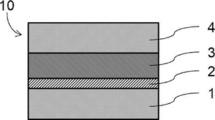
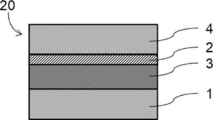
- FIG. 1 and 2 show a configuration example of the transfer film.
- the transfer film of the present invention is not limited to those having the configurations shown in FIGS. 1 and 2.
- FIG. 1 is a schematic view showing an example of the configuration of the transfer film.
- the temporary support 1, the conductive layer 2, the photosensitive resin layer 3, and the protective film 4 are laminated in this order.
- FIG. 2 is a schematic view showing another example of the structure of the transfer film.
- the temporary support 1, the photosensitive resin layer 3, the conductive layer 2, and the protective film 4 are laminated in this order.
- Each layer of the transfer film will be described in detail below.
- the transfer film of the present invention has a temporary support.
- the temporary support include a glass substrate and a resin film, and a resin film is preferable, and a resin film having heat resistance and solvent resistance is more preferable.
- a film having flexibility and not causing significant deformation, shrinkage or elongation under pressure, pressure and heating is preferable.
- a resin film include polyethylene terephthalate (PET) film, polyethylene film, polypropylene film and polycarbonate film. Of these, a polyethylene terephthalate film is preferable from the viewpoint of transparency and heat resistance.
- the surface of the above resin film may be mold-released so that it can be easily peeled off.
- 10 particles / mm 2 or more having a diameter of 5 ⁇ m or more are present on the surface opposite to the side on which the conductive layer is formed, 10 to 120. More preferably, there are 2 pieces / mm 2.
- the upper limit of the diameter of the particles is, for example, 10 ⁇ m or less.
- the thickness of the temporary support is preferably 5 ⁇ m or more, more preferably 10 ⁇ m or more, still more preferably 15 ⁇ m or more, from the viewpoint of mechanical strength.
- the thickness of the temporary support is preferably 300 ⁇ m or less, more preferably 200 ⁇ m or less, and 100 ⁇ m or less from the viewpoint of the resolution of the conductive pattern. More preferred. From the above points, the thickness of the temporary support is preferably 5 to 300 ⁇ m, more preferably 10 to 200 ⁇ m, and even more preferably 15 to 100 ⁇ m.
- the haze value of the temporary support is preferably 0.01 to 5.0%, more preferably 0.01 to 3.0%, and more preferably 0.01, from the viewpoint of the exposure sensitivity of the photosensitive resin layer and the resolution of the conductive pattern. -2.0% is more preferable, and 0.01-1.5% is particularly preferable.
- the haze value is determined by a method based on JIS K 7105 (optical property test method for plastics), for example, using a commercially available turbidity meter such as NDH-1001DP (manufactured by Nippon Denshoku Industries Co., Ltd., trade name). Can be measured.
- the temporary support preferably has a light transmittance of 50% or more at the wavelength of the irradiating active light (more preferably 365 nm). It is more preferably% or more, and even more preferably 70% or more.
- the transmittance of the layer included in the transfer film is the emission light emitted through the layer with respect to the intensity of the incident light when the light is incident in the direction perpendicular to the main surface of the layer (thickness direction). It is a ratio of intensity and is measured using MCPD Series manufactured by Otsuka Electronics Co., Ltd.
- the film used as the temporary support has no deformation such as wrinkles or scratches.
- the number of fine particles, foreign substances, and defects contained in the temporary support is small.
- the number of the above fine particles and foreign matter and defect diameter 1 ⁇ m is more preferably preferably 50 pieces / 10 mm 2 or less, more preferably 10/10 mm 2 or less, three / 10 mm 2 or less ..
- the transfer film of the present invention includes a conductive layer.
- the structure of the conductive layer is not particularly limited as long as it can obtain conductivity in the plane direction, but it is preferable that the conductive fibers come into contact with each other to form a network structure.
- the conductive layer may be arranged on the surface of the photosensitive resin layer facing the temporary support, or may be arranged on the surface of the photosensitive resin layer opposite to the surface facing the temporary support. Further, after the transfer film is produced, a part of the components contained in the photosensitive resin layer (for example, a binder polymer) may be infiltrated into the conductive layer.
- the conductive layer preferably contains silver nanowires as conductive fibers.
- the silver nanowire is a wire-like conductive substance composed of silver or an alloy composed of silver and a metal other than silver.
- the silver nanowire may have a structure in which a wire-shaped core made of silver is coated with a metal other than silver.
- the structure coated with a metal other than silver includes not only a structure in which the entire surface of the core silver nanowire is coated, but also a structure in which a part thereof is coated.
- a metal nobler than silver is preferable, gold, platinum or palladium is more preferable, and gold is further preferable.
- the shape of the silver nanowire is not particularly limited and may be appropriately selected depending on the intended purpose. Examples thereof include a columnar shape, a rectangular parallelepiped shape, and a columnar shape having a polygonal cross section.
- the fiber diameter of the silver nanowire is preferably 1 to 50 nm, more preferably 2 to 20 nm, and even more preferably 3 to 10 nm.
- the fiber length of the silver nanowire is preferably 1 to 100 ⁇ m, more preferably 2 to 50 ⁇ m, and even more preferably 3 to 10 ⁇ m.
- the fiber diameter and fiber length of the silver nanowires are determined by arbitrarily selecting 20 silver nanowires from an observation image containing a plurality of silver nanowires obtained by using a scanning electron microscope (SEM). It is a value obtained by arithmetically averaging the lengths of the minor axis and the major axis of silver nanowires.
- Examples of the method for producing silver nanowires include a method of reducing silver ions with a reducing agent such as NaBH 4 and a method of producing silver nanowires by a polyol method. Further, a method for producing silver nanowires is described in paragraphs 0019 to 0024 of JP2011-149902A, and the contents of this publication are incorporated in the present specification.
- the conductive layer may contain conductive fibers other than silver nanowires.
- conductive fibers other than silver nanowires include metals such as gold, silver, copper and platinum, metal fibers made of alloys of these metals, and carbon fibers such as carbon nanotubes.
- the shape of the conductive fiber may be the same as the shape of the silver nanowire described above, including its preferred embodiment.
- the conductive layer may contain an organic conductor as well as conductive fibers.
- the organic conductor is not particularly limited, and examples thereof include organic conductors such as polymers of thiophene derivatives and aniline derivatives. More specifically, polyethylene dioxythiophene, polyhexylthiophene, and polyaniline can be mentioned.
- the thickness of the conductive layer varies depending on the use of the conductive pattern produced by using the transfer film and the required conductivity, but is preferably 1 ⁇ m or less, more preferably 1 nm or more and 0.5 ⁇ m or less, and 5 nm or more. It is more preferably 1 ⁇ m or less.
- the thickness of the conductive layer is 1 ⁇ m or less, the light transmittance in the wavelength range of 450 to 650 nm is high, the pattern forming property is also excellent, and it is particularly suitable for producing a transparent electrode.
- a method for forming the conductive layer for example, a composition for forming a conductive layer containing silver nanowires is prepared, the composition for forming a conductive layer is applied to the surface of a temporary support or a photosensitive resin layer, and then the conductive layer is formed. Examples thereof include a method of forming a conductive layer by drying a coating film of the forming composition.
- the content of silver nanowires in the composition for forming a conductive layer is not limited as long as a coating film of the composition for forming a conductive layer can be formed, but is 0.01 with respect to the total mass of the composition for forming a conductive layer. It is preferably from 20% by mass, more preferably from 0.1 to 10% by mass.
- the composition for forming a conductive layer preferably contains a solvent.
- the solvent include water and organic solvents.
- the composition for forming a conductive layer preferably contains water as a solvent, and more preferably contains water and an organic solvent.
- an alcohol solvent is preferable.
- the alcohol-based solvent is not particularly limited, and for example, alcohol having 1 to 5 carbon atoms, ethylene glycol, polyethylene glycol, polyethylene glycol alkyl ether, glycerin, alkanediol propylene glycol having 3 to 6 carbon atoms, dipropylene glycol, 1 -Ethoxy-2-propanol, ethanolamine and diethanolamine can be mentioned.
- the water is not particularly limited, but preferably does not contain impurities.
- composition for forming a conductive layer may contain at least one selected from the group consisting of conductive fibers other than the silver nanowires described above, organic conductors, and dispersion stabilizers such as surfactants. Good.
- the content of water in the composition for forming a conductive layer is preferably 80% by mass or more, more preferably 90% by mass or more, based on the total mass of the composition for forming a conductive layer.
- the upper limit is not particularly limited, but is preferably 99.99% by mass or less, more preferably 99.90% by mass or less, based on the total mass of the composition for forming the conductive layer.
- the content of the organic solvent is preferably 0.01 to 20% by mass.
- Examples of the coating method of the composition for forming a conductive layer include known methods such as a roll coating method, a comma coating method, a gravure coating method, an air knife coating method, a die coating method, a bar coating method, and a spray coating method. However, it is not limited to these.
- Examples of the method for drying the coating film of the composition for forming a conductive layer include a drying method in which hot air is applied to the coating film using a hot air convection dryer.
- the temperature of the hot air (drying temperature) when the hot air convection dryer is used is preferably 30 to 150 ° C., more preferably 50 to 120 ° C., and 70 to 120 ° C. in terms of suppressing the waviness of the transfer film. More preferred.
- the time (drying time) for applying hot air to the coating film is preferably 10 seconds to 3 minutes, more preferably 10 seconds to 2 minutes, and 10 to 45 seconds in terms of suppressing the waviness of the transfer film. Is more preferable, and 10 to 25 seconds is particularly preferable.
- the drying temperature may be gradually increased under a plurality of drying conditions.
- the transfer film of the present invention contains a photosensitive resin layer.
- the photosensitive resin layer preferably contains a binder polymer, a compound having an ethylenically unsaturated group (hereinafter, also referred to as “ethylene unsaturated compound”), and a photopolymerization initiator.
- ethylene unsaturated compound a compound having an ethylenically unsaturated group
- photopolymerization initiator a photopolymerization initiator
- Binder polymer for example, it is obtained by the reaction of (meth) acrylic resin, styrene resin, epoxy resin, amide resin, amide epoxy resin, alkyd resin, phenol resin, ester resin, urethane resin, epoxy resin and (meth) acrylic acid.
- examples thereof include an epoxy acrylate resin obtained from the above, and an acid-modified epoxy acrylate resin obtained by reacting the epoxy acrylate resin with an acid anhydride.
- the binder polymer As the binder polymer, a (meth) acrylic resin is preferable because it is excellent in alkali developability and film forming property.
- the (meth) acrylic resin means a resin having a structural unit derived from the (meth) acrylic compound.
- the content of the structural unit derived from the (meth) acrylic compound is preferably 50% by mass or more, more preferably 70% by mass or more, still more preferably 90% by mass or more, based on all the structural units of the (meth) acrylic resin. ..
- the (meth) acrylic resin may be composed of only the structural units derived from the (meth) acrylic compound, or may have the structural units derived from the polymerizable monomer other than the (meth) acrylic compound. .. That is, the upper limit of the content of the structural unit derived from the (meth) acrylic compound is 100% by mass or less with respect to the total mass of the (meth) acrylic resin.
- Examples of the (meth) acrylic compound include (meth) acrylic acid, (meth) acrylic acid ester, (meth) acrylamide, and (meth) acrylonitrile.
- Examples of the (meth) acrylic acid ester include (meth) acrylic acid alkyl ester, (meth) acrylic acid tetrahydrofurfuryl ester, (meth) acrylic acid dimethylaminoethyl ester, (meth) acrylic acid diethylaminoethyl ester, and (meth) acrylic acid ester.
- Acrylic acid glycidyl ester (meth) acrylic acid benzyl ester, 2,2,2-trifluoroethyl (meth) acrylate, and 2,2,3,3-tetrafluoropropyl (meth) acrylate.
- Acrylic acid alkyl ester is preferable.
- (meth) acrylamide include acrylamide such as diacetone acrylamide.
- Examples of the (meth) acrylic acid alkyl ester include methyl (meth) acrylate, ethyl (meth) acrylate, propyl (meth) acrylate, butyl (meth) acrylate, pentyl (meth) acrylate, and (meth).
- the (meth) acrylic acid ester a (meth) acrylic acid alkyl ester having an alkyl group having 1 to 4 carbon atoms is preferable, and methyl (meth) acrylate or ethyl (meth) acrylate is more preferable.
- the alkyl group include a chain-like alkyl group and a cyclic alkyl group.
- the chain-like alkyl group may be linear or branched, and the cyclic alkyl group may be monocyclic or polycyclic.
- the (meth) acrylic resin may have a structural unit other than the structural unit derived from the (meth) acrylic compound.
- the polymerizable monomer forming the above-mentioned structural unit is not particularly limited as long as it is a compound other than the (meth) acrylic compound that is copolymerizable with the (meth) acrylic compound, and is, for example, styrene, vinyltoluene and ⁇ -methyl.
- Styrene compounds which may have a substituent at the ⁇ -position such as styrene or an aromatic ring, vinyl alcohol esters such as acrylonitrile and vinyl-n-butyl ether, maleic acid, maleic acid anhydride, monomethyl maleate, monoethyl maleate and Examples thereof include maleic acid monoesters such as monoisopropyl maleate, fumaric acid, silicic acid, ⁇ -cyanosilicic acid, itaconic acid and crotonic acid. These polymerizable monomers may be used alone or in combination of two or more.
- the (meth) acrylic resin preferably has a structural unit having an acid group from the viewpoint of improving the alkali developability.
- the acid group include a carboxy group, a sulfo group, a phosphoric acid group and a phosphonic acid group.
- the (meth) acrylic resin more preferably has a structural unit having a carboxyl group, and further preferably has a structural unit derived from the above-mentioned (meth) acrylic acid.
- the content of the constituent unit having an acid group (preferably the constituent unit derived from (meth) acrylic acid) in the (meth) acrylic resin is excellent in developability with respect to the total mass of the (meth) acrylic resin. 10% by mass or more is preferable.
- the upper limit is not particularly limited, but is preferably 50% by mass or less, more preferably 40% by mass or less, in terms of excellent alkali resistance.
- the (meth) acrylic resin has a structural unit derived from the above-mentioned (meth) acrylic acid alkyl ester.
- the content of the structural unit derived from the (meth) acrylic acid alkyl ester in the (meth) acrylic resin is preferably 50 to 90% by mass, more preferably 60 to 90% by mass, based on all the structural units of the (meth) acrylic resin. It is preferable, and 65 to 90% by mass is more preferable.
- the (meth) acrylic resin a resin having both a structural unit derived from (meth) acrylic acid and a structural unit derived from (meth) acrylic acid alkyl ester is preferable, and the structural unit derived from (meth) acrylic acid and the structural unit derived from (meth) acrylic acid are preferable.
- a resin composed only of structural units derived from the (meth) acrylic acid alkyl ester is more preferable.
- an acrylic resin having a structural unit derived from methacrylic acid, a structural unit derived from methyl methacrylate, and a structural unit derived from ethyl acrylate is also preferable.
- the (meth) acrylic resin has an excellent peelability of the protective film and / or, as will be described later, the surface of the laminate formed by using the transfer film of the present invention on the opposite side of the substrate (in other words).
- the laminate has better followability to the pressure-sensitive adhesive, so that bubbles are less likely to be mixed in, and as a result, peeling due to the mixing of bubbles is suppressed (hereinafter, "for the pressure-sensitive adhesive"). It is also said that the followability of the laminated film is more excellent.
- a structural unit derived from methacrylic acid and a structural unit derived from methacrylic acid alkyl ester, and methacrylic it is preferable to have both a structural unit derived from an acid and a structural unit derived from an alkyl methacrylate ester.
- the total content of the structural unit derived from methacrylic acid and the structural unit derived from methacrylic acid in the (meth) acrylic resin is excellent in the peelability of the protective film and / or the followability of the laminated body to the pressure-sensitive adhesive.
- the upper limit is not particularly limited and may be 100% by mass or less, and 80% by mass or less is preferable in that the developability of the photosensitive resin layer after transfer and the laminating property of the photosensitive resin layer are more excellent.
- the (meth) acrylic resin is at least one selected from the group consisting of a structural unit derived from methacrylic acid and a structural unit derived from methacrylic acid alkyl ester in that the laminate has more excellent followability to the pressure-sensitive adhesive. It is also preferable to have at least one selected from the group consisting of a structural unit derived from acrylic acid and a structural unit derived from an acrylic acid alkyl ester.
- the total content of the methacrylic acid-derived structural unit and the methacrylic acid alkyl ester-derived structural unit is the same as that of the acrylic acid-derived structural unit and the acrylic acid alkyl ester in that the laminate has better followability to the pressure-sensitive adhesive.
- the mass ratio is preferably 60/40 to 80/20 with respect to the total content of the derived structural units.
- the (meth) acrylic resin preferably has an ester group at the end in that the photosensitive resin layer after transfer is excellent in developability.
- the terminal portion of the (meth) acrylic resin is composed of a site derived from the polymerization initiator used in the synthesis.
- a (meth) acrylic resin having an ester group at the terminal can be synthesized by using a polymerization initiator that generates a radical having an ester group.
- the weight average molecular weight Mw of the binder polymer is preferably 5,000 to 300,000, more preferably 20,000 to 150,000, and 30. More preferably, 000 to 100,000.
- the photosensitive resin layer may contain only one type of the above-mentioned resin as the binder polymer, or may contain two or more types of the above-mentioned resin.
- the two or more kinds of resins that the photosensitive resin layer may contain include, for example, two or more kinds of resins having different constituent units, two or more kinds of resins having different weight average molecular weights, and two or more kinds of resins having different dispersities. Resin can be mentioned.
- the content of the binder polymer is preferably 10 to 90% by mass, more preferably 20 to 80% by mass, based on the total mass of the photosensitive resin layer, in that the strength of the cured film and the handleability in the transfer film are more excellent. It is preferable, and 30 to 70% by mass is more preferable.
- the photosensitive resin layer preferably contains a compound having an ethylenically unsaturated group (ethylenically unsaturated compound).
- the ethylenically unsaturated compound is a compound having one or more ethylenically unsaturated groups in the molecule.
- an acryloyl group or a methacryloyl group is preferable.
- the photosensitive resin layer contains a bifunctional or higher functional ethylenically unsaturated compound as an ethylenically unsaturated compound in that the curability after curing is more excellent and the followability of the laminate to the pressure-sensitive adhesive is more excellent. It is more preferable to contain a trifunctional or higher functional ethylenically unsaturated compound, and even more preferably to contain a trifunctional or tetrafunctional ethylenically unsaturated compound.
- a bifunctional or higher functional ethylenically unsaturated compound means a compound having two or more ethylenically unsaturated groups in the molecule, and a trifunctional or tetrafunctional ethylenically unsaturated compound is a molecule. It means a compound having 3 or 4 ethylenically unsaturated groups in it.
- Examples of the ethylenically unsaturated compound include a compound obtained by reacting a polyhydric alcohol with an ⁇ , ⁇ -unsaturated carboxylic acid, and a compound obtained by reacting a glycidyl group-containing compound with an ⁇ , ⁇ -unsaturated carboxylic acid.
- Urethane monomers such as (meth) acrylate compounds with urethane bonds, ⁇ -chloro- ⁇ -hydroxypropyl- ⁇ '-(meth) acryloyloxyethyl-o-phthalate, ⁇ -hydroxyethyl- ⁇ '-(meth) acryloyl Examples thereof include phthalic acid compounds such as oxyethyl-o-phthalate and ⁇ -hydroxypropyl- ⁇ '-(meth) acryloyloxyethyl-o-phthalate, and (meth) acrylic acid alkyl esters. These are used alone or in combination of two or more.
- Examples of the compound obtained by reacting a polyvalent alcohol with ⁇ , ⁇ -unsaturated carboxylic acid include 2,2-bis (4-((meth) acryloxypolyethoxy) phenyl) propane and 2,2-bis.
- Bisphenol A-based (meth) acrylate compounds such as (4-((meth) acryloxypolypropoxy) phenyl) propane and 2,2-bis (4-((meth) acryloxypolyethoxypolypropoxy) phenyl) propane, Polyethylene glycol di (meth) acrylate having 2 to 14 ethylene oxide groups, polypropylene glycol di (meth) acrylate having 2 to 14 propylene oxide groups, and 2 to 14 ethylene oxide groups.
- an ethylene unsaturated compound having a tetramethylolmethane structure or a trimethylolpropane structure is preferable, and a tetramethylolmethanetri (meth) acrylate, a tetramethylolmethanetetra (meth) acrylate, a trimethylolpropanetri (meth) acrylate, or a dimethylolpropanetri (meth) acrylate is preferable.
- (Trimethylolpropane) Tetraacrylate is more preferable.
- the urethane monomer examples include a (meth) acrylic monomer having a hydroxyl group at the ⁇ -position and a diisocyanate compound such as isophorone diisocyanate, 2,6-toluene diisocyanate, 2,4-toluene diisocyanate, and 1,6-hexamethylene diisocyanate.
- a diisocyanate compound such as isophorone diisocyanate, 2,6-toluene diisocyanate, 2,4-toluene diisocyanate, and 1,6-hexamethylene diisocyanate.
- Tris [(meth) acryloxytetraethylene glycol isocyanate] hexamethylene isocyanurate, ethylene oxide-modified urethane di (meth) acrylate, and ethylene oxide and propylene oxide-modified urethane di (meth) acrylate examples include Tris [(meth) acryloxytetraethylene glycol is
- Examples of the ethylene oxide-modified urethane di (meth) acrylate include "UA-11” (manufactured by Shin-Nakamura Chemical Industry Co., Ltd., trade name). Examples of ethylene oxide and propylene oxide-modified urethane di (meth) acrylate include “UA-13” (manufactured by Shin-Nakamura Chemical Industry Co., Ltd., trade name).
- the ethylenically unsaturated compound those containing an ester bond are preferable in that the photosensitive resin layer after transfer is excellent in developability.
- the ethylenically unsaturated compound containing an ester bond is not particularly limited as long as it contains an ester bond in the molecule, but it is ethylene-free having a tetramethylolmethane structure or a trimethylolpropane structure in that the effect of the present invention is excellent.
- the ethylenically unsaturated compound includes an ethylenically unsaturated compound having an aliphatic group having 6 to 20 carbon atoms and the above-mentioned ethylene unsaturated compound having a tetramethylol methane structure or a trimethylol propane structure. It preferably contains a compound.
- Examples of the ethylenically unsaturated compound having an aliphatic structure having 6 or more carbon atoms include 1,9-nonanediol di (meth) acrylate, 1,10-decanediol di (meth) acrylate, and tricyclodecanedimethanol di (meth) acrylate. Meta) acrylate can be mentioned. From the viewpoint of imparting flexibility, an ethylenically unsaturated compound having a linear aliphatic group having 6 to 20 carbon atoms or the above-mentioned urethane monomer and the above-mentioned ethylene unsaturated compound having a tetramethylolmethane structure or a trimethylolpropane structure.
- Examples of the ethylenically unsaturated compound having a linear aliphatic group having 6 to 20 carbon atoms include 1,9-nonanediol di (meth) acrylate and 1,10-decanediol di (meth) acrylate.
- the photosensitive resin layer may contain only one type of ethylene unsaturated compound, or may contain two or more types.
- the content of the ethylene unsaturated compound is preferably 30 to 80 parts by mass, more preferably 30 to 70 parts by mass, based on 100 parts by mass of the total amount of the binder polymer and the ethylene unsaturated compound. 30 parts by mass or more is preferable from the viewpoint of excellent photocurability and coatability on the formed conductive layer, and 80 parts by mass or less is preferable from the viewpoint of excellent storage stability when wound as a film.
- the content of the ethylene unsaturated compound in the photosensitive resin layer is preferably 1 to 70% by mass, more preferably 10 to 60% by mass, and further 20 to 50% by mass, based on the total mass of the photosensitive resin layer. preferable.
- the molecular weight of the ethylene unsaturated compound (weight average molecular weight (Mw) when having a molecular weight distribution) is preferably 200 to 3,000, more preferably 250 to 2,600, still more preferably 280 to 2,200. 300 to 2,200 is particularly preferable.
- the photosensitive resin layer preferably contains a photopolymerization initiator.
- the photopolymerization initiator is not particularly limited as long as it is a compound capable of polymerizing an ethylene unsaturated compound by irradiation with active light such as ultraviolet rays, visible light, and X-rays to cure the photosensitive resin layer.
- Examples of the photopolymerization initiator include a photoradical polymerization initiator and a photocationic polymerization initiator, and a photoradical polymerization initiator is preferable because it has more excellent photocurability.
- Examples of the photoradical polymerization initiator include a photopolymerization initiator having an oxime ester structure (hereinafter, also referred to as “oxym ester compound”), a photopolymerization initiator having an ⁇ -aminoalkylphenone structure, and an ⁇ -hydroxyalkylphenone structure.
- Examples thereof include a photopolymerization initiator having an acylphosphine oxide structure, a photopolymerization initiator having an acylphosphine oxide structure (hereinafter, also referred to as “acylphosphine oxide-based compound”), and a photopolymerization initiator having an N-phenylglycine structure.
- More specific photoradical polymerization initiators include, for example, benzophenone, N, N'-tetramethyl-4,4'-diaminobenzophenone (Michlerketone), N, N'-tetraethyl-4,4'-diaminobenzophenone, and the like.
- Aclysin derivatives such as: N-phenylglycine, N-phenylglycine derivatives, coumarin compounds, oxazole compounds; 2,4,6-trimethylbenzoyl-diphenyl-phosphine oxide, and bis (2,4,6-trimethylbenzoyl).
- -Acylphosphine oxide-based compounds such as phenylphosphine oxide can be mentioned.
- the substituents of the two aryl groups in 2,4,5-triarylimidazole may be the same or different.
- a thioxanthone-based compound and a tertiary amine compound may be combined, such as a combination of diethylthioxanthone and dimethylaminobenzoic acid.
- the photoradical polymerization initiator for example, the photopolymerization initiator described in paragraphs 0031 to 0042 of JP2011-0957116 and paragraphs 0064 to 0081 of JP2015-014783 may be used.
- oxime ester compounds or acylphosphine oxide compounds are preferable because they are more excellent in transparency and pattern forming ability at 10 ⁇ m or less, and 2-benzyl-2-dimethylamino-1- (4-morpholinophenyl) is preferable.
- 2-benzyl-2-dimethylamino-1- (4-morpholinophenyl) is preferable.
- the photosensitive resin layer absorbs as a photopolymerization initiator at a wavelength of 405 nm and a photopolymerization initiator having an absorption wavelength at a wavelength of 365 nm. It is preferable to include a photopolymerization initiator having a wavelength, or to contain a photopolymerization initiator having an absorption wavelength at a wavelength of 365 nm and a wavelength of 405 nm.
- the content of the photopolymerization initiator is preferably 0.05 to 0.5 by mass ratio with respect to the content of the compound having an ethylenically unsaturated group, more preferably 0.1 to 0.5. preferable.
- the photosensitive resin layer may contain only one type of photopolymerization initiator, or may contain two or more types of photopolymerization initiators.
- the content of the photopolymerization initiator is not particularly limited, but is preferably 0.1 to 20% by mass, more preferably 0.5 to 15% by mass, and 1 to 10% by mass with respect to the total mass of the photosensitive resin layer. % Is more preferable.
- the content of the photopolymerization initiator is preferably 0.1 to 20 parts by mass, more preferably 1 to 15 parts by mass, and 1 to 10 parts by mass with respect to 100 parts by mass of the total amount of the binder polymer and the ethylene unsaturated compound. The portion is more preferable. From the viewpoint of excellent light sensitivity, 0.1 part by mass or more is preferable, and from the viewpoint of excellent photocurability inside the photosensitive resin layer, 20 parts by mass or less is preferable.
- the photosensitive resin layer preferably contains a leveling agent in that the composition for forming the photosensitive resin layer is more excellent in coatability.
- the leveling agent include various surfactants such as silicone-based surfactants, fluorine-based surfactants, nonionic surfactants, cationic surfactants, and anionic surfactants, and silicone-based surfactants. Is preferable.
- the silicone-based surfactant include a linear polymer composed of a siloxane bond and a modified siloxane polymer having an organic group introduced into a side chain or a terminal.
- Specific examples of the leveling agent include Toray Dow Corning Co., Ltd., DOWNSIL8032 ADDITIVE, and Shin-Etsu Chemical Co., Ltd.
- the photosensitive resin layer preferably contains a phosphoric acid ester compound in terms of further improving the adhesion of the photosensitive resin layer to the substrate or the conductive layer.
- the photosensitive resin layer may contain only one type of phosphoric acid ester compound, or may contain two or more types.
- the content of the phosphoric acid ester compound is not particularly limited, but is preferably 0.05 to 3.0% by mass, more preferably 0.1 to 2.0% by mass, based on the total mass of the photosensitive resin layer. 0.2 to 1.0% by mass is more preferable.
- the content of the phosphoric acid ester compound is not particularly limited, but the binder polymer and ethylene are not used in terms of further improving the adhesion of the photosensitive resin layer to the substrate or the conductive layer. It is preferably 10 parts by mass or less, more preferably 3 parts by mass or less, based on 100 parts by mass of the total saturated compound. Further, it is preferably 0.01 part by mass or more, and more preferably 0.1 part by mass or more.
- the photosensitive resin layer may contain various additives, if necessary.
- Additives include plasticizers such as p-toluenesulfonamide, fillers, defoamers, flame retardants, stabilizers, adhesion imparting agents, peeling accelerators, antioxidants, fragrances, imaging agents, and thermal cross-linking agents. And so on.
- the photosensitive resin layer may contain a photosensitive additive alone or in combination of two or more.
- the amount of these additives added is preferably 0.01 to 20 parts by mass with respect to 100 parts by mass of the total amount of the binder polymer and the ethylene unsaturated compound.
- the thickness of the photosensitive resin layer is not particularly limited, but the thickness after drying is preferably 1 to 200 ⁇ m, more preferably 2 to 15 ⁇ m, still more preferably 3 to 10 ⁇ m.
- the thickness of the photosensitive resin layer is 1 ⁇ m or more, the layer formation by coating the composition for forming the photosensitive resin layer tends to be easy. Further, when the thickness of the photosensitive resin layer is 200 ⁇ m or less, the light transmittance and the sensitivity are improved, and the photocurability of the photosensitive resin layer is more excellent, which is preferable.
- the method for forming the photosensitive resin layer is not particularly limited as long as it is a method capable of forming a layer containing the above components.
- a method for forming the photosensitive resin layer for example, a composition for forming a photosensitive resin layer containing a binder polymer, an ethylene unsaturated compound, a photopolymerization initiator, and a solvent is prepared, and the surface of a temporary support, a conductive layer, or the like is prepared.
- a method of forming the photosensitive resin layer by applying the composition for forming the photosensitive resin layer to the surface and then drying the coating film of the composition for forming the photosensitive resin layer can be mentioned.
- the composition for forming a photosensitive resin layer preferably contains a solvent in order to adjust the viscosity of the composition for forming a photosensitive resin layer and facilitate the formation of a coating film.
- the solvent contained in the composition for forming a photosensitive resin layer is not particularly limited as long as it can dissolve or disperse a binder polymer, an ethylene unsaturated compound, a photopolymerization initiator, and the above-mentioned additives optionally contained. Examples thereof include methanol, ethanol, acetone, methyl ethyl ketone, methyl cellosolve, ethyl cellosolve, toluene, N, N-dimethylformamide, propylene glycol monomethyl ether, and a mixed solvent thereof.
- the content of the organic solvent in the photosensitive resin layer after drying prevents the organic solvent from diffusing in a later step. Therefore, it is preferably 2% by mass or less with respect to the total mass of the photosensitive resin layer.
- the content of the solvent contained in the composition for forming the photosensitive resin layer is 30 to 95% by mass with respect to the total mass of the composition for forming the photosensitive resin layer in that the developability of the photosensitive resin layer is more excellent. Is preferable, 40 to 90% by mass is more preferable, and 40 to 80% by mass is further preferable.
- a method for applying the composition for forming a photosensitive resin layer known methods such as a roll coating method, a comma coating method, a gravure coating method, an air knife coating method, a die coating method, a bar coating method, and a spray coating method are available. These are, but are not limited to.
- Examples of the method for drying the coating film of the composition for forming a photosensitive resin layer include a drying method in which hot air is applied to the coating film using a hot air convection dryer.
- the temperature of hot air (drying temperature) when a hot air convection dryer is used is preferably 70 to 150 ° C., more preferably 70 to 100 ° C., and preferably 70 to 95 ° C. in terms of suppressing waviness of the transfer film. More preferred.
- the time (drying time) for applying hot air to the coating film is preferably 10 seconds to 3 minutes, more preferably 10 seconds to 2 minutes, and 10 to 60 seconds in terms of suppressing the waviness of the transfer film. Is more preferable.
- the drying temperature may be gradually increased under a plurality of drying conditions.
- the minimum light transmittance is preferably 80% or more, and more preferably 85% or more.
- the transfer film preferably has a protective film that is in contact with a surface that does not face the temporary support.
- a resin film having heat resistance and solvent resistance can be used, and examples thereof include a polyethylene terephthalate film, a polypropylene film, and a polyolefin film such as a polyethylene film.
- a resin film made of the same material as the above-mentioned support film may be used. Among them, a polyolefin film is preferable, a polypropylene film or a polyethylene film is more preferable, and a polyethylene film is further preferable.
- the thickness of the protective film is preferably 1 to 100 ⁇ m, more preferably 5 to 50 ⁇ m, further preferably 5 to 40 ⁇ m, and particularly preferably 15 to 30 ⁇ m.
- the thickness of the protective film is preferably 1 ⁇ m or more in terms of excellent mechanical strength, and preferably 100 ⁇ m or less in terms of relatively low cost.
- the adhesive force between the protective film and the photosensitive resin layer or the conductive layer is greater than the adhesive force between the temporary support and the photosensitive resin layer or the conductive layer in order to facilitate the peeling of the protective film from the photosensitive resin layer. Is also preferably small.
- the protective film preferably contains 5 fish eyes / m 2 or less having a diameter of 80 ⁇ m or more.
- fisheye means that when a film is produced by heat-melting a material, kneading, extruding, biaxial stretching, casting method, etc., foreign substances, undissolved substances, oxidative deterioration substances, etc. of the material are contained in the film. It was taken in.
- the number of diameter 3 ⁇ m or more of the particles contained in the protective film is preferably at 30 / mm 2 or less, more preferably 10 or / mm 2 or less, that is five / mm 2 or less further preferable.
- the protective film preferably has an arithmetic average roughness Ra of 0.01 ⁇ m or more, preferably 0.02 ⁇ m, on the surface opposite to the surface in contact with the photosensitive resin layer or the conductive layer. It is more preferably 0.03 ⁇ m or more, and further preferably 0.03 ⁇ m or more.
- the upper limit value is preferably less than 0.50 ⁇ m, more preferably 0.40 ⁇ m or less, and further preferably 0.30 ⁇ m or less.
- the protective film preferably has an arithmetic average roughness Ra of the surface in contact with the photosensitive resin layer or the conductive layer of 0.01 ⁇ m or more, more preferably 0.02 ⁇ m or more. It is preferably 0.03 ⁇ m or more, and more preferably 0.03 ⁇ m or more.
- the upper limit value is preferably less than 0.50 ⁇ m, more preferably 0.40 ⁇ m or less, and further preferably 0.30 ⁇ m or less.
- the transfer film may further have at least one layer selected from the group consisting of an adhesive layer and a gas barrier layer on the surface of the protective film.
- the transfer film preferably has an R represented by the following formula (1) of 0.15 or more and a T represented by the following formula (2) of 500 to 10000.
- Equation (1): R A / B "A”: Absorbance of the laminate obtained by peeling the temporary support from the transfer film at a wavelength of 405 nm "B”: Absorbance of the laminate obtained by peeling the temporary support from the transfer film at a wavelength of 365 nm
- a method for measuring the absorbance of a laminate obtained by peeling a temporary support from a transfer film at a wavelength of 365 nm and a wavelength of 405 nm The absorbance of the laminate obtained by peeling the temporary support from the transfer film at a wavelength of 365 nm and a wavelength of 405 nm is determined by the following procedure. After the transfer film and the glass substrate are bonded together under the following transfer conditions (after transfer), the temporary support is peeled off to prepare a test sample. If the transfer film has a protective film, the protective film is peeled off in advance.
- Transfer conditions Using a vacuum laminator manufactured by MCK Co., Ltd., the temperature of the glass substrate: 40 ° C, the temperature of the rubber roller: 100 ° C, the linear pressure: 3 N / cm, and the transport speed: 2 m / min.
- the absorbance at a wavelength of 365 nm and a wavelength of 405 nm is measured with a spectrophotometer V670 (manufactured by JASCO Corporation).
- the glass substrate is used as a blank, and zero point correction is performed.
- the melt viscosity (Pa ⁇ s) of the photosensitive resin layer at 100 ° C. is determined by the following procedure.
- the coating liquid for the photosensitive resin layer is applied to a glass plate to form a coating film, the coating film is air-dried, and then vacuum-dried at 45 ° C. for 4 hours. After vacuum drying, the dried coating film is peeled off from the glass plate to prepare a test sample. Then, Jasco International Co., Ltd.
- the melt viscosity (unit: Pa ⁇ s) at 100 ° C. is measured using a viscoelasticity measuring device DynaAlyser DAS-100 manufactured by Ltd.
- the test conditions are a temperature rise rate: room temperature to a temperature rise rate of 5 ° C./min, frequency: 1 Hz, strain: 0.5%.
- R represented by the above formula (1) and T represented by the above formula (2) are in the above numerical range, they are formed on the substrate in the laminate formed by using the transfer film of the present invention.
- the layer has a so-called tapered shape, which increases as the width of the layer approaches the substrate. That is, for example, the laminate 40 in which the R and T satisfy the above numerical range and are formed according to the method for producing a laminate described later using the transfer film having the configuration shown in FIG.
- the substrate 25 and the laminated layer 24 arranged on the substrate 25 and having the cured resin pattern and the conductive pattern in this order from the substrate 25 side are provided, and the width of the laminated layer 24 becomes closer to the substrate 25. growing.
- the laminated body has the above configuration, when the adhesive is attached to the surface of the laminated body on the opposite side of the substrate, the laminated body has good followability to the adhesive, so that the failure that air bubbles enter and peel off is suppressed. Will be done.
- the layer formed on the substrate of the laminated body has the above-mentioned tapered shape when the laminated body is formed by using the transfer film in which the above-mentioned R and the above-mentioned T satisfy the above-mentioned numerical range.
- the present inventors speculate as follows. In the mask exposure of the film transferred onto the substrate, the light incident on the photosensitive resin layer from the mask opening is generally diffracted between the mask and the photosensitive resin layer or the conductive layer as the wavelength of the light becomes longer. Cheap. At this time, when the R is 0.15 or more, the light easily reaches the deep part on the substrate side farther from the exposure light source, and the undercut of the pattern can be suppressed.
- the edge portion of the pattern may be melted by post-baking after the post-development process to cause dripping.
- the edge portion that melts and causes liquid dripping usually corresponds to a region shielded by a mask of the photosensitive resin layer (in other words, originally an unexposed region). That is, although the edge portion is a region shielded by the mask of the photosensitive resin layer, a slight leakage due to the diffracted light generated between the mask and the photosensitive resin layer or the conductive layer during pattern formation. It is a region exposed to light and melts during post-baking. That is, as a result of these, a laminated body as shown in FIG.
- a photopolymerization initiator having an absorption wavelength at a wavelength of 365 nm and a photopolymerization initiator having an absorption wavelength at a wavelength of 405 nm are started on the photosensitive resin layer.
- examples thereof include a method of blending with an agent and / or a method of blending a photopolymerization initiator having an absorption wavelength at a wavelength of 365 nm and a wavelength of 405 nm in a photosensitive resin layer.
- Examples of the photopolymerization initiator having absorption wavelengths at a wavelength of 365 nm and a wavelength of 405 nm include “Omnirad 819", “Omnirad 2022", and “Omnirad 2100” (all manufactured by IGM Resins BV). Be done.
- Omnirad 819 is bis (2,4,6-trimethylbenzoyl) phenylphosphine oxide
- Omnirad 2022 is bis (2,4,6-trimethylbenzoyl) phenylphosphine oxide and 2-hydroxy-2-.
- Omnirad 2100 contains ethylphenyl (2,4,6-trimethylbenzoyl) phosphonate and phenylbis (2,4,6-trimethylbenzoyl). ) It is a mixture with phosphine oxide.
- a photopolymerization initiator having a wavelength of 405 nm and a molar extinction coefficient of 50 to 800 as the photopolymerization initiator because the R can be easily set to 0.15 or more.
- Examples of such a photopolymerization initiator include Omnirad 819, Omnirad 2022, and Omnirad 2100 (manufactured by IGM Resins BV).
- the content of the photopolymerization initiator in the photosensitive resin layer may be adjusted so that the above R and the above T satisfy the predetermined ranges within the preferable range of the content of the photopolymerization initiator described above. preferable.
- the lower limit of R is preferably 0.2 or more because the laminated body has better followability to the adhesive.
- the upper limit of R is not particularly limited, but is preferably 0.6 or less.
- T As the lower limit value of T, 1000 or more is more preferable, and 2000 or more is further preferable, in that the followability of the laminated body to the adhesive is more excellent. Further, as the upper limit value, 5000 or less is more preferable because the followability of the laminated body to the pressure-sensitive adhesive is more excellent.
- the R and T can be set in a predetermined numerical range by adjusting the type and blending amount of the components contained in the photosensitive resin layer.
- the method for producing the transfer film of the present invention is not particularly limited, and can be produced, for example, by a method including a laminating step of forming the above-mentioned conductive layer and the above-mentioned photosensitive resin layer on the surface of the temporary support.
- a method for producing a transfer film will be described with reference to FIGS. 1 and 2.
- the transfer film having the temporary support 1, the conductive layer 2, and the photosensitive resin layer 3 in this order has, for example, a composition for forming a conductive layer on the surface of the temporary support 1.
- the step of forming the conductive layer 2 by drying the coating film of the composition for forming the conductive layer, and after applying the composition for forming the photosensitive resin layer on the surface of the conductive layer 2, the photosensitive resin It is produced by a method including a step of drying a coating film of a layer-forming composition to form a photosensitive resin layer 3.
- the transfer film 10 shown in FIG. 1 is manufactured by adhering a resin film to the surface of the photosensitive resin layer 3 of the laminate manufactured by the above manufacturing method to form the protective film 4.
- the transfer film having the temporary support 1, the photosensitive resin layer 3 and the conductive layer 2 in this order has, for example, a photosensitive resin layer formed on the surface of the temporary support 1.
- the step of drying the coating film of the composition for forming the photosensitive resin layer to form the photosensitive resin layer 3 and after applying the composition for forming the conductive layer on the surface of the conductive layer 2. It is produced by a method including a step of forming a conductive layer 2 by drying a coating film of a composition for forming a conductive layer.
- the transfer film 20 shown in FIG. 2 is manufactured by laminating a resin film on the surface of the conductive layer 2 of the laminate manufactured by the above manufacturing method to form the protective film 4.
- the order of the conductive layer and the photosensitive resin layer in the transfer film is not particularly limited, and the temporary support 1, the conductive layer 2, and the photosensitive resin layer 3 are provided in this order as in the transfer film 10 shown in FIG.
- the temporary support 1, the photosensitive resin layer 3, and the conductive layer 2 may be provided in this order as in the transfer film 20 shown in FIG.
- a transfer film having a temporary support, a conductive layer, and a photosensitive resin layer in this order is preferable because the laminate has more excellent followability to the pressure-sensitive adhesive.
- the laminateability is also excellent. This is because the photosensitive resin layer has higher flexibility than the conductive layer, so that bubbles or floating between the substrate and the photosensitive resin layer are suppressed during transfer.
- the transfer film may be stored, for example, in the form of a flat plate as it is, or in the form of a roll, which is wound up using a cylindrical core.
- the transfer film is wound in a roll form, it is preferable to wind the transfer film so that the temporary support is on the outermost side.
- the transfer film does not have a protective film, the transfer film can be stored as it is in a flat plate form.
- the winding core is not particularly limited as long as it is conventionally used.
- the material constituting the winding core include plastics such as polyethylene resin, polypropylene resin, polystyrene resin, polyvinyl chloride resin, and ABS resin (acrylonitrile-butadiene-styrene copolymer). It is preferable to install an end face separator on the end face of the transfer film wound in a roll shape from the viewpoint of protecting the end face, and more preferably to install a moisture-proof end face separator from the viewpoint of better edge fusion resistance. Further, when packing the transfer film, it is preferable to wrap it in a black sheet having excellent moisture permeability.
- the use of the above-mentioned transfer film is not particularly limited, but since the photosensitive resin layer after transfer is excellent in developability, a transfer film for a laminate having a conductive pattern obtained by patterning a conductive layer having silver nanowires. It is preferable to use it as a transfer film for a touch panel, and it is more preferable to use it as a transfer film for a touch panel.
- the above-mentioned transfer film and the substrate are bonded to each other by bringing the substrate into contact with the surface opposite to the surface on which the temporary support of the transfer film is arranged (hereinafter, "transfer”).
- a step of pattern-exposing the photosensitive resin layer of the transfer film hereinafter also referred to as “exposure step”
- exposure step a step of pattern-exposing the photosensitive resin layer of the transfer film
- development step a step of forming a patterned conductive layer (conductive pattern)
- a laminate having a substrate, a cured resin layer (cured film) obtained by curing a patterned photosensitive resin layer, and a patterned conductive layer is produced.
- the substrate contained in the laminate is not particularly limited, and examples thereof include a glass substrate and a plastic substrate such as polycarbonate.
- the thickness of the substrate can be appropriately selected according to the purpose of use.
- the substrate may be in the form of a film.
- the film-like substrate include a polyethylene terephthalate film, a polycarbonate film, and a cycloolefin polymer film.
- the substrate preferably has a minimum light transmittance of 80% or more in the wavelength range of 450 to 650 nm. When the substrate satisfies such a condition, it becomes easy to increase the brightness in the display panel or the like.
- FIGS. 4A, 4B, and 4C are schematic views for explaining an example of a method for producing a laminate using a transfer film.
- the manufacturing method using the transfer film 10 shown in FIG. 1 is described, but the manufacturing method of the laminate is not limited to the method using the transfer film having the configuration shown in FIG.
- the transfer step it is preferable to press the photosensitive resin layer side of the transfer film onto the substrate while heating the photosensitive resin layer and / or the substrate.
- the heating temperature and crimping pressure at this time are not particularly limited, but the heating temperature is preferably 70 to 130 ° C., and the crimping pressure is preferably about 0.1 to 1.0 MPa (about 1 to 10 kgf / cm 2 ). Further, it is preferable to carry out the operation under reduced pressure because the adhesion and the followability are more excellent. Further, instead of the heat treatment of the photosensitive resin layer and / or the substrate in the transfer step, the substrate may be preheat-treated before the transfer step in order to further improve the adhesion.
- the photosensitive resin layer 3 is pattern-exposed.
- a part of the photosensitive resin layer 3 is exposed by irradiating the active light L in an image shape through a mask pattern 5 called artwork.
- the photosensitive resin layer 3 is cured to form a cured film 3a.
- the photosensitive resin layer 3 is not cured in the region (unexposed portion) not irradiated with the active light L.
- Examples of the light source of the active light beam in the exposure step include a known light source.
- the light source is not particularly limited as long as it is a light source that effectively irradiates the photosensitive resin layer with light having a wavelength that can be exposed (for example, 365 nm or 405 nm).
- an Ar ion laser or a semiconductor laser may be used, or a photographic flood bulb or a solar lamp may be used.
- a method of irradiating an active ray in an image shape without using the mask pattern 5 may be adopted by a direct drawing method using a laser exposure method or the like.
- Exposure at the exposure step may vary depending on the composition of the device and the photosensitive resin layer to be used is preferably 5 ⁇ 1000mJ / cm 2, more preferably 10 ⁇ 700mJ / cm 2. From the viewpoint of excellent photocurability, 10 mJ / cm 2 or more is preferable, and from the viewpoint of resolution, 1000 mJ / cm 2 or less is preferable.
- the exposure atmosphere in the exposure process is not particularly limited, and can be performed in air, nitrogen, or vacuum.
- a peeling step of peeling the temporary support 1 from the laminated body 30 is performed after the exposure step and before the developing step.
- the method of peeling is not particularly limited, and a known method can be appropriately adopted.
- the peeling step is performed after the exposure step of pattern-exposing the photosensitive resin layer 3 via the temporary support 1, but before the exposure step.
- the peeling step of peeling the temporary support 1 from the laminated body 30 may be performed.
- a patterned conductive layer (conductive pattern 2a) is formed by removing a part of the conductive layer 2 together with the unexposed portion of the photosensitive resin layer 3. Specifically, the uncured portion (unexposed portion) of the photosensitive resin layer 3 is removed by bringing the developing solution into contact with the exposed surface of the laminated body 30 exposed by peeling the temporary support 1. At this time, not only the unexposed portion of the photosensitive resin 3 but also the region of the conductive layer 2 in contact with the unexposed portion is removed.
- a conductive pattern 2a composed of the patterned conductive layer 2 is formed, and the substrate 25, the conductive pattern 2a, and the cured film (cured resin pattern 3a) of the patterned photosensitive resin layer 3 are laminated.
- Manufacture body 30 is
- Examples of the developing solution include an alkaline aqueous solution, an aqueous developing solution, and an organic solvent-based developing solution.
- the developing process in the developing step is performed by a known method such as spraying, rocking dipping, brushing, and scraping using these developers, for example.
- an alkaline aqueous solution is preferable because it is safe, stable, and has good operability.
- As the alkaline aqueous solution 0.1 to 5% by mass sodium carbonate aqueous solution, 0.1 to 5% by mass potassium carbonate aqueous solution, 0.1 to 5% by mass sodium hydroxide aqueous solution, or 0.1 to 5% by mass tetraborax.
- Aqueous sodium solution is preferred.
- the pH of the alkaline aqueous solution used as the developing solution is preferably in the range of 9 to 11.
- the temperature of the developing solution is adjusted according to the developability of the photosensitive resin layer.
- the alkaline aqueous solution may contain a surfactant, a defoaming agent, a small amount of an organic solvent for accelerating development, and the like.
- an aqueous developing solution composed of water or an alkaline aqueous solution and one or more kinds of organic solvents
- the base contained in the alkaline aqueous solution in addition to the above-mentioned sodium carbonate, potassium carbonate, sodium hydroxide and sodium tetraborate, for example, borax, sodium metasilicate, tetramethylammonium hydroxide, ethanolamine, etc.
- borax sodium metasilicate
- tetramethylammonium hydroxide ethanolamine
- examples thereof include ethylenediamine, diethylenetriamine, 2-amino-2-hydroxymethyl-1,3-propanediol, 1,3-diaminopropanol-2, and morpholin.
- organic solvent examples include methyl ethyl ketone, acetone, ethyl acetate, alkoxy ethanol having an alkoxy group having 1 to 4 carbon atoms, ethyl alcohol, isopropyl alcohol, butyl alcohol, diethylene glycol monomethyl ether, diethylene glycol monoethyl ether, and diethylene glycol monobutyl ether. Can be mentioned. These are used alone or in combination of two or more.
- the content of the organic solvent in the aqueous developer is preferably 2 to 90% by mass with respect to the total mass of the aqueous developer.
- the temperature of the aqueous developer is adjusted according to the developability of the photosensitive resin layer.
- the pH of the aqueous developer is not particularly limited as long as the photosensitive resin layer can be developed, but 8 to 12 is more preferable, and 9 to 10 is further preferable.
- the aqueous developer may contain a small amount of additives such as a surfactant and an antifoaming agent.
- organic solvent-based developer examples include 1,1,1-trichloroethane, N-methylpyrrolidone, N, N-dimethylformamide, cyclohexanone, methyl isobutyl ketone, and ⁇ -butyrolactone.
- the organic solvent-based developer preferably contains water in the range of 1 to 20% by mass in order to prevent ignition.
- the above-mentioned developer may be used in combination of two or more, if necessary.
- Examples of the development method include a dip method, a battle method, a spray method, brushing, and slapping. Of these, it is preferable to use the high-pressure spray method because the resolution is further improved.
- the method for producing the laminate 30 having the conductive pattern 2a after the developing step, heating (post-baking) at 60 to 250 ° C. or exposure with an exposure amount of 0.2 to 10 J / cm 2 is performed as necessary.
- the conductive pattern 2a may be further cured.
- the post-baking can be performed by, for example, a hot air convection dryer.
- the temperature of hot air (post-baking temperature) when a hot air convection dryer is used is preferably, for example, 90 to 150 ° C, more preferably 100 to 130 ° C.
- the time for applying hot air to the coating film is preferably 1 to 60 minutes, more preferably 10 to 40 minutes.
- the laminate having the conductive pattern obtained by the above manufacturing method can be applied to various uses.
- Applications of the laminate having a conductive pattern include, for example, a touch panel (touch panel sensor), a semiconductor chip, various electric wiring boards, FPC (Flexible printed circuits), COF (Chip on Film), TAB (Tape Automated Bonding), an antenna, and the like. Examples thereof include a multilayer wiring board and a motherboard, which are preferably used for a touch panel sensor.
- the conductive pattern of the laminated body functions as a detection electrode or a lead-out wiring in the touch panel sensor.
- the touch panel is not particularly limited as long as it has the above-mentioned touch panel sensor.
- the above-mentioned touch panel sensor is combined with various display devices (for example, a liquid crystal display device and an organic EL (electro-luminescence) display device).
- display devices for example, a liquid crystal display device and an organic EL (electro-luminescence) display device.
- Equipment is mentioned.
- Examples of the detection method in the touch panel sensor and the touch panel include known methods such as a resistive film method, a capacitance method, an ultrasonic method, an electromagnetic induction method, and an optical method. Of these, a capacitive touch panel sensor and a touch panel are preferable.
- the touch panel type includes a so-called in-cell type (for example, those shown in FIGS. 5, 6, 7, and 8 of Japanese Patent Application Laid-Open No. 2012-517501), and a so-called on-cell type (for example, Japanese Patent Application Laid-Open No. 2013-168125).
- the ones shown in FIG. 19 and those shown in FIGS. 1 and 5 of JP2012-081020A eg, Japanese Patent Application Laid-Open No. 2012
- OGS One Glass Solution
- TOR Touch-on-Lens
- GG various out-cell types
- G1 / G2, GFF various out-cell types
- GF various out-cell types
- other configurations for example, Japanese Patent Application Laid-Open No. 2013-164871.
- Examples of the touch panel include those described in paragraph 0229 of JP2017-120345A.
- the touch panel manufacturing method is not particularly limited, and a known touch panel manufacturing method may be referred to except that the touch panel sensor having the above-mentioned laminated body is used.
- the reaction solution was allowed to stand at 30 ° C. or lower, diluted 10-fold with acetone, centrifuged at 2000 rpm for 20 minutes with a centrifuge, and the supernatant was decanted. Acetone was added to the precipitate, and the mixture was stirred and then centrifuged under the same conditions as above to decant the acetone. Then, it was centrifuged twice in the same manner using distilled water to obtain silver fibers. When the obtained silver fibers were observed by scanning electron micrographs, the fiber diameter (diameter) was about 5 nm, and the fiber length was about 5 ⁇ m.
- the silver fibers obtained above were dispersed in pure water at a concentration of 0.2% by mass and dodecyl-pentaethylene glycol at a concentration of 0.1% by mass to obtain a coating liquid for forming a conductive layer (silver fiber dispersion liquid). ..
- Table 1 shows the composition of the monomer mixture containing the polymerizable monomer used for the synthesis of the polymer.
- the polymerizable monomers used in each monomer mixture are as follows. ⁇ Methacrylic acid (manufactured by Fujifilm Wako Pure Chemical Industries, Ltd.) ⁇ Methyl methacrylate (manufactured by Fujifilm Wako Pure Chemical Industries, Ltd.) ⁇ Ethyl acrylate (manufactured by Fujifilm Wako Pure Chemical Industries, Ltd.)
- the polymer A2 was synthesized by the same method as the synthesis of the polymer A1 except that the mixed solution 1 was replaced with the mixed solution 2.
- the weight average molecular weight of the obtained polymer A2 was 65,000.
- the polymer A3 was synthesized by the same method as the synthesis of the polymer A1 except that the mixed solution 1 was replaced with the mixed solution 3.
- the weight average molecular weight of the obtained polymer A3 was 65,000.
- the polymer A4 was synthesized by the same method as the synthesis of the polymer A1 except that the mixed solution 1 was replaced with the mixed solution 4.
- the weight average molecular weight of the obtained polymer A4 was 65,000.
- Example 1 [Adjustment of composition for forming negative photosensitive resin layer] 63 parts by mass of polymer A1 as a binder polymer in terms of solid content, and 37 pentaerythritol triacrylate (corresponding to "PETA” in the table. "A-TMM-3LM-N” manufactured by Shin-Nakamura Chemical Co., Ltd.) as an ethylenically unsaturated compound.
- a PET film having a thickness of 16 ⁇ m and having a layer having 10 particles / mm 2 or more having a diameter of 5 ⁇ m or more on one side was prepared.
- the solution of the negative photosensitive resin layer forming composition obtained above was stirred and then uniformly applied to the surface of the temporary support opposite to the layer where the particles were present.
- the obtained coating film was dried at 60 ° C. for 2 minutes by a hot air convection dryer, and then further dried at 90 ° C. for 30 seconds (hereinafter, also referred to as “drying step X1”) to form a photosensitive resin layer. ..
- the thickness of the photosensitive resin layer after drying was 5 ⁇ m.
- the coating liquid for forming the conductive layer obtained above was uniformly applied to the surface of the photosensitive resin layer obtained above so as to be 25 g / m 2, and the obtained coating film was subjected to a hot air convection method. After drying at 60 ° C. for 2 minutes with a dryer, it was dried at 100 ° C. for 15 seconds (hereinafter, also referred to as “drying step Y1”). As a result, a conductive film containing conductive fibers was formed on the photosensitive resin layer. The film thickness of the conductive film after drying was about 0.01 ⁇ m.
- a polyethylene protective film manufactured by Tamapoli Co., Ltd., trade name "NF-13" was attached to the surface of the formed conductive layer to form a protective film, and a transfer film was obtained.
- Example 2 [Adjustment of composition for forming negative photosensitive resin layer] 63 parts by mass of polymer A1 as a binder polymer in terms of solid content, and 37 parts by mass of pentaerythritol triacrylate (corresponding to PETA in the table. "A-TMM-3LM-N” manufactured by Shin-Nakamura Chemical Co., Ltd.) as an ethylenically unsaturated compound. , 10 parts by mass of bis (2,4,6-trimethylbenzoyl) phenylphosphine oxide (“Omnirad 819” manufactured by IGM Resins VV) as a photopolymerization initiator, and polyether as a surfactant (leveling agent).
- a composition for forming a negative photosensitive resin layer was obtained by adding methyl ethyl ketone so that 0.06 part by mass of modified silicone (“8032 ADDITION” manufactured by Toray Dow Corning Co., Ltd.) and the solid content of the solution were 30% by mass. It was.
- a PET film having a thickness of 16 ⁇ m and having a layer having 10 particles / mm 2 or more having a diameter of 5 ⁇ m or more on one side was prepared.
- the coating liquid for forming the conductive layer obtained above was uniformly applied to the surface of the temporary support opposite to the layer on which the particles were present so as to be 25 g / m 2, and the obtained coating film was subjected to hot air convection. After drying at 60 ° C. for 2 minutes with a type dryer, it was dried at 100 ° C.
- drying step Y2 drying step Y2
- room temperature 25 ° C.
- linear pressure 10 kg / cm. ..
- a conductive film containing conductive fibers was formed on the temporary support.
- the film thickness of the conductive film after drying was about 0.01 ⁇ m.
- the solution of the negative photosensitive resin layer forming composition obtained above was stirred and then uniformly applied to the surface of the formed conductive layer.
- the obtained coating film was dried at 60 ° C. for 2 minutes by a hot air convection dryer, and then further dried at 90 ° C. for 30 seconds (hereinafter, also referred to as “drying step X2”) to form a photosensitive resin layer.
- a polyethylene protective film manufactured by Tamapoli Co., Ltd., trade name "NF-13" was attached to the surface of the formed photosensitive resin layer to form a protective film, and a transfer film was obtained.
- the thickness of the photosensitive resin layer after drying was 5 ⁇ m.
- Examples 3 to 8 The transfer films of Examples 3 to 8 were prepared by the same method as in Example 2 except that the composition of the negative photosensitive resin layer forming composition was changed to the composition shown in Table 2.
- Example 9 to 12 The transfer films of Examples 9 to 12 were prepared by the same method as in Example 8 except that the temperature and time of the drying treatment (drying step Y2) in the conductive layer forming step were changed to the conditions shown in Table 2.
- Example 13 to 17 The transfer films of Examples 13 to 17 were prepared by the same method as in Example 2 except that the composition of the negative photosensitive resin layer forming composition was changed to the composition shown in Table 2.
- Comparative Example 1 The operation was carried out except that the temperature and time of the drying treatment (drying step Y2) in the conductive layer manufacturing step and the temperature and time of the drying treatment (drying step X2) in the photosensitive resin layer manufacturing step were changed to the conditions shown in Table 2.
- the transfer film of Comparative Example 1 was prepared by the same method as in Example 8.
- Comparative Example 2 The operation was carried out except that the temperature and time of the drying treatment (drying step Y2) in the conductive layer manufacturing step and the temperature and time of the drying treatment (drying step X2) in the photosensitive resin layer manufacturing step were changed to the conditions shown in Table 2.
- the transfer film of Comparative Example 2 was prepared by the same method as in Example 8.
- the absorbance at a wavelength of 365 nm and a wavelength of 405 nm was measured with a spectrophotometer V670 (manufactured by JASCO Corporation).
- the glass substrate was used as a blank, and zero point correction was performed.
- A Absorbance of the laminate formed by peeling the temporary support from the transfer film at a wavelength of 405 nm
- B Absorbance of the laminate formed by peeling the temporary support from the transfer film at a wavelength of 365 nm
- melt viscosity (Pa ⁇ s) of photosensitive resin layer at 100 ° C. was determined by the following procedure.
- the coating liquid for the photosensitive resin layer was applied to a glass plate to form a coating film, and the coating film was air-dried and then vacuum-dried at 45 ° C. for 4 hours. After vacuum drying, the dried coating film was peeled off from the glass plate to prepare a test sample. Then, Jasco International Co., Ltd.
- the temperature was raised from room temperature at a heating rate of 5 ° C./min, and the melt viscosity (unit: Pa ⁇ s) at 100 ° C. was measured.
- the frequency was 1 Hz and the distortion was 0.5%.
- C Melt viscosity of the photosensitive resin layer represented by the unit Pa ⁇ s at 100 ° C.
- R R represented by the following formula (1).
- the maximum width of the swell of the transfer film was measured by the following procedure. First, the transfer film is cut in a direction perpendicular to the main surface so as to have a size of 20 cm in length ⁇ 20 cm in width, and then the protective film is peeled off to prepare a test sample. Next, the test sample is placed on a stage having a smooth and horizontal surface so that the surface of the temporary support faces the stage.
- the surface of the sample sample was scanned with a laser microscope (for example, VK-9700SP manufactured by KEYENCE CORPORATION) for a range of 10 cm square at the center of the test sample to obtain a three-dimensional surface image, and the obtained 3 Subtract the minimum concave height from the maximum convex height observed in the 3D surface image.
- the above operation was performed on 10 test samples, and the arithmetic mean value was defined as the "maximum swell width of the transfer film".
- the surface exposed by peeling the protective film from the transfer film is brought into contact with the surface of the transparent film substrate.
- bubbles having a diameter of 1 ⁇ m or more were measured. Based on the measured number, evaluation was carried out according to the following evaluation criteria.
- A Observing 3 cm x 3 cm, the number of bubbles with a diameter of 1 ⁇ m or more is 1 mm 30 or less per 2 area
- B Observing 3 cm x 3 cm, the number of bubbles with a diameter of 1 ⁇ m or more is 1 mm 31 to 60 pieces per 2 area
- C 3 cm x 3 cm
- the number of bubbles generated with a diameter of 1 ⁇ m or more is 1 mm 61 to 100 pieces per 2 area
- D 3 cm x 3 cm, 1 ⁇ m in diameter
- the number of bubbles generated is 101 or more per 1 mm 2 area.
- the laminate is formed by laminating the transfer films of Examples and Comparative Examples from which the protective film has been peeled off with a transparent film substrate (cycloolefin polymer film, thickness: 38 ⁇ m, refractive index: 1.53) (transfer step).
- the transfer step uses a vacuum laminator manufactured by MCK Co., Ltd. under the conditions of a transparent film substrate temperature: 40 ° C., a rubber roller temperature: 100 ° C., a linear pressure: 3 N / cm, and a transport speed: 2 m / min. I went there. Further, in the transfer step, the surface exposed by peeling the protective film from the transfer film is brought into contact with the surface of the transparent film substrate.
- a transparent electrode pattern film was produced according to the following procedure. After the exposure mask having a line-and-space 50 ⁇ m / 50 ⁇ m mask pattern (quartz exposure mask having a transparent electrode forming pattern) and the temporary support are brought into close contact with each other, a proximity type exposure machine having an ultra-high pressure mercury lamp [Hitachi High-Tech Electronics] Using an exposure main wavelength: 365 nm (i-line), manufactured by Engineering Co., Ltd., a pattern exposure was performed at an exposure amount of 100 mJ / cm 2 via an exposure mask and a temporary support.
- the temporary support was peeled from the laminated body (peeling step).
- peeling step a 1% by mass aqueous solution of sodium carbonate having a liquid temperature of 32 ° C. was used as a developing solution for 60 seconds of development treatment (development step).
- development step a 1% by mass aqueous solution of sodium carbonate having a liquid temperature of 32 ° C. was used as a developing solution for 60 seconds of development treatment (development step).
- development treatment the unexposed photosensitive resin layer and the conductive layer laminated on the unexposed photosensitive resin layer were removed from the laminate.
- the residue of the photosensitive resin layer is removed from the surface of the transparent film substrate by injecting ultrapure water from the ultrapure water cleaning nozzle onto the surface of the laminate on the side where the photosensitive resin layer and the conductive layer are formed. Removed.
- each transparent electrode pattern film (corresponding to a laminated body having a conductive pattern) of Examples and Comparative Examples having the above was obtained.
- This laminate is a transparent electrode pattern film (so-called circuit board) having a patterned conductive layer.
- the number of "A" bubbles is 5 or less in the range of space width 50 ⁇ m x space length 1 cm.
- the number of "B” bubbles is 6 to 20 in the range of space width 50 ⁇ m x space length 1 cm. 21 or more in the range of space width 50 ⁇ m ⁇ space length 1 cm
- Table 2 is shown below. The contents of various components in the photosensitive resin layer in Table 2 are based on parts by mass. The abbreviations for various components described in Table 2 are as follows.
- A means a transfer film in which a temporary support, a photosensitive resin layer, and a conductive layer are laminated in this order
- B means temporary.
- a transfer film in which a support, a conductive layer, and a photosensitive resin layer are laminated in this order is intended.
- ⁇ 40 indicates that the maximum width of swell of the transfer film was less than 40 ⁇ m.
- the laminate formed by using the transfer film is adhesive. It is clear that the followability to the agent is excellent (that is, when the pattern-forming surface of the laminated body and the pressure-sensitive adhesive are bonded, bubbles are less likely to be generated on the bonded surface).
- the photosensitive resin layer in the transfer film contains a trifunctional or higher functional ethylenically unsaturated compound (preferably a trifunctional or tetrafunctional ethylenically unsaturated compound).
- the laminate formed using the transfer film has excellent followability to the pressure-sensitive adhesive (that is, when the pattern-forming surface of the laminate and the pressure-sensitive adhesive are bonded together, bubbles are generated on the bonded surface. It is clear that it is less likely to occur).
- the binder polymer in the photosensitive resin layer is composed of a structural unit derived from methacrylic acid and a structural unit derived from methacrylic acid alkyl ester.
- the total content of the structural units derived from methacrylic acid alkyl ester is 60/40 to 80/80 / by mass ratio with respect to the total content of the structural unit derived from acrylic acid and the structural unit derived from acrylic acid alkyl ester.
- a cycloolefin polymer film (thickness: 38 ⁇ m, refractive index: 1.53) having a copper electrode as a take-out wiring on the surface is used, and the protective film is peeled off in the transfer step.
- the transfer films of Examples 1 to 17 were used according to the method for producing a transparent electrode pattern film, except that the surface exposed by the above was brought into contact with the surface of the cycloolefin polymer film on the side where the copper electrode was formed.
- Each transparent electrode pattern film was prepared.
- a capacitive touch panel sensor was produced according to the method described in Japanese Patent No. 6173831. When we confirmed the operation of the manufactured touch panel sensors, they all operated normally.
- Temporary support Conductive layer 2a Conductive pattern 3 Photosensitive resin layer 3a Cured resin pattern 4 Protective film 5 Mask pattern 10, 20 Transfer film 24 Laminated layer 25 Substrate 30, 40 Laminated body L Active light beam
Landscapes
- Engineering & Computer Science (AREA)
- Physics & Mathematics (AREA)
- General Physics & Mathematics (AREA)
- General Engineering & Computer Science (AREA)
- Theoretical Computer Science (AREA)
- Spectroscopy & Molecular Physics (AREA)
- Human Computer Interaction (AREA)
- Architecture (AREA)
- Structural Engineering (AREA)
- Chemical & Material Sciences (AREA)
- Chemical Kinetics & Catalysis (AREA)
- Materials For Photolithography (AREA)
Priority Applications (2)
| Application Number | Priority Date | Filing Date | Title |
|---|---|---|---|
| JP2021550478A JPWO2021065317A1 (https=) | 2019-09-30 | 2020-09-03 | |
| CN202080061965.5A CN114364532A (zh) | 2019-09-30 | 2020-09-03 | 转印膜、层叠体的制造方法、层叠体、触摸面板传感器、触摸面板 |
Applications Claiming Priority (2)
| Application Number | Priority Date | Filing Date | Title |
|---|---|---|---|
| JP2019180492 | 2019-09-30 | ||
| JP2019-180492 | 2019-09-30 |
Publications (1)
| Publication Number | Publication Date |
|---|---|
| WO2021065317A1 true WO2021065317A1 (ja) | 2021-04-08 |
Family
ID=75337219
Family Applications (1)
| Application Number | Title | Priority Date | Filing Date |
|---|---|---|---|
| PCT/JP2020/033347 Ceased WO2021065317A1 (ja) | 2019-09-30 | 2020-09-03 | 転写フィルム、積層体の製造方法、積層体、タッチパネルセンサー、タッチパネル |
Country Status (3)
| Country | Link |
|---|---|
| JP (1) | JPWO2021065317A1 (https=) |
| CN (1) | CN114364532A (https=) |
| WO (1) | WO2021065317A1 (https=) |
Cited By (2)
| Publication number | Priority date | Publication date | Assignee | Title |
|---|---|---|---|---|
| JP7004366B1 (ja) | 2021-09-08 | 2022-02-14 | 株式会社Tbm | 印刷用シート及び印刷用シートの製造方法 |
| WO2024004430A1 (ja) * | 2022-06-30 | 2024-01-04 | 富士フイルム株式会社 | 転写フィルム、パターンの形成方法、及び回路配線の製造方法 |
Citations (4)
| Publication number | Priority date | Publication date | Assignee | Title |
|---|---|---|---|---|
| JPH0312402A (ja) * | 1989-06-08 | 1991-01-21 | Sekisui Chem Co Ltd | 感光性樹脂積層体の製造方法 |
| WO2010021224A1 (ja) * | 2008-08-22 | 2010-02-25 | 日立化成工業株式会社 | 感光性導電フィルム、導電膜の形成方法、導電パターンの形成方法及び導電膜基板 |
| JP2017068158A (ja) * | 2015-10-01 | 2017-04-06 | 日立化成株式会社 | 感光性導電フィルム、それを用いる導電パターンの形成方法 |
| JP2017072679A (ja) * | 2015-10-06 | 2017-04-13 | 日立化成株式会社 | 感光性導電フィルム、導電パターンの形成方法 |
-
2020
- 2020-09-03 JP JP2021550478A patent/JPWO2021065317A1/ja not_active Abandoned
- 2020-09-03 CN CN202080061965.5A patent/CN114364532A/zh not_active Withdrawn
- 2020-09-03 WO PCT/JP2020/033347 patent/WO2021065317A1/ja not_active Ceased
Patent Citations (4)
| Publication number | Priority date | Publication date | Assignee | Title |
|---|---|---|---|---|
| JPH0312402A (ja) * | 1989-06-08 | 1991-01-21 | Sekisui Chem Co Ltd | 感光性樹脂積層体の製造方法 |
| WO2010021224A1 (ja) * | 2008-08-22 | 2010-02-25 | 日立化成工業株式会社 | 感光性導電フィルム、導電膜の形成方法、導電パターンの形成方法及び導電膜基板 |
| JP2017068158A (ja) * | 2015-10-01 | 2017-04-06 | 日立化成株式会社 | 感光性導電フィルム、それを用いる導電パターンの形成方法 |
| JP2017072679A (ja) * | 2015-10-06 | 2017-04-13 | 日立化成株式会社 | 感光性導電フィルム、導電パターンの形成方法 |
Cited By (4)
| Publication number | Priority date | Publication date | Assignee | Title |
|---|---|---|---|---|
| JP7004366B1 (ja) | 2021-09-08 | 2022-02-14 | 株式会社Tbm | 印刷用シート及び印刷用シートの製造方法 |
| WO2023037709A1 (ja) * | 2021-09-08 | 2023-03-16 | 株式会社Tbm | 印刷用シート及び印刷用シートの製造方法 |
| JP2023039326A (ja) * | 2021-09-08 | 2023-03-20 | 株式会社Tbm | 印刷用シート及び印刷用シートの製造方法 |
| WO2024004430A1 (ja) * | 2022-06-30 | 2024-01-04 | 富士フイルム株式会社 | 転写フィルム、パターンの形成方法、及び回路配線の製造方法 |
Also Published As
| Publication number | Publication date |
|---|---|
| JPWO2021065317A1 (https=) | 2021-04-08 |
| CN114364532A (zh) | 2022-04-15 |
Similar Documents
| Publication | Publication Date | Title |
|---|---|---|
| KR101932778B1 (ko) | 도전 패턴의 형성 방법, 도전 패턴 기판 및 터치 패널 센서 | |
| KR101255433B1 (ko) | 감광성 도전 필름, 도전막의 형성 방법, 도전 패턴의 형성 방법 및 도전막 기판 | |
| JP6176295B2 (ja) | 導電パターンの形成方法 | |
| WO2021065317A1 (ja) | 転写フィルム、積層体の製造方法、積層体、タッチパネルセンサー、タッチパネル | |
| JP6205925B2 (ja) | 感光性導電フィルム、並びにこれを用いた導電パターンの形成方法及び導電パターン基板 | |
| JP5569144B2 (ja) | 感光性導電フィルム、導電膜の形成方法及び導電パターンの形成方法 | |
| WO2021065322A1 (ja) | 転写フィルム、積層体の製造方法、積層体、タッチパネルセンサー、タッチパネル | |
| JP2016151748A (ja) | 感光性導電フィルム、それを用いた導電パターンの形成方法、導電パターン基板及びタッチパネルセンサ | |
| WO2021039187A1 (ja) | 転写フィルム、転写フィルムの製造方法、積層体の製造方法、積層体、タッチパネルセンサー、タッチパネル | |
| WO2021065288A1 (ja) | 転写フィルム、積層体の製造方法、積層体、タッチパネルセンサー、タッチパネル | |
| JP2017198878A (ja) | 感光性導電フィルム及びそれを用いた導電パターン、導電パターン基板、タッチパネルセンサの製造方法 | |
| WO2021065331A1 (ja) | 転写フィルム、積層体の製造方法、積層体、タッチパネルセンサー、タッチパネル | |
| JP2017207536A (ja) | 感光性導電フィルム、フィルムセット、及び積層体の製造方法 | |
| JP2018022030A (ja) | 感光性導電フィルム、並びに、これを用いた導電パターンの形成方法、導電パターン基板及びタッチパネルセンサ | |
| JP2017156510A (ja) | 感光性導電フィルム、導電パターンの形成方法及び導電パターン基板、並びにタッチパネル | |
| JP2017201350A (ja) | 感光性導電フィルム、導電パターンの形成方法及び導電パターン基板の製造方法 | |
| JP2017201349A (ja) | 感光性導電フィルム、導電パターンの形成方法及び導電パターン基板の製造方法 | |
| JP2018040934A (ja) | 感光性導電フィルム、並びにこれを用いた導電パターン基板とその製造方法及びタッチパネルセンサ | |
| JP2018049055A (ja) | 感光性導電フィルム、導電パターンの形成方法及び導電パターン基板の形成方法 | |
| WO2018138879A1 (ja) | 感光性導電フィルム、導電パターンの形成方法、導電パターン基材の製造方法、導電パターン基材、タッチパネルセンサ | |
| JP2018116841A (ja) | 導電層付き基材及びその製造方法、並びに、センサ |
Legal Events
| Date | Code | Title | Description |
|---|---|---|---|
| 121 | Ep: the epo has been informed by wipo that ep was designated in this application |
Ref document number: 20870602 Country of ref document: EP Kind code of ref document: A1 |
|
| ENP | Entry into the national phase |
Ref document number: 2021550478 Country of ref document: JP Kind code of ref document: A |
|
| NENP | Non-entry into the national phase |
Ref country code: DE |
|
| 122 | Ep: pct application non-entry in european phase |
Ref document number: 20870602 Country of ref document: EP Kind code of ref document: A1 |