WO2020250940A1 - 免疫抑制剤 - Google Patents
免疫抑制剤 Download PDFInfo
- Publication number
- WO2020250940A1 WO2020250940A1 PCT/JP2020/022882 JP2020022882W WO2020250940A1 WO 2020250940 A1 WO2020250940 A1 WO 2020250940A1 JP 2020022882 W JP2020022882 W JP 2020022882W WO 2020250940 A1 WO2020250940 A1 WO 2020250940A1
- Authority
- WO
- WIPO (PCT)
- Prior art keywords
- amino acid
- acid sequence
- seq
- variable region
- light chain
- Prior art date
- Legal status (The legal status is an assumption and is not a legal conclusion. Google has not performed a legal analysis and makes no representation as to the accuracy of the status listed.)
- Ceased
Links
Images








Classifications
-
- C—CHEMISTRY; METALLURGY
- C07—ORGANIC CHEMISTRY
- C07K—PEPTIDES
- C07K16/00—Immunoglobulins [IG], e.g. monoclonal or polyclonal antibodies
- C07K16/46—Hybrid immunoglobulins
-
- A—HUMAN NECESSITIES
- A61—MEDICAL OR VETERINARY SCIENCE; HYGIENE
- A61P—SPECIFIC THERAPEUTIC ACTIVITY OF CHEMICAL COMPOUNDS OR MEDICINAL PREPARATIONS
- A61P37/00—Drugs for immunological or allergic disorders
- A61P37/02—Immunomodulators
- A61P37/06—Immunosuppressants, e.g. drugs for graft rejection
-
- A—HUMAN NECESSITIES
- A61—MEDICAL OR VETERINARY SCIENCE; HYGIENE
- A61P—SPECIFIC THERAPEUTIC ACTIVITY OF CHEMICAL COMPOUNDS OR MEDICINAL PREPARATIONS
- A61P37/00—Drugs for immunological or allergic disorders
- A61P37/08—Antiallergic agents
-
- C—CHEMISTRY; METALLURGY
- C07—ORGANIC CHEMISTRY
- C07K—PEPTIDES
- C07K16/00—Immunoglobulins [IG], e.g. monoclonal or polyclonal antibodies
- C07K16/18—Immunoglobulins [IG], e.g. monoclonal or polyclonal antibodies against material from animals or humans
- C07K16/28—Immunoglobulins [IG], e.g. monoclonal or polyclonal antibodies against material from animals or humans against receptors, cell surface antigens or cell surface determinants
-
- C—CHEMISTRY; METALLURGY
- C07—ORGANIC CHEMISTRY
- C07K—PEPTIDES
- C07K16/00—Immunoglobulins [IG], e.g. monoclonal or polyclonal antibodies
- C07K16/18—Immunoglobulins [IG], e.g. monoclonal or polyclonal antibodies against material from animals or humans
- C07K16/28—Immunoglobulins [IG], e.g. monoclonal or polyclonal antibodies against material from animals or humans against receptors, cell surface antigens or cell surface determinants
- C07K16/2803—Immunoglobulins [IG], e.g. monoclonal or polyclonal antibodies against material from animals or humans against receptors, cell surface antigens or cell surface determinants against the immunoglobulin superfamily
-
- C—CHEMISTRY; METALLURGY
- C07—ORGANIC CHEMISTRY
- C07K—PEPTIDES
- C07K16/00—Immunoglobulins [IG], e.g. monoclonal or polyclonal antibodies
- C07K16/18—Immunoglobulins [IG], e.g. monoclonal or polyclonal antibodies against material from animals or humans
- C07K16/28—Immunoglobulins [IG], e.g. monoclonal or polyclonal antibodies against material from animals or humans against receptors, cell surface antigens or cell surface determinants
- C07K16/2803—Immunoglobulins [IG], e.g. monoclonal or polyclonal antibodies against material from animals or humans against receptors, cell surface antigens or cell surface determinants against the immunoglobulin superfamily
- C07K16/2809—Immunoglobulins [IG], e.g. monoclonal or polyclonal antibodies against material from animals or humans against receptors, cell surface antigens or cell surface determinants against the immunoglobulin superfamily against the T-cell receptor (TcR)-CD3 complex
-
- C—CHEMISTRY; METALLURGY
- C07—ORGANIC CHEMISTRY
- C07K—PEPTIDES
- C07K16/00—Immunoglobulins [IG], e.g. monoclonal or polyclonal antibodies
- C07K16/18—Immunoglobulins [IG], e.g. monoclonal or polyclonal antibodies against material from animals or humans
- C07K16/28—Immunoglobulins [IG], e.g. monoclonal or polyclonal antibodies against material from animals or humans against receptors, cell surface antigens or cell surface determinants
- C07K16/2896—Immunoglobulins [IG], e.g. monoclonal or polyclonal antibodies against material from animals or humans against receptors, cell surface antigens or cell surface determinants against molecules with a "CD"-designation, not provided for elsewhere
-
- A—HUMAN NECESSITIES
- A61—MEDICAL OR VETERINARY SCIENCE; HYGIENE
- A61K—PREPARATIONS FOR MEDICAL, DENTAL OR TOILETRY PURPOSES
- A61K39/00—Medicinal preparations containing antigens or antibodies
- A61K2039/505—Medicinal preparations containing antigens or antibodies comprising antibodies
-
- C—CHEMISTRY; METALLURGY
- C07—ORGANIC CHEMISTRY
- C07K—PEPTIDES
- C07K2317/00—Immunoglobulins specific features
- C07K2317/30—Immunoglobulins specific features characterized by aspects of specificity or valency
- C07K2317/31—Immunoglobulins specific features characterized by aspects of specificity or valency multispecific
-
- C—CHEMISTRY; METALLURGY
- C07—ORGANIC CHEMISTRY
- C07K—PEPTIDES
- C07K2317/00—Immunoglobulins specific features
- C07K2317/70—Immunoglobulins specific features characterized by effect upon binding to a cell or to an antigen
- C07K2317/76—Antagonist effect on antigen, e.g. neutralization or inhibition of binding
-
- C—CHEMISTRY; METALLURGY
- C07—ORGANIC CHEMISTRY
- C07K—PEPTIDES
- C07K2317/00—Immunoglobulins specific features
- C07K2317/90—Immunoglobulins specific features characterized by (pharmaco)kinetic aspects or by stability of the immunoglobulin
- C07K2317/92—Affinity (KD), association rate (Ka), dissociation rate (Kd) or EC50 value
Definitions
- the present disclosure relates to bispecific molecules that include a first binding site that specifically binds to LAG3 and a second binding site that specifically binds to CD3 or CD8.
- the immune system is a mechanism in which a large number of mechanisms that protect the living body from diseases are integrated by recognizing and killing non-self substances such as pathogens and abnormal cells such as cancer cells in the living body.
- the immune system is tightly controlled so that it attacks pathogens and abnormal cells and does not attack normal self-substances, but if the control mechanism breaks down, various intractable diseases such as autoimmune diseases and chronic inflammatory diseases Causes sexual illness.
- various intractable diseases such as autoimmune diseases and chronic inflammatory diseases Causes sexual illness.
- the use of immunosuppressive drugs and antibody therapy targeting cytokines are known.
- Lymphocyte activation gene 3 is an immune checkpoint receptor protein expressed on the surface of cytotoxic T cells and regulatory T cells, and by suppressing the T cell receptor (TCR), T cells Controls response, activation, and proliferation. No method has been known so far to activate LAG3.
- inhibition of the function of cell surface molecules can be achieved by physically inhibiting the binding between the ligand and the cell surface molecule with an antibody, but activation of the function of the cell surface molecule can be achieved by a specific ligand or the like. It is extremely difficult because it requires structural changes.
- CD3 is mainly expressed on mature T cells and binds to the TCR to form a complex. When foreign antigens are presented to the TCR via the MHC complex and T cell activation is induced, CD3 is responsible for intracellular signal transduction.
- CD8 is a TCR co-receptor expressed on the surface of T cells and binds to conserved regions of MHC class I molecules. When mature naive CD8 + T cells are presented with a specific antigen by dendritic cells, CD8 and TCR aggregate, intracellular signaling is initiated, and mature naive CD8 + T cells differentiate into cytotoxic T cells. .. That is, both CD3 and CD8 are cell surface molecules that assemble with the TCR during T cell activation.
- Patent Document 1 describes regulatory T cells by an antigen-binding molecule containing a domain that binds to a molecule expressed on the surface of a cell having a function of suppressing an immune response and a domain that binds to a T cell receptor complex. It discloses that it inhibits the immune response inhibitory activity of cells having a function of suppressing the immune response such as.
- the purpose of this disclosure is to provide a new immunosuppressant.
- the present disclosure provides a bispecific molecule comprising a first binding site that specifically binds to LAG3 and a second binding site that specifically binds to CD3 or CD8.
- the present disclosure provides an immunosuppressive agent comprising the bispecific molecule described above.
- the present disclosure provides prophylactic and / or therapeutic agents for autoimmune diseases, allergic diseases or graft-versus-host diseases, including the bispecific molecules described above.
- the present disclosure provides immunosuppressive agents, or prophylactic and / or therapeutic agents for autoimmune diseases, allergic diseases or graft-versus-host diseases, or bispecific molecules available thereto.
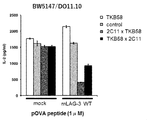
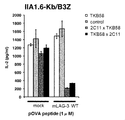
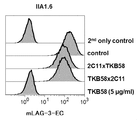
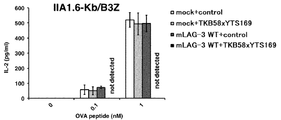
- TKB58xYTS169 The binding of the bispecific molecule TKB58xYTS169 to DO11.10 cells, DO11.10-mLAG3 cells, B3Z cells and B3Z-mLAG3 cells is shown.
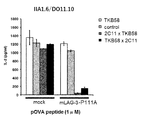
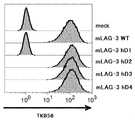
- the binding of TKB58 to DO11.10 cells expressing the chimeric LAG3 molecule is shown. It shows the binding of TKB58 to DO11.10 cells expressing the wild-type LAG3, N54A / F55A mutant or V61A / I62A mutant.
- amino acid residues are represented by the following abbreviations.
- Ala or A Alanine Arg or R: Arginine Asn or N: Asparagine Asp or D: aspartic acid Cys or C: Cysteine Gln or Q: Glutamine Glu or E: Glutamic acid Gly or G: Glycine His or H: histidine Ile or I: isoleucine Leu or L: Leucine Lys or K: Lysine Met or M: Methionine Phe or F: Phenylalanine Pro or P: Proline Ser or S: Serine Thr or T: Threonine Trp or W: Tryptophan Tyr or Y: tyrosine Val or V: Valine
- Bispecific molecule means a molecule that can specifically bind to two different target molecules or target sites.
- the bispecific molecule includes a first binding site that specifically binds to the first target molecule or target site and a second binding site that specifically binds to the second target molecule or target site.
- first binding site and second binding site are terms used for convenience to distinguish between the two binding sites, such as the position of the binding site in a bispecific molecule and the position of the binding site. It does not specify the function.
- the bispecific molecule may be composed of one molecule (for example, a polypeptide chain) or a plurality of molecules (for example, a plurality of polypeptide chains).
- the bispecific molecule may be a multispecific molecule having at least one additional binding site, where the additional binding site is the same as or different from the first or second binding site. It may be one that specifically binds to the first or second target molecule or target site, and to a target molecule or target site different from the first or second target molecule or target site. It may be specifically bound.
- LAG3, CD3 and CD8 may be of any species and are typically mammals (eg, humans, mice, rats, hamsters, rabbits, cats, dogs, cows, sheep, monkeys, etc.). For example, those of mice or humans, especially humans.
- mammals eg, humans, mice, rats, hamsters, rabbits, cats, dogs, cows, sheep, monkeys, etc.
- amino acid sequences of LAG3, CD3 and CD8 from various species are readily available using known databases.
- LAG3, CD3 and CD8 include the products of their naturally occurring alleles.
- LAG3 selectively binds to the stable peptide MHCII complex and suppresses the T cell receptor (TCR), thereby suppressing the response, activation and / or proliferation of T cells.
- Representative amino acid sequences of human and mouse LAG3 are registered as GenBank accession numbers NP_002277.4 (SEQ ID NO: 1) and NP_032505.1 (SEQ ID NO: 2), respectively.
- the first binding site may bind anywhere in the extracellular region of LAG3.
- the first binding site binds to the D1 region of LAG3, and in particular to a portion that is contained in the D1 region and not in the extra loop region.
- the D1 region and the extra loop region are described in PNAS, 1997, 94 (11): 5744-5749, Journal of Immunology, 1996, 157: 3727-3736, etc.
- the D1 region is the region from serine at position 23 to isoleucine at position 168
- the extra loop region is from glycine at position 70 to position 95.
- the region up to tyrosine is described in PNAS, 1997, 94 (11): 5744-5749, Journal of Immunology, 1996, 157: 3727-3736, etc.
- the first binding site binds to the N-terminal region of the D1 region from the extra loop region (the region from position 23 serine to position 69 serine of SEQ ID NO: 2).
- the first binding site binds to a region corresponding to the region containing serine at positions 23 to 69 of mouse LAG3 having the amino acid sequence of SEQ ID NO: 2.
- the region containing the serine at positions 23 to 69 of human LAG3 having the amino acid sequence of SEQ ID NO: 1 is the region containing serine at positions 23 to 69 of mouse LAG3 having the amino acid sequence of SEQ ID NO: 2.
- the first binding site is asparagine at position 54, phenylalanine at position 55, valine at position 61, and / or isoleucine at position 62 in mouse LAG3 having the amino acid sequence of SEQ ID NO: 2. It binds to the region containing the amino acid corresponding to.
- a region of human LAG3 having the amino acid sequence of SEQ ID NO: 1 containing serine at position 54, leucine at position 55, valine at position 61, and / or threonine at position 62 is the amino acid of SEQ ID NO: 2.
- mouse LAG3 having a sequence containing asparagine at position 54, phenylalanine at position 55, valine at position 61, and / or isoleucine at position 62 is the amino acid of SEQ ID NO: 2.
- the bispecific molecule allows binding of LAG3 to MHC class II molecules.
- “Allowing binding” means that the amount of binding between LAG3 and MHC class II molecules does not substantially decrease in the presence of the bispecific molecule, for example, the amount of binding in the absence of the bispecific molecule. It means that it is about 70%, about 75%, about 80%, about 85%, about 90%, about 95% or about 100% or more.
- the binding of LAG3 to MHC class II molecules can be confirmed by experiments in which the extracellular region of LAG-3 is bound as a soluble protein to cells expressing MHC class II in the presence and absence of bispecific molecules. ..
- the binding of LAG3 to an MHC class II molecule is a bispecific molecule, for example, in a system in which LAG3 suppresses cytokine production by TCR by binding to a peptide MHCII complex, for example, a system described in the examples below. It can be confirmed by comparing the amount of cytokine production in the presence and absence of.
- CD3 is mainly expressed on mature T cells and forms a complex with TCR.
- CD3 contains subunits of CD3 ⁇ , CD3 ⁇ , CD3 ⁇ , CD3 ⁇ and CD3 ⁇ .
- the second binding site may bind to any subunit.
- the second binding site of the bispecific molecule binds to CD3 ⁇ .
- Representative amino acid sequences of human and mouse CD3 ⁇ are registered as GenBank accession numbers NP_000724.1 (SEQ ID NO: 3) and NP_031674.1 (SEQ ID NO: 4), respectively.
- the second binding site may bind anywhere in the extracellular region of CD3. In certain embodiments, the second binding site binds to the extracellular region of CD3 ⁇ .
- the extracellular region is the region from aspartic acid at position 23 to aspartic acid at position 126
- mouse CD3 ⁇ having the amino acid sequence of SEQ ID NO: 4 The extracellular region is the region from aspartic acid at position 22 to aspartic acid at position 108.
- the second binding site is aspartic acid at position 22 to asparagine at position 26, asparagine at position 44 to leucine at position 49, asparagine at position 51, of mouse CD3 ⁇ having the amino acid sequence of SEQ ID NO: 4. It binds to a region containing an amino acid corresponding to lysine at position and / or tyrosine at position 84 to asparagine at position 91.
- CD8 is a co-receptor of TCR expressed on the surface of T cells, and when mature naive CD8 + T cells are presented with a specific antigen by dendritic cells, CD8 and TCR aggregate.
- CD8 contains subunits of CD8 ⁇ and CD8 ⁇ .
- the second binding site may bind to any subunit.
- the second binding site of the bispecific molecule binds to CD8 ⁇ .
- Representative amino acid sequences of human and mouse CD8 ⁇ are registered as GenBank accession numbers NP_001139345.1 (SEQ ID NO: 5) and NP_001074579.1 (SEQ ID NO: 6), respectively.
- the second binding site may bind anywhere in the extracellular region of CD8.
- the second binding site binds to the extracellular region of CD8 ⁇ .
- the extracellular region is the region from serine at position 22 to aspartic acid at position 182, and in mouse CD8 ⁇ having the amino acid sequence of SEQ ID NO: 6, cells.
- the outer region is the region from lysine at position 28 to tyrosine at position 196.
- amino acid corresponding to asparagine at position 54 of mouse LAG3 having the amino acid sequence of SEQ ID NO: 2 is an optimum state of the amino acid sequence of a certain LAG3 and the amino acid sequence of SEQ ID NO: 2 (the state where the amino acid match is maximized).
- the sequences for CD3 and CD8 are similarly defined. For example, serine at position 54, leucine at position 55, valine at position 61 and threonine at position 62 of human LAG3 having the amino acid sequence of SEQ ID NO: 1 respectively have mouse LAG3 having the amino acid sequence of SEQ ID NO: 2.
- Aspartic acid at position 23 to 27 of human CD3 ⁇ which corresponds to aspartic acid at position 54, phenylalanine at position 55, valine at position 61 and isoleucine at position 62, and has the amino acid sequence of SEQ ID NO: 3.
- Glutamic acid, glutamine at position 51 to glutamic acid at position 56, leucine at position 58, and / or aspartic acid at position 99 to position 109 aspartic acid are 22nd of mouse CD3 ⁇ having the amino acid sequence of SEQ ID NO: 4.
- the first and second binding sites can be derived from the antibody, especially from the antigen binding site (variable region) of the antibody.
- the first binding site is derived from the heavy and light chain variable regions of the anti-LAG3 antibody
- the second binding site is the heavy and light chain variable regions of the anti-CD3 or anti-CD8 antibody. Derived from the area.
- variable region may be derived from an antibody of any animal species. Examples include mice, rats, rabbits, goats, human-derived antibodies and humanized antibodies.
- the variable region may be derived from any immunoglobulin class antibody.
- the immunoglobulin class includes IgA, IgD, IgE, IgG and IgM, and the subclass (isotype) of the immunoglobulin class includes, for example, IgG1, IgG2, IgG3, IgG4, IgA1 and IgA2.
- the variable region is of an IgG subclass, such as an IgG1 or IgG4 subclass.
- the variable region can be derived from a monoclonal antibody.
- a hybridoma secreting a monoclonal antibody can be produced according to a well-known method, for example, the method described in Kohler et al., Nature 256: 495, 1975.
- the immunogen is mixed with a suitable substance for enhancing antigenicity (eg, keyhole limpet hemocyanin, bovine serum albumin, etc.) and, if necessary, an immunostimulant (such as Freund's complete or incomplete adjuvant). It immunizes non-human mammals such as rats, mice, rabbits, goats and horses.
- a suitable substance for enhancing antigenicity eg, keyhole limpet hemocyanin, bovine serum albumin, etc.
- an immunostimulant such as Freund's complete or incomplete adjuvant
- immunized animals are immunized multiple times at intervals of 3 to 10 days, and 1 to 100 ⁇ g of the immunogenic peptide is administered.
- immunocompetent cells are collected from immune animals that have undergone multiple immunizations, and myeloma cells that are not capable of producing autoantibodies (eg, mice, rats, guinea pigs, hamsters, rabbits, or rabbits).
- myeloma cells that are not capable of producing autoantibodies (eg, mice, rats, guinea pigs, hamsters, rabbits, or rabbits).
- Cells derived from mammals such as humans are fused.
- a polyethylene glycol method, an electric fusion method, or the like is used for cell fusion.
- the monoclonal antibody can be isolated from the culture supernatant obtained by culturing the obtained hybridoma in vitro. It can also be cultured in vivo in ascites such as mice, rats, guinea pigs, hamsters or rabbits and isolated from ascites.
- all or part of the extracellular region of LAG3 for example, about 5 to 50, about 6 to 40, about 7 to 35, about 8 of the extracellular region of LAG3.
- Peptides containing up to 30, about 9 to 25 or about 10 to 20 amino acid sequences can be used.
- a peptide containing a part of the D1 region of LAG3, particularly a peptide containing a portion contained in the D1 region and not in the extra loop region may be used.
- Peptides containing regions containing asparagine at position 54, phenylalanine at position 55, valine at position 61 and / or isoleucine at position 62 can be used in mice with LAG3.
- all or part of the extracellular region of CD3 ⁇ for example, about 5 to 50, about 6 to 40, about 7 to 35, about 8 of the extracellular region of CD3 ⁇ .
- Peptides containing up to 30, about 9 to 25 or about 10 to 20 amino acid sequences can be used.
- Peptides containing aspartic acid, lysine at position 51, and / or a region containing tyrosine at position 84 to aspartic acid at position 91 can be used.
- all or part of the extracellular region of CD8 ⁇ for example, about 5 to 50, about 6 to 40, about 7 to 35, about 8 of the extracellular region of CD8 ⁇ .
- Peptides containing up to 30, about 9 to 25 or about 10 to 20 amino acid sequences can be used.
- 10 -8 M or less for example 10 -8 M to 10 -15 M, 10 -8 M to 10 -13 M, 10 -9 M to 10 -12 M, or 10 -9 M to 10 -11 M.
- a monoclonal antibody that binds to the antigen with an equilibrium dissociation constant (Kd) is used. Binding of the antibody to the antigen can be confirmed by ELISA method, fluorescent antibody method, radioimmunoassay (RIA), BIACORE (registered trademark) surface plasmon resonance assay and the like. Binding of the antibody to the antigen can also be confirmed by a competitive assay. For example, it can be confirmed by FACS or ELISA whether or not an antibody competes with a known antibody in binding to an antigen.
- anti-LAG3 antibody, anti-CD3 antibody and anti-CD8 antibody for example, an antibody having a heavy chain variable region, a light chain variable region or a CDR sequence described later can be used.
- the antibody gene can be cloned from a hybridoma producing a desired antibody by a well-known method to determine the amino acid sequence of the variable region or the nucleic acid sequence encoding the same.
- Amino acid sequences of known anti-LAG3 antibody, anti-CD3 antibody or anti-CD8 antibody or nucleic acid sequences encoding the same may be utilized.
- Variable regions are usually composed of three complementarity determining regions (also referred to as CDRs) sandwiched between four framework regions (also referred to as FR).
- amino acid positions assigned to the CDRs of the variable region of the antibody and the framework are defined according to Kabat (see Sequences of Proteins of Immunological Interest (National Institute of Health, Bethesda, Md., (1987) and (1991)). ).
- CDR is a region that substantially determines the binding specificity of an antibody, and its amino acid sequence is rich in diversity.
- the amino acid sequences constituting FR show high homology even among antibodies having different binding specificities. Therefore, the binding specificity of one antibody can be transplanted to another antibody by transplanting CDR.
- CDR transplanting the CDR of an antibody derived from a non-human animal into a human antibody
- a humanized antibody composed of the CDR of the antibody derived from a non-human animal, FR derived from the human antibody, and the constant region derived from the human antibody.
- Humanized antibodies can be prepared by various methods, and one example is Overlap Extension PCR (Almagro and Francsson, Front. Biosci.
- FR suitable for producing a humanized antibody
- FR selected by the best fit method Sims et al. J. Immunol. 151: 2296 (1993)
- the light chain of a human antibody are known.
- FR Carter et al. Proc. Natl. Acad. Sci. USA 89: 4285 (1992); Presta et al. J. Simunol. 151: 2623 (Presta et al. J. Immunol. 151: 2623) derived from the consensus sequence of a specific subgroup of the heavy chain variable region. 1993)
- the variable region of the humanized antibody thus obtained may be used.
- the variable region of the human antibody may be used.
- Human antibodies can be obtained, for example, by sensitizing human lymphocytes in vitro with the desired antigen and then fusing the sensitized lymphocytes with human myeloma cells (Japanese Patent Publication No. 1-59878).
- human myeloma cells which are fusion partners, for example, U266 can be used.
- Human antibodies can also be obtained by immunizing transgenic animals with the entire repertoire of human antibody genes with the desired antigen (Lonberg, Nat. Biotech. 23: 1117-1125, 2005).
- a technique for obtaining a human antibody by panning using a human antibody library is also known (Antibody Phase Display: Methods and Protocols, Methods in Molecular Biology 178, 2001).
- variable region of a human antibody is expressed as a single-chain antibody (scFv) on the surface of a phage by a phage display method, a phage that binds to the antigen is selected, and the gene of the selected phage is analyzed to obtain an antigen.
- the nucleic acid sequence encoding the variable region of the binding human antibody can be determined.
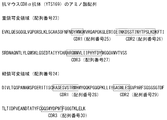
- the first binding site that binds to LAG3 is Heavy chain variable region containing CDR1, CDR2 and CDR3 having the same amino acid sequence as CDR1, CDR2 and CDR3 contained in the heavy chain variable region having the amino acid sequence of SEQ ID NO: 7; and / or A light chain variable region containing CDR1, CDR2 and CDR3 having the same amino acid sequence as CDR1, CDR2 and CDR3 contained in the light chain variable region having the amino acid sequence of SEQ ID NO: 8; including.
- the first binding site that binds to LAG3 is Heavy chain variable region containing heavy chain CDR1 containing the amino acid sequence of SEQ ID NO: 9, heavy chain CDR2 containing the amino acid sequence of SEQ ID NO: 10 and heavy chain CDR3 containing the amino acid sequence of SEQ ID NO: 11; and / or Light chain variable region containing light chain CDR1 containing the amino acid sequence of SEQ ID NO: 12, light chain CDR2 containing the amino acid sequence of SEQ ID NO: 13 and light chain CDR3 containing the amino acid sequence of SEQ ID NO: 14; including.
- the first binding site that binds to LAG3 is Heavy chain variable region containing heavy chain CDR1 consisting of the amino acid sequence of SEQ ID NO: 9, heavy chain CDR2 consisting of the amino acid sequence of SEQ ID NO: 10 and heavy chain CDR3 consisting of the amino acid sequence of SEQ ID NO: 11; and / or A light chain variable region containing light chain CDR1 consisting of the amino acid sequence of SEQ ID NO: 12, light chain CDR2 consisting of the amino acid sequence of SEQ ID NO: 13 and light chain CDR3 consisting of the amino acid sequence of SEQ ID NO: 14; including.
- the first binding site that binds to LAG3 is CDR1, which comprises a sequence having 80% or more, preferably 85% or more, more preferably 90% or more, and even more preferably 95% or more sequence identity with the sequence of SEQ ID NO: 9.
- CDR2 containing a sequence having a sequence identity of 80% or more, preferably 85% or more, more preferably 90% or more, even more preferably 95% or more with the sequence of SEQ ID NO: 10, and 80% with the sequence of SEQ ID NO: 11.
- CDR3 containing a sequence having a sequence identity of preferably 85% or more, more preferably 90% or more, and even more preferably 95% or more.
- Heavy chain variable region containing; and / or CDR1 which contains a sequence having 80% or more, preferably 85% or more, more preferably 90% or more, and even more preferably 95% or more sequence identity with the sequence of SEQ ID NO: 12.
- CDR2 containing a sequence having a sequence identity of 80% or more, preferably 85% or more, more preferably 90% or more, even more preferably 95% or more with the sequence of SEQ ID NO: 13, and 80% with the sequence of SEQ ID NO: 14.
- CDR3 containing a sequence having a sequence identity of preferably 85% or more, more preferably 90% or more, and even more preferably 95% or more.
- Light chain variable region containing including.
- the first binding site that binds to LAG3 is CDR1, consisting of a sequence having 80% or more, preferably 85% or more, more preferably 90% or more, and even more preferably 95% or more sequence identity with the sequence of SEQ ID NO: 9.
- CDR2 consisting of a sequence having 80% or more, preferably 85% or more, more preferably 90% or more, and even more preferably 95% or more sequence identity with the sequence of SEQ ID NO: 10
- CDR3 consisting of sequences having sequence identity of preferably 85% or more, more preferably 90% or more, and even more preferably 95% or more.
- Heavy chain variable region containing; and / or CDR1 consisting of a sequence having 80% or more, preferably 85% or more, more preferably 90% or more, and even more preferably 95% or more sequence identity with the sequence of SEQ ID NO: 12.
- CDR2 consisting of a sequence having 80% or more, preferably 85% or more, more preferably 90% or more, even more preferably 95% or more sequence identity with the sequence of SEQ ID NO: 13, and 80% with the sequence of SEQ ID NO: 14.
- CDR3 consisting of sequences having sequence identity of preferably 85% or more, more preferably 90% or more, and even more preferably 95% or more.
- Sequence identity is determined by comparing two optimally aligned sequences over the entire region of the sequence to be compared.
- the sequence to be compared may have additions or deletions (eg, gaps, etc.) in the optimal alignment of the two sequences.
- Sequence identity can be calculated using programs such as FASTA, BLAST, and CLUSTAL W provided in public databases (eg, DDBJ (http://www.ddbj.nig.ac.jp)). Alternatively, it can be obtained using commercially available sequence analysis software (for example, Vector NTI (registered trademark) software, GENETYX (registered trademark) ver. 12).
- the first binding site that binds to LAG3 is CDR1, which contains a sequence in which 0, 1 or 2 amino acids have been deleted, substituted, or added in the sequence of SEQ ID NO: 9.
- CDR2 containing a sequence in which 0, 1 or 2 amino acids have been deleted, substituted, or added in the sequence of SEQ ID NO: 13, and 0, 1 or 2 amino acids have been deleted, substituted, in the sequence of SEQ ID NO: 14.
- CDR3 which contains the added sequence, Light chain variable region containing; including.
- the first binding site that binds to LAG3 is CDR1, consisting of a sequence in which 0, 1 or 2 amino acids have been deleted, substituted, or added in the sequence of SEQ ID NO: 9.
- CDR2 consisting of a sequence in which 0, 1 or 2 amino acids have been deleted, substituted, or added in the sequence of SEQ ID NO: 10
- 0, 1 or 2 amino acids have been deleted, substituted, in the sequence of SEQ ID NO: 11.
- CDR3 consisting of the added array, Heavy chain variable region containing; and / or CDR1, consisting of a sequence in which 0, 1 or 2 amino acids have been deleted, substituted, or added in the sequence of SEQ ID NO: 12.
- CDR2 consisting of a sequence in which 0, 1 or 2 amino acids have been deleted, substituted, or added in the sequence of SEQ ID NO: 13, and 0, 1 or 2 amino acids have been deleted, substituted, in the sequence of SEQ ID NO: 14.
- CDR3 consisting of the added array, Light chain variable region containing; including.
- the first binding site that binds to LAG3 is 80% or more, preferably 85% or more, more preferably 90% or more, even more preferably 95% or more sequence identical to the amino acid sequence of SEQ ID NO: 7. Sequence identity of 80% or more, preferably 85% or more, more preferably 90% or more, and even more preferably 95% or more with the amino acid sequence of SEQ ID NO: 8 and the heavy chain variable region containing the sequence having sex. Includes a light chain variable region containing a sequence having.
- the first binding site that binds to LAG3 is a heavy chain variable region containing an amino acid sequence in which 0-5 amino acids have been deleted, substituted, or added in the amino acid sequence of SEQ ID NO: 7, and / Alternatively, it comprises a light chain variable region comprising an amino acid sequence in which 0-5 amino acids have been deleted, substituted, or added in the amino acid sequence of SEQ ID NO: 8.
- the CDR1 consisting of the first binding site that binds to LAG3 without modification of the CDRs of the heavy chain variable region and / or the light chain variable region, specifically the amino acid sequence of SEQ ID NO: 9.
- CDR2 consisting of the amino acid sequence of SEQ ID NO: 10
- heavy chain variable region containing CDR3 consisting of the amino acid sequence of SEQ ID NO: 11
- CDR1 consisting of the amino acid sequence of SEQ ID NO: 12, consisting of the amino acid sequence of SEQ ID NO: 13. It contains a first binding site that binds to LAG3, including CDR2, and a light chain variable region containing CDR3 consisting of the amino acid sequence of SEQ ID NO: 14.
- the first binding site that binds to LAG3 is a heavy chain variable region comprising CDRs 1-3 of the light chain variable region and / or a light chain variable region comprising CDRs 1-3 of the heavy chain variable region.
- the first binding site that binds to LAG3 comprises a heavy chain variable region comprising the amino acid sequence of SEQ ID NO: 7 and / or a light chain variable region comprising the amino acid sequence of SEQ ID NO: 8. In a further embodiment, the first binding site that binds to LAG3 comprises a heavy chain variable region consisting of the amino acid sequence of SEQ ID NO: 7 and / or a light chain variable region consisting of the amino acid sequence of SEQ ID NO: 8.
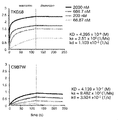
- the first binding site that binds to LAG3 is a known anti-LAG3 antibody such as BMS-986016, LAG525, MK-4280, 11E3, 17B4, 3DS223H, REA351, REA776, 11C3C65, 7H2C65, C9B7W or It can be derived from the variable region of 631501.
- the first binding site that binds to LAG3 competes with any of the first binding sites identified above for binding to LAG3.
- the first binding site is derived from the variable region of an antibody that competes for binding to LAG3 with any of the first binding sites identified above. Competition can be confirmed, for example, by the competition assay described above.
- a region of LAG3 to which any of the first binding sites identified above is bound is identified, a region corresponding to that region is identified in another species of LAG3 and bound to it.
- the binding site eg, the variable region of the antibody that binds to it, can be the first binding site.
- the second binding site that binds to CD3 is Heavy chain variable region containing CDR1, CDR2, and CDR3 having the same amino acid sequence as CDR3 contained in the heavy chain variable region having the amino acid sequence of SEQ ID NO: 15; and / or The light chain variable region containing CDR1, CDR2, and CDR3 having the same amino acid sequence as CDR3 contained in the light chain variable region having the amino acid sequence of SEQ ID NO: 16; including.
- the second binding site that binds to CD3 is Heavy chain variable region containing heavy chain CDR1 containing the amino acid sequence of SEQ ID NO: 17, heavy chain CDR2 containing the amino acid sequence of SEQ ID NO: 18 and heavy chain CDR3 containing the amino acid sequence of SEQ ID NO: 19; and / or Light chain variable region containing light chain CDR1 containing the amino acid sequence of SEQ ID NO: 20, light chain CDR2 containing the amino acid sequence of SEQ ID NO: 21 and light chain CDR3 containing the amino acid sequence of SEQ ID NO: 22; including.
- the second binding site that binds to CD3 is Heavy chain variable region containing heavy chain CDR1 consisting of the amino acid sequence of SEQ ID NO: 17, heavy chain CDR2 consisting of the amino acid sequence of SEQ ID NO: 18 and heavy chain CDR3 consisting of the amino acid sequence of SEQ ID NO: 19; and / or A light chain variable region containing light chain CDR1 consisting of the amino acid sequence of SEQ ID NO: 20, light chain CDR2 consisting of the amino acid sequence of SEQ ID NO: 21 and light chain CDR3 consisting of the amino acid sequence of SEQ ID NO: 22; including.
- the second binding site that binds to CD3 is CDR1, which comprises a sequence having 80% or more, preferably 85% or more, more preferably 90% or more, and even more preferably 95% or more sequence identity with the sequence of SEQ ID NO: 17.
- CDR2 containing a sequence having a sequence identity of 80% or more, preferably 85% or more, more preferably 90% or more, even more preferably 95% or more with the sequence of SEQ ID NO: 18, and 80% with the sequence of SEQ ID NO: 19.
- CDR3 containing a sequence having a sequence identity of preferably 85% or more, more preferably 90% or more, and even more preferably 95% or more.
- Heavy chain variable region containing; and / or CDR1 which comprises a sequence having 80% or more, preferably 85% or more, more preferably 90% or more, and even more preferably 95% or more sequence identity with the sequence of SEQ ID NO: 20.
- CDR2 containing a sequence having sequence identity of 80% or more, preferably 85% or more, more preferably 90% or more, even more preferably 95% or more with the sequence of SEQ ID NO: 21, and 80% with the sequence of SEQ ID NO: 22.
- CDR3 containing a sequence having a sequence identity of preferably 85% or more, more preferably 90% or more, and even more preferably 95% or more.
- Light chain variable region containing including.
- the second binding site that binds to CD3 is CDR1, consisting of a sequence having 80% or more, preferably 85% or more, more preferably 90% or more, and even more preferably 95% or more sequence identity with the sequence of SEQ ID NO: 17.
- CDR2 consisting of a sequence having 80% or more, preferably 85% or more, more preferably 90% or more, and even more preferably 95% or more sequence identity with the sequence of SEQ ID NO: 18, and 80% with the sequence of SEQ ID NO: 19.
- CDR3 consisting of sequences having sequence identity of preferably 85% or more, more preferably 90% or more, and even more preferably 95% or more.
- Heavy chain variable region containing; and / or CDR1 consisting of a sequence having 80% or more, preferably 85% or more, more preferably 90% or more, and even more preferably 95% or more sequence identity with the sequence of SEQ ID NO: 20.
- CDR2 consisting of a sequence having 80% or more, preferably 85% or more, more preferably 90% or more, and even more preferably 95% or more sequence identity with the sequence of SEQ ID NO: 21, and 80% with the sequence of SEQ ID NO: 22.
- CDR3 consisting of sequences having sequence identity of preferably 85% or more, more preferably 90% or more, and even more preferably 95% or more.
- the second binding site that binds to CD3 is CDR1, which contains a sequence in which 0, 1 or 2 amino acids have been deleted, substituted, or added in the sequence of SEQ ID NO: 17.
- CDR2 containing a sequence in which 0, 1 or 2 amino acids have been deleted, substituted, or added in the sequence of SEQ ID NO: 21, and 0, 1 or 2 amino acids have been deleted, substituted, in the sequence of SEQ ID NO: 22.
- CDR3 which contains the added sequence, Light chain variable region containing; including.
- the second binding site that binds to CD3 is CDR1, consisting of a sequence in which 0, 1 or 2 amino acids have been deleted, substituted, or added in the sequence of SEQ ID NO: 17.
- CDR2 consisting of a sequence in which 0, 1 or 2 amino acids have been deleted, substituted, or added in the sequence of SEQ ID NO: 18, and 0, 1 or 2 amino acids have been deleted, substituted, in the sequence of SEQ ID NO: 19.
- CDR3 consisting of the added array, Heavy chain variable region containing; and / or CDR1, consisting of a sequence in which 0, 1 or 2 amino acids have been deleted, substituted, or added in the sequence of SEQ ID NO: 20.
- CDR2 consisting of a sequence in which 0, 1 or 2 amino acids have been deleted, substituted, or added in the sequence of SEQ ID NO: 21, and 0, 1 or 2 amino acids have been deleted, substituted, in the sequence of SEQ ID NO: 22.
- CDR3 consisting of the added array, Light chain variable region containing; including.
- the second binding site that binds to CD3 is 80% or more, preferably 85% or more, more preferably 90% or more, even more preferably 95% or more sequence identical to the amino acid sequence of SEQ ID NO: 15. Sequence identity of 80% or more, preferably 85% or more, more preferably 90% or more, and even more preferably 95% or more with the amino acid sequence of SEQ ID NO: 16 and the heavy chain variable region containing the sequence having sex. Includes a light chain variable region containing a sequence having.
- the second binding site that binds to CD3 is a heavy chain variable region comprising an amino acid sequence in which 0-5 amino acids have been deleted, substituted, or added in the amino acid sequence of SEQ ID NO: 15 and /.
- it comprises a light chain variable region comprising an amino acid sequence in which 0-5 amino acids have been deleted, substituted, or added in the amino acid sequence of SEQ ID NO: 16.
- CDR1 consisting of a second binding site that binds to CD3 without modification of the CDRs of the heavy and / or light chain variable regions, specifically the amino acid sequence of SEQ ID NO: 17.
- CDR2 consisting of the amino acid sequence of SEQ ID NO: 18, heavy chain variable region containing CDR3 consisting of the amino acid sequence of SEQ ID NO: 19, and / or CDR1 consisting of the amino acid sequence of SEQ ID NO: 20, consisting of the amino acid sequence of SEQ ID NO: 21. It contains a second binding site that binds to CD3, including CDR2, and a light chain variable region containing CDR3 consisting of the amino acid sequence of SEQ ID NO: 22.
- the second binding site that binds to CD3 is a heavy chain variable region comprising CDRs 1-3 of the light chain variable region and / or a light chain variable region comprising CDRs 1-3 of the heavy chain variable region.
- the second binding site that binds to CD3 comprises a heavy chain variable region comprising the amino acid sequence of SEQ ID NO: 15 and / or a light chain variable region comprising the amino acid sequence of SEQ ID NO: 16. In a further embodiment, the second binding site that binds to CD3 comprises a heavy chain variable region consisting of the amino acid sequence of SEQ ID NO: 15 and / or a light chain variable region consisting of the amino acid sequence of SEQ ID NO: 16.
- the second binding site that binds to CD3 is a known anti-CD3 antibody such as 2C11, 17A2, 500A2, KT3, OKT3 (ATCC Accession No. CRL8001) (US Pat. No. 4658019), 7D6, 12F6.
- a known anti-CD3 antibody such as 2C11, 17A2, 500A2, KT3, OKT3 (ATCC Accession No. CRL8001) (US Pat. No. 4658019), 7D6, 12F6.
- the second binding site that binds to CD3 competes with any of the second binding sites identified above for binding to CD3.
- the second binding site that binds to CD3 ⁇ competes with any of the second binding sites identified above for binding to CD3 ⁇ .
- the second binding site is derived from the variable region of the antibody that competes for binding to CD3 with any of the second binding sites identified above. Competition can be confirmed, for example, by the competition assay described above.
- the binding site eg, the variable region of the antibody that binds to it, can be the second binding site.
- the second binding site that binds to CD8 is Heavy chain variable region containing CDR1, CDR2, and CDR3 having the same amino acid sequence as CDR3 contained in the heavy chain variable region having the amino acid sequence of SEQ ID NO: 23; and / or The light chain variable region containing CDR1, CDR2, and CDR3 having the same amino acid sequence as CDR3 contained in the light chain variable region having the amino acid sequence of SEQ ID NO: 24; including.
- the second binding site that binds to CD8 is Heavy chain variable region containing heavy chain CDR1 containing the amino acid sequence of SEQ ID NO: 25, heavy chain CDR2 containing the amino acid sequence of SEQ ID NO: 26, and heavy chain CDR3 containing the amino acid sequence of SEQ ID NO: 27; and / or Light chain variable region containing light chain CDR1 containing the amino acid sequence of SEQ ID NO: 28, light chain CDR2 containing the amino acid sequence of SEQ ID NO: 29 and light chain CDR3 containing the amino acid sequence of SEQ ID NO: 30; including.
- the second binding site that binds to CD8 is Heavy chain variable region containing heavy chain CDR1 consisting of the amino acid sequence of SEQ ID NO: 25, heavy chain CDR2 consisting of the amino acid sequence of SEQ ID NO: 26, and heavy chain CDR3 consisting of the amino acid sequence of SEQ ID NO: 27; and / or A light chain variable region containing light chain CDR1 consisting of the amino acid sequence of SEQ ID NO: 28, light chain CDR2 consisting of the amino acid sequence of SEQ ID NO: 29, and light chain CDR3 consisting of the amino acid sequence of SEQ ID NO: 30; including.
- the second binding site that binds to CD8 is CDR1, which comprises a sequence having 80% or more, preferably 85% or more, more preferably 90% or more, and even more preferably 95% or more sequence identity with the sequence of SEQ ID NO: 25.
- CDR2 containing a sequence having a sequence identity of 80% or more, preferably 85% or more, more preferably 90% or more, even more preferably 95% or more with the sequence of SEQ ID NO: 26, and 80% with the sequence of SEQ ID NO: 27.
- CDR3 containing a sequence having a sequence identity of preferably 85% or more, more preferably 90% or more, and even more preferably 95% or more.
- Heavy chain variable region containing; and / or CDR1 which comprises a sequence having 80% or more, preferably 85% or more, more preferably 90% or more, and even more preferably 95% or more sequence identity with the sequence of SEQ ID NO: 28.
- CDR2 containing a sequence having a sequence identity of 80% or more, preferably 85% or more, more preferably 90% or more, even more preferably 95% or more with the sequence of SEQ ID NO: 29, and 80% with the sequence of SEQ ID NO: 30.
- CDR3 containing a sequence having a sequence identity of preferably 85% or more, more preferably 90% or more, and even more preferably 95% or more.
- Light chain variable region containing including.
- the second binding site that binds to CD8 is CDR1, consisting of a sequence having 80% or more, preferably 85% or more, more preferably 90% or more, and even more preferably 95% or more sequence identity with the sequence of SEQ ID NO: 25.
- CDR2 consisting of a sequence having 80% or more, preferably 85% or more, more preferably 90% or more, and even more preferably 95% or more sequence identity with the sequence of SEQ ID NO: 26, and 80% with the sequence of SEQ ID NO: 27.
- CDR3 consisting of sequences having sequence identity of preferably 85% or more, more preferably 90% or more, and even more preferably 95% or more.
- Heavy chain variable region containing; and / or CDR1 consisting of a sequence having 80% or more, preferably 85% or more, more preferably 90% or more, and even more preferably 95% or more sequence identity with the sequence of SEQ ID NO: 28.
- CDR2 consisting of a sequence having 80% or more, preferably 85% or more, more preferably 90% or more, even more preferably 95% or more sequence identity with the sequence of SEQ ID NO: 29, and 80% with the sequence of SEQ ID NO: 30.
- CDR3 consisting of sequences having sequence identity of preferably 85% or more, more preferably 90% or more, and even more preferably 95% or more.
- the second binding site that binds to CD8 is CDR1, which contains a sequence in which 0, 1 or 2 amino acids have been deleted, substituted, or added in the sequence of SEQ ID NO: 25, CDR2 containing a sequence in which 0, 1 or 2 amino acids have been deleted, substituted, or added in the sequence of SEQ ID NO: 26, and 0, 1 or 2 amino acids have been deleted, substituted, in the sequence of SEQ ID NO: 27.
- CDR3 which contains the added sequence, Heavy chain variable region containing; and / or CDR1, which contains a sequence in which 0, 1 or 2 amino acids have been deleted, substituted, or added in the sequence of SEQ ID NO: 28, CDR2 containing a sequence in which 0, 1 or 2 amino acids have been deleted, substituted, or added in the sequence of SEQ ID NO: 29, and 0, 1 or 2 amino acids have been deleted, substituted, in the sequence of SEQ ID NO: 30.
- CDR3 which contains the added sequence, Light chain variable region containing; including.
- the second binding site that binds to CD8 is CDR1, consisting of a sequence in which 0, 1 or 2 amino acids have been deleted, substituted, or added in the sequence of SEQ ID NO: 25, CDR2 consisting of a sequence in which 0, 1 or 2 amino acids have been deleted, substituted, or added in the sequence of SEQ ID NO: 26, and 0, 1 or 2 amino acids have been deleted, substituted, in the sequence of SEQ ID NO: 27.
- CDR3 consisting of the added array, Heavy chain variable region containing; and / or CDR1, consisting of a sequence in which 0, 1 or 2 amino acids have been deleted, substituted, or added in the sequence of SEQ ID NO: 28,
- CDR2 consisting of a sequence in which 0, 1 or 2 amino acids have been deleted, substituted, or added in the sequence of SEQ ID NO: 29, and 0, 1 or 2 amino acids have been deleted, substituted, in the sequence of SEQ ID NO: 30.
- CDR3 consisting of the added array, Light chain variable region containing; including.
- the second binding site that binds to CD8 is 80% or more, preferably 85% or more, more preferably 90% or more, even more preferably 95% or more sequence identical to the amino acid sequence of SEQ ID NO: 23. Sequence identity of 80% or more, preferably 85% or more, more preferably 90% or more, even more preferably 95% or more with the amino acid sequence of SEQ ID NO: 24 and / or the heavy chain variable region containing the sequence having sex. Includes a light chain variable region containing a sequence having.
- the second binding site that binds to CD8 is a heavy chain variable region containing an amino acid sequence in which 0-5 amino acids have been deleted, substituted, or added in the amino acid sequence of SEQ ID NO: 23, and /.
- it comprises a light chain variable region comprising an amino acid sequence in which 0-5 amino acids have been deleted, substituted, or added in the amino acid sequence of SEQ ID NO: 24.
- the CDR1 consisting of a second binding site that binds to CD8 without modification of the CDRs of the heavy and / or light chain variable regions, specifically the amino acid sequence of SEQ ID NO: 25.
- CDR2 consisting of the amino acid sequence of SEQ ID NO: 26 and a heavy chain variable region containing CDR3 consisting of the amino acid sequence of SEQ ID NO: 27, and / or CDR1 consisting of the amino acid sequence of SEQ ID NO: 28, consisting of the amino acid sequence of SEQ ID NO: 29. It contains a second binding site that binds to CD8, including CDR2, and a light chain variable region containing CDR3 consisting of the amino acid sequence of SEQ ID NO: 30.
- the second binding site that binds to CD8 comprises a heavy chain variable region comprising CDRs 1-3 of the light chain variable region and / or a light chain variable region comprising CDRs 1-3 of the heavy chain variable region.
- the second binding site that binds to CD8 comprises a heavy chain variable region comprising the amino acid sequence of SEQ ID NO: 23 and / or a light chain variable region comprising the amino acid sequence of SEQ ID NO: 24.
- the second binding site that binds to CD8 comprises a heavy chain variable region consisting of the amino acid sequence of SEQ ID NO: 23 and / or a light chain variable region consisting of the amino acid sequence of SEQ ID NO: 24.
- the second binding site that binds to CD8 is a known anti-CD8 antibody such as YTS169, cM-T807, T8 / Leu2 / SK1, RPA-T8, HIT8a, OKT8 (Appendix 2011-522835). , 53-6.7, 53-5.8, 5H10, YTS-156, KT15, LT8 or CA-8 variable region.
- a known anti-CD8 antibody such as YTS169, cM-T807, T8 / Leu2 / SK1, RPA-T8, HIT8a, OKT8 (Appendix 2011-522835). , 53-6.7, 53-5.8, 5H10, YTS-156, KT15, LT8 or CA-8 variable region.
- the second binding site that binds to CD8 competes with any of the second binding sites identified above for binding to CD8.
- the second binding site that binds to CD8 ⁇ competes with any of the second binding sites identified above for binding to CD8 ⁇ .
- the second binding site is derived from the variable region of the antibody that competes for binding to CD8 with any of the second binding sites identified above. Competition can be confirmed, for example, by the competition assay described above.
- the binding site eg, the variable region of the antibody that binds to it, can be the second binding site.
- the bispecific molecule may have a structure conforming to the format of the multispecific molecule known in the art.
- multispecific molecules are, for example, The coming of Age of Engineered Multivalent Antibodies, Nunes-Prado et al Drug Discovery Today Vol 20 Number 5 Mar 2015, page 588-594, D.I., which are incorporated herein by reference. It is disclosed in Holmes, Nature Rev Drug Disc Nov 2011:10; 798, Chan and Carter, Nature Reviews Immunology vol 10, May 2010, 301 and Special Table 2017-522023.
- the format of the bispecific molecule is diabody, bispecific sc (Fv) 2 , bispecific minibody, bispecific F (ab') 2 , bispecific antibody. , Covalently Connected Diabody (Bispecific DART) (International Publication No. 2006/113665 or International Publication No. 2008/157379), Bispecificity (FvCys) 2 (J. Immunol., 1992, Vol.149) , No.1, p.120-126), bispecific F (ab'-zipper) 2 (J.
- the formats of the bispecific molecule are diabody, tandem scFv, sc diabody, FabFv, Fab'Fv, FabdsFv, Fab-scFv, Fab-dsscFv, Fab- (dsscFv) 2, diFab, diFab. ', ScFv-Fc, Tandem scFv-Fc, sc Diabody-Fc, sc Diabody-CH3, Ig-scFv and scFv-Ig (Special Table 2017-526616).
- the bispecific molecule is selected from diabody, tandem scFv and sc diabody.
- the bispecific molecule is the sc diabody. In certain embodiments, the bispecific molecule is a bispecific antibody, preferably a bispecific monoclonal antibody. In certain embodiments, the bispecific molecules described herein include a constant region.
- the bispecific antibody may be any immunoglobulin class antibody.
- the immunoglobulin class includes IgA, IgD, IgE, IgG and IgM, and the subclass (isotype) of the immunoglobulin class includes, for example, IgG1, IgG2, IgG3, IgG4, IgA1 and IgA2.
- the bispecific antibody is of an IgG subclass, such as an IgG1 or IgG4 subclass.
- a dimer is a dimer composed of two polypeptide chains.
- a heavy chain variable region (V H ) and a light chain variable region (V L ) are associated with each other in the same chain. It is linked by a linker so that it cannot be done (Proc.Natl.Acad.Sci.USA, 1993, Vol.90, No.14, p.6444-6448).
- the linker is not particularly limited as long as it does not inhibit the expression of V H and VL and the formation of the diabody, for example, Ser, (Gly) n -Ser, Ser- (Gly) n , ((Gly) 4 -Ser) n , (Ser- (Gly) 4 ) n [n represents an integer from 1 to 6], etc. (J. Immunol. Meth., 1999, Vol.231, p.177-189).
- the peptide linker is short enough that V H and VL within the polypeptide chain cannot associate, eg, about 2-12 or about 3-10, especially about 5 amino acid residues in length. Or, it has a structure in which V H and V L in the polypeptide chain cannot associate.
- Bispecific sc (Fv) 2 is a polypeptide chain in which the V H and VL of two antibodies that recognize different antigens are linked in a single chain via a linker (J. Biological Chemistry). , 1994, 269: 199-206).
- the V H and V L of the antibody that recognizes two different antigens a and b are V H a and V L a, V H b and V, respectively.
- L b and the peptide linkers as (L 1 ), (L 2 ) and (L 3 ), respectively, from the N-terminal side, (1) V H a- (L 1 ) -V L a- (L 2 ) -V H b- (L 3 ) -V L b, (2) V H a- (L 1 ) -V L a- (L 2 ) -V L b- (L 3 ) -V H b, (3) V L a-(L 1 ) -V H a- (L 2 ) -V H b- (L 3 ) -V L b, (4) V L a-(L 1 ) -V H a- (L 2 ) -V L b- (L 3 ) -V H b, (5) V H a- (L 1 ) -V H b- (L 2 ) -V L b- (L 3 ) -V L a, (6) V H
- Bispecific sc (Fv) 2 is formed by the association of V H a and V L a, and the association of V H b and V L b.
- the peptide linker is not particularly limited as long as it does not inhibit the expression and formation of bispecific sc (Fv) 2 , for example, Ser, (Gly) n -Ser, Ser- (Gly) n , ((Gly) 4- Ser) n , (Ser- (Gly) 4 ) n [n represents an integer from 1 to 6], Ser-Ser-Ala-Asp-Asp-Ala-Lys-Lys-Asp-Ala -Ala-Lys-Lys- (Asp-Asp-Ala-Lys-Lys) 2 Can be -Asp-Ala and so on.
- tandem scFv The bispecific sc (Fv) 2 in the forms (1) to (4) above is particularly referred to as tandem scFv.
- a tandem scFv peptide linker (L 2 ) is short enough that two adjacent variable regions cannot associate with each other, eg, about 2-12 or about 3-10, especially about 5 amino acid residues. It has a structure in which two variable regions of the same length or adjacent to each other cannot associate with each other.
- the tandem scFv peptide linkers (L 1 ) and (L 3 ) have lengths and structures that allow two adjacent variable regions to associate with each other, eg, about 10-25 or about 13-20, especially about 15.
- the length of the amino acid residue. (L 1 ) and (L 3 ) may be the same or different.
- the bispecific sc (Fv) 2 in the form of (5) to (8) above is particularly referred to as an sc diabody.
- the peptide linkers (L 1 ) and (L 3 ) of the sc diabodies are short enough that the two variable regions adjacent to them cannot associate with each other, eg, about 2-12 or about 3-10, In particular, it has a structure that is about 5 amino acid residues in length or that two variable regions adjacent to it cannot associate with each other. (L 1 ) and (L 3 ) may be the same or different.
- the tandem scFv peptide linker (L 2 ) has a length and structure that allows two adjacent variable regions to associate with each other, eg, about 10-25 or about 13-20, especially about 15 amino acid residues. That's right.
- Bispecific molecules of the present disclosure when a tandem scFv or sc diabody, the first binding site that binds to LAG3 is composed of V H a and V L a in the above formula, binds to CD3 or CD8
- the second binding site may consist of V H b and V L b.
- the first binding site that binds to LAG3 may be composed of V H b and V L b of the above formula
- the second binding site that binds to CD 3 or CD 8 may be composed of V H a and V L a.
- a bispecific antibody is an intact antibody in which a heavy chain / light chain complex of an antibody that recognizes two different antigens is covalently bound by a disulfide bond or the like.
- the bispecific antibody can be produced, for example, from a hybridoma produced by the hybrid hybridoma method (US Pat. No. 4,447,93).
- a total of four types of cDNA encoding the heavy and light chains of antibodies that recognize different antigens can be co-expressed in mammalian cells and produced by secreting proteins.
- the bispecific antibody is of an IgG subclass, such as an IgG1 or IgG4 subclass.
- Bispecific F (ab') 2 is a low molecular weight antibody in which Fab'fragments of an antibody that recognizes two different antigens are covalently bonded by a disulfide bond or the like.
- the Fab'fragment is an antibody fragment prepared by cleaving the disulfide bond between two heavy chains of F (ab') 2 obtained by digesting an intact antibody with pepsin.
- Bispecific F (ab') 2 is prepared, for example, by maleimizing a Fab'fragment prepared from one antibody with o-phenylenedimaleimide and reacting the Fab' fragment prepared from the other antibody.
- Can be Cancer Research 1997, 57: 4008-4014).
- There is also known a method of chemically binding a Fab'fragment-thionitrobenzoic acid derivative to one antibody fragment such as Fab'-SH Science 1985, 229: 81-83).
- the bispecific minibody is a small molecule antibody fragment modified so that the constant region CH3 domain of an antibody is linked to scFv that recognizes different antigens, and is covalently bound by a disulfide bond or the like on the CH3 domain. It is a low molecular weight antibody (Biochemistry, 1992, Vo.31, No.6, p.1579-1584).
- scFv is a single-chain modified low-molecular-weight antibody fragment having a form in which V H and V L are linked by a peptide linker or the like (J. Immunol. Meth., 1999, Vol.231, p. 177-189).
- Bispecific molecules of these formats can be prepared using genes encoding the parts corresponding to V H and V L that constitute the antigen binding site.
- the genes encoding the parts corresponding to V H and V L can be obtained by gene cloning mainly from an antibody gene library or from a hybridoma that produces a monoclonal antibody.
- the bispecific molecule can be produced by inserting the isolated cDNA encoding it into an expression vector and expressing and secreting it in a host cell.
- the vector expressing each single-stranded peptide constituting the diabody has a portion corresponding to V H , V L that recognizes different antigens so as to sandwich the DNA encoding the peptide linker.
- Each encoding cDNA can be ligated in-frame and inserted into an expression vector to prepare the DNA.
- the DNA expressing each single-stranded peptide may be inserted into the same expression vector, or may be inserted into separate expression vectors.
- bispecific sc (Fv) 2 For example, cDNA encoding the recognized V H and V L one antigen, cDNA encoding the recognized V H and V L and the other antigens, as well as, A cDNA encoding a peptide linker can be ligated in-frame and inserted into an expression vector to prepare it.
- bispecific sc (Fv) 2 can be directly secreted from the host cell.
- examples of an expression vector that can be used for the expression of diabody or bispecific sc (Fv) 2 include pEBMulti-Neo (Wako) and pCANTAB5E (manufactured by GE Healthcare Bioscience).
- eukaryotic cells such as animal cells, plant cells, and fungal cells
- Animal cells include mammalian cells (eg, CHO, COS, NIH3T3, myeloma, BHK (baby hamster kidney), HeLa, Vero, 293T, platE), amphibian cells (eg, Xenopus oocytes), or insect cells (eg, Xenopus oocytes). , Sf9, Sf21, Tn5).
- Fungal cells include yeast (eg, Saccharomyces genus, eg, Saccharomyces cerevisiae), filamentous fungi (eg, Aspergillus genus, eg, Aspergillus niger), and the like. Be done.
- prokaryotic cells such as Escherichia coli (E. coli) (for example, JM109, DH5 ⁇ , HB101, etc.) and Bacillus subtilis can also be used as host cells.
- the vector can be introduced into the host cell by, for example, a calcium phosphate method, a DEAE dextran method, an electroporation method, a lipofection method, or the like.
- the present disclosure also provides a polynucleotide encoding a bispecific molecule, an expression vector containing the polynucleotide, and the polynucleotide or transformed cells containing the expression vector.
- the bispecific molecule is bonded to a polymer such as polyethylene glycol (PEG), polypropylene glycol, polyoxyalkylene or a copolymer of polyethylene glycol and polypropylene glycol, for example to extend the half-life or improve stability. May be good. It may also include an additional sequence such as a signal sequence.
- PEG polyethylene glycol
- polypropylene glycol polypropylene glycol
- polyoxyalkylene polyoxyalkylene
- a copolymer of polyethylene glycol and polypropylene glycol for example to extend the half-life or improve stability. May be good. It may also include an additional sequence such as a signal sequence.
- the amino acid residue of the bispecific molecule may be modified by a known method.
- the functional group in the side chain of the amino acid residue, the amino group of the N-terminal amino acid, or the carboxyl group of the C-terminal amino acid can be esterified, alkylated, halogenated, phosphorylated, or the like.
- various substances can be bound to the N-terminal and / or C-terminal of the bispecific molecule.
- amino acids, peptides, analogs thereof and the like may be bound.
- tags such as a histidine tag and a FLAG tag may be added.
- these substances When these substances are bound to a bispecific molecule, these substances are processed by, for example, an in vivo enzyme or a process such as intracellular processing to finally produce a bispecific molecule. It may be. These substances may regulate the solubility of the bispecific molecule, may improve its stability such as protease resistance, and may be specific to a predetermined tissue or organ, for example. It may deliver a bispecific molecule.
- the bispecific molecule or immunosuppressive agent disclosed in the present specification has low toxicity, it can be safely used as a pharmaceutical product.
- bispecific molecules disclosed herein can suppress immunity. Therefore, bispecific molecules can be used as immunosuppressants. It can also be used for the prevention and / or treatment of diseases characterized by enhanced immunity.
- autoimmune diseases include autoimmune diseases, allergic diseases and graft-versus-host diseases.
- Autoimmune diseases include, for example, Bechette's disease, systemic erythematosus, polyarteritis nodosa (systemic scleroderma, progressive systemic sclerosis), scleroderma, polyarteritis nodosa, dermatitis, polyarteritis nodosa.
- the autoimmune disease is type I diabetes, multiple sclerosis, systemic lupus erythematosus or rheumatoid arthritis. In certain embodiments, the autoimmune disease is multiple sclerosis. Allergic diseases include, for example, asthma, atopic dermatitis, rhinitis, conjunctivitis and hay fever.
- treating or “treating” in a subject with a disease reduces or eliminates the cause of the disease, delays or stops its progression, reduces or alleviates its symptoms. , Improving or eliminating, and / or suppressing the exacerbation of its symptoms.
- preventing means preventing the development of a disease in a subject, especially in a subject who is likely to develop the disease but has not yet developed the disease. Alternatively, it means reducing the likelihood of developing the disease and includes prevention of recurrence.
- Subjects who may develop an autoimmune disease or allergic disease but have not yet developed it include, for example, subjects with hyperimmunity, subjects with a genetic predisposition to an autoimmune disease or allergic disease, in the past. Includes subjects who have been affected and cured of an autoimmune or allergic disease.
- Subjects who may develop graft-versus-host disease but have not yet developed include those who undergo organ transplantation.
- Animals typically mammals (eg, humans, mice, rats, hamsters, rabbits, cats, dogs, etc.) can be administered to prevent and / or treat diseases characterized by immunosuppressants or hyperimmunity. Cows, sheep, monkeys, etc.), but humans are particularly preferred. Further preferred subjects are those who require immunosuppression or the prevention and / or treatment, particularly those who require the treatment (eg, patients).
- the dose of the active ingredient is appropriately selected depending on the administration method, age, body weight, health condition, etc. of the administration target. For example, 0.1 ⁇ g / kg to 300 mg / kg per day for adults with continuous administration for a period ranging from 30 minutes to 24 hours a day, or once to several times a day, or a day or a few days or a week. Alternatively, it can be administered once to several times every few weeks, for example, once every 1 to 3 weeks, but is not limited to this.
- the administration method is also appropriately selected depending on the age, body weight, health condition and the like of the administration target.
- the administration method may be oral administration or parenteral administration, but parenteral administration is preferable. Parenteral administration includes subcutaneous administration, intradermal administration, intraperitoneal administration, intramuscular administration, intravenous administration, and the like, but intravenous administration is preferable.
- Immunosuppressants or prophylactic and / or therapeutic agents for diseases characterized by enhanced immunity can be formulated by conventional methods.
- the formulation may contain a variety of pharmaceutically acceptable pharmaceutical substances, as required by the formulation.
- the substance for preparation can be appropriately selected depending on the dosage form of the preparation, and for example, a buffering agent, a surfactant, a stabilizer, a preservative, an excipient, a diluent, an additive, a disintegrant, a binder, etc. Examples include coating agents, lubricants, lubricants, solubilizers and the like.
- immunosuppressants can be formulated as injections or infusions.
- Injections or infusions can be in the form of sterile aqueous solutions, suspensions or emulsions, or in the form of solids or lyophilizers for use in dissolved, suspended or emulsions in sterilized liquids.
- the sterilized liquid can be, for example, water for injection, saline, glucose solution or isotonic solution.
- Immunosuppressants can also be formulated for sustained or controlled release of the active ingredient. Methods for producing these formulations are well known in the art.
- the formulation may include a pharmaceutically acceptable carrier.
- a pharmaceutically acceptable carrier includes any substance that is non-reactive with the immune system of interest, which, when combined with an active ingredient, may retain the biological activity of that ingredient. .. Examples include stabilizers, solubilizers, suspending agents, emulsifiers, soothing agents, buffers, preservatives, pH regulators and antioxidants.
- Stabilizers include, for example, various amino acids, albumin, globulin, gelatin, mannitol, glucose, dextran, ethylene glycol, propylene glycol, polyethylene glycol, ascorbic acid, sodium bisulfite, sodium thiosulfate, sodium edetate, sodium citrate, Dibutylhydroxytoluene and the like can be used.
- the dissolution aid such as an alcohol (e.g., ethanol), polyalcohol (e.g., propylene glycol, polyethylene glycol, and the like), nonionic surfactants (e.g., polysorbate 20 (TM), polysorbate 80 (registered trademark ) , HCO-50, etc.) can be used.
- suspending agent for example, glycerin monostearate, aluminum monostearate, methyl cellulose, carboxymethyl cellulose, hydroxymethyl cellulose, sodium lauryl sulfate and the like can be used.
- emulsifier for example, gum arabic, sodium alginate, tragant and the like can be used.
- pain-relieving agent for example, benzyl alcohol, chlorobutanol, sorbitol and the like can be used.
- a phosphate buffer solution for example, a phosphate buffer solution, an acetate buffer solution, a borate buffer solution, a carbonic acid buffer solution, a citrate buffer solution, a Tris buffer solution, a glutamate buffer solution, an epsilon aminocaproic acid buffer solution and the like can be used.
- the preservative include methyl paraoxybenzoate, ethyl paraoxybenzoate, propyl paraoxybenzoate, butyl paraoxybenzoate, chlorobutanol, benzyl alcohol, benzalkonium chloride, sodium dehydroacetate, sodium edetate, boric acid, and borax. Sand or the like can be used.
- preservative for example, benzalkonium chloride, paraoxybenzoic acid, chlorobutanol and the like can be used.
- pH adjuster for example, hydrochloric acid, sodium hydroxide, phosphoric acid, acetic acid and the like can be used.
- antioxidants for example, (1) water-soluble antioxidants such as (1) ascorbic acid, cysteine hydrochloride, sodium bisulfite, sodium metabisulfite, sodium sulfite, etc., (2) ascorbyl palmitate, butylated hydroxyanisol, Use oil-soluble antioxidants such as butylated hydroxytoluene, lecithin, propyl gallate, ⁇ -tocopherol and (3) metal chelating agents such as citric acid, ethylenediamine tetraacetic acid, sorbitol, tartaric acid, phosphoric acid and the like. Can be done.
- the infusion solution for injection or infusion can be produced by sterilization in the final step or by aseptic technique, for example, filtering with a filter or the like to sterilize, and then filling in a sterile container.
- Infusions for injections or infusions should be vacuum-dried and lyophilized sterile powders (which may contain pharmaceutically acceptable carrier powders) dissolved in a suitable solvent before use. You can also.
- Immunosuppressive agents or prophylactic and / or therapeutic agents for diseases characterized by enhanced immunity may be used alone or as one or more additional active ingredients, particularly effective for suppressing immunity. It may be used in combination with an ingredient.
- the "combination" of ingredients is characterized by the use of dosage forms containing all components and the use of combinations of dosage forms containing each component separately, as well as their suppression or enhancement of immunity. It also means that each component is administered simultaneously or with a delay, as long as it is used for the treatment and / or prevention of the disease. When any component is administered with a delay, there may be a period during which each component is co-administered. It is also possible to combine two or more additional active ingredients.
- the combination can, for example, complement the effects of prevention and / or treatment of other active ingredients, and maintain and / or reduce the dose or frequency of administration.
- Active ingredients suitable for concomitant use include, for example, anti-inflammatory agents, antibacterial agents, antifungal agents, antiviral agents, immunosuppressants, molecular targeting agents and the like.
- insulin preparations eg, human insulin, insulin glargine, etc.
- Insulin lispro insulin detemil, insulin aspart, etc.
- sulfonylureas eg, glibenclamide, gliclazide, glimepiride, etc.
- hasty insulin secretagogues eg, nateglycinide, etc.
- biguanide preparations eg, metformin, etc.
- insulin resistance Ameliorating agents eg, pioglycazone, etc.
- ⁇ -glucosidase inhibitors eg, acarbose, boglibose, etc.
- therapeutic agents for diabetic neuropathy eg, epalrestat, mexiretin, imidapril, etc.
- GLP-1 analog e.g, epalrestat, mexiretin, imidapril, etc.
- steroid agents eg, cortisone acetate, etc.
- Hydrocortisone sodium hydrocortisone phosphate, sodium hydrocortisone succinate, fludrocortisone acetate, prednisolone, prednisolone acetate, prednisolone sodium succinate, prednisolone butylacetate, prednisolone sodium phosphate, halopredone acetate, methylprednisolone, methylpredonizolone acetate, methylpredonizolone Sodium, triamsinolone, triamsinolone acetate, triamsinolone acetonide, dexamethasone, dexamethasone acetate, dexamethasone sodium phosphate, dexamet
- a steroid drug for example, the steroid drug described above
- Immunosuppressants eg, cyclosporine, tacrolimus, fingolimod, etc.
- belimumab may be used in combination with any one or more agents selected.
- a steroid drug for example, the steroid drug described above
- Anti-rheumatic drugs eg, methotrexate, sulfasalazine, bushilamine, leflunomide, misolivin, tacrolimus, etc.
- anti-cytogenic drugs eg, infliximab, adalimumab, tocilizumab, etanercept, golimumab, sertrizumab, etc.
- infliximab eg, methotrexate, sulfasalazine, bushilamine, leflunomide, misolivin, tacrolimus, etc.
- anti-cytogenic drugs eg, infliximab, adalimumab, tocilizumab, etanercept, golimumab, sertrizumab, etc. It may be used in combination with the above drugs.
- the immunosuppressive agents or prophylactic and / or therapeutic agents of diseases characterized by enhanced immunity described above. It may be used in combination with any one or more of the other agents listed.
- a bispecific molecule comprising a first binding site that specifically binds to LAG3 and a second binding site that specifically binds to CD3 or CD8 is effective for subjects in need of immune suppression.
- Methods of suppressing immunity are provided, including administration in volume.
- the term "effective amount" means an amount capable of exerting an effect of suppressing immunity in a subject.
- a bispecific molecule comprising a first binding site that specifically binds to LAG3 and a second binding site that specifically binds to CD3 or CD8 is provided for use in immunosuppression.
- bispecificity in the manufacture of a pharmaceutical composition for suppressing immunity comprising a first binding site that specifically binds to LAG3 and a second binding site that specifically binds to CD3 or CD8. The use of molecules is provided.
- a method of preventing and / or treating a disease characterized by enhanced immunity the first binding site that specifically binds to LAG3 and specific to CD3 or CD8 in a subject in need thereof.
- a method comprising administering an effective amount of a bispecific molecule comprising a second binding site that binds to is provided.
- a bispecific molecule containing a site is provided.
- a first binding site that specifically binds to LAG3 and a second binding site that specifically binds to CD3 or CD8 in the manufacture of prophylactic and / or therapeutic agents for diseases characterized by enhanced immunity is provided.
- an anti-LAG3 antibody or fragment thereof is provided.
- Anti-LAG3 antibodies can suppress the function of LAG3 and thereby activate immunity.
- the anti-LAG3 antibody can be the antibody described above for obtaining the binding site of a bispecific molecule, such as a monoclonal antibody.
- the anti-LAG3 antibody is an amino acid corresponding to asparagine at position 54, phenylalanine at position 55, valine at position 61 and / or isoleucine at position 62 in mouse LAG3 having the amino acid sequence of SEQ ID NO: 2. It binds to the region containing.
- the heavy and light chain variable regions of the anti-LAG3 antibody are selected from the heavy and light chain variable regions described for the first binding site of the bispecific molecule that binds to LAG3. It is a thing.
- these antibodies are provided with anti-LAG3 antibodies that compete for binding to LAG3.
- the anti-LAG3 antibody may be derived from any animal species such as mouse, rat, rabbit, goat, etc., and may be a human-derived antibody or a humanized antibody.
- the anti-LAG3 antibody may be any immunoglobulin class antibody.
- the immunoglobulin class includes IgA, IgD, IgE, IgG and IgM, and the subclass (isotype) of the immunoglobulin class includes, for example, IgG1, IgG2, IgG3, IgG4, IgA1 and IgA2.
- the anti-LAG3 antibody is of an IgG subclass, such as an IgG1 or IgG4 subclass.
- Fragments of anti-LAG3 antibodies include a portion of the anti-LAG3 antibody as a component and are molecules that retain binding to LAG3, such as the heavy and light chain variable regions (V H and VL ) of LAG3 antibodies, F. (Ab') 2 , Fab', Fab, Fv, disulphide-linked FV (sdFv), Single-Chain FV (scFV), Fab3, Diabody, Triabody, Tetrabody, Minibody, Bis-scFv, (scFv) 2- Fc, intact-IgG, sc (Fv) 2 , covalent diabody, (FvCys) 2 , F (ab'-zipper) 2 , (Fv-zipper) 2 , triple chain antibody, mAb 2 , tandem scFv , Sc Diabody, FabFv, Fab'Fv, FabdsFv, Fab-scFv, Fab-dsscFv, Fab- (
- the first binding site binds to the region corresponding to the serine at position 23 to the serine at position 69 of mouse LAG3 having the amino acid sequence of SEQ ID NO: 2 [1] to [1].
- the immunosuppressant according to any one of 3].
- the immunosuppressive agent according to any one of [1] to [4] above, which binds to a region containing.
- the immunosuppressive agent according to any one of [1] to [5] above, wherein the first binding site comprises a heavy chain variable region and a light chain variable region of an anti-LAG3 antibody.
- the first binding site is Heavy chain variable region containing heavy chain CDR1 containing the amino acid sequence of SEQ ID NO: 9, heavy chain CDR2 containing the amino acid sequence of SEQ ID NO: 10 and heavy chain CDR3 containing the amino acid sequence of SEQ ID NO: 11; Containing a light chain CDR1 comprising the amino acid sequence of SEQ ID NO: 12, a light chain CDR2 comprising the amino acid sequence of SEQ ID NO: 13 and a light chain variable region comprising the light chain CDR3 comprising the amino acid sequence of SEQ ID NO: 14.
- the first binding site has a heavy chain variable region containing an amino acid sequence having 90% or more identity with the amino acid sequence of SEQ ID NO: 7, and 90% or more identity with the amino acid sequence of SEQ ID NO: 8.
- the first binding site is for binding to LAG3
- a light chain CDR1 containing the amino acid sequence of SEQ ID NO: 12 a light chain variable region containing a light chain CDR2 containing the amino acid sequence of SEQ ID NO: 13 and a light chain CDR3 containing the amino acid sequence of SEQ ID NO: 14
- the immunosuppressive agent according to any one of [1] to [6] above, which competes with an anti-LAG3 antibody containing.
- [10] The binding to LAG3 by the first binding site (i) Heavy chain variable region containing heavy chain CDR1 containing the amino acid sequence of SEQ ID NO: 9, heavy chain CDR2 containing the amino acid sequence of SEQ ID NO: 10 and heavy chain CDR3 containing the amino acid sequence of SEQ ID NO: 11; A light chain CDR1 containing the amino acid sequence of SEQ ID NO: 12, a light chain variable region containing a light chain CDR2 containing the amino acid sequence of SEQ ID NO: 13 and a light chain CDR3 containing the amino acid sequence of SEQ ID NO: 14 or (ii) A heavy chain variable region containing the amino acid sequence of SEQ ID NO: 7 and a light chain variable region containing the amino acid sequence of SEQ ID NO: 8.
- the immunosuppressive agent according to any one of [1] to [6] above, which is competed by an
- the second binding site is Heavy chain variable region containing heavy chain CDR1 containing the amino acid sequence of SEQ ID NO: 17, heavy chain CDR2 containing the amino acid sequence of SEQ ID NO: 18 and heavy chain CDR3 containing the amino acid sequence of SEQ ID NO: 19; Containing a light chain CDR1 comprising the amino acid sequence of SEQ ID NO: 20, a light chain CDR2 comprising the amino acid sequence of SEQ ID NO: 21 and a light chain variable region comprising the light chain CDR3 comprising the amino acid sequence of SEQ ID NO: 22.
- the immunosuppressant according to the above [13].
- the second binding site has a heavy chain variable region containing an amino acid sequence having 90% or more identity with the amino acid sequence of SEQ ID NO: 15 and 90% or more identity with the amino acid sequence of SEQ ID NO: 16.
- the second binding site is for binding to CD3
- the immunosuppressive agent according to any one of [11] to [13] above, which competes with an anti-CD3 antibody containing.
- [17] The binding to CD3 by the second binding site (i) Heavy chain variable region containing heavy chain CDR1 containing the amino acid sequence of SEQ ID NO: 17, heavy chain CDR2 containing the amino acid sequence of SEQ ID NO: 18 and heavy chain CDR3 containing the amino acid sequence of SEQ ID NO: 19; A light chain CDR1 containing the amino acid sequence of SEQ ID NO: 20, a light chain variable region containing a light chain CDR2 containing the amino acid sequence of SEQ ID NO: 21 and a light chain CDR3 containing the amino acid sequence of SEQ ID NO: 22 or (ii) A heavy chain variable region containing the amino acid sequence of SEQ ID NO: 15 and a light chain variable region containing the amino acid sequence of SEQ ID NO: 16.
- the immunosuppressive agent according to any one of [11] to [13] above, which is competed by an anti-
- the second binding site is Heavy chain variable region containing heavy chain CDR1 containing the amino acid sequence of SEQ ID NO: 25, heavy chain CDR2 containing the amino acid sequence of SEQ ID NO: 26, and heavy chain CDR3 containing the amino acid sequence of SEQ ID NO: 27; Containing a light chain CDR1 comprising the amino acid sequence of SEQ ID NO: 28, a light chain CDR2 comprising the amino acid sequence of SEQ ID NO: 29 and a light chain variable region comprising a light chain CDR3 comprising the amino acid sequence of SEQ ID NO: 30.
- the immunosuppressant according to the above [20].
- the second binding site has a heavy chain variable region containing an amino acid sequence having 90% or more identity with the amino acid sequence of SEQ ID NO: 23, and 90% or more identity with the amino acid sequence of SEQ ID NO: 24.
- the second binding site is for binding to CD8
- the immunosuppressive agent according to any one of [18] to [20] above, which competes with an anti-CD8 antibody containing.
- Bispecific molecules are bispecific antibodies, diabodies, tandem scFv, sc diabodies, FabFv, Fab'Fv, FabdsFv, Fab-scFv, Fab-dsscFv, Fab- (dsscFv) 2, diFab. , DiFab', scFv-Fc, Tandem scFv-Fc, sc Diabody-Fc, sc Diabody-CH3, Ig-scFv and scFv-Ig, any of the above [1] to [24].
- the immunosuppressive agent described in Crab described in Crab.
- an effective amount of an immunosuppressive drug according to any one of [1] to [27] above, which is a method for preventing and / or treating an autoimmune disease, an allergic disease or a graft-versus-host disease. A method that involves administering to a subject in need of it.
- the first binding site binds to the region corresponding to the serine at position 23 to serine at position 69 of mouse LAG3 having the amino acid sequence of SEQ ID NO: 2 [32] to [].
- the first binding site is Heavy chain variable region containing heavy chain CDR1 containing the amino acid sequence of SEQ ID NO: 9, heavy chain CDR2 containing the amino acid sequence of SEQ ID NO: 10 and heavy chain CDR3 containing the amino acid sequence of SEQ ID NO: 11; Containing a light chain CDR1 comprising the amino acid sequence of SEQ ID NO: 12, a light chain CDR2 comprising the amino acid sequence of SEQ ID NO: 13 and a light chain variable region comprising the light chain CDR3 comprising the amino acid sequence of SEQ ID NO: 14.
- the bispecific molecule according to [37] above.
- the first binding site has a heavy chain variable region containing an amino acid sequence having 90% or more identity with the amino acid sequence of SEQ ID NO: 7, and 90% or more identity with the amino acid sequence of SEQ ID NO: 8.
- the first binding site is for binding to LAG3
- a light chain CDR1 containing the amino acid sequence of SEQ ID NO: 12 a light chain variable region containing a light chain CDR2 containing the amino acid sequence of SEQ ID NO: 13 and a light chain CDR3 containing the amino acid sequence of SEQ ID NO: 14
- the bispecific molecule according to any one of [32] to [37] above, which competes with an anti-LAG3 antibody containing.
- [41] The binding to LAG3 by the first binding site (i) Heavy chain variable region containing heavy chain CDR1 containing the amino acid sequence of SEQ ID NO: 9, heavy chain CDR2 containing the amino acid sequence of SEQ ID NO: 10 and heavy chain CDR3 containing the amino acid sequence of SEQ ID NO: 11; A light chain CDR1 containing the amino acid sequence of SEQ ID NO: 12, a light chain variable region containing a light chain CDR2 containing the amino acid sequence of SEQ ID NO: 13 and a light chain CDR3 containing the amino acid sequence of SEQ ID NO: 14 or (ii) A heavy chain variable region containing the amino acid sequence of SEQ ID NO: 7 and a light chain variable region containing the amino acid sequence of SEQ ID NO: 8.
- the second binding site is Heavy chain variable region containing heavy chain CDR1 containing the amino acid sequence of SEQ ID NO: 17, heavy chain CDR2 containing the amino acid sequence of SEQ ID NO: 18 and heavy chain CDR3 containing the amino acid sequence of SEQ ID NO: 19; Containing a light chain CDR1 comprising the amino acid sequence of SEQ ID NO: 20, a light chain CDR2 comprising the amino acid sequence of SEQ ID NO: 21 and a light chain variable region comprising the light chain CDR3 comprising the amino acid sequence of SEQ ID NO: 22.
- the bispecific molecule according to [44] above.
- the second binding site has a heavy chain variable region containing an amino acid sequence having 90% or more identity with the amino acid sequence of SEQ ID NO: 15 and 90% or more identity with the amino acid sequence of SEQ ID NO: 16.
- the second binding site is for binding to CD3
- the bispecific molecule according to any one of [42] to [44] above, which competes with an anti-CD3 antibody containing.
- [48] The binding to CD3 by the second binding site (i) Heavy chain variable region containing heavy chain CDR1 containing the amino acid sequence of SEQ ID NO: 17, heavy chain CDR2 containing the amino acid sequence of SEQ ID NO: 18 and heavy chain CDR3 containing the amino acid sequence of SEQ ID NO: 19; A light chain CDR1 containing the amino acid sequence of SEQ ID NO: 20, a light chain variable region containing a light chain CDR2 containing the amino acid sequence of SEQ ID NO: 21 and a light chain CDR3 containing the amino acid sequence of SEQ ID NO: 22 or (ii) A heavy chain variable region containing the amino acid sequence of SEQ ID NO: 15 and a light chain variable region containing the amino acid sequence of SEQ ID NO: 16.
- the second binding site is Heavy chain variable region containing heavy chain CDR1 containing the amino acid sequence of SEQ ID NO: 25, heavy chain CDR2 containing the amino acid sequence of SEQ ID NO: 26, and heavy chain CDR3 containing the amino acid sequence of SEQ ID NO: 27; Containing a light chain CDR1 comprising the amino acid sequence of SEQ ID NO: 28, a light chain CDR2 comprising the amino acid sequence of SEQ ID NO: 29 and a light chain variable region comprising a light chain CDR3 comprising the amino acid sequence of SEQ ID NO: 30.
- the bispecific molecule according to [51] above.
- the second binding site has a heavy chain variable region containing an amino acid sequence having 90% or more identity with the amino acid sequence of SEQ ID NO: 23, and 90% or more identity with the amino acid sequence of SEQ ID NO: 24.
- the second binding site is for binding to CD8
- the bispecific molecule according to any one of [49] to [51] above, which competes with an anti-CD8 antibody containing.
- the bispecific molecule according to any one of [32] to [56] above which is in any form of diabody, tandem scFv and sc diabody (preferably in the form of sc diabody).
- the bispecific molecule according to any one of [32] to [56] above which is in the form of a bispecific antibody (preferably in the form of a bispecific monoclonal antibody).
- a method for suppressing immunity which comprises administering an effective amount of the bispecific molecule according to any one of [32] to [58] to a subject in need thereof. ..
- a prophylactic and / or therapeutic agent for a disease characterized by enhanced immunity which comprises the bispecific molecule according to any one of [32] to [58] as an active ingredient.
- the prophylactic and / or therapeutic agent according to [64] above further comprising a pharmaceutically acceptable carrier.
- a method for preventing and / or treating a disease characterized by enhanced immunity wherein an effective amount of the bispecific molecule according to any one of the above [32] to [58] is used.
- a method comprising administering to a subject in need.
- [68] Use of the bispecific molecule according to any one of [32] to [58] above, for the production of a prophylactic and / or therapeutic agent for a disease characterized by enhanced immunity.
- [70] The prophylactic and / or therapeutic agent, method, bispecific molecule or use according to [69] above, wherein the disease characterized by enhanced immunity is an autoimmune disease.
- Autoimmune diseases include Bechet's disease, systemic erythematosus, polysclerosis, scleroderma, polymyositis, dermatomyitis, periarteritis nodule, aortitis syndrome, rheumatoid arthritis, rheumatoid arthritis, juvenile Idiopathic arthritis, Wegener's granulomatosis, mixed connective tissue disease, Schegren's syndrome, adult Still's disease, allergic granulomatous vasculitis, hypersensitivity vasculitis, Cogan's syndrome, RS3PE syndrome, temporal arteritis, rheumatic polymuscular Pain, fibromyalgia, antiphospholipid antibody syndrome, eosinophilic granulomatitis, IgG4-related disease, Giant Valley syndrome, severe myasthenia, chronic atrophic gastric inflammation, autoimmune hepatitis, primary biliary Liver cirrhosis, aortitis
- [75] A polynucleotide encoding the bispecific molecule according to any one of the above [32] to [58].
- [76] An expression vector containing the polynucleotide according to [75] above.
- [77] A host cell containing the polynucleotide according to [75] or the expression vector according to [76].
- [78] It binds to a region containing an amino acid corresponding to asparagine at position 54, phenylalanine at position 55, valine at position 61 and / or isoleucine at position 62 in mouse LAG3 having the amino acid sequence of SEQ ID NO: 2.
- An anti-LAG3 antibody or fragment thereof comprising a light chain CDR1 containing the amino acid sequence of SEQ ID NO: 12, a light chain CDR2 containing the amino acid sequence of SEQ ID NO: 13 and a light chain variable region containing the light chain CDR3 containing the amino acid sequence of SEQ ID NO: 14. ..
- the anti-LAG3 antibody has a heavy chain variable region containing an amino acid sequence having 90% or more identity with the amino acid sequence of SEQ ID NO: 7 and 90% or more identity with the amino acid sequence of SEQ ID NO: 8.
- Example 1 Preparation of bispecific molecules 2C11xTKB58 and TKB58x2C11 that bind to LAG3 and CD3 ⁇ Nucleic acid encoding the heavy and light chain variable regions of anti-mouse LAG3 antibody (TKB58) and anti-mouse CD3 ⁇ antibody (2C11). After synthesis, it is amplified by PCR and cloned into an expression plasmid vector prepared by modifying pEBMulti-Neo (Wako) or pSecTag2 / Hygro (Thermo Fisher Scientific) to recognize bispecific mice LAG3 and mouse CD3 ⁇ .
- Expression plasmids for the sex molecules 2C11xTKB58 (SEQ ID NO: 31) and TKB58x2C11 (SEQ ID NO: 32) were prepared.
- the expression plasmid was introduced into platE cells using Avalanche-Omni Transfection Reagent (EZ Biosystems), and the culture supernatant was collected 48 hours later. BW5147, DO11.10, and DO11.10-mL AG3 cells were stained with the culture supernatant.
- Example 2 Bispecific molecules 2C11xTKB58 and TKB58x2C11 suppress antigen-specific activation of T cells in a LAG3-dependent manner ⁇ br />
- Example 2-1 Using antigen-presenting cells that strongly induce suppression by LAG3 It is known that the experimental DO11.10 cells recognized the OVA-derived peptide (pOVA323-339, ISQAVHAAHAEINEAGR) presented on the mouse MHC class II molecule IA d and produced IL-2 depending on the amount of antigen peptide. ing.
- OVA-derived peptide pOVA323-339, ISQAVHAAHAEINEAGR
- IL-2 production was observed when IA d- expressing IIA 1.6 cells were pulsed with pOVA323-339 to stimulate DO11.10 cells (mock), but both TKB58x2C11 and 2C11xTKB58 were involved in IL-2 production. It had no effect (Fig. 2). From this, it was confirmed that these bispecific molecules do not affect the antigen-specific activation of T cells that do not express LAG3.
- DO11.10-mLAG3 cells in which mouse LAG3 was forcibly expressed in DO11.10 cells were similarly antigen-stimulated (Fig. 2).
- IL-2 production was strongly suppressed in a LAG3-dependent manner.
- TKB58 anti-mouse LAG3 antibody
- TKB58x2C11 or 2C11xTKB58 did not inhibit the suppression of IL-2 production by LAG3.
- Example 2-2 Experiment using antigen-presenting cells that do not induce suppression by LAG3 very strongly LAG3 selectively binds to the stable peptide MHCII complex and does not bind to the unstable peptide MHCII complex.
- pOVA323-339 was pulsed into BW5147-mCD86 / IA d cells in which IA d was forcibly expressed in BW5147-mCD86 cells, pOVA323-339 was presented to IA d in an unstable structure and could not bind to mouse LAG3. , Mouse LAG3-mediated inhibition works very little.
- Example 2-3 Experiment using MHC class I-restricted cells in which LAG3 shows almost no inhibitory effect B3Z cells are OVA-derived peptides presented in mouse MHC class I molecule H-2K b (pOVA257-264, SIINFEKL). It is known that IL-2 is produced depending on the amount of antigenic peptide. IL-2 production was observed when OVA peptide was pulsed to H-2Kb-expressing IIA 1.6 cells to stimulate B3Z cells (mock), but IL-2 was also observed when mouse LAG3 was expressed (mLAG3 WT). Did not inhibit the production of (Fig. 4). This is because LAG3 cannot exert its inhibitory function in MHCI class I-restricted B3Z cells.
- TKB58x2C11 or 2C11xTKB58 strongly suppressed IL-2 production only when B3Z cells expressed mouse LAG3. These results indicate that TKB58x2C11 and 2C11xTKB58 suppress antigen-specific activation of LAG3-expressing cells, even in MHC class I-restricted CD8-positive cells.
- Example 2-4 Experiment using a LAG3 mutant having no ligand-binding ability
- the amino acid mutant LAG3-P111A of LAG3 lacks the ability to bind to pMHCII and therefore does not exert a T cell inhibitory function even when subjected to antigen stimulation. .. Using this mutant, the same experiment as in Example 2-1 was performed. The results are shown in Fig. 5. When TKB58x2C11 or 2C11xTKB58 was added under these stimulation conditions, IL-2 production was strongly suppressed in a LAG3-P111A-dependent manner.
- TKB58x2C11 and 2C11xTKB58 suppress the antigen-specific activation of LAG3-expressing cells even in the absence of binding between LAG3 and the ligand pMHCII. These results indicate that TKB58x2C11 and 2C11xTKB58 activate LAG3 and suppress TCR even in situations where LAG3 cannot bind to MHCII.
- Example 3 Evaluation of bispecific molecules using experimental autoimmune encephalomyelitis (EAE)
- EAE experimental autoimmune encephalomyelitis
- Dead tuberculosis H37Ra (BD Biosciences, model number 231141)
- incomplete Freund's adjuvant (BD Biosciences, model number 263910) were mixed to prepare a complete Freund's adjuvant (CFA) containing 4 mg / mL killed tuberculosis H37Ra.
- CFA complete Freund's adjuvant
- An emulsion was prepared by mixing 1 mg / mL MOG peptide (ANASPEC, model number AS-60130) and an equal amount of CFA, and used as an inducer for the EAE model.
- Example 4 Binding experiment of mouse LAG3-soluble protein to IIA 1.6 cells in the presence of bispecific molecule
- a mouse LAG3-soluble protein was obtained as follows.
- the cDNA fragments encoding D1 to D4 (LAG3-EC) of mouse LAG3 were amplified by PCR.
- a five-stranded coiled coil domain of cartilage oligomeric matrix protein (COMP) with DYKDDDDK-tag, TEV cleavage site and PA-tag was added to the C-terminus of LAG3-EC.
- Chimeric cDNA was cloned into a modified expression vector from pEB Multi-Neo (Wako).
- the plasmid was introduced into Plat-E cells using Avalanche-Omni Transfection Reagent (EZ Biosystems) and the culture supernatant was collected after 48 hours.
- TKB58x2C11, 2C11xTKB58, or TKB58 antibody which is a complete anti-mouse LAG3 antibody, and then stained with mouse LAG3 soluble protein.
- the results are shown in Fig. 7.
- the complete TKB58 antibody completely inhibited the binding of mouse LAG3 soluble protein to IIA 1.6 cells, but not TKB58x2C11 and 2C11xTKB58.
- Example 5 Preparation of bispecific molecule TKB58xYTS169 that binds to LAG3 and CD8 Nucleic acid encoding the heavy chain variable region and light chain variable region of anti-mouse LAG3 antibody (TKB58) and anti-mouse CD8 antibody (YTS169) was synthesized. After that, it was amplified by PCR and cloned into an expression plasmid vector prepared by modifying pEBMulti-Neo (Wako), and the expression plasmid of the bispecific molecule TKB58xYTS169 (SEQ ID NO: 33) that recognizes mouse LAG3 and mouse CD8. was produced.
- TKB58 anti-mouse LAG3 antibody
- YTS169 anti-mouse CD8 antibody
- the expression plasmid was introduced into platE cells using Avalanche-Omni Transfection Reagent (EZ Biosystems), and the culture supernatant was collected 48 hours later. The culture supernatant was used to stain DO11.10, DO11.10-mLAG3, B3Z, and B3Z-mLAG3 cells.
- Example 6 Evaluation of the bispecific molecule TKB58xYTS169 for antigen-specific activation of T cells
- B3Z cells recognize OVA-derived peptides (pOVA257-264, SIINFEKL) presented in mouse MHC class I molecule H-2K b.
- OVA-derived peptides pOVA257-264, SIINFEKL
- IL-2 is produced depending on the amount of antigen peptide.
- IL-2 production was observed when H-2Kb-expressing IIA 1.6 cells were pulsed with pOVA257-264 to stimulate B3Z cells, but expression of mouse LAG3 did not inhibit IL-2 production. (Fig. 9). This is because LAG3 cannot exert its inhibitory function in MHCI class I-restricted B3Z cells even though IIA 1.6 cells express the ligand of LAG3.
- TKB58xYTS169 strongly suppressed IL-2 production only when B3Z cells expressed mouse LAG3. This revealed that TKB58xYTS169 suppress
- Example 7 Binding of anti-mouse LAG3 antibody TKB58 to LAG3 mutant
- Example 7-1 Mouse LAG3 recognition region of anti-mouse LAG3 antibody TKB58
- Mouse LAG3 has four Ig-like domains in the extracellular region ( It has D1, D2, D3, D4).
- Chimeric molecules in which each Ig-like domain was replaced with the corresponding Ig-like domain of humans were prepared and forcibly expressed in DO11.10 cells. Briefly, each cDNA fragment was amplified by PCR and cloned into a modified retrovirus expression plasmid vector of pFB-ires-Neo (Agilent). Chimeric cDNAs of mouse and human LAG3 were prepared by overlap extension PCR.
- the plasmid was introduced into Plat-E cells (D'MEM, high glucose (Gibco) addition, 20% (v / v) FBS, 100 U / ml penicillin and 100 ⁇ g / ml streptomycin) using FuGENE HD (Promega). .. Genes were introduced into target cells using a supernatant containing the virus. Infected cells were selected by G418 (Wako), puromycin (Sigma-Aldrich) or cell sorting. Each cell was stained with an anti-mouse LAG3 antibody (TKB58) and analyzed by flow cytometry. The results are shown in Fig. 10. TKB58 did not bind to the chimeric molecule that replaced mouse D1 with human D1, demonstrating that it recognizes D1 in mouse LAG3.
- TKB58 anti-mouse LAG3 antibody
- Example 7-2 Binding of anti-mouse LAG3 antibody TKB58 to various LAG3 mutants DO11.10 T cells were forcibly expressed with wild-type mouse LAG3, N54A / F55A mutant or V61A / I62A mutant, and anti-mouse LAG3 antibody ( The binding to TKB58) was evaluated by flow cytometry. The results are shown in FIG. The N54A / F55A and V61A / I62A mutants had diminished binding to TKB58.
- Example 7-3 Suppression of T cell function by LAG3 mutant DO11.10 T cells were forcibly expressed with wild-type mouse LAG3, N54A / F55A mutant or V61A / I62A mutant.
- DO11.10 T cells were stimulated using IIA 1.6 cells pulsed with OVA peptide, and the concentration of IL-2 secreted in the culture supernatant was measured by ELISA. The results are shown in Fig. 12.
- the production of -2 was significantly reduced, confirming that both mutants retained LAG3 activity. Therefore, it was confirmed that the epitope of TKB58 contains a region that is not essential for the TCR inhibitory function of LAG3.
- Example 8 Binding affinity of anti-mouse LAG3 antibody TKB58 to LAG3
- the binding affinity of anti-mouse LAG3 antibody (TKB58 and C9B7W) to mouse LAG3 soluble protein was measured by biolayer interferometry. Briefly, cDNA fragments encoding D1 to D4 (LAG3-EC) in mouse LAG3 were amplified by PCR. A strep tag was added to the C-terminus of LAG3-EC. Chimeric cDNA was cloned into a modified expression vector from pEB Multi-Neo (Wako).
- the plasmid was introduced into Plat-E cells using Avalanche-Omni Transfection Reagent (EZ Biosystems) and the culture supernatant was collected after 48 hours.
- Monomeric mouse LAG3-EC (tagged with strep) was immobilized on a streptavidin-coated biosensor chip (Pall ForteBio) and binding of anti-mouse LAG3 antibodies at various concentrations was monitored with BLItz (Pall ForteBio).
- the chips were washed with PBS and the dissociation rate was analyzed.
- the binding rate constant (ka), dissociation rate constant (kd) and dissociation constant (kD) were calculated with BLItz Pro software.
- the results are shown in Fig. 13.
- TKB58 had ka about 26 times faster and kd 3.6 times slower.
- the KD of TKB58 was 94 times lower than that of C9B7W, which was 4,395 nM.
- the bispecific molecules of the present disclosure are useful as immunosuppressants or for the prevention and / or treatment of autoimmune diseases, allergic diseases or graft-versus-host diseases.
Landscapes
- Health & Medical Sciences (AREA)
- Immunology (AREA)
- Chemical & Material Sciences (AREA)
- Organic Chemistry (AREA)
- General Health & Medical Sciences (AREA)
- Life Sciences & Earth Sciences (AREA)
- Medicinal Chemistry (AREA)
- Engineering & Computer Science (AREA)
- Bioinformatics & Cheminformatics (AREA)
- Biochemistry (AREA)
- Biophysics (AREA)
- Proteomics, Peptides & Aminoacids (AREA)
- Molecular Biology (AREA)
- Genetics & Genomics (AREA)
- Animal Behavior & Ethology (AREA)
- Public Health (AREA)
- Veterinary Medicine (AREA)
- Chemical Kinetics & Catalysis (AREA)
- Nuclear Medicine, Radiotherapy & Molecular Imaging (AREA)
- General Chemical & Material Sciences (AREA)
- Pharmacology & Pharmacy (AREA)
- Pulmonology (AREA)
- Transplantation (AREA)
- Peptides Or Proteins (AREA)
Priority Applications (3)
| Application Number | Priority Date | Filing Date | Title |
|---|---|---|---|
| EP20822287.7A EP3984554A4 (en) | 2019-06-11 | 2020-06-10 | IMMUNOSUPPRESSANT |
| JP2021526119A JP7684656B2 (ja) | 2019-06-11 | 2020-06-10 | 免疫抑制剤 |
| US17/617,781 US20220227887A1 (en) | 2019-06-11 | 2020-06-10 | Immunosuppressant |
Applications Claiming Priority (2)
| Application Number | Priority Date | Filing Date | Title |
|---|---|---|---|
| JP2019108906 | 2019-06-11 | ||
| JP2019-108906 | 2019-06-11 |
Publications (1)
| Publication Number | Publication Date |
|---|---|
| WO2020250940A1 true WO2020250940A1 (ja) | 2020-12-17 |
Family
ID=73781452
Family Applications (1)
| Application Number | Title | Priority Date | Filing Date |
|---|---|---|---|
| PCT/JP2020/022882 Ceased WO2020250940A1 (ja) | 2019-06-11 | 2020-06-10 | 免疫抑制剤 |
Country Status (4)
| Country | Link |
|---|---|
| US (1) | US20220227887A1 (https=) |
| EP (1) | EP3984554A4 (https=) |
| JP (1) | JP7684656B2 (https=) |
| WO (1) | WO2020250940A1 (https=) |
Citations (22)
| Publication number | Priority date | Publication date | Assignee | Title |
|---|---|---|---|---|
| US4474893A (en) | 1981-07-01 | 1984-10-02 | The University of Texas System Cancer Center | Recombinant monoclonal antibodies |
| US4658019A (en) | 1979-04-26 | 1987-04-14 | Ortho Pharmaceutical Corporation | Complement-fixing monoclonal antibody to human T cells |
| JPH0159878B2 (https=) | 1982-05-21 | 1989-12-20 | Yunibaashitei Obu Karifuorunia | |
| WO1993019196A1 (en) | 1992-03-24 | 1993-09-30 | British Technology Group Ltd. | ANTI-CD3 AGLYCOSYLATED IgG ANTIBODY |
| JPH07505609A (ja) * | 1991-11-08 | 1995-06-22 | ザ ボード オブ トラスティーズ オブ ザ リーランド スタンフォード ジュニア ユニバーシティ | Cd8結合ドメイン・ペプチド |
| WO1997044362A1 (en) | 1996-05-20 | 1997-11-27 | Protein Design Labs, Inc. | MUTATED NONACTIVATING IgG2 DOMAINS AND ANTI-CD3 ANTIBODIES INCORPORATING THE SAME |
| US6491916B1 (en) | 1994-06-01 | 2002-12-10 | Tolerance Therapeutics, Inc. | Methods and materials for modulation of the immunosuppresive activity and toxicity of monoclonal antibodies |
| WO2006113665A2 (en) | 2005-04-15 | 2006-10-26 | Macrogenics, Inc. | Covalent diabodies and uses thereof |
| WO2008157379A2 (en) | 2007-06-21 | 2008-12-24 | Macrogenics, Inc. | Covalent diabodies and uses thereof |
| JP2009539841A (ja) * | 2006-06-06 | 2009-11-19 | トラークス,インコーポレイテッド | 自己免疫疾患の治療における抗cd3抗体の投与 |
| JP2010115202A (ja) * | 1995-07-10 | 2010-05-27 | Inst Pasteur | 細胞内および核内輸送に使用しうるイムノベクター |
| JP2011522835A (ja) | 2008-06-06 | 2011-08-04 | ベイラー リサーチ インスティテュート | 抗cd8抗体は、細胞傷害性エフェクターのプライミングを遮断し、制御性cd8+t細胞の生成を導く |
| JP2013005798A (ja) * | 2005-07-11 | 2013-01-10 | Macrogenics Inc | 毒性の低下した免疫抑制モノクローナル抗体を使用する自己免疫疾患の治療法 |
| WO2014025828A1 (en) * | 2012-08-06 | 2014-02-13 | The Regents Of The University Of California | Engineered antibody fragments for targeting and imaging cd8 expression in vivo |
| JP2014231515A (ja) * | 2007-04-30 | 2014-12-11 | イミュテップImmutep | 細胞傷害活性抗lag−3モノクローナル抗体および臓器移植拒絶および自己免疫疾患の治療または予防における該抗体の使用方法 |
| WO2015174439A1 (ja) | 2014-05-13 | 2015-11-19 | 中外製薬株式会社 | 免疫抑制機能を有する細胞に対するt細胞リダイレクト抗原結合分子 |
| WO2017004563A1 (en) * | 2015-07-02 | 2017-01-05 | Cidara Therapeutics, Inc. | Multi-specific binding compounds |
| JP2017507936A (ja) * | 2014-02-21 | 2017-03-23 | アイビーシー ファーマスーティカルズ,インコーポレイテッド | Trop−2発現細胞に対する免疫応答を誘発することによる疾患治療 |
| JP2018501297A (ja) * | 2014-11-04 | 2018-01-18 | グレンマーク ファーマシューティカルズ, エセ.アー. | Cd3/cd38 t細胞再標的化ヘテロ二量体免疫グロブリン及びその製造方法 |
| JP2018007668A (ja) * | 2013-03-15 | 2018-01-18 | グラクソスミスクライン、インテレクチュアル、プロパティー、ディベロップメント、リミテッドGlaxosmithkline Intellectual Property Development Limited | 抗lag−3結合タンパク質 |
| JP2018537400A (ja) * | 2015-09-02 | 2018-12-20 | イムテップ エス.アー.エス. | 抗lag−3抗体 |
| JP2019108906A (ja) | 2017-12-15 | 2019-07-04 | 日本ボデーパーツ工業株式会社 | ナットキャップ |
Family Cites Families (6)
| Publication number | Priority date | Publication date | Assignee | Title |
|---|---|---|---|---|
| CN105722859B (zh) * | 2013-07-25 | 2021-05-07 | 西托姆克斯治疗公司 | 多特异性抗体、多特异性可活化抗体及其使用方法 |
| WO2016154585A1 (en) * | 2015-03-26 | 2016-09-29 | Charles Sentman | Anti-mica antigen binding fragments, fusion molecules, cells which express and methods of using |
| PH12019500668B1 (en) * | 2016-10-13 | 2023-12-06 | Chia Tai Tianqing Pharmaceutical Group Co Ltd | Anti-lag-3 antibodies and compositions |
| WO2018120842A1 (zh) | 2016-12-30 | 2018-07-05 | 上海欣百诺生物科技有限公司 | 一种双功能分子及其应用 |
| CN118894936A (zh) * | 2017-05-08 | 2024-11-05 | 阿迪马布有限责任公司 | 抗cd3结合结构域和包含它们的抗体以及它们的产生及使用方法 |
| WO2019046225A1 (en) * | 2017-08-30 | 2019-03-07 | Phanes Therapeutics, Inc. | ANTI-LAG-3 ANTIBODIES AND USES THEREOF |
-
2020
- 2020-06-10 US US17/617,781 patent/US20220227887A1/en active Pending
- 2020-06-10 WO PCT/JP2020/022882 patent/WO2020250940A1/ja not_active Ceased
- 2020-06-10 EP EP20822287.7A patent/EP3984554A4/en active Pending
- 2020-06-10 JP JP2021526119A patent/JP7684656B2/ja active Active
Patent Citations (22)
| Publication number | Priority date | Publication date | Assignee | Title |
|---|---|---|---|---|
| US4658019A (en) | 1979-04-26 | 1987-04-14 | Ortho Pharmaceutical Corporation | Complement-fixing monoclonal antibody to human T cells |
| US4474893A (en) | 1981-07-01 | 1984-10-02 | The University of Texas System Cancer Center | Recombinant monoclonal antibodies |
| JPH0159878B2 (https=) | 1982-05-21 | 1989-12-20 | Yunibaashitei Obu Karifuorunia | |
| JPH07505609A (ja) * | 1991-11-08 | 1995-06-22 | ザ ボード オブ トラスティーズ オブ ザ リーランド スタンフォード ジュニア ユニバーシティ | Cd8結合ドメイン・ペプチド |
| WO1993019196A1 (en) | 1992-03-24 | 1993-09-30 | British Technology Group Ltd. | ANTI-CD3 AGLYCOSYLATED IgG ANTIBODY |
| US6491916B1 (en) | 1994-06-01 | 2002-12-10 | Tolerance Therapeutics, Inc. | Methods and materials for modulation of the immunosuppresive activity and toxicity of monoclonal antibodies |
| JP2010115202A (ja) * | 1995-07-10 | 2010-05-27 | Inst Pasteur | 細胞内および核内輸送に使用しうるイムノベクター |
| WO1997044362A1 (en) | 1996-05-20 | 1997-11-27 | Protein Design Labs, Inc. | MUTATED NONACTIVATING IgG2 DOMAINS AND ANTI-CD3 ANTIBODIES INCORPORATING THE SAME |
| WO2006113665A2 (en) | 2005-04-15 | 2006-10-26 | Macrogenics, Inc. | Covalent diabodies and uses thereof |
| JP2013005798A (ja) * | 2005-07-11 | 2013-01-10 | Macrogenics Inc | 毒性の低下した免疫抑制モノクローナル抗体を使用する自己免疫疾患の治療法 |
| JP2009539841A (ja) * | 2006-06-06 | 2009-11-19 | トラークス,インコーポレイテッド | 自己免疫疾患の治療における抗cd3抗体の投与 |
| JP2014231515A (ja) * | 2007-04-30 | 2014-12-11 | イミュテップImmutep | 細胞傷害活性抗lag−3モノクローナル抗体および臓器移植拒絶および自己免疫疾患の治療または予防における該抗体の使用方法 |
| WO2008157379A2 (en) | 2007-06-21 | 2008-12-24 | Macrogenics, Inc. | Covalent diabodies and uses thereof |
| JP2011522835A (ja) | 2008-06-06 | 2011-08-04 | ベイラー リサーチ インスティテュート | 抗cd8抗体は、細胞傷害性エフェクターのプライミングを遮断し、制御性cd8+t細胞の生成を導く |
| WO2014025828A1 (en) * | 2012-08-06 | 2014-02-13 | The Regents Of The University Of California | Engineered antibody fragments for targeting and imaging cd8 expression in vivo |
| JP2018007668A (ja) * | 2013-03-15 | 2018-01-18 | グラクソスミスクライン、インテレクチュアル、プロパティー、ディベロップメント、リミテッドGlaxosmithkline Intellectual Property Development Limited | 抗lag−3結合タンパク質 |
| JP2017507936A (ja) * | 2014-02-21 | 2017-03-23 | アイビーシー ファーマスーティカルズ,インコーポレイテッド | Trop−2発現細胞に対する免疫応答を誘発することによる疾患治療 |
| WO2015174439A1 (ja) | 2014-05-13 | 2015-11-19 | 中外製薬株式会社 | 免疫抑制機能を有する細胞に対するt細胞リダイレクト抗原結合分子 |
| JP2018501297A (ja) * | 2014-11-04 | 2018-01-18 | グレンマーク ファーマシューティカルズ, エセ.アー. | Cd3/cd38 t細胞再標的化ヘテロ二量体免疫グロブリン及びその製造方法 |
| WO2017004563A1 (en) * | 2015-07-02 | 2017-01-05 | Cidara Therapeutics, Inc. | Multi-specific binding compounds |
| JP2018537400A (ja) * | 2015-09-02 | 2018-12-20 | イムテップ エス.アー.エス. | 抗lag−3抗体 |
| JP2019108906A (ja) | 2017-12-15 | 2019-07-04 | 日本ボデーパーツ工業株式会社 | ナットキャップ |
Non-Patent Citations (23)
| Title |
|---|
| "GenBank", Database accession no. NP 001139345.1 |
| ALMAGROFRANSSON, FRONT. BIOSCI., vol. 13, 2008, pages 1619 - 1633 |
| BIOCHEMISTRY, vol. 31, no. 6, 1992, pages 1579 - 1584 |
| CANCER RESEARCH, vol. 57, 1997, pages 4008 - 4014 |
| CARTER ET AL., PROC. NATL. ACAD. SCI. USA, vol. 89, 1992, pages 4285 |
| CHANCARTER, NATURE REVIEWS IMMUNOLOGY VOL, 10 May 2010 (2010-05-10), pages 301 |
| D. HOLMES, NATURE REV DRUG DISC, vol. 10, November 2011 (2011-11-01), pages 798 |
| J. BIOLOGICAL CHEMISTRY, vol. 269, 1994, pages 199 - 206 |
| J. IMMUNOL. METH, vol. 231, 1999, pages 177 - 189 |
| J. IMMUNOL. METH., vol. 231, 1999, pages 177 - 189 |
| J. IMMUNOL., vol. 148, no. 5, 1992, pages 1547 - 1553 |
| JOURNAL OF IMMUNOLOGY, vol. 157, 1996, pages 3727 - 3736 |
| KABAT: "Sequences of Proteins of Immunological Interest", 1987 |
| KOHLER ET AL., NATURE, vol. 256, 1975, pages 495 |
| LONBERG, NAT. BIOTECH., vol. 23, 2005, pages 1117 - 1125 |
| M ANGIN, BRIGNONE C., TRIEBEL F.: "IMP761, a novel anti-LAG-3 agonist antibody for the treatment of auto-immune diseases.", JOURNAL OF CROHN'S AND COLITIS, vol. 13, no. DOP07, March 2019 (2019-03-01), pages S031, XP055771610 * |
| NUNEZ-PRADO ET AL.: "The coming of Age of Engineered Multivalent Antibodies", DRUG DISCOVERY TODAY, vol. 20, no. 5, March 2015 (2015-03-01), pages 588 - 594, XP029576646, DOI: 10.1016/j.drudis.2015.02.013 |
| ONUKI M ET AL., MICROSC RES TECH, vol. 52, 2001, pages 731 - 9 |
| PNAS, vol. 94, no. 11, 1997, pages 5744 - 5749 |
| PRESTA ET AL., J. IMMUNOL., vol. 151, 1993, pages 2623 |
| PROC. NATL. ACAD. SCI. USA, vol. 90, no. 14, 1993, pages 6444 - 6448 |
| SCIENCE, vol. 229, 1985, pages 81 - 83 |
| See also references of EP3984554A4 |
Also Published As
| Publication number | Publication date |
|---|---|
| US20220227887A1 (en) | 2022-07-21 |
| JP7684656B2 (ja) | 2025-05-28 |
| EP3984554A1 (en) | 2022-04-20 |
| JPWO2020250940A1 (https=) | 2020-12-17 |
| EP3984554A4 (en) | 2023-11-08 |
Similar Documents
| Publication | Publication Date | Title |
|---|---|---|
| KR102633423B1 (ko) | 항-bcma 중쇄-단독 항체 | |
| EP3390444B1 (en) | Anti-tl1a antigen binding proteins and uses thereof | |
| TWI804572B (zh) | 雙特異性抗體 | |
| JP7476997B2 (ja) | 二重特異性抗体 | |
| US10683358B2 (en) | Human TNFRSF25 antibody | |
| JP7688805B2 (ja) | 二重特異性抗体 | |
| KR20200143718A (ko) | 이식편 거부반응 예방에 사용하기 위한 항-cd40 항체 | |
| JP2022514187A (ja) | IVIGの代替のための多量体ハイブリッドFc蛋白質 | |
| TW202340259A (zh) | 抗cd19藥劑之劑量方案及其用途 | |
| JP7574692B2 (ja) | 二重特異性抗体 | |
| JP7457330B2 (ja) | 免疫抑制剤 | |
| WO2021025140A1 (ja) | 二重特異性タンパク質 | |
| JP7684656B2 (ja) | 免疫抑制剤 | |
| KR20240161653A (ko) | 알라르민에 대한 이중 특이적 결합 단백질 및 이의 용도 | |
| TWI923111B (zh) | 雙特異性抗體 | |
| RU2781301C2 (ru) | Анти-bcma антитела, содержащие только тяжёлую цепь | |
| JP2022060182A (ja) | 二重特異性抗体を有効成分として含む医薬組成物 | |
| EA050428B1 (ru) | АНТИТЕЛА ПРОТИВ FcRn И СПОСОБЫ ИХ ПРИМЕНЕНИЯ |
Legal Events
| Date | Code | Title | Description |
|---|---|---|---|
| 121 | Ep: the epo has been informed by wipo that ep was designated in this application |
Ref document number: 20822287 Country of ref document: EP Kind code of ref document: A1 |
|
| ENP | Entry into the national phase |
Ref document number: 2021526119 Country of ref document: JP Kind code of ref document: A |
|
| NENP | Non-entry into the national phase |
Ref country code: DE |
|
| ENP | Entry into the national phase |
Ref document number: 2020822287 Country of ref document: EP Effective date: 20220111 |