WO2020246484A1 - ベンゾトリアゾール環構造を有する化合物および有機エレクトロルミネッセンス素子 - Google Patents
ベンゾトリアゾール環構造を有する化合物および有機エレクトロルミネッセンス素子 Download PDFInfo
- Publication number
- WO2020246484A1 WO2020246484A1 PCT/JP2020/021845 JP2020021845W WO2020246484A1 WO 2020246484 A1 WO2020246484 A1 WO 2020246484A1 JP 2020021845 W JP2020021845 W JP 2020021845W WO 2020246484 A1 WO2020246484 A1 WO 2020246484A1
- Authority
- WO
- WIPO (PCT)
- Prior art keywords
- group
- compound
- ring structure
- organic
- benzotriazole ring
- Prior art date
- Legal status (The legal status is an assumption and is not a legal conclusion. Google has not performed a legal analysis and makes no representation as to the accuracy of the status listed.)
- Ceased
Links
Images







Classifications
-
- C—CHEMISTRY; METALLURGY
- C07—ORGANIC CHEMISTRY
- C07D—HETEROCYCLIC COMPOUNDS
- C07D249/00—Heterocyclic compounds containing five-membered rings having three nitrogen atoms as the only ring hetero atoms
- C07D249/16—Heterocyclic compounds containing five-membered rings having three nitrogen atoms as the only ring hetero atoms condensed with carbocyclic rings or ring systems
- C07D249/18—Benzotriazoles
- C07D249/20—Benzotriazoles with aryl radicals directly attached in position 2
-
- C—CHEMISTRY; METALLURGY
- C07—ORGANIC CHEMISTRY
- C07D—HETEROCYCLIC COMPOUNDS
- C07D401/00—Heterocyclic compounds containing two or more hetero rings, having nitrogen atoms as the only ring hetero atoms, at least one ring being a six-membered ring with only one nitrogen atom
- C07D401/02—Heterocyclic compounds containing two or more hetero rings, having nitrogen atoms as the only ring hetero atoms, at least one ring being a six-membered ring with only one nitrogen atom containing two hetero rings
- C07D401/10—Heterocyclic compounds containing two or more hetero rings, having nitrogen atoms as the only ring hetero atoms, at least one ring being a six-membered ring with only one nitrogen atom containing two hetero rings linked by a carbon chain containing aromatic rings
-
- C—CHEMISTRY; METALLURGY
- C07—ORGANIC CHEMISTRY
- C07D—HETEROCYCLIC COMPOUNDS
- C07D519/00—Heterocyclic compounds containing more than one system of two or more relevant hetero rings condensed among themselves or condensed with a common carbocyclic ring system not provided for in groups C07D453/00 or C07D455/00
-
- C—CHEMISTRY; METALLURGY
- C09—DYES; PAINTS; POLISHES; NATURAL RESINS; ADHESIVES; COMPOSITIONS NOT OTHERWISE PROVIDED FOR; APPLICATIONS OF MATERIALS NOT OTHERWISE PROVIDED FOR
- C09K—MATERIALS FOR MISCELLANEOUS APPLICATIONS, NOT PROVIDED FOR ELSEWHERE
- C09K11/00—Luminescent materials, e.g. electroluminescent or chemiluminescent
- C09K11/06—Luminescent materials, e.g. electroluminescent or chemiluminescent containing organic luminescent materials
-
- H—ELECTRICITY
- H10—SEMICONDUCTOR DEVICES; ELECTRIC SOLID-STATE DEVICES NOT OTHERWISE PROVIDED FOR
- H10K—ORGANIC ELECTRIC SOLID-STATE DEVICES
- H10K50/00—Organic light-emitting devices
- H10K50/10—OLEDs or polymer light-emitting diodes [PLED]
- H10K50/14—Carrier transporting layers
- H10K50/16—Electron transporting layers
-
- H—ELECTRICITY
- H10—SEMICONDUCTOR DEVICES; ELECTRIC SOLID-STATE DEVICES NOT OTHERWISE PROVIDED FOR
- H10K—ORGANIC ELECTRIC SOLID-STATE DEVICES
- H10K85/00—Organic materials used in the body or electrodes of devices covered by this subclass
- H10K85/60—Organic compounds having low molecular weight
- H10K85/615—Polycyclic condensed aromatic hydrocarbons, e.g. anthracene
-
- H—ELECTRICITY
- H10—SEMICONDUCTOR DEVICES; ELECTRIC SOLID-STATE DEVICES NOT OTHERWISE PROVIDED FOR
- H10K—ORGANIC ELECTRIC SOLID-STATE DEVICES
- H10K85/00—Organic materials used in the body or electrodes of devices covered by this subclass
- H10K85/60—Organic compounds having low molecular weight
- H10K85/615—Polycyclic condensed aromatic hydrocarbons, e.g. anthracene
- H10K85/622—Polycyclic condensed aromatic hydrocarbons, e.g. anthracene containing four rings, e.g. pyrene
-
- H—ELECTRICITY
- H10—SEMICONDUCTOR DEVICES; ELECTRIC SOLID-STATE DEVICES NOT OTHERWISE PROVIDED FOR
- H10K—ORGANIC ELECTRIC SOLID-STATE DEVICES
- H10K85/00—Organic materials used in the body or electrodes of devices covered by this subclass
- H10K85/60—Organic compounds having low molecular weight
- H10K85/615—Polycyclic condensed aromatic hydrocarbons, e.g. anthracene
- H10K85/624—Polycyclic condensed aromatic hydrocarbons, e.g. anthracene containing six or more rings
-
- H—ELECTRICITY
- H10—SEMICONDUCTOR DEVICES; ELECTRIC SOLID-STATE DEVICES NOT OTHERWISE PROVIDED FOR
- H10K—ORGANIC ELECTRIC SOLID-STATE DEVICES
- H10K85/00—Organic materials used in the body or electrodes of devices covered by this subclass
- H10K85/60—Organic compounds having low molecular weight
- H10K85/615—Polycyclic condensed aromatic hydrocarbons, e.g. anthracene
- H10K85/626—Polycyclic condensed aromatic hydrocarbons, e.g. anthracene containing more than one polycyclic condensed aromatic rings, e.g. bis-anthracene
-
- H—ELECTRICITY
- H10—SEMICONDUCTOR DEVICES; ELECTRIC SOLID-STATE DEVICES NOT OTHERWISE PROVIDED FOR
- H10K—ORGANIC ELECTRIC SOLID-STATE DEVICES
- H10K85/00—Organic materials used in the body or electrodes of devices covered by this subclass
- H10K85/60—Organic compounds having low molecular weight
- H10K85/649—Aromatic compounds comprising a hetero atom
- H10K85/654—Aromatic compounds comprising a hetero atom comprising only nitrogen as heteroatom
-
- H—ELECTRICITY
- H10—SEMICONDUCTOR DEVICES; ELECTRIC SOLID-STATE DEVICES NOT OTHERWISE PROVIDED FOR
- H10K—ORGANIC ELECTRIC SOLID-STATE DEVICES
- H10K85/00—Organic materials used in the body or electrodes of devices covered by this subclass
- H10K85/60—Organic compounds having low molecular weight
- H10K85/649—Aromatic compounds comprising a hetero atom
- H10K85/657—Polycyclic condensed heteroaromatic hydrocarbons
- H10K85/6572—Polycyclic condensed heteroaromatic hydrocarbons comprising only nitrogen in the heteroaromatic polycondensed ring system, e.g. phenanthroline or carbazole
-
- H—ELECTRICITY
- H10—SEMICONDUCTOR DEVICES; ELECTRIC SOLID-STATE DEVICES NOT OTHERWISE PROVIDED FOR
- H10K—ORGANIC ELECTRIC SOLID-STATE DEVICES
- H10K85/00—Organic materials used in the body or electrodes of devices covered by this subclass
- H10K85/60—Organic compounds having low molecular weight
- H10K85/649—Aromatic compounds comprising a hetero atom
- H10K85/657—Polycyclic condensed heteroaromatic hydrocarbons
- H10K85/6574—Polycyclic condensed heteroaromatic hydrocarbons comprising only oxygen in the heteroaromatic polycondensed ring system, e.g. cumarine dyes
-
- H—ELECTRICITY
- H10—SEMICONDUCTOR DEVICES; ELECTRIC SOLID-STATE DEVICES NOT OTHERWISE PROVIDED FOR
- H10K—ORGANIC ELECTRIC SOLID-STATE DEVICES
- H10K85/00—Organic materials used in the body or electrodes of devices covered by this subclass
- H10K85/60—Organic compounds having low molecular weight
- H10K85/649—Aromatic compounds comprising a hetero atom
- H10K85/657—Polycyclic condensed heteroaromatic hydrocarbons
- H10K85/6576—Polycyclic condensed heteroaromatic hydrocarbons comprising only sulfur in the heteroaromatic polycondensed ring system, e.g. benzothiophene
-
- C—CHEMISTRY; METALLURGY
- C09—DYES; PAINTS; POLISHES; NATURAL RESINS; ADHESIVES; COMPOSITIONS NOT OTHERWISE PROVIDED FOR; APPLICATIONS OF MATERIALS NOT OTHERWISE PROVIDED FOR
- C09K—MATERIALS FOR MISCELLANEOUS APPLICATIONS, NOT PROVIDED FOR ELSEWHERE
- C09K2211/00—Chemical nature of organic luminescent or tenebrescent compounds
- C09K2211/10—Non-macromolecular compounds
- C09K2211/1018—Heterocyclic compounds
- C09K2211/1025—Heterocyclic compounds characterised by ligands
- C09K2211/1059—Heterocyclic compounds characterised by ligands containing three nitrogen atoms as heteroatoms
-
- H—ELECTRICITY
- H10—SEMICONDUCTOR DEVICES; ELECTRIC SOLID-STATE DEVICES NOT OTHERWISE PROVIDED FOR
- H10K—ORGANIC ELECTRIC SOLID-STATE DEVICES
- H10K2101/00—Properties of the organic materials covered by group H10K85/00
- H10K2101/10—Triplet emission
-
- H—ELECTRICITY
- H10—SEMICONDUCTOR DEVICES; ELECTRIC SOLID-STATE DEVICES NOT OTHERWISE PROVIDED FOR
- H10K—ORGANIC ELECTRIC SOLID-STATE DEVICES
- H10K50/00—Organic light-emitting devices
- H10K50/10—OLEDs or polymer light-emitting diodes [PLED]
- H10K50/11—OLEDs or polymer light-emitting diodes [PLED] characterised by the electroluminescent [EL] layers
-
- H—ELECTRICITY
- H10—SEMICONDUCTOR DEVICES; ELECTRIC SOLID-STATE DEVICES NOT OTHERWISE PROVIDED FOR
- H10K—ORGANIC ELECTRIC SOLID-STATE DEVICES
- H10K50/00—Organic light-emitting devices
- H10K50/10—OLEDs or polymer light-emitting diodes [PLED]
- H10K50/14—Carrier transporting layers
- H10K50/16—Electron transporting layers
- H10K50/165—Electron transporting layers comprising dopants
-
- H—ELECTRICITY
- H10—SEMICONDUCTOR DEVICES; ELECTRIC SOLID-STATE DEVICES NOT OTHERWISE PROVIDED FOR
- H10K—ORGANIC ELECTRIC SOLID-STATE DEVICES
- H10K50/00—Organic light-emitting devices
- H10K50/10—OLEDs or polymer light-emitting diodes [PLED]
- H10K50/17—Carrier injection layers
- H10K50/171—Electron injection layers
-
- H—ELECTRICITY
- H10—SEMICONDUCTOR DEVICES; ELECTRIC SOLID-STATE DEVICES NOT OTHERWISE PROVIDED FOR
- H10K—ORGANIC ELECTRIC SOLID-STATE DEVICES
- H10K50/00—Organic light-emitting devices
- H10K50/10—OLEDs or polymer light-emitting diodes [PLED]
- H10K50/18—Carrier blocking layers
-
- H—ELECTRICITY
- H10—SEMICONDUCTOR DEVICES; ELECTRIC SOLID-STATE DEVICES NOT OTHERWISE PROVIDED FOR
- H10K—ORGANIC ELECTRIC SOLID-STATE DEVICES
- H10K71/00—Manufacture or treatment specially adapted for the organic devices covered by this subclass
Definitions
- the present invention relates to a compound and an element suitable for an organic electroluminescence device (hereinafter, abbreviated as an organic EL device) which is a self-luminous element suitable for various display devices, and more specifically, a compound having a benzotriazole ring structure. And the organic EL device using the compound.
- an organic electroluminescence device hereinafter, abbreviated as an organic EL device
- an organic EL device which is a self-luminous element suitable for various display devices, and more specifically, a compound having a benzotriazole ring structure.
- the organic EL element is a self-luminous element, it is brighter and has better visibility than the liquid crystal element, and can display clearly, so that active research has been conducted.
- Non-Patent Document 3 Devices that utilize thermally activated delayed fluorescence (TADF) have also been developed. In 2011, Adachi et al. Of Kyushu University announced that an element using a thermally activated delayed fluorescence material had a 5.3% external quantum. Realized efficiency. (See, for example, Non-Patent Document 3)
- the light emitting layer can also be prepared by doping a charge transporting compound generally called a host material with a fluorescent compound, a phosphorescent compound, or a material that emits delayed fluorescence.
- a charge transporting compound generally called a host material with a fluorescent compound, a phosphorescent compound, or a material that emits delayed fluorescence.
- the charges injected from both electrodes are recombined in the light emitting layer to obtain light emission, but it is important how efficiently both the holes and electron charges are transferred to the light emitting layer.
- the heat resistance and amorphous nature of the material are also important for the life of the device.
- thermal decomposition occurs even at a low temperature due to the heat generated when the element is driven, and the material deteriorates.
- the material used is required to have high heat resistance and good amorphous property.
- Tris (8-hydroxyquinoline) aluminum (hereinafter abbreviated as Alq3), which is a typical light emitting material, is generally used as an electron transporting material, but its electron transfer is slow and its work function is 5.6 eV. The hole blocking performance is not sufficient.
- Patent Document 3 As a compound having improved properties such as electron injection and mobility, a compound having a benzotriazole structure has been proposed (for example, Patent Document 3), but a device using these compounds in an electron transport layer has luminous efficiency. Although improvements such as these have been made, it is still not sufficient, and further lower drive voltage and higher luminous efficiency are required.
- TAZ 3- (4-biphenylyl) -4-phenyl-5- (4-t-butylphenyl) -1,2,4-triazole
- TAZ has a large work function of 6.6 eV and high hole blocking ability, it is an electron-transporting hole blocking layer laminated on the cathode side of a fluorescent light emitting layer or a phosphorescent light emitting layer produced by vacuum deposition or coating. (See, for example, Non-Patent Document 4), which contributes to high efficiency of the organic EL element.
- Basokproin (hereinafter abbreviated as BCP) has a large work function of 6.7 eV and a high hole blocking ability, it has a low glass transition point (Tg) of 83 ° C. It cannot be said that it functions sufficiently as a hole blocking layer.
- An object of the present invention is an organic material for an organic EL device having high efficiency and high durability, which has excellent electron injection / transport performance, hole blocking ability, and high stability in a thin film state.
- An object of the present invention is to provide a compound, and further to provide an organic EL device having high efficiency and high durability by using this compound.
- the physical properties that the organic compound to be provided by the present invention should have are (1) good electron injection characteristics, (2) high electron mobility, and (3) hole blocking ability. It can be mentioned that it is excellent, (4) the thin film state is stable, and (5) it is excellent in heat resistance. Further, the physical characteristics that the organic EL element to be provided by the present invention should have are (1) high luminous efficiency and high power efficiency, (2) low luminous start voltage, and (3) practical drive. It can be mentioned that the voltage is low and (4) it has a long life.
- the present inventors say that the benzotriazole ring structure, which has an electron affinity, has the ability to coordinate a nitrogen atom to a metal and has excellent heat resistance. Focusing on this, a compound having a benzotriazole ring structure was designed and chemically synthesized, various organic EL devices were prototyped using the compound, and the characteristics of the device were evaluated diligently to complete the present invention. It came to.
- the present invention is a compound having a benzotriazole ring structure represented by the following general formula (a-1).
- R may be the same or different, and each group represented by the following structural formula (b-1), hydrogen atom, deuterium atom, fluorine atom, chlorine atom, cyano group, nitro group, trimethylsilyl. Group, triphenylsilyl group, diphenylphosphinyl group, diphenylphosphine oxide group, substituted or unsubstituted aromatic hydrocarbon group, substituted or unsubstituted aromatic heterocyclic group, substituted or unsubstituted condensed polycyclic aromatic group.
- at least one R is a group represented by the following structural formula (b-1). .)
- L 1 is a single-bonded, substituted or unsubstituted aromatic hydrocarbon group, a substituted or unsubstituted aromatic heterocyclic group, or a substituted or unsubstituted condensed polycycle.
- L 2 represents a substituted or unsubstituted aromatic hydrocarbon group, a substituted or unsubstituted aromatic heterocyclic group, or a substituted or unsubstituted condensed polycyclic aromatic group. It is an integer 1 or 2. Where n is an integer 2, L 2 is a trivalent group.
- the present invention is a compound having the benzotriazole ring structure described in 1) above, which is represented by the following general formula (a-2).
- the present invention is a compound having the benzotriazole ring structure described in 2) above, which is represented by the following general formula (a-3).
- the present invention is a compound having the benzotriazole ring structure described in 2) above, which is represented by the following general formula (a-4).
- the present invention is a compound having the benzotriazole ring structure described in 2) above, which is represented by the following general formula (a-5).
- the present invention is a compound having the benzotriazole ring structure described in 5) above, which is represented by the following general formula (a-6).
- the present invention is a compound having the benzotriazole ring structure described in 5) above, which is represented by the following general formula (a-7).
- the present invention is a compound having the benzotriazole ring structure according to the above 1) to 7), wherein n in the structural formula (b-1) is an integer 1.
- the present invention is a compound having the benzotriazole ring structure according to the above 1) to 7), wherein L 2 in the structural formula (b-1) is a substituted or unsubstituted aromatic hydrocarbon group.
- an organic EL device having a pair of electrodes and at least one organic layer sandwiched between them, at least one organic layer is the benzo according to any one of 1) to 9) above. It is an organic EL device which is an organic layer containing a compound having a triazole ring structure.
- the present invention is the organic EL device according to 10) above, wherein the organic layer containing the benzotriazole ring structure is an electron transport layer.
- the present invention is the organic EL device according to 10) above, wherein the organic layer containing the benzotriazole ring structure is a hole blocking layer.
- the present invention is the organic EL device according to 10) above, wherein the organic layer containing the benzotriazole ring structure is a light emitting layer.
- the present invention is the organic EL device according to 10) above, wherein the organic layer containing the benzotriazole ring structure is an electron injection layer.
- Substituted or unsubstituted aromatic hydrocarbon group "substituted or unsubstituted aromatic heterocyclic group” or “substituted or unsubstituted condensed polycyclic aromatic group” represented by R in the general formula (a-1).
- aromatic hydrocarbon group “aromatic heterocyclic group” or “condensed polycyclic aromatic group” in the “group group” include a phenyl group, a biphenylyl group, a terphenylyl group, a naphthyl group and an anthracenyl group.
- substituted aromatic hydrocarbon group substituted aromatic heterocyclic group
- substituted condensed polycyclic aromatic group represented by R in the general formula (a-1)
- R in the general formula (a-1)
- halogen atom such as fluorine atom, chlorine atom, bromine atom, iodine atom
- silyl group such as trimethylsilyl group, triphenylsilyl group; methyl group, ethyl group, propyl group and the like.
- Linear or branched alkyl group having 1 to 6 carbon atoms linear or branched alkyloxy group having 1 to 6 carbon atoms such as methyloxy group, ethyloxy group, propyloxy group; vinyl group , Alkenyl groups such as allyl groups; aryloxy groups such as phenyloxy groups and tolyloxy groups; arylalkyloxy groups such as benzyloxy groups and phenethyloxy groups; cyclopentyl groups, cyclohexyl groups, 1-adamantyl groups, 2-adamantyl groups, etc.
- Cycloalkyl group phenyl group, biphenylyl group, terphenylyl group, naphthyl group, anthracenyl group, phenanthrenyl group, fluorenyl group, spirobifluorenyl group, indenyl group, pyrenyl group, peryleneyl group, fluoranthenyl group, triphenylenyl group, etc.
- Aromatic hydrocarbon group or condensed polycyclic aromatic group pyridyl group, pyrimidinyl group, triazinyl group, thienyl group, frill group, pyrrolyl group, quinolyl group, isoquinolyl group, benzofuranyl group, benzothienyl group, indolyl group, carbazolyl group , Benoxazolyl group, benzothiazolyl group, quinoxalinyl group, benzoimidazolyl group, pyrazolyl group, dibenzofuranyl group, dibenzothienyl group, carborinyl group and other aromatic heterocyclic groups can be mentioned and substituted for these.
- the group may be further substituted with the above-exemplified substituent. Further, these substituents and substituted benzene rings, or multiple substituents substituted on the same benzene ring, are bonded to each other via a single bond, substituted or unsubstituted methylene group, oxygen atom or sulfur atom. May form a ring.
- a linear or branched alkyl group having 1 to 6 carbon atoms which may have a substituent and “having a substituent” represented by R in the general formula (a-1).
- a "cycloalkyl group having 5 to 10 carbon atoms” or a “linear or branched alkenyl group having 2 to 6 carbon atoms which may have a substituent” has “1 to 6 carbon atoms”.
- a linear or branched alkyl group having 5 to 10 carbon atoms or "a linear or branched alkenyl group having 2 to 6 carbon atoms”
- Examples include 1-adamantyl group, 2-adamantyl group, vinyl group, allyl group, isopropenyl group, 2-butenyl group, etc., and these substituents and the substituted benzene ring may be the same benzene ring.
- a plurality of substituted substituents may be bonded to each other via a single bond, a substituted or unsubstituted methylene group, a substituted or unsubstituted amino group, an oxygen atom or a sulfur atom to form a ring.
- a linear or branched alkyl group having 1 to 6 carbon atoms which may have a substituent and “having a substituent” represented by R in the general formula (a-1).
- substituent in “a cycloalkyl group having 5 to 10 carbon atoms,” or “a linear or branched alkenyl group having 2 to 6 carbon atoms which may have a substituent”
- R in general formula (a-1)
- a linear or branched alkyloxy group having 1 to 6 carbon atoms which may have a substituent represented by R in the general formula (a-1), or “having a substituent”
- a plurality of substituents substituted on may be bonded to each other via a single bond, a substituted or unsubstituted methylene group, a substituted or unsubstituted amino group, an oxygen atom or a sulfur atom to form a ring.
- Substituted or unsubstituted aromatic hydrocarbon group "substituted or unsubstituted aromatic heterocyclic group” or “substituted or unsubstituted aromatic heterocyclic group” represented by L 1 and L 2 in the structural formula (b-1).
- the "aromatic hydrocarbon group”, “aromatic heterocyclic group”, or “condensed polycyclic aromatic group” in the "fused polycyclic aromatic group” is represented by R in the general formula (a-1).
- the compound having a benzotriazole ring structure represented by the general formula (a-1), which is preferably used for the organic EL device of the present invention, is an electron injection layer, an electron transport layer or a hole blocking layer of the organic EL device. It can be used as a constituent material.
- the compound having a benzotriazole ring structure represented by the general formula (a-1) has high electron mobility and is a preferable compound as a material for an electron injection layer or an electron transport layer.
- the electron transport efficiency from the electron transport layer to the light emitting layer is higher than that of conventional organic EL devices.
- the driving voltage can be lowered to improve the durability, and it becomes possible to realize an organic EL element having high efficiency, low driving voltage, and long life.
- the compound having a benzotriazole ring structure of the present invention has (1) good electron injection characteristics, (2) high electron mobility, (3) excellent hole blocking ability, and (4) in a thin film state.
- the organic EL device of the present invention has characteristics such as stable existence, (5) excellent heat resistance, (6) high light emission efficiency, (7) low light emission start voltage, and (8) practical use. It has characteristics such as low drive voltage and (9) long life.
- the compound having the benzotriazole ring structure of the present invention has high electron injection and mobility. Therefore, an organic EL device having an electron injection layer and / or an electron transport layer manufactured by using the compound as an electron injection material and / or an electron transport material has improved electron transport efficiency to the light emitting layer and has a luminous efficiency. As well as being improved, the durability is improved by lowering the drive voltage.
- the compound having a benzotriazole ring structure of the present invention is excellent in hole blocking ability and electron transporting property, is stable even in a thin film state, and has a feature of confining excitons generated in a light emitting layer. Therefore, an organic EL device having a hole blocking layer produced by using the same compound as a hole blocking material has an improved probability of recombination of holes and electrons, suppresses heat deactivation, and has high luminous efficiency. The maximum luminous brightness is improved by reducing the driving voltage and improving the current immunity.
- the compound having a benzotriazole ring structure of the present invention has excellent electron transport properties and a wide band gap. Therefore, an organic EL element having a light emitting layer prepared by using the compound as a host material is a fluorescence called a dopant.
- a light emitting layer By forming a light emitting layer by supporting a light emitting body, a phosphorescent light emitting body, and a delayed fluorescent light emitting body, the driving voltage is lowered and the luminous efficiency is improved.
- the compound having the benzotriazole ring structure of the present invention is useful as a material for the electron injection layer, the electron transport layer, the hole blocking layer or the light emitting layer of the organic EL device, and the light emitting efficiency and driving of the conventional organic EL device.
- the voltage and durability can be improved.
- the compound having the benzotriazole ring structure of the present invention is a compound represented by the general formulas (a-1) to (a-7), but from the viewpoint of electron injection / transport performance, the general formula (a).
- the compound represented by -3) is more preferable, and the compound represented by the following general formula (a-3a) or the following general formula (a-3b) is particularly preferable.
- R may be the same or different, respectively, and may be a hydrogen atom, a substituted or unsubstituted aromatic hydrocarbon group, a substituted or unsubstituted aromatic heterocyclic group, or a substituted or unsubstituted condensed polycycle.
- L 1 represents a single-bonded, substituted or unsubstituted aromatic hydrocarbon group, or substituted or unsubstituted condensed polycyclic aromatic group, and L 2 is a substituted or unsubstituted aromatic hydrocarbon group or substituted. Alternatively, it represents an unsubstituted condensed polycyclic aromatic group.
- R may be the same or different, respectively, and may be a hydrogen atom, a substituted or unsubstituted aromatic hydrocarbon group, a substituted or unsubstituted aromatic heterocyclic group, or a substituted or unsubstituted condensed polycycle.
- L 1 represents a single-bonded, substituted or unsubstituted aromatic hydrocarbon group, or substituted or unsubstituted condensed polycyclic aromatic group, and L 2 is a substituted or unsubstituted aromatic hydrocarbon group or substituted. Alternatively, it represents an unsubstituted condensed polycyclic aromatic group.
- L 1 in the general formulas (a-3a) and (a-3b) is a single bond or a 1,4-naphthylene group
- L 2 is a 1,4-phenylene group or a 4,4'-biphenylylene group. This is preferable from the viewpoint of electron injection / transport performance.
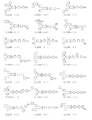
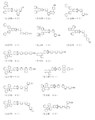
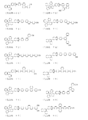
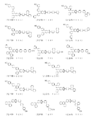
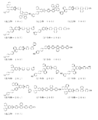
- FIGS. 1 to 1 specific examples of preferable compounds are shown in FIGS. 1 to 1. Although shown in 13, the present invention is not limited to these compounds.
- the compound having the benzotriazole ring structure of the present invention is a novel compound. These compounds can be synthesized according to methods known per se, for example, as follows (see, for example, Patent Documents 3 and 5).
- Purification of compounds having a benzotriazole ring structure represented by the general formulas (a-1) to (a-7) includes purification by column chromatography, adsorption purification with silica gel, activated charcoal, activated white clay, etc., recrystallization with a solvent, and the like. It can be carried out by a crystallization method, a sublimation purification method, or the like. Compound identification can be performed by NMR analysis. As physical property values, it is preferable to measure the melting point, the glass transition point (Tg), and the work function.
- the melting point is an index of vapor deposition property
- the glass transition point (Tg) is an index of stability in a thin film state
- the work function is an index of hole transport property and hole blocking property.
- the melting point and the glass transition point (Tg) can be measured by, for example, a high-sensitivity differential scanning calorimeter (DSC3100SA, manufactured by Bruker AXS) using powder.
- DSC3100SA high-sensitivity differential scanning calorimeter
- the work function can be obtained, for example, by forming a thin film of 100 nm on an ITO substrate and using an ionization potential measuring device (PYS-202, manufactured by Sumitomo Heavy Industries, Ltd.).
- the structure of the organic EL element of the present invention is sequentially composed of an anode, a hole injection layer, a hole transport layer, a light emitting layer, an electron transport layer, an electron injection layer and a cathode on a substrate, and a hole transport.
- Examples thereof include those having an electron blocking layer between the light emitting layer and the light emitting layer, and those having a hole blocking layer between the light emitting layer and the electron transporting layer.
- one organic layer can also serve as several layers.
- one organic layer may also serve as a hole injection layer and a hole transport layer, and electron injection. It is also possible to have a structure that doubles as a layer and an electron transport layer.
- an electrode material having a large work function such as ITO or gold is used.
- a material of the hole injection layer of the organic EL element of the present invention in addition to a porphyrin compound typified by copper phthalocyanine, a starburst type triphenylamine derivative, having two or more triphenylamine structures or carbazolyl structures in the molecule.
- these materials can be thin-filmed by a known method such as a spin coating method or an inkjet method.
- NPD N, N'-diphenyl-N, N'-di (m-tolyl) -benzidine
- NPD N, N'-diphenyl Benzidine derivatives such as -N, N'-di ( ⁇ -naphthyl) -benzidine (hereinafter abbreviated as NPD), N, N, N', N'-tetrabiphenylyl benzidine, 1,1-bis [(di -4-trilamino) phenyl] cyclohexane (hereinafter abbreviated as TAPC), and a divalent group having two or more triphenylamine or carbazolyl structures in the molecule, each of which does not contain a single bond or a hetero atom.
- An arylamine compound or the like having the above-mentioned structure can be used. These materials may be formed as a single layer, or may be mixed with other materials to form a film, and all of them can be used as a single layer.
- a laminated structure of layers in which these materials are individually formed a laminated structure of layers formed by mixing a plurality of materials, or a layer in which these materials are individually formed and a plurality of materials are mixed. It may be a laminated structure of the layer formed by the above.
- a coating type such as poly (3,4-ethylenedioxythiophene) (hereinafter abbreviated as PEDOT) / poly (styrene sulfonate) (hereinafter abbreviated as PSS) is used.
- PEDOT poly (3,4-ethylenedioxythiophene)
- PSS poly (styrene sulfonate)
- Polymer materials can be used. In addition to the vapor deposition method, these materials can be thin-filmed by a known method such as a spin coating method or an inkjet method.
- the hole injection layer and the hole transport layer are P-doped with trisbromophenylamine hexachloroantimony and a radialene derivative (see, for example, Patent Document 6) with respect to the material usually used for these layers.
- a polymer compound having the structure of a benzidine derivative such as TPD in its partial structure can be used.
- TCTA 4,4', 4''-tri (N-carbazolyl) triphenylamine
- TCTA 4,4', 4''-tri (N-carbazolyl) triphenylamine
- TCTA 9,9-bis [4- ( Carbazole-9-yl) phenyl] Fluorene
- mCP 1,3-bis (carbazole-9-yl) benzene
- Ad-Cz 2,2-bis (4-carbazole-9-ylphenyl) adamantan
- Ad-Cz 4,4', 4''-tri (N-carbazolyl) triphenylamine
- 9- [4- (carbazole-9-yl) phenyl] -9- [4- (triphenylsilyl) phenyl] -9H-fluorene typified by triphenyl
- a compound having an electron blocking action such as a compound having a silyl group and a triarylamine structure can be
- These materials may be formed as a single layer, or may be mixed with other materials to form a film, and all of them can be used as a single layer.
- a laminated structure of layers in which these materials are individually formed a laminated structure of layers formed by mixing a plurality of materials, or a layer in which these materials are individually formed and a plurality of materials are mixed. It may be a laminated structure of the layer formed by the above.
- these materials can be thin-filmed by a known method such as a spin coating method or an inkjet method.
- the metal complex of the quinolinol derivative such as Alq 3
- various metal complexes, anthracene derivatives, and bisstyryl Benzene derivatives, pyrene derivatives, oxazole derivatives, polyparaphenylene vinylene derivatives and the like can be used.
- the light emitting layer may be composed of a host material and a dopant material, and an anthracene derivative is preferably used as the host material.
- the light emitting material including the compound having a benzotriazole ring structure of the present invention can be used.
- a heterocyclic compound having an indole ring as a partial structure of the fused ring a heterocyclic compound having a carbazole ring as a partial structure of the condensed ring, a carbazole derivative, a thiazole derivative, a benzimidazole derivative, a polydialkylfluorene derivative and the like can be used. ..
- a dopant material quinacridone, coumarin, rubrene, perylene and derivatives thereof, benzopyran derivative, rhodamine derivative, aminostyryl derivative and the like can be used.
- These materials may be formed as a single layer, or may be mixed with other materials to form a film, and all of them can be used as a single layer.
- a laminated structure of layers in which these materials are individually formed a laminated structure of layers formed by mixing a plurality of materials, or a layer in which these materials are individually formed and a plurality of materials are mixed. It may be a laminated structure of the layer formed by the above.
- a phosphorescent light emitter As the phosphorescent body, a phosphorescent body of a metal complex such as iridium or platinum can be used. Examples thereof include a green phosphorescent body such as Ir (ppy) 3 , a blue phosphorescent body such as FIrpic and FIr6, and a red phosphorescent body such as Btp 2 Ir (acac).
- a green phosphorescent body such as Ir (ppy) 3
- a blue phosphorescent body such as FIrpic and FIr6
- a red phosphorescent body such as Btp 2 Ir (acac).
- a compound having a benzotriazole ring structure of the present invention can be used, and as an electron transporting host material, p-bis (triphenylsilyl) benzene (hereinafter abbreviated as UGH2) or 2,2', 2''- (1,3,5-phenylene) -tris (1-phenyl-1H-benzimidazole) (hereinafter abbreviated as TPBI) and the like can be used.
- Doping of the phosphorescent luminescent material to the host material is preferably carried out by co-evaporation in the range of 1 to 30% by weight with respect to the entire light emitting layer in order to avoid concentration quenching.
- Non-Patent Document 3 a material that emits delayed fluorescence such as a CDCB derivative such as PIC-TRZ, CC2TA, PXZ-TRZ, and 4CzIPN as a light emitting material.
- a material that emits delayed fluorescence such as a CDCB derivative such as PIC-TRZ, CC2TA, PXZ-TRZ, and 4CzIPN
- these materials can be thin-filmed by a known method such as a spin coating method or an inkjet method.
- the material of the hole blocking layer of the organic EL element of the present invention in addition to the compound having the benzotriazole ring structure of the present invention, a metal complex of a phenanthroline derivative such as BCP, a quinolinol derivative such as BAlq, various rare earth complexes, and oxazole.
- a metal complex of a phenanthroline derivative such as BCP, a quinolinol derivative such as BAlq, various rare earth complexes, and oxazole.
- Compounds having a hole blocking action such as derivatives, triazole derivatives, and triazine derivatives, can be used. These materials may also serve as materials for the electron transport layer. These materials may be formed as a single layer, or may be mixed with other materials to form a film, and all of them can be used as a single layer.
- a laminated structure of layers in which these materials are individually formed a laminated structure of layers formed by mixing a plurality of materials, or a layer in which these materials are individually formed and a plurality of materials are mixed. It may be a laminated structure of the layer formed by the above.
- these materials can be thin-filmed by a known method such as a spin coating method or an inkjet method.
- metal complexes of quinolinol derivatives such as Alq 3 and BAlq, various metal complexes, triazole derivatives and triazine derivatives , Oxaziazole derivative, pyridine derivative, benzimidazole derivative, thiadiazole derivative, anthracene derivative, carbodiimide derivative, quinoxaline derivative, pyridoindole derivative, phenanthroline derivative, silol derivative and the like can be used.
- These materials may be formed as a single layer, or may be mixed with other materials to form a film, and all of them can be used as a single layer.
- layers in which these materials are individually deposited are also laminated structures, layers in which a plurality of materials are mixed and formed are laminated, or layers in which these materials are individually formed and a plurality of materials are mixed. It may be a laminated structure of the layer formed by the above.
- these materials can be thin-filmed by a known method such as a spin coating method or an inkjet method.
- alkali metal salts such as lithium fluoride and cesium fluoride
- alkaline earth metal salts such as magnesium fluoride.
- Metal complexes of quinolinol derivatives such as lithium quinolinol, metal oxides such as aluminum oxide, or metals such as itterbium (Yb), samarium (Sm), calcium (Ca), strontium (Sr), cesium (Cs), etc.
- Yb samarium
- Sm calcium
- Cs cesium
- materials usually used for these layers can be N-doped with a metal such as cesium.
- an electrode material having a low work function such as aluminum and an alloy having a lower work function such as magnesium silver alloy, magnesium indium alloy and aluminum magnesium alloy are used as the electrode material.
- Tetrakistriphenylphosphine palladium 1.7 g was added to the solution aerated with nitrogen gas, and the mixture was refluxed and stirred overnight under heating and reflux. Allowed to cool after stirring, methanol, to obtain a dispersed washed and filtered H 2 O was added the crude product. By dispersing and washing the obtained crude product with an acetone solvent, 2- (4-cyano- [1,1', 4', 1 "] terphenyl-4" -yl) -5,6-dichloro -21.8 g (yield: 85%) of bright yellow powder of benzotriazole was obtained.
- aqueous solution prepared by dissolving 11.2 g of potassium carbonate in 40 mL of H 2 O was added, and nitrogen gas was aerated while irradiating ultrasonic waves for 30 minutes.
- Tetrakistriphenylphosphine palladium 1.6 g was added to the solution aerated with nitrogen gas, and the mixture was refluxed and stirred overnight under heating and reflux. Allowed to cool after stirring, ethyl acetate, remove the organic layer was extracted and separatory operation by adding H 2 O, to give the crude product under reduced pressure and concentrated.
- Example 14 The melting points and glass transition points of the compounds having a benzotriazole ring structure synthesized in Examples 1 to 13 were measured by a high-sensitivity differential scanning calorimeter (DSC3100SA, manufactured by Bruker AXS). The measurement results are summarized in Table 1.
- the compounds having a benzotriazole ring structure synthesized in Examples 1 to 13 all have a glass transition point of 98 ° C. or higher, which indicates that the thin film state is stable.
- Example 15 For the compounds having a benzotriazole ring structure synthesized in Examples 1 to 13, a vapor-deposited film having a film thickness of 100 nm was prepared on each ITO substrate, and an ionization potential measuring device (manufactured by Sumitomo Heavy Industries, Ltd., PYS-202) ) Measured the work function. The measurement results are summarized in Table 2.
- the compounds having a benzotriazole ring structure synthesized in Examples 1 to 13 have a value larger than the work function 5.5 eV possessed by general hole transporting materials such as NPD and TPD, and have a large hole blocking ability. It can be seen that it has.
- the organic EL element has a hole injection layer 3, a hole transport layer 4, a light emitting layer 5, and a hole blocking on a glass substrate 1 on which an ITO electrode is previously formed as a transparent anode 2.
- the layer 6, the electron transport layer 7, the electron injection layer 8, and the cathode (aluminum electrode) 9 were vapor-deposited in this order.
- a glass substrate 1 having an ITO film thickness of 50 nm formed as a transparent anode 2 is ultrasonically cleaned in isopropyl alcohol for 20 minutes and then dried on a hot plate heated to 200 ° C. for 10 minutes. Was done. Then, after performing UV ozone treatment for 15 minutes, the glass substrate with ITO was mounted in a vacuum vapor deposition machine and the pressure was reduced to 0.001 Pa or less. Subsequently, as the hole injection layer 3 so as to cover the transparent anode 2, an electron acceptor (Acceptor-1) having the following structural formula and a compound (HTM-1) having the following structural formula were used, and the vapor deposition rate ratio was Acceptor-1: HTM.
- a compound (HTM-1) having the following structural formula was formed as the hole transport layer 4 on the hole injection layer 3 so as to have a film thickness of 60 nm.
- EMD-1 a compound having the following structural formula
- EMH-1 a compound having the following structural formula
- Two-way deposition was performed at a vapor deposition rate of: 95, and the film was formed to have a film thickness of 20 nm.
- Example 21 In Example 16, as the material of the hole blocking layer and the electron transporting layers 6 and 7, the compound of Example 6 (Compound-104) was used instead of the compound of Example 1 (Compound-2), and the vapor deposition rate ratio was used.
- the characteristics of the produced organic EL device were measured in the air at room temperature. Table 3 summarizes the measurement results of the light emission characteristics when a DC voltage is applied to the produced organic EL element.
- Example 22 In Example 16, as the material of the hole blocking layer and the electron transporting layer 6 and 7, the compound of Example 7 (Compound-141) was used instead of the compound of Example 1 (Compound-2), and the vapor deposition rate ratio was used.
- the characteristics of the produced organic EL device were measured in the air at room temperature. Table 3 summarizes the measurement results of the light emission characteristics when a DC voltage is applied to the produced organic EL element.
- Example 24 In Example 16, as the material of the hole blocking layer and the electron transporting layers 6 and 7, the compound of Example 9 (Compound-164) was used instead of the compound of Example 1 (Compound-2), and the vapor deposition rate ratio was used.
- the characteristics of the produced organic EL device were measured in the air at room temperature. Table 3 summarizes the measurement results of the light emission characteristics when a DC voltage is applied to the produced organic EL element.
- Example 26 In Example 16, as the material of the hole blocking layer and the electron transporting layers 6 and 7, the compound of Example 11 (Compound-184) was used instead of the compound of Example 1 (Compound-2), and the vapor deposition rate ratio was used.
- the characteristics of the produced organic EL device were measured in the air at room temperature. Table 3 summarizes the measurement results of the light emission characteristics when a DC voltage is applied to the produced organic EL element.
- Example 27 In Example 16, as the material of the hole blocking layer and the electron transporting layers 6 and 7, the compound of Example 12 (Compound-189) was used instead of the compound of Example 1 (Compound-2), and the vapor deposition rate ratio was used.
- the characteristics of the produced organic EL device were measured in the air at room temperature. Table 3 summarizes the measurement results of the light emission characteristics when a DC voltage is applied to the produced organic EL element.
- Example 16 As the material of the hole blocking layer and electron transport layer 6 and 7, the compound (ETM-2) having the following structural formula was used instead of the compound (Compound-2) of Example 1.
- the characteristics of the produced organic EL device were measured in the air at room temperature.
- Table 3 summarizes the measurement results of the light emission characteristics when a DC voltage is applied to the produced organic EL element.
- Example 16 As the material of the hole blocking layer / electron transport layer 6 and 7, the compound (ETM-3) having the following structural formula was used instead of the compound (Compound-2) of Example 1.
- the characteristics of the produced organic EL device were measured in the air at room temperature.
- Table 3 summarizes the measurement results of the light emission characteristics when a DC voltage is applied to the produced organic EL element.
- Table 3 summarizes the results of measuring the device life using the organic EL devices produced in Examples 16 to 28 and Comparative Examples 1 and 2.
- the element life is constant current drive with the emission brightness (initial brightness) at the start of light emission set to 2000 cd / m 2 , and the emission brightness is 1900 cd / m 2 (corresponding to 95% when the initial brightness is 100%: 95%). It was measured as the time until attenuation (attenuation).
- the drive voltage when a current having a current density of 10 mA / cm 2 is applied is 3.82 of the organic EL elements of Comparative Examples 1 and 2 using the compounds ETM-2 and 3 of the structural formula.
- the voltage of the organic EL devices from Example 16 to Example 28 was reduced to 3.43 to 3.71 V with respect to ⁇ 4.01 V.
- the organic EL devices of Comparative Examples 1 and 2 had 6.59 to 8.05 cd / A, whereas the organic EL devices of Examples 16 to 28 had 8.34 to 9.10 cd / A.
- the organic EL elements of Examples 1 and 2 have 5.16 to 6.62 lm / W, whereas the organic EL elements of Examples 16 to 28 have 7.39 to 8 It was greatly improved to .08 lm / W.
- the element life (95% attenuation) is 165 to 203 hours for the organic EL devices of Comparative Examples 1 and 2, and 262 to 405 hours for the organic EL devices of Examples 16 to 28, which is significantly longer. It has reached the end of its life.
- the organic EL device of the present invention is superior in luminous efficiency and power efficiency as compared with the device using the compounds ETM-2 and 3 of the structural formula, and can realize an organic EL device having a long life. all right.
- the compound having a specific benzotriazole ring structure of the present invention is excellent as a compound for an organic EL device because it has good electron injection characteristics, excellent hole blocking ability, and a stable thin film state.
- high efficiency can be obtained, the driving voltage can be lowered, and durability can be improved. For example, it has become possible to develop it for home appliances and lighting applications.
Landscapes
- Chemical & Material Sciences (AREA)
- Organic Chemistry (AREA)
- Physics & Mathematics (AREA)
- Engineering & Computer Science (AREA)
- Materials Engineering (AREA)
- Spectroscopy & Molecular Physics (AREA)
- Optics & Photonics (AREA)
- Electroluminescent Light Sources (AREA)
- Plural Heterocyclic Compounds (AREA)
Priority Applications (5)
| Application Number | Priority Date | Filing Date | Title |
|---|---|---|---|
| JP2021524865A JP7573524B2 (ja) | 2019-06-06 | 2020-06-02 | ベンゾトリアゾール環構造を有する化合物および有機エレクトロルミネッセンス素子 |
| EP20818227.9A EP3981764A1 (en) | 2019-06-06 | 2020-06-02 | Compound having benzotriazole ring structure and organic electroluminescence element |
| CN202080033772.9A CN113795481A (zh) | 2019-06-06 | 2020-06-02 | 具有苯并三唑环结构的化合物及有机电致发光元件 |
| US17/609,097 US20220220083A1 (en) | 2019-06-06 | 2020-06-02 | Compound having benzotriazole ring structure and organic electroluminescence element |
| KR1020217034861A KR102931947B1 (ko) | 2019-06-06 | 2020-06-02 | 벤조트리아졸 고리 구조를 갖는 화합물 및 유기 일렉트로 루미네선스 소자 |
Applications Claiming Priority (2)
| Application Number | Priority Date | Filing Date | Title |
|---|---|---|---|
| JP2019-106028 | 2019-06-06 | ||
| JP2019106028 | 2019-06-06 |
Publications (1)
| Publication Number | Publication Date |
|---|---|
| WO2020246484A1 true WO2020246484A1 (ja) | 2020-12-10 |
Family
ID=73653186
Family Applications (1)
| Application Number | Title | Priority Date | Filing Date |
|---|---|---|---|
| PCT/JP2020/021845 Ceased WO2020246484A1 (ja) | 2019-06-06 | 2020-06-02 | ベンゾトリアゾール環構造を有する化合物および有機エレクトロルミネッセンス素子 |
Country Status (7)
| Country | Link |
|---|---|
| US (1) | US20220220083A1 (https=) |
| EP (1) | EP3981764A1 (https=) |
| JP (1) | JP7573524B2 (https=) |
| KR (1) | KR102931947B1 (https=) |
| CN (1) | CN113795481A (https=) |
| TW (1) | TWI864012B (https=) |
| WO (1) | WO2020246484A1 (https=) |
Families Citing this family (1)
| Publication number | Priority date | Publication date | Assignee | Title |
|---|---|---|---|---|
| CN116249360B (zh) * | 2022-12-30 | 2023-11-14 | 深圳职业技术学院 | 一种有机太阳能电池及其制备方法 |
Citations (12)
| Publication number | Priority date | Publication date | Assignee | Title |
|---|---|---|---|---|
| US2972611A (en) * | 1961-02-21 | Irrttnrpsrumttuiatotvt stttkvnf | ||
| GB1403564A (en) * | 1971-05-26 | 1975-08-28 | Sandoz Ltd | Triazolstyryl trizoles and their use as optical brighteners |
| US5639914A (en) | 1993-11-01 | 1997-06-17 | Hodogaya Chemical Co., Ltd. | Tetraaryl benzidines |
| US5792557A (en) | 1994-02-08 | 1998-08-11 | Tdk Corporation | Organic EL element |
| US5869199A (en) | 1993-03-26 | 1999-02-09 | Sumitomo Electric Industries, Ltd. | Organic electroluminescent elements comprising triazoles |
| US6878469B2 (en) | 2002-01-18 | 2005-04-12 | Lg Chem, Ltd. | Material for transporting electrons and organic electroluminescent display using the same |
| JP2007518705A (ja) * | 2003-12-05 | 2007-07-12 | チバ スペシャルティ ケミカルズ ホールディング インコーポレーテッド | エレクトロルミネセントデバイス |
| KR20120051598A (ko) * | 2010-11-12 | 2012-05-22 | 주식회사 엘지화학 | 신규한 화합물 및 이를 이용한 유기 전자 소자 |
| WO2013054764A1 (ja) * | 2011-10-14 | 2013-04-18 | 保土谷化学工業株式会社 | 新規なベンゾトリアゾール誘導体及び該誘導体が使用されている有機エレクトロルミネッセンス素子 |
| EP2684932A1 (en) | 2012-07-09 | 2014-01-15 | Novaled AG | Diarylamino matrix material doped with a mesomeric radialene compound |
| US9199966B2 (en) | 2008-12-24 | 2015-12-01 | Cheil Industries, Inc. | Compound for an organic photoelectric device, organic photoelectric device, and display device including the same |
| JP2018532688A (ja) * | 2016-07-20 | 2018-11-08 | エルジー・ケム・リミテッド | 新規なヘテロ環式化合物およびこれを利用した有機発光素子 |
Family Cites Families (1)
| Publication number | Priority date | Publication date | Assignee | Title |
|---|---|---|---|---|
| KR102184675B1 (ko) * | 2014-03-19 | 2020-12-01 | 삼성디스플레이 주식회사 | 축합환 화합물 및 이를 포함한 유기 발광 소자 |
-
2020
- 2020-06-02 EP EP20818227.9A patent/EP3981764A1/en not_active Withdrawn
- 2020-06-02 US US17/609,097 patent/US20220220083A1/en not_active Abandoned
- 2020-06-02 KR KR1020217034861A patent/KR102931947B1/ko active Active
- 2020-06-02 JP JP2021524865A patent/JP7573524B2/ja active Active
- 2020-06-02 CN CN202080033772.9A patent/CN113795481A/zh active Pending
- 2020-06-02 WO PCT/JP2020/021845 patent/WO2020246484A1/ja not_active Ceased
- 2020-06-04 TW TW109118757A patent/TWI864012B/zh active
Patent Citations (14)
| Publication number | Priority date | Publication date | Assignee | Title |
|---|---|---|---|---|
| US2972611A (en) * | 1961-02-21 | Irrttnrpsrumttuiatotvt stttkvnf | ||
| GB1403564A (en) * | 1971-05-26 | 1975-08-28 | Sandoz Ltd | Triazolstyryl trizoles and their use as optical brighteners |
| US5869199A (en) | 1993-03-26 | 1999-02-09 | Sumitomo Electric Industries, Ltd. | Organic electroluminescent elements comprising triazoles |
| US5639914A (en) | 1993-11-01 | 1997-06-17 | Hodogaya Chemical Co., Ltd. | Tetraaryl benzidines |
| US5792557A (en) | 1994-02-08 | 1998-08-11 | Tdk Corporation | Organic EL element |
| US6878469B2 (en) | 2002-01-18 | 2005-04-12 | Lg Chem, Ltd. | Material for transporting electrons and organic electroluminescent display using the same |
| JP2007518705A (ja) * | 2003-12-05 | 2007-07-12 | チバ スペシャルティ ケミカルズ ホールディング インコーポレーテッド | エレクトロルミネセントデバイス |
| US20080027226A1 (en) | 2003-12-05 | 2008-01-31 | Jonathan Rogers | Electroluminescent Device |
| US9199966B2 (en) | 2008-12-24 | 2015-12-01 | Cheil Industries, Inc. | Compound for an organic photoelectric device, organic photoelectric device, and display device including the same |
| KR20120051598A (ko) * | 2010-11-12 | 2012-05-22 | 주식회사 엘지화학 | 신규한 화합물 및 이를 이용한 유기 전자 소자 |
| WO2013054764A1 (ja) * | 2011-10-14 | 2013-04-18 | 保土谷化学工業株式会社 | 新規なベンゾトリアゾール誘導体及び該誘導体が使用されている有機エレクトロルミネッセンス素子 |
| US9123897B2 (en) | 2011-10-14 | 2015-09-01 | Hodogaya Chemical Co., Ltd. | Benzotriazole derivatives and organic electroluminescent devices using the derivatives |
| EP2684932A1 (en) | 2012-07-09 | 2014-01-15 | Novaled AG | Diarylamino matrix material doped with a mesomeric radialene compound |
| JP2018532688A (ja) * | 2016-07-20 | 2018-11-08 | エルジー・ケム・リミテッド | 新規なヘテロ環式化合物およびこれを利用した有機発光素子 |
Non-Patent Citations (4)
| Title |
|---|
| 50TH MEETING OF JAPAN SOCIETY OF APPLIED PHYSICS AND RELATED SOCIETIES, 28P-A-6 LECTURE PROCEEDINGS, 2003, pages 1413 |
| APPL. PHYS. LETT., vol. 98, 2011, pages 083302 |
| JAPAN SOCIETY OF APPLIED PHYSICS, 9TH CLASS, PROCEEDINGS, 2001, pages 23 - 31 |
| JAPAN SOCIETY OF APPLIED PHYSICS, JOURNAL OF ORGANIC MOLECULES/BIOELECTRONICS SECTION, vol. 11, no. 1, 2000, pages 13 - 19 |
Also Published As
| Publication number | Publication date |
|---|---|
| TWI864012B (zh) | 2024-12-01 |
| TW202106668A (zh) | 2021-02-16 |
| JPWO2020246484A1 (https=) | 2020-12-10 |
| CN113795481A (zh) | 2021-12-14 |
| EP3981764A1 (en) | 2022-04-13 |
| KR102931947B1 (ko) | 2026-02-26 |
| US20220220083A1 (en) | 2022-07-14 |
| KR20220018474A (ko) | 2022-02-15 |
| JP7573524B2 (ja) | 2024-10-25 |
Similar Documents
| Publication | Publication Date | Title |
|---|---|---|
| JP6501771B2 (ja) | ピリミジン誘導体および有機エレクトロルミネッセンス素子 | |
| JP6815326B2 (ja) | 有機エレクトロルミネッセンス素子 | |
| JP6731355B2 (ja) | ピリミジン誘導体および有機エレクトロルミネッセンス素子 | |
| JP7510359B2 (ja) | ベンゾアゾール環構造を有する化合物および有機エレクトロルミネッセンス素子 | |
| JP7245777B2 (ja) | ベンゾアゾール環構造を有する化合物を含有する有機エレクトロルミネッセンス素子 | |
| WO2017122813A1 (ja) | 有機エレクトロルミネッセンス素子 | |
| JP7369714B2 (ja) | アザベンゾオキサゾール環構造を有する化合物および有機エレクトロルミネッセンス素子 | |
| WO2021172452A1 (ja) | アリールアミン化合物およびそれを用いる電子機器 | |
| JP7394050B2 (ja) | ベンゾイミダゾール環構造を有する化合物および有機エレクトロルミネッセンス素子 | |
| WO2022080490A1 (ja) | アリールアミン化合物、有機エレクトロルミネッセンス素子、および電子機器 | |
| WO2021079856A1 (ja) | 有機エレクトロルミネッセンス素子 | |
| JP7039412B2 (ja) | アザインデノ[1,2、c]フェナンスレン環構造を有する化合物およびその化合物を用いた有機エレクトロルミネッセンス素子 | |
| WO2020184379A1 (ja) | 分子末端に含窒素複素環を有する3置換ベンゼン化合物および有機エレクトロルミネッセンス素子 | |
| JP7573524B2 (ja) | ベンゾトリアゾール環構造を有する化合物および有機エレクトロルミネッセンス素子 | |
| JP7406500B2 (ja) | ピリミジン環構造を有する化合物および有機エレクトロルミネッセンス素子 | |
| WO2019049965A1 (ja) | ピリミジン環構造を有する化合物および有機エレクトロルミネッセンス素子 | |
| KR20250047744A (ko) | 아릴아민 화합물, 유기 일렉트로루미네센스 소자 및 전자 기기 | |
| JP2025505315A (ja) | アリールアミン化合物、有機エレクトロルミネッセンス素子、および電子機器 | |
| KR20240129758A (ko) | 아릴아민 화합물, 유기 일렉트로루미네센스 소자 및 전자 기기 | |
| WO2021149735A1 (ja) | アリールアミン化合物および有機エレクトロルミネッセンス素子 |
Legal Events
| Date | Code | Title | Description |
|---|---|---|---|
| 121 | Ep: the epo has been informed by wipo that ep was designated in this application |
Ref document number: 20818227 Country of ref document: EP Kind code of ref document: A1 |
|
| ENP | Entry into the national phase |
Ref document number: 2021524865 Country of ref document: JP Kind code of ref document: A |
|
| NENP | Non-entry into the national phase |
Ref country code: DE |
|
| WWE | Wipo information: entry into national phase |
Ref document number: 2020818227 Country of ref document: EP |