WO2020195442A1 - 現場管理システム - Google Patents
現場管理システム Download PDFInfo
- Publication number
- WO2020195442A1 WO2020195442A1 PCT/JP2020/007278 JP2020007278W WO2020195442A1 WO 2020195442 A1 WO2020195442 A1 WO 2020195442A1 JP 2020007278 W JP2020007278 W JP 2020007278W WO 2020195442 A1 WO2020195442 A1 WO 2020195442A1
- Authority
- WO
- WIPO (PCT)
- Prior art keywords
- site
- work machine
- notification
- management system
- wireless communication
- Prior art date
- Legal status (The legal status is an assumption and is not a legal conclusion. Google has not performed a legal analysis and makes no representation as to the accuracy of the status listed.)
- Ceased
Links
Images




Classifications
-
- G—PHYSICS
- G06—COMPUTING OR CALCULATING; COUNTING
- G06Q—INFORMATION AND COMMUNICATION TECHNOLOGY [ICT] SPECIALLY ADAPTED FOR ADMINISTRATIVE, COMMERCIAL, FINANCIAL, MANAGERIAL OR SUPERVISORY PURPOSES; SYSTEMS OR METHODS SPECIALLY ADAPTED FOR ADMINISTRATIVE, COMMERCIAL, FINANCIAL, MANAGERIAL OR SUPERVISORY PURPOSES, NOT OTHERWISE PROVIDED FOR
- G06Q50/00—Information and communication technology [ICT] specially adapted for implementation of business processes of specific business sectors, e.g. utilities or tourism
- G06Q50/08—Construction
-
- G—PHYSICS
- G08—SIGNALLING
- G08B—SIGNALLING SYSTEMS, e.g. PERSONAL CALLING SYSTEMS; ORDER TELEGRAPHS; ALARM SYSTEMS
- G08B25/00—Alarm systems in which the location of the alarm condition is signalled to a central station, e.g. fire or police telegraphic systems
- G08B25/01—Alarm systems in which the location of the alarm condition is signalled to a central station, e.g. fire or police telegraphic systems characterised by the transmission medium
- G08B25/10—Alarm systems in which the location of the alarm condition is signalled to a central station, e.g. fire or police telegraphic systems characterised by the transmission medium using wireless transmission systems
Definitions
- the present invention is a site management system that acquires the position information of a work machine that performs work at a civil engineering construction site by wireless communication and uses it for site management, and particularly notifies the persons concerned at the construction site according to the position of the work machine. Regarding the technology to do.
- Patent Document 1 discloses a network machine monitoring monitor device that monitors a communication device connected to a network at low cost and reduces the burden on the operator.
- the present invention has been made in view of such a problem, and an object of the present invention is that it is possible to suppress complicated introduction and cost increase, and to that effect before the work machine goes out of the communicable area. It is to provide a site management system that can detect and notify the persons concerned at the construction site.
- the site management system of the present invention includes a management control device that acquires information on the work machine at the construction site by wireless communication, and notifies the position of the work machine according to the position of the work machine.
- the management control device transmits a request signal to the work machine, and receives a response signal returned from the work machine that has received the request signal.
- a position determination unit that determines whether or not the work machine is located in the wireless communication area according to the elapsed time from the transmission of the request signal to the reception of the response signal and the presence or absence of the response signal.
- the position determination unit determines that the work machine is located inside the boundary when the elapsed time is equal to or less than the threshold value, and the work machine determines that the work machine is located inside the boundary when the elapsed time exceeds the threshold value. It is determined that the work machine is located outside the wireless communication available area in the absence of the response signal.
- the site management system it is possible to suppress complicated introduction and cost increase, detect that fact before the work machine goes out of the communicable area, and notify the persons concerned at the construction site. Can be done.
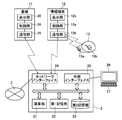
- FIG. 1 is a schematic view showing a configuration including a site management system according to the present embodiment and machines and equipment capable of communicating with the system.
- FIG. 2 is a block diagram showing a configuration including a site management system according to the present embodiment and machines and devices capable of communicating with the system.
- FIG. 3 is a block diagram of a server included in the site management system according to the present embodiment.
- the site management system 1 in this embodiment has a wireless access point 2 provided in the construction site A and a wireless access point provided in the construction site A via a communication line 3 such as the Internet. It has a server 4 capable of communicating with 2.
- a wireless communication possible area B which is an area capable of wireless communication with the wireless access point 2, is formed in a predetermined range centered on the wireless access point 2.
- the heavy equipment 11 is operated by an on-site worker (not shown). If the heavy equipment 11 works inside the wireless communication available area B, the heavy equipment 11 can communicate with the wireless access point 2.
- FIG. 1 the case where the work is performed inside the wireless communication available area B is displayed as the heavy machine 11a, and the case where the work is performed inside the wireless communication possible area B and near the boundary with the outside of the area. Is displayed as the heavy machine 11b, and the case where the work is performed outside the wireless communication enable area B is displayed as the heavy machine 11c.
- the heavy machine 11 is assumed to be a hydraulic excavator that performs loading work, but the present invention is not limited to this.
- the heavy machine 11 may be, for example, a dump truck which is a carrier, various roller machines, a wheel loader, or the like.
- the work machine is not limited to the heavy machine 11, but includes various devices used at the civil engineering construction site.
- an on-site worker W1 who has an information terminal 12 and wears a helmet 13 is performing the work.
- the on-site worker W1 may be a site supervisor of the construction site A or a worker who performs general work.
- the on-site worker W1 basically works in the construction site A, and when working inside the wireless communication enable area B, performs various work, management, maintenance, etc. using the information terminal 12. be able to.
- the information terminal 12 may be a general smartphone or a tabbed terminal, or may be a dedicated terminal having a special function.
- the off-site worker W2 who is working outside the construction site A also possesses the information terminal 12 and wears the helmet 13.
- the off-site worker W2 can use the information terminal 12 to access the server 4 via the communication line 3 and use various information stored in the server 4. Since the on-site worker W1 and the on-site worker W2 perform the work related to the construction site A, they are related to the construction site A regardless of the work location.
- the wireless access point 2 has a calculation unit 21, a first storage unit 22, a second storage unit 23, a network interface 24, and an external interface 25.
- the wireless access point 2 functions as a management control device (management control unit) for acquiring various information of the heavy equipment 11.
- the calculation unit 21 is composed of, for example, a central processing unit (CPU: Central Processing Unit) that performs various calculation processes. That is, the calculation unit 21 functions as a control device that controls the wireless access point 2 in a centralized manner. For example, the arithmetic unit 21 performs arithmetic processing related to various data input from the network interface 24 according to the program stored in the first storage unit 22. In addition, the arithmetic unit 21 controls the network interface 24, and also controls the communication of the wireless access point 2 with respect to the communication line 3, the heavy equipment 11, and the information terminal 12.
- CPU Central Processing Unit
- the first storage unit 22 is a general main memory (main storage device) that temporarily stores programs and various data. Specifically, the first storage unit 22 temporarily stores the program executed by the calculation unit 21, and further temporarily stores various data input to the wireless access point 2 and the calculation result by the calculation unit 21. can do.
- the first storage unit 22 is composed of a dynamic random access memory (DRAM: Dynamic Random Access Memory).
- DRAM Dynamic Random Access Memory
- the calculation result by the calculation unit 21 is, for example, a determination result regarding the position of the heavy machine 11 described later.
- the second storage unit 23 is a general storage (auxiliary storage device) that permanently stores various types of data. Specifically, the second storage unit 23 permanently stores the calculation result by the calculation unit 21.
- the second storage unit 23 is composed of a hard disk drive (HDD: hard disk drive) or a solid state drive (SSD: solid state drive).
- a display 26 which is a display device and a keyboard 27 which is an input device are connected to the external interface 25.
- the administrator of the wireless access point 2 can use and maintain the wireless access point 2 by operating the keyboard 27.
- the administrator can display the usage status, maintenance / inspection status, etc. on the display 26 and use the displayed output information.
- Another input device such as a mouse may be connected to the external interface 25, and an output device such as a printer may be connected to the external interface 25.
- the heavy equipment 11 has a control unit 28, a communication unit 29, and a display unit 30.
- the control unit 28 is a general central processing unit, controls various operations of the heavy equipment 11, and controls the operations of the heavy equipment 11.
- the communication unit 29 is an interface for enabling the heavy equipment 11 to wirelessly communicate with another device (for example, a wireless access point 2).
- the display unit 30 is a general display provided on the heavy equipment 11, and is controlled by the control unit 28 to display various information.
- the information terminal 12 has a control unit 12a, a communication unit 12b, and a display unit 12c.
- the control unit 12a is a general central processing unit, controls various operations of the information terminal 12, and controls the operations of the information terminal 12.
- the communication unit 12b is an interface for enabling the information terminal 12 to wirelessly communicate with another device (for example, a wireless access point 2).
- the display unit 12c is a general display provided in the information terminal 12, and is controlled by the control unit 12a to display various types of information.
- the information terminal 12 is a light emitting device 13a such as an LED provided on the brim of the helmet 13 and a vibrating device 13b by short-range wireless communication such as Bluetooth (registered trademark) by the communication unit 12b.
- the desired drive signal can be supplied to the Bluetooth.
- the control unit 12a of the information terminal 12 determines how to drive the light emitting device 13a and the vibrating device 13b, and supplies a drive signal corresponding to the determined drive to the light emitting device 13a and the vibrating device 13b. .. That is, each operation of the light emitting device 13a and the vibrating device 13b of the helmet 13 is controlled by the information terminal 12.
- the wireless access point 2 uses ICMP (Internet), which is a standard protocol of the network, in order to grasp whether or not the heavy machine 11 is working inside the wireless communication available area B.
- ICMP Internet
- a ping (request signal) by Control Message Protocol) is transmitted to the heavy machine 11.
- the arithmetic unit 21 of the wireless access point 2 executes a predetermined program, and periodically (for example, every 1 second to 1 minute) via a local network radio such as a wireless LAN via the network interface 24. Send.
- the control unit 28 When the heavy equipment 11 is working inside the wireless communication enable area B (that is, the situation of the heavy equipment 11a), the control unit 28 generates a response signal by receiving the ping via the communication unit 29. A response signal is returned to the wireless access point 2 via the communication unit 29.
- the control unit 28 does not generate a response signal because the ping is not received. ..
- the communication state becomes unstable, and even if the ping is received via the communication unit 29, the signal is sent.
- the wireless access point 2 determines whether or not a response signal in response to the ping is received from the heavy machine 11 (that is, whether or not there is a response signal), and from the transmission of the ping to the reception of the response signal.
- the working position of the heavy machine 11 is determined according to the elapsed time (that is, the response time). Specifically, when the response signal is received via the network interface 24, the calculation unit 21 causes the heavy equipment 11 to be inside the boundary in the wireless communication enable area B when the elapsed time is equal to or less than the threshold value. If it is determined that the heavy equipment is located and the elapsed time exceeds the threshold value, it is determined that the heavy machine 11 is located at the boundary in the wireless communication enable area B. On the other hand, when the response signal is not received via the network interface 24, the calculation unit 21 determines that the heavy equipment 11 is located outside the wireless communication enable area B.
- the calculation unit 21 uses the display unit 30 of the heavy equipment 11, the display unit 12c of the information terminal 12, and the light emitting device 13a and the vibration device 13b of the helmet 13 to the on-site worker W1 of the construction site A. Notify according to the judgment result. For example, if it is determined that the heavy equipment 11 is located at the boundary within the wireless communication available area B, or if it is determined that the heavy equipment 11 is located outside the wireless communication possible area B, the heavy equipment 11 is determined to be located outside the wireless communication possible area B.
- the display unit 30 and the display unit 12c are displayed to that effect (that is, the position information of the heavy machine 11), the light emitting device 13a is made to emit light, and the vibration device 13b is further generated. May be vibrated.
- the wireless access point 2 gives a notification instruction from the light emitting device 13a and the vibration device 13b of the helmet 13 of the on-site worker W1 to perform the above notification. A specific example of the notification will be described later.
- the server 4 has a calculation unit 31, a first storage unit 32, a second storage unit 33, a network interface 34, and an external interface 35.
- the server 4 will provide various site information to the site worker W2 who works outside the construction site A.
- the calculation unit 31 is composed of, for example, a central processing unit that performs various calculation processes. That is, the calculation unit 31 functions as a control device that collectively controls the server 4. For example, the arithmetic unit 31 performs arithmetic processing related to various data input from the network interface 34 according to the program stored in the first storage unit 32. In addition, the arithmetic unit 31 controls the network interface 34 and also controls the communication of the server 4 with respect to the communication line 3.
- the first storage unit 32 is a general main memory (main storage device) that temporarily stores programs and various types of data. Specifically, the first storage unit 32 temporarily stores the program executed by the calculation unit 31, and further temporarily stores various data input to the server 4 and the calculation result by the calculation unit 31. Can be done.
- the first storage unit 32 is composed of a dynamic random access memory.
- the second storage unit 33 is a general storage (auxiliary storage device) that permanently stores various types of data. Specifically, the second storage unit 33 permanently stores the calculation result by the calculation unit 31.
- the second storage unit 33 is composed of a hard disk drive or a solid state drive.
- a display 36 which is a display device and a keyboard 37 which is an input device are connected to the external interface 25.
- the administrator of the server 4 can use and maintain the server 4 by operating the keyboard 37.
- the administrator can display the usage status, maintenance and inspection status, and the like on the display 36, and use the displayed output information.
- Another input device such as a mouse may be connected to the external interface 35, and an output device such as a printer may be connected to the external interface 35.
- the server 4 receives the determination result regarding the position of the heavy machine 11 transmitted from the wireless access point 2 and stores it in the second storage unit 33. Further, in the server 4, the calculation unit 31 uses the information terminal 12 owned by the off-site worker W2, the light emitting device 13a and the vibration device 13b of the helmet 13 to inform the off-site worker W2 outside the construction site A. On the other hand, notification is performed according to the determination result. Specifically, the calculation unit 31 supplies a signal to be a notification instruction to the information terminal 12 owned by the off-site worker W2 via the network interface 34 and the communication line 3. In other words, the calculation unit 31 instructs the start of notification to the off-site worker W2 outside the construction site A via the network interface 34 and the communication line 3.
- the method of notification is the same as the case of the on-site worker W1 described above because the information terminal 12, the light emitting device 13a of the helmet 13 and the vibration device 13 are common. That is, the server 4 gives a notification instruction such as notification from the light emitting device 13a and the vibration device 13 of the helmet 13.
- the network interface 24 since the network interface 24 transmits the ping and receives the response signal, the network interface 24 functions as the signal transmission / reception unit of the site management system 1. Further, since the position of the heavy machine 11 is determined by the calculation unit 21, the calculation unit 21 functions as a position determination unit of the site management system 1. Further, the information terminal 12, the display unit 30 of the heavy machine 11, and the light emitting device 13a and the vibration device 13b of the helmet 13 are used to treat the on-site worker W1, the off-site worker W2, and the driver of the heavy machine 11 (not shown). These machines function as notification devices to notify the position of. In addition, the calculation unit 21 of the information terminal 12 instructs the notification device to start notification, and functions as an instruction unit of the site management system 1.
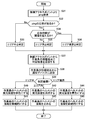
- FIG. 4 is a processing flow up to the notification to the on-site worker W2
- FIG. 5 is a processing flow up to the notification to the on-site worker W1.
- the wireless access point 2 periodically transmits a ping to the heavy equipment 11 (step S11). Specifically, a ping is generated by the processing of the arithmetic unit 21 and transmitted to the heavy equipment 11 by wireless communication via the network interface 24.
- the wireless access point 2 determines whether or not there is a response to the transmitted ping (step S12). Specifically, the calculation unit 21 continuously monitors whether or not a response signal is received from the heavy equipment 11 via the network interface 24.
- step S12: No When the wireless access point 2 does not respond to the ping (step S12: No), the wireless access point 2 determines that the heavy equipment 11 is located outside the wireless communication enable area B (step S13). On the other hand, when there is a response to the ping (step S12: Yes), the wireless access point 2 further determines whether or not the response time from the ping transmission to the reception of the response signal exceeds the threshold value (step S14).
- step S14: No When the response time of the wireless access point 2 does not exceed the threshold value (step S14: No), normal wireless communication with the heavy machine 11 is performed, so that the heavy machine 11 is located inside the wireless communication possible area B. It is determined that the operation is performed (step S15). On the other hand, when the response time exceeds the threshold value (step S14: Yes), an error occurs in the transmission / reception of the ping and the ping transmission is performed again, so that the wireless communication with the heavy machine 11 is unstable. It is determined that the heavy equipment 11 is located at the boundary of the wireless communication enable area B (step S16).
- the threshold value can be appropriately adjusted according to the performance of the wireless access point 2, the performance of the communication unit 29 of the heavy equipment 11, and the like.
- the wireless access point 2 transmits the determination results of steps S13, S15, and S16 to the server 4 on the Internet via the communication line 3.
- the processing of the arithmetic unit 21 accesses the server 4 via the network interface 24 and the communication line 3, and the determination result is transmitted to the server 4.
- the calculation unit 21 may store the same determination result in the second storage unit 23 at the same time as the determination result is transmitted.
- the determination result is notified from the server 4 to the information terminal 12 owned by the off-site worker W2 who is a worker working outside the construction site A (step S18). Specifically, in the server 4, the received determination result is stored in the second storage unit 23 by the processing of the calculation unit 31. After that, the determination result is transmitted to the information terminal 12 of the off-site worker W2 via the network interface 34 and the communication line 3 by the processing of the calculation unit 31.
- the information terminal 12 performs three types of processing according to the received determination result (step S19).
- the light emitting device 13a of the helmet 13 of the off-site worker W2 is made to emit red light (step).
- the vibrating device 13b of the helmet 13 of the off-site worker W2 is continuously vibrated.
- the control unit 12a of the information terminal 12 generates a drive signal corresponding to the determination result, supplies the drive signal to the light emitting device 13a and the vibration device 13b, and performs the above notification.
- the off-site worker W2 can visually and vibrately grasp that the heavy equipment 11 is located outside the wireless communication area B, and can easily understand that the movement of the heavy equipment 11 is urgent. it can.
- step S19 in the area
- the light emitting device 13a of the helmet 13 of the off-site worker W2 is turned off (step S22). Further, the vibration of the vibrating device 13b of the helmet 13 of the off-site worker W2 is stopped. As a result, the off-site worker W2 visually and vibratesly grasps that the heavy equipment 11 is located inside the wireless communication possible area B, does not need to move the heavy equipment 11, and will be a wireless access point in future work. It can be easily understood that the wireless communication between 2 and the heavy equipment 11 is stable.
- the light emitting device 13a of the helmet 13 of the off-site worker W2 is made to emit yellow light (step).
- the vibrating device 13b of the helmet 13 of the off-site worker W2 is intermittently vibrated.
- the off-site worker W2 visually and vibratingly grasps that the heavy equipment 11 is located at the boundary of the wireless communication possible area B, and the wireless communication between the wireless access point 2 and the heavy equipment 11 is unstable. , It can be easily understood that there is a need to move the heavy equipment 11.
- step S40 and s41 steps S42 and S43, and steps
- steps S44 and S45 steps other than step S37 and step S38 are the same as in FIG.
- steps S37 and S38 will be mainly described.
- the wireless access point 2 works inside the construction site A through the local network radio.
- the determination result is notified to the information terminal 12 owned by the on-site worker W1 who is a worker (step S37).
- the determination result is transmitted to the information terminal 12 via the local network radio via the network interface 24 by the processing of the calculation unit 21.
- the calculation unit 21 may store the same determination result in the second storage unit 23 at the same time as the determination result is transmitted.
- the information terminal 12 transmits a drive signal for driving each device to the light emitting device 13a and the vibration device 13b, which are notification devices, according to the received determination result (step S38). After that, the light emitting device 13a and the vibrating device 13b drive to indicate various notifications based on the drive signal corresponding to the received determination result (steps S40 to S45).
- the heavy equipment 11 As described above, in the present embodiment, whether or not a ping is transmitted from the wireless access point 2 installed in the construction site A to the heavy equipment 11 and a response signal to the ping is received, and whether or not the response signal is received.
- the heavy equipment 11 with respect to the wireless communication enable area B can be determined. As a result, it is possible to grasp whether the heavy machine 11 is located inside or outside the wireless communication possible area B or at the boundary, and it is possible to easily maintain or restore the wireless communication of the heavy machine 11 by moving or working management of the heavy machine 11. become.
- the wireless access point 2 without depending on the specifications of the heavy equipment 11 and various situations such as the manufacturing company, the fact is notified before the heavy equipment 11 deviates from the wireless communication possible area B. It can be detected and notified to the on-site worker W1 and the off-site worker W2 who are related to the construction site. Therefore, the complicated introduction of the site management system 1 and the increase in cost are suppressed.
- the helmet 13 of the on-site worker W1 and the on-site worker W2 is provided with the notification device, the notification with a relatively simple configuration is realized and the introduction cost of the entire system is suppressed. be able to.
- the notification by the light emitting device 13a allows the worker to easily confirm the notification content even at the construction site where it is difficult to identify by vibration or sound.
- the notification by the vibrating device 13b allows the worker to easily confirm the notification content even at the construction site where it is difficult to visually recognize, and further, it can be easily confirmed even while looking at other devices. ..
- the wireless access point 2 notifies the off-site worker W2 who is working outside the construction site A via the server 4, but the wireless access point 2 is the communication line.
- the determination result of the position of the heavy machine 11 may be directly transmitted to the information terminal 12 of the off-site worker W2 via 3.
- the notification in the helmet 13 is performed via the information terminal 12, but if the battery capacities of the light emitting device 13a and the vibrating device 13b can be secured, the wireless access point 2 will be the light emitting device.
- the drive signal may be directly supplied to the 13a and the vibrating device 13b.
- the notification to the worker is not limited to the notification by color and the notification by vibration, and may be the notification by a message using each display unit. Further, for notification by vibration, a vibration device provided in the information terminal 12 may be used. Then, various notifications can also be performed by the display 26 connected to the wireless access point 2.
- the wireless access point 2 that functions as the management control device of the site management system 1 is provided independently at the construction site A, but it is based on the ping transmission, the reception of the response signal, and the presence / absence of the response signal.
- the position determination of the heavy machine 11 may be performed by the information terminal.
- Such an embodiment will be described below with reference to FIGS. 6 and 7 as the second embodiment.
- the same machines, configurations, and articles as those in the first embodiment are designated by the same reference numerals, and the description thereof will be omitted.
- FIG. 6 is a block diagram showing a configuration including the site management system 101 according to the present embodiment and machines and devices capable of communicating with the system.
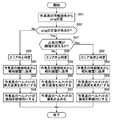
- FIG. 7 is a processing flow in the site management system 1 according to this embodiment.
- the information terminal 120 has a calculation unit 121, a first storage unit 122, a second storage unit 123, a network interface 124, and a display unit 125.
- the calculation unit 121 is composed of, for example, a central processing unit that performs various calculation processes. That is, the calculation unit 121 functions as a control device that controls the information terminal 120 in a centralized manner. For example, the arithmetic unit 121 performs arithmetic processing on various data input from the network interface 124 according to the program stored in the first storage unit 122. In addition, the calculation unit 121 controls the network interface 124, and also controls the communication of the light emitting device 13a and the vibration device 13b of the heavy machine 11 and the helmet 13.
- the first storage unit 122 is a general main memory for temporarily storing programs and various data. Specifically, the first storage unit 122 temporarily stores the program executed by the calculation unit 121, and further temporarily stores various data input to the information terminal 120 and the calculation result by the calculation unit 121. be able to.
- the calculation result by the calculation unit 121 is, for example, a determination result regarding the position of the heavy machine 11 described later.
- the second storage unit 123 is a general storage that permanently stores various types of data. Specifically, the second storage unit 123 permanently stores the calculation result by the calculation unit 121.
- the second storage unit 123 is composed of a hard disk drive or a solid state drive.
- the display unit 125 is a general display provided in the information terminal 120, and displays various information by a program execution process by the calculation unit 121.
- the information terminal 120 is a light emitting device 13a such as an LED provided on the brim of the helmet 13 and a vibrating device 13b by short-range wireless communication such as Bluetooth (registered trademark) by the network interface 124.
- the desired drive signal can be supplied to the Bluetooth.
- the calculation unit 121 of the information terminal 120 determines how to drive the light emitting device 13a and the vibrating device 13b, and supplies a drive signal corresponding to the determined drive to the light emitting device 13a and the vibrating device 13b. .. That is, each operation of the light emitting device 13a and the vibrating device 13b of the helmet 13 is controlled by the information terminal 120.
- the information terminal 120 uses ICMP ping, which is a standard protocol of the network, in order to grasp whether or not the heavy equipment 11 is working inside the wireless communication enable area B.
- the request signal is transmitted to the heavy equipment 11.
- the arithmetic unit 121 of the information terminal 120 executes a predetermined program and transmits it periodically (for example, every 1 second to 1 minute) via a network interface 124 and a local network radio such as a wireless LAN. To do.
- the information terminal 120 responds from whether or not a response signal in response to the ping is received from the heavy machine 11 (that is, whether or not there is a response signal) and from the transmission of the ping.
- the work area of the heavy equipment 11 is determined according to the elapsed time (that is, the response time) until the signal is received.
- the calculation unit 121 causes the heavy equipment 11 to be inside the boundary in the wireless communication enable area B when the elapsed time is equal to or less than the threshold value.
- the calculation unit 121 determines that the heavy equipment 11 is located outside the wireless communication enable area B.
- the calculation unit 121 uses the light emitting device 13a and the vibration device 13b of the helmet 13 to notify the on-site worker W1 of the construction site A according to the determination result. For example, if it is determined that the heavy equipment 11 is located at the boundary within the wireless communication available area B, or if it is determined that the heavy equipment 11 is located outside the wireless communication possible area B, the heavy equipment 11 is determined to be located outside the wireless communication possible area B. Since it is necessary to take measures to work inside B, the light emitting device 13a may be made to emit light, and the vibrating device 13b may be vibrated. In other words, the information terminal 120 gives a notification instruction from the light emitting device 13a and the vibration device 13b of the helmet 13 of the on-site worker W1 to perform the above notification.
- the information terminal 120 periodically transmits a ping to the heavy equipment 11 (step S51). Specifically, a ping is generated by the processing of the arithmetic unit 121 and transmitted to the heavy equipment 11 by wireless communication via the network interface 124.
- the information terminal 120 determines whether or not there is a response to the transmitted ping (step S52). Specifically, the calculation unit 121 continuously monitors whether or not the response signal is received from the heavy equipment 11 via the network interface 124.
- step S52 When there is no response to the ping (step S52: No), the information terminal 120 determines that the heavy equipment 11 is located outside the wireless communication enable area B (step S53). After that, a notification instruction (transmission of a drive signal) is given from the information terminal 120 to the notification device owned by the on-site worker W1 who is a worker working inside the construction site A via the local network radio (step S54). Specifically, by the processing of the calculation unit 121, a drive signal for driving each device is transmitted to the light emitting device 13a and the vibration device 13b via the local network radio via the network interface 124.
- a notification instruction transmission of a drive signal
- the light emitting device 13a of the helmet 13 of the on-site worker W1 is made to emit red light (step S55), and the vibrating device 13b of the helmet 13 of the on-site worker W1 is continuously vibrated (step S56).
- the on-site worker W1 can visually and vibrately grasp that the heavy equipment 11 is located outside the wireless communication area B, and can easily understand that the movement of the heavy equipment 11 is urgent. it can.
- step S52 when there is a response to the ping (step S52: Yes), the information terminal 120 further determines whether or not the response time from the ping transmission to the reception of the response signal exceeds the threshold value (step S57).
- step S57 When the response time of the information terminal 120 does not exceed the threshold value (step S57: No), the heavy equipment 11 is located inside the wireless communication enable area B because normal wireless communication with the heavy equipment 11 is performed. (Step S15).
- a notification instruction transmission of a drive signal
- Is made step S59).
- the light emitting device 13a of the helmet 13 of the on-site worker W1 is turned off (step S60), and the vibration of the vibrating device 13b of the helmet 13 of the on-site worker W1 is stopped (step S61).
- the on-site worker W1 visually and vibratesly grasps that the heavy equipment 11 is located inside the wireless communication possible area B, and does not need to move the heavy equipment 11, and the information terminal 120 will be used in future work. It can be easily understood that the wireless communication between the heavy equipment 11 and the heavy equipment 11 is stable.
- step S57 when the response time exceeds the threshold value (step S57: Yes), the information terminal 120 has an error in the transmission / reception of the ping and the ping transmission is performed again. It is determined that the wireless communication is unstable, and it is determined that the heavy equipment 11 is located at the boundary of the wireless communication available area B (step S62). After that, as in step S54, a notification instruction (transmission of a drive signal) is given from the information terminal 120 to the notification device owned by the on-site worker W1 who is a worker working inside the construction site A via the local network radio. ) Is made (step S63).
- a notification instruction transmission of a drive signal
- the light emitting device 13a of the helmet 13 of the on-site worker W1 is made to emit yellow light (step S64), and the vibrating device 13b of the helmet 13 of the on-site worker W1 is intermittently vibrated (step S65).
- the on-site worker W1 visually and vibratesly grasps that the heavy equipment 11 is located at the boundary of the wireless communication possible area B, and the wireless communication between the information terminal 120 and the heavy equipment 11 is unstable. It can be easily understood that there is a need to move the heavy equipment 11.
- a ping is transmitted from the information terminal 120 installed in the construction site A to the heavy equipment 11, whether or not a response signal to the ping is received, and until the response signal is received.
- the heavy equipment 11 With respect to the wireless communication enable area B can be determined. As a result, it is possible to grasp whether the heavy machine 11 is located inside or outside the wireless communication possible area B or at the boundary, and it is possible to easily maintain or restore the wireless communication of the heavy machine 11 by moving or working management of the heavy machine 11. become.
Landscapes
- Business, Economics & Management (AREA)
- Physics & Mathematics (AREA)
- Engineering & Computer Science (AREA)
- General Physics & Mathematics (AREA)
- General Health & Medical Sciences (AREA)
- Primary Health Care (AREA)
- Health & Medical Sciences (AREA)
- Economics (AREA)
- Computer Networks & Wireless Communication (AREA)
- Human Resources & Organizations (AREA)
- Marketing (AREA)
- Emergency Management (AREA)
- Strategic Management (AREA)
- Tourism & Hospitality (AREA)
- General Business, Economics & Management (AREA)
- Theoretical Computer Science (AREA)
- Management, Administration, Business Operations System, And Electronic Commerce (AREA)
- Alarm Systems (AREA)
Abstract
作業機械に向けてリクエスト信号を送信し、前記リクエスト信号を受信した前記作業機械から返信される応答信号を受信する信号送受信部と、前記リクエスト信号の送信から前記応答信号の受信までの経過時間、及び前記応答信号の有無に応じて前記作業機械が無線通信可能エリア内に位置するか否かを判定する位置判定部と、を有する管理制御装置を含み、前記位置判定部は、前記経過時間が閾値以下である場合に前記作業機械が前記境界よりも内側に位置すると判定し、前記経過時間が閾値を超えている場合に前記作業機械が前記無線通信可能エリア内の境界に位置すると判定すること。
Description
本発明は、土木施工現場において作業を行う作業機械の位置情報を無線通信によって取得して現場管理に利用する現場管理システムであって、特に作業機械の位置に応じて施工現場の関係者へ報知する技術に関する。
重機及び運搬機等の作業機械によって作業を進める土木施工現場において、当該施工現場の管理者(監督者)が施工現場の作業状況等を把握するためにも、当該作業機械及び操縦者を含む施工現場の作業員の状況等を確認することが重要となっている。一般的に、監視対象となる機器をネットワークに接続し、ネットワークを介して当該監視対象の情報を取得して、所望の監視及び管理を行うことが知られている。例えば、特許文献1には、ネットワークに接続された通信機器を低コストで監視し、オペレータの負担を軽減するネットワーク機械監視モニタ装置が開示されている。
特に、土木施工現場においては、当該作業機械が様々な場所で各種の作業を行っているため、当該作業機械についての各種の情報を無線通信により、施工現場の監視を行う場所で取得し、当該情報を利用した現場管理が求められている。ここで、作業機械の各種の情報を当該作業機械から離れた場所で取得するためには、当該作業機械に搭載された通信機器と無線通信可能な状態となる必要がある。
しかしながら、土木施工現場において無線通信が可能な範囲には限界があり、作業機械が通信可能エリアから外に出ることにより、作業機械の情報を取得することができなくなり、現場管理の効率の低下が生じ、更には適格な監視及び管理を行うことができなくなる問題がある。また、リアルタイムキネマティック(RTK-GNSS)によって施工品質を確保している場合には、作業機械が通信可能エリアから外に出ることで作業が中断される問題がある。すなわち、土木作業現場においては、作業機械が通信可能エリアから外れた場合だけでなく、作業機械が通信可能エリアから外れる前に対応する必要もある。
これに対して、各作業機械に通信状況を監視するシステムを組み込むことも考えられるが、作業機械の製造メーカに対応させて当該システムを構築する必要があり、システムの導入が煩雑となり、コストの増加にもつながる虞がある。
本発明はこのような課題に鑑みてなされたものであり、その目的とするところは、導入の煩雑化及びコスト増加を抑制可能であり、且つ作業機械が通信可能エリアから外れる前にその旨を検知し、施工現場の関係者に報知することができる現場管理システムを提供することである。
上述した目的を達成するため、本発明の現場管理システムは、無線通信によって施工現場における作業機械の情報を取得する管理制御装置を備え、前記作業機械の位置に応じた報知を前記施工現場の関係者に向けて行う現場管理システムにおいて、前記管理制御装置は、前記作業機械に向けてリクエスト信号を送信し、前記リクエスト信号を受信した前記作業機械から返信される応答信号を受信する信号送受信部と、前記リクエスト信号の送信から前記応答信号の受信までの経過時間、及び前記応答信号の有無に応じて前記作業機械が無線通信可能エリア内に位置するか否かを判定する位置判定部と、を有し、前記位置判定部は、前記経過時間が閾値以下である場合に前記作業機械が前記境界よりも内側に位置すると判定し、前記経過時間が閾値を超えている場合に前記作業機械が前記無線通信可能エリア内の境界に位置すると判定し、前記応答信号が無い場合に前記作業機械が無線通信可能エリア外に位置すると判定する。
本発明に係る現場管理システムによれば、導入の煩雑化及びコスト増加を抑制可能であり、且つ作業機械が通信可能エリアから外れる前にその旨を検知し、施工現場の関係者に報知することができる。
以下、図面を参照し、本発明による現場管理システムの実施の形態について、各実施例に基づき詳細に説明する。なお、本発明は以下に説明する内容に限定されるものではなく、その要旨を変更しない範囲において任意に変更して実施することが可能である。また、各実施例で用いる様々な数値は、いずれも一例を示すものであり、必要に応じて様々に変更することが可能である。
<実施例1>
以下において、図1乃至図3を参照しつつ、本実施例に係る現場管理システム、並びに当該システムにアクセス可能な機械及び機器について説明する。ここで、図1は、本実施例に係る現場管理システム、並びに当該システムと通信可能な機械及び機器を含めた構成を示す概略図である。また、図2は、本実施例に係る現場管理システム、並びに当該システムと通信可能な機械及び機器を含めた構成を示すブロック図である。更に、図3は、本実施例に係る現場管理システムに含まれるサーバのブロック図である。
以下において、図1乃至図3を参照しつつ、本実施例に係る現場管理システム、並びに当該システムにアクセス可能な機械及び機器について説明する。ここで、図1は、本実施例に係る現場管理システム、並びに当該システムと通信可能な機械及び機器を含めた構成を示す概略図である。また、図2は、本実施例に係る現場管理システム、並びに当該システムと通信可能な機械及び機器を含めた構成を示すブロック図である。更に、図3は、本実施例に係る現場管理システムに含まれるサーバのブロック図である。
図1に示すように、本実施例における現場管理システム1は、施工現場A内に設けられた無線アクセスポイント2と、施工現場Aに設けられ、インターネット等の通信回線3を介して無線アクセスポイント2と通信可能なサーバ4とを有している。施工現場Aには、無線アクセスポイント2と無線通信が可能なエリアである無線通信可能エリアBが、無線アクセスポイント2を中心とした所定の範囲に形成されている。
本実施例においては、施工現場Aにおいて、1台の作業機械である重機11が作業を行っていることを想定している。重機11は、図示しない現場内作業員によって運転が行われている。重機11は、無線通信可能エリアBの内側で作業すれば、無線アクセスポイント2と通信可能となる。図1においては、無線通信可能エリアBの内側で作業を行っている場合を重機11aとして表示し、無線通信可能エリアBの内側であって当該エリア外との境界付近で作業を行っている場合を重機11bとして表示し、無線通信可能エリアBの外側で作業を行っている場合を重機11cとして表示している。
本実施例において、重機11とは、積込作業を行う油圧ショベルを想定しているが、これに限定されることはない。重機11としては、例えば、運搬機であるダンプ、各種のローラ機械、及びホイルローダ等であってもよい。更に、作業機械としては、重機11に限定されることなく、土木施工現場において使用される各種の装置が含まれることになる。
更に、施工現場Aにおいては、情報端末12を所持し、ヘルメット13を被った現場内作業員W1が作業を行っている。現場内作業員W1とは、施工現場Aの現場監督であってもよく、一般的な作業を行う作業員であってもよい。現場内作業員W1は、基本的に施工現場A内で作業を行い、無線通信可能エリアBの内側で作業する場合には、情報端末12を使用した各種の作業、管理、及び保守等を行うことができる。ここで、情報端末12とは、一般的なスマートフォン又はタブレッド端末であってもよく、特別な機能を備える専用端末であってもよい。
そして、本実施例においては、施工現場Aの外で作業をしている現場外作業員W2も、情報端末12を所持し、ヘルメット13を被っていることを想定している。現場外作業員W2は、情報端末12を使用し、通信回線3を介してサーバ4にアクセスし、サーバ4に記憶された各種の情報を利用することができる。なお、現場内作業員W1及び現場内作業員W2は、施工現場Aに関係した作業を行うため、作業場所に関わらず、施工現場Aの関係者となる。
図2に示すように、無線アクセスポイント2は、演算部21、第1記憶部22、第2記憶部23、ネットワークインターフェイス24、及び外部インターフェイス25を有している。無線アクセスポイント2は、重機11の各種の情報を取得する管理制御装置(管理制御部)として機能する。
演算部21は、例えば、各種の演算処理を行う中央処理装置(CPU:Central Processing Unit)から構成される。すなわち、演算部21は、無線アクセスポイント2を統括して制御する制御装置として機能する。例えば、演算部21は、第1記憶部22に格納されたプログラムに従い、ネットワークインターフェイス24から入力された各種のデータに関する演算処理を行う。また、演算部21は、ネットワークインターフェイス24を制御し、通信回線3、重機11及び情報端末12に対する無線アクセスポイント2の通信制御も行うことになる。
第1記憶部22は、プログラム及び各種のデータを一時的に格納する一般的なメインメモリ(主記憶装置)である。具体的に、第1記憶部22は、演算部21が実行するプログラムを一時的に格納し、更には無線アクセスポイント2に入力された各種のデータ及び演算部21による演算結果を一時的に格納することができる。例えば、第1記憶部22は、ダイナミック・ランダム・アクセス・メモリ(DRAM:Dynamic Random Access Memory)から構成される。なお、演算部21による演算結果とは、例えば、後述する重機11の位置に関する判定結果である。
一方、第2記憶部23は、各種のデータを永久的に記憶する一般的なストレージ(補助記憶装置)である。具体的に、第2記憶部23は、演算部21による演算結果を永久的に格納する。例えば、第2記憶部23は、ハードディスクドライブ(HDD:hard disk drive)又はソリッドステートドライブ(SSD:solid state drive)から構成される。
また、外部インターフェイス25には、表示装置であるディスプレイ26、及び入力装置であるキーボード27が接続されている。無線アクセスポイント2の管理者は、キーボード27を操作することにより、無線アクセスポイント2の利用及び保守点検をすることができる。また、当該管理者は、ディスプレイ26に利用状況及び保守点検状況等を表示させ、表示された出力情報を利用することができる。なお、外部インターフェイス25には、マウス等の他の入力装置が接続されてもよく、更にはプリンター等の出力装置が接続されてもよい。
また、図2に示すように、重機11は、制御部28、通信部29、及び表示部30を有している。制御部28は、一般的な中央処理装置であり、重機11の各種の動作を制御するとともに、重機11の動作を統括している。通信部29は、重機11が他の装置(例えば、無線アクセスポイント2)と無線通信可能とするためのインターフェイスである。表示部30は、重機11に備え付けられた一般的なディスプレイであり、制御部28によって制御され、各種の情報を表示する。
更に、図2に示すように、情報端末12は、制御部12a、通信部12b、及び表示部12cを有している。制御部12aは、一般的な中央処理装置であり、情報端末12の各種の動作を制御するとともに、情報端末12の動作を統括している。通信部12bは、情報端末12が他の装置(例えば、無線アクセスポイント2)と無線通信可能とするためのインターフェイスである。表示部12cは、情報端末12に備え付けられた一般的なディスプレイであり、制御部12aによって制御され、各種の情報を表示する。
本実施例においては、情報端末12は、通信部12bによるブルートゥース(Bluetooth)(登録商標)等の短距離無線通信により、ヘルメット13のつばに設けられたLED等の発光装置13a、及び振動装置13bに所望の駆動信号を供給することができる。ここで、情報端末12の制御部12aは、発光装置13a及び振動装置13bをどのように駆動させるかを決定し、当該決定した駆動に対応した駆動信号を発光装置13a及び振動装置13bに供給する。すなわち、ヘルメット13の発光装置13a及び振動装置13bは、情報端末12によって各動作が制御されている。
上記のような構成から、本実施例において、無線アクセスポイント2は、重機11が無線通信可能エリアBの内側で作業しているか否かを把握するために、ネットワークの標準プロトコルであるICMP(Internet Control Message Protocol)によるping(リクエスト信号)を重機11に送信している。具体的には、無線アクセスポイント2の演算部21が所定のプログラムを実行し、ネットワークインターフェイス24を経由し、無線LAN等のローカルネットワーク無線を通じて、定期的(例えば、1秒~1分周期)に送信する。
重機11が無線通信可能エリアBの内側で作業をしている場合(すなわち、重機11aの状況)、通信部29を介して当該pingを受信することにより、制御部28が応答信号を生成して通信部29を介して無線アクセスポイント2に応答信号を返信する。一方、重機11が無線通信可能エリアBの外側で作業をしている場合(すなわち、重機11cの状況)、当該pingを受信することがないため、制御部28が応答信号を生成することがない。また、重機11が無線通信可能エリアB内の境界部分で作業をしている場合(すなわち、重機11b)、通信状態が不安定となり、通信部29を介して当該pingを受信したとしても信号に誤りが含まれ、pingの再送信要求を無線アクセスポイント2に行い、誤りを含まないpingの受信により、制御部28が応答信号を生成して通信部29を介して無線アクセスポイント2に応答信号を返信する。
上記重機11の動作に対して、無線アクセスポイント2は、pingに応答する応答信号を重機11から受信したか否か(すなわち、応答信号の有無)、及びpingの送信から応答信号の受信までの経過時間(すなわち、応答時間)に応じて、重機11の作業位置を判定することになる。具体的には、ネットワークインターフェイス24を介して上記応答信号を受信すると、演算部21は、当該経過時間が閾値以下である場合には、重機11が無線通信可能エリアB内の境界よりも内側に位置していると判定し、当該経過時間が閾値を超えている場合には、重機11が無線通信可能エリアB内の境界に位置していると判定する。一方、ネットワークインターフェイス24を介して上記応答信号を受信しない場合、演算部21は、重機11が無線通信可能エリアBの外に位置していると判定する。
そして、演算部21は、重機11の表示部30、情報端末12の表示部12c、並びにヘルメット13の発光装置13a及び振動装置13bを用いて、施工現場Aの現場内作業員W1に対して当該判定結果に応じた報知を行う。例えば、重機11が無線通信可能エリアB内の境界に位置していると判定した場合、及び無線通信可能エリアBの外に位置していると判定した場合には、重機11を無線通信可能エリアBの内側で作業させるような措置が必要となるため、表示部30及び表示部12cにその旨(すなわち、重機11の位置情報)を表示し、発光装置13aを発光させ、更には振動装置13bを振動させてもよい。これらのことを換言すると、無線アクセスポイント2は、現場内作業員W1のヘルメット13の発光装置13a及び振動装置13bから上記報知を行うように報知指示を行っていることになる。なお、報知の具体例については、後述する。
図3に示すように、サーバ4は、演算部31、第1記憶部32、第2記憶部33、ネットワークインターフェイス34、及び外部インターフェイス35を有している。サーバ4は、施工現場Aの外で作業する現場作業員W2に対して、各種の現場情報を提供することになる。
演算部31は、例えば、各種の演算処理を行う中央処理装置から構成される。すなわち、演算部31は、サーバ4を統括して制御する制御装置として機能する。例えば、演算部31は、第1記憶部32に格納されたプログラムに従い、ネットワークインターフェイス34から入力された各種のデータに関する演算処理を行う。また、演算部31は、ネットワークインターフェイス34を制御し、通信回線3に対するサーバ4の通信制御も行うことになる。
第1記憶部32は、プログラム及び各種のデータを一時的に格納する一般的なメインメモリ(主記憶装置)である。具体的に、第1記憶部32は、演算部31が実行するプログラムを一時的に格納し、更にはサーバ4に入力された各種のデータ及び演算部31による演算結果を一時的に格納することができる。例えば、第1記憶部32は、ダイナミック・ランダム・アクセス・メモリから構成される。
一方、第2記憶部33は、各種のデータを永久的に記憶する一般的なストレージ(補助記憶装置)である。具体的に、第2記憶部33は、演算部31による演算結果を永久的に格納する。例えば、第2記憶部33は、ハードディスクドライブ又はソリッドステートドライブから構成される。
また、外部インターフェイス25には、表示装置であるディスプレイ36、及び入力装置であるキーボード37が接続されている。サーバ4の管理者は、キーボード37を操作することにより、サーバ4の利用及び保守点検をすることができる。また、当該管理者は、ディスプレイ36に利用状況及び保守点検状況等を表示させ、表示された出力情報を利用することができる。なお、外部インターフェイス35には、マウス等の他の入力装置が接続されてもよく、更にはプリンター等の出力装置が接続されてもよい。
上記のような構成から、本実施例において、サーバ4は、無線アクセスポイント2から送信された重機11の位置に関する判定結果を受信し、第2記憶部33に記憶する。また、サーバ4において、演算部31は、現場外作業員W2が所有する情報端末12、並びにヘルメット13の発光装置13a及び振動装置13bを用いて、施工現場Aの外の現場外作業員W2に対して当該判定結果に応じた報知を行う。具体的に、演算部31は、報知指示となる信号をネットワークインターフェイス34及び通信回線3を介して現場外作業員W2が所有する情報端末12に供給することになる。換言すると、演算部31は、施工現場Aの外の現場外作業員W2に向けた報知の開始をネットワークインターフェイス34及び通信回線3を介して指示することになる。
ここで、報知の方法については、情報端末12、並びにヘルメット13の発光装置13a及び振動装置13が共通であるため、上述した現場内作業員W1の場合と同一である。すなわち、サーバ4は、ヘルメット13の発光装置13a及び振動装置13から報知するような報知指示を行っていることになる。
以上のように、本実施例においては、ネットワークインターフェイス24がpingを送信し且つその応答信号を受信しているため、ネットワークインターフェイス24が現場管理システム1の信号送受信部として機能する。また、演算部21によって重機11の位置がされるため、演算部21が現場管理システム1の位置判定部として機能する。更に、情報端末12、重機11の表示部30、並びにヘルメット13の発光装置13a及び振動装置13bによって現場内作業員W1、現場外作業員W2、図示しない重機11の運転者に対して、重機11の位置を報知するため、これらの機械が報知装置として機能する。また、情報端末12の演算部21は、当該報知装置に対して、報知の開始を指示することになり、現場管理システム1の指示部として機能する。
次に、図4及び図5を参照し、本実施例に係る現場管理システム1における処理フローを説明する。ここで、図4は、現場外作業員W2に対する報知までの処理フローであり、図5は、現場内作業員W1に対する報知までの処理フローである。
先ず、図4に示すように、現場外作業員W2に対する報知までの処理フローについては、無線アクセスポイント2より、重機11に対して、pingが定期的に送信される(ステップS11)。具体的には、演算部21の処理よってpingを生成し、ネットワークインターフェイス24を介して、無線通信によって重機11に送信される。次に、無線アクセスポイント2は、送信したpingに対する応答があるか否かを判定する(ステップS12)。具体的には、ネットワークインターフェイス24を介して、重機11から応答信号を受信するか否かを、演算部21が継続的に監視することになる。
無線アクセスポイント2は、pingに対する応答がない場合(ステップS12:No)、重機11が無線通信可能エリアBの外に位置していると判定する(ステップS13)。一方、無線アクセスポイント2は、pingに対する応答があった場合(ステップS12:Yes)、ping送信から応答信号の受信までの応答時間が閾値を超えているか否かを更に判定する(ステップS14)。
無線アクセスポイント2は、当該応答時間が閾値を超えていない場合(ステップS14:No)、重機11との正常な無線通信が行われているため、重機11が無線通信可能エリアBの内側に位置していると判定する(ステップS15)。これに対して、当該応答時間が閾値を超えている場合(ステップS14:Yes)、pingの送受信に誤りが生じて再度のping送信が行われているため、重機11との無線通信が不安定であると判定し、重機11が無線通信可能エリアBの境界に位置していると判定する(ステップS16)。なお、当該閾値は、無線アクセスポイント2の性能、重機11の通信部29の性能等に対応させ、適宜調整することができる。
次に、無線アクセスポイント2は、通信回線3を介して、インターネット上のサーバ4にステップS13、S15、S16の判定結果を送信する。具体的には、演算部21の処理により、ネットワークインターフェイス24を経由し、通信回線3を介してサーバ4にアクセスがなされ、サーバ4に対して当該判定結果が送信される。なお、演算部21は、判定結果の送信と同時に、第2記憶部23に同様の判定結果を記憶してもよい。
次に、サーバ4から施工現場Aの外で作業する作業員である現場外作業員W2が所有する情報端末12に当該判定結果が通知される(ステップS18)。具体的に、サーバ4においては、演算部31の処理により、受信した当該判定結果が第2記憶部23に記憶される。その後、演算部31の処理により、ネットワークインターフェイス34及び通信回線3を介して、現場外作業員W2の情報端末12に対して当該判定結果が送信される。
次に、情報端末12は、受信した判定結果に応じて(ステップS19)、3通りの処理を行う。第1に、判定結果において重機11が無線通信可能エリアBの外に位置している場合(ステップS19:エリア外)、現場外作業員W2のヘルメット13の発光装置13aを赤色に発光させ(ステップS20)、更に現場外作業員W2のヘルメット13の振動装置13bを継続して振動させる。具体的には、情報端末12の制御部12aが当該判定結果に対応させた駆動信号を生成し、当該駆動信号を発光装置13a及び振動装置13bに供給して、上記報知を行う。これにより、現場外作業員W2は、重機11が無線通信可能エリアBの外に位置することを視覚及び振動覚によって把握し、重機11の移動の緊急度が高いことを簡単に理解することができる。
第2に、判定結果において重機11が無線通信可能エリアBの内側に位置している場合(ステップS19:エリア内)、現場外作業員W2のヘルメット13の発光装置13aを消灯させ(ステップS22)、更に現場外作業員W2のヘルメット13の振動装置13bの振動を止める。これにより、現場外作業員W2は、重機11が無線通信可能エリアBの内側に位置することを視覚及び振動覚によって把握し、重機11の移動させる必要もなく、今後の作業においても無線アクセスポイント2と重機11との無線通信が安定していることを簡単に理解することができる。
第3に、判定結果において重機11が無線通信可能エリアBの境界に位置している場合(ステップS19:エリア境界)、現場外作業員W2のヘルメット13の発光装置13aを黄色に発光させ(ステップS24)、更に現場外作業員W2のヘルメット13の振動装置13bを断続的に振動させる。これにより、現場外作業員W2は、重機11が無線通信可能エリアBの境界に位置することを視覚及び振動覚によって把握し、無線アクセスポイント2と重機11との無線通信が不安定であって、重機11の移動の必要性があることを簡単に理解することができる。
次に、図5に示すように、現場内作業員W2に対する報知までの処理フローについては、ステップS31からステップS39を経て、3つの通りの報知処置(ステップS40及びs41、ステップS42及びS43、ステップS44及びS45)が取られるものの、ステップS37及びステップS38以外のステップについては、図4と同一である。以下において、図4と同一ステップについてはその説明を省略し、ステップS37及びステップS38を主に説明する。
無線アクセスポイント2において、pingの送信及び応答信号の受信によって重機11の位置が判定できると(ステップS33、S35、S36)、無線アクセスポイント2からローカルネットワーク無線を通じて、施工現場Aの内側で作業する作業員である現場内作業員W1が所有する情報端末12に当該判定結果が通知される(ステップS37)。具体的には、演算部21の処理により、ネットワークインターフェイス24を経由し、ローカルネットワーク無線を通じて情報端末12に対して当該判定結果が送信される。なお、演算部21は、判定結果の送信と同時に、第2記憶部23に同様の判定結果を記憶してもよい。
次に、情報端末12は、受信した判定結果に応じ、報知装置である発光装置13a及び振動装置13bに対して、各装置を駆動させるための駆動信号を送信する(ステップS38)。その後、発光装置13a及び振動装置13bは、受信した判定結果に対応した駆動信号に基づいて、各種の報知を示す駆動を行う(ステップS40~S45)。
なお、図4及び図5のフローにおいては、ヘルメット13に設けられた報知装置による報知を説明していたが、情報端末12の表示部12c及び重機11の表示部30による報知についても、同様のフローにて行われることになる。
以上のように、本実施例においては、施工現場A内に設置された無線アクセスポイント2から重機11に向けてpingを送信し、当該pingに対する応答信号を受信したか否か、及び応答信号受信までの経過時間を判定することにより、無線通信可能エリアBに対する重機11を判定することができる。これにより、重機11が無線通信可能エリアBの内外、又は境界に位置するかを把握することがき、重機11の移動又は作業管理によって重機11の無線通信を維持又は復旧を容易に行うことが可能になる。
そして、本実施例においては、重機11の仕様及び製造会社等の各種の状況に依存することなく、無線アクセスポイント2を設けることによって、重機11が無線通信可能エリアBから外れる前にその旨を検知し、施工現場の関係者である現場内作業員W1及び現場外作業員W2に報知することができる。このため、現場管理システム1の導入の煩雑化及びコスト増加は抑制されることになる。
また、本実施例においては、現場内作業員W1及び現場外作業員W2のヘルメット13に報知装置を設けているため、比較的に簡単な構成による報知を実現し、システム全体の導入コストを抑えることができる。また、発光装置13aによる報知は、振動又は音での識別が困難な施工現場においても、作業員が容易に報知内容を確認することができる。一方、振動装置13bによる報知は、視認が難しい施工現場においても、作業員が容易に報知内容を確認することができ、更には他の装置を見ながらであっても容易に確認することができる。
上述した実施例においては、無線アクセスポイント2がサーバ4を経由して、施工現場Aの外で作業をしている現場外作業員W2の報知を行っていたが、無線アクセスポイント2が通信回線3を介して、現場外作業員W2の情報端末12に対して重機11の位置の判定結果を直接的に送信してもよい。また、上述した実施例においては、ヘルメット13における報知は情報端末12を介して行われていたが、発光装置13a及び振動装置13bの電池容量を確保することができれば、無線アクセスポイント2が発光装置13a及び振動装置13bに対して駆動信号を直接的に供給してもよい。
また、作業員への報知は、色による報知、及び振動による報知に限定されず、各表示部を用いたメッセージによる報知であってもよい。更に、振動による報知については、情報端末12が備える振動装置を用いてもよい。そして、各種の報知は、無線アクセスポイント2に接続されたディスプレイ26によって行うこともできる。
<実施例2>
実施例1においては、現場管理システム1の管理制御装置として機能する無線アクセスポイント2を施工現場Aに独立して設けていたが、ping送信及び応答信号の受信、並びに応答信号の受信有無に基づく重機11の位置判定を情報端末で行うようにしてもよい。このような形態を実施例2として、図6及び図7を参照しつつ以下に説明する。なお、実施例1と同一の機械、構成及び物品については、同一の符号を付し、その説明を省略する。
実施例1においては、現場管理システム1の管理制御装置として機能する無線アクセスポイント2を施工現場Aに独立して設けていたが、ping送信及び応答信号の受信、並びに応答信号の受信有無に基づく重機11の位置判定を情報端末で行うようにしてもよい。このような形態を実施例2として、図6及び図7を参照しつつ以下に説明する。なお、実施例1と同一の機械、構成及び物品については、同一の符号を付し、その説明を省略する。
ここで、図6は、本実施例に係る現場管理システム101、並びに当該システムと通信可能な機械及び機器を含めた構成を示すブロック図である。図7は、本実施例に係る現場管理システム1における処理フローである。
図6に示すように、情報端末120は、演算部121、第1記憶部122、第2記憶部123、ネットワークインターフェイス124、及び表示部125を有している。
演算部121は、例えば、各種の演算処理を行う中央処理装置から構成される。すなわち、演算部121は、情報端末120を統括して制御する制御装置として機能する。例えば、演算部121は、第1記憶部122に格納されたプログラムに従い、ネットワークインターフェイス124から入力された各種のデータに関する演算処理を行う。また、演算部121は、ネットワークインターフェイス124を制御し、重機11並びにヘルメット13の発光装置13a及び振動装置13bの通信制御も行うことになる。
第1記憶部122は、プログラム及び各種のデータを一時的に格納する一般的なメインメモリである。具体的に、第1記憶部122は、演算部121が実行するプログラムを一時的に格納し、更には情報端末120に入力された各種のデータ及び演算部121による演算結果を一時的に格納することができる。なお、演算部121による演算結果とは、例えば、後述する重機11の位置に関する判定結果である。
一方、第2記憶部123は、各種のデータを永久的に記憶する一般的なストレージである。具体的に、第2記憶部123は、演算部121による演算結果を永久的に格納する。例えば、第2記憶部123は、ハードディスクドライブ又はソリッドステートドライブ
から構成される。
から構成される。
表示部125は、情報端末120に備え付けられた一般的なディスプレイであり、演算部121によるプログラム実行処理により、各種の情報を表示する。
本実施例においては、情報端末120は、ネットワークインターフェイス124によるブルートゥース(Bluetooth)(登録商標)等の短距離無線通信により、ヘルメット13のつばに設けられたLED等の発光装置13a、及び振動装置13bに所望の駆動信号を供給することができる。ここで、情報端末120の演算部121は、発光装置13a及び振動装置13bをどのように駆動させるかを決定し、当該決定した駆動に対応した駆動信号を発光装置13a及び振動装置13bに供給する。すなわち、ヘルメット13の発光装置13a及び振動装置13bは、情報端末120によって各動作が制御されている。
上記のような構成から、本実施例において、情報端末120は、重機11が無線通信可能エリアBの内側で作業しているか否かを把握するために、ネットワークの標準プロトコルであるICMPによるping(リクエスト信号)を重機11に送信している。具体的には、情報端末120の演算部121が所定のプログラムを実行し、ネットワークインターフェイス124を経由し、無線LAN等のローカルネットワーク無線を通じて、定期的(例えば、1秒~1分周期)に送信する。
実施例1において説明した重機11の応答動作に対して、情報端末120は、pingに応答する応答信号を重機11から受信したか否か(すなわち、応答信号の有無)、及びpingの送信から応答信号の受信までの経過時間(すなわち、応答時間)に応じて、重機11の作業エリアを判定することになる。具体的には、ネットワークインターフェイス124を介して上記応答信号を受信すると、演算部121は、当該経過時間が閾値以下である場合には、重機11が無線通信可能エリアB内の境界よりも内側に位置していると判定し、当該経過時間が閾値を超えている場合には、重機11が無線通信可能エリアB内の境界に位置していると判定する。一方、ネットワークインターフェイス124を介して上記応答信号を受信しない場合、演算部121は、重機11が無線通信可能エリアBの外に位置していると判定する。
そして、演算部121は、ヘルメット13の発光装置13a及び振動装置13bを用いて、施工現場Aの現場内作業員W1に対して当該判定結果に応じた報知を行う。例えば、重機11が無線通信可能エリアB内の境界に位置していると判定した場合、及び無線通信可能エリアBの外に位置していると判定した場合には、重機11を無線通信可能エリアBの内側で作業させるような措置が必要となるため、発光装置13aを発光させ、更には振動装置13bを振動させてもよい。これらのことを換言すると、情報端末120は、現場内作業員W1のヘルメット13の発光装置13a及び振動装置13bから上記報知を行うように報知指示を行っていることになる。
次に、図7に示すように、現場内作業員W1に対する報知までの処理フローについては、情報端末120より、重機11に対して、pingが定期的に送信される(ステップS51)。具体的には、演算部121の処理よってpingを生成し、ネットワークインターフェイス124を介して、無線通信によって重機11に送信される。次に、情報端末120は、送信したpingに対する応答があるか否かを判定する(ステップS52)。具体的には、ネットワークインターフェイス124を介して、重機11から応答信号を受信するか否かを、演算部121が継続的に監視することになる。
情報端末120は、pingに対する応答がない場合(ステップS52:No)、重機11が無線通信可能エリアBの外に位置していると判定する(ステップS53)。その後、情報端末120からローカルネットワーク無線を通じて、施工現場Aの内側で作業する作業員である現場内作業員W1が所有する報知装置に対して報知指示(駆動信号の送信)がなされる(ステップS54)。具体的には、演算部121の処理により、ネットワークインターフェイス124を経由し、ローカルネットワーク無線を通じて発光装置13a及び振動装置13bに対して、各装置を駆動させるための駆動信号が送信される。
そして、現場内作業員W1のヘルメット13の発光装置13aを赤色に発光させ(ステップS55)、更に現場内作業員W1のヘルメット13の振動装置13bを継続的に振動させる(ステップS56)。これにより、現場内作業員W1は、重機11が無線通信可能エリアBの外に位置することを視覚及び振動覚によって把握し、重機11の移動の緊急度が高いことを簡単に理解することができる。
一方、情報端末120は、pingに対する応答があった場合(ステップS52:Yes)、ping送信から応答信号の受信までの応答時間が閾値を超えているか否かを更に判定する(ステップS57)。情報端末120は、当該応答時間が閾値を超えていない場合(ステップS57:No)、重機11との正常な無線通信が行われているため、重機11が無線通信可能エリアBの内側に位置していると判定する(ステップS15)。その後、上記ステップS54と同様に、情報端末120からローカルネットワーク無線を通じて、施工現場Aの内側で作業する作業員である現場内作業員W1が所有する報知装置に対して報知指示(駆動信号の送信)がなされる(ステップS59)。
そして、現場内作業員W1のヘルメット13の発光装置13aを消灯させ(ステップS60)、更に現場内作業員W1のヘルメット13の振動装置13bの振動を止める(ステップS61)。これにより、現場内作業員W1は、重機11が無線通信可能エリアBの内側に位置することを視覚及び振動覚によって把握し、重機11の移動させる必要もなく、今後の作業においても情報端末120と重機11との無線通信が安定していることを簡単に理解することができる。
これに対して、情報端末120は、当該応答時間が閾値を超えている場合(ステップS57:Yes)、pingの送受信に誤りが生じて再度のping送信が行われているため、重機11との無線通信が不安定であると判定し、重機11が無線通信可能エリアBの境界に位置していると判定する(ステップS62)。その後、上記ステップS54と同様に、情報端末120からローカルネットワーク無線を通じて、施工現場Aの内側で作業する作業員である現場内作業員W1が所有する報知装置に対して報知指示(駆動信号の送信)がなされる(ステップS63)。
そして、現場内作業員W1のヘルメット13の発光装置13aを黄色に発光させ(ステップS64)、更に現場内作業員W1のヘルメット13の振動装置13bを断続的に振動させる(ステップS65)。これにより、現場内作業員W1は、重機11が無線通信可能エリアBの境界に位置することを視覚及び振動覚によって把握し、情報端末120と重機11との無線通信が不安定であって、重機11の移動の必要性があることを簡単に理解することができる。
以上のように、本実施例においては、施工現場A内に設置された情報端末120から重機11に向けてpingを送信し、当該pingに対する応答信号を受信したか否か、及び応答信号受信までの経過時間を判定することにより、無線通信可能エリアBに対する重機11を判定することができる。これにより、重機11が無線通信可能エリアBの内外、又は境界に位置するかを把握することがき、重機11の移動又は作業管理によって重機11の無線通信を維持又は復旧を容易に行うことが可能になる。
そして、本実施例においては、重機11の仕様及び製造会社等の各種の状況に依存することなく、情報端末120を設けることによって、重機11が無線通信可能エリアBから外れる前にその旨を検知し、施工現場の関係者である現場内作業員W1に報知することができる。このため、現場管理システム1の導入の煩雑化及びコスト増加は抑制されることになる。
1 現場管理システム
2 無線アクセスポイント(管理制御装置)
3 通信回線
4 サーバ
11、11a、11b、11c 重機
12 情報端末(報知装置)
12a 制御部
12b 通信部
12c 表示部
13 ヘルメット
13a 発光装置(報知装置)
13b 振動装置(報知装置)
21 演算部
22 第1記憶部
23 第2記憶部
24 ネットワークインターフェイス
25 外部インターフェイス
26 ディスプレイ
27 キーボード
28 制御部
29 通信部
30 表示部(報知装置)
A 施工現場
B 無線通信可能エリア
W1 現場内作業員
W2 現場外作業員
2 無線アクセスポイント(管理制御装置)
3 通信回線
4 サーバ
11、11a、11b、11c 重機
12 情報端末(報知装置)
12a 制御部
12b 通信部
12c 表示部
13 ヘルメット
13a 発光装置(報知装置)
13b 振動装置(報知装置)
21 演算部
22 第1記憶部
23 第2記憶部
24 ネットワークインターフェイス
25 外部インターフェイス
26 ディスプレイ
27 キーボード
28 制御部
29 通信部
30 表示部(報知装置)
A 施工現場
B 無線通信可能エリア
W1 現場内作業員
W2 現場外作業員
Claims (8)
- 無線通信によって施工現場における作業機械の情報を取得する管理制御装置を備え、前記作業機械の位置に応じた報知を前記施工現場の関係者に向けて行う現場管理システムにおいて、
前記管理制御装置は、
前記作業機械に向けてリクエスト信号を送信し、前記リクエスト信号を受信した前記作業機械から返信される応答信号を受信する信号送受信部と、
前記リクエスト信号の送信から前記応答信号の受信までの経過時間、及び前記応答信号の有無に応じて前記作業機械が無線通信可能エリア内に位置するか否かを判定する位置判定部と、を有し、
前記位置判定部は、前記経過時間が閾値以下である場合に前記作業機械が前記境界よりも内側に位置すると判定し、前記経過時間が閾値を超えている場合に前記作業機械が前記無線通信可能エリア内の境界に位置すると判定し、前記応答信号が無い場合に前記作業機械が無線通信可能エリア外に位置すると判定することを特徴とする現場管理システム。 - 前記施工現場外に設置されたサーバを備え、
前記管理制御装置は、前記位置判定部の判定結果を、通信回線を介して前記サーバに送信し、
前記サーバは、受信した前記判定結果に応じ、前記施工現場外の現場外作業員に向けた報知の開始を前記通信回線を介して指示することを特徴とする請求項1に記載の現場管理システム。 - 前記サーバは、前記現場外作業員が所有する報知装置に対して報知指示を行うことを特徴とする請求項2に記載の現場管理システム。
- 前記サーバは、前記現場外作業員のヘルメットに設けられた発光装置又は振動装置から報知するように報知指示を行うことを特徴とする請求項3に記載の現場管理システム。
- 前記管理制御装置は、前記位置判定部の判定結果に応じて前記施工現場内の現場内作業員に向けた報知の開始を指示する指示部を有することを特徴とする請求項1に記載の現場管理システム。
- 前記指示部は、前記現場内作業員が所有する報知装置に対して報知指示を行うことを特徴とする請求項5に記載の現場管理システム。
- 前記指示部は、前記現場内作業員のヘルメットに設けられた発光装置又は振動装置から報知するように報知指示を行うことを特徴とする請求項6に記載の現場管理システム。
- 前記指示部は、前記作業機械に設置された報知装置に対して報知指示を行うことを特徴とする請求項5に記載の現場管理システム。
Applications Claiming Priority (2)
| Application Number | Priority Date | Filing Date | Title |
|---|---|---|---|
| JP2019-061549 | 2019-03-27 | ||
| JP2019061549A JP7231804B2 (ja) | 2019-03-27 | 2019-03-27 | 現場管理システム |
Publications (1)
| Publication Number | Publication Date |
|---|---|
| WO2020195442A1 true WO2020195442A1 (ja) | 2020-10-01 |
Family
ID=72609026
Family Applications (1)
| Application Number | Title | Priority Date | Filing Date |
|---|---|---|---|
| PCT/JP2020/007278 Ceased WO2020195442A1 (ja) | 2019-03-27 | 2020-02-25 | 現場管理システム |
Country Status (2)
| Country | Link |
|---|---|
| JP (1) | JP7231804B2 (ja) |
| WO (1) | WO2020195442A1 (ja) |
Citations (3)
| Publication number | Priority date | Publication date | Assignee | Title |
|---|---|---|---|---|
| JP2013098940A (ja) * | 2011-11-04 | 2013-05-20 | Komatsu Ltd | 鉱山機械の情報収集システム |
| JP2017182655A (ja) * | 2016-03-31 | 2017-10-05 | 東日本高速道路株式会社 | 警報装置、警報プログラム及び警報システム |
| JP2017218015A (ja) * | 2016-06-07 | 2017-12-14 | 株式会社Ihi | 建設機械の制御システム、及び制御プログラム |
-
2019
- 2019-03-27 JP JP2019061549A patent/JP7231804B2/ja active Active
-
2020
- 2020-02-25 WO PCT/JP2020/007278 patent/WO2020195442A1/ja not_active Ceased
Patent Citations (3)
| Publication number | Priority date | Publication date | Assignee | Title |
|---|---|---|---|---|
| JP2013098940A (ja) * | 2011-11-04 | 2013-05-20 | Komatsu Ltd | 鉱山機械の情報収集システム |
| JP2017182655A (ja) * | 2016-03-31 | 2017-10-05 | 東日本高速道路株式会社 | 警報装置、警報プログラム及び警報システム |
| JP2017218015A (ja) * | 2016-06-07 | 2017-12-14 | 株式会社Ihi | 建設機械の制御システム、及び制御プログラム |
Also Published As
| Publication number | Publication date |
|---|---|
| JP7231804B2 (ja) | 2023-03-02 |
| JP2020160976A (ja) | 2020-10-01 |
Similar Documents
| Publication | Publication Date | Title |
|---|---|---|
| US10190287B2 (en) | Industrial machine component detection and performance control | |
| JPH10305366A (ja) | 溶接機器の通信制御装置 | |
| JP2014164598A (ja) | 管理システム、管理サーバおよび作業者端末、ならびに管理サーバおよび作業者端末のためのコンピュータプログラム | |
| JP2014234260A (ja) | クレーン装置管理システム、情報処理装置、情報処理方法およびプログラム | |
| KR102202807B1 (ko) | 공사현장 안전관리장치 및 그 장치의 구동방법 | |
| JP6806475B2 (ja) | 部品実装機及び部品実装システム | |
| JP2019175096A (ja) | 建設機械の作業情報管理システム | |
| JP7231804B2 (ja) | 現場管理システム | |
| JP5558279B2 (ja) | 監視制御システム、およびこれに利用する監視制御装置、監視制御方法 | |
| CN104106090B (zh) | 提供当前可作业信息的工程机械的故障管理方法 | |
| KR101753810B1 (ko) | 모바일 기기 제어 장치 및 이를 포함하는 관제 시스템 | |
| WO2022030653A1 (ja) | 架装情報取得装置 | |
| US11926059B2 (en) | Method and system for automatically securing the operation of a robot system controlled by a mobile operating device | |
| JP7282503B2 (ja) | ケーブル処理マシン制御システム、ケーブル処理マシンシステム、ならびに、ケーブル処理マシンを監視および制御するための方法 | |
| KR20130085237A (ko) | 무선 센서 네트워크를 이용한 크레인 관리 장치 및 방법 | |
| JP2010026947A (ja) | 可動機械制御システム及び可動機械制御装置 | |
| JP6697243B2 (ja) | 携帯端末装置、プログラム、業務支援システム、及び遠隔装置 | |
| JP6259958B1 (ja) | 作業機および作業機の操作システム | |
| JP6978447B2 (ja) | 表示データ提供装置 | |
| KR20210101981A (ko) | 작업자 안전 관리 장치 및 방법 | |
| US20240389196A1 (en) | Method for operating a portable primiary electronic device | |
| JP6406111B2 (ja) | 安否確認システム | |
| KR102184408B1 (ko) | 로고라이트를 이용하는 공사현장 안전관리장치 및 그 장치의 구동방법 | |
| JP6553006B2 (ja) | エレベーター保守システム | |
| JP2019176390A (ja) | 通信ネットワークシステム及び通信ネットワーク方法 |
Legal Events
| Date | Code | Title | Description |
|---|---|---|---|
| 121 | Ep: the epo has been informed by wipo that ep was designated in this application |
Ref document number: 20779129 Country of ref document: EP Kind code of ref document: A1 |
|
| NENP | Non-entry into the national phase |
Ref country code: DE |
|
| 122 | Ep: pct application non-entry in european phase |
Ref document number: 20779129 Country of ref document: EP Kind code of ref document: A1 |