WO2020184161A1 - 粘着剤組成物、及びこれを用いた積層フィルム - Google Patents
粘着剤組成物、及びこれを用いた積層フィルム Download PDFInfo
- Publication number
- WO2020184161A1 WO2020184161A1 PCT/JP2020/007333 JP2020007333W WO2020184161A1 WO 2020184161 A1 WO2020184161 A1 WO 2020184161A1 JP 2020007333 W JP2020007333 W JP 2020007333W WO 2020184161 A1 WO2020184161 A1 WO 2020184161A1
- Authority
- WO
- WIPO (PCT)
- Prior art keywords
- sensitive adhesive
- pressure
- group
- meth
- acrylate
- Prior art date
- Legal status (The legal status is an assumption and is not a legal conclusion. Google has not performed a legal analysis and makes no representation as to the accuracy of the status listed.)
- Ceased
Links
- 0 *C(C(O*(N=C=O)=C)=O)=C Chemical compound *C(C(O*(N=C=O)=C)=O)=C 0.000 description 4
- AJXBTRZGLDTSST-UHFFFAOYSA-N CC(C(ON)=O)=C Chemical compound CC(C(ON)=O)=C AJXBTRZGLDTSST-UHFFFAOYSA-N 0.000 description 1
Classifications
-
- C—CHEMISTRY; METALLURGY
- C09—DYES; PAINTS; POLISHES; NATURAL RESINS; ADHESIVES; COMPOSITIONS NOT OTHERWISE PROVIDED FOR; APPLICATIONS OF MATERIALS NOT OTHERWISE PROVIDED FOR
- C09J—ADHESIVES; NON-MECHANICAL ASPECTS OF ADHESIVE PROCESSES IN GENERAL; ADHESIVE PROCESSES NOT PROVIDED FOR ELSEWHERE; USE OF MATERIALS AS ADHESIVES
- C09J7/00—Adhesives in the form of films or foils
- C09J7/30—Adhesives in the form of films or foils characterised by the adhesive composition
- C09J7/38—Pressure-sensitive adhesives [PSA]
-
- B—PERFORMING OPERATIONS; TRANSPORTING
- B32—LAYERED PRODUCTS
- B32B—LAYERED PRODUCTS, i.e. PRODUCTS BUILT-UP OF STRATA OF FLAT OR NON-FLAT, e.g. CELLULAR OR HONEYCOMB, FORM
- B32B27/00—Layered products comprising a layer of synthetic resin
-
- C—CHEMISTRY; METALLURGY
- C08—ORGANIC MACROMOLECULAR COMPOUNDS; THEIR PREPARATION OR CHEMICAL WORKING-UP; COMPOSITIONS BASED THEREON
- C08F—MACROMOLECULAR COMPOUNDS OBTAINED BY REACTIONS ONLY INVOLVING CARBON-TO-CARBON UNSATURATED BONDS
- C08F220/00—Copolymers of compounds having one or more unsaturated aliphatic radicals, each having only one carbon-to-carbon double bond, and only one being terminated by only one carboxyl radical or a salt, anhydride ester, amide, imide or nitrile thereof
- C08F220/02—Monocarboxylic acids having less than ten carbon atoms; Derivatives thereof
- C08F220/10—Esters
- C08F220/26—Esters containing oxygen in addition to the carboxy oxygen
- C08F220/28—Esters containing oxygen in addition to the carboxy oxygen containing no aromatic rings in the alcohol moiety
-
- C—CHEMISTRY; METALLURGY
- C08—ORGANIC MACROMOLECULAR COMPOUNDS; THEIR PREPARATION OR CHEMICAL WORKING-UP; COMPOSITIONS BASED THEREON
- C08F—MACROMOLECULAR COMPOUNDS OBTAINED BY REACTIONS ONLY INVOLVING CARBON-TO-CARBON UNSATURATED BONDS
- C08F220/00—Copolymers of compounds having one or more unsaturated aliphatic radicals, each having only one carbon-to-carbon double bond, and only one being terminated by only one carboxyl radical or a salt, anhydride ester, amide, imide or nitrile thereof
- C08F220/02—Monocarboxylic acids having less than ten carbon atoms; Derivatives thereof
- C08F220/10—Esters
- C08F220/26—Esters containing oxygen in addition to the carboxy oxygen
- C08F220/28—Esters containing oxygen in addition to the carboxy oxygen containing no aromatic rings in the alcohol moiety
- C08F220/285—Esters containing oxygen in addition to the carboxy oxygen containing no aromatic rings in the alcohol moiety and containing a polyether chain in the alcohol moiety
-
- C—CHEMISTRY; METALLURGY
- C08—ORGANIC MACROMOLECULAR COMPOUNDS; THEIR PREPARATION OR CHEMICAL WORKING-UP; COMPOSITIONS BASED THEREON
- C08F—MACROMOLECULAR COMPOUNDS OBTAINED BY REACTIONS ONLY INVOLVING CARBON-TO-CARBON UNSATURATED BONDS
- C08F222/00—Copolymers of compounds having one or more unsaturated aliphatic radicals, each having only one carbon-to-carbon double bond, and at least one being terminated by a carboxyl radical and containing at least one other carboxyl radical in the molecule; Salts, anhydrides, esters, amides, imides, or nitriles thereof
- C08F222/10—Esters
-
- C—CHEMISTRY; METALLURGY
- C08—ORGANIC MACROMOLECULAR COMPOUNDS; THEIR PREPARATION OR CHEMICAL WORKING-UP; COMPOSITIONS BASED THEREON
- C08F—MACROMOLECULAR COMPOUNDS OBTAINED BY REACTIONS ONLY INVOLVING CARBON-TO-CARBON UNSATURATED BONDS
- C08F230/00—Copolymers of compounds having one or more unsaturated aliphatic radicals, each having only one carbon-to-carbon double bond, and containing phosphorus, selenium, tellurium or a metal
- C08F230/04—Copolymers of compounds having one or more unsaturated aliphatic radicals, each having only one carbon-to-carbon double bond, and containing phosphorus, selenium, tellurium or a metal containing a metal
- C08F230/08—Copolymers of compounds having one or more unsaturated aliphatic radicals, each having only one carbon-to-carbon double bond, and containing phosphorus, selenium, tellurium or a metal containing a metal containing silicon
-
- C—CHEMISTRY; METALLURGY
- C08—ORGANIC MACROMOLECULAR COMPOUNDS; THEIR PREPARATION OR CHEMICAL WORKING-UP; COMPOSITIONS BASED THEREON
- C08F—MACROMOLECULAR COMPOUNDS OBTAINED BY REACTIONS ONLY INVOLVING CARBON-TO-CARBON UNSATURATED BONDS
- C08F290/00—Macromolecular compounds obtained by polymerising monomers on to polymers modified by introduction of aliphatic unsaturated end or side groups
- C08F290/02—Macromolecular compounds obtained by polymerising monomers on to polymers modified by introduction of aliphatic unsaturated end or side groups on to polymers modified by introduction of unsaturated end groups
- C08F290/06—Polymers provided for in subclass C08G
-
- C—CHEMISTRY; METALLURGY
- C08—ORGANIC MACROMOLECULAR COMPOUNDS; THEIR PREPARATION OR CHEMICAL WORKING-UP; COMPOSITIONS BASED THEREON
- C08F—MACROMOLECULAR COMPOUNDS OBTAINED BY REACTIONS ONLY INVOLVING CARBON-TO-CARBON UNSATURATED BONDS
- C08F290/00—Macromolecular compounds obtained by polymerising monomers on to polymers modified by introduction of aliphatic unsaturated end or side groups
- C08F290/02—Macromolecular compounds obtained by polymerising monomers on to polymers modified by introduction of aliphatic unsaturated end or side groups on to polymers modified by introduction of unsaturated end groups
- C08F290/06—Polymers provided for in subclass C08G
- C08F290/062—Polyethers
-
- C—CHEMISTRY; METALLURGY
- C09—DYES; PAINTS; POLISHES; NATURAL RESINS; ADHESIVES; COMPOSITIONS NOT OTHERWISE PROVIDED FOR; APPLICATIONS OF MATERIALS NOT OTHERWISE PROVIDED FOR
- C09J—ADHESIVES; NON-MECHANICAL ASPECTS OF ADHESIVE PROCESSES IN GENERAL; ADHESIVE PROCESSES NOT PROVIDED FOR ELSEWHERE; USE OF MATERIALS AS ADHESIVES
- C09J11/00—Features of adhesives not provided for in group C09J9/00, e.g. additives
- C09J11/08—Macromolecular additives
-
- C—CHEMISTRY; METALLURGY
- C09—DYES; PAINTS; POLISHES; NATURAL RESINS; ADHESIVES; COMPOSITIONS NOT OTHERWISE PROVIDED FOR; APPLICATIONS OF MATERIALS NOT OTHERWISE PROVIDED FOR
- C09J—ADHESIVES; NON-MECHANICAL ASPECTS OF ADHESIVE PROCESSES IN GENERAL; ADHESIVE PROCESSES NOT PROVIDED FOR ELSEWHERE; USE OF MATERIALS AS ADHESIVES
- C09J133/00—Adhesives based on homopolymers or copolymers of compounds having one or more unsaturated aliphatic radicals, each having only one carbon-to-carbon double bond, and at least one being terminated by only one carboxyl radical, or of salts, anhydrides, esters, amides, imides, or nitriles thereof; Adhesives based on derivatives of such polymers
- C09J133/04—Homopolymers or copolymers of esters
-
- C—CHEMISTRY; METALLURGY
- C09—DYES; PAINTS; POLISHES; NATURAL RESINS; ADHESIVES; COMPOSITIONS NOT OTHERWISE PROVIDED FOR; APPLICATIONS OF MATERIALS NOT OTHERWISE PROVIDED FOR
- C09J—ADHESIVES; NON-MECHANICAL ASPECTS OF ADHESIVE PROCESSES IN GENERAL; ADHESIVE PROCESSES NOT PROVIDED FOR ELSEWHERE; USE OF MATERIALS AS ADHESIVES
- C09J175/00—Adhesives based on polyureas or polyurethanes; Adhesives based on derivatives of such polymers
- C09J175/04—Polyurethanes
-
- C—CHEMISTRY; METALLURGY
- C09—DYES; PAINTS; POLISHES; NATURAL RESINS; ADHESIVES; COMPOSITIONS NOT OTHERWISE PROVIDED FOR; APPLICATIONS OF MATERIALS NOT OTHERWISE PROVIDED FOR
- C09J—ADHESIVES; NON-MECHANICAL ASPECTS OF ADHESIVE PROCESSES IN GENERAL; ADHESIVE PROCESSES NOT PROVIDED FOR ELSEWHERE; USE OF MATERIALS AS ADHESIVES
- C09J201/00—Adhesives based on unspecified macromolecular compounds
-
- C—CHEMISTRY; METALLURGY
- C09—DYES; PAINTS; POLISHES; NATURAL RESINS; ADHESIVES; COMPOSITIONS NOT OTHERWISE PROVIDED FOR; APPLICATIONS OF MATERIALS NOT OTHERWISE PROVIDED FOR
- C09J—ADHESIVES; NON-MECHANICAL ASPECTS OF ADHESIVE PROCESSES IN GENERAL; ADHESIVE PROCESSES NOT PROVIDED FOR ELSEWHERE; USE OF MATERIALS AS ADHESIVES
- C09J2203/00—Applications of adhesives in processes or use of adhesives in the form of films or foils
- C09J2203/318—Applications of adhesives in processes or use of adhesives in the form of films or foils for the production of liquid crystal displays
-
- C—CHEMISTRY; METALLURGY
- C09—DYES; PAINTS; POLISHES; NATURAL RESINS; ADHESIVES; COMPOSITIONS NOT OTHERWISE PROVIDED FOR; APPLICATIONS OF MATERIALS NOT OTHERWISE PROVIDED FOR
- C09J—ADHESIVES; NON-MECHANICAL ASPECTS OF ADHESIVE PROCESSES IN GENERAL; ADHESIVE PROCESSES NOT PROVIDED FOR ELSEWHERE; USE OF MATERIALS AS ADHESIVES
- C09J2203/00—Applications of adhesives in processes or use of adhesives in the form of films or foils
- C09J2203/326—Applications of adhesives in processes or use of adhesives in the form of films or foils for bonding electronic components such as wafers, chips or semiconductors
Definitions
- the present invention relates to an adhesive composition and a laminated film using the pressure-sensitive adhesive composition.
- an adhesive protective film is also attached to the surface of optical members such as polarizing plates, retardation plates, optical compensation films, and transparent conductive films used in liquid crystal displays, organic EL displays, touch panels, etc. It is said.
- the problem to be solved by the present invention is an adhesive composition having excellent performance stability that can suppress a change in the adhesive force of the adhesive with time, and a laminate that can be suitably used as a surface protective film by using this as an adhesive layer. To provide a film.
- the present invention contains a polyoxyalkylene compound (A) having a polyoxyalkylene chain (a1) and a silicone chain (a2) and having a glass transition temperature of 0 ° C. or lower, and an adhesive (B). It relates to a pressure-sensitive adhesive composition.
- (meth) acrylic acid means one or both of acrylic acid and methacrylic acid.
- the pressure-sensitive adhesive composition of the present invention comprises a polyoxyalkylene compound (A) having a polyoxyalkylene chain (a1) and a silicone chain (a2) and having a glass transition temperature of 0 ° C. or lower, and a pressure-sensitive adhesive (B). And contains.
- a pressure-sensitive adhesive composition containing a polyoxyalkylene compound having a polyoxyalkylene chain and a silicone chain and having a glass transition temperature of 0 ° C. or lower can suppress a rapid increase in adhesive strength over time.
- each component contained in the pressure-sensitive adhesive composition of the present invention will be described.
- the polyoxyalkylene compound (A) is a compound having a polyoxyalkylene chain (a1) and a silicone chain (a2), and has a glass transition temperature of 0 ° C. or lower.
- the lower limit of the glass transition temperature is not particularly limited, but is, for example, ⁇ 100 ° C.
- the glass transition temperature of the polyoxyalkylene compound (A) is preferably in the range of ⁇ 20 ° C. to ⁇ 50 ° C.
- the glass transition temperature of the polyoxyalkylene compound (A) is measured by the method described in Examples.
- the polyoxyalkylene chain (a1) contained in the polyoxyalkylene compound (A) is not particularly limited, and alkylene chains having 1 to 6 carbon atoms such as polyoxyethylene, polyoxypropylene, and polyoxybutylene are ether-bonded.
- the structure of the alkylene chain may be linear or branched.
- the polyoxyalkylene chain (a1) contained in the polyoxyalkylene compound (A) is preferably a polyoxyethylene chain.
- the polyoxyethylene chain means a structure in which two or more oxyethylene groups are linked, and the polyoxyethylene chain may be linear or branched.
- the polyoxyalkylene compound (A) preferably has a polyoxyethylene chain, and may further have a polyoxyalkylene chain having 1 to 6 carbon atoms such as polyoxypropylene and polyoxybutylene excluding the polyoxyethylene chain. Good.
- the polyoxyalkylene chain having 1 to 6 carbon atoms is preferably a polyoxypropylene chain.
- the average value of the number of repetitions of the polyoxyalkylene chain (a1) is preferably in the range of 2 to 50.
- the polyoxyalkylene compound (A) has a polyoxyethylene chain and a polyoxyalkylene chain having 1 to 6 carbon atoms other than the polyoxyethylene chain, and the ethylene unit and the alkylene unit are bonded by an ether bond.
- the form may be block or random, and the number of repetitions is preferably in the above range in the total of each unit.
- the silicone chain (a2) contained in the polyoxyalkylene compound (A) is not particularly limited, and examples thereof include a silicone chain represented by the following formula.
- R, R', R'' and R''' independently represent an alkyl group or a phenyl group having 1 to 18 carbon atoms, respectively.
- n is the number of repeating units, and each independently represents an integer of 1 to 200.
- the weight average molecular weight of the silicone chain (a2) is preferably in the range of 200 to 50,000, more preferably in the range of 200 to 30,000, from the viewpoint of peelability.
- the polyoxyalkylene compound (A) preferably has a fluorinated alkyl group (a3) having 1 to 6 carbon atoms.
- the fluorinated alkyl group (a3) having 1 to 6 carbon atoms indicates that the number of carbon atoms to which the fluorine atom is directly bonded is in the range of 1 to 6, and a part of the atoms bonded to the carbon atom is hydrogen. It may be an atom.
- the alkyl group of the fluorinated alkyl group may be either branched or linear. Further, the structure may be such that a plurality of the fluorinated alkyl groups (a3) are linked by an ether bond, a thioether bond or an alkylene chain having no fluorine atom.
- the fluorinated alkyl group (a3) having 1 to 6 carbon atoms has a direct fluorine atom from the viewpoint that the adhesive strength of the pressure-sensitive adhesive (B) can be easily adjusted and the adhesive residue at the time of peeling can be effectively suppressed.
- the number of carbon atoms bonded is preferably in the range of 3 to 6, and more preferably 4 or 6.
- the fluorinated alkyl group (a3) having 1 to 6 carbon atoms is more preferably a perfluoroalkyl group containing no hydrogen atom.
- the polyoxyalkylene compound (A) contains two or more fluorinated alkyl groups (a3) in one molecule, it is preferable from the viewpoint that the adhesive strength can be more easily adjusted.
- the fluorine atom content in the polyoxyalkylene compound (A) is not particularly limited, but from the viewpoints of compatibility with the adhesive (B) described later, ease of adjusting the adhesive force, and ease of manufacture. Therefore, it is preferably in the range of 1 to 50% by mass, and more preferably in the range of 1 to 30% by mass.
- the fluorine atom content can be calculated from the charging ratio of the raw material of the polyoxyalkylene compound (A), but it can also be measured by combustion ion chromatography of the polyoxyalkylene compound (A). In the present invention, the latter measured value is preferably in the above range.
- the polyoxyalkylene compound (A) preferably has one or more selected from the repeating unit represented by the following formula (a4) and the repeating unit represented by the following formula (a5).
- R 1 is a hydrocarbon group which may have a substituent.
- R 2 is an alkyl group having 4 or more carbon atoms. * Represents a bond.
- the polyoxyalkylene compound (A) has one or more selected from the repeating unit represented by the formula (a4) and the repeating unit represented by the formula (a5).
- the glass transition temperature can be lowered and adjusted to 0 ° C. or lower.
- the repeating unit represented by the formula (a4) may be one kind or two or more kinds.
- the repeating unit represented by the formula (a5) may be one kind or two or more kinds.
- R 1 is a hydrocarbon group which may have a substituent, and the hydrocarbon group is a hydrocarbon group excluding the alicyclic hydrocarbon group.
- the hydrocarbon group which may have a substituent of R 1 is preferably an alkyl group having 1 to 10 carbon atoms which may have a substituent, and more preferably an alkyl group having 1 to 6 carbon atoms. It is a hydroxyalkyl group having 1 to 6 carbon atoms.
- R 1 examples include a methyl group, an ethyl group, an isopropyl group, an nbutyl group, a 2-ethylhexyl group, an isobutyl group, an nhexyl group, a 2-hydroxyethyl group, a hydroxypropyl group, a 4-hydroxybutyl group and the like. Can be mentioned.
- R 2 is an alkyl group having 4 or more carbon atoms, preferably an alkyl group having 6 or more carbon atoms. Specific examples of R 2, n-butyl group, 2-ethylhexyl group, an isobutyl radical, n-hexyl group, lauryl group and the like.
- the ratio of the repeating unit represented by the formula (a4) and the repeating unit represented by the formula (a5) in the polyoxyalkylene compound (A) is preferably in the range of 500,000 to 300,000 in weight average molecular weight. ..
- the polyoxyalkylene compound (A) may have a polyoxyalkylene chain (a1) and a silicone chain (a2), and is further represented by a fluorinated alkyl group (a3) having 1 to 6 carbon atoms and the formula (a4). It may have one or more kinds selected from the repeating unit and the repeating unit represented by the formula (a5).
- the polyoxyalkylene compound (A) is preferably selected from a fluorinated alkyl group (a3) having 1 to 6 carbon atoms, a repeating unit represented by the formula (a4) and a repeating unit represented by the formula (a5). It has one or more kinds, a polyoxyalkylene chain (a1), and a silicone chain (a2).
- the polyoxyalkylene compound (A) is more preferably one or more selected from the repeating unit represented by the formula (a4) and the repeating unit represented by the formula (a5), and the polyoxyalkylene chain (a1). , A silicone chain (a2) and a fluorinated alkyl group (a3) having 1 to 6 carbon atoms.
- the polyoxyalkylene compound (A) is more preferably one or more selected from the repeating unit represented by the formula (a4) and the repeating unit represented by the formula (a5), and the polyoxyalkylene chain (a1). , Only the silicone chain (a2) and the fluorinated alkyl group (a3) having 1 to 6 carbon atoms.
- the weight average molecular weight of the polyoxyalkylene compound (A) is not particularly limited, but from the viewpoint of compatibility with the pressure-sensitive adhesive (B) described later, ease of adjusting the adhesive strength, and reduction of adhesive residue, etc. Therefore, it is preferably in the range of 3,000 to 300,000, more preferably in the range of 3,000 to 200,000, and preferably in the range of 4,000 to 100,000 for large areas of optics. It is most preferable from the viewpoint of uniformity of peeling force when used as a surface protective film for members and the like.
- the weight average molecular weight in the present invention is a value measured by gel permeation chromatography (GPC) under the following conditions.
- TSK-GEL GMHHR-N "(7.8 mm ID x 30 cm)
- Detector Evaporative light scattering detector ("ELSD2000” manufactured by Alltech Japan Co., Ltd.)
- Data processing "GPC-8020 Model II Data Analysis Version 4.30" manufactured by Tosoh Corporation Measurement conditions: Column temperature 40 ° C Developing solvent tetrahydrofuran (THF) Flow velocity 1.0 ml / min Sample: 1.0 mass% tetrahydrofuran solution in terms of solid content filtered through a microfilter (5 ⁇ l).
- Standard sample The following monodisperse polystyrene having a known molecular weight was used in accordance with the measurement manual of "GPC-8020 Model II Data Analysis Version 4.30".
- the polyoxyalkylene compound (A) uses a polyoxyalkylene chain-containing ethylenically unsaturated monomer (x1) and a silicone chain-containing ethylene unsaturated monomer (x2) as essential raw materials. It is preferably a polymer.
- the polyoxyalkylene compound (A) is selected from a fluorinated alkyl group (a3) having 1 to 6 carbon atoms, a repeating unit represented by the formula (a4), and a repeating unit represented by the formula (a5) 1.
- a compound having more than a seed and a polyoxyalkylene chain (a1) and a silicone chain (a2) is used, the compatibility with the pressure-sensitive adhesive is good and the adhesive strength of the pressure-sensitive adhesive can be easily adjusted.
- the alkylene compound (A) is an ethylenically unsaturated monomer (x3) containing an alkyl fluorinated group, an acrylate monomer (x4) represented by the following formula, and a methacrylate monomer (x5) represented by the following formula.
- x1 polyoxyalkylene chain-containing ethylenically unsaturated monomer
- x2 silicone chain-containing ethylene unsaturated monomer
- Each of these monomers may be a single substance, may be copolymerized by using a plurality of types in combination, and the copolymerization form may be a block. It may be random.
- R 1 is a hydrocarbon group which may have a substituent.
- R 2 is an alkyl group having 4 or more carbon atoms.
- a carbon-carbon unsaturated double bond having radical polymerizable property is preferable, and examples thereof include a (meth) acryloyl group, a vinyl group, and a maleimide group.
- (meth) acryloyl group and vinyl group are preferable, and (meth) acryloyl group is particularly preferable, because the raw material is easily available, the compatibility with the adhesive (B) described later, or the polymerization reactivity is good. preferable.
- Examples of the polyoxyalkylene chain-containing ethylenically unsaturated monomer (x1) include compounds represented by the following formula (x1-1).
- R' is a polyoxyalkylene group in which the terminal of the polyoxyalkylene chain is a hydrogen atom or an alkyl group.
- R 1 is a (meth) acryloyl group.
- the (meth) acryloyl group is used as a general term for one of an acryloyl group and a methacryloyl group or a mixture thereof.
- R 2 is a hydrogen atom or an alkyl group having 1 to 18 carbon atoms.
- r is an integer of 1 to 3
- s is an integer of 0 to 2
- r + s 3.
- Examples of the polyoxyalkylene chain-containing ethylenically unsaturated monomer (x1) include compounds represented by the following formula (x1-2).
- R 1 OR''-OR 1 (x1-2) (Wherein two R 1 are identical or different (meth) acryloyl groups.
- the (meth) acryloyl group is meant to include both acryloyl group and methacryloyl group.
- R'' is a polyoxyalkylene chain.
- Examples of the polyoxyalkylene chain-containing ethylenically unsaturated monomer (x1) include a compound represented by the following formula (x1-3) and a compound represented by the following formula (x1-4).
- R 3 is a hydrogen atom or a methyl group. Multiple R 3s may be the same or different from each other.
- R 4 and R 5 are linear or branched alkylene groups having 1 to 6 carbon atoms, respectively.
- R 6 is a hydrogen atom or an alkyl group having 1 to 6 carbon atoms.
- n is an integer of 2 or more.
- m is an integer greater than or equal to 0.
- k is an integer greater than or equal to 0.
- Examples of the compounds (x1-1), (x1-2), (x1-3), and (x1-4) include ethylene oxide (hereinafter abbreviated as EO) modified 1,6-hexanediol di (meth) acrylate (for example). , RCC13-361 manufactured by Sannopco Co., Ltd.), Diethylene glycol di (meth) acrylate (for example, Blemmer ADE-100 manufactured by Nippon Oil & Fat Co., Ltd.), EO-modified neopentyl glycol di (meth) acrylate (for example, Photomer 4160 manufactured by Sannopco Co., Ltd.) Etc.), propylene oxide (hereinafter abbreviated as PO) modified neopentyl glycol di (meth) acrylate (for example, SR-9003 manufactured by Chemicals Sartmer Co., Ltd.), polyethylene glycol di (meth) acrylate (for example, Nippon Oil & Fats Co., Ltd.) Blemmer
- Viscoat 3A (EO) or (PO) modified trimethylol propantriacrylate (for example, New Frontier TMP-3P manufactured by Daiichi Kogyo Seiyaku Co., Ltd.), methoxypolyethylene glycol methacrylate (for example, new). Nakamura Chemical Industry Co., Ltd., M230G) and the like.
- These compounds may be used alone, a plurality of compounds having different (meth) acryloyl groups may be mixed, or a plurality of compounds having different structures may be mixed and used.
- the commercially available compound is often a mixture of compounds having a different number of (meth) acryloyl groups from the target compound as a main component.
- the compound having the desired (meth) acryloyl group number may be extracted and used by various purification methods such as chromatography and extraction, but the mixture may be used as it is.
- polyoxyalkylene chain-containing ethylenically unsaturated monomer (x1) a polyoxyalkylene chain-containing (meth) acrylate represented by the following general formula may be used.
- A has an oxygen atom, an alkyl group having 1 to 12 carbon atoms which may have a substituent, a cycloalkyl group having 3 to 12 carbon atoms which may have a substituent, and a substituent. It is an aryl group having 6 to 12 carbon atoms, or an aralkyl group having 6 to 24 carbon atoms which may have a substituent, and is a divalent linking group consisting of these alone or in combination of two or more. ..
- R 6 is a hydrogen atom or a methyl group.
- R' is a polyoxyalkylene group having a hydrogen atom or an alkyl group at the end of the polyoxyalkylene chain.
- polyoxyalkylene chain-containing (meth) acrylate for example, polyoxyalkylene acrylate or polyoxyalkylene methacrylate is a commercially available hydroxypoly (oxyalkylene) material, for example, trade name "Pluronic” [Pluronic (Asahi Denka Kogyo). (Manufactured by Co., Ltd.), Adecapolyether (manufactured by Asahi Denka Kogyo Co., Ltd.) "Carbowax (Glyco-Products)", “Triton” [Toriton (manufactured by Rohm and Haas)), PE .
- Pluronic Pluronic (Asahi Denka Kogyo).
- Adecapolyether manufactured by Asahi Denka Kogyo Co., Ltd.
- Carbowax (Glyco-Products) "Triton” [Toriton (manufactured by Rohm and Haas
- G (manufactured by Daiichi Kogyo Seiyaku Co., Ltd.) is manufactured by reacting with acrylic acid, methacrylic acid, acrylic chloride, methacrylic chloride, acrylic acid anhydride, methacrylic acid anhydride, etc. by various methods. It is also possible to use polyoxyalkylene diacrylate or the like obtained by various production methods.
- Examples of commercially available (meth) acrylates include Blemmer PE-90, Blemmer PE-200, Blemmer PE-350, Blemmer AE-90, and Blemmer as hydroxyl-terminated polyalkylene glycol mono (meth) acrylate manufactured by Nippon Oil & Fats Co., Ltd.
- alkyl-terminated polyalkylene glycol mono (meth) acrylates manufactured by Nippon Oil & Fats Co., Ltd. Blemmer PME-100, Blemmer PME-200, Blemmer PME-400, Blemmer PME-1000, Blemmer PME-4000, Blemmer AME-400, Blemmer 50POEP-800B, Blemmer 50AOEP-800B, Blemmer PLE-200, Blemmer ALE-200, Blemmer ALE-800, Blemmer PSE-400, Blemmer PSE-1300, Blemmer ASEP series, Blemmer PKEP series, Blemmer AKEP series, Blemmer AE-300 , Blemmer ANE-1300, Blemmer PNEP series, Blemmer PNPE series, Blemmer 43 ANEP-500, Blemmer 70 ANEP-550, etc., and Kyoeisha Chemical Co., Ltd.
- Examples thereof include acrylate EC-A, light acrylate MTG-A, light acrylate 130A, light acrylate DPM-A, light acrylate P-200A, light acrylate NP-4EA, and light acrylate NP-8EA.
- these polyoxyalkylene chain-containing (meth) acrylates only one type may be used, or two or more types may be used in combination.
- polyoxyalkylene chain-containing ethylenically unsaturated monomer (x1) a compound containing a vinyl ether structure as represented by the following general formula may be used.
- A' may have an alkyl group having 1 to 12 carbon atoms which may have a substituent, a cycloalkyl group having 3 to 12 carbon atoms which may have a substituent, and a substituent. It is a good aryl group having 6 to 12 carbon atoms, or an aralkyl group having 6 to 24 carbon atoms which may have a substituent, and is a divalent linking group consisting of these alone or in combination of two or more.
- R 6 is a hydrogen atom or a methyl group.
- R' is a polyoxyalkylene group having a hydrogen atom or an alkyl group at the end of the polyoxyalkylene chain.
- the silicone chain-containing ethylenically unsaturated monomer (x2) may be a monomer containing a vinyl ether structure or a monomer containing a (meth) acrylate structure.
- the silicone chain-containing ethylenically unsaturated monomer (x2) is preferably in the same system as the polyoxyalkylene chain-containing ethylenically unsaturated monomer (x1) to be copolymerized. From the viewpoint of availability of raw materials, it is preferable to use a monomer containing a (meth) acrylate structure as the silicone chain-containing ethylenically unsaturated monomer (x2).
- silicone chain-containing ethylenically unsaturated monomer (x2) examples include a monomer represented by the following general formula.
- R 1 represents a hydrogen atom or a methyl group.
- R 3 to R 6 and R 10 to R 17 independently represent an alkyl group or a phenyl group having 1 to 18 carbon atoms, respectively.
- R 2 , R 7 to R 9 and R 18 to R 20 independently represent an alkyl group or a phenyl group having 1 to 8 carbon atoms, respectively.
- m and l each independently represent an integer of 1 to 6
- n represents an integer of 0 to 250
- r, s, t, v, w, x, y and z each independently represent an integer of 1 to 250. Represents.
- silicone chain-containing ethylenically unsaturated monomer (x2) can be used as the silicone chain-containing ethylenically unsaturated monomer (x2), and the commercially available products include silaplane FM-0711 and silaplane FM-, which are ethylenically unsaturated group-containing polysiloxane monomers. Examples thereof include 0721K, silaplane FM-0725, and silaplane TM-0701T (all manufactured by JNC Corporation).
- fluorinated alkyl group-containing ethylenically unsaturated monomer (x3) examples include a vinyl ether represented by the following formula (x3-1) and a fluorinated alkyl group represented by the following formula (x3-2) (x3). Meta) acrylate and the like can be mentioned.
- A' may have an alkyl group having 1 to 12 carbon atoms which may have a substituent, a cycloalkyl group having 3 to 12 carbon atoms which may have a substituent, and a substituent.
- A is an oxygen atom, an alkyl group having 1 to 12 carbon atoms which may have a substituent, a cycloalkyl group having 3 to 12 carbon atoms which may have a substituent, and a carbon which may have a substituent.
- R 6 is a hydrogen atom or a methyl group.
- Rf is ⁇ C n F 2n + 1 (where n is an integer of 1 to 6).
- fluorinated alkyl group-containing ethylenically unsaturated monomer (x3) examples include fluorinated urethane (meth) acrylate represented by the following formula (x3-3).
- Rf are independently groups represented by ⁇ (C x F 2x ⁇ O) p ⁇ (C y F 2y ⁇ O) q ⁇ C n F 2n + 1 (p and q are 0 independently, respectively).
- the above integers, n, x and y are independently integers of 1 to 6), an alkyl group having 1 to 7 carbon atoms, or a phenyl group, and at least one of the two Rfs is-(C. x F 2x ⁇ O) p ⁇ (C y F 2y ⁇ O) q ⁇ C n F 2n + 1 .
- Each R 5 is independently an alkylene chain having 1 to 3 carbon atoms or a direct bond.
- Y 1 is independently an oxygen atom, a sulfur atom or -SO 2- NR- (R is a hydrogen atom or a hydrocarbon group having 1 to 24 carbon atoms).
- R 6 is a hydrogen atom or a methyl group.
- R 7 is a linear or branched alkylene group having 1 to 3 carbon atoms.
- the fluorine-containing urethane (meth) acrylate represented by the formula (x3-3) has good compatibility with the adhesive (B) described later, particularly the acrylic adhesive (b1) or the urethane adhesive (b2). Therefore, it is preferable from the viewpoint that the transparency when the adhesive layer is formed can be maintained and the adhesive strength can be easily adjusted.
- the fluorine-containing urethane (meth) acrylate represented by the formula (x3-3) is, for example, reacting a fluorine compound having a hydroxyl group represented by the following formula with a compound having an isocyanate group and a (meth) acryloyl group. Obtained by
- Rf-R 5- Y 1 in the above formula include CF 3 CH 2 O-, C 2 F 5 CH 2 O-, C 3 F 7 CH 2 O-, and C 4 F 9 CH 2 O-. , C 5 F 11 CH 2 O-, C 6 F 13 CH 2 O-, C 4 F 9 CH 2 CH 2 O-, C 6 F 13 CH 2 CH 2 O-, C 4 F 9 CH 2 CH 2 S -, C 6 F 13 CH 2 CH 2 S-, CF 3 SO 2 N (CH 3 )-, CF 3 SO 2 N (C 2 H 5 )-, C 2 F 5 SO 2 N (C 3 H 7 ) -, C 3 F 7 SO 2 N (C 4 H 9 )-, C 3 F 7 OCF (CF 3 ) CH 2 O-, C 3 F 7 OCF (CF 3 ) CF 2 OCF (CF 3 ) CH 2 O -, C 3 F 7 OCF (CF 3 ) CF 2 OCF (CF 3 ) CH 2 O -, C 3 F 7 OCF (CF 3
- fluorine compound having a hydroxyl group examples include compounds represented by the following formulas.
- the method for producing the fluorine compound having a hydroxyl group represented by the above formula is not particularly limited, and is described in, for example, JP-A-1-193236, JP-A-9-67334, JP-A-2002-3428 and the like. It can be manufactured by the method of.
- Examples of the compound having an isocyanate group and a (meth) acryloyl group ((meth) acrylate having an isocyanate group) include a compound represented by the following formula.
- R 6 in the formula represents a hydrogen atom or a methyl group.
- a ′′ represents an alkylene group having 2 to 3 carbon atoms.
- a ′′ in the above formula represents an alkylene group having 2 to 3 carbon atoms, and specifically, an ethylene group (-CH 2 CH 2- ), a propylene group (-CH 2 CH 2 CH 2- ), Alternatively, a branched propylene group (-CH 2 CH (CH 3 )-, -CH (CH 3 ) CH 2- ) can be mentioned.
- 2-acryloyloxyethyl isocyanate and 2-methacryloyloxyethyl isocyanate in which A ′′ in the above formula is an ethylene group are preferable.
- the fluorine compound having a hydroxyl group is reacted with the (meth) acrylate having the isocyanate group
- the (meth) acrylate having the isocyanate group is added to 1 mol of the fluorine compound having the hydroxyl group. It is preferable to prepare the mixture so that the amount is 80 to 1.20 mol, and more preferably 0.98 to 1.00 mol.
- the terminal of the secondary hydroxyl group of the fluorine compound having a hydroxyl group and the (meth) acrylate having the isocyanate group In order to promote the reaction of the isocyanate group, for example, tertiary amines such as triethylamine and benzyldimethylamine; dilaurylates such as dibutyltin dilaurylate and dioctyltin dilaurylate can be used as a catalyst.
- the amount of the catalyst added is preferably 0.001 to 5.0% by mass, more preferably 0.01 to 1.1% by mass, based on the total reaction mixture.
- the reaction time is preferably 1 to 10 hours.
- the reaction temperature is preferably 30 to 120 ° C, more preferably 30 to 100 ° C.
- a solvent-free solvent or a solvent such as acetone, methyl ethyl ketone, methyl isobutyl ketone, toluene, or xylene which is inert to the isocyanate group can be used as the reaction solvent.
- R 1 in the formula (x4) is a methyl group, an ethyl group, an isopropyl group, an nbutyl group, a 2-ethylhexyl group, an isobutyl group, an nhexyl group, 2-.
- examples thereof include compounds having a hydroxyethyl group, a hydroxypropyl group or a 4-hydroxybutyl group.
- the acrylate monomer (x4) a commercially available product can be used.
- methacrylate monomer (x5) examples include compounds in which R 2 in the formula (x5) is an nbutyl group, a 2-ethylhexyl group, an isobutyl group, an nhexyl group, a lauryl group, and the like.
- R 2 in the formula (x5) is an nbutyl group, a 2-ethylhexyl group, an isobutyl group, an nhexyl group, a lauryl group, and the like.
- methacrylate monomer (x5) a commercially available product can be used.
- the polyoxyalkylene compound (A) contains a fluorinated alkyl group using a polyoxyalkylene chain-containing ethylenically unsaturated monomer (x1) and a silicone chain-containing ethylenically unsaturated monomer (x2) as essential reaction raw materials.
- a polyoxyalkylene chain-containing ethylenically unsaturated monomer (x1) and a silicone chain-containing ethylenically unsaturated monomer (x2) as essential reaction raw materials.
- an ethylenically unsaturated monomer (x3), an acrylate monomer (x4) and a methacrylate monomer (x5) are copolymerized as an arbitrary reaction raw material, these are simply prepared.
- other monomers may be used as raw materials for the copolymer as long as the effects of the present invention are not impaired.
- the other monomers may be used alone or in combination of two or more.
- Examples of the other monomer include acrylic acid, methacrylic acid, acrylic acid esters other than acrylate monomer (x4), methacrylic acid esters other than methacrylate monomer (x5), acrylamides, and methacrylic amide. , Allyl compounds, vinyl ethers, vinyl esters, dialkyl itaconic acids, dialkyl esters of methacrylic acid, monoalkyl esters and the like.
- acrylic acid esters which are the other monomers include furfuryl acrylate and tetrahydrofurfuryl acrylate.
- Examples of the other monomeric methacrylic acid esters include methyl methacrylate, ethyl methacrylate, propyl methacrylate, chlorethyl methacrylate, 2-hydroxyethyl methacrylate, trimethylpropan monomethacrylate, benzyl methacrylate, and methoxybenzyl methacrylate.
- Examples include furfuryl methacrylate and tetrahydrofurfuryl methacrylate.
- acrylamides as the other monomers examples include acrylamide, N-alkylacrylamide (alkyl groups having 1 to 3 carbon atoms, for example, methyl group, ethyl group, propyl group), N, N-dialkylacrylamide. (Alkyl groups have 1 to 3 carbon atoms), N-hydroxyethyl-N-methylacrylamide, N-2-acetamidoethyl-N-acetylacrylamide and the like can be mentioned.
- Examples of the other monomeric methacrylamides include methacrylamide, N-alkylmethacrylamide (alkyl groups having 1 to 3 carbon atoms, such as methyl group, ethyl group, and propyl group), N, N-.
- Examples thereof include dialkylmethacrylamide (alkyl groups having 1 to 3 carbon atoms), N-hydroxyethyl-N-methylmethacrylamide, N-2-acetamidoethyl-N-acetylmethacrylamide and the like.
- allyl compound which is the other monomer examples include allyl esters (for example, allyl acetate, allyl caproate, allyl caprylate, allyl laurate, allyl palmitate, allyl stearate, allyl benzoate, allyl acetoacetate, etc. Allyl lactate, etc.), allyloxyethanol, etc. can be mentioned.
- allyl esters for example, allyl acetate, allyl caproate, allyl caprylate, allyl laurate, allyl palmitate, allyl stearate, allyl benzoate, allyl acetoacetate, etc. Allyl lactate, etc.
- allyloxyethanol etc.
- vinyl ethers as the other monomers examples include alkyl vinyl ethers (for example, hexyl vinyl ether, octyl vinyl ether, decyl vinyl ether, ethyl hexyl vinyl ether, methoxyethyl vinyl ether, ethoxyethyl vinyl ether, chloroethyl vinyl ether, 1-methyl-2,2- Examples thereof include dimethylpropyl vinyl ether, 2-ethylbutyl vinyl ether, hydroxyethyl vinyl ether, diethylene glycol vinyl ether, dimethylaminoethyl vinyl ether, diethylaminoethyl vinyl ether, butylaminoethyl vinyl ether, benzyl vinyl ether, tetrahydrofurfuryl vinyl ether and the like.
- alkyl vinyl ethers for example, hexyl vinyl ether, octyl vinyl ether, decyl vinyl ether, ethyl he
- vinyl esters which are the other monomers include vinyl bitylate, vinyl isobutyrate, vinyl trimethyl acetate, vinyl diethyl acetate, vinyl barate, vinyl caproate, vinyl chloro acetate, vinyl dichloro acetate, and vinyl methoxy.
- vinyl butoxyacetate vinyl lactate, vinyl- ⁇ -phenylbutyrate, vinylcyclohexylcarboxylate and the like.
- dialkyl itaconic acid examples include dimethyl itaconic acid, diethyl itaconic acid, dibutyl itaconic acid and the like.
- dialkyl esters or monoalkyl esters of fumaric acid, which is the other monomer examples include dibutyl fumarate and the like.
- crotonic acid, itaconic acid, acrylonitrile, methacrylonitrile, maleironitrile, styrene and the like can also be mentioned.
- the proportion of the monomers used in synthesizing the copolymer of the polyoxyalkylene compound (A) is not particularly limited, but is polyoxy in a total of 100 parts by mass of the monomers.
- the alkylene chain-containing ethylenically unsaturated monomer (x1) is preferably contained in an amount of 5 to 95 parts by mass, more preferably 5 to 80 parts by mass.
- the silicone chain-containing ethylenically unsaturated monomer (x2) is preferably contained in an amount of 5 to 95 parts by mass, more preferably 5 to 80 parts by mass, out of a total of 100 parts by mass of the monomers.
- the fluorinated alkyl group-containing ethylenically unsaturated monomer (x3) is contained in a total of 100 parts by mass of the monomers. Is more preferable, and it is more preferable that 5 to 70 parts by mass is contained.
- the acrylate monomer (x4) is preferably contained in an amount of 5 to 95 parts by mass, more preferably 5 to 80 parts by mass, and 10 to 80 parts by mass in the total of 100 parts by mass of the monomers. It is more preferable that the portion is contained.
- the methacrylate monomer (x5) is preferably contained in an amount of 5 to 95 parts by mass, more preferably 5 to 80 parts by mass, and 5 to 70 parts by mass. It is more preferable that the portion is contained.
- the copolymer can be produced by a solution polymerization method, a bulk polymerization method, an emulsion polymerization method or the like based on a polymerization mechanism such as a radical polymerization method, a cationic polymerization method or an anion polymerization method, but the radical polymerization method is particularly simple.
- the monomer mixture can be produced by adding a general-purpose radical polymerization initiator in an organic solvent and polymerizing the mixture.
- a dropping polymerization method in which the monomers and the initiator are dropped into the reaction vessel according to the polymerizable property of the monomer to be used is also effective for obtaining a copolymer having a uniform composition.
- polymerization initiators can be used, for example, peroxides such as benzoyl peroxide and diacyl peroxide, azobisisobutyronitrile, dimethyl azobisisobutyrate, phenylazotriphenylmethane and the like.
- peroxides such as benzoyl peroxide and diacyl peroxide, azobisisobutyronitrile, dimethyl azobisisobutyrate, phenylazotriphenylmethane and the like.
- examples thereof include azo compounds, metal chelate compounds such as Mn (acac) 3 , and transition metal catalysts that cause living radical polymerization.
- a chain transfer agent such as lauryl mercaptan, 2-mercaptoethanol, ethylthioglycolic acid, octylthioglycolic acid, or a thiol compound having a coupling group such as ⁇ -mercaptopropyltrimethoxysilane can be used as a chain transfer agent. It may be used as an additive of.
- the polymerization can be carried out in the presence or absence of a solvent, but is preferably carried out in the presence of a solvent from the viewpoint of workability.
- a solvent used for the polymerization include alcohols such as ethanol, isopropyl alcohol, n-butanol, iso-butanol and tert-butanol, ketones such as acetone, methyl ethyl ketone, methyl isobutyl ketone and methyl amyl ketone, methyl acetate and acetic acid.
- Ethers such as ethyl, butyl acetate, methyl lactate, ethyl lactate, butyl lactate, methyl 2-oxypropionate, ethyl 2-oxypropionate, propyl 2-oxypropionate, butyl 2-oxypropionate, 2-methoxypropion Monocarboxylic acid esters such as methyl acid, ethyl 2-methoxypropionate, propyl 2-methoxypropionate, butyl 2-methoxypropionate, polar solvents such as dimethylformamide, dimethylsulfoxide, N-methylpyrrolidone, methylcellosolve, cellosolve , Ethers such as butyl cellosolve, butyl carbitol, ethyl cellosolve acetate, propylene glycols such as propylene glycol, propylene glycol monomethyl ether, propylene glycol monomethyl ether acetate, propylene glycol monoethyl ether a
- 1,1,1-Trichloroethane 1,1,1-Trichloroethane, halogen-based solvents such as chloroform, ethers such as tetrahydrofuran and dioxane, aromatics such as benzene, toluene and xylene, and perfluorooctane, perfluorotri-n-butylamine and the like. Examples thereof include fluorinated solvent liquids. These solvents may be used alone or in combination of two or more.
- the solvent used for the polymerization of the polyoxyalkylene compound (A) may be the solvent of the pressure-sensitive adhesive composition of the present invention.
- the adhesive (B) can be used without particular limitation as long as it has adhesiveness.
- the (meth) acrylic polymer constituting the acrylic pressure-sensitive adhesive (b1) is obtained from a raw material monomer containing a (meth) acrylic monomer having an alkyl group having 1 to 14 carbon atoms as a main component monomer.
- the (meth) acrylic monomer may contain one kind or two or more kinds as a main component.
- the "main component” in the present invention means the most abundant component in the total amount of the constituent components, and the "main component” preferably exceeds 40% by mass, more preferably exceeds 50% by mass, and is even more preferable. Means that it exceeds 60% by mass.
- Examples of the (meth) acrylic monomer having an alkyl group having 1 to 14 carbon atoms include methyl (meth) acrylate, ethyl (meth) acrylate, n-butyl (meth) acrylate, and s-butyl (meth) acrylate.
- t-Butyl (meth) acrylate isobutyl (meth) acrylate, hexyl (meth) acrylate, 2-ethylhexyl (meth) acrylate, n-octyl (meth) acrylate, isooctyl (meth) acrylate, n-nonyl (meth) acrylate , Isononyl (meth) acrylate, n-decyl (meth) acrylate, isodecyl (meth) acrylate, n-dodecyl (meth) acrylate, n-tridecyl (meth) acrylate, n-tetradecyl (meth) acrylate and the like.
- (meth) acrylic monomers hexyl (meth) acrylate, 2-ethylhexyl (meth) acrylate, n-octyl (meth) acrylate, isooctyl (meth) acrylate, n-nonyl (meth) acrylate, and isononyl (meth).
- Alkyl group having 6 to 14 carbon atoms such as acrylate, n-decyl (meth) acrylate, isodecyl (meth) acrylate, n-dodecyl (meth) acrylate, n-tridecyl (meth) acrylate, and n-tetradecyl (meth) acrylate.
- the (meth) acrylic monomer having the above is preferable from the viewpoint that the adhesive force to the adherend can be easily controlled to be low and the removability is excellent.
- 50% by mass or more of the (meth) acrylic monomer having an alkyl group having 1 to 14 carbon atoms is contained with respect to 100% by mass of the total amount of the monomer components constituting the (meth) acrylic polymer. It is preferably 60% by mass or more, more preferably 70 to 99% by mass, and most preferably 80 to 97% by mass.
- the (meth) acrylic polymer constituting the acrylic pressure-sensitive adhesive (b1) contains a (meth) acrylic monomer having a hydroxyl group as a raw material monomer.
- a (meth) acrylic monomer having a hydroxyl group one kind or two or more kinds can be used.
- the (meth) acrylic monomer having a hydroxyl group By using the (meth) acrylic monomer having a hydroxyl group, it becomes easy to control the cross-linking of the pressure-sensitive adhesive composition, and by extension, it becomes easy to control the balance between the improvement of wettability by flow and the reduction of adhesive force in peeling. It is also preferable from the viewpoint of antistatic.
- Examples of the (meth) acrylic monomer having a hydroxyl group include 2-hydroxyethyl (meth) acrylate, 2-hydroxypropyl (meth) acrylate, 4-hydroxybutyl (meth) acrylate, and 6-hydroxyhexyl (meth).
- the Tg is set to 0 ° C. or lower (usually -100 ° C. or higher) to adjust the glass transition temperature and peelability of the (meth) acrylic polymer because it is easy to balance the adhesive performance.
- a polymerizable monomer or the like for adjusting can be used.
- Examples of the (meth) acrylic monomer having an alkyl group having 1 to 14 carbon atoms used in the (meth) acrylic polymer and other polymerizable monomers other than the (meth) acrylic monomer having a hydroxyl group include , A (meth) acrylic monomer having a carboxyl group can be used.
- Examples of the (meth) acrylic monomer having a carboxyl group include (meth) acrylic acid, carboxylethyl (meth) acrylate, and carboxylpentyl (meth) acrylate.
- the amount of the (meth) acrylic monomer having a carboxyl group is preferably 5 parts by mass or less with respect to 100 parts by mass of the (meth) acrylic monomer having an alkyl group having 1 to 14 carbon atoms. It is more preferably less than parts, more preferably less than 1 part by mass, even more preferably less than 0.2 parts by mass, and most preferably 0.01 parts by mass or more and less than 0.1 parts by mass. Within the above range, it is possible to prevent the adhesive strength from increasing with time (adhesive strength increase preventing property), which is preferable.
- the polymerizable monomer other than the acrylic monomer can be used without particular limitation.
- a cohesiveness / heat resistance improving component such as a cyano group-containing monomer, a vinyl ester monomer, and an aromatic vinyl monomer, an amide group-containing monomer, an imide group-containing monomer, an amino group-containing monomer, an epoxy group-containing monomer, and N-acryloylmorpholin.
- Vinyl ether monomer and other components having a functional group that acts as an adhesive strength improving or cross-linking base point can be appropriately used.
- a cyano group-containing monomer an amide group-containing monomer, an imide group-containing monomer, an amino group-containing monomer, and a nitrogen-containing monomer such as N-acryloylmorpholine.
- nitrogen-containing monomer it is possible to secure an appropriate adhesive force that does not cause floating or peeling, and it is possible to obtain a surface protective film having excellent shearing force, which is useful.
- These polymerizable monomers may be used alone or in combination of two or more.
- Examples of the cyano group-containing monomer include acrylonitrile and methacrylonitrile.
- vinyl ester monomer examples include vinyl acetate, vinyl propionate, vinyl laurate and the like.
- aromatic vinyl monomer examples include styrene, chlorostyrene, chloromethylstyrene, ⁇ -methylstyrene, and other substituted styrenes.
- amide group-containing monomer examples include acrylamide, methacrylamide, diethylacrylamide, N-vinylpyrrolidone, N, N-dimethylacrylamide, N, N-dimethylmethacrylamide, N, N-diethylacrylamide, N, N-diethyl.
- examples thereof include methacrylamide, N, N'-methylenebisacrylamide, N, N-dimethylaminopropylacrylamide, N, N-dimethylaminopropyl methacrylamide, diacetone acrylamide and the like.
- Examples of the imide group-containing monomer include cyclohexylmaleimide, isopropylmaleimide, N-cyclohexylmaleimide, and itaconimide.
- amino group-containing monomer examples include aminoethyl (meth) acrylate, N, N-dimethylaminoethyl (meth) acrylate, N, N-dimethylaminopropyl (meth) acrylate and the like.
- epoxy group-containing monomer examples include glycidyl (meth) acrylate, methyl glycidyl (meth) acrylate, and allyl glycidyl ether.
- vinyl ether monomer examples include methyl vinyl ether, ethyl vinyl ether, isobutyl vinyl ether and the like.
- the polymerizable monomer other than the (meth) acrylic monomer having an alkyl group having 1 to 14 carbon atoms, the (meth) acrylic monomer having a hydroxyl group, and the (meth) acrylic monomer having a carboxyl group has the above-mentioned carbon number. It is preferably 0 to 40 parts by mass, and 0 to 30 parts by mass with respect to 100 parts by mass of the (meth) acrylic monomer having an alkyl group of 1 to 14, as appropriate for good removability. It is preferable from the viewpoint that it can be adjusted.
- the (meth) acrylic polymer may further contain a polyoxyalkylene chain-containing reactive monomer as a monomer component.
- the average c of the oxyalkylene units of the polyoxyalkylene group-containing reactive monomer is preferably 1 to 40, more preferably 3 to 40, still more preferably 4 to 35, and 5 to 35. It is particularly preferably 30.
- the average number of added moles is 1 or more, the effect of reducing contamination of the adherend (protected body) tends to be efficiently obtained.
- the average number of added moles is larger than 40, the viscosity of the pressure-sensitive adhesive composition tends to increase, making coating difficult.
- the terminal of the oxyalkylene chain may remain as a hydroxyl group or may be substituted with another functional group or the like.
- the polyoxyalkylene chain-containing reactive monomer may be used alone or in combination of two or more, but the total content is the monomer component of the (meth) acrylic polymer.
- the total amount is preferably 20% by mass or less, more preferably 10% by mass or less, further preferably 5% by mass or less, further preferably 4% by mass or less, and 3% by mass or less. Is particularly preferable, and it is still more preferable that the content is 1% by mass or less.
- Examples of the oxyalkylene unit of the polyoxyalkylene chain-containing reactive monomer include those having an alkylene group having 1 to 6 carbon atoms, and examples thereof include an oxymethylene group, an oxyethylene group, an oxypropylene group, and an oxybutylene group. Can be mentioned.
- the hydrocarbon group of the oxyalkylene chain may be linear or branched.
- the polyoxyalkylene chain-containing reactive monomer is a reactive monomer having an ethylene oxide group.
- a (meth) acrylic polymer having a reactive monomer having an ethylene oxide group as the base polymer, the compatibility between the base polymer and the polyoxyethylene compound (A) is improved, and bleeding to an adherend is preferable. It is easy to obtain a pressure-sensitive adhesive composition that is suppressed and has low contamination.
- polyoxyalkylene chain-containing reactive monomer examples include a (meth) acrylate alkylene oxide adduct, a reactive surfactant having a reactive substituent such as an acryloyl group, a methacryloyl group, and an allyl group in the molecule. Can be mentioned.
- (meth) acrylate alkylene oxide adduct examples include polyethylene glycol (meth) acrylate, polypropylene glycol (meth) acrylate, polyethylene glycol-polypropylene glycol (meth) acrylate, and polyethylene glycol-polybutylene glycol (meth).
- the reactive surfactant include, for example, an anionic reactive surfactant having a (meth) acryloyl group or an allyl group, a nonionic reactive surfactant, a cationic reactive surfactant, and the like. Can be mentioned.
- the (meth) acrylic polymer constituting the acrylic pressure-sensitive adhesive (b1) preferably has a weight average molecular weight (Mw) of 100,000 to 5 million, more preferably 200,000 to 2 million, and further preferably 300,000 to 300,000. It is 800,000.
- Mw weight average molecular weight
- the weight average molecular weight is larger than 100,000, the cohesive force of the pressure-sensitive adhesive layer becomes appropriate and there is a tendency to suppress adhesive residue.
- the weight average molecular weight is 5 million or less, the fluidity of the polymer is appropriate, the adherend is sufficiently wetted, and blisters generated between the adherend and the pressure-sensitive adhesive layer of the surface protective film are generated. Can be suppressed.
- the weight average molecular weight is obtained by measuring by GPC (gel permeation chromatography).
- the glass transition temperature (Tg) of the (meth) acrylic polymer constituting the acrylic pressure-sensitive adhesive (b1) is preferably 0 ° C. or lower, more preferably ⁇ 10 ° C. or lower (usually ⁇ 100 ° C. or higher).
- Tg glass transition temperature
- the glass transition temperature of the (meth) acrylic polymer can be adjusted within the above range by appropriately changing the monomer component and composition ratio used.
- the polymerization method of the (meth) acrylic polymer is not particularly limited and can be polymerized by a known method such as solution polymerization, emulsion polymerization, bulk polymerization, suspension polymerization, etc., but from the viewpoint of workability and subject matter.
- Solution polymerization is a more preferable embodiment from the viewpoint of characteristics such as low contamination of the body (protected body).
- the obtained polymer may be any of a random copolymer, a block copolymer, an alternating copolymer, a graft copolymer and the like.
- the urethane-based pressure-sensitive adhesive (b2) preferably includes a urethane resin (urethane-based polymer) obtained by reacting a polyol with a polyisocyanate compound.
- a urethane resin urethane-based polymer obtained by reacting a polyol with a polyisocyanate compound.
- the polyol include polyether polyols, polyester polyols, polycarbonate polyols, polycaprolactone polyols and the like.
- the polyisocyanate compound include diphenylmethane diisocyanate, tolylene diisocyanate, and hexamethylene diisocyanate.
- any suitable silicone-based pressure-sensitive adhesive can be adopted.
- a silicone-based pressure-sensitive adhesive preferably, one obtained by blending or aggregating a silicone resin (silicone-based polymer, silicone component) can be adopted.
- silicone-based pressure-sensitive adhesive examples include an addition reaction-curable silicone-based pressure-sensitive adhesive and a peroxide-curable silicone-based pressure-sensitive adhesive.
- addition reaction-curable silicone-based pressure-sensitive adhesives are preferable because peroxides (benzoyl peroxide and the like) are not used and decomposition products are not generated.
- the blending ratio of the polyoxyethylene compound (A) and the pressure-sensitive adhesive (B) may be appropriately set according to the desired adhesive strength.
- the content of the polyoxyethylene compound (A) is 0.01 to 20% by mass in the solid content of the pressure-sensitive adhesive composition. It is preferably 0.1 to 5.0% by mass, more preferably 0.1 to 5.0% by mass. Within this range, the polyoxyethylene compound (A) can sufficiently exert its function as an adhesive strength adjusting agent.
- the "solid content” means a component obtained by removing the solvent from the pressure-sensitive adhesive composition.
- the pressure-sensitive adhesive composition of the present invention may contain the polyoxyalkylene compound (A) and the pressure-sensitive adhesive (B), and may optionally contain other components such as various additives as long as the effects of the present invention are not impaired. Can be done.
- the pressure-sensitive adhesive composition of the present invention preferably contains a cross-linking agent as another component.
- a cross-linking agent for example, when the pressure-sensitive adhesive composition of the present invention contains the (meth) acrylic polymer as the pressure-sensitive adhesive (B), by further containing a cross-linking agent, the constituent unit and the constituent ratio of the (meth) acrylic polymer
- a pressure-sensitive adhesive layer having more excellent heat resistance can be easily obtained.
- an isocyanate compound an epoxy compound, a melamine resin, an aziridine derivative, a metal chelate compound and the like may be used, and the use of an isocyanate compound is particularly preferable. Further, these compounds may be used alone or in combination of two or more.
- isocyanate compound examples include aliphatic polyisocyanates such as trimethylene diisocyanate, butylene diisocyanate, hexamethylene diisocyanate (HDI) and dimerate diisocyanate, and fats such as cyclopentylene diisocyanate, cyclohexylene diisocyanate and isophorone diisocyanate (IPDI).
- aliphatic polyisocyanates such as trimethylene diisocyanate, butylene diisocyanate, hexamethylene diisocyanate (HDI) and dimerate diisocyanate
- fats such as cyclopentylene diisocyanate, cyclohexylene diisocyanate and isophorone diisocyanate (IPDI).
- Aromatic isocyanates such as cyclic isocyanates, 2,4-tolylene diisocyanates, 4,4'-diphenylmethane diisocyanates, and xylylene diisocyanates (XDI), these isocyanate compounds are allophanate bond, biuret bond, isocyanurate bond, uretdione bond. , Urea bond, carbodiimide bond, uretonimine bond, oxadiazine trione bond and the like modified polyisocyanate modified product.
- XDI xylylene diisocyanates
- Examples of commercially available products of the isocyanate compound include trade names Takenate 300S, Takenate 500, Takenate 600, Takenate D165N, Takeda D178N (all manufactured by Takeda Pharmaceutical Company Limited), Sumijour T80, Sumijuru L, and Death Module N3400 (or more). , Sumika Bayer Urethane Co., Ltd.), Millionate MR, Millionate MT, Coronate L, Coronate HL, Coronate HX (all manufactured by Nippon Polyurethane Industry Co., Ltd.) and the like.
- isocyanate compounds may be used alone, or may be used as a mixture of two or more kinds, or a bifunctional isocyanate compound and a trifunctional or higher functional isocyanate compound may be used in combination.
- a mixture of two or more cross-linking agents it is possible to achieve both adhesiveness and resilience resistance (adhesiveness to curved surfaces), and a laminated film having more excellent adhesive reliability can be obtained.
- epoxy compound examples include N, N, N', N'-tetraglycidyl-m-xylene diamine (trade name: TETRAD-X, manufactured by Mitsubishi Gas Chemical Company, Inc.) and 1,3-bis (N, N-diamine).
- TETRAD-X Japanese Chemical Company, Inc.
- 1,3-bis N, N-diamine
- Glycidylaminomethyl) cyclohexane trade name: TETRAD-C, manufactured by Mitsubishi Gas Chemical Company, Inc.
- Examples of the melamine-based resin include hexamethylol melamine and the like.
- Examples of the aziridine derivative include commercial products such as HDU, TAZM, and TAZO (all manufactured by Mutual Pharmaceutical Co., Ltd.).
- metal chelate compound examples include aluminum, iron, tin, titanium, nickel and the like as metal components, and acetylene, methyl acetoacetate, ethyl lactate and the like as chelate components.
- the content of the cross-linking agent is preferably 0.01 to 20 parts by mass with respect to 100 parts by mass of the (meth) acrylic polymer used in the acrylic pressure-sensitive adhesive (b1), for example. It is more preferably contained in an amount of 0.1 to 15 parts by mass, further preferably contained in an amount of 0.5 to 10 parts by mass, and most preferably contained in an amount of 1.0 to 6 parts by mass.
- the cross-linking agent may be used alone or in combination of two or more.
- the pressure-sensitive adhesive composition can contain a cross-linking catalyst for more effectively advancing any of the above-mentioned cross-linking reactions.
- the cross-linking catalyst include tin catalysts such as dibutyltin dilaurate and dioctyltin dilaurate, tris (acetylacetonato) iron, tris (hexane-2,4-dionat) iron, and tris (heptane-2,4-dionat).
- the content of the cross-linking catalyst is not particularly limited, but is preferably about 0.0001 to 1 part by mass, and 0.001 to 0.5 parts by mass, for example, with respect to 100 parts by mass of the (meth) acrylic polymer. Parts by mass are more preferred.
- the rate of the cross-linking reaction is high when the pressure-sensitive adhesive layer is formed, and the pot life of the pressure-sensitive adhesive composition is long, which is a preferable embodiment.
- the laminated film of the present invention has an adhesive layer and a base material layer, and the adhesive layer is a layer formed by using the adhesive composition of the present invention.
- the laminated film of the present invention can be produced by applying and cross-linking the pressure-sensitive adhesive composition of the present invention on at least one surface of a base material layer.
- the laminated film of the present invention can also be produced by transferring a pressure-sensitive adhesive layer obtained by pre-crosslinking the pressure-sensitive adhesive composition of the present invention onto at least one surface of a base material layer.
- the method for forming the pressure-sensitive adhesive layer on the base material layer is not particularly limited.
- the pressure-sensitive adhesive composition (solution) of the present invention is applied to the base material, and the polymerization solvent or the like is dried and removed to base the pressure-sensitive adhesive layer. It is produced by forming it on a material. After that, curing may be performed for the purpose of adjusting the component transfer of the pressure-sensitive adhesive layer, adjusting the cross-linking reaction, and the like.
- the pressure-sensitive adhesive composition is applied onto a base material to prepare a laminated film, one or more solvents other than the polymerization solvent are newly added to the pressure-sensitive adhesive composition so that the pressure-sensitive adhesive composition can be uniformly applied on the base material layer. May be added.
- a known method used for manufacturing pressure-sensitive adhesive tapes is used. Specific examples thereof include roll coating, gravure coating, reverse coating, roll brushing, spray coating, air knife coating method, extrusion coating method using a die coater and the like.
- the laminated film of the present invention is usually produced so that the thickness of the pressure-sensitive adhesive layer is about 1 to 200 ⁇ m, preferably about 3 to 100 ⁇ m.
- the thickness of the pressure-sensitive adhesive layer is within the above range, it is easy to obtain an appropriate balance between removability and adhesiveness, which is preferable.
- the laminated film of the present invention preferably has a total thickness of 1 to 400 ⁇ m, more preferably 10 to 200 ⁇ m, and most preferably 20 to 150 ⁇ m.
- the “total thickness” means the total thickness including all layers such as the base material layer, the adhesive layer, and the antistatic layer of the laminated film.
- the base material layer constituting the laminated film of the present invention is not particularly limited, but for example, transparency, mechanical strength, thermal stability, moisture shielding property, isotropic property, flexibility, and dimensional stability. It is preferable to use a base material having excellent properties such as properties.
- the pressure-sensitive adhesive composition can be applied by a roll coater or the like, and can be wound into a roll shape, which is useful.
- polyester polymers such as polyethylene terephthalate (PET), polyethylene naphthalate (PEN), and polybutylene terephthalate; cellulose polymers such as diacetyl cellulose and triacetyl cellulose; and polycarbonate polymers.
- An acrylic polymer such as polymethylmethacrylate; a plastic film composed of a resin material containing the main resin component (main component among the resin components, typically a component accounting for 50% by mass or more) can be mentioned. it can.
- the resin material examples include styrene-based polymers such as polystyrene and acrylonitrile-styrene copolymers; olefin-based polymers such as polyethylene, polypropylene, polyolefins having a cyclic or norbornene structure, and ethylene-propylene copolymers; Examples thereof include those using a vinyl chloride polymer; an amide polymer such as nylon 6, nylon 6, 6, and aromatic polyamide; and the like as a resin material.
- the resin material include imide-based polymers, sulfone-based polymers, polyether sulfone-based polymers, polyether ether ketone-based polymers, polyphenylene sulfide-based polymers, vinyl alcohol-based polymers, vinylidene chloride-based polymers, and vinyl butyral-based polymers. , Arilate-based polymer, polyoxymethylene-based polymer, epoxy-based polymer and the like. It may be a base material composed of a blend of two or more of the above-mentioned polymers.
- the base material a plastic film made of a transparent thermoplastic resin material can be preferably adopted.
- the plastic films it is more preferable to use a polyester film.
- the polyester film is a film whose main resin component is a polymer material (polyester resin) having a main skeleton based on an ester bond such as polyethylene terephthalate (PET), polyethylene naphthalate (PEN), and polybutylene terephthalate.
- PET polyethylene terephthalate
- PEN polyethylene naphthalate
- Such a polyester film has preferable properties as a base material of a surface protective film, such as excellent optical properties and dimensional stability.
- the resin material constituting the base material contains various additives such as antioxidants, ultraviolet absorbers, plasticizers, colorants (pigments, dyes, etc.), antistatic agents, antiblocking agents, etc., if necessary. It may have been done. Further, the surface of the film used as a base material may be subjected to known or conventional surface treatment such as corona discharge treatment, plasma treatment, ultraviolet irradiation treatment, acid treatment, alkali treatment, and application of an undercoat agent.
- the laminated film of the present invention may have an antistatic layer on the base material layer, and it is also possible to use a plastic film which has been subjected to antistatic treatment as the base material. It is preferable to use such a base material because the charge of the film itself at the time of peeling can be suppressed. Further, the base material is a plastic film, and by applying the antistatic treatment to the plastic film, it is possible to reduce the charge of the laminated film itself and obtain an excellent antistatic ability to the adherend.
- the method for imparting the antistatic function is not particularly limited, and a conventionally known method can be used. For example, an antistatic resin, a conductive polymer, or a conductive substance composed of an antistatic agent and a resin component can be used.
- Examples thereof include a method of applying a conductive resin contained therein, a method of depositing or plating a conductive substance, and a method of kneading an antistatic agent or the like.
- a lubricant can also be used in combination.
- the thickness of the base material layer is usually about 5 to 200 ⁇ m, preferably about 10 to 100 ⁇ m. When the thickness of the base material layer is within the above range, it is preferable because it is excellent in the workability of attaching to the adherend and the workability of peeling from the adherend.
- a separator can be attached to the surface of the adhesive layer for the purpose of protecting the adhesive surface, if necessary.
- Paper and plastic film are examples of the material constituting the separator, but the plastic film is preferably used because of its excellent surface smoothness.
- the film is not particularly limited as long as it can protect the pressure-sensitive adhesive layer, and for example, a polyethylene film, a polypropylene film, a polybutene film, a polybutadiene film, a polymethylpentene film, a polyvinyl chloride film, and a vinyl chloride co-weight.
- examples thereof include a coalesced film, a polyethylene terephthalate film, a polybutylene terephthalate film, a polyurethane film, and an ethylene-vinyl acetate copolymer film.
- the thickness of the separator is usually about 5 to 200 ⁇ m, preferably about 10 to 100 ⁇ m. When it is within the above range, it is preferable because it is excellent in sticking workability to the pressure-sensitive adhesive layer and peeling workability from the pressure-sensitive adhesive layer.
- the separator may be used for mold release and antifouling treatment with a silicone-based, fluorine-based, long-chain alkyl-based or fatty acid amide-based mold release agent, silica powder, etc., as well as a coating type, a kneading type, and a vapor deposition type. It is also possible to carry out antistatic treatment such as.
- the laminated film of the present invention can be suitably used as a surface protective film for optical members and the like.
- the laminated film of the present invention has excellent stability over time and can be used for surface protection applications such as processing, transportation, and shipping, and is therefore useful for applications of protecting the surface of optical members such as polarizing plates.
- Synthesis example 1 In a glass flask equipped with a stirrer, a thermometer, a cooling tube and a dropping device, 30 g of a block copolymer of ethylene oxide and propylene oxide represented by the following formula (1-1-1), 2.8 g of acrylic acid, and a solvent. 64 g of toluene, 0.03 g of phenothiazine as a polymerization inhibitor, and 0.6 g of methanesulfonic acid as a catalyst were charged, stirring was started under an air stream, and the mixture was heated to 120 ° C. and reflux dehydrated. After confirming dehydration of 0.63 g, the mixture was cooled to 65 ° C. and neutralized with triethylamine.
- Synthesis example 3 83.0 g of a solution containing 60% by mass of the compound (2-2) obtained in Synthesis Example 2, 11.8 g of a monomethacrylate compound (manufactured by JNC Co., Ltd., Silaplane FM-0721K) having a polysiloxane bond, in Synthesis Example 1.
- Mixture A is prepared by mixing 22.5 g of a toluene solution containing 55% by mass of the obtained mixture (1-1), 116.0 g of ethyl acrylate, 10.0 g of 4-hydroxybutyl acrylate, and 298.3 g of MIBK as a solvent. did.
- the weight average molecular weight Mw was 20,600.
- the glass transition temperature of the polyoxyalkylene compound (1) was measured by differential scanning calorimetry (DSC) under the following conditions, the glass transition temperature was ⁇ 40 ° C.
- Synthesis example 4 100 g of butyl acetate was placed in a glass flask, and the temperature was raised to 95 ° C. over 30 minutes in a nitrogen atmosphere.
- the mixture was mixed to prepare a mixed solution A.
- the mixed solution A was added dropwise at 95 ° C. over 3 hours. After completion of the dropping, the mixture was stirred at 95 ° C. for 3 hours and then at 110 ° C. for 1.0 hour. Then, it cooled and obtained the solution containing 30% by mass of the polyoxyalkylene compound (2).
- the weight average molecular weight Mw was 18,500.
- the glass transition temperature of the polyoxyalkylene compound (2) was ⁇ 35 ° C.
- Synthesis example 5 100 g of butyl acetate was placed in a glass flask, and the temperature was raised to 95 ° C. over 30 minutes in a nitrogen atmosphere.
- the mixture was mixed to prepare a mixed solution A.
- the mixed solution A was added dropwise at 95 ° C. over 3 hours. After completion of the dropping, the mixture was stirred at 95 ° C. for 3 hours and then at 110 ° C. for 1.0 hour. Then, it cooled and obtained the solution containing 40% by mass of the polyoxyalkylene compound (3).
- the weight average molecular weight Mw was 26,500.
- the glass transition temperature of the polyoxyalkylene compound (3) was ⁇ 33 ° C.
- Synthesis example 6 83.0 g of a solution containing 60% by mass of the compound (2-2) obtained in Synthesis Example 2, 11.8 g of a monomethacrylate compound having a polysiloxane bond (Cyraplane FM-0721K, manufactured by JNC Co., Ltd.), in Synthesis Example 1.
- Mixture A is prepared by mixing 22.5 g of a toluene solution containing 55% by mass of the obtained mixture (1-1), 116.0 g of ethyl acrylate, 25.2 g of 2-hydroxyethyl acrylate, and 298.3 g of MIBK as a solvent. did.
- the solvent was removed to a solid content of 65% and diluted with MIBK to obtain a solution containing 50% by mass of the polyoxyalkylene compound (4).
- the weight average molecular weight Mw was 15,000.
- the glass transition temperature of the polyoxyalkylene compound (4) was ⁇ 32 ° C.
- Synthesis example 7 83.0 g of the compound (2-2) obtained in Synthesis Example 2, 11.8 g of a monomethacrylate compound having a polysiloxane bond (Cyraplane FM-0721K, manufactured by JNC Co., Ltd.), and a mixture (1-) obtained in Synthesis Example 1.
- a mixture A was prepared by mixing 22.5 g, 116.0 g of methyl methacrylate, 10.0 g of 2-hydroxyethyl methacrylate, and 298.3 g of MIBK as a solvent.
- the solvent was removed to a solid content of 65% and diluted with MIBK to obtain a solution containing 50% by mass of the polyoxyalkylene compound (5).
- the weight average molecular weight Mw was 18,600.
- the glass transition temperature of the polyoxyalkylene compound (5) was 34 ° C.
- Synthesis example 8 83.0 g of the compound (2-2) obtained in Synthesis Example 2, 11.8 g of a monomethacrylate compound having a polysiloxane bond (Cyraplane FM-0721K, manufactured by JNC Co., Ltd.), and a mixture (1-) obtained in Synthesis Example 1. 1) 22.5 g, 116.0 g of methyl methacrylate, 25.2 g of 4-hydroxybutyl acrylate, and 298.3 g of MIBK as a solvent were mixed to prepare a mixed solution A.
- a monomethacrylate compound having a polysiloxane bond Cyraplane FM-0721K, manufactured by JNC Co., Ltd.
- the solvent was removed to a solid content of 65% and diluted with MIBK to obtain a solution containing 50% by mass of the polyoxyalkylene compound (6).
- the weight average molecular weight Mw was 23,300.
- the glass transition temperature of the polyoxyalkylene compound (6) was 8 ° C.
- Example 1 2.9 parts of D-100K (manufactured by DIC) as a curing agent (crosslinking agent) and the obtained polyoxyalkylene compound with respect to 100 parts of the solid content of the acrylic pressure-sensitive adhesive (CT-3088: manufactured by DIC) 0.5 part of (1) was added, diluted with methyl ethyl ketone so that the solid content was 35%, and sufficiently mixed to obtain a pressure-sensitive adhesive composition.
- the obtained pressure-sensitive adhesive composition was applied to a coroner-treated surface of a 50 ⁇ m-thick polyester film as a base material so that the pressure-sensitive adhesive layer thickness after formation was 20 ⁇ m. Directly coated using (manufactured by). Then, it was dried at 85 ° C.
- ⁇ Initial adhesive strength evaluation> The obtained laminated film was pressure-bonded to a glass plate with one reciprocating 2 kgf roller to be attached as an evaluation sample. Twenty-four hours after the application, the adhesive strength of the evaluation sample was measured using an adhesive / film peeling analyzer VPA-3 (manufactured by Kyowa Interface Science). The measurement conditions are as follows. The adhesive strength was evaluated in two patterns, one in which the tensile speed and the peeling speed were set to 150 mm / min and the other in which the tensile speed and the peeling speed were set to 1200 mm / min.
- Example 2 A laminated film was produced and evaluated in the same manner as in Example 1 except that the polyeoxyethylene compound (2) was used instead of the polyoxyalkylene compound (1). The results are shown in Table 1.
- Example 3 A laminated film was produced and evaluated in the same manner as in Example 1 except that the polyeoxyethylene compound (3) was used instead of the polyoxyalkylene compound (1). The results are shown in Table 1.
- Example 4 A laminated film was produced and evaluated in the same manner as in Example 1 except that the polyeoxyethylene compound (4) was used instead of the polyoxyalkylene compound (1). The results are shown in Table 1.
- Comparative Example 1 A laminated film was produced and evaluated in the same manner as in Example 1 except that the polyoxyalkylene compound (1) was not used. The results are shown in Table 1.
- Comparative Example 2 A laminated film was produced and evaluated in the same manner as in Example 1 except that the polyeoxyethylene compound (5) was used instead of the polyoxyalkylene compound (1). The results are shown in Table 1.
- Comparative Example 3 A laminated film was produced and evaluated in the same manner as in Example 1 except that the polyeoxyethylene compound (6) was used instead of the polyoxyalkylene compound (1). The results are shown in Table 1.
- the pressure-sensitive adhesive composition of Example 1-4 can have a small adhesive strength even at a tensile speed of 1200 mm / min and a peeling speed of 1200 mm / min. Further, it can be seen that the pressure-sensitive adhesive composition of Example 1-4 has little change in adhesive strength even after the moist heat test and is excellent in performance stability.
Landscapes
- Chemical & Material Sciences (AREA)
- Organic Chemistry (AREA)
- Health & Medical Sciences (AREA)
- Chemical Kinetics & Catalysis (AREA)
- Medicinal Chemistry (AREA)
- Polymers & Plastics (AREA)
- Adhesive Tapes (AREA)
- Addition Polymer Or Copolymer, Post-Treatments, Or Chemical Modifications (AREA)
- Laminated Bodies (AREA)
- Adhesives Or Adhesive Processes (AREA)
- Materials For Medical Uses (AREA)
- Macromonomer-Based Addition Polymer (AREA)
Abstract
Description
同様の理由で、液晶ディスプレイ、有機ELディスプレイ、タッチパネル等に用いられる偏光板、位相差板、光学補償フィルム、透明導電性フィルム等の光学部材の表面にも粘着性の保護フィルムの貼着が行われる。
上記の要求に応える形で、小さな力でも剥離可能な微粘着性と一度貼着しても再び綺麗に剥離できる再剥離性の両方を備える表面保護フィルムの開発が行われている(例えば特許文献1)。
本発明が解決しようとする課題は、粘着剤の粘着力の経時変化を抑制できる性能安定性に優れる粘着剤組成物、およびこれを粘着層に用い、表面保護フィルムとして好適に用いることができる積層フィルムを提供することである。
尚、本願明細書において、「(メタ)アクリル酸」とは、アクリル酸とメタクリル酸の一方又は両方をいう。
本発明の粘着剤組成物は、ポリオキシアルキレン鎖(a1)とシリコーン鎖(a2)とを有し、ガラス転移温度が0℃以下であるポリオキシアルキレン化合物(A)と、粘着剤(B)とを含有する。
ポリオキシアルキレン鎖とシリコーン鎖とを有し、ガラス転移温度が0℃以下であるポリオキシアルキレン化合物を含む粘着剤組成物は、時間の経過によって粘着力が急上昇することを抑制することができる。
以下、本発明の粘着剤組成物が含む各成分について説明する。
ポリオキシアルキレン化合物(A)は、ポリオキシアルキレン鎖(a1)とシリコーン鎖(a2)とを有する化合物であって、ガラス転移温度が0℃以下である化合物である。ガラス転移温度の下限は特に限定されないが、例えば-100℃である。
ポリオキシアルキレン化合物(A)のガラス転移温度は、-20℃~-50℃の範囲にあると好ましい。
ポリオキシアルキレン化合物(A)のガラス転移温度は、実施例に記載の方法で測定する。
ポリオキシアルキレン化合物(A)は、ポリオキシエチレン鎖を有すると好ましく、ポリオキシエチレン鎖を除いたポリオキシプロピレン、ポリオキシブチレン等の炭素数1~6のポリオキシアルキレン鎖をさらに有してもよい。ポリオキシアルキレン化合物(A)が、ポリオキシエチレン鎖を除いた炭素数1~6のポリオキシアルキレン鎖を有する場合、炭素数1~6のポリオキシアルキレン鎖はポリオキシプロピレン鎖であると好ましい。
尚、ポリオキシアルキレン化合物(A)が、ポリオキシエチレン鎖と前記ポリオキシエチレン鎖以外の炭素数1~6のポリオキシアルキレン鎖を有し、エチレンユニットとアルキレンユニットがエーテル結合にて結合される場合、その形式はブロックであってもランダムであってもよく、前記繰り返し数はそれぞれのユニットの合計において、前記範囲であることが好ましい。
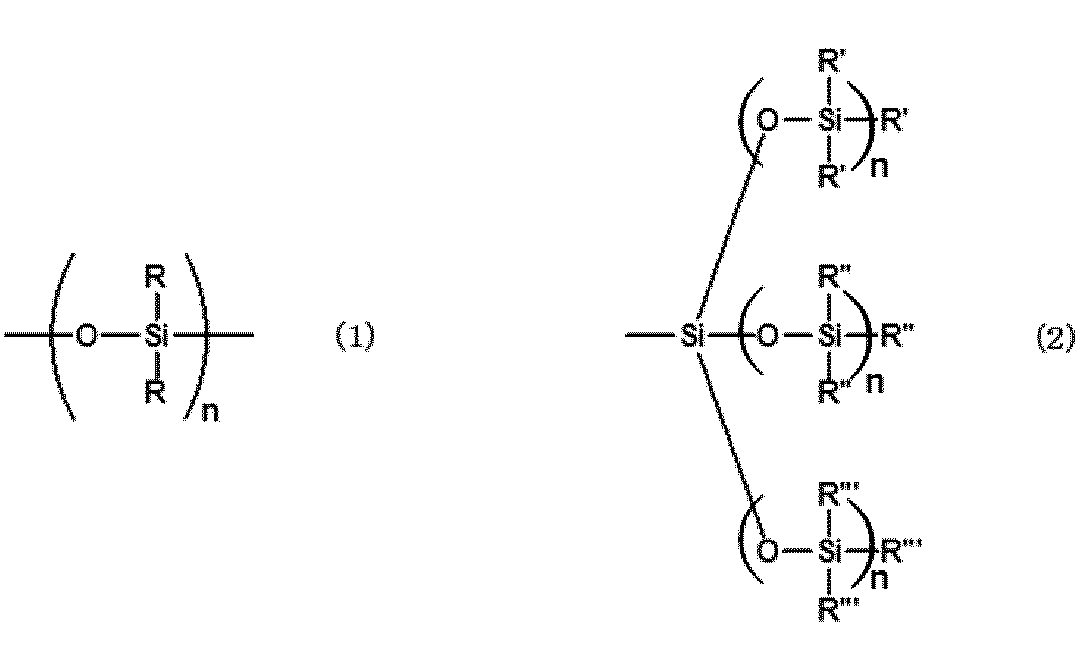
nは繰り返し単位数であり、それぞれ独立に1~200の整数を表す。)
また、複数の前記フッ素化アルキル基(a3)がエーテル結合、チオエーテル結合あるいはフッ素原子を有さないアルキレン鎖によって連結してなる構造であってもよい。
ポリオキシアルキレン化合物(A)は、1分子中にフッ素化アルキル基(a3)が2個以上含まれるものであると、より粘着力の調整が容易である観点から好ましい。
尚、前記フッ素原子含有率は、ポリオキシアルキレン化合物(A)の原料の仕込み比より算出できるものであるが、ポリオキシアルキレン化合物(A)の燃焼イオンクロマトグラフィーによって実測することもできる。本発明では後者の実測値において、前記範囲であることが好ましい。
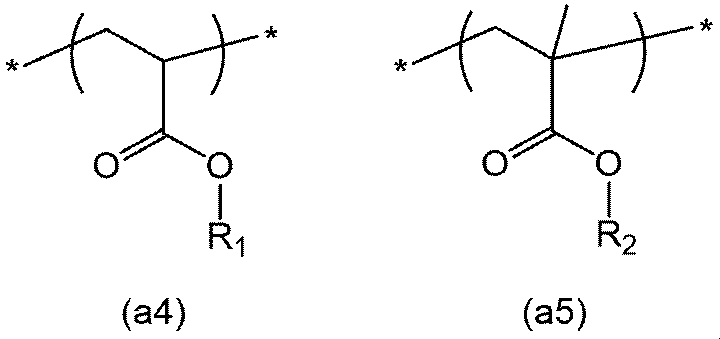
R1は置換基を有してもよい炭化水素基である。
R2は炭素数4以上のアルキル基である。
*は結合手を表す。)
ポリオキシアルキレン化合物(A)が、式(a4)で表される繰り返し単位を有する場合、当該式(a4)で表される繰り返し単位は1種でも2種以上でもよい。
ポリオキシアルキレン化合物(A)が、式(a5)で表される繰り返し単位を有する場合、当該式(a5)で表される繰り返し単位は1種でも2種以上でもよい。
R1の具体例としては、メチル基、エチル基、イソプロピル基、nブチル基、2-エチルヘキシル基、イソブチル基、nヘキシル基、2-ヒドロキシエチル基、ヒドロキシプロピル基、4-ヒドロキシブチル基等が挙げられる。
R2の具体例としては、nブチル基、2-エチルヘキシル基、イソブチル基、nヘキシル基、ラウリル基等が挙げられる。
ポリオキシアルキレン化合物(A)は、好ましくは炭素数1~6のフッ素化アルキル基(a3)、式(a4)で表される繰り返し単位及び式(a5)で表される繰り返し単位から選択される1種以上と、ポリオキシアルキレン鎖(a1)と、シリコーン鎖(a2)とを有する。
ポリオキシアルキレン化合物(A)は、より好ましくは式(a4)で表される繰り返し単位及び式(a5)で表される繰り返し単位から選択される1種以上と、ポリオキシアルキレン鎖(a1)と、シリコーン鎖(a2)と、炭素数1~6のフッ素化アルキル基(a3)とを有する。
ポリオキシアルキレン化合物(A)は、さらに好ましくは式(a4)で表される繰り返し単位及び式(a5)で表される繰り返し単位から選択される1種以上と、ポリオキシアルキレン鎖(a1)と、シリコーン鎖(a2)と、炭素数1~6のフッ素化アルキル基(a3)のみからなる。
測定装置:東ソー株式会社製「HLC-8220 GPC」
カラム:東ソー株式会社製ガードカラム「HHR-H」(6.0mmI.D.×4cm)+東ソー株式会社製「TSK-GEL GMHHR-N」(7.8mmI.D.×30cm)+東ソー株式会社製「TSK-GEL GMHHR-N」(7.8mmI.D.×30cm)+東ソー株式会社製「TSK-GEL GMHHR-N」(7.8mmI.D.×30cm)+東ソー株式会社製「TSK-GEL GMHHR-N」(7.8mmI.D.×30cm)
検出器:蒸発型光散乱検出器(オルテックジャパン株式会社製「ELSD2000」)
データ処理:東ソー株式会社製「GPC-8020モデルIIデータ解析バージョン4.30」
測定条件:カラム温度 40℃
展開溶媒 テトラヒドロフラン(THF)
流速 1.0ml/分
試料:固形分換算で1.0質量%のテトラヒドロフラン溶液をマイクロフィルターでろ過したもの(5μl)。
標準試料:前記「GPC-8020モデルIIデータ解析バージョン4.30」の測定マニュアルに準拠して、分子量が既知の下記の単分散ポリスチレンを用いた。
東ソー株式会社製「A-500」
東ソー株式会社製「A-1000」
東ソー株式会社製「A-2500」
東ソー株式会社製「A-5000」
東ソー株式会社製「F-1」
東ソー株式会社製「F-2」
東ソー株式会社製「F-4」
東ソー株式会社製「F-10」
東ソー株式会社製「F-20」
東ソー株式会社製「F-40」
東ソー株式会社製「F-80」
東ソー株式会社製「F-128」
東ソー株式会社製「F-288」
東ソー株式会社製「F-550」
ポリオキシアルキレン化合物(A)として、炭素数1~6のフッ素化アルキル基(a3)、式(a4)で表される繰り返し単位、及び式(a5)で表される繰り返し単位から選択される1種以上と、ポリオキシアルキレン鎖(a1)とシリコーン鎖(a2)とを有する化合物を用いる場合、粘着剤との相溶性が良好で、粘着剤の粘着力調整が容易である観点より、ポリオキシアルキレン化合物(A)は、フッ素化アルキル基含有エチレン性不飽和単量体(x3)、下記式で表されるアクリレート単量体(x4)及び下記式で表されるメタクリレート単量体(x5)から選択される1種以上と、ポリオキシアルキレン鎖含有エチレン性不飽和単量体(x1)と、シリコーン鎖含有エチレン不飽和単量体(x2)とを必須の原料とする共重合体であると好ましい。
これらの単量体は、それぞれが単一のものからなるものであっても、複数種を併用して共重合させたものであってもよく、また、共重合形式は、ブロックであってもランダムであってもよい。
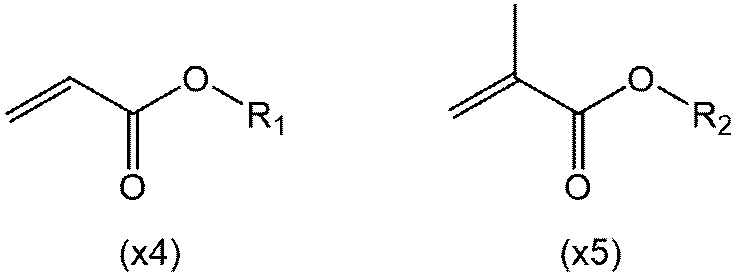
R1は置換基を有してもよい炭化水素基である。
R2は炭素数4以上のアルキル基である。)
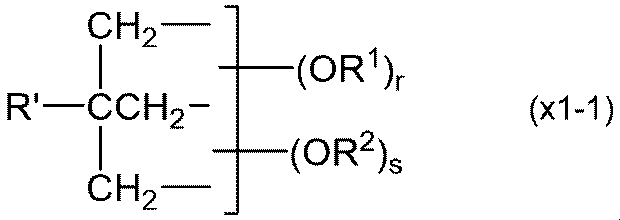
R1は(メタ)アクリロイル基である。尚、本発明において(メタ)アクリロイル基はアクリロイル基とメタクリロイル基の一方あるいはその混合物の総称として用いる。
R2は水素原子または炭素数1~18のアルキルカルボニル基である。
rは1~3の整数であり、sは0~2の整数であって、r+s=3である。〕
R1O-R’’-OR1 (x1-2)
(式中、2つのR1は同一または異なる(メタ)アクリロイル基である。尚、(メタ)アクリロイル基とは、アクリロイル基とメタクリロイル基の両方を包含する意味である。
R’’はポリオキシアルキレン鎖である。)

R4およびR5は、それぞれ独立に炭素数1~6の直鎖または分岐のアルキレン基である。
R6は、水素原子又は炭素数1~6のアルキル基である。
nは2以上の整数である。
mは0以上の整数である。
kは0以上の整数である。)
また、一般に市販入手可能な前記化合物としては、主成分となる目的化合物に対して(メタ)アクリロイル基数の異なる化合物の混合物であることが多い。使用に際しては、各種クロマトグラフィー、抽出等の精製方法で目的とする(メタ)アクリロイル基数の化合物を取り出して用いてもよいが、混合物のまま用いてもよい。
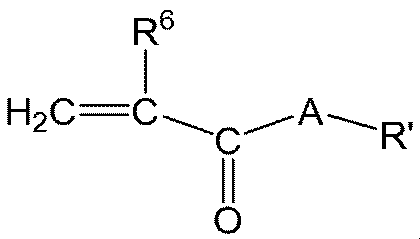
R6は水素原子またはメチル基である。
R’はポリオキシアルキレン鎖の末端が水素原子またはアルキル基であるポリオキシアルキレン基である。)
これらのポリオキシアルキレン鎖含有(メタ)アクリレートとしては、1種類だけを用いても構わないし、2種類以上を併用してもよい。
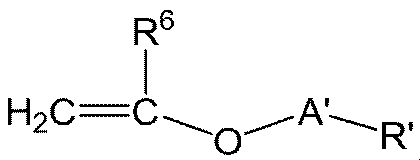
R6は水素原子またはメチル基である。
R’はポリオキシアルキレン鎖の末端が水素原子またはアルキル基であるポリオキシアルキレン基である。)
シリコーン鎖含有エチレン性不飽和単量体(x2)は、共重合するポリオキシアルキレン鎖含有エチレン性不飽和単量体(x1)と同じ系であることが好ましい。
原料入手容易性の観点からは、シリコーン鎖含有エチレン性不飽和単量体(x2)として、(メタ)アクリレート構造を含む単量体を用いることが好ましい。
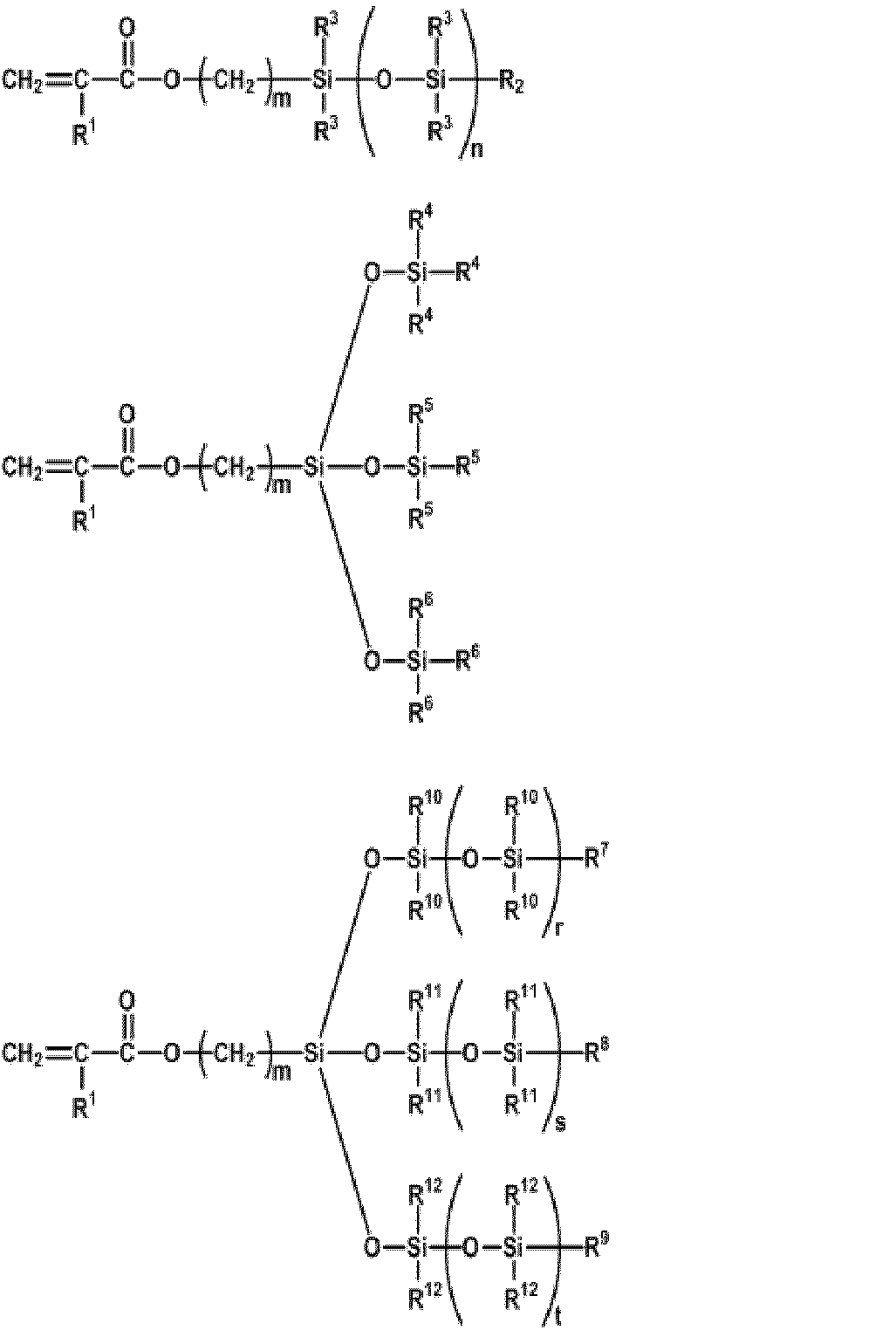
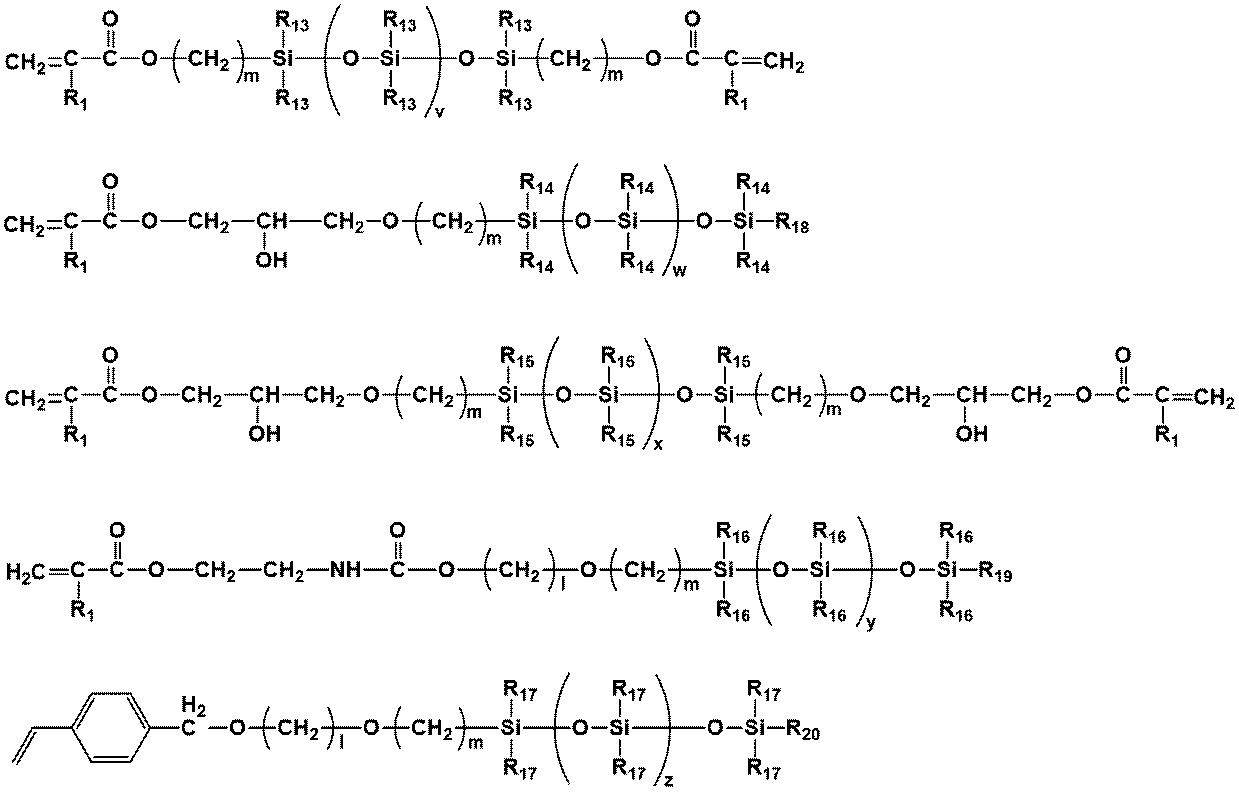
R3~R6、R10~R17は、それぞれ独立に炭素数1~18のアルキル基またはフェニル基を表す。
R2、R7~R9およびR18~R20はそれぞれ独立に炭素数1~8のアルキル基またはフェニル基を表す。
mおよびlはそれぞれ独立に1~6の整数を表し、nは0~250の整数を表し、r、s、t、v、w、x、yおよびzは、それぞれ独立に1~250の整数を表す。)

Aは、酸素原子、置換基を有してもよい炭素数1~12のアルキル基、置換基を有してもよい炭素数3~12のシクロアルキル基、置換基を有してもよい炭素数6~12のアリール基、または置換基を有してもよい炭素数6~24のアラルキル基であり、これらが単独で、あるいは複数組み合わさってなる二価の連結基であり、
R6は水素原子またはメチル基である。
Rfは-CnF2n+1(但し、nは1~6の整数である。)である。〕
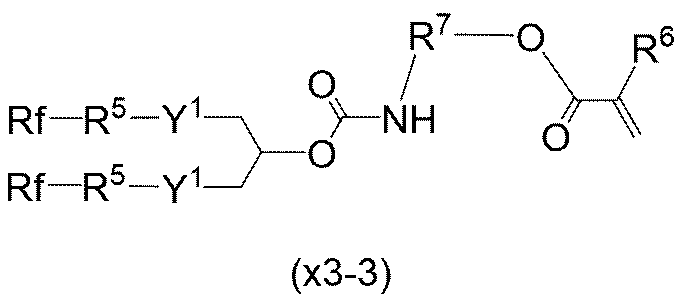
R5はそれぞれ独立に、炭素数1~3のアルキレン鎖または直接結合である。
Y1はそれぞれ独立に、酸素原子、硫黄原子または-SO2-NR-(Rは水素原子または炭素数1~24の炭化水素基である。)である。
R6は水素原子またはメチル基である。
R7は炭素数1~3の直鎖又は分岐のアルキレン基である。〕
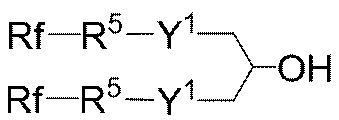


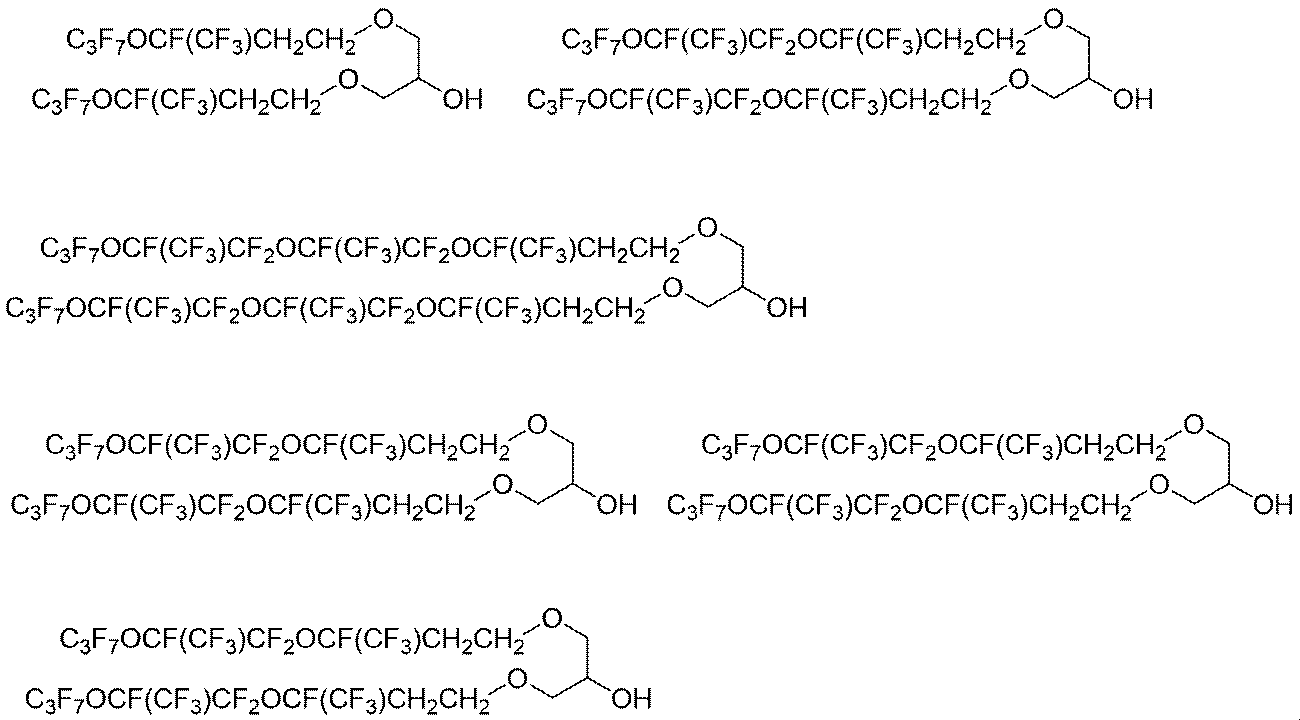

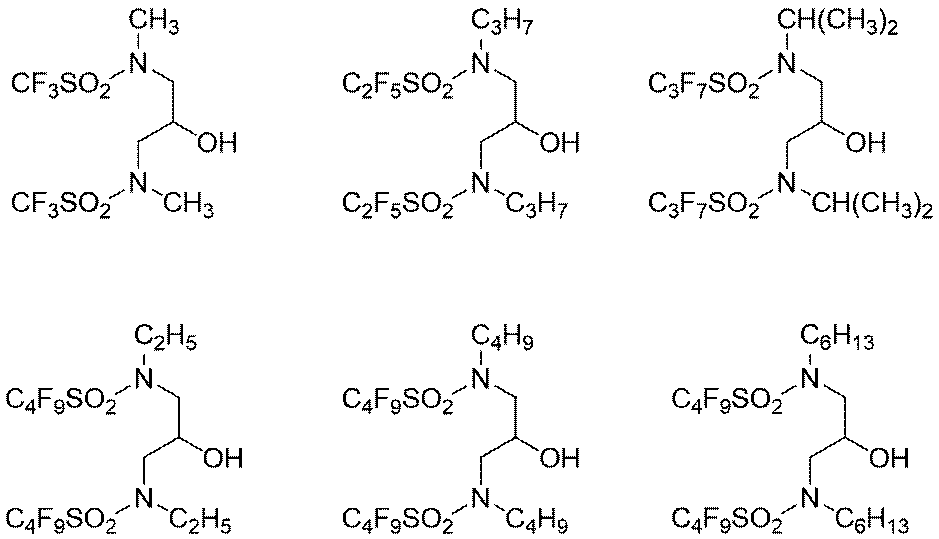

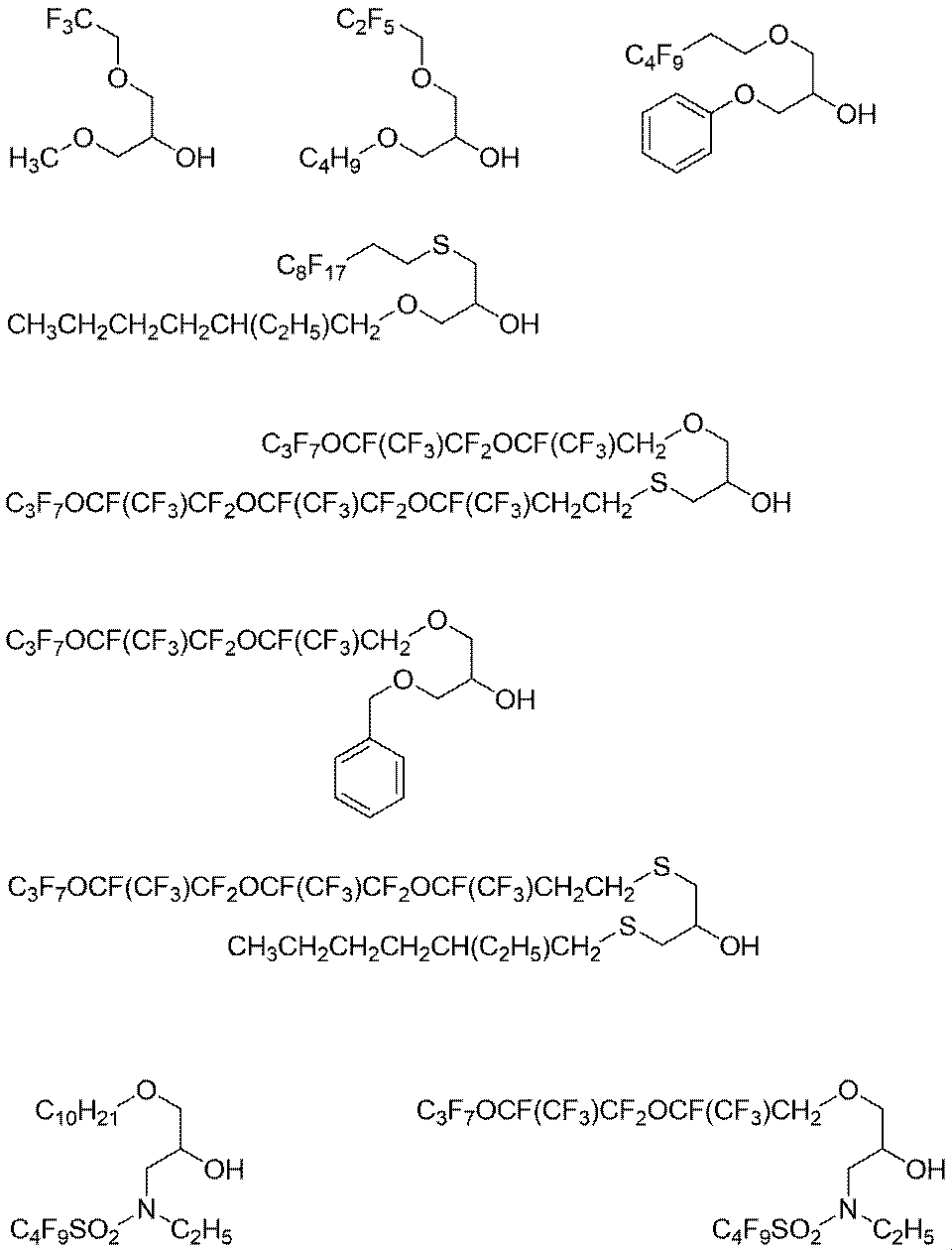

A’’は、炭素数2~3のアルキレン基を表す。)
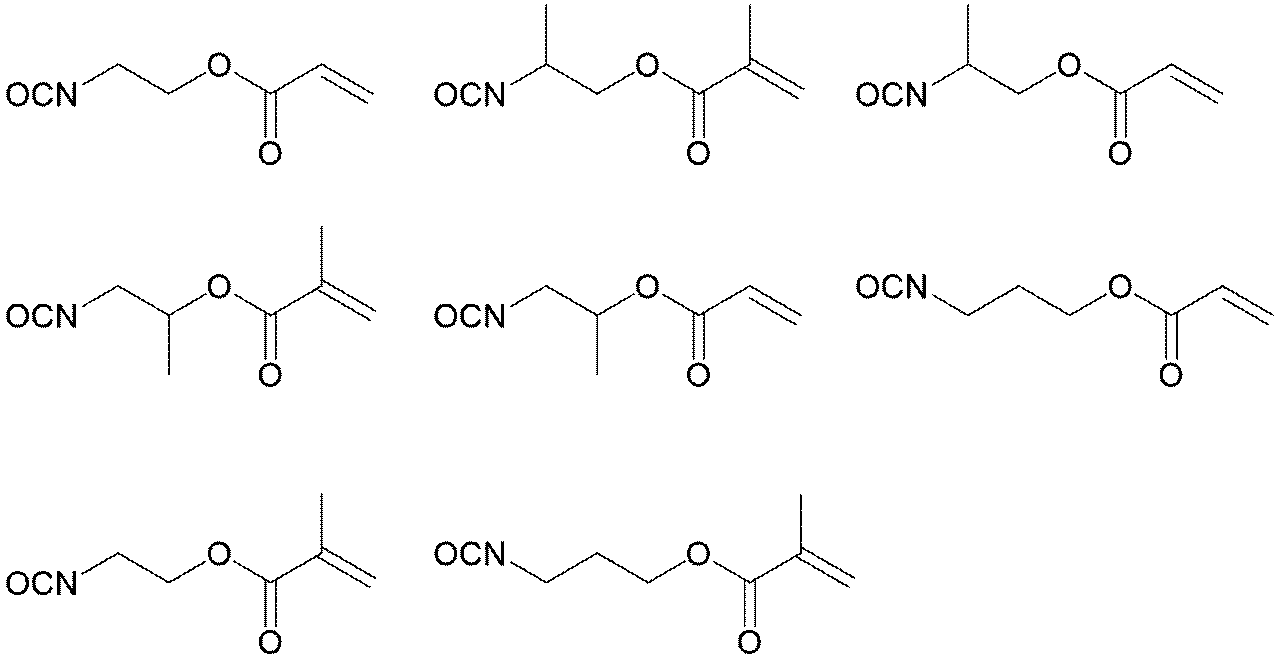
触媒の添加量は、反応混合物全体に対して0.001~5.0質量%が好ましく、より好ましくは0.01~1.1質量%である。反応時間は1~10時間が好ましい。また反応温度は30~120℃が好ましく、より好ましくは30~100℃である。


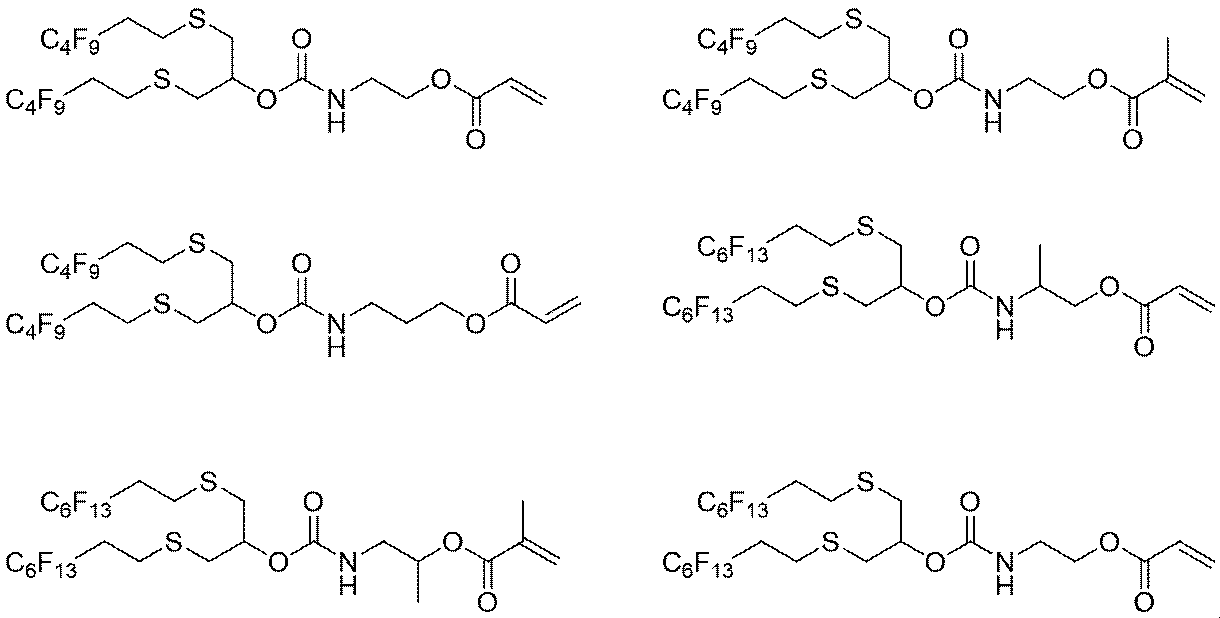

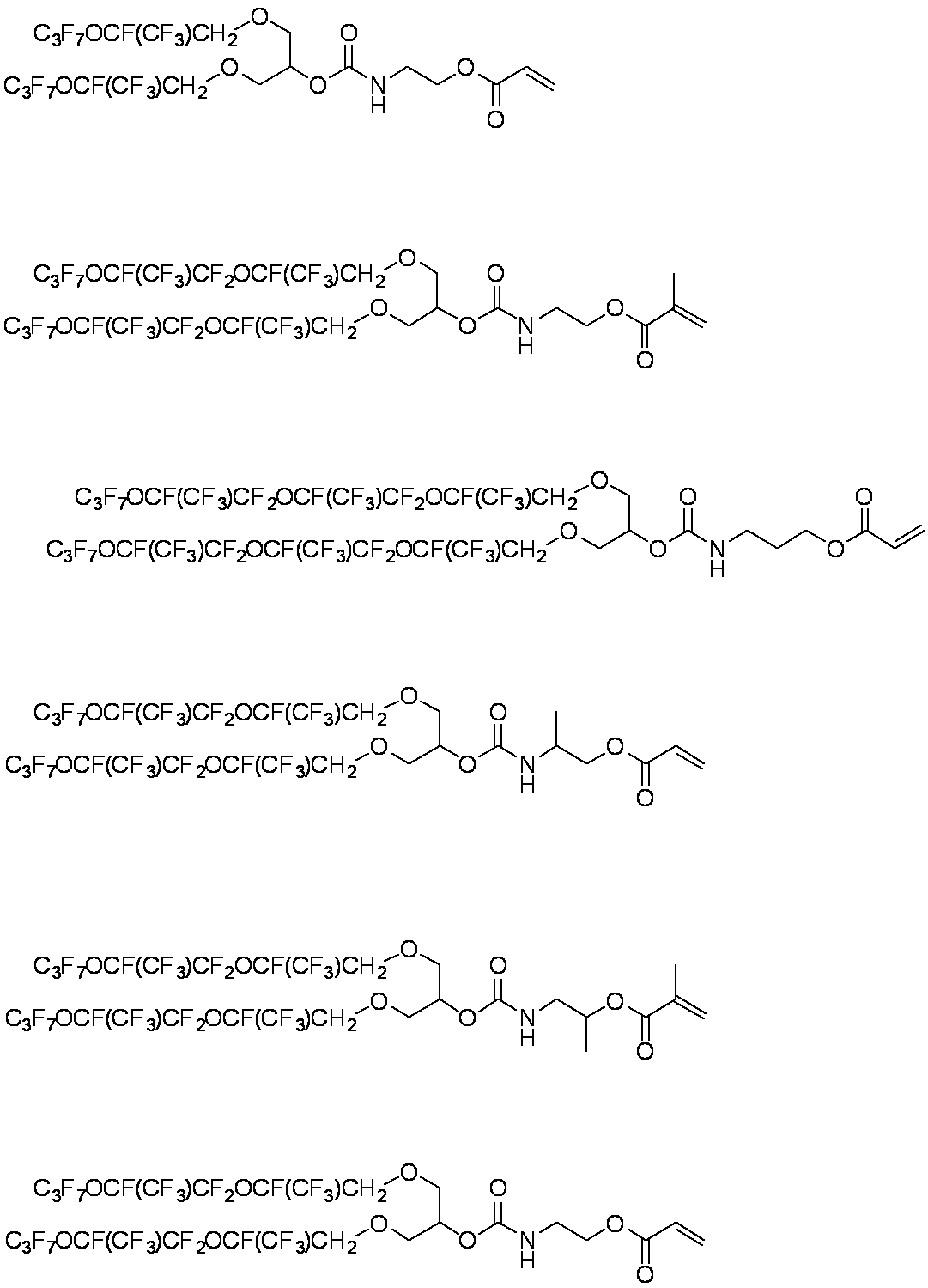
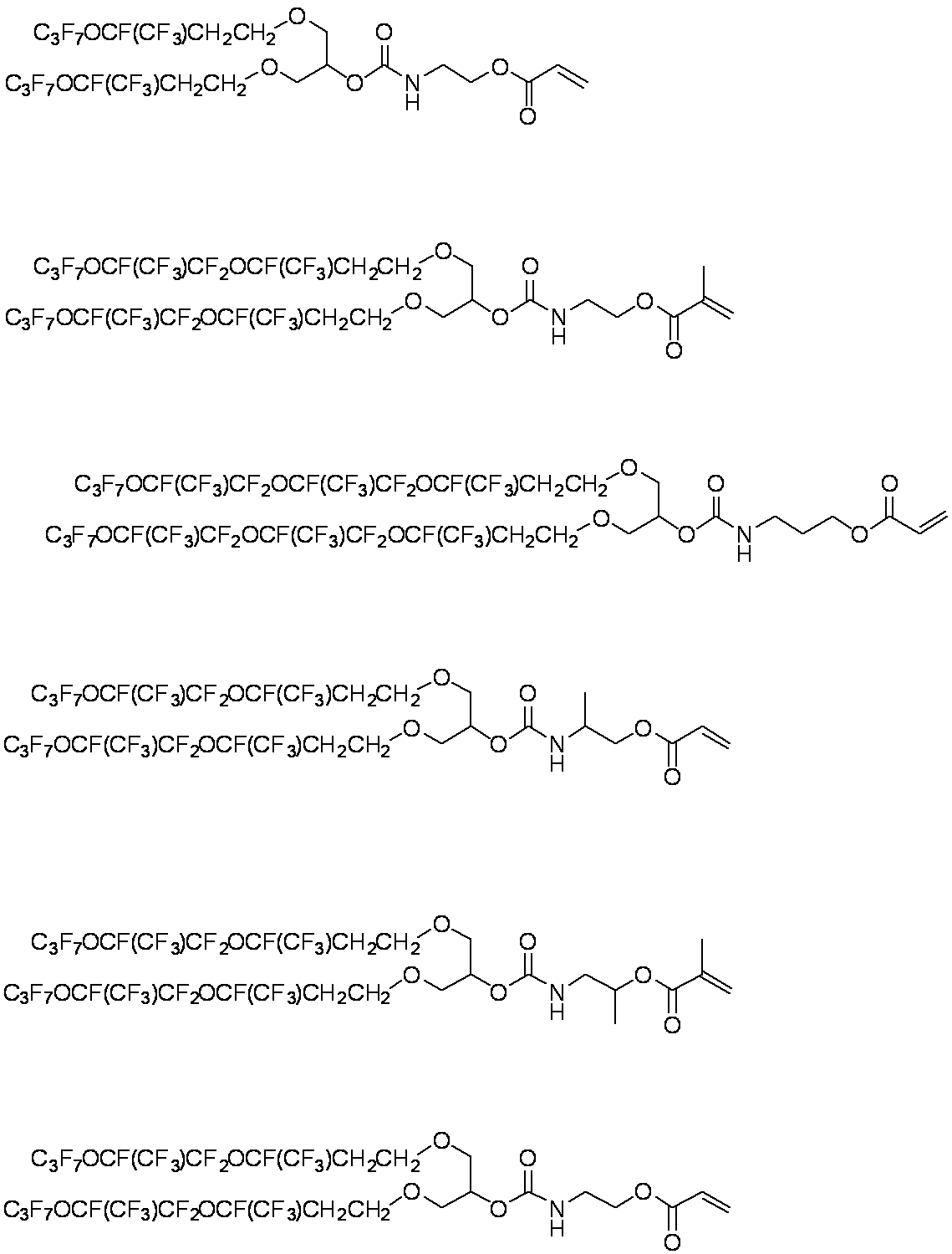

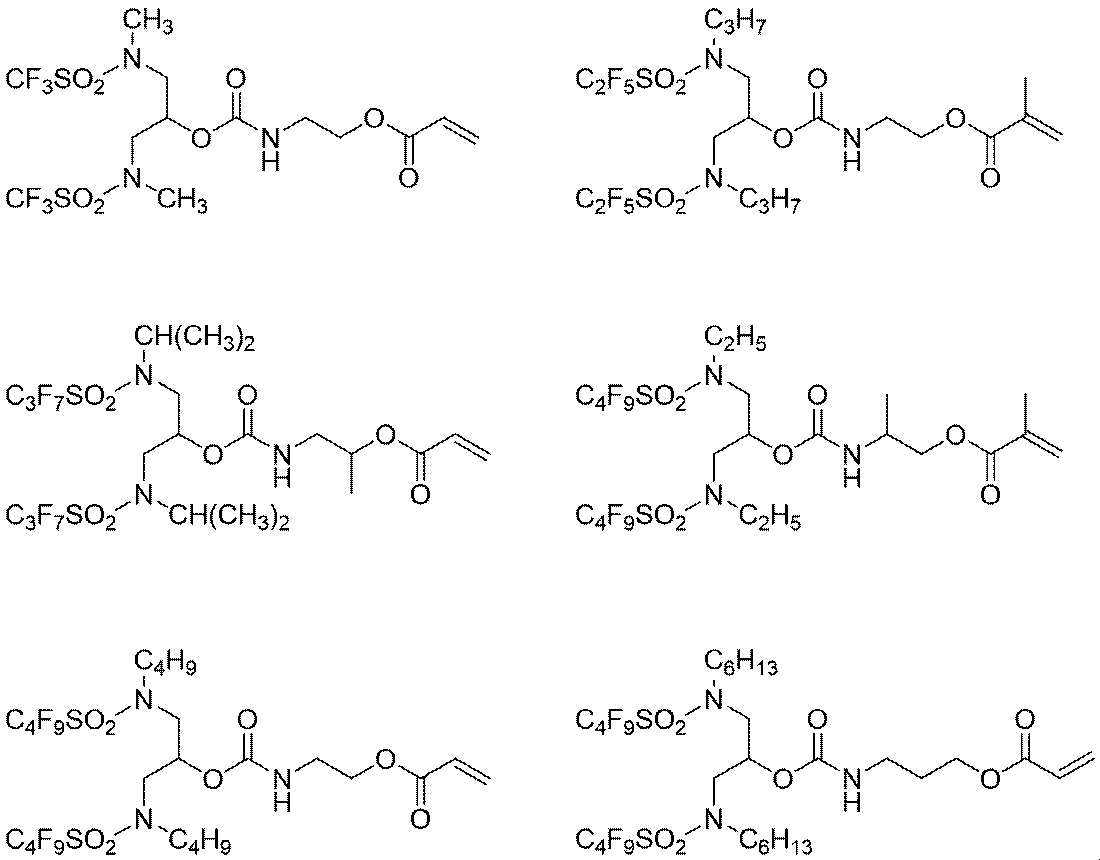
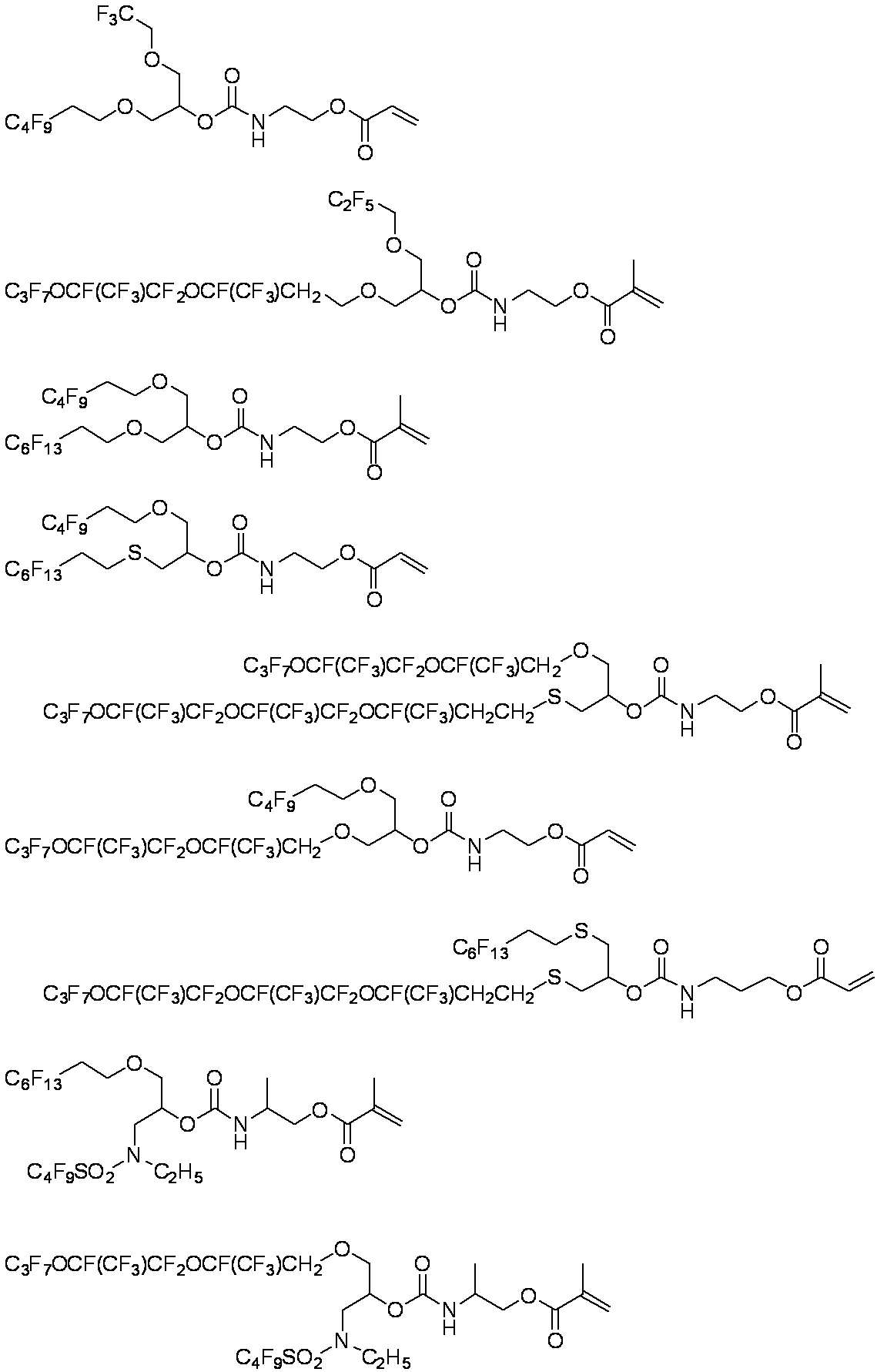

アクリレート単量体(x4)は、市販品を用いることができる。
メタクリレート単量体(x5)は、市販品を用いることができる。
他の単量体は、1種単独で用いてもよく、2種以上を組み合わせて用いてもよい。
前記他の単量体であるフマール酸のジアルキルエステル類またはモノアルキルエステル類としては、ジブチルフマレート等が挙げられる。
その他、クロトン酸、イタコン酸、アクリロニトリル、メタクリロニトリル、マレイロニトリル、スチレン等も挙げられる。
単量体類の合計100質量部中、シリコーン鎖含有エチレン性不飽和単量体(x2)が5~95質量部含まれることが好ましく、5~80質量部含まれていることがより好ましい。
単量体類の合計100質量部中、フッ素化アルキル基含有エチレン性不飽和単量体(x3)が5~90質量部含まれていることが好ましく、5~80質量部含まれていることがより好ましく、5~70質量部含まれていることがさらに好ましい。
単量体類の合計100質量部中、アクリレート単量体(x4)が5~95質量部含まれていることが好ましく、5~80質量部含まれていることがより好ましく、10~80質量部含まれていることがさらに好ましい。
単量体類の合計100質量部中、メタクリレート単量体(x5)が5~95質量部含まれていることが好ましく、5~80質量部含まれていることがより好ましく、5~70質量部含まれていることがさらに好ましい。
必要に応じて、ラウリルメルカプタン、2-メルカプトエタノール、エチルチオグリコール酸、オクチルチオグリコール酸等の連鎖移動剤や、γ-メルカプトプロピルトリメトキシシラン等のカップリング基を有するチオール化合物を連鎖移動剤等の添加剤として用いてもよい。
重合に用いる溶剤としては、例えば、エタノール、イソプロピルアルコール、n-ブタノール、iso-ブタノール、tert-ブタノール等のアルコール類、アセトン、メチルエチルケトン、メチルイソブチルケトン、メチルアミルケトン等のケトン類、酢酸メチル、酢酸エチル、酢酸ブチル、乳酸メチル、乳酸エチル、乳酸ブチル等のエステル類、2-オキシプロピオン酸メチル、2-オキシプロピオン酸エチル、2-オキシプロピオン酸プロピル、2-オキシプロピオン酸ブチル、2-メトキシプロピオン酸メチル、2-メトキシプロピオン酸エチル、2-メトキシプロピオン酸プロピル、2-メトキシプロピオン酸ブチル等のモノカルボン酸エステル類、ジメチルホルムアミド、ジメチルスルホキシド、N-メチルピロリドン等の極性溶剤、メチルセロソルブ、セロソルブ、ブチルセロソルブ、ブチルカルビトール、エチルセロソルブアセテート等のエーテル類、プロピレングリコール、プロピレングリコールモノメチルエーテル、プロピレングリコールモノメチルエーテルアセテート、プロピレングリコールモノエチルエーテルアセテート、プロピレングリコールモノブチルエーテルアセテート等のプロピレングリコール類およびそのエステル類、1,1,1-トリクロルエタン、クロロホルム等のハロゲン系溶剤、テトラヒドロフラン、ジオキサン等のエーテル類、ベンゼン、トルエン、キシレン等の芳香族類、更にパーフルオロオクタン、パーフルオロトリ-n-ブチルアミン等のフッ素化イナートリキッド類等が挙げられる。
これら溶剤は、1種単独で用いることも2種以上併用することもできる。
ポリオキシアルキレン化合物(A)の重合に用いる溶剤は、本発明の粘着剤組成物の溶剤としてよい。
粘着剤(B)としては、粘着性を有するものであれば特に制限なく使用でき、例えば、アクリル系粘着剤、ウレタン系粘着剤、合成ゴム系粘着剤、天然ゴム系粘着剤、シリコーン系粘着剤等が挙げられる。これら粘着剤のなかでも、アクリル系粘着剤(b1)および/またはウレタン系粘着剤(b2)を用いることが好ましい。
前記(メタ)アクリル系モノマーは、1種または2種以上を主成分として使用することができる。前記炭素数が1~14のアルキル基を有する(メタ)アクリル系モノマーを用いることにより、被着体(被保護体)に対する粘着力を低く制御することが容易となり、軽剥離性や再剥離性に優れた表面保護フィルムが得られる。
尚、本発明における「主成分」とは、構成する成分全量中において最も多い成分を意味し、当該「主成分」が好ましくは40質量%を超え、より好ましくは50質量%を超え、さらに好ましくは60質量%を超えることをいう。
前記平均付加モル数が1以上の場合、被着体(被保護体)の汚染低減効果が効率よく得られる傾向がある。また、前記平均付加モル数が40より大きい場合、粘着剤組成物の粘度が上昇して塗工が困難となる傾向がある。なお、オキシアルキレン鎖の末端は、ヒドロキシル基のままや、他の官能基等で置換されていてもよい。
尚、前記重量平均分子量は、GPC(ゲル・パーミエーション・クロマトグラフィー)により測定して得られたものをいう。
尚、(メタ)アクリル系ポリマーのガラス転移温度は、用いるモノマー成分や組成比を適宜変えることにより前記範囲内に調整することができる。
前記ポリオールとしては、例えば、ポリエーテルポリオール、ポリエステルポリオール、ポリカーボネートポリオール、ポリカプロラクトンポリオール等が挙げられる。
前記ポリイソシアネート化合物としては、例えば、ジフェニルメタンジイソシアネート、トリレンジイソシアネート、ヘキサメチレンジイソシアネート等が挙げられる。
尚、本発明において「固形分」とは、粘着剤組成物から溶剤を除いた成分を意味する。
本発明の粘着剤組成物は、ポリオキシアルキレン化合物(A)と粘着剤(B)を含めばよく、本発明の効果を損なわない範囲において、各種添加剤等のその他の成分を任意に含むことができる。
前記イソシアネート化合物の市販品としては、例えば、商品名タケネート300S、タケネート500、タケネート600、タケネートD165N、タケネートD178N(以上、武田薬品工業社製)、スミジュールT80、スミジュールL、デスモジュールN3400(以上、住化バイエルウレタン社製)、ミリオネートMR、ミリオネートMT、コロネートL、コロネートHL、コロネートHX(以上、日本ポリウレタン工業社製)等が挙げられる。
これらイソシアネート化合物は、単独で使用してもよく、2種以上混合して使用してもよく、2官能のイソシアネート化合物と3官能以上のイソシアネート化合物を併用して用いることも可能である。架橋剤を2種以上混合して用いることにより粘着性と耐反発性(曲面に対する接着性)を両立することが可能となり、より接着信頼性に優れた積層フィルムを得ることができる。
前記アジリジン誘導体としては、例えば、市販品としての商品名HDU、TAZM、TAZO(以上、相互薬工社製)等が挙げられる。
架橋剤は1種単独で使用してもよく、また2種以上を混合して使用してもよい。
上記架橋触媒として、例えばジラウリン酸ジブチルスズ、ジラウリン酸ジオクチルスズ等のスズ系触媒、トリス(アセチルアセトナト)鉄、トリス(ヘキサン-2,4-ジオナト)鉄、トリス(ヘプタン-2,4-ジオナト)鉄、トリス(ヘプタン-3,5-ジオナト)鉄、トリス(5-メチルヘキサン-2,4-ジオナト)鉄、トリス(オクタン-2,4-ジオナト)鉄、トリス(6-メチルヘプタン-2,4-ジオナト)鉄、トリス(2,6-ジメチルヘプタン-3,5-ジオナト)鉄、トリス(ノナン-2,4-ジオナト)鉄、トリス(ノナン-4,6-ジオナト)鉄、トリス(2,2,6,6-テトラメチルヘプタン-3,5-ジオナト)鉄、トリス(トリデカン-6,8-ジオナト)鉄、トリス(1-フェニルブタン-1,3-ジオナト)鉄、トリス(ヘキサフルオロアセチルアセトナト)鉄、トリス(アセト酢酸エチル)鉄、トリス(アセト酢酸-n-プロピル)鉄、トリス(アセト酢酸イソプロピル)鉄、トリス(アセト酢酸-n-ブチル)鉄、トリス(アセト酢酸-sec-ブチル)鉄、トリス(アセト酢酸-tert-ブチル)鉄、トリス(プロピオニル酢酸メチル)鉄、トリス(プロピオニル酢酸エチル)鉄、トリス(プロピオニル酢酸-n-プロピル)鉄、トリス(プロピオニル酢酸イソプロピル)鉄、トリス(プロピオニル酢酸-n-ブチル)鉄、トリス(プロピオニル酢酸-sec-ブチル)鉄、トリス(プロピオニル酢酸-tert-ブチル)鉄、トリス(アセト酢酸ベンジル)鉄、トリス(マロン酸ジメチル)鉄、トリス(マロン酸ジエチル)鉄、トリメトキシ鉄、トリエトキシ鉄、トリイソプロポキシ鉄、塩化第二鉄等の鉄系触媒を用いることができる。これら架橋触媒は、1種でもよく、2種以上を併用してもよい。
本発明の積層フィルムは、粘着層と基材層とを有し、前記粘着層は本発明の粘着剤組成物を用いて形成した層である。
本発明の積層フィルムは、基材層の少なくとも一方の面上に本発明の粘着剤組成物を塗布および架橋させることで製造できる。また、本発明の積層フィルムは、本発明の粘着剤組成物をあらかじめ架橋した粘着剤層を、基材層の少なくとも一方の面上に転写することによっても製造できる。
粘着剤組成物を基材上に塗布して積層フィルムを作製する際には、基材層上に均一に塗布できるよう、前記粘着剤組成物中に重合溶剤以外の一種以上の溶剤を新たに加えてもよい。
尚、「総厚み」とは、積層フィルムの基材層、粘着剤層および帯電防止層等の全ての層を含む厚みの合計を意味する。
前記樹脂材料の他の例としては、ポリスチレン、アクリロニトリル-スチレン共重合体等の、スチレン系ポリマー;ポリエチレン、ポリプロピレン、環状ないしノルボルネン構造を有するポリオレフィン、エチレン-プロピレン共重合体等の、オレフィン系ポリマー;塩化ビニル系ポリマー;ナイロン6、ナイロン6,6、芳香族ポリアミド等の、アミド系ポリマー;等を樹脂材料とするものが挙げられる。
前記樹脂材料のさらに他の例として、イミド系ポリマー、スルホン系ポリマー、ポリエーテルスルホン系ポリマー、ポリエーテルエーテルケトン系ポリマー、ポリフェニレンスルフィド系ポリマー、ビニルアルコール系ポリマー、塩化ビニリデン系ポリマー、ビニルブチラール系ポリマー、アリレート系ポリマー、ポリオキシメチレン系ポリマー、エポキシ系ポリマー等が挙げられる。
上述したポリマーの2種以上のブレンド物からなる基材であってもよい。
また、基材がプラスチックフィルムであり、前記プラスチックフィルムに帯電防止処理を施すことにより、積層フィルム自身の帯電を低減し、かつ、被着体への帯電防止能が優れるものが得られる。なお、帯電防止機能を付与する方法としては、特に制限はなく、従来公知の方法を用いることができ、例えば、帯電防止剤と樹脂成分から成る帯電防止性樹脂や導電性ポリマー、導電性物質を含有する導電性樹脂を塗布する方法や導電性物質を蒸着あるいはメッキする方法、また、帯電防止剤等を練り込む方法等が挙げられる。帯電防止剤を使用する際には、滑剤を併用することもできる。
撹拌装置、温度計、冷却管及び滴下装置を備えたガラスフラスコに、下記式(1-1-1)で表されるエチレンオキシドとプロピレンオキシドとのブロック共重合体30g、アクリル酸2.8g、溶媒としてトルエン64g、重合禁止剤としてフェノチアジン0.03gおよび触媒としてメタンスルホン酸0.6gを仕込み、空気気流下にて攪拌を開始し、120℃へ加熱、還流脱水した。0.63gの脱水を確認後、65℃へ冷却し、トリエチルアミンにて中和した。中和後、85℃へ昇温し、イオン交換水2.3gを加え、分液、下層抜き出しを行った。下層のpHを測定し、pHが7以上となるまで、洗浄操作を繰り返し実施した。冷却後、トルエンにて希釈し、下記式(1-1-1)~(1-1-3)で表される3種の混合物(1-1)を55質量%含むトルエン溶液を得た。
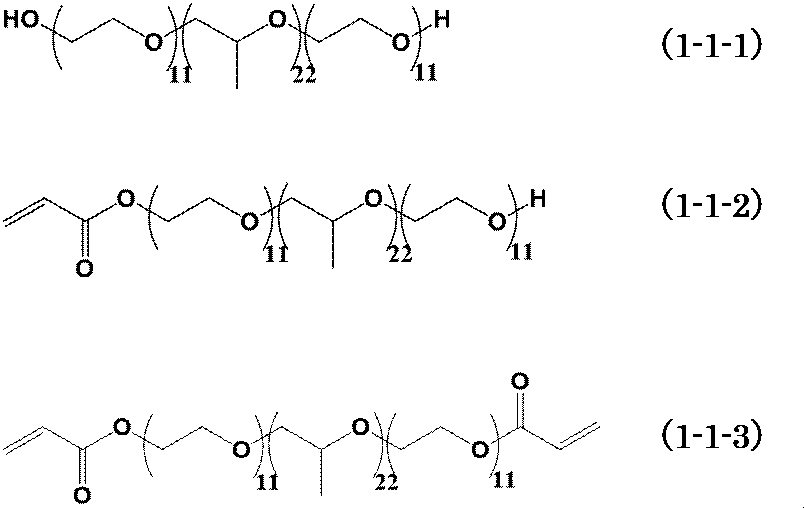
2-(パーフルオロヘキシル)-エタノール80.1g(0.22mol)、エピクロロヒドリン9.3g(0.10mol)、トリエチルベンジルアンモニウムクロリド1.1g(0.005mol)及び水酸化ナトリウム6.0g(0.15mol)を65℃で6時間反応させた。反応終了後、ジイソピロピルエーテル100mlを加え不溶物をろ過した。ろ液を濃縮し、残分を減圧蒸留し無色油状の生成物(2-1)46.2g(0.06mol)を得た。
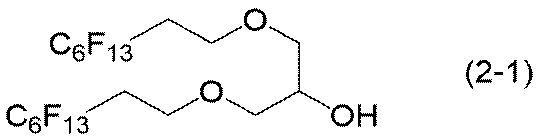

合成例2で得た化合物(2-2)を60質量%含む溶液83.0g、ポリシロキサン結合を有するモノメタクリレート化合物(JNC株式会社製、サイラプレーンFM-0721K)11.8g、合成例1で得た混合物(1-1)を55質量%含むトルエン溶液22.5g、アクリル酸エチル116.0g、アクリル酸4-ヒドロキシブチル10.0g、溶媒としてMIBK298.3gを混合して混合液Aを調製した。
混合液Aの25質量%分とMIBK94.9g、開始剤パーブチルO(日油株式会社製)5.0gをガラスフラスコに仕込み、窒素雰囲気下で30分かけて80℃まで昇温した。昇温後、混合物Aの75質量%分にMIBK30.0gとパーブチルO15.0gを加えて滴下液を調製して、80℃で3時間かけて滴下した。滴下終了後、80℃で3時間撹拌した後、110℃で2.5時間撹拌した。その後、固形分65%まで脱溶剤した後、MIBKで希釈してポリオキシアルキレン化合物(1)を50質量%含む溶液を得た。
また、ポリオキシアルキレン化合物(1)のガラス転移温度を示差走査熱量測定(DSC)を用いて下記条件で測定したところ、ガラス転移温度は-40℃であった。
測定機 :METTLER TOLEDO DSC3+
昇温温度 :10℃/min
測定雰囲気:窒素
測定重量 :約5mg
ガラスフラスコに酢酸ブチル100gを仕込み、窒素雰囲気下で30分かけて95℃まで昇温した。2-(パーフルオロヘキシル)エチルアクリレート24.9g、ポリシロキサン結合を有するモノメタクリレート化合物(JNC株式会社製、サイラプレーンFM-0721K)5.9g、エチレンオキシド鎖を有するモノアクリレート化合物(日油株式会社製、ブレンマーAE-400)6.2g、アクリル酸エチル50.4g、アクリル酸4-ヒドロキシブチル12.6g、溶媒として酢酸ブチル133.3g、開始剤パーブチルO(日油株式会社製)3.0gを混合して混合液Aを調製した。
混合液Aを95℃で3時間かけて滴下した。滴下終了後、95℃で3時間撹拌した後、110℃で1.0時間撹拌した。その後、冷却し、ポリオキシアルキレン化合物(2)を30質量%含む溶液を得た。
共重合体であるポリオキシアルキレン化合物(2)をGPCにより分析した結果、重量平均分子量Mwは18,500であった。また、ポリオキシアルキレン化合物(2)のガラス転移温度は-35℃であった。
ガラスフラスコに酢酸ブチル100gを仕込み、窒素雰囲気下で30分かけて95℃まで昇温した。2-(パーフルオロヘキシル)エチルアクリレート24.9g、ポリシロキサン結合を有するモノメタクリレート化合物(JNC株式会社製、サイラプレーンFM-0721K)5.9g、エチレンオキシド鎖を有するモノアクリレート化合物(日油株式会社製、ブレンマーAE-400)6.2g、アクリル酸エチル50.4g、アクリル酸4-ヒドロキシブチル12.6g、溶媒として酢酸ブチル50.0g、開始剤パーブチルO(日油株式会社製)3.0gを混合して混合液Aを調製した。
混合液Aを95℃で3時間かけて滴下した。滴下終了後、95℃で3時間撹拌した後、110℃で1.0時間撹拌した。その後、冷却し、ポリオキシアルキレン化合物(3)を40質量%含む溶液を得た。
共重合体であるポリオキシアルキレン化合物(3)をGPCにより分析した結果、重量平均分子量Mwは26,500であった。また、ポリオキシアルキレン化合物(3)のガラス転移温度は-33℃であった。
合成例2で得た化合物(2-2)を60質量%含む溶液83.0g、ポリシロキサン結合を有するモノメタクリレート化合物(JNC株式会社製、サイラプレーンFM-0721K)11.8g、合成例1で得た混合物(1-1)を55質量%含むトルエン溶液22.5g、アクリル酸エチル116.0g、アクリル酸2-ヒドロキシエチル25.2g、溶媒としてMIBK298.3gを混合して混合液Aを調製した。
混合液Aの25質量%分とMIBK94.9g、開始剤パーブチルO(日油株式会社製)5.0gをガラスフラスコに仕込み、窒素雰囲気下で30分かけて90℃まで昇温した。昇温後、混合液Aの75質量%分にMIBK30.0gとパーブチルO15.0gを加えて滴下液を調製して、90℃で3時間かけて滴下した。滴下終了後、90℃で3時間撹拌した後、110℃で2.5時間撹拌した。その後、固形分65%まで脱溶剤して、MIBKで希釈してポリオキシアルキレン化合物
(4)を50質量%含む溶液を得た。
共重合体であるポリオキシアルキレン化合物(4)をGPCにより分析した結果、重量平均分子量Mwは15,000であった。また、ポリオキシアルキレン化合物(4)のガラス転移温度は-32℃であった。
合成例2で得た化合物(2-2)83.0g、ポリシロキサン結合を有するモノメタクリレート化合物(JNC株式会社製、サイラプレーンFM-0721K)11.8g、合成例1で得た混合物(1-1)22.5g、メタクリル酸メチル116.0g、メタクリル酸2-ヒドロキシエチル10.0g、溶媒としてMIBK298.3gを混合して混合液Aを調製した。
混合液Aの25質量%分とMIBK94.9g、開始剤パーブチルO(日油株式会社製)5.0gをガラスフラスコに仕込み、窒素雰囲気下で30分かけて80℃まで昇温した。昇温後、混合液Aの75質量%分にMIBK30.0gとパーブチルO15.0gを加えて滴下液を調製して、80℃で3時間かけて滴下した。滴下終了後、80℃で3時間撹拌した後、110℃で2.5時間撹拌した。その後、固形分65%まで脱溶剤して、MIBKで希釈してポリオキシアルキレン化合物(5)を50質量%含む溶液を得た。
共重合体であるポリオキシアルキレン化合物(5)をGPCにより分析した結果、重量平均分子量Mwは18,600であった。また、ポリオキシアルキレン化合物(5)のガラス転移温度は34℃であった。
合成例2で得た化合物(2-2)83.0g、ポリシロキサン結合を有するモノメタクリレート化合物(JNC株式会社製、サイラプレーンFM-0721K)11.8g、合成例1で得た混合物(1-1)22.5g、メタクリル酸メチル116.0g、アクリル酸4-ヒドロキシブチル25.2g、溶媒としてMIBK298.3gを混合して混合液Aを調製した。
混合液Aの25質量%分とMIBK94.9g、開始剤パーブチルO(日油株式会社製)5.0gをガラスフラスコに仕込み、窒素雰囲気下で30分かけて80℃まで昇温した。昇温後、混合液Aの75質量%分にMIBK30.0gとパーブチルO15.0gを加えて滴下液を調製して、80℃で3時間かけて滴下した。滴下終了後、80℃で3時間撹拌した後、110℃で2.5時間撹拌した。その後、固形分65%まで脱溶剤して、MIBKで希釈してポリオキシアルキレン化合物(6)を50質量%含む溶液を得た。
共重合体であるポリオキシアルキレン化合物(6)をGPCにより分析した結果、重量平均分子量Mwは23,300であった。また、ポリオキシアルキレン化合物(6)のガラス転移温度は8℃であった。
アクリル系粘着剤(CT-3088:DIC社製)の固形分100部に対して、硬化剤(架橋剤)としてD-100K(DIC社製)を2.9部および得られたポリオキシアルキレン化合物(1)を0.5部添加し、メチルエチルケトンで固形分が35%となるように希釈し、充分に混合して粘着剤組成物を得た。
得られた粘着剤組成物を、形成後の粘着層厚が20μmになるように、基材である50μm厚のポリエステルフィルムのコロナー処理面に、自動塗工装置バーコーター(PI-1210:テスター社製)を用いて直接塗工した。その後、85℃で3分間乾燥させて粘着層を形成した後、該粘着層にシリコーンコートされた38μm厚のポリエステルフィルムセパレーターを被覆して、積層フィルムを作製した。この積層フィルムをさらに40℃で3日間養生し、評価試験の試料とした。
得られた積層フィルムについて以下の評価を行った。結果を表1に示す。
ガラス板に、得られた積層フィルムを2kgfローラー1往復で圧着して貼り付け、評価サンプルとした。貼付してから24時間経過後に、粘着・皮膜剥離解析装置 VPA-3(協和界面科学製)を用い、評価サンプルの粘着力を測定した。測定条件は、下記の通りである。引張速度と剥離速度を150mm/minとした場合と、引張速度と剥離速度を1200mm/minとした場合の2パターンで粘着力を評価した。
・引張速度:150mm/min、1200mm/min
・剥離速度:150mm/min、1200mm/min
・剥離方向:180°
・試料サイズ:25mm×70mm
初期粘着力評価に用いるサンプルを別途作製し、当該評価サンプルを温度60℃、湿度90%RHに置いて14日間保存した。保存後(湿熱試験後)の評価サンプルを初期粘着力評価と同じ方法で粘着力を評価した。
ポリオキシアルキレン化合物(1)の代わりにポリエオキシエチレン化合物(2)を用いた他は、実施例1と同様にして積層フィルムを製造し、評価した。結果を表1に示す。
ポリオキシアルキレン化合物(1)の代わりにポリエオキシエチレン化合物(3)を用いた他は、実施例1と同様にして積層フィルムを製造し、評価した。結果を表1に示す。
ポリオキシアルキレン化合物(1)の代わりにポリエオキシエチレン化合物(4)を用いた他は、実施例1と同様にして積層フィルムを製造し、評価した。結果を表1に示す。
ポリオキシアルキレン化合物(1)を用いなかった他は、実施例1と同様にして積層フィルムを製造し、評価した。結果を表1に示す。
ポリオキシアルキレン化合物(1)の代わりにポリエオキシエチレン化合物(5)を用いた他は、実施例1と同様にして積層フィルムを製造し、評価した。結果を表1に示す。
ポリオキシアルキレン化合物(1)の代わりにポリエオキシエチレン化合物(6)を用いた他は、実施例1と同様にして積層フィルムを製造し、評価した。結果を表1に示す。

Claims (10)
- ポリオキシアルキレン鎖(a1)とシリコーン鎖(a2)とを有し、ガラス転移温度が0℃以下であるポリオキシアルキレン化合物(A)と、粘着剤(B)とを含有する粘着剤組成物。
- 前記ポリオキシアルキレン化合物(A)が、炭素数1~6のフッ素化アルキル基(a3)を有する請求項1に記載の粘着剤組成物。
- 前記ポリオキシアルキレン化合物(A)が、下記式(a4)で表される繰り返し単位及び下記式(a5)で表される繰り返し単位から選択される1種以上を有する請求項1又は2に記載の粘着剤組成物。

R1は置換基を有してもよい炭化水素基である。
R2は炭素数4以上のアルキル基である。
*は結合手を表す。) - 前記ポリオキシアルキレン化合物(A)のガラス転移温度が-20℃~-50℃の範囲にある請求項1~3のいずれかに記載の粘着剤組成物。
- 前記ポリオキシアルキレン化合物(A)が、ポリオキシアルキレン鎖含有エチレン性不飽和単量体(x1)と、シリコーン鎖含有エチレン不飽和単量体(x2)とを必須の原料とする共重合体である請求項1~4のいずれかに記載の粘着剤組成物。
- 前記ポリオキシアルキレン化合物(A)が、さらにフッ素化アルキル基含有エチレン性不飽和単量体(x3)、下記式で表される単量体(x4)及び下記式で表される単量体(x5)から選択される1種以上を必須の原料とする共重合体である請求項5に記載の粘着剤組成物。

R1は置換基を有してもよい炭化水素基である。
R2は炭素数4以上のアルキル基である。) - 前記ポリオキシアルキレン化合物(A)の含有率が、粘着剤組成物の固形分中0.01~20質量%である請求項1~6のいずれかに記載の粘着剤組成物。
- 前記粘着剤(B)がアクリル系粘着剤(b1)及び/又はウレタン系粘着剤(b2)である請求項1~7のいずれかに記載の粘着剤組成物。
- 請求項1~8のいずれかに記載の粘着剤組成物の粘着層と基材層とを有する積層フィルム。
- 光学部材の表面保護フィルムである請求項9記載の積層フィルム。
Priority Applications (3)
| Application Number | Priority Date | Filing Date | Title |
|---|---|---|---|
| JP2021504896A JP6950846B2 (ja) | 2019-03-08 | 2020-02-25 | 粘着剤組成物、及びこれを用いた積層フィルム |
| KR1020217024154A KR102449503B1 (ko) | 2019-03-08 | 2020-02-25 | 점착제 조성물, 및 이것을 사용한 적층 필름 |
| CN202080019436.9A CN113613891B (zh) | 2019-03-08 | 2020-02-25 | 粘合剂组合物、及使用其的层叠薄膜 |
Applications Claiming Priority (2)
| Application Number | Priority Date | Filing Date | Title |
|---|---|---|---|
| JP2019042611 | 2019-03-08 | ||
| JP2019-042611 | 2019-03-08 |
Publications (1)
| Publication Number | Publication Date |
|---|---|
| WO2020184161A1 true WO2020184161A1 (ja) | 2020-09-17 |
Family
ID=72426014
Family Applications (1)
| Application Number | Title | Priority Date | Filing Date |
|---|---|---|---|
| PCT/JP2020/007333 Ceased WO2020184161A1 (ja) | 2019-03-08 | 2020-02-25 | 粘着剤組成物、及びこれを用いた積層フィルム |
Country Status (5)
| Country | Link |
|---|---|
| JP (1) | JP6950846B2 (ja) |
| KR (1) | KR102449503B1 (ja) |
| CN (1) | CN113613891B (ja) |
| TW (1) | TWI816989B (ja) |
| WO (1) | WO2020184161A1 (ja) |
Citations (10)
| Publication number | Priority date | Publication date | Assignee | Title |
|---|---|---|---|---|
| JPH01256580A (ja) * | 1988-04-06 | 1989-10-13 | Nippon Oil & Fats Co Ltd | はく離性粘着剤組成物 |
| JP2005008547A (ja) * | 2003-06-18 | 2005-01-13 | Mitsubishi Pencil Co Ltd | アイブロウ化粧料 |
| JP2011063712A (ja) * | 2009-09-17 | 2011-03-31 | Saiden Chemical Industry Co Ltd | 表面保護フィルム |
| WO2014020821A1 (ja) * | 2012-07-31 | 2014-02-06 | 日東電工株式会社 | 粘着剤組成物、粘着剤層、粘着シート、表面保護シート、光学用表面保護シート及び表面保護シート付き光学フィルム |
| JP2014037502A (ja) * | 2012-08-20 | 2014-02-27 | Shin Etsu Chem Co Ltd | 光学用感圧接着剤組成物 |
| JP2014125625A (ja) * | 2012-12-27 | 2014-07-07 | Nippon Carbide Ind Co Inc | 粘着剤組成物及び光学部材表面保護フィルム |
| JP2016540060A (ja) * | 2013-09-30 | 2016-12-22 | スリーエム イノベイティブ プロパティズ カンパニー | シリコーン−ポリエーテルコポリマー、これを含む接着剤及びこれらの製造方法 |
| JP2017019158A (ja) * | 2015-07-09 | 2017-01-26 | 三菱樹脂株式会社 | 積層フィルム |
| JP2018177995A (ja) * | 2017-04-14 | 2018-11-15 | 信越化学工業株式会社 | 粘着剤組成物およびこの組成物を用いてなるフィルム |
| WO2019239817A1 (ja) * | 2018-06-15 | 2019-12-19 | Dic株式会社 | 粘着剤組成物、及びこれを用いた積層フィルム |
Family Cites Families (4)
| Publication number | Priority date | Publication date | Assignee | Title |
|---|---|---|---|---|
| JP6056165B2 (ja) * | 2012-03-23 | 2017-01-11 | Dic株式会社 | 粘着付与剤、水性粘着剤用組成物、水性粘着剤及び粘着シート |
| JP6521896B2 (ja) * | 2016-04-25 | 2019-05-29 | 藤森工業株式会社 | 粘着剤組成物及び帯電防止表面保護フィルム |
| JP6898732B2 (ja) * | 2016-12-28 | 2021-07-07 | 日東電工株式会社 | 粘着剤組成物、粘着シート、及び、光学部材 |
| JP2019026707A (ja) | 2017-07-28 | 2019-02-21 | Dic株式会社 | 粘着剤組成物、及びこれを用いた積層フィルム |
-
2020
- 2020-02-25 KR KR1020217024154A patent/KR102449503B1/ko active Active
- 2020-02-25 WO PCT/JP2020/007333 patent/WO2020184161A1/ja not_active Ceased
- 2020-02-25 CN CN202080019436.9A patent/CN113613891B/zh active Active
- 2020-02-25 JP JP2021504896A patent/JP6950846B2/ja active Active
- 2020-03-02 TW TW109106671A patent/TWI816989B/zh active
Patent Citations (10)
| Publication number | Priority date | Publication date | Assignee | Title |
|---|---|---|---|---|
| JPH01256580A (ja) * | 1988-04-06 | 1989-10-13 | Nippon Oil & Fats Co Ltd | はく離性粘着剤組成物 |
| JP2005008547A (ja) * | 2003-06-18 | 2005-01-13 | Mitsubishi Pencil Co Ltd | アイブロウ化粧料 |
| JP2011063712A (ja) * | 2009-09-17 | 2011-03-31 | Saiden Chemical Industry Co Ltd | 表面保護フィルム |
| WO2014020821A1 (ja) * | 2012-07-31 | 2014-02-06 | 日東電工株式会社 | 粘着剤組成物、粘着剤層、粘着シート、表面保護シート、光学用表面保護シート及び表面保護シート付き光学フィルム |
| JP2014037502A (ja) * | 2012-08-20 | 2014-02-27 | Shin Etsu Chem Co Ltd | 光学用感圧接着剤組成物 |
| JP2014125625A (ja) * | 2012-12-27 | 2014-07-07 | Nippon Carbide Ind Co Inc | 粘着剤組成物及び光学部材表面保護フィルム |
| JP2016540060A (ja) * | 2013-09-30 | 2016-12-22 | スリーエム イノベイティブ プロパティズ カンパニー | シリコーン−ポリエーテルコポリマー、これを含む接着剤及びこれらの製造方法 |
| JP2017019158A (ja) * | 2015-07-09 | 2017-01-26 | 三菱樹脂株式会社 | 積層フィルム |
| JP2018177995A (ja) * | 2017-04-14 | 2018-11-15 | 信越化学工業株式会社 | 粘着剤組成物およびこの組成物を用いてなるフィルム |
| WO2019239817A1 (ja) * | 2018-06-15 | 2019-12-19 | Dic株式会社 | 粘着剤組成物、及びこれを用いた積層フィルム |
Also Published As
| Publication number | Publication date |
|---|---|
| KR102449503B1 (ko) | 2022-09-30 |
| JP6950846B2 (ja) | 2021-10-13 |
| CN113613891B (zh) | 2022-12-30 |
| JPWO2020184161A1 (ja) | 2021-09-13 |
| TWI816989B (zh) | 2023-10-01 |
| CN113613891A (zh) | 2021-11-05 |
| TW202045669A (zh) | 2020-12-16 |
| KR20210110352A (ko) | 2021-09-07 |
Similar Documents
| Publication | Publication Date | Title |
|---|---|---|
| JP6658989B1 (ja) | 粘着剤組成物、及びこれを用いた積層フィルム | |
| JP6923092B2 (ja) | 粘着剤組成物、およびこれを用いた積層フィルム | |
| JP2019026707A (ja) | 粘着剤組成物、及びこれを用いた積層フィルム | |
| US20130003389A1 (en) | Optical sheet with adhesive layer, method for producing optical sheet with adhesive layer, light source using optical sheet with adhesive layer, and image display device using optical sheet with adhesive layer | |
| JP5872798B2 (ja) | 再剥離用粘着テープおよびその製造方法 | |
| WO2007029644A1 (ja) | 粘着剤組成物、粘着シートおよび表面保護フィルム | |
| JP5315685B2 (ja) | 制電性アクリル系樹脂組成物 | |
| JP6950846B2 (ja) | 粘着剤組成物、及びこれを用いた積層フィルム | |
| JP7251607B2 (ja) | 粘着剤組成物、及びこれを用いた積層フィルム | |
| WO2011162223A1 (ja) | 光学積層シート付部材の製造方法 | |
| JP7136388B1 (ja) | 粘着剤組成物、及びこれを用いた積層フィルム | |
| JP2023052410A (ja) | ブロック共重合体、及び表面調整剤 | |
| JP2017057402A (ja) | 粘着フィルム及び表面保護フィルム |
Legal Events
| Date | Code | Title | Description |
|---|---|---|---|
| 121 | Ep: the epo has been informed by wipo that ep was designated in this application |
Ref document number: 20769333 Country of ref document: EP Kind code of ref document: A1 |
|
| ENP | Entry into the national phase |
Ref document number: 2021504896 Country of ref document: JP Kind code of ref document: A |
|
| ENP | Entry into the national phase |
Ref document number: 20217024154 Country of ref document: KR Kind code of ref document: A |
|
| NENP | Non-entry into the national phase |
Ref country code: DE |
|
| 122 | Ep: pct application non-entry in european phase |
Ref document number: 20769333 Country of ref document: EP Kind code of ref document: A1 |