WO2020179792A1 - 発泡ブロー成形用樹脂、発泡ブロー成形体の製造方法 - Google Patents
発泡ブロー成形用樹脂、発泡ブロー成形体の製造方法 Download PDFInfo
- Publication number
- WO2020179792A1 WO2020179792A1 PCT/JP2020/008959 JP2020008959W WO2020179792A1 WO 2020179792 A1 WO2020179792 A1 WO 2020179792A1 JP 2020008959 W JP2020008959 W JP 2020008959W WO 2020179792 A1 WO2020179792 A1 WO 2020179792A1
- Authority
- WO
- WIPO (PCT)
- Prior art keywords
- resin
- foam
- blow molding
- foam blow
- polypropylene
- Prior art date
- Legal status (The legal status is an assumption and is not a legal conclusion. Google has not performed a legal analysis and makes no representation as to the accuracy of the status listed.)
- Ceased
Links
Images

Classifications
-
- B—PERFORMING OPERATIONS; TRANSPORTING
- B29—WORKING OF PLASTICS; WORKING OF SUBSTANCES IN A PLASTIC STATE IN GENERAL
- B29C—SHAPING OR JOINING OF PLASTICS; SHAPING OF MATERIAL IN A PLASTIC STATE, NOT OTHERWISE PROVIDED FOR; AFTER-TREATMENT OF THE SHAPED PRODUCTS, e.g. REPAIRING
- B29C49/00—Blow-moulding, i.e. blowing a preform or parison to a desired shape within a mould; Apparatus therefor
- B29C49/02—Combined blow-moulding and manufacture of the preform or the parison
- B29C49/04—Extrusion blow-moulding
-
- B—PERFORMING OPERATIONS; TRANSPORTING
- B29—WORKING OF PLASTICS; WORKING OF SUBSTANCES IN A PLASTIC STATE IN GENERAL
- B29C—SHAPING OR JOINING OF PLASTICS; SHAPING OF MATERIAL IN A PLASTIC STATE, NOT OTHERWISE PROVIDED FOR; AFTER-TREATMENT OF THE SHAPED PRODUCTS, e.g. REPAIRING
- B29C44/00—Shaping by internal pressure generated in the material, e.g. swelling or foaming ; Producing porous or cellular expanded plastics articles
-
- C—CHEMISTRY; METALLURGY
- C08—ORGANIC MACROMOLECULAR COMPOUNDS; THEIR PREPARATION OR CHEMICAL WORKING-UP; COMPOSITIONS BASED THEREON
- C08F—MACROMOLECULAR COMPOUNDS OBTAINED BY REACTIONS ONLY INVOLVING CARBON-TO-CARBON UNSATURATED BONDS
- C08F10/00—Homopolymers and copolymers of unsaturated aliphatic hydrocarbons having only one carbon-to-carbon double bond
- C08F10/04—Monomers containing three or four carbon atoms
- C08F10/06—Propene
-
- C—CHEMISTRY; METALLURGY
- C08—ORGANIC MACROMOLECULAR COMPOUNDS; THEIR PREPARATION OR CHEMICAL WORKING-UP; COMPOSITIONS BASED THEREON
- C08J—WORKING-UP; GENERAL PROCESSES OF COMPOUNDING; AFTER-TREATMENT NOT COVERED BY SUBCLASSES C08B, C08C, C08F, C08G or C08H
- C08J9/00—Working-up of macromolecular substances to porous or cellular articles or materials; After-treatment thereof
- C08J9/04—Working-up of macromolecular substances to porous or cellular articles or materials; After-treatment thereof using blowing gases generated by a previously added blowing agent
-
- C—CHEMISTRY; METALLURGY
- C08—ORGANIC MACROMOLECULAR COMPOUNDS; THEIR PREPARATION OR CHEMICAL WORKING-UP; COMPOSITIONS BASED THEREON
- C08J—WORKING-UP; GENERAL PROCESSES OF COMPOUNDING; AFTER-TREATMENT NOT COVERED BY SUBCLASSES C08B, C08C, C08F, C08G or C08H
- C08J9/00—Working-up of macromolecular substances to porous or cellular articles or materials; After-treatment thereof
- C08J9/04—Working-up of macromolecular substances to porous or cellular articles or materials; After-treatment thereof using blowing gases generated by a previously added blowing agent
- C08J9/12—Working-up of macromolecular substances to porous or cellular articles or materials; After-treatment thereof using blowing gases generated by a previously added blowing agent by a physical blowing agent
Definitions
- the present invention relates to a foam blow molding resin and a method for producing a foam blow molding using the same.
- tubular air conditioning ducts are used to ventilate the air.
- a foam blow-molded body using a foamed resin obtained by foaming a thermoplastic resin with a foaming agent is known.
- Demand for foam blow-molded products is expanding because they can simultaneously achieve high heat insulation and weight reduction.
- Patent Document 1 discloses a technique in which the melt tension (MT) is set to a predetermined value or more and the MT ⁇ melt flow rate (MFR) is set to a predetermined value or more in order to increase the expansion ratio of the foam blow-molded body in foam blow molding. It is disclosed.
- Patent Document 1 Although the standard disclosed in Patent Document 1 is applicable to various raw material resins, regarding polypropylene used as the raw material resin for foam blow molding, MT and MT ⁇ MFR and the obtained foam blow molded article As a result of investigating the relationship between the foaming ratios, it was found that the foaming ratio may be low even though both MT and MT ⁇ MFR are relatively high values.
- the present invention has been made in view of such circumstances, and provides a resin for foam blow molding containing polypropylene capable of increasing the expansion ratio.
- a foam blow molding resin containing polypropylene wherein the polypropylene has a strain hardening degree/shear viscosity of 3.5 ⁇ 10 ⁇ 5 Pa ⁇ 1 ⁇ s ⁇ 1 or more.
- a molding resin is provided.
- the inventors of the present invention have made earnest studies and found that by using polypropylene having a strain hardening degree/shear viscosity of 3.5 ⁇ 10 ⁇ 5 Pa ⁇ 1 ⁇ s ⁇ 1 or more, a foam blow-molded article having a high expansion ratio can be obtained. They have found that they can be obtained, and have completed the present invention.
- the foam blow molding resin described above, wherein the polypropylene is a foam blow molding resin having a strain curing degree of 0.25 to 1.00.
- the foam blow molding resin described above, wherein the polypropylene is a foam blow molding resin having a shear viscosity of 1000 to 16000 Pa ⁇ s.
- the foam blow molding resin described above, wherein the polypropylene is a foam blow molding resin having a melt flow rate of 2 to 20 g / 10 minutes.
- the foam blow molding resin described above wherein the polypropylene is a foam blow molding resin having a melt tension of 10 to 500 mN.
- the foam blow molding resin and the foaming agent described above are melt-kneaded in a foam extruder to extrude a melt-kneaded resin from the foam extruder to form a foam parison, and the foam parison is blow-molded to foam.
- This is a method for producing a foam blow molded article, which comprises a step of obtaining a blow molded article.
- the foam blow molding resin of one embodiment of the present invention is a foam blow molding resin containing polypropylene (hereinafter, “PP”), and the PP has a strain hardening degree/shear viscosity. 3.5 ⁇ 10 -5 Pa -1 ⁇ s -1 or more.
- PP polypropylene
- the strain hardening degree indicates the degree of hardening of a material when a strain is applied to the material.
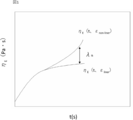
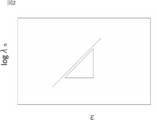
- ⁇ n is calculated from the uniaxial extensional viscosity ( ⁇ E ) by the following equation (1) (FIG. 1), and the slope obtained when the horizontal axis is strain ( ⁇ ) and the vertical axis is log ⁇ n is It is defined as the strain hardening degree (Fig. 2).
- ⁇ n ⁇ E (t, ⁇ non-liner ) / ⁇ E (t, ⁇ liner ) ⁇ ⁇ ⁇ Equation (1)
- ⁇ E (t, ⁇ non-liner ) is a measured value of extensional viscosity during strain hardening
- ⁇ E (t, ⁇ liner ) is a measured value of extensional viscosity when not strain hardened.
- the uniaxial elongation viscosity ⁇ E (t, ⁇ non-liner ) is a value obtained by measuring with ARES-G2 (manufactured by TA INSTRUMENTS) at a strain rate of 1s -1 and a measurement temperature of 180 ° C.
- the uniaxial extensional viscosity ⁇ E (t, ⁇ liner ) means a value obtained by using ARES-G2 (manufactured by TA INSTRUMENTS) at a strain rate of 0.1 s ⁇ 1 and a measurement temperature of 180° C. To do.
- Shear viscosity is the degree of stress generated when shear strain is applied to a material.
- the shear viscosity means a value obtained by measuring at a test temperature of 200 ° C. and an apparent shear rate of 1 second according to JIS K-7199.
- the expansion ratio tends to increase. It is based on what I discovered. A large value of strain hardening degree / shear viscosity means that the material is easily hardened and the stress is unlikely to increase when strain is applied to the material. Therefore, when this value is equal to or greater than a predetermined threshold value, during foam blow molding, the resin is likely to flow and the resin is less likely to be locally stretched, so that foam breakage is suppressed and the expansion ratio is increased. It is thought that it tends to be high.
- the strain hardening degree / shear viscosity [ ⁇ 10 -5 Pa -1 ⁇ s -1 ] is, for example, 3.5 to 35, and specifically, for example, 3.5, 4.0, 4.5, 5. 0, 5.5, 6.0, 6.5, 7.0, 7.5, 8.0, 8.5, 9.0, 9.5, 10, 20, 30, 35, where It may be in the range between any two of the illustrated values.
- the strain hardening degree is preferably 0.25 to 1.00, specifically, for example, 0.25, 0.30, 0.35, 0.40, 0.45, 0.50, 0.55, 0. It is .60, 0.65, 0.70, 0.75, 0.80, 0.85, 0.90, 0.95, 1.00, and the range between any two of the numerical values exemplified here. It may be inside.
- the shear viscosity [Pa ⁇ s] is preferably 1000 to 16000, and specifically, for example, 1000, 2000, 3000, 4000, 5000, 6000, 7000, 8000, 9000, 10000, 11000, 12000, 13000, 14000, 15000. , 16000, and may be in the range between any two of the numerical values exemplified here.
- the MFR [g / 10 minutes] of the PP of the present embodiment is preferably 2 to 20, specifically, for example, 2, 3, 4, 5, 6, 7, 8, 9, 10, 11, 12, 13 , 14, 15, 16, 17, 18, 19, 20 and may be within a range between any two of the numerical values exemplified here. In this case, the expansion ratio tends to be particularly high.
- MFR means a value obtained by measuring at a test temperature of 190 ° C. and a test load of 2.16 kg according to JIS K-7210.
- the MT [mN] of PP of this embodiment is preferably 10 to 500, and specifically, for example, 10, 20, 30, 40, 50, 60, 70, 80, 90, 100, 150, 200, 250, 300, 350, 400, 450, 500, and may be in the range between any two of the numerical values exemplified here. In this case, the foaming ratio tends to be particularly high.
- MT is a melt tension tester (manufactured by Toyo Seiki Seisakusho Co., Ltd.), and a strand is extruded from an orifice having a diameter of 2.095 mm and a length of 8 mm at a test temperature of 190° C. and an extrusion rate of 10 mm/min. It means the tension when the strand is wound on a roller having a diameter of 80 mm at a winding speed of 16 rpm.
- the PP of the present embodiment may be a homo-PP or a copolymer of another olefin and PP (preferably a block copolymer). Further, the PP of the present embodiment is preferably a PP having a long-chain branched structure, and more preferably a homo PP having a long-chain branched structure (long-chain branched homo PP).
- the foam blow molding resin of the present embodiment may include only the above PP or may include a resin other than the above PP.
- the proportion of the PP in the resin for foam blow molding is preferably 40% by mass or more, and specifically, for example, 40, 50, 60, 70, 80, 90, 100% by mass. It may be within the range between any two.
- the resin other than the PP include resins having at least one of composition and structure different from those of the above PP, such as long chain branched block PP, linear homo PP, linear block PP, polyethylene (LDPE, LLDPE, HDPE, etc.). Is exemplified.
- the length in the thickness direction of the bubbles formed in the foam blow-molded product is preferably 50 to 100 ⁇ m. This is because if the thickness is 50 ⁇ m, the growth of bubbles is insufficient and the expansion ratio tends to be small, and if it exceeds 100 ⁇ m, the bubbles are broken and pinholes are easily generated.
- a melt-kneaded resin obtained by melt-kneading the above-mentioned foam blow-molding resin and a foaming agent in a foam extruder is used for the foam extrusion.
- the obtained foam blow molded article can be used, for example, in an air conditioning duct for a vehicle.
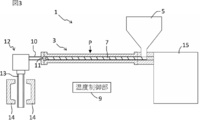
- the foam extruder 1 includes a cylinder 3, a resin inlet 5, a screw 7, a foaming agent injection port P, a temperature control unit 9, a resin extrusion port 11, and a die head 12.
- the resin input port 5 is a so-called hopper, from which the raw material resin is input.
- the form of the raw material resin is not particularly limited, but is usually in the form of pellets.
- the raw material resin is the foam blow molding resin according to the embodiment of the present invention described above.
- the raw material resin is charged into the cylinder 3 from the resin input port 5 and then melted by being heated in the cylinder 3 to become a molten resin. Further, by the rotation of the screw 7 arranged in the cylinder 3, the screw 7 is conveyed toward the resin extrusion port 11 provided at one end of the cylinder 3.
- the screw 7 is arranged in the cylinder 3 and conveys the molten resin toward the resin extrusion port 11 while kneading the molten resin by the rotation thereof.
- a gear device 15 is provided at one end of the screw 7, and the screw 7 is rotationally driven by the gear device 15.
- the cylinder 3 is provided with a foaming agent injection port P for injecting a foaming agent into the cylinder 3.
- the foaming agent injected from the foaming agent injection port P include a physical foaming agent, a chemical foaming agent, and a mixture thereof, and a physical foaming agent is preferable.
- the physical foaming agent an inorganic physical foaming agent such as air, carbon dioxide gas, nitrogen gas, or water, and an organic physical foaming agent such as butane, pentane, hexane, dichloromethane, dichloroethane, or a supercritical fluid thereof is used. be able to.
- the critical temperature is -149.1 ° C
- the critical pressure is 3.4 MPa or more
- the critical temperature is 31 ° C, the critical pressure. It is obtained by setting it to 7.4 MPa or more.
- the chemical foaming agent include those that generate carbon dioxide gas by a chemical reaction between an acid (eg, citric acid or a salt thereof) and a base (eg, baking soda). Instead of injecting the chemical foaming agent from the foaming agent injection port P, it may be injected from the resin injection port 5.
- the temperature control unit 9 is configured to individually control a plurality of temperature control units provided along the cylinder 3 to control the temperature of each portion of the cylinder 3. Further, the temperature control unit 9 can also control the temperature of the die head 12 for forming the parison and the temperature of the connecting portion 10 between the cylinder 3 and the die head 12.
- the die head 12 includes a cylindrical die outer cylinder 41 and a mandrel 43 accommodated therein, and stores a melt-kneaded resin extruded from the cylinder 3 in a space 47 therebetween.
- the die head 12 for forming the cylindrical foam parison 13 is shown here, the die head 12 may be for forming a sheet foam parison.
- ⁇ Split mold 14> The foamed parison 13 is guided between the pair of split molds 14. A foam blow-molded body is obtained by performing blow molding of the foam parison 13 using the split mold 14.
- a foam blow molded product was produced using the foam extruder 1 and the split mold 14 shown in FIG. 3, and the foam blow moldability was evaluated.
- the polypropylene shown in Table 1 was used as the raw material resin.
- 1.0% of LDPE base masterbatch manufactured by Dainichiseika Kogyo Co., Ltd., trade name "Finecell Master P0217K"
- 20 wt% of sodium hydrogencarbonate-based foaming agent as a nucleating agent was added to 100 parts by mass of the resin.
- the temperature control unit 9 was set so that the temperature of the foamed parison 13 was 190 to 200 ° C.
- the rotation speed of the screw 7 was 60 rmm, and the extrusion rate was 20 kg/hr.
- the foaming agent using N 2 gas was injected from the blowing agent injection port P provided at the center in the longitudinal direction of the cylinder 3. The expansion ratio was adjusted by changing the amount of injected gas.
- Blow molding was performed using the foam parison formed under the above conditions.
- the foam parison was formed to have an outer diameter of 50 mm and a thickness of 2.5 mm. Blow molding was performed so that the outer diameter of the molded body was 100 mm.
- Table 1 also shows the values of MFR, MT, MFR ⁇ MT, strain hardening degree, shear viscosity and strain hardening degree / shear viscosity.
- MT, MFR, strain cure, and shear viscosity were measured by the methods described in the embodiments.
- Example 1 and 2 and Comparative Examples 5 to 7 the above-mentioned commercially available polypropylene was used after being modified under the condition A or B.
- the modification process the process of producing a foam parison in the foam extruder 1 and crushing it into pellets was repeated three times. Under the conditions A and B, the temperature of the foam parison 13 was controlled so as to be 230° C. and 215° C., respectively.
- the maximum expansion ratio was higher in all the examples than in all the comparative examples.
Landscapes
- Chemical & Material Sciences (AREA)
- Engineering & Computer Science (AREA)
- Chemical Kinetics & Catalysis (AREA)
- Health & Medical Sciences (AREA)
- Medicinal Chemistry (AREA)
- Polymers & Plastics (AREA)
- Organic Chemistry (AREA)
- Mechanical Engineering (AREA)
- Materials Engineering (AREA)
- Manufacturing & Machinery (AREA)
- Blow-Moulding Or Thermoforming Of Plastics Or The Like (AREA)
- Manufacture Of Porous Articles, And Recovery And Treatment Of Waste Products (AREA)
- Molding Of Porous Articles (AREA)
- Addition Polymer Or Copolymer, Post-Treatments, Or Chemical Modifications (AREA)
Abstract
発泡倍率を高めることが可能なポリプロピレンを含有する発泡ブロー成形用樹脂を提供する。 本発明によれば、ポリプロピレンを含有する発泡ブロー成形用樹脂であって、前記ポリプロピレンは、ひずみ硬化度/せん断粘度が3.5×10-5Pa-1・s-1以上である、発泡ブロー成形用樹脂が提供される。
Description
本発明は、発泡ブロー成形用樹脂、及びこれを用いた発泡ブロー成形体の製造方法に関する。
例えば、自動車等の空調装置では、空気を通風させるための管状の空調用ダクトが用いられている。
空調用ダクトとしては、熱可塑性樹脂を発泡剤により発泡させた発泡樹脂を用いた発泡ブロー成形体が知られている。発泡ブロー成形体は、高い断熱性と軽量化を同時に実現できることから需要が拡大している。
こうした発泡ブロー成形体の製造方法としては、溶融状態の発泡樹脂を分割金型で型締めし、内部に空気を吹き込んで膨張させるブロー成形方法が広く知られている。
特許文献1には、発泡ブロー成形において発泡ブロー成形体の発泡倍率を高めるために、メルトテンション(MT)を所定値以上にし、且つMT×メルトフローレイト(MFR)を所定値以上にする技術が開示されている。
特許文献1に開示されている基準は、種々の原料樹脂に適用可能なものであるが、発泡ブロー成形用の原料樹脂に用いるポリプロピレンについて、MT及びMT×MFRと、得られる発泡ブロー成形体の発泡倍率の関係を調べたところ、MTとMT×MFRのどちらもが比較的高い値であるにも関わらず、発泡倍率が低くなってしまう場合があることが分かった。
本発明はこのような事情に鑑みてなされたものであり、発泡倍率を高めることが可能なポリプロピレンを含有する発泡ブロー成形用樹脂を提供するものである。
本発明によれば、ポリプロピレンを含有する発泡ブロー成形用樹脂であって、前記ポリプロピレンは、ひずみ硬化度/せん断粘度が3.5×10-5Pa-1・s-1以上である、発泡ブロー成形用樹脂が提供される。
本発明者は鋭意検討を行ったところ、ひずみ硬化度/せん断粘度が3.5×10-5Pa-1・s-1以上であるポリプロピレンを用いることによって、発泡倍率が高い発泡ブロー成形体を得ることができることを見出し、本発明の完成に到った。
以下、本発明の種々の実施形態を例示する。以下に示す実施形態は互いに組み合わせ可能である。
好ましくは、前記記載の発泡ブロー成形用樹脂であって、前記ポリプロピレンは、前記ひずみ硬化度が0.25~1.00である、発泡ブロー成形用樹脂である。
好ましくは、前記記載の発泡ブロー成形用樹脂であって、前記ポリプロピレンは、前記せん断粘度が1000~16000Pa・sである、発泡ブロー成形用樹脂である。
好ましくは、前記記載の発泡ブロー成形用樹脂であって、前記ポリプロピレンは、メルトフローレイトが2~20g/10分である、発泡ブロー成形用樹脂である。
好ましくは、前記記載の発泡ブロー成形用樹脂であって、前記ポリプロピレンは、メルトテンションが10~500mNである、発泡ブロー成形用樹脂である。
好ましくは、前記記載の発泡ブロー成形用樹脂と発泡剤を発泡押出機内で溶融混練してなる溶融混練樹脂を前記発泡押出機から押し出して発泡パリソンを形成し、前記発泡パリソンをブロー成形して発泡ブロー成形体を得る工程を備える、発泡ブロー成形体の製造方法である。
好ましくは、前記記載の発泡ブロー成形用樹脂であって、前記ポリプロピレンは、前記ひずみ硬化度が0.25~1.00である、発泡ブロー成形用樹脂である。
好ましくは、前記記載の発泡ブロー成形用樹脂であって、前記ポリプロピレンは、前記せん断粘度が1000~16000Pa・sである、発泡ブロー成形用樹脂である。
好ましくは、前記記載の発泡ブロー成形用樹脂であって、前記ポリプロピレンは、メルトフローレイトが2~20g/10分である、発泡ブロー成形用樹脂である。
好ましくは、前記記載の発泡ブロー成形用樹脂であって、前記ポリプロピレンは、メルトテンションが10~500mNである、発泡ブロー成形用樹脂である。
好ましくは、前記記載の発泡ブロー成形用樹脂と発泡剤を発泡押出機内で溶融混練してなる溶融混練樹脂を前記発泡押出機から押し出して発泡パリソンを形成し、前記発泡パリソンをブロー成形して発泡ブロー成形体を得る工程を備える、発泡ブロー成形体の製造方法である。
以下、本発明の実施形態について説明する。以下に示す実施形態中で示した各種特徴事項は、互いに組み合わせ可能である。また、各特徴事項について独立して発明が成立する。
1.発泡ブロー成形用樹脂
本発明の一実施形態の発泡ブロー成形用樹脂は、ポリプロピレン(以下、「PP」)を含有する発泡ブロー成形用樹脂であって、前記PPは、ひずみ硬化度/せん断粘度が3.5×10-5Pa-1・s-1以上である。
本発明の一実施形態の発泡ブロー成形用樹脂は、ポリプロピレン(以下、「PP」)を含有する発泡ブロー成形用樹脂であって、前記PPは、ひずみ硬化度/せん断粘度が3.5×10-5Pa-1・s-1以上である。
ひずみ硬化度は、材料に対してひずみを与えたときに材料が硬化する度合いを示すものである。本明細書では、一軸伸張粘度(ηE)から下記式(1)によりλnを算出し(図1)、横軸をひずみ(ε)、縦軸をlogλnとした場合に得られる傾きをひずみ硬化度と定義する(図2)。
λn=ηE(t、εnon-liner)/ηE(t、εliner) ・・・式(1)
式(1)において、ηE(t、εnon-liner)はひずみ硬化中の伸張粘度の測定値であり、ηE(t、εliner)ひずみ硬化しない場合の伸張粘度の測定値である。
λn=ηE(t、εnon-liner)/ηE(t、εliner) ・・・式(1)
式(1)において、ηE(t、εnon-liner)はひずみ硬化中の伸張粘度の測定値であり、ηE(t、εliner)ひずみ硬化しない場合の伸張粘度の測定値である。
本明細書において、一軸伸張粘度ηE(t、εnon-liner)は、ARES-G2(TA INSTRUMENTS製)を用い、ひずみ速度1s-1、測定温度180℃で測定して得られた値を意味し、一軸伸張粘度ηE(t、εliner)は、同じくARES-G2(TA INSTRUMENTS製)を用い、ひずみ速度0.1s-1、測定温度180℃で測定して得られた値を意味する。
せん断粘度は、材料に対してせん断ひずみを加えたときに生じる応力の大きさを示す度合いである。本明細書において、せん断粘度は、JIS K-7199に準じて試験温度200℃、見かけのせん断速度1/秒にて測定を行って得られる値を意味する。
本発明は、発泡ブロー成形用樹脂に含まれるPPのひずみ硬化度/せん断粘度が3.5×10-5Pa-1・s-1以上である場合に、発泡倍率が高くなりやすいということを発見したことに基づくものである。ひずみ硬化度/せん断粘度の値が大きいということは、材料にひずみを加えたときに材料が硬化しやすく、且つ応力が高くなりにくいということを意味している。このため、この値が所定の閾値以上である場合には、発泡ブロー成形の際に、樹脂が流動されやすく且つ樹脂が局所的に伸ばされにくくなるので、破泡が抑制されて、発泡倍率が高くなりやすいと考えられる。
ひずみ硬化度/せん断粘度[×10-5Pa-1・s-1]は、例えば3.5~35であり、具体的には例えば、3.5、4.0、4.5、5.0、5.5、6.0、6.5、7.0、7.5、8.0、8.5、9.0、9.5、10、20、30、35であり、ここで例示した数値の何れか2つの間の範囲内であってもよい。
ひずみ硬化度は、0.25~1.00が好ましく、具体的には例えば、0.25、0.30、0.35、0.40、0.45、0.50、0.55、0.60、0.65、0.70、0.75、0.80、0.85、0.90、0.95、1.00であり、ここで例示した数値の何れか2つの間の範囲内であってもよい。
せん断粘度[Pa・s]は、1000~16000が好ましく、具体的には例えば、1000、2000、3000、4000、5000、6000、7000、8000、9000、10000、11000、12000、13000、14000、15000、16000であり、ここで例示した数値の何れか2つの間の範囲内であってもよい。
本実施形態のPPのMFR[g/10分]は、2~20が好ましく、具体的には例えば、2、3、4、5、6、7、8、9、10、11、12、13、14、15、16、17、18、19、20であり、ここで例示した数値の何れか2つの間の範囲内であってもよい。この場合、発泡倍率が特に高くなりやすいからである。
本明細書において、MFRは、JIS K-7210に準じて試験温度190℃、試験荷重2.16kgにて測定を行って得られる値を意味する。
本実施形態のPPのMT[mN]は、10~500が好ましく、具体的には例えば、10、20、30、40、50、60、70、80、90、100、150、200、250、300、350、400、450、500であり、ここで例示した数値の何れか2つの間の範囲内であってもよい。この場合、発泡倍率が特に高くなりやすいからである。
本明細書において、MTは、メルトテンションテスター(株式会社東洋精機製作所製)を用い、試験温度190℃、押出速度10mm/分で、直径2.095mm、長さ8mmのオリフィスからストランドを押し出し、このストランドを直径80mmのローラに巻き取り速度16rpmで巻き取ったときの張力を意味する。
本実施形態のPPは、ホモPPであってもよく、他のオレフィンとPPの共重合体(好ましくは、ブロック共重合体)であってもよい。また、本実施形態のPPは、長鎖分岐構造を有するPPであることが好ましく、長鎖分岐構造を有するホモPP(長鎖分岐ホモPP)であることがさらに好ましい。
本実施形態の発泡ブロー成形用樹脂は、上記PPのみを含んでもよく、上記PP以外の樹脂を含んでもよい。発泡ブロー成形用樹脂中の上記PPの割合は、40質量%以上が好ましく、具体的には例えば、40、50、60、70、80、90、100質量%であり、ここで例示した数値の何れか2つの間の範囲内であってもよい。上記PP以外の樹脂としては、上記PPとは組成と構造の少なくとも1つが異なる樹脂が挙げられ、長鎖分岐ブロックPP、直鎖ホモPP、直鎖ブロックPP、ポリエチレン(LDPE,LLDPE,HDPE等)が例示される。
発泡ブロー成形体に形成される気泡の厚み方向の長さは、50~100μmが好ましい。50μmの場合は気泡の成長が不十分であるために発泡倍率が小さくなりやすく、100μmを超える場合には破泡が起こってピンホールが生じやすいからである。
2.発泡ブロー成形体の製造方法
本発明の一実施形態の発泡ブロー成形体の製造方法では、上述した発泡ブロー成形用樹脂と発泡剤を発泡押出機内で溶融混練してなる溶融混練樹脂を前記発泡押出機から押し出して発泡パリソンを形成し、前記発泡パリソンをブロー成形して発泡ブロー成形体を得る工程を備える。
得られた発泡ブロー成形体は、例えば、車両用空調ダクト等に用いることができる。
本発明の一実施形態の発泡ブロー成形体の製造方法では、上述した発泡ブロー成形用樹脂と発泡剤を発泡押出機内で溶融混練してなる溶融混練樹脂を前記発泡押出機から押し出して発泡パリソンを形成し、前記発泡パリソンをブロー成形して発泡ブロー成形体を得る工程を備える。
得られた発泡ブロー成形体は、例えば、車両用空調ダクト等に用いることができる。
この方法は、一例では、図3に示す発泡押出機1及び分割金型14を用いて実施することができる。発泡押出機1は、シリンダ3と、樹脂投入口5と、スクリュー7と、発泡剤注入口Pと、温度制御部9と、樹脂押出口11と、ダイヘッド12を備える。
以下、各構成要素を詳細に説明する。
<樹脂投入口5>
樹脂投入口5は、いわゆるホッパーであり、ここから、原料樹脂を投入する。原料樹脂の形態は、特に限定されないが、通常は、ペレット状である。原料樹脂は、上述した本発明の一実施形態の発泡ブロー成形用樹脂である。原料樹脂は、樹脂投入口5からシリンダ3内に投入された後、シリンダ3内で加熱されることによって溶融されて溶融樹脂になる。また、シリンダ3内に配置されたスクリュー7の回転によってシリンダ3の一端に設けられた樹脂押出口11に向けて搬送される。
樹脂投入口5は、いわゆるホッパーであり、ここから、原料樹脂を投入する。原料樹脂の形態は、特に限定されないが、通常は、ペレット状である。原料樹脂は、上述した本発明の一実施形態の発泡ブロー成形用樹脂である。原料樹脂は、樹脂投入口5からシリンダ3内に投入された後、シリンダ3内で加熱されることによって溶融されて溶融樹脂になる。また、シリンダ3内に配置されたスクリュー7の回転によってシリンダ3の一端に設けられた樹脂押出口11に向けて搬送される。
<スクリュー7>
スクリュー7は、シリンダ3内に配置され、その回転によって溶融樹脂を混練しながら樹脂押出口11に向けて搬送する。スクリュー7の一端にはギア装置15が設けられており、ギア装置15によってスクリュー7が回転駆動される。
スクリュー7は、シリンダ3内に配置され、その回転によって溶融樹脂を混練しながら樹脂押出口11に向けて搬送する。スクリュー7の一端にはギア装置15が設けられており、ギア装置15によってスクリュー7が回転駆動される。
<発泡剤注入口P>
シリンダ3には、シリンダ3内に発泡剤を注入するための発泡剤注入口Pが設けられる。発泡剤注入口Pから注入される発泡剤は、物理発泡剤、化学発泡剤、及びその混合物が挙げられるが、物理発泡剤が好ましい。物理発泡剤としては、空気、炭酸ガス、窒素ガス、水等の無機系物理発泡剤、およびブタン、ペンタン、ヘキサン、ジクロロメタン、ジクロロエタン等の有機系物理発泡剤、さらにはそれらの超臨界流体を用いることができる。超臨界流体としては、二酸化炭素、窒素などを用いて作ることが好ましく、窒素であれば臨界温度-149.1℃、臨界圧力3.4MPa以上、二酸化炭素であれば臨界温度31℃、臨界圧力7.4MPa以上とすることにより得られる。化学発泡剤としては、酸(例:クエン酸又はその塩)と塩基(例:重曹)との化学反応により炭酸ガスを発生させるものが挙げられる。化学発泡剤は、発泡剤注入口Pから注入する代わりに、樹脂投入口5から投入してもよい。
シリンダ3には、シリンダ3内に発泡剤を注入するための発泡剤注入口Pが設けられる。発泡剤注入口Pから注入される発泡剤は、物理発泡剤、化学発泡剤、及びその混合物が挙げられるが、物理発泡剤が好ましい。物理発泡剤としては、空気、炭酸ガス、窒素ガス、水等の無機系物理発泡剤、およびブタン、ペンタン、ヘキサン、ジクロロメタン、ジクロロエタン等の有機系物理発泡剤、さらにはそれらの超臨界流体を用いることができる。超臨界流体としては、二酸化炭素、窒素などを用いて作ることが好ましく、窒素であれば臨界温度-149.1℃、臨界圧力3.4MPa以上、二酸化炭素であれば臨界温度31℃、臨界圧力7.4MPa以上とすることにより得られる。化学発泡剤としては、酸(例:クエン酸又はその塩)と塩基(例:重曹)との化学反応により炭酸ガスを発生させるものが挙げられる。化学発泡剤は、発泡剤注入口Pから注入する代わりに、樹脂投入口5から投入してもよい。
<温度制御部9>
温度制御部9は、シリンダ3に沿って設けられた複数の温調ユニットを個別に制御して、シリンダ3の各部分の温度を制御するように構成されている。また、温度制御部9は、パリソンを形成するためのダイヘッド12の温度、及びシリンダ3とダイヘッド12の間の連結部10の温度も制御可能である。
温度制御部9は、シリンダ3に沿って設けられた複数の温調ユニットを個別に制御して、シリンダ3の各部分の温度を制御するように構成されている。また、温度制御部9は、パリソンを形成するためのダイヘッド12の温度、及びシリンダ3とダイヘッド12の間の連結部10の温度も制御可能である。
<樹脂押出口11・ダイヘッド12>
原料樹脂と発泡剤が溶融混練されてなる溶融混練樹脂は、樹脂押出口11から押し出され、連結部10を通じてダイヘッド12内に注入される。ダイヘッド12は、図4に示すように、円筒状のダイ外筒41と、その内部に収容されるマンドレル43を備え、その間の空間47にシリンダ3から押し出された溶融混練樹脂を貯留する。そして、空間47に溶融混練樹脂が所定量貯留された後にリング状ピストン45を鉛直方向に押し下げることによって溶融混練樹脂をダイスリット49から押し出して円筒状の発泡パリソン13を形成する。なお、ここでは、円筒状の発泡パリソン13を形成するためのダイヘッド12を示しているが、ダイヘッド12は、シート状の発泡パリソンを形成するためのものであってもよい。
原料樹脂と発泡剤が溶融混練されてなる溶融混練樹脂は、樹脂押出口11から押し出され、連結部10を通じてダイヘッド12内に注入される。ダイヘッド12は、図4に示すように、円筒状のダイ外筒41と、その内部に収容されるマンドレル43を備え、その間の空間47にシリンダ3から押し出された溶融混練樹脂を貯留する。そして、空間47に溶融混練樹脂が所定量貯留された後にリング状ピストン45を鉛直方向に押し下げることによって溶融混練樹脂をダイスリット49から押し出して円筒状の発泡パリソン13を形成する。なお、ここでは、円筒状の発泡パリソン13を形成するためのダイヘッド12を示しているが、ダイヘッド12は、シート状の発泡パリソンを形成するためのものであってもよい。
<分割金型14>
発泡パリソン13は、一対の分割金型14間に導かれる。分割金型14を用いて発泡パリソン13のブロー成形を行うことによって発泡ブロー成形体が得られる。
発泡パリソン13は、一対の分割金型14間に導かれる。分割金型14を用いて発泡パリソン13のブロー成形を行うことによって発泡ブロー成形体が得られる。
図3に示す発泡押出機1及び分割金型14を用いて、発泡ブロー成形品を作製し、発泡ブロー成形性の評価を行った。発泡押出機1のシリンダ3の内径は50mmであり、L/D=34であった。原料樹脂には、表1に示すポリプロピレンを用いた。また、樹脂100質量部に対して、核剤として20wt%の炭酸水素ナトリウム系発泡剤を含むLDPEベースマスターバッチ(大日精化工業株式会社製、商品名「ファインセルマスターP0217K」)を1.0重量部、及び着色剤として40wt%のカーボンブラックを含むLLDPEベースマスターバッチ1.0重量部を添加した。発泡パリソン13の温度が190~200℃になるように温度制御部9の設定を行った。スクリュー7の回転数は、60rmmとし、押出量は、20kg/hrとした。発泡剤にはN2ガスを用い、シリンダ3の長手方向の中央に設けられた発泡剤注入口Pから注入した。注入ガス量を変化させることによって発泡倍率の調整を行った。
以上の条件で形成された発泡パリソンを用いてブロー成形を行った。発泡パリソンは、外径50mm、厚さ2.5mmとなるように形成した。ブロー成形は、成形体の外径が100mmとなるように行った。
各原料樹脂について、注入ガス量が異なる複数種類の発泡ブロー成形体を作成し、ピンホールおよび破泡による表面あれが生じない最大の発泡倍率を「最大発泡倍率」とした。
得られた結果を表1に示す。表1には、MFR、MT、MFR×MT、ひずみ硬化度、せん断粘度及びひずみ硬化度/せん断粘度の値を合わせて示した。MT、MFR、ひずみ硬化度、及びせん断粘度は、実施形態中で説明した方法で測定した。
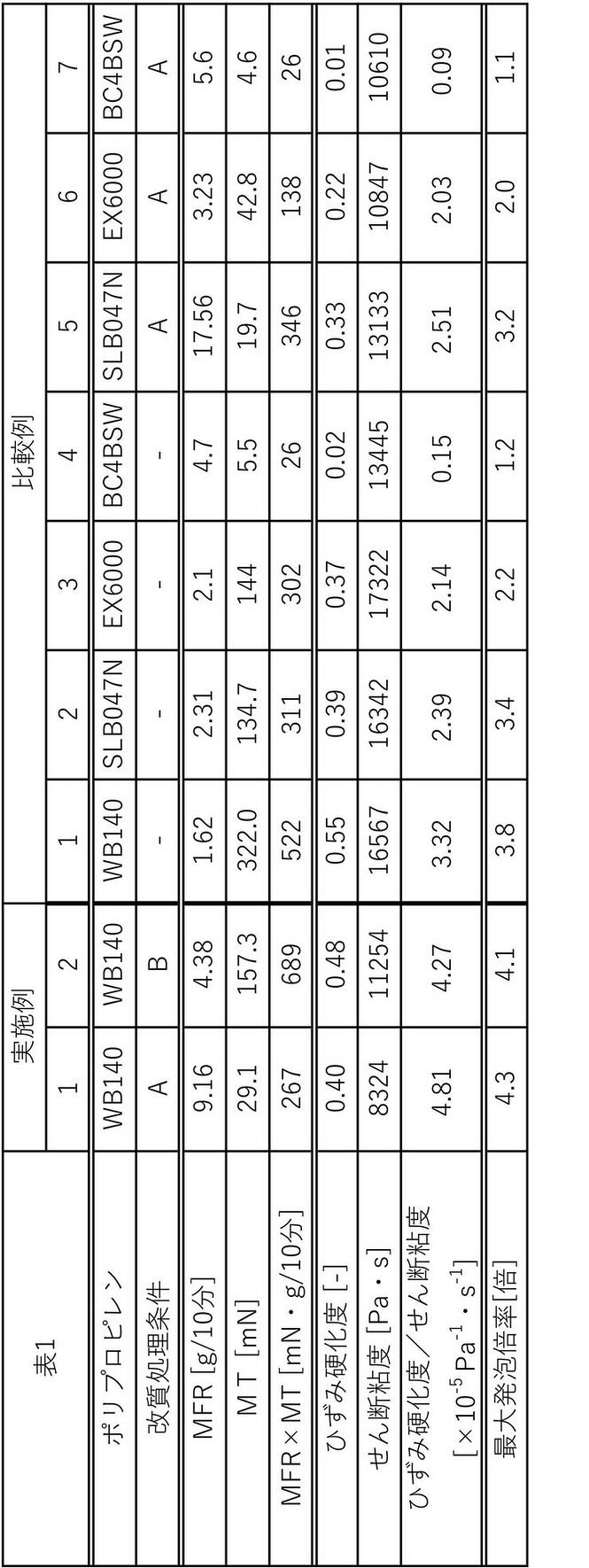
表1中のポリプロピレンの詳細は、以下の通りである。
WB140:ボレアリス社製、商品名WB140
SLB047N:カネカ製、商品名SLB047N
EX6000:日本ポリプロ製、商品名EX6000
BC4BSW:日本ポリプロ製、商品名BC4BSW
WB140:ボレアリス社製、商品名WB140
SLB047N:カネカ製、商品名SLB047N
EX6000:日本ポリプロ製、商品名EX6000
BC4BSW:日本ポリプロ製、商品名BC4BSW
実施例1~2及び比較例5~7では、上記の市販のポリプロピレンに対して条件A又はBでの改質処理を行ったものを用いた。改質処理では、上記の発泡押出機1において発泡パリソンを作製し、それを粉砕してペレット化する処理を3回繰り返した。条件A及びBでは、それぞれ、発泡パリソン13の温度が230℃及び215℃となるように温度制御した。
実施例・比較例を参照すると、全ての実施例では、全ての比較例よりも最大発泡倍率が高かった。
1:発泡押出機、3:シリンダ、5:樹脂投入口、7:スクリュー、9:温度制御部、11:樹脂押出口、12:ダイヘッド、13:発泡パリソン、14:分割金型、P:発泡剤注入口、43:マンドレル、45:リング状ピストン、47:空間、49:ダイスリット
Claims (6)
- ポリプロピレンを含有する発泡ブロー成形用樹脂であって、
前記ポリプロピレンは、ひずみ硬化度/せん断粘度が3.5×10-5Pa-1・s-1以上である、発泡ブロー成形用樹脂。 - 請求項1に記載の発泡ブロー成形用樹脂であって、
前記ポリプロピレンは、前記ひずみ硬化度が0.25~1.00である、発泡ブロー成形用樹脂。 - 請求項1又は請求項2に記載の発泡ブロー成形用樹脂であって、
前記ポリプロピレンは、前記せん断粘度が1000~16000Pa・sである、発泡ブロー成形用樹脂。 - 請求項1~請求項3の何れか1つに記載の発泡ブロー成形用樹脂であって、
前記ポリプロピレンは、メルトフローレイトが2~20g/10分である、発泡ブロー成形用樹脂。 - 請求項1~請求項4の何れか1つに記載の発泡ブロー成形用樹脂であって、
前記ポリプロピレンは、メルトテンションが10~500mNである、発泡ブロー成形用樹脂。 - 請求項1~請求項5のいずれか1つに記載の発泡ブロー成形用樹脂と発泡剤を発泡押出機内で溶融混練してなる溶融混練樹脂を前記発泡押出機から押し出して発泡パリソンを形成し、前記発泡パリソンをブロー成形して発泡ブロー成形体を得る工程を備える、発泡ブロー成形体の製造方法。
Applications Claiming Priority (2)
| Application Number | Priority Date | Filing Date | Title |
|---|---|---|---|
| JP2019-040156 | 2019-03-06 | ||
| JP2019040156A JP7201910B2 (ja) | 2019-03-06 | 2019-03-06 | 発泡ブロー成形用樹脂、発泡ブロー成形体の製造方法 |
Publications (1)
| Publication Number | Publication Date |
|---|---|
| WO2020179792A1 true WO2020179792A1 (ja) | 2020-09-10 |
Family
ID=72337493
Family Applications (1)
| Application Number | Title | Priority Date | Filing Date |
|---|---|---|---|
| PCT/JP2020/008959 Ceased WO2020179792A1 (ja) | 2019-03-06 | 2020-03-03 | 発泡ブロー成形用樹脂、発泡ブロー成形体の製造方法 |
Country Status (2)
| Country | Link |
|---|---|
| JP (1) | JP7201910B2 (ja) |
| WO (1) | WO2020179792A1 (ja) |
Cited By (2)
| Publication number | Priority date | Publication date | Assignee | Title |
|---|---|---|---|---|
| WO2023058525A1 (ja) * | 2021-10-04 | 2023-04-13 | キョーラク株式会社 | 発泡成形用樹脂及びその製造方法、発泡成形体の製造方法、構造体の製造方法 |
| JP2023094897A (ja) * | 2021-12-24 | 2023-07-06 | キョーラク株式会社 | 発泡成形体の製造方法 |
Citations (8)
| Publication number | Priority date | Publication date | Assignee | Title |
|---|---|---|---|---|
| JP2003147110A (ja) * | 2001-11-09 | 2003-05-21 | Mitsui Chemicals Inc | ポリオレフィン系重合体組成物発泡体およびその製造方法 |
| WO2006101142A1 (ja) * | 2005-03-22 | 2006-09-28 | Prime Polymer Co., Ltd. | プロピレン系樹脂押出発泡体及びプロピレン系樹脂押出発泡体の製造方法 |
| JP2015196711A (ja) * | 2014-03-31 | 2015-11-09 | サンアロマー株式会社 | ポリプロピレン樹脂組成物及びその成形品 |
| WO2016098695A1 (ja) * | 2014-12-18 | 2016-06-23 | 株式会社ジェイエスピー | 発泡ブロー成形体の製造方法 |
| WO2017030116A1 (ja) * | 2015-08-18 | 2017-02-23 | キョーラク株式会社 | 発泡成形用樹脂、発泡成形体の製造方法 |
| JP2017066204A (ja) * | 2015-09-28 | 2017-04-06 | 日本ポリプロ株式会社 | 発泡成形用ポリプロピレン樹脂および成形体 |
| WO2017170481A1 (ja) * | 2016-03-29 | 2017-10-05 | 積水化成品工業株式会社 | 改質ポリプロピレン系樹脂及び改質ポリプロピレン系樹脂の製造方法 |
| JP2018047555A (ja) * | 2016-09-20 | 2018-03-29 | 日本ポリプロ株式会社 | ポリプロピレン樹脂製多層発泡シート |
-
2019
- 2019-03-06 JP JP2019040156A patent/JP7201910B2/ja active Active
-
2020
- 2020-03-03 WO PCT/JP2020/008959 patent/WO2020179792A1/ja not_active Ceased
Patent Citations (8)
| Publication number | Priority date | Publication date | Assignee | Title |
|---|---|---|---|---|
| JP2003147110A (ja) * | 2001-11-09 | 2003-05-21 | Mitsui Chemicals Inc | ポリオレフィン系重合体組成物発泡体およびその製造方法 |
| WO2006101142A1 (ja) * | 2005-03-22 | 2006-09-28 | Prime Polymer Co., Ltd. | プロピレン系樹脂押出発泡体及びプロピレン系樹脂押出発泡体の製造方法 |
| JP2015196711A (ja) * | 2014-03-31 | 2015-11-09 | サンアロマー株式会社 | ポリプロピレン樹脂組成物及びその成形品 |
| WO2016098695A1 (ja) * | 2014-12-18 | 2016-06-23 | 株式会社ジェイエスピー | 発泡ブロー成形体の製造方法 |
| WO2017030116A1 (ja) * | 2015-08-18 | 2017-02-23 | キョーラク株式会社 | 発泡成形用樹脂、発泡成形体の製造方法 |
| JP2017066204A (ja) * | 2015-09-28 | 2017-04-06 | 日本ポリプロ株式会社 | 発泡成形用ポリプロピレン樹脂および成形体 |
| WO2017170481A1 (ja) * | 2016-03-29 | 2017-10-05 | 積水化成品工業株式会社 | 改質ポリプロピレン系樹脂及び改質ポリプロピレン系樹脂の製造方法 |
| JP2018047555A (ja) * | 2016-09-20 | 2018-03-29 | 日本ポリプロ株式会社 | ポリプロピレン樹脂製多層発泡シート |
Cited By (3)
| Publication number | Priority date | Publication date | Assignee | Title |
|---|---|---|---|---|
| WO2023058525A1 (ja) * | 2021-10-04 | 2023-04-13 | キョーラク株式会社 | 発泡成形用樹脂及びその製造方法、発泡成形体の製造方法、構造体の製造方法 |
| JP2023094897A (ja) * | 2021-12-24 | 2023-07-06 | キョーラク株式会社 | 発泡成形体の製造方法 |
| JP7817527B2 (ja) | 2021-12-24 | 2026-02-19 | キョーラク株式会社 | 発泡成形体の製造方法 |
Also Published As
| Publication number | Publication date |
|---|---|
| JP2020143208A (ja) | 2020-09-10 |
| JP7201910B2 (ja) | 2023-01-11 |
Similar Documents
| Publication | Publication Date | Title |
|---|---|---|
| US10988592B2 (en) | Foam molding resin and method for manufacturing foam molded article | |
| JP6963171B2 (ja) | 発泡成形用樹脂、発泡成形体、発泡成形体の製造方法 | |
| WO2020179792A1 (ja) | 発泡ブロー成形用樹脂、発泡ブロー成形体の製造方法 | |
| EP3238910B1 (en) | Blow molding method | |
| JP2023094897A (ja) | 発泡成形体の製造方法 | |
| JP6845426B2 (ja) | 発泡成形用樹脂、発泡成形体及びその製造方法 | |
| JP6920604B2 (ja) | 発泡成形体、及びその製造方法 | |
| JP2015074154A (ja) | 発泡押出機、発泡押出方法、発泡ブロー成形品の製造方法 | |
| CN110461923B (zh) | 发泡管道 | |
| JP2006089637A (ja) | ポリプロピレン系樹脂発泡シートの製造方法 | |
| JP6593065B2 (ja) | 発泡成形体の製造方法 | |
| JP4855138B2 (ja) | ポリプロピレン系樹脂発泡体粒子及びその製造方法 | |
| JP7839380B2 (ja) | 発泡成形用樹脂、発泡成形体の製造方法 | |
| WO2026028953A1 (ja) | 発泡成形体の製造方法 | |
| JP7440743B2 (ja) | 発泡成形体 | |
| JP6773967B2 (ja) | 発泡成形体の製造方法 | |
| KR100727895B1 (ko) | 압출중공성형용 폴리프로필렌 수지 조성물 |
Legal Events
| Date | Code | Title | Description |
|---|---|---|---|
| 121 | Ep: the epo has been informed by wipo that ep was designated in this application |
Ref document number: 20765735 Country of ref document: EP Kind code of ref document: A1 |
|
| NENP | Non-entry into the national phase |
Ref country code: DE |
|
| 122 | Ep: pct application non-entry in european phase |
Ref document number: 20765735 Country of ref document: EP Kind code of ref document: A1 |