WO2020138511A1 - 酪酸菌用プレバイオティクス組成物 - Google Patents
酪酸菌用プレバイオティクス組成物 Download PDFInfo
- Publication number
- WO2020138511A1 WO2020138511A1 PCT/JP2020/000013 JP2020000013W WO2020138511A1 WO 2020138511 A1 WO2020138511 A1 WO 2020138511A1 JP 2020000013 W JP2020000013 W JP 2020000013W WO 2020138511 A1 WO2020138511 A1 WO 2020138511A1
- Authority
- WO
- WIPO (PCT)
- Prior art keywords
- butyric acid
- bacterium
- acid bacteria
- genus
- bacteria
- Prior art date
- Legal status (The legal status is an assumption and is not a legal conclusion. Google has not performed a legal analysis and makes no representation as to the accuracy of the status listed.)
- Ceased
Links
Images


Classifications
-
- A—HUMAN NECESSITIES
- A23—FOODS OR FOODSTUFFS; TREATMENT THEREOF, NOT COVERED BY OTHER CLASSES
- A23L—FOODS, FOODSTUFFS OR NON-ALCOHOLIC BEVERAGES, NOT OTHERWISE PROVIDED FOR; PREPARATION OR TREATMENT THEREOF
- A23L29/00—Foods or foodstuffs containing additives; Preparation or treatment thereof
- A23L29/20—Foods or foodstuffs containing additives; Preparation or treatment thereof containing gelling or thickening agents
- A23L29/206—Foods or foodstuffs containing additives; Preparation or treatment thereof containing gelling or thickening agents of vegetable origin
- A23L29/256—Foods or foodstuffs containing additives; Preparation or treatment thereof containing gelling or thickening agents of vegetable origin from seaweeds, e.g. alginates, agar or carrageenan
-
- A—HUMAN NECESSITIES
- A61—MEDICAL OR VETERINARY SCIENCE; HYGIENE
- A61K—PREPARATIONS FOR MEDICAL, DENTAL OR TOILETRY PURPOSES
- A61K31/00—Medicinal preparations containing organic active ingredients
- A61K31/70—Carbohydrates; Sugars; Derivatives thereof
- A61K31/715—Polysaccharides, i.e. having more than five saccharide radicals attached to each other by glycosidic linkages; Derivatives thereof, e.g. ethers, esters
- A61K31/734—Alginic acid
-
- A—HUMAN NECESSITIES
- A23—FOODS OR FOODSTUFFS; TREATMENT THEREOF, NOT COVERED BY OTHER CLASSES
- A23L—FOODS, FOODSTUFFS OR NON-ALCOHOLIC BEVERAGES, NOT OTHERWISE PROVIDED FOR; PREPARATION OR TREATMENT THEREOF
- A23L33/00—Modifying nutritive qualities of foods; Dietetic products; Preparation or treatment thereof
- A23L33/20—Reducing nutritive value; Dietetic products with reduced nutritive value
- A23L33/21—Addition of substantially indigestible substances, e.g. dietary fibres
-
- A—HUMAN NECESSITIES
- A61—MEDICAL OR VETERINARY SCIENCE; HYGIENE
- A61P—SPECIFIC THERAPEUTIC ACTIVITY OF CHEMICAL COMPOUNDS OR MEDICINAL PREPARATIONS
- A61P1/00—Drugs for disorders of the alimentary tract or the digestive system
- A61P1/12—Antidiarrhoeals
-
- A—HUMAN NECESSITIES
- A61—MEDICAL OR VETERINARY SCIENCE; HYGIENE
- A61P—SPECIFIC THERAPEUTIC ACTIVITY OF CHEMICAL COMPOUNDS OR MEDICINAL PREPARATIONS
- A61P1/00—Drugs for disorders of the alimentary tract or the digestive system
- A61P1/14—Prodigestives, e.g. acids, enzymes, appetite stimulants, antidyspeptics, tonics, antiflatulents
-
- A—HUMAN NECESSITIES
- A61—MEDICAL OR VETERINARY SCIENCE; HYGIENE
- A61P—SPECIFIC THERAPEUTIC ACTIVITY OF CHEMICAL COMPOUNDS OR MEDICINAL PREPARATIONS
- A61P3/00—Drugs for disorders of the metabolism
- A61P3/02—Nutrients, e.g. vitamins, minerals
-
- A—HUMAN NECESSITIES
- A61—MEDICAL OR VETERINARY SCIENCE; HYGIENE
- A61P—SPECIFIC THERAPEUTIC ACTIVITY OF CHEMICAL COMPOUNDS OR MEDICINAL PREPARATIONS
- A61P35/00—Antineoplastic agents
- A61P35/04—Antineoplastic agents specific for metastasis
-
- A—HUMAN NECESSITIES
- A61—MEDICAL OR VETERINARY SCIENCE; HYGIENE
- A61P—SPECIFIC THERAPEUTIC ACTIVITY OF CHEMICAL COMPOUNDS OR MEDICINAL PREPARATIONS
- A61P37/00—Drugs for immunological or allergic disorders
- A61P37/02—Immunomodulators
-
- A—HUMAN NECESSITIES
- A61—MEDICAL OR VETERINARY SCIENCE; HYGIENE
- A61P—SPECIFIC THERAPEUTIC ACTIVITY OF CHEMICAL COMPOUNDS OR MEDICINAL PREPARATIONS
- A61P39/00—General protective or antinoxious agents
- A61P39/06—Free radical scavengers or antioxidants
-
- A—HUMAN NECESSITIES
- A61—MEDICAL OR VETERINARY SCIENCE; HYGIENE
- A61P—SPECIFIC THERAPEUTIC ACTIVITY OF CHEMICAL COMPOUNDS OR MEDICINAL PREPARATIONS
- A61P43/00—Drugs for specific purposes, not provided for in groups A61P1/00-A61P41/00
-
- C—CHEMISTRY; METALLURGY
- C12—BIOCHEMISTRY; BEER; SPIRITS; WINE; VINEGAR; MICROBIOLOGY; ENZYMOLOGY; MUTATION OR GENETIC ENGINEERING
- C12N—MICROORGANISMS OR ENZYMES; COMPOSITIONS THEREOF; PROPAGATING, PRESERVING, OR MAINTAINING MICROORGANISMS; MUTATION OR GENETIC ENGINEERING; CULTURE MEDIA
- C12N1/00—Microorganisms; Compositions thereof; Processes of propagating, maintaining or preserving microorganisms or compositions thereof; Processes of preparing or isolating a composition containing a microorganism; Culture media therefor
- C12N1/20—Bacteria; Culture media therefor
-
- A—HUMAN NECESSITIES
- A23—FOODS OR FOODSTUFFS; TREATMENT THEREOF, NOT COVERED BY OTHER CLASSES
- A23V—INDEXING SCHEME RELATING TO FOODS, FOODSTUFFS OR NON-ALCOHOLIC BEVERAGES AND LACTIC OR PROPIONIC ACID BACTERIA USED IN FOODSTUFFS OR FOOD PREPARATION
- A23V2002/00—Food compositions, function of food ingredients or processes for food or foodstuffs
-
- C—CHEMISTRY; METALLURGY
- C12—BIOCHEMISTRY; BEER; SPIRITS; WINE; VINEGAR; MICROBIOLOGY; ENZYMOLOGY; MUTATION OR GENETIC ENGINEERING
- C12N—MICROORGANISMS OR ENZYMES; COMPOSITIONS THEREOF; PROPAGATING, PRESERVING, OR MAINTAINING MICROORGANISMS; MUTATION OR GENETIC ENGINEERING; CULTURE MEDIA
- C12N2501/00—Active agents used in cell culture processes, e.g. differentation
- C12N2501/90—Polysaccharides
Definitions
- the present invention relates to a prebiotic composition for butyric acid bacteria.
- probiotics which is known as a term related to the improvement of the intestinal environment, generally refers to a living microorganism that brings a beneficial effect on humans by improving the balance of intestinal flora, and bifidobacteria and the like are generally known.
- prebiotic that is utilized by such probiotics, which is a selective nutrient source of beneficial bacteria that are not decomposed and absorbed in the upper part of the digestive tract and coexist in the large intestine, and their proliferation.
- Butyric acid bacteria are one of the beneficial bacteria that coexist in the large intestine.
- Butyric acid is one of the short-chain fatty acids present in the intestine, and not only as a major nutrient that provides energy to colon cells, but also gene expression of the host, cell differentiation, intestinal tissue development, immunoregulation, oxidative stress reduction, It is a cell mediator that regulates not only the intestine but also various functions such as diarrhea control (Non-Patent Document 1). Although it is useful to take butyric acid into the body for health, butyric acid gives off a very strong unpleasant odor, and it is not realistic to ingest it in the form of foods, medicines and the like. In addition, the major butyric acid bacteria that live in the intestine are extremely difficult to culture in vitro due to their extremely high oxygen sensitivity, and it is also difficult to formulate and ingest butyric acid bacteria (Non-Patent Document 2). ..
- an object of the present invention is to provide a prebiotic for growing butyric acid bacteria.
- alginic acid and/or a salt thereof can significantly grow butyric acid bacteria in the intestine, which is a pre-treatment for butyric acid bacteria.
- the present invention has been completed as a result of the idea of using it as an active ingredient of biotics.
- one aspect of the present invention is a prebiotic composition for butyric acid bacteria, which contains alginic acid and/or a salt thereof.
- the butyric acid bacterium is a bacterium of the genus Feicaribacterium and/or a bacterium of the genus Miguel.
- the composition of the present invention contains alginic acid and/or a salt thereof in an amount of 0.1% by mass or more based on the entire composition.
- the composition of the present invention is preferably a food or drink.
- the composition of the present invention is preferably a pharmaceutical product.
- Another aspect of the invention is the use of alginic acid and/or its salts in the manufacture of a prebiotic composition for butyric acid bacteria.
- Another aspect of the present invention is the use of alginic acid and/or its salts in the growth of butyric acid bacteria in the intestine.
- Another aspect of the present invention is alginic acid and/or a salt thereof used for growing Butyric acid bacteria in the intestine.
- Another aspect of the present invention is a method for growing butyric acid bacteria in the intestine, which comprises administering alginic acid and/or a salt thereof to an animal.
- the butyric acid bacterium is preferably a bacterium of the genus Feicaribacterium and/or a bacterium of the genus Miguel.
- butyric acid produced by butyric acid bacteria functions as a cell mediator and maintains and improves health. Therefore, the present invention is very useful industrially.
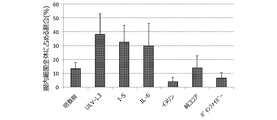
- a graph showing the ratio of butyric acid bacteria (Genmigellum formicilis) to the whole intestinal bacteria after the sample was added to neutralize and culture the intestinal bacteria (n 6)
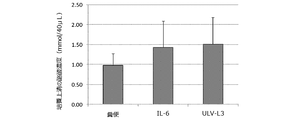
- the graph (n 6) which shows the butyric acid concentration after adding a sample and carrying out the neutralization culture of intestinal bacteria.
- the graph (n 6) which shows the number of bacteria of Feikaribacterium prasnitch per 1g of feces of each test subject before and after ingestion of sodium alginate material.
- the composition of the present invention contains alginic acid and/or a salt thereof (hereinafter, also referred to as “alginic acid”).
- Alginic acid is a polysaccharide contained in seaweeds such as kelp and seaweed, and is widely used as a thickening stabilizer including application to foods.
- Alginic acid has a linear structure in which ⁇ -D-mannuronic acid and ⁇ -L-guluronic acid have 1-4 bonds.
- the degree of polymerization of alginic acid varies depending on its origin, but is not particularly limited in the present invention.
- Examples of the salt of alginic acid include a sodium salt, a potassium salt, a calcium salt, an ammonium salt and the like, and although not particularly limited in the present invention, a sodium salt and a potassium salt are preferable from the viewpoint of water solubility.
- Alginic acids can be obtained by extracting them from seaweed or the like, or commercially available products may be used in the present invention.
- the amount of alginic acid in the composition of the present invention may be appropriately set according to the aspect of the composition and is not particularly limited, but for example, preferably 0.1% by mass or more, more preferably 1% by mass or more of the entire composition. It is good to say The upper limit of the content of alginic acid is not particularly limited, but may be, for example, 5% by mass or less, or 100% by mass or less based on the entire composition. In the case of alginate, these values are converted into alginic acid. In addition, these contents include the value at the time of production, the value at the time of distribution, and the value at the time of ingestion (administration) of the composition of the present invention.
- composition of the present invention is used as a prebiotic for butyric acid bacteria. That is, it can be assimilated by butyric acid bacteria in the intestine to promote its growth.
- butyric acid bacterium is a generic term for butyric acid-producing bacteria.
- the butyric acid bacterium in the present invention is not particularly limited, and examples thereof include bacteria belonging to the genus Feicaribacterium, the genus Coprococcus, the genus Clostridium, the genus Eubacterium, and the genus Miguel, and more specifically in the human intestine.
- Examples of existing bacteria include Feicaribacterium plasnic and Genmiguel formicilis.
- the ability to grow butyric acid bacteria in the intestine is the method of Sasaki et al. (Sasaki K. et al., PLoS ONE 12(7): e0180991) and the following It can be confirmed by the evaluation method. Specifically, evaluation is performed by a method including a culture step of neutralizing and culturing enterobacteria in a medium containing a sample, and an analysis step of analyzing the composition of bacterial flora in the medium after the culture step.
- the test sample (material) contains a saccharide that is normally absorbed in the human small intestine
- a pretreatment step of removing a saccharide having a molecular weight of 700 or less from the test sample before the culturing step.
- the pretreatment step is preferably performed by ethanol precipitation.
- the neutralization culture step is performed under the condition of pH>5.5, more preferably >6.0. Preferably, it is controlled by intermittently adding a suitable neutralizing agent such as sodium carbonate so that the pH does not become 5.5 or less, more preferably 6.0 or less throughout the culture.
- a suitable neutralizing agent such as sodium carbonate
- the medium used for the neutralization culture is not particularly limited as long as it does not substantially contain saccharides such as glucose, fructose, galactose, and lactose that are absorbed in the small intestine, and examples thereof include a YCFA medium containing no saccharide.
- the term "substantially free from” means preferably 0.1% (w/v) or less, more preferably 0.05% (w/v) or less, and further preferably 0.01% (w/v). Is.
- the amount of the sample added to the medium can be arbitrarily set as long as it does not interfere with the culture, and can be, for example, 0.1 to 5% (w/v).
- Neutralization culture is usually performed under anaerobic conditions.
- the culture time is preferably 12 hours or longer, more preferably 24 hours or longer, usually 96 hours or shorter, and more preferably 48 hours or shorter.
- the composition of bacterial flora in the medium after the culture process is analyzed.
- an intestinal bacterium is identified by a sequence analysis, and the ratio of the abundance thereof is calculated to perform the analysis.
- the test sample is a butyric acid bacterium. It is judged to be a prebiotic that promotes the growth of
- composition of the present invention can be useful for a subject having a disease or condition that can be prevented or ameliorated by increasing butyric acid in the body, or a disease or condition caused by a decrease in butyric acid in the body.
- a disease or condition that can be prevented or ameliorated by increasing butyric acid in the body, or a disease or condition caused by a decrease in butyric acid in the body.
- it can be used for intestinal regulation, immunoregulation, reduction of oxidative stress, prevention/amelioration of diarrhea, inflammatory bowel disease, prevention of colon cancer, and the like.
- Another aspect of the invention is the use of alginic acid and/or its salts in the manufacture of a prebiotic composition for butyric acid bacteria.
- Another aspect of the present invention is the use of alginic acid and/or its salts in the growth of butyric acid bacteria in the intestine.
- Another aspect of the present invention is alginic acid and/or a salt thereof used for growing Butyric acid bacteria in the intestine.
- Another aspect of the invention is a method of growing butyric acid bacteria in the intestine, comprising administering alginic acid and/or its salts to an animal.
- the animal is not particularly limited, but is usually a human.
- the timing of ingestion (administration) of the composition of the present invention is not particularly limited, and can be appropriately selected according to the condition of the administration subject.
- the ingestion (administration) amount of the composition of the present invention is appropriately selected depending on the age, sex, condition, other conditions, etc. of the ingestion (administration) subject.
- the amount of alginic acid is preferably 1 to 300 mg/kg/day, more preferably 20 to 50 mg/kg/day. It should be noted that the drug can be administered once a day or divided into a plurality of times regardless of the amount and period of ingestion (administration).
- the route of ingestion (administration) of the composition of the present invention may be oral or parenteral, but is usually oral.
- examples of parenteral ingestion (administration) include rectal administration.
- the composition of the present invention may be an embodiment containing butyric acid bacteria together with alginates. Moreover, the composition of the present invention may be ingested in combination with butyric acid bacteria or a preparation containing butyric acid bacteria. With this mode, the effect of promoting the growth of butyric acid bacteria in the intestine and the effect of increasing butyric acid by it can be expected more. In these cases, the butyric acid bacterium is preferably a live bacterium.
- composition of the present invention When the composition of the present invention is orally ingested, it is preferably in the form of food and drink.
- the form and properties are not particularly limited as long as they can be orally ingested without impairing the effects of alginates, and except that the alginates are contained, the materials usually used for foods and drinks are usually used. It can be manufactured by a method.
- the food and drink may be in the form of liquid, paste, gel-like solid, powder, etc., for example, tablet confectionery; liquid food (nutrition food for tube feeding); bread, macaroni, spaghetti, noodles, cake mix, Flour products such as fried flour and bread crumbs; instant noodles, cup noodles, retort/cooked foods, canned foods, microwave foods, instant soups/stews, instant miso soup/suckers, canned soups, freeze-dried foods, and other instant foods Instant foods; canned agricultural products, canned fruits, jams and marmalades, pickles, boiled beans, dried agricultural products, cereals, etc.
- Processed seafood products such as Tsukudani; livestock products such as livestock cans and pastes, livestock ham and sausages; processed milk, milk drinks, yogurt, lactic acid bacteria drinks, cheese, ice creams, powdered milk products, cream, Milk and other dairy products such as dairy products; butter, margarines, oils and fats such as vegetable oils; soy sauce, miso, sauces, tomato processed seasonings, basic seasonings such as mirin, vinegar, etc.; cooking mix, curry Complex seasonings and foods such as ingredients, sauces, dressings, noodle soups, spices and other complex seasonings; frozen foods such as frozen foods, semi-cooked frozen foods, and frozen foods cooked; caramel, candy , Chewing gum, chocolate, cookies, biscuits, cakes, pies, snacks, crackers, Japanese confectionery, rice confectionery, bean confectionery, dessert confectionery, jelly, other confectionery; carbonated drinks, natural fruit juices, fruit juice drinks, fruit juice cooling Beverages, pulp drinks, fruit drinks containing granules, vegetable-based drinks
- the feed can also be used as feed as one aspect of food and drink.
- the feed include pet food, livestock feed, fish feed and the like.
- the form of the feed is not particularly limited, and in addition to alginates, for example, grains such as corn, wheat, barley, rye, and milo; soybean oil meal, rapeseed oil meal, coconut oil meal, linseed oil meal, and other vegetable oil meal; fusuma, Rice bran such as barley bran, rice bran and defatted rice bran; corn gluten meal, corn jammeal and other manufactured meals; animal feeds such as fish meal, skim milk powder, whey, yellow grease and tallow; torula yeast, brewer's yeast etc. It may contain yeasts; mineral feed such as tricalcium phosphate and calcium carbonate; fats and oils; simple amino acids; sugars and the like.
- composition of the present invention is in the form of food and drink (including feed), it is provided and sold as a food and drink that is a prebiotic for butyric acid bacteria and the use of growing butyric acid bacteria in the intestine is displayed. It is possible to
- Such "display” action includes all actions for making the consumer aware of the use, and if it is an expression that can recall or analogize the use, the purpose of the display, the content of the display, Regardless of the object, medium, etc. to be displayed, they all correspond to the "display” act of the present invention.
- the “display” is performed by an expression that allows a consumer to directly recognize the use. Specifically, the act of transferring, handing over, exhibiting for transfer or handing over, and advertising for goods, price lists or transaction documents Examples thereof include an act of exhibiting or distributing the above-mentioned use by describing it, or providing the information using the contents by describing the above-mentioned use by an electromagnetic (Internet, etc.) method.
- the display content is a display approved by the government (for example, a display that is approved in accordance with various systems established by the government and displayed in a form based on such approval).
- label includes health foods, functional foods, enteral nutritional foods, special purpose foods, health functional foods, foods for specified health use, foods with nutritional function, functional foods, quasi-drugs, etc. Display is also included.
- labeling approved by the Consumer Affairs Agency for example, labeling approved by a system related to food for specified health use, food with nutritional function, or food with functional claims, or a system similar to these, and the like.
- labeling as food for specified health use labeling as food for conditional health use, labeling that affects structure and function of body, labeling for reducing disease risk, functionality based on scientific basis Labeling, etc., more specifically, Cabinet Office Ordinance on Permitting Special Use Labeling, etc.
- Typical examples are the labeling as food for specified health use (particularly labeling of health uses) and similar labeling.
- Examples of such indication include indications such as "one who wants to increase butyric acid bacteria”, “one who wants to increase bacteria of the genus Feicaribacterium”, “intestinal action by butyric acid”, and the like.
- composition of the present invention can also be in the form of a medicament.
- the route of administration of the drug may be oral or parenteral, but oral is preferred.
- parenteral ingestion (administration) include rectal administration.
- the form of the drug can be appropriately formulated into a desired dosage form depending on the administration method.
- oral administration it can be formulated into solid preparations such as powders, granules, tablets and capsules; liquid preparations such as solutions, syrups, suspensions and emulsions.
- parenteral administration it can be formulated into suppositories, ointments, injections and the like.
- formulation in addition to alginic acid, components such as an excipient, a pH adjusting agent, a coloring agent, a corrigent and the like which are usually used in formulation can be used. Further, it is possible to use other medicinal components, prebiotics known or to be found in the future in combination.
- formulation can be carried out by a known method as appropriate depending on the dosage form. At the time of formulation, a formulation carrier may be appropriately mixed to form a formulation.
- excipient examples include sugar derivatives such as lactose, sucrose, glucose, mannitol, and sorbit; starch derivatives such as corn starch, potato starch, ⁇ -starch, dextrin, and carboxymethyl starch; crystalline cellulose, hydroxypropyl cellulose, Cellulose derivatives such as hydroxypropylmethyl cellulose, carboxymethyl cellulose and carboxymethyl cellulose calcium; gum arabic; dextran; pullulan; light anhydrous silicic acid, synthetic aluminum silicate, silicate derivatives such as magnesium aluminometasilicate, phosphate derivatives such as calcium phosphate, carbonic acid Examples thereof include carbonate derivatives such as calcium; and sulfate derivatives such as calcium sulfate.
- sugar derivatives such as lactose, sucrose, glucose, mannitol, and sorbit
- starch derivatives such as corn starch, potato starch, ⁇ -starch, dextrin, and carboxymethyl starch
- binder examples include gelatin; polyvinylpyrrolidone; macrogol and the like in addition to the above-mentioned excipients.
- disintegrant examples include, in addition to the above-mentioned excipients, chemically modified starch or cellulose derivatives such as croscarmellose sodium, sodium carboxymethyl starch, and crosslinked polyvinylpyrrolidone.
- Lubricants include, for example, talc; stearic acid; stearic acid metal salts such as calcium stearate and magnesium stearate; colloidal silica; waxes such as pea gum and gallow; boric acid; glycols; carboxylic acids such as fumaric acid and adipic acid.
- Carboxylic acid sodium salts such as sodium benzoate; sulfates such as sodium sulfate; leucine; lauryl sulfate salts such as sodium lauryl sulfate and magnesium lauryl sulfate; silicic acid anhydrides such as silicic acid anhydride and silicic acid hydrate; starch derivatives and the like.
- the stabilizer examples include paraoxybenzoic acid esters such as methylparaben and propylparaben; alcohols such as chlorobutanol, benzyl alcohol and phenylethyl alcohol; benzalkonium chloride; acetic anhydride; sorbic acid.
- flavoring agent examples include sweeteners, acidulants, and flavors.
- the carrier used in the case of a liquid preparation for oral administration includes a solvent such as water.
- the timing of ingesting the drug of the present invention is not particularly limited, for example, before meal, after meal, between meals, before bedtime.
- Example 1 In-vitro butyric acid bacteria growth confirmation test (1) Pretreatment of test sample As a test sample, sodium alginate, inulin, pure cocoa, and pine fiber were used and prepared as follows. Commercially available sodium alginate materials (“IS (molecular weight approximately 3-4 million)”, “ULV-L3 (molecular weight 40,000-60,000)”, and “IL-6 (molecular weight approximately 40,000-60,000)” , Each manufactured by Kimika Co., Ltd.)) was dissolved in 50 mL of 99.5% ethanol (050-00446 manufactured by Wako).
- ISO molecular weight approximately 3-4 million
- UUV-L3 molecular weight 40,000-60,000
- IL-6 molecular weight approximately 40,000-60,000
- Anaerobic culture was carried out at 37° C. for 24 hours while controlling with a CO 3 solution.
- the feces are provided by healthy humans (1 male in his 40s, 2 males in his 30s, 2 males in his 20s, and 1 female in his 30s) who continue to take a normal diet. It is a thing.
- the 1st primer set (SEQ ID NO: 1 and 2) for amplifying the 3rd to 4th variable regions of the bacterial 16S rRNA gene and the 2nd primer required for analysis with the next-generation sequencer Miseq (manufactured by Illumina)
- a set (SEQ ID NOS: 3 and 4, where n is an arbitrary base sequence (index region) for processing a plurality of samples in one analysis) was designed, and a primer was synthesized by an oligo primer production service of Life Technologies.
- a reaction solution containing the template DNA solution and the first primer set in a total volume of 25 ⁇ L was prepared using TaKaRa Ex Taq HS kit (manufactured by Takara Bio Inc.).
- PCR reaction was performed at 94° C. for 30 seconds, 50° C. for 30 seconds, 72° C. for 30 seconds 20 times and 72° C. for 10 minutes.
- the obtained PCR product was electrophoresed on a 1% agarose gel to confirm the band pattern.
- PCR was performed using 1 ⁇ L of the PCR product obtained as a template and the 2nd primer set under the same conditions as described above. However, the number of PCR cycles was 15 instead of 20.
- the obtained PCR product was electrophoresed on a 1% agarose gel, and after confirming the band pattern, it was purified by QIAquick 96 PCR Purification Kit (manufactured by Qiagen), and then Quant-iT PicoGreen dsDNA Assay kit (manufactured by Life Technologies). ) was used to measure the concentration.
- a mixture of DNA solutions having the same concentration was subjected to a Miseq v2 Reagent kit (manufactured by Illumina), and a sequence analysis was performed using Miseq.
- the obtained paired-end sequence was analyzed for the composition of intestinal bacterial flora using QIIME software (version 2.0) (http://qiime.org/), and the most predominant butyric acid bacteria (Ficaribacterium plus) among them were analyzed. A niche) and another butyric acid bacterium (Genmigellum formicilis) in the total intestinal bacteria were calculated, and the average of all subjects was calculated.
- Fig. 1 shows the ratio of Feicaribacterium plasnic to the total intestinal bacteria.
- Fig. 2 shows the proportion of Genmiguel formicilis in all intestinal bacteria.
- sodium alginate it was confirmed that the butyric acid bacteria proliferated in comparison with the presence of inulin, which has been known to increase the number of known butyric acid bacteria, and pure cocoa having a composition similar to that of high cocoa chocolate.
- the gradient program is (i) 0-5 minutes: mobile phase A 16%, mobile phase C 79%, mobile phase D 5%, (ii) 5-30 minutes: mobile phase A 16%, mobile phase C 54%, Mobile phase D 30%, (iii) 30-35 minutes: mobile phase A 16%, mobile phase C 79%, mobile phase D 30%, (iv) 35-40 minutes: mobile phase A 16%, mobile phase C 79 %, mobile phase D 5%, (v) 40-45 min: mobile phase A 16%, mobile phase C 79%, mobile phase D 5% and programmed in 5 steps.
- the flow rate was set to 1.00 mL/min and the column oven temperature was set to 50°C. Absorption was measured at 230 nm using a fluorescence detector.
- Fig. 3 shows the measurement results of butyric acid concentration. An increase in the butyric acid concentration was observed in the culture solution after the neutralization culture with the addition of sodium alginate (IL-6 and ULV-L3), as compared to the inoculated feces.
- IL-6 and ULV-L3 sodium alginate
- UUV-L3 sodium alginate Sodium alginate material
- Fig. 4 shows the change in the number of bacteria of Feikaribacterium prunich per gram of feces of each subject before and after the ULV-L3 intake. It was confirmed that ingestion of ULV-L3 resulted in an increase in Feicaribacterium prasnich in 5 out of 6 people.
Landscapes
- Health & Medical Sciences (AREA)
- Life Sciences & Earth Sciences (AREA)
- Chemical & Material Sciences (AREA)
- Engineering & Computer Science (AREA)
- Medicinal Chemistry (AREA)
- General Health & Medical Sciences (AREA)
- Organic Chemistry (AREA)
- Pharmacology & Pharmacy (AREA)
- Animal Behavior & Ethology (AREA)
- Public Health (AREA)
- Veterinary Medicine (AREA)
- Bioinformatics & Cheminformatics (AREA)
- Nuclear Medicine, Radiotherapy & Molecular Imaging (AREA)
- General Chemical & Material Sciences (AREA)
- Chemical Kinetics & Catalysis (AREA)
- Nutrition Science (AREA)
- Polymers & Plastics (AREA)
- Food Science & Technology (AREA)
- Zoology (AREA)
- Biotechnology (AREA)
- Genetics & Genomics (AREA)
- Wood Science & Technology (AREA)
- Epidemiology (AREA)
- Biochemistry (AREA)
- Molecular Biology (AREA)
- Mycology (AREA)
- Immunology (AREA)
- General Engineering & Computer Science (AREA)
- Virology (AREA)
- Tropical Medicine & Parasitology (AREA)
- Microbiology (AREA)
- Biomedical Technology (AREA)
- Dispersion Chemistry (AREA)
- Hematology (AREA)
- Obesity (AREA)
- Oncology (AREA)
- Diabetes (AREA)
- Toxicology (AREA)
- Coloring Foods And Improving Nutritive Qualities (AREA)
- Pharmaceuticals Containing Other Organic And Inorganic Compounds (AREA)
Abstract
酪酸菌を増殖させるプレバイオティクスを提供することを課題とする。アルギン酸及び/又はその塩を含有する、酪酸菌用プレバイオティクス組成物。
Description
本発明は、酪酸菌用プレバイオティクス組成物に関する。
近年、腸内細菌と健康との関連性に注目が集まり、世界中で研究が行われている。腸内環境改善に関連する用語として知られる「プロバイオティクス」は、一般に腸内フローラのバランスを改善することにより人に有益な作用をもたらす生きた微生物を指し、ビフィズス菌等が一般的に知られている。また、かかるプロバイオティクスが資化するものとして「プレバイオティクス」があり、これは、消化管上部で分解・吸収されず、大腸に共生する有益な細菌の選択的な栄養源となりそれらの増殖を促進し、大腸の腸内フローラ構成を健康的なバランスに改善し維持し、ヒトの健康の増進維持に役立つものを一般に意味する。
大腸に共生する有益な細菌のひとつとして、酪酸菌がある。酪酸は、腸内に存在する短鎖脂肪酸のひとつであり、大腸細胞にエネルギーを提供する主要な栄養素としてだけでなく、宿主の遺伝子発現、細胞分化、腸組織発生、免疫調節、酸化ストレス低下、及び下痢コントロールなど、腸内のみならず種々の機能を調節する細胞メディエーターである(非特許文献1)。
健康のために酪酸を体内に取り込むことは有用であるが、酪酸は非常に強い不快臭を放つため、食品や医薬品等の形態で摂取することは現実的ではない。また、腸内に生息する主な酪酸菌は、酸素感受性が極端に高いためにin vitroでの培養が非常に困難であり、酪酸菌を製剤化して摂取することも難しい(非特許文献2)。
健康のために酪酸を体内に取り込むことは有用であるが、酪酸は非常に強い不快臭を放つため、食品や医薬品等の形態で摂取することは現実的ではない。また、腸内に生息する主な酪酸菌は、酸素感受性が極端に高いためにin vitroでの培養が非常に困難であり、酪酸菌を製剤化して摂取することも難しい(非特許文献2)。
Cell. 2016 Jun 2;165(6):1332-1345
Best. Pract. Res. Clin. Gastroenterol. 2017 Dec;31(6):643-648.
かかる状況に鑑み、本発明者らは腸内に生息する酪酸菌を増殖させることが健康の維持・向上のために有用であると考えた。したがって、本発明は、酪酸菌を増殖させるプレバイオティクスを提供することを課題とする。
本発明者らは、上記の課題を解決すべく鋭意研究を行った結果、アルギン酸及び/又はその塩が、腸内で酪酸菌を著しく増殖させることができることを見出し、これを酪酸菌用のプレバイオティクスの有効成分とすることに想到し、本発明を完成するに至った。
すなわち、本発明の一つの態様は、アルギン酸及び/又はその塩を含有する、酪酸菌用プレバイオティクス組成物である。
好ましくは、前記酪酸菌は、フィーカリバクテリウム属細菌及び/又はゲンミゲル属細菌である。
好ましくは、本発明の組成物はアルギン酸及び/又はその塩を組成物全体の0.1質量%以上含有する。
本発明の組成物は、好ましくは飲食品である。
また、本発明の組成物は、好ましくは医薬品である。
好ましくは、前記酪酸菌は、フィーカリバクテリウム属細菌及び/又はゲンミゲル属細菌である。
好ましくは、本発明の組成物はアルギン酸及び/又はその塩を組成物全体の0.1質量%以上含有する。
本発明の組成物は、好ましくは飲食品である。
また、本発明の組成物は、好ましくは医薬品である。
本発明の別の態様は、酪酸菌用プレバイオティクス組成物の製造における、アルギン酸及び/又はその塩の使用である。
本発明の別の態様は、腸内での酪酸菌の増殖における、アルギン酸及び/又はその塩の使用である。
本発明の別の態様は、腸内で酪酸菌を増殖させるために用いられる、アルギン酸及び/又はその塩である。
本発明の別の態様は、アルギン酸及び/又はその塩を動物に投与することを含む、腸内で酪酸菌を増殖させる方法。
これらの態様において、前記酪酸菌は、フィーカリバクテリウム属細菌及び/又はゲンミゲル属細菌であることが好ましい。
本発明の別の態様は、腸内での酪酸菌の増殖における、アルギン酸及び/又はその塩の使用である。
本発明の別の態様は、腸内で酪酸菌を増殖させるために用いられる、アルギン酸及び/又はその塩である。
本発明の別の態様は、アルギン酸及び/又はその塩を動物に投与することを含む、腸内で酪酸菌を増殖させる方法。
これらの態様において、前記酪酸菌は、フィーカリバクテリウム属細菌及び/又はゲンミゲル属細菌であることが好ましい。
本発明によれば、腸内で酪酸菌を効率的に増殖させることができるプレバイオティクスが提供される。酪酸菌が産生する酪酸は、細胞メディエーターとして機能し健康を維持向上させるため、本発明は産業上非常に有用である。
次に、本発明を詳細に説明する。ただし、本発明は以下の実施形態に限定されず、本発明の範囲内で自由に変更することができるものである。
本発明の組成物は、アルギン酸及び/又はその塩(以降「アルギン酸類」とも記す)を含有する。
アルギン酸は、コンブやワカメ等の海藻に含まれる多糖類であり、増粘安定剤として食品への適用を含め広く利用されている。アルギン酸はβ-D-マンヌロン酸とα-L-グルロン酸とが1-4結合してなる直鎖構造を有する。アルギン酸の重合度は由来によりさまざまであるが、本発明においては特に限定されない。
アルギン酸の塩としては、ナトリウム塩、カリウム塩、カルシウム塩、アンモニウム塩等が挙げられ、本発明においては特に限定されないが、ナトリウム塩及びカリウム塩が水溶性の観点から好ましい。
アルギン酸は、コンブやワカメ等の海藻に含まれる多糖類であり、増粘安定剤として食品への適用を含め広く利用されている。アルギン酸はβ-D-マンヌロン酸とα-L-グルロン酸とが1-4結合してなる直鎖構造を有する。アルギン酸の重合度は由来によりさまざまであるが、本発明においては特に限定されない。
アルギン酸の塩としては、ナトリウム塩、カリウム塩、カルシウム塩、アンモニウム塩等が挙げられ、本発明においては特に限定されないが、ナトリウム塩及びカリウム塩が水溶性の観点から好ましい。
アルギン酸類は、海藻等から抽出して取得することができる他、市販のものを本発明に用いてもよい。
本発明の組成物におけるアルギン酸類の量は、組成物の態様により適宜設定すればよく、特に限定されないが、例えば、好ましくは組成物全体の0.1質量%以上、より好ましくは1質量%以上とするのがよい。アルギン酸類の含有量の上限は特に制限されないが、例えば組成物全体の5質量%以下、又は100質量%以下であってよい。なお、これらの数値は、アルギン酸塩の場合は、アルギン酸に換算した値である。また、これらの含有量は、本発明の組成物の製造時の値、流通時の値、及び摂取(投与)時の値を含む。
本発明の組成物は、酪酸菌用プレバイオティクスとして用いられる。すなわち、腸内の酪酸菌により資化されその増殖を促進させることができる。
なお、酪酸菌とは、酪酸を産生する細菌の総称である。本発明における酪酸菌は、特に限定されないが、例えばフィーカリバクテリウム属、コプロコッカス属、クロストリジウム属、ユーバクテリウム属、ゲンミゲル属等に属する細菌が挙げられ、より具体的にはヒト腸内に存在する、フィーカリバクテリウム・プラスニッチ、ゲンミゲル・フォルミシリス等が挙げられる。
なお、腸内で酪酸菌を増殖させることができること、すなわち酪酸菌により資化されることは、佐々木らの方法(Sasaki K. et al., PLoS ONE 12(7): e0180991)や、次の評価方法により確認することができる。
具体的には、試料を含有する培地中で腸内細菌を中和培養する培養工程、及び前記培養工程後の培地中の細菌叢の構成を解析する解析工程を含む方法により評価する。
被験試料(素材)がヒト小腸で通常吸収される糖類を含む場合は、前記培養工程の前に被験試料から分子量700以下の糖類を除去する前処理工程を行うことが好ましい。前記前処理工程は、好ましくはエタノール沈殿により行われる。該前処理工程により被験試料(素材)からヒト小腸で通常吸収される糖類、すなわち分子量700以下の糖類を予め除き、ヒト小腸で通常吸収されず大腸に到達する糖類を中和培養に供することにより、プレバイオティクスのヒト大腸での酪酸菌への影響を正確に感度よく評価することができる。なお、分子量700以下の糖類としては、ニストース、ケストース、シュークロース、グルコース、フルクトース、ガラクトース、ラクトース等が挙げられる。
具体的には、試料を含有する培地中で腸内細菌を中和培養する培養工程、及び前記培養工程後の培地中の細菌叢の構成を解析する解析工程を含む方法により評価する。
被験試料(素材)がヒト小腸で通常吸収される糖類を含む場合は、前記培養工程の前に被験試料から分子量700以下の糖類を除去する前処理工程を行うことが好ましい。前記前処理工程は、好ましくはエタノール沈殿により行われる。該前処理工程により被験試料(素材)からヒト小腸で通常吸収される糖類、すなわち分子量700以下の糖類を予め除き、ヒト小腸で通常吸収されず大腸に到達する糖類を中和培養に供することにより、プレバイオティクスのヒト大腸での酪酸菌への影響を正確に感度よく評価することができる。なお、分子量700以下の糖類としては、ニストース、ケストース、シュークロース、グルコース、フルクトース、ガラクトース、ラクトース等が挙げられる。
前記中和培養工程は、pH>5.5、より好ましくは>6.0の条件下で行われる。好ましくは、培養を通してpHが好ましくは5.5以下にならないように、より好ましくは6.0以下にならないように、炭酸ナトリウム等の適当な中和剤を間欠的に添加する等して制御される。また、中和培養に用いる培地は、グルコース、フルクトース、ガラクトース、ラクトース等の小腸で吸収される糖類を実質的に含有しない限りにおいて特に限定されず、例えば糖類を含有しないYCFA培地が挙げられる。ここで、実質的に含有しないとは、好ましくは0.1%(w/v)以下、より好ましくは0.05%(w/v)以下、さらに好ましくは0.01%(w/v)である。
前記試料の培地への添加量としては、培養を妨げない限りにおいて任意に設定でき、例えば0.1~5%(w/v)とすることができる。
中和培養は、通常は嫌気条件下で行われる。
また、培養時間は、好ましくは12時間以上、より好ましくは24時間以上とし、通常は96時間以下、より好ましくは48時間以下とする。
前記試料の培地への添加量としては、培養を妨げない限りにおいて任意に設定でき、例えば0.1~5%(w/v)とすることができる。
中和培養は、通常は嫌気条件下で行われる。
また、培養時間は、好ましくは12時間以上、より好ましくは24時間以上とし、通常は96時間以下、より好ましくは48時間以下とする。
解析工程では、培養工程後の培地中の細菌叢の構成を解析する。例えば、シークエンス解析により腸内細菌を同定し、その存在量の割合を算出することにより解析を行う。ここで、培養前後で酪酸菌が増殖し、かつ酪酸菌の割合が通常は15%以上、より好ましくは30%以上、さらに好ましくは40%以上に維持されている場合に、被験試料は酪酸菌の増殖を促進するプレバイオティクスであると判断される。
本発明の組成物は、体内の酪酸が増加することにより予防又は改善しうる疾患や病態、あるいは体内の酪酸が減少することに起因する疾患や病態の対象者に対して、有用となり得る。例えば、整腸用、免疫調節用、酸化ストレス低減用、又は下痢の予防・改善用、炎症性腸疾患用、大腸がんの予防用等とすることができる。
本発明の別の態様は、酪酸菌用プレバイオティクス組成物の製造における、アルギン酸及び/又はその塩の使用である。
本発明の別の態様は、腸内での酪酸菌の増殖における、アルギン酸及び/又はその塩の使用である。
本発明の別の態様は、腸内で酪酸菌を増殖させるために用いられる、アルギン酸及び/又はその塩である。
本発明の別の態様は、アルギン酸及び/又はその塩を動物に投与することを含む、腸内で酪酸菌を増殖させる方法である。ここで、動物は、特に限定されないが、通常はヒトである。
本発明の別の態様は、腸内での酪酸菌の増殖における、アルギン酸及び/又はその塩の使用である。
本発明の別の態様は、腸内で酪酸菌を増殖させるために用いられる、アルギン酸及び/又はその塩である。
本発明の別の態様は、アルギン酸及び/又はその塩を動物に投与することを含む、腸内で酪酸菌を増殖させる方法である。ここで、動物は、特に限定されないが、通常はヒトである。
本発明の組成物の摂取(投与)時期は、特に限定されず、投与対象の状態に応じて適宜選択することが可能である。
本発明の組成物の摂取(投与)量は、摂取(投与)対象の年齢、性別、状態、その他の条件等により適宜選択される。アルギン酸類の量として、好ましくは1~300mg/kg/日、より好ましくは、20~50mg/kg/日の範囲となる量を目安とするのがよい。
なお、摂取(投与)の量や期間にかかわらず、薬剤は1日1回又は複数回に分けて投与することができる。
なお、摂取(投与)の量や期間にかかわらず、薬剤は1日1回又は複数回に分けて投与することができる。
本発明の組成物の摂取(投与)経路は、経口又は非経口のいずれでもよいが、通常は経口である。また、非経口摂取(投与)としては、直腸投与等が挙げられる。
本発明の組成物は、アルギン酸類とともに酪酸菌を含有する態様でもよい。また、本発明の組成物は、酪酸菌又は酪酸菌を含有する製剤と併用して摂取されてもよい。かかる態様により、腸内における酪酸菌増殖促進効果、及びそれによる酪酸増加効果がより期待できる。
なお、これらの態様の場合、酪酸菌は生菌であることが好ましい。
なお、これらの態様の場合、酪酸菌は生菌であることが好ましい。
本発明の組成物を経口摂取される組成物とする場合は、飲食品の態様とすることが好ましい。
飲食品としては、アルギン酸類の効果を損なわず、経口摂取できるものであれば形態や性状は特に制限されず、アルギン酸類を含有させること以外は、通常飲食品に用いられる原料を用いて通常の方法によって製造することができる。
飲食品としては、液状、ペースト状、ゲル状固体、粉末等の形態を問わず、例えば、錠菓;流動食(経管摂取用栄養食);パン、マカロニ、スパゲッティ、めん類、ケーキミックス、から揚げ粉、パン粉等の小麦粉製品;即席めん、カップめん、レトルト・調理食品、調理缶詰め、電子レンジ食品、即席スープ・シチュー、即席みそ汁・吸い物、スープ缶詰め、フリーズ・ドライ食品、その他の即席食品等の即席食品類;農産缶詰め、果実缶詰め、ジャム・マーマレード類、漬物、煮豆類、農産乾物類、シリアル(穀物加工品)等の農産加工品;水産缶詰め、魚肉ハム・ソーセージ、水産練り製品、水産珍味類、つくだ煮類等の水産加工品;畜産缶詰め・ペースト類、畜肉ハム・ソーセージ等の畜産加工品;加工乳、乳飲料、ヨーグルト類、乳酸菌飲料類、チーズ、アイスクリーム類、調製粉乳類、クリーム、その他の乳製品等の乳・乳製品;バター、マーガリン類、植物油等の油脂類;しょうゆ、みそ、ソース類、トマト加工調味料、みりん類、食酢類等の基礎調味料;調理ミックス、カレーの素類、たれ類、ドレッシング類、めんつゆ類、スパイス類、その他の複合調味料等の複合調味料・食品類;素材冷凍食品、半調理冷凍食品、調理済冷凍食品等の冷凍食品;キャラメル、キャンディー、チューインガム、チョコレート、クッキー、ビスケット、ケーキ、パイ、スナック、クラッカー、和菓子、米菓子、豆菓子、デザート菓子、ゼリー、その他の菓子などの菓子類;炭酸飲料、天然果汁、果汁飲料、果汁入り清涼飲料、果肉飲料、果粒入り果実飲料、野菜系飲料、豆乳、豆乳飲料、コーヒー飲料、お茶飲料、粉末飲料、濃縮飲料、スポーツ飲料、栄養飲料、アルコール飲料、その他の嗜好飲料等の嗜好飲料類、ベビーフード、ふりかけ、お茶漬けのり等のその他の市販食品等;育児用調製粉乳;経腸栄養食;機能性食品(特定保健用食品、栄養機能食品)等が挙げられる。
また、飲食品の一態様として飼料とすることもできる。飼料としては、ペットフード、家畜飼料、養魚飼料等が挙げられる。
飼料の形態としては特に制限されず、アルギン酸類の他に例えば、トウモロコシ、小麦、大麦、ライ麦、マイロ等の穀類;大豆油粕、ナタネ油粕、ヤシ油粕、アマニ油粕等の植物性油粕類;フスマ、麦糠、米糠、脱脂米糠等の糠類;コーングルテンミール、コーンジャムミール等の製造粕類;魚粉、脱脂粉乳、ホエイ、イエローグリース、タロー等の動物性飼料類;トルラ酵母、ビール酵母等の酵母類;第三リン酸カルシウム、炭酸カルシウム等の鉱物質飼料;油脂類;単体アミノ酸;糖類等を含有するものであってよい。
飼料の形態としては特に制限されず、アルギン酸類の他に例えば、トウモロコシ、小麦、大麦、ライ麦、マイロ等の穀類;大豆油粕、ナタネ油粕、ヤシ油粕、アマニ油粕等の植物性油粕類;フスマ、麦糠、米糠、脱脂米糠等の糠類;コーングルテンミール、コーンジャムミール等の製造粕類;魚粉、脱脂粉乳、ホエイ、イエローグリース、タロー等の動物性飼料類;トルラ酵母、ビール酵母等の酵母類;第三リン酸カルシウム、炭酸カルシウム等の鉱物質飼料;油脂類;単体アミノ酸;糖類等を含有するものであってよい。
本発明の組成物が飲食品(飼料を含む)の態様である場合、酪酸菌用プレバイオティクスであることや腸内の酪酸菌を増殖させるという用途が表示された飲食品として提供・販売されることが可能である。
かかる「表示」行為には、需要者に対して前記用途を知らしめるための全ての行為が含まれ、前記用途を想起・類推させうるような表現であれば、表示の目的、表示の内容、表示する対象物・媒体等の如何に拘わらず、全て本発明の「表示」行為に該当する。
また、「表示」は、需要者が上記用途を直接的に認識できるような表現により行われることが好ましい。具体的には、飲食品に係る商品又は商品の包装に前記用途を記載したものを譲渡し、引き渡し、譲渡若しくは引き渡しのために展示し、輸入する行為、商品に関する広告、価格表若しくは取引書類に上記用途を記載して展示し、若しくは頒布し、又はこれらを内容とする情報に上記用途を記載して電磁気的(インターネット等)方法により提供する行為等が挙げられる。
また、「表示」は、需要者が上記用途を直接的に認識できるような表現により行われることが好ましい。具体的には、飲食品に係る商品又は商品の包装に前記用途を記載したものを譲渡し、引き渡し、譲渡若しくは引き渡しのために展示し、輸入する行為、商品に関する広告、価格表若しくは取引書類に上記用途を記載して展示し、若しくは頒布し、又はこれらを内容とする情報に上記用途を記載して電磁気的(インターネット等)方法により提供する行為等が挙げられる。
一方、表示内容としては、行政等によって認可された表示(例えば、行政が定める各種制度に基づいて認可を受け、そのような認可に基づいた態様で行う表示等)であることが好ましい。また、そのような表示内容を、包装、容器、カタログ、パンフレット、POP等の販売現場における宣伝材、その他の書類等へ付することが好ましい。
また、「表示」には、健康食品、機能性食品、経腸栄養食品、特別用途食品、保健機能食品、特定保健用食品、栄養機能食品、機能性表示食品、医薬用部外品等としての表示も挙げられる。この中でも特に、消費者庁によって認可される表示、例えば、特定保健用食品、栄養機能食品、若しくは機能性表示食品に係る制度、又はこれらに類似する制度にて認可される表示等が挙げられる。具体的には、特定保健用食品としての表示、条件付き特定保健用食品としての表示、身体の構造や機能に影響を与える旨の表示、疾病リスク減少表示、科学的根拠に基づいた機能性の表示等を挙げることができ、より具体的には、健康増進法に規定する特別用途表示の許可等に関する内閣府令(平成二十一年八月三十一年内閣府令第五十七号)に定められた特定保健用食品としての表示(特に保健の用途の表示)及びこれに類する表示が典型的な例である。
かかる表示としては、例えば、「酪酸菌を増やしたい方」、「フィーカリバクテリウム属細菌を増やしたい方」、「酪酸で整腸作用」等と表示することが挙げられる。
かかる表示としては、例えば、「酪酸菌を増やしたい方」、「フィーカリバクテリウム属細菌を増やしたい方」、「酪酸で整腸作用」等と表示することが挙げられる。
本発明の組成物は、医薬品の態様とすることもできる。
医薬品の投与経路は、経口又は非経口のいずれでもよいが経口が好ましい。また、非経口摂取(投与)としては、直腸投与等が挙げられる。
医薬品の形態としては、投与方法に応じて、適宜所望の剤形に製剤化することができる。例えば、経口投与の場合、散剤、顆粒剤、錠剤、カプセル剤等の固形製剤;溶液剤、シロップ剤、懸濁剤、乳剤等の液剤等に製剤化することができる。また、非経口投与の場合、座剤、軟膏剤、注射剤等に製剤化することができる。
製剤化に際しては、アルギン酸類の他に、通常製剤化に用いられている賦形剤、pH調整剤、着色剤、矯味剤等の成分を用いることができる。また、他の薬効成分や、公知の又は将来的に見出されるプレバイオティクスなどを併用することも可能である。
加えて、製剤化は剤形に応じて適宜公知の方法により実施できる。製剤化に際しては、適宜、製剤担体を配合して製剤化してもよい。
医薬品の投与経路は、経口又は非経口のいずれでもよいが経口が好ましい。また、非経口摂取(投与)としては、直腸投与等が挙げられる。
医薬品の形態としては、投与方法に応じて、適宜所望の剤形に製剤化することができる。例えば、経口投与の場合、散剤、顆粒剤、錠剤、カプセル剤等の固形製剤;溶液剤、シロップ剤、懸濁剤、乳剤等の液剤等に製剤化することができる。また、非経口投与の場合、座剤、軟膏剤、注射剤等に製剤化することができる。
製剤化に際しては、アルギン酸類の他に、通常製剤化に用いられている賦形剤、pH調整剤、着色剤、矯味剤等の成分を用いることができる。また、他の薬効成分や、公知の又は将来的に見出されるプレバイオティクスなどを併用することも可能である。
加えて、製剤化は剤形に応じて適宜公知の方法により実施できる。製剤化に際しては、適宜、製剤担体を配合して製剤化してもよい。
賦形剤としては、例えば、乳糖、白糖、ブドウ糖、マンニット、ソルビット等の糖誘導体;トウモロコシデンプン、馬鈴薯デンプン、α-デンプン、デキストリン、カルボキシメチルデンプン等のデンプン誘導体;結晶セルロース、ヒドロキシプロピルセルロース、ヒドロキシプロピルメチルセルロース、カルボキシメチルセルロース、カルボキシメチルセルロースカルシウム等のセルロース誘導体;アラビアゴム;デキストラン;プルラン;軽質無水珪酸、合成珪酸アルミニウム、メタ珪酸アルミン酸マグネシウム等の珪酸塩誘導体;リン酸カルシウム等のリン酸塩誘導体;炭酸カルシウム等の炭酸塩誘導体;硫酸カルシウム等の硫酸塩誘導体等が挙げられる。
結合剤としては、例えば、上記賦形剤の他、ゼラチン;ポリビニルピロリドン;マクロゴール等が挙げられる。
崩壊剤としては、例えば、上記賦形剤の他、クロスカルメロースナトリウム、カルボキシメチルスターチナトリウム、架橋ポリビニルピロリドン等の化学修飾されたデンプン又はセルロース誘導体等が挙げられる。
滑沢剤としては、例えば、タルク;ステアリン酸;ステアリン酸カルシウム、ステアリン酸マグネシウム等のステアリン酸金属塩;コロイドシリカ;ピーガム、ゲイロウ等のワックス類;硼酸;グリコール;フマル酸、アジピン酸等のカルボン酸類;安息香酸ナトリウム等のカルボン酸ナトリウム塩;硫酸ナトリウム等の硫酸塩類;ロイシン;ラウリル硫酸ナトリウム、ラウリル硫酸マグネシウム等のラウリル硫酸塩;無水珪酸、珪酸水和物等の珪酸類;デンプン誘導体等が挙げられる。
安定剤としては、例えば、メチルパラベン、プロピルパラベン等のパラオキシ安息香酸エステル類;クロロブタノール、ベンジルアルコール、フェニルエチルアルコール等のアルコール類;塩化ベンザルコニウム;無水酢酸;ソルビン酸等が挙げられる。
矯味矯臭剤としては、例えば、甘味料、酸味料、香料等が挙げられる。
なお、経口投与用の液剤の場合に使用する担体としては、水等の溶剤等が挙げられる。
なお、経口投与用の液剤の場合に使用する担体としては、水等の溶剤等が挙げられる。
本発明の医薬品を摂取するタイミングは、例えば食前、食後、食間、就寝前など特に限定されない。
以下に実施例を用いて本発明をさらに具体的に説明するが、本発明はこれら実施例に限定されるものではない。
<試験例1>in vitroでの酪酸菌増殖確認試験
(1)被験試料の前処理
被験試料としては、アルギン酸ナトリウム、イヌリン、純ココア、及びパインファイバーを用い、以下のように調製した。
市販のアルギン酸ナトリウム素材(「I-S(分子量約300万~400万)」、「ULV-L3(分子量4万~6万)」、及び「IL-6(分子量約4万~6万)」、いずれも株式会社キミカ製))10gをそれぞれ、50mLの99.5%エタノール(Wako社050-00446)で溶解した。その後1,300×gで10分間遠心、上清を除去し、次いで99.5%エタノールを45mL加え混和し、1,300×gで10分間遠心した。再度上清を除去し、沈殿物を凍結乾燥させそれぞれ粉末を得た。これを0.1%(w/v)になるようMilliQ水に溶解後、0.22μmフィルター(メルクミリポア社製)を通過させ、試験に供する溶液を取得した。
市販のイヌリン(フジ日本精糖株式会社製)10gを100mLのMilliQ水に溶解後、約15mLずつ遠心チューブ(FALCON社352070)に分注し、30mLの99.5%エタノール(Wako社050-00446)を加え、混和した。その後×1,300gで10分間遠心、上清を除去し、次いで99.5%エタノールを45mL加え混和し、×1,300gで10分間遠心した。再度上清を除去し、沈殿物を凍結乾燥させ合計8.7gの粉末を得た。これを0.1%(w/v)になるようMilliQ水に溶解後、0.22μmフィルター(メルクミリポア社製)を通過させ、試験に供する溶液を取得した。
市販の純ココア(森永製菓社製)400gを2000mLのMilliQ水に溶解後、2時間煮沸した。その後約15mLずつ遠心チューブ(FALCON社352070)に分注し、30mLの99.5%エタノール(Wako社050-00446)を加え、混和した。その後1,300×gで10分間遠心、上清を除去し、次いで99.5%エタノールを45mL加え混和し、1,300×gで10分間遠心した。再度上清を除去し、沈殿物を凍結乾燥させ合計14.3gの粉末を得た。これを0.1%(w/v)になるようMilliQ水に溶解後、0.22μmフィルター(メルクミリポア社製)を通過させ、試験に供する溶液を取得した。
難消化性デキストリンであるパインファイバー(松谷化学社製)は、小腸で吸収されないため、前処理を行わず以下の中和培養に供した。
(1)被験試料の前処理
被験試料としては、アルギン酸ナトリウム、イヌリン、純ココア、及びパインファイバーを用い、以下のように調製した。
市販のアルギン酸ナトリウム素材(「I-S(分子量約300万~400万)」、「ULV-L3(分子量4万~6万)」、及び「IL-6(分子量約4万~6万)」、いずれも株式会社キミカ製))10gをそれぞれ、50mLの99.5%エタノール(Wako社050-00446)で溶解した。その後1,300×gで10分間遠心、上清を除去し、次いで99.5%エタノールを45mL加え混和し、1,300×gで10分間遠心した。再度上清を除去し、沈殿物を凍結乾燥させそれぞれ粉末を得た。これを0.1%(w/v)になるようMilliQ水に溶解後、0.22μmフィルター(メルクミリポア社製)を通過させ、試験に供する溶液を取得した。
市販のイヌリン(フジ日本精糖株式会社製)10gを100mLのMilliQ水に溶解後、約15mLずつ遠心チューブ(FALCON社352070)に分注し、30mLの99.5%エタノール(Wako社050-00446)を加え、混和した。その後×1,300gで10分間遠心、上清を除去し、次いで99.5%エタノールを45mL加え混和し、×1,300gで10分間遠心した。再度上清を除去し、沈殿物を凍結乾燥させ合計8.7gの粉末を得た。これを0.1%(w/v)になるようMilliQ水に溶解後、0.22μmフィルター(メルクミリポア社製)を通過させ、試験に供する溶液を取得した。
市販の純ココア(森永製菓社製)400gを2000mLのMilliQ水に溶解後、2時間煮沸した。その後約15mLずつ遠心チューブ(FALCON社352070)に分注し、30mLの99.5%エタノール(Wako社050-00446)を加え、混和した。その後1,300×gで10分間遠心、上清を除去し、次いで99.5%エタノールを45mL加え混和し、1,300×gで10分間遠心した。再度上清を除去し、沈殿物を凍結乾燥させ合計14.3gの粉末を得た。これを0.1%(w/v)になるようMilliQ水に溶解後、0.22μmフィルター(メルクミリポア社製)を通過させ、試験に供する溶液を取得した。
難消化性デキストリンであるパインファイバー(松谷化学社製)は、小腸で吸収されないため、前処理を行わず以下の中和培養に供した。
(2)中和培養
糖を含有しないYCFA培地を100mL作成し、pHコントロール可能な培養装置Bio Jr.8(株式会社バイオット社製BJR-25NA1S-8M)のベッセルに入れ、(1)で前処理した各被験試料を1g添加した。また、陰性対象として、被験試料を添加しない培地も用意した。各培地をベッセルごと、115℃20分間のオートクレーブ処理にかけた。その後、無菌的にフィルター滅菌処理したビタミン液とシステイン液を添加し、被験試料の終濃度が1%(w/v)となる培養液を調製した。その後、窒素置換を一晩行うことで嫌気状態とし、生理食塩水で10%(w/v)に予め調整しておいた糞便溶液100μLを添加し、pHが6以下にならないよう1MのNa2CO3液でコントロールしながら24時間37℃で嫌気培養を行った。
なお、前記糞便は、通常の食餌を継続している健康なヒト(40歳代男性1名、30歳代男性2名、20歳代男性2名、及び30歳代女性1名)から提供されたものである。
糖を含有しないYCFA培地を100mL作成し、pHコントロール可能な培養装置Bio Jr.8(株式会社バイオット社製BJR-25NA1S-8M)のベッセルに入れ、(1)で前処理した各被験試料を1g添加した。また、陰性対象として、被験試料を添加しない培地も用意した。各培地をベッセルごと、115℃20分間のオートクレーブ処理にかけた。その後、無菌的にフィルター滅菌処理したビタミン液とシステイン液を添加し、被験試料の終濃度が1%(w/v)となる培養液を調製した。その後、窒素置換を一晩行うことで嫌気状態とし、生理食塩水で10%(w/v)に予め調整しておいた糞便溶液100μLを添加し、pHが6以下にならないよう1MのNa2CO3液でコントロールしながら24時間37℃で嫌気培養を行った。
なお、前記糞便は、通常の食餌を継続している健康なヒト(40歳代男性1名、30歳代男性2名、20歳代男性2名、及び30歳代女性1名)から提供されたものである。
(3)腸内細菌の解析
前記(2)における24時間培養後の培養液を1mL採取し、15,000×gで10分間遠心して沈殿を得た。前記沈殿を、450μLの抽出液(100mM Tris/HCl, 4mM EDTA, pH9.0)に懸濁した後、10%SDS溶液50μL、0.1mm径のガラスビーズ300mg、500μLのTE飽和フェノール(和光純薬)と混合し、FastPrep FP 100A(フナコシ社製)にてパワーレベル5、30秒の破砕処理を行った。次いで、14,000×gで5分間遠心後400μLの上清を取り、250μLのフェノール・クロロホルム溶液(和光純薬)を加えて混合し、14,000×gで5分間遠心後、250μLの上清を取得した。さらに2-プロパノールを250μL加えて得た沈殿を200μLのTris-EDTAバッファー(pH8.0)で溶解し、鋳型DNA溶液とした。
前記(2)における24時間培養後の培養液を1mL採取し、15,000×gで10分間遠心して沈殿を得た。前記沈殿を、450μLの抽出液(100mM Tris/HCl, 4mM EDTA, pH9.0)に懸濁した後、10%SDS溶液50μL、0.1mm径のガラスビーズ300mg、500μLのTE飽和フェノール(和光純薬)と混合し、FastPrep FP 100A(フナコシ社製)にてパワーレベル5、30秒の破砕処理を行った。次いで、14,000×gで5分間遠心後400μLの上清を取り、250μLのフェノール・クロロホルム溶液(和光純薬)を加えて混合し、14,000×gで5分間遠心後、250μLの上清を取得した。さらに2-プロパノールを250μL加えて得た沈殿を200μLのTris-EDTAバッファー(pH8.0)で溶解し、鋳型DNA溶液とした。
次に細菌の16S rRNA遺伝子の第3~4可変領域を増幅させるための1stプライマーセット(配列番号1及び2)と、次世代シーケンサーMiseq (イルミナ社製)にて解析するために必要な2ndプライマーセット(配列番号3及び4、なおnは1度の解析で複数サンプルを処理するための任意の塩基配列(インデックス領域))を設計し、Life Technologies社のオリゴプライマー作成サービスによりプライマーを合成した。
鋳型DNA溶液および1stプライマーセットを含む総液量を25μLとした反応液をTaKaRa Ex Taq HS kit(タカラバイオ社製)を用いて調製した。Veriti 200(Life Technologies社製)により、94℃3分の後、94℃30秒、50℃30秒、72℃30秒を20回、72℃10分のPCR反応を行った。得られたPCR産物を1%アガロースゲルにて電気泳動し、バンドパターンを確認した。続いて得られたPCR産物1μLを鋳型とし、2ndプライマーセットを用いて上述した条件と同様にPCRを実施した。ただしPCRのサイクル数は20回ではなく15回とした。得られたPCR産物を1%アガロースゲルにて電気泳動し、バンドパターンを確認後、QIAquick 96 PCR Purification Kit(キアゲン社製)にて精製を行い、Quant-iT PicoGreen dsDNA Assay kit (Life Technologies社製)にて濃度を測定した。同濃度のDNA溶液を混合したものをMiseq v2 Reagent kit(イルミナ社製)に供し、Miseqにてシークエンス解析を実施した。
鋳型DNA溶液および1stプライマーセットを含む総液量を25μLとした反応液をTaKaRa Ex Taq HS kit(タカラバイオ社製)を用いて調製した。Veriti 200(Life Technologies社製)により、94℃3分の後、94℃30秒、50℃30秒、72℃30秒を20回、72℃10分のPCR反応を行った。得られたPCR産物を1%アガロースゲルにて電気泳動し、バンドパターンを確認した。続いて得られたPCR産物1μLを鋳型とし、2ndプライマーセットを用いて上述した条件と同様にPCRを実施した。ただしPCRのサイクル数は20回ではなく15回とした。得られたPCR産物を1%アガロースゲルにて電気泳動し、バンドパターンを確認後、QIAquick 96 PCR Purification Kit(キアゲン社製)にて精製を行い、Quant-iT PicoGreen dsDNA Assay kit (Life Technologies社製)にて濃度を測定した。同濃度のDNA溶液を混合したものをMiseq v2 Reagent kit(イルミナ社製)に供し、Miseqにてシークエンス解析を実施した。
得られたペアエンド配列をQIIME software(version 2.0)(http://qiime.org/)にて腸内細菌叢の構成を解析し、その中の最優勢酪酸菌(フィーカリバクテリウム・プラスニッチ)及び別の酪酸菌(ゲンミゲル・フォルミシリス)の腸内細菌全体に占める割合をそれぞれ算出し、全被験者の平均を求めた。
図1にフィーカリバクテリウム・プラスニッチの腸内細菌全体に占める割合を示す。図2にゲンミゲル・フォルミシリスの腸内細菌全体に占める割合を示す。アルギン酸ナトリウム存在下では、既知の酪酸菌の増加が報告されているイヌリンや、高カカオチョコと類似の組成を有する純ココア存在下に比べて、酪酸菌が増殖したことが認められた。
(4)酪酸濃度の測定
前記(2)における24時間培養後の培養上清を40μL用いて、以下の測定を実施した。
サンプルのラベル化はラベル化試薬FAキット(YMC)を用いて行い、Nano Filter Plunger w(THOMSON)を用いて濾過し、HPLC測定に供した。
酪酸の測定にはalliance HPLC(waters)及びYMC-Pack FAカラム(YMC)を用いた。移動相Aはメタノール、移動相Cは0.1% トリフルオロ酢酸(TFA)水溶液、移動相Dは0.1% TFAを溶解したアセトニトリル液を用いた。グラジエントプログラムは、(i)0~5分:移動相A 16%、移動相C 79%、移動相D 5%、(ii)5~30分:移動相A 16%、移動相C 54%、移動相D 30%、(iii)30~35分:移動相A 16%、移動相C 79%、移動相D 30%、(iv)35~40分:移動相A 16%、移動相C 79%、移動相D 5%、(v)40~45分:移動相A 16%、移動相C 79%、移動相D 5%と5段階でプログラムした。流速は1.00 mL/min、カラムオーブン温度は50℃に設定した。蛍光検出器を用いて吸光230 nmで測定した。
前記(2)における24時間培養後の培養上清を40μL用いて、以下の測定を実施した。
サンプルのラベル化はラベル化試薬FAキット(YMC)を用いて行い、Nano Filter Plunger w(THOMSON)を用いて濾過し、HPLC測定に供した。
酪酸の測定にはalliance HPLC(waters)及びYMC-Pack FAカラム(YMC)を用いた。移動相Aはメタノール、移動相Cは0.1% トリフルオロ酢酸(TFA)水溶液、移動相Dは0.1% TFAを溶解したアセトニトリル液を用いた。グラジエントプログラムは、(i)0~5分:移動相A 16%、移動相C 79%、移動相D 5%、(ii)5~30分:移動相A 16%、移動相C 54%、移動相D 30%、(iii)30~35分:移動相A 16%、移動相C 79%、移動相D 30%、(iv)35~40分:移動相A 16%、移動相C 79%、移動相D 5%、(v)40~45分:移動相A 16%、移動相C 79%、移動相D 5%と5段階でプログラムした。流速は1.00 mL/min、カラムオーブン温度は50℃に設定した。蛍光検出器を用いて吸光230 nmで測定した。
図3に酪酸濃度の測定結果を示す。接種した糞便に比べて、アルギン酸ナトリウム(IL-6及びULV-L3)を添加して中和培養した後の培養溶液では酪酸濃度の増加が認められた。
<試験例2>ヒトでの酪酸菌増殖確認試験
(1)アルギン酸ナトリウムの摂取
アルギン酸ナトリウム素材(ULV-L3)を1日2gずつ、5日間摂取してもらった健常成人6名(男性3名、女性3名)に、摂取開始前及び摂取5日後にそれぞれ、糞便を10℃以下かつ嫌気状態を保ちながら適量提供してもらった。
(1)アルギン酸ナトリウムの摂取
アルギン酸ナトリウム素材(ULV-L3)を1日2gずつ、5日間摂取してもらった健常成人6名(男性3名、女性3名)に、摂取開始前及び摂取5日後にそれぞれ、糞便を10℃以下かつ嫌気状態を保ちながら適量提供してもらった。
(2)腸内細菌の解析
提供された糞便20mgを計りとり、それぞれ450μLの抽出液(100mM Tris/HCl, 4mM EDTA, pH9.0)に懸濁した後、10%SDS溶液50μL、0.1mm径のガラスビーズ300mg、500μLのTE飽和フェノール(和光純薬)と混合し、FastPrep FP 100A(フナコシ社製)にてパワーレベル5、30秒の破砕処理を行った。次いで、14,000×gで5分間遠心後400μLの上清を取り、250μLのフェノール・クロロホルム溶液(和光純薬)を加えて混合し、14,000×gで5分間遠心後、250μLの上清を取得した。さらに2-プロパノールを250μL加えて得た沈殿を200μLのTris-EDTAバッファー(pH8.0)で溶解し、鋳型DNA溶液とした。
提供された糞便20mgを計りとり、それぞれ450μLの抽出液(100mM Tris/HCl, 4mM EDTA, pH9.0)に懸濁した後、10%SDS溶液50μL、0.1mm径のガラスビーズ300mg、500μLのTE飽和フェノール(和光純薬)と混合し、FastPrep FP 100A(フナコシ社製)にてパワーレベル5、30秒の破砕処理を行った。次いで、14,000×gで5分間遠心後400μLの上清を取り、250μLのフェノール・クロロホルム溶液(和光純薬)を加えて混合し、14,000×gで5分間遠心後、250μLの上清を取得した。さらに2-プロパノールを250μL加えて得た沈殿を200μLのTris-EDTAバッファー(pH8.0)で溶解し、鋳型DNA溶液とした。
鋳型DNA溶液およびフィーカリバクテリウム・プラスニッチ検出用のプライマーセット(配列番号5及び6)を含む総液量を20μLとした反応液をTB Green Premix Ex Taq(タカラバイオ社製)を用いて調製した。Applied Biosystems 7500リアルタイムPCRシステム(サーモフィッシャー社製)により、95℃10秒の後、95℃3秒、60℃30秒の定量PCR反応を行い、フィー仮バクテリウム・プラスニッチの細菌数の測定とした。
図4に各被験者の糞便1gあたりのフィーカリバクテリウム・プラスニッチの細菌数の、ULV-L3摂取開始前後での変化を示す。ULV-L3摂取により、6名中5名のフィーカリバクテリウム・プラスニッチが増加することが確認された。
Claims (13)
- アルギン酸及び/又はその塩を含有する、酪酸菌用プレバイオティクス組成物。
- 前記酪酸菌が、フィーカリバクテリウム属細菌及び/又はゲンミゲル属細菌である、請求項1に記載の組成物。
- アルギン酸及び/又はその塩を組成物全体の0.1質量%以上含有する、請求項1又は2に記載の組成物。
- 飲食品である、請求項1~3のいずれか一項に記載の組成物。
- 医薬品である、請求項1~3のいずれか一項に記載の組成物。
- 酪酸菌用プレバイオティクス組成物の製造における、アルギン酸及び/又はその塩の使用。
- 前記酪酸菌が、フィーカリバクテリウム属細菌及び/又はゲンミゲル属細菌である、請求項6に記載の使用。
- 腸内での酪酸菌の増殖における、アルギン酸及び/又はその塩の使用。
- 前記酪酸菌が、フィーカリバクテリウム属細菌及び/又はゲンミゲル属細菌である、請求項8に記載の使用。
- 腸内で酪酸菌を増殖させるために用いられる、アルギン酸及び/又はその塩。
- 前記酪酸菌が、フィーカリバクテリウム属細菌及び/又はゲンミゲル属細菌である、請求項10に記載のアルギン酸及び/又はその塩。
- アルギン酸及び/又はその塩を動物に投与することを含む、腸内で酪酸菌を増殖させる方法。
- 前記酪酸菌が、フィーカリバクテリウム属細菌及び/又はゲンミゲル属細菌である、請求項12に記載の方法。
Priority Applications (3)
| Application Number | Priority Date | Filing Date | Title |
|---|---|---|---|
| JP2020562560A JPWO2020138511A1 (ja) | 2018-12-28 | 2020-01-06 | 酪酸菌用プレバイオティクス組成物 |
| EP20734626.3A EP3903792A4 (en) | 2018-12-28 | 2020-01-06 | PREBIOTIC COMPOSITION FOR BUTRIC ACID |
| US17/299,106 US20220054533A1 (en) | 2018-12-28 | 2020-01-06 | Prebiotic Composition for Butyric Acid Bacteria |
Applications Claiming Priority (2)
| Application Number | Priority Date | Filing Date | Title |
|---|---|---|---|
| JP2018-247491 | 2018-12-28 | ||
| JP2018247491 | 2018-12-28 |
Publications (1)
| Publication Number | Publication Date |
|---|---|
| WO2020138511A1 true WO2020138511A1 (ja) | 2020-07-02 |
Family
ID=71127801
Family Applications (1)
| Application Number | Title | Priority Date | Filing Date |
|---|---|---|---|
| PCT/JP2020/000013 Ceased WO2020138511A1 (ja) | 2018-12-28 | 2020-01-06 | 酪酸菌用プレバイオティクス組成物 |
Country Status (4)
| Country | Link |
|---|---|
| US (1) | US20220054533A1 (ja) |
| EP (1) | EP3903792A4 (ja) |
| JP (1) | JPWO2020138511A1 (ja) |
| WO (1) | WO2020138511A1 (ja) |
Cited By (3)
| Publication number | Priority date | Publication date | Assignee | Title |
|---|---|---|---|---|
| JPWO2022124295A1 (ja) * | 2020-12-07 | 2022-06-16 | ||
| JP7146028B1 (ja) | 2021-06-24 | 2022-10-03 | 森永乳業株式会社 | 栄養組成物 |
| CN116782909A (zh) * | 2020-12-07 | 2023-09-19 | 森永乳业株式会社 | 产丁酸菌用益生元组合物 |
Family Cites Families (2)
| Publication number | Priority date | Publication date | Assignee | Title |
|---|---|---|---|---|
| US20090060942A1 (en) * | 2007-08-31 | 2009-03-05 | O'mara Ann Marie | Detoxification Composition and Method of Detoxifying the Body |
| WO2011112115A1 (en) * | 2010-03-09 | 2011-09-15 | Aleksei Glebovich Odinets | Method of gel manufacture from brown algae for dietary and medicinal and preventive nutrition |
-
2020
- 2020-01-06 EP EP20734626.3A patent/EP3903792A4/en not_active Withdrawn
- 2020-01-06 JP JP2020562560A patent/JPWO2020138511A1/ja active Pending
- 2020-01-06 US US17/299,106 patent/US20220054533A1/en not_active Abandoned
- 2020-01-06 WO PCT/JP2020/000013 patent/WO2020138511A1/ja not_active Ceased
Non-Patent Citations (9)
| Title |
|---|
| BEST. PRACT. RES. CLIN. GASTROENTEROL., vol. 31, no. 6, December 2017 (2017-12-01), pages 643 - 648 |
| CELL, vol. 165, no. 6, 2 June 2016 (2016-06-02), pages 1332 - 1345 |
| KUDA, TAKASHI.: "Effects of Dietary Proteins on Putrefactive Compound Production in the Intestine", SOY PROTEIN RESEARCH, vol. 17, 2014, Japan, pages 52 - 57, XP009529102, ISSN: 1344-4050 * |
| RAPOSO, MARIA FILOMENA DE JESUS ET AL.: "Emergent Sources of Prebiotics: Seaweeds and Microalgae", MARINE DRUGS (OPEN ACCESS JOURNAL), vol. 14, no. 2, 2016, XP055716320, Retrieved from the Internet <URL:https://www.mdpi.com/1660-3397/14/2/27> [retrieved on 20200220] * |
| ROSE, DJ. ET AL.: "Starch-entrapped microspheres extend in vitro fecal fermentation, increase butyrate production, and influence microbiota pattern", MOL. NUTR. FOOD RES., vol. 53, 2009, pages S121 - S130, XP055723053 * |
| SASAKI K. ET AL., PLOS ONE, vol. 12, no. 7, pages e0180991 |
| See also references of EP3903792A4 |
| SEON, J. ET AL.: "Bacterial community structure in maximum volatile fatty acids production from alginate in acidogenesis", BIORESOUR TECHNOL., vol. 157, 2014, pages 22 - 27, XP055723055 * |
| TERADA, A. ET AL.: "Effect of Dietary Alginate on the Faecal Microbiota and Faecal Metabolic Activity in Humans", MICROBIAL ECOLOGY IN HEALTH AND DISEASE, vol. 8, no. 6, 1995, pages 259 - 266, XP055723051 * |
Cited By (7)
| Publication number | Priority date | Publication date | Assignee | Title |
|---|---|---|---|---|
| JPWO2022124295A1 (ja) * | 2020-12-07 | 2022-06-16 | ||
| WO2022124295A1 (ja) * | 2020-12-07 | 2022-06-16 | 森永乳業株式会社 | 酪酸菌用プレバイオティクス組成物 |
| CN116782909A (zh) * | 2020-12-07 | 2023-09-19 | 森永乳业株式会社 | 产丁酸菌用益生元组合物 |
| JP7592750B2 (ja) | 2020-12-07 | 2024-12-02 | 森永乳業株式会社 | 酪酸菌用プレバイオティクス組成物 |
| JP7146028B1 (ja) | 2021-06-24 | 2022-10-03 | 森永乳業株式会社 | 栄養組成物 |
| WO2022270065A1 (ja) * | 2021-06-24 | 2022-12-29 | 森永乳業株式会社 | 栄養組成物 |
| JP2023003482A (ja) * | 2021-06-24 | 2023-01-17 | 森永乳業株式会社 | 栄養組成物 |
Also Published As
| Publication number | Publication date |
|---|---|
| JPWO2020138511A1 (ja) | 2021-11-04 |
| EP3903792A1 (en) | 2021-11-03 |
| US20220054533A1 (en) | 2022-02-24 |
| EP3903792A4 (en) | 2022-08-31 |
Similar Documents
| Publication | Publication Date | Title |
|---|---|---|
| JP2021112165A (ja) | 組成物並びに飲食品組成物、栄養組成物および調製乳 | |
| JP7339008B2 (ja) | 酪酸菌用プレバイオティクス組成物 | |
| US12239619B2 (en) | Composition for inducing pili formation in bacterium of genus Bifidobacterium | |
| WO2020138511A1 (ja) | 酪酸菌用プレバイオティクス組成物 | |
| JP2025092761A (ja) | 組成物 | |
| US20250344735A1 (en) | Prebiotic composition for butyric acid bacteria | |
| JP2025098293A (ja) | 栄養組成物 | |
| WO2021251505A1 (ja) | ミトコンドリア機能改善用組成物 | |
| JP2022080035A (ja) | ブラウティア属細菌増殖促進用組成物 | |
| JP7662767B2 (ja) | Qolを改善するための組成物 | |
| JP2020156444A (ja) | 酪酸菌用プレバイオティクス組成物 | |
| JP2022141436A (ja) | 概日リズム改善のための組成物 | |
| JP7592750B2 (ja) | 酪酸菌用プレバイオティクス組成物 | |
| JP7299744B2 (ja) | 血中尿酸値低減用組成物、及び高尿酸血症予防又は改善用組成物、並びに、該組成物を用いた医薬品組成物及び飲食品組成物 | |
| JP6978621B1 (ja) | 組成物 | |
| JP6247185B2 (ja) | バイロフィラ属細菌増殖抑制剤及びバイロフィラ属細菌増殖抑制方法 | |
| WO2021059894A1 (ja) | 組成物並びに該組成物含有する飲食品組成物および調製乳 | |
| JP7696423B2 (ja) | 組成物 | |
| WO2023068374A1 (en) | Composition for promoting the assimilation of an oligosaccharide | |
| CN116782909A (zh) | 产丁酸菌用益生元组合物 | |
| WO2022064839A1 (ja) | コラーゲン、エラスチン若しくはヒアルロン酸の産生又は分解に関与する遺伝子の発現調節用組成物 | |
| JP2022156305A (ja) | エリスロポエチン産生促進用組成物 | |
| WO2026083983A1 (ja) | プロバイオティクス及びこれを含む組成物 | |
| WO2022091736A1 (ja) | 腸内細菌叢改善用組成物及び腸内腐敗物質産生抑制用組成物 |
Legal Events
| Date | Code | Title | Description |
|---|---|---|---|
| 121 | Ep: the epo has been informed by wipo that ep was designated in this application |
Ref document number: 20734626 Country of ref document: EP Kind code of ref document: A1 |
|
| ENP | Entry into the national phase |
Ref document number: 2020562560 Country of ref document: JP Kind code of ref document: A |
|
| NENP | Non-entry into the national phase |
Ref country code: DE |
|
| ENP | Entry into the national phase |
Ref document number: 2020734626 Country of ref document: EP Effective date: 20210728 |