WO2020138418A1 - 情報処理装置 - Google Patents
情報処理装置 Download PDFInfo
- Publication number
- WO2020138418A1 WO2020138418A1 PCT/JP2019/051415 JP2019051415W WO2020138418A1 WO 2020138418 A1 WO2020138418 A1 WO 2020138418A1 JP 2019051415 W JP2019051415 W JP 2019051415W WO 2020138418 A1 WO2020138418 A1 WO 2020138418A1
- Authority
- WO
- WIPO (PCT)
- Prior art keywords
- technician
- information
- product
- service
- place
- Prior art date
- Legal status (The legal status is an assumption and is not a legal conclusion. Google has not performed a legal analysis and makes no representation as to the accuracy of the status listed.)
- Ceased
Links
Images

Classifications
-
- G—PHYSICS
- G06—COMPUTING OR CALCULATING; COUNTING
- G06F—ELECTRIC DIGITAL DATA PROCESSING
- G06F13/00—Interconnection of, or transfer of information or other signals between, memories, input/output devices or central processing units
-
- G—PHYSICS
- G06—COMPUTING OR CALCULATING; COUNTING
- G06Q—INFORMATION AND COMMUNICATION TECHNOLOGY [ICT] SPECIALLY ADAPTED FOR ADMINISTRATIVE, COMMERCIAL, FINANCIAL, MANAGERIAL OR SUPERVISORY PURPOSES; SYSTEMS OR METHODS SPECIALLY ADAPTED FOR ADMINISTRATIVE, COMMERCIAL, FINANCIAL, MANAGERIAL OR SUPERVISORY PURPOSES, NOT OTHERWISE PROVIDED FOR
- G06Q10/00—Administration; Management
- G06Q10/10—Office automation; Time management
-
- G—PHYSICS
- G06—COMPUTING OR CALCULATING; COUNTING
- G06Q—INFORMATION AND COMMUNICATION TECHNOLOGY [ICT] SPECIALLY ADAPTED FOR ADMINISTRATIVE, COMMERCIAL, FINANCIAL, MANAGERIAL OR SUPERVISORY PURPOSES; SYSTEMS OR METHODS SPECIALLY ADAPTED FOR ADMINISTRATIVE, COMMERCIAL, FINANCIAL, MANAGERIAL OR SUPERVISORY PURPOSES, NOT OTHERWISE PROVIDED FOR
- G06Q30/00—Commerce
- G06Q30/06—Buying, selling or leasing transactions
-
- G—PHYSICS
- G06—COMPUTING OR CALCULATING; COUNTING
- G06Q—INFORMATION AND COMMUNICATION TECHNOLOGY [ICT] SPECIALLY ADAPTED FOR ADMINISTRATIVE, COMMERCIAL, FINANCIAL, MANAGERIAL OR SUPERVISORY PURPOSES; SYSTEMS OR METHODS SPECIALLY ADAPTED FOR ADMINISTRATIVE, COMMERCIAL, FINANCIAL, MANAGERIAL OR SUPERVISORY PURPOSES, NOT OTHERWISE PROVIDED FOR
- G06Q50/00—Information and communication technology [ICT] specially adapted for implementation of business processes of specific business sectors, e.g. utilities or tourism
- G06Q50/10—Services
Definitions
- the present invention relates to an information processing device.
- the present invention has been made in view of such circumstances, and an object thereof is to realize highly convenient matching for both a technician and a beneficiary.
- an information processing device of one embodiment of the present invention is In an information processing device that supports a technician who provides his own skill and a beneficiary who receives the skill provided by the technician, First acquisition means for acquiring first information about the technician, Second acquisition means for acquiring second information about the beneficiary, Third acquisition means for acquiring third information regarding a place where the technician desires to provide the skill, Matching means for matching the technician, the beneficiary, and the place based on the first information, the second information, and the third information; Equipped with.
- this service a service (hereinafter, referred to as “application target” of an information processing system (see FIG. 3 described later) to which a management server according to an embodiment of the information processing apparatus of the present invention is applied.
- This service is called “this service”).
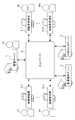
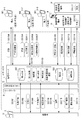
- FIG. 1 is a diagram showing an outline of this service that is an application target of an information processing system to which a management server according to an embodiment of the information processing apparatus of the present invention is applied.
- This service is a service that enables quick matching in consideration of a plurality of types of elements including at least people, things, places, and times.
- the matching is a combination of “person”, “object”, “place”, and “time” among a plurality of types of elements provided by this service.
- a client U who is a beneficiary who receives the products and the like of the technician W and technicians W1 to W3 as the technicians who provide the products and the like are employed.
- the client U and the technicians W1 to W3 are all users of this service.
- a place P in which the technician W desires to provide products and the like (hereinafter, referred to as “place for providing products and the like P”) is adopted.
- the “person” of the plurality of types of elements includes the requester U and the technician W.
- the “item” includes the item M to be provided such as a product.
- the article M or the like providing article refers to an article including a member, a tool, or the like required when the technician W provides the requester U with the skill.
- the technician W is an interior craftsman (hereinafter, simply referred to as a “craftsman”) and the content of the product or the like is a home remodeling
- the tools and various members used for the remodeling are the products M and the like to be provided.
- the product M or the like to be provided M includes a product to be used by the client U who receives the service when the technician W provides the service.
- a product to be used by the client U who receives the service when the technician W provides the service For example, when the technician W is a cook and the content of the product or the like is a catering service for cooking, the tableware on which the dish is served is used by the requester U who receives the service when the technician W provides the service.
- the “item” may include information including a method of procuring the item M to be provided M such as a product.
- the “place” of the plurality of types of elements includes a desired product providing place P.
- the “place” may include a facility or a place H (hereinafter, referred to as “procurable place H”) where the product M to be provided can be procured.
- the procurable location H includes, for example, a home improvement store.
- the "time" of the plurality of types of elements is, for example, the time required for the technician W to arrive at the desired product provision location P or the product provision desired location when the technician W visits the procurable location H.
- the scheduled time of arrival at P is included.
- the process from the estimation of the cost required by the technician W to provide the product, the report of the completion of the provision of the product, the final settlement of the cost, and the evaluation of the technician W by the satisfaction questionnaire is "person". It is done automatically without intervention.
- the satisfaction questionnaire is a survey in which a client U who receives a product or the like from a technician W evaluates the technician W who has provided the product or the like. The satisfaction questionnaire will be described later.
- the technician information includes, for example, information such as the name of the technician W, the name of an organization (for example, a company) to which the technician W belongs, an address, a contact address, and a holding qualification.
- the technician W's performance, skill level, skill type, skill evaluation, area in which the product etc. can be provided, time during which the product etc. can be provided (hereinafter referred to as “provided” This is also included. A specific example of the technician information will be described later with reference to FIG.
- the product information includes information (for example, ID information) that can uniquely identify the product M to be provided, the name of the product M to be provided, specifications, types of corresponding products, and inventory information. Be done.
- information regarding the procurable place H (hereinafter referred to as “procurement place information”) is stored and managed in the place DB 183.
- the procurement location information includes information (for example, ID information) that allows the procurement possible location H to be uniquely identified, and information such as the stock status of each procurement possible location H. Note that a specific example of the procurement location information will be described later with reference to FIG. 7.
- the requester U and the technician W can use the service by accessing the home page E provided by the service provider G using the client terminal 2 and the technician terminal 3, respectively. it can.
- the client U requests the technician W for a temporary ordering procedure and a request for quotation (hereinafter referred to as “temporary ordering”) (step SS101).
- temporary ordering is an order form in which a formal order is promised at a later date and the formal order is reserved.
- the client U can place a temporary order by operating the client terminal 2 to access the homepage E.
- the date and time at which the product etc. is desired to be provided hereinafter referred to as the “desired desired date and time”
- the product etc. information hereinafter referred to as the “desired desired date and time”
- the product etc. information the type and content of the product etc. to be provided
- the product provision desired place P Contains information about the address.
- the provisional order and the like also include information about the estimated price (hereinafter referred to as “construction budget”) and the artificial allowance of the technician. This service can select a technician by using the information included in the provisional order.
- the technician information stored in the technician DB 181 is automatically searched (step SS102). Then, a technician W matching the requested content is selected (step SS103).
- the technician W who is automatically searched and selected by this service that is, the technician W who is indexed based on the information such as the provisional order by the client U and the technician DB 181 is referred to as “selected technician Ws”. ..
- the technician W1 and the technician W2 are the selected technicians Ws selected based on the selection result.
- the technician W3 is a technician W who did not correspond to the requested content, that is, a technician W who was not selected as the selected technician Ws.
- the selected technician Ws may be one person or plural persons.
- the requester information information about the requester U (hereinafter, referred to as “requester information”) and information about the content of the request from the requester U (hereinafter, “request information”). Call) and technician information is considered.
- the client information includes general customer information such as the client's U name (company name) and address.
- the requester U requests the date and time when he/she desires to provide the product, the product information, the type and content of the product and the like, the address of the desired product providing location P, and the technician W. Information such as skill level is included.
- the technician information includes information indicating the current position of the technician W (hereinafter, referred to as “technician position information”) in addition to the above-described information such as the available time.
- the technician position information includes, for example, GPS (Global Positioning System) information provided in the technician terminal 3 and information that allows the technician terminal 3 to be uniquely identified (for example, ID information of the technician terminal 3). ..
- GPS Global Positioning System
- the management server 1 asks the selected technician Ws for an order (step SS104).
- the selected technician Ws is provided with not only the requester information and the request information, but also the information regarding the desired date and time of the provision and the address of the desired location P for providing the product or the like.
- product information, procurable place H information, and construction budget information are provided.
- information such as traffic time prediction to the place for example, traffic time calculated from the procurable place H and the distance to the current position of the selected technician Ws
- allowance artificial allowance for the technician, etc. is also provided. ..
- the client information and the request information are transmitted from the management server 1 to the technician terminal 3 of the selected technician Ws.
- the selected technician Ws operates the technician terminal 3 to check the requester information and the request information transmitted from the management server 1 to determine the presence or absence of an order. Then, the selected technician Ws inputs the determination result of the presence or absence of an order into the technician terminal 3 and transmits it as an indication of intention for percussion (step SS106).
- the product information stored in the product DB 182 is automatically searched (step SS102). Then, an item M to be provided, such as a product, that matches the requested content is selected (step SS103).
- the selected technician Ws procures the product M to be provided M before arriving at the product etc. desired place P. If it is possible, the product etc. can be provided. For this reason, when the product M etc. to be provided is selected, the procurable place H where the product M etc. can be provided to the selection technician Ws is selected based on a predetermined standard.
- the “predetermined criterion” may be, for example, a criterion such that the place closest to the desired place P for providing products etc. is selected as the procurable place H. Further, for example, the “predetermined criterion” may be a criterion such that the procurable place H located closest to the current position of the selected technician Ws is selected. Then, an inquiry about the stock is made to the selected procurable place H. Specifically, the management server 1 inquires of the procurement place server 4 that manages the selected available procurement place H about whether or not to provide the product M to be provided.
- the procurement place server 4 sends a reply to the management server 1 as to whether or not the product M or the like to be provided M can be provided (step SS105).
- the management server 1 informs the technician terminal 3 of the selected technician Ws about the procurable place H (hereinafter, “procureable place information”). ").
- the procurable location information includes product inventory information and product inventory information.
- the procurable location information includes information such as the name, address, map, contact information, and person in charge of the procurable location H, the required time from the current position of the selected technician Ws to the procurable location H, and the transaction. Includes available times, route guidance, etc.
- the selected technician Ws operates the technician terminal 3 to input the scheduled time of arrival at the desired product provision location P.
- the information indicating the estimated arrival time input to the technician terminal 3 is transmitted to the management server 1 (step SS107).
- the number of the selected technicians Ws is only one (the technician W2), but the number of the selected technicians Ws may be plural.
- the management server 1 transmits information indicating the selected technician Ws having the earliest estimated arrival time to the client terminal 2 (step SS108).
- the selected technician Ws having the earliest arrival time is treated as a “temporary order technician Wt” who has made a tentative order from this point.
- the tentative order is an order form in which a formal order is promised at a later date and the formal order is reserved.
- the requester U determines whether to formally place an order for the temporary order technician Wt.
- the fact is input to the client terminal 2 and transmitted to the management server 1 (step SS109).
- the desired place P for providing the product etc. is a place where the product etc. is provided (hereinafter, referred to as “place P for providing the product etc.”).
- the management server 1 performs a settlement process by approximation (step SS110).
- the management server 1 transmits the information indicating that to the technician terminal 3 of the temporary order technician Wt (step SS111).
- the temporary order technician Wt will be treated as the “order technician Wf” from that point on.
- the procurable place H which is located closest to the product provision site P, is a formal provision request for the provision of the goods M to be provided. Is performed (step SS112). Although not shown, the procurable procurement place H that has received the formal provision request will be treated as the “adapted procurement place Hc” from that point when the provision request is accepted (step SS113).
- the management server 1 requests the provision of the product M for providing products and sends the following information to the procurement location server 4 that manages the conforming procurement location Hc. That is, the management server 1 transmits to the procurement place server 4 the information on the products and the like formally ordered by the order-accepting technician Wf and the technician position information of the order-accepting technician Wf. Further, the management server 1 also transmits information such as the time required for the ordered technician Wf to reach the conforming procurement place Hc to the procurement place server 4 (step SS114).
- step SS115 preparation of the goods M or the like provision item M to be provided to the order acceptance engineer Wf when the order receiving engineer Wf visits the conforming procurement place Hc.
- the order technician Wf visits the conforming procurement place Hc and receives the provision of the product etc. providing article M, thereafter, he visits the product provision site P to provide the requester U with the product etc.
- the ordered technician Wf makes necessary adjustments (step SS116), provides the requester U with a product or the like (step SS117), and inputs the fact to the technician terminal 3.
- the necessary adjustment means, for example, an adjustment between the client U and the technician W.
- the technician completion report includes images (including still images or videos) before and after receiving products, etc., completion report, presence/absence of products etc. additionally provided, additional costs, etc. ..
- the management server 1 receives the technician completion report transmitted from the technician terminal 3, the service provider G approves the report.
- the client terminal 2 receives the technician completion report transmitted from the technician terminal 3, the client U approves the report.
- the final settlement is executed (step SS119).
- the final settlement includes approximate cost, additional cost, and the like. This completes the provision of the goods and the like to the requester U by the order technician Wf.
- the service provider G conducts a satisfaction questionnaire to the requester U about the products and the like provided by the order technician Wf.
- the management server 1 transmits a satisfaction questionnaire about the product etc. to the requester terminal 2 of the client U who has received the product etc. provided by the order technician Wf.
- the requester U who has received the product or the like evaluates the order technician Wf. That is, the management server 1 evaluates the order technician Wf based on the result of the satisfaction questionnaire.
- the management server 1 evaluates the skill and raises or lowers the unit price of providing the product or the like among the technician information of the technician W stored and managed in the technician DB 181. And decide.
- the following effects and merits can be expected. That is, it is possible to utilize a so-called "return" technician W who is rehired after retiring. As a result, the cost borne by the client U can be reduced. For example, if the technician W is a craftsman, the daily allowance is usually about 20,000 yen, but even for small-scale construction (for example, a shelf board is broken), a day including free time before and after the working time is included. It can happen. On the other hand, according to this service, the craftsman can use the idle time before and after the working time for the requested work. Thereby, for example, the client U can undertake the construction at a cost of about 5000 yen.
- the plurality of clients U can share the daily allowance of the craftsman. As a result, the cost borne by each client U can be reduced. Further, according to this service, it is possible to increase the daily sales of the technician W. For example, an artisan who undertakes the above-mentioned small-scale work for a daily allowance of 20,000 yen can allocate extra time to the work requested by another client U to earn extra income and receive a daily allowance of 20,000 yen. It is possible to obtain plus ⁇ . Thereby, the technician W can obtain a daily allowance of, for example, about 23,000 yen. Further, according to this service, it is also possible to build an objective and fair reward system based on the contents of the evaluation of the technician W by the client U.
- the satisfaction questionnaire to the client U is carried out.
- the results of this questionnaire are scored (scored) for absolute evaluation and reflected in the technician information.
- the hourly salary amount and the reward amount of the technician W are changed based on the absolute evaluation.
- weighting may be performed so that the technician W having a high absolute evaluation is preferentially selected as the selected technician Ws.
- the number of satisfaction questionnaires, etc. is registered in the technician DB 181, and based on these data, for example, once every six months, a total score is obtained, and the technicians are ranked, and the artificial allowance is determined. Good.
- the skill workshop and the training test are conducted, and the number of participations in the skill training and the result of the training test are reflected in the hourly salary and the reward amount of the technician W. You may do it.
- this service can provide employment opportunities for freelancers and sub-contractors. Further, according to this service, it is possible to expect an increase in sales due to the improvement of the location utilization rate of the location provider.
- the desired place P for providing the product or the place P for providing the product may be a place owned by a place provider which is a third party other than the client U.
- the place provider is an on-demand type order form in which the technician W provides products and the like in response to a request from the requester U or the technician W
- the place provider operates It is possible to facilitate the planning of the operation schedule.
- this service physical distribution and construction can be integrated. That is, this service does not simply match the client U and the technician W.
- This service is all about ordering and receiving products etc. provided by technician W, distributing goods M providing goods etc., providing products etc. by technician W (construction by craftsmen), and settlement of consideration for products etc. It is a service that makes it seamless by performing on line. In other words, this service can be said to be a service that can provide an innovative IT platform.
- the following innovative functions (1) to (7) can be realized. That is, (1) a seamless ordering and settlement function can be realized. (2) It is possible to realize a function of prompt matching between the client U (for example, a construction worker) and the technician W (for example, a craftsman). (3) The function of scoring the skill (skill) of the technician W (for example, craftsman) can be realized. (4) It is possible to realize a function of accelerating payment (for example, immediate payment after construction) of a reward (for example, wage, artificial fee) to a technician W (for example, craftsman). (5) It is possible to realize a function of speeding up estimation by managing rewards (for example, wages and artificial charges) using a database.
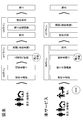
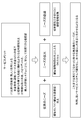
- Figure 2 is a comparison diagram of this service and the conventional service.
- FIG. 2 shows a specific example in which the technician W is a craftsman.
- the conventional service flow is shown in the upper part of FIG.
- the client U who is the client, selects a building material and creates an approximate estimate online. After that, on the OFF line, confirmation with the construction shop, arrangement of craftsmen, and the current situation (site investigation) are performed.
- the current survey site survey
- a final estimate is created. After that, orders are received, construction schedules are adjusted, and building materials (materials M to be provided) are received on the ON line, and construction is started.
- the lower part of FIG. 2 shows the flow of this service.
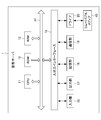
- FIG. 3 is a diagram showing an example of the configuration of an information processing system to which a management server according to an embodiment of the information processing apparatus of the present invention is applied.
- the information processing system shown in FIG. 3 includes a management server 1, client terminals 2-1 to 2-n (n is an integer value of 1 or more), and technician terminals 3-1 to 3-m (m is 1 or more). Integer value), the procurement place server 4, and the analysis center server 5 are connected to each other via a predetermined network N such as the Internet.
- the management server 1 is an information processing device managed by the service provider G.
- the management server 1 realizes this service while appropriately communicating with each of the client terminals 2-1 to 2-n, the technician terminals 3-1 to 3-m, the procurement place server 4, and the analysis center server 5. Performs various processes for
- the requester terminals 2-1 to 2-n are information processing devices operated by the requester U.
- the client terminals 2-1 to 2-n are, for example, personal computers, smartphones, tablets, or the like. In this specification, when it is not necessary to individually distinguish each of the requester terminals 2-1 to 2-n, they are collectively referred to as "requester terminal 2".
- the technician terminals 3-1 to 3-m are information processing devices operated by the technician W.
- the technician terminals 3-1 to 3-m are composed of, for example, personal computers, smartphones, tablets and the like. In the present specification, when it is not necessary to individually distinguish each of the technician terminals 3-1 to 3-m, they are collectively referred to as “technician terminal 3 ”.
- the procurement location server 4 is an information processing device that manages the procurement possible location H.
- the procurement site server 4 executes various processes for realizing this service while appropriately communicating with the management server 1 and the technician terminal 3.
- the analysis center server 5 is an information processing device managed by the construction analysis center C.
- the analysis center server 5 executes various processes for realizing this service while appropriately communicating with the management server 1 and the technician terminal 3. The details of the construction analysis center C and the analysis center server 5 will be described later with reference to FIG.
- FIG. 4 is a block diagram showing a hardware configuration of the management server of FIG.
- the management server 1 includes a CPU (Central Processing Unit) 11, a ROM (Read Only Memory) 12, a RAM (Random Access Memory) 13, a bus 14, an input/output interface 15, an input unit 16, and an output unit 17.
- the storage unit 18, the communication unit 19, and the drive 20 are provided.
- the CPU 11 executes various processes according to a program recorded in the ROM 12 or a program loaded from the storage unit 18 into the RAM 13.
- the RAM 13 also appropriately stores data and the like necessary for the CPU 11 to execute various processes.
- the CPU 11, ROM 12, and RAM 13 are connected to each other via a bus 14.
- An input/output interface 15 is also connected to the bus 14.
- An input unit 16, an output unit 17, a storage unit 18, a communication unit 19, and a drive 20 are connected to the input/output interface 15.
- the input unit 16 includes various hardware buttons and inputs various information.
- the output unit 17 includes various liquid crystal displays and outputs various information.
- the storage unit 18 is configured by a DRAM (Dynamic Random Access Memory) or the like, and stores various data.
- the communication unit 19 uses another device (for example, the client terminals 2-1 to 2-n, the technician terminals 3-1 to 3-m in FIG. 3, the technician terminals 3-1 to 3-m, the procurement location server 4, and the analysis device) via the network N including the Internet. It controls the communication with the center server 5).
- the drive 20 is provided as needed.
- a removable medium 40 including a magnetic disk, an optical disk, a magneto-optical disk, a semiconductor memory, or the like is appropriately mounted on the drive 20.
- the program read from the removable medium 40 by the drive 20 is installed in the storage unit 18 as needed.
- the removable medium 40 can also store various data stored in the storage unit 18 in the same manner as the storage unit 18.
- the client terminals 2-1 to 2-n, the technician terminals 3-1 to 3-m, the procurement place server 4, and the analysis center server 5 shown in FIG. 3 are the hardware shown in FIG. It can have basically the same configuration as the configuration. Therefore, description of the hardware configurations of the client terminals 2-1 to 2-n, the technician terminals 3-1 to 3-m, the procurement place server 4, and the analysis center server 5 will be omitted.
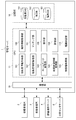
- FIG. 5 is a functional block diagram showing an example of a functional configuration required for the matching process, the evaluation process, and the reward determination process executed by the management server 1 of FIG.
- the “matching process” refers to a process of matching the requester U and the skilled worker W among the processes required to provide the above-described service.
- the “evaluation process” refers to a process for evaluating each technician W among the processes required to provide the above service.
- the “reward determination process” refers to a process of determining the content of the reward received by each skilled worker W, among the processes required to provide the above-described service.
- the matching process is executed by the management server 1 of FIG. 4, in the CPU 11 of the management server 1, the technician information acquisition unit 101, the technician information management unit 102, and the home page management unit. 103, the client side information acquisition unit 104, the object information acquisition unit 105, the location information acquisition unit 106, the matching unit 107, and the presentation unit 108 function.
- the evaluation unit 109 in the CPU 11 of the management server 1 further functions.
- the CPU 11 of the management server 1 executes the reward determination process
- the CPU 11 of the management server 1 further functions as the reward determination unit 110.
- a technician DB 181, a product DB 182, and a place DB 183 are provided in one area of the storage unit 18 of the management server 1.
- the technician information acquisition unit 101 acquires technician information. Further, the technician information acquisition unit 101 acquires, as the technician information, information including at least the technician position information. Note that the specific method used by the technician information acquisition unit 101 to acquire the technician position information is not particularly limited. As a method of acquiring the technician information, for example, a method of acquiring information input to the technician terminal 3 by the technician W, a method of acquiring GPS position information of the technician terminal 3, or the like can be adopted. In addition to the technician information, the technician information acquisition unit 101 can also acquire information regarding the result of determining whether or not an order has been received, information indicating an estimated arrival time, information indicating that an official order is to be placed, and the like.
- the technician information management unit 102 manages the technician information acquired by the technician information acquisition unit 101. Specifically, for example, the technician information management unit 102 stores the technician information acquired by the technician information acquisition unit 101 in the technician DB 181 and manages it.
- the home page management unit 103 manages the home page E provided by the service provider G. Specifically, for example, the home page management unit 103 manages the temporary order and the like acquired on the home page E so that the requester information, the request information and the like are presented to the requester side information acquisition unit.
- the client-side information acquisition unit 104 acquires client information. Further, the requester-side information acquisition unit 104 acquires request information. Further, the requester-side information acquisition unit 104 acquires, as request information, request information including at least information indicating a desired product providing location P. Specifically, for example, the requester-side information acquisition unit 104 acquires the requester information and the request information input in a predetermined input form on the homepage E. In addition to the requester information and the request information, the requester-side information acquisition unit 104 can also acquire information such as provisional order and information indicating that a formal order is to be placed.
- the product information acquisition unit 105 acquires the fourth information as information about the product provided for providing the skill. That is, the product information acquisition unit 105 acquires product information as information about the product M to be provided.
- the items provided for providing the skills include the parts M, tools, and the like, which are necessary when the technician W provides the skills to the client U, including the article M for providing goods and the like.
- the product information acquisition unit 105 also acquires, as at least a part of the product information, information including a procurement method of the product M to be provided.
- the product information acquired by the product information acquisition unit 105 is stored and managed in the product DB 182. Specifically, the product information acquisition unit 105 acquires product information by making an inquiry to the procurement place server 4 in FIG.
- the location information acquisition unit 106 acquires procurement location information as information on the procurement method of the product M to be provided.
- the procurement location information acquired by the location information acquisition unit 106 is stored and managed in the location DB 183. Specifically, the location information acquisition unit 106 acquires the procurement possible location information by making an inquiry to the procurement location server 4 in FIG.
- the matching unit 107 matches the technician W, the requester U, and the desired product provision location P with the technician information, the client information, and the request information. Further, the matching unit 107, based on the technician information, the client information, the request information, the product information, and the procurement location information, the technician W, the requester U, the procurable location H, the product, and the like. It is also possible to perform matching with the desired provision location P. Specifically, for example, the matching unit 107 causes the requester U, the technician W, the product providing item M, the procurable place H, the product providing desired place P, and the technician W to arrive at the product providing desired place P. The requester U, the technician W, and the desired product provision location P are matched based on the information such as the scheduled time. As a result, in the matching between the requester U and the technician W, it is possible to realize matching that considers a person, an object, a place, and a time.
- the presentation unit 108 performs control for presenting information necessary for realizing matching. Specifically, for example, the presentation unit 108 performs control for presenting information indicating the selected technician Ws having the earliest estimated arrival time, information regarding the technician completion report, and the like. Further, the presentation unit 108 can also perform control for presenting information regarding consultation of orders, information indicating that a formal order is to be placed, information regarding final settlement, and the like. Furthermore, the presentation unit 108 performs control for presenting information regarding an inquiry about whether or not to provide the product M or the like.
- the evaluation unit 109 evaluates the skill of the technician W based on the result of the evaluation of the technician W by the client U. As a result, it is possible to make an objective and fair evaluation of the technician W. Specifically, for example, the evaluation unit 109 evaluates the technician W based on the result of the satisfaction questionnaire transmitted from the client terminal 2.
- the reward determination unit 110 determines the content of the reward that the technician W should receive based on the evaluation result by the evaluation unit 109. Specifically, for example, the reward determination unit 110 determines a reward amount in the evaluation unit 109 as the evaluation based on the result of the satisfaction degree questionnaire is higher. As a result, the technician W can receive the reward based on the fair evaluation, so that the fairness of the reward can be ensured.
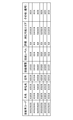
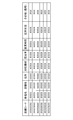
- FIG. 6 and 7 are diagrams showing specific examples of the technician information and the procurement location information, which are stored and managed in the technician DB and the location DB of FIG. 5, respectively.
- FIG. 6 shows a specific example of the technician information stored and managed in the technician DB 181 of FIG. That is, in the technician DB 181, as the technician information, the "technical person code” that can uniquely identify the technician W, the "name” of the technician W, the "company name” to which the technician W belongs, the technician The "address” of W is associated. Further, in the technician DB 181, the “technique type” of the technician W, the “skill level” of the technician W, the “evaluation” of the technician W based on the result of the satisfaction questionnaire by the client U, and the “technique of the technician W”. "Available area” and “other (remark)” are also associated.
- FIG. 7 shows a specific example of the procurement place information stored and managed in the place DB 183 of FIG. That is, in the place DB 183, the following information is associated as the procurement place information in the case of a home center which is an example of the procurement possible place H.
- a “store code” that can uniquely identify a home center store is associated with a “company name” of the home center and a “store name” of the home center store.
- the location DB 183 is associated with the “address” of the home center store, the “equipment (corresponding device)” as the supply item M such as goods that can be procured at the home center store, and the “person in charge” of the home center store. ing.
- the location DB 183 is associated with “business hours” of the home center store, “stock status” of the home center store, and “others (remarks)”.
- the procurement location information may include information about a category used for classifying the provision items M such as products that can be provided at the procurement location H.
- FIG. 8 is a diagram showing an outline of an example different from the example of FIG. 1 among the services to which the information processing system to which the management server according to the embodiment of the present invention is applied is applied. ..
- FIG. 8 is different from the example of FIG. 1 in that it has a “construction analysis center C”.
- “craftsman” is displayed as a specific example of the technician W
- “parts and the like obtainable place” and “building material obtainable place” are displayed as a concrete example of the procurable place H. 1 and 8 are different. That is, in the example of FIG. 8, the “craftsman”, the “craftsman DB 281”, the “place where materials can be obtained”, and the “place where building materials are available” are the “skilled person W” and the “skilled person” of FIG. It corresponds to the “DB181” and the “procurable place H”, respectively.
- the “craftsman information” stored and managed in the craftsman DB 281 corresponds to the “skilled person information” stored and managed in the craftsman DB 181.
- the construction analysis center C manages the analysis center server 5 shown in FIG.
- the analysis center server 5 selects a “selected craftsman” as the selection technician Ws in FIG. 1 and a product M to be provided. These selections are based on the request information provided by the requester U at the time of provisional order, the type of construction required, the skill required of the craftsman, and the materials required for construction (materials M to be provided). And so on.
- the request information provided by the requester U at the time of provisional order includes information about products, the type of construction, a captured image of the site, a product number that can identify the product on the site, a captured image of the product, and the like. Be done.
- the picked-up image of the construction site includes, for example, a picked-up image taken by the client U when making a temporary order or the like, and picked up the top, bottom, left, and right of the construction site.
- the captured image of the product at the site is the image captured by the client U when, for example, a temporary order is placed, and is the information necessary for selecting the product M to be provided, such as the product shape, Includes those whose manufacturer name, product number, etc. can be identified.
- the places where materials can be obtained correspond to stores such as home improvement stores where the materials used for construction work are stored as inventory.
- the location where building materials can be obtained corresponds to the sales office or warehouse of a building materials trading company that holds the materials used for construction as inventory.
- a building material maker or the like that delivers the members, the building material, or the like can be included in the location where the material can be obtained or the building material can be obtained.
- FIG. 9 is a diagram showing the effect of this service.
- the service beneficiary cost on the client U side can be reduced by utilizing the so-called "return" technician W.
- (3) It is possible to expect merits such as clear accounting, promptness, and a sense of trust based on the fair evaluation system of the technician W.
- the satisfaction of the client U can be improved, so that latent needs can be made apparent. That is, as shown in FIG. 9, it is possible to improve the LTV (Life Time Value) of the customer (requester U) by meeting the conventional needs.
- the needs of the customer (requester U) are expanded, the contact time with the customer is increased, and cross-selling can be realized. As a result, it can lead to the creation of customer (requester U) needs. Specifically, by collecting new information from the customer (requester U) using the provision (for example, construction) of low-cost products realized by this service as a starting point, the needs of the customer (requester U) can be met. It is possible to connect to creation. In other words, the needs of various products that have not been seen until now (for example, home remodeling) are revealed by this service that is easy to use, so that daily life can be improved.
- FIG. 10 is a diagram showing the details of the effects of this service, especially for technicians.
- the technician W can earn extra income by effectively utilizing the spare time before and after the sales in the field work of the main business.
- the technician W since the technician W is evaluated fairly, the technician W having a high skill level can perform the work under advantageous conditions. For example, in the general construction industry and remodeling industry, there have been customary subcontractors and subcontractors, and it has been difficult to pay attention to the skill level of each craftsman (technician W). Further, there were few cases where an appropriate remuneration (for example, daily allowance) was paid to a craftsman (technical worker W).
- this service can be externally deployed as an ASP (Application Service Provider) service.
- the “outside” here includes, for example, a real estate management company, a condominium company, a hotel/accommodation facility, a restaurant, and the like. In other words, by deploying this service, it will be possible to grow it into an ASP service that can generate profits on a standalone basis.
- a craftsman (interior craftsman) has been described as an example of a craftsman, but the “technician” in the present invention is not limited to the craftsman.
- the "skilled person” in the present invention may be any person who can exhibit some "skill" in business, and is not particularly limited to a craftsman.
- a person who can exhibit "skill" in all fields, such as a doctor in the medical field and a stylist in the apparel field can be a "skilled person".
- the service is a service that enables quick matching in consideration of a plurality of types of elements including at least people, things, places, and times. It is not limited to that. That is, in the above-described embodiment, matching including “time” is performed, but “time” and “place” are not essential, and “skilled person W” and “requester U” as “person”, In addition, it is sufficient if the desired place P for providing products etc. as the “place” can be matched.
- the “place” of the matching elements includes the desired product providing location P, but the present invention is not limited to this.
- the desired place P for providing products or the like a place other than the place where the client U desires the technician W to provide the products or the like may be used as a matching element.
- the place designated by the technician W may be included as the place where the product or the like of the technician W is to be provided.
- a location where the technician W can receive the products and the like of the technician W only at a predetermined location (for example, a factory) may be included.
- the “item” includes the item M to be provided such as a product, but the present invention is not particularly limited to this. That is, the product M or the like providing item M is merely an example of the item provided for providing the skill.
- steps SS101 to 119 have been described regarding the flow of this service, but the present invention is not particularly limited to this. That is, as the flow of this service, the order of steps may be changed. Specifically, for example, the desired place P for providing the product etc. may be determined first, and then the technician W may be selected. Thereby, for example, the technician W can be appropriately selected by matching according to the request content of the requester U.
- the fourth information is described as information regarding an object provided for providing a skill, but the fourth information is not particularly limited to this. That is, the fourth information may include all kinds of information related to items to be provided such as provision of skills, and may include, for example, item information and procurement place information.
- the technician DB 181, the article DB 182, and the place DB 183 are provided in one area of the storage unit 18 of the management server 1, but the invention is not particularly limited to this. .. That is, it may be provided in addition to the technician DB 181, the article DB 182, and the place DB 183. Specifically, for example, a wage DB may be provided. Thus, by storing the wage information related to the provision of various products in the wage DB, it is possible to easily find out how much the wage is based on the product information included in the request information and the type and content of the product etc. desired to be provided. I can judge.
- the technician information shown in FIG. 6 is merely an example of the technician information stored and managed in the technician DB 181 shown in FIG.
- information indicating contact information such as the email address and mobile phone number of the technician W, the URL (Uniform Resource Locator) of the homepage of the technician W or the company to which the technician W belongs, the skill It is possible to manage the nationality of the worker W, the skill field of the technician W, the number of satisfaction questionnaires, the artificial fee, etc. as technician information.
- each of the requester U and the technician W accesses the home page E provided by the service provider G using each of the requester terminal 2 and the technician terminal 3.
- this service it is not limited to this.
- the requester U and the technician W may also use the service by using the client terminal 2 and the technician terminal 3, respectively, in which dedicated application software for users of the service is installed. it can.
- the hardware configuration shown in FIG. 4 is merely an example for achieving the object of the present invention, and is not particularly limited.
- the functional block diagram shown in FIG. 5 is merely an example and is not particularly limited. That is, it is sufficient if the information processing system has a function capable of executing the above-described series of processing as a whole, and what kind of functional block is used to implement this function is not particularly limited to the example of FIG. ...
- the location of the functional block is not limited to that shown in FIG. 5, and may be arbitrary.
- the functional blocks necessary for executing various processes are included in the management server 1, but this is merely an example. At least a part of these functional blocks may be provided in the client terminal 2 or the technician terminal 3 side. Further, one functional block may be configured by hardware alone, software alone, or a combination thereof.
- the program forming the software is installed in a computer or the like from a network or a recording medium.
- the computer may be a computer embedded in dedicated hardware.
- the computer may be a computer capable of executing various functions by installing various programs, for example, a general-purpose smartphone or a personal computer other than a server.
- the recording medium containing such a program is not only constituted by a removable medium which is distributed separately from the apparatus main body in order to provide the program to each client or each technician, but is also incorporated in the apparatus main body in advance. It is composed of a recording medium etc. provided to each requester or each technician in a state.
- the steps of writing the program recorded on the recording medium are not limited to the processes performed in time series according to the order, but may be performed in parallel or individually even if they are not necessarily performed in time sequence. It also includes the processing to be executed.
- system refers to an entire device including a plurality of devices and a plurality of means.
- the information processing apparatus to which the present invention is applied may have various configurations as long as it has the following configuration. That is, the information processing apparatus (for example, the management server 1 in FIG. 5) to which the present invention is applied is In an information processing device that supports a technician who provides his or her skill (for example, the technician W in FIG. 1) and a beneficiary who receives the provision of the skill by the technician (for example, the client U in FIG. 1), A first acquisition unit (for example, a technician information acquisition unit 101 in FIG. 5) that acquires first information (for example, technician information) about the technician; Second acquisition means (for example, client side information acquisition unit 104 in FIG.
- a first acquisition unit for example, a technician information acquisition unit 101 in FIG. 5
- Second acquisition means for example, client side information acquisition unit 104 in FIG.
- Second acquisition means for example, requester side information acquisition unit 104 in FIG. 5
- third information for example, request information
- Matching means for example, the matching unit 107 in FIG. 5 that matches the technician, the beneficiary, and the place based on the first information, the second information, and the third information, Equipped with.
- the first acquisition means can acquire, as at least a part of the first information, information about a time until the technician arrives at the place.
- a fourth acquisition unit (for example, the product information acquisition unit 105 in FIG. 5) that acquires fourth information (for example, product information) regarding a product (for example, a product M to be provided M) provided for providing the skill by the technician. )
- the matching unit may perform the matching based on the fourth information in addition to the first information, the second information, and the third information.
- the fourth acquisition unit acquires, as at least a part of the fourth information, information including a procurement method of the object to be used by the skilled person to provide the skill (for example, object information or procurement location information). can do.
Landscapes
- Business, Economics & Management (AREA)
- Engineering & Computer Science (AREA)
- Theoretical Computer Science (AREA)
- Strategic Management (AREA)
- General Physics & Mathematics (AREA)
- Physics & Mathematics (AREA)
- Tourism & Hospitality (AREA)
- Marketing (AREA)
- General Business, Economics & Management (AREA)
- Economics (AREA)
- Human Resources & Organizations (AREA)
- Finance (AREA)
- Accounting & Taxation (AREA)
- Entrepreneurship & Innovation (AREA)
- Health & Medical Sciences (AREA)
- General Health & Medical Sciences (AREA)
- Development Economics (AREA)
- Primary Health Care (AREA)
- Data Mining & Analysis (AREA)
- Operations Research (AREA)
- Quality & Reliability (AREA)
- General Engineering & Computer Science (AREA)
- Management, Administration, Business Operations System, And Electronic Commerce (AREA)
- Information Transfer Between Computers (AREA)
Priority Applications (1)
| Application Number | Priority Date | Filing Date | Title |
|---|---|---|---|
| JP2020520170A JP6787619B1 (ja) | 2018-12-27 | 2019-12-27 | 情報処理装置 |
Applications Claiming Priority (6)
| Application Number | Priority Date | Filing Date | Title |
|---|---|---|---|
| JP2018246293 | 2018-12-27 | ||
| JP2018-246293 | 2018-12-27 | ||
| JP2019-016528 | 2019-01-31 | ||
| JP2019016528 | 2019-01-31 | ||
| JP2019-163208 | 2019-09-06 | ||
| JP2019163208 | 2019-09-06 |
Publications (1)
| Publication Number | Publication Date |
|---|---|
| WO2020138418A1 true WO2020138418A1 (ja) | 2020-07-02 |
Family
ID=71127867
Family Applications (1)
| Application Number | Title | Priority Date | Filing Date |
|---|---|---|---|
| PCT/JP2019/051415 Ceased WO2020138418A1 (ja) | 2018-12-27 | 2019-12-27 | 情報処理装置 |
Country Status (2)
| Country | Link |
|---|---|
| JP (2) | JP6787619B1 (enExample) |
| WO (1) | WO2020138418A1 (enExample) |
Cited By (1)
| Publication number | Priority date | Publication date | Assignee | Title |
|---|---|---|---|---|
| JP2023106054A (ja) * | 2022-01-20 | 2023-08-01 | メゾン24株式会社 | リフォームマッチングシステム |
Families Citing this family (1)
| Publication number | Priority date | Publication date | Assignee | Title |
|---|---|---|---|---|
| JP7776159B2 (ja) * | 2024-02-19 | 2025-11-26 | 株式会社Sokkin | マッチング支援装置及びマッチング支援方法 |
Citations (3)
| Publication number | Priority date | Publication date | Assignee | Title |
|---|---|---|---|---|
| JP2009080565A (ja) * | 2007-09-25 | 2009-04-16 | Chugoku Electric Power Co Inc:The | 宅配サービス仲介システム及び方法 |
| WO2016080038A1 (ja) * | 2014-11-20 | 2016-05-26 | ソニー株式会社 | マッチングシステム、情報処理装置、マッチング方法、およびプログラム |
| KR101896408B1 (ko) * | 2017-06-22 | 2018-09-10 | 고려대학교 산학협력단 | 음식 배달 중개 방법 및 장치 |
Family Cites Families (4)
| Publication number | Priority date | Publication date | Assignee | Title |
|---|---|---|---|---|
| JP2004192153A (ja) | 2002-12-09 | 2004-07-08 | Toshiba Corp | 保守紹介方法及びシステム並びにプログラム |
| JP2008009496A (ja) | 2006-06-27 | 2008-01-17 | Hitachi Ltd | 保守サービス運用システムおよび保守サービス運用方法 |
| JP5917062B2 (ja) | 2011-09-26 | 2016-05-11 | 株式会社日立システムズ | 保守対応システム |
| JP6893726B2 (ja) | 2017-01-13 | 2021-06-23 | 悠記 青木 | グローバル・メンテナンスサービス・サポートシステム |
-
2019
- 2019-12-27 WO PCT/JP2019/051415 patent/WO2020138418A1/ja not_active Ceased
- 2019-12-27 JP JP2020520170A patent/JP6787619B1/ja not_active Expired - Fee Related
-
2020
- 2020-10-22 JP JP2020177621A patent/JP7245539B2/ja active Active
Patent Citations (3)
| Publication number | Priority date | Publication date | Assignee | Title |
|---|---|---|---|---|
| JP2009080565A (ja) * | 2007-09-25 | 2009-04-16 | Chugoku Electric Power Co Inc:The | 宅配サービス仲介システム及び方法 |
| WO2016080038A1 (ja) * | 2014-11-20 | 2016-05-26 | ソニー株式会社 | マッチングシステム、情報処理装置、マッチング方法、およびプログラム |
| KR101896408B1 (ko) * | 2017-06-22 | 2018-09-10 | 고려대학교 산학협력단 | 음식 배달 중개 방법 및 장치 |
Cited By (2)
| Publication number | Priority date | Publication date | Assignee | Title |
|---|---|---|---|---|
| JP2023106054A (ja) * | 2022-01-20 | 2023-08-01 | メゾン24株式会社 | リフォームマッチングシステム |
| JP7788287B2 (ja) | 2022-01-20 | 2025-12-18 | ショウタイム24株式会社 | リフォームマッチングシステム |
Also Published As
| Publication number | Publication date |
|---|---|
| JP2021043984A (ja) | 2021-03-18 |
| JPWO2020138418A1 (ja) | 2021-02-18 |
| JP7245539B2 (ja) | 2023-03-24 |
| JP6787619B1 (ja) | 2020-11-18 |
Similar Documents
| Publication | Publication Date | Title |
|---|---|---|
| US10878468B2 (en) | Matching support device, matching support system, and program | |
| KR101826307B1 (ko) | 상품 주문 및 배달을 위한 판매업체와 배달업체 간의 중개 서비스 시스템 | |
| KR101713155B1 (ko) | 가격 조정을 통한 렌트카 거래 시스템 및 방법 | |
| KR101590007B1 (ko) | 부동산 정보 관리, 보존, 이전 시스템 및 이 시스템을 이용하기 위한 방법 | |
| US7877332B2 (en) | Apparatuses for spontaneous collaboration between shoppers and selected consultants | |
| US20050216139A1 (en) | Method and apparatus for facilitating information, security and transaction exchange in aviation | |
| KR101770291B1 (ko) | 상품 발주 관리 시스템 및 이를 이용한 상품 발주 관리 방법 | |
| KR102257014B1 (ko) | 스마트 보관함 키오스크 시스템 | |
| US6938001B2 (en) | Electronic legal research ordering and pricing method of defining and valuing electronic legal research instructions and electronically ordering and pricing legal research | |
| KR20150035929A (ko) | 네트워크를 통한 고객과 공인중개사 간의 독점중개 거래 방법 및 부동산 중개업소 간의 공동중개 이용방법 및 이에 대한 프로그램을 저장하는 기록매체 | |
| US20150242827A1 (en) | System and method for facilitating space transactions | |
| JP7245539B2 (ja) | 情報処理装置 | |
| JP2017091003A (ja) | 情報管理装置、情報管理方法及び情報管理プログラム | |
| KR20170136390A (ko) | 해외 개인여행객(FIT, Foreign Independent Tourists)을 위한 관광전문가 및 제품 선정 전문가(MD) 매칭 온라인 직거래 플랫폼 서비스 시스템 및 그 방법 | |
| US20150227856A1 (en) | Systems and methods for event planning | |
| AU2021101148A4 (en) | Artificial Intelligence based POS System (Points of Sales) for Food Truck Vendor Notification and Management | |
| JP2021530805A (ja) | 数値決定システムおよびその方法 | |
| JP2006228172A (ja) | 自動鑑定を伴う不動産情報提供サーバ、不動産情報提供方法及びプログラム | |
| JP7436087B1 (ja) | 管理装置 | |
| JP6945760B1 (ja) | 加工キャパシティ・オンライン・マッチングシステム | |
| KR20130138892A (ko) | 고객인증을 이용한 부동산 거래 관리 방법 | |
| JP2007226757A (ja) | 特定商品紹介装置 | |
| US20240119548A1 (en) | Systems and Methods for Licensing, Distribution, and Sales Automation | |
| KR20170053848A (ko) | 비전문가이나 예식에 관한 상품 및 서비스를 제공할 수 있는 일반인 제공자와 고객을 연결하는 예식 중개 서비스 시스템 및 방법 | |
| CA3132418A1 (en) | Installation lifecycle management system |
Legal Events
| Date | Code | Title | Description |
|---|---|---|---|
| ENP | Entry into the national phase |
Ref document number: 2020520170 Country of ref document: JP Kind code of ref document: A |
|
| 121 | Ep: the epo has been informed by wipo that ep was designated in this application |
Ref document number: 19906345 Country of ref document: EP Kind code of ref document: A1 |
|
| NENP | Non-entry into the national phase |
Ref country code: DE |
|
| 122 | Ep: pct application non-entry in european phase |
Ref document number: 19906345 Country of ref document: EP Kind code of ref document: A1 |