WO2020130146A1 - 筋質向上剤 - Google Patents
筋質向上剤 Download PDFInfo
- Publication number
- WO2020130146A1 WO2020130146A1 PCT/JP2019/050188 JP2019050188W WO2020130146A1 WO 2020130146 A1 WO2020130146 A1 WO 2020130146A1 JP 2019050188 W JP2019050188 W JP 2019050188W WO 2020130146 A1 WO2020130146 A1 WO 2020130146A1
- Authority
- WO
- WIPO (PCT)
- Prior art keywords
- muscle
- isoleucine
- cystine
- glycine
- present
- Prior art date
- Legal status (The legal status is an assumption and is not a legal conclusion. Google has not performed a legal analysis and makes no representation as to the accuracy of the status listed.)
- Ceased
Links
Images






Classifications
-
- A—HUMAN NECESSITIES
- A61—MEDICAL OR VETERINARY SCIENCE; HYGIENE
- A61K—PREPARATIONS FOR MEDICAL, DENTAL OR TOILETRY PURPOSES
- A61K31/00—Medicinal preparations containing organic active ingredients
- A61K31/185—Acids; Anhydrides, halides or salts thereof, e.g. sulfur acids, imidic, hydrazonic or hydroximic acids
- A61K31/19—Carboxylic acids, e.g. valproic acid
- A61K31/195—Carboxylic acids, e.g. valproic acid having an amino group
- A61K31/197—Carboxylic acids, e.g. valproic acid having an amino group the amino and the carboxyl groups being attached to the same acyclic carbon chain, e.g. gamma-aminobutyric acid [GABA], beta-alanine, epsilon-aminocaproic acid or pantothenic acid
- A61K31/198—Alpha-amino acids, e.g. alanine or edetic acid [EDTA]
-
- A—HUMAN NECESSITIES
- A23—FOODS OR FOODSTUFFS; TREATMENT THEREOF, NOT COVERED BY OTHER CLASSES
- A23L—FOODS, FOODSTUFFS OR NON-ALCOHOLIC BEVERAGES, NOT OTHERWISE PROVIDED FOR; PREPARATION OR TREATMENT THEREOF
- A23L33/00—Modifying nutritive qualities of foods; Dietetic products; Preparation or treatment thereof
- A23L33/10—Modifying nutritive qualities of foods; Dietetic products; Preparation or treatment thereof using additives
- A23L33/17—Amino acids, peptides or proteins
- A23L33/175—Amino acids
-
- A—HUMAN NECESSITIES
- A61—MEDICAL OR VETERINARY SCIENCE; HYGIENE
- A61P—SPECIFIC THERAPEUTIC ACTIVITY OF CHEMICAL COMPOUNDS OR MEDICINAL PREPARATIONS
- A61P21/00—Drugs for disorders of the muscular or neuromuscular system
-
- A—HUMAN NECESSITIES
- A23—FOODS OR FOODSTUFFS; TREATMENT THEREOF, NOT COVERED BY OTHER CLASSES
- A23V—INDEXING SCHEME RELATING TO FOODS, FOODSTUFFS OR NON-ALCOHOLIC BEVERAGES AND LACTIC OR PROPIONIC ACID BACTERIA USED IN FOODSTUFFS OR FOOD PREPARATION
- A23V2002/00—Food compositions, function of food ingredients or processes for food or foodstuffs
Definitions
- the present invention relates to a muscle quality improving agent that can enhance the effect of exercise and improve muscle quality.
- the present invention can prevent deterioration of muscle quality and improve muscle quality even when exercise is limited, and further, even if exercise is reasonably performed, its effect is obtained. It was an object of the present invention to provide a muscle improving agent capable of effectively enhancing the muscle.
- the present inventors have found that one or more selected from the group consisting of isoleucine, glycine and cystine prevent muscle deterioration or improve muscle quality.
- the inventors have found that they have the effect of making the present invention complete the present invention.
- the present invention relates to the following.
- a muscle quality improving agent containing one or more selected from the group consisting of isoleucine, glycine and cystine.
- the muscle quality improving agent according to [1] which contains isoleucine, glycine and cystine.
- the content ratio of isoleucine, glycine and cystine (the ratio of the contents converted into the free form) (isoleucine:glycine:cystine) is 0.5:0.3:1 to 2:2: by weight. 1.
- the muscle quality improving agent according to [2] which is 1.
- the content ratio of isoleucine, glycine and cystine (ratio of contents converted into free form) (isoleucine:glycine:cystine) is 0.1:0.1:1 to 10:10 by weight.
- the muscle-improving agent according to [4] which contains one or more selected from the group consisting of isoleucine, glycine and cystine in a total amount of 0.001 mM to 10 mM.
- a medicine for improving muscle quality which comprises the muscle improving agent according to any one of [1] to [3] and [5].
- a food for improving muscle quality containing the muscle improving agent according to any one of [1] to [3] and [5].
- a medicine for improving muscle quality containing the muscle improving agent according to [4] or [6].
- a food for improving muscle quality containing the muscle improving agent according to [4] or [6].
- the muscle mass improving agent of the present invention can prevent muscle mass deterioration due to various causes such as aging and improve muscle mass even when exercise is restricted. Furthermore, the effect can be effectively enhanced even if the exercise is reasonably done. Therefore, the muscle quality improving agent of the present invention is capable of performing the exercise that has been conventionally required to improve the muscle quality due to deterioration of physical function due to aging, limitation of movement due to disease, injury, etc. Even in difficult people, it is useful for preventing muscle deterioration and improving muscle quality.
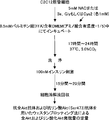
- FIG. 1 is a diagram showing an outline of evaluation of muscle insulin signal carried out in Test Example 1.
- FIG. 2 is a diagram showing the influence of isoleucine, glycine and cystine on muscle insulin signal in Test Example 1.
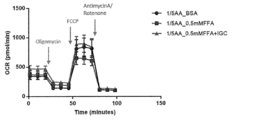
- FIG. 3 is a diagram showing the effect of a mixture of isoleucine, glycine and cystine on muscle mitochondrial function in Test Example 2.
- FIG. 4 is a diagram showing the effect of a mixture of isoleucine, glycine and cystine on muscle mitochondrial function under light oxidative stress stimulation in Test Example 2.
- FIG. 5 is a diagram showing an experimental schedule of Test Example 3.
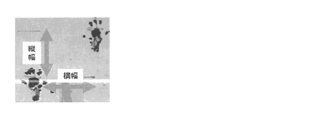
- FIG. 6 is a diagram showing measurement of a walking interval (vertical width and horizontal width) in the measurement of the walking function of Test Example 3.
- FIG. 7 is a diagram showing the effect of exercise and oral administration of a mixture of isoleucine, glycine and cystine on muscle mass in Test Example 3.
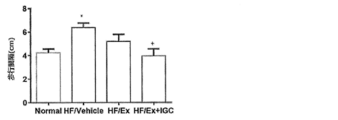
- FIG. 8 is a diagram showing the influence of exercise and oral administration of a mixture of isoleucine, glycine and cystine on the walking function in Test Example 3.
- FIG. 9 is a diagram showing an experimental schedule of Test Example 4.
- FIG. 10 is a graph showing the effect of exercise and oral administration of a mixture of isoleucine, glycine and cystine on muscle strength in Test Example 4 in comparison with the effect of exercise and oral administration of an essential amino acid mixture having a high leucine content. is there.
- the present invention provides a muscle improving agent.
- the muscle-improving agent of the present invention (hereinafter, also referred to as “agent of the present invention” in the present specification) contains one or more selected from the group consisting of isoleucine, glycine and cystine.
- muscle quality means the quality of muscles, that is, the state of muscles, as described above.
- a muscle is an aggregate of muscle fibers and tissues surrounding the muscle fibers such as water, fat, and connective tissue.In a muscle evaluated to have good muscle quality, the muscle fibers are densely present and When the number of surrounding tissues is small, but the number of muscle fibers decreases or the muscle fibers become thin and the ratio of tissues other than muscle fibers increases, it is evaluated that muscle quality is deteriorated.
- muscle functions such as muscle mitochondrial function, muscle insulin sensitivity, muscle inflammation, lipid metabolism and protein synthesis are also muscle elements.
- prevention of muscle deterioration means to prevent the decrease of muscle fibers, the thinning of muscle fibers, the increase of fat and connective tissue around muscle fibers, and the function of muscle mitochondria.
- muscle quality improving agent in the present invention refers to those having the function of preventing the above-mentioned deterioration of muscle quality, those having the function of improving muscle quality, or those having both functions.
- Preventing muscle weakness or improving muscle quality by the agent of the present invention improves muscle strength, improves walking speed and walking function, improves standing and sitting, improves stairs up and down, maintains standing posture, etc. It is expected that the performance of exercise will be improved, such as improvement and improvement of functions in the movement of, movement endurance, and instantaneous power.
- the cystine contained in the agent of the present invention as an active ingredient has a structure in which two cysteine molecules are linked via a disulfide bond (SS) generated by oxidation of a sulfhydryl group (-SH).
- SS disulfide bond
- -SH sulfhydryl group
- L-form As isoleucine and cystine, any of L-form, D-form and DL-form may be used, but L-form and DL-form are preferably used, and L-form is more preferably used.
- isoleucine “glycine” and “cystine”, not only the free form but also the salt form can be used.
- the terms “isoleucine”, “glycine” and “cystine” in the present specification are concepts that also include salts.
- the form of the salt is not particularly limited as long as it is a pharmacologically acceptable salt, and examples thereof include acid addition salts and salts with bases. Specific examples include an inorganic base, an organic base, an inorganic acid, a salt with an organic acid and a salt with an amino acid.
- Examples of the salt with an inorganic base include salts with alkali metals such as lithium, sodium and potassium, salts with alkaline earth metals such as magnesium and calcium, ammonium salts and the like.
- Examples of the salt with an organic base include salts with alkanolamines such as monoethanolamine, diethanolamine and triethanolamine, and salts with heterocyclic amines such as morpholine and piperidine.
- Examples of the salt with an inorganic acid include salts with hydrohalic acid (hydrochloric acid, hydrobromic acid, hydroiodic acid, etc.), sulfuric acid, nitric acid, phosphoric acid, and the like.
- salts with organic acids include salts with monocarboxylic acids such as formic acid, acetic acid and propanoic acid; salts with saturated dicarboxylic acids such as oxalic acid, malonic acid, malic acid and succinic acid; maleic acid and fumaric acid. And unsaturated dicarboxylic acids; salts with tricarboxylic acids such as citric acid; salts with keto acids such as ⁇ -ketoglutaric acid.
- Salts with amino acids include salts with aliphatic amino acids such as alanine; salts with aromatic amino acids such as tyrosine; salts with basic amino acids such as arginine; salts with acidic amino acids such as aspartic acid and glutamic acid; pyro Examples thereof include salts with lactam-forming amino acids such as glutamic acid.
- the above salts may be hydrates (hydrated salts), and examples of such hydrates include monohydrate to hexahydrate.
- the above-mentioned educts and salt forms of “isoleucine”, “glycine” and “cystine” may be used alone or in combination of two or more kinds.
- a free form, a hydrochloride and the like are preferable for each of “isoleucine”, “glycine” and “cystine”.
- isoleucine in the form of a free form or a salt are those extracted and purified from naturally occurring plants and animals, or chemical synthesis methods, fermentation methods, enzyme methods or genes. Any one obtained by a recombinant method or the like may be used, or a commercially available product provided by each company may be used.
- the agent of the present invention may contain one or more selected from the group consisting of isoleucine, glycine and cystine. From the viewpoint of the muscle improving effect, it is preferable to select and combine two kinds from the group consisting of isoleucine, glycine and cystine, and it is more preferable to use all of isoleucine, glycine and cystine as a mixture.
- the content ratio ratio of contents converted into free form
- isoleucine:glycine:cystine is 0.5:0.3:1 by weight ratio. It is preferable to contain them so that the ratio becomes to 2:2:1.
- the content ratio of these (ratio of contents converted into free form) (isoleucine:glycine:cystine) is It is preferable that the content is 0.1:0.1:1 to 10:10:1.
- the agent of the present invention preferably comprises only isoleucine, glycine and cystine.
- the agent of the present invention may contain other nutritional components and anti-fatigue agents.
- Specific examples of such nutrients include glucose, sugar preparations such as dextran, refined soybean oil, fat emulsion such as refined egg yolk lecithin, casein, protein preparations such as whey protein, caffeine, vitamins and minerals. , Polyphenols and the like.
- the agent of the present invention can contain amino acids other than isoleucine, glycine and cystine.
- the agent of the present invention is a tablet, coated tablet, chewable tablet, pill, (micro)capsule, granule, fine granule, powder, elixir, limonase agent, syrup, suspension, emulsion, oral jelly.
- dosage forms such as oral preparations, injections in the form of solutions, suspensions, emulsions, solid injections to be dissolved or suspended before use, infusions, continuous injections, and other injection preparations. can do.
- the agent of the present invention in the above dosage form can be prepared by a formulation means well known in the field of formulation, for example, the method described in the 17th Revised Japanese Pharmacopoeia General Provisions [3] Preparation Articles. At that time, if necessary, various pharmacologically acceptable additives for formulation can be blended.
- the additive can be appropriately selected according to the dosage form of the agent of the present invention, for example, excipients, binders, disintegrants, lubricants, coating agents, bases, solvents, diluents, Dissolution aids, solubilizers, emulsifiers, dispersants, suspending agents, stabilizers, thickeners, soothing agents, isotonic agents, pH adjusters, antioxidants, preservatives, preservatives, taste masking agents. Agents, flavoring agents, sweetening agents, flavoring agents, coloring agents and the like.
- examples of the excipient include magnesium carbonate, titanium dioxide, sugars (lactose and the like), sugar alcohols (mannitol and the like), casein and the like.
- examples of the binder include gelatin, starch, cellulose and its derivatives.
- examples of the disintegrant include crospovidone and crystalline cellulose.
- examples of lubricants include talc and magnesium stearate.
- examples of the coating agent include a methyl methacrylate/butyl methacrylate/dimethylaminoethyl methacrylate copolymer, an ethyl acrylate/methyl methacrylate/trimethylammonium ethyl methacrylate methacrylate copolymer, and the like.
- Examples of the base include animal oil, vegetable oil, hydrocarbon oil (liquid paraffin, etc.), polyethylene glycol and the like.
- Examples of the solvent include purified water, water for injection, monohydric alcohol (ethanol and the like), polyhydric alcohol (glycerin and the like) and the like.
- Examples of the emulsifier or dispersant include sorbitan fatty acid ester, glycerin fatty acid ester, polyoxyethylene sorbitan fatty acid ester, and sucrose fatty acid ester.
- Examples of the stabilizer include adipic acid and ⁇ -cyclodextrin.
- Examples of the thickener include water-soluble polymers (sodium polyacrylate, carboxyvinyl polymer, etc.), polysaccharides (sodium alginate, xanthan gum, tragacanth, etc.) and the like.
- Examples of soothing agents include ethyl aminobenzoate, chlorobutanol, propylene glycol, benzyl alcohol and the like.
- Examples of the isotonicity agent include potassium chloride, sodium chloride, sorbitol, physiological saline and the like.
- Examples of pH adjusters include hydrochloric acid, sulfuric acid, acetic acid, citric acid, lactic acid, sodium hydroxide, potassium hydroxide and the like.
- antioxidants include dibutylhydroxytoluene (BHT), butylhydroxyanisole (BHA), ⁇ -tocopherol, and erythorbic acid.
- preservatives or preservatives include paraben (methylparaben and the like), benzyl alcohol, sodium dehydroacetate, sorbic acid and the like.
- examples of the corrigent or flavoring agent include ascorbic acid, erythritol, sodium L-glutamate, and the like, and examples of the sweetening agent include aspartame, licorice extract, saccharin, and the like.
- the fragrance include l-menthol, d-camphor and cineol.
- colorants include tar pigments (red No. 2, blue No. 1, yellow No. 4, etc.), inorganic pigments (red iron oxide, yellow iron oxide, black iron oxide, etc.), natural pigments (anato pigment, turmeric pigment, ⁇ -carotene, etc.). ) And the like.
- the ingestion amount or dose of the agent of the present invention refers to the muscle condition or the degree of muscle deterioration, sex, age in a subject to which the agent of the present invention is applied (hereinafter, also referred to as “application target” in the present specification).
- application target the total amount of one or more selected from the group consisting of isoleucine, glycine and cystine (in the form of salt)
- it is usually 1 mg/kg body weight to 2 g/kg body weight, preferably 5 mg/kg body weight to 1 g/kg body weight per day, more preferably 10 mg/day as the amount converted to the free body).
- kg body weight to 0.5 g/kg body weight.
- the above-mentioned daily intake or dose may be ingested or administered once, or may be ingested or administered in two or more times (for example, 2 to 5 times).
- the timing of ingestion or administration of the agent of the present invention is not particularly limited, and it can be ingested or administered before or after a meal, or together with a meal, and when exercise is performed, before exercise is started, during exercise, and after exercise is completed. It may be ingested or administered at any time such as after.
- the number of times of ingestion or administration of the agent of the present invention is not particularly limited, but it is at least once (once or twice or more) when improvement of muscle quality is required.
- the period of ingesting or administering the agent of the present invention is particularly limited.
- the agent of the present invention can be continuously ingested or administered.
- a long period for example, 2 weeks or more.
- the agent of the present invention can be in a unit packaging form.
- unit packaging form refers to a form in which a specific amount (for example, an intake amount per dose) is taken as one unit, and one unit or two or more units are contained in one container or package. That is, for example, a unit packaging form in which an intake amount per unit is 1 unit is referred to as a “ingestion unit packaging form”.
- the container or package used in the unit packaging form can be appropriately selected according to the form of the agent of the present invention, and for example, a paper container or bag, a plastic container or bag, a pouch, an aluminum can. , Steel cans, glass bottles, PET bottles, PTP (press through pack) packaging sheets, and the like.
- the application target of the agent of the present invention includes mammals (human, mouse, rat, hamster, rabbit, cat, dog, cow, horse, donkey, pig, sheep, monkey, etc.) and birds (chicken, etc.). ..
- the intake amount or dose of the agent of the present invention may be the type, sex, weight, etc. of the target animal. It may be appropriately set according to
- the agent of the present invention can prevent muscle deterioration due to various causes such as aging and improve muscle quality even when exercise is restricted. Furthermore, the effect can be effectively enhanced even if the exercise is reasonably done. Therefore, the agent of the present invention is capable of performing the exercise that has been conventionally required to improve muscle quality, such as elderly people whose physical functions have deteriorated due to aging, persons whose movement is restricted due to illness, injury, etc. It is preferably used to prevent the deterioration of muscle quality or improve muscle quality in persons who have difficulty Further, the agent of the present invention, even in those who desire to control weight by exercise with a tendency to be obese, those who wish to improve physical strength by exercise with a feeling of being thin, exercise lovers who desire to improve exercise performance, etc. It is preferably used.
- the agent of the present invention may be used as it is, or by further adding additives such as the above-mentioned excipients, solvents, diluents, etc., to a muscle-improving drug (hereinafter, also referred to as “the drug of the present invention” in the present specification). Can be referred to as).
- the content of one kind or two or more kinds selected from the group consisting of isoleucine, glycine and cystine in the medicine of the present invention is the total amount thereof (when each is contained in the form of a salt, it is converted to a free form). It is usually 0.02% to 100% by weight, preferably 0.1% to 100% by weight, and more preferably 0.2% to 100% by weight.
- the dose of the drug of the present invention can be appropriately determined depending on the state and degree of hypomuscularity of the patient to whom the drug of the present invention is administered, the age, sex, weight of the patient, etc., and is composed of isoleucine, glycine and cystine.
- the dose of one or more selected from the group can be set so as to be the above-mentioned daily dose.
- the drug of the present invention can be manufactured by a formulation means well known in the field of formulation, such as the method described in the 17th revised Japanese Pharmacopoeia General Regulations [3] Preparation Articles.
- the drug of the present invention can be suitably administered to elderly persons, patients, persons requiring nursing care, etc. who have muscle weakness or are at risk of muscle weakness.
- the agent of the present invention can be used by adding it to various foods.
- the food to which the agent of the present invention is added is not particularly limited, and may be any food as long as it is generally used for meals, desserts and the like.
- the agent of the present invention can be added to a beverage and, if desired, an appropriate flavor can be added to obtain a drink agent (for example, a soft drink). More specifically, the agent of the present invention can be added to, for example, juice, milk, confectionery, jelly, yogurt, candy and the like.
- the amount of one or two or more kinds selected from the group consisting of isoleucine, glycine and cystine is the same as the above-mentioned daily intake, with respect to the amount of food taken per day. Can be added.
- the present invention also provides a food for improving muscle quality (hereinafter, also referred to as "food of the present invention") containing the agent of the present invention.
- the food of the present invention together with the agent of the present invention, if necessary, a manufacturing agent, a thickening stabilizer, a gum base, an emulsifier, a preservative, an antioxidant, a brightener, a pH adjuster, a sweetener, a bittering agent, Contains food additives such as acidulants, colorants, and flavors, or contains the agent of the present invention and foods or food ingredients, for example, juices, soft drinks, beverages such as teas; lactic acid bacteria beverages, Fermented milk, butter, cheese, yogurt, processed milk, skimmed milk and other dairy products; ham, sausages, hamburgers and other livestock products; kamaboko, bamboo rings, fried fish meat products such as fried egg products; dashi rolls, egg tofu and other egg products; cookies , Jelly, chewing gum, candy, snacks, frozen dessert
- the food of the present invention can be suitably ingested by an elderly person, a care recipient, a patient, etc. who may have muscle deterioration or need to improve muscle quality.
- the food of the present invention is, in addition to the elderly, middle-aged and middle-aged people who want to prevent muscle weakness and improve muscle quality, those who are obese and desire to control their weight by exercise, and who are lean and exercising. People who want to improve their physical strength, those who do not need care, but who are restricted from performing exercise due to illness or injury, and exercise enthusiasts who want to improve their exercise performance. It can be widely taken by those who do.
- the food of the present invention food for specific health for prevention of muscle deterioration or improvement of muscle quality, food with nutritional function, food with health claims such as food with functional claims, food for patients, food for elderly, etc. Can also be provided as special-purpose foods, health supplements, and the like.
- the agent of the present invention can be used by adding it to a concentrated liquid food or a food supplement.
- “Concentrated liquid food” means that the nutritional heat value is adjusted to about 1 kcal/mL, and even if only this is taken for a long period of time, qualitatively It is a comprehensive nutritional food (liquid food) that is designed based on the daily nutritional requirement, with its structure being fully considered.
- the “food supplement” in the present invention refers to those ingested for the purpose of supplementing nutrition in addition to those ingested as a food, and includes nutritional supplements and supplements.
- agent of the present invention When the agent of the present invention is added to a food supplement, other nutritional ingredients or additives are optionally added to prepare, for example, tablets, capsules, powders, granules, suspensions, chewable preparations, syrups and the like. be able to.
- the food of the present invention described above to the agent of the present invention, by adding a food additive, if necessary, or by adding the agent of the present invention in the food or food raw materials, using a general method for producing foods By doing so, it can be processed and manufactured.
- the content of one or more selected from the group consisting of isoleucine, glycine and cystine in the food of the present invention depends on the type or form of the food, the degree of muscle improving effect expected by ingestion of the food, etc. Although it can be appropriately set according to the total weight of the food, one or more total amount selected from the group consisting of isoleucine, glycine and cystine (when it is contained in a salt form, it is converted to a free form).
- the amount) is usually about 0.02% to 100% by weight, preferably about 0.1% to 100% by weight, and more preferably about 0.2% to 100% by weight.
- the daily intake of the food of the present invention can be one or more selected from the group consisting of isoleucine, glycine and cystine described above for the agent of the present invention. It can be set as a quantity.
- the present invention also provides a commercial package comprising the agent of the present invention and a description that describes that the agent of the present invention can be or should be used for improving muscle quality. ..
- the present invention also provides a method for improving muscle quality of a target animal that needs to improve muscle quality (hereinafter, also referred to as “method of the present invention” in the present specification).
- the method of the present invention comprises, for a target animal in need of improving muscle quality, one or two species selected from the group consisting of isoleucine, glycine and cystine in an amount effective for improving the muscle quality of the target animal. Including or ingesting the above.
- the target animals in the method of the present invention humans and, mammals other than humans such as mice, rats, hamsters, rabbits, cats, dogs, cows, horses, donkeys, pigs, sheep, monkeys, and birds such as chickens. Can be mentioned.
- the method of the present invention can be widely applied to those who have muscle weakness and those who want to prevent muscle weakness or improve muscle quality.
- the present invention is suitably applied to patients who cannot exercise sufficiently, such as elderly people who are admitted to be affected, persons requiring care, persons whose exercise is restricted due to illness, injury, and the like.
- the ingestion amount or dose of one or more selected from the group consisting of isoleucine, glycine and cystine in the method of the present invention may be the type, age, sex, weight, muscular deterioration state and degree of the target animal. It is appropriately set depending on the above, etc., but in the agent of the present invention, for humans and target animals other than humans, an amount similar to the above intake amount or dose is ingested or administered at the above-mentioned number of times and period. be able to.
- the method of ingestion or administration of one or more selected from the group consisting of isoleucine, glycine and cystine in the method of the present invention includes oral ingestion or oral administration, enteral tube administration, infusion administration, etc. Oral ingestion or oral administration is preferable because it can be easily performed without the need of performing it at a medical institution under the supervision of a doctor.
- DMEM culture medium containing 2 (w/v)% horse serum (HS), 1 (w/v)% penicillin-streptomycin-glutamine (2 (w/v)% HS, 1 (w/v)%) P/S, 1 (w/v)% Gln/DMEM) to induce differentiation into myotubes (Myotubes).
- Myotubes After confirming differentiation into myotubes (Myotubes), the muscle insulin signal evaluation system was constructed, and the actions of isoleucine, glycine and cystine were evaluated using the constructed evaluation system.
- a protein is extracted from the recovered cells with a RIPA (Radio-Immunoprecipitation Assay) buffer (Cell Signaling Technologies Inc.), and the final concentration of the protein is adjusted to 0.5 mg/mL to prepare a sample.
- RIPA Radio-Immunoprecipitation Assay
- the expression levels of phosphorylated Akt (pAkt) (Ser473) and total Akt (total Akt) were measured using anti-phosphorylated Akt (pAkt) (Ser473) antibody (# 9271S; Cell Signaling Technologies Inc. )) and an anti-total Akt (total Akt) antibody (#9272S; Cell Signaling Technologies Inc.) were used for Western blotting (WB) quantification.
- each protein was quantified using a Western blot-chemiluminescence imaging system (Fusion FX) (Vilber-Lourmat Inc.). Each amino acid was added at the same time as FFA, and the muscle quality improving effect was examined using the recovery of muscle insulin signal as an index. The final concentration of each amino acid was adjusted to 1 mM. As a positive control, 5 mM of N-acetyl cysteine (NAC), which is an antioxidant active substance, was used.
- N-acetyl cysteine N-acetyl cysteine
- the mixture of isoleucine, glycine and cystine was added simultaneously with FFA so that the final concentration of each amino acid was 0.3 mM.
- the evaluation of the muscle mitochondrial function in the flux analyzer XFe24 was carried out according to the measurement method proposed by Primetech, in accordance with 3.0 ⁇ M oligomycin (ATP synthase inhibitor; 75351, Sigma), 3.0 ⁇ M Carbonyl cyanide-p-trifluoromethoxyphenylhydrazone (FCCP) (uncoupler; C2920, Sigma), 0.5 ⁇ M antimycin A (mitochondrial complex III inhibitor; A8674, Sigma) , 0.5 ⁇ M rotenone (mitochondrial complex I inhibitor; R8875, Sigma) were sequentially added, and the oxygen consumption rate (OCR) was measured.
- OCR oxygen consumption rate
- the evaluation results are shown in FIG. In FIG. 3, the OCR measurement results are shown as the average value ⁇ standard error of each sample.
- the maximum respiration amount of muscle mitochondria obtained from the OCR value after addition of FCCP and the OCR values after addition of antimycin A and rotenone was decreased by exposure to 0.5 mM FFA.
- a decrease in maximum respiratory volume was found to be restored by the addition of a mixture of isoleucine, glycine and cystine. From the results of the above test example, it was suggested that the mixture of isoleucine, glycine and cystine has an effect of recovering the decrease in muscle mitochondrial function.
- differentiation medium 2 (w/
- the mixture of isoleucine, glycine and cystine was added 2 hours before the exposure to hydrogen peroxide so that the final concentration of each amino acid was 0.3 mM.
- the evaluation of muscle mitochondrial function in the flux analyzer XFe24 was carried out according to the measurement method proposed by Primetech, in accordance with 3.0 ⁇ M oligomycin (ATP synthase inhibitor; 75351, Sigma), 3.0 ⁇ M Carbonyl cyanide-p-trifluoromethoxyphenylhydrazone (FCCP) (uncoupler; C2920, Sigma), 0.5 ⁇ M antimycin A (mitochondrial complex III inhibitor; A8674, Sigma) , 0.5 ⁇ M rotenone (mitochondrial complex I inhibitor; R8875, Sigma) were sequentially added, and the oxygen consumption rate (OCR) was measured.
- OCR oxygen consumption rate
- the evaluation results are shown in FIG. In FIG. 4, the OCR measurement results are shown as the average value ⁇ standard error of each sample.
- FIG. 4 it was found that the maximum respiration amount of muscle mitochondria obtained from the OCR value after addition of FCCP and the OCR values after addition of antimycin A and rotenone was decreased by exposure to 0.2 mM hydrogen peroxide. On the other hand, exposure to 0.06 mM hydrogen peroxide did not show such a change in maximum respiratory volume. It was observed that the addition of the isoleucine, glycine and cystine mixture 2 hours before hydrogen peroxide exposure increased the maximal respiratory volume upon 0.06 mM hydrogen peroxide exposure.
- the amino acid mixture was dissolved using 0.5 wt% methylcellulose (MC) as the vehicle.
- the experimental schedule is shown in FIG.
- the exercise groups (HF/EX group and HF/EX+IGC group) were exercised once a week. Motor function (walking function) was measured at the 5th week of HF donation, and autopsy was performed at 6th week of HF donation to measure muscle weight.
- the exercise was performed by using the left leg of the rat and performing local resistance exercise load.
- a rat under isoflurane anesthesia was allowed to stand still in an ankle exercising device for small animals (Bioresearch Center Co., Ltd.), a skin stimulating electrode was attached to the tibialis anterior muscle, and the rat was contracted by electrical stimulation. At the same time, the tibialis anterior muscle was pulled in the direction opposite to the contracted direction, and an extension load was applied.
- the exercise load setting conditions are as follows.
- (iii) Exercise load frequency and number of times 10 sets are set every 10 seconds, and 5 sets are repeated. (50 times in total), with a 60 second break between each set
- the gait function was measured by letting the rat walk under anesthesia and observing the gait. Ink was applied to the bottoms of both legs of the rat, and a cylindrical tunnel lined with half-paper was walked. Based on the traces of the right and left legs after walking, as shown in FIG. The width) was measured.
- the measurement results of muscle mass are shown in FIG. 7, and the walking interval (width) during walking is shown in FIG. Each measurement result was shown by the average value +/- standard error.
- Tukey-Kramaer test was performed between the Normal group and the HF/Vehicle group.
- “*” indicates that there is a significant difference with the Normal group at p ⁇ 0.05.
- “+” indicates that there is a significant difference between the HF/Vehicle group and p ⁇ 0.05.
- the relative weight of the tibialis anterior muscle (motion stimulation site) in the HF/Vehicle group tended to decrease compared to the Normal group.
- muscle weight tended to increase as compared with the HF/Vehicle group, and in addition to exercise, a group administered with a mixture of isoleucine, glycine and cystine (HF/EX+IGC group). In the group), there was a tendency that the muscle weight further increased.
- the walking interval of the HF/Vehicle group was significantly wider than that of the Normal group, suggesting that the walking function may be lowered due to the decrease in muscle strength.
- the widening of the walking interval due to the intake of a high-fat diet tended to recover in the exercised HF/EX group.
- the HF/EX+IGC group that received isoleucine, glycine and cystine mixture in addition to exercise, it was observed that the widened walking interval was significantly reduced by the intake of a high fat diet, and in addition to exercise, isoleucine, glycine and cystine mixture It was suggested that the administration may improve the decreased motor function.
- a diet containing 30% by weight of fat was provided as an experimental diet, and exercise and oral administration of a mixture of isoleucine, glycine and cystine (IGC) were started.
- the essential amino acid mixture shown in Table 3 was administered at a dose of 1 g/kg once a day for 6 weeks.
- the amino acid mixture was dissolved using 0.5% by weight methylcellulose (MC) as the vehicle.
- MC methylcellulose
- the experimental schedule is shown in FIG. As the exercise, a resistance exercise was performed once a week as in Test Example 3. At the 5th week of HF donation, muscle strength was measured.
- the muscle strength was measured using a small animal ankle joint exercise device (Bio Research Center Co., Ltd.).
- the angle between the left leg joint and the left knee joint of the rat was fixed at 90°, and a skin stimulation electrode was mounted on the fixed left tibialis anterior muscle. After the wearing, they were stimulated with electric currents having strengths of 1.2 mA, 2.0 mA, 3.0 mA, 4.0 mA and 4.5 mA, respectively, and the muscle contraction force with respect to each muscle contraction stimulation was detected as the muscle force.
- Tukey's test was performed between the HF/EX group, the HF/EX+IGC group, and the HF/EX+LEAA group. The measurement results of muscle strength are shown in FIG.
- the muscle-improving agent of the present invention is capable of performing the exercise that has conventionally been required to improve muscle quality, such as a person having limited physical function due to aging, disease, injury, or the like. Even in difficult people, it can be effectively used for prevention of muscle deterioration and improvement of muscle quality.
- the muscle-improving agent of the present invention is a person who tends to be overweight and wants to control weight by exercise, a person who is lean and wants to improve physical strength by exercise, an exercise lover who wants to improve exercise performance, etc. Also in this, it can be preferably utilized.
Landscapes
- Health & Medical Sciences (AREA)
- Life Sciences & Earth Sciences (AREA)
- Chemical & Material Sciences (AREA)
- Pharmacology & Pharmacy (AREA)
- Animal Behavior & Ethology (AREA)
- Veterinary Medicine (AREA)
- Public Health (AREA)
- General Health & Medical Sciences (AREA)
- Engineering & Computer Science (AREA)
- Medicinal Chemistry (AREA)
- Polymers & Plastics (AREA)
- Nutrition Science (AREA)
- Epidemiology (AREA)
- Food Science & Technology (AREA)
- Proteomics, Peptides & Aminoacids (AREA)
- Mycology (AREA)
- Organic Chemistry (AREA)
- Chemical Kinetics & Catalysis (AREA)
- Orthopedic Medicine & Surgery (AREA)
- Physical Education & Sports Medicine (AREA)
- Neurology (AREA)
- General Chemical & Material Sciences (AREA)
- Nuclear Medicine, Radiotherapy & Molecular Imaging (AREA)
- Bioinformatics & Cheminformatics (AREA)
- Acyclic And Carbocyclic Compounds In Medicinal Compositions (AREA)
- Coloring Foods And Improving Nutritive Qualities (AREA)
Priority Applications (3)
| Application Number | Priority Date | Filing Date | Title |
|---|---|---|---|
| JP2020561551A JP7548014B2 (ja) | 2018-12-21 | 2019-12-20 | 筋質向上剤 |
| EP19900986.1A EP3900718A4 (en) | 2018-12-21 | 2019-12-20 | MEANS OF IMPROVING MUSCLE QUALITY |
| US17/349,207 US20210308084A1 (en) | 2018-12-21 | 2021-06-16 | Agent for improving muscle quality |
Applications Claiming Priority (2)
| Application Number | Priority Date | Filing Date | Title |
|---|---|---|---|
| JP2018240020 | 2018-12-21 | ||
| JP2018-240020 | 2018-12-21 |
Related Child Applications (1)
| Application Number | Title | Priority Date | Filing Date |
|---|---|---|---|
| US17/349,207 Continuation US20210308084A1 (en) | 2018-12-21 | 2021-06-16 | Agent for improving muscle quality |
Publications (1)
| Publication Number | Publication Date |
|---|---|
| WO2020130146A1 true WO2020130146A1 (ja) | 2020-06-25 |
Family
ID=71101355
Family Applications (1)
| Application Number | Title | Priority Date | Filing Date |
|---|---|---|---|
| PCT/JP2019/050188 Ceased WO2020130146A1 (ja) | 2018-12-21 | 2019-12-20 | 筋質向上剤 |
Country Status (4)
| Country | Link |
|---|---|
| US (1) | US20210308084A1 (https=) |
| EP (1) | EP3900718A4 (https=) |
| JP (1) | JP7548014B2 (https=) |
| WO (1) | WO2020130146A1 (https=) |
Cited By (2)
| Publication number | Priority date | Publication date | Assignee | Title |
|---|---|---|---|---|
| WO2022101650A1 (en) * | 2020-11-10 | 2022-05-19 | Dzala Llc | Novel compositions for neutralizing toxic effects of hydrogen peroxide in living cells or tissues |
| WO2022122730A1 (en) * | 2020-12-09 | 2022-06-16 | Société des Produits Nestlé S.A. | Compositions and methods using at least one glycine or derivative thereof and at least one large neutral amino acid and/or cationic amino acid or precursor thereof |
Citations (2)
| Publication number | Priority date | Publication date | Assignee | Title |
|---|---|---|---|---|
| WO2015133627A1 (ja) * | 2014-03-07 | 2015-09-11 | 味の素株式会社 | 虚弱予防剤 |
| JP2016014007A (ja) * | 2014-06-13 | 2016-01-28 | 花王株式会社 | 筋タンパク質合成シグナル活性化剤 |
Family Cites Families (5)
| Publication number | Priority date | Publication date | Assignee | Title |
|---|---|---|---|---|
| WO2013175266A1 (en) * | 2012-05-21 | 2013-11-28 | Chemi Nutra Inc. | Method for increasing muscle mass and strength |
| US9820504B2 (en) * | 2013-03-08 | 2017-11-21 | Axiom Foods, Inc. | Rice protein supplement and methods of use thereof |
| WO2014138304A1 (en) | 2013-03-08 | 2014-09-12 | Axiom Foods, Inc., | Rice protein supplements |
| WO2014191856A1 (en) | 2013-05-31 | 2014-12-04 | Nestec S.A. | Methods for enhancement of muscle protein synthesis |
| WO2017159741A1 (ja) * | 2016-03-16 | 2017-09-21 | 味の素株式会社 | 行動体力向上剤 |
-
2019
- 2019-12-20 WO PCT/JP2019/050188 patent/WO2020130146A1/ja not_active Ceased
- 2019-12-20 EP EP19900986.1A patent/EP3900718A4/en active Pending
- 2019-12-20 JP JP2020561551A patent/JP7548014B2/ja active Active
-
2021
- 2021-06-16 US US17/349,207 patent/US20210308084A1/en active Pending
Patent Citations (2)
| Publication number | Priority date | Publication date | Assignee | Title |
|---|---|---|---|---|
| WO2015133627A1 (ja) * | 2014-03-07 | 2015-09-11 | 味の素株式会社 | 虚弱予防剤 |
| JP2016014007A (ja) * | 2014-06-13 | 2016-01-28 | 花王株式会社 | 筋タンパク質合成シグナル活性化剤 |
Non-Patent Citations (5)
| Title |
|---|
| "Japanese Pharmacopoeia", article "General Rules for Preparation, [3] Monographs for Preparations, and the like" |
| KIM H.K. ET AL., J. AM. GERIATR. SOC., vol. 60, no. 1, 2012, pages 16 - 23 |
| LYNCH, GS ET AL.: "Dietary meat and protection against sarcopenia", MEAT SCIENCE, vol. 144, 19 June 2018 (2018-06-19), pages 180 - 185, XP055721697 * |
| See also references of EP3900718A4 |
| SINHA-HIKIM, I ET AL.: "Long-Term Supplementation With a Cystine-Based Antioxidant Delays Loss of Muscle Mass in Aging", JOUNRNALS OF GERONTOLOGY: BIOLOGICAL SCIENCES AND MEDICAL SCIENCES, vol. 68, no. 7, 2013, pages 749 - 759, XP055721691 * |
Cited By (4)
| Publication number | Priority date | Publication date | Assignee | Title |
|---|---|---|---|---|
| WO2022101650A1 (en) * | 2020-11-10 | 2022-05-19 | Dzala Llc | Novel compositions for neutralizing toxic effects of hydrogen peroxide in living cells or tissues |
| WO2022122730A1 (en) * | 2020-12-09 | 2022-06-16 | Société des Produits Nestlé S.A. | Compositions and methods using at least one glycine or derivative thereof and at least one large neutral amino acid and/or cationic amino acid or precursor thereof |
| CN116456965A (zh) * | 2020-12-09 | 2023-07-18 | 雀巢产品有限公司 | 使用至少一种甘氨酸或其衍生物和至少一种大型中性氨基酸和/或阳离子氨基酸或其前体的组合物和方法 |
| JP2023553599A (ja) * | 2020-12-09 | 2023-12-25 | ソシエテ・デ・プロデュイ・ネスレ・エス・アー | 少なくとも1つのグリシン又はその誘導体と、少なくとも1つの大型中性アミノ酸及び/若しくはカチオン性アミノ酸又はそれらの前駆体と、を使用する組成物及び方法 |
Also Published As
| Publication number | Publication date |
|---|---|
| EP3900718A4 (en) | 2022-08-24 |
| JPWO2020130146A1 (ja) | 2021-11-04 |
| JP7548014B2 (ja) | 2024-09-10 |
| US20210308084A1 (en) | 2021-10-07 |
| EP3900718A1 (en) | 2021-10-27 |
Similar Documents
| Publication | Publication Date | Title |
|---|---|---|
| JP6551393B2 (ja) | 虚弱予防剤 | |
| US12161666B2 (en) | Composition comprising cinnamaldehyde and zinc to improve swallowing | |
| JP7548014B2 (ja) | 筋質向上剤 | |
| US20220249592A1 (en) | Muscle quality improvement agent | |
| KR102722498B1 (ko) | 인지 기능 개선용 조성물 및 불안양 증상 개선용 조성물, 및 뇌 위축 억제용 조성물 | |
| JP6677775B2 (ja) | 筋肉増強剤 | |
| JP6848962B2 (ja) | 行動体力向上剤 | |
| JP2019108364A (ja) | 栄養組成物 | |
| JP2020100591A (ja) | 筋質向上剤 | |
| JPWO2018043694A1 (ja) | 筋持久力向上用組成物 | |
| WO2021193820A1 (ja) | 毛髪の太毛化促進用組成物、毛周期の成長期維持用組成物およびvegf産生促進用組成物、毛周期の休止期から成長期への移行促進用組成物およびfgf7産生促進用組成物、ならびに毛周期の正常化促進用組成物 | |
| JP7568021B2 (ja) | ジョイント機能改善用組成物 | |
| US20240091185A1 (en) | Composition for improving cognitive function, agent for improving cognitive function, and food for improving cognitive function | |
| JP6981311B2 (ja) | 不安様症状の改善用組成物 | |
| JP2019058140A (ja) | 栄養組成物 | |
| WO2021112217A1 (ja) | 肝臓の中性脂肪量の増加抑制用組成物 |
Legal Events
| Date | Code | Title | Description |
|---|---|---|---|
| 121 | Ep: the epo has been informed by wipo that ep was designated in this application |
Ref document number: 19900986 Country of ref document: EP Kind code of ref document: A1 |
|
| ENP | Entry into the national phase |
Ref document number: 2020561551 Country of ref document: JP Kind code of ref document: A |
|
| NENP | Non-entry into the national phase |
Ref country code: DE |
|
| ENP | Entry into the national phase |
Ref document number: 2019900986 Country of ref document: EP Effective date: 20210721 |