WO2020122096A1 - 医療用成形体、医療機器、神経再生誘導チューブ - Google Patents
医療用成形体、医療機器、神経再生誘導チューブ Download PDFInfo
- Publication number
- WO2020122096A1 WO2020122096A1 PCT/JP2019/048392 JP2019048392W WO2020122096A1 WO 2020122096 A1 WO2020122096 A1 WO 2020122096A1 JP 2019048392 W JP2019048392 W JP 2019048392W WO 2020122096 A1 WO2020122096 A1 WO 2020122096A1
- Authority
- WO
- WIPO (PCT)
- Prior art keywords
- medical
- residue
- molded article
- polyester
- acid
- Prior art date
- Legal status (The legal status is an assumption and is not a legal conclusion. Google has not performed a legal analysis and makes no representation as to the accuracy of the status listed.)
- Ceased
Links
Images


Classifications
-
- A—HUMAN NECESSITIES
- A61—MEDICAL OR VETERINARY SCIENCE; HYGIENE
- A61L—METHODS OR APPARATUS FOR STERILISING MATERIALS OR OBJECTS IN GENERAL; DISINFECTION, STERILISATION OR DEODORISATION OF AIR; CHEMICAL ASPECTS OF BANDAGES, DRESSINGS, ABSORBENT PADS OR SURGICAL ARTICLES; MATERIALS FOR BANDAGES, DRESSINGS, ABSORBENT PADS OR SURGICAL ARTICLES
- A61L17/00—Materials for surgical sutures or for ligaturing blood vessels ; Materials for prostheses or catheters
- A61L17/06—At least partially resorbable materials
- A61L17/10—At least partially resorbable materials containing macromolecular materials
- A61L17/12—Homopolymers or copolymers of glycolic acid or lactic acid
-
- A—HUMAN NECESSITIES
- A61—MEDICAL OR VETERINARY SCIENCE; HYGIENE
- A61L—METHODS OR APPARATUS FOR STERILISING MATERIALS OR OBJECTS IN GENERAL; DISINFECTION, STERILISATION OR DEODORISATION OF AIR; CHEMICAL ASPECTS OF BANDAGES, DRESSINGS, ABSORBENT PADS OR SURGICAL ARTICLES; MATERIALS FOR BANDAGES, DRESSINGS, ABSORBENT PADS OR SURGICAL ARTICLES
- A61L27/00—Materials for grafts or prostheses or for coating grafts or prostheses
- A61L27/14—Macromolecular materials
- A61L27/18—Macromolecular materials obtained otherwise than by reactions only involving carbon-to-carbon unsaturated bonds
-
- A—HUMAN NECESSITIES
- A61—MEDICAL OR VETERINARY SCIENCE; HYGIENE
- A61L—METHODS OR APPARATUS FOR STERILISING MATERIALS OR OBJECTS IN GENERAL; DISINFECTION, STERILISATION OR DEODORISATION OF AIR; CHEMICAL ASPECTS OF BANDAGES, DRESSINGS, ABSORBENT PADS OR SURGICAL ARTICLES; MATERIALS FOR BANDAGES, DRESSINGS, ABSORBENT PADS OR SURGICAL ARTICLES
- A61L27/00—Materials for grafts or prostheses or for coating grafts or prostheses
- A61L27/50—Materials characterised by their function or physical properties, e.g. injectable or lubricating compositions, shape-memory materials, surface modified materials
-
- A—HUMAN NECESSITIES
- A61—MEDICAL OR VETERINARY SCIENCE; HYGIENE
- A61L—METHODS OR APPARATUS FOR STERILISING MATERIALS OR OBJECTS IN GENERAL; DISINFECTION, STERILISATION OR DEODORISATION OF AIR; CHEMICAL ASPECTS OF BANDAGES, DRESSINGS, ABSORBENT PADS OR SURGICAL ARTICLES; MATERIALS FOR BANDAGES, DRESSINGS, ABSORBENT PADS OR SURGICAL ARTICLES
- A61L27/00—Materials for grafts or prostheses or for coating grafts or prostheses
- A61L27/50—Materials characterised by their function or physical properties, e.g. injectable or lubricating compositions, shape-memory materials, surface modified materials
- A61L27/58—Materials at least partially resorbable by the body
-
- A—HUMAN NECESSITIES
- A61—MEDICAL OR VETERINARY SCIENCE; HYGIENE
- A61L—METHODS OR APPARATUS FOR STERILISING MATERIALS OR OBJECTS IN GENERAL; DISINFECTION, STERILISATION OR DEODORISATION OF AIR; CHEMICAL ASPECTS OF BANDAGES, DRESSINGS, ABSORBENT PADS OR SURGICAL ARTICLES; MATERIALS FOR BANDAGES, DRESSINGS, ABSORBENT PADS OR SURGICAL ARTICLES
- A61L31/00—Materials for other surgical articles, e.g. stents, stent-grafts, shunts, surgical drapes, guide wires, materials for adhesion prevention, occluding devices, surgical gloves, tissue fixation devices
- A61L31/04—Macromolecular materials
- A61L31/06—Macromolecular materials obtained otherwise than by reactions only involving carbon-to-carbon unsaturated bonds
-
- A—HUMAN NECESSITIES
- A61—MEDICAL OR VETERINARY SCIENCE; HYGIENE
- A61L—METHODS OR APPARATUS FOR STERILISING MATERIALS OR OBJECTS IN GENERAL; DISINFECTION, STERILISATION OR DEODORISATION OF AIR; CHEMICAL ASPECTS OF BANDAGES, DRESSINGS, ABSORBENT PADS OR SURGICAL ARTICLES; MATERIALS FOR BANDAGES, DRESSINGS, ABSORBENT PADS OR SURGICAL ARTICLES
- A61L31/00—Materials for other surgical articles, e.g. stents, stent-grafts, shunts, surgical drapes, guide wires, materials for adhesion prevention, occluding devices, surgical gloves, tissue fixation devices
- A61L31/14—Materials characterised by their function or physical properties, e.g. injectable or lubricating compositions, shape-memory materials, surface modified materials
-
- A—HUMAN NECESSITIES
- A61—MEDICAL OR VETERINARY SCIENCE; HYGIENE
- A61L—METHODS OR APPARATUS FOR STERILISING MATERIALS OR OBJECTS IN GENERAL; DISINFECTION, STERILISATION OR DEODORISATION OF AIR; CHEMICAL ASPECTS OF BANDAGES, DRESSINGS, ABSORBENT PADS OR SURGICAL ARTICLES; MATERIALS FOR BANDAGES, DRESSINGS, ABSORBENT PADS OR SURGICAL ARTICLES
- A61L31/00—Materials for other surgical articles, e.g. stents, stent-grafts, shunts, surgical drapes, guide wires, materials for adhesion prevention, occluding devices, surgical gloves, tissue fixation devices
- A61L31/14—Materials characterised by their function or physical properties, e.g. injectable or lubricating compositions, shape-memory materials, surface modified materials
- A61L31/148—Materials at least partially resorbable by the body
-
- A—HUMAN NECESSITIES
- A61—MEDICAL OR VETERINARY SCIENCE; HYGIENE
- A61L—METHODS OR APPARATUS FOR STERILISING MATERIALS OR OBJECTS IN GENERAL; DISINFECTION, STERILISATION OR DEODORISATION OF AIR; CHEMICAL ASPECTS OF BANDAGES, DRESSINGS, ABSORBENT PADS OR SURGICAL ARTICLES; MATERIALS FOR BANDAGES, DRESSINGS, ABSORBENT PADS OR SURGICAL ARTICLES
- A61L2430/00—Materials or treatment for tissue regeneration
- A61L2430/22—Materials or treatment for tissue regeneration for reconstruction of hollow organs, e.g. bladder, esophagus, urether, uterus
-
- A—HUMAN NECESSITIES
- A61—MEDICAL OR VETERINARY SCIENCE; HYGIENE
- A61L—METHODS OR APPARATUS FOR STERILISING MATERIALS OR OBJECTS IN GENERAL; DISINFECTION, STERILISATION OR DEODORISATION OF AIR; CHEMICAL ASPECTS OF BANDAGES, DRESSINGS, ABSORBENT PADS OR SURGICAL ARTICLES; MATERIALS FOR BANDAGES, DRESSINGS, ABSORBENT PADS OR SURGICAL ARTICLES
- A61L2430/00—Materials or treatment for tissue regeneration
- A61L2430/32—Materials or treatment for tissue regeneration for nerve reconstruction
Definitions
- the present invention relates to a medical treatment containing a bioabsorbable polyester, which is used as a material for a medical device such as a suture, a stent, an artificial blood vessel, an adhesion prevention film, a damage protection film, and a nerve regeneration guide tube which is used by being placed inside or outside a living body. Moldings for automobiles.
- bioabsorbable material polylactic acid, polyglycolic acid, polycaprolactone or a bioabsorbable polyester which is a copolymer of these is drawing attention.
- bioabsorbable polyester moldings are generally fragile. Therefore, attempts have been made to develop high molecular weight polymers and various copolymers for the purpose of improving the mechanical properties and obtaining bioabsorbable polymers having strength and moldability that can withstand practical use.
- Patent Document 1 in the synthesis of polylactic acid or polyglycolic acid, which has been conventionally carried out by polycondensation, in order to obtain a polymer having a higher molecular weight, lactide and glycolide are first produced from lactic acid and glycolic acid. A method for synthesizing ring-opening polymerization is disclosed.
- Non-Patent Document 1 describes a polylactic acid-based polymer obtained by reacting lactide with hexanediol, and a multiblock copolymer obtained by linking polycaprolactone having hydroxyl groups at both ends.
- Patent Document 2 by having a first block made of polylactic acid having hydroxyl groups at both ends and a second block made of a polymer having higher mobility than polylactic acid, it is possible to mechanically absorb bioabsorbability. Multi-block copolymers with improved properties are disclosed.
- An object of the present invention is to provide a medical molded body containing a bioabsorbable polyester and having excellent bio-following properties.
- This invention for solving the said subject is a medical molding containing a bioabsorbable polyester, Comprising: A tensile stress is added to the direction with the longest of a molding, and 100% of the initial length is pulled.
- the molded article for medical use has a work load retention rate of 55% or more, which is defined as the ratio of the work load of the tenth operation to the work load of the first operation when the operation of causing strain is repeated.
- a medical device having higher biocompatibility can be manufactured.
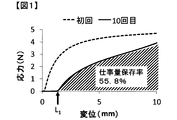
- 5 is a graph showing work preservation rate by plotting stress against displacement in the tensile test of Example 3.
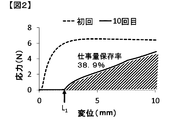
- 7 is a graph showing work preservation rate by plotting stress against displacement in the tensile test of Comparative Example 2.
- 5 is a graph showing work preservation rate by plotting stress against displacement in the tensile test of Comparative Example 4.
- 7 is a graph showing work preservation rate by plotting stress against displacement in a tensile test of Comparative Example 5.
- 3 is a photograph of the medical tube produced in Example 1.
- the molded article for medical treatment of the present invention (hereinafter, may be simply referred to as “molded article”) is subjected to tensile stress in the direction having the longest length of the molded article to generate 100% tensile strain with respect to the initial length.
- the work storage rate defined as the ratio of the work of the tenth operation to the work of the first operation when the operation is repeated is 55% or more. Specifically, it is measured by the tensile test described in Measurement Example 5 described later.
- the Young's modulus of the material is preferably 10 MPa or less.
- the Young's modulus of the molded body is more preferably 5.0 MPa or less, further preferably 3.0 MPa or less so that the Young's modulus is closer to the soft tissue.
- the Young's modulus of the molded body is preferably 0.1 MPa or more, more preferably 0.5 MPa or more. Particularly, in the case of a molded body used for the purpose of connecting tissues, 1.0 MPa or more is preferable.
- Tensile strength is a factor that is directly related to the breaking strength of the molded product. Assuming that the molded article for medical use receives an external force due to deformation such as expansion or contraction of muscle, the tensile strength of the medical molded body is preferably 5 MPa or more, and it is used for a site where more severe deformation such as refraction or bending occurs. In the medical molded body, the tensile strength is preferably 20 MPa or more.
- ⁇ Elongation at break is a factor indicating the puncture resistance of a molded product.
- the elongation at break of the medical molded body is preferably 200% or more, and medical treatment used in a site where more severe deformation such as refraction or bending occurs.
- the elongation at break is more preferably 500% or more in the molded article for medical use, and the elongation at break is further preferably 1000% or more in the medical molded article used in a region where particularly large deformation is caused by refraction or bending such as joints. preferable.
- the breaking elongation is a value measured according to JIS K6251 (2010) (in JIS, it is expressed as “elongation at break”), and specifically, measured by a tensile test described in measurement example 3 described later. I shall.
- the medical molded body of the present invention since the medical molded body of the present invention is used by being placed inside and outside the living body, it may have a restoring property of returning to the original shape even when deformed by an external force caused by the movement of muscles and joints. is necessary. Restorability can be quantitatively evaluated by determining the work storage rate as in measurement example 5 described later.
- the work storage rate is 10 with respect to the work of the first operation when a tensile stress is applied in the direction having the longest length of the molded product to repeat the operation of producing a tensile strain of 100% with respect to the initial length. It is the ratio of the work amount of the second operation, and can be specifically calculated by the method described in Measurement Example 5 described later.
- the medical molded body of the present invention has a work preservation ratio of 55% or more, and a portion such as a joint where a large deformation is frequently caused by refraction or bending.
- the work storage ratio of the medical molded body used for is preferably 60% or more.
- the medical molded body of the present invention since the medical molded body of the present invention is used by being placed inside and outside of a living body, it is expected that it is repeatedly deformed and restored by being repeatedly subjected to the movement of muscles and joints. Therefore, the formed body is required to have durability against repeated deformation. The durability can be quantitatively evaluated by measuring the permanent strain generated when the work preservation rate is measured. Since the medical molded body used in the vicinity of the muscle is frequently deformed, the medical molded body of the present invention has a permanent strain of 20% or less, and is used in a region such as a joint where a large deformation is frequently caused by refraction or curvature. The permanent set of the molded article for medical treatment is preferably 15% or less.
- the molded product of the present invention is not limited in its compounding ratio as long as the bioabsorbable polyester expresses bioabsorbability to the extent required in each application by including the bioabsorbable polyester.
- the content is preferably 50% by weight or more, more preferably 80% by weight or more.
- it is preferably composed of only a bioabsorbable polyester, and further, physical properties required in the present invention, that is, low while maintaining high tensile strength.
- the bioabsorbability is a property that, after being placed inside and outside the body, it is naturally decomposed by a hydrolysis reaction or an enzymatic reaction, and the decomposed product is disappeared by being metabolized or excreted.
- bioabsorbable polyesters include polyglycolic acid, polylactic acid (D, L, DL forms), poly- ⁇ -caprolactone, polyhydroxybutyric acid, polyhydroxybutyrate valeric acid, polyorthoester, polyhydroxyvaleric acid.
- the medical molded article of the present invention more preferably contains any one of polyglycolic acid, a copolymer of polylactic acid and polyglycolic acid, and a copolymer of polyglycolic acid and poly ⁇ -caprolactone. ..
- the molded article of the present invention contains, as a bioabsorbable polyester, a polyester copolymer having a monomer residue selected from a hydroxycarboxylic acid residue and a lactone residue as a main constituent unit. It includes a polyester copolymer mainly composed of two kinds of monomer residues, a carboxylic acid residue and a lactone residue. Lactone is a cyclic compound obtained by intramolecular dehydration condensation of a hydroxy group and a carboxyl group of hydroxycarboxylic acid.
- that a certain monomer residue is the “main constitutional unit” means that the monomer residue is 50 mol% or more of the number of residues of the entire polymer including other monomer residues. ..
- main constitutional units means that the sum of the numbers of the two types of monomer residues is 50 mol% of the total number of residues of the polymer including other monomer residues.
- the above means that each of the two types of residues is 20 mol% or more of the number of residues in the entire polymer.
- “having a hydroxycarboxylic acid residue and a lactone residue as main constituent units” means that the sum of the number of residues of the hydroxycarboxylic acid residue and the lactone residue is 50 mol% or more of the number of residues of the entire polymer. And that the hydroxycarboxylic acid residues are 20 mol% or more of the total number of residues of the polymer, and the lactone residues are 20 mol% or more of the total number of residues of the polymer.
- the molar fraction of each monomer residue can be determined from the area value of the signal derived from each residue by nuclear magnetic resonance (NMR) measurement. For example, when the hydroxycarboxylic acid residue is a lactic acid residue and the lactone residue is a caprolactone residue, it can be measured by the method described in Measurement Example 2 described later.
- An aliphatic hydroxycarboxylic acid is particularly preferable as the monomer for forming the hydroxycarboxylic acid residue.
- the aliphatic hydroxycarboxylic acid include lactic acid, glycolic acid, hydroxybutyric acid, hydroxyvaleric acid, hydroxypentanoic acid, hydroxycaproic acid and hydroxyheptanoic acid, and lactic acid, glycolic acid and hydroxycaproic acid are particularly preferable.
- lactic acid L -lactic acid, D -lactic acid, or a mixture thereof can be used, but it is preferable to use lactic acid from the viewpoint of physical properties and biocompatibility of the obtained polymer, and particularly L -lactic acid is used. Is more preferable.
- the content of the L- form is preferably 85% or more, and more preferably 95% or more.
- lactide which is a cyclic compound obtained by dehydration condensation of two molecules of hydroxycarboxylic acid with each other's hydroxy group and carboxyl group may be used.
- lactide dilactide obtained by dehydration condensation of 2 molecules of lactic acid, glycolide obtained by dehydration condensation of 2 molecules of glycolic acid, or tetramethyl glycolide can be used.
- Examples of monomers for forming a lactone residue include ⁇ -caprolactone, dioxepanone, ethylene oxalate, dioxanone, 1,4-dioxane-2,3-dione, ⁇ -propiolactone, ⁇ -valerolactone, ⁇ - Examples include propiolactone, ⁇ -butyrolactone, ⁇ -butyrolactone, and pivalolactone.
- the term "monomer residue" contained in the polyester copolymer means, in principle, a repeating chemical structure derived from the monomer in the chemical structure of the polyester copolymer obtained from a polymerization stock solution containing the monomer. Say the unit.
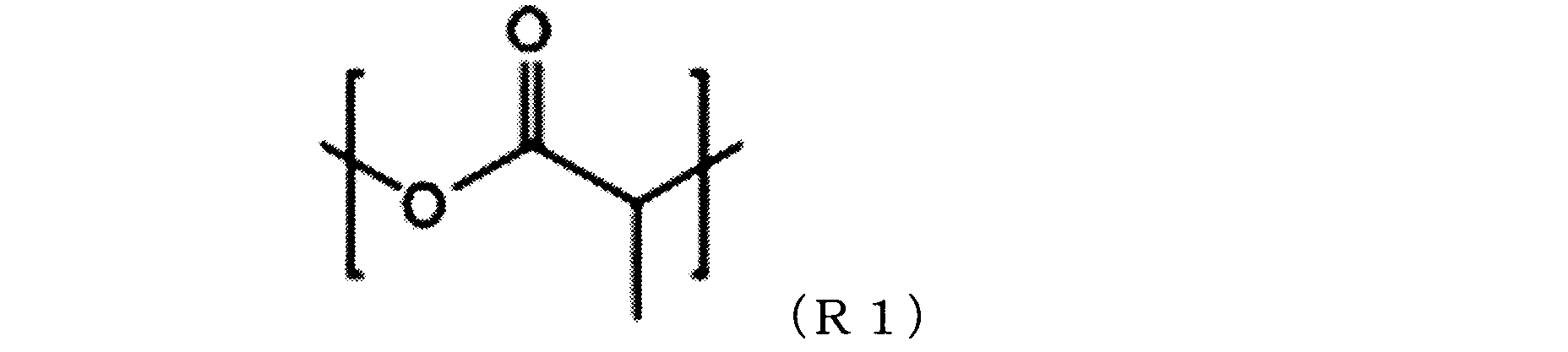
- lactic acid CH 3 CH(OH)COOH
- caprolactone ⁇ -caprolactone: the following formula
- the “monomer residue” means one of the twice-repeated structures derived from the dimer.
- dilactide L -(-)-lactide: the following formula
- the weight average molecular weight of the bioabsorbable polyester used in the present invention is preferably 100,000 or more in order to obtain the effect of improving the tensile strength due to the entanglement of polymer chains.
- the upper limit is not particularly limited, but considering the problems of the production method due to the increase in viscosity and the deterioration of moldability, it is preferably 1.6 million or less, more preferably 800,000 or less, and further preferably 400,000 or less.
- the weight average molecular weight can be determined by the gel permeation chromatography (GPC) method, and specifically, it is determined by the method described in Measurement Example 1 described later.
- polyester copolymer having a hydroxycarboxylic acid residue and a lactone residue as main constituent units which is a particularly preferred bioabsorbable polyester in the present invention, will be described.
- the sum of the hydroxycarboxylic acid residue and the lactone residue is, based on the above definition, 50 mol% or more, preferably 75 mol% or more, of the whole polymer including other monomer residues. More preferably 90 mol% or more. Further, the hydroxycarboxylic acid residue and the lactone residue are each 20 mol% or more, preferably 30 mol% or more, and more preferably 40 mol% or more, based on the above definitions.
- a polymer in which the sum of hydroxycarboxylic acid residues and lactone residues is 100% of the whole polymer, that is, a polymer consisting of hydroxycarboxylic acid residues and lactone residues alone is mentioned as a particularly preferred embodiment.
- the molar ratio of the hydroxycarboxylic acid residue and the lactone residue is preferably 7/3 to 3/7, and more preferably 6/4 to 4 because the homopolymer-like property is approached if one is present in excess. /6.
- Another monomer that can be copolymerized with the hydroxycarboxylic acid and the lactone can be further copolymerized, and it is a preferred embodiment to copolymerize a monomer that functions as a linker.
- the monomer that functions as a linker include a hydroxycarboxylic acid different from the hydroxycarboxylic acid that constitutes the main constituent unit, a dialcohol, a dicarboxylic acid, an amino acid, a diamine, a diisocyanate, and a diepoxide.
- a "polyester copolymer” including a copolymer including a constituent unit partially connected by a bond other than an ester bond. Notation shall be given.
- the polyester copolymer is a monomer obtained by copolymerizing a monomer forming a hydroxycarboxylic acid residue (referred to as “monomer A”) and a monomer forming a lactone residue (referred to as “monomer B”) in equimolar amounts. It is preferable that 1.1 ⁇ V A /V B ⁇ 40, where V A and V B are the initial polymerization rates.
- V A and V B are obtained by the following method. Same as the R value described later in the polyester copolymer finally synthesized or to be synthesized by mixing the monomers A and B in an equimolar amount and adding a solvent and a catalyst as needed, within the range of an error of 10%. The conditions such as temperature are adjusted so that the R value is obtained, and the polymerization reaction is started. Sampling is periodically performed from the sample during polymerization, and the residual amounts of the monomer A and the monomer B are measured. The remaining amount is measured by, for example, chromatography or nuclear magnetic resonance (NMR) measurement. By subtracting the remaining amount from the charged amount, the amount of monomer used in the polymerization reaction can be obtained. When the amount of monomer used in the polymerization reaction is plotted against the sampling time, the initial slopes of the curves are V A and V B.
- V A /V B is more preferably 1.3 or more, further preferably 1.5 or more.
- V A /V B is more preferably 30 or less, further preferably 20 or less, and further preferably 10 or less.
- Preferred combinations of such monomers A and B include dilactide and ⁇ -caprolactone, glycolide and ⁇ -caprolactone, dilactide and dioxepanone, dilactide and ⁇ -valerolactone, glycolide and ⁇ -valerolactone.
- the polyester copolymer preferably has an R value represented by the following formula of 0.45 or more and 0.99 or less.
- the mole fraction in a polyester copolymer is a percentage with respect to 100% of all the monomer residues which comprise a polyester copolymer.
- R value [AB]/(2[A][B]) ⁇ 100 [A]: Molar fraction (%) of hydroxycarboxylic acid residues in the polyester copolymer [B]: Molar fraction (%) of lactone residue in polyester copolymer [AB]: Molar fraction (%) of the structure in which the hydroxycarboxylic acid residue and the lactone residue are adjacent to each other in the polyester copolymer
- the R value is used as an index indicating the randomness of the sequence of the monomer residues in the copolymer having two types of monomer residues, that is, the hydroxycarboxylic acid residue and the lactone residue as the main constituent units. For example, in a random copolymer in which the monomer sequences are completely random, the R value is 1. Further, the R value of the block copolymer is 0 to 0.44.
- the R value can be determined by nuclear magnetic resonance (NMR) measurement and quantifying the ratio of the combination (AA, BB, AB, BA) of two adjacent monomers, and specifically, It shall be measured by the method described in Measurement Example 2 described later.
- NMR nuclear magnetic resonance
- the R value is less than 0.45, the crystallinity is high, the molded article of the copolymer becomes hard, and the Young's modulus increases.
- the R value exceeds 0.99, the copolymer molded article becomes too soft and exhibits tackiness, resulting in poor handleability.
- the R value of the polyester copolymer used in the present invention is preferably 0.50 or more, and preferably 0.80 or less.
- the crystallinity of the polymer has a great influence on the mechanical strength of the molded product.
- a low crystalline polymer exhibits a low Young's modulus, and thus it is desirable that the crystalline property is low in order to obtain flexibility.
- the crystallization rate of a polymer is obtained from the heat of fusion by differential scanning calorimetry (DSC) measurement.
- the crystallization rate of at least one of the hydroxycarboxylic acid residue and the lactone residue is preferably less than 14%.
- the crystallization rate of the hydroxycarboxylic acid residue and/or lactone residue is more preferably 10% or less, further preferably 5% or less.
- the crystallization rate of a monomer residue as referred to herein is the product of the heat of fusion per unit weight of a homopolymer consisting of only a certain monomer residue and the weight fraction of the monomer residue in the polyester copolymer, It is the ratio of the heat of fusion per unit weight of the monomer residue in the copolymer. That is, the crystallization rate of the hydroxycarboxylic acid residue means the product of the heat of fusion per unit weight of the homopolymer consisting only of the hydroxycarboxylic acid and the weight fraction of the hydroxycarboxylic acid residue in the polyester copolymer, It is the ratio of the heat of fusion per unit weight of its hydroxycarboxylic acid residue in the copolymer.
- the crystallization rates of the hydroxycarboxylic acid residue and the lactone residue indicate the proportions of the hydroxycarboxylic acid residue and the lactone residue of the polyester copolymer that form a crystal structure, respectively.
- the crystallization rate is specifically determined by the method described in Measurement Example 4 described later.
- the monomer A forming a hydroxycarboxylic acid residue and the monomer B forming a lactone residue are completely left in the sum of the hydroxycarboxylic acid residue and the lactone residue when the polymerization is completed.
- Macromer synthesis step in which 50 mol% or more of the groups and 20 mol% or more of the hydroxycarboxylic acid residues and the lactone residues are mixed and polymerized, respectively;
- a multimerization step in which macromers obtained in the macromer synthesis step are ligated to each other or hydroxycarboxylic acid and lactone are additionally added to the macromer solution obtained in the macromer synthesis step;
- the monomer A forming a hydroxycarboxylic acid residue and the monomer B forming a lactone residue are theoretically combined at the completion of the polymerization so that the sum of the hydroxycarboxylic acid residue and the lactone residue is 50 mol of all the residues. %, and the hydroxycarboxylic acid residue and the lactone residue are mixed so as to be 20 mol% or more of all the residues, and the polymerization is performed.
- a polyester copolymer having a hydroxycarboxylic acid residue and a lactone residue as main constituent units can be obtained.
- the multimerization step described below is performed.
- the resulting polyester copolymer is referred to as "macromer".
- the randomness of the distribution of hydroxycarboxylic acid residues and lactone residues changes depending on the reactivity of the monomers during polymerization. That is, at the time of polymerization, if one of the two types of monomers is followed by the same monomer and the other monomer with the same probability, a random copolymer in which the monomer residues are completely randomly distributed can be obtained. However, when one monomer tends to be bonded after one monomer, a gradient copolymer having a biased distribution of monomer residues is obtained. In the obtained gradient copolymer, the composition of the monomer residues continuously changes along the molecular chain from the polymerization initiation terminal to the polymerization termination terminal.
- hydroxycarboxylic acid is a monomer having a higher initial polymerization rate than lactone, and therefore, when hydroxycarboxylic acid and lactone are copolymerized in the macromer synthesis step, hydroxycarboxylic acid is easily bonded after hydroxycarboxylic acid. .. Therefore, in the synthesized macromer, a gradient structure in which the proportion of hydroxycarboxylic acid units gradually decreases from the polymerization initiation terminal to the polymerization termination terminal is formed.
- the macromer obtained in this step becomes a macromer having a gradient structure in which the hydroxycarboxylic acid residue and the lactone residue have a composition gradient in the skeleton due to the difference in the initial polymerization rate of the hydroxycarboxylic acid and the lactone.
- a macromer may be referred to herein as a "gradient macromer”.
- the R value represented by is preferably 0.45 or more and 0.99 or less, and more preferably 0.50 or more and 0.80 or less.
- the macromer obtained in this step is added to the above (2) in order to facilitate production of the polyester copolymer having the crystallization rate of the hydroxycarboxylic acid residue or the lactone residue shown in the above (2).
- Those having the crystallinity of the described monomer residues that is, the crystallinity of at least one of the hydroxycarboxylic acid residue and the lactone residue is preferably less than 14%, and preferably 10% or less. Is more preferable, 5% or less is more preferable, and 1% or less is most preferable.
- the weight average molecular weight of the macromer synthesized in the macromer synthesis step is preferably 10,000 or more, more preferably 20,000 or more. Further, in order to suppress crystallinity and maintain flexibility, it is preferably 150,000 or less, more preferably 100,000 or less.
- the macromers obtained in the macromer synthesis process are linked to each other, or hydroxycarboxylic acid and lactone are additionally added to the macromer solution obtained in the macromer synthesis process for multimerization.
- the macromers obtained in one macromer synthesis step may be linked to each other, or a plurality of macromers obtained in two or more macromer synthesis steps may be linked.
- “multi-ization” means, by any of these methods, forming a structure in which a plurality of molecular chains having a gradient structure in which a hydroxycarboxylic acid residue and a lactone residue have a composition gradient in the skeleton are repeated.
- the number of macromer units to be multimerized may be 2 or more, but if the number of linkages is large, the effect of improving the tensile strength due to the entanglement of molecular chains is exerted, so that it is preferably 3 or more, and 4 or more. Is more preferable, and 6 or more is further preferable. On the other hand, if the molecular weight of the polyester copolymer increases excessively as a result, the viscosity may adversely affect the moldability. Therefore, the number of macromer units is preferably 80 or less, more preferably 40 or less. , 20 or less is more preferable.
- the number of macromer units linked can be adjusted depending on the catalyst used in the multi-step and the reaction time.
- the number of macromer units can be determined by dividing the weight average molecular weight of the polyester copolymer finally obtained by the weight average molecular weight of the macromer.
- the polyester copolymer may be a linear polymer in which macromer units are linearly linked, or a branched chain polymer in which macromer units are branched and linked.
- a linear polyester copolymer can be synthesized, for example, by connecting one molecule of the same gradient macromer to both ends of the gradient macromer, one molecule at a time, and the other ends.
- the ends are condensed with a condensing agent to obtain a multi-ester polyester copolymer.
- a condensing agent p-toluenesulfonic acid 4,4-dimethylaminopyridinium, 1-[3-(dimethylamino)propyl]-3-ethylcarbodiimide, 1-ethyl-3-(3-dimethylaminopropyl)carbodiimide hydrochloride , N,N'-dicyclohexylcarbodiimide, N,N'-diisopropylcarbodiimide, N,N'-carbonyldiimidazole, 1,1'-carbonyldi(1,2,4-triazole), 4-(4,6- Dimethoxy-1,3,5-triazin-2-yl)-4-methylmorpholinium chloride n hydrate, trifluoromethane
- the polymerization reaction has a living property, that is, when the polymerization reaction can be started continuously from the end of the polymer, a hydroxycarboxylic acid and a lactone are additionally added to the gradient macromer solution after the polymerization reaction is completed. By repeating the operation, it is possible to make multiple.
- the gradient macromers may be multimerized via a linker within a range that does not affect the mechanical properties of the polymer.
- a linker having a plurality of carboxyl groups and/or a plurality of hydroxy groups for example, 2,2-bis(hydroxymethyl)propionic acid
- a branched polyester copolymer having a linker as a branch point can be synthesized. You can
- the polyester copolymer obtained by the above production method has a structure in which two or more macromer units each having a hydroxycarboxylic acid residue and a lactone residue having a composition gradient in the skeleton are linked.
- a structure may be referred to as "multi-gradient” for convenience, and a copolymer having a multi-gradient structure may be referred to as "multi-gradient copolymer”.
- the multi-gradient copolymer preferably has a structure in which two or more macromer units having a gradient structure in which a hydroxycarboxylic acid residue and the lactone residue form a composition gradient in the skeleton are connected, and a structure in which three or more are connected It is preferable to have
- the polyester copolymer in which the hydroxycarboxylic acid residue is a lactic acid residue and the lactone residue is a caprolactone residue or a valerolactone residue is a particularly preferred embodiment for application to a molded article for medical use.
- Such a polyester copolymer is preferably manufactured by the following manufacturing method.
- dilactide and ⁇ -caprolactone are polymerized in the presence of a catalyst.
- the dilactide, ⁇ -caprolactone monomer is preferably purified to remove impurities before use. Purification of dilactide is possible, for example, by recrystallisation from toluene dried with sodium. Epsilon-caprolactone is purified, for example, by vacuum distillation under Ca 2 N 2 atmosphere.
- the reactivity of dilactide with ⁇ -caprolactone differs greatly as described in the literature (D. W. Grijpmaetal. Polymer Bulletin 25, 335, 341), and the dilactide monomer has a higher initial polymerization rate than ⁇ -caprolactone.
- the V A of dilactide is 3.6%/h in terms of reaction rate (%)
- the V B of ⁇ -caprolactone is 0.88%/h
- the V A /V B is 4.1. Become. Therefore, the macromer obtained by copolymerizing dilactide and ⁇ -caprolactone becomes a gradient macromer.
- polyester polymerization catalysts such as normal germanium-based, titanium-based, antimony-based and tin-based catalysts can be used. Specific examples of such polyester polymerization catalysts include tin octylate, antimony trifluoride, zinc powder, dibutyltin oxide, and tin oxalate.
- the method of adding the catalyst to the reaction system is not particularly limited, but it is preferably a method of adding the catalyst in a state of being dispersed in the raw material at the time of charging the raw material or in a state of being dispersed at the start of depressurization.
- the amount of the catalyst used is 0.01 to 3% by weight, and more preferably 0.05 to 1.5% by weight in terms of metal atom, based on the total amount of the monomers used.
- a macromer having a lactic acid residue and a caprolactone residue can be obtained by placing dilactide, caprolactone and a catalyst in a reaction vessel equipped with a stirrer and reacting them at 150 to 250°C under a nitrogen stream.
- a co-catalyst reaction it is preferable to carry out a co-catalyst reaction at around 90° C. prior to the polymerization reaction.
- the reaction time is 2 hours or longer, preferably 4 hours or longer, and more preferably a longer time, for example, 8 hours or longer in order to increase the degree of polymerization.
- a problem of coloring of the polymer occurs, so that 3 to 12 hours is preferable.
- the ends of the gradient macromer having a lactic acid residue and a caprolactone residue are linked by a condensation reaction to make a mulch.
- the reaction temperature of the condensation reaction is preferably 10 to 100°C, more preferably 20 to 50°C.
- the reaction time is preferably 1 day or longer, more preferably 2 days or longer. However, if the reaction is carried out for a long time, a problem of coloring of the polymer may occur, so 2 to 4 days is preferable.
- the melt molding method is a method in which a polymer is heated and melted, and is molded using a mold, an extrusion molding machine, a press machine, or the like, and a molded body for medical use such as a fiber, a film, or a tube is molded. You can For example, by heating the copolymer according to the present invention to 200° C.
- the solvent molding method is a method of molding a polymer by dissolving it in a solvent, injecting it into a mold or a coagulation bath, and separating the solvent and the solute. It is possible to mold a fibrous or film-shaped medical molded body. ..
- An example of the solvent molding method is to immerse a rod having a diameter of 0.5 to 4 mm in a polymer solution dissolved in 20% of chloroform, pull it up, wait for the solvent to volatilize, and then immerse it again about 5 to 10 times. Finally, by pulling out the core rod, it can be molded into a tube.
- the tube-shaped molded body can be used as a nerve regeneration-inducing tube that protects nerve regeneration by attaching it to both ends of a ruptured nerve.
- Crystallization rate (heat of fusion per unit weight of lactic acid residue of polyester copolymer)/ ⁇ (heat of fusion per unit weight of homopolymer consisting only of lactic acid residue) ⁇ (weight fraction of lactic acid residue in polyester copolymer) ⁇
- X 100 Device name: EXSTAR 6000 (manufactured by Seiko Instruments Inc.) Temperature condition: (A) 25° C. ⁇ (B) 250° C. (10° C./min) ⁇ (C) 250° C. (5 min) ⁇ (D) ⁇ 70° C. (10° C./min) ⁇ (E) 250° C.(10 °C/min) ⁇ (F) 250 °C (5 min) ⁇ (G) 25 °C (100 °C/min)
- the work storage rate is W 10 /W 1 ⁇ 100.
- the first displacement-stress curve is shown by a dotted line
- the tenth stress curve is shown by a solid line
- the shaded area is the saved work.
- the amount of displacement stress is generated as L 1.
- the displacement-stress curve at the 10th time is the amount of displacement at the position elevated from the X axis.
- Example 1 50.0g of L - lactide; and (PURASORB L manufactured by PURAC Co., Ltd.), and ⁇ over caprolactone 38.5mL (manufactured by Wako Pure Chemical Industries, Ltd.), were taken into a separable flask as a monomer. 0.81 g of tin(II) octylate (manufactured by Wako Pure Chemical Industries, Ltd.) which is a catalyst dissolved in 14.5 mL of toluene (super dehydration) (manufactured by Wako Pure Chemical Industries Ltd.) under an argon atmosphere.
- the obtained crude copolymer was dissolved in 100 mL of chloroform and added dropwise to 1400 mL of methanol under stirring to obtain a precipitate. This operation was repeated 3 times, and the precipitate was dried under reduced pressure at 70° C. to obtain a macromer.
- the purified polyester copolymer is dried under reduced pressure, dissolved in chloroform so that the concentration becomes 5% by weight, and a part of the solution is transferred onto a Petri dish made of "Teflon” (registered trademark) and kept at normal pressure and room temperature for one day. Dried. This was dried under reduced pressure to obtain a film having a thickness of about 0.1 mm.
- the purified polyester copolymer was dried under reduced pressure and dissolved in chloroform to a concentration of 20% by weight.
- a 10 wt% aqueous solution of polyvinyl alcohol (Sigma Adrich Co.) was prepared, and a ⁇ 4 mm metal rod was immersed in the solution to coat the surface with PVA.
- the tip of the PVA coated metal rod was dipped into the purified polyester copolymer solution described above, removed, and allowed to dry for 10 minutes in the fume hood. After that, the immersion in the copolymer solution and the drying were repeated 5 times, and finally the mixture was left standing overnight in a fume hood.
- the metal rod was immersed in a water bath set at 40° C. for 5 minutes to obtain a tube-shaped ( ⁇ 4 mm ⁇ 10 mm) molded body from which the metal rod was pulled out.
- the tube can be used as a medical tube that can be used as a nerve regeneration guide tube.
- Example 2 In the synthesis of the polyester copolymer, a film and a medical tube were produced in the same manner as in Example 1 except that the macromonomer used was changed to 40 g and the blade used for stirring was changed to "Teflon" (registered trademark). did.
- Example 3 In the synthesis of the polyester copolymer, a film and a medical tube were prepared in the same manner as in Example 2 except that acetic acid was added to 500 mL of methanol under stirring at a concentration of 15 mM during purification of the reaction mixture of macromonomers.
- Example 4 In the synthesis of the polyester copolymer, a film and a medical tube were produced in the same manner as in Example 2 except that the macromonomer used was changed to 30 g.
- Example 5 In the synthesis of the polyester copolymer, a film and a medical tube were produced in the same manner as in Example 3 except that 500 mL of methanol under stirring was changed to 500 mL of hexane during the purification of the reaction mixture of macromonomers.
- Example 6 In the synthesis of the polyester copolymer, when purifying the reaction mixture of the macromonomer, a film and a medical tube were prepared in the same manner as in Example 2 except that 100 mL of 1N hydrochloric acid was mixed with 500 mL of methanol in a stirring state before dropping. It was made.
- the obtained crude copolymer was dissolved in 100 mL of chloroform and added dropwise to 1400 mL of methanol under stirring to obtain a precipitate. This operation was repeated 3 times to obtain a gradient copolymer as a precipitate. This was dried under reduced pressure at 70° C., and then a film and a medical tube were prepared in the same manner as in Example 1.
- the obtained crude copolymer was dissolved in 100 mL of chloroform and added dropwise to 1400 mL of methanol under stirring to obtain a precipitate. This operation was repeated 3 times, and the precipitate was dried under reduced pressure at 70° C. to obtain a purified copolymer.
- dichloromethane dehydrated
- dicyclohexylcarbodiimide manufactured by Sigma-Aldrich Co., Ltd.
- Comparative Example 3 A film and a medical tube were produced in the same manner as in Comparative Example 2 except that the concentration when dissolved in dichloromethane was 27%.
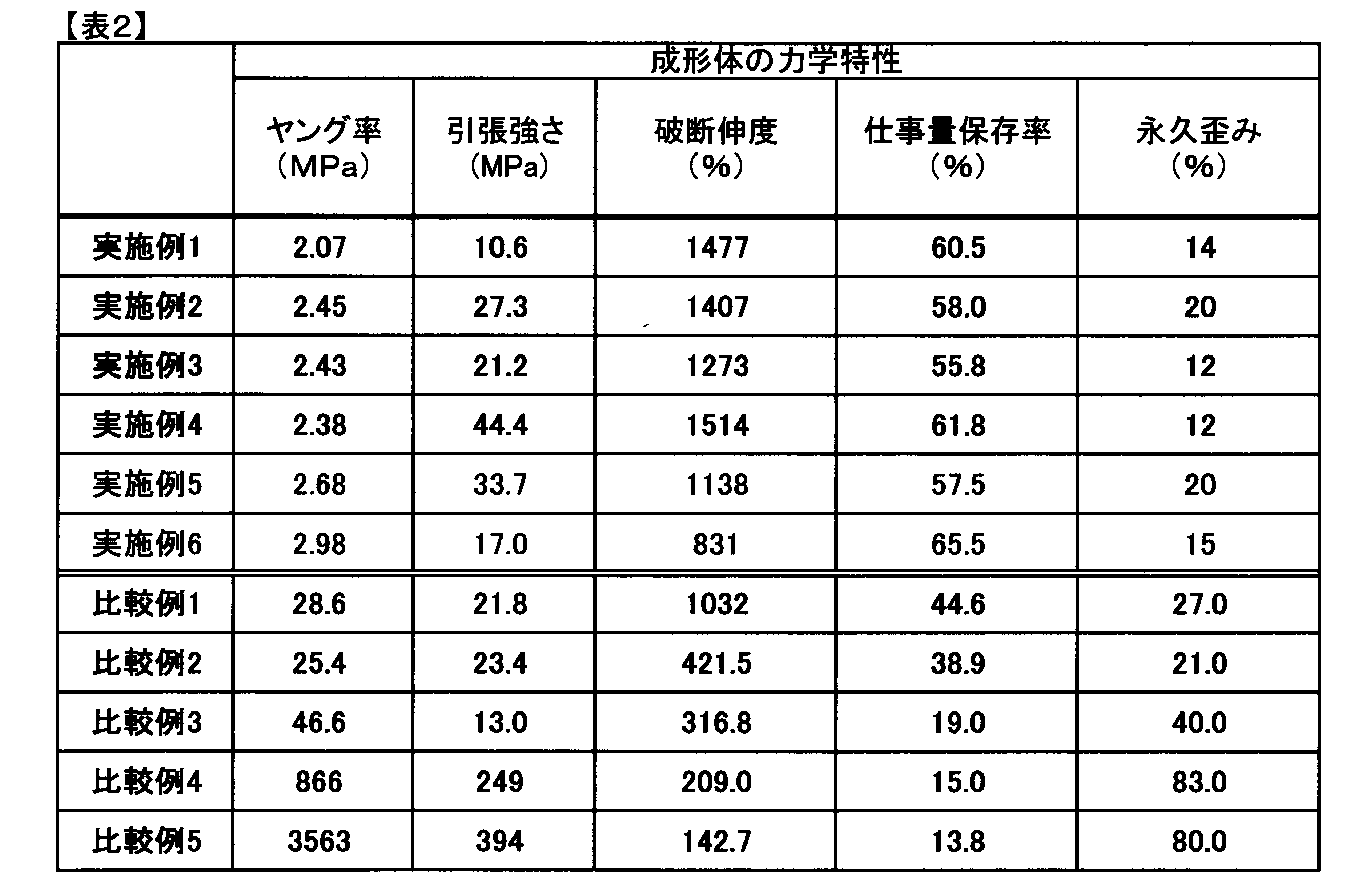
- Tables 1 and 2 show the configurations and various evaluation results of each molded product produced in each example and comparative example.
- the medical molded article of the present invention can be applied to, but is not limited to, ligatures and sutures, suture needles, anti-adhesion films, nerve damage protection films, nerve regeneration guide tubes and the like used during surgery.
Landscapes
- Health & Medical Sciences (AREA)
- Animal Behavior & Ethology (AREA)
- Chemical & Material Sciences (AREA)
- Veterinary Medicine (AREA)
- Public Health (AREA)
- General Health & Medical Sciences (AREA)
- Epidemiology (AREA)
- Life Sciences & Earth Sciences (AREA)
- Vascular Medicine (AREA)
- Surgery (AREA)
- Transplantation (AREA)
- Oral & Maxillofacial Surgery (AREA)
- Medicinal Chemistry (AREA)
- Dermatology (AREA)
- Heart & Thoracic Surgery (AREA)
- Chemical Kinetics & Catalysis (AREA)
- Engineering & Computer Science (AREA)
- Materials Engineering (AREA)
- Materials For Medical Uses (AREA)
- Polyesters Or Polycarbonates (AREA)
Abstract
Description



R値=[AB]/(2[A][B])×100
[A]:ポリエステルコポリマー中の、ヒドロキシカルボン酸残基のモル分率(%)
[B]:ポリエステルコポリマー中の、ラクトン残基のモル分率(%)
[AB]:ポリエステルコポリマー中の、ヒドロキシカルボン酸残基とラクトン残基が隣り合った構造のモル分率(%)
R値は、2種類のモノマー残基、すなわちヒドロキシカルボン酸残基およびラクトン残基を主構成単位とするコポリマーにおける、モノマー残基の配列のランダム性を示す指標として用いられる。例えば、完全にモノマー配列がランダムなランダムコポリマーでは、R値は1となる。また、ブロックコポリマーではR値は0~0.44である。
マクロマー合成工程で得られたマクロマー同士を連結するか、あるいはマクロマー合成工程で得られたマクロマー溶液にヒドロキシカルボン酸およびラクトンを追添加することによりマルチ化するマルチ化工程;
を有する合成方法により製造することができる。
R値=[AB]/(2[A][B])×100
[A]:マクロマー中の、ヒドロキシカルボン酸残基のモル分率(%)
[B]:マクロマー中の、ラクトン残基のモル分率(%)
[AB]:マクロマー中の、ヒドロキシカルボン酸残基とラクトン残基が隣り合った構造(A-B、およびB-A)のモル分率(%)
で表されるR値が0.45以上0.99以下であることが好ましく、0.50以上0.80以下であることがより好ましい。
機器名:Prominence(株式会社島津製作所製)
移動相:クロロホルム(HPLC用)(和光純薬工業株式会社製)
流速:1mL/min
カラム:TSKgel GMHHR-M(φ7.8mmX300mm;東ソー株式会社製)
検出器:UV(254nm)、RI
カラム、検出器温度:35℃
標準物質:ポリスチレン
精製後のポリマーをクロロホルムに溶解し、0.45μmのシリンジフィルター(DISMIC-13HP;ADVANTEC社製)を通過させて不純物等を除去した後にGPCにより測定して、コポリマーの重量平均分子量を算出した。結果を表1に示す。
精製したコポリマーを重クロロホルムに溶解し、1H-NMRにより測定してコポリマー中の乳酸モノマー残基及びカプロラクトンモノマー残基の比率をそれぞれ算出した。また、1Hホモスピンデカップリング法により、乳酸のメチレン基(5.10ppm付近)、カプロラクトンのαメチレン基(2.35ppm付近)、εメチレン基(4.10ppm付近)について、隣り合うモノマー残基が乳酸もしくはカプロラクトンに由来するシグナルで分離し、それぞれのピーク面積を定量した。それぞれのピーク面積比から[A]、[B]、[AB]を計算し、R値を算出した。
機器名:JNM-EX270(日本電子株式会社製)
1Hホモスピンデカップリング照射位置:1.66ppm
溶媒:重クロロホルム
測定温度:室温。
各実施例・比較例で作製したフィルム(厚さ約0.1mm)を50mm×5mmに切り出し、テンシロン万能試験機RTM-100(株式会社オリエンテック製)でJIS K6251(2010)に従い、下記の条件で引張試験を測定し、破断伸度、引張強さを算出した。さらに、変位に対して応力をプロットしたグラフにおいて、応力の発生開始から5点のデータから近似できる1次式の傾きをヤング率として算出した。
機器名:テンシロン万能引張試験機RTM-100(株式会社オリエンテック製)
初期長:10mm
引張速度:500mm/min
ロードセル:50N
試験回数:5回。
精製後のポリマーを減圧乾燥し、これを濃度が5重量%になるようにクロロホルムに溶解させ、その溶液を“テフロン”(登録商標)製シャーレ上に移して、常圧、室温下で1昼夜乾燥させた。これを減圧乾燥させて、コポリマーフィルムを得た。得られたコポリマーフィルムをアルミナPANに採取し、示差走査熱量計でDSC法により下記の条件で測定し、温度条件(D)から(E)の測定結果から融解熱を算出した。結晶化率は下記式から算出した。結果を表1に示す。
結晶化率=(ポリエステルコポリマーの乳酸残基単位重量当たりの融解熱)/{(乳酸残基のみからなるホモポリマーの単位重量当たり融解熱)×(ポリエステルコポリマー中の乳酸残基の重量分率)}×100
機器名:EXSTAR 6000(セイコーインスツル株式会社製)
温度条件:(A)25℃→(B)250℃(10℃/min)→(C)250℃(5min)→(D)-70℃(10℃/min)→(E)250℃(10℃/min)→(F)250℃(5min)→(G)25℃(100℃/min)
標準物質:アルミナ。
各実施例・比較例で作製したフィルム(厚さ約0.1mm)を短冊状(50mm×5mm)に切り出し、テンシロン万能試験機RTM-100(株式会社オリエンテック製)で下記の条件でフィルムを10回伸縮させながら、引張応力と変位の変化を記録する。フィルムの形状ではない成形体の場合には例えばクロロホルムなど、成形体を溶解できる溶媒に溶解させたのち、前記記載のサイズのフィルム成形後に測定を行う。
機器名:テンシロン万能引張試験機RTM-100(株式会社オリエンテック製)
初期長(L0):10mm
引張長(L):10mm
初期長(L0)と引張長(L)が同じ長さなので、100%の引張ひずみを生じさせることになる。
保持時間:1s
引張速度:500mm/min
復元速度:500mm/min
ロードセル:50N
変位(X1,X2,・・・)に対する応力が(N1,N2,・・・)の時、100%の引張ひずみを生じさせる仕事量(W)は図1~4で示す変位-応力曲線下部の面積に相等し、下記の式により算出される。
W=ΣNn(Xn-Xn-1)ただし X0=0とする。
永久歪み(%)=L1/L0×100。
50.0gのL-ラクチド(PURASORB L;PURAC社製)と、38.5mLのεーカプロラクトン(和光純薬工業株式会社製)とを、モノマーとしてセパラブルフラスコに採取した。これらをアルゴン雰囲気下とし、14.5mLのトルエン(超脱水)(和光純薬工業株式会社製)に溶解した触媒である0.81gのオクチル酸スズ(II)(和光純薬工業株式会社製)、助開始剤としてイオン交換水をモノマー/助開始剤比が142.9となるよう添加し、90℃で、1時間助触媒反応を行ったあと、150℃で、6時間、共重合反応させて、粗コポリマーを得た。
ポリエステルコポリマーの合成において、使用するマクロモノマーを40gに変更し、攪拌に用いた羽を“テフロン”(登録商標)製に変更した以外は実施例1と同様にして、フィルムおよび医療用チューブを作製した。
ポリエステルコポリマーの合成において、マクロモノマーの反応混合物の精製時に、攪拌状態にある500mLのメタノールに15mMとなるよう酢酸を添加した以外実施例2と同様にして、フィルムおよび医療用チューブを作製した。
ポリエステルコポリマーの合成において、使用するマクロモノマーを30gに変更した以外は実施例2と同様にして、フィルムおよび医療用チューブを作製した。
ポリエステルコポリマーの合成において、マクロモノマーの反応混合物の精製時に、攪拌状態にある500mLのメタノールを500mLのヘキサンに変更した以外実施例3と同様にして、フィルムおよび医療用チューブを作製した。
ポリエステルコポリマーの合成において、マクロモノマーの反応混合物の精製時に、攪拌状態にある500mLのメタノールに滴下する前に1Nの塩酸100mLと混合させた以外実施例2と同様にして、フィルムおよび医療用チューブを作製した。
50.0gのL-ラクチド(PURASORB L;PURAC社製)と、38.5mLのεーカプロラクトン(和光純薬工業株式会社製)とを、モノマーとしてセパラブルフラスコに採取した。これらをアルゴン雰囲気下とし、14.5mLのトルエン(超脱水)(和光純薬工業株式会社製)に溶解した触媒である0.81gのオクチル酸スズ(II)(和光純薬工業株式会社製)を添加、150℃、6時間で共重合反応させて、粗コポリマーを得た。
50.0gのL-ラクチド(PURASORB L;PURAC社製)をモノマーとしてセパラブルフラスコに採取した。これをアルゴン雰囲気下とし、14.5mLのトルエン(超脱水)(和光純薬工業株式会社製)に溶解した触媒である0.81gのオクチル酸スズ(II)(和光純薬工業株式会社製)、助開始剤としてイオン交換水をモノマー/助開始剤比が142.9となるよう添加し、90℃、1時間で助触媒反応を行ったあと、150℃、3時間で重合反応させた。
ジクロロメタンに溶解した時の濃度を27%とした以外は比較例2と同様にして、フィルムおよび医療用チューブを作製した。
ポリ乳酸であるPDLLA(株式会社ビーエムジー)を購入し、実施例1と同様にフィルムおよび医療用チューブを作製した。
ポリカプロラクトンであるPolycaprolactone(900288, シグマアドリッチ社)を購入し、実施例1と同様にフィルムおよび医療用チューブを作製した。

Claims (15)
- 生体吸収性ポリエステルを含む医療用成形体であって、成形体の最も長さのある方向に引張り応力を加えて、初期長に対して100%の引張ひずみを生じさせる操作を繰り返した際の、初回操作の仕事量に対する10回目の操作の仕事量の割合として定義される仕事量保存率が55%以上である医療用成形体。
- 前記仕事量保存率が60%以上である請求項1に記載の医療用成形体。
- 前記生体吸収性ポリエステルが、ポリグリコール酸、ポリ乳酸、ポリε-カプロラクトン、ポリヒドロキシ酪酸、ポリヒドロキシブチレート吉草酸、ポリオルソエステル、ポリヒドロキシバレリル酸、ポリヒドロキシヘキサン酸、ポリヒドロキシブタン酸、ポリコハク酸ブチレン、ポリブチレンサクシネート、ポリテレフタール酸トリメチレン、ポリヒドロキシアルカノエート、およびこれらの共重合体からなる群より選択されるポリエステルである、請求項1または2に記載の医療用成形体。
- 前記生体吸収性ポリエステルが、ヒドロキシカルボン酸残基およびラクトン残基を主構成単位とするポリエステルコポリマーである、請求項3に記載の医療用成形体。
- 前記生体吸収性ポリエステルの、下記式で表されるR値が0.45以上0.99以下である、請求項4に記載の医療用成形体。
R値=[AB]/(2[A][B])×100
[A]:ポリエステルコポリマー中の、ヒドロキシカルボン酸残基のモル分率(%)
[B]:ポリエステルコポリマー中の、ラクトン残基のモル分率(%)
[AB]:ポリエステルコポリマー中の、ヒドロキシカルボン酸残基とラクトン残基が隣り合った構造(A-B、およびB-A)のモル分率(%) - 前記生体吸収性ポリエステルの、ヒドロキシカルボン酸残基またはラクトン残基の少なくとも一方の結晶化率が14%未満である、請求項4または5に記載の医療用成形体。
- 前記ヒドロキシカルボン酸残基が乳酸残基であり、前記ラクトン残基がカプロラクトン残基またはバレロラクトン残基である、請求項4~6のいずれかに記載の医療用成形体。
- 前記生体吸収性ポリエステルの重量平均分子量が10万以上である、請求項1~7のいずれかに記載の医療用成形体。
- JIS K6251(2010)に従った測定によるヤング率が10MPa以下かつ引張強さが5MPa以上である請求項1~8のいずれかに記載の医療用成形体。
- 前記ヤング率が0.1MPa以上である、請求項9に記載の医療用成形体。
- JIS K6251(2010)に従った測定による破断伸度が200%以上である、請求項1~10のいずれかに記載の医療用成形体。
- 前記生体吸収性ポリエステルを80重量%以上含む、請求項1~11のいずれかに記載の医療用成形体。
- フィルム状、繊維状またはチューブ状である、請求項1~12のいずれかに記載の医療用成形体。
- 請求項1~13のいずれかに記載の医療用成形体を用いてなる、生体内外に留置される医療機器。
- 請求項13に記載のチューブ状の医療用成形体を用いてなる、神経再生誘導チューブ。
Priority Applications (2)
| Application Number | Priority Date | Filing Date | Title |
|---|---|---|---|
| US17/292,809 US12440598B2 (en) | 2018-12-13 | 2019-12-11 | Medical molded article, medical device, and nerve guidance conduit |
| JP2019569515A JP7484167B2 (ja) | 2018-12-13 | 2019-12-11 | 医療用成形体、医療機器、神経再生誘導チューブ |
Applications Claiming Priority (2)
| Application Number | Priority Date | Filing Date | Title |
|---|---|---|---|
| JP2018233153 | 2018-12-13 | ||
| JP2018-233153 | 2018-12-13 |
Publications (1)
| Publication Number | Publication Date |
|---|---|
| WO2020122096A1 true WO2020122096A1 (ja) | 2020-06-18 |
Family
ID=71077356
Family Applications (1)
| Application Number | Title | Priority Date | Filing Date |
|---|---|---|---|
| PCT/JP2019/048392 Ceased WO2020122096A1 (ja) | 2018-12-13 | 2019-12-11 | 医療用成形体、医療機器、神経再生誘導チューブ |
Country Status (3)
| Country | Link |
|---|---|
| US (1) | US12440598B2 (ja) |
| JP (1) | JP7484167B2 (ja) |
| WO (1) | WO2020122096A1 (ja) |
Cited By (1)
| Publication number | Priority date | Publication date | Assignee | Title |
|---|---|---|---|---|
| WO2023102462A1 (en) * | 2021-12-03 | 2023-06-08 | Toray Industries, Inc. | Stent, method for manufacturing stent, and method for securing air flow by relieving stenosis of respiratory organ |
Citations (5)
| Publication number | Priority date | Publication date | Assignee | Title |
|---|---|---|---|---|
| JP2005533148A (ja) * | 2002-07-16 | 2005-11-04 | インノコア テクノロジーズ ビー.ブイ. | 生分解性の相分離したセグメント化多ブロック共重合体 |
| JP2006326088A (ja) * | 2005-05-27 | 2006-12-07 | Kawasumi Lab Inc | 神経再生チューブ |
| JP2007046050A (ja) * | 2005-07-15 | 2007-02-22 | National Institute Of Advanced Industrial & Technology | 医療用樹脂組成物とその製造方法および成形体 |
| WO2013146999A1 (ja) * | 2012-03-28 | 2013-10-03 | 東レ株式会社 | 生分解性材料及び生分解性材料の製造方法 |
| JP2016195642A (ja) * | 2015-04-02 | 2016-11-24 | グンゼ株式会社 | 神経再生チューブ及び神経再生チューブの製造方法 |
Family Cites Families (5)
| Publication number | Priority date | Publication date | Assignee | Title |
|---|---|---|---|---|
| NL9001984A (nl) | 1990-09-10 | 1992-04-01 | Stamicarbon | Werkwijze voor het produceren van een voorwerp van een copolymeer van lactide en epsilon-caprolacton voor medische toepassingen. |
| JP2000143781A (ja) | 1998-11-13 | 2000-05-26 | Daicel Chem Ind Ltd | 脂肪族ポリエステル及びその製造方法 |
| JP2006183042A (ja) | 2004-11-30 | 2006-07-13 | Hiroshima Univ | 新規マルチブロックコポリマー、その製造方法、及びその利用 |
| US8968387B2 (en) * | 2012-07-23 | 2015-03-03 | Abbott Cardiovascular Systems Inc. | Shape memory bioresorbable polymer peripheral scaffolds |
| EP2938367B1 (en) * | 2012-12-28 | 2020-12-16 | Boston Scientific Scimed, Inc. | Methods, compositions and kits for surgical repair |
-
2019
- 2019-12-11 JP JP2019569515A patent/JP7484167B2/ja active Active
- 2019-12-11 US US17/292,809 patent/US12440598B2/en active Active
- 2019-12-11 WO PCT/JP2019/048392 patent/WO2020122096A1/ja not_active Ceased
Patent Citations (5)
| Publication number | Priority date | Publication date | Assignee | Title |
|---|---|---|---|---|
| JP2005533148A (ja) * | 2002-07-16 | 2005-11-04 | インノコア テクノロジーズ ビー.ブイ. | 生分解性の相分離したセグメント化多ブロック共重合体 |
| JP2006326088A (ja) * | 2005-05-27 | 2006-12-07 | Kawasumi Lab Inc | 神経再生チューブ |
| JP2007046050A (ja) * | 2005-07-15 | 2007-02-22 | National Institute Of Advanced Industrial & Technology | 医療用樹脂組成物とその製造方法および成形体 |
| WO2013146999A1 (ja) * | 2012-03-28 | 2013-10-03 | 東レ株式会社 | 生分解性材料及び生分解性材料の製造方法 |
| JP2016195642A (ja) * | 2015-04-02 | 2016-11-24 | グンゼ株式会社 | 神経再生チューブ及び神経再生チューブの製造方法 |
Cited By (2)
| Publication number | Priority date | Publication date | Assignee | Title |
|---|---|---|---|---|
| WO2023102462A1 (en) * | 2021-12-03 | 2023-06-08 | Toray Industries, Inc. | Stent, method for manufacturing stent, and method for securing air flow by relieving stenosis of respiratory organ |
| EP4440507A4 (en) * | 2021-12-03 | 2025-12-10 | Toray Industries | ENDOPROSTHESIS, METHOD FOR MANUFACTURING ENDOPROSTHESIS AND METHOD FOR SECURING AIRFLOW BY RELIEVING STENOSIS OF A RESPIRATORY ORGAN |
Also Published As
| Publication number | Publication date |
|---|---|
| JPWO2020122096A1 (ja) | 2021-11-04 |
| US20210393847A1 (en) | 2021-12-23 |
| JP7484167B2 (ja) | 2024-05-16 |
| US12440598B2 (en) | 2025-10-14 |
Similar Documents
| Publication | Publication Date | Title |
|---|---|---|
| CN111032726B (zh) | 聚酯共聚物及其制造方法 | |
| JP7619042B2 (ja) | ポリマー組成物、成形体および神経再生誘導チューブ | |
| EP3778716B1 (en) | Biodegradable block copolymer | |
| JP2020092874A (ja) | 医療用成形体 | |
| US12606701B2 (en) | Polymer composition and molded article | |
| JP7484167B2 (ja) | 医療用成形体、医療機器、神経再生誘導チューブ | |
| JP2016519169A (ja) | 2つ又は3つ以上のカルボン酸基を有するモノール及びジオール重合開始剤から調製されるポリラクトンポリマー | |
| JP4022220B2 (ja) | 手術用品用ブロック共重合体 | |
| JP2008222768A (ja) | 分岐型生分解性ポリエステル及びその製造方法 | |
| JP7302296B2 (ja) | ポリエステルコポリマーおよびその製造方法 | |
| JP5258189B2 (ja) | 柔軟性生分解性ポリマー | |
| JP7793890B2 (ja) | ステント | |
| JP7661881B2 (ja) | 神経再生誘導チューブ | |
| JP2022077948A (ja) | ポリマー組成物 | |
| JP5208923B2 (ja) | 形状記憶特性を有する多元ブロック共重合体 | |
| JP7512695B2 (ja) | ポリエステルコポリマー | |
| JP2021145920A (ja) | 筒状の成形体 | |
| JP2021145919A (ja) | 筒状の成形体 | |
| JP2024542895A (ja) | ステント、ステントの製造方法、及び呼吸器の狭窄を解除して気流を確保する方法 |
Legal Events
| Date | Code | Title | Description |
|---|---|---|---|
| ENP | Entry into the national phase |
Ref document number: 2019569515 Country of ref document: JP Kind code of ref document: A |
|
| 121 | Ep: the epo has been informed by wipo that ep was designated in this application |
Ref document number: 19894787 Country of ref document: EP Kind code of ref document: A1 |
|
| NENP | Non-entry into the national phase |
Ref country code: DE |
|
| 122 | Ep: pct application non-entry in european phase |
Ref document number: 19894787 Country of ref document: EP Kind code of ref document: A1 |
|
| WWG | Wipo information: grant in national office |
Ref document number: 17292809 Country of ref document: US |