WO2020119478A1 - 芳基取代的糖或糖苷及其在钻井液组合物中的应用 - Google Patents
芳基取代的糖或糖苷及其在钻井液组合物中的应用 Download PDFInfo
- Publication number
- WO2020119478A1 WO2020119478A1 PCT/CN2019/121908 CN2019121908W WO2020119478A1 WO 2020119478 A1 WO2020119478 A1 WO 2020119478A1 CN 2019121908 W CN2019121908 W CN 2019121908W WO 2020119478 A1 WO2020119478 A1 WO 2020119478A1
- Authority
- WO
- WIPO (PCT)
- Prior art keywords
- linear
- glycoside
- aryl
- chemical formula
- branched
- Prior art date
- Legal status (The legal status is an assumption and is not a legal conclusion. Google has not performed a legal analysis and makes no representation as to the accuracy of the status listed.)
- Ceased
Links
- 0 *CC(C(C*CO)C(C1O*)O*)OC1O** Chemical compound *CC(C(C*CO)C(C1O*)O*)OC1O** 0.000 description 8
Images


Classifications
-
- C—CHEMISTRY; METALLURGY
- C09—DYES; PAINTS; POLISHES; NATURAL RESINS; ADHESIVES; COMPOSITIONS NOT OTHERWISE PROVIDED FOR; APPLICATIONS OF MATERIALS NOT OTHERWISE PROVIDED FOR
- C09K—MATERIALS FOR MISCELLANEOUS APPLICATIONS, NOT PROVIDED FOR ELSEWHERE
- C09K8/00—Compositions for drilling of boreholes or wells; Compositions for treating boreholes or wells, e.g. for completion or for remedial operations
- C09K8/02—Well-drilling compositions
- C09K8/04—Aqueous well-drilling compositions
- C09K8/14—Clay-containing compositions
- C09K8/18—Clay-containing compositions characterised by the organic compounds
- C09K8/22—Synthetic organic compounds
- C09K8/24—Polymers
-
- C—CHEMISTRY; METALLURGY
- C09—DYES; PAINTS; POLISHES; NATURAL RESINS; ADHESIVES; COMPOSITIONS NOT OTHERWISE PROVIDED FOR; APPLICATIONS OF MATERIALS NOT OTHERWISE PROVIDED FOR
- C09K—MATERIALS FOR MISCELLANEOUS APPLICATIONS, NOT PROVIDED FOR ELSEWHERE
- C09K8/00—Compositions for drilling of boreholes or wells; Compositions for treating boreholes or wells, e.g. for completion or for remedial operations
- C09K8/02—Well-drilling compositions
- C09K8/04—Aqueous well-drilling compositions
- C09K8/06—Clay-free compositions
- C09K8/08—Clay-free compositions containing natural organic compounds, e.g. polysaccharides, or derivatives thereof
-
- C—CHEMISTRY; METALLURGY
- C07—ORGANIC CHEMISTRY
- C07H—SUGARS; DERIVATIVES THEREOF; NUCLEOSIDES; NUCLEOTIDES; NUCLEIC ACIDS
- C07H15/00—Compounds containing hydrocarbon or substituted hydrocarbon radicals directly attached to hetero atoms of saccharide radicals
- C07H15/20—Carbocyclic rings
- C07H15/207—Cyclohexane rings not substituted by nitrogen atoms, e.g. kasugamycins
-
- C—CHEMISTRY; METALLURGY
- C08—ORGANIC MACROMOLECULAR COMPOUNDS; THEIR PREPARATION OR CHEMICAL WORKING-UP; COMPOSITIONS BASED THEREON
- C08F—MACROMOLECULAR COMPOUNDS OBTAINED BY REACTIONS ONLY INVOLVING CARBON-TO-CARBON UNSATURATED BONDS
- C08F212/00—Copolymers of compounds having one or more unsaturated aliphatic radicals, each having only one carbon-to-carbon double bond, and at least one being terminated by an aromatic carbocyclic ring
- C08F212/02—Monomers containing only one unsaturated aliphatic radical
- C08F212/04—Monomers containing only one unsaturated aliphatic radical containing one ring
- C08F212/06—Hydrocarbons
- C08F212/08—Styrene
-
- C—CHEMISTRY; METALLURGY
- C08—ORGANIC MACROMOLECULAR COMPOUNDS; THEIR PREPARATION OR CHEMICAL WORKING-UP; COMPOSITIONS BASED THEREON
- C08F—MACROMOLECULAR COMPOUNDS OBTAINED BY REACTIONS ONLY INVOLVING CARBON-TO-CARBON UNSATURATED BONDS
- C08F220/00—Copolymers of compounds having one or more unsaturated aliphatic radicals, each having only one carbon-to-carbon double bond, and only one being terminated by only one carboxyl radical or a salt, anhydride ester, amide, imide or nitrile thereof
- C08F220/02—Monocarboxylic acids having less than ten carbon atoms; Derivatives thereof
- C08F220/04—Acids; Metal salts or ammonium salts thereof
- C08F220/06—Acrylic acid; Methacrylic acid; Metal salts or ammonium salts thereof
-
- C—CHEMISTRY; METALLURGY
- C08—ORGANIC MACROMOLECULAR COMPOUNDS; THEIR PREPARATION OR CHEMICAL WORKING-UP; COMPOSITIONS BASED THEREON
- C08F—MACROMOLECULAR COMPOUNDS OBTAINED BY REACTIONS ONLY INVOLVING CARBON-TO-CARBON UNSATURATED BONDS
- C08F220/00—Copolymers of compounds having one or more unsaturated aliphatic radicals, each having only one carbon-to-carbon double bond, and only one being terminated by only one carboxyl radical or a salt, anhydride ester, amide, imide or nitrile thereof
- C08F220/02—Monocarboxylic acids having less than ten carbon atoms; Derivatives thereof
- C08F220/52—Amides or imides
- C08F220/54—Amides, e.g. N,N-dimethylacrylamide or N-isopropylacrylamide
- C08F220/56—Acrylamide; Methacrylamide
-
- C—CHEMISTRY; METALLURGY
- C08—ORGANIC MACROMOLECULAR COMPOUNDS; THEIR PREPARATION OR CHEMICAL WORKING-UP; COMPOSITIONS BASED THEREON
- C08F—MACROMOLECULAR COMPOUNDS OBTAINED BY REACTIONS ONLY INVOLVING CARBON-TO-CARBON UNSATURATED BONDS
- C08F220/00—Copolymers of compounds having one or more unsaturated aliphatic radicals, each having only one carbon-to-carbon double bond, and only one being terminated by only one carboxyl radical or a salt, anhydride ester, amide, imide or nitrile thereof
- C08F220/02—Monocarboxylic acids having less than ten carbon atoms; Derivatives thereof
- C08F220/52—Amides or imides
- C08F220/54—Amides, e.g. N,N-dimethylacrylamide or N-isopropylacrylamide
- C08F220/58—Amides, e.g. N,N-dimethylacrylamide or N-isopropylacrylamide containing oxygen in addition to the carbonamido oxygen, e.g. N-methylolacrylamide, N-(meth)acryloylmorpholine
-
- C—CHEMISTRY; METALLURGY
- C08—ORGANIC MACROMOLECULAR COMPOUNDS; THEIR PREPARATION OR CHEMICAL WORKING-UP; COMPOSITIONS BASED THEREON
- C08F—MACROMOLECULAR COMPOUNDS OBTAINED BY REACTIONS ONLY INVOLVING CARBON-TO-CARBON UNSATURATED BONDS
- C08F283/00—Macromolecular compounds obtained by polymerising monomers on to polymers provided for in subclass C08G
- C08F283/06—Macromolecular compounds obtained by polymerising monomers on to polymers provided for in subclass C08G on to polyethers, polyoxymethylenes or polyacetals
Definitions
- the present invention relates to aryl-substituted sugars or glycosides, and more particularly to an aryl-substituted sugar or glycoside or a mixture of aryl-substituted sugars or glycosides.
- the present invention also relates to a drilling fluid composition manufactured from the aryl-substituted sugar or glycoside and a method of manufacturing the drilling fluid composition.
- the inventor of the present invention found that the drilling fluid of the prior art needs to be improved at least in terms of high temperature resistance, salt resistance and fluid loss resistance. For this reason, the inventors of the present invention have discovered the aryl-substituted sugar or glycoside through painstaking research, and completed the present invention based on this finding.
- the present invention relates to the following aspects.
- R 5 is a C3-6 linear or branched trivalent alkyl group (preferably trivalent propyl or trivalent butyl)
- the substituent B further includes a group in its structure (Preferred unit ), group -SO 3 M (preferred unit especially ),unit (Preferably especially ) And group -COOM (preferred unit or especially )
- R 4 is C2-6 linear or branched alkylene (preferably ethylene or propylene)
- R 3 is C2-6 linear or branched alkylene (preferably ethylene Radical or propylene)
- n is a value of 0-10 (such as 0)
- a is a value of 1-20 (such as 5-15 or 8-12)
- a1 is a value of 0-20 (such as 0-10 or 0-5)
- a2 is a value of 1-20 (such as 5-15 or 8-12)
- the substituent B is schematically represented by the following chemical formula (B-1), chemical formula (B-2) or chemical formula (B-3),
- R 9 is ethylene
- p is a value of 0-30 or 2-30 (preferably a value of 5-25 or 10-20)
- q is a value of 0-30 or 2-30 (preferably 5 -25 or 10-20)
- r is 0-30 or 2-30 (preferably 5-25 or 10-20)
- s is 2-30 (preferably 5-25 or 10-20 Value)
- v is a value of 0-30 (preferably a value of 1-20 or 4-12).
- two R 1 are the same as or different from each other, and are each independently selected from hydrogen and a C1-20 linear or branched alkyl group (preferably each independently selected from hydrogen and a C5-20 linear or branched chain) Alkyl groups, more preferably each independently selected from hydrogen and C8-18 linear or branched alkyl groups, more preferably octyl, decyl, dodecyl, tetradecyl, hexadecyl or octadecyl ), m is an integer of 1-3 or 2, * represents the bonding point of the substituent A or the substituent B, provided that there are at least two of the bonding points.
- An aryl-substituted sugar or glycoside or a mixture of a plurality of aryl-substituted sugars or glycosides is selected from the following chemical formula (I-1), chemical formula (I- 2), one or more compounds represented by chemical formula (I-3) or chemical formula (I-4),
- Rx 1 is the substituent A, and the remaining Rx 1 are the same as or different from each other, each independently selected from the substituent A and the hydroxyl group
- m1 is An integer of 2-3
- m1 Rx 2 and m1 Rx 3 are the same as or different from each other, each independently selected from a hydrogen atom and the substituent B, provided that at least one of these Rx 2 and Rx 3 is the substitution Base B,
- the amine value is 0.10-0.80mmol/g, preferably 0.20-0.50mmol /g.
- a method for producing a mixture of aryl-substituted sugars or glycosides or a plurality of aryl-substituted sugars or glycosides including the following steps:
- the two R 1 are the same as or different from each other, each independently selected from hydrogen and a C1-20 linear or branched alkyl group (preferably each independently selected from hydrogen And C5-20 linear or branched alkyl groups, more preferably each independently selected from hydrogen and C8-18 linear or branched alkyl groups, more preferably octyl, decyl, dodecyl, tetradecyl, Hexadecyl or octadecyl), m is an integer of 1-3 or 2,
- Ra is a hydrogen atom or a C1-5 linear or branched alkyl group, preferably a hydrogen atom or a C1-3 linear or branched alkyl group,
- Rb is a C1-4 linear or branched alkylene group or a C1-2 linear or branched alkylene group
- X is a hydroxyl group or a halogen atom (such as Cl or Br)
- Ar is optionally substituted C6-20 aryl (preferably optionally substituted phenyl),
- L 2 is (preferably the number of carbon atoms does not exceed 10) any linking group (preferably a single bond or a C2-10 linear or branched alkylene group, Especially single bond), R'is C1-4 linear or branched alkyl (preferably methyl or ethyl),
- L 3 is (preferably the number of carbon atoms does not exceed 10) any linking group (preferably a single bond or a C2-10 linear or branched alkylene group, Especially single bonds), M is hydrogen, alkali metals (such as K or Na) or ammonium (NH 4 ).
- reaction temperature of the step 1) is 95-155°C
- reaction time is 1-3 hours
- reaction temperature of the step 2) Is 40-80°C
- the reaction time is 1-3 hours
- mass ratio of the etherifying agent, the sugar or glycoside and the catalyst is 24: (70-100): (10-30)
- the etherifying agent the carboxyvinyl monomer (such as acrylic acid)
- the aryl vinyl monomer such as styrene
- the acrylamide monomer such as acrylamide
- sulfo vinyl monomer such as 2-acrylamide-2-methylpropanesulfonic acid
- the mass ratio of the siloxyethylene monomer (such as vinyl triethoxysilane) and the initiator is 24: (20-40): (20-40): (20-40): (10
- a drilling fluid composition comprising an aryl-substituted sugar or glycoside and a base slurry, wherein the aryl-substituted sugar or glycoside is an aryl-substituted sugar or any of the foregoing or later aspects
- a mixture of glycosides or a plurality of aryl-substituted sugars or glycosides or a mixture of an aryl-substituted sugar or glycoside or a plurality of aryl-substituted sugars or glycosides produced by the manufacturing method described in any one of the foregoing or later aspects .
- a method of manufacturing a drilling fluid composition comprising the step of mixing an aryl-substituted sugar or glycoside with a base slurry, wherein the aryl-substituted sugar or glycoside is one of the foregoing or any of the aspects described below
- An aryl-substituted sugar or glycoside or a mixture of a plurality of aryl-substituted sugars or glycosides or an aryl-substituted sugar or glycoside or a plurality of aryl substitutions produced by the manufacturing method described in any one of the foregoing or later aspects Of sugar or glycosides.
- FIG. 1 is an infrared spectrum of the aryl-substituted sugar or glycoside obtained in Example 1 of the present invention.
- Example 2 is an infrared spectrum of the aryl-substituted sugar or glycoside obtained in Example 2 of the present invention.
- Example 3 is an infrared spectrum of the aryl-substituted sugar or glycoside obtained in Example 3 of the present invention.
- Example 4 is an infrared spectrum of the aryl-substituted sugar or glycoside obtained in Example 4 of the present invention.
- Example 5 is an infrared spectrum of the aryl-substituted sugar or glycoside obtained in Example 5 of the present invention.
- Example 6 is an infrared spectrum of the aryl-substituted sugar or glycoside obtained in Example 6 of the present invention.
- Example 7 is an infrared spectrum of the aryl-substituted sugar or glycoside obtained in Example 7 of the present invention.
- R 9 is ethylene
- the measurement of the amine value includes: weighing 0.5 g of the sample to be measured (accurate to 0.0001 g), placing it in a clean and dry 250 mL conical flask, adding 50 mL of deionized water and recording the total mass m 1 .
- V the value of the volume of the hydrochloric acid-isopropanol standard solution consumed by the sample to be tested, in milliliters (mL)
- V blank the value of the volume of the blank test hydrochloric acid solution in milliliters (mL);
- the expression “optionally substituted” means optionally selected by one or more (such as 1 to 5, 1 to 4, 1 to 3, 1 to 2 or 1) Halogen, hydroxy, mercapto, amino, aminocarbonyl, nitro, oxo, thio, cyano, C 1-6 linear or branched (halo) alkane (oxygen, sulfur, ammonia, carbonyl), C 2 -6 Straight or branched chain (halogenated) alkene (oxygen, sulfur, ammonia, carbonyl) group, C 2-6 Straight or branched chain (halogenated) alkyne (oxygen, sulfur, ammonia, carbonyl) group, C 3 -20 cycloalkyl, C 3-20 cycloalkane (oxygen, sulfur, ammonia) group, C 3-20 cycloalkyl C 1-6 linear or branched (halogenated) alkane (oxygen, sulfur, ammonia, carbonyl ) Group, C 3-20 cycloalkyl C
- two adjacent substituents may be bonded to each other to form a divalent substituent structure.
- two adjacent C 1-6 linear or branched alkyl groups may be bonded to each other to form a corresponding alkylene structure.
- adjacent two C 1-6 straight-chain or branched alkoxy group such as the corresponding form alkylenedioxy group structure
- the adjacent two C 1-6 straight-chain or branched-chain alkylamino group may be for example
- the corresponding alkylene diamino structure is formed, and two adjacent C 1-5 linear or branched alkylthio groups can form a corresponding alkylene disulfide structure, and so on.
- preferred substituents include halogen or C 1-6 linear or branched alkyl groups.
- (halo)alkane oxygen, sulfur, ammonia, carbonyl
- (halo)alkane means: alkyl, haloalkyl, alkoxy, alkylthio, alkylamino, alkylcarbonyl, haloalkoxy, Haloalkylthio, haloalkylamino or haloalkylcarbonyl
- (halo)alkene (oxygen, sulfur, ammonia, carbonyl) means: alkenyl, haloalkenyl, alkenyloxy, alkenylthio, alkenyl Amino, alkenylcarbonyl, haloalkenyloxy, haloalkenylthio, haloalkenylamino or haloalkenylcarbonyl
- (halo)alkynyl oxygen, sulfur, ammonia, carbonyl)
- any two or more embodiments of the present invention can be arbitrarily combined, and the technical solution formed thereby belongs to a part of the original disclosure of this specification, and also falls within the protection scope of the present invention.
- an aryl substituted sugar or glycoside or a mixture of multiple aryl substituted sugars or glycosides refers to an aryl substituted sugar or glycoside or a mixture of multiple aryl substituted sugars or glycosides.
- an aryl-substituted sugar or glycoside refers to a simple aryl-substituted sugar or glycoside existing in the form of a single compound
- the so-called “multiple aryl-substituted sugars or glycosides” “Mixture” refers to a mixture of two or more (ie more than one) aryl-substituted sugars or glycosides mixed together.
- the present invention sometimes refers to a mixture of the one aryl-substituted sugar or glycoside and the plurality of aryl-substituted sugars or glycosides as an aryl-substituted sugar or glycoside or a substituted sugar or glycoside.
- the aryl-substituted sugar or glycoside carries a substituent A and a substituent B each or in combination.
- the term “bearing each” means that the substituent A and the substituent B are respectively located on different aryl-substituted sugar or glycoside molecules
- the term “bearing in combination” means the substituent A.
- the substituent B may be located on different aryl-substituted sugar or glycoside molecules, or in any combination (such as two or two combinations or three simultaneous) on different or the same aryl-substituted sugar or Glycoside molecule.
- the substituent A includes a unit —OR 6 —, preferably —O-CH 2 CH 2 — in its structure, Or any combination thereof.
- R 6 is a C2-8 linear or branched alkylene or C2-6 linear or branched alkylene
- Rc is a C1-5 linear or branched alkyl or C1-3 linear or branched Alkyl groups are more preferably methyl, ethyl or propyl.
- the presence of the unit —OR 6 — or the substituent A can be confirmed by infrared analysis.
- a characteristic peak is displayed at 1140-1175 cm -1 to confirm the unit —OR 6 — ⁇ Or the presence of the substituent A.
- the substituent A further includes a unit in its structure Preferred
- R 5 is a C3-6 linear or branched trivalent alkyl group, preferably a trivalent propyl group or a trivalent butyl group.
- the substituent A is schematically represented by the following chemical formula (A-1), chemical formula (A-2) or chemical formula (A-3).
- the so-called "schematic representation”, taking the chemical formula (A-1) as an example, means that the substituent A, as shown in the chemical formula, contains n units in one molecule And a unit—OR 6 —but this does not mean that the n units It must be directly bonded to each other to form a block structure as shown in the chemical formula, or the a unit-OR 6 -must be directly bonded to each other to form a block structure as shown in the chemical formula, not to mention the unit- OR 6 -and the unit It must be bonded in the specific order shown in the chemical formula.
- the unit —OR 6 —and the unit They can be bonded in any order to form structures such as random, block, or alternation. These structures all belong to the expected scope of the present invention and are not particularly limited. Other chemical formulas in this specification can be understood similarly.
- n is a value of 0-10 (such as 0)
- a is a value of 1-20 (such as 5-15 or 8-12)
- a1 is 0-20 Value (such as 0-10 or 0-5)
- a2 is 1-20 (such as 5-15 or 8-12).
- the substituent B contains units in its structure or Where Ar is optionally substituted C6-20 aryl, preferably optionally substituted phenyl.
- the unit (especially ) Or the presence of the substituent B can be confirmed by an infrared analysis method. For example, on the infrared spectrum of the aryl-substituted sugar or glycoside (including the aryl-substituted glycoside component described later in this specification), a characteristic peak is displayed at 1400-1600 cm -1 , and the unit can be confirmed (especially ) Or the presence of the substituent B.
- the substituent B further includes a group in its structure Preferred unit
- R 4 is a C2-6 linear or branched alkylene group, preferably ethylene or propylene.
- the group Can be confirmed by infrared analysis. For example, on the infrared spectrum of the aryl-substituted sugar or glycoside (including the aryl-substituted glycoside component described later in this specification), characteristic peaks are displayed at 1680-1699 cm -1 and 1170-1290 cm -1 , You can confirm the group The presence.
- the substituent B further includes a group -SO 3 M in its structure, preferably a unit especially
- R 3 is a C2-6 linear or branched alkylene group, preferably ethylene or propylene.
- the presence of the group -SO 3 M can be confirmed by infrared analysis.
- infrared analysis For example, on the infrared spectrum of the aryl-substituted sugar or glycoside (including the aryl-substituted glycoside component described later in this specification), characteristic peaks are displayed at 1090-1180 cm -1 and 940-990 cm -1 , It is possible to confirm the presence of the group -SO 3 M.
- the substituent B further includes a unit in its structure Preferred especially
- R 10 is a C2-6 linear or branched alkylene group, preferably ethylene or propylene.
- L 2 is an arbitrary linking group, especially any linking group having no more than 10 carbon atoms, preferably a single bond or a C2-10 linear or branched alkylene group, especially a single bond.
- R' is a C1-4 linear or branched alkyl group, preferably methyl or ethyl.
- the unit Can be confirmed by infrared analysis.
- the substituent B further includes a group -COOM in its structure, preferably a unit or especially
- R 8 is a C2-6 linear or branched alkylene group, preferably ethylene or propylene.
- L 3 is an arbitrary linking group, particularly any linking group with a carbon number of not more than 10, preferably a single bond or a C2-10 linear or branched alkylene group, especially a single bond.
- M is hydrogen, alkali metal (such as K or Na) or ammonium (NH 4 ).
- the presence of the group -COOM can be confirmed by infrared analysis.
- the infrared spectrum of the aryl-substituted sugar or glycoside (including the aryl-substituted glycoside component described later in this specification) is displayed at 1400-1420cm -1 , 3200-3400cm -1 cm -1
- the characteristic peak can confirm the existence of the group -COOM.
- the substituent B is schematically represented by the following chemical formula (B-1), chemical formula (B-2) or chemical formula (B-3).
- p is a value of 0-30 or 2-30 (preferably a value of 5-25 or 10-20, most preferably 15)
- q is 0-30 or 2-30 Value (preferably 5-25 or 10-20, most preferably 15)
- r is 0-30 or 2-30 (preferably 5-25 or 10-20, most preferably 15)
- s is 2 A value of -30 (preferably a value of 5-25 or 10-20, most preferably 15)
- v is a value of 0-30 (preferably a value of 1-20 or 4-12).
- the sugar or glycoside is a glucose residue or a glucose glycoside residue schematically represented by the following chemical formula (1).
- the glucose residue or glucose glycoside residue schematically represented by the chemical formula (1) is obtained by correspondingly removing -OH or -H from glucose or glucose glycoside schematically represented by the following chemical formula (1') Group.
- the chemical formula (1') can also be expressed as chemical formula (11') or chemical formula (12'), but whether it is chemical formula (1'), chemical formula (11') or chemical formula (12') , Is not used to limit the stereo configuration of any glucose or glucose glycoside involved in the present invention or any glucose residue or glucose glycoside residue involved in the present invention.
- the glucose glycoside is preferably at least one selected from the group consisting of octyl glycoside, decyl glycoside, dodecyl glycoside, tetradecyl glycoside, hexadecyl glycoside, and octadecyl glycoside.
- two R 1 are the same as or different from each other, each independently selected from hydrogen and a C1-20 linear or branched alkyl group, preferably each independently selected from hydrogen and C5-20 linear or branched alkyl groups, more preferably each independently selected from hydrogen and C8-18 linear or branched alkyl groups, more preferably octyl, decyl, dodecyl, tetradecyl, deca Hexaalkyl or octadecyl.
- m is an integer of 1-3 or 2. * Represents the bonding point of the substituent A or the substituent B, provided that there are at least two of the bonding points. In other words, the glucose or glucoside must be substituted with at least one substituent A and at least one substituent B.
- the aryl-substituted sugar or glycoside is selected from the following chemical formula (I-1), chemical formula (I-2), chemical formula (I-3) or chemical formula (I-4)
- chemical formula (I-1), chemical formula (I-2), chemical formula (I-3) or chemical formula (I-4) One or more compounds represented by sex.
- substituents and values are directly applicable to this specification as previously described for the chemical formula (1), the substituent A, and the substituent The corresponding definition in B.
- Rx 1 is the substituent A
- the remaining Rx 1 are the same as or different from each other, and are each independently selected from the substituent A and the hydroxyl group.
- m1 is an integer of 2-3.
- m1 Rx 2 and m1 Rx 3 are the same as or different from each other, and are each independently selected from a hydrogen atom and the substituent B, provided that at least one of these Rx 2 and Rx 3 is the substituent B.
- the amine value of the aryl-substituted sugar or glycoside is generally 0.10-0.80 mmol/g, preferably 0.20-0.50 mmol/g.
- the aryl-substituted sugar or glycoside can be manufactured according to the manufacturing method of the present invention.
- the present invention also relates to a method for producing an aryl-substituted sugar or glycoside or a mixture of multiple aryl-substituted sugars or glycosides, which includes the following step 1) and step 2).
- Step 1) Use the sugar or glycoside (preferably alkyl glycoside) schematically represented by the following chemical formula (X-1) or chemical formula (X-2) to react with an etherifying agent, optionally in the presence of a catalyst, to obtain etherified sugar Or glycosides (also known as polyether alcohol alkyl glycosides).
- an etherifying agent optionally in the presence of a catalyst
- etherified sugar Or glycosides also known as polyether alcohol alkyl glycosides.
- etherifying agent and the alkyl glycoside are reacted to obtain a polyether alcohol alkyl glycoside.
- the two R 1 are the same as or different from each other, and are each independently selected from hydrogen and a C1-20 linear or branched alkyl group , Preferably each independently selected from hydrogen and C5-20 linear or branched alkyl, more preferably each independently selected from hydrogen and C8-18 linear or branched alkyl, more preferably octyl, decyl, twelve Alkyl, tetradecyl, hexadecyl or octadecyl.
- m is an integer of 1-3 or 2.
- step 1) as the etherifying agent, preferably an alkylene oxide monomer schematically represented by the following chemical formula (A-11), and schematically represented by the following chemical formula (A-21) The represented polyhydroxy monomer or a combination thereof.
- Ra is a hydrogen atom or a C1-5 linear or branched alkyl group, preferably a hydrogen atom or a C1-3 linear or branched alkyl group.
- Rb is a C1-4 linear or branched alkylene group or a C1-2 linear or branched alkylene group
- X is a hydroxyl group or a halogen atom, Such as Cl or Br.
- a basic catalyst is preferred as the catalyst.
- the basic catalyst is preferably selected from sodium carbonate, potassium carbonate, calcium oxide or magnesium oxide.
- the etherifying agent is preferably selected from propylene oxide, 1,2-butylene oxide or 1,2-pentane oxide.
- the alkyl glycoside is preferably selected from octyl glycoside, decyl glycoside, dodecyl glycoside, myristyl glycoside, hexadecyl glycoside or octadecyl glycoside Alkyl glycosides.
- step 1) there is no particular restriction on the type and source of the alkyl glycoside, and it may be prepared by using an alkyl glycoside or a preparation method well known to those skilled in the art, or may be commercially available Purchased, as in the present invention, the alkyl glycoside is provided by Henan Daochun Chemical Technology Co., Ltd.
- the mass ratio of the etherifying agent, the sugar or glycoside (such as the alkyl glycoside) and the catalyst is preferably 24: (70-100): (10-30), more preferably 24: (75-95): (15-25), most preferably 24: (80-90): 20.
- the reaction in step 1) is preferably carried out under stirring.
- the stirring speed is generally 800-1200r/min, preferably 900-1100r/min, and most preferably 1000r/min.
- the reaction temperature in step 1) is generally 95-155°C, preferably 110-140°C, and most preferably 120-130°C.
- the reaction time in step 1) is generally 1-3 hours, preferably 1.5-2.5 hours, and most preferably 2 hours.
- B-31) or chemical formula (B-31) or chemical formula (B-32) optionally represented by the following chemical formula (B-41) or chemical formula (B-42)
- the siloxyethylene monomer schematically represented, and optionally the carboxyvinyl monomer schematically represented by the following chemical formula (B-51) or chemical formula (B-52) react to obtain the aryl group Substituted sugar or glycoside.
- the polyetherol alkylglycoside acrylic acid, styrene, acrylamide, 2-acrylamide-2-methylpropanesulfonic acid and optionally ethylene
- the triethoxysilane reacts to obtain the aryl-substituted sugar or glycoside.
- Ar is an optionally substituted C6-20 aryl group, preferably an optionally substituted phenyl group.
- M is hydrogen, alkali metal (such as
- L 2 is any linking group, preferably any linking group with a carbon number not exceeding 10, preferably a single bond or C2 -10 linear or branched alkylene group, especially single bond.
- R' is a C1-4 linear or branched alkyl group, preferably methyl or ethyl.
- L 3 is any linking group, preferably any linking group with a carbon number not exceeding 10, preferably a single bond or C2 -10 linear or branched alkylene group, especially single bond.
- M is hydrogen, alkali metal (such as K or Na) or ammonium (NH 4 ).
- a free radical polymerization reaction preferably takes place in the presence of an initiator.
- the initiator may be any radical polymerization initiator, for example, ammonium persulfate, potassium persulfate, cerium ammonium nitrate, azobisisobutyronitrile , Dimethyl azobisisobutyrate, azobisisobutylamidine hydrochloride or any combination thereof.
- radical polymerization initiator for example, ammonium persulfate, potassium persulfate, cerium ammonium nitrate, azobisisobutyronitrile , Dimethyl azobisisobutyrate, azobisisobutylamidine hydrochloride or any combination thereof.
- step 2) the etherifying agent, the carboxyvinyl monomer (such as acrylic acid), the arylvinyl monomer (such as styrene), and the acrylamide monomer (Such as acrylamide), the sulfoethylene monomer (such as 2-acrylamide-2-methylpropanesulfonic acid), the silicon oxyethylene monomer (such as vinyl triethoxysilane) and the
- the mass ratio of the initiator is generally 24: (20-40): (20-40): (20-40): (10-20): (10-20): (0.6-1.8), preferably 24: ( 25-35): (25-35): (25-35): (12-18): (12-18): (0.8-1.6), most preferably 24:30:30:30: (14-16 ): (14-16): (1.0-1.4).
- the reaction in step 2) is preferably carried out under stirring.
- the stirring speed is preferably 800-1200r/min, more preferably 900-1100r/min, and most preferably 1000r/min.
- the reaction temperature in step 2) is preferably 40-80°C, more preferably 50-70°C, and most preferably 60°C.
- the reaction time in step 2) is preferably 1-3 hours, more preferably 1.5-2.5 hours, and most preferably 2 hours.
- the reaction in step 2) is preferably carried out under alkaline conditions, more preferably under a pH value of 8-12, more preferably with a pH value of 9-11, and most preferably The pH is 10.
- the present invention preferably adds a pH adjusting agent to the reaction system of step 2) to adjust the pH to this range.
- the pH adjusting agent is preferably selected from sodium hydroxide, potassium hydroxide or ammonia.
- the mass ratio of the etherifying agent and the pH adjusting agent is generally 24: (18-40), preferably 24: (20-35), and most preferably 24: (25-30).
- the drilling fluid composition comprises the aryl-substituted sugar or glycoside of the present invention as described above and a base slurry.
- the mass percentage content of the aryl-substituted sugar or glycoside is 0.1-5 wt%, preferably 0.5-1.5 wt% or 0.8-1.2wt% or about 1wt%.
- the present invention also relates to a method for manufacturing a drilling fluid composition, including the step of mixing an aryl-substituted sugar or glycoside with a base slurry.
- the aryl-substituted sugar or glycoside is the aryl-substituted sugar or glycoside according to any of the foregoing of the present invention.
- the base slurry may be any base slurry known in the art, for example, it may be fresh water-based slurry, saturated brine-based slurry, composite brine-based slurry or calcium earth-based slurry.
- the ingredients of the fresh water-based slurry preferably include sodium carbonate, bentonite and water.
- the mass content of the sodium carbonate in water is preferably 2-4 g/L, more preferably 2.5-3.5 g/L, and most preferably 3 g/L;
- the mass content of the bentonite in water is preferably 55-65 g /L, more preferably 58-62 g/L, most preferably 60 g/L.
- the components of the saturated brine-based slurry preferably include fresh water-based slurry and NaCl.
- the mass content of the NaCl in the fresh water-based slurry is preferably 30-40%, more preferably 32-38%, and most preferably 34-36%.
- the composition of the composite brine-based slurry preferably includes sodium chloride, magnesium chloride, calcium chloride, calcium bentonite, sodium carbonate, and water.
- the mass content of the sodium chloride in water is preferably 40-50 g/L, more preferably 42-48 g/L, and most preferably 44-46 g/L.
- the mass content of the magnesium chloride in water is preferably 10-15 g/L, more preferably 11-14 g/L, and most preferably 12-13 g/L.
- the calcium chloride is preferably anhydrous calcium chloride.
- the mass content of calcium chloride in water is preferably 4-6 g/L, more preferably 4.5-5.5 g/L, and most preferably 5 g/L.
- the mass content of the calcium bentonite in water is preferably 140-160 g/L, more preferably 145-155 g/L, and most preferably 150 g/L.
- the sodium carbonate is preferably anhydrous sodium carbonate.
- the mass content of the sodium carbonate in water is preferably 8-10 g/L, more preferably 8.5-9.5 g/L, and most preferably 9 g/L.
- the components of the calcium earth-based slurry preferably include sodium carbonate, calcium bentonite and water.
- the sodium carbonate is preferably anhydrous sodium carbonate.
- the mass content of the sodium carbonate in water is preferably 0.003-0.007 g/mL, more preferably 0.004-0.006 g/L, and most preferably 0.005 g/L.
- the mass content of the calcium bentonite in water is preferably 0.05-0.15 g/mL, more preferably 0.08-0.12 g/mL, and most preferably 0.1 g/mL.
- the raw materials used in the following examples and comparative examples are all commercially available products, and the alkyl glycosides used are provided by Henan Daochun Chemical Technology Co., Ltd.
- Example 1 of the present invention The product prepared in Example 1 of the present invention was subjected to infrared spectrum detection.
- the infrared spectrum is shown in Figure 1.
- the detection result is: 3380cm -1 is the stretching vibration peak of the OH bond, and 2830-2950cm -1 is in the methyl group and methylene group.
- the stretching vibration peak of the CH bond can be determined to have a glycoside structure; 1164cm -1 is the COC stretching vibration peak, which can be determined to contain a polyether structure; 1689cm -1 , 1280cm -1 are characteristic peaks of the amide group; wave number 1171cm -1 , 987cm -1 is the characteristic peak of sulfonic acid group; 1418cm -1 is the characteristic peak of carboxyl group; 1400-1600cm -1 is the characteristic peak of benzene ring. It shows that polyether group, amide group, sulfonic acid group, carboxyl group and benzene ring group have been introduced into glycoside molecular structure.
- Example 1 of the present invention can prepare a target product including the structure of Formula 1:
- Equation 1 m is 1.4, a2 is 1, p is 12.8, q is 15.2, r is 14.9, and s is 11.6.
- Example 2 of the present invention The product prepared in Example 2 of the present invention was subjected to infrared spectrum detection.
- the infrared spectrum is shown in Figure 2.
- the detection result is: 3381cm -1 is the stretching vibration peak of the OH bond, and 2830-2950cm -1 is in the methyl group and methylene group.
- the stretching vibration peak of the CH bond can be determined to have a glycoside structure; 1165cm -1 is the stretching vibration peak of the COC, which can be determined to contain a polyether structure; 1687cm -1 and 1279cm -1 are characteristic peaks of the amide group; wavenumbers 1171cm -1 and 986cm -1 is the characteristic peak of sulfonic acid group; 1413cm -1 is the characteristic peak of carboxyl group; 1400-1600cm -1 is the characteristic peak of benzene ring. It shows that polyether group, amide group, sulfonic acid group, carboxyl group and benzene ring group have been introduced into glycoside molecular structure.
- Example 2 of the present invention can prepare a target product including the structure of Formula 2:
- Equation 2 m is 1.8, a2 is 2, p is 15.5, q is 17.3, r is 16.8, and s is 13.2.
- Example 3 of the present invention The product prepared in Example 3 of the present invention was subjected to infrared spectrum detection.
- the infrared spectrum is shown in Figure 3.
- the detection result is: 3383cm -1 is the stretching vibration peak of the OH bond, and 2830-2950cm -1 is in the methyl group and methylene group.
- the stretching vibration peak of the CH bond can be determined to have a glycoside structure
- 1164cm -1 is the stretching vibration peak of the COC, which can be determined to contain a polyether structure
- 1686cm -1 and 1278cm -1 are characteristic peaks of the amide group
- wave number 1170cm -1 , 985cm -1 is the characteristic peak of sulfonic acid group
- 1419cm -1 is the characteristic peak of carboxyl group
- 1400-1600cm -1 is the characteristic peak of benzene ring. It shows that polyether group, amide group, sulfonic acid group, carboxyl group and benzene ring group have been introduced into glycoside molecular structure.
- Example 3 of the present invention can prepare a target product including the structure of Formula 3:
- Equation 3 m is 2, a2 is 5, p is 16.6, q is 18.8, r is 18.9, and s is 13.1.
- Example 4 of the present invention The product prepared in Example 4 of the present invention was subjected to infrared spectrum detection.
- the infrared spectrum is shown in FIG. 4.
- the detection result is: 3382cm -1 is the stretching vibration peak of the OH bond, and 2830-2950cm -1 is in the methyl group and methylene group.
- the stretching vibration peak of the CH bond can be determined to have a glycoside structure; 1166cm -1 is the COC stretching vibration peak, which can be determined to contain a polyether structure; 1687cm -1 and 1279cm -1 are the characteristic peaks of the amide group; the wave number 1177cm -1 , 989cm -1 is the characteristic peak of sulfonic acid group; 1408cm -1 is the characteristic peak of carboxyl group; 1400-1600cm -1 is the characteristic peak of benzene ring. It shows that polyether group, amide group, sulfonic acid group, carboxyl group and benzene ring group have been introduced into glycoside molecular structure.
- Example 4 of the present invention can prepare a target product including the structure of Formula 4:
- Equation 4 m is 1.4, a2 is 8, p is 17.3, q is 18.9, r is 19.2, and s is 13.5.
- Example 5 of the present invention The product prepared in Example 5 of the present invention was subjected to infrared spectrum detection.
- the infrared spectrum is shown in Figure 5.
- the detection result is: 3371cm -1 is the stretching vibration peak of the OH bond, and 2830-2950cm -1 is in the methyl group and methylene group.
- the stretching vibration peak of the CH bond can be determined to have a glycoside structure
- 1159cm -1 is the stretching vibration peak of the COC, which can be determined to contain a polyether structure
- 1697cm -1 and 1263cm -1 are characteristic peaks of the amide group
- wavenumbers 1147cm -1 and 962cm -1 is the characteristic peak of sulfonic acid group
- 1411cm -1 is the characteristic peak of carboxyl group
- 1400-1600cm -1 is the characteristic peak of benzene ring. It shows that polyether group, amide group, sulfonic acid group, carboxyl group and benzene ring group have been introduced into glycoside molecular structure.
- Example 5 of the present invention can prepare a target product including the structure of Formula 5:
- Equation 5 m is 1.4, a2 is 8, p is 18.6, q is 19.5, r is 20.2, and s is 13.8.
- Example 6 of the present invention The product prepared in Example 6 of the present invention was subjected to infrared spectrum detection.
- the infrared spectrum is shown in Figure 6.
- the detection result is: 3378cm -1 is the stretching vibration peak of the OH bond, and 2830-2950cm -1 is in the methyl group and methylene group.
- the stretching vibration peak of the CH bond can be determined to have a glycoside structure
- 1155cm -1 is the stretching vibration peak of the COC, which can be determined to contain a polyether structure
- 1696cm -1 and 1210cm -1 are the characteristic peaks of the amide group
- the wavenumbers 1146cm -1 and 963cm -1 is the characteristic peak of sulfonic acid group
- 1407cm -1 is the characteristic peak of carboxyl group
- 1400-1600cm -1 is the characteristic peak of benzene ring. It shows that polyether group, amide group, sulfonic acid group, carboxyl group and benzene ring group have been introduced into glycoside molecular structure.
- Example 6 of the present invention can prepare the target product including the structure of Formula 6:
- Equation 6 m is 1.4, a2 is 10, p is 19.7, q is 19.9, r is 22.5, and s is 14.7.
- Example 7 of the present invention The product prepared in Example 7 of the present invention was subjected to infrared spectrum detection.
- the infrared spectrum is shown in Figure 7.
- the detection result is: 3339cm -1 is the stretching vibration peak of the OH bond, and 2830-2950cm -1 is in the methyl group and methylene group.
- the stretching vibration peak of the CH bond can be determined to have a glycoside structure; 1153cm -1 is the stretching vibration peak of the COC, which can be determined to contain a polyether structure; 1686cm -1 and 1238cm -1 are characteristic peaks of the amide group; wavenumbers 1112cm -1 and 942cm -1 is the characteristic peak of sulfonic acid group; 1408cm -1 is the characteristic peak of carboxyl group; 1400-1600cm -1 is the characteristic peak of benzene ring; wave number 1044cm -1 and 1108cm -1 are the characteristic peaks of siloxy group. It shows that polyether group, amide group, sulfonic acid group, carboxyl group, benzene ring group, siloxy group have been introduced into glycoside molecular structure.
- Example 7 of the present invention can prepare a target product including the structure of Formula 7:
- Equation 7 m is 1.4, a2 is 12, p is 19.7, q is 19.9, r is 22.5, s is 14.7, and v is 12.5.
- the products prepared in Examples 1-7 of the present invention were added to 350 mL of saturated brine-based slurry to form a drilling fluid.
- the mass concentration of the product in the drilling fluid was 1%.
- the preparation method of saturated brine-based slurry was: Add 3g of anhydrous sodium carbonate and 60g of bentonite in 1L of water. After stirring for 20min, let stand at room temperature for 24 hours to obtain fresh water-based slurry; add NaCl to the fresh water-based slurry, so that the mass content of NaCl in the fresh water-based slurry is 36%, high speed After stirring for 20 min, curing at room temperature for 24 hours, a saturated brine base slurry was obtained.
- the hot rolling condition is 240°C, 16 hours; FL is the medium pressure filtration loss
- the product with a mass content of 1% is added to 350 mL of saturated brine-based slurry and heated at 240° C. for 16 hours; compared with the saturated brine-based slurry without the product, the medium-pressure filtration loss is from 142.0 mL Reduced to 16.4-20.1mL, fluid loss reduction rate is 85.85-88.45%, the product can still significantly reduce the fluid loss of drilling fluid after being contaminated with saturated brine, and has good resistance to high temperature and saturated salt .
- Example 8 The fluid loss reduction properties of the products prepared in Examples 1-7 of the present invention were tested according to the method described in Example 8. Unlike Example 8, the saturated brine-based slurry was replaced with a composite brine-based slurry; The preparation method is as follows: 45g sodium chloride, 13g magnesium chloride and 5g anhydrous calcium chloride are added to 1L of water, after fully dissolved, 150g calcium bentonite and 9g anhydrous sodium carbonate are added, stirred at high speed for 20min, and maintained at room temperature for 24 hours The compound brine base slurry is obtained afterwards. The test results are shown in Table 2.
- the product of the present invention was formulated into an aqueous solution with a mass concentration of 1%, rolled at 240°C for 16 hours at high temperature, and tested for primary shale recovery and relative shale recovery according to the following method:
- Shale primary recovery rate G 1 /G 0 ⁇ 100%
- Shale secondary recovery rate G 2 /G 0 ⁇ 100%
- Relative recovery rate of shale secondary recovery rate of shale / primary recovery rate of shale ⁇ 100%;
- Examples 1-7 of the present invention were prepared as product aqueous solutions with a mass concentration of 1%, and the above method was used to roll at 240°C for 16 hours to test the primary recovery rate of shale and the relative recovery rate of shale; The results are shown in Table 3.
- the products prepared in Examples 1-7 of the present invention were formulated into product aqueous solutions with a mass concentration of 3%, and the extreme pressure lubrication coefficient was tested at room temperature.
- the test method is as follows: the slider in the instrument is immersed in the 3% product aqueous solution to be tested, the torque wrench value is 16.95N/m, the instrument is operated for 5 minutes, and the 3% product aqueous solution is read when the slider is immersed in the instrument.
- the value is X; the slider in the instrument is immersed in clean water, the torque wrench value is 16.95N/m, the instrument runs for 5min, the value displayed on the instrument is Y when the slider is immersed in clean water, and the formula for calculating the extreme pressure lubrication coefficient is :
- K is the extreme pressure lubrication coefficient
- X is the value displayed on the instrument when the slider is immersed in a 3% product aqueous solution
- Y is the value displayed on the instrument when the slider is immersed in clean water.
- the biological toxicity EC 50 test method of the products prepared in Examples 1-7 of the present invention is as follows: the product of the present invention is added to a mass concentration of 3% sodium chloride solution, respectively formulated into 0mg.dm -3 , 5000mg. Dm -3 , 10000 mg.dm -3 , 25000 mg.dm -3 , 50000 mg.dm -3 , and 100000 mg.dm -3 are each 10 mL of the sample solution to be tested, and allowed to stand for 60 min.
- the biotoxicity EC 50 of 15-minute contact between the luminescent bacteria and the sample solution to be tested was determined by using a sodium chloride solution with a mass concentration of 3% as a comparison. value.
- Examples 1-7 of the present invention were respectively formulated into product aqueous solutions with a mass concentration of 3%, and the lubricating coefficient was tested according to the above test method; the compatibility and the EC 50 value of biological toxicity were tested according to the above test method, and the test results were as follows Table 4 shows.
- the lubricating coefficient of the product of the present invention with a mass concentration of 3% is less than 0.08, and the lubricating coefficient reduction rate is ⁇ 78%, showing good lubricating performance.
- the product of the invention and the conventional water-based drilling fluid can be compounded in any ratio, and have good compatibility.
- the product of the present invention has an EC 50 value>530000 mg/L, which is far greater than the emission standard of 30,000 mg/L, has no biological toxicity, and is environmentally friendly.
- the foregoing experimental results show that the aryl-substituted sugar or glycoside of the present invention is added to a saturated saline base slurry at a mass concentration of 1%, and heated at 240°C for 16 hours, the API fluid loss reduction rate is >85%; In the composite brine base slurry, the API fluid loss reduction rate was >90%.
- the aryl-substituted sugar or glycoside aqueous solution of the present invention with a mass concentration of 1% is rolled at 240°C for 16 hours, and the primary recovery rate of shale is >95%, and the relative shale recovery rate is >98%.
- the lubricity coefficient of the aqueous solution of the aryl-substituted sugar or glycoside of the present invention with a mass concentration of 3% is ⁇ 0.08.
Landscapes
- Chemical & Material Sciences (AREA)
- Organic Chemistry (AREA)
- Health & Medical Sciences (AREA)
- Polymers & Plastics (AREA)
- Medicinal Chemistry (AREA)
- Chemical Kinetics & Catalysis (AREA)
- Life Sciences & Earth Sciences (AREA)
- Engineering & Computer Science (AREA)
- General Life Sciences & Earth Sciences (AREA)
- Molecular Biology (AREA)
- Genetics & Genomics (AREA)
- Materials Engineering (AREA)
- General Health & Medical Sciences (AREA)
- Biotechnology (AREA)
- Biochemistry (AREA)
- Dispersion Chemistry (AREA)
- Saccharide Compounds (AREA)
- Filtering Materials (AREA)
- Solid-Sorbent Or Filter-Aiding Compositions (AREA)
- Detergent Compositions (AREA)
Abstract
提供一种芳基取代的糖或糖苷或者多种芳基取代的糖或糖苷的混合物,至少具有良好的抗高温抗盐降滤失性。还提供由所述芳基取代的糖或糖苷制造的钻井液组合物以及该钻井液组合物的制造方法。所述一种芳基取代的糖或糖苷或者多种芳基取代的糖或糖苷的混合物各自或组合带有取代基A和取代基B,其中所述取代基A在其结构中包含单元——O-R 6——,所述取代基B在其结构中包含单元(I)各取代基和数值的定义见说明书。
Description
本发明涉及芳基取代的糖或糖苷,更具体地涉及一种芳基取代的糖或糖苷或者多种芳基取代的糖或糖苷的混合物。本发明还涉及由所述芳基取代的糖或糖苷制造的钻井液组合物以及该钻井液组合物的制造方法。
近年来,随着油气勘探开发过程中钻探深井、超深井、大斜度井、水平井及复杂地层的情况越来越多,对钻井液降滤失量要求也越来越严格,钻井液的滤失量控制更加困难。如果钻井液滤失量控制不好,会导致钻井液大量侵入地层,导致地层原始应力平衡被破坏,造成地层的应力垮塌失稳。因此,钻井液滤失量的控制对避免地层应力垮塌具有重要意义。
发明内容
本发明的发明人发现,现有技术的钻井液至少在抗高温抗盐降滤失性等方面还有待提高。为此,本发明的发明人通过刻苦的研究,发现了芳基取代的糖或糖苷,并基于该发现而完成了本发明。
具体而言,本发明涉及以下方面的内容。
1.一种芳基取代的糖或糖苷或者多种芳基取代的糖或糖苷的混合物,各自或组合带有取代基A和取代基B,其中所述取代基A在其结构中包含单元—O-R
6—(优选—O-CH
2CH
2-、
 或其任意组合),R
6是C2-8直链或支链亚烷基或C2-6直链或支链亚烷基,Rc是C1-5直链或支链烷基或C1-3直链或支链烷基,所述取代基B在其结构中包含单元
或其任意组合),R
6是C2-8直链或支链亚烷基或C2-6直链或支链亚烷基,Rc是C1-5直链或支链烷基或C1-3直链或支链烷基,所述取代基B在其结构中包含单元
 或
或
 其中Ar是任选取代的C6-20芳基(优选任选取代的苯基)。
2.前述或后述任一方面所述的一种芳基取代的糖或糖苷或者多种芳基取代的糖或糖苷的混合物,其中所述取代基A在其结构中还包含单元
 (优选
(优选
 ),R
5是C3-6直链或支链三价烷基(优选三价丙基或三价丁基),和/或,所述取代基B在其结构中还包含基团
),R
5是C3-6直链或支链三价烷基(优选三价丙基或三价丁基),和/或,所述取代基B在其结构中还包含基团
 (优选单元
(优选单元
 )、基团-SO
3M(优选单元
)、基团-SO
3M(优选单元
 特别是
特别是
 )、单元
)、单元
 (优选
(优选
 特别是
特别是
 )和基团-COOM(优选单元
 或者
或者
 特别是
特别是
 )中的至少一种,R
4是C2-6直链或支链亚烷基(优选亚乙基或亚丙基),R
3是C2-6直链或支链亚烷基(优选亚乙基或亚丙基),L
1是(优选碳原子数不超过10的)任意连接基团(优选单键、C2-10直链或支链亚烷基、-C(=O)-C2-10直链或支链亚烷基、-C(=O)O-C2-10直链或支链亚烷基、-C(=O)NH-C2-10直链或支链亚烷基、C2-5直链或支链亚烷基-C(=O)-C2-5直链或支链亚烷基、C2-5直链或支链亚烷基-C(=O)O-C2-5直链或支链亚烷基、C2-5直链或支链亚烷基 -C(=O)NH-C2-5直链或支链亚烷基,更优选-C(=O)NH-C2-10直链或支链亚烷基),M是氢、碱金属(比如K或Na)或铵(NH
4),R
10是C2-6直链或支链亚烷基(优选亚乙基或亚丙基),L
2是(优选碳原子数不超过10的)任意连接基团(优选单键或者C2-10直链或支链亚烷基,特别是单键),L
3是(优选碳原子数不超过10的)任意连接基团(优选单键或者C2-10直链或支链亚烷基,特别是单键),R'是C1-4直链或支链烷基(优选甲基或乙基),R
8是C2-6直链或支链亚烷基(优选亚乙基或亚丙基)。
)中的至少一种,R
4是C2-6直链或支链亚烷基(优选亚乙基或亚丙基),R
3是C2-6直链或支链亚烷基(优选亚乙基或亚丙基),L
1是(优选碳原子数不超过10的)任意连接基团(优选单键、C2-10直链或支链亚烷基、-C(=O)-C2-10直链或支链亚烷基、-C(=O)O-C2-10直链或支链亚烷基、-C(=O)NH-C2-10直链或支链亚烷基、C2-5直链或支链亚烷基-C(=O)-C2-5直链或支链亚烷基、C2-5直链或支链亚烷基-C(=O)O-C2-5直链或支链亚烷基、C2-5直链或支链亚烷基 -C(=O)NH-C2-5直链或支链亚烷基,更优选-C(=O)NH-C2-10直链或支链亚烷基),M是氢、碱金属(比如K或Na)或铵(NH
4),R
10是C2-6直链或支链亚烷基(优选亚乙基或亚丙基),L
2是(优选碳原子数不超过10的)任意连接基团(优选单键或者C2-10直链或支链亚烷基,特别是单键),L
3是(优选碳原子数不超过10的)任意连接基团(优选单键或者C2-10直链或支链亚烷基,特别是单键),R'是C1-4直链或支链烷基(优选甲基或乙基),R
8是C2-6直链或支链亚烷基(优选亚乙基或亚丙基)。
3.前述或后述任一方面所述的一种芳基取代的糖或糖苷或者多种芳基取代的糖或糖苷的混合物,其中所述取代基A用以下化学式(A-1)、化学式(A-2)或者化学式(A-3)示意性表示,

在这些化学式中,n是0-10的数值(比如0),a是1-20的数值(比如5-15或8-12的数值),a1是0-20的数值(比如0-10或0-5的数值),a2是1-20的数值(比如5-15或8-12的数值),
所述取代基B用以下化学式(B-1)、化学式(B-2)或者化学式(B-3)示意性表示,


在这些化学式中,R
9是亚乙基,p是0-30或2-30的数值(优选5-25或10-20的数值),q是0-30或2-30的数值(优选5-25或10-20的数值),r是0-30或2-30的数值(优选5-25或10-20的数值),s是2-30的数值(优选5-25或10-20的数值),v是0-30的数值(优选1-20或4-12的数值)。
4.前述或后述任一方面所述的一种芳基取代的糖或糖苷或者多种芳基取代的糖或糖苷的混合物,其中所述糖或糖苷是用以下化学式(1)示意性表示的葡萄糖残基或葡萄糖糖苷残基,

在化学式(1)中,两个R
1彼此相同或不同,各自独立地选自氢和C1-20直链或支链烷基(优选各自独立地选自氢和C5-20直链或支链烷基,更优选各自独立地选自氢和C8-18直链或支链烷基,更优选辛基、癸基、十二烷基、十四烷基、十六烷基或十八烷基),m是1-3或2的整数,*代表所述取代基A或所述取代基B的键合点,前提是存在至少两个所述键合点。
5.前述或后述任一方面所述的一种芳基取代的糖或糖苷或者多种芳基取代的糖或糖苷的混合物,是选自用以下化学式(I-1)、化学式(I-2)、化学式(I-3)或者化学式(I-4)示意性表示的一种或多种化合物,

在化学式(I-1)中,在m1个Rx
1中,一个Rx
1是所述取代基A,其余的Rx
1彼此相同或不同,各自独立地选自所述取代基A和羟基,m1是2-3的整数,m1个Rx
2和m1个Rx
3彼此相同或不同,各自独立地选自氢原子和所述取代基B,前提是这些Rx
2和Rx
3中的至少一个是所述取代基B,


6.前述或后述任一方面所述的一种芳基取代的糖或糖苷或者多种芳基取代的糖或糖苷的混合物,其胺值为0.10-0.80mmol/g,优选0.20-0.50mmol/g。
7.一种芳基取代的糖或糖苷或者多种芳基取代的糖或糖苷的混合物的制造方法,包括以下步骤:
1)使用以下化学式(X-1)或化学式(X-2)示意性表示的糖或糖苷(优选选自辛基糖苷、癸基糖苷、十二烷基糖苷、十四烷基糖苷、十六烷基糖苷或十八烷基糖苷中的至少一种)与醚化剂(优选用以下化学式(A-11)示意性表示的环氧烷单体、用以下化学式(A-21)示意性表示的多羟基单体或其组合,特别优选选自环氧丙烷、1,2-环氧丁烷和1,2-环氧戊烷中的至少一种)任选在催化剂(优选碱性催化剂,特别优选选自碳酸钠、碳酸钾、氧化钙和氧化镁中的至少一种)存在下发生反应,获得醚化的糖或糖苷,

在化学式(X-1)和化学式(X-2)中,两个R
1彼此相同或不同,各自独立地选自氢和C1-20直链或支链烷基(优选各自独立地选自氢和C5-20直链或支链烷基,更优选各自独立地选自氢和C8-18直链或支链烷基,更优选辛基、癸基、十二烷基、十四烷基、十六烷基或十八烷基),m是1-3或2的整数,

在化学式(A-11)中,Ra是氢原子或者C1-5直链或支链烷基,优选氢原子或者C1-3直链或支链烷基,

在化学式(A-21)中,Rb是C1-4直链或支链亚烷基或C1-2直链或支链亚烷基,X是羟基或者卤素原子(比如Cl或Br),
2)使所述醚化的糖或糖苷与用以下化学式(B-11)或化学式(B-12)示意性表示的芳基乙烯单体、任选的用以下化学式(B-21)示意性表示的丙烯酰胺单体、任选的用以下化学式(B-31)或化学式(B-32)示意性表 示的磺基乙烯单体、任选的用以下化学式(B-41)或化学式(B-42)示意性表示的硅氧基乙烯单体、任选的用以下化学式(B-51)或化学式(B-52)示意性表示的羧基乙烯单体发生反应(优选在引发剂存在下发生自由基聚合反应,优选选自过硫酸铵、过硫酸钾、硝酸铈铵、偶氮二异丁腈、偶氮二异丁酸二甲酯和偶氮二异丁基脒盐酸盐中的至少一种引发剂),获得所述芳基取代的糖或糖苷或者多种芳基取代的糖或糖苷的混合物,

在化学式(B-11)中,Ar是任选取代的C6-20芳基(优选任选取代的苯基),

在化学式(B-31)和化学式(B-32)中,L
1是(优选碳原子数不超过10的)任意连接基团(优选单键、C2-10直链或支链亚烷基、-C(=O)-C2-10直链或支链亚烷基、-C(=O)O-C2-10直链或支链亚烷基、-C(=O)NH-C2-10直链或支链亚烷基、C2-5直链或支链亚烷基-C(=O)-C2-5直链或支链亚烷基、C2-5直链或支链亚烷基-C(=O)O-C2-5直链或支链亚烷基、C2-5直链或支链亚烷基-C(=O)NH-C2-5直链或支链亚烷基,更优选-C(=O)NH-C2-10直链或支链亚烷基),M是氢、碱金属(比如K或Na)或铵(NH
4),

在化学式(B-41)和化学式(B-42)中,L
2是(优选碳原子数不超过10的)任意连接基团(优选单键或者C2-10直链或支链亚烷基,特别是单键),R'是C1-4直链或支链烷基(优选甲基或乙基),

在化学式(B-51)和化学式(B-52)中,L
3是(优选碳原子数不超过10的)任意连接基团(优选单键或者C2-10直链或支链亚烷基,特别是单键),M是氢、碱金属(比如K或Na)或铵(NH
4)。
8.前述或后述任一方面所述的制造方法,其中所述步骤1)的反应温度为95-155℃,反应时间为1-3小时,和/或,所述步骤2)的反应温度为40-80℃,反应时间为1-3小时,和/或,所述醚化剂、所述糖或糖苷和所述催化剂的质量比为24:(70-100):(10-30),优选为24:(75-95):(15-25),最优选为24:(80-90):20,和/或,所述醚化剂、所述羧基乙烯单体(比如丙烯酸)、所述芳基乙烯单体(比如苯乙烯)、所述丙烯酰胺单体(比如丙烯酰胺)、所述磺基乙烯单体(比如2-丙烯酰胺-2-甲基丙磺酸)、所述硅氧基乙烯单体(比如乙烯基三乙氧基硅烷)和所述引发剂的质量比为24:(20-40):(20-40):(20-40):(10-20):(10-20):(0.6-1.8),优选为24:(25-35):(25-35):(25-35):(12-18):(12-18):(0.8-1.6),最优选为24:30:30:30:(14-16):(14-16):(1.0-1.4)。
9.一种钻井液组合物,包含芳基取代的糖或糖苷以及基浆,其中所述芳基取代的糖或糖苷是前述或后述任一方面所述的一种芳基取代的糖或糖苷或者多种芳基取代的糖或糖苷的混合物或者通过前述或后述任一方面所 述的制造方法制造的一种芳基取代的糖或糖苷或者多种芳基取代的糖或糖苷的混合物。
10.前述或后述任一方面所述的钻井液组合物,其中以所述钻井液组合物的总质量为100wt%计,所述芳基取代的糖或糖苷的质量百分含量为0.1-5wt%(优选0.5-1.5wt%或者0.8-1.2wt%)。
11.一种钻井液组合物的制造方法,包括混合芳基取代的糖或糖苷与基浆的步骤,其中所述芳基取代的糖或糖苷是前述或后述任一方面所述的一种芳基取代的糖或糖苷或者多种芳基取代的糖或糖苷的混合物或者通过前述或后述任一方面所述的制造方法制造的一种芳基取代的糖或糖苷或者多种芳基取代的糖或糖苷的混合物。
技术效果
根据本发明的芳基取代的糖或糖苷或者由其制造的钻井液组合物,可以实现如下技术效果中的至少一个:
(1)可以和水基钻井液任意比例复配,不影响钻井液性能。
(2)无生物毒性、绿色环保。
(3)具有良好的抗高温抗盐降滤失性。
(4)具有良好的抑制性能、润滑性和配伍性能。
(5)适用于温度较高的地层、盐膏层、裂缝层理发育地层,能够降低钻井液侵入地层的量,减少钻井液对地层的影响,避免地层应力变化造成的坍塌掉块,实现绿色、安全、高效钻井。
图1为本发明实施例1得到的芳基取代的糖或糖苷的红外图谱。
图2为本发明实施例2得到的芳基取代的糖或糖苷的红外图谱。
图3为本发明实施例3得到的芳基取代的糖或糖苷的红外图谱。
图4为本发明实施例4得到的芳基取代的糖或糖苷的红外图谱。
图5为本发明实施例5得到的芳基取代的糖或糖苷的红外图谱。
图6为本发明实施例6得到的芳基取代的糖或糖苷的红外图谱。
图7为本发明实施例7得到的芳基取代的糖或糖苷的红外图谱。
下面对本发明的具体实施方式进行详细说明,但是需要指出的是,本发明的保护范围并不受这些具体实施方式的限制,而是由附录的权利要求书来确定。
本说明书提到的所有出版物、专利申请、专利和其它参考文献全都引于此供参考。除非另有定义,本说明书所用的所有技术和科学术语都具有本领域技术人员常规理解的含义。在有冲突的情况下,以本说明书的定义为准。
当本说明书以词头“本领域技术人员公知”、“现有技术”或其类似用语来导出材料、物质、方法、步骤、装置或部件等时,该词头导出的对象涵盖本申请提出时本领域常规使用的那些,但也包括目前还不常用,却将变成本领域公认为适用于类似目的的那些。
在本说明书的上下文中,所谓数值,包括整数和小数。
在本说明书的上下文中,R
9是亚乙基。
在本说明书的上下文中,胺值的测量包括:称取待测样品0.5g(精确至0.0001g),放入洁净干燥的250mL锥形瓶中,加入50mL去离子水并记录总质量m
1。在上述待测液中加入溴甲酚绿-甲基红指示剂5滴,摇匀,用盐酸标准溶液逐滴匀速滴定,边均匀摇动边仔细观察溶液的颜色变化,当溶液颜色由绿色变为暗红色即为滴定终点。记录消耗盐酸标准溶液体积V。同时做空白试验。通过随机抽取3批次待测样品进行胺值测量。按式(2)计算胺值:

式中:
总胺值—以H
+计,单位为毫摩尔每克(mmol/g);
C
HCl—所用盐酸标准溶液的浓度,单位为摩尔每升(mol/L);
V—待测样品消耗盐酸-异丙醇标准溶液的体积的数值,单位为毫升(mL);
V
空白—空白试验盐酸溶液的体积的数值,单位为毫升(mL);
m—称取待测样品质量的准确数值,单位为克(g)。
在本说明书的上下文中,表述“任选取代”指的是任选被一个或多个(比如1至5个、1至4个、1至3个、1至2个或者1个)选自卤素、羟基、巯基、氨基、氨基羰基、硝基、氧代、硫代、氰基、C
1-6直链或支链(卤代)烷(氧、硫、氨、羰)基、C
2-6直链或支链(卤代)烯(氧、硫、氨、羰)基、C
2-6直链或支链(卤代)炔(氧、硫、氨、羰)基、C
3-20环烷基、C
3-20环烷(氧、硫、氨)基、C
3-20环烷基C
1-6直链或支链(卤代)烷(氧、硫、氨、羰)基、C
3-20环烷基C
2-6直链或支链(卤代)烯(氧、硫、氨、羰)基、C
3-20环烷基C
2-6直链或支链(卤代)炔(氧、硫、氨、羰)基、C
3-20环烯基、C
3-20环烯(氧、硫、氨)基、C
3-20环烯基C
1-6直链或支链(卤代)烷(氧、硫、氨、羰)基、C
3-20环烯基C
2-6直链或支链(卤代)烯(氧、硫、氨、羰)基、C
3-20环烯基C
2-6直链或支链(卤代)炔(氧、硫、氨、羰)基、C
6-20芳基、C
6-20芳(氧、硫、氨)基、C
6-20芳基C
1-6直链或支链(卤代)烷(氧、硫、氨、羰)基、C
6-20芳基C
2-6直链或支链(卤代)烯(氧、硫、氨、羰)基、C
6-20芳基C
2-6直链或支链(卤代)炔(氧、硫、氨、羰)基、C
4-20杂芳基、C
4-20杂芳(氧、硫、氨)基、C
4-20杂芳基C
1-6直链或支链(卤代)烷(氧、硫、氨、羰)基、C
4-20杂芳基C
2-6直链或支链(卤代)烯(氧、硫、氨、羰)基、C
4-20杂芳基C
2-6直链或支链(卤代)炔(氧、硫、氨、羰)基、C
2-20杂环基、C
2-20杂环(氧、硫、氨)基、C
2-20杂环基C
1-6直链或支链(卤代)烷(氧、硫、氨、羰)基、C
2-20杂环基C
2-6直链或支链(卤代)烯(氧、硫、氨、羰)基和C
2-20杂环基C
2-6直链或支链(卤代)炔(氧、硫、氨、羰)基的取代基(在可行的位置处)取代。这些取代基在存在多个时,相邻的两个取代基之间(比如两个取代基的分子链末端)可以彼此键合而形成二价的取代基结构。比如,相邻的两个C
1-6直链或支链烷基可以彼此键合而形成相应的亚烷基结构。或者,相邻的两个C
1-6直链或支链烷氧基比如可以形成相应的亚烷基二氧基结构,相邻的两个C
1-6直链或支链烷氨基比如可以形成相应的亚烷基二氨基结构,相邻的两个C
1-5直链或支链烷硫基比如可以形成相应的亚烷基二硫基结构,等等。作为优选的取代基,比如可以举出卤素或者C
1-6直链或支链烷基等。在此,表 述“(卤代)烷(氧、硫、氨、羰)基”的含义是:烷基、卤代烷基、烷氧基、烷硫基、烷氨基、烷基羰基、卤代烷氧基、卤代烷硫基、卤代烷氨基或者卤代烷基羰基,表述“(卤代)烯(氧、硫、氨、羰)基”的含义是:烯基、卤代烯基、烯氧基、烯硫基、烯氨基、烯基羰基、卤代烯氧基、卤代烯硫基、卤代烯氨基或者卤代烯基羰基,表述“(卤代)炔(氧、硫、氨、羰)基”的含义是:炔基、卤代炔基、炔氧基、炔硫基、炔氨基、炔基羰基、卤代炔氧基、卤代炔硫基、卤代炔氨基或者卤代炔基羰基,表述“(氧、硫、氨)基”的含义是,氧基、硫基或者氨基。在此,所述卤代包括一卤代、二卤代、三卤代或者全卤代等。
在没有明确指明的情况下,本说明书内所提到的所有百分数、份数、比率等都是以重量为基准的,而且压力是表压。
在本说明书的上下文中,本发明的任何两个或多个实施方式都可以任意组合,由此而形成的技术方案属于本说明书原始公开内容的一部分,同时也落入本发明的保护范围。
根据本发明的一个实施方式,涉及一种芳基取代的糖或糖苷或者多种芳基取代的糖或糖苷的混合物。在此,所谓“一种芳基取代的糖或糖苷”,指的是以单独化合物形式存在的单纯一种的芳基取代的糖或糖苷,而所谓“多种芳基取代的糖或糖苷的混合物”,则指的是两种以上(即多种)芳基取代的糖或糖苷混合在一起而形成的混合物。对于本发明而言,所述芳基取代的糖或糖苷是以各自化合物的形式分别独立存在,还是以彼此混合物的形式存在,都能够实现本发明的预期目的,并没有特别的限定。因此,本发明有时将所述一种芳基取代的糖或糖苷与所述多种芳基取代的糖或糖苷的混合物统称为芳基取代的糖或糖苷或者取代的糖或糖苷。
根据本发明的一个实施方式,所述芳基取代的糖或糖苷各自或组合带有取代基A和取代基B。在此,所谓各自带有,指的是所述取代基A、所述取代基B分别位于不同的芳基取代的糖或糖苷分子上,而所谓组合带有,则指的是所述取代基A、所述取代基B既可以分别位于不同的芳基取代的糖或糖苷分子上,也可以按照任意的组合(比如两两组合或者三个同时)位于不同或同一个芳基取代的糖或糖苷分子上。
根据本发明的一个实施方式,所述取代基A在其结构中包含单元—O-R
6—,优选—O-CH
2CH
2-、
 或其任意组合。在此,R
6是C2-8直链或支链亚烷基或C2-6直链或支链亚烷基,Rc是C1-5直链或支链烷基或C1-3直链或支链烷基,更优选甲基、乙基或丙基。在此,所述单元—O-R
6—或所述取代基A的存在可以通过红外分析方法予以确认。比如,在所述芳基取代的糖或糖苷(包括本说明书下文所述的芳基取代糖苷组分)的红外谱图上,在1140-1175cm
-1处显示特征峰,就可以确认所述单元—O-R
6—、
或其任意组合。在此,R
6是C2-8直链或支链亚烷基或C2-6直链或支链亚烷基,Rc是C1-5直链或支链烷基或C1-3直链或支链烷基,更优选甲基、乙基或丙基。在此,所述单元—O-R
6—或所述取代基A的存在可以通过红外分析方法予以确认。比如,在所述芳基取代的糖或糖苷(包括本说明书下文所述的芳基取代糖苷组分)的红外谱图上,在1140-1175cm
-1处显示特征峰,就可以确认所述单元—O-R
6—、
 或所述取代基A的存在。
根据本发明的一个实施方式,所述取代基A在其结构中还包含单元
 优选
优选
 在此,R
5是C3-6直链或支链三价烷基,优选三价丙基或三价丁基。
在此,R
5是C3-6直链或支链三价烷基,优选三价丙基或三价丁基。
根据本发明的一个实施方式,所述取代基A用以下化学式(A-1)、化学式(A-2)或者化学式(A-3)示意性表示。在本说明书的上下文中,所谓“示意性表示”,以化学式(A-1)为例,意味着所述取代基A虽然如该化学式所示,在其一个分子中包含n个单元
 和a个单元—O-R
6—,但这并不意味着所述n个单元
和a个单元—O-R
6—,但这并不意味着所述n个单元
 必须如该化学式所示彼此直接键合而形成嵌段结构,或者所述a个单元—O-R
6—必须如该化学式所示彼此直接键合而形成嵌段结构,更不意味着所述单元—O-R
6—和所述单元
必须如该化学式所示彼此直接键合而形成嵌段结构,或者所述a个单元—O-R
6—必须如该化学式所示彼此直接键合而形成嵌段结构,更不意味着所述单元—O-R
6—和所述单元
 必须按照该化学式所示的特定顺序键合。实际上,根据本发明的精神主旨,所述单元—O-R
6—和所述单元
必须按照该化学式所示的特定顺序键合。实际上,根据本发明的精神主旨,所述单元—O-R
6—和所述单元
 之间可以按照任何顺序键合而形成比如无规、嵌段或交替等结构,而这些结构都属于本发明的预期范围,并没有特别的限定。本说明书中的其他化学式均可以类似理解。

根据本发明的一个实施方式,在这些化学式中,n是0-10的数值(比如0),a是1-20的数值(比如5-15或8-12的数值),a1是0-20的数值(比如0-10或0-5的数值),a2是1-20的数值(比如5-15或8-12的数值)。在这些化学式中,所有没有明确定义的取代基和数值(比如R5、R6等)直接适用取代基A中的相应定义。
根据本发明的一个实施方式,所述取代基B在其结构中包含单元
 或
或
 其中Ar是任选取代的C6-20芳基,优选任选取代的苯基。在此,所述单元
 (特别是
(特别是
 )或所述取代基B的存在可以通过红外分析方法予以确认。比如,在所述芳基取代的糖或糖苷(包括本说明书下文所述的芳基取代糖苷组分)的红外谱图上,在1400-1600cm
-1处显示特征峰,就可以确认所述单元
)或所述取代基B的存在可以通过红外分析方法予以确认。比如,在所述芳基取代的糖或糖苷(包括本说明书下文所述的芳基取代糖苷组分)的红外谱图上,在1400-1600cm
-1处显示特征峰,就可以确认所述单元
 (特别是
(特别是
 )或所述取代基B的存在。
根据本发明的一个实施方式,所述取代基B在其结构中还包含基团
 优选单元
优选单元
 在此,R
4是C2-6直链或支链亚烷基,优选亚乙基或亚丙基。在此,所述基团
在此,R
4是C2-6直链或支链亚烷基,优选亚乙基或亚丙基。在此,所述基团
 的存在可以通过红外分析方法予以确认。比如,在所述芳基取代的糖或糖苷(包括本说明书下文所述的芳基取代糖苷组分)的红外谱图上,在1680-1699cm
-1、1170-1290cm
-1处显示特征峰,就可以确认所述基团
的存在可以通过红外分析方法予以确认。比如,在所述芳基取代的糖或糖苷(包括本说明书下文所述的芳基取代糖苷组分)的红外谱图上,在1680-1699cm
-1、1170-1290cm
-1处显示特征峰,就可以确认所述基团
 的存在。
的存在。
根据本发明的一个实施方式,所述取代基B在其结构中还包含基团-SO
3M,优选单元
 特别是
特别是
 在此,R
3是C2-6直链或支链亚烷基,优选亚乙基或亚丙基。另外,L
1是任意连接基团,特别是碳原子数不超过10的任意连接基团,优选单键、C2-10直链或支链亚烷基、-C(=O)-C2-10直链或支链亚烷基、-C(=O)O-C2-10直链或支链亚烷基、-C(=O)NH-C2-10直链或支链亚烷基、C2-5直链或支链亚烷基-C(=O)-C2-5直链或支链亚烷基、C2-5直链或支链亚烷基-C(=O)O-C2-5直链或支链亚烷基、C2-5直链或支链亚烷基-C(=O)NH-C2-5直链或支链亚烷基,更优选-C(=O)NH-C2-10直链或支链亚烷基。M是氢、碱金属(比如K或Na)或铵(NH
4)。在此,所述基团-SO
3M的存在可以通过红外分析方法予以确认。比如,在所述芳基取代的糖或糖苷(包括本说明书下文所述的芳基取代糖苷组分)的红外谱图上, 在1090-1180cm
-1、940-990cm
-1处显示特征峰,就可以确认所述基团-SO
3M的存在。
在此,R
3是C2-6直链或支链亚烷基,优选亚乙基或亚丙基。另外,L
1是任意连接基团,特别是碳原子数不超过10的任意连接基团,优选单键、C2-10直链或支链亚烷基、-C(=O)-C2-10直链或支链亚烷基、-C(=O)O-C2-10直链或支链亚烷基、-C(=O)NH-C2-10直链或支链亚烷基、C2-5直链或支链亚烷基-C(=O)-C2-5直链或支链亚烷基、C2-5直链或支链亚烷基-C(=O)O-C2-5直链或支链亚烷基、C2-5直链或支链亚烷基-C(=O)NH-C2-5直链或支链亚烷基,更优选-C(=O)NH-C2-10直链或支链亚烷基。M是氢、碱金属(比如K或Na)或铵(NH
4)。在此,所述基团-SO
3M的存在可以通过红外分析方法予以确认。比如,在所述芳基取代的糖或糖苷(包括本说明书下文所述的芳基取代糖苷组分)的红外谱图上, 在1090-1180cm
-1、940-990cm
-1处显示特征峰,就可以确认所述基团-SO
3M的存在。
根据本发明的一个实施方式,所述取代基B在其结构中还包含单元
 优选
优选
 特别是
特别是
 在此,R
10是C2-6直链或支链亚烷基,优选亚乙基或亚丙基。另外,L
2是任意连接基团,特别是碳原子数不超过10的任意连接基团,优选单键或者C2-10直链或支链亚烷基,特别是单键。R'是C1-4直链或支链烷基,优选甲基或乙基。在此,所述单元
在此,R
10是C2-6直链或支链亚烷基,优选亚乙基或亚丙基。另外,L
2是任意连接基团,特别是碳原子数不超过10的任意连接基团,优选单键或者C2-10直链或支链亚烷基,特别是单键。R'是C1-4直链或支链烷基,优选甲基或乙基。在此,所述单元
 的存在可以通过红外分析方法予以确认。比如,在所述芳基取代的糖或糖苷(包括本说明书下文所述的芳基取代糖苷组分)的红外谱图上,在1020-1060cm
-1、1090-1120cm
-1处显示特征峰,就可以确认所述单元
的存在可以通过红外分析方法予以确认。比如,在所述芳基取代的糖或糖苷(包括本说明书下文所述的芳基取代糖苷组分)的红外谱图上,在1020-1060cm
-1、1090-1120cm
-1处显示特征峰,就可以确认所述单元
 的存在。
的存在。
根据本发明的一个实施方式,所述取代基B在其结构中还包含基团-COOM,优选单元
 或者
或者
 特别是
特别是
 在此,R
8是C2-6直链或支链亚烷基,优选亚乙基或亚丙基。另外,L
3是任意连接基团,特别是碳原子数不超过10的任意连接基 团,优选单键或者C2-10直链或支链亚烷基,特别是单键。M是氢、碱金属(比如K或Na)或铵(NH
4)。在此,所述基团-COOM的存在可以通过红外分析方法予以确认。比如,在所述芳基取代的糖或糖苷(包括本说明书下文所述的芳基取代糖苷组分)的红外谱图上,在1400-1420cm
-1、3200-3400cm
-1cm
-1处显示特征峰,就可以确认所述基团-COOM的存在。
在此,R
8是C2-6直链或支链亚烷基,优选亚乙基或亚丙基。另外,L
3是任意连接基团,特别是碳原子数不超过10的任意连接基 团,优选单键或者C2-10直链或支链亚烷基,特别是单键。M是氢、碱金属(比如K或Na)或铵(NH
4)。在此,所述基团-COOM的存在可以通过红外分析方法予以确认。比如,在所述芳基取代的糖或糖苷(包括本说明书下文所述的芳基取代糖苷组分)的红外谱图上,在1400-1420cm
-1、3200-3400cm
-1cm
-1处显示特征峰,就可以确认所述基团-COOM的存在。
根据本发明的一个实施方式,所述取代基B用以下化学式(B-1)、化学式(B-2)或者化学式(B-3)示意性表示。

根据本发明的一个实施方式,在这些化学式中,p是0-30或2-30的数值(优选5-25或10-20的数值,最优选15),q是0-30或2-30的数值(优选5-25或10-20的数值,最优选15),r是0-30或2-30的数值(优选5-25或10-20的数值,最优选15),s是2-30的数值(优选5-25或10-20的数值,最优选15),v是0-30的数值(优选1-20或4-12的数值)。在这些化学式中,所有没有明确定义的取代基和数值(比如R3、R4和M等)直接适用取代基B中的相应定义。
根据本发明的一个实施方式,所述糖或糖苷是用以下化学式(1)示意性表示的葡萄糖残基或葡萄糖糖苷残基。

根据本发明,用所述化学式(1)示意性表示的葡萄糖残基或葡萄糖糖苷残基是从用以下化学式(1')示意性表示的葡萄糖或葡萄糖糖苷上相应除去-OH或-H而获得的基团。在本发明的上下文中,所述化学式(1')还可以表示为化学式(11')或者化学式(12'),但无论是化学式(1')、化学式(11')还是化学式(12'),都不用来限定本发明所涉及的任何葡萄糖或葡萄糖糖苷或者本发明所涉及的任何葡萄糖残基或葡萄糖糖苷残基的立体构型。在此,作为所述葡萄糖糖苷,优选选自辛基糖苷、癸基糖苷、十二烷基糖苷、十四烷基糖苷、十六烷基糖苷或十八烷基糖苷中的至少一种。


根据本发明的一个实施方式,在化学式(1)中,两个R
1彼此相同或不同,各自独立地选自氢和C1-20直链或支链烷基,优选各自独立地选自氢和C5-20直链或支链烷基,更优选各自独立地选自氢和C8-18直链或支链烷基,更优选辛基、癸基、十二烷基、十四烷基、十六烷基或十八烷基。m是1-3或2的整数。*代表所述取代基A或所述取代基B的键合点,前提是存在至少两个所述键合点。换句话说,所述葡萄糖或葡萄糖糖苷必须被至少一个所述取代基A和至少一个所述取代基B取代。
根据本发明的一个实施方式,所述芳基取代的糖或糖苷是选自用以下化学式(I-1)、化学式(I-2)、化学式(I-3)或者化学式(I-4)示意性表示的一种或多种化合物。在此,在这些化学式中,所有没有明确定义的取代基和数值(比如R1等),均直接适用本说明书如前所述针对所述化学式(1)、所述取代基A和所述取代基B中的相应定义。

在化学式(I-1)中,在m1个Rx
1中,一个Rx
1是所述取代基A,其余的Rx
1彼此相同或不同,各自独立地选自所述取代基A和羟基。m1是2-3的整数。m1个Rx
2和m1个Rx
3彼此相同或不同,各自独立地选自氢原子和所述取代基B,前提是这些Rx
2和Rx
3中的至少一个是所述取代基B。

根据本发明的一个实施方式,所述芳基取代的糖或糖苷的胺值一般为0.10-0.80mmol/g,优选0.20-0.50mmol/g。
根据本发明的一个实施方式,所述芳基取代的糖或糖苷可以按照本发明的制造方法进行制造。为此,本发明还涉及一种芳基取代的糖或糖苷或者多种芳基取代的糖或糖苷的混合物的制造方法,其包括以下的步骤1)和步骤2)。
步骤1):使用以下化学式(X-1)或化学式(X-2)示意性表示的糖或糖苷(优选烷基糖苷)与醚化剂任选在催化剂存在下发生反应,获得醚化的糖或糖苷(也称为聚醚醇基烷基糖苷)。在此,优选的是,在碱性催化剂的作用下,将醚化剂和烷基糖苷进行反应,得到聚醚醇基烷基糖苷。

根据本发明的一个实施方式,在化学式(X-1)和化学式(X-2)中,两个R
1彼此相同或不同,各自独立地选自氢和C1-20直链或支链烷基,优选各自独立地选自氢和C5-20直链或支链烷基,更优选各自独立地选自氢和C8-18直链或支链烷基,更优选辛基、癸基、十二烷基、十四烷基、十六烷基或十八烷基。m是1-3或2的整数。
根据本发明的一个实施方式,在步骤1)中,作为所述醚化剂,优选用以下化学式(A-11)示意性表示的环氧烷单体、用以下化学式(A-21)示意性表示的多羟基单体或其组合。

根据本发明的一个实施方式,在化学式(A-11)中,Ra是氢原子或者C1-5直链或支链烷基,优选氢原子或者C1-3直链或支链烷基。

根据本发明的一个实施方式,在化学式(A-21)中,Rb是C1-4直链或支链亚烷基或C1-2直链或支链亚烷基,X是羟基或者卤素原子,比如Cl或Br。
根据本发明的一个实施方式,在步骤1)中,作为所述催化剂,优选碱性催化剂。在此,所述碱性催化剂优选选自碳酸钠、碳酸钾、氧化钙或氧化镁。
根据本发明的一个实施方式,在步骤1)中,所述醚化剂优选选自环氧丙烷、1,2-环氧丁烷或1,2-环氧戊烷。
根据本发明的一个实施方式,在步骤1)中,所述烷基糖苷优选选自辛基糖苷、癸基糖苷、十二烷基糖苷、十四烷基糖苷、十六烷基糖苷或十八烷基糖苷。
根据本发明的一个实施方式,在步骤1)中,对所述烷基糖苷的种类和来源没有特殊的限制,采用本领域技术人员熟知的烷基糖苷或制备方法制备得到即可,也可由市场购买获得,如本发明中的烷基糖苷为河南道纯化工技术有限公司提供的。
根据本发明的一个实施方式,在步骤1)中,所述醚化剂、所述糖或糖苷(比如所述烷基糖苷)和所述催化剂的质量比优选为24:(70-100):(10-30),更优选为24:(75-95):(15-25),最优选为24:(80-90):20。
根据本发明的一个实施方式,所述步骤1)中的反应优选在搅拌的条件下进行。在此,所述搅拌的速度一般为800-1200r/min,优选为900-1100r/min,最优选为1000r/min。
根据本发明的一个实施方式,所述步骤1)中的反应温度一般为95-155℃,优选为110-140℃,最优选为120-130℃。
根据本发明的一个实施方式,所述步骤1)中的反应时间一般为1-3小时,优选为1.5-2.5小时,最优选为2小时。
步骤2):使所述醚化的糖或糖苷与用以下化学式(B-11)或化学式(B-12)示意性表示的芳基乙烯单体、任选的用以下化学式(B-21)示意性表示的丙烯酰胺单体、任选的用以下化学式(B-31)或化学式(B-32)示意性表示的磺基乙烯单体、任选的用以下化学式(B-41)或化学式(B-42)示意性表示的硅氧基乙烯单体、任选的用以下化学式(B-51)或化学式(B-52)示意性表示的羧基乙烯单体发生反应,获得所述芳基取代的糖或糖苷。在此,优选的是,在引发剂的作用下,将所述聚醚醇基烷基糖苷、丙烯酸、苯乙烯、丙烯酰胺、2-丙烯酰胺-2-甲基丙磺酸和任选的乙烯基三乙氧基硅烷进行反应,得到所述芳基取代的糖或糖苷。

根据本发明的一个实施方式,在化学式(B-11)中,Ar是任选取代的C6-20芳基,优选任选取代的苯基。


根据本发明的一个实施方式,在化学式(B-31)和化学式(B-32)中,L
1是任意连接基团,优选碳原子数不超过10的任意连接基团,优选单键、C2-10直链或支链亚烷基、-C(=O)-C2-10直链或支链亚烷基、-C(=O)O-C2-10直链或支链亚烷基、-C(=O)NH-C2-10直链或支链亚烷基、C2-5直链或支链亚烷基-C(=O)-C2-5直链或支链亚烷基、C2-5直链或支链亚烷基-C(=O)O-C2-5直链或支链亚烷基、C2-5直链或支链亚烷基-C(=O)NH-C2-5直链或支链亚烷基,更优选-C(=O)NH-C2-10直链或支链亚烷基。M是氢、碱金属(比如K或Na)或铵(NH
4)。

根据本发明的一个实施方式,在化学式(B-41)和化学式(B-42)中,L
2是任意连接基团,优选碳原子数不超过10的任意连接基团,优选单键或者C2-10直链或支链亚烷基,特别是单键。R'是C1-4直链或支链烷基,优选甲基或乙基。

根据本发明的一个实施方式,在化学式(B-51)和化学式(B-52)中,L
3是任意连接基团,优选碳原子数不超过10的任意连接基团,优选单键或者C2-10直链或支链亚烷基,特别是单键。M是氢、碱金属(比如K或Na)或铵(NH
4)。
根据本发明的一个实施方式,在步骤2)中,优选在引发剂存在下发生自由基聚合反应。
根据本发明的一个实施方式,在步骤2)中,所述引发剂可以是任意的自由基聚合引发剂,比如可以举出过硫酸铵、过硫酸钾、硝酸铈铵、偶氮二异丁腈、偶氮二异丁酸二甲酯、偶氮二异丁基脒盐酸盐或其任意组合。
根据本发明的一个实施方式,在步骤2)中,所述醚化剂、所述羧基乙烯单体(比如丙烯酸)、所述芳基乙烯单体(比如苯乙烯)、所述丙烯酰胺单体(比如丙烯酰胺)、所述磺基乙烯单体(比如2-丙烯酰胺-2-甲基丙磺酸)、所述硅氧基乙烯单体(比如乙烯基三乙氧基硅烷)和所述引发剂的质量比一般为24:(20-40):(20-40):(20-40):(10-20):(10-20):(0.6-1.8),优选为24:(25-35):(25-35):(25-35):(12-18):(12-18):(0.8-1.6),最优选为24:30:30:30:(14-16):(14-16):(1.0-1.4)。
根据本发明的一个实施方式,所述步骤2)中的反应优选在搅拌的条件下进行。在此,所述搅拌的速度优选为800-1200r/min,更优选为900-1100r/min,最优选为1000r/min。
根据本发明的一个实施方式,所述步骤2)中的反应温度优选为40-80℃,更优选为50-70℃,最优选为60℃。
根据本发明的一个实施方式,所述步骤2)中的反应时间优选为1-3小时,更优选为1.5-2.5小时,最优选为2小时。
根据本发明的一个实施方式,所述步骤2)中的反应优选在碱性条件下进行,更优选在pH值为8-12的条件下进行,更优选为pH值为9-11,最优选为pH值为10。为此,本发明优选向所述步骤2)的反应体系中加入pH值调节剂将pH值调节至该范围。在此,所述pH值调节剂优选选自氢氧化钠、氢氧化钾或氨水。
根据本发明的一个实施方式,在步骤2)中,所述醚化剂和所述pH调节剂的质量比一般为24:(18-40),优选为24:(20-35),最优选为24:(25-30)。
根据本发明的一个实施方式,还涉及一种钻井液组合物。所述钻井液组合物包含本发明如前任意所述的芳基取代的糖或糖苷和基浆。
根据本发明的一个实施方式,以所述钻井液组合物的总质量为100wt%计,所述芳基取代的糖或糖苷的质量百分含量为0.1-5wt%,优选0.5-1.5wt%或者0.8-1.2wt%或约1wt%。
根据本发明的一个实施方式,还涉及一种钻井液组合物的制造方法,包括混合芳基取代的糖或糖苷与基浆的步骤。在此,所述芳基取代的糖或糖苷是本发明如前任意所述的芳基取代的糖或糖苷。
根据本发明的一个实施方式,所述基浆可以是本领域已知的任何基浆,具体比如可以淡水基浆、饱和盐水基浆、复合盐水基浆或钙土基浆。
根据本发明的一个实施方式,所述淡水基浆的成分优选包括碳酸钠、膨润土和水。在此,所述碳酸钠在水中的质量含量优选为2-4g/L,更优选为2.5-3.5g/L,最优选为3g/L;所述膨润土在水中的质量含量优选为55-65g/L,更优选为58-62g/L,最优选为60g/L。
根据本发明的一个实施方式,所述饱和盐水基浆的成分优选包括淡水基浆和NaCl。在此,所述NaCl在所述淡水基浆中的质量含量优选为30-40%,更优选为32-38%,最优选为34-36%。
根据本发明的一个实施方式,所述复合盐水基浆的成分优选包括氯化钠、氯化镁、氯化钙、钙膨润土、碳酸钠和水。在此,所述氯化钠在水中的质量含量优选为40-50g/L,更优选为42-48g/L,最优选为44-46g/L。所述氯化镁在水中的质量含量优选为10-15g/L,更优选为11-14g/L,最优选为12-13g/L。所述氯化钙优选为无水氯化钙。所述氯化钙在水中的质量含量优选为4-6g/L,更优选为4.5-5.5g/L,最优选为5g/L。所述钙膨润土在水中的质量含量优选为140-160g/L,更优选为145-155g/L,最优选为150g/L。所述碳酸钠优选为无水碳酸钠。所述碳酸钠在水中的质量含量优选为8-10g/L,更优选为8.5-9.5g/L,最优选为9g/L。
根据本发明的一个实施方式,所述钙土基浆的成分优选包括碳酸钠、钙膨润土和水。在此,所述碳酸钠优选为无水碳酸钠。所述碳酸钠在水中的质量含量优选为0.003-0.007g/mL,更优选为0.004-0.006g/L,最优选 为0.005g/L。所述钙膨润土在水中的质量含量优选为0.05-0.15g/mL,更优选为0.08-0.12g/mL,最优选为0.1g/mL。
实施例
以下将通过实施例和比较例对本发明进行进一步的详细描述,但本发明不限于以下实施例。
以下实施例和比较例所用的原料均为市售商品,所用的烷基糖苷为河南道纯化工技术有限公司提供的。
实施例1
将24g环氧丙烷、70g辛基糖苷、10g碳酸钠加入带有冷凝回流和搅拌装置的四口烧瓶中,控制搅拌速度为800r/min,在95℃的温度下反应1小时,得到聚醚醇基辛基糖苷;
在上述聚醚醇基辛基糖苷中加入20g的丙烯酸、20g的苯乙烯、20g的丙烯酰胺、10g的2-丙烯酰胺-2-甲基丙磺酸,在800r/min的搅拌速度下搅拌均匀,用18g氢氧化钠调节反应液的pH值为8,加入0.6g过硫酸铵,在40℃下反应1小时,得到红褐色透明的产物(也称为芳基取代糖苷组分)。实施例1所述芳基取代的糖或糖苷的胺值为0.11mmol/g。
对本发明实施例1制备得到产物进行红外光谱检测,红外谱图如图1所示,检测结果为:3380cm
-1为O-H键的伸缩振动峰,2830-2950cm
-1为甲基和亚甲基中C-H键的伸缩振动峰,可确定有糖苷结构;1164cm
-1为C-O-C的伸缩振动峰,可确定含有聚醚结构;1689cm
-1、1280cm
-1为酰胺基的特征峰;波数1171cm
-1、987cm
-1为磺酸基的特征峰;1418cm
-1为羧基特征峰;1400-1600cm
-1为苯环的特征峰。说明聚醚基团、酰胺基团、磺酸基团、羧基基团、苯环基团已被引入到了糖苷分子结构中。
本发明实施例1提供的方法能够制备得到包括式1结构的目标产物:

式1;
式1中,m为1.4,a2为1,p为12.8,q为15.2,r为14.9,s为11.6。
实施例2
将24g的1,2-环氧丁烷、80g癸基糖苷、15g碳酸钾加入带有冷凝回流和搅拌装置的四口烧瓶中,控制搅拌速度为900r/min,在100℃的温度下反应2小时,得到聚醚醇基癸基糖苷;
在上述聚醚醇基癸基糖苷中加入30g的丙烯酸、30g的苯乙烯、30g的丙烯酰胺、20g的2-丙烯酰胺-2-甲基丙磺酸,在900r/min的搅拌速度下搅拌均匀,用24g氢氧化钾调节反应液的pH值为9,加入0.8g过硫酸钾,在50℃下反应2小时,得到红褐色透明的产物。实施例2所述芳基取代的糖或糖苷的胺值为0.23mmol/g。
对本发明实施例2制备得到产物进行红外光谱检测,红外谱图如图2所示,检测结果为:3381cm
-1为O-H键的伸缩振动峰,2830~2950cm
-1为甲基和亚甲基中C-H键的伸缩振动峰,可确定有糖苷结构;1165cm
-1为C-O-C的伸缩振动峰,可确定含有聚醚结构;1687cm
-1、1279cm
-1为酰胺基的特征峰;波数1171cm
-1、986cm
-1为磺酸基的特征峰;1413cm
-1为羧基特征峰;1400-1600cm
-1为苯环的特征峰。说明聚醚基团、酰胺基团、磺酸基团、羧基基团、苯环基团已被引入到了糖苷分子结构中。
本发明实施例2提供的方法能够制备得到包括式2结构的目标产物:

式2;
式2中,m为1.8,a2为2,p为15.5,q为17.3,r为16.8,s为13.2。
实施例3
将24g的1,2-环氧戊烷、90g十二烷基糖苷、20g氧化钙加入带有冷凝回流和搅拌装置的四口烧瓶中,控制搅拌速度为1000r/min,在110℃的温度下反应3小时,得到聚醚醇基十二烷基糖苷;
在上述聚醚醇基十二烷基糖苷中加入40g的丙烯酸、40g的苯乙烯、40g的丙烯酰胺、20g的2-丙烯酰胺-2-甲基丙磺酸,在1000r/min的搅拌速度下搅拌均匀,用28g氨水调节反应液的pH值为10,加入1.0g硝酸铈铵,在60℃下反应3小时,得到红褐色透明的产物。实施例3所述芳基取代的糖或糖苷的胺值为0.38mmol/g。
对本发明实施例3制备得到产物进行红外光谱检测,红外谱图如图3所示,检测结果为:3383cm
-1为O-H键的伸缩振动峰,2830-2950cm
-1为甲基和亚甲基中C-H键的伸缩振动峰,可确定有糖苷结构;1164cm
-1为C-O-C的伸缩振动峰,可确定含有聚醚结构;1686cm
-1、1278cm
-1为为酰胺基的特征峰;波数1170cm
-1、985cm
-1为磺酸基的特征峰;1419cm
-1为羧基特征峰;1400-1600cm
-1为苯环的特征峰。说明聚醚基团、酰胺基团、磺酸基团、羧基基团、苯环基团已被引入到了糖苷分子结构中。
本发明实施例3提供的方法能够制备得到包括式3结构的目标产物:

式3;
式3中,m为2,a2为5,p为16.6,q为18.8,r为18.9,s为13.1。
实施例4
将24g的环氧丙烷、100g十四烷基糖苷、30g氧化镁加入带有冷凝回流和搅拌装置的四口烧瓶中,控制搅拌速度为1100r/min,在120℃的温度下反应3小时,得到聚醚醇基十四烷基糖苷;
在上述聚醚醇基十四烷基糖苷中加入40g的丙烯酸、40g的苯乙烯、40g的丙烯酰胺、20g的2-丙烯酰胺-2-甲基丙磺酸,在1100r/min的搅拌速度下搅拌均匀,用32g氢氧化钠调节反应液的pH值为11,加入1.2g偶氮二异丁腈,在70℃下反应3小时,得到红褐色透明的产物。实施例4所述芳基取代的糖或糖苷的胺值为0.42mmol/g。
对本发明实施例4制备得到产物进行红外光谱检测,红外谱图如图4所示,检测结果为:3382cm
-1为O-H键的伸缩振动峰,2830-2950cm
-1为甲基和亚甲基中C-H键的伸缩振动峰,可确定有糖苷结构;1166cm
-1为C-O-C的伸缩振动峰,可确定含有聚醚结构;1687cm
-1、1279cm
-1为为酰胺基的特征峰;波数1177cm
-1、989cm
-1为磺酸基的特征峰;1408cm
-1为羧基特征峰;1400-1600cm
-1为苯环的特征峰。说明聚醚基团、酰胺基团、磺酸基团、羧基基团、苯环基团已被引入到了糖苷分子结构中。
本发明实施例4提供的方法能够制备得到包括式4结构的目标产物:

式4;
式4中,m为1.4,a2为8,p为17.3,q为18.9,r为19.2,s为13.5。
实施例5
将24g的环氧丙烷、100g十六烷基糖苷、30g碳酸钠加入带有冷凝回流和搅拌装置的四口烧瓶中,控制搅拌速度为1200r/min,在130℃的温度下反应3小时,得到聚醚醇基十六烷基糖苷;
在上述聚醚醇基十六烷基糖苷中加入40g的丙烯酸、40g的苯乙烯、40g的丙烯酰胺、20g的2-丙烯酰胺-2-甲基丙磺酸,在1200r/min的搅拌速度下搅拌均匀,用36g氢氧化钠调节反应液的pH值为12,加入1.6g偶氮二异丁酸二甲酯,在80℃下反应3小时,得到红褐色透明的产物。实施例5所述芳基取代的糖或糖苷的胺值为0.44mmol/g。
对本发明实施例5制备得到产物进行红外光谱检测,红外谱图如图5所示,检测结果为:3371cm
-1为O-H键的伸缩振动峰,2830-2950cm
-1为甲基和亚甲基中C-H键的伸缩振动峰,可确定有糖苷结构;1159cm
-1为C-O-C的伸缩振动峰,可确定含有聚醚结构;1697cm
-1、1263cm
-1为酰胺基的特征峰;波数1147cm
-1、962cm
-1为磺酸基的特征峰;1411cm
-1为羧基特征峰;1400-1600cm
-1为苯环的特征峰。说明聚醚基团、酰胺基团、磺酸基团、羧基基团、苯环基团已被引入到了糖苷分子结构中。
本发明实施例5提供的方法能够制备得到包括式5结构的目标产物:

式5;
式5中,m为1.4,a2为8,p为18.6,q为19.5,r为20.2,s为13.8。
实施例6
将24g的环氧丙烷、100g十八烷基糖苷、30g碳酸钾加入带有冷凝回流和搅拌装置的四口烧瓶中,控制搅拌速度为1200r/min,在155℃的温度下反应3小时,得到聚醚醇基十八烷基糖苷;
在上述聚醚醇基十八烷基糖苷中加入40g的丙烯酸、40g的苯乙烯、40g的丙烯酰胺、20g的2-丙烯酰胺-2-甲基丙磺酸,在1200r/min的搅拌速度下搅拌均匀,用40g氢氧化钾调节反应液的pH值为12,加入1.8g偶氮二异丁基脒盐酸盐,在80℃下反应3小时,得到红褐色透明的产物。实施例6所述芳基取代的糖或糖苷的胺值为0.56mmol/g。
对本发明实施例6制备得到产物进行红外光谱检测,红外谱图如图6所示,检测结果为:3378cm
-1为O-H键的伸缩振动峰,2830-2950cm
-1为甲基和亚甲基中C-H键的伸缩振动峰,可确定有糖苷结构;1155cm
-1为C-O-C的伸缩振动峰,可确定含有聚醚结构;1696cm
-1、1210cm
-1为酰胺基的特征峰;波数1146cm
-1、963cm
-1为磺酸基的特征峰;1407cm
-1为羧基特征峰;1400-1600cm
-1为苯环的特征峰。说明聚醚基团、酰胺基团、磺酸基团、羧基基团、苯环基团已被引入到了糖苷分子结构中。
本发明实施例6提供的方法能够制备得到包括式6结构的目标产物:

式6;
式6中,m为1.4,a2为10,p为19.7,q为19.9,r为22.5,s为14.7。
实施例7
将24g的环氧丙烷、100g十八烷基糖苷、30g碳酸钠加入带有冷凝回流和搅拌装置的四口烧瓶中,控制搅拌速度为1200r/min,在155℃的温度下反应3小时,得到聚醚醇基十八烷基糖苷;
在上述聚醚醇基十八烷基糖苷中加入40g的丙烯酸、40g的苯乙烯、40g的丙烯酰胺、20g的2-丙烯酰胺-2-甲基丙磺酸、20g的乙烯基三乙氧基硅烷,在1200r/min的搅拌速度下搅拌均匀,用40g氢氧化钠调节反应液的pH值为12,加入1.8g过硫酸铵,在80℃下反应3小时,得到红褐色透明的产物。实施例7所述芳基取代的糖或糖苷的胺值为0.62mmol/g。
对本发明实施例7制备得到产物进行红外光谱检测,红外谱图如图7所示,检测结果为:3339cm
-1为O-H键的伸缩振动峰,2830-2950cm
-1为甲基和亚甲基中C-H键的伸缩振动峰,可确定有糖苷结构;1153cm
-1为C-O-C的伸缩振动峰,可确定含有聚醚结构;1686cm
-1、1238cm
-1为酰胺基的特征峰;波数1112cm
-1、942cm
-1为磺酸基的特征峰;1408cm
-1为羧基特征峰;1400-1600cm
-1为苯环的特征峰;波数1044cm
-1、1108cm
-1为硅氧基的特征峰。说明聚醚基团、酰胺基团、磺酸基团、羧基基团、苯环基团、硅氧基团已被引入到了糖苷分子结构中。
本发明实施例7提供的方法能够制备得到包括式7结构的目标产物:

式7;
式7中,m为1.4,a2为12,p为19.7,q为19.9,r为22.5,s为14.7,v为12.5。
实施例8
将本发明实施例1-7制备得到的产物分别加入到350mL的饱和盐水基浆中形成钻井液,所述产物在钻井液中的质量浓度为1%,饱和盐水基浆的制备方法为:在1L水中加入3g无水碳酸钠和60g的膨润土,搅拌20min后,室温放置24小时,得到淡水基浆;向淡水基浆中加入NaCl,使NaCl在淡水基浆中的质量含量为36%,高速搅拌20min,于室温下养护24小时后得到饱和盐水基浆。采用GB/T 16783.1-2014《石油天然气工业钻井液现场测试第1部分:水基钻井液》的标准中方法,测试钻井液在240℃高温下热滚16小时的降滤失性能,检测结果如表1所示。
表1本发明实施例1-7制备的产物的抗饱和盐降滤失性能检测结果


(热滚条件为240℃,16小时;FL为中压滤失量)
由表1可知,在350mL的饱和盐水基浆中加入质量含量为1%的产物240℃热滚16小时;与不加所述产物的饱和盐水基浆相比,中压滤失量由142.0mL降至16.4-20.1mL,滤失量降低率为85.85-88.45%,所述产物在受到饱和盐水污染后仍能显著降低钻井液滤失量,具有较好的抗高温抗饱和盐降滤失性能。
实施例9
按照实施例8所述的方法测试本发明实施例1-7制备的产物的降滤失性,与实施例8不同的是,将饱和盐水基浆替换为复合盐水基浆;复合盐水基浆的制备方法为:在1L水中加入45g氯化钠、13g氯化镁和5g无水氯化钙,充分溶解后,加入150g的钙膨润土和9g的无水碳酸钠,高速搅拌20min,于室温下养护24小时后得到复合盐水基浆。检测结果如表2所示。
表2本发明实施例1-7制备的产物的抗复合盐降滤失性能检测结果

(热滚条件240℃、16小时;FL为中压滤失量)
由表2可知,在350mL复合盐水基浆中加入质量含量为1%的产物在240℃热滚16小时,与不加所述产物的复合盐水基浆相比,中压滤失量由110mL降至8.8-10.8mL,滤失量降低率为90.18-92%,所述产物在受到复合盐水污染后仍能显著降低钻井液滤失量,具有较好的抗高温复合盐降滤失性能。
实施例10
将本发明的产物配制成质量浓度为1%的水溶液,在240℃下高温滚动16小时,按照下述方法,测试其页岩一次回收率和页岩相对回收率:
将上述质量浓度为1%的产物水溶液在7000转/分的速度下高速搅拌5min后,倒入老化罐中备用;取2.0mm-5.0mm的岩屑于103℃下干燥4h,降至室温;称取G
0g岩屑放入老化罐与上述质量浓度为1%的产物水溶液于240℃下滚动16h,降温后取出,用孔径0.42mm筛回收岩屑,于103℃下干燥4h,降至室温称量回收岩屑质量记为G
1;然后将已称过重的回收岩屑放入清水中于240℃下滚动16h,降温后取出,用孔径0.42mm筛回收岩屑,于103℃下干燥4h,冷却至室温称量回收岩屑质量,记为G
2;按照下面的公式计算页岩一次回收率、页岩二次回收率和页岩相对回收率:
页岩一次回收率=G
1/G
0×100%;
页岩二次回收率=G
2/G
0×100%;
页岩相对回收率=页岩二次回收率/页岩一次回收率×100%;
将本发明实施例1-7制备得到的产物分别制备成质量浓度为1%的产物水溶液,采用上述方法,在240℃下滚动16小时,测试页岩一次回收率和页岩相对回收率;检测结果如表3所示。
表3本发明实施例1-7制备的产物的页岩回收率测试结果
| 实施例 | 高温滚动条件 | 页岩一次回收率/% | 页岩相对回收率/% |
| 1 | 240℃、16h | 95.54 | 98.87 |
| 2 | 240℃、16h | 95.67 | 98.99 |
| 3 | 240℃、16h | 96.78 | 99.54 |
| 4 | 240℃、16h | 96.85 | 99.76 |
| 5 | 240℃、16h | 96.99 | 99.88 |
| 6 | 240℃、16h | 97.21 | 99.90 |
| 7 | 240℃、16h | 97.83 | 99.94 |
由表3可知,质量浓度为1%的产物浸泡页岩,在240℃下滚动16小时,页岩一次回收率>95%,页岩相对回收率>98%,表现出较好的抗高温强抑制性能。
实施例11
本发明实施例1-7制备的产物分别配制成质量浓度为3%的产物水溶液,在室温下测试其极压润滑系数。测试方法如下:将仪器中的滑块浸入待测试的3%的产物水溶液中,调扭力扳手值为16.95N/m,仪器运转5min,读出3%的产物水溶液浸泡滑块时仪器上显示的数值为X;将仪器中的滑块浸入清水中,调扭力扳手值为16.95N/m,仪器运转5min,读出清水浸泡滑块时仪器上显示的数值为Y,极压润滑系数计算公式为:

上式中:K为极压润滑系数;X为3%的产物水溶液浸泡滑块时仪器上显示的数值;Y为清水浸泡滑块时仪器上显示的数值。
按照GB/T 16783.1-2014《石油天然气工业钻井液现场测试第1部分:水基钻井液》的标准,测试本发明实施例1-7制备的产物的配伍性。
本发明实施例1-7制备的产物的生物毒性EC
50值的测试方法如下:将本发明的产物加入到质量浓度为3%氯化钠溶液中,分别配制成0mg.dm
-3、5000mg.dm
-3、10000mg.dm
-3、25000mg.dm
-3、50000mg.dm
-3、100000mg.dm
-3的待测样品溶液各10mL,静置60min。向上述待测样品溶液中依次加入发光细菌T3粉末10mg充分震荡混匀后,以质量浓度为3%的氯化钠溶液作为对比分别测定发光菌与待测样品溶液接触15min后的生物毒性EC
50值。
将本发明实施例1-7制备的产物分别配制成质量浓度为3%的产物水溶液,按照上述测试方法,测试其润滑系数;按照上述测试法测试配伍性能和生物毒性EC
50值,检测结果如表4所示。
表4本发明实施例1-7制备的产物的润滑性、配伍性和生物毒性检测结果

由表4可知,质量浓度为3%的本发明的产物的润滑系数<0.08,润滑系数降低率≥78%,表现出较好的润滑性能。本发明的产物和常规水基钻井液可以任意比例复配,具有较好的配伍性能。本发明的产物的EC
50值>530000mg/L,远大于30000mg/L的排放标准,无生物毒性,绿色环保。
前述实验结果表明,将本发明的芳基取代的糖或糖苷按质量浓度为1%加入到饱和盐水基浆中,在240℃热滚16小时,API滤失量降低率>85%;加入到复合盐水基浆中,API滤失量降低率>90%。质量浓度为1%的本发明的芳基取代的糖或糖苷水溶液在240℃下滚动16小时,页岩一次回收率>95%,相对页岩回收率>98%。质量浓度为3%的本发明的芳基取代的糖或糖苷水溶液的润滑系数<0.08。
Claims (11)
- 一种芳基取代的糖或糖苷或者多种芳基取代的糖或糖苷的混合物,各自或组合带有取代基A和取代基B,其中所述取代基A在其结构中包含单元——O-R 6——(优选——O-CH 2CH 2-、或其任意组合),R 6是C2-8直链或支链亚烷基或C2-6直链或支链亚烷基,Rc是C1-5直链或支链烷基或C1-3直链或支链烷基,所述取代基B在其结构中包含单元

 其中Ar是任选取代的C6-20芳基(优选任选取代的苯基)。
- 权利要求1所述的一种芳基取代的糖或糖苷或者多种芳基取代的糖或糖苷的混合物,其中所述取代基A在其结构中还包含单元(优选
 ),R 5是C3-6直链或支链三价烷基(优选三价丙基或三价丁基),和/或,所述取代基B在其结构中还包含基团
 (优选单元
(优选单元 或
或 )、基团-SO 3M(优选单元
 特别是
特别是 )、单元
)、单元 (优选
(优选 特别是
特别是 )和基团-COOM(优选单元
 或者
或者 特别是
特别是 )中的至少一种,R 4是C2-6直链或支链亚烷基(优选亚乙基或亚丙基),R 3是C2-6直链或支链亚烷基(优选亚乙基或亚丙基),L 1是(优选碳原子数不超过10的)任意连接基团(优选单键、C2-10直链或支链亚烷基、-C(=O)-C2-10直链或支链亚烷基、-C(=O)O-C2-10直链或支链亚烷基、-C(=O)NH-C2-10直链或支链亚烷基、C2-5直链或支链亚烷基-C(=O)-C2-5直链或支链亚烷基、C2-5直链或支链亚烷基-C(=O)O-C2-5直链或支链亚烷基、C2-5直链或支链亚烷基-C(=O)NH-C2-5直链或支链亚烷基,更优选-C(=O)NH-C2-10直链或支链亚烷基),M是氢、碱金属(比如K或Na)或铵(NH 4),R 10是C2-6直链或支链亚烷基(优选亚乙基或亚丙基),L 2是(优选碳原子数不超过10的)任意连接基团(优选单键或者C2-10直链或支链亚烷基,特别是单键),L 3是(优选碳原子数不超过10的)任意连接基团(优选单键或者C2-10直链或支链亚烷基,特别是单键),R'是C1-4直链或支链烷基(优选甲基或乙基),R 8是C2-6直链或支链亚烷基(优选亚乙基或亚丙基)。
- 权利要求1所述的一种芳基取代的糖或糖苷或者多种芳基取代的糖或糖苷的混合物,其中所述取代基A用以下化学式(A-1)、化学式(A-2)或者化学式(A-3)示意性表示,


 在这些化学式中,n是0-10的数值(比如0),a是1-20的数值(比如5-15或8-12的数值),a1是0-20的数值(比如0-10或0-5的数值),a2是1-20的数值(比如5-15或8-12的数值),所述取代基B用以下化学式(B-1)、化学式(B-2)或者化学式(B-3)示意性表示,

 在这些化学式中,R 9是亚乙基,p是0-30或2-30的数值(优选5-25或10-20的数值),q是0-30或2-30的数值(优选5-25 或10-20的数值),r是0-30或2-30的数值(优选5-25或10-20的数值),s是2-30的数值(优选5-25或10-20的数值),v是0-30的数值(优选1-20或4-12的数值)。
 - 权利要求1所述的一种芳基取代的糖或糖苷或者多种芳基取代的糖或糖苷的混合物,其中所述糖或糖苷是用以下化学式(1)示意性表示的葡萄糖残基或葡萄糖糖苷残基,
 在化学式(1)中,两个R 1彼此相同或不同,各自独立地选自氢和C1-20直链或支链烷基(优选各自独立地选自氢和C5-20直链或支链烷基,更优选各自独立地选自氢和C8-18直链或支链烷基,更优选辛基、癸基、十二烷基、十四烷基、十六烷基或十八烷基),m是1-3或2的整数,*代表所述取代基A或所述取代基B的键合点,前提是存在至少两个所述键合点。
 - 权利要求1所述的一种芳基取代的糖或糖苷或者多种芳基取代的糖或糖苷的混合物,是选自用以下化学式(I-1)、化学式(I-2)、化学式(I-3)或者化学式(I-4)示意性表示的一种或多种化合物,
 在化学式(I-1)中,在m1个Rx 1中,一个Rx 1是所述取代基A,其余的Rx 1彼此相同或不同,各自独立地选自所述取代基A和羟基,m1是2-3的整数,m1个Rx 2和m1个Rx 3彼此相同或不同,各自独立地选自氢原子和所述取代基B,前提是这些Rx 2和Rx 3中的至少一个是所述取代基B,


- 权利要求1所述的一种芳基取代的糖或糖苷或者多种芳基取代的糖或糖苷的混合物,其胺值为0.10-0.80mmol/g,优选0.20-0.50mmol/g。
- 一种芳基取代的糖或糖苷或者多种芳基取代的糖或糖苷的混合物的制造方法,包括以下步骤:1)使用以下化学式(X-1)或化学式(X-2)示意性表示的糖或糖苷(优选选自辛基糖苷、癸基糖苷、十二烷基糖苷、十四烷基糖苷、十六烷基糖苷或十八烷基糖苷中的至少一种)与醚化剂(优选用以下化学式(A-11)示意性表示的环氧烷单体、用以下化学式(A-21)示意性表示的多羟基单体或其组合,特别优选选自环氧丙烷、1,2-环氧丁烷和1,2-环氧戊烷中的至少一种)任选在催化剂(优选碱性催化剂,特别优选选自碳酸钠、碳酸钾、氧化钙和氧化镁中的至少一种)存在下发生反应,获得醚化的糖或糖苷,

 在化学式(X-1)和化学式(X-2)中,两个R 1彼此相同或不同,各自独立地选自氢和C1-20直链或支链烷基(优选各自独立地选自氢和C5-20直链或支链烷基,更优选各自独立地选自氢和C8-18直链或支链烷基,更优选辛基、癸基、十二烷基、十四烷基、十六烷基或十八烷基),m是1-3或2的整数,
 在化学式(A-11)中,Ra是氢原子或者C1-5直链或支链烷基,优选氢原子或者C1-3直链或支链烷基,
 在化学式(A-21)中,Rb是C1-4直链或支链亚烷基或C1-2直链或支链亚烷基,X是羟基或者卤素原子(比如Cl或Br),2)使所述醚化的糖或糖苷与用以下化学式(B-11)或化学式(B-12)示意性表示的芳基乙烯单体、任选的用以下化学式(B-21)示意性表示的丙烯酰胺单体、任选的用以下化学式(B-31)或化学式(B-32)示意性表示的磺基乙烯单体、任选的用以下化学式(B-41)或化学式(B-42)示意性表示的硅氧基乙烯单体、任选的用以下化学式(B-51)或化学式(B-52)示意性表示的羧基乙烯单体发生反应(优选在引发剂存在下发生自由基聚合反应,优选选自过硫酸铵、过硫酸钾、硝酸铈铵、偶氮二异丁腈、偶氮二异丁酸二甲酯和偶氮 二异丁基脒盐酸盐中的至少一种引发剂),获得所述芳基取代的糖或糖苷或者多种芳基取代的糖或糖苷的混合物,
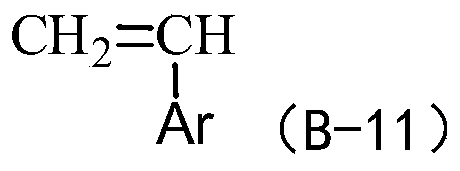 在化学式(B-11)中,Ar是任选取代的C6-20芳基(优选任选取代的苯基),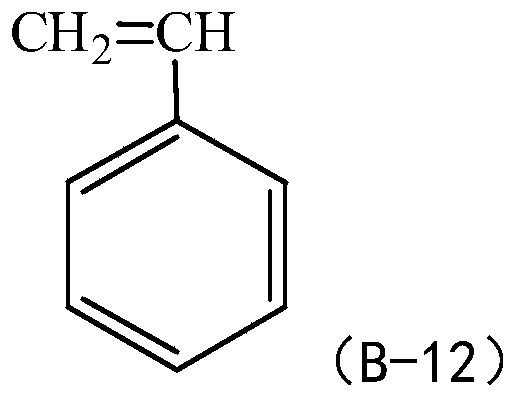

 在化学式(B-31)和化学式(B-32)中,L 1是(优选碳原子数不超过10的)任意连接基团(优选单键、C2-10直链或支链亚烷基、-C(=O)-C2-10直链或支链亚烷基、-C(=O)O-C2-10直链或支链亚烷基、-C(=O)NH-C2-10直链或支链亚烷基、C2-5直链或支链亚烷基-C(=O)-C2-5直链或支链亚烷基、C2-5直链或支链亚烷基-C(=O)O-C2-5直链或支链亚烷基、C2-5直链或支链亚烷基-C(=O)NH-C2-5直链或支链亚烷基,更优选-C(=O)NH-C2-10直链或支链亚烷基),M是氢、碱金属(比如K或Na)或铵(NH 4),
 在化学式(B-41)和化学式(B-42)中,L 2是(优选碳原子数不超过10的)任意连接基团(优选单键或者C2-10直链或支链亚烷基,特别是单键),R'是C1-4直链或支链烷基(优选甲基或乙基),
 在化学式(B-51)和化学式(B-52)中,L 3是(优选碳原子数不超过10的)任意连接基团(优选单键或者C2-10直链或支链亚烷基,特别是单键),M是氢、碱金属(比如K或Na)或铵(NH 4)。
 - 权利要求7所述的制造方法,其中所述步骤1)的反应温度为95-155℃,反应时间为1-3小时,和/或,所述步骤2)的反应温度为40-80℃,反应时间为1-3小时,和/或,所述醚化剂、所述糖或糖苷和所述催化剂的质量比为24:(70-100):(10-30),优选为24:(75-95):(15-25),最优选为24:(80-90):20,和/或,所述醚化剂、所述羧基乙烯单体(比如丙烯酸)、所述芳基乙烯单体(比如苯乙烯)、所述丙烯酰胺单体(比如丙烯酰胺)、所述磺基乙烯单体(比如2-丙烯酰胺-2-甲基丙磺酸)、所述硅氧基乙烯单体(比如乙烯基三乙氧基硅烷)和所述引发剂的质量比为24:(20-40):(20-40):(20-40):(10-20):(10-20):(0.6-1.8),优选为24:(25-35):(25-35):(25-35):(12-18):(12-18):(0.8-1.6),最优选为24:30:30:30:(14-16):(14-16):(1.0-1.4)。
- 一种钻井液组合物,包含芳基取代的糖或糖苷以及基浆,其中所述芳基取代的糖或糖苷是权利要求1所述的一种芳基取代的糖或糖苷或者多种芳基取代的糖或糖苷的混合物或者通过权利要求7所述的制造方法制造的一种芳基取代的糖或糖苷或者多种芳基取代的糖或糖苷的混合物。
- 权利要求9所述的钻井液组合物,其中以所述钻井液组合物的总质量为100wt%计,所述芳基取代的糖或糖苷的质量百分含量为0.1-5wt%(优选0.5-1.5wt%或者0.8-1.2wt%)。
- 一种钻井液组合物的制造方法,包括混合芳基取代的糖或糖苷与基浆的步骤,其中所述芳基取代的糖或糖苷是权利要求1所述的一种芳基取代的糖或糖苷或者多种芳基取代的糖或糖苷的混合物或者通过权利要求7所述的制造方法制造的一种芳基取代的糖或糖苷或者多种芳基取代的糖或糖苷的混合物。
Priority Applications (2)
| Application Number | Priority Date | Filing Date | Title |
|---|---|---|---|
| CN201980031498.9A CN112533966B (zh) | 2018-12-13 | 2019-11-29 | 芳基取代的糖或糖苷及其在钻井液组合物中的应用 |
| US16/966,870 US11952530B2 (en) | 2018-12-13 | 2019-11-29 | Aryl-substituted saccharides or glycosides and use thereof in a drilling fluid composition |
Applications Claiming Priority (2)
| Application Number | Priority Date | Filing Date | Title |
|---|---|---|---|
| CN201811525211.1 | 2018-12-13 | ||
| CN201811525211 | 2018-12-13 |
Publications (1)
| Publication Number | Publication Date |
|---|---|
| WO2020119478A1 true WO2020119478A1 (zh) | 2020-06-18 |
Family
ID=71075721
Family Applications (1)
| Application Number | Title | Priority Date | Filing Date |
|---|---|---|---|
| PCT/CN2019/121908 Ceased WO2020119478A1 (zh) | 2018-12-13 | 2019-11-29 | 芳基取代的糖或糖苷及其在钻井液组合物中的应用 |
Country Status (4)
| Country | Link |
|---|---|
| US (1) | US11952530B2 (zh) |
| CN (2) | CN111320727B (zh) |
| SA (1) | SA520420449B1 (zh) |
| WO (1) | WO2020119478A1 (zh) |
Families Citing this family (1)
| Publication number | Priority date | Publication date | Assignee | Title |
|---|---|---|---|---|
| CN116253767B (zh) * | 2021-12-10 | 2025-08-19 | 中国石油化工股份有限公司 | 一种醇胺基烷基糖苷聚醚及其应用 |
Citations (5)
| Publication number | Priority date | Publication date | Assignee | Title |
|---|---|---|---|---|
| CN104497188A (zh) * | 2014-12-11 | 2015-04-08 | 辽宁石油化工大学 | 一种水基钻井液用降滤失封堵剂的制备方法 |
| CN106432378A (zh) * | 2015-08-10 | 2017-02-22 | 中石化石油工程技术服务有限公司 | 一种多胺基烷基糖苷及其制备方法和应用 |
| CN106701046A (zh) * | 2015-07-17 | 2017-05-24 | 中石化石油工程技术服务有限公司 | 一种无土相聚醚胺基烷基糖苷钻井液及其制备方法 |
| CN107973880A (zh) * | 2016-10-25 | 2018-05-01 | 中石化石油工程技术服务有限公司 | 一种钻井液处理剂及其制备方法和钻井液 |
| CN107987808A (zh) * | 2016-10-26 | 2018-05-04 | 中石化石油工程技术服务有限公司 | 一种钻井液 |
Family Cites Families (9)
| Publication number | Priority date | Publication date | Assignee | Title |
|---|---|---|---|---|
| US2360327A (en) * | 1942-01-22 | 1944-10-17 | Bailey L Horace | Production of mud-laden drilling fluids |
| DE4024658A1 (de) * | 1990-08-03 | 1992-04-16 | Henkel Kgaa | Verwendung oberflaechenaktiver alkylglycosidverbindungen in wasser- und oel-basierten bohrspuelungen und anderen bohrlochbehandlungsmitteln |
| US7279446B2 (en) * | 2004-11-15 | 2007-10-09 | Rhodia Inc. | Viscoelastic surfactant fluids having enhanced shear recovery, rheology and stability performance |
| US8936111B2 (en) * | 2010-03-06 | 2015-01-20 | Halliburton Energy Services, Inc. | Invert drilling fluids having enhanced rheology and methods of drilling boreholes |
| US8623790B2 (en) * | 2010-12-21 | 2014-01-07 | Newpark Drilling Fluids Llc | Method of drilling a subterranean well with crosslinked polyacrylic acid |
| US9346995B2 (en) * | 2012-05-09 | 2016-05-24 | Halliburton Energy Services, Inc. | Methods and materials to enhance high temperature rheology in invert emulsions |
| CN104140525B (zh) * | 2013-10-29 | 2017-07-11 | 中国石油化工股份有限公司 | 一种钻井液用烷基糖苷聚醚的制备方法 |
| CN106432375B (zh) * | 2015-08-10 | 2019-02-22 | 中石化石油工程技术服务有限公司 | 一种聚醚胺基烷基糖苷及其制备方法和应用 |
| CN107973827A (zh) * | 2016-10-25 | 2018-05-01 | 中石化石油工程技术服务有限公司 | 一种胺基烷基糖苷接枝共聚物及其制备方法和钻井液 |
-
2019
- 2019-11-27 CN CN201911185305.3A patent/CN111320727B/zh active Active
- 2019-11-29 CN CN201980031498.9A patent/CN112533966B/zh active Active
- 2019-11-29 US US16/966,870 patent/US11952530B2/en active Active
- 2019-11-29 WO PCT/CN2019/121908 patent/WO2020119478A1/zh not_active Ceased
-
2020
- 2020-10-30 SA SA520420449A patent/SA520420449B1/ar unknown
Patent Citations (5)
| Publication number | Priority date | Publication date | Assignee | Title |
|---|---|---|---|---|
| CN104497188A (zh) * | 2014-12-11 | 2015-04-08 | 辽宁石油化工大学 | 一种水基钻井液用降滤失封堵剂的制备方法 |
| CN106701046A (zh) * | 2015-07-17 | 2017-05-24 | 中石化石油工程技术服务有限公司 | 一种无土相聚醚胺基烷基糖苷钻井液及其制备方法 |
| CN106432378A (zh) * | 2015-08-10 | 2017-02-22 | 中石化石油工程技术服务有限公司 | 一种多胺基烷基糖苷及其制备方法和应用 |
| CN107973880A (zh) * | 2016-10-25 | 2018-05-01 | 中石化石油工程技术服务有限公司 | 一种钻井液处理剂及其制备方法和钻井液 |
| CN107987808A (zh) * | 2016-10-26 | 2018-05-04 | 中石化石油工程技术服务有限公司 | 一种钻井液 |
Also Published As
| Publication number | Publication date |
|---|---|
| CN111320727A (zh) | 2020-06-23 |
| CN112533966B (zh) | 2023-06-23 |
| US11952530B2 (en) | 2024-04-09 |
| CN112533966A (zh) | 2021-03-19 |
| CN111320727B (zh) | 2022-10-14 |
| SA520420449B1 (ar) | 2023-10-16 |
| US20210040373A1 (en) | 2021-02-11 |
Similar Documents
| Publication | Publication Date | Title |
|---|---|---|
| FI111732B (fi) | Ligandimodifioitu selluloosatuote | |
| US20060096756A1 (en) | Difunctional phosphorus-based gelling agents and gelled nonaqueous treatment fluids and associated methods | |
| CN106432375A (zh) | 一种聚醚胺基烷基糖苷及其制备方法和应用 | |
| Chang et al. | N, N’-methylene-bridged nitroiodoazoles: Biocidal compounds with enhanced thermal stability | |
| CN111320727A (zh) | 芳基取代的糖或糖苷及其在钻井液组合物中的应用 | |
| WO2006060424A3 (en) | Inducible nitric oxide synthase dimerization inhibitors | |
| CN112533907B (zh) | 具有新型结构的化合物、包含其的络合物、抗癌用药学组合物以及抗癌剂 | |
| CN106701046A (zh) | 一种无土相聚醚胺基烷基糖苷钻井液及其制备方法 | |
| US11713409B2 (en) | Substituted saccharides or glycosides and use thereof in a drilling fluid composition | |
| CN111320659B (zh) | 一种磺胺基甘油基糖苷及其制备方法和钻井液 | |
| CN111320971B (zh) | 一种烷基壳寡糖苷聚醚及其制备方法和钻井液 | |
| Elgazar et al. | Comprehensive analysis of nitrogen–oxygen schiff base derived from Triazole and its metal complex: synthesis, structural characterization, and biological activities with theoretical insights for anti-helicobacter pylori, antitumor, and anti-covid-19 applications | |
| CN106432376B (zh) | 一种胺基烷基糖苷及其制备方法和应用 | |
| CN109694697A (zh) | 一种钻井液用聚胺泥页岩抑制剂及其制备方法和钻井液 | |
| CA2447806A1 (en) | Improved powder metallurgy lubricant compositions and methods for using the same | |
| JPH03209338A (ja) | パーハロゲン化エチレンの製造法 | |
| JP5231456B2 (ja) | 新規化合物とその合成方法及びオイル添加剤 | |
| Kayet et al. | Vinyl sulfone modified-azidofuranoside building-blocks: 1, 4-/1, 5-disubstituted-1, 2, 3-triazole linked trisaccharides via an aqueous/ionic-liquid route and “Click” chemistry | |
| Hakala et al. | Synthesis and properties of nanospheres copolymerised with luminescent europium (III) chelates | |
| CN113004877B (zh) | 一种钻井液用磺化胺基烷基糖苷润滑剂及其制备方法和应用 | |
| JPS6355554B2 (zh) | ||
| CN111320972B (zh) | 一种酰胺胺基壳聚糖及其制备方法和钻井液 | |
| Chaux et al. | An easy route towards regioselectively difunctionalized cyclens and new cryptands | |
| JPS5863776A (ja) | 水系増粘剤 | |
| RU2439095C1 (ru) | Полимерная антифрикционная композиция |
Legal Events
| Date | Code | Title | Description |
|---|---|---|---|
| 121 | Ep: the epo has been informed by wipo that ep was designated in this application |
Ref document number: 19895662 Country of ref document: EP Kind code of ref document: A1 |
|
| NENP | Non-entry into the national phase |
Ref country code: DE |
|
| 122 | Ep: pct application non-entry in european phase |
Ref document number: 19895662 Country of ref document: EP Kind code of ref document: A1 |