WO2020085201A1 - 擬似皮膚の製造方法 - Google Patents
擬似皮膚の製造方法 Download PDFInfo
- Publication number
- WO2020085201A1 WO2020085201A1 PCT/JP2019/040932 JP2019040932W WO2020085201A1 WO 2020085201 A1 WO2020085201 A1 WO 2020085201A1 JP 2019040932 W JP2019040932 W JP 2019040932W WO 2020085201 A1 WO2020085201 A1 WO 2020085201A1
- Authority
- WO
- WIPO (PCT)
- Prior art keywords
- monomer
- network structure
- skin
- pseudo
- powder
- Prior art date
- Legal status (The legal status is an assumption and is not a legal conclusion. Google has not performed a legal analysis and makes no representation as to the accuracy of the status listed.)
- Ceased
Links
Classifications
-
- A—HUMAN NECESSITIES
- A45—HAND OR TRAVELLING ARTICLES
- A45D—HAIRDRESSING OR SHAVING EQUIPMENT; EQUIPMENT FOR COSMETICS OR COSMETIC TREATMENTS, e.g. FOR MANICURING OR PEDICURING
- A45D44/00—Other cosmetic or toiletry articles, e.g. for hairdressers' rooms
- A45D44/22—Face shaping devices, e.g. chin straps; Wrinkle removers, e.g. stretching the skin
-
- A—HUMAN NECESSITIES
- A61—MEDICAL OR VETERINARY SCIENCE; HYGIENE
- A61K—PREPARATIONS FOR MEDICAL, DENTAL OR TOILETRY PURPOSES
- A61K8/00—Cosmetics or similar toiletry preparations
- A61K8/18—Cosmetics or similar toiletry preparations characterised by the composition
- A61K8/19—Cosmetics or similar toiletry preparations characterised by the composition containing inorganic ingredients
- A61K8/29—Titanium; Compounds thereof
-
- A—HUMAN NECESSITIES
- A61—MEDICAL OR VETERINARY SCIENCE; HYGIENE
- A61K—PREPARATIONS FOR MEDICAL, DENTAL OR TOILETRY PURPOSES
- A61K8/00—Cosmetics or similar toiletry preparations
- A61K8/18—Cosmetics or similar toiletry preparations characterised by the composition
- A61K8/72—Cosmetics or similar toiletry preparations characterised by the composition containing organic macromolecular compounds
- A61K8/73—Polysaccharides
-
- A—HUMAN NECESSITIES
- A61—MEDICAL OR VETERINARY SCIENCE; HYGIENE
- A61K—PREPARATIONS FOR MEDICAL, DENTAL OR TOILETRY PURPOSES
- A61K8/00—Cosmetics or similar toiletry preparations
- A61K8/18—Cosmetics or similar toiletry preparations characterised by the composition
- A61K8/72—Cosmetics or similar toiletry preparations characterised by the composition containing organic macromolecular compounds
- A61K8/81—Cosmetics or similar toiletry preparations characterised by the composition containing organic macromolecular compounds obtained by reactions involving only carbon-to-carbon unsaturated bonds
-
- A—HUMAN NECESSITIES
- A61—MEDICAL OR VETERINARY SCIENCE; HYGIENE
- A61L—METHODS OR APPARATUS FOR STERILISING MATERIALS OR OBJECTS IN GENERAL; DISINFECTION, STERILISATION OR DEODORISATION OF AIR; CHEMICAL ASPECTS OF BANDAGES, DRESSINGS, ABSORBENT PADS OR SURGICAL ARTICLES; MATERIALS FOR BANDAGES, DRESSINGS, ABSORBENT PADS OR SURGICAL ARTICLES
- A61L27/00—Materials for grafts or prostheses or for coating grafts or prostheses
- A61L27/02—Inorganic materials
- A61L27/12—Phosphorus-containing materials, e.g. apatite
-
- A—HUMAN NECESSITIES
- A61—MEDICAL OR VETERINARY SCIENCE; HYGIENE
- A61L—METHODS OR APPARATUS FOR STERILISING MATERIALS OR OBJECTS IN GENERAL; DISINFECTION, STERILISATION OR DEODORISATION OF AIR; CHEMICAL ASPECTS OF BANDAGES, DRESSINGS, ABSORBENT PADS OR SURGICAL ARTICLES; MATERIALS FOR BANDAGES, DRESSINGS, ABSORBENT PADS OR SURGICAL ARTICLES
- A61L27/00—Materials for grafts or prostheses or for coating grafts or prostheses
- A61L27/14—Macromolecular materials
- A61L27/16—Macromolecular materials obtained by reactions only involving carbon-to-carbon unsaturated bonds
-
- A—HUMAN NECESSITIES
- A61—MEDICAL OR VETERINARY SCIENCE; HYGIENE
- A61L—METHODS OR APPARATUS FOR STERILISING MATERIALS OR OBJECTS IN GENERAL; DISINFECTION, STERILISATION OR DEODORISATION OF AIR; CHEMICAL ASPECTS OF BANDAGES, DRESSINGS, ABSORBENT PADS OR SURGICAL ARTICLES; MATERIALS FOR BANDAGES, DRESSINGS, ABSORBENT PADS OR SURGICAL ARTICLES
- A61L27/00—Materials for grafts or prostheses or for coating grafts or prostheses
- A61L27/14—Macromolecular materials
- A61L27/20—Polysaccharides
-
- A—HUMAN NECESSITIES
- A61—MEDICAL OR VETERINARY SCIENCE; HYGIENE
- A61L—METHODS OR APPARATUS FOR STERILISING MATERIALS OR OBJECTS IN GENERAL; DISINFECTION, STERILISATION OR DEODORISATION OF AIR; CHEMICAL ASPECTS OF BANDAGES, DRESSINGS, ABSORBENT PADS OR SURGICAL ARTICLES; MATERIALS FOR BANDAGES, DRESSINGS, ABSORBENT PADS OR SURGICAL ARTICLES
- A61L27/00—Materials for grafts or prostheses or for coating grafts or prostheses
- A61L27/40—Composite materials, i.e. containing one material dispersed in a matrix of the same or different material
- A61L27/44—Composite materials, i.e. containing one material dispersed in a matrix of the same or different material having a macromolecular matrix
- A61L27/46—Composite materials, i.e. containing one material dispersed in a matrix of the same or different material having a macromolecular matrix with phosphorus-containing inorganic fillers
-
- A—HUMAN NECESSITIES
- A61—MEDICAL OR VETERINARY SCIENCE; HYGIENE
- A61L—METHODS OR APPARATUS FOR STERILISING MATERIALS OR OBJECTS IN GENERAL; DISINFECTION, STERILISATION OR DEODORISATION OF AIR; CHEMICAL ASPECTS OF BANDAGES, DRESSINGS, ABSORBENT PADS OR SURGICAL ARTICLES; MATERIALS FOR BANDAGES, DRESSINGS, ABSORBENT PADS OR SURGICAL ARTICLES
- A61L27/00—Materials for grafts or prostheses or for coating grafts or prostheses
- A61L27/40—Composite materials, i.e. containing one material dispersed in a matrix of the same or different material
- A61L27/44—Composite materials, i.e. containing one material dispersed in a matrix of the same or different material having a macromolecular matrix
- A61L27/48—Composite materials, i.e. containing one material dispersed in a matrix of the same or different material having a macromolecular matrix with macromolecular fillers
-
- A—HUMAN NECESSITIES
- A61—MEDICAL OR VETERINARY SCIENCE; HYGIENE
- A61L—METHODS OR APPARATUS FOR STERILISING MATERIALS OR OBJECTS IN GENERAL; DISINFECTION, STERILISATION OR DEODORISATION OF AIR; CHEMICAL ASPECTS OF BANDAGES, DRESSINGS, ABSORBENT PADS OR SURGICAL ARTICLES; MATERIALS FOR BANDAGES, DRESSINGS, ABSORBENT PADS OR SURGICAL ARTICLES
- A61L27/00—Materials for grafts or prostheses or for coating grafts or prostheses
- A61L27/50—Materials characterised by their function or physical properties, e.g. injectable or lubricating compositions, shape-memory materials, surface modified materials
- A61L27/60—Materials for use in artificial skin
-
- A—HUMAN NECESSITIES
- A61—MEDICAL OR VETERINARY SCIENCE; HYGIENE
- A61Q—SPECIFIC USE OF COSMETICS OR SIMILAR TOILETRY PREPARATIONS
- A61Q1/00—Make-up preparations; Body powders; Preparations for removing make-up
-
- A—HUMAN NECESSITIES
- A61—MEDICAL OR VETERINARY SCIENCE; HYGIENE
- A61Q—SPECIFIC USE OF COSMETICS OR SIMILAR TOILETRY PREPARATIONS
- A61Q17/00—Barrier preparations; Preparations brought into direct contact with the skin for affording protection against external influences, e.g. sunlight, X-rays or other harmful rays, corrosive materials, bacteria or insect stings
- A61Q17/04—Topical preparations for affording protection against sunlight or other radiation; Topical sun tanning preparations
-
- A—HUMAN NECESSITIES
- A61—MEDICAL OR VETERINARY SCIENCE; HYGIENE
- A61Q—SPECIFIC USE OF COSMETICS OR SIMILAR TOILETRY PREPARATIONS
- A61Q19/00—Preparations for care of the skin
-
- C—CHEMISTRY; METALLURGY
- C08—ORGANIC MACROMOLECULAR COMPOUNDS; THEIR PREPARATION OR CHEMICAL WORKING-UP; COMPOSITIONS BASED THEREON
- C08F—MACROMOLECULAR COMPOUNDS OBTAINED BY REACTIONS ONLY INVOLVING CARBON-TO-CARBON UNSATURATED BONDS
- C08F2/00—Processes of polymerisation
- C08F2/44—Polymerisation in the presence of compounding ingredients, e.g. plasticisers, dyestuffs, fillers
Definitions
- the present invention relates to a method for producing pseudo-skin, and more particularly to a method for producing pseudo-skin having sufficient strength and natural and uniform color, which can be applied for a long time.
- pseudo skin For example, a surface layer that is made of a first urethane resin that has relatively high durability and high elongation, and a colorant layer that expresses the skin color is sandwiched inside, and a surface layer that is relatively softer than the first urethane resin.
- An artificial skin model consisting of a base layer formed of two urethane resins has been developed (see Patent Document 1).
- these pseudo-skins cannot actually be applied to the skin of a face or the like for a long time, but are intended to evaluate the finish by applying a cosmetic material onto the pseudo-skin.
- it not only can it be applied to the face for a long time, but it can also be released from the morning makeup habits and daytime makeup repairs, and can maintain a perfect fresh skin condition for at least one day.
- the present invention has been made in view of the above-mentioned prior art, and an object to be solved is to provide a method for producing pseudo-skin having sufficient strength and natural and uniform color, which can be applied for a long time. is there.
- pseudo-skin made of a gel having an interpenetrating network structure a powder and a thickening agent were added to the polymerization solvent in the step of forming the first network structure. It was found that a pseudo-skin that has sufficient strength and a natural and uniform color and can be applied for a long time can be obtained by including an agent and mixing the content of the first monomer in a specific amount. The invention was completed.
- the method for producing pseudo-skin comprises: (A) (a1) a step of forming a first network structure by polymerizing and crosslinking a first monomer; (B) After introducing the (b1) second monomer into the first network structure, the (b1) second monomer is polymerized, and optionally crosslinked to form a second polymer in the first network structure.
- the polymerization solvent contains a powder and a thickener, and the content of the (a1) first monomer is 0.5 to 3 mol / L in the polymerization solvent.
- the first monomer (a1) is preferably 2-acrylamido-2-methylpropanesulfonic acid.
- the thickener is hydroxypropylmethylcellulose stearyl ether.
- the blending amount of the thickener is 0.3 to 1% by weight in the polymerization solvent of step (A).
- the polymerization solvent in step (A) contains a dispersant, and the dispersant contains sodium hexametaphosphate or sodium polyacrylate.
- the content of the dispersant is preferably 5% by weight or more based on the powder.
- the content of the (a1) first monomer is preferably 0.5 to 1.5 mol / L in the polymerization solvent.
- the present invention can provide a method for producing pseudo-skin having sufficient strength and natural and uniform color, which can be applied for a long time.
- by adjusting the content of the (a1) first monomer it is possible to provide a method for producing pseudo-skin that does not cause discomfort when actually placed on the skin.
- the method for producing pseudo-skin comprises (A) (a1) a step of polymerizing and crosslinking a first monomer to form a first network structure, (B) After introducing the (b1) second monomer into the first network structure, the (b1) second monomer is polymerized, and optionally crosslinked to form a second polymer in the first network structure.
- the method for producing pseudo-skin comprising a gel having an interpenetrating network structure including the step of forming a second network structure
- the polymerization solvent contains a powder and a thickener, and the content of the (a1) first monomer is 0.5 to 3 mol / L in the polymerization solvent.
- the interpenetrating network structure means a structure in which two network structures of a first network structure and a second network structure are overlapped with each other and are entangled with each other.
- the first network structure is a network structure formed by polymerizing and crosslinking the (a1) first monomer. It is necessary to include the powder and the thickener in the first network polymerization solvent.
- the first monomer is a monofunctional unsaturated monomer.
- the monofunctional unsaturated monomer means a monomer having one carbon-carbon unsaturated double bond in one molecule.
- the anionic unsaturated monomer (a1-1) is preferably used as the (a1) first monomer.
- the anionic unsaturated monomer means a monomer that is negatively charged in water among monofunctional unsaturated monomers.
- second monomer solution the solution of the (b1) second monomer
- the first network structure was converted into the anionic unsaturated monomer (a1-1).
- anions repel each other and the first network structure develops swelling behavior, and (b1) the second monomer is easily introduced into the first network structure. become.
- Examples of the (a1-1) anionic unsaturated monomer include unsaturated monomers having a sulfonic acid group (2-acrylamido-2-methylpropanesulfonic acid, p-styrenesulfonic acid, vinylsulfonic acid, etc.), carboxylic acid groups Unsaturated monomers having acrylic acid (acrylic acid, methacrylic acid, maleic acid, succinic acid, itaconic acid, etc.), unsaturated monomers having a phosphoric acid group (methacryloxyethyl trimeric acid, etc.), and salts thereof. These anionic unsaturated monomers may be used alone or in combination of two or more.
- the content of the (a1-1) anionic unsaturated monomer is preferably 5 mol% or more based on 100 mol% of the (a1) first monomer.
- the content of the (a1-1) anionic unsaturated monomer is 5 mol% or more, the swelling behavior of the first network structure is likely to be exhibited, and a gel having sufficient mechanical strength can be easily obtained.
- the (a1) first monomer may contain another unsaturated monomer.
- unsaturated monomers include (a1-2) nonionic unsaturated monomers and (a1-3) cationic unsaturated monomers.
- the nonionic unsaturated monomer means, among the monofunctional unsaturated monomers, a monomer that is not positively or negatively charged in water or is extremely weak even if charged.
- the cationic unsaturated monomer means, among the monofunctional unsaturated monomers, a monomer that is positively charged in water.
- the type of the (a1-2) nonionic unsaturated monomer is not particularly limited as long as it is soluble in the solvent.
- Examples of the (a1-2) nonionic unsaturated monomer include known monomers such as acrylamide derivatives (acrylamide, dimethylacrylamide, N-isopropylacrylamide, N-methylolacrylamide, acryloylmorpholine, etc.), methacrylamide derivatives (methacrylamide).
- Amide dimethylmethacrylamide, N-isopropylmethacrylamide, N-methylolmethacrylamide, methacryloylmorpholine, etc.), acrylate (hydroxyethyl acrylate, hydroxypropyl acrylate, dimethylaminoethyl acrylate, dimethylaminopropyl acrylate, etc.), methacrylate (hydroxyethyl methacrylate) , Hydroxypropyl methacrylate, dimethylaminoethyl methacrylate, di Water-soluble compounds such as acrylonitrile, 2-vinylpyridine, 4-vinylpyridine, N-vinylpyrrolidone and vinyl acetate, and alkyl (meth) acrylates (methyl (meth) acrylate, ethyl (meth)) Acrylate, butyl (meth) acrylate, 2-ethylhexyl acrylate, lauryl (meth) acrylate, stearyl (me
- the (a1-2) nonionic unsaturated monomer preferably has a molecular weight (mass average molecular weight) of 1,000 or less from the viewpoint of easily expressing mechanical strength.
- (meth) acrylamide derivatives such as acrylamide and N-methylol acrylamide are preferable.
- a monomer having a site forming a hydrogen bond in the molecule that is, a monomer having a hydroxyl group or an amide group, for example, a (meth) acrylamide derivative such as N-methylol (meth) acrylamide.
- Examples of the cationic unsaturated monomer (a1-3) include unsaturated quaternary ammonium salts represented by methacrylamidopropyltrimethylammonium chloride.
- unsaturated quaternary ammonium salts represented by methacrylamidopropyltrimethylammonium chloride.
- the cationic unsaturated monomer (a1-3) one type may be used alone, or two or more types may be used in combination.
- the content of the first monomer must be 0.5 to 3 mol / L in the polymerization solvent. If the content of the (a1) first monomer is too low, the powder dispersibility is poor. If the content of the (a1) first monomer is too large, the monomer is not dissolved and polymerization cannot be performed.
- the first network structure is obtained by polymerizing and crosslinking the (a1) first monomer. That is, it is necessary to include a crosslinking agent.
- cross-linking agent examples include polyfunctional unsaturated monomers.
- the polyfunctional unsaturated monomer means an unsaturated monomer having two or more polymerizable functional groups.
- the polymerizable functional group is a functional group that forms a cross-linking point in the polymer, and examples thereof include a (meth) acryloyl group and a vinyl group.
- the polyalkylene glycol structure means a structure in which constituent units derived from alkylene oxides such as ethylene oxide, propylene oxide, butylene oxide, and tetramethylene oxide (hereinafter referred to as “alkylene oxide units”) are repeatedly present.
- polyfunctional unsaturated monomer for example, N, N-methylenebisacrylamide, monoethylene glycol di (meth) acrylate, diethylene glycol di (meth) acrylate, monopropylene glycol di (meth) acrylate, 1,6-hexanediol di ( Examples thereof include (meth) acrylate and 1,9-nonanediol di (meth) acrylate.
- the amount of the crosslinking agent added is preferably 0.5 to 20 mol% and more preferably 2 to 15 mol% with respect to 100 mol% of the (a1) first monomer.
- the amount added is 0.5 mol% or more, the shape of the first network structure can be easily maintained, and the handling of the first network structure when introducing the (b1) second monomer becomes easy. Further, when the addition amount is 20 mol% or less, the first network structure is likely to swell sufficiently, and it becomes easy to sufficiently absorb the (b1) second monomer in the first network structure.
- step (A) of the method for producing pseudo-skin of the present invention it is necessary to include a powder and a thickener in the polymerization solvent.
- the gel having the interpenetrating network structure can be provided as the pseudo-skin of the present invention by blending the powder in the polymerization solvent having the first network structure.
- the powder is not particularly limited as long as it can color the gel so that it can be used as pseudo skin, but titanium oxide, yellow iron oxide, red iron oxide, zinc oxide, black iron oxide, polymethylmethacrylate, silica , Silicone elastomer, cellulose powder and the like.
- the amount of the powder blended is preferably 0.5 to 3% by weight in the polymerization solvent in step (A). If the powder content is too small, it may not function as pseudo skin. If the powder content is too large, the powder may agglomerate and the gel may become brittle.
- the dispersibility of the coloring material can be improved by blending the thickening agent in the polymerization solvent having the first network structure.
- the thickener include hydroxypropyl methyl cellulose acetate, hydroxypropyl methyl cellulose succinate, hydroxypropyl methyl cellulose phthalate, hydroxypropyl methyl cellulose stearyl ether, and the like.
- hydroxypropylmethyl cellulose stearyl ether is most preferable from the viewpoint of the effect of improving dispersibility.
- the blending amount of the thickener is preferably 0.3 to 1% by weight, and particularly preferably 0.4 to 0.8% by weight in the polymerization solvent in the step (A). If the blending amount of the thickener is too small, the powder dispersibility may be poor. If the content of the thickener is too large, it may become too hard and cause a feeling of strangeness when applied to the skin. In addition, the viscosity may increase and the manufacturability may decrease significantly.
- step (A) of the method for producing pseudo-skin of the present invention it is preferable to add a dispersant, a neutralizing agent, a polymerization initiator, and water to the polymerization solvent as components other than the above.
- Dispersant For the pseudo skin of the present invention, it is preferable to add a dispersant to the polymerization solvent of step (A).
- the dispersant include sodium hexametaphosphate and sodium polyacrylate.
- the content of the dispersant is preferably 5% by weight or more based on the powder. If the content of the dispersant is too small, the powder dispersibility may be poor.
- the gel having the interpenetrating network structure of the present invention has a second network structure.
- the second network structure is formed in the first network structure by introducing the (b1) second monomer into the first network structure and polymerizing and crosslinking the (b1) second monomer. It has a mesh structure.
- the (b1) second monomer is a monomer containing the (b1-1) nonionic unsaturated monomer, and a mixture with another (b1-2) unsaturated monomer can be used if necessary.
- nonionic unsaturated monomer (b1-1) a known nonionic unsaturated monomer which is a monofunctional unsaturated monomer can be used, and the same nonionic unsaturated monomers as those listed for the nonionic unsaturated monomer (a1-2) can be used. Can be mentioned.
- the (b1-1) nonionic unsaturated monomer one type may be used alone, or two or more types may be used in combination.
- the content of the (b1-1) nonionic unsaturated monomer is preferably 60 mol% or more, more preferably 70 mol% or more, still more preferably 80 mol% or more, based on 100 mol% of the (b1) second monomer. .
- the content of the nonionic unsaturated monomer (b1-1) is 60 mol% or more, the electric repulsion between the (b1) second monomers is easily suppressed, and the content of the non-unsaturated monomer (b1-1) is sufficient in the first network structure. It becomes easy to introduce an amount of the (b1) second monomer.
- anionic unsaturated monomer and cationic unsaturated monomer can be used, and (a1-1) anionic unsaturated monomer and (a1-3) cationic unsaturated monomer can be used.
- anionic unsaturated monomer and cationic unsaturated monomer can be used, and (a1-1) anionic unsaturated monomer and (a1-3) cationic unsaturated monomer can be used.
- the same monomers as those listed as the monomers can be mentioned.
- the second network structure is obtained by polymerizing (b1) the second monomer and optionally crosslinking.
- the cross-linking agent in the case of cross-linking the same one as in the step (A) can be mentioned.
- the pseudo-skin of the present invention may be blended with components other than the above, known plasticizers, stabilizers, reinforcing agents, inorganic fillers, impact modifiers, flame retardants, etc., if necessary. Good.
- Examples of the polymerization method include a radical polymerization method using a thermal polymerization initiator and a photopolymerization method using a photopolymerization initiator.
- Examples of the thermal polymerization initiator include persulfates such as potassium persulfate and ammonium persulfate, peroxides such as benzoyl peroxide, and azo initiators.
- Examples of the photopolymerization initiator include general photopolymerization initiators such as alkylphenone-based initiators and acylphosphine oxide-based initiators.
- the (b1) second monomer, a polymerization initiator, etc. are dissolved in a second monomer solution to form the first network structure.
- a convenient method is to immerse the gel precursor contained therein and to incorporate (b1) the second monomer into the first network structure during the process in which the first network structure absorbs the solvent and swells.
- the same method as the polymerization method in step (A) can be used.
- a radical polymerization method using a thermal polymerization initiator is preferable.
- a photopolymerization method using a photopolymerization initiator may be preferable in some cases.
- the polymerization method of the (a1) first monomer and the polymerization method of the (b1) second monomer may be the same or different.
- Examples of the crosslinking method in the step (B) include a crosslinking method using a chemical bond, a crosslinking method using an ionic bond, and a physical crosslinking method.
- the following cross-linking method may be mentioned, which does not require special equipment, does not complicate the manufacturing process, is easy to operate, and is easy to control the second network structure. Is preferred.
- ( ⁇ ) A method in which a polyfunctional unsaturated monomer (b2) having two or more carbon-carbon unsaturated double bonds in one molecule is used together with the (b1) second monomer to crosslink simultaneously with polymerization.
- ( ⁇ ) A method in which a radical is generated in the polymer formed by the second monomer (b1) by irradiation to crosslink.
- ( ⁇ ) A method of directly reacting the functional groups of the side chains of the units derived from the second monomer which constitutes the polymer (b1).
- ( ⁇ ) A method of cross-linking functional groups of side chains of units derived from the second monomer (b1) constituting the polymer with a bridging agent.
- ( ⁇ ) A method in which a polyvalent metal ion (copper ion, zinc ion, calcium ion, etc.) is used to crosslink by an ionic bond or a coordinate bond.
- the pseudo-skin of the present invention can be applied for a long time, it can protect the skin from external stimuli such as ultraviolet rays while having makeup and moisturizing effects.
- the present invention will be described in more detail below with reference to Examples, but the present invention is not limited thereto. Unless otherwise specified, the blending amount is indicated by weight% with respect to the system in which the component is blended. Prior to the description of the examples, the test evaluation method used in the present invention will be described.
- Evaluation (2) Powder sedimentation property The powder sedimentation property of the sample was evaluated. A: The powder is not settled. B: Partial sedimentation of powder is observed. C: Sedimentation of powder is observed.
- Evaluation (3) Uniformity of gel The uniformity of the gel of the sample was evaluated. A: Uniform. B: Partly non-uniform. C: Non-uniform.
- Evaluation (4) Feeling when placed on skin The feeling when the sample was placed on the skin was evaluated by comparing it with the feeling when the base gel was placed on the skin. A: The sample was softer than the base gel and felt affinity with the skin. B: The sample had almost the same feel as the base gel. C: The sample was harder than the base gel and had a feeling of strangeness.
- the inventors prepared a powder dispersion in water shown in Table 1 below by a conventional method and evaluated it by the above evaluation method (1).
- Table 1 the blending amount is shown in parts by weight. The results are shown in Table 1.
- the inventors of the present invention investigated the formulation of the powder having the interpenetrating network structure so that it could be used as pseudo-skin. Specifically, the type of thickener blended in the step (A) of forming the first network structure was examined. That is, the pseudo skin and the base gel shown in Table 2 below were manufactured by the following manufacturing method, and evaluated according to the above evaluation criteria (1) to (4). The results are shown in Table 2.
- the first monomer solution was prepared by dissolving the monomer, the crosslinking agent, the initiator and the neutralizing agent in water.
- the powder dispersion had the composition shown in Table 1, and the powder, the dispersant, and water were mixed and then subjected to ultrasonic treatment for 5 minutes.
- a polymer for thickening was dissolved in water to prepare a 1% aqueous solution.
- the powder dispersion was stirred and mixed with the first monomer solution, and then the polymer solution for thickening was mixed.
- the obtained polymerization solution was defoamed using a rotation / revolution mixer or the like, poured into a glass mold for polymerization, and polymerized at 65 ° C. for 8 hours.
- the second monomer solution was prepared by dissolving the monomer, the crosslinking agent and the initiator with water.
- the first network gel after polymerization was immersed in the second monomer solution, allowed to stand for 8 hours, and then polymerized at 65 ° C. for 8 hours.
- the gel after polymerization was immersed in ion-exchanged water to remove residual monomers and the like.
- AMPS 2-acrylamido-2-methylpropanesulfonic acid MBAA: N, N'-methylenebisacrylamide APS: ammonium persulfate AAm: acrylamide DMAAm: dimethylacrylamide
- the type of thickener compounded in the step (A) affects the dispersibility of the powder in the powder-blended gel and the homogeneity of the gel. It was found that the use of hydroxypropylmethylcellulose stearyl ether as a thickening agent can improve the dispersibility of the powder-containing gel and the uniformity of the gel. Further, it has been revealed that when the powder is blended, the feel when placed on the gel is deteriorated. From the above, in the method for producing pseudo-skin according to the present invention, it is preferable to use hydroxypropylmethylcellulose stearyl ether as a thickener.
- the present inventors examined the blending amount of the thickener blended in the step (A).
- the pseudo-skin shown in Table 3 below and the base gel shown in Table 2 above were manufactured by the above-mentioned manufacturing method, and evaluated according to the above evaluation criteria (1) to (4). The results are shown in Table 3.
- the compounding amount of the thickener is preferably 0.3% by weight or more in the polymerization solvent of the step (A).
- the present inventors examined the amount of the (a1) first monomer compounded in the step (A) and the type of the second monomer (b1) compounded in the step (B).
- the pseudo-skin shown in Table 4 below and the base gel shown in Table 2 above were manufactured by the above-mentioned manufacturing method, and evaluated according to the above evaluation criteria (1) to (4). The results are shown in Table 4.
- the present inventors further studied (a1) the content of the first monomer.
- the artificial skin shown in Table 5 below and the base gel shown in Table 2 above were produced by the above production method, and evaluated according to the above evaluation criteria (1) to (4). The results are shown in Table 5.
- the content of the (a1) first monomer needs to be 0.5 to 3 mol / L in the polymerization solvent. Further, considering the feeling when placed on the skin, the content of the (a1) first monomer is preferably 0.5 to 1.5 mol / L in the polymerization solvent.
Landscapes
- Health & Medical Sciences (AREA)
- Life Sciences & Earth Sciences (AREA)
- Chemical & Material Sciences (AREA)
- Animal Behavior & Ethology (AREA)
- General Health & Medical Sciences (AREA)
- Public Health (AREA)
- Veterinary Medicine (AREA)
- Epidemiology (AREA)
- Dermatology (AREA)
- Medicinal Chemistry (AREA)
- Transplantation (AREA)
- Oral & Maxillofacial Surgery (AREA)
- Birds (AREA)
- Inorganic Chemistry (AREA)
- Engineering & Computer Science (AREA)
- Composite Materials (AREA)
- Materials Engineering (AREA)
- Chemical Kinetics & Catalysis (AREA)
- Polymers & Plastics (AREA)
- Organic Chemistry (AREA)
- Cosmetics (AREA)
- Materials For Medical Uses (AREA)
- Compositions Of Macromolecular Compounds (AREA)
- Addition Polymer Or Copolymer, Post-Treatments, Or Chemical Modifications (AREA)
- Polymerisation Methods In General (AREA)
Abstract
十分な強度および自然で均一な色を有し、長時間貼付可能な擬似皮膚の製造方法を提供する。 (A)(a1)第一のモノマーを重合し架橋することにより第一の網目構造を形成させる工程と、 (B)該第一の網目構造中に(b1)第二のモノマーを導入した後、該(b1)第二のモノマーを重合し、場合により架橋することにより前記第一の網目構造中に第二の網目構造を形成させる工程と、を含む相互侵入網目構造を有するゲルからなる擬似皮膚の製造方法において、 前記工程(A)において、重合溶媒中に粉末および増粘剤を含み、(a1)第一のモノマーの含有量が、重合溶媒中0.5~3mol/Lであることを特徴とする擬似皮膚の製造方法。
Description
本出願は、2018年10月24日付け出願の日本国特許出願2018-200425号の優先権を主張しており、ここに折り込まれるものである。
本発明は擬似皮膚の製造方法に関し、特に十分な強度および自然で均一な色を有し、長時間貼付可能な擬似皮膚の製造方法に関する。
近年、擬似皮膚の開発が進んでいる。例えば、相対的に耐久力が高く伸びの大きな第一 のウレタン樹脂で形成し、内部に肌の色を表わす着色剤層を挟み込んだ表面層と、第一のウレタン樹脂より相対的に軟質な第二のウレタン樹脂で形成される基層とよりなる人工皮膚モデルが開発されている(特許文献1参照)。
しかし、これらの擬似皮膚は、実際に顔等の皮膚に長時間貼付可能なものではなく、擬似皮膚上に化粧料を塗布して仕上がり具合を評価するためのものであった。
これに対して、実際に顔に長時間貼付可能なだけではなく、毎朝の化粧習慣や日中の化粧直しから解放し、メークしたての完璧な肌状態を少なくとも一日保つことの可能な擬似皮膚の開発が求められていた。
しかし、これらの擬似皮膚は、実際に顔等の皮膚に長時間貼付可能なものではなく、擬似皮膚上に化粧料を塗布して仕上がり具合を評価するためのものであった。
これに対して、実際に顔に長時間貼付可能なだけではなく、毎朝の化粧習慣や日中の化粧直しから解放し、メークしたての完璧な肌状態を少なくとも一日保つことの可能な擬似皮膚の開発が求められていた。
本発明は前記従来技術に鑑み行われたものであり、その解決すべき課題は、十分な強度および自然で均一な色を有し、長時間貼付可能な擬似皮膚の製造方法を提供することにある。
本発明者らが前述の課題を解決すべく鋭意研究を行った結果、相互侵入網目構造を有するゲルからなる擬似皮膚において、第一の網目構造を形成させる工程の重合溶媒中に粉末および増粘剤を含み、第一のモノマーの含有量を特定量配合して得られることにより、十分な強度および自然で均一な色を有し、長時間貼付可能な擬似皮膚を得られることを見出し、本発明を完成するに至った。
すなわち、本発明にかかる擬似皮膚の製造方法は、(A)(a1)第一のモノマーを重合し架橋することにより第一の網目構造を形成させる工程と、
(B)該第一の網目構造中に(b1)第二のモノマーを導入した後、該(b1)第二のモノマーを重合し、場合により架橋することにより前記第一の網目構造中に第二の網目構造を形成させる工程と、を含む相互侵入網目構造を有するゲルからなる擬似皮膚の製造方法において、
前記工程(A)において、重合溶媒中に粉末および増粘剤を含み、(a1)第一のモノマーの含有量が、重合溶媒中0.5~3mol/Lであることを特徴とする。
前記擬似皮膚の製造方法において、(a1)第一のモノマーが、2-アクリルアミド-2-メチルプロパンスルホン酸であることが好適である。
前記擬似皮膚の製造方法において、増粘剤がヒドロキシプロピルメチルセルロースステアリルエーテルであることが好適である。
前記擬似皮膚の製造方法において、増粘剤の配合量が、工程(A)の重合溶媒中0.3~1重量%であることが好適である。
前記擬似皮膚の製造方法において、工程(A)の重合溶媒に分散剤を含み、該分散剤にヘキサメタリン酸ナトリウムまたはポリアクリル酸ナトリウムを含むことが好適である。
前記擬似皮膚の製造方法において、分散剤の含有量が、粉末に対して5重量%以上であることが好適である。
前記擬似皮膚の製造方法において、(a1)第一のモノマーの含有量が、重合溶媒中0.5~1.5mol/Lであることが好適である。
本発明は、十分な強度および自然で均一な色を有し、長時間貼付可能な擬似皮膚の製造方法を提供することができる。また、(a1)第一のモノマーの含有量を調製することにより、実際に皮膚に乗せた際に違和感がない疑似皮膚の製造方法も提供することができる。
本発明にかかる擬似皮膚の製造方法は、(A)(a1)第一のモノマーを重合し架橋することにより第一の網目構造を形成させる工程と、
(B)該第一の網目構造中に(b1)第二のモノマーを導入した後、該(b1)第二のモノマーを重合し、場合により架橋することにより前記第一の網目構造中に第二の網目構造を形成させる工程と、を含む相互侵入網目構造を有するゲルからなる擬似皮膚の製造方法において、
前記工程(A)において、重合溶媒中に粉末および増粘剤を含み、(a1)第一のモノマーの含有量が、重合溶媒中0.5~3mol/Lであることを特徴とする。
相互侵入網目構造とは、第一の網目構造および第二の網目構造の2つの網目構造が重なり合い、相互に絡み合っている構造を意味する。
(B)該第一の網目構造中に(b1)第二のモノマーを導入した後、該(b1)第二のモノマーを重合し、場合により架橋することにより前記第一の網目構造中に第二の網目構造を形成させる工程と、を含む相互侵入網目構造を有するゲルからなる擬似皮膚の製造方法において、
前記工程(A)において、重合溶媒中に粉末および増粘剤を含み、(a1)第一のモノマーの含有量が、重合溶媒中0.5~3mol/Lであることを特徴とする。
相互侵入網目構造とは、第一の網目構造および第二の網目構造の2つの網目構造が重なり合い、相互に絡み合っている構造を意味する。
((A)第一の網目構造を形成させる工程)
第一の網目構造は、(a1)第一のモノマーを重合し架橋することにより形成された網目構造である。第一の網目構造の重合溶媒中に粉末および増粘剤を含むことが必要である。
第一の網目構造は、(a1)第一のモノマーを重合し架橋することにより形成された網目構造である。第一の網目構造の重合溶媒中に粉末および増粘剤を含むことが必要である。
((a1)第一のモノマー)
(a1)第一のモノマーは、単官能不飽和モノマーである。単官能不飽和モノマーとは、1分子中に1個の炭素-炭素不飽和二重結合を有するモノマーを意味する。
(a1)第一のモノマーは、単官能不飽和モノマーである。単官能不飽和モノマーとは、1分子中に1個の炭素-炭素不飽和二重結合を有するモノマーを意味する。
(a1)第一のモノマーとしては、アニオン性不飽和モノマー(a1-1)を用いることが好ましい。
アニオン性不飽和モノマーとは、単官能不飽和モノマーのうち、水中において負に帯電するモノマーを意味する。第一の網目構造を(b1)第二のモノマーの溶液(以下、「第二のモノマー溶液」という。)に浸漬した際、第一の網目構造においてアニオン性不飽和モノマー(a1-1)に由来する単位の酸性基が解離することで、アニオン同士が反発して第一の網目構造が膨潤挙動を発現し、(b1)第二のモノマーを第一の網目構造内に導入することが容易になる。
アニオン性不飽和モノマーとは、単官能不飽和モノマーのうち、水中において負に帯電するモノマーを意味する。第一の網目構造を(b1)第二のモノマーの溶液(以下、「第二のモノマー溶液」という。)に浸漬した際、第一の網目構造においてアニオン性不飽和モノマー(a1-1)に由来する単位の酸性基が解離することで、アニオン同士が反発して第一の網目構造が膨潤挙動を発現し、(b1)第二のモノマーを第一の網目構造内に導入することが容易になる。
(a1-1)アニオン性不飽和モノマーとしては、例えば、スルホン酸基を有する不飽和モノマー(2-アクリルアミド-2-メチルプロパンスルホン酸、p-スチレンスルホン酸、ビニルスルホン酸等)、カルボン酸基を有する不飽和モノマー(アクリル酸、メタクリル酸、マレイン酸、コハク酸、イタコン酸等)、リン酸基を有する不飽和モノマー(メタクリルオキシエチルトリメリック酸等)、これらの塩等が挙げられる。これらアニオン性不飽和モノマーは、1種を単独で用いてもよく、2種以上を併用してもよい。
(a1-1)アニオン性不飽和モノマーの含有量は、(a1)第1のモノマー100モル%のうち、5モル%以上であることが好ましい。(a1-1)アニオン性不飽和モノマーの含有量が5モル%以上であれば、第一の網目構造の膨潤挙動が発現しやすく、充分な機械強度を有するゲルを得ることが容易になる。
また、(a1)第1のモノマーには、(a1-1)アニオン性不飽和モノマー以外に、他の不飽和モノマーが含まれていてもよい。他の不飽和モノマーとしては、(a1-2)ノニオン性不飽和モノマーや(a1-3)カチオン性不飽和モノマーが挙げられる。
ノニオン性不飽和モノマーとは、単官能不飽和モノマーのうち、水中において正負いずれにも帯電しない、また帯電しても極めて微弱であるモノマーを意味する。また、カチオン性不飽和モノマーとは、単官能不飽和モノマーのうち、水中において正に帯電するモノマーを意味する。
ノニオン性不飽和モノマーとは、単官能不飽和モノマーのうち、水中において正負いずれにも帯電しない、また帯電しても極めて微弱であるモノマーを意味する。また、カチオン性不飽和モノマーとは、単官能不飽和モノマーのうち、水中において正に帯電するモノマーを意味する。
(a1-2)ノニオン性不飽和モノマーの種類は、溶媒に可溶であれば特に限定されない。
(a1-2)ノニオン性不飽和モノマーとしては、公知のモノマーが挙げられ、例えば、アクリルアミド誘導体(アクリルアミド、ジメチルアクリルアミド、N-イソプロピルアクリルアミド、N-メチロールアクリルアミド、アクリロイルモルホリン等)、メタクリルアミド誘導体(メタクリルアミド、ジメチルメタクリルアミド、N-イソプロピルメタクリルアミド、N-メチロールメタクリルアミド、メタクリロイルモルホリン等)、アクリレート(ヒドロキシエチルアクリレート、ヒドロキシプロピルアクリレート、ジメチルアミノエチルアクリレート、ジメチルアミノプロピルアクリレート等)、メタクリレート(ヒドロキシエチルメタクリレート、ヒドロキシプロピルメタクリレート、ジメチルアミノエチルメタクリレート、ジメチルアミノプロピルメタクリレート等)、アクリロニトリル、2-ビニルピリジン、4-ビニルピリジン、N-ビニルピロリドン、酢酸ビニル等の水溶性のものや、アルキル(メタ)アクリレート(メチル(メタ)アクリレート、エチル(メタ)アクリレート、ブチル(メタ)アクリレート、2-エチルヘキシルアクリレート、ラウリル(メタ)アクリレート、ステアリル(メタ)アクリレート、反応性官能基を有する(メタ)アクリレート(2-ヒドロキシエチル(メタ)アクリレート、グリシジル(メタ)アクリレート等)等の水溶性に乏しいノニオン性不飽和モノマーが挙げられる。
これらノニオン性不飽和モノマー(a1-2)は、1種を単独で用いてもよく、2種以上を併用してもよい。
(a1-2)ノニオン性不飽和モノマーは、機械強度を発現させやすい点から、分子量(質量平均分子量)が1000以下のものが好ましい。中でも、アクリルアミド、N-メチロールアクリルアミド等の(メタ)アクリルアミド誘導体が好ましい。さらに、特に分子内に水素結合を形成する部位、すなわち水酸基やアミド基を有するモノマー、例えばN-メチロール(メタ)アクリルアミド等の(メタ)アクリルアミド誘導体等を用いることが好ましい。
(a1-3)カチオン性不飽和モノマーとしては、例えば、メタクリルアミドプロピルトリメチルアンモニウムクロリドに代表されるような不飽和4級アンモニウム塩等が挙げられる。
(a1-3)カチオン性不飽和モノマーは、1種を単独で用いてもよく、2種以上を併用してもよい。
(a1-3)カチオン性不飽和モノマーは、1種を単独で用いてもよく、2種以上を併用してもよい。
(a1)第一のモノマーの含有量は、重合溶媒中0.5~3mol/Lであることが必要である。(a1)第一のモノマーの含有量が少なすぎると、粉末分散性に劣る。(a1)第一のモノマーの含有量が多すぎると、モノマーが溶解せず、重合することができなくなってしまう。
第一の網目構造は、(a1)第一のモノマーを重合し架橋することにより得られる。すなわち、架橋剤を含むことが必要である。
(架橋剤)
架橋剤としては、多官能不飽和モノマーが挙げられる。
多官能不飽和モノマーとは、重合性官能基を2個以上有する不飽和モノマーを意味する。重合性官能基とは、ポリマーに架橋点を形成する官能基であり、(メタ)アクリロイル基やビニル基等が挙げられる。ポリアルキレングリコール構造とは、エチレンオキシド、プロピレンオキシド、ブチレンオキシド、テトラメチレンオキシド等のアルキレンオキシドに由来する構成単位(以下、「アルキレンオキシド単位」という。)が繰り返し存在する構造を意味する。
架橋剤としては、多官能不飽和モノマーが挙げられる。
多官能不飽和モノマーとは、重合性官能基を2個以上有する不飽和モノマーを意味する。重合性官能基とは、ポリマーに架橋点を形成する官能基であり、(メタ)アクリロイル基やビニル基等が挙げられる。ポリアルキレングリコール構造とは、エチレンオキシド、プロピレンオキシド、ブチレンオキシド、テトラメチレンオキシド等のアルキレンオキシドに由来する構成単位(以下、「アルキレンオキシド単位」という。)が繰り返し存在する構造を意味する。
多官能不飽和モノマーとして、例えば、N,N-メチレンビスアクリルアミド、モノエチレングリコールジ(メタ)アクリレート、ジエチレングリコールジ(メタ)アクリレート、モノプロピレングリコールジ(メタ)アクリレート、1,6-ヘキサンジオールジ(メタ)アクリレート、1,9-ノナンジオールジ(メタ)アクリレート等が挙げられる。
架橋剤の添加量は、(a1)第一のモノマー100モル%に対して、0.5~20モル%が好ましく、2~15モル%がより好ましい。前記添加量が0.5モル%以上であれば、第一の網目構造の形状を保ちやすく、(b1)第二のモノマーを導入する際の第一の網目構造の取り扱いが容易になる。また、前記添加量が20モル%以下であれば、第一の網目構造が充分に膨潤しやすく、第一の網目構造に(b1)第二のモノマーを充分に吸収させることが容易になる。
本発明の疑似皮膚の製造方法の工程(A)において、重合溶媒中に粉末および増粘剤を含むことが必要である。
(粉末)
相互浸入網目構造を有するゲルは、第一の網目構造の重合溶媒中に粉末を配合することで、本発明の疑似皮膚として提供することができる。
粉末としては、疑似皮膚として用いることができるようにゲルを着色できるものであれば特に限定されないが、酸化チタン、黄酸化鉄、赤酸化鉄、酸化亜鉛、黒酸化鉄、ポリメタクリル酸メチル、シリカ、シリコーンエラストマー、セルロース末等が挙げられる。
相互浸入網目構造を有するゲルは、第一の網目構造の重合溶媒中に粉末を配合することで、本発明の疑似皮膚として提供することができる。
粉末としては、疑似皮膚として用いることができるようにゲルを着色できるものであれば特に限定されないが、酸化チタン、黄酸化鉄、赤酸化鉄、酸化亜鉛、黒酸化鉄、ポリメタクリル酸メチル、シリカ、シリコーンエラストマー、セルロース末等が挙げられる。
粉末の配合量は、工程(A)の重合溶媒中0.5~3重量%であることが好ましい。粉末の配合量が少なすぎると、疑似皮膚として機能しなくなる場合がある。粉末の配合量が多すぎると、粉末が凝集してしまう場合があることに加えて、ゲルが脆弱になる場合がある。
(増粘剤)
本発明の疑似皮膚は、第一の網目構造の重合溶媒中に増粘剤を配合することで、色材の分散性を改善することが可能である。
増粘剤としては、例えば、ヒドロキシプロピルメチルセルロースアセテート、ヒドロキシプロピルメチルセルロースサクシネート、ヒドロキシプロピルメチルセルロースフタレート、ヒドロキシプロピルメチルセルロースステアリルエーテル等が挙げられる。特に、ヒドロキシプロピルメチルセルロースステアリルエーテルが、分散性の改善効果の点から最も好ましい。
本発明の疑似皮膚は、第一の網目構造の重合溶媒中に増粘剤を配合することで、色材の分散性を改善することが可能である。
増粘剤としては、例えば、ヒドロキシプロピルメチルセルロースアセテート、ヒドロキシプロピルメチルセルロースサクシネート、ヒドロキシプロピルメチルセルロースフタレート、ヒドロキシプロピルメチルセルロースステアリルエーテル等が挙げられる。特に、ヒドロキシプロピルメチルセルロースステアリルエーテルが、分散性の改善効果の点から最も好ましい。
増粘剤の配合量は、工程(A)の重合溶媒中0.3~1重量%であることが好ましく、0.4~0.8重量%であることが特に好ましい。増粘剤の配合量が少なすぎると、粉末分散性に劣る場合がある。増粘剤の配合量が多すぎると、硬くなりすぎて皮膚に貼付した際に違和感を生じる場合がある。また、粘度が高くなり製造性が大きく低下する場合がある。
本発明の疑似皮膚の製造方法の工程(A)において、上記以外の成分として、重合溶媒に分散剤、中和剤、重合開始剤、水を添加することが好ましい。
(分散剤)
本発明の疑似皮膚は、工程(A)の重合溶媒中に分散剤を添加することが好ましい。
分散剤としては、例えば、ヘキサメタリン酸ナトリウム、ポリアクリル酸ナトリウム、等が挙げられる。
本発明の疑似皮膚は、工程(A)の重合溶媒中に分散剤を添加することが好ましい。
分散剤としては、例えば、ヘキサメタリン酸ナトリウム、ポリアクリル酸ナトリウム、等が挙げられる。
分散剤の含有量は、粉末に対して5重量%以上であることが好ましい。分散剤の含有量の配合量が少なすぎると、粉末分散性に劣る場合がある。
((B)第二の網目構造を形成させる工程)
本発明の相互浸入網目構造を有するゲルは、第二の網目構造を有する。
第二の網目構造は、第一の網目構造中に(b1)第二のモノマーを導入し、該(b1)第二のモノマーを重合し架橋することにより前記第一の網目構造中に形成された網目構造である。
(b1)第二のモノマーは、(b1-1)ノニオン性不飽和モノマーを含むモノマーであり、必要に応じて他の(b1-2)不飽和モノマーとの混合物を用いることもできる。
本発明の相互浸入網目構造を有するゲルは、第二の網目構造を有する。
第二の網目構造は、第一の網目構造中に(b1)第二のモノマーを導入し、該(b1)第二のモノマーを重合し架橋することにより前記第一の網目構造中に形成された網目構造である。
(b1)第二のモノマーは、(b1-1)ノニオン性不飽和モノマーを含むモノマーであり、必要に応じて他の(b1-2)不飽和モノマーとの混合物を用いることもできる。
(b1-1)ノニオン性不飽和モノマーとしては、単官能不飽和モノマーで公知のノニオン性不飽和モノマーを用いることができ、(a1-2)ノニオン性不飽和モノマーで挙げたものと同じものが挙げられる。(b1-1)ノニオン性不飽和モノマーは、1種を単独で用いてもよく、2種以上を併用してもよい。
(b1-1)ノニオン性不飽和モノマーの含有量は、(b1)第二のモノマー100モル%のうち、60モル%以上が好ましく、70モル%以上がより好ましく、80モル%以上がさらに好ましい。ノニオン性不飽和モノマー(b1-1)の含有量が60モル%以上であれば、(b1)第二のモノマー同士の電気的な反発等を抑制しやすく、第一の網目構造中に充分な量の(b1)第二のモノマーを導入することが容易になる。
(b1-2)他の不飽和モノマーとしては、アニオン性不飽和モノマー、カチオン性不飽和モノマーを用いることができ、(a1-1)アニオン性不飽和モノマー、(a1-3)カチオン性不飽和モノマーで挙げたものと同じモノマーが挙げられる。
第二の網目構造は、(b1)第二のモノマーを重合し、場合により架橋することにより得られる。架橋する場合の架橋剤としては、工程(A)と同様のものが挙げられる。
本発明の疑似皮膚には、必要に応じて、上記以外の成分、公知の可塑剤、安定剤、強化剤、無機フィラー、耐衝撃性改質剤、難燃剤等の添加剤を配合してもよい。
本発明の疑似皮膚の製造方法を、以下に詳述する。
(工程(A))
まず、(a1)第一のモノマー、粉末、増粘剤、架橋剤、重合開始剤等を、溶媒に溶かして第一のモノマー溶液を調製する。ついで、第一のモノマー溶液を容器や枠へ流し込み、該溶液に熱または光を当てることにより、(a1)第一のモノマーが重合、架橋されて三次元架橋ポリマーである第一の網目構造が形成される。
(工程(A))
まず、(a1)第一のモノマー、粉末、増粘剤、架橋剤、重合開始剤等を、溶媒に溶かして第一のモノマー溶液を調製する。ついで、第一のモノマー溶液を容器や枠へ流し込み、該溶液に熱または光を当てることにより、(a1)第一のモノマーが重合、架橋されて三次元架橋ポリマーである第一の網目構造が形成される。
重合方法としては、熱重合開始剤によるラジカル重合法や、光重合開始剤による光重合法が挙げられる。
熱重合開始剤としては、過硫酸カリウム、過硫酸アンモニウム等の過硫酸塩、ベンゾイルパーオキシド等の過酸化物、アゾ系開始剤等が挙げられる。
光重合開始剤としては、アルキルフェノン系開始剤、アシルフォスフィンオキサイド系開始剤等の一般的な光重合開始剤が挙げられる。
熱重合開始剤としては、過硫酸カリウム、過硫酸アンモニウム等の過硫酸塩、ベンゾイルパーオキシド等の過酸化物、アゾ系開始剤等が挙げられる。
光重合開始剤としては、アルキルフェノン系開始剤、アシルフォスフィンオキサイド系開始剤等の一般的な光重合開始剤が挙げられる。
(工程(B))
第一の網目構造中に、(b1)第二のモノマー、重合開始剤等を導入することによって、第一の網目構造中に含まれる溶媒に(b1)第二のモノマー、重合開始剤等を均一に拡散させる。
ついで、(b1)第二のモノマーが導入された第一の網目構造に熱または光を当てることにより、(b1)第二のモノマーを重合させ、ポリマーとする。
該ポリマーの架橋は、(b1)第二のモノマーの重合と同時に行ってもよく、ポリマーを得た後に行ってもよい。
以上のようにして、第一の網目構造中に第二の網目構造を形成することにより、相互侵入網目構造を有する、任意の形状のゲルが得られる。
第一の網目構造中に、(b1)第二のモノマー、重合開始剤等を導入することによって、第一の網目構造中に含まれる溶媒に(b1)第二のモノマー、重合開始剤等を均一に拡散させる。
ついで、(b1)第二のモノマーが導入された第一の網目構造に熱または光を当てることにより、(b1)第二のモノマーを重合させ、ポリマーとする。
該ポリマーの架橋は、(b1)第二のモノマーの重合と同時に行ってもよく、ポリマーを得た後に行ってもよい。
以上のようにして、第一の網目構造中に第二の網目構造を形成することにより、相互侵入網目構造を有する、任意の形状のゲルが得られる。
第一の網目構造中に(b1)第二のモノマーを導入する方法としては、(b1)第二のモノマー、重合開始剤等を溶解した第二のモノマー溶液中に、第一の網目構造を有するゲル前駆体を浸漬し、第一の網目構造が溶媒を吸収し、膨潤していく過程で、(b1)第二のモノマーを第一の網目構造内に取り込ませる方法が簡便である。
重合方法は、工程(A)における重合方法と同じ方法を用いることができる。
なお、第一の網目構造が不透明で充分に光を透過しない場合には、熱重合開始剤によるラジカル重合法が好ましい。また、温度によって挙動の変わる不飽和モノマーを用いる場合には、光重合開始剤による光重合法が好ましい場合もある。
(a1)第一のモノマーの重合方法と、(b1)第二のモノマーの重合方法は、同じであってもよく、異なっていてもよい。
なお、第一の網目構造が不透明で充分に光を透過しない場合には、熱重合開始剤によるラジカル重合法が好ましい。また、温度によって挙動の変わる不飽和モノマーを用いる場合には、光重合開始剤による光重合法が好ましい場合もある。
(a1)第一のモノマーの重合方法と、(b1)第二のモノマーの重合方法は、同じであってもよく、異なっていてもよい。
工程(B)における架橋方法としては、化学結合による架橋方法、イオン結合による架橋方法、物理的架橋方法等が挙げられる。具体的には、下記の架橋方法が挙げられ、特殊な設備を必要としない、製造工程が複雑にならない、操作が簡便である、第二の網目構造を制御しやすい点から、方法(α)が好ましい。
(α)1分子中に2個以上の炭素-炭素不飽和二重結合を有する多官能不飽和モノマー(b2)を(b1)第二のモノマーとともに用いて、重合と同時に架橋する方法。
(β)放射線照射によって、(b1)第二のモノマーにより形成されたポリマー中にラジカルを発生させて架橋する方法。
(γ)ポリマーを構成する(b1)第二のモノマーに由来する単位の側鎖の官能基同士を直接反応させる方法。
(δ)ポリマーを構成する(b1)第二のモノマーに由来する単位の側鎖の官能基同士を橋架け剤で架橋する方法。
(ε)多価金属イオン(銅イオン、亜鉛イオン、カルシウムイオン等)を用いて、イオン結合または配位結合によって架橋する方法。
(α)1分子中に2個以上の炭素-炭素不飽和二重結合を有する多官能不飽和モノマー(b2)を(b1)第二のモノマーとともに用いて、重合と同時に架橋する方法。
(β)放射線照射によって、(b1)第二のモノマーにより形成されたポリマー中にラジカルを発生させて架橋する方法。
(γ)ポリマーを構成する(b1)第二のモノマーに由来する単位の側鎖の官能基同士を直接反応させる方法。
(δ)ポリマーを構成する(b1)第二のモノマーに由来する単位の側鎖の官能基同士を橋架け剤で架橋する方法。
(ε)多価金属イオン(銅イオン、亜鉛イオン、カルシウムイオン等)を用いて、イオン結合または配位結合によって架橋する方法。
本発明の疑似皮膚は、長時間貼付することが可能なため、メーキャップ、保湿効果を有しつつ、紫外線等の外部刺激から皮膚を保護することも可能である。
本発明について、以下に実施例を挙げてさらに詳述するが、本発明はこれにより何ら限定されるものではない。配合量は特記しない限り、その成分が配合される系に対する重量%で示す。
実施例の説明に先立ち本発明で用いた試験の評価方法について説明する。
実施例の説明に先立ち本発明で用いた試験の評価方法について説明する。
評価(1):粉末分散性
試料の粉末分散性について、評価した。
A:粉末は、均一に分散していた。
B:粉末の一部凝集が認められる。
C:粉末の凝集が認められる。
試料の粉末分散性について、評価した。
A:粉末は、均一に分散していた。
B:粉末の一部凝集が認められる。
C:粉末の凝集が認められる。
評価(2):粉末沈降性
試料の粉末沈降性について、評価した。
A:粉末は、沈降していない。
B:粉末の一部沈降が認められる。
C:粉末の沈降が認められる。
試料の粉末沈降性について、評価した。
A:粉末は、沈降していない。
B:粉末の一部沈降が認められる。
C:粉末の沈降が認められる。
評価(3):ゲルの均一性
試料のゲルの均一性について、評価した。
A:均一。
B:一部不均一。
C:不均一。
試料のゲルの均一性について、評価した。
A:均一。
B:一部不均一。
C:不均一。
評価(4):皮膚に乗せた際の感触
試料を皮膚に乗せた際の感触を、ベースゲルを皮膚に乗せた際の感触と比較して、評価した。
A:試料は、ベースゲルよりもやわらかく、皮膚との親和性を感じた。
B:試料は、ベースゲルとほぼ同じ感触を有していた。
C:試料は、ベースゲルよりも固く、違和感があった。
試料を皮膚に乗せた際の感触を、ベースゲルを皮膚に乗せた際の感触と比較して、評価した。
A:試料は、ベースゲルよりもやわらかく、皮膚との親和性を感じた。
B:試料は、ベースゲルとほぼ同じ感触を有していた。
C:試料は、ベースゲルよりも固く、違和感があった。
本発明者らは、下記表1に示す水中粉末分散物を常法により調製し、上記評価方法(1)で評価した。下記表1において、配合量は重量部で示されている。結果を表1に示す。

表1より、分散剤としてヘキサメタリン酸ナトリウムおよびポリアクリル酸ナトリウムを用いることで、水中での粉末の分散性に優れることが明らかになった。
次に、本発明者らは、相互浸入網目構造を有するゲルについて、疑似皮膚として用いることができるように粉末の配合を検討した。具体的には、第一の網目構造を形成する工程(A)に配合する増粘剤の種類について検討を行った。すなわち、下記表2に示す擬似皮膚およびベースゲルを、下記製造方法により製造し、上記評価基準(1)~(4)について評価した。結果を表2に示す。
(疑似皮膚およびベースゲル製造方法)
(工程(A))
第一モノマー溶液はモノマーと架橋剤、開始剤、中和剤を水で溶解して調整した。粉末分散液は表1の組成で、粉末と分散剤、水を混合後、5分間超音波処理を行った。増粘用の高分子を水に溶解させ1%の水溶液を調整した。第一モノマー溶液に粉末分散液を撹拌混合後に、増粘用高分子水溶液を混合した。得られた重合溶液を自転公転ミキサー等を用いて脱泡し、ガラス製の重合用の型に流し込み、65℃で8時間重合を行った。
(工程(A))
第一モノマー溶液はモノマーと架橋剤、開始剤、中和剤を水で溶解して調整した。粉末分散液は表1の組成で、粉末と分散剤、水を混合後、5分間超音波処理を行った。増粘用の高分子を水に溶解させ1%の水溶液を調整した。第一モノマー溶液に粉末分散液を撹拌混合後に、増粘用高分子水溶液を混合した。得られた重合溶液を自転公転ミキサー等を用いて脱泡し、ガラス製の重合用の型に流し込み、65℃で8時間重合を行った。
(工程(B))
第二モノマー溶液はモノマーと架橋剤、開始剤を水で溶解して調整した。重合後の第一網目ゲルを第二モノマー溶液に浸漬し8時間静置後、65℃で8時間重合した。重合後のゲルをイオン交換水に浸漬することで残存モノマー等を除去した。
第二モノマー溶液はモノマーと架橋剤、開始剤を水で溶解して調整した。重合後の第一網目ゲルを第二モノマー溶液に浸漬し8時間静置後、65℃で8時間重合した。重合後のゲルをイオン交換水に浸漬することで残存モノマー等を除去した。
なお、以下の表におけるAMPS、MBAA、APS、AAm、DMAAmは、以下の化合物である。
AMPS:2-アクリルアミド-2-メチルプロパンスルホン酸
MBAA:N,N’-メチレンビスアクリルアミド
APS:過硫酸アンモニウム
AAm:アクリルアミド
DMAAm:ジメチルアクリルアミド
AMPS:2-アクリルアミド-2-メチルプロパンスルホン酸
MBAA:N,N’-メチレンビスアクリルアミド
APS:過硫酸アンモニウム
AAm:アクリルアミド
DMAAm:ジメチルアクリルアミド
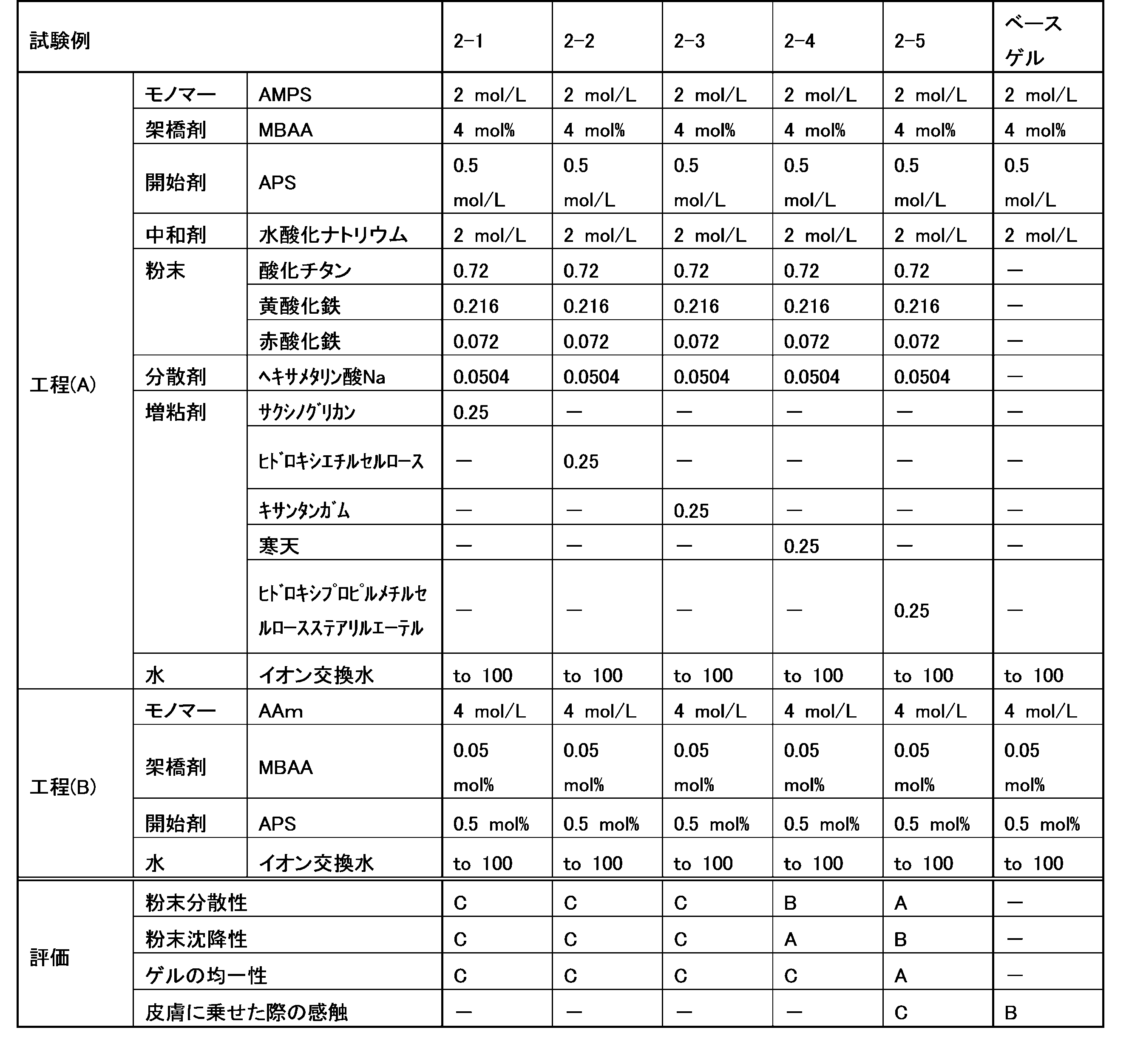
表2より、工程(A)に配合する増粘剤の種類により、粉末配合ゲルの粉末の分散性、ゲルの均一性に影響が出ることがわかった。
増粘剤としてヒドロキシプロピルメチルセルロースステアリルエーテルを用いることで、粉末配合ゲルの粉末の分散性、ゲルの均一性を向上できることがわかった。
また、粉末を配合すると、ゲルに乗せた際の感触が悪化してしまうことが明らかになった。
以上のことから、本発明にかかる擬似皮膚の製造方法において、増粘剤としてヒドロキシプロピルメチルセルロースステアリルエーテルを用いることが好ましい。
増粘剤としてヒドロキシプロピルメチルセルロースステアリルエーテルを用いることで、粉末配合ゲルの粉末の分散性、ゲルの均一性を向上できることがわかった。
また、粉末を配合すると、ゲルに乗せた際の感触が悪化してしまうことが明らかになった。
以上のことから、本発明にかかる擬似皮膚の製造方法において、増粘剤としてヒドロキシプロピルメチルセルロースステアリルエーテルを用いることが好ましい。
次に、本発明者らは、工程(A)に配合する増粘剤の配合量について検討を行った。下記表3に示す擬似皮膚および上記表2に示すベースゲルを、上記製造方法により製造し、上記評価基準(1)~(4)について評価した。結果を表3に示す。
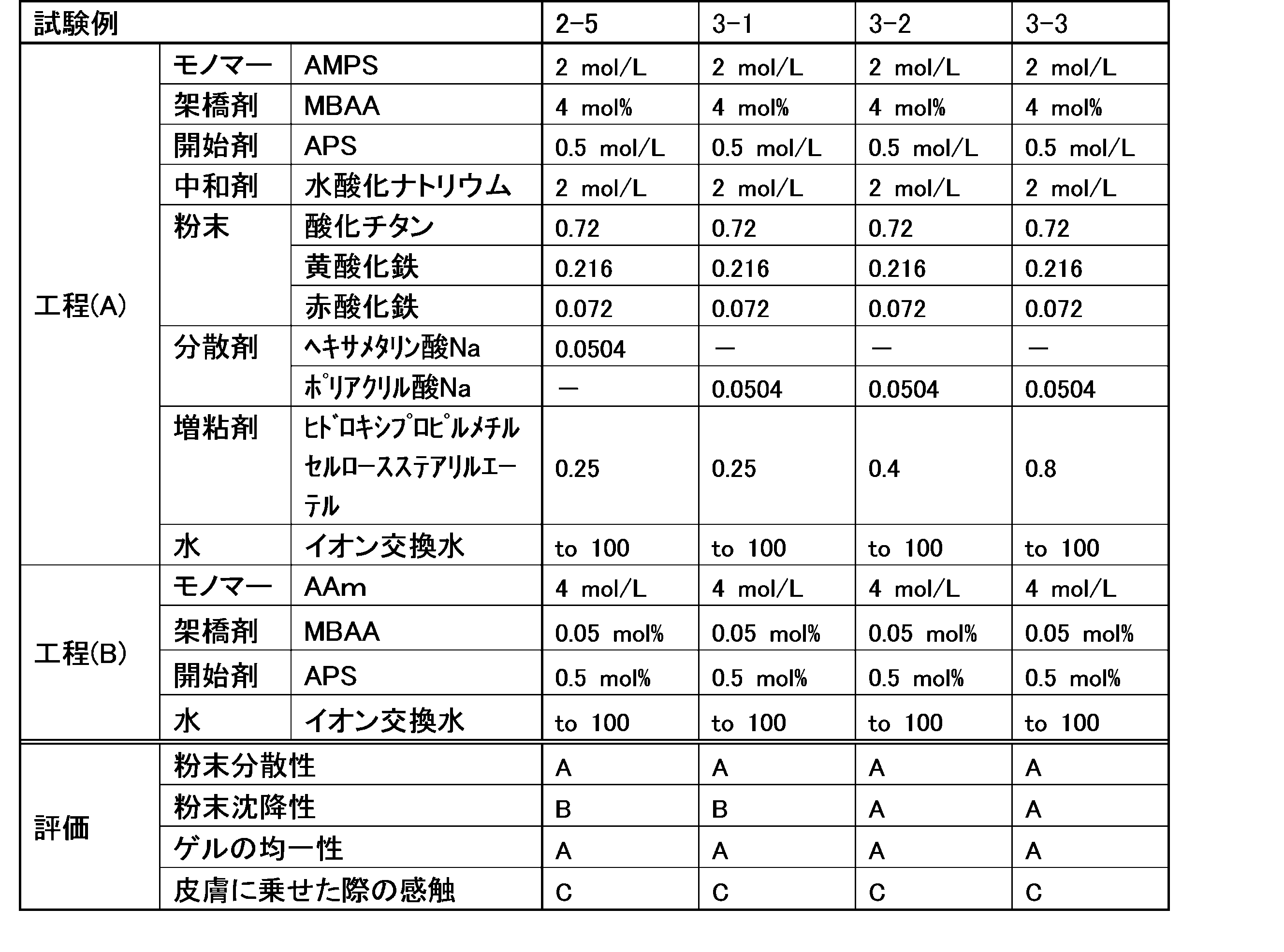
表3より、工程(A)に配合する増粘剤の配合量が低すぎると、粉末沈降性に影響があることがわかった。
このため、粉末沈降性を考慮すると、増粘剤の配合量は、工程(A)の重合溶媒中0.3重量%以上であることが好ましい。
このため、粉末沈降性を考慮すると、増粘剤の配合量は、工程(A)の重合溶媒中0.3重量%以上であることが好ましい。
次に、本発明者らは、工程(A)に配合する(a1)第一のモノマーの配合量や工程(B)に配合する(b1)第二のモノマーの種類について検討を行った。下記表4に示す擬似皮膚および上記表2に示すベースゲルを、上記製造方法により製造し、上記評価基準(1)~(4)について評価した。結果を表4に示す。
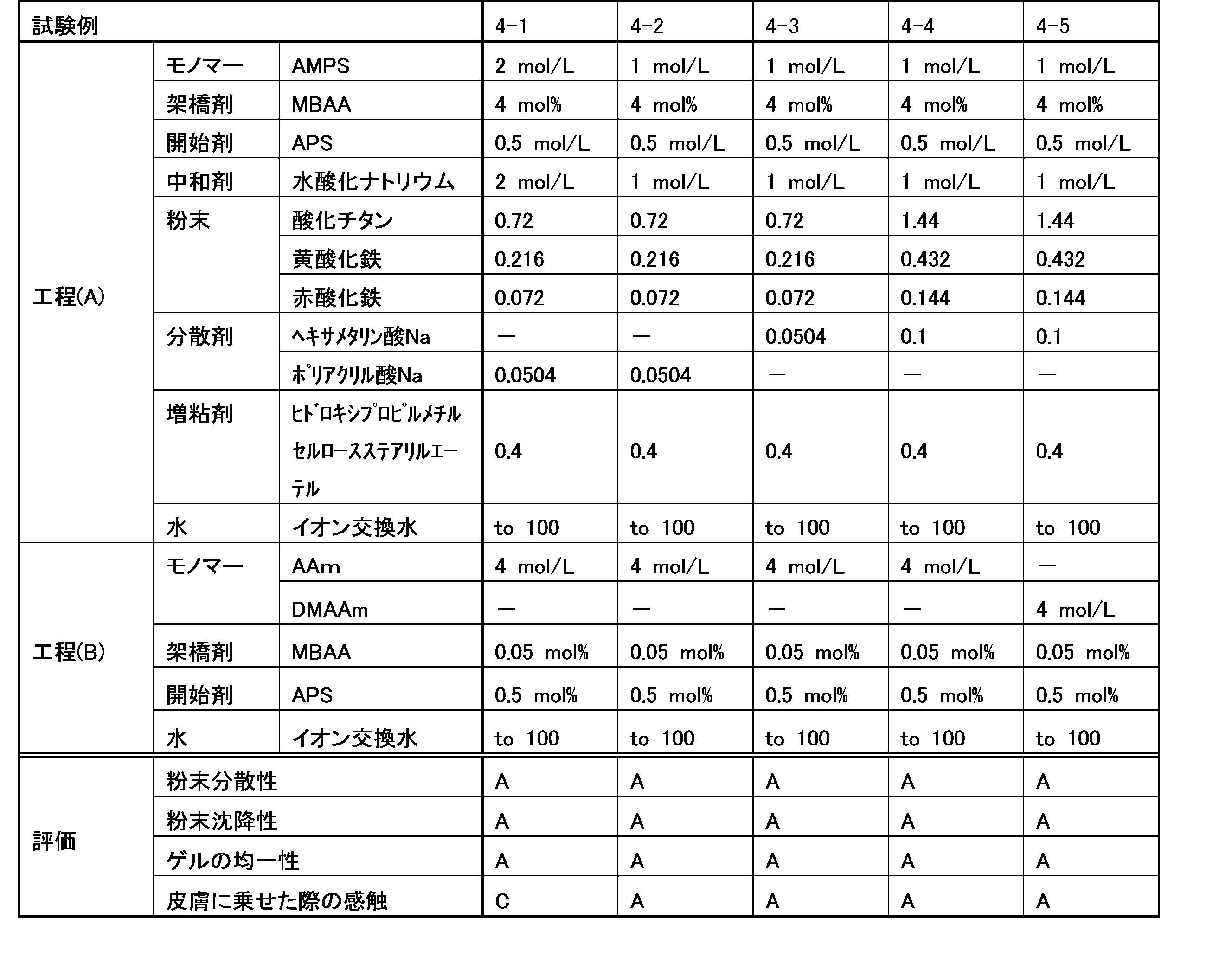
表4より、(a1)第一のモノマーの配合量を減らすことで、皮膚に乗せた際の感触を改善できることが明らかになった。
また、(b1)第二のモノマーとしてAAm以外にDMAAmを用いることもできることが明らかになった。
また、(b1)第二のモノマーとしてAAm以外にDMAAmを用いることもできることが明らかになった。
次に、本発明者らは、(a1)第一のモノマーの含有量について、さらなる検討を行った。下記表5に示す擬似皮膚および上記表2に示すベースゲルを、上記製造方法により製造し、上記評価基準(1)~(4)について評価した。結果を表5に示す。
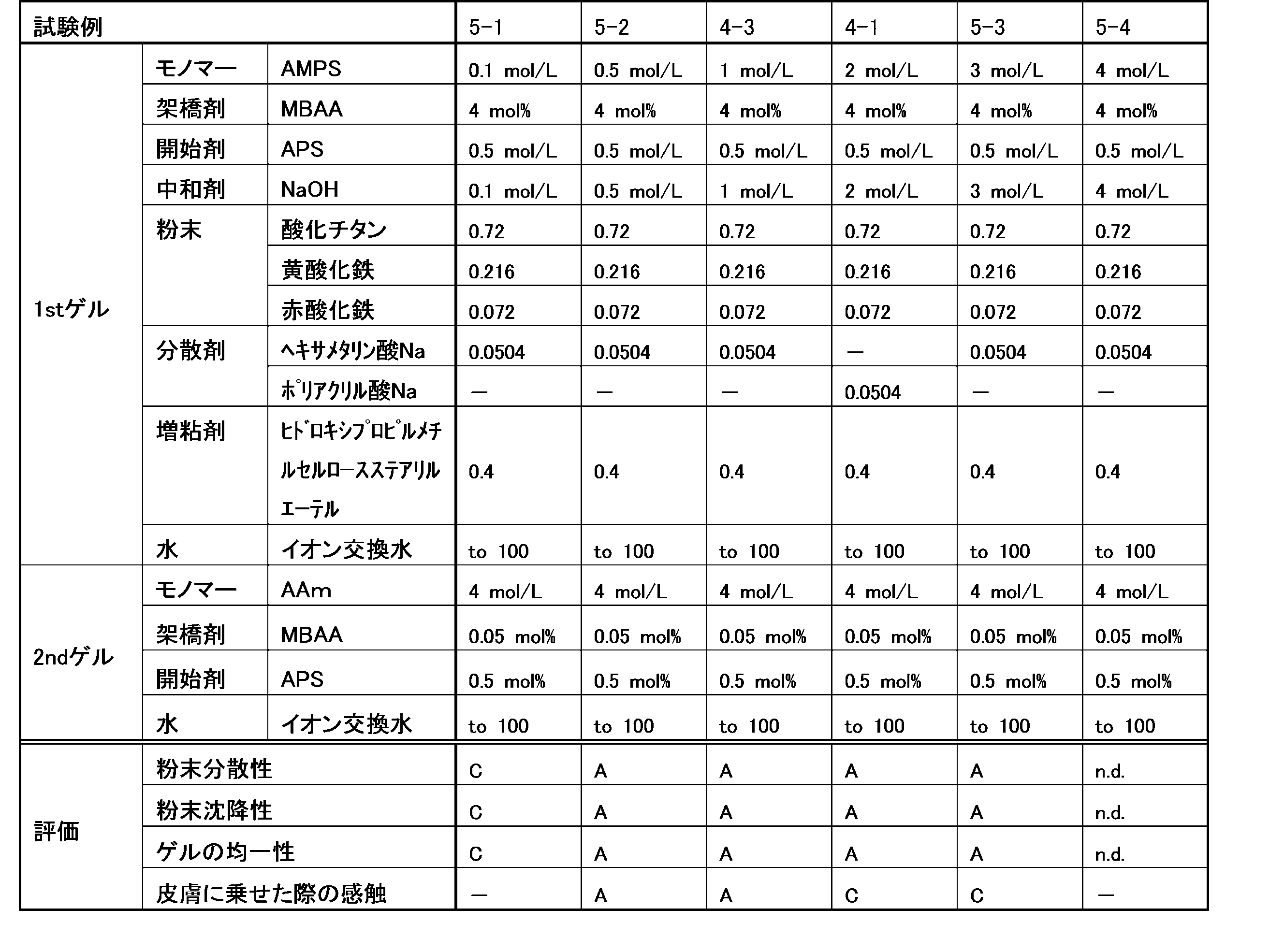
試験例5-1より、(a1)第一のモノマーの含有量が少なすぎると、粉末分散性が悪くなってしまうことがわかった。
また、(a1)第一のモノマーの含有量が多すぎると、モノマーが溶解せず、重合することができなかった(試験例5-4)。
したがって、(a1)第一のモノマーの含有量は、重合溶媒中0.5~3mol/Lであることが必要である。また、皮膚に乗せた際の感触を考慮すると、(a1)第一のモノマーの含有量が、重合溶媒中0.5~1.5mol/Lであることが好ましい。
また、(a1)第一のモノマーの含有量が多すぎると、モノマーが溶解せず、重合することができなかった(試験例5-4)。
したがって、(a1)第一のモノマーの含有量は、重合溶媒中0.5~3mol/Lであることが必要である。また、皮膚に乗せた際の感触を考慮すると、(a1)第一のモノマーの含有量が、重合溶媒中0.5~1.5mol/Lであることが好ましい。
Claims (7)
- (A)(a1)第一のモノマーを重合し架橋することにより第一の網目構造を形成させる工程と、
(B)該第一の網目構造中に(b1)第二のモノマーを導入した後、該(b1)第二のモノマーを重合し、場合により架橋することにより前記第一の網目構造中に第二の網目構造を形成させる工程と、を含む相互侵入網目構造を有するゲルからなる擬似皮膚の製造方法において、
前記工程(A)において、重合溶媒中に粉末および増粘剤を含み、(a1)第一のモノマーの含有量が、重合溶媒中0.5~3mol/Lであることを特徴とする擬似皮膚の製造方法。 - 請求項1に記載の擬似皮膚の製造方法において、(a1)第一のモノマーが、2-アクリルアミド-2-メチルプロパンスルホン酸であることを特徴とする擬似皮膚の製造方法。
- 請求項1または2に記載の擬似皮膚の製造方法において、増粘剤がヒドロキシプロピルメチルセルロースステアリルエーテルであることを特徴とする擬似皮膚の製造方法。
- 請求項1~3のいずれかに記載の擬似皮膚の製造方法において、増粘剤の配合量が、工程(A)の重合溶媒中0.3~1重量%であることを特徴とする擬似皮膚の製造方法。
- 請求項1~4のいずれかに記載の擬似皮膚の製造方法において、工程(A)の重合溶媒に分散剤を含み、該分散剤にヘキサメタリン酸ナトリウムまたはポリアクリル酸ナトリウムを含むことを特徴とする擬似皮膚の製造方法。
- 請求項5に記載の擬似皮膚の製造方法において、分散剤の含有量が、粉末に対して5重量%以上であることを特徴とする擬似皮膚の製造方法。
- 請求項1~6のいずれかに記載の擬似皮膚の製造方法において、(a1)第一のモノマーの含有量が、重合溶媒中0.5~1.5mol/Lであることを特徴とする擬似皮膚の製造方法。
Priority Applications (1)
| Application Number | Priority Date | Filing Date | Title |
|---|---|---|---|
| JP2020553295A JP7357857B2 (ja) | 2018-10-24 | 2019-10-17 | 擬似皮膚の製造方法 |
Applications Claiming Priority (2)
| Application Number | Priority Date | Filing Date | Title |
|---|---|---|---|
| JP2018200425 | 2018-10-24 | ||
| JP2018-200425 | 2018-10-24 |
Publications (1)
| Publication Number | Publication Date |
|---|---|
| WO2020085201A1 true WO2020085201A1 (ja) | 2020-04-30 |
Family
ID=70332061
Family Applications (1)
| Application Number | Title | Priority Date | Filing Date |
|---|---|---|---|
| PCT/JP2019/040932 Ceased WO2020085201A1 (ja) | 2018-10-24 | 2019-10-17 | 擬似皮膚の製造方法 |
Country Status (3)
| Country | Link |
|---|---|
| JP (1) | JP7357857B2 (ja) |
| TW (1) | TW202026018A (ja) |
| WO (1) | WO2020085201A1 (ja) |
Citations (7)
| Publication number | Priority date | Publication date | Assignee | Title |
|---|---|---|---|---|
| JPH11169453A (ja) * | 1997-12-15 | 1999-06-29 | Shiseido Co Ltd | 人工角層 |
| WO2002032405A1 (en) * | 2000-10-16 | 2002-04-25 | Sekisui Kaseihin Kogyo Kabushikikaisha | Process for producing gel sheet for application to living body, gel sheet for application to living body obtained by the production process, and method of skin care with the same |
| WO2003093337A1 (en) * | 2002-05-01 | 2003-11-13 | Hokkaido Technology Licensing Office Co., Ltd. | Hydrogel of (semi)interpenetrating network structure and process for producing the same |
| JP2004337307A (ja) * | 2003-05-14 | 2004-12-02 | Toyota Motor Corp | 人工皮膚 |
| JP2006213868A (ja) * | 2005-02-04 | 2006-08-17 | Hokkaido Univ | ゲルおよびその製造方法 |
| JP2012001596A (ja) * | 2010-06-15 | 2012-01-05 | Mitsubishi Rayon Co Ltd | ゲルおよびその製造方法 |
| WO2018181930A1 (ja) * | 2017-03-31 | 2018-10-04 | 積水化成品工業株式会社 | ゲルシート |
-
2019
- 2019-10-17 JP JP2020553295A patent/JP7357857B2/ja active Active
- 2019-10-17 WO PCT/JP2019/040932 patent/WO2020085201A1/ja not_active Ceased
- 2019-10-24 TW TW108138425A patent/TW202026018A/zh unknown
Patent Citations (7)
| Publication number | Priority date | Publication date | Assignee | Title |
|---|---|---|---|---|
| JPH11169453A (ja) * | 1997-12-15 | 1999-06-29 | Shiseido Co Ltd | 人工角層 |
| WO2002032405A1 (en) * | 2000-10-16 | 2002-04-25 | Sekisui Kaseihin Kogyo Kabushikikaisha | Process for producing gel sheet for application to living body, gel sheet for application to living body obtained by the production process, and method of skin care with the same |
| WO2003093337A1 (en) * | 2002-05-01 | 2003-11-13 | Hokkaido Technology Licensing Office Co., Ltd. | Hydrogel of (semi)interpenetrating network structure and process for producing the same |
| JP2004337307A (ja) * | 2003-05-14 | 2004-12-02 | Toyota Motor Corp | 人工皮膚 |
| JP2006213868A (ja) * | 2005-02-04 | 2006-08-17 | Hokkaido Univ | ゲルおよびその製造方法 |
| JP2012001596A (ja) * | 2010-06-15 | 2012-01-05 | Mitsubishi Rayon Co Ltd | ゲルおよびその製造方法 |
| WO2018181930A1 (ja) * | 2017-03-31 | 2018-10-04 | 積水化成品工業株式会社 | ゲルシート |
Also Published As
| Publication number | Publication date |
|---|---|
| TW202026018A (zh) | 2020-07-16 |
| JPWO2020085201A1 (ja) | 2021-10-21 |
| JP7357857B2 (ja) | 2023-10-10 |
Similar Documents
| Publication | Publication Date | Title |
|---|---|---|
| CN102985452B (zh) | 包含丙烯酸的碱溶胀性丙烯酸乳液、其在水性制剂中的用途以及含有所述乳液的制剂 | |
| JP2013525561A (ja) | レオロジー向上およびセット用ポリマー、その組成物およびその製造方法 | |
| WO2009099210A1 (ja) | ハイドロゲルおよびその製造方法 | |
| JP7059625B2 (ja) | 有機無機複合ヒドロゲル前駆体組成物、有機無機複合ヒドロゲル、有機無機複合ヒドロゲル接合物、及びその製造方法 | |
| JP2007533768A (ja) | エチレン系不飽和アニオンモノマーの水溶性ポリマーの水性分散液、その製造法および該水性分散液の使用 | |
| Zhao et al. | Micelle-cross-linked hydrogels with strain stiffening properties regulated by intramicellar cross-linking | |
| CN109957062A (zh) | 高交联丙烯酸酯类共聚物及其制备方法和作为增稠剂的用途 | |
| JP4194400B2 (ja) | 高強度含水ゲルおよびその製造方法 | |
| JPWO2014208316A1 (ja) | 親水性増粘剤及び化粧料組成物 | |
| KR102552542B1 (ko) | 다기능성 니트 섬유용 일액형 견뢰도증진제 및 이의 제조방법 | |
| JP5138632B2 (ja) | プレゲル溶液および高分子組成物、ならびに高分子組成物の製造方法 | |
| EP2164881B1 (de) | Verwendung eines quellbaren polymers zum abdichten | |
| JP6340520B2 (ja) | 有機無機複合ヒドロゲルの製造方法 | |
| JP2009270032A (ja) | ハイドロゲルおよびその製造方法 | |
| JP2006249194A (ja) | カチオン性増粘剤 | |
| JP7357857B2 (ja) | 擬似皮膚の製造方法 | |
| CN104710583B (zh) | 一种高强度水凝胶的制备方法 | |
| JP3221851B2 (ja) | カチオン性基含有共重合体及び増粘剤 | |
| CN110402257B (zh) | 乳液、乳液的制备方法及使用乳液形成涂膜的方法 | |
| JP6809650B2 (ja) | 有機無機複合ヒドロゲル前駆体組成物、及び有機無機複合ヒドロゲル | |
| JP5133209B2 (ja) | オルガノゲルおよびその製造方法 | |
| JP7435738B2 (ja) | 高強度ゲル | |
| JP5544719B2 (ja) | ゲルおよびその製造方法 | |
| JP2000154124A (ja) | 整髪料用樹脂組成物及びゲル状整髪料 | |
| CN106750013A (zh) | 有机两性共聚高分子互穿网络凝胶的制备方法 |
Legal Events
| Date | Code | Title | Description |
|---|---|---|---|
| 121 | Ep: the epo has been informed by wipo that ep was designated in this application |
Ref document number: 19875741 Country of ref document: EP Kind code of ref document: A1 |
|
| ENP | Entry into the national phase |
Ref document number: 2020553295 Country of ref document: JP Kind code of ref document: A |
|
| NENP | Non-entry into the national phase |
Ref country code: DE |
|
| 122 | Ep: pct application non-entry in european phase |
Ref document number: 19875741 Country of ref document: EP Kind code of ref document: A1 |