WO2020084785A1 - クロマトグラフ制御装置、クロマトグラフシステム、クロマトグラフ制御方法およびクロマトグラフ制御プログラム - Google Patents
クロマトグラフ制御装置、クロマトグラフシステム、クロマトグラフ制御方法およびクロマトグラフ制御プログラム Download PDFInfo
- Publication number
- WO2020084785A1 WO2020084785A1 PCT/JP2018/039956 JP2018039956W WO2020084785A1 WO 2020084785 A1 WO2020084785 A1 WO 2020084785A1 JP 2018039956 W JP2018039956 W JP 2018039956W WO 2020084785 A1 WO2020084785 A1 WO 2020084785A1
- Authority
- WO
- WIPO (PCT)
- Prior art keywords
- column
- mobile phase
- range
- registered
- unit
- Prior art date
- Legal status (The legal status is an assumption and is not a legal conclusion. Google has not performed a legal analysis and makes no representation as to the accuracy of the status listed.)
- Ceased
Links
Images






Classifications
-
- G—PHYSICS
- G01—MEASURING; TESTING
- G01N—INVESTIGATING OR ANALYSING MATERIALS BY DETERMINING THEIR CHEMICAL OR PHYSICAL PROPERTIES
- G01N30/00—Investigating or analysing materials by separation into components using adsorption, absorption or similar phenomena or using ion-exchange, e.g. chromatography or field flow fractionation
- G01N30/02—Column chromatography
- G01N30/26—Conditioning of the fluid carrier; Flow patterns
- G01N30/38—Flow patterns
- G01N30/46—Flow patterns using more than one column
- G01N30/468—Flow patterns using more than one column involving switching between different column configurations
-
- G—PHYSICS
- G01—MEASURING; TESTING
- G01N—INVESTIGATING OR ANALYSING MATERIALS BY DETERMINING THEIR CHEMICAL OR PHYSICAL PROPERTIES
- G01N30/00—Investigating or analysing materials by separation into components using adsorption, absorption or similar phenomena or using ion-exchange, e.g. chromatography or field flow fractionation
- G01N30/02—Column chromatography
- G01N30/04—Preparation or injection of sample to be analysed
- G01N30/24—Automatic injection systems
-
- G—PHYSICS
- G01—MEASURING; TESTING
- G01N—INVESTIGATING OR ANALYSING MATERIALS BY DETERMINING THEIR CHEMICAL OR PHYSICAL PROPERTIES
- G01N30/00—Investigating or analysing materials by separation into components using adsorption, absorption or similar phenomena or using ion-exchange, e.g. chromatography or field flow fractionation
- G01N30/02—Column chromatography
- G01N30/26—Conditioning of the fluid carrier; Flow patterns
-
- G—PHYSICS
- G01—MEASURING; TESTING
- G01N—INVESTIGATING OR ANALYSING MATERIALS BY DETERMINING THEIR CHEMICAL OR PHYSICAL PROPERTIES
- G01N30/00—Investigating or analysing materials by separation into components using adsorption, absorption or similar phenomena or using ion-exchange, e.g. chromatography or field flow fractionation
- G01N30/02—Column chromatography
- G01N30/88—Integrated analysis systems specially adapted therefor, not covered by a single one of the groups G01N30/04 - G01N30/86
-
- G—PHYSICS
- G01—MEASURING; TESTING
- G01N—INVESTIGATING OR ANALYSING MATERIALS BY DETERMINING THEIR CHEMICAL OR PHYSICAL PROPERTIES
- G01N35/00—Automatic analysis not limited to methods or materials provided for in any single one of groups G01N1/00 - G01N33/00; Handling materials therefor
- G01N35/00584—Control arrangements for automatic analysers
- G01N35/00722—Communications; Identification
- G01N35/00732—Identification of carriers, materials or components in automatic analysers
-
- G—PHYSICS
- G01—MEASURING; TESTING
- G01N—INVESTIGATING OR ANALYSING MATERIALS BY DETERMINING THEIR CHEMICAL OR PHYSICAL PROPERTIES
- G01N30/00—Investigating or analysing materials by separation into components using adsorption, absorption or similar phenomena or using ion-exchange, e.g. chromatography or field flow fractionation
- G01N30/02—Column chromatography
- G01N30/88—Integrated analysis systems specially adapted therefor, not covered by a single one of the groups G01N30/04 - G01N30/86
- G01N2030/8804—Integrated analysis systems specially adapted therefor, not covered by a single one of the groups G01N30/04 - G01N30/86 automated systems
-
- G—PHYSICS
- G01—MEASURING; TESTING
- G01N—INVESTIGATING OR ANALYSING MATERIALS BY DETERMINING THEIR CHEMICAL OR PHYSICAL PROPERTIES
- G01N35/00—Automatic analysis not limited to methods or materials provided for in any single one of groups G01N1/00 - G01N33/00; Handling materials therefor
- G01N35/00584—Control arrangements for automatic analysers
- G01N35/00722—Communications; Identification
- G01N35/00732—Identification of carriers, materials or components in automatic analysers
- G01N2035/00821—Identification of carriers, materials or components in automatic analysers nature of coded information
- G01N2035/00851—Identification of carriers, materials or components in automatic analysers nature of coded information process control parameters
-
- G—PHYSICS
- G01—MEASURING; TESTING
- G01N—INVESTIGATING OR ANALYSING MATERIALS BY DETERMINING THEIR CHEMICAL OR PHYSICAL PROPERTIES
- G01N30/00—Investigating or analysing materials by separation into components using adsorption, absorption or similar phenomena or using ion-exchange, e.g. chromatography or field flow fractionation
- G01N30/02—Column chromatography
- G01N30/26—Conditioning of the fluid carrier; Flow patterns
- G01N30/28—Control of physical parameters of the fluid carrier
- G01N30/34—Control of physical parameters of the fluid carrier of fluid composition, e.g. gradient
-
- G—PHYSICS
- G01—MEASURING; TESTING
- G01N—INVESTIGATING OR ANALYSING MATERIALS BY DETERMINING THEIR CHEMICAL OR PHYSICAL PROPERTIES
- G01N30/00—Investigating or analysing materials by separation into components using adsorption, absorption or similar phenomena or using ion-exchange, e.g. chromatography or field flow fractionation
- G01N30/02—Column chromatography
- G01N30/26—Conditioning of the fluid carrier; Flow patterns
- G01N30/38—Flow patterns
- G01N30/46—Flow patterns using more than one column
- G01N30/466—Flow patterns using more than one column with separation columns in parallel
Definitions
- the present invention relates to a chromatograph control device for controlling a chromatograph device, a chromatograph system, a chromatograph control method, and a chromatograph control program.
- a chromatograph device is known as a device that separates substances contained in a sample into different components.
- a sample to be analyzed is introduced into a separation column (hereinafter simply referred to as a column) by an autosampler.
- the eluent mobile phase
- the sample introduced into the column is eluted by each component due to the difference in chemical property or composition and detected by the detector.
- An object of the present invention is to provide a chromatograph control device, a chromatograph system, a chromatograph control method, and a chromatograph control program capable of preventing column breakage.
- a chromatographic control device is a chromatographic control device that controls a chromatographic device that analyzes a sample using any one of a plurality of columns and any one of a plurality of mobile phases,
- a pH range registration unit that registers the pH range of the mobile phase that can be used when analyzing using each column, in association with the identification information of each column, and a pH registration unit that registers the pH of each mobile phase,
- the column selection unit that selects the column used for analysis and the pH registered in the pH registration unit are outside the pH range registered in the pH range registration unit in association with the column selected by the column selection unit.
- the chromatographic device is controlled so that the mobile phase is not supplied to the selected column, and the pH registered in the pH registration unit is stored in the pH range registration unit in association with the selected column.
- Mobile phase is in the range of pH that is recorded is, as analysis is performed while being supplied to the selected column, and a analysis control unit for controlling the chromatograph.
- the range of pH of the mobile phase that can be used for analysis using each column is registered in association with the identification information of each column, and the pH of each mobile phase is registered.
- the column used for analysis is selected.
- the chromatographic apparatus is controlled so that the mobile phase whose registered pH is outside the range of the pH registered in association with the selected column is not supplied to the selected column.
- the chromatographic apparatus is configured so that the mobile phase whose registered pH is within the range of registered pH in association with the selected column is supplied to the selected column for analysis. Controlled.
- the chromatograph control device further includes a pH range input unit for inputting the pH range of the mobile phase that can be used when performing analysis using each column based on the user's operation, and registers the pH range.
- the section may register the pH range input by the pH range input section in association with each column.
- the user operates the pH range input section to easily input the pH range of the mobile phase that can be used when performing analysis using each column in association with the identification information of each column. be able to.
- the chromatographic control device further includes a pH input unit for inputting the pH of each mobile phase based on the user's operation, and the pH registration unit has the pH input by the pH input unit for each mobile phase. May be registered. In this case, the user can easily input the pH of each mobile phase by operating the pH input unit.
- the chromatograph control device further includes a mobile phase selection unit that automatically sequentially selects a plurality of mobile phases as mobile phases used for analysis, and an evaluation unit, and the column selection unit includes a plurality of columns used as columns for analysis.
- the column is automatically selected in sequence, and the analysis control unit registers the pH registered in the pH registration unit in the pH range registration unit in association with the column selected by the column selection unit.
- the mobile phase that is out of the range of pH is not supplied to the selected column, and the pH registered in the pH registration unit corresponds to the pH registered in the pH range registration unit in association with the selected column.
- the chromatographic apparatus may be controlled so that the mobile phase within the range is supplied to the selected column, and the evaluation unit may evaluate the result of the analysis performed by the analysis control unit.
- the analysis result corresponding to the combination of the column and the mobile phase is acquired and the analysis result is evaluated. This allows the user to easily determine the optimal combination of column and mobile phase for sample analysis. Further, even when the analysis is performed while changing the combination of the column and the mobile phase, it is possible to prevent the mobile phase that cannot be used when performing the analysis using each column from being supplied to the column. This can prevent the column from being damaged.
- the chromatograph control device further includes a creation unit that creates a batch file including a combination of each column and each mobile phase, and the analysis control unit analyzes according to the combination of the column and mobile phase included in the batch file.
- the combination of the column and the mobile phase is controlled such that the pH registered in the pH registration unit is outside the range of the pH registered in the pH range registration unit.
- the analysis control unit controls the chromatographic apparatus according to the batch file so that the mobile phase whose registered pH is outside the range of registered pH in association with any column is not supplied to the column. It can be controlled easily.
- a chromatograph system includes a chromatograph device and the chromatograph control device, wherein the chromatograph device includes a plurality of columns and a mobile phase of any one of a plurality of mobile phases.
- a mobile phase supply unit for supplying the sample to any one of the plurality of columns, a sample supply unit for supplying the sample to the column, and a detector for detecting the sample passing through the column.
- a chromatographic device supplies any mobile phase and sample to any one of a plurality of columns and detects the sample that has passed through the column.
- the chromatographic control device controls the chromatographic device so that analysis is performed using the selected column.
- a mobile phase that cannot be used when performing analysis using the selected column is not supplied to the column. This can prevent the column from being damaged.
- a chromatographic control method is a chromatographic control method for controlling a chromatographic apparatus that analyzes a sample using any one of a plurality of columns and any one of a plurality of mobile phases. Then, the range of pH of the mobile phase that can be used for analysis using each column is registered in association with the identification information of each column, the step of registering the pH of each mobile phase, and used for the analysis. The step of selecting a column and the chromatographic apparatus are set so that the mobile phase whose registered pH is outside the range of the pH registered in association with the selected column is not supplied to the selected column. The mobile phase whose pH is controlled and registered is in the range of pH registered in association with the selected column is analyzed while supplying to the selected column. As divided, and controlling the chromatograph.
- the mobile phase that cannot be used when analyzing using the selected column is not supplied to the column. This can prevent the column from being damaged.
- a chromatograph control program is a chromatograph control program for controlling a chromatographic apparatus that analyzes a sample using any one of a plurality of columns and any one of a plurality of mobile phases. Then, the range of mobile phase pH that can be used for analysis using each column is registered in association with the identification information of each column, the process of registering the pH of each mobile phase, and used for analysis. The process of selecting a column and the chromatographic device are set so that the mobile phase whose registered pH is outside the range of the pH registered in association with the selected column is not supplied to the selected column. The mobile phase whose pH is controlled and registered is in the range of pH registered in association with the selected column is analyzed while supplying to the selected column. As crack, and a process of controlling a chromatographic device, to be executed by the processor.
- the mobile phase that cannot be used for analysis using the selected column is not supplied to the column. This can prevent the column from being damaged.
- the chromatograph control program can be provided in a form stored in a storage medium.
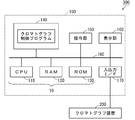
- FIG. 1 is a diagram showing a configuration of a chromatographic system according to an embodiment of the present invention.
- FIG. 2 is a schematic diagram showing the configuration of the chromatographic apparatus.
- FIG. 3 is a diagram showing the configuration of the chromatograph control device.
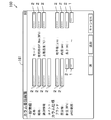
- FIG. 4 is a diagram showing an example of a column registration screen displayed on the display unit.
- FIG. 5 is a diagram showing an example of a mobile phase registration screen displayed on the display unit.
- FIG. 6 is a diagram showing another example of the mobile phase registration screen displayed on the display unit.
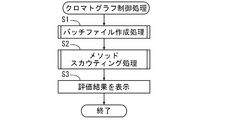
- FIG. 7 is a flowchart showing an algorithm of chromatograph control processing performed by the chromatograph control program.
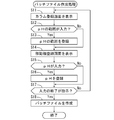
- FIG. 8 is a flowchart showing the algorithm of the batch file creation process in the chromatograph control process of FIG.
- FIG. 9 is a flowchart showing an example of an algorithm of the method scouting process in the chromatograph control process of FIG.
- FIG. 10 is a flowchart showing an algorithm of another chromatograph control
- FIG. 1 is a diagram showing a configuration of a chromatographic system according to an embodiment of the present invention.
- the chromatographic system 300 includes a processing device 100 and a chromatographic device 200.
- the processing device 100 includes a CPU (central processing unit) 110, a RAM (random access memory) 120, a ROM (read only memory) 130, a storage unit 140, an operation unit 150, a display unit 160, and an input / output I / F (interface). It is composed of 170.
- the CPU 110, RAM 120, ROM 130, storage unit 140, operation unit 150, display unit 160, and input / output I / F 170 are connected to the bus 180.
- the CPU 110, the RAM 120, and the ROM 130 form the chromatograph control device 10.
- RAM 120 is used as a work area of CPU 110.
- a system program is stored in the ROM 130.
- the storage unit 140 includes a storage medium such as a hard disk or a semiconductor memory.
- the storage unit 140 stores a chromatograph control program for controlling the chromatograph device 200.
- the chromatograph control program may be stored in a storage medium different from the storage unit 140.
- the operation unit 150 is an input device such as a keyboard, a mouse or a touch panel.
- the display unit 160 is a display device such as a liquid crystal display device, and displays an execution screen of the chromatograph control process performed by the chromatograph control device 10.
- the input / output I / F 170 is connected to the chromatograph device 200.
- FIG. 2 is a schematic diagram showing the configuration of the chromatograph device 200.
- the chromatograph device 200 is a liquid chromatograph device, and includes a mobile phase supply unit 210, a sample supply unit 220, a column constant temperature bath 230, and a detector 240.
- the mobile phase supply unit 210 includes two liquid feeding units 211 and 212 and a mixing unit 213. Further, the mobile phase supply unit 210 is provided with a plurality of (eight in the example of FIG. 2) chemical solution bottles B1 to B8. Different chemical solutions are stored in the chemical solution bottles B1 to B4 as chemical solutions. Different organic solvents are stored as chemicals in the chemical bottles B5 to B8.
- the liquid feeding units 211 and 212 are, for example, liquid feeding pumps.
- the liquid feeding unit 211 pressure-feeds the drug solution stored in any one or more drug solution bottles selected by a switching valve (not shown) among the drug solution bottles B1 to B4.
- the liquid feeding unit 212 pressure-feeds the drug solution stored in any one or more drug solution bottles selected by a switching valve (not shown) among the drug solution bottles B5 to B8.
- a deaerator (not shown) is inserted between the liquid feeding unit 211 and the chemical liquid bottles B1 to B4 and between the liquid feeding unit 212 and the chemical liquid bottles B5 to B8.
- the mixing unit 213 is, for example, a gradient mixer.
- the mixing unit 213 generates various mobile phases by mixing the chemical liquid pumped by the liquid feeding unit 211 and the chemical liquid pumped by the liquid feeding unit 212 at an arbitrary ratio, and supplies the generated mobile phase.
- the sample supply unit 220 is, for example, an injector.
- the sample supply unit 220 selectively supplies the sample to be analyzed together with the mobile phase supplied by the mobile phase supply unit 210 to any one of columns 231 to 233, which will be described later, selected by a switching valve (not shown). Introduce.
- the inside of the column constant temperature bath 230 is adjusted to a predetermined constant temperature.
- the column constant temperature bath 230 accommodates a plurality of (three in this example) columns 231, 232, 233.
- Each of the columns 231 to 233 separates the introduced sample into each component according to the difference in chemical property or composition.
- the detector 240 detects the components of the sample separated by the columns 231 to 233.
- the chromatograph control device 10 controls the chromatograph device 200 so that the analysis of the sample is performed while changing the combination of the columns 231 to 233 and the mobile phase. This makes it possible to search for a combination of analysis conditions for appropriately analyzing a desired sample. The search for such a combination of analysis conditions is called method scouting.
- the configuration of the chromatograph control device 10 will be described below.
- FIG. 3 is a diagram showing the configuration of the chromatograph control device 10.
- the chromatograph control device 10 includes a pH range input unit A, a pH range registration unit B, a pH input unit C, a pH registration unit D, a column selection unit E, and a mobile phase selection unit F as functional units.
- a creation unit G an analysis control unit H, a replacement control unit I, an acquisition unit J, and an evaluation unit K.
- the functional unit of the chromatograph control device 10 is realized.
- Some or all of the functional units of the chromatograph control device 10 may be realized by hardware such as an electronic circuit.
- the pH range input section A is a column for inputting the pH range of the mobile phase that can be used for analysis using each of the columns 231 to 233 of FIG. 2 in association with the identification information of each of the columns 231 to 233.
- the registration screen is displayed on the display unit 160.
- the pH range of the mobile phase that can be used for analysis using each of the columns 231 to 233 is input from the operation section 150 in association with the identification information of each of the columns 231 to 233. To be done.
- FIG. 4 is a diagram showing an example of a column registration screen displayed on the display unit 160.
- the column registration screen 161 includes a plurality of information input units 1 and 2.
- Each of the information input units 1 and 2 is a column or a pull-down menu for inputting a character string.
- the user can input the pH range of the mobile phase for analysis using each of the columns 231 to 233.
- the user operates the information input unit 2 by using the operation unit 150 to identify the information of each of the columns 231 to 233 (in this example, the name, brand, stationary phase, pressure resistance, column packing material of the column). Particle diameter, column inner diameter, column length, etc.) can be entered.
- the pH range registration unit B inputs the pH of the mobile phase input to the pH range input unit A into the pH range input unit A as a range of mobile phase pH that can be used when analyzing using the column. It is registered in association with the column specified by the identification information.
- the pH input unit C causes the display unit 160 to display a mobile phase registration screen for receiving the input of pH of each mobile phase used for analysis. Further, the pH of each mobile phase is input to the pH input unit C from the operation unit 150.
- the mobile phase used in the analysis includes each drug solution stored in the drug solution bottles B1 to B8. It is also possible to use the drug solution stored in the drug solution bottles B1 to B4 or the drug solution blended with the drug solution stored in the drug solution bottles B5 to B8 as the mobile phase. It is also possible to use a mixed liquid of any of the chemical solutions stored in the chemical solution bottles B1 to B4 and any of the chemical solutions stored in the chemical solution bottles B5 to B8 as the mobile phase.
- FIG. 5 is a diagram showing an example of a mobile phase registration screen displayed on the display unit 160.
- the mobile phase registration screen 162 includes a plurality of information input units 3 and 4.
- Each of the information input units 3 and 4 is a column or a pull-down menu for inputting a character string.
- the user can input the pH of each mobile phase by operating the information input unit 3 using the operation unit 150.
- the user can input the name of the mobile phase and the like by operating each information input unit 4 using the operation unit 150.
- FIG. 6 is a diagram showing another example of the mobile phase registration screen 162 displayed on the display unit 160.
- the mobile phase registration screen 162 further includes a plurality of information input units 5.
- Each information input unit 5 is a column or a pull-down menu for inputting a character string.
- the names of the respective chemicals and the blending ratio in the case of blending a plurality of chemicals can be input to the plurality of information input units 5.
- the user can input the pH of the mobile phase, the name of the mobile phase, the name of each drug solution, and the blending ratio by operating the information input units 3 to 5 using the operation unit 150.
- the pH registration unit D registers the pH entered in the pH input unit C for the mobile phase specified by the name entered in the pH input unit C, the name of each drug solution in the mobile phase, the blending ratio, and the like.
- the column selection unit E selects any one of the columns 231 to 233 based on the instruction from the operation unit 150. By operating the operation unit 150, the user can specify a desired column among the columns 231 to 233. Further, the column selection unit E automatically and sequentially selects a plurality of columns 231 to 233 as columns to be used for analysis during a method scouting process described later.
- the mobile phase selection unit F selects a mobile phase used for analysis based on an instruction from the operation unit 150. By operating the operation unit 150, the user can instruct any of the liquids that can be supplied by the mobile phase supply unit 210 as the mobile phase used for the analysis. Further, the mobile phase selection unit F automatically and sequentially selects a plurality of mobile phases as mobile phases to be used for analysis during a method scouting process described later.
- the preparation unit G prepares a batch file for analyzing the sample using various combinations of the columns 231 to 233 and the mobile phase.
- the pH registration unit D when the pH of any mobile phase registered by the pH registration unit D is outside the range of pH registered by the pH range registration unit B in association with the identification information of any column. , The mobile phase may burden the column. Therefore, the creation unit G excludes the combination of the mobile phase and the column from the batch file.
- the analysis control unit H controls the chromatographic apparatus 200 so that the mobile phase selected by the mobile phase selection unit F is supplied to the column selected by the column selection unit E and the sample is analyzed.
- the analysis control unit H based on the column selected by the column selection unit E, the mobile phase selected by the mobile phase selection unit F, and the batch file created by the creation unit G, The chromatographic apparatus 200 is controlled so as to analyze the sample while changing the combination of the columns 231 to 233 and the mobile phase. In these cases, the mobile phase whose registered pH is outside the range of the pH registered in association with the columns 231 to 233 is not supplied to the columns 231 to 233.
- the substitution control unit I controls the chromatographic apparatus 200 so that the mobile phase before the change that remains in the channel is replaced by the mobile phase after the change.
- the next analysis of the changed mobile phase by the analysis control unit G is performed after the operation of the substitution control unit I.
- the acquisition unit J acquires the detection result of the component of the sample by the chromatograph apparatus 200 and processes the acquired detection result to generate a chromatogram showing the relationship between the retention time of each component and the detection intensity.
- the evaluation unit K evaluates the quality of the chromatogram based on the degree of separation of the components indicated by the chromatogram generated by the acquisition unit J.
- the evaluation unit K also causes the display unit 160 to display the evaluation result of the chromatogram and the combination of the analysis conditions when the chromatogram was generated, in association with each other.
- the user can recognize the optimal combination of analysis conditions by visually recognizing the evaluation result displayed on the display unit 160.
- the display unit 160 may display the evaluation results of all the generated chromatograms, only the evaluation results of the chromatograms having a certain degree of goodness, or the highest goodness. Only the evaluation result of the chromatogram having the degree may be displayed.
- the evaluation results of all chromatograms are displayed, the evaluation results of chromatograms having a certain degree of goodness may be displayed in a distinguishable manner, or the evaluation results of chromatograms may be displayed in descending order of goodness. May be done.
- FIG. 7 is a flowchart showing an algorithm of the chromatograph control process performed by the chromatograph control program.
- the batch file creation shown in FIG. 8 described later is executed (step S1).
- the batch file creating process is a process of creating a batch file for analyzing a sample using various combinations of the columns 231 to 233 and the mobile phase.
- step S2 the method scouting process of FIG. 9 described later is executed based on the batch file created in step S1 (step S2).
- the method scouting process is a process in which the sample is analyzed while changing the combination of the columns 231 to 233 and the mobile phase, and the chromatogram for each combination is evaluated.
- the evaluation unit K displays the evaluation result of the analysis process on the display unit 160 (step S3), and ends the chromatograph control process.
- FIG. 8 is a flowchart showing the algorithm of the batch file creation process in the chromatograph control process of FIG.
- the pH range input unit A displays the column registration screen 161 on the display unit 160 (step S11).
- the pH range input unit A determines whether or not the pH range of the mobile phase has been input in association with the identification information of any of the columns 231 to 233 (step S12).
- the user can input the pH range of the mobile phase in association with any of the columns 231 to 233 by operating the operation unit 150 on the column registration screen 161.
- the pH range input unit A proceeds to step S14.
- the pH range registration unit B registers the input pH range of the mobile phase in association with the column (step S13), and proceeds to step S14.
- step S14 the pH input section C displays the mobile phase registration screen 162 on the display section 160 (step S14).
- step S15 the pH input unit C determines whether or not pH has been input for any of the mobile phases.
- the user can input the pH of any mobile phase by operating the operation unit 150 on the mobile phase registration screen 162.
- the pH input unit C proceeds to step S17.
- the pH registration unit D registers the input pH of the mobile phase (step S16), and proceeds to step S17.
- step S17 the creating unit G determines whether or not an input end instruction has been given (step S17).
- the user can instruct the end of the input by operating the operation unit 150.
- the creating unit G returns to step S11. Steps S11 to S17 are repeated until the user inputs the pH range of the mobile phase and the pHs of all the mobile phases in association with all the columns 231 to 233 and instructs the end of the input.
- the creating unit G creates a batch file for performing sample analysis using various combinations of the columns 231 to 233 and the mobile phase (step S18).
- the pH registered in step S16 in association with any mobile phase is outside the range of pH registered in step S14 in association with identification information of any column
- the mobile phase A batch file is created so that the combination of and the column is excluded from the analysis procedure. That is, the preparation unit G sequentially selects all combinations of selectable columns and selectable mobile phases, and the pH registered in association with the selected mobile phase corresponds to the selected column. If the condition of the pH range that is additionally registered is satisfied, the combination of the selected column and mobile phase is registered in the batch file, and the registered pH is associated with the selected mobile phase. If the condition of the pH range registered in association with the selected column is not satisfied, the combination of the selected column and mobile phase is not registered in the batch file.
- FIG. 9 is a flowchart showing an example of an algorithm of the method scouting process in the chromatograph control process of FIG.
- the mobile phase selector F selects the mobile phase by selecting the first mobile phase and column combination in the batch file created by the batch file creation process of FIG.
- the column selecting unit E selects the column (step S21), and selects the column (step S22).
- the analysis control unit H controls the chromatograph device 200 so that the analysis target sample is analyzed (step S23).
- the mobile phase selected in step S21 is supplied to the column selected in step S22.
- the acquisition unit J acquires the detection result of the component of the sample by the chromatograph apparatus 200 performed in step S23, and processes the acquired detection result to acquire a chromatogram (step S24).
- the evaluation unit K evaluates the quality of the chromatogram acquired in step S24 (step S25).
- the analysis control unit H determines whether the analysis has been executed for all combinations of mobile phase and column in the batch file (step S26). When the analysis has not been executed for all combinations, the analysis control unit H returns to step S21. In this case, the next combination of mobile phase and column in the batch file is selected, and steps S21 to S26 are repeated until analysis is executed for all combinations of mobile phase and column. When the analysis is executed for all the combinations of the mobile phase and the column in step S26, the analysis control unit H ends the method scouting process.
- the substitution control unit I determines that the mobile phase before the change remaining in the channel of the chromatograph apparatus 200 is changed.
- the chromatographic apparatus 200 is controlled so as to be replaced by the mobile phase of The replacement of the mobile phase is performed by supplying the changed mobile phase to the channel for a predetermined time or a predetermined volume.
- Effects Chromatograph system 300 includes chromatograph control device 10 and chromatograph device 200.
- the mobile phase supply unit 210 supplies any of the plurality of mobile phases to any of the plurality of columns 231 to 233.
- the sample supply unit 220 supplies the sample to the columns 231 to 233. The sample passing through the columns 231 to 233 is detected by the detector 240.
- the pH range of the mobile phase that can be used for analysis using each of the columns 231 to 233 is registered by the pH range registration unit B in association with the identification information of each of the columns 231 to 233. To be done. Further, the pH of each mobile phase is registered by the pH registration unit D. The columns 231 to 233 used for analysis are selected by the column selection unit E.
- the analysis control unit H causes the chromatographic apparatus to prevent the mobile phase whose registered pH is out of the range of the pH registered in association with the selected column from being supplied to the selected column. 200 is controlled.
- the analysis control unit H is configured so that the analysis is performed while the mobile phase having the registered pH within the range of the pH registered in association with the selected column is supplied to the selected column.
- the chromatographic apparatus 200 is controlled by the.
- the registered pH is out of the range of the pH registered in association with the selected columns 231-233, it cannot be used when analyzing using the columns 231-233.
- the mobile phase is prevented from being supplied to the columns 231 to 233. This can prevent the column from being damaged.
- a plurality of columns 231 to 233 are automatically and sequentially selected by the column selection unit E as columns to be used for analysis, and a plurality of mobile phases are automatically and sequentially selected by the mobile phase selection unit F as mobile phases to be used for analysis.
- the acquisition unit J acquires the analysis result corresponding to the combination of the column and the mobile phase, and the evaluation unit K evaluates the analysis result. This allows the user to easily determine the optimal combination of column and mobile phase for sample analysis.
- the chromatograph control device 10 includes the evaluation unit K, but the present invention is not limited to this.
- the chromatograph control device 10 does not have to include the evaluation unit K. In this case, step S3 of FIG. 7 and step S35 of step S25 of FIG. 9 are omitted.
- the chromatograph device 200 is a liquid chromatograph device, but the present invention is not limited to this.
- the chromatograph device 200 may be another chromatograph device such as a supercritical chromatograph device.
- FIG. 10 is a flowchart showing an algorithm of another chromatograph control process performed by the chromatograph control program.
- S41 to S47 similar to steps S11 to S17 in the batch file creation process of FIG. 8 are executed.
- the column selection unit E selects any one of the columns 231 to 233 based on the instruction from the operation unit 150 (step S48).
- the mobile phase selection unit F selects any one of the plurality of mobile phases based on the instruction from the operation unit 150 (step S49). The user can operate the operation unit 150 to instruct the desired columns 231 to 233 and the desired mobile phase. Either step S48 or step S49 may be executed first.
- the analysis control unit H determines whether the pH registered in association with the mobile phase selected in step S49 is within the range of pH registered in association with the column identification information selected in step S48. It is determined whether or not (step S50). When the pH registered in association with the mobile phase is within the range of the pH of the mobile phase registered in association with the identification information of the column, the analysis control unit H analyzes the sample to be analyzed. The chromatographic apparatus 200 is controlled so as to be displayed (step S51). In the analysis, the mobile phase selected in step S49 is supplied to the column selected in step S48. After that, the analysis control unit H proceeds to step S52.
- step S50 in association with the mobile phase is not within the range of the pH of the mobile phase registered in association with the column identification information, it is registered in association with the mobile phase.
- the pH is out of the range of the pH of the mobile phase registered in association with the identification information of the column.
- the analysis control unit H proceeds to step S52 without performing analysis. This prevents the mobile phase having a pH outside the pH range registered in the column from being supplied to the column.
- step S52 the analysis control unit H determines whether or not the end of the chromatograph control processing has been instructed (step S52). The user can instruct the end of the chromatograph control process by operating the operation unit 150. If the end is not instructed, the analysis control unit H returns to step S48. Steps S48 to S52 are repeated until the end is instructed. When the end is instructed, the analysis control unit H ends the chromatograph control process.
- the pH registered in association with the mobile phase is registered in association with the column identification information on the screen where the user selects the column and the mobile phase.
- the combination of column and mobile phase, which is outside the pH range, may not be displayed.
Landscapes
- Physics & Mathematics (AREA)
- Health & Medical Sciences (AREA)
- Life Sciences & Earth Sciences (AREA)
- Chemical & Material Sciences (AREA)
- Analytical Chemistry (AREA)
- Biochemistry (AREA)
- General Health & Medical Sciences (AREA)
- General Physics & Mathematics (AREA)
- Immunology (AREA)
- Pathology (AREA)
- Treatment Of Liquids With Adsorbents In General (AREA)
- Sampling And Sample Adjustment (AREA)
- Other Investigation Or Analysis Of Materials By Electrical Means (AREA)
Abstract
各カラムを用いて分析する際に使用可能な移動相のpHの範囲が、各カラムの識別情報に対応付けてpH範囲登録部により登録される。各移動相のpHがpH登録部により登録される。分析に用いるカラムがカラム選択部により選択される。登録されているpHが、選択されたカラムに対応付けて登録されているpHの範囲外である移動相が、選択されたカラムに供給されないように、分析制御部によりクロマトグラフ装置が制御される。登録されているpHが、選択されたカラムに対応付けて登録されているpHの範囲内である移動相が、選択されたカラムに供給されつつ分析が行われるように、分析制御部によりクロマトグラフ装置が制御される。
Description
本発明は、クロマトグラフ装置の制御を行うクロマトグラフ制御装置、クロマトグラフシステム、クロマトグラフ制御方法およびクロマトグラフ制御プログラムに関する。
試料に含まれる物質を異なる成分ごとに分離する装置としてクロマトグラフ装置が知られている。例えば、特許文献1に記載された液体クロマトグラフ装置においては、分析対象の試料がオートサンプラにより分離カラム(以下、単にカラムと呼ぶ。)に導入される。また、溶離液(移動相)が溶離液ポンプによりカラムに供給される。カラムに導入された試料は、化学的性質または組成の違いにより成分ごとに溶離され、検出器により検出される。
特開2008-224559号公報
クロマトグラフ装置においては、カラムの充填剤、カラムの寸法、カラムの温度、移動相の種類、移動相のpHおよび移動相の流量等の種々の分析条件の各々を適切に選択する必要がある。したがって、使用者は、種々の分析条件の組み合わせの各々について試料の分析を行い、適切な分析条件の組み合わせを探索する。しかしながら、分析条件によっては、カラムに負荷が加わることによりカラムが破損する可能性がある。
本発明の目的は、カラムの破損を防止することが可能なクロマトグラフ制御装置、クロマトグラフシステム、クロマトグラフ制御方法およびクロマトグラフ制御プログラムを提供することである。
(1)本発明の一局面に従うクロマトグラフ制御装置は、複数のカラムのいずれかと複数の移動相のいずれかとを用いて試料の分析を行うクロマトグラフ装置を制御するクロマトグラフ制御装置であって、各カラムを用いて分析する際に使用可能な移動相のpHの範囲を、各カラムの識別情報に対応付けて登録するpH範囲登録部と、各移動相のpHを登録するpH登録部と、分析に用いるカラムを選択するカラム選択部と、pH登録部に登録されているpHが、カラム選択部により選択されたカラムに対応付けてpH範囲登録部に登録されているpHの範囲外である移動相が、選択されたカラムに供給されないように、クロマトグラフ装置を制御し、pH登録部に登録されているpHが、選択されたカラムに対応付けてpH範囲登録部に登録されているpHの範囲内である移動相が、選択されたカラムに供給されつつ分析が行われるように、クロマトグラフ装置を制御する分析制御部とを備える。
このクロマトグラフ制御装置においては、各カラムを用いて分析する際に使用可能な移動相のpHの範囲が、各カラムの識別情報に対応付けて登録され、各移動相のpHが登録される。分析に用いるカラムが選択される。ここで、登録されているpHが、選択されたカラムに対応付けて登録されているpHの範囲外である移動相が、選択されたカラムに供給されないように、クロマトグラフ装置が制御される。一方、登録されているpHが、選択されたカラムに対応付けて登録されているpHの範囲内である移動相が、選択されたカラムに供給されつつ分析が行われるように、クロマトグラフ装置が制御される。
この構成によれば、登録されているpHが、選択されたカラムに対応付けて登録されているpHの範囲外であることにより、当該各カラムを用いて分析する際に使用不可能な移動相が、当該カラムに供給されることが防止される。これにより、カラムの破損を防止することができる。
(2)クロマトグラフ制御装置は、使用者の操作に基づいて、各カラムを用いて分析する際に使用可能な移動相のpHの範囲が入力されるpH範囲入力部をさらに備え、pH範囲登録部は、各カラムに対応付けてpH範囲入力部により入力されたpHの範囲を登録してもよい。この場合、使用者は、pH範囲入力部を操作することにより、各カラムの識別情報に対応付けて、各カラムを用いて分析する際に使用可能な移動相のpHの範囲を容易に入力することができる。
(3)クロマトグラフ制御装置は、使用者の操作に基づいて、各移動相のpHが入力されるpH入力部をさらに備え、pH登録部は、各移動相についてpH入力部により入力されたpHを登録してもよい。この場合、使用者は、pH入力部を操作することにより、各移動相のpHを容易に入力することができる。
(4)クロマトグラフ制御装置は、分析に用いる移動相として複数の移動相を自動的に順次選択する移動相選択部と、評価部とをさらに備え、カラム選択部は、分析に用いるカラムとして複数のカラムを自動的に順次選択するように構成され、分析制御部は、pH登録部に登録されているpHが、カラム選択部により選択されたカラムに対応付けてpH範囲登録部に登録されているpHの範囲外である移動相が、選択されたカラムに供給されず、pH登録部に登録されているpHが、選択されたカラムに対応付けてpH範囲登録部に登録されているpHの範囲内である移動相が、選択されたカラムに供給されるように、クロマトグラフ装置を制御し、評価部は、分析制御部により実行された分析の結果を評価してもよい。
この構成によれば、カラムと移動相との組み合わせに対応する分析結果が取得され、当該分析の結果が評価される。これにより、使用者は、試料の分析に最適なカラムと移動相との組み合わせを容易に判断することができる。また、カラムと移動相との組み合わせを変更しつつ分析を行う場合でも、各カラムを用いて分析する際に使用不可能な移動相が、当該カラムに供給されることが防止される。これにより、カラムの破損を防止することができる。
(5)クロマトグラフ制御装置は、各カラムと各移動相との組み合わせを含むバッチファイルを作成する作成部をさらに備え、分析制御部は、バッチファイルに含まれるカラムと移動相との組み合わせに従って分析を実行するようにクロマトグラフ装置を制御し、作成部は、pH登録部に登録されているpHが、pH範囲登録部に登録されているpHの範囲外となる、カラムと移動相との組み合わせがバッチファイルに含まれないようバッチファイルを作成してもよい。この場合、分析制御部は、バッチファイルに従って、登録されているpHがいずれかのカラムに対応付けて登録されているpHの範囲外である移動相は当該カラムに供給されないようにクロマトグラフ装置を容易に制御することができる。
(5)本発明の他の局面に従うクロマトグラフシステムは、クロマトグラフ装置と、上記クロマトグラフ制御装置とを備え、クロマトグラフ装置は、複数のカラムと、複数の移動相のうちいずれかの移動相を複数のカラムのうちいずれかのカラムに供給する移動相供給部と、カラムに試料を供給する試料供給部と、カラムを通過した試料を検出する検出器とを含む。
このクロマトグラフシステムにおいては、クロマトグラフ装置により複数のカラムのうちいずれかのカラムにいずれかの移動相および試料が供給され、カラムを通過した試料が検出される。クロマトグラフ制御装置により、選択されたカラムを用いて分析が行われるようにクロマトグラフ装置が制御される。ここで、選択されたカラムを用いて分析する際に使用不可能な移動相は、当該カラムに供給されない。これにより、カラムの破損を防止することができる。
(6)本発明のさらに他の局面に従うクロマトグラフ制御方法は、複数のカラムのいずれかと複数の移動相のいずれかとを用いて試料の分析を行うクロマトグラフ装置を制御するクロマトグラフ制御方法であって、各カラムを用いて分析する際に使用可能な移動相のpHの範囲を、各カラムの識別情報に対応付けて登録するステップと、各移動相のpHを登録するステップと、分析に用いるカラムを選択するステップと、登録されているpHが、選択されたカラムに対応付けて登録されているpHの範囲外である移動相が、選択されたカラムに供給されないように、クロマトグラフ装置を制御し、登録されているpHが、選択されたカラムに対応付けて登録されているpHの範囲内である移動相が、選択されたカラムに供給されつつ分析が行われるように、クロマトグラフ装置を制御するステップとを含む。
このクロマトグラフ制御方法によれば、選択されたカラムを用いて分析する際に使用不可能な移動相は、当該カラムに供給されない。これにより、カラムの破損を防止することができる。
(7)本発明のさらに他の局面に従うクロマトグラフ制御プログラムは、複数のカラムのいずれかと複数の移動相のいずれかとを用いて試料の分析を行うクロマトグラフ装置を制御するクロマトグラフ制御プログラムであって、各カラムを用いて分析する際に使用可能な移動相のpHの範囲を、各カラムの識別情報に対応付けて登録する処理と、各移動相のpHを登録する処理と、分析に用いるカラムを選択する処理と、登録されているpHが、選択されたカラムに対応付けて登録されているpHの範囲外である移動相が、選択されたカラムに供給されないように、クロマトグラフ装置を制御し、登録されているpHが、選択されたカラムに対応付けて登録されているpHの範囲内である移動相が、選択されたカラムに供給されつつ分析が行われるように、クロマトグラフ装置を制御する処理とを、処理装置に実行させる。
このクロマトグラフ制御プログラムによれば、選択されたカラムを用いて分析する際に使用不可能な移動相は、当該カラムに供給されない。これにより、カラムの破損を防止することができる。なお、クロマトグラフ制御プログラムは、記憶媒体に記憶された形態で提供することも可能である。
本発明によれば、カラムの破損を防止することが可能になる。
(1)クロマトグラフシステムの構成
以下、本発明の実施の形態に係るクロマトグラフ制御装置、クロマトグラフシステム、クロマトグラフ制御方法およびクロマトグラフ制御プログラムについて図面を参照しながら詳細に説明する。図1は、本発明の一実施の形態に係るクロマトグラフシステムの構成を示す図である。図1に示すように、クロマトグラフシステム300は、処理装置100およびクロマトグラフ装置200を含む。
以下、本発明の実施の形態に係るクロマトグラフ制御装置、クロマトグラフシステム、クロマトグラフ制御方法およびクロマトグラフ制御プログラムについて図面を参照しながら詳細に説明する。図1は、本発明の一実施の形態に係るクロマトグラフシステムの構成を示す図である。図1に示すように、クロマトグラフシステム300は、処理装置100およびクロマトグラフ装置200を含む。
処理装置100は、CPU(中央演算処理装置)110、RAM(ランダムアクセスメモリ)120、ROM(リードオンリメモリ)130、記憶部140、操作部150、表示部160および入出力I/F(インターフェイス)170により構成される。CPU110、RAM120、ROM130、記憶部140、操作部150、表示部160および入出力I/F170はバス180に接続される。CPU110、RAM120およびROM130がクロマトグラフ制御装置10を構成する。
RAM120は、CPU110の作業領域として用いられる。ROM130にはシステムプログラムが記憶される。記憶部140は、ハードディスクまたは半導体メモリ等の記憶媒体を含む。記憶部140には、クロマトグラフ装置200を制御するためのクロマトグラフ制御プログラムが記憶されている。なお、クロマトグラフ制御プログラムは、記憶部140とは異なる記憶媒体に記憶されていてもよい。CPU110が記憶部140等に記憶されたクロマトグラフ制御プログラムをRAM120上で実行することにより、後述するクロマトグラフ制御処理が行われる。
操作部150は、キーボード、マウスまたはタッチパネル等の入力デバイスである。表示部160は、液晶表示装置等の表示デバイスであり、クロマトグラフ制御装置10によるクロマトグラフ制御処理の実行画面等を表示する。入出力I/F170は、クロマトグラフ装置200に接続される。
図2は、クロマトグラフ装置200の構成を示す模式図である。図2に示すように、本実施の形態においては、クロマトグラフ装置200は液体クロマトグラフ装置であり、移動相供給部210、試料供給部220、カラム恒温槽230および検出器240を備える。
移動相供給部210は、2つの送液部211,212および混合部213を含む。また、移動相供給部210には、複数(図2の例では8個)の薬液ボトルB1~B8が設けられる。薬液ボトルB1~B4には、それぞれ異なる水溶液が薬液として貯留される。薬液ボトルB5~B8には、それぞれ異なる有機溶媒が薬液として貯留される。
送液部211,212は、例えば送液ポンプである。送液部211は、薬液ボトルB1~B4のうち、図示しない切替バルブにより選択された、いずれか1個以上の薬液ボトルに貯留された薬液を圧送する。送液部212は、薬液ボトルB5~B8のうち、図示しない切替バルブにより選択された、いずれか1個以上の薬液ボトルに貯留された薬液を圧送する。なお、送液部211と薬液ボトルB1~B4との間、および送液部212と薬液ボトルB5~B8との間の各々には、図示しない脱気装置が介挿される。
混合部213は、例えばグラジエントミキサである。混合部213は、送液部211により圧送された薬液と送液部212により圧送された薬液とを任意の割合で混合することにより種々の移動相を生成し、生成された移動相を供給する。試料供給部220は、例えばインジェクタである。試料供給部220は、分析対象の試料を移動相供給部210により供給された移動相とともに、後述するカラム231~233のうち、図示しない切替バルブにより選択された、いずれかのカラムに選択的に導入する。
カラム恒温槽230の内部は所定の一定温度に調整される。カラム恒温槽230は、複数(本例では3個)のカラム231,232,233を収容する。各カラム231~233は、導入された試料を化学的性質または組成の違いにより成分ごとに分離する。検出器240は、各カラム231~233により分離された試料の成分を検出する。
クロマトグラフ制御装置10は、カラム231~233と移動相との組み合わせを変更しつつ試料の分析が行われるようにクロマトグラフ装置200を制御する。これにより、所望の試料を適切に分析するための分析条件の組み合わせを探索することができる。このような分析条件の組み合わせの探索は、メソッドスカウティングと呼ばれる。以下、クロマトグラフ制御装置10の構成について説明する。
(2)クロマトグラフ制御装置の構成
図3は、クロマトグラフ制御装置10の構成を示す図である。図3に示すように、クロマトグラフ制御装置10は、機能部として、pH範囲入力部A、pH範囲登録部B、pH入力部C、pH登録部D、カラム選択部E、移動相選択部F、作成部G、分析制御部H、置換制御部I、取得部Jおよび評価部Kを含む。図1のCPU110が記憶部140等に記憶されたクロマトグラフ制御プログラムを実行することにより、クロマトグラフ制御装置10の機能部が実現される。クロマトグラフ制御装置10の機能部の一部または全部が電子回路等のハードウエアにより実現されてもよい。
図3は、クロマトグラフ制御装置10の構成を示す図である。図3に示すように、クロマトグラフ制御装置10は、機能部として、pH範囲入力部A、pH範囲登録部B、pH入力部C、pH登録部D、カラム選択部E、移動相選択部F、作成部G、分析制御部H、置換制御部I、取得部Jおよび評価部Kを含む。図1のCPU110が記憶部140等に記憶されたクロマトグラフ制御プログラムを実行することにより、クロマトグラフ制御装置10の機能部が実現される。クロマトグラフ制御装置10の機能部の一部または全部が電子回路等のハードウエアにより実現されてもよい。
pH範囲入力部Aは、図2の各カラム231~233を用いて分析する際に使用可能な移動相のpHの範囲を、各カラム231~233の識別情報に対応付けて入力するためのカラム登録画面を表示部160に表示させる。また、pH範囲入力部Aには、各カラム231~233を用いて分析する際に使用可能な移動相のpHの範囲が、各カラム231~233の識別情報に対応付けて操作部150から入力される。
図4は、表示部160に表示されるカラム登録画面の一例を示す図である。図4に示すように、カラム登録画面161は、複数の情報入力部1,2を含む。各情報入力部1,2は、文字列を入力するための欄またはプルダウンメニューである。使用者は、操作部150を用いて情報入力部1を操作することにより、各カラム231~233を用いて分析する際の移動相のpHの範囲を入力することができる。また、使用者は、操作部150を用いて情報入力部2を操作することにより、各カラム231~233の識別情報(本例では、当該カラムの名称、ブランド、固定相、耐圧、カラム充填剤の粒子径、カラムの内径またはカラムの長さ等を含む。)入力することができる。
pH範囲登録部Bは、pH範囲入力部Aに入力された移動相のpHを、当該カラムを用いて分析する際に使用可能な移動相のpHの範囲として、pH範囲入力部Aに入力された識別情報により特定されるカラムに対応付けて登録する。
pH入力部Cは、分析に用いる各移動相のpHの入力を受け付けるための移動相登録画面を表示部160に表示させる。また、pH入力部Cには、各移動相のpHが操作部150から入力される。分析に用いる移動相は、薬液ボトルB1~B8に貯留された各薬液を含む。薬液ボトルB1~B4に貯留された薬液、または薬液ボトルB5~B8に貯留された薬液がブレンディングされた薬液を移動相として用いることも可能である。また、薬液ボトルB1~B4に貯留されたいずれかの薬液と薬液ボトルB5~B8に貯留されたいずれかの薬液との混合液を移動相として用いることも可能である。
図5は、表示部160に表示される移動相登録画面の一例を示す図である。図5に示すように、移動相登録画面162は、複数の情報入力部3,4を含む。各情報入力部3,4は、文字列を入力するための欄またはプルダウンメニューである。使用者は、操作部150を用いて情報入力部3を操作することにより、各移動相のpHを入力することができる。また、使用者は、操作部150を用いて各情報入力部4を操作することにより、当該移動相の名称等を入力することができる。
図6は、表示部160に表示される移動相登録画面162の他の例を示す図である。図6の例では、移動相登録画面162は、複数の情報入力部5をさらに含む。各情報入力部5は、文字列を入力するための欄またはプルダウンメニューである。複数の情報入力部5には、複数の薬液をブレンディングする場合における各薬液の名称およびブレンディングの比率を入力可能である。使用者は、操作部150を用いて各情報入力部3~5を操作することにより、移動相のpH、移動相の名称、各薬液の名称およびブレンディングの比率を入力することができる。
pH登録部Dは、pH入力部Cに入力された名称、当該移動相における各薬液の名称およびブレンディングの比率等により特定される移動相について、pH入力部Cに入力されたpHを登録する。
カラム選択部Eは、操作部150からの指示に基づいて、カラム231~233のうちいずれかのカラムを選択する。使用者は、操作部150を操作することにより、カラム231~233のうち所望のカラムを指示することができる。また、カラム選択部Eは、後述するメソッドスカウティング処理時には、分析に用いるカラムとして複数のカラム231~233を自動的に順次選択する。
移動相選択部Fは、操作部150からの指示に基づいて、分析に用いる移動相を選択する。使用者は、操作部150を操作することにより、分析に用いる移動相として、移動相供給部210により供給可能な液体のいずれかを指示することができる。また、移動相選択部Fは、後述するメソッドスカウティング処理時には、分析に用いる移動相として複数の移動相を自動的に順次選択する。
作成部Gは、カラム231~233と移動相との種々の組み合わせを用いて試料の分析を行うためのバッチファイルを作成する。ここで、pH登録部Dにより登録されているいずれかの移動相のpHが、pH範囲登録部Bによりいずれかのカラムの識別情報に対応付けて登録されているpHの範囲外である場合には、当該移動相は、当該カラムに負担を与える可能性がある。そのため、作成部Gは、当該移動相と当該カラムとの組み合わせをバッチファイルから除外する。
分析制御部Hは、移動相選択部Fにより選択された移動相がカラム選択部Eにより選択されたカラムに供給されつつ試料の分析を行うようにクロマトグラフ装置200を制御する。また、後述するメソッドスカウティング処理時には、分析制御部Hは、カラム選択部Eにより選択されたカラム、移動相選択部Fにより選択された移動相および作成部Gにより作成されたバッチファイルに基づいて、カラム231~233と移動相との組み合わせを変更しつつ試料の分析を行うようにクロマトグラフ装置200を制御する。これらの場合において、登録されているpHが、カラム231~233に対応付けて登録されているpHの範囲外の移動相は、当該カラム231~233に供給されない。
分析制御部Hにより分析に用いる移動相が変更された直後には、カラム231~233を含むクロマトグラフ装置200の流路内に変更前の移動相が残存する。そのため、移動相の変更後、次の分析が直ちに行われると、当該移動相についての正確な分析結果を得ることができない。そこで、置換制御部Iは、分析に用いる移動相が変更された場合、流路内に残存する変更前の移動相が変更後の移動相により置換されるようにクロマトグラフ装置200を制御する。分析制御部Gによる変更後の移動相についての次の分析は、置換制御部Iの動作後に行われる。
取得部Jは、クロマトグラフ装置200による試料の成分の検出結果を取得し、取得された検出結果を処理することにより、各成分の保持時間と検出強度との関係を示すクロマトグラムを生成する。評価部Kは、取得部Jにより生成されたクロマトグラムが示す成分の分離度に基づいて当該クロマトグラムの良否を評価する。また、評価部Kは、クロマトグラムの評価結果と当該クロマトグラムが生成されたときの分析条件の組み合わせとを対応付けて表示部160に表示させる。
使用者は、表示部160に表示された評価結果を視認することにより、最適な分析条件の組み合わせを認識することができる。なお、表示部160には、生成された全部のクロマトグラムの評価結果が表示されてもよいし、一定以上の良好度を有するクロマトグラムの評価結果のみが表示されてもよいし、最も高い良好度を有するクロマトグラムの評価結果のみが表示されてもよい。全部のクロマトグラムの評価結果が表示される場合には、一定以上の良好度を有するクロマトグラムの評価結果が識別可能に表示されてもよいし、良好度が大きい順にクロマトグラムの評価結果が表示されてもよい。
(3)クロマトグラフ制御処理
図7は、クロマトグラフ制御プログラムにより行われるクロマトグラフ制御処理のアルゴリズムを示すフローチャートである。クロマトグラフ制御処理においては、まず、後述する図8のバッチファイル作成が実行される(ステップS1)。バッチファイル作成処理は、カラム231~233と移動相との種々の組み合わせを用いて試料の分析を行うためのバッチファイルを作成する処理である。
図7は、クロマトグラフ制御プログラムにより行われるクロマトグラフ制御処理のアルゴリズムを示すフローチャートである。クロマトグラフ制御処理においては、まず、後述する図8のバッチファイル作成が実行される(ステップS1)。バッチファイル作成処理は、カラム231~233と移動相との種々の組み合わせを用いて試料の分析を行うためのバッチファイルを作成する処理である。
その後、後述する図9のメソッドスカウティング処理が、ステップS1で作成されたバッチファイルに基づいて実行される(ステップS2)。メソッドスカウティング処理は、カラム231~233と移動相との組み合わせを変更しつつ試料の分析を行い、各組み合わせについてのクロマトグラムを評価する処理である。ステップS2のメソッドスカウティング処理が実行された後、評価部Kは、分析処理における評価結果を表示部160に表示させ(ステップS3)、クロマトグラフ制御処理を終了する。
(4)バッチファイル作成処理
図8は、図7のクロマトグラフ制御処理におけるバッチファイル作成処理のアルゴリズムを示すフローチャートである。バッチファイル作成処理においては、pH範囲入力部Aは、カラム登録画面161を表示部160に表示させる(ステップS11)。
図8は、図7のクロマトグラフ制御処理におけるバッチファイル作成処理のアルゴリズムを示すフローチャートである。バッチファイル作成処理においては、pH範囲入力部Aは、カラム登録画面161を表示部160に表示させる(ステップS11)。
次に、pH範囲入力部Aは、いずれかのカラム231~233の識別情報に対応付けて移動相のpHの範囲が入力されたか否かを判定する(ステップS12)。使用者は、カラム登録画面161において操作部150を操作することによりいずれかのカラム231~233に対応付けて移動相のpHの範囲を入力することができる。移動相のpHの範囲が入力されない場合、pH範囲入力部AはステップS14に進む。移動相のpHの範囲が入力された場合、pH範囲登録部Bは、入力された移動相のpHの範囲を当該カラムに対応付けて登録し(ステップS13)、ステップS14に進む。
ステップS14で、pH入力部Cは、移動相登録画面162を表示部160に表示させる(ステップS14)。次に、pH入力部Cは、いずれかの移動相についてpHが入力されたか否かを判定する(ステップS15)。使用者は、移動相登録画面162において操作部150を操作することによりいずれかの移動相のpHを入力することができる。pHが入力されない場合、pH入力部CはステップS17に進む。pHが入力された場合、pH登録部Dは、入力された移動相のpHを登録し(ステップS16)、ステップS17に進む。
ステップS17で、作成部Gは、入力の終了が指示されたか否かを判定する(ステップS17)。使用者は、操作部150を操作することにより、入力の終了を指示することができる。入力の終了が指示されない場合、作成部GはステップS11に戻る。使用者が全部のカラム231~233に対応付けて移動相のpHの範囲を入力しかつ全部の移動相のpHを入力し、入力の終了を指示するまでステップS11~S17が繰り返される。
入力の終了が指示された場合、作成部Gは、カラム231~233と移動相との種々の組み合わせを用いて試料の分析を行うためのバッチファイルを作成する(ステップS18)。ここで、ステップS16でいずれかの移動相に対応付けて登録されているpHが、ステップS14でいずれかのカラムの識別情報対応付けて登録されているpHの範囲外である場合、当該移動相と当該カラムとの組み合わせが分析の手順から除外されるようにバッチファイルが作成される。すなわち、作成部Gは、選択可能なカラムおよび選択可能な移動相の全組み合わせを順番に選択していき、選択された移動相に対応付けて登録されているpHが、選択されたカラムに対応付けて登録されているpHの範囲の条件を満足していれば、選択されたカラムと移動相との組み合わせをバッチファイルに登録し、選択された移動相に対応付けて登録されているpHが、選択されたカラムに対応付けて登録されているpHの範囲の条件を満足しない場合、選択されたカラムと移動相との組み合わせをバッチファイルに登録しないようにする。
(5)メソッドスカウティング処理
図9は、図7のクロマトグラフ制御処理におけるメソッドスカウティング処理のアルゴリズムの一例を示すフローチャートである。図9のメソッドスカウティング処理においては、図8のバッチファイル作成処理で作成されたバッチファイルにおける1つ目の移動相とカラムとの組み合わせが選択されることにより、移動相選択部Fが移動相を選択し(ステップS21)、カラム選択部Eがカラムを選択する(ステップS22)。
図9は、図7のクロマトグラフ制御処理におけるメソッドスカウティング処理のアルゴリズムの一例を示すフローチャートである。図9のメソッドスカウティング処理においては、図8のバッチファイル作成処理で作成されたバッチファイルにおける1つ目の移動相とカラムとの組み合わせが選択されることにより、移動相選択部Fが移動相を選択し(ステップS21)、カラム選択部Eがカラムを選択する(ステップS22)。
次に、分析制御部Hは、分析対象の試料の分析が行われるようにクロマトグラフ装置200を制御する(ステップS23)。当該分析においては、ステップS21で選択された移動相が、ステップS22で選択されたカラムに供給される。取得部Jは、ステップS23で行われたクロマトグラフ装置200による試料の成分の検出結果を取得し、取得された検出結果を処理することにより、クロマトグラムを取得する(ステップS24)。評価部Kは、ステップS24で取得されたクロマトグラムの良否を評価する(ステップS25)。
続いて、分析制御部Hは、バッチファイルにおける移動相とカラムとの全部の組み合わせについて分析が実行されたか否かを判定する(ステップS26)。全部の組み合わせについて分析が実行されていない場合、分析制御部HはステップS21に戻る。この場合、バッチファイルにおける次の移動相とカラムとの組み合わせが選択され、移動相とカラムとの全部の組み合わせについて分析が実行されるまでステップS21~S26が繰り返される。ステップS26で移動相とカラムとの全部の組み合わせについて分析が実行された場合、分析制御部Hはメソッドスカウティング処理を終了する。
なお、手順がステップS26からステップS21に戻る際に、分析に用いる移動相が変更される場合、置換制御部Iは、クロマトグラフ装置200の流路内に残存する変更前の移動相が変更後の移動相により置換されるようにクロマトグラフ装置200を制御する。移動相の置換は、変更後の移動相が所定の時間または所定の容量だけ流路に供給されることにより行われる。
(6)効果
本実施の形態に係るクロマトグラフシステム300は、クロマトグラフ制御装置10およびクロマトグラフ装置200を備える。クロマトグラフ装置200においては、移動相供給部210により複数の移動相のいずれかが、複数のカラム231~233のうちいずれかに供給される。また、試料供給部220により試料が同カラム231~233に供給される。当該カラム231~233を通過した試料が検出器240により検出される。
本実施の形態に係るクロマトグラフシステム300は、クロマトグラフ制御装置10およびクロマトグラフ装置200を備える。クロマトグラフ装置200においては、移動相供給部210により複数の移動相のいずれかが、複数のカラム231~233のうちいずれかに供給される。また、試料供給部220により試料が同カラム231~233に供給される。当該カラム231~233を通過した試料が検出器240により検出される。
クロマトグラフ制御装置10においては、各カラム231~233を用いて分析する際に使用可能な移動相のpHの範囲が、各カラム231~233の識別情報に対応付けてpH範囲登録部Bにより登録される。また、各移動相のpHが、pH登録部Dにより登録される。カラム選択部Eにより分析に用いるカラム231~233が選択される。
ここで、登録されているpHが、選択されたカラムに対応付けて登録されているpHの範囲外である移動相が、選択されたカラムに供給されないように、分析制御部Hによりクロマトグラフ装置200が制御される。一方、登録されているpHが、選択されたカラムに対応付けて登録されているpHの範囲内である移動相が、選択されたカラムに供給されつつ分析が行われるように、分析制御部Hによりクロマトグラフ装置200が制御される。
この場合、登録されているpHが、選択されたカラム231~233に対応付けて登録されているpHの範囲外であることにより、当該カラム231~233を用いて分析する際に使用不可能な移動相が、当該カラム231~233に供給されることが防止される。これにより、カラムの破損を防止することができる。
また、分析に用いるカラムとして複数のカラム231~233がカラム選択部Eにより自動的に順次選択されるとともに、分析に用いる移動相として複数の移動相が移動相選択部Fにより自動的に順次選択される。カラムと移動相との組み合わせに対応する分析結果が取得部Jにより取得され、当該分析結果が評価部Kにより評価される。これにより、使用者は、試料の分析に最適なカラムと移動相との組み合わせを容易に判断することができる。
(7)他の実施の形態
(a)上記実施の形態において、クロマトグラフ制御装置10は評価部Kを含むが、本発明はこれに限定されない。使用者がクロマトグラムを目視することによりクロマトグラムの良否を判断する場合には、クロマトグラフ制御装置10は評価部Kを含まなくてもよい。この場合、図7のステップS3、図9のステップS25のステップS35は省略される。
(a)上記実施の形態において、クロマトグラフ制御装置10は評価部Kを含むが、本発明はこれに限定されない。使用者がクロマトグラムを目視することによりクロマトグラムの良否を判断する場合には、クロマトグラフ制御装置10は評価部Kを含まなくてもよい。この場合、図7のステップS3、図9のステップS25のステップS35は省略される。
(b)上記実施の形態において、クロマトグラフ装置200は液体クロマトグラフ装置であるが、本発明はこれに限定されない。クロマトグラフ装置200は、超臨界クロマトグラフ装置等の他のクロマトグラフ装置であってもよい。
(c)上記実施の形態において、クロマトグラフ制御装置10はメソッドスカウティング処理を行うが、本発明はこれに限定されない。図10は、クロマトグラフ制御プログラムにより行われる他のクロマトグラフ制御処理のアルゴリズムを示すフローチャートである。図10のクロマトグラフ制御処理においては、図8のバッチファイル作成処理におけるステップS11~S17とそれぞれ同様のS41~S47が実行される。
その後、カラム選択部Eは、操作部150からの指示に基づいてカラム231~233のうちいずれかのカラムを選択する(ステップS48)。また、移動相選択部Fは、操作部150からの指示に基づいて複数の移動相のうちいずれかの移動相を選択する(ステップS49)。使用者は、操作部150を操作することにより所望のカラム231~233および所望の移動相を指示することができる。なお、ステップS48とステップS49とは、いずれが先に実行されてもよい。
分析制御部Hは、ステップS49で選択された移動相に対応付けて登録されているpHが、ステップS48で選択されたカラムの識別情報に対応付けて登録されているpHの範囲内であるか否かを判定する(ステップS50)。移動相に対応付けて登録されているpHが、カラムの識別情報に対応付けて登録されている移動相のpHの範囲内である場合、分析制御部Hは、分析対象の試料の分析が行われるようにクロマトグラフ装置200を制御する(ステップS51)。当該分析においては、ステップS49で選択された移動相がステップS48で選択されたカラムに供給される。その後、分析制御部HはステップS52に進む。
一方、ステップS50で移動相に対応付けて登録されているpHが、カラムの識別情報に対応付けて登録されている移動相のpHの範囲内でない場合、移動相に対応付けて登録されているpHは、カラムの識別情報に対応付けて登録されている移動相のpHの範囲外となる。この場合、分析制御部Hは分析を行うことなくステップS52に進む。これにより、カラムに登録されているpHの範囲外のpHを有する移動相が当該カラムに供給されることが防止される。
ステップS52で、分析制御部Hは、クロマトグラフ制御処理の終了が指示されたか否かを判定する(ステップS52)。使用者は、操作部150を操作することによりクロマトグラフ制御処理の終了を指示することができる。終了が指示されない場合、分析制御部HはステップS48に戻る。終了が指示されるまで、ステップS48~S52が繰り返される。終了が指示された場合、分析制御部Hはクロマトグラフ制御処理を終了する。
なお、図10のステップS48~S50において、使用者がカラムと移動相とを選択する画面において、移動相に対応付けて登録されているpHが、カラムの識別情報に対応付けて登録されているpHの範囲外となる、カラムと移動相との組み合わせが表示されないようにしてもよい。
Claims (8)
- 複数のカラムのいずれかと複数の移動相のいずれかとを用いて試料の分析を行うクロマトグラフ装置を制御するクロマトグラフ制御装置であって、
各カラムを用いて分析する際に使用可能な移動相のpHの範囲を、各カラムの識別情報に対応付けて登録するpH範囲登録部と、
各移動相のpHを登録するpH登録部と、
分析に用いるカラムを選択するカラム選択部と、
前記pH登録部に登録されているpHが、前記カラム選択部により選択されたカラムに対応付けて前記pH範囲登録部に登録されているpHの範囲外である移動相が、前記選択されたカラムに供給されないように、前記クロマトグラフ装置を制御し、前記pH登録部に登録されているpHが、前記選択されたカラムに対応付けて前記pH範囲登録部に登録されているpHの範囲内である移動相が、前記選択されたカラムに供給されつつ分析が行われるように、前記クロマトグラフ装置を制御する分析制御部とを備える、クロマトグラフ制御装置。 - 使用者の操作に基づいて、各カラムを用いて分析する際に使用可能な移動相のpHの範囲が入力されるpH範囲入力部をさらに備え、
前記pH範囲登録部は、各カラムに対応付けて前記pH範囲入力部により入力されたpHの範囲を登録する、請求項1記載のクロマトグラフ制御装置。 - 使用者の操作に基づいて、各移動相のpHが入力されるpH入力部をさらに備え、
前記pH登録部は、各移動相について前記pH入力部により入力されたpHを登録する、請求項2記載のクロマトグラフ制御装置。 - 分析に用いる移動相として前記複数の移動相を自動的に順次選択する移動相選択部と、
評価部とをさらに備え、
前記カラム選択部は、分析に用いるカラムとして前記複数のカラムを自動的に順次選択するように構成され、
前記分析制御部は、前記pH登録部に登録されているpHが、前記カラム選択部により選択されたカラムに対応付けて前記pH範囲登録部に登録されているpHの範囲外である移動相が、前記選択されたカラムに供給されず、前記pH登録部に登録されているpHが、前記選択されたカラムに対応付けて前記pH範囲登録部に登録されているpHの範囲内である移動相が、前記選択されたカラムに供給されるように、前記クロマトグラフ装置を制御し、
前記評価部は、前記分析制御部により実行された分析の結果を評価する、請求項1~3のいずれか一項に記載のクロマトグラフ制御装置。 - 各カラムと各移動相との組み合わせを含むバッチファイルを作成する作成部をさらに備え、
前記分析制御部は、前記バッチファイルに含まれるカラムと移動相との組み合わせに従って分析を実行するように前記クロマトグラフ装置を制御し、
前記作成部は、前記pH登録部に登録されているpHが、前記pH範囲登録部に登録されているpHの範囲外となる、カラムと移動相との組み合わせが前記バッチファイルに含まれないよう前記バッチファイルを作成する、請求項1~3のいずれか一項に記載のクロマトグラフ制御装置。 - クロマトグラフ装置と、
請求項1~3のいずれか一項に記載のクロマトグラフ制御装置とを備え、
前記クロマトグラフ装置は、
複数のカラムと、
複数の移動相のうちいずれかの移動相を前記複数のカラムのうちいずれかのカラムに供給する移動相供給部と、
前記カラムに試料を供給する試料供給部と、
前記カラムを通過した試料を検出する検出器とを含む、クロマトグラフシステム。 - 複数のカラムのいずれかと複数の移動相のいずれかとを用いて試料の分析を行うクロマトグラフ装置を制御するクロマトグラフ制御方法であって、
各カラムを用いて分析する際に使用可能な移動相のpHの範囲を、各カラムの識別情報に対応付けて登録するステップと、
各移動相のpHを登録するステップと、
分析に用いるカラムを選択するステップと、
登録されているpHが、選択されたカラムに対応付けて登録されているpHの範囲外である移動相が、前記選択されたカラムに供給されないように、前記クロマトグラフ装置を制御し、登録されているpHが、前記選択されたカラムに対応付けて登録されているpHの範囲内である移動相が、前記選択されたカラムに供給されつつ分析が行われるように、前記クロマトグラフ装置を制御するステップとを含む、クロマトグラフ制御方法。 - 複数のカラムのいずれかと複数の移動相のいずれかとを用いて試料の分析を行うクロマトグラフ装置を制御するクロマトグラフ制御プログラムであって、
各カラムを用いて分析する際に使用可能な移動相のpHの範囲を、各カラムの識別情報に対応付けて登録する処理と、
各移動相のpHを登録する処理と、
分析に用いるカラムを選択する処理と、
登録されているpHが、選択されたカラムに対応付けて登録されているpHの範囲外である移動相が、前記選択されたカラムに供給されないように、前記クロマトグラフ装置を制御し、登録されているpHが、前記選択されたカラムに対応付けて登録されているpHの範囲内である移動相が、前記選択されたカラムに供給されつつ分析が行われるように、前記クロマトグラフ装置を制御する処理とを、
処理装置に実行させる、クロマトグラフ制御プログラム。
Priority Applications (4)
| Application Number | Priority Date | Filing Date | Title |
|---|---|---|---|
| US17/287,037 US20210382020A1 (en) | 2018-10-26 | 2018-10-26 | Chromatographic control device, chromatographic system, chromatographic control method and chromatographic control program |
| PCT/JP2018/039956 WO2020084785A1 (ja) | 2018-10-26 | 2018-10-26 | クロマトグラフ制御装置、クロマトグラフシステム、クロマトグラフ制御方法およびクロマトグラフ制御プログラム |
| CN201880098680.1A CN112888942A (zh) | 2018-10-26 | 2018-10-26 | 色谱仪控制装置、色谱仪系统、色谱仪控制方法以及色谱仪控制程序 |
| JP2020552494A JP7124881B2 (ja) | 2018-10-26 | 2018-10-26 | クロマトグラフ制御装置、クロマトグラフシステム、クロマトグラフ制御方法およびクロマトグラフ制御プログラム |
Applications Claiming Priority (1)
| Application Number | Priority Date | Filing Date | Title |
|---|---|---|---|
| PCT/JP2018/039956 WO2020084785A1 (ja) | 2018-10-26 | 2018-10-26 | クロマトグラフ制御装置、クロマトグラフシステム、クロマトグラフ制御方法およびクロマトグラフ制御プログラム |
Publications (1)
| Publication Number | Publication Date |
|---|---|
| WO2020084785A1 true WO2020084785A1 (ja) | 2020-04-30 |
Family
ID=70332216
Family Applications (1)
| Application Number | Title | Priority Date | Filing Date |
|---|---|---|---|
| PCT/JP2018/039956 Ceased WO2020084785A1 (ja) | 2018-10-26 | 2018-10-26 | クロマトグラフ制御装置、クロマトグラフシステム、クロマトグラフ制御方法およびクロマトグラフ制御プログラム |
Country Status (4)
| Country | Link |
|---|---|
| US (1) | US20210382020A1 (ja) |
| JP (1) | JP7124881B2 (ja) |
| CN (1) | CN112888942A (ja) |
| WO (1) | WO2020084785A1 (ja) |
Cited By (2)
| Publication number | Priority date | Publication date | Assignee | Title |
|---|---|---|---|---|
| WO2024219149A1 (ja) * | 2023-04-17 | 2024-10-24 | 株式会社島津製作所 | 液体クロマトグラフシステムおよび制御方法 |
| US12474312B2 (en) | 2020-12-09 | 2025-11-18 | Shimadzu Corporation | PH management system of liquid chromatograph and computer readable recording medium recording program |
Families Citing this family (1)
| Publication number | Priority date | Publication date | Assignee | Title |
|---|---|---|---|---|
| JP7388206B2 (ja) * | 2020-01-22 | 2023-11-29 | 株式会社島津製作所 | 液体クロマトグラフおよび分析方法 |
Citations (6)
| Publication number | Priority date | Publication date | Assignee | Title |
|---|---|---|---|---|
| JP2011099679A (ja) * | 2009-11-04 | 2011-05-19 | Hitachi High-Technologies Corp | 分析システムおよびその制御方法 |
| JP2011220789A (ja) * | 2010-04-08 | 2011-11-04 | Hitachi High-Technologies Corp | 液体クロマトグラフ装置 |
| EP2581741A1 (en) * | 2011-10-12 | 2013-04-17 | Agilent Technologies, Inc. | Method transfer by freezing an initially non-controlled parameter |
| WO2014068786A1 (ja) * | 2012-11-05 | 2014-05-08 | 株式会社島津製作所 | クロマトグラフ分析装置 |
| JP2015017924A (ja) * | 2013-07-12 | 2015-01-29 | 株式会社島津製作所 | 液体クロマトグラフ用制御装置および制御方法 |
| WO2015063886A1 (ja) * | 2013-10-30 | 2015-05-07 | 株式会社島津製作所 | 液体クロマトグラフ装置 |
Family Cites Families (10)
| Publication number | Priority date | Publication date | Assignee | Title |
|---|---|---|---|---|
| US4841456A (en) * | 1986-09-09 | 1989-06-20 | The Boeing Company | Test system and method using artificial intelligence control |
| JP2697011B2 (ja) * | 1988-10-24 | 1998-01-14 | 株式会社島津製作所 | 解離定数および溶出位置決定法 |
| JPH06102268A (ja) * | 1992-09-18 | 1994-04-15 | Hitachi Ltd | クロマトグラフ |
| US5813015A (en) * | 1993-06-07 | 1998-09-22 | International Business Machine Corp. | Method and apparatus for increasing available storage space on a computer system by disposing of data with user defined characteristics |
| US20030167259A1 (en) * | 2000-05-01 | 2003-09-04 | Mike Casson | Interactive sales and marketing network system |
| US7119932B2 (en) * | 2000-07-19 | 2006-10-10 | Canon Kabushiki Kaisha | Image scanning system and method |
| JP2004085357A (ja) * | 2002-08-27 | 2004-03-18 | Shimadzu Corp | クロマトグラフ装置用データ管理装置 |
| US7613574B2 (en) * | 2005-10-28 | 2009-11-03 | S-Matrix | System and method for automating scientific and engineering experimentation for deriving surrogate response data |
| EP2395351B1 (en) * | 2010-06-09 | 2014-12-03 | Agilent Technologies, Inc. | Fluid handling with isolable bypass path |
| WO2018042529A1 (ja) * | 2016-08-31 | 2018-03-08 | 株式会社島津製作所 | 液体クロマトグラフ分析装置の制御装置、液体クロマトグラフ分析装置の制御方法、および、液体クロマトグラフ分析システム |
-
2018
- 2018-10-26 US US17/287,037 patent/US20210382020A1/en active Pending
- 2018-10-26 CN CN201880098680.1A patent/CN112888942A/zh active Pending
- 2018-10-26 WO PCT/JP2018/039956 patent/WO2020084785A1/ja not_active Ceased
- 2018-10-26 JP JP2020552494A patent/JP7124881B2/ja active Active
Patent Citations (6)
| Publication number | Priority date | Publication date | Assignee | Title |
|---|---|---|---|---|
| JP2011099679A (ja) * | 2009-11-04 | 2011-05-19 | Hitachi High-Technologies Corp | 分析システムおよびその制御方法 |
| JP2011220789A (ja) * | 2010-04-08 | 2011-11-04 | Hitachi High-Technologies Corp | 液体クロマトグラフ装置 |
| EP2581741A1 (en) * | 2011-10-12 | 2013-04-17 | Agilent Technologies, Inc. | Method transfer by freezing an initially non-controlled parameter |
| WO2014068786A1 (ja) * | 2012-11-05 | 2014-05-08 | 株式会社島津製作所 | クロマトグラフ分析装置 |
| JP2015017924A (ja) * | 2013-07-12 | 2015-01-29 | 株式会社島津製作所 | 液体クロマトグラフ用制御装置および制御方法 |
| WO2015063886A1 (ja) * | 2013-10-30 | 2015-05-07 | 株式会社島津製作所 | 液体クロマトグラフ装置 |
Cited By (2)
| Publication number | Priority date | Publication date | Assignee | Title |
|---|---|---|---|---|
| US12474312B2 (en) | 2020-12-09 | 2025-11-18 | Shimadzu Corporation | PH management system of liquid chromatograph and computer readable recording medium recording program |
| WO2024219149A1 (ja) * | 2023-04-17 | 2024-10-24 | 株式会社島津製作所 | 液体クロマトグラフシステムおよび制御方法 |
Also Published As
| Publication number | Publication date |
|---|---|
| JP7124881B2 (ja) | 2022-08-24 |
| JPWO2020084785A1 (ja) | 2021-09-02 |
| CN112888942A (zh) | 2021-06-01 |
| US20210382020A1 (en) | 2021-12-09 |
Similar Documents
| Publication | Publication Date | Title |
|---|---|---|
| JP6468967B2 (ja) | 分取液体クロマトグラフ装置及び分取条件探索方法 | |
| CN104897828B (zh) | 色谱仪数据处理系统和数据处理方法 | |
| CN103389345B (zh) | 色谱质谱分析用数据处理系统 | |
| US10890566B2 (en) | Automatic analysis control device and program | |
| CN104897788B (zh) | 液相色谱仪和液相色谱仪分析方法 | |
| US11448625B2 (en) | Control device for chromatograph apparatus | |
| JP7124881B2 (ja) | クロマトグラフ制御装置、クロマトグラフシステム、クロマトグラフ制御方法およびクロマトグラフ制御プログラム | |
| JP5569434B2 (ja) | 自動分析用制御装置及びプログラム | |
| CN104897822B (zh) | 液相色谱仪控制系统和液相色谱仪控制方法 | |
| JPWO2013011818A1 (ja) | 液体クロマトグラフ用制御装置及びプログラム | |
| CN113167772A (zh) | 具有多个色谱仪的分析装置及其控制方法 | |
| JP6777153B2 (ja) | 液体クロマトグラフ分析装置の制御装置、液体クロマトグラフ分析装置の制御方法、および、液体クロマトグラフ分析システム | |
| CN110967438A (zh) | 色谱仪和色谱仪的分析方法确定装置 | |
| JP6992908B2 (ja) | 液体クロマトグラフ制御装置、液体クロマトグラフシステム、液体クロマトグラフ制御方法および液体クロマトグラフ制御プログラム | |
| JP2022075478A (ja) | 分析システムおよび分析方法 | |
| JP7388206B2 (ja) | 液体クロマトグラフおよび分析方法 | |
| CN107615059A (zh) | 色谱数据处理装置以及程序 | |
| JP7388281B2 (ja) | 液体クロマトグラフおよび液体クロマトグラフの制御方法 | |
| JP7841271B2 (ja) | 分析システム | |
| WO2023188651A1 (ja) | モニタリング分析装置およびモニタリング分析方法 |
Legal Events
| Date | Code | Title | Description |
|---|---|---|---|
| 121 | Ep: the epo has been informed by wipo that ep was designated in this application |
Ref document number: 18937773 Country of ref document: EP Kind code of ref document: A1 |
|
| ENP | Entry into the national phase |
Ref document number: 2020552494 Country of ref document: JP Kind code of ref document: A |
|
| NENP | Non-entry into the national phase |
Ref country code: DE |
|
| 122 | Ep: pct application non-entry in european phase |
Ref document number: 18937773 Country of ref document: EP Kind code of ref document: A1 |