WO2020084670A1 - エアロゲル粒子、分散体及び塗膜 - Google Patents
エアロゲル粒子、分散体及び塗膜 Download PDFInfo
- Publication number
- WO2020084670A1 WO2020084670A1 PCT/JP2018/039230 JP2018039230W WO2020084670A1 WO 2020084670 A1 WO2020084670 A1 WO 2020084670A1 JP 2018039230 W JP2018039230 W JP 2018039230W WO 2020084670 A1 WO2020084670 A1 WO 2020084670A1
- Authority
- WO
- WIPO (PCT)
- Prior art keywords
- group
- airgel
- mass
- examples
- parts
- Prior art date
- Legal status (The legal status is an assumption and is not a legal conclusion. Google has not performed a legal analysis and makes no representation as to the accuracy of the status listed.)
- Ceased
Links
Classifications
-
- C—CHEMISTRY; METALLURGY
- C01—INORGANIC CHEMISTRY
- C01B—NON-METALLIC ELEMENTS; COMPOUNDS THEREOF; METALLOIDS OR COMPOUNDS THEREOF NOT COVERED BY SUBCLASS C01C
- C01B33/00—Silicon; Compounds thereof
- C01B33/113—Silicon oxides; Hydrates thereof
- C01B33/12—Silica; Hydrates thereof, e.g. lepidoic silicic acid
- C01B33/16—Preparation of silica xerogels
Definitions
- the present invention relates to airgel particles, and dispersions and coatings containing them.
- Aerogel is known as a material with excellent heat insulation and transparency. It has been studied to process an airgel having such characteristics into particles and apply it to various uses. For example, it has been proposed to use particulate airgel as a filler between resin plates or the like that form a heat insulating window (for example, Patent Document 1).
- the particulate airgel can be dispersed in the dispersion medium, it is expected to be used as a dispersion different from the case where the particles themselves are handled.
- the particulate airgel described in Patent Document 1 is used, aggregation occurs in the dispersion medium and the dispersion cannot be prepared in the first place.
- the present invention has been made in view of the above circumstances, and an object thereof is to provide airgel particles having good dispersibility in a dispersion medium. Another object of the present invention is to provide a dispersion in which the airgel particles are dispersed, and a coating film containing the airgel particles.
- the present inventor has conducted intensive studies to achieve the above object, and as a result, found that airgel particles having a specific pore distribution can exhibit excellent dispersibility in a dispersion medium.
- the present disclosure provides airgel particles composed of an airgel having a plurality of pores having a pore diameter of 2 to 200 nm.
- the ratio of the total pore volume of the pores having a pore diameter of 20 to 200 nm to the total pore volume of the above pores is 50% or more.
- Such airgel particles have excellent dispersibility.
- the ratio of the total pore volume of pores having a pore diameter of 30 to 200 nm to the total pore volume of the above pores may be 40% or more.
- the peak top in the pore distribution curve of the above pores may be in the range of 20 to 200 nm.
- the aerogel may be a dried product of a wet gel, which is a condensate of a sol containing a hydrolysis product of a silane oligomer, and has three oxygen atoms based on the total number of silicon atoms in the silane oligomer.
- the proportion of silicon atoms bound with may be 50% or more.
- the present disclosure also provides a dispersion including the airgel particles and a liquid medium.
- the dispersion of the present disclosure may further include a binder resin.
- the present disclosure further provides a coating film including the above airgel particles and a binder resin or a cured product thereof.
- the present invention can provide airgel particles having good dispersibility in a dispersion medium.
- the present invention can also provide a dispersion in which the airgel particles are dispersed, and a coating film containing the airgel particles.
- the present invention is not limited to the following embodiments.
- the numerical range indicated by “to” indicates a range including the numerical values before and after “to” as the minimum value and the maximum value, respectively.
- “A or B” may include either one of A and B, or may include both.
- the materials exemplified in the present embodiment can be used alone or in combination of two or more unless otherwise specified.
- the airgel particles according to the present embodiment are composed of airgel having a plurality of pores having a pore diameter of 2 to 200 nm.
- the ratio of the total pore volume of pores having a pore diameter of 20 to 200 nm to the total pore volume of pores having a pore diameter of 2 to 200 nm is 50% or more.
- Such airgel particles have excellent dispersibility.
- the pore size and pore volume of the airgel can be measured by the gas adsorption method.
- a gas adsorption amount measuring device Autosorb-iQ (Autosorb is a registered trademark) manufactured by Cantachrome Instruments Japan LLC
- Autosorb-iQ Autosorb is a registered trademark
- a dry gel obtained by using a supercritical drying method for a wet gel is an aerogel
- a dry gel obtained by drying under atmospheric pressure is a xerogel
- a dry gel obtained by freeze-drying is a cryogel.
- the obtained low-density dry gel is referred to as “aerogel” regardless of these drying methods of the wet gel. That is, in the present embodiment, the "aerogel” is an aerogel in a broad sense, "gel composed of a microporous solid in while the dispersed phase is a gas (a gel composed of a microporous solid whose dispersed phase is a gas). Means.
- the inside of the airgel has a mesh-like fine structure and has a cluster structure in which particulate airgel components of about 2 to 20 nm are bonded. There are pores of less than 100 nm between the skeletons formed by this cluster. As a result, the airgel has a three-dimensionally fine porous structure.
- the airgel according to the present embodiment is, for example, a silica aerogel containing silica as a main component.
- the silica aerogel include so-called organic-inorganic hybridized silica aerogel in which an organic group (such as a methyl group) or an organic chain is introduced.
- the airgel according to the present embodiment includes the following modes. By adopting these modes, it becomes easy to obtain an airgel having excellent heat insulating properties, flame retardancy, heat resistance and flexibility. By adopting each aspect, it is possible to obtain an airgel having heat insulating properties, flame retardancy, heat resistance and flexibility according to each aspect.
- the airgel according to this embodiment may have a structure represented by the following general formula (1).
- the airgel according to the present embodiment may have a structure represented by the following general formula (1a) as a structure including the structure represented by the formula (1).
- R 1 and R 2 each independently represent an alkyl group or an aryl group
- R 3 and R 4 each independently represent an alkylene group.
- examples of the aryl group include a phenyl group and a substituted phenyl group.
- the substituent of the substituted phenyl group include an alkyl group, a vinyl group, a mercapto group, an amino group, a nitro group and a cyano group.
- p represents an integer of 1 to 50.
- two or more R 1's may be the same or different, and similarly, two or more R 2 's may be the same or different.
- two R 3 may be the same or different, and similarly, two R 4 may be the same or different.
- R 1 and R 2 each independently include an alkyl group having 1 to 6 carbon atoms, a phenyl group, and the like, and the alkyl group is methyl. Groups and the like.
- R 3 and R 4 each independently include an alkylene group having 1 to 6 carbon atoms, and the alkylene group includes an ethylene group, a propylene group and the like.
- p may be 2 to 30, and may be 5 to 20.
- the airgel according to the present embodiment can have a ladder-type structure including a support column and a bridge, and the bridge can have a structure represented by the following general formula (2).
- the “ladder type structure” has two strut parts and bridges connecting the strut parts to each other (having a so-called “ladder” form). Is.
- the skeleton of the airgel may have a ladder type structure, but the airgel may partially have a ladder type structure.
- R 5 and R 6 each independently represent an alkyl group or an aryl group, and b represents an integer of 1 to 50.
- examples of the aryl group include a phenyl group and a substituted phenyl group.
- examples of the substituent of the substituted phenyl group include an alkyl group, a vinyl group, a mercapto group, an amino group, a nitro group and a cyano group.
- b is an integer of 2 or more
- two or more R 5 may be the same or different, and similarly, two or more R 6 are also the same. May also be different.
- silsesquioxane is a polysiloxane having a composition formula: (RSiO 1.5 ) n and can have various skeleton structures such as a cage type, a ladder type and a random type.
- the structure of the cross-linking portion is —O—, but the airgel according to the present embodiment
- the structure of the bridging portion is a structure (polysiloxane structure) represented by the general formula (2).
- the airgel of this embodiment may have a structure derived from silsesquioxane in addition to the structure represented by the general formula (2).
- R represents a hydroxy group, an alkyl group or an aryl group.
- the structure of the strut and its chain length, and the interval of the structure serving as the bridge are not particularly limited, but from the viewpoint of further improving heat resistance and mechanical strength, as the ladder-type structure, the following general formula ( It may have a ladder-type structure represented by 3).
- R 5 , R 6 , R 7 and R 8 each independently represent an alkyl group or an aryl group, a and c each independently represent an integer of 1 to 3000, and b is 1 to 50. Indicates an integer.
- examples of the aryl group include a phenyl group and a substituted phenyl group.
- examples of the substituent of the substituted phenyl group include an alkyl group, a vinyl group, a mercapto group, an amino group, a nitro group and a cyano group.
- the two or more R 5 may be the same or different, and similarly, the two or more R 6 are also the same. May also be different.
- two or more R 7 may be the same or different, and when c is an integer of 2 or more, 2 or more.
- R 8 s of each may be the same or different.
- R 5 , R 6 , R 7 and R 8 in formulas (2) and (3) (provided that R 7 and R 8 are only in formula (3)).
- a and c can independently be 6 to 2000, but may be 10 to 1000.
- b may be 2 to 30, but may be 5 to 20.
- the airgel according to the present embodiment is at least selected from the group consisting of a silicon compound having a hydrolyzable functional group or a condensable functional group, and a hydrolysis product of a silicon compound having a hydrolyzable functional group. It may be a dry product of a wet gel which is a condensate of a sol containing one kind (a product obtained by drying a wet gel produced from a sol: a dry product of a wet gel derived from a sol).
- the aerogels described so far may also be those obtained by drying a wet gel produced from a sol containing a silicon compound or the like.
- a polysiloxane compound can be used as the silicon compound having a hydrolyzable functional group or a condensable functional group. That is, the sol is at least selected from the group consisting of a polysiloxane compound having a hydrolyzable functional group or a condensable functional group, and a hydrolysis product of a polysiloxane compound having a hydrolyzable functional group.
- a polysiloxane compound group One kind of compound (hereinafter, sometimes referred to as "polysiloxane compound group”) may be contained.
- the functional group in the polysiloxane compound is not particularly limited, but may be a group that reacts with the same functional group or a group that reacts with another functional group.
- An alkoxy group is mentioned as a hydrolyzable functional group.
- the condensable functional group include a hydroxyl group, a silanol group, a carboxyl group and a phenolic hydroxyl group.
- the hydroxyl group may be contained in a hydroxyl group-containing group such as a hydroxyalkyl group.
- the polysiloxane compound having a hydrolyzable functional group or a condensable functional group is a reactive group different from the hydrolyzable functional group and the condensable functional group (a hydrolyzable functional group and a condensable functional group). It may further have a functional group which does not correspond to the functional group.
- the reactive group include an epoxy group, a mercapto group, a glycidoxy group, a vinyl group, an acryloyl group, a methacryloyl group and an amino group.
- the epoxy group may be contained in an epoxy group-containing group such as a glycidoxy group.
- an alkoxy group, a silanol group, a hydroxyalkyl group and the like can be mentioned as a group that improves the flexibility of the airgel.
- the alkoxy group and the hydroxyalkyl group are The compatibility of the sol can be further improved.
- the alkoxy group and the hydroxyalkyl group can have 1 to 6 carbon atoms, but the flexibility of the airgel is further improved. From the viewpoint, it may be 2 to 4.
- Examples of the polysiloxane compound having a hydroxyalkyl group in the molecule include those having a structure represented by the following general formula (A).
- the structures represented by the general formulas (1) and (1a) can be introduced into the skeleton of the airgel.
- R 1a represents a hydroxyalkyl group
- R 2a represents an alkylene group
- R 3a and R 4a each independently represent an alkyl group or an aryl group
- n represents an integer of 1 to 50.
- examples of the aryl group include a phenyl group and a substituted phenyl group.
- examples of the substituent of the substituted phenyl group include an alkyl group, a vinyl group, a mercapto group, an amino group, a nitro group and a cyano group.
- two R 1a's may be the same or different, and similarly two R 2a 's may be the same or different.
- two or more R 3a's may be the same or different, and similarly two or more R 4a 's may be the same or different.
- examples of R 1a include a hydroxyalkyl group having 1 to 6 carbon atoms and the like, and examples of the hydroxyalkyl group include a hydroxyethyl group and a hydroxypropyl group.
- examples of R 2a include alkylene groups having 1 to 6 carbon atoms, and examples of the alkylene groups include ethylene group and propylene group.
- R 3a and R 4a each independently include an alkyl group having 1 to 6 carbon atoms, a phenyl group, and the like, and the alkyl group includes a methyl group and the like. Further, in the formula (A), n may be 2 to 30, but may be 5 to 20.
- polysiloxane compound having the structure represented by the general formula (A) commercially available products can be used, and compounds such as X-22-160AS, KF-6001, KF-6002, KF-6003 (all are available). , Shin-Etsu Chemical Co., Ltd.), XF42-B0970, Fluid OFOH 702-4%, etc. (all are manufactured by Momentive Performance Materials Japan LLC).
- Examples of the polysiloxane compound having an alkoxy group in the molecule include those having a structure represented by the following general formula (B).
- a ladder type structure having a bridging portion represented by the general formula (2) or (3) is introduced into the skeleton of an airgel. can do.
- R 1b represents an alkyl group, an alkoxy group or an aryl group
- R 2b and R 3b each independently represent an alkoxy group
- R 4b and R 5b independently represent an alkyl group or aryl group.
- M represents an integer of 1 to 50.
- examples of the aryl group include a phenyl group and a substituted phenyl group.
- examples of the substituent of the substituted phenyl group include an alkyl group, a vinyl group, a mercapto group, an amino group, a nitro group and a cyano group.
- two R 1b's may be the same or different
- two R 2b's may be the same or different.
- 3b may be the same or different.
- when m is an integer of 2 or more
- two or more R 4b may be the same or different, and similarly, two or more R 5b are also the same. May also be different.
- R 1b includes an alkyl group having 1 to 6 carbon atoms, an alkoxy group having 1 to 6 carbon atoms, and the like, and the alkyl group or alkoxy group is a methyl group. , Methoxy group, ethoxy group and the like.
- R 2b and R 3b each independently include an alkoxy group having 1 to 6 carbon atoms, and the alkoxy group includes methoxy group, ethoxy group and the like.
- R 4b and R 5b each independently include an alkyl group having 1 to 6 carbon atoms, a phenyl group, and the like, and the alkyl group includes a methyl group and the like.
- m can be 2 to 30, but may be 5 to 20.
- the polysiloxane compound having the structure represented by the general formula (B) can be obtained by appropriately referring to the production methods reported in JP 2000-26609 A, JP 2012-233110 A, and the like. .
- polysiloxane compound having an alkoxy group in the molecule those having a structure represented by the following general formula (C) are also included.
- a polysiloxane compound having a structure represented by the following general formula (C) heat resistance and mechanical strength can be improved.
- R 1C represents an alkyl group, an alkoxy group or an aryl group
- R 2C and R 3C each independently represent an alkoxy group
- x and y each represent an integer of 1 to 50.
- examples of the aryl group include a phenyl group and a substituted phenyl group.
- examples of the substituent of the substituted phenyl group include an alkyl group, a vinyl group, a mercapto group, an amino group, a nitro group and a cyano group.
- R 1C may be the same or different
- R 2C may be the same or different
- R 3C may be the same or different. May be.
- R 1C includes an alkyl group having 1 to 6 carbon atoms, an alkoxy group having 1 to 6 carbon atoms, and the like, and the alkyl group or alkoxy group is a methyl group. , Methoxy group, ethoxy group and the like.
- R 2C and R 3C each independently include an alkoxy group having 1 to 6 carbon atoms, and the alkoxy group includes a methoxy group, an ethoxy group, and the like. Further, in the formula (C), x and y may be 2 to 30, but may be 5 to 20.
- polysiloxane compound having the structure represented by the general formula (C) a commercially available product can be used, and examples thereof include KC-89, KR-515, KR-500, and X-40-9225 (all of which are Shin-Etsu. Chemical Industry Co., Ltd., SR-2402, AY42-163, US-SG2403 (all manufactured by Toray Dow Corning Co., Ltd.), XC96-B0446, XR31-B1410 (all Momentive Performance Materials Japan LLC) Manufactured by Korcoat Co., Ltd.), ethyl silicate 28, ethyl silicate 40, methyl silicate 51, methyl silicate 53A (all are manufactured by Colcoat Co., Ltd.).
- the polysiloxane compound having an alkoxy group may be present as a hydrolysis product in the sol, and the polysiloxane compound having an alkoxy group and the hydrolysis product are mixed. May be. Further, in the polysiloxane compound having an alkoxy group, all the alkoxy groups in the molecule may be hydrolyzed or may be partially hydrolyzed.
- the polysiloxane compound having a hydrolyzable functional group or a condensable functional group and the hydrolysis product of the polysiloxane compound having a hydrolyzable functional group may be used alone or in combination of two or more. You may use it.
- a silicon compound other than the above polysiloxane compound can be used as the silicon compound having a hydrolyzable functional group or a condensable functional group. That is, the sol containing the above-mentioned silicon compound is a silicon compound having a hydrolyzable functional group or a condensable functional group (excluding polysiloxane compounds), and a silicon compound having a hydrolyzable functional group. Contain at least one selected from the group consisting of hydrolysis products (hereinafter sometimes referred to as "silicon compound group") in addition to the above-mentioned polysiloxane compound group or in place of the above-mentioned polysiloxane compound group. be able to.
- the number of silicon atoms in the molecule of the silicon compound can be 1 or 2.
- the silicon compound having a hydrolyzable functional group in the molecule is not particularly limited, and examples thereof include alkyl silicon alkoxide.
- the alkyl silicon alkoxide can have the number of hydrolyzable functional groups of 3 or less from the viewpoint of improving water resistance.
- Examples of such alkyl silicon alkoxides include monoalkyltrialkoxysilanes, monoalkyldialkoxysilanes, dialkyldialkoxysilanes, monoalkylmonoalkoxysilanes, dialkylmonoalkoxysilanes, and trialkylmonoalkoxysilanes.
- examples thereof include methyltrimethoxysilane, methyldimethoxysilane, dimethyldiethoxysilane, dimethyldimethoxysilane, ethyltrimethoxysilane, and hexyltrimethoxysilane.
- examples of the hydrolyzable functional group include an alkoxy group such as a methoxy group and an ethoxy group.
- the silicon compound having a condensable functional group is not particularly limited, but silanetetraol, methylsilanetriol, dimethylsilanediol, phenylsilanetriol, phenylmethylsilanediol, diphenylsilanediol, n-propylsilanetriol, hexylsilane.
- Examples thereof include triol, octylsilanetriol, decylsilanetriol, trifluoropropylsilanetriol and the like.
- the silicon compound having a hydrolyzable functional group or a condensable functional group is a reactive group (hydrolyzable functional group or a condensable functional group) different from the hydrolyzable functional group and the condensable functional group. It may further have a functional group which does not correspond to a group).
- the number of hydrolyzable functional groups is 3 or less, and as the silicon compound having a reactive group, vinyltrimethoxysilane, 3-glycidoxypropyltrimethoxysilane, 3-glycidoxypropylmethyldimethoxysilane, 3 -Methacryloxypropyltrimethoxysilane, 3-methacryloxypropylmethyldimethoxysilane, 3-acryloxypropyltrimethoxysilane, 3-mercaptopropyltrimethoxysilane, 3-mercaptopropylmethyldimethoxysilane, N-phenyl-3-aminopropyl Trimethoxysilane, N-2- (aminoethyl) -3-aminopropylmethyldimethoxysilane and the like can also be used.
- bistrimethoxysilylmethane, bistrimethoxysilylethane, bistrimethoxysilylhexane, ethyltrimethoxysilane, vinyltrimethoxysilane, etc. which are silicon compounds having 3 or less hydrolyzable functional groups at the molecular ends, can also be used.
- Silicon compounds having a hydrolyzable functional group or a condensable functional group excluding polysiloxane compounds
- hydrolysis products of the silicon compound having a hydrolyzable functional group may be used alone or in two kinds. The above may be mixed and used.
- the structures represented by the following general formulas (4) to (6) can be introduced into the skeleton of the airgel.
- the airgel according to the present embodiment can have any of these structures alone or in combination of two or more.
- R 9 represents an alkyl group.
- examples of the alkyl group include an alkyl group having 1 to 6 carbon atoms, and examples of the alkyl group include a methyl group.
- R 10 and R 11 each independently represent an alkyl group.
- examples of the alkyl group include an alkyl group having 1 to 6 carbon atoms, and examples of the alkyl group include a methyl group.
- R 12 represents an alkylene group.
- examples of the alkylene group include an alkylene group having 1 to 10 carbon atoms, and examples of the alkylene group include an ethylene group and a hexylene group.
- the airgel according to this embodiment may be a dried product of a wet gel which is a condensate of a sol containing a hydrolysis product of a silane oligomer.
- the ratio of silicon atoms bonded to three oxygen atoms to the total number of silicon atoms in the silane oligomer may be 50% or more.
- the sol means a state before the gelation reaction occurs, and in this embodiment, it means a state in which the silicon compound containing the hydrolysis product of the silane oligomer is dissolved or dispersed in the liquid medium.
- the wet gel means a gel solid in a wet state which does not have fluidity even though it contains a liquid medium.
- a silane oligomer is a polymer of silane monomers and has a structure in which multiple silicon atoms are linked via oxygen atoms.
- the silane oligomer refers to a polymer having 2 to 100 silicon atoms in one molecule.
- the silane oligomer may be, for example, one or more polymers of silane monomers described below, and is preferably a polymer of silane monomers containing alkyltrialkoxysilane.
- the silicon atom contained in the silane oligomer is a silicon atom bonded to one oxygen atom (M unit), a silicon atom bonded to two oxygen atoms (D unit), a silicon atom bonded to three oxygen atoms ( A T unit) and a silicon atom bonded to four oxygen atoms (Q unit) can be distinguished.
- M unit silicon atom bonded to one oxygen atom
- D unit silicon atom bonded to two oxygen atoms
- a T unit silicon atom bonded to three oxygen atoms
- Q unit silicon atom bonded to four oxygen atoms
- R represents an atom (hydrogen atom or the like) or an atomic group (alkyl group or the like) other than the oxygen atom bonded to silicon. Information on the content of these units can be obtained by Si-NMR.
- the ratio of T units to the total number of silicon atoms is 50% or more, preferably 60% or more, more preferably 70% or more, and may be 100%.
- the silane oligomer preferably has an alkyl group or an aryl group as R in the above formulas (M), (D), (T) and (Q).
- alkyl group examples include alkyl groups having 1 to 6 carbon atoms. Specific examples of the alkyl group include a methyl group, an ethyl group, a propyl group, a butyl group and the like. Of these, a methyl group and an ethyl group are preferable, and a methyl group is more preferable.
- Examples of the aryl group include a phenyl group and a substituted phenyl group.
- substituent of the substituted phenyl group include an alkyl group, a vinyl group, a mercapto group, an amino group, a nitro group and a cyano group.
- a phenyl group is preferred as the aryl group.
- Silane oligomer has a hydrolyzable functional group, and it is considered that in the sol formation process, this hydrolyzable functional group is hydrolyzed to generate a silanol group.
- An alkoxy group is mentioned as a hydrolyzable functional group. Specific examples of the alkoxy group include a methoxy group, an ethoxy group, a propoxy group and the like, and a methyl group and an ethoxy group are preferable from the viewpoint of the reaction rate of the hydrolysis reaction.
- the content of the hydrolyzable functional group may be, for example, 2% by mass or more, preferably 10% by mass or more, and more preferably 20% by mass or more, based on the total amount of the silane oligomer. Further, the content of the hydrolyzable functional group may be, for example, 60% by mass or less, preferably 50% by mass or less, and more preferably 45% by mass or less, based on the total amount of the silane oligomer. According to such a silane oligomer, it is possible to further suppress the volume shrinkage in the drying step and obtain an airgel that is more excellent in moldability.
- the weight average molecular weight of the silane oligomer may be, for example, 200 or more, preferably 400 or more, more preferably 600 or more.
- the weight average molecular weight of the silane oligomer may be, for example, 10,000 or less, preferably 7,000 or less, and more preferably 5,000 or less. According to such a silane oligomer, it is possible to further suppress the volume shrinkage in the drying step and obtain an airgel that is more excellent in moldability.
- the weight average molecular weight of a silane oligomer shows the weight average molecular weight of standard polystyrene conversion measured by gel permeation chromatography (GPC).
- silane oligomer a commercially available product may be used, and examples thereof include XR31-B1410, XC96-B0446 (all manufactured by Momentive), KR-500, KR-515, X-40-9225, and KC-89S. , Shin-Etsu Chemical Co., Ltd.), SR-2402, AY42-163 (all manufactured by Toray Dow Coating Co., Ltd.) and the like.
- the silane oligomer can also be used in combination with another silicon compound (for example, the silicon compound described in the third aspect).
- the sol contains a hydrolysis product of a silane oligomer and a hydrolysis product of a silane monomer having a hydrolyzable functional group and / or a silane monomer having a condensable functional group.
- the hydrolyzable functional group include the same groups as those exemplified as the hydrolyzable functional group of the silane oligomer.
- a silanol group is mentioned as a condensable functional group.
- the silane monomer can also be referred to as a silicon compound having no siloxane bond (Si-O-Si).
- silane monomer having a hydrolyzable functional group examples include monoalkyltrialkoxysilane, monoaryltrialkoxysilane, monoalkyldialkoxysilane, monoaryldialkoxysilane, dialkyldialkoxysilane, diaryldialkoxysilane, and monoaryltrialkoxysilane.
- Examples thereof include alkylmonoalkoxysilane, monoarylmonoalkoxysilane, dialkylmonoalkoxysilane, diarylmonoalkoxysilane, trialkylmonoalkoxysilane, triarylmonoalkoxysilane, and tetraalkoxysilane.
- Examples include silane.
- silane monomer having a condensable functional group examples include silanetetraol, methylsilanetriol, dimethylsilanediol, phenylsilanetriol, phenylmethylsilanediol, diphenylsilanediol, n-propylsilanetriol, hexylsilanetriol, octyl.
- the silane monomer may further have a reactive group different from the hydrolyzable functional group and the condensable functional group.
- the reactive group include an epoxy group, a mercapto group, a glycidoxy group, a vinyl group, an acryloyl group, a methacryloyl group and an amino group.
- the epoxy group may be contained in an epoxy group-containing group such as a glycidoxy group.
- silane monomer having a hydrolyzable functional group and a reactive group examples include, for example, vinyltrimethoxysilane, 3-glycidoxypropyltrimethoxysilane, 3-glycidoxypropylmethyldimethoxysilane, 3-methacryloxypropyltrimethoxysilane.
- silane monomer having a condensable functional group and a reactive group examples include vinylsilanetriol, 3-glycidoxypropylsilanetriol, 3-glycidoxypropylmethylsilanediol, 3-methacryloxypropylsilanetriol, and 3-methacryloxypropylsilanetriol.
- Methacryloxypropylmethylsilanediol 3-acryloxypropylsilanetriol, 3-mercaptopropylsilanetriol, 3-mercaptopropylmethylsilanediol, N-phenyl-3-aminopropylsilanetriol, N-2- (aminoethyl)- Examples thereof include 3-aminopropylmethylsilanediol.
- the silane monomer may have two or more silicon atoms, and examples of such a silane monomer include bistrimethoxysilylmethane, bistrimethoxysilylethane, and bistrimethoxysilylhexane.
- the airgel according to the present embodiment may further contain silica particles in addition to the airgel component, from the viewpoint of further toughening and achieving further excellent heat insulation and flexibility.
- An airgel containing an airgel component and silica particles can also be referred to as an airgel composite.
- the airgel composite has a cluster structure, which is a characteristic of airgel, even though the airgel component and silica particles are composited, and is considered to have a three-dimensionally fine porous structure. .
- An airgel containing an airgel component and silica particles is composed of the above-mentioned silicon compound having a hydrolyzable functional group or a condensable functional group, and a hydrolysis product of a silicon compound having a hydrolyzable functional group. It can be said to be a dried product of a wet gel which is a condensate of a sol containing at least one selected from the group and silica particles. Therefore, the description regarding the first to fourth aspects can be applied to the airgel according to the present embodiment.
- the silica particles can be used without particular limitation, and examples thereof include amorphous silica particles.
- examples of the amorphous silica particles include fused silica particles, fumed silica particles, colloidal silica particles and the like.
- the colloidal silica particles have high monodispersibility, and it is easy to suppress aggregation in the sol.
- the silica particles may be silica particles having a hollow structure, a porous structure, or the like.
- the shape of the silica particles is not particularly limited, and examples thereof include spherical, cocoon-shaped, and association-type. Of these, the use of spherical particles as the silica particles makes it easier to suppress aggregation in the sol.
- the average primary particle diameter of the silica particles may be 1 nm or more, and may be 5 nm or more, from the viewpoint that it is easy to give appropriate strength and flexibility to the airgel and it is easy to obtain an airgel having excellent shrinkage resistance during drying. It may be 20 nm or more.
- the average primary particle diameter of the silica particles may be 500 nm or less, may be 300 nm or less, and may be 100 nm from the viewpoint of easily suppressing solid heat conduction of the silica particles and easily obtaining an airgel having excellent heat insulating properties. It may be the following. From these viewpoints, the average primary particle diameter of the silica particles may be 1 to 500 nm, 5 to 300 nm, or 20 to 100 nm.
- the average primary particle diameter of silica particles can be obtained by directly observing the airgel using a scanning electron microscope (hereinafter abbreviated as “SEM”).
- SEM scanning electron microscope
- the term "diameter” as used herein means the diameter when the cross section of the particle exposed on the cross section of the airgel is regarded as a circle.
- the “diameter when the cross section is regarded as a circle” is the diameter of the true circle when the area of the cross section is replaced with a true circle of the same area.
- the diameter of a circle is calculated for 100 particles and the average thereof is calculated.
- the average particle size of silica particles can also be measured from raw materials.
- the biaxial average primary particle diameter is calculated as follows from the result of observing 20 arbitrary particles by SEM. That is, when the colloidal silica particles having a solid content concentration of about 5 to 40 mass% and dispersed in water are taken as an example, a wafer with pattern wiring is cut into 2 cm square pieces in a dispersion liquid of colloidal silica particles. After soaking the chip for about 30 seconds, the chip is rinsed with pure water for about 30 seconds and dried by nitrogen blow. Then, the chip is placed on a sample stand for SEM observation, an accelerating voltage of 10 kV is applied, silica particles are observed at a magnification of 100,000 times, and an image is taken. Twenty silica particles are arbitrarily selected from the obtained image, and the average of the particle diameters of these particles is defined as the average particle diameter.
- the number of silanol groups per 1 g of the silica particles may be 10 ⁇ 10 18 pieces / g or more, or may be 50 ⁇ 10 18 pieces / g or more, from the viewpoint of easily obtaining an airgel having excellent shrinkage resistance. , 100 ⁇ 10 18 pieces / g or more.
- the number of silanol groups per 1 g of the silica particles may be 1000 ⁇ 10 18 pieces / g or less, may be 800 ⁇ 10 18 pieces / g or less, and may be 700 ⁇ , from the viewpoint of easily obtaining a homogeneous airgel. It may be 10 18 pieces / g or less.
- the number of silanol groups per 1 g of silica particles may be 10 ⁇ 10 18 to 1000 ⁇ 10 18 / g, or 50 ⁇ 10 18 to 800 ⁇ 10 18 / g. , 100 ⁇ 10 18 to 700 ⁇ 10 18 pieces / g.
- the content of the silicon compound contained in the sol may be 5 parts by mass or more and may be 10 parts by mass or more based on 100 parts by mass of the total amount of the sol, from the viewpoint of easily obtaining good reactivity. Good.
- the content of the silicon compound contained in the sol may be 50 parts by mass or less, or 30 parts by mass or less, based on 100 parts by mass of the total amount of the sol, from the viewpoint of easily obtaining good compatibility. Good. From these viewpoints, the content of the silicon compound contained in the sol may be 5 to 50 parts by mass or 10 to 30 parts by mass with respect to 100 parts by mass as the total amount of the sol.
- the content of the silica particles is such that the amount of the sol is 100 parts by mass from the viewpoint of easily providing an appropriate strength to the airgel and easily obtaining an airgel having excellent shrinkage resistance during drying. On the other hand, it may be 1 part by mass or more, or 4 parts by mass or more.
- the content of the silica particles may be 20 parts by mass or less with respect to 100 parts by mass of the total amount of the sol, from the viewpoint of easily suppressing solid heat conduction of the silica particles and easily obtaining an airgel having excellent heat insulating properties, It may be 15 parts by mass or less. From these viewpoints, the content of the silica particles may be 1 to 20 parts by mass or 4 to 15 parts by mass with respect to 100 parts by mass of the total amount of the sol.
- Airgel particles in the present embodiment can be obtained by crushing bulk airgel as described below.
- the specific surface area of the airgel particles is not particularly limited and may be, for example, 2000 m 2 / g or less, preferably 1000 m 2 / g or less. Such airgel particles tend to have further improved dispersibility.
- the specific surface area may be 700 m 2 / g or less, 400 m 2 / g or less, or 150 m 2 / g or less.
- the lower limit of the specific surface area of the airgel particles is not particularly limited, but can be set to about 10 m 2 / g from the viewpoint of suppressing aggregation in the dispersion and improving the filling rate.
- various methods can be considered for adjusting the specific surface area of the airgel particles, for example, adjusting the amount of the airgel component having the bridging structure represented by the general formula (2) and adjusting the amount of silica particles. Etc.
- Specific surface area can be measured by the BET method.
- a gas adsorption amount measuring device Autosorb-iQ (Autosorb is a registered trademark) manufactured by Cantachrome Instruments Japan LLC
- Autosorb-iQ Autosorb is a registered trademark
- the average particle diameter D50 of the airgel particles may be 1 to 1000 ⁇ m, but may be 3 to 700 ⁇ m, 5 to 500 ⁇ m, 10 to 100 ⁇ m, or 10 to 50 ⁇ m. May be.
- the average particle diameter of the airgel particles can be appropriately adjusted depending on the pulverizing method and pulverizing conditions, sieving, classification method, and the like.
- the average particle diameter D50 of airgel particles can be measured by a laser diffraction / scattering method.
- the airgel particles are dispersed by adding them to a solvent (ethanol) so that the content of the airgel particles is 0.05 to 5% by mass, and vibrating with an ultrasonic homogenizer of 50 W for 15 to 30 minutes.
- about 10 mL of the dispersion is injected into a laser diffraction / scattering type particle size distribution measuring device, and the particle size is measured at 25 ° C. with a refractive index of 1.3 and an absorption of 0.
- the particle diameter at an integrated value of 50% (volume basis) in this particle diameter distribution is defined as the average particle diameter D50.
- the measuring device for example, Microtrac MT3000 (manufactured by Nikkiso Co., Ltd., product name) can be used.
- Airgel particles are composed of airgel having a plurality of pores with a pore diameter of 2 to 200 nm.
- the ratio of the total pore volume V 2 of pores having a pore diameter of 20 to 200 nm to the total pore volume V 1 of pores having a pore diameter of 2 to 200 nm is 50. % Or more.
- the ratio of the total pore volume V 2 to the total pore volume V 1 may be 60% or more, or 70% or more.
- the ratio of the total pore volume V 2 to the total pore volume V 1 may be, for example, 95% or less, and preferably 90% or less.
- the ratio of the total pore volume V 3 of the pores having the pore diameter of 30 to 200 nm to the total pore volume V 1 of the pores having the pore diameter of 2 to 200 nm is, for example, It may be 30% or more, preferably 35% or more, more preferably 40% or more. This tends to further improve the dispersibility.
- the ratio of the total pore volume V 3 to the total pore volume V 1 may be, for example, 90% or less, preferably 85% or less.
- the peak top of the curve is preferably in the range of 20 to 200 nm, and more preferably in the range of 20 to 100 nm. More preferably, it is more preferably in the range of 20 to 80 nm. This tends to further improve dispersibility and heat insulation.
- the relationship between the pore size and the pore volume of the airgel can be measured by the gas adsorption method.
- a gas adsorption amount measuring device Autosorb-iQ (Autosorb is a registered trademark) manufactured by Cantachrome Instruments Japan LLC
- Autosorb-iQ Autosorb is a registered trademark
- adjusting the pore diameter and the pore volume of the airgel constituting the airgel particles for example, adjusting the amount of the silane oligomer in the fourth aspect, adjusting the amount of silica particles
- Examples include a method of increasing the airgel component having the bridging portion structure represented by the general formula (2).
- the method for producing the airgel particles is not particularly limited, but the airgel particles can be produced, for example, by the following method.
- the airgel particles of the present embodiment, the sol generation step, the sol obtained in the sol generation step is gelled, then wet gel formation step of aging to obtain a wet gel, the wet gel obtained in the wet gel formation step.
- a manufacturing method mainly comprising washing and solvent replacement (if necessary) and solvent replacement steps, a drying step of drying the washed and solvent-substituted wet gel, and a grinding step of grinding the airgel obtained by drying. It can be manufactured.
- a sol production step a wet gel production step, a wet gel pulverization step of pulverizing the wet gel obtained in the wet gel production step, a washing and solvent replacement step, and a production method mainly comprising a drying step. You may.
- the size of the obtained airgel particles can be further adjusted by sieving, classifying, etc. Dispersibility can be enhanced by adjusting the size of the particles.
- the “sol” means a state before the gelation reaction occurs, and in the present embodiment, it means a state in which the silicon compound and optionally silica particles are dissolved or dispersed in a solvent. .
- the wet gel means a gel solid in a wet state which does not have fluidity even though it contains a liquid medium.
- the sol producing step is a step of producing a sol after mixing a silicon compound and optionally silica particles (which may be a solvent containing silica particles) to carry out a hydrolysis reaction.
- an acid catalyst may be further added to the solvent in order to accelerate the hydrolysis reaction.
- a surfactant, a thermohydrolyzable compound or the like can be added to the solvent.
- components such as carbon graphite, aluminum compounds, magnesium compounds, silver compounds, and titanium compounds may be added to the solvent for the purpose of suppressing heat radiation.
- the solvent for example, water or a mixed liquid of water and alcohol can be used.
- the alcohol include methanol, ethanol, n-propanol, 2-propanol, n-butanol, 2-butanol, t-butanol and the like.
- examples of alcohols having a low surface tension and a low boiling point in terms of reducing the interfacial tension with the gel wall include methanol, ethanol and 2-propanol. You may use these individually or in mixture of 2 or more types.
- the amount of alcohol when used as the solvent, may be 4 to 8 mols based on 1 mol of the total amount of the silicon compound group and the polysiloxane compound group, but may be 4 to 6.5, Alternatively, it may be 4.5 to 6 mol.
- the amount of alcohol is 4 mol or more, good compatibility is more easily obtained, and when it is 8 mol or less, shrinkage of the gel is more easily suppressed.
- inorganic acids such as hydrofluoric acid, hydrochloric acid, nitric acid, sulfuric acid, sulfurous acid, phosphoric acid, phosphorous acid, hypophosphorous acid, bromic acid, chloric acid, chlorous acid and hypochlorous acid; acidic phosphoric acid Acidic phosphates such as aluminum, acidic magnesium phosphate, acidic zinc phosphate; acetic acid, formic acid, propionic acid, oxalic acid, malonic acid, succinic acid, citric acid, malic acid, adipic acid, azelaic acid and other organic carboxylic acids And so on.
- an organic carboxylic acid is mentioned as an acid catalyst which further improves the water resistance of the obtained airgel.
- the organic carboxylic acid include acetic acid, but may be formic acid, propionic acid, oxalic acid, malonic acid and the like. You may use these individually or in mixture of 2 or more types.
- the hydrolysis reaction of the silicon compound can be promoted and the sol can be obtained in a shorter time.
- the addition amount of the acid catalyst can be 0.001 to 0.1 parts by mass based on 100 parts by mass of the total amount of the polysiloxane compound group and the silicon compound group.
- nonionic surfactant As the surfactant, nonionic surfactant, ionic surfactant, etc. can be used. You may use these individually or in mixture of 2 or more types.
- a compound containing a hydrophilic part such as polyoxyethylene and a hydrophobic part mainly consisting of an alkyl group a compound containing a hydrophilic part such as polyoxypropylene, etc. can be used.
- the compound containing a hydrophilic part such as polyoxyethylene and a hydrophobic part mainly composed of an alkyl group include polyoxyethylene nonylphenyl ether, polyoxyethylene octylphenyl ether, and polyoxyethylene alkyl ether.
- the compound containing a hydrophilic part such as polyoxypropylene include polyoxypropylene alkyl ethers and block copolymers of polyoxyethylene and polyoxypropylene.
- Examples of ionic surfactants include cationic surfactants, anionic surfactants and amphoteric surfactants.
- Examples of the cationic surfactant include cetyl trimethyl ammonium bromide and cetyl trimethyl ammonium chloride, and examples of the anionic surfactant include sodium dodecyl sulfonate.
- Examples of the zwitterionic surfactant include amino acid-based surfactants, betaine-based surfactants, amine oxide-based surfactants and the like.
- Examples of the amino acid-based surfactant include acylglutamic acid and the like.
- Examples of betaine-based surfactants include lauryldimethylaminoacetic acid betaine and stearyldimethylaminoacetic acid betaine.
- Examples of the amine oxide-based surfactant include lauryl dimethyl amine oxide.
- the amount of the surfactant added depends on the kind of the surfactant or the kind and amount of the silicon compound, but for example, 1 to 100 parts by mass based on 100 parts by mass of the total amount of the polysiloxane compound group and the silicon compound group. Can be The added amount may be 5 to 60 parts by mass.
- thermohydrolyzable compound generates a basic catalyst by thermal hydrolysis to make the reaction solution basic, and accelerates the sol-gel reaction in the wet gel formation step described later. Therefore, the heat-hydrolyzable compound is not particularly limited as long as it is a compound that can make the reaction solution basic after hydrolysis.
- Urea formamide, N-methylformamide, N, N-dimethylformamide, acetamide, N Acid amides such as -methylacetamide and N, N-dimethylacetamide; and cyclic nitrogen compounds such as hexamethylenetetramine. Of these, urea is particularly likely to obtain the above-mentioned promoting effect.
- the amount of the heat-hydrolyzable compound added is not particularly limited as long as it is an amount capable of sufficiently promoting the sol-gel reaction in the wet gel formation step described later.
- the addition amount thereof can be 1 to 200 parts by mass with respect to 100 parts by mass of the total amount of the polysiloxane compound group and the silicon compound group. The same amount may be 2 to 150 parts by mass.
- the amount added is 1 part by mass or more, good reactivity is more easily obtained, and when the amount is 200 parts by mass or less, precipitation of crystals and lowering of gel density are more easily suppressed.
- the hydrolysis in the sol formation step depends on the type and amount of the silicon compound, silica particles, acid catalyst, surfactant, etc. in the mixed solution, but is 10 minutes to 24 in a temperature environment of 20 to 60 ° C., for example. It may be carried out for an hour, or may be carried out in a temperature environment of 50-60 ° C. for 5 minutes-8 hours. As a result, the hydrolyzable functional group in the silicon compound is sufficiently hydrolyzed, and the hydrolysis product of the silicon compound can be obtained more reliably.
- the temperature environment of the sol generation step may be adjusted to a temperature at which hydrolysis of the thermohydrolyzable compound is suppressed and gelation of the sol is suppressed.
- the temperature at this time may be any temperature as long as it can suppress the hydrolysis of the thermohydrolyzable compound.
- the temperature environment in the sol generation step can be 0 to 40 ° C, but may be 10 to 30 ° C.
- the wet gel forming step is a step of gelating the sol obtained in the sol forming step and then aging it to obtain a wet gel.
- a base catalyst can be used to promote gelation.
- carbonates such as calcium carbonate, potassium carbonate, sodium carbonate, barium carbonate, magnesium carbonate, lithium carbonate, ammonium carbonate, copper (II) carbonate, iron (II) carbonate and silver (I) carbonate; hydrogen carbonate Hydrogen carbonates such as calcium, potassium hydrogen carbonate, sodium hydrogen carbonate and ammonium hydrogen carbonate; alkali metal hydroxides such as lithium hydroxide, sodium hydroxide, potassium hydroxide and cesium hydroxide; ammonium hydroxide, ammonium fluoride, Ammonium compounds such as ammonium chloride and ammonium bromide; basic sodium phosphate salts such as sodium metaphosphate, sodium pyrophosphate, sodium polyphosphate; allylamine, diallylamine, triallylamine, isopropylamine, diisopropylamine, ethylamine, die Ruamine, triethylamine, 2-ethylhexylamine, 3-ethoxypropylamine, diisobutylamine
- ammonium hydroxide (ammonia water) has high volatility and is unlikely to remain in the dried airgel particles, so that it is difficult to impair the water resistance, and is also excellent in economical efficiency.
- the above base catalysts may be used alone or in combination of two or more.
- the dehydration condensation reaction or dealcoholization condensation reaction of the silicon compound and silica particles in the sol can be promoted, and the sol can be gelated in a shorter time. Further, this makes it possible to obtain a wet gel having higher strength (rigidity). Particularly, since ammonia has high volatility and hardly remains in the airgel particles, the use of ammonia as the base catalyst makes it possible to obtain airgel particles having more excellent water resistance.
- the amount of the base catalyst added may be 0.5 to 5 parts by mass, but may be 1 to 4 parts by mass, based on 100 parts by mass of the total amount of the polysiloxane compound group and the silicon compound group.
- the amount is 0.5 parts by mass or more, gelation can be performed in a shorter time, and when the amount is 5 parts by mass or less, reduction in water resistance can be further suppressed.
- the gelation of the sol in the wet gel formation process may be performed in a closed container so that the solvent and the base catalyst do not volatilize.
- the gelling temperature may be 30 to 90 ° C, but may be 40 to 80 ° C. By setting the gelling temperature to 30 ° C. or higher, gelation can be performed in a shorter time, and a wet gel having higher strength (rigidity) can be obtained. Further, by setting the gelling temperature to 90 ° C. or lower, it is easy to suppress the volatilization of the solvent (particularly alcohol), so that the gelation can be performed while suppressing the volume shrinkage.
- Aging in the wet gel formation process may be performed in a closed container so that the solvent and the base catalyst do not volatilize.
- the aging temperature may be 30 to 90 ° C, but may be 40 to 80 ° C.
- the gelation time and aging time can be appropriately set depending on the gelation temperature and the aging temperature.
- the gelation time can be particularly shortened as compared with the case where silica particles are not contained.
- the reason for this is presumed to be that the silanol group or reactive group contained in the silicon compound in the sol forms a hydrogen bond or a chemical bond with the silanol group of the silica particles.
- the gelling time may be 10 to 120 minutes, but may be 20 to 90 minutes. By setting the gelation time to 10 minutes or longer, it is easy to obtain a homogeneous wet gel, and by setting it to 120 minutes or shorter, it becomes possible to simplify the washing and solvent replacement steps to the drying step described later.
- the total time of gelation time and aging time can be 4 to 480 hours in the entire steps of gelation and aging, but it may be 6 to 120 hours.
- the total of the gelling time and the aging time can be 4 hours or more, a wet gel having higher strength (rigidity) can be obtained, and by setting it to 480 hours or less, the effect of aging can be more easily maintained.
- the gelation temperature and the aging temperature are increased within the above range, and the total time of the gelation time and the aging time is increased within the above range. Good. Further, in order to increase the density of the obtained airgel particles or to reduce the average pore size, the gelation temperature and the aging temperature are lowered within the above range, and the total time of the gelation time and the aging time is within the above range. May be shorter.
- the pulverization can be performed, for example, by putting the wet gel in a Henschel type mixer or by performing the wet gel forming step in the mixer and operating the mixer under appropriate conditions (rotation speed and time). Further, more simply, put the wet gel in a sealable container, or perform the wet gel generation step in the sealable container and shake it for a suitable time using a shaker such as a shaker. You can If necessary, the particle size of the wet gel can be adjusted by using a jet mill, roller mill, bead mill, or the like.
- the washing and solvent replacement steps include a step of washing the wet gel obtained by the wet gel generation step or the wet gel crushing step (washing step), and a washing solution in the wet gel suitable for drying conditions (drying step described below). Is a step having a step of substituting to (solvent substitution step).
- the washing and solvent replacement steps can be carried out in a form in which only the solvent replacement step is performed without performing the step of cleaning the wet gel, but impurities such as unreacted materials and by-products in the wet gel are reduced,
- the wet gel may be washed from the viewpoint of enabling production of highly pure airgel particles.
- the wet gel obtained in the wet gel generating step or wet gel crushing step is washed.
- the washing can be repeated using, for example, water or an organic solvent.
- the heating efficiency can be improved by heating.
- organic solvent examples include methanol, ethanol, 1-propanol, 2-propanol, 1-butanol, acetone, methyl ethyl ketone, 1,2-dimethoxyethane, acetonitrile, hexane, toluene, diethyl ether, chloroform, ethyl acetate, tetrahydrofuran, methylene chloride.
- organic solvents such as N, N-dimethylformamide, dimethylsulfoxide, acetic acid and formic acid can be used. The above organic solvents may be used alone or in combination of two or more.
- examples of the organic solvent used in the washing step include hydrophilic organic solvents having high mutual solubility in both water and the low surface tension solvent.
- the hydrophilic organic solvent used in the washing step can serve as a preliminary replacement for the solvent replacement step.
- examples of the hydrophilic organic solvent include methanol, ethanol, 2-propanol, acetone and methyl ethyl ketone.
- methanol, ethanol, methyl ethyl ketone and the like are excellent in economical efficiency.
- the amount of water or organic solvent used in the washing step can be such that the solvent in the wet gel can be sufficiently replaced and washed.
- the amount can be 3 to 10 times the volume of the wet gel.
- the washing can be repeated until the water content in the wet gel after washing becomes 10% by mass or less based on the mass of silica.
- the temperature environment in the washing process can be set to a temperature equal to or lower than the boiling point of the solvent used for washing.
- the temperature can be raised to about 30 to 60 ° C.
- the solvent of the washed wet gel is replaced with a predetermined replacement solvent in order to suppress the contraction of the airgel in the drying step.
- the replacement efficiency can be improved by heating.
- Specific examples of the displacing solvent include a solvent having a low surface tension, which will be described later, when the solvent for drying is dried at a temperature below the critical point of the solvent used for drying under atmospheric pressure in the drying step.
- examples of the solvent for substitution include ethanol, methanol, 2-propanol, dichlorodifluoromethane, carbon dioxide, and the like, or a solvent in which two or more kinds thereof are mixed.
- Examples of the low surface tension solvent include a solvent having a surface tension of 30 mN / m or less at 20 ° C. The surface tension may be 25 mN / m or less, or 20 mN / m or less.
- Examples of the low surface tension solvent include pentane (15.5), hexane (18.4), heptane (20.2), octane (21.7), 2-methylpentane (17.4), 3- Aliphatic hydrocarbons such as methylpentane (18.1), 2-methylhexane (19.3), cyclopentane (22.6), cyclohexane (25.2), 1-pentene (16.0); benzene (28.9), toluene (28.5), m-xylene (28.7), p-xylene (28.3) and other aromatic hydrocarbons; dichloromethane (27.9), chloroform (27.2).
- aliphatic hydrocarbons hexane, heptane, etc.
- the organic solvent can also be used as the organic solvent in the above-mentioned washing step.
- a solvent having a boiling point of 100 ° C. or less at normal pressure may be used because it is easy to dry in the drying step described later. You may use the said solvent individually or in mixture of 2 or more types.
- the amount of the solvent used in the solvent replacement step can be an amount sufficient to replace the solvent in the wet gel after washing.
- the amount can be 3 to 10 times the volume of the wet gel.
- the temperature environment in the solvent replacement step can be set to a temperature equal to or lower than the boiling point of the solvent used for the replacement, and for example, when heptane is used, heating can be performed at about 30 to 60 ° C.
- the solvent replacement step is not essential.
- the inferred mechanism is as follows. That is, the silica particles function as a support for the three-dimensional network skeleton, thereby supporting the skeleton and suppressing the shrinkage of the gel in the drying step. Therefore, it is considered that the gel can be directly subjected to the drying step without replacing the solvent used for washing. As described above, by using the silica particles, it is possible to simplify the washing and solvent replacement steps to the drying step.
- drying process In the drying step, the wet gel that has been washed and solvent-substituted as described above is dried. Thereby, an airgel (airgel block or airgel particles) can be obtained. That is, an aerogel obtained by drying the wet gel produced from the sol can be obtained.
- the method of drying is not particularly limited, and known atmospheric drying, supercritical drying or freeze drying can be used. Of these, atmospheric drying or supercritical drying can be used from the viewpoint of easily producing a low-density airgel. Further, from the viewpoint of being able to produce at low cost, atmospheric drying can be used.
- normal pressure means 0.1 MPa (atmospheric pressure).
- the airgel can be obtained by drying the washed and solvent-substituted wet gel (if necessary) under atmospheric pressure at a temperature below the critical point of the solvent used for drying.
- the drying temperature depends on the type of solvent that has been replaced (the solvent used for washing when solvent replacement is not performed), but especially when drying at high temperatures accelerates the evaporation rate of the solvent and causes large cracks in the gel. In view of the fact that there is, it is possible to set the temperature to 20 to 150 ° C.
- the drying temperature may be 60 to 120 ° C.
- the drying time may vary depending on the volume of the wet gel and the drying temperature, but may be 4 to 120 hours. In addition, to accelerate the drying by applying a pressure below the critical point within a range that does not impair the productivity is also included in the atmospheric drying.
- the airgel can also be obtained by supercritically drying the washed and solvent-substituted wet gel (if necessary).
- Supercritical drying can be performed by a known method. Examples of the supercritical drying method include a method of removing the solvent at a temperature and a pressure not lower than the critical point of the solvent contained in the wet gel.
- the wet gel is immersed in liquefied carbon dioxide under conditions of, for example, 20 to 25 ° C. and 5 to 20 MPa, whereby all or a part of the solvent contained in the wet gel. After substituting the carbon dioxide with carbon dioxide having a lower critical point than the solvent, carbon dioxide alone or a mixture of carbon dioxide and the solvent is removed.
- the airgel obtained by such atmospheric pressure drying or supercritical drying may be further dried under atmospheric pressure at 105 to 200 ° C. for about 0.5 to 2 hours. This makes it easier to obtain an airgel having a low density and small pores.
- the additional drying may be performed at 150 to 200 ° C. under normal pressure.
- the airgel (airgel block) obtained by drying is crushed to obtain airgel particles.
- it can be carried out by putting the airgel in a jet mill, a roller mill, a bead mill, a hammer mill or the like and operating it at an appropriate rotation speed and time.
- the dispersion contains the airgel particles described above and a liquid medium.
- the dispersion can also be referred to as a mixture of the airgel particles described above and a liquid medium.
- the airgel particles in the dispersion may have pores filled with a liquid medium.
- the liquid medium includes water and organic solvent.
- the organic solvent is not particularly limited as long as it can disperse the airgel particles, and examples thereof include aromatic hydrocarbons such as toluene, xylene, mesitylene, cumene and p-cymene; and aliphatic hydrocarbons such as hexane, heptane and pentane.
- Hydrocarbons such as diethyl ether, tetrahydrofuran, 1,4-dioxane; alcohols such as methanol, ethanol, isopropanol, butanol, ethylene glycol, propylene glycol; acetone, methyl ethyl ketone, methyl isobutyl ketone, cyclohexanone, 4-hydroxy Ketones such as -4-methyl-2-pentanone; esters such as methyl acetate, ethyl acetate and butyl acetate; amides such as N, N-dimethylformamide, N, N-dimethylacetamide and N-methylpyrrolidone List It is.
- ethers such as diethyl ether, tetrahydrofuran, 1,4-dioxane
- alcohols such as methanol, ethanol, isopropanol, butanol, ethylene glycol, propylene glycol
- acetone
- alcohols and ketones can be used from the viewpoint of volatility, boiling point, and the like, and alcohols can be particularly preferably used. Alcohols and ketones are easy to mix with water, water-based resins and the like, and are therefore suitable when used in combination with these components.
- the dispersion may further contain a binder resin.
- a binder resin Such a dispersion can also be referred to as a coating liquid for forming a coating film.
- the binder resin has a function of binding the airgel particles to each other after forming the coating film.
- the binder resin for example, epoxy resin, silicone resin, phenol resin, urea resin, melamine resin, polyurethane resin, polyethylene resin, polypropylene resin, polystyrene resin, polyester resin, acrylic resin, polyvinyl chloride resin, polyvinyl acetate resin, Examples thereof include polyamide resin, polyimide resin, cellulose resin, polyvinyl resin and the like.
- silicone resin, acrylic resin, phenol resin and polyester resin can be preferably used.
- examples of the cellulosic resin include hydroxypropylmethyl cellulose, carboxymethyl cellulose ammonium, hydroxyethyl methyl cellulose, and the like.
- examples of polyvinyl resins include polyvinyl alcohol and polyvinylpyrrolidone.
- the dispersion may further contain a curing agent.
- the curing agent is not particularly limited, and may be appropriately changed depending on the type of thermosetting resin.
- the thermosetting resin is an epoxy resin
- a known epoxy resin curing agent can be used as the curing agent.
- the epoxy resin curing agent include amine-based curing agents, acid anhydride-based curing agents, polyamide-based curing agents, and the like. From the viewpoint of reactivity, amine-based curing agents and polyamide-based curing agents are preferably used. You can
- the dispersion may contain a first binder resin and a second binder resin whose solubility in a liquid medium is lower than that of the first binder resin.
- a coating film having excellent coating film strength and adhesiveness can be obtained. The reason for this is not always clear, but the inventors presume as follows. Since the first binder resin and the second binder resin have different solubilities with respect to the liquid medium, the first binder resin and the second binder resin have a first solubility with respect to the liquid medium in the drying step (step of removing the liquid medium) at the time of forming the coating film.
- the first binder resin is saturated before the second binder resin, and the second binder resin is likely to be precipitated first. It is considered that due to such a difference in solubility, a characteristic binder structure is formed at the time of coating film formation, and excellent coating film strength and adhesiveness are obtained.
- the second binder resin is first bound to the airgel particles (and the fibrous substance described later), and the first binder resin is the second binder resin. It is presumed that excellent coating strength and adhesiveness are obtained by binding airgel particles (or airgel particles and fibrous substances or fibrous substances) via a binder resin. It It is also considered that the second binder resin becomes granular and fills the space between the airgel particles, and is then bound by the first binder resin, whereby the airgel particles are firmly bound to each other.
- the above resins can be used as the binder resin.
- the first binder resin and the second binder resin may be selected from these, and more specifically, may be selected from the resins described below.
- the content of the second binder resin is preferably larger than the content of the first binder resin.
- the content of the second binder resin is preferably more than 100 parts by mass with respect to 100 parts by mass of the first binder resin, more preferably 150 parts by mass or more, and may be 200 parts by mass or more, and 300 parts by mass.
- the amount may be the above, 400 parts by mass or more, and 600 parts by mass or more.
- the content of the second binder resin may be 800 parts by mass or less, preferably 700 parts by mass or less, and 600 parts by mass with respect to 100 parts by mass of the first binder resin, from the viewpoint of excellent heat insulating performance. Parts or less, 500 parts by mass or less, or 400 parts by mass or less.
- the first binder resin may be any resin that has a function of binding airgel particles to each other after forming a coating film and is soluble in a liquid medium.
- the liquid medium is an aqueous solvent
- examples of the first binder resin include cellulose resin, polyvinyl alcohol, polyvinylpyrrolidone, and the like. Among these, cellulose resin and polyvinylpyrrolidone can be preferably used from the viewpoint of excellent thickening property.
- the second binder resin may be a resin that can be dissolved in a liquid medium and has a lower solubility in the liquid medium than the first binder resin.
- the second binder resin may be a thermoplastic resin or a thermosetting resin.
- the thermoplastic resin include acrylic resin, polyvinyl alcohol, polypropylene, polyvinyl chloride and the like. Among these, acrylic resin and polyvinyl alcohol can be preferably used from the viewpoint of handleability.
- the thermosetting resin include epoxy resin, silicone resin, polyurethane and the like. Of these, epoxy resin and silicone resin can be preferably used from the viewpoint of excellent heat resistance.
- the dispersion may further contain a thickener, a fibrous substance, a pigment, a leveling agent and the like as other components.
- a thickener can improve the viscosity of the dispersion and improve the coatability of the target.
- Examples of the thickener include fine particles of fumed silica, clay minerals and the like.
- the fibrous substance can develop the anchor function between the airgel particles after forming the coating film, and can further improve the coating film strength.
- the fibrous substance is not particularly limited and includes organic fibers and inorganic fibers.
- the organic fiber include polyamide fiber, polyimide fiber, polyvinyl alcohol fiber, polyvinylidene chloride fiber, polyvinyl chloride fiber, polyester fiber, polyacrylonitrile fiber, polyethylene fiber, polypropylene fiber, polyurethane.
- the fiber include a phenol fiber, a phenol fiber, a polyetherester fiber, a polylactic acid fiber, and a polycarbonate fiber.
- the inorganic fiber include glass fiber, carbon fiber, ceramic fiber, metal fiber and the like.
- the fiber length of the fibrous substance may be, for example, 1.5 mm or more.
- the heat insulation of the coating film can be secured while improving the coating film strength.
- the reason for this is not always clear, but the inventors presume as follows.
- the fibers are randomly oriented in the molded body in order to secure further strength of the molded body.
- randomly orienting the fibers tends to cause a heat path due to the fibers in the thickness direction (direction to be heat-insulated) and impairs the heat insulating property in the thickness direction.
- the fibers are oriented in the plane by intentionally using long fibers (fibrous substance having a fiber length of 1.5 mm or more). It is estimated that it will be easier. It is believed that this makes it possible to maintain high heat insulation in the thickness direction while improving strength in the surface direction.
- the fiber length can be 2 mm or more, 2.5 mm or more, or 3 mm or more.
- the upper limit of the fiber length is not particularly limited, but can be 20 mm from the viewpoint of dispersibility in the dispersion.
- the content of fibers having a fiber length of 1.5 mm or more can be 30% by mass or more based on the total mass of the fibrous substance, but may be 50% by mass or more.
- the upper limit of the content can be 100% by mass (that is, the fiber length of all the fibrous substances in the coating liquid is 1.5 mm or more).
- the content of airgel particles in the dispersion may be 0.1 to 30% by mass from the viewpoint of dispersibility, airgel particle filling amount, viscosity of the dispersion, and the like. However, it may be 1 to 25% by mass.
- the content of the binder resin in the dispersion can be 1 to 40% by mass from the viewpoint of the binding property between airgel particles, the heat insulation of the coating film, and the like. It may be 1 to 30% by mass.
- the content of the binder resin in the dispersion can be, for example, 5 parts by mass or more with respect to 100 parts by mass of the airgel particles, but may be 10 parts by mass or more, or 15 parts by mass or more. It may be 20 parts by mass or more.
- the airgel particles are likely to be firmly bound by the binder resin, and the strength of the coating film is further improved.
- the content of the binder resin can be, for example, 150 parts by mass or less with respect to 100 parts by mass of the airgel particles, but may be 130 parts by mass or less, or 100 parts by mass or less. , 90 parts by mass or less. Thereby, the ratio of airgel particles in the coating film becomes high, and the heat insulating property of the coating film is further improved.
- the content of the fibrous substance in the dispersion may be 1 to 50% by mass from the viewpoint of dispersibility in the coating liquid, expression of a good anchor function, etc., but 1 to 30% by mass It may be.
- the content of the fibrous substance in the dispersion can be, for example, 5 parts by mass or more with respect to 100 parts by mass of the airgel particles, but may be 7 parts by mass or more, and is 9 parts by mass or more. May be. Thereby, the anchor effect by the fibrous substance is easily obtained, and the coating film strength is further improved.
- the content of the fibrous substance can be, for example, 50 parts by mass or less with respect to 100 parts by mass of the airgel particles, but may be 35 parts by mass or less, or may be 25 parts by mass or less. It may be 20 parts by mass or less, or 15 parts by mass or less. Thereby, the ratio of airgel particles in the coating film becomes high, and the heat insulating property of the coating film is further improved.
- the content of the thickener can be appropriately adjusted so that the viscosity of the desired dispersion (for example, 1000 mPa ⁇ s or more) is obtained. Since the viscosity of the dispersion can be improved by adding a binder resin, it is not always necessary to add a thickener in that case.
- the method for producing a coating film includes a step of removing the liquid medium from the coating liquid (the above-mentioned dispersion) containing the airgel particles and the liquid medium. More specifically, the method for producing a coating film can include a step of applying a coating liquid on an object and a step of removing a liquid medium from the coating liquid applied on the object.
- the method of applying the coating liquid onto the object is not particularly limited, and examples thereof include dip coating, spray coating, spin coating and roll coating.
- the applied coating liquid is subjected to heating (for example, 40 to 150 ° C.) treatment, depressurization (for example, 10,000 Pa or less), or both of these treatments to remove the liquid medium from the coating liquid. Should be removed.
- the content of airgel particles in the coating film may be, for example, 40% by mass or more, but may be 50% by mass or more, may be 60% by mass or more, and may be 70% by mass or more. May be. This further improves the heat insulating property of the coating film.
- the content of airgel particles in the coating film can be, for example, 95% by mass or less, but may be 90% by mass or less. This tends to facilitate the formation of a coating film.
- the thickness of the coating film is not particularly limited and may be, for example, 0.01 to 5 mm.
- the material constituting the object is not particularly limited, and examples thereof include metals, ceramics, glass, resins, and composite materials thereof.
- the form of the target object can be appropriately selected according to the purpose or material to be used, and examples thereof include a block shape, a sheet shape, a powder shape, and a fiber shape.
- the coating film has excellent heat insulation, heat resistance, flame retardancy, etc. derived from airgel. Due to these advantages, the coating film can be applied to a cryogenic container, a space field, a construction field, an automobile field, an electric home appliance field, a semiconductor field, an industrial equipment and the like as a heat insulating material.
- the coating film can be used not only as a heat insulating material but also as a water repellent material, a sound absorbing material, a vibration absorbing material, a catalyst supporting material, and the like.
- PL-2L product name, manufactured by Fuso Chemical Industry Co., Ltd.
- silica particle-containing raw material 100.0 parts by mass
- water is 80.0 parts by mass
- acetic acid is 0.5 part by mass as an acid catalyst
- a cationic surfactant 1.0 mass part of cetyltrimethylammonium bromide (manufactured by Wako Pure Chemical Industries, Ltd.) and 150.0 mass parts of urea as a thermohydrolyzable compound are mixed, and methyltrimethoxysilane (Shin-Etsu is used as a silicon compound).
- polysiloxane compound A a bifunctional alkoxy-modified polysiloxane compound having both ends at both ends
- polysiloxane compound A was synthesized as follows. First, in a 1-liter three-necked flask equipped with a stirrer, a thermometer and a Dimroth condenser, 100.0 mass of dimethylpolysiloxane XC96-723 (manufactured by Momentive Co., Ltd.) having silanol groups at both ends was used. Parts, 181.3 parts by mass of methyltrimethoxysilane and 0.50 parts by mass of t-butylamine were mixed and reacted at 30 ° C. for 5 hours. Then, this reaction liquid was heated at 140 ° C. for 2 hours under a reduced pressure of 1.3 kPa to remove a volatile matter, thereby obtaining a bifunctional alkoxy-modified polysiloxane compound (polysiloxane compound A) at both ends.
- the obtained wet gel 1 was transferred to a plastic bottle, sealed, and then ground with an extreme mill (MX-1000XTS, manufactured by As One Co., Ltd.) at 27,000 rpm for 10 minutes to obtain a particulate wet gel. It was The obtained particulate wet gel was immersed in 2500.0 parts by mass of methanol and washed at 25 ° C. for 24 hours. This washing operation was performed three times in total while replacing with fresh methanol. Next, the washed particulate wet gel was immersed in 2500.0 parts by mass of heptane, which is a low surface tension solvent, and solvent replacement was performed at 25 ° C. for 24 hours. This solvent replacement operation was performed three times in total while exchanging with new heptane.
- MX-1000XTS extreme mill
- the washed and solvent-substituted particulate wet gel was dried under normal pressure at 40 ° C. for 96 hours, and then further dried at 150 ° C. for 2 hours. Finally, it was passed through a sieve (Tokyo Screen Co., Ltd., mesh opening 45 ⁇ m, wire diameter 32 ⁇ m) to obtain airgel particles 1.
- the average particle diameter D50 of the airgel particles 1 was 15.3 ⁇ m.
- the measuring method is as follows.
- a dispersion was prepared by adding airgel particles to ethanol so that the content of airgel particles would be 0.5% by mass, and vibrating the mixture with an ultrasonic homogenizer of 50 W for 20 minutes. 10 mL of the obtained dispersion liquid was injected into Microtrac MT3000 (manufactured by Nikkiso Co., Ltd., product name), and the particle diameter was measured at 25 ° C. with a refractive index of 1.3 and an absorption of 0. The particle size at the integrated value of 50% (volume basis) in the obtained particle size distribution was defined as the average particle size D50.
- Example 2 100 parts by mass of "XR31-B1410” (manufactured by Momentive Performance Materials Japan LLC, product name) as a silane oligomer, tetraethoxysilane "KBE-04" (manufactured by Shin-Etsu Chemical Co., Ltd., product name) as a silane monomer (Hereinafter, abbreviated as “TEOS”), 50 parts by mass, 300 parts by mass of 2-propanol, and 100 parts by mass of water are mixed, and 0.1 part by mass of acetic acid is added as an acid catalyst, and the mixture is mixed at 25 ° C. for 4 hours The reaction was performed to obtain a sol.
- TEOS silane monomer
- silane oligomer 100 parts by mass of "KR-515" (product name, manufactured by Shin-Etsu Chemical Co., Ltd.), 800 parts by mass of MTMS, 50 parts by mass of KBE-04, dimethyldiethoxysilane "KBE-02" (Shin-Etsu Chemical Co., Ltd.) Manufactured by Kogyo Co., Ltd., product name, hereinafter abbreviated as "DMDES”), 50 parts by mass, 2000 parts by mass of 2-propanol, and 500 parts by mass of water are mixed, and 0.8 part by mass of acetic acid is used as an acid catalyst. In addition, the mixture was reacted at 25 ° C. for 4 hours to obtain a sol.
- DMDES dimethyldiethoxysilane
- Example 4 As the silane oligomer, 100 parts by mass of "KR-500" (manufactured by Shin-Etsu Chemical Co., Ltd., product name), 250 parts by mass of MTMS, 250 parts by mass of KBE-04, 50 parts by mass of KBE-02, and 2-propanol. 1500 parts by mass and 300 parts by mass of water were mixed, 0.6 part by mass of acetic acid was added as an acid catalyst, and the mixture was reacted at 25 ° C. for 4 hours to obtain a sol. To the obtained sol, 400 parts by mass of 5% -concentrated aqueous ammonia as a base catalyst was added, gelled at 60 ° C. for 1 hour, and then aged at 60 ° C. for 48 hours to obtain a wet gel. Thereafter, airgel particles 4 were obtained in the same manner as in Example 2. The average particle diameter D50 of the airgel particles 4 was 15.2 ⁇ m.
- the pore volume of the airgel particles in the range of 2 to 200 nm was measured using a gas adsorption amount measuring device (Autosorb-iQ (Autosorb-registered trademark) manufactured by Cantachrome Instruments Japan LLC). The measurement results were analyzed by the BJH method, and the pore volume in the range of 2 to 200 nm, the pore volume in the range of 20 to 200 nm, and the pore volume in the range of 30 to 200 nm were calculated. From the calculated volume, the proportion occupied by the pore volume of 20 to 200 nm and the proportion occupied by the pore volume of 30 to 200 nm were determined. The results are shown in Table 1.
Landscapes
- Chemical & Material Sciences (AREA)
- Organic Chemistry (AREA)
- Dispersion Chemistry (AREA)
- Inorganic Chemistry (AREA)
- Silicon Compounds (AREA)
- Silicon Polymers (AREA)
Abstract
細孔径が2~200nmの細孔を複数有するエアロゲルから構成されるエアロゲル粒子であって、前記細孔の合計細孔容積に占める、20~200nmの細孔径を有する細孔の合計細孔容積の割合が50%以上である、エアロゲル粒子。
Description
本発明は、エアロゲル粒子、並びに、それを含む分散体及び塗膜に関する。
断熱性、透明性等に優れる材料としてエアロゲルが知られている。このような特性を有するエアロゲルを粒子状に加工し、様々な用途に応用することが検討されている。例えば、粒子状のエアロゲルを、断熱窓を構成する樹脂板等の間の充填剤として用いることが提案されている(例えば、特許文献1)。
ところで、粒子状のエアロゲルを分散媒中に分散させることができれば、粒子そのものを扱う場合とはまた異なる分散体としての使用態様が期待される。しかしながら、特許文献1に記載される粒子状のエアロゲルを用いると、分散媒中で凝集が生じ、そもそも分散体を調製することができない。
本発明は上記の事情に鑑みてなされたものであり、分散媒中への良好な分散性を有するエアロゲル粒子を提供することを目的とする。本発明はまた、当該エアロゲル粒子が分散した分散体、及び、当該エアロゲル粒子を含む塗膜を提供することを目的とする。
本発明者は、上記目的を達成するために鋭意研究を重ねた結果、特定の細孔分布を有するエアロゲル粒子であれば、分散媒中において優れた分散性を発現できることを見出した。
本開示は、細孔径が2~200nmの細孔を複数有するエアロゲルから構成されるエアロゲル粒子を提供する。ここで、上記細孔の合計細孔容積に占める、20~200nmの細孔径を有する細孔の合計細孔容積の割合は、50%以上である。このようなエアロゲル粒子は、分散性に優れる。
本開示において、上記細孔の合計細孔容積に占める、30~200nmの細孔径を有する細孔の合計細孔容積の割合は、40%以上であってよい。
本開示において、上記細孔の細孔分布曲線におけるピークトップは、20~200nmの範囲にあってよい。
本開示において、上記エアロゲルは、シランオリゴマーの加水分解生成物を含有するゾルの縮合物である湿潤ゲルの乾燥物であってよく、上記シランオリゴマー中のケイ素原子の総数に対する、3個の酸素原子と結合したケイ素原子の割合は、50%以上であってよい。
本開示はまた、上記エアロゲル粒子と液状媒体とを含む、分散体を提供する。
本開示の分散体は、バインダ樹脂を更に含んでいてよい。
本開示は更に、上記エアロゲル粒子と、バインダ樹脂又はその硬化体と、を含む、塗膜を提供する。
本発明は、分散媒中への良好な分散性を有するエアロゲル粒子を提供することができる。本発明はまた、当該エアロゲル粒子が分散した分散体、及び、当該エアロゲル粒子を含む塗膜を提供することができる。
以下、本発明の好適な実施形態について詳細に説明する。ただし、本発明は以下の実施形態に限定されるものではない。本明細書において、「~」を用いて示された数値範囲は、「~」の前後に記載される数値をそれぞれ最小値及び最大値として含む範囲を示す。「A又はB」とは、A及びBのいずれか一方を含んでいればよく、両方を含んでいてもよい。本実施形態で例示する材料は、特に断らない限り、1種を単独で又は2種以上を組み合わせて用いることができる。
本実施形態に係るエアロゲル粒子は、細孔径が2~200nmの細孔を複数有するエアロゲルから構成される。細孔径が2~200nmの細孔の合計細孔容積に占める、20~200nmの細孔径を有する細孔の合計細孔容積の割合は、50%以上である。このようなエアロゲル粒子は、分散性に優れる。
ここで、エアロゲルの細孔径及び細孔容積は、ガス吸着法により測定することが出来る。測定装置としては、ガス吸着量測定装置(カンタクローム・インスツルメンツ・ジャパン合同会社製、Autosorb-iQ(Autosorbは登録商標))を用いることができる。
<エアロゲル>
狭義には、湿潤ゲルに対して超臨界乾燥法を用いて得られた乾燥ゲルをエアロゲル、大気圧下での乾燥により得られた乾燥ゲルをキセロゲル、凍結乾燥により得られた乾燥ゲルをクライオゲルと称するが、本実施形態においては、湿潤ゲルのこれらの乾燥手法によらず、得られた低密度の乾燥ゲルを「エアロゲル」と称する。すなわち、本実施形態において、「エアロゲル」とは、広義のエアロゲルである「Gel comprised of a microporous solid in which the dispersed phase is a gas(分散相が気体である微多孔性固体から構成されるゲル)」を意味する。一般的に、エアロゲルの内部は、網目状の微細構造を有しており、2~20nm程度の粒子状のエアロゲル成分が結合したクラスター構造を有している。このクラスターにより形成される骨格間には、100nmに満たない細孔がある。これにより、エアロゲルは、三次元的に微細な多孔性の構造が形成されている。なお、本実施形態に係るエアロゲルは、例えば、シリカを主成分とするシリカエアロゲルである。シリカエアロゲルとしては、例えば、有機基(メチル基等)又は有機鎖を導入した、いわゆる有機-無機ハイブリッド化されたシリカエアロゲルが挙げられる。
狭義には、湿潤ゲルに対して超臨界乾燥法を用いて得られた乾燥ゲルをエアロゲル、大気圧下での乾燥により得られた乾燥ゲルをキセロゲル、凍結乾燥により得られた乾燥ゲルをクライオゲルと称するが、本実施形態においては、湿潤ゲルのこれらの乾燥手法によらず、得られた低密度の乾燥ゲルを「エアロゲル」と称する。すなわち、本実施形態において、「エアロゲル」とは、広義のエアロゲルである「Gel comprised of a microporous solid in which the dispersed phase is a gas(分散相が気体である微多孔性固体から構成されるゲル)」を意味する。一般的に、エアロゲルの内部は、網目状の微細構造を有しており、2~20nm程度の粒子状のエアロゲル成分が結合したクラスター構造を有している。このクラスターにより形成される骨格間には、100nmに満たない細孔がある。これにより、エアロゲルは、三次元的に微細な多孔性の構造が形成されている。なお、本実施形態に係るエアロゲルは、例えば、シリカを主成分とするシリカエアロゲルである。シリカエアロゲルとしては、例えば、有機基(メチル基等)又は有機鎖を導入した、いわゆる有機-無機ハイブリッド化されたシリカエアロゲルが挙げられる。
本実施形態に係るエアロゲルとしては、以下の態様が挙げられる。これらの態様を採用することにより、断熱性、難燃性、耐熱性及び柔軟性に優れるエアロゲルを得ることが容易となる。各々の態様を採用することで、各々の態様に応じた断熱性、難燃性、耐熱性及び柔軟性を有するエアロゲルを得ることができる。
(第一の態様)
本実施形態に係るエアロゲルは、下記一般式(1)で表される構造を有することができる。本実施形態に係るエアロゲルは、式(1)で表される構造を含む構造として、下記一般式(1a)で表される構造を有することができる。


本実施形態に係るエアロゲルは、下記一般式(1)で表される構造を有することができる。本実施形態に係るエアロゲルは、式(1)で表される構造を含む構造として、下記一般式(1a)で表される構造を有することができる。
式(1)及び式(1a)中、R1及びR2はそれぞれ独立にアルキル基又はアリール基を示し、R3及びR4はそれぞれ独立にアルキレン基を示す。ここで、アリール基としてはフェニル基、置換フェニル基等が挙げられる。なお、置換フェニル基の置換基としては、アルキル基、ビニル基、メルカプト基、アミノ基、ニトロ基、シアノ基等が挙げられる。pは1~50の整数を示す。式(1a)中、2個以上のR1は各々同一であっても異なっていてもよく、同様に、2個以上のR2は各々同一であっても異なっていてもよい。式(1a)中、2個のR3は各々同一であっても異なっていてもよく、同様に、2個のR4は各々同一であっても異なっていてもよい。
上記式(1)又は式(1a)で表される構造をエアロゲル成分としてエアロゲルの骨格中に導入することにより、低熱伝導率かつ柔軟なエアロゲルとなる。このような観点から、式(1)及び式(1a)中、R1及びR2としてはそれぞれ独立に炭素数が1~6のアルキル基、フェニル基等が挙げられ、当該アルキル基としてはメチル基等が挙げられる。また、式(1)及び式(1a)中、R3及びR4としてはそれぞれ独立に炭素数が1~6のアルキレン基等が挙げられ、当該アルキレン基としてはエチレン基、プロピレン基等が挙げられる。式(1a)中、pは2~30とすることができ、5~20であってもよい。
(第二の態様)
本実施形態に係るエアロゲルは、支柱部及び橋かけ部を備えるラダー型構造を有し、かつ橋かけ部が下記一般式(2)で表される構造を有することができる。このようなラダー型構造をエアロゲル成分としてエアロゲルの骨格中に導入することにより、耐熱性と機械的強度を向上させることができる。なお、本実施形態において「ラダー型構造」とは、2本の支柱部(struts)と支柱部同士を連結する橋かけ部(bridges)とを有するもの(いわゆる「梯子」の形態を有するもの)である。本態様において、エアロゲルの骨格がラダー型構造からなっていてもよいが、エアロゲルが部分的にラダー型構造を有していてもよい。
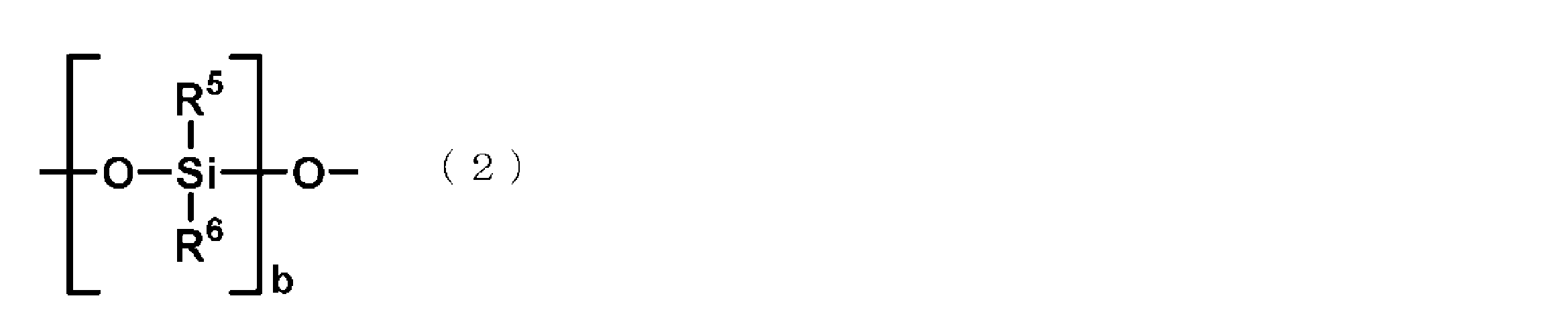
本実施形態に係るエアロゲルは、支柱部及び橋かけ部を備えるラダー型構造を有し、かつ橋かけ部が下記一般式(2)で表される構造を有することができる。このようなラダー型構造をエアロゲル成分としてエアロゲルの骨格中に導入することにより、耐熱性と機械的強度を向上させることができる。なお、本実施形態において「ラダー型構造」とは、2本の支柱部(struts)と支柱部同士を連結する橋かけ部(bridges)とを有するもの(いわゆる「梯子」の形態を有するもの)である。本態様において、エアロゲルの骨格がラダー型構造からなっていてもよいが、エアロゲルが部分的にラダー型構造を有していてもよい。
式(2)中、R5及びR6はそれぞれ独立にアルキル基又はアリール基を示し、bは1~50の整数を示す。ここで、アリール基としてはフェニル基、置換フェニル基等が挙げられる。また、置換フェニル基の置換基としては、アルキル基、ビニル基、メルカプト基、アミノ基、ニトロ基、シアノ基等が挙げられる。なお、式(2)中、bが2以上の整数の場合、2個以上のR5は各々同一であっても異なっていてもよく、同様に2個以上のR6も各々同一であっても異なっていてもよい。
上記の構造をエアロゲル成分としてエアロゲルの骨格中に導入することにより、例えば、従来のラダー型シルセスキオキサンに由来する構造を有する(すなわち、下記一般式(X)で表される構造を有する)エアロゲルよりも優れた柔軟性を有するエアロゲルとなる。シルセスキオキサンは、組成式:(RSiO1.5)nを有するポリシロキサンであり、カゴ型、ラダー型、ランダム型等の種々の骨格構造を有することができる。なお、下記一般式(X)にて示すように、従来のラダー型シルセスキオキサンに由来する構造を有するエアロゲルでは、橋かけ部の構造が-O-であるが、本実施形態に係るエアロゲルでは、橋かけ部の構造が上記一般式(2)で表される構造(ポリシロキサン構造)である。ただし、本態様のエアロゲルは、一般式(2)で表される構造に加え、さらにシルセスキオキサンに由来する構造を有していてもよい。

式(X)中、Rはヒドロキシ基、アルキル基又はアリール基を示す。
支柱部となる構造及びその鎖長、並びに橋かけ部となる構造の間隔は特に限定されないが、耐熱性と機械的強度とをより向上させるという観点から、ラダー型構造としては、下記一般式(3)で表されるラダー型構造を有していてもよい。

式(3)中、R5、R6、R7及びR8はそれぞれ独立にアルキル基又はアリール基を示し、a及びcはそれぞれ独立に1~3000の整数を示し、bは1~50の整数を示す。ここで、アリール基としてはフェニル基、置換フェニル基等が挙げられる。また、置換フェニル基の置換基としては、アルキル基、ビニル基、メルカプト基、アミノ基、ニトロ基、シアノ基等が挙げられる。なお、式(3)中、bが2以上の整数の場合、2個以上のR5は各々同一であっても異なっていてもよく、同様に2個以上のR6も各々同一であっても異なっていてもよい。また、式(3)中、aが2以上の整数の場合、2個以上のR7は各々同一であっても異なっていてもよく、同様にcが2以上の整数の場合、2個以上のR8は各々同一であっても異なっていてもよい。
なお、より優れた柔軟性を得る観点から、式(2)及び(3)中、R5、R6、R7及びR8(ただし、R7及びR8は式(3)中のみ)としてはそれぞれ独立に炭素数が1~6のアルキル基、フェニル基等が挙げられ、当該アルキル基としてはメチル基等が挙げられる。また、式(3)中、a及びcは、それぞれ独立に6~2000とすることができるが、10~1000であってもよい。また、式(2)及び(3)中、bは、2~30とすることができるが、5~20であってもよい。
(第三の態様)
本実施形態に係るエアロゲルは、加水分解性の官能基又は縮合性の官能基を有するケイ素化合物、及び、加水分解性の官能基を有するケイ素化合物の加水分解生成物からなる群より選択される少なくとも一種、を含有するゾルの縮合物である湿潤ゲルの乾燥物(ゾルから生成された湿潤ゲルを乾燥して得られるもの:ゾル由来の湿潤ゲルの乾燥物)であってもよい。なお、これまで述べてきたエアロゲルも、このように、ケイ素化合物等を含有するゾルから生成された湿潤ゲルを乾燥することで得られるものであってもよい。
本実施形態に係るエアロゲルは、加水分解性の官能基又は縮合性の官能基を有するケイ素化合物、及び、加水分解性の官能基を有するケイ素化合物の加水分解生成物からなる群より選択される少なくとも一種、を含有するゾルの縮合物である湿潤ゲルの乾燥物(ゾルから生成された湿潤ゲルを乾燥して得られるもの:ゾル由来の湿潤ゲルの乾燥物)であってもよい。なお、これまで述べてきたエアロゲルも、このように、ケイ素化合物等を含有するゾルから生成された湿潤ゲルを乾燥することで得られるものであってもよい。
加水分解性の官能基又は縮合性の官能基を有するケイ素化合物としては、ポリシロキサン化合物を用いることができる。すなわち、上記ゾルは、加水分解性の官能基又は縮合性の官能基を有するポリシロキサン化合物、及び、加水分解性の官能基を有するポリシロキサン化合物の加水分解生成物からなる群より選択される少なくとも一種の化合物(以下、場合により「ポリシロキサン化合物群」という)を含有することができる。
ポリシロキサン化合物における官能基は、特に限定されないが、同じ官能基同士で反応するか、あるいは他の官能基と反応する基とすることができる。加水分解性の官能基としては、アルコキシ基が挙げられる。縮合性の官能基としては、水酸基、シラノール基、カルボキシル基、フェノール性水酸基等が挙げられる。水酸基は、ヒドロキシアルキル基等の水酸基含有基に含まれていてもよい。なお、加水分解性の官能基又は縮合性の官能基を有するポリシロキサン化合物は、加水分解性の官能基及び縮合性の官能基とは異なる反応性基(加水分解性の官能基及び縮合性の官能基に該当しない官能基)をさらに有していてもよい。反応性基としては、エポキシ基、メルカプト基、グリシドキシ基、ビニル基、アクリロイル基、メタクリロイル基、アミノ基等が挙げられる。エポキシ基は、グリシドキシ基等のエポキシ基含有基に含まれていてもよい。これらの官能基及び反応性基を有するポリシロキサン化合物は単独で、又は2種類以上を混合して用いてもよい。これらの官能基及び反応性基のうち、例えば、エアロゲルの柔軟性を向上する基としては、アルコキシ基、シラノール基、ヒドロキシアルキル基等が挙げられ、これらのうち、アルコキシ基及びヒドロキシアルキル基は、ゾルの相溶性をより向上することができる。また、ポリシロキサン化合物の反応性の向上とエアロゲルの熱伝導率の低減の観点から、アルコキシ基及びヒドロキシアルキル基の炭素数は1~6とすることができるが、エアロゲルの柔軟性をより向上する観点から2~4であってもよい。
分子内にヒドロキシアルキル基を有するポリシロキサン化合物としては、下記一般式(A)で表される構造を有するものが挙げられる。下記一般式(A)で表される構造を有するポリシロキサン化合物を使用することにより、一般式(1)及び式(1a)で表される構造をエアロゲルの骨格中に導入することができる。

式(A)中、R1aはヒドロキシアルキル基を示し、R2aはアルキレン基を示し、R3a及びR4aはそれぞれ独立にアルキル基又はアリール基を示し、nは1~50の整数を示す。ここで、アリール基としてはフェニル基、置換フェニル基等が挙げられる。また、置換フェニル基の置換基としては、アルキル基、ビニル基、メルカプト基、アミノ基、ニトロ基、シアノ基等が挙げられる。なお、式(A)中、2個のR1aは各々同一であっても異なっていてもよく、同様に2個のR2aは各々同一であっても異なっていてもよい。また、式(A)中、2個以上のR3aは各々同一であっても異なっていてもよく、同様に2個以上のR4aは各々同一であっても異なっていてもよい。
上記構造のポリシロキサン化合物を含有するゾルの縮合物である(ゾルから生成された)湿潤ゲルを用いることにより、低熱伝導率かつ柔軟なエアロゲルをさらに得易くなる。このような観点から、式(A)中、R1aとしては炭素数が1~6のヒドロキシアルキル基等が挙げられ、当該ヒドロキシアルキル基としてはヒドロキシエチル基、ヒドロキシプロピル基等が挙げられる。また、式(A)中、R2aとしては炭素数が1~6のアルキレン基等が挙げられ、当該アルキレン基としてはエチレン基、プロピレン基等が挙げられる。また、式(A)中、R3a及びR4aとしてはそれぞれ独立に炭素数が1~6のアルキル基、フェニル基等が挙げられ、当該アルキル基としてはメチル基等が挙げられる。また、式(A)中、nは2~30とすることができるが、5~20であってもよい。
上記一般式(A)で表される構造を有するポリシロキサン化合物としては、市販品を用いることができ、X-22-160AS、KF-6001、KF-6002、KF-6003等の化合物(いずれも、信越化学工業株式会社製)、XF42-B0970、Fluid OFOH 702-4%等の化合物(いずれも、モメンティブ・パフォーマンス・マテリアルズ・ジャパン合同会社製)などが挙げられる。
分子内にアルコキシ基を有するポリシロキサン化合物としては、下記一般式(B)で表される構造を有するものが挙げられる。下記一般式(B)で表される構造を有するポリシロキサン化合物を使用することにより、一般式(2)又は(3)で表される橋かけ部を有するラダー型構造をエアロゲルの骨格中に導入することができる。

式(B)中、R1bはアルキル基、アルコキシ基又はアリール基を示し、R2b及びR3bはそれぞれ独立にアルコキシ基を示し、R4b及びR5bはそれぞれ独立にアルキル基又はアリール基を示し、mは1~50の整数を示す。ここで、アリール基としてはフェニル基、置換フェニル基等が挙げられる。また、置換フェニル基の置換基としては、アルキル基、ビニル基、メルカプト基、アミノ基、ニトロ基、シアノ基等が挙げられる。なお、式(B)中、2個のR1bは各々同一であっても異なっていてもよく、2個のR2bは各々同一であっても異なっていてもよく、同様に2個のR3bは各々同一であっても異なっていてもよい。また、式(B)中、mが2以上の整数の場合、2個以上のR4bは各々同一であっても異なっていてもよく、同様に2個以上のR5bも各々同一であっても異なっていてもよい。
上記構造のポリシロキサン化合物又はその加水分解生成物を含有するゾルの縮合物である(ゾルから生成された)湿潤ゲルを用いることにより、低熱伝導率かつ柔軟なエアロゲルをさらに得易くなる。このような観点から、式(B)中、R1bとしては炭素数が1~6のアルキル基、炭素数が1~6のアルコキシ基等が挙げられ、当該アルキル基又はアルコキシ基としてはメチル基、メトキシ基、エトキシ基等が挙げられる。また、式(B)中、R2b及びR3bとしてはそれぞれ独立に炭素数が1~6のアルコキシ基等が挙げられ、当該アルコキシ基としてはメトキシ基、エトキシ基等が挙げられる。また、式(B)中、R4b及びR5bとしてはそれぞれ独立に炭素数が1~6のアルキル基、フェニル基等が挙げられ、当該アルキル基としてはメチル基等が挙げられる。また、式(B)中、mは2~30とすることができるが、5~20であってもよい。
上記一般式(B)で表される構造を有するポリシロキサン化合物は、特開2000-26609号公報、特開2012-233110号公報等にて報告される製造方法を適宜参照して得ることができる。
また、分子内にアルコキシ基を有するポリシロキサン化合物としては、下記一般式(C)で表される構造を有するものも挙げられる。下記一般式(C)で表される構造を有するポリシロキサン化合物を使用することにより、耐熱性と機械的強度を向上することができる。
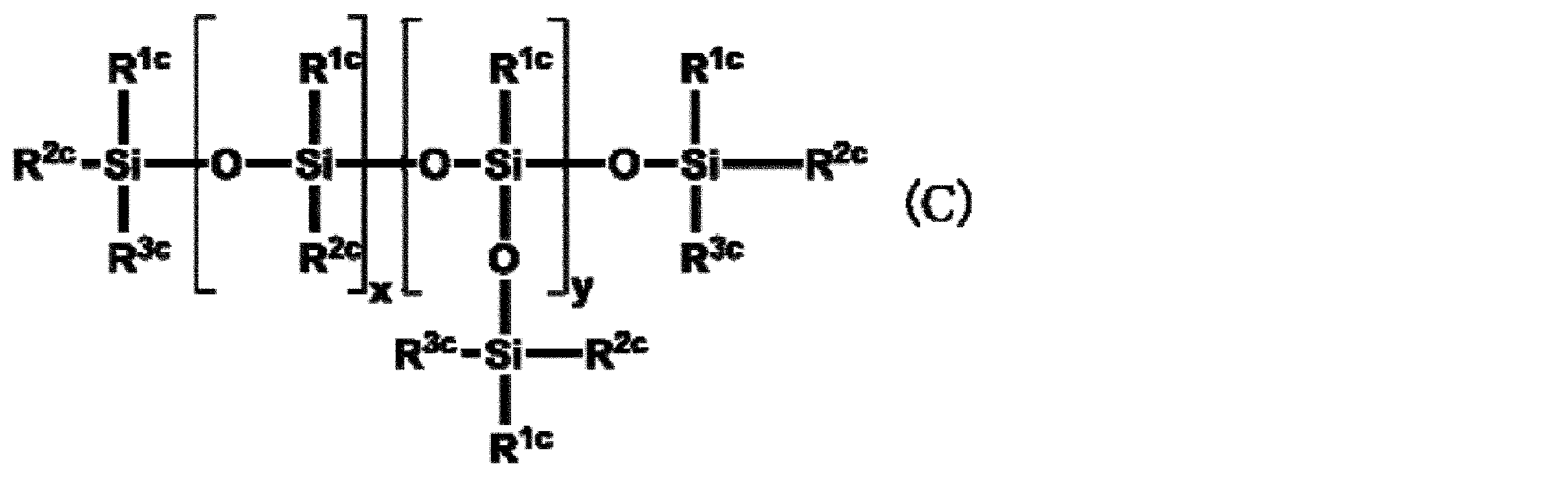
式(C)中、R1Cはアルキル基、アルコキシ基又はアリール基を示し、R2C及びR3Cはそれぞれ独立にアルコキシ基を示し、x及びyは1~50の整数を示す。ここで、アリール基としてはフェニル基、置換フェニル基等が挙げられる。また、置換フェニル基の置換基としては、アルキル基、ビニル基、メルカプト基、アミノ基、ニトロ基、シアノ基等が挙げられる。なお、式(C)中、R1Cは各々同一であっても異なっていてもよく、R2Cは各々同一であっても異なっていてもよく、同様にR3Cは各々同一であっても異なっていてもよい。
上記構造のポリシロキサン化合物又はその加水分解生成物を含有するゾルの縮合物である(ゾルから生成された)湿潤ゲルを用いることにより、低熱伝導率かつ機械強度の高く、柔軟なエアロゲルをさらに得易くなる。このような観点から、式(C)中、R1Cとしては炭素数が1~6のアルキル基、炭素数が1~6のアルコキシ基等が挙げられ、当該アルキル基又はアルコキシ基としてはメチル基、メトキシ基、エトキシ基等が挙げられる。また、式(C)中、R2C及びR3Cとしてはそれぞれ独立に炭素数が1~6のアルコキシ基等が挙げられ、当該アルコキシ基としてはメトキシ基、エトキシ基等が挙げられる。また、式(C)中、x及びyは2~30とすることができるが、5~20であってもよい。
上記一般式(C)で表される構造を有するポリシロキサン化合物としては、市販品を用いることができ、例えば、KC-89、KR-515、KR-500、X-40-9225(いずれも信越化学工業株式会社製)、SR-2402、AY42-163、US-SG2403(いずれも東レ・ダウコーニング株式会社製)、XC96-B0446、XR31-B1410(いずれもモメンティブ・パフォーマンス・マテリアルズ・ジャパン合同会社製)、エチルシリケート28、エチルシリケート40、メチルシリケート51、メチルシリケート53A(いずれもコルコート株式会社製)などが用いられる。
なお、アルコキシ基は加水分解するため、アルコキシ基を有するポリシロキサン化合物はゾル中にて加水分解生成物として存在する可能性があり、アルコキシ基を有するポリシロキサン化合物とその加水分解生成物は混在していてもよい。また、アルコキシ基を有するポリシロキサン化合物において、分子中のアルコキシ基の全てが加水分解されていてもよいし、部分的に加水分解されていてもよい。
これら、加水分解性の官能基又は縮合性の官能基を有するポリシロキサン化合物、及び、加水分解性の官能基を有するポリシロキサン化合物の加水分解生成物は、単独で、又は2種類以上を混合して用いてもよい。
本実施形態に係るエアロゲルを作製するにあたり、加水分解性の官能基又は縮合性の官能基を有するケイ素化合物としては、上述のポリシロキサン化合物以外のケイ素化合物を用いることができる。すなわち、上記のケイ素化合物を含有するゾルは、加水分解性の官能基又は縮合性の官能基を有するケイ素化合物(ポリシロキサン化合物を除く)、及び、加水分解性の官能基を有する当該ケイ素化合物の加水分解生成物からなる群より選択される少なくとも一種(以下、場合により「ケイ素化合物群」という)を、上述のポリシロキサン化合物群に加えて、あるいは上述のポリシロキサン化合物群に代えて、含有することができる。ケイ素化合物における分子内のケイ素数は1又は2とすることができる。
分子内に加水分解性の官能基を有するケイ素化合物としては、特に限定されないが、アルキルケイ素アルコキシド等が挙げられる。アルキルケイ素アルコキシドは、耐水性を向上する観点から、加水分解性の官能基の数を3個以下とすることができる。このようなアルキルケイ素アルコキシドとしては、モノアルキルトリアルコキシシラン、モノアルキルジアルコキシシラン、ジアルキルジアルコキシシラン、モノアルキルモノアルコキシシラン、ジアルキルモノアルコキシシラン、トリアルキルモノアルコキシシラン等が挙げられ、具体的には、メチルトリメトキシシラン、メチルジメトキシシラン、ジメチルジエトキシシラン、ジメチルジメトキシシラン、エチルトリメトキシシラン、ヘキシルトリメトキシシラン等が挙げられる。ここで、加水分解性の官能基としては、メトキシ基、エトキシ基等のアルコキシ基などが挙げられる。
縮合性の官能基を有するケイ素化合物としては、特に限定されないが、シランテトラオール、メチルシラントリオール、ジメチルシランジオール、フェニルシラントリオール、フェニルメチルシランジオール、ジフェニルシランジオール、n-プロピルシラントリオール、ヘキシルシラントリオール、オクチルシラントリオール、デシルシラントリオール、トリフルオロプロピルシラントリオール等が挙げられる。
加水分解性の官能基又は縮合性の官能基を有するケイ素化合物は、加水分解性の官能基及び縮合性の官能基とは異なる上述の反応性基(加水分解性の官能基及び縮合性の官能基に該当しない官能基)をさらに有していてもよい。
加水分解性の官能基の数が3個以下であり、反応性基を有するケイ素化合物として、ビニルトリメトキシシラン、3-グリシドキシプロピルトリメトキシシラン、3-グリシドキシプロピルメチルジメトキシシラン、3-メタクリロキシプロピルトリメトキシシラン、3-メタクリロキシプロピルメチルジメトキシシラン、3-アクリロキシプロピルトリメトキシシラン、3-メルカプトプロピルトリメトキシシラン、3-メルカプトプロピルメチルジメトキシシラン、N-フェニル-3-アミノプロピルトリメトキシシラン、N-2-(アミノエチル)-3-アミノプロピルメチルジメトキシシラン等も用いることができる。
また、縮合性の官能基を有し、反応性基を有するケイ素化合物として、ビニルシラントリオール、3-グリシドキシプロピルシラントリオール、3-グリシドキシプロピルメチルシランジオール、3-メタクリロキシプロピルシラントリオール、3-メタクリロキシプロピルメチルシランジオール、3-アクリロキシプロピルシラントリオール、3-メルカプトプロピルシラントリオール、3-メルカプトプロピルメチルシランジオール、N-フェニル-3-アミノプロピルシラントリオール、N-2-(アミノエチル)-3-アミノプロピルメチルシランジオール等も用いることができる。
さらに、分子末端の加水分解性の官能基が3個以下のケイ素化合物であるビストリメトキシシリルメタン、ビストリメトキシシリルエタン、ビストリメトキシシリルヘキサン、エチルトリメトキシシラン、ビニルトリメトキシシラン等も用いることができる。
加水分解性の官能基又は縮合性の官能基を有するケイ素化合物(ポリシロキサン化合物を除く)、及び、加水分解性の官能基を有する当該ケイ素化合物の加水分解生成物は、単独で、又は2種類以上を混合して用いてもよい。
上記のケイ素化合物(ポリシロキサン化合物を除く)を使用することにより、下記一般式(4)~(6)で表される構造をエアロゲルの骨格中に導入することができる。本実施形態に係るエアロゲルは、これらの構造をのうちいずれかを単独で、又は2種以上有することができる。

式(4)中、R9はアルキル基を示す。ここで、アルキル基としては炭素数が1~6のアルキル基等が挙げられ、当該アルキル基としてはメチル基等が挙げられる。
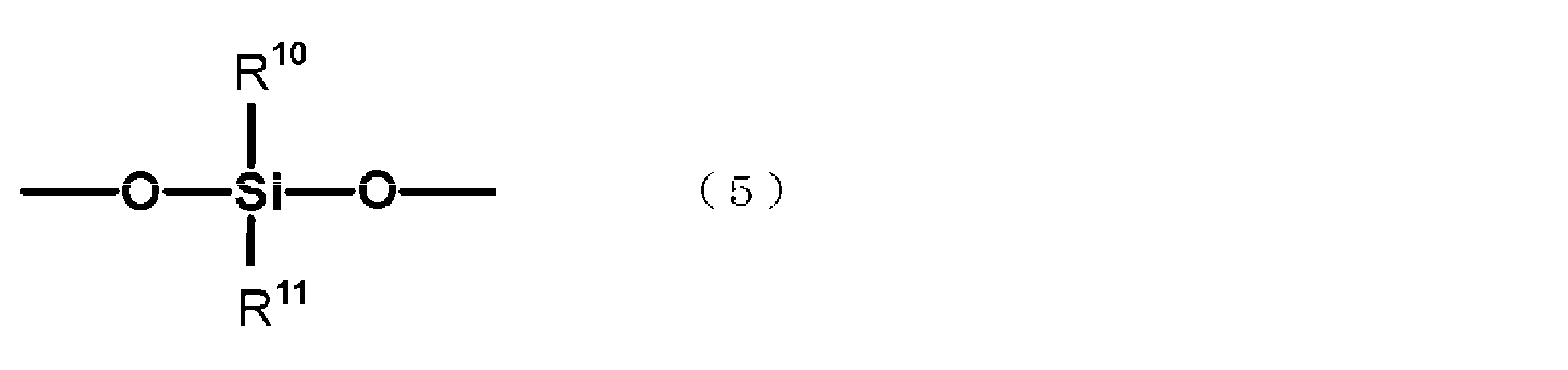
式(5)中、R10及びR11はそれぞれ独立にアルキル基を示す。ここで、アルキル基としては炭素数が1~6のアルキル基等が挙げられ、当該アルキル基としてはメチル基等が挙げられる。

式(6)中、R12はアルキレン基を示す。ここで、アルキレン基としては炭素数が1~10のアルキレン基等が挙げられ、当該アルキレン基としてはエチレン基、ヘキシレン基等が挙げられる。
(第四の態様)
本実施形態に係るエアロゲルは、シランオリゴマーの加水分解生成物を含有するゾルの縮合物である湿潤ゲルの乾燥物であってよい。また、このとき、シランオリゴマー中のケイ素原子の総数に対する、3個の酸素原子と結合したケイ素原子の割合は、50%以上であってよい。
本実施形態に係るエアロゲルは、シランオリゴマーの加水分解生成物を含有するゾルの縮合物である湿潤ゲルの乾燥物であってよい。また、このとき、シランオリゴマー中のケイ素原子の総数に対する、3個の酸素原子と結合したケイ素原子の割合は、50%以上であってよい。
なお、ゾルとは、ゲル化反応が生じる前の状態であって、本態様においては、シランオリゴマーの加水分解生成物を含むケイ素化合物が液体媒体中に溶解又は分散している状態を意味する。また、湿潤ゲルとは、液体媒体を含んでいながらも、流動性を有しない湿潤状態のゲル固形物を意味する。
シランオリゴマーはシランモノマーの重合体であり、複数のケイ素原子が酸素原子を介して連結された構造を有する。本明細書中、シランオリゴマーは、1分子中のケイ素原子の数が2~100個の重合体を示す。シランオリゴマーは、例えば、後述するシランモノマーの一種又は二種以上の重合体であってよく、アルキルトリアルコキシシランを含むシランモノマーの重合体であることが好ましい。
シランオリゴマーに含まれるケイ素原子は、1個の酸素原子と結合したケイ素原子(M単位)、2個の酸素原子と結合したケイ素原子(D単位)、3個の酸素原子と結合したケイ素原子(T単位)及び4個の酸素原子と結合したケイ素原子(Q単位)に区別することができる。M単位、D単位、T単位及びQ単位としては、それぞれ以下の式(M)、(D)、(T)及び(Q)が例示できる。
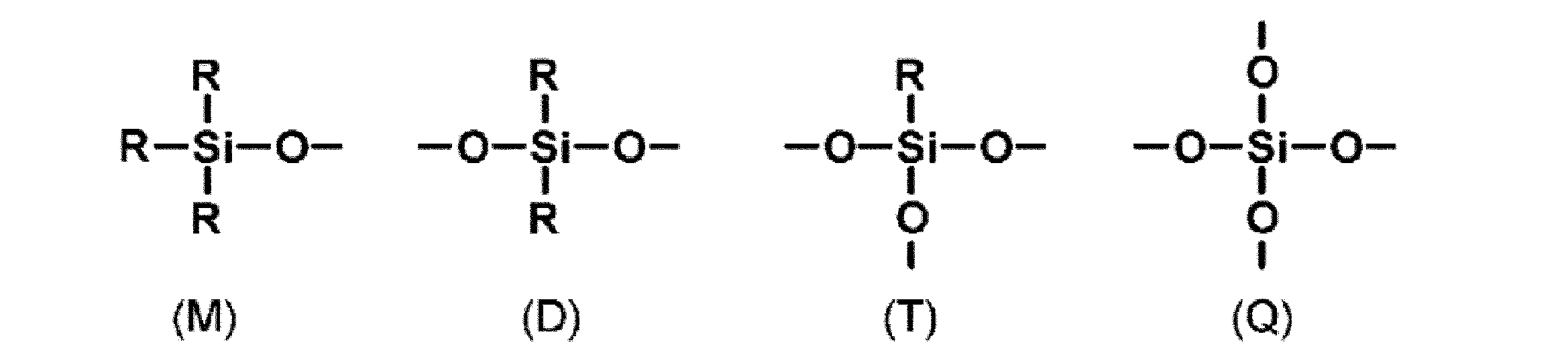
上記式中、Rはケイ素に結合する酸素原子以外の原子(水素原子等)又は原子団(アルキル基等)を示す。これらの単位の含有量に関する情報は、Si-NMRにより得ることができる。
シランオリゴマーにおいて、ケイ素原子の総数に対するT単位の割合は、50%以上であり、好ましくは60%以上、より好ましくは70%以上であり、100%であってもよい。
シランオリゴマーは、上述の式(M)、(D)、(T)及び(Q)中のRとして、アルキル基又はアリール基を有していることが好ましい。
アルキル基としては、例えば、炭素数1~6のアルキル基が挙げられる。アルキル基の具体例としては、メチル基、エチル基、プロピル基、ブチル基等が挙げられ、これらのうちメチル基、エチル基が好ましく、メチル基がより好ましい。
アリール基としては、フェニル基、置換フェニル基等が挙げられる。置換フェニル基の置換基としては、アルキル基、ビニル基、メルカプト基、アミノ基、ニトロ基、シアノ基等が挙げられる。アリール基としては、フェニル基が好ましい。
シランオリゴマーは加水分解性の官能基を有しており、ゾル生成工程では、この加水分解性の官能基が加水分解されて、シラノール基が生じると考えられる。加水分解性の官能基としては、アルコキシ基が挙げられる。アルコキシ基の具体例としては、メトキシ基、エトキシ基、プロポキシ基等が挙げられ、加水分解反応の反応速度の観点から、メチル基、エトキシ基が好ましい。
加水分解性の官能基の含有量は、シランオリゴマーの全量基準で、例えば2質量%以上であってよく、好ましくは10質量%以上、より好ましくは20質量%以上である。また、加水分解性の官能基の含有量は、シランオリゴマーの全量基準で、例えば60質量%以下であってよく、好ましくは50質量%以下、より好ましくは45質量%以下である。このようなシランオリゴマーによれば、乾燥工程における体積収縮を一層抑制でき、成形性に一層優れるエアロゲルが得られる。
シランオリゴマーの重量平均分子量は、例えば200以上であってよく、好ましくは400以上、より好ましくは600以上である。また、シランオリゴマーの重量平均分子量は、例えば10000以下であってよく、好ましくは7000以下、より好ましくは5000以下である。このようなシランオリゴマーによれば、乾燥工程における体積収縮を一層抑制でき、成形性に一層優れるエアロゲルが得られる。なお、本明細書中、シランオリゴマーの重量平均分子量は、ゲルパーミエーションクロマトグラフィ(GPC)で測定した標準ポリスチレン換算の重量平均分子量を示す。
シランオリゴマーとしては市販品を用いてもよく、例えば、XR31-B1410、XC96-B0446(いずれも、モメンティブ社製)、KR-500、KR-515、X-40-9225、KC-89S(いずれも、信越化学工業株式会社製)、SR-2402、AY42-163(いずれも、東レ・ダウコーティング株式会社製)等が挙げられる。
シランオリゴマーは、他のケイ素化合物(例えば、第三の態様に記載したケイ素化合物)と組み合わせて用いることもできる。
例えば、上記ゾルは、シランオリゴマーの加水分解生成物と、加水分解性の官能基を有するシランモノマーの加水分解生成物及び/又は縮合性の官能基を有するシランモノマーと、を含有するものであってよい。加水分解性の官能基としては、シランオリゴマーが有する加水分解性の官能基として例示した基と同じ基が例示できる。縮合性の官能基としてはシラノール基が挙げられる。なお、シランモノマーは、シロキサン結合(Si-O-Si)を有さないケイ素化合物ということもできる。
加水分解性の官能基を有するシランモノマーとしては、例えば、モノアルキルトリアルコキシシラン、モノアリールトリアルコキシシラン、モノアルキルジアルコキシシラン、モノアリールジアルコキシシラン、ジアルキルジアルコキシシラン、ジアリールジアルコキシシラン、モノアルキルモノアルコキシシラン、モノアリールモノアルコキシシラン、ジアルキルモノアルコキシシラン、ジアリールモノアルコキシシラン、トリアルキルモノアルコキシシラン、トリアリールモノアルコキシシラン、テトラアルコキシシラン等が挙げられる。具体的には、メチルトリメトキシシラン、メチルトリエトキシシラン、フェニルトリメトキシシラン、フェニルトリエトシシシラン、メチルジメトキシシラン、ジメチルジエトキシシラン、ジメチルジメトキシシラン、エチルトリメトキシシラン、ヘキシルトリメトキシシラン、テトラエトキシシラン等が挙げられる。
縮合性の官能基を有するシランモノマーとしては、例えば、シランテトラオール、メチルシラントリオール、ジメチルシランジオール、フェニルシラントリオール、フェニルメチルシランジオール、ジフェニルシランジオール、n-プロピルシラントリオール、ヘキシルシラントリオール、オクチルシラントリオール、デシルシラントリオール、トリフルオロプロピルシラントリオール等が挙げられる。
シランモノマーは、加水分解性の官能基及び縮合性の官能基とは異なる反応性基をさらに有していてもよい。反応性基としては、エポキシ基、メルカプト基、グリシドキシ基、ビニル基、アクリロイル基、メタクリロイル基、アミノ基等が挙げられる。エポキシ基は、グリシドキシ基等のエポキシ基含有基に含まれていてもよい。
加水分解性の官能基及び反応性基を有するシランモノマーとしては、例えば、ビニルトリメトキシシラン、3-グリシドキシプロピルトリメトキシシラン、3-グリシドキシプロピルメチルジメトキシシラン、3-メタクリロキシプロピルトリメトキシシラン、3-メタクリロキシプロピルメチルジメトキシシラン、3-アクリロキシプロピルトリメトキシシラン、3-メルカプトプロピルトリメトキシシラン、3-メルカプトプロピルメチルジメトキシシラン、N-フェニル-3-アミノプロピルトリメトキシシラン、N-2-(アミノエチル)-3-アミノプロピルメチルジメトキシシラン等が挙げられる。
縮合性の官能基及び反応性基を有するシランモノマーとしては、例えば、ビニルシラントリオール、3-グリシドキシプロピルシラントリオール、3-グリシドキシプロピルメチルシランジオール、3-メタクリロキシプロピルシラントリオール、3-メタクリロキシプロピルメチルシランジオール、3-アクリロキシプロピルシラントリオール、3-メルカプトプロピルシラントリオール、3-メルカプトプロピルメチルシランジオール、N-フェニル-3-アミノプロピルシラントリオール、N-2-(アミノエチル)-3-アミノプロピルメチルシランジオール等が挙げられる。
また、シランモノマーは2以上のケイ素原子を有していてもよく、このようなシランモノマーとしては、ビストリメトキシシリルメタン、ビストリメトキシシリルエタン、ビストリメトキシシリルヘキサン等が挙げられる。
(第五の態様)
本実施形態に係るエアロゲルは、さらに強靱化する観点並びにさらに優れた断熱性及び柔軟性を達成する観点から、エアロゲル成分に加え、さらにシリカ粒子を含有していてもよい。エアロゲル成分及びシリカ粒子を含有するエアロゲルを、エアロゲル複合体ということもできる。エアロゲル複合体は、エアロゲル成分とシリカ粒子とが複合化されていながらも、エアロゲルの特徴であるクラスター構造を有しており、三次元的に微細な多孔性の構造を有していると考えられる。
本実施形態に係るエアロゲルは、さらに強靱化する観点並びにさらに優れた断熱性及び柔軟性を達成する観点から、エアロゲル成分に加え、さらにシリカ粒子を含有していてもよい。エアロゲル成分及びシリカ粒子を含有するエアロゲルを、エアロゲル複合体ということもできる。エアロゲル複合体は、エアロゲル成分とシリカ粒子とが複合化されていながらも、エアロゲルの特徴であるクラスター構造を有しており、三次元的に微細な多孔性の構造を有していると考えられる。
エアロゲル成分及びシリカ粒子を含有するエアロゲルは、上述の、加水分解性の官能基又は縮合性の官能基を有するケイ素化合物、及び、加水分解性の官能基を有するケイ素化合物の加水分解生成物からなる群より選択される少なくとも一種と、シリカ粒子と、を含有するゾルの縮合物である湿潤ゲルの乾燥物ということができる。したがって、第一の態様~第四の態様に関する記載は、本実施形態に係るエアロゲルに対しても適宜準用することができる。
シリカ粒子としては、特に制限なく用いることができ、非晶質シリカ粒子等が挙げられる。非晶質シリカ粒子としては、溶融シリカ粒子、ヒュームドシリカ粒子、コロイダルシリカ粒子等が挙げられる。これらのうち、コロイダルシリカ粒子は単分散性が高く、ゾル中での凝集を抑制し易い。なお、シリカ粒子としては、中空構造、多孔質構造等を有するシリカ粒子であってもよい。
シリカ粒子の形状は特に制限されず、球状、繭型、会合型等が挙げられる。これらのうち、シリカ粒子として球状の粒子を用いることにより、ゾル中での凝集を抑制し易くなる。シリカ粒子の平均一次粒子径は、適度な強度及び柔軟性をエアロゲルに付与し易く、乾燥時の耐収縮性に優れるエアロゲルが得易い観点から、1nm以上であってもよく、5nm以上であってもよく、20nm以上であってもよい。シリカ粒子の平均一次粒子径は、シリカ粒子の固体熱伝導を抑制し易くなり、断熱性に優れるエアロゲルが得易くなる観点から、500nm以下であってもよく、300nm以下であってもよく、100nm以下であってもよい。これらの観点から、シリカ粒子の平均一次粒子径は、1~500nmであってもよく、5~300nmであってもよく、20~100nmであってもよい。
本実施形態において、シリカ粒子の平均一次粒子径は、走査型電子顕微鏡(以下「SEM」と略記する。)を用いてエアロゲルを直接観察することにより得ることができる。ここでいう「直径」とは、エアロゲルの断面に露出した粒子の断面を円とみなした場合の直径を意味する。また、「断面を円とみなした場合の直径」とは、断面の面積を同じ面積の真円に置き換えたときの当該真円の直径のことである。なお、平均粒子径の算出に当たっては、100個の粒子について円の直径を求め、その平均を取るものとする。
なお、シリカ粒子の平均粒子径は、原料からも測定することができる。例えば、二軸平均一次粒子径は、任意の粒子20個をSEMにより観察した結果から、次のようにして算出される。すなわち、通常固形分濃度が5~40質量%程度で、水中に分散しているコロイダルシリカ粒子を例にすると、コロイダルシリカ粒子の分散液に、パターン配線付きウエハを2cm角に切って得られたチップを約30秒浸した後、当該チップを純水にて約30秒間すすぎ、窒素ブロー乾燥する。その後、チップをSEM観察用の試料台に載せ、加速電圧10kVを掛け、10万倍の倍率にてシリカ粒子を観察し、画像を撮影する。得られた画像から20個のシリカ粒子を任意に選択し、それらの粒子の粒子径の平均を平均粒子径とする。
シリカ粒子の1g当たりのシラノール基数は、耐収縮性に優れるエアロゲルを得易くなる観点から、10×1018個/g以上であってもよく、50×1018個/g以上であってもよく、100×1018個/g以上であってもよい。シリカ粒子の1g当たりのシラノール基数は、均質なエアロゲルが得易くなる観点から、1000×1018個/g以下であってもよく、800×1018個/g以下であってもよく、700×1018個/g以下であってもよい。これらの観点から、シリカ粒子の1g当たりのシラノール基数は、10×1018~1000×1018個/gであってもよく、50×1018~800×1018個/gであってもよく、100×1018~700×1018個/gであってもよい。
上記ゾルに含まれるケイ素化合物の含有量は、良好な反応性をさらに得易くなる観点から、ゾルの総量100質量部に対し、5質量部以上であってもよく、10質量部以上であってもよい。上記ゾルに含まれるケイ素化合物の含有量は、良好な相溶性をさらに得易くなる観点から、ゾルの総量100質量部に対し、50質量部以下であってもよく、30質量部以下であってもよい。これらの観点から、上記ゾルに含まれるケイ素化合物の含有量は、ゾルの総量100質量部に対し、5~50質量部であってもよく、10~30質量部であってもよい。
上記ゾルにシリカ粒子が含まれる場合、シリカ粒子の含有量は、適度な強度をエアロゲルに付与し易くなり、乾燥時の耐収縮性に優れるエアロゲルが得易くなる観点から、ゾルの総量100質量部に対し、1質量部以上であってもよく、4質量部以上であってもよい。シリカ粒子の含有量は、シリカ粒子の固体熱伝導を抑制し易くなり、断熱性に優れるエアロゲルが得易くなる観点から、ゾルの総量100質量部に対し、20質量部以下であってもよく、15質量部以下であってもよい。これらの観点から、シリカ粒子の含有量は、ゾルの総量100質量部に対し、1~20質量部であってもよく、4~15質量部であってもよい。
<エアロゲル粒子>
本実施形態におけるエアロゲル粒子は、後述のとおりバルクのエアロゲルを粉砕することにより得ることができる。
本実施形態におけるエアロゲル粒子は、後述のとおりバルクのエアロゲルを粉砕することにより得ることができる。
エアロゲル粒子の比表面積は特に限定されず、例えば2000m2/g以下であってよく、好ましくは1000m2/g以下である。このようなエアロゲル粒子は分散性が一層向上する傾向がある。当該比表面積は700m2/g以下であってもよく、400m2/g以下であってもよく、150m2/g以下であってもよい。エアロゲル粒子の比表面積の下限は特に限定されないが、分散液中での凝集抑制及び充填率の向上という観点から、10m2/g程度とすることができる。エアロゲル粒子の比表面積を調整する方法としては様々考えられるが、例えば、一般式(2)で表される橋架け部構造を有するエアロゲル成分の量を調整すること、シリカ粒子の量を調整すること等が挙げられる。
比表面積はBET法により測定することができる。測定装置としては、ガス吸着量測定装置(カンタクローム・インスツルメンツ・ジャパン合同会社製、Autosorb-iQ(Autosorbは登録商標))を用いることができる。
エアロゲル粒子の平均粒子径D50は1~1000μmとすることができるが、3~700μmであってもよく、5~500μmであってもよく、10~100μmであってもよく、10~50μmであってもよい。エアロゲル粒子の平均粒子径D50が1μm以上であることにより、分散性、取り扱い性等に優れるエアロゲル粒子が得易くなる。一方、平均粒子径D50が1000μm以下であることにより、分散性に優れるエアロゲル粒子が得易くなる。エアロゲル粒子の平均粒子径は、粉砕方法及び粉砕条件、ふるい、分級の仕方等により適宜調整することができる。
エアロゲル粒子の平均粒子径D50はレーザー回折・散乱法により測定することができる。例えば、溶媒(エタノール)に、エアロゲル粒子の含有量が0.05~5質量%となるように添加し、50Wの超音波ホモジナイザーで15~30分振動することによって、エアロゲル粒子の分散を行う。その後、分散液の約10mL程度をレーザー回折・散乱式粒子径分布測定装置に注入して、25℃で、屈折率1.3、吸収0として粒子径を測定する。そして、この粒子径分布における積算値50%(体積基準)での粒径を平均粒子径D50とする。測定装置としては、例えばMicrotrac MT3000(日機装株式会社製、製品名)を用いることができる。
エアロゲル粒子は、細孔径が2~200nmの細孔を複数有するエアロゲルから構成されている。
エアロゲル粒子を構成するエアロゲルにおいて、2~200nmの細孔径を有する細孔の合計細孔容積V1に占める、20~200nmの細孔径を有する細孔の合計細孔容積V2の割合は、50%以上である。これにより、分散性に優れたエアロゲル粒子となる。合計細孔容積V1に占める合計細孔容積V2の割合は、60%以上であってもよく、70%以上であってもよい。また、合計細孔容積V1に占める合計細孔容積V2の割合は、例えば95%以下であってよく、好ましくは90%以下である。
エアロゲル粒子を構成するエアロゲルにおいて、2~200nmの細孔径を有する細孔の合計細孔容積V1に占める、30~200nmの細孔径を有する細孔の合計細孔容積V3の割合は、例えば30%以上であってよく、好ましくは35%以上、より好ましくは40%以上である。これにより、分散性が一層向上する傾向がある。また、合計細孔容積V1に占める合計細孔容積V3の割合は、例えば90%以下であってよく、好ましくは85%以下である。
エアロゲル粒子を構成するエアロゲルについて、2~200nmの範囲の細孔分布曲線を求めた場合、当該曲線のピークトップは、20~200nmの範囲にあることが好ましく、20~100nmの範囲にあることがより好ましく、20~80nmの範囲にあることが一層好ましい。これにより、分散性及び断熱性が一層向上する傾向がある。
本明細書中、エアロゲルの細孔径と細孔容積との関係は、ガス吸着法により測定することが出来る。測定装置としては、ガス吸着量測定装置(カンタクローム・インスツルメンツ・ジャパン合同会社製、Autosorb-iQ(Autosorbは登録商標))を用いることができる。
エアロゲル粒子を構成するエアロゲルの細孔径及びその細孔容積を調整する方法としては様々考えられるが、例えば、第四の態様におけるシランオリゴマーの量を調整すること、シリカ粒子の量を調整すること、一般式(2)で表される橋架け部構造を有するエアロゲル成分を増やすこと等の方法が挙げられる。
<エアロゲル粒子の製造方法>
エアロゲル粒子の製造方法は、特に限定されないが、例えば以下の方法により製造することができる。
エアロゲル粒子の製造方法は、特に限定されないが、例えば以下の方法により製造することができる。
本実施形態のエアロゲル粒子は、ゾル生成工程と、ゾル生成工程で得られたゾルをゲル化し、その後熟成して湿潤ゲルを得る湿潤ゲル生成工程と、湿潤ゲル生成工程で得られた湿潤ゲルを洗浄及び(必要に応じ)溶媒置換する洗浄及び溶媒置換工程と、洗浄及び溶媒置換した湿潤ゲルを乾燥する乾燥工程と、乾燥により得られたエアロゲルを粉砕する粉砕工程とを主に備える製造方法により製造することができる。
また、ゾル生成工程と、湿潤ゲル生成工程と、湿潤ゲル生成工程で得られた湿潤ゲルを粉砕する湿潤ゲル粉砕工程と、洗浄及び溶媒置換工程と、乾燥工程とを主に備える製造方法により製造してもよい。
得られたエアロゲル粒子は、ふるい、分級等によって大きさをさらに揃えることができる。粒子の大きさを整えることで分散性を高めることができる。なお、「ゾル」とは、ゲル化反応が生じる前の状態であって、本実施形態においては上記ケイ素化合物と、場合によりシリカ粒子と、が溶媒中に溶解又は分散している状態を意味する。また、湿潤ゲルとは、液体媒体を含んでいながらも、流動性を有しない湿潤状態のゲル固形物を意味する。
(ゾル生成工程)
ゾル生成工程は、ケイ素化合物と、場合によりシリカ粒子(シリカ粒子を含む溶媒であってもよい)と、を混合して加水分解反応を行った後、ゾルを生成する工程である。本工程においては、加水分解反応を促進させるため、溶媒中にさらに酸触媒を添加してもよい。また、特許第5250900号公報に示されるように、溶媒中に界面活性剤、熱加水分解性化合物等を添加することもできる。さらに、熱線輻射抑制等を目的として、溶媒中にカーボングラファイト、アルミニウム化合物、マグネシウム化合物、銀化合物、チタン化合物等の成分を添加してもよい。
ゾル生成工程は、ケイ素化合物と、場合によりシリカ粒子(シリカ粒子を含む溶媒であってもよい)と、を混合して加水分解反応を行った後、ゾルを生成する工程である。本工程においては、加水分解反応を促進させるため、溶媒中にさらに酸触媒を添加してもよい。また、特許第5250900号公報に示されるように、溶媒中に界面活性剤、熱加水分解性化合物等を添加することもできる。さらに、熱線輻射抑制等を目的として、溶媒中にカーボングラファイト、アルミニウム化合物、マグネシウム化合物、銀化合物、チタン化合物等の成分を添加してもよい。
溶媒としては、例えば、水、又は、水及びアルコールの混合液を用いることができる。アルコールとしては、メタノール、エタノール、n-プロパノール、2-プロパノール、n-ブタノール、2-ブタノール、t-ブタノール等が挙げられる。これらの中でも、ゲル壁との界面張力を低減させる点で、表面張力が低くかつ沸点の低いアルコールとしては、メタノール、エタノール、2-プロパノール等が挙げられる。これらは単独で、又は2種類以上を混合して用いてもよい。
例えば溶媒としてアルコールを用いる場合、アルコールの量は、ケイ素化合物群及びポリシロキサン化合物群の総量1モルに対し、4~8モルとすることができるが、4~6.5であってもよく、又は4.5~6モルであってもよい。アルコールの量を4モル以上にすることにより良好な相溶性をさらに得易くなり、また、8モル以下にすることによりゲルの収縮をさらに抑制し易くなる。
酸触媒としては、フッ酸、塩酸、硝酸、硫酸、亜硫酸、リン酸、亜リン酸、次亜リン酸、臭素酸、塩素酸、亜塩素酸、次亜塩素酸等の無機酸;酸性リン酸アルミニウム、酸性リン酸マグネシウム、酸性リン酸亜鉛等の酸性リン酸塩;酢酸、ギ酸、プロピオン酸、シュウ酸、マロン酸、コハク酸、クエン酸、リンゴ酸、アジピン酸、アゼライン酸等の有機カルボン酸などが挙げられる。これらの中でも、得られるエアロゲルの耐水性をより向上する酸触媒としては有機カルボン酸が挙げられる。当該有機カルボン酸としては酢酸が挙げられるが、ギ酸、プロピオン酸、シュウ酸、マロン酸等であってもよい。これらは単独で、又は2種類以上を混合して用いてもよい。
酸触媒を用いることで、ケイ素化合物の加水分解反応を促進させて、より短時間でゾルを得ることができる。
酸触媒の添加量は、ポリシロキサン化合物群及びケイ素化合物群の総量100質量部に対し、0.001~0.1質量部とすることができる。
界面活性剤としては、非イオン性界面活性剤、イオン性界面活性剤等を用いることができる。これらは単独で、又は2種類以上を混合して用いてもよい。
非イオン性界面活性剤としては、例えば、ポリオキシエチレン等の親水部と主にアルキル基からなる疎水部とを含む化合物、ポリオキシプロピレン等の親水部を含む化合物などを使用できる。ポリオキシエチレン等の親水部と主にアルキル基からなる疎水部とを含む化合物としては、ポリオキシエチレンノニルフェニルエーテル、ポリオキシエチレンオクチルフェニルエーテル、ポリオキシエチレンアルキルエーテル等が挙げられる。ポリオキシプロピレン等の親水部を含む化合物としては、ポリオキシプロピレンアルキルエーテル、ポリオキシエチレンとポリオキシプロピレンのブロック共重合体等が挙げられる。
イオン性界面活性剤としては、カチオン性界面活性剤、アニオン性界面活性剤、両イオン性界面活性剤等が挙げられる。カチオン性界面活性剤としては、臭化セチルトリメチルアンモニウム、塩化セチルトリメチルアンモニウム等が挙げられ、アニオン性界面活性剤としては、ドデシルスルホン酸ナトリウム等が挙げられる。また、両イオン性界面活性剤としては、アミノ酸系界面活性剤、ベタイン系界面活性剤、アミンオキシド系界面活性剤等が挙げられる。アミノ酸系界面活性剤としては、例えば、アシルグルタミン酸等が挙げられる。ベタイン系界面活性剤としては、例えば、ラウリルジメチルアミノ酢酸ベタイン、ステアリルジメチルアミノ酢酸ベタイン等が挙げられる。アミンオキシド系界面活性剤としては、例えばラウリルジメチルアミンオキシドが挙げられる。
これらの界面活性剤は、後述する湿潤ゲル生成工程において、反応系中の溶媒と、成長していくシロキサン重合体との間の化学的親和性の差異を小さくし、相分離を抑制する作用をすると考えられている。
界面活性剤の添加量は、界面活性剤の種類、あるいはケイ素化合物の種類及び量にも左右されるが、例えばポリシロキサン化合物群及びケイ素化合物群の総量100質量部に対し、1~100質量部とすることができる。なお、同添加量は5~60質量部であってもよい。
熱加水分解性化合物は、熱加水分解により塩基触媒を発生して、反応溶液を塩基性とし、後述する湿潤ゲル生成工程でのゾルゲル反応を促進すると考えられている。よって、この熱加水分解性化合物としては、加水分解後に反応溶液を塩基性にできる化合物であれば、特に限定されず、尿素;ホルムアミド、N-メチルホルムアミド、N,N-ジメチルホルムアミド、アセトアミド、N-メチルアセトアミド、N,N-ジメチルアセトアミド等の酸アミド;ヘキサメチレンテトラミン等の環状窒素化合物などを挙げることができる。これらの中でも、特に尿素は上記促進効果を得られ易い。
熱加水分解性化合物の添加量は、後述する湿潤ゲル生成工程でのゾルゲル反応を十分に促進することができる量であれば、特に限定されない。例えば、熱加水分解性化合物として尿素を用いた場合、その添加量は、ポリシロキサン化合物群及びケイ素化合物群の総量100質量部に対して、1~200質量部とすることができる。なお、同添加量は2~150質量部であってもよい。添加量を1質量部以上とすることにより、良好な反応性をさらに得易くなり、また、200質量部以下とすることにより、結晶の析出及びゲル密度の低下をさらに抑制し易くなる。
ゾル生成工程の加水分解は、混合液中のケイ素化合物、シリカ粒子、酸触媒、界面活性剤等の種類及び量にも左右されるが、例えば20~60℃の温度環境下で10分~24時間行ってもよく、50~60℃の温度環境下で5分~8時間行ってもよい。これにより、ケイ素化合物中の加水分解性官能基が十分に加水分解され、ケイ素化合物の加水分解生成物をより確実に得ることができる。
ただし、溶媒中に熱加水分解性化合物を添加する場合は、ゾル生成工程の温度環境を、熱加水分解性化合物の加水分解を抑制してゾルのゲル化を抑制する温度に調節してもよい。この時の温度は、熱加水分解性化合物の加水分解を抑制できる温度であれば、いずれの温度であってもよい。例えば、熱加水分解性化合物として尿素を用いた場合は、ゾル生成工程の温度環境は0~40℃とすることができるが、10~30℃であってもよい。
(湿潤ゲル生成工程)
湿潤ゲル生成工程は、ゾル生成工程で得られたゾルをゲル化し、その後熟成して湿潤ゲルを得る工程である。本工程では、ゲル化を促進させるため塩基触媒を用いることができる。
湿潤ゲル生成工程は、ゾル生成工程で得られたゾルをゲル化し、その後熟成して湿潤ゲルを得る工程である。本工程では、ゲル化を促進させるため塩基触媒を用いることができる。
塩基触媒としては、炭酸カルシウム、炭酸カリウム、炭酸ナトリウム、炭酸バリウム、炭酸マグネシウム、炭酸リチウム、炭酸アンモニウム、炭酸銅(II)、炭酸鉄(II)、炭酸銀(I)等の炭酸塩類;炭酸水素カルシウム、炭酸水素カリウム、炭酸水素ナトリウム、炭酸水素アンモニウム等の炭酸水素塩類;水酸化リチウム、水酸化ナトリウム、水酸化カリウム、水酸化セシウム等のアルカリ金属水酸化物;水酸化アンモニウム、フッ化アンモニウム、塩化アンモニウム、臭化アンモニウム等のアンモニウム化合物;メタ燐酸ナトリウム、ピロ燐酸ナトリウム、ポリ燐酸ナトリウム等の塩基性燐酸ナトリウム塩;アリルアミン、ジアリルアミン、トリアリルアミン、イソプロピルアミン、ジイソプロピルアミン、エチルアミン、ジエチルアミン、トリエチルアミン、2-エチルヘキシルアミン、3-エトキシプロピルアミン、ジイソブチルアミン、3-(ジエチルアミノ)プロピルアミン、ジ-2-エチルヘキシルアミン、3-(ジブチルアミノ)プロピルアミン、テトラメチルエチレンジアミン、t-ブチルアミン、sec-ブチルアミン、プロピルアミン、3-(メチルアミノ)プロピルアミン、3-(ジメチルアミノ)プロピルアミン、3-メトキシアミン、ジメチルエタノールアミン、メチルジエタノールアミン、ジエタノールアミン、トリエタノールアミン等の脂肪族アミン類;モルホリン、N-メチルモルホリン、2-メチルモルホリン、ピペラジン及びその誘導体、ピペリジン及びその誘導体、イミダゾール及びその誘導体等の含窒素複素環状化合物類などが挙げられる。これらの中でも、水酸化アンモニウム(アンモニア水)は、揮発性が高く、乾燥後のエアロゲル粒子中に残存し難いため耐水性を損ない難いという点、さらには経済性の点で優れている。上記の塩基触媒は単独で、又は2種類以上を混合して用いてもよい。
塩基触媒を用いることで、ゾル中のケイ素化合物、及びシリカ粒子の、脱水縮合反応又は脱アルコール縮合反応を促進することができ、ゾルのゲル化をより短時間で行うことができる。また、これにより、強度(剛性)のより高い湿潤ゲルを得ることができる。特に、アンモニアは揮発性が高く、エアロゲル粒子中に残留し難いので、塩基触媒としてアンモニアを用いることで、より耐水性の優れたエアロゲル粒子を得ることができる。
塩基触媒の添加量は、ポリシロキサン化合物群及びケイ素化合物群の総量100質量部に対し、0.5~5質量部とすることができるが、1~4質量部であってもよい。0.5質量部以上とすることにより、ゲル化をより短時間で行うことができ、5質量部以下とすることにより、耐水性の低下をより抑制することができる。
湿潤ゲル生成工程におけるゾルのゲル化は、溶媒及び塩基触媒が揮発しないように密閉容器内で行ってもよい。ゲル化温度は、30~90℃とすることができるが、40~80℃であってもよい。ゲル化温度を30℃以上とすることにより、ゲル化をより短時間に行うことができ、強度(剛性)のより高い湿潤ゲルを得ることができる。また、ゲル化温度を90℃以下にすることにより、溶媒(特にアルコール)の揮発を抑制し易くなるため、体積収縮を抑えながらゲル化することができる。
湿潤ゲル生成工程における熟成は、溶媒及び塩基触媒が揮発しないように密閉容器内で行ってもよい。熟成により、湿潤ゲルを構成する成分の結合が強くなり、その結果、乾燥時の収縮を抑制するのに十分な強度(剛性)の高い湿潤ゲルを得ることができる。熟成温度は、30~90℃とすることができるが、40~80℃であってもよい。熟成温度を30℃以上とすることにより、強度(剛性)のより高い湿潤ゲルを得ることができ、熟成温度を90℃以下にすることにより、溶媒(特にアルコール)の揮発を抑制し易くなるため、体積収縮を抑えながらゲル化することができる。
なお、ゾルのゲル化終了時点を判別することは困難な場合が多いため、ゾルのゲル化とその後の熟成とは、連続して一連の操作で行ってもよい。
ゲル化時間と熟成時間は、ゲル化温度及び熟成温度により適宜設定することができる。ゾル中にシリカ粒子が含まれている場合は、含まれていない場合と比較して、特にゲル化時間を短縮することができる。この理由は、ゾル中のケイ素化合物が有するシラノール基又は反応性基が、シリカ粒子のシラノール基と水素結合又は化学結合を形成するためであると推察する。なお、ゲル化時間は10~120分間とすることができるが、20~90分間であってもよい。ゲル化時間を10分間以上とすることにより均質な湿潤ゲルを得易くなり、120分間以下とすることにより後述する洗浄及び溶媒置換工程から乾燥工程の簡略化が可能となる。なお、ゲル化及び熟成の工程全体として、ゲル化時間と熟成時間との合計時間は、4~480時間とすることができるが、6~120時間であってもよい。ゲル化時間と熟成時間の合計を4時間以上とすることにより、強度(剛性)のより高い湿潤ゲルを得ることができ、480時間以下にすることにより熟成の効果をより維持し易くなる。
得られるエアロゲル粒子の密度を下げたり、平均細孔径を大きくするために、ゲル化温度及び熟成温度を上記範囲内で高めたり、ゲル化時間と熟成時間の合計時間を上記範囲内で長くしてもよい。また、得られるエアロゲル粒子の密度を上げたり、平均細孔径を小さくするために、ゲル化温度及び熟成温度を上記範囲内で低くしたり、ゲル化時間と熟成時間の合計時間を上記範囲内で短くしてもよい。
(湿潤ゲル粉砕工程)
湿潤ゲル粉砕工程を行う場合、湿潤ゲル生成工程で得られた湿潤ゲルを粉砕する。粉砕は、例えば、ヘンシャル型ミキサーに湿潤ゲルを入れるか、又はミキサー内で湿潤ゲル生成工程を行い、ミキサーを適度な条件(回転数及び時間)で運転することにより行うことができる。また、より簡易的には密閉可能な容器に湿潤ゲルを入れるか、又は密閉可能な容器内で湿潤ゲル生成工程を行い、シェイカー等の振盪装置を用いて、適度な時間振盪することにより行うことができる。なお、必要に応じて、ジェットミル、ローラーミル、ビーズミル等を用いて、湿潤ゲルの粒子径を調整することもできる。
湿潤ゲル粉砕工程を行う場合、湿潤ゲル生成工程で得られた湿潤ゲルを粉砕する。粉砕は、例えば、ヘンシャル型ミキサーに湿潤ゲルを入れるか、又はミキサー内で湿潤ゲル生成工程を行い、ミキサーを適度な条件(回転数及び時間)で運転することにより行うことができる。また、より簡易的には密閉可能な容器に湿潤ゲルを入れるか、又は密閉可能な容器内で湿潤ゲル生成工程を行い、シェイカー等の振盪装置を用いて、適度な時間振盪することにより行うことができる。なお、必要に応じて、ジェットミル、ローラーミル、ビーズミル等を用いて、湿潤ゲルの粒子径を調整することもできる。
(洗浄及び溶媒置換工程)
洗浄及び溶媒置換工程は、湿潤ゲル生成工程又は湿潤ゲル粉砕工程により得られた湿潤ゲルを洗浄する工程(洗浄工程)と、湿潤ゲル中の洗浄液を乾燥条件(後述の乾燥工程)に適した溶媒に置換する工程(溶媒置換工程)を有する工程である。洗浄及び溶媒置換工程は、湿潤ゲルを洗浄する工程を行わず、溶媒置換工程のみを行う形態でも実施可能であるが、湿潤ゲル中の未反応物、副生成物等の不純物を低減し、より純度の高いエアロゲル粒子の製造を可能にする観点からは、湿潤ゲルを洗浄してもよい。
洗浄及び溶媒置換工程は、湿潤ゲル生成工程又は湿潤ゲル粉砕工程により得られた湿潤ゲルを洗浄する工程(洗浄工程)と、湿潤ゲル中の洗浄液を乾燥条件(後述の乾燥工程)に適した溶媒に置換する工程(溶媒置換工程)を有する工程である。洗浄及び溶媒置換工程は、湿潤ゲルを洗浄する工程を行わず、溶媒置換工程のみを行う形態でも実施可能であるが、湿潤ゲル中の未反応物、副生成物等の不純物を低減し、より純度の高いエアロゲル粒子の製造を可能にする観点からは、湿潤ゲルを洗浄してもよい。
洗浄工程では、湿潤ゲル生成工程又は湿潤ゲル粉砕工程により得られた湿潤ゲルを洗浄する。当該洗浄は、例えば水又は有機溶媒を用いて繰り返し行うことができる。この際、加温することにより洗浄効率を向上させることができる。
有機溶媒としては、メタノール、エタノール、1-プロパノール、2-プロパノール、1-ブタノール、アセトン、メチルエチルケトン、1,2-ジメトキシエタン、アセトニトリル、ヘキサン、トルエン、ジエチルエーテル、クロロホルム、酢酸エチル、テトラヒドロフラン、塩化メチレン、N、N-ジメチルホルムアミド、ジメチルスルホキシド、酢酸、ギ酸等の各種の有機溶媒を使用することができる。上記の有機溶媒は単独で、又は2種類以上を混合して用いてもよい。
後述する溶媒置換工程では、乾燥によるゲルの収縮を抑制するため、低表面張力の溶媒を用いることができる。しかし、低表面張力の溶媒は、一般的に水との相互溶解度が極めて低い。そのため、溶媒置換工程において低表面張力の溶媒を用いる場合、洗浄工程で用いる有機溶媒としては、水及び低表面張力の溶媒の双方に対して高い相互溶解性を有する親水性有機溶媒が挙げられる。なお、洗浄工程において用いられる親水性有機溶媒は、溶媒置換工程のための予備置換の役割を果たすことができる。上記の有機溶媒の中で、親水性有機溶媒としては、メタノール、エタノール、2-プロパノール、アセトン、メチルエチルケトン等が挙げられる。なお、メタノール、エタノール、メチルエチルケトン等は経済性の点で優れている。
洗浄工程に使用される水又は有機溶媒の量としては、湿潤ゲル中の溶媒を十分に置換し、洗浄できる量とすることができる。当該量は、湿潤ゲルの容量に対して3~10倍の量とすることができる。洗浄は、洗浄後の湿潤ゲル中の含水率が、シリカ質量に対し、10質量%以下となるまで繰り返すことができる。
洗浄工程における温度環境は、洗浄に用いる溶媒の沸点以下の温度とすることができ、例えば、メタノールを用いる場合は、30~60℃程度の加温とすることができる。
溶媒置換工程では、乾燥工程におけるエアロゲルの収縮を抑制するため、洗浄した湿潤ゲルの溶媒を所定の置換用溶媒に置き換える。この際、加温することにより置換効率を向上させることができる。置換用溶媒としては、具体的には、乾燥工程において、乾燥に用いられる溶媒の臨界点未満の温度にて、大気圧下で乾燥する場合は、後述の低表面張力の溶媒が挙げられる。一方、超臨界乾燥をする場合は、置換用溶媒としては、例えば、エタノール、メタノール、2-プロパノール、ジクロロジフルオロメタン、二酸化炭素等、又はこれらを2種以上混合した溶媒が挙げられる。
低表面張力の溶媒としては、20℃における表面張力が30mN/m以下の溶媒が挙げられる。なお、当該表面張力は25mN/m以下であっても、又は20mN/m以下であってもよい。低表面張力の溶媒としては、例えば、ペンタン(15.5)、ヘキサン(18.4)、ヘプタン(20.2)、オクタン(21.7)、2-メチルペンタン(17.4)、3-メチルペンタン(18.1)、2-メチルヘキサン(19.3)、シクロペンタン(22.6)、シクロヘキサン(25.2)、1-ペンテン(16.0)等の脂肪族炭化水素類;ベンゼン(28.9)、トルエン(28.5)、m-キシレン(28.7)、p-キシレン(28.3)等の芳香族炭化水素類;ジクロロメタン(27.9)、クロロホルム(27.2)、四塩化炭素(26.9)、1-クロロプロパン(21.8)、2-クロロプロパン(18.1)等のハロゲン化炭化水素類;エチルエーテル(17.1)、プロピルエーテル(20.5)、イソプロピルエーテル(17.7)、ブチルエチルエーテル(20.8)、1,2-ジメトキシエタン(24.6)等のエーテル類;アセトン(23.3)、メチルエチルケトン(24.6)、メチルプロピルケトン(25.1)、ジエチルケトン(25.3)等のケトン類;酢酸メチル(24.8)、酢酸エチル(23.8)、酢酸プロピル(24.3)、酢酸イソプロピル(21.2)、酢酸イソブチル(23.7)、エチルブチレート(24.6)等のエステル類などが挙げられる(かっこ内は20℃での表面張力を示し、単位は[mN/m]である)。これらの中で、脂肪族炭化水素類(ヘキサン、ヘプタン等)は低表面張力でありかつ作業環境性に優れている。また、これらの中でも、アセトン、メチルエチルケトン、1,2-ジメトキシエタン等の親水性有機溶媒を用いることで、上記洗浄工程の有機溶媒と兼用することができる。なお、これらの中でも、さらに後述する乾燥工程における乾燥が容易な点で、常圧での沸点が100℃以下の溶媒を用いてもよい。上記の溶媒は単独で、又は2種類以上を混合して用いてもよい。
溶媒置換工程に使用される溶媒の量としては、洗浄後の湿潤ゲル中の溶媒を十分に置換できる量とすることができる。当該量は、湿潤ゲルの容量に対して3~10倍の量とすることができる。
溶媒置換工程における温度環境は、置換に用いる溶媒の沸点以下の温度とすることができ、例えば、ヘプタンを用いる場合は、30~60℃程度の加温とすることができる。
なお、ゲル中にシリカ粒子が含まれている場合、溶媒置換工程は必須ではない。推察されるメカニズムとしては次のとおりである。すなわち、シリカ粒子が三次元網目状の骨格の支持体として機能することにより、当該骨格が支持され、乾燥工程におけるゲルの収縮が抑制される。そのため、洗浄に用いた溶媒を置換せずに、ゲルをそのまま乾燥工程に付すことができると考えられる。このように、シリカ粒子を用いることで、洗浄及び溶媒置換工程から乾燥工程の簡略化が可能である。
(乾燥工程)
乾燥工程では、上記のとおり洗浄及び(必要に応じ)溶媒置換した湿潤ゲルを乾燥させる。これにより、エアロゲル(エアロゲルブロック又はエアロゲル粒子)を得ることができる。すなわち、上記ゾルから生成された湿潤ゲルを乾燥してなるエアロゲルを得ることができる。
乾燥工程では、上記のとおり洗浄及び(必要に応じ)溶媒置換した湿潤ゲルを乾燥させる。これにより、エアロゲル(エアロゲルブロック又はエアロゲル粒子)を得ることができる。すなわち、上記ゾルから生成された湿潤ゲルを乾燥してなるエアロゲルを得ることができる。
乾燥の手法としては特に制限されず、公知の常圧乾燥、超臨界乾燥又は凍結乾燥を用いることができる。これらの中で、低密度のエアロゲルを製造し易いという観点からは、常圧乾燥又は超臨界乾燥を用いることができる。また、低コストで生産可能という観点からは、常圧乾燥を用いることができる。なお、本実施形態において、常圧とは0.1MPa(大気圧)を意味する。
エアロゲルは、洗浄及び(必要に応じ)溶媒置換した湿潤ゲルを、乾燥に用いられる溶媒の臨界点未満の温度にて、大気圧下で乾燥することにより得ることができる。乾燥温度は、置換された溶媒(溶媒置換を行わない場合は洗浄に用いられた溶媒)の種類により異なるが、特に高温での乾燥が溶媒の蒸発速度を速め、ゲルに大きな亀裂を生じさせる場合があるという点に鑑み、20~150℃とすることができる。なお、当該乾燥温度は60~120℃であってもよい。また、乾燥時間は、湿潤ゲルの容量及び乾燥温度により異なるが、4~120時間とすることができる。なお、生産性を阻害しない範囲内において臨界点未満の圧力をかけて乾燥を早めることも、常圧乾燥に包含されるものとする。
エアロゲルは、また、洗浄及び(必要に応じ)溶媒置換した湿潤ゲルを、超臨界乾燥することによっても得ることができる。超臨界乾燥は、公知の手法にて行うことができる。超臨界乾燥する方法としては、例えば、湿潤ゲルに含まれる溶媒の臨界点以上の温度及び圧力にて溶媒を除去する方法が挙げられる。あるいは、超臨界乾燥する方法としては、湿潤ゲルを、液化二酸化炭素中に、例えば、20~25℃、5~20MPa程度の条件で浸漬することで、湿潤ゲルに含まれる溶媒の全部又は一部を当該溶媒より臨界点の低い二酸化炭素に置換した後、二酸化炭素を単独で、又は二酸化炭素及び溶媒の混合物を除去する方法が挙げられる。
このような常圧乾燥又は超臨界乾燥により得られたエアロゲルは、さらに常圧下にて、105~200℃で0.5~2時間程度追加乾燥してもよい。これにより、密度が低く、小さな細孔を有するエアロゲルをさらに得易くなる。追加乾燥は、常圧下にて、150~200℃で行ってもよい。
(粉砕工程)
湿潤ゲル粉砕工程を行わない場合は、乾燥により得られたエアロゲル(エアロゲルブロック)を粉砕することによりエアロゲル粒子を得る。例えば、ジェットミル、ローラーミル、ビーズミル、ハンマーミル等にエアロゲルを入れ、適度な回転数と時間で運転することにより行うことができる。
湿潤ゲル粉砕工程を行わない場合は、乾燥により得られたエアロゲル(エアロゲルブロック)を粉砕することによりエアロゲル粒子を得る。例えば、ジェットミル、ローラーミル、ビーズミル、ハンマーミル等にエアロゲルを入れ、適度な回転数と時間で運転することにより行うことができる。
<分散体>
分散体は、上述のエアロゲル粒子と液状媒体とを含む。分散体は、上述のエアロゲル粒子と液状媒体との混合物ということもできる。分散体中のエアロゲル粒子は、細孔内が液状媒体で満たされていてもよい。
分散体は、上述のエアロゲル粒子と液状媒体とを含む。分散体は、上述のエアロゲル粒子と液状媒体との混合物ということもできる。分散体中のエアロゲル粒子は、細孔内が液状媒体で満たされていてもよい。
液状媒体としては水及び有機溶媒が挙げられる。有機溶媒としては、エアロゲル粒子を分散し得るものであれば特に制限はなく、例えば、トルエン、キシレン、メシチレン、クメン、p-シメン等の芳香族炭化水素類;ヘキサン、ヘプタン、ペンタン等の脂肪族炭化水素類;ジエチルエーテル、テトラヒドロフラン、1,4-ジオキサン等のエーテル類;メタノール、エタノール、イソプロパノール、ブタノール、エチレングリコール、プロピレングリコール等のアルコール類;アセトン、メチルエチルケトン、メチルイソブチルケトン、シクロヘキサノン、4-ヒドロキシ-4-メチル-2-ペンタノン等のケトン類;酢酸メチル、酢酸エチル、酢酸ブチル等のエステル類;N,N-ジメチルホルムアミド、N,N-ジメチルアセトアミド、N-メチルピロリドン等のアミド類などが挙げられる。これらの中でも、揮発性、沸点等の観点から、アルコール類及びケトン類を用いることができ、特にアルコール類を好適に用いることができる。アルコール類及びケトン類は、水、水系樹脂等との混合が容易であるため、それらの成分との併用時にも好適である。
分散体は、バインダ樹脂を更に含有していてよい。このような分散体は、塗膜を形成するための塗液ということもできる。バインダ樹脂は、塗膜形成後にエアロゲル粒子同士を結着する機能を有する。バインダ樹脂としては、例えば、エポキシ樹脂、シリコーン樹脂、フェノール樹脂、尿素樹脂、メラミン樹脂、ポリウレタン樹脂、ポリエチレン樹脂、ポリプロピレン樹脂、ポリスチレン樹脂、ポリエステル樹脂、アクリル樹脂、ポリ塩化ビニル樹脂、ポリ酢酸ビニル樹脂、ポリアミド樹脂、ポリイミド樹脂、セルロース系樹脂、ポリビニル系樹脂等が挙げられる。これらの中でも、耐熱性及び強靭性という観点から、シリコーン樹脂、アクリル樹脂、フェノール樹脂及びポリエステル樹脂を好適に用いることができる。
なお、セルロース系樹脂としては、例えば、ヒドロキシプロピルメチルセルロース、カルボキシメチルセルロースアンモニウム、ヒドロキシエチルメチルセルロース等が挙げられる。また、ポリビニル系樹脂としては、例えば、ポリビニルアルコール、ポリビニルピロリドン等が挙げられる。
バインダ樹脂が熱硬化性樹脂であるとき、分散体は、硬化剤をさらに含有していてよい。硬化剤は特に限定されず、熱硬化性樹脂の種類に応じて適宜変更してよい。例えば、熱硬化性樹脂がエポキシ樹脂であるとき、硬化剤としては、公知のエポキシ樹脂硬化剤を用いることができる。エポキシ樹脂硬化剤としては、例えば、アミン系硬化剤、酸無水物系硬化剤、ポリアミド系硬化剤等が例示でき、反応性の観点からはアミン系硬化剤及びポリアミド系硬化剤を好適に用いることができる。
分散体は、第一のバインダ樹脂と、液状媒体に対する溶解度が第一のバインダ樹脂より低い第二のバインダ樹脂と、を含有していてもよい。このような第一のバインダ樹脂及び第二のバインダ樹脂を塗液に含ませることで、塗膜強度及び接着性に優れた塗膜が得られる。この理由は必ずしも定かではないが、発明者らは次のように推察している。第一のバインダ樹脂と第二のバインダ樹脂は液状媒体に対する溶解度が異なるため、塗膜形成時の乾燥工程(液状媒体を除去する工程)において、液状媒体に対して第二のバインダ樹脂が第一のバインダ樹脂より先に飽和し、第二のバインダ樹脂が先に析出しやすくなる。このような溶解度の差異により、塗膜形成時に特徴的なバインダ構造が形成され、優れた塗膜強度及び接着性が得られると考えられる。
上述の特徴的なバインダ構造については必ずしも定かではないが、例えば、第二のバインダ樹脂が先にエアロゲル粒子(及び後述の繊維状物質)上に結着し、第一のバインダ樹脂が第二のバインダ樹脂を介してエアロゲル粒子間(又は、エアロゲル粒子と繊維状物質との間若しくは繊維状物質間)を結着することで、優れた塗膜強度及び接着性が得られていることが推測される。また、第二のバインダ樹脂が粒状となってエアロゲル粒子間を埋め、その後、第一のバインダ樹脂で結着されることで、エアロゲル粒子同士が強固に結着しているとも考えられる。
バインダ樹脂としては上記の樹脂が挙げられる。第一のバインダ樹脂及び第二のバインダ樹脂はこれらの中から選択してよく、より具体的には後述の樹脂から選択してもよい。
本実施形態では、第二のバインダ樹脂の含有量が、第一のバインダ樹脂の含有量より多いことが好ましい。これにより、上述の効果がより顕著に奏される。第二のバインダ樹脂の含有量は、第一のバインダ樹脂100質量部に対して100質量部を超えることが好ましく、150質量部以上がより好ましく、200質量部以上であってよく、300質量部以上であってもよく、400質量部以上であってもよく、600質量部以上であってもよい。
また、第二のバインダ樹脂の含有量は、断熱性能に優れる観点からは、第一のバインダ樹脂100質量部に対して、800質量部以下であってよく、700質量部以下が好ましく、600質量部以下であってよく、500質量部以下であってもよく、400質量部以下であってもよい。
第一のバインダ樹脂は、塗膜形成後にエアロゲル粒子同士を結着する機能を有し、液状媒体に溶解可能な樹脂であればよい。例えば、液状媒体が水系溶媒であるとき、第一のバインダ樹脂としては、例えば、セルロース系樹脂、ポリビニルアルコール、ポリビニルピロリドン等が挙げられる。これらのうち、増粘性に優れる観点からは、セルロース系樹脂、ポリビニルピロリドンを好適に用いることができる。
第二のバインダ樹脂は、液状媒体に溶解可能であり、液状媒体に対する溶解度が第一のバインダ樹脂より低い樹脂であればよい。第二のバインダ樹脂は、熱可塑性樹脂であってよく、熱硬化性樹脂であってもよい。熱可塑性樹脂としては、例えば、アクリル樹脂、ポリビニルアルコール、ポリプロピレン、ポリ塩化ビニル等が挙げられる。これらのうち、取り扱い性の観点からは、アクリル樹脂、ポリビニルアルコールを好適に用いることができる。熱硬化性樹脂としては、例えば、エポキシ樹脂、シリコーン樹脂、ポリウレタン等が挙げられる。これらのうち、耐熱性に優れる観点からは、エポキシ樹脂、シリコーン樹脂を好適に用いることができる。
分散体は、他の成分として増粘剤、繊維状物質、顔料、レベリング剤等を更に含んでいてもよい。
増粘剤は分散体の粘性を向上させ、対象に対する塗工性をより良好にすることができる。増粘剤としては、例えば、フュームドシリカ、粘土鉱物等の微粒子が挙げられる。
繊維状物質は塗膜形成後にエアロゲル粒子間のアンカー機能を発現することができ、塗膜強度をより向上することができる。繊維状物質としては特に制限されず、有機繊維及び無機繊維が挙げられる。有機繊維としては、例えば、ポリアミド系繊維、ポリイミド系繊維、ポリビニルアルコール系繊維、ポリ塩化ビニリデン系繊維、ポリ塩化ビニル系繊維、ポリエステル系繊維、ポリアクリロニトリル系繊維、ポリエチレン系繊維、ポリプロピレン系繊維、ポリウレタン系繊維、フェノール系繊維、ポリエーテルエステル系繊維、ポリ乳酸系繊維、ポリカーボネート系繊維等が挙げられる。無機繊維としては、例えば、ガラス繊維、炭素繊維、セラミック繊維、金属繊維等が挙げられる。
繊維状物質の繊維長は、例えば1.5mm以上であってよい。これにより、塗膜強度を向上しつつ、塗膜の断熱性を確保することができる。この理由は必ずしも定かではないが、発明者らは次のように推察している。プレス成型体の作製に際しては、成型体のさらなる強度確保のため、成型体内で繊維がランダムに配向していることが好ましい。しかしながら、厚みの薄い膜状の成型体を作製した場合、繊維をランダムに配向させることは、厚み方向(断熱したい方向)において繊維による熱パスが生じやすく、厚み方向の断熱性を損なうことにもつながる。これに対し、塗液を用いて対象表面に薄い塗膜を形成する場合においては、長繊維(繊維長が1.5mm以上である繊維状物質)を敢えて用いることで繊維が面内に配向し易くなることが推測される。これによって、面方向における強度を向上させつつ、厚み方向における高い断熱性を維持することが可能になると考える。
この観点から、当該繊維長は2mm以上とすることができ、2.5mm以上であってもよく、3mm以上であってもよい。一方、繊維長の上限は特に制限されないが、分散体中での分散性の観点から、20mmとすることができる。
繊維状物質の全質量を基準として、繊維長が1.5mm以上である繊維の含有量は、30質量%以上とすることができるが、50質量%以上であってもよい。当該含有量の上限は、100質量%(すなわち、実質的に塗液中の全繊維状物質の繊維長が1.5mm以上)とすることができる。
分散体がバインダ樹脂を含有する場合、分散体中のエアロゲル粒子の含有量は、分散性、エアロゲル粒子の充填量、分散体の粘度等の観点から、0.1~30質量%とすることができるが、1~25質量%であってもよい。
分散体がバインダ樹脂を含有する場合、分散体中のバインダ樹脂の含有量は、エアロゲル粒子同士の結着性、塗膜の断熱性等の観点から、1~40質量%とすることができるが、1~30質量%であってもよい。
分散体中のバインダ樹脂の含有量は、例えば、エアロゲル粒子100質量部に対して、5質量部以上とすることができるが、10質量部以上であってもよく、15質量部以上であってもよく、20質量部以上であってもよい。これにより、エアロゲル粒子がバインダ樹脂によって強固に結着され易くなり、塗膜の強度が一層向上する。
また、バインダ樹脂の含有量は、例えば、エアロゲル粒子100質量部に対して、150質量部以下とすることができるが、130質量部以下であってもよく、100質量部以下であってもよく、90質量部以下であってもよい。これにより、塗膜中のエアロゲル粒子の比率が高くなり、塗膜の断熱性が一層向上する。
分散体中の繊維状物質の含有量は、塗液中での分散性、良好なアンカー機能の発現性等の観点から、1~50質量%とすることができるが、1~30質量%であってもよい。
分散体中の繊維状物質の含有量は、例えば、エアロゲル粒子100質量部に対して、5質量部以上とすることができるが、7質量部以上であってもよく、9質量部以上であってもよい。これにより、繊維状物質によるアンカー効果が得られ易くなり、塗膜強度が一層向上する。
また、繊維状物質の含有量は、例えば、エアロゲル粒子100質量部に対して、50質量部以下とすることができるが、35質量部以下であってもよく、25質量部以下であってもよく、20質量部以下であってもよく、15質量部以下であってもよい。これにより、塗膜中のエアロゲル粒子の比率が高くなり、塗膜の断熱性が一層向上する。
増粘剤の含有量は、所望の分散体の粘度(例えば、1000mPa・s以上)となるように適宜調整することができる。分散体の粘度はバインダ樹脂を配合することにより向上させることもできるため、その場合は必ずしも増粘剤を配合する必要はない。
<塗膜の製造方法及び塗膜>
塗膜の製造方法(塗膜形成方法)は、エアロゲル粒子及び液状媒体を含む塗液(上述の分散体)から、液状媒体を除去する工程を備える。より具体的には、塗膜の製造方法は、塗液を対象物上に塗布する工程と、対象物上に塗布された塗液から液状媒体を除去する工程と、を備えることができる。
塗膜の製造方法(塗膜形成方法)は、エアロゲル粒子及び液状媒体を含む塗液(上述の分散体)から、液状媒体を除去する工程を備える。より具体的には、塗膜の製造方法は、塗液を対象物上に塗布する工程と、対象物上に塗布された塗液から液状媒体を除去する工程と、を備えることができる。
塗液を対象物上に塗布する方法としては特に制限されず、例えばディップコート、スプレーコート、スピンコート、ロールコート等が挙げられる。塗膜の形成に際しては、塗布された塗液に対し、加熱(例えば、40~150℃)処理、減圧(例えば、10000Pa以下)処理、又はそれらの両処理を行うことで、塗液から液状媒体を除去すればよい。
塗膜中のエアロゲル粒子の含有量は、例えば、40質量%以上とすることができるが、50質量%以上であってもよく、60質量%以上であってもよく、70質量%以上であってもよい。これにより、塗膜の断熱性が一層向上する。また、塗膜中のエアロゲル粒子の含有量は、例えば、95質量%以下とすることができるが、90質量%以下であってもよい。これにより、塗膜が形成し易くなる傾向がある。
塗膜の厚さは特に制限されず、例えば、0.01~5mmとすることができる。
対象物を構成する材料としては特に制限されず、金属、セラミック、ガラス、樹脂、これらの複合材料等が挙げられる。対象物の形態としては、使用する目的又は材料に応じて適宜選択することができ、ブロック状、シート状、パウダー状、繊維状等が挙げられる。
塗膜は、エアロゲルに由来する優れた断熱性、耐熱性、難燃性等を有する。このような利点から、当該塗膜を、極低温容器、宇宙分野、建築分野、自動車分野、家電分野、半導体分野、産業用設備等における断熱材としての用途等に適用できる。なお、当該塗膜は、断熱材としての用途の他に、撥水材、吸音材、静振材、触媒担持材等としても利用することができる。
次に、下記の実施例により本発明をさらに詳しく説明するが、これらの実施例は本発明を制限するものではない。
(実施例1)
シリカ粒子含有原料としてPL-2L(扶桑化学工業株式会社製、製品名)を100.0質量部、水を80.0質量部、酸触媒として酢酸を0.5質量部、カチオン系界面活性剤として臭化セチルトリメチルアンモニウム(和光純薬工業株式会社製)を1.0質量部、及び熱加水分解性化合物として尿素を150.0質量部混合し、これにケイ素化合物としてメチルトリメトキシシラン(信越化学工業株式会社製、製品名:KBM-13)を60.0質量部、ジメチルジメトキシシラン(信越化学工業株式会社製、製品名:KBM-22)を20.0質量部、上記一般式(B)で表される構造を有する両末端2官能アルコキシ変性ポリシロキサン化合物(以下、「ポリシロキサン化合物A」という)を20.0質量部加え、25℃で2時間反応させてゾルを得た。得られたゾルを60℃でゲル化した後、60℃で48時間熟成して湿潤ゲル1を得た。
シリカ粒子含有原料としてPL-2L(扶桑化学工業株式会社製、製品名)を100.0質量部、水を80.0質量部、酸触媒として酢酸を0.5質量部、カチオン系界面活性剤として臭化セチルトリメチルアンモニウム(和光純薬工業株式会社製)を1.0質量部、及び熱加水分解性化合物として尿素を150.0質量部混合し、これにケイ素化合物としてメチルトリメトキシシラン(信越化学工業株式会社製、製品名:KBM-13)を60.0質量部、ジメチルジメトキシシラン(信越化学工業株式会社製、製品名:KBM-22)を20.0質量部、上記一般式(B)で表される構造を有する両末端2官能アルコキシ変性ポリシロキサン化合物(以下、「ポリシロキサン化合物A」という)を20.0質量部加え、25℃で2時間反応させてゾルを得た。得られたゾルを60℃でゲル化した後、60℃で48時間熟成して湿潤ゲル1を得た。
なお、上記「ポリシロキサン化合物A」は次のようにして合成した。まず、撹拌機、温度計及びジムロート冷却管を備えた1リットルの3つ口フラスコにて、両末端にシラノール基を有するジメチルポリシロキサンXC96-723(モメンティブ社製、製品名)を100.0質量部、メチルトリメトキシシランを181.3質量部及びt-ブチルアミンを0.50質量部混合し、30℃で5時間反応させた。その後、この反応液を、1.3kPaの減圧下、140℃で2時間加熱し、揮発分を除去することで、両末端2官能アルコキシ変性ポリシロキサン化合物(ポリシロキサン化合物A)を得た。
その後、得られた湿潤ゲル1をプラスチック製ボトルに移し、密閉後、エクストリームミル(アズワン株式会社製、MX-1000XTS)を用いて、27,000rpmで10分間粉砕し、粒子状の湿潤ゲルを得た。得られた粒子状の湿潤ゲルをメタノール2500.0質量部に浸漬し、25℃で24時間かけて洗浄を行った。この洗浄操作を、新しいメタノールに交換しながら合計3回行った。次に、洗浄した粒子状の湿潤ゲルを、低表面張力溶媒であるヘプタン2500.0質量部に浸漬し、25℃で24時間かけて溶媒置換を行った。この溶媒置換操作を、新しいヘプタンに交換しながら合計3回行った。洗浄及び溶媒置換された粒子状の湿潤ゲルを、常圧下にて、40℃で96時間乾燥し、その後さらに150℃で2時間乾燥した。最後に、ふるい(東京スクリーン株式会社製、目開き45μm、線径32μm)にかけエアロゲル粒子1を得た。なお、エアロゲル粒子1の平均粒子径D50は15.3μmであった。測定方法は次のとおりである。
エタノールに、エアロゲル粒子の含有量が0.5質量%となるように添加し、これに50Wの超音波ホモジナイザーで20分間振動を与えることで分散液を調製した。得られた分散液10mLをMicrotrac MT3000(日機装株式会社製、製品名)に注入し、25℃で、屈折率1.3、吸収0として粒子径を測定した。そして、得られた粒子径分布における積算値50%(体積基準)での粒子径を平均粒子径D50とした。
(実施例2)
シランオリゴマーとして「XR31-B1410」(モメンティブ・パフォーマンス・マテリアルズ・ジャパン合同会社製、製品名)を100質量部、シランモノマーとしてテトラエトキシシラン「KBE-04」(信越化学工業株式会社製、製品名、以下「TEOS」と略記)を50質量部、2-プロパノールを300質量部、及び、水を100質量部混合し、これに酸触媒として酢酸を0.1質量部加え、25℃で4時間反応させてゾルを得た。得られたゾルに塩基触媒として5%濃度のアンモニア水を80質量部加え、60℃で1時間ゲル化した後、60℃で48時間熟成して湿潤ゲルを得た。その後、得られた湿潤ゲルを、常圧下にて、25℃で72時間乾燥し、その後150℃で2時間乾燥した。最後に、ふるい(東京スクリーン株式会社製、目開き45μm、線径32μm)にかけ、エアロゲル粒子2を得た。なお、エアロゲル粒子2の平均粒子径D50は14.1μmであった。
シランオリゴマーとして「XR31-B1410」(モメンティブ・パフォーマンス・マテリアルズ・ジャパン合同会社製、製品名)を100質量部、シランモノマーとしてテトラエトキシシラン「KBE-04」(信越化学工業株式会社製、製品名、以下「TEOS」と略記)を50質量部、2-プロパノールを300質量部、及び、水を100質量部混合し、これに酸触媒として酢酸を0.1質量部加え、25℃で4時間反応させてゾルを得た。得られたゾルに塩基触媒として5%濃度のアンモニア水を80質量部加え、60℃で1時間ゲル化した後、60℃で48時間熟成して湿潤ゲルを得た。その後、得られた湿潤ゲルを、常圧下にて、25℃で72時間乾燥し、その後150℃で2時間乾燥した。最後に、ふるい(東京スクリーン株式会社製、目開き45μm、線径32μm)にかけ、エアロゲル粒子2を得た。なお、エアロゲル粒子2の平均粒子径D50は14.1μmであった。
(実施例3)
シランオリゴマーとして「KR-515」(信越化学工業株式会社製、製品名)を100質量部、MTMSを800質量部、KBE-04を50質量部、ジメチルジエトキシシラン「KBE-02」(信越化学工業株式会社製、製品名、以下「DMDES」と略記)を50質量部、2-プロパノールを2000質量部、及び、水を500質量部混合し、これに酸触媒として酢酸を0.8質量部加え、25℃で4時間反応させてゾルを得た。得られたゾルに塩基触媒として5%濃度のアンモニア水を700質量部加え、60℃で1時間ゲル化した後、60℃で48時間熟成して湿潤ゲルを得た。その後は、実施例2と同様にしてエアロゲル粒子3を得た。なお、エアロゲル粒子3の平均粒子径D50は16.5μmであった。
シランオリゴマーとして「KR-515」(信越化学工業株式会社製、製品名)を100質量部、MTMSを800質量部、KBE-04を50質量部、ジメチルジエトキシシラン「KBE-02」(信越化学工業株式会社製、製品名、以下「DMDES」と略記)を50質量部、2-プロパノールを2000質量部、及び、水を500質量部混合し、これに酸触媒として酢酸を0.8質量部加え、25℃で4時間反応させてゾルを得た。得られたゾルに塩基触媒として5%濃度のアンモニア水を700質量部加え、60℃で1時間ゲル化した後、60℃で48時間熟成して湿潤ゲルを得た。その後は、実施例2と同様にしてエアロゲル粒子3を得た。なお、エアロゲル粒子3の平均粒子径D50は16.5μmであった。
(実施例4)
シランオリゴマーとして「KR-500」(信越化学工業株式会社製、製品名)を100質量部、MTMSを250質量部、KBE-04を250質量部、KBE-02を50質量部、2-プロパノールを1500質量部、及び、水を300質量部混合し、これに酸触媒として酢酸を0.6質量部加え、25℃で4時間反応させてゾルを得た。得られたゾルに塩基触媒として5%濃度のアンモニア水を400質量部加え、60℃で1時間ゲル化した後、60℃で48時間熟成して湿潤ゲルを得た。その後は、実施例2と同様にしてエアロゲル粒子4を得た。なお、エアロゲル粒子4の平均粒子径D50は15.2μmであった。
シランオリゴマーとして「KR-500」(信越化学工業株式会社製、製品名)を100質量部、MTMSを250質量部、KBE-04を250質量部、KBE-02を50質量部、2-プロパノールを1500質量部、及び、水を300質量部混合し、これに酸触媒として酢酸を0.6質量部加え、25℃で4時間反応させてゾルを得た。得られたゾルに塩基触媒として5%濃度のアンモニア水を400質量部加え、60℃で1時間ゲル化した後、60℃で48時間熟成して湿潤ゲルを得た。その後は、実施例2と同様にしてエアロゲル粒子4を得た。なお、エアロゲル粒子4の平均粒子径D50は15.2μmであった。
(比較例1)
エアロゲル粒子5としてJIOS AeroVa(登録商標、JIOS AEROGEL CORPORATION社製、製品名)を準備した。エアロゲル粒子5の平均粒子径D50は15.7μmであった。
エアロゲル粒子5としてJIOS AeroVa(登録商標、JIOS AEROGEL CORPORATION社製、製品名)を準備した。エアロゲル粒子5の平均粒子径D50は15.7μmであった。
(細孔容積割合の算出)
エアロゲル粒子の2~200nmの範囲の細孔容積を、ガス吸着量測定装置(カンタクローム・インスルツメンツ・ジャパン合同会社製、Autosorb-iQ(Autosorbは登録商標))を用いて測定した。測定結果をBJH法にて解析し、2~200nmの範囲の細孔容積、20~200nmの範囲の細孔容積、30~200nmの範囲の細孔容積をそれぞれ算出した。算出した容積から、20~200nmの細孔容積が占める割合及び30~200nmの細孔容積が占める割合を求めた。結果を表1に示す。
エアロゲル粒子の2~200nmの範囲の細孔容積を、ガス吸着量測定装置(カンタクローム・インスルツメンツ・ジャパン合同会社製、Autosorb-iQ(Autosorbは登録商標))を用いて測定した。測定結果をBJH法にて解析し、2~200nmの範囲の細孔容積、20~200nmの範囲の細孔容積、30~200nmの範囲の細孔容積をそれぞれ算出した。算出した容積から、20~200nmの細孔容積が占める割合及び30~200nmの細孔容積が占める割合を求めた。結果を表1に示す。
(細孔分布曲線におけるピークトップ)
エアロゲル粒子の2~200nmの範囲の細孔容積を、ガス吸着量測定装置(カンタクローム・インスルツメンツ・ジャパン合同会社製、Autosorb-iQ(Autosorbは登録商標))を用いて測定した。測定結果をBJH法にて解析し、2~200nmの領域の細孔容積を算出した。算出結果において最も細孔容積の多い細孔径の値を、細孔分布曲線におけるピークトップとした。結果を表1に示す。
エアロゲル粒子の2~200nmの範囲の細孔容積を、ガス吸着量測定装置(カンタクローム・インスルツメンツ・ジャパン合同会社製、Autosorb-iQ(Autosorbは登録商標))を用いて測定した。測定結果をBJH法にて解析し、2~200nmの領域の細孔容積を算出した。算出結果において最も細孔容積の多い細孔径の値を、細孔分布曲線におけるピークトップとした。結果を表1に示す。
(分散性評価)
100mlディスポーザブル容器に2-プロパノールを0.2g、純水を4.0g入れ、そこにヒドロキシプロピルメチルセルロースを0.1g投入して、あわとり練太郎 ARV-310(株式会社シンキー社製、製品名)を用いて1000rpmで15分程撹拌し、分散媒を作成した。撹拌後、エアロゲル粒子を1.0g投入し、あわとり練太郎にて1000rpmで10分撹拌し、撹拌後の分散液を目視にて観察し、エアロゲル粒子の分散性を評価した。エアロゲル粒子が良好に分散し、分散液に流動性があり、分散媒とエアロゲル粒子の分離が無い場合をA評価、エアロゲル粒子が分散せずに凝集または分離し、分散液に流動性がない場合をB評価とした。結果を表1に示す。
100mlディスポーザブル容器に2-プロパノールを0.2g、純水を4.0g入れ、そこにヒドロキシプロピルメチルセルロースを0.1g投入して、あわとり練太郎 ARV-310(株式会社シンキー社製、製品名)を用いて1000rpmで15分程撹拌し、分散媒を作成した。撹拌後、エアロゲル粒子を1.0g投入し、あわとり練太郎にて1000rpmで10分撹拌し、撹拌後の分散液を目視にて観察し、エアロゲル粒子の分散性を評価した。エアロゲル粒子が良好に分散し、分散液に流動性があり、分散媒とエアロゲル粒子の分離が無い場合をA評価、エアロゲル粒子が分散せずに凝集または分離し、分散液に流動性がない場合をB評価とした。結果を表1に示す。

Claims (7)
- 細孔径が2~200nmの細孔を複数有するエアロゲルから構成されるエアロゲル粒子であって、
前記細孔の合計細孔容積に占める、20~200nmの細孔径を有する細孔の合計細孔容積の割合が50%以上である、エアロゲル粒子。 - 前記細孔の合計細孔容積に占める、30~200nmの細孔径を有する細孔の合計細孔容積の割合が40%以上である、請求項1に記載のエアロゲル粒子。
- 前記細孔の細孔分布曲線におけるピークトップが、20~200nmの範囲にある、請求項1又は2に記載のエアロゲル粒子。
- 前記エアロゲルが、シランオリゴマーの加水分解生成物を含有するゾルの縮合物である湿潤ゲルの乾燥物であり、
前記シランオリゴマー中のケイ素原子の総数に対する、3個の酸素原子と結合したケイ素原子の割合が50%以上である、請求項1~3のいずれか一項に記載のエアロゲル粒子。 - 請求項1~4のいずれか一項に記載のエアロゲル粒子と液状媒体とを含む、分散体。
- バインダ樹脂を更に含む、請求項5に記載の分散体。
- 請求項1~4のいずれか一項に記載のエアロゲル粒子と、バインダ樹脂又はその硬化体と、を含む、塗膜。
Priority Applications (2)
| Application Number | Priority Date | Filing Date | Title |
|---|---|---|---|
| JP2020551733A JP7160106B2 (ja) | 2018-10-22 | 2018-10-22 | エアロゲル粒子、分散体及び塗膜 |
| PCT/JP2018/039230 WO2020084670A1 (ja) | 2018-10-22 | 2018-10-22 | エアロゲル粒子、分散体及び塗膜 |
Applications Claiming Priority (1)
| Application Number | Priority Date | Filing Date | Title |
|---|---|---|---|
| PCT/JP2018/039230 WO2020084670A1 (ja) | 2018-10-22 | 2018-10-22 | エアロゲル粒子、分散体及び塗膜 |
Publications (1)
| Publication Number | Publication Date |
|---|---|
| WO2020084670A1 true WO2020084670A1 (ja) | 2020-04-30 |
Family
ID=70331777
Family Applications (1)
| Application Number | Title | Priority Date | Filing Date |
|---|---|---|---|
| PCT/JP2018/039230 Ceased WO2020084670A1 (ja) | 2018-10-22 | 2018-10-22 | エアロゲル粒子、分散体及び塗膜 |
Country Status (2)
| Country | Link |
|---|---|
| JP (1) | JP7160106B2 (ja) |
| WO (1) | WO2020084670A1 (ja) |
Cited By (1)
| Publication number | Priority date | Publication date | Assignee | Title |
|---|---|---|---|---|
| JP2022167581A (ja) * | 2021-04-23 | 2022-11-04 | 株式会社ジェイトップライン | 窓用透明断熱フィルム |
Citations (4)
| Publication number | Priority date | Publication date | Assignee | Title |
|---|---|---|---|---|
| WO2012057086A1 (ja) * | 2010-10-25 | 2012-05-03 | 株式会社トクヤマ | エアロゲル及びその製造方法 |
| JP2013511461A (ja) * | 2009-11-19 | 2013-04-04 | ベーエスハー ボッシュ ウント シーメンス ハオスゲレート ゲーエムベーハー | 有機固体骨格支持体を有する前駆体を用いた、ボトムアップ法による、特徴的な孔径を有する多孔質SiO2キセロゲルの製造方法 |
| JP2017020041A (ja) * | 2016-08-26 | 2017-01-26 | 株式会社トクヤマ | エアロゲル及び該エアロゲルからなる艶消し剤 |
| JP2017114744A (ja) * | 2015-12-25 | 2017-06-29 | パナソニックIpマネジメント株式会社 | 親水性シリカエアロゲルとその製造方法および断熱材 |
-
2018
- 2018-10-22 JP JP2020551733A patent/JP7160106B2/ja active Active
- 2018-10-22 WO PCT/JP2018/039230 patent/WO2020084670A1/ja not_active Ceased
Patent Citations (4)
| Publication number | Priority date | Publication date | Assignee | Title |
|---|---|---|---|---|
| JP2013511461A (ja) * | 2009-11-19 | 2013-04-04 | ベーエスハー ボッシュ ウント シーメンス ハオスゲレート ゲーエムベーハー | 有機固体骨格支持体を有する前駆体を用いた、ボトムアップ法による、特徴的な孔径を有する多孔質SiO2キセロゲルの製造方法 |
| WO2012057086A1 (ja) * | 2010-10-25 | 2012-05-03 | 株式会社トクヤマ | エアロゲル及びその製造方法 |
| JP2017114744A (ja) * | 2015-12-25 | 2017-06-29 | パナソニックIpマネジメント株式会社 | 親水性シリカエアロゲルとその製造方法および断熱材 |
| JP2017020041A (ja) * | 2016-08-26 | 2017-01-26 | 株式会社トクヤマ | エアロゲル及び該エアロゲルからなる艶消し剤 |
Cited By (2)
| Publication number | Priority date | Publication date | Assignee | Title |
|---|---|---|---|---|
| JP2022167581A (ja) * | 2021-04-23 | 2022-11-04 | 株式会社ジェイトップライン | 窓用透明断熱フィルム |
| JP7625258B2 (ja) | 2021-04-23 | 2025-02-03 | 株式会社ジェイトップライン | 窓用透明断熱フィルム |
Also Published As
| Publication number | Publication date |
|---|---|
| JPWO2020084670A1 (ja) | 2021-09-09 |
| JP7160106B2 (ja) | 2022-10-25 |
Similar Documents
| Publication | Publication Date | Title |
|---|---|---|
| JP7196854B2 (ja) | 塗液、塗膜の製造方法及び塗膜 | |
| JP7322479B2 (ja) | 塗液、複合材料及び塗膜 | |
| JP7196852B2 (ja) | 塗液、塗膜の製造方法及び塗膜 | |
| JPWO2019069494A1 (ja) | 塗液、塗膜の製造方法及び塗膜 | |
| CN113906094B (zh) | 复合材料、片材及绝热材料 | |
| JP7230914B2 (ja) | 塗液及び塗膜 | |
| JP7196853B2 (ja) | 塗液、塗膜の製造方法及び塗膜 | |
| JP7196907B2 (ja) | 保温材下腐食の抑制方法、及び保温材下腐食抑制用ペースト | |
| JP7259857B2 (ja) | 塗液の製造方法、塗液及び塗膜 | |
| WO2020208759A1 (ja) | 塗液、複合材料及び塗膜 | |
| JP7160106B2 (ja) | エアロゲル粒子、分散体及び塗膜 | |
| JP7107321B2 (ja) | 分散液及びエアロゲル粒子 |
Legal Events
| Date | Code | Title | Description |
|---|---|---|---|
| 121 | Ep: the epo has been informed by wipo that ep was designated in this application |
Ref document number: 18938178 Country of ref document: EP Kind code of ref document: A1 |
|
| ENP | Entry into the national phase |
Ref document number: 2020551733 Country of ref document: JP Kind code of ref document: A |
|
| NENP | Non-entry into the national phase |
Ref country code: DE |
|
| 122 | Ep: pct application non-entry in european phase |
Ref document number: 18938178 Country of ref document: EP Kind code of ref document: A1 |