WO2020049977A1 - 情報処理装置、情報処理システム、および情報処理方法、並びにプログラム - Google Patents
情報処理装置、情報処理システム、および情報処理方法、並びにプログラム Download PDFInfo
- Publication number
- WO2020049977A1 WO2020049977A1 PCT/JP2019/032119 JP2019032119W WO2020049977A1 WO 2020049977 A1 WO2020049977 A1 WO 2020049977A1 JP 2019032119 W JP2019032119 W JP 2019032119W WO 2020049977 A1 WO2020049977 A1 WO 2020049977A1
- Authority
- WO
- WIPO (PCT)
- Prior art keywords
- image
- information processing
- vehicle
- transmission data
- unit
- Prior art date
- Legal status (The legal status is an assumption and is not a legal conclusion. Google has not performed a legal analysis and makes no representation as to the accuracy of the status listed.)
- Ceased
Links
Images





Classifications
-
- B—PERFORMING OPERATIONS; TRANSPORTING
- B60—VEHICLES IN GENERAL
- B60R—VEHICLES, VEHICLE FITTINGS, OR VEHICLE PARTS, NOT OTHERWISE PROVIDED FOR
- B60R1/00—Optical viewing arrangements; Real-time viewing arrangements for drivers or passengers using optical image capturing systems, e.g. cameras or video systems specially adapted for use in or on vehicles
- B60R1/002—Optical viewing arrangements; Real-time viewing arrangements for drivers or passengers using optical image capturing systems, e.g. cameras or video systems specially adapted for use in or on vehicles specially adapted for covering the peripheral part of the vehicle, e.g. for viewing tyres, bumpers or the like
-
- G—PHYSICS
- G06—COMPUTING OR CALCULATING; COUNTING
- G06V—IMAGE OR VIDEO RECOGNITION OR UNDERSTANDING
- G06V20/00—Scenes; Scene-specific elements
- G06V20/50—Context or environment of the image
- G06V20/56—Context or environment of the image exterior to a vehicle by using sensors mounted on the vehicle
- G06V20/58—Recognition of moving objects or obstacles, e.g. vehicles or pedestrians; Recognition of traffic objects, e.g. traffic signs, traffic lights or roads
- G06V20/586—Recognition of moving objects or obstacles, e.g. vehicles or pedestrians; Recognition of traffic objects, e.g. traffic signs, traffic lights or roads of parking space
-
- G—PHYSICS
- G08—SIGNALLING
- G08G—TRAFFIC CONTROL SYSTEMS
- G08G1/00—Traffic control systems for road vehicles
- G08G1/14—Traffic control systems for road vehicles indicating individual free spaces in parking areas
-
- H—ELECTRICITY
- H04—ELECTRIC COMMUNICATION TECHNIQUE
- H04N—PICTORIAL COMMUNICATION, e.g. TELEVISION
- H04N23/00—Cameras or camera modules comprising electronic image sensors; Control thereof
- H04N23/60—Control of cameras or camera modules
-
- H—ELECTRICITY
- H04—ELECTRIC COMMUNICATION TECHNIQUE
- H04N—PICTORIAL COMMUNICATION, e.g. TELEVISION
- H04N7/00—Television systems
- H04N7/18—Closed-circuit television [CCTV] systems, i.e. systems in which the video signal is not broadcast
-
- B—PERFORMING OPERATIONS; TRANSPORTING
- B60—VEHICLES IN GENERAL
- B60R—VEHICLES, VEHICLE FITTINGS, OR VEHICLE PARTS, NOT OTHERWISE PROVIDED FOR
- B60R2300/00—Details of viewing arrangements using cameras and displays, specially adapted for use in a vehicle
- B60R2300/10—Details of viewing arrangements using cameras and displays, specially adapted for use in a vehicle characterised by the type of camera system used
- B60R2300/105—Details of viewing arrangements using cameras and displays, specially adapted for use in a vehicle characterised by the type of camera system used using multiple cameras
-
- B—PERFORMING OPERATIONS; TRANSPORTING
- B60—VEHICLES IN GENERAL
- B60R—VEHICLES, VEHICLE FITTINGS, OR VEHICLE PARTS, NOT OTHERWISE PROVIDED FOR
- B60R2300/00—Details of viewing arrangements using cameras and displays, specially adapted for use in a vehicle
- B60R2300/30—Details of viewing arrangements using cameras and displays, specially adapted for use in a vehicle characterised by the type of image processing
- B60R2300/302—Details of viewing arrangements using cameras and displays, specially adapted for use in a vehicle characterised by the type of image processing combining image information with GPS information or vehicle data, e.g. vehicle speed, gyro, steering angle data
-
- B—PERFORMING OPERATIONS; TRANSPORTING
- B60—VEHICLES IN GENERAL
- B60R—VEHICLES, VEHICLE FITTINGS, OR VEHICLE PARTS, NOT OTHERWISE PROVIDED FOR
- B60R2300/00—Details of viewing arrangements using cameras and displays, specially adapted for use in a vehicle
- B60R2300/80—Details of viewing arrangements using cameras and displays, specially adapted for use in a vehicle characterised by the intended use of the viewing arrangement
- B60R2300/806—Details of viewing arrangements using cameras and displays, specially adapted for use in a vehicle characterised by the intended use of the viewing arrangement for aiding parking
Definitions
- the present disclosure relates to an information processing device, an information processing system, an information processing method, and a program. More specifically, the present invention relates to an information processing apparatus, an information processing system, an information processing method, and a program capable of easily notifying a user who is away from a vehicle of a parking position of the vehicle.
- Suburban shopping centers, amusement parks, sightseeing spots, etc. often have large parking lots. It is often the case that a vehicle is parked in such a large parking lot, and when the time has passed after leaving the car, the parking position is forgotten.
- a camera that captures images around the vehicle.
- the main use of this camera is, for example, to display an image in the rear or left / right direction of a vehicle on a monitor of a driver's seat when backing or parking, thereby enabling safe driving.
- an image presentation system that generates a virtual image from above the vehicle based on images captured by a plurality of wide-angle cameras mounted on the front, rear, and side of the vehicle and displays the virtual image on a driver's seat display unit.
- the virtual observation image from above the vehicle is called a “surround view image”, a “bird's eye image”, a “bird's eye image”, or the like.
- Japanese Patent Application Laid-Open No. 2018-45482 discloses, for example, a prior art that discloses a configuration in which a virtual observation image from above the vehicle is generated and displayed on a driver's seat monitor.
- a virtual observation image from above the vehicle is generated and displayed on a driver's seat monitor.
- the present disclosure has an object to provide an information processing apparatus, an information processing system, an information processing method, and a program that can easily notify a user who is away from a vehicle of a parking position of the vehicle.
- the parking position of the vehicle is transmitted by transmitting an image around the vehicle taken by a camera provided to the vehicle to a portable terminal such as a smartphone owned by a user who is away from the vehicle. It is an object of the present invention to provide an information processing apparatus, an information processing system, an information processing method, and a program that can notify a user in an easy-to-understand manner.
- a first aspect of the present disclosure is: An image processing unit that receives a captured image of a camera that captures a surrounding image of the vehicle and generates transmission data to be transmitted to an external device, The image processing unit, A moving image when the vehicle is parked is stored in the storage unit, An information processing apparatus generates transmission data using a moving image at the time of parking of a vehicle stored in a storage unit, and transmits the generated transmission data to the external device via a communication unit.
- a second aspect of the present disclosure includes: An information processing system having an information processing device mounted on a vehicle and a user terminal capable of communicating with the information processing device, The information processing device, An image processing unit that inputs a captured image of a camera that captures a surrounding image of the vehicle and generates transmission data to be transmitted to the user terminal, The image processing unit, A moving image when the vehicle is parked is stored in the storage unit, Using the moving image at the time of parking the vehicle stored in the storage unit to generate transmission data, the generated transmission data is transmitted to the user terminal via a communication unit, The user terminal is in an information processing system that displays data received from the information processing device on a display unit.
- a third aspect of the present disclosure includes: An information processing method executed in the information processing apparatus, The information processing device, An image processing unit that receives a captured image of a camera that captures a surrounding image of the vehicle and generates transmission data to be transmitted to an external device, The image processing unit, A moving image when the vehicle is parked is stored in the storage unit, An information processing method includes generating transmission data using a moving image at the time of parking of a vehicle stored in a storage unit, and transmitting the generated transmission data to the external device via a communication unit.
- a fourth aspect of the present disclosure includes: An information processing method executed in an information processing device having an information processing device mounted on a vehicle and a user terminal capable of communicating with the information processing device, The information processing device, An image processing unit that inputs a captured image of a camera that captures a surrounding image of the vehicle and generates transmission data to be transmitted to the user terminal, The image processing unit, A moving image when the vehicle is parked is stored in the storage unit, Using the moving image at the time of parking the vehicle stored in the storage unit to generate transmission data, the generated transmission data is transmitted to the user terminal via a communication unit, The user terminal, An information processing method for displaying data received from the information processing device on a display unit.
- a fifth aspect of the present disclosure includes: A program for executing a vehicle management process in the information processing device, The information processing device, An image processing unit that receives a captured image of a camera that captures a surrounding image of the vehicle and generates transmission data to be transmitted to an external device, The program, the image processing unit, Processing for storing a moving image when the vehicle is parked in the storage unit; A process of generating transmission data using a moving image at the time of parking the vehicle stored in the storage unit; A program for executing a process of transmitting the generated transmission data to the external device via a communication unit.
- the program of the present disclosure can be provided to, for example, an information processing device, an image processing device, and a computer system capable of executing various program codes by a storage medium and a communication medium provided in a computer-readable format. It is a program. By providing such a program in a computer-readable format, processing according to the program is realized on an information processing device or a computer system.
- a system is a logical set configuration of a plurality of devices, and is not limited to a configuration in which devices of each configuration are in the same housing.
- a configuration is realized in which a user who is away from the vehicle can easily confirm the parking position of the vehicle.
- it has an image processing unit that receives a captured image of a camera that captures the surroundings of the vehicle and generates transmission data to be transmitted to an external device.
- the image processing unit generates transmission data using the moving image when the vehicle is parked stored in the storage unit, and transmits the generated transmission data to an external device such as a user terminal via the communication unit.
- the image processing unit generates and transmits a surround view image based on images captured by a plurality of cameras provided in front, rear, left, and right of the vehicle.
- identification information including characters, numerals, and symbols is detected from the image captured by the camera, and an image including the detected identification information is transmitted.
- FIG. 1 is a diagram illustrating a configuration of a vehicle management system according to the present disclosure.
- FIG. 1 is a diagram illustrating a configuration example of a vehicle management system according to the present disclosure. It is a figure showing a flow chart explaining a processing sequence of data transmission processing from a vehicle management system by push type processing.
- FIG. 4 is a diagram illustrating an example of display data of a user terminal.
- FIG. 4 is a diagram illustrating an example of display data of a user terminal. It is a figure showing a flow chart explaining a processing sequence of data transmission processing from a vehicle management system by fetch type processing.
- FIG. 4 is a diagram illustrating an example of display data of a user terminal.
- FIG. 2 is a diagram illustrating a hardware configuration example of a vehicle management system, a user terminal, and a server.
- FIG. 1 is a diagram illustrating an outline of a surround view camera system.
- the figure shown on the left of the figure shows a vehicle 10 equipped with a surround view camera system.
- the vehicle 10 has cameras mounted at four locations, front, rear, left and right.
- Each of these cameras is, for example, a camera having a wide-angle lens such as a fish-eye lens, and can capture a wider wide-angle area.
- the dashed area shown in the figure is the photographing area of each camera, and an image observed from above the vehicle can be generated by performing image processing on the photographed images of these four cameras.
- the image shown on the right side of FIG. 1 is an example of a display image generated as a result of the image processing. This is displayed on the driver's seat display section. Note that the vehicle at the center of this display image is virtual data and is not acquired from an image captured by a camera. .
- the image around the car is an image generated by image processing based on images taken by four cameras, and by pasting the image of the own vehicle to this center, it is as if the vehicle was observed from the sky An image is generated.
- the virtual observation image from above the vehicle is called a “surround view image”, a “bird's eye image”, a “bird's eye image”, or the like.
- the driver can check this image via a monitor (display unit) in the driver's seat, and can safely drive, for example, back or park while checking obstacles around the vehicle. And other driving operations.
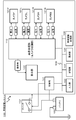
- the vehicle management system 100 shown in FIG. 2 includes four cameras for photographing the front, rear, left, and right directions of the vehicle, that is, a surround view camera system, similarly to the vehicle 10 described with reference to FIG.
- the configuration of the vehicle management system 100 of the present disclosure will be described with reference to FIG.
- the vehicle management system 100 shown in FIG. 2 is a device provided inside a vehicle. Power is supplied from the battery 151 via the switch 152.
- the switch 152 is, for example, an ignition key switch that can be operated by a driver. Note that the minimum power required for processing is always supplied to some components of the vehicle management system 100, for example, the control unit 101, the communication unit 105, and a not-shown theft monitoring system, even when the switch 152 is in the OFF state. Is done.
- the vehicle management system 100 includes a control unit 101, a display unit 102, an input unit 103, a storage unit 104, a communication unit 105, a vehicle information acquisition unit 106, an image processing unit 110, and It has four cameras 121 provided. Note that elements such as the display unit 102, the image processing unit 110, and the four cameras 121 can also be configured as individual devices having individual independent housings.
- the four cameras 121 are four cameras that photograph the front, rear, left, and right directions of the vehicle, and are cameras for generating a surround view image.
- Cameras F and 121F shown in FIG. 2 are front-direction photographing cameras
- cameras L and 121L are left-direction photographing cameras
- cameras R and 121R are right-direction photographing cameras.
- the cameras B and 121B are rear direction photographing cameras.
- Each of these cameras is, for example, a camera having a wide-angle lens such as a fish-eye lens, and can capture a wider area, that is, a wide-angle area.
- the image processing unit 110 receives the images captured by the four cameras and generates the surround view image described above with reference to FIG. 1, that is, the image in which the vehicle and the surroundings of the vehicle are observed from above. , On the display unit 102.
- the display unit 102 is a display unit having a display such as a liquid crystal display device provided at a position where the driver in the driver's seat can observe.
- the image processing unit 110 not only performs processing for generating a surround view image by inputting images captured by four cameras, but also controls four cameras, for example, control of starting and stopping of imaging, imaging of an angle of view, zooming, and the like. In addition to control for setting, power supply control and activation control for the four cameras are also performed.
- the image processing unit 110 inputs captured images of the four cameras and analyzes the captured images, for example, analysis of the surroundings of the vehicle based on the captured images, and character and numerical information around the vehicle based on the captured images, for example, parking. Processing such as analysis of the position identification number is also executed.
- the storage unit 104 controls storage processing of the captured images of the four cameras in the storage unit 104, and executes selection processing and generation processing of transmission images to an external device such as a server or a user terminal. Details of these processes will be described later.
- the input unit 103 includes, for example, switches and operation units that can be operated by the user. Note that a touch panel of a UI (user interface) screen displayed on the display unit 102 also functions as the input unit 103.
- the storage unit 104 is a data storage unit having various configurations such as a removable medium, a RAM, and a ROM, in addition to a large-capacity storage device such as a hard disk.
- the communication unit 105 applies at least one of various communication means such as Wi-Fi, 4G, LTE, and Bluetooth (registered trademark) to an external device such as a server or a user such as a user's smartphone. It communicates with external devices such as terminals.
- the vehicle information acquisition unit 106 acquires operation information of an operation unit, such as a steering wheel, an accelerator, a brake, and the like, which is operated by a driver during traveling of the vehicle. Furthermore, a configuration for acquiring detection information from a sensor or the like may be adopted.
- the control unit 101 controls various processes executed in the vehicle management system 100.
- the control unit 101 has a data processing unit having a program execution function such as a CPU, for example, and controls various processes executed in the vehicle management system 100 according to a program stored in the storage unit 104, for example.
- FIG. 3 shows a partial configuration of the vehicle management system 100 described with reference to FIG. 2, a server 210 that executes communication with the vehicle management system 100, and a user terminal 220.
- the vehicle management system 100, the server 210, and the user terminal 220 have a configuration capable of communicating with each other.
- the communication means for example, Wi-Fi, 4G, LTE, Bluetooth (registered trademark) or the like is used as described above.
- the user terminal 220 is, for example, a mobile terminal such as a smartphone owned by the user 230 as a driver.
- the user terminal 220 is not limited to a smartphone, and may be a mobile PC, a tablet terminal, or the like.
- the user terminal 220 is a terminal having a display unit capable of displaying an image.
- the vehicle management system 100 communicates with the server 210 and the user terminal 220 via the communication unit 105.
- the vehicle management system 100 transmits an image captured by the camera 121 of the vehicle to the user terminal 220 or the server 210.
- This transmission image is, for example, one of the following images. (1) A past captured image captured by the camera 121 and stored in the storage unit when the vehicle is parked. (2) A current captured image captured by the camera 121 in response to an image transmission request from the user terminal 220.
- the process (1) for transmitting a captured image at the time of parking is an image transmission process that is mainly executed by the vehicle management system 100, that is, a push-type process.
- the process (2) of transmitting the current image captured in response to a request from the user terminal 220 is an image transmission process executed in response to an image request transmission of the user terminal 220, that is, a fetch type process. is there.
- the sequence and specific example of these image transmission processes will be described later in detail.
- the user 230 who has left the parked vehicle can display and confirm the captured image at the time of parking the vehicle or the current captured image at the parking position on the user terminal 220.
- two transmission paths are available for transmitting the image directly from the vehicle management system 100 to the user terminal 220 and for uploading the image from the vehicle management system 100 to the server 210 and storing the image in the storage unit of the server 210. It is.
- the user 230 accesses the server 210 using the user terminal 220 and browses the image held by the server 210. Alternatively, it is downloaded and displayed on the display unit of the user terminal 220. By this processing, the user 230 can check the captured image at the time of parking the vehicle or the current captured image at the parking position.
- the vehicle management system 100 illustrated in FIG. 3 illustrates a partial configuration of the vehicle management system 100 described with reference to FIG. 2.
- the image processing unit 110 further includes a configuration of an execution function unit. Shown as individual blocks.
- the image processing unit 110 includes a display image generation unit 111, a vehicle surroundings analysis unit 112, a character / numerical image identification unit 113, a transmission data generation unit 114, and a data recording and acquisition processing unit 115.
- the display image generation unit 111 receives the images captured by the four cameras 121F to 121B, and generates the surround view image described above with reference to FIG. 1, that is, the image obtained by observing the vehicle and its surroundings from above. It is generated and displayed on the display unit 102 provided at a position where the driver in the driver's seat can observe.
- the images captured by the four cameras 121F to 121B are moving images, and the surround view images generated by the display image generating unit 111 and displayed on the display unit 102 are also moving images.
- the display image generation unit 111 not only generates a surround view image from the images captured by the four cameras 121F to 121B, but also individually displays the images captured by the individual cameras of the four cameras 121F to 121B individually on the display unit 102. Also, a display image generation process when switching to the display is performed. The switching of the display image on the display unit 102 can be performed by an instruction of a user (driver).
- the four cameras 121F to 121B are images captured by the wide-angle lens, and if viewed as they are, they are different from the images viewed by the actual naked eye.
- An image conversion process for converting the image into an image similar to an image captured by a normal camera is performed, and the image after the conversion process is output to the display unit 102.
- the display unit 102 displays one of a front image, a rear image, a left side direction image, and a right side direction image of the vehicle by switching of a user (driver).
- the vehicle surroundings analysis unit 112 inputs images captured by the four cameras 121F to 121B and analyzes the vehicle surroundings based on the captured images. For example, an obstacle is detected, and when a situation such as a vehicle approaching an obstacle is detected, the detection information is notified to the control unit 101, and under the control of the control unit 101, the display unit 102 or A warning (alarm) is output via a speaker (not shown) or the like.
- the character / numerical image identification unit 113 inputs captured images of the four cameras 121F to 121B, searches for characters and numerical information included in the captured images, and detects an image area including the characters and numerical information. In this case, the detected character and numerical information are converted into text data, and the detection information (text information, image frame information, and image area information) is output to the transmission data generation unit 114 and the data recording and acquisition processing unit 115. .
- the characters and numerical information are, for example, parking position identification numbers corresponding to parking positions, numbers and characters recorded on pillars, poles, walls, and the like of the parking lot.
- the transmission data generation unit 114 generates or acquires data to be transmitted to the server 210 or the user terminal 220 via the communication unit 105.
- the transmission image transmitted to the server 210 or the user terminal 220 is, for example, any of the following images.
- the transmission data generation unit 114 acquires the captured image stored in the storage unit 104 via the data recording and acquisition processing unit 115 and sets it as transmission data.
- the surround view image generated by the display image generation unit 111 based on the captured images of the four cameras 121F to 121B, and the four cameras 121F to 121B respectively
- the converted image of the photographed image is input and used as transmission data.
- the transmission data generation unit 114 generates a moving image that sequentially displays a 360-degree horizontal image around the vehicle using the captured images of the four cameras 121F to 121B, and uses this as transmission data. Is also good.
- the transmission data generation unit 114 receives not only these image data but also, for example, text data of characters and numerical information detected from the camera photographed image in the numerical image identification unit 113, and sets the data as transmission data. Is also performed.
- the characters and numerical information are, for example, parking position identification numbers corresponding to parking positions, numbers and characters recorded on pillars, poles, walls, and the like of parking lots.
- the user 230 can check the parking position from an image around the vehicle, and can also check the parking position from information such as a parking position number.
- the data recording and acquisition processing unit 115 converts the surround view images generated by the display image generation unit 111 based on the images captured by the four cameras 121F to 121B, and the converted images of the images captured by the four cameras 121F to 121B. Input and store in storage unit 104. When the image data is stored in the storage unit 104, it is preferable to perform a compression process on the image to reduce the data amount and store the image data.
- text data of characters and numerical information detected from the camera photographed image in the numerical image identification unit 113 is input, and this data is also stored in the storage unit 104.
- the data recording and acquisition processing unit 115 further acquires transmission data from the storage unit 104 in response to a request from the transmission data generation unit 114.
- the data recording and acquisition processing unit 115 performs a process of replacing data for a certain period of time, for example, the latest data for about one minute with old data already stored in the storage unit 104 and storing the same. That is, the storage unit 104 is set to a state in which data corresponding to the latest predetermined period (for example, one minute) is always stored. For example, when the parking process is performed, the vehicle stops, and the driver stops the engine, the image capturing process stops, and the update of the data stored in the storage unit 104 also stops. As a result, the storage unit 104 is set to a state in which data for a predetermined period until the parking process is completed is stored.
- the latest predetermined period for example, one minute
- the transmission data generation unit 114 transmits the image stored in the storage unit 104, A process of acquiring and transmitting data for a predetermined period until time is performed.
- the vehicle management system 100 transmits an image captured by the camera 121 of the vehicle, data generated based on the image, and the like to the user terminal 220 or the server 210.
- the transmission image is, for example, any of the following images. (1) A past captured image captured by the camera 121 and stored in the storage unit when the vehicle is parked. (2) A current captured image captured by the camera 121 in response to an image transmission request from the user terminal 220.
- the process (1) for transmitting a captured image at the time of parking is an image transmission process that is mainly executed by the vehicle management system 100, that is, a push-type process.
- the process (2) of transmitting the current image captured in response to a request from the user terminal 220 is an image transmission process executed in response to an image request transmission of the user terminal 220, that is, a fetch type process. is there.
- a control unit a data processing unit having a processor such as a CPU having a program execution function. It can be executed under the control of the unit 101.
- a control unit a data processing unit having a processor such as a CPU having a program execution function. It can be executed under the control of the unit 101.
- the processing of each step of the flowchart shown in FIG. 4 will be described.
- Step S101 First, the image processing unit 110 of the vehicle management system 100 inputs captured images of the four cameras 121F to 121B and stores them in the storage unit 104 in step S101.
- This process is a process executed by the data recording & acquisition processing unit 115.
- the data recording and acquisition processing unit 115 converts the surround view images generated by the display image generation unit 111 based on the images captured by the four cameras 121F to 121B, and the converted images of the images captured by the four cameras 121F to 121B. Input and store in storage unit 104.
- the data recording and acquisition processing unit 115 performs an update process of recording data in which old data stored in the storage unit 104 is sequentially replaced with latest data and recorded. By this processing, the storage unit 104 always stores data corresponding to the latest predetermined period (for example, one minute).
- the image stored in the storage unit 104 may be a captured image of each of the four cameras 121F to 121B instead of a surround view image or a converted image of a captured image of each of the four cameras 121F to 121B.
- the display image generation unit 111 reads the image from the storage unit 104, performs image processing on the read image, and generates a surround view image and converted images of the captured images of the four cameras 121F to 121B. , Display image and transmission data.
- step S102 the control unit 101 detects whether the parking of the car has been completed, that is, whether or not the engine has been stopped. This is detected based on the stop of power supply from the switch 152 shown in FIG. 2, for example, an ignition key switch operable by a driver.
- step S102 If the completion of parking of the car (engine stop) is not detected in step S102, the process returns to step S101, and the image capturing by the camera and the process of recording the captured image are continued. On the other hand, when it is detected in step S102 that the parking of the car is completed (engine stop), the process proceeds to step S103.
- Step S103 In step S102, when it is detected that the parking of the car has been completed (engine stop), the process proceeds to step S103. Search for identification information such as letters, numbers, and symbols.
- the character / numerical image identification unit 113 inputs the image immediately before parking stored in the storage unit 104 and searches for identification information such as characters and numerical information included in the image.
- the identification information is, for example, a parking position identification number corresponding to the parking position, or identification information such as a number or a character recorded on a pillar, a pole, a wall, or the like of the parking lot.
- Step S104 is a branching process based on the result of the identification information search process in step S103. As a result of the identification information search processing in step S103, if identification information such as characters or numerical information is detected, the process proceeds to step S105. On the other hand, if not detected, the process proceeds to step S106.
- Step S105 The process of step S105 is a process executed by the transmission data generation unit 114 when identification information such as characters or numerical information is detected as a result of the identification information search process in step S103.
- step S105 the transmission data generation unit 114 generates transmission data including at least one of a still image or moving image data including an image region of identification information, and text data of identification information.
- Step S106 The process in step S106 is a process executed by the transmission data generation unit 114 when no identification information such as characters or numerical information is detected as a result of the identification information search process in step S103.
- the transmission data generation unit 114 generates transmission data based on the image stored in the storage unit 104, that is, the moving image immediately before the parking process.
- the transmission data is composed of, for example, one or both of a still image and a moving image.
- the transmission data includes, for example, a surround view image generated by the image processing of the display image generation unit 111, captured images of the four cameras 121F to 121B, and the like.
- the transmission data generation unit 114 generates a moving image that sequentially displays a 360-degree horizontal image around the vehicle using the captured images of the four cameras 121F to 121B, and uses this as transmission data. Is also good.
- step S107 the transmission data generation unit 114 transmits the transmission data generated in step S105 or step S106 to the user terminal 220 or the server 210 via the communication unit 105.
- Step S108 The process of the last step S108 is a process executed by the user terminal 220.
- the user terminal displays the data transmitted by the vehicle management system 100 on the display of the user terminal 220.
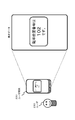
- FIG. 5 shows a specific example of data displayed on the display unit of the user terminal 220.
- FIG. 5 is an example of a display example of the transmission data generated in step S105.
- transmission data including at least one of a still image or moving image data including the image region of the identification information and text data of the identification information is generated.
- the display data shown in FIG. 5 is an image display example of a still image including a parking position number detected from a moving image (surround view image) immediately before parking or a constituent frame of the moving image.
- the user 230 can check the parking position of the vehicle by viewing this image.
- FIG. 6 Another specific example of data displayed on the display unit of the user terminal 220 is shown in FIG. FIG. 6 is also an example of a display example of the transmission data generated in step S105.
- transmission data including at least one of a still image including the image region of the identification information, moving image data, and text data of the identification information is generated.
- the display data shown in FIG. 6 is an example in which text data (102) generated based on a parking position number detected from a moving image (surround view image) immediately before parking is displayed.
- the wording of the parking position number (the preceding and following parking position numbers are...) Is text data displayed by the application executing this processing.
- the user 230 can check the parking position of the vehicle by looking at the text image.
- the transmission data display examples shown in FIGS. 5 and 6 are only a part of the transmission data.
- all of the moving images stored in the storage unit 104 that is, a constant until the parking process ends.
- a moving image of time may be transmitted and displayed.
- the moving image may be a surround view image or a captured image of each camera.
- the captured image of each camera may be an image converted into an image similar to a captured image of a normal camera or a wide-angle captured image itself.
- a moving image in which a horizontal image of 360 degrees around the vehicle is sequentially displayed using captured images of the four cameras 121F to 121B may be used.
- zoom processing and viewpoint conversion of a display image may be performed to display an image desired by the user.
- These processes can be realized by the function of an application that performs image output.
- the user 230 can reconfirm the situation around the parking position. Even when the parking number as the parking position identifier cannot be confirmed, the user 230 can compare the image with the surrounding scenery. Thus, it is possible to easily specify the parking position.
- the fetch-type process is a process in which the vehicle management system 100 transmits a current captured image captured by the camera 121 in response to an image transmission request from the user terminal 220.
- the process according to the flowchart shown in FIG. 7 can be executed according to a program stored in the storage unit of the vehicle management system 100.
- a control unit data processing unit
- a processor such as a CPU having a program execution function It can be executed under the control of the unit 101.
- processing of each step of the flowchart illustrated in FIG. 7 will be described.
- Step S201 The process of step S201 is a process executed by the user terminal 220.
- the user terminal 220 transmits an image transmission request to the vehicle management system 100 or the server 210.
- the server 210 transfers the image transmission request to the vehicle management system 100.
- the ID of the user terminal 220 or the ID of the vehicle management system 100 is added to the image transmission request from the user terminal 220.
- the server 210 holds in the database correspondence data between the ID of the user terminal 220 and the ID of the vehicle management system 100, and based on this data, determines the vehicle management system to which the image transmission request from the user terminal 220 is transferred.
- the specified image transmission request from the user terminal 220 is transferred to the specified vehicle management system 100.
- Step S202 The process of step S202 is a process executed by the vehicle management system 100.
- the control unit 101 sets the switch 152 to ON, The power supply to the image processing unit 110 and the camera system including the four cameras 121F to 121B is started.
- Step S203 the image processing unit 110 of the vehicle management system 100 inputs the captured images of the four cameras 121F to 121B, and searches the input images for identification information such as characters, numerals, and symbols.
- the character / numerical image identification unit 113 inputs the image immediately before parking stored in the storage unit 104 and searches for identification information such as characters and numerical information included in the image.
- the identification information is, for example, a parking position identification number corresponding to the parking position, or identification information such as a number or a character recorded on a pillar, a pole, a wall, or the like of the parking lot.
- Steps S204 to S208 The processing in steps S204 to S208 is the same as the processing in steps S104 to S108 in the flow described above with reference to FIG.
- step S204 is a branching process based on the result of the identification information search process in step S203.
- the process proceeds to step S205.
- the process proceeds to step S206.
- step S205 is a process executed by the transmission data generation unit 114 when identification information such as characters or numerical information is detected as a result of the identification information search process in step S203.
- the transmission data generation unit 114 generates transmission data including at least one of a still image or a moving image data including the image region of the identification information, and text data of the identification information.
- step S206 is a process executed by the transmission data generation unit 114 when identification information such as characters or numerical information is not detected as a result of the identification information search process in step S203.
- the transmission data generation unit 114 generates transmission data based on the image captured by the camera.
- the transmission data is composed of, for example, one or both of a still image and a moving image.
- This transmission data is composed of, for example, a surround view image generated by the image processing of the display image generation unit 111 and captured images of the four cameras 121F to 121B. Further, the transmission data generation unit 114 generates a moving image that sequentially displays a 360-degree horizontal image around the vehicle using the captured images of the four cameras 121F to 121B, and uses this as transmission data. Is also good.
- step S207 the transmission data generation unit 114 transmits the transmission data generated in step S205 or step S206 to the user terminal 220 or the server 210 via the communication unit 105.
- the process of the last step S208 is a process executed by the user terminal 220.
- the user terminal displays the data transmitted by the vehicle management system 100 on the display unit of the user terminal 220.
- FIG. 8 shows a specific example of data displayed on the display unit of the user terminal 220.
- FIG. 8 is an example of a display example of the transmission data generated in step S205.
- transmission data including at least one of a still image or moving image data including the image region of the identification information and text data of the identification information is generated.
- the display data shown in FIG. 8 is a rightward image taken by the camera 121R provided on the right side of the parked vehicle.
- the user 230 can confirm the parking position of the vehicle by comparing this image with the surrounding scenery.
- the transmission data display example shown in FIG. 8 is merely an example.
- all the real-time moving images captured by the camera 121 may be transmitted and displayed.
- the moving image may be a surround view image or a captured image of each camera.
- a moving image in which a horizontal image of 360 degrees around the vehicle is sequentially displayed using captured images of the four cameras 121F to 121B may be used.
- the user 230 can reconfirm the current situation around the parking position. Even if the parking number as the parking position identifier cannot be confirmed, the user 230 can compare the image with the surrounding scenery. By the processing, the parking position can be easily specified.
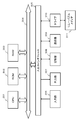
- FIG. 9 is a diagram illustrating a configuration example of hardware applicable as the vehicle management system 100, the user terminal 220, and the server 210.
- a CPU Central Processing Unit
- ROM Read Only Memory
- a RAM Random Access Memory
- FIG. 9 stores programs executed by the CPU 301, data, and the like.
- the CPU 301, the ROM 302, and the RAM 303 are mutually connected by a bus 304.
- the CPU 301 is connected to an input / output interface 305 via a bus 304.
- the input / output interface 305 includes an input including various switches, a keyboard, a touch panel, a mouse, a microphone, and a status data acquisition unit such as a sensor, a camera, and a GPS.
- An output unit 307 including a unit 306, a display, a speaker, and the like is connected.
- the CPU 301 inputs a command, status data, and the like input from the input unit 306, executes various processes, and outputs a processing result to, for example, the output unit 307.
- the storage unit 308 connected to the input / output interface 305 includes, for example, a hard disk and stores programs executed by the CPU 301 and various data.
- the communication unit 309 functions as a transmission / reception unit for data communication via a network such as the Internet or a local area network, and communicates with an external device.
- the drive 310 connected to the input / output interface 305 drives a removable medium 311 such as a magnetic disk, an optical disk, a magneto-optical disk, or a semiconductor memory such as a memory card to record or read data.
- a removable medium 311 such as a magnetic disk, an optical disk, a magneto-optical disk, or a semiconductor memory such as a memory card to record or read data.
- the technology disclosed in the present specification can have the following configurations.
- An image processing unit that receives a captured image of a camera that captures a surrounding image of a vehicle and generates transmission data to be transmitted to an external device, The image processing unit, A moving image when the vehicle is parked is stored in the storage unit, An information processing device that generates transmission data using a moving image at the time of parking of a vehicle stored in a storage unit, and transmits the generated transmission data to the external device via a communication unit.
- the cameras are a plurality of cameras provided in front, rear, left and right of the vehicle,
- the image processing unit The information processing device according to (1), wherein a surround view image corresponding to an observation image from above the vehicle is generated based on the images captured by the plurality of cameras, and the generated surround view image is transmitted to the external device.
- the image processing unit includes: From the image captured by the camera, identification information including characters, numbers, or symbols is detected, an image including the detected identification information is selected as transmission data, and transmitted to the external device (1) or (2).
- An information processing apparatus according to claim 1.
- the image processing unit includes: The information processing device according to (3), wherein the identification information is converted into text data, and the text data is transmitted to the external device as transmission data.
- the image processing unit includes: The image captured by the camera is stored in the storage unit, and the storage unit data is sequentially updated so that the latest captured image for a certain period is stored in the storage unit (1) to (4).
- An information processing apparatus according to claim 1.
- the image processing unit includes: In response to the engine stop process after parking the vehicle, the image capturing process of the camera and the storing process of the captured image in the storage unit are stopped, and after the parking process, the moving image during the parking process stored in the storage unit is transmitted.
- the information processing apparatus according to any one of (1) to (5), wherein the information is transmitted to the external device.
- the information processing device includes: In response to an image transmission request from a user terminal that is the external device, the image processing unit, and a control unit that performs power supply control to the camera, In response to an image transmission request from a user terminal, generates transmission data using the captured image of the camera, and transmits the generated transmission data to the user terminal via a communication unit, or to a server accessible by the user terminal.
- the information processing apparatus according to any one of (1) to (7), which transmits the information.
- the image processing unit includes: The information processing device according to (8) or (9), wherein a surround view image is generated as the transmission data.
- the image processing unit includes: (8) The information processing apparatus according to any one of (8) to (10), which detects identification information including characters, numbers, or symbols, and generates an image including the detected identification information as transmission data.
- An information processing system including an information processing device mounted on a vehicle and a user terminal capable of communicating with the information processing device, The information processing device, An image processing unit that inputs a captured image of a camera that captures a surrounding image of the vehicle and generates transmission data to be transmitted to the user terminal, The image processing unit, A moving image when the vehicle is parked is stored in the storage unit, Using the moving image at the time of parking the vehicle stored in the storage unit to generate transmission data, the generated transmission data is transmitted to the user terminal via a communication unit, The information processing system, wherein the user terminal displays data received from the information processing device on a display unit.
- the information processing device includes: Transmitting the transmission data to an accessible server of the user terminal; The user terminal, The information processing system according to (12), wherein the server accesses the server and displays data transmitted from the information processing apparatus to the server on a display unit.
- the information processing device includes: From the captured image of the camera, characters, or numbers, or detect identification information including a symbol, and transmit the image including the detected identification information, or the text conversion data of the identification information to the user terminal, The information processing system according to (12) or (13), wherein the user terminal displays an image including identification information or text conversion data of the identification information on a display unit.
- the information processing device An image processing unit that inputs a captured image of a camera that captures a surrounding image of the vehicle and generates transmission data to be transmitted to the user terminal,
- the image processing unit A moving image when the vehicle is parked is stored in the storage unit, Using the moving image at the time of parking the vehicle stored in the storage unit to generate transmission data, the generated transmission data is transmitted to the user terminal via a communication unit,
- the user terminal An information processing method for displaying data received from the information processing device on a display unit.
- a program for executing a vehicle management process in the information processing device The information processing device, An image processing unit that receives a captured image of a camera that captures a surrounding image of the vehicle and generates transmission data to be transmitted to an external device, The program, the image processing unit, Processing for storing a moving image when the vehicle is parked in the storage unit; A process of generating transmission data using a moving image at the time of parking the vehicle stored in the storage unit; A program for executing a process of transmitting the generated transmission data to the external device via a communication unit.
- the series of processes described in the specification can be executed by hardware, software, or a combination of both.
- the program recording the processing sequence is installed in a memory in a computer built in dedicated hardware and executed, or the program is stored in a general-purpose computer capable of executing various processing. It can be installed and run.
- the program can be recorded in a recording medium in advance.
- the program can be received via a network such as a LAN (Local Area Network) or the Internet, and installed on a recording medium such as a built-in hard disk.
- a system is a logical set configuration of a plurality of devices, and the devices of each configuration may be in the same housing, but the devices of each configuration are not limited to those in the same housing. Absent.
- a configuration is realized in which a user who is away from the vehicle can easily confirm the parking position of the vehicle.
- it has an image processing unit that receives a captured image of a camera that captures the surroundings of the vehicle and generates transmission data to be transmitted to an external device.
- the image processing unit generates transmission data using the moving image when the vehicle is parked stored in the storage unit, and transmits the generated transmission data to an external device such as a user terminal via the communication unit.
- the image processing unit generates and transmits a surround view image based on images captured by a plurality of cameras provided in front, rear, left, and right of the vehicle.
- identification information including characters, numerals, and symbols is detected from the image captured by the camera, and an image including the detected identification information is transmitted.
- Reference Signs List 10 vehicle 11 front camera 12 rear camera 13 left side camera 14 right side camera 100 vehicle management system 101 control unit 102 display unit 103 input unit 104 storage unit 105 communication unit 106 vehicle information acquisition unit 110 image processing unit 110 111 Display image generation unit 112 Vehicle surrounding situation analysis unit 113 Character and numerical image identification unit 114 Transmission data generation unit 115 Data recording & acquisition processing unit 121L to B camera 151 Battery 152 Switch 301 CPU 302 ROM 303 RAM 304 Bus 305 Input / output interface 306 Input unit 307 Output unit 308 Storage unit 309 Communication unit 310 Drive 311 Removable media
Landscapes
- Engineering & Computer Science (AREA)
- Multimedia (AREA)
- Physics & Mathematics (AREA)
- General Physics & Mathematics (AREA)
- Signal Processing (AREA)
- Theoretical Computer Science (AREA)
- Mechanical Engineering (AREA)
- Closed-Circuit Television Systems (AREA)
- Traffic Control Systems (AREA)
- Studio Devices (AREA)
Abstract
車両から離れたユーザが、車両駐車位置を容易に確認すること可能とした構成を実現する。車両の周囲を撮影するカメラの撮影画像を入力して、外部装置に送信する送信データを生成する画像処理部を有する。画像処理部は、記憶部に格納した車両駐車時の動画像を用いて送信データを生成し、生成した送信データを、通信部を介してユーザ端末等の外部装置に送信する。画像処理部は、車両の前後左右に備えられた複数のカメラの撮影画像に基づいてサラウンドビュー画像を生成して送信する。また、カメラ撮影画像から文字、数字、記号を含む識別情報を検出し、検出した識別情報を含む画像を送信する。
Description
本開示は、情報処理装置、情報処理システム、および情報処理方法、並びにプログラムに関する。具体的には、車両の駐車位置を車両から離れたユーザに分かりやすく通知することを可能とした情報処理装置、情報処理システム、および情報処理方法、並びにプログラムに関する。
郊外のショッピングセンターや遊園地、観光地等は広い駐車場を備えているものが多い。このような広い駐車場に車両を駐車し、車を離れて時間が経過すると駐車位置を忘れてしまうといったことがよくある。
一方、最近の車両には車両周囲の画像を撮影するカメラを備えたものが多くなっている。このカメラの主な用途は、例えばバックや駐車する際に車両後方や左右方向の画像を運転席のモニタに表示して安全な走行を可能とするといった用途である。
例えば、車の前後や側面に装着した複数の広角カメラの撮影画像に基づいて車上部からの仮想画像を生成して運転席表示部に表示する画像提示システムがある。車上部からの仮想的な観察画像は「サラウンドビュー画像」、または「俯瞰画像」、あるいは「鳥瞰画像」等と呼ばれる。
なお、車の上部からの仮想的な観察画像を生成して運転席のモニタに表示する構成を開示した従来技術として例えば特許文献1(特開2018-45482号公報)がある。しかし、画像を運転席のモニタに表示して確認するためには、ドライバが乗車して、車両の電源をONとした状態にすることが必要である。すなわち、駐車後、車の電源を落とした後は、カメラの撮影処理も停止してしまう。また、ドライバが車を離れた場合、カメラの撮影画像を見ることはできない。
本開示は、車両の駐車位置を車両から離れたユーザに分かりやすく通知することを可能とした情報処理装置、情報処理システム、および情報処理方法、並びにプログラムを提供することを目的とする。
また、本開示の一実施例においては、車両に備えられたカメラによって撮影された車両周囲の画像を車両から離れたユーザの所有するスマホ等の携帯端末に送信することで、車両の駐車位置をユーザに分かりやすく通知することを可能とした情報処理装置、情報処理システム、および情報処理方法、並びにプログラムを提供することを目的とする。
本開示の第1の側面は、
車両の周囲画像を撮影するカメラの撮影画像を入力して、外部装置に送信する送信データを生成する画像処理部を有し、
前記画像処理部は、
車両の駐車時の動画像を記憶部に格納し、
記憶部に格納した車両駐車時の動画像を用いて送信データを生成し、生成した送信データを、通信部を介して前記外部装置に送信する情報処理装置にある。
車両の周囲画像を撮影するカメラの撮影画像を入力して、外部装置に送信する送信データを生成する画像処理部を有し、
前記画像処理部は、
車両の駐車時の動画像を記憶部に格納し、
記憶部に格納した車両駐車時の動画像を用いて送信データを生成し、生成した送信データを、通信部を介して前記外部装置に送信する情報処理装置にある。
さらに、本開示の第2の側面は、
車両に装着された情報処理装置と、該情報処理装置と通信可能なユーザ端末を有する情報処理システムであり、
前記情報処理装置は、
車両の周囲画像を撮影するカメラの撮影画像を入力して、前記ユーザ端末に送信する送信データを生成する画像処理部を有し、
前記画像処理部は、
車両の駐車時の動画像を記憶部に格納し、
記憶部に格納した車両駐車時の動画像を用いて送信データを生成し、生成した送信データを、通信部を介して前記ユーザ端末に送信し、
前記ユーザ端末は、前記情報処理装置からの受信データを表示部に表示する情報処理システムにある。
車両に装着された情報処理装置と、該情報処理装置と通信可能なユーザ端末を有する情報処理システムであり、
前記情報処理装置は、
車両の周囲画像を撮影するカメラの撮影画像を入力して、前記ユーザ端末に送信する送信データを生成する画像処理部を有し、
前記画像処理部は、
車両の駐車時の動画像を記憶部に格納し、
記憶部に格納した車両駐車時の動画像を用いて送信データを生成し、生成した送信データを、通信部を介して前記ユーザ端末に送信し、
前記ユーザ端末は、前記情報処理装置からの受信データを表示部に表示する情報処理システムにある。
さらに、本開示の第3の側面は、
情報処理装置において実行する情報処理方法であり、
前記情報処理装置は、
車両の周囲画像を撮影するカメラの撮影画像を入力して、外部装置に送信する送信データを生成する画像処理部を有し、
前記画像処理部が、
車両の駐車時の動画像を記憶部に格納し、
記憶部に格納した車両駐車時の動画像を用いて送信データを生成し、生成した送信データを、通信部を介して前記外部装置に送信する情報処理方法にある。
情報処理装置において実行する情報処理方法であり、
前記情報処理装置は、
車両の周囲画像を撮影するカメラの撮影画像を入力して、外部装置に送信する送信データを生成する画像処理部を有し、
前記画像処理部が、
車両の駐車時の動画像を記憶部に格納し、
記憶部に格納した車両駐車時の動画像を用いて送信データを生成し、生成した送信データを、通信部を介して前記外部装置に送信する情報処理方法にある。
さらに、本開示の第4の側面は、
車両に装着された情報処理装置と、該情報処理装置と通信可能なユーザ端末を有する情報処理システムにおいて実行する情報処理方法であり、
前記情報処理装置は、
車両の周囲画像を撮影するカメラの撮影画像を入力して、前記ユーザ端末に送信する送信データを生成する画像処理部を有し、
前記画像処理部が、
車両の駐車時の動画像を記憶部に格納し、
記憶部に格納した車両駐車時の動画像を用いて送信データを生成し、生成した送信データを、通信部を介して前記ユーザ端末に送信し、
前記ユーザ端末が、
前記情報処理装置からの受信データを表示部に表示する情報処理方法にある。
車両に装着された情報処理装置と、該情報処理装置と通信可能なユーザ端末を有する情報処理システムにおいて実行する情報処理方法であり、
前記情報処理装置は、
車両の周囲画像を撮影するカメラの撮影画像を入力して、前記ユーザ端末に送信する送信データを生成する画像処理部を有し、
前記画像処理部が、
車両の駐車時の動画像を記憶部に格納し、
記憶部に格納した車両駐車時の動画像を用いて送信データを生成し、生成した送信データを、通信部を介して前記ユーザ端末に送信し、
前記ユーザ端末が、
前記情報処理装置からの受信データを表示部に表示する情報処理方法にある。
さらに、本開示の第5の側面は、
情報処理装置において車両管理処理を実行させるプログラムであり、
前記情報処理装置は、
車両の周囲画像を撮影するカメラの撮影画像を入力して、外部装置に送信する送信データを生成する画像処理部を有し、
前記プログラムは、前記画像処理部に、
車両の駐車時の動画像を記憶部に格納する処理と、
記憶部に格納した車両駐車時の動画像を用いて送信データを生成する処理と、
生成した送信データを、通信部を介して前記外部装置に送信する処理を実行させるプログラムにある。
情報処理装置において車両管理処理を実行させるプログラムであり、
前記情報処理装置は、
車両の周囲画像を撮影するカメラの撮影画像を入力して、外部装置に送信する送信データを生成する画像処理部を有し、
前記プログラムは、前記画像処理部に、
車両の駐車時の動画像を記憶部に格納する処理と、
記憶部に格納した車両駐車時の動画像を用いて送信データを生成する処理と、
生成した送信データを、通信部を介して前記外部装置に送信する処理を実行させるプログラムにある。
なお、本開示のプログラムは、例えば、様々なプログラム・コードを実行可能な情報処理装置、画像処理装置やコンピュータ・システムに対して、コンピュータ可読な形式で提供する記憶媒体、通信媒体によって提供可能なプログラムである。このようなプログラムをコンピュータ可読な形式で提供することにより、情報処理装置やコンピュータ・システム上でプログラムに応じた処理が実現される。
本開示のさらに他の目的、特徴や利点は、後述する本発明の実施例や添付する図面に基づくより詳細な説明によって明らかになるであろう。なお、本明細書においてシステムとは、複数の装置の論理的集合構成であり、各構成の装置が同一筐体内にあるものには限らない。
本開示の一実施例の構成によれば、車両から離れたユーザが、車両駐車位置を容易に確認すること可能とした構成が実現される。
具体的には、例えば、車両の周囲を撮影するカメラの撮影画像を入力して、外部装置に送信する送信データを生成する画像処理部を有する。画像処理部は、記憶部に格納した車両駐車時の動画像を用いて送信データを生成し、生成した送信データを、通信部を介してユーザ端末等の外部装置に送信する。画像処理部は、車両の前後左右に備えられた複数のカメラの撮影画像に基づいてサラウンドビュー画像を生成して送信する。また、カメラ撮影画像から文字、数字、記号を含む識別情報を検出し、検出した識別情報を含む画像を送信する。
本構成により、車両から離れたユーザが、車両駐車位置を容易に確認すること可能とした構成が実現される。
なお、本明細書に記載された効果はあくまで例示であって限定されるものではなく、また付加的な効果があってもよい。
具体的には、例えば、車両の周囲を撮影するカメラの撮影画像を入力して、外部装置に送信する送信データを生成する画像処理部を有する。画像処理部は、記憶部に格納した車両駐車時の動画像を用いて送信データを生成し、生成した送信データを、通信部を介してユーザ端末等の外部装置に送信する。画像処理部は、車両の前後左右に備えられた複数のカメラの撮影画像に基づいてサラウンドビュー画像を生成して送信する。また、カメラ撮影画像から文字、数字、記号を含む識別情報を検出し、検出した識別情報を含む画像を送信する。
本構成により、車両から離れたユーザが、車両駐車位置を容易に確認すること可能とした構成が実現される。
なお、本明細書に記載された効果はあくまで例示であって限定されるものではなく、また付加的な効果があってもよい。
以下、図面を参照しながら本開示の情報処理装置、情報処理システム、および情報処理方法、並びにプログラムの詳細について説明する。なお、説明は以下の項目に従って行う。
1.サラウンドビューカメラシステムの概要について
2.カメラ撮影画像による駐車位置確認を可能とした構成について
3.車両管理システムからのデータ送信処理の具体例について
3-1.プッシュ型処理による車両管理システムからのデータ送信処理について
3-2.フェッチ型処理による車両管理システムからのデータ送信処理について
4.車両管理システム、ユーザ端末、サーバのハードウェア構成例について
5.本開示の構成のまとめ
1.サラウンドビューカメラシステムの概要について
2.カメラ撮影画像による駐車位置確認を可能とした構成について
3.車両管理システムからのデータ送信処理の具体例について
3-1.プッシュ型処理による車両管理システムからのデータ送信処理について
3-2.フェッチ型処理による車両管理システムからのデータ送信処理について
4.車両管理システム、ユーザ端末、サーバのハードウェア構成例について
5.本開示の構成のまとめ
[1.サラウンドビューカメラシステムの概要について]
まず、最近の車両に備えられたサラウンドビューカメラシステムの概要について説明する。
まず、最近の車両に備えられたサラウンドビューカメラシステムの概要について説明する。
図1は、サラウンドビューカメラシステムの概要について説明する図である。図の左に示す図は、サラウンドビューカメラシステムを備えた車両10を示している。車両10は、前後左右の4か所にカメラを装着している。図に示す前方カメラ11、後方カメラ12、左側面カメラ13、右側面カメラ14である。
これらの各カメラは、例えば、魚眼レンズ等の広角レンズを持つカメラであり、より広い広角エリアを撮影できる。例えば、図に示す点線領域が各カメラの撮影領域であり、これらの4つのカメラの撮影画像を画像処理することで、車両上部から観察した画像を生成することができる。
図1右側に示す画像は、画像処理の結果生成される表示画像の例である。これを、運転席表示部に表示する。なお、この表示画像の中心の車両は仮想的なデータであり、カメラの撮影画像から取得されるものではない。。
車の周囲の画像が、4つのカメラによって撮影された画像に基づく画像処理によって生成された画像であり、この中心に自車両の画像を貼り合わせることで、あたかも上空から車両を観察したと同様の画像が生成される。
車の周囲の画像が、4つのカメラによって撮影された画像に基づく画像処理によって生成された画像であり、この中心に自車両の画像を貼り合わせることで、あたかも上空から車両を観察したと同様の画像が生成される。
この車上部からの仮想的な観察画像は「サラウンドビュー画像」、または「俯瞰画像」、あるいは「鳥瞰画像」等と呼ばれる。
ドライバ(運転者)は、この画像を運転席のモニタ(表示部)を介して確認することが可能であり、車両の周囲の障害物等を確認しながら、安全な走行、例えばバック、あるいは駐車等の運転操作を行うことができる。
ドライバ(運転者)は、この画像を運転席のモニタ(表示部)を介して確認することが可能であり、車両の周囲の障害物等を確認しながら、安全な走行、例えばバック、あるいは駐車等の運転操作を行うことができる。
しかし、画像を運転席のモニタに表示して確認するためには、ドライバが乗車して、車両の電源をONとした状態にすることが必要である。すなわち、駐車後、車の電源を落とした後は、カメラの撮影処理も停止してしまう。
[2.カメラ撮影画像による駐車位置確認を可能とした構成について]
次に、本開示の情報処理装置や情報処理システムに対応する車両管理装置や車両管理システムの構成と処理について説明する。本開示の構成、および処理により、ドライバ(ユーザ)が車両を駐車した後、車両から離れた場合でも、車両に備え付けられたカメラの撮影画像を用いて、駐車位置を確認することが可能となる。
次に、本開示の情報処理装置や情報処理システムに対応する車両管理装置や車両管理システムの構成と処理について説明する。本開示の構成、および処理により、ドライバ(ユーザ)が車両を駐車した後、車両から離れた場合でも、車両に備え付けられたカメラの撮影画像を用いて、駐車位置を確認することが可能となる。
まず、本開示の車両管理システム100の構成例について、図2を参照して説明する。
図2に示す車両管理システム100は、図1を参照して説明した車両10と同様、車両の前後左右の各方向を撮影する4つのカメラ、すなわちサラウンドビューカメラシステムを有する。
図2に示す車両管理システム100は、図1を参照して説明した車両10と同様、車両の前後左右の各方向を撮影する4つのカメラ、すなわちサラウンドビューカメラシステムを有する。
図2を参照して本開示の車両管理システム100の構成について説明する。
図2に示す車両管理システム100は、車両の内部に設けられる装置である。バッテリ151からスイッチ152を介して電力が供給される。スイッチ152は、具体的には例えばドライバが操作可能なイグニッションキースイッチである。なお、車両管理システム100の一部の構成部、例えば制御部101や通信部105、さらに図示しない盗難監視システム等には、スイッチ152のOFF状態でも、処理に必要な最低限の電力が常時供給される。
図2に示す車両管理システム100は、車両の内部に設けられる装置である。バッテリ151からスイッチ152を介して電力が供給される。スイッチ152は、具体的には例えばドライバが操作可能なイグニッションキースイッチである。なお、車両管理システム100の一部の構成部、例えば制御部101や通信部105、さらに図示しない盗難監視システム等には、スイッチ152のOFF状態でも、処理に必要な最低限の電力が常時供給される。
図に示すように、車両管理システム100は、制御部101、表示部102、入力部103、記憶部104、通信部105、車両情報取得部106、画像処理部110、さらに、車両の前後左右に備えられた4台のカメラ121を有する。
なお、表示部102や、画像処理部110、4台のカメラ121等の要素は、それぞれ個別の独立した筐体を持つ個別の装置として構成することも可能である。
なお、表示部102や、画像処理部110、4台のカメラ121等の要素は、それぞれ個別の独立した筐体を持つ個別の装置として構成することも可能である。
4台のカメラ121は、図1を参照して説明した車両10と同様、車両の前後左右の各方向を撮影する4つのカメラであり、サラウンドビュー画像を生成するためのカメラである。図2に示すカメラF,121Fは前方向撮影カメラであり、カメラL,121Lは左方向撮影カメラであり、カメラR,121Rは右方向撮影カメラであり、
カメラB,121Bは後方向方撮影カメラである。
これらの各カメラは、例えば、魚眼レンズ等の広角レンズを持つカメラであり、より広い領域、すなわち広角エリアを撮影できる。
カメラB,121Bは後方向方撮影カメラである。
これらの各カメラは、例えば、魚眼レンズ等の広角レンズを持つカメラであり、より広い領域、すなわち広角エリアを撮影できる。
画像処理部110は、これら4台のカメラの撮影画像を入力して、先に図1を参照して説明したサラウンドビュー画像、すなわち、上から車両と車両の周囲を観察した画像を生成して、表示部102に表示する。表示部102は運転席のドライバが観察できる位置に備えられた例えば液晶表示装置等のディスプレイを持つ表示部である。
画像処理部110は、4台のカメラの撮影画像を入力してサラウンドビュー画像を生成する処理のみならず、4台のカメラの制御、例えば撮影開始や停止の制御、画角、ズーム等の撮影設定のための制御の他、4台のカメラに対する電力供給制御、起動制御等も行う。
さらに、画像処理部110は、4台のカメラの撮影画像を入力して撮影画像の解析、例えば撮影画像に基づく車両周囲状況の解析や、撮影画像に基づく車両周囲の文字や数値情報、例えば駐車位置識別番号の解析等の処理も実行する。
さらに、4台のカメラの撮影画像の記憶部104に対する格納処理制御、外部装置、例えばサーバやユーザ端末に対する送信画像の選択や生成処理等を実行する。
これらの処理の詳細については後段で説明する。
さらに、4台のカメラの撮影画像の記憶部104に対する格納処理制御、外部装置、例えばサーバやユーザ端末に対する送信画像の選択や生成処理等を実行する。
これらの処理の詳細については後段で説明する。
入力部103は、例えば、ユーザの操作可能なスイッチや操作部によって構成される。なお、表示部102上に表示されるUI(ユーザインタフェース)画面のタッチパネル等も入力部103として機能する。
記憶部104は、例えばハードディスク等の大容量記憶装置の他、リムーバブルメディア、RAM、ROM等の様々な構成からなるデータ記憶手段である。
記憶部104は、例えばハードディスク等の大容量記憶装置の他、リムーバブルメディア、RAM、ROM等の様々な構成からなるデータ記憶手段である。
通信部105は、例えばWi-Fi、4G,LTE,ブルートゥース(登録商標)等の様々な通信手段の少なくともいずれかの手段を適用して外部の装置、例えば、サーバや、ユーザのスマホ等のユーザ端末等の外部装置との通信を行う。
車両情報取得部106は、例えばハンドル、アクセル、ブレーキ等、車両走行時にドライバによって操作される操作部の操作情報を取得する。さらに、センサ等の検出情報を取得する構成としてもよい。
車両情報取得部106は、例えばハンドル、アクセル、ブレーキ等、車両走行時にドライバによって操作される操作部の操作情報を取得する。さらに、センサ等の検出情報を取得する構成としてもよい。
制御部101は、車両管理システム100内で実行される様々な処理の制御を行う。なお、制御部101は、例えばCPU等のプログラム実行機能を持つデータ処理部を有し、例えば記憶部104に格納されたプログラムに従って車両管理システム100内で実行される様々な処理の制御を行う。
次に、図3を参照して、図2に示す車両管理システム100と外部のサーバやユーザ端末との通信構成について説明する。
図3には、図2を参照して説明した車両管理システム100の一部構成と、車両管理システム100との通信を実行するサーバ210、ユーザ端末220を示している。
車両管理システム100と、サーバ210、ユーザ端末220は、相互に通信可能な構成を有する。
なお、通信手段としては、前述したように、例えば、Wi-Fi、4G,LTE,ブルートゥース(登録商標)等が利用される。
車両管理システム100と、サーバ210、ユーザ端末220は、相互に通信可能な構成を有する。
なお、通信手段としては、前述したように、例えば、Wi-Fi、4G,LTE,ブルートゥース(登録商標)等が利用される。
ユーザ端末220は、例えばドライバであるユーザ230の所有するスマホ等の携帯端末である。なお、ユーザ端末220は、スマホに限らず、携帯PC、タブレット端末等であってもよい。ただし、ユーザ端末220は、画像表示可能な表示部を有する端末である。
車両管理システム100は通信部105を介してサーバ210や、ユーザ端末220と、相互に通信する。
例えば、車両管理システム100は、車両のカメラ121が撮影した画像をユーザ端末220、あるいはサーバ210に送信する。
この送信画像は、例えば、以下のいずれかの画像である。
(1)車両の駐車時にカメラ121が撮影して記憶部に格納した過去の撮影済み画像
(2)ユーザ端末220からの画像送信要求に応じて、カメラ121が撮影した現在の撮影画像
この送信画像は、例えば、以下のいずれかの画像である。
(1)車両の駐車時にカメラ121が撮影して記憶部に格納した過去の撮影済み画像
(2)ユーザ端末220からの画像送信要求に応じて、カメラ121が撮影した現在の撮影画像
上記(1)の駐車時の撮影済み画像を送信する処理は、車両管理システム100側が主導的に実行する画像送信処理、すなわちプッシュ型処理である。
一方、上記(2)のユーザ端末220からの要求に応じて撮影された現在の画像を送信する処理は、ユーザ端末220側の画像要求送信に応じて実行する画像送信処理、すなわちフェッチ型処理である。
これらの画像送信処理のシーケンスと具体例については、後段で詳細に説明する。
一方、上記(2)のユーザ端末220からの要求に応じて撮影された現在の画像を送信する処理は、ユーザ端末220側の画像要求送信に応じて実行する画像送信処理、すなわちフェッチ型処理である。
これらの画像送信処理のシーケンスと具体例については、後段で詳細に説明する。
上記の画像送信を行うことで、駐車した車両から離れたユーザ230は、車両駐車時の撮影画像、または駐車位置における現在の撮影画像をユーザ端末220に表示して確認することが可能となる。なお、画像は、車両管理システム100からユーザ端末220に直接送信する場合と、車両管理システム100からサーバ210に画像をアップロードしてサーバ210の記憶部に格納する場合の2つの送信経路が利用可能である。
車両管理システム100からサーバ210に画像がアップロードされ、サーバ210の記憶部に格納されている場合、ユーザ230は、ユーザ端末220を利用してサーバ210にアクセスし、サーバ210の保持する画像を閲覧、あるいはダウンロードしてユーザ端末220の表示部に表示する。この処理により、ユーザ230は、車両駐車時の撮影画像、または駐車位置における現在の撮影画像を確認することができる。
前述したように、図3に示す車両管理システム100は、図2を参照して説明した車両管理システム100の一部構成を示しているが、画像処理部110について、さらに実行機能単位の構成を個別のブロックとして示している。
図3に示すように、画像処理部110は、表示画像生成部111、車両周囲状況解析部112、文字、数値画像識別部113、送信データ生成部114、データ記録&取得処理部115を有する。
表示画像生成部111は、4台のカメラ121F~121Bの撮影画像を入力して、先に図1を参照して説明したサラウンドビュー画像、すなわち、上から車両と車両の周囲を観察した画像を生成して、運転席のドライバが観察できる位置に備えられた表示部102に表示する。なお、4台のカメラ121F~121Bの撮影画像は動画像であり、表示画像生成部111が生成し、表示部102に表示するサラウンドビュー画像も動画像である。
なお、表示画像生成部111は、4台のカメラ121F~121Bの撮影画像からサラウンドビュー画像を生成するのみならず、4台のカメラ121F~121B各々の個別のカメラ撮影画像を単独で表示部102に切り替えて表示する際の表示画像生成処理も行う。
なお、表示部102に対する表示画像の切り替えは、ユーザ(ドライバ)の指示によって行うことが可能である。
なお、表示部102に対する表示画像の切り替えは、ユーザ(ドライバ)の指示によって行うことが可能である。
なお、4台のカメラ121F~121Bは、広角レンズによって撮影された画像であり、そのまま見ても実際の肉眼で見た画像とは異なる画像となるので、表示画像生成部111は、これらの撮影画像を通常のカメラで撮影したと同様の画像に変換する画像変換処理を行い、変換処理後の画像を表示部102に出力する。
表示部102には、ユーザ(ドライバ)の切り替えにより、車両の前方画像、後方画像、左側面方向画像、右側面方向画像のいずれかが表示されることになる。
表示部102には、ユーザ(ドライバ)の切り替えにより、車両の前方画像、後方画像、左側面方向画像、右側面方向画像のいずれかが表示されることになる。
車両周囲状況解析部112は、4台のカメラ121F~121Bの撮影画像を入力して、撮影画像に基づく車両周囲状況の解析を行う。例えば、障害物の検出等を行い、車両が障害物に近づいている等の状況が検出された場合、検出情報を制御部101に通知し、制御部101の制御の下、表示部102、あるいは図示しないスピーカ等を介して警告(アラーム)出力を実行する。
文字、数値画像識別部113は、4台のカメラ121F~121Bの撮影画像を入力して、撮影画像内に含まれる文字や数値情報を検索し、文字や数値情報を含む画像領域が検出された場合、検出された文字や数値情報をテキストデータに変換して、検出情報(テキスト情報、画像フレーム情報、および画像領域情報)を送信データ生成部114と、データ記録&取得処理部115に出力する。
この文字や数値情報は、例えば駐車位置対応の駐車位置識別番号や、駐車場の柱やポール、壁等に記録された番号、文字等である。
この文字や数値情報は、例えば駐車位置対応の駐車位置識別番号や、駐車場の柱やポール、壁等に記録された番号、文字等である。
送信データ生成部114は、通信部105を介してサーバ210、またはユーザ端末220に送信するデータを生成、または取得する。
サーバ210、またはユーザ端末220に送信する送信画像は、前述したように、例えば、以下のいずれかの画像である。
(1)車両の駐車時にカメラ121が撮影して記憶部に格納した過去の撮影済み画像
(2)ユーザ端末220からの画像送信要求に応じて、カメラ121が撮影した現在の撮影画像
サーバ210、またはユーザ端末220に送信する送信画像は、前述したように、例えば、以下のいずれかの画像である。
(1)車両の駐車時にカメラ121が撮影して記憶部に格納した過去の撮影済み画像
(2)ユーザ端末220からの画像送信要求に応じて、カメラ121が撮影した現在の撮影画像
送信データ生成部114は、上記(1)の過去の撮影画像を送信する場合、データ記録&取得処理部115を介して記憶部104に格納済みの撮影画像を取得し送信データとする。
また、上記(2)の現在の撮影画像を送信する場合、4台のカメラ121F~121Bの撮影画像に基づいて表示画像生成部111が生成したサラウンドビュー画像や、4台のカメラ121F~121B各々の撮影画像の変換画像を入力して送信データとする。
また、上記(2)の現在の撮影画像を送信する場合、4台のカメラ121F~121Bの撮影画像に基づいて表示画像生成部111が生成したサラウンドビュー画像や、4台のカメラ121F~121B各々の撮影画像の変換画像を入力して送信データとする。
また、送信データ生成部114は、4台のカメラ121F~121B個々の撮影画像を利用して、車周囲360度の水平方向の画像を順次表示する動画像を生成して、これを送信データとしてもよい。
さらに、送信データ生成部114は、これらの画像データのみならず、例えば、数値画像識別部113においてカメラ撮影画像から検出された文字や数値情報のテキストデータを入力して、このデータを送信データとする処理も行う。
先に説明したように、文字や数値情報は、例えば駐車位置対応の駐車位置識別番号や、駐車場の柱やポール、壁等に記録された番号、文字等であり、これらの情報をユーザ230に提供する。
ユーザ230は、車両周囲の画像から駐車位置を確認することが可能であり、さらに駐車位置番号等の情報からも、駐車位置を確認することが可能となる。
先に説明したように、文字や数値情報は、例えば駐車位置対応の駐車位置識別番号や、駐車場の柱やポール、壁等に記録された番号、文字等であり、これらの情報をユーザ230に提供する。
ユーザ230は、車両周囲の画像から駐車位置を確認することが可能であり、さらに駐車位置番号等の情報からも、駐車位置を確認することが可能となる。
データ記録&取得処理部115は、4台のカメラ121F~121Bの撮影画像に基づいて表示画像生成部111が生成したサラウンドビュー画像や、4台のカメラ121F~121B各々の撮影画像の変換画像を入力して記憶部104に格納する。
なお、画像データを記憶部104に格納する場合、画像に対する圧縮処理を行ってデータ量を削減して格納する構成とすることが好ましい。
なお、画像データを記憶部104に格納する場合、画像に対する圧縮処理を行ってデータ量を削減して格納する構成とすることが好ましい。
さらに、数値画像識別部113においてカメラ撮影画像から検出された文字や数値情報のテキストデータを入力して、このデータについても記憶部104に格納する。
データ記録&取得処理部115は、さらに、送信データ生成部114の要求に応じて、送信用のデータを記憶部104から取得する。
データ記録&取得処理部115は、さらに、送信データ生成部114の要求に応じて、送信用のデータを記憶部104から取得する。
なお、データ記録&取得処理部115は、一定期間のデータ、例えば1分間程度の最新データを記憶部104に格納済みの古いデータに置き換えて格納する処理を行う。すなわち、記憶部104は、常に最新の所定期間(例えば1分間)対応のデータが格納された状態に設定される。
例えば駐車処理がなされ、車が停止し、ドライバがエンジンをストップさせると、画像撮影処理は停止され、記憶部104の格納データの更新も停止される。
結果として、記憶部104は、駐車処理完了までの所定期間のデータを格納した状態に設定される。
例えば駐車処理がなされ、車が停止し、ドライバがエンジンをストップさせると、画像撮影処理は停止され、記憶部104の格納データの更新も停止される。
結果として、記憶部104は、駐車処理完了までの所定期間のデータを格納した状態に設定される。
先に説明したプッシュ処理、すなわち、駐車時の撮影済み画像をサーバ210やユーザ端末220に送信する処理を実行する場合、送信データ生成部114は、この記憶部104に格納された画像、すなわち駐車時までの所定期間のデータを取得して送信する処理を行う。
[3.車両管理システムからのデータ送信処理の具体例について]
次に、車両管理システムからのデータ送信処理の具体例について説明する。
前述したように、車両管理システム100は、車両のカメラ121が撮影した画像や画像に基づいて生成したデータ等をユーザ端末220、あるいはサーバ210に送信する。
先に説明したように、送信画像は、例えば、以下のいずれかの画像である。
(1)車両の駐車時にカメラ121が撮影して記憶部に格納した過去の撮影済み画像
(2)ユーザ端末220からの画像送信要求に応じて、カメラ121が撮影した現在の撮影画像
次に、車両管理システムからのデータ送信処理の具体例について説明する。
前述したように、車両管理システム100は、車両のカメラ121が撮影した画像や画像に基づいて生成したデータ等をユーザ端末220、あるいはサーバ210に送信する。
先に説明したように、送信画像は、例えば、以下のいずれかの画像である。
(1)車両の駐車時にカメラ121が撮影して記憶部に格納した過去の撮影済み画像
(2)ユーザ端末220からの画像送信要求に応じて、カメラ121が撮影した現在の撮影画像
上記(1)の駐車時の撮影済み画像を送信する処理は、車両管理システム100側が主導的に実行する画像送信処理、すなわちプッシュ型処理である。
一方、上記(2)のユーザ端末220からの要求に応じて撮影された現在の画像を送信する処理は、ユーザ端末220側の画像要求送信に応じて実行する画像送信処理、すなわちフェッチ型処理である。
一方、上記(2)のユーザ端末220からの要求に応じて撮影された現在の画像を送信する処理は、ユーザ端末220側の画像要求送信に応じて実行する画像送信処理、すなわちフェッチ型処理である。
図4以下を参照して、これらプッシュ型処理と、フェッチ型処理の各々について、処理シーケンスと送信データの具体例について、順次、説明する。
[3-1.プッシュ型処理による車両管理システムからのデータ送信処理について]
まず、プッシュ型処理による車両管理システムからのデータ送信処理について説明する。
まず、プッシュ型処理による車両管理システムからのデータ送信処理について説明する。
プッシュ型処理による車両管理システムからのデータ送信処理の処理シーケンスについて、図4に示すフローチャートを参照して説明する。
なお、図4に示すフローチャートに従った処理は、車両管理システム100の記憶部に格納されたプログラムに従って実行することが可能であり、例えばプログラム実行機能を有するCPU等のプロセッサ有する制御部(データ処理部)101の制御下で実行することができる。
以下、図4に示すフローチャートの各ステップの処理について説明する。
以下、図4に示すフローチャートの各ステップの処理について説明する。
(ステップS101)
まず、車両管理システム100の画像処理部110は、ステップS101において、4台のカメラ121F~121Bの撮影画像を入力し、記憶部104に格納する。
まず、車両管理システム100の画像処理部110は、ステップS101において、4台のカメラ121F~121Bの撮影画像を入力し、記憶部104に格納する。
この処理は、データ記録&取得処理部115の実行する処理である。データ記録&取得処理部115は、4台のカメラ121F~121Bの撮影画像に基づいて表示画像生成部111が生成したサラウンドビュー画像や、4台のカメラ121F~121B各々の撮影画像の変換画像を入力して記憶部104に格納する。
前述したように、データ記録&取得処理部115は、記憶部104に格納済みの古いデータを最新データに順次、置き換えて記録する記録データの更新処理を実行する。この処理により、記憶部104には、常に最新の所定期間(例えば1分間)対応のデータが格納される。
前述したように、データ記録&取得処理部115は、記憶部104に格納済みの古いデータを最新データに順次、置き換えて記録する記録データの更新処理を実行する。この処理により、記憶部104には、常に最新の所定期間(例えば1分間)対応のデータが格納される。
なお、記憶部104に格納する画像は、サラウンドビュー画像や、4台のカメラ121F~121B各々の撮影画像の変換画像とすることなく、4台のカメラ121F~121B各々の撮影画像そのものとしてもよい。
この場合、表示画像生成部111は、記憶部104から画像を読み取って、読み取り画像に対する画像処理を行い、サラウンドビュー画像や、4台のカメラ121F~121B各々の撮影画像の変換画像を生成して、表示画像や送信データとする。
この場合、表示画像生成部111は、記憶部104から画像を読み取って、読み取り画像に対する画像処理を行い、サラウンドビュー画像や、4台のカメラ121F~121B各々の撮影画像の変換画像を生成して、表示画像や送信データとする。
(ステップS102)
次に、ステップS102において、制御部101が、車の駐車完了、すなわちエンジン停止がなされたか否かを検出する。
これは、図2に示すスイッチ152、例えばドライバが操作可能なイグニッションキースイッチからの電力供給の停止に基づいて検出される。
次に、ステップS102において、制御部101が、車の駐車完了、すなわちエンジン停止がなされたか否かを検出する。
これは、図2に示すスイッチ152、例えばドライバが操作可能なイグニッションキースイッチからの電力供給の停止に基づいて検出される。
なお、このスイッチ152を介した電力供給の停止に伴い、4台のカメラ121F~121Bに対する電力供給も停止され、撮影処理が停止することになる。
ステップS102において、車の駐車完了(エンジン停止)が検出されていない場合は、ステップS101に戻り、カメラによる画像撮影と撮影画像の記録処理を継続する。
一方、ステップS102において、車の駐車完了(エンジン停止)が検出された場合は、ステップS103に進む。
一方、ステップS102において、車の駐車完了(エンジン停止)が検出された場合は、ステップS103に進む。
(ステップS103)
ステップS102において、車の駐車完了(エンジン停止)が検出された場合、ステップS103に進み、ステップS103において、記憶部104に格納された直前撮影画像(駐車完了までの一定時間の動画像)から、文字、数字、記号等の識別情報を検索する。
ステップS102において、車の駐車完了(エンジン停止)が検出された場合、ステップS103に進み、ステップS103において、記憶部104に格納された直前撮影画像(駐車完了までの一定時間の動画像)から、文字、数字、記号等の識別情報を検索する。
この処理は、画像処理部110の文字、数値画像識別部113が実行する処理である。
文字、数値画像識別部113は、記憶部104に格納された駐車直前の画像を入力して、画像内に含まれる文字や数値情報等の識別情報を検索する。この識別情報は、例えば駐車位置対応の駐車位置識別番号や、駐車場の柱やポール、壁等に記録された番号、文字等の識別情報である。
文字、数値画像識別部113は、記憶部104に格納された駐車直前の画像を入力して、画像内に含まれる文字や数値情報等の識別情報を検索する。この識別情報は、例えば駐車位置対応の駐車位置識別番号や、駐車場の柱やポール、壁等に記録された番号、文字等の識別情報である。
(ステップS104)
ステップS104は、ステップS103における識別情報検索処理の結果に基づく分岐処理である。
ステップS103における識別情報検索処理の結果、文字や数値情報等の識別情報が検出された場合は、ステップS105に進む。
一方、検出されなかった場合は、ステップS106に進む。
ステップS104は、ステップS103における識別情報検索処理の結果に基づく分岐処理である。
ステップS103における識別情報検索処理の結果、文字や数値情報等の識別情報が検出された場合は、ステップS105に進む。
一方、検出されなかった場合は、ステップS106に進む。
(ステップS105)
ステップS105の処理は、ステップS103における識別情報検索処理の結果、文字や数値情報等の識別情報が検出された場合に、送信データ生成部114が実行する処理である。
ステップS105の処理は、ステップS103における識別情報検索処理の結果、文字や数値情報等の識別情報が検出された場合に、送信データ生成部114が実行する処理である。
送信データ生成部114は、ステップS105において、識別情報の画像領域を含む静止画、または動画像データ、または識別情報のテキストデータの少なくともいずれかを含む送信データを生成する。
(ステップS106)
ステップS106の処理は、ステップS103における識別情報検索処理の結果、文字や数値情報等の識別情報が検出されなかった場合に、送信データ生成部114が実行する処理である。
ステップS106の処理は、ステップS103における識別情報検索処理の結果、文字や数値情報等の識別情報が検出されなかった場合に、送信データ生成部114が実行する処理である。
送信データ生成部114は、ステップS106において、記憶部104に格納された画像、すなわち駐車処理の直前の動画像に基づいて送信データを生成する。送信データは、例えば静止画、動画のいずれか、あるいは双方によって構成される。
この送信データは、例えば表示画像生成部111の画像処理によって生成されたサラウンドビュー画像や、4台のカメラ121F~121B個々の撮影画像等によって構成される。
この送信データは、例えば表示画像生成部111の画像処理によって生成されたサラウンドビュー画像や、4台のカメラ121F~121B個々の撮影画像等によって構成される。
また、送信データ生成部114は、4台のカメラ121F~121B個々の撮影画像を利用して、車周囲360度の水平方向の画像を順次表示する動画像を生成して、これを送信データとしてもよい。
(ステップS107)
次に、送信データ生成部114は、ステップS107において、ステップS105、またはステップS106において生成した送信データを、通信部105を介してユーザ端末220、またはサーバ210に送信する。
次に、送信データ生成部114は、ステップS107において、ステップS105、またはステップS106において生成した送信データを、通信部105を介してユーザ端末220、またはサーバ210に送信する。
(ステップS108)
最後のステップS108の処理は、ユーザ端末220が実行する処理である。
ユーザ端末は、ステップS108において、車両管理システム100が送信したデータをユーザ端末220の表示部に表示する。
最後のステップS108の処理は、ユーザ端末220が実行する処理である。
ユーザ端末は、ステップS108において、車両管理システム100が送信したデータをユーザ端末220の表示部に表示する。
ユーザ端末220の表示部に表示されるデータの具体例を図5に示す。
図5は、ステップS105において生成された送信データの表示例の一例である。
ステップS105では、識別情報の画像領域を含む静止画、または動画像データ、または識別情報のテキストデータの少なくともいずれかを含む送信データを生成する。
図5は、ステップS105において生成された送信データの表示例の一例である。
ステップS105では、識別情報の画像領域を含む静止画、または動画像データ、または識別情報のテキストデータの少なくともいずれかを含む送信データを生成する。
図5に示す表示データは、駐車直前の動画像(サラウンドビュー画像)から検出された駐車位置番号を含む静止画、または動画像の構成フレームの画像表示例である。
ユーザ230は、この画像を見ることで、車両の駐車位置を確認することが可能となる。
ユーザ230は、この画像を見ることで、車両の駐車位置を確認することが可能となる。
ユーザ端末220の表示部に表示されるデータのもう一つの具体例を図6に示す。
図6も、ステップS105において生成された送信データの表示例の一例である。
前述したように、ステップS105では、識別情報の画像領域を含む静止画、または動画像データ、または識別情報のテキストデータの少なくともいずれかを含む送信データを生成する。
図6も、ステップS105において生成された送信データの表示例の一例である。
前述したように、ステップS105では、識別情報の画像領域を含む静止画、または動画像データ、または識別情報のテキストデータの少なくともいずれかを含む送信データを生成する。
図6に示す表示データは、駐車直前の動画像(サラウンドビュー画像)から検出された駐車位置番号に基づいて生成されたテキストデータ(102)を表示した例である。
なお、駐車位置番号の文言(前後の駐車位置番号は、・・・です。)は、この処理を実行するアプリケーションによって表示されるテキストデータである。
ユーザ230は、このテキスト画像を見ることで、車両の駐車位置を確認することが可能となる。
なお、駐車位置番号の文言(前後の駐車位置番号は、・・・です。)は、この処理を実行するアプリケーションによって表示されるテキストデータである。
ユーザ230は、このテキスト画像を見ることで、車両の駐車位置を確認することが可能となる。
なお、図5、図6に示す送信データ表示例は、送信データの一部の例に過ぎず、この他、例えば、記憶部104に格納された動画像の全て、すなわち駐車処理終了までの一定時間の動画像を送信して、表示してもよい。動画像は、サラウンドビュー画像でも、各カメラ個別の撮影画像でもよい。
各カメラ個別の撮影画像は通常のカメラの撮影画像と同様の画像に変換した画像でも、広角撮影画像そのものでもよい。
また、前述したように、4台のカメラ121F~121B個々の撮影画像を利用して、車周囲360度の水平方向の画像を順次表示する動画像でもよい。
各カメラ個別の撮影画像は通常のカメラの撮影画像と同様の画像に変換した画像でも、広角撮影画像そのものでもよい。
また、前述したように、4台のカメラ121F~121B個々の撮影画像を利用して、車周囲360度の水平方向の画像を順次表示する動画像でもよい。
さらに、例えば、ユーザ端末220に対する操作により、表示画像のズーム処理や視点変換を行って、ユーザの希望する画像を表示する構成としてもよい。これらの処理は、画像出力を行うアプリケーションの機能によって実現可能である。
ユーザ230は、これらの画像から、駐車位置の周囲の状況を再確認することが可能となり、駐車位置識別子のとしての駐車番号が確認できない場合でも、画像と周囲の景色を比較するなどの処理により、容易に駐車位置を特定することが可能となる。
[3-2.フェッチ型処理による車両管理システムからのデータ送信処理について]
次に、フェッチ型処理による車両管理システムからのデータ送信処理について説明する。
フェッチ型処理とは、ユーザ端末220からの画像送信要求に応じて、車両管理システム100が、カメラ121が撮影した現在の撮影画像を送信する処理である。
次に、フェッチ型処理による車両管理システムからのデータ送信処理について説明する。
フェッチ型処理とは、ユーザ端末220からの画像送信要求に応じて、車両管理システム100が、カメラ121が撮影した現在の撮影画像を送信する処理である。
フェッチ型処理による車両管理システムからのデータ送信処理の処理シーケンスについて、図7に示すフローチャートを参照して説明する。
なお、図7に示すフローチャートに従った処理は、車両管理システム100の記憶部に格納されたプログラムに従って実行することが可能であり、例えばプログラム実行機能を有するCPU等のプロセッサ有する制御部(データ処理部)101の制御下で実行することができる。
以下、図7に示すフローチャートの各ステップの処理について説明する。
以下、図7に示すフローチャートの各ステップの処理について説明する。
(ステップS201)
ステップS201の処理は、ユーザ端末220において実行する処理である。
ユーザ端末220は、ステップS201において、車両の車両管理システム100、またはサーバ210に対して、画像送信要求を送信する。
ステップS201の処理は、ユーザ端末220において実行する処理である。
ユーザ端末220は、ステップS201において、車両の車両管理システム100、またはサーバ210に対して、画像送信要求を送信する。
サーバ210に対して画像送信要求が送信された場合、サーバ210は、この画像送信要求を車両管理システム100に転送する。
なお、ユーザ端末220からの画像送信要求には、ユーザ端末220のID、または車両管理システム100のIDが付加されている。
サーバ210はデータベースにユーザ端末220のIDと車両管理システム100のIDとの対応データを保持しており、このデータに基づいて、ユーザ端末220からの画像送信要求の転送先となる車両管理システムを特定し、特定した車両管理システム100に対してユーザ端末220からの画像送信要求を転送する。
なお、ユーザ端末220からの画像送信要求には、ユーザ端末220のID、または車両管理システム100のIDが付加されている。
サーバ210はデータベースにユーザ端末220のIDと車両管理システム100のIDとの対応データを保持しており、このデータに基づいて、ユーザ端末220からの画像送信要求の転送先となる車両管理システムを特定し、特定した車両管理システム100に対してユーザ端末220からの画像送信要求を転送する。
(ステップS202)
ステップS202の処理は、車両管理システム100の実行する処理である。
車両管理システム100は、通信部105を介して、ユーザ端末220からの画像送信要求、あるいはサーバ210から転送された画像送信要求を受信すると、制御部101は、スイッチ152をONに設定して、画像処理部110や4台のカメラ121F~Bからなるカメラシステムに電力供給を開始する。
ステップS202の処理は、車両管理システム100の実行する処理である。
車両管理システム100は、通信部105を介して、ユーザ端末220からの画像送信要求、あるいはサーバ210から転送された画像送信要求を受信すると、制御部101は、スイッチ152をONに設定して、画像処理部110や4台のカメラ121F~Bからなるカメラシステムに電力供給を開始する。
(ステップS203)
次に、車両管理システム100の画像処理部110は、ステップS203において、4台のカメラ121F~121Bの撮影画像を入力し、入力画像から、文字、数字、記号等の識別情報を検索する。
次に、車両管理システム100の画像処理部110は、ステップS203において、4台のカメラ121F~121Bの撮影画像を入力し、入力画像から、文字、数字、記号等の識別情報を検索する。
この処理は、画像処理部110の文字、数値画像識別部113が実行する処理である。
文字、数値画像識別部113は、記憶部104に格納された駐車直前の画像を入力して、画像内に含まれる文字や数値情報等の識別情報を検索する。この識別情報は、例えば駐車位置対応の駐車位置識別番号や、駐車場の柱やポール、壁等に記録された番号、文字等の識別情報である。
文字、数値画像識別部113は、記憶部104に格納された駐車直前の画像を入力して、画像内に含まれる文字や数値情報等の識別情報を検索する。この識別情報は、例えば駐車位置対応の駐車位置識別番号や、駐車場の柱やポール、壁等に記録された番号、文字等の識別情報である。
(ステップS204~S208)
ステップS204~S208の処理は、先に図4を参照して説明したフローのステップS104~S108の処理と同様の処理である。
ステップS204~S208の処理は、先に図4を参照して説明したフローのステップS104~S108の処理と同様の処理である。
まず、ステップS204は、ステップS203における識別情報検索処理の結果に基づく分岐処理である。ステップS203における識別情報検索処理の結果、文字や数値情報等の識別情報が検出された場合は、ステップS205に進む。
一方、検出されなかった場合は、ステップS206に進む。
一方、検出されなかった場合は、ステップS206に進む。
ステップS205の処理は、ステップS203における識別情報検索処理の結果、文字や数値情報等の識別情報が検出された場合に、送信データ生成部114が実行する処理である。
送信データ生成部114は、ステップS205において、識別情報の画像領域を含む静止画、または動画像データ、または識別情報のテキストデータの少なくともいずれかを含む送信データを生成する。
送信データ生成部114は、ステップS205において、識別情報の画像領域を含む静止画、または動画像データ、または識別情報のテキストデータの少なくともいずれかを含む送信データを生成する。
ステップS206の処理は、ステップS203における識別情報検索処理の結果、文字や数値情報等の識別情報が検出されなかった場合に、送信データ生成部114が実行する処理である。
送信データ生成部114は、ステップS206において、カメラ撮影画像に基づいて送信データを生成する。送信データは、例えば静止画、動画のいずれか、あるいは双方によって構成される。
送信データ生成部114は、ステップS206において、カメラ撮影画像に基づいて送信データを生成する。送信データは、例えば静止画、動画のいずれか、あるいは双方によって構成される。
この送信データは、例えば表示画像生成部111の画像処理によって生成されたサラウンドビュー画像や、4台のカメラ121F~121B個々の撮影画像等によって構成される。また、送信データ生成部114は、4台のカメラ121F~121B個々の撮影画像を利用して、車周囲360度の水平方向の画像を順次表示する動画像を生成して、これを送信データとしてもよい。
次に、送信データ生成部114は、ステップS207において、ステップS205、またはステップS206において生成した送信データを、通信部105を介してユーザ端末220、またはサーバ210に送信する。
最後のステップS208の処理は、ユーザ端末220が実行する処理である。
ユーザ端末は、ステップS208において、車両管理システム100が送信したデータをユーザ端末220の表示部に表示する。
ユーザ端末は、ステップS208において、車両管理システム100が送信したデータをユーザ端末220の表示部に表示する。
ユーザ端末220の表示部に表示されるデータの具体例を図8に示す。
図8は、ステップS205において生成された送信データの表示例の一例である。
ステップS205では、識別情報の画像領域を含む静止画、または動画像データ、または識別情報のテキストデータの少なくともいずれかを含む送信データを生成する。
図8は、ステップS205において生成された送信データの表示例の一例である。
ステップS205では、識別情報の画像領域を含む静止画、または動画像データ、または識別情報のテキストデータの少なくともいずれかを含む送信データを生成する。
図8に示す表示データは、駐車している車両の右側面に備えられたカメラ121Rによって撮影された右方向の画像である。
ユーザ230は、例えば、この画像と周囲の景色を比較することで、車両の駐車位置を確認することが可能となる。
ユーザ230は、例えば、この画像と周囲の景色を比較することで、車両の駐車位置を確認することが可能となる。
なお、図8に示す送信データ表示例は一例に過ぎず、この他、例えば、カメラ121によって撮影されているリアルタイム動画像の全てを送信して表示してもよい。動画像は、サラウンドビュー画像でも、各カメラ個別の撮影画像でもよい。また、前述したように、4台のカメラ121F~121B個々の撮影画像を利用して、車周囲360度の水平方向の画像を順次表示する動画像でもよい。
ユーザ230は、これらの画像から、駐車位置の周囲の現在の状況を再確認することが可能となり、駐車位置識別子のとしての駐車番号が確認できない場合でも、画像と周囲の景色を比較するなどの処理により、容易に駐車位置を特定することが可能となる。
[4.車両管理システム、ユーザ端末、サーバのハードウェア構成例について]
次に、上述した処理を実行する車両管理システム100、ユーザ端末220、サーバ210のハードウェア構成例について図9を参照して説明する。
次に、上述した処理を実行する車両管理システム100、ユーザ端末220、サーバ210のハードウェア構成例について図9を参照して説明する。
図9は、車両管理システム100、ユーザ端末220、サーバ210として適用可能なハードウェアの一構成例を示す図である。
図9に示す構成について説明する。
CPU(Central Processing Unit)301は、ROM(Read Only Memory)302、または記憶部308に記憶されているプログラムに従って各種の処理を実行するデータ処理部として機能する。例えば、上述した実施例において説明したシーケンスに従った処理を実行する。RAM(Random Access Memory)303には、CPU301が実行するプログラムやデータなどが記憶される。これらのCPU301、ROM302、およびRAM303は、バス304により相互に接続されている。
図9に示す構成について説明する。
CPU(Central Processing Unit)301は、ROM(Read Only Memory)302、または記憶部308に記憶されているプログラムに従って各種の処理を実行するデータ処理部として機能する。例えば、上述した実施例において説明したシーケンスに従った処理を実行する。RAM(Random Access Memory)303には、CPU301が実行するプログラムやデータなどが記憶される。これらのCPU301、ROM302、およびRAM303は、バス304により相互に接続されている。
CPU301はバス304を介して入出力インタフェース305に接続され、入出力インタフェース305には、各種スイッチ、キーボード、タッチパネル、マウス、マイクロフォン、さらに、センサ、カメラ、GPS等の状況データ取得部などよりなる入力部306、ディスプレイ、スピーカなどよりなる出力部307が接続されている。
CPU301は、入力部306から入力される指令や状況データ等を入力し、各種の処理を実行し、処理結果を例えば出力部307に出力する。
入出力インタフェース305に接続されている記憶部308は、例えばハードディスク等からなり、CPU301が実行するプログラムや各種のデータを記憶する。通信部309は、インターネットやローカルエリアネットワークなどのネットワークを介したデータ通信の送受信部として機能し、外部の装置と通信する。
入出力インタフェース305に接続されている記憶部308は、例えばハードディスク等からなり、CPU301が実行するプログラムや各種のデータを記憶する。通信部309は、インターネットやローカルエリアネットワークなどのネットワークを介したデータ通信の送受信部として機能し、外部の装置と通信する。
入出力インタフェース305に接続されているドライブ310は、磁気ディスク、光ディスク、光磁気ディスク、あるいはメモリカード等の半導体メモリなどのリムーバブルメディア311を駆動し、データの記録あるいは読み取りを実行する。
[5.本開示の構成のまとめ]
以上、特定の実施例を参照しながら、本開示の実施例について詳解してきた。しかしながら、本開示の要旨を逸脱しない範囲で当業者が実施例の修正や代用を成し得ることは自明である。すなわち、例示という形態で本発明を開示してきたのであり、限定的に解釈されるべきではない。本開示の要旨を判断するためには、特許請求の範囲の欄を参酌すべきである。
以上、特定の実施例を参照しながら、本開示の実施例について詳解してきた。しかしながら、本開示の要旨を逸脱しない範囲で当業者が実施例の修正や代用を成し得ることは自明である。すなわち、例示という形態で本発明を開示してきたのであり、限定的に解釈されるべきではない。本開示の要旨を判断するためには、特許請求の範囲の欄を参酌すべきである。
なお、本明細書において開示した技術は、以下のような構成をとることができる。
(1) 車両の周囲画像を撮影するカメラの撮影画像を入力して、外部装置に送信する送信データを生成する画像処理部を有し、
前記画像処理部は、
車両の駐車時の動画像を記憶部に格納し、
記憶部に格納した車両駐車時の動画像を用いて送信データを生成し、生成した送信データを、通信部を介して前記外部装置に送信する情報処理装置。
(1) 車両の周囲画像を撮影するカメラの撮影画像を入力して、外部装置に送信する送信データを生成する画像処理部を有し、
前記画像処理部は、
車両の駐車時の動画像を記憶部に格納し、
記憶部に格納した車両駐車時の動画像を用いて送信データを生成し、生成した送信データを、通信部を介して前記外部装置に送信する情報処理装置。
(2) 前記カメラは、車両の前後左右に備えられた複数のカメラであり、
前記画像処理部は、
前記複数のカメラの撮影画像に基づいて、車両上部からの観察画像に相当するサラウンドビュー画像を生成し、生成したサラウンドビュー画像を前記外部装置に送信する(1)に記載の情報処理装置。
前記画像処理部は、
前記複数のカメラの撮影画像に基づいて、車両上部からの観察画像に相当するサラウンドビュー画像を生成し、生成したサラウンドビュー画像を前記外部装置に送信する(1)に記載の情報処理装置。
(3) 前記画像処理部は、
前記カメラの撮影画像から、文字、または数字、または記号を含む識別情報を検出し、検出した識別情報を含む画像を送信データとして選択して前記外部装置に送信する(1)または(2)に記載の情報処理装置。
前記カメラの撮影画像から、文字、または数字、または記号を含む識別情報を検出し、検出した識別情報を含む画像を送信データとして選択して前記外部装置に送信する(1)または(2)に記載の情報処理装置。
(4) 前記画像処理部は、
前記識別情報をテキストデータに変換し、テキストデータを送信データとして前記外部装置に送信する(3)に記載の情報処理装置。
前記識別情報をテキストデータに変換し、テキストデータを送信データとして前記外部装置に送信する(3)に記載の情報処理装置。
(5) 前記画像処理部は、
前記カメラの撮影画像を記憶部に格納し、一定期間の最新の撮影画像が記憶部に格納されるように、逐次、記憶部格納データの更新処理を実行する(1)~(4)いずれかに記載の情報処理装置。
前記カメラの撮影画像を記憶部に格納し、一定期間の最新の撮影画像が記憶部に格納されるように、逐次、記憶部格納データの更新処理を実行する(1)~(4)いずれかに記載の情報処理装置。
(6) 前記画像処理部は、
車両駐車後のエンジン停止処理に応じて、前記カメラの画像撮影処理と、撮影画像の記憶部に対する格納処理を停止し、駐車処理後、記憶部に格納された駐車処理時の動画像を送信データとして前記外部装置に送信する(1)~(5)いずれかに記載の情報処理装置。
車両駐車後のエンジン停止処理に応じて、前記カメラの画像撮影処理と、撮影画像の記憶部に対する格納処理を停止し、駐車処理後、記憶部に格納された駐車処理時の動画像を送信データとして前記外部装置に送信する(1)~(5)いずれかに記載の情報処理装置。
(7) 前記外部装置は、ユーザ端末、またはサーバである(1)~(6)いずれかに記載の情報処理装置。
(8) 前記情報処理装置は、
前記外部装置であるユーザ端末からの画像送信要求に応じて、前記画像処理部、および前記カメラに対する電力供給制御を行う制御部を有し、
ユーザ端末からの画像送信要求に応じて、前記カメラの撮影画像を用いて送信データを生成し、生成した送信データを、通信部を介して前記ユーザ端末、または前記ユーザ端末によるアクセス可能なサーバに送信する(1)~(7)いずれかに記載の情報処理装置。
前記外部装置であるユーザ端末からの画像送信要求に応じて、前記画像処理部、および前記カメラに対する電力供給制御を行う制御部を有し、
ユーザ端末からの画像送信要求に応じて、前記カメラの撮影画像を用いて送信データを生成し、生成した送信データを、通信部を介して前記ユーザ端末、または前記ユーザ端末によるアクセス可能なサーバに送信する(1)~(7)いずれかに記載の情報処理装置。
(9) 前記送信データは、前記カメラによるリアルタイム撮影画像である(8)に記載の情報処理装置。
(10) 前記画像処理部は、
前記送信データとして、サラウンドビュー画像を生成する(8)または(9)に記載の情報処理装置。
前記送信データとして、サラウンドビュー画像を生成する(8)または(9)に記載の情報処理装置。
(11) 前記画像処理部は、
文字、または数字、または記号を含む識別情報を検出し、検出した識別情報を含む画像を送信データとして生成する(8)~(10)いずれかに記載の情報処理装置。
文字、または数字、または記号を含む識別情報を検出し、検出した識別情報を含む画像を送信データとして生成する(8)~(10)いずれかに記載の情報処理装置。
(12) 車両に装着された情報処理装置と、該情報処理装置と通信可能なユーザ端末を有する情報処理システムであり、
前記情報処理装置は、
車両の周囲画像を撮影するカメラの撮影画像を入力して、前記ユーザ端末に送信する送信データを生成する画像処理部を有し、
前記画像処理部は、
車両の駐車時の動画像を記憶部に格納し、
記憶部に格納した車両駐車時の動画像を用いて送信データを生成し、生成した送信データを、通信部を介して前記ユーザ端末に送信し、
前記ユーザ端末は、前記情報処理装置からの受信データを表示部に表示する情報処理システム。
前記情報処理装置は、
車両の周囲画像を撮影するカメラの撮影画像を入力して、前記ユーザ端末に送信する送信データを生成する画像処理部を有し、
前記画像処理部は、
車両の駐車時の動画像を記憶部に格納し、
記憶部に格納した車両駐車時の動画像を用いて送信データを生成し、生成した送信データを、通信部を介して前記ユーザ端末に送信し、
前記ユーザ端末は、前記情報処理装置からの受信データを表示部に表示する情報処理システム。
(13) 前記情報処理装置は、
前記送信データを前記ユーザ端末のアクセス可能なサーバに送信し、
前記ユーザ端末は、
前記サーバにアクセスして、前記情報処理装置がサーバに送信したデータを表示部に表示する(12)に記載の情報処理システム。
前記送信データを前記ユーザ端末のアクセス可能なサーバに送信し、
前記ユーザ端末は、
前記サーバにアクセスして、前記情報処理装置がサーバに送信したデータを表示部に表示する(12)に記載の情報処理システム。
(14) 前記情報処理装置は、
前記カメラの撮影画像から、文字、または数字、または記号を含む識別情報を検出し、検出した識別情報を含む画像、または前記識別情報のテキスト変換データを前記ユーザ端末に送信し、
前記ユーザ端末は、識別情報を含む画像、または前記識別情報のテキスト変換データを表示部に表示する(12)または(13)に記載の情報処理システム。
前記カメラの撮影画像から、文字、または数字、または記号を含む識別情報を検出し、検出した識別情報を含む画像、または前記識別情報のテキスト変換データを前記ユーザ端末に送信し、
前記ユーザ端末は、識別情報を含む画像、または前記識別情報のテキスト変換データを表示部に表示する(12)または(13)に記載の情報処理システム。
(15) 情報処理装置において実行する情報処理方法であり、
前記情報処理装置は、
車両の周囲画像を撮影するカメラの撮影画像を入力して、外部装置に送信する送信データを生成する画像処理部を有し、
前記画像処理部が、
車両の駐車時の動画像を記憶部に格納し、
記憶部に格納した車両駐車時の動画像を用いて送信データを生成し、生成した送信データを、通信部を介して前記外部装置に送信する情報処理方法。
前記情報処理装置は、
車両の周囲画像を撮影するカメラの撮影画像を入力して、外部装置に送信する送信データを生成する画像処理部を有し、
前記画像処理部が、
車両の駐車時の動画像を記憶部に格納し、
記憶部に格納した車両駐車時の動画像を用いて送信データを生成し、生成した送信データを、通信部を介して前記外部装置に送信する情報処理方法。
(16) 車両に装着された情報処理装置と、該情報処理装置と通信可能なユーザ端末を有する情報処理システムにおいて実行する情報処理方法であり、
前記情報処理装置は、
車両の周囲画像を撮影するカメラの撮影画像を入力して、前記ユーザ端末に送信する送信データを生成する画像処理部を有し、
前記画像処理部が、
車両の駐車時の動画像を記憶部に格納し、
記憶部に格納した車両駐車時の動画像を用いて送信データを生成し、生成した送信データを、通信部を介して前記ユーザ端末に送信し、
前記ユーザ端末が、
前記情報処理装置からの受信データを表示部に表示する情報処理方法。
前記情報処理装置は、
車両の周囲画像を撮影するカメラの撮影画像を入力して、前記ユーザ端末に送信する送信データを生成する画像処理部を有し、
前記画像処理部が、
車両の駐車時の動画像を記憶部に格納し、
記憶部に格納した車両駐車時の動画像を用いて送信データを生成し、生成した送信データを、通信部を介して前記ユーザ端末に送信し、
前記ユーザ端末が、
前記情報処理装置からの受信データを表示部に表示する情報処理方法。
(17) 情報処理装置において車両管理処理を実行させるプログラムであり、
前記情報処理装置は、
車両の周囲画像を撮影するカメラの撮影画像を入力して、外部装置に送信する送信データを生成する画像処理部を有し、
前記プログラムは、前記画像処理部に、
車両の駐車時の動画像を記憶部に格納する処理と、
記憶部に格納した車両駐車時の動画像を用いて送信データを生成する処理と、
生成した送信データを、通信部を介して前記外部装置に送信する処理を実行させるプログラム。
前記情報処理装置は、
車両の周囲画像を撮影するカメラの撮影画像を入力して、外部装置に送信する送信データを生成する画像処理部を有し、
前記プログラムは、前記画像処理部に、
車両の駐車時の動画像を記憶部に格納する処理と、
記憶部に格納した車両駐車時の動画像を用いて送信データを生成する処理と、
生成した送信データを、通信部を介して前記外部装置に送信する処理を実行させるプログラム。
また、明細書中において説明した一連の処理はハードウェア、またはソフトウェア、あるいは両者の複合構成によって実行することが可能である。ソフトウェアによる処理を実行する場合は、処理シーケンスを記録したプログラムを、専用のハードウェアに組み込まれたコンピュータ内のメモリにインストールして実行させるか、あるいは、各種処理が実行可能な汎用コンピュータにプログラムをインストールして実行させることが可能である。例えば、プログラムは記録媒体に予め記録しておくことができる。記録媒体からコンピュータにインストールする他、LAN(Local Area Network)、インターネットといったネットワークを介してプログラムを受信し、内蔵するハードディスク等の記録媒体にインストールすることができる。
なお、明細書に記載された各種の処理は、記載に従って時系列に実行されるのみならず、処理を実行する装置の処理能力あるいは必要に応じて並列的にあるいは個別に実行されてもよい。また、本明細書においてシステムとは、複数の装置の論理的集合構成であり、各構成の装置が同一筐体内にある場合もあるが、各構成の装置が同一筐体内にあるものには限らない。
以上、説明したように、本開示の一実施例の構成によれば、車両から離れたユーザが、車両駐車位置を容易に確認すること可能とした構成が実現される。
具体的には、例えば、車両の周囲を撮影するカメラの撮影画像を入力して、外部装置に送信する送信データを生成する画像処理部を有する。画像処理部は、記憶部に格納した車両駐車時の動画像を用いて送信データを生成し、生成した送信データを、通信部を介してユーザ端末等の外部装置に送信する。画像処理部は、車両の前後左右に備えられた複数のカメラの撮影画像に基づいてサラウンドビュー画像を生成して送信する。また、カメラ撮影画像から文字、数字、記号を含む識別情報を検出し、検出した識別情報を含む画像を送信する。
本構成により、車両から離れたユーザが、車両駐車位置を容易に確認すること可能とした構成が実現される。
具体的には、例えば、車両の周囲を撮影するカメラの撮影画像を入力して、外部装置に送信する送信データを生成する画像処理部を有する。画像処理部は、記憶部に格納した車両駐車時の動画像を用いて送信データを生成し、生成した送信データを、通信部を介してユーザ端末等の外部装置に送信する。画像処理部は、車両の前後左右に備えられた複数のカメラの撮影画像に基づいてサラウンドビュー画像を生成して送信する。また、カメラ撮影画像から文字、数字、記号を含む識別情報を検出し、検出した識別情報を含む画像を送信する。
本構成により、車両から離れたユーザが、車両駐車位置を容易に確認すること可能とした構成が実現される。
10 車両
11 前方カメラ
12 後方カメラ
13 左側面カメラ
14 右側面カメラ
100 車両管理システム
101 制御部
102 表示部
103 入力部
104 記憶部
105 通信部
106 車両情報取得部
110 画像処理部110
111 表示画像生成部
112 車両周囲状況解析部
113 文字、数値画像識別部
114 送信データ生成部
115 データ記録&取得処理部
121L~B カメラ
151 バッテリ
152 スイッチ
301 CPU
302 ROM
303 RAM
304 バス
305 入出力インタフェース
306 入力部
307 出力部
308 記憶部
309 通信部
310 ドライブ
311 リムーバブルメディア
11 前方カメラ
12 後方カメラ
13 左側面カメラ
14 右側面カメラ
100 車両管理システム
101 制御部
102 表示部
103 入力部
104 記憶部
105 通信部
106 車両情報取得部
110 画像処理部110
111 表示画像生成部
112 車両周囲状況解析部
113 文字、数値画像識別部
114 送信データ生成部
115 データ記録&取得処理部
121L~B カメラ
151 バッテリ
152 スイッチ
301 CPU
302 ROM
303 RAM
304 バス
305 入出力インタフェース
306 入力部
307 出力部
308 記憶部
309 通信部
310 ドライブ
311 リムーバブルメディア
Claims (17)
- 車両の周囲画像を撮影するカメラの撮影画像を入力して、外部装置に送信する送信データを生成する画像処理部を有し、
前記画像処理部は、
車両の駐車時の動画像を記憶部に格納し、
記憶部に格納した車両駐車時の動画像を用いて送信データを生成し、生成した送信データを、通信部を介して前記外部装置に送信する情報処理装置。 - 前記カメラは、車両の前後左右に備えられた複数のカメラであり、
前記画像処理部は、
前記複数のカメラの撮影画像に基づいて、車両上部からの観察画像に相当するサラウンドビュー画像を生成し、生成したサラウンドビュー画像を前記外部装置に送信する請求項1に記載の情報処理装置。 - 前記画像処理部は、
前記カメラの撮影画像から、文字、または数字、または記号を含む識別情報を検出し、検出した識別情報を含む画像を送信データとして選択して前記外部装置に送信する請求項1に記載の情報処理装置。 - 前記画像処理部は、
前記識別情報をテキストデータに変換し、テキストデータを送信データとして前記外部装置に送信する請求項3に記載の情報処理装置。 - 前記画像処理部は、
前記カメラの撮影画像を記憶部に格納し、一定期間の最新の撮影画像が記憶部に格納されるように、逐次、記憶部格納データの更新処理を実行する請求項1に記載の情報処理装置。 - 前記画像処理部は、
車両駐車後のエンジン停止処理に応じて、前記カメラの画像撮影処理と、撮影画像の記憶部に対する格納処理を停止し、駐車処理後、記憶部に格納された駐車処理時の動画像を送信データとして前記外部装置に送信する請求項1に記載の情報処理装置。 - 前記外部装置は、ユーザ端末、またはサーバである請求項1に記載の情報処理装置。
- 前記情報処理装置は、
前記外部装置であるユーザ端末からの画像送信要求に応じて、前記画像処理部、および前記カメラに対する電力供給制御を行う制御部を有し、
ユーザ端末からの画像送信要求に応じて、前記カメラの撮影画像を用いて送信データを生成し、生成した送信データを、通信部を介して前記ユーザ端末、または前記ユーザ端末によるアクセス可能なサーバに送信する請求項1に記載の情報処理装置。 - 前記送信データは、前記カメラによるリアルタイム撮影画像である請求項8に記載の情報処理装置。
- 前記画像処理部は、
前記送信データとして、サラウンドビュー画像を生成する請求項8に記載の情報処理装置。 - 前記画像処理部は、
文字、または数字、または記号を含む識別情報を検出し、検出した識別情報を含む画像を送信データとして生成する請求項8に記載の情報処理装置。 - 車両に装着された情報処理装置と、該情報処理装置と通信可能なユーザ端末を有する情報処理システムであり、
前記情報処理装置は、
車両の周囲画像を撮影するカメラの撮影画像を入力して、前記ユーザ端末に送信する送信データを生成する画像処理部を有し、
前記画像処理部は、
車両の駐車時の動画像を記憶部に格納し、
記憶部に格納した車両駐車時の動画像を用いて送信データを生成し、生成した送信データを、通信部を介して前記ユーザ端末に送信し、
前記ユーザ端末は、前記情報処理装置からの受信データを表示部に表示する情報処理システム。 - 前記情報処理装置は、
前記送信データを前記ユーザ端末のアクセス可能なサーバに送信し、
前記ユーザ端末は、
前記サーバにアクセスして、前記情報処理装置がサーバに送信したデータを表示部に表示する請求項12に記載の情報処理システム。 - 前記情報処理装置は、
前記カメラの撮影画像から、文字、または数字、または記号を含む識別情報を検出し、検出した識別情報を含む画像、または前記識別情報のテキスト変換データを前記ユーザ端末に送信し、
前記ユーザ端末は、識別情報を含む画像、または前記識別情報のテキスト変換データを表示部に表示する請求項12に記載の情報処理システム。 - 情報処理装置において実行する情報処理方法であり、
前記情報処理装置は、
車両の周囲画像を撮影するカメラの撮影画像を入力して、外部装置に送信する送信データを生成する画像処理部を有し、
前記画像処理部が、
車両の駐車時の動画像を記憶部に格納し、
記憶部に格納した車両駐車時の動画像を用いて送信データを生成し、生成した送信データを、通信部を介して前記外部装置に送信する情報処理方法。 - 車両に装着された情報処理装置と、該情報処理装置と通信可能なユーザ端末を有する情報処理システムにおいて実行する情報処理方法であり、
前記情報処理装置は、
車両の周囲画像を撮影するカメラの撮影画像を入力して、前記ユーザ端末に送信する送信データを生成する画像処理部を有し、
前記画像処理部が、
車両の駐車時の動画像を記憶部に格納し、
記憶部に格納した車両駐車時の動画像を用いて送信データを生成し、生成した送信データを、通信部を介して前記ユーザ端末に送信し、
前記ユーザ端末が、
前記情報処理装置からの受信データを表示部に表示する情報処理方法。 - 情報処理装置において車両管理処理を実行させるプログラムであり、
前記情報処理装置は、
車両の周囲画像を撮影するカメラの撮影画像を入力して、外部装置に送信する送信データを生成する画像処理部を有し、
前記プログラムは、前記画像処理部に、
車両の駐車時の動画像を記憶部に格納する処理と、
記憶部に格納した車両駐車時の動画像を用いて送信データを生成する処理と、
生成した送信データを、通信部を介して前記外部装置に送信する処理を実行させるプログラム。
Priority Applications (1)
| Application Number | Priority Date | Filing Date | Title |
|---|---|---|---|
| US17/250,709 US20210197723A1 (en) | 2018-09-04 | 2019-08-16 | Information processing apparatus, information processing system, information processing method, and program |
Applications Claiming Priority (2)
| Application Number | Priority Date | Filing Date | Title |
|---|---|---|---|
| JP2018-164999 | 2018-09-04 | ||
| JP2018164999A JP2021192467A (ja) | 2018-09-04 | 2018-09-04 | 情報処理装置、情報処理システム、および情報処理方法、並びにプログラム |
Publications (1)
| Publication Number | Publication Date |
|---|---|
| WO2020049977A1 true WO2020049977A1 (ja) | 2020-03-12 |
Family
ID=69722479
Family Applications (1)
| Application Number | Title | Priority Date | Filing Date |
|---|---|---|---|
| PCT/JP2019/032119 Ceased WO2020049977A1 (ja) | 2018-09-04 | 2019-08-16 | 情報処理装置、情報処理システム、および情報処理方法、並びにプログラム |
Country Status (3)
| Country | Link |
|---|---|
| US (1) | US20210197723A1 (ja) |
| JP (1) | JP2021192467A (ja) |
| WO (1) | WO2020049977A1 (ja) |
Families Citing this family (5)
| Publication number | Priority date | Publication date | Assignee | Title |
|---|---|---|---|---|
| JP7830119B2 (ja) * | 2021-12-22 | 2026-03-16 | 株式会社東芝 | 通信装置及び通信方法 |
| CN114299449B (zh) * | 2021-12-29 | 2025-11-11 | 万翼科技有限公司 | 车位对比方法、系统、装置、电子设备及存储介质 |
| KR102695932B1 (ko) * | 2023-04-15 | 2024-08-16 | 주식회사 리트빅 | 주행상황 재현 기반의 svm 녹화 재생 장치 |
| TWI852636B (zh) | 2023-06-19 | 2024-08-11 | 同致電子企業股份有限公司 | 自動記錄並傳送停車格號碼的方法及其系統 |
| JP2025101224A (ja) * | 2023-12-25 | 2025-07-07 | トヨタ自動車株式会社 | 表示制御装置 |
Citations (5)
| Publication number | Priority date | Publication date | Assignee | Title |
|---|---|---|---|---|
| JP2007065902A (ja) * | 2005-08-30 | 2007-03-15 | Matsushita Electric Ind Co Ltd | 駐車位置探索支援装置、方法およびプログラム |
| WO2014188661A1 (ja) * | 2013-05-24 | 2014-11-27 | パナソニック インテレクチュアル プロパティ コーポレーション オブ アメリカ | 画像送信装置 |
| JP2016203886A (ja) * | 2015-04-27 | 2016-12-08 | 富士通テン株式会社 | 検出装置、検出システム、検出方法、及び、プログラム |
| CN107452220A (zh) * | 2016-05-30 | 2017-12-08 | 长城汽车股份有限公司 | 一种车载终端及智能寻车系统 |
| JP2018050221A (ja) * | 2016-09-23 | 2018-03-29 | 株式会社Jvcケンウッド | 監視システム、監視方法、監視制御装置及び監視制御プログラム |
-
2018
- 2018-09-04 JP JP2018164999A patent/JP2021192467A/ja active Pending
-
2019
- 2019-08-16 US US17/250,709 patent/US20210197723A1/en not_active Abandoned
- 2019-08-16 WO PCT/JP2019/032119 patent/WO2020049977A1/ja not_active Ceased
Patent Citations (5)
| Publication number | Priority date | Publication date | Assignee | Title |
|---|---|---|---|---|
| JP2007065902A (ja) * | 2005-08-30 | 2007-03-15 | Matsushita Electric Ind Co Ltd | 駐車位置探索支援装置、方法およびプログラム |
| WO2014188661A1 (ja) * | 2013-05-24 | 2014-11-27 | パナソニック インテレクチュアル プロパティ コーポレーション オブ アメリカ | 画像送信装置 |
| JP2016203886A (ja) * | 2015-04-27 | 2016-12-08 | 富士通テン株式会社 | 検出装置、検出システム、検出方法、及び、プログラム |
| CN107452220A (zh) * | 2016-05-30 | 2017-12-08 | 长城汽车股份有限公司 | 一种车载终端及智能寻车系统 |
| JP2018050221A (ja) * | 2016-09-23 | 2018-03-29 | 株式会社Jvcケンウッド | 監視システム、監視方法、監視制御装置及び監視制御プログラム |
Also Published As
| Publication number | Publication date |
|---|---|
| US20210197723A1 (en) | 2021-07-01 |
| JP2021192467A (ja) | 2021-12-16 |
Similar Documents
| Publication | Publication Date | Title |
|---|---|---|
| US20210197723A1 (en) | Information processing apparatus, information processing system, information processing method, and program | |
| US11057575B2 (en) | In-vehicle device, program, and vehicle for creating composite images | |
| US11991477B2 (en) | Output control apparatus, display terminal, remote control system, control method, and non-transitory computer-readable medium | |
| US9815333B2 (en) | Method and device for managing a self-balancing vehicle based on providing a warning message to a smart wearable device | |
| JP6503692B2 (ja) | 画像送信装置、画像取得方法、および画像取得プログラム | |
| CN107452220A (zh) | 一种车载终端及智能寻车系统 | |
| US10823959B2 (en) | Method for sharing augmented reality apparatus | |
| JP2019156299A (ja) | 車両遠隔操作装置及び車両遠隔操作方法 | |
| JP2020126535A (ja) | 情報処理装置、情報処理装置の制御方法およびプログラム | |
| CN110751854A (zh) | 汽车的停车指引方法、装置及存储介质 | |
| WO2021005576A1 (en) | Computing architecture for vehicle hardware and feature virtualization | |
| JP2013183333A (ja) | 拡張現実システム | |
| JP2020150295A (ja) | 車両防犯装置 | |
| KR20150143962A (ko) | 차량의 위치 확인 장치 및 방법 | |
| CN113642494A (zh) | 停车位置信息处理的方法、装置、设备及存储介质 | |
| KR101950593B1 (ko) | Avn 장치와 avn 장치의 사용자 인터페이스를 활용하는 차량용 영상 모니터링 시스템 및 그 방법 | |
| CN115734161B (zh) | 停车状态的检测方法、装置、道钉设备和存储介质 | |
| KR20150129542A (ko) | 어라운드 뷰 시스템의 동작방법 | |
| CN114872545A (zh) | 目标车辆的控制方法、停车装置及目标车辆 | |
| KR20110020384A (ko) | 주차 관리 시스템 및 주차 관리 방법 | |
| CN112954291A (zh) | 处理车辆的3d全景图像或视频的方法、装置及存储介质 | |
| CN116193387B (zh) | 车载单元数据的处理方法、装置、存储介质及电子设备 | |
| JP7718253B2 (ja) | 車両、情報処理方法、およびプログラム | |
| US20250130691A1 (en) | Storage medium | |
| CN115223384B (zh) | 一种车辆数据显示方法、装置、电子设备和存储介质 |
Legal Events
| Date | Code | Title | Description |
|---|---|---|---|
| 121 | Ep: the epo has been informed by wipo that ep was designated in this application |
Ref document number: 19856524 Country of ref document: EP Kind code of ref document: A1 |
|
| NENP | Non-entry into the national phase |
Ref country code: DE |
|
| 122 | Ep: pct application non-entry in european phase |
Ref document number: 19856524 Country of ref document: EP Kind code of ref document: A1 |
|
| NENP | Non-entry into the national phase |
Ref country code: JP |