WO2020004320A1 - 車両、路側機、通信装置及び交通通信システム - Google Patents
車両、路側機、通信装置及び交通通信システム Download PDFInfo
- Publication number
- WO2020004320A1 WO2020004320A1 PCT/JP2019/024935 JP2019024935W WO2020004320A1 WO 2020004320 A1 WO2020004320 A1 WO 2020004320A1 JP 2019024935 W JP2019024935 W JP 2019024935W WO 2020004320 A1 WO2020004320 A1 WO 2020004320A1
- Authority
- WO
- WIPO (PCT)
- Prior art keywords
- vehicle
- towed
- communication
- road
- information element
- Prior art date
- Legal status (The legal status is an assumption and is not a legal conclusion. Google has not performed a legal analysis and makes no representation as to the accuracy of the status listed.)
- Ceased
Links
Images



Classifications
-
- G—PHYSICS
- G08—SIGNALLING
- G08G—TRAFFIC CONTROL SYSTEMS
- G08G1/00—Traffic control systems for road vehicles
- G08G1/01—Detecting movement of traffic to be counted or controlled
- G08G1/0104—Measuring and analyzing of parameters relative to traffic conditions
- G08G1/0108—Measuring and analyzing of parameters relative to traffic conditions based on the source of data
- G08G1/0116—Measuring and analyzing of parameters relative to traffic conditions based on the source of data from roadside infrastructure, e.g. beacons
-
- G—PHYSICS
- G07—CHECKING-DEVICES
- G07C—TIME OR ATTENDANCE REGISTERS; REGISTERING OR INDICATING THE WORKING OF MACHINES; GENERATING RANDOM NUMBERS; VOTING OR LOTTERY APPARATUS; ARRANGEMENTS, SYSTEMS OR APPARATUS FOR CHECKING NOT PROVIDED FOR ELSEWHERE
- G07C5/00—Registering or indicating the working of vehicles
- G07C5/008—Registering or indicating the working of vehicles communicating information to a remotely located station
-
- G—PHYSICS
- G08—SIGNALLING
- G08G—TRAFFIC CONTROL SYSTEMS
- G08G1/00—Traffic control systems for road vehicles
- G08G1/16—Anti-collision systems
- G08G1/164—Centralised systems, e.g. external to vehicles
-
- G—PHYSICS
- G08—SIGNALLING
- G08G—TRAFFIC CONTROL SYSTEMS
- G08G1/00—Traffic control systems for road vehicles
- G08G1/20—Monitoring the location of vehicles belonging to a group, e.g. fleet of vehicles, countable or determined number of vehicles
-
- H—ELECTRICITY
- H04—ELECTRIC COMMUNICATION TECHNIQUE
- H04W—WIRELESS COMMUNICATION NETWORKS
- H04W4/00—Services specially adapted for wireless communication networks; Facilities therefor
- H04W4/30—Services specially adapted for particular environments, situations or purposes
- H04W4/40—Services specially adapted for particular environments, situations or purposes for vehicles, e.g. vehicle-to-pedestrians [V2P]
- H04W4/44—Services specially adapted for particular environments, situations or purposes for vehicles, e.g. vehicle-to-pedestrians [V2P] for communication between vehicles and infrastructures, e.g. vehicle-to-cloud [V2C] or vehicle-to-home [V2H]
-
- G—PHYSICS
- G08—SIGNALLING
- G08G—TRAFFIC CONTROL SYSTEMS
- G08G1/00—Traffic control systems for road vehicles
- G08G1/22—Platooning, i.e. convoy of communicating vehicles
Definitions
- the present invention relates to a vehicle, a roadside device, a communication device, and a traffic communication system.
- a vehicle that performs at least communication with a roadside device provided on a roadside of a road is a communication unit that transmits a message including an information element indicating whether or not one or more towed vehicles are being towed by the towed vehicle. Is provided.
- the roadside device provided on the roadside of the road includes a communication unit that receives, from the vehicle, a message including an information element indicating whether or not one or more towed vehicles are being towed by the towed vehicle.
- a communication device provided in at least one of a roadside device provided on the roadside of the road and a vehicle communicating with the roadside device, wherein one or more towed vehicles are towed by the tow vehicle.
- a communication unit that performs communication of a message including an information element indicating whether the message is present or not.
- the traffic communication system includes a roadside device provided on the roadside of the road, and a vehicle that performs at least communication with the roadside device.
- the vehicle includes a communication unit that transmits a message including an information element indicating whether one or more towed vehicles are being towed by the towed vehicle.
- FIG. 1 is a diagram illustrating a traffic communication system according to the embodiment.
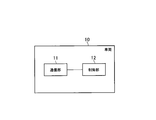
- FIG. 2 is a diagram illustrating the vehicle 10 according to the embodiment.
- FIG. 3 is a diagram illustrating the roadside device 40 according to the embodiment.
- FIG. 4 is a diagram illustrating road-to-vehicle communication according to the embodiment.
- FIG. 5 is a diagram illustrating the traffic communication method according to the embodiment.
- the present disclosure provides a vehicle, a roadside device, a communication device, and a traffic communication system that can identify a train including a towing vehicle and a towed vehicle.
- the gate 130 (the gate 131 and the gate 132) may be provided on the road 110, and the traffic light 140 (the traffic light 141 and the traffic light 142) is provided on the road 120. Is also good.
- the vehicle 10 may be an automobile such as a motorcycle, a motorcycle, a motorcycle, or the like.
- the vehicle 10 may be a train.
- the vehicle 10 performs communication (road-vehicle communication) with the roadside device 40.
- a case where the vehicle 10 is a bus is illustrated.
- FIG. 1 illustrates the vehicle 10 as a vehicle 10A, a vehicle 10B, and a vehicle 10C.
- the vehicle 10A is an example of a towing vehicle for towing one or more towed vehicles.
- the vehicle 10B and the vehicle 10C are examples of one or more towed vehicles towed by the towing vehicle.
- the towing method may be a physical towing method in which the vehicle 10 is connected by a cable or the like, or may be an electronic towing method in which the vehicle 10 is towed by radar or communication.
- communication between vehicles 10 may be performed in order to appropriately maintain the towing. The details of the vehicle 10 will be described later (see FIG. 2).
- the vehicle 20 may be an automobile such as a motorcycle, a motorcycle, a motorcycle, or the like. Here, a case where the vehicle 20 is a passenger car is illustrated.
- the vehicle 20 may communicate with the roadside device 40 (road-vehicle communication).
- the vehicle 20 may perform communication (inter-vehicle communication) with another vehicle.
- the roadside device 40 communicates with the vehicle 10 (communication between roadsides).
- the roadside device 40 may communicate with the vehicle 20 (road-vehicle communication).
- the roadside device 40 may have a function of communicating with the gate 130.
- the roadside device 40 may have a function of communicating with the traffic light 140.
- the above-described vehicle-to-vehicle communication may be performed at a timing when road-to-vehicle communication is not performed. Details of the roadside device 40 will be described later (see FIG. 3).
- the road 110 is a path of the vehicle 10.
- the road 110 may be a motorway or a track.
- the road 110 may be a dedicated road for the vehicle 10 to which the entry of the vehicle 20 is restricted.
- the road 120 is a path of the vehicle 20.
- Road 120 may be a motorway.
- the road 120 may be a road where the vehicle 10 is allowed to enter.
- the gate 130 is a gate for restricting the entry of the vehicle 20 to the road 110.
- Gate 130 is configured to close when vehicle 10 does not pass through an intersection and open when vehicle 10 passes through an intersection.
- the gate 130 may open and close according to the operation schedule of the vehicle 10.
- the gate 130 may be opened when the vehicle 10 approaches the intersection, and may be closed when the vehicle 10 leaves the intersection.
- the approach and departure of the vehicle 10 may be detected by the roadside device 40 based on whether a message can be received from the vehicle 10 and then notified to the gate 130 from the roadside device 40.
- the traffic light 140 is configured to display a signal (for example, a green signal, a yellow signal, or a red signal) indicating whether to permit the vehicle 20 to pass through the intersection.
- the traffic light 140 may be configured to display a blinking signal that calls attention to the vehicle 20.
- the traffic light 140 may switch signals according to a predetermined schedule.
- the gate 130 may switch the signal according to the approach of the vehicle 10 to the intersection and the departure of the vehicle 10 from the intersection.
- the approach and departure of the vehicle 10 may be detected by the roadside device 40 based on whether a message can be received from the vehicle 10, and then the traffic light 140 may be notified from the roadside device 40.
- the vehicle 10 is illustrated as the vehicle. As shown in FIG. 2, the vehicle 10 includes a communication unit 11 and a control unit 12.
- the communication unit 11 is configured by a wireless communication module.
- the communication unit 11 may have a function of performing a carrier sense to determine an empty state of a radio wave frequency (for example, a 700 MHz band).
- the communication unit 11 transmits the packet at a timing when the frequency of the radio wave is vacant.
- One message may be composed of one or more packets.
- the communication unit 11 may perform road-to-vehicle communication or vehicle-to-vehicle communication.
- the packet includes identification information used for identifying the transmission source, synchronization information indicating a method of synchronizing with the roadside device 40, transmission time of the packet, and period information indicating the period of road-vehicle communication (the number of transfers of road-vehicle communication, the period of road-vehicle communication, Length) and so on.
- the vehicle-to-vehicle communication may include communication (packet transfer) that occurs with road-to-vehicle communication, and may include communication for appropriately maintaining traction (such as communication for maintaining the vehicle-to-vehicle distance).
- the communication unit 11 transmits a message including an information element indicating whether or not one or more towed vehicles are being towed by the towed vehicle.
- the information element may be a 1-bit flag indicating presence / absence of towing.
- the communication unit 11 may transmit a message including an information element indicating whether or not one or more towed vehicles are towed.
- the information element may be a 1-bit flag indicating whether the vehicle 10 is a towing vehicle.
- the communication unit 11 may transmit a message including an information element indicating whether or not the vehicle 10 is being towed by the towed vehicle.
- the information element may be a 1-bit flag indicating whether the vehicle 10 is a towed vehicle.
- the information element may be a 1-bit flag indicating whether the vehicle 10 is a towing vehicle or a towed vehicle.
- the communication unit 11 may transmit a message including an information element indicating a length of a train including the towed vehicle and the towed vehicle when one or more towed vehicles are being towed by the towed vehicle.
- the length of the train may be represented by the number of vehicles 10 constituting the train, may be represented by the physical length of the train, and may be predetermined according to the length of the train. It may be represented by an index.
- the communication unit 11 when one or more towed vehicles are being towed by the towed vehicle, information indicating the order of the vehicle 10 in the train including the towed vehicle and the towed vehicle.
- a message containing the element may be sent.
- the information element may be represented by both eyes and may be represented by xx / xx. Here, xx is the number of vehicles 10 constituting the train.
- the communication unit 11 may transmit a message including an information element indicating a towing method when one or more towed vehicles are being towed by the towing vehicle.
- the towing method may be a towing method in which the vehicle 10 is physically connected, or may be a towing method in which the vehicle 10 is electronically connected.
- the control unit 12 is configured by a control circuit having a memory, a CPU, and the like.
- the control unit 12 controls at least the communication unit 11. For example, when one or more towed vehicles are being towed by the towing vehicle, the control unit 12 controls the communication unit 11 to transmit a message including the information element described above.
- the message may be sent by broadcast.
- the message may include an information element specifying the other party, and may not include an information element specifying the other party.
- the roadside device 40 includes a communication unit 41 and a control unit 42.
- the wireless communication system of the roadside device 40 may conform to ARIB @ T109, may conform to V2X (Vehicle to Everything) defined by 3GPP (3rd Generation Partnership Project), or conform to a system such as a wireless LAN. Is also good.
- the roadside device 40 may be an all-in type that can support all of these communication standards.
- the communication unit 41 is configured by a wireless communication module.
- the communication unit 41 does not have to have a function of performing carrier sensing to determine an empty state of a radio wave frequency (for example, a 700 MHz band).
- the communication unit 41 transmits the packet at the timing determined by the control unit 42.
- One message may be composed of one or more packets.
- the communication unit 41 may perform road-to-vehicle communication.
- the packet includes identification information used for identifying the transmission source, synchronization information indicating a method of synchronizing with the roadside device 40, transmission time of the packet, and period information indicating the period of road-vehicle communication (the number of transfers of road-vehicle communication, the period of road-vehicle communication, Length) and so on.
- the communication unit 41 receives a message including an information element indicating whether or not one or more towed vehicles are being towed by the towed vehicle.
- the communication unit 41 may receive a message including an information element indicating whether the vehicle 10 is a towed vehicle or a towed vehicle.
- the communication unit 41 may receive a message including an information element indicating the length of the train including the towing vehicle and the towed vehicle.
- the communication unit 41 may receive a message including an information element indicating the order of the vehicle 10.
- the communication unit 41 may receive a message including an information element indicating the towing method.
- the control unit 42 is configured by a control circuit having a memory, a CPU, and the like.
- the control unit 42 controls at least the communication unit 41.
- the control unit 42 may control the communication unit 41 to perform road-to-vehicle communication at the first transmission time in a state where the vehicle 10 (the towing vehicle and / or the towed vehicle) is not approaching.
- the communication unit 41 performs the road-to-vehicle communication in the second transmission time shorter than the first transmission time. May be controlled.
- the control unit 42 may control the opening and closing of the gate 130 based on whether or not the vehicle 10 (the towing vehicle and / or the towed vehicle) is approaching. In such a case, the control unit 42 may transmit a control command to instruct the gate 130 to open and close. Such communication may be performed by wire or wirelessly. The control unit 42 may control the opening and closing of the gate 130 in consideration of the length of the vehicle train based on the information element included in the message.
- the control unit 42 may control switching of the signal displayed by the traffic light 140 based on whether or not the vehicle 10 (the towing vehicle and / or the towed vehicle) is approaching. In such a case, the control unit 42 may transmit a control command for instructing switching of the signal displayed by the traffic light 140 to the traffic light 140. Such communication may be performed by wire or wirelessly. The control unit 42 may switch the signal displayed by the traffic light 140 in consideration of the length of the vehicle train based on the information element included in the message.
- road-to-vehicle communication road-to-vehicle communication
- a control unit time for example, 16 ⁇ s
- One transmission period has a variable length, and an upper limit (for example, 3024 ⁇ s) of one transmission period is defined.
- the roadside device 40 performs roadside-vehicle communication in the first transmission time.
- the first transmission time is defined by the length of one transmission period and the number of transmissions in a control cycle.
- the roadside device 40 performs the road-to-vehicle communication in the second transmission time shorter than the first transmission time in the state where the vehicle 10 (the towing vehicle and / or the towed vehicle) is approaching. Is also good.
- the second transmission time may be configured such that the transmission period length is shorter than the first transmission time, or may be configured such that the number of transmissions is smaller than the first transmission time.
- the vehicle 10 forms a train including a towing vehicle and a towed vehicle.
- step S10 the vehicle 10 performs message communication (vehicle-to-vehicle communication) for appropriately maintaining traction.
- message communication vehicle-to-vehicle communication
- inter-vehicle communication is performed continuously.
- step S20 the roadside device 40 transmits a message at the first transmission time (road-vehicle communication). Specifically, the roadside device 40 transmits a packet for road-to-vehicle communication at the first transmission time in each control cycle.
- the vehicle 10 transmits a message including an information element indicating whether or not one or more towed vehicles are being towed by the towed vehicle.
- the message may include an information element indicating whether the vehicle 10 is a tow vehicle or a towed vehicle, and includes an information element indicating the length of a train including the towed vehicle and the towed vehicle.
- the information element may include an information element indicating the order of the vehicle 10 or an information element indicating the towing method.
- the vehicle 10 may transmit the above-described message. That is, the vehicle 10 may transmit the above-described message while approaching the roadside device 40. The vehicle 10 may repeatedly transmit such a message for each control cycle.
- step S40 the roadside device 40 determines whether or not the vehicle 10 forms a train including the towed vehicle and the towed vehicle.
- the vehicle 10 forms a train including a towing vehicle and a towed vehicle will be described. That is, the roadside device 40 detects the approach of a train including the towed vehicle and the towed vehicle based on the information element indicating whether or not one or more towed vehicles are being towed by the towed vehicle.
- step S50 the roadside device 40 transmits a message at the second transmission time (road-vehicle communication). Specifically, the roadside device 40 transmits a packet for road-to-vehicle communication at the second transmission time in each control cycle.
- the second transmission time may be configured such that the transmission period length is shorter than the first transmission time, or may be configured such that the number of transmissions is smaller than the first transmission time. Good.
- the roadside device 40 detects the approach of the train including the towed vehicle and the towed vehicle based on the information element indicating whether or not one or more towed vehicles are being towed by the towed vehicle, and controls the control cycle.
- the transmission time of the road-vehicle communication packet is changed every time.
- the process of S30 may be performed before or after the process of S20. That is, the vehicle 10 may repeatedly transmit the message every control cycle regardless of whether the vehicle 10 is approaching the roadside device 40 or not.
- a message including an information element indicating whether or not one or more towed vehicles is being towed by the towing vehicle is transmitted from the vehicle 10 to the roadside device 40.
- the roadside machine 40 can identify a train including the towed vehicle and the towed vehicle.
- the roadside device 40 detects the approach of a train including the towed vehicle and the towed vehicle based on an information element indicating whether or not one or more towed vehicles are being towed by the towed vehicle, and for each control cycle. Change the transmission time of the road-vehicle communication packet.
- transmission time between communication between the towed vehicle and the towed vehicle and / or communication between the towed vehicle and the towed vehicle is ensured, and road-to-vehicle communication is performed. The effect on inter-vehicle communication can be suppressed.
- the roadside device 40 can identify a partner (tow vehicle) of a control message for controlling the operation of the vehicle 10 based on an information element indicating whether the vehicle 10 is a tow vehicle or a tow vehicle. According to such a configuration, the roadside device 40 can transmit the control message when the towing vehicle is within the communication area, and can stop transmitting the control message when the towing vehicle is outside the communication area. . That is, the wireless resources can be used effectively.
- the roadside device 40 can specify the length of the vehicle train based on the information element indicating the length of the vehicle train including the towing vehicle and the towed vehicle. According to such a configuration, the roadside device 40 can estimate the time when the vehicle train passes through the intersection, and can appropriately control at least one of the gate 130 and the traffic light 140, for example. Further, the roadside device 40 can also improve the accuracy of estimating the time when the vehicle train passes the intersection based on the information element indicating the order of the vehicle 10.
- the operation of the roadside device 40 described above is merely an example, and in the embodiment, by notifying the roadside device 40 of information about the vehicle train including the towed vehicle and the towed vehicle, the vehicle train including the towed vehicle and the towed vehicle is formed. It suffices if the roadside device 40 can control the vehicle to travel properly.
- the roadside device 40 may communicate with another roadside device (inter-road communication).
- the vehicle 10 and the roadside device 40 have been mainly described, but the embodiment is not limited to this.
- a communication device provided in at least one of the vehicle and the roadside device 40 may be provided.
- the communication device has the function of the communication unit 11 or the function of the communication unit 41.
Landscapes
- Physics & Mathematics (AREA)
- General Physics & Mathematics (AREA)
- Engineering & Computer Science (AREA)
- Computer Networks & Wireless Communication (AREA)
- Signal Processing (AREA)
- Chemical & Material Sciences (AREA)
- Analytical Chemistry (AREA)
- Traffic Control Systems (AREA)
- Mobile Radio Communication Systems (AREA)
Abstract
道路の路側に設けられる路側機と少なくとも通信を行う車両は、牽引車両によって1以上の被牽引車両が牽引されているか否かを示す情報要素を含むメッセージを送信する通信部を備える。
Description
本発明は、車両、路側機、通信装置及び交通通信システムに関する。
従来、高度交通システム(例えば、ITS;Intelligent Transport System)において、道路の路側に設けられる路側機と車両との間で通信を行う技術が提案されている(例えば、特許文献1)。
一般社団法人電波産業会、"700MHz帯高度道路交通システム ARIB-STDT109 1.3版",[online]、平成29年7月27日、[平成30年6月22日検索]、インターネット1530083234195_0.html
第1の特徴において、道路の路側に設けられる路側機と少なくとも通信を行う車両は、牽引車両によって1以上の被牽引車両が牽引されているか否かを示す情報要素を含むメッセージを送信する通信部を備える。
第2の特徴において、道路の路側に設けられる路側機は、牽引車両によって1以上の被牽引車両が牽引されているか否かを示す情報要素を含むメッセージを車両から受信する通信部を備える。
第3の特徴において、道路の路側に設けられる路側機及び前記路側機と通信を行う車両の少なくともいずれか1つに設けられる通信装置は、前記牽引車両によって1以上の被牽引車両が牽引されているか否かを示す情報要素を含むメッセージの通信を行う通信部を備える。
第4の特徴において、交通通信システムは、道路の路側に設けられる路側機と、前記路側機と少なくとも通信を行う車両とを備える。前記車両は、牽引車両によって1以上の被牽引車両が牽引されているか否かを示す情報要素を含むメッセージを送信する通信部を備える。
背景技術において述べた高度交通システムにおいては、牽引車両が1以上の被牽引車両を牽引するケースが想定される。このようなケースについて、発明者等は、鋭意検討の結果、牽引車両及び被牽引車両を含む車列を適切に走行させるために、牽引車両及び被牽引車両を含む車列を識別する必要性があることを見出した。
本開示は、牽引車両及び被牽引車両を含む車列を識別することを可能とする車両、路側機、通信装置及び交通通信システムを提供する。
以下において、実施形態について図面を参照しながら説明する。なお、以下の図面の記載において、同一又は類似の部分には、同一又は類似の符号を付している。
但し、図面は模式的なものであり、各寸法の比率などは現実のものとは異なる場合があることに留意すべきである。従って、具体的な寸法などは以下の説明を参酌して判断すべきである。また、図面相互間においても互いの寸法の関係又は比率が異なる部分が含まれている場合があることは勿論である。
[実施形態]
(交通通信システム)
以下において、実施形態に係る交通通信システムについて説明する。実施形態では、図1に示すように、道路110及び道路120が交差するケースについて例示する。ここでは、道路110が車両10の通り道であり、道路120が車両20の通り道であるケースを想定する。さらに、道路110の路側に路側機40が設けられるケースを例示する。
(交通通信システム)
以下において、実施形態に係る交通通信システムについて説明する。実施形態では、図1に示すように、道路110及び道路120が交差するケースについて例示する。ここでは、道路110が車両10の通り道であり、道路120が車両20の通り道であるケースを想定する。さらに、道路110の路側に路側機40が設けられるケースを例示する。
実施形態では、道路110及び道路120の交差点において、道路110上にゲート130(ゲート131及びゲート132)が設けられてもよく、道路120上に信号機140(信号機141及び信号機142)が設けられてもよい。
車両10は、自動二輪車、自動三輪車、自動四輪車などの自動車であってもよい。車両10は、電車であってもよい。車両10は、路側機40と通信(路車間通信)を行う。ここでは、車両10がバスであるケースを例示する。図1では、車両10として、車両10A、車両10B及び車両10Cが例示されている。車両10Aは、1以上の被牽引車両を牽引する牽引車両の一例である。車両10B及び車両10Cは、牽引車両によって牽引される1以上の被牽引車両の一例である。牽引方法は、車両10がケーブルなどによって連結される物理的な牽引方法であってもよく、車両10がレーダや通信などによって牽引される電子的な牽引方法であってもよい。このような牽引において、牽引を適切に維持するために車両10間の通信(車車間通信)が行われてもよい。車両10の詳細については後述する(図2を参照)。
車両20は、自動二輪車、自動三輪車、自動四輪車などの自動車であってもよい。ここでは、車両20が乗用車であるケースを例示する。車両20は、路側機40と通信(路車間通信)を行ってもよい。車両20は、他の車両と通信(車車間通信)を行ってもよい。
路側機40は、車両10と通信(路車間通信)を行う。路側機40は、車両20と通信(路車間通信)を行ってもよい。路側機40は、ゲート130と通信を行う機能を有していてもよい。路側機40は、信号機140と通信を行う機能を有していてもよい。上述した車車間通信は、路車間通信が行われていないタイミングで行われてもよい。路側機40の詳細については後述する(図3を参照)。
道路110は、車両10の通り道である。道路110は、自動車道であってもよく、線路であってもよい。道路110は、車両20の進入が制限された車両10の専用道であってもよい。
道路120は、車両20の通り道である。道路120は、自動車道であってもよい。道路120は、車両10の進入が許容された道路であってもよい。
ゲート130は、道路110への車両20の進入を制限するためのゲートである。ゲート130は、車両10が交差点を通過しないときに閉じ、車両10が交差点を通過するときに開くように構成される。例えば、ゲート130は、車両10の運行スケジュールに応じて開閉してもよい。ゲート130は、交差点への車両10の接近に応じて開き、交差点からの車両10の離脱に応じて閉じてもよい。車両10の接近及び離脱は、車両10からメッセージを受信できるか否かに基づいて路側機40によって検出された上で、路側機40からゲート130に通知されてもよい。
信号機140は、車両20の交差点の通過を許可するか否かを示す信号(例えば、青信号、黄信号、赤信号)を表示するように構成される。信号機140は、車両20に注意喚起を促す点滅信号を表示するように構成されてもよい。例えば、信号機140は、予め定められたスケジュールに応じて信号を切り替えてもよい。ゲート130は、交差点への車両10の接近及び交差点からの車両10の離脱に応じて信号を切り替えてもよい。車両10の接近及び離脱は、車両10からメッセージを受信できるか否かに基づいて路側機40によって検出された上で、路側機40から信号機140に通知されてもよい。
(車両)
以下において、実施形態に係る車両について説明する。ここでは、車両として車両10を例示する。図2に示すように、車両10は、通信部11及び制御部12を有する。
以下において、実施形態に係る車両について説明する。ここでは、車両として車両10を例示する。図2に示すように、車両10は、通信部11及び制御部12を有する。
通信部11は、無線通信モジュールによって構成される。通信部11は、キャリアセンスを行って電波の周波数(例えば、700MHz帯)の空き状態を判定する機能を有していてもよい。通信部11は、電波の周波数が空いているタイミングでパケットを送信する。1以上のパケットによって1つのメッセージが構成されてもよい。
通信部11は、路車間通信を行ってもよく、車車間通信を行ってもよい。パケットは、送信元の識別に用いる識別情報、路側機40に対する同期方法を示す同期情報、パケットの送信時刻、路車間通信の期間を示す期間情報(路車間通信の転送回数、路車間通信の期間長)などを含む。車車間通信は、路車間通信に伴って生じる通信(パケット転送)を含んでもよく、牽引を適切に維持するための通信(車間距離を維持するための通信など)を含んでもよい。
以下において、上述したメッセージを踏まえて、メッセージの詳細について説明する。
通信部11は、牽引車両によって1以上の被牽引車両が牽引されているか否かを示す情報要素を含むメッセージを送信する。例えば、情報要素は牽引の有無を示す1ビットフラグであってもよい。
通信部11は、車両10が牽引車両である場合に、1以上の被牽引車両を牽引しているか否かを示す情報要素を含むメッセージを送信してもよい。例えば、情報要素は、車両10が牽引車両であるか否かを示す1ビットフラグであってもよい。或いは、通信部11は、車両10が被牽引車両である場合に、牽引車両によって牽引されているか否かを示す情報要素を含むメッセージを送信してもよい。例えば、情報要素は、車両10が被牽引車両であるか否かを示す1ビットフラグであってもよい。或いは、情報要素は、車両10が牽引車両であるか被牽引車両であるかを示す1ビットフラグであってもよい。
通信部11は、牽引車両によって1以上の被牽引車両が牽引されている場合において、牽引車両及び被牽引車両を含む車列の長さを表す情報要素を含むメッセージを送信してもよい。車列の長さは、車列を構成する車両10の数で表されてもよく、車列の物理的な長さで表されてもよく、車列の長さに応じて予め定められたインデックスで表されてもよい。
通信部11は、牽引車両によって1以上の被牽引車両が牽引されている場合において、牽引車両及び被牽引車両を含む車列の中で自身の車両10が何両目の車両であるかを示す情報要素を含むメッセージを送信してもよい。情報要素は、○○両目で表されてもよく、○○/××で表されてもよい。但し、××は、車列を構成する車両10の数である。
通信部11は、牽引車両によって1以上の被牽引車両が牽引されている場合において、牽引方法を示す情報要素を含むメッセージを送信してもよい。上述したように、牽引方法としては、車両10が物理的に連結される牽引方法であってもよく、車両10が電子的に連結される牽引方法であってもよい。
制御部12は、メモリ及びCPUなどを有する制御回路によって構成される。制御部12は、少なくとも通信部11を制御する。例えば、制御部12は、牽引車両によって1以上の被牽引車両が牽引されている場合において、上述した情報要素を含むメッセージを送信するように通信部11を制御する。
実施形態において、メッセージは、ブロードキャストで送信されてもよい。このようなケースにおいて、メッセージは、相手を特定する情報要素を含んでいてもよく、相手を特定する情報要素を含んでいなくてもよい。
(路側機)
以下において、実施形態に係る路側機について説明する。図3に示すように、路側機40は、通信部41及び制御部42を有する。
以下において、実施形態に係る路側機について説明する。図3に示すように、路側機40は、通信部41及び制御部42を有する。
路側機40の無線通信方式は、ARIB T109に準拠してもよく、3GPP(3rd GenerationPartnership Project)で定義されるV2X(Vehicle to Everything)に準拠してもよく、無線LANなどの方式に準拠してもよい。路側機40は、これらの通信規格の全てに対応可能なオールインタイプであってもよい。
通信部41は、無線通信モジュールによって構成される。通信部41は、キャリアセンスを行って電波の周波数(例えば、700MHz帯)の空き状態を判定する機能を有していなくてもよい。通信部41は、制御部42によって決定されたタイミングでパケットを送信する。1以上のパケットによって1つのメッセージが構成されてもよい。
通信部41は、路車間通信を行ってもよい。パケットは、送信元の識別に用いる識別情報、路側機40に対する同期方法を示す同期情報、パケットの送信時刻、路車間通信の期間を示す期間情報(路車間通信の転送回数、路車間通信の期間長)などを含む。
通信部41は、牽引車両によって1以上の被牽引車両が牽引されているか否かを示す情報要素を含むメッセージを受信する。通信部41は、車両10が牽引車両であるか被牽引車両であるかを示す情報要素を含むメッセージを受信してもよい。通信部41は、牽引車両及び被牽引車両を含む車列の長さを表す情報要素を含むメッセージを受信してもよい。通信部41は、車両10が何両目の車両であるかを示す情報要素を含むメッセージを受信してもよい。通信部41は、牽引方法を示す情報要素を含むメッセージを受信してもよい。
制御部42は、メモリ及びCPUなどを有する制御回路によって構成される。制御部42は、少なくとも通信部41を制御する。例えば、制御部42は、車両10(牽引車両及び/又は被牽引車両)が接近していない状態において、路車間通信を第1送信時間で行うように通信部41を制御してもよい。一方で、制御部42は、車両10(牽引車両及び/又は被牽引車両)が接近している状態において、路車間通信を第1送信時間よりも短い第2送信時間で行うように通信部41を制御してもよい。
制御部42は、車両10(牽引車両及び/又は被牽引車両)が接近しているか否かに基づいて、ゲート130の開閉を制御してもよい。このようなケースにおいて、制御部42は、ゲート130の開閉を指示する制御コマンドをゲート130に送信してもよい。このような通信は、有線で行われてもよく、無線で行われてもよい。制御部42は、メッセージに含まれる情報要素に基づいて車列の長さを考慮して、ゲート130の開閉を制御してもよい。
制御部42は、車両10(牽引車両及び/又は被牽引車両)が接近しているか否かに基づいて、信号機140によって表示される信号の切替を制御してもよい。このようなケースにおいて、制御部42は、信号機140によって表示される信号の切替を指示する制御コマンドを信号機140に送信してもよい。このような通信は、有線で行われてもよく、無線で行われてもよい。制御部42は、メッセージに含まれる情報要素に基づいて車列の長さを考慮して、信号機140によって表示される信号を切り替えてもよい。
(路車間通信)
以下において、実施形態に係る路車間通信について説明する。図4に示すように、路車間通信は、制御周期(例えば、100ms)において制御単位時間(例えば、16μs)を最小単位として行われる。制御周期において路側機40がパケットを送信可能な回数の上限(例えば、N=16回)が定められている。1回の送信期間は可変長であり、1回の送信期間の上限(例えば、3024μs)が定められている。
以下において、実施形態に係る路車間通信について説明する。図4に示すように、路車間通信は、制御周期(例えば、100ms)において制御単位時間(例えば、16μs)を最小単位として行われる。制御周期において路側機40がパケットを送信可能な回数の上限(例えば、N=16回)が定められている。1回の送信期間は可変長であり、1回の送信期間の上限(例えば、3024μs)が定められている。
このような前提下において、路側機40は、第1送信時間で路車間通信を行う。第1送信時間は、制御周期内において1回の送信期間長及び送信回数によって定義される。ここで、路側機40は、車両10(牽引車両及び/又は被牽引車両)が接近している状態において、路車間通信を第1送信時間よりも短い第2送信時間で路車間通信を行ってもよい。第2送信時間は、第1送信時間と比べて送信期間長が短くなるように構成されてもよく、第1送信時間と比べて送信回数が少なくなるように構成されてもよい。
(交通通信方法)
以下において、実施形態に係る交通通信方法について説明する。ここでは、車両10は、牽引車両及び被牽引車両を含む車列を構成する。
以下において、実施形態に係る交通通信方法について説明する。ここでは、車両10は、牽引車両及び被牽引車両を含む車列を構成する。
図5に示すように、ステップS10において、車両10は、牽引を適切に維持するためのメッセージの通信(車車間通信)を行う。このような車車間通信は継続的に行われている。
ステップS20において、路側機40は、第1送信時間でメッセージを送信する(路車間通信)。具体的には、路側機40は、制御周期毎に路車間通信のパケットを第1送信時間で送信する。
ステップS30において、車両10は、牽引車両によって1以上の被牽引車両が牽引されているか否かを示す情報要素を含むメッセージを送信する。上述したように、メッセージは、車両10が牽引車両であるか被牽引車両であるかを示す情報要素を含んでもよく、牽引車両及び被牽引車両を含む車列の長さを表す情報要素を含んでもよく、車両10が何両目の車両であるかを示す情報要素を含んでもよく、牽引方法を示す情報要素を含んでもよい。
ここで、車両10は、路側機40からパケットを受信した場合に、上述したメッセージを送信してもよい。すなわち、車両10は、路側機40に接近した状態で、上述したメッセージを送信してもよい。車両10は、このようなメッセージを制御周期毎に繰り返しで送信してもよい。
ステップS40において、路側機40は、車両10が牽引車両及び被牽引車両を含む車列を構成するか否かを判定する。ここでは、車両10が牽引車両及び被牽引車両を含む車列を構成するケースについて説明を続ける。すなわち、路側機40は、牽引車両によって1以上の被牽引車両が牽引されているか否かを示す情報要素に基づいて、牽引車両及び被牽引車両を含む車列の接近を検出する。
ステップS50において、路側機40は、第2送信時間でメッセージを送信する(路車間通信)。具体的には、路側機40は、制御周期毎に路車間通信のパケットを第2送信時間で送信する。上述したように、第2送信時間は、第1送信時間と比べて送信期間長が短くなるように構成されてもよく、第1送信時間と比べて送信回数が少なくなるように構成されてもよい。
このように、路側機40は、牽引車両によって1以上の被牽引車両が牽引されているか否かを示す情報要素に基づいて牽引車両及び被牽引車両を含む車列の接近を検出し、制御周期毎に路車間通信のパケットの送信時間を変更する。
図5に示すシーケンスでは、S30の処理はS20の処理の後に行われるケースを例示しているが、シーケンスはこれに限定されるものではない。S30の処理は、S20の処理の前後を問わずに行われておいてもよい。すなわち、車両10は、路側機40に接近しているか否かによらずに、メッセージを制御周期毎に繰り返しで送信してもよい。
(作用及び効果)
実施形態では、車両10から路側機40に対して、牽引車両によって1以上の被牽引車両が牽引されているか否かを示す情報要素を含むメッセージが送信される。このような構成によれば、牽引車両及び被牽引車両を含む車列を路側機40が識別することができる。
実施形態では、車両10から路側機40に対して、牽引車両によって1以上の被牽引車両が牽引されているか否かを示す情報要素を含むメッセージが送信される。このような構成によれば、牽引車両及び被牽引車両を含む車列を路側機40が識別することができる。
例えば、路側機40は、牽引車両によって1以上の被牽引車両が牽引されているか否かを示す情報要素に基づいて牽引車両及び被牽引車両を含む車列の接近を検出し、制御周期毎に路車間通信のパケットの送信時間を変更する。このような構成によれば、牽引車両と被牽引車両との間の通信及び/又は被牽引車両と被牽引車両との間の通信(車車間通信)の送信時間を確保し、路車間通信が車車間通信に与える影響を抑制することができる。
或いは、路側機40は、車両10が牽引車両であるか被牽引車両であるかを示す情報要素に基づいて車両10の動作を制御する制御メッセージの相手(牽引車両)を特定することができる。このような構成によれば、路側機40は、牽引車両が通信エリア内にいる場合に制御メッセージの送信を行い、牽引車両が通信エリア外にいる場合に制御メッセージの送信を停止することができる。すなわち、無線リソースを有効に利用することができる。
或いは、路側機40は、牽引車両及び被牽引車両を含む車列の長さを表す情報要素に基づいて車列の長さを特定することができる。このような構成によれば、路側機40は、交差点を車列が通過する時間を推定することができ、例えば、ゲート130及び信号機140の少なくともいずれかを適切に制御することができる。さらに、路側機40は、車両10が何両目の車両であるかを示す情報要素に基づいて交差点を車列が通過する時間の推定精度を向上することもできる。
上述した路側機40の動作は一例に過ぎず、実施形態では、牽引車両及び被牽引車両を含む車列に関する情報を路側機40に通知することによって、牽引車両及び被牽引車両を含む車列を適切に走行させる制御を路側機40が行うことができればよい。
[その他の実施形態]
本発明は上述した実施形態によって説明したが、この開示の一部をなす論述及び図面は、この発明を限定するものであると理解すべきではない。この開示から当業者には様々な代替実施形態、実施例及び運用技術が明らかとなろう。
本発明は上述した実施形態によって説明したが、この開示の一部をなす論述及び図面は、この発明を限定するものであると理解すべきではない。この開示から当業者には様々な代替実施形態、実施例及び運用技術が明らかとなろう。
実施形態では特に触れていないが、路側機40は、他の路側機と通信を行ってもよい(路路間通信)。
実施形態では、車両10及び路側機40を中心に説明したが、実施形態はこれに限定されるものではない。車両及び路側機40の少なくともいずれか1つに設けられる通信装置が提供されてもよい。通信装置は、通信部11の機能又は通信部41の機能を有する。
本願は、日本国特許出願第2018-122516号(2018年6月27日出願)の優先権を主張し、その内容のすべてが本願明細書に組み込まれている。
Claims (10)
- 道路の路側に設けられる路側機と少なくとも通信を行う車両であって、
牽引車両によって1以上の被牽引車両が牽引されているか否かを示す情報要素を含むメッセージを送信する通信部を備える、車両。 - 前記通信部は、前記車両が前記牽引車両である場合に、前記1以上の被牽引車両を牽引しているか否かを示す情報要素を含むメッセージを送信する、請求項1に記載の車両。
- 前記通信部は、前記車両が前記1以上の被牽引車両である場合に、前記牽引車両によって牽引されているか否かを示す情報要素を含むメッセージを送信する、請求項1に記載の車両。
- 前記通信部は、前記牽引車両によって前記1以上の被牽引車両が牽引されている場合において、前記牽引車両及び前記1以上の被牽引車両を含む車列の長さを表す情報要素を含むメッセージを送信する、請求項1乃至請求項3のいずれか1項に記載の車両。
- 前記通信部は、前記牽引車両によって前記1以上の被牽引車両が牽引されている場合において、前記牽引車両及び前記1以上の被牽引車両を含む車列の中で前記車両が何両目の車両であるかを示す情報要素を含むメッセージを送信する、請求項1乃至請求項4のいずれか1項に記載の車両。
- 前記通信部は、前記牽引車両によって前記1以上の被牽引車両が牽引されている場合において、牽引方法を示す情報要素を含むメッセージを送信する、請求項1乃至請求項5のいずれか1項に記載の車両。
- 道路の路側に設けられる路側機であって、
牽引車両によって1以上の被牽引車両が牽引されているか否かを示す情報要素を含むメッセージを車両から受信する通信部を備える、路側機。 - 前記情報要素に基づいて前記牽引車両及び前記被牽引車両を含む車列の接近を検出し、前記路側機と前記車両との間の路車間通信のパケットの送信時間を変更する、請求項7に記載の路側機。
- 道路の路側に設けられる路側機及び前記路側機と通信を行う車両の少なくともいずれか1つに設けられる通信装置であって、
前記牽引車両によって1以上の被牽引車両が牽引されているか否かを示す情報要素を含むメッセージの通信を行う通信部を備える、通信装置。 - 道路の路側に設けられる路側機と、
前記路側機と少なくとも通信を行う車両とを備え、
前記車両は、牽引車両によって1以上の被牽引車両が牽引されているか否かを示す情報要素を含むメッセージを送信する通信部を備える、交通通信システム。
Priority Applications (2)
| Application Number | Priority Date | Filing Date | Title |
|---|---|---|---|
| JP2020527505A JP7285254B2 (ja) | 2018-06-27 | 2019-06-24 | 車両、路側機、通信装置及び交通通信システム |
| US17/133,915 US11282377B2 (en) | 2018-06-27 | 2020-12-24 | Vehicle, roadside apparatus, communication apparatus and transport communication system |
Applications Claiming Priority (2)
| Application Number | Priority Date | Filing Date | Title |
|---|---|---|---|
| JP2018122516 | 2018-06-27 | ||
| JP2018-122516 | 2018-06-27 |
Related Child Applications (1)
| Application Number | Title | Priority Date | Filing Date |
|---|---|---|---|
| US17/133,915 Continuation US11282377B2 (en) | 2018-06-27 | 2020-12-24 | Vehicle, roadside apparatus, communication apparatus and transport communication system |
Publications (1)
| Publication Number | Publication Date |
|---|---|
| WO2020004320A1 true WO2020004320A1 (ja) | 2020-01-02 |
Family
ID=68984754
Family Applications (1)
| Application Number | Title | Priority Date | Filing Date |
|---|---|---|---|
| PCT/JP2019/024935 Ceased WO2020004320A1 (ja) | 2018-06-27 | 2019-06-24 | 車両、路側機、通信装置及び交通通信システム |
Country Status (3)
| Country | Link |
|---|---|
| US (1) | US11282377B2 (ja) |
| JP (1) | JP7285254B2 (ja) |
| WO (1) | WO2020004320A1 (ja) |
Cited By (1)
| Publication number | Priority date | Publication date | Assignee | Title |
|---|---|---|---|---|
| JPWO2022113983A1 (ja) * | 2020-11-26 | 2022-06-02 |
Families Citing this family (2)
| Publication number | Priority date | Publication date | Assignee | Title |
|---|---|---|---|---|
| JP6717183B2 (ja) * | 2016-12-14 | 2020-07-01 | 株式会社オートネットワーク技術研究所 | 路車間通信システム、路側通信装置、車載通信装置及び路車間通信方法 |
| US20230131387A1 (en) * | 2021-10-26 | 2023-04-27 | GM Global Technology Operations LLC | Tow management systems and methods for autonomous vehicles |
Citations (2)
| Publication number | Priority date | Publication date | Assignee | Title |
|---|---|---|---|---|
| JP2011227724A (ja) * | 2010-04-20 | 2011-11-10 | Toyota Infotechnology Center Co Ltd | 車載端末および安全運転支援システム |
| JP2016177638A (ja) * | 2015-03-20 | 2016-10-06 | 住友電気工業株式会社 | 路側制御装置、コンピュータプログラム及び情報処理方法 |
Family Cites Families (3)
| Publication number | Priority date | Publication date | Assignee | Title |
|---|---|---|---|---|
| JP2004352175A (ja) * | 2003-05-30 | 2004-12-16 | Denso Corp | 情報端末、管理サーバ及び管理システム |
| JP6713356B2 (ja) * | 2016-06-21 | 2020-06-24 | 花王株式会社 | トナー用結着樹脂組成物 |
| JP6876787B2 (ja) * | 2017-03-29 | 2021-05-26 | 三菱重工機械システム株式会社 | 車両、車両判別システム、車両判別方法、プログラム及び車載器の取付方法 |
-
2019
- 2019-06-24 WO PCT/JP2019/024935 patent/WO2020004320A1/ja not_active Ceased
- 2019-06-24 JP JP2020527505A patent/JP7285254B2/ja active Active
-
2020
- 2020-12-24 US US17/133,915 patent/US11282377B2/en active Active
Patent Citations (2)
| Publication number | Priority date | Publication date | Assignee | Title |
|---|---|---|---|---|
| JP2011227724A (ja) * | 2010-04-20 | 2011-11-10 | Toyota Infotechnology Center Co Ltd | 車載端末および安全運転支援システム |
| JP2016177638A (ja) * | 2015-03-20 | 2016-10-06 | 住友電気工業株式会社 | 路側制御装置、コンピュータプログラム及び情報処理方法 |
Cited By (3)
| Publication number | Priority date | Publication date | Assignee | Title |
|---|---|---|---|---|
| JPWO2022113983A1 (ja) * | 2020-11-26 | 2022-06-02 | ||
| JP7485786B2 (ja) | 2020-11-26 | 2024-05-16 | 京セラ株式会社 | 無線路側機、交通通信システム、及び交通通信方法 |
| US12293662B2 (en) | 2020-11-26 | 2025-05-06 | Kyocera Corporation | Wireless roadside device, traffic communication system, and traffic communication method |
Also Published As
| Publication number | Publication date |
|---|---|
| US11282377B2 (en) | 2022-03-22 |
| US20210118287A1 (en) | 2021-04-22 |
| JP7285254B2 (ja) | 2023-06-01 |
| JPWO2020004320A1 (ja) | 2021-07-08 |
Similar Documents
| Publication | Publication Date | Title |
|---|---|---|
| US8902080B2 (en) | Vehicle-mounted narrow-band wireless communication apparatus and roadside-to-vehicle narrow-band wireless communication system | |
| US10147322B2 (en) | Safety-compliant multiple occupancy of a channel in intelligent transportation systems | |
| US9949092B2 (en) | Communication device, transmission interval control device, method for transmitting location information, method for controlling transmission interval of location information, and recording medium | |
| CN111200842B (zh) | 数据通信的方法、控制单元和车辆以及计算机程序 | |
| CN107437334A (zh) | 自主地或部分自主地执行协作式驾驶机动的方法及车辆 | |
| Aoki et al. | Safe intersection management with cooperative perception for mixed traffic of human-driven and autonomous vehicles | |
| US11282377B2 (en) | Vehicle, roadside apparatus, communication apparatus and transport communication system | |
| CN108616559A (zh) | 一种车辆信息发送、处理方法和装置 | |
| Chowduri et al. | Design, prototyping, and implementation of a vehicle-to-infrastructure (V2I) system for eco-approach and departure through connected and smart corridors | |
| Joshi et al. | DASITS: Driver assistance system in intelligent transport system | |
| WO2019040024A2 (en) | SYSTEM AND METHOD FOR DIFFUSION BY ROUTING AND PROCESSING TRAFFIC WARNING INFORMATION TO ADVISE A DRIVER | |
| JP7285262B2 (ja) | 基地局、車両及び交通通信システム | |
| JP7217283B2 (ja) | 基地局、車両、所定端末及び交通通信システム | |
| JP7278285B2 (ja) | 基地局、車両及び交通通信システム | |
| Edwards et al. | Wireless technology applications to enhance traveller safety | |
| JP7167170B2 (ja) | 基地局、車両、及び交通通信システム | |
| JP7167169B2 (ja) | 基地局、車両及び交通通信システム | |
| WO2020166664A1 (ja) | 通行支援装置、基地局、車両、及び通行支援方法 | |
| JP7217284B2 (ja) | 基地局、交通通信システム、及び制御方法 | |
| Al-Qassab et al. | Visual sensor fusion and data sharing across connected vehicles for active safety | |
| Joshi et al. | LCDs: Lane-Changing Aid System Based on Speed of Vehicles | |
| JP2024003705A (ja) | 交通通信システム、車両、無線路側機、及び交通通信プログラム | |
| CN121013058A (zh) | 消息传输方法、装置、车辆及rsu | |
| Beasley | Smart Vehicular Networks for Reducing Road Accidents and Traffic Congestion | |
| WO2020066812A1 (ja) | 交通通信システム、基地局、及び交通制御方法 |
Legal Events
| Date | Code | Title | Description |
|---|---|---|---|
| 121 | Ep: the epo has been informed by wipo that ep was designated in this application |
Ref document number: 19826703 Country of ref document: EP Kind code of ref document: A1 |
|
| ENP | Entry into the national phase |
Ref document number: 2020527505 Country of ref document: JP Kind code of ref document: A |
|
| NENP | Non-entry into the national phase |
Ref country code: DE |
|
| 122 | Ep: pct application non-entry in european phase |
Ref document number: 19826703 Country of ref document: EP Kind code of ref document: A1 |