WO2019245038A1 - 複合状態を有する細胞混合物を用いた、免疫寛容を誘導する抗体、及び誘導されたリンパ球、また誘導されたリンパ球を用いる細胞治療剤及び治療法 - Google Patents
複合状態を有する細胞混合物を用いた、免疫寛容を誘導する抗体、及び誘導されたリンパ球、また誘導されたリンパ球を用いる細胞治療剤及び治療法 Download PDFInfo
- Publication number
- WO2019245038A1 WO2019245038A1 PCT/JP2019/024753 JP2019024753W WO2019245038A1 WO 2019245038 A1 WO2019245038 A1 WO 2019245038A1 JP 2019024753 W JP2019024753 W JP 2019024753W WO 2019245038 A1 WO2019245038 A1 WO 2019245038A1
- Authority
- WO
- WIPO (PCT)
- Prior art keywords
- cells
- antibody
- positive
- antigen
- cell
- Prior art date
- Legal status (The legal status is an assumption and is not a legal conclusion. Google has not performed a legal analysis and makes no representation as to the accuracy of the status listed.)
- Ceased
Links
Images



Classifications
-
- G—PHYSICS
- G01—MEASURING; TESTING
- G01N—INVESTIGATING OR ANALYSING MATERIALS BY DETERMINING THEIR CHEMICAL OR PHYSICAL PROPERTIES
- G01N33/00—Investigating or analysing materials by specific methods not covered by groups G01N1/00 - G01N31/00
- G01N33/48—Biological material, e.g. blood, urine; Haemocytometers
- G01N33/50—Chemical analysis of biological material, e.g. blood, urine; Testing involving biospecific ligand binding methods; Immunological testing
- G01N33/68—Chemical analysis of biological material, e.g. blood, urine; Testing involving biospecific ligand binding methods; Immunological testing involving proteins, peptides or amino acids
- G01N33/6854—Immunoglobulins
-
- C—CHEMISTRY; METALLURGY
- C07—ORGANIC CHEMISTRY
- C07K—PEPTIDES
- C07K16/00—Immunoglobulins [IG], e.g. monoclonal or polyclonal antibodies
- C07K16/18—Immunoglobulins [IG], e.g. monoclonal or polyclonal antibodies against material from animals or humans
- C07K16/28—Immunoglobulins [IG], e.g. monoclonal or polyclonal antibodies against material from animals or humans against receptors, cell surface antigens or cell surface determinants
- C07K16/2803—Immunoglobulins [IG], e.g. monoclonal or polyclonal antibodies against material from animals or humans against receptors, cell surface antigens or cell surface determinants against the immunoglobulin superfamily
- C07K16/2827—Immunoglobulins [IG], e.g. monoclonal or polyclonal antibodies against material from animals or humans against receptors, cell surface antigens or cell surface determinants against the immunoglobulin superfamily against B7 molecules, e.g. CD80, CD86
-
- A—HUMAN NECESSITIES
- A61—MEDICAL OR VETERINARY SCIENCE; HYGIENE
- A61K—PREPARATIONS FOR MEDICAL, DENTAL OR TOILETRY PURPOSES
- A61K39/00—Medicinal preparations containing antigens or antibodies
- A61K39/0005—Vertebrate antigens
- A61K39/001—Preparations to induce tolerance to non-self, e.g. prior to transplantation
-
- A—HUMAN NECESSITIES
- A61—MEDICAL OR VETERINARY SCIENCE; HYGIENE
- A61K—PREPARATIONS FOR MEDICAL, DENTAL OR TOILETRY PURPOSES
- A61K39/00—Medicinal preparations containing antigens or antibodies
- A61K39/35—Allergens
-
- A—HUMAN NECESSITIES
- A61—MEDICAL OR VETERINARY SCIENCE; HYGIENE
- A61K—PREPARATIONS FOR MEDICAL, DENTAL OR TOILETRY PURPOSES
- A61K40/00—Cellular immunotherapy
- A61K40/10—Cellular immunotherapy characterised by the cell type used
-
- A—HUMAN NECESSITIES
- A61—MEDICAL OR VETERINARY SCIENCE; HYGIENE
- A61K—PREPARATIONS FOR MEDICAL, DENTAL OR TOILETRY PURPOSES
- A61K40/00—Cellular immunotherapy
- A61K40/10—Cellular immunotherapy characterised by the cell type used
- A61K40/11—T-cells, e.g. tumour infiltrating lymphocytes [TIL] or regulatory T [Treg] cells; Lymphokine-activated killer [LAK] cells
-
- A—HUMAN NECESSITIES
- A61—MEDICAL OR VETERINARY SCIENCE; HYGIENE
- A61K—PREPARATIONS FOR MEDICAL, DENTAL OR TOILETRY PURPOSES
- A61K40/00—Cellular immunotherapy
- A61K40/20—Cellular immunotherapy characterised by the effect or the function of the cells
- A61K40/22—Immunosuppressive or immunotolerising
-
- A—HUMAN NECESSITIES
- A61—MEDICAL OR VETERINARY SCIENCE; HYGIENE
- A61K—PREPARATIONS FOR MEDICAL, DENTAL OR TOILETRY PURPOSES
- A61K40/00—Cellular immunotherapy
- A61K40/40—Cellular immunotherapy characterised by antigens that are targeted or presented by cells of the immune system
- A61K40/41—Vertebrate antigens
- A61K40/418—Antigens related to induction of tolerance to non-self
-
- A—HUMAN NECESSITIES
- A61—MEDICAL OR VETERINARY SCIENCE; HYGIENE
- A61K—PREPARATIONS FOR MEDICAL, DENTAL OR TOILETRY PURPOSES
- A61K40/00—Cellular immunotherapy
- A61K40/40—Cellular immunotherapy characterised by antigens that are targeted or presented by cells of the immune system
- A61K40/41—Vertebrate antigens
- A61K40/42—Cancer antigens
- A61K40/4202—Receptors, cell surface antigens or cell surface determinants
- A61K40/421—Immunoglobulin superfamily
- A61K40/4211—CD19 or B4
-
- A—HUMAN NECESSITIES
- A61—MEDICAL OR VETERINARY SCIENCE; HYGIENE
- A61P—SPECIFIC THERAPEUTIC ACTIVITY OF CHEMICAL COMPOUNDS OR MEDICINAL PREPARATIONS
- A61P37/00—Drugs for immunological or allergic disorders
- A61P37/02—Immunomodulators
- A61P37/06—Immunosuppressants, e.g. drugs for graft rejection
-
- A—HUMAN NECESSITIES
- A61—MEDICAL OR VETERINARY SCIENCE; HYGIENE
- A61P—SPECIFIC THERAPEUTIC ACTIVITY OF CHEMICAL COMPOUNDS OR MEDICINAL PREPARATIONS
- A61P37/00—Drugs for immunological or allergic disorders
- A61P37/08—Antiallergic agents
-
- C—CHEMISTRY; METALLURGY
- C07—ORGANIC CHEMISTRY
- C07K—PEPTIDES
- C07K16/00—Immunoglobulins [IG], e.g. monoclonal or polyclonal antibodies
- C07K16/18—Immunoglobulins [IG], e.g. monoclonal or polyclonal antibodies against material from animals or humans
-
- C—CHEMISTRY; METALLURGY
- C07—ORGANIC CHEMISTRY
- C07K—PEPTIDES
- C07K16/00—Immunoglobulins [IG], e.g. monoclonal or polyclonal antibodies
- C07K16/18—Immunoglobulins [IG], e.g. monoclonal or polyclonal antibodies against material from animals or humans
- C07K16/28—Immunoglobulins [IG], e.g. monoclonal or polyclonal antibodies against material from animals or humans against receptors, cell surface antigens or cell surface determinants
- C07K16/2803—Immunoglobulins [IG], e.g. monoclonal or polyclonal antibodies against material from animals or humans against receptors, cell surface antigens or cell surface determinants against the immunoglobulin superfamily
- C07K16/2812—Immunoglobulins [IG], e.g. monoclonal or polyclonal antibodies against material from animals or humans against receptors, cell surface antigens or cell surface determinants against the immunoglobulin superfamily against CD4
-
- C—CHEMISTRY; METALLURGY
- C07—ORGANIC CHEMISTRY
- C07K—PEPTIDES
- C07K16/00—Immunoglobulins [IG], e.g. monoclonal or polyclonal antibodies
- C07K16/18—Immunoglobulins [IG], e.g. monoclonal or polyclonal antibodies against material from animals or humans
- C07K16/28—Immunoglobulins [IG], e.g. monoclonal or polyclonal antibodies against material from animals or humans against receptors, cell surface antigens or cell surface determinants
- C07K16/2803—Immunoglobulins [IG], e.g. monoclonal or polyclonal antibodies against material from animals or humans against receptors, cell surface antigens or cell surface determinants against the immunoglobulin superfamily
- C07K16/2815—Immunoglobulins [IG], e.g. monoclonal or polyclonal antibodies against material from animals or humans against receptors, cell surface antigens or cell surface determinants against the immunoglobulin superfamily against CD8
-
- C—CHEMISTRY; METALLURGY
- C12—BIOCHEMISTRY; BEER; SPIRITS; WINE; VINEGAR; MICROBIOLOGY; ENZYMOLOGY; MUTATION OR GENETIC ENGINEERING
- C12N—MICROORGANISMS OR ENZYMES; COMPOSITIONS THEREOF; PROPAGATING, PRESERVING, OR MAINTAINING MICROORGANISMS; MUTATION OR GENETIC ENGINEERING; CULTURE MEDIA
- C12N5/00—Undifferentiated human, animal or plant cells, e.g. cell lines; Tissues; Cultivation or maintenance thereof; Culture media therefor
- C12N5/06—Animal cells or tissues; Human cells or tissues
- C12N5/0602—Vertebrate cells
- C12N5/0634—Cells from the blood or the immune system
- C12N5/0636—T lymphocytes
- C12N5/0637—Immunosuppressive T lymphocytes, e.g. regulatory T cells or Treg
-
- C—CHEMISTRY; METALLURGY
- C12—BIOCHEMISTRY; BEER; SPIRITS; WINE; VINEGAR; MICROBIOLOGY; ENZYMOLOGY; MUTATION OR GENETIC ENGINEERING
- C12Q—MEASURING OR TESTING PROCESSES INVOLVING ENZYMES, NUCLEIC ACIDS OR MICROORGANISMS; COMPOSITIONS OR TEST PAPERS THEREFOR; PROCESSES OF PREPARING SUCH COMPOSITIONS; CONDITION-RESPONSIVE CONTROL IN MICROBIOLOGICAL OR ENZYMOLOGICAL PROCESSES
- C12Q1/00—Measuring or testing processes involving enzymes, nucleic acids or microorganisms; Compositions therefor; Processes of preparing such compositions
- C12Q1/68—Measuring or testing processes involving enzymes, nucleic acids or microorganisms; Compositions therefor; Processes of preparing such compositions involving nucleic acids
- C12Q1/6804—Nucleic acid analysis using immunogens
-
- C—CHEMISTRY; METALLURGY
- C12—BIOCHEMISTRY; BEER; SPIRITS; WINE; VINEGAR; MICROBIOLOGY; ENZYMOLOGY; MUTATION OR GENETIC ENGINEERING
- C12Q—MEASURING OR TESTING PROCESSES INVOLVING ENZYMES, NUCLEIC ACIDS OR MICROORGANISMS; COMPOSITIONS OR TEST PAPERS THEREFOR; PROCESSES OF PREPARING SUCH COMPOSITIONS; CONDITION-RESPONSIVE CONTROL IN MICROBIOLOGICAL OR ENZYMOLOGICAL PROCESSES
- C12Q1/00—Measuring or testing processes involving enzymes, nucleic acids or microorganisms; Compositions therefor; Processes of preparing such compositions
- C12Q1/68—Measuring or testing processes involving enzymes, nucleic acids or microorganisms; Compositions therefor; Processes of preparing such compositions involving nucleic acids
- C12Q1/6844—Nucleic acid amplification reactions
- C12Q1/686—Polymerase chain reaction [PCR]
-
- G—PHYSICS
- G01—MEASURING; TESTING
- G01N—INVESTIGATING OR ANALYSING MATERIALS BY DETERMINING THEIR CHEMICAL OR PHYSICAL PROPERTIES
- G01N33/00—Investigating or analysing materials by specific methods not covered by groups G01N1/00 - G01N31/00
- G01N33/48—Biological material, e.g. blood, urine; Haemocytometers
- G01N33/50—Chemical analysis of biological material, e.g. blood, urine; Testing involving biospecific ligand binding methods; Immunological testing
- G01N33/5005—Chemical analysis of biological material, e.g. blood, urine; Testing involving biospecific ligand binding methods; Immunological testing involving human or animal cells
- G01N33/5008—Chemical analysis of biological material, e.g. blood, urine; Testing involving biospecific ligand binding methods; Immunological testing involving human or animal cells for testing or evaluating the effect of chemical or biological compounds, e.g. drugs, cosmetics
-
- G—PHYSICS
- G01—MEASURING; TESTING
- G01N—INVESTIGATING OR ANALYSING MATERIALS BY DETERMINING THEIR CHEMICAL OR PHYSICAL PROPERTIES
- G01N33/00—Investigating or analysing materials by specific methods not covered by groups G01N1/00 - G01N31/00
- G01N33/48—Biological material, e.g. blood, urine; Haemocytometers
- G01N33/50—Chemical analysis of biological material, e.g. blood, urine; Testing involving biospecific ligand binding methods; Immunological testing
- G01N33/5005—Chemical analysis of biological material, e.g. blood, urine; Testing involving biospecific ligand binding methods; Immunological testing involving human or animal cells
- G01N33/5008—Chemical analysis of biological material, e.g. blood, urine; Testing involving biospecific ligand binding methods; Immunological testing involving human or animal cells for testing or evaluating the effect of chemical or biological compounds, e.g. drugs, cosmetics
- G01N33/5044—Chemical analysis of biological material, e.g. blood, urine; Testing involving biospecific ligand binding methods; Immunological testing involving human or animal cells for testing or evaluating the effect of chemical or biological compounds, e.g. drugs, cosmetics involving specific cell types
- G01N33/5047—Cells of the immune system
- G01N33/505—Cells of the immune system involving T-cells
-
- A—HUMAN NECESSITIES
- A61—MEDICAL OR VETERINARY SCIENCE; HYGIENE
- A61K—PREPARATIONS FOR MEDICAL, DENTAL OR TOILETRY PURPOSES
- A61K39/00—Medicinal preparations containing antigens or antibodies
- A61K2039/505—Medicinal preparations containing antigens or antibodies comprising antibodies
-
- A—HUMAN NECESSITIES
- A61—MEDICAL OR VETERINARY SCIENCE; HYGIENE
- A61K—PREPARATIONS FOR MEDICAL, DENTAL OR TOILETRY PURPOSES
- A61K39/00—Medicinal preparations containing antigens or antibodies
- A61K2039/57—Medicinal preparations containing antigens or antibodies characterised by the type of response, e.g. Th1, Th2
- A61K2039/577—Medicinal preparations containing antigens or antibodies characterised by the type of response, e.g. Th1, Th2 tolerising response
-
- C—CHEMISTRY; METALLURGY
- C07—ORGANIC CHEMISTRY
- C07K—PEPTIDES
- C07K2317/00—Immunoglobulins specific features
- C07K2317/70—Immunoglobulins specific features characterized by effect upon binding to a cell or to an antigen
- C07K2317/76—Antagonist effect on antigen, e.g. neutralization or inhibition of binding
-
- C—CHEMISTRY; METALLURGY
- C12—BIOCHEMISTRY; BEER; SPIRITS; WINE; VINEGAR; MICROBIOLOGY; ENZYMOLOGY; MUTATION OR GENETIC ENGINEERING
- C12N—MICROORGANISMS OR ENZYMES; COMPOSITIONS THEREOF; PROPAGATING, PRESERVING, OR MAINTAINING MICROORGANISMS; MUTATION OR GENETIC ENGINEERING; CULTURE MEDIA
- C12N2501/00—Active agents used in cell culture processes, e.g. differentation
- C12N2501/50—Cell markers; Cell surface determinants
- C12N2501/51—B7 molecules, e.g. CD80, CD86, CD28 (ligand), CD152 (ligand)
-
- G—PHYSICS
- G01—MEASURING; TESTING
- G01N—INVESTIGATING OR ANALYSING MATERIALS BY DETERMINING THEIR CHEMICAL OR PHYSICAL PROPERTIES
- G01N2333/00—Assays involving biological materials from specific organisms or of a specific nature
- G01N2333/435—Assays involving biological materials from specific organisms or of a specific nature from animals; from humans
- G01N2333/705—Assays involving receptors, cell surface antigens or cell surface determinants
- G01N2333/70503—Immunoglobulin superfamily, e.g. VCAMs, PECAM, LFA-3
- G01N2333/70517—CD8
Definitions
- the present disclosure relates to a novel technology relating to immune tolerance. More particularly, the present disclosure relates to pharmaceutical compositions comprising anergy T cells, production of the pharmaceutical compositions, and quality control of the pharmaceutical compositions.
- Liver transplantation has been widely used as a definitive treatment for patients with end-stage liver failure. Every year, there are more than 20,000 cases outside Japan and more than 500 cases in Japan.
- Transplantation is one of the main treatments of choice for end-stage renal, heart, liver, and pancreatic organ failure, and despite significant advances in the treatment of transplant rejection in recent years, without immunosuppressive regimens Most transplants are eventually rejected.
- Current immunosuppressive regimens that rely on continuous drug therapies have been shown to provide organ transplant patients with infectious disease and cancer because the drug suppresses not only the directed response to transplant but also all immune responses. It is likely to cause an increase in sensitivity.
- Non-Patent Document 1 reports that in a technique for inducing donor antigen-specific anergy cells outside the body and returning the cells to the recipient, removing CD8-positive cells has almost no effect on immunosuppression.
- JP-T-2002-504120 Japanese Patent Publication No. 2007-131598 Japanese Patent Publication No. 2016-520081
- CD8-positive cells were still present in the mixture of T cells in which the anergy was induced. It was found for the first time that the ability to induce immune tolerance was significantly reduced in the absence of, as compared to the presence of CD8 positive cells. The present inventors have found that CD8-positive cells play an important role in inducing immune tolerance.
- a pharmaceutical composition comprising CD4-positive anergy T cells and CD8-positive anergy T cells.
- the inhibitory factor is selected from the group consisting of small molecules, proteins, nucleic acids, lipids, sugars, and combinations thereof.
- the protein is an antibody or a variant thereof, or a cell surface molecule or a variant thereof.
- the inhibitor comprises a group consisting of an anti-CD80 antibody, an anti-CD86 antibody, a bispecific antibody against CD80 and CD86, an anti-CD28 antibody or an antigen-binding fragment thereof, a CTLA4-Ig fusion protein, and a CD28-Ig fusion protein.
- the pharmaceutical composition according to any one of the above items which is selected from the group consisting of: (8) The pharmaceutical composition according to any of the preceding items, wherein the CTLA4-Ig fusion protein is abatacept or veratacept. (9) The pharmaceutical composition according to any one of items 1 to 8, further comprising a regulatory T cell. (10) The pharmaceutical composition according to any of the above items, wherein the regulatory T cells are FOXP3 + CD4 + CD25 +.
- a pharmaceutical composition comprising cells in which anergy is induced by an inhibitor capable of inhibiting the interaction between CD80 and / or CD86 and CD28, wherein the composition comprises CD8-positive cells, Further, a pharmaceutical composition, wherein the composition comprises at least one or more of FOXP3 positive cells and CD4 positive cells.
- the pharmaceutical composition according to any of the above items comprising all of FOXP3 positive cells, CD4 positive cells and CD8 positive cells.
- the pharmaceutical composition according to any of the above items, wherein the CD8-positive cells are CD44-positive.
- the pharmaceutical composition according to any of the above items, wherein the CD8-positive cells are CD45RA-negative and CD45RO-positive.
- the pharmaceutical composition according to any of the above items, wherein the FOXP3 positive cells are CD4 positive.
- the pharmaceutical composition according to any of the above items, wherein the FOXP3 positive cells are CD25 positive.
- the pharmaceutical composition according to any of the above items, wherein the pharmaceutical composition is for antigen-specific immune tolerance or immunosuppression.
- the antibody comprises an anti-CD80 antibody, an anti-CD86 antibody, a bispecific antibody against CD80 and CD86, an anti-CD28 antibody, or a combination thereof.
- the cell is a cell induced by a step of mixing the inhibitor, a cell derived from a subject, and an antigen derived from the subject, or an antigen not derived from the subject or a content of the antigen.
- the pharmaceutical composition according to any of the preceding items, wherein (20) A pharmaceutical composition for treating or preventing a disease, disorder or condition in a subject caused by an antigen derived from the subject or an antigen not derived from the subject, comprising the composition according to any of the above items. .
- the disease, disorder or condition is caused by transplant immune rejection, allergy, autoimmune disease, graft-versus-host disease, transplantation of iPS cells or ES cells and cells, tissues or organs derived from those cells.
- the pharmaceutical composition according to any one of the above items selected from the group consisting of immune rejection.
- the transplant immune rejection reaction includes kidney, liver, heart, skin, lung, pancreas, esophagus, stomach, small intestine, large intestine, nerve, blood, blood cells including immune system cells, bone, cartilage, blood vessels, cornea,
- the pharmaceutical composition according to any one of the above items which is produced by transplanting an eyeball or a bone marrow.
- the pharmaceutical composition according to any one of the above items, wherein the substance containing the antigen is a cell.
- a method for producing a medicament containing cells comprising: (A) an inhibitor capable of inhibiting the interaction between CD80 and / or CD86 and CD28, a cell derived from a subject, an antigen derived from the subject, an antigen not derived from the subject, or an antigen Mixing the ingredients with (B) confirming that the cell product obtained by the mixing contains CD8-positive cells; (C) confirming that the cell product contains at least one type of FOXP3 positive and CD4 positive cells; A method comprising: (25) The method according to any of the preceding items, wherein said inhibitory factor is selected from the group consisting of small molecules, proteins, nucleic acids, lipids, sugars, and combinations thereof.
- the method according to any of the preceding items, wherein the protein is an antibody or a variant thereof, or a cell surface molecule or a variant thereof.
- the variant of the antibody is an antigen-binding fragment.
- the variant of the cell surface molecule is a fusion protein.
- the inhibitor comprises a group consisting of an anti-CD80 antibody, an anti-CD86 antibody, a bispecific antibody against CD80 and CD86, an anti-CD28 antibody or an antigen-binding fragment thereof, a CTLA4-Ig fusion protein, and a CD28-Ig fusion protein.
- the method is selected from: (30) The method according to any one of the above items, wherein the CTLA4-Ig fusion protein is abatacept or veratacept. (31) Any of the above items, wherein the presence of CD8-positive cells and the presence of at least one cell of FOXP3-positive cells and CD4-positive cells in the cell product indicate that the cell product can be used as a medicament. Crab method. (32) The drug according to any of the above items, wherein the medicament is for treating or preventing a disease, disorder or condition in a subject caused by an antigen derived from the subject or an antigen not derived from the subject. the method of.
- the step (B) includes detecting CD8 with an anti-CD8 antibody
- the step (C) includes detecting at least one of FOXP3 and CD4 with at least one of an anti-FOXP3 antibody and an anti-CD4 antibody.
- the method comprises the steps of (A) confirming that the cells include CD8-positive cells, and (B) confirming that the cells include at least one of FOXP3-positive cells and CD4-positive cells. Including, methods. (36)
- the step (A) includes detecting CD8 with an anti-CD8 antibody
- the step (B) includes detecting at least one of FOXP3 and CD4 with at least one of an anti-FOXP3 antibody and an anti-CD4 antibody.
- a method according to any of the preceding items, comprising detecting comprising detecting (37) The method according to any of the above items, wherein the detection is performed by FACS, Western blot, or PCR.
- a composition comprising an inhibitor for producing the pharmaceutical composition according to any of the above items, wherein the inhibitor inhibits the interaction between CD80 and / or CD86 and CD28.
- a composition that is an inhibitor that can be (39) The composition according to any one of the above items, wherein the inhibitory factor is selected from the group consisting of small molecules, proteins, nucleic acids, lipids, sugars, and combinations thereof.
- the protein is an antibody or a variant thereof, or a cell surface molecule or a variant thereof.
- the composition according to any one of the above items, wherein the variant of the antibody is an antigen-binding fragment.
- the inhibitor is a group consisting of an anti-CD80 antibody, an anti-CD86 antibody, a bispecific antibody against CD80 and CD86, an anti-CD28 antibody or an antigen-binding fragment thereof, a CTLA4-Ig fusion protein, and a CD28-Ig fusion protein.
- the composition according to any of the preceding items, wherein the composition is selected from: (44) The composition according to any of the preceding items, wherein the CTLA4-Ig fusion protein is abatacept or veratacept.
- kits for producing a medicament comprising a mixture of cells comprising (A) an inhibitor capable of inhibiting the interaction of CD80 and / or CD86 with CD28, (B) A) kit comprising: means for detecting CD8; and (C) means for detecting at least one of FOXP3 and CD4.
- the inhibitory factor is selected from the group consisting of small molecules, proteins, nucleic acids, lipids, sugars, and combinations thereof.
- the protein is an antibody or a variant thereof, or a cell surface molecule or a variant thereof.
- the method according to any one of the above items, wherein the variant of the antibody is an antigen-binding fragment.
- the variant of the cell surface molecule is a fusion protein.
- the inhibitor is a group consisting of an anti-CD80 antibody, an anti-CD86 antibody, a bispecific antibody against CD80 and CD86, an anti-CD28 antibody or an antigen-binding fragment thereof, a CTLA4-Ig fusion protein, and a CD28-Ig fusion protein.
- kit or method according to any of the preceding items wherein the kit or method is selected from: (52) The kit or the method according to any one of the above items, wherein the CTLA4-Ig fusion protein is abatacept or veratacept. (53) Any of the preceding items, wherein the presence of CD8-positive cells in the mixture of cells and the presence of at least one cell of FOXP3-positive cells and CD4-positive cells indicate that the mixture of cells can be used as a medicament.
- a kit according to any of the above. The drug according to any of the above items, wherein the medicament is for treating or preventing a disease, disorder or condition in the subject caused by an antigen derived from the subject or an antigen not derived from the subject. Kit.
- kits for controlling the quality of a medicament containing cells for treating or preventing a disease, disorder or condition in a subject caused by an antigen expressed on cells derived from the subject or an antigen not derived from the subject comprises (A) means for detecting CD8, and (B) means for detecting at least one of FOXP3 and CD4.
- the means for detecting CD8 includes an anti-CD8 antibody
- the means for detecting at least one of FOXP3 and CD4 includes at least one antibody of an anti-FOXP3 antibody and an anti-CD4 antibody.
- a kit according to any of the preceding items. (57) The kit according to any one of the above items, wherein the detection is performed by FACS, Western blot, or PCR.
- (B1) A pharmaceutical composition comprising CD8-positive anergy T cells and used together with CD4-positive anergy cells to induce immune tolerance.
- (B2) The pharmaceutical composition according to item B1, further comprising one or more features set forth in any of the above items 1-57 or other items.
- (C1) A pharmaceutical composition for inducing tolerance when used with CD8-positive anergy cells, comprising CD4-positive anergy T cells.
- (D1) A method for treating or preventing a disease, disorder or condition in a subject caused by an antigen derived from the subject or an antigen not derived from the subject, comprising: a CD4-positive anergy T cell; Administering to the subject an effective amount of CD8-positive anergy T cells.
- D2 The method of any of the preceding items, wherein the anergy T cells are induced by an antibody capable of inhibiting the interaction of CD28 with CD80 and / or CD86.
- (D3) The method according to any of the preceding items, wherein the inhibitor is selected from the group consisting of small molecules, proteins, nucleic acids, lipids, sugars, and combinations thereof.
- the inhibitor is a group consisting of an anti-CD80 antibody, an anti-CD86 antibody, a bispecific antibody against CD80 and CD86, an anti-CD28 antibody or an antigen-binding fragment thereof, a CTLA4-Ig fusion protein, and a CD28-Ig fusion protein.
- (D11) A method for treating or preventing a disease, disorder or condition in a subject caused by an antigen derived from the subject or an antigen not derived from the subject, the method comprising: CD80 and / or CD86; Administering to the subject an effective amount of cells in which an anergy is induced by an inhibitor capable of inhibiting the interaction of the above, wherein the cells in which the anergy is induced include CD8-positive cells, The method wherein the cells from which the anergy is induced include at least one or more of FOXP3 positive cells and CD4 positive cells. (D12) The method according to any one of the above items, wherein the method comprises all of FOXP3 positive cells, CD4 positive cells and CD8 positive cells.
- (D18) The method according to any of the preceding items, wherein the antibody comprises an anti-CD80 antibody, an anti-CD86 antibody, a bispecific antibody against CD80 and CD86, an anti-CD28 antibody or a combination thereof.
- (D19) The cell induced by the step of mixing the inhibitor, a cell derived from a subject, and an antigen derived from the subject, or an antigen not derived from the subject or a content of the antigen.
- (D20) A method for treating or preventing a disease, disorder or condition in a subject caused by an antigen derived from the subject or an antigen not derived from the subject, comprising the composition according to any of the above items.
- the disease, disorder or condition is caused by transplant immune rejection, allergy, autoimmune disease, graft-versus-host disease, transplantation of iPS cells or ES cells and cells, tissues or organs derived from those cells.
- the transplant immune rejection reaction includes kidney, liver, heart, skin, lung, pancreas, esophagus, stomach, small intestine, large intestine, nerve, blood, blood cells including immune system cells, bone, cartilage, blood vessels, cornea, The method according to any one of the above items, wherein the method is obtained by transplanting an eyeball or a bone marrow.
- (D23) The method according to any one of the above items, wherein the substance containing the antigen is a cell.
- CD4-positive anergy T cells and CD8-positive anergy for the manufacture of a medicament for treating or preventing a disease, disorder or condition in a subject caused by an antigen derived from the subject or an antigen not derived from the subject.
- Use of T cells Use of T cells.
- E2 The use according to the preceding items, wherein the anergy T cells are induced by an antibody capable of inhibiting the interaction between CD80 and / or CD86 and CD28.
- the inhibitor is a group consisting of an anti-CD80 antibody, an anti-CD86 antibody, a bispecific antibody against CD80 and CD86, an anti-CD28 antibody or an antigen-binding fragment thereof, a CTLA4-Ig fusion protein, and a CD28-Ig fusion protein.
- E9 The use according to any one of items 1 to 8, wherein the CD4-positive anergy T cell and the CD8-positive anergy T cell further include a regulatory T cell.
- E10 The use according to any one of the above items, wherein the regulatory T cells are FOXP3 positive CD4 positive CD25 positive.
- E11 The interaction of CD80 and / or CD86 with CD28 for the manufacture of a medicament for treating or preventing a disease, disorder or condition in a subject caused by an antigen derived from or not derived from the subject.
- Use of cells in which an anergy is induced by an inhibitor capable of inhibiting the action, wherein the cells in which the anergy is induced include CD8-positive cells, and the cells in which the anergy is induced are FOXP3-positive cells and CD4 Use comprising at least one or more positive cells.
- the disease, disorder or condition is caused by transplant immune rejection, allergy, autoimmune disease, graft-versus-host disease, transplantation of iPS cells or ES cells and cells, tissues or organs derived therefrom.
- transplant immune rejection reaction includes kidney, liver, heart, skin, lung, pancreas, esophagus, stomach, small intestine, large intestine, nerve, blood, blood cells including immune system cells, bone, cartilage, blood vessels, cornea, The use according to any of the preceding items, wherein the use is caused by transplantation of an eyeball or bone marrow.
- (E23) The use according to any of the preceding items, wherein the substance containing the antigen is a cell.
- F1 A cell mixture of CD4-positive anergy T cells and CD8-positive anergy T cells for treating or preventing a disease, disorder or condition in a subject caused by an antigen derived from the subject or an antigen not derived from the subject.
- F2 The cell mixture according to the above items, wherein the anergy T cells are induced by an antibody capable of inhibiting the interaction between CD80 and / or CD86 and CD28.
- the inhibitory factor is selected from the group consisting of small molecules, proteins, nucleic acids, lipids, sugars, and combinations thereof.
- the cell mixture according to any one of the above items, wherein the protein is an antibody or a variant thereof, or a cell surface molecule or a variant thereof.
- the cell mixture according to any one of the above items, wherein the variant of the antibody is an antigen-binding fragment.
- the cell mixture according to any one of the above items, wherein the variant of the cell surface molecule is a fusion protein.
- the inhibitor is a group consisting of an anti-CD80 antibody, an anti-CD86 antibody, a bispecific antibody against CD80 and CD86, an anti-CD28 antibody or an antigen-binding fragment thereof, a CTLA4-Ig fusion protein, and a CD28-Ig fusion protein.
- the cell mixture according to any one of the above items which is selected from the group consisting of: (F8) The cell mixture according to any one of the above items, wherein the CTLA4-Ig fusion protein is abatacept or veratacept. (F9) The cell mixture according to any one of items 1 to 8, further comprising regulatory T cells. (F10) The cell mixture according to any one of the above items, wherein the regulatory T cells are FOXP3 + CD4 + CD25 +. (F11) Inhibiting the interaction of CD28 with CD80 and / or CD86 for treating or preventing a disease, disorder or condition in a subject caused by an antigen derived from the subject or an antigen not derived from the subject.
- a cell in which an anergy is induced by an inhibitory factor wherein the cell in which the anergy is induced includes a CD8-positive cell, and the cell in which the anergy is induced is at least one of a FOXP3-positive cell and a CD4-positive cell.
- a cell from which anergy is induced including the above.
- the anergy-induced cell according to any of the above items, wherein the antibody comprises an anti-CD80 antibody, an anti-CD86 antibody, a bispecific antibody against CD80 and CD86, an anti-CD28 antibody or a combination thereof.
- a step in which the cells in which the anergy has been induced are a step of mixing the inhibitor, a cell derived from a subject, and an antigen derived from the subject, or an antigen not derived from the subject or a substance containing the antigen.
- the cell according to any one of the above items, wherein the cell has been induced by the anergy.
- An anergy for treating or preventing a disease, disorder or condition in a subject caused by an antigen derived from the subject or an antigen not derived from the subject comprising the composition according to any of the above items, Cells.
- the disease, disorder or condition is caused by transplant immune rejection, allergy, autoimmune disease, graft-versus-host disease, transplantation of iPS cells or ES cells and cells, tissues or organs derived therefrom.
- the anergy-induced cell according to any of the above items, wherein the cell is selected from the group consisting of immune rejection.
- the transplant immune rejection reaction includes kidney, liver, heart, skin, lung, pancreas, esophagus, stomach, small intestine, large intestine, nerve, blood, blood cells including immune system cells, bone, cartilage, blood vessels, cornea,
- the anergy-induced cell according to any of the above items, wherein the cell is generated by transplanting an eyeball or a bone marrow.
- the cell according to any one of the above items, wherein the substance containing the antigen is a cell.
- the present disclosure also provides: (G1) CD4 positive anergy T cells; With CD8 positive anergy T cells A pharmaceutical composition comprising: (G2) The composition according to the preceding items, wherein the anergy T cell is induced by an antibody capable of inhibiting the interaction between CD80 and / or CD86 and CD28. (G3) The pharmaceutical composition according to any of the above items, further comprising a regulatory T cell. (G4) The composition according to any one of the above items, wherein the regulatory T cells are FOXP3-positive CD4-positive CD25-positive.
- a pharmaceutical composition comprising cells in which anergy is induced by an antibody capable of inhibiting the interaction between CD80 and / or CD86 and CD28, wherein the composition comprises CD8-positive cells, A composition comprising at least one of FOXP3-positive cells and CD4-positive cells.
- the composition according to any of the above items comprising all of FOXP3 positive cells, CD4 positive cells, and CD8 positive cells.
- the composition according to any of the above items, wherein the CD8-positive cells are CD44-positive.
- the composition according to any one of the above items, wherein the FOXP3 positive cells are CD4 positive.
- the composition according to any one of the preceding items, wherein the FOXP3 positive cells are CD25 positive.
- the antibody comprises an anti-CD80 antibody, an anti-CD86 antibody, a bispecific antibody to CD80 and CD86, an anti-CD28 antibody or a combination thereof.
- the cell is a cell induced by the step of mixing the antibody, a cell derived from a subject, and an antigen derived from the subject, or an antigen not derived from the subject or a content of the antigen.
- composition for treating or preventing a disease, disorder or condition in a subject caused by an antigen derived from the subject or an antigen not derived from the subject, comprising the composition according to any one of items G1 to G12.
- Pharmaceutical composition comprising the composition according to any one of items G1 to G12.
- the disease, disorder or condition is caused by transplant immune rejection, allergy, autoimmune disease, graft-versus-host disease, transplantation of iPS cells or ES cells and cells, tissues or organs derived therefrom.
- the composition according to any of the preceding items, selected from the group consisting of immune rejection.
- the transplant immune rejection reaction includes kidney, liver, heart, skin, lung, pancreas, esophagus, stomach, small intestine, large intestine, nerve, blood, blood cells including immune system cells, bone, cartilage, blood vessels, cornea,
- (G17) A method for producing a medicament containing cells, the method comprising: (A) an antibody capable of inhibiting the interaction between CD80 and / or CD86 and CD28, cells derived from a subject, antigens derived from the subject or antigens not derived from the subject or containing the antigen Mixing the object with (B) confirming that the cell product obtained by the mixing contains CD8-positive cells; (C) the cell product contains at least one FOXP3-positive and CD4-positive cell; And the step of confirming A method comprising: (G18) Any of the preceding items, wherein the presence of CD8-positive cells and the presence of at least one cell of FOXP3-positive cells and CD4-positive cells in the cell product indicate that the cell product can be used as a medicament.
- (G22) A method for controlling the quality of a drug containing cells for treating or preventing a disease, disorder or condition in a subject caused by an antigen expressed on cells derived from the subject or an antigen not derived from the subject. And the method comprises: (A) a step of confirming that the cells include CD8-positive cells, and (B) a step of confirming that the cells include at least one type of FOXP3 positive cells and CD4 positive cells Including, methods. (G23) The step (A) comprises detecting CD8 with an anti-CD8 antibody, and the step (B) comprises detecting at least one of FOXP3 and CD4 with at least one of an anti-FOXP3 antibody and an anti-CD4 antibody.
- a method according to item G22 comprising detecting (G24) The method according to any of the above items, wherein the detection is performed by FACS, Western blot, or PCR.
- G25 A kit for producing a medicament comprising a mixture of cells, the kit comprising: (A) an antibody capable of inhibiting the interaction between CD80 and / or CD86 and CD28; (B) means for detecting CD8; (C) means for detecting at least one of FOXP3 and CD4; A kit comprising: (G25A) A kit for controlling the quality of a medicine comprising a mixture of cells, the kit comprising: (A) means for detecting CD8; (B) means for detecting at least one of FOXP3 and CD4; A kit comprising: (G26) Any of the preceding items, wherein the presence of CD8-positive cells in the mixture of cells and the presence of at least one cell of FOXP3-positive cells and CD4-positive cells indicate that the mixture of cells can be used as a medicament.
- kits according to any of the above. The medicament according to any of the above items, wherein the medicament is for treating or preventing a disease, disorder or condition in the subject caused by an antigen derived from the subject or an antigen not derived from the subject.
- Kit. The kit according to any one of the preceding items, wherein the medicament is used for treatment or prevention utilizing immune tolerance.
- G28 A kit for controlling the quality of a medicament comprising cells for treating or preventing a disease, disorder or condition in a subject caused by an antigen expressed on cells derived from the subject or an antigen not derived from the subject.
- the kit comprises: (A) means for detecting CD8; (B) means for detecting at least one of FOXP3 and CD4; A kit comprising: (G29) the means for detecting CD8 includes an anti-CD8 antibody, and the means for detecting at least one of FOXP3 and CD4 includes at least one antibody of an anti-FOXP3 antibody and an anti-CD4 antibody; The kit according to any one of the above items. (G30) The kit according to any one of the above items, wherein the detection is performed by FACS, Western blot, or PCR.
- composition of the present disclosure contains CD4-positive anergy T cells and CD8-positive anergy T cells, and has a higher ability to induce immunological tolerance than those without the CD8-positive anergy T cells.
- the quality of the medicament can be controlled using CD8-positive cells as an index.
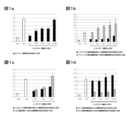
- FIG. 1 shows the results of a loss-of-function assay that identifies components required to elicit immune tolerance.
- B6 C57BL6
- BALB / c mice C57BL6 mice
- spleen cells lymphocytes
- BALB / c spleen cells serving as a stimulator were irradiated with 30 Gy of radiation ( ⁇ -ray), mixed with B6-derived spleen cells at a ratio of 1: 1, and anti-CD80 antibody and anti-CD86 antibody each having a final concentration of 10 ⁇ g / mL, and the culture was started in an appropriate volume of culture medium at 37 ° C.
- Immune reaction suppression ability test newly collected spleen cells derived from B6 mouse were used as responders, and newly collected splenocytes of BALB / c mice were used as stimulators, and each cell was used in a 1: 1 ratio. Mixed cultures containing the ratios were made in a volume of 200 ⁇ L in each well of a 96-well plate (1 ⁇ 10 5 cells per well). For all of the mixed cultures, no selection was performed so that the ratio of the number of responder B6 spleen cells to the cell number was 1, 1/2, 1/4, 1/8, or 1/16. Anergy cells (FIG.
- FIG. 1a a cell population of only anergy CD8-positive cells or the remaining cell population excluding the anergy CD8-positive cells
- FIG. 1b a cell population of only regT cells or a remaining cell population excluding regT cells
- FIG. 1d a cell population of only CD19-positive cells (B cells) or the remaining cell population excluding B cells (FIG. 1d) was added, and cultured at 37 ° C. in a 5% CO 2 incubator.
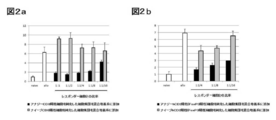
- FIG. 2 shows the results of an inhibitory function acquisition assay by CD80 / 86 blocking.
- Irradiated spleen derived from BALB / c was applied to spleen cells obtained from a wild-type B6 mouse and a B6-derived mouse genetically modified to simultaneously express FoxP3 and human CD2 in the same manner as in Example 1.
- the cells were treated with an anti-CD80 antibody / anti-CD86 antibody to obtain anergy cells.
- Unstimulated naive spleen cells obtained from wild-type B6 mice and B6-derived mice genetically modified to simultaneously express FoxP3 and human CD2 together with the anergy cells were subjected to PE fluorescence-labeled anti-mouse CD8 antibody or PE It was reacted with a fluorescently labeled anti-human CD2 antibody.
- the cells were sorted into CD8 positive and CD8 negative or human CD2 positive and human CD2 negative by auto-MACS using anti-PE magnetic beads.
- Each selected cell was added to the mixed culture system on the 96-well plate described in Example 1, and its immunosuppressive ability was examined.
- “naive” i represents more precisely the torema (two points above); the same applies in the present specification
- allo is a responder and a stay.
- Myureita is only wells to create a graph of the average value of 3 H- thymidine uptake of "naive" as one.
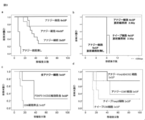
- Example 3 shows the results of an experiment using mice to confirm whether the purified cells after induction of anergy have the ability to induce tolerance after transplantation.
- spleen cells of wild-type B6 mice and B6-derived mice genetically modified to express FoxP3 and human CD2 simultaneously were irradiated with spleen cells irradiated with BALB / c.
- Treatment with a CD80 antibody / anti-CD86 antibody was performed to obtain anergy cells. From the obtained anergy cells (all anergy cells), CD8-positive cells, CD4-positive cells or human CD2-positive cells were selected in the same manner as in Example 1.
- FIG. 3a shows the cumulative survival of heart-transplanted mice when no anergy cells were transplanted or when 2 ⁇ 10 6 , 4 ⁇ 10 6 or 6 ⁇ 10 6 total anergy cells were administered.
- FIG. 3b shows the effect of irradiation on recipient mice.
- FIG. 4 shows the ability of anergy cells derived from human PBMC.
- PBMC Mononuclear cells
- PBMC Mononuclear cells
- the stimulator PBMC was irradiated with radiation ( (Gamma ray) 30 Gy was irradiated and mixed 1: 1 with the responder PBMC.
- An anti-human CD80 antibody and an anti-human CD86 antibody were added to the mixed PBMC so that the final concentrations became 10 ⁇ g / mL, respectively, and culture was started in an appropriate volume of culture medium at 37 ° C. in a 5% CO 2 incubator. .
- a culture solution containing the irradiation stimulator PBMC and the anti-CD80 antibody / anti-CD86 antibody was added under the same conditions as at the start of the culture.
- the cells were collected, and the culture was washed out by centrifugation to obtain anergy cells.
- the obtained anergy cells were stained with a PE fluorescently labeled mouse anti-human CD25 antibody, a FITC fluorescently labeled mouse anti-human CD4 antibody, and an APC fluorescently labeled mouse anti-human CD8 antibody. (Bay Bioscience) was used to purify each cell.
- FIG. 4b shows a cell population obtained by purifying CD4-positive cells such that the ratio of the number of responder PBMCs to the number of cells of the mixed culture is ⁇ , ⁇ , 8, or 1/16.
- FIG. 5 is a diagram showing that immunosuppression by anergy cells is specific to an antigen. This figure shows the survival rate of heart after transfer of B6 mouse-derived anergy cells stimulated with Balb / C mouse spleen cells in the presence of anti-CD80 / 86 antibody to B6 mice.
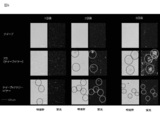
- FIG. 6 shows that anergy cells bind to donor (stimulator) cells more rapidly than naive cells, thereby inhibiting naive cell response and proliferation.
- spleen cells obtained from B6 mice were treated with irradiated spleen cells derived from BALB / c and an anti-CD80 antibody / anti-CD86 antibody to obtain anergy cells.
- spleen cells newly obtained from B6 mice genetically modified to constantly express the fluorescent dye GFP were used as responders.
- the above-mentioned anergy cells were added to the responder B6 spleen cells in a 4 ml mixed culture system containing 1 ⁇ 10 6 cells / ml of the above-mentioned responder B6 spleen cells and stimulator (donor) BALB / c spleen cells.
- donor stimulator
- Example 7 shows that among the anergy cells, the cells exhibiting the immunosuppressive ability (the ability to induce anergy) are CD44-positive.
- splenocytes obtained from B6 mice were treated with irradiated spleen cells derived from BALB / c and an anti-CD80 antibody / anti-CD86 antibody to obtain anergy cells.
- CD8-positive CD44-negative cells or CD4-positive CD44-negative cells are removed using a JSAN cell sorter.
- a cell population was prepared, and this cell population or all anergy cells were added to a mixed culture system such that the ratio to the responder B6 spleen cells was 1/2, 1/4, 1/8, or 1/16. (FIG. 7a).
- FIG. 7c shows the results of examining the phenotype of anergy cells by FACS.
- tolerance refers to a state in which a specific immune response to a specific antigen is not exhibited or a specific immune response is suppressed.
- Immune tolerance refers to whether immune cells (particularly T cells) do not show a specific immune response to a specific antigen, or whether the specific immune response is suppressed and whether humans show a specific immune response to a specific antigen. And / or one in which the specific immune response is suppressed. Attention has been paid to the fact that the induction of immune tolerance enables treatment for immune rejection and treatment for allergy.
- the term “anagy” means a state in which no co-stimulation is input when an antigen is presented from an antigen-presenting cell, so that the cell cannot respond even if stimulated under the next co-stimulation condition. I do.
- anagive cells refers to cells that have become tolerant (immune unresponsive)
- anagive T cells are T cells that have developed tolerance (immune unresponsive).
- T cells that are not activated and that are unresponsive when exposed to the same antigen again.
- PBMC (or T cell) induced immune tolerance” and “anagically PBMC (or T cell)” have the same meaning. Whether the cells are anergy cells can be confirmed by, for example, confirming CD44 positivity, but is not limited thereto.
- subject refers to domestic animals (eg, cows, sheep, cats, dogs, horses), primates (eg, humans and non-human primates such as monkeys), rabbits, and rodents. Includes teeth (eg, mice and rats). In certain embodiments, the subject is a human.
- drug As used herein, “drug”, “agent” or “factor” (both corresponding to “agent” in English) are used interchangeably in a broad sense, and are any meaning as long as the intended purpose can be achieved. It may also be a substance or other element (eg, energy such as light, radioactivity, heat, electricity, etc.).
- Such substances include, for example, proteins, polypeptides, oligopeptides, peptides, polynucleotides, oligonucleotides, nucleotides, nucleic acids (eg, DNA such as cDNA, genomic DNA, RNA such as mRNA), poly Saccharides, oligosaccharides, lipids, small organic molecules (eg, hormones, ligands, signal transducers, other small organic compounds, molecules synthesized by combinatorial chemistry, small molecules that can be used as pharmaceuticals (eg, small molecule ligands, etc.) ) And the like, but are not limited to these complex molecules.
- proteins polypeptides, oligopeptides, peptides, polynucleotides, oligonucleotides, nucleotides, nucleic acids (eg, DNA such as cDNA, genomic DNA, RNA such as mRNA), poly Saccharides, oligosaccharides, lipids, small
- the term “inhibitor” refers to any type of small molecule, protein, nucleic acid, lipid, sugar, etc., that can inhibit a predetermined action (eg, interaction, signal transmission, etc.). While not wishing to be bound by any particular theory, the present disclosure discloses that by blocking the interaction of CD28 with cell surface CD80 and / or CD86 with CD28 and inhibiting the CD28 costimulatory signal, T cells can be anabolic. To induce.
- the inhibitor used to block the interaction of CD28 with CD80 and / or CD86 is selected from the group consisting of small molecules, proteins, nucleic acids, lipids, sugars, and combinations thereof. .
- the protein is an antibody or a variant thereof, or a cell surface molecule or a variant thereof.
- the variant of the antibody is an antigen-binding fragment.
- the variant of the cell surface molecule is a fusion protein.
- the inhibitor comprises an anti-CD80 antibody, an anti-CD86 antibody, a bispecific antibody to CD80 and CD86, an anti-CD28 antibody or an antigen-binding fragment thereof, a CTLA4-Ig fusion protein, a CD28-Ig fusion protein. Selected from the group
- the CTLA4-Ig fusion protein is abatacept or veratacept. It is also envisioned that factors that indirectly inhibit the above-mentioned interaction (eg, factors that inhibit upstream or downstream of signal transduction) may be used in combination.
- antibody in a broad sense refers to a molecule or a population thereof capable of specifically binding to a specific epitope on an antigen.
- the “antibody” in the broad sense herein may be a full-length antibody (ie, an antibody having an Fc portion) or an antibody lacking the Fc portion.
- the antibody lacking the Fc portion only needs to be able to bind to the target antigen.
- Examples of such an antibody include Fab antibody, F (ab ') 2 antibody, Fab' antibody, Fv antibody, scFv antibody and the like. But not limited thereto.
- the antibody may be any type of antibody, ie, an immunoglobulin known in the art.
- the antibody is of the isotype IgA, IgD, IgE, IgG, or IgM class.
- the antibodies described herein comprise one or more alpha, delta, epsilon, gamma, and / or mu heavy chains.
- the antibodies described herein comprise one or more kappa or light chains.
- the antibody is an IgG antibody and is one of four human subclasses: IgG1, IgG2, IgG3, and IgG4.
- Antibodies contemplated for use in the present disclosure include camelid-derived antibodies (eg, VHH antibodies), shark-derived antibodies (eg, single-chain antibodies), peptibodies, peptibodies, nanobodies, and monobodies.
- camelid-derived antibodies eg, VHH antibodies
- shark-derived antibodies eg, single-chain antibodies
- peptibodies peptibodies
- nanobodies and monobodies.
- One domain antibody One domain antibody
- minibody, minibody, multispecific antibody eg, bispecific antibody, diabody, diabody, triabody, tetrabody, tandem di-scFV, tandem tri-scFv
- multispecific antibody eg, bispecific antibody, diabody, diabody, triabody, tetrabody, tandem di-scFV, tandem tri-scFv
- Antibodies include modified antibodies or unmodified antibodies.
- the modified antibody may be a combination of an antibody and various molecules such as polyethylene glycol.
- the modified antibody can be obtained by chemically modifying the antibody using a known technique. See also Biochemistry (2016) 88: 3 380-385 for artificially created antibodies and various methods of modifying / altering antibodies.
- the term "antibody” refers to an immunoglobulin or a population thereof capable of specifically binding to a specific epitope on an antigen, and a variant thereof is referred to as a "antibody variant".
- the “antibody” in the narrow sense herein may be a full-length antibody (ie, an antibody having an Fc portion), and the “variant of the antibody” herein is a variant lacking the Fc portion of the antibody. possible. Therefore, in the present specification, an antibody in a narrow sense can also be referred to as a full-length antibody, and a variant of the antibody can also be referred to as a full-length antibody variant.
- the variant lacking the Fc portion only needs to be able to bind to the target antigen.
- variants of antibodies include modified antibodies or unmodified antibodies.
- the modified antibody may be a combination of an antibody and various molecules such as polyethylene glycol.
- the modified antibody can be obtained by chemically modifying the antibody using a known technique.
- a “polyclonal antibody” is used in mammals (eg, rats, mice, rabbits, cows, monkeys, etc.), birds, etc., for example, to induce the production of polyclonal antibodies specific for an antigen. It can be produced by administering an immunogen containing the antigen of interest. Administration of the immunogen may involve infusion of one or more immunizing agents and, if desired, an adjuvant. Adjuvants are sometimes used to increase the immune response and may include Freund's adjuvant (complete or incomplete), mineral gels (such as aluminum hydroxide), or surfactants (such as lysolecithin) and the like. . Immunization protocols are known in the art and may be performed by any method that elicits an immune response, depending on the host organism selected (Protein Experiment Handbook, Yodosha (2003): 86-91). .).
- “monoclonal antibodies” are those in which the individual antibodies that comprise the population correspond to substantially the same epitope, except for those antibodies that have mutations that can occur in small amounts in nature. Including the case of a specific antibody. Alternatively, the individual antibodies that make up the population may be substantially identical, except for those that have mutations that can occur in small amounts naturally. Monoclonal antibodies are highly specific, different from ordinary polyclonal antibodies, which typically include different antibodies corresponding to different epitopes and / or typically include different antibodies corresponding to the same epitope. different. In addition to their specificity, monoclonal antibodies are useful in that they can be synthesized from hybridoma cultures that are not contaminated with other immunoglobulins.
- a monoclonal antibody may indicate a characteristic of being obtained from a substantially homogeneous population of antibodies, but does not imply that the antibodies must be produced in any particular manner.
- a monoclonal antibody may be prepared by a method similar to the hybridoma method described in “Kohler G, Milstein C., Nature. 1975 Aug 7; 256 (5517): 495-497.”
- monoclonal antibodies may be made by methods similar to recombinant methods as described in US Pat. No. 4,816,567.
- the monoclonal antibody is "Clackson et al., Nature. 1991 Aug 15; 352 (6336): 624-628.” Or "Marks et al., J Mol Mol Biol.
- a “chimeric antibody” is one in which the variable region of an antibody between heterologous organisms and the constant region of the antibody are linked, and can be constructed by genetic recombination technology.
- the mouse-human chimeric antibody can be prepared, for example, by the method described in "Roguska et al., Proc Natl Acad Sci U U S A 1994 Feb 1; 91 (3): 969-973.”
- Basic methods for producing mouse-human chimeric antibodies include, for example, encoding the mouse leader and variable region sequences present in the cloned cDNA, encoding the human antibody constant regions already present in mammalian cell expression vectors. Ligated to the sequence.
- the mouse leader sequence and variable region sequence present in the cloned cDNA may be ligated to a sequence encoding a human antibody constant region, and then ligated to a mammalian cell expression vector.
- Fragments of the human antibody constant region can be those of the H chain constant region of any human antibody and the L chain constant region of a human antibody, such as C ⁇ 1, C ⁇ 2, C ⁇ 3 or C ⁇ 4 for human H chains.
- C ⁇ or C ⁇ can be mentioned, respectively.
- a “humanized antibody” has, for example, one or more CDRs from a non-human species, and a framework region (FR) from a human immunoglobulin, and a constant region from a human immunoglobulin. And an antibody that binds to the desired antigen.
- Humanization of antibodies can be performed using various techniques known in the art (Almagro et al., Front Biosci. 2008 Jan Jan 1; 13: 1619-1633.). For example, CDR grafting (Ozaki et al., Blood.
- FR residues important for antigen binding may be identified by modeling the interaction between CDRs and FR residues.
- abnormal FR residues at specific positions may be identified by sequence comparison.
- human antibody refers to, for example, the variable region and constant region of the heavy chain and the light chain variable region and the constant region constituting the antibody are derived from a gene encoding human immunoglobulin.
- the main production methods include a transgenic mouse method for producing a human antibody, a phage display method, and the like.
- a transgenic mouse method for producing a human antibody when a functional human Ig gene is introduced into a mouse in which endogenous Ig has been knocked out, a human antibody having various antigen-binding abilities is produced instead of a mouse antibody. If the mouse is further immunized, a human monoclonal antibody can be obtained by the conventional hybridoma method.
- phage display a foreign gene is typically fused to the N-terminal end of a coat protein (g3p, g10p, etc.) of filamentous phage such as M13 or T7, which is one of Escherichia coli viruses, so as not to lose phage infectivity
- a coat protein g3p, g10p, etc.
- filamentous phage such as M13 or T7, which is one of Escherichia coli viruses
- the term “cells derived from a subject” refers to cells obtained from a subject to which the composition of the present disclosure is administered or cells derived from cells obtained from the subject.
- subject-derived antigen refers to an antigen produced by a subject that produces an immune response, for example, a subject that produces an autoimmune disease in a subject having an autoimmune disease.
- Antigen As used herein, “antigen not derived from a subject” refers to a foreign antigen that can generate an immune response.
- antigen-containing (material) not derived from a subject refers to any substance or a collection of substances containing an antigen not derived from a subject. Cells, cell populations, tissues, etc., which express antigens not derived from E. coli.
- transplant immune rejection refers to a condition in which a subject's immune system attacks a transplanted organ, tissue or cell in a subject who has received a transplant of the organ, tissue or cell and damages the organ, tissue or cell. Or to destroy.
- allergy refers to a state in which an immune response excessively occurs to an antigen not derived from a subject.
- An antigen that is not derived from a subject that causes an allergy is also called an allergen, and includes, for example, mite antigen, egg white antigen, milk antigen, wheat antigen, peanut antigen, soybean antigen, buckwheat antigen, sesame antigen, rice antigen, crustacean antigen, kiwi Antigen, apple antigen, banana antigen, peach antigen, tomato antigen, tuna antigen, salmon antigen, mackerel antigen, beef antigen, chicken antigen, pork antigen, cat skin antigen, insect antigen, pollen antigen, dog skin antigen, fungal antigen , Bacterial antigens, latex, haptens, metals and the like, but are not limited thereto.
- autoimmune disease refers to any disease in which the immune system produces an undesirable immune response against its own cells, tissues or organs.
- Autoimmune diseases include, for example, rheumatoid arthritis, multiple sclerosis, type 1 diabetes, inflammatory bowel disease (eg, Crohn's disease or ulcerative colitis), systemic lupus erythematosus, psoriasis, scleroderma, autoimmune thyroid Diseases, alopecia areata, Graves' disease, Guillain-Barre syndrome, celiac disease, Sjogren's syndrome, rheumatic fever, gastritis, autoimmune atrophic gastritis, autoimmune hepatitis, pancreatitis, ovitis, orchitis, uveitis, Lens-induced uveitis, myasthenia gravis, primary myxedema, pernicious anemia, autoimmune hemolytic anemia, Add
- graft-versus-host disease refers to a situation where a transplanted organ, tissue or cell attacks, damages or destroys a transplanted subject's cell, tissue or organ by an immune response.
- immune rejection caused by transplantation of iPS cells or ES cells or cells, tissues or organs derived therefrom refers to an antigen of iPS cells or ES cells, or iPS cells or ES cells.
- the present disclosure provides a pharmaceutical composition comprising CD4-positive anergy T cells and CD8-positive anergy T cells.
- a pharmaceutical composition can be used for antigen-specific immune tolerance or immunosuppression.
- the anergy T cells may be induced by an inhibitor capable of inhibiting the interaction of CD28 with CD80 and / or CD86.
- Such inhibitors are selected from the group consisting of small molecules, proteins, nucleic acids, lipids, sugars, and combinations thereof.
- the protein is an antibody or a variant thereof, or a cell surface molecule or a variant thereof.
- the variant of the antibody is an antigen-binding fragment.
- the variant of the cell surface molecule is a fusion protein.
- the inhibitor comprises an anti-CD80 antibody, an anti-CD86 antibody, a bispecific antibody to CD80 and CD86, an anti-CD28 antibody or an antigen-binding fragment thereof, a CTLA4-Ig fusion protein, a CD28-Ig fusion protein. Selected from the group In another aspect, the CTLA4-Ig fusion protein is abatacept or veratacept. .
- CD80 and / or CD86 are expressed by antigen presenting cells and CD28 is expressed by T cells.
- the pharmaceutical compositions of the present disclosure can further include regulatory T cells, eg, FOXP3-positive CD4-positive CD25-positive T cells.
- regulatory T cells are not directly involved in “tolerance” that does not show a specific immune response to a specific antigen, and are not an essential component, but can suppress the immune response.
- the compositions of the present disclosure may further include regulatory T cells.
- the present disclosure provides a pharmaceutical composition comprising cells in which anergy has been induced by an inhibitor capable of inhibiting the interaction of CD28 with CD80 and / or CD86, wherein the composition comprises
- the present invention provides a composition comprising CD8-positive cells and further comprising at least one of FOXP3-positive cells and CD4-positive cells.
- Such a pharmaceutical composition can be used for antigen-specific immune tolerance or immunosuppression.
- a composition of the present disclosure may include all of FOXP3 positive cells, CD4 positive cells, and CD8 positive cells.
- CD8-positive cells and CD4-positive cells from which anergy has been induced contain many CD44-positive cells.
- the CD8 positive cells and / or CD4 positive cells can be CD44 positive.
- CD45RA / CD45RO can also be used to confirm the generation of anergy cells.
- the CD8 positive cells and / or CD4 positive cells are CD45RA negative and CD45RO positive.
- the FOXP3 positive cells can be CD4 positive and / or CD25 positive.
- the compositions of the present disclosure further comprise regulatory T cells, wherein the regulatory T cells are FOXP3 positive and may be CD4 positive and / or CD25 positive.
- the inhibitor capable of inhibiting the interaction of CD28 with CD80 and / or CD86 is selected from the group consisting of small molecules, proteins, nucleic acids, lipids, sugars, and combinations thereof.
- the protein is an antibody or a variant thereof, or a cell surface molecule or a variant thereof.
- the variant of the antibody is an antigen-binding fragment.
- the variant of the cell surface molecule is a fusion protein.
- the inhibitor comprises an anti-CD80 antibody, an anti-CD86 antibody, a bispecific antibody to CD80 and CD86, an anti-CD28 antibody or an antigen-binding fragment thereof, a CTLA4-Ig fusion protein, a CD28-Ig fusion protein. Selected from the group
- the CTLA4-Ig fusion protein is abatacept or veratacept.
- CD80 and / or CD86 are expressed by antigen presenting cells and CD28 is expressed by T cells.
- the inhibitor capable of inhibiting the interaction of CD28 with CD80 and / or CD86 can be an anti-CD80 and / or anti-CD86 antibody or a CTLA4-Ig fusion protein.
- Inhibitors envisioned for use in the present disclosure include CTLA-4 ⁇ Ig fusion proteins, as described above.
- the CTLA-4 ⁇ Ig fusion protein competes with CD28, a costimulatory receptor on T cells, for binding to CD80 / CD86 on antigen presenting cells, and thus functions to inhibit T cell activation. I do.
- Abatacept Orencia®
- Veratacept or Maxy-4 is assumed as the CTLA-4 ⁇ Ig fusion protein.
- Veratacept contains two amino acid substitutions (L104E and A29Y) that significantly increase the binding avidity for CD80 and CD86 (Davies @ JK et al., Cell @ Transplant. (2012); 21 (9): 2047-61; Adams @ AB et al. J.
- CD28-Ig fusion proteins are also examples of inhibitors that are expected to have the same effects as CTLA4-Ig fusion proteins.
- the inhibitors of the present disclosure can also be used in the form of nucleic acids. As an example, it is conceivable that a nucleic acid encoding a CTLA4-Ig fusion protein is introduced into a cell via an adenovirus vector or the like and expressed. See, for example, Jin @ YZ et al., Transplant @ Proc. (2003); 35 (8): 3156-9.
- the anergy cells mix an inhibitor, such as an antibody, with cells from a subject, and antigens from the subject, or antigens not derived from the subject or inclusions of the antigen. It can be a cell induced by a step.
- the contents of the antigen can be cells and can be irradiated to prevent proliferation and activation of the cells.
- a pharmaceutical composition comprising a composition of the present disclosure for treating or preventing a disease, disorder or condition in a subject caused by an antigen from the subject or an antigen not derived from the subject.
- Diseases, disorders or conditions in a subject caused by antigens derived from or not derived from the subject include, for example, transplant immune rejection, allergy, autoimmune disease, graft versus host disease, iPS cells or ES.
- Diseases, disorders or conditions that require immunological tolerance, such as immune rejection caused by transplantation of cells and cells, tissues or organs derived from those cells include, but are not limited to.
- the transplant immune rejection is kidney, liver, heart, skin, lung, pancreas, esophagus, stomach, small intestine, large intestine, nerve, blood, blood cells including immune system cells, bone, cartilage, blood vessels.
- the cornea, the eyeball or the bone marrow is transplanted.
- the anergy cells may be an inhibitor such as an antibody, cells from the recipient (PBMC or spleen cells), antigens from the donor or donor-derived.
- PBMC cells from the recipient
- antigens from the donor or donor-derived By mixing with the contents of the antigen.
- the contents of the antigen from the donor can be PBMC, spleen cells or cells from the organ to be transplanted.
- the anergy cells include an inhibitor such as an antibody, a cell derived from the subject (PBMC or spleen cell), and an antigen not derived from the subject causing the allergy.
- an inhibitor such as an antibody, a cell derived from the subject (PBMC or spleen cell), and an antigen not derived from the subject causing the allergy.
- the anergy cells include an inhibitor such as an antibody, cells derived from the subject (PBMC or spleen cells), and a test subject that causes the autoimmune disease. It can be induced by mixing with a body-derived antigen.
- the anergy cells include an inhibitor such as an antibody, PBMC or spleen cells of a donor providing the graft, and antigen or a recipient-derived antigen. It can be induced by mixing with the contents of the antigen.
- the contents of the antigen from the recipient can be PBMC, spleen cells or cells around or at the site where the organ is transplanted, or cells derived therefrom.
- an anergy cell is combined with an inhibitor such as an antibody.
- macrophages obtained from the peripheral blood of a patient are differentiated into dendritic cells with high antigen presenting ability (macrophage-derived dendritic cells) by a conventional method, These cells are presented with an antigen causing an overreaction in an allergic or autoimmune disease, and a group of T cells obtained from the same patient's peripheral blood is combined with an anti-CD80 antibody and / or an anti-CD86 antibody or a CTLA4-Ig fusion protein. And co-culture for 1-2 weeks in the presence of an appropriate inhibitor of to obtain anergy cells specific for the antigen causing the allergy or autoimmune disease.
- the administration of these anergy cells to a patient induces immune tolerance specific to an antigen causing allergy and autoimmune disease, and is used for prevention and treatment of allergy and autoimmune disease.
- the number of administrations may be plural.
- graft-versus-host disease In graft-versus-host disease, in contrast to treatment for transplant immune rejection, cells that can cause graft-versus-host disease, such as PBMCs or T cells of the donor providing the graft, are exposed to radiation ( ⁇ -rays). PBMCs or other cells from the irradiated host are co-cultured for 1-2 weeks in the presence of a suitable inhibitor such as an anti-CD80 antibody and / or an anti-CD86 antibody or a CTLA4-Ig fusion protein, and are cultured for a host-specific period. Obtain anergy cells.
- a suitable inhibitor such as an anti-CD80 antibody and / or an anti-CD86 antibody or a CTLA4-Ig fusion protein
- the response of the graft to the host caused by the graft-versus-host disease is suppressed (inducing immune tolerance), and the graft-versus-host disease is prevented and treated.
- the number of administrations may be multiple.
- iPS cells or ES cells In the application to therapy using iPS cells or ES cells, cells (dendritic cells) used for transplantation or dendritic cells differentiated from iPS cells or ES cells are irradiated with radiation ( ⁇ -rays), and these cells and a patient receiving the transplant are irradiated.
- PBMCs or T cell populations are co-cultured for 1-2 weeks in the presence of an appropriate inhibitor such as an anti-CD80 and / or anti-CD86 antibody or a CTLA4-Ig fusion protein to produce cells differentiated from iPS cells or ES cells. Obtain specific anergy cells.
- the anergy cells By administering the anergy cells to a host, specific immune tolerance is induced in transplanted cells, tissues, and organs derived from iPS cells or ES cells, and rejection to them is prevented and treated. Depending on whether the treatment is prophylactic or therapeutic, the tissue to be transplanted, its size, and the condition of the symptoms, the number of administrations may be several.
- the present disclosure provides a method of producing a medicament comprising cells, the method comprising (A) an antibody capable of inhibiting the interaction of CD80 and / or CD86 with CD28. Mixing an inhibitory factor such as the above, a cell derived from a subject, and an antigen derived from the subject, an antigen not derived from the subject, or a content of the antigen; and (B) cell generation obtained by the mixing. And (C) confirming that the cell product contains at least one type of FOXP3 positive and CD4 positive cells. I do.
- the present inventors have found that in order to exert a sufficient immunosuppressive ability, it is important that a mixture of T cells from which anergy has been induced contains CD8-positive cells. Therefore, it is important to ensure that CD8-positive cells are included in the manufacture of a medicament containing T cells from which anergy has been induced.
- the medicament thus produced can be used to treat or prevent a disease, disorder or condition in a subject caused by an antigen from or non-subject to the subject. Any inhibitor that generates CD8-positive cells may be used.
- the presence of CD8 positive cells and at least one cell of FOXP3 positive cells and CD4 positive cells in the cell product indicates that the cell product can be used as a medicament.
- CD8 can be detected using an anti-CD8 antibody to confirm that it contains CD8 positive cells.
- at least one of FOXP3 and CD4 is used by using at least one of an anti-FOXP3 antibody and an anti-CD4 antibody in order to confirm that the cell contains at least one type of FOXP3 positive and CD4 positive cells.
- Specific techniques for detection include, but are not limited to, flow cytometry (FACS), Western blot, RNA detection, and the like.
- FACS flow cytometry
- RNA detection RNA detection
- a specific technique for detecting is FACS. Detection of RNA is performed by a method known in the art, such as PCR.
- FOXP3 is expressed in cells, it is possible to stain the inside of cells by permeabilizing the cells after fixing the cells, and it is possible to detect FOXP3 by a technique such as FACS.
- Commercially available products suitable for use in this method include eBioscience TM Human Regulatory T Cell Staining Kit # 3 (cat # 88-8995-40), eBioscience TM Mouse Regulator T Cell # 88 # 95 # # # # # # # # # # # # # # # # # # # # # # # # # # # # 8111-40), eBioscience TM Human / Non-Human Primate Regulatory T Cell Staining Kit # 1 (cat # 88-4999-40), and eBioscience TM Human Reg. And the like.
- the present disclosure provides a quality control method for a cell preparation (cell-containing drug). More particularly, the present disclosure relates to the quality of a medicament comprising cells for treating or preventing a disease, disorder or condition in a subject caused by antigens expressed on cells from the subject or antigens not derived from the subject. Wherein the method comprises the steps of: (A) confirming that the cells include CD8-positive cells; and (B) determining that the cells include at least one of FOXP3-positive cells and CD4-positive cells.
- a certain quality (sufficient immune tolerance) in a medicament comprising cells for treating or preventing a disease, disorder or condition in a subject caused by an antigen expressed on cells derived from the subject or an antigen not derived from the subject. It is one of the important points to maintain whether CD8-positive cells are contained in a medicine containing such cells in order to maintain the above.
- CD8 can be detected using an anti-CD8 antibody in order to confirm that it contains CD8 positive cells.
- at least one of FOXP3 and CD4 is used by using at least one antibody of an anti-FOXP3 antibody and an anti-CD4 antibody in order to confirm that the cell contains at least one cell of FOXP3 positive and CD4 positive.
- Specific means for detection include, but are not limited to, FACS, Western blot, PCR, and the like.
- anergy T cells is performed after organ transplantation (eg, liver transplantation) from a donor is performed on the recipient.
- organ transplantation eg, liver transplantation
- donor-derived mononuclear cells which are the source of autologous anergy T cells, are also contained in a state without virus removal. , Liver) is transplanted into the recipient. Therefore, donor-derived mononuclear cells used as a material for autologous anergy T cells are not considered to be biologically-derived materials.
- cell preparations can be made as follows. The various numerical values and the like illustrated below are representative examples, and those skilled in the art can appropriately modify and manufacture cell preparations. 1) About 19 days before the administration, apheresis is performed on the donor at a medical institution, the donor apheresis product is irradiated with 30 Gy of radiation, and the cell proliferation ability is lost.
- the donor mononuclear cells are separated and collected by a density gradient centrifugation method in a cell culture processing facility, frozen in two parts, and stored at -80 ⁇ 10 ° C. 3) About 14 days before administration, apheresis is performed on the recipient at a medical institution, and the recipient apheresis product is sent to a cell culture processing facility that performs cell processing.
- the recipient mononuclear cells were separated by density gradient centrifugation, collected, and thawed the donor mononuclear cells and the anti-CD80 antibody and anti-CD86 antibody or CTLA4-Ig fusion. Co-culture with inhibitors such as proteins. 5) Change the medium about 7 days before administration. Intermediate products cultured for 7 days are collected and co-cultured with thawed donor monocytes and inhibitors such as anti-CD80 and anti-CD86 antibodies or CTLA4-Ig fusion proteins. 6) On the day of administration, the cell processed product is collected by density gradient centrifugation, washed, and filled with a physiological saline solution. 7) Dispatch to a medical institution and administer to the recipient at the medical institution.
- in-process control test In one embodiment, an in-process control test described in Table 2 can be performed in the manufacturing process. Various numerical values and the like and procedures illustrated below are typical examples, and those skilled in the art can appropriately perform the in-process control test.
- Standard Test, Characteristic Analysis Test In one embodiment, the standard test described in Table 3 can be performed using the final product.
- the procedure illustrated in Table 3 is a representative example, and a person skilled in the art can perform a standard test and a characteristic analysis test with appropriate modifications.
- the standard exemplified in the eighth embodiment can be cited. If the result is not clear at the time of administration of the inducible suppressive T cell, the shipment of the trial product can be determined by referring to the result of the in-process control test.
- the characteristic analysis test described in Table 3 can be performed using the cells in the manufacturing process and the final product.
- the above-mentioned clinical trial product standard test and characteristic analysis test are as described in the present specification, and the clinical trial product standard test includes appearance, cell number, viable cell rate, cell surface markers (CD3, CD4, CD8, CD25, CD44). , CD45RA / CD45RO), manufacturing process-related impurities (donor-derived cells, medium components, anti-CD80 antibody, anti-CD86 antibody, cell cryoprotectant solution components, specific gravity separation solution components), virus negative test, sterility test, mycoplasma negative test, and It may include endotoxin.
- the efficacy test may include a cytokine production or tritium uptake test by a mixed lymphocyte test (MLR) using cultured cells.
- MLR mixed lymphocyte test
- the CD3-positive cell ratio can be typically set to 50% or more in the table as a reference value, or, for example, 30% or more, 35% or more, 40% or more , 45% or more, 50% or more, 55% or more, 60% or more, 65% or more, 70% or more, or a numerical value between these values (can be set in 1%, 0.5%, etc.) Good.
- the ratio of CD8-positive CD44-positive cells in CD3-positive cells can be typically set to 10% or more in the table as a reference value, or, for example, 1% or more, 2% or more, 3% or more, 4% or more 5% or more, 6% or more, 7% or more, 8% or more, 9% or more, 10% or more, 11% or more, 12% or more, 13% or more, 14% or more, 15% or more, etc. .
- the ratio of CD4 + CD44 + cells in the CD3 + cells may not be set, or may be, for example, 1% or more, 2% or more, 3% or more, 4% or more, 5% or more, 6% or more, 7% or more.
- the ratio of CD8-positive CD45RA-negative cells in CD3-positive cells may not be set, or may be, for example, 1% or more, 2% or more, 3% or more, 4% or more, 5% or more, 6% or more, 7% or more. , 8% or more, 9% or more, 10% or more, 11% or more, 12% or more, 13% or more, 14% or more, 15% or more, 20% or more, 25% or more, 30% or more, 35% or more, 40% or more % Or more may be set as the reference value.
- the ratio of CD8-positive CD45RA-negative CD45RO-positive cells in CD3-positive cells may not be set, or may be, for example, 1% or more, 2% or more, 3% or more, 4% or more, 5% or more, 6% or more, 7% or more. % Or more, 8% or more, 9% or more, 10% or more, 11% or more, 12% or more, 13% or more, 14% or more, 15% or more, or the like may be set as the reference value.
- the ratio of CD4-positive CD45RA-negative CD45RO-positive cells in CD3-positive cells may not be set, or may be, for example, 1% or more, 2% or more, 3% or more, 4% or more, 5% or more, 6% or more, 7% or more. % Or more, 8% or more, 9% or more, 10% or more, 11% or more, 12% or more, 13% or more, 14% or more, 15% or more, or the like may be set as the reference value.
- the ratio of CD4 + CD25 cells in CD3 + cells can be typically 5% or more in the table as a reference value, or, for example, 1% or more, 2% or more, 3% or more, 4% or more, 5% or more, 6% or more, 7% or more, 8% or more, 9% or more, 10% or more, 11% or more, 12% or more, 13% or more, 14% or more, 15% or more.
- the number of cells may be typically 1 ⁇ 10 9 or more, or alternatively, for example, 1 ⁇ 10 8 or more, 5 ⁇ 10 8 or more, 1 ⁇ 10 9 or more, 2 ⁇ 10 9 The number may be more than 3 ⁇ 10 9 or more.
- the viable cell rate can be typically taken as 70% or more, or alternatively, 50% or more, 55% or more, 60% or more, 65% or more, 70% or more, 75% or more, 80% or more, 85% or more. % Or more, or 90% or more can be adopted as a reference.
- the end product is, for example, composed of the components listed in the table below. Those skilled in the art can also change these compositions as appropriate to configure products such as regenerative medicine.
- Method of administering products such as regenerative medicine
- the product is administered once 14 days after organ transplantation.
- a person skilled in the art can specifically implement the method of administration, the period of administration, and the like, as necessary, while appropriately taking into account the technical matters described in the present specification.
- kits In another aspect, the present disclosure provides a kit for producing a cell preparation. In yet another aspect, the present disclosure provides a kit for quality control of a cell preparation. In particular, the present disclosure is a kit for the manufacture of a medicament comprising a mixture of cells, the kit comprising (A) an antibody capable of inhibiting the interaction of CD28 with CD80 and / or CD86 and CD28. A kit comprising: (B) a means for detecting CD8; and (C) a means for detecting at least one of FOXP3 and CD4.
- the presence of CD8 positive cells in the mixture of cells, and the presence of at least one cell of FOXP3 positive cells and CD4 positive cells, indicates that the mixture of cells can be used as a medicament.
- a medicament comprising a mixture of cells produced by the kit of the present disclosure contains CD8-positive T cells from which anergy has been induced, and at least one cell of FOXP3-positive cells and CD4-positive cells, and comprises a subject-derived antigen. Alternatively, it can be used to treat or prevent a disease, disorder or condition in a subject caused by an antigen not derived from the subject.
- a medicament comprising cells for treating or preventing a disease, disorder or condition in a subject caused by an antigen expressed on cells derived from the subject or an antigen not derived from the subject.
- a means for detecting CD8 comprises an anti-CD8 antibody
- the means for detecting at least one of FOXP3 and CD4 comprises at least one antibody of an anti-FOXP3 antibody and an anti-CD4 antibody including.
- the detection can be performed by, for example, FACS, Western blot, PCR, or the like.
- the prior confirmation can be performed as follows.
- the various numerical values, reagents, procedures, and the like illustrated below are representative examples, and those skilled in the art can appropriately change and manufacture a prior confirmation.
- the separation of donor lymphocytes can be manufactured as follows.
- the various values, reagents, procedures, and the like illustrated below are representative examples, and those skilled in the art can appropriately separate donor lymphocytes.
- centrifugation at 860 G for 20 minutes at 22 ° C. centrifuge accelerator slow and brake slow.
- a syringe for example, a 50 mL syringe with an 18G injection needle
- cryopreservation of donor lymphocytes can be performed as follows.
- the various numerical values, reagents, procedures, and the like illustrated below are representative examples, and those skilled in the art can appropriately modify the cryopreservation of donor lymphocytes.
- Frozen bag eg, Frozen Bag F-050 25mL Freezing Bag Nipro 89-101
- a syringe e.g., a 30 mL syringe with an 18G injection needle
- ACD solution (Termo TP-A05ACD, for example, 2 mL per 15 mL of cell suspension) to the freezing bag containing the cell suspension, and sandwich the same at 4 ° C. for about 10 minutes. cool. 7.
- CP-1 Keloto Pharmaceutical Co., Ltd. 551-27202-4 cell cryoprotection solution CP-1) cooled at 4 ° C. using a syringe (eg, a 20 mL syringe fitted with an 18G injection needle); 5 mL) to the freezing bag over a period of about one and a half minutes. At this time, the frozen bag is slowly stirred. Using a syringe, remove all air from the cryobag and its port. Seal the freezing bag using a tube sealer, first cool at 4 ° C for about 5-10 minutes, then store in a -80 ° C freezer.
- thawing of donor lymphocytes can be performed as follows.
- the various values, reagents, procedures, and the like exemplified below are representative examples, and those skilled in the art can appropriately change the thawing of the donor lymphocytes.
- the subsequent operation is preferably performed under aseptic conditions.
- a syringe eg, a 50 mL syringe with an 18G syringe needle
- withdraw the cell suspension from the thawed frozen bag and transfer to a centrifuge tube eg, 12.5 mL for each of two 50 mL centrifuge tubes.
- a centrifuge tube eg, 12.5 mL for each of two 50 mL centrifuge tubes.
- a 5% albumin solution 123146364 Nippon Pharmaceutical Co., Ltd., blood donation 5% intravenous 12.5 g / 250 mL
- centrifuge at 600 G for 10 minutes at 22 ° C (for example, preferably, set the accelerator of the centrifuge to fast and the brake to slow).
- centrifuge at 600 G for 10 minutes at 22 ° C for example, preferably, set the accelerator of the centrifuge to fast and the brake to slow.
- ALyS505N culture solution eg, 10 mL for a 50 mL centrifuge tube).
- -An anti-human CD80 antibody for example, m2D10.4; Cat. No. 16-0809-85
- a culture bag for example, Nipro 87598 Nipromedium AlyS505NB10 containing an ALyS505N-0 culture solution or a solution equivalent thereto.
- EBioscience an anti-human CD86 antibody (eg, IT2.2; Cat. No. 16-0869-85, eBioscience), respectively, at a final concentration of, for example, 10 ⁇ g / mL (or a CTLA4-Ig fusion protein (eg, Veratacept).
- the cell suspension is injected into the culture bag with a syringe (eg, a 20 mL syringe with an 18G syringe needle).
- a syringe eg, a 20 mL syringe with an 18G syringe needle.
- the total volume in the culture bag is about 840 mL.
- the separation of patient lymphocytes can be performed as follows.
- the various numerical values, reagents, procedures, and the like illustrated below are representative examples, and those skilled in the art can appropriately modify patient lymphocytes.
- the plasma collected from the patient is heated in a thermostat, for example, at 56 ° C. for 30 minutes to be inactivated. If not used immediately, store frozen.
- Peripheral blood collected from a patient is placed in a centrifuge tube containing an appropriate amount of a suitable medium, for example, Ficoll-Paque (for example, 20 mL), and centrifuged at, for example, 860 G for 20 minutes at 22 ° C.
- a suitable medium for example, Ficoll-Paque (for example, 20 mL)
- centrifuge for example, preferably, Set the accelerator of the centrifuge to slow and the brake to slow.
- -Add physiological saline to the centrifuge tube containing the cell suspension for example, an appropriate amount until the total volume becomes 50 mL
- repeat the suction and discharge with a pipette for example, centrifuge at 500 G for 10 minutes at 22 ° C (the accelerator of the centrifuge may be set to fast and the brake may be set to fast).
- -Discard the supernatant add physiological saline again (for example, an appropriate amount until the total volume becomes 50 mL), and mix the cell pellet well by repeatedly aspirating and discharging with a pipette. For example, centrifuge at 500 G for 5 minutes at 22 ° C (the accelerator of the centrifuge may be set to fast and the brake may be set to fast).
- -Discard the supernatant and suspend the cell pellet by adding, for example, an ALyS505N-0 culture solution (for example, 10 mL) to prepare a cell suspension (for example, adding the ALyS505N-0 culture solution until the total volume becomes 20 mL).
- the cell suspension is withdrawn, and the number of cells, the number of living cells, and the expression of the surface antigen are confirmed.
- a culture bag containing inhibitory factors such as donor cells and antibodies in the ALyS505N-0 culture solution prepared in "3. Thawing donor lymphocytes".
- the above-mentioned patient-derived cell suspension is injected into the culture bag with a syringe (for example, a 20 mL syringe fitted with an 18G injection needle) and added thereto, and the culture bag is sealed using a tube sealer.
- the total volume in the culture bag is about 1000 mL.
- Culture in a 37 ° C. incubator for example, for one week.
- the medium exchange can be performed as follows.
- the various values, reagents, procedures, and the like illustrated below are representative examples, and those skilled in the art can appropriately change the medium to replace the medium.
- centrifuge tubes for example, four 225 mL centrifuge tubes.
- centrifuge at 600 G for 10 minutes at 22 ° C for example, preferably, the accelerator of the centrifuge may be set to fast and the brake may be set to fast).
- the cell pellet • Discard the supernatant gently, and suspend the cell pellet by adding, for example, an ALyS505N-0 culture solution to prepare a cell suspension (for example, add the ALyS505N-0 culture solution to a total volume of 20 mL).
- an ALyS505N-0 culture solution for example, add the ALyS505N-0 culture solution to a total volume of 20 mL.
- the cell suspension is injected into a culture bag containing the ALyS505N-0 culture solution with a syringe (eg, a 20 mL syringe fitted with an 18G injection needle) and added.
- a syringe eg, a 20 mL syringe fitted with an 18G injection needle
- the dilution of the anti-human CD80 antibody (for example, 2D10.4) and the dilution of the anti-human CD86 antibody (for example, IT2.2) are respectively adjusted to, for example, a final concentration of 10 ⁇ g / mL (or a CTLA4-Ig fusion protein (for example, an inhibitory factor such as veratacept) may be used.), And injected into a culture bag with a syringe (eg, a 20 mL syringe fitted with an 18G injection needle) and added.
- a syringe eg, a 20 mL syringe fitted with an 18G injection needle
- the thawing and restimulating antigen of donor lymphocytes-start of secondary culture can be performed as follows.
- the various numerical values, reagents, procedures and the like exemplified below are representative examples, and those skilled in the art can appropriately change the thawing and restimulation of antigen from the donor lymphocyte to the start of secondary culture.
- the subsequent operation is preferably performed under aseptic conditions.
- a syringe eg, a 50 mL syringe with an 18G syringe needle
- withdraw the donor cell suspension from the thawed frozen bag and transfer to a centrifuge tube (eg, two 50 mL centrifuge tubes).
- a centrifuge tube eg, two 50 mL centrifuge tubes.
- albumin solution for example, about 50 mL in total for two 50 mL centrifuge tubes
- it is left still for about 5 minutes. For example, centrifuge at 600 G for 10 minutes at 22 ° C. (set the accelerator of the centrifuge to fast and set the brake to slow).
- saline solution containing albumin for washing for example, prepared from 25 mL of a 5% albumin solution and 19 mL of a saline solution
- a saline solution containing albumin for washing for example, prepared from 25 mL of a 5% albumin solution and 19 mL of a saline solution
- a syringe (for example, 10 mL) of thawed inactivated plasma from a patient is placed in a culture bag containing an inhibitor such as an antibody or a patient cell in the ALyS505N culture solution prepared in “3. Thawing donor lymphocytes”.
- a 20 mL syringe with an 18G injection needle is injected and added, and the above cell suspension is further injected into the culture bag with a syringe (for example, a 20 mL syringe with an 18G injection needle).
- the total volume in the culture bag is about 1000 mL.
- testing during subculture can be performed as follows.
- the various numerical values, reagents, procedures, and the like exemplified below are representative examples, and those skilled in the art can appropriately perform the tests during the secondary culture.
- a small amount of the culture solution is withdrawn from the culture bag on the third day (10 days in total culture) from the start of the secondary culture, and inspected for mycoplasma contamination.
- Collection and filling of cultured lymphocytes can be performed as follows.
- the various values, reagents, procedures, and the like exemplified below are representative examples, and those skilled in the art can appropriately collect and fill the cultured lymphocytes.
- Secondary Packaging can be performed as follows. Various numerical values, reagents, procedures, and the like illustrated below are representative examples, and those skilled in the art can perform secondary packaging with appropriate modifications. ⁇ Typically, enter the subject ID, serial number, and expiration date on the label based on appropriate standards (typically, NUHCPC-M-12-ATREG), print the label, and affix the label to the container. • Issue “Dosage / Dose / Efficacy / Efficacy and Precautions for Use or Handling” based on appropriate criteria (typically, NUHCPC-PMF-ATREG14). ⁇ The test sample and “usage / dose / effect / effect and precautions for use or handling” are stored in a plastic bag with a zipper. ⁇ Store in a transfer container and store in the monitoring unit until shipment.
- Example 1 Loss of Function Assay In this example, a loss-of-function assay was performed to identify components necessary for inducing immune tolerance. This will be described below.
- C57BL6 (hereinafter B6) Mice and BALB / c mice (CLEA Japan, Japan Charles River, etc.) removing the spleen from after obtaining haemolysed spleen cells (lymphocytes) and erythrocytes, such that the 4 ⁇ 10 6 cells / ml 10 It was prepared in RPMI1640 medium (Sigma; R8758-500MK) containing% inactivated fetal calf serum (FCS) (SIGMA # 172012-500ML Lot 11D257 or biosera # FB-1380 / 500 Lot.015BS482).
- FCS inactivated fetal calf serum
- BALB / c spleen cells serving as stimulators were irradiated with 30 Gy of radiation ( ⁇ -ray), mixed with B6 spleen cells at a ratio of 1: 1 and hamster anti-mouse CD80 antibody (16-10A1) manufactured by eBioscience (Cat. No. .16-0801-82) and rat anti-mouse CD86 antibody (GL1) (Cat. No. 14-0862-82) were added to a final concentration of 10 ⁇ g / mL, and the mixture was added to a 12-well plate (Corning, # 3513). ) (1 to 2.5 mL), 6-well plate (Corning, Cat. No.
- PE fluorescence-labeled anti-mouse CD8 antibody (53-6.7; eBioscience, # 12-0081-85) was reacted with anergy cells and then reacted with anti-PE magnetic beads (Miltenyi Biotech # 1300-10-639). The cells were sorted into CD8 positive and CD8 negative by auto-MACS (miltenyi biotech) using). The same operation was performed using a PE fluorescently labeled CD19 antibody (1D3; eBioscience, # 12-0193-85) to sort the cells into CD19 positive and CD19 negative. These cells were used in an immunological reaction suppression ability test.
- B6-derived cells were modified so that responder cells simultaneously expressed FoxP3 and human CD2.
- human CD2-positive cells FoxP3-expressing regT-regT
- RPA-2.10 PE fluorescent-labeled anti-human CD2 antibody
- eBioscience eBioscience, ## 12-0029-42
- anti-PE magnetic beads PE fluorescent-labeled anti-human CD2 antibody
- FIG. Value indicates the calculated value of the average of the 3 H- thymidine uptake of unstimulated state (naive) as a 1.
- the whole B6 spleen cultured cells that had not been subjected to any sort were cultured together with the stimulator BALB / c spleen cells in the presence of the anti-CD80 / 86 antibody (hereinafter referred to as “antibody stimulator treatment”). "), It was confirmed that fresh (naive) B6 spleen cells had an effect of suppressing the reaction to BALB / c spleen cells.
- Example 2 Acquisition of inhibitory function by blocking CD80 / 86
- Example 2 In the same manner as in Example 1, antibody / stimulator treatment was performed on spleen cells obtained from wild-type B6 mice and B6-derived mice that had been genetically modified to simultaneously express FoxP3 and human CD2. , Anergy cells were obtained. Along with the anergy cells, unstimulated naive spleen cells obtained from wild-type B6 mice and B6 derived mice genetically modified to simultaneously express FoxP3 and human CD2 were subjected to PE fluorescence-labeled anti-mouse CD8 antibody or PE, respectively. It was reacted with a fluorescently labeled anti-human CD2 antibody.
- the cells were sorted into CD8 positive and CD8 negative or human CD2 positive and human CD2 negative by auto-MACS using anti-PE magnetic beads. Each selected cell was added to a mixed culture system on a 96-well plate, and its immunosuppressive ability was examined.
- Figure 2a value unstimulated state (the average value of 3 H- thymidine uptake of naive) shows a value calculated as 1.) As shown in, that there is a suppression effect on anergy CD8-positive cells (black ) And CD8-positive cells isolated from unstimulated naive spleen cells showed no inhibitory effect (gray). Furthermore, as shown in FIG. 2b, the regT cells (black) after the treatment with the antibody / stimulator also exert immunosuppressive ability, and the inhibitory ability is stronger than that of unstimulated naive regT cells (gray). Indicated.
- Example 3 ability to induce tolerance after transplantation of purified anergy cells
- FIG. 3 shows the result.
- FIG. 3a when no anergy cells are transplanted, all transplanted hearts are rejected by about 2 weeks.
- the engraftment rate of the heart was improved depending on the number of cells administered, and the transfer of 6 ⁇ 10 6 total anergy cells induced tolerance to the transplanted heart.
- the transplanted hearts survived in all mice even after 100 days determined to have failed.
- Fig. 3a shows that shows that survived in all mice even after 100 days determined to have failed.
- anergy cell mixture more effectively suppresses rejection of the transplanted heart than administration of anergy CD8, CD4, and FoXP3-positive cells alone, and further suppresses bone marrow suppression by irradiation or the like to the recipient. Waking up was shown to induce tolerance more effectively.
- Example 4 ability of anergy cells derived from human PBMC
- the stimulator PBMC was irradiated with 30 Gy of radiation ( ⁇ -ray) and mixed 1: 1 with the responder PBMC.
- a mouse anti-human CD80 antibody (2D10.4) (Cat. No. 16-0809-85) and a mouse anti-human CD86 antibody (IT2.2) (Cat. No. 16-C) (manufactured by eBioscience) were added to the PBMC mixed above. 0869-85) to a final concentration of 10 ⁇ g / mL, respectively, and a 12-well plate (Corning, # 3513), a 6-well plate (Corning, Cat. No.
- FIG. 4 shows the results.
- Fig. 4a shows the dose-dependent ability of the "all anergy cells after antibody / stimulator treatment" to suppress the immune response. It is clear that the higher the ratio of total anergy cells after the treatment with the antibody / stimulator, the higher the suppression effect.
- FIG. 4b shows a cell population (gray) obtained by purifying CD25-positive cells including CD8-positive CD44-positive anergy cells and regT cells in order from the third bar on the left to the right by sorting all anergy cells after the antibody / stimulator treatment. ), A cell population purified from CD4-positive CD25-positive regT cells (vertical stripes), and a cell population obtained by adding purified CD4-positive CD25-positive regT cells to purified CD8-positive cells (black). Things. From the results shown here, it is clear that regT cells have no immunosuppressive ability by themselves and exhibit immunosuppressive ability when coexisting with CD8-positive T cells.
- FIG. 4c shows a comparison of all anergy cells after antibody / stimulator treatment into CD4-positive cells (gray) and CD4-negative cells (hatched) and immunosuppressive ability of the whole anergy cells (black). is there. Value indicates the calculated value of the average of the 3 H- thymidine uptake of unstimulated state (naive) as a 1.
- CD4-positive cells include regT cells, and CD4-negative cells include CD8-positive cells. Immunosuppression has been shown in both CD4-positive and CD4-negative cells.
- regT cells could not demonstrate immunosuppressive ability alone, and regT cells exhibited immunosuppressive ability in the presence of CD8-positive cells. Suggests that the presence of CD8-positive cells other than CD8-positive cells or regT cells is required. It is considered that the immunosuppressive ability of CD4-negative cells is derived from anergy CD8-positive T cells contained therein.
- Example 5 Experiment showing antigen-specific suppression
- Example 6 Suppression of immune reaction of naive cells by selective early adhesion of anergy cells
- spleen cells obtained from B6 mice were stimulated with spleen cells derived from BALB / c mice in the presence of anti-CD80 / 86 antibody to obtain anergy cells.
- spleen cells newly obtained from B6 mice genetically modified to constitutively express the fluorescent dye GFP were used as responders.
- a 12-well plate Corning, Cat. No. 3799
- 4 ml of a mixed culture system containing 1 ⁇ 10 6 cells / ml of the above-mentioned responder B6 spleen cells and stimulator (donor) BALB / c spleen cells respectively.
- the above-mentioned anergy cells were added so that the ratio to the responder B6 spleen cells became 1/2, and the cells were cultured at 37 ° C. in a 5% CO 2 incubator. The plate was observed over time from day 1 to day 3 and photographed.
- FIG. 6 shows a representative image of the photograph. Only in the culture system to which the anergy cells at the bottom were added, cell clusters were formed after one day of culture, and this was not observed in the system using only naive cells and donor cells (the second stage from the top). Therefore, it is presumed that the anergy cells form a cell cluster presumably including cells derived from BALB / c. After 2 days from the culture, the naive B6 spleen cells also start to form a cell mass, and at the same time, the fluorescence becomes strong at that site.
- Example 7 Attributes of cells exhibiting immunosuppressive ability (anagge-inducing ability)
- an experiment was performed to confirm that cells exhibiting immunosuppressive ability (anagge-inducing ability) among the anergy cells were CD44-positive.
- Example 2 spleen cells obtained from wild-type B6 mice were stimulated with BALB / c cells in the presence of an anti-CD80 / 86 antibody to obtain anergy cells.
- the anergy cells were labeled with an APC fluorescently labeled anti-mouse CD8 antibody (53-6.7; eBioscience # 17-0081-82 or BioLegend; # 100730), a PerCP / Cy5.5 fluorescently labeled anti-mouse CD4 antibody (RM4-5; eBioscience # 45- 0042-82 or GK1.5; BioLegend; # 100434), and after staining with APC / Cy7 fluorescently labeled anti-mouse CD44 antibody (BioLegend; # 1003028), CD8-positive CD44-negative cells using a JSAN cell sorter (Bay Biosciences) Alternatively, after removing CD4-positive CD44-negative cells, the cells were added to a mixed culture system
- the purified CD8-positive CD44-positive cells or CD4-positive CD44-positive cells are shown to have immunosuppressive ability even when used alone, and the anergy CD8-positive cells or It was confirmed that immunosuppression by anergy CD4 positive cells was exerted by CD44 positive cells.
- Example 8 Induction of immune tolerance using various inhibitors
- This example shows that various inhibitors can be used to induce immune tolerance.
- Recipient PBMCs and donor PBMCs are either freshly isolated from human peripheral blood, or those that have been cryopreserved at ⁇ 80 ° C. and rapidly thawed, and these cells are used together with autologous plasma or autologous plasma. 4 ⁇ 10 6 cells / mL in RPMI 1640 medium (Sigma; R8758-500MK) containing 10% inactivated fetal calf serum (FCS) (SIGMA # 172012-500ML Lot 11D257 or biosera # FB-1380 / 500 Lot.015BS482).
- FCS inactivated fetal calf serum
- the donor PBMC is irradiated with 20 Gy radiation.
- the recipient PBMC and the donor PBMC are mixed 1: 1 and the mixture is mixed with an inhibitor (eg, for anti-CD80 / anti-CD86 antibodies each at a final concentration of 10 ⁇ g / ml, for veratacept (or abatacept), (Final concentration 10 ⁇ g / ml to 40 ⁇ g / ml) is added.
- the culture was performed at 37 ° C. in a 6 cm Petri dish (Greiner CELLSTAR (registered trademark) dish, Cat. No. 628160) (culture volume: 3 to 6 mL) or a 10 cm petri dish (Corning, Cat. No. 430167) (culture volume: 10 to 15 mL). Perform in a 5% CO 2 incubator for 7 days (the cell density at the start of culture is 4 ⁇ 10 6 cells / mL).
- the cultured recipient PBMC On day 7 from the start of the culture, the cultured recipient PBMC is collected by centrifugation, and adjusted to 4 ⁇ 10 6 cells / mL in the above medium.
- a freshly prepared irradiated donor PBMC was added at a cell ratio of 2: 1. ml-10 ⁇ g / ml, for veratacept (or abatacept) a final concentration of 10 ⁇ g / ml-40 ⁇ g / ml) is also added. Culture is performed for 7 days under the same conditions as described above (cell density: 4 ⁇ 10 6 cells / mL).
- the induced cells were collected by centrifugation on the 14th day from the start of the culture, and a lymphocyte mixing test was performed basically according to the method already described in the literature (3).
- the cell suspension is co-cultured at 37 ° C., 5% CO 2 incubator.
- 3H-thymidine (10 ⁇ l) was added.
- 3H-thymidine in the culture solution was removed. By measuring the amount of uptake, the ability to suppress the immune response can be confirmed.
- Example 9 Quality control of cell preparation
- For the preparation of the cell preparation see the description in Examples 1 to 7 above. Quality control is performed on the cell preparations manufactured according to the examples as follows.
- CD3 FITC fluorescently labeled anti-human CD3 antibody (UCHT1; eBioscience # 11-0038-42) or Pacific Blue fluorescently labeled anti-human CD3 antibody (UCHT1; Invitrogen # CD0328)
- CD4 PE fluorescently labeled anti-human CD4 antibody (RPA-T4; eBioscience # 25-0049-42)
- CD8 APC fluorescently labeled anti-human CD8 antibody (RPA-T8; eBioscience # 17-0088-42)
- CD25 PerCP fluorescently labeled anti-human CD25 antibody (MEM-181; eBioscience # A15802)
- CD44 PE-Cy7 fluorescently labeled anti-human CD44 antibody (IM7; eBioscience # 25-0441-82)
- CD45 Brilliant Violet fluorescently labeled anti-human CD45 antibody
- the ratio of CD45 + cells in living cells the ratio of CD8 + CD44 + cells in all living CD3 + cells, the ratio of CD4 + CD44 + cells, the ratio of CD8 + CD45RA negative cells, the ratio of CD8 +
- the ratio of CD45RA-negative CD45RO-positive cells, the ratio of CD4-positive CD45RA-negative CD45RO-positive cells, and the ratio of CD4-positive CD25-positive cells are determined.
- CD45-positive cells that meet quality standards should be CD45-positive in 95% or more of live cells and do not contain significant amounts of impurities such as red blood cells and platelets. Furthermore, in the CD3-positive cell population, 5% or more of CD8-positive CD44-positive, 5% or more of CD4-positive CD44-positive, 5% or more of CD8-positive CD45RA-negative, and 5% or more of CD8-positive CD45RA negative CD45RO positive, 5% or more are CD4 positive CD45RA negative CD45RO positive, and 5% or more are CD4 positive CD25 positive cells.
- Sterility test method The anergy cell suspension is gently centrifuged, and the supernatant is subjected to a sterility test.
- the direct method which is one of the typical sterility tests in the Japanese Pharmacopoeia
- the supernatant is inoculated into soybean casein digest medium or liquid thioglycolic acid medium and incubated at 30-35 ° C or 20-25 ° C, respectively. Incubate for at least one day. The culture is then observed several times during the culture period.
- the membrane filter method the supernatant was diluted with a sterile diluent (eg, 1 g / L meat or casein peptone solution (pH 7.1 ⁇ 0.2)).
- the membrane filter is placed in each of the two types of media described above, and cultured for 14 days or more. For products that meet the quality specifications, there is no visible microbial growth in the medium during and on the last day of the culture.
- Endotoxin test method The anergy cell suspension is appropriately diluted with physiological saline to adjust the pH to 6.0 to 8.0. Then, it is mixed with the lysate reagent, and the color formation due to the gel formation of the lysate reagent (gel method) or the turbidity change in the gelation process of the lysate reagent as the index (turbidimetry) or hydrolysis of the synthetic substrate As an index (colorimetric method), the endotoxin concentration in the sample is quantitatively determined. If necessary, conduct a preliminary test to confirm the labeling sensitivity of the lysate reagent. For products that meet the quality specifications, the endotoxin concentration must be less than 0.25 EU / mL.
- Mycoplasma negative test The culture solution or the suspension of anergy cells is gently centrifuged, and the supernatant is subjected to a mycoplasma negative test.
- a sample is inoculated on an agar plate medium and placed in a nitrogen gas containing 5 to 10% carbon dioxide under an appropriate humidity. Incubate at ⁇ 37 ° C for 14 days or more, or inoculate the sample into a container containing liquid medium, incubate at 35-37 ° C, observe the color change of the liquid medium, or for a certain period from the start of culture.
- a DNA staining method using an indicator cell typically, a Vero cell as an indicator cell and a designated mycoplasma strain are used.
- indicator cells are inoculated in a culture dish or the like in which a cover glass is submerged, and grown at 35 to 38 ° C. in air containing 5% carbon dioxide gas for one day.
- a sample (culture solution or supernatant) is added, and culturing is continued for 3 to 6 days under the same conditions.
- DNA fluorescence staining is performed with a staining agent such as bisbenzimide, and the specimen is inspected with a fluorescence microscope (400 to 600 times or higher magnification), and a negative (non-inoculated) control and a mycoplasma positive control are performed.
- a staining agent such as bisbenzimide
- the number of anergy cells suspended in physiological saline is measured under a microscope using a hemocytometer or by an automatic cell counter.
- the number of anergy cells suitable for administration that meets the quality standard is 1 ⁇ 10 8 to 30 ⁇ 10 8 (for example, in 100 mL of physiological saline). Should.
- -Viable cell ratio Anergy cells suspended in physiological saline are mixed with 0.3-0.5% trypan blue staining solution (for example, catalog # 35525-02, Nacalai Tesque), and a hemocytometer is used. Viable cells are counted under a microscope or by an automatic cell counter. For products that meet quality specifications, 70% or more of the cells should be viable.
- composition of the present disclosure 1) It is a population of immunosuppressive cells centered on CD44 + CD8 + T cells and CD44 + CD4 + T cells, and when it is a mixture, its performance is strongly exhibited. 2) Although it is suggested that this cell population also contains FoxP3-positive regT cells, the ability of these regT cells to be suppressed is also enhanced in a culture system that induces the anergy of antigen stimulation in the presence of anti-CD80 / 86 antibodies. In addition, in the presence of CD44-positive CD8-positive cells and CD44-positive CD4-positive cells, the inhibitory effect is more strongly exerted.
- the standard of the final product shown in Table 4 is a representative example, and the reference value such as the cell phenotype can be appropriately changed.
- Examples of the modification include the examples shown in Table 3. it can.
- the present disclosure provides a pharmaceutical composition comprising cells in which specific tolerance to a particular antigen has been induced.
- Techniques that can be used in industries (pharmaceuticals) related to pharmaceuticals and the like based on such techniques are provided.
Landscapes
- Health & Medical Sciences (AREA)
- Life Sciences & Earth Sciences (AREA)
- Immunology (AREA)
- Chemical & Material Sciences (AREA)
- Engineering & Computer Science (AREA)
- General Health & Medical Sciences (AREA)
- Organic Chemistry (AREA)
- Animal Behavior & Ethology (AREA)
- Public Health (AREA)
- Veterinary Medicine (AREA)
- Biomedical Technology (AREA)
- Bioinformatics & Cheminformatics (AREA)
- Molecular Biology (AREA)
- Medicinal Chemistry (AREA)
- Epidemiology (AREA)
- Biochemistry (AREA)
- Genetics & Genomics (AREA)
- Proteomics, Peptides & Aminoacids (AREA)
- Biotechnology (AREA)
- Microbiology (AREA)
- Zoology (AREA)
- Hematology (AREA)
- Wood Science & Technology (AREA)
- Cell Biology (AREA)
- Biophysics (AREA)
- Analytical Chemistry (AREA)
- Urology & Nephrology (AREA)
- Chemical Kinetics & Catalysis (AREA)
- Physics & Mathematics (AREA)
- Pharmacology & Pharmacy (AREA)
- Pathology (AREA)
- General Engineering & Computer Science (AREA)
- General Chemical & Material Sciences (AREA)
- General Physics & Mathematics (AREA)
- Nuclear Medicine, Radiotherapy & Molecular Imaging (AREA)
- Food Science & Technology (AREA)
- Transplantation (AREA)
- Tropical Medicine & Parasitology (AREA)
- Toxicology (AREA)
- Mycology (AREA)
Priority Applications (9)
| Application Number | Priority Date | Filing Date | Title |
|---|---|---|---|
| JP2020525826A JP7788711B2 (ja) | 2018-06-22 | 2019-06-21 | 複合状態を有する細胞混合物を用いた、免疫寛容を誘導する抗体、及び誘導されたリンパ球、また誘導されたリンパ球を用いる細胞治療剤及び治療法 |
| KR1020257020126A KR20250096878A (ko) | 2018-06-22 | 2019-06-21 | 복합 상태를 갖는 세포 혼합물을 이용한, 면역 관용을 유도하는 항체 및 유도된 림프구, 또는 유도된 림프구를 이용하는 세포 치료제 및 치료법 |
| KR1020217001916A KR20210024048A (ko) | 2018-06-22 | 2019-06-21 | 복합 상태를 갖는 세포 혼합물을 이용한, 면역 관용을 유도하는 항체 및 유도된 림프구, 또한 유도된 림프구를 이용하는 세포 치료제 및 치료법 |
| CN201980054666.6A CN112601531A (zh) | 2018-06-22 | 2019-06-21 | 使用具有复合状态的细胞混合物诱导免疫耐受的抗体、以及所诱导的淋巴细胞、以及使用所诱导的淋巴细胞的细胞治疗剂和治疗法 |
| US17/254,094 US12397054B2 (en) | 2018-06-22 | 2019-06-21 | Antibody capable of inducing immune tolerance produced using cell mixture having complexed state, and induced lymphocyte or cell therapeutic agent and cell therapy method each using induced lymphocyte |
| CA3104797A CA3104797A1 (en) | 2018-06-22 | 2019-06-21 | Antibody capable of inducing immune tolerance produced using cell mixture having complexed state, and induced lymphocyte or cell therapeutic agent and cell therapy method each using induced lymphocyte |
| EP19822021.2A EP3811952A4 (en) | 2018-06-22 | 2019-06-21 | Antibody capable of inducing immune tolerance produced using cell mixture having complexed state, and induced lymphocyte or cell therapeutic agent and cell therapy method each using induced lymphocyte |
| AU2019288683A AU2019288683A1 (en) | 2018-06-22 | 2019-06-21 | Antibody capable of inducing immune tolerance produced using cell mixture having complexed state, and induced lymphocyte or cell therapeutic agent and cell therapy method each using induced lymphocyte |
| JP2023209708A JP2024015377A (ja) | 2018-06-22 | 2023-12-12 | 複合状態を有する細胞混合物を用いた、免疫寛容を誘導する抗体、及び誘導されたリンパ球、また誘導されたリンパ球を用いる細胞治療剤及び治療法 |
Applications Claiming Priority (2)
| Application Number | Priority Date | Filing Date | Title |
|---|---|---|---|
| JP2018-119001 | 2018-06-22 | ||
| JP2018119001 | 2018-06-22 |
Publications (1)
| Publication Number | Publication Date |
|---|---|
| WO2019245038A1 true WO2019245038A1 (ja) | 2019-12-26 |
Family
ID=68984082
Family Applications (1)
| Application Number | Title | Priority Date | Filing Date |
|---|---|---|---|
| PCT/JP2019/024753 Ceased WO2019245038A1 (ja) | 2018-06-22 | 2019-06-21 | 複合状態を有する細胞混合物を用いた、免疫寛容を誘導する抗体、及び誘導されたリンパ球、また誘導されたリンパ球を用いる細胞治療剤及び治療法 |
Country Status (9)
| Country | Link |
|---|---|
| US (1) | US12397054B2 (https=) |
| EP (1) | EP3811952A4 (https=) |
| JP (2) | JP7788711B2 (https=) |
| KR (2) | KR20210024048A (https=) |
| CN (1) | CN112601531A (https=) |
| AU (1) | AU2019288683A1 (https=) |
| CA (1) | CA3104797A1 (https=) |
| TW (1) | TWI832869B (https=) |
| WO (1) | WO2019245038A1 (https=) |
Cited By (1)
| Publication number | Priority date | Publication date | Assignee | Title |
|---|---|---|---|---|
| WO2023190942A1 (ja) * | 2022-03-31 | 2023-10-05 | 学校法人順天堂 | 誘導型抑制性t細胞製剤の品質を評価する方法 |
Citations (11)
| Publication number | Priority date | Publication date | Assignee | Title |
|---|---|---|---|---|
| US4816567A (en) | 1983-04-08 | 1989-03-28 | Genentech, Inc. | Recombinant immunoglobin preparations |
| JP2002504120A (ja) | 1997-06-11 | 2002-02-05 | アメリカ合衆国 | 移植片拒絶および反−順応性tリンパ細胞媒介免疫応答を防ぐための組成物および方法 |
| JP2003033175A (ja) * | 2001-07-23 | 2003-02-04 | Keio Gijuku | 選択的免疫応答抑制を誘導する末梢血樹状細胞サブセット |
| JP2005530762A (ja) * | 2002-05-06 | 2005-10-13 | バイオマリン ファーマシューティカル インコーポレイテッド | 抗原特異的免疫学的寛容性の誘導 |
| JP2011500730A (ja) * | 2007-10-26 | 2011-01-06 | ガバニング カウンセル オブ ザ ユニバーシティ オブ トロント | Tim−3を用いた治療および診断方法 |
| JP2011502163A (ja) * | 2007-10-31 | 2011-01-20 | ザ スクリプス リサーチ インスティテュート | 持続性ウイルス感染を治療するための併用療法 |
| KR20130049775A (ko) * | 2010-03-12 | 2013-05-14 | 애브비 바이오테라퓨틱스 인크. | Ctla4 단백질 및 이의 용도 |
| JP2016520081A (ja) * | 2013-05-17 | 2016-07-11 | エービーウィズ バイオ,インク. | 調節性t細胞及びその使用 |
| JP2018119001A (ja) | 2013-03-15 | 2018-08-02 | シャイア バイロファーマ インコーポレイテッド | C1エステラーゼ抑制因子欠乏に関連する障害の予防及び治療のためのc1−inh組成物ならびに方法 |
| JP2018119003A (ja) | 2012-11-06 | 2018-08-02 | シャンハイ フォチョン ファーマシューティカル カンパニー リミテッド | Alkキナーゼ阻害剤 |
| JP2018118996A (ja) | 2013-11-06 | 2018-08-02 | パウル・シェラー・インスティトゥート | 特にcck2受容体陽性腫瘍の診断および/または治療に使用するためのミニガストリン類似体 |
Family Cites Families (2)
| Publication number | Priority date | Publication date | Assignee | Title |
|---|---|---|---|---|
| JP2007131598A (ja) | 2005-11-14 | 2007-05-31 | Kurosu Biotech:Kk | 腎移植拒絶反応抑制剤 |
| JP2023033175A (ja) | 2021-08-26 | 2023-03-09 | 日星電気株式会社 | 発熱部材の保護構造、及び液体処理装置 |
-
2019
- 2019-06-21 JP JP2020525826A patent/JP7788711B2/ja active Active
- 2019-06-21 AU AU2019288683A patent/AU2019288683A1/en not_active Abandoned
- 2019-06-21 CN CN201980054666.6A patent/CN112601531A/zh active Pending
- 2019-06-21 TW TW108121865A patent/TWI832869B/zh active
- 2019-06-21 EP EP19822021.2A patent/EP3811952A4/en active Pending
- 2019-06-21 US US17/254,094 patent/US12397054B2/en active Active
- 2019-06-21 KR KR1020217001916A patent/KR20210024048A/ko not_active Ceased
- 2019-06-21 WO PCT/JP2019/024753 patent/WO2019245038A1/ja not_active Ceased
- 2019-06-21 CA CA3104797A patent/CA3104797A1/en active Pending
- 2019-06-21 KR KR1020257020126A patent/KR20250096878A/ko not_active Withdrawn
-
2023
- 2023-12-12 JP JP2023209708A patent/JP2024015377A/ja active Pending
Patent Citations (11)
| Publication number | Priority date | Publication date | Assignee | Title |
|---|---|---|---|---|
| US4816567A (en) | 1983-04-08 | 1989-03-28 | Genentech, Inc. | Recombinant immunoglobin preparations |
| JP2002504120A (ja) | 1997-06-11 | 2002-02-05 | アメリカ合衆国 | 移植片拒絶および反−順応性tリンパ細胞媒介免疫応答を防ぐための組成物および方法 |
| JP2003033175A (ja) * | 2001-07-23 | 2003-02-04 | Keio Gijuku | 選択的免疫応答抑制を誘導する末梢血樹状細胞サブセット |
| JP2005530762A (ja) * | 2002-05-06 | 2005-10-13 | バイオマリン ファーマシューティカル インコーポレイテッド | 抗原特異的免疫学的寛容性の誘導 |
| JP2011500730A (ja) * | 2007-10-26 | 2011-01-06 | ガバニング カウンセル オブ ザ ユニバーシティ オブ トロント | Tim−3を用いた治療および診断方法 |
| JP2011502163A (ja) * | 2007-10-31 | 2011-01-20 | ザ スクリプス リサーチ インスティテュート | 持続性ウイルス感染を治療するための併用療法 |
| KR20130049775A (ko) * | 2010-03-12 | 2013-05-14 | 애브비 바이오테라퓨틱스 인크. | Ctla4 단백질 및 이의 용도 |
| JP2018119003A (ja) | 2012-11-06 | 2018-08-02 | シャンハイ フォチョン ファーマシューティカル カンパニー リミテッド | Alkキナーゼ阻害剤 |
| JP2018119001A (ja) | 2013-03-15 | 2018-08-02 | シャイア バイロファーマ インコーポレイテッド | C1エステラーゼ抑制因子欠乏に関連する障害の予防及び治療のためのc1−inh組成物ならびに方法 |
| JP2016520081A (ja) * | 2013-05-17 | 2016-07-11 | エービーウィズ バイオ,インク. | 調節性t細胞及びその使用 |
| JP2018118996A (ja) | 2013-11-06 | 2018-08-02 | パウル・シェラー・インスティトゥート | 特にcck2受容体陽性腫瘍の診断および/または治療に使用するためのミニガストリン類似体 |
Non-Patent Citations (32)
| Title |
|---|
| ADAMS AB ET AL., J IMMUNOL., vol. 197, no. 6, 2016, pages 2045 - 50 |
| ALMAGRO ET AL., FRONT BIOSCI., vol. 13, 1 January 2008 (2008-01-01), pages 1619 - 1633 |
| BASHUDA H ET AL., J. CLIN. INVEST., vol. 115, 2005, pages 1896 - 1902 |
| BASHUDA HKIMIKAWA MSEINO KKATO YONO FSHIMIZU A ET AL.: "Renal allograft rejection is prevented by adoptive transfer of anergic T cells in nonhuman primates", THE JOURNAL OF CLINICAL INVESTIGATION, vol. 115, no. 7, 2005, pages 1896 - 902 |
| BASHUDA HSHIMIZU AUCHIYAMA MOKUMURA K: "Prolongation of renal allograft survival by anergic cells: advantages and limitations", CLIN TRANSPLANT, vol. 24, 2010, pages 6 - 10 |
| CLACKSON ET AL., NATURE, vol. 352, no. 6336, 15 August 1991 (1991-08-15), pages 624 - 628 |
| DAMSCHRODER ET AL., MOL IMMUNOL, vol. 44, no. 11, 22 January 2007 (2007-01-22), pages 3049 - 3060 |
| DAVIES JK ET AL., CELL TRANSPLANT, vol. 21, no. 9, 2012, pages 2047 - 61 |
| DAVIES JKBARBON CMVOSKERTCHIAN ANADLER LMGUINAN EC: "Ex vivo alloanergization with belatacept: a strategy to selectively modulate alloresponses after transplantation", CELL TRANSPLANTATION, vol. 21, no. 9, 2012, pages 2047 - 61 |
| DAVIES JKGRIBBEN JGBRENNAN LLYUK DNADLER LMGUINAN EC: "Outcome of alloanergized haploidentical bone marrow transplantation after ex vivo costimulatory blockade: results of 2 phase 1 studies", BLOOD, vol. 112, no. 6, 2008, pages 2232 - 41 |
| DAVIES JKNADLER LMGUINAN EC: "Expansion of allospecific regulatory T cells after anergized, mismatched bone marrow transplantation", SCIENCE TRANSLATIONAL MEDICINE, vol. 1, no. 1, 2009, pages 1 - 3 |
| DAVIES JKYUK DNADLER LMGUINAN EC: "Induction of alloanergy in human donor T cells without loss of pathogen or tumor immunity", TRANSPLANTATION, vol. 86, no. 6, 2008, pages 854 - 64, XP055665363, DOI: 10.1097/TP.0b013e3181861b6c |
| DAVIES, J. K. ET AL.: "Induction of alloanergy in human donor T cells without loss of pathogen or tumor immunity", TRANSPLANTATION, vol. 86, no. 6, 2008, pages 854 - 864, XP055665363 * |
| JIN YZ ET AL., TRANSPLANT PROC, vol. 35, no. 8, 2003, pages 3156 - 9 |
| JOURNAL OF JAPANESE BIOCHEMICAL SOCIETY, vol. 88, no. 3, 2016, pages 380 - 385 |
| KOHLER GMILSTEIN C., NATURE, vol. 256, no. 5517, 7 August 1975 (1975-08-07), pages 495 - 497 |
| KORTT ET AL., BIOMOL ENG, vol. 18, 2001, pages 95 - 108 |
| LONBERG ET AL., INT REV IMMUNOL., vol. 13, no. 1, 1995, pages 65 - 93 |
| LUO ZGOTOH MGROCHOWIECKI TTANAKA TKIMURA FKAWASHIMA H ET AL.: "Anergic T cells generated in vitro suppress rejection response to islet allografts", TRANSPLANTATION, vol. 69, no. 10, 2000, pages 2144 - 8, XP009106767, DOI: 10.1097/00007890-200005270-00032 |
| MARKS ET AL., J MOL BIOL., vol. 222, no. 3, 5 December 1991 (1991-12-05), pages 581 - 597 |
| MIYAO TFLOESS SSETOGUCHI RLUCHE HFEHLING HJWALDMANN H ET AL.: "Plasticity of Foxp3(+) T cells reflects promiscuous Foxp3 expression in conventional T cells but not reprogramming of regulatory T cells", IMMUNITY, vol. 36, no. 2, 2012, pages 262 - 75, XP028461586, DOI: 10.1016/j.immuni.2011.12.012 |
| OZAKI ET AL., BLOOD, vol. 93, no. 11, 1 June 1999 (1999-06-01), pages 3922 - 3930 |
| PEACH RJ ET AL., J EXP MED., vol. 180, no. 6, 1994, pages 2049 - 2058 |
| RIECHMANN ET AL., NATURE, vol. 332, no. 6162, 24 March 1988 (1988-03-24), pages 323 - 327 |
| ROGUSKA ET AL., PROC NATL ACAD SCI U S A., vol. 91, no. 3, 1 February 1994 (1994-02-01), pages 969 - 973 |
| ROGUSKA ET AL., PROC NATL ACAD SCI USA., vol. 91, no. 3, 1 February 1994 (1994-02-01), pages 969 - 973 |
| SATORU TODO ET AL., HEPATOROGY, vol. 2, 2016, pages 632 - 643 |
| See also references of EP3811952A4 |
| TERAOKA SKOYAMA IBASHUDA HUCHIDA KTONSHO M ET AL., J TRANSPLANT RES, vol. 2, no. 1, 2017, pages 1 - 8 |
| TODOROVSKA ET AL., J IMMUNOL METHODS, vol. 248, 2001, pages 47 - 66 |
| VAUGHAN ET AL., NAT BIOTECHNOL., vol. 14, no. 3, March 1996 (1996-03-01), pages 309 - 314 |
| YODOSHA, TANPAKUSHITSU JIKKEN HANDOBUKKU [PROTEIN EXPERIMENT HANDBOOK], 2003, pages 92 - 96 |
Cited By (1)
| Publication number | Priority date | Publication date | Assignee | Title |
|---|---|---|---|---|
| WO2023190942A1 (ja) * | 2022-03-31 | 2023-10-05 | 学校法人順天堂 | 誘導型抑制性t細胞製剤の品質を評価する方法 |
Also Published As
| Publication number | Publication date |
|---|---|
| JP7788711B2 (ja) | 2025-12-19 |
| TWI832869B (zh) | 2024-02-21 |
| AU2019288683A1 (en) | 2021-01-21 |
| JP2024015377A (ja) | 2024-02-01 |
| EP3811952A4 (en) | 2022-06-01 |
| JPWO2019245038A1 (ja) | 2021-07-08 |
| CA3104797A1 (en) | 2019-12-26 |
| US12397054B2 (en) | 2025-08-26 |
| US20210260124A1 (en) | 2021-08-26 |
| TW202015710A (zh) | 2020-05-01 |
| CN112601531A (zh) | 2021-04-02 |
| KR20250096878A (ko) | 2025-06-27 |
| KR20210024048A (ko) | 2021-03-04 |
| EP3811952A1 (en) | 2021-04-28 |
Similar Documents
| Publication | Publication Date | Title |
|---|---|---|
| TWI855499B (zh) | 嵌合受體和使用彼之方法 | |
| US20230087953A1 (en) | Bcma-directed chimeric antigen receptor t cell compositions and methods and uses thereof | |
| JP2022512913A (ja) | 遺伝子操作されたt細胞を作製するための方法 | |
| JP2024038225A (ja) | Car-t細胞及び自己免疫疾患 | |
| US20250101110A1 (en) | Antibody inducing immune tolerance, induced lymphocyte, and cell therapy agent therapeutic method using induced lymphocyte | |
| US20250388675A1 (en) | Composition for eliciting infectious immunological tolerance | |
| JP2024015377A (ja) | 複合状態を有する細胞混合物を用いた、免疫寛容を誘導する抗体、及び誘導されたリンパ球、また誘導されたリンパ球を用いる細胞治療剤及び治療法 | |
| KR20210144679A (ko) | TCRαβ+ 세포 고갈 효율을 향상시키는 방법 | |
| EP4660297A1 (en) | Method for selectively inducing antigen-specific inductive regulatory t cells | |
| HK40051540A (en) | Antibody capable of inducing immune tolerance produced using cell mixture having complexed state, and induced lymphocyte or cell therapeutic agent and cell therapy method each using induced lymphocyte | |
| HK40051539A (en) | Composition for eliciting infectious immunological tolerance | |
| JP2018138539A (ja) | TCRab陽性細胞およびCD45RA陽性細胞を枯渇させた細胞組成物 | |
| EA046731B1 (ru) | Car-t клетки и аутоиммунные заболевания |
Legal Events
| Date | Code | Title | Description |
|---|---|---|---|
| 121 | Ep: the epo has been informed by wipo that ep was designated in this application |
Ref document number: 19822021 Country of ref document: EP Kind code of ref document: A1 |
|
| ENP | Entry into the national phase |
Ref document number: 2020525826 Country of ref document: JP Kind code of ref document: A |
|
| ENP | Entry into the national phase |
Ref document number: 3104797 Country of ref document: CA |
|
| NENP | Non-entry into the national phase |
Ref country code: DE |
|
| ENP | Entry into the national phase |
Ref document number: 20217001916 Country of ref document: KR Kind code of ref document: A |
|
| ENP | Entry into the national phase |
Ref document number: 2019288683 Country of ref document: AU Date of ref document: 20190621 Kind code of ref document: A |
|
| ENP | Entry into the national phase |
Ref document number: 2019822021 Country of ref document: EP Effective date: 20210122 |
|
| WWR | Wipo information: refused in national office |
Ref document number: 1020217001916 Country of ref document: KR |
|
| WWD | Wipo information: divisional of initial pct application |
Ref document number: 1020257020126 Country of ref document: KR |
|
| WWP | Wipo information: published in national office |
Ref document number: 1020257020126 Country of ref document: KR |
|
| WWG | Wipo information: grant in national office |
Ref document number: 17254094 Country of ref document: US |
|
| WWW | Wipo information: withdrawn in national office |
Ref document number: 1020257020126 Country of ref document: KR |