WO2019123741A1 - アルミニウムまたはアルミニウム合金の表面処理方法 - Google Patents
アルミニウムまたはアルミニウム合金の表面処理方法 Download PDFInfo
- Publication number
- WO2019123741A1 WO2019123741A1 PCT/JP2018/034109 JP2018034109W WO2019123741A1 WO 2019123741 A1 WO2019123741 A1 WO 2019123741A1 JP 2018034109 W JP2018034109 W JP 2018034109W WO 2019123741 A1 WO2019123741 A1 WO 2019123741A1
- Authority
- WO
- WIPO (PCT)
- Prior art keywords
- aluminum
- treatment
- anodizing
- acid
- solution
- Prior art date
- Legal status (The legal status is an assumption and is not a legal conclusion. Google has not performed a legal analysis and makes no representation as to the accuracy of the status listed.)
- Ceased
Links
Images

Classifications
-
- C—CHEMISTRY; METALLURGY
- C25—ELECTROLYTIC OR ELECTROPHORETIC PROCESSES; APPARATUS THEREFOR
- C25D—PROCESSES FOR THE ELECTROLYTIC OR ELECTROPHORETIC PRODUCTION OF COATINGS; ELECTROFORMING; APPARATUS THEREFOR
- C25D11/00—Electrolytic coating by surface reaction, i.e. forming conversion layers
- C25D11/02—Anodisation
- C25D11/04—Anodisation of aluminium or alloys based thereon
- C25D11/06—Anodisation of aluminium or alloys based thereon characterised by the electrolytes used
-
- C—CHEMISTRY; METALLURGY
- C25—ELECTROLYTIC OR ELECTROPHORETIC PROCESSES; APPARATUS THEREFOR
- C25D—PROCESSES FOR THE ELECTROLYTIC OR ELECTROPHORETIC PRODUCTION OF COATINGS; ELECTROFORMING; APPARATUS THEREFOR
- C25D11/00—Electrolytic coating by surface reaction, i.e. forming conversion layers
- C25D11/02—Anodisation
- C25D11/04—Anodisation of aluminium or alloys based thereon
- C25D11/06—Anodisation of aluminium or alloys based thereon characterised by the electrolytes used
- C25D11/08—Anodisation of aluminium or alloys based thereon characterised by the electrolytes used containing inorganic acids
-
- C—CHEMISTRY; METALLURGY
- C25—ELECTROLYTIC OR ELECTROPHORETIC PROCESSES; APPARATUS THEREFOR
- C25D—PROCESSES FOR THE ELECTROLYTIC OR ELECTROPHORETIC PRODUCTION OF COATINGS; ELECTROFORMING; APPARATUS THEREFOR
- C25D11/00—Electrolytic coating by surface reaction, i.e. forming conversion layers
- C25D11/02—Anodisation
- C25D11/04—Anodisation of aluminium or alloys based thereon
- C25D11/18—After-treatment, e.g. pore-sealing
Definitions
- the present invention relates to a method for surface treatment of aluminum or an aluminum alloy, in which pores are formed on the surface by anodizing aluminum or an aluminum alloy, and then the pores are sealed.
- the present invention relates to a surface treatment method of aluminum or aluminum alloy suitable as surface anodizing treatment and boehmite treatment of aluminum members such as aluminum sash.
- Aluminum or an aluminum alloy used for general construction materials and articles is usually anodized because it corrodes, ie melts, and generates dust during long-term use. Furthermore, as it is anodized, there are elution of aluminum from the bottom of the pores formed by the anodizing treatment and elution of the adsorbed substance from the treatment solution used in the anodizing treatment. It is treated with holes.
- Patent Document 1 describes anodizing an aluminum container by a basic anodizing method using an oxalic acid solution, a sulfuric acid solution or a boric acid solution. .
- Patent Document 2 the conventional anodizing and sealing treatments described in Patent Document 2 have the following various problems.
- a sealing agent such as nickel acetate
- parts used for semiconductor manufacture in the dry etching device etc. are subjected to plasma treatment and gas inflow associated with the operation of the dry etching device etc.
- Nickel remaining in aluminum alloy parts contaminates the processing gas and adheres to the surface of the semiconductor, reducing the performance of the semiconductor or reducing the production yield
- sealing treatment such as pressurized steam method or boiling method is performed.
- sealing treatment such as pressurized steam method or boiling method.
- hydration of the anodic oxide film that is, boehmite (crystalline hydrated oxide Al 2 O 3 ⁇ H 2 O) occurs, and the pore spaces fill the pores.
- boehmite crystalline hydrated oxide Al 2 O 3 ⁇ H 2 O
- the pore space can not be sufficiently filled, and the corrosion resistance is not sufficient.
- the sealing treatment takes a long time, it affects productivity and leads to an increase in treatment cost, There is a problem of that.
- the present invention has been made in view of the above-mentioned conventional problems, and can suppress the elution of aluminum and form an anodic oxide film having a high film density, and in the subsequent sealing treatment, the elution amount of impurities is small.
- An object of the present invention is to provide a surface treatment method capable of providing aluminum or an aluminum alloy excellent in corrosion resistance.
- the present invention comprises an anodizing step of forming pores on the surface by anodizing aluminum or an aluminum alloy in an anodizing solution, and a seal for sealing the pore surface.
- the surface treatment method of aluminum or aluminum alloy to be performed is provided (invention 1).
- an anodic oxide film having a small pore diameter can be formed by using a solution having an oxidation reduction potential in a predetermined range as a treatment liquid at the time of anodizing treatment, and pressurized steam thereafter Since the pore space can be surely crushed in the sealing step by the method or the boiling method, the elution of aluminum can be suppressed.
- the anodizing treatment solution contains one or more selected from the group consisting of phosphoric acid, oxalic acid, acetic acid, sulfuric acid, sulfuric acid, boric acid and hydrofluoric acid (Invention 2) ).
- invention 2 by using these acids at a redox potential in a predetermined range as the anodizing treatment solution, it is possible to preferably form an anodized film having a small pore diameter.
- the oxidation reduction potential of the anodizing solution is +1.
- at least one method of electrolytic treatment, addition of an oxidizing agent, and addition of a liquid having a high oxidation reduction potential It is preferable to adjust to 5 to +3.5 V (invention 3).
- at least one method of circulation treatment of the anodizing solution, transient addition of the anodizing solution, and gas blowing into the anodizing solution Preferably, the redox potential of the anodizing solution is adjusted to +1.5 to +3.5 V (Invention 4).
- the oxidation reduction potential of the anodizing treatment solution can be simply made within the range of +1.5 to +3.5 V.
- the temperature of the anodizing solution is 0 to 30 ° C.
- the acid concentration is 50 to 300 g / L
- the oxidizing agent concentration is 1 to 30 g / L. It is preferable to process at an applied voltage of 10 to 30 V (Invention 5).
- invention 5 by performing the anodizing treatment under the above conditions, elution of aluminum after sealing can be suppressed, and an anodic oxide film having a small pore diameter can be particularly preferably formed.
- the anodizing solution preferably contains sulfuric acid and persulfuric acid (Invention 6). Particularly in the above invention (Invention 6), it is preferable that the sulfuric acid concentration of the anodizing solution is 50 to 200 g / L and the persulfate concentration is 2 to 20 g / L (Invention 7).
- the elution of aluminum after sealing can be suppressed, and an anodic oxide film having a small pore diameter can be more preferably formed.
- persulfuric acid can be contained by circulating the anodizing solution containing the above-mentioned sulfuric acid in a persulfuric acid-producing electrolytic cell for electrolytic treatment (Invention 8).
- the anodizing solution can be formed by mixing persulfate with sulfuric acid to generate persulfuric acid (Invention 9).
- the anodizing solution can be formed by mixing persulfate with sulfuric acid to generate persulfuric acid (Invention 10).
- the oxidation reduction of the anodizing solution containing sulfuric acid and persulfuric acid in particular, at a sulfuric acid concentration of 50 to 200 g / L and at a persulfuric acid concentration of 2 to 20 g / L
- Anodizing treatment liquid in the range of +1.5 to +3.5 V can be efficiently adjusted.
- the oxidation reduction potential is in a predetermined range as the treatment liquid at the time of anodic oxidation treatment, sealing is performed. It is possible to form an anodic oxide film having pores with high film density and smaller diameter than before by suppressing the elution of aluminum later, and in the subsequent sealing treatment, the pore space is surely filled. be able to. As a result, it is possible to perform sealing treatment with better corrosion resistance than conventional, and to form a good surface treated surface.
- FIG. 1 is a schematic cross-sectional view showing an apparatus for performing an anodizing treatment step of a method for surface treatment of aluminum or an aluminum alloy according to an embodiment of the present invention.
- aluminum or aluminum alloy (hereinafter, these may be referred to as “aluminum base” or “aluminum substrate”) is treated in an anodizing treatment solution.
- the method includes an anodizing treatment step of forming pores on the surface, and a sealing step of sealing the pore surface of the aluminum or aluminum alloy after the anodizing treatment step.
- Anodizing treatment of aluminum is a competitive reaction between the dissolution of aluminum of formula (1) and the oxidation of aluminum (Al 2 O 3 formation) of formulas (2) and (3), and the finer the rate of oxidation of aluminum, the finer the process. It becomes possible to open a hole.
- the redox potential of the anodizing solution is preferably +1.7 to +3.0 V as the redox potential due to, for example, fluorine etc. other than hydrofluoric acid. And more preferably +2.0 to +2.1 V.
- the hydration sealing is specified for the sealing.
- the processing conditions in pressurized steam sealing or boiling sealing are defined, and in the case of boiling sealing, addition of a sealing aid I admit.
- a sealing aid I admit.
- paying attention to this property by forming pores having a diameter smaller than that in the prior art by anodizing treatment, it is intended to improve the corrosion resistance by enhancing the degree of clogging of the pores in the sealing treatment. is there.
- the aluminum base to be treated is not particularly limited, and examples thereof include pure aluminum and an alloy containing aluminum as a main component and a trace amount (for example, 5% by weight or less) of different elements.
- the thickness of the aluminum substrate is preferably 1 mm or more from the viewpoint of forming a good surface treatment surface. There is no particular limitation on the upper limit of the thickness of the aluminum substrate.
- This aluminum base material may be subjected to surface treatment such as degreasing treatment, electrolytic polishing and mirror finish treatment prior to anodizing treatment.
- anodizing solution any of those generally used in the anodizing treatment of aluminum can be used, and the redox potential of these common treating solutions should be adjusted to the above range and used. Is preferred.
- Such anodizing solution may be prepared by using an aqueous solution containing one or more acids selected from the group consisting of phosphoric acid, oxalic acid, acetic acid, sulfuric acid, boric acid and hydrofluoric acid, and having an oxidation-reduction potential of It is preferable to use one or more of electrolytic treatment, addition of an oxidizing agent, and addition of a liquid having a high redox potential (hereinafter sometimes referred to as “high ORP liquid”) for adjustment. .
- the oxidizing agent one or more of ozone, hydrogen peroxide, persulfate, peracetic acid, perborate, etc. can be used, and as the high ORP solution, hydrofluoric acid, fluorine, etc. should be used. Can.
- the treatment as described above for adjusting the oxidation-reduction potential of the anodizing solution can be carried out, for example, by the following methods (1) to (3).
- a treatment tank storing the treatment liquid for anodic oxidation (hereinafter sometimes referred to simply as “treatment tank”) and a regulation tank for adjusting the redox potential
- electrolytic treatment, addition of an oxidant or addition of a high ORP solution is performed (circulation treatment).
- a treatment solution having a predetermined redox potential is added to the treatment tank in a one-off manner (one-time addition).
- Gas such as ozone gas is blown into the treatment liquid in the treatment tank (gas blow-in).
- the anodizing solution preferably has an aqueous solution concentration of, for example, 50 to 300 g / L, particularly 50 to 200 g / L, and an oxidant concentration of 1 to 30 g / L, especially 2 to 20 g / L.
- the acid concentration and the oxidizing agent concentration may be appropriately determined according to the type of the acid and the oxidizing agent to be used, that is, according to the amount of H + ions to be generated.
- the acid concentration is lower than 50 g / L, no holes are formed even when anodizing treatment is performed, while when it is higher than 300 g / L, the diameter of the formed holes is too large, which is not preferable.
- the oxidant concentration is lower than 1 g / L, the pore diameter of the formed holes becomes excessive, while when it is higher than 30 g / L, equipment for adjusting the oxidation-reduction potential such as an electrolytic cell for generating persulfate to be described later. Is not preferable because it is excessive or the cost of adding an oxidant is increased.
- the pH of the anodizing treatment solution be low, and more specifically, the pH is -0. It is preferably about 2 to +0.3.
- the sulfuric acid concentration is 50 to 200 g / L, particularly 75 to 150 g / L, and the persulfuric acid concentration is 2 to 20 g / L, In particular, an aqueous solution of 5 to 15 g / L is preferably used.
- treatment solution anodizing treatment solution containing sulfuric acid
- any one of the following methods (1) to (3) can be adopted.
- a sulfuric acid solution is introduced into a sulfuric acid electrolysis cell, and electrolytic treatment is performed to produce persulfuric acid.
- (2) Mix sulfuric acid and hydrogen peroxide solution to form persulfuric acid.
- (3) Mix sulfuric acid and ozone to produce persulfuric acid.
- a sulfuric acid solution having a sulfuric acid concentration of 96 to 98% by weight and a hydrogen peroxide solution having a hydrogen peroxide concentration of 30 to 35% by weight have a volume ratio of 1:35 to 4:30.
- ozone is added to a sulfuric acid solution having a sulfuric acid concentration of 50 to 200 g / L so that the ozone concentration is 20 ppm or more, for example 20 to 60 ppm.
- a suitable processing solution can be obtained.
- the persulfuric acid formed when sulfuric acid and hydrogen peroxide are mixed is peroxomonosulfuric acid (H 2 SO 5 ), and although the persulfuric acid concentration immediately after mixing is high, the persulfuric acid is used to compensate for the reduction due to the autolysis of persulfuric acid. Hydrogen oxide must be added repeatedly. There is a problem that the concentration of sulfuric acid is lowered by the addition.
- the persulfuric acid which is formed when ozone is dissolved in sulfuric acid is peroxymonosulfuric acid and peroxodisulfuric acid (H 2 S 2 O 8 ), but their concentration is very low.
- the persulfuric acid obtained by electrolyzing sulfuric acid is peroxodisulfuric acid, and although both species with peroxodisulfuric acid will be present due to chemical equilibrium with time, their concentrations are high and sulfuric acid Persulfate concentration can be adjusted without changing the concentration. Therefore, (1) a method of introducing a sulfuric acid solution into a sulfuric acid electrolysis cell and subjecting it to an electrolytic treatment to generate persulfuric acid is most preferable.
- the sulfuric acid concentration of the sulfuric acid-containing treatment liquid to be subjected to the electrolysis is approximately the same as the sulfuric acid concentration of the sulfuric acid-containing treatment liquid used in each of the aforementioned steps.
- FIG. 1 is a schematic cross-sectional view showing an example of an apparatus for performing an anodizing treatment step by a method of introducing a sulfuric acid solution into a sulfuric acid electrolysis cell and electrolytically treating it to generate persulfuric acid.
- the processing apparatus 1 includes an electrolytic cell 6 continuous from a processing tank 2 provided with a constant temperature heater 3 on the outer periphery thereof, a pipe 4 provided with a circulating pump 5, and a pipe supplying the processing cell 2 from the electrolytic cell 6.
- an anode 6A and a cathode 6B, which are diamond electrodes, and a bipolar electrode 6C disposed between the two are provided in the processing tank 2, you may install stirring means, such as a liquid circulation function, for stirring a liquid.
- the processing tank 2 and the electrolysis cell 6 are filled with sulfuric acid of a predetermined concentration in the initial state, and the anode 6A and the cathode 6B in the electrolysis cell 6 have a predetermined current from the DC power supply unit.
- the persulfuric acid solution S can be supplied to the processing tank 2 via the pipe 7.
- the persulfuric acid solution S is configured to be circulated from the processing tank 2 to the electrolytic cell 6 by the circulation pump 5 via the pipe 4 and the circulating sulfuric acid solution S is circulated.
- the aluminum substrate 8 which is a process target object is arrange
- a plate-like cathode 9 made of carbon or the like is disposed to face the surface-treated surface of the aluminum substrate 8.
- the cathode 9 has substantially the same size as the aluminum substrate 8 as an anode, and the plate surface is parallel to the aluminum substrate 8.
- a voltage is applied to the aluminum substrate 8 and the cathode 9 by the DC power supply 10.
- a treatment solution containing sulfuric acid and persulfuric acid having a predetermined concentration is prepared using the above-described apparatus, and treatment is performed for a predetermined time while current is supplied.
- persulfuric acid percarbonate (peroxomonocarbonate (H 2 CO 4 ) by electrolytic treatment or oxidation of carbonic acid) Peroxodicarbonic acid (H 2 C 2 O 6 )) can be produced.
- perboric acid can be generated by electrolytic treatment or oxidation of boric acid
- peracetic acid can be further generated by electrolytic treatment or oxidation of acetic acid. Any of these can be used as the anodizing treatment solution and the sealing solution in the present embodiment.
- the temperature of the anodizing treatment (the temperature of the treatment liquid) is preferably about 0 to 30 ° C. If this temperature is too low, the treatment time will be long, and if it is too high, the pores may not open.
- the applied voltage is preferably 10 to 30 V, and the current density is preferably about 2.5 to 6 A / dm 2 . If the applied voltage and current density are too low, the pores will not open and the anodized film may be broken. With respect to the upper limit of the applied voltage and the current density, if it is too high, no further improvement of the effect can be obtained, which is not economical.
- the time of the anodizing treatment as described above is the degree of the desired anodizing treatment (the anode to be formed according to the treatment conditions such as the oxidation reduction potential, acid concentration, oxidizing agent concentration, applied voltage, etc. of the anodizing solution used).
- the thickness of the oxide film may be appropriately adjusted. For example, it is preferable to form an anodized film having a film thickness of about 15 to 85 ⁇ m by anodizing treatment for about 0.5 to 3.0 hours.
- the pressurized steam method or the boiling method is used as the sealing treatment.
- the processing conditions of the sealing step using the pressurized steam method or the boiling method will be described. Sealing conditions
- the treatment temperature is about 140 to 150 ° C.
- the treatment pressure is about 0.4 to 0.5 MPa
- the treatment time (a time for keeping the treatment temperature without including the temperature rise and temperature drop) about 1 hour is preferable.
- the treatment temperature is about 90 to 95 ° C.
- the treatment time is about 1 hour.
- the degree of the pore-sealing treatment may be expressed as "the degree of pore-sealing" as a percentage of the ratio of the pores subjected to the pore-sealing treatment to the pores before the pore-sealing treatment.
- the degree of sealing is appropriately set in the range of 30 to 100% according to the use of the aluminum base.
- paint, an antibacterial agent, and other functional materials are enclosed in the fine pores of the anodized film formed by the anodizing treatment, and then the sealing treatment is carried out. A desired function can be imparted to the substrate.
- the corrosion resistance can be evaluated by immersing the aluminum base treated as described above in a 10 N HCl solution at a liquid temperature of 35 ° C. and measuring the time until bubbles are released.
- the aluminum base treated in this manner can be applied to various applications, and can be substituted for application fields such as parts to be sealed using a sealing agent such as nickel acetate. .
- a sealing agent such as nickel acetate.
- the present invention can be applied to the following applications.
- an antibacterial aluminum sash can be obtained by sealing the pore after sealing the antibacterial agent in the pores of the anodized film.
- the sealing degree may be, for example, about 90%, and a sustained release may be provided such that the antibacterial agent is gradually released to the surface.
- the metal sealing catalyst is appropriately sealed to obtain a good metal-supported catalyst.
- Can Since the catalyst is a reaction site that causes a chemical reaction, the larger the specific surface area, the better the catalytic ability.
- platinum (Pt) is used as a catalyst in many reactions, and Pt nanocolloids have been developed to increase the specific surface area.
- Pt nanocolloids have been developed to increase the specific surface area.
- it is carried on a resin, but the carried amount is 5% or less of the resin surface area.
- the surface area of the aluminum substrate is obtained by sealing the Pt nanocolloid in the pores of the anodized aluminum substrate in this manner and slightly sealing it so as not to fall off in the reaction system (for example, 10 to 20% sealing degree). It is possible to make about 30% of the Pt surface, and the catalytic function can be enhanced.
- Example 1 Using the apparatus shown in FIG. 1, an aluminum alloy plate made of aluminum-magnesium alloy A5052 having a thickness of 3 mm was subjected to anodizing treatment and then to surface treatment for sealing treatment.
- the specifications of the treatment tank and the treatment conditions are as follows.
- ⁇ Treatment tank composition of treatment liquid and treatment time> Volume of treatment tank 1: 40 L Size of aluminum alloy plate (aluminum substrate 8): 500 mm ⁇ 500 mm ⁇ thickness 3 mm Size of cathode 9: 500 mm ⁇ 500 mm ⁇ thickness 3 mm Cathode material: distance between carbon aluminum alloy plate and cathode: 30 mm Applied voltage: 20 V (constant) Anodizing solution Sulfuric acid concentration: 100 g / L Persulfate concentration: 10 g / L Oxidation reduction potential: +2.0 V pH: 0.0 Temperature: 20 ° C Processing time: 2 hours
- the persulfate concentration of the processing solution S was measured by the following method, the redox potential was measured by voltammetry, and the pH was measured by a pH meter.
- ⁇ Method for measuring persulfate concentration First, the total oxidizing agent concentration contained in the treatment solution is measured by iodine titration. And the iodometric titration, was added potassium iodide (KI) to liberate the iodine (I 2), determine the amount of I 2 was titrated the I 2 with sodium thiosulfate standard solution, the amount of that I 2 And the oxidant concentration. Next, only the hydrogen peroxide concentration was determined by potassium permanganate titration, and the persulfate concentration was determined from the iodine titration value-potassium permanganate titration value.
- KI potassium iodide
- I 2 sodium thiosulfate standard solution
- a 100 g / L sulfuric acid aqueous solution is accommodated in the treatment tank 2 and the circulation pump 5 and the electrolysis cell 6 are operated to set the persulfuric acid concentration to 10 g / L, the sulfuric acid concentration to 100 g / L, the redox potential +2.0 V, pH 0.
- the aluminum alloy plate (aluminum substrate 8) as the anode is immersed in the treatment tank 2 and a voltage of 20 V is applied between the aluminum alloy plate and the cathode 9 to start anodic oxidation at 150 A (6 A / dm 2 ) And anodizing was continued for 2 hours. Thereafter, the aluminum alloy plate having the anodized film formed on the surface was taken out of the processing tank 2, washed with pure water and dried.
- the anodic oxidation conditions are shown in Table 1.
- the aluminum alloy plate on which the anodized film was formed was subjected to sealing treatment by a pressurized water vapor method.
- the sealing conditions are shown in Table 2.
- Example 2 In Example 1, under the same conditions of anodizing treatment, the sealing treatment is carried out under the treatment conditions shown in Table 2 and the aluminum alloy plate is treated by the boiling method, and the corrosion resistance test is carried out on the sealed aluminum alloy plate. went. Table 1 shows the anodizing treatment conditions, Table 2 shows the sealing treatment conditions, and Table 3 shows the corrosion resistance test results.
- Example 3 In Example 1, under the same sealing treatment conditions, the aluminum alloy plate was treated under the treatment conditions shown in Table 2 under the anodizing treatment, and the corrosion resistance test was performed on the aluminum alloy plate after the sealing treatment (implementation Example 3, 4). Table 1 shows the anodizing treatment conditions, Table 2 shows the sealing treatment conditions, and Table 3 shows the corrosion resistance test results.
- Example 1 For comparison, a corrosion resistance test was performed on an aluminum alloy plate which was anodized with a treatment solution containing no persulfuric acid under the same sealing treatment conditions in Example 1 (Comparative Example 1). Moreover, the corrosion resistance test was done with respect to the aluminum alloy plate which performed the anodic oxidation treatment by the processing liquid which does not contain a persulfuric acid by making sealing treatment conditions the same by a boiling method in Example 2 (comparative example 2). Furthermore, in Example 1, a corrosion resistance test was performed on an aluminum alloy plate that was only subjected to anodizing treatment without being subjected to sealing treatment (Comparative Example 3). Table 1 shows the anodic oxidation treatment conditions of these comparative examples, Table 2 shows the sealing treatment conditions, and Table 3 shows the corrosion resistance test results.
Landscapes
- Chemical & Material Sciences (AREA)
- Engineering & Computer Science (AREA)
- Chemical Kinetics & Catalysis (AREA)
- Electrochemistry (AREA)
- Materials Engineering (AREA)
- Metallurgy (AREA)
- Organic Chemistry (AREA)
- Inorganic Chemistry (AREA)
- Electrolytic Production Of Non-Metals, Compounds, Apparatuses Therefor (AREA)
Abstract
アルミニウム基板8を、陽極酸化処理液S中で陽極酸化処理することにより表面に細孔を形成する陽極酸化処理工程と、その後、細孔表面を封孔処理する封孔工程とを行ってアルミニウム基板8の表面処理を行う。陽極酸化処理工程で用いる処理液Sとして酸化還元電位が+1.5~+3.5Vのものを用いる。また、封孔工程は加圧水蒸気法または煮沸法を用いる。かかるアルミニウムまたはアルミニウム合金の表面処理方法によれば、アルミニウムの溶出を抑え、皮膜密度が高い陽極酸化皮膜を形成することができ、その後の封孔処理においては不純物の溶出量が少ない。
Description
本発明は、アルミニウムまたはアルミニウム合金を陽極酸化処理することにより表面に細孔を形成した後、この細孔を封孔処理するアルミニウムまたはアルミニウム合金の表面処理方法に関する。特にアルミサッシ等のアルミニウム部材の表面アルマイト処理及びベーマイト処理として好適なアルミニウムまたはアルミニウム合金の表面処理方法に関する。
一般建材や器物に用いられるアルミニウムまたはアルミニウム合金は、そのままでは長期使用中に腐食、すなわち溶解し、粉ふきを発生したりするため、通常、陽極酸化処理される。さらに、陽極酸化処理したままでは、陽極酸化処理で形成された細孔の孔底からのアルミニウムの溶出や陽極酸化処理で使用した処理液からの吸着物質の溶出があるため、実用に当たっては何らかの封孔処理が施されている。
このようなアルミニウムまたはアルミニウム合金を陽極酸化する方法として、特許文献1には、シュウ酸溶液や硫酸溶液、ほう酸溶液を用いる基本的な陽極酸化法によりアルミニウム容器を陽極酸化することが記載されている。
また、この陽極酸化処理に引続いて行なわれる封孔処理については、加圧水蒸気封孔、煮沸封孔及び封孔剤を用いた封孔など各種の方法があるが、封孔剤を用いる方法が主に用いられている。この封孔剤を用いた封孔法では、封孔剤として酢酸ニッケルをはじめ各種のものが用いられており、これらの封孔剤を含む70~100℃の水溶液を収容した封孔槽中に、陽極酸化皮膜を形成したアルミニウム基材を浸漬することにより、封孔処理が行なわれる(例えば特許文献2)。なお、溶液皮膜の封孔処理に先立ち、陽極酸化皮膜の細孔内に抗菌剤等の機能性材料を充填した後封孔処理することで封入し、機能性を付与することも行われている。
しかしながら、特許文献2に記載された上記従来の陽極酸化及び封孔処理では、以下のような種々の問題があった。まず、酢酸ニッケル等の封孔剤による封孔処理では、(i)ドライエッチング装置等に半導体製造に使用される部品は、ドライエッチング装置等の稼働に伴うプラズマ処理やガス流入を受け、アルミニウムまたはアルミニウム合金部品中に残留したニッケルが処理ガスを汚染し、半導体表面に付着し、半導体の性能を低下させるまたは製造歩留を低下させる、(ii)スマートフォンや自動車部品ではニッケルアレルギーを持った人が触れた場合、そのアレルギー症状を発生させる、という問題があった。
そこで、酢酸ニッケル等封孔処理を施すことができない部品については、加圧水蒸気法または煮沸法といった封孔処理が行われている。これらの封孔処理では、(i)陽極酸化皮膜の水和、すなわちベーマイト(結晶性水和酸化物Al2O3・H2O)化が起こり、それが細孔空間を満たすことで封孔されるという原理だが、十分細孔空間を満たすことができず、耐食性が十分でない、(ii)封孔処理に長時間を要するので、生産性に影響し、処理コストを高めることにもつながる、という問題点がある。
本発明は、上記従来の課題に鑑みてなされたものであり、アルミニウムの溶出を抑え、皮膜密度が高い陽極酸化皮膜を形成することができ、その後の封孔処理においては不純物の溶出量が少なく、耐食性に優れたアルミニウムまたはアルミニウム合金を提供可能な表面処理方法を提供することを目的とする。
上記目的を達成するために本発明は、アルミニウムまたはアルミニウム合金を陽極酸化処理液中で陽極酸化処理することにより表面に細孔を形成する陽極酸化処理工程と、細孔表面を封孔処理する封孔工程とを有するアルミニウムまたはアルミニウム合金の表面処理方法であって、前記陽極酸化処理液の酸化還元電位が+1.5~+3.5Vであり、かつ前記封孔処理を加圧水蒸気法または煮沸法で行う、アルミニウムまたはアルミニウム合金の表面処理方法を提供する(発明1)。
かかる発明(発明1)によれば、陽極酸化処理時の処理液として、酸化還元電位が所定の範囲のものを用いることにより、細孔径の小さな陽極酸化皮膜を形成することでき、その後の加圧水蒸気法または煮沸法による封孔工程で確実に細孔空間を潰すことができるので、アルミニウムの溶出を抑制することができる。
上記発明(発明1)においては、前記陽極酸化処理液がリン酸、シュウ酸、酢酸、硫酸、ホウ酸及びフッ酸よりなる群から選ばれる1種又は2種以上を含むことが好ましい(発明2)。
かかる発明(発明2)によれば、陽極酸化処理液として、これらの酸を所定の範囲の酸化還元電位で用いることにより、細孔径の小さな陽極酸化皮膜を好適に形成することができる。
上記発明(発明1,2)においては、電解処理、酸化剤の添加、及び高い酸化還元電位を有する液の添加のいずれか一以上の手法により、前記陽極酸化処理液の酸化還元電位を+1.5~+3.5Vに調整することが好ましい(発明3)。特に上記発明(発明1~3)においては、前記陽極酸化処理液の循環処理、前記陽極酸化処理液の一過式添加、及び前記陽極酸化処理液へのガス吹き込みのいずれか一以上の手法により、前記陽極酸化処理液の酸化還元電位を+1.5~+3.5Vに調整することが好ましい(発明4)。
かかる発明(発明3,4)によれば、陽極酸化処理液の酸化還元電位を簡単に+1.5~+3.5Vの範囲内にすることができる。
上記発明(発明1~4)においては、前記陽極酸化処理液の温度が0~30℃、酸濃度が50~300g/L及び酸化剤濃度が1~30g/Lで、前記陽極酸化処理時の印加電圧が10~30Vで処理することが好ましい(発明5)。
かかる発明(発明5)によれば、上記条件で陽極酸化処理を行うことで、封孔後のアルミニウムの溶出を抑えて、かつ細孔径の小さな陽極酸化皮膜を特に好適に形成することができる。
上記発明(発明1~5)においては、前記陽極酸化処理液が硫酸と過硫酸とを含有することが好ましい(発明6)。特に上記発明(発明6)においては、前記陽極酸化処理液の硫酸濃度が50~200g/Lで、過硫酸濃度が2~20g/Lであることが好ましい(発明7)。
かかる発明(発明6,7)によれば、封孔後のアルミニウムの溶出を抑えて、かつ細孔径の小さな陽極酸化皮膜をさらに好適に形成することができる。
上記発明(発明6,7)においては、前記硫酸を含有する陽極酸化処理液を過硫酸生成用電解セルに循環流通させて電解処理することにより過硫酸を含有させることができる(発明8)。また、上記発明(発明6,7)においては、前記陽極酸化処理液が硫酸と過酸化水素とを混合することにより過硫酸を生成させてなることができる(発明9)。さらに、前記陽極酸化処理液が硫酸とオゾンとを混合することにより過硫酸を生成させてなることができる(発明10)。
かかる発明(発明8~10)によれば、硫酸と過硫酸とを含有し、特に硫酸濃度が50~200g/Lで、過硫酸濃度が2~20g/Lで、陽極酸化処理液の酸化還元電位を+1.5~+3.5Vの範囲内の陽極酸化処理液を効率よく調整することができる。
本発明によれば、アルミニウムまたはアルミニウム合金に陽極酸化皮膜を形成した後封孔処理する表面処理において、陽極酸化処理時の処理液として、酸化還元電位が所定の範囲のものを用いるので、封孔後のアルミニウムの溶出を抑えて、皮膜密度が高く、かつ従来よりも径の小さな細孔を有する陽極酸化皮膜を形成することができ、その後の封孔処理においては、確実に細孔空間を満たすことができる。これにより、従来よりも耐食性に優れた封孔処理することができ、良好な表面処理面を形成することが可能となる。
以下に、本発明の一実施形態によるアルミニウムまたはアルミニウム合金の表面処理方法について、図1を参照にして詳細に説明する。
本実施形態のアルミニウムまたはアルミニウム合金の表面処理方法は、アルミニウムまたはアルミニウム合金(以下、これらを「アルミニウム基材」または「アルミニウム基板」と称する場合がある)を、陽極酸化処理液中で処理して表面に細孔を形成する陽極酸化処理工程と、この陽極酸化処理工程後のアルミニウムまたはアルミニウム合金の細孔表面を封孔処理する封孔工程とを有する。
[陽極酸化処理工程]
<作用機構>
一般に、アルミニウムを陽極酸化処理すると、陽極では、
2Al→2Al3++6e- …(1)
の反応に従ってAl3+が溶出する。
溶出したAl3+は、陽極反応として一部または局部電池で起こる次式(2)で表される水分解反応によって発生する酸素と反応し、Al2O3となる。
3H2O→3(O)+6H++6e- …(2)
式(1),(2)の総括反応は次式(3)の通りとなる。
2Al+3H2O→Al2O3+6H++12e- …(3)
<作用機構>
一般に、アルミニウムを陽極酸化処理すると、陽極では、
2Al→2Al3++6e- …(1)
の反応に従ってAl3+が溶出する。
溶出したAl3+は、陽極反応として一部または局部電池で起こる次式(2)で表される水分解反応によって発生する酸素と反応し、Al2O3となる。
3H2O→3(O)+6H++6e- …(2)
式(1),(2)の総括反応は次式(3)の通りとなる。
2Al+3H2O→Al2O3+6H++12e- …(3)
アルミニウムの陽極酸化処理は式(1)のアルミニウムの溶解と式(2)、(3)のアルミニウムの酸化(Al2O3生成)との競争反応であり、アルミニウムの酸化速度が速くなるほど微細な孔を開けることが可能となる。
本実施形態においては、陽極酸化処理工程で用いる処理液として酸化還元電位(ORP)が+1.5~+3.5Vのものを用いる。これは以下のような理由による。すなわち、酸化還元電位が+1.5V以上の陽極酸化処理液を用いると、アルミニウム(Al)の酸化反応が加速する。これにより、アルミニウムの溶出量は抑えられ、アルミニウム基材表面には孔径10nm以下、例えば6~10nmの微細孔が多数効率よく形成され、微細孔が均一に分散した緻密な陽極酸化処理表面となる。一方、陽極酸化処理液の酸化還元電位は高い程好ましいが、酸化還元電位を最も高くするためには、フッ酸を用いる必要があり、その場合であっても得られる酸化還元電位は+3.5Vであるので、酸化還元電位の上限は+3.5Vとする。ただし、フッ酸を使用すると陽極酸化処理液の寿命が短くなるため、フッ酸以外、例えばフッ素等による酸化還元電位として、陽極酸化処理液の酸化還元電位は好ましくは+1.7~+3.0Vであり、より好ましくは+2.0~+2.1Vである。
アルミニウムの陽極酸化皮膜に関する国内規格(JIS H8601-1968)では、封孔に水和封孔を規定している。さらに、陽極酸化処理技術基準(JIS H9500-1971、JIS H9501-1971)においては、加圧水蒸気封孔または煮沸封孔における処理条件を規定して、煮沸封孔の場合には封孔助剤の添加を認めている。これらの反応は、陽極酸化で生成した無水状態のAl2O3を水和物(Al2O3・H2O)に変化させ、その際の体積変化によって微細孔を閉塞するという見解が有力である。この水和による体積膨張は同じであるため、細孔径が小さいほど細孔の閉塞度合いは向上する。本実施形態ではこの性状に着目し、陽極酸化処理で従来よりも径の小さな細孔を形成することにより、封孔処理での細孔の閉塞度合いを高め、耐食性を向上させようとするものである。
<アルミニウム基材>
本実施形態において、処理対象となるアルミニウム基材は特に限定されず、例えば純アルミニウムやアルミニウムを主成分とし微量(例えば5重量%以下)の異元素を含む合金が挙げられる。アルミニウム基材の厚さは、良好な表面処理面を形成する観点から1mm以上が好ましい。アルミニウム基材の厚さの上限には特に制限はない。このアルミニウム基材には、陽極酸化処理に先立ち、予め脱脂処理や電解研磨、鏡面仕上げ処理といった表面処理を施しても良い。
本実施形態において、処理対象となるアルミニウム基材は特に限定されず、例えば純アルミニウムやアルミニウムを主成分とし微量(例えば5重量%以下)の異元素を含む合金が挙げられる。アルミニウム基材の厚さは、良好な表面処理面を形成する観点から1mm以上が好ましい。アルミニウム基材の厚さの上限には特に制限はない。このアルミニウム基材には、陽極酸化処理に先立ち、予め脱脂処理や電解研磨、鏡面仕上げ処理といった表面処理を施しても良い。
<陽極酸化処理液>
陽極酸化処理液としては、アルミニウムの陽極酸化処理に一般的に用いられるものであればいずれも使用することができ、これらの一般的な処理液の酸化還元電位を上記範囲に調整して用いることが好ましい。
陽極酸化処理液としては、アルミニウムの陽極酸化処理に一般的に用いられるものであればいずれも使用することができ、これらの一般的な処理液の酸化還元電位を上記範囲に調整して用いることが好ましい。
このような陽極酸化処理液としては、リン酸、シュウ酸、酢酸、硫酸、ホウ酸及びフッ酸よりなる群から選ばれる1種又は2種以上の酸を含む水溶液に対して、酸化還元電位の調整のために、電解処理、酸化剤の添加、及び高い酸化還元電位を有する液(以下、「高ORP液」と称する場合がある)の添加のいずれか1以上の処理を施したものが好ましい。例えば、酸化剤としては、オゾンや過酸化水素、過硫酸、過酢酸、過ホウ酸等の1種または2種以上を用いることができ、高ORP液としては、フッ酸、フッ素等を用いることができる。
陽極酸化処理液の酸化還元電位調整のための上述したような処理は、例えば以下の(1)~(3)のような方法で行うことができる。
(1)陽極酸化を行うための処理液を貯留した処理槽(以下、単に「処理槽」と称する場合がある)と、酸化還元電位調整のための調整槽とに処理液を循環させて、調整槽において電解処理、酸化剤添加又は高ORP液の添加を行う(循環処理)。
(2)処理槽に所定の酸化還元電位の処理液を一過式で添加する(一過式添加)。
(3)処理槽内の処理液にオゾンガス等のガスを吹き込む(ガス吹き込み)。
(1)陽極酸化を行うための処理液を貯留した処理槽(以下、単に「処理槽」と称する場合がある)と、酸化還元電位調整のための調整槽とに処理液を循環させて、調整槽において電解処理、酸化剤添加又は高ORP液の添加を行う(循環処理)。
(2)処理槽に所定の酸化還元電位の処理液を一過式で添加する(一過式添加)。
(3)処理槽内の処理液にオゾンガス等のガスを吹き込む(ガス吹き込み)。
陽極酸化処理液は、例えば上述の酸の濃度が50~300g/L、特に50~200g/Lであり、酸化剤濃度が1~30g/L、特に2~20g/Lの水溶液が好ましく、このうち、酸濃度や酸化剤濃度は、用いる酸や酸化剤の種類に応じて、即ち生成するH+イオンの量に応じて適宜決定すればよい。酸濃度が50g/Lよりも低いと陽極酸化処理を行っても孔が形成されない一方、300g/Lよりも高いと形成される孔の孔径が大きくなり過ぎるため好ましくない。また、酸化剤濃度が1g/Lよりも低いと形成される孔の孔径が過大となる一方、30g/Lよりも高いと後述する過硫酸生成用電解セル等の酸化還元電位調整のための設備が過大となり、あるいは酸化剤添加コストがかさむため好ましくない。なお、アルミニウム(Al)の溶解を防止して、陽極酸化による電解処理のみで細孔表面を形成するために、陽極酸化処理液のpHは低い方が好ましく、具体的にはpHが-0.2~+0.3程度であることが好ましい。
上述したような陽極酸化処理液としては、特に硫酸と過硫酸を含有するものが好ましく、硫酸濃度が50~200g/L、特に75~150g/Lで、過硫酸濃度が2~20g/L、特に5~15g/Lの水溶液を用いることが好ましい。
<過硫酸の生成>
上述したように硫酸を含有する陽極酸化処理液(以下、単に「処理液」と称す。)に過硫酸を存在させて処理液を+1.5~+3.5Vに調整する方法としては特に制限はなく、例えば以下の(1)~(3)のいずれかの方法を採用することができる。
(1)硫酸溶液を硫酸電解セルに導入し、電解処理して過硫酸を生成させる。
(2)硫酸と過酸化水素水を混合して過硫酸を生成させる。
(3)硫酸とオゾンを混合して過硫酸を生成させる。
上述したように硫酸を含有する陽極酸化処理液(以下、単に「処理液」と称す。)に過硫酸を存在させて処理液を+1.5~+3.5Vに調整する方法としては特に制限はなく、例えば以下の(1)~(3)のいずれかの方法を採用することができる。
(1)硫酸溶液を硫酸電解セルに導入し、電解処理して過硫酸を生成させる。
(2)硫酸と過酸化水素水を混合して過硫酸を生成させる。
(3)硫酸とオゾンを混合して過硫酸を生成させる。
上記(2)の方法の場合、例えば、硫酸濃度が96~98重量%の硫酸溶液に、過酸化水素濃度が30~35重量%の過酸化水素溶液を容積比で1対35から4対30の範囲で混合することにより、前述の陽極酸化処理に好適な処理液を得ることができる。
また、上記(3)の方法の場合、硫酸濃度が50~200g/Lの硫酸溶液に、オゾン濃度20ppm以上、例えば20~60ppmとなるようにオゾンを添加することにより、前述の陽極酸化処理に好適な処理液を得ることができる。
硫酸と過酸化水素を混合したときに生成する過硫酸はペルオキソ一硫酸(H2SO5)で、混合直後の過硫酸濃度は高いが、過硫酸の自己分解に伴う減少分を補うために過酸化水素を繰り返し添加しなければならない。その添加により硫酸濃度が低下するという課題がある。硫酸にオゾンを溶解させたときに生成する過硫酸はペルオキソ一硫酸とペルオキソ二硫酸(H2S2O8)であるが、それらの生成濃度は非常に低い。これに対して、硫酸を電気分解して得られる過硫酸はペルオキソ二硫酸であり、時間とともに化学平衡によりペルオキソ一硫酸との両種が存在することになるものの、それらの濃度は高く、かつ硫酸濃度を変化させることなく過硫酸濃度の調整ができる。したがって、(1)硫酸溶液を硫酸電解セルに導入し、電解処理して過硫酸を生成させる方法が最も好適である。電気分解に供する硫酸含有処理液の硫酸濃度は、各々、前述の各工程に用いる硫酸含有処理液の硫酸濃度と同程度である。
図1は、硫酸溶液を硫酸電解セルに導入し、電解処理して過硫酸を生成させる方法による陽極酸化処理工程を実施するための装置の一例を示す模式的断面図である。図1において処理装置1は、外周に恒温ヒータ3が設けられた処理槽2と、循環ポンプ5を備えた配管4から連続する電解セル6と、この電解セル6から処理槽2に供給する配管7とを有する。この電解セル6内には、ダイヤモンド電極よりなる陽極6A及び陰極6Bと、両者間に配置されたバイポーラ電極6Cとが設けられている。なお、処理槽2内には、液を撹拌するための液循環機能等撹拌手段を設置しても良い。
このような処理装置1において、処理槽2及び電解セル6には、初期状態において所定の濃度の硫酸が充填されていて、電解セル6内の陽極6A及び陰極6Bに直流電源ユニットから所定の電流を通電して、硫酸を電気分解することにより、ペルオキソ二硫酸等の過硫酸(酸化剤)を含む硫酸溶液Sを生成する。この過硫酸溶液Sを、配管7を経由して処理槽2に供給可能となっている。この過硫酸溶液Sは、処理槽2から配管4を経由して循環ポンプ5により電解セル6に還流することで、過硫酸溶液Sが循環するように構成されている。そして、処理槽2内には、被処理対象であるアルミニウム基板8が枠状ホルダ8Aによって周縁部が保持された状態でその板面を上下方向として配置されている。アルミニウム基板8の被表面処理面に対峙してカーボン等よりなる板状の陰極9が配置されている。陰極9は、陽極としてのアルミニウム基板8と略同一の大きさのものであり、板面をアルミニウム基板8と平行としている。アルミニウム基板8と陰極9には直流電源10により電圧が印加される。なお、処理槽2内には、液を撹拌するための散気管等の撹拌手段を設置してもよい。
上述したような装置を用い、所定の硫酸及び過硫酸濃度の硫酸含有処理液を調整し、通電を行いながら所定時間処理を行う。なお、上記の説明では、硫酸の電解処理や酸化で過硫酸を生成させる場合を例示したが、過硫酸に限らず、炭酸の電解処理あるいは酸化で過炭酸(ペルオキソ一炭酸(H2CO4)、ペルオキソ二炭酸(H2C2O6))を生成させることができる。また、ホウ酸の電解処理あるいは酸化で過ホウ酸を、さらに酢酸の電解処理あるいは酸化で過酢酸を生成させることができる。これらいずれも本実施形態における陽極酸化処理液及び封孔処理液として使用することができる。
<陽極酸化処理条件>
以下に、上述したような陽極酸化処理液を用いる本発明の陽極酸化処理工程の処理条件について説明する。
以下に、上述したような陽極酸化処理液を用いる本発明の陽極酸化処理工程の処理条件について説明する。
陽極酸化処理の温度(処理液の温度)は、0~30℃程度が好ましい。この温度が低すぎると処理時間が長くなり、高すぎると孔が開かなくなるおそれがある。また、印加電圧は10~30V、電流密度は2.5~6A/dm2程度が好ましい。印加電圧及び電流密度が低すぎると孔が開かなくなり、陽極酸化被膜が破れるおそれがある。なお、印加電圧及び電流密度の上限については、高すぎてもそれ以上の効果の向上が得られず、経済的でない。
上述したような陽極酸化処理の時間は、用いる陽極酸化処理液の酸化還元電位や酸濃度や酸化剤濃度、印加電圧等の処理条件に応じて、目的とする陽極酸化処理の程度(形成する陽極酸化皮膜の厚さ)によって適宜調整すればよい。例えば、0.5~3.0時間程度の陽極酸化処理により、膜厚15~85μm程度の陽極酸化皮膜を形成することが好ましい。
[封孔工程]
本実施形態においては、封孔処理として加圧水蒸気法または煮沸法を用いる。以下加圧水蒸気法または煮沸法を用いる封孔工程の処理条件について説明する。
<封孔処理条件>
本実施形態においては、封孔処理として加圧水蒸気法または煮沸法を用いる。以下加圧水蒸気法または煮沸法を用いる封孔工程の処理条件について説明する。
<封孔処理条件>
加圧水蒸気法の場合、処理温度は140~150℃程度、処理圧力は0.4~0.5MPa程度、処理時間(昇温及び降温時間を含まず処理温度にしておく時間)1時間程度が好ましい。また、煮沸法の場合、処理液として純水のみを使用し、処理温度は90~95℃程度、処理時間は1時間程度が好ましい。
なお、ここで、封孔処理の程度は、封孔処理前の細孔に対して、封孔処理された細孔の割合の百分率を「封孔度」として表すことがある。封孔度は、アルミニウム基材の用途に応じて、30~100%の範囲で適宜設定される。本実施形態においては、この封孔処理に先立ち、陽極酸化処理で形成された陽極酸化皮膜の微細孔に塗料や抗菌剤、その他の機能性材料を封入し、その後封孔処理することで、アルミニウム基材に所望の機能を付与することができる。
[耐食性評価試験]
上述したようにして処理したアルミニウム基材を液温度35℃の10N-HCl溶液に浸漬し、気泡が出るまでの時間を測定することにより、耐食性を評価することができる。
上述したようにして処理したアルミニウム基材を液温度35℃の10N-HCl溶液に浸漬し、気泡が出るまでの時間を測定することにより、耐食性を評価することができる。
[適用分野]
このようにして処理したアルミニウム基材は、種々の用途に適用することができ、例えば、酢酸ニッケル等の封孔剤を使用して封孔処理を施す部品等の適用分野に代替することができる。具体的には以下のような用途に適用することができる。
このようにして処理したアルミニウム基材は、種々の用途に適用することができ、例えば、酢酸ニッケル等の封孔剤を使用して封孔処理を施す部品等の適用分野に代替することができる。具体的には以下のような用途に適用することができる。
(1)ドライエッチング装置等に使用されるプラズマ用部品
半導体や液晶で使用されるドライエッチング装置プラズマ用部品は、チャンバー内を真空とするため、部品に不純物を含んでいると、この不純物がチャンバー内に拡散して被処理物に付着し、製品不良につながる。特に金属の付着は製品不良につながり、酢酸ニッケル等の封孔剤を使用して封孔処理を施した場合、残留したニッケルが処理ガスを汚染し、半導体表面に付着し、半導体の性能を低下させたり、製造歩留を低下させたりする。これに対し、本実施形態のようにして処理したアルミニウム基材によれば、酢酸ニッケル等の封孔剤を使用することなく封孔処理を確実に行うことができ、細孔内からの不純物拡散を抑えることができる。
半導体や液晶で使用されるドライエッチング装置プラズマ用部品は、チャンバー内を真空とするため、部品に不純物を含んでいると、この不純物がチャンバー内に拡散して被処理物に付着し、製品不良につながる。特に金属の付着は製品不良につながり、酢酸ニッケル等の封孔剤を使用して封孔処理を施した場合、残留したニッケルが処理ガスを汚染し、半導体表面に付着し、半導体の性能を低下させたり、製造歩留を低下させたりする。これに対し、本実施形態のようにして処理したアルミニウム基材によれば、酢酸ニッケル等の封孔剤を使用することなく封孔処理を確実に行うことができ、細孔内からの不純物拡散を抑えることができる。
(2)スマートフォンや自動車部品
これらにニッケルアレルギーを持った人が触れた場合、酢酸ニッケル等の封孔剤を使用して封孔した部品の表面に残留しているニッケルにより、そのアレルギー症状を発症させることがある。これに対し、本実施形態のようにして処理したアルミニウム基材によれば、ニッケルを含まないため、ニッケルアレルギーを発症することはない。
これらにニッケルアレルギーを持った人が触れた場合、酢酸ニッケル等の封孔剤を使用して封孔した部品の表面に残留しているニッケルにより、そのアレルギー症状を発症させることがある。これに対し、本実施形態のようにして処理したアルミニウム基材によれば、ニッケルを含まないため、ニッケルアレルギーを発症することはない。
(3)アルミサッシ
本実施形態のようにしてアルミニウム基材に形成した陽極酸化皮膜の細孔に塗料を封入し、その後封孔処理することにより、長期にわたり、変色の問題もなく所望の着色を維持し得るカラーサッシを得ることができる。従来のカラーサッシは、アルミサッシに塗料を施していたが、アルミサッシ表面のアルミ酸化物上に塗装するため、塗料の塗膜が経時により変色したり、剥離したりする問題があった。本実施形態によれば、このような問題を解決することができる。
本実施形態のようにしてアルミニウム基材に形成した陽極酸化皮膜の細孔に塗料を封入し、その後封孔処理することにより、長期にわたり、変色の問題もなく所望の着色を維持し得るカラーサッシを得ることができる。従来のカラーサッシは、アルミサッシに塗料を施していたが、アルミサッシ表面のアルミ酸化物上に塗装するため、塗料の塗膜が経時により変色したり、剥離したりする問題があった。本実施形態によれば、このような問題を解決することができる。
また、陽極酸化皮膜の細孔に抗菌剤を封入した後封孔処理することにより、抗菌アルミサッシとすることもできる。この際、封孔度を例えば90%程度とし、徐々に抗菌剤が表面に出るような徐放性を付与することもできる。
(4)触媒用担体
本実施形態のようにしてアルミニウム基材に形成した陽極酸化皮膜の細孔に触媒金属を封入した後、適度に封孔処理することで、良好な金属担持触媒とすることができる。触媒は化学反応を起こさせる反応場であるため、比表面積が大きいほど触媒能は向上する。例えば、白金(Pt)は多くの反応で触媒として使用されており、比表面積を大きくするために、Ptナノコロイドが開発されている。しかし、Ptナノコロイドを大きな触媒活性表面積が得られるように担持することが難しい。現在樹脂に担持することが行われているが、担持量は樹脂表面積の5%以下である。
本実施形態のようにしてアルミニウム基材に形成した陽極酸化皮膜の細孔に触媒金属を封入した後、適度に封孔処理することで、良好な金属担持触媒とすることができる。触媒は化学反応を起こさせる反応場であるため、比表面積が大きいほど触媒能は向上する。例えば、白金(Pt)は多くの反応で触媒として使用されており、比表面積を大きくするために、Ptナノコロイドが開発されている。しかし、Ptナノコロイドを大きな触媒活性表面積が得られるように担持することが難しい。現在樹脂に担持することが行われているが、担持量は樹脂表面積の5%以下である。
このようにして陽極酸化したアルミニウム基材の細孔にPtナノコロイドを封入し、反応系に脱落しないように僅かに封孔する(例えば封孔度10~20%)ことにより、アルミニウム基材表面積の30%程度をPt表面とすることが可能となり、触媒機能を高めることができる。
以下に実施例及び比較例を示し、本発明をより具体的に説明する。ただし、本発明はこれらの記載により何ら限定されるものではない。
[実施例1]
図1に示す装置を用いて、厚さ3mmのアルミニウム-マグネシウム系合金A5052製のアルミニウム合金板を陽極酸化処理し、次いで封孔処理する表面処理を行った。処理槽の仕様及び処理条件は以下の通りである。
図1に示す装置を用いて、厚さ3mmのアルミニウム-マグネシウム系合金A5052製のアルミニウム合金板を陽極酸化処理し、次いで封孔処理する表面処理を行った。処理槽の仕様及び処理条件は以下の通りである。
<処理槽、処理液の組成及び処理時間>
処理槽1の容積:40L
アルミニウム合金板(アルミニウム基板8)の大きさ:500mm×500mm×厚さ3mm
陰極9の大きさ:500mm×500mm×厚さ3mm
陰極材料:カーボン
アルミニウム合金板と陰極との距離:30mm
印加電圧:20V(一定)
陽極酸化処理液
硫酸濃度:100g/L
過硫酸濃度:10g/L
酸化還元電位:+2.0V
pH:0.0
温度:20℃
処理時間:2時間
処理槽1の容積:40L
アルミニウム合金板(アルミニウム基板8)の大きさ:500mm×500mm×厚さ3mm
陰極9の大きさ:500mm×500mm×厚さ3mm
陰極材料:カーボン
アルミニウム合金板と陰極との距離:30mm
印加電圧:20V(一定)
陽極酸化処理液
硫酸濃度:100g/L
過硫酸濃度:10g/L
酸化還元電位:+2.0V
pH:0.0
温度:20℃
処理時間:2時間
<過硫酸生成用電解セル6>
セル容積:0.5L
陽極6A及び陰極6B:ダイヤモンド電極(直径150mm)
バイポーラ電極6C(膜)材質:陽極と同じ
電流密度:50A/dm2
液流量:52L/時間
セル容積:0.5L
陽極6A及び陰極6B:ダイヤモンド電極(直径150mm)
バイポーラ電極6C(膜)材質:陽極と同じ
電流密度:50A/dm2
液流量:52L/時間
なお、処理液Sの過硫酸濃度は以下の方法で測定し、酸化還元電位はボルタンメトリー法で、pHはpH計でそれぞれ測定した。
<過硫酸濃度測定方法>
まず、ヨウ素滴定により処理液中に含まれる全酸化剤濃度を測定する。このヨウ素滴定とは、ヨウ化カリウム(KI)を加えてヨウ素(I2)を遊離させ、そのI2をチオ硫酸ナトリウム標準溶液で滴定してI2の量を求め、そのI2の量から、酸化剤濃度を求めるものである。次に過酸化水素濃度のみを過マンガン酸カリウム滴定により求め、ヨウ素滴定値-過マンガン酸カリウム滴定値より過硫酸濃度を求めた。
まず、ヨウ素滴定により処理液中に含まれる全酸化剤濃度を測定する。このヨウ素滴定とは、ヨウ化カリウム(KI)を加えてヨウ素(I2)を遊離させ、そのI2をチオ硫酸ナトリウム標準溶液で滴定してI2の量を求め、そのI2の量から、酸化剤濃度を求めるものである。次に過酸化水素濃度のみを過マンガン酸カリウム滴定により求め、ヨウ素滴定値-過マンガン酸カリウム滴定値より過硫酸濃度を求めた。
<陽極酸化処理>
処理槽2内に100g/L硫酸水溶液を収容し、循環ポンプ5及び電解セル6を作動させて過硫酸濃度が10g/L、硫酸濃度が100g/L、酸化還元電位が+2.0V、pH0.0となった後、処理槽2に陽極としてのアルミニウム合金板(アルミニウム基板8)を浸漬し、陰極9との間に20Vの電圧を印加して150A(6A/dm2)で陽極酸化を開始し、2時間陽極酸化を継続した。その後、表面に陽極酸化皮膜が形成されたアルミニウム合金板を処理槽2から取り出し、純水で洗浄した後乾燥した。この陽極酸化処理条件を表1に示す。
処理槽2内に100g/L硫酸水溶液を収容し、循環ポンプ5及び電解セル6を作動させて過硫酸濃度が10g/L、硫酸濃度が100g/L、酸化還元電位が+2.0V、pH0.0となった後、処理槽2に陽極としてのアルミニウム合金板(アルミニウム基板8)を浸漬し、陰極9との間に20Vの電圧を印加して150A(6A/dm2)で陽極酸化を開始し、2時間陽極酸化を継続した。その後、表面に陽極酸化皮膜が形成されたアルミニウム合金板を処理槽2から取り出し、純水で洗浄した後乾燥した。この陽極酸化処理条件を表1に示す。
この陽極酸化皮膜を形成したアルミニウム合金板に対し、加圧水蒸気法により封孔処理を行った。
<封孔処理条件>
処理温度:145℃
処理圧力:0.45MPa
処理時間:1時間(昇温及び降温時間を含まず処理温度にしておく時間)
この封孔処理条件を表2に示す。
<封孔処理条件>
処理温度:145℃
処理圧力:0.45MPa
処理時間:1時間(昇温及び降温時間を含まず処理温度にしておく時間)
この封孔処理条件を表2に示す。
<耐食性試験>
続いて耐食性試験として、封孔処理後のアルミニウム合金板を液温度35℃の10N-HCl溶液に浸漬し、気泡が出るまでの時間を測定した。結果を表3に示す。
続いて耐食性試験として、封孔処理後のアルミニウム合金板を液温度35℃の10N-HCl溶液に浸漬し、気泡が出るまでの時間を測定した。結果を表3に示す。
[実施例2]
実施例1において、陽極酸化処理条件を同じとして、封孔処理を表2に示す処理条件で煮沸法にてアルミニウム合金板の処理を行い、封孔処理後のアルミニウム合金板に対して耐食性試験を行った。陽極酸化処理条件を表1に、封孔処理条件を表2に、耐食性試験結果を表3にそれぞれあわせて示す。
実施例1において、陽極酸化処理条件を同じとして、封孔処理を表2に示す処理条件で煮沸法にてアルミニウム合金板の処理を行い、封孔処理後のアルミニウム合金板に対して耐食性試験を行った。陽極酸化処理条件を表1に、封孔処理条件を表2に、耐食性試験結果を表3にそれぞれあわせて示す。
[実施例3、4及び比較例1~3]
実施例1において、封孔処理条件を同じとして、陽極酸化処理を表2に示す処理条件でアルミニウム合金板の処理を行い、封孔処理後のアルミニウム合金板に対して耐食性試験を行った(実施例3、4)。陽極酸化処理条件を表1に、封孔処理条件を表2に、耐食性試験結果を表3にそれぞれあわせて示す。
実施例1において、封孔処理条件を同じとして、陽極酸化処理を表2に示す処理条件でアルミニウム合金板の処理を行い、封孔処理後のアルミニウム合金板に対して耐食性試験を行った(実施例3、4)。陽極酸化処理条件を表1に、封孔処理条件を表2に、耐食性試験結果を表3にそれぞれあわせて示す。
比較のために、実施例1において封孔処理条件を同じとして、過硫酸を含まない処理液で陽極酸化処理を行ったアルミニウム合金板に対して耐食性試験を行った(比較例1)。また、実施例2において封孔処理条件を煮沸法で同じとして、過硫酸を含まない処理液で陽極酸化処理を行ったアルミニウム合金板に対して耐食性試験を行った(比較例2)。さらに、実施例1において、封孔処理を行わず、陽極酸化処理のみを行ったアルミニウム合金板に対して耐食性試験を行った(比較例3)。これらの比較例の陽極酸化処理条件を表1に、封孔処理条件を表2に、耐食性試験結果を表3にそれぞれあわせて示す。
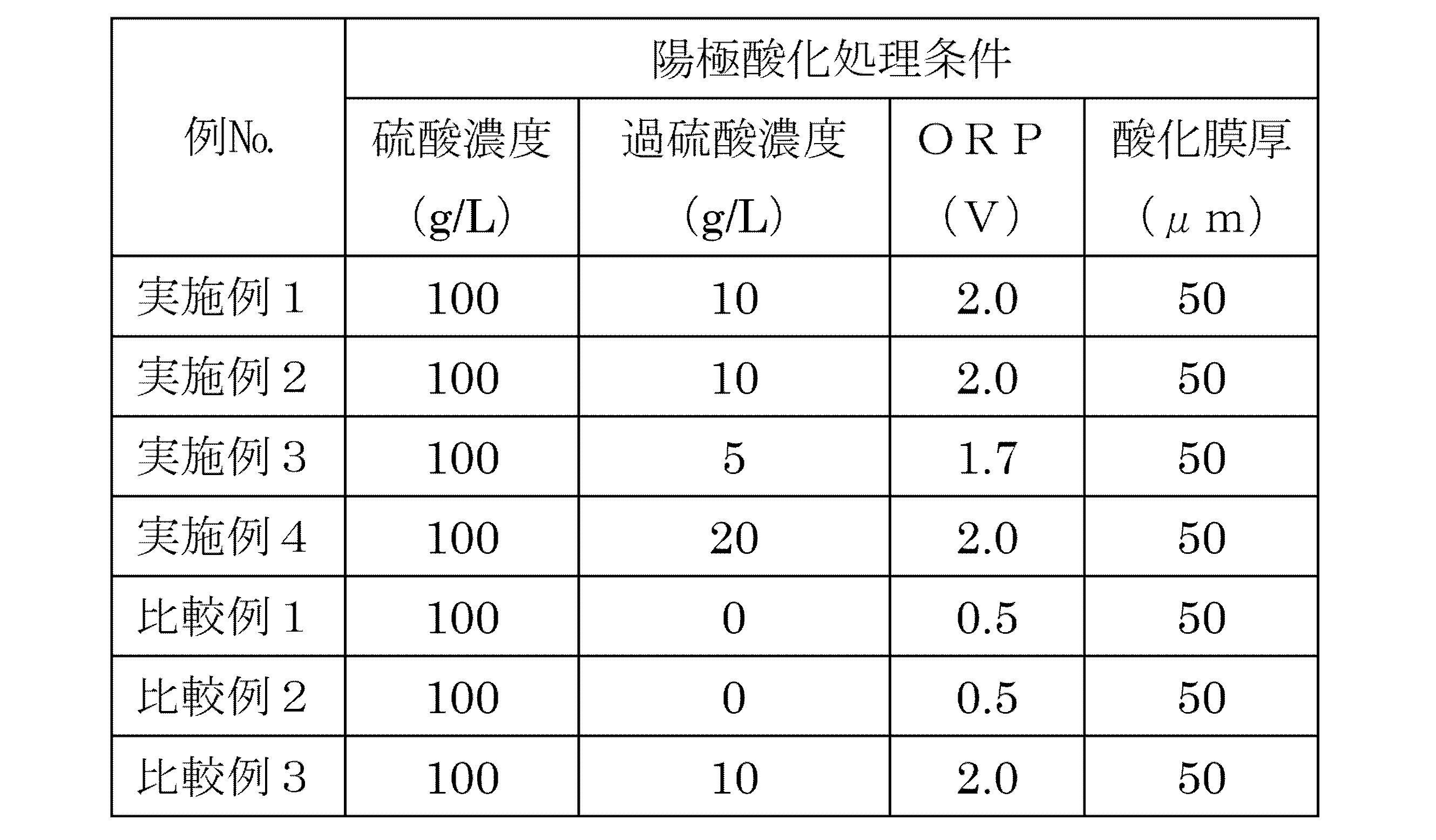
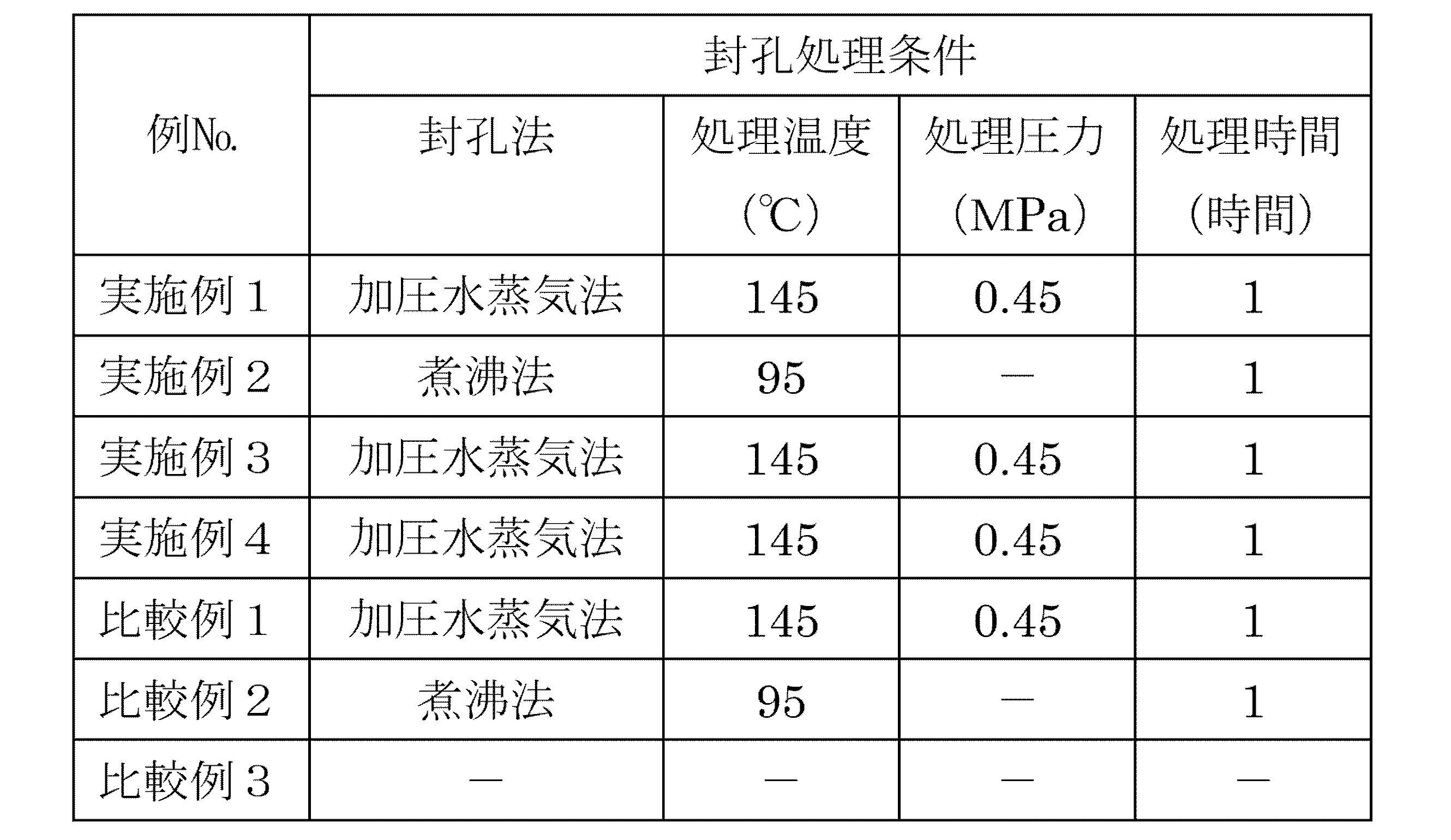
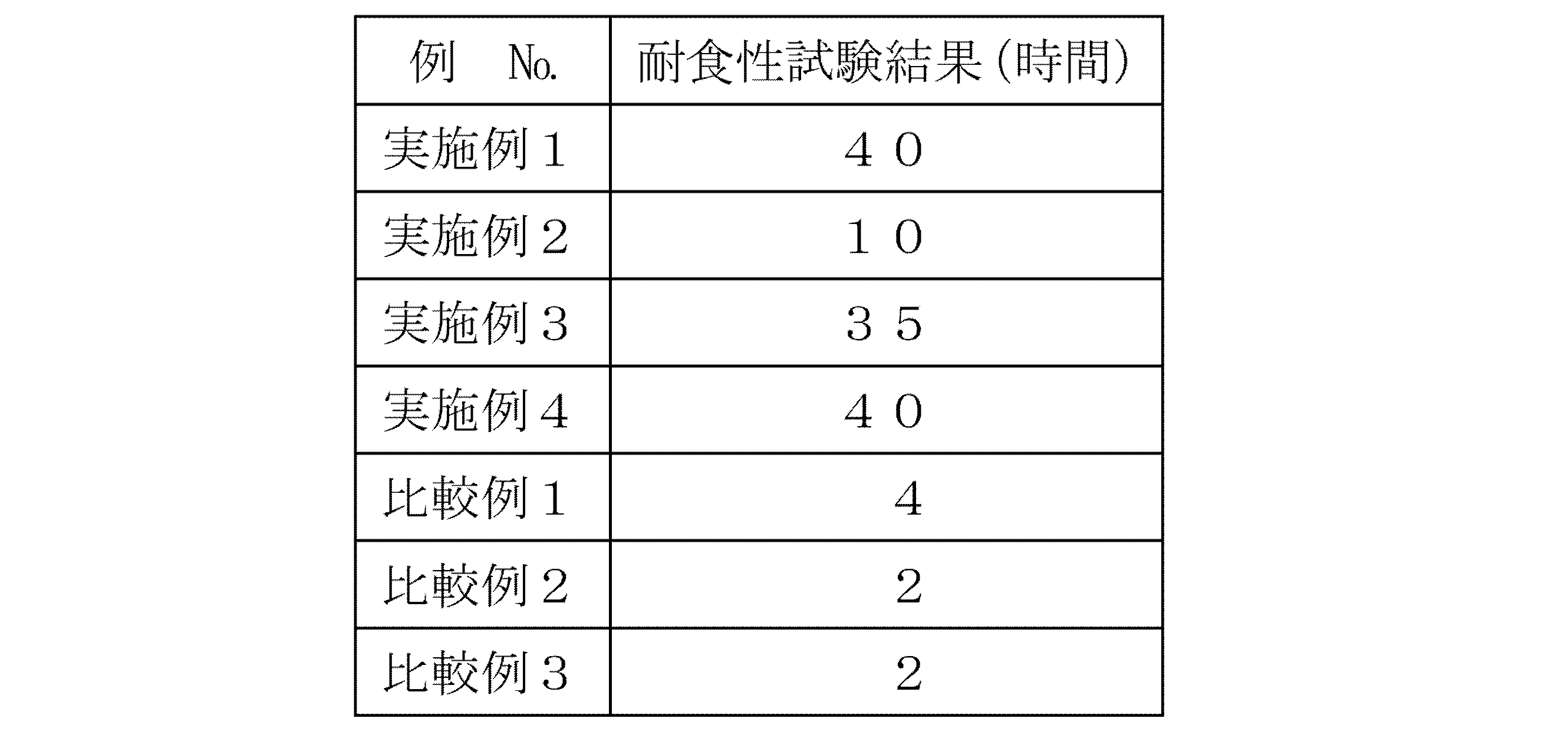
表3から明らかなとおり、実施例1~4のアルミニウム合金の表面処理方法によれば、過硫酸を含有しない処理液で陽極酸化処理を行った従来法に相当する比較例1、2と比べて数倍~20倍の耐食性が得られることがわかる。また、封孔処理しない場合(比較例3)でも従来法(比較例2)と同等の耐食性が得られた。これは本発明の陽極酸化処理でできる細孔の孔径と従来の陽極酸化処理及び煮沸封孔で最終的に形成される細孔の孔径とがほぼ同等であることを示唆している。
1 処理装置
2 処理槽
3 恒温ヒータ
4 配管
5 循環ポンプ
6 電解セル
6A 陽極
6B 陰極
6C バイポーラ電極
7 配管
S 過硫酸溶液
8 アルミニウム基板
8A 枠状ホルダ
9 陰極
10 直流電源
2 処理槽
3 恒温ヒータ
4 配管
5 循環ポンプ
6 電解セル
6A 陽極
6B 陰極
6C バイポーラ電極
7 配管
S 過硫酸溶液
8 アルミニウム基板
8A 枠状ホルダ
9 陰極
10 直流電源
Claims (10)
- アルミニウムまたはアルミニウム合金を陽極酸化処理液中で陽極酸化処理することにより表面に細孔を形成する陽極酸化処理工程と、細孔表面を封孔処理する封孔工程とを有するアルミニウムまたはアルミニウム合金の表面処理方法であって、前記陽極酸化処理液の酸化還元電位が+1.5~+3.5Vであり、かつ前記封孔処理を加圧水蒸気法または煮沸法で行う、アルミニウムまたはアルミニウム合金の表面処理方法。
- 前記陽極酸化処理液がリン酸、シュウ酸、酢酸、硫酸、ホウ酸及びフッ酸よりなる群から選ばれる1種又は2種以上を含む、請求項1に記載のアルミニウムまたはアルミニウム合金の表面処理方法。
- 電解処理、酸化剤の添加、及び高い酸化還元電位を有する液の添加のいずれか一以上の手法により、前記陽極酸化処理液の酸化還元電位を+1.5~+3.5Vに調整する、請求項1又は2に記載のアルミニウムまたはアルミニウム合金の表面処理方法。
- 前記陽極酸化処理液の循環処理、前記陽極酸化処理液の一過式添加、及び前記陽極酸化処理液へのガス吹き込みのいずれか一以上の手法により、前記陽極酸化処理液の酸化還元電位を+1.5~+3.5Vに調整する、請求項1~3のいずれかに記載のアルミニウムまたはアルミニウム合金の表面処理方法。
- 前記陽極酸化処理液の温度が0~30℃、酸濃度が50~300g/L及び酸化剤濃度が1~30g/Lで、前記陽極酸化処理時の印加電圧が10~30Vで処理する、請求項1~4のいずれかに記載のアルミニウムまたはアルミニウム合金の表面処理方法。
- 前記陽極酸化処理液が硫酸と過硫酸とを含有する、請求項1~5のいずれかに記載のアルミニウムまたはアルミニウム合金の表面処理方法。
- 前記陽極酸化処理液の硫酸濃度が50~200g/Lで、過硫酸濃度が2~20g/Lである、請求項6に記載のアルミニウムまたはアルミニウム合金の表面処理方法。
- 前記硫酸を含有する陽極酸化処理液を過硫酸生成用電解セルに循環流通させて電解処理することにより過硫酸を含有させる、請求項6又は7に記載のアルミニウムまたはアルミニウム合金の表面処理方法。
- 前記陽極酸化処理液が硫酸と過酸化水素とを混合することにより過硫酸を生成させてなる、請求項6又は7に記載のアルミニウムまたはアルミニウム合金の表面処理方法。
- 前記陽極酸化処理液が硫酸とオゾンとを混合することにより過硫酸を生成させてなる、請求項6又は7に記載のアルミニウムまたはアルミニウム合金の表面処理方法。
Applications Claiming Priority (2)
| Application Number | Priority Date | Filing Date | Title |
|---|---|---|---|
| JP2017242487A JP2019108591A (ja) | 2017-12-19 | 2017-12-19 | アルミニウムまたはアルミニウム合金の表面処理方法 |
| JP2017-242487 | 2017-12-19 |
Publications (1)
| Publication Number | Publication Date |
|---|---|
| WO2019123741A1 true WO2019123741A1 (ja) | 2019-06-27 |
Family
ID=66994505
Family Applications (1)
| Application Number | Title | Priority Date | Filing Date |
|---|---|---|---|
| PCT/JP2018/034109 Ceased WO2019123741A1 (ja) | 2017-12-19 | 2018-09-14 | アルミニウムまたはアルミニウム合金の表面処理方法 |
Country Status (2)
| Country | Link |
|---|---|
| JP (1) | JP2019108591A (ja) |
| WO (1) | WO2019123741A1 (ja) |
Cited By (4)
| Publication number | Priority date | Publication date | Assignee | Title |
|---|---|---|---|---|
| WO2021143446A1 (zh) * | 2020-01-14 | 2021-07-22 | 深圳市益联塑胶有限公司 | 金属表面处理方法 |
| CN114264708A (zh) * | 2021-12-22 | 2022-04-01 | 合肥工业大学 | 一种用于化学沉积中电势影响快速分析的方法 |
| US11312107B2 (en) * | 2018-09-27 | 2022-04-26 | Apple Inc. | Plugging anodic oxides for increased corrosion resistance |
| CN115805183A (zh) * | 2022-11-01 | 2023-03-17 | 佛山泰铝新材料有限公司 | 一种幕墙铝板氧化镀膜的生产方法 |
Families Citing this family (5)
| Publication number | Priority date | Publication date | Assignee | Title |
|---|---|---|---|---|
| JP7310685B2 (ja) | 2020-04-02 | 2023-07-19 | トヨタ自動車株式会社 | 耐食性被膜の成膜方法、耐食性被膜が形成された耐食性部材、熱交換器、および燃料電池システム |
| JP7072810B1 (ja) | 2021-03-31 | 2022-05-23 | ミクロエース株式会社 | アルミニウム合金の陽極酸化処理方法および陽極酸化皮膜を有するアルミニウム合金材 |
| JP7855194B2 (ja) * | 2022-03-24 | 2026-05-08 | ミクロエース株式会社 | 陽極酸化皮膜を有するアルミニウム合金材及びその製造方法 |
| JP7352322B1 (ja) | 2023-02-28 | 2023-09-28 | ミクロエース株式会社 | アルミニウムまたはアルミニウム合金の表面処理方法 |
| KR102687798B1 (ko) * | 2023-07-13 | 2024-07-24 | 주식회사 피씨에스 | 불소 함유 산화피막 형성을 위한 알루미늄 양극산화 처리액 조성물 및 이를 이용하여 불소 함유 산화피막이 형성된 양극산화 알루미늄 기판 |
Citations (4)
| Publication number | Priority date | Publication date | Assignee | Title |
|---|---|---|---|---|
| JPH0850365A (ja) * | 1994-08-05 | 1996-02-20 | Mitsubishi Chem Corp | 電子写真感光体の製造方法 |
| JP2001049492A (ja) * | 1999-08-11 | 2001-02-20 | Nippon Alum Co Ltd | アルマイト処理方法 |
| JP2016145381A (ja) * | 2015-02-06 | 2016-08-12 | 栗田工業株式会社 | 多孔質膜およびその製造方法並びに装置 |
| JP2016145383A (ja) * | 2015-02-06 | 2016-08-12 | 栗田工業株式会社 | アルミニウムまたはアルミニウム合金の表面処理方法、及び表面処理装置 |
Family Cites Families (3)
| Publication number | Priority date | Publication date | Assignee | Title |
|---|---|---|---|---|
| JPS5365233A (en) * | 1976-11-25 | 1978-06-10 | Sankyo Aruminiumu Kougiyou Kk | Method of coating inorganic paint of aluminium |
| JP3845886B2 (ja) * | 1995-12-26 | 2006-11-15 | 三菱化学株式会社 | 封孔処理方法 |
| JP6499930B2 (ja) * | 2015-06-17 | 2019-04-10 | 昭和電工株式会社 | アルミニウム塗装材およびその製造方法 |
-
2017
- 2017-12-19 JP JP2017242487A patent/JP2019108591A/ja active Pending
-
2018
- 2018-09-14 WO PCT/JP2018/034109 patent/WO2019123741A1/ja not_active Ceased
Patent Citations (4)
| Publication number | Priority date | Publication date | Assignee | Title |
|---|---|---|---|---|
| JPH0850365A (ja) * | 1994-08-05 | 1996-02-20 | Mitsubishi Chem Corp | 電子写真感光体の製造方法 |
| JP2001049492A (ja) * | 1999-08-11 | 2001-02-20 | Nippon Alum Co Ltd | アルマイト処理方法 |
| JP2016145381A (ja) * | 2015-02-06 | 2016-08-12 | 栗田工業株式会社 | 多孔質膜およびその製造方法並びに装置 |
| JP2016145383A (ja) * | 2015-02-06 | 2016-08-12 | 栗田工業株式会社 | アルミニウムまたはアルミニウム合金の表面処理方法、及び表面処理装置 |
Cited By (4)
| Publication number | Priority date | Publication date | Assignee | Title |
|---|---|---|---|---|
| US11312107B2 (en) * | 2018-09-27 | 2022-04-26 | Apple Inc. | Plugging anodic oxides for increased corrosion resistance |
| WO2021143446A1 (zh) * | 2020-01-14 | 2021-07-22 | 深圳市益联塑胶有限公司 | 金属表面处理方法 |
| CN114264708A (zh) * | 2021-12-22 | 2022-04-01 | 合肥工业大学 | 一种用于化学沉积中电势影响快速分析的方法 |
| CN115805183A (zh) * | 2022-11-01 | 2023-03-17 | 佛山泰铝新材料有限公司 | 一种幕墙铝板氧化镀膜的生产方法 |
Also Published As
| Publication number | Publication date |
|---|---|
| JP2019108591A (ja) | 2019-07-04 |
Similar Documents
| Publication | Publication Date | Title |
|---|---|---|
| JP2019108591A (ja) | アルミニウムまたはアルミニウム合金の表面処理方法 | |
| JP6627224B2 (ja) | アルミニウムまたはアルミニウム合金の表面処理方法、及び表面処理装置 | |
| US5824200A (en) | Generation of electrolytically active water and wet process of a semiconductor substrate | |
| KR102134929B1 (ko) | 전해질에서 양이온들을 제어할 때 반도체 웨이퍼를 전기 도금하는 방법 및 장치 | |
| JP2010017633A (ja) | 水素溶解水の製造装置及びこれを用いた製造方法ならびに電子部品又は電子部品の製造器具用の洗浄装置 | |
| US20090321272A1 (en) | Sulfuric acid electrolysis process | |
| JP2016145383A5 (ja) | ||
| US7074316B2 (en) | Functional water, method and apparatus of producing the same, and method and apparatus of rinsing electronic parts therewith | |
| WO2008016541B1 (en) | Constituent maintenance of a copper sulfate bath through chemical dissolution of copper metal | |
| JP6485086B2 (ja) | 多孔質膜およびその製造方法並びに装置 | |
| JP6557984B2 (ja) | アルミニウムまたはアルミニウム合金の封孔処理方法、及び封孔処理装置 | |
| WO2019073746A1 (ja) | 微細孔を有するチタン又はチタン合金の酸化薄膜の製造方法 | |
| JP5352246B2 (ja) | 過硫酸製造装置及び過硫酸製造方法 | |
| JP2023036913A (ja) | アルミニウムまたはアルミニウム合金の陽極酸化処理法及び陽極酸化皮膜の封孔処理法 | |
| JP6787438B2 (ja) | アルミニウム又はアルミニウム合金の陽極酸化処理面の封孔処理方法 | |
| JP2002224674A (ja) | 基板洗浄用水の製造装置及び製造方法、それらにより製造された基板洗浄用水、並びに該基板洗浄用水を用いた基板の洗浄方法 | |
| JP7072810B1 (ja) | アルミニウム合金の陽極酸化処理方法および陽極酸化皮膜を有するアルミニウム合金材 | |
| JP3324943B2 (ja) | ガラス基板乃至シリコン基板洗浄用水の製造装置 | |
| JP2008214742A (ja) | 六価鉄イオン溶液製造方法及びチタン合金の陽極酸化処理剤及び処理方法並びにチタン合金部材表面の陽極酸化処理方法。 | |
| JP5592611B2 (ja) | 過硫酸製造装置及び過硫酸製造方法 | |
| JP2001096273A (ja) | 洗浄用イオン水の製造方法及びその製造装置 | |
| JP7352322B1 (ja) | アルミニウムまたはアルミニウム合金の表面処理方法 | |
| JP4038253B2 (ja) | 酸性水及びアルカリ水製造用電解槽 | |
| JP6881551B2 (ja) | 過硫酸成分を含む硫酸溶液中の酸化剤濃度の低下抑制方法 | |
| WO2020179427A1 (ja) | 微細孔を封孔したチタン又はチタン合金の酸化薄膜の製造方法 |
Legal Events
| Date | Code | Title | Description |
|---|---|---|---|
| 121 | Ep: the epo has been informed by wipo that ep was designated in this application |
Ref document number: 18889976 Country of ref document: EP Kind code of ref document: A1 |
|
| NENP | Non-entry into the national phase |
Ref country code: DE |
|
| 122 | Ep: pct application non-entry in european phase |
Ref document number: 18889976 Country of ref document: EP Kind code of ref document: A1 |