WO2019119614A1 - 一种双酶偶联全细胞催化马来酸合成l-天冬氨酸的方法 - Google Patents
一种双酶偶联全细胞催化马来酸合成l-天冬氨酸的方法 Download PDFInfo
- Publication number
- WO2019119614A1 WO2019119614A1 PCT/CN2018/074337 CN2018074337W WO2019119614A1 WO 2019119614 A1 WO2019119614 A1 WO 2019119614A1 CN 2018074337 W CN2018074337 W CN 2018074337W WO 2019119614 A1 WO2019119614 A1 WO 2019119614A1
- Authority
- WO
- WIPO (PCT)
- Prior art keywords
- maleic acid
- seq
- aspartic acid
- trans isomerase
- cis
- Prior art date
- Legal status (The legal status is an assumption and is not a legal conclusion. Google has not performed a legal analysis and makes no representation as to the accuracy of the status listed.)
- Ceased
Links
Images
Classifications
-
- C—CHEMISTRY; METALLURGY
- C12—BIOCHEMISTRY; BEER; SPIRITS; WINE; VINEGAR; MICROBIOLOGY; ENZYMOLOGY; MUTATION OR GENETIC ENGINEERING
- C12P—FERMENTATION OR ENZYME-USING PROCESSES TO SYNTHESISE A DESIRED CHEMICAL COMPOUND OR COMPOSITION OR TO SEPARATE OPTICAL ISOMERS FROM A RACEMIC MIXTURE
- C12P13/00—Preparation of nitrogen-containing organic compounds
- C12P13/04—Alpha- or beta- amino acids
- C12P13/20—Aspartic acid; Asparagine
-
- C—CHEMISTRY; METALLURGY
- C12—BIOCHEMISTRY; BEER; SPIRITS; WINE; VINEGAR; MICROBIOLOGY; ENZYMOLOGY; MUTATION OR GENETIC ENGINEERING
- C12Y—ENZYMES
- C12Y403/00—Carbon-nitrogen lyases (4.3)
- C12Y403/01—Ammonia-lyases (4.3.1)
- C12Y403/01001—Aspartate ammonia-lyase (4.3.1.1), i.e. aspartase
-
- C—CHEMISTRY; METALLURGY
- C12—BIOCHEMISTRY; BEER; SPIRITS; WINE; VINEGAR; MICROBIOLOGY; ENZYMOLOGY; MUTATION OR GENETIC ENGINEERING
- C12N—MICROORGANISMS OR ENZYMES; COMPOSITIONS THEREOF; PROPAGATING, PRESERVING, OR MAINTAINING MICROORGANISMS; MUTATION OR GENETIC ENGINEERING; CULTURE MEDIA
- C12N9/00—Enzymes; Proenzymes; Compositions thereof; Processes for preparing, activating, inhibiting, separating or purifying enzymes
- C12N9/88—Lyases (4.)
-
- C—CHEMISTRY; METALLURGY
- C12—BIOCHEMISTRY; BEER; SPIRITS; WINE; VINEGAR; MICROBIOLOGY; ENZYMOLOGY; MUTATION OR GENETIC ENGINEERING
- C12N—MICROORGANISMS OR ENZYMES; COMPOSITIONS THEREOF; PROPAGATING, PRESERVING, OR MAINTAINING MICROORGANISMS; MUTATION OR GENETIC ENGINEERING; CULTURE MEDIA
- C12N9/00—Enzymes; Proenzymes; Compositions thereof; Processes for preparing, activating, inhibiting, separating or purifying enzymes
- C12N9/90—Isomerases (5.)
-
- C—CHEMISTRY; METALLURGY
- C12—BIOCHEMISTRY; BEER; SPIRITS; WINE; VINEGAR; MICROBIOLOGY; ENZYMOLOGY; MUTATION OR GENETIC ENGINEERING
- C12Y—ENZYMES
- C12Y502/00—Cis-trans-isomerases (5.2)
- C12Y502/01—Cis-trans-Isomerases (5.2.1)
- C12Y502/01001—Maleate isomerase (5.2.1.1)
Definitions
- the invention relates to a double enzyme-coupled whole cell catalyzing method for synthesizing L-aspartic acid from maleic acid, and belongs to the field of bioengineering.
- L-aspartic acid is one of the 20 basic amino acids constituting a protein. It has extensive application and large market development potential in the fields of food, medicine and chemical industry.
- the process is simple, the disadvantages are obvious: it needs to be carried out under high temperature, high pressure, transition metal catalyst and strong acid conditions.
- the double-enzyme coupled whole-cell catalytic conversion method has the advantages of high specificity, high conversion rate, simple process, low equipment investment and small environmental pollution, so the double enzyme-coupled whole-cell catalytic conversion method is better. Application prospects.
- an object of the present invention is to provide a double enzyme-coupled whole cell catalyzed method for synthesizing L-aspartic acid from maleic acid, which provides a coupled expression of cis-trans isomerase of maleic acid ( Recombinant strain of Serratia marcescens and L-aspartate lyase (from Escherichia coli), and the recombinant strain was optimized and optimized to obtain high-yield whole-cell catalysis for the formation of L-day of maleic acid. Recombinant bacteria of aspartic acid.
- the present invention provides a method for producing L-aspartic acid, which is produced by coupling a recombinant strain expressing a maleic acid cis-trans isomerase and an L-aspartate lyase or the recombinant strain
- the enzyme is a catalyst, and maleic acid is used as a substrate to form L-aspartic acid.
- a recombinant strain expressing a maleic acid cis-trans isomerase and an L-aspartate lyase is coupled with Escherichia coli as a host and expression of pRSFDuet-1 as an expression vector.
- the maleic acid cis-trans isomerase is derived from Serratia marcescens and the L-aspartate lyase is derived from Escherichia coli.
- E. coli is E. coli BL21(DE3) ⁇ fumAC which knocks out the fum A-fum C gene in the genome.
- nucleotide sequence of the gene encoding the maleic acid cis-trans isomerase is set forth in SEQ ID NO.
- nucleotide sequence of the gene encoding the L-aspartate lyase is set forth in SEQ ID NO.
- the glycine at position 27 of the maleic acid cis-trans isomerase SEQ ID NO. 2 is mutated to alanine and the glycine at position 171 is mutated to alanine;
- the glycine at position 27 in SEQ ID NO. 2 is mutated to alanine and the lysine at position 104 is mutated to arginine.
- the RBS sequence of the gene encoding L-aspartate lyase is also replaced by SEQ ID NO. 23 or SEQ ID NO. 24 or SEQ ID based on SEQ ID NO. Sequence shown in NO.
- a 2M maleic acid solution having a pH of 8.0 is used as a substrate, and a resting cell suspension having a cell concentration of OD 600 of 40 is added to the resting cell suspension and the substrate solution.
- the volume ratio is 2:8.
- the method was carried out in 50 mM Na 2 HPO 4 -KH 2 PO 4 buffer at pH 8.0 at a reaction temperature of 37 °C.
- the present invention provides a recombinant strain capable of efficiently coupling a cis-trans isomerase of maleic acid and an L-aspartate lyase, and using Escherichia coli as a host, expressing pRSFDuet-1 as The recombinant expression vector pRSFDuet-1-maiA-aspA constructed by the expression vector.
- E. coli is E. coli BL21(DE3) ⁇ fumAC which knocks out the fum A-fum C gene in the genome.
- nucleotide sequence of the gene encoding the maleic acid cis-trans isomerase is set forth in SEQ ID NO.
- nucleotide sequence of the gene encoding the L-aspartate lyase is set forth in SEQ ID NO.
- the glycine at position 27 of the maleic acid cis-trans isomerase SEQ ID NO. 2 is mutated to alanine and the glycine at position 171 is mutated to alanine;
- the glycine at position 27 in SEQ ID NO. 2 is mutated to alanine and the lysine at position 104 is mutated to arginine.
- the RBS sequence of the gene encoding L-aspartate lyase is also replaced by SEQ ID NO. 23 or SEQ ID NO. 24 or SEQ ID based on SEQ ID NO. Sequence shown in NO.
- the method of the invention can generate L-aspartic acid by using maleic acid which is relatively inexpensive, reacts for 40 to 120 minutes, the maleic acid reaction is complete, and there is almost no accumulation of intermediate fumaric acid, and the conversion rate reaches 98% or more.
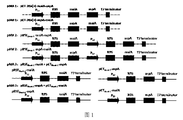
- Figure 1 is a different strategy for the expression of MaiA and AspA in the present invention.
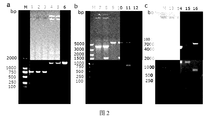
- Figure 2 shows the results of enzyme digestion of PCR amplification of maiA and aspA genes and recombinant plasmids: M: marker; PCR product of 1BamHI-maiA-HindIII; 2: PCR product of NdeI-maiA-XhoI; 3: HindIII-maiA-XhoI PCR product; 4: PCR product of BamHI-aspA-HindIII; 5: PCR product of NdeI-aspA-XhoI; 6: PCR product of HindIII-aspA-XhoI; 7: Double enzyme of recombinant plasmid pRSF Duet-1 - maiA Cut-out validation; 8: double-digestion validation of pRSF Duet-1 -aspA recombinant plasmid; 9: double digestion of pET Duet-1 -maiA recombinant plasmid; 10: double digestion of pET Duet-1 -aspA re
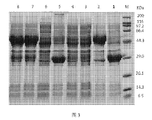
- Figure 3 shows the results of SDS-PAGE of different coupled expressions: M: marker; 1pRSF Duet-1 - maiA expression; 2: pRSF Duet-1 - asp expression; 3: pMA 1 expression; 4: pAM 1 expression ; 5: pMA 2 expression results; 6: pAM 2 expression results; 7: pMA 3 expression results; 8: pAM 3 expression results;
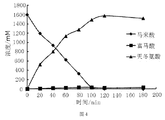
- Figure 4 shows the results of pMA 2 whole cell catalysis
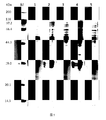
- Figure 5 is the results of SDS-PAGE after RBS modification of MaiA in pMA 2: M: marker; 1: expression of pMA 2; 2: expression of pMA 2-1; 3: expression of pMA 2-2; 4: pMA 2 -3 expression result; 5: pMA 2-4 expression result;
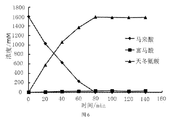
- Figure 6 shows the results of pMA 2-4 whole cell catalysis
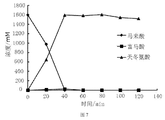
- Figure 7 shows the results of whole cell catalysis of pMA 2-4 (G27A-G171A);
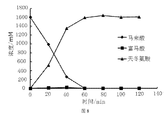
- Figure 8 shows the results of whole cell catalysis of pMA 2-4 (G27A-K104R).
- the concentrations of maleic acid, fumaric acid and L-aspartic acid were all determined by high performance liquid chromatography (HPLC). HPLC detection conditions of maleic acid and fumaric acid: column Prevail Organic Acid (250 mm ⁇ 4.6 mm, 5 m; Grace Davison Discovery Sciences), mobile phase of pH 2.5, concentration of 25 mM K 2 HPO 4 solution, flow rate 1 mL / min The column temperature is 40 ° C, the ultraviolet detector wavelength is 210 nm, and the injection amount is 10 ⁇ L.
- the detection of L-aspartic acid is first carried out by phenylisosulfate (PITC), and a benzene ring is attached to the amino terminus to facilitate separation.
- PITC phenylisosulfate
- the derivatization method was as follows: 500 ⁇ L of the reaction solution was added, 250 ⁇ L of 1 M triethylamine-acetonitrile solution and 250 ⁇ L of 0.1 M PITC-acetonitrile solution were added, and the mixture was shaken and shaken for 1 hour in the dark. After the end of the derivatization, 700 ⁇ L of n-hexane was shaken for 30 s to extract the residual derivatizing reagent, and allowed to stand. After the reaction liquid was clearly separated, the lower layer solution was taken up and filtered through a 0.22 ⁇ m needle-type organic filter.
- HPLC detection conditions column La Chrom C18 (5 ⁇ m, 4.6 mm ⁇ 250 mm), which was detected by gradient elution.
- a mobile phase is 80% acetonitrile solution
- B mobile phase is 97:3 0.1M sodium acetate-acetonitrile solution
- gradient elution conditions are: 0-35 min, B mobile phase is reduced from 95% to 65%; 35-40 min , B mobile phase increased from 65% to 95%; 40 ⁇ 45min, B mobile phase concentration unchanged.
- the detection temperature was 40 ° C and the detection wavelength was 254 nm.
- Example 1 Construction of a recombinant strain conjugated to express maleic acid cis-trans isomerase and L-aspartate lyase
- the amino acid sequence of the maleic acid cis-trans isomerase is as shown in SEQ ID NO. 1
- the nucleotide sequence of the gene encoding the maleic acid cis-trans isomerase is as shown in SEQ ID NO. 2
- L-day The amino acid sequence of the aspartic acid lyase is shown in SEQ ID NO. 3
- the nucleotide sequence of the gene encoding L-aspartate lyase is shown in SEQ ID NO. According to the gene of interest and the vector, select the restriction site and design primers (see Table 1);
- the undercut is the enzyme cleavage site.
- PCR was carried out using pET-24a(+)-maiA and pET-28a(+)-aspA as templates, respectively, to obtain maiA and aspA gene fragments with different restriction sites as shown in Figure 2a: BamHI-maiA- HindIII, NdeI-maiA-XhoI, HindIII-maiA-XhoI, BamHI-aspA-HindIII, NdeI-aspA-XhoI, HindIII-aspA-XhoI;
- Competent cells then coated with corresponding antibiotic-resistant LB On the plate medium; single colonies were picked to obtain six coupled expression systems: pMA 1: pET-28a(+)–maiA-aspA; pAM 1: pET-28a(+)–aspA-maiA; pMA 2: pRSFDuet- 1-maiA-aspA; pAM 2: pRSFDuet-1-aspA-maiA; pMA 3: pRSFDuet-1-maiA-pETDuet-1-aspA; pAM 3: pRSFDuet-1-aspA-pETDuet-1-maiA 6.
- the reaction was carried out at 40 ° C for 10 min, then at 100 ° C for 10 min, and the supernatant was centrifuged to determine the contents of maleic acid, fumaric acid and L-aspartic acid in the supernatant.
- Table 2 the tandem system of pMA 2 catalyzes the best effect of L-aspartic acid production, because the enzyme activity of AspA is much higher than that of MaiA, so the rate limiting factor of the catalytic system is the total enzyme activity of MaiA. Therefore, when the expression level of MaiA is higher, the catalytic effect is better.
- Example 2 Coupling of a recombinant strain expressing cis-trans isomerase of maleic acid and L-aspartate lyase, whole cell pMA 2 transforming maleic acid to produce L-aspartate
- a maleic acid solution of pH 8.0 was first placed, and the pH of the maleic acid was adjusted to 8.0 with aqueous ammonia.
- the cells pMA 2 which induced expression in Example 1 were collected, and the cells were resuspended in 50 mM Na 2 HPO 4 -KH 2 PO 4 buffer at pH 8.0, diluted to an OD 600 to 40, and then stopped at 20% by volume.
- the cells were mixed with 80% (by volume) of the substrate maleic acid, and the reaction system was 30 mL.
- the reaction was catalyzed in a shaker at 200 r/min and 37 ° C, and the maleic acid and fumaric acid in the reaction solution were sampled every 20 min. And the content of L-aspartic acid.
- the maleic acid reaction was completed in 120 min, and there was almost no accumulation of the intermediate fumaric acid, and the conversion rate reached 98% or more.
- a maleic acid solution of pH 8.0 was placed, and the pH of the maleic acid was adjusted to 8.0 with ammonia water.
- the collection step (5) induced the expression of pMA 2-4 cells, and the cells were resuspended in 50 mM Na 2 HPO 4 -KH 2 PO 4 buffer at pH 8.0, diluted to an OD 600 to 40, and then 20% resting cells. It is mixed with 80% of the substrate ammonium maleate.
- the reaction system is 30mL.
- the reaction is catalyzed in a shaker at 200r/min and 37°C.
- the reaction solution is sampled every 20 minutes for maleic acid, fumaric acid and L-day. The content of aspartic acid.
- pMA 2-4 completely catalyzed the conversion of the substrate maleic acid only 80 min, and there was almost no accumulation of intermediate fumaric acid, and the conversion rate was also above 98%.
- the mutant maiA gene fragment maiA (G27A-G171A) and maiA were obtained by PCR using pET-24a(+)–maiA(G27A-G171A) and pET-24a(+)–maiA(G27A-K104R) as templates. G27A-K104R).
- Example 2 The recombinant bacteria were constructed and induced by referring to steps 2 to 9 of Example 1; the whole cell reaction was carried out in accordance with Example 2.
Landscapes
- Chemical & Material Sciences (AREA)
- Organic Chemistry (AREA)
- Life Sciences & Earth Sciences (AREA)
- Health & Medical Sciences (AREA)
- Engineering & Computer Science (AREA)
- Zoology (AREA)
- Wood Science & Technology (AREA)
- Bioinformatics & Cheminformatics (AREA)
- Genetics & Genomics (AREA)
- General Health & Medical Sciences (AREA)
- General Engineering & Computer Science (AREA)
- Biochemistry (AREA)
- Microbiology (AREA)
- Biotechnology (AREA)
- Biomedical Technology (AREA)
- Molecular Biology (AREA)
- Medicinal Chemistry (AREA)
- Chemical Kinetics & Catalysis (AREA)
- General Chemical & Material Sciences (AREA)
- Micro-Organisms Or Cultivation Processes Thereof (AREA)
- Preparation Of Compounds By Using Micro-Organisms (AREA)
- Enzymes And Modification Thereof (AREA)
Abstract
本发明公开了一种双酶偶联全细胞催化马来酸合成L-天冬氨酸的方法,属于生物工程领域。本发明构建了一种偶联表达马来酸顺反异构酶和L-天冬氨酸裂解酶的重组菌株,并对该重组菌株进行改造优化,获得能够全细胞高转化率催化马来酸生成L-天冬氨酸的重组菌。该重组菌株能够利用价格相对便宜的马来酸生成L-天冬氨酸,反应40~120min,马来酸反应完全,而且几乎没有中间产物富马酸的积累,转化率到达98%以上。
Description
本发明涉及一种双酶偶联全细胞催化马来酸合成L-天冬氨酸的方法,属于生物工程领域。
L-天冬氨酸(L-aspartic acid)是构成蛋白质的20种基础氨基酸之一。其在食品、医药、化工等领域都有着广泛的应用和较大的市场开发潜力。
目前,工业生产L-天冬氨酸的工艺主要是以顺丁烯二酸酐为原料,在无机催化剂、强酸性(pH=1左右)条件下转化成富马酸;分离纯化获得富马酸,然后富马酸与过量的氨在L-天冬氨酸裂解酶催化下转化生成L-天冬氨酸铵,反应液用硫酸中和过量的氨后,分离纯化得到产品L-天冬氨酸。此工艺虽然流程简单,但是其缺点明显:需要在高温、高压、过渡金属催化剂及强酸性条件下进行,对设备的要求严格,造成的环境污染严重,同时需要分离纯化中间产物富马酸,会造成产率的下降等。相比较而言,双酶偶联全细胞催化转化法具有专一性强,转化率高、工艺简洁、设备投资少及环境污染小等优点,因此双酶偶联全细胞催化转化法具有更好的应用前景。
目前,关于双酶偶联全细胞催化马来酸合成L-天冬氨酸的研究还较少,大多数都还是停留在以富马酸为底物的研究基础上,主要原因受限于马来酸顺反异构酶的稳定性差、酶活低、难以异源表达。
发明内容
为了解决上述技术问题,本发明的目的是提供一种双酶偶联全细胞催化马来酸合成L-天冬氨酸的方法,提供了一种偶联表达马来酸顺反异构酶(粘质沙雷氏菌来源)和L-天冬氨酸裂解酶(大肠杆菌来源)的重组菌株,并对该重组菌株进行改造优化,获得能够全细胞高转化率催化马来酸生成L-天冬氨酸的重组菌。
本发明采用的技术方案如下:
在一方面,本发明提供了一种制备L-天冬氨酸的方法,以偶联表达马来酸顺反异构酶和L-天冬氨酸裂解酶的重组菌株或该重组菌株产生的酶为催化剂,以马来酸为底物,生成L-天冬氨酸。
在本发明的一种实施方式中,偶联表达马来酸顺反异构酶和L-天冬氨酸裂解酶的重组菌株,是以大肠杆菌为宿主,表达以pRSFDuet-1为表达载体构建的重组表达载体pRSFDuet-1-maiA-aspA。
在本发明的一种实施方式中,马来酸顺反异构酶来源于粘质沙雷氏菌,L-天冬氨酸裂解酶来源于大肠杆菌。
在本发明的一种实施方式中,大肠杆菌是敲除了基因组中fum A-fum C基因的E.coli BL21(DE3)△fumAC。
在本发明的一种实施方式中,编码马来酸顺反异构酶的基因的核苷酸序列如SEQ ID NO.2所示。
在本发明的一种实施方式中,编码所述L-天冬氨酸裂解酶的基因的核苷酸序列如SEQ ID NO.4所示。
在本发明的一种实施方式中,所述马来酸顺反异构酶SEQ ID NO.2中的第27位的甘氨酸突变为丙氨酸并且第171位的甘氨酸突变为丙氨酸;或者SEQ ID NO.2中第27位的甘氨酸突变为丙氨酸并且第104位的赖氨酸突变为精氨酸。
在本发明的一种实施方式中,还在SEQ ID NO.4基础上将编码L-天冬氨酸裂解酶的基因的RBS序列替换为SEQ ID NO.23或SEQ ID NO.24或SEQ ID NO.25所示的序列。
在本发明的一种实施方式中,是以pH 8.0的2M的马来酸溶液为底物,加入菌体浓度OD
600为40的静息细胞悬液,静息细胞悬液与底物溶液的体积比为2:8。
所述方法在pH 8.0的50mM的Na
2HPO
4-KH
2PO
4缓冲液中进行,反应温度为37℃。
在另一方面,本发明还提供了一株能高效偶联表达马来酸顺反异构酶和L-天冬氨酸裂解酶的重组菌株,以大肠杆菌为宿主,表达以pRSFDuet-1为表达载体构建的重组表达载体pRSFDuet-1-maiA-aspA。
在本发明的一种实施方式中,大肠杆菌是敲除了基因组中fum A-fum C基因的E.coli BL21(DE3)△fumAC。
在本发明的一种实施方式中,编码马来酸顺反异构酶的基因的核苷酸序列如SEQ ID NO.2所示。
在本发明的一种实施方式中,编码所述L-天冬氨酸裂解酶的基因的核苷酸序列如SEQ ID NO.4所示。
在本发明的一种实施方式中,所述马来酸顺反异构酶SEQ ID NO.2中的第27位的甘氨酸突变为丙氨酸并且第171位的甘氨酸突变为丙氨酸;或者SEQ ID NO.2中第27位的甘氨酸突变为丙氨酸并且第104位的赖氨酸突变为精氨酸。
在本发明的一种实施方式中,还在SEQ ID NO.4基础上将编码L-天冬氨酸裂解酶的基因的RBS序列替换为SEQ ID NO.23或SEQ ID NO.24或SEQ ID NO.25所示的序列。
本发明的方法能够利用价格相对便宜的马来酸生成L-天冬氨酸,反应40~120min,马来酸反应完全,而且几乎没有中间产物富马酸的积累,转化率到达98%以上。
图1为本发明MaiA与AspA偶联表达的不同策略;
图2为PCR扩增maiA和aspA基因及重组质粒的酶切验证结果:M:marker;1BamHI-maiA-HindIII的PCR产物;2:NdeI-maiA-XhoI的PCR产物;3:HindIII-maiA-XhoI的PCR产物;4:BamHI-aspA-HindIII的PCR产物;5:NdeI-aspA-XhoI的PCR产物;6:HindIII-aspA-XhoI的PCR产物;7:pRSF
Duet-1-maiA重组质粒的双酶切验证;8:pRSF
Duet-1-aspA重组质粒的双酶切验证;9:pET
Duet-1-maiA重组质粒的双酶切验证;10:pET
Duet-1-aspA重组质粒的双酶切验证;11:pET-28a(+)-maiA重组质粒的双酶切验证;12:pET-28a(+)-aspA重组质粒的双酶切验证;13:pRSF
Duet-1-aspA-maiA重组质粒的双酶切验证;14:pRSF
Duet-1-maiA-aspA重组质粒的双酶切验证;15:pET-28a(+)-maiA-aspA重组质粒的双酶切验证;16:pET-28a(+)-aspA-maiA重组质粒的双酶切验证;
图3为不同偶联表达的SDS-PAGE结果:M:marker;1pRSF
Duet-1-maiA表达结果;2:pRSF
Duet-1-aspA表达结果;3:pMA 1表达结果;4:pAM 1表达结果;5:pMA 2表达结果;6:pAM 2表达结果;7:pMA 3表达结果;8:pAM 3表达结果;
图4为pMA 2全细胞催化结果;
图5为pMA 2中的MaiA的RBS改造后SDS-PAGE结果:M:marker;1:pMA 2表达结果;2:pMA 2-1表达结果;3:pMA 2-2表达结果;4:pMA 2-3表达结果;5:pMA 2-4表达结果;
图6为pMA 2-4全细胞催化结果;
图7为pMA 2-4(G27A-G171A)全细胞催化结果;
图8为pMA 2-4(G27A-K104R)全细胞催化结果。
马来酸、富马酸和L-天冬氨酸的检测方法:
马来酸、富马酸和L-天冬氨酸的浓度都用高效液相色谱(HPLC)法检测。马来酸、富马酸的HPLC检测条件:色谱柱Prevail Organic Acid(250mm×4.6mm,5m;Grace Davison Discovery Sciences),流动相为pH 2.5、浓度25mM的K
2HPO
4溶液,流速1mL/min,柱温40℃,紫外检测器波长210nm,进样量10μL。L-天冬氨酸的检测要先经过苯基异硫酸酯(PITC)进行衍生,在其氨基端连接一个苯环,便于分离。衍生方法为:取500μL反应液, 加入250μL 1M的三乙胺-乙腈溶液和250μL 0.1M的PITC-乙腈溶液,振荡混匀,避光反应1h。待衍生结束后,700μL正己烷,振荡30s萃取出残余的衍生试剂,静置,待反应液有明显分层后吸取下层溶液,用0.22μm针头式有机滤膜过滤。HPLC检测条件:色谱柱La Chrom C18(5μm,4.6mm×250mm),用梯度洗脱的方法进行检测。A流动相为80%的乙腈溶液,B流动相为97:3的0.1M乙酸钠-乙腈溶液;梯度洗脱条件为:0~35min,B流动相由95%降至65%;35~40min,B流动相由65%升至95%;40~45min,B流动相浓度不变。检测温度为40℃,检测波长为254nm。
实施例1 构建偶联表达马来酸顺反异构酶和L-天冬氨酸裂解酶的重组菌株
1)马来酸顺反异构酶的氨基酸序列如SEQ ID NO.1所示,编码马来酸顺反异构酶的基因的核苷酸序列如SEQ ID NO.2所示;L-天冬氨酸裂解酶的氨基酸序列如SEQ ID NO.3所示,编码L-天冬氨酸裂解酶的基因的核苷酸序列如SEQ ID NO.4所示。根据目的基因和载体,选择酶切位点,设计引物(如表1);
表1 酶切连接引物设计

注:下划线标出的为酶切位点
2)分别以pET-24a(+)–maiA和pET-28a(+)–aspA为模板进行PCR,得到如图2a所示的带不同酶切位点的maiA和aspA基因片段:BamHI-maiA-HindIII、NdeI-maiA-XhoI、HindIII-maiA-XhoI、BamHI-aspA-HindIII、NdeI-aspA-XhoI、HindIII-aspA-XhoI;
3)纯化PCR片段,用对应的酶进行双酶切2h,也将对应的质粒载体pRSF
Duet-1、pET
Duet-1、pET-28a(+)用对应的双酶切2h,然后将酶切产物切胶回收纯化;
4)用核酸定量仪测定回收后的基因和载体片段的浓度,按基因片段:载体片段=3:1的比例混合,再加T
4DNA连接酶在16℃过夜连接;
5)将连接产物转化到JM109的感受态细胞里,然后涂布到载体相应的抗生素抗性的LB 平板培养基上;
6)先菌落PCR验证,然后挑取单菌落到5mL的抗生素浓度为50μg/mL的LB液体试管培养基(10g蛋白胨、5g酵母膏、10g NaCl定容到1L)中,37℃、200rpm培养8h,提质粒进行双酶切验证(如图2b和2c),将验证正确的菌进行测序;
7)将测序正确的重组质粒转化到表达宿主E.coli BL21(DE3)△fumAC(E.coli BL21(DE3)△fumAC的构建方法参见文章:房月芹,周丽,周哲敏.重组大肠杆菌全细胞转化马来酸高效合成富马酸[J].食品与生物技术学报,2016,35(12):1323-1329.)感受态细胞里,然后涂布到载体相应的抗生素抗性的LB平板培养基上;挑取单菌落得到六种偶联表达体系:pMA 1:pET-28a(+)–maiA-aspA;pAM 1:pET-28a(+)–aspA-maiA;pMA 2:pRSFDuet-1-maiA-aspA;pAM 2:pRSFDuet-1-aspA-maiA;pMA 3:pRSFDuet-1-maiA-pETDuet-1-aspA;pAM 3:pRSFDuet-1-aspA-pETDuet-1-maiA 6。
8)挑取单菌落接种于5mL的抗生素浓度为50μg/mL的LB培养基中,37℃、200rpm培养8小时,然后以2%的接种量转接到装有50mL的2YT培养基(16g蛋白胨、10g酵母膏、5g NaCl定容到1L)的250mL的摇瓶中,抗生素浓度为50μg/mL,37℃、200rpm培养到OD为0.8,然后加终浓度为0.2mmol/L的IPTG在20℃下诱导表达20小时;
9)各取相同量的诱导表达细胞,离心收集菌体,再用pH 8.0的50mM的Na
2HPO
4-KH
2PO
4缓冲液重悬细胞,超声破碎得到粗酶液。SDS-PAGE电泳分析目的蛋白的表达情况(如图3),当MaiA和AspA分别单独表达时,其表达量都比较高,而当其串联表达时,其表达量都有相应的降低,而且不同的串联方式,两个酶的表达水平相差也较大。期中pMA 1和pAM 1的串联体系的两个酶的表达量都较低;pMA 2的串联体系的MaiA表达较好,而AspA的表达较低;pAM 2的串联体系的两个酶几乎都没有表达;pMA3和pAM3的串联体系的AspA的表达较好,而MaiA的表达较低。取由各重组细胞生产得到的100μL粗酶液,加入到50μL的2M的pH 8.0的马来酸铵溶液,用pH 8.0的50mM的Na
2HPO
4-KH
2PO
4缓冲液补充体系到500μL,在40℃反应10min,然后再100℃煮沸10min,离心取上清,检测上清中马来酸、富马酸和L-天冬氨酸的含量。如表2,pMA 2的串联体系的催化生成L-天冬氨酸的效果最佳,这是因为AspA的酶活比MaiA要高的多,故此催化体系的限速因素是MaiA的总酶活,因此当MaiA的表达量越高时,催化效果越好。
表2 重组菌粗酶催化200mM的马来酸比较

实施例2 偶联表达马来酸顺反异构酶和L-天冬氨酸裂解酶的重组菌株全细胞pMA 2转化马来酸生成L-天冬氨酸
首先配置pH 8.0的马来酸溶液,此过程用氨水调节马来酸的pH到8.0。收集实施例1诱导表达的细胞pMA 2,用pH 8.0的50mM的Na
2HPO
4-KH
2PO
4缓冲液重悬细胞,稀释到OD
600到40,然后按20%(体积比)的静息细胞和80%(体积比)的底物马来酸混合,反应体系为30mL,在200r/min、37℃的摇床中催化反应,每隔20min取样检测反应液中马来酸、富马酸和L-天冬氨酸的含量。如图4,在120min底物马来酸反应完,而且几乎没有中间产物富马酸的积累,转化率到达98%以上。
实施例3 MaiA基因序列中的RBS改造
(1)通过RBS Calculator软件预测不同的起始翻译速率的RBS序列选择
四个不同的翻译起始速率的RBS序列,设计引物(如表2);
表2 MaiA的RBS改造引物设计

注:斜体下划线标出的为RBS Calculator预测的RBS序列
(2)以pMA 2为模板,通过全质粒PCR的方法替换pRSFDuet-1-maiA-aspA中MaiA的原始RBS序列,用DpnI酶对PCR产物进行过夜消化;
(3)将消化产物转化到JM109的感受态细胞里,然后涂布到带卡那霉素的LB平板培养基上;
(4)挑取单菌落进行测序,将正确突变的突变体重组质粒转化到表达宿主E.coliBL21(DE3)△fumAC感受态细胞里,然后涂布到带卡那霉素的LB平板培养基上,获得四株MaiA的RBS的翻译起始速率不同的菌株:pMA 2-1、pMA 2-2、pMA 2-3、pMA 2-4;
(5)分别挑取单菌落接种于5mL的抗生素浓度为50μg/mL的LB培养基中,37℃、200rpm培养8小时,然后以2%的接种量转接到装有50mL的2YT培养基(16g蛋白胨、10g酵母膏、5g NaCl定容到1L)的250mL的摇瓶中,抗生素浓度为50μg/mL,37℃、200rpm培养到OD为0.8,然后加终浓度为0.2mmol/L的IPTG在20℃下诱导表达20小时;
(6)离心收集等量的菌体,再用pH 8.0的50mM的Na
2HPO
4-KH
2PO
4缓冲液重悬细胞,超声破碎得到粗酶液,SDS-PAGE验证MaiA的表达量,如图5,随着RBS起始翻译速率的增加,MaiA的表达量也逐渐增加,pMA 2-4的表达量最高。接下来对pMA 2-4进行全细胞催化。
(7)配置pH 8.0的马来酸溶液,此过程用氨水调节马来酸的pH到8.0。收集步骤(5)诱导表达的pMA 2-4细胞,用pH 8.0的50mM的Na
2HPO
4-KH
2PO
4缓冲液重悬细胞,稀释到OD
600到40,然后按20%的静息细胞和80%的底物马来酸铵混合,反应体系为30mL,在200r/min、37℃的摇床中催化反应,每隔20min取样检测反应液中马来酸、富马酸和L-天冬氨酸的含量。如图6,相同条件下pMA 2-4完全催化转化底物马来酸只需要80min,且也几乎没有中间产物富马酸的积累,转化率也在98%以上。
实施例4 马来酸顺反异构酶的突变改造
(1)分别以pET-24a(+)–maiA(G27A-G171A)和pET-24a(+)–maiA(G27A-K104R)为模板PCR获得突变体maiA基因片段maiA(G27A-G171A)和maiA(G27A-K104R)。
(2)参照实施例1步骤2~9构建并诱导培养重组菌;参照实施例2进行全细胞反应。
G27A-G171A在55℃的半衰期是野生型的2.9倍,酶活是野生型的1.96倍,G27A-K104R在55℃的半衰期是野生型的4.18倍,酶活是野生型的1.59倍。结果如图7,相比实施例3,pMA 2-4(G27A-G171A)完全催化转化底物马来酸只需要40min,且也几乎没有中间产物富马酸的积累,转化率也在98%以上;图8,相同条件下pMA 2-4(G27A-K104R)完全催化转化底 物马来酸只需要60min,且也几乎没有中间产物富马酸的积累,转化率也在98%以上。
虽然本发明已以较佳实施例公开如上,但其并非用以限定本发明,任何熟悉此技术的人,在不脱离本发明的精神和范围内,都可做各种的改动与修饰,因此本发明的保护范围应该以权利要求书所界定的为准。
Claims (13)
- 一种制备L-天冬氨酸的方法,其特征在于,以偶联表达马来酸顺反异构酶和L-天冬氨酸裂解酶的重组菌株或该重组菌株产生的酶为催化剂,以马来酸为底物,生成L-天冬氨酸。
- 根据权利要求1所述的一种制备L-天冬氨酸的方法,其特征在于,所述偶联表达马来酸顺反异构酶和L-天冬氨酸裂解酶的重组菌株,是以大肠杆菌为宿主,表达以pRSFDuet-1为表达载体构建的重组表达载体pRSFDuet-1-maiA-aspA。
- 根据权利要求1或2所述的一种制备L-天冬氨酸的方法,其特征在于,马来酸顺反异构酶来源于粘质沙雷氏菌,L-天冬氨酸裂解酶来源于大肠杆菌。
- 根据权利要求3所述的一种制备L-天冬氨酸的方法,其特征在于,所述大肠杆菌是敲除了基因组中fum A-fum C基因的E.coli BL21(DE3)△fumAC。
- 根据权利要求1或2所述的一种制备L-天冬氨酸的方法,其特征在于,编码所述马来酸顺反异构酶的基因的核苷酸序列如SEQ ID NO.2所示,或者SEQ ID NO.2中第27位的甘氨酸突变为丙氨酸并且第171位的甘氨酸突变为丙氨酸,或者SEQ ID NO.2中第27位的甘氨酸突变为丙氨酸并且第104位的赖氨酸突变为精氨酸。
- 根据权利要求1或2所述的一种制备L-天冬氨酸的方法,其特征在于,编码所述L-天冬氨酸裂解酶的基因的核苷酸序列如SEQ ID NO.4所示。
- 根据权利要求6所述的一种制备L-天冬氨酸的方法,其特征在于,编码L-天冬氨酸裂解酶的基因的RBS序列替换为SEQ ID NO.23或SEQ ID NO.24或SEQ ID NO.25所示的序列。
- 根据权利要求1所述的一种制备L-天冬氨酸的方法,其特征在于,以pH 8.0的2M的马来酸溶液为底物,加入重组菌株菌体浓度OD 600为40的静息细胞悬液,静息细胞悬液与底物溶液的体积比为2:8。
- 一种偶联表达马来酸顺反异构酶和L-天冬氨酸裂解酶的重组菌株,其特征在于,以大肠杆菌为宿主,表达以pRSFDuet-1为表达载体构建的重组表达载体pRSFDuet-1-maiA-aspA。
- 根据权利要求9所述的偶联表达马来酸顺反异构酶和L-天冬氨酸裂解酶的重组菌株,其特征在于,所述大肠杆菌敲除了基因组中fum A-fum C基因的E.coli BL21(DE3)△fumAC。
- 根据权利要求9或10所述的偶联表达马来酸顺反异构酶和L-天冬氨酸裂解酶的重组菌株,其特征在于,编码所述马来酸顺反异构酶的基因的核苷酸序列如SEQ ID NO.2所示,或者SEQ ID NO.2中第27位的甘氨酸突变为丙氨酸并且第171位的甘氨酸突变为丙氨酸,或者SEQ ID NO.2中第27位的甘氨酸突变为丙氨酸并且第104位的赖氨酸突变为精氨酸。
- 根据权利要求9或10所述的偶联表达马来酸顺反异构酶和L-天冬氨酸裂解酶的重 组菌株,其特征在于,编码所述L-天冬氨酸裂解酶的基因的核苷酸序列如SEQ ID NO.4所示。
- 根据权利要求12所述的偶联表达马来酸顺反异构酶和L-天冬氨酸裂解酶的重组菌株,其特征在于,编码L-天冬氨酸裂解酶的基因的RBS序列替换为SEQ ID NO.23或SEQ ID NO.24或SEQ ID NO.25所示的序列。
Priority Applications (1)
| Application Number | Priority Date | Filing Date | Title |
|---|---|---|---|
| US16/310,443 US10837036B2 (en) | 2017-12-19 | 2018-01-26 | Method for preparing L-aspartic acid with maleic acid by whole-cell biocatalysis |
Applications Claiming Priority (2)
| Application Number | Priority Date | Filing Date | Title |
|---|---|---|---|
| CN201711374147.7 | 2017-12-19 | ||
| CN201711374147.7A CN108103120B (zh) | 2017-12-19 | 2017-12-19 | 一种双酶偶联全细胞催化马来酸合成l-天冬氨酸的方法 |
Publications (1)
| Publication Number | Publication Date |
|---|---|
| WO2019119614A1 true WO2019119614A1 (zh) | 2019-06-27 |
Family
ID=62210222
Family Applications (1)
| Application Number | Title | Priority Date | Filing Date |
|---|---|---|---|
| PCT/CN2018/074337 Ceased WO2019119614A1 (zh) | 2017-12-19 | 2018-01-26 | 一种双酶偶联全细胞催化马来酸合成l-天冬氨酸的方法 |
Country Status (3)
| Country | Link |
|---|---|
| US (1) | US10837036B2 (zh) |
| CN (1) | CN108103120B (zh) |
| WO (1) | WO2019119614A1 (zh) |
Cited By (2)
| Publication number | Priority date | Publication date | Assignee | Title |
|---|---|---|---|---|
| CN119736270A (zh) * | 2024-12-27 | 2025-04-01 | 合肥工业大学 | 一种l-天冬氨酸转氨酶突变体及其应用 |
| CN120005865A (zh) * | 2025-04-18 | 2025-05-16 | 杭州努咖智能科技有限公司 | 一种马来酸异构酶突变体及其在制备富马酸中的应用 |
Families Citing this family (9)
| Publication number | Priority date | Publication date | Assignee | Title |
|---|---|---|---|---|
| CN108103120B (zh) | 2017-12-19 | 2020-08-04 | 江南大学 | 一种双酶偶联全细胞催化马来酸合成l-天冬氨酸的方法 |
| CN108795837B (zh) * | 2018-07-06 | 2021-01-29 | 江南大学 | 一种高效表达磷脂酶d的枯草芽孢杆菌工程菌 |
| CN110819616B (zh) * | 2018-08-13 | 2022-12-27 | 石药集团圣雪葡萄糖有限责任公司 | 一种马来酸异构酶突变体及其应用 |
| CN110004102A (zh) * | 2019-04-23 | 2019-07-12 | 南京工业大学 | 一种利用马来酸全细胞催化合成l-天冬氨酸的菌株与方法 |
| CN112941124B (zh) * | 2021-02-09 | 2023-12-29 | 江苏阿尔法药业股份有限公司 | 一种全细胞催化制备依利格鲁司特中间体的方法 |
| CN112941003A (zh) * | 2021-04-19 | 2021-06-11 | 江南大学 | 一种双酶偶联全细胞催化马来酸合成l-丙氨酸的方法 |
| CN114317510B (zh) * | 2022-01-05 | 2023-07-04 | 江南大学 | 一种马来酸顺反异构酶突变体 |
| CN116334156A (zh) * | 2022-09-07 | 2023-06-27 | 安徽师范大学 | 一种催化生成天冬氨酸的双酶共固定化系统及其构建和应用 |
| CN116286910A (zh) * | 2022-10-09 | 2023-06-23 | 安徽师范大学 | 一种用于马来酸一锅生物合成l-天冬氨酸的重组基因、重组酶及其应用 |
Citations (4)
| Publication number | Priority date | Publication date | Assignee | Title |
|---|---|---|---|---|
| JP2000139466A (ja) * | 1998-11-09 | 2000-05-23 | Mitsubishi Chemicals Corp | L−アスパラギン酸の製造方法 |
| CN106222122A (zh) * | 2016-07-20 | 2016-12-14 | 江南大学 | 大肠杆菌工程菌及其催化马来酸合成富马酸的方法 |
| CN106636052A (zh) * | 2016-12-06 | 2017-05-10 | 江南大学 | 一种马来酸顺反异构酶的热稳定性改造及其应用 |
| CN108103120A (zh) * | 2017-12-19 | 2018-06-01 | 江南大学 | 一种双酶偶联全细胞催化马来酸合成l-天冬氨酸的方法 |
Family Cites Families (4)
| Publication number | Priority date | Publication date | Assignee | Title |
|---|---|---|---|---|
| US3391059A (en) * | 1964-02-19 | 1968-07-02 | Sanraku Ocean Kabushiki Kaisha | Process for producing l-aspartic acid |
| IN184328B (zh) * | 1996-11-01 | 2000-08-05 | Solutia Inc | |
| US6280980B1 (en) * | 1996-11-08 | 2001-08-28 | Solutia Inc. | Process for the production of L-aspartic acid |
| CN105087457B (zh) * | 2015-09-10 | 2018-04-10 | 江南大学 | 一种RBS优化提高α‑酮异己酸产量的方法 |
-
2017
- 2017-12-19 CN CN201711374147.7A patent/CN108103120B/zh active Active
-
2018
- 2018-01-26 US US16/310,443 patent/US10837036B2/en active Active
- 2018-01-26 WO PCT/CN2018/074337 patent/WO2019119614A1/zh not_active Ceased
Patent Citations (4)
| Publication number | Priority date | Publication date | Assignee | Title |
|---|---|---|---|---|
| JP2000139466A (ja) * | 1998-11-09 | 2000-05-23 | Mitsubishi Chemicals Corp | L−アスパラギン酸の製造方法 |
| CN106222122A (zh) * | 2016-07-20 | 2016-12-14 | 江南大学 | 大肠杆菌工程菌及其催化马来酸合成富马酸的方法 |
| CN106636052A (zh) * | 2016-12-06 | 2017-05-10 | 江南大学 | 一种马来酸顺反异构酶的热稳定性改造及其应用 |
| CN108103120A (zh) * | 2017-12-19 | 2018-06-01 | 江南大学 | 一种双酶偶联全细胞催化马来酸合成l-天冬氨酸的方法 |
Cited By (2)
| Publication number | Priority date | Publication date | Assignee | Title |
|---|---|---|---|---|
| CN119736270A (zh) * | 2024-12-27 | 2025-04-01 | 合肥工业大学 | 一种l-天冬氨酸转氨酶突变体及其应用 |
| CN120005865A (zh) * | 2025-04-18 | 2025-05-16 | 杭州努咖智能科技有限公司 | 一种马来酸异构酶突变体及其在制备富马酸中的应用 |
Also Published As
| Publication number | Publication date |
|---|---|
| US20200255875A1 (en) | 2020-08-13 |
| CN108103120A (zh) | 2018-06-01 |
| US10837036B2 (en) | 2020-11-17 |
| CN108103120B (zh) | 2020-08-04 |
Similar Documents
| Publication | Publication Date | Title |
|---|---|---|
| CN108103120B (zh) | 一种双酶偶联全细胞催化马来酸合成l-天冬氨酸的方法 | |
| CN110791494B (zh) | 一种天冬氨酸酶突变体、包含天冬氨酸酶突变体的重组表达载体和重组菌及应用 | |
| CN104561064B (zh) | 一种腈水合酶基因、编码酶、载体、工程菌及其制备酰胺化合物的应用 | |
| CN117603950A (zh) | 一种腈水解酶突变体及其在催化合成2-氯烟酸中的应用 | |
| CN104293744B (zh) | 来源于嗜热踝节菌的脂肪酶突变体及应用 | |
| CN116064445A (zh) | 一种亮氨酸脱氢酶突变体及其在生产l-2-氨基丁酸中的应用 | |
| CN116426492A (zh) | 一种以对香豆酸为底物合成白藜芦醇的工程菌株、构建及其应用 | |
| CN109777788B (zh) | 一种亮氨酸脱氢酶突变体及其应用 | |
| CN118421574A (zh) | 4-羟基苯乙酸-3-羟化酶突变体及其应用 | |
| CN113755539A (zh) | 一种二氢嘧啶氨基水解酶及其应用 | |
| CN116218823B (zh) | 腈水解酶突变体、工程菌及其在合成(r)-3-氰基己酸中的应用 | |
| CN115058406B (zh) | 一种对硝基苄基酯酶突变体、编码基因及应用 | |
| CN115925980A (zh) | 融合蛋白酶、融合表达载体和工程菌以及n-乙酰神经氨酸的生产方法 | |
| CN114231507A (zh) | 一种胆分节杆菌胆碱氧化酶突变体及其应用 | |
| CN120249232A (zh) | 对羟基扁桃酸合成酶、基因和突变体及在不对称合成(s)-扁桃酸中的应用 | |
| CN108410831A (zh) | 酮酸还原酶、基因、工程菌及在合成手性芳香2-羟酸中的应用 | |
| CN112941003A (zh) | 一种双酶偶联全细胞催化马来酸合成l-丙氨酸的方法 | |
| CN104130998B (zh) | 定点突变获得的恶臭假单胞菌腈水解酶突变株及其构建方法 | |
| CN115851684B (zh) | 一种腈水解酶及其在蛋氨酸合成中的应用 | |
| CN116515800B (zh) | PaDP蛋白和其突变体在普瑞巴林手性中间体酶法合成中的应用 | |
| CN115975999B (zh) | 一种腈水解酶及其在2-羟基-4-甲硫基丁酸合成中的应用 | |
| CN115710557B (zh) | 一种生产d-柠檬烯的重组酵母菌株及其构建方法 | |
| CN121065227A (zh) | 一种表达非特异性过氧合酶CciUPO的毕赤酵母重组菌株及其应用 | |
| CN110452920A (zh) | 一种基因工程菌及以d,l-扁桃酸为底物制备l-苯甘氨酸的方法 | |
| CN114507650B (zh) | 亮氨酸脱氢酶突变体及其在合成(s)-邻氯苯甘氨酸中的应用 |
Legal Events
| Date | Code | Title | Description |
|---|---|---|---|
| 121 | Ep: the epo has been informed by wipo that ep was designated in this application |
Ref document number: 18890944 Country of ref document: EP Kind code of ref document: A1 |
|
| NENP | Non-entry into the national phase |
Ref country code: DE |
|
| 122 | Ep: pct application non-entry in european phase |
Ref document number: 18890944 Country of ref document: EP Kind code of ref document: A1 |