WO2019065264A1 - 電磁波シールド層、電磁波シールド層の製造方法及び電磁波シールドシート - Google Patents
電磁波シールド層、電磁波シールド層の製造方法及び電磁波シールドシート Download PDFInfo
- Publication number
- WO2019065264A1 WO2019065264A1 PCT/JP2018/033944 JP2018033944W WO2019065264A1 WO 2019065264 A1 WO2019065264 A1 WO 2019065264A1 JP 2018033944 W JP2018033944 W JP 2018033944W WO 2019065264 A1 WO2019065264 A1 WO 2019065264A1
- Authority
- WO
- WIPO (PCT)
- Prior art keywords
- electromagnetic wave
- wave shielding
- group
- hydrocarbon group
- shielding layer
- Prior art date
- Legal status (The legal status is an assumption and is not a legal conclusion. Google has not performed a legal analysis and makes no representation as to the accuracy of the status listed.)
- Ceased
Links
Images
Classifications
-
- B—PERFORMING OPERATIONS; TRANSPORTING
- B32—LAYERED PRODUCTS
- B32B—LAYERED PRODUCTS, i.e. PRODUCTS BUILT-UP OF STRATA OF FLAT OR NON-FLAT, e.g. CELLULAR OR HONEYCOMB, FORM
- B32B27/00—Layered products comprising a layer of synthetic resin
-
- B—PERFORMING OPERATIONS; TRANSPORTING
- B32—LAYERED PRODUCTS
- B32B—LAYERED PRODUCTS, i.e. PRODUCTS BUILT-UP OF STRATA OF FLAT OR NON-FLAT, e.g. CELLULAR OR HONEYCOMB, FORM
- B32B7/00—Layered products characterised by the relation between layers; Layered products characterised by the relative orientation of features between layers, or by the relative values of a measurable parameter between layers, i.e. products comprising layers having different physical, chemical or physicochemical properties; Layered products characterised by the interconnection of layers
- B32B7/02—Physical, chemical or physicochemical properties
-
- C—CHEMISTRY; METALLURGY
- C08—ORGANIC MACROMOLECULAR COMPOUNDS; THEIR PREPARATION OR CHEMICAL WORKING-UP; COMPOSITIONS BASED THEREON
- C08K—Use of inorganic or non-macromolecular organic substances as compounding ingredients
- C08K5/00—Use of organic ingredients
- C08K5/04—Oxygen-containing compounds
- C08K5/13—Phenols; Phenolates
-
- C—CHEMISTRY; METALLURGY
- C08—ORGANIC MACROMOLECULAR COMPOUNDS; THEIR PREPARATION OR CHEMICAL WORKING-UP; COMPOSITIONS BASED THEREON
- C08L—COMPOSITIONS OF MACROMOLECULAR COMPOUNDS
- C08L79/00—Compositions of macromolecular compounds obtained by reactions forming in the main chain of the macromolecule a linkage containing nitrogen with or without oxygen or carbon only, not provided for in groups C08L61/00 - C08L77/00
-
- H—ELECTRICITY
- H01—ELECTRIC ELEMENTS
- H01B—CABLES; CONDUCTORS; INSULATORS; SELECTION OF MATERIALS FOR THEIR CONDUCTIVE, INSULATING OR DIELECTRIC PROPERTIES
- H01B1/00—Conductors or conductive bodies characterised by the conductive materials; Selection of materials as conductors
- H01B1/06—Conductors or conductive bodies characterised by the conductive materials; Selection of materials as conductors mainly consisting of other non-metallic substances
- H01B1/12—Conductors or conductive bodies characterised by the conductive materials; Selection of materials as conductors mainly consisting of other non-metallic substances organic substances
-
- H—ELECTRICITY
- H01—ELECTRIC ELEMENTS
- H01B—CABLES; CONDUCTORS; INSULATORS; SELECTION OF MATERIALS FOR THEIR CONDUCTIVE, INSULATING OR DIELECTRIC PROPERTIES
- H01B13/00—Apparatus or processes specially adapted for manufacturing conductors or cables
-
- H—ELECTRICITY
- H05—ELECTRIC TECHNIQUES NOT OTHERWISE PROVIDED FOR
- H05K—PRINTED CIRCUITS; CASINGS OR CONSTRUCTIONAL DETAILS OF ELECTRIC APPARATUS; MANUFACTURE OF ASSEMBLAGES OF ELECTRICAL COMPONENTS
- H05K9/00—Screening of apparatus or components against electric or magnetic fields
Definitions
- the present invention relates to an electromagnetic wave shielding layer which exhibits high electromagnetic wave shielding performance in a high frequency wide band by coating a conductive polymer on a resin sheet.
- electromagnetic waves in the above frequency band are likely to cause interference with electromagnetic wave noise generated from other communication devices by the electronic circuit inside the transmitter and receiver, which may cause erroneous operation of the radar.
- electromagnetic waves in the above frequency band are likely to cause interference with electromagnetic wave noise generated from other communication devices by the electronic circuit inside the transmitter and receiver, which may cause erroneous operation of the radar.
- the miniaturization and thinning of transceivers the increase in the density of mounted components is also a factor of malfunction.
- the flexibility and extensibility of the metal shield layer are not sufficient. Therefore, when such an electromagnetic wave shielding material is attached to a complex shape, cracks or the like may occur due to bending or extension of the shield layer, and the electromagnetic wave shielding properties of the part where the cracks or the like may be deteriorated. there were.
- patent document 1 discloses the electromagnetic wave shielding material provided with the shield layer which consists of metal containing resin. Moreover, in patent document 2, the electromagnetic shielding sheet which shape
- An object of the present invention is to provide an electromagnetic wave shielding layer having an electromagnetic wave shielding property in a frequency band of GHz and excellent in flexibility and extensibility, and a method of manufacturing the electromagnetic wave shielding layer.
- (Pi) conjugated system conductive polymer which is a complex of substituted or unsubstituted polyaniline and a sulfosuccinic acid derivative represented by the following formula (III): Containing a compound having a phenolic hydroxyl group and containing no metal component, A thin film electromagnetic wave shield layer,
- the electromagnetic wave shielding layer has a film thickness of 0.1 mm or less and a sheet resistance Rs of the electromagnetic wave shielding layer is in a range of 1 ⁇ / ⁇ ⁇ Rs ⁇ 1 ⁇ 10 3 ⁇ / ⁇ .
- M is a hydrogen atom, an organic free radical or an inorganic free radical
- m ′ is a valence of M.
- R 13 and R 14 are each independently a hydrocarbon group or a group represented by — (R 15 O) r —R 16 .
- R 15 is a divalent hydrocarbon group or a —Si (R 18 ) 2 — group
- R 16 is a hydrogen atom, a hydrocarbon group or a group represented by R 17 3 Si— and r is 1 or more It is an integer.
- R 15 When r is 2 or more, a plurality of R 15 may be identical to or different from each other.
- R 17 is a hydrocarbon group. The three R 17 s may be the same or different from each other.
- R 18 is a hydrogen atom or a hydrocarbon group. Two or more R 18 s may be the same as or different from each other. )
- a sheet-like base material there is provided an electromagnetic wave shielding sheet comprising a laminate including the electromagnetic wave shielding layer according to the first aspect of the present invention.
- a ⁇ -conjugated conductive polymer which is a complex of a substituted or unsubstituted polyaniline and a sulfosuccinic acid derivative represented by the formula (III); A compound having a phenolic hydroxyl group,
- a method of manufacturing an electromagnetic shielding layer comprising the steps of applying a composition containing a solvent to the surface of the electromagnetic shielding object and drying it to form a thin film electromagnetic shielding layer.
- a ⁇ -conjugated conductive polymer which is a complex of a substituted or unsubstituted polyaniline and a sulfosuccinic acid derivative represented by the formula (III);
- a compound having a phenolic hydroxyl group A method of producing an electromagnetic shielding sheet is provided, including the steps of applying a composition containing a solvent to a sheet-like substrate and drying to obtain a sheet on which the electromagnetic shielding layer is laminated.
- ADVANTAGE OF THE INVENTION according to this invention, it has electromagnetic wave shielding property in the frequency band of GHz, and can provide the electromagnetic wave shielding layer excellent in the softness
- the electromagnetic wave shielding layer of the first aspect of the present invention is (Pi) conjugated system conductive polymer (1) which is a complex of substituted or unsubstituted polyaniline and a sulfosuccinic acid derivative represented by the following formula (III): Containing a compound (2) having a phenolic hydroxyl group, and containing no metal component, A thin film electromagnetic wave shield layer, The film thickness of the electromagnetic wave shield layer is 0.1 mm or less, and the sheet resistance Rs of the electromagnetic wave shield layer is in the range of 1 ⁇ / ⁇ ⁇ Rs ⁇ 1 ⁇ 10 3 ⁇ / ⁇ . .
- M is a hydrogen atom, an organic free radical or an inorganic free radical
- m ′ is a valence of M.
- R 13 and R 14 are each independently a hydrocarbon group or a group represented by — (R 15 O) r —R 16 .
- R 15 is a divalent hydrocarbon group or a —Si (R 18 ) 2 — group
- R 16 is a hydrogen atom, a hydrocarbon group or a group represented by R 17 3 Si— and r is 1 or more It is an integer.
- R 15 When r is 2 or more, a plurality of R 15 may be identical to or different from each other.
- R 17 is a hydrocarbon group. The three R 17 s may be the same or different from each other.
- R 18 is a hydrogen atom or a hydrocarbon group. Two R 18 s may be identical to or different from each other. )
- the electromagnetic wave shielding layer can conduct a current induced from an electric field component of the electromagnetic wave to shield the electromagnetic wave.
- the electromagnetic wave shielding layer is excellent in flexibility and extensibility by not containing a metal component.
- the metal component means metal powder, fibers and the like, and does not include metal ions which can be contained in the dopant and the like.
- the electromagnetic wave shielding sheet of the second aspect of the present invention is A sheet-like base material, It consists of a laminated body containing the said electromagnetic wave shield layer.
- the electromagnetic wave shield sheet is a laminate of the electromagnetic wave shield layer of the first aspect and a substrate, is one form of an article having the electromagnetic wave shield layer of the first aspect, and can be a member of an electronic device.
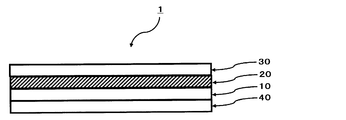
- FIG. 1 the schematic diagram of the electromagnetic wave shield sheet (1) of one Embodiment of this invention is shown.
- a protective layer (30), an adhesive layer (40) and the like may be further laminated on the electromagnetic wave shielding sheet (1).
- a laminate having a four-layer structure of protective layer (30) / electromagnetic wave shield layer (20) / substrate (10) / adhesive layer (40) as shown in FIG. 1 can be mentioned.
- the material of the protective layer include synthetic resins of polyurethane, polyester, polyamide, acrylic, silicone, fluorine, polyethylene, styrene butadiene, nitrile butadiene, epoxy and the like.
- the thickness of the protective layer can be, for example, 0.5 to 80 ⁇ m.
- As a material of an adhesion layer, urethane system hot melt resin, acrylics adhesion resin, etc. can be illustrated.
- the thickness of the adhesive layer can be, for example, 10 to 100 ⁇ m.
- the film thickness can be reduced to 0.1 mm or less. Since the film thickness is thin, it can be manufactured only by a simple coating process.
- the sheet resistance Rs of the electromagnetic wave shielding layer is in the range of 5 ⁇ / ⁇ ⁇ Rs ⁇ 1 ⁇ 10 3 ⁇ / ⁇ .
- the film thickness of the electromagnetic wave shielding layer is 10 ⁇ m or less. In one embodiment, the film thickness of the electromagnetic wave shielding layer is 5 ⁇ m or less. In one embodiment, the film thickness of the electromagnetic wave shielding layer is 2.5 ⁇ m or less. In one embodiment, the film thickness of the electromagnetic wave shielding layer is 1.5 ⁇ m or less.
- the lower limit of the film thickness of the electromagnetic wave shielding layer is not particularly limited, and is, for example, 100 nm or more. If the film thickness is less than 100 nm, pinholes may occur and sufficient electromagnetic wave shielding performance may not be obtained.
- the film thickness of the electromagnetic wave shielding layer can be measured, for example, from a cross-sectional observation image using a contact-type film thickness meter or a focused ion beam processing and observation apparatus. With these two film thickness measurement methods, the same film thickness can be obtained if the measurement itself is properly performed. However, the contact-type film thickness meter can be properly measured if the electromagnetic wave shield layer is formed on a hard flat substrate such as a glass substrate because the needle touches the substrate.
- the contact-type film thickness meter properly measures Is difficult.
- the substrate is a plastic such as a PET (polyethylene terephthalate) film
- the sheet resistance Rs of the electromagnetic wave shielding layer is in the range of 1 ⁇ / ⁇ ⁇ Rs ⁇ 1 ⁇ 10 3 ⁇ / ⁇ .
- the lower limit of the sheet resistance Rs of the electromagnetic wave shield layer is preferably 5 ⁇ / ⁇ ⁇ Rs
- the upper limit is preferably Rs ⁇ 100 ⁇ / ⁇ , and more preferably Rs ⁇ 50 ⁇ / ⁇ .
- the sheet resistance Rs of the electromagnetic wave shield layer can be adjusted by the molecular weight of polyaniline and the addition of other components such as graphene.
- the sheet resistance Rs of the electromagnetic wave shielding layer is measured using a commercially available resistivity meter in accordance with JIS K-7194.
- the electromagnetic wave shielding layer has an electromagnetic wave shielding performance in a frequency band of 30 GHz to 300 GHz. "Having an electromagnetic wave shielding performance” means that when a shielding material is inserted in a transmission line of an electromagnetic wave, the transmitted wave becomes smaller than the incident wave.
- the “electromagnetic wave shielding performance” is evaluated by transmission coefficient measurement using a transmission line. When the electric field and magnetic field of the incident electromagnetic wave are represented by Ei and Hi, and the transmitted wave is expressed by Et and Ht, the transmission coefficient T, which is the ratio of the incident wave to the transmitted wave, is defined as follows.
- 20 log 10
- Or shielding amount 20 log 10
- the electromagnetic wave shielding layer has an electromagnetic wave shielding performance of 10 dB or more in at least a part of a frequency band of 30 GHz to 110 GHz. In one embodiment, the electromagnetic wave shielding layer has an electromagnetic wave shielding performance of 7 dB or more over the entire frequency band of 70 GHz to 110 GHz. In one embodiment, the electromagnetic wave shielding layer has an electromagnetic wave shielding performance of 10 dB or more over the entire frequency band of 70 GHz to 110 GHz.
- the electromagnetic wave shielding performance of the electromagnetic wave shielding layer that is, the shielding amount can be evaluated by the free space method.
- an electromagnetic wave shielding layer A ⁇ -conjugated conductive polymer (1) which is a complex of a substituted or unsubstituted polyaniline and a sulfosuccinic acid derivative represented by the above formula (III); A compound (2) having a phenolic hydroxyl group, The composition containing a solvent (3) is apply
- a method of manufacturing an electromagnetic shielding sheet A ⁇ -conjugated conductive polymer (1) which is a complex of a substituted or unsubstituted polyaniline and a sulfosuccinic acid derivative represented by the above formula (III); A compound (2) having a phenolic hydroxyl group, The composition containing a solvent (3) is apply
- the electromagnetic wave shielding layer is formed by applying a composition containing a ⁇ -conjugated conductive polymer (1), a compound (2) having a phenolic hydroxyl group, and a solvent (3) to the surface of an electromagnetic shielding object or a substrate Be done.
- the ⁇ -conjugated conductive polymer (1) can be dissolved in a solvent, so that it can be applied as a composition in which it is dissolved in the solvent (3).
- the composition described above is liquid, and can be applied directly on the surface of an electromagnetic wave shielding object having various shapes or on a substrate of various shapes using, for example, an appropriate means such as a spray. And it is possible to expand the choice of substrates.
- a composition (hereinafter referred to as a composition for forming an electromagnetic wave shielding layer) for forming an electromagnetic wave shielding layer is an object (electromagnetic wave shielding object) to be shielded by electromagnetic waves such as glass, resin film, sheet or non-woven fabric having a desired shape.
- the electromagnetic wave shielding layer can be manufactured by applying to the surface and removing the solvent in the coating film.
- a conductive article can be produced by processing an electromagnetic wave shielding sheet in which an electromagnetic wave shielding layer is laminated on a sheet-like base material into a desired shape by a known method such as vacuum molding or pressure forming. From the viewpoint of molding, the sheet-like substrate is preferably a resin film or sheet, or a non-woven fabric.
- the coating method of the composition on the surface or substrate of the electromagnetic wave shielding target is a casting method, a spray method, a dip coating method, a doctor blade method, a bar coating method, a spin coating method, an electrospinning method, screen printing, gravure printing
- a known method such as a method can be used, and preferably a cast method.
- An electromagnetic shielding sheet layer may be formed on a shielding target by applying a composition forming an electromagnetic shielding sheet directly onto the surface of an electromagnetic shielding object (electromagnetic shielding object) using an appropriate method such as spraying. it can.
- the coating obtained by applying the composition When the coating obtained by applying the composition is dried, the coating may be heated depending on the type of solvent. For example, heating is performed under an air stream at a temperature of 250 ° C. or less, preferably 50 to 200 ° C., and further, if necessary, under reduced pressure.
- the heating temperature and the heating time are not particularly limited, and may be appropriately selected according to the material to be used.
- the composition for forming an electromagnetic wave shielding layer may contain the components (1) to (3), and may further contain a heat resistant stabilizer (4) and other components (5).
- the electromagnetic wave shielding layer does not substantially contain the solvent (3).
- substantially free means that the electromagnetic wave shielding layer may contain a slight amount of solvent remaining without being volatilized.
- the ⁇ -conjugated conductive polymer (1) is a complex of a substituted or unsubstituted polyaniline molecule and a sulfosuccinic acid derivative represented by the following formula (III) (hereinafter referred to as It may be called “substituted or unsubstituted polyaniline complex” or “polyaniline complex” and is soluble in a solvent.
- Substituted or unsubstituted polyaniline molecule means a polymer obtained by polymerizing substituted or unsubstituted aniline (monomer), and in the present specification, "substituted or unsubstituted polyaniline molecule” is referred to as “polyaniline molecule”.
- polyaniline molecule Sometimes abbreviated.
- the “substituted or unsubstituted polyaniline complex” is a complex of the “substituted or unsubstituted polyaniline molecule” and the “sulfosuccinic acid derivative represented by the formula (III)” described later, and in the present specification, It may be abbreviated as "polyaniline complex”.
- the polyaniline molecule preferably has a weight average molecular weight (hereinafter referred to as molecular weight) of 10,000 or more, more preferably 20,000 or more, still more preferably 30,000 to 1,000, It is 000 or less, more preferably 40,000 or more and 1,000,000 or less, and particularly preferably 52,000 or more and 1,000,000 or less, and 70,000 or more and 1,000,000 or less. If the weight average molecular weight of the polyaniline molecule is less than 10,000, the strength and the stretchability of the electromagnetic wave shielding layer obtained from the composition containing the polyaniline molecule and the conductive article having the electromagnetic wave shielding layer may be reduced.
- the above-mentioned weight average molecular weight is not the molecular weight of polyaniline complex but the molecular weight of polyaniline molecule.
- the molecular weight distribution of the polyaniline molecule is preferably 1.5 or more and 20.0 or less, more preferably 1.5 or more and 5.0 or less, still more preferably 1.5 or more and 4.5 or less, and particularly preferably Is 1.5 or more and 4.0 or less, and most preferably 1.5 or more and 3.6 or less.
- the above-mentioned molecular weight distribution is not the molecular weight distribution of the polyaniline complex but the molecular weight distribution of the polyaniline molecule, as described above.
- the molecular weight distribution is a value represented by weight average molecular weight / number average molecular weight, and from the viewpoint of conductivity, the molecular weight distribution is preferably smaller.
- the said weight average molecular weight and molecular weight distribution are obtained as a polystyrene conversion value which can be measured by a gel permeation chromatograph (GPC).
- substituent of the substituted polyaniline examples include straight or branched hydrocarbon groups such as methyl, ethyl, hexyl and octyl; alkoxy such as methoxy and ethoxy; aryloxy such as phenoxy; tri Halogenated hydrocarbon groups such as fluoromethyl group (—CF 3 group) and the like can be mentioned.
- the polyaniline molecule is preferably an unsubstituted polyaniline molecule from the viewpoint of versatility and economy.
- the ⁇ conjugated conductive polymer (1) is a complex in which a substituted or unsubstituted polyaniline molecule is doped with a dopant.
- a dopant a sulfosuccinic acid derivative represented by the formula (III) is used.
- M is a hydrogen atom, an organic free radical or an inorganic free radical
- m ′ is a valence of M.
- R 13 and R 14 are each independently a hydrocarbon group or a group represented by — (R 15 O) r —R 16 .
- R 15 is a divalent hydrocarbon group or a —Si (R 18 ) 2 — group
- R 16 is a hydrogen atom, a hydrocarbon group or a group represented by R 17 3 Si— and r is 1 or more It is an integer.
- R 15 When r is 2 or more, a plurality of R 15 may be identical to or different from each other.
- R 17 is a hydrocarbon group. The three R 17 s may be the same or different from each other.
- R 18 is a hydrogen atom or a hydrocarbon group. Two or more R 18 s may be the same as or different from each other. )
- organic free radical of M a pyridinium group, an imidazolium group, an anilinium group is mentioned, for example.
- inorganic free radical lithium ion, sodium ion, potassium ion, cesium ion, ammonium ion, calcium ion, magnesium ion, and iron ion are mentioned, for example.
- R 13 and R 14 are a hydrocarbon group
- examples of the hydrocarbon group include a chain or cyclic saturated aliphatic hydrocarbon group, a chain or cyclic unsaturated aliphatic hydrocarbon group, or an aromatic hydrocarbon group Etc.
- a linear or branched alkyl group having 1 to 24 carbon atoms, preferably 4 to 24 carbon atoms, an aryl group containing an aromatic ring, or an alkylaryl group can be mentioned.
- linear or branched butyl group, linear or branched pentyl group, linear or branched hexyl group, linear or branched octyl group, linear or branched decyl group It can be mentioned.
- it is a linear or branched octyl group.
- the hydrocarbon group when R 15 is a hydrocarbon group is, for example, a linear or branched alkylene group having 1 to 24 carbon atoms, an arylene group containing an aromatic ring, an alkylarylene group, It is an aryl alkylene group.
- the hydrocarbon group in the case where R 16 , R 17 and R 18 are a hydrocarbon group includes a linear or branched alkyl group having 1 to 24 carbon atoms and an aromatic ring And aryl groups and alkylaryl groups.
- r is preferably 1 to 10.
- the conductivity of the polyaniline complex and the solubility in a solvent can be controlled by changing the structure of the dopant (Japanese Patent No. 3384566).
- the optimum dopant can be selected according to the required characteristics for each application.
- di-2-ethylhexyl sulfosuccinate ion and sodium di-2-ethylhexyl sulfosuccinate are preferable, and di-2-ethylhexyl sulfosuccinate ion is more preferable.
- the dopant of the polyaniline complex is doped to substituted or unsubstituted polyaniline can be confirmed by ultraviolet / visible / near-infrared spectroscopy or X-ray photoelectron spectroscopy, and the dopant is a carrier of polyaniline. It can be used without particular restriction on the chemical structure as long as it has sufficient acidity to generate.
- the polyaniline complex can be produced by a known production method, for example, containing a dopant, phosphoric acid and an emulsifier different from the dopant, and in a solution having two liquid phases, substituted or unsubstituted aniline It can be produced by chemical oxidation polymerization. In addition, it can be produced by adding an oxidative polymerization agent to a solution having two liquid phases, which contains a substituted or unsubstituted aniline, a dopant, a phosphoric acid, and an emulsifier different from the dopant.
- the emulsifying agent is considered to play a role in preventing phase inversion described later.
- a solution having two liquid phases means a state in which two liquid phases incompatible with each other exist in the solution.
- the “solution having two liquid phases” also includes a state in which one liquid phase is a continuous phase and the other liquid phase is a dispersed phase.
- the phase of the high polar solvent is the continuous phase and the “phase of the low polar solvent” is the dispersed phase
- the “phase of the low polar solvent” is the continuous phase and the "phase of the high polar solvent” is the dispersed phase.
- State is included.
- water is preferable,
- aromatic hydrocarbons such as toluene and xylene, are preferable as a low polar solvent.
- either an ionic emulsifier in which the hydrophilic part is ionic or a nonionic emulsifier in which the hydrophilic part is nonionic can be used, and one or two or more kinds of emulsifiers may be mixed. You may use it.
- the ionic emulsifiers include cationic emulsifiers, anionic emulsifiers and zwitterionic emulsifiers.
- Specific examples of the anionic emulsifier include fatty acid, disproportionated rosin soap, higher alcohol ester, polyoxyethylene alkyl ether phosphoric acid, alkenyl succinic acid, sarcosinate and salts thereof.
- Specific examples of the cationic emulsifier (cationic emulsifier) include alkyldimethylbenzyl ammonium salts and alkyl trimethyl ammonium salts.
- zwitterionic emulsifier examples include alkylbetaine type, alkylamidobetaine type, amino acid type and amine oxide type.
- nonionic emulsifier examples include polyoxyethylene alkyl ether, polypropylene glycol polyethylene glycol ether, polyoxyethylene glycerol borate fatty acid ester, and polyoxyethylene sorbitan fatty acid ester.
- anionic emulsifiers and nonionic emulsifiers are preferred.
- the anionic emulsifier is more preferably an anionic emulsifier having a phosphoric acid ester structure.
- a nonionic emulsifier having a polyoxyethylene sorbitan fatty acid ester structure is more preferable.
- the amount of the dopant used is preferably 0.1 to 0.5 mol, more preferably 0.3 to 0.45 mol, still more preferably 0.35 to 0.4 mol, per 1 mol of aniline monomer. It is. When the amount of the dopant used is larger than the above range, for example, there is a possibility that the “phase of high polar solvent” and the “phase of low polar solvent” can not be separated after completion of the polymerization.
- the use concentration of phosphoric acid is 0.3 to 6 mol / L, more preferably 1 to 4 mol / L, and still more preferably 1 to 2 mol / L with respect to the highly polar solvent.
- the amount of the emulsifier used is preferably 0.001 to 0.1 mol, more preferably 0.002 to 0.02 mol, and still more preferably 0.003 to 0.01 mol, per 1 mol of aniline monomer. is there.
- the amount of the emulsifier used is larger than the above range, there is a possibility that the “phase of high polar solvent” and the “phase of low polar solvent” can not be separated after the polymerization is completed.
- oxidizing agents used in chemical oxidation polymerization include sodium persulfate, potassium persulfate, ammonium persulfate, peroxides such as hydrogen peroxide; ammonium dichromate, perchloric acid Ammonium, potassium iron (III) sulfate, iron (III) trichloride, manganese dioxide, iodic acid, potassium permanganate, or iron p-toluenesulfonate can be used, with preference given to persulfates such as ammonium persulfate.
- oxidizing agents may be used alone or in combination of two or more.
- the amount of the oxidizing agent used is preferably 0.05 to 1.8 mol, more preferably 0.8 to 1.6 mol, still more preferably 1.2 to 1.4 mol, per 1 mol of aniline monomer. It is. By setting the amount of the oxidizing agent to be in the above range, a sufficient degree of polymerization can be obtained. In addition, since aniline is sufficiently polymerized, liquid separation and recovery is easy, and there is no possibility that the solubility of the polymer is lowered.
- the polymerization temperature is usually -5 to 60 ° C, preferably -5 to 40 ° C. The polymerization temperature may be changed during the polymerization reaction. A side reaction can be avoided because polymerization temperature is the said range.
- the polyaniline complex can be specifically produced by the following method.
- a solution of the dopant and the emulsifier in toluene is placed in a separable flask under a stream of inert atmosphere such as nitrogen, and aniline is added to the solution.
- chlorine free phosphoric acid is added to the solution and the solution temperature is cooled.
- stirring is performed.
- a solution of ammonium persulfate dissolved in phosphoric acid is added dropwise using a dropping funnel and allowed to react. The solution temperature is then raised and the reaction is continued. After completion of the reaction, the aqueous phase separated into two phases is separated by leaving to stand.
- a toluene solution of polyaniline complex (protonated polyaniline) is obtained.
- the insoluble matter contained in the toluene solution of the obtained polyaniline complex is removed, and the toluene solution of polyaniline complex is obtained.
- the solution is transferred to an evaporator, and the volatile matter is evaporated by heating and depressurizing to obtain a polyaniline complex.
- polyaniline molecules can be doped with a dopant to prepare polyaniline complex (protonated polyaniline).
- the polyaniline molecule which is a raw material of polyaniline complex can be manufactured by a well-known method. As a specific example, a manufacturing method described in JP-A-3-28229 can be mentioned. In the presence of a protic acid, while maintaining the temperature of aniline in the solvent at, for example, 5 ° C. or less, an aqueous solution of an oxidizing agent is used to reduce one mole of oxidizing agent and one molecule of oxidizing agent per mole of aniline.
- a solution of polyaniline molecule can be produced by mixing the above-mentioned polyaniline complex with 1 M aqueous sodium hydroxide solution to make a dedoped polyaniline powder and dissolving it in NMP (N-methylpyrrolidone). .
- NMP N-methylpyrrolidone
- a polyaniline powder or a solution of polyaniline powder in a solvent can be used to produce a protonated polyaniline complex.
- the content of the ⁇ -conjugated conductive polymer (1) (ie, polyaniline complex) in the composition for forming an electromagnetic shielding layer is preferably 0.5% by weight to 10% by weight, more preferably 1% by weight It is ⁇ 5% by weight.
- the thickness of the electromagnetic wave shielding layer can be 0.1 mm or less.
- the composition for forming an electromagnetic wave shielding layer contains a compound (2) having a phenolic Hydroxyl group.
- the compound (2) having a phenolic hydroxyl group is a compound having a compound having one phenolic hydroxyl group, a compound having a plurality of phenolic hydroxyl groups, and a repeating unit having one or more phenolic hydroxyl groups. .
- the compound having one phenolic hydroxyl group is preferably a compound represented by the following formulas (A), (B) and (C).
- R 101 is an alkyl group having 1 to 20 carbon atoms, an alkenyl group, a cycloalkyl group, an aryl group, an alkylaryl group or an arylalkyl group.
- n1 is an integer of 1 to 5, preferably 1 to 3, and more preferably 1. When n1 is 2 or more, a plurality of R 101 may be identical to or different from each other.
- the substitution position of —OR 101 is preferably meta or para to the phenolic hydroxyl group.
- phenolic compound represented by the formula (A) examples include methoxyphenol (for example, 4-methoxyphenol), ethoxyphenol, propoxyphenol, isopropoxyphenol, butyloxyphenol, isobutyloxyphenol and tert-butyloxyphenol It can be mentioned.
- R 102 represents an alkyl group having 1 to 20 carbon atoms, an alkenyl group, an alkylthio group, a cycloalkyl group having 3 to 10 carbon atoms, an aryl group having 6 to 20 carbon atoms, an alkylaryl group or an aryl group It is an alkyl group.
- n2 is an integer of 0 to 7, preferably 0 to 3, and more preferably 1. When n2 is 2 or more, a plurality of R 102 may be identical to or different from each other.
- Specific examples of the phenolic compound represented by the formula (B) include hydroxynaphthalene.
- R 103 represents an alkyl group having 1 to 20 carbon atoms, an alkenyl group, an alkylthio group, a cycloalkyl group having 3 to 10 carbon atoms, an aryl group having 6 to 20 carbon atoms, an alkylaryl group, an aryl group It is an alkyl group, a halogen atom or a carboxy group.
- n3 is an integer of 1 to 5, preferably 1 to 3, and more preferably 1. When n3 is 2 or more, a plurality of R 103 may be identical to or different from each other. )
- the compound represented by the formula (C) include o-, m- or p-cresol, o-, m- or p-ethylphenol, o-, m- or p-propylphenol (eg 4-isopropyl) Phenol), o-, m- or p-butylphenol, o-, m- or p-pentylphenol (eg 4-tert-pentylphenol), o-, m- or p-chlorophenol, salicylic acid, hydroxybenzoic acid Can be mentioned.
- o-, m- or p-cresol o-, m- or p-ethylphenol, o-, m- or p-propylphenol (eg 4-isopropyl) Phenol), o-, m- or p-butylphenol, o-, m- or p-pentylphenol (eg 4-tert-pentylphenol),
- examples of the alkyl group having 1 to 20 carbon atoms include methyl, ethyl, propyl, isopropyl, butyl, isobutyl and tertiary butyl. .
- examples of the cycloalkyl group include a cyclopentyl group and a cyclohexanyl group.
- the aryl group includes phenyl, naphthyl and the like.
- examples of the alkylaryl group and the arylalkyl group include groups obtained by combining the above-mentioned alkyl group and aryl group.
- the compound having a plurality of phenolic hydroxyl groups include catechol, resorcinol, and a compound represented by the following formula (D).
- R 104 is a hydrocarbon group, a hetero atom-containing hydrocarbon group, a halogen atom, a carboxy group, an amino group, an —SH group, a sulfonic acid group, or a hydroxyl group.
- n4 is an integer of 0 to 6; When n4 is 2 or more, a plurality of R 104 may be identical to or different from each other. )
- the two phenolic hydroxyl groups of the compound having a phenolic hydroxyl group represented by the formula (D) are preferably substituted at positions on the naphthalene ring which are not adjacent to each other. Further, specific examples of the compound having a phenolic hydroxyl group represented by the formula (D) include 1,6-naphthalenediol, 2,6-naphthalenediol, and 2,7-naphthalenediol.
- polymer compound comprising a repeating unit having one or more phenolic hydroxyl groups
- polymer compound comprising a repeating unit having one or more phenolic hydroxyl groups
- the content of the compound (2) having a phenolic hydroxyl group in the composition for forming an electromagnetic wave shielding layer is preferably 5 to 60% by weight, more preferably 15 to 40% by weight.
- the content of the compound (2) having a phenolic hydroxyl group is in the above range, it is possible to prevent the solvent from remaining or precipitating in the obtained electromagnetic wave shielding layer.
- the solvent (3) contained in the composition for forming an electromagnetic wave shielding layer may be an organic solvent or an inorganic solvent such as water, or may be a single solvent or a mixed solvent of two or more. Preferably it is an organic solvent.
- the organic solvent may be a water-soluble organic solvent or an organic solvent substantially immiscible with water (water-immiscible organic solvent).
- part or all of the solvent used for producing the polyaniline complex which is the ⁇ -conjugated conductive polymer (1), may be brought in .
- the water-soluble organic solvent may be a protic polar solvent or an aprotic polar solvent, for example, alcohols such as isopropanol, 1-butanol, 2-butanol, 2-pentanol, benzyl alcohol and the like; ketones such as acetone; Ethers such as tetrahydrofuran and dioxane; aprotic polar solvents such as N methyl pyrrolidone and the like can be mentioned.
- alcohols such as isopropanol, 1-butanol, 2-butanol, 2-pentanol, benzyl alcohol and the like
- ketones such as acetone
- Ethers such as tetrahydrofuran and dioxane
- aprotic polar solvents such as N methyl pyrrolidone and the like can be mentioned.
- water-immiscible organic solvent examples include hydrocarbon solvents such as benzene, toluene, xylene, ethylbenzene and tetralin; halogen-containing solvents such as methylene chloride, chloroform, carbon tetrachloride, dichloroethane, trichloroethane and tetrachloroethane; acetic acid Ester solvents such as ethyl, isobutyl acetate and n-butyl acetate; ketones solvents such as methyl isobutyl ketone, methyl ethyl ketone, cyclopentanone and cyclohexanone; ether solvents such as cyclopentyl methyl ether and the like.
- hydrocarbon solvents such as benzene, toluene, xylene, ethylbenzene and tetralin
- halogen-containing solvents such as methylene chlor
- the water-soluble organic solvent and the water-immiscible organic solvent may be combined to form a mixed solvent of two or more.
- a mixed solvent of two or more For example, when toluene, isopropyl alcohol and methyl isobutyl ketone are used as the solvent (3), 20 to 50% by weight and 0.1 to 15%, respectively, when the total amount of the solvent contained in the composition is 100% by weight. It can be in weight percent and 0.1 to 40 weight percent.
- the heat-resistant stabilizer is an acidic substance or a salt of an acidic substance, and the acidic substance may be any of an organic acid (acid of an organic compound) and an inorganic acid (acid of an inorganic compound).
- the acidic substance which is a heat resistant stabilizer is preferably an organic acid, more preferably an organic acid having one or more of a sulfonic acid group, a carboxy group, a phosphoric acid group, or a phosphonic acid group, still more preferably a sulfonic acid It is an organic acid having one or more groups.
- salts of acidic substances that are heat stabilizers salts of these acidic substances can be mentioned.
- the organic acid having one or more sulfonic acid groups is preferably a cyclic, linear or branched alkylsulfonic acid, substituted or unsubstituted aromatic sulfonic acid, or polysulfonic acid having one or more sulfonic acid groups.
- alkylsulfonic acid examples include methanesulfonic acid, ethanesulfonic acid and di2-ethylhexylsulfosuccinic acid.
- the alkyl group here is preferably a linear or branched alkyl group having 1 to 18 carbon atoms.
- aromatic sulfonic acid examples include a sulfonic acid having a benzene ring, a sulfonic acid having a naphthalene skeleton, a sulfonic acid having an anthracene skeleton, a substituted or unsubstituted benzenesulfonic acid, a substituted or unsubstituted naphthalenesulfonic acid and a substituted Or unsubstituted anthracenesulfonic acid, preferably substituted or unsubstituted naphthalenesulfonic acid.
- the substituent of the aromatic sulfonic acid is, for example, a group selected from the group consisting of an alkyl group, an alkoxy group, a hydroxy group, a nitro group, a carboxy group, and an acyl group, and two or more substituents may be substituted .
- the polysulfonic acid is a polymer compound in which a main chain or a side chain of a polymer chain is substituted with a plurality of sulfonic acid groups. For example, polystyrene sulfonic acid is mentioned.
- the organic acid having one or more carboxy groups is preferably a cyclic, linear or branched alkyl carboxylic acid, a substituted or unsubstituted aromatic carboxylic acid, or a polycarboxylic acid having one or more carboxy groups.
- the alkyl carboxylic acid include undecylenic acid, cyclohexane carboxylic acid and 2-ethylhexanoic acid.
- the alkyl group is preferably a linear or branched alkyl group having 1 to 18 carbon atoms.
- the substituted or unsubstituted aromatic carboxylic acid include substituted or unsubstituted benzenecarboxylic acid and naphthalenecarboxylic acid.
- the substituent is, for example, a group selected from the group consisting of a sulfonic acid group, an alkyl group, an alkoxy group, a nitro group, and an acyl group, and may be substituted by two or more. Specific examples include benzoic acid, naphthoic acid and trimesic acid.
- the organic acid having one or more phosphoric acid groups or phosphonic acid groups is preferably a cyclic, linear or branched alkyl phosphoric acid or alkyl phosphonic acid having one or more phosphoric acid groups or phosphonic acid groups; substituted or unsubstituted aromatic Phosphoric acid or aromatic phosphonic acid; polyphosphoric acid or polyphosphonic acid.
- Examples of the alkyl phosphoric acid or alkyl phosphonic acid include dodecyl phosphoric acid and bis (2-ethylhexyl) hydrogen phosphate.
- the alkyl group is preferably a linear or branched alkyl group having 1 to 18 carbon atoms.
- aromatic phosphoric acid and aromatic phosphonic acid examples include substituted or unsubstituted benzenesulfonic acid or phosphonic acid, and naphthalenesulfonic acid or phosphonic acid.
- the substituent is, for example, a group selected from the group consisting of an alkyl group, an alkoxy group, a hydroxy group, a nitro group, a carboxy group, and an acyl group, and may be substituted by 2 or more.
- phenyl phosphonic acid is mentioned.
- the composition for forming an electromagnetic shielding layer may contain two or more of an acidic substance which is a heat resistant stabilizer and / or a salt of an acidic substance. Specifically, salts of different acidic substances and / or different acidic substances may be included.
- the content of the heat resistant stabilizer in the composition for forming an electromagnetic wave shielding layer is preferably 0.1% by weight to 3.0% by weight.
- the composition for forming an electromagnetic wave shielding layer has, for example, 90% by weight or more, 95% by weight or more, 99% by weight or more, 100% by weight of the ⁇ conjugated conductive polymer (1) and phenolic hydroxyl group It preferably comprises a compound (2) and a solvent (3). Furthermore, the heat-resistant stabilizer (4) and / or other components (5) such as resins and additives may be contained.
- the resin is added as, for example, a binder base, a plasticizer, and a matrix base.
- the resin include, for example, polyolefin such as polyethylene and polypropylene, chlorinated polyolefin, polystyrene, polyester, polyamide, polyacetal, polyethylene terephthalate, polycarbonate, polyethylene glycol, polyethylene oxide, polyacrylic acid, polyacrylic ester, polymethacrylic ester Examples include acid esters, and polyvinyl alcohol.
- thermosetting resin such as an epoxy resin, a urethane resin, or a phenol resin, or a precursor capable of forming such a thermosetting resin, in addition to the above-described resin.
- the composition for forming an electromagnetic wave shielding layer may contain, as the other component (5), a component such as graphene, carbon fiber such as carbon nanotube, or a component having high magnetic permeability such as magnetic particles.
- the method for producing the composition containing the above-mentioned components is not particularly limited, and can be prepared by a known method, for example, can be prepared by the method disclosed in WO 05/052058.
- the electromagnetic wave shielding layer and the electromagnetic wave shielding sheet are excellent in flexibility and can be suitably used for applications such as housings and gaskets of electronic devices, wall materials, curtains, blinders, and in-vehicle devices.
- Example 1 [Production of Polyaniline Complex]
- 32.4 g of neocoral SWC sodium di-2-ethylhexyl sulfosuccinate: manufactured by Dai-ichi Kogyo Seiyaku Co., Ltd.
- 13.3 g of aniline and non-ionic having sorbone T-20 polyoxyethylene sorbitan fatty acid ester structure Emulsifier: 0.9 g of Toho Chemical Industry Co., Ltd. was added and dissolved in 320.4 g of toluene.
- the resulting solution was no.
- the insolubles were removed by filtration through a filter paper No. 2 to obtain a toluene solution of polyaniline complex.
- the solution was transferred to an evaporator, heated at 60 ° C., and the pressure was reduced to evaporate the volatile components, thereby obtaining a polyaniline complex (protonated polyaniline).
- the sheet resistance Rs of the electromagnetic wave shielding layer was measured according to JIS K-7194 using a resistivity meter ("MCP-T610" manufactured by Mitsubishi Chemical Analytech Co., Ltd.). The results are shown in Table 1.
- Example 2 A reaction was carried out in the same manner as in Example 1 except that the internal temperature of the reaction solution was changed to -5.degree. C. and the aqueous phosphoric acid solution was changed to 17% by weight, to obtain a polyaniline complex.
- Example 3 In the same manner as in Example 2, a polyaniline complex was obtained. In a solvent in which 92 g of toluene and 3 g of isopropyl alcohol were mixed, 5 g of the polyaniline complex obtained above was dissolved. Next, 3 g of m-cresol was mixed with 7 g of the dissolved solution to obtain 10 g of a polyaniline solution for coating. Using the obtained polyaniline solution for coating, the number of the bar rod of the bar coater is No. The thickness was changed to 100, the coating thickness was increased, an electromagnetic shielding sheet was produced, and the electromagnetic shielding performance was evaluated. The results are shown in Table 1.
- Example 1 Comparative Example 1 In a solvent in which 92 g of toluene and 3 g of isopropyl alcohol were mixed, 5 g of the polyaniline complex obtained in Example 1 was dissolved to obtain a polyaniline solution for coating as it was.
- the electromagnetic wave shielding sheet was produced similarly to Example 1 using the obtained polyaniline solution for application
Landscapes
- Chemical & Material Sciences (AREA)
- Engineering & Computer Science (AREA)
- Chemical Kinetics & Catalysis (AREA)
- Medicinal Chemistry (AREA)
- Polymers & Plastics (AREA)
- Organic Chemistry (AREA)
- Health & Medical Sciences (AREA)
- Manufacturing & Machinery (AREA)
- Microelectronics & Electronic Packaging (AREA)
- Physics & Mathematics (AREA)
- Spectroscopy & Molecular Physics (AREA)
- Shielding Devices Or Components To Electric Or Magnetic Fields (AREA)
- Laminated Bodies (AREA)
- Compositions Of Macromolecular Compounds (AREA)
- Macromolecular Compounds Obtained By Forming Nitrogen-Containing Linkages In General (AREA)
Abstract
置換若しくは無置換のポリアニリンと、式(III)のスルホコハク酸誘導体との複合体である、π共役系導電性高分子と、フェノール性水酸基を有する化合物とを含み、かつ金属成分を含まない、薄膜状の電磁波シールド層であって、前記電磁波シールド層の膜厚が、0.1mm以下であり、かつ前記電磁波シールド層のシート抵抗Rsが、1Ω/□<Rs≦1×103Ω/□の範囲内である、電磁波シールド層。
Description
本発明は、樹脂シート上に導電性高分子を被覆することで、高周波広帯域において高い電磁波シールド性能を発揮する電磁波シールド層に関する。
近年、スマートホンやパソコン等は、通信機器としての機能が充実し、小型・軽量化が進み、処理する情報量の増加に伴い、使用する電磁波の周波数帯がGHz帯域に移行しつつある。
上記通信機器は、装置の小型化と、高速での情報処理が要求されるため、装置に内蔵される電子部品及び配線回路等が増加し、部品同士が高密度に配置される。そのため、各電子部品や配線部等から発生する電磁波ノイズが互いに干渉し合い、その影響が大きくなる。その結果、装置の誤作動や通信時間の遅れ等が生じる。
また、車載レーダーにも、ミリ波(例えば、周波数96.5GHzの電磁波)が使用されており、今後一層の普及が見込まれる。しかし、上記周波数帯域の電磁波は、送受信機内部の電子回路が、他の通信機器から発生する電磁波ノイズとの干渉を起こし易く、レーダーの誤作動を招くおそれがある。また、送受信機の小型化及び薄型化に伴う、実装部品の高密度化も誤作動の要因となっている。
上記通信機器は、装置の小型化と、高速での情報処理が要求されるため、装置に内蔵される電子部品及び配線回路等が増加し、部品同士が高密度に配置される。そのため、各電子部品や配線部等から発生する電磁波ノイズが互いに干渉し合い、その影響が大きくなる。その結果、装置の誤作動や通信時間の遅れ等が生じる。
また、車載レーダーにも、ミリ波(例えば、周波数96.5GHzの電磁波)が使用されており、今後一層の普及が見込まれる。しかし、上記周波数帯域の電磁波は、送受信機内部の電子回路が、他の通信機器から発生する電磁波ノイズとの干渉を起こし易く、レーダーの誤作動を招くおそれがある。また、送受信機の小型化及び薄型化に伴う、実装部品の高密度化も誤作動の要因となっている。
金属からなるシールド層を備えた従来の電磁波シールド材では、金属からなるシールド層の柔軟性や伸長性が十分ではない。そのため、このような電磁波シールド材を、複雑な形状の箇所に取り付ける場合には、シールド層の屈曲や伸長等によって亀裂等が発生し、亀裂等が発生した部分の電磁波シールド性が低下するおそれがあった。
上記問題を解決するため、特許文献1は金属含有樹脂からなるシールド層を備えてなる電磁波シールド材を開示する。
また、特許文献2では、導電性高分子をシート状に成形した電磁波シールドシートを開示する。
また、特許文献2では、導電性高分子をシート状に成形した電磁波シールドシートを開示する。
しかしながら、特許文献1の金属含有樹脂からなるシールド層を備える電磁波シールド材であっても、金属粒子や導電性フィラーを使用するため、柔軟性に乏しく、端面より粉末が析出する問題があった。
導電性高分子を用いる、特許文献2の電磁波シールドシートについては、30GHz以上の高周波帯域におけるシールド性能は検討されていない。また、特許文献2では、電磁波シールドシート(シールド層)のシート抵抗を5Ω/□以下とするために、シールド層の膜厚を0.15mm以上と厚くすることが好ましいと記載されている。
導電性高分子を用いる、特許文献2の電磁波シールドシートについては、30GHz以上の高周波帯域におけるシールド性能は検討されていない。また、特許文献2では、電磁波シールドシート(シールド層)のシート抵抗を5Ω/□以下とするために、シールド層の膜厚を0.15mm以上と厚くすることが好ましいと記載されている。
本発明は、GHzの周波数帯において電磁波シールド性を有し、かつ柔軟性や伸長性に優れた電磁波シールド層、及び当該電磁波シールド層の製造方法を提供することを目的とする。
本発明の第1の態様によれば、
置換若しくは無置換のポリアニリンと、下記式(III)で表されるスルホコハク酸誘導体との複合体である、π共役系導電性高分子と、
フェノール性水酸基を有する化合物とを含み、かつ
金属成分を含まない、
薄膜状の電磁波シールド層であって、
前記電磁波シールド層の膜厚が、0.1mm以下であり、かつ
前記電磁波シールド層のシート抵抗Rsが、1Ω/□<Rs≦1×103Ω/□の範囲内である、電磁波シールド層が提供される。
置換若しくは無置換のポリアニリンと、下記式(III)で表されるスルホコハク酸誘導体との複合体である、π共役系導電性高分子と、
フェノール性水酸基を有する化合物とを含み、かつ
金属成分を含まない、
薄膜状の電磁波シールド層であって、
前記電磁波シールド層の膜厚が、0.1mm以下であり、かつ
前記電磁波シールド層のシート抵抗Rsが、1Ω/□<Rs≦1×103Ω/□の範囲内である、電磁波シールド層が提供される。
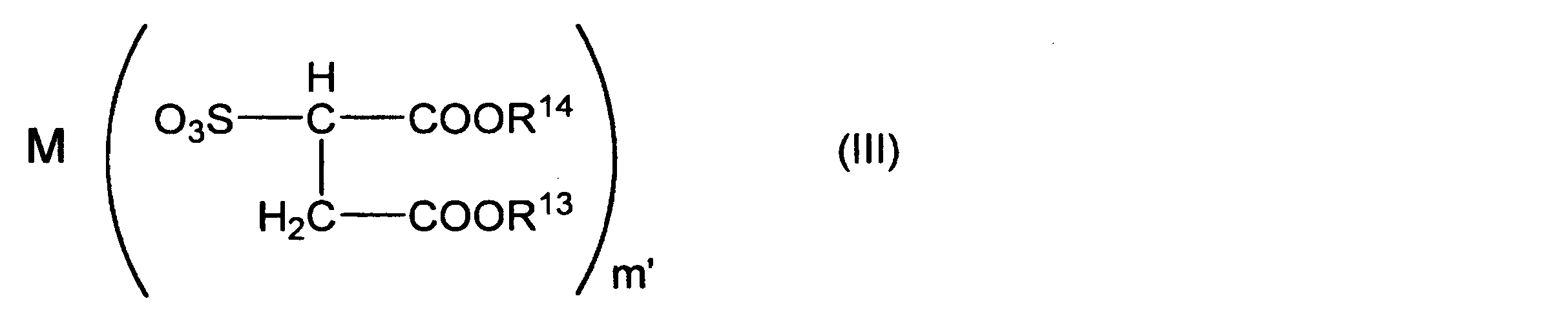
(式(III)中、Mは、水素原子、有機遊離基又は無機遊離基であり、m’はMの価数である。
R13及びR14は、それぞれ独立に、炭化水素基又は-(R15O)r-R16で表わされる基である。m’が2以上のとき、複数存在するR13及びR14は、それぞれ互いに同一であってもよいし、異なっていてもよい。
R15は、2価の炭化水素基又は-Si(R18)2-基であり、R16は水素原子、炭化水素基又はR17 3Si-で表わされる基であり、rは1以上の整数である。rが2以上のとき、複数存在するR15は、互いに同一であってもよいし、異なっていてもよい。
R17は、炭化水素基である。3つ存在するR17は、互いに同一の炭化水素基であってもよいし、異なっていてもよい。
R18は、水素原子、又は炭化水素基である。2つ以上存在するR18は、互いに同一であってもよいし、異なっていてもよい。)
R13及びR14は、それぞれ独立に、炭化水素基又は-(R15O)r-R16で表わされる基である。m’が2以上のとき、複数存在するR13及びR14は、それぞれ互いに同一であってもよいし、異なっていてもよい。
R15は、2価の炭化水素基又は-Si(R18)2-基であり、R16は水素原子、炭化水素基又はR17 3Si-で表わされる基であり、rは1以上の整数である。rが2以上のとき、複数存在するR15は、互いに同一であってもよいし、異なっていてもよい。
R17は、炭化水素基である。3つ存在するR17は、互いに同一の炭化水素基であってもよいし、異なっていてもよい。
R18は、水素原子、又は炭化水素基である。2つ以上存在するR18は、互いに同一であってもよいし、異なっていてもよい。)
本発明の第2の態様によれば、
シート状の基材と、
本発明の第1の態様による電磁波シールド層と
を含む積層体からなる電磁波シールドシートが提供される。
シート状の基材と、
本発明の第1の態様による電磁波シールド層と
を含む積層体からなる電磁波シールドシートが提供される。
本発明の第3の態様によれば、
置換若しくは無置換のポリアニリンと、前記式(III)で表されるスルホコハク酸誘導体との複合体であるπ共役系導電性高分子と、
フェノール性水酸基を有する化合物と、
溶媒と
を含む組成物を、電磁波遮蔽対象物の表面に塗布し、乾燥して、薄膜状の電磁波シールド層を形成する工程を含むことを特徴とする電磁波シールド層の製造方法が提供される。
置換若しくは無置換のポリアニリンと、前記式(III)で表されるスルホコハク酸誘導体との複合体であるπ共役系導電性高分子と、
フェノール性水酸基を有する化合物と、
溶媒と
を含む組成物を、電磁波遮蔽対象物の表面に塗布し、乾燥して、薄膜状の電磁波シールド層を形成する工程を含むことを特徴とする電磁波シールド層の製造方法が提供される。
本発明の第4の態様によれば、
置換若しくは無置換のポリアニリンと、前記式(III)で表されるスルホコハク酸誘導体との複合体であるπ共役系導電性高分子と、
フェノール性水酸基を有する化合物と、
溶媒と
を含む組成物を、シート状の基材に塗布し、乾燥して、電磁波シールド層を積層したシートを得る工程を含むことを特徴とする電磁波シールドシートの製造方法が提供される。
置換若しくは無置換のポリアニリンと、前記式(III)で表されるスルホコハク酸誘導体との複合体であるπ共役系導電性高分子と、
フェノール性水酸基を有する化合物と、
溶媒と
を含む組成物を、シート状の基材に塗布し、乾燥して、電磁波シールド層を積層したシートを得る工程を含むことを特徴とする電磁波シールドシートの製造方法が提供される。
本発明によれば、GHzの周波数帯において電磁波シールド性を有し、かつ柔軟性や伸長性に優れた電磁波シールド層、及び当該電磁波シールド層の製造方法を提供できる。
本発明の第1の態様の電磁波シールド層は、
置換若しくは無置換のポリアニリンと、下記式(III)で表されるスルホコハク酸誘導体との複合体である、π共役系導電性高分子(1)と、
フェノール性水酸基を有する化合物(2)とを含み、かつ
金属成分を含まない、
薄膜状の電磁波シールド層であって、
前記電磁波シールド層の膜厚が、0.1mm以下であり、かつ
前記電磁波シールド層のシート抵抗Rsが、1Ω/□<Rs≦1×103Ω/□の範囲内であることを特徴とする。
置換若しくは無置換のポリアニリンと、下記式(III)で表されるスルホコハク酸誘導体との複合体である、π共役系導電性高分子(1)と、
フェノール性水酸基を有する化合物(2)とを含み、かつ
金属成分を含まない、
薄膜状の電磁波シールド層であって、
前記電磁波シールド層の膜厚が、0.1mm以下であり、かつ
前記電磁波シールド層のシート抵抗Rsが、1Ω/□<Rs≦1×103Ω/□の範囲内であることを特徴とする。
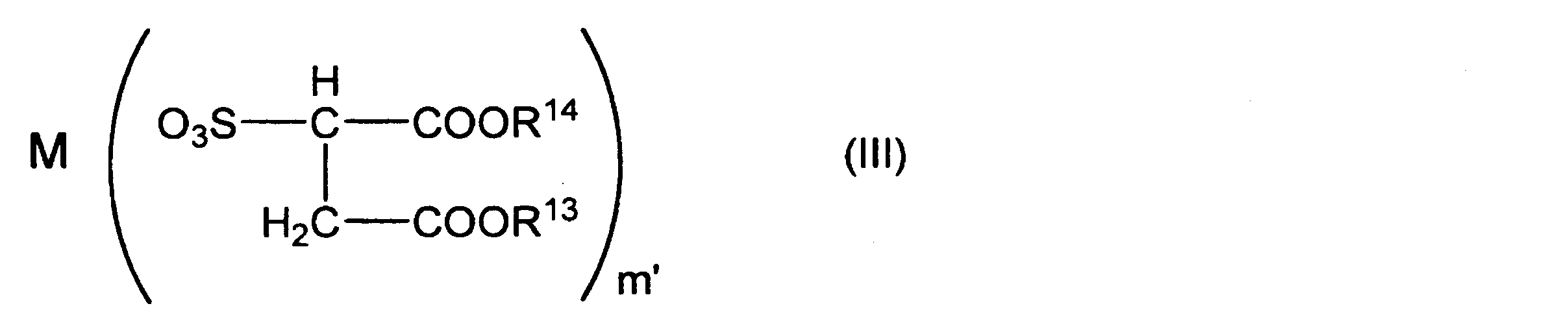
(式(III)中、Mは、水素原子、有機遊離基又は無機遊離基であり、m’はMの価数である。
R13及びR14は、それぞれ独立に、炭化水素基又は-(R15O)r-R16で表わされる基である。m’が2以上のとき、複数存在するR13及びR14は、それぞれ互いに同一であってもよいし、異なっていてもよい。
R15は、2価の炭化水素基又は-Si(R18)2-基であり、R16は水素原子、炭化水素基又はR17 3Si-で表わされる基であり、rは1以上の整数である。rが2以上のとき、複数存在するR15は、互いに同一であってもよいし、異なっていてもよい。
R17は、炭化水素基である。3つ存在するR17は、互いに同一の炭化水素基であってもよいし、異なっていてもよい。
R18は、水素原子、又は炭化水素基である。2つ存在するR18は、互いに同一であってもよいし、異なっていてもよい。)
R13及びR14は、それぞれ独立に、炭化水素基又は-(R15O)r-R16で表わされる基である。m’が2以上のとき、複数存在するR13及びR14は、それぞれ互いに同一であってもよいし、異なっていてもよい。
R15は、2価の炭化水素基又は-Si(R18)2-基であり、R16は水素原子、炭化水素基又はR17 3Si-で表わされる基であり、rは1以上の整数である。rが2以上のとき、複数存在するR15は、互いに同一であってもよいし、異なっていてもよい。
R17は、炭化水素基である。3つ存在するR17は、互いに同一の炭化水素基であってもよいし、異なっていてもよい。
R18は、水素原子、又は炭化水素基である。2つ存在するR18は、互いに同一であってもよいし、異なっていてもよい。)
電磁波シールド層は、電磁波の電界成分から誘起される電流を導電し、電磁波をシールドすることができる。
電磁波シールド層は、金属成分を含まないことで、柔軟性及び伸長性に優れる。
尚、金属成分とは、金属の粉体、繊維等を意味し、ドーパント等が含みうる金属イオンを含まない。
電磁波シールド層は、金属成分を含まないことで、柔軟性及び伸長性に優れる。
尚、金属成分とは、金属の粉体、繊維等を意味し、ドーパント等が含みうる金属イオンを含まない。
本発明の第2の態様の電磁波シールドシートは、
シート状の基材と、
上記電磁波シールド層と
を含む積層体からなる。
シート状の基材と、
上記電磁波シールド層と
を含む積層体からなる。
電磁波シールドシートは、第1の態様の電磁波シールド層と基材との積層体であり、第1の態様の電磁波シールド層を有する物品の一形態であり、電子機器の一部材となり得る。
図1に、本発明の一実施形態の電磁波シールドシート(1)の模式図を示す。
電磁波シールドシート(1)には、さらに保護層(30)、粘着層(40)等が積層されていてもよい。例えば、図1に示すような、保護層(30)/電磁波シールド層(20)/基材(10)/粘着層(40)の4層構造からなる積層体等が挙げられる。
保護層の材料としては、例えばポリウレタン系、ポリエステル系、ポリアミド系、アクリル系、シリコーン系、フッ素系、ポリエチレン系、スチレンブタジエン系、ニトリルブタジエン系、エポキシ系等の合成樹脂を例示することができる。また、保護層の厚みは、例えば0.5~80μmとすることができる。
粘着層の材料としては、ウレタン系ホットメルト樹脂、アクリル系粘着樹脂等を例示することができる。また、粘着層の厚みは、例えば10~100μmとすることができる。
電磁波シールドシート(1)には、さらに保護層(30)、粘着層(40)等が積層されていてもよい。例えば、図1に示すような、保護層(30)/電磁波シールド層(20)/基材(10)/粘着層(40)の4層構造からなる積層体等が挙げられる。
保護層の材料としては、例えばポリウレタン系、ポリエステル系、ポリアミド系、アクリル系、シリコーン系、フッ素系、ポリエチレン系、スチレンブタジエン系、ニトリルブタジエン系、エポキシ系等の合成樹脂を例示することができる。また、保護層の厚みは、例えば0.5~80μmとすることができる。
粘着層の材料としては、ウレタン系ホットメルト樹脂、アクリル系粘着樹脂等を例示することができる。また、粘着層の厚みは、例えば10~100μmとすることができる。
電磁波シールド層は、塗布形成することができるため、膜厚を0.1mm以下と薄くすることができる。膜厚が薄いため、簡便な塗布プロセスのみで製造することができる。
一実施形態においては、電磁波シールド層のシート抵抗Rsは、5Ω/□<Rs≦1×103Ω/□の範囲内である。
一実施形態においては、電磁波シールド層の膜厚は、10μm以下である。
一実施形態においては、電磁波シールド層の膜厚は、5μm以下である。
一実施形態においては、電磁波シールド層の膜厚は、2.5μm以下である。
一実施形態においては、電磁波シールド層の膜厚は、1.5μm以下である。
電磁波シールド層の膜厚の下限は特に限定されないが、例えば、100nm以上である。膜厚が100nm未満では、ピンホールが生じたり、十分な電磁波遮蔽性能が得られないおそれがある。
電磁波シールド層の膜厚は、例えば、接触式の膜厚計、又は集束イオンビーム加工観察装置を用いた断面観察像から測定できる。これら2つの膜厚の測定方法では、測定自体が適正に行われるならば、同じ膜厚が得られる。但し、接触式の膜厚計は、針が基材に触れるため、ガラス基板など硬い平板状の基材上に電磁波シールド層が形成されている場合であれば適正に測定できる。しかし、電磁波シールド層がその上に形成されている基材が柔軟である場合や、平板状ではない(基材自体が変形している)場合には、接触式の膜厚計では適正な測定が困難である。このような場合には、集束イオンビーム加工観察装置を用いた断面観察像による測定方法を用いることが好ましい。例えば、基材がPET(ポリエチレンテレフタレート)フィルム等のプラスチックである場合には、収束イオンビーム加工観察装置を用いることが好ましい。
一実施形態においては、電磁波シールド層のシート抵抗Rsは、5Ω/□<Rs≦1×103Ω/□の範囲内である。
一実施形態においては、電磁波シールド層の膜厚は、10μm以下である。
一実施形態においては、電磁波シールド層の膜厚は、5μm以下である。
一実施形態においては、電磁波シールド層の膜厚は、2.5μm以下である。
一実施形態においては、電磁波シールド層の膜厚は、1.5μm以下である。
電磁波シールド層の膜厚の下限は特に限定されないが、例えば、100nm以上である。膜厚が100nm未満では、ピンホールが生じたり、十分な電磁波遮蔽性能が得られないおそれがある。
電磁波シールド層の膜厚は、例えば、接触式の膜厚計、又は集束イオンビーム加工観察装置を用いた断面観察像から測定できる。これら2つの膜厚の測定方法では、測定自体が適正に行われるならば、同じ膜厚が得られる。但し、接触式の膜厚計は、針が基材に触れるため、ガラス基板など硬い平板状の基材上に電磁波シールド層が形成されている場合であれば適正に測定できる。しかし、電磁波シールド層がその上に形成されている基材が柔軟である場合や、平板状ではない(基材自体が変形している)場合には、接触式の膜厚計では適正な測定が困難である。このような場合には、集束イオンビーム加工観察装置を用いた断面観察像による測定方法を用いることが好ましい。例えば、基材がPET(ポリエチレンテレフタレート)フィルム等のプラスチックである場合には、収束イオンビーム加工観察装置を用いることが好ましい。
電磁波シールド層のシート抵抗Rsは、1Ω/□<Rs≦1×103Ω/□の範囲内である。シート抵抗Rsが上記範囲内であることにより、GHzの周波数帯域において電磁波遮蔽性能が得られる。
電磁波シールド層のシート抵抗Rsの下限は、5Ω/□<Rsであることが好ましく、上限は、Rs≦100Ω/□であることが好ましく、Rs≦50Ω/□であることがより好ましい。
電磁波シールド層のシート抵抗Rsは、ポリアニリンの分子量や、グラフェン等のその他の成分の添加によって調節することができる。
電磁波シールド層のシート抵抗Rsは、JIS K-7194に準拠して市販の抵抗率計を用いて測定する。
電磁波シールド層のシート抵抗Rsの下限は、5Ω/□<Rsであることが好ましく、上限は、Rs≦100Ω/□であることが好ましく、Rs≦50Ω/□であることがより好ましい。
電磁波シールド層のシート抵抗Rsは、ポリアニリンの分子量や、グラフェン等のその他の成分の添加によって調節することができる。
電磁波シールド層のシート抵抗Rsは、JIS K-7194に準拠して市販の抵抗率計を用いて測定する。
一実施形態においては、電磁波シールド層は、30GHz~300GHzの周波数帯域に電磁波遮蔽性能を有する。
「電磁波遮蔽性能を有する」とは、電磁波の伝送線路内に遮蔽材を挿入した場合に、入射波に対して透過波が小さくなることを意味する。
「電磁波遮蔽性能」は、伝送線路を用いた透過係数測定により評価される。入射する電磁波の電界、磁界を各々Ei、Hi、透過波をEt、Htで表した場合に、入射波と透過波の比である透過係数Tは、以下のように定義される。
T=Et/Ei 若しくは T=Ht/Hi
遮蔽材の効果は、dB(デシベル)単位で表されることが多く、
遮蔽量[dB]=20log10|1/T|=20log10|Ei/Et| 若しくは
遮蔽量=20log10|Hi/Ht|
となる。
遮蔽量は、5dB以上が好ましく、7dB以上がより好ましく、10dB以上がさらに好ましい。
「電磁波遮蔽性能を有する」とは、電磁波の伝送線路内に遮蔽材を挿入した場合に、入射波に対して透過波が小さくなることを意味する。
「電磁波遮蔽性能」は、伝送線路を用いた透過係数測定により評価される。入射する電磁波の電界、磁界を各々Ei、Hi、透過波をEt、Htで表した場合に、入射波と透過波の比である透過係数Tは、以下のように定義される。
T=Et/Ei 若しくは T=Ht/Hi
遮蔽材の効果は、dB(デシベル)単位で表されることが多く、
遮蔽量[dB]=20log10|1/T|=20log10|Ei/Et| 若しくは
遮蔽量=20log10|Hi/Ht|
となる。
遮蔽量は、5dB以上が好ましく、7dB以上がより好ましく、10dB以上がさらに好ましい。
一実施形態においては、電磁波シールド層は、30GHz~110GHzの周波数帯域の少なくとも一部に10dB以上の電磁波遮蔽性能を有する。
一実施形態においては、電磁波シールド層は、70GHz~110GHzの周波数帯域全体に渡って、7dB以上の電磁波遮蔽性能を有する。
一実施形態においては、電磁波シールド層は、70GHz~110GHzの周波数帯域全体に渡って、10dB以上の電磁波遮蔽性能を有する。
一実施形態においては、電磁波シールド層は、70GHz~110GHzの周波数帯域全体に渡って、7dB以上の電磁波遮蔽性能を有する。
一実施形態においては、電磁波シールド層は、70GHz~110GHzの周波数帯域全体に渡って、10dB以上の電磁波遮蔽性能を有する。
電磁波シールド層の電磁波遮蔽性能、即ち、遮蔽量は、フリースペース法により評価することができる。
本発明の第3の態様に係る電磁波シールド層の製造方法は、
置換若しくは無置換のポリアニリンと、前記式(III)で表されるスルホコハク酸誘導体との複合体であるπ共役系導電性高分子(1)と、
フェノール性水酸基を有する化合物(2)と、
溶媒(3)と
を含む組成物を、電磁波遮蔽対象物の表面に塗布し、乾燥して、薄膜状の電磁波シールド層を形成する工程を含む。
置換若しくは無置換のポリアニリンと、前記式(III)で表されるスルホコハク酸誘導体との複合体であるπ共役系導電性高分子(1)と、
フェノール性水酸基を有する化合物(2)と、
溶媒(3)と
を含む組成物を、電磁波遮蔽対象物の表面に塗布し、乾燥して、薄膜状の電磁波シールド層を形成する工程を含む。
本発明の第4の態様に係る電磁波シールドシートの製造方法は、
置換若しくは無置換のポリアニリンと、前記式(III)で表されるスルホコハク酸誘導体との複合体であるπ共役系導電性高分子(1)と、
フェノール性水酸基を有する化合物(2)と、
溶媒(3)と
を含む組成物を、シート状の基材に塗布し、乾燥して、電磁波シールド層を積層したシートを得る工程を含む。
置換若しくは無置換のポリアニリンと、前記式(III)で表されるスルホコハク酸誘導体との複合体であるπ共役系導電性高分子(1)と、
フェノール性水酸基を有する化合物(2)と、
溶媒(3)と
を含む組成物を、シート状の基材に塗布し、乾燥して、電磁波シールド層を積層したシートを得る工程を含む。
電磁波シールド層は、π共役系導電性高分子(1)、フェノール性水酸基を有する化合物(2)及び溶媒(3)を含む組成物を、電磁波遮蔽対象物の表面や基材に塗布して形成される。
π共役系導電性高分子(1)は、溶媒に溶解可能であるため、これを溶媒(3)に溶解した組成物として塗布可能である。上記組成物は液状であり、様々な形状を有する電磁波遮蔽対象物の表面や各種形状の基材上に例えば、スプレー等の適切な手段を用いて直接塗布することもできるため、電磁波遮蔽対象物や基材の選択肢を広げることが可能である。
π共役系導電性高分子(1)は、溶媒に溶解可能であるため、これを溶媒(3)に溶解した組成物として塗布可能である。上記組成物は液状であり、様々な形状を有する電磁波遮蔽対象物の表面や各種形状の基材上に例えば、スプレー等の適切な手段を用いて直接塗布することもできるため、電磁波遮蔽対象物や基材の選択肢を広げることが可能である。
例えば、電磁波シールド層を形成する組成物(以下、電磁波シールド層形成用組成物という)を、所望の形状を有するガラスや樹脂フィルム、シート、不織布等の電磁波シールドしたい対象(電磁波遮蔽対象物)の表面に塗布し、塗膜中の溶媒を除去することによって、電磁波シールド層を製造することができる。
また、シート状の基材に電磁波シールド層を積層した電磁波シールドシートを真空成型や圧空成形等の公知の方法により所望の形状に加工することにより、導電性物品を製造することができる。成形の観点から、シート状の基材は、樹脂フィルム又はシート、不織布が好ましい。
また、シート状の基材に電磁波シールド層を積層した電磁波シールドシートを真空成型や圧空成形等の公知の方法により所望の形状に加工することにより、導電性物品を製造することができる。成形の観点から、シート状の基材は、樹脂フィルム又はシート、不織布が好ましい。
組成物の電磁波遮蔽対象物の表面又は基材への塗布方法としては、キャスト法、スプレー法、ディップコート法、ドクターブレード法、バーコート法、スピンコート法、エレクトロスピニング法、スクリーン印刷、グラビア印刷法等、公知の方法を用いることができ、好ましくはキャスト法である。
電磁波シールドしたい対象(電磁波遮蔽対象物)の表面に、電磁波シールドシートを形成する組成物を直接スプレー等適切な手法を用いて、塗工することでシールド対象に電磁波シールドシート層を形成することができる。
組成物を塗布して得られる塗膜を乾燥する際、溶媒の種類によっては、塗膜を加熱してもよい。例えば、空気気流下250℃以下、好ましくは50以上200℃以下の温度で加熱し、さらに、必要に応じて、減圧下に加熱する。加熱温度及び加熱時間は、特に制限されず、用いる材料に応じて適宜選択すればよい。
上記電磁波シールド層形成用組成物は、上記成分(1)~(3)を含み、さらに、耐熱安定化剤(4)及びその他の成分(5)を含んでもよい。
尚、上記組成物を塗布して形成した塗膜を乾燥することにより、当該塗膜中の溶媒(3)は塗膜から揮発する。そのため、電磁波シールド層は、上記溶媒(3)を実質的に含まない。ここで「実質的に含まない」とは、電磁波シールド層が、揮発しきれずに残ったわずかな溶媒を含んでいてもよいことを意味する。
以下、上記組成物の各成分について説明する。
(1)π共役系導電性高分子
π共役系導電性高分子(1)は、置換若しくは無置換のポリアニリン分子と、下記式(III)で表されるスルホコハク酸誘導体との複合体(以下、「置換若しくは無置換のポリアニリン複合体」又は「ポリアニリン複合体」と呼ぶことがある)であり、溶媒に溶解可能である。
(1)π共役系導電性高分子
π共役系導電性高分子(1)は、置換若しくは無置換のポリアニリン分子と、下記式(III)で表されるスルホコハク酸誘導体との複合体(以下、「置換若しくは無置換のポリアニリン複合体」又は「ポリアニリン複合体」と呼ぶことがある)であり、溶媒に溶解可能である。
「置換若しくは無置換のポリアニリン分子」は、置換若しくは無置換のアニリン(単量体)が重合した重合体を意味し、本明細書では、「置換若しくは無置換のポリアニリン分子」を「ポリアニリン分子」と略称することがある。
「置換若しくは無置換のポリアニリン複合体」は、「置換若しくは無置換のポリアニリン分子」と、後述する「式(III)で表されるスルホコハク酸誘導体」との複合体であり、本明細書では、「ポリアニリン複合体」と略称することがある。
「置換若しくは無置換のポリアニリン複合体」は、「置換若しくは無置換のポリアニリン分子」と、後述する「式(III)で表されるスルホコハク酸誘導体」との複合体であり、本明細書では、「ポリアニリン複合体」と略称することがある。
一実施形態においては、ポリアニリン分子は、好ましくは重量平均分子量(以下、分子量という)が10,000以上であり、より好ましくは20,000以上であり、さらに好ましくは30,000以上1,000,000以下であり、さらに好ましくは40,000以上1,000,000以下であり、特に好ましくは52,000以上1,000,000以下、70,000以上1,000,000以下である。
ポリアニリン分子の重量平均分子量が10,000未満であると、当該ポリアニリン分子を含む組成物から得られる電磁波シールド層及び当該電磁波シールド層を有する導電性物品の強度や延伸性が低下するおそれがある。
ここで、上記の重量平均分子量はポリアニリン複合体の分子量ではなく、ポリアニリン分子の分子量である。
ポリアニリン分子の重量平均分子量が10,000未満であると、当該ポリアニリン分子を含む組成物から得られる電磁波シールド層及び当該電磁波シールド層を有する導電性物品の強度や延伸性が低下するおそれがある。
ここで、上記の重量平均分子量はポリアニリン複合体の分子量ではなく、ポリアニリン分子の分子量である。
ポリアニリン分子の分子量分布は、好ましくは1.5以上20.0以下であり、より好ましくは1.5以上5.0以下であり、さらに好ましくは1.5以上4.5以下であり、特に好ましくは1.5以上4.0以下であり、最も好ましくは1.5以上3.6以下である。ここで、上記の分子量分布は、上記と同様に、ポリアニリン複合体の分子量分布ではなく、ポリアニリン分子の分子量分布である。
分子量分布は重量平均分子量/数平均分子量で表わされる値であり、導電率の観点から、分子量分布は小さい方が好ましい。また、上記重量平均分子量及び分子量分布は、ゲルパーミエーションクロマトグラフ(GPC)により測定できるポリスチレン換算値として得られる。
分子量分布は重量平均分子量/数平均分子量で表わされる値であり、導電率の観点から、分子量分布は小さい方が好ましい。また、上記重量平均分子量及び分子量分布は、ゲルパーミエーションクロマトグラフ(GPC)により測定できるポリスチレン換算値として得られる。
置換ポリアニリンの置換基としては、例えばメチル基、エチル基、ヘキシル基、オクチル基等の直鎖又は分岐の炭化水素基;メトキシ基、エトキシ基等のアルコキシ基;フェノキシ基等のアリールオキシ基;トリフルオロメチル基(-CF3基)等のハロゲン化炭化水素基が挙げられる。
ポリアニリン分子は、汎用性及び経済性の観点から無置換のポリアニリン分子が好ましい。
ポリアニリン分子は、汎用性及び経済性の観点から無置換のポリアニリン分子が好ましい。
π共役系導電性高分子(1)は、置換若しくは無置換のポリアニリン分子にドーパントがドープされた複合体である。ここで、ドーパントとしては、式(III)で表されるスルホコハク酸誘導体を使用する。

(式(III)中、Mは、水素原子、有機遊離基又は無機遊離基であり、m’はMの価数である。
R13及びR14は、それぞれ独立に、炭化水素基又は-(R15O)r-R16で表わされる基である。m’が2以上のとき、複数存在するR13及びR14は、それぞれ互いに同一であってもよいし、異なっていてもよい。
R15は、2価の炭化水素基又は-Si(R18)2-基であり、R16は水素原子、炭化水素基又はR17 3Si-で表わされる基であり、rは1以上の整数である。rが2以上のとき、複数存在するR15は、互いに同一であってもよいし、異なっていてもよい。
R17は、炭化水素基である。3つ存在するR17は、互いに同一の炭化水素基であってもよいし、異なっていてもよい。
R18は、水素原子、又は炭化水素基である。2つ以上存在するR18は、互いに同一であってもよいし、異なっていてもよい。)
R13及びR14は、それぞれ独立に、炭化水素基又は-(R15O)r-R16で表わされる基である。m’が2以上のとき、複数存在するR13及びR14は、それぞれ互いに同一であってもよいし、異なっていてもよい。
R15は、2価の炭化水素基又は-Si(R18)2-基であり、R16は水素原子、炭化水素基又はR17 3Si-で表わされる基であり、rは1以上の整数である。rが2以上のとき、複数存在するR15は、互いに同一であってもよいし、異なっていてもよい。
R17は、炭化水素基である。3つ存在するR17は、互いに同一の炭化水素基であってもよいし、異なっていてもよい。
R18は、水素原子、又は炭化水素基である。2つ以上存在するR18は、互いに同一であってもよいし、異なっていてもよい。)
Mの上記有機遊離基としては、例えば、ピリジニウム基、イミダゾリウム基、アニリニウム基が挙げられる。また、上記無機遊離基としては、例えば、リチウムイオン、ナトリウムイオン、カリウムイオン、セシウムイオン、アンモニウムイオン、カルシウムイオン、マグネシウムイオン、及び鉄イオンが挙げられる。
R13及びR14が炭化水素基である場合の炭化水素基としては、鎖状若しくは環状の飽和脂肪族炭化水素基、鎖状若しくは環状の不飽和脂肪族炭化水素基、又は芳香族炭化水素基等が挙げられる。例えば、炭素数1~24、好ましくは炭素数4以上24以下の直鎖若しくは分岐状のアルキル基、芳香環を含むアリール基、アルキルアリール基が挙げられる。
具体的には、直鎖若しくは分岐状のブチル基、直鎖若しくは分岐状のペンチル基、直鎖若しくは分岐状のヘキシル基、直鎖若しくは分岐状のオクチル基、直鎖若しくは分岐状のデシル基が挙げられる。好ましくは、直鎖若しくは分岐状のオクチル基である。ブチル基、ヘキシル基、2-エチルヘキシル基、デシル基がより好ましく、さらに好ましくは、2-エチルヘキシル基である。
R13及びR14において、R15が炭化水素基である場合の炭化水素基としては、例えば炭素数1~24の直鎖若しくは分岐状のアルキレン基、芳香環を含むアリーレン基、アルキルアリーレン基、アリールアルキレン基である。また、R13及びR14において、R16、R17及びR18が炭化水素基である場合の炭化水素基としては、炭素数1~24の直鎖若しくは分岐状のアルキル基、芳香環を含むアリール基、アルキルアリール基等が挙げられる。
rは、1~10であることが好ましい。
R13及びR14が炭化水素基である場合の炭化水素基としては、鎖状若しくは環状の飽和脂肪族炭化水素基、鎖状若しくは環状の不飽和脂肪族炭化水素基、又は芳香族炭化水素基等が挙げられる。例えば、炭素数1~24、好ましくは炭素数4以上24以下の直鎖若しくは分岐状のアルキル基、芳香環を含むアリール基、アルキルアリール基が挙げられる。
具体的には、直鎖若しくは分岐状のブチル基、直鎖若しくは分岐状のペンチル基、直鎖若しくは分岐状のヘキシル基、直鎖若しくは分岐状のオクチル基、直鎖若しくは分岐状のデシル基が挙げられる。好ましくは、直鎖若しくは分岐状のオクチル基である。ブチル基、ヘキシル基、2-エチルヘキシル基、デシル基がより好ましく、さらに好ましくは、2-エチルヘキシル基である。
R13及びR14において、R15が炭化水素基である場合の炭化水素基としては、例えば炭素数1~24の直鎖若しくは分岐状のアルキレン基、芳香環を含むアリーレン基、アルキルアリーレン基、アリールアルキレン基である。また、R13及びR14において、R16、R17及びR18が炭化水素基である場合の炭化水素基としては、炭素数1~24の直鎖若しくは分岐状のアルキル基、芳香環を含むアリール基、アルキルアリール基等が挙げられる。
rは、1~10であることが好ましい。
R13及びR14が-(R15O)r-R16基である場合の式(III)で表わされる化合物の具体例としては、下記式で表わされる2つの化合物が挙げられる。
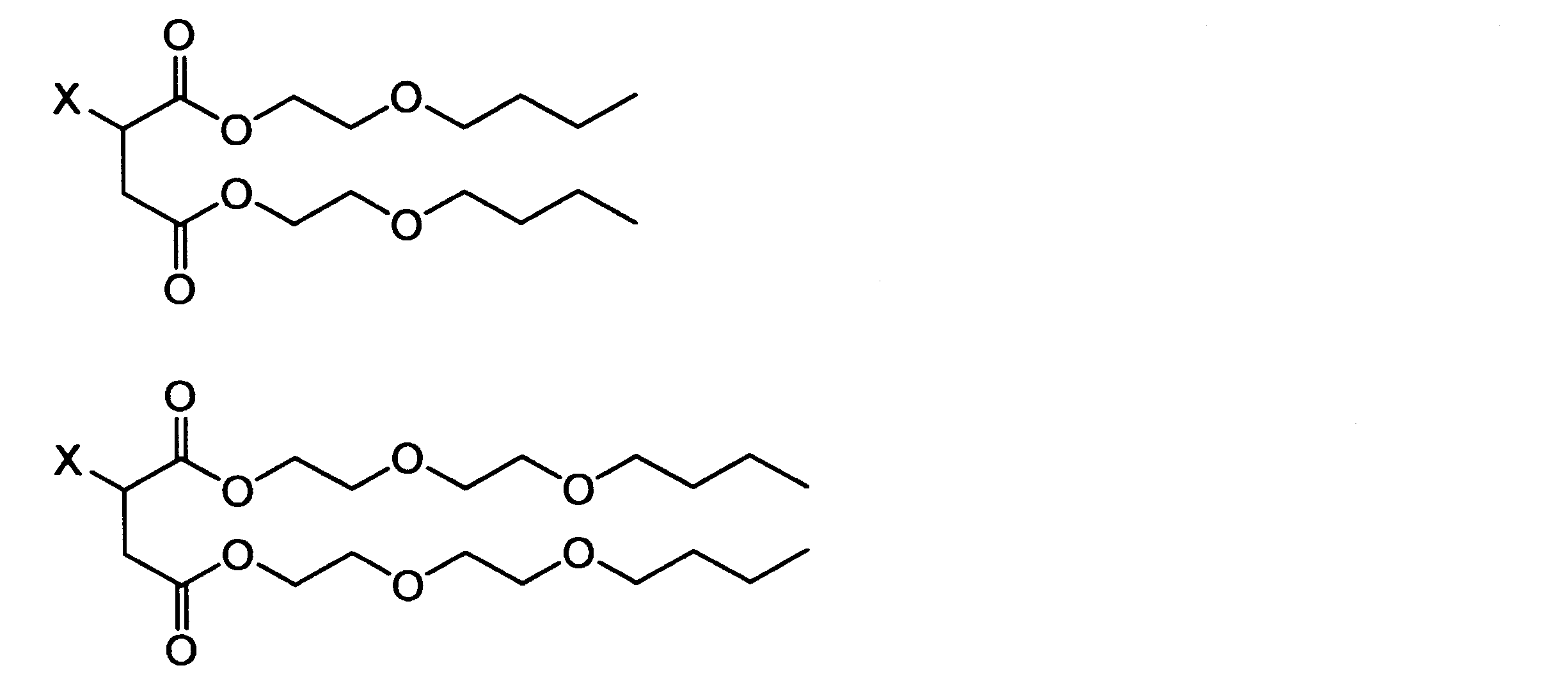
(式中、XはSO3
-である。)
上記ドーパントはその構造を変えることにより、ポリアニリン複合体の導電性や、溶媒への溶解性をコントロールできることが知られている(特許第3384566号)。本発明においては、用途毎の要求特性によって最適なドーパントを選択できる。
式(III)で示される化合物(ドーパント)としては、ジ-2-エチルヘキシルスルホコハク酸イオン、ジ-2-エチルヘキシルスルホコハク酸ナトリウムが好ましく、ジ-2-エチルヘキシルスルホコハク酸イオンがより好ましい。
式(III)で示される化合物(ドーパント)としては、ジ-2-エチルヘキシルスルホコハク酸イオン、ジ-2-エチルヘキシルスルホコハク酸ナトリウムが好ましく、ジ-2-エチルヘキシルスルホコハク酸イオンがより好ましい。
ポリアニリン複合体のドーパントが、置換若しくは無置換のポリアニリンにドープしていることは、紫外・可視・近赤外分光法やX線光電子分光法によって確認することができ、当該ドーパントは、ポリアニリンにキャリアを発生させるのに十分な酸性を有していれば、特に化学構造上の制限なく使用できる。
ポリアニリン複合体は、周知の製造方法で製造することができるが、例えば、ドーパント、リン酸、及びドーパントとは異なる乳化剤を含み、2つの液相を有する溶液中で、置換若しくは無置換のアニリンを化学酸化重合することにより製造できる。また、置換若しくは無置換のアニリン、ドーパント、リン酸、及びドーパントとは異なる乳化剤を含み、2つの液相を有する溶液中に、酸化重合剤を加えることにより製造できる。
尚、乳化剤は、後述する転相を防ぐ役割を担っていると考えられる。ドーパント及びリン酸を含み2つの液相を有する溶液中で、置換若しくは無置換のアニリンを化学酸化重合してポリアニリン複合体を製造すると、リン酸ではなく塩酸を用いていた場合に比べて、低分子量成分が増えてしまう。ここでリン酸を用いた際の重合中の様子から、上記2つの液相は重合中に転相を起こしていると考えられる。そして、この転相が低分子量成分を増加させる理由と考えられる。この転相という現象は、連続相であった液相が分散相へ、分散相であった他方の液相が連続相へ変化する現象である。
尚、乳化剤は、後述する転相を防ぐ役割を担っていると考えられる。ドーパント及びリン酸を含み2つの液相を有する溶液中で、置換若しくは無置換のアニリンを化学酸化重合してポリアニリン複合体を製造すると、リン酸ではなく塩酸を用いていた場合に比べて、低分子量成分が増えてしまう。ここでリン酸を用いた際の重合中の様子から、上記2つの液相は重合中に転相を起こしていると考えられる。そして、この転相が低分子量成分を増加させる理由と考えられる。この転相という現象は、連続相であった液相が分散相へ、分散相であった他方の液相が連続相へ変化する現象である。
ここで「2つの液相を有する溶液」とは、溶液中に相溶しない2つの液相が存在する状態を意味する。例えば、溶液中に「高極性溶媒の相」と「低極性溶媒の相」が存在する状態を意味する。
また、「2つの液相を有する溶液」は、片方の液相が連続相であり、他方の液相が分散相である状態も含む。例えば「高極性溶媒の相」が連続相であり「低極性溶媒の相」が分散相である状態、及び「低極性溶媒の相」が連続相であり「高極性溶媒の相」が分散相である状態が含まれる。
また、「2つの液相を有する溶液」は、片方の液相が連続相であり、他方の液相が分散相である状態も含む。例えば「高極性溶媒の相」が連続相であり「低極性溶媒の相」が分散相である状態、及び「低極性溶媒の相」が連続相であり「高極性溶媒の相」が分散相である状態が含まれる。
ポリアニリン複合体の製造方法に用いる高極性溶媒としては、水が好ましく、低極性溶媒としては、例えばトルエン、キシレン等の芳香族炭化水素が好ましい。
上記乳化剤は、親水性部分がイオン性であるイオン性乳化剤、及び親水性部分が非イオン性である非イオン性乳化剤のどちらでも使用でき、また、1種又は2種以上の乳化剤を混合して使用してもよい。
イオン性乳化剤としては、カチオン性乳化剤、アニオン性乳化剤及び双性乳化剤が挙げられる。
アニオン性乳化剤(陰イオン乳化剤)の具体例としては、脂肪酸、不均化ロジン石けん、高級アルコールエステル、ポリオキシエチレンアルキルエーテルリン酸、アルケニルコハク酸、ザルコシネート、及びそれらの塩が挙げられる。
カチオン性乳化剤(陽イオン乳化剤)の具体例としては、アルキルジメチルベンジルアンモニウム塩、アルキルトリメチルアンモニウム塩が挙げられる。双性乳化剤(両イオン乳化剤)の具体例としては、アルキルベタイン型、アルキルアミドベタイン型、アミノ酸型、アミンオキサイド型が挙げられる。
非イオン乳化剤の具体例としては、ポリオキシエチレンアルキルエーテル、ポリプロピレングリコールポリエチレングリコールエーテル、ポリオキシエチレングリセロールボレート脂肪酸エステル、ポリオキシエチレンソルビタン脂肪酸エステルが挙げられる。
アニオン性乳化剤(陰イオン乳化剤)の具体例としては、脂肪酸、不均化ロジン石けん、高級アルコールエステル、ポリオキシエチレンアルキルエーテルリン酸、アルケニルコハク酸、ザルコシネート、及びそれらの塩が挙げられる。
カチオン性乳化剤(陽イオン乳化剤)の具体例としては、アルキルジメチルベンジルアンモニウム塩、アルキルトリメチルアンモニウム塩が挙げられる。双性乳化剤(両イオン乳化剤)の具体例としては、アルキルベタイン型、アルキルアミドベタイン型、アミノ酸型、アミンオキサイド型が挙げられる。
非イオン乳化剤の具体例としては、ポリオキシエチレンアルキルエーテル、ポリプロピレングリコールポリエチレングリコールエーテル、ポリオキシエチレングリセロールボレート脂肪酸エステル、ポリオキシエチレンソルビタン脂肪酸エステルが挙げられる。
上記乳化剤のうち、アニオン性乳化剤及び非イオン乳化剤が好ましい。
アニオン性乳化剤としては、リン酸エステル構造を有するアニオン性乳化剤がさらに好ましい。また、非イオン乳化剤としては、ポリオキシエチレンソルビタン脂肪酸エステル構造を有する非イオン乳化剤がさらに好ましい。
アニオン性乳化剤としては、リン酸エステル構造を有するアニオン性乳化剤がさらに好ましい。また、非イオン乳化剤としては、ポリオキシエチレンソルビタン脂肪酸エステル構造を有する非イオン乳化剤がさらに好ましい。
ドーパントの使用量は、アニリン単量体1molに対して、好ましくは0.1~0.5molであり、より好ましくは0.3~0.45molであり、さらに好ましくは0.35~0.4molである。
ドーパントの使用量が当該範囲より多い場合、重合終了後に例えば「高極性溶媒の相」と「低極性溶媒の相」を分離することができないおそれがある。
ドーパントの使用量が当該範囲より多い場合、重合終了後に例えば「高極性溶媒の相」と「低極性溶媒の相」を分離することができないおそれがある。
リン酸の使用濃度は、高極性溶媒に対して0.3~6mol/Lであり、より好ましくは1~4mol/Lであり、さらに好ましくは1~2mol/Lである。
乳化剤の使用量は、アニリン単量体1molに対して好ましくは0.001~0.1molであり、より好ましくは0.002~0.02molであり、さらに好ましくは0.003~0.01molである。
乳化剤の使用量が当該範囲より多い場合、重合終了後に「高極性溶媒の相」と「低極性溶媒の相」を分離することができないおそれがある。
乳化剤の使用量が当該範囲より多い場合、重合終了後に「高極性溶媒の相」と「低極性溶媒の相」を分離することができないおそれがある。
化学酸化重合に用いる酸化剤(以下、酸化重合剤という場合がある)としては、過硫酸ナトリウム、過硫酸カリウム、過硫酸アンモニウム、過酸化水素のような過酸化物;二クロム酸アンモニウム、過塩素酸アンモニウム、硫酸カリウム鉄(III)、三塩化鉄(III)、二酸化マンガン、ヨウ素酸、過マンガン酸カリウム、あるいはパラトルエンスルホン酸鉄等が使用でき、好ましくは過硫酸アンモニウム等の過硫酸塩である。
これら酸化剤は単独で使用しても、2種以上を併用してもよい。
これら酸化剤は単独で使用しても、2種以上を併用してもよい。
酸化剤の使用量は、アニリン単量体1molに対して好ましくは0.05~1.8molであり、より好ましくは0.8~1.6molであり、さらに好ましくは1.2~1.4molである。酸化剤の使用量を当該範囲とすることで、十分な重合度が得られる。また、アニリンが十分に重合しているので、分液回収が容易であり、また重合体の溶解性が低下するおそれもない。
重合温度は通常-5~60℃で、好ましくは-5~40℃である。また、重合温度は重合反応の途中に変えてもよい。重合温度が当該範囲であることで、副反応を回避することができる。
重合温度は通常-5~60℃で、好ましくは-5~40℃である。また、重合温度は重合反応の途中に変えてもよい。重合温度が当該範囲であることで、副反応を回避することができる。
ポリアニリン複合体は、具体的には以下の方法で製造することができる。
ドーパント及び乳化剤をトルエンに溶解した溶液を、窒素等の不活性雰囲気の気流下においたセパラブルフラスコに入れ、さらにこの溶液に、アニリンを加える。その後、塩素を含まないリン酸を溶液に添加し、溶液温度を冷却する。
溶液内温を冷却した後、撹拌を行う。過硫酸アンモニウムをリン酸に溶解した溶液を、滴下ロートを用いて滴下し、反応させる。その後、溶液温度を上昇させ、反応を継続する。反応終了後、静置することで二相に分離した水相側を分液する。有機相側にトルエンを追加し、リン酸及びイオン交換水で洗浄を行うことでポリアニリン複合体(プロトネーションされたポリアニリン)のトルエン溶液が得られる。
得られたポリアニリン複合体のトルエン溶液に含まれる若干の不溶物を除去し、ポリアニリン複合体のトルエン溶液を得る。この溶液をエバポレーターに移し、加温及び減圧することにより、揮発分を蒸発留去し、ポリアニリン複合体が得られる。
ドーパント及び乳化剤をトルエンに溶解した溶液を、窒素等の不活性雰囲気の気流下においたセパラブルフラスコに入れ、さらにこの溶液に、アニリンを加える。その後、塩素を含まないリン酸を溶液に添加し、溶液温度を冷却する。
溶液内温を冷却した後、撹拌を行う。過硫酸アンモニウムをリン酸に溶解した溶液を、滴下ロートを用いて滴下し、反応させる。その後、溶液温度を上昇させ、反応を継続する。反応終了後、静置することで二相に分離した水相側を分液する。有機相側にトルエンを追加し、リン酸及びイオン交換水で洗浄を行うことでポリアニリン複合体(プロトネーションされたポリアニリン)のトルエン溶液が得られる。
得られたポリアニリン複合体のトルエン溶液に含まれる若干の不溶物を除去し、ポリアニリン複合体のトルエン溶液を得る。この溶液をエバポレーターに移し、加温及び減圧することにより、揮発分を蒸発留去し、ポリアニリン複合体が得られる。
また、予めポリアニリン分子を製造した後、ポリアニリン分子にドーパントをドープしてポリアニリン複合体(プロトネーションされたポリアニリン)を製造することもできる。
ポリアニリン複合体の原料であるポリアニリン分子は、周知の方法で製造することができる。具体例として、特開平3-28229に記載の製造方法が挙げられる。プロトン酸の存在下、溶媒中にてアニリンの温度を例えば5℃以下に保持しつつ、酸化剤の水溶液をアニリン1モル当りに、酸化剤の1モルを、酸化剤1分子を還元するのに必要な電子数で割った量として定義される当量で、例えば2当量以上、徐々に加えて、上記プロトン酸にてドーピングされたアニリンの酸化重合体を生成させ、次いで、この重合体を塩基性物質によって脱ドーピングすることによって製造することができる。
また、先に述べたポリアニリン複合体を1M水酸化ナトリウム水溶液と混合して脱ドープしたポリアニリン粉末を作り、NMP(N-メチルピロリドン)に溶解させることにより、ポリアニリン分子の溶液を製造することができる。
ポリアニリン粉末又はポリアニリン粉末を溶媒に溶解した溶液を用いて、プロトネーションされたポリアニリン複合体を製造することができる。
ポリアニリン複合体の原料であるポリアニリン分子は、周知の方法で製造することができる。具体例として、特開平3-28229に記載の製造方法が挙げられる。プロトン酸の存在下、溶媒中にてアニリンの温度を例えば5℃以下に保持しつつ、酸化剤の水溶液をアニリン1モル当りに、酸化剤の1モルを、酸化剤1分子を還元するのに必要な電子数で割った量として定義される当量で、例えば2当量以上、徐々に加えて、上記プロトン酸にてドーピングされたアニリンの酸化重合体を生成させ、次いで、この重合体を塩基性物質によって脱ドーピングすることによって製造することができる。
また、先に述べたポリアニリン複合体を1M水酸化ナトリウム水溶液と混合して脱ドープしたポリアニリン粉末を作り、NMP(N-メチルピロリドン)に溶解させることにより、ポリアニリン分子の溶液を製造することができる。
ポリアニリン粉末又はポリアニリン粉末を溶媒に溶解した溶液を用いて、プロトネーションされたポリアニリン複合体を製造することができる。
電磁波シールド層形成用組成物におけるπ共役系導電性高分子(1)(即ち、ポリアニリン複合体)の含有量は、好ましくは0.5重量%~10重量%であり、より好ましくは1重量%~5重量%である。
組成物中のπ共役系導電性高分子(1)の含有量が上記範囲にあることで、例えば電磁波シールド層の厚みを0.1mm以下とすることができる。
組成物中のπ共役系導電性高分子(1)の含有量が上記範囲にあることで、例えば電磁波シールド層の厚みを0.1mm以下とすることができる。
(2)フェノール性水酸基を有する化合物
電磁波シールド層形成用組成物は、フェノール性水酸基を有する化合物(2)を含む。組成物がフェノール性水酸基を有する化合物(2)を含むことで、π共役系導電性高分子(1)の溶媒(3)への溶解性を向上させることができる。
フェノール性水酸基を有する化合物(2)とは、フェノール性水酸基を1つ有する化合物、フェノール性水酸基を複数有する化合物、及びフェノール性水酸基を1つ又は複数有する繰り返し単位から構成される高分子化合物である。
電磁波シールド層形成用組成物は、フェノール性水酸基を有する化合物(2)を含む。組成物がフェノール性水酸基を有する化合物(2)を含むことで、π共役系導電性高分子(1)の溶媒(3)への溶解性を向上させることができる。
フェノール性水酸基を有する化合物(2)とは、フェノール性水酸基を1つ有する化合物、フェノール性水酸基を複数有する化合物、及びフェノール性水酸基を1つ又は複数有する繰り返し単位から構成される高分子化合物である。
フェノール性水酸基を1つ有する化合物としては、好ましくは下記式(A)、(B)及び(C)で表わされる化合物である。

(式(A)中、R101は、炭素数1~20のアルキル基、アルケニル基、シクロアルキル基、アリール基、アルキルアリール基又はアリールアルキル基である。
n1は1~5の整数であり、好ましくは1~3であり、より好ましくは1である。n1が2以上のとき、複数存在するR101は、互いに同一であってもよいし、異なっていてもよい。)
n1は1~5の整数であり、好ましくは1~3であり、より好ましくは1である。n1が2以上のとき、複数存在するR101は、互いに同一であってもよいし、異なっていてもよい。)
式(A)で表されるフェノール性化合物において、-OR101の置換位置はフェノール性水酸基に対し、メタ位、又はパラ位であることが好ましい。-OR101の置換位置をメタ位又はパラ位とすることにより、フェノール性水酸基の立体障害が低減され、組成物から得られる電磁波シールド層の導電性をより高めることができる。
式(A)で表わされるフェノール性化合物の具体例としては、メトキシフェノール(例えば4-メトキシフェノール)、エトキシフェノール、プロポキシフェノール、イソプロポキシフェノール、ブチルオキシフェノール、イソブチルオキシフェノール、ターシャルブチルオキシフェノールが挙げられる。

(式(B)中、R102は、炭素数1~20のアルキル基、アルケニル基、アルキルチオ基、炭素数3~10のシクロアルキル基、炭素数6~20のアリール基、アルキルアリール基又はアリールアルキル基である。
n2は0~7の整数であり、好ましくは0~3であり、より好ましくは1である。n2が2以上のとき、複数存在するR102は、互いに同一であってもよいし、異なっていてもよい。)
式(B)で表わされるフェノール性化合物の具体例としては、ヒドロキシナフタレンが挙げられる。
n2は0~7の整数であり、好ましくは0~3であり、より好ましくは1である。n2が2以上のとき、複数存在するR102は、互いに同一であってもよいし、異なっていてもよい。)
式(B)で表わされるフェノール性化合物の具体例としては、ヒドロキシナフタレンが挙げられる。

(式(C)中、R103は、炭素数1~20のアルキル基、アルケニル基、アルキルチオ基、炭素数3~10のシクロアルキル基、炭素数6~20のアリール基、アルキルアリール基、アリールアルキル基、ハロゲン原子又はカルボキシ基である。
n3は1~5の整数であり、好ましくは1~3であり、より好ましくは1である。n3が2以上のとき、複数存在するR103は、互いに同一であってもよいし、異なっていてもよい。)
n3は1~5の整数であり、好ましくは1~3であり、より好ましくは1である。n3が2以上のとき、複数存在するR103は、互いに同一であってもよいし、異なっていてもよい。)
式(C)で表わされる化合物の具体例としては、o-,m-若しくはp-クレゾール、o-,m-若しくはp-エチルフェノール、o-,m-若しくはp-プロピルフェノール(例えば4-イソプロピルフェノール)、o-,m-若しくはp-ブチルフェノール、o-,m-若しくはp-ペンチルフェノール(例えば、4-tert-ペンチルフェノール)、o-,m-若しくはp-クロロフェノール、サリチル酸、ヒドロキシ安息香酸が挙げられる。
式(A)、(B)及び(C)のR101~R103について、炭素数1~20のアルキル基としては、メチル、エチル、プロピル、イソプロピル、ブチル、イソブチル、ターシャルブチル等が挙げられる。
アルケニル基としては、上述したアルキル基の分子内に不飽和結合を有する基が挙げられる。
シクロアルキル基としては、シクロペンチル基、シクロヘキサニル基等が挙げられる。
アリール基としては、フェニル、ナフチル等が挙げられる。
アルキルアリール基、及びアリールアルキル基としては、上述したアルキル基とアリール基を組み合わせて得られる基等が挙げられる。
アルケニル基としては、上述したアルキル基の分子内に不飽和結合を有する基が挙げられる。
シクロアルキル基としては、シクロペンチル基、シクロヘキサニル基等が挙げられる。
アリール基としては、フェニル、ナフチル等が挙げられる。
アルキルアリール基、及びアリールアルキル基としては、上述したアルキル基とアリール基を組み合わせて得られる基等が挙げられる。
フェノール性水酸基を複数有する化合物の具体例としては、カテコール、レゾルシノール、及び下記式(D)で表される化合物が挙げられる。

(式(D)中、R104は炭化水素基、ヘテロ原子含有炭化水素基、ハロゲン原子、カルボキシ基、アミノ基、-SH基、スルホン酸基、又は水酸基である。
n4は0~6の整数である。n4が2以上のとき、複数存在するR104は互いに同一であってもよいし、異なっていてもよい。)
n4は0~6の整数である。n4が2以上のとき、複数存在するR104は互いに同一であってもよいし、異なっていてもよい。)
式(D)で表わされるフェノール性水酸基を有する化合物の2つのフェノール性水酸基は、互いに隣接しないナフタレン環上の位置に置換していることが好ましい。
また、式(D)で表されるフェノール性水酸基を有する化合物の具体例としては、1,6-ナフタレンジオール、2,6-ナフタレンジオール、2,7-ナフタレンジオールが挙げられる。
また、式(D)で表されるフェノール性水酸基を有する化合物の具体例としては、1,6-ナフタレンジオール、2,6-ナフタレンジオール、2,7-ナフタレンジオールが挙げられる。
フェノール性水酸基を1つ又は複数有する繰り返し単位から構成される高分子化合物の具体例としては、フェノール樹脂、ポリフェノール、ポリ(ヒドロキシスチレン)が挙げられる。
電磁波シールド層形成用組成物中のフェノール性水酸基を有する化合物(2)の含有量は、好ましくは5~60重量%であり、より好ましくは15~40重量%である。
フェノール性水酸基を有する化合物(2)の含有量が上記範囲にあることで、得られる電磁波シールド層中に溶媒が残存・析出することを防ぐことができる。
フェノール性水酸基を有する化合物(2)の含有量が上記範囲にあることで、得られる電磁波シールド層中に溶媒が残存・析出することを防ぐことができる。
(3)溶媒
電磁波シールド層形成用組成物に含まれる溶媒(3)としては、有機溶媒でも水等の無機溶媒でもよく、また1種のみでも2種以上の混合溶媒でもよい。好ましくは有機溶媒である。
また、有機溶媒は、水溶性有機溶媒でもよいし、実質的に水に混和しない有機溶媒(水不混和性有機溶媒)であってもよい。
電磁波シールド層形成用組成物に含まれる溶媒(3)には、π共役系導電性高分子(1)である、ポリアニリン複合体の製造に用いた溶媒の一部又は全部が持ち込まれてもよい。
電磁波シールド層形成用組成物に含まれる溶媒(3)としては、有機溶媒でも水等の無機溶媒でもよく、また1種のみでも2種以上の混合溶媒でもよい。好ましくは有機溶媒である。
また、有機溶媒は、水溶性有機溶媒でもよいし、実質的に水に混和しない有機溶媒(水不混和性有機溶媒)であってもよい。
電磁波シールド層形成用組成物に含まれる溶媒(3)には、π共役系導電性高分子(1)である、ポリアニリン複合体の製造に用いた溶媒の一部又は全部が持ち込まれてもよい。
上記水溶性有機溶媒は、プロトン性極性溶媒でも非プロトン性極性溶媒でもよく、例えば、イソプロパノール、1-ブタノール、2-ブタノール、2-ペンタノール、ベンジルアルコール等のアルコール類;アセトン等のケトン類;テトラヒドロフラン、ジオキサン等のエーテル類;Nメチルピロリドン等の非プロトン性極性溶媒等が挙げられる。
上記水不混和性有機溶媒としては、例えばベンゼン、トルエン、キシレン、エチルベンゼン、テトラリン等の炭化水素系溶媒;塩化メチレン、クロロホルム、四塩化炭素、ジクロロエタン、トリクロロエタン、テトラクロロエタン等の含ハロゲン系溶媒;酢酸エチル、酢酸イソブチル、酢酸n-ブチル等のエステル系溶媒;メチルイソブチルケトン、メチルエチルケトン、シクロペンタノン、シクロヘキサノン等のケトン類溶媒;シクロペンチルメチルエーテル等のエーテル類溶媒等が挙げられる。これらの中では溶解性に優れる点でトルエン、キシレン、メチルイソブチルケトン(MIBK)、クロロホルム、トリクロロエタン及び酢酸エチルが好ましい。
水溶性有機溶媒と水不混和性有機溶媒を組み合わせて、2種以上の混合溶媒としてもよい。例えば、溶媒(3)としてトルエン、イソプロピルアルコール及びメチルイソブチルケトンを使用する場合、組成物に含まれる溶媒の合計量を100重量%としたときに、それぞれ20~50重量%、0.1~15重量%及び0.1~40重量%とすることができる。
(4)耐熱安定化剤
耐熱安定化剤とは、酸性物質又は酸性物質の塩であり、酸性物質は有機酸(有機化合物の酸)、無機酸(無機化合物の酸)のいずれでもよい。
耐熱安定化剤である酸性物質は、好ましくは有機酸であり、より好ましくはスルホン酸基、カルボキシ基、リン酸基、又はホスホン酸基を1以上有する有機酸であり、さらに好ましくは、スルホン酸基を1以上有する有機酸である。耐熱安定剤である酸性物質の塩としては、これら酸性物質の塩が挙げられる。
耐熱安定化剤とは、酸性物質又は酸性物質の塩であり、酸性物質は有機酸(有機化合物の酸)、無機酸(無機化合物の酸)のいずれでもよい。
耐熱安定化剤である酸性物質は、好ましくは有機酸であり、より好ましくはスルホン酸基、カルボキシ基、リン酸基、又はホスホン酸基を1以上有する有機酸であり、さらに好ましくは、スルホン酸基を1以上有する有機酸である。耐熱安定剤である酸性物質の塩としては、これら酸性物質の塩が挙げられる。
上記スルホン酸基を1以上有する有機酸は、好ましくはスルホン酸基を1以上有する、環状、鎖状若しくは分岐のアルキルスルホン酸、置換若しくは無置換の芳香族スルホン酸、又はポリスルホン酸である。
上記アルキルスルホン酸としては、例えば、メタンスルホン酸、エタンスルホン酸、ジ2-エチルヘキシルスルホコハク酸が挙げられる。ここでのアルキル基は、好ましくは炭素数が1~18の直鎖又は分岐のアルキル基である。
上記芳香族スルホン酸としては、例えば、ベンゼン環を有するスルホン酸、ナフタレン骨格を有するスルホン酸、アントラセン骨格を有するスルホン酸、置換若しくは無置換のベンゼンスルホン酸、置換若しくは無置換のナフタレンスルホン酸及び置換若しくは無置換のアントラセンスルホン酸が挙げられ、好ましくは置換若しくは無置換のナフタレンスルホン酸である。具体例としては、ナフタレンスルホン酸、ドデシルベンゼンスルホン酸、アントラキノンスルホン酸が挙げられる。
ここで芳香族スルホン酸の置換基は、例えば、アルキル基、アルコキシ基、ヒドロキシ基、ニトロ基、カルボキシ基、及びアシル基からなる群から選択される基であり、2以上置換していてもよい。
上記ポリスルホン酸は、高分子鎖の主鎖又は側鎖に複数のスルホン酸基が置換した高分子化合物である。例えば、ポリスチレンスルホン酸が挙げられる。
上記アルキルスルホン酸としては、例えば、メタンスルホン酸、エタンスルホン酸、ジ2-エチルヘキシルスルホコハク酸が挙げられる。ここでのアルキル基は、好ましくは炭素数が1~18の直鎖又は分岐のアルキル基である。
上記芳香族スルホン酸としては、例えば、ベンゼン環を有するスルホン酸、ナフタレン骨格を有するスルホン酸、アントラセン骨格を有するスルホン酸、置換若しくは無置換のベンゼンスルホン酸、置換若しくは無置換のナフタレンスルホン酸及び置換若しくは無置換のアントラセンスルホン酸が挙げられ、好ましくは置換若しくは無置換のナフタレンスルホン酸である。具体例としては、ナフタレンスルホン酸、ドデシルベンゼンスルホン酸、アントラキノンスルホン酸が挙げられる。
ここで芳香族スルホン酸の置換基は、例えば、アルキル基、アルコキシ基、ヒドロキシ基、ニトロ基、カルボキシ基、及びアシル基からなる群から選択される基であり、2以上置換していてもよい。
上記ポリスルホン酸は、高分子鎖の主鎖又は側鎖に複数のスルホン酸基が置換した高分子化合物である。例えば、ポリスチレンスルホン酸が挙げられる。
上記カルボキシ基を1以上有する有機酸は、好ましくはカルボキシ基を1以上有する、環状、鎖状若しくは分岐のアルキルカルボン酸、置換若しくは無置換の芳香族カルボン酸、又はポリカルボン酸である。
上記アルキルカルボン酸としては、例えばウンデシレン酸、シクロヘキサンカルボン酸、2-エチルヘキサン酸が挙げられる。ここでアルキル基は好ましくは炭素数が1~18の直鎖又は分岐のアルキル基である。
上記置換若しくは無置換の芳香族カルボン酸としては、例えば、置換若しくは無置換のベンゼンカルボン酸及びナフタレンカルボン酸が挙げられる。ここで置換基は、例えば、スルホン酸基、アルキル基、アルコキシ基、ニトロ基、及びアシル基からなる群から選択される基であり、2以上置換していてもよい。具体例としては、安息香酸、ナフトエ酸、トリメシン酸が挙げられる。
上記アルキルカルボン酸としては、例えばウンデシレン酸、シクロヘキサンカルボン酸、2-エチルヘキサン酸が挙げられる。ここでアルキル基は好ましくは炭素数が1~18の直鎖又は分岐のアルキル基である。
上記置換若しくは無置換の芳香族カルボン酸としては、例えば、置換若しくは無置換のベンゼンカルボン酸及びナフタレンカルボン酸が挙げられる。ここで置換基は、例えば、スルホン酸基、アルキル基、アルコキシ基、ニトロ基、及びアシル基からなる群から選択される基であり、2以上置換していてもよい。具体例としては、安息香酸、ナフトエ酸、トリメシン酸が挙げられる。
上記リン酸基又はホスホン酸基を1以上有する有機酸は、好ましくはリン酸基又はホスホン酸基を1以上有する環状、鎖状若しくは分岐のアルキルリン酸若しくはアルキルホスホン酸;置換若しくは無置換の芳香族リン酸若しくは芳香族ホスホン酸;ポリリン酸若しくはポリホスホン酸である。
上記アルキルリン酸又はアルキルホスホン酸としては、例えば、ドデシルリン酸、及びリン酸水素ビス(2-エチルヘキシル)が挙げられる。ここでアルキル基は好ましくは炭素数が1~18の直鎖又は分岐のアルキル基である。
上記芳香族リン酸及び芳香族ホスホン酸としては、置換若しくは無置換のベンゼンスルホン酸又はホスホン酸、及びナフタレンスルホン酸又はホスホン酸等が挙げられる。ここで置換基は、例えば、アルキル基、アルコキシ基、ヒドロキシ基、ニトロ基、カルボキシ基、及びアシル基からなる群から選択される基であり、2以上置換していてもよい。例えば、フェニルホスホン酸が挙げられる。
上記アルキルリン酸又はアルキルホスホン酸としては、例えば、ドデシルリン酸、及びリン酸水素ビス(2-エチルヘキシル)が挙げられる。ここでアルキル基は好ましくは炭素数が1~18の直鎖又は分岐のアルキル基である。
上記芳香族リン酸及び芳香族ホスホン酸としては、置換若しくは無置換のベンゼンスルホン酸又はホスホン酸、及びナフタレンスルホン酸又はホスホン酸等が挙げられる。ここで置換基は、例えば、アルキル基、アルコキシ基、ヒドロキシ基、ニトロ基、カルボキシ基、及びアシル基からなる群から選択される基であり、2以上置換していてもよい。例えば、フェニルホスホン酸が挙げられる。
電磁波シールド層形成用組成物は、耐熱安定化剤である酸性物質及び/又は酸性物質の塩を2つ以上含んでもよい。具体的には、異なる複数の酸性物質及び/又は異なる複数の酸性物質の塩を含んでいてもよい。
電磁波シールド層形成用組成物中の耐熱安定化剤の含有量は、好ましくは0.1重量%~3.0重量%である。
電磁波シールド層形成用組成物中の耐熱安定化剤の含有量は、好ましくは0.1重量%~3.0重量%である。
(5)その他成分
電磁波シールド層形成用組成物は、例えば90%重量以上、95重量%以上、99重量%以上、100重量%がπ共役系導電性高分子(1)、フェノール性水酸基を有する化合物(2)及び溶媒(3)からなっていることが好ましい。さらに、耐熱安定化剤(4)及び/又は、樹脂や添加剤等のその他の成分(5)を含んでもよい。
電磁波シールド層形成用組成物は、例えば90%重量以上、95重量%以上、99重量%以上、100重量%がπ共役系導電性高分子(1)、フェノール性水酸基を有する化合物(2)及び溶媒(3)からなっていることが好ましい。さらに、耐熱安定化剤(4)及び/又は、樹脂や添加剤等のその他の成分(5)を含んでもよい。
樹脂は、例えば、バインダー基剤、可塑剤、マトリックス基剤として添加される。
樹脂の具体例としては、例えば、ポリエチレン、ポリプロピレン等のポリオレフィン、塩素化ポリオレフィン、ポリスチレン、ポリエステル、ポリアミド、ポリアセタール、ポリエチレンテレフタレート、ポリカーボネート、ポリエチレングリコール、ポリエチレンオキサイド、ポリアクリル酸、ポリアクリル酸エステル、ポリメタクリル酸エステル、及びポリビニルアルコールが挙げられる。
また上記樹脂の代わりに、また上記樹脂と共に、エポキシ樹脂、ウレタン樹脂、フェノール樹脂等の熱硬化性樹脂、又はこれら熱硬化性樹脂を形成し得る前駆体を含んでもよい。
樹脂の具体例としては、例えば、ポリエチレン、ポリプロピレン等のポリオレフィン、塩素化ポリオレフィン、ポリスチレン、ポリエステル、ポリアミド、ポリアセタール、ポリエチレンテレフタレート、ポリカーボネート、ポリエチレングリコール、ポリエチレンオキサイド、ポリアクリル酸、ポリアクリル酸エステル、ポリメタクリル酸エステル、及びポリビニルアルコールが挙げられる。
また上記樹脂の代わりに、また上記樹脂と共に、エポキシ樹脂、ウレタン樹脂、フェノール樹脂等の熱硬化性樹脂、又はこれら熱硬化性樹脂を形成し得る前駆体を含んでもよい。
電磁波シールド層形成用組成物は、その他の成分(5)として、グラフェン、カーボンナノチューブ等の炭素繊維等の成分や、磁性粒子等の透磁率の高い成分を含んでいてもよい。
上記成分を含む組成物の製造方法は特に限定されず、公知の方法で調製することができ、例えばWO05/052058に開示の方法により調製することができる。
電磁波シールド層及び電磁波シールドシートは、柔軟性に優れ、電子機器のハウジングやガスケット、壁材、カーテン、ブラインダー、車載機器等の用途に好適に用いることができる。
実施例1
[ポリアニリン複合体の製造]
1,000mLセパラブルフラスコにネオコールSWC(ジ-2-エチルヘキシルスルホコハク酸ナトリウム:第一工業製薬製)32.4g、アニリン13.3g及びソルボンT-20(ポリオキシエチレンソルビタン脂肪酸エステル構造を有する非イオン乳化剤:東邦化学工業株式会社製)0.9gを入れ、トルエン320.4gにて溶解させた。そこに8.4重量%リン酸水溶液450gを加え、トルエンと水の2つの液相を有する反応液を撹拌し、反応液の内温を5℃まで冷却した。反応液の内温を5℃に到達した時点で撹拌しながら、過硫酸アンモニウム(APS)39.3gを8.4重量%リン酸水溶液90.2gに溶解した溶液を滴下漏斗を用いて1時間かけて滴下した。滴下終了後、溶液内温を5℃に保ったままさらに8時間撹拌した(合計反応時間9時間)。
撹拌停止後、分液漏斗に内容物を移し、水層とトルエン層を静置分離した。分離後、有機層を1Mリン酸水溶液180.3gで1回、イオン交換水328.0gで5回洗浄することにより、ポリアニリン複合体トルエン溶液を得た。
[ポリアニリン複合体の製造]
1,000mLセパラブルフラスコにネオコールSWC(ジ-2-エチルヘキシルスルホコハク酸ナトリウム:第一工業製薬製)32.4g、アニリン13.3g及びソルボンT-20(ポリオキシエチレンソルビタン脂肪酸エステル構造を有する非イオン乳化剤:東邦化学工業株式会社製)0.9gを入れ、トルエン320.4gにて溶解させた。そこに8.4重量%リン酸水溶液450gを加え、トルエンと水の2つの液相を有する反応液を撹拌し、反応液の内温を5℃まで冷却した。反応液の内温を5℃に到達した時点で撹拌しながら、過硫酸アンモニウム(APS)39.3gを8.4重量%リン酸水溶液90.2gに溶解した溶液を滴下漏斗を用いて1時間かけて滴下した。滴下終了後、溶液内温を5℃に保ったままさらに8時間撹拌した(合計反応時間9時間)。
撹拌停止後、分液漏斗に内容物を移し、水層とトルエン層を静置分離した。分離後、有機層を1Mリン酸水溶液180.3gで1回、イオン交換水328.0gで5回洗浄することにより、ポリアニリン複合体トルエン溶液を得た。
得られた溶液をNo.2の濾紙にて濾過することで不溶分を除去し、ポリアニリン複合体のトルエン溶液を得た。この溶液を、エバポレーターに移し、60℃で加温し、減圧することにより、揮発分を蒸発留去し、ポリアニリン複合体(プロトネーションされたポリアニリン)を得た。
[塗布用ポリアニリン溶液(電磁波シールド層形成用組成物)の製造]
トルエン92g、イソプロピルアルコール3gを混合した溶媒に、上記で得られたポリアニリン複合体5gを溶解させた。次に、その溶解させた溶液6gに対して、m-クレゾール4gを混合し、塗布用ポリアニリン溶液10gを得た。
トルエン92g、イソプロピルアルコール3gを混合した溶媒に、上記で得られたポリアニリン複合体5gを溶解させた。次に、その溶解させた溶液6gに対して、m-クレゾール4gを混合し、塗布用ポリアニリン溶液10gを得た。
[電磁波シールドシートの作製と評価]
得られた塗布用ポリアニリン溶液をPETフィルム(東洋紡株式会社製コスモシャインA4300)に、バーコーター(テスター産業株式会社製PI-1210R)を用いて塗工した。この際、バーコーターのバーロッドの番手はNo.22を用いた。塗工後、110℃で15分間乾燥を行い、ポリアニリン塗工シートとした。
乾燥後のポリアニリン塗膜(電磁波シールド層)の厚さは、集束イオンビーム加工観察装置(日立ハイテクノロジーズ製FB-2100)を用いた断面観察像から計測した。
また、得られた電磁波シールドシートの電磁波遮蔽性能の評価は、フリースペース法によって実施した。
電磁波シールド層のシート抵抗Rsは、抵抗率計(株式会社三菱ケミカルアナリテック製「MCP-T610」)を用いて、JIS K-7194に準拠して測定した。
結果を表1に示す。
得られた塗布用ポリアニリン溶液をPETフィルム(東洋紡株式会社製コスモシャインA4300)に、バーコーター(テスター産業株式会社製PI-1210R)を用いて塗工した。この際、バーコーターのバーロッドの番手はNo.22を用いた。塗工後、110℃で15分間乾燥を行い、ポリアニリン塗工シートとした。
乾燥後のポリアニリン塗膜(電磁波シールド層)の厚さは、集束イオンビーム加工観察装置(日立ハイテクノロジーズ製FB-2100)を用いた断面観察像から計測した。
また、得られた電磁波シールドシートの電磁波遮蔽性能の評価は、フリースペース法によって実施した。
電磁波シールド層のシート抵抗Rsは、抵抗率計(株式会社三菱ケミカルアナリテック製「MCP-T610」)を用いて、JIS K-7194に準拠して測定した。
結果を表1に示す。
実施例2
反応液の内温を-5℃に変更し、リン酸水溶液を17重量%に変更した以外は、実施例1と同様の反応を行い、ポリアニリン複合体を得た。
反応液の内温を-5℃に変更し、リン酸水溶液を17重量%に変更した以外は、実施例1と同様の反応を行い、ポリアニリン複合体を得た。
トルエン92g、イソプロピルアルコール3gを混合した溶媒に、上記で得られたポリアニリン複合体5gを溶解させた。次に、その溶解させた溶液6gに対して、m-クレゾール4gを混合し、塗布用ポリアニリン溶液10gを得た。
得られた塗布用ポリアニリン溶液を用いて、実施例1と同様に電磁波シールドシートを作製し、電磁波遮蔽性能を評価した。結果を表1に示す。
得られた塗布用ポリアニリン溶液を用いて、実施例1と同様に電磁波シールドシートを作製し、電磁波遮蔽性能を評価した。結果を表1に示す。
実施例3
実施例2と同様にして、ポリアニリン複合体を得た。
トルエン92g、イソプロピルアルコール3gを混合した溶媒に、上記で得られたポリアニリン複合体5gを溶解させた。次に、その溶解させた溶液7gに対して、m-クレゾール3gを混合し、塗布用ポリアニリン溶液10gを得た。
得られた塗布用ポリアニリン溶液を用いて、バーコーターのバーロッドの番手をNo.100に変更し、塗布厚を大きくなるようにし、電磁波シールドシートを作製し、電磁波遮蔽性能を評価した。結果を表1に示す。
実施例2と同様にして、ポリアニリン複合体を得た。
トルエン92g、イソプロピルアルコール3gを混合した溶媒に、上記で得られたポリアニリン複合体5gを溶解させた。次に、その溶解させた溶液7gに対して、m-クレゾール3gを混合し、塗布用ポリアニリン溶液10gを得た。
得られた塗布用ポリアニリン溶液を用いて、バーコーターのバーロッドの番手をNo.100に変更し、塗布厚を大きくなるようにし、電磁波シールドシートを作製し、電磁波遮蔽性能を評価した。結果を表1に示す。
比較例1
トルエン92g、イソプロピルアルコール3gを混合した溶媒に、実施例1で得られたポリアニリン複合体5gを溶解させ、そのまま塗布用ポリアニリン溶液とした。
得られた塗布用ポリアニリン溶液を用いて、実施例1と同様に電磁波シールドシートを作製し、電磁波遮蔽性能を評価した。結果を表1に示す。
トルエン92g、イソプロピルアルコール3gを混合した溶媒に、実施例1で得られたポリアニリン複合体5gを溶解させ、そのまま塗布用ポリアニリン溶液とした。
得られた塗布用ポリアニリン溶液を用いて、実施例1と同様に電磁波シールドシートを作製し、電磁波遮蔽性能を評価した。結果を表1に示す。

上記に本発明の実施形態及び/又は実施例を幾つか詳細に説明したが、当業者は、本発明の新規な教示及び効果から実質的に離れることなく、これら例示である実施形態及び/又は実施例に多くの変更を加えることが容易である。従って、これらの多くの変更は本発明の範囲に含まれる。
この明細書に記載の文献、及び本願のパリ条約による優先権の基礎となる出願の内容を全て援用する。
この明細書に記載の文献、及び本願のパリ条約による優先権の基礎となる出願の内容を全て援用する。
Claims (14)
- 置換若しくは無置換のポリアニリンと、下記式(III)で表されるスルホコハク酸誘導体との複合体である、π共役系導電性高分子と、
フェノール性水酸基を有する化合物とを含み、かつ
金属成分を含まない、
薄膜状の電磁波シールド層であって、
前記電磁波シールド層の膜厚が、0.1mm以下であり、かつ
前記電磁波シールド層のシート抵抗Rsが、1Ω/□<Rs≦1×103Ω/□の範囲内である、電磁波シールド層。

R13及びR14は、それぞれ独立に、炭化水素基又は-(R15O)r-R16で表わされる基である。m’が2以上のとき、複数存在するR13及びR14は、それぞれ互いに同一であってもよいし、異なっていてもよい。
R15は、2価の炭化水素基又は-Si(R18)2-基であり、R16は水素原子、炭化水素基又はR17 3Si-で表わされる基であり、rは1以上の整数である。rが2以上のとき、複数存在するR15は、互いに同一であってもよいし、異なっていてもよい。
R17は、炭化水素基である。3つ存在するR17は、互いに同一の炭化水素基であってもよいし、異なっていてもよい。
R18は、水素原子、又は炭化水素基である。2つ以上存在するR18は、互いに同一であってもよいし、異なっていてもよい。) - 前記電磁波シールド層のシート抵抗Rsが、5Ω/□<Rs≦1×103Ω/□の範囲内である、請求項1に記載の電磁波シールド層。
- 前記電磁波シールド層の膜厚が10μm以下である、請求項1又は2に記載の電磁波シールド層。
- 前記電磁波シールド層の膜厚が5μm以下である、請求項1又は2に記載の電磁波シールド層。
- 前記電磁波シールド層の膜厚が2.5μm以下である、請求項1又は2に記載の電磁波シールド層。
- 前記電磁波シールド層の膜厚が100nm以上である、請求項1~5のいずれかに記載の電磁波シールド層。
- 30GHz~300GHzの周波数帯域に電磁波遮蔽性能を有する、請求項1~6のいずれかに記載の電磁波シールド層。
- 30GHz~110GHzの周波数帯域の少なくとも一部に10dB以上の電磁波遮蔽性能を有する、請求項1~7のいずれかに記載の電磁波シールド層。
- 70GHz~110GHzの周波数帯域全体に渡って、7dB以上の電磁波遮蔽性能を有する、請求項1~8のいずれかに記載の電磁波シールド層。
- 70GHz~110GHzの周波数帯域全体に渡って、10dB以上の電磁波遮蔽性能を有する、請求項1~9のいずれかに記載の電磁波シールド層。
- 前記フェノール水酸基を有する化合物が、o-クレゾール、m-クレゾール又はp-クレゾールである、請求項1~10のいずれかに記載の電磁波シールド層。
- シート状の基材と、
請求項1~11のいずれかに記載の電磁波シールド層と
を含む積層体からなる電磁波シールドシート。 - 置換若しくは無置換のポリアニリンと、下記式(III)で表されるスルホコハク酸誘導体との複合体であるπ共役系導電性高分子と、
フェノール性水酸基を有する化合物と、
溶媒と
を含む組成物を、電磁波遮蔽対象物の表面に塗布し、乾燥して、薄膜状の電磁波シールド層を形成する工程を含む、請求項1~11のいずれかに記載の電磁波シールド層の製造方法。
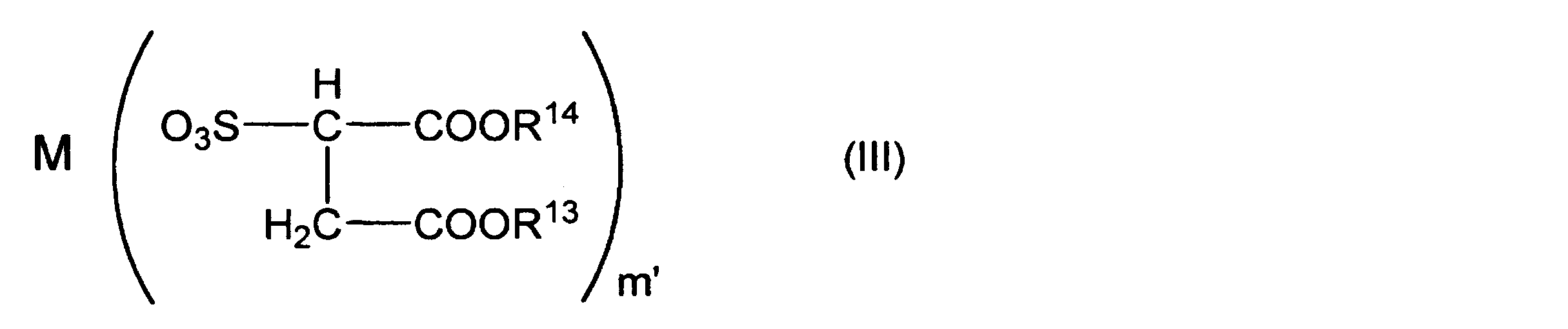
R13及びR14は、それぞれ独立に、炭化水素基又は-(R15O)r-R16で表わされる基である。m’が2以上のとき、複数存在するR13及びR14は、それぞれ互いに同一であってもよいし、異なっていてもよい。
R15は、2価の炭化水素基又は-Si(R18)2-基であり、R16は水素原子、炭化水素基又はR17 3Si-で表わされる基であり、rは1以上の整数である。rが2以上のとき、複数存在するR15は、互いに同一であってもよいし、異なっていてもよい。
R17は、炭化水素基である。3つ存在するR17は、互いに同一の炭化水素基であってもよいし、異なっていてもよい。
R18は、水素原子、又は炭化水素基である。2つ以上存在するR18は、互いに同一であってもよいし、異なっていてもよい。) - 置換若しくは無置換のポリアニリンと、下記式(III)で表されるスルホコハク酸誘導体との複合体であるπ共役系導電性高分子と、
フェノール性水酸基を有する化合物と、
溶媒と
を含む組成物を、シート状の基材に塗布し、乾燥して、電磁波シールド層を積層したシートを得る工程を含む、請求項12に記載の電磁波シールドシートの製造方法。
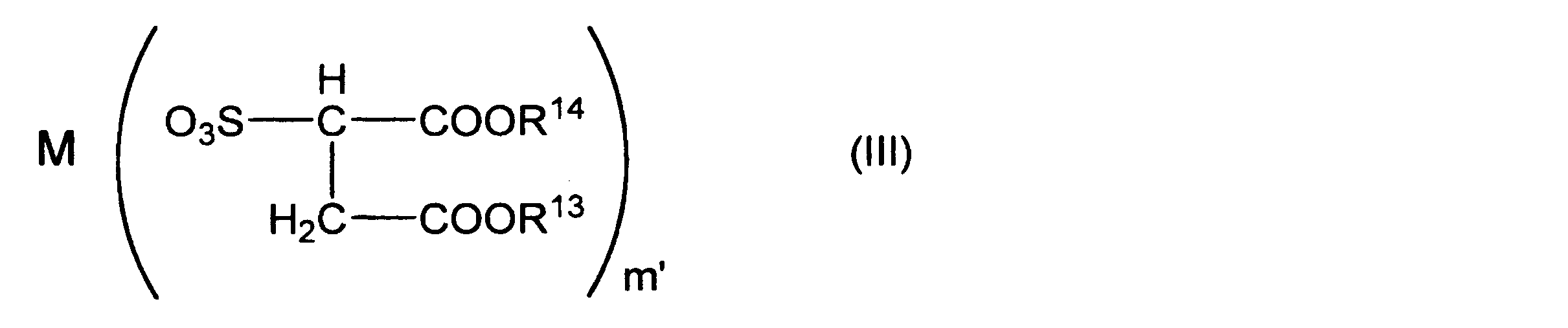
R13及びR14は、それぞれ独立に、炭化水素基又は-(R15O)r-R16で表わされる基である。m’が2以上のとき、複数存在するR13及びR14は、それぞれ互いに同一であってもよいし、異なっていてもよい。
R15は、2価の炭化水素基又は-Si(R18)2-基であり、R16は水素原子、炭化水素基又はR17 3Si-で表わされる基であり、rは1以上の整数である。rが2以上のとき、複数存在するR15は、互いに同一であってもよいし、異なっていてもよい。
R17は、炭化水素基である。3つ存在するR17は、互いに同一の炭化水素基であってもよいし、異なっていてもよい。
R18は、水素原子、又は炭化水素基である。2つ以上存在するR18は、互いに同一であってもよいし、異なっていてもよい。)
Priority Applications (1)
| Application Number | Priority Date | Filing Date | Title |
|---|---|---|---|
| JP2019544562A JP7417422B2 (ja) | 2017-09-27 | 2018-09-13 | 電磁波シールド層、電磁波シールド層の製造方法及び電磁波シールドシート |
Applications Claiming Priority (2)
| Application Number | Priority Date | Filing Date | Title |
|---|---|---|---|
| JP2017-187195 | 2017-09-27 | ||
| JP2017187195 | 2017-09-27 |
Publications (1)
| Publication Number | Publication Date |
|---|---|
| WO2019065264A1 true WO2019065264A1 (ja) | 2019-04-04 |
Family
ID=65901438
Family Applications (1)
| Application Number | Title | Priority Date | Filing Date |
|---|---|---|---|
| PCT/JP2018/033944 Ceased WO2019065264A1 (ja) | 2017-09-27 | 2018-09-13 | 電磁波シールド層、電磁波シールド層の製造方法及び電磁波シールドシート |
Country Status (2)
| Country | Link |
|---|---|
| JP (1) | JP7417422B2 (ja) |
| WO (1) | WO2019065264A1 (ja) |
Cited By (1)
| Publication number | Priority date | Publication date | Assignee | Title |
|---|---|---|---|---|
| CN118800505A (zh) * | 2024-05-29 | 2024-10-18 | 河南光旭智能科技有限公司 | 一种磁性电缆及其制备方法 |
Citations (3)
| Publication number | Priority date | Publication date | Assignee | Title |
|---|---|---|---|---|
| JP2010080911A (ja) * | 2008-04-30 | 2010-04-08 | Tayca Corp | 広帯域電磁波吸収体及びその製造方法 |
| JP2015082548A (ja) * | 2013-10-22 | 2015-04-27 | 出光興産株式会社 | 電磁波シールドシート |
| JP2017163141A (ja) * | 2016-03-04 | 2017-09-14 | 日東電工株式会社 | 電磁波吸収体および電磁波吸収体付成形品 |
-
2018
- 2018-09-13 JP JP2019544562A patent/JP7417422B2/ja active Active
- 2018-09-13 WO PCT/JP2018/033944 patent/WO2019065264A1/ja not_active Ceased
Patent Citations (3)
| Publication number | Priority date | Publication date | Assignee | Title |
|---|---|---|---|---|
| JP2010080911A (ja) * | 2008-04-30 | 2010-04-08 | Tayca Corp | 広帯域電磁波吸収体及びその製造方法 |
| JP2015082548A (ja) * | 2013-10-22 | 2015-04-27 | 出光興産株式会社 | 電磁波シールドシート |
| JP2017163141A (ja) * | 2016-03-04 | 2017-09-14 | 日東電工株式会社 | 電磁波吸収体および電磁波吸収体付成形品 |
Cited By (1)
| Publication number | Priority date | Publication date | Assignee | Title |
|---|---|---|---|---|
| CN118800505A (zh) * | 2024-05-29 | 2024-10-18 | 河南光旭智能科技有限公司 | 一种磁性电缆及其制备方法 |
Also Published As
| Publication number | Publication date |
|---|---|
| JPWO2019065264A1 (ja) | 2020-09-03 |
| JP7417422B2 (ja) | 2024-01-18 |
Similar Documents
| Publication | Publication Date | Title |
|---|---|---|
| KR102338614B1 (ko) | 방향족 폴리에스테르 함유 경화성 수지 조성물, 경화물, 전기·전자 부품 및 회로 기판 | |
| JP6539270B2 (ja) | ポリアニリン複合体組成物の製造方法及びポリアニリン複合体組成物 | |
| TWI588179B (zh) | Conductive polymer composition | |
| US10299378B2 (en) | Polymer resin composition, polyimide resin film, preparation method of polyimide resin film, flexible metal laminate, and circuit board | |
| JP2016172847A (ja) | ポリアニリン複合体、その製造方法及び組成物 | |
| CN110869403B (zh) | 树脂组合物、预浸料、带树脂的膜、带树脂的金属箔、覆金属箔层压板及布线板 | |
| JP5710388B2 (ja) | ポリアニリン導電性組成物 | |
| JP7256036B2 (ja) | 電磁波吸収シート及びその製造方法 | |
| TWI810151B (zh) | 覆金屬積層板、附有樹脂之金屬構件、及電路板 | |
| JP2016027133A (ja) | 芳香族ポリエステル含有硬化性樹脂組成物、硬化物、電気・電子部品及び回路基板 | |
| JP6166146B2 (ja) | 電磁波シールドシート | |
| WO2019065264A1 (ja) | 電磁波シールド層、電磁波シールド層の製造方法及び電磁波シールドシート | |
| TWI678432B (zh) | 無電解鍍敷底層膜形成用組成物 | |
| JP2013236064A (ja) | ノイズ吸収積層体 | |
| JP2020107840A (ja) | 成形用又は延伸用フィルム、成形体及び延伸フィルム | |
| JP2016027132A (ja) | 芳香族ポリエステル及びその製造方法 | |
| TW202309133A (zh) | 聚酯樹脂 | |
| JP7176947B2 (ja) | 組成物、電磁波シールドシート及びその製造方法、電磁波シールド材及びその製造方法、電磁波レーダー並びに車両制御装置 | |
| WO2015052742A1 (ja) | ノイズ吸収積層体 | |
| JP2015010240A (ja) | 無電解めっき下地転写フィルム、及び当該無電解めっき下地転写フィルムを用いためっき方法 | |
| CN112088191A (zh) | 组合物、导电性膜的制造方法、导电性膜及电容器 | |
| TW201514001A (zh) | 雜訊吸收層合體 | |
| US20240084134A1 (en) | Electric conductive polymer composition | |
| TW202332713A (zh) | 聚酯樹脂 |
Legal Events
| Date | Code | Title | Description |
|---|---|---|---|
| 121 | Ep: the epo has been informed by wipo that ep was designated in this application |
Ref document number: 18860847 Country of ref document: EP Kind code of ref document: A1 |
|
| ENP | Entry into the national phase |
Ref document number: 2019544562 Country of ref document: JP Kind code of ref document: A |
|
| NENP | Non-entry into the national phase |
Ref country code: DE |
|
| 122 | Ep: pct application non-entry in european phase |
Ref document number: 18860847 Country of ref document: EP Kind code of ref document: A1 |