WO2019049872A1 - 環状クロロホスファゼン3量体の製造方法 - Google Patents
環状クロロホスファゼン3量体の製造方法 Download PDFInfo
- Publication number
- WO2019049872A1 WO2019049872A1 PCT/JP2018/032805 JP2018032805W WO2019049872A1 WO 2019049872 A1 WO2019049872 A1 WO 2019049872A1 JP 2018032805 W JP2018032805 W JP 2018032805W WO 2019049872 A1 WO2019049872 A1 WO 2019049872A1
- Authority
- WO
- WIPO (PCT)
- Prior art keywords
- group
- nitrile
- trimer
- cyclic chlorophosphazene
- reaction
- Prior art date
- Legal status (The legal status is an assumption and is not a legal conclusion. Google has not performed a legal analysis and makes no representation as to the accuracy of the status listed.)
- Ceased
Links
Classifications
-
- C—CHEMISTRY; METALLURGY
- C01—INORGANIC CHEMISTRY
- C01B—NON-METALLIC ELEMENTS; COMPOUNDS THEREOF; METALLOIDS OR COMPOUNDS THEREOF NOT COVERED BY SUBCLASS C01C
- C01B21/00—Nitrogen; Compounds thereof
- C01B21/082—Compounds containing nitrogen and non-metals and optionally metals
- C01B21/097—Compounds containing nitrogen and non-metals and optionally metals containing phosphorus atoms
- C01B21/098—Phosphonitrilic dihalides; Polymers thereof
Definitions
- the present invention relates to a method of producing cyclic chlorophosphazene trimers.
- Cyclic chlorophosphazene is a compound represented by the following formula (1).
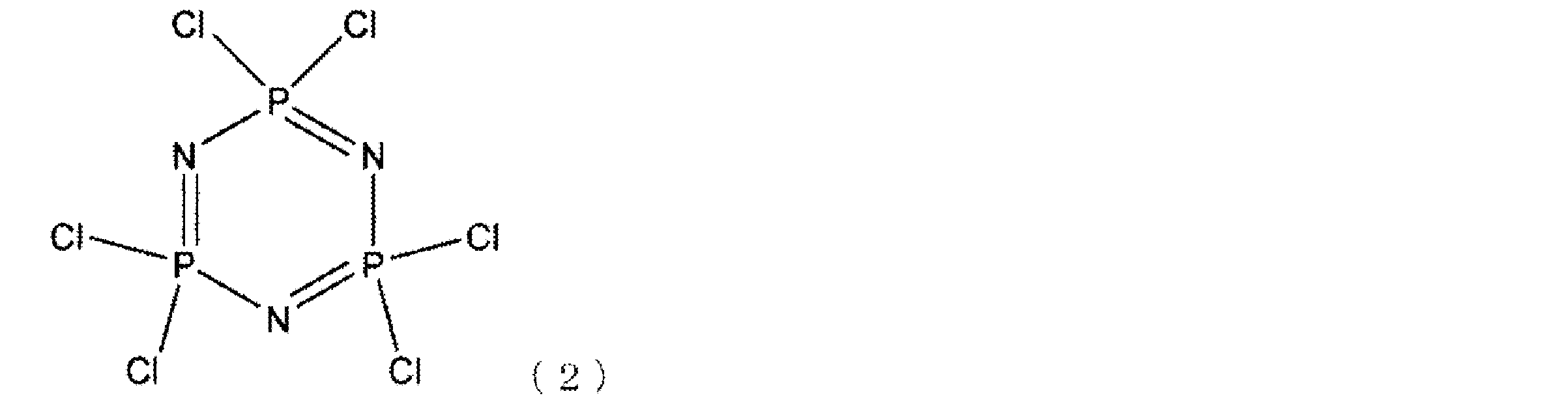
- cyclic chlorophosphazene trimer represented by the formula (2) in which n is 3 (hereinafter sometimes referred to simply as "cyclic chlorophosphazene trimer") Is an important compound as an intermediate material such as a flame retardant, an additive for a battery, a lubricant, a hard coating agent and the like.
- Patent Documents 1 to 3 are reported as methods for producing phosphorus pentachloride as a phosphorus source and ammonia as a nitrogen source.
- Patent Documents 1 and 2 describe methods using catalysts such as heavy metal salts, ammonia complex salts, metal oxides and the like.
- Patent Document 3 describes a method using a solvent containing chlorophosphazene as a reaction solvent. Common conditions of these methods include mainly using a halogen-based solvent, equimolar amounts of phosphorus pentachloride and ammonia as raw materials, and a reaction temperature of 100 to 200 ° C. .
- cyclic chlorophosphazene represented by the formula (1) can be synthesized in high yield by using the methods of Patent Documents 1 to 3 above, but what is obtained is a compound of the formula ( It was a mixture containing a large amount of cyclic chlorophosphazene multimers (n ⁇ 4; hereinafter, sometimes simply referred to as “cyclic chlorophosphazene multimers”) represented by 1).
- An object of the present invention is to provide a method capable of producing industrially useful cyclic chlorophosphazene trimers with high selectivity and high yield.
- cyclic chlorophosphazene trimer is highly selective by reacting phosphorus pentachloride with ammonia in the presence of nitrile. The inventors have found that they can be obtained in high yield, and have completed the present invention.
- Item 4 R 1 in Formula (3) is an alkyl group having 1 to 15 carbon atoms which may have a substituent, an aryl group which may have a substituent, or an aralkyl group which may have a substituent.
- Item 5. The method according to any one of Items 1 to 4, wherein the amount of nitrile used is 0.1 mol or more per 1 mol of phosphorus pentachloride.
- Item 6. The method according to any one of Items 1 to 5, wherein the reaction is carried out in a mixed solvent of a nitrile and another solvent.
- Item 7 The method according to Item 6, wherein the content of the nitrile in the mixed solvent of the nitrile and the other solvent is 1% by mass or more and less than 100% by mass.
- Item 8 The method according to Item 7, wherein the other solvent is at least one selected from the group consisting of halogen solvents, aliphatic hydrocarbon solvents, aromatic hydrocarbon solvents, and carbonate solvents.
- the production method of the present invention is characterized in that phosphorus pentachloride is reacted with ammonia in the presence of a nitrile.
- ammonia used in the present invention may be either gas or liquid. When used in a gaseous state, liquid ammonia may be vaporized and used, or a mixed gas diluted with an inert gas such as nitrogen may be used.
- the amount of ammonia used in the present invention is preferably 3 to 5 mol, more preferably 3.5 to 4.8 mol, still more preferably 3.8 to 4.5 mol, per 1 mol of phosphorus pentachloride, and 4 to 4. 4 mol is particularly preferred.
- the desired reaction can be achieved while preventing another reaction from proceeding and the formation of a by-product (a compound in which active chlorine of cyclic chlorophosphazene trimer is substituted with an ammonia group) is prevented. It can be completed.
- the hydrocarbon group of R 1 of the nitrile represented by the formula (3) includes an alkyl group having 1 to 15 carbon atoms which may have a substituent, an aryl group which may have a substituent or a substituent And an aralkyl group having one of the following.
- the alkyl group having 1 to 15 carbon atoms includes a linear, branched or cyclic alkyl group, and examples thereof include a methyl group, an ethyl group, an n-propyl group, an isopropyl group, an n-butyl group and an isobutyl group.
- the carbon element at any position may be substituted with a hetero atom.
- a phenyl group a biphenyl group, a naphthyl group etc. are mentioned.
- the aralkyl group include benzyl and phenethyl groups.
- a halogen atom can be mentioned.
- a substituent of the aryl part of the aryl group and the aralkyl group a halogen atom, an alkyl group having 1 to 10 carbon atoms, a haloalkyl group having 1 to 10 carbon atoms, an alkoxy group having 1 to 4 carbon atoms, and 1 to 4 carbon atoms
- One or two or more groups selected from haloalkoxy groups can be mentioned.
- the nitrile represented by the formula (3) may be a polymer such as polyacrylonitrile.
- the use amount of the nitrile of the present invention is not particularly limited, and is usually 0.1 mol or more, preferably 0.2 to 100 mol, more preferably 0.5 to 20 mol, per 1 mol of phosphorus pentachloride. 10 mol is more preferred.
- nitrile may be used as a reaction solvent, or nitrile alone may be used, or it may be used as a mixed solvent containing nitrile.
- the proportion of the nitrile in the mixed solvent is preferably 1% by mass to less than 100% by mass, and particularly preferably 10 to 50% by mass.
- halogen solvents such as chlorobenzene, o-dichlorobenzene, m-dichlorobenzene, dichloromethane, 1,2-dichloroethane, 1,1-dichloroethane, sym-tetrachloroethane and the like; Aliphatic hydrocarbon solvents such as n-pentane and n-hexane; aromatic hydrocarbon solvents such as benzene, toluene, o-xylene and m-xylene; carbonate solvents such as dimethyl carbonate, diethyl carbonate and propylene carbonate Can be mentioned.
- halogen solvents are preferable, chlorobenzene, o-dichlorobenzene and m-dichlorobenzene are more preferable, and chlorobenzene is particularly preferable.
- a catalyst in the present invention, can be used for the purpose of improving the selectivity and yield of cyclic chlorophosphazene trimer.
- a catalyst that can be used a Lewis acid or a compound that forms a Lewis acid in a reaction system, for example, zinc, zinc (II) chloride, zinc (II) trifluoromethanesulfonate, scandium (III) trifluoromethanesulfonate, trifluoromethane Examples include yttrium (III) metamethanesulfonate, iron (III) chloride, molybdenum (III) chloride and the like. Of these, zinc (II) chloride is preferred.
- nitrile alone can be used as a solvent, or it can be used as a mixed solvent containing nitrile.
- the amount of the reaction solvent used is 1.5 parts by mass or more, preferably 1.5 to 20 parts by mass, and more preferably 2.5 to 20 parts by mass with respect to 1 part by mass of phosphorus pentachloride. 5 to 20 parts by weight is particularly preferred.
- Phosphorus pentachloride is poorly soluble in nitrile or a mixed solvent containing nitrile and may form a slurry, but the reaction proceeds effectively in the slurry state.
- the reaction solvent is preferably anhydrous to such an extent that the reaction is not affected.
- the reaction temperature is preferably 0 ° C. or less, more preferably 0 to ⁇ 40 ° C., still more preferably 0 to ⁇ 35 ° C., and particularly preferably ⁇ 5 to ⁇ 30 ° C.
- it is best to set to -10 to -25.degree.
- the crude product having a large proportion of cyclic chlorophosphazene trimer (90 to 98%) is obtained, the obtained crude product can be used as it is in the next reaction.
- the crude product is extracted with an aliphatic hydrocarbon solvent such as n-pentane, it is also possible to obtain cyclic chlorophosphazene trimer with higher purity.
- nitrile used in the Examples and Comparative Examples and the other solvents used for the mixed solvent are those obtained by drying commercially available special grade products with molecular sieves.
- Example 1 Phosphorus pentachloride (0.5 g, 2.4 mmol) was weighed into a 50 mL two-necked flask, and a Teflon (registered trademark) tube for introducing ammonia gas and an air collection bag for evacuation were attached. After the inside of the flask was replaced with helium, the reaction vessel was immersed in a cooling bath at ⁇ 20 ° C. and cooled, and then acetonitrile (5 mL) previously cooled to ⁇ 20 ° C. was added thereto, and the mixture was stirred to obtain a slurry.
- Teflon registered trademark
- cyclic chlorophosphazene (0.27 g, yield 97%).
- the obtained cyclic chlorophosphazene was dissolved in heavy chloroform and analyzed by 31 P NMR. Cyclic chlorophosphazene trimer ( ⁇ 20.64 ppm), tetramer ( ⁇ -5.84 ppm), 5 and 6 amounts Body ( ⁇ -14.82 ppm), heptamer ( ⁇ -16.83 ppm) and octamer ( ⁇ -17.64 ppm) were observed. The ratio of each was 98.0% of trimer, 0.3% of tetramer, 0.7% of 5 and 6 trimers, 0.1% of trimer and 0.9% of octamer.
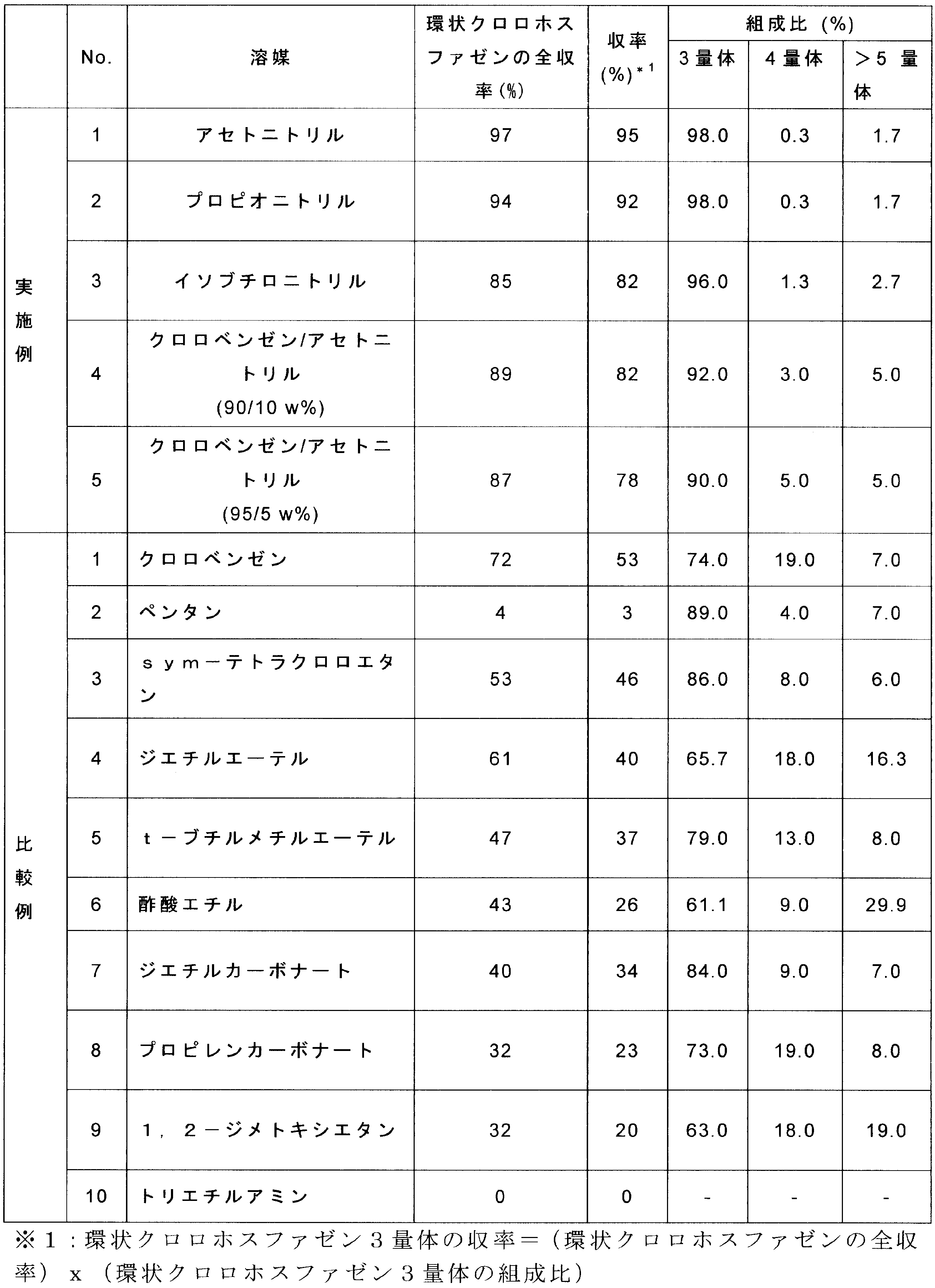
- Examples 2 to 5 and Comparative Examples 1 to 10 A cyclic chlorophosphazene was produced in the same manner as in Example 1 except that acetonitrile was changed to the solvents shown in Table 1 below. The yield of the obtained cyclic chlorophosphazene trimer and the composition ratio of the trimer, tetramer, and multimer of pentamer or higher are shown in Table 1.
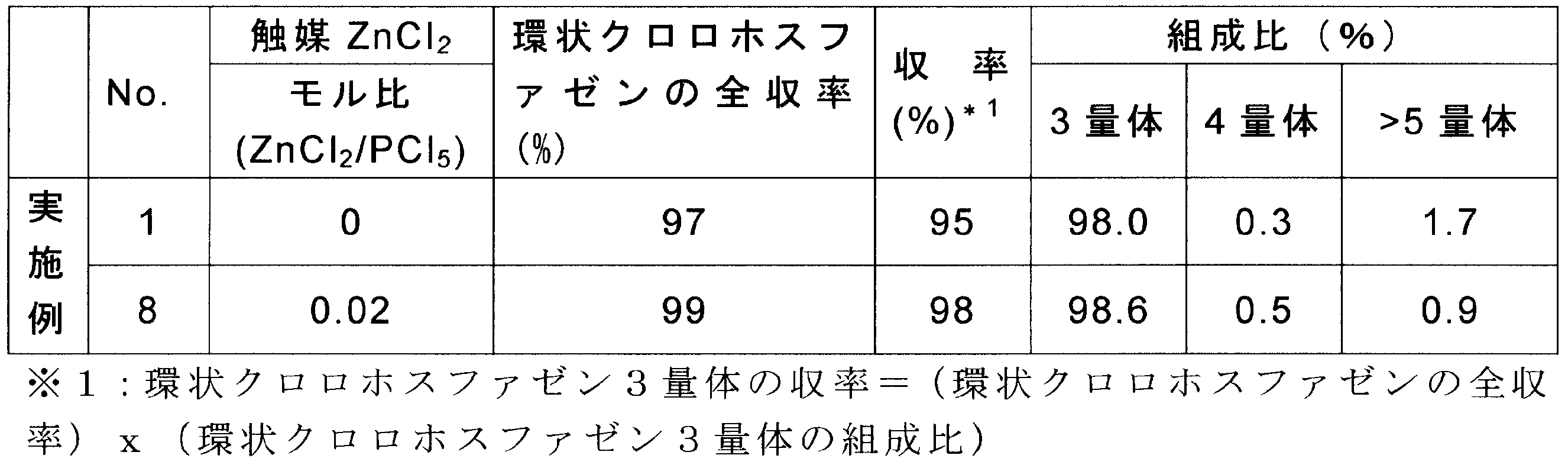
- Example 8 In order to confirm the effect of the catalyst, cyclic chlorophosphazene was produced in the same manner as the method shown in Example 1 except that 0.048 mmol of zinc chloride was added as a catalyst.
- the yield of the obtained cyclic chlorophosphazene trimer, and the composition ratio of the trimer, tetramer, and multimer of pentamer or higher are shown in Table 3.
- Industrially useful cyclic chlorophosphazene trimers can be produced with high selectivity and high yield by using the present invention.
Landscapes
- Chemical & Material Sciences (AREA)
- Organic Chemistry (AREA)
- Inorganic Chemistry (AREA)
- Low-Molecular Organic Synthesis Reactions Using Catalysts (AREA)
Abstract
本発明の課題は、工業的に有用な環状クロロホスファゼン3量体を高選択的且つ高収率で製造することができる方法を提供することである。本発明は、環状クロロホスファゼン3量体の製造方法であって、ニトリルの存在下で、五塩化リンとアンモニアとを反応させて環状クロロホスファゼン3量体を得る方法に関する。
Description
本発明は、環状クロロホスファゼン3量体の製造方法に関する。
環状クロロホスファゼンは、下記式(1)で表される化合物である。

(式中、nは3以上の整数を表す。)
式(1)で表される環状クロロホスファゼンの中でも、nが3である式(2)で表される環状クロロホスファゼン3量体(以下、単に「環状クロロホスファゼン3量体」ということがある)は、難燃剤、電池用添加剤、潤滑剤、ハードコート剤等の中間原料として重要な化合物である。
式(1)で表される環状クロロホスファゼンの中でも、nが3である式(2)で表される環状クロロホスファゼン3量体(以下、単に「環状クロロホスファゼン3量体」ということがある)は、難燃剤、電池用添加剤、潤滑剤、ハードコート剤等の中間原料として重要な化合物である。
現在までの環状クロロホスファゼン3量体の製造方法のうち、五塩化リンをリン源とし、アンモニアを窒素源として製造する方法としては、特許文献1~3に示す方法が報告されている。
特許文献1及び2には、重金属塩、アンモニア錯体塩、金属酸化物等の触媒を使用する方法が記載されている。特許文献3には、反応溶媒としてクロロホスファゼンを含有する溶媒を用いる方法が記載されている。これらの方法の共通条件として、ハロゲン系溶媒を主に使用すること、原料である五塩化リン及びアンモニアの量が等モル量であること、反応温度が100~200℃であること等が挙げられる。
しかし、上記特許文献1~3の方法を用いると、式(1)で表される環状クロロホスファゼンを高収率で合成することはできるが、得られるのは3量体の他に、式(1)で表される環状クロロホスファゼンの多量体(n≧4;以下、単に「環状クロロホスファゼン多量体」ということがある)が多く含まれる混合物であった。
本発明は、工業的に有用な環状クロロホスファゼン3量体を高選択的且つ高収率で製造することができる方法を提供することを課題とする。
本発明者らは、環状クロロホスファゼン3量体を製造する方法について種々検討した結果、ニトリルの存在下で五塩化リンとアンモニアとを反応させることにより、環状クロロホスファゼン3量体が高選択的且つ高収率で得られることを見出し、本発明を完成させるに至った。
すなわち、本発明は、下記項1~8に示す環状クロロホスファゼン3量体の製造方法を提供する。
項1 環状クロロホスファゼン3量体の製造方法であって、式(3)で表されるニトリルの存在下で、五塩化リンとアンモニアとを反応させて環状クロロホスファゼン3量体を得る方法。
R1-CN (3)
[式中、R1は炭化水素基を示す。]
項2 アンモニアの使用量が五塩化リン1molに対して3~5molである、項1に記載の方法。
項3 前記反応が、0℃以下の温度で行われる、項1又は2に記載の方法。
項4 式(3)におけるR1が、置換基を有することのある炭素数1~15のアルキル基、置換基を有することのあるアリール基又は置換基を有することのあるアラルキル基である、項1~3のいずれか一項に記載の方法。
項5 ニトリルの使用量が、五塩化リン1molに対して0.1mol以上である、項1~4のいずれか一項に記載の方法。
項6 ニトリルと他の溶媒との混合溶媒中で反応を行う項1~5のいずれか一項に記載の方法。
項7 ニトリルと他の溶媒との混合溶媒におけるニトリルの含有量が1質量%以上100質量%未満である、項6に記載の方法。
項8 他の溶媒が、ハロゲン系溶媒、脂肪族炭化水素系溶媒、芳香族炭化水素系溶媒、及びカーボナート系溶媒からなる群から選ばれる少なくとも一種である、項7に記載の方法。
項1 環状クロロホスファゼン3量体の製造方法であって、式(3)で表されるニトリルの存在下で、五塩化リンとアンモニアとを反応させて環状クロロホスファゼン3量体を得る方法。
R1-CN (3)
[式中、R1は炭化水素基を示す。]
項2 アンモニアの使用量が五塩化リン1molに対して3~5molである、項1に記載の方法。
項3 前記反応が、0℃以下の温度で行われる、項1又は2に記載の方法。
項4 式(3)におけるR1が、置換基を有することのある炭素数1~15のアルキル基、置換基を有することのあるアリール基又は置換基を有することのあるアラルキル基である、項1~3のいずれか一項に記載の方法。
項5 ニトリルの使用量が、五塩化リン1molに対して0.1mol以上である、項1~4のいずれか一項に記載の方法。
項6 ニトリルと他の溶媒との混合溶媒中で反応を行う項1~5のいずれか一項に記載の方法。
項7 ニトリルと他の溶媒との混合溶媒におけるニトリルの含有量が1質量%以上100質量%未満である、項6に記載の方法。
項8 他の溶媒が、ハロゲン系溶媒、脂肪族炭化水素系溶媒、芳香族炭化水素系溶媒、及びカーボナート系溶媒からなる群から選ばれる少なくとも一種である、項7に記載の方法。
本発明の製造方法によれば、ニトリル存在下で五塩化リンとアンモニアとを反応させることで、環状クロロホスファゼン3量体を高選択的且つ高収率に得ることができる。すなわち、本発明の製造方法によれば、生成する環状クロロホスファゼン3量体(n=3)と副生する多量体(n≧4)とを分離する操作が不要となり、工業的に極めて有利である。
以下、本発明について詳細に説明する。
本発明の製造方法は、ニトリルの存在下で、五塩化リンとアンモニアとを反応させることを特徴とする。
(五塩化リン)
本発明で使用する五塩化リンは、市販品でもよく、又は従来より公知の方法で合成したものでもよい。合成方法として、例えば、三塩化リンと塩素とを反応させる方法、白リンと塩素とを反応させる方法、及び黄リンと塩素とを反応させる方法等が挙げられる。また、五塩化リンは、反応系内で生成してもよい。
本発明で使用する五塩化リンは、市販品でもよく、又は従来より公知の方法で合成したものでもよい。合成方法として、例えば、三塩化リンと塩素とを反応させる方法、白リンと塩素とを反応させる方法、及び黄リンと塩素とを反応させる方法等が挙げられる。また、五塩化リンは、反応系内で生成してもよい。
(アンモニア)
本発明で使用するアンモニアの形態は、気体及び液体状態のいずれでもよい。気体状態で使用する際は、液体アンモニアを気化させて用いてもよいし、窒素等の不活性ガスで希釈された混合ガスを用いてもよい。
本発明で使用するアンモニアの形態は、気体及び液体状態のいずれでもよい。気体状態で使用する際は、液体アンモニアを気化させて用いてもよいし、窒素等の不活性ガスで希釈された混合ガスを用いてもよい。
本発明で使用するアンモニアの量は、五塩化リン1molに対して、3~5molが好ましく、3.5~4.8molがより好ましく、3.8~4.5molがさらに好ましく、4~4.4molが特に好ましい。使用量を上記範囲にすることにより、別反応が進行して副生成物(環状クロロホスファゼン3量体の活性塩素がアンモニア基で置換された化合物)が生成することを防ぎつつ、所望の反応を完結させることができる。
アンモニアは、任意の方法で反応容器内に導入することができる。
(ニトリル)
本発明で用いられるニトリルは、下式(3)で表される。
R1-CN (3)
[式中、R1は炭化水素基を示す。]
本発明で用いられるニトリルは、下式(3)で表される。
R1-CN (3)
[式中、R1は炭化水素基を示す。]
本発明の方法では、前記式(3)で表されるニトリルの存在下で反応を行うことが必須である。式(3)で表されるニトリルのR1の炭化水素基としては、置換基を有することのある炭素数1~15のアルキル基、置換基を有することのあるアリール基又は置換基を有することのあるアラルキル基を挙げることができる。炭素数1~15のアルキル基としては、直鎖状、分岐状又は環状のアルキル基が挙げられ、例えば、メチル基、エチル基、n-プロピル基、イソプロピル基、n-ブチル基、イソブチル基、s-ブチル基、t-ブチル基、1-エチルプロピル基、n-ペンチル基、イソペンチル基、ネオペンチル基、n-ヘキシル基、イソヘキシル基、3-メチルペンチル基、n-ヘプチル基、n-オクチル基、n-ノニル基、n-デシル基、n-ウンデシル基、n-ドデシル基、5-プロピルノニル基、n-トリデシル基、n-テトラデシル基、n-ペンタデシル基、シクロプロピル基、シクロブチル基、シクロペンチル基、シクロヘキシル基、シクロへプチル基、シクロオクチル基等が挙げられる。また、任意の位置の炭素元素をヘテロ原子に置換していても良い。アリール基としては、フェニル基、ビフェニル基、ナフチル基等が挙げられる。アラルキル基としては、ベンジル基、フェネチル基等が挙げられる。
アルキル基の置換基としては、ハロゲン原子を挙げることができる。アリール基及びアラルキル基のアリール部の置換基としては、ハロゲン原子、炭素数1~10のアルキル基、炭素数1~10のハロアルキル基、炭素数1~4のアルコキシ基、炭素数1~4のハロアルコキシ基から選ばれる、一種もしくは二種以上の基を挙げることができる。
これらのニトリルはニトリル基を1~3個有していてもよい。具体的には、例えば、アセトニトリル、プロピオニトリル、ブチロニトリル、バレロニトリル、ヘキサンニトリル、ヘプタンニトリル、イソブチロニトリル、2-メチルブチロニトリル、イソバレロニトリル、4-メチルバレロニトリル、ピバロニトリル、2,2-ジメチルバレロニトリル、2,2-ジメチルヘキサンニトリル、ベンゾニトリル、o-トルニトリル、m-トルニトリル、4-t-ブチルベンゾニトリル、2-(トリフルオロメトキシ)ベンゾニトリル、フェニルアセトニトリル、2-フェニルプロピオニトリル、グルタロニトリル、2-メチルグルタロニトリル、アジポニトリル、ピメロニトリル、スベロニトリル、1,3,5-ペンタントリカルボニトリル、1,3,6-ヘキサントリカルボニトリル、メトキシアセトニトリル、フェノキシアセトニトリル、3-メトキシプロピオニトリル、3-エトキシプロピオニトリル、3-ブトキシプロピオニトリル、2,2’-ジフェニルプロピオニトリル、3,3’-オキシジプロピオニトリル、3,3’-(エチレンジオキシ)ジプロピオニトリル、1,2,3-トリス(2-シアノエトキシ)プロパン、1-フェニルシクロペンタンカルボニトリル、1-フェニルシクロヘキサンカルボニトリル、p-クロロベンゾニトリル、p-メトキシベンゾニトリル等が挙げられる。これらの中でもアセトニトリル、プロピオニトリル、及びイソブチロニトリルが好ましい。これらは、一種単独で、又は二種以上を混合して使用することができる。
さらに、式(3)で表されるニトリルは、ポリアクリロニトリルのような重合体であってもよい。
本発明のニトリルの使用量としては、特に限定されず、五塩化リン1molに対して、通常0.1mol以上であり、0.2~100molが好ましく、0.5~20molがより好ましく、1~10molが更に好ましい。
本発明では、ニトリルを反応溶媒として使用してもよく、ニトリル単独で用いることもできるし、ニトリルを含む混合溶媒として用いることができる。
ニトリルと他の溶媒との混合溶媒を用いる場合、混合溶媒中のニトリルの割合は、1質量%以上100質量%未満が好ましく、特に10~50質量%が好ましい。
混合溶媒に使用される他の溶媒としては、例えば、クロロベンゼン、o-ジクロロベンゼン、m-ジクロロベンゼン、ジクロロメタン、1,2-ジクロロエタン、1,1-ジクロロエタン、sym-テトラクロロエタン等のハロゲン系溶媒;n-ペンタン、n-ヘキサン等の脂肪族炭化水素系溶媒;ベンゼン、トルエン、o―キシレン、m-キシレン等の芳香族炭化水素系溶媒;炭酸ジメチル、炭酸ジエチル、炭酸プロピレン等のカーボナート系溶媒等が挙げられる。これらの中でも、ハロゲン系溶媒が好ましく、クロロベンゼン、o-ジクロロベンゼン、及びm-ジクロロベンゼンがより好ましく、特にクロロベンゼンが好ましい。
(触媒)
本発明では、環状クロロホスファゼン3量体の選択率及び収率向上を目的として、触媒を使用することができる。使用できる触媒としては、ルイス酸又は反応系中でルイス酸を形成する化合物で、例えば、亜鉛、塩化亜鉛(II)、トリフルオロメタンスルホン酸亜鉛(II)、トリフルオロメタンスルホン酸スカンジウム(III)、トリフルオロメタンスルホン酸イットリウム(III)、塩化鉄(III)、塩化モリブデン(III)等が挙げられる。これらの中で、塩化亜鉛(II)が好ましい。これらの触媒は、1種単独で、又は2種以上を組み合わせて使用することができる。これらの触媒の使用量は、五塩化リン1molに対し、0.005~0.5mol程度が好ましく、0.01~0.1mol程度がより好ましい。
本発明では、環状クロロホスファゼン3量体の選択率及び収率向上を目的として、触媒を使用することができる。使用できる触媒としては、ルイス酸又は反応系中でルイス酸を形成する化合物で、例えば、亜鉛、塩化亜鉛(II)、トリフルオロメタンスルホン酸亜鉛(II)、トリフルオロメタンスルホン酸スカンジウム(III)、トリフルオロメタンスルホン酸イットリウム(III)、塩化鉄(III)、塩化モリブデン(III)等が挙げられる。これらの中で、塩化亜鉛(II)が好ましい。これらの触媒は、1種単独で、又は2種以上を組み合わせて使用することができる。これらの触媒の使用量は、五塩化リン1molに対し、0.005~0.5mol程度が好ましく、0.01~0.1mol程度がより好ましい。
(製造条件)
本発明の製造方法において、五塩化リンが水との反応性が高いため、反応系中の水分をできるだけ除くことが好ましい。
本発明の製造方法において、五塩化リンが水との反応性が高いため、反応系中の水分をできるだけ除くことが好ましい。
反応容器内を不活性ガスで置換するのが好ましい。使用する不活性ガスとしては、特に制限はなく、例えば、ヘリウム、ネオン、アルゴン、窒素等が挙げられる。これらの中でもヘリウム、アルゴン及び窒素が好ましい。
反応溶媒としては、ニトリル単独で溶媒として用いることもできるし、ニトリルを含む混合溶媒として用いることができる。
反応溶媒の使用量としては、五塩化リン1質量部に対して、1.5質量部以上であればよく、1.5~20質量部が好ましく、2.5~20質量部が更に好ましく、5~20質量部が特に好ましい。
五塩化リンは、ニトリル又はニトリルを含む混合溶媒に対して難溶性であり、スラリーを形成することもあるが、スラリー状態で反応は有効に進行する。
反応溶媒は、反応に影響を与えない程度に無水であることが好ましい。
反応温度としては、0℃以下が好ましく、0~-40℃がより好ましく、0~-35℃が更に好ましく、-5~-30℃が特に好ましい。本発明では、反応の選択性及びコストの観点から-10~-25℃とするのが最もよい。0℃以下で反応させることにより、五塩化リンとニトリルとの望まない副反応などが抑制され、目的とする3量体の選択率を格段に向上させることができる。
本発明の製造方法においては、所定量のアンモニアを導入した直後に反応を終了させてもよい。導入直後の環状クロロホスファゼンの収率及び3量体の選択率が、導入終了後15時間反応させた場合の収率及び選択率とほぼ同等であったことから、アンモニア導入直後、後処理を行うこともできると考えられる。
反応終了後、不溶物を濾過し、ろ液を減圧濃縮することにより、環状クロロホスファゼン3量体を高純度で含有する粗生成物を得ることができる。
本発明の製造方法によれば、環状クロロホスファゼン3量体の割合が多い(90~98%)粗生成物が得られるため、得られた粗生成物はそのまま次の反応に使用することができる。また、粗生成物をn-ペンタン等の脂肪族炭化水素系溶媒で抽出すると、さらに高純度の環状クロロホスファゼン3量体を得ることも可能である。
以下に、実施例及び比較例によって本発明を具体的に説明するが、本発明はこれらによって何ら限定されるものではない。
本発明における環状クロロホスファゼン3量体の純度は、31P NMR測定(161.6MHz)により決定した。
実施例及び比較例において、五塩化リンは市販特級品(東京化成工業株式会社製)をそのまま使用した。
実施例及び比較例に使用したニトリル及び混合溶媒に用いる他の溶媒は、市販特級品をモレキュラーシーブスで乾燥したものである。
実施例1
五塩化リン(0.5g,2.4mmol)を、50mLの二口フラスコに測り取り、アンモニアガス導入用のテフロン(登録商標)チューブと排気用の集気バッグを取り付けた。フラスコ内をヘリウムで置換したのち、反応容器を-20℃冷却バスに浸して冷やしながら、これに予め-20℃に冷やしたアセトニトリル(5mL)を加え、かき混ぜてスラリーとした。つづいて、ガス導入用のテフロン(登録商標)チューブを通して容器内にアンモニアガス(9.6mmol)を2時間かけて導入し、さらに0.5時間かき混ぜて反応を行った。反応後、析出した塩化アンモニウムをろ別し、アセトニトリル(5mL x 3)で洗浄した。ろ液と洗液とを一つにまとめ、減圧濃縮して、白色の固形物(0.28g)を得た。これにn-ペンタン(5mL)を加えてよくかきまぜ、静置したのち、上澄み液を分取した。この操作を3回繰り返し、得られた上澄み液を一つにまとめ、減圧濃縮して、環状クロロホスファゼン(0.27g,収率97%)を得た。得られた環状クロロホスファゼンを重クロロホルムに溶解し、31P NMRによる分析を行ったところ、環状クロロホスファゼン3量体(δ20.64ppm)、4量体(δ-5.84ppm)、5及び6量体(δ-14.82ppm)、7量体(δ-16.83ppm)及び8量体(δ-17.64ppm)が観察された。各々の比率は3量体98.0%、4量体0.3%、5及び6量体0.7%、7量体0.1%、及び8量体0.9%であった。
五塩化リン(0.5g,2.4mmol)を、50mLの二口フラスコに測り取り、アンモニアガス導入用のテフロン(登録商標)チューブと排気用の集気バッグを取り付けた。フラスコ内をヘリウムで置換したのち、反応容器を-20℃冷却バスに浸して冷やしながら、これに予め-20℃に冷やしたアセトニトリル(5mL)を加え、かき混ぜてスラリーとした。つづいて、ガス導入用のテフロン(登録商標)チューブを通して容器内にアンモニアガス(9.6mmol)を2時間かけて導入し、さらに0.5時間かき混ぜて反応を行った。反応後、析出した塩化アンモニウムをろ別し、アセトニトリル(5mL x 3)で洗浄した。ろ液と洗液とを一つにまとめ、減圧濃縮して、白色の固形物(0.28g)を得た。これにn-ペンタン(5mL)を加えてよくかきまぜ、静置したのち、上澄み液を分取した。この操作を3回繰り返し、得られた上澄み液を一つにまとめ、減圧濃縮して、環状クロロホスファゼン(0.27g,収率97%)を得た。得られた環状クロロホスファゼンを重クロロホルムに溶解し、31P NMRによる分析を行ったところ、環状クロロホスファゼン3量体(δ20.64ppm)、4量体(δ-5.84ppm)、5及び6量体(δ-14.82ppm)、7量体(δ-16.83ppm)及び8量体(δ-17.64ppm)が観察された。各々の比率は3量体98.0%、4量体0.3%、5及び6量体0.7%、7量体0.1%、及び8量体0.9%であった。
実施例2~5及び比較例1~10
アセトニトリルを下記表1に示す溶媒に変更した以外は実施例1に示す方法と同様にして環状クロロホスファゼンを製造した。得られた環状クロロホスファゼン3量体の収率、及び3量体、4量体、及び5量体以上の多量体の組成比を表1に示す。
アセトニトリルを下記表1に示す溶媒に変更した以外は実施例1に示す方法と同様にして環状クロロホスファゼンを製造した。得られた環状クロロホスファゼン3量体の収率、及び3量体、4量体、及び5量体以上の多量体の組成比を表1に示す。
実施例6及び7
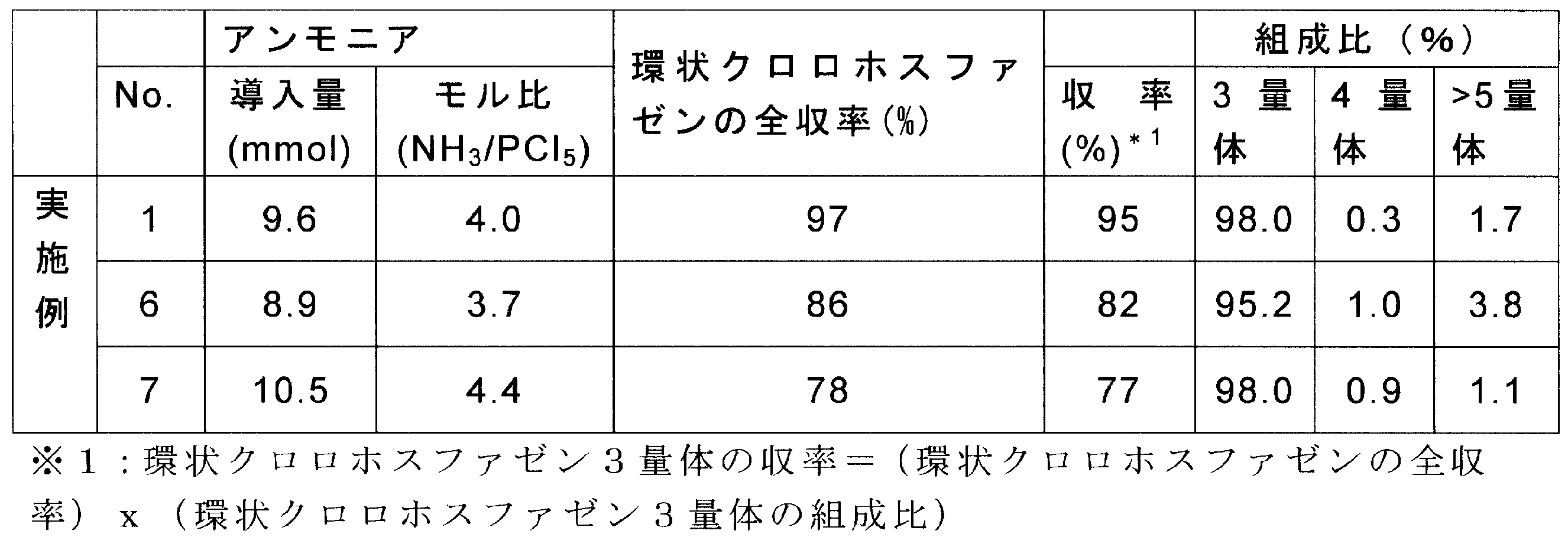
アンモニアガスの量を下記表2に示す量に変更した以外は実施例1に示す方法と同様にして、環状クロロホスファゼンを製造した。得られた環状クロロホスファゼン3量体の収率、及び3量体、4量体、及び5量体以上の多量体の組成比を表2に示す。
アンモニアガスの量を下記表2に示す量に変更した以外は実施例1に示す方法と同様にして、環状クロロホスファゼンを製造した。得られた環状クロロホスファゼン3量体の収率、及び3量体、4量体、及び5量体以上の多量体の組成比を表2に示す。
実施例8
触媒の効果を確認するため、塩化亜鉛0.048mmolを触媒として加えたこと以外は実施例1に示す方法と同様にして、環状クロロホスファゼンを製造した。得られた環状クロロホスファゼン3量体の収率、及び3量体、4量体、及び5量体以上の多量体の組成比を表3に示す。
触媒の効果を確認するため、塩化亜鉛0.048mmolを触媒として加えたこと以外は実施例1に示す方法と同様にして、環状クロロホスファゼンを製造した。得られた環状クロロホスファゼン3量体の収率、及び3量体、4量体、及び5量体以上の多量体の組成比を表3に示す。
本発明を用いることで、産業上有用な環状クロロホスファゼン3量体を高選択的且つ高収率で製造することができる。
Claims (4)
- 環状クロロホスファゼン3量体の製造方法であって、式(3)で表されるニトリルの存在下で、五塩化リンとアンモニアとを反応させて環状クロロホスファゼン3量体を得る方法。
R1-CN (3)
[式中、R1は炭化水素基を示す。] - アンモニアの使用量が五塩化リン1molに対して3~5molである、請求項1に記載の方法。
- 前記反応が、0℃以下の温度で行われる、請求項1又は2に記載の方法。
- 式(3)におけるR1が、置換基を有することのある炭素数1~15のアルキル基、置換基を有することのあるアリール基又は置換基を有することのあるアラルキル基である、請求項1~3のいずれか一項に記載の方法。
Priority Applications (2)
| Application Number | Priority Date | Filing Date | Title |
|---|---|---|---|
| CN201880057091.9A CN111051239B (zh) | 2017-09-06 | 2018-09-05 | 环状氯化磷腈三聚体的制造方法 |
| JP2019540970A JP7134979B2 (ja) | 2017-09-06 | 2018-09-05 | 環状クロロホスファゼン3量体の製造方法 |
Applications Claiming Priority (2)
| Application Number | Priority Date | Filing Date | Title |
|---|---|---|---|
| JP2017171543 | 2017-09-06 | ||
| JP2017-171543 | 2017-09-06 |
Publications (1)
| Publication Number | Publication Date |
|---|---|
| WO2019049872A1 true WO2019049872A1 (ja) | 2019-03-14 |
Family
ID=65634172
Family Applications (1)
| Application Number | Title | Priority Date | Filing Date |
|---|---|---|---|
| PCT/JP2018/032805 Ceased WO2019049872A1 (ja) | 2017-09-06 | 2018-09-05 | 環状クロロホスファゼン3量体の製造方法 |
Country Status (4)
| Country | Link |
|---|---|
| JP (1) | JP7134979B2 (ja) |
| CN (1) | CN111051239B (ja) |
| TW (1) | TWI771482B (ja) |
| WO (1) | WO2019049872A1 (ja) |
Citations (5)
| Publication number | Priority date | Publication date | Assignee | Title |
|---|---|---|---|---|
| JPS4962398A (ja) * | 1972-06-05 | 1974-06-17 | ||
| JPS5033033B1 (ja) * | 1969-10-07 | 1975-10-27 | ||
| JPS5515956A (en) * | 1978-07-18 | 1980-02-04 | Otsuka Chem Co Ltd | Production of phosphazene oligomer |
| US4241034A (en) * | 1979-05-31 | 1980-12-23 | Ethyl Corporation | Process for purifying cyclic phosphonitrilic chlorides |
| WO2006077844A1 (ja) * | 2005-01-21 | 2006-07-27 | Asahi Kasei Chemicals Corporation | ホスホニトリル酸エステルの製造方法 |
Family Cites Families (5)
| Publication number | Priority date | Publication date | Assignee | Title |
|---|---|---|---|---|
| GB1436352A (en) * | 1972-03-06 | 1976-05-19 | Fmc Corp | Oligometric phosphazene derivatives having flame-retardant properties |
| JPS54143797A (en) * | 1978-04-28 | 1979-11-09 | Otsuka Chem Co Ltd | Production of cyclic phosphagen oligomer |
| US4382914A (en) * | 1980-06-11 | 1983-05-10 | Nippon Fine Chemical Company, Ltd. | Process for preparing cyclic phosphonitrilic chloride oligomers |
| US4663138A (en) * | 1986-04-21 | 1987-05-05 | Ethyl Corporation | Trimer process |
| CN104558044A (zh) | 2015-02-13 | 2015-04-29 | 湖北诺邦科技股份有限公司 | 一种六氯环三磷腈的合成方法 |
-
2018
- 2018-09-05 WO PCT/JP2018/032805 patent/WO2019049872A1/ja not_active Ceased
- 2018-09-05 CN CN201880057091.9A patent/CN111051239B/zh active Active
- 2018-09-05 TW TW107131066A patent/TWI771482B/zh active
- 2018-09-05 JP JP2019540970A patent/JP7134979B2/ja active Active
Patent Citations (5)
| Publication number | Priority date | Publication date | Assignee | Title |
|---|---|---|---|---|
| JPS5033033B1 (ja) * | 1969-10-07 | 1975-10-27 | ||
| JPS4962398A (ja) * | 1972-06-05 | 1974-06-17 | ||
| JPS5515956A (en) * | 1978-07-18 | 1980-02-04 | Otsuka Chem Co Ltd | Production of phosphazene oligomer |
| US4241034A (en) * | 1979-05-31 | 1980-12-23 | Ethyl Corporation | Process for purifying cyclic phosphonitrilic chlorides |
| WO2006077844A1 (ja) * | 2005-01-21 | 2006-07-27 | Asahi Kasei Chemicals Corporation | ホスホニトリル酸エステルの製造方法 |
Non-Patent Citations (2)
| Title |
|---|
| EMSLEY, J. ET AL.: "Factors influencing the Preparation of the Cyclic Phosphonitrilic Chlorides", J OURNAL OF THE CHEMICAL SOCIETY A: INORGANIC, PHYSICAL, THEORETICAL, vol. 5, 1971, pages 768 - 772, XP055581729, ISSN: 0022-4944 * |
| YOKOYAMA, MASAAKI: "Studies on Triphosphonitrilic Chloride and its Derivatives. I-II", NIPPON KAGAKU ZASSI, vol. 80, no. 10, 1959, pages 1189 - 1191, ISSN: 0369-5387 * |
Also Published As
| Publication number | Publication date |
|---|---|
| TWI771482B (zh) | 2022-07-21 |
| CN111051239A (zh) | 2020-04-21 |
| TW201919989A (zh) | 2019-06-01 |
| CN111051239B (zh) | 2022-12-23 |
| JP7134979B2 (ja) | 2022-09-12 |
| JPWO2019049872A1 (ja) | 2020-10-15 |
Similar Documents
| Publication | Publication Date | Title |
|---|---|---|
| US8030527B2 (en) | Process for preparing substituted biphenyls | |
| KR900008166B1 (ko) | 올레핀의 하이드로시안화 방법 | |
| US20230348414A1 (en) | The process of preparation of anthranilamides | |
| KR101705287B1 (ko) | 플루오로알킬 니트릴의 제조방법 | |
| JPS607608B2 (ja) | シアン化アシルの製法 | |
| EP3386996B1 (en) | Method for preparing ligand for polyketone polymerization catalyst | |
| WO2008001490A1 (en) | Process for producing dicyanonorbornane and zerovalent-nickel complex catalyst | |
| WO2019049872A1 (ja) | 環状クロロホスファゼン3量体の製造方法 | |
| WO2019141230A1 (en) | Processes for the synthesis of sulfentrazone | |
| KR101751249B1 (ko) | 테트라아릴보레이트를 사용한 치환된 비페닐의 제조 방법 | |
| JP3459892B2 (ja) | フッ素系界面活性化合物及びその製造方法 | |
| US7741518B2 (en) | Method for producing trifluoromethanesulfonic anhydride | |
| US6784308B2 (en) | Process for the preparation of aromatic nitriles | |
| CA2507477A1 (en) | Process for preparing phthaloyl chloride | |
| US3869509A (en) | N-alkyl-N(trihalomethylthio)-sulfamic acid chloride | |
| JP5635443B2 (ja) | 新規化合物とその錯体並びに錯体の製造方法 | |
| EP3126334A1 (en) | Process for the preparation of n-[3-(benzylcarbamoyl)phenyl]-1 h-pyrazole-5-carboxamides | |
| JP2019123693A (ja) | テトラアミノジクロロシクロトリホスファゼン及びその製造方法 | |
| JP2019131487A (ja) | トリアリールトリアジン化合物及び、その製造方法 | |
| CN107207541A (zh) | 用于生产氰基烷基氟硅烷的方法 | |
| JP5754768B2 (ja) | 芳香族へテロ環化合物のニトリル化物の製造方法 | |
| KR20250148345A (ko) | 다이요오도실란의 제조방법 | |
| CN119350390A (zh) | 二苯基磷氧类化合物的制备方法及二苯基磷氧类化合物 | |
| TW201821400A (zh) | 含氮化合物之製造方法 | |
| JPS59212459A (ja) | ハロゲノアルキルニトリルの製造法 |
Legal Events
| Date | Code | Title | Description |
|---|---|---|---|
| 121 | Ep: the epo has been informed by wipo that ep was designated in this application |
Ref document number: 18854326 Country of ref document: EP Kind code of ref document: A1 |
|
| ENP | Entry into the national phase |
Ref document number: 2019540970 Country of ref document: JP Kind code of ref document: A |
|
| NENP | Non-entry into the national phase |
Ref country code: DE |
|
| 122 | Ep: pct application non-entry in european phase |
Ref document number: 18854326 Country of ref document: EP Kind code of ref document: A1 |