WO2019019247A1 - 含配体的共轭微孔聚合物及其应用 - Google Patents
含配体的共轭微孔聚合物及其应用 Download PDFInfo
- Publication number
- WO2019019247A1 WO2019019247A1 PCT/CN2017/099378 CN2017099378W WO2019019247A1 WO 2019019247 A1 WO2019019247 A1 WO 2019019247A1 CN 2017099378 W CN2017099378 W CN 2017099378W WO 2019019247 A1 WO2019019247 A1 WO 2019019247A1
- Authority
- WO
- WIPO (PCT)
- Prior art keywords
- ligand
- microporous polymer
- conjugated microporous
- compound
- group
- Prior art date
- Legal status (The legal status is an assumption and is not a legal conclusion. Google has not performed a legal analysis and makes no representation as to the accuracy of the status listed.)
- Ceased
Links
Images


Classifications
-
- B—PERFORMING OPERATIONS; TRANSPORTING
- B01—PHYSICAL OR CHEMICAL PROCESSES OR APPARATUS IN GENERAL
- B01J—CHEMICAL OR PHYSICAL PROCESSES, e.g. CATALYSIS OR COLLOID CHEMISTRY; THEIR RELEVANT APPARATUS
- B01J20/00—Solid sorbent compositions or filter aid compositions; Sorbents for chromatography; Processes for preparing, regenerating or reactivating thereof
- B01J20/22—Solid sorbent compositions or filter aid compositions; Sorbents for chromatography; Processes for preparing, regenerating or reactivating thereof comprising organic material
- B01J20/26—Synthetic macromolecular compounds
- B01J20/265—Synthetic macromolecular compounds modified or post-treated polymers
-
- B—PERFORMING OPERATIONS; TRANSPORTING
- B01—PHYSICAL OR CHEMICAL PROCESSES OR APPARATUS IN GENERAL
- B01J—CHEMICAL OR PHYSICAL PROCESSES, e.g. CATALYSIS OR COLLOID CHEMISTRY; THEIR RELEVANT APPARATUS
- B01J20/00—Solid sorbent compositions or filter aid compositions; Sorbents for chromatography; Processes for preparing, regenerating or reactivating thereof
- B01J20/30—Processes for preparing, regenerating, or reactivating
- B01J20/3085—Chemical treatments not covered by groups B01J20/3007 - B01J20/3078
-
- C—CHEMISTRY; METALLURGY
- C08—ORGANIC MACROMOLECULAR COMPOUNDS; THEIR PREPARATION OR CHEMICAL WORKING-UP; COMPOSITIONS BASED THEREON
- C08G—MACROMOLECULAR COMPOUNDS OBTAINED OTHERWISE THAN BY REACTIONS ONLY INVOLVING UNSATURATED CARBON-TO-CARBON BONDS
- C08G61/00—Macromolecular compounds obtained by reactions forming a carbon-to-carbon link in the main chain of the macromolecule
- C08G61/02—Macromolecular compounds containing only carbon atoms in the main chain of the macromolecule, e.g. polyxylylenes
-
- C—CHEMISTRY; METALLURGY
- C08—ORGANIC MACROMOLECULAR COMPOUNDS; THEIR PREPARATION OR CHEMICAL WORKING-UP; COMPOSITIONS BASED THEREON
- C08G—MACROMOLECULAR COMPOUNDS OBTAINED OTHERWISE THAN BY REACTIONS ONLY INVOLVING UNSATURATED CARBON-TO-CARBON BONDS
- C08G61/00—Macromolecular compounds obtained by reactions forming a carbon-to-carbon link in the main chain of the macromolecule
- C08G61/12—Macromolecular compounds containing atoms other than carbon in the main chain of the macromolecule
- C08G61/122—Macromolecular compounds containing atoms other than carbon in the main chain of the macromolecule derived from five- or six-membered heterocyclic compounds, other than imides
- C08G61/123—Macromolecular compounds containing atoms other than carbon in the main chain of the macromolecule derived from five- or six-membered heterocyclic compounds, other than imides derived from five-membered heterocyclic compounds
- C08G61/124—Macromolecular compounds containing atoms other than carbon in the main chain of the macromolecule derived from five- or six-membered heterocyclic compounds, other than imides derived from five-membered heterocyclic compounds with a five-membered ring containing one nitrogen atom in the ring
-
- C—CHEMISTRY; METALLURGY
- C08—ORGANIC MACROMOLECULAR COMPOUNDS; THEIR PREPARATION OR CHEMICAL WORKING-UP; COMPOSITIONS BASED THEREON
- C08G—MACROMOLECULAR COMPOUNDS OBTAINED OTHERWISE THAN BY REACTIONS ONLY INVOLVING UNSATURATED CARBON-TO-CARBON BONDS
- C08G83/00—Macromolecular compounds not provided for in groups C08G2/00 - C08G81/00
- C08G83/008—Supramolecular polymers
-
- G—PHYSICS
- G21—NUCLEAR PHYSICS; NUCLEAR ENGINEERING
- G21F—PROTECTION AGAINST X-RADIATION, GAMMA RADIATION, CORPUSCULAR RADIATION OR PARTICLE BOMBARDMENT; TREATING RADIOACTIVELY CONTAMINATED MATERIAL; DECONTAMINATION ARRANGEMENTS THEREFOR
- G21F9/00—Treating radioactively contaminated material; Decontamination arrangements therefor
- G21F9/04—Treating liquids
- G21F9/06—Processing
- G21F9/12—Processing by absorption; by adsorption; by ion-exchange
-
- C—CHEMISTRY; METALLURGY
- C08—ORGANIC MACROMOLECULAR COMPOUNDS; THEIR PREPARATION OR CHEMICAL WORKING-UP; COMPOSITIONS BASED THEREON
- C08G—MACROMOLECULAR COMPOUNDS OBTAINED OTHERWISE THAN BY REACTIONS ONLY INVOLVING UNSATURATED CARBON-TO-CARBON BONDS
- C08G2261/00—Macromolecular compounds obtained by reactions forming a carbon-to-carbon link in the main chain of the macromolecule
- C08G2261/10—Definition of the polymer structure
- C08G2261/12—Copolymers
-
- C—CHEMISTRY; METALLURGY
- C08—ORGANIC MACROMOLECULAR COMPOUNDS; THEIR PREPARATION OR CHEMICAL WORKING-UP; COMPOSITIONS BASED THEREON
- C08G—MACROMOLECULAR COMPOUNDS OBTAINED OTHERWISE THAN BY REACTIONS ONLY INVOLVING UNSATURATED CARBON-TO-CARBON BONDS
- C08G2261/00—Macromolecular compounds obtained by reactions forming a carbon-to-carbon link in the main chain of the macromolecule
- C08G2261/10—Definition of the polymer structure
- C08G2261/13—Morphological aspects
- C08G2261/132—Morphological aspects branched or hyperbranched
-
- C—CHEMISTRY; METALLURGY
- C08—ORGANIC MACROMOLECULAR COMPOUNDS; THEIR PREPARATION OR CHEMICAL WORKING-UP; COMPOSITIONS BASED THEREON
- C08G—MACROMOLECULAR COMPOUNDS OBTAINED OTHERWISE THAN BY REACTIONS ONLY INVOLVING UNSATURATED CARBON-TO-CARBON BONDS
- C08G2261/00—Macromolecular compounds obtained by reactions forming a carbon-to-carbon link in the main chain of the macromolecule
- C08G2261/10—Definition of the polymer structure
- C08G2261/14—Side-groups
- C08G2261/143—Side-chains containing nitrogen
- C08G2261/1432—Side-chains containing nitrogen containing amide groups
-
- C—CHEMISTRY; METALLURGY
- C08—ORGANIC MACROMOLECULAR COMPOUNDS; THEIR PREPARATION OR CHEMICAL WORKING-UP; COMPOSITIONS BASED THEREON
- C08G—MACROMOLECULAR COMPOUNDS OBTAINED OTHERWISE THAN BY REACTIONS ONLY INVOLVING UNSATURATED CARBON-TO-CARBON BONDS
- C08G2261/00—Macromolecular compounds obtained by reactions forming a carbon-to-carbon link in the main chain of the macromolecule
- C08G2261/10—Definition of the polymer structure
- C08G2261/14—Side-groups
- C08G2261/147—Side-chains with other heteroatoms in the side-chain
-
- C—CHEMISTRY; METALLURGY
- C08—ORGANIC MACROMOLECULAR COMPOUNDS; THEIR PREPARATION OR CHEMICAL WORKING-UP; COMPOSITIONS BASED THEREON
- C08G—MACROMOLECULAR COMPOUNDS OBTAINED OTHERWISE THAN BY REACTIONS ONLY INVOLVING UNSATURATED CARBON-TO-CARBON BONDS
- C08G2261/00—Macromolecular compounds obtained by reactions forming a carbon-to-carbon link in the main chain of the macromolecule
- C08G2261/10—Definition of the polymer structure
- C08G2261/14—Side-groups
- C08G2261/152—Side-groups comprising metal complexes
-
- C—CHEMISTRY; METALLURGY
- C08—ORGANIC MACROMOLECULAR COMPOUNDS; THEIR PREPARATION OR CHEMICAL WORKING-UP; COMPOSITIONS BASED THEREON
- C08G—MACROMOLECULAR COMPOUNDS OBTAINED OTHERWISE THAN BY REACTIONS ONLY INVOLVING UNSATURATED CARBON-TO-CARBON BONDS
- C08G2261/00—Macromolecular compounds obtained by reactions forming a carbon-to-carbon link in the main chain of the macromolecule
- C08G2261/10—Definition of the polymer structure
- C08G2261/18—Definition of the polymer structure conjugated
-
- C—CHEMISTRY; METALLURGY
- C08—ORGANIC MACROMOLECULAR COMPOUNDS; THEIR PREPARATION OR CHEMICAL WORKING-UP; COMPOSITIONS BASED THEREON
- C08G—MACROMOLECULAR COMPOUNDS OBTAINED OTHERWISE THAN BY REACTIONS ONLY INVOLVING UNSATURATED CARBON-TO-CARBON BONDS
- C08G2261/00—Macromolecular compounds obtained by reactions forming a carbon-to-carbon link in the main chain of the macromolecule
- C08G2261/30—Monomer units or repeat units incorporating structural elements in the main chain
- C08G2261/31—Monomer units or repeat units incorporating structural elements in the main chain incorporating aromatic structural elements in the main chain
- C08G2261/312—Non-condensed aromatic systems, e.g. benzene
-
- C—CHEMISTRY; METALLURGY
- C08—ORGANIC MACROMOLECULAR COMPOUNDS; THEIR PREPARATION OR CHEMICAL WORKING-UP; COMPOSITIONS BASED THEREON
- C08G—MACROMOLECULAR COMPOUNDS OBTAINED OTHERWISE THAN BY REACTIONS ONLY INVOLVING UNSATURATED CARBON-TO-CARBON BONDS
- C08G2261/00—Macromolecular compounds obtained by reactions forming a carbon-to-carbon link in the main chain of the macromolecule
- C08G2261/30—Monomer units or repeat units incorporating structural elements in the main chain
- C08G2261/31—Monomer units or repeat units incorporating structural elements in the main chain incorporating aromatic structural elements in the main chain
- C08G2261/314—Condensed aromatic systems, e.g. perylene, anthracene or pyrene
- C08G2261/3142—Condensed aromatic systems, e.g. perylene, anthracene or pyrene fluorene-based, e.g. fluorene, indenofluorene, or spirobifluorene
-
- C—CHEMISTRY; METALLURGY
- C08—ORGANIC MACROMOLECULAR COMPOUNDS; THEIR PREPARATION OR CHEMICAL WORKING-UP; COMPOSITIONS BASED THEREON
- C08G—MACROMOLECULAR COMPOUNDS OBTAINED OTHERWISE THAN BY REACTIONS ONLY INVOLVING UNSATURATED CARBON-TO-CARBON BONDS
- C08G2261/00—Macromolecular compounds obtained by reactions forming a carbon-to-carbon link in the main chain of the macromolecule
- C08G2261/30—Monomer units or repeat units incorporating structural elements in the main chain
- C08G2261/33—Monomer units or repeat units incorporating structural elements in the main chain incorporating non-aromatic structural elements in the main chain
- C08G2261/332—Monomer units or repeat units incorporating structural elements in the main chain incorporating non-aromatic structural elements in the main chain containing only carbon atoms
- C08G2261/3328—Monomer units or repeat units incorporating structural elements in the main chain incorporating non-aromatic structural elements in the main chain containing only carbon atoms alkyne-based
-
- C—CHEMISTRY; METALLURGY
- C08—ORGANIC MACROMOLECULAR COMPOUNDS; THEIR PREPARATION OR CHEMICAL WORKING-UP; COMPOSITIONS BASED THEREON
- C08G—MACROMOLECULAR COMPOUNDS OBTAINED OTHERWISE THAN BY REACTIONS ONLY INVOLVING UNSATURATED CARBON-TO-CARBON BONDS
- C08G2261/00—Macromolecular compounds obtained by reactions forming a carbon-to-carbon link in the main chain of the macromolecule
- C08G2261/30—Monomer units or repeat units incorporating structural elements in the main chain
- C08G2261/34—Monomer units or repeat units incorporating structural elements in the main chain incorporating partially-aromatic structural elements in the main chain
- C08G2261/342—Monomer units or repeat units incorporating structural elements in the main chain incorporating partially-aromatic structural elements in the main chain containing only carbon atoms
- C08G2261/3422—Monomer units or repeat units incorporating structural elements in the main chain incorporating partially-aromatic structural elements in the main chain containing only carbon atoms conjugated, e.g. PPV-type
-
- C—CHEMISTRY; METALLURGY
- C08—ORGANIC MACROMOLECULAR COMPOUNDS; THEIR PREPARATION OR CHEMICAL WORKING-UP; COMPOSITIONS BASED THEREON
- C08G—MACROMOLECULAR COMPOUNDS OBTAINED OTHERWISE THAN BY REACTIONS ONLY INVOLVING UNSATURATED CARBON-TO-CARBON BONDS
- C08G2261/00—Macromolecular compounds obtained by reactions forming a carbon-to-carbon link in the main chain of the macromolecule
- C08G2261/30—Monomer units or repeat units incorporating structural elements in the main chain
- C08G2261/37—Metal complexes
-
- C—CHEMISTRY; METALLURGY
- C08—ORGANIC MACROMOLECULAR COMPOUNDS; THEIR PREPARATION OR CHEMICAL WORKING-UP; COMPOSITIONS BASED THEREON
- C08J—WORKING-UP; GENERAL PROCESSES OF COMPOUNDING; AFTER-TREATMENT NOT COVERED BY SUBCLASSES C08B, C08C, C08F, C08G or C08H
- C08J2205/00—Foams characterised by their properties
- C08J2205/04—Foams characterised by their properties characterised by the foam pores
- C08J2205/044—Micropores, i.e. average diameter being between 0,1 micrometer and 0,1 millimeter
-
- C—CHEMISTRY; METALLURGY
- C08—ORGANIC MACROMOLECULAR COMPOUNDS; THEIR PREPARATION OR CHEMICAL WORKING-UP; COMPOSITIONS BASED THEREON
- C08J—WORKING-UP; GENERAL PROCESSES OF COMPOUNDING; AFTER-TREATMENT NOT COVERED BY SUBCLASSES C08B, C08C, C08F, C08G or C08H
- C08J2300/00—Characterised by the use of unspecified polymers
- C08J2300/10—Polymers characterised by the presence of specified groups, e.g. terminal or pendant functional groups
-
- C—CHEMISTRY; METALLURGY
- C08—ORGANIC MACROMOLECULAR COMPOUNDS; THEIR PREPARATION OR CHEMICAL WORKING-UP; COMPOSITIONS BASED THEREON
- C08J—WORKING-UP; GENERAL PROCESSES OF COMPOUNDING; AFTER-TREATMENT NOT COVERED BY SUBCLASSES C08B, C08C, C08F, C08G or C08H
- C08J2365/00—Characterised by the use of macromolecular compounds obtained by reactions forming a carbon-to-carbon link in the main chain; Derivatives of such polymers
-
- C—CHEMISTRY; METALLURGY
- C08—ORGANIC MACROMOLECULAR COMPOUNDS; THEIR PREPARATION OR CHEMICAL WORKING-UP; COMPOSITIONS BASED THEREON
- C08J—WORKING-UP; GENERAL PROCESSES OF COMPOUNDING; AFTER-TREATMENT NOT COVERED BY SUBCLASSES C08B, C08C, C08F, C08G or C08H
- C08J9/00—Working-up of macromolecular substances to porous or cellular articles or materials; After-treatment thereof
- C08J9/28—Working-up of macromolecular substances to porous or cellular articles or materials; After-treatment thereof by elimination of a liquid phase from a macromolecular composition or article, e.g. drying of coagulum
Definitions
- the invention relates to the field of environmental protection, in particular to a conjugated microporous polymer containing a ligand and an application thereof.
- Uranium is an important nuclear power source. Spent fuel contains high concentrations of uranium. Recovering uranium from high-level radioactive waste and reusing it is an important guarantee for the sustainable development of nuclear energy. However, the high acidity and high radiation of spent fuel are the main difficulties and challenges in extracting uranium from it.
- the method of spent fuel post-treatment is mainly liquid-liquid extraction, including the Purex process with CMPO and TBP as mixed extractants, and the CTH process with HDEHP and TBP as extractants.
- the liquid-liquid extraction method has many operation steps, and a large amount of organic solvent waste liquid is generated during the process, and the degradation of the extractant causes secondary pollution.
- solid phase adsorption has received more and more attention due to its simplicity of operation and reusability of adsorbents.
- Most solid adsorbents primarily attach functionalized ligands to the framework material.
- many solid adsorbents can cause a series of performance degradation or even loss after exposure to high doses.
- some inorganic materials can withstand strong irradiation, they cannot achieve effective adsorption and separation of uranium under strong acid.
- the conjugated microporous polymer is a kind of microporous organic polymer material which is surrounded by a fully conjugated molecular chain and has a three-dimensional network structure.
- the conjugated microporous polymer has the advantages of large specific surface area and structural design, and has the characteristics of being an adsorbent, and its conjugated property makes the material have high radiation resistance. It has been reported that conjugated microporous polymers functionalized with acetylcysteine are used for the adsorption of uranium, which has an adsorption capacity of 165 mg/g for uranium and exhibits excellent selectivity for uranium, but the above materials are only The adsorption of uranium can be achieved under weak acid conditions. When the pH value is less than 3, the adsorption efficiency decreases significantly. Therefore, the development of new solid adsorbents with high acid and radiation resistance is critical for spent fuel extraction technology.
- an object of the present invention is to provide a ligand-containing conjugated microporous polymer and the use thereof, and the ligand-containing conjugated microporous polymer of the present invention can adsorb radioactivity under strong acid and strong radiation environment. Elemental uranium.
- the present invention provides a conjugated microporous polymer of a ligand obtained by covalent bonding of a conjugated microporous polymer and a uranium complexing ligand, the conjugated microporous polymer comprising an aromatic ring and/or A heterocyclic ring, the uranium complexing ligand being selected from one or more of a phosphorus-containing group compound, a nitrogen-containing group compound, and a sulfur-containing group compound.
- the polymer containing an aromatic ring structure can accept the radiant energy of individual electrons due to the ⁇ bond on the benzene ring. All the electrons on the ⁇ bond are dispersed, thereby reducing the chain breakage of the C-C bond due to excitation, and having better radiation resistance.
- the conjugated microporous polymer acts as a skeleton, and its fully conjugated structure can greatly consume radiant energy, effectively protecting the ligand from decomposition or denaturation caused by irradiation; and the design of the polymer structure provides more for modifying the uranium ligand.
- the pathways and methods facilitate the modification of one or more complex uranium ligands on the backbone.
- uranium complex ligands should have high chemical stability and can effectively complex uranium under strong acid.
- the uranium complexing ligand of the invention can be used under strong acid, and can be covalently attached to the polymer backbone by means of monomer linkage or post-modification for adsorption of uranium in a strong acid strong irradiation environment.
- the conjugated microporous polymer is obtained by copolymerization of a first monomer and a second monomer, and the first monomer and the second monomer are independently selected from the group consisting of benzene, a benzene derivative, an anthracene, an anthracene derivative, a porphyrin, A porphyrin derivative, a pyridine, a pyridine derivative, a thiophene or a thiophene derivative.
- the first monomer and the second monomer are binary, ternary or quaternary compounds containing an aromatic ring and/or a heterocyclic ring, and a conjugated microporous polymer can be formed by a coupling reaction.
- the phosphorus-containing group compound contains one or more of a phosphonic acid group, a phosphate group, and a phosphorusoxy group.
- the nitrogen-containing group compound contains an amide group and/or a malonamide group.
- group of the uranium complexing ligand includes one or more of the following groups:
- R 1 , R 2 , R 3 and R 4 are independently selected from an alkyl group, a hydrogen, a benzene ring or a heterocyclic group.
- R is CH 2 CH 3 , CH 2 CH 2 CH 3 or phenyl.
- the method for synthesizing the ligand-containing conjugated microporous polymer comprises the following steps:
- the first monomer and the second monomer are copolymerized, and then reacted with a uranium complexing ligand compound to obtain a ligand-containing conjugated microporous polymer, and the uranium complexing ligand compound is a phosphonic acid or a phosphate ester. , a phosphorus oxy compound, an amide or a malonamide compound.
- the method for synthesizing the ligand-containing conjugated microporous polymer comprises the following steps:
- the first monomer and the uranium complexing ligand compound are reacted, and then copolymerized with the second monomer to obtain a ligand-containing conjugated microporous polymer, and the uranium complexing ligand compound is a phosphonic acid or a phosphate ester. , a phosphorus oxy compound, an amide or a malonamide compound.
- the method for synthesizing the ligand-containing conjugated microporous polymer comprises the following steps:
- the 1,3,5-tribromobenzene, potassium acetate and pinacol borate are stirred under the action of a catalyst at 100 ° C to obtain a first product; 2,7-dibromofluorene and tetrabutyl Ammonium bromide is reacted in the presence of a base at room temperature to obtain a second product; the first product and the second product are reacted at 90 ° C for 24 hours and then at 120 ° C for 72 hours under the action of a catalyst to obtain a ligand-containing ligand.
- the method for synthesizing the ligand-containing conjugated microporous polymer comprises the following steps:
- the method for synthesizing the ligand-containing conjugated microporous polymer comprises the following steps:
- the method for synthesizing the ligand-containing conjugated microporous polymer comprises the following steps:
- the invention also claims the use of the above ligand-containing conjugated microporous polymer as a uranium adsorbent.
- the adsorbent is used in a strong acid strong radiation environment.
- the concentration of the strong acid is 4-6 mol/L; and the radiation intensity is 200-500 KGy.
- the strong acid is nitric acid. Radiation is generated by gamma rays.
- sorbent is adsorbed or separated using an adsorbent at 25-45 °C.
- the compound of the present invention introduces a uranium ligand having high chemical stability, and can effectively extract uranium into a organic layer from a high concentration nitric acid solution by a liquid-liquid extraction method using the compound of the present invention, and the conjugated structure can be Effectively and greatly dissipate radiant energy, effectively protecting the ligand from decomposition or denaturation caused by irradiation.
- the present invention has at least the following advantages:
- the invention adopts a conjugated microporous polymer as a skeleton, and utilizes the characteristic that it can effectively consume radiant energy, and combines the functionalized ligand (uranium complex ligand) to realize the adsorption and separation of uranium in a strong acid and strong irradiation environment.
- a conjugated microporous polymer as a skeleton, and utilizes the characteristic that it can effectively consume radiant energy, and combines the functionalized ligand (uranium complex ligand) to realize the adsorption and separation of uranium in a strong acid and strong irradiation environment.
- Example 1 is a solid nuclear magnetic test result of a conjugated microporous polymer containing a ligand in Example 1 of the present invention
- Example 2 is an infrared spectrum diagram and an X-ray photoelectron spectroscopy test result of a ligand-containing conjugated microporous polymer in Example 1 of the present invention
- Figure 3 is a graph showing the effect of different conditions on the adsorption efficiency of the adsorbent in Example 2 of the present invention.
- Figure 4 is a graph showing the effect of the concentration of different salts on the adsorption capacity of the adsorbent in Example 2 of the present invention.
- Fig. 5 is a graph showing the results of solid nuclear magnetic properties and adsorption capacities of adsorbents before and after irradiation in Example 3 of the present invention.
- Fig. 1(A) shows the solid phase nuclear magnetic 13 C spectrum of CMP-EP
- Fig. 1 (B) shows the solid phase nuclear magnetic 31 P spectrum of CMP-EP. It can be seen from Fig. 1 that each carbon of the product CMP-EP can find a corresponding front on the 13 C solid nuclear magnetic spectrum, and the corresponding peak of phosphorus in the phosphate can also be found on the 31 P spectrum of CMP-EP.
- Fig. 2(A) is an infrared spectrum of CMP-EP
- Fig. 2(A) is an infrared spectrum of CMP-EP
- FIG. 2(B) is an X-ray photoelectron spectrum of CMP-EP.
- Fig. 2(A) there is a stretching vibration peak of CC at 2940 cm -1 ; 1250 cm -1 and 1030 cm -1 respectively correspond to stretching vibration peaks of phosphorus-oxygen double bonds and phosphorus-oxygen single bonds on the phosphate ester.
- Fig. 2(B) in addition to the vesting fronts of O 1s and C 1s , the front corresponding to P 2p can be seen at 133.2 eV.
- the above results indicate that the phosphate-modified conjugated microporous polymer CMP-EP can be successfully obtained by the above method.
- FIG. 3(B) illustrates the effect of the amount of the adsorbent CMP-EP on the adsorption efficiency.
- Figure 3 shows that the phosphate modified conjugated microporous polymer prepared by the present invention has excellent adsorption performance in the acidity range of spent fuel (4-6 M HNO 3 ), and the adsorption efficiency is about 90%. As the amount of adsorbent increases, the adsorption efficiency increases.
- Example 2 The CMP-EP prepared in Example 1 was dispersed in a uranyl solution containing different concentrations of sodium nitrate, and after adsorption equilibrium, the adsorbent was filtered off to measure the concentration of uranium in the solution.
- Fig. 4(A) illustrates the effect of the concentration of different salts on the adsorption capacity of the adsorbent. The results show that the metal salt does not affect the adsorption performance of the adsorbent, and the concentration of the metal salt has little effect on the adsorption performance of the adsorbent.
- the adsorbent is washed three times with water, and then added to the adsorbed material by adding 20 mL of eluent (5% NaOH solution or 1 mol/L Na 2 CO 3 solution), stirring overnight, separating the sample by centrifugation, washing the sample with water to neutrality, and then A uranyl solution was added for the second adsorption. Repeat the above process 4 times. The result is shown in Fig. 4(C). Repeatability experiments show that CMP-EP can effectively maintain the high adsorption efficiency of sorbent on uranium after elution by alkaline elution machine, which proves that the material has excellent recyclability.
- eluent 5% NaOH solution or 1 mol/L Na 2 CO 3 solution
- the CMP-EP prepared in Example 1 was placed in air for gamma ray irradiation of 500 KGy; the CMP-EP prepared in Example 1 was further dispersed in a 6 M nitric acid solution to conduct gamma ray irradiation of 500 KGy. After irradiation, the radiation resistance of CMP-EP was investigated by solid nuclear magnetic resonance and adsorption experiments. The irradiated CMP-EP was added to the uranyl solution, and the adsorbent was removed by adsorption at 25 ° C, and the adsorption capacity was measured. The results are shown in Fig. 5. Fig.
- FIG. 5(A) shows the solid phase 13 C spectrum before and after CMP-EP irradiation
- Fig. 5(B) shows the solid phase 31 P spectrum before and after CMP-EP irradiation
- Figure 5 (C) shows the adsorption capacity before and after CMP-EP irradiation. Comparing the solid nuclear magnetic properties, adsorption capacity and selectivity of the materials before and after irradiation (Fig. 4(B)), it was found that CMP-EP had excellent radiation resistance, and its adsorption performance did not change significantly after ⁇ -ray irradiation of 500KGy.
- the conjugated microporous polymer CMP-N was obtained by a Suzuki coupling reaction using an amide as a ligand.
- 2,7-Dibromoindole (3.3 g, 10 mmol) was dispersed in a mixed solution of 50% aqueous NaOH (8 mL) and DMSO (80 mL), and ethyl bromoacetate (5 g, 30 mmol) was added dropwise at 0 °C. DMSO (10 mL) solution. After the dropwise addition was completed, the mixed solution was stirred at room temperature for 12 hours. After completion of the reaction, a 10 N HCl solution (18 ml) was added dropwise in an ice bath and stirred for 30 minutes. The precipitate was collected, washed three times with water and dried in vacuo tolulululu
- the TDB (1 eq) and F3 (1.5 eq) prepared in Example 1 were dissolved in 50 ml of DMF, and after bubbling nitrogen for 30 minutes, 5 ml of a 1 M Na 2 CO 3 solution was added, followed by the addition of the catalyst tetrakis(triphenylphosphine)palladium (Pd). (PPh 3 ) 4 , 3% monomer moles).
- the mixture was stirred under nitrogen for 24 hours at 90 ° C, and then stirred at 120 ° C for 72 hours. After cooling, it was washed three times with DMF and dichloromethane, then dialyzed against water and lyophilized to obtain a ligand-containing conjugate.
- Microporous polymer CMP-N The reaction route map is as follows:
- the conjugated microporous polymer CMP-CP containing phosphonic acid ligand was synthesized by post-modification method.
- the specific reaction route is shown in the following figure.
- CMP-CCl 200 mg was weighed and dispersed in 10 ml of triethyl phosphite, and the resulting suspension was refluxed under nitrogen for 24 hours. After the reaction, it was cooled to room temperature, and the precipitate was collected and dried under vacuum three times with THF, methanol and water to give CMP-CEP.
- CMP-CEP 200 mg was weighed and dispersed in 100 g of water and 20 ml of concentrated hydrochloric acid. After the resulting suspension was refluxed under nitrogen for two days, the precipitate was collected and washed with water until neutral, washed three times with methanol and dried in vacuo to give CMP-CP.
- conjugated microporous polymer CMP-P with phosphorus oxide as ligand is shown in the following.
- This example is also a method of synthesizing a conjugated polymer skeleton and then passing a post-modification method on a street phosphorus oxy compound.
- 1,3,5-Triynylbenzene (1 eq), F-3 (1.5 eq), tetrakis(triphenylphosphine)palladium (5% molar amount of F-3) and CuI (10% F-3 molar amount) was placed in a two-necked flask, and 10 ml of DMF and 10 ml of triethylamine were added. The solution was stirred under nitrogen at 90 ° C for 24 hours. After the reaction, the mixture was cooled to room temperature, and the precipitate was collected and washed three times with chloroform, methanol and acetone, washed with methanol for three days in a Soxhlet extractor, and dried under vacuum to give CMP-V.
- CMP-V 200 mg was weighed and dispersed in 20 ml of anhydrous toluene, and 20 mg of AIBN and 0.05 mol of R 2 PH (O) were added and stirred under an argon atmosphere at 125 ° C for 12 hours. After the reaction, it was cooled to room temperature, and the precipitate was collected and washed three times with ethanol and water, and dried in vacuo to give CMP-P.
Landscapes
- Chemical & Material Sciences (AREA)
- Chemical Kinetics & Catalysis (AREA)
- Organic Chemistry (AREA)
- Health & Medical Sciences (AREA)
- Medicinal Chemistry (AREA)
- Polymers & Plastics (AREA)
- Analytical Chemistry (AREA)
- Physics & Mathematics (AREA)
- Engineering & Computer Science (AREA)
- General Engineering & Computer Science (AREA)
- High Energy & Nuclear Physics (AREA)
- Solid-Sorbent Or Filter-Aiding Compositions (AREA)
- Addition Polymer Or Copolymer, Post-Treatments, Or Chemical Modifications (AREA)
- Polymers With Sulfur, Phosphorus Or Metals In The Main Chain (AREA)
Abstract
一种含配体的共轭微孔聚合物,由共轭微孔聚合物和铀络合配体通过共价键耦合得到,共轭微孔聚合物包括芳香环和/或杂环,铀络合配体选自含磷基团化合物、含氮基团化合物和含硫基团化合物中的一种或几种。所述含配体的共轭微孔聚合物可在强酸强辐射环境下吸收放射性元素铀。
Description
本发明涉及环境保护领域,尤其涉及一种含配体的共轭微孔聚合物及其应用。
铀是重要的核电原料,乏燃料中含有高浓度的铀,而从高放射性废液中回收铀并将其再利用,是核能可持续发展的重要保障。然而,乏燃料的高酸度、高辐射性是从中提取铀的主要难点和挑战。
目前乏燃料后处理的方法主要是液液萃取法,包括以CMPO和TBP为混合萃取剂的Purex流程,以HDEHP和TBP为萃取剂的CTH流程等。然而,液液萃取法存在着操作工序多,处理过程中会产生大量有机溶剂废液,萃取剂降解造成二次污染等问题。另外,固相吸附因其操作简单,吸附剂可重复利用等优点受到越来越多的关注。多数固体吸附剂主要是将功能化配体接到骨架材料上,然而很多固体吸附剂在受高剂量的辐照后,会导致一系列性能的下降甚至丧失。虽然一些无机材料虽可以耐受强辐照,但却不能实现在强酸下对铀的有效吸附和分离。
共轭微孔聚合物是一类由全共轭分子链围筑的、具有三维网络结构的、微孔型有机高分子材料。共轭微孔聚合物具有大比表面积,结构的可设计性等优点使其具备作为吸附剂的特点,同时其共轭特性使材料具有高的耐辐照性能。有文章报道过将乙酰半胱氨酸功能化的共轭微孔聚合物用于铀的吸附,其对铀的吸附容量达165mg/g,且对铀表现出优异的选择性,但上述材料只能在弱酸条件下实现对铀的吸附,当pH值小于3后,吸附效率下降显著。因此,发展具有高耐酸耐辐照性能的新型固体吸附剂对乏燃料萃取技术至关重要。
发明内容
为解决上述技术问题,本发明的目的是提供一种含配体的共轭微孔聚合物及其应用,本发明的含配体的共轭微孔聚合物可在强酸强辐射环境下吸附放射性元素铀。
本发明提供了一种配体的共轭微孔聚合物,由共轭微孔聚合物和铀络合配体通过共价键耦合得到,所述共轭微孔聚合物包括芳香环和/或杂环,所述铀络合配体选自含磷基团化合物、含氮基团化合物和含硫基团化合物中的一种或几种。
从结构出发,含有芳香环结构的聚合物由于苯环上的π键能使个别电子接受的辐射能分
散给π键上的所有电子,从而减少C-C键因受激发而发生的链断裂,而具有较好的耐辐照性能。共轭微孔聚合物作为骨架,其全共轭的结构能大幅度消耗辐射能量,有效保护配体因辐照引起的分解或变性;且聚合物结构的可设计性为修饰铀配体提供多种途径和方法,有利于在骨架上修饰一种或多种络合铀配体。同时,考虑到强酸条件下的使用,铀络合配体应具有较高化学稳定性,在强酸下能有效地络合铀。本发明的铀络合配体能在强酸下使用,可通过单体连接或后修饰的方法共价连接到聚合物骨架上,用于强酸强辐照环境中对铀的吸附。
进一步地,共轭微孔聚合物由第一单体和第二单体共聚得到,第一单体和第二单体独立地选自苯、苯衍生物、芴、芴衍生物、卟啉、卟啉衍生物、吡啶、吡啶衍生物、噻吩或噻吩衍生物。第一单体和第二单体为含有芳香环和/或杂环的二元、三元或四元化合物,通过耦合反应才能形成共轭微孔聚合物。
进一步地,含磷基团化合物中含有膦酸基、磷酸酯基和磷氧基中的一种或几种。
进一步地,含氮基团化合物中含有酰胺基和/或丙二酰胺基。
进一步地,铀络合配体的基团中包括以下基团中的一种或几种:

其中,R1、R2、R3、R4独立地选自烷基、氢、苯环或杂环基团。
进一步地,含磷基团化合物的结构式为:


进一步地,含氮基团化合物的结构式为:

进一步地,含配体的共轭微孔聚合物的合成方法包括以下步骤:
将第一单体和第二单体进行共聚反应,然后再与铀络合配体化合物进行反应,得到含配体的共轭微孔聚合物,铀络合配体化合物为膦酸、磷酸酯、磷氧化合物、酰胺或丙二酰胺化合物。
进一步地,含配体的共轭微孔聚合物的合成方法包括以下步骤:
将第一单体和铀络合配体化合物进行反应,然后再与第二单体进行共聚反应,得到含配体的共轭微孔聚合物,铀络合配体化合物为膦酸、磷酸酯、磷氧化合物、酰胺或丙二酰胺化合物。
进一步地,当铀络合配体化合物为磷酸酯时,含配体的共轭微孔聚合物的合成方法包括以下步骤:
将1,3,5-三溴苯、乙酸钾和联硼酸频那醇酯在催化剂的作用下,在100℃下搅拌反应,得到第一产物;将2,7-二溴芴和四丁基溴化铵在碱存在下,室温下反应,得到第二产物;将第一产物和第二产物在催化剂作用下,先在90℃下反应24h,再于120℃下反应72h,得到含配体的共轭微孔聚合物,其中催化剂为四(三苯基膦)钯(Pd(PPh3)4)。
进一步地,当铀络合配体化合物为酰胺时,含配体的共轭微孔聚合物的合成方法包括以下步骤:
将2,7-二溴芴、溴代乙酸乙酯在碱存在下,在室温下搅拌反应,得到第三产物;将第一产物和第三产物在碱和催化剂的作用下,先在90℃下反应24h,再于120℃下反应72h,得到含配体的共轭微孔聚合物,其中催化剂为Pd(PPh3)4。
进一步地,当铀络合配体化合物为膦酸时,含配体的共轭微孔聚合物的合成方法包括以下步骤:
将2,2'-联吡啶、双(1,5-环辛二烯)镍、1,5-环辛二烯混匀,向其中加入第一产物和第三产物,室温下反应,得到第四产物;将第四产物、多聚甲醛、盐酸、膦酸、冰醋酸混匀后,在90℃下反应,得到第五产物;将第五产物与亚磷酸三乙酯混匀后,回流反应24小时,得到第六产物;将第六产物在酸中回流反应,得到。反应后冷却至室温,收集沉淀并用THF,甲醇和水次三次后真空干燥,得到含配体的共轭微孔聚合物。
进一步地,当铀络合配体化合物为磷氧化合物时,含配体的共轭微孔聚合物的合成方法包括以下步骤:
将2,7-二溴芴、四丁基溴化铵在碱和烯丙基溴中混合,室温下反应,得到第七产物;将1,3,5-三炔基苯、第七产物在四(三苯基膦)钯、CuI和三乙胺的作用下,90℃下反应,得到
第八产物;将第八产物和磷氧化合物在引发剂的作用下,在125℃下反应,得到含配体的共轭微孔聚合物。
本发明还要求保护上述含配体的共轭微孔聚合物作为铀吸附剂的应用。
进一步地,吸附剂用于强酸强辐射环境中。
进一步地,强酸的浓度为4-6mol/L;辐射强度为200-500KGy。
进一步地,强酸为硝酸。辐射由γ射线产生。
进一步地,在25-45℃下使用吸附剂吸附或分离铀。
本发明的化合物,引入具有高化学稳定性的铀配体,利用本发明的化合物,通过液液萃取法,能有效地从高浓度硝酸溶液中将铀萃取至有机层中,而且共轭结构能有效大幅度耗散辐射能量,有效保护配体因辐照引起的分解或变性。
借由上述方案,本发明至少具有以下优点:
本发明以共轭微孔聚合物为骨架,利用其能有效消耗辐射能量的特点,结合功能化配体(铀络合配体)实现在强酸强辐照环境中对铀的吸附和分离。
上述说明仅是本发明技术方案的概述,为了能够更清楚了解本发明的技术手段,并可依照说明书的内容予以实施,以下以本发明的较佳实施例并配合附图详细说明如后。
图1是本发明实施例1中,含配体的共轭微孔聚合物的固体核磁测试结果;
图2是本发明实施例1中,含配体的共轭微孔聚合物的红外光谱图和X射线光电子能谱图测试结果;
图3是本发明实施例2中,不同条件对吸附剂吸附效率的影响;
图4是本发明实施例2中,不同盐的浓度对吸附剂吸附容量的影响;
图5是本发明实施例3中,辐照前后吸附剂的固体核磁及吸附容量的测试结果。
下面结合附图和实施例,对本发明的具体实施方式作进一步详细描述。以下实施例用于说明本发明,但不用来限制本发明的范围。
实施例1含膦酸酯配体的共轭微孔聚合物的制备
本实施例以膦酸酯配体修饰的共轭微孔聚合物的合成为例,具体方法如下:
(1)向1,3,5-三溴苯(790mg),乙酸钾(1.47g)和联硼酸频那醇酯(2.285g)混合物中加入20ml DMF,N2鼓泡20分钟后,向其中加入催化剂四(三苯基膦)钯(Pd(PPh3)4,89mg,
得到混合溶液。将混合溶液在100℃下搅拌反应24小时后冷却至室温。然后用二氯甲烷和水萃取,取有机层用水洗三次后,用再无水硫酸钠干燥,过硅胶柱提纯(洗脱剂:10%EtOAc/石油醚),得到白色固体单体TDB。以上反应的反应路线图如下:

(2)将50g氢氧化钾溶于50ml水中,加入2,7-二溴芴(1.23g)和四丁基溴化铵(370mg),随后加入5ml 1,3-二溴丙烷。将上述混合物在氮气保护下室温搅拌反应25分钟后,用二氯甲烷萃取两次,有机层先水洗,再用1M HCl和饱和食盐水洗,最后用无水硫酸镁干燥。除去溶剂后,过硅胶柱提纯(洗脱剂:5%CH2Cl2/正己烷)得到白色固体F-1。将F-1(250mg)分散于3ml亚磷酸三乙酯中,氮气保护,在170℃下回流4个小时后减压蒸去过量的亚磷酸三乙酯,所得固体过硅胶柱(4%EtOH/CH2Cl2)得到单体F2,其核磁氢谱结果如下:1H NMR(CDCl3,400MHz),δ7.47(6H,m),3.92(8H,m),1.47(4H,m),1.17(12H,t,J=7.0Hz),0.85(4H,m)。以上反应的反应路线图如下:

(3)将TDB(131.8mg)和F2(295mg)溶于50ml DMF,氮气鼓泡30分钟后,加入5ml 1M Na2CO3溶液,再加入催化剂四(三苯基膦)钯(Pd(PPh3)4,25mg)。混合物在氮气保护下先在90℃下搅拌反应24小时,再120℃下搅拌反应72小时,冷却后用DMF、二氯甲烷分别洗三次,再用水透析后冷冻干燥,得到含配体的共轭微孔聚合物,以下简称CMP-EP。以上反应的反应路线图如下:

对合成的CMP-EP进行物化性质的表征,包括固体核磁,红外和X射线光电子能谱分析(XPS),结果如图1-2所示。图1(A)为CMP-EP的固相核磁13C谱,图1(B)为CMP-EP的固相核磁31P谱。从图1可看出,产物CMP-EP的各个碳都可以在13C固体核磁谱上找到对应的锋,同时,磷酸酯中磷对应的锋也可以在CMP-EP的31P谱上找到。图2(A)为CMP-EP的红外光谱图,图2(B)为CMP-EP的X射线光电子能谱图。图2(A)中,在2940cm-1处有C-C的伸缩振动峰;1250cm-1和1030cm-1分别对应磷酸酯上磷氧双键和磷氧单键的伸缩振动峰。图2(B)中,除了O 1s和C 1s的归属锋外,在133.2eV处还可以看到P 2p对应的锋。以上结果表明,采用上述方法可成功获得磷酸酯修饰的共轭微孔聚合物CMP-EP。
实施例2强酸环境下铀的吸附
(1)称取1mg实施例1制备的CMP-EP分散于不同硝酸浓度的铀酰溶液中,在25℃下吸附平衡后过滤除去吸附剂,利用ICP-MS检测溶液中的铀含量,计算吸附效率。称取不同质量的CMP-EP分散于含6M HNO3的铀酰溶液中,吸附平衡后过滤掉吸附剂,检测溶液中铀浓度。结果如图3所示,图3(A)图示了硝酸浓度对吸附效率的影响,图3(B)图示了吸附剂CMP-EP的用量对吸附效率的影响。图3表明,本发明制备的磷酸酯修饰的共轭微孔聚合物在乏燃料的酸度范围(4-6M HNO3)有优异的吸附性能,吸附效率达90%左右。随着吸附剂用量的增加,其吸附效率随之增加。
(2)将实施例1制备的CMP-EP分散于含有不同硝酸钠浓度的铀酰溶液中,吸附平衡后滤掉吸附剂,检测溶液中的铀浓度。图4(A)图示了不同盐的浓度对吸附剂吸附容量的影响,结果表明,金属盐不会影响吸附剂的吸附性能,且金属盐的浓度对吸附剂的吸附性能的影响不大。
(3)模拟乏燃料的酸度环境及离子种类配置混合离子溶液,溶液中含有U、Zr、Sr、La、Co、Na、Nd、Sm、Cs、Ce、Cr、Zn、Gd、Ba、Ni元素(各离子浓度约为100ppm)。
然后称取一定质量的CMP-EP,将其分散于上述混合离子溶液中(混合后的溶液中,吸
附剂浓度为1mg/mL),待吸附平衡(约两小时)后滤去吸附剂,检测溶液中各种离子的浓度。图4(B)给出了CMP-EP对不同离子的分配系数Kd,结果显示CMP-EP对铀的分配系数高达2375mL/g,远远大于其他金属离子的分配系数,说明CMP-EP能在多种离子存在的强酸溶液中选择性的分离吸附铀。
(4)此外,我们还考察了材料的重复性能。称取20mgCMP-EP,将其分散于铀酰的硝酸溶液中(混合后的溶液中,吸附剂浓度为1mg/mL,铀酰浓度为0.04mmol/L,硝酸浓度为6mol/L),待吸附平衡后离心(4000rpm,20分钟)分离得到吸附后CMP-EP,取上层离心液稀释通过ICP-MS检测吸附效率。吸附剂先用水洗3次,再向吸附后材料加入20mL洗脱液(5%NaOH溶液或1mol/L Na2CO3溶液)后搅拌过夜,离心分离出样品,用水洗样品至中性,再加入铀酰溶液进行第二次吸附。重复上述过程4次。结果如图4(C)所示。重复性实验表明,CMP-EP通过碱性洗脱机洗脱后,能有效的保持吸附剂对铀的高吸附效率,证明材料有优异的重复利用性能。
实施例3强辐照环境下铀的吸附
将实施例1制备的CMP-EP置于空气中进行500KGy的γ射线辐照;另将实施例1制备的CMP-EP分散于6M硝酸溶液中进行500KGy的γ射线辐照。辐照后通过固体核磁及吸附实验考察CMP-EP的耐辐照性能,即将辐照后的CMP-EP加入铀酰溶液中,在25℃下吸附平衡后过滤除去吸附剂,测其吸附容量。结果如图5所示,图5(A)为CMP-EP辐照前后的固相13C谱;图5(B)为CMP-EP辐照前后的固相31P谱。图5(C)为CMP-EP辐照前后的吸附容量。对比辐照前后材料的固体核磁,吸附容量及选择性(图4(B))发现,CMP-EP具备优异的耐辐照性能,在γ射线辐照500KGy后,其吸附性能也没有明显变化。
实施例4含酰胺配体的共轭微孔聚合物CMP-N的合成
以酰胺为配体,通过Suzuki耦合反应聚合得到共轭微孔聚合物CMP-N。
(1)单体F3的合成
将2,7-二溴芴(3.3g,10mmol)分散于50%NaOH水溶液(8mL)和DMSO(80mL)的混合溶液中,在0℃下逐滴加入溴代乙酸乙酯(5g,30mmol)的DMSO(10mL)溶液。滴加完毕后,混合溶液在室温下搅拌12小时。反应结束后,在冰浴下滴加10N HCl溶液(18ml),并搅拌30分钟。收集沉淀,用水洗三次后真空干燥,通过乙醇和二氯甲烷重结晶得到白色结晶固体F3。反应路线图如下,其中R=CH2CH3,CH2CH2CH3或苯基:

(2)CMP-N的合成
将实施例1制备的TDB(1eq)和F3(1.5eq)溶于50ml DMF,氮气鼓泡30分钟后,加入5ml 1M Na2CO3溶液,再加入催化剂四(三苯基膦)钯(Pd(PPh3)4,3%单体摩尔数)。混合物在氮气保护下先在90℃下搅拌反应24小时,再120℃下搅拌反应72小时,冷却后用DMF、二氯甲烷分别洗三次,再用水透析后冷冻干燥,得到含配体的共轭微孔聚合物CMP-N。反应路线图如下:

实施例5通过后修饰方法合成含膦酸配体的共轭微孔聚合物CMP-CP
通过后修饰方法合成含膦酸配体的共轭微孔聚合物CMP-CP,具体反应路线见下图。
(1)CMP-C的合成
将2,2'-联吡啶(1eq),双(1,5-环辛二烯)镍[Ni(COD)2,1eq]和1,5-环辛二烯(COD,1eq)
溶于无水THF和1,4-二氧六烷的混合溶剂中,随后加入TDB和F3,所得混合溶液氮气保护及在室温下搅拌过夜。反应后,溶液置于冰浴中,滴加6M HCl盐酸溶液,搅拌6小时。过滤收集沉淀,并依次用氯仿,THF,甲醇及水洗,真空干燥得到CMP-C。
(2)CMP-CCl的合成
将200mg CMP-C,0.5g多聚甲醛,10ml盐酸(37%),2ml膦酸(85%)和3ml冰醋酸依次加入安剖瓶中,密封后在90℃下反应三天。反应完成后,过滤收集沉淀,再用水和甲醇次三次后,真空干燥得到CMP-CCl。
(3)CMP-CEP的合成
称取200mg CMP-CCl,将其分散于10ml亚磷酸三乙酯中,所得悬浮液在氮气保护下回流24小时。反应后冷却至室温,收集沉淀并用THF,甲醇和水次三次后真空干燥,得到CMP-CEP。
(4)CMP-CP的合成
称取200mg CMP-CEP并分散于100g水和20ml浓盐酸中,所得悬浮液在氮气下回流两天后,收集沉淀并用水洗至中性,再用甲醇洗三次后真空干燥得到CMP-CP。

实施例6以磷氧化合物为配体的共轭微孔聚合物CMP-P的合成
以磷氧化合物为配体的共轭微孔聚合物CMP-P的合成,具体路线图见下方。

本实施例也是先合成共轭聚合物骨架,再通过后修饰的方法街上磷氧化合物配体。
(1)F-3的合成
将2,7-二溴芴(1eq)和四丁基溴化铵(2eq)加入用氩气脱气后的DMSO(15ml),50%(w/w)NaOH(15ml)和烯丙基溴(10eq)的混合溶液中,反应溶液在氩气保护下室温搅拌两小时。反应后,加入叔丁基甲基醚(125ml)和去离子水(50ml),再搅拌15分钟。分出有机层,旋蒸除去溶剂后,过硅胶柱提纯(环己烷),所的固体用氯仿重结晶得到单体F-3。
(2)CMP-V的合成
将1,3,5-三炔基苯(1eq),F-3(1.5eq),四(三苯基膦)钯(5%F-3的摩尔量)和CuI
(10%F-3的摩尔量)置于两口烧瓶中,加入10mlDMF和10ml三乙胺。溶液在90℃氮气保护下搅拌24小时。反应后冷却至室温,收集沉淀并用氯仿,甲醇和丙酮洗三次,在索氏提取器中用甲醇冲洗三天,真空干燥后得到CMP-V。
(3)CMP-P的合成
称取200mgCMP-V分散于20ml无水甲苯中,加入20mg AIBN和0.05mol R2PH(O)在125℃氩气保护下搅拌12小时。反应后冷却至室温,收集沉淀并用乙醇和水洗三次,真空干燥得到CMP-P。
以上所述仅是本发明的优选实施方式,并不用于限制本发明,应当指出,对于本技术领域的普通技术人员来说,在不脱离本发明技术原理的前提下,还可以做出若干改进和变型,这些改进和变型也应视为本发明的保护范围。
Claims (12)
- 一种含配体的共轭微孔聚合物,其特征在于:由共轭微孔聚合物和铀络合配体通过共价键耦合得到,所述共轭微孔聚合物包括芳香环和/或杂环,所述铀络合配体选自含磷基团化合物、含氮基团化合物和含硫基团化合物中的一种或几种。
- 根据权利要求1所述的含配体的共轭微孔聚合物,其特征在于:所述共轭微孔聚合物由第一单体和第二单体共聚得到,所述第一单体和第二单体独立地选自苯、苯衍生物、芴、芴衍生物、卟啉、卟啉衍生物、吡啶、吡啶衍生物、噻吩或噻吩衍生物。
- 根据权利要求2所述的含配体的共轭微孔聚合物,其特征在于:所述含磷基团化合物中含有膦酸基、磷酸酯基和磷氧基中的一种或几种。
- 根据权利要求2所述的含配体的共轭微孔聚合物,其特征在于:所述含氮基团化合物中含有酰胺基和/或丙二酰胺基。
- 根据权利要求2所述的含配体的共轭微孔聚合物,其特征在于:所述铀络合配体化合物的基团包括以下基团中的一种或几种:
 其中,R1、R2、R3、R4独立地选自烷基、氢、苯环或杂环基团。
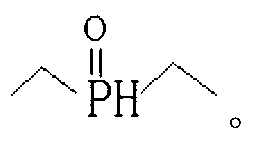
 - 根据权利要求1所述的含配体的共轭微孔聚合物,其特征在于:所述含磷基团化合物的结构式为:P(OCH3)3或

- 根据权利要求1所述的含配体的共轭微孔聚合物,其特征在于:所述含氮基团化合物的结构式为:其中,R为CH2CH3,CH2CH2CH3或苯基。

- 根据权利要求2-7中任一项所述的含配体的共轭微孔聚合物,其特征在于,其合成方法包括以下步骤:将所述第一单体和第二单体进行共聚反应,然后再与铀络合配体化合物进行反应,得到所述含配体的共轭微孔聚合物,所述铀络合配体化合物为膦酸、磷酸酯、磷氧化合物、酰胺或丙二酰胺类化合物。
- 根据权利要求2-7中任一项所述的含配体的共轭微孔聚合物,其特征在于,其合成方法包括以下步骤:将所述第一单体和铀络合配体化合物进行反应,然后再与所述第二单体进行共聚反应,得到所述含配体的共轭微孔聚合物,所述铀络合配体化合物为膦酸、磷酸酯、磷氧化合物、酰胺或丙二酰胺类化合物。
- 权利要求1-7中任一项所述的含配体的共轭微孔聚合物作为铀吸附剂的应用。
- 根据权利要求10所述的应用,其特征在于:所述吸附剂用于强酸强辐射环境中。
- 根据权利要求11所述的应用,其特征在于:强酸的浓度为4-6mol/L;辐射强度为200-500KGy。
Priority Applications (1)
| Application Number | Priority Date | Filing Date | Title |
|---|---|---|---|
| US16/059,007 US10639613B2 (en) | 2017-07-27 | 2018-08-08 | Ligand-containing conjugated microporous polymer and use thereof |
Applications Claiming Priority (2)
| Application Number | Priority Date | Filing Date | Title |
|---|---|---|---|
| CN201710621505.3A CN107459657B (zh) | 2017-07-27 | 2017-07-27 | 含配体的共轭微孔聚合物及其应用 |
| CN201710621505.3 | 2017-07-27 |
Related Child Applications (1)
| Application Number | Title | Priority Date | Filing Date |
|---|---|---|---|
| US16/059,007 Continuation-In-Part US10639613B2 (en) | 2017-07-27 | 2018-08-08 | Ligand-containing conjugated microporous polymer and use thereof |
Publications (1)
| Publication Number | Publication Date |
|---|---|
| WO2019019247A1 true WO2019019247A1 (zh) | 2019-01-31 |
Family
ID=60547562
Family Applications (1)
| Application Number | Title | Priority Date | Filing Date |
|---|---|---|---|
| PCT/CN2017/099378 Ceased WO2019019247A1 (zh) | 2017-07-27 | 2017-08-29 | 含配体的共轭微孔聚合物及其应用 |
Country Status (3)
| Country | Link |
|---|---|
| US (1) | US10639613B2 (zh) |
| CN (1) | CN107459657B (zh) |
| WO (1) | WO2019019247A1 (zh) |
Families Citing this family (11)
| Publication number | Priority date | Publication date | Assignee | Title |
|---|---|---|---|---|
| CN108384530B (zh) * | 2018-01-31 | 2020-06-16 | 宁波激智科技股份有限公司 | 一种包裹量子点的咔唑基共轭微孔聚合物微球及其制备方法、一种量子点薄膜及其应用 |
| CN109134872B (zh) * | 2018-07-04 | 2021-06-11 | 东华大学 | 一种金属配位含杂原子有机微孔材料及其制备和应用 |
| CN109096456B (zh) * | 2018-08-20 | 2020-11-10 | 吉林师范大学 | 一种含卟啉基共轭微孔聚合物及其制备方法 |
| CN109908873B (zh) * | 2018-12-19 | 2021-12-28 | 兰州大学 | 一种从碱性核废液中吸附铀的材料及制备方法 |
| CN112403446B (zh) * | 2020-10-28 | 2021-12-14 | 北京石墨烯技术研究院有限公司 | 共轭微孔聚合物及其制备方法和应用 |
| CN114272900B (zh) * | 2021-11-26 | 2023-08-15 | 杭州景业智能科技股份有限公司 | 固相萃取剂及其制备方法和应用 |
| CN114618450B (zh) * | 2022-05-13 | 2022-08-02 | 北京石墨烯技术研究院有限公司 | 共轭微孔聚合物复合材料及其制备方法、吸附剂 |
| CN115197464B (zh) * | 2022-07-15 | 2023-05-05 | 东华理工大学 | 一种富含磷氧基聚酰胺酸气凝胶及其制备和应用 |
| CN117718081A (zh) * | 2023-11-20 | 2024-03-19 | 南京大学 | 一种四价铀光催化剂及其合成方法 |
| WO2026023656A1 (ja) * | 2024-07-24 | 2026-01-29 | 国立大学法人東海国立大学機構 | 官能基をスペーサー構造を介して高密度で有する重合用モノマー・重合により形成されるポリマーをベースとした高分子電解質膜 |
| CN119662625B (zh) * | 2024-12-10 | 2025-10-28 | 中国科学院生态环境研究中心 | 共轭微孔聚合物-小球藻复合体及其制备方法和在处理污水中有机污染物的应用 |
Citations (3)
| Publication number | Priority date | Publication date | Assignee | Title |
|---|---|---|---|---|
| CN104525161A (zh) * | 2015-01-21 | 2015-04-22 | 东华理工大学 | 一种聚酰胺胺功能化磁性聚合物微球吸附剂及制备与处理含铀废水的方法 |
| CN105688844A (zh) * | 2016-02-22 | 2016-06-22 | 东华理工大学 | 一种含磷氧官能团的介孔螯合树脂及分离与富集铀的方法 |
| CN106824124A (zh) * | 2016-11-28 | 2017-06-13 | 东华理工大学 | 一种含氮多孔聚合物螯合树脂及制备和处理含铀废水的方法 |
Family Cites Families (7)
| Publication number | Priority date | Publication date | Assignee | Title |
|---|---|---|---|---|
| US3146213A (en) * | 1959-03-23 | 1964-08-25 | Dow Chemical Co | Composition for use in solvent extraction process for the recovery of uranium and rare earth metals from aqueous solutions |
| IL50120A (en) * | 1976-07-25 | 1981-03-31 | Yeda Res & Dev | Process for the extraction of metal ions from solutions using polymer impregnated with extraction agent |
| GB2451865A (en) * | 2007-08-15 | 2009-02-18 | Univ Liverpool | Microporous polymers from alkynyl monomers |
| CN102887991B (zh) * | 2012-09-28 | 2015-05-20 | 华中科技大学 | 一种有机微孔聚合物及其制备方法和应用 |
| CN106898492B (zh) * | 2017-01-16 | 2018-07-06 | 华南师范大学 | 一种共轭微孔聚合物薄膜的制备方法及其应用 |
| CN106864124B (zh) | 2017-03-07 | 2018-01-30 | 陈硕 | 一种修正液 |
| CN107151313B (zh) * | 2017-06-08 | 2019-03-26 | 吉林师范大学 | 一种含氮的共轭有机微孔聚合物、制备方法及应用 |
-
2017
- 2017-07-27 CN CN201710621505.3A patent/CN107459657B/zh not_active Expired - Fee Related
- 2017-08-29 WO PCT/CN2017/099378 patent/WO2019019247A1/zh not_active Ceased
-
2018
- 2018-08-08 US US16/059,007 patent/US10639613B2/en not_active Expired - Fee Related
Patent Citations (3)
| Publication number | Priority date | Publication date | Assignee | Title |
|---|---|---|---|---|
| CN104525161A (zh) * | 2015-01-21 | 2015-04-22 | 东华理工大学 | 一种聚酰胺胺功能化磁性聚合物微球吸附剂及制备与处理含铀废水的方法 |
| CN105688844A (zh) * | 2016-02-22 | 2016-06-22 | 东华理工大学 | 一种含磷氧官能团的介孔螯合树脂及分离与富集铀的方法 |
| CN106824124A (zh) * | 2016-11-28 | 2017-06-13 | 东华理工大学 | 一种含氮多孔聚合物螯合树脂及制备和处理含铀废水的方法 |
Non-Patent Citations (3)
| Title |
|---|
| HAN ET AL.: "Acetylcysteine-functionalized microporous conjugated polymers for potential separation of uranium from radioactive effluents", JOURNAL OF MATERIALS CHEMISTRY A, 7 February 2017 (2017-02-07), pages 5123 - 5128, XP055676748 * |
| LI ET AL.: "Functionalized Porous Aromatic Framework for Efficient Uranium Adsorption from Aqueous Solutions", ACS AL MATER. INTERFACES, 28 March 2017 (2017-03-28), XP055676749 * |
| YI ET AL.: "Synthesis and application of conjugated microporous polymers and their composite materials", CHEMISTRY, vol. 79, no. 8, 18 August 2016 (2016-08-18) * |
Also Published As
| Publication number | Publication date |
|---|---|
| US20190030513A1 (en) | 2019-01-31 |
| CN107459657A (zh) | 2017-12-12 |
| CN107459657B (zh) | 2020-08-11 |
| US10639613B2 (en) | 2020-05-05 |
Similar Documents
| Publication | Publication Date | Title |
|---|---|---|
| WO2019019247A1 (zh) | 含配体的共轭微孔聚合物及其应用 | |
| CN110218220B (zh) | 一种功能化金属-有机框架化合物、其形成的复合物及其制备方法和应用 | |
| Jia et al. | Triarylborane‐Based Helical Donor–Acceptor Compounds: Synthesis, Photophysical, and Electronic Properties | |
| Chen et al. | The first europium (III) β‐diketonate complex functionalized polyhedral oligomeric silsesquioxane | |
| Zhang et al. | Constructing fluorescent nitrogen-containing covalent organic frameworks for visual monitoring and efficient adsorbing iodine with increasing adsorption capacity by post-synthesis ionic modification | |
| JP5856969B2 (ja) | オプトエレクトロニクスデバイス用ポリマー | |
| CN103055816A (zh) | 一类新型杯芳烃冠醚键合型硅基吸附材料及其制备方法 | |
| CN110204693B (zh) | 基于三苯胺衍生物的高分子共价有机骨架聚合物及制备方法与应用 | |
| CN108084450A (zh) | 一种含乙烯苯基和对乙烯苯酚基亚甲胺衍生物合镉的聚合配合物及其制备方法与用途 | |
| CN114524948A (zh) | 一种具有多种配位构型的3d超分子材料及其制备方法与应用 | |
| CN115197535B (zh) | 一种聚离子液体@共价有机骨架复合材料及其在去除99Tc核素中的应用 | |
| CN115636834A (zh) | 一种乙烯基分子笼单体及其制备方法 | |
| Kim et al. | Impact of deboronation on the electronic characteristics of closo-o-carborane: intriguing photophysical changes in triazole-appended carboranyl luminophores | |
| CA3150355C (en) | Redox active materials, processes and uses thereof | |
| JP6508700B2 (ja) | 縮合多環芳香族骨格を有するポリマー及びそれを用いた発光素子及び電極 | |
| US20160225472A1 (en) | Polymeric chelators for metal ion extraction and separation | |
| CN113083235B (zh) | 一种四硫富瓦烯基共价有机框架材料及其制备方法和应用 | |
| JP5497174B2 (ja) | ランタニドからの3価アクチニドの分離に有用なジアルキルジアザ−テトラアルキルオクタンジアミド誘導体およびその製造方法 | |
| CN111589420A (zh) | 一种毫米级大孔-介孔碳球/杯[4]-双冠-6互穿复合材料及其制备方法和应用 | |
| JP6493868B2 (ja) | ジグリコールアミド酸型配位子を有するビニルモノマー | |
| CN108084448B (zh) | 一种含4,5-二甲基-1,2-苯二胺衍生物合镉聚合配合物及制备方法与用途 | |
| CN111039879B (zh) | 一种含砜基三唑类化合物/聚合物及其制备方法和应用 | |
| WO2018225674A1 (ja) | 高分子化合物の製造方法 | |
| CN119896879B (zh) | 一种螯合固相萃取填料及其制备和应用 | |
| CN114272900B (zh) | 固相萃取剂及其制备方法和应用 |
Legal Events
| Date | Code | Title | Description |
|---|---|---|---|
| 121 | Ep: the epo has been informed by wipo that ep was designated in this application |
Ref document number: 17919004 Country of ref document: EP Kind code of ref document: A1 |
|
| NENP | Non-entry into the national phase |
Ref country code: DE |
|
| 122 | Ep: pct application non-entry in european phase |
Ref document number: 17919004 Country of ref document: EP Kind code of ref document: A1 |