WO2019016927A1 - 塩化水素除去剤 - Google Patents
塩化水素除去剤 Download PDFInfo
- Publication number
- WO2019016927A1 WO2019016927A1 PCT/JP2017/026370 JP2017026370W WO2019016927A1 WO 2019016927 A1 WO2019016927 A1 WO 2019016927A1 JP 2017026370 W JP2017026370 W JP 2017026370W WO 2019016927 A1 WO2019016927 A1 WO 2019016927A1
- Authority
- WO
- WIPO (PCT)
- Prior art keywords
- hydrogen chloride
- removing agent
- mass
- gas
- parts
- Prior art date
- Legal status (The legal status is an assumption and is not a legal conclusion. Google has not performed a legal analysis and makes no representation as to the accuracy of the status listed.)
- Ceased
Links
Images


Classifications
-
- B—PERFORMING OPERATIONS; TRANSPORTING
- B01—PHYSICAL OR CHEMICAL PROCESSES OR APPARATUS IN GENERAL
- B01J—CHEMICAL OR PHYSICAL PROCESSES, e.g. CATALYSIS OR COLLOID CHEMISTRY; THEIR RELEVANT APPARATUS
- B01J20/00—Solid sorbent compositions or filter aid compositions; Sorbents for chromatography; Processes for preparing, regenerating or reactivating thereof
- B01J20/02—Solid sorbent compositions or filter aid compositions; Sorbents for chromatography; Processes for preparing, regenerating or reactivating thereof comprising inorganic material
- B01J20/04—Solid sorbent compositions or filter aid compositions; Sorbents for chromatography; Processes for preparing, regenerating or reactivating thereof comprising inorganic material comprising compounds of alkali metals, alkaline earth metals or magnesium
- B01J20/043—Carbonates or bicarbonates, e.g. limestone, dolomite, aragonite
-
- B—PERFORMING OPERATIONS; TRANSPORTING
- B01—PHYSICAL OR CHEMICAL PROCESSES OR APPARATUS IN GENERAL
- B01D—SEPARATION
- B01D53/00—Separation of gases or vapours; Recovering vapours of volatile solvents from gases; Chemical or biological purification of waste gases, e.g. engine exhaust gases, smoke, fumes, flue gases, aerosols
- B01D53/34—Chemical or biological purification of waste gases
- B01D53/46—Removing components of defined structure
- B01D53/68—Halogens or halogen compounds
- B01D53/685—Halogens or halogen compounds by treating the gases with solids
-
- B—PERFORMING OPERATIONS; TRANSPORTING
- B01—PHYSICAL OR CHEMICAL PROCESSES OR APPARATUS IN GENERAL
- B01J—CHEMICAL OR PHYSICAL PROCESSES, e.g. CATALYSIS OR COLLOID CHEMISTRY; THEIR RELEVANT APPARATUS
- B01J20/00—Solid sorbent compositions or filter aid compositions; Sorbents for chromatography; Processes for preparing, regenerating or reactivating thereof
- B01J20/02—Solid sorbent compositions or filter aid compositions; Sorbents for chromatography; Processes for preparing, regenerating or reactivating thereof comprising inorganic material
- B01J20/10—Solid sorbent compositions or filter aid compositions; Sorbents for chromatography; Processes for preparing, regenerating or reactivating thereof comprising inorganic material comprising silica or silicate
- B01J20/12—Naturally occurring clays or bleaching earth
-
- B—PERFORMING OPERATIONS; TRANSPORTING
- B01—PHYSICAL OR CHEMICAL PROCESSES OR APPARATUS IN GENERAL
- B01J—CHEMICAL OR PHYSICAL PROCESSES, e.g. CATALYSIS OR COLLOID CHEMISTRY; THEIR RELEVANT APPARATUS
- B01J20/00—Solid sorbent compositions or filter aid compositions; Sorbents for chromatography; Processes for preparing, regenerating or reactivating thereof
- B01J20/28—Solid sorbent compositions or filter aid compositions; Sorbents for chromatography; Processes for preparing, regenerating or reactivating thereof characterised by their form or physical properties
-
- C—CHEMISTRY; METALLURGY
- C10—PETROLEUM, GAS OR COKE INDUSTRIES; TECHNICAL GASES CONTAINING CARBON MONOXIDE; FUELS; LUBRICANTS; PEAT
- C10K—PURIFYING OR MODIFYING THE CHEMICAL COMPOSITION OF COMBUSTIBLE GASES CONTAINING CARBON MONOXIDE
- C10K1/00—Purifying combustible gases containing carbon monoxide
- C10K1/002—Removal of contaminants
- C10K1/003—Removal of contaminants of acid contaminants, e.g. acid gas removal
-
- B—PERFORMING OPERATIONS; TRANSPORTING
- B01—PHYSICAL OR CHEMICAL PROCESSES OR APPARATUS IN GENERAL
- B01D—SEPARATION
- B01D2251/00—Reactants
- B01D2251/40—Alkaline earth metal or magnesium compounds
- B01D2251/404—Alkaline earth metal or magnesium compounds of calcium
-
- B—PERFORMING OPERATIONS; TRANSPORTING
- B01—PHYSICAL OR CHEMICAL PROCESSES OR APPARATUS IN GENERAL
- B01D—SEPARATION
- B01D2251/00—Reactants
- B01D2251/60—Inorganic bases or salts
- B01D2251/606—Carbonates
-
- B—PERFORMING OPERATIONS; TRANSPORTING
- B01—PHYSICAL OR CHEMICAL PROCESSES OR APPARATUS IN GENERAL
- B01D—SEPARATION
- B01D2253/00—Adsorbents used in seperation treatment of gases and vapours
- B01D2253/10—Inorganic adsorbents
- B01D2253/104—Alumina
-
- B—PERFORMING OPERATIONS; TRANSPORTING
- B01—PHYSICAL OR CHEMICAL PROCESSES OR APPARATUS IN GENERAL
- B01D—SEPARATION
- B01D2253/00—Adsorbents used in seperation treatment of gases and vapours
- B01D2253/10—Inorganic adsorbents
- B01D2253/106—Silica or silicates
-
- B—PERFORMING OPERATIONS; TRANSPORTING
- B01—PHYSICAL OR CHEMICAL PROCESSES OR APPARATUS IN GENERAL
- B01D—SEPARATION
- B01D2257/00—Components to be removed
- B01D2257/20—Halogens or halogen compounds
- B01D2257/204—Inorganic halogen compounds
- B01D2257/2045—Hydrochloric acid
-
- B—PERFORMING OPERATIONS; TRANSPORTING
- B01—PHYSICAL OR CHEMICAL PROCESSES OR APPARATUS IN GENERAL
- B01D—SEPARATION
- B01D2258/00—Sources of waste gases
- B01D2258/02—Other waste gases
- B01D2258/0283—Flue gases
Definitions
- the present invention relates to a hydrogen chloride removing agent, and more specifically, hydrogen chloride contained in a hydrogen chloride-containing gas such as, for example, pyrolysis gas, combustion exhaust gas, dry distillation gas and the like, particularly hydrogen chloride contained in biomass pyrolysis gas And a method of removing hydrogen chloride contained in the hydrogen chloride-containing gas using the hydrogen chloride removing agent.
- a hydrogen chloride-containing gas such as, for example, pyrolysis gas, combustion exhaust gas, dry distillation gas and the like, particularly hydrogen chloride contained in biomass pyrolysis gas
- a method of removing hydrogen chloride contained in the hydrogen chloride-containing gas using the hydrogen chloride removing agent such as, for example, pyrolysis gas, combustion exhaust gas, dry distillation gas and the like.
- Fossil fuels such as coal and petroleum, general wastes, combustible wastes, food residues, biomass, for example, wood, sewage sludge, livestock wastes, etc. are incinerated or heat treated as energy sources. At that time, if it is incineration treatment, combustion exhaust gas will be generated, and if it is heat treatment, thermal decomposition gas or dry distillation gas will be generated. Sulfur oxides, hydrogen chloride and nitrate oxides are generally present in combustion exhaust gas, and in addition to sulfur oxides, hydrogen chloride and nitrate oxides, in pyrolysis gas and dry distillation gas, , Hydrogen sulfide, hydrogen cyanide, ammonia and the like.
- the method removes hydrogen sulfide in the gas, COS, CS 2 and the like with lime, limestone or crushed material thereof, or calcium hydroxide, calcium carbonate, dolomite, etc. and hydrogen chloride in the gas is calcium The compound is removed, and then the removal is filtered off using a candle filter.
- a neutralization treatment apparatus for a hydrogen chloride-containing gas characterized by including a treatment gas discharge unit for releasing a treatment gas from a space on a packed bed in a treatment tower (Patent Document 3).
- the method is to remove hydrogen chloride gas by passing a hydrogen chloride-containing gas through a scrubber absorption column in which a calcium carbonate aqueous solution is circulated, and according to the method, a large amount of hydrogen chloride-containing gas is removed at room temperature.
- the dehydrohydrochlorination process is performed at a temperature above 150 ° C., ie, above the temperature at which such a phenomenon occurs, in order to prevent the condensation of water inside the piping and the dissolution of hydrogen chloride into it to become hydrochloric acid. It is essential to be
- An exhaust gas treating material which is characterized in that it comprises a mixture of a particle having a diameter of 10 mm and a particulate formed body having a weight of 90% by weight or more (Patent Document 4).
- the exhaust gas treating agent is placed in a flue through which the exhaust gas passes to remove hydrogen chloride in the exhaust gas generated from the incinerator.
- Patent Document 5 a powder of a neutralizing dehydrochlorination hydrogen chloride agent such as quick lime, slaked lime, sodium carbonate or calcium carbonate on the surface of a granule for nucleus, for example, limestone
- a neutralizing dehydrochlorination hydrogen chloride agent such as quick lime, slaked lime, sodium carbonate or calcium carbonate
- Patent Document 5 A two-component particulate dehydrochlorination hydrogen-reactant characterized in that a coating layer composed of a mixture of calcium silicate hydrate and calcium silicate hydrate has been proposed (Patent Document 5). According to this method, there is an advantage that the hydrogen chloride removal treatment can be effectively performed because all the surfaces of the hydrogen chloride removal agent have an effective hydrogen chloride removal ability.
- JP 2001-79340 A Japanese Patent Application Publication No. 2012-506483 Japanese Patent Application Laid-Open No. 7-299327 JP 10-180089 A Unexamined-Japanese-Patent No. 2000-225319 Japanese Patent Application Laid-Open No. 8-82411
- the present invention provides a novel hydrogen chloride removing agent which not only exhibits a good hydrogen chloride removing effect at a relatively low temperature but can maintain the good hydrogen chloride removing effect over a relatively long time.
- a novel chloride useful for removing hydrogen chloride contained in hydrogen chloride-containing gas such as pyrolysis gas, flue gas, dry distillation gas and the like, especially hydrogen contained in biomass pyrolysis gas It provides a hydrogen remover.
- a hydrogen chloride removing agent comprising a mixture of calcium carbonate, imogolite and / or synthetic imogolite.
- the hydrogen chloride removing agent according to the above (1), wherein the mass ratio of calcium carbonate to imogolite and / or synthetic imogolite in the above mixture is 100: 5 to 50
- the hydrogen chloride removing agent according to the above (1), wherein the mass ratio of calcium carbonate to imogolite and / or synthetic imogolite in the above mixture is 100: 10 to 30,
- the hydrogen chloride removing agent according to the above (1), wherein the mass ratio of calcium carbonate to imogolite and / or synthetic imogolite in the above mixture is 100: 15 to 25, (5)
- the present invention is (8) A method for removing hydrogen chloride from a hydrogen chloride-containing gas using a hydrogen chloride removing agent, wherein the hydrogen chloride removing agent comprises a mixture of calcium carbonate and imogolite and / or synthetic imogolite. Is a method characterized by
- the hydrogen chloride removing agent of the present invention not only exerts a good hydrogen chloride removing effect at a relatively low temperature, but can maintain the good hydrogen chloride removing effect over a relatively long time, and additionally calcium carbonate and the like It is relatively easy to obtain because it is a mixture with imogolite and / or synthetic imogolite, and since these materials are simply mixed and used, processing and processing into special shapes are necessary. It is very inexpensive because it does not require any special equipment for use.
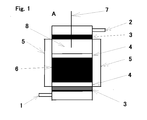
- FIG. 1 is a schematic view of a hydrogen chloride removal apparatus used in the examples.
- FIG. 2 is a graph showing a change in the amount of hydrogen chloride (volume ppm) eluted in pure water every 30 seconds from the start of circulation of hydrogen chloride-containing nitrogen gas in Example 1.
- FIG. 3 is a graph showing a change in the amount of hydrogen chloride (volume ppm) eluted in pure water every 30 seconds from the start of the flow of hydrogen chloride-containing nitrogen gas in Comparative Example 1.
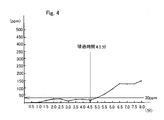
- FIG. 4 is a graph showing a change in the amount of hydrogen chloride (volume ppm) eluted in pure water every 30 seconds from the start of the flow of hydrogen chloride-containing nitrogen gas in Comparative Example 2.
- the hydrogen chloride removing agent of the present invention is characterized in that it contains a mixture of calcium carbonate and imogolite and / or synthetic imogolite.
- synthetic imogolite is a synthesized amorphous aluminum silicic acid, and a commercially available product, for example, Hasclay (registered trademark) manufactured by Toda Kogyo Co., Ltd. can be used.
- the mass ratio of calcium carbonate to imogolite and / or synthetic imogolite in the mixture is such that the upper limit of imogolite and / or synthetic imogolite is preferably 50 parts by mass, more preferably 30 parts by mass with respect to 100 parts by mass of calcium carbonate Further preferably, the lower limit is 25 parts by mass, still more preferably 20 parts by mass, and the lower limit is preferably 5 parts by mass, more preferably 10 parts by mass, still more preferably 15 parts by mass.
- the mixture When the amount of imogolite and / or synthetic imogolite is less than the above lower limit, the mixture may not be able to exert a sufficient effect as a hydrogen chloride removing agent, and not only the amount of hydrogen chloride removed may be reduced, The lifetime as a hydrogen chloride removing agent may be shortened. On the other hand, even if it exceeds the said upper limit, the remarkable increase in the effect as a hydrogen chloride removal agent is not recognized, but cost increase may be caused with the increase in imogolite and / or synthetic imogolite amount.
- the upper limit of the temperature at which hydrogen chloride is removed by the hydrogen chloride removing agent of the present invention is preferably 350 ° C., more preferably 250 ° C., while the lower limit is preferably 100 ° C. C., more preferably 150.degree. C., still more preferably 200.degree. If it is less than the said lower limit, the effect at the time of mixing imogolite and / or synthetic imogolite with calcium carbonate may not fully be exhibited, and hydrogen chloride removal amount may reduce.
- the pressure for removing hydrogen chloride is preferably 0.090 to 0.150 MPa, more preferably 0.100 to 0.120 MPa. It can usually be carried out at atmospheric pressure.
- the hydrogen chloride removing agent of the present invention is not particularly limited as long as it is a hydrogen chloride-containing gas, and any gas can be used.
- it can be used to remove hydrogen chloride contained in hydrogen chloride-containing gas such as pyrolysis gas, combustion exhaust gas or dry distillation gas, and can be suitably used to remove hydrogen chloride contained in biomass pyrolysis gas, among others .
- FIG. 1 A schematic diagram of the hydrogen chloride removing device (A) used in the experiment is shown in FIG.
- the device (A) is a flow system hydrogen chloride removing device, and is a stainless steel cylindrical device having an outer diameter of 12.7 mm, an inner diameter of 10.7 mm and a height of about 50 mm.
- a sintered filter (3) is installed in the lower part inside the hydrogen chloride removing device (A), and glass wool (4) is placed thereon, and a hydrogen chloride removing agent (6) is placed on the glass wool (4).
- the glass filter was further covered with glass wool (4), and the sintered filter (3) was placed on top of it through the gas phase portion (8).
- the height of the portion charged with the hydrogen chloride removing agent (6) and the height of the gas phase portion (8) vary depending on the loading amount of the hydrogen chloride removing agent (6), but each of them is about It is 25-28 mm and about 20-23 mm.
- the gas used for removing hydrogen chloride is taken in from the gas inlet (1) to the hydrogen chloride removing device (A), and after rising up in the hydrogen chloride removing device (A) to remove hydrogen chloride, the gas Removed from outlet (2).
- a heating device (5) here a ribbon heater, is provided on the outside of the cylindrical device.
- a temperature and pressure measuring device (7) is provided in the gas phase portion (8) above the hydrogen chloride removing device (A), and the temperature and pressure inside the hydrogen chloride removing device (A) can be measured.
- Example 1 As a hydrogen chloride removing agent, 0.1 g (10 parts by mass) of synthetic imogolite was used with respect to 1.0 g (100 parts by mass) of calcium carbonate. These were gently mixed and mixed, and the hydrogen chloride removing device (A) was charged at a predetermined position (6). Thereafter, 200 ml / min of nitrogen gas is caused to flow in the hydrogen chloride removing device (A) to make the inside of the hydrogen chloride removing device (A) a nitrogen atmosphere (an oxygen-free atmosphere), and then the flow of the nitrogen gas is maintained. The temperature in the hydrogen chloride removing device (A) was raised to 200 ° C. by the ribbon heater as the heating device (5).
- nitrogen gas is switched to nitrogen gas containing hydrogen chloride (HCl: 1,160 ppm by volume, N 2 : balance), and this is changed to the hydrogen chloride removal device (A). Then, the hydrogen chloride was removed while maintaining the temperature in the hydrogen chloride removing apparatus (A) at 200 ° C. by passing 200 ml / min.
- the pressure in the hydrogen chloride removal device (A) at this time was 0.015 MPaG (0.116 MPa in absolute pressure).
- the hydrogen chloride in the exhaust gas is circulated by circulating the total amount of exhaust gas taken out from the gas outlet (2) into 400 ml of pure water contained in a container. It was eluted in the pure water. At this time, the pure water in the container was sufficiently stirred by the stirrer so that the whole was always uniform.
- the change in pH value every 30 seconds was recorded by measuring the pH value of the pure water in which hydrogen chloride was eluted, every 30 seconds from the start of the flow of the hydrogen chloride-containing nitrogen gas described above.
- portable type pH meter D-72 (trademark) manufactured by Horiba, Ltd. was used.
- FIG. 2 shows a change in the amount (volume ppm) of hydrogen chloride dissolved in pure water every 30 seconds from the start of the flow of nitrogen gas containing hydrogen chloride. Then, the time from when the hydrogen chloride-containing nitrogen gas started to flow to the pH measurement point immediately before the amount of hydrogen chloride dissolved in pure water in 30 seconds exceeds 30 ppm by volume was recorded as the breakthrough time.
- the breakthrough time of the hydrogen chloride removing agent in the substantial example was 21.0 minutes.
- Fr is a hydrogen chloride-containing nitrogen gas flow rate [milliliter / min]
- Frac is a hydrogen chloride concentration in hydrogen chloride-containing nitrogen gas [volume ppm ⁇ 10 ⁇ 6 ]
- BT is a breakthrough Time [minutes]
- V is molar volume of gas standard [liter / mole]
- Madsorbent is amount of hydrogen chloride removing agent used [g].
- 35.45 in the formula is the atomic weight of chlorine (Cl).
- the hydrogen chloride concentration in the hydrogen chloride-containing nitrogen gas is 1,160 ppm by volume
- the molar volume of the gas in a standard state is 22.4 [L / mol].
- FIG. 3 shows a change in the amount of hydrogen chloride (volume ppm) eluted in pure water every 30 seconds from the start of the flow of nitrogen gas containing hydrogen chloride.
- the breakthrough time of the hydrogen chloride removing agent in the comparative example was 2.5 minutes.
- the hydrogen chloride removing agent of Comparative Example 1 (1.0 g of calcium carbonate) is the same as the hydrogen chloride removing agent of Example 1 (a total of 1.1 g of calcium carbonate and 0.1 g of synthetic imogolite). It corresponds to calcium. Therefore, assuming that the amount of hydrogen chloride removing agent in Example 1 is 100 parts by mass, the amount of hydrogen chloride removing agent in Comparative Example 1 is 90.9 parts by mass, and the corresponding amount of chlorine removed is 0.08 parts by mass. .
- FIG. 4 shows a change in the amount (volume ppm) of hydrogen chloride dissolved in pure water every 30 seconds from the start of the flow of nitrogen gas containing hydrogen chloride.
- the breakthrough time of the hydrogen chloride removing agent was 4.5 minutes.
- the hydrogen chloride removing agent of Comparative Example 2 (synthetic imogolite 0.1 g) was synthesized in the hydrogen chloride removing agent of Example 1 (a total of 1.1 g of calcium carbonate and 0.1 g of synthetic imogolite). It corresponds to Imogolite. Therefore, assuming that the amount of hydrogen chloride removing agent in Example 1 is 100 parts by mass, the amount of hydrogen chloride removing agent in Comparative Example 2 is 9.1 parts by mass, and the corresponding amount of chlorine removed is 0.15 parts by mass. .
- Example 2 The experiment was carried out in the same manner as in Example 1 except that the temperature in the hydrogen chloride removal apparatus (A) was 150 ° C. The breakthrough time of the hydrogen chloride removing agent was 15.5 minutes. 0.52 parts by mass of chlorine could be removed per 100 parts by mass of the hydrogen chloride removing agent.
- Comparative Example 3 Comparative Example 1 was carried out in the same manner as Comparative Example 1 except that the temperature in the hydrogen chloride removal apparatus (A) was 150 ° C. The breakthrough time of the hydrogen chloride removing agent was 2.0 minutes. 0.07 parts by mass of chlorine could be removed per 100 parts by mass of the hydrogen chloride removing agent.
- the amount of the hydrogen chloride removing agent of Comparative Example 3 is converted to the equivalent amount of calcium carbonate in the hydrogen chloride removing agent of Example 2 as in Comparative Example 1, the amount of chlorine removed is 0.06 parts by mass. .
- Comparative Example 4 Comparative Example 2 was carried out in the same manner as Comparative Example 2 except that the temperature in the hydrogen chloride removal apparatus (A) was 150.degree. The breakthrough time of the hydrogen chloride removing agent was 9.0 minutes. 3.30 parts by mass of chlorine could be removed per 100 parts by mass of the hydrogen chloride removing agent.
- the amount of the hydrogen chloride removing agent of Comparative Example 4 is converted to the equivalent amount of synthetic imogolite in the hydrogen chloride removing agent of Example 2 as in Comparative Example 2, the amount of chlorine removed is 0.30 parts by mass. .
- Example 3 The experiment was carried out in the same manner as in Example 1 except that the temperature in the hydrogen chloride removal apparatus (A) was 100 ° C. The breakthrough time of the hydrogen chloride removing agent was 15.0 minutes. 0.50 parts by mass of chlorine could be removed per 100 parts by mass of the hydrogen chloride removing agent.
- Comparative example 5 The experiment was carried out in the same manner as Comparative Example 1 except that the temperature in the hydrogen chloride removal apparatus (A) was set to 100.degree. The breakthrough time of the hydrogen chloride removing agent was 1.5 minutes. 0.06 parts by mass of chlorine could be removed per 100 parts by mass of the hydrogen chloride removing agent.
- the amount of the hydrogen chloride removing agent of Comparative Example 5 is converted to the equivalent amount of calcium carbonate in the hydrogen chloride removing agent of Example 3 as in Comparative Example 1, the amount of chlorine removed is 0.05 parts by mass. .
- Comparative Example 6 Comparative Example 2 was carried out in the same manner as Comparative Example 2 except that the temperature in the hydrogen chloride removal apparatus (A) was 100 ° C. The breakthrough time of the hydrogen chloride removing agent was 11.0 minutes. It was possible to remove 4.04 parts by mass of chlorine per 100 parts by mass of the hydrogen chloride removing agent.
- the amount of the hydrogen chloride removing agent of Comparative Example 6 is converted to the equivalent amount of synthetic imogolite in the hydrogen chloride removing agent of Example 3 as in Comparative Example 2, the amount of chlorine removed is 0.37 parts by mass. .
- the chlorine removal amount of each comparative example is a value calculated by converting it to the calcium carbonate equivalent amount of the corresponding example or the synthetic imogolite equivalent amount standard.
- the chlorine removal amount difference is a difference between the total chlorine removal amount of each example and the total chlorine removal amount of the corresponding two comparative examples.
- Example 1 is a mixture of 1.0 g (100 parts by mass) of calcium carbonate and 0.1 g (10 parts by mass) of synthetic imogolite as a hydrogen chloride removing agent at a temperature of 200 ° C. in the hydrogen chloride removing apparatus (A) And hydrogen chloride-containing nitrogen gas from which hydrogen chloride is removed.
- the chlorine removal amount which is an indicator of the hydrogen chloride removal amount, was very good, 0.70 parts by mass per 100 parts by mass of the hydrogen chloride removing agent.
- Comparative Example 1 contains hydrogen chloride using only 1.0 g of calcium carbonate in a mixture of 1.0 g of calcium carbonate and 0.1 g of synthetic imogolite which is a hydrogen chloride removing agent used in Example 1 It is one obtained by removing hydrogen chloride from nitrogen gas.
- hydrogen chloride was removed from the hydrogen chloride-containing nitrogen gas using only 0.1 g of the synthetic imogolite in the hydrogen chloride removing agent used in Example 1.
- the chlorine removal amount which is an indicator of the hydrogen chloride removal amount, was 0.08 parts by mass per 90.9 parts by mass of the calcium carbonate equivalent of Example 1, respectively. The amount was 0.15 parts by mass per 9.1 parts by mass of the synthetic imogolite equivalent.
- Example 1 using a hydrogen chloride removing agent in which calcium carbonate (1.0 g) and synthetic imogolite (0.1 g) are mixed, the chlorine removal amount, which is an index of the hydrogen chloride removal amount, The amount is 0.70 parts by mass per 100 parts by mass (1.1 g) of the hydrogen removing agent, and chlorine removal in the case of using calcium carbonate (1.0 g) in Comparative Example 1 and synthetic imogolite (0.1 g) in Comparative Example 2 alone Compared to the total amount of 0.23 parts by mass, the difference was 0.47 parts by mass.
- the amount of removal of chlorine is significantly increased as compared to the total amount of removal of chlorine when each of them is used alone.
- Example 2 and Comparative Examples 3 and 4 the temperature in the hydrogen chloride removing device (A) is 150 ° C., and in Example 3 and Comparative Examples 5 and 6, the hydrogen chloride removing device (A) The internal temperature was 100 ° C., and the other conditions were those under which hydrogen chloride removal was carried out under the same conditions as Example 1 and Comparative Examples 1 and 2, respectively.
- the chlorine removal amount which is an indicator of the hydrogen chloride removal amount in Example 2 is 0.52 parts by mass per 100 parts by mass (1.1 g) of the hydrogen chloride removing agent, It turned out that compared with the total amount 0.36 mass part of comparative example 3 (0.06 mass parts) and comparative example 4 (0.30 mass parts), it is increasing notably.
- the chlorine removal amount which is an index of the hydrogen chloride removal amount in Example 3 is 0.50 parts by mass per 100 parts by mass (1.1 g) of the hydrogen chloride removal agent, and Comparative Example 5 (0.05 mass) of single use It turned out that it is increasing clearly compared with 0.42 mass parts of total amounts of (parts) and comparative example 6 (0.37 mass parts).
- the chlorine removal amount which is an index of the hydrogen chloride removal amount
- the chlorine removal amount is the chlorine removal amount when calcium carbonate or synthetic imogolite is used alone. It was found to be significantly increased compared to the sum.
- the synergetic effect may become more remarkable as the temperature in the hydrogen chloride removing apparatus (A) increases from 100 ° C. to 200 ° C., ie, as the temperature in removing hydrogen chloride increases. I understood.
- Example 4 Removal of hydrogen chloride was carried out in the same manner as Example 1, except that a mixture of 1.0 g (100 parts by mass) of calcium carbonate and 0.05 g (5 parts by mass) of synthetic imogolite was used as a hydrogen chloride removing agent. did. The breakthrough time of the hydrogen chloride removing agent was 9.5 minutes. 0.33 parts by mass of chlorine could be removed per 100 parts by mass of the hydrogen chloride removing agent.
- Example 5 Removal of hydrogen chloride in the same manner as in Example 1 except that a mixture of 1.0 g (100 parts by mass) of calcium carbonate and 0.15 g (15.0 parts by mass) of synthetic imogolite was used as a hydrogen chloride removing agent Carried out.
- the breakthrough time of the hydrogen chloride removing agent was 25.5 minutes. 0.81 parts by mass of chlorine could be removed per 100 parts by mass of the hydrogen chloride removing agent.
- Example 6 Removal of hydrogen chloride in the same manner as in Example 1 except that a mixture of 1.0 g (100 parts by mass) of calcium carbonate and 0.20 g (20.0 parts by mass) of synthetic imogolite was used as a hydrogen chloride removing agent Carried out.
- the breakthrough time of the hydrogen chloride removing agent was 27.0 minutes. 0.83 parts by mass of chlorine could be removed per 100 parts by mass of the hydrogen chloride removing agent.
- Table 2 below shows changes in breakthrough time when changing the mixing amount of synthetic imogolite to 1.0 g (100 parts by mass) of calcium carbonate in a hydrogen chloride removing agent.
- the hydrogen chloride removing agent of the present invention not only has a good hydrogen chloride removing effect at a relatively low temperature, but can maintain the good hydrogen chloride removing effect over a relatively long time, and additionally, calcium carbonate and It is relatively easy to obtain because it is a mixture with imogolite and / or synthetic imogolite, and it is extremely inexpensive because it is simply used by mixing these substances, and in the future, pyrolysis gas, It is highly expected to be used for the removal of hydrogen chloride contained in hydrogen chloride-containing gas such as flue gas, dry distillation gas and the like, especially for the removal of hydrogen chloride contained in biomass pyrolysis gas.
- a Hydrogen chloride removal device 1 used in the experiment 1 gas inlet 2 gas outlet 3 sintered filter 4 glass wool 5 heating device (ribbon heater) 6 Hydrogen chloride removal agent 7 Temperature and pressure measuring device 8 Gas phase part
Landscapes
- Chemical & Material Sciences (AREA)
- Chemical Kinetics & Catalysis (AREA)
- Engineering & Computer Science (AREA)
- Analytical Chemistry (AREA)
- Organic Chemistry (AREA)
- Combustion & Propulsion (AREA)
- General Chemical & Material Sciences (AREA)
- Oil, Petroleum & Natural Gas (AREA)
- Inorganic Chemistry (AREA)
- Biomedical Technology (AREA)
- Environmental & Geological Engineering (AREA)
- Health & Medical Sciences (AREA)
- Life Sciences & Earth Sciences (AREA)
- Dispersion Chemistry (AREA)
- Geochemistry & Mineralogy (AREA)
- Solid-Sorbent Or Filter-Aiding Compositions (AREA)
- Treating Waste Gases (AREA)
Abstract
本発明は、比較的低温で良好な塩化水素除去効果を有する、新規な塩化水素除去剤を提供するものである。好ましくは、熱分解ガス、燃焼排ガス、乾留ガス等の塩化水素含有ガス中に含まれる塩化水素、とりわけ、バイオマス熱分解ガス中に含まれる塩化水素を除去するための、新規な塩化水素除去剤を提供する。本発明は、炭酸カルシウムと、イモゴライト及び/又は合成イモゴライトとの混合物を含むことを特徴とする塩化水素除去剤であり、かつ、該塩化水素除去剤を使用して、塩化水素含有ガス中に含まれる塩化水素、とりわけ、バイオマス熱分解ガス中に含まれる塩化水素を除去する方法に関する。
Description
本発明は、塩化水素除去剤に関し、更に詳しくは、例えば、熱分解ガス、燃焼排ガス、乾留ガス等の塩化水素含有ガス中に含まれる塩化水素、とりわけ、バイオマス熱分解ガス中に含まれる塩化水素を除去するための塩化水素除去剤、及び、該塩化水素除去剤を使用して、上記塩化水素含有ガス中に含まれる塩化水素を除去する方法に関する。
石炭及び石油等の化石燃料、一般廃棄物、可燃性廃棄物、食品残渣、バイオマス、例えば、木材、下水汚泥、畜産廃棄物等は、エネルギー源として焼却処理されたり、又は、熱処理されたりする。その際、焼却処理であれば燃焼排ガスが発生し、熱処理であれば熱分解ガス又は乾留ガスが発生する。燃焼排ガス中には、一般的に硫黄酸化物、塩化水素及び硝酸酸化物等が存在し、熱分解ガス及び乾留ガス中には、一般的に硫黄酸化物、塩化水素及び硝酸酸化物に加えて、硫化水素、シアン化水素及びアンモニア等が存在する。
これら燃焼排ガス、熱分解ガス及び乾留ガス中に含まれる上記物質は、環境汚染物質とされている。そして、これら環境汚染物質を除去するための除去剤、及び、かかる除去剤を使用したこれら環境汚染物質の除去方法が多数知られている。例えば、燃焼物が高温度領域で燃焼している燃焼炉内において、前記燃焼物の燃焼によって発生する排ガスと炭酸カルシウム、消石灰等の還元剤とを、直接接触させる工程を備えていることを特徴とする、燃焼施設における排ガスに含有される硫黄酸化物と塩化水素の除去方法が提案されている(特許文献1)。該方法によれば、脱硫黄酸化物設備及び脱塩化水素設備を設置する必要がなくなることから、装置がコンパクトになるばかりではなく、燃焼温度付近で硫黄酸化物及び塩化水素を除去することができるという利点がある。しかし、該方法では、排ガス中の硫黄含有量及び塩化水素含有量にかかわらず、炭酸カルシウム及び消石灰等を多量に投入する必要があることから、効率的ではなく、また、大量の焼却灰が発生するという欠点があった。
流動層ガス化装置において生成される合成ガスを浄化するためのプロセスにおいて、a)触媒キャンドルフィルタの上流で、合成ガスを1つ以上の吸着剤と接触させて、浄化合成ガスを形成すること、および、b)前記浄化合成ガスを混合分解触媒を含有するキャンドルフィルタに通過させ、アンモニアおよびタールを除去し、それによって精製合成ガスを生成すること、を含む、プロセスが提案されている(特許文献2)。該方法は、ガス中の硫化水素、COS、CS2等を、石灰、石灰石若しくはそれらの粉砕物、又は、水酸化カルシウム、炭酸カルシウム、ドロマイト等で除去し、かつ、ガス中の塩化水素をカルシウム化合物で除去して、次いで、キャンドルフィルタを用いて除去物を濾別するものである。該方法によれば、硫黄化合物と塩化水素の他にダスト及びアルカリ金属(飛灰)をキャンドルフィルタで濾別除去することができ、更に、アンモニア及びタールをキャンドルフィルタ上で除去することができるというメリットがある。しかし、該方法の除去能力は、除去剤の能力に依存することから、長寿命の除去剤を使用することにより、より性能の向上を図ることが必須であると考えられる。また、キャンドルフィルタの目詰まりを予防するために、キャンドルフィルタを頻繁に交換するか、あるいは、逆洗をする必要があるという問題があった。
上下方向に細長い処理塔と、塔内に収容され、下部に水相を有する炭酸カルシウムの充填層と、充填層の、上記水相よりも上に塩化水素含有ガスを供給するガス導入部と、処理塔内の充填層上の空間から処理ガスを放出する処理ガス排出部とを備えていることを特徴とする塩化水素含有ガスの中和処理装置が提案されている(特許文献3)。該方法は、塩化水素含有ガスを、炭酸カルシウム水溶液を循環させたスクラバー吸収塔に通すことで、塩化水素ガスを除去するものであり、該方法によれば、大量の塩化水素含有ガスを室温で簡便に処理することができるという利点がある。しかし、該方法では、燃焼排ガス又は熱分解ガスが冷却される過程で、配管内部に水分が結露し、そこに塩化水素が溶け込んで塩酸となり、途中の配管を腐食する等の装置上の不具合が生ずることが懸念される。そのため、脱塩化水素処理は、配管内部で水分が結露し、そこに塩化水素が溶け込んで塩酸となることを避けるために、そのような現象が生ずる温度以上の温度、即ち、150℃以上で処理されることが必須となる。
長径寸法が3乃至10mmである粒子が90重量%以上である石灰石と、水酸化カルシウム及び炭酸カルシウムからなる群から選択された少なくとも1種の化合物を80重量%以上含有し、長径寸法が3乃至10mmである粒子が90重量%以上である粒状成形体との混合物からなることを特徴とする排ガス処理材が提案されている(特許文献4)。該排ガス処理剤を、排ガスが通過する煙道中に配置して、焼却炉から発生する排ガス中の塩化水素を除去する。この際、排ガス処理剤中の水酸化カルシウム及び炭酸カルシウムは塩化水素を吸収して塩化カルシウムを生成し、そして、該塩化カルシウムが、焼却炉の運転中又は停止時に水分を吸収して溶解(潮解)して変形することにより、排ガスの偏流及び煙道の目詰まりを起こすことがある。しかし、該方法によれば、排ガス処理剤に石灰石の造粒品が混合されていることにより、上記のような不具合を予防し得るという効果が得られる。該方法は簡便であるが、塩化水素除去能力のない石灰石を混合するため、塩化水素除去効率が低下するという欠点があった。
上記の特許文献4の欠点を解決するために、例えば、核用粒体、例えば、石灰石の表面に、中和系脱塩化水素反応剤、例えば、生石灰、消石灰、炭酸ナトリウム又は炭酸カルシウムの粉体と、珪酸カルシウム水和物との混合物からなるコーティング層を形成したことを特徴とする2成分型粒状脱塩化水素反応剤が提案されている(特許文献5)。該方法によれば、塩化水素除去剤の表面がすべて有効に塩化水素除去能力を有するので効果的に塩化水素除去処理が行える利点がある。しかしながら、表面コーティングが不適切であると、炭酸カルシウム等の塩化水素除去剤を珪酸カルシウムが覆い包んでしまい、塩化水素除去能力を発揮できないといった不具合、及び、コーティングが剥離して石灰石が露出し、塩化水素を除去できない等の不具合が発生する。このようなコーティング処理をする場合には、コーティング技術の出来不出来により塩化水素除去能力が左右されるという欠点があった。
また、焼却時に塩化水素を発生する被焼却物を燃焼するに際して、燃焼時に炭酸カルシウム粒子と酸化鉄粒子とを共存させることを特徴とする焼却炉中の塩化水素除去法が提案されている(特許文献6)。該方法によれば、塩化水素との反応性が高い酸化鉄と炭酸カルシウムを混合することにより、炭酸カルシウム単独で塩化水素除去処理を行うよりもより効率的に塩化水素除去処理を行えるという特徴がある。該方法は酸化鉄と炭酸カルシウムを焼却炉内に投入して同時に焼却しながら塩化水素除去処理を行う方法であり、焼却灰が増加するという欠点があった。
本発明は、比較的低温で良好な塩化水素除去効果を奏するばかりではなく、該良好な塩化水素除去効果を比較的長時間に亘って保持し得る、新規な塩化水素除去剤を提供するものである。好ましくは、熱分解ガス、燃焼排ガス、乾留ガス等の塩化水素含有ガスの中に含まれる塩化水素、とりわけ、バイオマス熱分解ガスの中に含まれる塩化水素を除去するために有用な、新規な塩化水素除去剤を提供するものである。
塩化水素含有ガス中の塩化水素を除去する方法においては、一般的には炭酸カルシウムを塩化水素除去剤として使用している。しかし、上記の従来技術において説明した通り、該方法においては装置又は除去能力等に関する種々の問題が存在していた。そこで、本発明者らは、炭酸カルシウムを塩化水素除去剤として使用するにあたって、如何にすれば、塩化水素除去効率を上げることができるかについて、種々検討を重ねた。そして、本発明者らは、まず、炭酸カルシウムによる塩化水素の除去が、通常、600~800℃という高温でなされていることに着目し、この温度を低くすることができないかという観点から検討を続けた。低温で塩化水素を効率よく除去できれば、装置コスト、操業コストを大幅に下げることに寄与し得る。その結果、下記の通り、炭酸カルシウムに、イモゴライト及び/又は合成イモゴライトを加えて、それを塩化水素の除去剤として使用すれば、比較的低温において良好な塩化水素除去効果を示すばかりではなく、比較的長時間に亘って、良好な塩化水素除去効果を維持し得ることを見出し、本発明を完成するに至った。
即ち、本発明は、
(1)炭酸カルシウムと、イモゴライト及び/又は合成イモゴライトとの混合物を含むことを特徴とする塩化水素除去剤である。
(1)炭酸カルシウムと、イモゴライト及び/又は合成イモゴライトとの混合物を含むことを特徴とする塩化水素除去剤である。
好ましい態様として、
(2)上記混合物中の、炭酸カルシウムと、イモゴライト及び/又は合成イモゴライトとの質量比が、100:5~50である、上記(1)記載の塩化水素除去剤、
(3)上記混合物中の、炭酸カルシウムと、イモゴライト及び/又は合成イモゴライトとの質量比が、100:10~30である、上記(1)記載の塩化水素除去剤、
(4)上記混合物中の、炭酸カルシウムと、イモゴライト及び/又は合成イモゴライトとの質量比が、100:15~25である、上記(1)記載の塩化水素除去剤、
(5)塩化水素含有ガスに含まれる塩化水素除去用の、上記(1)~(4)のいずれか一つに記載の塩化水素除去剤、
(6)熱分解ガス、燃焼排ガス又は乾留ガスに含まれる塩化水素除去用の、上記(1)~(4)のいずれか一つに記載の塩化水素除去剤、
(7)バイオマス熱分解ガスに含まれる塩化水素除去用の、上記(1)~(4)のいずれか一つに記載の塩化水素除去剤
を挙げることができる。
(2)上記混合物中の、炭酸カルシウムと、イモゴライト及び/又は合成イモゴライトとの質量比が、100:5~50である、上記(1)記載の塩化水素除去剤、
(3)上記混合物中の、炭酸カルシウムと、イモゴライト及び/又は合成イモゴライトとの質量比が、100:10~30である、上記(1)記載の塩化水素除去剤、
(4)上記混合物中の、炭酸カルシウムと、イモゴライト及び/又は合成イモゴライトとの質量比が、100:15~25である、上記(1)記載の塩化水素除去剤、
(5)塩化水素含有ガスに含まれる塩化水素除去用の、上記(1)~(4)のいずれか一つに記載の塩化水素除去剤、
(6)熱分解ガス、燃焼排ガス又は乾留ガスに含まれる塩化水素除去用の、上記(1)~(4)のいずれか一つに記載の塩化水素除去剤、
(7)バイオマス熱分解ガスに含まれる塩化水素除去用の、上記(1)~(4)のいずれか一つに記載の塩化水素除去剤
を挙げることができる。
また、本発明は、
(8)塩化水素含有ガスから、塩化水素除去剤を使用して塩化水素を除去する方法であって、該塩化水素除去剤が、炭酸カルシウムと、イモゴライト及び/又は合成イモゴライトとの混合物を含むことを特徴とする方法である。
(8)塩化水素含有ガスから、塩化水素除去剤を使用して塩化水素を除去する方法であって、該塩化水素除去剤が、炭酸カルシウムと、イモゴライト及び/又は合成イモゴライトとの混合物を含むことを特徴とする方法である。
好ましい態様として、
(9)上記混合物中の、炭酸カルシウムと、イモゴライト及び/又は合成イモゴライトとの質量比が、100:5~50である、上記(8)記載の方法、
(10)上記混合物中の、炭酸カルシウムと、イモゴライト及び/又は合成イモゴライトとの質量比が、100:10~30である、上記(8)記載の方法、
(11)上記混合物中の、炭酸カルシウムと、イモゴライト及び/又は合成イモゴライトとの質量比が、100:15~25である、上記(8)記載の方法、
(12)上記塩化水素の除去が、100~350℃の温度で実行される、上記(8)~(11)のいずれか一つに記載の方法、
(13)上記塩化水素の除去が、150~250℃の温度で実行される、上記(8)~(11)のいずれか一つに記載の方法、
(14)上記塩化水素の除去が、200~250℃の温度で実行される、上記(8)~(11)のいずれか一つに記載の方法、
(15)上記塩化水素の除去が、0.090~0.150MPaの圧力で実行される、上記(8)~(14)のいずれか一つに記載の方法、
(16)上記塩化水素の除去が、0.100~0.120MPaの圧力で実行される、上記(8)~(14)のいずれか一つに記載の方法、
(17)上記塩化水素含有ガスが、熱分解ガス、燃焼排ガス又は乾留ガスである、上記(8)~(16)のいずれか一つに記載の方法、
(18)上記塩化水素含有ガスが、バイオマス熱分解ガスである、上記(8)~(16)のいずれか一つに記載の方法
を挙げることができる。
(9)上記混合物中の、炭酸カルシウムと、イモゴライト及び/又は合成イモゴライトとの質量比が、100:5~50である、上記(8)記載の方法、
(10)上記混合物中の、炭酸カルシウムと、イモゴライト及び/又は合成イモゴライトとの質量比が、100:10~30である、上記(8)記載の方法、
(11)上記混合物中の、炭酸カルシウムと、イモゴライト及び/又は合成イモゴライトとの質量比が、100:15~25である、上記(8)記載の方法、
(12)上記塩化水素の除去が、100~350℃の温度で実行される、上記(8)~(11)のいずれか一つに記載の方法、
(13)上記塩化水素の除去が、150~250℃の温度で実行される、上記(8)~(11)のいずれか一つに記載の方法、
(14)上記塩化水素の除去が、200~250℃の温度で実行される、上記(8)~(11)のいずれか一つに記載の方法、
(15)上記塩化水素の除去が、0.090~0.150MPaの圧力で実行される、上記(8)~(14)のいずれか一つに記載の方法、
(16)上記塩化水素の除去が、0.100~0.120MPaの圧力で実行される、上記(8)~(14)のいずれか一つに記載の方法、
(17)上記塩化水素含有ガスが、熱分解ガス、燃焼排ガス又は乾留ガスである、上記(8)~(16)のいずれか一つに記載の方法、
(18)上記塩化水素含有ガスが、バイオマス熱分解ガスである、上記(8)~(16)のいずれか一つに記載の方法
を挙げることができる。
本発明の塩化水素除去剤は、比較的低温で良好な塩化水素除去効果を奏するばかりではなく、該良好な塩化水素除去効果を比較的長時間に亘って保持し得、加えて、炭酸カルシウムと、イモゴライト及び/又は合成イモゴライトとの混合物であることから比較的入手が容易であり、かつ、これらの物質を単に混合して使用するものであることから、特殊な形状への加工及び処理を必要とせず、かつ、使用に際して特殊な装置を必要としない故にきわめて安価である。
本発明の塩化水素除去剤は、炭酸カルシウムと、イモゴライト及び/又は合成イモゴライトとの混合物を含むことを特徴とする。ここで、合成イモゴライトとは、合成された非晶質アルミニウムケイ酸のことであり、市販品、例えば、戸田工業株式会社製ハスクレイ(登録商標)を使用することができる。該混合物における炭酸カルシウムと、イモゴライト及び/又は合成イモゴライトとの質量比は、炭酸カルシウム100質量部に対して、イモゴライト及び/又は合成イモゴライトの上限が、好ましくは50質量部、より好ましくは30質量部、更に好ましくは25質量部、更により好ましくは20質量部であり、下限が、好ましくは5質量部、より好ましくは10質量部、更に好ましくは15質量部である。イモゴライト及び/又は合成イモゴライトの量が上記下限未満では、該混合物が塩化水素除去剤として十分な効果を発揮することができないことがあり、塩化水素の除去量が減少することがあるばかりではなく、塩化水素除去剤としての寿命が短くなることがある。一方、上記上限を超えても、塩化水素除去剤としての効果の著しい増加は認められず、イモゴライト及び/又は合成イモゴライト量の増加に伴って、コスト高を招くことがある。
上記本発明の塩化水素除去剤により、塩化水素を除去する際の温度は、その上限が、好ましくは350℃であり、より好ましくは250℃であり、一方、下限が、好ましくは100℃であり、より好ましくは150℃であり、更に好ましくは200℃である。上記下限未満では、炭酸カルシウムにイモゴライト及び/又は合成イモゴライトを混合した際の効果を十分に発揮できず、塩化水素除去量が減少することがある。一方、上記上限を超えては、炭酸カルシウムにイモゴライト及び/又は合成イモゴライトを混合したことの意義、即ち、塩化水素の除去温度を低下し得るという意義が薄れ、温度を上昇させるために必要な熱エネルギーの増加及びそのための設備増強によるコスト高を招く。また、塩化水素を除去するに際しての圧力は、好ましくは、0.090~0.150MPaであり、より好ましくは0.100~0.120MPaである。通常、大気圧で実施することができる。
本発明の塩化水素除去剤は、塩化水素含有ガスであれば特に制限はなく、いずれのガスについても使用することができる。例えば、熱分解ガス、燃焼排ガス又は乾留ガス等の塩化水素含有ガスに含まれる塩化水素の除去に使用することができ、とりわけ、バイオマス熱分解ガスに含まれる塩化水素の除去に好適に使用し得る。
以下、本発明を実施例により更に詳細に説明するが、本発明はこれら実施例により限定されるものではない。
実施例及び比較例において使用した物質及び装置は下記の通りである。
<物質>
炭酸カルシウム:関東化学株式会社製、特級、粉末(平均粒径:12~15μm)
合成イモゴライト:戸田工業株式会社製ハスクレイGIII(商標)、(細孔容積:1cm3/g、比表面積:約500m2/g)
炭酸カルシウム:関東化学株式会社製、特級、粉末(平均粒径:12~15μm)
合成イモゴライト:戸田工業株式会社製ハスクレイGIII(商標)、(細孔容積:1cm3/g、比表面積:約500m2/g)
<装置>
実験に使用した塩化水素除去装置(A)の概略図を図1に示した。該装置(A)は、流通系の塩化水素除去装置であり、外径12.7mm、内径10.7mm及び高さ約50mmのステンレス鋼製の円筒形装置である。該塩化水素除去装置(A)内部の下部には焼結フィルター(3)が設置されており、その上にグラスウール(4)を敷き、該グラスウール(4)の上に塩化水素除去剤(6)を充填し、その上を、更に、グラスウール(4)で覆い、その上部に、気相部分(8)を介して焼結フィルター(3)を設置した。ここで、塩化水素除去剤(6)を充填した部分の高さ及び気相部分(8)の高さは、塩化水素除去剤(6)の充填量に依存して変化するが、夫々、約25~28mm及び約20~23mmである。塩化水素の除去に使用されるガスは、塩化水素除去装置(A)へのガス導入口(1)から取り入れられて、塩化水素除去装置(A)内を上昇して塩化水素の除去後に、ガス排出口(2)から取り出される。円筒形装置の外側には加熱装置(5)、ここではリボンヒーターが設けられている。また、塩化水素除去装置(A)上部の気相部分(8)には温度及び圧力測定装置(7)が設けられており、塩化水素除去装置(A)内部の温度及び圧力を測定できる。
実験に使用した塩化水素除去装置(A)の概略図を図1に示した。該装置(A)は、流通系の塩化水素除去装置であり、外径12.7mm、内径10.7mm及び高さ約50mmのステンレス鋼製の円筒形装置である。該塩化水素除去装置(A)内部の下部には焼結フィルター(3)が設置されており、その上にグラスウール(4)を敷き、該グラスウール(4)の上に塩化水素除去剤(6)を充填し、その上を、更に、グラスウール(4)で覆い、その上部に、気相部分(8)を介して焼結フィルター(3)を設置した。ここで、塩化水素除去剤(6)を充填した部分の高さ及び気相部分(8)の高さは、塩化水素除去剤(6)の充填量に依存して変化するが、夫々、約25~28mm及び約20~23mmである。塩化水素の除去に使用されるガスは、塩化水素除去装置(A)へのガス導入口(1)から取り入れられて、塩化水素除去装置(A)内を上昇して塩化水素の除去後に、ガス排出口(2)から取り出される。円筒形装置の外側には加熱装置(5)、ここではリボンヒーターが設けられている。また、塩化水素除去装置(A)上部の気相部分(8)には温度及び圧力測定装置(7)が設けられており、塩化水素除去装置(A)内部の温度及び圧力を測定できる。
(実施例1)
塩化水素除去剤として、炭酸カルシウム1.0g(100質量部)に対して、合成イモゴライト0.1g(10質量部)を使用した。これらを軽くかき混ぜて混合し、塩化水素除去装置(A)の所定位置(6)に充填した。その後、塩化水素除去装置(A)内に窒素ガスを200ミリリットル/分で流通させて、塩化水素除去装置(A)内を窒素雰囲気(無酸素雰囲気)とし、次いで、該窒素ガスの流通を維持しつつ、加熱装置(5)であるリボンヒーターにより塩化水素除去装置(A)内の温度を200℃に昇温した。該温度が一定になったことを確認した後、窒素ガスから、塩化水素含有窒素ガス(HCl:1,160体積ppm、N2:balance)に切り替えて、これを塩化水素除去装置(A)内に、同じく200ミリリットル/分で流通させて、塩化水素除去装置(A)内の温度を200℃に維持しつつ、塩化水素の除去を実施した。このときの塩化水素除去装置(A)内の圧力は、0.015MPaG(絶対圧で0.116MPa)であった。
塩化水素除去剤として、炭酸カルシウム1.0g(100質量部)に対して、合成イモゴライト0.1g(10質量部)を使用した。これらを軽くかき混ぜて混合し、塩化水素除去装置(A)の所定位置(6)に充填した。その後、塩化水素除去装置(A)内に窒素ガスを200ミリリットル/分で流通させて、塩化水素除去装置(A)内を窒素雰囲気(無酸素雰囲気)とし、次いで、該窒素ガスの流通を維持しつつ、加熱装置(5)であるリボンヒーターにより塩化水素除去装置(A)内の温度を200℃に昇温した。該温度が一定になったことを確認した後、窒素ガスから、塩化水素含有窒素ガス(HCl:1,160体積ppm、N2:balance)に切り替えて、これを塩化水素除去装置(A)内に、同じく200ミリリットル/分で流通させて、塩化水素除去装置(A)内の温度を200℃に維持しつつ、塩化水素の除去を実施した。このときの塩化水素除去装置(A)内の圧力は、0.015MPaG(絶対圧で0.116MPa)であった。
上記の塩化水素含有窒素ガスの流通中、ガス排出口(2)から取り出された排ガス全量を、容器中に入れられた400ミリリットルの純水中に流通させることにより、該排ガス中の塩化水素を該純水中に溶出せしめた。この際、容器中の純水は攪拌機により全体が常に均一になるように十分に撹拌されていた。塩化水素が溶出した純水のpH値を、上記の塩化水素含有窒素ガスの流通開始時から30秒毎に測定することにより、30秒毎のpH値の変化を記録した。pH値の測定には、株式会社堀場製作所製ポータブル型pHメーターD-72(商標)を使用した。次いで、このようにして測定した、30秒毎のpH値の変化(ΔpH)から、対応する30秒間に純水中に溶出した塩化水素量(体積ppm)を算出した。図2には、塩化水素含有窒素ガスの流通開始時から、30秒間毎に純水中に溶出した塩化水素量(体積ppm)の変化を示した。そして、塩化水素含有窒素ガスの流通開始時点から、30秒間に純水中に溶出した塩化水素量が30体積ppmを超える直前のpH測定点までの時間を破過時間として記録した。該実質例における塩化水素除去剤の破過時間は、21.0分であった。
下記式(I)に基づいて、破過時間に至るまでの、塩化水素除去剤100質量部あたりの塩素除去量を算出した。これを塩化水素除去剤による塩化水素除去量の指標として用いた。上記の実験において、塩化水素除去剤100質量部(炭酸カルシウム1.0gと合成イモゴライト0.1gとの合計1.1g)あたり、塩素0.70質量部を除去することができた。

上記の式(I)中、Frは、塩化水素含有窒素ガス流量[ミリリットル/分]、Fracは、塩化水素含有窒素ガス中の塩化水素濃度[体積ppm×10-6]、BTは、破過時間[分]、Vは、ガスの標準状態のモル体積[リットル/モル]、Madsorbentは、塩化水素除去剤の使用量[g]である。また、式中の35.45は、塩素(Cl)の原子量である。ここで、塩化水素含有窒素ガス中の塩化水素濃度は、1,160体積ppmであり、ガスの標準状態のモル体積は22.4[リットル/モル]とした。
(比較例1)
塩化水素除去剤を、炭酸カルシウム1.0gと合成イモゴライト0.1gとの混合物から、炭酸カルシウム1.0gのみに変更して使用した以外は、実施例1と同一にして塩化水素の除去を実施した。図3には、塩化水素含有窒素ガスの流通開始時から、30秒間毎に純水中に溶出した塩化水素量(体積ppm)の変化を示した。該比較例における塩化水素除去剤の破過時間は、2.5分であった。
塩化水素除去剤を、炭酸カルシウム1.0gと合成イモゴライト0.1gとの混合物から、炭酸カルシウム1.0gのみに変更して使用した以外は、実施例1と同一にして塩化水素の除去を実施した。図3には、塩化水素含有窒素ガスの流通開始時から、30秒間毎に純水中に溶出した塩化水素量(体積ppm)の変化を示した。該比較例における塩化水素除去剤の破過時間は、2.5分であった。
該実験において、塩化水素除去剤100質量部(炭酸カルシウム1.0g)あたり、塩素0.09質量部を除去することができた。ここで、比較例1の塩化水素除去剤(炭酸カルシウム1.0g)は、実施例1の塩化水素除去剤(炭酸カルシウム1.0gと合成イモゴライト0.1gとの合計1.1g)中の炭酸カルシウムに相当する。従って、実施例1の塩化水素除去剤量を100質量部とすると、比較例1の塩化水素除去剤量は90.9質量部となり、それに対応する塩素除去量は、0.08質量部となる。
(比較例2)
塩化水素除去剤を、炭酸カルシウム1.0gと合成イモゴライト0.1gとの混合物から、合成イモゴライト0.1gのみに変更して使用した以外は、実施例1と同一にして塩化水素の除去を実施した。図4には、塩化水素含有窒素ガスの流通開始時から、30秒間毎に純水中に溶出した塩化水素量(体積ppm)の変化を示した。該塩化水素除去剤の破過時間は、4.5分であった。
塩化水素除去剤を、炭酸カルシウム1.0gと合成イモゴライト0.1gとの混合物から、合成イモゴライト0.1gのみに変更して使用した以外は、実施例1と同一にして塩化水素の除去を実施した。図4には、塩化水素含有窒素ガスの流通開始時から、30秒間毎に純水中に溶出した塩化水素量(体積ppm)の変化を示した。該塩化水素除去剤の破過時間は、4.5分であった。
該実験において、塩化水素除去剤100質量部あたり、塩素1.65質量部を除去することができた。ここで、比較例2の塩化水素除去剤(合成イモゴライト0.1g)は、実施例1の塩化水素除去剤(炭酸カルシウム1.0gと合成イモゴライト0.1gとの合計1.1g)中の合成イモゴライトに相当する。従って、実施例1の塩化水素除去剤量を100質量部とすると、比較例2の塩化水素除去剤量は9.1質量部となり、それに対応する塩素除去量は、0.15質量部となる。
(実施例2)
塩化水素除去装置(A)内の温度を150℃にした以外は、実施例1と同一にして実施した。該塩化水素除去剤の破過時間は、15.5分であった。塩化水素除去剤100質量部あたり、塩素0.52質量部を除去することができた。
塩化水素除去装置(A)内の温度を150℃にした以外は、実施例1と同一にして実施した。該塩化水素除去剤の破過時間は、15.5分であった。塩化水素除去剤100質量部あたり、塩素0.52質量部を除去することができた。
(比較例3)
塩化水素除去装置(A)内の温度を150℃にした以外は、比較例1と同一にして実施した。該塩化水素除去剤の破過時間は、2.0分であった。塩化水素除去剤100質量部あたり、塩素0.07質量部を除去することができた。ここで、比較例1と同様に、比較例3の塩化水素除去剤量を、実施例2の塩化水素除去剤中の炭酸カルシウム相当量に換算すると、塩素除去量は0.06質量部となる。
塩化水素除去装置(A)内の温度を150℃にした以外は、比較例1と同一にして実施した。該塩化水素除去剤の破過時間は、2.0分であった。塩化水素除去剤100質量部あたり、塩素0.07質量部を除去することができた。ここで、比較例1と同様に、比較例3の塩化水素除去剤量を、実施例2の塩化水素除去剤中の炭酸カルシウム相当量に換算すると、塩素除去量は0.06質量部となる。
(比較例4)
塩化水素除去装置(A)内の温度を150℃にした以外は、比較例2と同一にして実施した。該塩化水素除去剤の破過時間は、9.0分であった。塩化水素除去剤100質量部あたり、塩素3.30質量部を除去することができた。ここで、比較例2と同様に、比較例4の塩化水素除去剤量を、実施例2の塩化水素除去剤中の合成イモゴライト相当量に換算すると、塩素除去量は0.30質量部となる。
塩化水素除去装置(A)内の温度を150℃にした以外は、比較例2と同一にして実施した。該塩化水素除去剤の破過時間は、9.0分であった。塩化水素除去剤100質量部あたり、塩素3.30質量部を除去することができた。ここで、比較例2と同様に、比較例4の塩化水素除去剤量を、実施例2の塩化水素除去剤中の合成イモゴライト相当量に換算すると、塩素除去量は0.30質量部となる。
(実施例3)
塩化水素除去装置(A)内の温度を100℃にした以外は、実施例1と同一にして実施した。該塩化水素除去剤の破過時間は、15.0分であった。塩化水素除去剤100質量部あたり、塩素0.50質量部を除去することができた。
塩化水素除去装置(A)内の温度を100℃にした以外は、実施例1と同一にして実施した。該塩化水素除去剤の破過時間は、15.0分であった。塩化水素除去剤100質量部あたり、塩素0.50質量部を除去することができた。
(比較例5)
塩化水素除去装置(A)内の温度を100℃にした以外は、比較例1と同一にして実施した。該塩化水素除去剤の破過時間は、1.5分であった。塩化水素除去剤100質量部あたり、塩素0.06質量部を除去することができた。ここで、比較例1と同様に、比較例5の塩化水素除去剤量を、実施例3の塩化水素除去剤中の炭酸カルシウム相当量に換算すると、塩素除去量は0.05質量部となる。
塩化水素除去装置(A)内の温度を100℃にした以外は、比較例1と同一にして実施した。該塩化水素除去剤の破過時間は、1.5分であった。塩化水素除去剤100質量部あたり、塩素0.06質量部を除去することができた。ここで、比較例1と同様に、比較例5の塩化水素除去剤量を、実施例3の塩化水素除去剤中の炭酸カルシウム相当量に換算すると、塩素除去量は0.05質量部となる。
(比較例6)
塩化水素除去装置(A)内の温度を100℃にした以外は、比較例2と同一にして実施した。該塩化水素除去剤の破過時間は、11.0分であった。塩化水素除去剤100質量部あたり、塩素4.04質量部を除去することができた。ここで、比較例2と同様に、比較例6の塩化水素除去剤量を、実施例3の塩化水素除去剤中の合成イモゴライト相当量に換算すると、塩素除去量は0.37質量部となる。
塩化水素除去装置(A)内の温度を100℃にした以外は、比較例2と同一にして実施した。該塩化水素除去剤の破過時間は、11.0分であった。塩化水素除去剤100質量部あたり、塩素4.04質量部を除去することができた。ここで、比較例2と同様に、比較例6の塩化水素除去剤量を、実施例3の塩化水素除去剤中の合成イモゴライト相当量に換算すると、塩素除去量は0.37質量部となる。
上記の実施例1~3及び比較例1~6の結果を、下記の表1に示した。
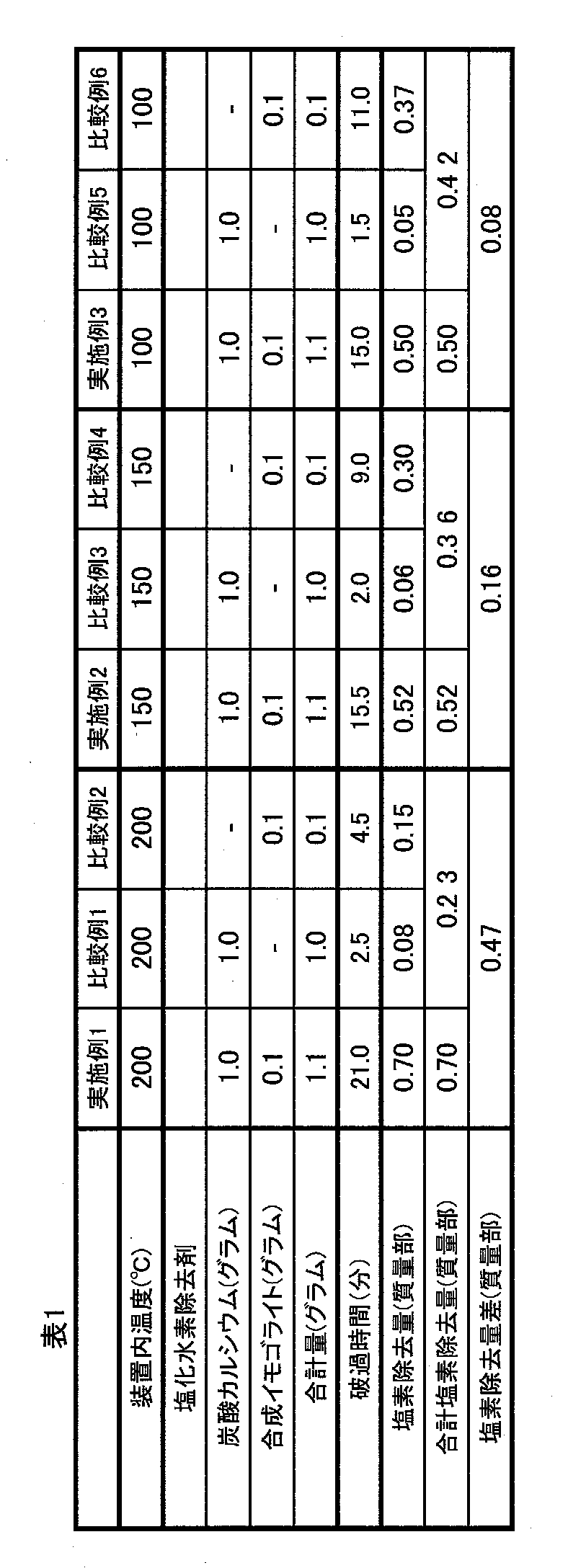
実施例1は、塩化水素除去装置(A)内の温度200℃において、塩化水素除去剤として、炭酸カルシウム1.0g(100質量部)と合成イモゴライト0.1g(10質量部)との混合物により、塩化水素含有窒素ガスから塩化水素を除去したものである。塩化水素除去量の指標である塩素除去量は、塩化水素除去剤100質量部あたり0.70質量部と非常に良好であった。
一方、比較例1は、実施例1で使用した塩化水素除去剤である、炭酸カルシウム1.0gと合成イモゴライト0.1gとの混合物中の炭酸カルシウム1.0gのみを使用して、塩化水素含有窒素ガスから塩化水素を除去したものである。また、比較例2は、実施例1で使用した塩化水素除去剤中の合成イモゴライト0.1gのみを使用して、塩化水素含有窒素ガスから塩化水素を除去したものである。比較例1及び比較例2において、塩化水素除去量の指標である塩素除去量は、夫々、実施例1の炭酸カルシウム相当量90.9質量部あたり0.08質量部、及び、実施例1の合成イモゴライト相当量9.1質量部あたり0.15質量部であった。従って、比較例1及び比較例2における塩素除去量を合計しても、塩化水素除去剤100質量部(90.9+9.1質量部)あたり0.23質量部(0.08+0.15質量部)であり、実施例1における塩素除去量0.70質量部と比較して著しく少ないものであった。
このように、炭酸カルシウム(1.0g)と合成イモゴライト(0.1g)とを混合した塩化水素除去剤を使用した実施例1においては、塩化水素除去量の指標である塩素除去量は、塩化水素除去剤100質量部(1.1g)あたり0.70質量部となり、比較例1における炭酸カルシウム(1.0g)及び比較例2における合成イモゴライト(0.1g)の単独使用の場合の塩素除去合計量0.23質量部と比較すると、その差は0.47質量部であった。このように、炭酸カルシウムと合成イモゴライトとを混合した塩化水素除去剤を使用すると、夫々を単独使用した際の塩素除去合計量と比較して、その塩素除去量は著しく増大することが分かった。
実施例2並びに比較例3及び4は、塩化水素除去装置(A)内の温度を150℃としたものであり、また、実施例3並びに比較例5及び6は、塩化水素除去装置(A)内の温度を100℃としたものであり、その他の条件は、夫々、実施例1並びに比較例1及び2と同一の条件で塩化水素除去を実施したものである。
表1の結果から明らかなように、実施例2における塩化水素除去量の指標である塩素除去量は、塩化水素除去剤100質量部(1.1g)あたり0.52質量部となり、単独使用の比較例3(0.06質量部)と比較例4(0.30質量部)との合計量0.36質量部と比較して著しく増大していることが分かった。また、実施例3における塩化水素除去量の指標である塩素除去量は、塩化水素除去剤100質量部(1.1g)あたり0.50質量部となり、単独使用の比較例5(0.05質量部)と比較例6(0.37質量部)との合計量0.42質量部と比較して明らかに増大していることが分かった。
上記のように、炭酸カルシウムと合成イモゴライトとを混合した塩化水素除去剤を使用すると、塩化水素除去量の指標である塩素除去量は、炭酸カルシウム又は合成イモゴライトの単独使用の際の塩素除去量の総和に比べて著しく増大することが分かった。このように、炭酸カルシウムと合成イモゴライトとを混合して使用すると、塩化水素除去量の指標である塩素除去量に関して単独使用の場合に総和の効果以上の効果、即ち、相乗効果があることが認められた。また、該相乗効果は、100℃から200℃へと塩化水素除去装置(A)内の温度が高くなるに従って、即ち、塩化水素を除去する際の温度が高くなるに従って、より顕著になることが分かった。
(実施例4)
塩化水素除去剤として、炭酸カルシウム1.0g(100質量部)と、合成イモゴライト0.05g(5質量部)との混合物を使用した以外は、実施例1と同一にして塩化水素の除去を実施した。該塩化水素除去剤の破過時間は、9.5分であった。塩化水素除去剤100質量部あたり、塩素0.33質量部を除去することができた。
塩化水素除去剤として、炭酸カルシウム1.0g(100質量部)と、合成イモゴライト0.05g(5質量部)との混合物を使用した以外は、実施例1と同一にして塩化水素の除去を実施した。該塩化水素除去剤の破過時間は、9.5分であった。塩化水素除去剤100質量部あたり、塩素0.33質量部を除去することができた。
(実施例5)
塩化水素除去剤として、炭酸カルシウム1.0g(100質量部)と、合成イモゴライト0.15g(15.0質量部)との混合物を使用した以外は、実施例1と同一にして塩化水素の除去を実施した。該塩化水素除去剤の破過時間は、25.5分であった。塩化水素除去剤100質量部あたり、塩素0.81質量部を除去することができた。
塩化水素除去剤として、炭酸カルシウム1.0g(100質量部)と、合成イモゴライト0.15g(15.0質量部)との混合物を使用した以外は、実施例1と同一にして塩化水素の除去を実施した。該塩化水素除去剤の破過時間は、25.5分であった。塩化水素除去剤100質量部あたり、塩素0.81質量部を除去することができた。
(実施例6)
塩化水素除去剤として、炭酸カルシウム1.0g(100質量部)と、合成イモゴライト0.20g(20.0質量部)との混合物を使用した以外は、実施例1と同一にして塩化水素の除去を実施した。該塩化水素除去剤の破過時間は、27.0分であった。塩化水素除去剤100質量部あたり、塩素0.83質量部を除去することができた。
塩化水素除去剤として、炭酸カルシウム1.0g(100質量部)と、合成イモゴライト0.20g(20.0質量部)との混合物を使用した以外は、実施例1と同一にして塩化水素の除去を実施した。該塩化水素除去剤の破過時間は、27.0分であった。塩化水素除去剤100質量部あたり、塩素0.83質量部を除去することができた。
下記の表2には、塩化水素除去剤において、炭酸カルシウム1.0g(100質量部)に対する合成イモゴライトの混合量を変化させた際の破過時間の変化を示した。

表2から明らかなように、塩化水素除去剤として、炭酸カルシウムと合成イモゴライトとの混合物を使用すると、炭酸カルシウム単独使用に比較して著しくその寿命(破過時間)が増大することが分かった。また、炭酸カルシウムに対する合成イモゴライトの混合比を増加すると、著しくその寿命(破過時間)が増大することが分かった。
本発明の塩化水素除去剤は、比較的低温で良好な塩化水素除去効果を有するばかりではなく、該良好な塩化水素除去効果を比較的長時間に亘って保持し得、加えて、炭酸カルシウムと、イモゴライト及び/又は合成イモゴライトとの混合物であることから比較的入手が容易であり、かつ、これらの物質を単に混合して使用するものであることからきわめて安価であり、今後、熱分解ガス、燃焼排ガス、乾留ガス等の塩化水素含有ガスに含まれる塩化水素の除去、とりわけ、バイオマス熱分解ガスに含まれる塩化水素の除去に使用されることが、大いに期待される。
A 実験に使用した塩化水素除去装置
1 ガス導入口
2 ガス排出口
3 焼結フィルター
4 グラスウール
5 加熱装置(リボンヒーター)
6 塩化水素除去剤
7 温度及び圧力測定装置
8 気相部分
1 ガス導入口
2 ガス排出口
3 焼結フィルター
4 グラスウール
5 加熱装置(リボンヒーター)
6 塩化水素除去剤
7 温度及び圧力測定装置
8 気相部分
Claims (9)
- 炭酸カルシウムと、イモゴライト及び/又は合成イモゴライトとの混合物を含むことを特徴とする塩化水素除去剤。
- 上記混合物中の、炭酸カルシウムと、イモゴライト及び/又は合成イモゴライトとの質量比が、100:5~50である、請求項1記載の塩化水素除去剤。
- 塩化水素含有ガスに含まれる塩化水素除去用の、請求項1又は2記載の塩化水素除去剤。
- バイオマス熱分解ガスに含まれる塩化水素除去用の、請求項1又は2記載の塩化水素除去剤。
- 塩化水素含有ガスから、塩化水素除去剤を使用して塩化水素を除去する方法であって、該塩化水素除去剤が、炭酸カルシウムと、イモゴライト及び/又は合成イモゴライトとの混合物を含むことを特徴とする方法。
- 上記混合物中の、炭酸カルシウムと、イモゴライト及び/又は合成イモゴライトとの質量比が、100:5~50である、請求項5記載の方法。
- 上記塩化水素の除去が、100~350℃の温度で実行される、請求項5又は6記載の方法。
- 上記塩化水素の除去が、0.100~0.120MPaの圧力で実行される、請求項5~7のいずれか一つに記載の方法。
- 上記塩化水素含有ガスが、バイオマス熱分解ガスである、請求項5~8のいずれか一つに記載の方法。
Priority Applications (3)
| Application Number | Priority Date | Filing Date | Title |
|---|---|---|---|
| PCT/JP2017/026370 WO2019016927A1 (ja) | 2017-07-20 | 2017-07-20 | 塩化水素除去剤 |
| JP2019530316A JP6999910B2 (ja) | 2017-07-20 | 2017-07-20 | 塩化水素除去剤 |
| US16/631,595 US11318441B2 (en) | 2017-07-20 | 2017-07-20 | Hydrogen chloride removing agent |
Applications Claiming Priority (1)
| Application Number | Priority Date | Filing Date | Title |
|---|---|---|---|
| PCT/JP2017/026370 WO2019016927A1 (ja) | 2017-07-20 | 2017-07-20 | 塩化水素除去剤 |
Publications (1)
| Publication Number | Publication Date |
|---|---|
| WO2019016927A1 true WO2019016927A1 (ja) | 2019-01-24 |
Family
ID=65016637
Family Applications (1)
| Application Number | Title | Priority Date | Filing Date |
|---|---|---|---|
| PCT/JP2017/026370 Ceased WO2019016927A1 (ja) | 2017-07-20 | 2017-07-20 | 塩化水素除去剤 |
Country Status (3)
| Country | Link |
|---|---|
| US (1) | US11318441B2 (ja) |
| JP (1) | JP6999910B2 (ja) |
| WO (1) | WO2019016927A1 (ja) |
Cited By (1)
| Publication number | Priority date | Publication date | Assignee | Title |
|---|---|---|---|---|
| JP2020185533A (ja) * | 2019-05-14 | 2020-11-19 | 株式会社ジャパンブルーエナジー | 塩化水素除去剤 |
Families Citing this family (1)
| Publication number | Priority date | Publication date | Assignee | Title |
|---|---|---|---|---|
| CN116081673B (zh) * | 2022-11-09 | 2025-02-28 | 上海电力大学 | 一种钙铝基双金属氧化物除氯剂及其制备方法与应用 |
Citations (6)
| Publication number | Priority date | Publication date | Assignee | Title |
|---|---|---|---|---|
| JPH09225296A (ja) * | 1996-02-21 | 1997-09-02 | Toyo C C I Kk | 固体塩化物吸収剤 |
| JP2000296312A (ja) * | 1999-04-12 | 2000-10-24 | Showa Chemical Industry Co Ltd | 排ガス処理剤 |
| JP2001163658A (ja) * | 1999-12-10 | 2001-06-19 | Inax Corp | 調湿仕上塗材 |
| WO2003033115A1 (fr) * | 2001-10-12 | 2003-04-24 | Asahi Glass Company, Limited | Procede de retrait d'un gaz contenant un halogene |
| JP2011116573A (ja) * | 2009-12-01 | 2011-06-16 | Kotegawa Sangyo Kk | 消石灰、その製造方法および酸性ガス除去剤 |
| JP2016034633A (ja) * | 2014-08-01 | 2016-03-17 | 一般財団法人電力中央研究所 | ハロゲン化物吸収剤 |
Family Cites Families (11)
| Publication number | Priority date | Publication date | Assignee | Title |
|---|---|---|---|---|
| DE3629817A1 (de) * | 1986-09-02 | 1988-03-03 | Bergwerksverband Gmbh | Verfahren zur verringerung der schadstoffemisionen von kraftwerken mit kombinierten gas-/dampfturbinenprozessen mit vorgeschalteter kohlevergasung |
| JP3480039B2 (ja) | 1994-05-10 | 2003-12-15 | 栗田工業株式会社 | 塩化水素含有ガスの中和処理装置 |
| JPH0882411A (ja) | 1994-09-14 | 1996-03-26 | Okura Ind Co Ltd | 焼却炉中の塩化水素除去法ならびに塩化水素吸収剤 |
| JPH10180089A (ja) | 1996-12-25 | 1998-07-07 | Kobe Steel Ltd | 排ガス処理材 |
| JP2000225319A (ja) | 1999-02-04 | 2000-08-15 | Takuma Co Ltd | 2成分型粒状脱塩化水素反応剤及びその製造方法並びにこれを用いた塩化水素含有ガスの塩化水素除去方法。 |
| JP2001079340A (ja) | 1999-09-16 | 2001-03-27 | Yokohama City | 燃焼施設における排ガスに含有される硫黄酸化物と塩化水素の除去方法 |
| JP2012506483A (ja) | 2008-10-22 | 2012-03-15 | サザン リサーチ インスティチュート | 合成ガスを浄化するためのプロセス |
| US20100203461A1 (en) * | 2009-02-06 | 2010-08-12 | General Electric Company | Combustion systems and processes for burning fossil fuel with reduced emissions |
| US9321640B2 (en) * | 2010-10-29 | 2016-04-26 | Plasco Energy Group Inc. | Gasification system with processed feedstock/char conversion and gas reformulation |
| US20140369908A1 (en) * | 2013-06-14 | 2014-12-18 | John P. Reardon | Apparatus and Method for Optimized Acid Gas and Toxic Metal Control in Gasifier Produced Gases |
| JP6496104B2 (ja) * | 2014-02-18 | 2019-04-03 | クラリアント触媒株式会社 | ハロゲン化合物吸収剤およびそれを用いた合成ガスの製造方法 |
-
2017
- 2017-07-20 WO PCT/JP2017/026370 patent/WO2019016927A1/ja not_active Ceased
- 2017-07-20 JP JP2019530316A patent/JP6999910B2/ja active Active
- 2017-07-20 US US16/631,595 patent/US11318441B2/en active Active
Patent Citations (6)
| Publication number | Priority date | Publication date | Assignee | Title |
|---|---|---|---|---|
| JPH09225296A (ja) * | 1996-02-21 | 1997-09-02 | Toyo C C I Kk | 固体塩化物吸収剤 |
| JP2000296312A (ja) * | 1999-04-12 | 2000-10-24 | Showa Chemical Industry Co Ltd | 排ガス処理剤 |
| JP2001163658A (ja) * | 1999-12-10 | 2001-06-19 | Inax Corp | 調湿仕上塗材 |
| WO2003033115A1 (fr) * | 2001-10-12 | 2003-04-24 | Asahi Glass Company, Limited | Procede de retrait d'un gaz contenant un halogene |
| JP2011116573A (ja) * | 2009-12-01 | 2011-06-16 | Kotegawa Sangyo Kk | 消石灰、その製造方法および酸性ガス除去剤 |
| JP2016034633A (ja) * | 2014-08-01 | 2016-03-17 | 一般財団法人電力中央研究所 | ハロゲン化物吸収剤 |
Cited By (2)
| Publication number | Priority date | Publication date | Assignee | Title |
|---|---|---|---|---|
| JP2020185533A (ja) * | 2019-05-14 | 2020-11-19 | 株式会社ジャパンブルーエナジー | 塩化水素除去剤 |
| JP7274132B2 (ja) | 2019-05-14 | 2023-05-16 | 株式会社ジャパンブルーエナジー | 塩化水素除去剤 |
Also Published As
| Publication number | Publication date |
|---|---|
| US11318441B2 (en) | 2022-05-03 |
| JP6999910B2 (ja) | 2022-01-19 |
| JPWO2019016927A1 (ja) | 2020-07-02 |
| US20200179901A1 (en) | 2020-06-11 |
Similar Documents
| Publication | Publication Date | Title |
|---|---|---|
| CN102256917B (zh) | 净化合成气的方法 | |
| JP6616928B2 (ja) | 活性炭からの重金属浸出の軽減方法 | |
| AU2011237443B2 (en) | Methods for removal of mercury from flue gas | |
| US8980207B1 (en) | Method and system for removal of mercury from a flue gas | |
| KR20110081158A (ko) | 연료 연소 동안 발생되는 배출물로부터 수은을 제거하기 위한 염화브롬 조성물 | |
| Chin et al. | Hydrated lime reaction with HCl under simulated flue gas conditions | |
| KR20010080867A (ko) | 다이옥신류의 흡착재 | |
| Lin et al. | Simultaneous HCl/SO2 capture by calcined limestone from hot gases | |
| JP2012213744A (ja) | 排ガス処理装置及び処理方法、石炭改質プロセス設備 | |
| WO2019016927A1 (ja) | 塩化水素除去剤 | |
| JP2008012529A (ja) | 排ガス浄化剤及び有害微量元素を捕捉する方法 | |
| JP5107830B2 (ja) | 排煙の処理方法 | |
| CN107073395A (zh) | 净化流体的方法 | |
| JP5003887B2 (ja) | 排ガス処理方法及び排ガス処理装置 | |
| JP7274132B2 (ja) | 塩化水素除去剤 | |
| JPS5876128A (ja) | 熱分解炉内での塩化水素及び硫黄化合物の除去方法 | |
| CN103079692A (zh) | 废气处理装置 | |
| KR102651952B1 (ko) | Cds 연도 가스 처리법으로 연도 가스를 처리하는 프로세스 | |
| JP4164776B2 (ja) | ダイオキシン抑制又は除去剤、及びそれを使用する廃棄物焼却方法 | |
| JP5024654B2 (ja) | 廃水の処理方法 | |
| WO2023203575A1 (en) | Molecular filters for selective removal and repurposing of gaseous fumes and emissions | |
| JP2000070669A (ja) | 排ガス中のHClの除去方法およびこれに用いるHCl吸収剤 | |
| JPH1122944A (ja) | 脱ダイオキシン、脱塩素装置付き焼却炉 | |
| KR19990083897A (ko) | 반도체 제조공정에서 발생되는 불화수소의 정화방법 | |
| Lin et al. | Gasification-Flameless Combustion: A Greener Approach for Dual Benefits in Residual N2o Utilization and Emission Trade-Off Optimization from Chlorinated Solid Recovered Fuel |
Legal Events
| Date | Code | Title | Description |
|---|---|---|---|
| 121 | Ep: the epo has been informed by wipo that ep was designated in this application |
Ref document number: 17918188 Country of ref document: EP Kind code of ref document: A1 |
|
| ENP | Entry into the national phase |
Ref document number: 2019530316 Country of ref document: JP Kind code of ref document: A |
|
| NENP | Non-entry into the national phase |
Ref country code: DE |
|
| 122 | Ep: pct application non-entry in european phase |
Ref document number: 17918188 Country of ref document: EP Kind code of ref document: A1 |