WO2018214843A1 - 一种脂基侧链水解的交联型多孔膜及其制备方法 - Google Patents
一种脂基侧链水解的交联型多孔膜及其制备方法 Download PDFInfo
- Publication number
- WO2018214843A1 WO2018214843A1 PCT/CN2018/087658 CN2018087658W WO2018214843A1 WO 2018214843 A1 WO2018214843 A1 WO 2018214843A1 CN 2018087658 W CN2018087658 W CN 2018087658W WO 2018214843 A1 WO2018214843 A1 WO 2018214843A1
- Authority
- WO
- WIPO (PCT)
- Prior art keywords
- membrane
- porous membrane
- side chain
- hydrolysis
- solvent
- Prior art date
- Legal status (The legal status is an assumption and is not a legal conclusion. Google has not performed a legal analysis and makes no representation as to the accuracy of the status listed.)
- Ceased
Links
Images

Classifications
-
- C—CHEMISTRY; METALLURGY
- C08—ORGANIC MACROMOLECULAR COMPOUNDS; THEIR PREPARATION OR CHEMICAL WORKING-UP; COMPOSITIONS BASED THEREON
- C08J—WORKING-UP; GENERAL PROCESSES OF COMPOUNDING; AFTER-TREATMENT NOT COVERED BY SUBCLASSES C08B, C08C, C08F, C08G or C08H
- C08J3/00—Processes of treating or compounding macromolecular substances
- C08J3/24—Crosslinking, e.g. vulcanising, of macromolecules
-
- H—ELECTRICITY
- H01—ELECTRIC ELEMENTS
- H01M—PROCESSES OR MEANS, e.g. BATTERIES, FOR THE DIRECT CONVERSION OF CHEMICAL ENERGY INTO ELECTRICAL ENERGY
- H01M8/00—Fuel cells; Manufacture thereof
- H01M8/02—Details
- H01M8/0202—Collectors; Separators, e.g. bipolar separators; Interconnectors
- H01M8/023—Porous and characterised by the material
- H01M8/0239—Organic resins; Organic polymers
-
- C—CHEMISTRY; METALLURGY
- C08—ORGANIC MACROMOLECULAR COMPOUNDS; THEIR PREPARATION OR CHEMICAL WORKING-UP; COMPOSITIONS BASED THEREON
- C08F—MACROMOLECULAR COMPOUNDS OBTAINED BY REACTIONS ONLY INVOLVING CARBON-TO-CARBON UNSATURATED BONDS
- C08F220/00—Copolymers of compounds having one or more unsaturated aliphatic radicals, each having only one carbon-to-carbon double bond, and only one being terminated by only one carboxyl radical or a salt, anhydride ester, amide, imide or nitrile thereof
- C08F220/02—Monocarboxylic acids having less than ten carbon atoms; Derivatives thereof
- C08F220/10—Esters
- C08F220/12—Esters of monohydric alcohols or phenols
- C08F220/14—Methyl esters, e.g. methyl (meth)acrylate
-
- C—CHEMISTRY; METALLURGY
- C08—ORGANIC MACROMOLECULAR COMPOUNDS; THEIR PREPARATION OR CHEMICAL WORKING-UP; COMPOSITIONS BASED THEREON
- C08F—MACROMOLECULAR COMPOUNDS OBTAINED BY REACTIONS ONLY INVOLVING CARBON-TO-CARBON UNSATURATED BONDS
- C08F220/00—Copolymers of compounds having one or more unsaturated aliphatic radicals, each having only one carbon-to-carbon double bond, and only one being terminated by only one carboxyl radical or a salt, anhydride ester, amide, imide or nitrile thereof
- C08F220/02—Monocarboxylic acids having less than ten carbon atoms; Derivatives thereof
- C08F220/10—Esters
- C08F220/12—Esters of monohydric alcohols or phenols
- C08F220/16—Esters of monohydric alcohols or phenols of phenols or of alcohols containing two or more carbon atoms
- C08F220/18—Esters of monohydric alcohols or phenols of phenols or of alcohols containing two or more carbon atoms with acrylic or methacrylic acids
- C08F220/1804—C4-(meth)acrylate, e.g. butyl (meth)acrylate, isobutyl (meth)acrylate or tert-butyl (meth)acrylate
-
- C—CHEMISTRY; METALLURGY
- C08—ORGANIC MACROMOLECULAR COMPOUNDS; THEIR PREPARATION OR CHEMICAL WORKING-UP; COMPOSITIONS BASED THEREON
- C08J—WORKING-UP; GENERAL PROCESSES OF COMPOUNDING; AFTER-TREATMENT NOT COVERED BY SUBCLASSES C08B, C08C, C08F, C08G or C08H
- C08J5/00—Manufacture of articles or shaped materials containing macromolecular substances
- C08J5/20—Manufacture of shaped structures of ion-exchange resins
- C08J5/22—Films, membranes or diaphragms
- C08J5/2206—Films, membranes or diaphragms based on organic and/or inorganic macromolecular compounds
- C08J5/2218—Synthetic macromolecular compounds
- C08J5/2231—Synthetic macromolecular compounds based on macromolecular compounds obtained by reactions involving unsaturated carbon-to-carbon bonds
-
- C—CHEMISTRY; METALLURGY
- C08—ORGANIC MACROMOLECULAR COMPOUNDS; THEIR PREPARATION OR CHEMICAL WORKING-UP; COMPOSITIONS BASED THEREON
- C08J—WORKING-UP; GENERAL PROCESSES OF COMPOUNDING; AFTER-TREATMENT NOT COVERED BY SUBCLASSES C08B, C08C, C08F, C08G or C08H
- C08J5/00—Manufacture of articles or shaped materials containing macromolecular substances
- C08J5/20—Manufacture of shaped structures of ion-exchange resins
- C08J5/22—Films, membranes or diaphragms
- C08J5/2206—Films, membranes or diaphragms based on organic and/or inorganic macromolecular compounds
- C08J5/2218—Synthetic macromolecular compounds
- C08J5/2231—Synthetic macromolecular compounds based on macromolecular compounds obtained by reactions involving unsaturated carbon-to-carbon bonds
- C08J5/2243—Synthetic macromolecular compounds based on macromolecular compounds obtained by reactions involving unsaturated carbon-to-carbon bonds obtained by introduction of active groups capable of ion-exchange into compounds of the type C08J5/2231
-
- C—CHEMISTRY; METALLURGY
- C08—ORGANIC MACROMOLECULAR COMPOUNDS; THEIR PREPARATION OR CHEMICAL WORKING-UP; COMPOSITIONS BASED THEREON
- C08J—WORKING-UP; GENERAL PROCESSES OF COMPOUNDING; AFTER-TREATMENT NOT COVERED BY SUBCLASSES C08B, C08C, C08F, C08G or C08H
- C08J5/00—Manufacture of articles or shaped materials containing macromolecular substances
- C08J5/20—Manufacture of shaped structures of ion-exchange resins
- C08J5/22—Films, membranes or diaphragms
- C08J5/2287—After-treatment
-
- H—ELECTRICITY
- H01—ELECTRIC ELEMENTS
- H01M—PROCESSES OR MEANS, e.g. BATTERIES, FOR THE DIRECT CONVERSION OF CHEMICAL ENERGY INTO ELECTRICAL ENERGY
- H01M50/00—Constructional details or processes of manufacture of the non-active parts of electrochemical cells other than fuel cells, e.g. hybrid cells
- H01M50/40—Separators; Membranes; Diaphragms; Spacing elements inside cells
- H01M50/403—Manufacturing processes of separators, membranes or diaphragms
-
- H—ELECTRICITY
- H01—ELECTRIC ELEMENTS
- H01M—PROCESSES OR MEANS, e.g. BATTERIES, FOR THE DIRECT CONVERSION OF CHEMICAL ENERGY INTO ELECTRICAL ENERGY
- H01M50/00—Constructional details or processes of manufacture of the non-active parts of electrochemical cells other than fuel cells, e.g. hybrid cells
- H01M50/40—Separators; Membranes; Diaphragms; Spacing elements inside cells
- H01M50/409—Separators, membranes or diaphragms characterised by the material
- H01M50/411—Organic material
- H01M50/414—Synthetic resins, e.g. thermoplastics or thermosetting resins
- H01M50/42—Acrylic resins
-
- H—ELECTRICITY
- H01—ELECTRIC ELEMENTS
- H01M—PROCESSES OR MEANS, e.g. BATTERIES, FOR THE DIRECT CONVERSION OF CHEMICAL ENERGY INTO ELECTRICAL ENERGY
- H01M50/00—Constructional details or processes of manufacture of the non-active parts of electrochemical cells other than fuel cells, e.g. hybrid cells
- H01M50/40—Separators; Membranes; Diaphragms; Spacing elements inside cells
- H01M50/409—Separators, membranes or diaphragms characterised by the material
- H01M50/411—Organic material
- H01M50/414—Synthetic resins, e.g. thermoplastics or thermosetting resins
- H01M50/423—Polyamide resins
-
- H—ELECTRICITY
- H01—ELECTRIC ELEMENTS
- H01M—PROCESSES OR MEANS, e.g. BATTERIES, FOR THE DIRECT CONVERSION OF CHEMICAL ENERGY INTO ELECTRICAL ENERGY
- H01M8/00—Fuel cells; Manufacture thereof
- H01M8/18—Regenerative fuel cells, e.g. redox flow batteries or secondary fuel cells
- H01M8/184—Regeneration by electrochemical means
- H01M8/188—Regeneration by electrochemical means by recharging of redox couples containing fluids; Redox flow type batteries
-
- C—CHEMISTRY; METALLURGY
- C08—ORGANIC MACROMOLECULAR COMPOUNDS; THEIR PREPARATION OR CHEMICAL WORKING-UP; COMPOSITIONS BASED THEREON
- C08F—MACROMOLECULAR COMPOUNDS OBTAINED BY REACTIONS ONLY INVOLVING CARBON-TO-CARBON UNSATURATED BONDS
- C08F2810/00—Chemical modification of a polymer
- C08F2810/20—Chemical modification of a polymer leading to a crosslinking, either explicitly or inherently
-
- C—CHEMISTRY; METALLURGY
- C08—ORGANIC MACROMOLECULAR COMPOUNDS; THEIR PREPARATION OR CHEMICAL WORKING-UP; COMPOSITIONS BASED THEREON
- C08J—WORKING-UP; GENERAL PROCESSES OF COMPOUNDING; AFTER-TREATMENT NOT COVERED BY SUBCLASSES C08B, C08C, C08F, C08G or C08H
- C08J2333/00—Characterised by the use of homopolymers or copolymers of compounds having one or more unsaturated aliphatic radicals, each having only one carbon-to-carbon double bond, and only one being terminated by only one carboxyl radical, or of salts, anhydrides, esters, amides, imides, or nitriles thereof; Derivatives of such polymers
- C08J2333/04—Characterised by the use of homopolymers or copolymers of compounds having one or more unsaturated aliphatic radicals, each having only one carbon-to-carbon double bond, and only one being terminated by only one carboxyl radical, or of salts, anhydrides, esters, amides, imides, or nitriles thereof; Derivatives of such polymers esters
- C08J2333/06—Characterised by the use of homopolymers or copolymers of compounds having one or more unsaturated aliphatic radicals, each having only one carbon-to-carbon double bond, and only one being terminated by only one carboxyl radical, or of salts, anhydrides, esters, amides, imides, or nitriles thereof; Derivatives of such polymers esters of esters containing only carbon, hydrogen, and oxygen, the oxygen atom being present only as part of the carboxyl radical
- C08J2333/10—Homopolymers or copolymers of methacrylic acid esters
-
- C—CHEMISTRY; METALLURGY
- C08—ORGANIC MACROMOLECULAR COMPOUNDS; THEIR PREPARATION OR CHEMICAL WORKING-UP; COMPOSITIONS BASED THEREON
- C08J—WORKING-UP; GENERAL PROCESSES OF COMPOUNDING; AFTER-TREATMENT NOT COVERED BY SUBCLASSES C08B, C08C, C08F, C08G or C08H
- C08J2333/00—Characterised by the use of homopolymers or copolymers of compounds having one or more unsaturated aliphatic radicals, each having only one carbon-to-carbon double bond, and only one being terminated by only one carboxyl radical, or of salts, anhydrides, esters, amides, imides, or nitriles thereof; Derivatives of such polymers
- C08J2333/04—Characterised by the use of homopolymers or copolymers of compounds having one or more unsaturated aliphatic radicals, each having only one carbon-to-carbon double bond, and only one being terminated by only one carboxyl radical, or of salts, anhydrides, esters, amides, imides, or nitriles thereof; Derivatives of such polymers esters
- C08J2333/06—Characterised by the use of homopolymers or copolymers of compounds having one or more unsaturated aliphatic radicals, each having only one carbon-to-carbon double bond, and only one being terminated by only one carboxyl radical, or of salts, anhydrides, esters, amides, imides, or nitriles thereof; Derivatives of such polymers esters of esters containing only carbon, hydrogen, and oxygen, the oxygen atom being present only as part of the carboxyl radical
- C08J2333/10—Homopolymers or copolymers of methacrylic acid esters
- C08J2333/12—Homopolymers or copolymers of methyl methacrylate
-
- Y—GENERAL TAGGING OF NEW TECHNOLOGICAL DEVELOPMENTS; GENERAL TAGGING OF CROSS-SECTIONAL TECHNOLOGIES SPANNING OVER SEVERAL SECTIONS OF THE IPC; TECHNICAL SUBJECTS COVERED BY FORMER USPC CROSS-REFERENCE ART COLLECTIONS [XRACs] AND DIGESTS
- Y02—TECHNOLOGIES OR APPLICATIONS FOR MITIGATION OR ADAPTATION AGAINST CLIMATE CHANGE
- Y02E—REDUCTION OF GREENHOUSE GAS [GHG] EMISSIONS, RELATED TO ENERGY GENERATION, TRANSMISSION OR DISTRIBUTION
- Y02E60/00—Enabling technologies; Technologies with a potential or indirect contribution to GHG emissions mitigation
- Y02E60/10—Energy storage using batteries
-
- Y—GENERAL TAGGING OF NEW TECHNOLOGICAL DEVELOPMENTS; GENERAL TAGGING OF CROSS-SECTIONAL TECHNOLOGIES SPANNING OVER SEVERAL SECTIONS OF THE IPC; TECHNICAL SUBJECTS COVERED BY FORMER USPC CROSS-REFERENCE ART COLLECTIONS [XRACs] AND DIGESTS
- Y02—TECHNOLOGIES OR APPLICATIONS FOR MITIGATION OR ADAPTATION AGAINST CLIMATE CHANGE
- Y02E—REDUCTION OF GREENHOUSE GAS [GHG] EMISSIONS, RELATED TO ENERGY GENERATION, TRANSMISSION OR DISTRIBUTION
- Y02E60/00—Enabling technologies; Technologies with a potential or indirect contribution to GHG emissions mitigation
- Y02E60/30—Hydrogen technology
- Y02E60/50—Fuel cells
Definitions
- the invention belongs to the field of all-vanadium flow battery, and particularly relates to a hydrolyzed side chain butyl methacrylate crosslinked porous membrane and a preparation method thereof.
- the all-vanadium redox flow battery is an electrochemical energy storage device, which realizes the conversion of electric energy and chemical energy through the valence state change of the active material-vanadium ion in the electrolyte, thereby realizing the storage and release of electric energy.
- Vanadium batteries have many characteristics and advantages, such as large scale, high battery efficiency, long life and low cost.
- the separator needs to separate the positive and negative electrolytes to prevent short circuit of the battery, and to allow the charge carrier ions to pass through to ensure the positive and negative poles charge balance and constitute a battery loop.
- the ideal ion exchange membrane for vanadium batteries needs to have the following characteristics.
- the separator of the vanadium battery should minimize ion cross-contamination and self-discharge of the battery to improve energy efficiency.
- the diaphragm should be inexpensive and meet the requirements of large-scale application.
- the proton exchange membranes used in ion exchange membranes in all vanadium redox flow batteries are mainly perfluorosulfonic acid membranes produced by DuPont. membrane. but, The disadvantages of high vanadium permeability and high cost of the membrane limit its wide application, and a cheap and excellent membrane material is needed instead. Membrane, non-fluorinated materials are receiving more and more attention.
- the imidazolium ionization membrane with polysulfone as the main chain, the sulfonic acid membrane with polyimide as the main chain, and the amphoteric non-fluorinated membrane, etc. greatly reduces the cost of the membrane, however These membranes are less stable due to the degradation of ionic groups and backbones.
- the pore size of the porous membrane can effectively screen hydrogen ions and vanadium ions.
- the presence of pores in the porous membrane can reduce the amount of ion-conducting groups, and the stability of the membrane can be effectively improved.
- the pore size of the existing porous membrane is not uniform, and the morphology of the pore is not easily controlled, further limiting the improvement of the performance of the membrane.
- This patent prepares a crosslinked porous membrane by hydrolyzing a side chain butyl methacrylate.
- the pore size is used to increase the selectivity of the membrane.
- the present invention adopts a hydrolyzed side chain method to prepare a nanometer-sized porous membrane, and provides a crosslinked porous membrane hydrolyzed by a side chain of a lipid group and a preparation method thereof.
- the pore membrane prepared by the method has high selectivity. Have better battery performance.
- a cross-linked porous membrane hydrolyzed by a side chain of a lipid group which is obtained by hydrolyzing a copolymer having a side chain containing an ester bond, a small molecule porogen and under alkaline conditions.
- the side chain ester-containing copolymer is obtained by copolymerization of styrene, a lipid-containing monomer, a p-chloromethylstyrene VBC monomer and an initiator azobisisobutyronitrile, and the aliphatic bond-containing monomer includes a Butyl acrylate, ethyl methacrylate, propyl methacrylate.
- the small molecule porogen is lithium chloride; the base in the alkaline hydrolysis condition is 3-6 mol/L sodium hydroxide and potassium hydroxide.
- the chemical structural formula of the crosslinked porous membrane is as follows:
- the preparation method of the above crosslinked porous membrane firstly synthesizes a copolymer of styrene, sodium styrene sulfonate, butyl methacrylate and p-chloromethylstyrene, and a small amount of chlorination is added during film formation.
- the lithium small molecule porogen is crosslinked with tetramethylhexanediamine to obtain a dense film, and finally the dense film is hydrolyzed.
- the steps of the preparation process of the present invention are as follows:
- a certain amount of sodium styrene sulfonate Nass was dissolved in N,N-dimethylformamide DMF solvent at room temperature, and styrene st, lipid-containing monomer, p-chloromethylstyrene VBC were separately added under nitrogen protection.
- the monomer and the initiator azobisisobutyronitrile AIBN are reacted at 50-80 ° C for 16-24 hours, and the obtained solution is precipitated in a mixture of ethanol and water, and the precipitate is washed with a detergent, 40-80 After drying under vacuum for 24 to 48 hours, a yellowish granular product is obtained as a copolymer.
- the detergent is a mixture of ethanol and water.
- the molar ratio of the st, lipid-containing monomer, VBC, Nass, AIBN is 0 to 35:50 to 85:12.5:2.5:0.1.
- the Nass solvent concentration was 0.125 mmol/ml.
- the lipid-containing bond monomer includes butyl methacrylate BMA, methyl methacrylate MMA, and ethyl methacrylate HMA.
- the polymer prepared in the step (1) is dissolved in a solvent at room temperature, and after the dissolution, a crosslinking agent and a small molecule porogen are added, and the molar amount of the crosslinking agent and the small molecule porogen is respectively the molar amount of the polymer. 12.5% and 7.5%, a cross-linking reaction was carried out at room temperature for 30-60 minutes to obtain a mixed solution, and the mixed liquid droplets were applied to a glass plate, and dried at 40 to 80 ° C for 24 to 48 hours to obtain a dense film.
- the mass ratio of the polymer to the solvent is from 3% to 10%.
- the crosslinking agent is tetramethylhexamethylenediamine, and the small molecule porogen is lithium chloride.
- the solvent is N,N-dimethylformamide DMF, N,N-dimethylacetamide DMAc, dimethyl sulfoxide DMSO or N-methylpyrrolidone NMP, and the ratio of the solvent polymer is 0.2 ml. /mmol.
- the above-mentioned dense film is peeled off from the surface of the glass plate at room temperature, and placed in deionized water for 24-48 hours; the dense film is taken out and placed in a 4-6 M alkali solution, and hydrolyzed at 60-90 ° C for 7-12 days.
- the sodium hydroxide solution was changed every two days.
- the side chain butyl ester is hydrolyzed to a carboxylic acid under alkaline conditions, and the space occupied by the original butyl ester is left to form a nanopore.
- the hydrolyzed dense membrane was rinsed with flowing deionized water for 5 minutes, and then immersed in deionized water for 24-48 hours until the surface of the membrane was neutral; the surface was neutral and immersed in 1 M sulfuric acid solution, 24 After an hour, put it in deionized water for later use.
- the invention has the beneficial effects that the preparation method of the invention is simple and easy, the prepared pore membrane has high selectivity and good battery performance; and under the premise of maintaining better film performance, the preparation raw material is cheap, and the membrane cost is low. .
- Figure 1 is an SEM image of a crosslinked porous film
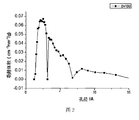
- FIG. 2 is a pore size distribution diagram of a crosslinked porous film BET
- Figure 3 is an appearance view of a crosslinked porous film after hydrolysis
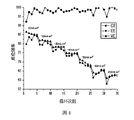
- Fig. 4 is a graph showing the performance of a battery under gradient electric density of a crosslinked type porous film.
- the film obtained above was peeled off from the surface of the glass plate and placed in deionized water for 24 hours. Then, it was placed in a 4.0 M alkali solution and hydrolyzed at 70 ° C for 7 days, and in order to promote hydrolysis of the ester bond, the sodium hydroxide solution was changed every two days.
- the hydrolyzed membrane was rinsed with running deionized water for 5 minutes and then placed in deionized water for 24-48 h until the surface of the membrane was neutral.
- the film with a neutral surface was immersed in a 1 M sulfuric acid solution, and after 24 hours, it was placed in deionized water for use.
- the obtained film has a water absorption rate of 30% and swelling of 11%.
- a certain amount of 0.5725 g of Nass was added to 20 ml of DMF solvent at room temperature to dissolve, and 4 ml of st, 8 ml of BMA, and 1.96 ml of VBC monomer were separately added under a nitrogen atmosphere. After heating to 50 ° C, 0.0167 g of AIBN was added, and the reaction was carried out at a constant temperature of 50 ° C for 16 hours. The obtained solution was precipitated in a mixture of ethanol and water, and repeatedly washed three times with ethanol and water for 1 hour, the ratio of ethanol water was 3:5, filtered with a funnel, and finally dried in a vacuum oven at 60 ° C for 24 hours. A yellowish particulate polymer.
- the above film was peeled off from the surface of the glass plate, placed in deionized water for 24 hours, and then placed in a 6.0 M alkali solution and hydrolyzed at 70 ° C for 10 days.
- the sodium hydroxide solution was changed every two days.
- the hydrolyzed membrane was rinsed with running deionized water for 5 minutes and then placed in deionized water for 24-48 h until the surface of the membrane was neutral.
- the film with a neutral surface was immersed in a 1 M sulfuric acid solution, and after 24 hours, it was placed in deionized water for use.
- the obtained film has a water absorption rate of 30% and a swelling of 12%.
- the film obtained above was peeled off from the surface of the glass plate, placed in a 5.0 M alkali solution and hydrolyzed at 90 ° C for 10 days, and the sodium hydroxide solution was changed every two days in order to increase the hydrolysis of the ester bond.
- the hydrolyzed membrane was rinsed with running deionized water for 5 minutes and then placed in deionized water for 24-48 h until the surface of the membrane was neutral.
- the film with a neutral surface was immersed in a 1 M sulfuric acid solution, and after 24 hours, it was placed in deionized water for use.
- the obtained film had a water absorption rate of 29% and a swelling of 13%.
Landscapes
- Chemical & Material Sciences (AREA)
- Chemical Kinetics & Catalysis (AREA)
- Engineering & Computer Science (AREA)
- Manufacturing & Machinery (AREA)
- Health & Medical Sciences (AREA)
- Medicinal Chemistry (AREA)
- Polymers & Plastics (AREA)
- Organic Chemistry (AREA)
- Electrochemistry (AREA)
- General Chemical & Material Sciences (AREA)
- Materials Engineering (AREA)
- Inorganic Chemistry (AREA)
- Sustainable Development (AREA)
- Sustainable Energy (AREA)
- Life Sciences & Earth Sciences (AREA)
- Cell Separators (AREA)
- Addition Polymer Or Copolymer, Post-Treatments, Or Chemical Modifications (AREA)
- Manufacture Of Macromolecular Shaped Articles (AREA)
- Primary Cells (AREA)
Abstract
本发明涉及一种脂基侧链水解的交联型多孔膜及其制备方法。首先膜材料是采用甲基丙烯酸丁酯、苯乙烯、苯乙烯磺酸钠、对氯甲基苯乙烯四种单体进行共聚,成膜过程中加入少量的氯化锂小分子致孔剂并用四甲基己二胺交联,后经碱性条件下水解制备纳米级多孔膜。利用聚合物中侧链丁酯在碱性条件下水解的特点,水解后膜内原来丁酯占据的空间就会空余出来,并且水解后伴随着羧酸离子传导基团的出现,大量的脂键水解增加了膜内离子传递通道的通畅性。从而大大增加了膜的离子传导性。本发明制备的纳米级多孔膜不仅具有较好的选择性和电池性能而且很大程度上减少了膜的制备成本,适合在全钒液流电池中应用。
Description
本发明属于全钒液流电池领域,具体涉及一种水解侧链甲基丙烯酸丁酯交联型多孔膜及其制备方法。
随着社会的发展和人类文明的进步,二十一世纪能源的消费越来越高,达到了一个新的程度。常规能源,主要基于煤、石油和天然气等化石燃料的消耗日益增加,所以世界各地的人们都在寻找替代方法来获取能量。电池比较独立,能够将化学能转化成电能,种类主要包括有燃料电池以及多种的蓄电池。但是燃料电池价格高,能量转化的净效率较低等缺点,很难实现规模储能。考虑到大规模储存电能的需要,纵观不同种类的蓄电池里,全钒氧化还原液流电池(VRB以下简称钒电池)被认为是现阶段最具有发展前景的大规模储能技术,
全钒液流电池是一种电化学储能装置,通过电解液中活性物质——钒离子的价态变化,实现电能与化学能的转化,从而实现电能的存储与释放。钒电池有诸多特点和优势,规模大、电池效率高、寿命长、成本低等。
隔膜在钒电池中既要分离正负极电解液防止电池短路,又要允许电荷载体离子通过,以保证正负两极电荷平衡并构成电池回路。理想的钒电池用离子交换膜需具备以下特点。
(1)低钒离子渗透率。钒电池的隔膜要尽量降低离子交叉污染和电池自放电,提高能量效率。
(2)高离子电导和低膜电阻,从而提高电压效率
(3)高稳定性,具有可观的机械强度及耐氧化、耐化学腐蚀性能。
(4)低的水通量,从而在充放电过程中,使得阴、阳两极电解液保持平衡。
(5)隔膜应价格低廉,能达到规模化应用的要求。
目前,离子交换膜在全钒液流电池中应用较多的质子交换膜主要是杜邦公司生产的全氟磺酸膜,即
 膜。但是,
膜。但是,
 膜的钒渗透高、价格昂贵等缺点限制了其广泛应用,需要一种价格便宜、性能优异的膜材料来代替
 膜,非氟材料得到越来越多的重视。例如以聚砜为主链的咪唑化阴离离子膜,聚酰亚胺为主链的磺酸膜,以及两性的非氟膜等,这些非氟膜的出现,大大减少了膜的造价,然而,由于离子基团和主链的降解,这些膜的稳定性较差。利用多孔膜的孔径筛分作用可有效的筛分氢离子和钒离子,多孔膜中孔道的存在可以减少离子传导基团的量,进而膜的稳定性也可以有效的提高。现存多孔膜的孔径不均一,孔的形态不易控制,进一步限制膜的性能的提高。
本专利通过水解侧链甲基丙烯酸丁酯的方法制备了交联型多孔膜。利用孔径筛分作用,提高膜的选择性。
发明内容
针对现有技术存在的问题,本发明采用水解侧链法制备纳米级多孔膜,提供一种脂基侧链水解的交联型多孔膜及其制备方法,本方法制备的孔膜选择性高,有较好的电池性能。
本发明的技术方案为:
一种脂基侧链水解的交联型多孔膜,该交联型多孔膜由侧链含酯键的共聚物,经小分子致孔剂和碱性条件下水解制备得到。所述的侧链含酯键的共聚物由苯乙烯、含脂键单体、对氯甲基苯乙烯VBC单体和引发剂偶氮二异丁腈共聚制得,含脂键单体包括甲基丙烯酸丁酯、甲基丙烯酸乙酯、甲基丙烯酸丙脂。所述的小分子致孔剂为氯化锂;所述的碱水解条件中的碱为3~6mol/L的氢氧化钠和氢氧化钾。
所述的交联型多孔膜的化学结构式如下所示:

上述交联型多孔膜的制备方法,首先合成苯乙烯、苯乙烯磺酸钠、甲基丙烯酸丁酯、对氯甲基苯乙烯四种单体的共聚物,成膜过程中加入少量的氯化锂小分子致孔剂并用四甲基己二胺交联,得到致密膜,最后对致密膜进行水解。本发明的制备过程的步骤如下:
(1)合成共聚物
室温下,将一定量苯乙烯磺酸钠Nass溶于N,N-二甲基甲酰胺DMF溶剂中,在氮气保护下分别加入苯乙烯st、含脂键单体、对氯甲基苯乙烯VBC单体和引发剂偶氮二异丁腈AIBN,50~80℃下反应16~24h后,将得到的溶液在乙醇和水的混合液中沉淀,将得到沉淀物用洗涤剂洗涤、40-80℃真空干燥24-48h后得到微黄色的颗粒状产物即为共聚物。
所述的洗涤剂为乙醇和水的混合液。所述的st、含脂键单体、VBC、Nass、AIBN的摩尔比为0~35:50~85:12.5:2.5:0.1。其中,Nass溶剂浓度为0.125mmol/ml。所述含脂键单体包括甲基丙烯酸丁酯BMA、甲基丙烯酸甲酯MMA、甲基丙烯酸乙酯HMA。
(2)交联成膜过程
室温下,将步骤(1)制备得到的聚合物溶于溶剂中,溶解后加入交联剂和小分子致孔剂,交联剂和小分子致孔剂的摩尔量分别是聚合物摩尔量的12.5%和7.5%,室温下交联反应30-60分钟得到混合液,将混合液滴加在玻璃板上,40-80℃下烘干24-48h小时,得到致密膜。
所述的聚合物和溶剂的质量比为3%-10%。所述的交联剂为四甲基己二胺,小分子致孔剂为氯化锂。所述溶剂为N,N-二甲基甲酰胺DMF、N,N-二甲基乙酰胺DMAc、二甲基亚砜DMSO或N-甲基吡咯烷酮NMP,溶剂高分子聚合物的比例为0.2ml/mmol。
(3)热碱水解制备多孔膜
室温下,将上述的致密膜从玻璃板表面剥离,置于去离子水中24-48小时后;取出致密膜置于4-6M碱溶液中,并在60-90℃下水解7-12天,为了促进酯键的水解,每隔两天换一次氢氧化钠溶液。侧链丁酯在碱性条件下水解变成羧酸,原来丁酯占据的空间就被空余出来形成纳米孔道。
将上述水解后的致密膜用流动的去离子水冲洗5分钟,后置于去离子水中浸泡24-48h,直到膜的表面呈现中性;表面呈中性的膜浸没在1M硫酸溶液中,24小时后放入去离子水中备用。
化学结构式如下:

本发明的有益效果为:本发明制备方法简单易行,制备的孔膜选择性高,有较好的电池性能;且在保持较膜性能较好的前提下,制备原料便宜,膜的造价低。
图1为交联型多孔膜的SEM图;
图2为交联型多孔膜BET的孔径分布图;
图3为水解后交联型多孔膜的表观图;
图4为交联型多孔膜的梯度电密下电池性能图。
以下结合具体实施例对本发明做进一步说明。
实施例1
室温条件下将0.5725g Nass加入到20mlDMF溶剂中溶解,在氮气的环境下分别加入1.72mlst、11.23ml BMA、1.96ml VBC单体。升温至65℃后加入0.0167g AIBN。恒温65℃下反应20h。得到的溶液在乙醇和水的混合物中沉淀,并反复用乙醇和水的混合溶液洗涤三次,每次3h,乙醇水的比例7:1,用漏斗抽滤。最后在50度真空干燥箱中烘干24h,得到微黄色的颗粒状聚合物。
取0.195g共聚物和0.015g氯化锂溶于5mlN,N-二甲基乙酰胺中,完全溶解后,加入21微升的四甲基己二胺,在室温下交联30分钟。将上述铸膜液在玻璃板上浇铸成膜,50℃下干燥24小时,得到交联型致密膜。
将上述得到的膜从玻璃板表面剥离,置于去离子水中24小时。然后置于4.0M碱溶液中并在70℃水解7天,为了促进酯键的水解,每隔两天换一次氢氧化钠溶液。
将上述水解后的膜用流动的去离子水冲洗5分钟,后置于去离子水中24-48h,直到膜的表面呈现中性。表面呈中性的膜浸没在1M硫酸溶液中,24小时后放入去离子水备用。
所得膜的吸水率30%,溶胀11%
实施例2
室温条件下将一定量0.5725g Nass加入到20mlDMF溶剂中溶解,在氮气的环境下分别加入4mlst、8mlBMA、1.96mlVBC单体。升温至50℃后加入0.0167g AIBN,恒温50℃下反应16h。得到的溶液在乙醇和水的混合物中沉淀,反复用乙醇和水洗涤三次,每次1h,乙醇水的比例3:5,用漏斗抽滤.最后在60℃真空 干燥箱中烘干24h,得到微黄色的颗粒状聚合物。
取0.195g共聚物和0.015g氯化锂溶于5mlN,N-二甲基乙酰胺中,完全溶解后,加入的18微升的四甲基己二胺,在室温下交联15分钟。将上述反应液在玻璃板上浇铸成膜,40℃下干燥24小时,得到交联型致密膜。
将上述的膜从玻璃板表面剥离,置于去离子水中24小时,然后置于6.0M碱溶液中并在70℃水解10天。为了促进酯键的水解,每隔两天换一次氢氧化钠溶液。
将上述水解后的膜用流动的去离子水冲洗5分钟,后置于去离子水中24-48h,直到膜的表面呈现中性。表面呈中性的膜浸没在1M硫酸溶液中,24小时后放入去离子水备用。
所得膜的吸水率30%,溶胀12%
实施例3
室温条件下将0.5725g Nass加入到20mlDMF溶剂中溶解,在氮气的环境下分别加入20mlMMA、3.92mlVBC单体。升温至80℃后加入0.0167g AIBN。恒温80℃下反应20h。得到的溶液在乙醇和水的混合物中沉淀,反复用乙醇和水洗涤三次,每次3h,乙醇水的比例9:1。最后在50℃真空干燥箱中烘干36h,得到微黄色的颗粒状聚合物。
取0.195g共聚物和0.015g氯化锂溶于5mlN,N-二甲基乙酰胺中,完全溶解后,加入的17.4微升的四甲基己二胺,在室温下交联60分钟。将上述反应液在玻璃板上浇铸成膜,50℃下干燥24小时,得到交联型致密膜。
将上述得到的膜从玻璃板表面剥离,置于5.0M碱溶液中并在90℃水解10天,为了提高酯键的水解,每隔两天换一次氢氧化钠溶液。
将上述水解后的膜用流动的去离子水冲洗5分钟,然后置于去离子水中 24-48h,直到膜的表面呈现中性。表面呈中性的膜浸没在1M硫酸溶液中,24小时后放入去离子水备用。
所得膜的吸水率29%,溶胀13%。
Claims (7)
- 一种脂基侧链水解的交联型多孔膜,其特征在于,所述的交联型多孔膜由侧链含酯键的共聚物,经小分子致孔剂和碱性条件下水解制备得到;所述的侧链含酯键的共聚物由苯乙烯、含脂键单体、对氯甲基苯乙烯VBC单体和引发剂偶氮二异丁腈共聚制得,含脂键单体包括甲基丙烯酸丁酯、甲基丙烯酸乙酯、甲基丙烯酸丙脂;所述的小分子致孔剂为氯化锂;所述的碱水解条件中的碱氢氧化钠和氢氧化钾;所述的交联型多孔膜的化学结构式如下所示:

- 根据权利要求1所述的一种脂基侧链水解的交联型多孔膜,其特征在于,所述的氢氧化钠和氢氧化钾的浓度为3~6mol/L。
- 上述权利要求1或2所述的交联型多孔膜的制备方法,其特征在于以下步骤:(1)合成共聚物室温下,将苯乙烯磺酸钠Nass溶于溶剂A中,在氮气保护下分别加入苯乙烯st、含脂键单体、对氯甲基苯乙烯VBC单体和引发剂偶氮二异丁腈AIBN,50~80℃下反应16~24h后,将得到的溶液在乙醇和水的混合液中沉淀,将得到沉淀物用洗涤剂洗涤、真空干燥后得到微黄色的颗粒状产物即为共聚物;所述含脂键单体包括甲丙烯酸丁酯BMA、甲基丙烯酸甲酯MMA、甲基丙烯酸乙酯HMA;所述的st、含脂键单体、VBC、Nass、AIBN的摩尔比为 0~35:50~85:12.5:2.5:0.1,其中,Nass溶剂浓度为0.125mmol/ml;(2)交联成膜过程室温下,将步骤(1)制备得到的聚合物溶于溶剂B中,溶解后加入交联剂和小分子致孔剂,交联剂和小分子致孔剂的摩尔量分别是聚合物摩尔量的12.5%和7.5%,室温下交联反应30-60分钟得到混合液,将混合液滴加在玻璃板上,烘干后得到致密膜;所述的聚合物和溶剂的质量比为3%-10%;所述的交联剂为四甲基己二胺,小分子致孔剂为氯化锂;(3)热碱水解制备多孔膜室温下,将上述的致密膜从玻璃板表面剥离,置于去离子水中;取出致密膜置于4-6M碱溶液中,并在60-90℃下水解7-12天;将上述水解后的致密膜用去离子水冲洗后置于去离子水中浸泡24-48h,直到膜的表面呈现中性;表面呈中性的膜浸没在1M硫酸溶液中,24小时后放入去离子水中备用。
- 根据权利要求3所述的交联型多孔膜的制备方法,其特征在于,所述的步骤(1)合成共聚物中溶剂A为N,N-二甲基甲酰胺,洗涤剂为乙醇和水的混合液。
- 根据权利要求3所述的交联型多孔膜的制备方法,其特征在于,所述的步骤(1)合成共聚物中真空干燥温度为40-80℃,时间为24-48h。
- 根据权利要求3所述的交联型多孔膜的制备方法,其特征在于,所述的步骤(2)交联成膜过程中所述溶剂B为N,N-二甲基甲酰胺DMF、N,N-二甲基乙酰胺DMAc、二甲基亚砜DMSO或N-甲基吡咯烷酮NMP,溶剂高分子聚合物的比例为0.2ml/mmol。
- 根据权利要求3所述的交联型多孔膜的制备方法,其特征在于,所述的步骤 (2)交联成膜过程中烘干温度为40-80℃,烘干时间为24-48h小时。
Priority Applications (1)
| Application Number | Priority Date | Filing Date | Title |
|---|---|---|---|
| US16/328,204 US10854890B2 (en) | 2017-05-22 | 2018-05-21 | Cross-linked porous membrane from hydrolysis of ester-containing side chain and preparation method thereof |
Applications Claiming Priority (2)
| Application Number | Priority Date | Filing Date | Title |
|---|---|---|---|
| CN201710360200.1A CN107204475B (zh) | 2017-05-22 | 2017-05-22 | 一种脂基侧链水解的交联型多孔膜及其制备方法 |
| CN201710360200.1 | 2017-05-22 |
Publications (1)
| Publication Number | Publication Date |
|---|---|
| WO2018214843A1 true WO2018214843A1 (zh) | 2018-11-29 |
Family
ID=59906076
Family Applications (1)
| Application Number | Title | Priority Date | Filing Date |
|---|---|---|---|
| PCT/CN2018/087658 Ceased WO2018214843A1 (zh) | 2017-05-22 | 2018-05-21 | 一种脂基侧链水解的交联型多孔膜及其制备方法 |
Country Status (3)
| Country | Link |
|---|---|
| US (1) | US10854890B2 (zh) |
| CN (1) | CN107204475B (zh) |
| WO (1) | WO2018214843A1 (zh) |
Cited By (1)
| Publication number | Priority date | Publication date | Assignee | Title |
|---|---|---|---|---|
| CN113097550A (zh) * | 2021-04-01 | 2021-07-09 | 广东省科学院生物工程研究所 | 一种用于高温低湿质子交换膜燃料电池的Nafion复合膜及其制备和应用 |
Families Citing this family (7)
| Publication number | Priority date | Publication date | Assignee | Title |
|---|---|---|---|---|
| CN107204475B (zh) | 2017-05-22 | 2019-07-16 | 大连理工大学 | 一种脂基侧链水解的交联型多孔膜及其制备方法 |
| US20190198837A1 (en) * | 2017-12-22 | 2019-06-27 | Sila Nanotechnologies, Inc. | Separator with a ceramic-comprising separator layer |
| CN108905650B (zh) * | 2018-08-06 | 2020-12-15 | 安徽大学 | 一种聚四氟乙烯基阳离子交换膜的制备方法 |
| CN109687004A (zh) * | 2018-11-29 | 2019-04-26 | 大连理工大学 | 一种多级离子化交联型阴离子交换膜及其制备方法 |
| CN112897704A (zh) * | 2020-12-04 | 2021-06-04 | 南京斯博伏特新材料有限公司 | 一种用于污水处理的水凝胶微电极 |
| CN115655383B (zh) * | 2022-12-27 | 2023-04-07 | 杭州德海艾科能源科技有限公司 | 一种全钒液流电池电解液价态失衡状态检测方法及系统 |
| CN118507987B (zh) * | 2024-05-25 | 2024-10-25 | 江西巨电新能源科技有限公司 | 一种锂离子电池隔膜及锂离子电池 |
Citations (6)
| Publication number | Priority date | Publication date | Assignee | Title |
|---|---|---|---|---|
| JP2005038669A (ja) * | 2003-07-18 | 2005-02-10 | Ube Ind Ltd | 氷点以下でも使用可能な直接メタノ−ル形燃料電池、電解質膜および膜−電極接合体 |
| JP2009123437A (ja) * | 2007-11-13 | 2009-06-04 | Nitto Denko Corp | 固体高分子型燃料電池用の電解質膜およびその製造方法 |
| CN102024928A (zh) * | 2009-09-23 | 2011-04-20 | 中国科学院金属研究所 | 一种增强型钒电池用全氟磺酸离子交换膜及其制备方法 |
| CN102181069A (zh) * | 2011-04-12 | 2011-09-14 | 北京大学 | 两性离子交换膜的制备方法 |
| CN103237591A (zh) * | 2010-10-15 | 2013-08-07 | 西门子工业公司 | 制备用于制造阳离子交换膜的单体溶液的方法 |
| CN107204475A (zh) * | 2017-05-22 | 2017-09-26 | 大连理工大学 | 一种脂基侧链水解的交联型多孔膜及其制备方法 |
Family Cites Families (6)
| Publication number | Priority date | Publication date | Assignee | Title |
|---|---|---|---|---|
| JP4771626B2 (ja) * | 2001-08-07 | 2011-09-14 | 日東電工株式会社 | イオン伝導性接着性多孔質膜とそれを用いて得られる高分子ゲル電解質 |
| KR100668339B1 (ko) * | 2005-06-18 | 2007-01-12 | 삼성전자주식회사 | 이온 교환성 혼합물 및 그의 제조방법 |
| CN102838747A (zh) * | 2012-08-29 | 2012-12-26 | 南京理工大学 | 侧链交联型聚合物及其侧链交联型聚合物阴离子交换膜的制备方法 |
| CN104861188B (zh) * | 2015-04-28 | 2017-12-26 | 大连理工大学 | 一种交联型聚合物阴离子膜及其制备方法 |
| CN104835933B (zh) * | 2015-04-28 | 2017-03-08 | 大连理工大学 | 一种接枝型聚合物质子交换膜及其制备方法 |
| CN105924587B (zh) * | 2016-05-16 | 2019-05-24 | 大连理工大学 | 一种枝化型侧链聚合物阴离子交换膜及其制备方法 |
-
2017
- 2017-05-22 CN CN201710360200.1A patent/CN107204475B/zh not_active Expired - Fee Related
-
2018
- 2018-05-21 US US16/328,204 patent/US10854890B2/en not_active Expired - Fee Related
- 2018-05-21 WO PCT/CN2018/087658 patent/WO2018214843A1/zh not_active Ceased
Patent Citations (6)
| Publication number | Priority date | Publication date | Assignee | Title |
|---|---|---|---|---|
| JP2005038669A (ja) * | 2003-07-18 | 2005-02-10 | Ube Ind Ltd | 氷点以下でも使用可能な直接メタノ−ル形燃料電池、電解質膜および膜−電極接合体 |
| JP2009123437A (ja) * | 2007-11-13 | 2009-06-04 | Nitto Denko Corp | 固体高分子型燃料電池用の電解質膜およびその製造方法 |
| CN102024928A (zh) * | 2009-09-23 | 2011-04-20 | 中国科学院金属研究所 | 一种增强型钒电池用全氟磺酸离子交换膜及其制备方法 |
| CN103237591A (zh) * | 2010-10-15 | 2013-08-07 | 西门子工业公司 | 制备用于制造阳离子交换膜的单体溶液的方法 |
| CN102181069A (zh) * | 2011-04-12 | 2011-09-14 | 北京大学 | 两性离子交换膜的制备方法 |
| CN107204475A (zh) * | 2017-05-22 | 2017-09-26 | 大连理工大学 | 一种脂基侧链水解的交联型多孔膜及其制备方法 |
Cited By (1)
| Publication number | Priority date | Publication date | Assignee | Title |
|---|---|---|---|---|
| CN113097550A (zh) * | 2021-04-01 | 2021-07-09 | 广东省科学院生物工程研究所 | 一种用于高温低湿质子交换膜燃料电池的Nafion复合膜及其制备和应用 |
Also Published As
| Publication number | Publication date |
|---|---|
| US10854890B2 (en) | 2020-12-01 |
| CN107204475A (zh) | 2017-09-26 |
| US20190181459A1 (en) | 2019-06-13 |
| CN107204475B (zh) | 2019-07-16 |
Similar Documents
| Publication | Publication Date | Title |
|---|---|---|
| CN107204475B (zh) | 一种脂基侧链水解的交联型多孔膜及其制备方法 | |
| CN104804207B (zh) | 一种可用于钒电池的含咪唑盐侧基的聚醚醚砜阴离子交换膜及其制备方法 | |
| CN102020780B (zh) | 全固态聚合物电解质膜制备方法及所制备的电解质膜 | |
| CN107394240B (zh) | 一种磺化聚芳醚酮离子交换膜制备方法及应用 | |
| WO2011066674A1 (zh) | 聚合物共混质子交换膜及其制备方法 | |
| CN111748096B (zh) | 一种聚苯并咪唑基单离子聚合物凝胶电解质的制备及应用 | |
| CN108878936B (zh) | 一种疏水侧链修饰烷基磺化聚苯并咪唑两性膜及其制备方法 | |
| CN113437341B (zh) | 一种液流电池用两性离子传导膜及其制备方法 | |
| CN108695534A (zh) | 一种钒电池用两性Nafion离子交换膜及其制备方法 | |
| CN104332642A (zh) | 一种基于聚四氟乙烯的钒电池用离子交换膜及其制备方法 | |
| CN101475699A (zh) | 一种质子传导膜的制备方法 | |
| CN104250383A (zh) | 两性离子交换膜及其制备方法 | |
| CN108912362A (zh) | 一种多胺功能化聚苯并咪唑交联膜及制备方法 | |
| CN107383404A (zh) | 一种含氟支化磺化聚酰亚胺质子导电膜的制备方法 | |
| CN102847449B (zh) | 一种磷钨酸-聚乙烯醇复合质子交换膜的制备方法 | |
| CN111333892A (zh) | 一种有机/无机两性离子传导复合膜的制备方法 | |
| CN112898560B (zh) | 耐高温聚芳醚腈锂离子电池隔膜材料及其制备方法和应用 | |
| CN118420965A (zh) | 一种有机分子模版调控聚苯并咪唑聚合物多孔膜的制备方法 | |
| CN106009017A (zh) | 一种支化磺化聚酰亚胺/二维层状材料复合质子导电膜的制备方法 | |
| CN110867593A (zh) | 一种用于液流电池的复合隔膜及制备方法 | |
| CN108649244B (zh) | 一种SPEEK/lignin复合隔膜的制备方法 | |
| CN117820688A (zh) | 一种聚苯并咪唑膜的制备方法及应用 | |
| CN114276572B (zh) | 全钒液流电池用聚醚醚酮基双官能团离子交换膜及其制备方法 | |
| CN116613362A (zh) | 一种用于钒电池的复合两性离子交换膜及其制备方法 | |
| CN111354964A (zh) | 一种含有两性离子的聚合物及液流电池电解质膜 |
Legal Events
| Date | Code | Title | Description |
|---|---|---|---|
| 121 | Ep: the epo has been informed by wipo that ep was designated in this application |
Ref document number: 18805640 Country of ref document: EP Kind code of ref document: A1 |
|
| NENP | Non-entry into the national phase |
Ref country code: DE |
|
| 122 | Ep: pct application non-entry in european phase |
Ref document number: 18805640 Country of ref document: EP Kind code of ref document: A1 |