WO2018150608A1 - 選択性透過膜、その製造方法及び水処理方法 - Google Patents
選択性透過膜、その製造方法及び水処理方法 Download PDFInfo
- Publication number
- WO2018150608A1 WO2018150608A1 PCT/JP2017/028721 JP2017028721W WO2018150608A1 WO 2018150608 A1 WO2018150608 A1 WO 2018150608A1 JP 2017028721 W JP2017028721 W JP 2017028721W WO 2018150608 A1 WO2018150608 A1 WO 2018150608A1
- Authority
- WO
- WIPO (PCT)
- Prior art keywords
- membrane
- selective permeable
- lipid
- water
- support
- Prior art date
- Legal status (The legal status is an assumption and is not a legal conclusion. Google has not performed a legal analysis and makes no representation as to the accuracy of the status listed.)
- Ceased
Links
Images

Classifications
-
- B—PERFORMING OPERATIONS; TRANSPORTING
- B01—PHYSICAL OR CHEMICAL PROCESSES OR APPARATUS IN GENERAL
- B01D—SEPARATION
- B01D69/00—Semi-permeable membranes for separation processes or apparatus characterised by their form, structure or properties; Manufacturing processes specially adapted therefor
- B01D69/02—Semi-permeable membranes for separation processes or apparatus characterised by their form, structure or properties; Manufacturing processes specially adapted therefor characterised by their properties
-
- B—PERFORMING OPERATIONS; TRANSPORTING
- B01—PHYSICAL OR CHEMICAL PROCESSES OR APPARATUS IN GENERAL
- B01D—SEPARATION
- B01D61/00—Processes of separation using semi-permeable membranes, e.g. dialysis, osmosis or ultrafiltration; Apparatus, accessories or auxiliary operations specially adapted therefor
- B01D61/14—Ultrafiltration; Microfiltration
- B01D61/145—Ultrafiltration
-
- B—PERFORMING OPERATIONS; TRANSPORTING
- B01—PHYSICAL OR CHEMICAL PROCESSES OR APPARATUS IN GENERAL
- B01D—SEPARATION
- B01D61/00—Processes of separation using semi-permeable membranes, e.g. dialysis, osmosis or ultrafiltration; Apparatus, accessories or auxiliary operations specially adapted therefor
- B01D61/14—Ultrafiltration; Microfiltration
- B01D61/145—Ultrafiltration
- B01D61/146—Ultrafiltration comprising multiple ultrafiltration steps
-
- B—PERFORMING OPERATIONS; TRANSPORTING
- B01—PHYSICAL OR CHEMICAL PROCESSES OR APPARATUS IN GENERAL
- B01D—SEPARATION
- B01D69/00—Semi-permeable membranes for separation processes or apparatus characterised by their form, structure or properties; Manufacturing processes specially adapted therefor
- B01D69/10—Supported membranes; Membrane supports
- B01D69/105—Support pretreatment
-
- B—PERFORMING OPERATIONS; TRANSPORTING
- B01—PHYSICAL OR CHEMICAL PROCESSES OR APPARATUS IN GENERAL
- B01D—SEPARATION
- B01D69/00—Semi-permeable membranes for separation processes or apparatus characterised by their form, structure or properties; Manufacturing processes specially adapted therefor
- B01D69/10—Supported membranes; Membrane supports
- B01D69/107—Organic support material
-
- B—PERFORMING OPERATIONS; TRANSPORTING
- B01—PHYSICAL OR CHEMICAL PROCESSES OR APPARATUS IN GENERAL
- B01D—SEPARATION
- B01D69/00—Semi-permeable membranes for separation processes or apparatus characterised by their form, structure or properties; Manufacturing processes specially adapted therefor
- B01D69/10—Supported membranes; Membrane supports
- B01D69/107—Organic support material
- B01D69/1071—Woven, non-woven or net mesh
-
- B—PERFORMING OPERATIONS; TRANSPORTING
- B01—PHYSICAL OR CHEMICAL PROCESSES OR APPARATUS IN GENERAL
- B01D—SEPARATION
- B01D69/00—Semi-permeable membranes for separation processes or apparatus characterised by their form, structure or properties; Manufacturing processes specially adapted therefor
- B01D69/10—Supported membranes; Membrane supports
- B01D69/108—Inorganic support material
-
- B—PERFORMING OPERATIONS; TRANSPORTING
- B01—PHYSICAL OR CHEMICAL PROCESSES OR APPARATUS IN GENERAL
- B01D—SEPARATION
- B01D69/00—Semi-permeable membranes for separation processes or apparatus characterised by their form, structure or properties; Manufacturing processes specially adapted therefor
- B01D69/12—Composite membranes; Ultra-thin membranes
- B01D69/1213—Laminated layers
-
- B—PERFORMING OPERATIONS; TRANSPORTING
- B01—PHYSICAL OR CHEMICAL PROCESSES OR APPARATUS IN GENERAL
- B01D—SEPARATION
- B01D69/00—Semi-permeable membranes for separation processes or apparatus characterised by their form, structure or properties; Manufacturing processes specially adapted therefor
- B01D69/12—Composite membranes; Ultra-thin membranes
- B01D69/1216—Three or more layers
-
- B—PERFORMING OPERATIONS; TRANSPORTING
- B01—PHYSICAL OR CHEMICAL PROCESSES OR APPARATUS IN GENERAL
- B01D—SEPARATION
- B01D69/00—Semi-permeable membranes for separation processes or apparatus characterised by their form, structure or properties; Manufacturing processes specially adapted therefor
- B01D69/14—Dynamic membranes
- B01D69/141—Heterogeneous membranes, e.g. containing dispersed material; Mixed matrix membranes
- B01D69/142—Heterogeneous membranes, e.g. containing dispersed material; Mixed matrix membranes with "carriers"
- B01D69/144—Heterogeneous membranes, e.g. containing dispersed material; Mixed matrix membranes with "carriers" containing embedded or bound biomolecules
-
- B—PERFORMING OPERATIONS; TRANSPORTING
- B01—PHYSICAL OR CHEMICAL PROCESSES OR APPARATUS IN GENERAL
- B01D—SEPARATION
- B01D71/00—Semi-permeable membranes for separation processes or apparatus characterised by the material; Manufacturing processes specially adapted therefor
- B01D71/06—Organic material
- B01D71/74—Natural macromolecular material or derivatives thereof
-
- C—CHEMISTRY; METALLURGY
- C02—TREATMENT OF WATER, WASTE WATER, SEWAGE, OR SLUDGE
- C02F—TREATMENT OF WATER, WASTE WATER, SEWAGE, OR SLUDGE
- C02F1/00—Treatment of water, waste water, or sewage
- C02F1/44—Treatment of water, waste water, or sewage by dialysis, osmosis or reverse osmosis
-
- C—CHEMISTRY; METALLURGY
- C02—TREATMENT OF WATER, WASTE WATER, SEWAGE, OR SLUDGE
- C02F—TREATMENT OF WATER, WASTE WATER, SEWAGE, OR SLUDGE
- C02F1/00—Treatment of water, waste water, or sewage
- C02F1/44—Treatment of water, waste water, or sewage by dialysis, osmosis or reverse osmosis
- C02F1/444—Treatment of water, waste water, or sewage by dialysis, osmosis or reverse osmosis by ultrafiltration or microfiltration
-
- B—PERFORMING OPERATIONS; TRANSPORTING
- B01—PHYSICAL OR CHEMICAL PROCESSES OR APPARATUS IN GENERAL
- B01D—SEPARATION
- B01D2325/00—Details relating to properties of membranes
- B01D2325/02—Details relating to pores or porosity of the membranes
- B01D2325/022—Asymmetric membranes
-
- B—PERFORMING OPERATIONS; TRANSPORTING
- B01—PHYSICAL OR CHEMICAL PROCESSES OR APPARATUS IN GENERAL
- B01D—SEPARATION
- B01D2325/00—Details relating to properties of membranes
- B01D2325/14—Membrane materials having negatively charged functional groups
-
- B—PERFORMING OPERATIONS; TRANSPORTING
- B01—PHYSICAL OR CHEMICAL PROCESSES OR APPARATUS IN GENERAL
- B01D—SEPARATION
- B01D2325/00—Details relating to properties of membranes
- B01D2325/16—Membrane materials having positively charged functional groups
-
- B—PERFORMING OPERATIONS; TRANSPORTING
- B01—PHYSICAL OR CHEMICAL PROCESSES OR APPARATUS IN GENERAL
- B01D—SEPARATION
- B01D2325/00—Details relating to properties of membranes
- B01D2325/20—Specific permeability or cut-off range
-
- B—PERFORMING OPERATIONS; TRANSPORTING
- B01—PHYSICAL OR CHEMICAL PROCESSES OR APPARATUS IN GENERAL
- B01D—SEPARATION
- B01D2325/00—Details relating to properties of membranes
- B01D2325/24—Mechanical properties, e.g. strength
-
- B—PERFORMING OPERATIONS; TRANSPORTING
- B01—PHYSICAL OR CHEMICAL PROCESSES OR APPARATUS IN GENERAL
- B01D—SEPARATION
- B01D2325/00—Details relating to properties of membranes
- B01D2325/26—Electrical properties
-
- B—PERFORMING OPERATIONS; TRANSPORTING
- B01—PHYSICAL OR CHEMICAL PROCESSES OR APPARATUS IN GENERAL
- B01D—SEPARATION
- B01D61/00—Processes of separation using semi-permeable membranes, e.g. dialysis, osmosis or ultrafiltration; Apparatus, accessories or auxiliary operations specially adapted therefor
- B01D61/02—Reverse osmosis; Hyperfiltration ; Nanofiltration
- B01D61/025—Reverse osmosis; Hyperfiltration
-
- B—PERFORMING OPERATIONS; TRANSPORTING
- B01—PHYSICAL OR CHEMICAL PROCESSES OR APPARATUS IN GENERAL
- B01D—SEPARATION
- B01D71/00—Semi-permeable membranes for separation processes or apparatus characterised by the material; Manufacturing processes specially adapted therefor
- B01D71/06—Organic material
Definitions
- the present invention relates to a selective permeable membrane used in the field of water treatment, and particularly to a selective permeable membrane having a coating layer made of a lipid membrane.
- the present invention relates to a method for producing the selective permeable membrane and a water treatment method using the selective permeable membrane.
- RO membranes are widely used as selective permeable membranes in fields such as seawater and brine desalination, industrial water and ultrapure water production, and wastewater collection.
- the RO membrane has an advantage that ions and low-molecular organic substances can be highly removed.
- RO membrane treatment requires higher operating pressure than microfiltration (MF) membranes and ultrafiltration (UF) membranes.
- MF microfiltration
- UF ultrafiltration
- the polyamide RO membrane has been devised to control the fold structure of the skin layer and increase the surface area.
- the RO membrane is contaminated with organic substances such as biological metabolites contained in the treated water.
- the contaminated membrane has a reduced water permeability, and therefore requires periodic chemical cleaning.
- the separation performance deteriorates due to the deterioration of the RO membrane during cleaning.
- a method for suppressing membrane contamination a method of coating a selective permeable membrane such as an RO membrane with a polymer having a phosphocholine group which is a hydrophilic group of a phospholipid is known.
- a biomimetic surface is formed on the selective permeable membrane, and an effect of preventing contamination by biological metabolites can be expected (Patent Document 1).
- Non-patent Document 1 a membrane protein that selectively transports water molecules. It has been suggested that a phospholipid membrane incorporating this protein has a theoretically higher water permeability than a conventional polyamide RO membrane.
- Patent Document 2 As a method for producing a selective permeable membrane having a lipid membrane incorporating a water channel substance, there is the following method (Patent Document 2). 1) A method of sandwiching a lipid bilayer membrane incorporating a water channel substance with a porous support. 2) A method of incorporating a lipid bilayer into the pores of a porous support. 3) A method of forming a lipid bilayer around a hydrophobic membrane.
- the method of sandwiching a lipid bilayer membrane with a porous support has the following problems. Although the pressure resistance of the lipid membrane is improved, the porous support itself in contact with the water to be treated is contaminated. Concentration polarization occurs in the porous support and the rejection is greatly reduced. The porous support may become a resistance and the water permeability may be reduced.
- RO membranes that have a selectively permeable membrane body surface covered with a phospholipid membrane incorporating a water channel substance and function as a separation layer with this phospholipid membrane exposed are the pressure resistance of the phospholipid membrane. Sex is an issue.
- Patent Document 3 describes that a cationic phospholipid is used to firmly support a nanofiltration (NF) membrane.
- Patent Document 3 since the support film is an NF film and is dense, the pressure resistance is improved. However, since the water permeability of the NF film itself is low, the permeation flux of the obtained film is low.
- the pure water permeation flux of the NF membrane used in Patent Document 3 is 11 L / (m 2 ⁇ h) at a pressure of 0.1 MPa, and the desalination rate is 50% to 55%.
- the pure water permeation flux of the selective permeable membrane obtained by carrying the phospholipid membrane containing the channel substance on the NF membrane obtained in the example is 0.8 L / (m 2 ⁇ h) at a pressure of 0.1 MPa. And 1 L / (m 2 ⁇ h) or less.
- An object of the present invention is to provide a selective permeable membrane having excellent water permeability, a method for producing the selective permeable membrane, and a water treatment method using the selective permeable membrane.
- the selective permeable membrane of the present invention is a selective permeable membrane comprising a support membrane having selective permeability and a lipid membrane containing a channel substance formed on the surface of the support membrane. It has a permeation flux of 20 L / (m 2 ⁇ h) or more at a pressure of 0.1 MPa and a desalting performance of 1% to 20%.
- the support film includes a porous body and a chargeable polymer layer that covers the porous body.
- the chargeable polymer layer includes a cationic polymer layer and an anionic polymer layer formed alternately.
- the porous body is an MF membrane or a UF membrane.
- the channel substance is at least one selected from the group consisting of gramicidin, ammotericin B, and derivatives thereof.
- the method for producing a selective permeable membrane of the present invention includes a step of forming the lipid membrane on the support membrane and a step of removing excess lipid with an acid or an alkali.
- the water treatment method of the present invention is characterized by using the selective permeable membrane of the present invention.
- a support membrane having a permeation flux of 20 L / (m 2 ⁇ h) or more at a pressure of 0.1 MPa and a desalting performance of 1% to 20% is used. Excellent in properties. That is, by using this support membrane, the permeation flux does not depend on the permeation flux of the support membrane, and it is possible to retain the lipid membrane, and the selective permeation having high permeation flux and pressure resistance. A membrane is obtained.
- the selective permeable membrane of the present invention has a support membrane having selective permeability and a lipid membrane containing a channel substance formed on the surface of the support membrane.
- This supporting membrane has a permeation flux of 20 L / (m 2 ⁇ h) or more at a pressure of 0.1 MPa and a desalting performance of 1% to 20%.
- the pressure resistance when a phospholipid membrane containing a channel substance is supported is 0.1 MPa or less.
- the supporting membrane is 20 L / (m 2 ⁇ h) or more at a pressure of 0.1 MPa, preferably 20 to 200 L / (m 2 ⁇ h), particularly preferably 20 to 100 L / (m 2 ⁇ h).
- a support membrane having a pure water permeation flux and a desalting rate of 1 to 20%.
- This support membrane has intermediate characteristics between the NF membrane and the UF membrane.
- a surface of the porous body in which a cationic polymer and an anionic polymer are alternately coated by an alternate lamination (LBL) method may be used.
- the LBL method is a method in which the thickness of a layer can be controlled at the nm level by alternately adsorbing and laminating a cationic polymer and an anionic polymer using electrostatic interaction between the polymers. According to the LBL method, the permeation flux and pressure resistance can be changed.
- the porous body is not particularly limited.
- porous materials include water treatment and gas such as polymer membranes such as cellulose mixed ester membranes, cellulose acetate membranes, polyethersulfone membranes, and polyvinylidene fluoride membranes, and inorganic membranes such as silica membranes, zeolite membranes, and alumina membranes.
- a porous membrane widely used for separation can be used.
- an MF membrane or a UF membrane is suitable as the porous body.
- a cationic polymer is preferably applied to the surface of the porous body and washed. This state is a 0.5 layer film.
- the cationic polymer is not particularly limited.
- the cationic polymer for example, polydiallyldimethylammonium chloride having a quaternary ammonium group (PDADMAC), polyvinylamidine having an amino group, polyethyleneimine, polyallylamine, polylysine, chitosan and the like can be used.
- an anionic polymer is applied and washed. This state is defined as a 1.0 layer film.
- the anionic polymer is not particularly limited. Examples of the anionic polymer that can be used include sodium polystyrene sulfonate (PSS) having a sulfonic acid group, sodium polyvinyl sulfonate, sodium polyacrylate having a carboxylic acid group, sodium polymethacrylate, and sodium alginate.
- PSS sodium polystyrene sulfonate
- sodium polyvinyl sulfonate sodium polyacrylate having a carboxylic acid group
- sodium polymethacrylate sodium alginate.
- a cationic polymer is applied and washed to obtain a 1.5-layer film whose surface is cationic.
- a support membrane in which an alternating coating layer of a cationic polymer layer and an anionic polymer layer is formed on the porous body is produced.
- the total number of the cationic polymer layer and the anionic polymer layer is preferably about 1 to 5, particularly about 2 to 4.
- a phospholipid bilayer membrane As a lipid membrane formed on a support membrane, a phospholipid bilayer membrane is preferable.
- the method for forming a phospholipid bilayer on the surface of the support membrane include the Langmuir-Blodgett method and the liposome fusion method.
- the liposome fusion method the support membrane obtained as described above is immersed in a dispersion of liposomes containing lipid having a charge opposite to that of the membrane surface, so that phospholipids are formed on the support membrane by electrostatic interaction. A bilayer film is formed.
- a method for preparing the liposome general techniques such as a stationary hydration method, an ultrasonic method, and an extrusion method can be used. From the viewpoint of uniform film formation, it is preferable to use single membrane liposomes, and it is preferable to use an extrusion method that facilitates the preparation of single membrane liposomes.
- the phospholipid constituting the liposome is not particularly limited.
- the phospholipid constituting the liposome preferably contains an anionic lipid when the surface potential of the support membrane obtained as described above is cationic, and a cationic lipid when the surface potential is anionic.
- the phospholipid constituting the liposome preferably contains a neutral lipid in the range of 10 to 90 mol% from the viewpoint of the stability of the liposome and the film-forming property.
- anionic lipid is not particularly limited.
- anionic lipids include 1-palmitoyl-2-oleoylphosphatidylglycerol, 1,2-dioleoylphosphatidylglycerol, 1,2-dipalmitoylphosphatidylglycerol, 1-palmitoyl-2-oleoylphosphatidic acid, 1,2 -Dioleoylphosphatidic acid, 1,2-dipalmitoylphosphatidic acid, 1-palmitoyl-2-oleoylphosphatidylserine, 1,2-dioleoylphosphatidylserine, 1,2-dipalmitoylphosphatidylserine, 1-palmitoyl- 2-oleoylphosphatidylinositol, 1,2-dioleoylphosphatidylinositol, 1,2-dipalmitoylphosphatidylinositol, 1 ′, 3′-bis [1,
- the cationic lipid is not particularly limited.
- Cationic lipids include 1,2-dioleoyl-3-trimethylammonium propane, 1,2-palmitoyl-3-trimethylammonium propane, 1-palmitoyl-2-oleoyl-sn-glycero-3-ethylphosphocholine, 1 , 2-dioleoyl-sn-glycero-3-ethylphosphocholine, 1,2-dipalmitoyl-sn-glycero-3-ethylphosphocholine, 3 ⁇ - [N- (N ′, N′-dimethylaminoethane) -carbamoyl ] Cholesterol hydrochloride can be used.
- the neutral lipid is not particularly limited.
- Neutral lipids include 1-palmitoyl-2-oleoylphosphatidylcholine, 1,2-dioleoylphosphatidylcholine, 1,2-dipalmitoylphosphatidylcholine, 1-palmitoyl-2-oleoylphosphatidylethanolamine, 1,2-di Oleoyl phosphatidylethanolamine, 1,2-dipalmitoyl phosphatidylethanolamine, cholesterol, ergosterol and the like can be used.
- lipid having a hydrocarbon group such as an alkyl group
- a lipid having a hydrocarbon group such as an alkyl group having 12 to 24 carbon atoms is preferred.
- This hydrocarbon group may have 1-3 double bonds or triple bonds.
- aquaporin As the channel substance, aquaporin, gramicidin, amphotericin B, or derivatives thereof can be used.
- a method for introducing the channel substance into the liposome a method of mixing in advance in the liposome preparation stage, a method of adding after film formation, or the like can be used.
- phospholipid is preferably dissolved in a solvent together with a channel substance.
- a solvent chloroform, chloroform / methanol mixed solution, or the like can be used.
- the mixing ratio of the phospholipid and the channel substance is preferably such that the ratio of the channel substance in the total is 1 to 20 mol%, particularly 3 to 10 mol%.
- a solution of 0.25 to 10 mM, particularly 0.5 to 5 mM, of phospholipid and channel substance is prepared, and dried under reduced pressure to obtain a dry lipid film.
- a dispersion of liposome having a spherical shell shape is obtained.
- the average particle size of the liposome in the liposome dispersion used in the present invention is preferably 0.05 to 5 ⁇ m, particularly preferably 0.05 to 0.4 ⁇ m.
- the liposome dispersion is brought into contact with the support membrane, and the liposome is adsorbed on the surface of the membrane body by keeping the liposome dispersion in contact with the liposome dispersion for about 0.5 to 6 hours, particularly about 1 to 3 hours.
- the coating layer is formed. Thereafter, the membrane body with the coating layer is pulled up from the solution, and if necessary, excess lipid is removed with an acid or alkali, and then washed with ultrapure water or pure water to provide a coating layer of a phospholipid bilayer membrane. A selective permeable membrane is obtained.
- the thickness of the phospholipid bilayer is preferably about 1 to 10 layers, particularly about 1 to 3 layers.
- a substance having a charge opposite to that of phospholipid such as polyacrylic acid, polystyrene sulfonic acid, tannic acid, polyamino acid, polyethyleneimine, and chitosan may be adsorbed on the surface of the phospholipid bilayer membrane.
- the water permeability is 1 ⁇ 10 ⁇ 11 m 3 m ⁇ 2 s in the driving pressure range of 0.05 to 3 MPa. ⁇ 1 Pa ⁇ 1 or more can be obtained.
- Examples of the use of the selective permeable membrane of the present invention include desalination treatment of seawater and brine, purification of industrial water, sewage, and tap water, as well as fine chemicals, pharmaceuticals, and food concentration.
- the temperature of the water to be treated is preferably about 10 to 40 ° C, particularly about 15 to 35 ° C.
- Porous body membrane body
- a cellulose mixed ester membrane (diameter 25 mm, pore size 0.05 ⁇ m, manufactured by Millipore) was used as the porous body (membrane body).
- PDADMAC Polydiallyldimethylammonium chloride
- anionic polymer sodium polystyrene sulfonate (PSS, average molecular weight 200,000, Sigma-Aldrich) was used.
- Example 1 ⁇ Supporting membrane used in Example 1> After the 1.5-layer film was formed, the PDADMAC and PSS films were alternately formed to obtain a support film having a 3.5-layer film having a cationic laminated film on the outermost surface.
- Table 1 shows the pure water permeation flux and the desalting rate of each supporting membrane when the operating pressure is 0.1 MPa. This characteristic was measured by the evaluation method described later.
- the support membrane for the comparative example since the number of layers by the LBL method is small, a sufficient coating layer is not formed, and the pure water permeation flux is high but the desalination rate is not obtained. On the other hand, in the support membrane for Examples, a sufficient pure water permeation flux and a desalting rate are obtained.
- phospholipid bilayer As an anionic phospholipid, 1-palmitoyl-2-oleyl-sn-glycero-3-phospho- (1′-rac-glycerol) (sodium salt) (POPG, manufactured by NOF Corporation) was used. 1-palmitoyl-2-oleyl-sn-glycero-3-phosphocholine (POPC, NOF Corporation) was used as a neutral phospholipid.
- the liposome dispersion was extruded using a polycarbonate track etching membrane (Nucrepore, manufactured by GE Healthcare) with a pore size of 0.1 ⁇ m, and diluted with pure water so that the lipid concentration was 0.4 mmol / L. Was prepared.
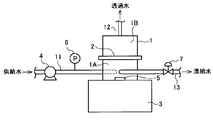
- the RO membrane supply water is supplied from the pipe 11 to the raw water chamber 1A below the flat membrane cell 2 in which the RO membrane of the sealed container 1 is set by the high pressure pump 4.
- the sealed container 1 is composed of a lower case 1a on the raw water chamber 1A side and an upper case 1b on the permeate water chamber 1B side, and a flat membrane is formed between the lower case 1a and the upper case 1b.
- the cell 2 is fixed via an O-ring 8.
- the flat membrane cell 2 is configured such that the permeate side of the RO membrane 2A is supported by the porous support plate 2B.
- the raw water chamber 1 ⁇ / b> A below the flat membrane cell 2 is stirred by rotating the stirring bar 5 with the stirrer 3.
- the RO membrane permeated water is taken out from the pipe 12 through the permeated water chamber 1B on the upper side of the flat membrane cell 2.
- the concentrated water is taken out from the pipe 13.
- the pressure in the sealed container 1 is adjusted by a pressure gauge 6 provided in the water supply pipe 11 and a pressure adjusting valve 7 provided in the concentrated water outlet pipe 13.
- the pressure applied to the film surface was adjusted to 0 to 0.6 MPa by the pressure adjusting valve 7.
- pure water was used when evaluating the pure water permeation flux.
- a 0.05 wt% aqueous sodium chloride solution was used as the feed solution.
- the pure water permeation flux was determined from the change in the weight of the permeate when pure water was passed.
- the desalting rate was calculated from the following equation from the conductivity of the permeate and the concentrated solution when a sodium chloride aqueous solution was passed.
- Desalination rate 1-conductivity of permeate / conductivity of concentrate
- Example 1 A phospholipid bimolecular membrane was formed on the support membrane for the above examples (coating membrane 3.5 layers) by the above method to produce a selective permeable membrane.
- Example 2 A selective permeable membrane was produced in the same manner as in Example 1 except that when forming the phospholipid bilayer membrane, POPC and POPG were immersed in a liposome dispersion prepared at a molar ratio of 3: 7.
- Example 3 After forming a phospholipid bilayer membrane in the same manner as in Example 1, the membrane surface was washed with an aqueous sodium hydroxide solution having a pH of 9.0 (alkali washing) to produce a selective permeable membrane.
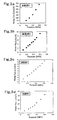
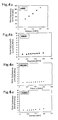
- FIGS. 4a to 4d show the pressure dependency of the permeation flux (Water flux) measured by the above evaluation method for the selective permeation membranes manufactured in Comparative Example 1, Example 1, Example 2, and Example 3. Each is shown. Further, based on FIG. 3, the permeation flux per 0.1 MPa was obtained, and the results plotted against the operating pressure are shown in FIGS. 4a to 4d, respectively.
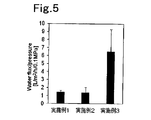
- Example 2 The result of measuring the permeation flow rate at a pressure of 0.1 MPa is shown in FIG.
- Example 2 the same permeability as in Example 1 was obtained, indicating that a membrane can be obtained even if the ratio of the anionic lipid is changed.
- Example 3 water permeability higher than that in Example 1 was obtained, which is considered to be because excess phospholipid was removed by alkali washing.
- the phospholipid membrane containing the channel substance can be stably supported on the support membrane, and high water permeability and pressure resistance can be obtained. As a result, it can be used as an RO membrane or forward osmosis membrane.
Landscapes
- Chemical & Material Sciences (AREA)
- Chemical Kinetics & Catalysis (AREA)
- Engineering & Computer Science (AREA)
- Water Supply & Treatment (AREA)
- Life Sciences & Earth Sciences (AREA)
- Environmental & Geological Engineering (AREA)
- Hydrology & Water Resources (AREA)
- Organic Chemistry (AREA)
- Dispersion Chemistry (AREA)
- Molecular Biology (AREA)
- Biochemistry (AREA)
- Health & Medical Sciences (AREA)
- Inorganic Chemistry (AREA)
- Separation Using Semi-Permeable Membranes (AREA)
Abstract
選択的透過性を有した支持膜と、該支持膜の表面に形成された、チャネル物質を含有する脂質膜とを有する選択性透過膜において、該支持膜が圧力0.1MPaにおいて20L/(m2・h)以上の透過流束と1%~20%の脱塩性能を有することを特徴とする選択性透過膜。
Description
本発明は、水処理分野で使用される選択性透過膜に係り、特に脂質膜よりなる被覆層を有する選択性透過膜に関する。本発明は、この選択性透過膜の製造方法と、この選択性透過膜を用いた水処理方法に関する。
海水、かん水の淡水化や、工業用水および超純水の製造、排水回収などの分野で、選択性透過膜として、逆浸透(RO)膜が広く用いられている。RO膜は、イオンや低分子有機物を高度に除去できるという利点を有する。しかし、RO膜処理は、精密濾過(MF)膜や限外濾過(UF)膜と比べ、高い運転圧力を必要とする。RO膜の透水性を高めるために、ポリアミドRO膜では、スキン層のひだ構造を制御し、表面積を大きくする工夫がなされてきた。
RO膜は、被処理水に含まれる生物代謝物などの有機物により汚染される。汚染が生じた膜は、透水性が低下するため、定期的な薬品洗浄が必要となる。洗浄の際にRO膜が劣化することで分離性能が低下する。
膜汚染を抑制する方法として、RO膜等の選択性透過膜を、リン脂質の親水基であるホスフォコリン基を有するポリマーで被覆する方法が知られている。バイオミメティックな表面が選択性透過膜上に形成され、生物代謝物による汚染を防止する効果が期待できる(特許文献1)。
近年、水分子を選択的に輸送する膜タンパク質であるアクアポリンが水チャネル物質として注目されている。このタンパク質を組み込んだリン脂質膜は、従来のポリアミドRO膜よりも理論上高い透水性を有する可能性が示唆されている(非特許文献1)。
水チャネル物質を組み込んだ脂質膜を有する選択性透過膜の製造方法として、以下の方法がある(特許文献2)。
1)水チャネル物質を組み込んだ脂質二分子膜を多孔質支持体でサンドイッチする方法。
2)多孔質支持体の孔内部に脂質二分子膜を組み込む方法。
3)疎水性膜周囲に脂質二分子膜を形成する方法。
1)水チャネル物質を組み込んだ脂質二分子膜を多孔質支持体でサンドイッチする方法。
2)多孔質支持体の孔内部に脂質二分子膜を組み込む方法。
3)疎水性膜周囲に脂質二分子膜を形成する方法。
脂質二分子膜を多孔質支持体でサンドイッチする方法では、以下の問題がある。
脂質膜の耐圧性は向上するが、被処理水と接触する多孔質支持体自体が汚染される。
多孔質支持体の中で濃度分極が発生して阻止率が大きく低下する。
多孔質支持体が抵抗となり透水性が低下するおそれがある。
脂質膜の耐圧性は向上するが、被処理水と接触する多孔質支持体自体が汚染される。
多孔質支持体の中で濃度分極が発生して阻止率が大きく低下する。
多孔質支持体が抵抗となり透水性が低下するおそれがある。
選択的透過性を有した膜本体の表面を水チャネル物質を組み込んだリン脂質膜で被覆し、このリン脂質膜を露出させた状態で分離層として機能させたRO膜は、リン脂質膜の耐圧性が課題となる。
特許文献3には、カチオン性のリン脂質を用いてナノろ過(NF)膜に強固に担持させることが記載されている。
特許文献3では支持膜がNF膜であり、緻密であるため、耐圧性は向上するが、NF膜自体の透水性が低いことにより、得られる膜の透過流束が低くなる。特許文献3で使用されているNF膜の純水透過流束は、圧力0.1MPaの時、11L/(m2・h)であり、脱塩率は50%~55%である。実施例で得られている、NF膜にチャネル物質を含むリン脂質膜を担持した選択性透過膜の純水透過流束は、圧力0.1MPaの時、0.8L/(m2・h)と、1L/(m2・h)以下である。
本発明は、透水性に優れた選択性透過膜と、この選択性透過膜の製造方法と、この選択性透過膜を用いた水処理方法を提供することを目的とする。
本発明の選択性透過膜は、選択的透過性を有した支持膜と、該支持膜の表面に形成された、チャネル物質を含有する脂質膜とを有する選択性透過膜において、該支持膜が圧力0.1MPaにおいて20L/(m2・h)以上の透過流束と1%~20%の脱塩性能を有することを特徴とするものである。
本発明の一態様では、前記支持膜が多孔質体と、該多孔質体を被覆する荷電性高分子層とを有する。
本発明の一態様では、前記荷電性高分子層は、交互に形成されたカチオン性高分子層とアニオン性高分子層とを有する。
本発明の一態様では、前記多孔質体がMF膜又はUF膜である。
本発明の一態様では、前記チャネル物質が、グラミシジン、アムモテリシンB、及びこれらの誘導体よりなる群から選ばれた少なくとも1つである。
本発明の選択性透過膜の製造方法は、前記支持膜上に前記脂質膜を形成する工程と、余分な脂質を酸又はアルカリで除去する工程とを有する。
本発明の水処理方法は、本発明の選択性透過膜を用いることを特徴とする。
本発明では、支持膜として、圧力0.1MPaにおいて20L/(m2・h)以上の透過流束と1%~20%の脱塩性能を有するものを用いており、選択性透過膜が透水性に優れたものとなる。即ち、この支持膜を用いることで、透過流束が支持膜の透過流束に依存することなく、また、脂質膜を保持することが可能となり、高い透過流束と耐圧性を有する選択性透過膜が得られる。
本発明の選択性透過膜は、選択的透過性を有した支持膜と、該支持膜の表面に形成された、チャネル物質を含有する脂質膜とを有する。この支持膜は、圧力0.1MPaにおいて20L/(m2・h)以上の透過流束と1%~20%の脱塩性能を有する。
特許文献3と同じ条件で、支持膜としてMF膜やUF膜を使用すると、チャネル物質を含むリン脂質膜を担持した時の耐圧性は、0.1MPa以下となる。
本発明では、支持膜として、圧力0.1MPaの時に20L/(m2・h)以上、好ましくは20~200L/(m2・h)、特に好ましくは20~100L/(m2・h)の純水透過流束と、脱塩率1~20%を有する支持膜を用いる。この支持膜は、NF膜とUF膜との中間の特性を有する。かかる支持膜を用いることにより、選択性透過膜の透過流束を高く維持しつつ、耐圧性を向上させることができる。
[支持膜]
支持膜としては、多孔質体の表面に交互積層(LBL)法によりカチオン性高分子とアニオン性高分子とを交互に被覆させたものを用いてもよい。LBL法は、カチオン性高分子とアニオン性高分子を高分子間の静電相互作用を用いて交互に吸着、積層することで、層の厚さをnmレベルで制御可能な手法である。LBL法によれば、透過流束と耐圧性を変化させることができる。
支持膜としては、多孔質体の表面に交互積層(LBL)法によりカチオン性高分子とアニオン性高分子とを交互に被覆させたものを用いてもよい。LBL法は、カチオン性高分子とアニオン性高分子を高分子間の静電相互作用を用いて交互に吸着、積層することで、層の厚さをnmレベルで制御可能な手法である。LBL法によれば、透過流束と耐圧性を変化させることができる。
多孔質体は、特に限定されるものではない。多孔質体としては、例えばセルロース混合エステル膜、酢酸セルロース膜、ポリエーテルスルホン膜、ポリフッ化ビニリデン膜などの高分子膜や、シリカ膜、ゼオライト膜、アルミナ膜などの無機膜など、水処理やガス分離に広く用いられる多孔膜を用いることができる。多孔質体としては、MF膜又はUF膜が好適である。
LBL法では、好ましくは、多孔質体表面にカチオン性高分子を塗布し、洗浄する。この状態を0.5層膜とする。カチオン性高分子は、特に限定されない。カチオン性高分子としては、例えば4級アンモニウム基を有するポリジアリルジメチルアンモニウムクロリド(PDADMAC)、アミノ基を有するポリビニルアミジン、ポリエチレンイミン、ポリアリルアミン、ポリリジン、キトサンなどを用いることができる。
次に、アニオン性高分子を塗布し、洗浄する。この状態を1.0層膜とする。アニオン性高分子は、特に限定されない。アニオン性高分子としては、例えばスルホン酸基を有するポリスチレンスルホン酸ナトリウム(PSS)、ポリビニルスルホン酸ナトリウム、カルボン酸基を有するポリアクリル酸ナトリウム、ポリメタクリル酸ナトリウム、アルギン酸ナトリウムなどを用いることができる。
更に、カチオン性高分子を塗布し、洗浄することで、最表面がカチオン性の1.5層膜を得る。これらの操作により、多孔質体上にカチオン性高分子層とアニオン性高分子層との交互被覆層を形成した支持膜が製造される。カチオン性高分子層とアニオン性高分子層との合計の層数は1~5特に2~4程度が好ましい。
[脂質膜]
支持膜上に形成する脂質膜としては、リン脂質二分子膜が好ましい。支持膜表面にリン脂質二分子膜を形成する方法としては、ラングミュア-ブロジェット法、リポソーム融合法が挙げられる。リポソーム融合法では、上記のようにして得られた支持膜を、膜表面と反対の電荷を有する脂質を含むリポソームの分散液に浸漬させることで、静電的相互作用により支持膜上にリン脂質二分子膜を形成する。
支持膜上に形成する脂質膜としては、リン脂質二分子膜が好ましい。支持膜表面にリン脂質二分子膜を形成する方法としては、ラングミュア-ブロジェット法、リポソーム融合法が挙げられる。リポソーム融合法では、上記のようにして得られた支持膜を、膜表面と反対の電荷を有する脂質を含むリポソームの分散液に浸漬させることで、静電的相互作用により支持膜上にリン脂質二分子膜を形成する。
リポソームの調製方法としては静置水和法、超音波法、エクストルージョン法など、一般的な手法を用いることができる。均一に製膜する観点から、単一膜のリポソームを用いることが好ましく、単一膜のリポソームの調製が容易なエクストルージョン法を用いることが好ましい。
リポソームを構成するリン脂質は、特に限定されない。リポソームを構成するリン脂質は、上記のようにして得られた支持膜の表面電位がカチオン性の場合はアニオン性脂質を、アニオン性の場合にはカチオン性脂質を含むことが好ましい。リポソームを構成するリン脂質は、リポソームの安定性、及び製膜性の観点から、10~90mol%の範囲で中性脂質を含むことが好ましい。
アニオン性脂質は、特に限定されない。アニオン性脂質としては、1-パルミトイル-2-オレオイルホスファチジルグリセロール、1,2-ジオレオイルホスファチジルグリセロール、1,2-ジパルミトイルホスファチジルグリセロール、1-パルミトイル-2-オレオイルホスファチジン酸、1,2-ジオレオイルホスファチジン酸、1,2-ジパルミトイルホスファチジン酸、1-パルミトイル-2-オレオイルホスファチジルセリン、1,2-ジオレオイルホスファチジルセリン、1,2-ジパルミトイルホスファチジルセリン、1-パルミトイル-2-オレオイルホスファチジルイノシトール、1,2-ジオレオイルホスファチジルイノシトール、1,2-ジパルミトイルホスファチジルイノシトール、1’,3’-ビス[1,2-ジオレオイル-sn-グリセロ-3-ホスフォ]-sn-グリセロール、1’,3’-ビス[1,2-ジパルミトイル-sn-グリセロ-3-ホスフォ]-sn-グリセロールなどを用いることができる。
カチオン性脂質は、特に限定されない。カチオン性脂質としては、1,2-ジオレオイル-3-トリメチルアンモニウムプロパン、1,2-パルミトイル-3-トリメチルアンモニウムプロパン、1-パルミトイル-2-オレオイル-sn-グリセロ-3-エチルホスホコリン、1,2-ジオレオイル-sn-グリセロ-3-エチルホスホコリン、1,2-ジパルミトイル-sn-グリセロ-3-エチルホスホコリン、3β-[N-(N’,N’-ジメチルアミノエタン)-カルバモイル]コレステロール塩酸塩などを用いることができる。
中性脂質は、特に限定されない。中性脂質としては、1-パルミトイル-2-オレオイルホスファチジルコリン、1,2-ジオレオイルホスファチジルコリン、1,2-ジパルミトイルホスファチジルコリン、1-パルミトイル-2-オレオイルホスファチジルエタノールアミン、1,2-ジオレオイルホスファチジルエタノールアミン、1,2-ジパルミトイルホスファチジルエタノールアミン、コレステロール、エルゴステロールなどを用いることができる。
アルキル基等の炭化水素基を有する脂質を用いる場合、炭素数12-24のアルキル基等の炭化水素基を有する脂質であることが好ましい。この炭化水素基は1-3個の二重結合、もしくは三重結合を有していても良い。
チャネル物質としては、アクアポリン、グラミシジン、アムホテリシンB、あるいはそれらの誘導体などを用いることができる。
チャネル物質のリポソームへの導入方法としては、リポソーム調製段階にあらかじめ混合する方法や、製膜後に添加する方法などを用いることができる。
リポソーム融合法によってリン脂質二分子膜を形成するに際しては、まずリン脂質を好ましくはチャネル物質と共に溶媒に溶解させる。溶媒としては、クロロホルム、クロロホルム/メタノール混合液などを用いることができる。
リン脂質とチャネル物質との混合割合は、これらの合計に占めるチャネル物質の割合が1~20モル%特に3~10モル%となる程度が好適である。
次に、リン脂質とチャネル物質との0.25~10mM特に0.5~5mMの溶液を調製し、減圧乾燥させることにより、乾燥脂質膜を得、これに純水を添加し、リン脂質の相転移温度よりも高い温度とすることにより、球殻形状を有したリポソームの分散液とする。
本発明で用いるリポソーム分散液のリポソームの平均粒径は、好ましくは0.05~5μm、特に好ましくは0.05~0.4μmである。
リポソーム分散液と支持膜とを接触させ、このリポソーム分散液に接触させた状態に0.5~6Hr特に1~3Hr程度保つことにより、膜本体の表面にリポソームを吸着させ、リン脂質二分子膜の被覆層を形成する。その後、被覆層付きの膜本体を溶液から引き上げ、必要に応じ余分な脂質を酸又はアルカリで除去し、次いで超純水又は純水で水洗することにより、リン脂質二分子膜の被覆層を有した選択性透過膜が得られる。
リン脂質二分子膜の厚さは1~10層特に1~3層程度であることが好ましい。このリン脂質二分子膜の表面に、ポリアクリル酸、ポリスチレンスルホン酸、タンニン酸、ポリアミノ酸、ポリエチレンイミン、キトサンなどのリン脂質と反対の電荷を有する物質を吸着させてもよい。
本発明の選択性透過膜を用い、逆浸透膜処理又は正浸透膜処理で透過水を得る場合、駆動圧力0.05~3MPaの範囲で、透水量1×10-11m3m-2s-1Pa-1以上を得ることができる。
本発明の選択性透過膜の用途としては、海水、かん水の脱塩処理、工水、下水、水道水の浄化処理の他、ファインケミカル、医薬、食品の濃縮などの用途が例示される。被処理水の温度は10~40℃特に15~35℃程度が好ましい。
以下、実施例及び比較例について説明する。まず、支持膜の製造材料、製造方法及び膜の特性評価方法等について説明する。
[多孔質体(膜本体)]
以下の実施例及び比較例では、多孔質体(膜本体)として、セルロース混合エステル膜(直径25mm、孔径0.05μm、ミリポア社製)を用いた。
以下の実施例及び比較例では、多孔質体(膜本体)として、セルロース混合エステル膜(直径25mm、孔径0.05μm、ミリポア社製)を用いた。
[荷電性高分子]
カチオン性高分子としてポリジアリルジメチルアンモニウムクロリド(PDADMAC、平均分子量40万~50万、シグマアルドリッチ)を用いた。
アニオン性高分子としてポリスチレンスルホン酸ナトリウム(PSS、平均分子量20万、シグマアルドリッチ)を用いた。
カチオン性高分子としてポリジアリルジメチルアンモニウムクロリド(PDADMAC、平均分子量40万~50万、シグマアルドリッチ)を用いた。
アニオン性高分子としてポリスチレンスルホン酸ナトリウム(PSS、平均分子量20万、シグマアルドリッチ)を用いた。
[支持膜の作製]
<比較例1に用いる支持膜>
多孔質体(膜本体)を真空プラズマ装置(YHS-R、魁半導体社製)を用いて1分間処理した。プラズマ処理した膜本体を1g/LのPDADMAC(ポリジアリルジメチルアンモニウムクロリド)水溶液に5分間浸漬し、純水で1分間洗浄した(0.5層膜)。次に、1g/LのPSS(ポリスチレンスルホン酸ナトリウム)水溶液に5分間浸漬し、純水で1分間洗浄した(1.0層膜)。更に、1g/LのPDADMAC水溶液に5分間浸漬し、純水で1分間洗浄した(1.5層膜)。得られた膜を、10mmol/Lの硫酸マグネシウム水溶液に1時間浸漬した後、純水で洗浄し、リン脂質層を形成させる膜として用いた。
<比較例1に用いる支持膜>
多孔質体(膜本体)を真空プラズマ装置(YHS-R、魁半導体社製)を用いて1分間処理した。プラズマ処理した膜本体を1g/LのPDADMAC(ポリジアリルジメチルアンモニウムクロリド)水溶液に5分間浸漬し、純水で1分間洗浄した(0.5層膜)。次に、1g/LのPSS(ポリスチレンスルホン酸ナトリウム)水溶液に5分間浸漬し、純水で1分間洗浄した(1.0層膜)。更に、1g/LのPDADMAC水溶液に5分間浸漬し、純水で1分間洗浄した(1.5層膜)。得られた膜を、10mmol/Lの硫酸マグネシウム水溶液に1時間浸漬した後、純水で洗浄し、リン脂質層を形成させる膜として用いた。
<実施例1に用いる支持膜>
上記1.5層膜を形成した後、さらに上記のPDADMACとPSSの製膜を交互に行い、最表面がカチオン性の積層膜3.5層膜を有する支持膜を得た。
上記1.5層膜を形成した後、さらに上記のPDADMACとPSSの製膜を交互に行い、最表面がカチオン性の積層膜3.5層膜を有する支持膜を得た。
操作圧力0.1MPaの時の各支持膜の純水透過流束と脱塩率を表1に示す。
この特性は、後述の評価方法によって測定した。
この特性は、後述の評価方法によって測定した。

比較例用支持膜では、LBL法での層数が少ないため、十分な被覆層が形成されておらず、純水透過流束は高いが脱塩率が得られていない。一方、実施例用支持膜では、十分な純水透過流束と脱塩率が得られている。
[リン脂質二分子膜の形成]
<リン脂質>
アニオン性リン脂質として、1-パルミトイル-2-オレイル-sn-グリセロ-3-ホスホ-(1’-rac-グリセロール)(ナトリウム塩)(POPG、日油社製)を用いた。中性リン脂質として1-パルミトイル-2-オレイル-sn-グリセロ-3-ホスホコリン(POPC、日油社製)を用いた。
<リン脂質>
アニオン性リン脂質として、1-パルミトイル-2-オレイル-sn-グリセロ-3-ホスホ-(1’-rac-グリセロール)(ナトリウム塩)(POPG、日油社製)を用いた。中性リン脂質として1-パルミトイル-2-オレイル-sn-グリセロ-3-ホスホコリン(POPC、日油社製)を用いた。
<チャネル物質>
チャネル物質としては、グラミシジンA(GA、シグマアルドリッチ社製)を用いた。
チャネル物質としては、グラミシジンA(GA、シグマアルドリッチ社製)を用いた。
<リポソーム分散液の調製>
POPCとPOPGを7:3のモル比でクロロホルムに溶解し(合計の濃度95mol%)、この溶液にトリフルオロエタノールに溶解したGAをGA濃度がリン脂質に対して5mol%になるように混合し、エバポレーターにより有機溶媒を蒸発させた。容器内に残存した乾燥脂質薄膜に純水を添加し、45℃で水和させることで、リポソーム分散液を調製した。得られたリポソーム分散液は、液体窒素と45℃の湯浴に交互に浸漬操作を5回繰り返す凍結融解法により、粒成長させた。リポソーム分散液は孔径0.1μmのポリカーボネートトラックエッチング膜(Nucrepore、GEヘルスケア社製)を用い、押し出し整粒し、脂質濃度が0.4mmol/Lになるよう純水で希釈してリポソーム分散液を調製した。
POPCとPOPGを7:3のモル比でクロロホルムに溶解し(合計の濃度95mol%)、この溶液にトリフルオロエタノールに溶解したGAをGA濃度がリン脂質に対して5mol%になるように混合し、エバポレーターにより有機溶媒を蒸発させた。容器内に残存した乾燥脂質薄膜に純水を添加し、45℃で水和させることで、リポソーム分散液を調製した。得られたリポソーム分散液は、液体窒素と45℃の湯浴に交互に浸漬操作を5回繰り返す凍結融解法により、粒成長させた。リポソーム分散液は孔径0.1μmのポリカーボネートトラックエッチング膜(Nucrepore、GEヘルスケア社製)を用い、押し出し整粒し、脂質濃度が0.4mmol/Lになるよう純水で希釈してリポソーム分散液を調製した。
<POPC/POPG被覆膜の製膜>
このリポソーム分散液中に、上記の支持膜を40℃で2時間浸漬させることで、支持膜にリン脂質を吸着させた。その後、純水で洗浄することにより、支持膜に余分に吸着したリン脂質を剥がし、POPC/POPG被覆膜を製膜して選択性透過膜を製造した。
このリポソーム分散液中に、上記の支持膜を40℃で2時間浸漬させることで、支持膜にリン脂質を吸着させた。その後、純水で洗浄することにより、支持膜に余分に吸着したリン脂質を剥がし、POPC/POPG被覆膜を製膜して選択性透過膜を製造した。
[膜の特性の評価方法]
図1,2に示す平膜試験装置を用いて膜の耐圧性を評価した。
図1,2に示す平膜試験装置を用いて膜の耐圧性を評価した。
この平膜試験装置において、RO膜供給水は、配管11より高圧ポンプ4で、密閉容器1のRO膜をセットした平膜セル2の下側の原水室1Aに供給される。図2に示すように、密閉容器1は、原水室1A側の下ケース1aと、透過水室1B側の上ケース1bとで構成され、下ケース1aと上ケース1bとの間に、平膜セル2がOリング8を介して固定されている。平膜セル2はRO膜2Aの透過水側が多孔質支持板2Bで支持された構成とされている。平膜セル2の下側の原水室1A内はスターラー3で撹拌子5を回転させることにより撹拌される。RO膜透過水は平膜セル2の上側の透過水室1Bを経て配管12より取り出される。濃縮水は配管13より取り出される。密閉容器1内の圧力は、給水配管11に設けた圧力計6と、濃縮水取出配管13に設けた圧力調整バルブ7により調整される。
圧力調整バルブ7により、膜表面にかかる圧力を0~0.6MPaに調整した。供給液には、純水透過流束を評価する場合は純水を用いた。脱塩率を評価する場合は0.05wt%の塩化ナトリウム水溶液を供給液として用いた。純水を通水した時の透過液の重量変化から純水透過流束を求めた。塩化ナトリウム水溶液を通水した時の透過液と濃縮液の電導度から以下の式より脱塩率を求めた。
脱塩率=1-透過液の電導度/濃縮液の電導度
脱塩率=1-透過液の電導度/濃縮液の電導度
[比較例1]
上記比較例用支持膜(被覆膜1.5層)に上記方法によりリン脂質二分子膜を形成し、選択性透過膜を製造した。
上記比較例用支持膜(被覆膜1.5層)に上記方法によりリン脂質二分子膜を形成し、選択性透過膜を製造した。
[実施例1]
上記実施例用支持膜(被覆膜3.5層)に上記方法によりリン脂質二分子膜を形成し、選択性透過膜を製造した。
上記実施例用支持膜(被覆膜3.5層)に上記方法によりリン脂質二分子膜を形成し、選択性透過膜を製造した。
[実施例2]
リン脂質二分子膜を形成する際、POPCとPOPGを3:7のモル比で調製したリポソーム分散液に浸漬させたこと以外は実施例1と同様にして、選択性透過膜を製造した。
リン脂質二分子膜を形成する際、POPCとPOPGを3:7のモル比で調製したリポソーム分散液に浸漬させたこと以外は実施例1と同様にして、選択性透過膜を製造した。
[実施例3]
実施例1と同様にリン脂質二分子膜を形成後、pH9.0の水酸化ナトリウム水溶液を用いて膜表面を洗浄し(アルカリ洗浄)、選択性透過膜を製造した。
実施例1と同様にリン脂質二分子膜を形成後、pH9.0の水酸化ナトリウム水溶液を用いて膜表面を洗浄し(アルカリ洗浄)、選択性透過膜を製造した。
比較例1、実施例1、実施例2、実施例3により製造した選択性透過膜について、上記評価方法によって測定した透過流束(Water flux)の圧力(Pressure)依存性を図3a~3dにそれぞれ示す。また、図3に基づいて、0.1MPa当りの透過流束を求め、操作圧力に対してプロットした結果を図4a~dにそれぞれ示す。
図3a~3dより、比較例1、実施例1、実施例2、実施例3、共に、0.1MPaの圧力で1L/(m 2 ・h)以上の透過流束が得られている。図4aより、比較例1では、0.1MPa当りの透過流束が圧力によって変化しており、膜の破壊が進行していると考えられる。一方、図4b,4c,4dより、実施例1、実施例2、実施例3では、0.6MPaにおいても透過流束は一定に保たれており、膜が耐圧性を有していることが分かる。実施例の場合はLBLによる被覆層形成で脱塩性能が発現しているため、リン脂質二分子膜の構造を保持することができるようになったと考えられる。脱塩率を測定したところ、比較例1では0%であったのに対し、実施例2では96%であった。チャネル物質であるGAにより水分子が透過する一方で、リン脂質二分子膜により、塩化ナトリウムが阻止されたためであると考えられる。
0.1MPaの圧力で透過流速を測定した結果を図5に示す。実施例2では、実施例1と同様の透過性が得られており、アニオン性脂質の比率を変化させても膜が得られることを示している。実施例3では、実施例1より高い透水性が得られており、アルカリ洗浄により余分なリン脂質が除去されたためであると考えられる。
以上の実施例及び比較例から明らかな通り、本発明によると、チャネル物質を含むリン脂質膜を支持膜に安定に担持することができ、高い透水性と耐圧性を得ることができる。その結果、RO膜や正浸透膜としての使用が可能となる。
本発明を特定の態様を用いて詳細に説明したが、本発明の意図と範囲を離れることなく様々な変更が可能であることは当業者に明らかである。
本出願は、2017年2月17日付で出願された日本特許出願2017-028152に基づいており、その全体が引用により援用される。
本出願は、2017年2月17日付で出願された日本特許出願2017-028152に基づいており、その全体が引用により援用される。
Claims (8)
- 選択的透過性を有した支持膜と、該支持膜の表面に形成された、チャネル物質を含有する脂質膜とを有する選択性透過膜において、該支持膜が圧力0.1MPaにおいて20L/(m2・h)以上の透過流束と1%~20%の脱塩性能を有することを特徴とする選択性透過膜。
- 0.1MPaにおいて1L/(m2・h)以上の透過流束と90%以上の脱塩性能を有することを特徴とする請求項1に記載の選択性透過膜。
- 前記支持膜が多孔質体と、該多孔質体を被覆する荷電性高分子層とを有することを特徴とする請求項1又は2に記載の選択性透過膜。
- 前記荷電性高分子層は、交互に形成されたカチオン性高分子層とアニオン性高分子層とを有することを特徴とする請求項3に記載の選択性透過膜。
- 前記多孔質体がMF膜又はUF膜であることを特徴とする請求項3又は4に記載の選択性透過膜。
- 前記チャネル物質が、グラミシジン、アムモテリシンB、及びこれらの誘導体よりなる群から選ばれた少なくとも1つであることを特徴とする請求項1~5のいずれか1項に記載の選択性透過膜。
- 請求項1~6のいずれか1項に記載の選択性透過膜を製造する方法であって、前記支持膜上に前記脂質膜を形成する工程と、余分な脂質を酸又はアルカリで除去する工程とを有する選択性透過膜の製造方法。
- 請求項1~6のいずれか1項に記載の選択性透過膜を用いて被処理水を膜分離処理する工程を有する水処理方法。
Priority Applications (5)
| Application Number | Priority Date | Filing Date | Title |
|---|---|---|---|
| SG11201907340VA SG11201907340VA (en) | 2017-02-17 | 2017-08-08 | Permselective membrane and method for producing the same, and method for treating water |
| CN201780086754.5A CN110382094A (zh) | 2017-02-17 | 2017-08-08 | 选择性透过膜、其制造方法及水处理方法 |
| US16/484,543 US20200055000A1 (en) | 2017-02-17 | 2017-08-08 | Permselective membrane and method for producing the same, and method for treating water |
| KR1020197022395A KR102329019B1 (ko) | 2017-02-17 | 2017-08-08 | 선택성 투과막, 그 제조 방법 및 수처리 방법 |
| US17/690,621 US20220193619A1 (en) | 2017-02-17 | 2022-03-09 | Method for producing permselective membrane |
Applications Claiming Priority (2)
| Application Number | Priority Date | Filing Date | Title |
|---|---|---|---|
| JP2017028152A JP6265287B1 (ja) | 2017-02-17 | 2017-02-17 | 選択性透過膜、その製造方法及び水処理方法 |
| JP2017-028152 | 2017-02-17 |
Related Child Applications (2)
| Application Number | Title | Priority Date | Filing Date |
|---|---|---|---|
| US16/484,543 A-371-Of-International US20200055000A1 (en) | 2017-02-17 | 2017-08-08 | Permselective membrane and method for producing the same, and method for treating water |
| US17/690,621 Division US20220193619A1 (en) | 2017-02-17 | 2022-03-09 | Method for producing permselective membrane |
Publications (1)
| Publication Number | Publication Date |
|---|---|
| WO2018150608A1 true WO2018150608A1 (ja) | 2018-08-23 |
Family
ID=61020783
Family Applications (1)
| Application Number | Title | Priority Date | Filing Date |
|---|---|---|---|
| PCT/JP2017/028721 Ceased WO2018150608A1 (ja) | 2017-02-17 | 2017-08-08 | 選択性透過膜、その製造方法及び水処理方法 |
Country Status (6)
| Country | Link |
|---|---|
| US (2) | US20200055000A1 (ja) |
| JP (1) | JP6265287B1 (ja) |
| KR (1) | KR102329019B1 (ja) |
| CN (1) | CN110382094A (ja) |
| SG (1) | SG11201907340VA (ja) |
| WO (1) | WO2018150608A1 (ja) |
Cited By (2)
| Publication number | Priority date | Publication date | Assignee | Title |
|---|---|---|---|---|
| JP2021010885A (ja) * | 2019-07-08 | 2021-02-04 | 栗田工業株式会社 | 選択性透過膜、選択性透過膜の製造方法および水処理方法 |
| JP2021010884A (ja) * | 2019-07-08 | 2021-02-04 | 栗田工業株式会社 | 選択性透過膜の製造方法および水処理方法 |
Families Citing this family (6)
| Publication number | Priority date | Publication date | Assignee | Title |
|---|---|---|---|---|
| JP6939742B2 (ja) * | 2018-03-29 | 2021-09-22 | 栗田工業株式会社 | 選択性透過膜、その製造方法及び水処理方法 |
| WO2019187870A1 (ja) * | 2018-03-29 | 2019-10-03 | 栗田工業株式会社 | 選択性透過膜、その製造方法及び水処理方法 |
| EP4023327A4 (en) * | 2019-08-26 | 2023-09-20 | Sumitomo Chemical Company Limited | Acidic gas separation membrane, acidic gas separation device, method for producing acidic gas separation membrane, and acidic gas separation method |
| CN111871234B (zh) * | 2020-07-13 | 2022-09-16 | 广东溢达纺织有限公司 | 一种疏松纳滤膜及其制备方法和应用 |
| CN117244412A (zh) * | 2023-07-27 | 2023-12-19 | 率氢技术(北京)股份有限公司 | 一种反渗透膜片及其制备方法 |
| CN120115020B (zh) * | 2025-04-01 | 2026-03-03 | 华北理工大学 | 一种疏水仿生膜及其制备方法和应用 |
Citations (3)
| Publication number | Priority date | Publication date | Assignee | Title |
|---|---|---|---|---|
| JP2008540108A (ja) * | 2005-05-20 | 2008-11-20 | アクアポリン エーピーエス | 水を濾過する膜 |
| JP2014100645A (ja) * | 2012-11-19 | 2014-06-05 | Kurita Water Ind Ltd | 選択性透過膜及びその製造方法 |
| JP2016159268A (ja) * | 2015-03-04 | 2016-09-05 | 栗田工業株式会社 | 水処理用選択性透過膜及びその製造方法 |
Family Cites Families (4)
| Publication number | Priority date | Publication date | Assignee | Title |
|---|---|---|---|---|
| GB2264146B (en) | 1992-02-13 | 1995-08-09 | Ihw Eng Ltd | A seat including a seat reclining mechanism |
| WO2010095139A1 (en) * | 2009-02-19 | 2010-08-26 | Ben-Gurion University Of The Negev Research And Development Authority | Chemically resistant membranes, coatings and films and methods for their preparation |
| CN105517960A (zh) * | 2013-10-04 | 2016-04-20 | 栗田工业株式会社 | 超纯水制造装置 |
| CN105214512B (zh) * | 2015-10-29 | 2018-06-15 | 中国科学院宁波材料技术与工程研究所 | 一种载体表面氧化石墨烯膜的制备方法及其应用 |
-
2017
- 2017-02-17 JP JP2017028152A patent/JP6265287B1/ja active Active
- 2017-08-08 CN CN201780086754.5A patent/CN110382094A/zh active Pending
- 2017-08-08 KR KR1020197022395A patent/KR102329019B1/ko active Active
- 2017-08-08 US US16/484,543 patent/US20200055000A1/en not_active Abandoned
- 2017-08-08 SG SG11201907340VA patent/SG11201907340VA/en unknown
- 2017-08-08 WO PCT/JP2017/028721 patent/WO2018150608A1/ja not_active Ceased
-
2022
- 2022-03-09 US US17/690,621 patent/US20220193619A1/en not_active Abandoned
Patent Citations (3)
| Publication number | Priority date | Publication date | Assignee | Title |
|---|---|---|---|---|
| JP2008540108A (ja) * | 2005-05-20 | 2008-11-20 | アクアポリン エーピーエス | 水を濾過する膜 |
| JP2014100645A (ja) * | 2012-11-19 | 2014-06-05 | Kurita Water Ind Ltd | 選択性透過膜及びその製造方法 |
| JP2016159268A (ja) * | 2015-03-04 | 2016-09-05 | 栗田工業株式会社 | 水処理用選択性透過膜及びその製造方法 |
Non-Patent Citations (1)
| Title |
|---|
| WANG MIAOQI ET AL.: "Layer-by-Layer Assembly of Aquaporin Z-Incorporated Biomimetic Membranes for Water Purification", ENVIRONMENTAL SCIENCE & TECHNOLOGY, vol. 49, no. 6, 17 March 2015 (2015-03-17), pages 3761 - 3768, XP055360904 * |
Cited By (4)
| Publication number | Priority date | Publication date | Assignee | Title |
|---|---|---|---|---|
| JP2021010885A (ja) * | 2019-07-08 | 2021-02-04 | 栗田工業株式会社 | 選択性透過膜、選択性透過膜の製造方法および水処理方法 |
| JP2021010884A (ja) * | 2019-07-08 | 2021-02-04 | 栗田工業株式会社 | 選択性透過膜の製造方法および水処理方法 |
| JP7251369B2 (ja) | 2019-07-08 | 2023-04-04 | 栗田工業株式会社 | 選択性透過膜の製造方法および水処理方法 |
| JP7251370B2 (ja) | 2019-07-08 | 2023-04-04 | 栗田工業株式会社 | 選択性透過膜、選択性透過膜の製造方法および水処理方法 |
Also Published As
| Publication number | Publication date |
|---|---|
| CN110382094A (zh) | 2019-10-25 |
| US20220193619A1 (en) | 2022-06-23 |
| JP2018130703A (ja) | 2018-08-23 |
| KR20190111048A (ko) | 2019-10-01 |
| US20200055000A1 (en) | 2020-02-20 |
| SG11201907340VA (en) | 2019-09-27 |
| JP6265287B1 (ja) | 2018-01-24 |
| KR102329019B1 (ko) | 2021-11-18 |
Similar Documents
| Publication | Publication Date | Title |
|---|---|---|
| JP6265287B1 (ja) | 選択性透過膜、その製造方法及び水処理方法 | |
| Li et al. | Recent developments in reverse osmosis desalination membranes | |
| TWI793280B (zh) | 選擇性透過膜、其製造方法以及水處理方法 | |
| JP6028533B2 (ja) | 選択性透過膜の製造方法 | |
| Li et al. | Influence of silica nanospheres on the separation performance of thin film composite poly (piperazine-amide) nanofiltration membranes | |
| Sun et al. | A layer-by-layer self-assembly approach to developing an aquaporin-embedded mixed matrix membrane | |
| Fang et al. | Interfacially polymerized composite nanofiltration hollow fiber membranes for low-pressure water softening | |
| Ding et al. | Fabrication of an aquaporin-based forward osmosis membrane through covalent bonding of a lipid bilayer to a microporous support | |
| Xu et al. | Surface modification of thin-film-composite polyamide membranes for improved reverse osmosis performance | |
| Chen et al. | Enhanced performance of cellulose triacetate membranes using binary mixed additives for forward osmosis desalination | |
| Saeki et al. | Reverse osmosis membranes based on a supported lipid bilayer with gramicidin A water channels | |
| CN113766966B (zh) | 复合膜及其制造方法 | |
| CN107206331B (zh) | 选择性透过膜及其制造方法 | |
| JP7011137B2 (ja) | 選択性透過膜及びその製造方法、該選択性透過膜を用いる水処理方法 | |
| JP6642860B2 (ja) | 水処理分離膜およびその製造方法 | |
| CN105268325A (zh) | 用不同的试剂溶液设计制备中空纤维纳米过滤膜复合物的逐步界面聚合技术 | |
| WO2019187870A1 (ja) | 選択性透過膜、その製造方法及び水処理方法 | |
| JP7251369B2 (ja) | 選択性透過膜の製造方法および水処理方法 | |
| JP7251370B2 (ja) | 選択性透過膜、選択性透過膜の製造方法および水処理方法 | |
| Seman et al. | Polyester thin film composite nanofiltration membranes prepared by interfacial polymerization technique for removal of humic acid | |
| Hatakeyama | Design and development of new polymer membranes for water filtration applications | |
| SE1950252A1 (en) | Stabilized filtration device | |
| Liu | Development of novel layer-by-layer assembled nanofiltration hollow fiber membranes for water treatment |
Legal Events
| Date | Code | Title | Description |
|---|---|---|---|
| 121 | Ep: the epo has been informed by wipo that ep was designated in this application |
Ref document number: 17896596 Country of ref document: EP Kind code of ref document: A1 |
|
| ENP | Entry into the national phase |
Ref document number: 20197022395 Country of ref document: KR Kind code of ref document: A |
|
| NENP | Non-entry into the national phase |
Ref country code: DE |
|
| 122 | Ep: pct application non-entry in european phase |
Ref document number: 17896596 Country of ref document: EP Kind code of ref document: A1 |