WO2018074760A1 - 감나무 묵은 꽃받침에서 분리한 메치니코비아 퍼시모네시스 균주 kiom_g15050 신규 효모 및 이의 용도 - Google Patents
감나무 묵은 꽃받침에서 분리한 메치니코비아 퍼시모네시스 균주 kiom_g15050 신규 효모 및 이의 용도 Download PDFInfo
- Publication number
- WO2018074760A1 WO2018074760A1 PCT/KR2017/010681 KR2017010681W WO2018074760A1 WO 2018074760 A1 WO2018074760 A1 WO 2018074760A1 KR 2017010681 W KR2017010681 W KR 2017010681W WO 2018074760 A1 WO2018074760 A1 WO 2018074760A1
- Authority
- WO
- WIPO (PCT)
- Prior art keywords
- strain
- persimmonesis
- kiom
- metschnikowia
- persimmon
- Prior art date
- Legal status (The legal status is an assumption and is not a legal conclusion. Google has not performed a legal analysis and makes no representation as to the accuracy of the status listed.)
- Ceased
Links
Images




Classifications
-
- A—HUMAN NECESSITIES
- A01—AGRICULTURE; FORESTRY; ANIMAL HUSBANDRY; HUNTING; TRAPPING; FISHING
- A01N—PRESERVATION OF BODIES OF HUMANS OR ANIMALS OR PLANTS OR PARTS THEREOF; BIOCIDES, e.g. AS DISINFECTANTS, AS PESTICIDES OR AS HERBICIDES; PEST REPELLANTS OR ATTRACTANTS; PLANT GROWTH REGULATORS
- A01N63/00—Biocides, pest repellants or attractants, or plant growth regulators containing microorganisms, viruses, microbial fungi, animals or substances produced by, or obtained from, microorganisms, viruses, microbial fungi or animals, e.g. enzymes or fermentates
- A01N63/30—Microbial fungi; Substances produced thereby or obtained therefrom
- A01N63/32—Yeast
-
- C—CHEMISTRY; METALLURGY
- C12—BIOCHEMISTRY; BEER; SPIRITS; WINE; VINEGAR; MICROBIOLOGY; ENZYMOLOGY; MUTATION OR GENETIC ENGINEERING
- C12N—MICROORGANISMS OR ENZYMES; COMPOSITIONS THEREOF; PROPAGATING, PRESERVING, OR MAINTAINING MICROORGANISMS; MUTATION OR GENETIC ENGINEERING; CULTURE MEDIA
- C12N1/00—Microorganisms; Compositions thereof; Processes of propagating, maintaining or preserving microorganisms or compositions thereof; Processes of preparing or isolating a composition containing a microorganism; Culture media therefor
- C12N1/14—Fungi; Culture media therefor
- C12N1/145—Fungi isolates
-
- C—CHEMISTRY; METALLURGY
- C12—BIOCHEMISTRY; BEER; SPIRITS; WINE; VINEGAR; MICROBIOLOGY; ENZYMOLOGY; MUTATION OR GENETIC ENGINEERING
- C12N—MICROORGANISMS OR ENZYMES; COMPOSITIONS THEREOF; PROPAGATING, PRESERVING, OR MAINTAINING MICROORGANISMS; MUTATION OR GENETIC ENGINEERING; CULTURE MEDIA
- C12N1/00—Microorganisms; Compositions thereof; Processes of propagating, maintaining or preserving microorganisms or compositions thereof; Processes of preparing or isolating a composition containing a microorganism; Culture media therefor
- C12N1/14—Fungi; Culture media therefor
- C12N1/16—Yeasts; Culture media therefor
- C12N1/18—Baker's yeast; Brewer's yeast
-
- C—CHEMISTRY; METALLURGY
- C12—BIOCHEMISTRY; BEER; SPIRITS; WINE; VINEGAR; MICROBIOLOGY; ENZYMOLOGY; MUTATION OR GENETIC ENGINEERING
- C12R—INDEXING SCHEME ASSOCIATED WITH SUBCLASSES C12C - C12Q, RELATING TO MICROORGANISMS
- C12R2001/00—Microorganisms ; Processes using microorganisms
- C12R2001/645—Fungi ; Processes using fungi
Definitions
- the present invention is isolated from persimmon old calyx meth Nicovia persimmonesis ( Metschnikowia persimmonesis ) strain KIOM_G15050 relates to a new yeast and its use.
- Persimmon is a perennial plant, fruit tree that has been grown for a long time, and its origin is Korea, China, and Japan in temperate Asia. It is cultivated all over the country except the northern and northern regions of Korea.
- the height of the persimmon tree is 6-14m, the outer shell of the stem is split into scales, and the twig has brown hairs.
- the leaves are alternate and oval ovate. Leaves are 7 ⁇ 17cm long, 4 ⁇ 10cm wide, without teeth. Petiole is 5 ⁇ 13cm long, hairy. Flowers are bisexual or monolithic, yellow-white, hangs on axillas in May-June. Male flowers have 16 stamens but 4 to 16 stamens are positive.
- the pistil of pistil is 15 ⁇ 18mm long, hairy on pistil, long branching, 8 ovaries, and fruit is oval or oblong, ripens in October.
- the average annual temperature is 11 ⁇ 15 °C and the average temperature of 21 ⁇ 23 °C in September ⁇ October, when the fruit matures. It is best to grow. Grow or sprinkle the seedlings to make seedlings.
- the area of persimmon persimmon cultivation and production in Korea is increasing rapidly each year.
- the production of persimmon persimmon was 39.8 thousand tons in 1995, but increased sharply from 1997 to 146.3 thousand tons in 2006, an increase of 368% compared to 1995. Persimmon production peaked in 2000 at 227 thousand tons but is now on the decline.
- persimmon leaves are used as a rich vitamin C tea, it is effective in the treatment of hypertension.
- Persimmons have been taken from decoctions, hiccups, vomiting, or nocturia in one shot, and dried persimmons are used for the treatment of remission, hemorrhage, hemoptysis, and dysentery, and the facilities of persimmons are effective for Jinhae or sputum, and are used as nourishing foods.
- Dried persimmon has been recorded in ancient literature such as Dongbobogam, herbal wood, and herbal ineffectiveness to eliminate blood clots and control bleeding, blood soil, repulsion, intestinal tract and hemorrhoids.
- pacifiers are hiccups, cold prevention, arteriosclerosis, and heart disease. It has been disclosed that it is effective in prevention, vascular strengthening, lung and bronchial diseases, but scientific and systematic verification is required.
- persimmon is widely used as a red persimmon and dried persimmon, research is required for the resourceization of by-products, such as a scab or persimmon skin discarded during processing.
- Japanese Patent No. 1995-061258 discloses a yeast having an antimicrobial activity
- Japanese Patent No. 55676591 discloses a combination of a yeast and a fungicide having fungicidal activity.
- Mechinicovia persimmonesis strain isolated from KIOM_G15050 No new yeast and its use have been disclosed.
- the present invention is derived from the above requirements, the present invention is isolated from persimmon old calyx meth Nicovia persimmonesis ( Metschnikowia persimmonesis ) KIOM_G15050 The present invention was completed by providing a new yeast and confirming that the strain was a strain having antimicrobial activity and antibiotic sensitivity.
- the present invention provides a novel Metschnikowia persimmonesis KIOM_G15050 strain (KCTC 12991BP).
- the present invention also provides a microbial preparation for antimicrobial containing the strain as an active ingredient.
- the present invention also provides a composition for controlling plant diseases containing the strain as an active ingredient.
- the present invention provides a method for controlling plant diseases by treating the strain to plants or soil.
- the present invention relates to a strain and its use, and more particularly, to a strain having antimicrobial activity and susceptibility to antibiotics, and to a microbial agent for antimicrobial containing the strain as an active ingredient.
- the present invention relates to a method of controlling plant diseases by treating the strain to plants or soil.
- novel strains of mechinicovia of the present invention have a variety of utility as a strain having antimicrobial activity and antibiotic susceptibility, it can be used in various industries.
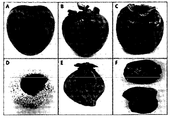
- A Sancheong Gojong-si
- B Sancheong Dansung-si
- C Miryang Bansi-live
- D Sancheong Gojong-si
- E Sancheong Danseong-dried
- F Miryang Bansi-dried (dried).
- Figure 2 is a picture of domestic and foreign distribution faucet
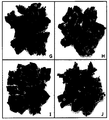
- G domestic distribution herbs 1 (tap, where to buy: good herbs)
- H domestic distribution herbs 2 (faucet, where to buy: medicinal herbs)
- I foreign distribution herbs 1 ( Nipple, where to buy from China)
- J foreign medicines 2 (nipple, where to buy from China).
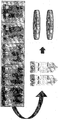
- Figure 3 shows the microbial culture process from 13 subject samples of the present invention.
- Figure 4 is a plate photograph of the selection of 13 target samples and microbial culture process.
- Figure 5 is a schematic diagram showing the selection of 13 target samples and microbial culture process (group separation).
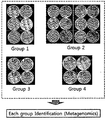
- Figure 6 shows the process of securing microorganisms by group for Pyrosequening analysis.
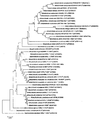
- Figure 7 shows the phylogenetic tree of the strain KIOM_G15050 strain Metschnikowia persimmonesis of the present invention.
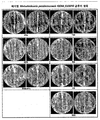
- Figure 8 is a photograph confirming the growth of each medium of the strain KIOM_G15050 strain of Meschnicocovia persimmonesis of the present invention.
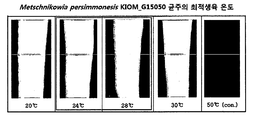
- Figure 9 is a photograph confirming the optimum growth temperature of METOMNIKOVIIA persimmonesis KIOM_G15050 strain of the present invention.
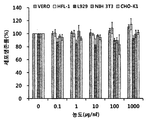
- Figure 10 is a graph showing the cell survival rate (%) according to the treatment of the Meschnicoowia persimmonesis KIOM_G15050 strain of the present invention.
- Figure 11 is a graph showing the weight change of the animal model according to the administration of the strain KIOM_G15050 strain Metschnikowia persimmonesis of the present invention.
- Figure 13 is a photograph confirming the antimicrobial activity against Fusarium oxysporum of the Metschnikowia persimmonesis KIOM_G15050 strain of the present invention.
- Figure 14 is a picture confirming the carbon source availability in API 20C AUX (PDA) for the mexican strain.
- Figure 15 is a photograph confirming the carbon source availability in API 20C AUX (TSA) for the mexican strain.
- Figure 16 is a photograph confirming the carbon source availability in API 50CH (PDA) for the mexican strain.
- Figure 17 is a photograph confirming the carbon source availability in API 50CH (TSA) for the mexican strain.
- the present invention relates to a novel Metschnikowia persimmonesis KIOM_G15050 strain (KCTC 12991BP).
- the antimicrobial activity is Botrytis cineraria ( Botrytis cinerea ) and Fusarium oxysporum may be antibacterial activity, but is not limited thereto, and may exhibit antimicrobial activity against pathogens of various plants.
- the antibiotic susceptibility is preferably susceptibility to at least one antibiotic selected from nystatin, cycloheximide, salinomycin, amphotericin, and gramicidin S.
- nystatin cycloheximide
- salinomycin cycloheximide
- amphotericin a antibiotic selected from nystatin, cycloheximide
- gramicidin S a antibiotic selected from nystatin, cycloheximide, salinomycin, amphotericin, and gramicidin S.
- antibiotic susceptibility means that the strain of the present invention does not grow around the antibiotic in response to the antibiotic.
- the present invention also relates to a microbial preparation for antimicrobial containing the strain as an active ingredient.
- the microbial preparation according to the present invention may be prepared in the form of a liquid fertilizer and may be used in the form of a powder by adding an extender thereto or granulated by formulating it.
- the formulation is not particularly limited. In other words, it is possible to formulate bio-fertilizers to overcome this in eco-friendly organic farming where chemical fertilizer supply is limited.
- the present invention also relates to a plant disease control composition containing the strain as an active ingredient.
- the botanical disease is Botrytis cinerea ) or a plant disease caused by Fusarium oxysporum , but is not limited thereto.
- the plant disease may be gray mold, tomato wilting disease, etc., but is not limited thereto.
- the present invention relates to a method for controlling plant diseases by treating the strain to plants or soil.
- the plant is preferably but not limited to persimmon.
- the strain, a microbial agent containing the strain as an active ingredient or a plant disease control composition comprising the strain as an active ingredient is treated by immersing the seedlings of plants, foliage treatment or soil on the ground It may include the step of irrigation, in the case of the immersion treatment, the culture medium and microbial preparation may be poured into a container around the plant or the seeds may be immersed in the culture solution and preparation.
- the local varieties of Sancheong Gojong, Sancheong Danseong, and Miryang Banshi were selected to analyze the morphological differences of persimmon, microbial diversity, useful substance content, extract toxicity, and oriental medical efficacy.
- the three kinds of persimmons were sold from the Gyeongsangnam-do Forest Environment Research Institute, and the persimmons and persimmons of raw persimmons and persimmons were separated and used (FIG. 1).
- Example 1 Single culture of microorganisms from young persimmons
- microorganisms were continuously passaged three or four times using a sterile streaking stick. Finally, microorganisms cultured in LB and microorganisms cultured in PD were stored in 1.5 ml E-tubes and stored at ⁇ 20 ° C. until DNA isolation (FIG. 4).
- single colony obtained by culturing in LB was labeled by L
- single colony obtained by culturing in PD was labeled by P.
- 200 ⁇ l of distilled water was added and heated at 100 ° C. for 10 minutes.
- Fungal fungi which are not easy to separate DNA, were extracted genomic DNA using DNeasy Plant Mini Kit (Qiagen, Germany).
- the amount and quality of genomic DNA extracted by electrophoresis on 0.8% agarose gel was confirmed, and the concentration was quantified at 260 nm using a NanoDrop 1000 spectrophotometer (spectrophotometer, NanoDrop, U.S.A.).
- 16s rDNA Universal primer was used in 27F (5'-AGA GTT TGA TCC TGG CTC AG-3 '; SEQ ID NO: 1), 1492R (5'-GGT TAC CTT GTT ACG ACT T-3'; SEQ ID NO: 2)
- the 18s rDNA Universal primer used ITS1 (5'-TCC GTA GGT GAA CCT GCG G-3 '; SEQ ID NO: 3), ITS4 (5'-TCC TCC GCT TAT TGA TAT GC-3'; SEQ ID NO: 4).
- the product identified as the amplified single DNA fragment was purified using a PCR product purify kit (Solgent, Korea) and then inserted into a pGEM-Teasy vector (Promega, USA).
- the inserted amplification products were transformed into XL1-Blue MRF competent cells (Stratagene, USA) to select colonies for each sample, and analyzed using ABI3730 automatic DNA sequencer (Applied Biosystems, CA, USA) from T7 and SP6 primer sites.
- the nucleotide sequences were finally identified by comparison with the National Center for Biotechnology Information (NCBI) Fenebank Database (www.ncbi.nlm.nih.gov).
- Group 1 is raw persimmon (Sample 1 ⁇ 3)
- Group 2 is dried persimmon / surface (Sample 4 ⁇ 9)
- Group 3 is domestic distribution medicine (Sample 10, 11)
- Group 4 is overseas distribution medicine (Sample 12 and 13)
- the first cultured microorganisms form colony and mycelium with a large amount of bacteria and eukaryotes mixed, and microbial microorganisms of each medium were collected in a 50 ml tube using a sterile streaking stick and spoon.
- the microbial biological sample was ground using Precellys TM Grinder (Bertin Technologies, France), centrifuged to remove the medium and agar, and washed 2-3 times with 1X PBS (Biowhittaker, Lonza, USA) and finally pelleted. After drying, each group of microorganisms was stored in -1.5 °C E-tube and stored at -20 °C until DNA separation.
- Group 1 is raw persimmon (Sample 1 ⁇ 3)
- Group 2 is dried persimmon / surface (Sample 4 ⁇ 9)
- Group 3 is domestic distribution medicine (Sample 10, 11)
- Group 4 is overseas distribution medicine (Sample 12, 13)
- a total of four group samples were extracted genomic DNA using MagListo Genomic DNA Extraction kit (Bioneer, Korea).
- the extracted DNA was quantified at 260 nm using a NanoDrop 1000 spectrophotometer (NanoDrop, U.S.A.). To determine the distribution of microorganisms for each sample, the nucleotide sequence was decoded and analyzed using the GS Junior system (Roche, USA). As a method for identifying several samples at once, PCR (Applied Biosystems 2720 Thermal Cycler, U.S.A.) was performed using primers including an adapter and a MID sequence in each sample.
- 27F-1, 27F-2, 27F-3, 27F-4, and 1492R were used to identify bacteria, and ITS1F-1, ITS1F-2, ITS1F-3, ITRS1F-4, and ITS4R were used to identify fungi.
- PCR products obtained therefrom were purified to prepare a library and decode the base sequence by applying to the GS Junior Titanium Sequencing Kit (Roche, USA).
- the result file was saved in xml format and taxonomic classification was performed using NCBI taxonomy information as BLAST result using MEGAN (V5.10.6) program.
- LCA lowest common ancestor
- the lowest taxon of all taxons defined in each sequence was assigned to that sequence. For example, when a sequence is defined in two different taxons, a and b, if a is an ancestor of b, then b is more specifically defined as a taxon of that sequence. All sequences were assigned to each node to complete the rooted tree phylogenetic tree.
- ITS taxonomic counting heat map was prepared to complete the microorganism identification results for each group (Fig. 7).
- the isolated strain was subjected to a substrate test and analyzed according to the buggy's manual to identify a new strain different from the existing strain, the results are shown in Tables 1 and 2.
- KIOM_G15050 strain (KCTC 12991BP) is immediately passaged to PDA medium and fresh strain is used for characterization of trypticase soy agar (TSA), nutrient agar (NA) and LB agar (Luria-). Burtani agar), R2A, Bennett's agar, ISP2 and other inoculation 50 ⁇ l inoculated was measured for growth.
- the KIOM_G15050 strain (KCTC 12991BP) was best grown in PDA medium and well grown in TSA and NA medium for characterization.
- LB, R2A, Bennett's agar, ISP2, etc. were all grown well, and the cells were visibly well grown for about 24 hours.
- actinomycetes and fungal culture medium such as ISP2 medium, such as PDA and Bennett's agar medium, it was observed to form a pigment from about 12 hours after culture (Fig. 8).
- a buffer solution for each pH was prepared, and the concentration was 125mM in sterilized 20ml TSB medium, and sterilized with a 0.2 ⁇ m filter. Aliquots were incubated.
- Cultivated cells were collected in TSA medium, suspended in 3 ml TSB medium, and then inoculated at 100 ⁇ l and shaken for 2 days at 150 rpm at 28 ° C. The growth of the cells was measured by measuring the absorbance at 595 nm using a spectrophotometer. Decided.
- NB medium commonly used as 0% NaCl medium.
- NaCl concentrations were prepared in 20 ml NB medium at 0, 0.1, 0.3, 0.5, 1, 2, 3, 4, 5, 7, 10, 12, 15, 18, 20, 24% (w / v), respectively.
- the experiment was carried out by culturing in a test tube with 3 ml each time. Cultivation of the cells grown in NA medium and suspended in 3ml NB medium, and then inoculated 100 ml and incubated for 2 days shaking at 150 rpm at 28 °C, whether the growth was measured by absorbance at 595nm spectrophotometer Was determined.
- the KIOM_G15050 strain (KCTC 12991BP) was grown in the NB medium according to NaCl concentration (v / v) in liquid growth and showed good growth without absorbing NaCl. It was observed to grow to% NaCl concentration (Table 4).
- KIOM_G15050 strain (KCTC 12991BP) was subcultured in TSA (tryptic soy agar) medium, and the fresh cells were collected and suspended in TSB medium, and loaded in the same volume in 30 ⁇ l 3 times in TSB medium in a straight line. After shedding was incubated for 2 days at 4, 10, 15, 18, 20, 24, 28, 30, 35, 37, 40, 45, 50 °C to observe the growth density. Growth rate was compared by observing the density and concentration of the cell mass of the same area formed by flowing the same cell mass in a straight line.
- TSA tryptic soy agar
- KIOM_G15050 strain (KCTC 12991BP) was inoculated in TSA medium and cultured according to temperature. The result was grown at 4-40 °C and did not grow well at 45 °C and 50 °C. The optimum temperature was judged to be 24 to 28 ° C. (FIG. 9).
- the lyophilized Metschnikowia persimmonesis KIOM_G15050 strain (KCTC 12991BP) of the present invention was dissolved in DMEM medium at a concentration of 1 mg / ml, and then a stock solution was prepared. Prepared to be -1000 ⁇ g / ml. 100 ul of each concentration was added to each of the cultured cell lines, and cultured in a 5% (v / v) CO 2 environment for 24 hours at 37 ° C.
- renal cells (VERO), lung cells (HFL-1) fibroblasts (L929,) treated with 0.1 to 1000 ⁇ g / ml of methicovia percimonosis KIOM_G15050 strain (KCTC 12991BP).
- NIH 3T3 methicovia percimonosis KIOM_G15050 strain
- CHO-K1 ovarian cells
- Metschnikowia persimmonesis KIOM_G15050 strain (KCTC 12991BP) of the freeze-dried powder of the present invention was dissolved in DMEM medium and administered at a dose of 33.3 ml / kg using an orally administered sonde.
- KCTC 12991BP Metschnikowia persimmonesis KIOM_G15050 strain
- changes in general symptoms, abnormal symptoms, and the presence of dead animals were observed every hour up to 1-6 hours after administration and at least once daily after 7 days from the day following administration.
- all animals used in the test were weighed before administration and 1, 3, 7, 14 days after administration, and immediately observed when the experimental animal died, and all surviving animals were survived until 14 days of administration. After euthanasia, the abdomen was opened and abnormalities of internal organs were observed.
- the fatality rate (%) was 0%, all survived for 14 days, the feed and drinking intake were good, and no abnormal symptoms were observed.
- Meschnicovia persimmonesis Metschnikowia persimmonesis
- KIOM_G15050 strain KCTC 12991BP
- Botrytis Ceria Botrytis
- KIOM_G15050 strain KCTC 12991BP
- antibacterial activity against Fusarium oxysporum were measured, and as a result, as shown in FIGS. 12 and 13, Botrytis cineraria ( Botrytis) cinerea ) and Fusarium oxysporum were confirmed to have strong antimicrobial activity.
- KIOM_G15050 strain (KCTC 12991BP) was passaged to PDA (Potato dextrose agar) and TSA (tryptic soy agar) plates to inoculate single colonies cultured with PDB (Potato dextrose broth) and TSB (tryptic soy broth) By culturing.
- Solid medium inoculation of the culture test strain was incubated so that the concentration of the cells in the culture solution was 1.5 ⁇ 10 6 cfu / ml, and then sterilized PDA and TSA solid plate medium at 121 ° C. for 15 minutes and cooled to 45-50 ° C. After inoculation at a concentration of% (v / v), the mixture was stirred uniformly, and 20 ml of petri dishes having a diameter of 90 mm were dispensed and cooled.
- Antimicrobial disc loading and antimicrobial activity were measured by placing each antimicrobial disc on the medium inoculated with the microbial culture solution with tweezers, incubating for 48 hours at 28 ° C, and then susceptible to the presence of a transparent ring that was not grown because the bacteria were suppressed around the antibiotic disc. The presence or absence was evaluated.
- the antibiotic concentration used in the susceptibility test was a concentration generally used for antimicrobial activity test when identifying strains.
- KIOM_G15050 strain (KCTC 12991BP) was cultured in PDA and TSA medium and tested for susceptibility with each antibiotic disc.
- nystatin nystatin, 50 ⁇ g
- cyclohexamide cycloheximide, 30 ⁇ g
- Salinomycin (30 ⁇ g)
- amphotericin amphotericin (2 ⁇ g)
- gramicidin S 30 ⁇ g
- TSA showed weak sensitivity in PDA medium as in amphotericin (No. 29) and gramicidine S (No. 30). Appear clearly in the medium to confirm the presence of sensitivity accurately.
- Metschnikowia persimmonesis A strain cultured by passage of KIOM_G15050 strain (KCTC 12991BP) to PDA and TSA plate medium was used.
- Test strain identification kit 'API 20 C AUX' consisting of 20 tubes of dried substrate to confirm the use of carbon source for yeast identification to test the sugar availability (carbon source availability) of the test strain (bioM, Tables 7 and 8). And 'API 50CH' (bioM, Table 9), which can test 49 carbohydrate metabolisms, were identified.
- API C medium (7ml ampoule) Ammonium sulfate 5 g Monopotassium phosphate 0.31 g Dipotassium phosphate 0.45 g Disodium phosphate 0.92 g Disodium chloride 0.1g Calsium chloride 0.05g Magnesium sulphate 0.2 g L-Histidine 0.005g L-Tryptophan 0.02 g L-Methionine 0.02 g Gelling agent 0.5 g Vitamin solution 1 ml Trace elements 10 ml Demineralized Water to make 1000 ml fimnal pH (at 20-25 °C) 6.4-6.8
- the zero turf was used as a negative control, and the turbidity with more turbidity was recorded in the result paper as a positive reaction.
- KIOM_G15050 strain (KCTC 12991BP) was cultured in PDA and TSA medium to test the carbon source availability for 24 to 48 hours with API 20 C AUX and API 50CH, and it was shown that the carbon source was used as shown in Tables 10 and 11 below.
- KIOM_G15050 strain (KCTC 12991BP) is composed of glycerol, D-Xylose, D-Adonitol, D-Galactose, Glucose, D D-Fructose, D-Mannose, L-Sorbose, D-Mannitol, D-Sorbitol, Methyl- ⁇ -D-Gluco-Pyranoside, N-Acetylglucosamine, Amygdalin, Arbutin, Esculin, Salicin , D-Cellobiose, D-Maltose, D-Saccharose (sucrose), D-Trehalose, D- Melizetose (D-Melezitose), Xylitol, Gentiobiose, D-Tura
- yeast identification API 20 C AUX D-Sorbitol, ⁇ -Methyl-D-glucoside, D-Maltose, and D-Saccharose (S-Crose) (D-Saccharose (Sucrose)) and D-Melezitose were observed to be used as carbon sources and to produce pigments at the same time (Figs. 14 to 17).
Landscapes
- Life Sciences & Earth Sciences (AREA)
- Health & Medical Sciences (AREA)
- Engineering & Computer Science (AREA)
- Mycology (AREA)
- Zoology (AREA)
- Chemical & Material Sciences (AREA)
- Microbiology (AREA)
- Biotechnology (AREA)
- Wood Science & Technology (AREA)
- General Health & Medical Sciences (AREA)
- Bioinformatics & Cheminformatics (AREA)
- Organic Chemistry (AREA)
- Genetics & Genomics (AREA)
- Virology (AREA)
- Botany (AREA)
- Medicinal Chemistry (AREA)
- Biochemistry (AREA)
- General Engineering & Computer Science (AREA)
- Tropical Medicine & Parasitology (AREA)
- Biomedical Technology (AREA)
- Agronomy & Crop Science (AREA)
- Pest Control & Pesticides (AREA)
- Plant Pathology (AREA)
- Dentistry (AREA)
- Environmental Sciences (AREA)
- Micro-Organisms Or Cultivation Processes Thereof (AREA)
Abstract
본 발명은 감나무 묵은 꽃받침에서 분리한 신규 메치니코비아 퍼시모네시스(Metschnikowia persimmonesis) KIOM_G15050 균주(KCTC 12991BP) 및 이의 용도에 관한 것으로, 상세하게는 상기 신규 메치니코비아 퍼시모네시스(Metschnikowia persimmonesis) KIOM_G15050 균주(KCTC 12991BP)는 항균 활성을 가지며, 항생제 감수성을 갖는 특징이 있을 뿐만 아니라, 세포독성이 없으므로, 화장품, 생활용품 등의 산업용에 함유되거나, 식품 또는 의약품으로의 응용이 용이한 것이다. 또한, 본 발명은 신규 메치니코비아 퍼시모네시스(Metschnikowia persimmonesis) KIOM_G15050 균주(KCTC 12991BP)를 유효성분으로 함유하는 항균용 미생물 제제 또는 식물병 방제용 조성물에 관한 것이며, 상기 균주를 식물 또는 토양에 처리하여 식물병을 방제하는 방법에 관한 것이다.
Description
본 발명은 감나무 묵은 꽃받침에서 분리한 메치니코비아 퍼시모네시스(Metschnikowia
persimmonesis) 균주 KIOM_G15050 신규 효모 및 이의 용도에 관한 것이다.
감나무는 감나무과 식물로서, 오랫동안 재배되어 온 과실수이며, 원산지는 온대 아시아 지역의 한국, 중국 및 일본이다. 국내의 중북부 및 산간지방을 제외한 전국에서 재배되고 있다.
감나무의 높이는 6~14m이고, 줄기의 겉껍질은 비늘 모양으로 갈라지며, 작은 가지에 갈색 털이 있다. 잎은 어긋나고 타원상 난형이다. 잎의 길이는 7~17cm이고, 너비는 4~10cm이며, 톱니는 없다. 잎자루는 5~13cm의 길이이고, 털이 있다. 꽃은 양성 또는 단성으로 5~6월에 황백색으로 잎겨드랑이에 달린다. 수꽃은 16개의 수술이 있으나 양성화에는 4~16개의 수술이 있다. 암꽃의 암술 길이는 15~18mm이고 암술대에 털이 있으며 길게 갈라지고 씨방은 8실이며, 열매는 난원형 또는 편구형이고 10월에 황홍색으로 익는다. 근연종으로, 돌감나무 및 고욤나무가 있는데, 모두 감나무를 닮았으나 열매의 지름이 1~2cm로 작다. 재배품종의 대목으로 널리 이용되며, 접수를 어떤 수종으로 선정하는지에 따라, 감의 품질과 수확량의 차이가 있다.
연평균 기온 11~15℃, 열매가 성숙하는 9~10월의 평균기온 21~23℃가 생육에 가장 적합하며, 번식은 접목 또는 아접 하는데 씨를 뿌려 묘목을 만들면 열매가 크게 퇴화하므로 반드시 접목해야 한다. 우리나라의 떫은감 재배면적 및 생산량은 매년 급격히 증가하고 있고, 떫은감 생산량은 1995년은 39.8천 톤 정도였으나 1997년부터 급격히 증가하여 2006년에는 146.3천 톤으로 1995년에 비해 368%가 증가하였으며, 단감 생산량은 2000년에 227천 톤으로 정점을 나타내었으나 지금은 감소추세이다.
한편, 감잎은 비타민 C가 풍부한 차로 애용되며, 고혈압의 치료에도 효과가 있다. 감꼭지는 한방에서 딸꾹질, 구토 또는 야뇨증 등에 달여서 복용해 왔으며, 곶감은 해소, 토혈, 객혈, 및 이질의 치료에 쓰이고, 곶감의 시설은 진해 또는 거담에 효능이 있고, 자양 식품으로 쓰이고 있다.
동의보감, 본초강목, 본초비효 등 고문헌에서 곶감은 숙혈을 없애고, 패혈, 혈토, 반위, 장풍과 치질을 다스린다고 기록되어 있으며, 민감요법과 대한민국약전에서 감꼭지는 딸꾹질, 감기예방, 동맥경화, 심장병 예방, 혈관강화, 폐와 기관지질환 등에 대한 효과가 있다고 개시된 바 있으나, 과학적이고 체계적인 검증이 필요한 상태이다. 또한, 떫은 감은 홍시와 곶감으로 널리 이용되며, 가공시에 버려지는 감꼭지 또는 감껍질 등 부산물의 자원화를 위한 연구가 필요한 상황이다.
일본등록특허 제1995-061258호에 항균활성을 가지는 효모에 대해 개시되어 있고, 일본등록특허 제5676591호에 살진균 활성을 가지는 효모 및 살진균제의 조합에 대하여 개시되어 있으나, 본 발명의 감나무 묵은 꽃받침에서 분리한 메치니코비아 퍼시모네시스 균주 KIOM_G15050 신규 효모 및 이의 용도에 대하여 개시된 바 없다.
본 발명은 상기와 같은 요구에 의해 도출된 것으로서, 본 발명은 감나무 묵은 꽃받침에서 분리한 메치니코비아 퍼시모네시스(Metschnikowia
persimmonesis) KIOM_G15050 신규 효모를 제공하고, 상기 균주가 항균활성 및 항생제 감수성을 가지고 있는 균주라는 것을 확인함으로써, 본 발명을 완성하였다.
상기 목적을 달성하기 위하여, 본 발명은 신규 메치니코비아 퍼시모네시스(Metschnikowia persimmonesis) KIOM_G15050 균주(KCTC 12991BP)를 제공한다.
또한, 본 발명은 상기 균주를 유효성분으로 함유하는 항균용 미생물 제제를 제공한다.
또한, 본 발명은 상기 균주를 유효성분으로 함유하는 식물병 방제용 조성물을 제공한다.
또한, 본 발명은 상기 균주를 식물 또는 토양에 처리하여 식물병을 방제하는 방법을 제공한다.
본 발명은 감나무 묵은 꽃받침에서 분리한 신규 메치니코비아 퍼시모네시스[Metschnikowia
persimmonesis Kang & Choi et al., sp. nov. (Type strain KIOM_G15050=KCTC 12991BP)] 균주 및 이의 용도에 관한 것으로, 상세하게는 항균 활성을 가지며, 항생제 감수성을 갖는 균주에 관한 것이고, 상기 균주를 유효성분으로 함유하는 항균용 미생물 제제에 관한 것이며, 상기 균주를 식물 또는 토양에 처리하여 식물병을 방제하는 방법에 관한 것이다.
본 발명의 신규 메치니코비아 속 균주는 항균활성 및 항생제 감수성이 있는 균주로 다양한 유용성이 있는 것이므로, 관련 산업에 다양하게 이용될 수 있다.
도 1은 떫은 감 3품종의 사진이다. A: 산청 고종시 생감, B: 산청 단성시 생감, C: 밀양 반시 생감, D: 산청 고종시 곶감, E: 산청 단성시 곶감, F: 밀양 반시 곶감 (말랭이) 이다.
도 2는 국내외 유통품 감꼭지 사진으로, G: 국내 유통 약재 1 (감꼭지, 구입처: 좋은 약초), H: 국내 유통 약재 2 (감꼭지, 구입처: 청명 약초), I: 국외 유통 약재 1 (감꼭지, 구입처: 중국 수입품), J: 국외 유통 약재 2 (감꼭지, 구입처: 중국 수입품)이다.
도 3은 본 발명의 13개 대상 시료로부터 미생물 배양 과정을 나타낸 것이다.
도 4는 13개 대상 시료의 선정 및 미생물 배양 과정의 플레이트 사진이다.
도 5는 13개 대상 시료의 선정 및 미생물 배양 과정(군집 분리)을 나타낸 개략도이다.
도 6은 Pyrosequening 분석을 위한 그룹별 미생물 확보 과정을 나타낸 것이다.
도 7은 본 발명의 메치니코비아 퍼시모네시스(Metschnikowia persimmonesis) KIOM_G15050 균주의 계통수(phylogenic tree)를 나타낸 것이다.
도 8은 본 발명의 메치니코비아 퍼시모네시스(Metschnikowia persimmonesis) KIOM_G15050 균주의 배지별 생육 여부를 확인한 사진이다.
도 9는 본 발명의 메치니코비아 퍼시모네시스(Metschnikowia persimmonesis) KIOM_G15050 균주의 최적생육 온도를 확인한 사진이다.
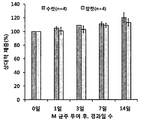
도 10은 본 발명의 메치니코비아 퍼시모네시스(Metschnikowia persimmonesis) KIOM_G15050 균주의 처리에 따른 세포 생존률(%)을 나타낸 그래프이다.
도 11은 본 발명의 메치니코비아 퍼시모네시스(Metschnikowia persimmonesis) KIOM_G15050 균주의 투여에 따른 동물모델의 체중변화를 나타낸 그래프이다.
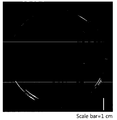
도 12는 본 발명의 메치니코비아 퍼시모네시스(Metschnikowia persimmonesis) KIOM_G15050 균주의 보트리티스 시네리아(Botrytis cinerea)에 대한 항균활성을 확인한 사진이다.
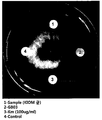
도 13은 본 발명의 메치니코비아 퍼시모네시스(Metschnikowia persimmonesis) KIOM_G15050 균주의 푸사리움 옥시스포럼(Fusarium oxysporum)에 대한 항균활성을 확인한 사진이다.
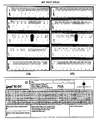
도 14는 메치니코비아속 균주에 대한 API 20C AUX(PDA)에서의 탄소원 이용성을 확인한 사진이다.
도 15는 메치니코비아속 균주에 대한 API 20C AUX(TSA)에서의 탄소원 이용성을 확인한 사진이다.
도 16은 메치니코비아속 균주에 대한 API 50CH(PDA)에서의 탄소원 이용성을 확인한 사진이다.
도 17은 메치니코비아속 균주에 대한 API 50CH(TSA)에서의 탄소원 이용성을 확인한 사진이다.
본 발명은 신규 메치니코비아 퍼시모네시스(Metschnikowia persimmonesis) KIOM_G15050 균주(KCTC 12991BP)에 관한 것이다. 상기 균주는 감나무 묵은 꽃받침에서 분리한 것으로, 항균활성 및 항생제 감수성을 가지고 있는 균주이며, 상기 균주를 한국생명공학연구원에 2016년 3월 16일자로 기탁하였다[Metschnikowia
persimmonesis Kang & Choi et al., sp. nov.(Type strain KIOM_G15050 = KCTC 12991BP)] .
상기 항균 활성은 보트리티스 시네리아(Botrytis
cinerea) 및 푸사리움 옥시스포럼(Fusarium oxysporum)에 대한 항균활성일 수 있으나, 이에 제한하지 않으며, 다양한 식물체의 병원균에 대한 항균활성을 나타낼 수 있다.
상기 항생제 감수성은 나이스타틴(nystatin), 시클로헥사미드(cycloheximide), 살리노마이신(salinomycin), 암포테리신(amphotericin) 및 그라미시딘 S(gramicidin S) 중에서 선택된 하나 이상의 항생제에 대한 감수성인 것이 바람직하지만, 특별히 이에 제한하는 것은 아니다.
본 발명에서, 항생제 감수성은 본 발명의 균주가 항생제에 반응하여 항생제 주변에서 본 발명의 균주가 자라지 못하는 것을 의미한다.
또한, 본 발명은 상기 균주를 유효성분으로 함유하는 항균용 미생물 제제에 관한 것이다. 본 발명에 의한 미생물 제제는 액상 비료 형태로 제조될 수 있으며 이에 증량제를 첨가하여 분말의 형태로 이용하거나 이를 제형화하여 과립화시킬 수도 있다. 그러나 그 제형에 특별히 한정하지는 않는다. 즉 화학비료 공급이 제한된 친환경 유기농업에서 이를 극복하기 위한 생물비료로 제형화 하는 것이 가능하다.
또한, 본 발명은 상기 균주를 유효성분으로 함유하는 식물병 방제용 조성물에 관한 것이다. 상기 식물병은 보트리티스 시네리아(Botrytis
cinerea) 또는 푸사리움 옥시스포럼(Fusarium oxysporum)에 의해 유발되는 식물병인 것이 특징이지만 이에 제한하는 것은 아니다. 상기 식물병은 잿빛곰팡이병, 토마토 시들음병 등일 수 있으나, 이에 제한하는 것은 아니다.
또한, 본 발명은 상기 균주를 식물 또는 토양에 처리하여 식물병을 방제하는 방법에 관한 것이다. 상기 식물은 감나무인 것이 바람직하지만 이에 제한하는 것은 아니다.
상기 식물병을 방제하는 방법으로, 상기 균주, 상기 균주를 유효성분으로 포함하는 미생물 제제 또는 상기 균주를 유효성분으로 포함하는 식물병 방제용 조성물을 식물의 유묘에 침치 처리, 지상부에 경엽 처리 또는 토양 관주 처리하는 단계를 포함할 수 있으며, 상기 침지 처리의 경우, 배양액 및 미생물 제제를 식물체 주변의 통에 붓거나 또는 종자를 배양액 및 제제에 담가둘 수 있다.
이하, 실시예를 이용하여 본 발명을 더욱 상세하게 설명하고자 한다. 이들 실시예는 오로지 본 발명을 보다 구체적으로 설명하기 위한 것으로 본 발명의 범위가 이들에 의해 제한되지 않는다는 것은 당해 기술분야에서 통상의 지식을 가진 자에게 있어 자명한 것이다.
[재료]
지역별 특성에 따른 떫은 감의 형태학적 차이, 미생물의 다양성, 유용물질의 함량, 추출물의 독성 평가 및 한의학적 효능을 분석하기 위하여 지방 고유 품종인 산청 고종시, 산청 단성시 및 밀양 반시를 선별하였다. 경상남도 산림환경 연구원으로부터 상기 3종의 떫은 감을 분양 받았으며, 생감과 곶감의 감꼭지 및 감껍질을 분리하여 사용하였다(도 1).
또한, 감나무 묵은 꽃받침(감꼭지)로 사용되고 있는 국내외 유통약재를 수집하여 본 발명의 재료로 활용하였다(도 2).
실시예
1. 떫은 감으로부터 미생물의 개별분리(Single culture)
1) 시료의 배양
13개 대상 시료는 멸균된 상태의 핀셋을 이용하여 생감꼭지 부분과 곶감표면, 곶감꼭지, 국내외 유통 약재시료로 구분하여 50㎖ 튜브에 넣어 4℃에서 보관하였다. LB(Luria-Bertani) broth 배지와 PD(Potato Dextrose) broth 배지에서 공동배양하였다. 배양 조건은 50㎖ 튜브에 15㎖ 배지를 넣은 후 100rpm 암 조건에서 48시간 incubation하였다. 현탁된 배양액 2㎖을 transfer하여 아가(agar)가 포함된 LB와 PD 배지에 1차 계대 배양하였다(도 3).
2) 미생물 분리
1차적으로 계대 배양된 미생물들의 single colony를 얻기 위해 멸균된 streaking stick을 이용하여 3~4회 이상 지속적으로 계대 배양하였다. 최종적으로 LB에서 배양한 미생물과 PD에서 배양한 미생물들을 각각 1.5㎖ E-튜브에 보관하여 DNA 분리하기 전까지 -20℃에서 보관하였다(도 4).
3) 미생물 DNA 추출 및 정량
13개 대상 시료 중에서 LB에서 배양하여 single colony를 확보한 것은 L로 표시하여 numbering을 하였고, PD에서 배양되어 single colony를 확보한 것은 P로 표시하여 numbering하였다. 미생물 동정이 필요한 시료 최소 100mg을 샘플링하여 분쇄한 후, 200㎕의 증류수를 넣어 100℃에서 10분간 가열하고, 원리분리하여 PCR template로 이용하였다. DNA 분리가 쉽지않은 진균성 곰팡이는 DNeasy Plant Mini Kit(Qiagen, Germany)를 이용하여 genomic DNA를 추출하였다. 이를 0.8% 아가로스겔에서 전기영동하여 추출된 genomic DNA의 양과 질 등의 상태를 확인하였으며, 농도는 NanoDrop 1000 분광광도계(spectrophotometer, NanoDrop, U.S.A.)를 이용하여 260nm에서 정량하였다.
4) 16s
rDNA
및 18s
rDNA
의
PCR
증폭 및 미생물 동정
16s rDNA(세균성 미생물 DNA) 및 18s rDNA(진핵균 미생물 DNA: 곰팡이 등)의 PCR 증폭은 Solgent사의 Universal primer를 이용하여 최종 30㎕의 반응액에서 수행하였다. 16s rDNA Universal primer는 27F (5'-AGA GTT TGA TCC TGG CTC AG-3'; 서열번호 1), 1492R(5'-GGT TAC CTT GTT ACG ACT T-3'; 서열번호 2)을 이용하였고, 18s rDNA Universal primer는 ITS1(5'-TCC GTA GGT GAA CCT GCG G-3'; 서열번호 3), ITS4(5'-TCC TCC GCT TAT TGA TAT GC-3'; 서열번호 4)을 사용하였다. 약 20ng의 genomic DNA와 30pmole의 Univeral primer 및 Solg 2X Taq PCR Pre-Mix(Solgent, Korea)를 각각 첨가한 뒤, 9700 Thermal Cycler (Applied Biosystems, Singapore)에서 95℃에서 15분간 pre-denaturation한 후 95℃에서 20초 변성(denaturation), 50℃에서 40초 어닐링(annealing), 72℃에서 1분 30초 연장(extension)을 30회 수행하고 마지막으로 72℃에서 5분간 연장(extension) 시켰다. 반응이 끝난 증폭산물(1.5 Kb band로 확인된 16s rDNA와 600bp band로 확인된 18s rDNA) 중 10㎕를 1.5% 아가로스 겔에서 전기영동 하여 DNA band를 UV상에서 확인하였다. 증폭된 단일 DNA 절편으로 확인된 산물은 PCR product purify kit(Solgent, Korea)을 이용하여 정제 후, pGEM-Teasy 벡터(Promega, USA)에 삽입하였다. 삽입된 증폭 산물은 XL1-Blue MRF competent cell(Stratagene, USA)에 형질전환하여 각 시료별 colony를 선발하였으며, T7과 SP6 primer 부위로부터 ABI3730 automatic DNA sequencer(Applied Biosystems, CA, USA)를 이용하여 분석된 염기서열을 NCBI(National Center for Biotechnology Information) Fenebank Database(www.ncbi.nlm.nih.gov)와 비교하여 최종적으로 동정하였다.
실시예
2. 떫은 감으로부터 미생물의 집단분리(
Pyrosequencing
) 및 동정
1) 시료의 배양
13개 대상 시료는 멸균된 상태의 핀셋을 이용하여 생감꼭지 부분과 곶감표면, 곶감꼭지, 국내외 유통 약재시료로 구분하여 50㎖ 튜브에 보관하였다. LB(Luria-Bertani) broth 배지와 PD(Potato Dextrose) broth 배지에서 공동배양 하였다. 배양 조건은 50㎖ 튜브에 15㎖ 배지를 넣은 후, 100rpm이고 암조건에서 48시간 인큐베이션하였다. 현탁된 배양액 2㎖을 transfer하여 아가(agar)가 포함된 LB와 PD 배지에 1차 계대 배양하였다(도 5).
미생물 개별 분리 방법과는 다르게 1차 계대 배양한 모든 배지 plate는 4개의 Group별로 각각 모아서 군집 분리를 실행하였다. Group 1은 생감꼭지(Sample 1~3), Group 2는 곶감꼭지/표면(Sample 4~9), Group 3은 국내 유통 약재 (Sample 10, 11), Group 4는 국외 유통 약재(Sample 12 및 13)으로 총 4개의 그룹별 집단 분석을 하기 위해 도 6과 같이 분류하였다.
2) 미생물 분리
1차적으로 배양된 미생물들은 다량의 세균 및 진핵균들이 혼입된 상태로 colony 및 균사체를 형성하고 있어, 멸균된 streaking stick과 spoon을 이용하여 각 배지별 미생균체들을 50㎖ 튜브에 취합하였다. 미생물 생체시료는 PrecellysTM Grinder(Bertin Technologies, France)를 이용하여 마쇄한 후, 원심분리 후 배지와 아가(agar)를 제거하여, 2-3회 1X PBS(Biowhittaker, Lonza, USA) 세척 후 최종 pellet을 dry한 후 Group별 미생물들은 각각 1.5㎖ E-튜브에 보관하여 DNA 분리하기 전까지 -20℃에 보관하였다.
3) 미생물 DNA 추출, 정량 및
Pyrosequencing
Group 1은 생감꼭지(Sample 1~3), Group 2는 곶감꼭지/표면(Sample 4~9), Group 3은 국내 유통 약재(Sample 10, 11), Group 4는 국외 유통 약재(Sample 12, 13)로 총 4개의 Group 시료는 MagListo Genomic DNA Extraction kit(Bioneer, Korea)를 사용하여 genomic DNA를 추출하였다.
추출한 DNA는 NanoDrop 1000 spectrophotometer(NanoDrop, U.S.A.)를 이용하여 260nm에서 정량하였다. 각 샘플에 대한 미생물의 분포를 알아보기 위해 GS Junior system(Roche, USA)을 이용하여 염기서열을 해독하고 분석하였다. 여러 종류의 샘플을 한 번에 확인하기 위한 방법으로 각각의 샘플에 adaptor와 MID 서열이 포함된 프라이머를 이용하여 PCR(Applied Biosystems 2720 Thermal Cycler, U.S.A.)을 실시하였다. 먼저 세균 확인을 위해서는 27F-1, 27F-2, 27F-3, 27F-4 및 1492R을 이용하였고, 진균(곰팡이) 확인을 위해서는 ITS1F-1, ITS1F-2, ITS1F-3, ITRS1F-4 및 ITS4R을 이용하였다. 이로부터 획득한 PCR product들은 정제과정을 거쳐 라이브러리를 제작하고 GS Junior Titanium Sequencing Kit (Roche, USA)에 적용하여 염기서열을 해독하였다.
4)
Pyrosequencing 의
DATA 분석 및 Taxonomic 분석
GS junior로부터 생산된 서열을 이용하여 NCBI-NT nucleotide sequence database에 BLAST (Basic Local Alignment Search Tool) (V2.2.30+)로 염기서열 데이터베이스에 비교하는 BLASTN을 이용하여 각 서열에 분류군 정보를 도출하였다.
결과파일은 xml형식으로 저장하여 MEGAN (V5.10.6) 프로그램을 이용하여 BLAST 결과로 NCBI taxonomy 정보를 이용하여 taxonomic classification을 수행하였다. NCBI taxonomy는 660,000 이상의 taxon을 제공하고 있으며, 개별 종은 계층적(Superkingdom, Kingdom Phylum, Class, Order, Family, Genus, and Species)으로 분류하였고, MEGAN은 LCA-assignment algorithm (LCA=lowest common ancestor)으로 각 서열에 정의된 모든 taxon 중 가장 낮은 분류군을 그 서열의 taxon으로 할당하였다. 그 실례로, 한 서열이 a와 b 두 개의 다른 taxon에 정의될 때, a가 b의 ancestor일 경우, a보다 더 특이적으로 정의된 b가 그 서열의 taxon으로 정해진다. 모든 서열을 각 노드에 할당하여 rooted tree 형식의 phylogenetic tree를 완성하였다. 또한 ITS taxonomic counting heat map을 작성하여 각 Group별 미생물 동정결과를 완성하였다(도 7).
5)
버기스
메뉴얼(Bergy's manual)에
따른 기질(substrate) 테스트
분리한 균주를 기질 테스트를 실시하고, 버기스 메뉴얼에 따라 분석하여 기존 균주와는 다른 신규주로 동정하였으며, 그 결과를 표 1 및 2에 개시하였다.


실시예
3.
메치니코비아
퍼시모네시스
(
Metschnikowia
persimmonesis
) KIOM_G15050 균주(
KCTC
12991BP)의 배지 종류, pH 및 NaCl 농도에 따른 생육특성 분석
(1) 균주의
계대배양
및 특성조사관련 배지 생육조사
메치니코비아 퍼시모네시스(Metschnikowia
persimmonesis) KIOM_G15050 균주(KCTC 12991BP)를 PDA 배지에 접수 즉시 계대배양하여 fresh한 상태의 균주를 특성조사에 사용되는 TSA(trypticase soy agar), NA(nutrient agar) 배지 및 LB 아가(agar)(Luria-Burtani agar), R2A, Bennett's agar, ISP2 등의 기타 배지에 50㎕ 씩 접종하여 생육여부를 측정하였다.
그 결과, 메치니코비아 퍼시모네시스(Metschnikowia
persimmonesis) KIOM_G15050 균주(KCTC 12991BP)는 PDA 배지에서 가장 잘 자랐으며, 특성조사에 사용할 TSA 및 NA 배지에서도 잘 성장하였다. 또한, LB, R2A, Bennett's agar, ISP2 등의 배지에서도 모두 잘 자랐으며, 24시간 정도에 균체가 눈에 보이게 잘 자란 상태였다. 한편, PDA를 비롯한 ISP2 배지 및 Bennett's agar 배지 등의 방선균 및 곰팡이 배양 배지에서는 배양 후 12시간 정도 후부터 색소를 형성하는 것으로 관찰되었다(도 8).
(2) pH에 따른 균주 생육 특성조사
하기 표 3에 개시한 바와 같이, pH별 완충용액을 제조하여, 멸균한 20㎖의 TSB 배지에 각각 125mM 농도가 되도록 하고, 0.2㎛ 필터로 제균한 후, 5㎖씩 3번 반복으로 test 튜브에 분주하여 배양하였다.
배양은 TSA 배지에 자란 균체를 모아 3㎖ TSB 배지에 현탁한 다음 100㎕ 씩 접종하여 28℃에서 150 rpm으로 2일간 진탕배양하였으며, 생육여부는 균체의 탁도를 분광광도계에서 595nm로 흡광도를 측정하여 결정하였다.
| No. | pH | Buffer & 농도 | Mean value of optical density at 595nm (OD595nm) |
| 1 | pH 2.6 | 125mM Citric acid-Na2HPO4 | 0.508 |
| 2 | pH 3.0 | 125mM Citric acid-Na2HPO4 | 0.878 |
| 3 | pH 3.6 | 125mM Citric acid-Na2HPO4 | 0.940 |
| 4 | pH 4.0 | 125mM Citric acid-Na2HPO4 | 1.023 |
| 5 | pH 4.6 | 125mM Citric acid-Na2HPO4 | 1.663 |
| 6 | pH 5.0 | 125mM Citric acid-Na2HPO4 | 1.856 |
| 7 | pH 5.6 | 125mM Citric acid-Na2HPO4 | 1.872 |
| 8 | pH 6.0 | 125mM Citric acid-Na2HPO4 | 2.128 |
| 9 | pH 6.0 | 125mM Na2HPO4-NaH2PO4 | 1.998 |
| 10 | pH 6.6 | 125mM Na2HPO4-NaH2PO4 | 1.995 |
| 11 | pH 7.0 | 125mM Na2HPO4-NaH2PO4 | 1.984 |
| 12 | pH 7.4 | 125mM Tris-HCl | 1.974 |
| 13 | pH 8.0 | 125mM Tris-HCl | 1.913 |
| 14 | pH 8.5 | 125mM Tris-HCl | 1.852 |
| 15 | pH 9.0 | 125mM Tris-HCl | 1.257 |
| 16 | pH 9.5 | 125mM Na2CO3-NaHCO3 | 0.545 |
| 17 | pH 10.1 | 125mM Na2CO3-NaHCO3 | 0.283 |
| 18 | pH 10.5 | 125mM Na2CO3-NaHCO3 | 0.243 |
| 19 | pH 10.8 | 125mM Na2CO3-NaHCO3 | 0.217 |
| Control | TSB | TSB | 0.021 |
(3) NaCl 농도에 따른 균주 생육 특성조사
NaCl 농도에 따른 균주생육특성은 0% NaCl 배지로 일반적으로 사용되고 있는 NB 배지를 사용하였다. NaCl 농도를 0, 0.1, 0.3, 0.5, 1, 2, 3, 4, 5, 7, 10, 12, 15, 18, 20, 24% (w/v)로 각각 20㎖ NB 배지에 제조하여 5㎖ 씩 3번 반복으로 test 튜브에 넣어 배양하여 실험하였다. 배양은 NA 배지에 자란 균체를 모아 3㎖ NB 배지에 현탁한 후, 100㎕ 씩 접종하여 28℃에서 150 rpm으로 2일간 진탕배양 하였으며, 생육 여부는 균체의 탁도를 분광광도계에서 595nm로 흡광도를 측정하여 결정하였다.
메치니코비아 퍼시모네시스(Metschnikowia
persimmonesis) KIOM_G15050 균주(KCTC 12991BP)는 NB 배지에서 NaCl 농도(v/v)에 따라 액체배양 하여 생육 정도를 흡광도로 조사한 결과 NaCl이 없이도 잘 성장하였고, 2% NaCl 농도에서 최대생육을 나타내었으며, 20% NaCl 농도까지 생육하는 것으로 관찰되었다(표 4).
| No. | NaCl (%) | Mean value of optical density at 595nm (OD595nm) |
| 1 | 0 | 1.056 |
| 2 | 0.1 | 0.694 |
| 3 | 0.3 | 0.708 |
| 4 | 0.5 | 0.810 |
| 5 | 1.0 | 0.816 |
| 6 | 2.0 | 0.899 |
| 7 | 3.0 | 0.797 |
| 8 | 4.0 | 0.790 |
| 9 | 5.0 | 0.656 |
| 10 | 7.0 | 0.508 |
| 11 | 10.0 | 0.294 |
| 12 | 12.0 | 0.209 |
| 13 | 15.0 | 0.165 |
| 14 | 18.0 | 0.154 |
| 15 | 20.0 | 0.147 |
| 16 | 24.0 | 0.105 |
| 17 | Control | 0.035 |
(4) 온도에 따른 균주생육특성조사
메치니코비아 퍼시모네시스(Metschnikowia
persimmonesis) KIOM_G15050 균주(KCTC 12991BP)를 TSA(tryptic soy agar) 배지에 계대배양하여 fresh한 상태의 균체를 모아 TSB 배지에 현탁한 다음 TSB 배지에 동일부피로 30㎕ 씩 3번 반복으로 loading 하여 일직선으로 흘려보낸 후 4, 10, 15, 18, 20, 24, 28, 30, 35, 37, 40, 45, 50℃에서 2일간 배양하여 생육밀도를 관찰하였다. 생육정도는 동일한 균체량을 일직선으로 흘려보내 형성된 동일 면적의 균체량의 밀도 및 농도를 관찰하여 비교하였다.
메치니코비아 퍼시모네시스(Metschnikowia
persimmonesis) KIOM_G15050 균주(KCTC 12991BP)를 TSA 배지에 접종하여 온도에 따라 배양하여 관찰한 결과 4∼40℃에서 생육하였으며 45℃ 및 50℃에서는 잘 자라지 않았다. 최적온도는 24∼28℃로 판단되었다(도 9).
실시예
4.
메치니코비아
퍼시모네시스
(
Metschnikowia
persimmonesis
) KIOM_G15050 균주(
KCTC
12991BP)의
in vitro
세포
생존률
(%) 분석 및
in
vivo
세포 독성 분석
(1)
in vitro
세포
생존률
(%) 분석
메치니코비아 퍼시모네시스(Metschnikowia
persimmonesis) KIOM_G15050 균주(KCTC 12991BP)의 세포 생존률(%)을 분석하였다.
다양한 세포주(VERO(신장세포), HFL-1(폐세포), L929(섬유아세포), NIH 3T3(섬유아세포), CHO-K1(난소세포))를 1.5×10⁴~2.5×10⁴개가 되도록 96웰 플레이트에 분주하고, 37℃에서 24시간 동안 5%(v/v) CO2 환경하에서 배양하였다.
동결건조된 본 발명의 메치니코비아 퍼시모네시스(Metschnikowia
persimmonesis) KIOM_G15050 균주(KCTC 12991BP)를, 1mg/㎖의 농도로 DMEM 배지에 녹여 저장용액을 제조한 후, 1/10배씩 희석하여 농도가 0.1~1000㎍/㎖이 되도록 준비하였다. 이를 상기 배양한 세포주 각각에 농도별로 100㎕씩 넣어주고, 37℃에서 24시간 동안 5%(v/v) CO2 환경하에서 배양하였다.
이후, 각각의 웰에 Cyto XTM cell viability assay kit (LPS solution) 10㎕를 첨가하여 37℃에서 1~4시간 동안 5%(v/v) CO2 환경하에서 추가 배양한 후, 450nm에서 흡광도를 측정하여 세포 생존률(%)를 분석하였다.
그 결과 도 10에 개시한 바와 같이, 0.1~1000㎍/㎖의 메치니코비아 퍼시모네시스 KIOM_G15050 균주(KCTC 12991BP)를 처리한 신장세포(VERO), 폐세포(HFL-1) 섬유아세포(L929, NIH 3T3), 난소세포(CHO-K1)의 세포 생존률이 90% 이상 유지되는 것을 확인하였다. 따라서 본 발명의 신 균주는 세포독성이 거의 없는 것으로 판단하였다.
(2)
in
vivo
세포 독성 분석
[동물 모델]
9주령 ICR 마우스(암컷 4마리, 수컷 4마리)를 (주)오리엔트바이오에서 공급받은 후, 22±2℃, 상대습도 50±10%, 환기횟수 10~20회/hr, 명암주기 12시간 간격 및 조도 150~300Lux의 조건으로 사육하였다. 사료는 실험동물용 고형사료(퓨리나코리아) 를 방사선 멸균하여 자유 급이 하였고, 물은 상수도를 자외선 살균기로 소독시킨 후 자유 섭취시켰다.
[투여]
본 발명의 동결 건조 분말의 메치니코비아 퍼시모네시스(Metschnikowia
persimmonesis) KIOM_G15050 균주(KCTC 12991BP)를 DMEM 배지에 녹여 경구투여용 존데를 이용하여 33.3㎖/kg의 용량으로 투여하였다. 투여 당일은 투여 후 1~6시간까지는 매 시간마다, 투여 다음날부터 7일 후 매일 1회 이상씩 일반 증상의 변화, 이상증상 및 사망동물의 유무를 관찰하였다. 또한, 시험에 사용된 모든 동물은 투여 전 및 투여 1, 3, 7, 14일 후에 체중을 측정하였으며, 실험동물이 사망할 경우 바로 부검하여 관찰하였고, 투여 14일까지 생존시에는 모든 생존 동물을 안락사시켜 개복하고 내부 장기의 이상 유무를 관찰하였다.
그 결과, 하기 표 5에 개시한 바와 같이 치사율(%)이 0%로, 14일 동안 모두 생존하였고, 사료 및 음수 섭취가 양호하였으며, 별다른 이상 증상이 관찰되지 않았다.
| 성별 | 투여용량 | 치사율(%) |
| 암(n=4) | 33.3㎖/kg | 0 |
| 수(n=4) | 33.3㎖/kg | 0 |
또한, 전체적으로 체중이 정상적으로 증가하는 양상을 나타내 메치니코비아 퍼시모네시스(Metschnikowia
persimmonesis) KIOM_G15050 균주(KCTC 12991BP)가 동물모델에서 독성이 없는 것으로 판단되었다(도 11).
실시예
5.
메치니코비아
퍼시모네시스
(
Metschnikowia
persimmonesis
) KIOM_G15050 균주(
KCTC
12991BP)의 항균 활성 분석
본 발명의 메치니코비아 퍼시모네시스(Metschnikowia
persimmonesis) KIOM_G15050 균주(KCTC 12991BP)의 보트리티스 시네리아(Botrytis
cinerea) 및 푸사리움 옥시스포럼(Fusarium oxysporum)에 대한 항균활성을 측정하였으며, 그 결과 도 12 및 도 13에 개시한 바와 같이, 보트리티스 시네리아(Botrytis
cinerea) 및 푸사리움 옥시스포럼(Fusarium oxysporum)에 대하여 강력한 항균활성이 있다는 것을 확인하였다.
실시예
6.
메치니코비아
퍼시모네시스
(
Metschnikowia
persimmonesis
) KIOM_G15050 균주(
KCTC
12991BP)의 항생제 감수성 분석
메치니코비아 퍼시모네시스(Metschnikowia
persimmonesis) KIOM_G15050 균주(KCTC 12991BP)를 PDA(Potato dextrose agar) 및 TSA (tryptic soy agar) 평판배지에 계대하여 배양된 단독 세균집락을 PDB(Potato dextrose broth) 및 TSB(tryptic soy broth) 액체배지에 접종하여 배양하여 사용하였다.
배양 시험 균주의 고체배지 접종은 배양액의 균체의 농도가 1.5×10⁶ c.f.u./㎖이 되도록 배양한 다음, PDA 및 TSA 고체 평판배지를 121℃에서 15분간 멸균한 후 45~50℃로 식힌 후 5%(v/v) 농도로 접종하여 균일하게 교반한 후, 직경 90 mm의 페트리디쉬에 20㎖씩 분주하여 식혔다.
항균제 디스크 loading 및 항균력 측정은 각각의 항균제 디스크를 핀셋으로 균 배양액이 접종된 배지 위에 올려놓고, 28℃에서 48시간 동안 배양한 다음 항생제 디스크 주위에 균이 억제되어 자라지 않은 투명환의 존재 여부를 통해 감수성 유무를 평가하였다. 감수성 테스트에 사용한 항생제의 농도는 균주동정 시, 항균력 테스트에 일반적으로 적용하는 농도를 사용하였다.
메치니코비아 퍼시모네시스(Metschnikowia
persimmonesis) KIOM_G15050 균주(KCTC 12991BP)를 PDA 및 TSA 배지에 배양하여 각각의 항생제 디스크로 감수성을 테스트 한 결과, 하기 표 6에서와 같이 나이스타틴(nystatin, 50㎍), 시클로헥사미드(cycloheximide, 30㎍), 살리노마이신(salinomycin, 30㎍), 암포테리신(amphotericin, 2㎍) 및 그라미시딘 S(gramicidin S, 30㎍)에서 감수성을 나타내었고, 나머지 항생제에 대해서는 저항성을 나타냈다. No. 8과 No. 33의 스트렙토마이신(Streptomycin, 10㎍)은 중복 테스트한 것으로 동일하게 저항성이 있는 것으로 나타났다.
배양배지에 따라서 감수성이 다소 차이를 보일 수 있으므로 두 가지 배지를 사용하였으며, 그 결과 암포테리신(No. 29) 및 그라미시딘 S(No. 30)에서와 같이 PDA 배지에서는 약하게 나타난 감수성이 TSA 배지에서는 명확하게 나타나서 감수성 유무를 정확하게 확인하였다.
| No. | 항생제 | Dose | 감수성 |
| 1 | 테이코플라닌(Teicoplanin) | 30㎍ | - |
| 2 | 아미카신(Amikacin) | 30㎍ | - |
| 3 | 앰피실린(Ampicillin) | 20㎍ | - |
| 4 | 린코마이신(Lincomycin) | 15㎍ | - |
| 5 | 날리딕스산(Nalidixic acid) | 30㎍ | - |
| 6 | 카나마이신(Kanamycin) | 30㎍ | - |
| 7 | 젠타마이신(Gentamicin) | 10㎍ | - |
| 8 | 스트렙토마이신(Streptomycin) | 10㎍ | - |
| 9 | 네오마이신(Neomycin) | 30㎍ | - |
| 10 | 페니실린(Penicillin) | 12U | - |
| 11 | 반코마이신(Vancomycin) | 30㎍ | - |
| 12 | 에리트로마이신(Erythromycin) | 15㎍ | - |
| 13 | 올레안도마이신(Oleandomycin) | 15㎍ | - |
| 14 | 아목시실린(Amoxicillin) | 10㎍ | - |
| 15 | 스피라마이신(Spiramycin) | 100㎍ | - |
| 16 | 리팜피신(Rifampicin) | 10㎍ | - |
| 17 | 폴리믹신 B(Polymixin B) | 50㎍ | - |
| 18 | 나이스타틴(Nystatin) | 50㎍ | + |
| 19 | 바시트라신(Bacitracin) | 10㎍ | - |
| 20 | 테트라사이클린(Tetracycline) | 30㎍ | - |
| 21 | 시클로헥사미드(Cycloheximide) | 30㎍ | + |
| 22 | 록시트로마이신(Roxithromycin) | 15㎍ | - |
| 23 | 스핑고미엘린(Sphingomyelin) | 30㎍ | - |
| 24 | 아프라마이신(Apramycin) | 30㎍ | - |
| 25 | 살리노마이신(Salinomycin) | 30㎍ | + |
| 26 | 하이그로마이신 B(Hygromycin B) | 30㎍ | - |
| 27 | 카프레오마이신(Capreomycin) | 30㎍ | - |
| 28 | 시소마이신(Sisomycin) | 10㎍ | - |
| 29 | 암포테리신(Amphotericin) | 2㎍ | + |
| 30 | 그라미시딘 S(Gramicidin S) | 30㎍ | + |
| 31 | 포스포마이신(Phosphomycin) | 30㎍ | - |
| 32 | 클로람페니콜(Chloramphenicol) | 10㎍ | - |
| 33 | 스트렙토마이신(Streptomycin) | 10㎍ | - |
실시예
7.
메치니코비아
퍼시모네시스
(
Metschnikowia
persimmonesis
) KIOM_G15050 균주(
KCTC
12991BP)의
탄소원
이용성 분석
메치니코비아 퍼시모네시스(Metschnikowia
persimmonesis) KIOM_G15050 균주(KCTC 12991BP)를 PDA 및 TSA 평판배지에 계대하여 배양된 균주를 사용하였다.
시험균주 동정 kit: 시험균주의 당이용성(탄소원 이용성)을 시험하기 위하여 효모 동정용으로 탄소원 이용 여부를 확인하기 위하여 건조된 기질 20개의 튜브로 된 'API 20 C AUX' (bioM, 표 7 및 8) 및 49가지의 탄수화물 대사를 검사할 수 있는 'API 50CH' (bioM, 표 9)를 병용하여 확인하였다.
| Test | Active ingredients | Test | Active ingredients |
| 0 | None | SOR | D-SORbitol |
| GLU | GLUcose | MDG | α-Methyl-D-Glucoside |
| GLY | GLYcerol | NAG | N-Acetyl-D-Glucosamine |
| 2KG | 2-Keto-D-Gluconate | CEL | D-CELlobiose |
| ARA | L-ARAbinose | LAC | D-LACtose(bovine origin) |
| XYL | D-XYLose | MAL | D-MALtose |
| ADO | ADOnitol | SAC | D-SACcharose(Sucrose) |
| XLT | XyLiTol | TRE | D-TREhalose |
| GAL | D-GALactose | MLZ | D-MeLeZitose |
| INO | INOsitol | RAF | D-RAFfinose |
| Ammonium sulfate | 5g |
| Monopotassium phosphate | 0.31g |
| Dipotassium phosphate | 0.45g |
| Disodium phosphate | 0.92g |
| Disodium chloride | 0.1g |
| Calsium chloride | 0.05g |
| Magnesium sulphate | 0.2g |
| L-Histidine | 0.005g |
| L-Tryptophan | 0.02g |
| L-Methionine | 0.02g |
| Gelling agent | 0.5g |
| Vitamin solution | 1㎖ |
| Trace elements | 10㎖ |
| Demineralized Water to make | 1000㎖ |
| fimnal pH (at 20-25℃) | 6.4-6.8 |
| 튜브 | Test | Active ingredients | QTY(mg/cup.) | 튜브 | Test | Active ingredients | QTY(mg/cup.) |
| 0 | CONTROL | - | 25 | ESC | Esculinferric citrate | 1.160.152 | |
| 1 | GLY | GLYcerol | 1.64 | 26 | SAL | SALicin | 1.04 |
| 2 | ERY | ERYthritol | 1.44 | 27 | CEL | D-CELoibiose | 1.32 |
| 3 | DARA | D-ARAbinose | 1.4 | 28 | MAL | D-MALtose | 1.4 |
| 4 | LARA | L-ARAbinose | 1.4 | 29 | LAC | D-LACtose (bovine origin) | 1.4 |
| 5 | RIB | D-RIBose | 1.4 | 30 | MEL | D-MELibiose | 1.32 |
| 6 | DXYL | D-XYLose | 1.4 | 31 | SAC | D-SACcharose (sucrose) | 1.32 |
| 7 | LXYL | L-XYLose | 1.4 | 32 | TRE | D-TREhalose | 1.32 |
| 8 | ADO | D-ADOnitol | 1.36 | 33 | INU | INUlin | 1.28 |
| 9 | MDX | Methyl-β-D-Xylopyranoside | 1.28 | 34 | MLZ | D-MeLeZitose | 1.32 |
| 10 | GAL | D-GALactose | 1.4 | 35 | RAF | D-RAFinose | 1.56 |
| 11 | GLU | GLUcose | 1.56 | 36 | AMD | AmiDon (starch) | 1.28 |
| 12 | FRU | D-Fructose | 1.4 | 37 | GLYG | GLYcoGen | 1.28 |
| 13 | MNE | D-MaNnosE | 1.4 | 38 | XLT | XyLiTol | 1.4 |
| 14 | SBE | L-SorBosE | 1.4 | 39 | GEN | GENtiobiose | 0.5 |
| 15 | RHA | L-RHAmnose | 1.36 | 40 | TUR | D-TURanose | 1.32 |
| 16 | DUL | DULcitol | 1.36 | 41 | LYX | D-LYXose | 1.4 |
| 17 | INO | INOsitol | 1.4 | 42 | TAG | D-TAGatose | 1.4 |
| 18 | MAN | D-MANntol | 1.36 | 43 | DFUC | D-FUCose | 1.28 |
| 19 | SOR | D-SORbitol | 1.36 | 44 | LFUC | L-FUCose | 1.28 |
| 20 | MDM | Methyl-α-D-Mannopyranoside | 1.28 | 45 | DARL | D-ARabitol | 1.4 |
| 21 | MDG | Methyl-α-D-Glucoopyranoside | 1.28 | 46 | LARL | L-Arabitol | 1.4 |
| 22 | NAG | N-AceylGlucosamine | 1.28 | 47 | GNT | potassium GlucoNaTe | 1.84 |
| 23 | AMY | AMYgdalin | 1.08 | 48 | 2KG | potassium 2-KetoGluconate | 2.12 |
| 24 | ARB | ARButin | 1.08 | 49 | 5KG | potassium 5-KetoGluconate | 1.8 |
당이용성 ( 탄소원 이용성) 측정: PDA 및 TSA 평판배지에 배양된 균체를 모아 0.85% NaCl (saline sol'n)에 각각의 균체를 현탁하여 MacFarland 탁도를 만든 다음, API C 배지의 앰플 (효모 탄소원 이용성 측정을 위한 최소배지)을 열고 탁도를 맞춘 균액 100㎕를 넣은 후, 잘 혼합하여 멸균 피펫으로 API C 배지의 균액을 API 20 C AUX 및 API 50CH 큐플까지 채워 tray 뚜껑을 덮고 30℃에서 24-48시간 배양하였다.
24시간 및 48시간까지 배양한 후 '0' 큐플을 음성 대조군으로 해서 혼탁도가 더 있는 큐플을 양성 반응으로 결과지에 기록하여 결정하였다.
메치니코비아 퍼시모네시스(Metschnikowia
persimmonesis) KIOM_G15050 균주(KCTC 12991BP)를 PDA 및 TSA 배지에 배양하여 API 20 C AUX 및 API 50CH로 24∼48시간 동안 탄소원 이용성을 테스트 한 결과, 하기 표 10 및 11에서와 같이 탄소원을 이용하는 것으로 나타났다.
| Test | Active ingredients | |
| 0 | None | ― |
| GLU | Glucose | + |
| GLY | Glycerol | + |
| 2KG | 2-Keto-D-gluconate | + |
| ARA | L-Arabinose | ― |
| XYL | D-Xylose | + |
| ADO | Adonitol | + |
| XLT | Xylitol | + |
| GAL | D-Galactose | + |
| INO | Inositol | ― |
| SOR | D-Sorbitol | +* |
| MDG | α-Methyl-D-glucoside | +* |
| NAG | N-Acetyl-D-glucosamine | + |
| CEL | D-Cellobiose | + |
| LAC | D-Lactose(bovine origin) | ― |
| MAL | D-Maltose | +* |
| SAC | D-Saccharose(Sucrose) | +* |
| TRE | D-Trehalose | ― |
| MLZ | D-Melezitose | +* |
| RAF | D-Raffinose | ― |
| 튜브 | Test | Active ingredients | |
| 0 | CONTROL | ― | |
| 1 | GLY | Glycerol | + |
| 2 | ERY | Erythritol | ― |
| 3 | DARA | D-Arabinose | ― |
| 4 | LARA | L-Arabinose | ― |
| 5 | RIB | D-Ribose | ― |
| 6 | DXYL | D-Xylose | + |
| 7 | LXYL | L-Xylose | ― |
| 8 | ADO | D-Adonitol | + |
| 9 | MDX | Methyl-β-D-xylopyranoside | ― |
| 10 | GAL | D-Galactose | + |
| 11 | GLU | Glucose | + |
| 12 | FRU | D-Fructose | + |
| 13 | MNE | D-Mannose | + |
| 14 | SBE | L-Sorbose | + |
| 15 | RHA | L-Rhamnose | ― |
| 16 | DUL | Dulcitol | ― |
| 17 | INO | Inositol | ― |
| 18 | MAN | D-Mannitol | + |
| 19 | SOR | D-Sorbitol | + |
| 20 | MDM | Methyl-α-D-mannopyranoside | ― |
| 21 | MDG | Methyl-α-D-glucoopyranoside | + |
| 22 | NAG | N-Aceylglucosamine | + |
| 23 | AMY | Amygdalin | + |
| 24 | ARB | Arbutin | + |
| 25 | ESC | Esculin | + |
| 26 | SAL | Salicin | + |
| 27 | CEL | D-Cellobiose | + |
| 28 | MAL | D-Maltose | + |
| 29 | LAC | D-Lactose (bovine origin) | ― |
| 30 | MEL | D-Melibiose | ― |
| 31 | SAC | D-Saccharose (sucrose) | + |
| 32 | TRE | D-Trehalose | + |
| 33 | INU | Inulin | ― |
| 34 | MLZ | D-Melezitose | + |
| 35 | RAF | D-Rafinose | ― |
| 36 | AMD | Amidon (starch) | ― |
| 37 | GLYG | Glycogen | ― |
| 38 | XLT | Xylitol | + |
| 39 | GEN | Gentiobiose | + |
| 40 | TUR | D-Turanose | + |
| 41 | LYX | D-Lyxose | ― |
| 42 | TAG | D-Tagatose | ― |
| 43 | DFUC | D-Fucose | ― |
| 44 | LFUC | L-Fucose | ― |
| 45 | DARL | D-Arabitol | + |
| 46 | LARL | L-Arabitol | ― |
| 47 | GNT | Potassium glucoaate | + |
| 48 | 2KG | Potassium 2-ketogluconate | + |
| 49 | 5KG | Potassium 5-ketogluconate | ― |
'API 20 C AUX' 및 'API 50CH'를 합하여 총 49가지의 탄수화물에 대한 대사를 검사한 결과, 메치니코비아 퍼시모네시스(Metschnikowia
persimmonesis) KIOM_G15050 균주(KCTC 12991BP)는 글리세롤(Glycerol), D-자일로스(D-Xylose), D-아도니톨(D-Adonitol), D-갈락토오스(D-Galactose), 글루코오스(Glucose), D-프럭토오스(D-Fructose), D-만노오스(D-Mannose), L-소르보오스(L-Sorbose), D-만니톨(D-Mannitol), D-소르비톨(D-Sorbitol), 메틸-α-D-글루코-피라노사이드(Methyl-α-D-glucopyranoside), N-아세틸글루코사민(N-Acetylglucosamine), 아미그달린(Amygdalin), 아르부틴(Arbutin), 에스쿨린(Esculin), 살리신(Salicin), D-셀로비오스(D-Cellobiose), D-말토오스(D-Maltose), D-사카로오스(슈크로스)(D-Saccharose (sucrose)), D-트레할로오스(D-Trehalose), D-멜레지토오스(D-Melezitose), 자일리톨(Xylitol), 젠티오비오스(Gentiobiose), D-투라노오스(D-Turanose), D-아라비톨(D-Arabitol), 포타슘글루코네이트(Potassium gluconate) 및 포타슘 2-케토글루코네이트(Potassium 2-ketogluconate)의 탄수화물을 탄소원으로 이용하였으나, 에리트리톨(Erythritol), D-아라비노오스(D-Arabinose), L-아라비노오스(L-Arabinose), D-리보오스(D-Ribose), L-자일로오스(L-Xylose), 메틸-β-D-자일로피라노사이드(Methyl-β-D-xylopyranoside), L-람노오스(L-Rhamnose), 둘시톨(Dulcitol), 이노시톨(Inositol), D-메틸-α-D-만노피라노사이드(D-Methyl-α-D-mannopyranoside), D-락토오스(D-Lactose (bovine origin)), D-멜리비오스(D-Melibiose), 인슐린(Insulin), D-라피노오스(D-Rafinose), 아미돈(전분)(Amidon(starch)), 글리코겐(Glycogen), D-릭소오스(D-Lyxose), D-타가토오스(D-Tagatose), D-푸코오스(D-Fucose), L-푸코오스(L-Fucose), L-아라비톨(L-Arabitol) 및 포타슘 5-케토글루코네이트(Potassium 5-ketogluconate)의 탄수화물은 탄소원으로 이용하지 않았다.
한편, 효모(yeast) 동정 API 20 C AUX에서는 D-소르비톨(D-Sorbitol), α-메틸-D-글루코사이드(α-Methyl-D-glucoside), D-말토오스(D-Maltose), D-사카로오스(슈크로오스)(D-Saccharose(Sucrose)) 및 D-멜레지토오스(D-Melezitose)가 탄소원으로 이용됨과 동시에 색소를 생성하는 것이 관찰되었다(도 14 내지 17).
[수탁번호]
기탁기관명 : 한국생명공학연구원
수탁번호 : KCTC12991BP
수탁일자 : 20160316
Claims (10)
- 신규 메치니코비아 퍼시모네시스(Metschnikowia persimmonesis) KIOM_G15050 균주(KCTC 12991BP).
- 제1항에 있어서, 상기 균주는 항균 활성을 가지며, 항생제 감수성을 갖는 것을 특징으로 하는 균주.
- 제2항에 있어서, 상기 항균 활성은 보트리티스 시네리아(Botrytis cinerea) 및 푸사리움 옥시스포럼(Fusarium oxysporum)에 대한 항균활성인 것을 특징으로 하는 균주.
- 제2항에 있어서, 상기 항생제 감수성은 나이스타틴(nystatin), 시클로헥사미드(cycloheximide), 살리노마이신(salinomycin), 암포테리신(amphotericin) 및 그라미시딘 S(gramicidin S) 중에서 선택된 하나 이상의 항생제에 대한 감수성인 것을 특징으로 하는 균주.
- 제1항에 있어서, 상기 균주는 감꼭지에서 분리한 것을 특징으로 하는 균주.
- 제1항 내지 제5항 중 어느 한 항에 따른 균주를 유효성분으로 함유하는 항균용 미생물 제제.
- 제1항 내지 제5항 중 어느 한 항에 따른 균주를 유효성분으로 함유하는 식물병 방제용 조성물.
- 제7항에 있어서, 상기 식물병은 보트리티스 시네리아(Botrytis cinerea) 또는 푸사리움 옥시스포럼(Fusarium oxysporum)에 의해 유발되는 식물병인 것을 특징으로 하는 식물병 방제용 조성물.
- 제1항 내지 제5항 중 어느 한 항에 따른 균주를 식물 또는 토양에 처리하여 식물병을 방제하는 방법.
- 제9항에 있어서, 상기 식물은 감나무인 것을 특징으로 하는 식물병을 방제하는 방법.
Applications Claiming Priority (2)
| Application Number | Priority Date | Filing Date | Title |
|---|---|---|---|
| KR10-2016-0137873 | 2016-10-21 | ||
| KR1020160137873A KR101881307B1 (ko) | 2016-10-21 | 2016-10-21 | 감나무 묵은 꽃받침에서 분리한 메치니코비아 퍼시모네시스 균주 kiom_g15050 신규 효모 및 이의 용도 |
Publications (1)
| Publication Number | Publication Date |
|---|---|
| WO2018074760A1 true WO2018074760A1 (ko) | 2018-04-26 |
Family
ID=62019460
Family Applications (1)
| Application Number | Title | Priority Date | Filing Date |
|---|---|---|---|
| PCT/KR2017/010681 Ceased WO2018074760A1 (ko) | 2016-10-21 | 2017-09-27 | 감나무 묵은 꽃받침에서 분리한 메치니코비아 퍼시모네시스 균주 kiom_g15050 신규 효모 및 이의 용도 |
Country Status (2)
| Country | Link |
|---|---|
| KR (1) | KR101881307B1 (ko) |
| WO (1) | WO2018074760A1 (ko) |
Families Citing this family (1)
| Publication number | Priority date | Publication date | Assignee | Title |
|---|---|---|---|---|
| KR102904411B1 (ko) * | 2020-08-04 | 2025-12-26 | 동우 화인켐 주식회사 | 광변환 잉크 조성물, 이를 이용하여 제조된 광변환 적층기판 및 광변환 화소기판 |
Citations (1)
| Publication number | Priority date | Publication date | Assignee | Title |
|---|---|---|---|---|
| US20140112899A1 (en) * | 2011-06-14 | 2014-04-24 | Peter Jeschke | Use of an enaminocarbonyl compound in combination with a biological control agent |
Family Cites Families (5)
| Publication number | Priority date | Publication date | Assignee | Title |
|---|---|---|---|---|
| JP3814829B2 (ja) * | 1993-08-25 | 2006-08-30 | マツダ株式会社 | 自動車のインストルメントパネル構造 |
| JP4356992B2 (ja) * | 2004-12-13 | 2009-11-04 | 国立大学法人 香川大学 | 酵母の還元反応を用いたl−タリトールの製造方法 |
| JP2009148211A (ja) * | 2007-12-21 | 2009-07-09 | National Institute Of Advanced Industrial & Technology | D−アラビトールの発酵製造方法及びその実施に用いる微生物 |
| HK1217612A1 (zh) * | 2013-01-24 | 2017-01-20 | Danstar Ferment A.G. | 包含维生素d2的酵母细胞壁、其用途和制备其的方法 |
| RU2019136370A (ru) * | 2014-01-31 | 2019-11-25 | Агбайоми, Инк. | Модифицированные средства биоконтроля и их применение |
-
2016
- 2016-10-21 KR KR1020160137873A patent/KR101881307B1/ko active Active
-
2017
- 2017-09-27 WO PCT/KR2017/010681 patent/WO2018074760A1/ko not_active Ceased
Patent Citations (1)
| Publication number | Priority date | Publication date | Assignee | Title |
|---|---|---|---|---|
| US20140112899A1 (en) * | 2011-06-14 | 2014-04-24 | Peter Jeschke | Use of an enaminocarbonyl compound in combination with a biological control agent |
Non-Patent Citations (4)
Also Published As
| Publication number | Publication date |
|---|---|
| KR101881307B1 (ko) | 2018-07-26 |
| KR20180044142A (ko) | 2018-05-02 |
Similar Documents
| Publication | Publication Date | Title |
|---|---|---|
| KR101860553B1 (ko) | 질 내 병원성 미생물에 대한 증식억제활성을 갖는 락토바실러스 속 균주 | |
| CN113249255B (zh) | 一种防控禽肠炎的枯草芽孢杆菌及其应用 | |
| WO2010062106A2 (ko) | 바실러스속 균주를 이용한 발효차 제조 방법 | |
| CN110878270B (zh) | 一株副干酪乳杆菌副干酪亚种及其应用 | |
| Naeem et al. | Screening of cattle gut associated Bacillus strains for their potential use as animal probiotic | |
| WO2024071624A1 (ko) | 키위 발효물을 포함하는 알코올성 간손상 예방 또는 개선용 조성물 | |
| CN109486732A (zh) | 一种长双歧杆菌及其应用 | |
| KR20200051953A (ko) | 락토바실러스 살리바리우스 v133 균주, 상기 균주의 사균체 또는 상기 균주의 대사산물을 유효성분으로 함유하는 알코올성 위염의 예방, 개선 또는 치료용 조성물 | |
| WO2018074760A1 (ko) | 감나무 묵은 꽃받침에서 분리한 메치니코비아 퍼시모네시스 균주 kiom_g15050 신규 효모 및 이의 용도 | |
| CN109652334A (zh) | 一种微生物复合菌剂及其制备方法和应用 | |
| KR100734975B1 (ko) | 1-데옥시노지리마이신을 생산하는 바실러스 서브틸리스s10 균주 및 이를 유효성분으로 함유하는 조성물 | |
| CN107574135B (zh) | 大豆内生菌及其应用 | |
| CN112877231A (zh) | 具有抑菌和抗氧化活性的乳酸菌及其应用 | |
| KR20170002164A (ko) | 내산성, 내담즙성 및 세포 부착능이 우수한 락토바실러스 플랜타럼 llp5193, 및 이를 유효성분으로 포함하는 제품 | |
| WO2019117427A1 (ko) | 플라보박테리아과 세균 trm1-10 또는 근연 균주를 함유하는 식물 병 방제 또는 생장 촉진용 조성물 | |
| Sibanda et al. | Endophytic fungi from Vitex payos: identification and bioactivity | |
| WO2011005044A9 (ko) | 인삼 근부병을 억제하는 신규한 스트렙토마이세스 스포로클리바투스 균주 | |
| CN112391311A (zh) | 一种枯草芽孢杆菌及其对土壤养分含量和酶活性的影响 | |
| CN117757702B (zh) | 一株瑞士乳杆菌及其在控制血糖中的应用 | |
| JPH01144988A (ja) | 化合物uk−61,689の製法及び該化合物産生菌 | |
| CN112442470B (zh) | 一株从蜂粮中分离的枯草芽孢杆菌及其应用 | |
| US20230371571A1 (en) | Lactobacillus strain imau80584, fermentation microbial agent, and use thereof | |
| Soleha et al. | A Polyphasic Approach to the Exploration of Lactic Acid Bacteria from Tempoyak in South Sumatra | |
| KR100692207B1 (ko) | 신균주 스트렙토마이세스 프라디애 wr 및 이를 함유하는가금티푸스 예방 및 치료용 가축용 생균활성제 | |
| Tinrat et al. | Antibiotic resistant Vibrio harveyi isolated from shrimp pond and anti-Vibrio activity of Combretum quadrangulare Kurz. and Mimosa pudica extracts. |
Legal Events
| Date | Code | Title | Description |
|---|---|---|---|
| 121 | Ep: the epo has been informed by wipo that ep was designated in this application |
Ref document number: 17862024 Country of ref document: EP Kind code of ref document: A1 |
|
| NENP | Non-entry into the national phase |
Ref country code: DE |
|
| 122 | Ep: pct application non-entry in european phase |
Ref document number: 17862024 Country of ref document: EP Kind code of ref document: A1 |