WO2018040407A1 - Matière d'embolie pour vaisseau sanguin, son procédé de préparation et son utilisation dans la préparation de médicaments - Google Patents
Matière d'embolie pour vaisseau sanguin, son procédé de préparation et son utilisation dans la préparation de médicaments Download PDFInfo
- Publication number
- WO2018040407A1 WO2018040407A1 PCT/CN2016/111645 CN2016111645W WO2018040407A1 WO 2018040407 A1 WO2018040407 A1 WO 2018040407A1 CN 2016111645 W CN2016111645 W CN 2016111645W WO 2018040407 A1 WO2018040407 A1 WO 2018040407A1
- Authority
- WO
- WIPO (PCT)
- Prior art keywords
- isopropylacrylamide
- poly
- butyl methacrylate
- iodine
- embolization material
- Prior art date
- Legal status (The legal status is an assumption and is not a legal conclusion. Google has not performed a legal analysis and makes no representation as to the accuracy of the status listed.)
- Ceased
Links
Images

Classifications
-
- A—HUMAN NECESSITIES
- A61—MEDICAL OR VETERINARY SCIENCE; HYGIENE
- A61L—METHODS OR APPARATUS FOR STERILISING MATERIALS OR OBJECTS IN GENERAL; DISINFECTION, STERILISATION OR DEODORISATION OF AIR; CHEMICAL ASPECTS OF BANDAGES, DRESSINGS, ABSORBENT PADS OR SURGICAL ARTICLES; MATERIALS FOR BANDAGES, DRESSINGS, ABSORBENT PADS OR SURGICAL ARTICLES
- A61L24/00—Surgical adhesives or cements; Adhesives for colostomy devices
- A61L24/02—Surgical adhesives or cements; Adhesives for colostomy devices containing inorganic materials
-
- A—HUMAN NECESSITIES
- A61—MEDICAL OR VETERINARY SCIENCE; HYGIENE
- A61L—METHODS OR APPARATUS FOR STERILISING MATERIALS OR OBJECTS IN GENERAL; DISINFECTION, STERILISATION OR DEODORISATION OF AIR; CHEMICAL ASPECTS OF BANDAGES, DRESSINGS, ABSORBENT PADS OR SURGICAL ARTICLES; MATERIALS FOR BANDAGES, DRESSINGS, ABSORBENT PADS OR SURGICAL ARTICLES
- A61L24/00—Surgical adhesives or cements; Adhesives for colostomy devices
-
- A—HUMAN NECESSITIES
- A61—MEDICAL OR VETERINARY SCIENCE; HYGIENE
- A61L—METHODS OR APPARATUS FOR STERILISING MATERIALS OR OBJECTS IN GENERAL; DISINFECTION, STERILISATION OR DEODORISATION OF AIR; CHEMICAL ASPECTS OF BANDAGES, DRESSINGS, ABSORBENT PADS OR SURGICAL ARTICLES; MATERIALS FOR BANDAGES, DRESSINGS, ABSORBENT PADS OR SURGICAL ARTICLES
- A61L24/00—Surgical adhesives or cements; Adhesives for colostomy devices
- A61L24/001—Use of materials characterised by their function or physical properties
-
- A—HUMAN NECESSITIES
- A61—MEDICAL OR VETERINARY SCIENCE; HYGIENE
- A61L—METHODS OR APPARATUS FOR STERILISING MATERIALS OR OBJECTS IN GENERAL; DISINFECTION, STERILISATION OR DEODORISATION OF AIR; CHEMICAL ASPECTS OF BANDAGES, DRESSINGS, ABSORBENT PADS OR SURGICAL ARTICLES; MATERIALS FOR BANDAGES, DRESSINGS, ABSORBENT PADS OR SURGICAL ARTICLES
- A61L24/00—Surgical adhesives or cements; Adhesives for colostomy devices
- A61L24/001—Use of materials characterised by their function or physical properties
- A61L24/0015—Medicaments; Biocides
-
- A—HUMAN NECESSITIES
- A61—MEDICAL OR VETERINARY SCIENCE; HYGIENE
- A61L—METHODS OR APPARATUS FOR STERILISING MATERIALS OR OBJECTS IN GENERAL; DISINFECTION, STERILISATION OR DEODORISATION OF AIR; CHEMICAL ASPECTS OF BANDAGES, DRESSINGS, ABSORBENT PADS OR SURGICAL ARTICLES; MATERIALS FOR BANDAGES, DRESSINGS, ABSORBENT PADS OR SURGICAL ARTICLES
- A61L24/00—Surgical adhesives or cements; Adhesives for colostomy devices
- A61L24/001—Use of materials characterised by their function or physical properties
- A61L24/0031—Hydrogels or hydrocolloids
-
- A—HUMAN NECESSITIES
- A61—MEDICAL OR VETERINARY SCIENCE; HYGIENE
- A61L—METHODS OR APPARATUS FOR STERILISING MATERIALS OR OBJECTS IN GENERAL; DISINFECTION, STERILISATION OR DEODORISATION OF AIR; CHEMICAL ASPECTS OF BANDAGES, DRESSINGS, ABSORBENT PADS OR SURGICAL ARTICLES; MATERIALS FOR BANDAGES, DRESSINGS, ABSORBENT PADS OR SURGICAL ARTICLES
- A61L24/00—Surgical adhesives or cements; Adhesives for colostomy devices
- A61L24/04—Surgical adhesives or cements; Adhesives for colostomy devices containing macromolecular materials
- A61L24/06—Surgical adhesives or cements; Adhesives for colostomy devices containing macromolecular materials obtained by reactions only involving carbon-to-carbon unsaturated bonds
-
- A—HUMAN NECESSITIES
- A61—MEDICAL OR VETERINARY SCIENCE; HYGIENE
- A61L—METHODS OR APPARATUS FOR STERILISING MATERIALS OR OBJECTS IN GENERAL; DISINFECTION, STERILISATION OR DEODORISATION OF AIR; CHEMICAL ASPECTS OF BANDAGES, DRESSINGS, ABSORBENT PADS OR SURGICAL ARTICLES; MATERIALS FOR BANDAGES, DRESSINGS, ABSORBENT PADS OR SURGICAL ARTICLES
- A61L2300/00—Biologically active materials used in bandages, wound dressings, absorbent pads or medical devices
- A61L2300/20—Biologically active materials used in bandages, wound dressings, absorbent pads or medical devices containing or releasing organic materials
- A61L2300/202—Biologically active materials used in bandages, wound dressings, absorbent pads or medical devices containing or releasing organic materials with halogen atoms, e.g. triclosan, povidone-iodine
-
- A—HUMAN NECESSITIES
- A61—MEDICAL OR VETERINARY SCIENCE; HYGIENE
- A61L—METHODS OR APPARATUS FOR STERILISING MATERIALS OR OBJECTS IN GENERAL; DISINFECTION, STERILISATION OR DEODORISATION OF AIR; CHEMICAL ASPECTS OF BANDAGES, DRESSINGS, ABSORBENT PADS OR SURGICAL ARTICLES; MATERIALS FOR BANDAGES, DRESSINGS, ABSORBENT PADS OR SURGICAL ARTICLES
- A61L2300/00—Biologically active materials used in bandages, wound dressings, absorbent pads or medical devices
- A61L2300/40—Biologically active materials used in bandages, wound dressings, absorbent pads or medical devices characterised by a specific therapeutic activity or mode of action
- A61L2300/416—Anti-neoplastic or anti-proliferative or anti-restenosis or anti-angiogenic agents, e.g. paclitaxel, sirolimus
-
- A—HUMAN NECESSITIES
- A61—MEDICAL OR VETERINARY SCIENCE; HYGIENE
- A61L—METHODS OR APPARATUS FOR STERILISING MATERIALS OR OBJECTS IN GENERAL; DISINFECTION, STERILISATION OR DEODORISATION OF AIR; CHEMICAL ASPECTS OF BANDAGES, DRESSINGS, ABSORBENT PADS OR SURGICAL ARTICLES; MATERIALS FOR BANDAGES, DRESSINGS, ABSORBENT PADS OR SURGICAL ARTICLES
- A61L2300/00—Biologically active materials used in bandages, wound dressings, absorbent pads or medical devices
- A61L2300/40—Biologically active materials used in bandages, wound dressings, absorbent pads or medical devices characterised by a specific therapeutic activity or mode of action
- A61L2300/44—Radioisotopes, radionuclides
-
- A—HUMAN NECESSITIES
- A61—MEDICAL OR VETERINARY SCIENCE; HYGIENE
- A61L—METHODS OR APPARATUS FOR STERILISING MATERIALS OR OBJECTS IN GENERAL; DISINFECTION, STERILISATION OR DEODORISATION OF AIR; CHEMICAL ASPECTS OF BANDAGES, DRESSINGS, ABSORBENT PADS OR SURGICAL ARTICLES; MATERIALS FOR BANDAGES, DRESSINGS, ABSORBENT PADS OR SURGICAL ARTICLES
- A61L2400/00—Materials characterised by their function or physical properties
- A61L2400/06—Flowable or injectable implant compositions
-
- A—HUMAN NECESSITIES
- A61—MEDICAL OR VETERINARY SCIENCE; HYGIENE
- A61L—METHODS OR APPARATUS FOR STERILISING MATERIALS OR OBJECTS IN GENERAL; DISINFECTION, STERILISATION OR DEODORISATION OF AIR; CHEMICAL ASPECTS OF BANDAGES, DRESSINGS, ABSORBENT PADS OR SURGICAL ARTICLES; MATERIALS FOR BANDAGES, DRESSINGS, ABSORBENT PADS OR SURGICAL ARTICLES
- A61L2430/00—Materials or treatment for tissue regeneration
- A61L2430/36—Materials or treatment for tissue regeneration for embolization or occlusion, e.g. vaso-occlusive compositions or devices
Definitions
- the invention belongs to the technical field of vascular embolization materials for intervention of medical devices, in particular, the use of poly(N-isopropylacrylamide-co-butyl methacrylate) in preparing blood vessel embolization materials, and the inclusion of poly(N-iso) Vascular embolization material of propyl acrylamide-co-butyl methacrylate and dispersion medium, and preparation method thereof and use thereof in preparation of medicine.
- Interventional therapy comes from the creative thinking and practice of angiographic diagnosis and angiography. It is based on imaging diagnosis and uses medical imaging diagnostic equipment such as DSA, CT and MRI as a guide to diagnose and treat diseases. . It has the characteristics of small trauma, accurate positioning, high curative effect, less complications, quick effect and strong repeatability. In addition to medical treatment and surgical treatment, interventional therapy has become the third largest clinical treatment.
- TCE transcatheter arterial embolization
- TACE transcatheter arterial chemoembolization
- vascular embolization agent directly determines the therapeutic effect.
- the embolization agent directly determines the therapeutic effect.
- the vascular embolization material used for tumor treatment the following characteristics are required: 1. It has good fluidity, is easy to be injected through the catheter, does not stick to the tube, does not block the tube; 2. The gelation time is reasonable, and it is easy to diffuse and fill the tumor. In the peripheral blood vessels, the blood vessels are cast at the distal end of the tumor.
- the embolization strength is reasonable, anti-blood flow erosion, to maintain the effect of long-term vascular embolization; 4, with good visibility, that is, X-ray shielding ability, guide the embolic agent to the correct target site; 5, anti-tumor drug length Effective release release.
- Poly N-isopropylacrylamide temperature-sensitive polymer as a liquid embolic material has a low viscosity in the sol state, and has good thixotropy, fast gelation speed and good biocompatibility. It has become a research hotspot for vascular embolization materials for medical device intervention.
- Chinese invention patent, CN1923303A discloses a temperature sensitive nanogel system for vascular embolization materials, including poly N-isopropyl amide polymer nanogels and dispersion medium, the vascular embolization system has in vitro fluidity Good, sol-gel phase transition speed and other characteristics, suitable for the treatment of diseases such as vascular embolism and arteriovenous malformation at the tumor site.
- this vascular embolization system has the following disadvantages: 1. Although its fluidity is superior to that of solid embolic material, its viscosity is large, and the fluidity is still different from the currently used super-liquefied lipiodol, and the clinical time is injected. There are still some difficulties; 2, the sol-gel phase transition rate is too fast, and the clinical operation time is short, which increases the difficulty for the clinician to operate.
- Cida patent, CN1569909A discloses a temperature-sensitive polymer and a preparation method thereof, using N-isopropyl
- the acrylamide and N-n-propyl acrylamide form a copolymer of a monomer to obtain a temperature-sensitive polymer, the polymer is formulated into an aqueous solution, and a suitable developer is added to obtain a vascular embolization material.
- the blood vessel embolization material provided by the invention rapidly precipitates and precipitates at body temperature, and embolizes the diseased blood vessel, thereby achieving therapeutic purposes.
- Mainly used in the arteriovenous malformation (AVM) class for tumor embolization of liver cancer, kidney cancer and the like is not mentioned.
- Cisoka patent, CN101690831A discloses a temperature sensitive gel-like vascular embolization material, comprising a poly(N-isopropylacrylamide) polymer nanogel and a dispersion medium, the dispersion medium is a water-soluble iodine contrast injection or Its diluent.
- the temperature-sensitive gel vascular embolization material provided by the invention can adjust the phase transition temperature of the vascular embolization material and the embolization effect by the type and amount of the copolymer in the nanogel, the amount of the cross-linking agent, and the kind and content of the contrast agent.
- the lowest nanogel content gives a temperature-sensitive gel vascular embolization material with low viscosity, good embolization and developability.
- the temperature-sensitive gel-like vascular embolization material provided by the present invention still has the following problems: 1. Although the viscosity of the vascular embolization material is lowered by the type and content adjustment of the contrast agent, the fluidity is still not comparable to that of the super-liquefied lipiodol, clinical The operation is still a problem of difficulty in pushing; 2. The problem of divergence when the blood vessel embolization material is used cannot be solved, and there is a risk of being scattered by the blood flow during clinical use.
- Ciclear invention patent, CN104130348A discloses a temperature-sensitive liquid embolic material consisting of a poly(N-isopropylacrylamide-co-butyl methacrylate) polymer, a developer and a solvent.
- the renal embolization experiment was carried out on the pigs with a liquid embolic material with a polymer concentration of 5%.
- the unilateral renal artery of the pigs was successfully embolized.
- the tube was not blocked during the embolization process, and the extubation was smooth, indicating that the embolization material is easy to judge.
- the starting point and the end point of the embolic material are easy to input into the microcatheter and have good biocompatibility.
- the liquid embolic material provided by the present invention also has the following problems: since the poly(N-isopropylacrylamide-co-butyl methacrylate) in the vascular embolization material provided by the present invention is a linear polymer, when the concentration is low, The embolization strength is insufficient. The specific performance is in the in vitro simulation experiment. The glass beads are difficult to be plugged and easily washed away. When the concentration is high, the dispersion is not good, which is manifested in the upper end of the embedding glass beads only.
- the vascular embolization material of the present invention has poor dispersion and is likely to be easily eroded by blood flow during clinical use, and thus does not fundamentally solve the safety problem caused by divergence of the embolic material after the microcatheter is discharged.
- the present invention provides a vascular embolization material, which has a very low viscosity at room temperature and is a sol state with good fluidity, comparable to the fluidity of ultra-liquefied lipiodol, at body temperature. It is converted into a solid gel state, and its gelation kinetics can be regulated, and it is mainly used for vascular embolization treatment of blood-rich tumors (such as liver cancer, kidney cancer, etc.).
- the clinical operation is highly controllable. It does not stick in the microcatheter, does not block the tube, and is easy to push.
- the in-situ "casting" of the blood vessels from the peripheral blood vessel to the aorta is realized by means of diffusion filling.
- the type of embolization effectively inhibits the establishment of tumor collateral circulation and improves the therapeutic effect of the tumor. It has suitable gel strength, anti-blood flow scouring, and superior performance to lipiodol, which can permanently embolize target vessels. It has ideal developing performance and avoids the safety risks caused by the operation of blending with developer for clinical use. And the problem of insufficient clarity of the development effect.
- the vascular embolization material containing chemotherapeutic drugs, the controlled release of chemotherapeutic drugs, and the combination of chemotherapy and vascular embolization can effectively inhibit the growth of tumors.
- poly(N-isopropylacrylamide-co-butyl methacrylate) for the preparation of a vascular embolization material, wherein poly(N-isopropylacrylamide-co-butyl methacrylate) is crosslinked Polymer, the cross-linked polymer is prepared by using N-isopropylacrylamide as a monomer, N,N'-dimethylenebisacrylamide as a crosslinking agent, and butyl methacrylate as a copolymerization
- the poly(N-isopropylacrylamide-co-butyl methacrylate) crosslinked polymer was obtained by thermally initiated free radical polymerization using a soap-free emulsion polymerization method.
- poly(N-isopropylacrylamide-co-butyl methacrylate) in the preparation of a vascular embolization material, poly(N-isopropylacrylamide-co-butyl methacrylate) has the following Structure:
- Poly(N-isopropylacrylamide-co-butyl methacrylate) is spherical, optionally, poly(N-isopropylpropene)
- the amide-co-butyl methacrylate has an intrinsic viscosity of 40 to 100 ml/g.
- a blood vessel embolization material comprising a dispersion medium and poly(N-isopropylacrylamide-co-butyl methacrylate), wherein poly(N-isopropylacrylamide-co-butyl methacrylate) is Crosslinked polymer.
- vascular embolization material poly(N-isopropylacrylamide-co-butyl methacrylate) has the following structural formula:
- Poly(N-isopropylacrylamide-co-butyl methacrylate) is spherical, optionally, poly(N-isopropylpropene)
- the amide-co-butyl methacrylate has an intrinsic viscosity of 40 to 100 ml/g.
- a blood vessel embolization material containing an electrolyte, a developer, a pH adjuster, and water.
- the electrolyte is at least one selected from the group consisting of sodium chloride, sodium hydroxide, calcium chloride, disodium hydrogen phosphate, sodium dihydrogen phosphate, and calcium sodium edetate.
- the developer includes an iodine-containing polyol, and the iodine-containing polyol is at least one of iohexol, iodophor, iopamidol or iodine.
- the pH adjusting agent includes hydrochloric acid.
- the blood vessel embolization material has a pH of 6.5 to 8.0.
- a blood vessel embolization material the dispersion medium further comprises an iodine-free polyol
- the iodine-free polyol comprises a substance selected from the group consisting of tromethamine, mannitol, Tween-80, and polyethylene glycol 200. At least one of polyethylene glycol 400 and polyethylene glycol 600.
- a blood vessel embolization material 1 ml of a blood vessel embolization material, containing 5 to 30 mg of poly(N-isopropylacrylamide-co-butyl methacrylate), 0.1 to 30 mg of electrolyte, and 100 to 350 mg of iodine Iodine-containing polyol.
- 1 ml of the vascular embolization material contains 10 to 20 mg of poly(N-isopropylacrylamide-co-butyl methacrylate), 0.1 to 30 mg of the electrolyte, and 150 to 240 mg of the iodine-containing polyol calculated as iodine.
- the iodine-containing polyol is calculated in terms of iodine as follows. Taking iohexol as an example, its molecular formula is C 19 H 26 I 3 N 3 O 9 , and its molecular weight is 821.1. Wherein M I is the molecular weight of iodine 126.9, M 0 is the molecular weight of iohexol 821.1, m 0 is the mass mg of iohexol; V 0 is the volume of solution ml).
- a blood vessel embolization material 1 ml of a blood vessel embolization material, containing 5 to 30 mg of poly(N-isopropylacrylamide-co-butyl methacrylate), 0.1 to 30 mg of electrolyte, and 100 to 350 mg of iodine.
- the iodine-containing polyol and 0.1 to 10 mg of the iodine-free polyol further preferably, 1 ml of the vascular embolization material, containing 10 to 20 mg of poly(N-isopropylacrylamide-co-butyl methacrylate), 0.1 to 30 mg of electrolyte, 150 to 240 mg of iodine-containing polyol calculated as iodine, and 0.1 to 10 mg of iodine-free polyol.
- a vascular embolization material further comprises a chemotherapeutic drug, wherein the chemotherapeutic drug is at least one selected from the group consisting of doxorubicin hydrochloride, epirubicin hydrochloride, mitomycin C or fluorouracil.
- a method for preparing a blood vessel embolization material the specific step is
- the pH of the solution obtained in the step (1) is adjusted to 6.5 to 8.0 by using a pH adjuster to obtain a blood vessel embolization material.
- vascular embolization material for the preparation of a medicament for the treatment of cancer, further wherein the medicament is for use Treat cancer by embolization chemotherapy.
- the vascular embolization material of the present invention comprising a poly(N-isopropylacrylamide-co-butyl methacrylate) cross-linking polymer having a suitable intrinsic viscosity, and an iodine-free polyol in a dispersion medium,
- the presence of the iodine-containing polyol developer and the electrolyte further reduces the viscosity of the composition. Therefore, the vascular embolization material has a very low viscosity at room temperature and good fluidity, and can be comparable to the ultra-liquefied lipiodol, which does not stick when used, and does not Blocking pipe, easy to push, good operability.
- the electrolyte in the dispersion medium can promote gelation, and cooperate with the polyol in the dispersion medium, so that the gelation time of the vascular embolization material of the invention is reasonable, 40-80S, and the clinical condition is enhanced.
- the operation controllability at the same time, the presence of the dispersion medium provides a good phase transition environment for the polymer, so that the blood vessel embolization material does not diverge from the microcatheter to the target of the blood vessel tip, and can be fully filled to the end of the blood vessel casting Type, suitable for embolization of various lesions.
- the vascular embolization material of the invention can promote gelation, the vascular embolization material has suitable gel strength, is resistant to blood flow erosion, has low escape rate, can effectively avoid mis-plugging, and is not embolized. Completely caused recanalization of the blood vessels, while reducing the probability of establishing collateral circulation of the tumor, achieving the purpose of permanent embolization of the peripheral blood vessels of the tumor, and effectively inhibiting the growth of the tumor.
- the vascular embolization material provided by the invention enables the vascular embolization material to be developed under fluoroscopy by selecting a suitable developer, and enters the peripheral blood vessel with a high density shadow, thereby avoiding the pre-mixing of the contrast agent before the conventional embolic agent.
- the safety risks brought by the shortcomings such as large operation error, uneven sample mixing and long preparation time can effectively monitor the phase transition behavior of the vascular embolization material and effectively avoid the occurrence of mis-plugging and reflux.
- the vascular embolization material of the present invention comprises a water-soluble chemotherapy drug such as doxorubicin hydrochloride, epirubicin hydrochloride, mitomycin C or fluorouracil, and achieves the purpose of releasing and releasing the chemotherapy drug by interventional chemoembolization.
- a water-soluble chemotherapy drug such as doxorubicin hydrochloride, epirubicin hydrochloride, mitomycin C or fluorouracil
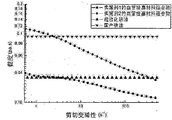
- Example 1 is a viscosity comparison diagram of the vascular embolization material of Example 1, the vascular embolization material of Comparative Example 2, domestic iodine oil, and super liquefied lipiodol.
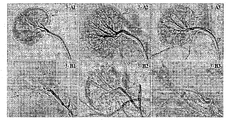
- Fig. 3 is a diagram showing the effect of the word angiography (DSA) of Experimental Example 2.
- Fig. 5 is a general histopathological photograph of four review time points of Experimental Example 3.
- Fig. 6 is a graph showing the effect of MR before and after the interventional treatment of Experimental Example 4.
- Poly(N-isopropylacrylamide-co-butyl methacrylate) is prepared by using N-isopropylacrylamide as a monomer and N,N'-dimethylenebisacrylamide as cross-linking
- the butyl methacrylate is a comonomer
- the spherical poly(N-isopropylacrylamide-co-butyl methacrylate) crosslinked polymer is obtained by thermal initiation initiation polymerization by soap-free emulsion polymerization. .
- Step 1 Add 10.0 g of poly(N-isopropylacrylamide-co-butyl methacrylate) having an intrinsic viscosity of 68 ml/g and 259 g of developer iohexol powder to 400 ml of water at 0 to 30 degrees Celsius. Stir well to obtain a solution containing poly(N-isopropylacrylamide-co-butyl methacrylate) and a developer, and then add 1.25 g of electrolyte calcium chloride and iodine-free polyol mannitol to the above solution. 0.3 g, make up to 500 ml, and mix well.
- Step 2 adjusting the pH of the solution obtained in the first step to 6.5-8.0 by using a pH adjuster hydrochloric acid to obtain a mass/volume concentration of poly(N-isopropylacrylamide-co-butyl methacrylate). 20 mg/ml, calcium chloride calcium mass/volume concentration 2.5 mg/ml, mannitol mass/volume concentration 0.6 mg/ml, and iohexol mass/volume concentration of 240 mg/ml vascular embolization material in terms of iodine.
- Table 1 The poly(N-isopropylacrylamide-co-butyl methacrylate) of Examples 2 to 10 (abbreviated as polymer in the table), the mass and the intrinsic viscosity, the quality of the developer, the quality of the electrolyte, and the Iodine polyol quality table
- doxorubicin hydrochloride is added to the vascular embolization material of Example 1.
- the specific method is to take 5 ml of the vascular embolization material of Example 1, extract 2 ml to ml with a 10 ml syringe, and inject 50 mg of doxorubicin for injection.
- Star Haizheng Pfizer Pharmaceutical Co., Ltd.
- the vortex suspension was allowed to stand for half an hour, and the lower layer of the supernatant was withdrawn to obtain the vascular embolization material of Example 11.
- vascular embolization material containing no electrolyte and no iodine-containing polyol is as follows.
- Step 1 Add 10.0 g of poly(N-isopropylacrylamide-co-butyl methacrylate) having an intrinsic viscosity of 68 ml/g and 259 g of developer iohexol powder to 500 ml of water at 0 to 30 degrees Celsius. Stir well.
- Step 2 adjusting the pH of the solution obtained in the first step to 6.5-8.0 by using the pH adjuster hydrochloric acid to obtain a mass/volume of poly(N-isopropylacrylamide-co-butyl methacrylate) At a concentration of 20 mg/ml, the mass/volume concentration of the developer iohexol was 240 mg/ml of vascular embolization material in terms of iodine.
- Step 1 Take 2.263 g of N-isopropylacrylamide, 0.032 g of sodium lauryl sulfate, 0.168 ml of butyl methacrylate, stir and dissolve in 160 ml of purified water, protect with N 2 , warm to 70 ° C, add 9.5. 10 ml of a potassium persulfate aqueous solution of mg/ml was reacted for 4.5 hours, and the reaction solution was purified by dialysis and freeze-dried to obtain a poly(N-isopropylacrylamide-co-butyl methacrylate) linear polymer solid, which was used.
- Step 2 Weigh 10.0 g of the backup solid in step 1, 259 g of developer iohexol powder, add 400 ml of water, and mix well to obtain a linear poly(N-isopropylacrylamide-co-butyl methacrylate) and A solution of the developer was then added with 1.25 g of an electrolyte calcium chloride, and then 0.3 g of an iodine-free polyol mannitol was added thereto, and the mixture was made up to 500 ml, and uniformly mixed.
- Step 3 adjusting the pH of the solution obtained in the second step to 6.5-8.0 by using a pH adjuster hydrochloric acid to obtain a linear polymerization of poly(N-isopropylacrylamide-co-butyl methacrylate) to mass/
- the volume concentration was 20 mg/ml
- the calcium chloride mass/volume concentration was 2.5 mg/ml
- the mannitol mass/volume concentration was 0.6 mg/ml
- the mass/volume concentration of iohexol was 240 mg/ml vascular embolization material.
- Table 2 shows the results of performance tests of the vascular embolization materials of Examples 1 to 10 and Comparative Examples 1 and 2.
- the vascular embolization material of the invention has a reasonable gelation time, can be controlled by gelation kinetics, has suitable gel strength, is resistant to blood flow scouring, and has better performance than iodized oil, and can last for a long time. Embedding the target blood vessel has the ideal developing performance, avoiding the safety risks caused by the operation such as blending with the developer in clinical use, and the insufficient clarity of the developing effect.
- Example 1 is a comparative diagram of shear thinning properties and viscosity of the vascular embolization material of Example 1, the vascular embolization material of Comparative Example 2, domestic iodine oil, and super liquefied lipiodol.
- the results of the viscosity test of Table 2 and the viscosity curve of FIG. 1 show that the vascular embolic material composition of Example 1 of the present invention and the vascular embolic material composition prepared by the linear polymer of Comparative Example 2 have shear thinning. Performance, but under the same conditions, the viscosity of the vascular embolization material of the present invention is significantly lower than that of the vascular embolic material composition formulated by the linear polymer. In addition, the composition of the present invention has a significantly lower viscosity than domestically produced lipiodol and is comparable to ultra-liquefied lipiodol.
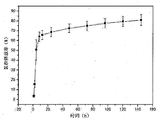
- Example 11 The in vitro release of the vascular embolization material of Example 11 was experimentally simulated using a drug eluting device that was able to mimic the release and release of drug release in vivo by interventional chemoembolization (TACE).
- TACE interventional chemoembolization
- the drug eluting device includes a glass release tank, a peristaltic pump, an oil bath, a thermometer, a conical flask, a beaker, and a connecting tube.
- the glass release tank is a customized glass cell with a diameter of 2 cm and a height of 2 cm. The upper part is closed by a glass stopper, and the two ends of the glass release tank can be respectively connected with the connecting pipe.
- the conical flask is placed in an oil bath, and then the conical flask, the peristaltic pump, the glass release tank, and the beaker are sequentially connected through a connecting pipe.
- the vascular embolization material of the spirulina is injected into the glass release tank and spread over the bottom of the release tank, and then the glass stopper is placed on the glass release tank; then the peristaltic pump is turned on to provide power for the liquid to flow in.
- the peristaltic pump is turned on to provide power for the liquid to flow in.
- n is the nth hour
- V n is the volume released in the nth hour
- C n is the concentration of doxorubicin hydrochloride in the release liquid in the nth hour.
- M Dox is the content of doxorubicin hydrochloride in doxorubicin hydrochloride
- V gel is the volume of doxorubicin hydrochloride in the release tank.
- ⁇ Dox is the concentration of doxorubicin hydrochloride in doxorubicin hydrochloride.
- FIG. 2 is a graph showing the in vitro release effect of Experimental Example 1 within 7 days. The results show that the vascular embolization material of the present invention can be used in combination with a chemotherapeutic drug and has the ability to slowly release the drug.
- the vascular embolization material of Example 1 was subjected to interventional embolization of the renal artery in normal rabbits.
- Fig. 3 is a diagram showing the effect of digital angiography (DSA) of the vascular embolization material of Experimental Example 2 on renal artery interventional embolization in normal rabbits.
- DSA digital angiography
- Figures 3-A1 to 3-A3 are angiographic DSA images of rabbit renal artery before interventional embolization.
- 3-B1 to 3-B3 correspond to the re-examination of the contrast after interventional embolization.
- the amount of vascular embolization material of 3-B1 was 0.5 ml
- the amount of vascular embolization material of 3-B2 was 1.0 ml
- the amount of vascular embolization material of 3-B3 was 2.0 ml.
- a shows the renal peripheral blood vessels
- b and c show small arterial blood vessels
- d and e show large arterial blood vessels.
- FIG. 4-A to FIG. 4-D are DSA images of 1 week, 1 month, 2 months, and 3 months, respectively.
- the material can effectively and long-term embolization of targeted blood tube.
- Fig. 5 is a general histopathological photograph of four time points of Experimental Example 3, and Figs. 5-A to 5-D are gross histopathological photographs of one week, one month, two months, and three months, respectively.
- VX2 tumor rabbits were treated with the vascular material composition of Example 1, an equal amount of lipiodol + gelatin sponge, and the same amount of physiological saline, respectively. After the successful intubation of the femoral artery, the hepatic artery was intubated and pulled. Postoperative management was performed postoperatively, and MRI was performed one week after surgery.
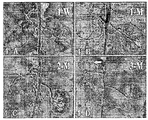
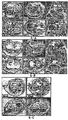
- Figure 6 is an MR diagram before and after interventional therapy.
- 6A to 6-C correspond to the vascular embolization material of Example 1, the lipiodol + gelatin sponge, and the physiological saline before and after the interventional treatment.
- liver tumors in each treatment group showed an increasing trend, accompanied by regional and peripheral irregular regional necrosis, in which the vascular embolization material of Example 1 and the same amount of lipiodol + gelatin sponge embolization treatment
- the tumor necrosis is more obvious, and most of them show flaky necrosis in the central region of the tumor. It is shown that the composition of the present invention has a good embolization effect on liver tumors.
Landscapes
- Health & Medical Sciences (AREA)
- General Health & Medical Sciences (AREA)
- Veterinary Medicine (AREA)
- Public Health (AREA)
- Surgery (AREA)
- Epidemiology (AREA)
- Life Sciences & Earth Sciences (AREA)
- Animal Behavior & Ethology (AREA)
- Chemical & Material Sciences (AREA)
- Materials Engineering (AREA)
- Engineering & Computer Science (AREA)
- Chemical Kinetics & Catalysis (AREA)
- Inorganic Chemistry (AREA)
- Dispersion Chemistry (AREA)
- Pharmaceuticals Containing Other Organic And Inorganic Compounds (AREA)
- Medicinal Preparation (AREA)
- Medicines Containing Antibodies Or Antigens For Use As Internal Diagnostic Agents (AREA)
- Materials For Medical Uses (AREA)
Abstract
L'invention porte sur l'utilisation du poly(N-isopropylacrylamide-co-butyl méthacrylate) dans la préparation d'une matière d'embolie pour vaisseaux sanguins, une matière d'embolie pour vaisseaux sanguins et son utilisation dans la préparation de médicaments. La matière d'embolie pour vaisseaux sanguins comprend du poly(N-isopropylacrylamide-co-butyl méthacrylate) et un milieu dispersé constitué d'un électrolyte, d'un révélateur, et d'un régulateur de pH et d'eau. Les concentrations du polymère de l'électrolyte et du révélateur sont respectivement de 5 à 30 mg/ml, de 0,1 à 30 mg/ml et de 100 à 350 mg/ml basé sur l'iode. La matière d'embolie pour vaisseaux sanguins est adéquate pour l'embolisation de tumeurs d'organes viscéraux hypervascularisés et parenchymateux.
Priority Applications (1)
| Application Number | Priority Date | Filing Date | Title |
|---|---|---|---|
| US16/329,287 US11291748B2 (en) | 2016-08-31 | 2016-12-23 | Embolism material for blood vessel, preparation method therefor and use thereof in preparation of drugs |
Applications Claiming Priority (2)
| Application Number | Priority Date | Filing Date | Title |
|---|---|---|---|
| CN201610781459.9 | 2016-08-31 | ||
| CN201610781459.9A CN106334213B (zh) | 2016-08-31 | 2016-08-31 | 一种血管栓塞材料、其制备方法及在药物制备中的用途 |
Publications (1)
| Publication Number | Publication Date |
|---|---|
| WO2018040407A1 true WO2018040407A1 (fr) | 2018-03-08 |
Family
ID=57822320
Family Applications (1)
| Application Number | Title | Priority Date | Filing Date |
|---|---|---|---|
| PCT/CN2016/111645 Ceased WO2018040407A1 (fr) | 2016-08-31 | 2016-12-23 | Matière d'embolie pour vaisseau sanguin, son procédé de préparation et son utilisation dans la préparation de médicaments |
Country Status (3)
| Country | Link |
|---|---|
| US (1) | US11291748B2 (fr) |
| CN (1) | CN106334213B (fr) |
| WO (1) | WO2018040407A1 (fr) |
Families Citing this family (11)
| Publication number | Priority date | Publication date | Assignee | Title |
|---|---|---|---|---|
| CN107261197B (zh) * | 2017-07-12 | 2020-05-01 | 安疗生命科学(武汉)有限公司 | 一种乳化碘油血管栓塞材料及其制备方法和应用 |
| WO2019014408A1 (fr) * | 2017-07-13 | 2019-01-17 | Boston Scientific Scimed, Inc. | Microsphères emboliques |
| CN110215542A (zh) * | 2018-03-02 | 2019-09-10 | 成都远睿生物技术有限公司 | 一种形成血管临时阻塞物的方法 |
| CN112244010A (zh) * | 2020-10-26 | 2021-01-22 | 中国农业科学院农业环境与可持续发展研究所 | 温度响应型纳米凝胶及其制备方法、包含该纳米凝胶的温度响应型农药载药系统的制备方法 |
| CN112870428B (zh) * | 2021-01-21 | 2022-05-27 | 北京冠合医疗科技有限公司 | 一种显影清晰的栓塞材料及其制备方法 |
| CN114042042B (zh) * | 2021-11-29 | 2023-07-25 | 广东粤港澳大湾区国家纳米科技创新研究院 | 一种w/o/w型温敏栓塞剂 |
| CN115463246B (zh) * | 2022-08-24 | 2023-06-20 | 中山大学附属第五医院 | 一种血管栓塞剂及其制备方法与应用 |
| CN116196276A (zh) * | 2023-02-27 | 2023-06-02 | 广东广纳安疗科技有限公司 | 一种温敏纳米凝胶乳液、栓塞剂及其应用 |
| CN116196461B (zh) * | 2023-03-08 | 2024-05-24 | 华中科技大学 | 一种长效超声显影性温敏纳米凝胶介入栓塞材料的制备方法及应用 |
| CN116271187B (zh) * | 2023-03-21 | 2025-07-04 | 湖北科技学院 | 双模态显影温敏Pickering乳液介入栓塞材料及其制备方法和应用 |
| CN116603095A (zh) * | 2023-05-29 | 2023-08-18 | 广东广纳安疗科技有限公司 | 乳液及其制备方法、栓塞剂 |
Citations (5)
| Publication number | Priority date | Publication date | Assignee | Title |
|---|---|---|---|---|
| CN1923303A (zh) * | 2006-09-15 | 2007-03-07 | 华中科技大学 | 用于血管栓塞材料的温敏纳米凝胶体系 |
| CN101690831A (zh) * | 2009-07-31 | 2010-04-07 | 华中科技大学 | 一种温敏纳米凝胶类血管栓塞材料及其制备方法和应用 |
| CN102125516A (zh) * | 2010-01-13 | 2011-07-20 | 北京大学 | 温敏型原位凝胶药物组合物 |
| CN104645356A (zh) * | 2015-01-30 | 2015-05-27 | 复旦大学 | 一类x射线显影的热致水凝胶及其制备方法 |
| CN105693920A (zh) * | 2016-02-03 | 2016-06-22 | 山东大学 | 长期显影原位凝胶化温度敏感型液体栓塞材料的制备方法 |
Family Cites Families (7)
| Publication number | Priority date | Publication date | Assignee | Title |
|---|---|---|---|---|
| JP3203382B2 (ja) * | 1992-03-13 | 2001-08-27 | 国立循環器病センター総長 | 人工塞栓形成用高分子溶液 |
| JPH10500148A (ja) * | 1994-03-04 | 1998-01-06 | ユニバーシティ オブ ワシントン | ブロック及びグラフトコポリマー並びにそれに関連する方法 |
| CN1233676C (zh) | 2004-05-11 | 2005-12-28 | 山东省医疗器械研究所 | 温度敏感型聚合物、温度敏感型液体栓塞材料及其制备方法 |
| US9987221B2 (en) * | 2007-08-23 | 2018-06-05 | Boston Scientific Scimed, Inc. | Injectable hydrogel compositions |
| CA2782899C (fr) * | 2009-12-15 | 2019-06-11 | Incept, Llc | Implants et marqueurs de reference biodegradables |
| WO2011139781A2 (fr) * | 2010-04-27 | 2011-11-10 | Covalent Medical, Inc. | Procédés et compositions pour la réparation d'un tissu vasculaire |
| CN104130348A (zh) * | 2014-07-17 | 2014-11-05 | 山东省医疗器械研究所 | 温度敏感型聚合物及原位凝胶化温度敏感型液体栓塞材料及其制备方法 |
-
2016
- 2016-08-31 CN CN201610781459.9A patent/CN106334213B/zh active Active
- 2016-12-23 US US16/329,287 patent/US11291748B2/en active Active
- 2016-12-23 WO PCT/CN2016/111645 patent/WO2018040407A1/fr not_active Ceased
Patent Citations (5)
| Publication number | Priority date | Publication date | Assignee | Title |
|---|---|---|---|---|
| CN1923303A (zh) * | 2006-09-15 | 2007-03-07 | 华中科技大学 | 用于血管栓塞材料的温敏纳米凝胶体系 |
| CN101690831A (zh) * | 2009-07-31 | 2010-04-07 | 华中科技大学 | 一种温敏纳米凝胶类血管栓塞材料及其制备方法和应用 |
| CN102125516A (zh) * | 2010-01-13 | 2011-07-20 | 北京大学 | 温敏型原位凝胶药物组合物 |
| CN104645356A (zh) * | 2015-01-30 | 2015-05-27 | 复旦大学 | 一类x射线显影的热致水凝胶及其制备方法 |
| CN105693920A (zh) * | 2016-02-03 | 2016-06-22 | 山东大学 | 长期显影原位凝胶化温度敏感型液体栓塞材料的制备方法 |
Non-Patent Citations (1)
| Title |
|---|
| LIAO, YUANXIA: "Preparation, Representation and Related Biological Assessment of Highly Concentrated Poly (N-isopropylamide-co-Butyl methacrylate", NANOGEL DISPERSIONS FOR INTERVENTIONAL THERAPY FOR LIVER CANCERS, 15 March 2017 (2017-03-15), pages 12 , 18, 36, and 45, ISSN: 1674-0246 * |
Also Published As
| Publication number | Publication date |
|---|---|
| US11291748B2 (en) | 2022-04-05 |
| CN106334213B (zh) | 2019-07-26 |
| CN106334213A (zh) | 2017-01-18 |
| US20190247536A1 (en) | 2019-08-15 |
Similar Documents
| Publication | Publication Date | Title |
|---|---|---|
| US11291748B2 (en) | Embolism material for blood vessel, preparation method therefor and use thereof in preparation of drugs | |
| US11998563B2 (en) | Polymeric treatment compositions | |
| JP2001509133A (ja) | 閉塞化血管における使用のための組成物 | |
| Liu et al. | Blood‐triggering phase transformational hydrogel for endovascular embolization | |
| CN104130348A (zh) | 温度敏感型聚合物及原位凝胶化温度敏感型液体栓塞材料及其制备方法 | |
| CN115845117A (zh) | 一种栓塞剂 | |
| CN103446061A (zh) | 可显影纳米银海藻酸钠微球血管栓塞剂及其制备方法 | |
| WO2025256408A1 (fr) | Bille embolique développable capable de charger de l'iode radioactif et un médicament chargé négativement, son procédé de préparation et son utilisation | |
| CN101544701B (zh) | 可显影含碘聚合物和可显影含碘聚合物栓塞材料 | |
| CN107875436A (zh) | 一种负载小苏打粉末的液体栓塞剂的组合物及其用途 | |
| WO2025196330A1 (fr) | Compositions polymères destinées à être utilisées en embolothérapie ou pour la préparation de dépôts thérapeutiques injectables | |
| CN119405848A (zh) | 一种栓塞放疗组合物、其制备方法及应用 | |
| Lord | Development of a Radiopaque Liquid Embolic for Therapeutic Embolisation | |
| CN121130145A (zh) | 一种高显影性和弥散性的液体栓塞剂及其应用 | |
| Becker | Application of calcium alginate as an endovascular embolization material for vascular lesions | |
| 정승채 | Polymeric embolization coil of bilayered PVA strand for therapeutic vascular occlusion: a feasibility study in canine experimental vascular models |
Legal Events
| Date | Code | Title | Description |
|---|---|---|---|
| 121 | Ep: the epo has been informed by wipo that ep was designated in this application |
Ref document number: 16914968 Country of ref document: EP Kind code of ref document: A1 |
|
| NENP | Non-entry into the national phase |
Ref country code: DE |
|
| 122 | Ep: pct application non-entry in european phase |
Ref document number: 16914968 Country of ref document: EP Kind code of ref document: A1 |