WO2018003695A1 - インサート成形用印刷フィルム - Google Patents
インサート成形用印刷フィルム Download PDFInfo
- Publication number
- WO2018003695A1 WO2018003695A1 PCT/JP2017/023207 JP2017023207W WO2018003695A1 WO 2018003695 A1 WO2018003695 A1 WO 2018003695A1 JP 2017023207 W JP2017023207 W JP 2017023207W WO 2018003695 A1 WO2018003695 A1 WO 2018003695A1
- Authority
- WO
- WIPO (PCT)
- Prior art keywords
- active energy
- insert molding
- energy ray
- resin
- polymer
- Prior art date
- Legal status (The legal status is an assumption and is not a legal conclusion. Google has not performed a legal analysis and makes no representation as to the accuracy of the status listed.)
- Ceased
Links
Classifications
-
- B—PERFORMING OPERATIONS; TRANSPORTING
- B29—WORKING OF PLASTICS; WORKING OF SUBSTANCES IN A PLASTIC STATE IN GENERAL
- B29C—SHAPING OR JOINING OF PLASTICS; SHAPING OF MATERIAL IN A PLASTIC STATE, NOT OTHERWISE PROVIDED FOR; AFTER-TREATMENT OF THE SHAPED PRODUCTS, e.g. REPAIRING
- B29C45/00—Injection moulding, i.e. forcing the required volume of moulding material through a nozzle into a closed mould; Apparatus therefor
- B29C45/14—Injection moulding, i.e. forcing the required volume of moulding material through a nozzle into a closed mould; Apparatus therefor incorporating preformed parts or layers, e.g. injection moulding around inserts or for coating articles
-
- B—PERFORMING OPERATIONS; TRANSPORTING
- B29—WORKING OF PLASTICS; WORKING OF SUBSTANCES IN A PLASTIC STATE IN GENERAL
- B29C—SHAPING OR JOINING OF PLASTICS; SHAPING OF MATERIAL IN A PLASTIC STATE, NOT OTHERWISE PROVIDED FOR; AFTER-TREATMENT OF THE SHAPED PRODUCTS, e.g. REPAIRING
- B29C45/00—Injection moulding, i.e. forcing the required volume of moulding material through a nozzle into a closed mould; Apparatus therefor
- B29C45/17—Component parts, details or accessories; Auxiliary operations
- B29C45/26—Moulds
-
- B—PERFORMING OPERATIONS; TRANSPORTING
- B32—LAYERED PRODUCTS
- B32B—LAYERED PRODUCTS, i.e. PRODUCTS BUILT-UP OF STRATA OF FLAT OR NON-FLAT, e.g. CELLULAR OR HONEYCOMB, FORM
- B32B27/00—Layered products comprising a layer of synthetic resin
-
- B—PERFORMING OPERATIONS; TRANSPORTING
- B32—LAYERED PRODUCTS
- B32B—LAYERED PRODUCTS, i.e. PRODUCTS BUILT-UP OF STRATA OF FLAT OR NON-FLAT, e.g. CELLULAR OR HONEYCOMB, FORM
- B32B27/00—Layered products comprising a layer of synthetic resin
- B32B27/16—Layered products comprising a layer of synthetic resin specially treated, e.g. irradiated
-
- B—PERFORMING OPERATIONS; TRANSPORTING
- B32—LAYERED PRODUCTS
- B32B—LAYERED PRODUCTS, i.e. PRODUCTS BUILT-UP OF STRATA OF FLAT OR NON-FLAT, e.g. CELLULAR OR HONEYCOMB, FORM
- B32B27/00—Layered products comprising a layer of synthetic resin
- B32B27/30—Layered products comprising a layer of synthetic resin comprising vinyl (co)polymers; comprising acrylic (co)polymers
Definitions
- the present invention relates to a print film for insert molding having a print protective layer, an active energy ray-curable composition used for the print protective layer, and an insert molded body having the print film for insert molding.
- insert molding With insert molding, a component made of a material such as metal or resin is inserted and held in a mold, and then the resin is poured into the mold, and the component and the resin are integrally molded to form a composite resin molded body. It is a manufacturing method.
- so-called film insert molding is known in which a decorative film such as a printed film is insert-held in a mold and then a resin is poured into the mold.
- This film insert molding can be used for molded products with complex shapes, has a high degree of design freedom, can easily handle multiple colors, complex patterns, deep drawing, etc., and has high positional accuracy for print alignment. For example, it is said to be one of the excellent methods for producing a decorative molded body.
- a printing protective layer is provided on the surface on which a printing layer of a film to be inserted into a mold is provided, and the ink flow of the printing layer is reduced during molding (typically injection molding). Suppressed. Moreover, since this printing protective layer is a part which contacts resin poured into a metal mold
- a resin composition containing a solvent is usually used as a composition for producing a print protective layer for protecting this print layer.
- a printing film having a printing protective layer made from this resin composition is used for film insert molding, for example, the printing protective layer near the gate and the ink in the printing layer may be washed with the resin during injection molding. Met.
- the printing protective layer is a cured product layer produced from an active energy ray-curable resin composition (for example, a patent Reference 1).
- an active energy ray-curable resin composition for example, a patent Reference 1.
- PC polycarbonate
- PC of a special structure is mix
- the reason why the PC contained in the composition has a special structure is to suppress the flow during molding by raising the glass transition temperature, and to the reactive diluent contained in the active energy ray-curable resin composition. It is said that the solubility is ensured.
- the PC has a special structure
- the raw material price is high and the range of use is large.
- dissolve the PC is limited, and the prescription construction
- the resin used for molding is a resin other than PC, such as acrylonitrile-butadiene-styrene resin (ABS)
- ABS acrylonitrile-butadiene-styrene resin
- the printing film is heated and stretched, so that the printing protective layer may follow the heating and stretching. Required.
- the present invention has been made based on the circumstances as described above, is excellent in adhesiveness with various resins, and has a printing protective layer having a printing protective layer that can protect the printing layer without flowing during molding, It is an object of the present invention to provide an active energy ray-curable composition excellent in solubility in various reactive diluents used for the print protective layer, and an insert molded body having the print film for insert molding.
- the printing protective layer comprises at least one polymer (A) selected from the group consisting of a vinyl polymer (A-1) and a urethane acrylate polymer (A-2), an acrylate ester, a methacrylate ester, And a cured product layer of an active energy ray-curable composition containing at least one reactive diluent (B) selected from the group consisting of a nitrogen-containing vinyl compound.
- the vinyl polymer (A) contained in the active energy ray-curable composition is an acrylate ester having a side chain having 10 or less carbon atoms, a methacrylate ester having a side chain having 10 or less carbon atoms, styrene, vinyl acetate, A polymer containing a monomer unit derived from one or more monomers selected from the group consisting of vinyl chloride, butadiene, and isoprene is preferable.
- the vinyl polymer (A-1) contained in the active energy ray-curable composition is preferably a polymer containing monomer units derived from methyl methacrylate.
- the vinyl polymer (A-1) contained in the active energy ray-curable composition is a block copolymer or a graft copolymer.
- the vinyl polymer (A-1) contained in the active energy ray-curable composition contains one or more polymerizable reactive groups.
- the active energy ray-curable composition preferably contains a photopolymerization initiator (C).
- the resin serving as the base material is preferably at least one resin selected from polycarbonate and polyethylene terephthalate.
- an active energy ray-curable composition used for a print protective layer of the insert-molding print film, which is a vinyl polymer and a urethane acrylate polymer.
- an insert molded body comprising the above-mentioned insert molding printing film and a resin raw material
- the resin raw material is polycarbonate, acrylonitrile-butadiene-styrene resin, acrylic It includes one or more resins selected from the group consisting of resins and polystyrene.
- Another invention made to solve the above-described problems is a method for producing the insert molded body, wherein the insert molding printing film is inserted into a mold, and the polycarbonate, acrylonitrile- It includes a step of injection-molding a resin raw material containing at least one resin selected from the group consisting of butadiene-styrene resin, acrylic resin, and polystyrene.
- a print film for insert molding having excellent strength of the printing protective layer itself and adhesive strength with a resin used for insert molding can be obtained. Therefore, it is possible to suppress the printing protective layer from flowing together with the resin during molding, for example, the flow of the printing protective layer together with the resin near the gate during injection molding.
- the active energy ray curable composition used as the said printing protective layer which is excellent in the solubility with respect to various reactive diluents is obtained. Moreover, since the printing protective layer is produced from this active energy ray-curable composition, it tends to be excellent in productivity.
- the print film for insert molding of the present invention includes a resin substrate, a printing layer provided on at least one surface of the substrate, and a printing protective layer on the substrate surface provided with the printing layer.
- the base material used for the printing film for insert molding of the present invention is produced from a resin.
- a resin is not particularly limited, and examples thereof include acrylic resins such as polycarbonate (PC), polyethylene terephthalate (PET), polybutylene terephthalate, polyethylene naphthalate, and polymethyl methacrylate resin, acrylonitrile-butadiene-styrene resin (ABS). ), Acrylonitrile-styrene-acrylic ester resin, vinyl chloride resin, polyolefins such as polyethylene and polypropylene, polystyrene, triacetyl cellulose (TAC), and the like.
- PC polycarbonate
- PET polyethylene terephthalate
- ABS polybutylene terephthalate
- ABS acrylonitrile-butadiene-styrene resin
- Acrylonitrile-styrene-acrylic ester resin vinyl chloride resin
- polyolefins such as polyethylene and poly
- the resin used as the substrate may be used alone or in combination of two or more.
- the thickness of the substrate is not particularly limited, but is preferably 20 ⁇ m to 1000 ⁇ m, and more preferably 50 ⁇ m to 500 ⁇ m, from the viewpoints of handling properties of the substrate and shape retention during injection molding.
- a printed layer is provided on the surface of the above-described resin base material.
- the method for providing the print layer is not particularly limited.
- the printing layer is provided on the substrate surface by gravure printing, offset printing, screen printing, inkjet printing, printing by transfer from a transfer sheet, or the like.
- the ink for forming such a printing layer is not particularly limited, and an ink in which a binder, a colorant such as a pigment or a dye, a solvent, a stabilizer, a plasticizer, a catalyst, or a curing agent is appropriately mixed can be used.
- Such an ink may be a solvent-based ink or an active energy ray-curable ink.
- the solvent-based ink and the active energy ray-curable ink may be used in combination.
- a printed layer that becomes a character, a pattern or the like is provided on the surface of the substrate.
- the printing layer may be provided only on the single side
- the printing layer may be provided in the whole base-material surface, and may be provided in a part of base-material surface.
- the printing layer is preferably formed from an ink containing an active energy ray-curable ink from the viewpoint of productivity. Further, there are cases where heat treatment such as heat stretching or vacuum formation before insert molding is performed, and it is preferable that the insert-molding printing film follows the heat treatment. From this point of view, it is preferable to use an active energy ray-curable composition used for a print protective layer, which will be described later, as an ink vehicle for forming the print layer. By forming both the print layer and the print protective layer from a material containing such an active energy ray-curable composition, the adhesion between the print layer and the print protective layer can be improved.
- the insert molding printing film of the present invention has a printing protective layer on the surface of the base material provided with the above-mentioned printing layer.
- a print protective layer is composed of a cured product of an active energy ray-curable composition containing a specific polymer (A) and a specific reactive diluent (B).
- A active energy ray-curable composition containing a specific polymer (A) and a specific reactive diluent (B).
- Having a print protective layer made of such a cured product not only increases its strength, but also suppresses the flow of the print protective layer together with the resin near the gate, for example, during insert molding. It can protect and can also suppress the ink flow of a printing layer. Furthermore, it is excellent in adhesiveness with the resin used for insert molding.
- the active energy ray-curable composition includes a polymer (A) selected from the group consisting of a vinyl polymer (A-1) and a urethane acrylate polymer (A-2).
- the vinyl polymer (A-1) that can be contained in the active energy ray-curable composition is generally superior in solvent solubility as compared with a condensation polymer (for example, polycarbonate), and is copolymerized. Is easy to modify. Furthermore, since the molecular weight distribution can be controlled by employing living polymerization, the structure of the polymer can be widely adjusted, and the block copolymer can be easily produced. In addition, by adjusting the glass transition temperature, crosslink density and the like of the vinyl polymer (A-1), the flow of ink in the print protective layer and the print layer can be significantly suppressed during insert molding. Further, by controlling the composition of the vinyl polymer (A-1), it is possible to impart excellent heat stretchability to the print protective layer.
- the vinyl polymer means a polymer containing a monomer unit derived from a monomer having a vinyl group.
- the monomer having a vinyl group those capable of vinyl polymerization can be used without particular limitation.
- the monomer having a vinyl group include methyl acrylate, ethyl acrylate, n-propyl acrylate, isopropyl acrylate, n-butyl acrylate, t-butyl acrylate, cyclohexyl acrylate, 2-acrylate Ethylhexyl, isobornyl acrylate, tricyclodecyl acrylate, lauryl acrylate, dodecyl acrylate, trimethoxysilylpropyl acrylate, N, N-dimethylaminoethyl acrylate, N, N-diethylaminoethyl acrylate, 2-acrylic acid 2- Acrylic esters such as methoxyethyl, phenyl acrylate, naphthyl acrylate, 2- (trimethylsilyloxy) ethyl acrylate, 3- (trimethyl
- An acrylic ester having a side chain of 10 or less carbon atoms such as (trimethylsilyloxy) propyl; Methyl methacrylate, ethyl acrylate, ethyl acrylate, n-prop
- the vinyl polymer (A-1) is preferably one that is not colored at a high temperature. Moreover, it is desirable that the insert molded body obtained in the present invention is not colored even when used for a long period of time. From such a viewpoint, it is a preferred embodiment that the polymer includes a monomer unit derived from methyl methacrylate, and the polymer includes a monomer unit derived from methyl methacrylate as a main component. Is a more preferred embodiment.
- the term “containing as a main component” means containing the largest amount of the components among the monomer units contained in the vinyl polymer (A-1). %, More preferably 60% by mass or more, still more preferably 80% by mass or more. However, in the block copolymer and the graft copolymer, it is preferable that the monomer unit derived from methyl methacrylate contained in one or more polymer blocks or the main chain or graft chain is in the above range.
- the method for producing the vinyl polymer (A-1) is not particularly limited as long as a monomer having a vinyl group can be polymerized, but an anionic polymerization method or a radical polymerization method is preferable. From the viewpoint of polymerization control, the living anion polymerization method or the living radical polymerization method is a more preferable embodiment.
- the radical polymerization method is a preferred embodiment in that a polar group that inhibits anionic polymerization such as a hydroxyl group or a carboxylic acid can be introduced relatively easily as required from the viewpoint of adhesiveness.
- Living radical polymerization methods include a polymerization method using a chain transfer agent such as polysulfide, a polymerization method using a cobalt porphyrin complex, a polymerization method using a nitroxide (see International Publication No. 2004/014926), and a high-cycle heterogeneity such as an organic tellurium compound.
- Polymerization method using elemental compounds see Japanese Patent No. 3839829
- RAFT reversible addition / elimination chain transfer polymerization method
- ATRP atom transfer radical polymerization method
- an atom transfer radical polymerization method is preferred, and a metal complex having an organic halide or a sulfonyl halide compound as an initiator and at least one selected from Fe, Ru, Ni, and Cu as a central metal is used.
- An atom transfer radical polymerization method using a catalyst is more preferable.
- Living anionic polymerization methods include living polymerization using an organic rare earth metal complex as a polymerization initiator (see JP 06-93060 A), alkali metal or alkaline earth metal salts using an organic alkali metal compound as a polymerization initiator, and the like.
- a living anion polymerization in the presence of a mineral salt see Japanese Patent Publication No. 05-507737
- a living anion polymerization using an organic alkali metal compound as a polymerization initiator in the presence of an organoaluminum compound Japanese Patent Laid-open No. Hei 05 (1994)
- 11-335432 and International Publication No. 2013/141105 are examples of organic alkali metal compound as a polymerization initiator.
- the vinyl polymer (A-1) of the present invention can be a copolymer when a plurality of monomers are used.
- Examples of the copolymerization form include a random copolymer, an alternating copolymer, a block copolymer, and a graft copolymer.
- the vinyl polymer (A-1) of the present invention is a block copolymer or a graft copolymer.
- random copolymers and alternating copolymers often exhibit physical properties close to the compositional average of the physical properties of the homopolymer of the monomer species used, so that the necessary physical properties can be adjusted according to the application. .
- polymerizable reactive groups are introduced into the vinyl polymer (A-1).
- the polymerizable reactive group is not particularly limited, and examples thereof include an acryloyl group, a methacryloyl group, an epoxy group, and an allyl group, and among them, an acryloyl group and a methacryloyl group are preferable.
- polymerize for example, radical polymerization is used.
- the method for introducing a polymerizable reactive group is not particularly limited.
- a method of producing a polymer having no reactive group and introducing the reactive group in a post reaction, or having a protected polymerizable reactive group A method of producing a polymer using a monomer and then removing the protecting group, a monomer having a polymerizable reactive group, and a polymerizable reactive group with high selectivity using a steric hindrance
- a method for producing a polymer by the remaining polymerization method can be employed.
- the position where the polymerizable reactive group is introduced is not particularly limited.
- Examples of the structure of the reactive group in the vinyl polymer (A-1) having the reactive group include, for example, a structure randomly introduced into the main chain of the vinyl polymer (A-1), and a terminal of the polymer.
- vinyl polymer (A-1) is a block polymer
- vinyl polymer (A-1) is a graft polymer
- Examples include a structure introduced into a trunk molecular chain (main chain) or a structure introduced into a branch molecular chain (graft chain).
- the number average molecular weight (Mn) of the vinyl polymer (A-1) is not particularly limited, but if the Mn is too small, the strength of the print protective layer is lowered. On the other hand, if Mn is too large, the viscosity increases, so the blending amount must be reduced, and the strength of the cured product produced from the active energy ray-curable composition is reduced. When the strength of the cured product is lowered, the print protective layer made of the cured product is coherently broken, so that it is impossible to ensure the adhesive strength to the resin used for the base material, the printed layer, and the insert molding. Therefore, the lower limit of Mn is preferably 4,000, more preferably 5,000, and further preferably 7,000.
- the upper limit of Mn is preferably 7,000,000, more preferably 3,000,000, and further preferably 2,000,000.
- said number average molecular weight represents the number average molecular weight of polystyrene conversion measured by gel permeation chromatography (GPC).
- the molecular weight distribution (Mw / Mn) of the vinyl polymer (A-1) is not particularly limited, but the Mw / Mn is preferably 3.0 or less, more preferably 2.5 or less, and 2.0 or less. Is more preferable. By setting Mw / Mn to be equal to or less than the above upper limit, it is possible to further increase the adhesive strength to the resin used for the base material, the printing layer, and the insert molding and the curing rate of the active energy ray curable composition. Mw / Mn is usually 1 or more.
- the urethane acrylate polymer (A-2) that can be contained in the active energy ray-curable composition is an oligomer or polymer having a urethane bond and having an acryloyl group or a methacryloyl group.
- the urethane acrylate polymer (A-2) is not particularly limited, and an arbitrary one can be used.
- Examples of the urethane acrylate polymer (A-2) include: (I) a compound obtained by reacting a compound having one or more acryloyl groups or methacryloyl groups and one or more hydroxy groups, and a compound having two or more isocyanate groups; (Ii) a compound having one or more acryloyl groups or methacryloyl groups and one or more hydroxy groups, a compound having two or more isocyanate groups, and a compound obtained by reaction of a polyol; (Iii) one or more compounds selected from the group consisting of acrylic acid, methacrylic acid, acryloyl chloride and methacryloyl chloride, a compound having two or more isocyanate groups, and a compound obtained by reaction of a polyol; (Iv) a compound having one or more acryloyl or methacryloyl groups
- the compound having one or more acryloyl groups or methacryloyl groups and one or more hydroxy groups is not particularly limited, and examples thereof include 2-hydroxy acrylate, 2-hydroxypropyl acrylate, 4-hydroxybutyl acrylate, pentaerythritol tris.
- Acrylic acid esters such as acrylate and dipentaerythritol pentaacrylate; and methacrylic acid esters such as 2-hydroxy methacrylate, 2-hydroxypropyl methacrylate, 4-hydroxybutyl methacrylate, pentaerythritol trimethacrylate, and dipentaerythritol pentamethacrylate.
- the compound having two or more isocyanate groups is not particularly limited, and examples thereof include aromatic isocyanates such as tolylene diisocyanate, 4,4′-diphenylmethane diisocyanate, xylylene diisocyanate, metaxylylene diisocyanate; hexamethylene diisocyanate. And aliphatic isocyanates such as isophorone diisocyanate;
- polystyrene resin there is no restriction
- limiting in particular as said polyol For example, low molecular weight polyols, such as ethylene glycol, butanediol, trimethylol propane, glycerol, pentaerythritol, neopentyl glycol; High molecular weight polyols, such as polyethylene glycol, polycarbonate diol, polytetramethylene glycol Is mentioned.
- the high molecular weight polyol may contain a urethane bond, an ester bond, a carbonate bond, or an ether bond in the molecule.
- the high molecular weight polyol may contain a monomer unit derived from an acrylate ester, a methacrylate ester, or a conjugated diene (for example, butadiene, isoprene, etc.).
- the derived carbon-carbon double bond may be hydrogenated.
- Examples of the compound having one or more acryloyl or methacryloyl groups and one or more isocyanate groups include 2-isocyanate ethyl acrylate and 2-isocyanate ethyl methacrylate.
- the acryloyl group or methacryloyl group may be located at the end of the molecule or in a branched structure.
- the number of acryloyl groups or methacryloyl groups of the urethane acrylate polymer (A-2) is not particularly limited, and for example, it may have two at both ends of the molecule, including three including a branched structure. You may have more.
- the active energy ray-curable composition contains a reactive diluent (B).
- the reactive diluent (B) dissolves the polymer (A) to ensure the handleability of the active energy ray-curable composition, and when cured, it itself reacts to become part of the cured product. Refers to a low molecular weight compound.
- the reactive diluent used in the active energy ray-curable composition preferably has a boiling point of 180 ° C. or higher under atmospheric pressure. Reactive diluents whose boiling point under atmospheric pressure is lower than 180 ° C are highly volatile, and the composition of the active energy ray-curable composition changes when an open coating method such as gravure method or screen method is adopted. May end up.
- a monofunctional reactive diluent (B-1) is mainly used as the reactive diluent (B).
- the monofunctional reactive diluent (B-1) include octyl acrylate, 2-ethylhexyl acrylate, isoamyl acrylate, lauryl acrylate, stearyl acrylate, isostearyl acrylate, isobornyl acrylate, dicyclopentadienyl acrylate, methoxy Ethyl acrylate, methoxydiethylene glycol acrylate, methoxytriethylene glycol acrylate, methoxypolyethylene glycol acrylate, methoxydipropylene glycol acrylate, methoxytripropylene glycol acrylate, methoxypolypropylene glycol acrylate, benzyl acrylate, phenoxyethyl acrylate, phenoxydiethylene glycol acrylate, phenoxytrie Len glycol acrylate,
- a further addition of a polyfunctional reactive diluent (B-2) having a plurality of polymerizable groups can be used as necessary.
- the multifunctional reactive diluent (B-2) include trimethylolpropane triacrylate, trimethylolpropane trioxyethyl acrylate, pentaerythritol triacrylate, ethylene glycol diacrylate, triethylene glycol diacrylate, tetraethylene glycol diacrylate.
- Acrylic acid polyethylene glycol diacrylate, 1,4-butanediol diacrylate, 1,6-hexanediol diacrylate, neopentyl glycol diacrylate, tripropylene glycol diacrylate, bisphenol A diglycidyl ether both-end acrylic acid adduct, Pentaerythritol triacrylate, pentaerythritol tetraacrylate, polyester diacrylate, tris (2-hydride Xylethyl) isocyanurate triacrylate, tris (2- (2,3-dihydroxypropoxy) ethyl) isocyanurate triacrylate, tris (2-hydroxyethyl) isocyanurate diacrylate, cyclohexane dimethanol diacrylate, tricyclodecane dimethanol di Diacrylate of diol, an adduct of acrylate, ethylene oxide or propylene oxide of bisphenol A, Diacrylate of diol, an adduct of
- a cured product obtained from an active energy ray-curable composition containing a large amount of a polyfunctional reactive diluent improves the solvent resistance, but greatly reduces the heat stretchability. Therefore, in applications requiring heat stretchability, it is necessary to adjust the molecular weight between theoretical crosslinking points by adjusting the amount of polyfunctional reactive diluent added in the active energy ray-curable composition.
- the inter-theoretical crosslinking points molecular weight, a numerical value calculated from the composition of the active energy ray-curable composition, molecular weight M c between theoretical crosslinking points can be obtained from the following equation.
- n i the number of moles of component i
- f i the number of functional groups
- m i of component i the mass fraction of component i.
- the molecular weight between theoretical cross-linking points in applications requiring heat stretchability is preferably 500 or more, more preferably 1000 or more.
- the active energy ray-curable composition preferably contains a photopolymerization initiator (C).
- a photoinitiator (C) For example, sulfur compounds, such as carbonyl compounds, such as acetophenones, benzophenones, Michler ketones, and benzoins; Tetramethyl thiuram monosulfide, thioxanthone, etc. are used.
- acetophenones examples include 1-hydroxycyclohexyl phenyl ketone, 2,2-dimethoxy-1,2-diphenylethane-1-one, 2-hydroxy-2-methyl-1-phenylpropan-1-one, and the like. It is done.
- benzophenones examples include benzophenone, benzoylbenzoic acid, hydroxybenzophenone, 3,3′-dimethyl-4-methoxybenzophenone, and acrylated benzophenone.
- benzoins examples include benzoin, benzoin methyl ether, and benzoin isopropyl ether.
- acetophenones and benzophenones are preferable in terms of reactivity and transparency, and 1-hydroxycyclohexyl phenyl ketone is more preferable.
- photopolymerization initiators include, for example, “IRGACURE 184” (1-hydroxycyclohexyl phenyl ketone; manufactured by BASF), “Sorbastron BIPE” (manufactured by Kurokin Kasei), “Sorbastron BIBE” (manufactured by Kurokin Kasei) ), “IRGACURE 651” (2,2-dimethoxy-1,2-diphenylethane-1-one; manufactured by BASF), “DAROCUR 1173” (2-hydroxy-2-methyl-1-phenylpropan-1-one; BASF), “IRGACURE 2959” (BASF), “IRGACURE 127” (BASF), “IRGACURE 907” (BASF), “IRGACURE 369” (BASF), “KAYACURE BP” (Nippon Kayaku) "IRGACURE 379” (manufactured by BASF), “DAROCUR TPO” (BASF), “IRGACURE 819
- the addition amount of the photopolymerization initiator (C) is desirably 10 parts by mass or less with respect to 100 parts by mass in total of the polymer (A) and the reactive diluent (B). Since it may be colored by the polymerization initiator (C), 5 parts by weight or less is preferable and 3 parts by weight or less is more preferable with respect to 100 parts by weight of the total of the polymer (A) and the reactive diluent (B). . On the other hand, in order to cure sufficiently, it is preferably 0.1 parts by weight or more, and 0.5 parts by weight or more with respect to 100 parts by weight in total of the polymer (A) and the reactive diluent (B). More preferably, 1 part by weight or more is further added.
- the said active energy ray curable composition may further contain other components other than a polymer (A), a reactive diluent (B), and the photoinitiator (C) contained as needed.
- other components include condensation polymers, photosensitizers, thermal polymerization initiators, antifoaming agents, viscosity modifiers, tackifiers, softeners, fillers, and stabilizers. These other components may be organic compounds or inorganic compounds.
- the active energy ray-curable composition can be easily produced by mixing the polymer (A), the reactive diluent (B) and the photopolymerization initiator (C) contained as necessary.
- a printing protective layer is formed in the base-material surface in which the printing layer was provided with the following method using the active energy ray curable composition mentioned above.
- the active energy ray-curable composition described above is applied to the surface of the base material on which the printing layer is provided to provide an active energy ray-curable composition coating layer.
- coating method of an active energy ray curable composition Since the active energy ray-curable composition preferably has a viscosity range suitable for screen printing, it can be applied to the surface of a substrate provided with a printing layer, for example, by screen printing.
- Application of active energy ray curable composition is die coating, roll coating, air knife coating, gravure roll coating, doctor roll coating, doctor knife coating, curtain flow coating, spray, wire bar, rod coating, dipping, brush coating, etc. Other methods may be used.
- the active energy ray used for curing includes a reactive diluent (B) contained in the active energy ray-curable composition, a polymerizable reactive group that can be contained in the polymer (A), and as necessary. It can select suitably according to the kind of photoinitiator (C).
- Examples of such active energy rays include, in addition to electromagnetic waves such as ultraviolet rays, infrared rays, X rays, and ⁇ rays, electron beams, proton rays, neutron rays, and the like.
- electromagnetic waves such as ultraviolet rays, infrared rays, X rays, and ⁇ rays, electron beams, proton rays, neutron rays, and the like.
- ultraviolet rays or electron beams are preferable from the viewpoints of curing speed, availability of the irradiation apparatus and price, and ultraviolet rays are more preferable.
- the active energy ray can be irradiated using a known apparatus.
- ultraviolet rays When ultraviolet rays are used as the active energy ray, a high pressure mercury lamp, an ultrahigh pressure mercury lamp, a carbon arc lamp, a metal halide lamp, a xenon lamp, a chemical lamp, an LED, or the like that emits light in a wavelength region of 450 nm or less can be used.
- an electron beam (EB) is used as the active energy ray
- the acceleration voltage is preferably 0.1 MeV to 10 MeV
- the irradiation dose is preferably 1 kGy to 500 kGy.
- the lower limit of the integrated light quantity of the active energy ray preferably 10mJ / cm 2, 30mJ / cm 2 is more preferable.
- the integrated light amount of the active energy ray is equal to or more than the lower limit, the curing rate of the active energy ray-curable composition and the adhesive strength to the base material and the printed layer after curing are improved.
- the upper limit of the cumulative amount of the active energy ray preferably 20,000mJ / cm 2, and more preferably 5,000 mJ / cm 2.
- Curing may be promoted by heating as necessary during or after irradiation of the active energy ray to the coating layer of the active energy ray curable composition.
- this heating temperature 40 degreeC is preferable and 50 degreeC is more preferable.
- an upper limit of heating temperature 130 degreeC is preferable and 100 degreeC is more preferable.
- the heating temperature is equal to or higher than the lower limit, the effect of promoting curing is improved.
- deformation of the film can be suppressed when the heating temperature is not more than the upper limit.
- the active energy ray-curable composition contains a compound having a thermosetting group that does not react with active energy rays, it can be reacted by heating before or after curing with active energy rays.
- Typical examples of the curing reaction by heating include an addition reaction between a compound having a hydroxyl group and a compound having an isocyanate group, a dehydration condensation reaction between compounds having a hydroxysilyl group, hydrolysis of a compound having an alkoxysilyl group, and hydrolysis thereof. Examples include dehydration condensation between products.
- the print film for insert molding of the present invention may be subjected to insert molding after post-treatment.
- post-treatment include shaping to a desired shape by heat stretching, vacuum forming, and the like.
- the insert molded body of the present invention can be manufactured by a manufacturing method including a step of inserting the above-mentioned insert molding printing film into a mold, and a step of pouring a resin raw material containing a thermoplastic resin into the mold.
- the step of pouring the resin material containing the thermoplastic resin into the mold is typically performed by injection molding the resin material into the mold.
- the resin raw material used for insert molding is not particularly limited as long as insert molding is possible.
- the thermoplastic resin contained in the resin raw material include PC, ABS, acrylic resin, polystyrene, and a mixture or alloy (for example, PC / ABS alloy) of these resins.
- the resin composition suitable for the cured product layer of the print film for insert molding obtained in the present invention can be applied not only to the above-described uses but also to uses such as resists and holograms.
- Example preparation method On a base material made of PC (Panlite PC-2151, 200 ⁇ m, manufactured by Teijin Limited), FLX-672 white (manufactured by Teikoku) was applied by screen printing, and an ultraviolet irradiation device (conveyor; 12A12G-A10 -HD3A, UV power source: DMC-12LC-3D1C, lamp; high-cure lamp MAK125AL-F, manufactured by GS Yuasa) was used to irradiate ultraviolet rays with an irradiation intensity of 130 mW and an integrated light amount of 330 mJ / cm 2 to form a printed layer. .
- an ultraviolet irradiation device conveyor; 12A12G-A10 -HD3A, UV power source: DMC-12LC-3D1C, lamp; high-cure lamp MAK125AL-F, manufactured by GS Yuasa
- the active energy ray-curable composition is applied to the surface of the base material on which the printing layer is formed by screen printing, irradiated with ultraviolet rays under the same conditions as the ink, and the applied material comprising the composition is cured, thereby protecting the printing protective layer. Formed.
- the thickness of the print protective layer was about 20 ⁇ m for all samples.
- the obtained insert molding print film was set in a mold, and a resin raw material was injected into the mold to obtain an insert molded body.
- Example 1 To a 1000 ml three-necked flask equipped with a condenser and a stirring blade, 100 g of the polymer (1) obtained in Synthesis Example 1 was added 386 g of acryloylmorpholine, 33 g of vinylcaprolactam, 40 g of phenoxyethyl acrylate and 33 g of dicyclopentadienyl diacrylate. In addition, the mixture was stirred at 60 ° C.
- the obtained active energy ray-curable composition (1) was applied by screen printing onto a polycarbonate substrate prepared according to the above-described sample preparation method and provided with a printing layer on the surface thereof, and then irradiated with ultraviolet rays.
- a print film for insert molding (1) having a print protective layer was produced.
- the obtained insert molding print film (1) was inserted into a mold, and a PC was injection molded into the mold. A peel test was performed on the obtained insert molded body. The results are shown in Table 2.
- Examples 2 to 5, Comparative Examples 1 and 2 Preparation of an active energy ray-curable composition and insert molding having a printing protective layer in the same manner as in Example 1 except that the polymer (1) was changed to the polymers (2) to (7) shown in Table 1, respectively. A printed film and an insert molded body were prepared, and a peel test of the obtained insert molded body was performed. The results are shown in Table 2. In Comparative Example 2, since the polymer (7) was not dissolved in the reactive diluent, the production of a print film for insert molding and the insert molded body and the peel test could not be performed.
- Example 6 In Example 1, except that the resin raw material injected into the mold was changed to ABS, a print film for insert molding and an insert molded body were produced in the same manner as in Example 1, and a peel test of the obtained insert molded body was performed. Went. The results are shown in Table 2.
- Example 7 In Example 1, except that the base material was changed to PET (Lumirror S10, manufactured by Toray Industries, Inc.), a print film for insert molding and an insert molded body were produced in the same manner as in Example 1, and the obtained insert molding was performed. A body peel test was performed. The results are shown in Table 2.
Landscapes
- Engineering & Computer Science (AREA)
- Manufacturing & Machinery (AREA)
- Mechanical Engineering (AREA)
- Laminated Bodies (AREA)
- Macromonomer-Based Addition Polymer (AREA)
Abstract
種々の樹脂との接着性に優れ、成形時にも流れることなく印刷層を保護できる印刷保護層を有するインサート成形用印刷フィルム、その印刷保護層に用いられる、種々の反応性希釈剤との溶解性に優れる活性エネルギー線硬化性組成物、および該インサート成形用印刷フィルムを有するインサート成形体を提供することを目的とする。 樹脂の基材、基材の少なくとも一方の表面に設けられた印刷層、および印刷層が設けられた基材表面に印刷保護層を含み、印刷保護層が、ビニル系重合体(A-1)およびウレタンアクリレート系重合体(A-2)からなる群より選ばれる1種以上の重合体(A)と、アクリル酸エステル、メタクリル酸エステル、および窒素含有ビニル化合物からなる群より選ばれる1種以上の反応性希釈剤(B)とを含む活性エネルギー線硬化性組成物の硬化物層であるインサート成形用印刷フィルム。
Description
本発明は、印刷保護層を有するインサート成形用印刷フィルム、該印刷保護層に用いられる活性エネルギー線硬化性組成物、および該インサート成形用印刷フィルムを有するインサート成形体に関する。
インサート成形とは、金属、樹脂などの材料からなる部品を金型内にインサート保持した後、その金型に樹脂を流し込み、その部品と樹脂とを一体成形して、複合化した樹脂成形体を製造する方法である。このインサート成形の一態様として、印刷されたフィルムなどの加飾フィルムを金型にインサート保持した後、その金型に樹脂を流し込むいわゆるフィルムインサート成形が知られている。このフィルムインサート成形は、複雑な形状の成形体にも対応できること、デザインの自由度が高く、多色化、複雑な絵柄、深絞りなどにも容易に対応できること、印刷合わせの位置精度が高いことなどから優れた加飾成形体の製造方法の1つと言われている。ところで、印刷フィルムを用いたフィルムインサート成形では、金型にインサートするフィルムの印刷層が設けられた表面に印刷保護層を設け、成形(典型的には射出成形)時に、印刷層のインク流れを抑制している。また、この印刷保護層は、金型に流し込む樹脂と接触する部分であることから、その樹脂との接着性を確保することも求められる。
この印刷層を保護するための印刷保護層を作製するための組成物として、現在、溶剤を含む樹脂組成物が使用されることが通常である。しかし、この樹脂組成物から作製された印刷保護層を有する印刷フィルムをフィルムインサート成形に用いた場合、例えば射出成形時にゲート近傍の印刷保護層および印刷層のインクが樹脂とともに流される場合があり問題であった。
この成形時の印刷保護層および印刷層のインク流れを抑制するため、印刷保護層を活性エネルギー線硬化性の樹脂組成物から作製される硬化物層にすることが提案されている(例えば、特許文献1参照。)。また、特許文献1によれば、活性エネルギー線硬化により印刷保護層を作製する場合、その硬化時間(印刷保護層を作製するために要する時間)が短く、このことが生産性向上にも寄与できるとされている。
この特許文献1では、成形に用いる樹脂であるポリカーボネート(PC)との接着性を向上させるために、印刷保護層となる活性エネルギー線硬化性樹脂組成物に、特殊な構造のPCが配合されている。その組成物に含まれるPCを特殊な構造にしている理由は、ガラス転移温度を上げることで成形時の流れを抑制すること、および活性エネルギー線硬化性樹脂組成物に含まれる反応性希釈剤への溶解性確保であるとされている。
しかしながら、そのPCは構造が特殊であるため原料価格が高く、用途範囲に制限が大きい。また、そのPCを溶解できる反応性希釈剤が限られており、成形に用いる樹脂、印刷層を形成するインク種に応じた組成物の処方構築に制限が大きい。さらに、成形に用いる樹脂がアクリロニトリル-ブタジエン-スチレン樹脂(ABS)などのPC以外の樹脂である場合には、接着性が不十分である場合があり、より汎用性の高いインサート成形用の活性エネルギー線硬化性組成物が望まれていた。
また、上述した印刷フィルムを金型にインサートする前に、真空成形などにより賦形する場合には、印刷フィルムが加熱延伸されることとなるため、印刷保護層もその加熱延伸に追随することも要求される。
本発明は、上述のような事情に基づいてなされたものであり、種々の樹脂との接着性に優れ、成形時にも流れることなく印刷層を保護できる印刷保護層を有するインサート成形用印刷フィルム、その印刷保護層に用いられる種々の反応性希釈剤への溶解性に優れる活性エネルギー線硬化性組成物、および該インサート成形用印刷フィルムを有するインサート成形体を提供することを目的とする。
前記課題を解決するためになされた第一の発明は、インサート成形用印刷フィルムであって、樹脂の基材、基材の少なくとも一方の表面に設けられた印刷層、および印刷層が設けられた基材表面に印刷保護層を含み、
印刷保護層が、ビニル系重合体(A-1)およびウレタンアクリレート系重合体(A-2)からなる群より選ばれる1種以上の重合体(A)と、アクリル酸エステル、メタクリル酸エステル、および窒素含有ビニル化合物からなる群より選ばれる1種以上の反応性希釈剤(B)とを含む活性エネルギー線硬化性組成物の硬化物層であることに特徴がある。
印刷保護層が、ビニル系重合体(A-1)およびウレタンアクリレート系重合体(A-2)からなる群より選ばれる1種以上の重合体(A)と、アクリル酸エステル、メタクリル酸エステル、および窒素含有ビニル化合物からなる群より選ばれる1種以上の反応性希釈剤(B)とを含む活性エネルギー線硬化性組成物の硬化物層であることに特徴がある。
前記活性エネルギー線硬化性組成物に含まれるビニル系重合体(A)は炭素数10以下の側鎖を有するアクリル酸エステル、炭素数10以下の側鎖を有するメタクリル酸エステル、スチレン、酢酸ビニル、塩化ビニル、ブタジエン、およびイソプレンからなる群より選ばれる1種以上の単量体に由来する単量体単位を含む重合体であることが好ましい。
前記活性エネルギー線硬化性組成物に含まれるビニル系重合体(A-1)はメタクリル酸メチルに由来する単量体単位を含む重合体であることが好ましい。
前記活性エネルギー線硬化性組成物に含まれるビニル系重合体(A-1)はブロック共重合体またはグラフト共重合体であることが好ましい一態様である。
前記活性エネルギー線硬化性組成物に含まれるビニル系重合体(A-1)はブロック共重合体またはグラフト共重合体であることが好ましい一態様である。
前記活性エネルギー線硬化性組成物に含まれるビニル系重合体(A-1)は重合可能な反応基を1つ以上含むことが好ましい一態様である。
前記活性エネルギー線硬化性組成物は光重合開始剤(C)を含むことが好ましい。
基材となる樹脂は、ポリカーボネートおよびポリエチレンテレフタレートから選ばれる
1種以上の樹脂であることが好ましい。
前記活性エネルギー線硬化性組成物は光重合開始剤(C)を含むことが好ましい。
基材となる樹脂は、ポリカーボネートおよびポリエチレンテレフタレートから選ばれる
1種以上の樹脂であることが好ましい。
また、前記課題を解決するためになされた別の発明は、前記インサート成形用印刷フィルムの印刷保護層に用いられる活性エネルギー線硬化性組成物であって、ビニル系重合体およびウレタンアクリレート系重合体からなる群より選ばれる1種以上の重合体(A)と、アクリル酸エステル、メタクリル酸エステル、および窒素含有ビニル化合物からなる群より選ばれる1種以上の反応性希釈剤(B)とを含むことを特徴とする。
さらに、前記課題を解決するためになされた別の発明は、前記インサート成形用印刷フィルムと樹脂原料とからなるインサート成形体であって、その樹脂原料が、ポリカーボネート、アクリロニトリル-ブタジエン-スチレン樹脂、アクリル樹脂、ポリスチレンからなる群より選ばれる1種以上の樹脂を含むことを特徴とする。
また、前記課題を解決するためになされた別の発明は、前記インサート成形体の製造方法であって、インサート成形用印刷フィルムを金型にインサートする工程、その金型内に、ポリカーボネート、アクリロニトリル-ブタジエン-スチレン樹脂、アクリル樹脂、ポリスチレンからなる群より選ばれる1種以上の樹脂を含む樹脂原料を射出成形する工程を含むことを特徴とする。
本発明によれば、印刷保護層自体の強度、インサート成形に用いる樹脂との接着強度に優れるインサート成形用印刷フィルムが得られる。そのため、成形時樹脂とともに印刷保護層が流れること、例えば射出成形時に、ゲート近傍で樹脂とともに印刷保護層が流れることが抑制される。また、本発明によれば、種々の反応性希釈剤に対する溶解性に優れる、前記印刷保護層となる活性エネルギー線硬化性組成物が得られる。また、印刷保護層はこの活性エネルギー線硬化性組成物から作製されるため、生産性にも優れる傾向にある。
以下、本発明について詳細に説明する。
本発明のインサート成形用印刷フィルムは、樹脂の基材、基材の少なくとも一方の表面に設けられた印刷層、および印刷層が設けられた基材表面に印刷保護層を含む。
本発明のインサート成形用印刷フィルムは、樹脂の基材、基材の少なくとも一方の表面に設けられた印刷層、および印刷層が設けられた基材表面に印刷保護層を含む。
<基材>
本発明のインサート成形用印刷フィルムに用いる基材は樹脂から作製される。かかる樹脂としては、特に制限はないが、例えば、ポリカーボネート(PC)、ポリエチレンテレフタレート(PET)、ポリブチレンテレフタレート、ポリエチレンナフタレート、ポリメタクリル酸メチル樹脂等のアクリル樹脂、アクリロニトリル-ブタジエン-スチレン樹脂(ABS)、アクリロニトリル-スチレン-アクリル酸エステル樹脂、塩化ビニル樹脂、ポリエチレンおよびポリプロピレン等のポリオレフィン、ポリスチレン、トリアセチルセルロース(TAC)などが挙げられる。
本発明のインサート成形用印刷フィルムに用いる基材は樹脂から作製される。かかる樹脂としては、特に制限はないが、例えば、ポリカーボネート(PC)、ポリエチレンテレフタレート(PET)、ポリブチレンテレフタレート、ポリエチレンナフタレート、ポリメタクリル酸メチル樹脂等のアクリル樹脂、アクリロニトリル-ブタジエン-スチレン樹脂(ABS)、アクリロニトリル-スチレン-アクリル酸エステル樹脂、塩化ビニル樹脂、ポリエチレンおよびポリプロピレン等のポリオレフィン、ポリスチレン、トリアセチルセルロース(TAC)などが挙げられる。
これら樹脂の中でも、加熱延伸性の観点でPC、耐溶剤性の観点でPETが好ましい。基材として用いる樹脂は、1種単独で用いても2種以上組み合わせて用いてもよい。
前記基材の厚みは、特に制限されないが、基材のハンドリング性や射出成形時の形状保持性などの観点から、20μm~1000μmであることが好ましく、50μm~500μmであることがより好ましい。
前記基材の厚みは、特に制限されないが、基材のハンドリング性や射出成形時の形状保持性などの観点から、20μm~1000μmであることが好ましく、50μm~500μmであることがより好ましい。
<印刷層>
上述した樹脂の基材表面に印刷層が設けられる。印刷層を設ける方法は特に制限はない。例えば、グラビア印刷、オフセット印刷、スクリーン印刷、インクジェット印刷、転写シートからの転写による印刷などにより印刷層が基材表面に設けられる。かかる印刷層を形成するインクは、特に制限はなく、バインダーに顔料、染料などの着色剤、溶剤、安定剤、可塑剤、触媒、硬化剤などを適宜混合したものを用いることができる。かかるインクは、溶剤系インクであっても活性エネルギー線硬化性インクであってもよく、また複数のインクを使用する場合、溶剤系インクと活性エネルギー線硬化性インクを併用してもよい。このようにして、基材表面に、文字、模様などとなる印刷層が設けられる。なお、印刷層は基材の片面のみに設けられていてもよく、基材の両面に設けられていてもよい。また、印刷層は基材表面の全体に設けられていてもよく、基材表面の一部に設けられていてもよい。
上述した樹脂の基材表面に印刷層が設けられる。印刷層を設ける方法は特に制限はない。例えば、グラビア印刷、オフセット印刷、スクリーン印刷、インクジェット印刷、転写シートからの転写による印刷などにより印刷層が基材表面に設けられる。かかる印刷層を形成するインクは、特に制限はなく、バインダーに顔料、染料などの着色剤、溶剤、安定剤、可塑剤、触媒、硬化剤などを適宜混合したものを用いることができる。かかるインクは、溶剤系インクであっても活性エネルギー線硬化性インクであってもよく、また複数のインクを使用する場合、溶剤系インクと活性エネルギー線硬化性インクを併用してもよい。このようにして、基材表面に、文字、模様などとなる印刷層が設けられる。なお、印刷層は基材の片面のみに設けられていてもよく、基材の両面に設けられていてもよい。また、印刷層は基材表面の全体に設けられていてもよく、基材表面の一部に設けられていてもよい。
前記印刷層は、生産性の観点から、活性エネルギー線硬化性インクを含むインクから形成されていることが好ましい。また、インサート成形前の加熱延伸や真空形成などの熱処理が行われる場合などがあり、その熱処理にインサート成形用印刷フィルムが追随することが好ましい。かかる観点から、後述する印刷保護層に用いられる活性エネルギー線硬化性組成物を、印刷層を形成するインクのビヒクルとして使用することが好ましい。かかる活性エネルギー線硬化性組成物を含む物から印刷層と印刷保護層の両方が形成されていることにより、印刷層と印刷保護層との接着性を向上させることができる。
<印刷保護層>
本発明のインサート成形用印刷フィルムは、上述の印刷層が設けられた基材表面に印刷保護層を有している。かかる印刷保護層は、特定の重合体(A)と特定の反応性希釈剤(B)とを含む活性エネルギー線硬化性組成物の硬化物からなる。このような硬化物からなる印刷保護層を有していることにより、その強度が高められるだけでなく、インサート成形時に例えばゲート近傍で樹脂とともに印刷保護層が流れることを抑制し、また印刷層を保護して、印刷層のインク流れも抑制できる。さらに、インサート成形に用いられる樹脂との接着性に優れる。
本発明のインサート成形用印刷フィルムは、上述の印刷層が設けられた基材表面に印刷保護層を有している。かかる印刷保護層は、特定の重合体(A)と特定の反応性希釈剤(B)とを含む活性エネルギー線硬化性組成物の硬化物からなる。このような硬化物からなる印刷保護層を有していることにより、その強度が高められるだけでなく、インサート成形時に例えばゲート近傍で樹脂とともに印刷保護層が流れることを抑制し、また印刷層を保護して、印刷層のインク流れも抑制できる。さらに、インサート成形に用いられる樹脂との接着性に優れる。
<重合体(A)>
前記活性エネルギー線硬化性組成物には、ビニル系重合体(A-1)およびウレタンアクリレート系重合体(A-2)からなる群より選ばれる重合体(A)が含まれる。
前記活性エネルギー線硬化性組成物には、ビニル系重合体(A-1)およびウレタンアクリレート系重合体(A-2)からなる群より選ばれる重合体(A)が含まれる。
<ビニル系重合体(A-1)>
前記活性エネルギー線硬化性組成物に含まれ得るビニル系重合体(A-1)は一般に縮合系重合体(例えば、ポリカーボネートなど)と比較して溶剤溶解性に優れており、また、共重合などの変性も容易である。さらに、リビング重合を採用することで分子量分布も制御することができるため、幅広く重合体の構造を調整することができ、ブロック共重合体も製造容易となる。また、ビニル系重合体(A-1)のガラス転移温度、架橋密度などを調整することにより、インサート成形時に、印刷保護層、印刷層のインクの流れを大幅に抑制することができる。また、ビニル系重合体(A-1)の組成などを制御するなどして、印刷保護層に優れた加熱延伸性を付与することができる。なお、本明細書中でビニル系重合体とは、ビニル基を有する単量体に由来する単量体単位を含む重合体を意味する。
前記活性エネルギー線硬化性組成物に含まれ得るビニル系重合体(A-1)は一般に縮合系重合体(例えば、ポリカーボネートなど)と比較して溶剤溶解性に優れており、また、共重合などの変性も容易である。さらに、リビング重合を採用することで分子量分布も制御することができるため、幅広く重合体の構造を調整することができ、ブロック共重合体も製造容易となる。また、ビニル系重合体(A-1)のガラス転移温度、架橋密度などを調整することにより、インサート成形時に、印刷保護層、印刷層のインクの流れを大幅に抑制することができる。また、ビニル系重合体(A-1)の組成などを制御するなどして、印刷保護層に優れた加熱延伸性を付与することができる。なお、本明細書中でビニル系重合体とは、ビニル基を有する単量体に由来する単量体単位を含む重合体を意味する。
前記ビニル基を有する単量体は、ビニル重合可能なものは特に制限なく使用できる。
ビニル基を有する単量体としては、例えば、アクリル酸メチル、アクリル酸エチル、アクリル酸n-プロピル、アクリル酸イソプロピル、アクリル酸n-ブチル、アクリル酸t-ブチル、アクリル酸シクロヘキシル、アクリル酸2-エチルヘキシル、アクリル酸イソボルニル、アクリル酸トリシクロデシル、アクリル酸ラウリル、アクリル酸ドデシル、アクリル酸トリメトキシシリルプロピル、アクリル酸N,N-ジメチルアミノエチル、アクリル酸N,N-ジエチルアミノエチル、アクリル酸2-メトキシエチル、アクリル酸フェニル、アクリル酸ナフチル、アクリル酸2-(トリメチルシリルオキシ)エチル、アクリル酸3-(トリメチルシリルオキシ)プロピル等のアクリル酸エステル;
メタクリル酸メチル、メタクリル酸エチル、メタクリル酸n-プロピル、メタクリル酸イソプロピル、メタクリル酸n-ブチル、メタクリル酸t-ブチル、メタクリル酸シクロヘキシル、メタクリル酸2-エチルヘキシル、メタクリル酸イソボルニル、メタクリル酸トリシクロデシル、メタクリル酸ラウリル、メタクリル酸ドデシル、メタクリル酸トリメトキシシリルプロピル、メタクリル酸N,N-ジメチルアミノエチル、メタクリル酸N,N-ジエチルアミノエチル、メタクリル酸2-メトキシエチル、メタクリル酸フェニル、メタクリル酸ナフチル、メタクリル酸2-(トリメチルシリルオキシ)エチル、メタクリル酸3-(トリメチルシリルオキシ)プロピル等のメタクリル酸エステル;
スチレン、インデン、p-メチルスチレン、α-メチルスチレン、p-メトキシスチレン、p-tert-ブトキシスチレン、p-クロロメチルスチレン、p-アセトキシスチレン、ジビニルベンゼン等の芳香族ビニル化合物;
酢酸ビニル;
塩化ビニル等のハロゲン化ビニル化合物;
ブタジエン、イソプレン等の共役ジエン化合物;
アクリロニトリル等のその他のビニル化合物;などが挙げられる。
これらビニル基を有する単量体は、1種単独で用いてもよく、2種以上組み合わせて使用
してもよい。
ビニル基を有する単量体としては、例えば、アクリル酸メチル、アクリル酸エチル、アクリル酸n-プロピル、アクリル酸イソプロピル、アクリル酸n-ブチル、アクリル酸t-ブチル、アクリル酸シクロヘキシル、アクリル酸2-エチルヘキシル、アクリル酸イソボルニル、アクリル酸トリシクロデシル、アクリル酸ラウリル、アクリル酸ドデシル、アクリル酸トリメトキシシリルプロピル、アクリル酸N,N-ジメチルアミノエチル、アクリル酸N,N-ジエチルアミノエチル、アクリル酸2-メトキシエチル、アクリル酸フェニル、アクリル酸ナフチル、アクリル酸2-(トリメチルシリルオキシ)エチル、アクリル酸3-(トリメチルシリルオキシ)プロピル等のアクリル酸エステル;
メタクリル酸メチル、メタクリル酸エチル、メタクリル酸n-プロピル、メタクリル酸イソプロピル、メタクリル酸n-ブチル、メタクリル酸t-ブチル、メタクリル酸シクロヘキシル、メタクリル酸2-エチルヘキシル、メタクリル酸イソボルニル、メタクリル酸トリシクロデシル、メタクリル酸ラウリル、メタクリル酸ドデシル、メタクリル酸トリメトキシシリルプロピル、メタクリル酸N,N-ジメチルアミノエチル、メタクリル酸N,N-ジエチルアミノエチル、メタクリル酸2-メトキシエチル、メタクリル酸フェニル、メタクリル酸ナフチル、メタクリル酸2-(トリメチルシリルオキシ)エチル、メタクリル酸3-(トリメチルシリルオキシ)プロピル等のメタクリル酸エステル;
スチレン、インデン、p-メチルスチレン、α-メチルスチレン、p-メトキシスチレン、p-tert-ブトキシスチレン、p-クロロメチルスチレン、p-アセトキシスチレン、ジビニルベンゼン等の芳香族ビニル化合物;
酢酸ビニル;
塩化ビニル等のハロゲン化ビニル化合物;
ブタジエン、イソプレン等の共役ジエン化合物;
アクリロニトリル等のその他のビニル化合物;などが挙げられる。
これらビニル基を有する単量体は、1種単独で用いてもよく、2種以上組み合わせて使用
してもよい。
前記ビニル基を有する単量体の中でも、力学特性を確保する観点からは、
アクリル酸メチル、アクリル酸エチル、アクリル酸n-プロピル、アクリル酸イソプロピル、アクリル酸n-ブチル、アクリル酸t-ブチル、アクリル酸シクロヘキシル、アクリル酸2-エチルヘキシル、アクリル酸イソボルニル、アクリル酸トリシクロデシル、アクリル酸トリメトキシシリルプロピル、アクリル酸N,N-ジメチルアミノエチル、アクリル酸N,N-ジエチルアミノエチル、アクリル酸2-メトキシエチル、アクリル酸フェニル、アクリル酸2-(トリメチルシリルオキシ)エチル、アクリル酸3-(トリメチルシリルオキシ)プロピル等の炭素数10以下の側鎖を有するアクリル酸エステル;
メタクリル酸メチル、メタクリル酸エチル、メタクリル酸n-プロピル、メタクリル酸イソプロピル、メタクリル酸n-ブチル、メタクリル酸t-ブチル、メタクリル酸シクロヘキシル、メタクリル酸2-エチルヘキシル、メタクリル酸イソボルニル、メタクリル酸トリシクロデシル、メタクリル酸トリメトキシシリルプロピル、メタクリル酸N,N-ジメチルアミノエチル、メタクリル酸N,N-ジエチルアミノエチル、メタクリル酸2-メトキシエチル、メタクリル酸フェニル、メタクリル酸2-(トリメチルシリルオキシ)エチル、メタクリル酸3-(トリメチルシリルオキシ)プロピル等の炭素数10以下の側鎖を有するメタクリル酸エステル;
スチレン、酢酸ビニル、塩化ビニル、ブタジエン、およびイソプレンが好ましい。
アクリル酸メチル、アクリル酸エチル、アクリル酸n-プロピル、アクリル酸イソプロピル、アクリル酸n-ブチル、アクリル酸t-ブチル、アクリル酸シクロヘキシル、アクリル酸2-エチルヘキシル、アクリル酸イソボルニル、アクリル酸トリシクロデシル、アクリル酸トリメトキシシリルプロピル、アクリル酸N,N-ジメチルアミノエチル、アクリル酸N,N-ジエチルアミノエチル、アクリル酸2-メトキシエチル、アクリル酸フェニル、アクリル酸2-(トリメチルシリルオキシ)エチル、アクリル酸3-(トリメチルシリルオキシ)プロピル等の炭素数10以下の側鎖を有するアクリル酸エステル;
メタクリル酸メチル、メタクリル酸エチル、メタクリル酸n-プロピル、メタクリル酸イソプロピル、メタクリル酸n-ブチル、メタクリル酸t-ブチル、メタクリル酸シクロヘキシル、メタクリル酸2-エチルヘキシル、メタクリル酸イソボルニル、メタクリル酸トリシクロデシル、メタクリル酸トリメトキシシリルプロピル、メタクリル酸N,N-ジメチルアミノエチル、メタクリル酸N,N-ジエチルアミノエチル、メタクリル酸2-メトキシエチル、メタクリル酸フェニル、メタクリル酸2-(トリメチルシリルオキシ)エチル、メタクリル酸3-(トリメチルシリルオキシ)プロピル等の炭素数10以下の側鎖を有するメタクリル酸エステル;
スチレン、酢酸ビニル、塩化ビニル、ブタジエン、およびイソプレンが好ましい。
インサート成形を行う際には、高温となるため、前記ビニル系重合体(A-1)は高温で着色などのないものが望ましい。また、本発明で得られるインサート成形体も、長期間にわたって使用しても、着色しないことが望ましい。このような観点から、メタクリル酸メチルに由来する単量体単位を含む重合体であることが好ましい一態様であり、メタクリル酸メチルに由来する単量体単位を主成分として含む重合体であることがより好ましい一態様である。なお、主成分として含むとは、ビニル系重合体(A-1)に含まれる単量体単位の中でその成分を最も多く含むことを意味し、その単量体単位を、好ましくは50質量%超、より好ましくは60質量%以上、さらに好ましくは80質量%以上含む。ただし、ブロック共重合体やグラフト共重合体においては、1つ以上の重合体ブロックまたは主鎖もしくはグラフト鎖に含まれるメタクリル酸メチルに由来する単量体単位が上記範囲であることが好ましい。
ビニル系重合体(A-1)の製造方法は、ビニル基を有する単量体を重合することができる限り特に限定されないが、アニオン重合法またはラジカル重合法が好ましい。重合制御の観点からは、リビングアニオン重合法またはリビングラジカル重合法がより好ましい一態様である。また、ラジカル重合法では、接着性などの観点により必要に応じて、水酸基やカルボン酸などアニオン重合を阻害する極性基を比較的容易に導入することができる点で好ましい一態様である。
リビングラジカル重合法としては、ポリスルフィドなどの連鎖移動剤を用いる重合法、コバルトポルフィリン錯体を用いる重合法、ニトロキシドを用いる重合法(国際公開第2004/014926号参照)、有機テルル化合物などの高周期ヘテロ元素化合物を用いる重合法(特許第3839829号公報参照)、可逆的付加脱離連鎖移動重合法(RAFT)(特許第3639859号公報参照)、原子移動ラジカル重合法(ATRP)(特許第3040172号公報、国際公開第2004/013192号参照)などが挙げられる。これらリビングラジカル重合法の中でも、原子移動ラジカル重合法が好ましく、有機ハロゲン化物またはハロゲン化スルホニル化合物を開始剤とし、Fe、Ru、Ni、Cuから選ばれる少なくとも1種類を中心金属とする金属錯体を触媒とする原子移動ラジカル重合法がより好ましい。
リビングアニオン重合法としては、有機希土類金属錯体を重合開始剤としてリビング重合する方法(特開平06-93060号公報参照)、有機アルカリ金属化合物を重合開始剤としアルカリ金属またはアルカリ土類金属の塩などの鉱酸塩の存在下でリビングアニオン重合する方法(特表平05-507737号公報参照)、有機アルミニウム化合物の存在下で、有機アルカリ金属化合物を重合開始剤としリビングアニオン重合する方法(特開平11-335432号公報、国際公開2013/141105号参照)などが挙げられる。
本発明のビニル系重合体(A-1)は、複数の単量体を用いた場合、共重合体とすることができる。共重合の形態としては、ランダム共重合体、交互共重合体、ブロック共重合体、グラフト共重合体が挙げられる。
ブロック重合体では各ブロック部分に異なる機能を付与することが可能である。同様に、グラフト重合体においても、幹部分と枝部分に異なる機能を付与することができる。したがって、本発明のビニル系重合体(A-1)としては、ブロック共重合体またはグラフト共重合体であることは好ましい一態様である。
一方、ランダム共重合体や交互共重合体では、多くの場合は使用するモノマー種の単独重合体の物性の組成平均に近い物性を示すため、用途に応じて必要な物性を調整することができる。
また、ビニル系重合体(A-1)には、重合可能な反応基(重合性の官能基)が1つ以上導入されていることも好ましい一態様である。重合可能な反応基としては、特に制限はないが、例えば、アクリロイル基、メタクリロイル基、エポキシ基、アリル基などが挙げられ、中でもアクリロイル基、メタクリロイル基が好ましい。また、重合可能な反応基を重合する方法に制限はなく、例えばラジカル重合が使用される。
重合可能な反応基の導入方法は、特に制限されないが、例えば、該反応基を有しない重合体を製造し、後反応で該反応基を導入する方法、保護された重合可能な反応基を有する単量体を用いて重合体を製造し、その後保護基を脱離する方法、重合可能な反応基を有する単量体を用い、立体障害などを利用して重合可能な反応基を選択性よく残す重合方法により重合体を製造する方法などを採用することができる。
重合可能な反応基の導入位置は、特に限定されない。該反応基を有するビニル系重合体(A-1)における該反応基の構造としては、例えば、ビニル系重合体(A-1)の主鎖中にランダムに導入した構造、重合体の末端に導入した構造、ビニル系重合体(A-1)がブロック重合体である場合に、特定の重合体ブロックに導入した構造、ビニル系重合体(A-1)がグラフト重合体である場合に、幹の分子鎖(主鎖)に導入した構造または枝の分子鎖(グラフト鎖)に導入した構造などが挙げられる。
ビニル系重合体(A-1)の数平均分子量(Mn)に特に制限はないが、Mnが小さすぎると印刷保護層の強度が低下する。一方、Mnが大きすぎると粘度が高くなるため、配合量を少なくせざるをえず、活性エネルギー線硬化性組成物から作製される硬化物の強度が低下してしまう。硬化物の強度が低下すると硬化物からなる印刷保護層が凝集破壊するため基材、印刷層、およびインサート成形に用いる樹脂に対する接着強度が確保できなくなる。これらのことから、Mnの下限としては、4,000が好ましく、5,000がより好ましく、7,000がさらに好ましい。一方、前記Mnの上限としては、7,000,000が好ましく、3,000,000がより好ましく、2,000,000がさらに好ましい。なお、上記の数平均分子量とは、ゲルパーミエーションクロマトグラフィー(GPC)で測定したポリスチレン換算の数平均分子量を表す。
ビニル系重合体(A-1)の分子量分布(Mw/Mn)には特に制限はないが、前記Mw/Mnは、3.0以下が好ましく、2.5以下がより好ましく、2.0以下がさらに好ましい。Mw/Mnを前記上限以下とすることにより、基材、印刷層、およびインサート成形に用いる樹脂に対する接着強度および活性エネルギー線硬化性組成物の硬化速度をより高めることができる。なお、Mw/Mnは通常1以上である。
<ウレタンアクリレート系重合体(A-2)>
前記活性エネルギー線硬化性組成物に含まれ得るウレタンアクリレート系重合体(A-2)は、ウレタン結合を有し、かつアクリロイル基もしくはメタクリロイル基を有するオリゴマーまたはポリマーである。
前記活性エネルギー線硬化性組成物に含まれ得るウレタンアクリレート系重合体(A-2)は、ウレタン結合を有し、かつアクリロイル基もしくはメタクリロイル基を有するオリゴマーまたはポリマーである。
前記ウレタンアクリレート系重合体(A-2)としては特に制限はなく、任意のものを使用することができる。ウレタンアクリレート系重合体(A-2)としては、例えば、
(i)1個以上のアクリロイル基またはメタクリロイル基と1個以上のヒドロキシ基とを有する化合物、および2個以上のイソシアナート基を有する化合物の反応により得られる化合物;
(ii)1個以上のアクリロイル基またはメタクリロイル基と1個以上のヒドロキシ基とを有する化合物、2個以上のイソシアナート基を有する化合物、およびポリオールの反応により得られる化合物;
(iii)アクリル酸、メタクリル酸、塩化アクリロイルおよび塩化メタクリロイルからなる群より選択される1種以上の化合物、2個以上のイソシアナート基を有する化合物、ならびにポリオールの反応により得られる化合物;
(iv)1個以上のアクリロイル基またはメタクリロイル基と1個以上のイソシアナート基とを有する化合物、およびポリオールとの反応により得られる化合物;
等が挙げられる。
(i)1個以上のアクリロイル基またはメタクリロイル基と1個以上のヒドロキシ基とを有する化合物、および2個以上のイソシアナート基を有する化合物の反応により得られる化合物;
(ii)1個以上のアクリロイル基またはメタクリロイル基と1個以上のヒドロキシ基とを有する化合物、2個以上のイソシアナート基を有する化合物、およびポリオールの反応により得られる化合物;
(iii)アクリル酸、メタクリル酸、塩化アクリロイルおよび塩化メタクリロイルからなる群より選択される1種以上の化合物、2個以上のイソシアナート基を有する化合物、ならびにポリオールの反応により得られる化合物;
(iv)1個以上のアクリロイル基またはメタクリロイル基と1個以上のイソシアナート基とを有する化合物、およびポリオールとの反応により得られる化合物;
等が挙げられる。
前記1個以上のアクリロイル基またはメタクリロイル基と1個以上のヒドロキシ基とを有する化合物としては特に制限はなく、例えば、2-ヒドロキシアクリレート、2-ヒドロキシプロピルアクリレート、4-ヒドロキシブチルアクリレート、ペンタエリスリトールトリアクリレート、ジペンタエリスリトールペンタアクリレート等のアクリル酸エステル;2-ヒドロキシメタクリレート、2-ヒドロキシプロピルメタクリレート、4-ヒドロキシブチルメタクリレート、ペンタエリスリトールトリメタクリレート、ジペンタエリスリトールペンタメタクリレート等のメタクリル酸エステルが挙げられる。
前記2個以上のイソシアナート基を有する化合物としては特に制限はなく、例えば、トリレンジイソシアネート、4,4'-ジフェニルメタンジイソシアネート、キシリレンジイソシアネート、メタキシリレンジイソシアネート等の芳香族イソシアナート;ヘキサメチレンジイソシアネート、イソホロンジイソシアネート等の脂肪族イソシアナート;等を挙げることができる。
前記ポリオールとしては特に制限はなく、例えば、エチレングリコール、ブタンジオール、トリメチロールプロパン、グリセリン、ペンタエリスリトール、ネオペンチルグリコール等の低分量ポリオール;ポリエチレングリコール、ポリカーボネートジオール、ポリテトラメチレングリコール等の高分子量ポリオールが挙げられる。また、前記高分子量ポリールは分子内にウレタン結合、エステル結合、カーボネート結合、エーテル結合を含んでいてもよい。さらに、前記高分子量ポリオールは、アクリル酸エステル、メタクリル酸エステル、共役ジエン(例えば、ブタジエン、イソプレン等)に由来する単量体単位を含んでいてもよく、共役ジエンを含む場合には共役ジエンに由来する炭素-炭素二重結合が水素添加されていてもよい。
1個以上のアクリロイル基またはメタクリロイル基と1個以上のイソシアナート基とを有する化合物としては、2-イソシアネートエチルアクリレート、2-イソシアネートエチルメタクリレートなどが挙げられる。
前記ウレタンアクリレート系重合体(A-2)において、アクリロイル基またはメタクリロイル基は、分子の末端に位置していても、分岐構造に位置していてもよい。また、ウレタンアクリレート系重合体(A-2)の有するアクリロイル基またはメタクリロイル基の数に特に制限はなく、例えば、分子の両末端に2つ有していてもよく、分岐構造を含めて3つ以上有していてもよい。
<反応性希釈剤(B)>
前記活性エネルギー線硬化性組成物には、反応性希釈剤(B)が含まれる。反応性希釈剤(B)とは、前記重合体(A)を溶解させて活性エネルギー線硬化性組成物のハンドリング性を確保し、硬化時にはそれ自体も反応して硬化物の一部となるような低分子量化合物を指す。前記活性エネルギー線硬化性組成物で使用する反応性希釈剤は、大気圧下での沸点が180℃以上であることが望ましい。大気圧下での沸点が180℃より低い反応性希釈剤は揮発性が高く、グラビア法、スクリーン法などの開放系での塗工法を採用する場合、活性エネルギー線硬化性組成物の組成が変化してしまう場合がある。
前記活性エネルギー線硬化性組成物には、反応性希釈剤(B)が含まれる。反応性希釈剤(B)とは、前記重合体(A)を溶解させて活性エネルギー線硬化性組成物のハンドリング性を確保し、硬化時にはそれ自体も反応して硬化物の一部となるような低分子量化合物を指す。前記活性エネルギー線硬化性組成物で使用する反応性希釈剤は、大気圧下での沸点が180℃以上であることが望ましい。大気圧下での沸点が180℃より低い反応性希釈剤は揮発性が高く、グラビア法、スクリーン法などの開放系での塗工法を採用する場合、活性エネルギー線硬化性組成物の組成が変化してしまう場合がある。
反応性希釈剤(B)としては、主として単官能反応性希釈剤(B-1)が用いられる。単官能反応性希釈剤(B-1)としては、例えば、オクチルアクリレート、2-エチルヘキシルアクリレート、イソアミルアクリレート、ラウリルアクリレート、ステアリルアクリレート、イソステアリルアクリレート、イソボルニルアクリレート、ジシクロペンタジエニルアクリレート、メトキシエチルアクリレート、メトキシジエチレングリコールアクリレート、メトキシトリエチレングリコールアクリレート、メトキシポリエチレングリコールアクリレート、メトキシジプロピレングリコールアクリレート、メトキシトリプロピレングリコールアクリレート、メトキシポリプロピレングリコールアクリレート、ベンジルアクリレート、フェノキシエチルアクリレート、フェノキシジエチレングリコールアクリレート、フェノキシトリエチレングリコールアクリレート、フェノキシポリエチレングリコールアクリレート、フェノキシジプロピレングリコールアクリレート、フェノキシトリプロピレングリコールアクリレート、フェノキシポリプロピレングリコールアクリレート、o-フェニルフェノールアクリレート、o-フェニルフェノキシエチルアクリレート、ノニルフェニルアクリレート、ノニルフェノキシエチルアクリレート、エチレングリコール変性ノニルフェニルアクリレート、テトラヒドロフルフリルアクリレート、ヒドロキシエチルアクリレート、2-ヒドロキシブチルアクリレート、2-アクリロイロキシエチル-コハク酸、2-アクリロイロキシエチルヘキサヒドロフタル酸、2-アクリロイロキシエチル-フタル酸、2-アクリロイロキシエチル-2-ヒドロキシエチル-フタル酸、ネオペンチルグリコール-アクリル酸-安息香酸エステル、2-アクリロイルオキシエチルアシッドフォスフェート、アクリロイルモルホリン等のアクリル酸エステル;
オクチルメタクリレート、2-エチルヘキシルメタクリレート、イソアミルメタクリレート、ラウリルメタクリレート、ステアリルメタクリレート、イソステアリルメタクリレート、イソボルニルメタクリレート、ジシクロペンタジエニルメタクリレート、メトキシエチルメタクリレート、メトキシジエチレングリコールメタクリレート、メトキシトリエチレングリコールメタクリレート、メトキシポリエチレングリコールメタクリレート、メトキシジプロピレングリコールメタクリレート、メトキシトリプロピレングリコールメタクリレート、メトキシポリプロピレングリコールメタクリレート、ベンジルメタクリレート、フェノキシエチルメタクリレート、フェノキシジエチレングリコールメタクリレート、フェノキシトリエチレングリコールメタクリレート、フェノキシポリエチレングリコールメタクリレート、フェノキシジプロピレングリコールメタクリレート、フェノキシトリプロピレングリコールメタクリレート、フェノキシポリプロピレングリコールメタクリレート、o-フェニルフェノールメタクリレート、o-フェニルフェノキシエチルメタクリレート、ノニルフェニルメタクリレート、ノニルフェノキシエチルメタクリレート、エチレングリコール変性ノニルフェニルメタクリレート、テトラヒドロフルフリルメタクリレート、ヒドロキシエチルメタクリレート、2-ヒドロキシブチルメタクリレート、2-メタクリロイロキシエチル-コハク酸、2-メタクリロイロキシエチルヘキサヒドロフタル酸、2-メタクリロイロキシエチル-フタル酸、2-メタクリロイロキシエチル-2-ヒドロキシエチル-フタル酸、ネオペンチルグリコール-メタクリル酸-安息香酸エステル、2-メタクリロイルオキシエチルアシッドフォスフェート、メタクリロイルモルホリン等のメタクリル酸エステル;
N-ビニルピロリドン;
N-イソプロピルアクリルアミド、N-t-ブチルアクリルアミド、N,N-ジメチルアクリルアミド、N,N-ジエチルアクリルアミド等のアクリルアミド;
N-イソプロピルメタクリルアミド、N-t-ブチルメタクリルアミド、N,N-ジメチルメタクリルアミド、N,N-ジエチルメタクリルアミド等のメタクリルアミドなどが挙げられる。
これら単官能反応性希釈剤(B-1)は1種単独で使用してもよく、2種以上を組み合わせて用いてもよい。
オクチルメタクリレート、2-エチルヘキシルメタクリレート、イソアミルメタクリレート、ラウリルメタクリレート、ステアリルメタクリレート、イソステアリルメタクリレート、イソボルニルメタクリレート、ジシクロペンタジエニルメタクリレート、メトキシエチルメタクリレート、メトキシジエチレングリコールメタクリレート、メトキシトリエチレングリコールメタクリレート、メトキシポリエチレングリコールメタクリレート、メトキシジプロピレングリコールメタクリレート、メトキシトリプロピレングリコールメタクリレート、メトキシポリプロピレングリコールメタクリレート、ベンジルメタクリレート、フェノキシエチルメタクリレート、フェノキシジエチレングリコールメタクリレート、フェノキシトリエチレングリコールメタクリレート、フェノキシポリエチレングリコールメタクリレート、フェノキシジプロピレングリコールメタクリレート、フェノキシトリプロピレングリコールメタクリレート、フェノキシポリプロピレングリコールメタクリレート、o-フェニルフェノールメタクリレート、o-フェニルフェノキシエチルメタクリレート、ノニルフェニルメタクリレート、ノニルフェノキシエチルメタクリレート、エチレングリコール変性ノニルフェニルメタクリレート、テトラヒドロフルフリルメタクリレート、ヒドロキシエチルメタクリレート、2-ヒドロキシブチルメタクリレート、2-メタクリロイロキシエチル-コハク酸、2-メタクリロイロキシエチルヘキサヒドロフタル酸、2-メタクリロイロキシエチル-フタル酸、2-メタクリロイロキシエチル-2-ヒドロキシエチル-フタル酸、ネオペンチルグリコール-メタクリル酸-安息香酸エステル、2-メタクリロイルオキシエチルアシッドフォスフェート、メタクリロイルモルホリン等のメタクリル酸エステル;
N-ビニルピロリドン;
N-イソプロピルアクリルアミド、N-t-ブチルアクリルアミド、N,N-ジメチルアクリルアミド、N,N-ジエチルアクリルアミド等のアクリルアミド;
N-イソプロピルメタクリルアミド、N-t-ブチルメタクリルアミド、N,N-ジメチルメタクリルアミド、N,N-ジエチルメタクリルアミド等のメタクリルアミドなどが挙げられる。
これら単官能反応性希釈剤(B-1)は1種単独で使用してもよく、2種以上を組み合わせて用いてもよい。
前記反応性希釈剤(B)として、必要に応じて複数の重合基を有する多官能反応性希釈剤(B-2)をさらに加えたものを用いることができる。多官能反応性希釈剤(B-2)としては、例えば、トリメチロールプロパントリアクリレート、トリメチロールプロパントリオキシエチルアクリレート、ペンタエリスリトールトリアクリレート、エチレングリコールジアクリレート、トリエチレングリコールジアクリレート、テトラエチレングリコールジアクリレート、ポリエチレングリコールジアクリレート、1,4-ブタンジオールジアクリレート、1,6-ヘキサンジオールジアクリレート、ネオペンチルグリコールジアクリレート、トリプロピレングリコールジアクリレート、ビスフェノールAジグリシジルエーテルの両末端アクリル酸付加体、ペンタエリスリトールトリアクリレート、ペンタエリスリトールテトラアクリレート、ポリエステルジアクリレート、トリス(2-ヒドロキシエチル)イソシアヌレートトリアクリレート、トリス(2-(2,3-ジヒドロキシプロポキシ)エチル)イソシアヌレートトリアクリレート、トリス(2-ヒドロキシエチル)イソシアヌレートジアクリレート、シクロヘキサンジメタノールジアクリレート、トリシクロデカンジメタノールジアクリレート、ビスフェノールAのエチレンオキサイドまたはプロピレンオキサイドの付加体であるジオールのジアクリレート、水添ビスフェノールAのエチレンオキサイドまたはプロピレンオキサイドの付加体であるジオールのジアクリレート、ビスフェノールAのジグリシジルエーテルにアクリレートを付加させたエポキシアクリレート、(3-エチルオキセタン-3-イル)アクリレート、トリメチロールプロパントリメタクリレート、トリメチロールプロパントリオキシエチルメタクリレート、ペンタエリスリトールトリメタクリレート、エチレングリコールジメタクリレート、トリエチレングリコールジメタクリレート、テトラエチレングリコールジメタクリレート、ポリエチレングリコールジメタクリレート、1,4-ブタンジオールジメタクリレート、1,6-ヘキサンジオールジメタクリレート、ネオペンチルグリコールジメタクリレート、トリプロピレングリコールジメタクリレート、ビスフェノールAジグリシジルエーテルの両末端メタクリル酸付加体、ペンタエリスリトールトリメタアクリレート、ペンタエリスリトールテトラメタクリレート、ポリエステルジメタクリレート、トリス(2-ヒドロキシエチル)イソシアヌレートトリメタクリレート、トリス(2-(2,3-ジヒドロキシプロポキシ)エチル)イソシアヌレートトリメタクリレート、トリス(2-ヒドロキシエチル)イソシアヌレートジメタクリレート、シクロヘキサンジメタノールジメタクリレート、トリシクロデカンジメタノールジメタクリレート、ビスフェノールAのエチレンオキサイドまたはプロピレンオキサイドの付加体であるジオールのジメタクリレート、水添ビスフェノールAのエチレンオキサイドまたはプロピレンオキサイドの付加体であるジオールのジメタクリレート、ビスフェノールAのジグリシジルエーテルにメタクリレートを付加させたエポキシメタクリレート、(3-エチルオキセタン-3-イル)メタクリレートなどが挙げられる。
一般に多官能反応性希釈剤を多く含む活性エネルギー線硬化性組成物から得られる硬化物では耐溶剤性が向上するが、加熱延伸性は大幅に低下する。そのため、加熱延伸性が必要な用途においては活性エネルギー線硬化性組成物中の多官能反応性希釈剤の添加量を調整して、理論架橋点間分子量を調整する必要がある。ここで、理論架橋点間分子量とは、活性エネルギー線硬化性組成物の組成から計算される数値であって、理論架橋点間分子量Mcは下記計算式より求めることができる。
f0=Σ(ni×fi)/Σni
M0=Σmi/Σni
Mc=M0/{2×(f0-1)}
ここで、niは成分iのモル数、fiは成分iの官能基数、miは成分iの質量分率である。
f0=Σ(ni×fi)/Σni
M0=Σmi/Σni
Mc=M0/{2×(f0-1)}
ここで、niは成分iのモル数、fiは成分iの官能基数、miは成分iの質量分率である。
加熱延伸性が必要な用途における理論架橋点間分子量は好ましくは500以上であり、より好ましくは1000以上である。
前記活性エネルギー線硬化性組成物には、光重合開始剤(C)が含まれていることが好ましい。光重合開始剤(C)としては特に制限はないが、例えばアセトフェノン類、ベンゾフェノン類、ミヒラーケトン類、ベンゾイン類等のカルボニル化合物;テトラメチルチウラムモノスルフィド、チオキサントン等の硫黄化合物等が用いられる。
前記活性エネルギー線硬化性組成物には、光重合開始剤(C)が含まれていることが好ましい。光重合開始剤(C)としては特に制限はないが、例えばアセトフェノン類、ベンゾフェノン類、ミヒラーケトン類、ベンゾイン類等のカルボニル化合物;テトラメチルチウラムモノスルフィド、チオキサントン等の硫黄化合物等が用いられる。
前記アセトフェノン類としては、例えば1-ヒドロキシシクロヘキシルフェニルケトン、2,2-ジメトキシ-1,2-ジフェニルエタン-1-オン、2-ヒドロキシ-2-メチル-1-フェニルプロパン-1-オンなどが挙げられる。
前記ベンゾフェノン類としては、例えばベンゾフェノン、ベンゾイル安息香酸、ヒドロキシベンゾフェノン、3,3'-ジメチル-4-メトキシベンゾフェノン、アクリル化ベンゾフェノンなどが挙げられる。
前記ベンゾイン類としては、例えばベンゾイン、ベンゾインメチルエーテル、ベンゾインイソプロピルエーテルなどが挙げられる。
これらの中でも、アセトフェノン類およびベンゾフェノン類が反応性、透明性等の点で好ましく、1-ヒドロキシシクロヘキシルフェニルケトンがより好ましい。
これらの中でも、アセトフェノン類およびベンゾフェノン類が反応性、透明性等の点で好ましく、1-ヒドロキシシクロヘキシルフェニルケトンがより好ましい。
光重合開始剤(C)の市販品としては、例えば「IRGACURE 184」(1-ヒドロキシシクロヘキシルフェニルケトン;BASF製)、「ソルバスロンBIPE」(黒金化成製)、「ソルバスロンBIBE」(黒金化成製)、「IRGACURE 651」(2,2-ジメトキシ-1,2-ジフェニルエタン-1-オン;BASF製)、「DAROCUR 1173」(2-ヒドロキシ-2-メチル-1-フェニルプロパン-1-オン;BASF製)、「IRGACURE 2959」(BASF製)、「IRGACURE 127」(BASF製)、「IRGACURE 907」(BASF製)、「IRGACURE 369」(BASF製)、「KAYACURE BP」(日本化薬製)、「IRGACURE 379」(BASF製)、「DAROCUR TPO」(BASF製)、「IRGACURE 819」(BASF製)、「IRGACURE 819DW」(BASF製)、「IRGACURE 784」(BASF製)、「IRGACURE OXE 01」(BASF製)、「IRGACURE OXE 02」(BASF製)、「IRGACURE 754」(BASF製)、「IRGACURE 500」(BASF製)、「IRGACURE 1800」(BASF製)、「IRGACURE 1870」(BASF製)、「DAROCUR 4265」(BASF製)、「KAYACURE DETX-S」(日本化薬製)、「ESACURE KIP 150」(Lamberti製)、「S-121」(シンコー技研製)、「セイクオールBEE」(精工化学製)などが挙げられる。
これら光重合開始剤(C)は、1種単独で使用してもよく、2種以上組み合わせて用いてもよい。
これら光重合開始剤(C)は、1種単独で使用してもよく、2種以上組み合わせて用いてもよい。
光重合開始剤(C)の添加量は、重合体(A)および反応性希釈剤(B)の合計100質量部に対して、10質量部以下であることが望ましいが、硬化後に残存する光重合開始剤(C)により着色することがあるため、重合体(A)および反応性希釈剤(B)の合計100質量部に対して、5重量部以下が好ましく、3重量部以下がより好ましい。一方、十分に硬化させるためには、重合体(A)および反応性希釈剤(B)の合計100質量部に対して、0.1重量部以上であることが好ましく、0.5重量部以上であることがより好ましく、1重量部以上添加するのがさらに好ましい。
前記活性エネルギー線硬化性組成物は、重合体(A)、反応性希釈剤(B)および必要に応じて含まれる光重合開始剤(C)以外のその他の成分をさらに含有していてもよい。その他の成分としては、例えば縮合系重合体、光増感剤、熱重合開始剤、消泡剤、粘度調整剤、粘着付与剤、軟化剤、充填剤、安定剤などが挙げられる。これらその他の成分は有機化合物であっても無機化合物であってもよい。
前記活性エネルギー線硬化性組成物は、重合体(A)、反応性希釈剤(B)および必要に応じて含まれる光重合開始剤(C)などを混合することにより、簡便に製造できる。
印刷保護層は、上述した活性エネルギー線硬化性組成物を用いて、以下の方法により、印刷層が設けられた基材表面に形成される。
印刷保護層は、上述した活性エネルギー線硬化性組成物を用いて、以下の方法により、印刷層が設けられた基材表面に形成される。
まず、印刷層が設けられた基材表面に、上述した活性エネルギー線硬化性組成物を塗布して、活性エネルギー線硬化性組成物の塗布層を設ける。活性エネルギー線硬化性組成物の塗布方法は特に制限はない。活性エネルギー線硬化性組成物は、好ましくはスクリーン印刷に適した粘度範囲のものであるので、例えば、スクリーン印刷により、印刷層が設けられた基材表面に塗布できる。また、活性エネルギー線硬化性組成物の塗布は、ダイコート、ロールコート、エアナイフコート、グラビアロールコート、ドクターロールコート、ドクターナイフコート、カーテンフローコート、スプレー、ワイヤーバー、ロッドコート、浸漬、刷毛塗り等のその他の方法によって行ってもよい。
つづいて、印刷層を有する基材表面に設けられた活性エネルギー線硬化性組成物の塗布層に活性エネルギー線を照射して硬化し、その基材表面に印刷保護層を設ける。硬化に使用する活性エネルギー線としては、活性エネルギー線硬化性組成物に含まれる反応性希釈剤(B)、重合体(A)に含まれ得る重合可能な反応基、および必要に応じて含まれる光重合開始剤(C)の種類に準じて適宜選択できる。かかる活性エネルギー線としては、例えば紫外線、赤外線、X線、γ線等の電磁波の他、電子線、プロトン線、中性子線等が挙げられる。これらの中でも、硬化速度、照射装置の入手性と価格等の観点から紫外線または電子線が好ましく、紫外線がより好ましい。
活性エネルギー線は公知の装置を用いて照射することができる。活性エネルギー線として紫外線を用いる場合、450nm以下の波長域の光を発する高圧水銀ランプ、超高圧水銀灯、カーボンアーク灯、メタルハライドランプ、キセノンランプ、ケミカルランプ、LED等を用いることができる。また、活性エネルギー線として電子線(EB)を用いる場合、加速電圧としては0.1MeV以上10MeV以下、照射線量としては1kGy以上500kGy以下が好ましい。
活性エネルギー線の積算光量の下限としては、10mJ/cm2が好ましく、30mJ/cm2がより好ましい。活性エネルギー線の積算光量が前記下限値以上であることにより、活性エネルギー線硬化性組成物の硬化速度および硬化後の基材および印刷層に対する接着強度が向上する。一方、活性エネルギー線の積算光量の上限としては、20,000mJ/cm2が好ましく、5,000mJ/cm2がより好ましい。活性エネルギー線の積算光量が前記上限値以下とすることにより、活性エネルギー線硬化性組成物および基材の活性エネルギー線照射による劣化を抑制することができる。
活性エネルギー線硬化性組成物の塗布層への活性エネルギー線照射中または照射後に、必要に応じて加熱により硬化を促進してもよい。この加熱温度の下限としては、40℃が好ましく、50℃がより好ましい。一方、加熱温度の上限としては、130℃が好ましく、100℃がより好ましい。加熱温度が前記下限値以上であることにより、硬化の促進効果が向上する。一方、加熱温度が前記上限値以下であることにより、フィルムの変形を抑制できる。
また、活性エネルギー線硬化性組成物に、活性エネルギー線では反応しない熱硬化性基を有する化合物が含まれていた場合にも、活性エネルギー線による硬化の前または後に加熱によって反応させることができる。
加熱による硬化反応の代表例としては、水酸基を有する化合物とイソシアネート基を有する化合物との付加反応、ヒドロキシシリル基を有する化合物同士の脱水縮合反応、アルコキシシリル基を有する化合物の加水分解およびその加水分解物同士の脱水縮合などが挙げられる。
本発明のインサート成形用印刷フィルムは、後処理をした後、インサート成形に供してもよい。かかる後処理としては、例えば、加熱延伸、真空成形などによる所望の形状への賦形などが挙げられる。
<インサート成形体>
本発明のインサート成形体は、前記インサート成形用印刷フィルムを金型内にインサートする工程、その金型内に、熱可塑性樹脂を含む樹脂原料を流し込む工程を含む製造方法により製造できる。金型内に熱可塑性樹脂を含む樹脂原料を流し込む工程は、典型的には、金型に樹脂原料を射出成形することにより行う。
本発明のインサート成形体は、前記インサート成形用印刷フィルムを金型内にインサートする工程、その金型内に、熱可塑性樹脂を含む樹脂原料を流し込む工程を含む製造方法により製造できる。金型内に熱可塑性樹脂を含む樹脂原料を流し込む工程は、典型的には、金型に樹脂原料を射出成形することにより行う。
インサート成形に用いる樹脂原料は、インサート成形可能であれば特に制限はない。かかる樹脂原料に含まれる熱可塑性樹脂としては、例えば、PC、ABS、アクリル樹脂、ポリスチレン、およびこれら樹脂の混合物またはアロイ(例えばPC/ABSアロイ)などを用いることができる。
なお、本発明で得られるインサート成形用印刷フィルムの硬化物層に好適な樹脂組成物は、上記記載の用途のみならず、レジスト、ホログラムなどの用途にも応用可能である。
以下、実施例によって本発明をさらに詳細に説明するが、本発明はこれらの実施例に限定されるものではない。
[単量体消費率]
下記実施例における、重合後の各単量体の消費率は、反応液0.5mLを採取してメタノール0.5mL中に入れて混合後、該混合液から0.1mLを採取して、重クロロホルム0.5mLに溶解させて1H-NMR測定を下記の測定条件にて行い、単量体として用いた(メタ)アクリル酸エステルの炭素-炭素二重結合に直結するプロトンに由来するピーク(化学シフト値5.79~6.37ppm)および溶媒として用いたトルエンの芳香環に直結するプロトンに由来するピーク(化学シフト値7.00~7.38ppm)の積分値の比率の変化から算出した。
(1H-NMR測定条件)
装置:日本電子株式会社製核磁気共鳴装置 「JNM-ECX400」
温度:25℃
[単量体消費率]
下記実施例における、重合後の各単量体の消費率は、反応液0.5mLを採取してメタノール0.5mL中に入れて混合後、該混合液から0.1mLを採取して、重クロロホルム0.5mLに溶解させて1H-NMR測定を下記の測定条件にて行い、単量体として用いた(メタ)アクリル酸エステルの炭素-炭素二重結合に直結するプロトンに由来するピーク(化学シフト値5.79~6.37ppm)および溶媒として用いたトルエンの芳香環に直結するプロトンに由来するピーク(化学シフト値7.00~7.38ppm)の積分値の比率の変化から算出した。
(1H-NMR測定条件)
装置:日本電子株式会社製核磁気共鳴装置 「JNM-ECX400」
温度:25℃
[数平均分子量(Mn)、分子量分布(Mw/Mn)]
下記実施例および比較例において、得られた重合体のGPC(ゲルパーミュエーションクロマトグラフィー)測定を下記の測定条件にて行い、標準ポリスチレン換算の数平均分子量(Mn)および分子量分布(Mw/Mn)の値を求めた。
下記実施例および比較例において、得られた重合体のGPC(ゲルパーミュエーションクロマトグラフィー)測定を下記の測定条件にて行い、標準ポリスチレン換算の数平均分子量(Mn)および分子量分布(Mw/Mn)の値を求めた。
(GPC測定条件)
装置:東ソー株式会社製 GPC装置「HLC-8220GPC」
分離カラム:東ソー株式会社製 「TSKgel SuperMultiporeHZ-M(カラム径=4.6mm、カラム長=15cm)」(2本を直列に繋いで使用)
溶離液:テトラヒドロフラン
溶離液流量:0.35mL/分
カラム温度:40℃
検出方法:示差屈折率(RI)
装置:東ソー株式会社製 GPC装置「HLC-8220GPC」
分離カラム:東ソー株式会社製 「TSKgel SuperMultiporeHZ-M(カラム径=4.6mm、カラム長=15cm)」(2本を直列に繋いで使用)
溶離液:テトラヒドロフラン
溶離液流量:0.35mL/分
カラム温度:40℃
検出方法:示差屈折率(RI)
(反応性希釈剤への溶解性)
反応性希釈剤のSP値を指標に、疎水性、親水性、およびその中間付近の3種の反応性希釈剤について、重合体10質量%の組成で溶解試験を行った。8時間室温で撹拌し、溶解しないものを×、溶解残りがある場合を△、完全に溶解するものを○とした。
反応性希釈剤のSP値を指標に、疎水性、親水性、およびその中間付近の3種の反応性希釈剤について、重合体10質量%の組成で溶解試験を行った。8時間室温で撹拌し、溶解しないものを×、溶解残りがある場合を△、完全に溶解するものを○とした。
(試料作製法)
PC(パンライトPC-2151、200μm、帝人(株)製)からなる基材に、FLX-672白(帝国インキ製)のインクをスクリーン印刷で塗工し、紫外線照射装置(コンベア;12A12G-A10-HD3A、UV電源;DMC-12LC-3D1C、ランプ;ハイキュアランプMAK125AL-F、GSユアサ製)を用い、照射強度130mW、積算光量330mJ/cm2の紫外線を照射して印刷層を形成させた。次いで、印刷層を形成した基材表面に活性エネルギー線硬化性組成物をスクリーン印刷で塗布し、インクと同条件で紫外線を照射して、該組成物からなる塗布物を硬化して印刷保護層を形成した。印刷保護層の厚みはいずれのサンプルも約20μmであった。得られたインサート成形用印刷フィルムを金型にセットし、金型に樹脂原料を射出してインサート成形体を得た。
PC(パンライトPC-2151、200μm、帝人(株)製)からなる基材に、FLX-672白(帝国インキ製)のインクをスクリーン印刷で塗工し、紫外線照射装置(コンベア;12A12G-A10-HD3A、UV電源;DMC-12LC-3D1C、ランプ;ハイキュアランプMAK125AL-F、GSユアサ製)を用い、照射強度130mW、積算光量330mJ/cm2の紫外線を照射して印刷層を形成させた。次いで、印刷層を形成した基材表面に活性エネルギー線硬化性組成物をスクリーン印刷で塗布し、インクと同条件で紫外線を照射して、該組成物からなる塗布物を硬化して印刷保護層を形成した。印刷保護層の厚みはいずれのサンプルも約20μmであった。得られたインサート成形用印刷フィルムを金型にセットし、金型に樹脂原料を射出してインサート成形体を得た。
(接着性試験方法)
インサート成形体のフィルム側からカッターで切り込みを入れ、フィルム部分の剥離試験を行った。剥離するものを×、非常に剥離しにくいものを△、剥離せず、フィルムが破断するものを○とした。
インサート成形体のフィルム側からカッターで切り込みを入れ、フィルム部分の剥離試験を行った。剥離するものを×、非常に剥離しにくいものを△、剥離せず、フィルムが破断するものを○とした。
[合成例1] 重合体(1)
下記合成例において、原料は常法により乾燥精製し、窒素にて脱気したものを使用し、移送および供給は窒素雰囲気下にて行った。
下記合成例において、原料は常法により乾燥精製し、窒素にて脱気したものを使用し、移送および供給は窒素雰囲気下にて行った。
(工程(1))
5Lのフラスコにトルエン1.5kgを添加した後、攪拌しながら、さらにN,N,N',N',N''-ペンタメチルジエチレントリアミン2.4g、およびイソブチルビス(2,6-ジ-t-ブチル-4-メチルフェノキシ)アルミニウムを26質量%含むトルエン溶液67gを順次添加して、-30℃に冷却した。これに有機リチウム化合物としてsec-ブチルリチウムを10質量%含むシクロヘキサン溶液6.5gを加え、その後、単量体として1,1-ジメチルプロパン-1,3-ジオールジメタクリレート3.5gとメタクリル酸メチル126gとの混合物129.5gを一括で添加し、重合を開始し、反応液を-30℃で12時間撹拌した。
5Lのフラスコにトルエン1.5kgを添加した後、攪拌しながら、さらにN,N,N',N',N''-ペンタメチルジエチレントリアミン2.4g、およびイソブチルビス(2,6-ジ-t-ブチル-4-メチルフェノキシ)アルミニウムを26質量%含むトルエン溶液67gを順次添加して、-30℃に冷却した。これに有機リチウム化合物としてsec-ブチルリチウムを10質量%含むシクロヘキサン溶液6.5gを加え、その後、単量体として1,1-ジメチルプロパン-1,3-ジオールジメタクリレート3.5gとメタクリル酸メチル126gとの混合物129.5gを一括で添加し、重合を開始し、反応液を-30℃で12時間撹拌した。
(工程(2))
次いで、反応液を-30℃で撹拌しつつ、単量体としてアクリル酸n-ブチル282gを添加して、2時間反応させた。
次いで、反応液を-30℃で撹拌しつつ、単量体としてアクリル酸n-ブチル282gを添加して、2時間反応させた。
(工程(3))
引き続き反応液を-30℃で撹拌しつつ、単量体として1,1-ジメチルプロパン-1,3-ジオールジメタクリレート3.5gとメタクリル酸メチル126gの混合物129.5gを添加した後、25℃に昇温した。前記混合物の添加から120分後にメタノールを18g加えることにより重合を停止させて、メタクリル系重合体ブロック(A)-(メタ)アクリル系重合体ブロック(B)-メタクリル系重合体ブロック(A)(A-B-A)の順に結合したトリブロック共重合体である(メタ)アクリル系ブロック共重合体を含有する溶液を得た。かかる溶液からサンプリングした(メタ)アクリル系ブロック重合体のMnは51,700、Mw/Mnは1.11であった。
引き続き反応液を-30℃で撹拌しつつ、単量体として1,1-ジメチルプロパン-1,3-ジオールジメタクリレート3.5gとメタクリル酸メチル126gの混合物129.5gを添加した後、25℃に昇温した。前記混合物の添加から120分後にメタノールを18g加えることにより重合を停止させて、メタクリル系重合体ブロック(A)-(メタ)アクリル系重合体ブロック(B)-メタクリル系重合体ブロック(A)(A-B-A)の順に結合したトリブロック共重合体である(メタ)アクリル系ブロック共重合体を含有する溶液を得た。かかる溶液からサンプリングした(メタ)アクリル系ブロック重合体のMnは51,700、Mw/Mnは1.11であった。
(工程(4))
次いで得られた溶液を大量のメタノールと水の混合溶液(メタノール割合90質量%)中に注ぎ、析出した沈殿物をろ過で回収し減圧乾燥することで(メタ)アクリル系ブロック共重合体(重合体(1))を480g得た。
次いで得られた溶液を大量のメタノールと水の混合溶液(メタノール割合90質量%)中に注ぎ、析出した沈殿物をろ過で回収し減圧乾燥することで(メタ)アクリル系ブロック共重合体(重合体(1))を480g得た。
(実施例1)
冷却管および撹拌翼を備えた1000mlの三口フラスコに、合成例1で得られた重合体(1)100gにアクリロイルモルホリン386g、ビニルカプロラクタム33g、フェノキシエチルアクリレート40gおよびジシクロペンタジエニルジアクリレート33gを加えて60℃で撹拌した。重合体(1)が溶解したことを確認した後、室温に冷却して遮光し、Irgacure184を15g、ジフェニル(2,4,6-トリメトキシベンゾイル)ホスフィンオキシドを15g加えて1時間撹拌して活性エネルギー線硬化性組成物(1)を得た。
冷却管および撹拌翼を備えた1000mlの三口フラスコに、合成例1で得られた重合体(1)100gにアクリロイルモルホリン386g、ビニルカプロラクタム33g、フェノキシエチルアクリレート40gおよびジシクロペンタジエニルジアクリレート33gを加えて60℃で撹拌した。重合体(1)が溶解したことを確認した後、室温に冷却して遮光し、Irgacure184を15g、ジフェニル(2,4,6-トリメトキシベンゾイル)ホスフィンオキシドを15g加えて1時間撹拌して活性エネルギー線硬化性組成物(1)を得た。
得られた活性エネルギー線硬化性組成物(1)を、上述した試料作製法に従って作製された、印刷層がその表面に設けられたポリカーボネート基材上に、スクリーン印刷より塗布し、紫外線を照射して印刷保護層を有するインサート成形用印刷フィルム(1)を作製した。得られたインサート成形用印刷フィルム(1)を金型内に挿入し、その金型にPCを射出成形した。得られたインサート成形体の剥離試験を行った。結果を表2に示す。
(実施例2~5、比較例1、2)
重合体(1)を表1に示す重合体(2)~(7)にそれぞれ変更した以外は実施例1と同様の方法で活性エネルギー線硬化性組成物の調製、印刷保護層を有するインサート成形用印刷フィルムの作製、およびインサート成形体の作製を行い、得られたインサート成形体の剥離試験を行った。結果を表2に示す。なお、比較例2では重合体(7)が反応性希釈剤に溶解しなかったため、インサート成形用印刷フィルムおよびインサート成形体の作製および剥離試験は行えなかった。
重合体(1)を表1に示す重合体(2)~(7)にそれぞれ変更した以外は実施例1と同様の方法で活性エネルギー線硬化性組成物の調製、印刷保護層を有するインサート成形用印刷フィルムの作製、およびインサート成形体の作製を行い、得られたインサート成形体の剥離試験を行った。結果を表2に示す。なお、比較例2では重合体(7)が反応性希釈剤に溶解しなかったため、インサート成形用印刷フィルムおよびインサート成形体の作製および剥離試験は行えなかった。
(実施例6)
実施例1において、金型に射出する樹脂原料をABSに変更する以外は実施例1と同様の方法でインサート成形用印刷フィルムおよびインサート成形体の作製を行い、得られたインサート成形体の剥離試験を行った。結果を表2に示す。
実施例1において、金型に射出する樹脂原料をABSに変更する以外は実施例1と同様の方法でインサート成形用印刷フィルムおよびインサート成形体の作製を行い、得られたインサート成形体の剥離試験を行った。結果を表2に示す。
(実施例7)
実施例1において、基材をPET(ルミラーS10、東レ株式会社製)に変更した以外は実施例1と同様の方法でインサート成形用印刷フィルムおよびインサート成形体の作製を行い、得られたインサート成形体の剥離試験を行った。結果を表2に示す。
実施例1において、基材をPET(ルミラーS10、東レ株式会社製)に変更した以外は実施例1と同様の方法でインサート成形用印刷フィルムおよびインサート成形体の作製を行い、得られたインサート成形体の剥離試験を行った。結果を表2に示す。

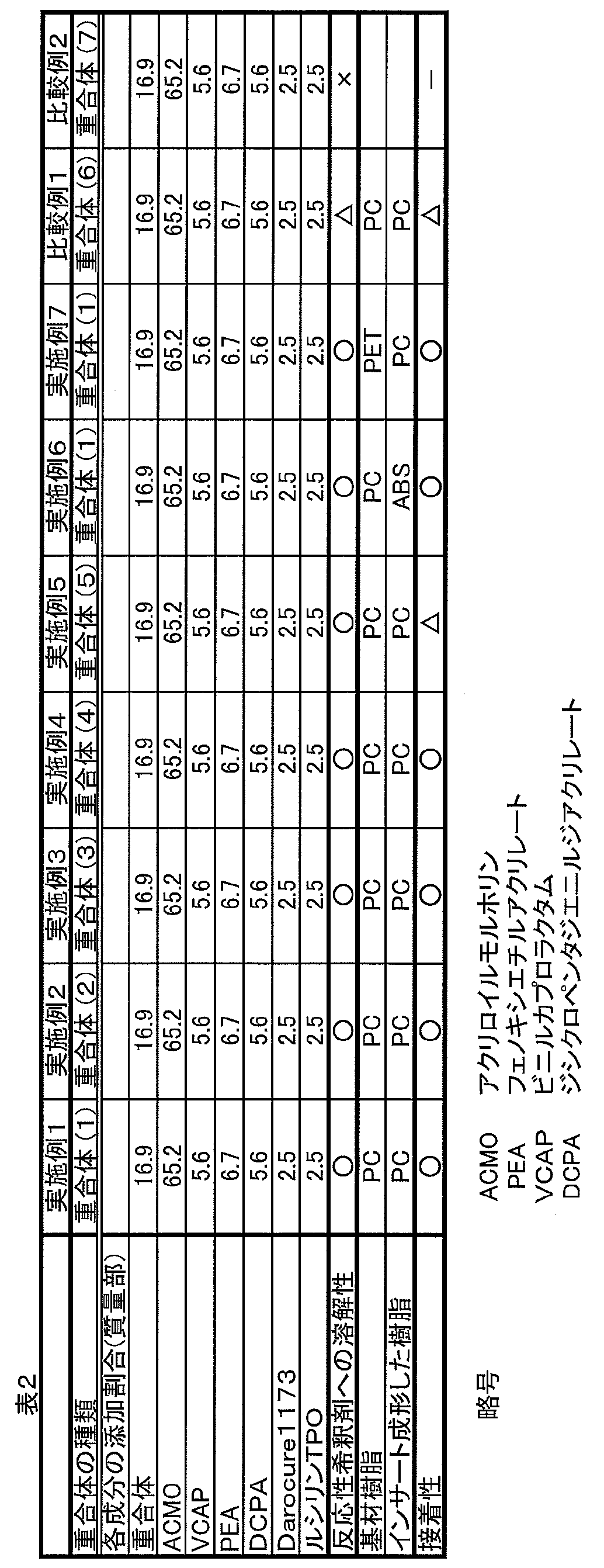
表1および表2に示されるように、各実施例で使用した重合体(1)~(5)はいずれも反応性希釈剤に対して高い溶解性を有し、また、その重合体(1)~(5)を含む活性エネルギー線硬化性組成物の硬化物からなる印刷保護層を有するインサート成形用の印刷フィルムは、高い剥離強度(接着性)を有している。これに対して、各比較例で使用した重合体(6)、(7)は反応性希釈剤に対する溶解性が劣り、また、その重合体(6)、(7)を含む活性エネルギー線硬化性組成物の硬化物からなる印刷保護層を有するインサート成形用の印刷フィルムは、その剥離強度(接着性)も劣る。
Claims (10)
- 樹脂の基材、基材の少なくとも一方の表面に設けられた印刷層、および印刷層が設けられた基材表面に印刷保護層を含み、
印刷保護層が、ビニル系重合体(A-1)およびウレタンアクリレート系重合体(A-2)からなる群より選ばれる1種以上の重合体(A)と、アクリル酸エステル、メタクリル酸エステル、および窒素含有ビニル化合物からなる群より選ばれる1種以上の反応性希釈剤(B)とを含む活性エネルギー線硬化性組成物の硬化物層であるインサート成形用印刷フィルム。 - 前記活性エネルギー線硬化性組成物に含まれるビニル系重合体(A-1)が、炭素数10以下の側鎖を有するアクリル酸エステル、炭素数10以下の側鎖を有するメタクリル酸エステル、スチレン、酢酸ビニル、塩化ビニル、ブタジエン、およびイソプレンからなる群より選ばれる1種以上の単量体に由来する単量体単位を含む重合体である、請求項1に記載のインサート成形用印刷フィルム。
- 前記活性エネルギー線硬化性組成物に含まれるビニル系重合体(A-1)がメタクリル酸メチルに由来する単量体単位を含む重合体である、請求項1または2に記載のインサート成形用印刷フィルム。
- 前記活性エネルギー線硬化性組成物に含まれるビニル系重合体(A-1)がブロック共重合体またはグラフト共重合体である、請求項1~3のいずれかに記載のインサート成形用印刷フィルム。
- 前記活性エネルギー線硬化性組成物に含まれるビニル系重合体(A-1)が重合可能な反応基を1つ以上含む、請求項1~4のいずれかに記載のインサート成形用印刷フィルム。
- 前記活性エネルギー線硬化性組成物が光重合開始剤(C)を含む、請求項1~5のいずれかに記載のインサート成形用印刷フィルム。
- 基材となる樹脂が、ポリカーボネートおよびポリエチレンテレフタレートから選ばれる1種以上の樹脂である、請求項1~6のいずれかに記載のインサート成形用印刷フィルム。
- ビニル系重合体およびウレタンアクリレート系重合体からなる群より選ばれる1種以上の重合体(A)と、アクリル酸エステル、メタクリル酸エステル、および窒素含有ビニル化合物からなる群より選ばれる1種以上の反応性希釈剤(B)とを含む、請求項1に記載のインサート成形用印刷フィルムの印刷保護層に用いられる活性エネルギー線硬化性組成物。
- 請求項1~7のいずれかに記載のインサート成形用印刷フィルムと、ポリカーボネート、アクリロニトリル-ブタジエン-スチレン樹脂、アクリル樹脂、ポリスチレンからなる群より選ばれる1種以上の樹脂を含む樹脂原料とからなるインサート成形体。
- 請求項1~7のいずれかに記載のインサート成形用印刷フィルムを金型にインサートする工程、その金型内に、ポリカーボネート、アクリロニトリル-ブタジエン-スチレン樹脂、アクリル樹脂、ポリスチレンからなる群より選ばれる1種以上の樹脂を含む樹脂原料を射出成形する工程を含む、インサート成形体の製造方法。
Applications Claiming Priority (2)
| Application Number | Priority Date | Filing Date | Title |
|---|---|---|---|
| JP2016126512 | 2016-06-27 | ||
| JP2016-126512 | 2016-06-27 |
Publications (1)
| Publication Number | Publication Date |
|---|---|
| WO2018003695A1 true WO2018003695A1 (ja) | 2018-01-04 |
Family
ID=60785200
Family Applications (1)
| Application Number | Title | Priority Date | Filing Date |
|---|---|---|---|
| PCT/JP2017/023207 Ceased WO2018003695A1 (ja) | 2016-06-27 | 2017-06-23 | インサート成形用印刷フィルム |
Country Status (2)
| Country | Link |
|---|---|
| TW (1) | TW201819147A (ja) |
| WO (1) | WO2018003695A1 (ja) |
Citations (3)
| Publication number | Priority date | Publication date | Assignee | Title |
|---|---|---|---|---|
| JP2004050778A (ja) * | 2002-07-24 | 2004-02-19 | Toppan Printing Co Ltd | インモールド成形物の製造方法 |
| JP2010253917A (ja) * | 2008-06-30 | 2010-11-11 | Dainippon Printing Co Ltd | 加飾シート、加飾樹脂成形品の製造方法及び加飾樹脂成形品 |
| JP2015128909A (ja) * | 2015-04-14 | 2015-07-16 | 大日本印刷株式会社 | 加飾シート及びそれを用いてなる加飾樹脂成形品 |
-
2017
- 2017-06-23 WO PCT/JP2017/023207 patent/WO2018003695A1/ja not_active Ceased
- 2017-06-26 TW TW106121214A patent/TW201819147A/zh unknown
Patent Citations (3)
| Publication number | Priority date | Publication date | Assignee | Title |
|---|---|---|---|---|
| JP2004050778A (ja) * | 2002-07-24 | 2004-02-19 | Toppan Printing Co Ltd | インモールド成形物の製造方法 |
| JP2010253917A (ja) * | 2008-06-30 | 2010-11-11 | Dainippon Printing Co Ltd | 加飾シート、加飾樹脂成形品の製造方法及び加飾樹脂成形品 |
| JP2015128909A (ja) * | 2015-04-14 | 2015-07-16 | 大日本印刷株式会社 | 加飾シート及びそれを用いてなる加飾樹脂成形品 |
Also Published As
| Publication number | Publication date |
|---|---|
| TW201819147A (zh) | 2018-06-01 |
Similar Documents
| Publication | Publication Date | Title |
|---|---|---|
| JP6672174B2 (ja) | 変性液状ジエン系ゴム及び該変性液状ジエン系ゴムを含む樹脂組成物 | |
| JP5805852B2 (ja) | 光硬化性組成物および成形物 | |
| KR102655922B1 (ko) | (메트)아크릴계 블록 공중합체 및 그것을 함유하는 활성 에너지선 경화성 조성물 | |
| KR102601075B1 (ko) | (메타)아크릴계 블록 공중합체 | |
| JP2009029976A (ja) | 耐熱安定性に優れた硬化性樹脂組成物 | |
| JP2014213596A (ja) | 樹脂積層体 | |
| JP6973031B2 (ja) | 活性エネルギー線硬化性樹脂組成物、加飾シート、および成型加工品 | |
| WO2017141935A1 (ja) | 光学的立体造形用組成物 | |
| JPWO2014125976A1 (ja) | 樹脂積層体 | |
| JP6330123B2 (ja) | 加飾シート用組成物、加飾シート、および成型加工品 | |
| US11421066B2 (en) | Polymer composition for stereolithography | |
| JP2016056313A (ja) | 活性エネルギー線硬化型アンダーコート剤および表面被覆成形体 | |
| JP2020002240A (ja) | ブロック共重合体、重合性組成物、塗料、コーティング剤、およびシート | |
| JP7210844B2 (ja) | 賦形フィルム及び光硬化型組成物 | |
| US20240141086A1 (en) | Curable composition comprising light polymerizable liquid and epoxy precursor for coating, 2d object formation and 3d printing | |
| JP2016037575A (ja) | 硬化型シーリング剤 | |
| JP2010126563A (ja) | 多官能(メタ)アクリレート樹脂、及びその製造方法 | |
| JP5596390B2 (ja) | アルコール性水酸基を有する可溶性多官能(メタ)アクリル酸エステル共重合体及びその製造方法 | |
| TW201819147A (zh) | 嵌入成形用印刷薄膜 | |
| JP2018199761A (ja) | 有機無機複合材料およびその製造方法 | |
| JP6870567B2 (ja) | 加飾シート用組成物、加飾シート、および成型加工品 | |
| JP2018039941A (ja) | (メタ)アクリル系ブロック共重合体組成物 | |
| JP2001288230A (ja) | ゲルコートシート製造用硬化性樹脂組成物 | |
| WO2017110802A1 (ja) | (メタ)アクリル系ブロック共重合体 | |
| JP2014205294A (ja) | 熱成形用樹脂積層体及びその成形方法 |
Legal Events
| Date | Code | Title | Description |
|---|---|---|---|
| 121 | Ep: the epo has been informed by wipo that ep was designated in this application |
Ref document number: 17820052 Country of ref document: EP Kind code of ref document: A1 |
|
| NENP | Non-entry into the national phase |
Ref country code: DE |
|
| 122 | Ep: pct application non-entry in european phase |
Ref document number: 17820052 Country of ref document: EP Kind code of ref document: A1 |
|
| NENP | Non-entry into the national phase |
Ref country code: JP |