WO2017199354A1 - 株主優待システム、株主優待方法及びプログラム - Google Patents
株主優待システム、株主優待方法及びプログラム Download PDFInfo
- Publication number
- WO2017199354A1 WO2017199354A1 PCT/JP2016/064663 JP2016064663W WO2017199354A1 WO 2017199354 A1 WO2017199354 A1 WO 2017199354A1 JP 2016064663 W JP2016064663 W JP 2016064663W WO 2017199354 A1 WO2017199354 A1 WO 2017199354A1
- Authority
- WO
- WIPO (PCT)
- Prior art keywords
- shareholder
- brand
- special
- special benefit
- shareholders
- Prior art date
- Legal status (The legal status is an assumption and is not a legal conclusion. Google has not performed a legal analysis and makes no representation as to the accuracy of the status listed.)
- Ceased
Links
Images



Classifications
-
- G—PHYSICS
- G06—COMPUTING OR CALCULATING; COUNTING
- G06Q—INFORMATION AND COMMUNICATION TECHNOLOGY [ICT] SPECIALLY ADAPTED FOR ADMINISTRATIVE, COMMERCIAL, FINANCIAL, MANAGERIAL OR SUPERVISORY PURPOSES; SYSTEMS OR METHODS SPECIALLY ADAPTED FOR ADMINISTRATIVE, COMMERCIAL, FINANCIAL, MANAGERIAL OR SUPERVISORY PURPOSES, NOT OTHERWISE PROVIDED FOR
- G06Q40/00—Finance; Insurance; Tax strategies; Processing of corporate or income taxes
- G06Q40/06—Asset management; Financial planning or analysis
-
- G—PHYSICS
- G06—COMPUTING OR CALCULATING; COUNTING
- G06Q—INFORMATION AND COMMUNICATION TECHNOLOGY [ICT] SPECIALLY ADAPTED FOR ADMINISTRATIVE, COMMERCIAL, FINANCIAL, MANAGERIAL OR SUPERVISORY PURPOSES; SYSTEMS OR METHODS SPECIALLY ADAPTED FOR ADMINISTRATIVE, COMMERCIAL, FINANCIAL, MANAGERIAL OR SUPERVISORY PURPOSES, NOT OTHERWISE PROVIDED FOR
- G06Q40/00—Finance; Insurance; Tax strategies; Processing of corporate or income taxes
- G06Q40/04—Trading; Exchange, e.g. stocks, commodities, derivatives or currency exchange
Definitions
- the present invention relates to a shareholder benefit system, a shareholder benefit method, and a program for rewarding shareholders.
- shareholder benefits include, for example, cash dividends, gift certificates that can be used for products sold by this company, services provided, and the like.
- An object of the present invention is to provide a shareholder special benefit system, a shareholder special benefit method, and a program that improve convenience for shareholders.
- the present invention provides the following solutions.
- the invention according to the first feature is a shareholder special benefit system that gives special benefits to shareholders on a daily basis.
- a shareholder detection means for detecting a shareholder ID holding shares at the end of the stock transaction;
- a brand judgment means for judging a brand held by the detected shareholder ID;
- a shareholder special offer means for granting a special offer to the shareholder ID on a daily basis based on the determined brand;
- a shareholder special benefit system is provided.
- the shareholder special benefit system for giving special benefits to the shareholders on a daily basis detects the shareholder ID that holds the stock at the end of the stock transaction, and the detected shareholder ID holds A stock is judged, and a special treatment is given to the shareholder ID on a daily basis based on the judged stock.
- the invention according to the first feature is a category of the shareholder special benefit system, but in other categories such as a method or a program, the same actions and effects according to the category are exhibited.
- the shareholder preferential means grants log-in authority to the dedicated service linked to the shareholder ID on a daily basis based on the determined brand.
- a shareholder special benefit system that is an invention according to the first feature is provided.
- the shareholder special benefit system grants the log-in authority to the dedicated service linked to the shareholder ID on a daily basis based on the determined brand. To do.
- the shareholder special benefit means associates points to the shareholder ID on a daily basis based on the determined brand.
- a shareholder special benefit system that is an invention according to the first feature is provided.
- the shareholder special benefit system that is the invention relating to the first feature associates points to the shareholder ID on a daily basis based on the determined brand.
- the invention according to a fourth aspect includes rank fluctuation management means for fluctuating and managing the rank of the shareholder associated with the shareholder ID when the granted point satisfies a predetermined condition;
- rank fluctuation management means for fluctuating and managing the rank of the shareholder associated with the shareholder ID when the granted point satisfies a predetermined condition;
- a shareholder special benefit system that is an invention according to a third feature is provided.
- the shareholder special benefit system is characterized in that the rank of the shareholder associated with the shareholder ID when the granted points satisfy a predetermined condition. Manage by changing.
- the invention according to the fifth feature is a shareholder special benefit system for preferential treatment to shareholders on a time basis, A shareholder detection means for detecting a shareholder ID holding shares at a predetermined time interval; A brand judgment means for judging a brand held by the detected shareholder ID; A shareholder special offer means for granting special offer to the shareholder ID in a time-based manner based on the determined brand; A shareholder special benefit system is provided.
- the shareholder special benefit system for preferential treatment to the shareholders on a time basis detects the shareholder ID that holds the stock at a predetermined time interval, and the detected shareholder ID is retained.
- the stocks currently held are judged, and based on the judged stocks, a special treatment is given to the shareholder ID on a time basis.
- the invention according to the fifth feature is a category of the shareholder special benefit system, but the same actions and effects according to the category are exhibited in other categories such as methods or programs.
- the shareholder preferential treatment means grants log-in authority to a dedicated service associated with the shareholder ID on a time basis based on the determined brand.
- a shareholder special benefit system which is the invention according to the fifth feature is provided.
- the shareholder special benefit system provides, based on the determined brand, login authority to the dedicated service associated with the shareholder ID on a time basis. Give.
- the shareholder preferential treatment means associates points with the shareholder ID on a time basis based on the determined brand.
- a shareholder special benefit system which is the invention according to the fifth feature is provided.
- the shareholder special benefit system associates points with the shareholder ID on a timetable based on the determined brand.
- the invention according to an eighth feature is a rank change management means for changing and managing the rank of the shareholder associated with the shareholder ID when the granted point satisfies a predetermined condition;
- a shareholder special benefit system which is an invention according to a seventh feature is provided.
- the shareholder special benefit system is characterized in that the rank of the shareholder associated with the shareholder ID when the granted points satisfy a predetermined condition. Manage by changing.
- the invention according to the ninth aspect is a shareholder special benefit method for giving special benefits to shareholders on a daily basis, Detecting a shareholder ID holding shares at the end of stock trading; Determining a stock held by the detected shareholder ID; Granting preferential treatment to the shareholder ID on a daily basis based on the determined brand;
- a shareholder special benefit method characterized by comprising:
- the invention according to the tenth feature is a shareholder special benefit method for preferential treatment to shareholders on a time basis, Detecting shareholder IDs holding shares at predetermined time intervals; Determining a stock held by the detected shareholder ID; Granting preferential treatment to the shareholder ID on a time basis based on the determined brand;
- a shareholder special benefit method characterized by comprising:
- the invention according to the eleventh feature is a shareholder special benefit system that provides daily benefits to shareholders. Detecting shareholder IDs holding shares at the end of stock trading; Determining a stock held by the detected shareholder ID; Granting preferential treatment to the shareholder ID on a daily basis based on the determined brand; Provide a program that executes
- the invention according to the twelfth feature is a shareholder special benefit system for giving special benefits to shareholders on a time basis. Detecting shareholder IDs holding shares at predetermined time intervals; Determining a stock held by the detected shareholder ID; Granting preferential treatment to the shareholder ID on a time basis based on the determined brand; Provide a program that executes
- FIG. 1 is a diagram showing an overview of a shareholder special benefit system 1.
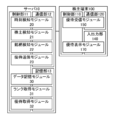
- FIG. 2 is an overall configuration diagram of the shareholder special benefit system 1.
- FIG. 3 is a functional block diagram of the server 10 and the shareholder terminal 100.
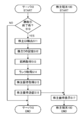
- FIG. 4 is a diagram showing shareholder special treatment processing executed by the server 10 and the shareholder terminal 100.
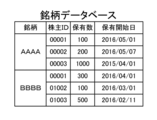
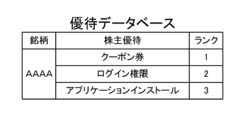
- FIG. 5 is a brand database.
- FIG. 6 is a shareholder database.
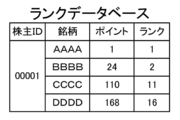
- FIG. 7 is a rank database.
- FIG. 8 shows a preferential treatment database.
- FIG. 1 is a diagram for explaining an overview of a shareholder special benefit system 1 which is a preferred embodiment of the present invention.
- the shareholder special benefit system 1 includes a server 10 and a shareholder terminal 100.
- the number of shareholder terminals 100 is not limited to one and may be plural. Further, the server 10 or the shareholder terminal 100 is not limited to a real device, and may be a virtual device. Moreover, each process mentioned later may be implement
- the server 10 is a server device capable of data communication with the shareholder terminal 100.
- the shareholder terminal 100 is a terminal device owned by a shareholder who can perform data communication with the server 10.
- the shareholder terminal 100 is, for example, a mobile phone, a portable information terminal, a tablet terminal, a personal computer, an electronic product such as a netbook terminal, a slate terminal, an electronic book terminal, a portable music player, a smart glass, a head-mounted display, etc. Wearable terminals and other items.
- the server 10 detects the shareholder ID that holds the stock at the end of the stock transaction or at a predetermined time interval (step S01).
- the end of the stock trading is, for example, the end of the front and back listings, the end of all the front and back markets, the end of the trading of securities, and the like.
- the predetermined time interval is, for example, every 30 minutes, every hour, every 2 hours, every 2 hours and 30 minutes, every 12 hours, every 24 hours, or the like.
- the shareholder ID is an ID for identifying a shareholder given to one shareholder. This ID may be given when the shareholder opens an account, may be given to a shareholder who uses this system, or may be given by another configuration.
- the server 10 detects stockholder IDs which are respective holders of preset stocks or all stocks from a securities company server, a shareholder terminal 100, other servers and databases, and the like.
- the server 10 determines the stock held by the stockholder associated with the detected stockholder ID (step S02).
- the server 10 determines the brand by acquiring the brand of the stock held by the detected shareholder ID.
- the server 10 extracts the shareholder special benefit associated with the acquired stock name and assigns it to the shareholder ID on a daily or hourly basis (step S03).
- Shareholder benefits include, for example, the authority to log in to a dedicated service associated with a shareholder ID, the authority to install a dedicated application associated with a shareholder ID, and the provision of products and services of companies that issue shares such as coupons and gift certificates. The service authority that can be received.
- the server 10 may be configured to give points based on the number of stocks held by the shareholders, the number of holding days, the holding time, and the like. When this point satisfies a predetermined condition, the rank of the shareholder associated with the shareholder ID may be changed and managed.
- the predetermined condition is, for example, to raise the shareholder's rank when the point exceeds a predetermined value, or to lower the shareholder's rank when the point falls below a predetermined value. That is.
- the server 10 may be configured to change the contents of the above-described shareholder special benefit based on this rank. For example, it is possible to make the content of the shareholder special offer gorgeous as the rank rises, or to make the content of the shareholder special offer simple according to the rank drop.
- the server 10 transmits the granted shareholder special benefit to the shareholder terminal 100 associated with this shareholder ID (step S04).
- the shareholder terminal 100 receives the shareholder special offer and displays the content of the received shareholder special offer (step S05). For example, if you have the authority to log in to the dedicated service, you will see a screen showing you logged in, the date and time when you can log in, etc. If you have the authority to install the dedicated application, display the link URL of the download destination for this dedicated application, The contents prompting the installation of the dedicated application are displayed. If the user has the service authority, a list of products and services that can be provided is displayed.
- FIG. 2 is a diagram showing a system configuration of the shareholder special benefit system 1 which is a preferred embodiment of the present invention.
- the shareholder special benefit system 1 includes a server 10, a shareholder terminal 100, and a public line network (Internet network, third and fourth generation communication network, etc.) 5.
- the number of shareholder terminals 100 is not limited to one and may be plural.
- the server 10 and the shareholder terminal 100 are not limited to real devices, and may be virtual devices.
- each process mentioned later may be implement
- the server 10 is the server device described above having the functions described below.
- the shareholder terminal 100 is the above-described terminal device having the functions described below.
- FIG. 3 is a functional block diagram of the server 10 and the shareholder terminal 100.
- the server 10 includes a CPU (Central Processing Unit), a RAM (Random Access Memory), a ROM (Read Only Memory), etc. as the control unit 11, and a device for enabling communication with other devices as the communication unit 12.
- a WiFi (Wireless Fidelity) compatible device compliant with IEEE 802.11 is provided.
- the server 10 also includes a data storage unit such as a hard disk, a semiconductor memory, a recording medium, or a memory card as the storage unit 13.
- the storage unit 13 stores various databases described later.
- the control unit 11 when the control unit 11 reads a predetermined program, the time detection module 20, the shareholder detection module 21, the brand detection module 22, and the preferential transmission module 23 are realized in cooperation with the communication unit 12.
- the control unit 11 reads a predetermined program, thereby realizing the data storage module 30, the rank acquisition module 31, and the preferential acquisition module 32 in cooperation with the storage unit 13.
- the shareholder terminal 100 includes a CPU, RAM, ROM, and the like as the control unit 110, and a WiFi compatible device for enabling communication with other devices as the communication unit 120. Further, the shareholder terminal 100 includes, as the input / output unit 140, a display unit that outputs and displays data and images controlled by the control unit 110, an input unit such as a touch panel, a keyboard, and a mouse that receives input from the shareholder.
- the shareholder terminal 100 realizes the preferential reception module 150 in cooperation with the communication unit 120 when the control unit 110 reads a predetermined program.
- the shareholder terminal 100 realizes the special-purpose display module 170 in cooperation with the input / output unit 140 by the control unit 110 reading a predetermined program.
- FIG. 4 is a diagram illustrating a flowchart of shareholder special benefit processing executed by the server 10 and the shareholder terminal 100. The processing executed by the modules of each device described above will be described together with this processing.
- the time detection module 20 determines whether or not the current time is the end of stock trading (step S10).
- the end of stock trading refers to the end time of the front and back markets, the end time of all the front and back fields, the end time of the trading of securities, and the like.
- the process ends. Note that this processing is not limited to when stock trading in Japan ends, but may be configured to determine whether or not stock trading ends in a foreign country. In this case, the system administrator, shareholders, etc. may change as appropriate.
- the time detection module 20 may be configured to determine whether or not a predetermined time has elapsed since the last time this process was performed.
- the predetermined time elapsed is, for example, 1 hour elapsed, 2 hours elapsed, 12 hours elapsed, 24 hours elapsed or the like.
- the structure which performs the process mentioned later for every predetermined time interval from the timing which performed this process last time instead of predetermined time progress may be sufficient.
- the predetermined time interval is, for example, 1 hour interval, 2 hour interval, 12 hour interval, 24 hour interval, or the like.
- the configuration of the predetermined time interval can be changed as appropriate.
- the shareholder detection module 21 detects the shareholder ID associated with the shareholder holding the stock (Ste S11).
- the shareholder detection module 21 refers to the brand database and detects a plurality of shareholder IDs associated with one stock.
- the shareholder ID is an ID for identifying a shareholder given to one shareholder. This shareholder ID is given to each shareholder, for example, when the shareholder opens an account.
- One shareholder is linked to one shareholder ID.
- the shareholder ID may be given to a shareholder who uses the shareholder special benefit system 1, or may be given by other configurations.
- the shareholder detection module 21 may be configured to detect a shareholder ID from a securities company, a stock exchange, an external server, a database, or the like. Further, the identifier for identifying the shareholder is not limited to the ID, but may be an IP address, a MAC address, or other configurations. The shareholder detection module 21 may be configured to detect a shareholder ID from an external server such as a securities company server or an exchange server, a database, or the like, not limited to a brand database.
- FIG. 5 is a diagram showing a brand database stored in the data storage module 30.
- the data storage module 30 stores a brand, a shareholder ID, a holding number, and a holding start date in association with each other.
- a brand is the name of a stock.
- the shareholder ID is an identifier that identifies a shareholder.
- the number of holdings is the number of shares of this brand held by the shareholders associated with this shareholder ID.
- the holding start date is the date when the shareholder associated with this shareholder ID starts holding the stock.
- the data storage module 30 stores a plurality of shareholder IDs in association with one brand.
- the data storage module 30 stores the number of holdings and the holding start date in association with each shareholder ID. That is, the brand database is a database of shareholders who have one brand.
- a plurality of brands are shown. However, only one brand may be stored. In this case, a configuration in which a brand database exists for each brand may be used. In addition, each item of the brand database can be changed as appropriate, and for example, a configuration in which the number of holding days is stored instead of the holding start date or a configuration in which the holding days are simply added may be used.
- the brand is not limited to the name of the stock, but may be any configuration that can uniquely identify the brand such as a security code.
- the server 10 acquires the stockholder ID, the number of holdings, and the holding start date of the stockholder who holds each stock from a securities company or other servers and databases, and creates and stores this stock database. Note that items other than the items described above may be added to the brand database. Moreover, the number of brands stored as the brand database and the number of shareholder IDs can be changed as appropriate.
- the data storage module 30 creates and stores a shareholder database based on the brand linked to the detected shareholder ID (step S12). In step S12, the data storage module 30 stores the detected one shareholder ID in association with a plurality of issues associated with the one shareholder ID.
- FIG. 6 is a diagram showing a shareholder database stored in the data storage module 30.
- the data storage module 30 stores a plurality of brands, the number of holdings, and the holding start date in association with one shareholder ID.
- the shareholder ID, the brand, the number of holdings, and the holding start date are the same as those in the brand database described above. That is, the shareholder database is a database of brands held by one shareholder.
- the brand detection module 22 acquires the brand held by the stockholder associated with the detected stockholder ID (step S13).
- step S13 by referring to the shareholder database and acquiring all the issues associated with the acquired shareholder ID, the issues held by the shareholder are determined. At this time, the number of stocks held and the date of starting stock are also acquired.
- the brand detection module 22 may be configured to detect a brand of stock held by a shareholder associated with the shareholder ID from a securities company, a stock exchange, an external server, a database, or the like. Note that the processing of step S12 and step S13 may be omitted. In this case, what is necessary is just the structure which performs the process of step S11 and performs each process mentioned later based on the detected shareholder ID, brand, number of holdings, holding start date, etc.
- the rank acquisition module 31 acquires the rank of each stock held by the shareholder associated with the detected shareholder ID (step S14). In step S14, the rank acquisition module 31 acquires the rank associated with the detected shareholder ID by referring to the rank database.
- FIG. 7 is a diagram showing a rank database stored in the data storage module 30.
- the data storage module 30 stores a plurality of issues, points, and ranks in association with one shareholder ID.
- the shareholder ID and brand are the same as those described above.
- the points are calculated based on the number of stocks held by the shareholders and the number of holding days indicating the current date and time from the holding start date.
- the data storage module 30 calculates the product of the number of possessions and the number of days retained / 365 days (in the case of a leap year, it may be 366 days).
- the data storage module 30 calculates the point as 1 (rounded up after the decimal point). Similarly, the data storage module 30 calculates points for all brands held by the shareholders. The data storage module 30 determines the rank based on the points thus calculated. The rank is a value determined for a predetermined point. For example, when the points are 1 to 10, the rank is determined as 1. Similarly, the data storage module 30 determines the rank of the shareholders who own this brand. That is, the points increase as the number of holdings increases and the number of holding days increases.
- the point decreases when the shareholder sells the stock, and increases when the shareholder purchases the stock.
- the rank decreases when points decrease, and increases when points increase. That is, the rank changes according to the points.
- this point satisfies a predetermined condition such as the number of holdings, the number of holding days, and the like, the rank of the shareholders is changed and managed.
- the point calculation method is not limited to the above-described configuration, and may be another configuration.
- it may be calculated by the product of the number of holdings and the number of holding days, the numbers after the decimal point may be rounded off, or the numbers after the decimal point may be rounded down.
- the rank determination method is not limited to the above-described configuration, and may be another configuration.
- the point width may be made larger, the point width made smaller, or the same number as the point.
- the points and ranks are not necessarily indispensable configurations, and may simply have a configuration in which processing to be described later is executed based on the number of possessions.
- the rank database described above may not exist, and the rank configuration in each process described later may be changed to the number of possessions, or other configurations may be used.
- the special offer acquisition module 32 acquires a shareholder special offer associated with each brand (step S15). In step S15, the special offer acquisition module 32 acquires a shareholder special offer based on the special offer database.
- FIG. 8 is a diagram illustrating a preferential database stored in the data storage module 30.
- the data storage module 30 stores one brand, a plurality of shareholder special offers, and a rank in association with each other.
- shares such as coupons and gift certificates.
- the special offer acquisition module 32 compares the rank of the current shareholder ID in the rank database with the rank in the special offer database, and acquires all shareholder special offers below the rank of the shareholder ID. For example, when the rank of the shareholder ID is 3, the special offer acquisition module 32 acquires a coupon, login authority, and application installation as a shareholder special offer.
- the special benefit acquisition module 32 does not have to be configured to acquire all shareholder special benefits below the rank of the shareholder ID.
- the benefit acquisition module 32 may be configured to acquire only the shareholder benefit that matches the rank of the shareholder ID, or may be configured otherwise.
- the data storage module 30 may be configured to store a plurality of shareholder special benefits in association with one rank. For example, as rank 2, a coupon ticket and a login authority may be associated with each other. In this case, the special offer acquisition module 32 may acquire the shareholder special offer associated with the rank that matches the rank of the shareholder ID and this rank.
- the special offer transmission module 23 transmits the acquired shareholder special offer to the shareholder terminal 100 associated with the shareholder ID (step S16).
- the special offer receiving module 150 receives the shareholder special offer sent by the server 10.
- the special offer display module 170 displays the content of the shareholder special offer based on the received shareholder special offer (step S17).
- the contents of the shareholder special offer displayed by the special offer display module 170 are, for example, a login privilege for a dedicated service, a dedicated service, a log-in date and time, a shareholder ID, and the like.
- the URL of the download destination and the download method are displayed. If the coupon is a coupon ticket, the coupon ticket, usable date / time, list of products and services, usable store, URL of usable sales site, and the like are displayed.
- a daily basis may be used instead of a daily basis.
- the server 10 may be configured to execute each process based on the holding time or the like instead of the holding days for the points and ranks.
- the means and functions described above are realized by a computer (including a CPU, an information processing apparatus, and various terminals) reading and executing a predetermined program.
- the program is provided in a form recorded on a computer-readable recording medium such as a flexible disk, CD (CD-ROM, etc.), DVD (DVD-ROM, DVD-RAM, etc.).
- the computer reads the program from the recording medium, transfers it to the internal storage device or the external storage device, stores it, and executes it.
- the program may be recorded in advance in a storage device (recording medium) such as a magnetic disk, an optical disk, or a magneto-optical disk, and provided from the storage device to a computer via a communication line.
Landscapes
- Business, Economics & Management (AREA)
- Engineering & Computer Science (AREA)
- Accounting & Taxation (AREA)
- Finance (AREA)
- Development Economics (AREA)
- Technology Law (AREA)
- Theoretical Computer Science (AREA)
- Strategic Management (AREA)
- Economics (AREA)
- Physics & Mathematics (AREA)
- General Business, Economics & Management (AREA)
- General Physics & Mathematics (AREA)
- Marketing (AREA)
- Entrepreneurship & Innovation (AREA)
- Game Theory and Decision Science (AREA)
- Human Resources & Organizations (AREA)
- Operations Research (AREA)
- Financial Or Insurance-Related Operations Such As Payment And Settlement (AREA)
- Management, Administration, Business Operations System, And Electronic Commerce (AREA)
Abstract
Description
株取引終了時に、株式を保有している株主IDを検出する株主検出手段と、
前記検出された株主IDが保有している銘柄を判断する銘柄判断手段と、
前記判断された銘柄に基づいて、前記株主IDに優待を日割りで付与する株主優待手段と、
を備えることを特徴とする株主優待システムを提供する。
ことを特徴とする第1の特徴に係る発明である株主優待システムを提供する。
ことを特徴とする第1の特徴に係る発明である株主優待システムを提供する。
を備えることを特徴とする第3の特徴に係る発明である株主優待システムを提供する。
所定の時間間隔で、株式を保有している株主IDを検出する株主検出手段と、
前記検出された株主IDが保有している銘柄を判断する銘柄判断手段と、
前記判断された銘柄に基づいて、前記株主IDに優待を時間割りで付与する株主優待手段と、
を備えることを特徴とする株主優待システムを提供する。
ことを特徴とする第5の特徴に係る発明である株主優待システムを提供する。
ことを特徴とする第5の特徴に係る発明である株主優待システムを提供する。
を備えることを特徴とする第7の特徴に係る発明である株主優待システムを提供する。
株取引終了時に、株式を保有している株主IDを検出するステップと、
前記検出された株主IDが保有している銘柄を判断するステップと、
前記判断された銘柄に基づいて、前記株主IDに優待を日割りで付与するステップと、
を備えることを特徴とする株主優待方法を提供する。
所定の時間間隔で、株式を保有している株主IDを検出するステップと、
前記検出された株主IDが保有している銘柄を判断するステップと、
前記判断された銘柄に基づいて、前記株主IDに優待を時間割りで付与するステップと、
を備えることを特徴とする株主優待方法を提供する。
株取引終了時に、株式を保有している株主IDを検出するステップ、
前記検出された株主IDが保有している銘柄を判断するステップ、
前記判断された銘柄に基づいて、前記株主IDに優待を日割りで付与するステップ、
を実行させるプログラムを提供する。
所定の時間間隔で、株式を保有している株主IDを検出するステップ、
前記検出された株主IDが保有している銘柄を判断するステップ、
前記判断された銘柄に基づいて、前記株主IDに優待を時間割りで付与するステップ、
を実行させるプログラムを提供する。
本発明の好適な実施形態の概要について、図1に基づいて説明する。図1は、本発明の好適な実施形態である株主優待システム1の概要を説明するための図である。株主優待システム1は、サーバ10、株主端末100から構成される。
図2に基づいて、本発明の好適な実施形態である株主優待システム1のシステム構成について説明する。図2は、本発明の好適な実施形態である株主優待システム1のシステム構成を示す図である。株主優待システム1は、サーバ10、株主端末100、公衆回線網(インターネット網や、第3、第4世代通信網等)5から構成される。なお、株主端末100は、1つに限らず、複数であってもよい。また、サーバ10、株主端末100は、実在する装置に限らず、仮想的な装置であってもよい。また、後述する各処理は、サーバ10又は株主端末100のいずれか又は双方により実現されてもよい。
図3に基づいて、本発明の好適な実施形態である株主優待システム1の機能について説明する。図3は、サーバ10、株主端末100の機能ブロック図を示す図である。
図4に基づいて、株主優待システム1が実行する株主優待処理について説明する。図4は、サーバ10、株主端末100が実行する株主優待処理のフローチャートを示す図である。上述した各装置のモジュールが実行する処理について、本処理に併せて説明する。
図5に基づいて、データ記憶モジュール30が記憶する銘柄データベースについて説明する。図5は、データ記憶モジュール30が記憶する銘柄データベースを示す図である。図5において、データ記憶モジュール30は、銘柄と株主IDと保有数と保有開始日を対応付けて記憶する。銘柄とは、株式の名称である。株主IDとは、株主を特定する識別子である。保有数とは、この株主IDに紐付いた株主が保有するこの銘柄の株式の数である。保有開始日とは、この株主IDに紐付いた株主がこの株式の保有を開始した日付である。図5において、データ記憶モジュール30は、一の銘柄に対して、複数の株主IDを対応付けて記憶する。図5において、データ記憶モジュール30は、各株主IDに対して、保有数及び保有開始日を対応付けて記憶する。すなわち、銘柄データベースは、一の銘柄を保有する株主のデータベースである。
図6に基づいて、データ記憶モジュール30が記憶する株主データベースについて説明する。図6は、データ記憶モジュール30が記憶する株主データベースを示す図である。図6において、データ記憶モジュール30は、一の株主IDに対して、複数の銘柄と保有数と保有開始日とを対応付けて記憶する。株主ID、銘柄、保有数及び保有開始日は、上述した銘柄データベースと同様の構成である。すなわち、株主データベースは、一の株主が保有する銘柄のデータベースである。
図7に基づいて、データ記憶モジュール30が記憶するランクデータベースについて説明する。図7は、データ記憶モジュール30が記憶するランクデータベースを示す図である。図7において、データ記憶モジュール30は、一の株主IDに対して、複数の銘柄、ポイント及びランクを対応付けて記憶する。株主ID及び銘柄は、上述した構成と同様である。ポイントは、株主が保有する銘柄の保有数と、保有開始日から現時点での日時を示す保有日数とに基づいて算出される。具体的には、データ記憶モジュール30は、保有数と、保有日数/365日(なお、閏年である場合には、366日としてもよい。)との積により算出する。例えば、データ記憶モジュール30は、保有数が100、保有日数が1/365日である場合、ポイントを1(小数点以下切り上げ)として算出する。同様に、データ記憶モジュール30は、株主が保有する全ての銘柄に対して、ポイントを算出する。データ記憶モジュール30は、このようにして算出したポイントに基づいてランクを決定する。ランクは、所定のポイントに対して決定される値である。例えば、ポイントが1~10である場合、ランクを1として決定する。同様に、データ記憶モジュール30は、この銘柄を保有する株主のランクを決定する。すなわち、ポイントは、保有数が大きくなればなるほど及び保有日数が長くなればなるほど増加する。
図8に基づいて、データ記憶モジュール30が記憶する優待データベースについて説明する。図8は、データ記憶モジュール30が記憶する優待データベースを示す図である。図8において、データ記憶モジュール30は、一の銘柄と、複数の株主優待と、ランクとを対応付けて記憶する。一の銘柄とランクとは、上述した構成と同様である。株主優待とは、例えば、専用サービスへのログイン権限、専用アプリケーションのインストール権限、クーポン券や商品券等の株式を発行する企業の商品やサービスの提供を受けることが可能なサービス権限等である。優待取得モジュール32は、ランクデータベースにおける現在の株主IDのランクと、優待データベースにおけるランクとを比較し、株主IDのランク以下の株主優待を全て取得する。例えば、優待取得モジュール32は、株主IDのランクが3である場合、株主優待として、クーポン券、ログイン権限、アプリケーションインストールを取得する。
Claims (12)
- 株主に優待を日割りで行う株主優待システムであって、
株取引終了時に、株式を保有している株主IDを検出する株主検出手段と、
前記検出された株主IDが保有している銘柄を判断する銘柄判断手段と、
前記判断された銘柄に基づいて、前記株主IDに優待を日割りで付与する株主優待手段と、
を備えることを特徴とする株主優待システム。 - 前記株主優待手段は、前記判断された銘柄に基づいて、前記株主IDに紐付いた専用サービスへのログイン権限を日割りで付与する、
ことを特徴とする請求項1に記載の株主優待システム。 - 前記株主優待手段は、前記判断された銘柄に基づいて、前記株主IDにポイントを日割りで関連づける、
ことを特徴とする請求項1に記載の株主優待システム。 - 前記付与されたポイントが所定の条件を満たした場合に、前記株主IDに紐付いた前記株主のランクを変動させて管理するランク変動管理手段と、
を備えることを特徴とする請求項3に記載の株主優待システム。 - 株主に優待を時間割りで行う株主優待システムであって、
所定の時間間隔で、株式を保有している株主IDを検出する株主検出手段と、
前記検出された株主IDが保有している銘柄を判断する銘柄判断手段と、
前記判断された銘柄に基づいて、前記株主IDに優待を時間割りで付与する株主優待手段と、
を備えることを特徴とする株主優待システム。 - 前記株主優待手段は、前記判断された銘柄に基づいて、前記株主IDに紐付いた専用サービスへのログイン権限を時間割りで付与する、
ことを特徴とする請求項5に記載の株主優待システム。 - 前記株主優待手段は、前記判断された銘柄に基づいて、前記株主IDにポイントを時間割りで関連づける、
ことを特徴とする請求項5に記載の株主優待システム。 - 前記付与されたポイントが所定の条件を満たした場合に、前記株主IDに紐付いた前記株主のランクを変動させて管理するランク変動管理手段と、
を備えることを特徴とする請求項7に記載の株主優待システム。 - 株主に優待を日割りで行う株主優待方法であって、
株取引終了時に、株式を保有している株主IDを検出するステップと、
前記検出された株主IDが保有している銘柄を判断するステップと、
前記判断された銘柄に基づいて、前記株主IDに優待を日割りで付与するステップと、
を備えることを特徴とする株主優待方法。 - 株主に優待を時間割りで行う株主優待方法であって、
所定の時間間隔で、株式を保有している株主IDを検出するステップと、
前記検出された株主IDが保有している銘柄を判断するステップと、
前記判断された銘柄に基づいて、前記株主IDに優待を時間割りで付与するステップと、
を備えることを特徴とする株主優待方法。 - 株主に優待を日割りで行う株主優待システムに、
株取引終了時に、株式を保有している株主IDを検出するステップ、
前記検出された株主IDが保有している銘柄を判断するステップ、
前記判断された銘柄に基づいて、前記株主IDに優待を日割りで付与するステップ、
を実行させるプログラム。 - 株主に優待を時間割りで行う株主優待システムに、
所定の時間間隔で、株式を保有している株主IDを検出するステップ、
前記検出された株主IDが保有している銘柄を判断するステップ、
前記判断された銘柄に基づいて、前記株主IDに優待を時間割りで付与するステップ、
を実行させるプログラム。
Priority Applications (3)
| Application Number | Priority Date | Filing Date | Title |
|---|---|---|---|
| JP2018517985A JP6695968B2 (ja) | 2016-05-17 | 2016-05-17 | 株主優待装置、株主優待方法及びプログラム |
| PCT/JP2016/064663 WO2017199354A1 (ja) | 2016-05-17 | 2016-05-17 | 株主優待システム、株主優待方法及びプログラム |
| US16/302,119 US20190287179A1 (en) | 2016-05-17 | 2016-05-17 | Shareholder benefit system, shareholder benefit method and program |
Applications Claiming Priority (1)
| Application Number | Priority Date | Filing Date | Title |
|---|---|---|---|
| PCT/JP2016/064663 WO2017199354A1 (ja) | 2016-05-17 | 2016-05-17 | 株主優待システム、株主優待方法及びプログラム |
Publications (1)
| Publication Number | Publication Date |
|---|---|
| WO2017199354A1 true WO2017199354A1 (ja) | 2017-11-23 |
Family
ID=60326389
Family Applications (1)
| Application Number | Title | Priority Date | Filing Date |
|---|---|---|---|
| PCT/JP2016/064663 Ceased WO2017199354A1 (ja) | 2016-05-17 | 2016-05-17 | 株主優待システム、株主優待方法及びプログラム |
Country Status (3)
| Country | Link |
|---|---|
| US (1) | US20190287179A1 (ja) |
| JP (1) | JP6695968B2 (ja) |
| WO (1) | WO2017199354A1 (ja) |
Cited By (2)
| Publication number | Priority date | Publication date | Assignee | Title |
|---|---|---|---|---|
| JP2020057157A (ja) * | 2018-10-01 | 2020-04-09 | 株式会社大和 | 株主優待システムおよび株主優待方法 |
| JP2022173568A (ja) * | 2018-08-15 | 2022-11-18 | 株式会社野村総合研究所 | サーバ |
Citations (5)
| Publication number | Priority date | Publication date | Assignee | Title |
|---|---|---|---|---|
| JP2003006423A (ja) * | 2001-06-19 | 2003-01-10 | Taito Corp | 株主優待情報提供システム及び提供方法 |
| JP2005267402A (ja) * | 2004-03-19 | 2005-09-29 | Nikko Systems Solutions Ltd | 株主優待システムおよび株主優待支援方法 |
| JP2006011815A (ja) * | 2004-06-25 | 2006-01-12 | Hitachi Ltd | 株主情報通知方法、情報処理装置、及びプログラム |
| JP2006031300A (ja) * | 2004-07-15 | 2006-02-02 | Hitachi Ltd | 株主優待を決定するための情報処理装置及びその情報処理方法 |
| JP2007323539A (ja) * | 2006-06-03 | 2007-12-13 | Nippon System Development Co Ltd | 株主優待ポイントサービスシステム |
Family Cites Families (3)
| Publication number | Priority date | Publication date | Assignee | Title |
|---|---|---|---|---|
| US20020143683A1 (en) * | 2000-02-24 | 2002-10-03 | Richard Taylor | Stockholder bonus and participation system |
| WO2010062598A2 (en) * | 2008-10-28 | 2010-06-03 | Loyal3 Holdings, Inc. | Shareholder reward system |
| US20130097003A1 (en) * | 2011-10-12 | 2013-04-18 | Aruze Studios California, Llc | Computerized method and system for accessing media content of a known person |
-
2016
- 2016-05-17 WO PCT/JP2016/064663 patent/WO2017199354A1/ja not_active Ceased
- 2016-05-17 US US16/302,119 patent/US20190287179A1/en not_active Abandoned
- 2016-05-17 JP JP2018517985A patent/JP6695968B2/ja active Active
Patent Citations (5)
| Publication number | Priority date | Publication date | Assignee | Title |
|---|---|---|---|---|
| JP2003006423A (ja) * | 2001-06-19 | 2003-01-10 | Taito Corp | 株主優待情報提供システム及び提供方法 |
| JP2005267402A (ja) * | 2004-03-19 | 2005-09-29 | Nikko Systems Solutions Ltd | 株主優待システムおよび株主優待支援方法 |
| JP2006011815A (ja) * | 2004-06-25 | 2006-01-12 | Hitachi Ltd | 株主情報通知方法、情報処理装置、及びプログラム |
| JP2006031300A (ja) * | 2004-07-15 | 2006-02-02 | Hitachi Ltd | 株主優待を決定するための情報処理装置及びその情報処理方法 |
| JP2007323539A (ja) * | 2006-06-03 | 2007-12-13 | Nippon System Development Co Ltd | 株主優待ポイントサービスシステム |
Cited By (3)
| Publication number | Priority date | Publication date | Assignee | Title |
|---|---|---|---|---|
| JP2022173568A (ja) * | 2018-08-15 | 2022-11-18 | 株式会社野村総合研究所 | サーバ |
| JP7510984B2 (ja) | 2018-08-15 | 2024-07-04 | 株式会社野村総合研究所 | サーバ |
| JP2020057157A (ja) * | 2018-10-01 | 2020-04-09 | 株式会社大和 | 株主優待システムおよび株主優待方法 |
Also Published As
| Publication number | Publication date |
|---|---|
| JP6695968B2 (ja) | 2020-05-20 |
| JPWO2017199354A1 (ja) | 2018-11-15 |
| US20190287179A1 (en) | 2019-09-19 |
Similar Documents
| Publication | Publication Date | Title |
|---|---|---|
| JP2008243072A (ja) | 個人情報利用方法、個人情報利用システム、個人情報利用プログラム | |
| US20050246281A1 (en) | Rights information providing system, method and computer program fro realizing the same | |
| KR101487430B1 (ko) | 병행수입품 a/s 관리시스템 | |
| CN110476183A (zh) | 信息处理装置和信息处理方法 | |
| JP2022171881A (ja) | 個人情報提供システムおよび個人情報提供方法並びに個人情報提供プログラム | |
| JP6473840B1 (ja) | 空き家判定システム、空き家判定方法、および空き家判定プログラム | |
| JP6695968B2 (ja) | 株主優待装置、株主優待方法及びプログラム | |
| US20140156377A1 (en) | Sales promotion assisting system | |
| US11061995B2 (en) | Computer system, license management method and program | |
| JP7293469B1 (ja) | 情報処理装置及び情報処理方法 | |
| JP2015097053A (ja) | 電子通貨管理方法、電子通貨管理プログラム及び電子通貨管理装置 | |
| JP6393869B2 (ja) | 会員カード管理サーバ、および会員カード管理プログラム | |
| JP2016146140A (ja) | ポイント管理システム及びポイント管理方法 | |
| JP4831088B2 (ja) | カードサービスシステム、サーバ装置、カードサービス方法、プログラム、及び記録媒体 | |
| JP2010055316A (ja) | 顧客情報管理システム | |
| JP5458790B2 (ja) | 販売可否管理装置および方法 | |
| KR20220015587A (ko) | 블럭체인 기반 사업자 쿠폰 교환방법 | |
| WO2019230747A1 (ja) | 空き家判定システム、空き家判定方法、および空き家判定プログラム | |
| NL2007456C2 (nl) | Werkwijze en systeem voor het elektronisch beheren van loyaliteitprogramma's. | |
| JP5377199B2 (ja) | 信用情報機関に提供された個人信用情報の開示システム | |
| JP6645081B2 (ja) | ポイント管理装置、制御方法及びプログラム | |
| JP2004227395A (ja) | 特典交換サービス業務の実施方法および特典交換サービスシステム | |
| JP2007179318A (ja) | 懸賞システム、懸賞サーバ、プログラム、及び記録媒体 | |
| JP2005228066A (ja) | 電子タグシステム、無線タグ、リーダ装置及びプログラム | |
| WO2004088556A1 (ja) | データ通信制御システム、通信システム、サービス提供方法及びコンピュータプログラム |
Legal Events
| Date | Code | Title | Description |
|---|---|---|---|
| WWE | Wipo information: entry into national phase |
Ref document number: 2018517985 Country of ref document: JP |
|
| NENP | Non-entry into the national phase |
Ref country code: DE |
|
| 121 | Ep: the epo has been informed by wipo that ep was designated in this application |
Ref document number: 16902373 Country of ref document: EP Kind code of ref document: A1 |
|
| 32PN | Ep: public notification in the ep bulletin as address of the adressee cannot be established |
Free format text: NOTING OF LOSS OF RIGHTS PURSUANT TO RULE 112(1) EPC (EPO FORM 1205A DATED 27.02.2019) |
|
| 122 | Ep: pct application non-entry in european phase |
Ref document number: 16902373 Country of ref document: EP Kind code of ref document: A1 |